Have a question you want answered? Email photo@ndsmcobserver.com Want
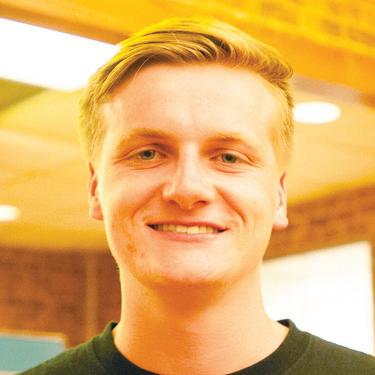
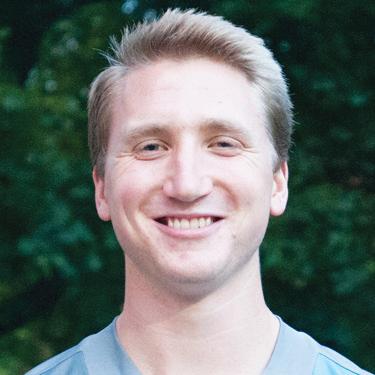
“The main song from ‘Tangled.’”
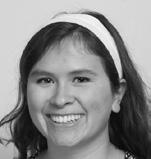
Rachel Hughes freshman
Lyons hall
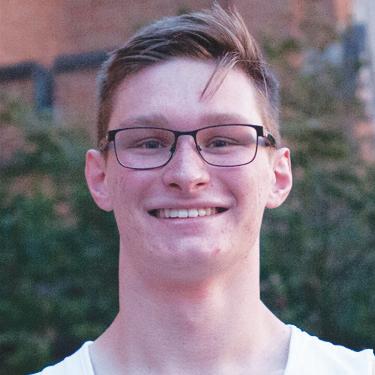
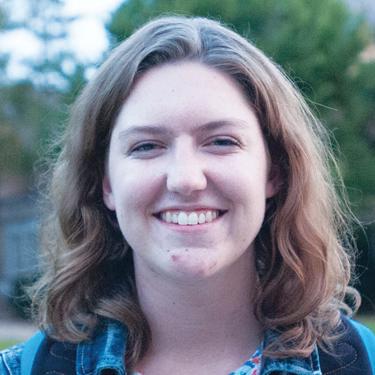
“‘Tale as old as Time’ from ‘beauty and the beast.’”
Tara Kelly junior howard hall
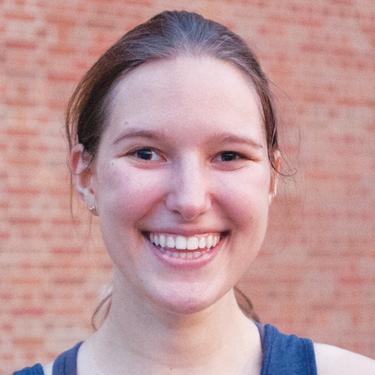
“‘I’ll make a man out of You’ from ‘mulan.’”
Scene Desk (574) 631-4540 observer. s cene.e ditor@gmail.com
Scene Desk (574) 631-4540 scene@ndsmcobserver.com
Saint Mary’s Desk jbarwi01@saintmarys.edu
Saint Mary’s Desk mreilly01@saintmarys.edu
Photo Desk (574) 631-8767 obsphoto@gmail.com
Photo Desk (574) 631-8767 photo@ndsmcobserver.com
Wednesday
Thursday
Friday
Saturday
Sunday
Systems & Web Administrators (574) 631-8839
Systems & Web Administrators (574) 631-8839
Policies
Study Abroad Fair Morris Inn Ballroom
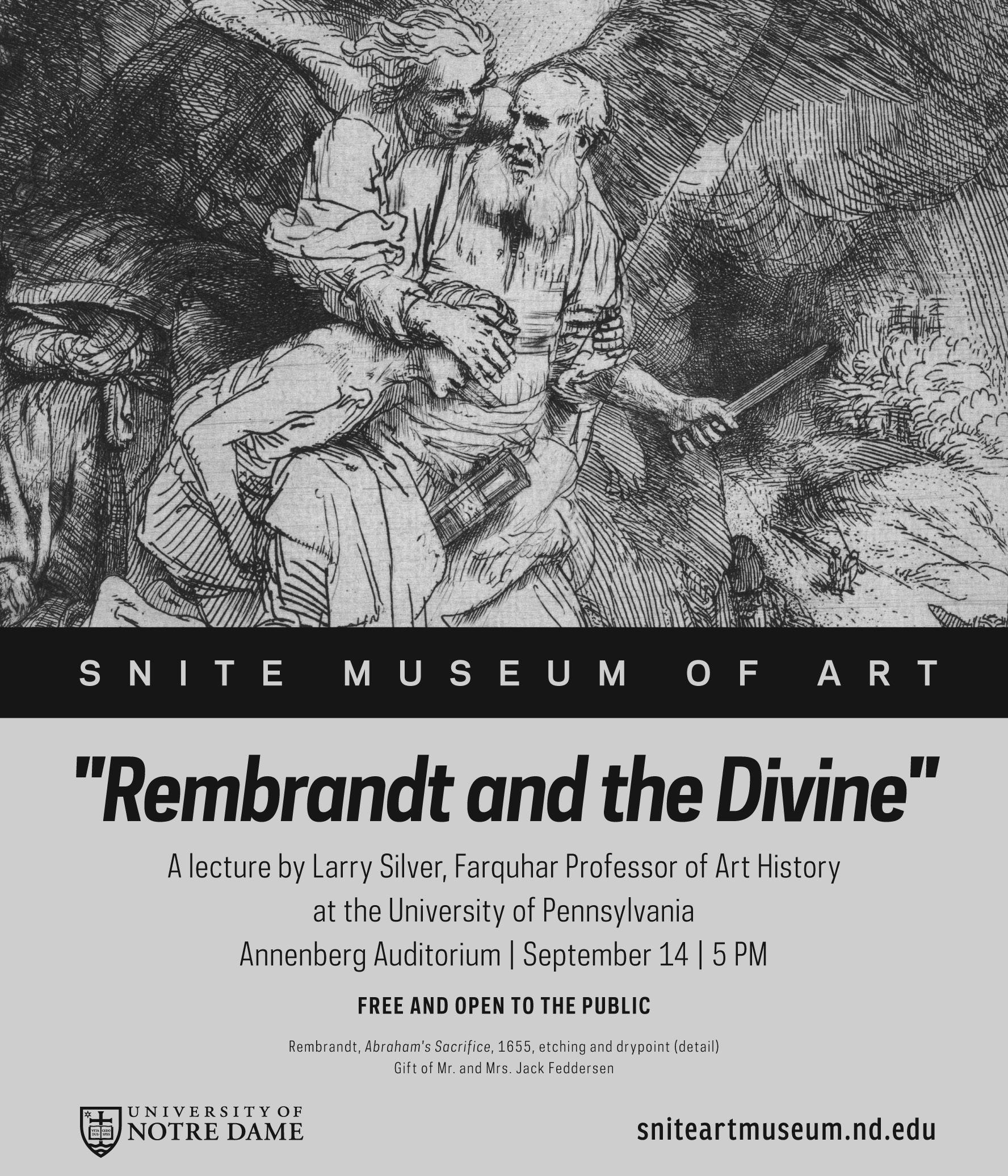
“Rembrandt and the Divine” Snite Museum of Art
5 p.m. - 8 p.m.
The observer is the independent, daily newspaper published in print and online by the students of the University of notre dame du Lac and s aint mary’s c ollege. e ditorial content, including advertisements, is not governed by policies of the administration of either institution. The observer reserves the right to refuse advertisements based on content.
Policies The observer is the independent, daily newspaper published in print and online by the students of the University of notre dame du Lac and s aint mary’s c ollege. e ditorial content, including advertisements, is not governed by policies of the administration of either institution. The observer reserves the right to refuse advertisements based on content.
Hosted by Notre Dame International. All are welcome.
5 p.m. - 6:30 p.m. Visiting professor to speak.
Wellness Expo North Quad 11:30 a.m. - 1:30 p.m. There will be games, prizes and therapy dogs.
8th Annual Father Ted Walk/Run Across campus
8:30 a.m. - 11 a.m.
Consists of a 5k walk, 5k and 10k races.
Mass Basilica of the Sacred Heart 10 a.m. Mass is also served at 11:45 a.m.
The news is reported as accurately and objectively as possible. Unsigned editorials represent the opinion of the majority of the e ditor-in- c hief, managing e ditor, Assistant managing e ditors and department editors. c ommentaries, letters and columns present the views of the authors and not necessarily those of The observer. v iewpoint space is available to all readers. The free expression of all opinions through letters is encouraged. Letters to the
The news is reported as accurately and objectively as possible. Unsigned editorials represent the opinion of the majority of the e ditor-in- c hief, managing e ditor, Assistant
ditor must be signed and must include contact information.
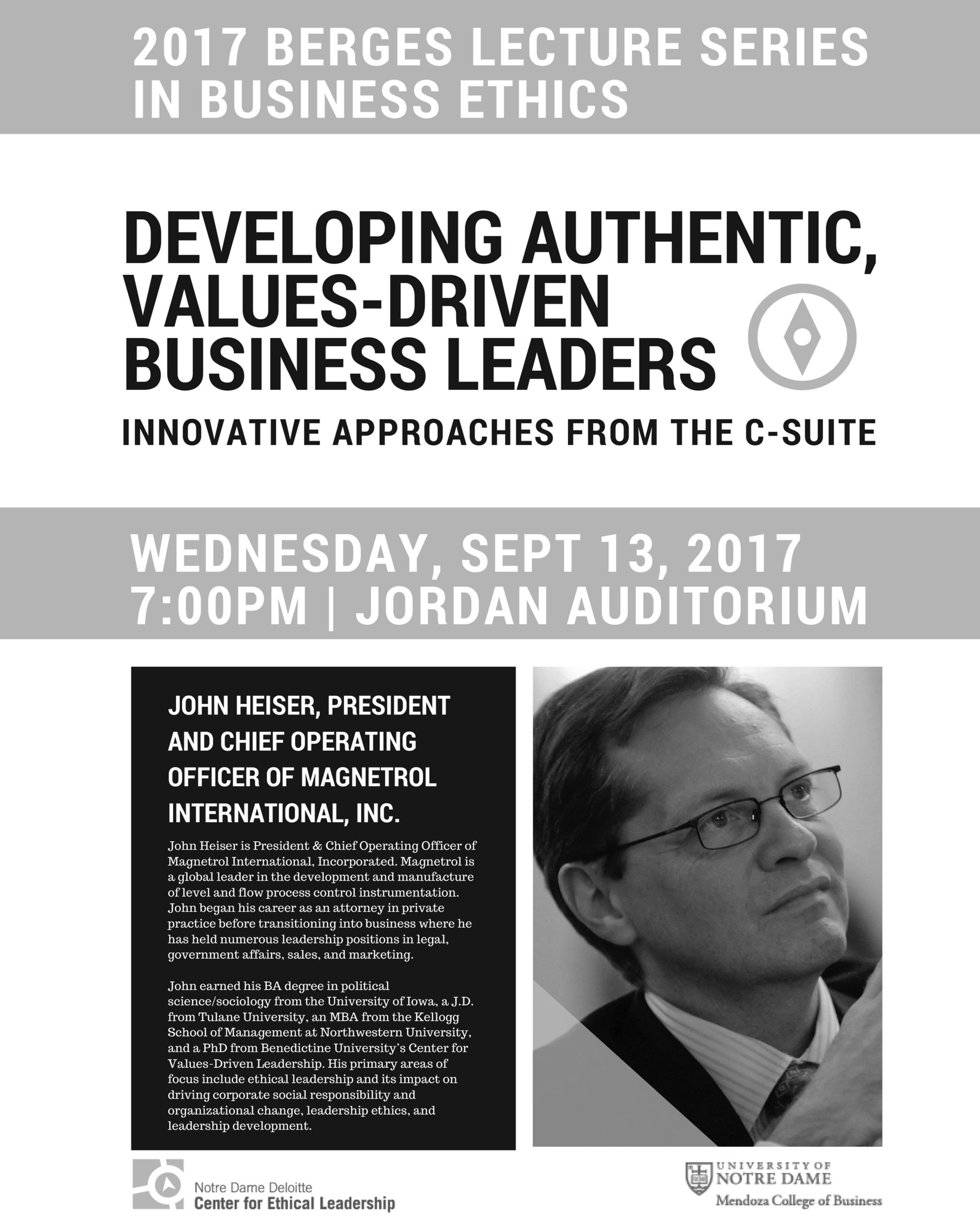
Lecture: Business Ethics Jordan Auditorium
7 p.m. - 8 p.m CEO of Magnetrol International to speak.
Annual Rev. Bernie Clark, C.S.C. Lecture Geddes Hall
7 p.m.
Hosted by the Center for Social Concerns.
Fall Reception Snite Museum of Art
5 p.m. - 7:30 p.m.
Remarks by Professor Emeritus Charles Rosenberg.
Football at Boston College Alumni Stadium
3:30 p.m. The Irish take on the Eagles.
Musica Barocca Reyes Organ and Choral Hall
5:30 p.m. - 6:30 p.m. A series of baroque works.
Questions regarding Observer policies should be directed to Editor-in-Chief Ben Padanilam.
Questions
Post
Today’s Staff
Notre Dame debuts new ID card
By CIARA HOPKINSON news Writer
over the summer, notre dame began implementing the new Irish1card system, a project that has been in the works for years and includes the smart chip Id cards every student received during welcome week. The change, Irish1card program director daniel Tormey said, focused on improving security, but also lays the foundation for new, even more secure and easy-to-use technologies.
“If we want to do things with mobile or do things with other types of what we call ‘credentials,’ not just a card but wristbands and other things like that — you need a system in place that can support that,” he said.
overhaul presents challenges in itself, from ordering enough supplies to installing new equipment, Tormey said.
“When you do a project this big, you’re working with lots of groups on campus,” Tormey said. “We’re heavily involved and supported by oIT. ”
Tormey said the cards’ ease of use masks complicated connections and communications channels. ensuring these connections work was one of the challenges of the new program, he said.
issue with that data getting to that specific room reader. even though all of that was tested, when all of a sudden you have thousands of card holders’ information being pushed out from the different locations, there’s a different level of load-testing that we weren’t in a position to do at the time.”
The issue was resolved by saturday, and Flaherty resident mary Kate o’Leary, a sophomore, said the room key cards the hall used last year had more issues.
The observer regards itself as a professional publication and strives for the highest standards of journalism at all times.
do, however, recognize that
will make mistakes. If we have made a mistake, please contact us at (574) 631-4541 so
can correct our error.
before this year, notre dame had been using the same Irish1card program since the mid-90s: a long time, technologically speaking. Though the system worked well, Tormey said, notre dame was behind other colleges in exploring new possibilities.
“overall, we invested — I’m not exaggerating — years of time looking at not just smart cards but really looking at what other schools are doing and hearing what their stories have been,” Tormey said.
While implementation has gone mostly gone smoothly, the sheer scale of the
“ ... There’s a lot of data that has to get from the front end down to all of those systems,” Tormey said. “making sure that all of the integrations between those systems work and continue to work so that at the user level there’s no issue ... it just takes a lot of time and a lot of people, and it’s a huge investment to make sure that everything is working the way it’s designed to work.”
one such issue arose in Flaherty hall, where the Id cards are also used as room keys to students’ individual rooms. The system failed during move-in weekend, locking some students out of their rooms and requiring calls to oIT.
“There were some challenges early on with certain pieces of hardware getting updated with the information that they needed,” Tormey said. “It was a communication
“Last year we had more problems with the prox cards than now because sometimes the whole system the prox cards were on would break down and the whole hallway would be locked out,” o’Leary said. “I’ve had less problems using the Id card.”
Tormey said the Irish1card office looks forward to working with students and faculty members in the future.
“The feedback that we’ve gotten from all of these changes has been overwhelmingly positive,” Tormey said. “I feel like we’re really moving in a good direction, and the student groups we’ve spoken with and interacted with seem to be very encouraged that the University is focusing on technology like this that impacts people day to day.”
Contact Ciara Hopkinson at chopkin1@nd.edu
different cultures and languages and religions, so that’s what this organization aims to promote,” senior and club president megan Uekert said. “a merica is this amazing, diverse place. We need to celebrate everyone and not exclude anyone.”
[Editor’s Note: Megan Uekert is a former News writer for The Observer.]
Uekert said coordinating events that demonstrate solidarity — such as the late-night gathering — serves as an essential component in promoting inclusivity.
“We don’t know who is undocumented or who is daca unless they tell us,” Uekert said. “You never know, so it’s very important to show your support for students who are in those categories. They are a merican, and they deserve to be here, and they’re getting an education. They’re under so much stress from the threat of deportation. Unity is very important in that respect.”
Fostering open discussion about potentially controversial subjects can lead to breakthroughs in empathy and understanding, junior and vice president Londy avila said.
“i feel like it’s a very uncomfortable conversation sometimes, and people don’t really
want to talk about it,” avila said.
“There’s a lot of misinformation relating to that topic, so i think it’s really important to start a dialogue and to bring in facts about what daca is.”
The organization’s mission — beyond providing an outlet for students to enact change — centers around education, avila said.
“even if you don’t know or you’re unsure of the facts, or if you already have your own opinion on the issue, it’s really important to know a little bit more or to talk to people who have experienced daca firsthand and to share your thoughts,” she said. “our main goal is just to talk about immigration, and all kinds of conversation are welcome.”
“members of define a merican also convened outside congresswoman Jackie Walorski’s office on sept. 6 to protest her support of the Trump administration’s decision, Uekert said.
“she was very in favor of ending daca,” Uekert said. “it’s a very interesting stance because her district has a very high mexican immigrant population. sometimes, we get caught up in things on campus or things on a grander scale, but really, you have to support your community here.”
a recognition of everyone’s common humanity will ultimately catalyze societal improvement, so people must take advantage of
their power to influence policymakers, Uekert said.
“We do have voices,” Uekert said. “but it’s still very important to let the people who are making the decisions in government hear our voices. We can protest all we want. We can have these events and educate people. but really, when it comes down to it, if people’s ideas change enough, politicians have to listen to the people. They have to.”
Uekert said her personal experience informs her favorable understanding of the daca program’s necessity.
“i moved from minnesota to Georgia when i was really young,” she said. “That’s across the country. i’m not suffering the consequences of that. i had absolutely no choice. my parents moved me. That’s what happens with a lot of these daca students.”
The club hopes to work alongside other student groups to promote acceptance and unity for all, Uekert said.
“We do have student diversity board and all these multicultural clubs, but define american really aims at this one central idea of immigration and privilege and education,” Uekert said. “That’s what saint mary’s is about: supporting each other, no matter where we come from or who we are.”
Contact Martha Reilly at mreilly01@saintmarys.edu
President donald Trump to push for a border wall.
“i think the repeal of daca is also a negotiating point and a bargaining chip in [President Trump’s] ongoing and misguided efforts to build a border wall,” he said. “The wall was a huge promise and really, when you think about it from a logistical point of view, a pretty outrageous one that he’s going to build a 3,000 mile wall.”
ruiz said undocumented students have overcome challenges “on a social, linguistic, cultural [and] economic front” and are some of the hardest working students he has seen.
“i think one heart-breaking misconception might be that they are less deserving to be here or got offered a spot here because of their undocumented status,” he said. “a nd in my view, it’s the total opposite.”
ruiz added that he doesn’t know if the University is a safe place for undocumented students given the threat of deportation. however, notre dame “seems adamant in its mission” to protect daca students, he said.
“i don’t know what type of enforcement the federal government or border patrol would try to engage with in
terms of removing daca students from a college campus,” he said. “but i do think that notre dame is in a group of schools that, if i were an undocumented student, i would want to be at.”
ruiz said students looking to support their daca peers should begin by recognizing it is an important issue for everyone. They should not expect any daca student to act as a “spokesperson” for the policy, he added.
“daca is not only about the particular students benefitting from it, but it’s about having a campus and a culture of education in a merica that is inclusive and provides protection to people who were brought here as children,” ruiz said.
students should continue to advocate for legal protection for undocumented students, even after the daca repeal is no longer breaking news, ruiz said.
“i would say [students] can refuse to forget about this when the news cycle moves on, and they can stay vocal,” he said. “i think students have the right and, if i dare say, the duty to press the administration on this campus and to keep reminding the administration that it should support undocumented students.”
Contact Natalie Weber at nweber@nd.edu
Paid a dverT isemen T
happens in [notre dame’s] residence halls.”
“i would say that so much of what i was taught about my values and who i felt i was called to become and who i was to become happened as a result of living in community,” she said. “it’s not always pretty — it happens by difference and challenge and conflict resolution, and some of that happened as a result of what you may describe as ‘the bubble,’ the spirit and the traditions that grow up. … if people think of it as the bubble, i would say this: cherish the bubble, because it’s very fleeting.”
by adding this requirement, one of the priorities of the department is to alleviate overcrowding in dorms, and as such, the University will seek funding for two new residence halls.
“opening dunne and Flaherty last fall was such a huge step for us, realizing and taking care of that challenge on campus for our students,” hoffmann harding said. “and then the second one was really thinking about hall renewals and how we could make that cycle faster and do more work to some of our historic halls, because we knew they needed it and students would desire that. so once we had those two problems and challenges really addressed, we could turn our attention to something that had long worried us. but we weren’t able to be proactive because we didn’t have space available in the residence halls.”
one of the prospective new dorms will be located west of ryan hall, and the other will likely be located on the quad near dunne and Flaherty, hoffmann harding said.
“We’re planning and hoping for 250 beds for the one west of ryan and 225 for the one on the north side of campus,” hoffmann harding said.
Pangborn will remain a swing dorm as the University continues to do renovations on some of the more “historic” dorms on campus, hoffmann harding said. While morrissey will be the next dorm to undergo major renovations, hoffmann harding said they hope to announce the dorm set to follow morrissey this school year.
rakoczy russell said the University will be focusing on one major year-long dorm renovation and one minor summerlong dorm renovation per year for a 10-year cycle.
“We intentionally haven’t announced what the order [of dorms] is because each year we’re doing assessment of the conditions, which could change. so we don’t want to give wrong expectations for a hall,” rakoczy russell said.
in addition to the six semester requirement, hoffmann harding said they are hoping to incentivize seniors to stay on campus.
“some seniors were choosing to move off campus because they were perceiving that they wouldn’t be able to be near their friends,” hoffmann harding said. “so, if that is true, that’s
actually something we can fix, and to say in room picks, typically, rectors will often freeze certain rooms for first-year students so that they’ll be integrated into the section. if that makes the difference between them going off and staying on, we want to change that process. it’s not full autonomy for room picks, it’s what specifically can we change in room picks to retain upperclass students, but specifically targeting seniors.”
some financial incentives may also be given to seniors staying in their dorm.
“For instance, we’re kicking around the idea that if you were to express a preference for living on campus as a senior, as a sophomore, might the University have an ability to be able to guarantee a room cost for you or, recognizing the value of having seniors on campus, have a reduced room cost for students who express that preference early,” hoffmann harding said. “it’s something we want to consider and offer and, again, gather feedback to see would that be helpful to students as they’re
navigating this conversation with peers or developers in the local market, appropriately weighing on-campus and off-campus offers for seniors.”
additionally, hoffmann harding said they have heard an overwhelming response from seniors for a flexibility in meal plans.
“We’ve had great collaboration with food services throughout this process in terms of exploring more flexible dining options, perhaps akin to what’s available to offcampus students now,” hoffmann harding said. “so only purchasing a certain number of meals, or perhaps having more Flex Points or domer dollars as they think about that, but also having more facilities available to students.”
rakoczy russell said they also hope to mitigate some of the stress of signing leases to live off campus early.
“Last year to my horror, i heard this story happening with first-year students, first-year students who were being targeted and being told that fall break was really the latest possible time they could sign for
their senior year, which is absurd, right?” rakoczy russell said. “but if that’s the story they’re hearing, it’s being told in a convincing way. it’s part of what we’re trying to get people to pause long enough and to ask good questions and become educated and realize that’s actually not true. but that will only happen if we start to change the story, and maybe financial incentives will get people to pause long enough to really be very thoughtful about that decision.”
students studying abroad in a notre dame program will be able to count their semester abroad as one “on campus,” hoffmann harding said.
“We want to talk to students, we want to talk to notre dame international to better understand the other experiences that students have,” hoffmann harding said. “There are occasions, for example, where students might enroll in another university other than notre dame to take advantage of study abroad, so we have to think about that in context of transfer students who want to live on campus, as
well as other readmitted students returning and work that through in the details. it’s not solidified, but a point of further conversation.”
rakoczy russell said the University also hopes to develop more consistency in policy across the dorm system, and decisions as to what will fall under the discretion of rectors will be informed by student feedback.
“i wouldn’t say it’s as simple as rectors have no discretion and everything should come centrally. i think that would be ruining part of what is so special about our model, and that is the role of the rector,” rakoczy russell said. “but should there be some things that are universally done that students have expectations and know what they can count on, then yes. … The dance or the delicate balance of it will be informed by students, so we need to listen well to students to say where should rectors have discretion, what are those things that should be more regulated.”
Contact Rachel O’Grady at rogrady@nd.edu
Paid a dverT isemen T
Ask questions
d uring our freshman year, my roommates and I lived across the hallway from our r A. We would stop into her room several times a week with questions — about our dorm, n otre d ame in general and occasionally even classes. s he always patiently pointed us in the right direction, even if it was the third or fourth time we had come by her room that day.
As a freshman, I wasn’t afraid to ask questions. b ut coming into this year, as a sophomore, something changed. I felt as if I was expected to know everything I was supposed to do. I was embarrassed to ask when I didn’t understand something or know how to handle a situation, fearing it would make me look incompetent.
h owever, having taken on new responsibilities and classes, I soon came headto-head with everything I didn’t know. I worried it reflected poorly on my abilities and quickly became frustrated. At this point, I decided to finally seek advice — from my parents.
“People don’t expect you to know everything,” my mother said to me. “They expect you to be able to learn.”
This advice helped me to reframe the way I viewed the things I didn’t know. It was no fault of my own when I had questions; rather, it was a natural part of learning. Whenever I approached a professor about a topic I didn’t understand or asked an upperclassman for advice, they reinforced what my mother had said and encouraged me to continue asking questions.
I found that, generally speaking, people are happy to share their knowledge and talk about their experiences. There are plenty of people willing to answer questions — if someone makes you feel stupid for not knowing something, they are not worth your time.
I also discovered I will never have everything completely “figured out” — not when I am the one answering the questions I had once asked, not when I have my first job or my last. This was also incredibly freeing. The pursuit of knowledge, I came to understand, is not a journey with a final destination, but rather a continual process which will never be complete. e ven the wisest and most knowledgeable person in the world still has things to learn.
I also found I know more than I thought I did. As I revisited my work from last year and answered freshmen’s questions myself, I saw how much I had learned in the previous year. I realized I will be able to gain even more experience this year and continue to increase my knowledge so that one day I am able to pass it on to others. e ven then, I will never have all the answers, so I will continue to learn and ask questions.
Contact Natalie Weber at nweber@nd.edu
The views expressed in the Inside Column are those of the author and not necessarily those of The Observer.
The (recurring) American dream: street food to cultural icon?
To many, the now ubiquitous halal carts in new York are simply a source of cheap, quick and tasty m iddle e astern food. b ut to me, the rise of these carts in the past decade symbolize something greater than the food they sell. These carts, and the cuisine they serve, went from being an obscure staple of one the city’s numerous immigrant groups to becoming arguably the city’s most famous street food. These carts illustrate the power of the American “melting pot” and the cyclical nature of history. h alal carts serve Americanized versions of traditional m iddle e astern specialties such as falafel, lamb and chicken gyros. The term halal refers to the way the meat is prepared in accordance with the Quran. h alal dietary laws are similar to Kosher dietary laws in the Jewish tradition. The different gyros and falafel are either served over rice or in pita bread topped off with copious amounts of the famous white sauce and red hot sauce. The food’s meteoric rise in popularity has baffled restaurant critics everywhere. The world’s first Americanized halal cart is The h alal Guys on 53rd and 6th Avenue in midtown m anhattan. The h alal Guys has relatively obscure origins, initially serving the city’s predominantly muslim cab drivers. The cab drivers wanted quick, filling, and inexpensive food compatible with their religion’s dietary laws. s oon enough, through word of mouth and the ever powerful taxi cab recommendation, h alal Guys became one of the city’s most popular food carts with infamously long lines. From its single street corner location in 1990, the h alal Guys have begun their global expansion with new locations in montreal, m anila, Jakarta and Kuala Lumpur. Interestingly, Americanized halal food is even available in predominantly muslim, s outheast Asian nations.
The rise of Americanized halal street food is not the first time a new York staple was propelled to the international stage. new York-style pizza is the world’s de facto pizza style. From Tokyo to e dinburgh, when people think of pizza, odds are they imagine a thin crust new York slice with marbleized cheese. s imilar to halal street food, pizza had humble beginnings in new York. Pizza — like halal street food — started out as a cheap, filling meal for thousands of immigrant workers in the city. Lombardi’s Pizza in Little Italy holds the highly contested title of new York’s oldest pizzeria. Lombardi’s began as an Italian grocery store in 1905 which sold half cooked “tomato pies” to the local factory workers in the morning. c ome lunch time, the factory workers would reheat the “tomato pies” in their factories using the stoves meant to heat the building. o ver the years, pizza would gain larger acceptance, first in the greater new York area and eventually throughout the rest of the country. Pizza’s global takeover coincided with the post-World War II growth of America’s movie industry. American
movies and T v shows are the most widely distributed forms of entertainment in the world. Through cameos in hollywood movies and T v shows, new York s tyle pizza has been “exported” from the United s tates to the rest of the globe. A young Japanese fan of The Teenage mutant n inja Turtles would understandably crave for a slice of new York style pizza after watching m ichelangelo chow down on pie after pizza pie. Pizza’s rise abroad can largely be attributed to how it became a mainstay of American culture which people wanted to emulate.
Another backbone of American cuisine is the hamburger. As the name suggests, hamburgers have German origins but are also distinctly American. h amburg steak was a dish traditionally consumed by the poorer classes of the German seaport of h amburg. b ecause the meat was ground and spices were added, chefs could get away with using cheaper cuts of meat. When Germans came to America, they brought h amburg steak with them, but until that point, they lacked the all-important bun. Louis’ Lunch, a lunch wagon in new h aven, c onnecticut, claims to be the first place in the world to have put the h amburg steak in between two slices of bread to create the hamburger in the early 1900s. Louis’ Lunch catered primarily to the dock workers at the Port of new h aven who needed a quick portable meal, making the addition of the buns particularly brilliant. o ver the following decades — and through another uniquely American phenomenon, fast food — hamburgers gained national and international acceptance. mc d onald’s, one of the earliest hamburger fast-food restaurant chains is one of America’s greatest cultural exports with 36,000 locations — 20,000 of which are abroad. Germany, the birthplace of the h amburg steak, even has 1500 Golden Arches of its own.
Foods like h alal, pizza and hamburgers have risen from obscure “ethnic foods” in the United s tates to become exported parts of American culture and part of the larger American story of immigration, assimilation and acceptance. America, by international standards, is not only a new country, but also a new civilization. b ecause of America’s relative youth, the country has been quick to adopt many aspects of its immigrant communities’ cultures. Time will tell if these halal carts will become as “American” as pizza and hamburgers.
Paul Kozhipatt is a senior studying political science and IT management, originally from Long Island, New York. He can be reached at pkozhipa@nd.edu
BridgeND is a bipartisan student political organization that brings together people from all across the ideological spectrum to discuss public policy issues of national importance. They meet Monday nights in the McNeil room of LaFortune from 6-7 p.m. They can be reached at bridgend@nd.edu or by following them on Twitter @bridge_ND
The views expressed in this column are those of the author and not necessarily those of The Observer.
Paul Kozhipatt bridging the Gap
Natalie Weber Associate news e ditor
South Quad 9/11 memorial
This morning, as we arrived at s outh Quad to set up our display of American Flags to memorialize the 3,000 lives lost during the attacks on s ept. 11, 2001, our club was met with the phrase “500,000 Iraqis murdered” in front of the site of the memorial.
It did not ruin the memorial; we were able to smudge out the chalk to make it illegible and preserve the integrity of the display. What saddens us is that a member of the n otre d ame community felt the need to hijack a memorial for innocent humans who lost their life to push their own unrelated, unfounded and unnecessary
political narrative. The Iraq war is certainly a controversial topic that we welcome open debate on.
b ut there is a time and a place. Instead of hiding behind your chalk in the middle of the night, we welcome you to reach out to us by email, meet with us over coffee or a meal. We would like to hear you out, listen to the problems that you have with the United s tates’ doings in Iraq. Ideas are important. d ebate is important. The only way for a productive political dialogue to take place is in the light. If you truly believe what you wrote, then you should
have the courage to stand up and take ownership of your words in the light to defend them.
The memorial of the 3,000 innocent men and women who died on 9/11 should play no part in the debate on the morality of the United s tates’ involvement in Iraq. It is safe to assume that many of them would have agreed with your stance on the issue. We wish you would have had the respect to leave them out of it.
Young Americans for Freedom Executive Board s ept. 11
Unfair price hikes during Hurricane Irma
Jordan Ryan
Words of Wisdome
This past weekend, I called my aunt to see how her preparations for h urricane Irma were coming along. s he lives in Palm c oast, Florida, a modest residential community located about 30 miles north of d aytona along the Atlantic coast. Gearing up for a hurricane is not unfamiliar to her. s he goes shopping, stocks up and prepares for a very boring and bleak few days. What I didn’t realize was the brutal cost of preparing for such an emergency. s he told me that a gallon of gas rose to $7.20 in the week before Irma was expected to make landfall. A 24-pack of water cost a whopping $39. These outrageous prices are immoral at a time of desperation. Legislative intervention ought to prevent such businesses from capitalizing on the fear, misery and necessity of consumers. There is a clear moral justification for ending or minimizing these unprincipled practices.
In addition to the loss of lives, the destruction of homes and the disruption of the lives of countless families, this hurricane season has not been kind to the wallets of consumers. r esidents of Texas reported charges of $8.50 for a single water bottle last week and $20 for a gallon of gas. In some towns, cases of water were going for as much as $99.
There are clear reasons why there needs to be prohibitions on price gouging during times of natural disaster. h ikes in medicine prices pose severe health risks to consumers. r esidents, along with emergency personnel, can be deprived of essential commodities. Thousands of lives will be placed at risk without access to basic necessities
like water, food, gas and medicine.
What is especially troubling about these horrid price increases is their effect on the most vulnerable members of our communities. Those with low incomes can under no circumstances afford these necessities. They along with shelters, food banks and other help centers also cannot afford these prices. The result is a maximized disparity between classes, which is utterly unacceptable during a time of crisis.
A few states have taken action to discourage this unconscionable behavior. c alifornia has enacted an anti-price gouging law, which allows only a maximum of a 10 percent increase in prices during a time of emergency. s outh c arolina passed its own anti-price gouging law this past week in anticipation of h urricane Irma. Louisiana and Texas also enacted anti-price gouging legislation in anticipation of h urricane h arvey’s arrival.
Unfortunately, these laws have proven difficult to enforce. Though Texas enacted legislation prohibiting against exorbitant price increases, residents still experienced insane prices. Florida has put in effect similar legislation, which prohibits “grossly excessive” price increases. Unfortunately, the law is largely being ignored. s ince the state of emergency was declared on s ept. 4, 2017, Florida’s Attorney General has received an average of 100 complaints per hour from consumers concerning price gouging.
Those who oppose such legislation justify dramatic price increases in times of emergency on several grounds. First, increased prices encourage consumers to only purchase as much as they need, thereby avoiding hoarding. Without such high prices, whoever reaches the grocery store first could buy out all the bottled water, leaving
others without necessary goods. Additionally, price gouging may encourage a sufficient supply of goods. b usinesses are more apt to maintain a greater supply of commodities if they are able to generate what they believe to be an appropriate profit. These arguments are simply justifications for what are, in larger part, immoral and scandalous behaviors. Though slight price increases may be necessary, gouging water bottle prices to up to $7 a bottle is simply unwarranted.
A number of academics have suggested possible solutions to avoid such disastrous increases during tines such as these. For example, r afi m ohammed of the h arvard b usiness r eview writes that to ensure an adequate supply of critical commodities, legislatures could permit modest price increases with the balance of any necessary price hikes being absorbed by government subsidies. A second option to discourage unwarranted price hikes could be through tax breaks to cooperative companies post-disaster. n o matter what, prices cannot rise to such brutal heights during times of dire need.
As we have seen in the aftermath of h arvey, natural disasters can bring out the best in people, as stories are recounted of everyday neighbors becoming heroes through their unselfish giving — often to total strangers — in times of need. It is nothing short of disgusting to see our neighbors who may be in harm’s way being taken advantage of by opportunistic businesses.
Senior Jordan Ryan, a Pittsburgher formerly of Lyons Hall, studies political science, peace studies and constitutional studies. She welcomes any inquiries, comments or political memes to jryan15@nd.edu
The views expressed in this column are those of the author and not necessarily those of The Observer.
Volleyball
con T inued F rom PaGe 12
thinking about. You’ve got to control your thoughts. Your thoughts are tools that serve you well, and we’re learning to do that on game day. The next night, we were just simpler in our thoughts. We stayed on task and played better — there’s no magic there. i think we learned a number of lessons that we could control in the loss against o hio s tate.”
a s they look ahead to this weekend’s s hamrock i nvitational, m cLaughlin said he liked the way his team picked spots in the attack this past weekend, and he added that observing the setter is a key to success.
aggressive just by seeing the setter better — we were hitting to better spots. They did a nice job of having great discipline and seeing what the setter was doing.”
Junior outside hitter r ebecca n unge, who was named co- acc Player of the Week earlier this month, said the practice for this weekend’s opponents would be much like the team’s preparation for o hio s tate.
“We’re going to prepare the same way we always prepare, just like we did on s unday,” n unge said. “We’re going to have a good week of practice leading up to the game, and when it’s game time, we are going to be ready to go.”
and toughness, didn’t back off.
“ … i just loved our sideline. b eing able to walk up and down the sideline and sense, you know, their fight, how they felt about the game.”
h eading into the team’s first road matchup with b oston c ollege (1-1, 0-1 acc ), Kelly stressed the importance of staying focused on the task at hand, despite faltering the week prior.
“We just let them know about it relative to last week’s opponent,” Kelly said on the mental preparation. “This is really for the younger players to understand the b oston c ollege- n otre d ame rivalry, two c atholic institutions. b ut more importantly, we don’t want to talk about it any more than that. i t’s really about developing a mindset in your program that this is about dominating your opponent regardless of who it is.
“ … i t’s okay to know the history and how they’re going to play you, who b oston c ollege is, the respect that you have for them, how they play n otre d ame and everybody plays that way. b ut really this is about having a mindset going into this football game.”
a nd with road matchups, mental preparation is everything, according to Kelly.
“ e verything you do relative to your routine and how you prepare and how you practice should put your players in a position that when they go on the road, they compete in a fashion that no
distractions should interfere with the way they compete,” Kelly said. “ i f they’re easily distracted, then they don’t have the kind of focus that you’ve been building with your football team … being locked in and tuning out all of those distractions, playing the game in the manner that you’ve been trained.”
defense
n otre d ame passed the eye test against Georgia, as the i rish held the b ulldogs’ outstanding duo of senior running backs in n ick c hubb and s ony m ichel to a combined 136 yards on the ground. m ike e lko’s unit gave up significantly less yards and points than at the same point last season, while also having five sacks through two games, good for 36th nationally. Kelly said he believes the unit is only going to get better.
“ d efense is by and large about a confidence and a belief,” he said. “ o ur players believe in what we’re doing defensively, have got great confidence in the players around them, that they’re going to do their job. When you have that dynamic going forward, it certainly is going to allow you to continue to grow as a defense.”
Injuries
Kelly noted that graduate student wide receiver Freddy c anteen is doubtful for this weekend after picking up a shoulder injury against the b ulldogs. Junior receiver c hris Finke is listed as a starter after catching three passes for 36 yards s aturday.
Contact Tobias Hoonhout at thoonhou@nd.edu
“We’re just getting better at the things we need to do and being more consistent,” m cLaughlin said. “[We are focused on] having more success for longer periods of time. That’s in our serve and pass game and hitting with good rhythm and timing. [We need] all six players to be able to really see the setter with the defense and respond to that. We attacked and were more
s he said the defeat at o hio s tate, n otre d ame’s first loss of the season, made it all the more important to realize the stakes of playing ranked opponents.
“From our loss, we learned that it is all about doing our job when the game gets tough,” n unge said.
“We learned that against big-time opponents, it’s even more important to do our individual jobs on the court.”
a s the i rish aim to
continue their early-season success, m cLaughlin said it is important to learn from mistakes and continue to grow. h e said progress is a big emphasis for this team. “ i mprovement is the foundation of our program,” m cLaughlin said. “We have our goals, and we have a process to get to those goals. The kids are understanding how important the process is of just continuing to improve every day and make progress every day. Then, we can achieve those goals. i t’s a good lesson in life — if you want something, you have to learn to go get it. We’re learning to make those changes to get a return on our work.”
n otre d ame will take the court in the s hamrock i nvitational at Purcell Pavilion this weekend. The i rish will play n o. 23 m ichigan s tate on Friday at 7 p.m., followed by a doubleheader s aturday, starting with s outhern i llinois at 12:30 p.m. and ending with c entral m ichigan at 7 p.m.
Contact Darcy Dehais at ddehais@nd.edu
Paid a dverT isemen T
SARAH OLSON | The Observer
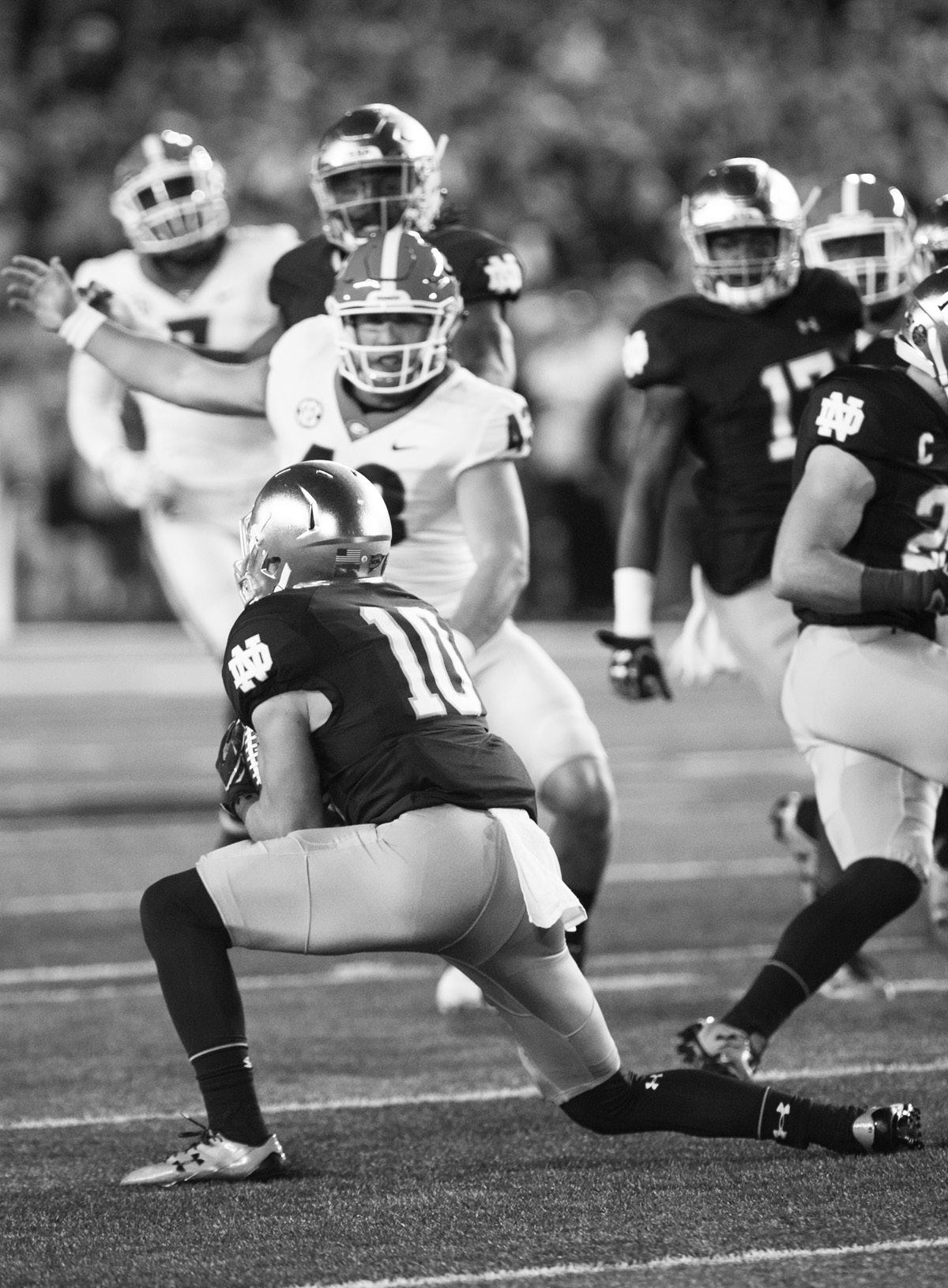
Junior wide receiver Chris Finke fair catches a punt during Notre Dame’s 20-19 loss to Georgia on Saturday at Notre Dame Stadium.
Kelly discusses team mentality, Wimbush
By TOBIAS HOONHOUT Associate sports e ditor
c oming off a close home defeat to n o. 13 Georgia this weekend, Irish head coach b rian Kelly addressed several areas, including junior b randon Wimbush’s development as a quarterback, n otre d ame’s mentality heading into next week’s matchup against b oston c ollege and its growth on defense.
wimbush
Although the junior quarterback struggled to have an impact against the physical defense of the b ulldogs (2-0, 0-0 sec ) on s aturday, Kelly was confident Wimbush would grow exponentially moving forward.
“I think game recognition, what he sees in the game, then trusting the teaching,” Kelly said of the areas of Wimbush’s game that have been developing. “You have your teaching, and you go through it during the week, then it happens in the game. Just trust what you see and
go with it. d on’t be indecisive. b e decisive, trust it and go with it.
“ … I think that’s probably the biggest learning curve for all young quarterbacks, is that at times they become a little bit — they think a little bit too much instead of just trusting it and going with it.
Just trust your teaching.
“ … h e learned a lot from that game. I think it will be a springboard for him.”
mentality
While the Irish (1-1) lost to Georgia in a manner that mirrored many close games last season, Kelly remained optimistic that this year, things will be different.
“I really like our team. I think it’s a totally different scenario,” he said. “ … I stay in the present. In the present, I really like the way our team is put together. I don’t think much about last year. I think about how our team played on s aturday. s o my vision and my eyes are on how that team showed grit
see FooTbALL paGe 10
ND looks to earn ranked victory over MSU
By DARCY DEHAIS sports Writer
Following a 1-1 series against then-no. 24 ohio state over the weekend, the Irish will look to deliver against the second ranked opponent they will face this season in no. 23 m ichigan state.
In the first game of the series, the buckeyes (5-3) defeated the Irish (7-1) by a score of 3-0 in columbus, ohio. back at home in Purcell Pavilion, notre dame looked far more dominant, beating the buckeyes 3-1.
on the first night, notre dame committed 15 unforced errors, while it recorded only five in sunday’s win at home. Irish head coach Jim mcLaughlin said he thought the difference in the two games came down to mental toughness and consistency.
“I thought we played hard, but there’s more to it,” mcLaughlin said. “everyone’s going to play hard. We were thinking about things we didn’t need to be
nd women’s soccer
nd developing offensive identity
Alex Bender sports Writer
coming into the 2017 season, there seemed to be reason for an optimistic outlook for notre dame.
This was a team that won the Acc regular season championship just a year ago, and many of the players instrumental in the success of 2016 were returning to the squad. A team that had prided itself on defense, the Irish (4-2-2) scored two or less goals in nine of their 13 regular season wins last year, proving themselves quite capable of keeping their opponent from reaching the back of the net. Unfortunately, the low scoring style is perhaps what led to the team’s downfall come nc AA tournament time as the Irish saw a quick exit, losing in the first round to sIU-edwardsville in penalty kicks after a scoreless regulation and extra time. now shift to this season. The team is sitting at 4-2-2 as they enter Acc play, giving signs that this season could be just as
successful as last year. however, if you’ve watched play thus far, one thing should be clear — this is not last year’s Irish squad. head coach Theresa romagnolo’s crew has turned into an offensive juggernaut on a number of occasions already this season, accounting for four goals against three teams already this season. Last year, it hit that total only once all season, and take into account that, as said before, Acc play has yet to start up. romagnolo has mentioned that her team has put forth efforts to improve the offense in the 2017 season, often mentioning it as a core part of the team’s work this season.
“We need to work on connecting more of our passes so we can control the game,” romagnolo said early in the season. “beyond that we have to work on executing in front of the goal. While we showed some nice flashes, we need to be more consistent moving forward.”
The logical question that
SARAH OLSON | The Observer
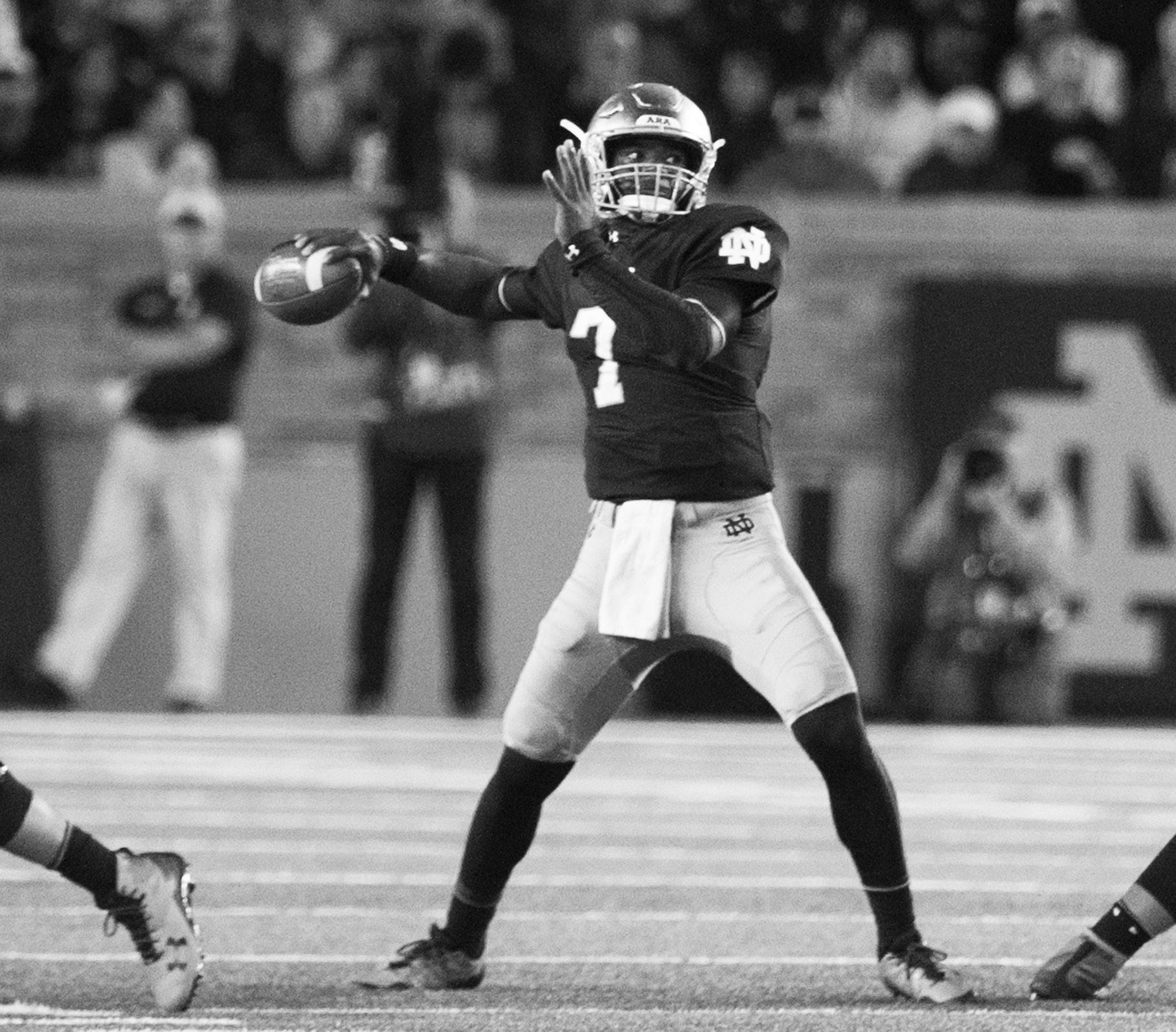
Irish junior quarterback Brandon Wimbush winds up for a pass during Notre Dame’s 20-19 loss to Georgia on Saturday at Notre Dame Stadium. Wimbush completed 20 passes for 210 yards in the game.
CHRIS COLLINS | The Observer
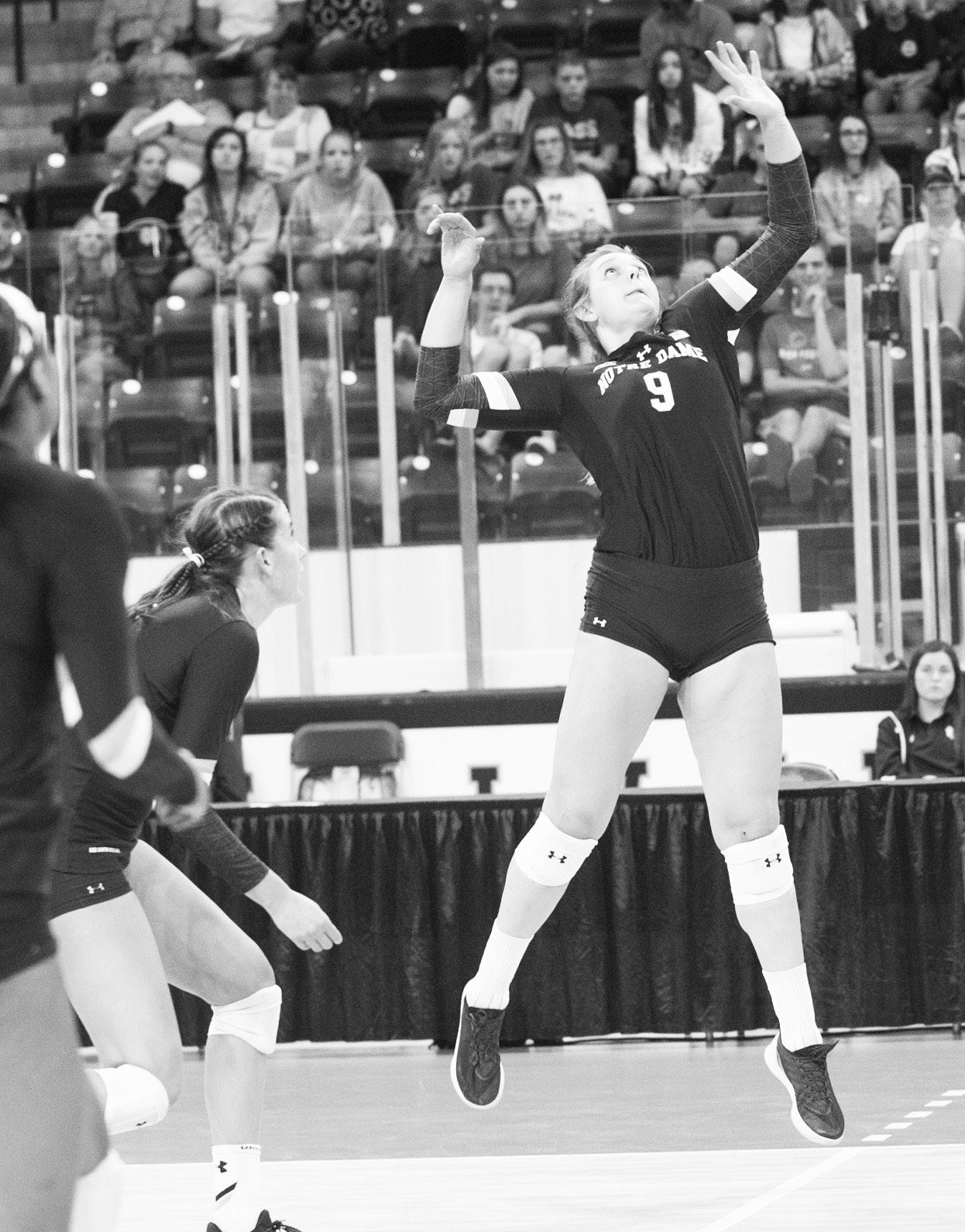
Junior outside hitter Rebecca Nunge attacks the ball to attempt a kill during Notre Dame’s 3-1 win over Valparaiso on Aug. 25.