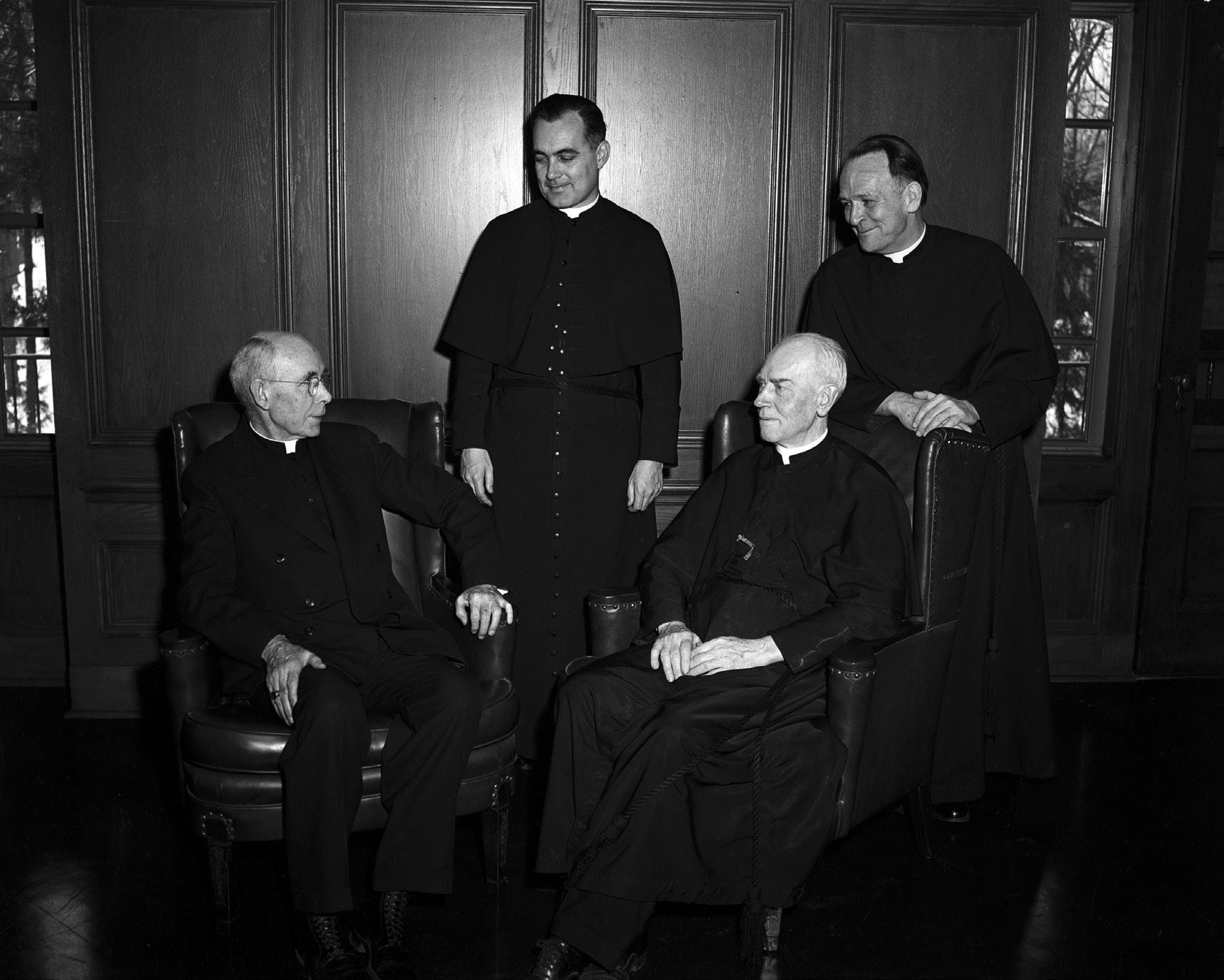
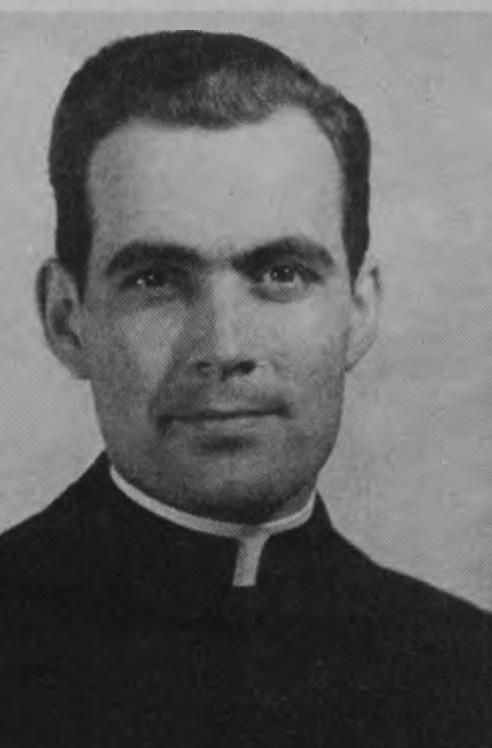
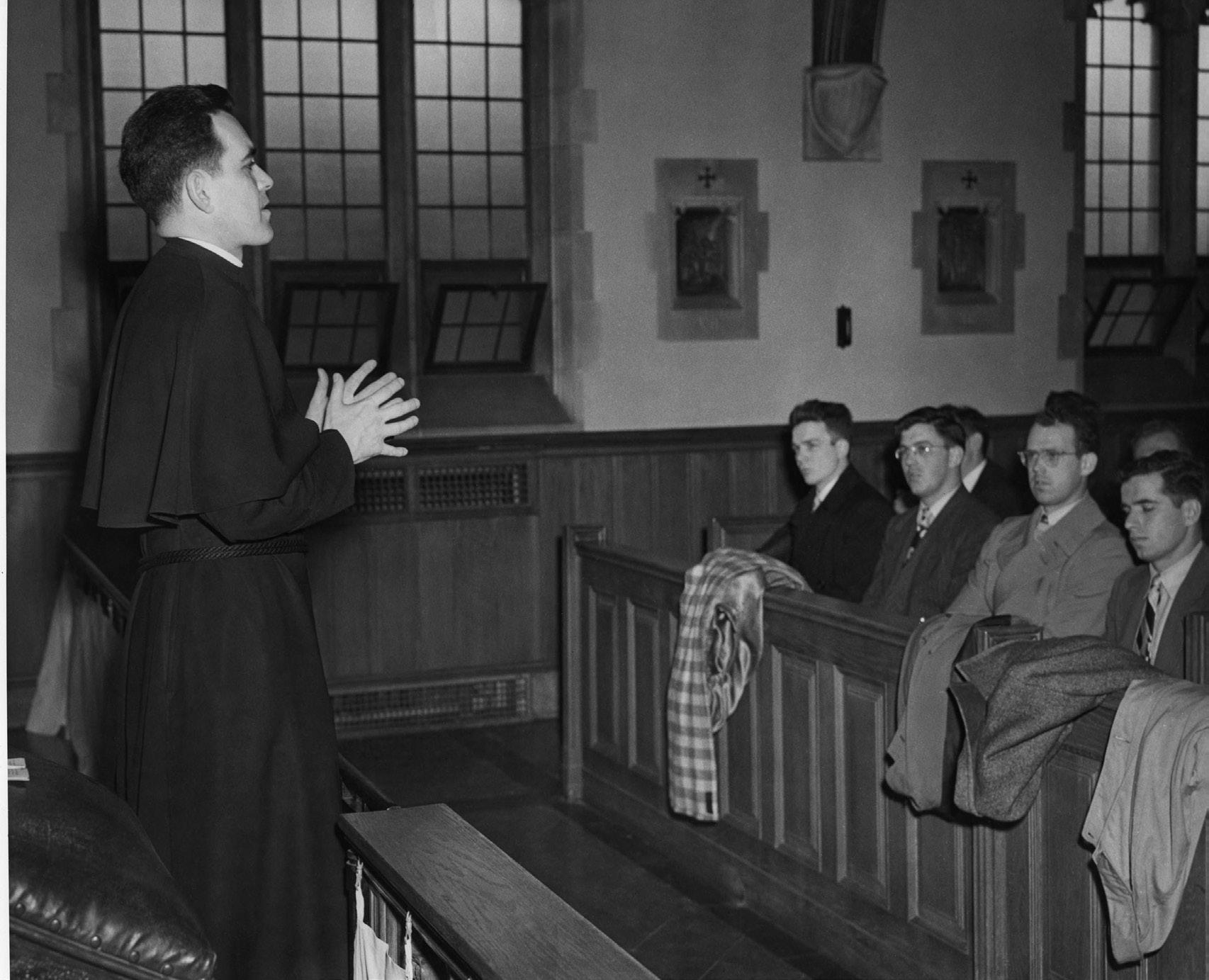
university p resident e meritus Fr. Theodore h esburgh’s last day was characterized by the act that was most central to him throughout his life — saying m ass.
a lthough he wasn’t able to preside, Fr. h esburgh was able to say m ass with his brothers at h oly c ross h ouse on the day of his death. d oyle said other men present commented on how “happy and peaceful he looked” throughout the service.
It had been a prayer h esburgh prayed for decades, to say m ass on the day he died. This desire wasn’t a surprise to those who knew him, d illon h all rector Fr. p aul d oyle said. h esburgh was a man who thought of himself as a priest before anything else, who spent his life in prayer, d oyle said.
“[ h esburgh] was a prayerful guy, and he prayed from the gut,” d oyle said. “The prayers were very much between him and the l ord. h e would talk to m ary, and the rest who heard him would feel like bystanders — like this is an intimate relationship
and exchange here. h e would do that at m ass, after c ommunion for example. h e would just pray out loud to the l ord.”
h esburgh prided himself in saying m ass every day — only missing one or two days in almost 72 years as a priest, d oyle said.
“ h e was a great adventurer ... but wherever he was, he said m ass. w hen he came to m exico, 1917–2015
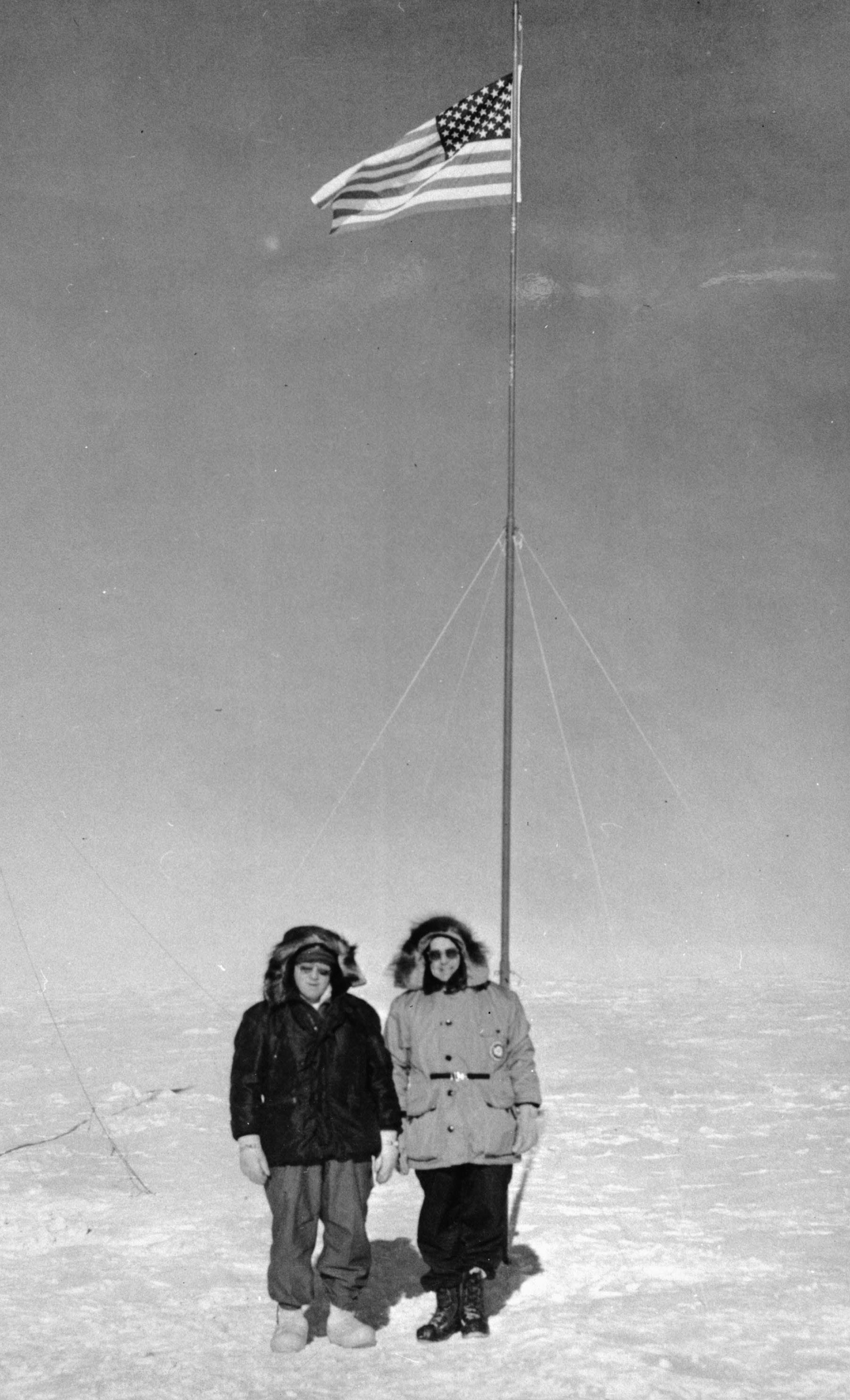
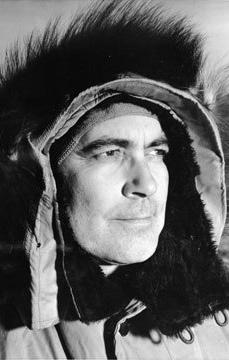
“[ h esburgh] said m ass in the Kremlin; he said m ass in b uckingham p alace; he said m ass in the s outh p ole, in the military installation down there,” he said. “ h e said m ass in submarines and everywhere else.”
Fr. e rnie b artell, professor emeritus of economics, was present at h esburgh’s last m ass. h e said he remembers saying m ass with h esburgh even in the forests of rural m exico, the site of a n otre d ame service project for students during the beginning of h esburgh’s stint as university president.
Scene Desk (574) 631-4540 scene@ndsmcobserver.com Saint Mary’s Desk kkonya01@saintmarys.edu
Photo Desk (574) 631-8767 photo@ndsmcobserver.com
Systems & Web Administrators (574) 631-8839
Policies
Have
legacy for you?
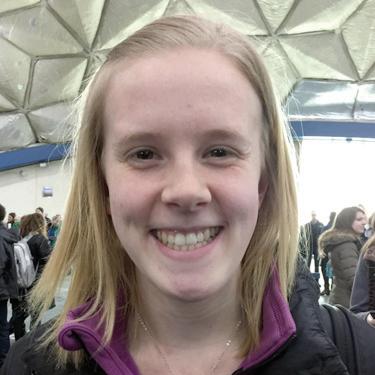
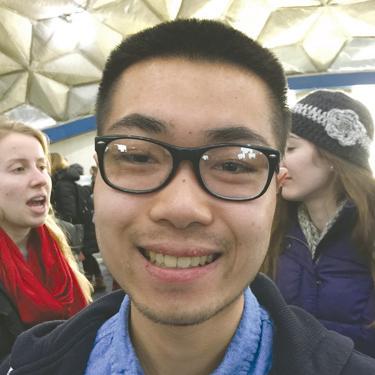
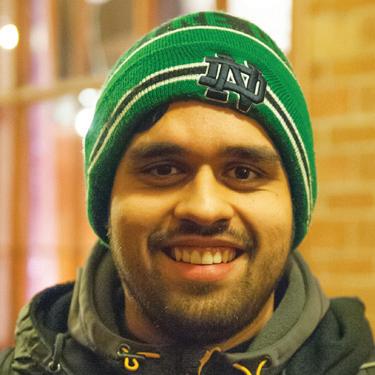
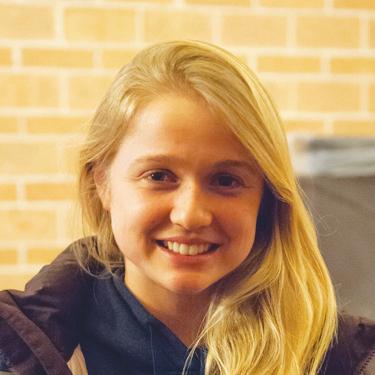
Brittany Restic freshman ryan hall
“he made it possible that I could go here, and it was a dream of mine.”
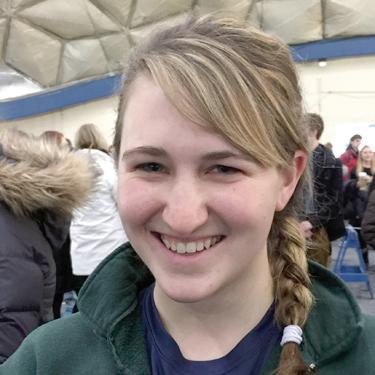
Casey Horan senior off-campus
“he gave me a different perspective on how to look at the events around the world when I read to him.”
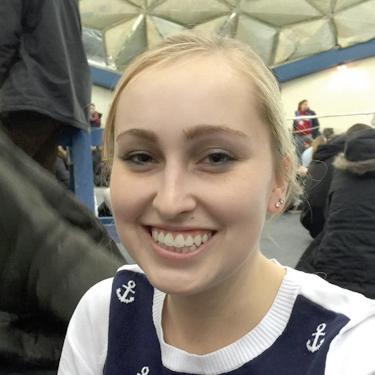
Eliza Moore senior off-campus
“he made this university what it is today. a fter coming to this university, I’ve come to appreciate him more.”
Gen Li senior Keough hall
“he was a model to my catholic faith and a model to how we can make a difference in the world.”
Juan Velasquez sophomore duncan hall
“he was a great notre dame figure that led to much-needed changes in the world.”
Monica Robinson sophomore pangborn hall
“w hen I met him, he reminded me of my grandpa.”
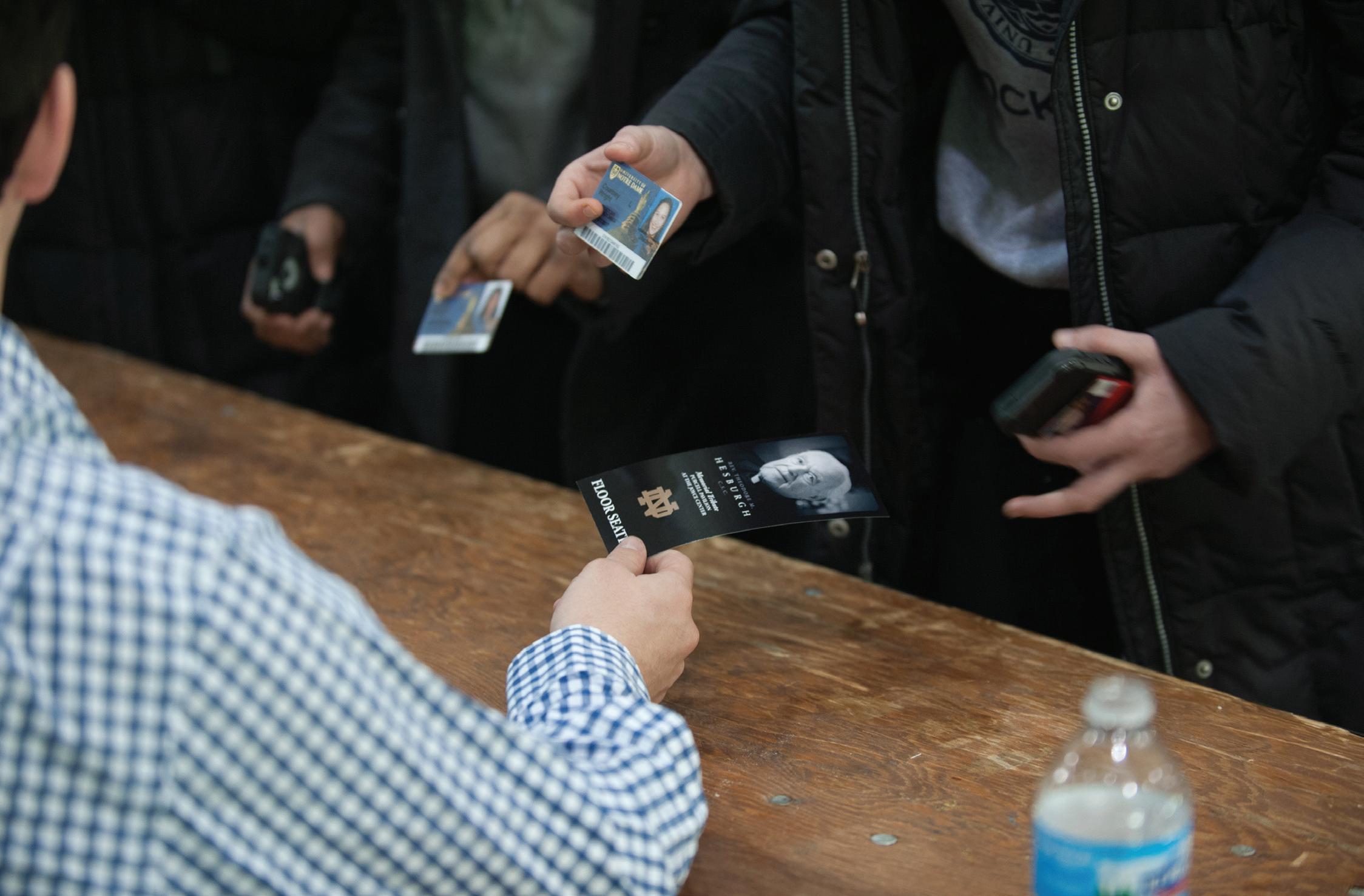
Students pick up tickets in Stepan Center on Sunday for the memorial tribute for Fr. Theodore Hesburgh, which will take place Wednesday in Purcell Pavilion and will feature videos, speakers and music celebrating Father Ted’s life.
Today’s Staff
c
l
Corrections
The observer regards itself as a professional publication and strives for the highest standards of journalism at all times. we do, however, recognize that we will make mistakes. If we have made a mistake, please contact us at (574) 631-4541 so we can correct our error.
table of contents:
Page 4
Students reflect on Fr. Hesburgh’s life
Page 5
Fr. Hesburgh’s role in civil rights
Page 6
The transition to coeducation
Page 7
Hesburgh’s emphasis on integrity in athletics
Page 8
The transition to lay governance
Page 9
Chaplainship and Cigars
Page 10
Fr. Hesburgh’s papal appointments
Page 11
Reading to a ‘living legend’
Page 12
Campus tributes to Fr. Hesburgh
Page 13
Fr. Jenkins reflects on Fr. Hesburgh
Pages 14-17
Timeline of Fr. Hesburgh’s life
Pages 18
Inside column and Observer editorial
Page 19-20
ND leaders reflect on Fr. Hesburgh
Page 21
Official statements of Obama and Jenkins
Page 22
Athletes reflect on Fr. Hesburgh’s legacy
Page 23
Benefactors reflect on Fr. Hesburgh’s legacy
Page 24
Religious figures reflect on Fr. Hesburgh
Page 25
ND community members remember
Pages 26-27
The letters of Fr. Hesburgh
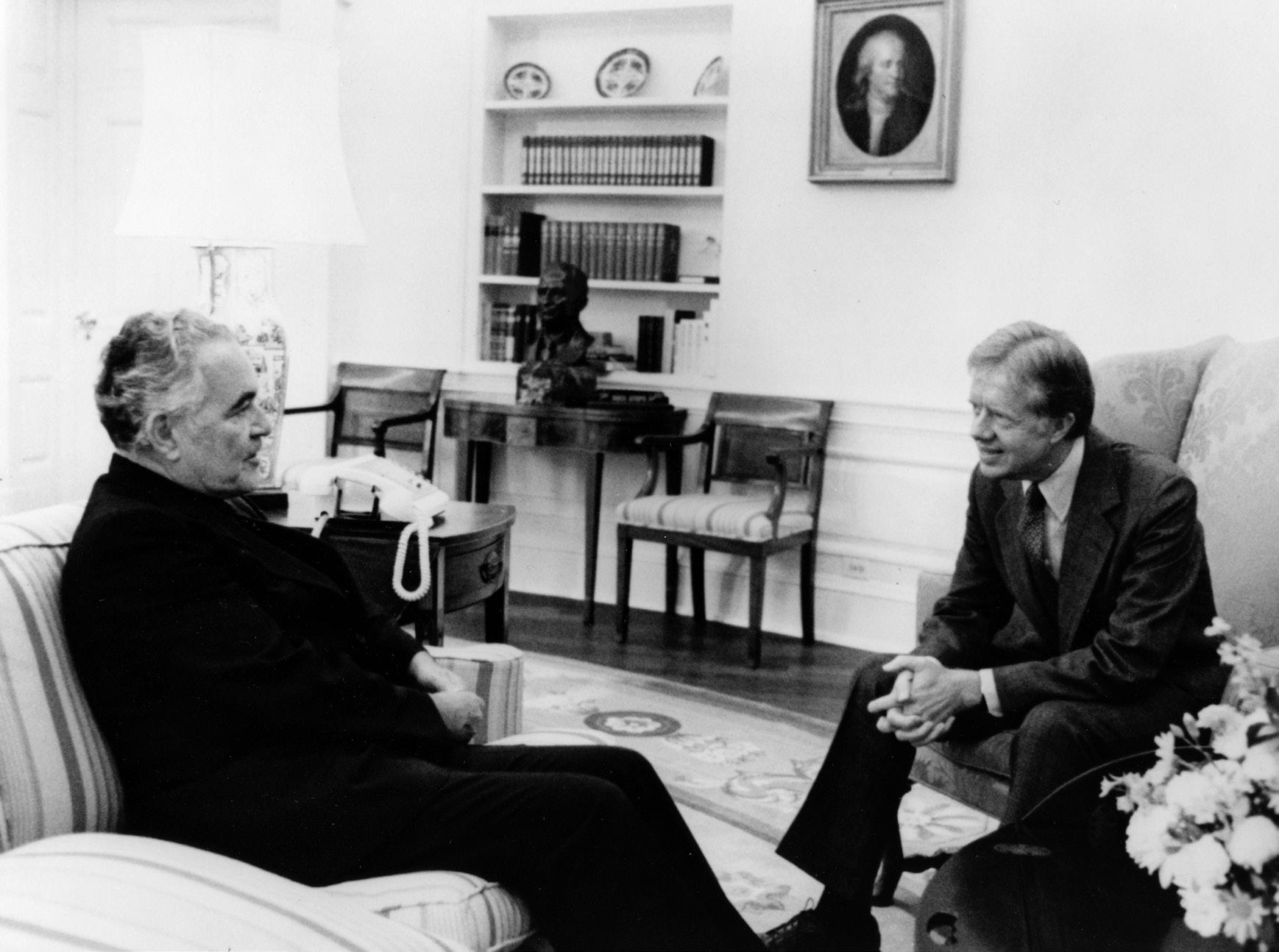
Page 28 Carter, Malloy and Beauchamp remember
MICHAEL YU | The Observer
MARCH
MONDAY MARCH 2
AN EVENING of PRAYER
7 – 9 p.m.
basIlIca of the s acred heart
we had mass every day.
a nd that wasn’t for show or to impress the students or anything. That was the way he was.”
hesburgh carried a mass kit with him wherever he traveled so that he could say mass wherever he was, bartell said.
“The mass was central [to him], no matter where he went,” bartell said. “If he had a really busy schedule, he’d say mass at five in the morning in the hotel room, or two in the morning as he got in his hotel room the next day because the mass for him was this central prayer.”
w hat was central for hesburgh, though, wasn’t necessarily the ritual of mass, but the meaning behind it, bartell said.
“For Ted, the mass was very central to his life,” he said. “but he wasn’t like some priests who make the mass the center of their lives, but then they become the people who tell you exactly how to hold your fingers or exactly how long to pause between this and that.
“That wasn’t Ted. … The mass is, after all, an offering of all of your talents and all of your service to the lord. a nd so I suppose it’s true that there have been some priests that focus on the mass, and then they spend all their time telling you how you said it wrong today. … but that’s rubrics; that’s not prayer.” as hesburgh grew older,
TUESDAY MARCH 3
PUBLIC VISITATION
12 – 6 p.m. & 9 p.m. – 10 a.m.
basIlIca of the s acred heart
WAKE SERVICE
7:30 p.m.
basIlIca of the s acred heart ( I nv I tat I on only)
traveling to the grotto and presiding over mass became more difficult. but he was still dedicated to a life of prayer, doyle said. “we would drive by the grotto, and since he moved over to the priest’s infirmary, he couldn’t make his daily trip to the grotto,” doyle said. “but if we were driving back, he wanted to stop, and he would talk to mary out the [car] window, even though he couldn’t see her because he’s been mostly blind lately. he would just talk to mary beautifully. I’d sit there and say, ‘oh my.’” during his stay at holy cross house, hesburgh continued to go to mass every day, bartell said.
“he used to be walking. a nd then he came in [the chapel] with a walker,” bartell said. “a nd towards the end, they were wheeling him in, and he had to stay in the wheelchair … because it was so hard to move him. so he knew his days were going, but he did his best. he couldn’t go down to the dining room anymore at the end. They brought his meals up to his room, but he wanted to go to mass.”
up until his last day, when hesburgh said mass, bartell said it came from the heart.
“w hen he said mass, he really meant it,” he said. “he wasn’t doing it for show or to impress the trustees or anything like that. … he became a very real role model in that respect.”
WEDNESDAY MARCH 4
FUNERAL MASS
2 p.m.
basIlIca of the sacred heart
MEMORIAL TRIBUTE
7:30 p.m.
purcell pavIlIon
PROCESSION to BURIAL SITE
3:30 p.m.
basIlIca of the s acred heart to holy cross communIty cemetery
“The Mass was central [to him], no matter where he went. ”
Fr. Ernie Bartell professor emeritus economics
Photo courtesy of the University Archives
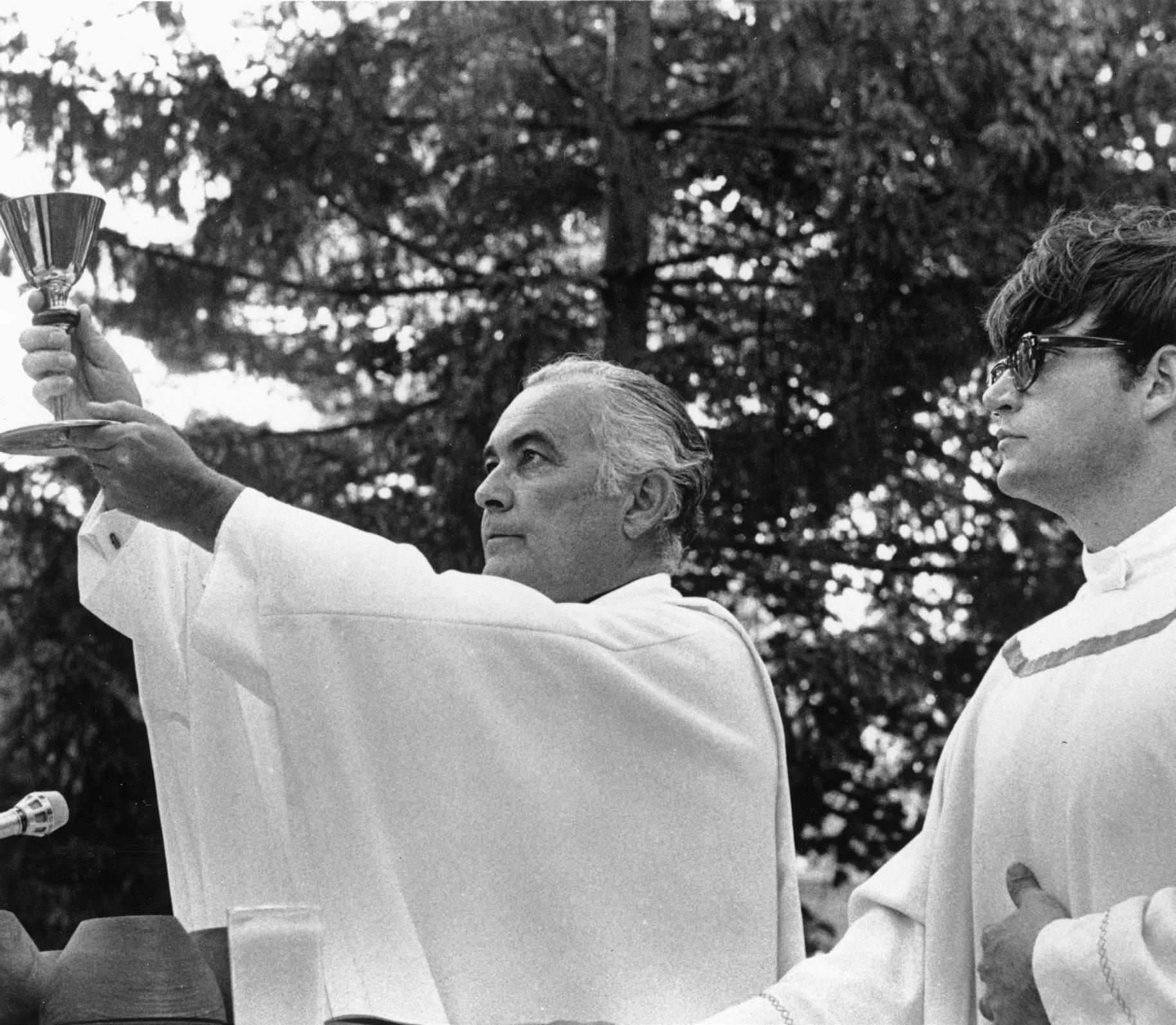
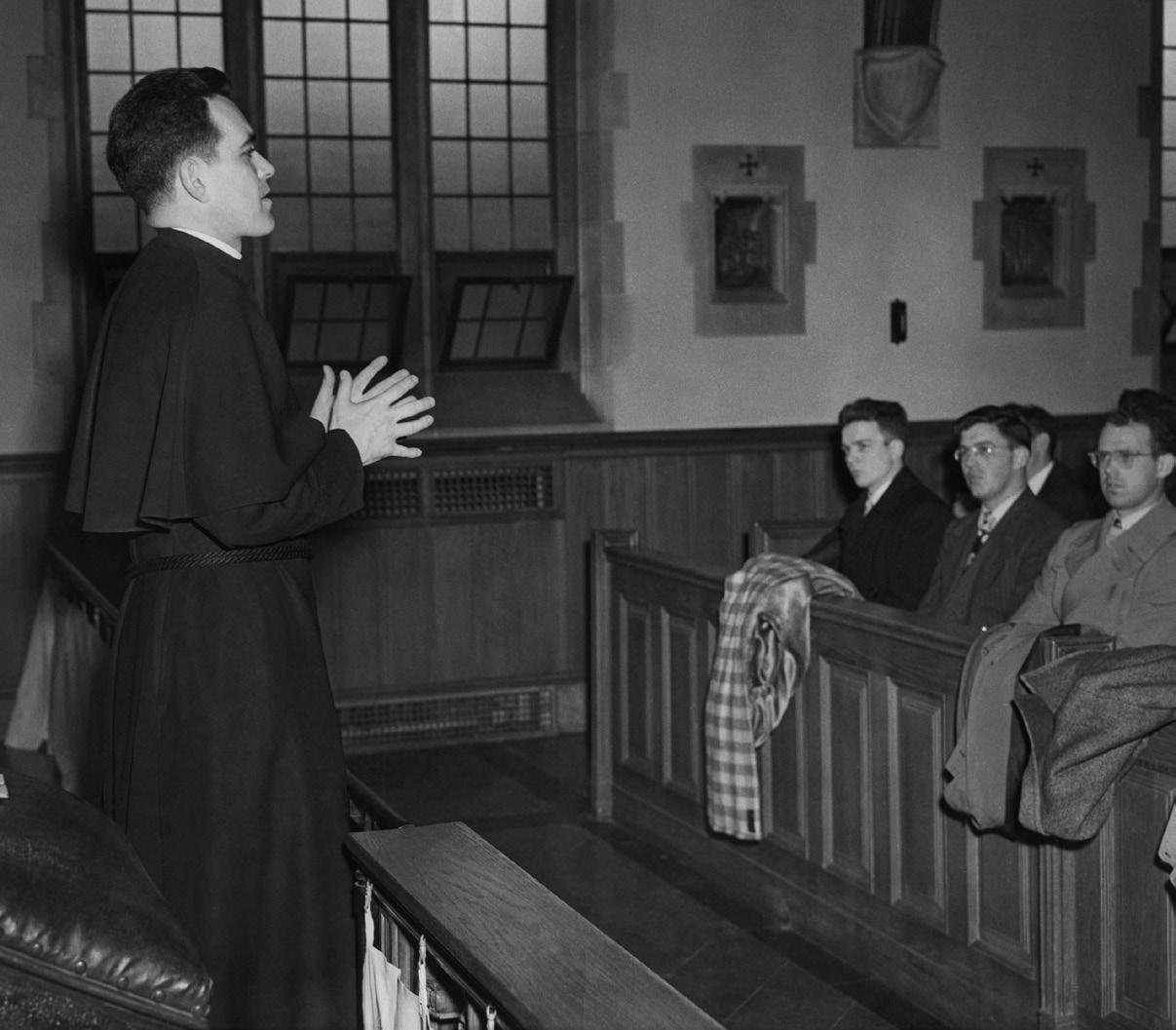
Fr. Hesburgh celebrates Mass outdoors on God Quad with students. Hesburgh celebrated Mass daily, even in his last days, everywhere from the Kremlin to Buckingham Palace.
Students reflect on Fr. Ted’s achievements
By EMILY McCONVILLE, MADISON JAROS AND ERIN McAULIFFE news writers
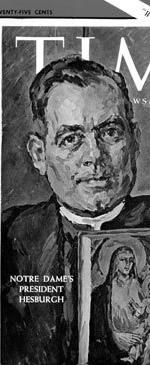
For the students who met him, u niversity p resident e meritus Fr. Theodore h esburgh was a powerful and memorable presence.
s ophomore a ndrew l ehmer met h esburgh, who died Thursday at the
“Just being in his presence was just unbelievable because this man has accomplished so much done so many great things for Notre Dame and the United States and Catholics everywhere.”
age of 97, during his freshman year after attending a l atino retreat.
“It was crazy how impactful his presence was,” l ehmer said. “ you could sense every word meant something bigger.”
l ehmer said he asked the former u niversity president, civil rights activist, diplomat and priest what he could do to make his own life as meaningful as h esburgh’s.
“ h e told me ‘be a good c atholic,’” he said. “ o bviously, that can be taken a lot of ways, but I’m trying to figure it out by actively pursuing the faith and keeping what he said in the back of my mind.”
s ophomore m ary w hite, the president of p asquerilla e ast h all ( pe ), said a
group of pe residents were supposed to meet with h esburgh on Thursday afternoon. s he said the dorm-wide response to the invitation to see h esburgh was so overwhelming that the coordinators limited the visit to upperclassmen, though the meeting was eventually cancelled.
To meet h esburgh was a once-in-a-lifetime opportunity, w hite said.
“It served as an integral n otre d ame experience,” she said. “It was something you would go on to tell your children about.”
Junior d iego Valenzuela visited h esburgh with his section of s tanford h all last year, to talk with h esburgh and hear his stories.
“Just being in his presence was just unbelievable because this man has accomplished so much and done so many great things for n otre d ame and the u nited s tates and c atholics everywhere,” Valenzuela said.
l ate in his life, h esburgh lost most of his sight as well as most of his mobility, but his mind remained sharp and his speaking powerful.
Junior Jesse h amilton said each time h esburgh spoke to his ro T c class, he would be slowly led onstage.
“It was such a slow, ginger process to get him up to the podium, and as soon as he spoke, he spoke with such clarity and sharpness,” h amilton said. “It was incredible just to see how all of his mind was there and all the love he had for us.
a ny words that came out of his mouth, you knew were genuine, and just the couple times I met him, he inspired me to be the best c hristian
I can be, the best leader I can be. h e will be greatly missed.”
b ut for all his
accomplishments — as a u niversity president, as a leader in civil rights and c atholic education — and gravitas, students were struck by his congeniality and concern for each individual student.
Junior a nthony b arrett also visited h esburgh with his section from s tanford h all. b arrett said the former president asked for each person’s name, hometown and major.
“ h e would say something kind to each person,” b arrett said. “ h e’s done so much for us as a school, on a large level, and he also still took the time to get to know people on an individual level. That’s the kind of person that we should all aspire to be.”
Junior p aul c oletti said he first met h esburgh in front of the library named for him during a scavenger hunt in his freshman orientation weekend. h esburgh stopped and spoke with the group.
l ater, c olletti became a u niversity tour guide.
d uring a tour Thursday, the day h esburgh died, he told a group about h esburgh’s accomplishments.
“I told the girl who I was touring about how students are sometimes even called up to read to him, if they’re studying on the upper floors of the library, and she turned to her dad, and she was like, ‘I want to come here,’” he said. “... l ittle did I know.
“ h e was a great u niversity president. h e was probably the closest thing to a living saint that I ever was in a picture with and shook hands with. h e was certainly good for the u niversity, but also good for c atholics everywhere.”
m any students who never met h esburgh also felt his influence. Junior e rin b ishop said in the days after his death, she kept thinking about his decision to make n otre d ame co-educational.
“ w ithout him, none of us would be here,” she said. “There would be no women here. That thought just keeps going through my head, you know? w ithout him, this wouldn’t be my life, and this is such a big part of my life.
The u niversity is really going to miss him. a nd I hope that they choose to celebrate his life rather than mourn his loss.”
Junior b ryan r icketts, student body presidentelect, said he went to the 13th floor of the library after h esburgh’s death to see his office. h e said h esburgh was instrumental in making n otre d ame co-ed and a premier research institution, and he looks to him for inspiration as a leader.
“I hadn’t had the chance to speak to him after being elected; it was something I was hoping to do with the team,” r icketts said. “ h e’s such an inspiration and left such a legacy.”
Freshman g abriel g aspar never got the chance to
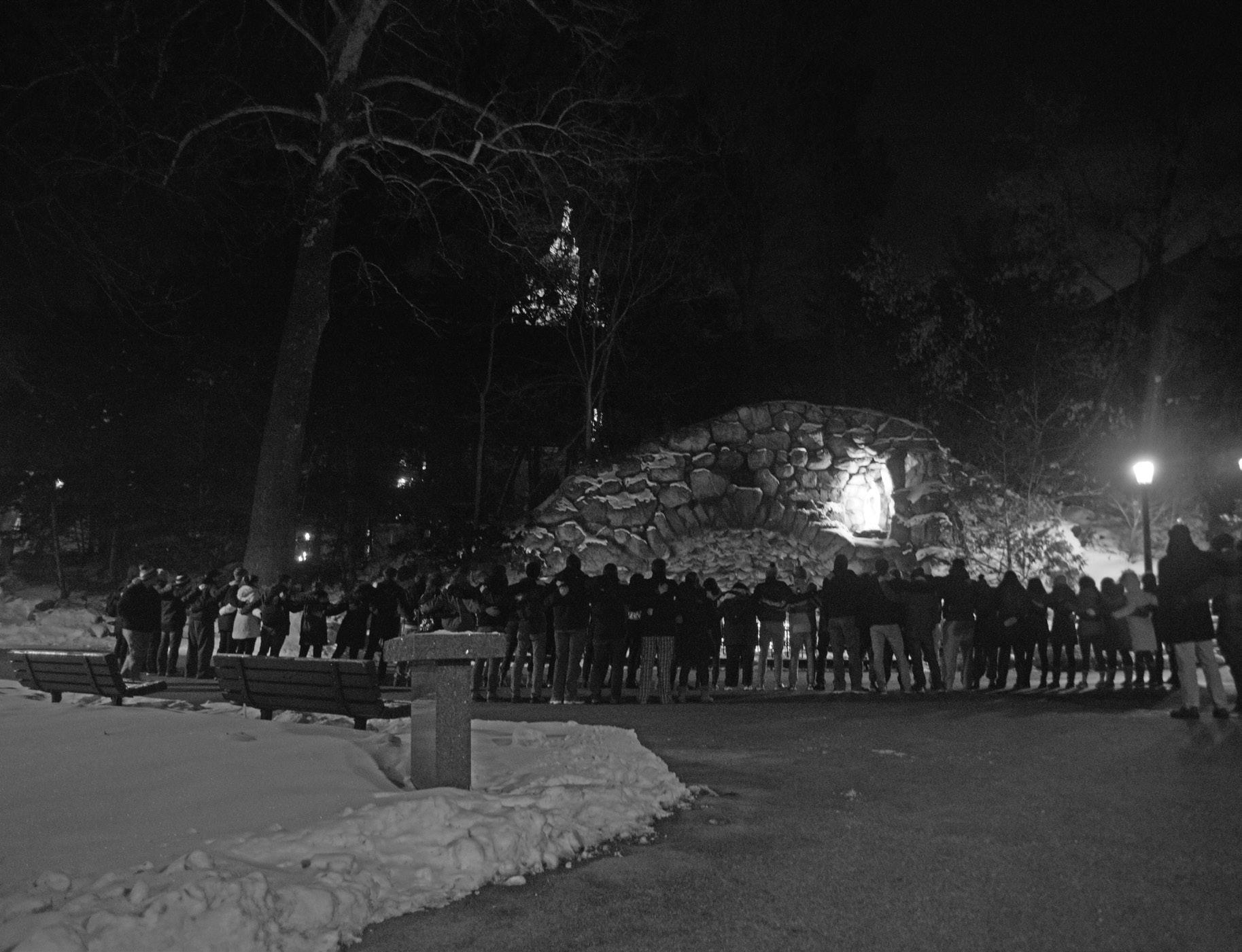
meet h esburgh, but when he heard of his death Thursday, he, like dozens of other students, headed to the g rotto to pay his respects.
“ h e’s really affected a lot of people here,” he said. “ e veryone I talk to, like my first week here, Fr. h esburgh came up, like, ‘you should definitely meet him.’ h e’s someone who can change your life. h e’s someone
“He’s someone who can change your life. He’s someone who truly represents Notre Dame and really brings the meaning of it to this entire school.”
Gabriel Gaspar freshman
who truly represents n otre d ame and really brings the meaning of it to this entire school.”
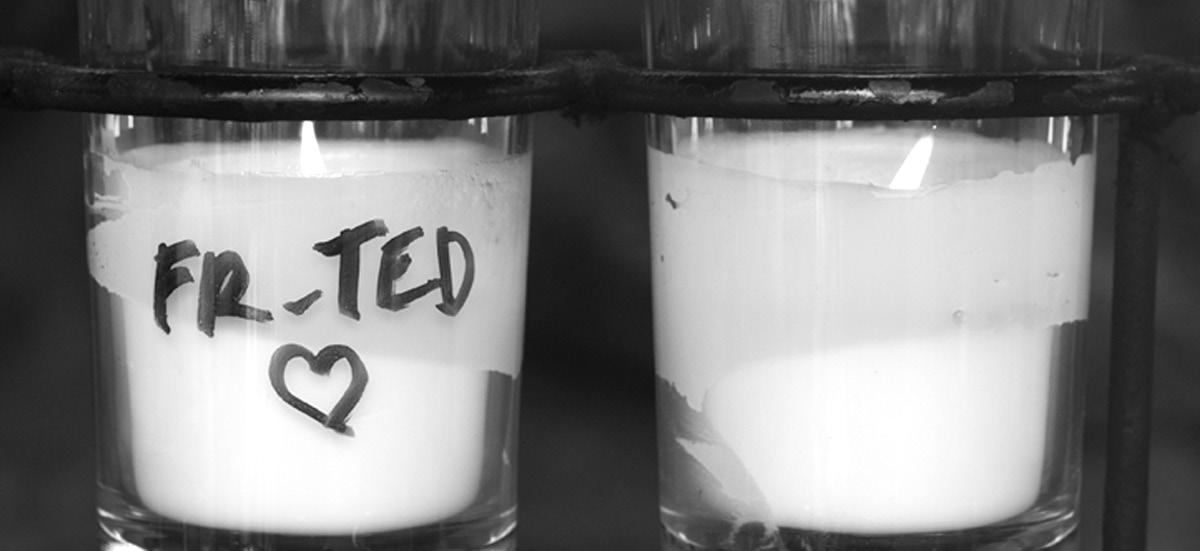
g rotto candles were rearranged to spell “T ed ,” and people left a cigar and notes in candle holders. The gathering at the g rotto on Thursday also included an impromptu rendition of the a lma m ater. Freshman w ill l ederer, who attended the event, said h esburgh inspired a sense of community among n otre d ame students.
“For the six months I’ve been here, I don’t think I’ve felt this way yet,” l etterer said. “Just the community, the service and the gratitude we owe Fr. h esburgh, and the outpouring of support is just truly inspiring. It’s really heartwarming. I’m glad I was here.”
Contact Emily McConville at emcconv1@nd.edu, Madison Jaros at mjaros@nd.edu and Erin McAuliffe at emcaulif@nd.edu
Photo courtesy of the University Archives
In the midst of the Vietnam War, students protested the United States’ involvement in the war. Fr. Hesburgh wrote a famous letter that was published in the New York Times, expounding on his 15-minute rule.
Photo courtesy of the University Archives
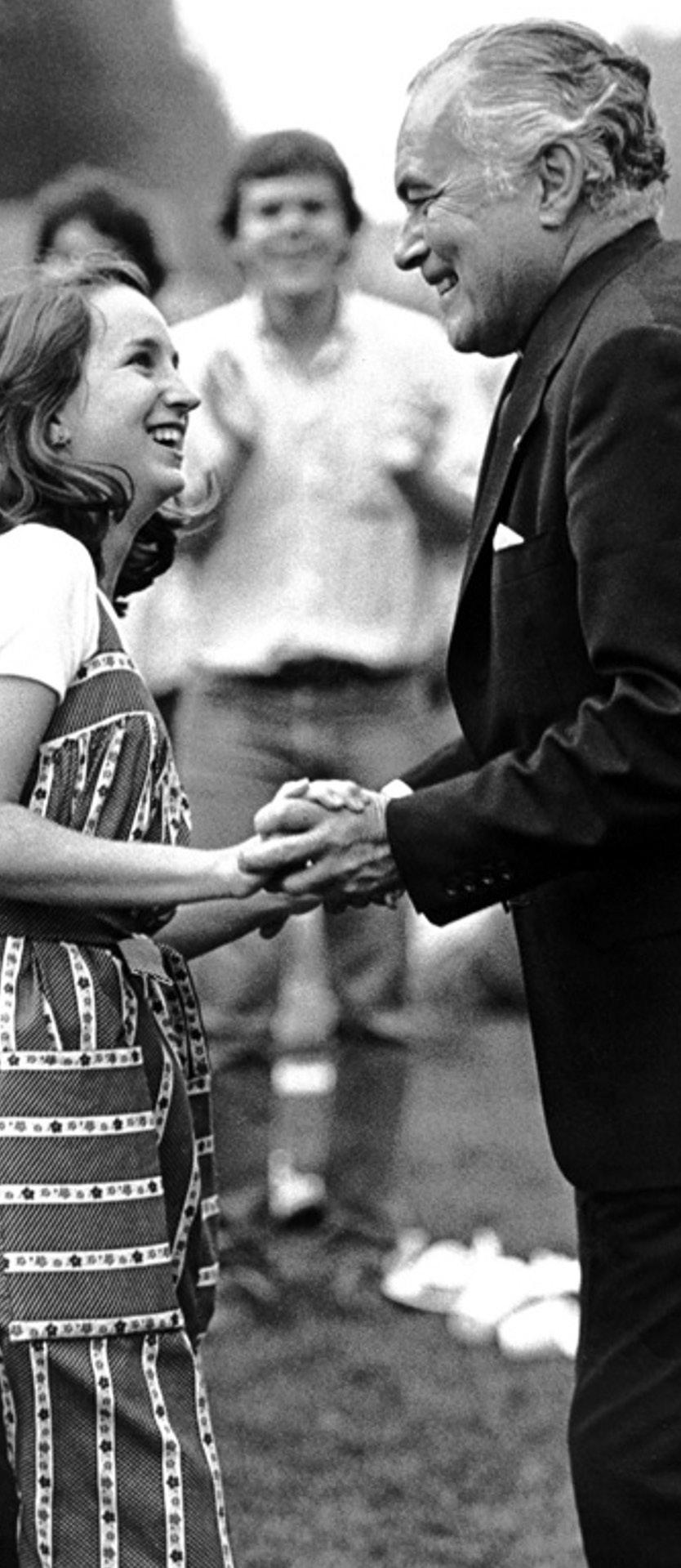
Fr. Hesburgh had an “open door” policy while he was the president of the University. He allowed students to come into his office to speak with him, regardless of the hour.
Diego Valenzuela junior
Fr. Hesburgh leaves behind legacy of equality
By KAYLA MULLEN
a ssociate news e ditor
“The good l ord and c reator meant for every man, woman and child to enjoy his or her human dignity, and until all do, here and elsewhere in the world, we must be charged to move ahead more quickly with our unfinished human business, which as John Kennedy said, must also be g od’s, too.”
w idely known as a leader in civil rights, university p resident e meritus Fr. Theodore hesburgh penned these words in a 1972 editorial on racial justice in the new york Times.
p resident d wight d e isenhower appointed hesburgh to the u s commission on c ivil r ights in 1957, and the committee was tasked with recommending legislative solutions to national racial problems, according to hesburgh’s autobiography, “g od, country, notre dame.”
according to hesburgh, the commission, which included one a frican-a merican commissioner and two a fricana merican lawyers on the legal team, often met opposition traveling through the south, as many hotels and businesses refused to serve them.
despite these setbacks, over 70 percent of the commission’s suggestions were made into federal law, most notably the c ivil r ights act of 1964, the autobiography said. hesburgh continued his work on the commission after these successes, knowing the act would not end racial inequality on its own.
“It is a part of my real hope for a merica that all, or most, of this daily affront to the human dignity of blacks was outlawed
in one day by the c ivil r ights act of 1964,” he wrote in the 1972 editorial.
“but there is no known way of outlawing prejudice, and all of us whites must confess that the sense of white superiority is still deeply rooted within us.”
hesburgh strongly believed that education could be used as a tool to combat social injustice.
“c hildren are not born with prejudice; they have to acquire it,” he wrote in the 1972 editorial.
“a n important prerequisite for living in a pluralistic society is education in a milieu free of prejudiced, stereotyped judgments about people who are different. c lassroom instruction in the democratic goals of tolerance and understanding affirms and strengthens what is learned in the living integrated context.”
p resident nixon appointed hesburgh chairman of the civil r ights commission in 1969, a position hesburgh held until 1972, when nixon dismissed him from the chairmanship for his and the c ommission’s criticisms of the administration’s civil rights record, according to hesburgh’s autobiography. however, the work that hesburgh did in 15 years on the commission resonates today.
“I point you to the fact that the president of the united states is today a black man, and that when I began working in the c ivil r ights commission, a black man couldn’t have any decent job, and now he’s president of the united states,” hesburgh said in a 2013 interview with The observer.
o ver his time at notre dame, hesburgh also worked tirelessly to integrate the campus fully.
“w hen I came to notre
dame in 1934, there wasn’t a single black student on campus,” he said in a 2009 talk at notre dame on the c ivil r ights movement. “w hen I came back with a doctorate’s degree to teach, there was one black student.”
The sole a frican-a merican student was at notre dame by accident; the navy reserve officer Training c orps had incorrectly placed him at the university, hesburgh said.
“w hen I became president, it was not a fair nation. … It simply did not carry out the opening words of our constitution as a country: ‘we take these truths to be self-evident, that all mean are created equal,’” hesburgh said in the 2013 interview.
“... That’s a wonderful goal for a nation. It’s the opening words of our c onstitution. a nd I think in the time of my presidency and work in washington, we made those goals come true.”
w hen a rthur mcFarland, class of 1970, arrived on notre dame’s campus in 1966, he was one of twenty-eight black students, he said.
“In the fall of 1967, my roommate, bill hurd, along with other a frican-a merican students, began discussions about the lack of inclusion of black students and black culture in the life of the university except in football and basketball,” mcFarland said.
“we saw a ‘race problem’ on campus. we invited black students from saint mary’s to participate in these sessions.
“a s a result of these meetings, we agreed to create a student organization to address our concerns with the university administration.”
b y mcFarland’s graduation in 1970, the administration had
addressed each of the objectives presented to Fr. hesburgh in 1968 by the group.
“It is clear that Fr. hesburgh’s efforts in the national struggle for civil rights informed his response to our demands as well as those of other student leaders on what appeared to be a rapid transition to a more open and inclusive campus,” mcFarland said.
“h is high profile as a catholic and civil rights leader during the height of racial tensions in a merica dictated that notre dame be an example for others to follow.”
Thomas hawkins, class of 1959, was the notre dame basketball team’s first a fricana merican a ll-a merican. d uring his time at notre dame, a south bend restaurant refused to serve him because of his race, hawkins said. Fr. hesburgh encouraged notre dame students to avoid the restaurant until it publicly apologized to hawkins, he said.
“Fr. Ted always preached the dignity of man regardless of race, creed or color,” hawkins said.
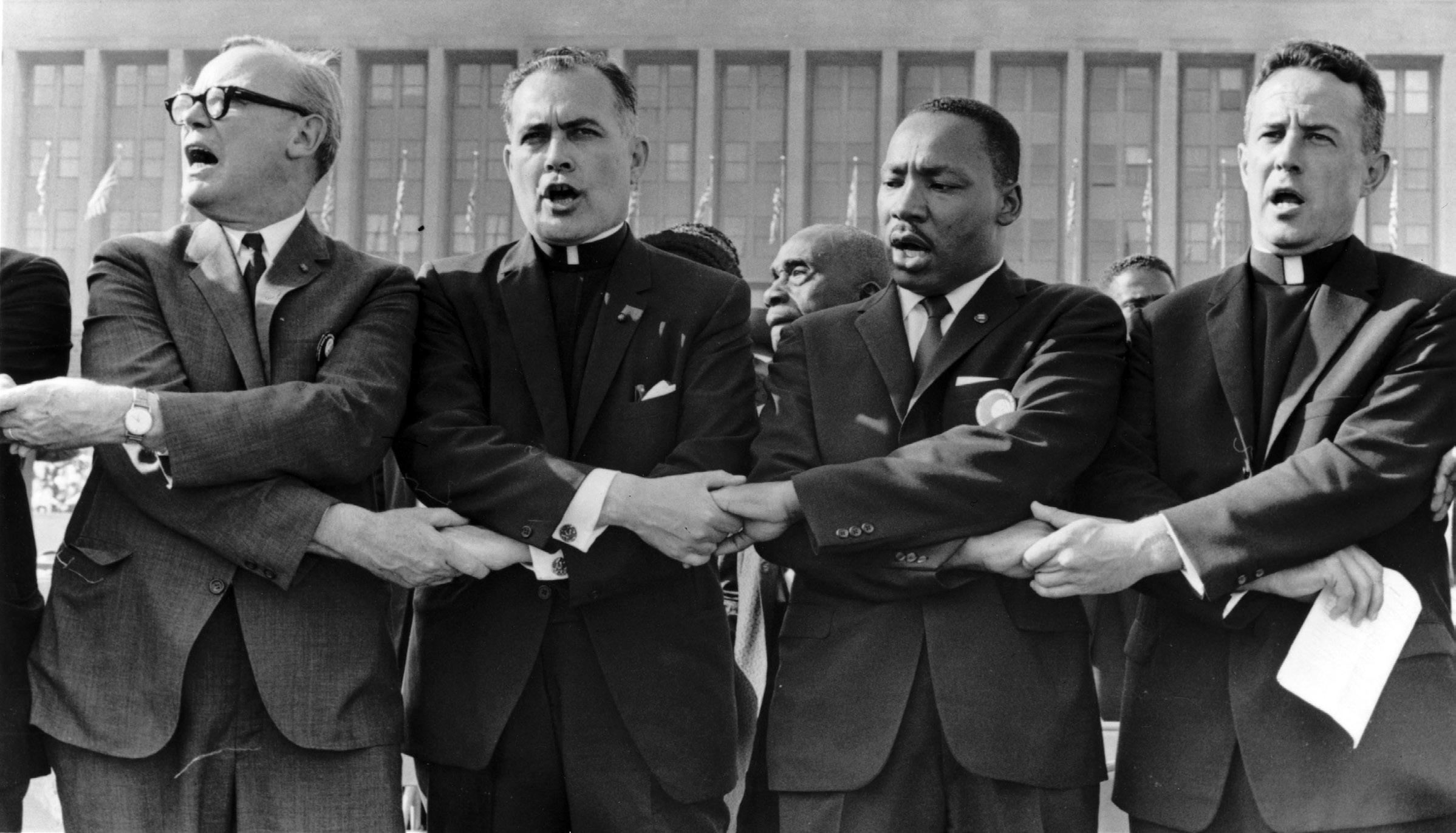
“he marched with the champion of human rights, dr. King. Fr. hesburgh was far ahead of society.
“he made it perfectly clear to the nation that anywhere notre dame’s minority students weren’t welcome, neither was notre dame.”
d uring Fr. hesburgh’s time, the first a frican-a merican man was appointed to the board of Trustees. bayard rustin, a prominent civil rights leader, was appointed to the board of Trustees in 1969, according to an observer article from that year.
In 1973, hesburgh founded
the center for c ivil and human r ights at notre dame, daniel philpott, director of the c enter, said. The center today has educated 300 human rights lawyers from 30 different countries, philpott said.
“a ll of this continues to draw inspiration from Fr. Ted’s founding vision,” philpott said.
“… soon after I became director in January 2014, I went to see him in his office on the 13th floor of hesburgh l ibrary.
“I told him how pleased and honored I was to be taking up the directorship of the center that he founded and how I hoped to build the center into an endowed institute. ‘dan, now is the time,’ he replied.”
In 2009, hesburgh said he was proud of the racial progress he had made at notre dame, but the fight was not over yet.
“I still say that I won’t rest until we have the same percentage of black students at this university that we have in the general population,” he said.
“I don’t want to rest until the institution that I love best has done its part to make blacks noble citizens of this great land.”
For hesburgh, the notion of equality is tied intricately with the ideas of democracy and greatness.
“remaking our beloved a merican in its professed image can be adventurous, inspiring, exciting, even fun,” hesburgh wrote in 1972. “we must be willing to shuck the status quo when it is retrogressive, unjust and going nowhere. we have to be open to change and alert to the great values that inspired this land’s beginning and led it to greatness.”
Contact Kayla Mullen at kmullen2@nd.edu
Photo courtesy of the Notre Dame archives
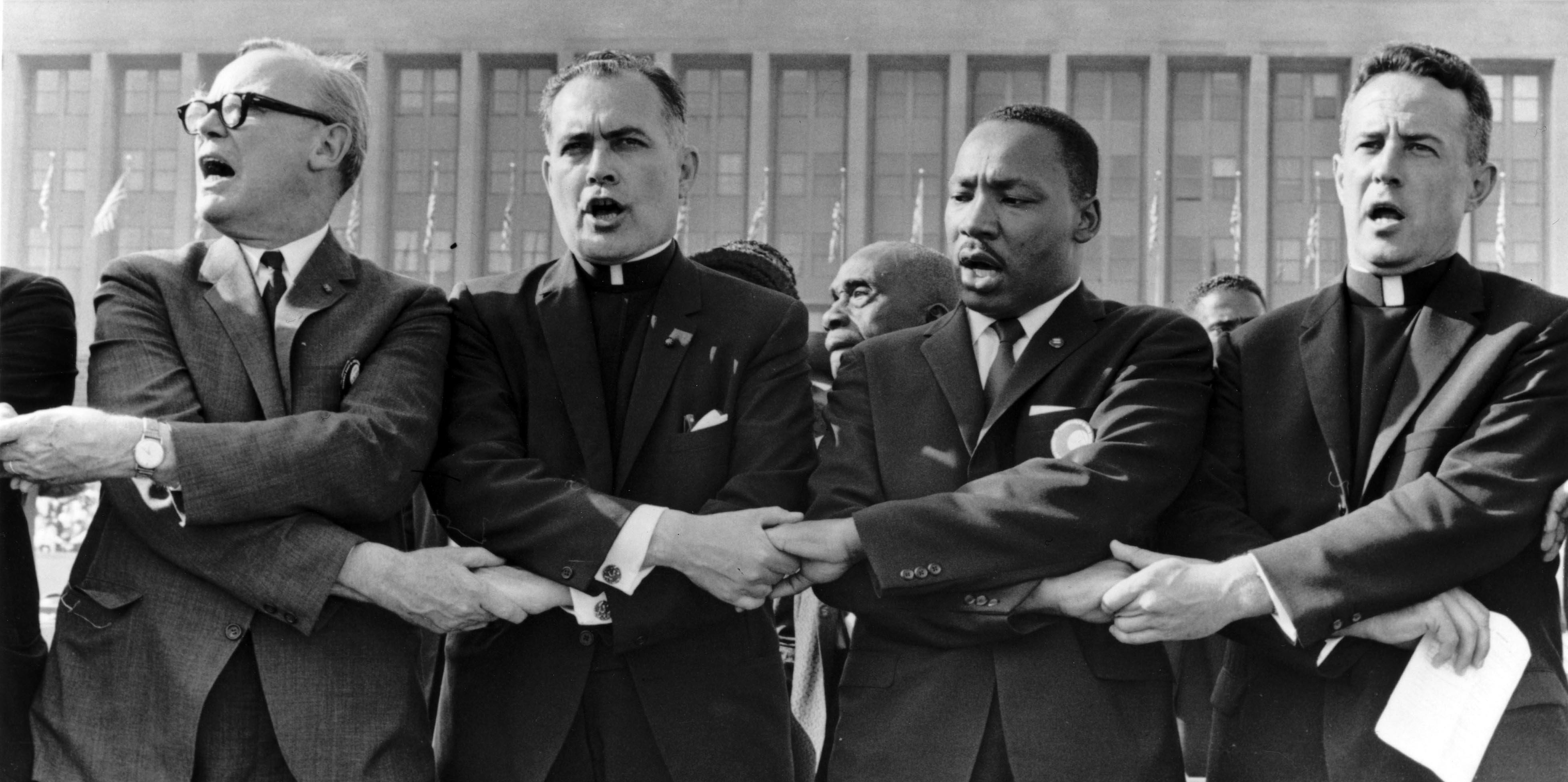
Fr. Hesburgh, second from left, links arms with Dr. Martin Luther King, Jr., to his right, and sings “We Shall Overcome” during a 1964 civil rights rally at Chicago’s Soldier Field. This photograph hangs both in the Smithsonian Institution’s National Portrait Gallery and outside of the U.S. president’s Oval Office in the White House.
hesburgh spearheaded co-education initiative
Observer Staff Report
l ong heralded as the driving force behind coeducation at notre dame, university p resident e meritus Fr. Theodore "Ted" hesburgh said he had simple reasons for opening the university to undergraduate women in 1972.
“w hen g od made the human race, he didn’t just make men; he made men and women,” hesburgh told The observer in February 2013. “since this is considered the best catholic university in the world ever, well, why shouldn’t half the people here be women as well as men, since women … are just as important in the scheme of things?”
To hesburgh, this logic was obvious. but to many notre dame supporters in the early 1970s, the idea was “heresy,” he said.
“They said, ‘you’re giving away the store. This is the greatest macho, male-dominated thing. … The place will go soft. It won’t amount to anything anymore,’” hesburgh said. “I said, ‘l ook, I’m in charge, and this is what I think is important. If we’re going to be the greatest catholic university, we should be open to women, as well as to men.’”
a lthough hesburgh did not face overt opposition to the proposed inclusion of women, instituting coeducation required extensive discussion and personal initiative.
“people didn’t come out with battle axes trying to shut the place down or something. … l ike anything else that goes on in a university, [coeducation] got thoroughly discussed, and there were pros and cons, but someone had to make the decision,” he said. “I figured I was the president, so I made the decision that, no. 1, we were going to be coeducational and, no. 2, women were going to have the same … profile of excellence as the male students.”
hesburgh also thought women deserved access to personal space in dormitories separate from male students. he believed women didn’t need “men looking over their shoulders every hour of the day or night” and, after a certain time in the evening, should have areas all their own.
hesburgh spent 35 years in the office of the p resident, leading notre dame from 1952 to 1987. In that time, he doubled the university’s enrollment, grew its endowment, added 40 new buildings, increased student aid and added lay people to the board of Trustees. but he said he considered instituting coeducation to be the best decision he made while at the university’s helm.
“I moved ahead quickly, and I’ve never regretted it,” he said. “I think women are holding their own here and putting
together a very good record, of which I’m very proud.”
‘Impossible conditions’ a lthough hesburgh’s personal convictions about the role of women in university life largely propelled the transition to coeducation, the final decision came after discussions in 1971 with saint mary’s college about a potential merger between the schools.
For about six years, notre dame and saint mary’s had operated a co-exchange program in which students at one institution could take classes at the other. This arrangement brought undergraduate women to notre dame’s campus, where a few female students already were enrolled in graduate programs.
Then, departments at the two institutions started to work together more closely, and some almost merged. meanwhile, many saint mary’s women became cheerleaders for notre dame sports teams, former Vice president for student a ffairs Fr. Tom blantz told The observer in november 2013.
blantz, who stepped into that position in 1971, was among the administrators who determined the university would directly admit women to its undergraduate student body following failed discussions to combine notre dame and saint mary’s. For a while, however, it looked as if administrators from both schools would approve the merger.
“There was a lot of closer relationships in different areas of the university,” blantz said.
“Then [administrators] started to investigate the idea of just merging and making one big university. It looked like it was going that direction anyway if each department was going to start merging.”
additionally, blantz said, university administrators thought admitting undergraduate women to notre dame would raise the level of academics, teach men to work with women, make the school more attractive to prospective male applicants and support catholic education for young women.
“Those were some of the reasons that I think Fr. hesburgh and others decided that it’s time for men and women to be educated together,” blantz said. “a nd a logical thing to do would be to merge with saint mary’s. They had a very good college over there, and we had a very good college over here, and rather than starting from scratch some place, and especially with the co-exchange program going so well, that seemed to be the logical thing to do.”
but administrators struggled to determine how to keep the college’s name alive.
Furthermore, operating one combined school seemed like it would cost, rather than save, money.
“Ted emphasizes that there was just a different view of what the final institution would look like,” blantz said.
u ltimately, “impossible conditions” prevented notre dame from agreeing to merge with saint mary’s, hesburgh said.
“a fter two or three of these forays … I said, ‘well, why don’t we just say it’s been an interesting discussion. we’re still open to merge with saint mary’s at any time. If you want to reopen the discussion, that’s fine, but there’s no point getting into a discussion where one side has a strong power blocking every time we get close to a merger,’” he said.
‘The best of all worlds’ administrators at notre dame and saint mary’s officially announced the cancellation of the merger in november 1971. shortly thereafter, then-associate provost Fr. Ferdinand brown called blantz to tell him notre dame would admit 325 undergraduate women — 125 firstyears and 200 transfers — for the next academic year.
“many of those transfer women obviously would be from saint mary’s,” blantz said. “I think we probably felt that since the two schools had jointly announced that we were merging, that if then there were some women that enrolled at saint mary’s for programs that saint mary’s did not have, because we told them we were going to be one school notre dame probably felt some obligation if those students wanted to transfer over here, that we should let them transfer.” as a first-year law student in 1970, Kathleen cekanskiFarrand was one of 12 women out of 250 students in her class, part of only the third coeducational graduate class in the law school. Two years later, she was mailing letters to welcome 119 women of the first female undergraduate class into her care as rector of badin hall.
hesburgh gave the women of badin their first mascot — a small snoopy statue that represented the dorm for years. he judged a door-decorating competition at christmastime and often called
cekanski-Farrand to make sure everything in the women’s hall was running smoothly.
he shared her commitment, she said, to integrating women into the student body and bringing notre dame to the place it is today.
“[hesburgh] took the time to do that,” she said. “I couldn’t have asked for a more gracious individual who was wanting to make this a positive for the university.”
In February 2013, more than 40 years after the proposed merger failed, hesburgh said his feelings about it had not changed. he was happy to see women succeed as notre dame students and to witness growth in the relationship between notre dame and saint mary’s.
“I was in favor of the merger, and I think the superior general [at saint mary's] was in favor of the merger. … To this day, I favor joining, but I don’t think it’s necessary,” he said. “I think we’ve become closer to [saint mary's] in many ways. … I think we have the best of all worlds short of a merger, so I’ve been happy to see that develop.”
hesburgh said the mutually beneficial relationship between the schools is due in part to their shared history, beginning when Fr. edward sorin founded notre dame in 1842 and the sisters of the holy cross followed suit and opened saint mary's in 1844.
“I think it’s interesting that when sorin began the school in those days, there were no [coeducational] schools,” hesburgh said. “[notre dame] became a men’s school, but only a year or so went by before [sorin] asked the sisters to start a school on the other side of the road. our history is almost identical, … and from [the 1840s] on, we’ve been close together and should be. [saint mary's] has been helpful to us and vice versa.”
‘A more normal human situation’
In the decades following women’s admittance to notre dame, hesburgh saw their successors make significant contributions to the university’s intellectual, athletic and religious life,
complementing the work of their male counterparts.
“women more and more have had their say on campus. … men and women tend to think very much along the same lines at a catholic university,” he said. “I’d have to work hard to scrape up a problem [between men and women]. … I think we get along as a happy family where we’re both making good contributions to the good of the whole enterprise.”
hesburgh said he thought the inclusion of women made the university a microcosm more representative of the world in general. It became, he said, “a much more normal human situation.”
Indeed, the world outside notre dame had a major impact on coeducation and the university as a whole, especially in the midst of the Vietnam war, the civil rights movement and other political turmoil at home and abroad.
“The great national decisions that were going on … all of these things that affected the world were bound to affect the university,” he said. “I was very happy that the students were very active in world affairs and came at them from different points of view as men and women.”
Though the political and social climate outside the university has changed considerably since 1972, hesburgh said such a dynamic environment encourages notre dame students to consider their role in the world after graduation.
“I think [involvement in world affairs] was a good thing for education at notre dame because we don’t want to be in another world,” he said. “we want to be in the world that exists right now. we want to compete in that world, and we want to be leaders in that world, and that’s true of both men and women.”
Former Assistant Managing Editor Marisa Iati, class of 2014, former News Editor Kristen Durbin, class of 2013, and former Managing Editor Megan Doyle, class of 2013, contributed to this story.
Observer File Photo
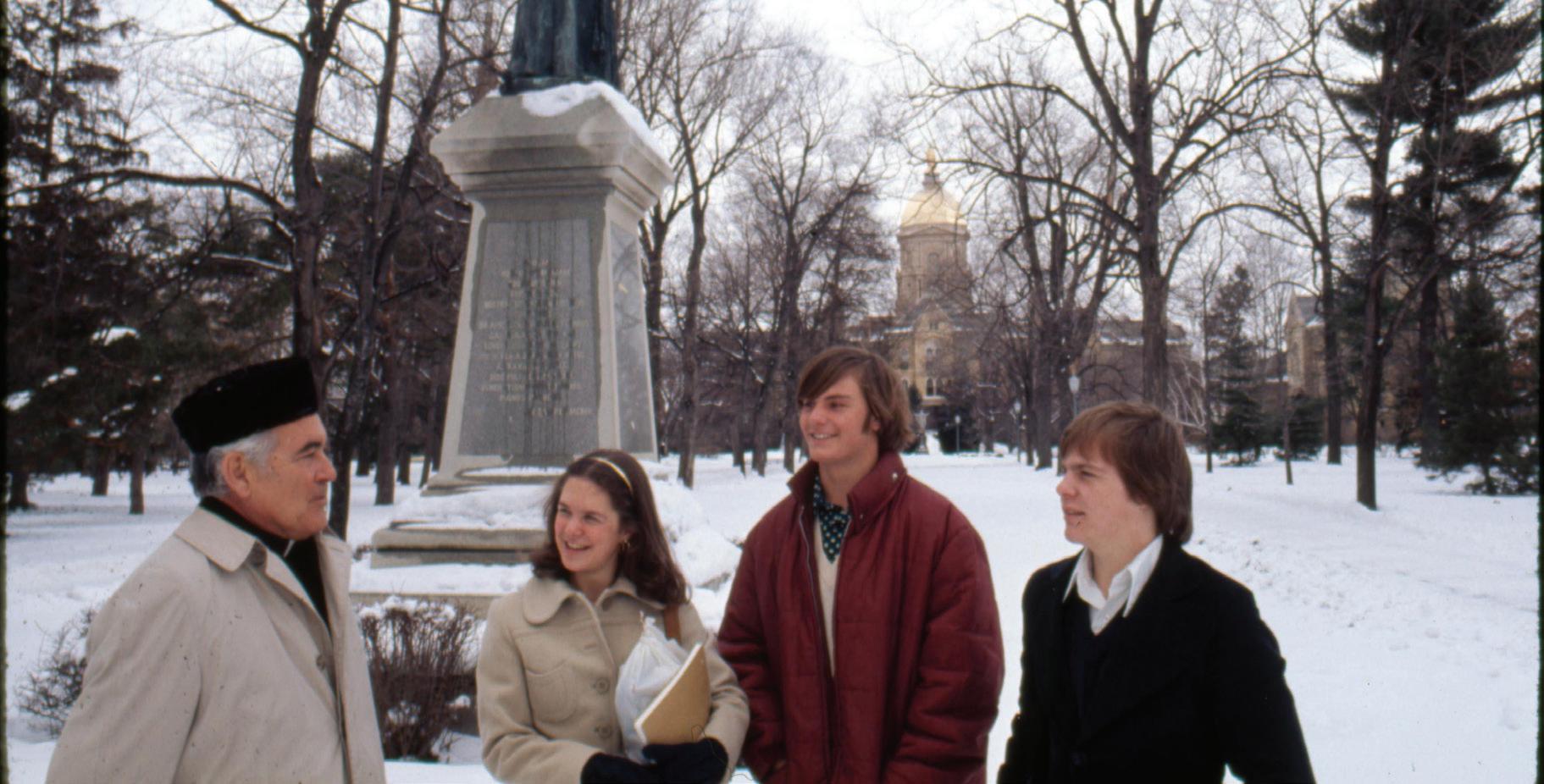
Fr. Hesburgh talks with students on God Quad. Hesburgh worked hard for the University to admit women and though he did not face much opposition, the change required extensive discussion.
Fr. Ted stressed academic integrity in athletics
By BRIAN HARTNETT managing e ditor
sixty years ago, well before the advent of espn, conference realignment and a playoff, the college football system faced many of the same questions it does today regarding the role of student-athletes in university life, the balance between academics and athletics and the need for institutional integrity in the face of big-time college sports.
sixty years ago, a university president just two years into his job wrote an article for a fledgling sports magazine addressing such college footballrelated issues.
The president was Fr. Theodore hesburgh, the magazine was sports Illustrated, and the views hesburgh set forth would come to define his and notre dame’s view of intercollegiate athletics for the next three decades of his term and beyond.
In the sept. 27, 1954, issue of sports Illustrated — the seventh ever produced for the magazine that now has more than three million subscribers and was the first to feature a college football player on its cover — hesburgh, who had recently started his term as notre dame president in June 1952, penned an article titled “The True spirit of notre dame.”
In it, hesburgh espoused his views on intercollegiate athletics as a so-called “spectator” of the game, rather than as an expert. early in the piece, hesburgh made clear that administrators at notre dame are “in favor of intercollegiate athletics,” though with a few caveats.
“I must add that we favor intercollegiate athletics within their proper dimensions,” hesburgh said in the sports Illustrated article. “It goes without saying that the proper dimensions should be those of university life and purposes.”
To understand these dimensions, one must understand that college and professional athletics differ because college athletes must be students above all, hesburgh wrote. according to hesburgh, colleges can emphasize the role
of the student-athlete by not admitting any student incapable of doing collegiate work, requiring athletes to follow the same academic requirements as other students, taking “no fresh-air courses” and giving athletes the same treatment in campus life matters as they would for other students.
hesburgh then set forth a framework governing how notre dame selects and treats its student-athletes. he noted that entrance requirements for athletes are the same as they are for everyone else at notre dame and that “many excellent athletes are not admitted because of their high school deficiencies.”
Tommy hawkins, who played basketball for the Irish from 1956 to 1959, said the admissions criteria for the university was particularly stringent, focusing on even more than grades and athletic ability.
“That was a very sensitive time because the athletes who were chosen for scholarships were hand-picked at that time,” hawkins said. “Their families were investigated; they wanted to see that people came from good families.
“It just wasn’t how good you were as an athlete. nobody said this to me, but I got the feeling that you had to clear the deck on a lot of different levels before you were extended a four-year scholarship to notre dame.”
dave c asper, who played tight end for the Irish football team between 1971 and 1973, said athletes knew of hesburgh’s standards for them from the start of their careers.
“I know that [ hesburgh] thought it was important to have a great athletics program, just as it was important to have everything … everything should be of excellence,” c asper said.
o nce athletes were enrolled at notre dame, their major focus was not to simply win a monogram but also to receive a diploma, hesburgh said. athletes had to stay eligible in order to do both, which required them to have a 77 percent academic average at the time, even above notre
dame’s then-passing mark of 70 percent.
g erry Faust, who coached the Irish football team from 1981 to 1985, said hesburgh was very resolute in what he considered his top goal for the football team.
“he and [former university executive vice president] Fr. [ e dmund p.] Joyce both felt the most important thing was that the young men graduate,” Faust said. “If they didn’t graduate, then they’re not fulfilling what the university is all about, so therefore they never took anybody that couldn’t make it academically.”
The final main tenant on which student-athlete life at notre dame was based, hesburgh wrote, was that athletes should “live a normal collegiate life.” l iving such a life required that athletes not be swayed by the promise of illegal deals or recruiting benefits and that the university display integrity in all aspects, doling out the same punishments to athletes that they would to any other student g ene c orrigan, who served as notre dame’s athletic director from 1981 to 1987, said adherence to ncaa and university rules was something hesburgh emphasized from his first moment on the job.
“he said to me one time, on one of my first meetings with him, ‘do you know all the rules of the ncaa?’” c orrigan said of hesburgh. “I said, ‘Father, I don’t know them all, but I understand them.’ he then said, ‘I want to tell you something. If you or any of your people ever break those rules, you’re out of here by midnight, and I don’t talk to attorneys.’”
similarly, hesburgh stressed notre dame’s role as an integrity leader in the 1980s, an era when college football was beginning to grow into the billion-dollar business it is today, c orrigan said.
“he felt like we had to be a leader as far as ethics were concerned, as far as doing things right, as far as graduating people, behaving themselves as athletes,” c orrigan said. “he did not want [athletes] to live together. he and Fr. Joyce were adamant that we would not have anything like an athletic dormitory.”
despite some of his hardline stances, hesburgh had little involvement in the dayto-day affairs of notre dame’s sports teams, mainly leaving that responsibility to Joyce, who hesburgh described as his “watchdog” in the 1954 sports Illustrated article.
“I would have lunch with Fr. Ted probably once a year, and we’d just talk about all things that had to do with intercollegiate athletics, what we were doing, what’s going on in the whole country,” c orrigan said. “but that was never his
interest.”
w hile Joyce largely oversaw athletics, hesburgh wouldn’t hesitate to intervene if he felt athletes weren’t living up to standards, c orrigan said.
“he would get upset if there was a sport where the kids weren’t behaving,” c orrigan said. “That meant more to him. he liked to win, don’t get me wrong, but that wasn’t everything to him, not at all.”
hesburgh also took a special interest in ensuring some of notre dame’s early a fricana merican athletes felt welcome, according to hawkins.
The former basketball player, who was one of just 10 a frican-a merican students when he arrived on campus, said hesburgh personally welcomed him to c avanaugh hall at the start of his freshman year and continued to check in on him afterwards.
“he always kept track of me and from time to time, I’d get a message to drop in and see him so he could see how I was doing or if there were things that were bothering me,” hawkins said. “a mazingly enough, as busy as he was, he always took the time to say, ‘hello’ and ‘how are you doing? Is everything okay?’”
hesburgh attended notre dame home sporting events, but rarely, if ever, went to away games, according to c orrigan.
w hile hesburgh wasn’t an overly vocal fan at games, he cared deep down about notre dame’s athletic performance, Faust said.
“ w hen we were on the road, he would invite my wife to watch games at wndu-TV,” Faust said. “my wife said he would never show his emotions in public, but privately, he was rooting right and left all the time.”
a fter his retirement as university president, hesburgh took a role in influencing policy on the national college athletics landscape, serving
as co-chairman of the Knight c ommission on Intercollegiate athletics from 1990 to 2001. hesburgh and co-chairman w illiam c . Friday, president emeritus at the university of north c arolina- c hapel h ill, oversaw a committee that released two reports, one in 1992 and one in 2001. The 1992 report called for stronger presidential leadership and academic and financial integrity in collegiate athletics, while the latter report set forth the academic standards that formed the basis for the ncaa’s academic p rogress r ate (apr ).
In 2004, hesburgh received the ncaa’s g erald r . Ford award, which is presented to an individual who has provided leadership as an advocate for intercollegiate athletics over the course of his or her career.
hesburgh’s receipt of the award, which came a half-century after his sports Illustrated article, represented the culmination of an approach to intercollegiate athletics that often deviated from the norm at the time.
hesburgh himself recognized the difference in his views compared to others, particularly when he wrote in sports Illustrated of the criticism that came from his decision to bench a star basketball player for a game against Kentucky for having an average below 77 percent. a fter the Irish lost to Kentucky by one point in overtime without the suspended player, hesburgh defended his approach with the following words: “at times like this, when the walls are falling in on an administrator, it is good to seek quiet courage in the epigram above a hero’s grave: ‘death is not rare, nor is it of ultimate importance. heroism is both.’”
Contact Brian Hartnett at bhartnet@nd.edu
Photo courtesy of University Archives
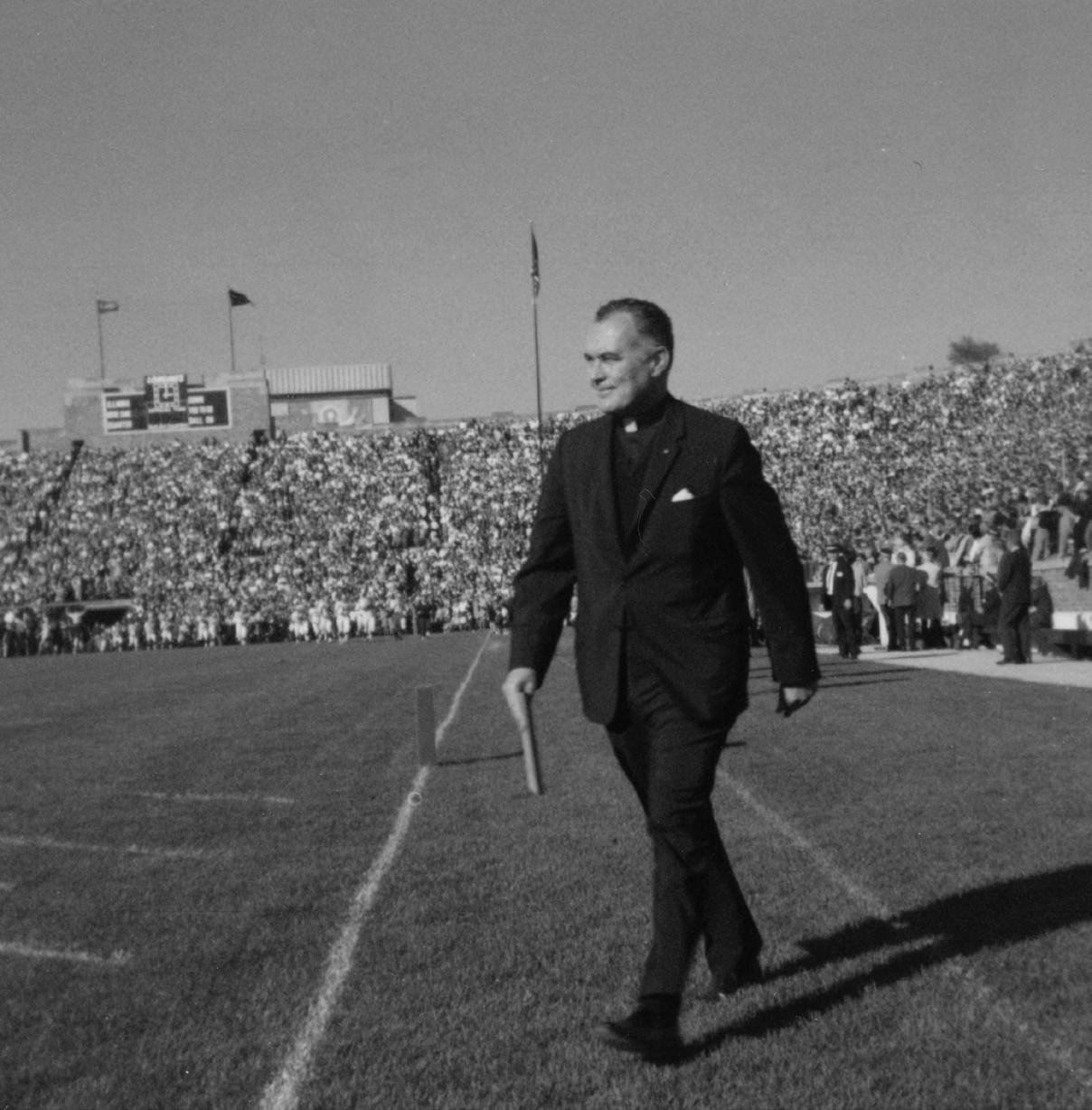
Fr. Hesburgh walks along the sidelines at a football game. Hesburgh emphasized academic integrity in athletics.
Hesburgh advocated for lay governance of ND
By EMILY McCONVILLE news writer
amid the triumph and turmoil of the civil rights movement, the changes of the second Vatican council and the push for academic freedom for catholic universities, the 1960s saw what Fr. Theodore hesburgh called one of his greatest administrative achievements: placing university decisionmaking power in the hands of laypeople.
“I would have to say that of all the accomplishments during the 35 years of my presidency at notre dame — improving the academics, the quality of the students, the endowment, the building program — the greatest change made during my administration was turning the university over to lay control,” hesburgh wrote in his 2000 autobiography, "god, country, notre dame."
until 1967, holy cross priests made all major decisions for the university, which was valued at half a billion dollars, hesburgh wrote. a lay advisory board existed, but it had no real power.
In the summer of 1965, at a university retreat house in land o’lakes, wisconsin, hesburgh and several other holy cross leaders set out to change that.
“The time had come for the
priests of the holy cross to relinquish ownership and control of the university to a lay board of trustees who would be better equipped to oversee its future well-being,” hesburgh wrote.
a key motivating factor was the recently-concluded second Vatican council, which emphasized involvement of laymen and laywomen in the church. hesburgh even wrote his 1945 doctoral dissertation at catholic university of america on the role of the laity in the church.
“Vatican II had said that laypeople should be given responsibility in catholic affairs commensurate with their dedication, their competence and their intelligence,” he wrote. “many people may not have taken that seriously, but we did. For me, it was the most natural thing in the world.”
The separation of the university from a religious order would also be a step towards establishing its independence and academic freedom, hesburgh said.
“an organization as big as a catholic university, which is totally faithful to the church, wants to go on and be a catholic university, needs a lot of elbow room,” he told national public radio's Fresh air in 1990. “and I thought we'd have more elbow room if we were run by lay people.”
In early 1967, the process of transferring ownership of the university from the congregation of holy cross to a lay board — which required Vatican approval — began. according to hesburgh’s autobiography, Fr. edward heston, holy cross’ procurator general in rome, put in a request for the transfer.
approval “sailed right through,” hesburgh wrote, “which is highly unusual for the Vatican.”
hesburgh then called in ed stephan, a 1933 graduate and a chicago lawyer, to legally transfer ownership and to set up a new governing structure. a continual priority, hesburgh said, was to be “careful not to load anything in favor of the clergy.”
“we all wanted notre dame to continue as it had before, as a premier catholic university, and also to grow stronger academically and economically,” he said.
The result was a two-tiered system of governance: a 12-member board of Fellows — six holy cross members and six laypeople — and a board of Trustees, whose members could be lay or religious. The Fellows would set the number of, elect and oversee members of the board of Trustees, allowing the laity to make decisions but maintaining the voice of the clergy.
Fr. Thomas blantz, a professor emeritus of history and a trustee
pa I d a dV erTIsemen T
emeritus, was an assistant rector on campus in the mid-1960s. he said while he was not involved in the decision to transfer control, hesburgh was open with the holy cross community throughout the process.
“There were very good discussions,” blantz said. “Fr. hesburgh was very open in his discussions with the holy cross. he’d bring [stepan], and he was there to answer our questions also, at these meetings.”
over the next several decades, the new structure resulted in the input of trustees from a range of backgrounds and fields, such as law, business, media and academia, who could both act as examples for notre dame students and bring their expertise to the university’s decision-making, blantz said.
“one of the things a board of Trustees does is represent the wider public at the university,” blantz said. “we are, at notre dame, every university, training people for life in american society and maybe even leadership in american society. Therefore, it’s probably good to have that perspective of these leaders in american society overseeing your product and how you are doing.”
The expertise of those leaders also helped notre dame expand
financially. For example, don Keough, the former chairman of the board of trustees who died last Tuesday, donated or raised billions of dollars for the university.
"we reached out into the world and picked out some of the best leaders in the country like don Keough, head of coca-cola, and he came in, and he helped us carry off a great fundraising campaign," hesburgh said in an interview with The observer in 2013.
one of the biggest impact of the transfer, hesburgh wrote, was to give notre dame the independence it needed to expand intellectually.
“I think we are more catholic today than we were in the past — both big c and little c,” hesburgh wrote. “one could argue with that, as many do, but I stand by that statement. It is very important that we continue to have independent catholic universities. They are the very places that do the most of advance catholic thought and influence in this country.
“we have, and deserve to have, the respect of everyone who values academic freedom and commitment to the principles of reason seeking faith, and faith freely seeking a deeper understanding of all that faith means in our times."
Contact Emily McConville at emcconv1@nd.edu
Fr. Ted honored as Navy chaplain at 96
By ANN MARIE JAKUBOWSKI
s enior news writer
If young Fr. hesburgh had his way, he would have boarded an aircraft carrier in the pacific to serve as a naval chaplain during world war II upon his return to the united states from gregorian university in rome.
but his superiors in the congregation of holy cross had other plans, and he was instead told to finish his doctoral studies at catholic university in washington, d c
“w ith the war on the whole time I was at catholic university, I was really itching to get out of washington and into the military service," hesburgh wrote in his autobiography. “but Father Tom steiner, my provincial superior at notre dame was adamant. ‘g et your doctorate now, or you will never get it,’ he told me. ‘Then we’ll talk about your becoming a navy chaplain.’”
he worked overtime to finish the doctorate in just two years, and in the summer of 1945, he wrote to Fr. steiner again to remind him of their discussion about the chaplainship.
‘...
“It was as good as done,” hesburgh wrote about his plans for the chaplainship that summer.
but when the response letter came from Fr. steiner, it was not what he expected.
“I was to … report for duty at notre dame on July 5, my orders said,” he wrote. “Father steiner wrote that the navy was sending thousands of officer candidates to notre dame for training, and notre dame was in desperate need of faculty. That sank my hopes for a carrier in the pacific.
“l ittle did I know that a month or so later the war in the pacific would end and I would become chaplain for all the returning veterans at notre dame. It was as if the l ord were saying to me, ‘your planning is terrible. l eave it up to me.’”
seventy one years later, weeks away from his 96th birthday, hesburgh’s dream came true when rear admiral mark Tidd, then-chief of chaplains for the united states navy, came to campus to designate hesburgh honorary naval chaplain in a special ceremony held april 17,
2013, in the carey auditorium of the library.
w hen he awarded hesburgh that day, Tidd said he could think of no one who better exemplified the navy chaplain motto “vocati ad servitium.”
“The l atin words on the naval chaplain corps seal are translated ‘called to serve,’” Tidd said at the ceremony. “In my mind, there is no one more deserving to be named an honorary naval chaplain than someone who has answered the call to serve our nation, the call to serve the world and the call to serve g od.
“Fr. hesburgh, I am humbled to be able to declare: you are an honorary navy chaplain.” at the ceremony, hesburgh said he would “continue to serve our navy and country in every way possible.”
“I can’t tell you how much I am touched to be honored by my navy brothers,” he said. “notre dame is better because we’ve had the navy here as long as we’ve had roTc
“I can feel even closer to our naval roTc students now that I am an officer in the navy. … a nchors aweigh.”
c aptain e arl c arter, former c ommanding o fficer for the naval ro T c , said in 2013 that the ceremony was meant to honor “this selfless leader who has done so much for so many.”
“I thought it was a faithful tribute to a very, very deserving leader,” carter said about the ceremony. “I’m honored we were able to do the presentation in front of our battalion of midshipmen,
since Fr. hesburgh’s selfless service to the nation provides them with such a shining example as they look forward to their naval careers.”
Editor’s note: This article draws on reporting by former News Writer Christian Myers, class of 2013.
Contact Ann Marie Jakubowski at ajakubo1@nd.edu
and to enjoy the occasional cigar’
By EMILY McCONVILLE news writer
In his 97 years, Fr. Theodore hesburgh oversaw the civil rights commission, the International Federation of catholic universities, several Vatican and united states delegations and the university of notre dame. The rest of the world took care of the cigars. “Just when I think I’m getting low,” he told The observer in 2013, “someone will come in out of nowhere and say, ‘hey, by the way, I was in central america and I picked up something for you,’ and they come up with a box of cigars.”
Junior Tommy schneeman said the president emeritus was smoking the first time he met him.
“he was over 90, and it was like, alright, interesting,” schneeman said. “[he] never had any health problems, which is like a miracle in itself.
“... he was like, in his gravelly voice, ‘they’ve been trying to get me to quit smoking in here forever, but I told ‘em, if you don’t let me smoke in here, you’re going to have to take my name off the building.’”
so hesburgh kept smoking cigars — and people kept sending them — until his death Thursday.
“he continued, in his final days, to visit with family, friends and fellow holy cross religious and to enjoy the occasional cigar,” university president Fr. John Jenkins said in an email to the notre dame community Thursday night.
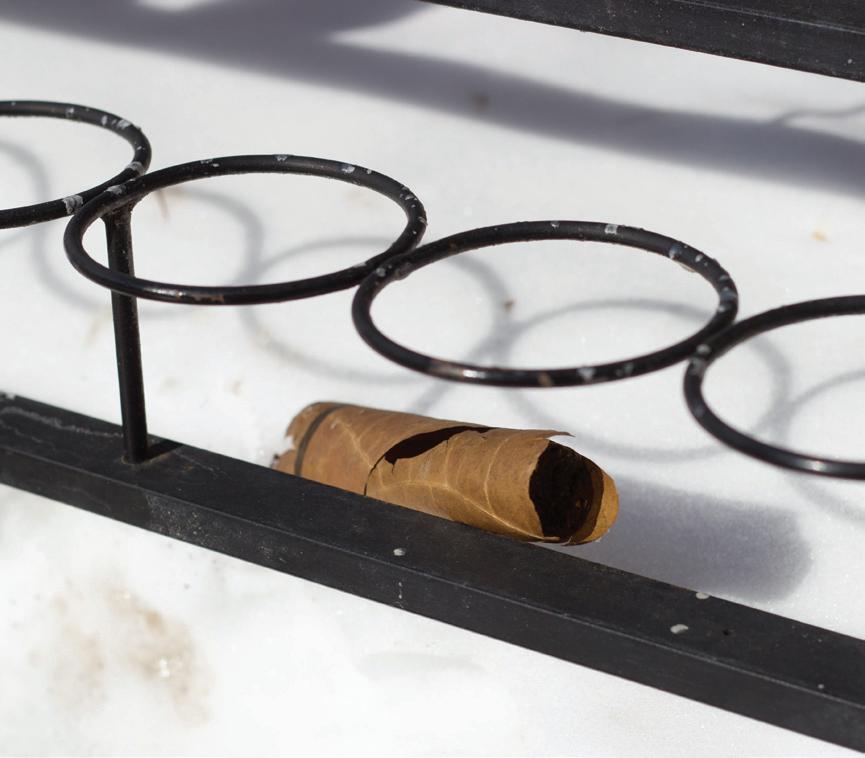
That evening, among the grotto candles lit in his memory, someone left a cigar in a candle holder for him.
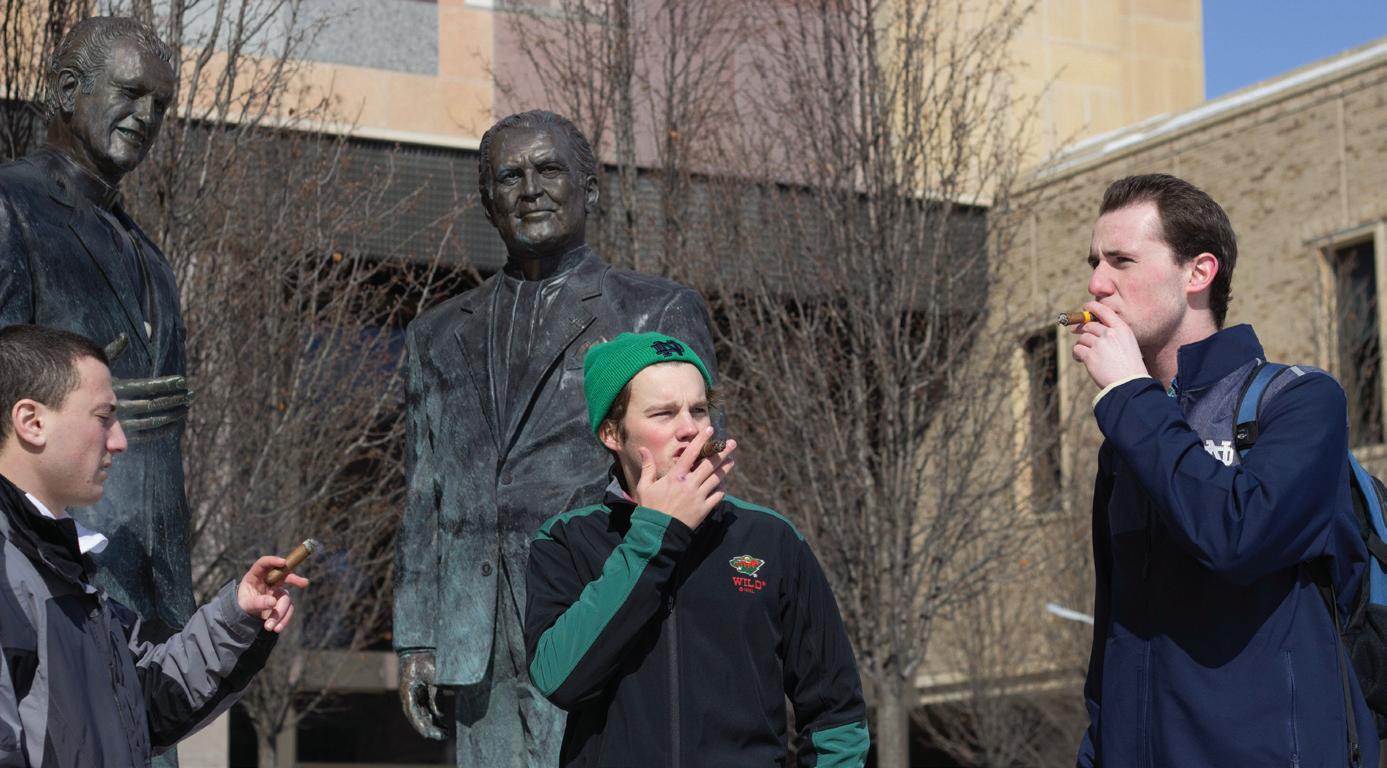
on Friday, schneeman and juniors brian cimons and andrew glover gathered to light cigars under hesburgh’s statue in front of the library named for him.
“I always kind of wanted to smoke one with him but never got to,” schneeman said.
“so this is the best we can do,” glover said.
Observer File Photo
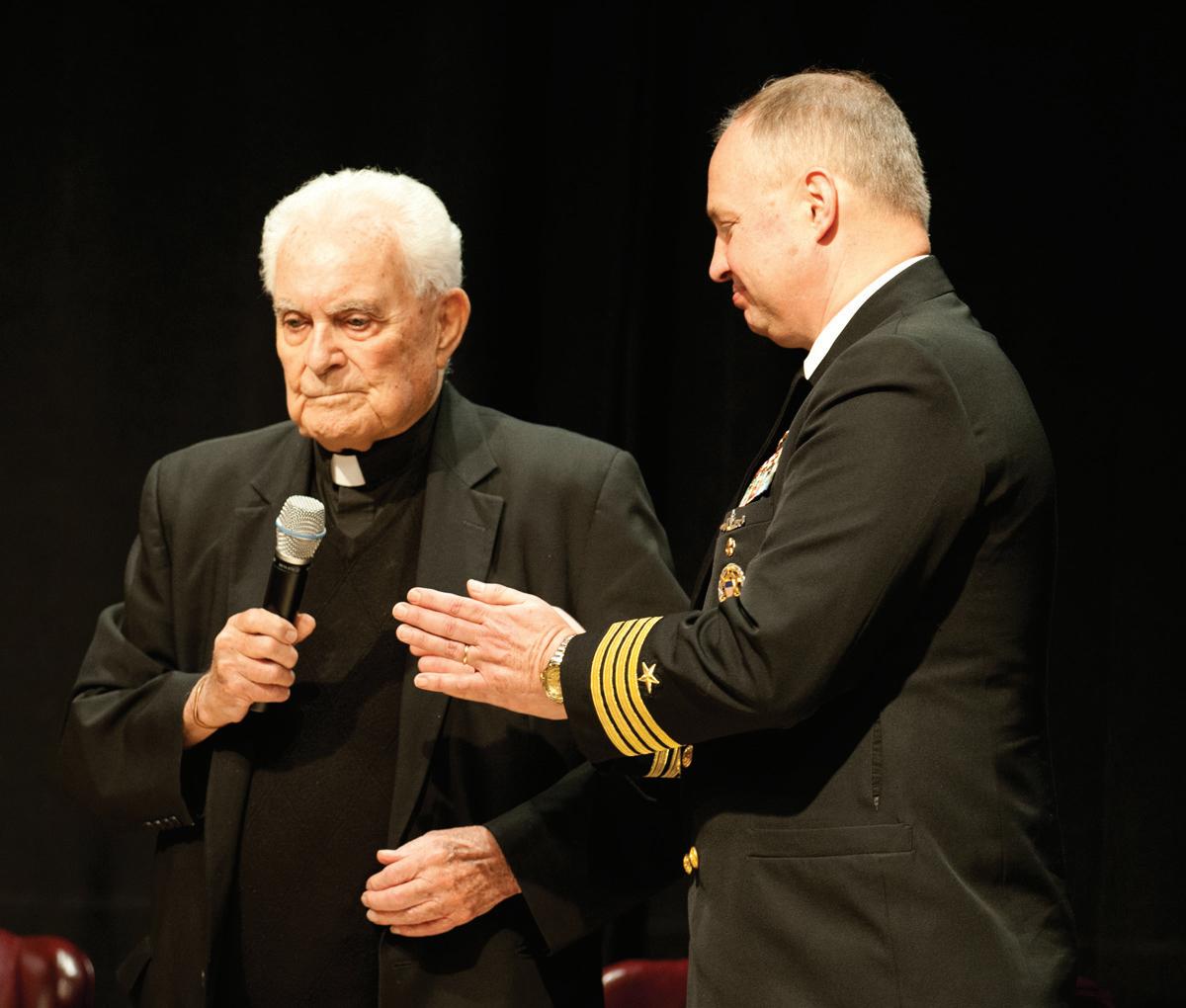
Fr. Theodore Hesburgh, center, speaks during his ceremony to become an honorary naval chaplain April 17, 2013.
Observer File Photo
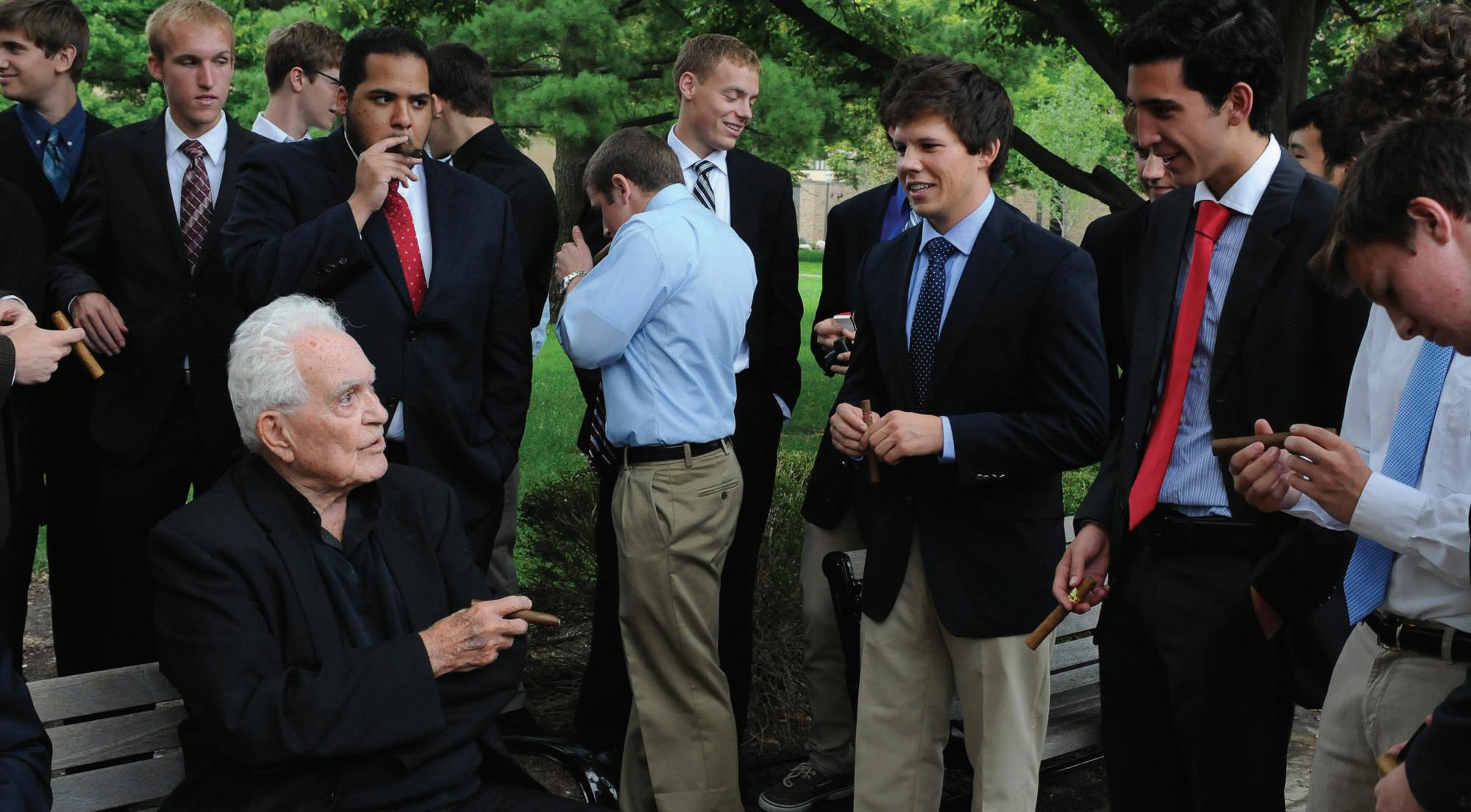
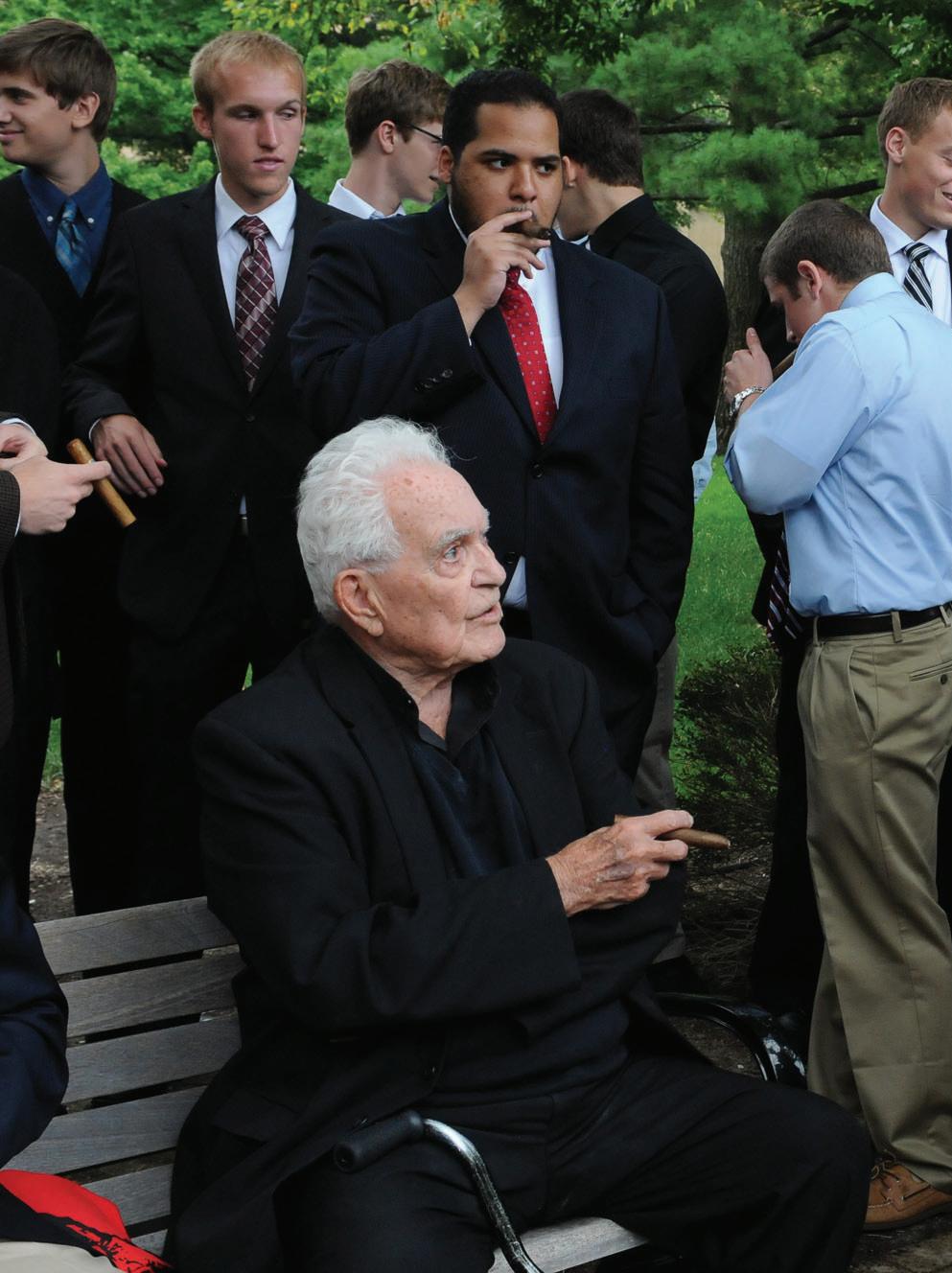
Fr. Theodore Hesburgh enjoys a cigar with residents of Zahm House during his annual meeting with the hall’s residents, a tradition started in 2012 by former rector Scott Opperman to celebrate the 75th anniversary of Zahm.
EMILY McCONVILLE | The Observer
Juniors Brian Cimons, Tommy Schneeman and Andrew Glover, left to right, smoke cigars in Fr. Theodore Hesburgh’s memory Friday.
EMILY McCONVILLE | The Observer
A cigar left by a well-wisher Thursday night lies in a candle holder at the Grotto.
Fr. Hesburgh fulfilled papal assignments
By HALEIGH EHMSEN
a
ssociate s aint mary’s e ditor
In his years as university president, Fr. Theodore hesburgh served four popes and offered advice to the Vatican on matters of atomic energy, ecumenism and c atholic education, among other topics.
h esburgh was especially close with p ope p aul VI, but as The n ew york Times reported, he challenged the c hurch’s attempts to assert greater control over c atholic universities in the united s tates at times and argued for a broader view of academic freedom in the c atholic university context.
hesburgh received five p apal appointments, the first as permanent Vatican c ity representative to the International a tomic e nergy a gency in Vienna, a ustria, from 1956-1970.
International Atomic Energy Agency
c ardinal Francis s pellman, archbishop of new york, received approval from the p ope to appoint representatives with knowledge of atomic energy to the International a tomic e nergy a gency, and s pellman reached out to hesburgh.
hesburgh’s involvement with the agency delegations made him a crucial bridge between the united s tates and the s oviet union during the c old war.
“The last thing I wanted to do was pack up and fly to new york and argue with r ussians for the next several weeks,” he wrote in his autobiography. “I told [ s pellman] that if it was very important for me to represent the Vatican at the conference, I would do it. he said it was.
“… I let s pellman know that if I was going to do this for the Vatican because they had no one who knew about atomic energy, I expected to be able to vote according to my own conscience and my own knowledge of atomic energy. I did not want to get to the conference only to find some Vatican monsignor whispering in my ear every time a vote came up.
“… I rearranged my schedule. From then on, for the weeks the meetings lasted, I spent monday through Friday at the conference and did my university work on the weekends.”
Academic Freedom and Catholic universities
hesburgh was able to balance both faithfully serving and respectfully challenging the Vatican throughout his life and presidency at notre d ame, especially on matters of academic freedom.
“notre d ame would lose all its credibility in the united s tates, and so would I, if an official in r ome could abrogate our academic freedom with a snap of his fingers,” hesburgh wrote in his autobiography.
In 1963, his peers elected him president of the International Federation of c atholic universities against his will. The election was also against the will of a certain Vatican archbishop, who hesburgh didn’t name in his autobiography, but was eventually confirmed by p aul VI.
hesburgh encouraged former dean of a rts and l etters c harlie s heedy to write a papal letter on academic freedom in 1965, which he presented to the p ope. a fter years of work, it was approved nov. 29, 1972 and published as the papal letter “The c atholic university in
the modern world” after being unanimously approved by 40 delegates to the Federation representing 23 countries.
“a fter nine years of hard work and negotiation, it seemed, at long last, that everyone was agreed on what c atholic universities were, what we were, what we should be doing, and how we should be doing,” he wrote.
Ecumenism
a t the request of p ope p aul VI, hesburgh spearheaded the construction of the Tantur Institute for e cumenical s tudies, which opened in Jerusalem in 1970.
hesburgh, p aul VI decided, should head the Institute, because of his leadership as head of the Federation of c atholic universities. d espite hesburgh’s lack of experience with ecumenism, the p ope believed in hesburgh’s abilities.
“It occurred to me that the p ope’s ecumenical institute might be just the project and sense of purpose that the Federation needed to raise itself from the dead,” hesburgh wrote. “The p ope knew he had given me a difficult, timeconsuming task, and he was always very good at expressing his gratitude.”
The Vatican purchased the Tantur property and leased it to notre d ame for 50 years at a dollar a year, heburgh wrote. The Institute opened in 1970 after seven years of planning.
“most important, since 1970, more than 2,000 p rotestant, o rthodox, a nglican and c atholic theologians of all ages, both men and women, have lived, studied, prayed together at the institute,” he wrote. “The dream of p ope p aul VI lives on today at Tantur in Jerusalem, working to achieve c hristian unity at a place were c hristianity began.”
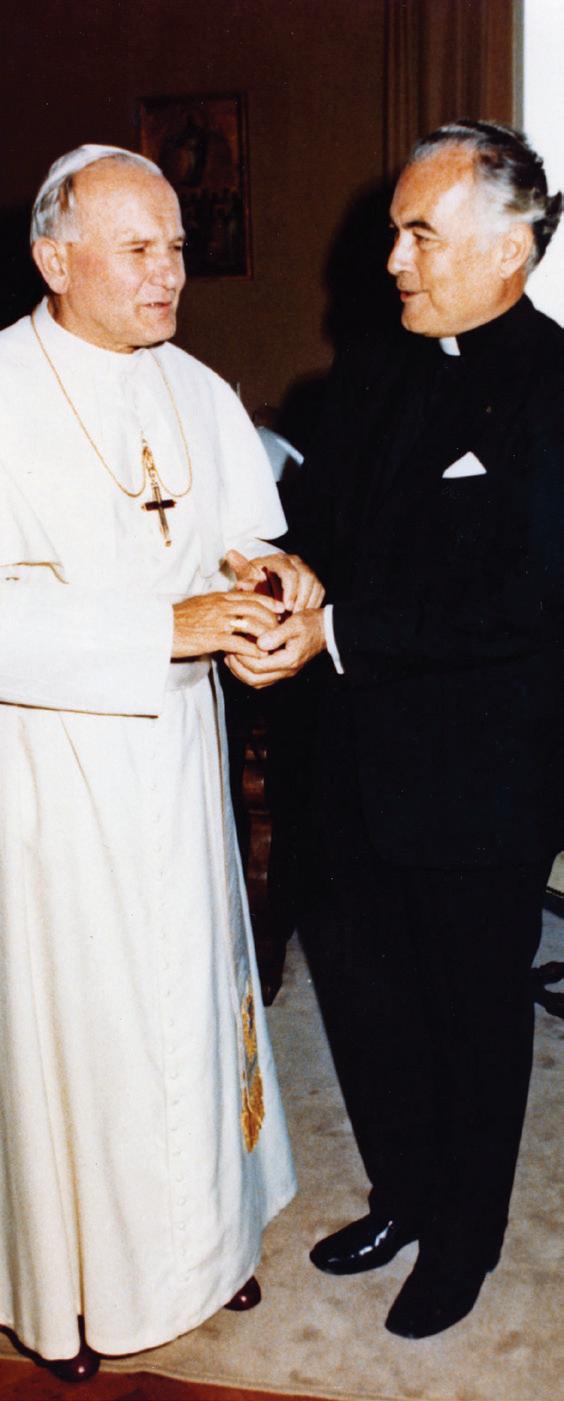
The later years upon p ope p aul VI’s death in 1978, his secretary sent hesburgh the p ope’s white cassock and skullcap to be displayed in notre d ame’s museum with the episcopal ring p aul VI had given him years before.
a ccording to notre d ame’s website, in 1983 Father hesburgh was appointed by p ope John p aul II to the p ontifical c ouncil for c ulture, charged with finding ways in which the saving message of the g ospel could be preached effectively in the world’s variegated cultures.
hesburgh served two other appointments from the Vatican including un human rights declaration in Tehran, Iran in 1968, member of the holy s ee’s un delegation.
Fr. Thomas b lantz, professor emeritus of history at notre d ame, said hesburgh was away from the university often, but when he was on campus he could accomplish a lot more than most other presidents because he had outside expertise, including his work with the Vatican.
“There was a statement at
one time, g eorge s huster former assistant to hesburgh said, ‘The university president that you don’t see off campus probably isn’t worth seeing on campus,’” b lantz said. “ you’ve got to be off campus to meet other university presidents and politicians and draw from their expertise. s o yes, Fr. hesburgh was off campus an awful lot, but did it hurt his presidency? I don’t think so.” hesburgh’s papal appointments and personal interactions with Vatican officials helped to publicize the university, b lantz said.
“ we had Vatican officials coming to campus periodically,” he said. “notre d ame is an outstanding c atholic university, and they might have come here on their own, but Ted getting to know them and being involved with the Vatican gave notre d ame a lot of publicity and I’m sure it made a good impression on people in the Vatican.”
News Writer Emily McConville contributed to this report.
Contact Haleigh Ehmsen at hehmse01@saintmarys.edu
Photo courtesy of University Archives
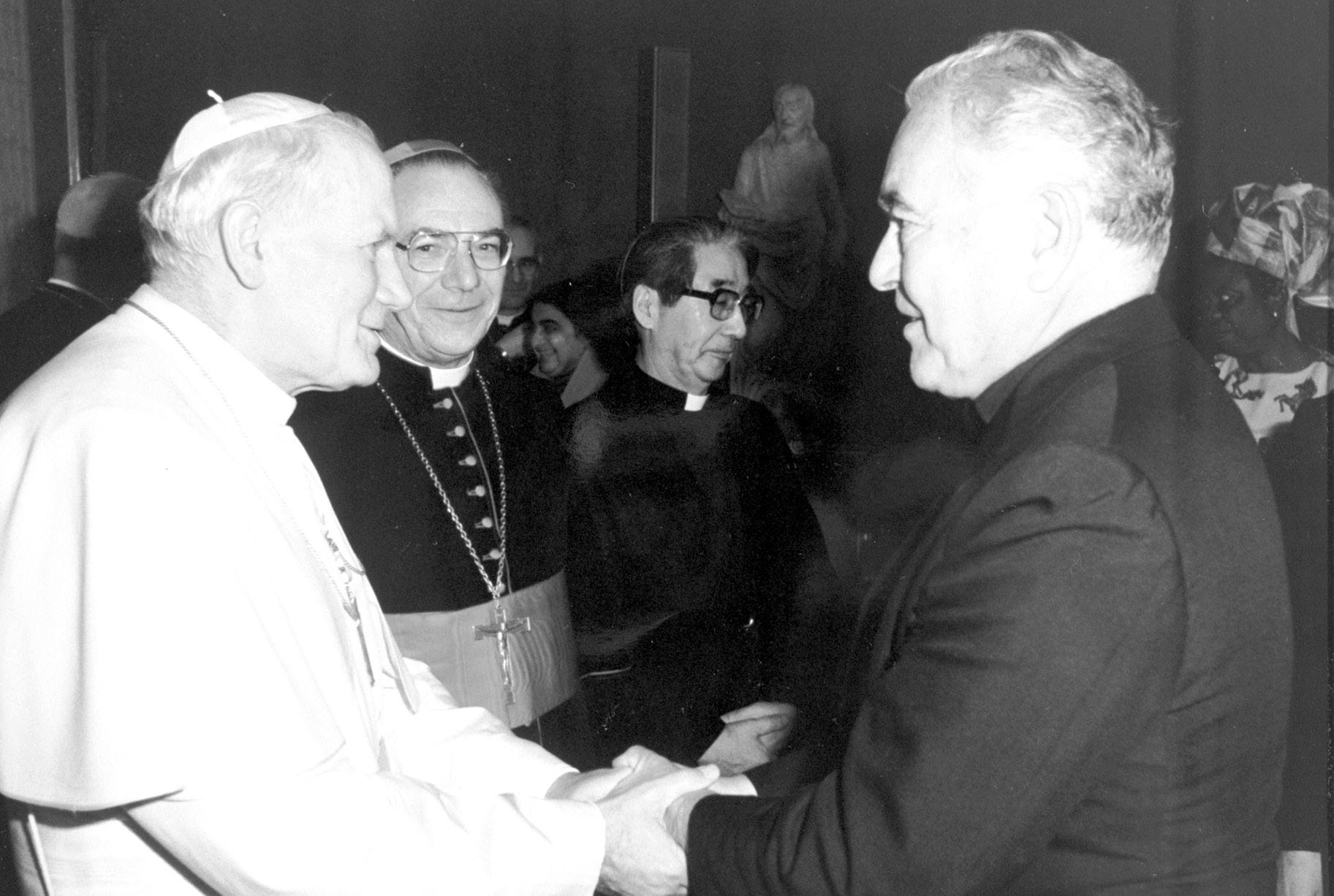
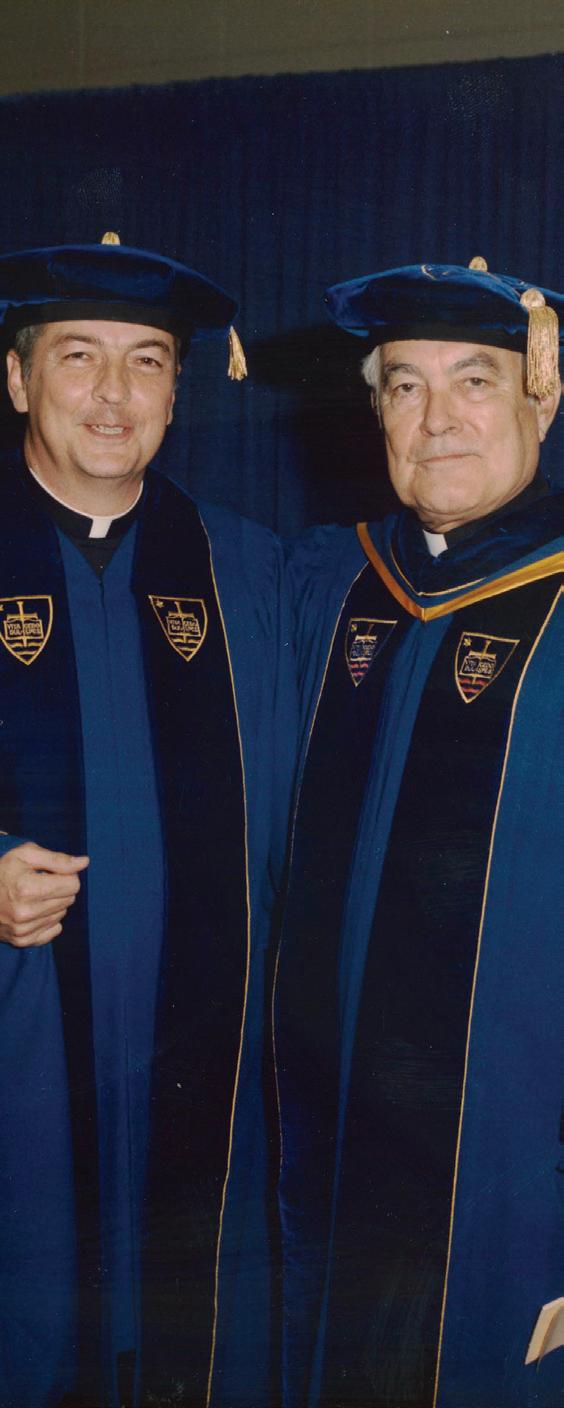
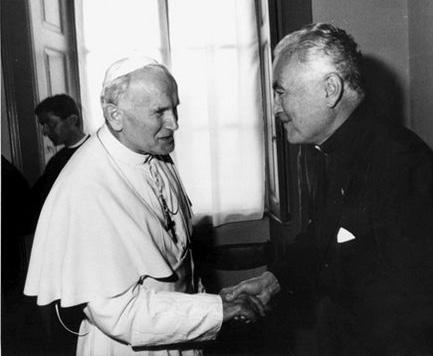
Fr. Hesburgh shakes hands with Pope John Paul II after the publication of the papal letter “The Catholic University in the Modern World.”
Photo courtesy of University Archives
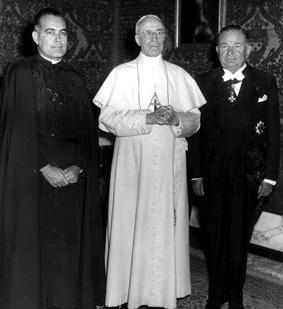
Fr. Hesburgh, left, poses with Pope Pius XII, center to deliver a report from the International Atomic Energy Agency.
Photo courtesy of University Archives
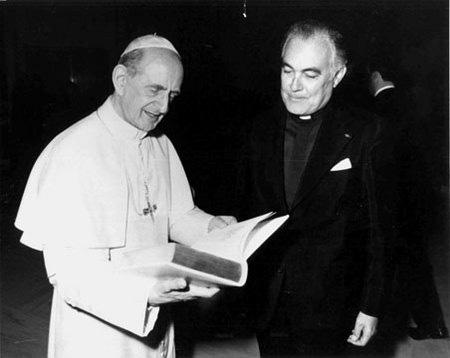
Pope Paul VI presents Fr. Hesburgh with a signed official copy of the first document published by Second Vatican Council.
Reading to a ‘living legend’
By ISAAC LORTON a ssistant managing e ditor
The late Fr. Theodore hesburgh enjoyed cigars and reading newspapers in the afternoon.
he continued to smoke cigars every day, but once his eyesight began to fade, students would read newspapers to him in his office on the 13th floor of the hesburgh library.
senior beth spesia was one of these readers. she began working her freshman year at the Kroc Institute for International peace studies, the founding of which was inspired by Fr. hesburgh's work. To return the favor, the Institute sent one student to read to Fr. Ted every afternoon.
“I started working at the Kroc Institute my freshman year in the fall," spesia said. "I didn’t know this at the time, but a part of the job is that office sends one student every afternoon to read to Fr. hesburgh. since the Kroc ... [has] a really strong tie to Fr. hesburgh, they send someone every day. as a first-semester freshman, I started going once a week to read to him.
I knew Fr. hesburgh was a big deal, but after a few times going, I realized I didn’t really know enough about him, so I remember getting 'god, country, notre dame' in the library. It was a very meta experience, [reading] ‘god, country, notre dame’ in the hesburgh library. It was a very notre dame experience.”
after the news of Fr. hesburgh's death Thursday night, spesia said she "had a moment" in the mcglinn chapel to herself and reflected on the time she had spent with the holy cross priest.
“w hen I heard the news, I was by myself," spesia said. "It was obviously really sad, and I just felt like there was a sadness everyone on campus was experiencing.
“I also immediately felt so grateful that I had all of these hours I had spent with him. It just kind of hit me hard at first.”
spesia recounted the many hours spent with the former university president.
“The first time I went, I was really nervous," spesia said. "I knew I was going to read for a very important person. at that time — back when I started freshman year — I would read close to three hours, which can be kind of tiring. I was nervous that I wouldn't do a good job reading, and I was nervous that I would mispronounce countries that I should know how to pronounce or something.”
although spesia was corrected many times over her four years reading, she said, hesburgh's corrections always came from a good place and were valuable to her.
“I did get corrected on some of my pronunciations, but it was a good learning experience,” spesia said. “There were sometimes that I thought he would be asleep — I would be an hour and a half in, page 10 of the new york Times — when he would awake out of nowhere and correct me. he would say this is the correct way to pronounce it, it means this and he
would give me a definition. It was great. I loved it.”
spesia said she was definitely not cut out for handling hesburgh's cigars, however.
“one time, melanie [chapleau], his secretary, was busy doing something so he asked me if I would light his cigar," spesia said. "I don't think I did the best job of it. I was trying to angle myself, I couldn't get the lighter to work and it was just a disaster. so I think it was best that I just stuck to my reading.”
sophomore madeleine paulsen, another one of Fr. hesburgh's readers, said that she learned how to cut and light cigars from her time reading to Fr. hesburgh.
"he usually had a cigar already, but if it went out, if he wanted a new one, or on the rare days when he didn't have one originally, I would get him a new one," paulsen said. "Fr. Ted actually taught me how to cut and light his cigars, as it was something I had never done before last summer."
The literature that the students would read aloud was always the same: The observer, the new york Times and if he was up for it, Time magazine, spesia said.
“he always liked to start off with The observer, he would say, ‘we’ve got to figure out what’s going on around here first before we figure out what’s going on in the world,’" spesia said. "I always thought it was really cool that he still wanted to hear what professors were given awards and what lectures were going on. so I would usually read the main stories of The observer and the some of the letters to the editor and the editorials.
“sometimes when we would finish the new york Times, we would read Time magazine. The one thing that I really liked about reading to him was that he really knew what he liked to hear, so if I was reading a story and he had gotten enough out of it, he would say, ‘That’s enough, let’s go to the next one.’ sometimes he would ask me what I thought about things. at first, when I was a freshman, this was very intimidating. I was like, ‘oh my gosh. Fr. hesburgh wants to know what I think about the middle east, what am I supposed to say now?’ but I definitely got more comfortable talking to him."
It was in Fr. Ted's nature to make people feel comfortable, spesia said.
“everyone who meets him right away I think would agree with me that he puts people at ease like no one else," she said. "he is — was — just a kind, gentle soul that even for a scared freshman, I felt that right away I had an ease in that maybe I wasn't expecting."
Junior Kerry walsh, another one of Fr. hesburgh's readers, said he truly cared about every person that walked into his office.
"my absolute favorite part of reading to Fr. Ted was always at the very end, when he told me to stand in front of him to be blessed," she said. "he would ask god to watch over me, and told me that I would be in his prayers. I constantly left his office in awe of how lucky I was
to spend so much time with him." on football weekends, many people would stop into Fr. hesburgh's office in an attempt to meet with him, walsh said.
"In these moments, I was acutely aware of how lucky I was to be with Fr. Ted," she said. "some people just wanted to meet him once in their life, and I got to see him and talk with him every week. people often brought medals or jewelry to be blessed by Fr. Ted, and I felt incredibly privileged to be blessed by him every week."
reading often turned into discussing, reminiscing and other stories, spesia said.
"he’d comment lot on the news," she said. "some days he was chattier than others, but sometimes it would be commenting on the news, and sometimes it would be reflecting. something I would read to him would jog a memory about a trip that he took once, and he would tell me about it.”
Fr. hesburgh was especially vocal about the Iraq war, the american government's struggle with bipartisanship and race relations.
“The last four years with a lot of the news that were about Iraq, he would talk about the times he had traveled there," spesia said. "anytime there was a story about the conflict between the democrats and republicans, he would get a little worked up about it because his whole thing was that we need to get through it and work together. so that would get him going.
“he would bring up issues related to the work he did in the civil rights movement with things that are relevant today like the Ferguson incident. he commented on that a few times. he was sad about the situation, and he talked about how all the work that had done for civil rights to give people a voice.”
spesia studied in chile in the spring 2014 semester. upon her return to campus this past fall, she noticed that Fr. hesburgh was different. however, she said reading seemed to get a positive reaction from Fr. Ted, and it appeared to be helpful to him.
“so I would just say — from the fall of my junior year until when I came back the fall of my senior year
— he just seemed older," spesia said. "he just seemed more tired. There were some days he wouldn’t chat as much while we were reading. he was always really sharp — he was still having visitors, even this semester — so I think hearing the news every day he enjoyed it in a way because it would make him think of stories and keep him up to date on what was going on in the world. so when he kind of started slowing — I could just tell, and I think other people could tell too — that he just seemed slower."
From her the start of her freshman year in august 2011 to now, spesia noted a shift in her interactions with Fr. hesburgh, but she also noted that he remained true to his values and opinions, especially on education.
“our conversations definitely changed throughout the years," spesia said. "This past year he was slowing down a bit. he always would ask me about my major because I think he would just be refreshing his memory. he would ask, ‘w ho are you again, and what’s your major?’ I would tell him the program of liberal studies, and he would say, ‘That’s the best one we have,’ which is really great.”
spesia hadn't read to hesburgh since Feb. 10 because of his failing health and the cold weather, she said.
“I haven't gone in in the past a couple of weeks because he hadn't gone into the office because it was too cold,” she said. "I think he was getting a little sick too, and it would just be too dangerous to go out in the cold. That was a bummer, missing a few weeks, because reading to him every week was always the highlight of my week.
"It was just a nice routine. I would go in there and it wouldn’t matter what other stresses I had going on in my life, it was just this peaceful sort of relaxing time, where I would get into this rhythm of reading and being able to have conversation. I really enjoyed the part of the week where I got to see him. even before he passed away, I was like, ‘I hope next week it’s not this cold, so I can go read to him.’”
walsh said Fr. hesburgh's legacy will be the kindness that he extended towards others.
"The feeling of meeting of befriending Fr. Ted is truly
incredible," walsh said. "For me, the kindness and attentiveness Fr. Ted extended to me made me strive to be a better person. It may sound corny, but when you meet Fr. Ted, you kind of feel like you're meeting the next closest thing to god."
Fr. hesburgh was a worldrenowned activist and scholar, walsh said, but he was first and foremost a friend.
"I think that's the beauty of Fr. Ted," walsh said. "despite his lofty achievements and celeb status, he was always a true friend to all he met. I can't ever thank him enough for his contributions to notre dame, to the study of peace, to the united states — but most importantly, I can't thank him enough for being a friend."
spesia said she values her time with Fr. hesburgh above any other experience at notre dame because of what she learned from him. she said although she was only reading to him a couple hours every week, it meant a great deal to her, and she took away a lot from those meetings.
“I guess I really just got to observe how much he cared about others, about notre dame, about individual students who had come to see him, about the world really," spesia said. "That was the nature of our discussions, about issues going on in the world. he was just so giving of his heart to the notre dame community that I think there’s a reason that he’s so beloved by students even of my generation because people still felt this connection to him that they could go into visit.
"he’s a living legend. I always was really in awe of him — and going into his office, it’s hard not be, there’s pictures up of presidents, awards left and right — but getting to know him in such a regular, routine way, and the time we had together when I would be reading, I got to see what a truly great person he was outside of all of the amazing things he had done and all the awards he had won, and for that I am truly grateful.”
Associate News Editor Kayla Mullen contributed to this report.
Contact Isaac Lorton at ilorton@nd.edu
Observer File Photo
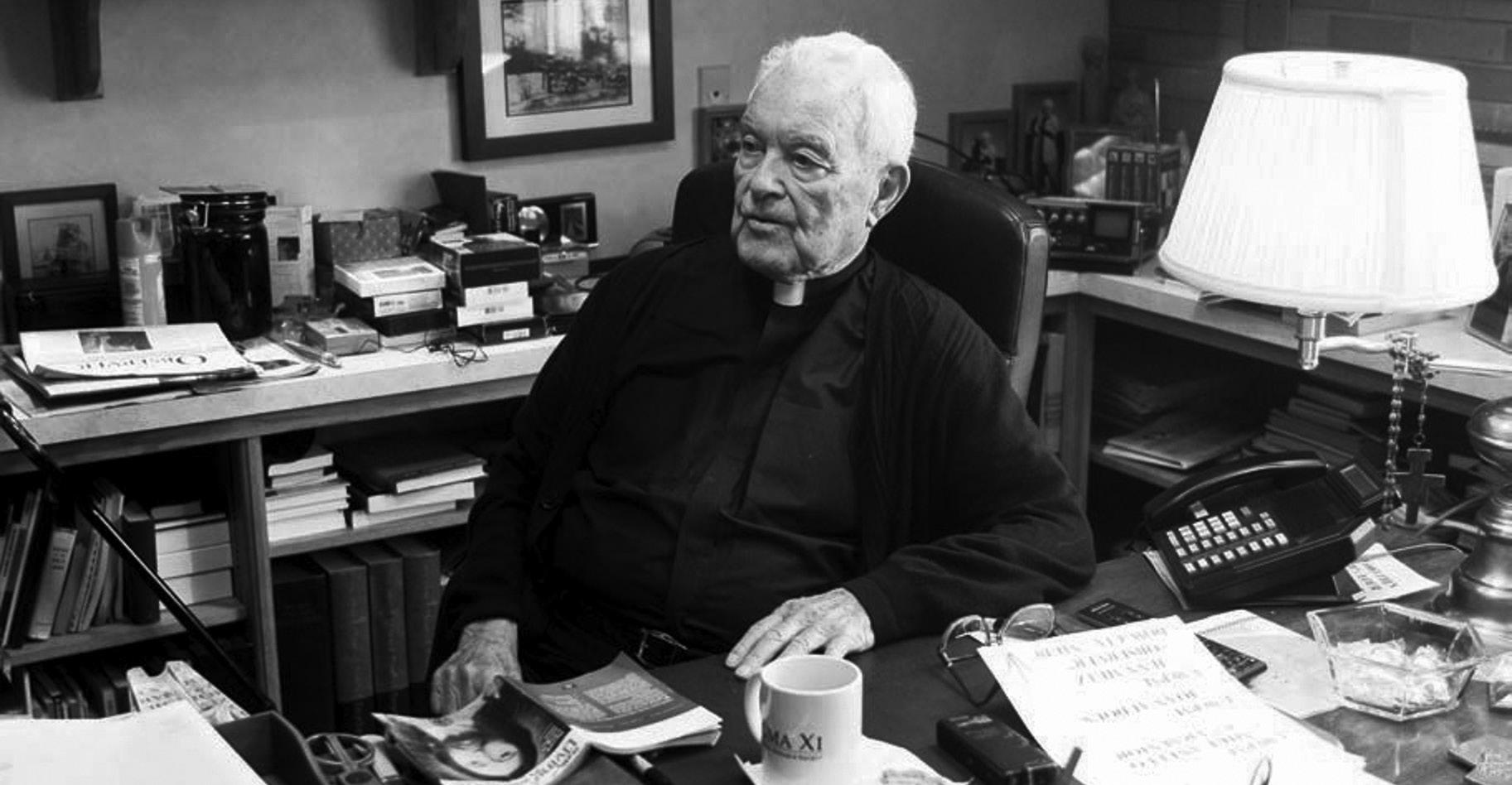
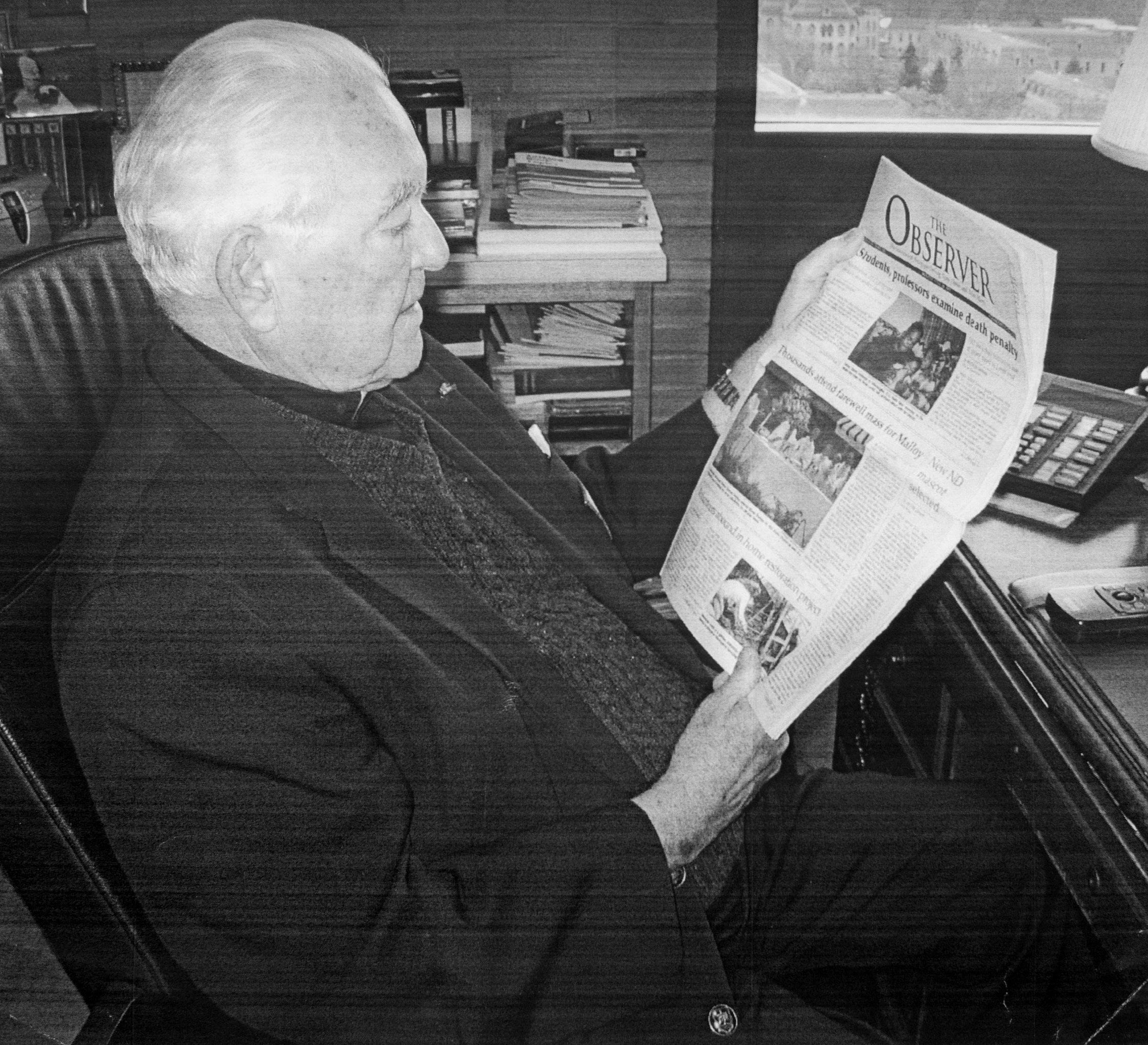
Fr. Hesburgh poses behind his desk in his 13th floor Hesburgh Library office. Student readers often came to his office to read him The Observer and the New York Times, among other publications.
Tributes spring up across campus
Observer Staff Report
since the death of Fr. Theodore hesburgh on Thursday night, the notre dame community has honored him with various tributes around campus, spontaneous and planned. we have collected some of those moments here.
Feb. 27
1:07 a.m. — The observer tweeted out the news Fr. Theodore hesburgh died at the age of 97, confirmed by a university spokesperson.
Throughout the night — notre dame students, faculty and community members gathered at the grotto to remember Fr. Ted. c andles spelling out “T ed” were arranged on one of the racks, and some people sang the a lma mater.
sunrise — The notre dame grounds c rew began putting up hesburgh banners on light poles across campus.
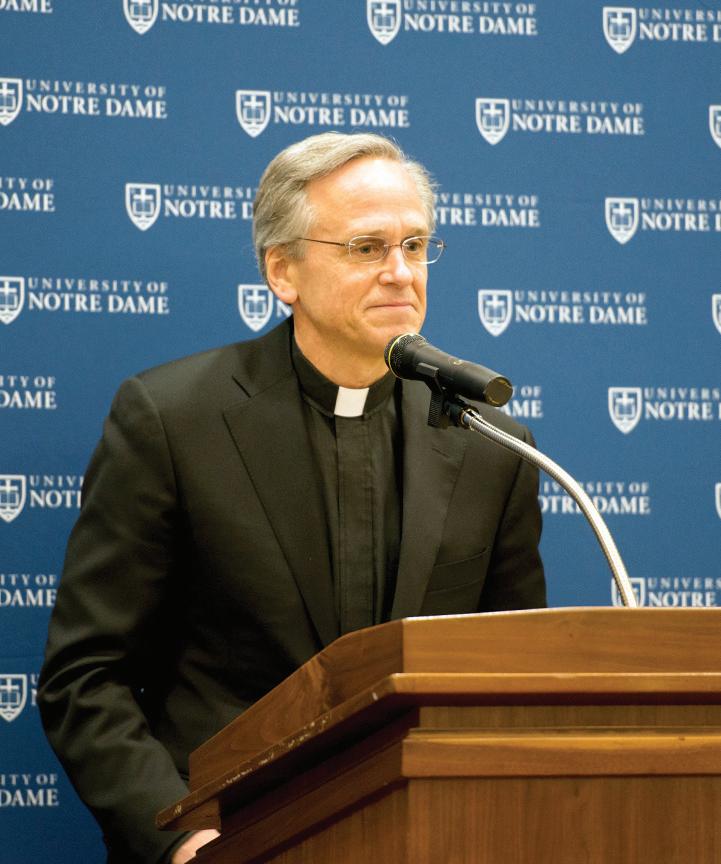
11:00 a.m. — notre dame p resident Fr. John Jenkins held a press conference to reflect on Fr. hesburgh’s influence on the university and to provide details about the schedule for the upcoming days.
“next to Fr. s orin, no one had a greater impact on this university,” Jenkins said. “notre dame lost a piece of its heart last night. but Fr. Ted lives on.”
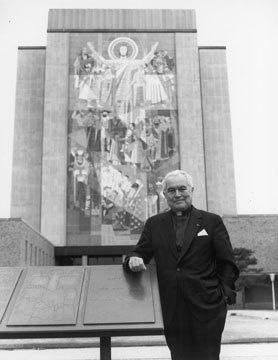
3:00 p.m. — a bouquet of flowers sits in the snow at the feet of the Fr. hesburgh statue in front of the “ word of l ife” mural on the south face of hesburgh l ibrary.
3:28 p.m. — The notre dame softball team announced through its Twitter account that players would wear black ribbons in their hair during games against no. 20 m issouri
and g eorgetown “in honor of the late Father Theodore.”
5:27 p.m. — s enior a ssociate athletics d irector John heisler sent out an email to the notre dame football media list reading,
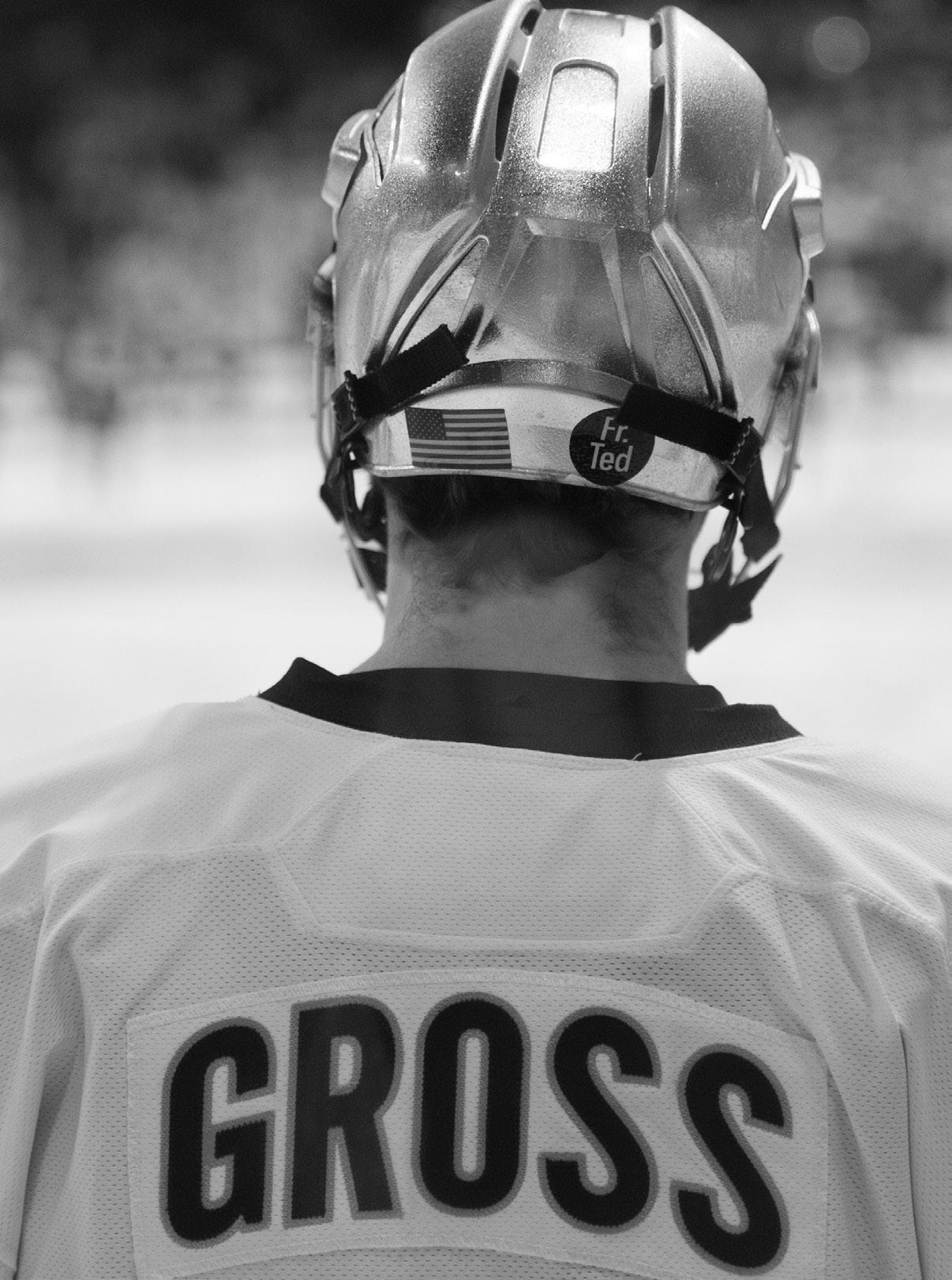
“beginning today, notre dame athletic teams will wear ‘Fr. Ted’ patches or stickers on some combination of their uniforms, warm-ups or helmets. moments of silence will be observed prior to home events in each of notre dame’s 26 varsity sports. In the near future, there will be commemorative signage created for each notre dame home athletic venue — to be featured either on the field or court itself or displayed elsewhere at the facility.”
7:00 p.m. — Fr. Ted was honored by the hockey team before its game against no. 9 boston c ollege at c ompton Family Ice a rena with a moment of silence and a video tribute, in addition to “Fr. Ted” stickers on the Irish helmets.
“I had no idea when I first started here what kind of man we had with us here on campus,” Irish coach Jeff Jackson said.
7:00 p.m. — The 85th annual bengal bouts Tournament remembered Fr. hesburgh with a moment of silence and a 10-bell salute while his picture was put up on the video boards.
9:45 p.m. — notre dame symphony o rchestra played the notre dame a lma mater in honor of Fr. Ted following its concert Friday night.
“notre dame lost her greatest son,” orchestra director daniel stowe said.
Feb. 28
a ll day — The a merican flag in the middle of s outh Quad flew at half staff.
1 p.m. — The no. 2 notre
dame men’s lacrosse team observed a moment of silence in honor of Fr. hesburgh before its game against dartmouth in l oftus sports c enter. The team also wore “Fr. Ted” stickers on its helmets.
“If you look at the history of notre dame, Knute rockne made notre dame famous, and Fr. Ted took that and made notre dame a great university,” Irish coach Kevin c orrigan said.
March 1
9:33 a.m. — The notre dame women’s lacrosse team unveiled the patches it will wear to honor Fr. hesburgh in its sunday afternoon game against d uke.
10 a.m. — university p resident e meritus Fr. e dward “monk” malloy celebrates mass at the basilica of the s acred heart and reflects on Fr. hesburgh’s legacy in the homily. The l iturgical c hoir led a rendition of the a lma mater in hesburgh’s honor at the end of the mass.
11 p.m. — a rosary was held at the grotto in remembrance of Fr. hesburgh.
EMILY McCONVILLE | The Observer
The Grotto saw several tributes to Fr. Theodore Hesburgh, including candles arranged to spell “TED,” notes, a cigar in a candle holder and this decorated candle.
MICHAEL YU | The Observer
Students link arms and sing the Alma Mater at the Grotto on Thursday night, following the announcement of Fr. Theodore Hesburgh’s death. Temperatures were near zero degrees Fahrenheit.
pa I d a dV erTIsemen T
CAITLYN JORDAN | The Observer
Many athletes, including freshman hockey player Jordan Gross, wore stickers commemorating Fr. Hesburgh during games.
Jenkins addresses media, outlines memorial plans
By LESLEY STEVENSON n ews e ditor
Friday morning, with the news of u niversity p resident e meritus Fr. Theodore h esburgh’s death just reaching many n otre d ame students, u niversity p resident Fr. John Jenkins reflected on his time with the priest, who was 97.
“I extended my heartfelt condolences to the h esburgh family, to my brothers in the c ongregation of h oly c ross, to the university of n otre d ame family and to all those
the n otre d ame campus.
“ h e was one of the nation’s most influential figures in higher education, the c atholic c hurch and national and international affairs,”
Jenkins said. “ s erving four popes and nine presidents, Fr. h esburgh was a moral force in virtually all major social issues of his day, including civil rights, peaceful uses of atomic energy, campus unrests, third-world development and immigration reform.
“ w hatever else we may say about Fr. Ted, he was a priest
“When I became president, he became really a mentor, an advisor, a confidant in so many ways, and I had many conversations with him. I remember one of the things he said that’s always stayed with me is ‘Stay close to the students.’ ... He was loved by and he loved our students. So I took that advice ... and I appreciated that.”
Fr. John Jenkins president University of Notre Dame
whose lives were touched and enriched by Fr. h esburgh’s remarkable life and ministry,” Jenkins said.
Jenkins said h esburgh, the longest-serving president of the university of n otre d ame, died at h oly c ross h ouse late Thursday night. In an email to the resident assistants of d illon h all, rector Fr. p aul d oyle said h esburgh celebrated m ass earlier that day, as was his daily custom.
“Fr. Ted had long prayed that g od would allow him to say m ass on his last day on earth,” d oyle wrote. “Fr. h esburgh did just that at 11:30 a.m. Thursday among his brothers in h oly c ross.”
On Hesburgh’s legacy
Jenkins said h esburgh’s influence extended well beyond
and a man of faith who had a confident hope in g od’s love and the promise of eternal life. we believe he is now with the g od he served so faithfully and in the arms of n otre d ame, o ur l ady, whom he was so devoted to.
“ n otre d ame lost a piece of its heart last night, but Fr. Ted lives on at n otre d ame and among the millions of lives he touched around the world.”
On his relationship with Hesburgh
Jenkins said his last interaction with h esburgh was last s unday, when they enjoyed a casual conversation and smoked cigars together.
“ h e seemed in good spirits. h e’s always been so encouraging about my work as president,” Jenkins said. “…
h e had become a great friend of my mother and he asked about my mother; we talked about mom a lot.
“a nd so it was just a usual conversation and he — he was as jovial and excited about life as ever in that conversation.”
Jenkins reflected on the development of his relationship with h esburgh, starting from his time as a student, when h esburgh was president, to now.
“ you know, I was a student in the 1970s when Fr. h esburgh was president, and those were the days when he was very much involved in the national scene,” he said.
“ h e had been very prominent in civil rights and segregation, obviously in the conferences in the ‘60s over the war, in the c atholic c hurch.
“… I did not know him when I was an undergraduate — I mean, personally — but he was an admired figure for me and an inspiration for me in so many ways,” Jenkins said. “ w hen I entered the c ongregation of h oly c ross, I entered studies and I got to know him better.
“… [ h e] was still kind of a revered figure for me, but always encouraging, and he was a model for me as a priest, as a religious, as an academic, and I always looked up to him.”
Jenkins emphasized the impact h esburgh had on the early years of his presidency and the best advice he received from his predecessor.
“ w hen I became president, he became really a mentor, an advisor, a confidant in so many ways, and I had many conversations with him,” he said. “I remember one of the things he said that’s always stayed with me is ‘ s tay close to the students.’ … h e was loved by and he loved our students. s o I took that advice … and I appreciated that.”
Jenkins spoke on h esburgh’s influence during the difficult
moments of his presidency, highlighting h esburgh’s relationship with his mother.
“In challenging times, he was always there. h e was always encouraging. I mentioned my mother — in 2009, we invited p resident o bama and there was a great deal of controversy about that, as you may recall,” Jenkins said.
“ h e heard that, you know, and it was a difficult time — but without asking me, talking to me, he called my mom, just to say … this would turn out well. They became best friends from that day and that’s … Fr. Ted. h e cared about people.”
On the week before Hesburgh’s death
Jenkins said h esburgh’s death, though not expected, came after a period of deteriorating health for the priest.
“Fr. h esburgh … lost his sight to macular degeneration,” Jenkins said. “ h e was slowing down but he had good days and bad days.
“I think he was going to [his office in the h esburgh l ibrary] until, I believe, last week. h e celebrated m ass daily; he had a cigar daily. h e was very engaged.
“The past week, he seemed to slow down a bit. h e wasn’t going to the office. we knew when he wasn’t going to the office that that was a sign.
“ h e was actually, even yesterday I’m told — I didn’t see him yesterday — but I’m told he was engaged, talking to people, seemed okay but in the evening seemed to struggle to breathe and passed away a little bit before midnight.”
Contact Lesley Stevenson at lsteven1@nd.edu
EMILY McCONVILLE | The Observer University President Fr. John Jenkins addresses the media at a press conference Friday morning at the Morris Inn.
Courtesy of University archives
Fr. Hesburgh signs a construction beam as construction begins for the Hesburgh Library in the early 1960s. Hesburgh planned the construction of more than 40 buildings during his record-breaking 35-year tenure as University president.
hesburgh timeline
1917
may 25, 1917
born Theodore “ Ted” h esburgh
Theodore martin hesburgh was born in syracuse, new york, to Theodore bernard hesburgh and a nne marie hesburgh.
1934
september 1934 to may 1937
1937
no T re dame
he attended the university of notre dame and holy cross seminary to become a priest.
november 1937 to June 1940 gregorian universi T y
hesburgh was sent to rome to attend gregorian university. with the impending second world war, he left rome after the a merican consul there ordered u s citizens to leave Italy.
1940
June 10, 1940 homecoming
he arrived back in the u s and began attending holy cross college in washington, d c., to complete his theology studies.
1943
June 24, 1943
sacred hear T church
hesburgh was ordained a priest along with 15 other seminarians in notre dame’s sacred heart church (now the basilica of the sacred heart).
1943
august 1943 to may 1945 back in T he capi T al a fter his ordination, he returned to washington, d c. to work on his doctorate in sacred theology at the catholic university of a merica. he was awarded a doctorate of sacred Theology and returned to notre dame to teach as a theology professor.
1945
1945 to 1948 ve T ville chaplain
hesburgh became the chaplain for ww II veterans and their families at the university of notre dame
1945
august 1945 to may 1948
T eaching
he
assistant
1948
1948 to 1949 depar T men T chair
hesburgh served as the chairman of the department of religion at notre dame.
1949 to 1952 execu T ive vice presiden
1952
June 27, 1952
presiden T
The 35-year-old hesburgh was named the 15th president of the university of notre dame, a position he would hold for 35 years.
1957
september 9, 1957 to november 16, 1972 commission on civil righ T s
he was appointed to president dwight eisenhower’s commission on civil r ights. hesburgh would serve as the chairman in his final three years on the commission.
1964
July 21, 1964
chicago rally
hesburgh walked and sang arm-in-arm with dr. martin luther King Jr., at soldier Field in chicago to protest the killing of three young civil rights workers in mississippi.
1964
september 14, 1964 medal of freedom
president lyndon b. Johnson awarded hesburgh the medal of Freedom for his work in civil rights. It is the highest honor that can be bestowed upon a civilian by a u s. president.
January 1967
board of T rus T ees
under the leadership of hesburgh, the congregation of holy cross hands over control of notre dame to a predominantly lay board of trustees
1972
august 7, 1972
co-educa T ion
hesburgh announced that notre dame would become a co-ed institution and begin to admit women.
1987
June 1, 1987
re T iremen T
a fter 35 years of serving as the university of notre dame’s president, hesburgh retired.
2000
July 13, 2000
c ongressional g old m edal
president bill clinton awarded hesburgh the congressional gold medal for his lifetime of achievements. The congressional gold medal is the highest civilian award bestowed by the u s congress.
2013
June 24, 2013
70 T h a nniversary of o rdina T ion
hesburgh was honored at a Jubilee mass in honor of his 70th anniversary as a priest.
2014
may 25, 2014
97 T h bir T hday
hesburgh celebrated his 97th birthday fishing in wisconsin 2015
F ebruary 26, 2015
de a T h
hesburgh prayed for decades that he would be able to say mass on the day he died. a nd Thursday, Father hesburgh said mass at holy cross house. Father doyle said men present at the mass commented on how “happy and peaceful” hesburgh looked
‘BUILT US UP ’
Ann Marie Jakubowski s enior news writer
Fr. hesburgh, in your 97 years you transformed notre dame, the united states and the world. you had the most purposeful and inspiring life I can imagine, and your presence will be deeply missed.
I wish there had been a way to watch the news of your death travel with a bird’s eye view, slowly at first and then lighting up our entire campus in a single night and echoing across the nation and the world all weekend.
I suppose you have exactly that perspective on us now, looking down and watching the impromptu tributes and memorials and plans materialize on campus and the heartfelt reflections and anecdotes pouring out nationwide.
These past 72 hours have felt like both a sprint and a marathon in our newsroom, and every moment has been dedicated to honoring you as best we can. The more reflections I read and photos I flip through, the more I realize how utterly irreplaceable you are. you are an infinitely deep source of inspiration for our community.
The more I learn about your legacy, the more certain I feel that for the next century and beyond, notre dame will keep you always in our collective mind, draw guidance from the precedent you set and turn to you as a source of both motivation and reassurance.
This weekend, I’ve read your quote dozens of times about wanting to be “nothing more, but nothing less” than a priest. we’ve tried to make that the guiding theme of our coverage this weekend, but I’m only beginning to wrap my mind around just how powerful a statement that is.
To say you were a great religious leader, but “nothing more” would be completely inaccurate, looking at the extraordinary list of your global accomplishments. but to say you were “so much more” than just a priest because your impact was felt beyond the catholic church would completely fail to convey the centrality of your priestly vocation to your life’s work.
you devoted your life to unceasingly building up the good in our world and building up the catholic church. you spent your life building up notre dame as an institution capable of, in turn, building up its own students in spirit, mind and body.
you represented what is best and truest in notre dame by fulfilling your priestly vocation to represent christ to the world, whether you were acting on behalf of the university or the united states or the Vatican.
your legacy is inextricably tied to your identity as a priest; you unceasingly built the university and the world into a better place. nothing more, and nothing less.
we have much to celebrate this week. as much as we mourn your death, we now have the chance to gather as a community and revisit the tangible fingerprints you left on the story of notre dame, the united states and the world. we will thank you over and over again, in as many different ways as we can think of, for unceasingly building us a better world.
Jakubowski served as The Observer’s 2014-2015 Editor-in-Chief. Her term ended officially Saturday.
The views expressed in the Inside Column are those of the author and not necessarily those of The Observer.
Th ANK YOU , F AT h ER T ED
Thank you, Fr. Ted.
b y glancing at a timeline of u niversity p resident e meritus Fr. Theodore h esburgh’s life, one can tell he lived it to the fullest. h e collaborated with popes. h e worked alongside u s . presidents. h e broke the sound barrier, received prestigious awards and served on committees of national and international importance. we would like to thank him most, however, not for these endeavors, but for his commitment on a most personal and engaging level to the u niversity of n otre d ame and its students.
w hen The o bserver was founded in 1966, Fr. Ted was u niversity president. o ver the years, he took the time to give interviews to the paper, provide feedback on its coverage and participate in valuable campus dialogues. h e assured The o bserver of its editorial independence from the u niversity administration, and in recent years, he had students read the paper to him in the morning. we thank him for lending such a thoughtful ear to campus voices in this, and so many other ways. p opes, presidents and n otre d ame students alike listened to Fr. Ted because he listened to them so well.
The outpouring of letters we have received from former students wanting to share precious moments spent with Fr. Ted has also illustrated his sincere love for the u niversity.
h e lived a life highlighted by greatness and also marked with genuine dedication to small but dear moments, often including n otre d ame students. It is a marvel how he found time for it all. w hile he provided leadership and advice to prominent national organizations, like the c ivil r ights c ommission,
he simultaneously guided n otre d ame and helped the u niversity grow into one of the nation’s premier c atholic institutions and a recognizable entity around the world.
h is high-profile work on a national level, day-to-day duties as u niversity president and busy retirement didn’t prevent him from welcoming students into his office for a chat when he worked late, pausing for a moment to bless an alumna’s baby or meeting groups of students in his library office to tell stories and offer advice.
In doing so, he set a beautiful example for what it means to strive to be a “force for good” at n otre d ame. Fr. Ted stood for equality, inclusion and all those who might otherwise be forgotten. h e stood for n otre d ame, establishing himself as the face of the school and an inspirational model for generations of students, many of whom he made a point of personally getting to know. m any of the exciting aspects of the u niversity we report on today — athletics, the work done by women on campus and distinguished professors — originated with Fr. Ted and his commitment to n otre d ame and its students.
o ne of our goals as a newspaper staff in serving n otre d ame and s aint m ary’s is to connect members of the community with one another, something Fr. Ted did throughout his life with his vision for the u niversity and its values. h e shaped n otre d ame through his powerful leadership abilities, represented by the changes he helped implement, and also through the generous person he was, evidenced by the loving tributes he received during his life and now after his death.
we are most sincerely grateful Fr. Ted made so much time for The o bserver and for all n otre d ame students.
Thank you, Fr. Ted. r est in peace.
In ways great and small, Fr. Hesburgh has left an indelible mark on the Notre Dame community, the country and the world. Though he will certainly live on in history for his enormous contributions to important causes such as the Civil Rights movement and Notre Dame’s transition to coeducation, Hesburgh’s legacy echoes deeply through the hearts of those he touched.
To preserve the personal impact Hesburgh had on so many, The Observer has gathered letters on Hesburgh’s life and legacy from various members of the community.
McCORMICK : ‘fR. ted willingly eMbRACed tHe unCeRtAinty of tHe MoMent’
In truth, I don’t know Fr. h esburgh very well. h ave I listened to some of his incredible stories, marveled at the number of years he served as president of n otre d ame, pondered how he kept track of the 150 honorary degrees he received or gushed with pride every time I see him standing arm and arm with d r. King? a bsolutely.
For those of us who did not have semi-regular interactions with him, attend one of his m asses or recall a personal anecdote, how are we to situate these days? Intentionally. l ook, I understand that these are really busy days. m id-terms, group projects, papers, travel plans and the need for sleep are all presenting themselves as much more pressing matters.
h ere’s the deal: significant history happens when people are present in the moment. e ach of us have it within ourselves to refuse to allow the malaise of life or the stress we encounter to prevent us from seeing the beauty of an unexpected opportunity. a ll too often we move through life with this feeling that when times get better, less stressful or more ideal, then
pa I d a dV erTIsemen T
we’ll start working toward the things that matter. u ntil then it’s time to batten down the hatches and just get by. b ut the truth of the matter is that the holy trifecta of things becoming better, less stressful and more ideal rarely lines up. w hat are we to do? h ere’s my strong recommendation: slow down this week and learn from a man who repeatedly refused to accept the malaise and stress of life as normative, but instead sought to share the joy of faith and humanity with those most in need.
l et me offer an example. In 1963, d r. m artin l uther King Jr. was jailed for his nonviolent resistance in b irmingham, a labama. d uring his time in jail, d r. King wrote a letter titled “ l etter from a b irmingham Jail,” in which he outlined the struggle up to that point and his reasons for continuing to defy the law. h ere’s just a paragraph from d r. King’s impactful letter:
“I have heard numerous religious leaders of the s outh call upon their worshipers to comply with a desegregation decision because it is the law, but I have longed to hear white ministers say, follow this decree because integration is morally right, and the n egro is your brother. In the midst of blatant injustices inflicted upon the n egro, I have watched white churches stand on the sidelines and merely mouth pious irrelevancies and sanctimonious trivialities. In the midst of a mighty struggle to rid our nation of racial and economic injustice, I have heard so many ministers say, ‘Those are social issues which the gospel has nothing to do with,’ and I have watched so many churches commit themselves to a completely otherworldly religion which made a strange distinction between bodies and souls, the sacred and the secular.”
It was in a pril 1964, with the struggle for civil rights still raging on, that the now famous picture of d r. King and Fr. h esburgh was taken at a rally at c hicago’s s oldier Field. There were no doubt other things Fr. Ted could have been doing that day. Further, his very presence at such a rally would have brought forth risks to both his own reputation and quite possibly that of the u niversity he represented. b ut it did not prevent him from taking action. Fr. Ted willingly embraced the uncertainty of the moment because he knew it mattered. h e knew it mattered for him as a priest to represent the love of g od for all people, and he knew it mattered to demonstrate his solidarity with the a frican- a merican community. Today, we are faced with any number of challenges that must be thought through, prayed about and faithfully acted upon. In the death of Fr. Theodore h esburgh, we have an example of how living in response to the world’s need and refusing to accept injustice, inequality and daily malaise does make a difference.
a s a member of the c ongregation of h oly c ross, I am proud of my brother. a s a member of the n otre d ame family, I am grateful that we have the opportunity to honor this faithful priest.
Fr. Pete McCormick director of campus ministry
SPITTLER : ‘ fR . te d gA ve us oppo R tunity’
The three hours I spent with Fr. Ted were easily the most worthwhile three hours of my n otre d ame career. It was a ugust before my junior year had begun. I was back on campus early and looking for something to do before my classes began. o n several occasions the previous year I had tried and failed to make an appointment with Fr. h esburgh’s secretary to read to him. b efore the masses descended on the library, I figured being back on campus early was the best opportunity to spend time with the l iving l egend.
a fter being denied a slot on the calendar of the m ost Interesting m an a live two days in a row, on the third I finally received the time
with Fr. Ted I had been hoping for. The following day, a s aturday, I hurried to h esburgh l ibrary to read to the man without whom I would not be attending my dream school. s currying into his office, I told his secretary my name. s he responded by telling me she would be leaving after I went in with Fr. Ted, and he didn’t have another appointment until later that day so I should just wait until his next engagement to leave. n ervous, I followed her into the office where the man himself sat smoking a cigar. I introduced myself and he handed me the paper to get reading.
Two hours and two cigars later, I was hoarse. w e had made it through the w all s treet Journal, The
DUFFY : ‘we we R e blessed by H is p R esen C e’
In the few short days since Father h esburgh’s passing, I’ve been struck by the overwhelming stories. n ot the stories of his work on civil rights or immigration. n ot the stories of his meetings with world leaders. a nd not the stories of the brilliance and foresight that made him a transformative figure in c atholic education.
Those impressive feats are inspiring and well-documented, but I’ve been most moved by the humble stories of how deeply he touched so many n otre d ame alumni, students, parents and friends. The stories of a kind word after the death of a loved one. o f the loving advice given to an expectant mother. o f taking time out of his famously busy schedule to play in a friendly poker game. o f welcoming anyone to one of his daily m asses. o f opening his door at any hour of the night for a student brave enough to knock and come inside for a friendly conversation and a blessing. h e was available to everyone, and nearly everyone who has been a member of this
o bserver and a chapter of a biography. Fr. h esburgh sensed that my voice was getting tired of reading, so he stopped me by saying, “That’s enough now. w hat about you? Tell me about yourself.” s o, I explained that I was a double major in theology and peace studies. h e immediately responded, “ o h, so you’re one of my girls.” m y eyes and heart filled to the brim at the knowledge that the most important man at the u niversity valued my studies. w ithout Fr. Theodore h esburgh, n otre d ame would not be the incredible c atholic institution it is today. I would not have a peace studies institute at which to study. I would not be a part of one of the most outstanding theology
community over the past 80 years has at least one of these stories. we were blessed by his presence. we loved to catch a glimpse of him on campus. we savored our chances to strike up a conversation with him, even if just for a moment. a nd we loved to hear others’ stories about how he impacted them.
This week, we celebrate Father h esburgh’s legacy as a university president, an influential advocate for peace and justice and an adviser to popes and presidents. b ut we also celebrate the legacy he leaves behind on this campus and with all of us around the world who are proud to call ourselves members of the n otre d ame family. For us, Father Ted was a friend, a teacher, a mentor, a colleague and most importantly, a priest.
Dolly Duffy executive director n otre d ame a lumni a ssociation
T UT h ILL : ‘w HA t A t R uly
AMA zing AM e R i CA n life’
I’m reflecting on Fr. Ted’s 97 years with awe, not sadness. w hat a truly amazing a merican life. For me, one of the greatest gifts of Fr. Ted’s life was coeducation. n otre d ame has had such a tremendous impact on my life and the lives of so many women. m y n otre d ame experience not only enriched me intellectually, it strengthened my faith and commitment to service. m y connections through the n otre d ame family continue to bring countless and unexpected gifts. m y time as editor-in-chief of The o bserver helped drive a lifelong passion for journalism. Fr. Ted made that all possible. m ost of all, he allowed me to share this unique and often hard-to-describe experience with my dad, b ruce Tuthill, class of 1964. o ver the years, we have bonded over football victories and heartbreaks. w e have lit countless candles together at the g rotto and shared beers and pizzas at r occo’s. a nd now we mourn together that you are gone but celebrate all the ways you have
strengthened o ur l ady’s u niversity and made our country better through your commitment to civil rights. m y favorite personal memory was in 2006. I came to campus with my threemonth-old daughter c ecilia and saw Fr. Ted at a football game. h e said a blessing over my baby girl and then asked m ary to bless her mother as well. Three months later, I was diagnosed with breast cancer. I’ve always believed Fr. Ted’s blessing worked and gave me strength to face a challenging year of treatment. It’s now eight years later, and I am healthy and expecting another baby girl. Thank you, Fr. Ted, for blessing my life in so many ways.
Kelley Tuthill class of 1992 news reporter, wc V b -TV ( b oston) advisory board member, John w g allivan p rogram in Journalism, e thics and d emocracy
departments in the world. In fact, without him, I would never have been able to attend the u niversity of n otre d ame. u pon hearing of his passing Thursday, my heart immediately broke. I was overwhelmed with grief and sadness, and it has yet to evaporate. I will never forget the time I spent with Fr. h esburgh. I will never forget the amazing things he did for this u niversity. I will never forget his awe-inspiring contributions to this country and to the world. a ll I can say now is thank you, Fr. Ted.
pa I d a dV erTIsemen T
Sara Spittler senior off-campus
Observer File Photo
Fr. Hesburgh speaks to members of Zahm House in 2012.
Refle C tions f R o M b enefAC to R s M enefAC
ffi C i A l s tAte M ents on Hesbu R g H
O BAMA : ‘[ H e] inspi R ed gene RA tions’
michelle and I were saddened to learn of the passing of Father Ted hesburgh. during his lifetime of service to his country, his church and his beloved university of notre dame, Father generations of young men and women to lead with the courage of their convic tions. his deep and abiding faith in a lov ing god, and in the power of our shared humanity, led him to join the first-ever united states civil r and join hands with shall overcome.” h unites us is greater than what divides us made him a champion of academic free dom and open debate.
w hen I delivered the commencement address at notre dame in 2009, I was honored to thank Father hesburgh for his contributions to our country and our world.
Father hesburgh often spoke of his beloved university as both a lighthouse and a crossroads – the lighthouse standing apart, shining with the wisdom of the catholic tradition, and the crossroads joining the differences of culture,
religion and conviction with friendship, civility and love. The same can be said of the man generations of students knew simply as “Father Ted.” our thoughts and prayers are with his family, his friends and the ame community that loved him
“H is belief t HAt w HAt unites us is g Re Ate R t HA n w HAt divides us MA de H i M A CHAM pion of ACA de M i C f Reedo M A nd open deb Ate.”
J ENKINS : ‘ fA t H e R ted w A s A M o RA l
To the notre dame Family:
Veni s ancte spiritus. c ome, holy spirit.
w ith these daily words of prayer, rev. Theodore m hesburgh, c s c ., implored the holy spirit to fill the hearts of the faithful and to kindle in us the fire of g od’s love. l ast night, at the age of 97 and after 71 years of priestly ministry in the c ongregation of holy c ross, Father Ted has gone home to the l ord. I extend my heartfelt condolences to the hesburgh family, to my brothers and sisters in holy c ross, to the university of notre dame family, and to all whose lives were touched and enriched by Father Ted’s remarkable life and ministry. we welcome students, faculty, staff and the public to campus on Tuesday, march 3, and wednesday, march 4, to celebrate Father Ted’s life. c lasses after 12:20 p.m. on wednesday are canceled. The regular
class schedule will resume on Thursday. Visitation is open to all, from noon through 6 p.m. Tuesday, resuming at 9 p.m. Tuesday through 10 a.m. wednesday in the b asilica of the s acred heart. a funeral
mass, with reserved seating, will be held at 2 p.m. wednesday in the basilica. a ll are welcome to join the procession after mass to holy c ross c ommunity c emetery. d oors will open at 6 p.m. wednesday for a ticketed memorial commemoration at the p urcell pavilion at 7:30 p.m.
Father Ted served as the 15th president of the university of notre dame from 1952 until his retirement in 1987. he was one of the nation’s most influential figures in higher education, the c atholic c hurch and national and international affairs. w hile serving four popes and accepting 16 presidential appointments, Father Ted was a moral force in virtually all major social issues of his day, including civil rights, peaceful uses of atomic energy, campus unrest, treatment of Vietnam draft evaders, third-world development and immigration reform. next to notre dame’s founder, Father e dward s orin, c s c ., no one has had a greater impact on the university than Father Ted. w ith his appointments to the faculty, his creation of great centers and institutes for scholarship and research, his commitment to our c atholic character, and most of all his leadership, charisma and vision, he turned what was
fo RC e’
a school well-known for football into one of the nation’s great institutions for higher learning.
o f his many accomplishments at the university, Father Ted was particularly proud of notre dame’s admission of women to the undergraduate program beginning under his leadership in 1972.
For me personally, Father Ted was a brother in holy c ross, a mentor, a friend and a model of what a priest should bawe. I think of his example every day I serve as notre dame’s president. a lthough saddened by his death, I take consolation in knowing he is now in the company of heaven praying for all of us.
yours in notre dame,
Fr. John Jenkins president university of notre dame
“H e tu Rned w HAt wA s A s CH ool well-known fo R footb A ll into one of t H e n Ation’s g Re At institutions fo R H ig H e R le ARnin g .”
Photo couresty of University Archives
Fr. Hesburgh embraces President Barack Obama when he visited to deliver the Commencement address in 2009.
Refle
C
tions
f
R o M At H leti C l e A de R s
Ph ELPS : ‘ fR . Hesbu R g H w A s A living s A int’
To me, Fr. hesburgh was a living saint. w hat he’s done his whole life of being a priest is no different than what mother Teresa did in her life as a nun. To me, he’s the godfather of the civil r ights act. w hat he’s done with personalities and how he can just motivate you to be more than what you think you can be mentally, physically and spiritually by his own example, but always his words of wisdom to individuals gives them the energy to make change in the world that needs change — no matter if it’s poverty, war, health issues, whatever. he did that with p resident José napoleón duarte of e l salvador. duarte and his brother came to notre dame in the late 40s and came up by train through central a merica, mexico, and they ended up in Fr. hesburgh’s dorm because he could speak spanish. a nd then I want to say after duarte graduated, there was a universal notre dame night down in panama city, panama. Fr. hesburgh was there. a nd he saw duarte and said, “nappy, what are you doing?” he says, “well, I’m a civil engineer back home in my country.” hesburgh looked at him and said, “no, it’s time for you to take your country and lead it out of that dictatorship and communism and bring in democracy.” so nappy decides to start a revolution. he gets captured. but yet they pull off the revolution, and they bring in democracy. he gets elected president. a nd duarte told that story in the early 80s at a commencement ceremony where Fr. Ted gave him an honorary doctorate. he and I have been close. he was on the bench for eight games in my 20 years as the game priest, would say mass and then with the medals, bless them, give them to the players and then put himself
in the position to sit on the bench during games. Fr. Joyce would always say mass for the ucla home games but never sit on the bench.
s o Fr. Ted goes 8-0 and beats no. 1 d epaul in double overtime. o rlando woolridge made two free throws to seal the deal. I’m walking with him off the court, put my arm around him, and I said, “Fr. Ted, boy a lot of prayers to get through this.” he said, “ yeah, d igger, I was running out of hail marys.” he always had that sense of humor to do things with you and get you going.
w hat I became was from coaching basketball, he got me coaching the streets to implement the civil r ights act to a lot of these people who didn’t not only know and understand that there’s a way out of poverty.
we’ve stayed close all those years, and he’s been good to me. I’ve survived two cancers — prostate cancer and bladder cancer. a nd when I went to get a blessing before my bladder cancer surgery, he gave me a blessing and looked at me right in the eyes and said, “have the courage,” which I wrote down on that date, and I have it in my wallet. That was april 23, 2013 — 3:10 p.m. I went and saw him and got a blessing.
I went to mass Tuesday, wednesday, Thursday this week. I saw him Thursday, and I said to him, “you’re the guy that put the civil r ights act, and you’re the one that got me coaching the streets.” a nd he said, “I want you to do something for me.” a nd I said, “w hat?” he said, “Keep coaching the streets.” I said, “I want you to do something for me.” he looked at me, and I said, “I want you to do what you told me when I went in for my prostate cancer — have the courage.”
I was still praying for him to live, get through this and go another six months maybe.
I guess I’d say I’m a disciple of hesburgh. he believed in this place. he made it co-ed. That was one of his goals. It’s a sad time because he touched so many people in so many different ways. a nd I was just fortunate to be one of those people. w hen I say I’m a disciple of hesburgh because I just believe in what he did spiritually and what he did in his own life and how he did with outreach and go after certain issues — no matter if it was poverty or the c ivil r ights act.
It was sad yesterday. There’s a bunch of us in his inner circle, we’d go to parisi’s six or seven times a year so he could have his alfredo sauce because he and pope paul VI used to go to a lfredo’s
restaurant where it originated in rome, about four or five blocks from the Vatican. a nd we’d have a night together, and that’s where I could get him to talk about issues or events or his life. we just bonded and just stayed close. w hat he wanted done from civil rights, I went out from coaching basketball to coaching the streets. w hat he has been in my life, especially spiritually, and that’s why I just say, “hey what mother Teresa was as a nun, he was as a saint.” she was a living saint, and so was he.
so hopefully someday rome recognizes that and the Vatican makes him a saint.
Phelps former coach notre dame men’s basketball
hAWKINS : ‘ tH e MA n w A s fAR AH e A d of H is ti M e’
In 1955, I accepted a four-year basketball scholarship to notre d ame. Fr. Theodore m hesburgh was then in his fourth year as president of the university. I chose notre d ame from the numerous scholarship offers I had because of the tremendous sense of belonging I felt when I first set foot on campus. The majesty of it all was overwhelming. It didn’t matter one bit that our nation was beset with racial conflict and that segregation was basically still the law of the land, nor was I overly concerned at becoming one of 10 blacks in the entire university. I had attended an early integrated p arker h igh s chool in c hicago and served as a student racial ambassador there. Fr. Ted confirmed my decision by making my day on the morning of freshman check-in at c avanaugh h all, where he greeted my family with open arms and told my mother that he expected great things from me as a student, an athlete and a developing notre d ame man. I was inspired beyond belief, but the inspiration didn’t stop there. Fr. hesburgh announced to the world that anywhere notre d ame’s minority students weren’t welcome, neither was notre d ame. The
man was far ahead of his time. a s has been expressed in the vernacular, he “talked the talk and walked the walk,” he was a champion of civil rights. he marched with d r. m artin l uther King, Jr. he was a national leader on the human r ights c ommission and was a major contributor to our country’s first civil rights legislation, all while guiding the growth, development and fortunes of notre d ame. I have traveled the world and have interacted with some pretty important people, but Fr. hesburgh remains the most productive and inspirational person I’ve ever known.
m y favorite photograph is not of me slamming home a high-flying dunk, but of Fr. hesburgh presenting to me my b achelor’s degree in 1959. Through the years, I have frequently visited the campus and always made a point of getting together with Fr. Ted. we have always enjoyed a strong relationship. m y last visit was with my family on Jan. 16 of this year, the day before my induction into the notre d ame r ing of honor. Fr. Ted regaled us with stories of the past and individually blessed us all.
m y all-time favorite memory of
huddling with Father was three years ago when I presented to him the freeverse narrative I wrote about him in my book, “l ife’s r eflections, p oetry for the people.” It is entitled, “The house of hesburgh.” I read it to him as he quietly listened. The narrative is reprinted below:
“The house of hesburgh” a s alute to Father Theodore m hesburgh p resident e meritus, university of notre d ame
“ welcome to the house of hesburgh — it has no walls and yet it is a fortress of humanity, intelligence and dignity. It is a bastion of religiosity, with windows open to the world. It is a place that you can go to restore your faith, talk and listen to your soul, chart your life’s course and fortify yourself for the road ahead.
This home is filled with the love of g od and our sacred mother. It is a storehouse of forthright conviction, understanding and sage advice, honed by years of education, fervent prayer and effective living.
It is well decorated with mementos of an eclectic past. It features an endless array of both national and
international awards and photographs documenting a life of historic accomplishments. It is a place where the echoes of the past miraculously blend with the hope of the future.
This wonderful homestead is landscaped with the beautiful flowers of spring, the green leaves of summer, the radiant change of colors of the fall and tinged with the blustery winds and swirling snows of winter. It is in every respect a place that stirs your being and inspires the spirit within you.
a s you leave please go in peace, and upon departing, know that you have experienced the wonders of g od through one of the most powerful and enlightened vicars of our time. r est assured you will never forget that you have visited the house of hesburgh.” w hen I finished, Father shed a tear and said to me, “d arn you Tom h awkins, I don’t cry,” to which I replied, “ w hy should I sit here and cry alone?” w hat a great man.
former
and
Digger
Tommy Hawkins class of 1959
nba
Irish player basketball r ing of honor inductee
Photo courtesy of University Archives
Former Irish coach Digger Phelps, center, and then-University president Fr. Theodore Hesburgh meet with a basketball recruit on campus.
Refle
C
tions f R o M b enefAC to R s
hESSE : l essons on life, love, MARR i A ge
It is with a heavy heart, that during the week my wife diane and I are celebrating our silver wedding anniversary, we learn of the passing of a great man who played a part in our union and helped us stay together these 25 years.
on Feb. 23, 1990, we walked into Fr. hesburgh’s office atop the hesburgh l ibrary to have our “dutch uncle Talk” (as Fr. Ted called it) with the man who was to marry us the following day. Fr. hesburgh was holding press interviews when we arrived, as el salvador’s former president, napoleon duarte, a notre dame graduate and Fr. Ted’s close friend, had passed away earlier that day. w hen finished, Fr. Ted came into a room we waited in and told us he was going to fly to el salvador to perform the funeral after he married us at the l og chapel. he then gave us advice about keeping a marriage together. his most memorable story was about the need for open communication. he told the story of a couple he knew well. The wife had suffered for decades with her husband’s foul-smelling breath. she never told her husband to brush his teeth or use mouthwash in fear of offending him or hurting his feelings. he urged us not to keep things inside, to communicate openly. Father Ted (we know you can hear us), thank you for some great advice. a s fate would have it, a snow storm hit south bend the next day (surprise). It was 10 minutes before the ceremony was supposed to begin, and Fr. hesburgh still had not arrived at the l og chapel. Then, Fr. ned Joyce walked in and handed us a hand-written note. In it, Fr. Ted apologized that due to the storm’s worsening nature, the national guard needed to drive him to Indianapolis right away, before our ceremony was to begin to board a ir Force Two with then-Vice president dan Quayle for el salvador. he said he had arranged for his friend Fr. Joyce to marry us. ( we may be the only couple with two marriage certificates, one signed by Fr. Joyce and one signed by Fr. hesburgh).
w hen I was a student in the 1970s, we revered Fr. Ted. he was such an impressive public speaker and national figure, and he gave us all pride to be domers. he made many positive changes at the university during his tenure, perhaps the best being admitting women, which I got to experience first-hand as women came to notre dame for the first time my sophomore year.
we saw Fr. hesburgh a number of times over the years, usually on council weekends. a fter listening to him speak, I always felt I could become a better man.
J ORDAN : ‘A t R uly i C oni C glob A l figu R e’
I am a 1969 n otre d ame graduate and currently serve on the u niversity’s b oard of Trustees. Two of my children are n otre d ame graduates; J w, class of 2001, and Jennifer, class of 2003. m y family and I are so saddened to learn of Fr. Ted’s passing. h e was, and shall always remain, a truly iconic global figure, not only in higher education but across all social, political, economic and spiritual worlds. a dmired by all, his inspirational leadership will continue to guide us.
Fr. Ted taught me that n otre d ame is not just a leading center for c atholic spirituality, a great academic enterprise or a leading member of the intercollegiate sports community, n otre d ame is much more: it is a “ way of l ife.” It is a way of l ife that has deeply embedded n otre d ame
university.
a s a true entrepreneurial educator, Fr. Ted has laid a foundation for future generations of leaders. a true champion of civil rights, social justice and the elimination of poverty, his entire persona will provide an umbrella which will not only allow our great university to survive, but will enable it to continue to thrive in his image.
Fr. Ted’s life touched and influenced a multitude of people, of all races, colors and creeds, in so many special ways. h is wisdom particularly influenced me in a very unique experience I had with Fr. Ted a number of years ago after a trustee meeting when we flew together to b oston and had two hours of uninterrupted conversation. It was during a particularly difficult time in my life, and while dedicated to my children, I expressed to Fr. Ted that I wasn’t entirely sure how to let them know how much I loved them. e gave the advise of a lifetime when he said, “The greatest gift a father can give to his children is to love their mother.” This was a very special moment for me from a very special person. hen asked by a non- n otre d ame friend to briefly define Fr. h esburgh’s persona and life, I responded by saye ducator, a dvisor and ounselor, g lobal Inspirational eader, a uthor, Intellectual, p roud, s elfless, h umble, g entle, Firm in h is b eliefs but Fair, an e ntrepreneur, a m odern d ay r enaissance m an, r espected, r evered and a dored by a ll, a h uman b eing w ith the c ommon Touch, m y h ero in l ife.”
I received an email today from a esburgh well with the quote, “If he wasn’t a priest, he would have resident, and if merican, he would have been
e will miss this wonderful, humble
Dan Hesse class of 1975
Former print orporation
Fr. Ted, you will be remembered forever and dearly missed.
Ph ILBIN : ‘ e ve R ybody knew H i M A nd loved H i M ’
naturally, I am stunned and saddened by the passing of Fr. hesburgh. we all knew it was coming one day, but when it did it was like a tremendous loss for all of us and our school.
The first time I saw Fr. hesburgh was in the 1950s. I was working in the small ice cream parlor behind the cigarette stand, and I could hear a crowd forming behind our building. I opened the window to see what was going on and there he was, shovel in hand, getting ready for the next building. I swear to you he looked just like [the actor] Tyrone power. g ood-looking, smiling and ready to bring notre dame to its next level.
I remember him handing me my diploma in the stadium with a big smile and then I was off to the service. years later, working in hollywood, I was asked to host a notre dame meeting. It was Fr. hesburgh and Frank l eahy. w hat a night. w hat a team.
I’ve been to washington d c . when he was there surrounded by senators and congressmen. everybody knew him and loved him. at notre dame games, I always made it a point to see him up in one of the booths, to shake his hand and thank him for everything. once I couldn’t resist, I gave him a kiss on the cheek. he was just that kind of man to all of us, and we will never forget him and neither will notre dame.
Jay Jordan class of 1969 member notre dame board of Trustees
Regis Philbin class of 1953 media personality
Refle C tions f R o M Religious l e A de R s
Rh OADES : ‘ fR . t ed
H t t H e g RAC e of g od’
I first met Fr. hesburgh five years ago at my installation as bishop of Fort wayne-south bend. he warmly welcomed me and told me how welcome I should always feel at notre dame. In fact, every time I later met with him at notre dame, Fr. Ted showed me that same warmth. my conversations with him have been a wonderful blessing in my life these past five years. his strong conviction that there be a close relationship between the university of notre dame and me as local bishop impressed me greatly. he saw this as an essential part of notre dame’s catholic identity.
his spiritual wisdom has inspired me in many ways. w hat touched me the most was Fr. Ted’s deep faith and convictions about his priestly identity. numerous times he shared with me the importance of daily mass throughout his priestly life. clearly he discovered his priestly identity in the eucharist. he shared with me the many places throughout the world where he celebrated holy mass. It was clear to me that this is what immersed him in the mystery of christ and stirred him to give so much of himself in service of the church, notre dame, our nation and humanity. I was also struck by his intimate relationship with the blessed Virgin mary, whom he experienced as his spiritual mother and the spiritual mother of notre dame. I think she gave him the strength to respond so generously and wholeheartedly to the demands of his priestly ministry, including his presidency of notre dame, which he always saw as a work of priestly ministry and not merely administrative leadership.
Fr. Ted gave me a copy of his autobiography a few years ago. I had some questions after reading it that Fr. Ted was so gracious to answer. he helped me to understand some of the issues and challenges he faced. I was especially grateful to discuss with Fr. Ted the catholic identity and mission of notre dame.
I remember with special gratitude a visit of my family and me with Fr. Ted in his office at the library. he was most gracious, and we spent a very enjoyable hour together. my family was amazed to learn about some of Fr. Ted’s experiences. he did not boast of his accomplishments, but clearly he was excited about the opportunities he had to be involved in so many important events. he gave wonderful advice to my nephew and nieces about the call to service of the poor and living the faith through love. his words were impactful. I imagine he gave similar advice to students at notre dame through the years. I saw how he naturally related to young people and inspired them in their commitment to the gospel.
Throughout his life, Fr. Ted sought the face of god. he encountered christ each day in the eucharist under the forms of bread and wine. I pray that he will now meet him face to face and celebrate at the heavenly banquet feast that the eucharist foreshadows. a nd may mary, our mother, welcome her faithful son to the communion of saints in heaven.
D OLAN : Hesbu R g H ‘fi R st A nd
fo R e M ost, f R o M CR own to toes,’ A p R iest
sure, his sterling leadership in higher education comes to mind as we praise g od for Fr. hesburgh’s life; how could we ever forget his prophetic voice in civil rights, international justice and peace, nuclear disarmament and the dignity of the unborn and the immigrant? Then again, we recall his writing and speaking, his voice in the public square and of course, we will never forget his epic service at o ur l ady’s university.
The litany of his accomplishments and our reasons to thank g od for him are lengthy, but what towers above them all would be his priesthood.
Ted hesburgh was first and foremost, from crown to toes, a catholic priest.
no one can read his autobiography without sensing his joy in being a priest: daily mass, the divine office, visits to Jesus in the blessed sacrament, love of the mother of Jesus, his loyalty to the successors of st. peter, his bond to his spouse, the c hurch — we all called him “Father,” the title he cherished most. In his
mind, the medal of Freedom and 150 honorary degrees he was awarded shrink in comparison to his vocation.
In the hours after his passing, we all reminisced about the impact he had on us. w hat most of us recall most would be his priestly touch: the masses offered in basilicas, alleys and huts all over the world, the sermons preached, the babies christened, the fallenaway coaxed back into the arms of holy mother c hurch, the infirm anointed, confessions heard, couples united in marriage, the friends buried.
w hen all is said and done, he was — even more than educator, reformer, political consultant, civil rights leader, international relief worker, and ecumenical friend — all this and more because he was above it all, a faithful priest. requiescat in pace.
Timothy Michael Cardinal Dolan a rchbishop of the a rchdiocese of new york
pa I d a dV erTIsemen T
Bishop Kevin C. Rhoades bishop of the diocese of Fort wayne-south bend
Photo courtesy of University Archives
Fr. Hesburgh, pictured on the left, “discovered his priestly identity in the Eucharist,” Bishop Kevin C. Rhoades said.
I’m a d ouble d omer ( ba in 1966/ ma in 1968) and was an admissions officer from 1966-1968.(I later received a d octorate from c olumbia u niversity). I got to know Fr. Ted in particular over my last four years at n otre d ame, especially during my stint in admissions, when my office was a couple floors below his in the a dministration building.
I was immensely impressed by his person and leadership, and he inspired my career in c atholic higher education, not only in the beginning but throughout, including to this very day.
I had the good fortune to keep in touch with him as our paths crossed throughout my life, especially over my career as a dean and vice president at Fordham u niversity, and for the past 25 years as president of b ellarmine u niversity.
Three interactions are particularly memorable for me. The day I received a seven-figure gift to complete funding for b ellarmine‘s new library and was headed to an ncaa p residents c ouncil meeting, I met Fr. h esburgh in the us a ir terminal at washington dc ’s n ational a irport and had coffee together. h e congratulated me and said that the new library would transform b ellarmine as n otre d ame’s l ibrary transformed n otre d ame, and it has.
a second special interaction was when my wife m aureen and I were living in n ew york c ity and had fraternal twin sons. h e came to our apartment for a visit and to give his blessing to the two newborns, m att and Joe.
a nd the third was just a few years ago on the occasion of b ellarmine‘s 60th anniversary and my 20th as president, when we had an exchange of correspondence that was especially poignant and beautiful.
m y favorite prayer is the one Fr. Jenkins mentioned in his recent email as a favorite of Fr. Ted’s, “ c ome, h oly s pirit….” Fr. h esburgh’s heart was full of the h oly s pirit, and it did enkindle in him the fire of g od’s d ivine l ove, a love that many of us throughout the world have been blessed to experience over the years of our friendship with this distinguished and very special man, priest and leader. m ay he now rest in peace and in our memories, forever.
Thank you, Fr. Ted h esburgh, for your inspirational, formative presence in my life and in the lives of all who knew you. n otre d ame and the world is a better place because of you.
Dr. Joseph J. McGowan class of 1966, m a . 1968 p resident, bellarmine university
w ith Fr. Ted’s passing, our u niversity, the n avy and the n ation have lost a great leader, mentor and friend. It is no secret of Fr. Ted’s love of the u s n avy or the n avy s ailors’ love for him. I was privileged to be able to visit him numerous times over the last few years, and he would always talk about how important the relationship was between n otre d ame and the u s n avy. h e talked how the relationship started on the football field and was strengthened back in the 1940s when they established a full-time training presence on campus with the V-7, V-12 and n aval ro T c programs. b ut since then, the relationship matured into the one forged today based on the shared institutional values of integrity, honor, courage and commitment. I am not eloquent enough to capture in words his importance or impact on the u s n avy or her s ailors. w hether it was
.
on the national stage serving as the c hairman of the usna Visitors b oard, saying mass or hearing confessions while underway on a submarine or aircraft carrier or hosting the nro T c midshipmen for a “fireside” chat up in his office on the 13th floor, he always inspired us to be better s ailors and a mbassadors for our n ation. The n avy valued Fr. Ted so much that in 2013, we commissioned him as an honorary n avy c haplain. d uring the ceremony, Fr. Ted said, “I can’t tell you how much I am touched by my n avy brothers. … n otre d ame is better because we have had the n avy [and n aval ro T c ] here on campus.” The n avy is better off because we had Fr. Ted. I will miss him dearly.
d ear Father Ted,
It is with gratitude and deep devotion that I write to reflect on your legacy at n otre d ame and your lasting gift to the women of o ur l ady. Forty-plus years later, we women of nd are the proud legacy of your having the vision and the courage many years ago to break the mold and allow us to attend this great university. The n otre d ame community fostered and grew under your good guidance, and the men and women that now serve as o ur l ady’s ambassadors are positive proof that co-education is the best environment for men and women to learn how to live and work together. we women of n otre d ame are blessed and thankful for having been given this opportunity to grow and serve in the spirit of o ur l ady.
you have set an example for all of us, the men and women of n otre d ame, of the importance of service to g od and others above self. your legacy will live on in all of us who were made to feel as equals on this campus, whether in the classroom or the athletic arena. you inspired us to strive toward excellence, to challenge the status quo, to break barriers in our careers and our lives and to look to o ur l ady for guidance and support. your dedication to g od, to c ountry and to n otre d ame (to paraphrase from a “best-seller”), has given us the moral compass to live by. w hether in our professional lives, or more importantly in raising our families and within our communities, the lessons you helped impart while we were at n otre d ame have shaped who we are. we are the women of n otre d ame, and we are a powerful, spiritual and responsible group who cherish life and seek justice and truth.
we thank you for your influence in our lives, which will live on in eternity. your work on this earth is now complete; may you rest in peace in the comfort of your l ord. we are n otre d ame.
yours in our lady,
Tara C. Kenney
class of 1982 first female student body vice president Kellogg Institute for International a ffairs, advisory board managing director, deutsche bank
boston
Capt. Mike Ryan class of 1985 commanding officer naval roTc notre dame
Photo courtesy of University Archives
Fr. Hesburgh, posing in front of the Hesburgh Library, “always inspired us to be better Sailors and Ambassadors,” Capt. Mike Ryan said.
“In the best of worlds, I would hope that we would not have to have specific rules about human sexuality any more than we should have to have rules about other major precepts of Christian conduct.”
“For the great majority of students on this campus one might assume a Christian standard of conduct that represents the kind of standard ... that might be expected of the type of students who come to Notre Dame.”
lette R s f R o M H esbu R g H
Editor’s Note: This letter written by Fr. Hesburgh appeared in The Observer on Monday, Nov. 25, 1968, after a student protest on campus prevented interviews by recruiting representatives from Dow Chemical and the CIA from taking place.
d ear notre d ame Faculty members and students:
you are all aware of the protest this past week against recruiters from d ow and c I a . There has been considerable static from outside the university and a good deal from inside, as you can imagine or have heard.
m y own reaction is this: students have a right to protest, according to the ground rules established in the student m anual by a Faculty- s tudenta dminstration c ommittee last spring. a ll of these rules were observed until wednesday morning when a number of students did everything possible to create a confrontation. In doing this, I believe they used their freedom of action to obstruct the freedom of others and impose their own personal convictions on others.
In a free society like the university, this is completely out of order, whatever the sincerity of their motives, which I concede. a t this juncture, it seems to me that the whole
community must take a stand, the student l ife c ouncil, the Faculty s enate and the a cademic c ouncil. most universities have already stated clearly that while peaceful protest is legitimate, protest that infringes on the rights of other members of the community or obstructs the normal functions of the university is cause for separating from the community those who indulge in such action.
The first duty of the whole university community, as an open society, is to preserve its own right to be and do that which it needs to be and do to be itself. Freedom cuts both ways.
If the university community will declare itself, I shall take whatever action is appropriate if this situation is repeated.
m ay I add that no one in this community should be forced to do something inhumane, such as walking on others, to exercise normal freedom of action. a small minority may exercise leadership, but there is a great difference between leadership and tyranny. l ast wednesday’s performance was clearly tyranny. I sincerely invite this community to declare itself, through its proper representatives. If not, there is no saying who will be tyrannized next, for whatever reason, or on whatever pretext, with or without sincere interest in what makes a
university a very special kind of place — if it can establish its standards and maintain them. If you establish them clearly, I will maintain them with your support.
These are my reactions and my call to action — as clearly and as frankly as I can state them. I could have acted unilaterally, and many have accused me of weakness or lack of leadership in not doing so. however, I much prefer to appeal to you, for this is your community and your university and it cannot be what it should be without your support.
s incerely yours, in notre d ame, ( r ev.) Theodore m hesburgh, c s c p resident
p s o ne last reaction: while I believe that the students involved in last week’s episode should be cited as violating established standards, and put on disciplinary probation, I would be inclined to use the occasion for greater profit in the future by not suspending them, but declaring our intentions clearly for any future recurrence. young people are under great strains today, and we should all be satisfied by a recognition by the total community, from here on, that so is the university. If it goes under, so do all of us and our life commitment.
Fr. Theodore M. Hesburgh published Friday, Jan. 31, 1975
lette R s f R o M H esbu R g H
Editor’s note: This letter written by Fr. Hesburgh appeared in The Observer on Thursday, Nov. 12, 1970, in response to an editorial appearing in “Our Sunday Visitor,” a weekly Catholic newspaper. The letter was proceeded in the print edition by an editor’s note, which has been included to help provide context to the letter:
The following are excerpts from University President Theodore M. Hesburgh’s letter to Monsignor James P. Conroy’s editorial in last week’s “Our Sunday Visitor.” The editorial attacked various aspects of Notre Dame life, including the presence of Ti-Grace Atkinson on campus, The Observer’s coverage of Miss Atkinson and the abortion ad that ran in the paper the week after the controversial Atkinson article. In general, Hesburgh reaffirmed the University’s open speaker policy, supported the non-censorship of The Observer and requested the patience of the Catholic community in the educational process.
d ear monsignor c onroy: In the interest of fairness and understanding, I must respond to your recent editorial on notre d ame. I trust you will share this with your readers.
o ur students have a right to invite here speakers on a wide variety of subjects. s o do our faculty members and so does the administration. The
fact of an invitation in no way suggests that we agree with whatever might be said, because in every case we have no idea what will be said. It so happens that in a long list of speakers, representing every possible range of opinion on the widest range of subjects, one of our student a cademic c ommissioners invited a woman to speak on women’s liberation, a subject of great interest to young people today. I am not trying to justify his choice of a speaker. I never heard of her before she was invited. b ut, women’s liberation is certainly a suitable topic for discussion in the university today.
It so happened that this was a sorry choice. The reasons behind the invitation were valid enough; the book written by this woman was not particularly provocative, but she did take this occasion to proclaim such outrageous things that she completely lost her audience and, by her vulgar and blasphemous language, convinced them that she is not a good representative of what is good in women’s liberation.
o ur student press, which is not subject to prior censorship, decided to play the story straight and to repeat some of the more outrageous things she said in an effort to portray just how bad a performance it was. a gain, one can argue about the journalistic judgment involved here. There are those who find no fault in
this treatment. p ersonally, I do, and so do many others here, and it is my opinion, after a discussion with the e ditors, that if they had it to do all over again, the story would have been treated differently.
It is easy to stand on the sidelines and carp. It is difficult to try to create in our age a great c atholic university with all the risks it necessarily involves.
I think such a university is being created at notre d ame in a way unique in all the world. If I did not believe this, I would not be here. I am willing to be here because I do believe in notre d ame, in its past, present, and future, in its dedication to our l ady as well. I am willing to take my stand with our c hristian young people who do, indeed, make enormous mistakes from time to time, but who make them in good faith and in the interest of trying to make c hristianity relevant to an age of unbelievers, chauvinistic c atholics, and some times insensitive elders.
The greatest challenge to the c hurch today is not to discipline and browbeat the young — it is to win young people for the Kingdom of g od and h is Justice and h is s alvation and to do all this in freedom, by manifesting to them h is l ove.
Very sincerely yours, ( rev.) Theodore m hesburgh, c s c p resident
“Student life at this school is reckoned to be a powerful and essential part of the educational experience.”
“Life in the halls should infuse the life of study with a grace and a humanity and a maturity that make the scholarly life something unique here.”
“We all interlock here. We all have personal and communal responsibilities.”
“Notre Dame is and can be different from many universities today, can be a community of concern and growth, can better the present quality of academic and social life.”
“Change is easy enough. ... Special character takes years to achieve.”
Fr. Theodore M. Hesburgh published Friday, Oct. 29, 1971
CARTER
For 40 years, I have been blessed by the friendship and inspirational counsel of Fr. Theodore hesburgh.
Fr. hesburgh has devoted his long and consequential life to serving humanity, always taking courageous stands on the serious moral issues that have faced our nation and the world — from his fight for civil and human rights and against nuclear proliferation and global hunger to his ongoing efforts to seek peace among people in conflict.
a s has every u s. president since e isenhower, I had the privilege of his advice and personal service when I was in office. h is invitation for me to deliver notre dame’s commencement address early in my p residency provided a forum to inspire a new generation with the concept of human rights. h is vocal concern regarding the treatment of immigrants led me to name him chair of the select committee on Immigration and refugee policy, and his recommendations served as the basis of crucial congressional reform legislation.
s tudents knew H e w A s ‘ GREATNESS ’ A ‘devoted,’ ‘ C ou RA geous’ f R iend
Following up on a humanitarian fact-finding mission to the former Vietnam war zone with my wife rosalynn, Fr. hesburgh helped spearhead relief efforts that averted mass starvation among cambodian refugees. because of his progressive views about the role of science and technology in world development, I appointed him u s. ambassador and chairman of the u s. delegation to the u n conference on science and Technology for development, the first time a priest had served in such a diplomatic role. he succeeded beyond expectations in all these tasks.
Fr. hesburgh has made the world a better place — for those of us whose lives he has touched directly and as an inspiration for generations to come.
Jimmy Carter 39th president of the united states
M ALLOY
Fr. Ted h esburgh was my immediate predecessor as p resident of n otre d ame, my fellow h oly c ross priest and my close personal friend. In recent years, I had some of my undergraduate students read his wonderful memoir “ g od, c ountry, n otre d ame.” then went together to his office atop the l ibrary and he warmly welcomed us and regaled us with stories spread out across his amazing life of ministry and service. The students told me afterwards that they now knew what greatness looked like, greatness combined with a deep personal faith and a decades long ethic of service.
w hen asked what advice he had to pass on to the young est members of the n otre d ame family, he told them
that before every major moment in their lives, before all important decisions, they should simply pray, “ c ome h oly s pirit,” and they could be confident that g od’s will would be done.
esburgh has left a marvelous legacy for all of us who walk in his footsteps. a s our leader for 35 years, a role that he took on with all of his manifest intelligence, courage and strength, may they one day say about us what we proudly say about Fr. Ted, “ l ove Thee n otre d ame.”
I had the privilege of working as the e xecutive a ssistant to Fr. h esburgh before I was appointed e xecutive Vice p resident of the university. It was a privilege to have had the opportunity to work so closely with this very special man. o f course, he was remarkable in what he accomplished and who he knew. h e was advisor to popes and presidents, and during my time as his executive assistant I travelled with him, met incredible people, and saw first-hand how he worked and how much he was respected. h is pragmatism combined with his vast knowledge and active mind enabled him to come up with solutions to problems that seemed insurmountable. h e had a unique ability to bring people together to discuss issues and arrive at solutions, people who otherwise might not even be talking to each other. h e was also probably one of the most well-read persons I had ever met.
b ut, of all the things about Father h esburgh that are important, he was first and foremost a h oly c ross priest.
h e made that clear in so many ways. It was how he identified himself, and how he lived his life — from the simple room he resided in at c orby h all to the worldwide stage on which he operated. c elebrating daily m ass and praying the d ivine o ffice were givens, no matter where he was. r eaching out as a priest to people in need (sometimes even in danger to himself) was taken for granted. h e was “Fr. Ted” to everybody who knew him, no matter how rich or poor, important or unknown that person might be. h e was a wonderful role model for his brothers in h oly c ross.
I will always be grateful for the years I spent working with Fr. h esburgh, years that helped shape my life as a priest and u niversity administrator.
Fr. William Beauchamp p resident university of portland
Photo courtesy of University Archives
Fr. Theodore M. Hesburgh chats with Jimmy Carter, 39th President of the United States, during a visit to the White House while Carter held office.
Fr. Edward A. “Monk” Malloy p resident e meritus university of notre dame