ND community gathers to honor Martin Luther King, Jr.’s civil rights legacy
By EMILY McCONVILLE news writer
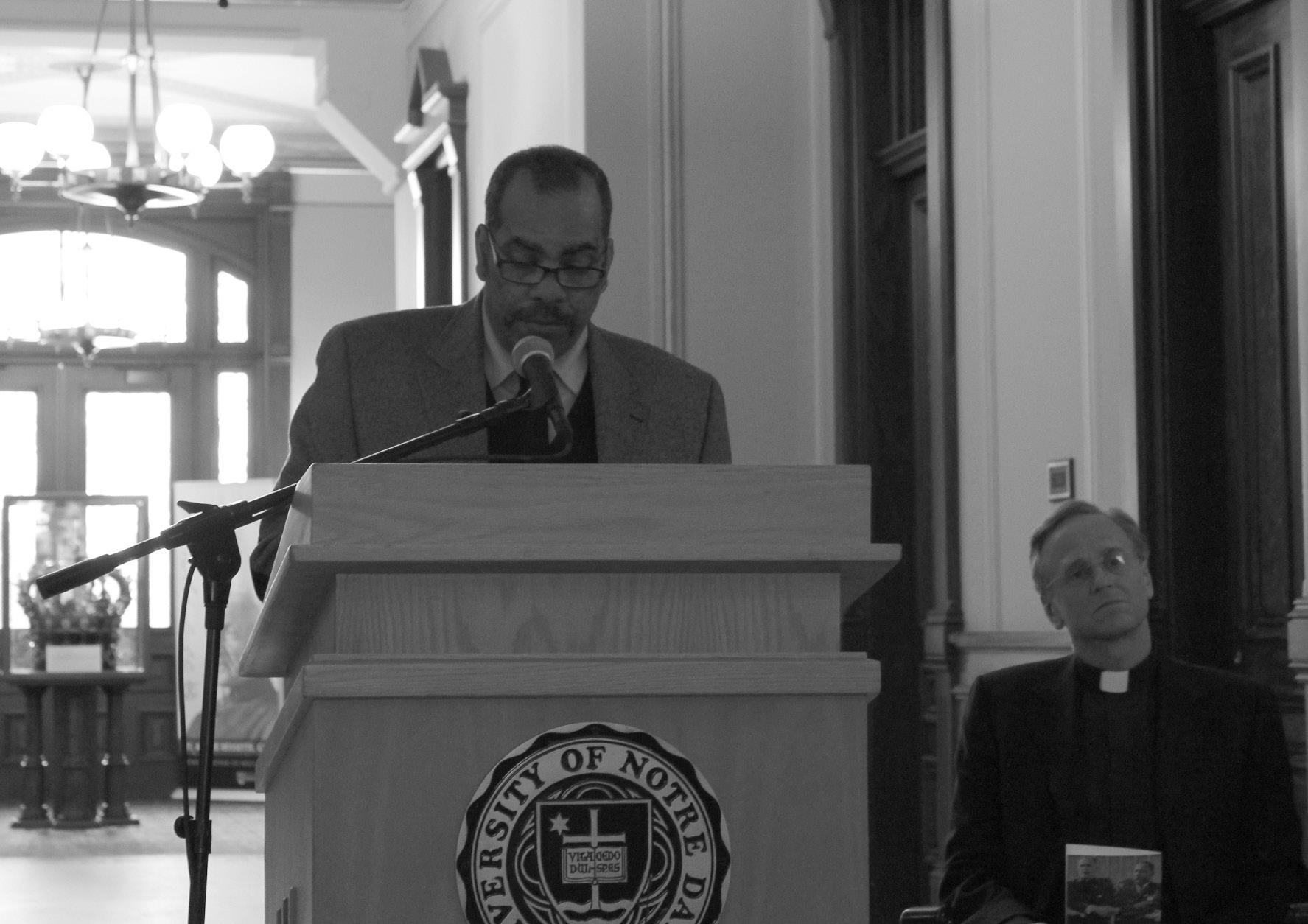
Throughout his life, dr. martin luther k ing, Jr. stressed the importance of nonviolence and love in ending racial discrimination. This legacy was the theme of a prayer service in the civil rights leader’s honor, held monday in the rotunda of main building.
The service consisted of a scripture reading, an excerpt from k ing’s sermon “l oving our enemies,” read by dean of the First year of studies hugh page, a reflection from university p resident Fr. John Jenkins, and petitions and music from the notre dame celebration c hoir. it was followed by a reception on the building’s third floor. in his reflection, Jenkins said k ing visited notre dame in october 1963. h is address,
see service PaGe 4
seminar explores border issues
By CAROLYN HUTYRA news writer
w hile snow virtually buried the midwest during winter break, 11 notre dame students traveled down to the desert of southern a rizona for the center for social concerns (csc) border issues seminar.
according to the csc website, the seminar, which took place Jan. 3 to 11, was meant to “expose students to diverse perspectives about [the] mexico-u s. border and immigration issues.” seminar director and sociology professor k raig beyerlein said the experience is formative for students.
see border PaGe 4
“Loving
Campaign to educate students on sexual violence
By ABI HOVERMAN news writer
by this end of this week, every undergraduate student living on campus at notre dame will have had a discussion about preventing sexual violence.
student body president a lex coccia said teams of trained students will generate conversations in their residence halls this week in response to higher than average reporting of sexual assault during the fall semester.
“it was born out of the fall semester and the number of crime alert emails we received,” coccia said. “we want to be more proactive about making a change on our campus to prevent these things from happening at all.
“we recognize that not all assaults are reported. but the see campaign PaGe 3
l eaders to receive degrees
Observer Staff Report
Two prominent catholic leaders will receive honorary doctor of law degrees from notre dame at the university’s winter board of Trustees meeting in rome on Jan. 27, a university press release stated. cardinal Jean-louis Tauran, president of the pontifical council for interreligious dialogue, and maria voce, president of the Focolare movement and the only female to lead a major catholic lay movement, will be honored during the academic convocation at notre dame’s new center in rome’s san giovanni neighborhood, the release stated.
“Though their energy and good works, our honorees personify the fact that god’s love knows no barriers,” university president Fr. John Jenkins said in the release.
Tauran, a native of bordeaux, France, became a priest in 1969 and went on to work in the vatican’s diplomatic service in the dominican republic, lebanon, haiti, beirut and damascus, the release stated. after pope John paul ii elevated him to a cardinal in 2003, pope emeritus benedict Xvi appointed him president of the pontifical council for interreligious dialogue in 2007.
Tauran voted in the 2005 and 2013 papal conclaves, and he was the speaker who made the formal “habemus papam” announcement of pope Francis’s election to st. peter’s square on march 13, 2013, according to the release.
voce, a native of southern italy, began to lead the Focolare movement in 2008, which promotes unity and universal brotherhood in 182 nations, the release stated. she was the first woman to practice law in rome’s modern judicial system and is a consultor for the pontifical councils for the laity and for promoting the new evangelization. while in rome, Jenkins and other university officials will meet with vatican leaders in papal congregational offices and pontifical councils related to notre dame’s mission as a leader in catholic higher education, the release stated. The board of Trustees will also conduct its regular business meetings in rome.
EMILY McCONVILLE | The Observer
Dean of the First Year of Studies Hugh Page reads an excerpt from Martin Luther King, Jr.’s sermon
Our Enemies” at a prayer service Monday in the rotunda of Main Building.
MICHAEL YU | The Observer
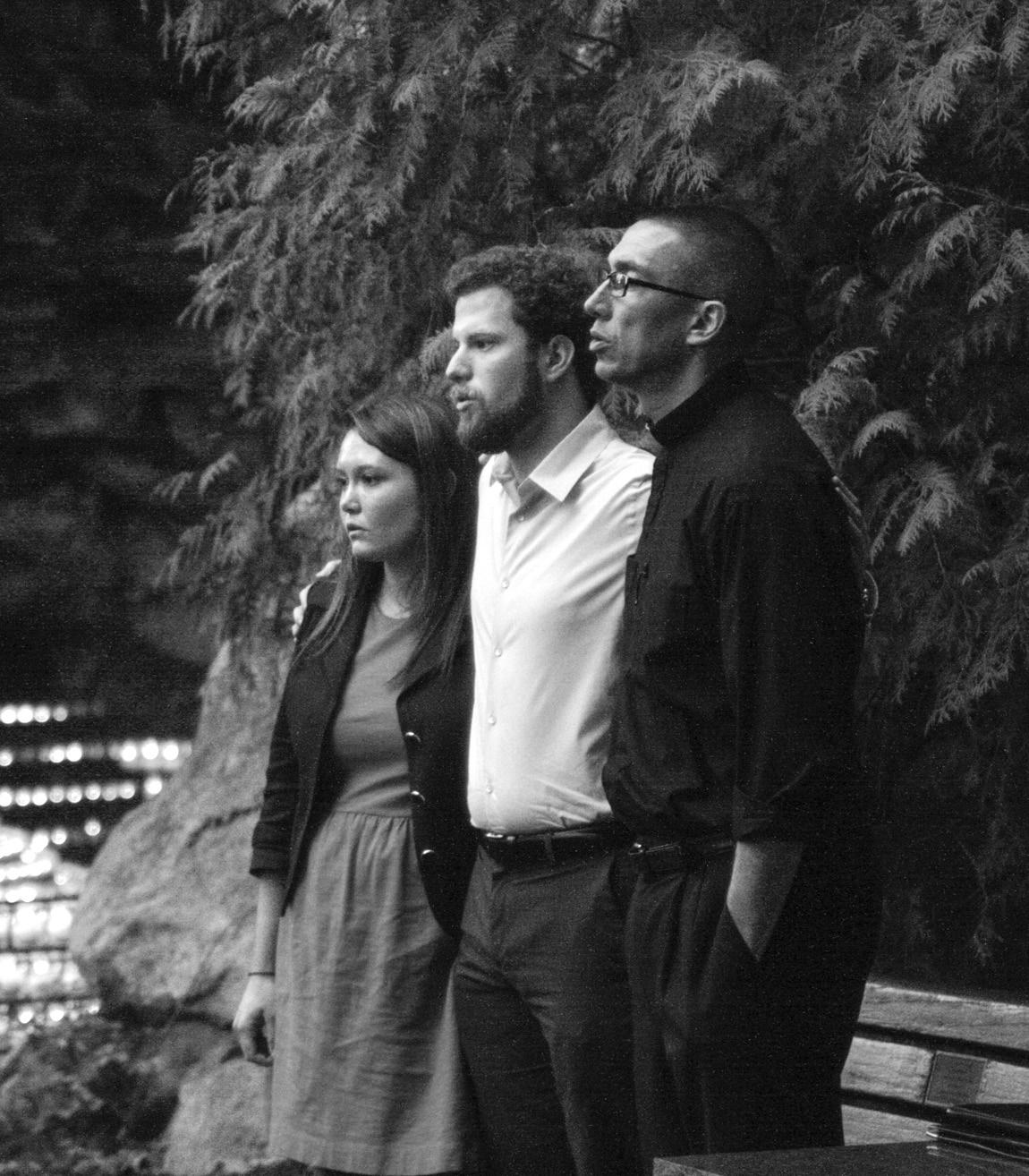
Nancy Joyce, Alex Coccia and Fr. Pete McCormick lead a prayer service Sept. 22, in response to a sexual assault report.
Systems & Web Administrators (574) 631-8839 Policies
Question of the Day:
Austin
Ed Bozik freshman morrissey manor “badin.”
Janelle Wanzek sophomore pasquerilla west “griffins.”
Kayla Matthews freshman ryan hall
“The Zahm moose.”
Philip Gilroy freshman sorin hall
“badin bullfrogs.”
Ray Zhao sophomore duncan hall
Today’s Staff
Corrections
i n the Jan. 20 issue of The observer, the comic “controlled c haos” was incorrectly attributed. The creator of the comic is actually h illary mangiaforte. The observer regrets this error.
The Basilica of the Sacred Heart prepares a Mass dedicated to Blessed Basil Moreau, founder of the Congregation of Holy Cross. The Basilica reopened to the public Monday, following renovations that began during winter break. Have
“l et’s just say i don’t know any.”
Tuesday
Public reading: John
Jeremiah Sullivan Hesburgh Center
7 p.m.-8 p.m.
Award-winning writer.
TEDxUND DeBartolo Performing Arts Center
8:30 a.m.-5 p.m.
The event will be streamed online for those without tickets.
Wednesday
Social Concerns Fair
Geddes Hall
6 p.m.-8 p.m.
More than 40 service opportunities.
Film: “Downhill” DeBartolo Performing Arts Center
10 p.m.-11 p.m.
Part of Hitchcock series and one of his darkest early films.
Thursday
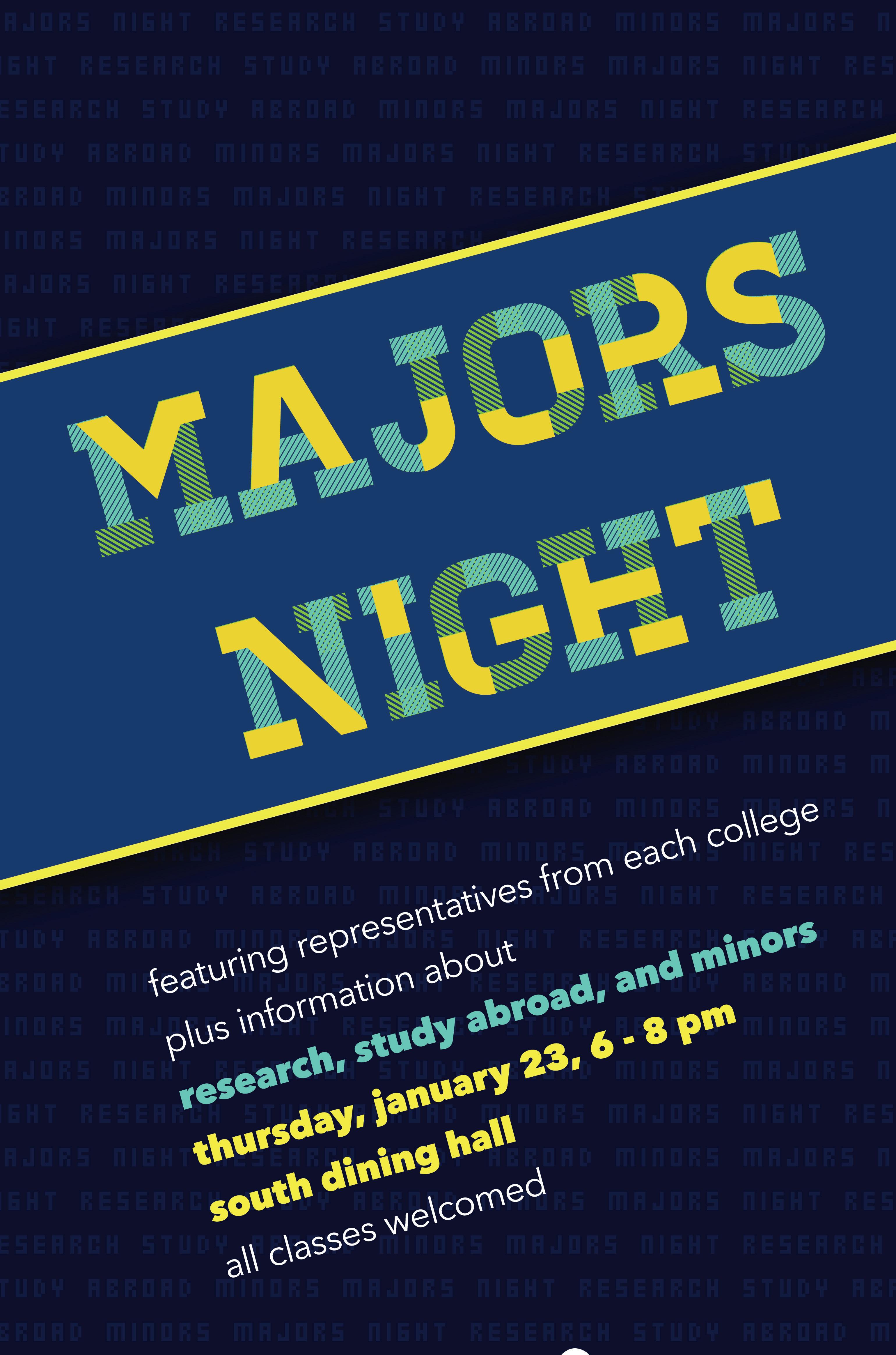
Majors Night South Dining Hall/ Reckers
6 p.m.-8 p.m.
Open to all classes.
Student Film Festival DeBartolo Performing Arts Center
9:30 p.m.-11:30 p.m.
Continues with showings throughout the weekend.
Friday
Harper Chili Cook-off
Harper Hall
3 p.m.-5 p.m.
Benefits the Harper Relay for Life team.
Men’s Hockey Compton Family Ice Arena
7:35 p.m.-9:35 p.m.
The Irish play the Northeastern Huskies, and again on Saturday.
Saturday
Film: “Falstaff” DeBartolo Performing Arts Center
1 p.m.-3 p.m.
The Met Opera live in HD.
The Harlem Globetrotters Purcell Pavilion
7 p.m.-9 p.m.
Tickets are still available.
MICHAEL YU | The Observer
Flourish Boutique moves and improves
By ALAINA ANDERSON news writer
Flourish boutique, a favorite shopping destination among saint mary’s students, will move locations, and customers can expect many improvements to their shopping experience, store owner and saint mary’s alumna vanessa cooreman smith said.
cooreman smith said she opened Flourish boutique in 2008 in a very small space and moved to the current location at c leveland and gumwood roads in 2009. The store will relocate again because the land the house sits on has been sold to a developer.
“The house [in which the store is currently located] is historic and can’t be torn down, so it has to be physically moved to a different site so they can develop this [land] into better use for the busy corner,” cooreman smith said.
“we were offered the chance to move with the house, but i felt like we had outgrown it. i was also apprehensive about the down time it would to take to physically move it, so it felt like the right time to make a move i have already been wanting to make.”
The new location will be just around the corner at
centennial place, next to gigi’s cupcakes, cooreman smith said. The new store will allow Flourish boutique to double its inventory, as well as to add more dressing rooms, checkout stations, phone lines and designers, like Free people and betsey Johnson.
“[The new store] will all be boutique quality and have a Flourish flair to it, but we will be expanding our product line,” cooreman smith said.
“we are going to have more shoe selections and we’re also going to be offering gifts. … we will have a really fun selection of what you could expect at Flourish, but with cute gifts.”
Flourish boutique uses student models on the store’s website, cooreman smith said.
“i think it’s really cool to use people [to model] that are essentially your customers,” cooreman smith said. “These real people, granted they are gorgeous girls that you know and love, are rocking out these looks and giving a credibility to the clothes. … it makes it more real.”
First-year saint mary’s student katlynn kennedy is one of the models for Flourish boutique. kennedy said modeling was very new to her, but the experience has helped her to grow.
paid a dverT isemen T
“i love the environment at Flourish,” kennedy said. “everyone is so upbeat, so it was just an overall great time going there to model for them.” audrey k iefer, a junior at saint mary’s who worked at Flourish boutique during the fall semester, said she loved the experience working with many other saint mary’s graduates. “it was fun to share stories in the offices from classes, study abroad experiences and overall saint mary’s life,” k iefer said. “a ll of the staff was very friendly and welcoming to me.”
cooreman smith said attending saint mary’s helped to give her the courage and dedication she needed to start her own business.
“Throughout my four years at saint mary’s, everyone was pouring into you that there’s nothing you can’t do as a woman and the sky’s the limit,” she said. “That definitely gave me a lot of confidence to start my own business.
“l ife is short. … it’s really important to pick [a job] you’re passionate about and pursue it, even if you start small. … you never know where it’s going to lead.”
Contact Alaina Anderson at aander02@saintmarys.edu
number at the beginning of the year led underclassmen to ask why and if this was the norm at notre dame.”
coccia said the number of reports created a lot of concern. he said student government needed to do more to respond than the prayer services following every email alert, although these gatherings have a healing power and act as evidence of community support for survivors.
coccia said after strategy meetings and a student-only discussion in november, student government members have been meeting with rectors, recruiting residence hall pointpeople and forming groups of four to five students per hall. in total, he said more than 120 student volunteers have been trained this week in facts about sexual violence both nationally and at notre dame, in bystander intervention and in effective discussions.
From monday to sunday nights, these volunteers will go door-to-door in their residence halls explaining a pledge against sexual violence and asking students to commit to prevention by signing and hanging pledges outside their rooms, coccia said.
“we’re using the pledge as the focus of the campaign,” he said. “The action item is signing a pledge, and putting your signature to something means a great deal.”
The pledge consists of three commitments, coccia said. bystander intervention is the first goal of the campaign, which involves actively standing up and watching out for peers both on and off campus, he said.
“[This means] making the decision to actively engage with your peers with a level of trust and with communication to make sure everyone is doing okay, acting as our brothers’ and sisters’ keepers,” he said.
Joyce said she hopes students will make plans with their friends before entering social settings to ensure everyone has a safe way to get home with others.
“keep an eye out for your friends,” she said. “we have a level of accountability for each other, and that’s what makes our community so great. The idea of bystander intervention is just an extension of the notre dame family.”
The second commitment in the pledge asks students to stand up against language that trivializes sexual violence in an effort to challenge misperceptions, coccia said.
“rape jokes are not funny. They invalidate the experiences of those who have suffered from rape, and you don’t know who is around you,” he said. “we recognize that no one ‘asks for it,’ and using that language perpetuates myths about sexual violence.”
coccia said the pledge asks for a commitment to support survivors of sexual assault. dozens of volunteers across campus now
serve as important sources of knowledge about available services for victims, he said.
“a ll dorm facilitators are now fluent in what resources are available both on and off campus, and those that are confidential and not confidential,” coccia said.
For undergraduate students living off-campus, coccia said all campaign materials are available at oneistoomany.nd.edu, but student government is looking for representatives in all major off-campus student housing developments to help spread the pledges. if interested in volunteering, he said to contact him directly by email.
student body vice president nancy Joyce said student government has worked with the committee on sexual a ssault prevention, the gender relations center and dr. william stackman, deputy Title i X coordinator, to create the studentrun and residence hall-focused campaign to more effectively address this serious issue.
“ we thought about some different ways about how to run it, but we decided to focus on residence halls because the communities there are so strong and where life happens on a day-today basis,” Joyce said.
sophomore molly howell, point-person for breen-phillips hall, said the campaign’s oneon-one hall-focused discussions this week would bring awareness and personally challenge students to speak out against sexual violence.
“sexual violence is a personal thing, but also a community issue … one act can affect more than just the people involved,” howell said.
adding to the student-run element of the campaign, coccia said senior Jeff mclean designed the pledge forms and posters being distributed this week.
coccia said after final conversations this weekend, teams will report back about the discussions they had in their halls, offering hall-specific information about opinions and stereotypes to move forward in future phases of the campaign. he said this constant feedback serves as an important source of the campaign’s effectiveness.
“we want to know what kind of conversations evolve around this topic,” he said. “we will recap with the dorm facilitators, and we will see what we can do moving forward. This is only the beginning of the conversation.” looking forward, Joyce said she hopes the campaign will address the connections between alcohol and sexual violence, as this year 17 of the 19 reports of sexual violence involved alcohol. she also said student government hopes to add sexual assault information to Firstyear orientation commissioner training and will work with campus ministry to make sure the sexual violence prayer services continue.
Contact Abi Hoverman at ahoverma@nd.edu
“i just think it’s one thing to read and intellectually talk about things, and it’s a whole different experience to actually see what’s going on on the ground,” beyerlein said. “i think it can potentially change people in a way that you can’t just do in a classroom setting.”
The goals of the border class and seminar are three-fold. beyerlein said the first is to provide “an intellectual, educational framework to understand broader debates about immigration, mostly from a sociological perspective.”
beyerlein said the second goal of the class is to provide a unique, distinctive lens for understanding immigration in light of catholic social Teaching. The third goal is then to take students to the border for firsthand experience.
a lthough the class is not allowed to cross the border due to security issues, beyerlein said students are able to approach the wall and, in some areas, see through it.
“From the students’ perspective [it’s] frustrating, but i also understand the constraints given the security issues,” he said. as part of the seminar, beyerlein said students participated in legal proceedings, humanitarian service with a group called the samaritans, border ministry work, work with catholic charities and travel, all within the context of religion and immigration.
prior to the trip, students attended class, wrote a preeimmersion pape, and watched the documentary ‘crossing a rizona,’ which recorded personal accounts of crossing the border. beyerlein said as much as students anticipate the experience and imagine what may occur, post-immersion papers always indicate the students’ experiences are not what they expected.
beyerlein said students saw migrants being sent back across the border to mexico.
“about 60 migrants are processed in an hour and a half, which is pretty fast,” he said. “i think just seeing the migrants in the shackle – i think that’s a pretty hard experience for students.”
beyerlein said normally, migrants who are caught crossing illegally are returned to the mexican side of the border. Those who are processed through operation streamline, a government program that files criminal charges against illegal migrants, receive jail time for a period of 30 days.
“if you’re caught again, the jail time keeps increasing up to the point where it can actually be a felony,” he said.
students who have participated in beyerlein’s seminar have gone on to work in the peace corps, humanitarian organization, and internships in washington, d c
“part of the seminar is for students to figure out their position on immigration, what they
should do,” he said. “i do think it’s great to see continual engagement about the issues.”
senior maggie duffy said she initially participated in the seminar her sophomore yea, but also served as the seminar’s student leader this past year.
since her sophomore-year experience, duffy has worked with a local immigration lawyer, added a supplementary major in latino studies, and spent several weeks in a rizona last summer, working with the humanitarian organization, no more deaths.
“one of the most important aspects of the seminar is … [meeting with] people who deal with the issues of immigration on a daily basis,” she said. “seeing the passion and commitment that all these people have for protecting the rights of migrants and working towards change in our country is truly inspiring.”
Contact Carolyn Hutyra at chutyra@nd.edu
which he delivered in the same year as his famous “i have a dream” speech, concerned economic discrimination.
“he warned of dangerous notions among urban whites in the community and said it’s torturous logic to use results of segregation and discrimination as an argument for the continuation of it, instead of looking at the causes,” Jenkins said.
Jenkins said the late nelson mandela, who led the fight against south a frica’s oppressive apartheid system and later became the country’s president, embodied k ing’s vision.
“it’s interesting to think of nelson mandela with dr. k ing,” Jenkins said. “dr. k ing began life committed to nonviolence but died a violent death. mandela started in armed resistance but renounced it and became the leader of his country. Today we remember these two men and their legacy of freedom, equality and dignity.”
The service, which was open to the public and standing room only, involved members of the community, as well as notre dame students, faculty and staff. emmanuel community church pastor shirley gaston, who read a passage from st. paul’s l etter to the romans, said she has attended the service in past years.
“i appreciate the fact that we
still remember [k ing] at notre dame,” she said. “[university president emeritus] Fr. [Theodore] hesburgh was a person that really knew him, and for Fr. Jenkins to keep that tradition going, i’m very pleased.”
student body chief of staff Juan rangel, who read a petition, said the prayer service remembered k ing appropriately. “i loved [the service],” rangel said. “i thought the service did a good job of bringing the spirit of dr. k ing in a peaceful and joyful way, and i liked especially how the community was involved, because you don’t see that a lot on campus.”
Contact Emily McConville at emcconv2@nd.edu
new year’s resolutions
Ann Marie Jakubowski news e ditor
i’ve always been just a little bit too into new year’s resolutions. w ithout fail, i go overboard and make plans that are far too ambitious every Jan. 1. Then, when those start to look a bit out of reach, i reassess around midterms, or at the beginning of the summer, or right before the start of the new school year. in my mid-christmas break delirium this year, i set some goals that have me kicking myself now that i’m back in the real world. For some reason, i decided this would be the year that, among other things, i run the holy half, earn a 4.0, start learning French, read The new york Times daily, deepen the friendships i’ve already made and make a plan for what to do with the rest of my life beyond notre dame.
one week into the semester, my progress has been minimal. i’ve gone running twice, skimmed the Times front page three times and managed not to fall behind during syllabus week. i’m a bit underwhelmed by my own progress. maybe i set ambitious goals and subconsciously expect not to accomplish them, hoping any progress along the way makes me better off than where i’d be without the original goal. maybe i enjoy the gratification of making longterm plans, even if i lack the discipline to work toward them day by day. or maybe if i got up every morning with more energy and concrete motivation, this really could be the first time i accomplish each of my resolutions. my inevitable problem with the resolutions i make is when i realize how much time i’ve wasted each day or how much i’ve failed to accomplish in a week. i start to feel foolish for setting the long-term goals in the first place. a nd to avoid future feelings of foolishness, i quit before i really get started on any one of the goals, just so i don’t have to think of it as a tally in the failure column.
in my experience, i overestimate what i can do in a week but underestimate what can be achieved in a year. l ooking back on my life since this time last year, i’ve experienced changes i didn’t see coming at all, not even with my allencompassing series of resolutions. a nd those resolutions from last year seem boring and obsolete because life in the meantime has taken me places i hadn’t prepared for. a nd lucky for me, it didn’t take my own plans into account when setting the course for the year ahead. maybe the only resolution i should make going forth into the rest of this semester, this summer and the inevitable beginning of my senior year is that this time next year, i want to be saying the year ahead will be the best of my life so far.
Contact Ann Marie Jakubowski at ajakubo1@nd.edu
reconsidering poverty
w ith the 50th anniversary of lyndon Johnson’s declaration of a “war on poverty,” recent political discourse has addressed our government’s approach to poverty in the united states. newly elected mayor of new york city bill de blasio campaigned against what he called the “dickensian” new york city that tells a tale of two cities, one of the super rich and the other of the hopelessly poor. de blasio has laid out an aggressive agenda that involves a universal pre-kindergarten program, as well as expanding the reach of snap food stamp benefits. however, evidence of the last few decades has overwhelmingly shown that expansions of such government programs designed to fight against poverty have proven largely ineffective. o ver the past 50 years, the government has invested $20.7 trillion into means-tested welfare programs, while the official poverty rate has barely moved from approximately 16 percent. a s author robert rector points out, the amount the government currently spends on welfare programs is more than five times the amount needed to eliminate all poverty in the united states. Further, the flawed census measurement of poverty fails to consider the benefits of welfare programs, making it near impossible to target which welfare programs are effective and which are failures. a s 70 percent of children born into poverty never reach the middle class, our government’s effort to end the cycle of poverty is failing. somewhere in our current welfare system, our massive investment in reducing the causes and symptoms of poverty is lost. i believe we are not seeing positive returns on our investment because further expansions of current government aid
programs fail to foster opportunities of self-reliance and economic independence for welfare recipients, two crucial factors in allowing individuals an opportunity to move up and out of poverty.
p resent government welfare programs keep the poorest of our society in a vicious cycle of dependence. a complex system of benefits hinders the successful attempts of the poor to become economically self-sufficient. a n alarming number of citizens are becoming less able to escape the grips of poverty, as labor force participation is at a 35-year low. Two million more a mericans receive disability payments than did five years ago, and 25 percent more receive some form of foodassistance. a system of benefits and dependency reduces one’s incentive to work and even punishes attempts to do so with the threat of removing such benefits. This system handcuffs those living in poverty by positioning reliance on government aid as a more economically sound decision than participating in the workforce. a mere transfer of resources from the federal government to the poor does prevent the symptoms of poverty (the quality of life for the average poor person has greatly increased in the past few decades), but it does not create a system of self-sufficiency and economic security that would provide the poorest of our society a fair shot at economic mobility.
Further, the current benefits system fails to address some of the root causes of poverty, exemplified by the numerous anti-marriage incentives of welfare programs. The collapse of the family structure in low-income communities has consistently been determined as a core cause of poverty. The number of children born out of wedlock has increased sevenfold since the 1960s. additionally, children raised in single-parent homes are four times
more likely to live in poverty, three times more likely to end up in jail and two times more likely to remain below the poverty line as adults. a s popular rhetoric consistently calls for government programs that attack the root causes of poverty, the present welfare state promulgates and even incentivizes the deterioration of marriage, a proven cause of poverty.
now, a government welfare program or “safety net” to help those who need assistance and support is undeniably necessary in a capitalistic economy. however, our current welfare state has transformed support into dependence. w hile our present system succeeds in providing individuals relief from the symptoms of poverty, it fails to provide the poor with an opportunity to rise above the poverty line.
Fighting poverty should not be a partisan issue. a ny effort to classify either political party as “anti-poverty” is cheap political rhetoric that threatens to reduce our political discourse from a forum of diverse ideas and solutions to a collection of meaningless sound bytes. however, vast expansions and increased roles of government aid programs, while a sincere effort with virtuous aims, have proven unsuccessful in fighting poverty. i n order to achieve our nation’s shared promise of providing even the poorest of our society with a fair chance at the a merican dream, we must transform our current welfare state. we must move from a system of cyclical dependence with little hope of upward mobility to a system of necessary relief aimed at an ultimate goal of economic stability through self-sufficiency.
John Sullivan is a sophomore studying finance and political science. He can be reached at jsulli18@nd.edu
The views expressed in this column are those of the author and not necessarily those of The Observer.
John Sullivan v iewpoint c olumnist
m uch like the rest of my fellow m idwesterners who were ravaged by the p olar vortex a couple of weeks ago, i spent a large part of my last week home being, well, at home. m y entire city was under a s tate of e mergency, my little sister had school canceled for the entire week (extending her high school break to the length of my college break) and my mother had stockpiled enough food s unday evening to last a thousand winters. The only time i was actually motivated enough to venture out to my front porch to get the newspaper involved me opening the door, feeling the negative 30-degree wind freeze my nose hairs and promptly concluding “oh, heck no” while closing the door, all within a five-second timespan.
i nterestingly enough, this historical weather event provided a lot of “me” time and revealed to me a couple of important things from the mundane to the i ntro-to- p hilosophy level. w ithout further adieu, i present my “ l essons from the vortex.”
l esson n o. 1: d o not trust p interest. w ith a family full of “ i ’m going to lose so much weight this year” resolutions, my school-less
l essons from the vortex
sister and i took it upon ourselves to prepare a wide assortment of healthy dessert options to keep our family healthy in this frozen abyss. n aturally, any 15-year-old high school girl’s first instinct when it comes to concocting a tantalizingly i nstagram-able treat is to consult p interest. i consulted my sisters’ newly gifted i p ad mini, scrolling through what seemed to be (as my lack of patience led to me to conclude) an infinite supply of healthy, organic, low-cal, high-protein and good-for-you recipes that looked too good to be true. a fter we sorted through the recipes and eliminated those with obscure ingredients ( i still don’t know what xanthan gum is or why anyone would have quinoa flour handy), we decided to prepare a strawberry, peanut butter, oatmeal and flax-seed smoothie, as well as cookies in which the only ingredients were bananas and flourless oatmeal muffins. e ach day brought a new recipe, a new flavor, but the same reaction from everyone upon consumption, “ well, at least you tried.” The moral of the story here? h ealthy desserts are a myth. d on’t let p interest (or your 15-year-old sister) deceive you into thinking otherwise.
l esson n o. 2: Too much T v can actually reduce your mind to mush.
w hen i wasn’t failing miserably at cooking with my sister during this snowpocalypse, i was watching T v with my brother or playing the d awnguard and d ragonborn expansion packs of one of my favorite video games, s kyrim. a fter finishing 20 hours of gameplay, s easons Four, Five and s ix of “ b reaking b ad” and s easons Four and Five of “ s crubs,” i was slowly losing my ability to think and communicate coherently. i t also didn’t help that i got really into the whole d oge meme for the past couple of months, which has also hindered my ability to form grammatically correct sentences. w hen my mom would yell down the stairs that dinner was ready, my responses were audible grunts, and dinnertime conversation would frequently include me putting my head on the table and mumbling “many bright, much confuse” or some other d ogeworthy variants of this line. p oint is, all those years of my mom telling me video games were going to “rot my brain” weren’t so out there after all. l esson n o. 3: Family, family, family. a s if being home from break wasn’t enough to remind me how much i love my family, being forced by the c ity of Fort wayne and the n ational weather s ervice not to leave our house for three days reinforced how much they mean to me.
mao, here and there
d uring the c ultural revolution in c hina, a red guard grabbed my grandfather and ferociously demanded an answer. “c an the ‘mao Zedong Thought’ be viewed from both the positive and negative sides?” he asked. obviously, it was a trick question: a “ yes” would signal dissatisfaction with the beloved c hairman, while a “no” would go against mao’s unassailable teaching that everything should be judged from two sides. being suspected of thinking negatively of c hairman mao during the c ultural revolution landed my grandfather in hot water, but he, an intellectual and educator, always worshipped c hairman mao. a mid thousands of copies of western, “reactionary” and “capitalistic” literature, the full collections of l enin, stalin and mao have a distinct place on his bookshelf. Things have changed dramatically in c hina since mao’s passing, but mao’s place in history is becoming more and more unchallengeable in official propaganda and c hinese education. o ne of the most distressing incidents of cultural shock for many c hinese students in a merica is the wildly different interpretations of history in c hina and the west, particularly on the difficult topic of mao Zedong, the first p resident of the people’s republic of c hina. o n the one hand, many
c hinese students are often surprised and indignant at the seemingly unbalanced, negative portrayals of the beloved leader. o n the other hand, the firm defense of mao from many c hinese students never fails to shock a mericans.
w hat a merican professors and students don’t usually know is the propaganda that c hinese students, even those who seem intelligent and rational, are taught back home.
december 26, 2013, the day after c hristmas, was mao’s 120th birthday. i turned on the television to watch p resident Xi give a speech before his comrades, lauding the achievements of the Founding Father. he then led the delegation of other top c hinese officials into the c hairman mao memorial hall, known in the west as the “maosoleum,” located in Tiananmen s quare. Top government and military officials bowed thrice — the gesture of utmost respect — before a marble statue of c hairman mao. Then they proceeded to pay respect before his body, without showing any television footage.
many people across the country commemorated c hairman mao’s birthday by singing “red songs” and many organizations, controlled and monitored by the government’s recent anti-waste and anti-corruption campaign, staged celebrations. c hinese c entral Television began airing an “epic” T v series called “mao Zedong” in prime time beginning december 26.
w hether it was my sister’s and my culinary adventures, my brother and me plowing through season upon season of n etflix, shoveling our car out of 14 inches of snow with my dad or conversations with my parents about what the heck i ’m going to do with my life, i was consistently amazed by how different my life would be without them. a t the end of the day, these are the people who have always been there for me and, g od willing, will be with me for a long while. s ometimes it’s the little things like windchills in the negative 40s and snow accumulations of greater than one foot that make you appreciate those that matter the most.
i guess some of the most important lessons in life are the ones we learn while away from school. g ranted, these lessons may not have been the same as, say, my o rgo ii class (even though both experiences ravaged me in similar ways), but they were still just as important. h ere’s to another break, more time with family and maybe a little warmer weather.
Michael Fliotsos is a sophomore business major living in Duncan Hall. He can be reached at mfliotso@nd.edu
The views expressed in this column are those of the author and not necessarily those of The Observer.
unlike westerners who perceive mao as a devilish autocrat comparable to h itler and stalin, most c hinese people approve of him. This natural fondness of the great c hairman burgeons in early education, and is ubiquitous in children’s books and songs: “i love beijing’s Tiananmen, over which the sun rises. great leader c hairman mao leads us forward.” a s soon as schoolchildren begin reading, they read propaganda stories, some true but some exaggerated or fabricated, in c hinese classes. The stories teach important life lessons on values in a socialist society and the virtues of c hairman mao and the c ommunist party. i n the fifth grade, i was assigned a research project on c hairman mao. i looked up “mao Zedong” in the c hinese dictionary and spent the next two hours copying the thousandcharacter “definition” on a piece of a4 paper, using multicolored pens. it was one of the hardest a’s i earned in elementary school, but i did manage to remember one thing from the “definition”: “he mistakenly started the c ultural revolution.” but c hairman mao never makes mistakes! i n middle school and high school, i would find out that this mistake, often exaggerated by “bitter and calculating enemies” in the west, was covered in history textbooks in one brief sentence. according to the correct answers on history and politics exams, the c ultural revolution was a somewhat necessary lesson and sacrifice towards
a better society.
l ast may, i visited mao’s hometown in shaoshan, hunan p rovince. o fficial propaganda emphasized the poverty that mao’s family experienced — and so, even after seeing mao’s many rooms and his considerable amount of land, the hundreds of pilgrims to mao’s old home still believed in his hardships. western scholars contend that mao’s family belonged to the kulak, or rich peasantry, a social class he later decimated in the hopes of bringing prosperity to c hina. a museum nearby displayed the items mao had used in office. The c hairman’s frugality is also widely known to c hinese people through words in textbooks and the media, but some visitors were surprised by the wide variety, high quality and decent quantity of the c hairman’s belongings decades ago. maybe frugality is defined differently for the great c hairman, and his virtues remain indisputable.
having learned all this, c hinese students, especially those in yale classrooms, have come a long way. unlike my grandfather, we are blessed with an open atmosphere and are able to talk about the many sides of the c hairman without immediate consequences.
The Yale Daily News is the independent student newspaper serving Yale University.
The views expressed in this column are those of the author and not necessarily those of The Observer.
Yifu Dong guest c olumnist
uWIre
Michael Fliotsos guest c olumnist
now that “The wolf of wall street” has captured the attention of buzzFeed articles and aspirational traders across the country, we can look forward to even more books being translated into films over the course of 2014. w hile a movie can never fully encapsulate the experience of a book, with luck, these re-imaginings can pro- vide us with vivid and inspiring interpretations.
“winter’s Tale” by mark helprin no, it’s not shakespeare, but it may as well be, since helprin is an astounding author with an uncanny ability to tap into the fantastic and the mundane simultaneously. The trailer introduces colin Farrell of “saving mr. banks” as middle-aged irish burglar peter lake and Jessica brown Findlay of “downton abbey” as terminally ill beverly penn at the beginning of this extraordinary love story. russell crowe plays villain pearley soames, will smith plays the Judge, and together with a magical white horse, the cast is bound to create a magnificent performance.
By MEGHAN THOMASSEN managing e ditor
“wild” by cheryl strayedbuoyedbyitsrolein oprah’sreopeningofher book club 2.0, “wild” tells the story of a woman who recovers after the loss of her mother and her marriage when she discovers herself on the pacific crest Trail.tifulshehikes1,100milesandseessomeofthemostbeaulandscapes the west coast has to offer. reese witherspoon’s charm will lend great likeability to this otherwise sharp and determined character.
“a long way down” by nick hornby
This no. 1 bestseller may be morbid (it’s about four characters con- vening on a roof on new year’s eve to jump to their deaths), but the film is bound to be filled with hilarious antics and profound moments of re- flection. set in the expansive and lively city of london, pierce brosnan stars alongside aaron paul, rosamund pike and imogen poots. you know this is going to be good because Johnny depp apparently bought the rights for this movie before the book was even released.
“divergent” by veronica roth
The next big dystopian series on the market, of course, must be made into a hit-‘em-hard action and romance movie. in a world where 16-year-olds must define themselves according to one personality trait, roth’s heroine makes a choice that plungesherintoalifeofadventureandintrigue.while shailene woodley is no Jennifer lawrence, this film’s fast-paced plot will nevertheless draws thousands on opening night.
“The Fault in our stars” by John green shailene woodley is at it again, but this time with a movie fit to succeed the likes of “a walk to remember,” but with a better sense of humor and a penchant for travel.
“The Fault in our stars,” whose title is a variation of a line from shakespeare’s “Julius caesar,” was Time magazine’s no. 1 Fiction for 2012. The story follows hazel, a terminal cancer patient, who meets cancer-survivor augustus and sparks the escapade of her life. woodley plays hazel opposite ansel elgort (who, coincidentally, was cast as her brother in “divergent”).
“The giver” by lois lowry
a childhood favorite of millennials and the winner of the 1994 newbery prize, “The giver” is a wise, acutely written novel that borders on science fiction à la madeleine l’engle. Twelve- year-old Jonas is chosen to become the keeper of memories for a seemingly perfect community, and he learns the true pains and pleasures that come with reality. The cast for this film is stacked: meryl streep, Jeff bridges, katie holmes … and Taylor swift. as long as swift knows this book isn’t a “Fairy Tale,” the movie is bound to be a hit.
“gone girl” by gillian Flynn
This book topped the bestseller list for months, and for good reason. The suspense inherent in a potential uxoricide, on the victim’s fifth wedding anniversary no less, took readers on a murder-mystery thrill ride. ben affleck is the man in question, and rosamund pike plays his missing wife, with other stars including neil patrick harris and missi pyle. as of last week, however, rumor has it that the movie will have a completely different ending than the book.
By ALLIE TOLLAKSEN s cene writer
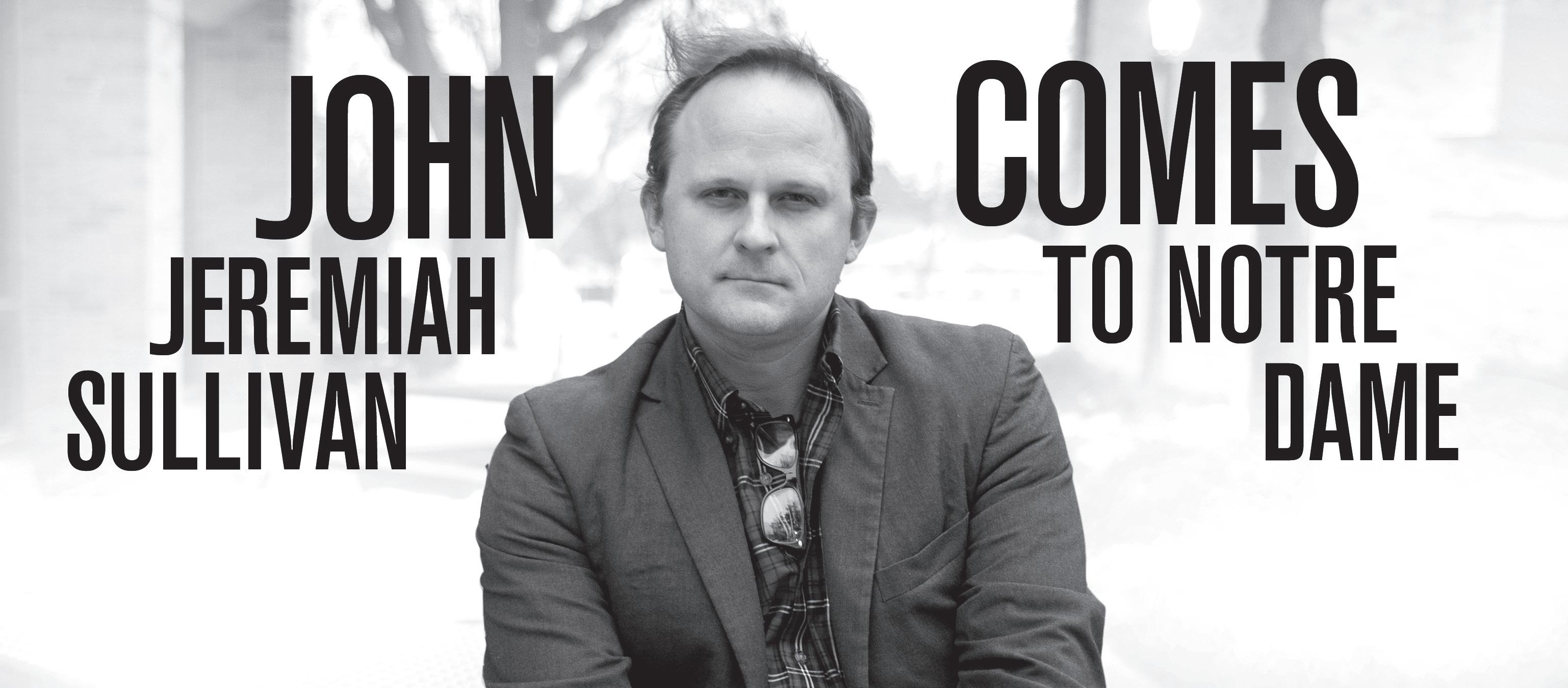
John Jeremiah sullivan, one of the country’s preeminent literary journalists, arrived on notre dame’s campus yesterday, Jan. 20, to meet with students both inside and outside the classroom. a contributor to the new york Times magazine, new york magazine and g Q, as well as a former editor at The paris review and o xford a merican, sullivan has won two national magazine awards and established himself as one of the most accomplished non-fiction writers working today.
Fortunately for us, he took the time to visit notre dame classes and speak to students about his work. a fter visiting with an i rish studies class yesterday afternoon, sullivan kindly sat down with me to speak about his current project, advice for college writers and what to expect for the talk he’ll be giving this evening, open for all students at the hesburgh c enter auditorium.
born in l ouisville, ky, sullivan spent most of his early life in new a lbany, i nd. w hile he has moved many times since, living everywhere from peru to Tennessee, his opinions about i ndiana have changed over time.
“o nly now that i’m a little older, i’m starting to get really interested in i ndiana,” he said. “i’m realizing what a fascinating place it is. it’s exotic in a weird way — so normal, it becomes exotic.”
i ndiana, however exotic you may find it, makes its way into a few essays in “p ulphead,” sullivan’s critically acclaimed second book. released in 2011, “p ulphead” is a collection of essays from the journalist’s work at g Q, new york Times magazine and o xford a merican over the last 15 years. spanning in topic from hidden caves to m ichael Jackson to hurricane k atrina, the 14 essays in “p ulphead” perfectly showcase sullivan’s unique journalistic voice as well as his ability to write about anything. sullivan said, as he sat down for an interview yesterday, that he wouldn’t have it any other way.
“o ne of the things i love about this job is that it’s a graduate education that kind of never stops,” he said about the variety of stories he writes. “ you have to inform yourself about things in order to write about them.”
not only does sullivan inform himself with an array of topics in his writing, preparing often times with months or even years of careful research, he also does a remarkable job of connecting with the people in each of his stories. even when writing about those with whom he shares little in common, he manages to describe these individuals with touching intimacy and understanding. it’s almost as if the people he describes are fictional, created to allow the readers to peek into the psyche of whatever phenomenon, trend or celebrity he may be covering. The truly amazing part is that all of these characters, as sullivan calls them, are real people.
“The trick of interviewing is getting to meaning. it’s easy to get people to talk. it’s even easy to get people to cough up secrets,” he said about what makes a good interview. “but in order to get a person to say what they really mean, you have to create a kind of comfort and trust. a mutual seriousness.”
There is no doubt that sullivan has this talent for getting interview subjects to open up and engage in meaningful conversation, giving his stories great depth. it also is his ability to artfully describe the people he speaks with and gets to know that makes sullivan’s work so captivating. c ritics often use the word “empathy” to describe sullivan’s style when telling another’s story, giving insight into the backgrounds and motivations of others. but sullivan doesn’t necessarily see what he writes as empathic. i nstead, he says, he gets to know people, trying to “understand their psychology, to break into their worldview” in order to best tell a story.
That we often empathize with the people in his essays is not due to some applied empathic tone on sullivan’s part, but instead is a testament to the writer’s
first-rate storytelling. he is able to make us understand subjects in his essays in ways we never have before by taking the time to understand and relate to them himself.
Though sullivan is known for his conversational, first-person journalism and focus on current events ranging from music to reality television to politics, he also has a noticeable knack for a merican history. i n many of his essays in “p ulphead,” sullivan masterfully incorporates this extensive knowledge of u s. history, and he now has a new historical nonfiction book on the way. Focused on a “blind spot in a merican history,” the early 18th century in the s outh, his book is a change from literary journalism, but is a topic he has been researching for almost 15 years.
“it’s this very strange and obscure wormhole in a merican history,” he said.
“The material is incredible.”
i n the meantime, sullivan continues to contribute stories to new york Times magazine, expanding the breadth of his work while intelligently writing on various topics, ranging from athletes to a thoroughly entertaining “massage-athon” while living in w ilmington, n c with his wife and two daughters. w hen asked what advice he had for aspiring writers in college he replied candidly.
“i think just try to ask yourself in as naked a fashion as possible, whether you have to be doing it, whether it’s something you need or want to do, or whether you’re doing it out of a lack of other avenues, because it’s not an easy life,” sullivan said.
“i f you can be somewhere else happily, you might want to think about it, but i think there’s a tribe of us who really can’t be happy anywhere else.”
John Jeremiah sullivan will be speaking tonight at the hesburgh c enter auditorium at 7 p.m. h is talk will involve the origins of the blues, its surprising connection to our very own i ndiana and, of course, a chance to hear one of the best literary journalists working today. a nd it’s certainly a rare opportunity not to miss.
Contact Allie Tollaksen at atollaks@nd.edu
Iron Bowl owns top rivalry spot
Matthew DeFranks a ssistant managing e ditor
Editor’s note: This is the second installment in a 10-part series discussing the best rivalry in sports. In this installment, Matthew DeFranks argues for Auburn-Alabama. Join the discussion on Twitter by using the #BestRivalry.
growing up in s outh Florida during the ‘90s and early 2000s, i was constantly told m iami-Florida state was the best rivalry in sports. it had everything going for it.
national championship contenders? c heck. s ame state? c heck. recruiting battles? c heck. c razy, er, passionate fans? c heck.
it had the memorable games with w ide r ights i through iii and w ide l eft. it had the n F l talent, and it even had the silly rivalry antics (see: the s eminole r ap from the late ‘80s).
now, add four of the last five national champions, harvey updyke, “Fear the Thumb,” s cam newton and the “k ick six.” That is what a labama and auburn’s i ron b owl is — the best rivalry in sports.
a t the game’s inception, the i ron b owl was played in birmingham because it had the largest stadium in the state of a labama. i magine moving the now non-existent Texas-Texas a & m games (geez, thanks realignment) to c owboys stadium because neither stadium was large enough.
a labama went 99 years in between home games against the Tigers, while a uburn hosted its first i ron b owl in 1989. now, the rivalry simply resides in cavernous Jordan-hare stadium (capacity: 87,451) and mammoth bryant-d enney stadium (101,821).
There is no more unique rivalry in college football as it relates to the venues it has been played in. oh, and the games played in them weren’t that bad, either. i n the four years prior to this season, the i ron b owl had decided the national champion a month before they were officially crowned. a uburn was 13 seconds away from making it five in a row.
i n 1982, some auburn running back named b o Jackson leapt into the end zone on fourth-and-goal from the one
to give the Tigers a one-point victory and snap a nine-game losing streak to the c rimson Tide.
i n 2006, auburn had a labama afraid of a simple finger — the thumb. i n the midst of a four-game winning streak against the c rimson Tide, the Tigers made sure a labama knew about it and then backed it up with a 22-15 victory.
i n 2010, a labama jumped out to a 24-0 lead on the undefeated and c am newtonled Tigers. but newton and auburn clawed their way to a 28-27 win during a season that led to auburn’s second national championship.
a nd this past season, auburn finished the i ron b owl in style, with c hris davis returning an a labama missed field goal 109 yards to lift the Tigers to a dramatic 34-28 win over the c rimson Tide. a fter davis scored, he dropped the ball on the Jordan-hare stadium turf as the crowd rushed the field.
a n auburn ball boy picked up the ball and returned it to the school, even though it was estimated to be worth $100,000 if auburn won the national championship.
To give you an idea of how much $100,000 for one football is, you can buy 3,333 under a rmour footballs from e ast b ay for the same price. you can pay for your notre dame education with two of those balls. The valuation of this ball is a reflection of not only the magnitude of this rivalry, but also of the crazy fans that come with it. speaking of crazy fans, let’s turn our attention to harvey updyke. updyke allegedly poisoned auburn’s oak trees at Toomer’s c orner, a place auburn students traditionally celebrated big wins. That would be like nancy kerriganing notre dame’s l eprechaun or defacing stonehenge. c learly, usc and m ichigan fans do not care about their teams enough.
From Joe namath to c am newton, “roll Tide roll” to “ war e agle,” there is no rivalry, collegiate or professional that matches the i ron b owl.
Contact Matthew DeFranks at mdefrank@nd.edu
The views expressed in this Sports Authority are those of the author and not necessarily those of The Observer.
nCaa athletICs
UNC doubts study’s result
Associated Press
chapel hill , n c . —
n orth c arolina’s top academic officer said Friday that reading specialist m ary w illingham’s findings on athlete literacy levels are flawed, though she stands firm that her research is “100 percent correct.”
i n a meeting of the school’s faculty council, provost James w d ean Jr. said there is “absolutely no basis whatsoever in the dataset to make any claim about the literacy of our student-athletes.”
i n a cnn story last week, w illingham said her research of 183 football or basketball players at unc from 2004-12 found 60 percent reading at fourth- to eighthgrade levels and roughly 10 percent below a third-grade level. d ean said the findings were based largely on standardized scores in a 10-minute timed vocabulary test that isn’t an appropriate way to measure literacy levels. d ean called it “flawed analysis” and said it was unfair to use the data to say students can’t read. d ean said the school will have outside consultants review their analysis of w illingham’s data.
“ i ’m not playing some kind of trick with this data,” d ean said. “This isn’t marginal. This is really quite central to the claims that have been made. a nd i take no joy in this. i think it’s very sad, actually.”
The school has stopped w illingham’s research until she receives approval from the school’s i nstitutional r eview b oard ( irb ), saying she can’t continue to use data with information that
nCaa men’s BasKetBall
could identify the subjects.
i n an email to The a ssociated p ress, w illingham said she is scheduled to go before the review board next week to go through the approval process.
“ m y data is 100 percent correct,” w illingham said.
“ i n addition, i worked with the overwhelming majority of the students in the data set on reading and writing skills between 2004 and 2010.
“ i t’s interesting that my irb was pulled and i was told that i could not talk about it until it was resolved, meanwhile the provost is allowed to discuss the findings. That is what is truly erroneous about all of this — and at a research university — wow. a t unc we protect our brand at all costs.”
Faculty had a chance to ask questions of d ean, chancellor c arol Folt and admissions director s tephen Farmer during the council meeting after d ean’s presentation.
Jay s mith, a history professor critical of how bigtime sports affects unc and other universities, defended w illingham’s efforts during the session.
“ s he’s spent 40- and 50hour weeks for seven years teaching athletes how to read and write. n ow that’s a simple fact,” s mith said. “That is her experience. ... b ut i ’ve heard her stories. i know how deeply it impacted her. The suggestion that somehow she is picking on athletes, diminishing athletes, denigrating athletes is just absurd. i just want to get that on the record.”
h assan m elehy, a French
professor, called d ean’s rebuttal to w illingham’s research “a very convincing presentation” during the Q& a session. b ut he warned against being tempted to dismiss “all of the allegations of problems with the athletic program,” mentioning years of fraud in an academic department that featured classes with significant athlete enrollments.
“There has been a pattern of denial here,” m elehy said. “To me, today, i don’t see denial but it could be easily perceived as a pattern of denial. a ll effort has to be made to resist that — the temptation to use this as a pretext to insist that there’s nothing wrong.”
w illingham provided her research data to the university earlier this week. b y Thursday, the school had released an analysis from its admissions office saying that more than 97 percent of 1,377 first-year student-athletes admitted through special-talent policies between 2004-12 met testing thresholds used in the cnn report — a 400 on the sa T critical reading or writing test, or a 16 on the ac T — about reading levels for first-year students nationally.
“ we’re working really, really hard to make sure that every student who we accept here — whether they’re an athlete or not — can be successful,” d ean said after Friday’s council meeting. “ i don’t think we’re there yet. This was not really about there’s no problem. This was just about is this data, does it mean what people have said that it means? u nfortunately the answer is no.”
a rizona tops ap poll again
Associated Press
arizona and syracuse are the top two teams in The associated press poll for the seventh week.
michigan state moved up one place to third while villanova jumped two spots to fourth.
wichita state, at 19-0 the only other unbeaten in division i, stayed fifth and was followed by Florida, san diego state, kansas,
The wildcats (18-0) are again the runaway no. 1, receiving 61 first-place votes from the 65-member national media panel. The orange (18-0) got the other no. 1 votes.
wisconsin and iowa. kansas has beaten three straight ranked opponents and jumped from 15th to no. 8.
michigan, at no. 21, and kansas state, at 22nd, moved into the poll this week, replacing creighton, colorado and ucla There was a tie for 25th last week.
Notre Dame dominates doubles to kick off 2014
By HENRY HILLIARD sports writer
n otre d ame began its 2014 campaign with three wins over the weekend, boosted by a trio of victories in doubles performances.
Throughout the competitions, n otre d ame lost only one doubles match, giving the i rish a critical 1-0 lead heading into singles in each matchup.
The i rish squad featured seven different triumphant doubles duos in its matches against w illiam and m ary, m ichigan s tate and Toledo.
“ w e put a major emphasis on our doubles play throughout the fall and hope that this weekend leads to continued doubles success as we enter our spring season,” senior m att d ooley said.
n otre d ame played its weekend matches without its n o. 2 player, sophomore Quentin m onaghan. w hen seniors b illy p ecor and e ric s chnurrenberger lost their first match, 6-2, the i rish found themselves in an early hole. The pair of senior g reg a ndrews and sophomore a lex l awson and the duo of seniors r yan b andy and d ooley rallied to win two straight doubles matches, propelling the i rish to victory.
s unday afternoon’s
matchup against m ichigan s tate proved to be the most competitive of the weekend.
“ i n a tight match like what we saw against m ichigan s tate, there is obviously a lot more pressure,” d ooley said.
“ i n a competitive atmosphere like that, particularly in doubles play, there is a real emphasis on execution.”
a gainst the g riffins on Friday, a ndrews and l awson, the 21st-ranked doubles team in the country, won their match 6-3. They were joined by the duo of senior b illy p ecor and sophomore e ric s chnurrenberger, which guaranteed victory for the i rish.
The i rish doubles swept the Toledo duos in similar fashion s unday night, as a ndrews and d ooley cruised to a 6-0 win and the sophomore team of n icholas m ontoya and k enny s abacinski won 6-1. The two matches were completed within 22 minutes, as n otre d ame rolled the r ockets in doubles play.
a gainst both w illiam and m ary and Toledo, n otre d ame did not even need to complete its third matches.
o n Friday, d ooley and freshman Josh h agar’s match went unfinished against the g riffins. l awson and s chnurrenberger’s match ended in similar fashion
against the r ockets, as a ndrews/ d ooley and m ontoya/ s abacinski’s victories had already secured a n otre d ame doubles victory for the evening.
“The key against teams like w illiam and m ary and Toledo this weekend was making sure we kept focus and avoid the upset against some capable players,” d ooley said.
The squad will rely on a similarly strong double performance this weekend as it travels to l exington, k y., to face m innesota, k entucky and byu n otre d ame should receive a boost, since m onaghan is expected to return to the court. The winner of the pool of three teams will advance to the i T a n ational i ndoor c hampionships in h ouston, Texas, which the i rish narrowly missed last season.
“This weekend could be a big step for our team,” d ooley said. “ l ast year we just missed n ational i ndoors and lost a heartbreaker 4-3 against k entucky. w e know that we are a top-10 team and there is a lot of eagerness and anxiousness to go out and prove that on the court.”
Contact Henry Hilliard at rhillia@nd.edu
belles top brits in overtime
By KIT LOUGHRAN sports writer
They needed a few extra minutes, but the b elles persevered against a lbion 6764 in overtime on s aturday.
This win marks the first overtime game and overtime win for the b elles (511, 3-4 miaa ) since a 72-68 victory at c alvin on Jan. 28, 2009.
n ear the end of the second period, the b elles faced a dry spell, and the b rits (6-10, 2-5) gained momentum and tied the game 5555 with a layup with five seconds left on the clock.
The b elles only made two of their final seven shots from the floor.
“ h eading into overtime, we were a little down, since we didn’t stop a lbion in the last six seconds of the game,” head coach Jennifer h enley said.
s ophomore guard m addie k ohler had a chance at the game-winner with a 25-foot, three-point shot, but she just missed the mark, which took the game to overtime.
The b elles fought back
immediately at the start of overtime, taking a 63-55 lead within the first 3:41 of the extra period. s aint
m ary’s went 8-of-9 in overtime, and the b elles went 4-of-4 within the last 20 seconds. The b rits had an opportunity in the final second of the game to force a second overtime, but the b elles’ defense stood its ground and secured the 6764 victory.
The b elles were 14-of-17 from the line, for 82.4 percent effort, and they entered the game with a 66.7 percent free-throw percentage.
k ohler made all four of her free throws in overtime, and senior guard s hanlynn b ias, sophomore forward e leni s hea and junior forward a riana p aul only missed one free throw each during the game.
“ w e had our share of mistakes [in the game], but we did a great job at the free throw line down the stretch,” h enley said.
p aul led the b elles with 21 points and 14 rebounds. s he also had five assists and five steals. b ias contributed
19 points and three assists, and k ohler reached a career-high 14 points that she accompanied with three assists.
“ i t’s hard to define what our biggest strength was during the game [because] we had a lot of moments that were very good,” h enley said. “ i think in the end, what i am the most proud of is that our team never gave up.”
The b elles take their success against a lbion with them as they move on to play o livet next to finish up the first round of conference play.
“ m oving forward, i hope this win gives our team some satisfaction from all of their hard work — that it is starting to pay off,” h enley said. “ w e need to continue to build on this effort and use this confidence as we prepare to take on o livet.”
The b elles battle o livet at the c utler e vent c enter at o livet c ollege on w ednesday at 7:30 p.m.
Contact Kit Loughran at kloughr1@nd.edu
EMMET FARNAN | The Observer Irish sophomore Alex Lawson competes in a doubles match against MSU on Sunday. Notre Dame only lost one doubles match this weekend.
Irish notch multiple top-10 finishes to start season
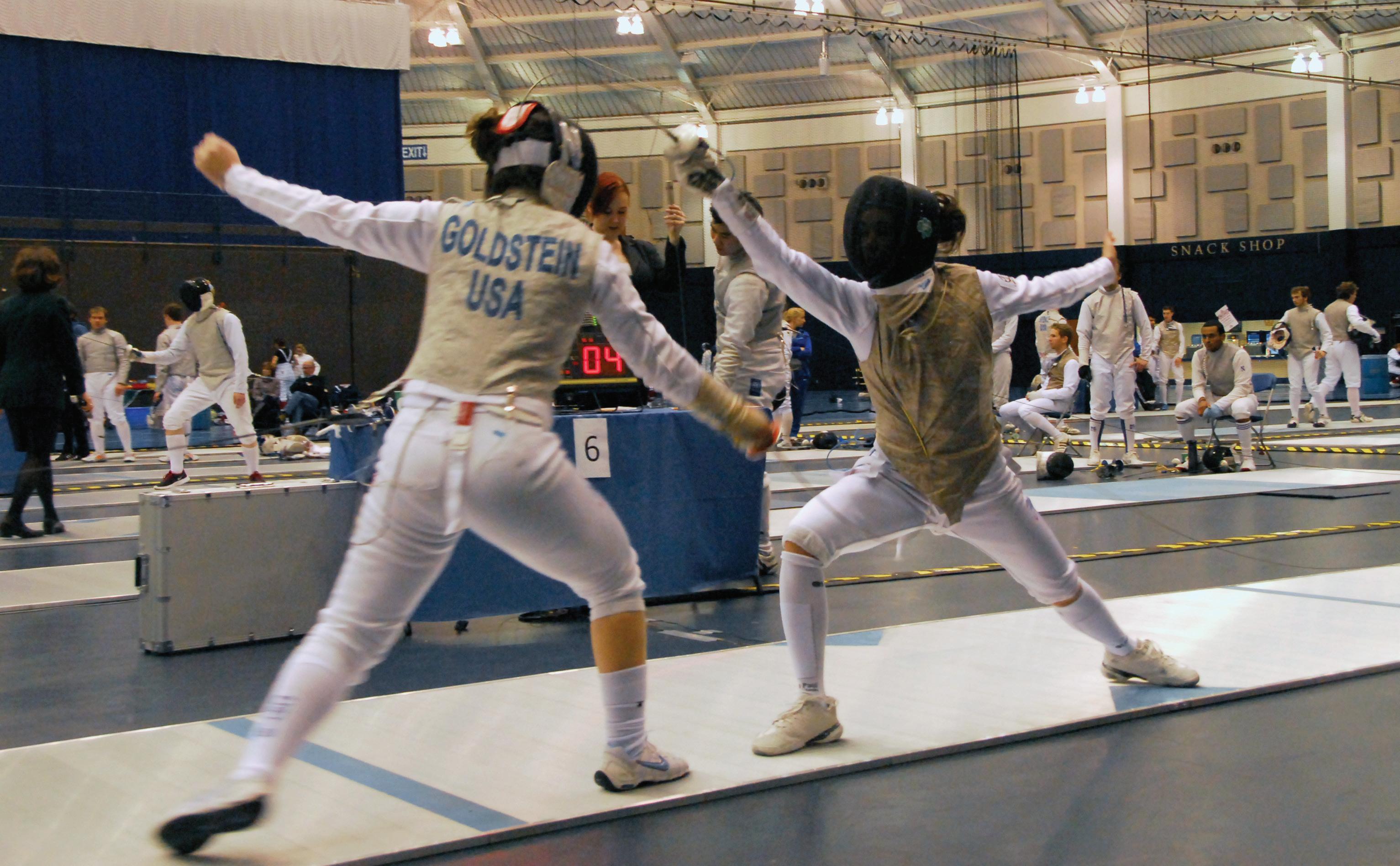
Irish sophomore Lee Kiefer takes on Northwestern sophomore Mikela Goldstein during the Notre Dame
national champion, went undefeated in pool play before she tied for third in the Women’s
Observer Staff Report
some of the top irish fencers began their season this weekend at the north a merican cup, a four-day international meet sanctioned by the united states Fencing a ssociation and held in virginia beach, va.
The competition began Friday morning with the div. i men’s Foil, Junior men’s sabre and Junior women’s epee. no irish competed in the women’s epee, while five irish competed in the men’s Foil, led by senior a ll-a merican a riel desmet. he finished fifth, good for the top finish of any irish men’s fencer at the nac desmet went through pool play undefeated and overpowered quarterfinal opponent Jason chang 15-6, but fell 1510 in the semifinals to michele caporizzi.
Freshmen hazem k hazbek and nick kubik also cracked the top-30 in the foil competition, finishing in 24th and 29th, respectively. a fter going 5-1 in pool play, sophomore John hallsten placed 13th in the Junior men’s sabre.
The second day of competition saw a bevy of six irish fencers competing in either the div. i women’s sabre or men’s epee competition. sophomore Johanna Thill finished 53rd in the sabre, falling 15-6 in the round of 64 after besting irish freshman a llison barry in the
round of 128. barry would finish in 79th.
garrett mcgrath paced the men’s epee squad with a 31st place finish in a massive field of 255 fencers. Freshman conrad sutter finished in 32nd, bowing out after two nail-biting losses in the double elimination draw.
The irish continued their strong performance on day three, as junior a shley severson turned in a third-place finish in the div. i women’s epee, tying for the top irish finish at the nac severson’s 5-1 record in pool play had her enter the elimination round as the seventh seed, where she upset top seed Francesca bassa 15-11 before succumbing 15-14 in the semifinals.
on the final day, mcgrath added a sixth-place finish in the men’s Junior epee to his high finish in the div. i epee. in the div. i women’s Foil, sophomore l ee k iefer and junior madison Zeiss both notched top-10 finishes, with k iefer finishing in a tie for third and Zeiss taking sixth. both k iefer and Zeiss finished pool play undefeated at 6-0, and k iefer looked well on her way to a first-place finish until a 15-9 upset loss in the semifinals.
The irish will get their first test as an entire squad next weekend when they travel to new york city for the nyu invite on saturday and the st. John’s invitational on sunday.
paid a dverT isemen T
LILY KANG | The Observer
Duals on Feb. 23, 2013. This past weekend, Kiefer, Notre Dame’s reigning
Foil during the NAC Div. 1 Juniors Tournament.
Florida s tate since falling to the s eminoles, 70-57, in the third round of the ncaa tournament in 2011. b rey said the s eminoles have recently shown a dangerous combination of size and shooting ability.
“They made 16 threes last time they played at home, against m aryland [on Jan. 12],” he said. “ m y g od, i hope they can’t do that again. They shot the heck out of the ball. e ven though it’s a better shooting Florida s tate team, they’re really big. They play some big, physical guys.
“ i don’t know how much we’re going to get in the low post, so we gotta get out and ball-screen and drive and kick. m y biggest concern is i think we can defend the first shot. … we always do that pretty well.”
a fter trotting out their seventh different starting lineup s unday against v irginia Tech, the i rish have used a different starting five in each of their most recent three games. Junior guard/forward p at c onnaughton has been the most consistent force in the ever-changing lineup and enters tonight’s contest with five straight double-figure scoring performances. For c onnaughton and the rest of the i rish, though, Florida s tate’s physical defense will be a challenge.
“Florida s tate’s defense is going to be man-to-man, physically on you, and it’s a little bit different look,” b rey said.
Following the trip to Florida s tate, n otre d ame has another road game at wake Forest on s aturday before returning home for a pair of conference matchups. “ we got two tough ones,” b rey said of the upcoming road games. “a s long as we stay steady through stuff. we didn’t overreact too much to our losses. … i would hope we’re more equipped to win on the road after [ v irginia Tech]. b ut we will really be challenged down there because they guard and get up on you and on the backboard physically.”
l ooking to start a winning streak in acc action, n otre d ame will tip off against Florida s tate in the d onald l Tucker c enter in Tallahassee, Fla., today at 8 p.m.
Contact Joseph Monardo at jmonardo@nd.edu
MICHAEL YU | The Observer
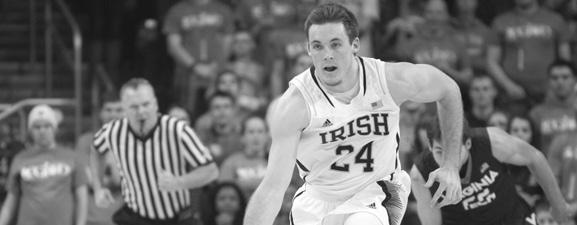
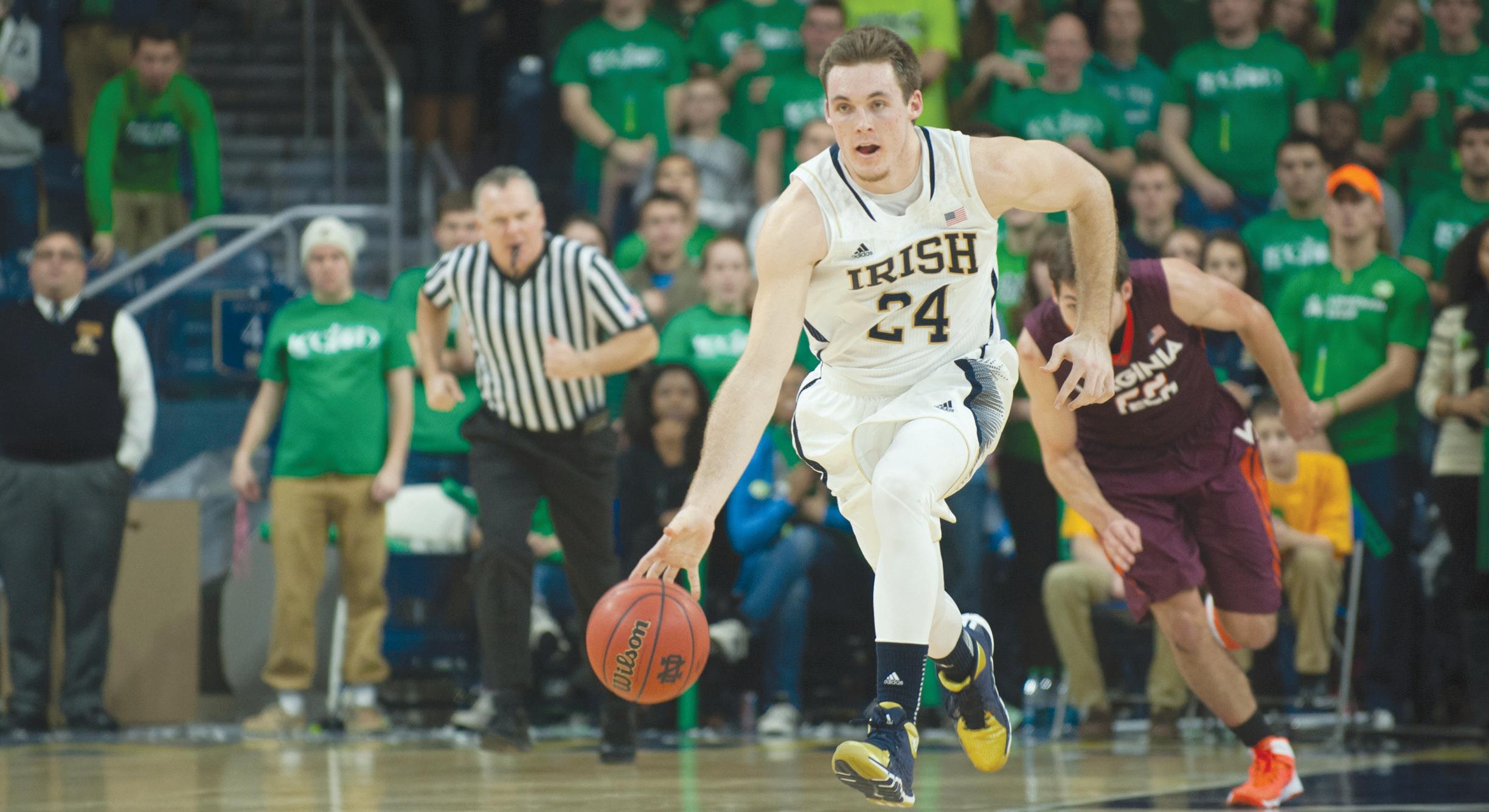
Irish junior guard/forward Pat Connaughton leads the break during Notre Dame’s 70-63 victory over Virginia Tech. Connaughton finished the game with 21 points and eight rebounds, while averaging 14.1 points per game and 7.3 rebounds per game this season.
W Basketball
con T inued F rom page 16
“w ith them out of the game, we had a tough time defending their 3-pointer. They were just on fire.”
The i rish surrendered more first-half points then they have all season, but headed into the locker room with a little momentum ⎯ courtesy of senior guard k ayla mcbride, who scored four points in the final two minutes to pull notre dame to within five.
“k ayla was just unbelievable,” mcgraw said. “she’s the best player in the country, in my mind. at the guard position, there is just nobody better.”
w ith l oyd and a llen back on the floor after the break, the i rish shut down the volunteer offense, forcing 10 missed shots in a row. a fter clawing back to tie the game, notre dame broke the contest open
on three straight 3-pointers from junior guard madison c able and sophomore guard m ichaela mabrey, pushing the lead to 58-51. c able, mabrey and freshman forward Taya reimer all came off the bench and combined to score 36 points, compared to 16 from Tennessee.
“m ichaela maebry was just so poised, and madison cable was great on the boards,” mcgraw said. “Taya reimer was able to get in there and score as well. i was very pleased with all three them and how they played.”
a s the i rish began to pull away for the win, the crowd of 13,346 in Thompson-boling a rena quieted after a raucous first half.
“it was a hostile environment at the beginning of the game,” mcgraw said. “it was like an ncaa tournament game for us. we haven’t seen a crowd like that all year, so i’m very pleased with how we … kept fighting.”
paid a dverT isemen T
16
biggest thing for us, was the chance to get everybody in.” in particular, louderback was impressed with the play of the team’s three freshmen: Jane Fennelly, mary closs and monica robinson.
“i think what was great was our three freshmen got their first dual match wins,” louderback said. “and for freshmen that’s the toughest because it is their first match playing for the team and they haven’t done that before and they’re nervous. so it was good for them to not only get in their first singles match, but also to each get a win.”
The irish (2-0) were never in any real danger throughout the day’s action, exemplified by the play of sophomore Quinn gleason, who won both of her matches at no. 1 singles by scores of 6-4, 6-1, and 6-1, 6-1. The irish as a team would only lose one set throughout the entire day’s play.
The strong performance of the team allowed louderback to adapt to the absence of senior britney sanders, who forms one half of the number-one doubles with gleason and missed both matches due to illness.
“we knew an hour and a half before the match that she was sick, and so our kids [and the freshmen] came in thinking they knew what their spot in the lineup was, what was going to happen, and then we had to change things,” louderback said. “we’re hoping she’s fine for next week. but that sort of thing happens throughout the year, and it was good for that to happen early.
“and as i told our freshmen when we went into play, ‘welcome to college tennis. That happens.’ you’ve got to be ready to adjust quickly.”
The irish resume play saturday, when they travel to evanston, ill., to take on arizona state. match time is 3 p.m.
Contact Mike Ginocchio at mginocc@nd.edu
a fter 20 straight losses to the l ady volunteers, this victory marks the fourth consecutive victory over Tennessee for the i rish.
mcgraw said her team still needs to make adjustments moving forward, as the i rish reenter acc play, with a matchup against no. 6 maryland looming.
“we have to rebound better,” mcgraw said. “we were outrebounded by almost 10 tonight and didn’t do the job on the boards that we needed. we can play better on defense as well. we need to work on our zone and fix it. They were beating us on the inside in the first half and we need to step up our ball pressure.”
The i rish return to the court on Thursday in the p urcell pavilion against m iami in an acc matchup at 8:30 p.m.
Contact Greg Hadley at ghadley@nd.edu
EMMET FARNAN | The Observer
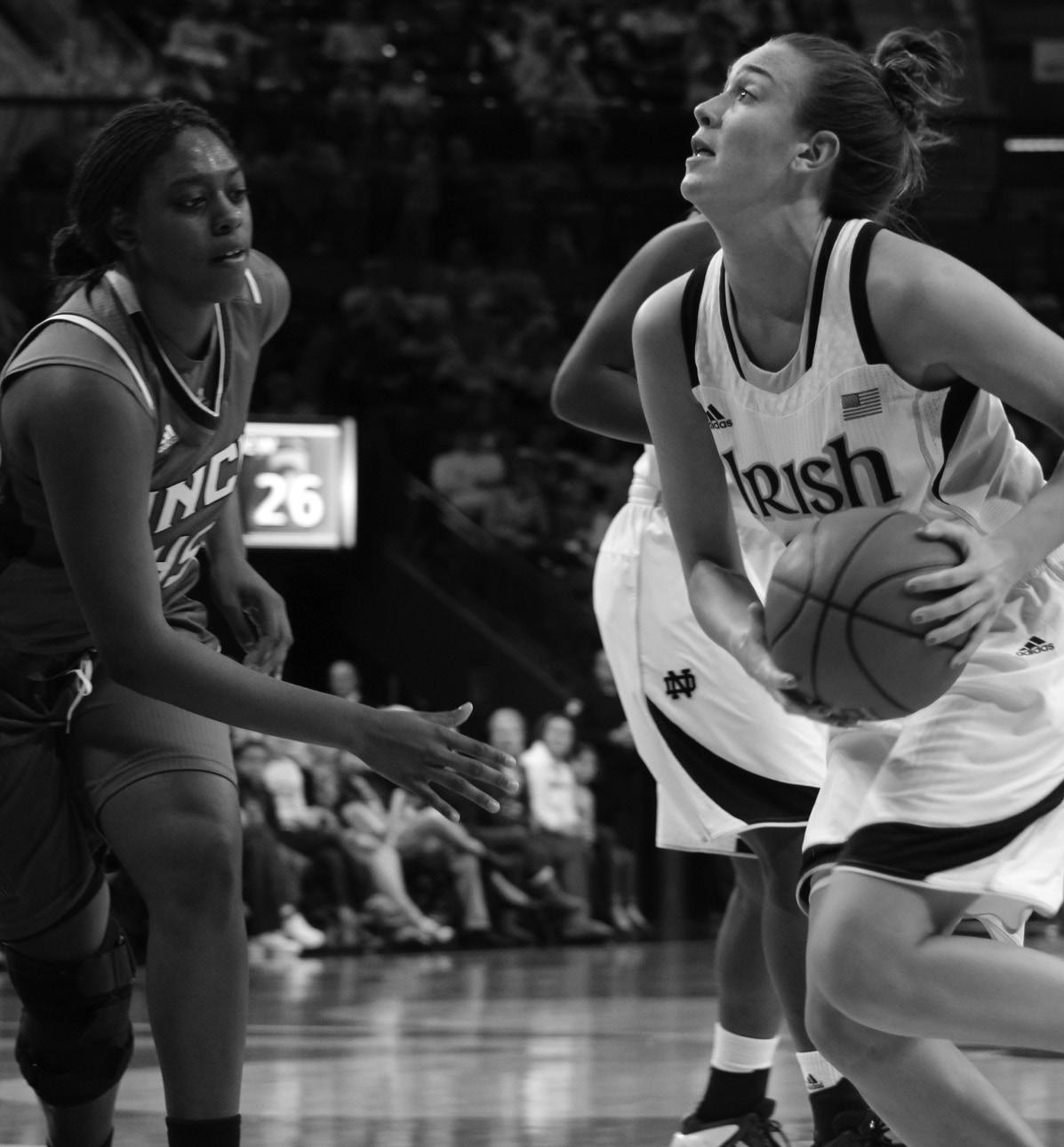
Irish sophomore guard Michaela Mabrey drives to the hoop against UNC Wilmington during Notre Dame’s 99-50 win on Nov. 9.
CELEBRITIES BORN ON THIS DAY: stacey dash, 47; rainn wilson, 48; bill maher, 58; david lynch, 68. Happy Birthday: don’t hold back when it comes to your status, reputation and professional advancement. protect your image and your position by taking charge of whatever situation you face and making things happen. show off your strength and you will mask any weakness you may possess. Time is on your side, so slow down, prepare carefully and present what you have to offer. your numbers are 3, 14, 16, 23, 32, 39, 48.
ARIES (March 21-April 19): revisit your resolution and reconfigure what you need to do to reach your goal this year. don’t let other people’s agendas take precedence over yours. put yourself first. don’t let uncertainty mess with your mind. stick to your game plan.
TAURUS (April 20-May 20): you know what you must do. don’t wait for others to do things for you. Take the initiative and reap the rewards. don’t stand in the background when you belong in the forefront. reconnect with someone important.
GEMINI (May 21-June 20): you’ll be offered an opportunity. get any deal you receive in writing. ask questions and present what you have to offer concisely. disillusionment will be a factor. a move may be required to fulfill an obligation.
CANCER (June 21-July 22): make unusual plans that include people you find interesting. network with peers or experts who can feed you knowledge that will come in handy when you want to make an impression. aggression should not be used when dealing with an important relationship.
LEO (July 23-Aug. 22): confront situations that are bothering you. once you know where you stand, you can make choices and changes. a project at work will allow you to use your creative talent. diversify and you’ll discover you have something lucrative to offer.
VIRGO (Aug. 23-Sept. 22): if you can’t get away on vacation, at least take a little time out to regroup. making a couple of personal improvements or getting involved with someone who inspires you to try new things will help build confidence and optimism.
LIBRA (Sept. 23-Oct. 22): don’t hold back. if someone criticizes you, speak up. you have the right to make choices when it comes to people who are supposed to be in your corner. re-evaluate your relationships with others. avoid overbearing people.
SCORPIO (Oct. 23-Nov. 21): stifle anyone trying to come between you and your plans. greater opportunities will develop if you taper down your needs and form alliances with people who share your values. consider personal updates and compliments will follow. a love relationship may need fine-tuning.
SAGITTARIUS (Nov. 22-Dec. 21): emotional deception is present. whether it’s you or someone else giving the false impression, it must not be allowed to influence important decisions. ask questions and try to be as honest as possible when offering answers and information.
CAPRICORN (Dec. 22-Jan. 19): put money deals on display and see who shows interest. don’t let anger stop you from closing a deal. you may think something is worth more than it is. make an adjustment and cut your losses. self-improvement will pay off.
AQUARIUS (Jan. 20-Feb. 18): listen carefully and you will discover information that can help you make a good investment. be prepared to act fast and to keep moving. Timing will be critical if you want to get ahead. a personal partnership will undergo a change.
PISCES (Feb. 19-March 20): let your intuition help you decipher what’s happening and what you should do. an opportunity will crop up if you network with peers or financially savvy people. listen carefully and you will make a profit. emotions will be difficult to control.
Birthday Baby: you are sensitive, clever and straightforward. you are responsible and reliable.
jumBle | david hoyT
JeFF knurek
By GREG HADLEY sports writer
behind a barrage of 3-pointers and solid bench play, the i rish sped off to a 86-70 victory over the no. 12 l ady vols. down by 12 with five minutes to go in the first half, no. 2 notre dame used a 19-6 run to take a lead they would never relinquish on the road.
The i rish (17-0, 4-0 acc ) ran into foul trouble early, with sophomore guard Jewell l oyd and freshman guard l indsay a llen drawing two a piece in the first 10 minutes. Tennessee (14-4, 3-2 sec ) responded by going on a tear, shooting 56 percent from the field in the first half, and mixing shots in the paint and beyond the arc. Junior point guard a riel massengale and senior guard meighan simmons combined to hit six 3-pointers and dish out nine assists.
“i n the first half, Jewell l oyd and l indsay a llen were sitting on the bench, and they’re our best perimeter defenders,” i rish coach muffet mcgraw said.
Second-half success
Irish sweep season opener
Western Michigan. Sabacinski defeated Bronco freshman Tracy Kuhle in straight sets 6-3, 6-1.
By MIKE GINOCCHIO sports writer
being away from the court for almost two months might be a challenge for most teams, but the irish opened regular season play with a pair of victories over western michigan and the
iupui on saturday, defeating both teams by a count of 7-0.
For irish head coach Jay louderback, the victories were a reassuring sign for the season.
“i think you could definitely see we hadn’t played for a while,” louderback said. “There was a little bit of rust. … we
started off slow in the first couple of sets, but as the day went on, we played better and better. it’s a key for us to get everybody a couple of matches in the lineup before we start playing the acc so that was probably the
notre dame looks to even acc record
By JOSEPH MONARDO a ssociate sports e ditor
a fter securing a muchneeded win s unday and halting a three-game skid, n otre d ame will look to pull its conference record to .500 with a trip to Florida s tate tonight.
The i rish (11-7, 2-3 acc ) defeated v irginia Tech, 70-63, in the p urcell p avilion their last time out to improve to 2-1 in home-conference contests.
m eanwhile, n otre d ame has dropped both its road games in league-play, heartbreaking losses to g eorgia Tech and m aryland. a fter struggling to protect the ball and rebound effectively in prior contests, the i rish committed only 10 turnovers and came up with 11 offensive rebounds against the h okies (8-9, 1-4).
“ we are going to have to be better at that Tuesday because Florida s tate defends, and they are more athletic and powerful than this
team,” i rish coach m ike b rey said. “ h ow we keep them off the board is going to be really interesting, and i am going to challenge our guys to do it.” Florida s tate (12-5, 3-2) ranks fifth in the acc with a scoring margin of 10.4, improving on n otre d ame’s eighth-place average of 6.6 points per game. The s eminoles have used two players off the bench to lead the way in scoring this season.
d espite not having a start between them in 17 games, senior guard i an m iller and sophomore guard a aron Thomas are first and second on the team in scoring with 13.4 and 12.6 points per game, respectively. s enior forward o karo w hite is the leading scorer among the Florida s tate starters with a per-game average of 12.4 points. h e leads the team in rebounds with 6.6 per game. n otre d ame has not faced
EMMET FARNAN | The Observer
Irish sophomore guard Jewell Loyd defends UNC Wilmington freshman guard Brie Mobley at the top of the key during the Irish 99-50 win over the Seahawks on Nov. 9. Loyd led the Irish with 19 points on 8-11 shooting, while Mobley only scored 12 points on 4-12 shooting.
EMMET FARNAN | The Observer
Irish senior Julie Sabacinski returns the ball on Saturday against