Print Edition of The Observer for Tuesday, April 26, 2016
Faculty seeks to increase diversity
Professors speak on lack of minority representation at Notre Dame
By JACK ROONEY senior news Writer
For Pamela n olan Young, n otre d ame’s new director of academic diversity and inclusion, cultivating a diverse faculty is essential for any university.
“There are lots of scholarly articles and research that point to the benefit of having a diverse faculty and student body — and staff, I would include professional staff in that as well,” Young said. “And some of them are very obvious. When you have different perspectives addressing the same issue, you have more enriched conversations. When you have different perspectives addressing scientific research, you approach that research differently. You’re able to be more creative and think about some of the solutions that you might propose.”
In her role in the provost’s office, Young said four
components — recruitment, retention, development and communication — work to increase faculty diversity.
Jason r uiz, an associate professor of American studies, said faculty diversity plays a central role in providing a well-rounded education.
“I think our job as a university is to expose students to the diversity of the human experience across the disciplines,” r uiz said. “In order to do that, you need a diverse faculty.”
According to the most recent statistics from n otre d ame’s office of Institutional r esearch, as of 2011, u s . minorities comprised 15 percent of n otre d ame’s faculty. This figure places the university 4.2 percent below the median for fellow Association of American universities (AAu ) institutions. According to statistics from the national c enter for e ducation
Professor explores economics in politics
By RACHEL O’GRADY
Associate news e ditor
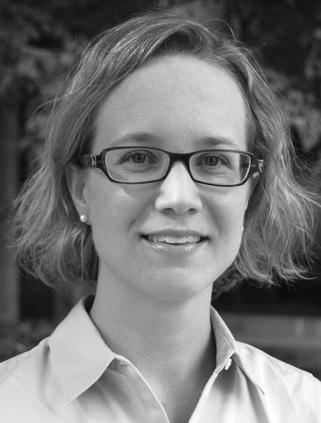
Editor’s Note: Throughout the 2016 presidential campaign, The Observer will sit down with Notre Dame experts to break down the election and its importance to students. In this tenth installment, Associate News Editor Rachel O’Grady asks associate professor of economics and former Senior Economist to the White House Council of Economic Advisers, Abigail Wozniak, about the economic implications of the 2016 election.
rachel o’Grady: As an economics professor, particularly in relation to your focus on labor economics, how will the results of this election effect the economy?
Abigail Wozniak: The candidates — even within parties — have fairly different visions for
the major changes they would advocate, both in terms of how the government raises funds (fiscal policy) and how it spends them. Given these differences, the ultimate outcome of this election will matter for the economy, but it
is difficult to say how it will matter without knowing the winner. because their plans are so different, it will matter for the economy who the ultimate winner is, but as of right now there is no single answer to the question of how the results will affect the economy.
That said, I see at least three areas where the next president will face critical tests. These are: [first], income inequality and shared economic opportunity; [second] trade; and [third] guidance through the next phase of the business cycle. In all three areas, long-run trends will continue to play out but will require leadership to deal with their consequences over the next four to eight years. Income inequality and, more broadly, equality of opportunity, are key issues of concern to primary voters across the political spectrum. This is a four-decade long trend that has reached a point where large numbers of voters are asking for policy to directly address this. Any winner will need to take steps in this area. rising trade is
sexual assault reported
Observer Staff Report
A rape was reported to a university administrator Friday, according to monday’s notre dame security Police (ndsP) crime log. The alleged rape occurred January 16 in a notre dame residence hall, according to the entry.
students did not receive an email crime alert from ndsP alerting them that a report had been filed with the university, due to the fact the university did not identify the report as a timely threat, in accordance with the clery Act regulations.
Information about sexual assault prevention and resources for survivors of sexual assault are available online from ndsP and from the committee for sexual Assault Prevention (csAP).
SMC alumna to host seminar to boost confidence
By NICOLE CARATAS
saint mary’s e ditor
s aint m ary’s alumna m olly b ell, class of 1997, will host the third annual b loom s eminar, in which middle school-aged girls and their mothers will participate in two workshops — “ l ove Your b eauty” and “ c onfidence: A Journey” — to develop the girls’ confidence and selfesteem. The b loom s eminar will run July 10 in conjunction with the fine arts and sports camps at the c ollege this summer.
According to b ell, the idea for the seminar stemmed from her role in advertising. s he said she knew young women could be affected by the media, and when
she had a daughter, she felt compelled to do something to help young girls during a critical time in their growth.
“‘ l ove Your b eauty’ is really talking about, ‘Is beauty what you see on the outside or is beauty from the inside?’” she said. “even though everything around them is inundating them and telling them that outer beauty is where they’re supposed to put the most emphasis, and that’s what defines them, when you really step back and think about the women that you love in your life and the women you look up to, the things that really matter come down to your inner beauty.” bell said this workshop focuses on educating young girls
see semInAr paGe 5
ERIC RICHELSEN | The Observer
Scene
(574) 631-4540 scene@ndsmcobserver.com
631-8767 photo@ndsmcobserver.com
Systems & Web Administrators (574) 631-8839 Policies
Question of the Day:
Andrew Baker freshman Zahm house
“Is
Anne Marie Bonds freshman breen-Phillips hall “no.”
Chris Page freshman Zahm house “If
Emily Gust sophomore breen-Phillips hall
“Why
JP Bruno sophomore Zahm house
“Yes.”
Chris Nunes freshman Zahm house
“Is
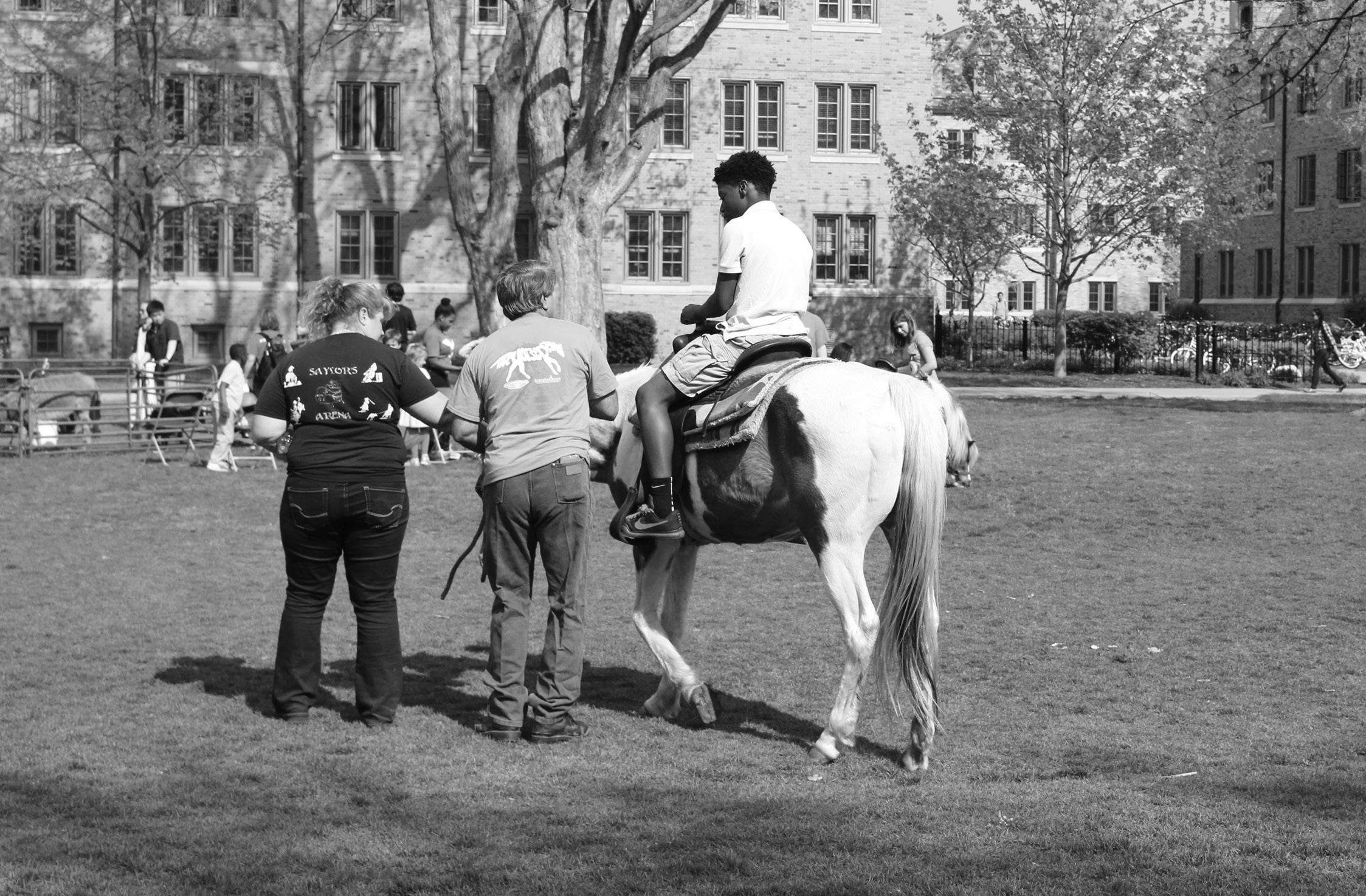
A child rides a horse Monday on North Quad as part of Zahm House’s annual Spring Carnival. The carnival, which is entirely student-run, brings children with chronic illnesses or who live in deprived areas of Michiana to campus for a day of fun.
Today’s Staff
News
Corrections
The observer regards itself as a professional publication and strives for the highest standards of journalism at all times. We do, however, recognize that we will make mistakes. If we have made a mistake, please contact us at (574) 631-4541 so we can correct our error.
12:10 p.m. - 12:55 p.m.
Open to all faculty and staff, located in St. Andre Chapel.
Snite Salon Series
Snite Mueseum of Art
5 p.m. - 5:45 p.m.
Students, faculty and staff will discuss works of art.
Wednesday
Happy Mother’s Day
Fieldhouse Mall/Clarke Memorial Fountain
2 p.m. - 6 p.m.
Mother’s Day festivities.
Physics Colloquium
Nieuwland Hall of Science
4 p.m. - 5 p.m.
Discussion on astrophysics. Thursday
Canines and Caffeine Brownson Hall Courtyard
2 p.m. - 4 p.m.
A study break with dogs and coffee.
Mindful Meditation Coleman-Morse Center 5:15 p.m. - 6:15 p.m.
Open to students, faculty and staff.
Friday
Study at the Snite Museum
Snite Museum of Art
10 a.m. - 5 p.m.
Free study spaces, coffee and snacks.
Diavolo/Architecture in Motion
DeBartolo Performing Arts Center.
7 p.m. - 8:30 p.m. Dance performance.
Saturday
Softball vs. Louisville
Melissa Cook Stadium
1 p.m. - 5 p.m.
The Irish take on the Cardinals in a doubleheader.
11th Annual Midwest Conference
McKenna Hall all day
Presentation on function of proteins.
CHRIS COLLINS | The Observer
Architecture students design housing options
By MEGAN VALLEY news Writer
e ight undergraduate architecture students, directed by Kim r ollings, assistant professor of architecture, presented design proposals Friday for a facility that will provide safe and affordable housing options for homeless people in s outh b end.
“Permanent supportive housing [P sh ] links safe, affordable housing with social support services that address challenges associated
with chronic homelessness, addiction and other disabilities,” r ollings said in an email. “The facility in s outh b end will be the area’s first permanent supportive housing, with 32 one-bedroom apartments and a variety of shared and support spaces, including outdoor space.” r ollings said she and the u niversity’s s chool of Architecture became involved in the P sh project when she heard about it through the s t. Joseph c ounty h ealth Improvement
Alliance, where she spoke about community-based teaching and research.
“I proposed the student project to the s outh b end h eritage Foundation, who will own the local supportive housing facility, and Alliance
“ s ome chose to focus on, for example, promoting a sense of community in the building, while others focused on providing restorative spaces and access to nature, and connecting the look of the building to his -
“The students really embraced the idea that this project was about people and not just about a building.”
Kim Rollings assistant professor of architecture
Architects, the local firm designing the building,” she said. “They were very interested in learning from the students, as well as providing the students with a realworld project experience.”
r ollings said eight of the fourth-year architecture students in r olling’s h ealthy Places studio class — who chose to participate because they were interested in building places that are “not only architecturally successful, but that also help people” — began working on the project in m arch.
toric buildings in s outh b end,” r ollings said.
The project began with students visiting the local site and learning about permanent supportive housing, she said. Then, they researched connections between architecture and physical, mental and social health.
“I also took the students to b oston to study two successful supportive housing examples designed by The n arrow Gate Architecture l td. [T n G],” r ollings said. “T n G, started by three
n otre d ame alumni, provides architectural services for marginally underserved populations. s tudents visited the firm and interviewed the architects then visited the housing facilities. They shared meals with and interviewed residents, which gave a voice to the resident population in the design process.”
According to r ollings, the project is primarily funded by a state grant award and tax credits and the students’ research and design ideas will inform the finalized design of the building.
“People struggling with chronic homelessness and other challenges often cycle in and out of shelters and require costly emergency medical and public safety services,” r ollings said. “P sh helps to break this cycle so people can regain stability and move forward with their lives.
“The students really embraced the idea that this project was about people and not just a building.”
Contact Megan Valley at mvalley@nd.edu
PAI d AdV erTIsemen T
s tatistics, as of 2013, 21 percent of all full-time higher education faculty members were black, h ispanic or Asian/Pacific Islander.
d espite the university’s relative lack of faculty diversity, professor of political science d arren d avis said the issue is not unique to notre d ame.
“I think the most important thing is for people to understand that although the numbers are low, these things are not unique to notre d ame,” d avis said. “o ther schools are in similar situations, and because of that, I don’t think there’s anything to be ashamed of. b ecause, relatively speaking, every other university is in the same situation. … s o it’s an issue, but it’s not endemic to the culture at n otre d ame.
“… It’s no different from many other universities,” d avis said. “There’s not anything unique to notre d ame that makes it inhospitable to minority candidates.”
Young, who has held similar diversity and inclusion positions at s mith c ollege, n orth s hore c ommunity c ollege and in the private sector, said all colleges and universities grapple with similar issues.
“ d iversity and inclusion is difficult for every higher education institution,” she said. “ e ven those institutions that feel like they’re doing very well or feel that it’s very easy for them to attract top talent
— so h arvard or s tanford or the university of c hicago — are all striving to do better.”
s everal factors present barriers to n otre d ame building a more diverse faculty, d avis said.
“The first reason is that there are not many [minority] Ph. d.s to begin with,” he said. “ s o, if you look at the various disciplines, you don’t normally see a lot of minorities with Ph. d.s who are also interested in going into academia.”
r uiz said the overall lack of minority representation in higher education is a historical problem.
“It’s definitely a product of history, including the ways in which institutions of higher education excluded nonwhite people for the vast majority of their histories,” he said. “Things have changed dramatically for undergraduate students and admission and recruitment, but, at the graduate level, we still see tremendous disparities in a variety of fields.”
d avis also said notre d ame’s high academic standing places it in a competitive market for all faculty, including minorities.
“ m any schools like a notre d ame are interested in hiring people who will be successful, academics who will be
successful,” he said. “s o that means there are many other universities and colleges like notre d ame who are competing for those candidates as well.”
r uiz said notre d ame’s physical location may also prevent some minority faculty members from coming here.
“I think one of the problems I hear again and again about notre d ame when we’re hiring is location,” he said. “There’s a
r uiz said this practice would immediately impact recruitment, but also aid in retention efforts for minority faculty members.
“I think the philosophy of the cluster hire is that people come in as cohorts who have similar backgrounds and are interested in similar intellectual questions and, therefore, feel more grounded here,” he said. “ b ecause
c atholic social teaching and being an inclusive community should be attractive — particularly attractive to minority candidates, not just c atholics, but across the board. That is something that intrigued me and convinced me to come here.”
h ighlighting these attributes that separate n otre d ame from peer institutions would help the u niversity succeed in the competitive
“Other schools are in similar situations, and because of that, I don’t think there’s anything to be ashamed of. Because relatively speaking, every other university is in the same situation. ... So it’s an issue but it’s not endemic to the culture of Notre Dame.”
Darren Davis professor of political science
sense that s outh b end is going to be a difficult sell for super strong minority faculty members who have opportunities to work in big cities, on the coasts.”
These barriers, and more, may make it seem as if notre d ame is in a bleak situation for faculty diversity, professor of political science and Africana studies d iane Pinderhughes said.
“It’s hard to have confidence,” Pinderhughes said. “There’s more communication about the university’s commitment to diversity in the past year or so. … but when I think around the campus about the numbers and the progress [minority] people are making through the tenure ranks and the numbers of people and the fact that there’s not consistently a range of full professors or professors with chairs in the university, this is a problem. There are also very few African Americans in higher administrative levels.”
still, r uiz said notre d ame fosters faculty diversity in some fields, while others need more attention.
“For l atinos, notre d ame is considered a great place,” he said. “We have a relatively strong number of l atino faculty members and faculty members who do l atino studies. I think other ethnic studies are more obviously underrepresented among the faculty, especially African American faculty members and anyone interested in doing Asian American studies and American Indian studies.”
In order to increase faculty diversity, r uiz said he would advocate for “cluster hiring.”
“m y number one thing I think notre d ame could do to increase faculty diversity would be to engage in cluster hiring,” he said. “I’ve seen other schools have tremendous success in hiring not one faculty member who does Asian American studies, but hire seven across a wide array of disciplines, so a psychologist, an American studies person, a sociologist and a historian, all of whom are interested in the Asian American experience.”
one thing that’s really hard as a faculty member is to be the only person on a campus from your background and to be the only person who does that type of work. You’re alone. You’re a lone wolf. It’s hard to see yourself represented here when you’re one of one. I think cluster hiring is the number one thing that could have immediate and dramatic impact on faculty diversity.”
d avis said in order to generate a more diverse faculty, n otre d ame should emphasize its unique aspects, including its c atholic identity.
“o ur unique c atholic identity is and should be highly attractive,” d avis said. “o ur focus on social justice,
faculty market, d avis said.
“The way that I see n otre d ame is we’re in a competitive market for the best faculty we can get,” he said.“ e veryone is after them — everyone. And we have to figure out what we do better than other similarly situated universities.
“ n otre d ame is not the only with resources. n otre d ame is not the only place with a long sports tradition. n otre d ame is not the only place where you can go and have good colleagues. s o we have to think about, in my opinion, what separates us from aspirational peers who are similarly situated economically and intellectually.”
And while Young, who
PAI d AdV erTIsemen T
began her job earlier this month, said her brief time in the new position has prevented her from fully formulating recruitment and retention strategies, more effective communication will advance the mission of increasing faculty diversity.
“When I interviewed for the job, someone said to me that the u niversity tends to be very modest and that they’re not in the habit of advertising and boasting about their activities,” she said. “And this is an area where to attract top talent, they have to know and see that there is a commitment and that you’re already involved in doing the work. And so it requires a very public presence about your deliberate actions, and I think that’s one think I’ll try to encourage the u niversity to do differently — to make known what’s currently happening on campus more prominent.”
u ltimately, Young said, increasing faculty diversity will benefit all members of the n otre d ame community.
“ o ftentimes, individuals think about diversity and inclusion as an aside or an add-on,” she said. “The practices and changes that will come about based on my work, if they come into fruition, will help every faculty member on campus.”
Contact Jack Rooney at jrooney@nd.edu
e lection
con TI nued F rom PAGe 1
another multi-decade trend that is unlikely to reverse in a major way. The next president will need to work with congress to keep the u s. competitive and involved in the global marketplace while also putting in place protections for u s. workers affected by trade. And finally, we have reached a record business cycle expansion. Were the business cycle to turn, executive branch leadership would be key to minimizing the negative effects of this. What we learned from the Great recession is that appropriately timing relief — in adequate amounts — for workers and states affected by downturns can prevent longer, deeper slumps and is key to making sure families have the safety net they need when the business cycle turns negative.
roG: You served as senior economist to the White house council of economic Advisors (ce A) last year. What did you learn in the White house, and more importantly, what areas did you see for the improvement in the coming years? Are these candidates forgetting to address anything?
AW: I had a great experience on the ceA staff, and I take every chance to say that people in
Washington are working incredibly hard, with the best of intentions, on very difficult problems. This actually became more clear from working with them for fourteen months. on issues that are being forgotten: Immigration has been addressed, but useful specifics are missing. The economic case for immigration — which is a complicated one — also often gets inadequate attention. The reality is that many natives benefit from admitting immigrants, but some do not benefit, and we rarely have a conversation about how those two groups need to be brought together to reach a solution that helps both. It’s also not as simple as saying that we should imitate other national systems that prioritize skilled migrants. That’s a policy that should be on the table, but the u s. has a long and I think admirable history of admitting individuals who are seeking a better life, and we should not ignore either that history or the fact that it has brought us certain benefits that other countries lack, like a diverse workforce and a population of entry-level workers with a strong work ethic.
roG: The minimum wage debate is gaining traction nationwide, but has seen little play in the recent presidential debates. do you think this will be a key issue in the election and beyond?
AW: Yes, this absolutely will be a key issue in the national election and beyond, and for space I’d say see my response to the first question.
roG: both parties propose pretty radical economic ideas. do any of them hold water, i.e. could sanders or cruz’s plans actually work?
AW: economists are often cautious of plans that say they are going to fix complicated problems in a simple way. many economists agree that the tax code could be simplified. many also agree that college financial aid could be simplified. but radically simplifying such policies is often difficult. This is because things that sound simple, like “income,” have to be defined and monitored, and that is harder than it sounds. such policies also create incentives for individuals and businesses to try to avoid being in the category that has to pay for a program, not because they are bad people necessarily but because this is a fairly natural response to a situation where you’re asked to share a lot with strangers. so what seemed simple then requires monitoring and exceptions, and these make the reality likely to be more complicated than expected.
Contact Rachel O’Grady at rogrady@nd.edu
s eminar
con TI nued F rom PAGe 1
about issues surrounding female beauty, such as objectification, while “confidence: A Journey” focuses more on confidence in a more realistic sense.
“confident isn’t something we just decide we’re going to be,” bell said. “It’s actually a state of being that is in flux. With girls, we always tell them, ‘We want you to be empowered and we want you to be confident,’ but for a lot of young girls, it feels daunting.”
According the bell, this workshop will show girls that confidence comes from bravery.
“We gain confidence by fear and overcoming fear,” she said. “When something tragic happens in our lives, the confidence comes from getting back up...confident women are usually women that have a story.”
In 2013, saint mary’s published “The status of Girls in Indiana,” the first comprehensive study on the health and well-being of girls done in Indiana.
“saint mary’s was really feeling strongly that they wanted to respond to some of these statistics, one of which that high school girls seem that they have more of an incidence of
depression and they feel this pressure for perfection,” she said. “by doing that report, [the college] sent the message that [it is a] part of Indiana and part of wanting to make sure women’s health is addressed as a whole.
“not only just the women that are students but for young women in their state. my program also speaks to that — that saint mary’s is invested in young women and women’s health.”
The seminar is targeted at girls in fifth through seventh grade because they are on the verge of puberty and are trying to find who they are, bell said.
bell said she hopes her seminar helps girls create conversations about issues regarding confidence and self-esteem.
“First and foremost, I hope they have a fun, empowering day together,” she said. “hopefully, they can take just one thing away from that day and go forth and either share it with each other or share it with others. I don’t think you can solve all these problems and find answers to them in one day, but my hope is that it gives them some tools that as they leave the seminar, they feel like it continues.”
Contact Nicole Caratas at ncaratas01@saintmarys.edu
Unsafe at any weed
Odd year blues
d on’t look now folks, but we’re a third of the way through 2016 and already we have a lot to talk about.
There’s been a leap day and hotly contested battles for the presidential nominations, and that’s not to mention the upcoming summer o lympics.
Yet maybe — ladies and gentlemen — it’s time to take a step back and ask ourselves if there are too many events for one year to handle.
Think about it. e very four years, we get one megayear that jams a ton of cool events into the span of 365 days. A whole leap day, the presidential election and the summer o lympics? how is any one person supposed to take in all of these life changing happenings in addition to the regular annual hustle and bustle? how can I focus my full attention on what d onald Trump just screamed at megyn Kelly if I have to celebrate February 29th as well?
Just think, until 1992, both the summer and the Winter o lympics took place in the same year.
And on top of all that, in 2020, we have to factor in the u s c ensus as well.
Though the mega year is the best example of this travesty, the problem goes deeper than that. In addition to the busy calendars in 2016 and 2020, 2014 and 2018 are also jam-packed with midterm elections, the Winter o lympics and the World c up.
s o if we look at this problem closely, we see a systematic exclusion of odd years when it comes to these regularlyscheduled important occurrences. What big thing happened in 2011? e xactly.
Thus, my proposition to the powers that be is to spread out some of these events to give people some breathing room. Give the odd numbered years some events and let them shine. It doesn’t have to be too much, just a Winter o lympics here, a midterm election there. Just a little bit would go a long way towards allowing people to digest the events that matter to them.
s o without further ado, here is my proposed schedule starting in 2020.
2020: Presidential election, because it feels like knowing who the leader of the free world is before we plan all these other international events seems like a good idea.
2021: Winter o lympics and l eap Year, because why not.
2022: m idterm elections and the World c up, because the c onstitution mandates it.
2023: summer o lympics, because this huge event deserves a year to itself.
2024: r inse and repeat.
Contact Marek Mazurek at mmazurek@nd.edu
The views expressed in the Inside Column are those of the author and not necessarily those of The Observer.
In terms of annoying holidays, “420” falls somewhere between Guy Fawkes d ay and International Talk- l ike-a-Pirate d ay. The Internet, and occasionally real life, becomes infested with annoying stoners agitating for their hobby. In recent years, recreational cannabis use has been legitimized as a number of states move toward legalization.
A driving factor behind the liberalization of cannabis laws is the public perception that cannabis use does not harm users. This is simply untrue. c annabis abuse increases the risk of lung cancer, reduced brain volume, memory impairment, schizophrenia, mouth cancers and chronic cardiovascular conditions.
While we’re on the subject, let’s dispel the myth that “marijuana never killed anyone.” It’s true that acute T hc toxicity is an extremely rare cause of death, though cannabis-induced heart attacks and strokes are not unheard of. b ut to equate that to “zero deaths” is ignorant at best and intentionally misleading at worst. c ases of smokers chaining m arlboros until they overdose on nicotine are similarly difficult to find, but no one would dare to call tobacco harmless.
n ow, I can already hear the outraged cries of the libertarians. “Well, who cares? b ig b rother has no business regulating what I put into my body. I’m not hurting anyone, and the sole responsibility of government is to prevent people from hurting each other. b y the way, have you heard the good news of our l ord and s avior Ayn r and?”
First off, I always get disturbed whenever I hear “ b ig b rother” name-dropped to describe an oppressive or overreaching state. After all, I’m a big brother myself, and I consider myself to be a positive influence on my brother’s life (most of the time, anyway). b ut I digress.
l et’s ignore for a moment the externalities involved with drug abuse that result in users transferring their own self-harm onto others via increased public medical spending, drug-addled decision making and so on. e ven allowing that shaky premise, there are years of precedent for the government regulating private behavior, and it is unquestionable that our society is better off for it.
o ne of the best examples of benevolent government regulation is in the construction of cars. A company might very well want to sell a car with no seat belts and an engine with a propensity to explode, and the consumer might very well want to buy it. h owever,
statistics indicate that such a car is enormously dangerous. r ather than allow uninformed consumers to make fatal mistakes, the government instead determines that no such vehicle is to be sold.
o r consider the passage of the c ivil r ights Acts in the 1960s. When the opponents of this legislation weren’t arguing from a position of outright racism, they often couched their arguments in terms of “individual liberty.” Further, they made claims that the free market would fix the problem of segregation, as integrated businesses would have a competitive advantage. Yet it was government intervention that eventually resulted in integration. With the benefit of hindsight, we can see how a sacrifice of personal liberty resulted in an overall benefit to society. o f course, that hasn’t stopped libertarians from scorning the Acts’ passage or conservatives using similar liberty-based arguments to support laws sanctioning anti- l G b TQ discrimination.
b ut perhaps the case most closely related to cannabis is pharmaceutical regulation. b ack before the Food and d rug Administration (F dA) existed, quacks could freely make unsubstantiated health claims about various chemicals, even to the point of selling dangerous compounds as medicine. Fortunately, the government realized that the average person lacks the time to conduct their own meta-analysis of the peer-reviewed literature, and so banned dangerous or ineffective substances from being sold as medication —now they have to be called “supplements.” b ased on the numerous, well-studied negative health effects of cannabis abuse, it is unlikely that the F dA or any other consumer product regulatory body would approve cannabis for public consumption — unless, of course, they are pressured to do so by the pot lobby.
c learly, some people get enjoyment out of abusing drugs, including cannabis (I wouldn’t know). And maybe drugs are different than other products regulated and recalled for public safety reasons: n o one was trying to make Firestone tires in their garage. b ut based upon our existing consumer protection laws, it doesn’t make sense for the federal government to allow consumers to purchase cannabis. And to those who claim that personal liberty should override any sort of regulation, I can only say — what have you been smoking?
Stephen Raab is a senior studying chemical engineering. He resides in Alumni Hall and welcomes discourse at sraab@nd.edu
The views expressed in this column are those of the author and not necessarily those of The Observer.
Marek Mazurek sports e ditor
Stephen Raab l et’s Talk smart
Laetare Medal: Then and now
some time ago I resolved not to tangle in fruitless spats with the catholic right. however, Tim bradley’s precocious claim in an April 14 letter to The observer declaring Vice-President biden unworthy of the l aetare medal proved too great a goad. Apparently, biden’s pro-choice position puts him beyond the orthodox pale. bradley writes, “The sanctity of human life and the nature of marriage as an indissoluble bond between one man and one woman are fundamental teachings of the c hurch. Abortion and marriage are non-negotiable. … There are other issues, like immigration policy, environmental regulations and care for the poor, on which the c hurch permits prudential decision-making in light of broader principles.” Phew!
The above shows how out of touch the catholic right is with the teachings of the prophetic Jew, Jesus. For Jesus, the touchstone of faith is the “non-negotiable” requirement he lays out in the beatitudes, matthew 25: “come you that are blessed by my Father, inherit the kingdom prepared for you from the foundation of the world; for I was hungry and you gave me food, I was thirsty and you gave me something to drink, I was a stranger and you welcomed me, I was naked and you gave me clothing, I was sick and you took care of me, I was in prison and you visited me.” In other words, discipleship is nugatory unless based in these commands. The catholic right’s second person of the Trinity is more c hrist Pantocrator as depicted in byzantine art. here Jesus is represented as an impassive figure, omnipotent and the severe judge of all humanity standing above and outside history. Think of the contrast with matthew’s Jesus who was immersed in the thick of human history, mixing with sinners and breaking bread with them. my spouse, a devotee of John XXIII, thinks the holy
spirit went AWol during the conclaves that gave us John Paul II and benedict XVI and was delighted when it returned, in the nick of time, to land on Jorge mario bergoglio, now Pope Francis. h is task would be to deliver a sclerotic Tridentine c hurch from its defensive entropy. under John Paul and benedict the church had been losing its prophetic and merciful edge, becoming instead the dispenser of what the German martyr dietrich bonhoeffer called “cheap grace.” That is “grace as doctrine, a principle, a system … the grace we bestow on ourselves.” costly discipleship based in the beatitudes was discouraged. For example, liberation theology with its option for the poor in l atin America was virtually stamped out. consider the case of Archbishop oscar romero of e l salvador. The Vatican was not happy with his unremitting commitment to the dispossessed and did virtually nothing to confront the catholic military thugs who murdered him. Following romero’s death Pope John Paul was lukewarm at best about any formal recognition of his martyrdom. And in Argentina during the dirty War, when the fascist junta was torturing its opponents and then dropping them from helicopters into the sea, the Papal nuncio there, Archbishop Pio l aghi, was a frequent tennis partner to these generals. doubtless, Pope Francis’ emphasis on God’s mercy comes from his experience of this period in Argentinian history. It also explains why he is doing an end run around those Vatican diktats that obsess the catholic right. In short, Francis is restoring the c hurch’s foundational commitment to the beatitudes.
Finally, I would like to revisit an earlier time when the catholic right organized to protest an invitation to a pro-choice individual. I was at that c ommencement in 2009 when President barack obama was speaker.
much of the drama then centered around the l aetare medal recipient of that year, harvard l aw Professor mary Ann Glendon, who had close ties to the Vatican and Pope John Paul II. she turned down the award, refusing to share the stage with the pro-choice president.
At that very moment, the judgmental Glendon was publicly supporting an infamous criminal, Fr. marcial maciel, founder of the ultra-orthodox order of the l egion of c hrist. maciel enjoyed the pope’s patronage and was known to be delivering bundles of cash to the Vatican donated by right-wing catholics, including former cIA director William casey. As far back as the 1990s, an American journalist Jason berry was writing in the national catholic reporter that maciel was being accused of sexual abuse by former seminarians. nevertheless mary Ann Glendon stood by maciel, calling his accusers liars right up to the time she refused the l aetare medal. moreover, it was only after the death of John Paul that maciel was moved by Pope benedict into seclusion within the Vatican walls. but, to return the commencement of 2009, President obama did address the abortion issue, arguing that it should be kept legal but rare in our pluralistic society. he went on to spell out ways this could be achieved — an ample welfare net for unintentionally pregnant poor women and comprehensive sex education in schools, for example. such policies had reduced the incidence of abortion in many western european countries to levels vastly lower than those in the united states.
The president received a standing ovation.
Ann Pettifer class of 1976 April 23
l aetare: In defense of nd decision
laetare (“rejoice”), notre dame! congratulations! You have wisely and courageously decided to honor Vice-President Joe biden and speaker John boehner. Thus you teach that public service is the noblest way of life and the surest road to heaven, and that the real purpose of an education is to learn to think on your own.
university President Fr. John Jenkins makes the university’s position clear: “It is a good time to remind ourselves what lives dedicated to genuine public service in politics look like. We find it in the lives of Vice President biden and speaker boehner.”
understandably, many alumni and current students disagree with Jenkins, claiming in a march 18 letter to The observer that giving the award to biden is a “blatant disregard for the injunction of the catholic bishops.”
The major objections to biden receiving the award are that he does not profess the extreme pro-life position that the fetus is a human person from the moment of conception, that he upholds roe v. Wade and that he embraces same-sex marriage. biden, a conscientious catholic American, does his own thinking on the disputed issues of contraception, abortion and same-sex marriage like the majority of Americans and catholics in this country.
The moral principle at issue in these disputed matters is simply that we should choose the lesser evil in order to avoid a greater evil. President John Kennedy invoked this principle while negotiating with chairman nikita Khrushchev during the cuban missile crisis, which resulted in the soviet union removing its missiles from cuba when the u s. agreed to secretly remove its Jupiter missiles from Turkey in order to avoid a suicidal war.
upon closer scrutiny, some of these “un-catholic” positions of biden will appear to be no less “catholic.”
contraception
Pope Francis openly admitted that even Pope Paul VI,
the architect of “humanae vitae,” “permitted nuns to use contraceptives in cases of rape” in the 1960s in the former belgian congo. Pope Francis himself does not find any problem with contraception against the Zika virus just as Pope benedict XVI had no problem with the use of condoms in order to avoid hIV infection. Admittedly, there are acceptable uses of contraceptives in order to avoid greater evils.
abortion
Granting abortion as sinful, sometimes we do tolerate limited abortion in order to avoid a greater evil: the principle of double effect.
biden and many catholic faithful continue to tolerate limited abortion as a lesser evil instead of treating all abortions as murder. This nuanced position rejects the extreme pro-choice position seemingly advocated in the hebrew bible, according to which only if the death of the mother takes place should abortion be treated as murder: “If men quarrel, and one strike a woman with child, and she miscarry, but live herself: he shall be answerable for so much damage as the woman’s husband shall require, and as arbiters shall award. but if her death ensues thereupon, he shall render life for life.” (e xodus 21:22-23) The rationale being the fetus is the property of the mother and not yet a separate human being.
The extreme pro-life position is based on the Pythagorean theory that pre-existing human souls are infused into the fetus at the very moment of conception. st. Augustine counters by saying that the bible does not say anywhere when exactly the soul is infused into the embryo.
The Greek septuagint bible, used in the Gospels, offers the moderate, middle-of-the-road solution to the dilemma about the criminality and culpability of abortion during the early stages of pregnancy: “And if two men strive and smite a woman with child, and her child be born imperfectly formed, he shall be forced to pay a
penalty; as the woman’s husband may lay upon him, he shall pay with a valuation. but if it be perfectly formed, he shall give life for life.” (e x.21:22-23)
After the first trimester of pregnancy, the new Testament seems to recommend adoption as the right course of action, as implied in the birth-story of Jesus, where Joseph adopts Jesus as his foster son when mary returned home exactly three months after her conception and self-exile from being stoned to death for becoming pregnant outside of marriage. (deuteronomy 22:13-21)
Jesus once reportedly made this mysterious statement: “Woe to that man by whom the son of man is betrayed. It would have been better for that man if he had not been born.” (mark 14:21) What did Jesus mean? choose the lesser evil?
same-sex marriage
It appears that the majority of Americans now think, as the supreme court does, that allowing the use of the “legal fiction” of “marriage” to same-sex unions is a lesser evil than the greater evil of denying equal rights to gay Americans under the constitution. We may have our political difficulties and theological disagreements as we try to come to terms with this fact of life that marriage equality is legal in this land. remember, too, even the bible applies the term “marriage” to God’s relationship to his people. (Apoc.19:7; 21:9; ephes. 5:2233; etc)
Finally, any negative partisan images of biden and boehner seem to pale beside their brilliant record of public service. don’t you think Pope Francis, who entertained and honored the pro-choice bernie sanders at the Vatican, would approve of Jenkins’ decision on the laetare medal honorees?
Zacharias Thundy class of
By JACK RIEDY scene Writer
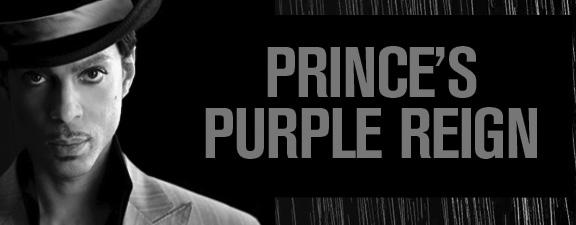
dearly beloved, we are gathered here today to get through the loss of a legend. Prince rogers nelson died last Thursday in his Paisley Park estate in chanhassen, minnesota. he was 57. In the ensuing days, tributes to the musician have come from all over the cultural landscape, from Paul mccartney tweeting about ringing in the new Year with him to President obama referring to him as “one of the most gifted and prolific musicians of our time.” The cast of broadway phenomenon sensation “hamilton” released videos dancing along to “let’s Go crazy,” and edm duo Jack Ü closed their coachella set with remixes of his music. Fans took to the streets to share stories and sing their favorite songs together. The fences outside Paisley Park, a combination recording studio and rehearsal space, have become a de facto shrine, lined with flowers, posters and other remembrances.
Known solely by his first name, Prince was a singer, songwriter and multi-instrumentalist who released over 40 albums in his lifetime and sold more than 100 million copies worldwide. his music incorporated influence from many greats that came before him: Jimi hendrix’s blistering guitar, James brown’s airtight band, Joni mitchell’s emotional openness and david bowie’s willingness to
experiment. The result was an irresistible blend of funk, r&b, rock and pop that, even as it evolved, remained uniquely Prince.
The son of a pianist father and a jazz singer mother, Prince learned guitar, piano, drums and other instruments at a young age. he signed a recording contract with Warner bros. records at only 18, and his first few albums were moderate successes. “1999,” the album and its lead single, catapulted him into the mainstream. From there, Prince convinced his label to cast him as the star in a low-budget film called “Purple rain.” The semi-autobiographical story of a musician fighting for love and respect in minneapolis had youthful energy and an incredible ninesong soundtrack behind it, leading to its massive success. When Prince strutted and slid onstage singing “baby I’m a star,” it was a selffulfilling prophecy. he reveled in androgyny, appearing onstage in high heels, frilly shirts and revealing chaps. When Prince sang “I’m not a woman / I’m not a man / I am something that you’ll never understand,” he challenged cultural standards of gender and sexuality. bolder still, on that song Prince assumes the perspective of the messiah. “I Would die 4 u” is one of his more overtly religious songs, but his preoccupation with God was nearly as ubiquitous as his sexual musings. The two frequently came together, such as on “Forever In my life,” which can be heard as a pledge of
fidelity to both a lover or to a deity. mixing the divine and the carnal would be blasphemous to most, but to Prince they were both paths to personal liberation, ways to get free.
When it came to execution of his craft, save for God, Prince would answer to no one. Though he had his share of collaborators and backing bands, he was more than capable of creating albums himself. The same was true of concerts; the last Prince performance before his passing was a solo outing where he performed with, as the title put it, a piano and a microphone.
In the wake of his passing, three of his albums are in billboard’s Top 10 this week, and six songs sit on the iTunes Top songs chart. despite renewed interest, the release of his previously announced memoir or any of the music from his famed vault remain uncertain.
I visited Paisley Park once before Prince’s passing, in July of 2014. When Prince announced a listening party on Twitter the same weekend as my cousin’s minnesota wedding, I knew I had to seize the opportunity. As my family settled into line dances at the reception, I absconded to the enormous compound, the outside walls bathed in purple light.
Through sheer luck, I was ushered with a small group of others into a studio for a private listening session with the members of Prince’s backing band, 3rdeYeGIrl. We
walked past Grammys, mTV moonmen and, most impressive of all, the motorcycle from “Purple rain.” The band members were charming and enthusiastic about the new album, asking for feedback after each song and answering questions in turn. The famous symbol gleamed from the center of every speaker and mixing console as the blues-rock washed over us in immaculately high fidelity.
An innocuous telephone rang. hannah Welton, the drummer, answered and informed us that Prince was on the line. When she told him that I, along with my dad and two cousins, had left a wedding to come to the listening party, she put him on speakerphone just long enough to hear him laugh. he could have been calling from down the hall or across the world. When we were ushered back out into the lobby, I handed cash to a staff member for a poster of our host, just to have some concrete proof that the experience hadn’t been a dream. It was like visiting Willy Wonka’s music factory, the White house of funk.
despite the outpost in minnesota, Prince sang that “Paisley Park is in your heart.” For fans, that inclusion opened doors, encouraging pure self-expression and complete freedom. Prince was a truly unique spirit who is gone too soon, but his legacy will last forever, and that’s a mighty long time.
Contact Jack Riedy at jriedy@nd.edu
By ADRIAN MARK LORE scene Writer
I have always found it ironic that one of the most stigmatized genres of music has in fact been the locus of some of the greatest innovation heard under the electronic umbrella, particularly in the past decade. The equation of techno with the debauchery of rave culture probably has its roots in the early 1990s, when hedonist producers shaped the subgenre into a massively popular phenomenon whose most recent equivalent might just be the rapid flourishing of edm — “electronic dance music” à la calvin harris and Avicii — in the very early 2010s. like edm, with which it is often confused, techno is frequently dismissed as redundant and creatively bankrupt, the delight solely of a nose-wrinkling particular group of people. but unlike edm, which is on a slow but sure decline for these very reasons, techno has long since transcended the level of nightclub decadence and become instead the domain of some of the most creative voices in electronic production today.
Artists like Wolfgang Voigt and ricardo Villalobos — and Actress and nicolas Jaar more recently — have significantly shaped the form that techno has taken today. but Andy stott is perhaps the best example of a current producer mining the genre for its best qualities. by exploiting the penchant of
his audience for devilishly high volumes and distorting the pulsing beat and bass of the music into a gruelingly thick aural aesthetic that all the while still retains the integrity of the genre, stott has not only set himself apart from his contemporaries but has wholly reimagined what techno can achieve. In this way, stott is to techno today what The Avalanches was to house in the late 1990s and burial was to dubstep in the mid-2000s.
This is especially true since his critical breakthrough in 2011 with the paired ePs “Passed me by” and “We stay Together,” on which he test-runs the silvery sleek yet monolithically loud sounds he would perfect on “luxury Problems,” the 2012 follow-up lP on which he gives life to a dusky neo-noir landscape that is both impersonal and sensual in a delightfully jarring symbiosis. If a sequel in the same spirit would have been welcome by any, stott nonetheless determined to modify his aesthetic yet again, this time opting for a slicker sound on the diamond-cut “Faith in strangers” in 2014. The decision was a testament to the producer’s genuine exploratory drive, and the notion is only the more supported on stott’s latest lP, “Too many Voices.”
In many ways, the aesthetic of “Too many Voices” is not entirely novel. stott never ceases to delight in impossibly resonant bass and in the affecting qualities of disembodied vocalization; The result is as emotionally
dichromatic as his previous works. but while the album’s sound palette will sound familiar, stott’s approach is unlike anything of his that we have previously heard.
Inspired by what he terms “synthetic, parallel world” sounds, stott’s latest work echoes with aggressive elasticity, like the flexing of ruthless bionic arms. Tracks that would be otherwise smooth and lively here are infused with an intoxicated fourth-world quality that is very compelling, if not also a bit dizzying. on “new romantic,” an arousing house ballad is warped by colossal snares that audibly disintegrate in their loudness, while drowsy accents on “First night” float about a gloomy tableaux as a kick bass zips back and forth over the aural plane. meanwhile, lead single “butterflies” encapsulates the album’s oblique sound in a bouncy track that is stott’s most soulful to date, while the brusque percussive artillery of “selfish” features stott’s most hostile production yet in what feels like a supercharged version of “up the box” from “luxury Problems.”
stott’s fresh experimentation with tempo is worth noting also, as it particularly accentuates the surreal plastic aesthetic of “Too many Voices.” on “Waiting for You” and album highlight “Forgotten,” stott capriciously injects speed into his sound; the disorienting effect evokes the tendencies of vanguard musical styles like vaporwave. If intentional,
stott’s latest work would acquire compelling conceptual undertones to recall the rave-asmeditation of Wolfgang Voigt’s Gas project and the musical deconstructionism of vaporwave itself.
And I do believe that it is intentional, because the way in which stott pushes the techno envelope on “Too many Voices” drawing from the precedent of previous innovators in crafting an innovative product of his own — is indicative of an artist with an ulterior motive beyond the dance floor. on Andy stott’s latest, you will hear much more than the mere “now” of techno; you will encounter a window looking to what is yet to come
Contact Adrian Mark Lore at asanch11@nd.edu
“Too Many Voices”
Andy Stott
Label: Modern Love
Tracks: “New Romantic,” “Forgotten”
If you like: Actress, Burial
ERIC RICHELSEN | The Observer
By ALEXANDRA LOWERY scene Writer
beyoncé has once again single-handedly derailed that very meticulous study schedule you took the time to plan out for finals week with the release of the highly anticipated, and highly mysterious, project “lemonade.”
The 34-year-old artist did little to promote the premiere other than a vague Instagram post earlier in the week, which is more notice than beyoncé has given her “hive” fan base in the past (referring the 2013 drop of her fifth studio album, “beyoncé,” without any prior promotion). Fans were left pondering if this was the album they had been waiting for ever since bey dropped “Formation” and announced her 2016 world tour of the same name in February. They were not disappointed.
The visual album was a 60-minute broadcast on hbo, a short film that combined beyoncé’s newest music, spoken
word, political messages and thematic statements that one could dissect for hours on end.
The storyline of the album follows the stages in which beyoncé learned about and eventually came to terms with her husband’s infidelity, all the while meshing beautiful imagery of what it means to be a black woman in America today. It’s here that women and men outside this group, the group for which beyoncé made “lemonade,” must understand that we are removed from the experience. outsiders can appreciate the art and enjoy it but ultimately they must comprehend this is a love letter to black femininity and that it was made for black women to realize or reinforce their value and worth.
As beyoncé moves through the emotions outlined in “lemonade” (intuition, anger, apathy, emptiness, accountability, reformation, forgiveness, resurrection, hope and redemption) she takes a journey that parallels the struggle of the modern black woman from pain to ultimate
healing and liberation. Featuring samples of a malcolm X speech in which he declared “the most disrespected person in America is the black woman,” cameos from many influential black females that have come under attack within the last few years such as serena Williams and Zendaya, as well as the mothers of young black men that have been killed due to police brutality in modern history, the film unfailingly establishes this theme of the need for black female empowerment. made by black women for black women, “lemonade” incorporates the beautiful prose of womanist poet, Warsan shire, the ritual body art of the Yoruba people by laolu senbanjo and michaela dePrince’s renowned talent as a black ballerina. not far removed is the motif of black southern culture, the generational tale of black people in America, specifically for blacks in the south.
It is hard to remove the music from the images themselves, but the album alone similarly delves into unknown
territory for beyoncé. “lemonade” debuts bey’s first country-influenced track with “daddy lessons” and unlikely collaborations with the likes of Jack White on “don’t hurt Yourself.” Further combining hip-hop, r&b, soul, dance and reggae, beyoncé’s sixth studio album continues to prove that the world’s greatest entertainer isn’t done growing as an artist. closing the film on a hopeful note, beyoncé explains the meaning behind the project’s name, offering a recipe for lemonade intermixed with clips from the birthday party for hattie White, Jay Z’s grandmother, during which White can be heard saying “I was served lemons, but I made lemonade.” It’s an illustration of overcoming adversity for the black woman; beyoncé choosing to stay with her husband and regrow their love harkens to the universal strength black women display on a daily basis.
Contact Alexandra Lowery at alowery1@nd.edu
By SAM FENTRESS scene Writer
In a master class last Wednesday, German director margarethe von Trotta said “imagination is more truthful than documents you find.” she was referencing the process of research for her biographical films, but this rings particularly true of von Trotta’s imagination, which has provided the world with more than 20 feature films since “The lost honor of Katharina blum,” her 1975 directorial debut. she has been called “narrative cinema’s foremost feminist filmmaker,” and not without reason: her films have received international acclaim for decades. Tinged by the influence of Ingmar bergman and the French new Wave, her work is forcefully dramatic, deeply psychological and distinctly humanistic.
last week at notre dame, von Trotta lectured, fielded a slew of questions and introduced her latest film “die abhandene Welt” (“The misplaced World”) as the focal point of the nanovic Institute’s annual nanovic Forum. her lecture “my Approach to biography” detailed her efforts in cinematically chronicling the lives of a host of historical figures — most notably “hannah Arendt” (2012), “rosa luxemburg” (1986), and hildegard von bingen (“Vision,” 2009), all of which feature her favorite actress and longtime
collaborator barbara sukowa.
I had the delightful opportunity to catch up with von Trotta last week and speak with her about her career as a filmmaker.
Sam Fentress: You spoke in the master class yesterday about having to completely devote yourself to subject in order to make a film — it’s years of planning and shooting and editing. Which subjects have you kept with you through the years?
margarethe von Trotta: In a way, all my films stay with me. It’s like you have a depot inside of you where you put them, a sort of archive — but it’s a vivid archive. They are living with you. When I’m doing a film with barbara sukowa and I look at her, in the moment she’s acting I see all the other figures she did before. They are always there. And she has the same feeling. she’s said, sometimes, that I have only to look at her and she at me, and we know exactly what we want. It’s a whole background she’s giving me with her presence.
SF: Especially in the Barbara Sukowa films, there’s a recurring theme of teaching, especially women mentoring other women. There’s a fantastic moment in “Rosa Luxemburg” where, as a very young girl, she’s teaching her nanny how to read.
m VT: Yes, she [luxemburg] was very ill, and therefore she limped. she had to stay in bed for a year, so she started to read and
started to write very early, and had this passion to give her knowledge away to others. For me that was the starting point of her being this utopist, of giving her ideas to the world and to the workers and to the [democratic socialist] party members. It was a very early passion.
SF: Moving back to themes: People have called you a feminist filmmaker for years, a title you seem a bit hesitant to accept. To me, what’s so wonderful about your films is that female characters never seem forced or gratuitous; they exist very organically, but still purposefully, in your movies.
m VT: I’m a woman, and I know much more about women. my father was not married to my mother, so I lived with my mother and he came only once a year. In this time, there were no schools mixed with boys, so we were at an all-women’s school, so I had not too much experience with men in my childhood. When I started to make films, I wanted to tell something about me and about us and about my experience and my knowledge. I think men are mainly making films about men, so when I have the chance to make a film and in the time I started there were not so many female directors. I felt also a little bit like a duty to speak about women, like I was a voice for other women who didn’t have this possibility to speak. I have nothing against feminism, and surely I’m a
feminist, but the word is used now, mainly by men, in an ironic way. They say, ‘oh, that’s just a women’s film. You don’t have to go in, it’s not interesting for you as a man.’ I’m very much against this.
SF: There’s a great quote from an interview you did a few years ago in “Filmmaker”: “I am always attracted by a woman who has to fight for her own life and her own reality, who has to get out of a certain situation of imprisonment, to free [herself].” That idea of an imposed reality, it seems to come up a lot in your films.
m VT: It’s two points. on one hand, I’m interested in persons — not only in women, but in my films, sure, it’s mainly women. You’re born in a certain time, or you’re born in a time, like me, of fascism and regulations and dictatorship and you have not so many chances to be on your own and to decide for yourself because society or the rulers are deciding for you. how you can manage, in this situation, to become a real person for your own — that is my one point. I am always interested in that. on the other hand, for women who were not asked to be important persons but more or less servants for a long time: what are the methods to come out of this prison of society?
Contact Sam Fentress at sfentres@nd.edu
Happy Birthday: don’t sit back waiting to see what everyone else does. be a leader and step up your game. share your knowledge and speak your mind. You can make a difference if you are bold and willing to follow any suggestions you make with actions. When it comes to love, make your intentions clear and your affection felt. Your numbers are 5, 13, 20, 23, 36, 38, 41.
ARIES (March 21-April 19): make changes to personal documents. renew your passport or get your taxes in order. Put aside funds or start budgeting for something you want to purchase that will result in comfort or convenience. make a personal commitment.
TAURUS (April 20-May 20): expand your interests and friendships. be open to new ideas and consider making personal changes that will make you feel good about yourself. Approach old projects with insight and renewed vision. explore possibilities and do what works best for you.
GEMINI (May 21-June 20): Take a close look at your relationships and separate the good from the bad. If someone is taking advantage of you, put an end to it. You will only have yourself to blame if you don’t protect your rights, your cash and your reputation.
CANCER (June 21-July 22): don’t deviate from your original plans. having a clear picture of what you want to see happen will help you move forward without a hitch. An unusual domestic change could create confusion. don’t let others interrupt your plans.
LEO (July 23-Aug. 22): You’ll never get everyone’s approval. do what works for you and don’t worry about pleasing everyone. romance is on the rise, and making positive changes in your personal life will lead to peace of mind and happiness.
VIRGO (Aug. 23-Sept. 22): look for an outside opinion if you sense confusion and uncertainty at home or with a loved one. You’ll be surprised by the advice offered and should consider the suggestions that are made before it’s too late.
LIBRA (Sept. 23-Oct. 22): Put more thought into personal finance issues, property investments and ways to ease your stress. A discussion with someone close to you will help you make the right choice. romance will bring you closer to the one you love.
SCORPIO (Oct. 23-Nov. 21): You’ll want to do it all. don’t lose sight of your goals or take on more than you can handle. It’s important to keep communication open and honest with someone you are paired with personally or professionally.
SAGITTARIUS (Nov. 22-Dec. 21): doing your own research will make a difference. don’t rely on anyone else to gather facts for you. An entertaining attitude will get others to open up and reveal the information you need to obtain. romance will lift your spirits.
CAPRICORN (Dec. 22-Jan. 19): An unusual opportunity will surface that can lead to a change of residence or a chance to upgrade your standard of living. don’t let children, relatives or your partner stymie your plans. explain the advantages and put your plans in motion.
AQUARIUS (Jan. 20-Feb. 18): embrace change, and you can make your dreams come true as long as you use your ingenuity to stay within your budget. A positive change to your personal appearance will lead to romance and compliments from someone special.
PISCES (Feb. 19-March 20): You’ll be backed into a corner if you are too aggressive or impractical in the way you approach situations, projects and the people you have to deal with. be willing to listen and accept some of the changes required to reach your goals.
Birthday Baby: You are engaging, proactive and adventuresome. You are progressive and autonomous.
To receive The observer in your home, complete the form below. make checks payable and mail to:
The observer P.o box 779 notre dame, In 46556 enclosed is $130 for one academic year enclosed is $75 for one semester name
Jumble | dAVId hoYT And JeFF KnureK
FlinG by sprinG | rIleY mccurrIe
Belles hold on to fourth place
By R.J. STEMPAK sports Writer
s aint m ary’s won two and lost two in its four games over the weekend, sweeping Albion and dropping both games against hope.
The b elles (17-14, 7-5 m IAA) dominated the brits (6-27, 0-16) on Friday, outscoring Albion, 21-3, in the two games of the doubleheader. starting off game one slowly, the b elles were tied after three innings, 1-1. s oon enough, however, the b elles’ offense erupted, scoring seven runs on nine hits in the top of the fourth. s ophomore center fielder c assie Young had two singles and two rbIs in the frame.
Albion was unable to score for the rest of the game while s aint mary’s added to its lead in the seventh inning with an rbI double from sophomore designated player and pitcher morgan r aymer, while junior first baseman c aitlyn m igawa came around to score when the Albion pitcher balked. The first game ended 10-1 with r aymer earning the win with just two hits and a run allowed in five innings of work.
s aint mary’s hot offense continued into the second game, opening up a 2-0 lead in the bottom of the first behind a sacrifice fly off the bat of Young and an rbI double from senior third baseman Kayla c hapman. Albion answered with two runs of their own in the top of the third to tie the game.
The b elles topped their first game’s seven-run inning with an eight-run outburst in the bottom of the third. The inning was highlighted by tworun home runs from both c hapman and senior catcher Jillian b usfield as s aint mary’s took the commanding 10-2 lead.
The game was stopped by the nine-run rule as the b elles were up 11-2 at the conclusion of the top of the fifth. s enior s arah burke earned the win with three strikeouts in four complete innings pitched.
b elles head coach Kelli Zache attributed the b elles’ success to an adjustment with hitting.
“We made some adjustments early on,” Zache said. “We started off the first couple innings in game one a little slow, then we made some adjustments that carried into game two. They had a little bit slower pitching than what we were used to, and we were initially swinging for the fences. s o we shortened up a bit, and the thought was that ground balls and line drives would get through.”
The next day s aint mary’s took on hope, who currently sits at third in the conference, in another doubleheader. neither the b elles nor the Flying d utch (20-14, 9-3) could get on the scoreboard after two innings in the first game. hope broke the scoreless tie with an rbI single to right field in the bottom of the third though. The b elles responded in the top of the fifth inning with a lead-off home run from sophomore right fielder m akenzie d uncan.
The two teams combined for a total of three hits throughout the remainder of regulation until a walk-off rbI single from Flying d utch senior shortstop Jenna m aury clinched the game in the bottom of the eighth inning. r aymer took the loss on the mound with two earned runs on seven hits with six strikeouts while pitching the entire game for the b elles.
“In the first game we came out ready to play,” Zache said. “neither of us could hit but we went eight innings with them. Then in the second game we would hit, but it was right to the defense. We couldn’t get anything to fall in and we couldn’t get the momentum in our corner.”
The second game of the day was not as tightly contested as the first as hope jumped out to an early lead, plating three runs over the first two innings. The b elles received lead-off hits from d uncan and Young in the third and fourth innings but were unable to capitalize.
In the fifth inning, hope brought in another three runs, extending the lead to 6-0. The b elles were unable to score any runs in the game while hope tacked on one more, ending the game with a final score 7-0.
l ooking ahead, the b elles have two games out of conference against d efiance on Tuesday and then an m IAA doubleheader with Kalamazoo on Wednesday. The hornets (10-19, 6-6) are currently one game behind s aint mary’s in the conference standings.
“We really need to take two with Kalamazoo,” Zache said. “This will ensure us getting into the tournament. It’s going to be a quick turnaround, playing four games in two days, so we need to play smart ball and play our game.”
c urrently in fourth place in the m IAA, the b elles will need to at least hold their position in the standings in order to make the postseason tournament, which will take place m ay 5-7. Contact R.J. Stempak at rstempak@nd.edu
PAI
d AdV erTIsemen T
CAITLYN JORDAN | The Observer
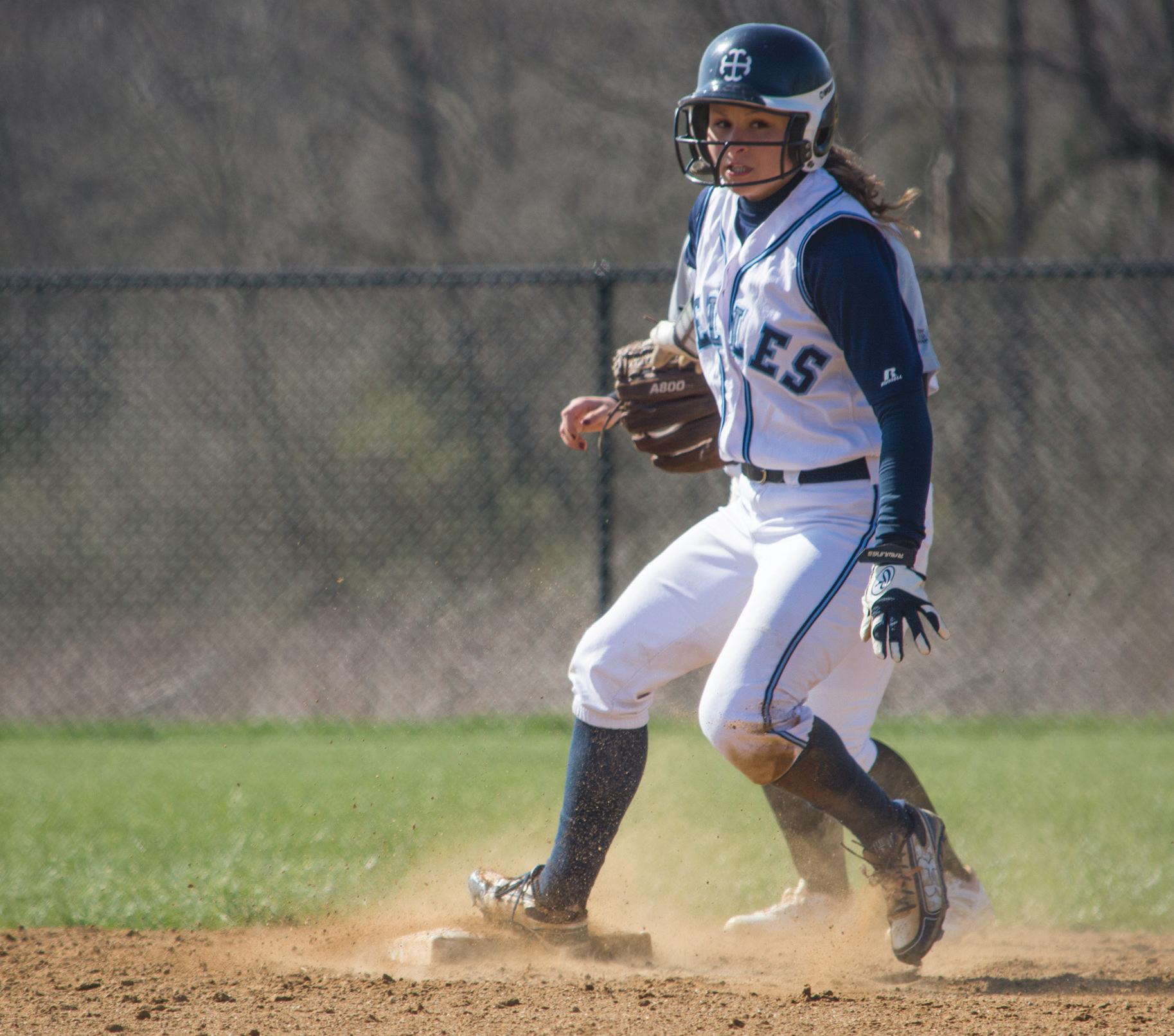
Saint Mary’s sophomore outfielder Makenzie Duncan reaches second base during the Belles’ 6-5 loss to Adrian at Saint Joseph High School North Field Complex on April 5.
Harris breaks 800-meter record in Virginia
By TOBIAS HOONHOUT sports Writer
The Irish built on their success from last weekend’s meet in l ouisville as the team posted a number of top-10 finishes at the Virginia c hallenge in c harlottesville, Virginia, against a field of 63 different schools, as well as professional and club athletes.
“It’s a really good meet,” freshman jumper matt birzer said. “We wanted to go in and compete our hardest. With most athletes only competing once more before conferences, this was an important meet to bring things together. … There were a lot of schools competing there. We will see many of those schools again at conferences and regionals.”
The team began the
competition with two wins on Friday night as sophomore Jessica harris and senior margaret bamgbose finished first in the 800-meter run and 400-meter dash, respectively. In the 800, harris stormed to a 2:05.26 finish, which was not only her personal best but also broke the school record. bamgbose ran a 52.50 in the 400 to win yet another race this season. The women also had top performances in the 10,000-meter run, where junior l exi Pelletier took second (34:02.08), and the 4x100-meter relay, which came in third with a time of 44.58. For the men, junior Anthony shivers came in third in the discus throw (53.79 meters) and also 16th in the hammer throw (55.87 meters). In the 400-meter dash, junior Alex Groesch
and sophomore d rake stimson finished neck-and-neck with times of 48.45 and 48.75,
respectively, good for 20th and 24th overall.
The Irish continued their
successes on s aturday, highlighted by another victory and several personal bests. Junior Josephine Jackson continued her excellent season with a victory in the shot put, throwing 15.02 meters for a new personal best. The women also performed well in the 4x400meter relay, coming in second (3:34.71), and the 400-meter hurdles, in which grad student Kaila barber finished seventh (59.19) and sophomore Jordan shead came in ninth (59.78). Additionally, freshmen r achel da damio and Kelly hart set personal records in the 1500-meter run (4:23.84), and 800-meter run (2:11.81), respectively. For the men, birzer (2.11 meter) and sophomore hunter holton (2.06 meter) finished back-to-back in the high jump at sixth and seventh, while senior brent swanberg came in 11th with a jump of 1.96 meters.
“It was overall a good day,” birzer said. “Things were not quite clicking for me. I had a lot of misses and my makes were not pretty. however, they were makes and on my third attempt at 2.11 I cleared. It’s hard to be too upset with a season best. I am excited about what I will be able to do on a day when I’m at 100 percent.”
o ther top performances included sophomore Tim ball’s time of 29:51.89 in the 10,000-meter run, which was good enough for ninth, and personal bests from stimson (53.52) in the 400-meter hurdles and swanberg (15.14) in the 110-meter hurdles.
“There were a lot of positives,” birzer said. “I think we are feeling good. … We will have a lot of great performances at the conference meet. And we will take a decent number of [guys] to the regional meet. o nce you’re at the regional meet, anything is possible.” next up for the Irish are the d rake relays this weekend in des moines, Iowa.
Contact Tobias Hoonhout at thoonhou@nd.edu
CAITLYN JORDAN | The Observer
Irish sophomore Jessica Harris, 2, leads the pack during the 800-meter run at the Alex Wilson Invitational at Loftus Sports Center on Feb. 20. Harris broke the school record in the 800-meter on Friday.
m Golf
con TI nued F rom PAGe 16
Two of n otre d ame’s golfers finished in the top-25 individually. Junior m att r ushton finished tied for 16th place, shooting an evenpar 216 on the weekend.
“ m att played so consistently all spring,” Kubinski said. “ h e posted just one round over 74 the entire semester, which is a feat considering we played a few very difficult golf courses. h e brought that consistency this week, too. h e’d say he didn’t have everything working each round but was still able to post a solid
finish. That’s a sign of development as a player.”
Kubinski also said the play of freshman b en Albin, who finished tied for 25th with a 2-over-par 218, was admirable.
“ b en played remarkably well as a frosh this year,” Kubinski said. “ h e posted six or seven top-20 finishes on the season and had himself in position for another today. I think he played a little too much leaderboard today, meaning he may have wanted a top finish a little too much out there. h e’ll learn from that, which is exciting as he will keep putting himself in winning positions.”
At the end of the day, it was the strength his team displayed in the face of adversity that impressed Kubinski. h e said three of his golfers in particular were confident despite some tough rounds.
“I think we showed that we can bounce back from a tough round,” Kubinski said. “[Junior] b lake [ b arens], [freshman] m iguel [ d elgado] and [junior] l iam [ c ox] all did that individually, and our team rounds showed that as well. It’s not easy to do so I’m pleased with the resilience they showed.”
Contact Dominic Iannelli at riannell@nd.edu
W tennis
con TI nued F rom PAGe 16
doubles team of senior Julie Vrabel and junior m ary c loss emerged victorious 6-1 on court n o. 2 and on court n o. 3, b roda/ m iller also won 6-1 to clinch the doubles point for the Irish.
The next day in singles against c lemson (10-10, 8-6), b roda won her first set 7-5 before falling in the second set 6-3. In the third and deciding set, b roda shut down her opponent 6-0 on court n o. 5 to win the match. c loss was also involved in a close match on court n o. 4. s he won the first set 6-4 before dropping the second set 6-4. c loss was the victor in the deciding third set 6-2. o n court no. 1, Gleason won the first set 6-2 before dropping a 6-2 decision in the second. Gleason responded by winning the third set 6-1 to clinch the match for notre d ame.
In the doubles competition, c loss/Vrabel won 6-4 on court n o. 2, followed by a 6-3 victory by b roda/ m iller on court n o. 3. Gleason and junior monica r obinson dropped a 6-1 decision on court n o. 1.
“The win over c lemson was a big one for us to get an invite to the nc AA tournament,” Irish head coach Jay l ouderback said. “We lost to c lemson a couple weeks ago so we knew it would be a tough match, but our team played maybe our best match of the year with a lot on the line.”
In the singles competition against Georgia Tech (17-8, 11-3), c loss lost a close first set 7-6(1) before dropping the
second set 6-1 on court n o. 4 while Fennelly lost in straight sets 6-1, 6-3 on court n o. 6. m iller also fell in straight sets 6-1, 6-4 on court n o. 3. b roda lost her first set 6-2 before responding with a 6-2 victory in the second set. b roda was winning the deciding third set 2-1 before the match was discontinued on court n o. 5. o n court n o. 1, Gleason emerged as the victor in her first set 6-1 and was tied 6-6 in the second set when her match left unfinished. o n court n o. 2, r obinson lost a close first set 7-6(4) and was tied in the second set 2-2 before that match was discontinued as well.
In the doubles competition, the teams of Gleason/ r obinson and Vrabel/ c loss both lost 6-4 decisions on courts n o. 1 and 2, respectively. b roda/ m iller were winning 5-4 in their match on court n o. 3 when the match was discontinued.
l ouderback said he was impressed at how well his doubles team improved over the course of the season and helped lead his team to this point.
“I feel our doubles teams have improved as the season has progressed which is key in the post season,” l ouderback said.
up next for the Irish would be a trip to the nc AA championships, which start with regionals on m ay 13 and will conclude in Tulsa, o klahoma, on m ay 30.
n otre d ame will learn its tournament fate when the field is announced on m ay 3.
Contact Michael Ivey at mivey@hcc-nd.edu
PAI d AdV erTIsemen T
MICHAEL YU | The Observer
Irish sophomore Jens Verhey hits the ball out of the bunker during Notre Dame’s first place finish at the Battle at the Warren Invitational at Warren Golf Course on April 16.
CAITLYN JORDAN | The Observer
Irish sophomore Brooke Broda returns the ball during Notre Dame’s 6-1 win over Indiana at Eck Tennis Pavilion on Feb. 20.
Notre Dame prepares for rivalry with Indiana
By HUNTER McDANIEL sports Writer
n otre d ame will renew one of its oldest rivalries Tuesday night when it squares off with Indiana at Victory Field in Indianapolis.
The Irish (23-15, 9-10 A cc ) and the h oosiers (23-15, 8-4 b ig Ten) are set to meet at the neutral site for the second consecutive year after having not played since 1998. “ l ast year it was a great experience,” Irish head coach m ik Aoki said. “We had almost 9,000 people at the game last year. It’s a phenomenal venue, beautiful setting to play a baseball game.”
A year ago, n otre d ame and Indiana renewed the dormant series that first began in 1898. This year’s edition will be the 101st game in the series all time, which n otre d ame leads 67-32-1.
Irish fall to demon deacons
By JACKIE BREBECK sports Writer
The Irish made it to the quarterfinals in the A cc tournament, beating d uke on Thursday before falling to n o. 7 Wake Forest on Friday.
n otre d ame (15-13, 6-6) came into the tournament as the seventh seed, topping 10-seed d uke (11-15, 4-8) to extend its win streak to five and earn a spot in the quarterfinals.
The doubles point was quickly claimed by n otre d ame with wins from doubles teams of freshman Grayson b roadus and senior n icolas m ontoya on court n o. 3 and seniors Alex l awson and Quentin m onaghan on court n o. 1.
Junior Josh h agar won the first singles match 6-1, 6-0, giving the Irish a 2-0 lead, but it was quickly answered by d uke with senior Josh l evine’s 6-2, 6-1 win over Irish senior Kenneth s abacinski, narrowing the gap to 2-1. Junior e ddy c ovalschi widened n otre
d ame’s lead again with his 7-6, 6-3 victory on court n o. 3.
b roadus eventually clinched his victory in three sets, 6-1, 6-7(6), 6-1, making the score 4-1 and ending the match.
The victory allowed the seventh-seeded Irish to move on to face the secondseeded d emon d eacons, who had won 13 of their last 14 matches, on Friday. n otre d ame’s match against Wake Forest started with the d emon d eacons securing the double point, with wins by the team of senior r omain b ogaerts and freshman d ennis u spensky over b roadus/ m ontoya, 6-3, and freshman Petros c rysochos and senior Jon h o over c ovalschi/ h agar, 6-4. Wake Forest took the first singles match of the afternoon, with u spensky defeating b roadus 6-2, 6-1 on court n o. 6, but h agar followed with a 6-1, 7-5 win on court
n o. 2 to bring the score to 2-1. n o. 12 m onaghan was baseball
Irish finish 10th place in Acc
By DOMINIC IANNELLI sports Writer
n otre d ame culminated its spring season with the A cc championship over the weekend at the o ld n orth s tate c ountry c lub in n ew l ondon, n orth c arolina, finishing 10th out of the 12 teams in attendance, beating out Virginia Tech and rival b oston c ollege.
Irish head coach Jim Kubinski said weather, tough competition and mistakes kept the team from finishing closer to the top of the leaderboard.
“There’s no doubt the A cc championship is one of the strongest fields in college golf,” Kubinski said. “We had six of the top 25 teams in America competing, nine of the top 50. We thought we could be in the mix though, by putting up the scores we posted last weekend [at the b attle at the Warren]. We had an unlucky draw on Friday,
playing most of our round in the pouring rain. That set us back. I thought we put that behind us though and played pretty well most of the final 36. It wasn’t our best game though, which is what’s required to be in the mix in that field.”
n ow that the season is over, the team will no longer be practicing together. Instead, they will work individually to improve for next season. According to Kubinski, the players will take on tough competition this summer.
“ o ur guys head home for the summer and play highly competitive schedules,” Kubinski said. “It’s what they need right now too, more competition. That’s when players develop. I’m excited about this time for our guys, especially with everyone who started for us returning next season.”
ND ousted by Georgia Tech at final tournament
By MICHAEL IVEY sports Writer
n otre d ame participated in the A cc tournament last week at the c ary Tennis c enter in c ary, n orth c arolina.
The Irish (14-13, 5-9) beat Pittsburgh, 4-0, in the first round Wednesday and then got past c lemson, 4-1, in the second round Thursday before falling to Georgia Tech, 4-0, in the quarterfinals Friday.
In Wednesday’s singles competition against Pittsburgh (7-14, 1-13), sophomore b rooke b roda won her match in straight sets 6-1, 6-4 on court n o. 5. o n court n o. 1, senior Quinn Gleason emerged victorious from her match by a 6-2, 6-1 score. s ophomore Allison m iller also won her match in straight sets 6-2, 6-2 on court n o. 3.
The Irish dominated the doubles competition against the Panthers. The
nd Women’s tennis | nd 4,
see m GolF paGe 15
CAITLYN JORDAN | The Observer
Irish senior Quinn Gleason returns the ball with a backhand during Notre Dame’s 6-1 win over Indiana at Eck Tennis Pavilion on Feb. 20.
men’s GolF | Acc TournAmenT
men’s tennis | nd 4, duKe 1; WAKe ForesT 4, nd 3
CHRIS COLLINS | The Observer
Irish sophomore Jake Shepski runs by second base during Notre Dame’s 4-1 win over Boston College at Frank Eck Stadium.