Print Edition of The Observer for Monday, April 25, 2016
Students compete in Fisher regatta
Thirty-six homemade boats race across Saint Mary’s Lake to raise money for St. Adalbert’s
By MEGAN VALLEY news writer
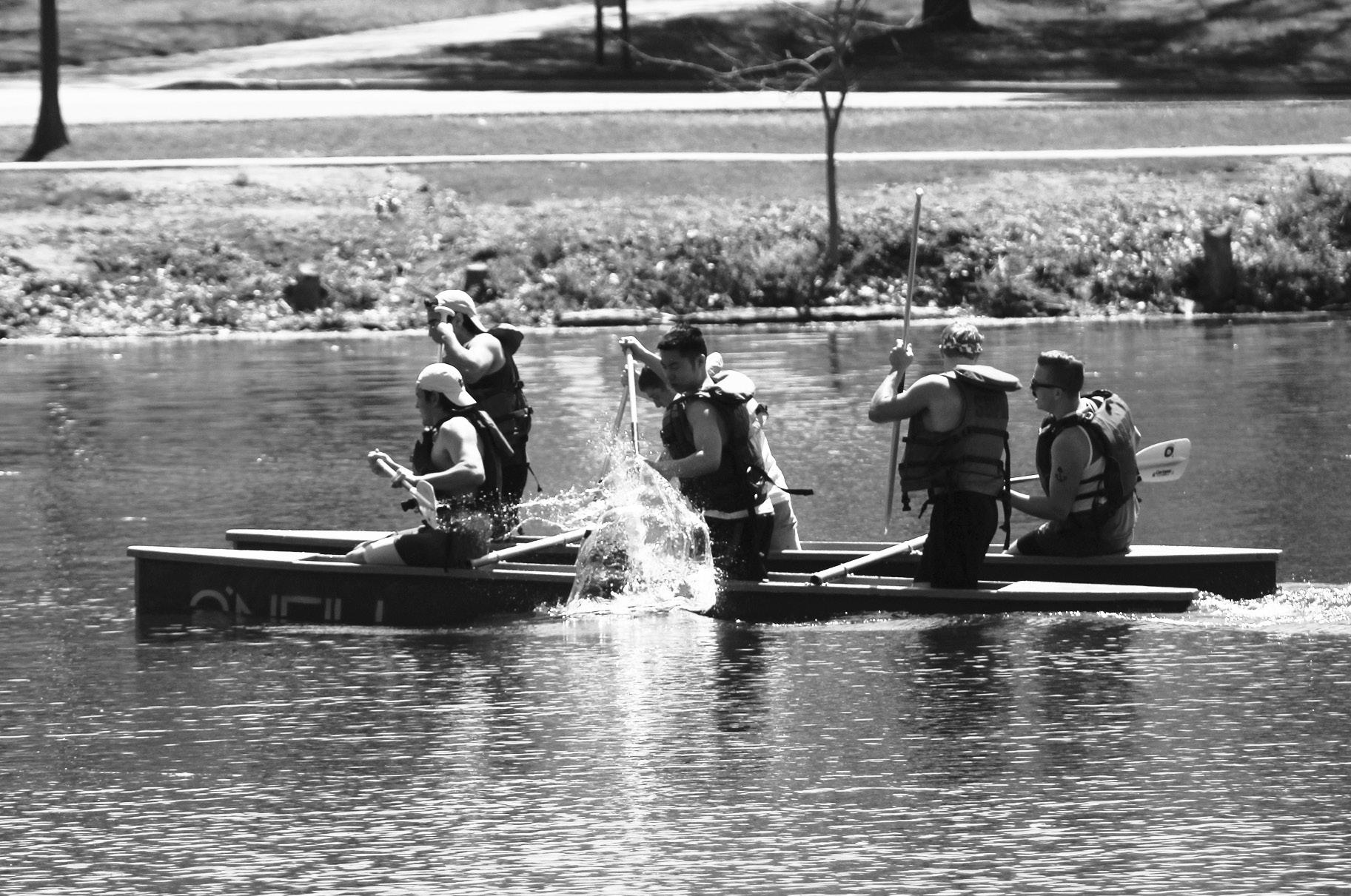
t hirty-six boats raced across s aint m ary’s l ake on s aturday afternoon at Fisher h all’s r egatta for a crowd of over 1,000 people, according to Fisher r egatta commissioner r yan o ’ d onnell.
“ t he turnout was a lot nicer than last year because there was no rain,” he said.
“ t here were a lot more rectors than in previous years that showed up to watch their dorms and there were a lot of families at the finish line, a lot of kids and older adults.”
o ’ d onnell estimated that between 12 and 15 boats sank at one point or another during the race.
t he purpose of the r egatta, “along with having fun,” is to raise money for s t. a dalbert’s, a local c atholic school. l ast
year, the event raised $5,000 renovate the gym, according to a aron c ollier, co-director of advertising and photography for the r egatta.
“ l ast year, we redid their basketball court floor and we’ll continue to do more, along with our partnership with m c g linn h all,” c ollier said. “ s o as we continue to do these things, it’s really inspirational, it’s a lovely event.”
“ t his year we’re raising money to renovate the front entrance,” o ’ d onnell said “ we’re trying to give them a foyer-type entrance so when you get in, you have to be allowed into the rest of the building. i t’ll make the school a lot safer and more secure.
“ w e have, so far, raised $7,000,” he said. “ t hat’s
see regatta PAGE 3
Employees receive disability resources
By CATHERINE OWERS
s enior news writer
Editor’s note: This is the sixth day in a series on disability at Notre Dame and Saint Mary’s. Today’s story focuses on the resources available for faculty and staff with disabilities at the University.
w hile students with disabilities rely on the s ara b ea c enter for s tudents with d isabilities for
accommodations, u niversity employees with disabilities look to the o ffice of i nstitutional e quity for resources.
m onique Frazier, the a mericans with d isabilities a ct ( ada ) program manager, said she joined the office in 2014.
“ m y main role is to work with faculty and staff and their department and physician
see disability PAGE 4
survey raises questions
By MARGARET HYNDS
e ditor-in- c hief
in the aftermath of the release of 2015 campus climate survey results, the community’s attention turned harrowing numbers suggesting notre dame is not different from other schools in terms of the national campus sexual assault epidemic. the survey found 25 percent of female student respondents — 347 respondents — reported experiencing non-consensual sexual contact or sexual intercourse
while enrolled at the university. six percent of male respondents — 60 respondents — also reported experiencing non-consensual sexual contact or sexual intercourse while a student. but, while 407 students reported experiencing sexual violence, only 43 respondents said they had been involved in a university sexual misconduct investigation or administrative hearing process as either a respondent or a complainant. of the survey respondents who had been involved in the
university conduct process, 40 percent reported they were somewhat dissatisfied or dissatisfied with the impartiality of the administrative investigation — 54 percent of the students who identified themselves as respondents in cases. additionally, 58 percent of students who had been involved in an investigation said they were either somewhat dissatisfied or dissatisfied with the timeliness of the investigation. according to the survey
see survey PAGE 4
Director offers seminar
By SYDNEY ENLOW news writer
d iane Fox, director of the o ffice for s tudent s uccess at s aint m ary’s, is leading a five-day summer seminar called “a ccess to s uccess” that will cover what college students need to be academically successful. t he seminar is offered June
13 through June 16 to local students who are beginning college, students who’ve had a difficult start to college and those returning to college after being away. a ccording to Fox, the overall goal of the seminar is to teach students that “rather than jeopardize your future, this seminar can empower you with the skills,
strategies, and psychology of your success in collegeand perhaps, life.”
Fox sees the program as a way to give back to the community that she has been a part of her whole life.
“ i ’ve been a s outh b end resident all my life and this is one of my ways that i am
see success PAGE 4
CHRIS COLLINS | The Observer
Students from O’Neill Hall paddle across Saint Mary’s Lake as part of the 26th annual Fisher Regatta during AnTostal Week on Saturday afternoon. A group of Old College seminarians won the men’s division.
“no, you’re only using one slice of bread and a cylindrical piece of meat.”
Utkarsh Sonkiya sophomore Zahm house
“is cereal a soup?”
Joey Curci sophomore Zahm house “no.”
Have a question you want answered? Email photo@ndsmcobserver.com
Olivia Perham sophomore cavanaugh hall
“it depends on how many things you put on it. i f there’s just ketchup and mustard, you have a hot dog.”
Denise Dorotheo sophomore cavanaugh hall
“w hat is it catagorized in if it’s not a sandwhich?”
Alex Murphy sophomore cavanaugh hall “nope.”
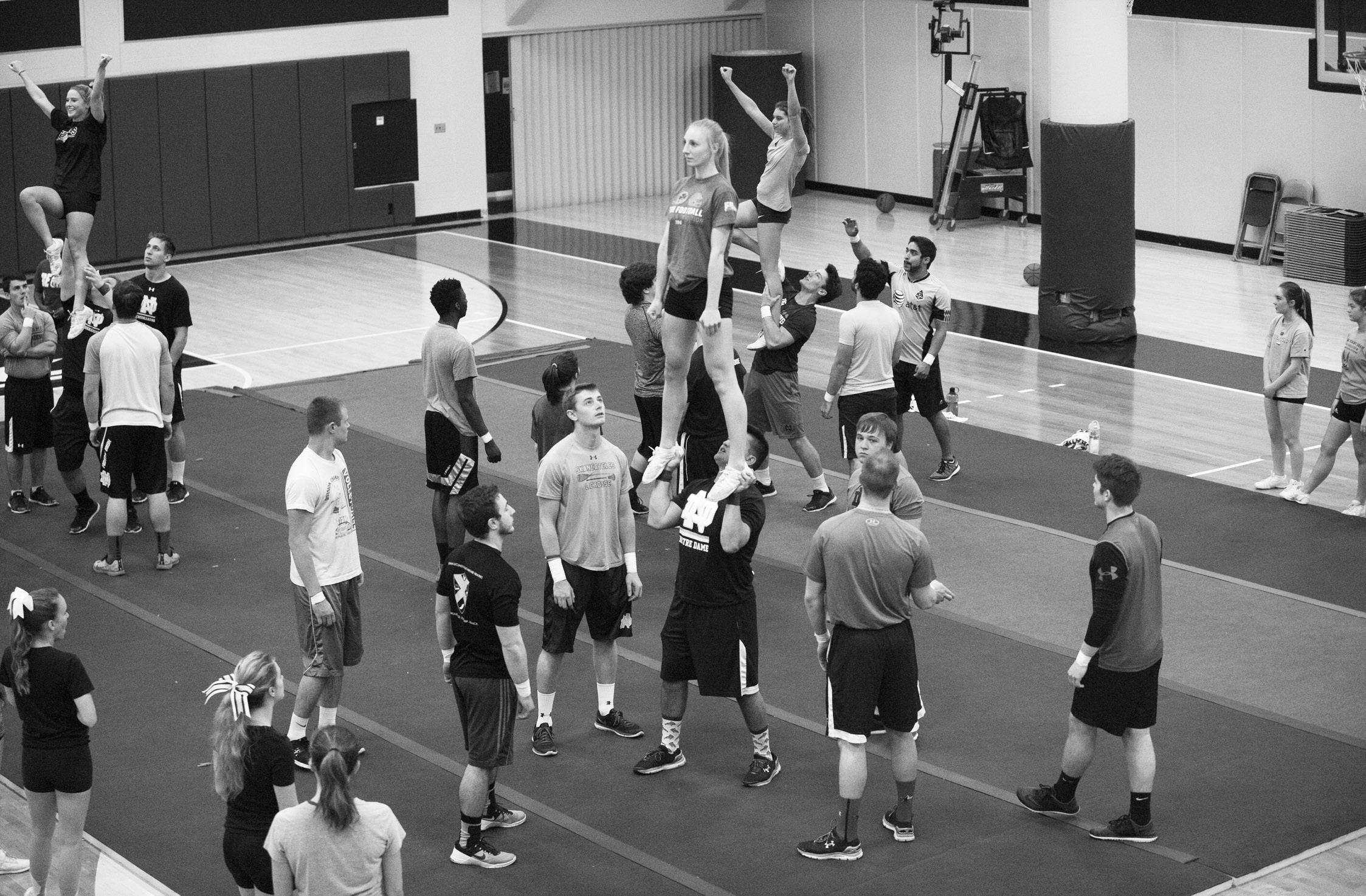
Notre Dame and Saint Mary’s students warm up and stunt during tryouts for the three cheerleading squads Tuesday night in The Pit at the Joyce Center. The squads were announced Sunday after weeks of tryouts.
Today’s Staff
t he observer regards itself as a professional publication and strives for the highest standards of journalism at all times.
do, however, recognize that we will make mistakes. i f we have made a mistake, please contact us at (574) 631-4541 so we can correct our error.
t he next f ive D ays: Want your event included here? Email news@ndsmcobserver.com
Monday
A Sojurn in Italy
Snite Museum of Art
10 a.m. - 5 p.m.
Works of art portraying the Italian countryside.
Easter 1916: The Irish Rebellion Hesburgh Library
12:10 p.m. - 12:55 p.m.
Explore manuscripts from the 1916 rebellion.
Tuesday
Staff Mass Flanner Hall
12:10 p.m. - 12:55 p.m.
Open to all faculty and staff, located in St. Andre Chapel.
Snite Salon Series Snite Mueseum of Art
5 p.m. - 5:45 p.m. Students, faculty and staff will discuss works of art.
Wednesday
Happy Mother’s Day
Fieldhouse Mall/Clarke
Memorial Fountain
2 p.m. - 6 p.m.
Mother’s Day festivities.
Physics Colloquium Nieuwland Hall of Science
4 p.m. - 5 p.m.
Discussion on astrophysics.
Thursday
Canines and Caffeine Brownson Hall Courtyard
2 p.m. - 4 p.m.
A study break with dogs and coffee.
Mindful Meditation Coleman-Morse Center
5:15 p.m. - 6:15 p.m.
Open to students, faculty and staff.
Friday
Study at the Snite Museum
Snite Museum of Art
10 a.m. - 5 p.m.
Free study spaces, coffee and snacks.
Diavolo/Architecture in Motion DeBartolo Performing Arts Center.
7 p.m. - 8:30 p.m. Dance performance.
RACHEL O’GRADY | The Observer
Law student organizes Students for Trump chapter
By RACHEL O’GRADY a ssociate news e ditor
a s n ovember creeps closer and the 2016 presidential election looms, students across the nation are supporting their candidates of choice through a number of different channels.
s econd-year law student m ichael d i r aimo is hoping to spur that kind of support for current r epublican front-runner d onald t rump on n otre d ame’s campus through his recentlyfounded s tudents for t rump movement.
“ i started a s tudents for t rump chapter on a pril 10. i was prompted to do so for several reasons. Firstly, there was a growing movement amongst college campuses to support t rump, and i believed n otre d ame should be a part of it,”
d i r aimo said.
d i r aimo said he thought t rump supporters were not adequately represented on college campuses nationwide.
“ m ore importantly, it was about protecting a minority viewpoint. i believe it is of little doubt that nationally speaking, students who support t rump tend to be in smaller numbers than students who support b ernie,” he said.
a t n otre d ame currently, there are no other presiden -
“I am attracted to Trump because of the lack of control donors have to his actions. I have respect for someone who is willing to say what he believes in, even when the political establishment does not want him to.”
Michael DiRamio law student
tial campaign groups for students.
“ i believe creating a chapter would both create a haven
paid a dvertisement
for students inclined to better express their beliefs, and allow them to reach out to fellow students to discuss their opinions,” d i r aimo said.
a dditionally, d i r aimo said he wants to see more political engagement from the student demographic.
“[ i t] involves the lack of participation by young people in the political process,”
d i r aimo said. “ i n 2012, only 41.2 percent of young voters showed up to the polls and this number is quite pitiful given the issues our generation will face, and the decisions we all are going to have to make.”
d i r aimo said it is tough to tell how much success the chapter is experiencing in the first two weeks, particularly because there is no formal chapter headquarters.
“ s o far our presence has been entirely online, but we plan to hold events in the future, after exams,” he said.
t he goal of the chapter is to increase voter turnout, according to d i r aimo.
“ o ur goal is to increase voter turnout generally, and to inform people about misconceptions about t rump,” he said.
a dditionally, d i r aimo said he hopes to make the chapter open to students who may not have gotten involved with t rump otherwise.
“ o ur goal is to help students who may feel ashamed by their fellow classmates for supporting t rump by helping them come out of the t rump supporters closet,” d i r aimo said.
d i r aimo said he supports t rump because of his mostly self-funded campaign.
“ i am attracted to t rump because of the lack of control donors have to his actions,” d i r aimo said. “ i have great respect for someone who is willing to say what he believes in, even when the political establishment does not want him to.”
b eyond that, d i r aimo says he appreciates how t rump is running his campaign and his honesty throughout.
“ w hat i see [students] most attracted to is the lack of political correctness,” he said. “ s tudents here, likewise, seem passionate about a presidential candidate who is going to say what needs to be said, regardless of the political or emotional ramifications from saying it.
“ o h, and the wall has support.”
Contact Rachel O’Grady at rogrady@nd.edu
regatta
not a set number, we’re getting more donations and we’re hoping by the end to have $8,000. w e’re almost there.”
c ollier said that in addition to the races, there was “so much going on for the people,” including, free hamburgers and hot dogs, a slushie machine, a d J, s pikeball and people lounging on blankets.
t he races were split into men and women’s divisions; o ’ d onnell said there were 20 boats competing in the men’s and 16 in the women’s.
“ m y favorite boat today had got to be the ‘meat boat’,” c ollier said. “ s o the meat boat is this beautiful piece of machinery and basically, all it is is wood, random empty barrels, more wood. t he problem with it is you have to row and in order to row, you have to stand on it.
b ut you stand on it with 13 other guys and it’s just not that conducive to, well, movement. w hat happened is their boat flipped three different times and they still found the willpower to get over to the other side. i don’t understand how they did it but they did.”
o ’ d onnell also said he had some clear favorites in the competition, including one that was powered by a tandem bicycle.
“ o ne boat put an anchor into their boat because they wanted to camp out in the middle of the lake,” he said. “a nother put a futon on their monstrosity and rode that across. t here was the party barge, as always, from Fisher that put 15, 16 guys on it and it totally capsized. t hen there
was the inflatable pool that made it to the finals, even though it was technically illegal.”
p angborn h all defeated r yan h all to win the women’s division while a boat built by m oreau s eminary and raced by o ld c ollege beat out Knott h all and the a merican s ociety of c ivil e ngineers in a three-way final for the men’s.
w hile o ’ d onnell said he loved seeing which boats sank, his favorite part of the r egatta is seeing how happy it makes the spectators.
“ i really enjoy that other people enjoy the r egatta,” he said. “ b eing on staff, you sometimes miss out on the actual fun times that are happening because you’re busy, but after you sit back and think about it, i really enjoy that everyone else had a fun time.”
c ollier said the sense of unity that comes from the r egatta is his favorite part of helping to plan the signature event.
“ r egatta is one of the most spectacular events to ever come to the campus of n otre d ame and that’s very true for a multitude of reasons. t he biggest reasons of which are simply that this event is something that brings people together. i t brings people together and tears boats apart.
“Quite frankly, i believe Fisher h all is responsible, personally, for between 40 and 50 percent of the pollution present in s aint m ary’s l ake,” he said. “ w hy is that so true? b ecause we really suck when it comes to getting boats out of the water — or people really suck at building them. e ither way.”
Contact Megan Valley at mvalley@nd.edu
CHRIS COLLINS | The Observer
Students from Pasquerilla West Hall sink into Saint Mary’s Lake during the Fisher Regatta on Saturday afternoon.
disability
in a collaborative, interactive process, in which we find workplace accommodations that will help them complete the essential functions of their job,” she said.
Faculty and staff must selfidentify as disabled to receive accommodations, Frazier said, so the burden is initially on the faculty member to begin the process of requesting accommodations.
Survey
responses, the five students who had been involved in an administrative hearing as a respondent were overwhelmingly dissatisfied with the timeliness and impartiality of that process. Zero percent of those respondents were satisfied or somewhat satisfied with both the impartiality and the timeliness of the administrative hearing process. additionally, of the 10 complainants who responded, half were either dissatisfied, somewhat dissatisfied or neutral about both the impartiality and timeliness of the hearing process.
ryan willerton, director of the office of community standards (ocs), said this information “deeply troubles [him].”
“a ny time we have a student with concerns about impartiality is concerning,” willerton said. “i think when we look at the timeliness, the thing that i want to really drill down to you is that the timeliness from the incident to the resolution, the timeliness
“t hey can initiate that when they first start, they can initiate it three years down the line. t hey can initiate it at any time,” she said. “a fter they have initiated that process, the burden is then going to be on the university, the supervisor, the chair of that department to provide the resources and initiate that interactive process.”
t he accommodations available to faculty and staff vary widely, “depending on their medical condition and the type of work they do,” Frazier said. “i work really closely with
from the incident to the investigation to the actual administrative hearing, we are trying to reduce that window as much as possible.”
willerton said the length of the hearing process stemmed from the complex nature of sexual misconduct cases and the need for a thorough review of each one.
“ … we don’t make rash decisions, we don’t make decisions based on emotions walking out of a hearing — we actually have to look at the information and determine, more likely than not, is there sufficient information to determine that the policy has been violated?” he said. “not has an incident happened, or has a student been impacted, but do we have enough information to determine has a policy been violated, using that preponderance of evidence, that more likely than not standard — and that takes time.
“i recognize that everybody going through the process, whether it’s a complainant, a respondent, a witness, a friend, a family member, everybody is
common mistakes high school graduates will make their freshman year can be easily prevented.
giving back to the high school kids in the south bend school corporation and all of the schools in the surrounding areas,” Fox said. “i think most kids today have a hard time transitioning from high school to college for whatever reason it is.”
Fox said she hopes that by incorporating college students who may not have had a strong academic year, they will be able to give advice to recent high school graduates that enroll in the weeklong program.
“my target audiences are beginning college students and anybody who had a difficult first year. w hen you graduate from high school you think you know everything, and naïvely so because if you get into a good college, why would you not think that you would be smart and successful by doing the same things you did in high school?” Fox said. “nobody tells them this until you get that bad first grade and you cry and you think you’re stupid and want to flunk out of college.”
Fox believes that most of the
their physician to get documentation to confirm their disability and to seek recommendations seeing what would be best regarding the accommodations in place,” she said. “i f we need to make changes regarding their schedule, sometimes they might work in the morning and we change their position to an evening position, just based on their medical condition.”
Frazier said the office works with the office of r isk management and safety to do ergonomic assessments of
impacted in some way and it is trying to make efforts to reduce the window of time that we do as much as possible and it is something we continue to work on,” he said.
according to willerton, while it is not always possible, the university tries to resolve all sexual misconduct complaints within 60 days.
“ … From the time that the report is made to [deputy title i X coordinator] heather [ryan] to the time that we can communicate the decision from the administrative hearing, we want to do everything we can to get that decision within 60 calendar days, as much as possible, not looking at university break periods when students are away. that’s our goal and target — if we can make it shorter than that, outstanding,” he said. looking forward, willerton said the feedback ocs received from the survey and from
workspaces.
“i f there’s any workplace equipment that they might need, if they need a certain type of software — say if it’s for visual disability — we provide larger screens, we provide different chairs if it’s for back issues,” she said.
available accommodations include changes of lighting, for faculty and staff who have migraine conditions or light sensitivity, Frazier said, and employees with diabetes could receive extra breaks to perform insulin checks or have snacks.
students directly helps shape the office’s policy.
“there isn’t an easy answer to it, but seeing this information on paper is a great way to draw attention to the concern,” he said.
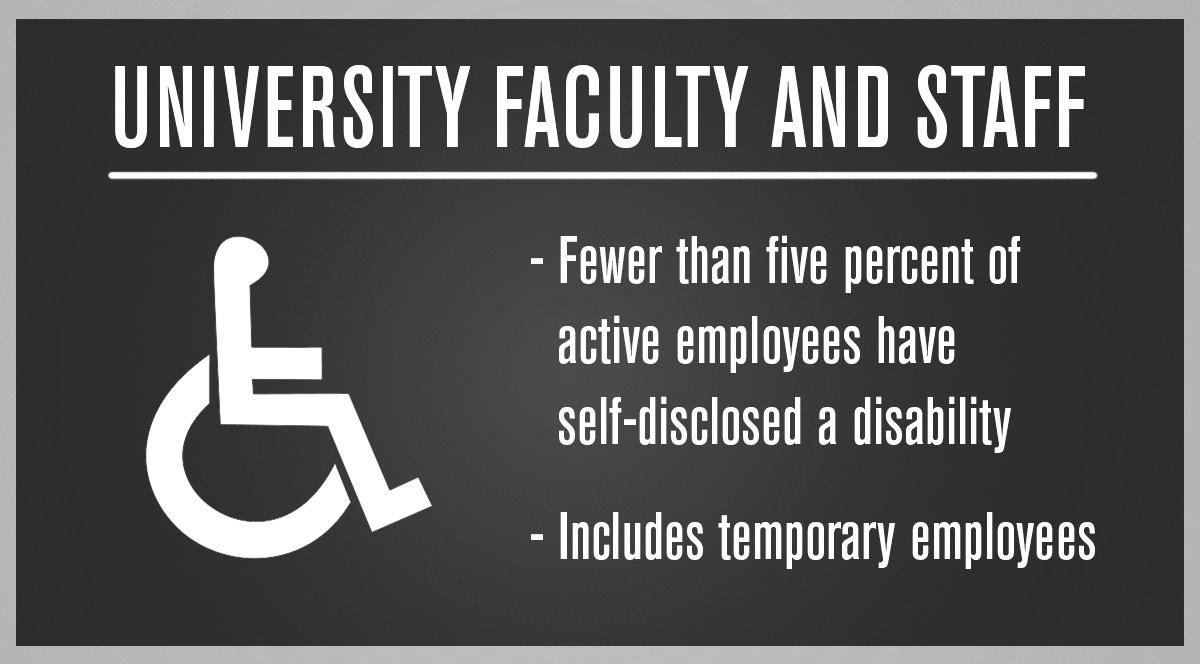
w hile the office is not able to provide the exact number of employees who have selfdisclosed a disability to the university, Frazier said including any temporary faculty and staff members, the number is less than five percent of all active employees.
“it’s a very small number, just based on the fact that it’s selfdisclosure, so obviously if it were required it would be a lot higher number,” she said.
Contact Catherine Owers at cowers@nd.edu
“so whenever we receive concerns, we want to find some way to respond, whether it’s related to policies during our annual policy review over the summer, whether it’s looking at our business practices — this is key.”
Contact Margaret Hynds at mhynds@nd.edu
“i think this is important because it makes student proactive rather than reactive and if anything, my goal is to keep them out of a hole that first year,” Fox said. “i don’t care what college you go to but if you get in a hole that first year, you’re digging out the next four years. i don’t think it’s arrogance that they think they know everything, it’s naïvety.”
the key to both enjoying college and being academically successful is balance, according to Fox.
“i don’t think you should do something at the expense of something else ever,” Fox said. “it’s all about balance because i think you’re priority has to be academics because that’s why you’re here, but you can’t study all the time or you’re going to burn out. but you can’t party all the time because you’re not going to have anything to go back to.”
the seminar lasts from June 13 through June 16 from 9:30 a.m. to 2 p.m. For more information, contact diane Fox at dfox@saintmarys.edu.
Contact Sydney Enlow at senlow01@saintmarys.edu
What have I learned?
a s a second-semester senior, i’ve engaged in a good amount of reflection on my time here at notre d ame, which means i’ve spent several months asking myself, “ w hat have i learned?”
i n my c ommon a pp essay, i told universities i was excited to go to college because i really liked learning — enjoy my terribly embarrassing introduction:
“ w hen i was little, my idea of heaven was a room filled with thousands of books. i’ve always loved reading and learning; as long as i can remember, i’ve loved the tiny thrill when a story leaps off the page, the satisfying sensation when a math problem clicks.”
a nd in my essay, i made the incredibly astute statement that i , c atherine o wers, realized learning was neither a solitary enterprise, nor one that was limited to books or classrooms. unsurprisingly, notre d ame enabled me to grow in academic and nonacademic spheres. Fantastic professors and roommates have taught me to reevaluate my worldviews and the way i cook scrambled eggs; studying abroad taught me respect for other cultures’ traditions and how to negotiate with italian taxi drivers. Five years later, i still have an embarrassing amount of enthusiasm for learning.
l ast fall i would have responded to the selfimposed question, “ w hat have i learned?” by asserting that notre d ame has taught me things i want to know, but also how much more i want to learn. a nd this is the extremely sophisticated analysis i brought to campus at the beginning of my senior year, ready to continue learning from my professors and friends, and oh yes, working for the news department of t he o bserver. i never expected the most important lessons from my senior year to be taught by people younger than me. i n the female-dominated news department, i’ve learned so much about dedication, resourcefulness, professionalism and kindness from a high-quality group of human beings.
t hank you to all the ladies who have worked production with me when i was sleep-deprived and over-caffeinated. t hanks to the woman who commits to way too many production shifts for other departments. t hanks to the woman who worked so many t hursday nights with so much enthusiasm. t hanks to the woman who is always smiling. t hanks to the woman who carries the d elta news academic average.
t hank you to the woman who hired me before she met me, and let me be the fourth person to cry in her office on her first day as e ditor-inc hief. t hank you for being a great boss and an even better friend. t hank you for creating the community i didn’t know i needed to be a part of.
w hat have i learned? i’ve learned that every late night that’s turned into a very early morning and the utter lack of work-life balance have been worth it. e very server, i n d esign, printer and personal meltdown has been worth it. news matriarchy, i can’t thank y’all enough for making my work at t he o bserver the defining learning experience of my notre d ame career.
Contact Catherine Owers at cowers@nd.edu
The views expressed in the Inside Column are those of the author and not necessarily those of The Observer.
lEttErS to thE Editor
w hy you should enjoy these last few weeks of the semester
sometimes it feels like my classes own me. given that the demand for higher education has increased since the 2007 mortgage crisis, despite rising costs, i’d say that most individuals would agree on the purpose of this expensive investment: to advance and empower the student. but the course of my education has at times felt not empowering but oppressive — my studies seem to tax me brutally of sleep, of relationships and of happiness, especially during “crunch time.” d uring my years at nd, i have often wondered whether this tax inevitably accompanies my education’s price tag. a s a senior reflecting on my experience, i think i can confidently conclude the opposite to be true; my college education is free of all intangible taxes but those i opt to apply myself. we are expected to complete assignments, write papers and study diligently, and we are expected (sometimes) to supply our attention to our professors thus, such that we pay them due respect. however, these activities in and of themselves do not comprise our educations. no, an education transpires in the mind, and at notre dame, in our hearts. t hese activities challenge our minds and hearts, of course, but too often the challenges they pose, once answered, have no lasting effect upon us. try to imagine, for example, a way in which you are changed after cramming for an exam. most of your knowledge is crude and ephemeral. i magine, also, when cramming and its equivalents become a habit — at the end of our schooling, we may come out of our own recitation rooms with a bag of wind and a memory of words, remembering nothing. c lassmates, we are doing school, but education
is not a series of actions. it is development; it is a slow revolution.
t his failing of our schooling is not entirely our fault, however. we are externally encouraged to orient ourselves toward an end rather than the odyssey; we are expected to (and often asked to) value our grades highly, sometimes above all else. t hough grades are not inherently bad, as they are often quite useful (especially in training our own discipline) a focus on this discipline, and more realistically, on measurable success, often overwhelms our innate desires to learn. do not blind yourself so. such a narrow focus allows, ironically, for our schooling to be robbed of its genuine educational ability; that is, any schooling that ignores the beauty and wonder of the transformative wanderings of human education in fact educates its subjects very little. students, then, must not be subjects owned by their schooling but agents of their own learning. i n this way, we will remain cognizant of our innate desire to learn, and we will enjoy satisfying that desire each and every day. i f we regularly succeed in learning, we may indeed emerge from school advanced, empowered and hungry to continue our education, a beautiful, life-long transformation of the heart and mind.
grant a llen, a contemporary to mark twain, often wrote: “never let your schooling interfere with your education.”
Kathryn Dennee senior april 11
Thinking about ‘Hijab Day’ at Notre Dame
l ast wednesday, the muslim students a ssociation (msa) sponsored a “hijab day” on campus. members of the msa could be seen in front of debartolo hall fitting hijabs (or headscarfs) on non-muslim women and sharing information about islam. according to the msa members i spoke to at the event, they hoped that this experience would both increase awareness about islamic practices and build sympathy for the difficulties which muslims — and especially muslim women — face in a merican society. still, “hijab day” at notre dame raises some interesting questions. i’d like to mention three of them.
First, what is the connection between the hijab and the larger principle of modesty? most islamic scholars see the headscarf as one element of a series of requirements for women to cover what is known as awra, the “forbidden” area of a woman’s body. according to most scholars, this includes much of her body: including arms to her wrists and legs to her feet. most scholars insist that the face can be shown but some (notably in saudi a rabia) disagree. many muslim scholars would find rather bizarre the idea of a woman who puts on a headscarf while wearing a short-sleeve shirt, or shorts, for example.
second, what about muslims who are opposed to the hijab? many muslim women (and men!) have noted that the Quran only calls on women (24:31) to cover their breasts, and never their hair or necks. now, many
muslim women argue that wearing the hijab is a liberating experience because it forces men to deal with a woman’s character and not her body. others, however, argue no less insistently that the very idea of hijab was imposed on women by a male-dominated society which — with no basis in the Quran — sought to impose unequal standards of modesty on women.
t hird, at notre dame should we consider too the christian experience of the hijab in muslim countries? t he (mostly) christian girls of chibok, nigeria, (remember # bring backourgirls?) abducted by boko haram in 2014 appear in pictures in captivity with hijabs. in certain countries christians (along with muslims) are compelled to wear the hijab. meanwhile in other contexts, muslims have been compelled not to wear the hijab. clearly this is a complicated matter. i certainly understand the enthusiasm which notre dame’s msa feels about “hijab day,” and i agree that we should explore ways to find solidarity with the muslim-a merican experience. however, in light of the difficult questions surrounding this issue, i wonder if “hijab day” is the best way of doing so. perhaps we can think together of other, creative ways of promoting inter-religious understanding at a catholic university.
Gabriel Said Reynolds professor of islamic studies and theology april 22
Catherine Owers s enior news writer
What does Indy mean, exactly?
t hirty-three. two-and-a-half. Five hundred.
two hundred fifty thousand.
w hen it comes to the greatest sporting event in the world, they’re the numbers that describe the size of the field — 33 drivers, aligned in 11 rows of three — the size of the circuit and length of the race — 200 laps around a 2.5-mile track — and the six-figure size of the crowd in attendance.
t his year, there’s a new one rolling in.
one hundred.
w hen the green flag drops 12 minutes after noon in speedway, indiana, on may 29, it’ll mark the start of the 100th running of the indianapolis 500, the aptly-nicknamed “greatest spectacle in racing.”
For me, there’s no better day than the sunday of memorial day weekend. it’s the official unofficial start to summer, and an opportunity for an entire city to come together around one fantastic event.
t here’s always been a special place in my heart for this race. i have fond memories of my days as a kid growing up, going to autograph sessions at local car dealerships or heading out to the brickyard to take a lap around the famed circuit in our car, and as i grew older, i started watching the race with more interest. w hen i actually went to the 500 for the first time six years ago, i was hooked beyond belief — there’s simply no way to describe what seeing a car dive into turn one at 235 miles per hour looks like until you’ve seen it for yourself. before you do the math, yes, that’s covering more than a football field every second. but for me, the 500 has always been about more than the simple spectacle the event is: it’s been about family. growing up, whenever we’d go back to visit my grandparents in poland, ohio, i was greeted with constant reminders of my grandfather’s love of auto racing. w hen my dad and uncle were kids, they’d go with him to races around northeast ohio and western pennsylvania, and when i was back to visit family, my grandpa would sit downstairs with me as i rode around their basement
on a tricycle, acting as if i was myself driving an indy car. a nd when we went back every year at memorial day, we’d sit down and watch the 500 — the race my grandfather adored — from more than 300 miles away. no memory sticks out more than 2006, when sam hornish Jr. passed 19-year-old marco a ndretti in the final 400 feet of the race to win the 500, breaking my heart in the process. but it also sticks out because it was the last 500 i watched with my grandfather, who died in 2007. t hat means that this year, the 100th running, will be the 10th one i’ve watched without him. since, i’ve done my research on the history of the event — from one of my grandpa’s favorite drivers, bill vukovich, to more recent winners like a rie luyendyk (too bad his “bachelorette” contestant son couldn’t drive a car quite as well) — and appreciated the spectacle much more than i did when i was still a kid who’d just started middle school.
a nd while my grandfather’s death meant the end of one tradition, it allowed for the start of another: For the seventh straight year, i’ll be taking in the 500 with my dad. t hat means starting at the grand prix of indianapolis road course race on may 14, hitting qualifications for the 500 the next weekend and then heading up the road to a nderson for the “l ittle 500” sprint car race — pitting 33 sprint cars on a quarter-mile track — the night before the big thing.
being an indy car fan isn’t a particularly common thing, especially among a generation of kids that grew up on Forza’s road-racing ethos and nascar being the biggest racing series in the united states, and when people ask me about my indy car background, it can be hard to find the words to describe why i love it so much. so when talking with people who’ve never experienced the 500, i just default to the ones a l unser Jr. used after his 1992 win.
“you just don’t know what i ndy means.”
Contact Alex Carson at acarson1@nd.edu
The views expressed in this Sports Authority are those of the author and not necessarily those of The Observer.
nd falls to Florida state in three-game series
By HUNTER McDANIEL sports writer
i n its first series away from home in a month, notre dame dropped all three games to acc atlantic division-leading Florida state.
t he i rish (23-15, 9-10 acc ) took an early lead in each game of the weekend, but the no. 10 seminoles (2811, 13-4) stormed back in all three to sweep notre dame at dick howser stadium in tallahassee, Florida.
coming into the weekend having won seven consecutive games and 15 of their previous 17, the i rish were looking to stay hot against a seminole team with national championship aspirations.
notre dame started the series off strongly, plating a run in each of the first three innings of Friday night’s game. t he pitching staff was unable to keep the Florida state offense down, however, as the seminoles scored 12 total runs in the game, including five in the eighth inning to put it away late.
saturday afternoon’s game also ended with a Florida state victory, but it was a much different story. t he i rish used some late-inning heroics from sophomore left fielder Jake shepski to extend the game. w ith his team down 6-4 with two outs in the top of the ninth, shepski launched a home run over the right field fence to bring in junior catcher r yan l idge and tie up the game.
t he seminoles kept the i rish from scoring again, in the process stranding five total notre dame baserunners in the 11th and 12th innings, before winning in walk-off fashion in the bottom of the 12th inning.
t hen on sunday, notre dame put up a five-spot in the first inning off seminoles freshman right-hander cole sands, though all five runs were unearned. t he i rish batted around in an uncharacteristically-sloppy inning for Florida state that included five notre dame hits but three defensive errors.
t he i rish and junior starter
r yan smoyer ran into trouble in the fifth after breezing through the first four innings. smoyer gave up five runs on three hits in the inning to tie the game, and the seminoles took a 7-5 lead in the bottom of the sixth with two more runs off sophomore reliever brad bass.
Florida state sophomore shortstop taylor walls put the game out of reach with a seventh-inning grand slam off bass, making the lead 115. notre dame tacked on an eighth-inning run to bring the game to its final score of 11-6.
“i think we competed fine,” i rish head coach m ik aoki said. “we didn’t play great at times, but i think we competed fine. we didn’t pitch it great at times. t here were stretches certainly where we did. i think everybody who went out there, in stretches, pitched quite well, but then unfortunately we also had the negative ones too where we just gave away too many free [bases] and created too much of their offense for them. t hat sort of is [Florida state’s] recipe for success. t hey create, getting those free 90s. t hey’re a patient hitting team, and those things certainly help a lot. sadly, we contributed to it.”
a rguably the best performance of the weekend for notre dame belonged to sophomore relief pitcher brandon bielak on saturday.
a fter sophomore starter sean guenther worked six innings of six-run ball against the hot seminole offense, bielak tossed four shutout innings to give his team a chance to come back. he tied his career high in strikeouts with eight while dropping his era in relief appearances to 0.75 in 24 innings of work.
“[ bielak] was great,” aoki said. “i thought he pitched remarkably well. i thought he did a great, great job. he’s pitched phenomenally well since coming out of the bullpen. he’s been really, really good.” notre dame finds itself in fourth place in the atlantic division with just nine conference regular season games remaining, which means it would currently qualify for the 10-team acc tournament field starting at the end of may. t he i rish also need a strong finish to the season to hold off charges from hot teams like wake Forest, who swept north carolina this weekend, and boston college, who took two of three from l ouisville.
t he i rish will look to get back on track tuesday against i ndiana at v ictory Field in i ndianapolis before returning to Frank eck stadium on wednesday night for a midweek game against e astern m ichigan.
Contact Hunter McDaniel at hmcdani1@nd.edu
Alex Carson a ssistant managing e ditor
KATHLEEN DONAHUE | The Observer
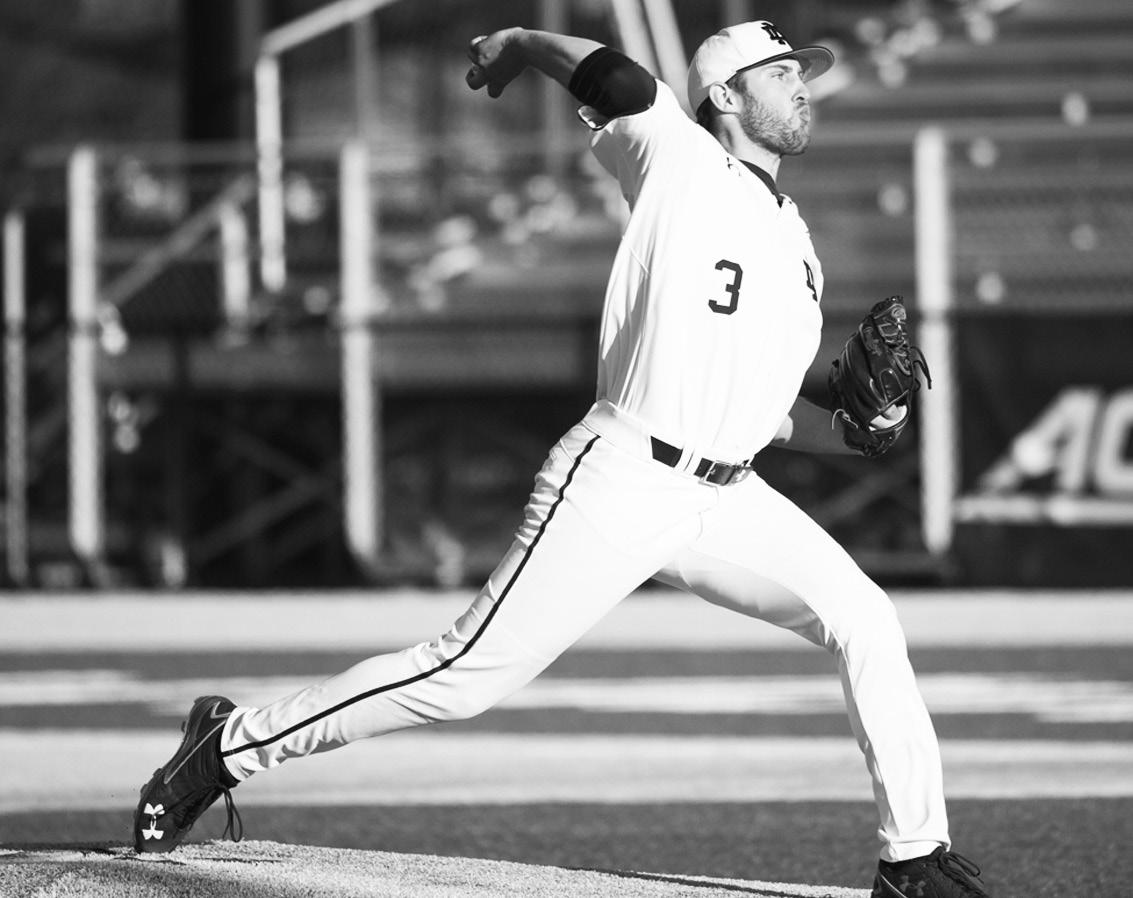
Irish junior starting pitcher Ryan Smoyer delivers a pitch during Notre Dame’s 6-3 win over Chicago State on April 12.
was an 8-to-3 second half.”
week “great” after her team’s loss monday, and praised the strong effort that lasted the entirety of saturday’s game.
“overall, [i’m] really proud of our team focusing on ourselves and playing notre dame lacrosse [saturday] from start to finish,” halfpenny said. “it was just a really awesome effort top to bottom and it came off of a great week of preparation, so it was really nice to see our girls refocus themselves and really play together and fight together for 60 minutes.”
ohio state closed the gap to 7-6 with 3:19 to play, but two irish goals — from senior midfielder stephanie toy and senior attack Kiera mcmullan — gave notre dame some breathing room heading into halftime.
a nd when the teams returned from the break, notre dame played its best lacrosse of the day. with their advantage down to 10-8, the irish rattled off six consecutive goals to put the game well out of reach, using five different scorers — from junior midfielder Katherine eilers to graduate student defender barbara sullivan and Fortunato, who finished with five goals, to freshman attack nikki ortega and mcmullan — to down the buckeyes.
“we tightened things up, we settled into the game once we tightened things up,” halfpenny said. “you take a look at what that score was and realistically, it
ohio state managed an answer with 9:38 left to close the gap to 16-9, but the irish defense held strong and didn’t concede another goal, with junior attack grace muller’s goal with 1:50 to play being the final scoring action of the afternoon.
halfpenny said she was pleased with how her team played when things weren’t easy saturday en route to an emphatic win over a highly-ranked opponent.
“i think that top to bottom, being able to battle through adversity for 60 minutes — not every call going your way, a couple bad breaks, having to adjust on the draw control — i think it was really great to have that opportunity to work through all those things and then see and remind ourselves it’s a long game,” halfpenny said. “ … playing our style and [being] on each other allowed them to get the outcome they wanted.”
the win ends notre dame’s regular season — next up is the acc tournament in blacksburg, virginia, where the no. 3-seeded irish will have a good chance to secure a top-eight seed in the ncaa tournament, and with it, the right to host their first couple of games.
“it’s an awesome way to finish our regular season journey and it definitely gives us confidence heading into the acc tournament on thursday,” halfpenny said.
notre dame’s opponent thursday is no. 6-seeded and no. 7-ranked louisville (12-4,
despite the lead, notre dame wasn’t turning in a typical defensive performance: up until saturday, the irish had not allowed an opponent to score in double digits this season. going into the final period, north carolina had already scored nine goals. the nation’s topranked defense went on to then fall apart at the worst possible moment.
“our defense has played amazing all year and will learn from that game to grow and get better and better,” wynne said. “unc was solid in transition and made heads up plays, credit to them.”
a fter perkovic scored his fourth goal of the contest five minutes into the fourth and final period, north carolina looked
3-4), a matchup that gives notre dame an opportunity to avenge a 10-9 road double overtime loss to the cardinals suffered march 5. if notre dame gets through that game, they will likely see no. 5 syracuse, who the irish also dropped a one-goal decision to in march, in Friday’s second round — giving the squad ample opportunity to fine tune its ncaa tournament résumé while chasing an acc crown this week at virginia tech.
Contact Alex Carson at acarson1@nd.edu
like a completely different team from the previous three periods. in the fourth period, the tar heels managed to get off 18 shots on the irish defense while notre dame struggled with just six shots. senior attack steve pontrello and junior attack luke goldstock led the comeback for north carolina scoring four goals apiece on the day.
“we struggled to get the ball, hit a few posts, and didn’t make the plays we usually do at the end of games,” wynne said.
in addition to struggling to find an offensive rhythm in the fourth period, the irish totaled seven minutes of penalty time despite being one of the least-penalized teams in the acc north carolina also dominated the faceoff battle late in the game winning seven of the last 10 faceoffs to help catapult them onto the 7-0 run.
notre dame will now be faced
with the challenge of having to defeat no. 16 duke twice in the same season as the two will face in the first acc semifinal on Friday in Kennesaw, georgia. irish head coach Kevin corrigan has already told his players to get past the loss and turn their focus towards the blue devils (9-6, 2-2).
“coach said to stay focused and get ready for a short turnaround,” wynne said. “we are going to work hard in practice this week and be as well prepared as we can for a very good duke team.”
last season the irish fell 13-8 in the acc semifinal against duke. this year, notre dame will look to reverse that outcome Friday. the contest will tip-off at 8:30 p.m. at Kennesaw state university.
Contact Manny De Jesus at mdejesus@nd.edu
paid a dvertisement paid a dvertisement
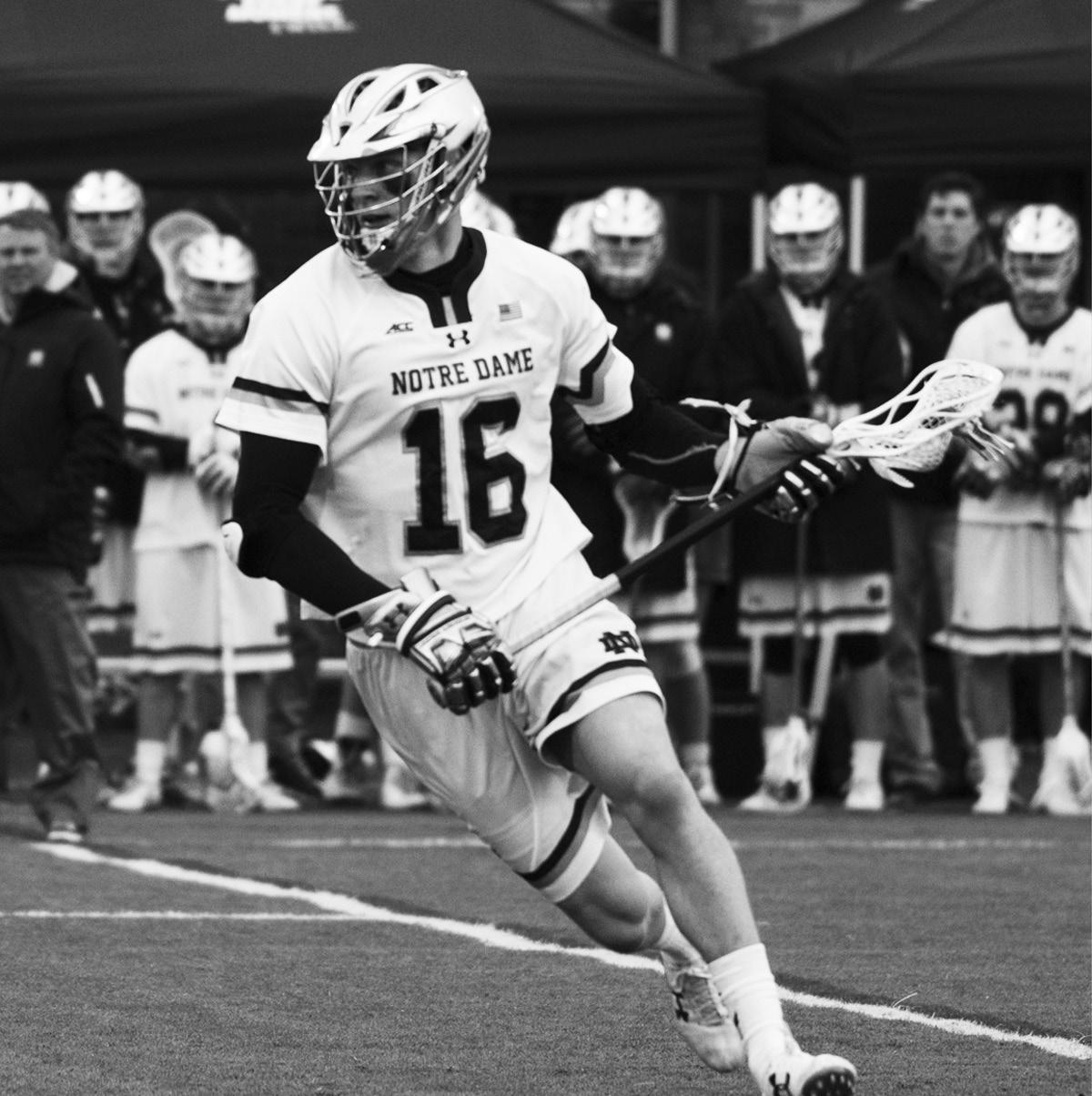
KATHLEEN DONAHUE | The Observer Irish junior midfielder Casey Pearsall surveys the field during Notre Dame’s 5-4 loss to USC on April 18 at Arlotta Stadium.
GRACE TOURVILLE | The Observer
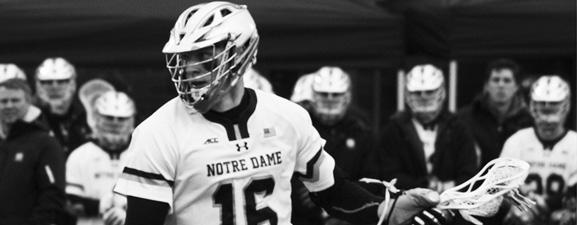
Irish junior midfielder Sergio Perkovic carries the ball during Notre Dame’s 8-6 win over Duke on April 10 at Arlotta Stadium.
paid a dvertisement
paid a dvertisement
paid a dvertisement
proud of all the growth we’ve put in and the way we finished off very strong.”
notre dame’s women took less than three minutes to get on the scoreboard, as a cross from junior midfielder Kaleigh olmsted found sophomore junior Kaitlin Klawunder, who sent it into the bottom corner of the net. a foul by sophomore defender taylor Klawunder in notre dame’s box gave mexico the opportunity to equalize, and nancy a ntonio converted sending sophomore goalkeeper lexi nicholas the wrong way. a lthough the irish couldn’t find another goal in the first half, they had the much greater share of the chances, with freshman forward Jennifer westendorf coming close on two one-on-one opportunities with mexico goalkeeper emily a lvarado.
barely over two minutes into the second half, the irish had added two more goals. a free kick in the first minute of the half from westendorf was flicked across goal by junior midfielder sandra yu and bundled into the net by sophomore defender ginny mcgowan, before westendorf added a goal of her own on a counter-attack just over a minute later. continuing to control the game, the irish added a fourth goal just past the hour mark, when a westendorf corner found mcgowan, who headed it into the
top corner of the goal. the game was of particular significance for notre dame sophomore midfielder monica Flores. a fter her performance in last year’s game, she was called up to the mexico u-20 squad herself as part of qualification for the 2016 u-20 women’s world cup. Flores said she loves the game because she feels a strong connection to both teams.
“it was quite an experience,” Flores said. “i played with them on wednesday and it was amazing to be back because i hadn’t played with them in a while. Just playing with them for two days again was incredible. i wanted to stay with them but i had to run around and start training with notre dame to play against mexico today, and it was weird because both teams are completely like family to me. it was definitely weird and definitely interesting to go at them as an opponent and as an enemy, because every game you have to go at your opponent like you want to beat them.”
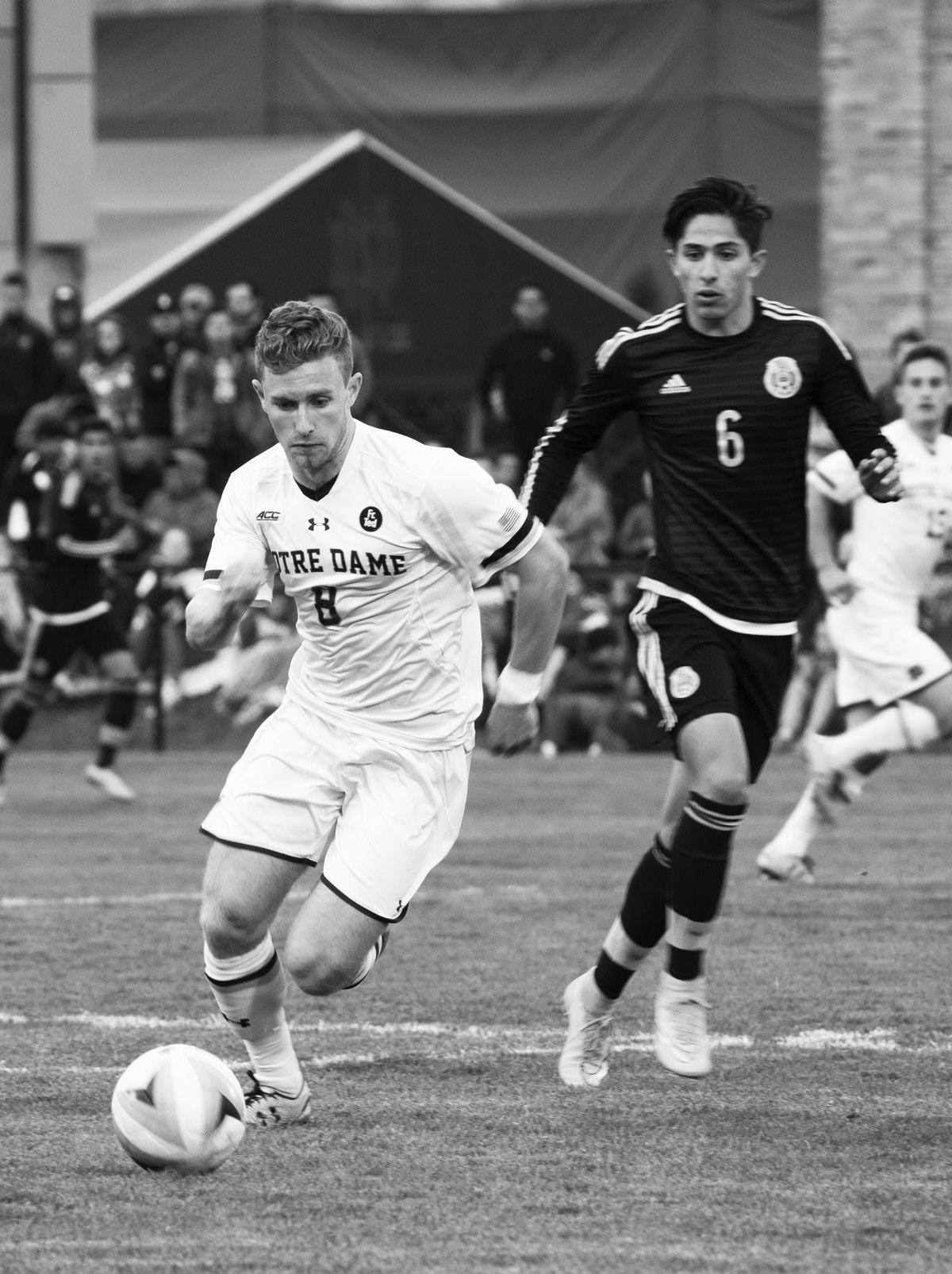
the men’s team also took an early lead, as freshman forward Jon gallagher slotted a ball from sophomore defender blake townes through the legs of goalkeeper abraham romero. gallagher had two more first-half chances to widen the lead, but romero kept his side in the game. in the second half, a free kick from carlos a ntuna was swung into the box, where edson a lvarez headed it over junior goalkeeper chris hubbard and into the
teams and individuals in the crowd chirping at one another.
confidence,” mazza said. “we’ve been here, and we’ve won this, and starting last spring when we won it our goal was to repeat, so all along we’ve been confident in our ability to do that and so we’ve had close games and we’ve had our ups and downs, but we just have confidence in our guys and our team. … it’s awesome. it’s such a historic tournament, and some of the great athletes in notre dame history, the bill laimbeers, the tim browns, have won here on these courts, so to be a part of that and go out like this, winning back to back titles and heading out as a senior, it’s pretty special. especially with these guys who have become some of my closest buddies.”
Semifinals
no. 2 team 2 def. no. 3 t he drones the first game of the bookstore basketball semifinals Friday pitted the second-seeded team 2, captained by senior John lammers, against the no. 3-seeded the drones, who were led by graduate student michael bradley. the drones came out strong in the first half, using their size advantage to get baskets early and often while effectively slowing down team 2’s offense with a 2-3 zone. the drones built an 11-7 lead by halftime as the game became increasingly physical, with both
net. romero pulled off another impressive save, diving across the goal to turn an irish header around the post. inside the last 15 minutes, hector mascorro broke into the box and squared the ball towards pedro goulart, who scored on what proved to be the last goal of the game.
deep into stoppage time, senior midfielder evan panken hit a shot that seemed destined for the bottom corner of the goal, but again, romero got the better of it and ensured the win for his team. irish head coach bobby clark said the opportunity to play the mexico u-20 teams is a great positive for the notre dame soccer programs and the local community.
“this is a fantastic event for the whole of south bend and especially the hispanic community,” clark said. “there was a fantastic crowd here on a cold night, we’re playing one of the best youth soccer programs in the world. you’re getting them on your doorstep and i think it’s fantastic for soccer lovers, it’s fantastic for the mexican population. i just wish we would get more students out to be honest because it’s a great experience.
“it was a fun game. i’m obviously disappointed to lose, you never like to lose, but i think it as a great test for our players, i think we will have learned a lot and it should help us when we come into the toughest of the acc games next year.”
Contact Daniel O’Boyle at doboyle1@nd.edu
“it was a barn-burner,” lammers said. “[the drones] have a really good zone defense that we had trouble with in the beginning and it kept us at bay. we wanted to get out and run more, but it was pretty tough because they get back on [defense] and rebound well.”
team 2 made its necessary adjustments and came out strong in the second half, riding the enthusiasm of their supporters and the foul trouble of their opponent to claw their way back, finally tying the game at 18 apiece. From there, both teams made clutch shots to put themselves in a position to win the game, but the difference came down to inability of the drones to make late free throws, and team 2 shots from the charity stripe to snatch the win.
“we had to stay physical, stay strong on d, and hope that they miss some free throws at the end,” lammers said. “[the win] feels great, we got one more but this was a really, really fun game.”
no. 1 Finnigan’s def. no. 4 t raded by the 76ers for 3rd round draft Picks the second semifinal game matched the top-seeded Finnigan’s and senior captain patrick mazza against no. 4 seed traded by the 76ers for 3rd round draft picks, who were captained by sophomore reed hunnicut and featured varsity basketball player and senior a.J. burgett.
besides being tasked with
guarding burgett for the majority of the game, junior forward conor colpoys carried the load offensively for Finnigan’s, making shots from all over the court and giving the defending champions a 11-5 halftime lead.
“conor — there was really no answer for him today,” mazza said. “i don’t know how many buckets he had but it’s gotta be close to 11 or 12, so he was just too much for them today.”
Finnigan’s didn’t fall prey to a comeback like it saw in the earlier semifinal. instead, they picked right where they left off in the second half, playing methodically and executing their offensive and defensive sets well, using their skill and size to prevent any type of comeback from traded by the 76ers for 3rd round draft picks. despite burgett making several tough shots in the second half, Finnigan’s still won by a score of 21-15. mazza, who sent a statement early with a made hook shot over burgett, stuffed the stat sheet with a large collection of points, rebounds and blocks, and commented on the overall skill of his team and how they were able to play in the semifinal.
“we got some talented guys — guys that can really get into the lane and make some things happen with their penetration,” mazza said. “i thought our guys fought hard … it was a great team effort by us.”
Contact Joe Everett at jeveret4@nd.edu and Tobias Hoonhout at thoonhou@nd.edu
nd womEn’S l ACroSSE | nd 17, ohio state 9
Notre Dame bounces back, overpowers Ohio State
By ALEX CARSON a ssistant managing e ditor
one of the nation’s top offenses returned to form saturday, as no. 10 notre dame notched a big win in the race for ncaa tournament seeding, defeating no. 9 ohio state, 17-9, at ohio stadium.
Just five days after being held to four goals in a loss to no. 4 usc, things were different — it didn’t take notre dame (12-5, 4-3 acc) 20 minutes to top that mark against the buckeyes, as junior attack cortney Fortunato’s 52nd goal of the season and third of the game gave the irish a 5-4 lead with 10:06 to play in the first half. notre dame junior midfielder casey pearsall followed with two goals of her own, and once notre dame obtained that 7-4 lead, it never surrendered it, handing the buckeyes (11-4, 2-2 big ten) their third consecutive loss. irish head coach christine halfpenny called practice this
mEn’S lACroSSE | unc 17, nd 15
Irish fall to ACC rival Tar Heels
By MANNY DE JESUS sports writer
with 10 minutes left in the game, it looked as if no. 1 notre dame was going to lock up its second straight acc regular season title. a lmost eight minutes later, the script was completely flipped as no. 13 north carolina scored seven straight goals to win 17-15 and snatch a piece of the acc regular season title on saturday at Kenan stadium in chapel hill, north carolina. it was a fallout that pushed the nation’s top team back from claiming the top seed in the upcoming acc tournament. with the loss, notre dame (9-2, 3-1 acc) is now the no. 2 seed while the tar heels (8-5, 3-1) currently hold the no. 1 seed.
“we all hate losing so everyone was upset but we can’t get too low or too high after one game,” sophomore attack mikey wynne said. “we will watch film and learn from that game and move forward with our year.”
the irish came out firing on all cylinders in the first period. a fter a tar heel goal 17 seconds into the game, notre dame responded with three straight goals in a
two-minute span. senior attack matt Kavanagh netted the first of the three scores, followed by a goal from junior midfielder p.J Finley and finally a score from junior midfielder sergio perkovic. the irish would go on to take a 6-3 lead after the first period, which included a last second buzzer-beating goal from freshman midfielder drew schantz from past midfield. notre dame and north carolina would go into the half tied 8-8, but the irish came out of the first half just as they did in the opening period — they scored six goals to just one tar heel goal in the third period. less than two minutes into the third quarter, senior midfielder trevor brosco broke the tie to give the irish the lead with a score. wynne also increased his season total for goals to 28 after scoring two goals in the third period. perkovic, freshman attack ryder garnsey and freshman midfielder timmy phillips all added to the offensive output for the irish to give them a 14-9 advantage heading into the final period.
bookStorE bASkEtbAll
Finnigan’s repeats as champions
By JOE EVERETT and TOBIAS HOONHOUT sports writers Championship
no. 1 Finnigan’s def. no. 2 team 2.
history was made sunday night as top-seeded Finnigans became the first notre dame-based team to repeat as bookstore basketball champions in 20 years as they defeated no. 2 seed team 2. the game started with Finnigan’s pounding the inside with their senior center and captain patrick mazza, but team 2 played physically to counter the size advantage. but as the half drew on, team 2 got into foul trouble, and Finnigan’s started to dominate on both ends of the court. Finnigans ended the half on a 6-0 run, including a string of mazza layups and free throws, to make it 11-3.
“we knew it was going to be scrappy, and we knew it was going to be intense,” mazza said. “a lot of those guys are our buddies who
play with on club ball so we knew it was going to be a dogfight. but we felt that if we just stayed true to our game plan … get on the glass, and just try and outwork them, we would just come out on top. we kinda set the tone early and just pretty much had control of the game from there.”
team 2 came out trying to increase the tempo of the game and catch Finnigan’s off guard, but the defending champs stood their ground and answered blow-forblow. mazza continued to use his size to his advantage and dominate the inside. team 2 had to finish with four players on the floor, however, as one of their players dislocated his shoulder after a hard collision on a fast break. although team 2 managed to score three unanswered baskets to make the score 19-15 and get the crowd going, Finnigans put the game away, and calmly drained two straight free throws to win their secondstraight title.
“i think came down to our
ND welcomes Mexican national teams
By DANIEL O’BOYLE sports writer
a lumni stadium hosted 3,500 spectators Friday that came to see the latest chapter in notre dame’s series with the mexico u-20 national teams. in the early kickoff, the irish women’s team dispatched the mexico u-20 women by a score of 4-1, before the notre dame men’s team was defeated 2-1 in the second game of the evening.
the games have formed a part of notre dame’s spring schedule for almost every year since 2005, and has featured players such as former manchester united and real madrid forward Javier hernández. irish women’s soccer head coach theresa romagnolo said the game is always a highlight of her team’s year.
“it was a fun game, a fun environment, we love this game, we look forward to it all spring,” romagnolo said. “it’s a great reward for all the hard work we put in, and i was really
SoCCEr | meXican national team
CAITLYN JORDAN | The Observer Freshman forward Jon Gallagher dribbles the ball during Notre Dame’s 2-1 loss to the Mexican U-20 national team on Friday.
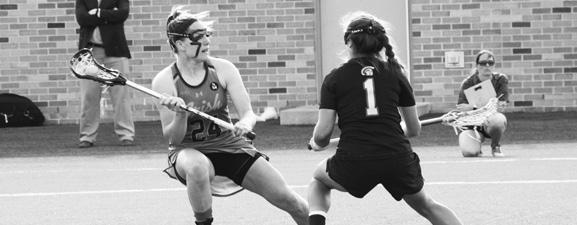
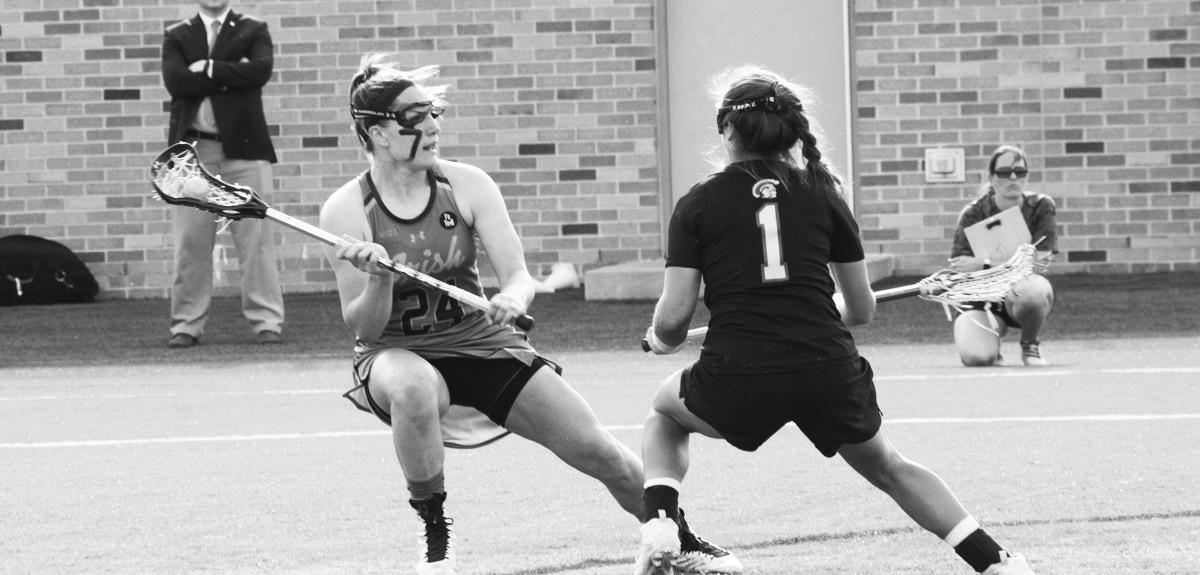
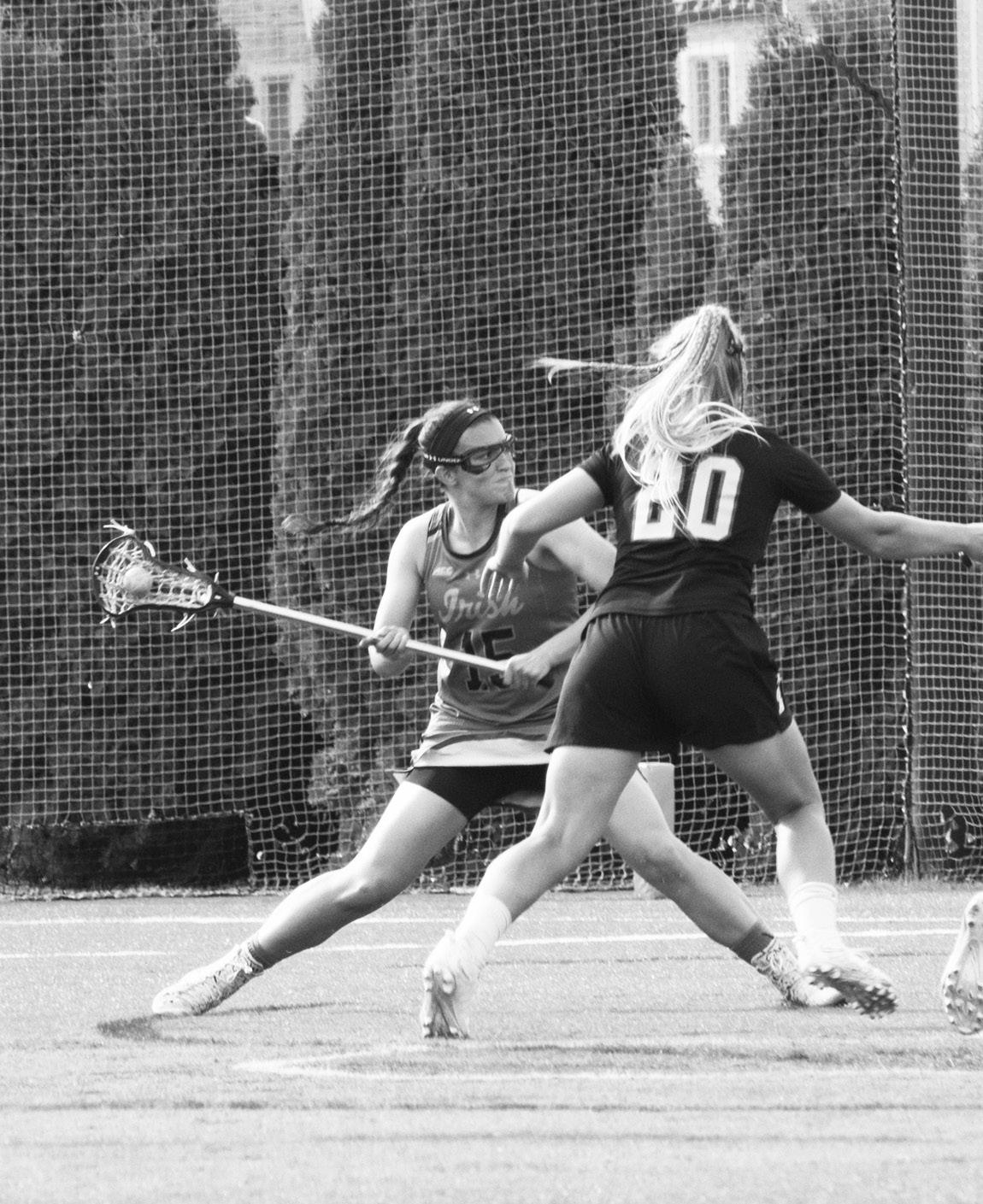
KATHLEEN DONAHUE | The Observer Irish junior attack Courtney Fortunato winds up at shot during Notre Dame’s 5-4 loss to USC on April 18 at Arlotta Stadium.