Print Edition of The Observer for Monday, February 27, 2017
College elects oppman, Lorenc
New SMC student body president, vice president look forward to year ahead
By MARTHA REILLY
a ssociate saint mary’s e ditor
during her time at saint mary’s, newly-elected student body president bailey oppman worked as a nursing assistant for a 94-year-old alumna of the college. now, she hopes to take care of the saint mary’s community, working with vice president lydia l orenc to tend to the needs of the very people who put them in office: students.
oppman said she and l orenc, both juniors, look forward to giving back to the college through their leadership roles.
“i think this is our way of
contributing, of leaving our footprint behind in some small way,” oppman said. “we’re so passionate about this school.”
according to l orenc, the sisterhood at saint mary’s makes the college feel like home, so she and oppman will strive to ensure that everyone feels welcome and appreciated on campus.
“i think it all comes back to inclusivity,” l orenc said. “we’re excited to really try to bring this community together, even more than it already is.”
l orenc said she hopes
see election PAGE 4
buttigieg drops out of dnc chair race
By MEGAN VALLEY
ssociate news e ditor
a
a fter nearly two months of campaigning, south bend mayor pete buttigieg dropped his bid to be the chair of the democratic national committee (dnc) on saturday afternoon just minutes before the vote. he did not publicly endorse another candidate.
Former u s secretary of labor tom perez went on to defeat rep. keith ellison (d-minn.) to lead the dnc nan w haley, the mayor of
dayton, had formally nominated buttigieg just moments before he dropped his bid.
“it’s time for the party that i step aside,” buttigieg said in a short speech to dnc members.
perez, who had been a frontrunner for the duration of the race, issued a statement immediately after buttigieg’s announcement.
“i am confident pete has a bright future ahead of him in the democratic party, and i plan to work with him to make that future a reality,” he said in the
statement.
Fifth-year bryan ricketts, one of the 15 to 20 students from notre dame who were involved in working on buttigieg’s campaign, said he was still expecting great things from buttigieg.
“i’m happy to see pete carry on his message of being a happy warrior, continuing to do great things in our community and organize around the principles of the democratic party,” he said. “i look forward to seeing what comes next.”
a ndrew galo, a senior who
Labor cafe provides update on ND licensing
By ALEXANDRA MUCK news writer
t he h iggins l abor cafe on Friday provided an update on notre dame’s licensing pilot program implemented in october 2015 and took student and community input for how to proceed.
a ll notre dame licensed goods, which include anything that has the notre dame logo on it, are produced by other brands, which usually outsource the actual
production of the good. i n the interest of worker rights, especially in light of catholic social teaching, notre dame has a code of conduct for all factories that produce notre damelicensed goods. t his code has a zero tolerance policy for the production of goods in countries that do not promote freedom of association, which means allowing workers to unionize.
“Freedom of association is long recognized in the antisweatshop and licensing world
as a hallmark that should be aspired towards, this idea that workers are free not to just come and go and quit as they please, but also to form unions and bargain collectively,” dan graff, director of the h iggins l abor p rogram at the center for social concerns, said. according to graff, notre dame may be the only university with the strict zero tolerance policy for outsourcing production to countries that
see labor PAGE 4
worked on buttigieg’s campaign, said that while he was “disappointed” by buttigieg’s loss, he was looking forward to the future.
“we’re excited about [buttigieg’s] prospects, and we’re excited to have him back in south bend,” he said. “we’re glad he’s on the national stage now … he has a good base and a good party to push forward in the next four years.”
Contact Megan Valley at mvalley@nd.edu
Observer Staff Report
i n a press release t hursday, the Judicial council e lection committee announced sanctions against the deshpande/ donaher/bigott/staud ticket in the class of 2020 class council election.
according to the press release, the committee found the ticket in violation of section 17.2(g) of the student union constitution for distributing campaign materials before receiving the necessary approval from the e lection committee.
“copies of all physical campaign materials, including but not limited to posters, flyers and table tents, must be submitted to the e lection committee and stamped for approval by a member of the e lection committee, excluding the director of the department of i nternal a ffairs, before posting,” the section reads.
t he press release said the ticket was required to remove all unapproved materials and
Student discusses income inequality
By GINA TWARDOSZ news writer
saint mary’s senior maria teresa valencia spoke Friday about the struggles low-income families face while navigating the high costs of living and the inaccessibility of benefits and healthcare in today’s society as part of the weekly Justice Friday series.
valencia interns at real services, a north-central indiana organization serving the elderly and low-income households, and
through this she said has worked with low-income families.
“43.1 million adults and children are in poverty, and 59 percent of a merican households with incomes less than $20,000 a year spend nearly half their income on rent alone,” she said. “communities of color tend to be more affected by poverty than white communities.”
valencia said poverty encompasses all aspects of a lowincome family’s life, including
see income PAGE 4
EMMET FARNAN | The Observer
Juniors Bailey Oppman, right, and Lydia Lorenc were elected Saint Mary’s student body president and vice president Friday.
Policies the observer is the independent, daily newspaper published in print and online by the students of the university of notre dame du lac and saint mary’s college. editorial content, including advertisements, is not governed by policies of the administration of either institution. the observer reserves the right to refuse advertisements based on content. the news is reported as accurately and objectively as possible. unsigned editorials represent the opinion of the majority of the editor-in-chief, managing editor, assistant managing editors and department editors. commentaries, letters and columns present the views of the authors and not necessarily those of the observer.
viewpoint space is available to all readers. the free expression of all opinions through letters is encouraged. letters to the editor must be signed and
Question of the Day:
Have a question you want answered? Email photo@ndsmcobserver.com
If you could visit any country, where would you go?
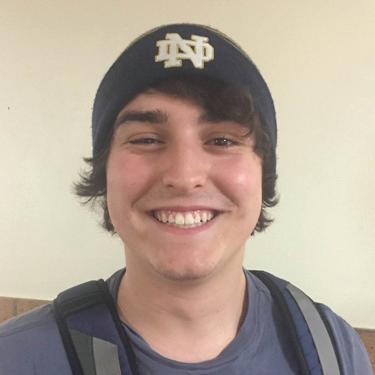
Chris Bowers
sophomore Zahm house “Japan.”
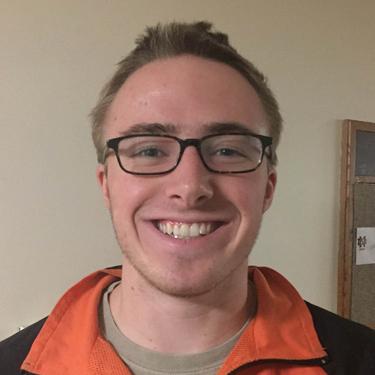
Emily Salerno sophomore Farley hall “France.”
Harry Federspiel sophomore Zahm house “texas.”
t he next f ive D ays:
Monday
Workshop: “Getting Started in Undergraduate Research” 110 Brownson Hall
4 p.m. - 5 p.m.
Bengal Bouts Semifinals Joyce Center 7 p.m.
Tickets available for $30 at the door.
Tuesday
“The Colombian Peace Process and the Catholic Church” Hesburgh Center for International Studies
4 p.m. - 5:30 p.m.
“Dark Matter” Jordan Hall of Science
7 p.m. - 8 p.m.
Part of the “Our Universe Revealed” series.
JP Bruno junior Zahm house “panama.”
Joey Faulkner junior Zahm house “canada.”
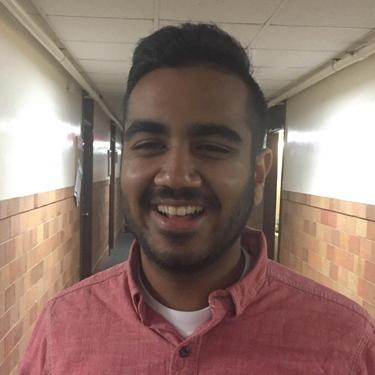
Shailen Naick senior off campus “new Zealand.”
Want your event included here? Email news@ndsmcobserver.com
Wednesday
Theatre: “I and You” by Lauren Gunderson DeBartolo Performing Arts Center
7:30 p.m. - 9 p.m. Tickets available online.
Men’s Basketball vs. Boston College Purcell Pavilion
8 p.m. The Irish take on the Eagles.
Thursday
5th Annual AD&T Symposium McCourtney Hall
8:30 a.m. - 4 p.m. Lunch will be provided from noon to 1 p.m.
“Marching Orders: Exploring the Mediation Mandate” Hesburgh Center for International Studies 12:30 p.m. - 1:30 p.m.
Friday
Graduate First Friday Dinner
Coleman-Morse Center
6:15 p.m. - 8:15 p.m.
Open to graduate students of all faiths.
Bengal Bouts Final Round Joyce Center
7 p.m.
Tickets available for $30 at the door.
Week promotes body positivity
By SYDNEY DOYLE news writer
s aint m ary’s s tudent g overnment a ssociation ( sga ) kicked off l ove your b ody week on s unday with a do-it-yourself makeup bag craft, where students could make their own makeup kit as part of a week centered on positive body image and self-love.
Today’s Staff
Corrections
t he observer regards itself as a professional publication and strives for the highest standards of journalism at all times. we do, however, recognize that we will make mistakes. i f we have made a mistake, please contact us at (574) 6314541
sga s ocial c oncerns c ommittee co-chair e mma l ewis said this week is important to the s aint m ary’s community because of how often women compare themselves to others.
“ i think it’s one those things we have because girls of all ages struggle with really accepting how beautiful they are,” l ewis said. “ we’re given so many different pictures of what beautiful is, and i think girls need to understand that no matter what they look like, they are beautiful.”
o n monday, students can sign the self-love pledge in the n oble Family d ining h all from 11 a.m. to 2 p.m. t here will also be a student panel at 7 p.m. in vander vennet t heatre, where students will discuss selfesteem and body image issues they have dealt with.
l ewis said this panel is necessary because women should know they are not alone in their struggles with body positivity.
“ i think that is something girls will really be able to relate to,” l ewis said. “Just because it helps to know that people understand what you’re going through.”
o n wednesday, the week will continue with “ k ind g rams.” s tudents can send out kind bars with messages on them to their friends. t he table will be in the dining hall from 11 a.m. to 2 p.m., and the bars will be delivered on Friday.
l ewis said the k ind g rams are her favorite part of the week.
“ i think that girls will really feel a difference knowing that their friends see them as beautiful,” she said. “ it’s something that will make their day better.”
a t 7 p.m. on wednesday in s tapleton l ounge, s aint m ary’s alumna l isa c larkson will discuss battling her eating disorder while at s aint m ary’s, and the role the s aint m ary’s community played in her struggles.
t hen, at 9 p.m. in r egina s outh, the s aint m ary’s yoga club will help put on a beginner-level, body-positive
yoga session.
t he week wraps up on t hursday with an airing of the documentary “ p ornland” in the vander vennett t heatre. t he 30-minute film will begin at 7 p.m. and will be followed by a staff and student panel to discuss the effects of porn and the media on body image and self-esteem.
l ewis said the message of l ove your b ody week is especially important at s aint m ary’s because it is a women’s college.
“ t here are so many girls here, so it’s so easy to compare yourself to other people,” she said.
l ewis said since college is so stressful, people are more likely to be hard on themselves.
“[ c ollege] is such a vulnerable time in our lives. we’re just stressed constantly and with that stress comes this vulnerability and this ability to tear yourself down even more,” she said. “ i think this reinforcement, that we are beautiful, will be a really great sign, and especially as midterms are coming up, this week could not have been more positively placed.”
Contact Sydney Doyle at
Faculty present research
By MARTHA REILLY a ssociate saint mary’s e ditor
associate professor of nursing science annette peacock-Johnson asked her students to give a new learning approach their best shot, while chair of the social work program Frances kominkiewicz collaborated with librarian sue wiegand to check out new research techniques.
all three faculty members presented their findings at a colloquium on Friday at saint mary’s.
peacock-Johnson said she employed a flipped-classroom approach when teaching her students about diabetes mellitus to determine how she could most effectively use class time.
“in the flipped classroom, the students do some sort of learning activities outside of or before class in preparation that could include video podcasts or exploration websites. in class, it’s all about problemsolving activities that can be done in small groups.”
peacock-Johnson said she administered quizzes before and after class to ensure her students were actively listening to the out-ofclass lectures and benefitting from discussions with their peers.
“it does no good to assign them to look at podcasts … and they don’t prepare,” she said. “i then followed it up at the end of class to see if there was a difference in terms of their learning after we did the in-class discussion and group problem-solving.”
she said the flipped-classroom approach enabled her to connect more with her students and provide them with individual attention.
“i loved the interaction,” she said. “it was wonderful being able to circulate and to go individually into the groups and see what their thinking was and what they were coming up with.”
according to peacock-Johnson, one major limitation of the flipped
classroom method was that some students felt as though they no longer needed to complete the assigned reading before class.
“they would watch the videocast, but they wouldn’t do the readings,” she said. “that wouldn’t help them glean some of the content from their text, which is still important.”
collaborating with others posed a challenge for some of her students, according to peacock-Johnson.
“students working in groups was great when everyone participated,” she said. “it was hard to get a lot out of the class when people didn’t participate, so that was a difficult issue. one of the things i’ve discussed with faculty in my department is what to do about small groups because i let them self-select, and when they self-select, they go with their buddies, who may or may not be good interactive teachers.”
peacock-Johnson said implementing the flipped classroom approach can be difficult at first, but seeing students take ownership of their learning makes the challenge worth it.
“it’s very time-intensive initially,” she said. “it takes a whole lot of time to put together the recordings, to select the case studies, to develop the quizzes. the upside is once you have that created, then you just have to tweak it.”
peacock-Johnson said she was pleased to find that many students adapted well to the flipped classroom approach.
“the evidence from this study suggests that the flipped classroom can be a very effective teaching methodology,” she said.
wiegand said she and kominkiewicz began their project — researching the effects of integrating student learning through library and classroom instruction — in 2002.
“we have progressed through the years in various ways,” wiegand said. “we have collaborations with
notre dame librarians now. we want to encourage collaboration with faculty.” according to wiegand, librarians and professors who work together can provide students with the most comprehensive understanding of the material, particularly in social work classes when librarians’ expertise about research comes in handy.
“our research is to investigate students seeking information and to improve how students can find research in the library,” wiegand said.
according to kominkiewicz, librarians are an invaluable asset to professors, as they bring new insights and fresh perspectives to the traditional classroom setting.
“the issue that we have is that we’re seeing some of our resources dwindle in some areas, and so we’ve had to go outside and collaborate with each other basically,” she said. “so much of what i end up doing has so much to do with assessment, evaluation and learning outcomes. without sue’s help … we would have never been able to get this far.”
kominkiewicz said wiegand’s assistance has solidified her students’ understanding of the social work field while supplying them with a fortified understanding of how to conduct useful research.
“we have to prove that there are competencies that have been achieved, not just knowledge or values or skills,” kominkiewicz said. “we have to make sure that students are going to be able to be ethical in their work.”
according to kominkiewicz, wiegand provides her students with a comprehensive overview of effective research practices that will prepare them for the social work field.
“i can’t go out and start working in a clinical setting, and neither can the students until they have done that research review and know what some of the studies are and how to work with particular individual social issues,” kominkiewicz said.
wiegand said she helps students research topics such as social policy by assisting them in tracing the development and implications of various laws. she said she encourages students to think critically about the factors that surround the composition of a bill.
“look for the funding,” wiegand said. “even if you’re just doing a strategic plan, there has to be some funding appropriated for that.”
kominkiewicz said her students’ satisfaction with wiegand’s involvement in her classes is evident.
“the students have really appreciated being able to go to our library and know that that’s where we sit down with our library faculty and talk about what they’re missing, what they have to do and where they have to go to find things,” kominkiewicz said. “a lot of it is free online, so they just need to know how to do that.”
Contact Martha Reilly at mreilly01@saintmarys.edu
p rofessor discusses i rish migration
By TOM NAATZ news writer
in a lecture titled “globalizing ireland: emigration and immigration, 1980-2020,” sponsored by the keough-naughton institute for irish studies, mary p corcoran of maynooth university discussed migration patterns in and out of ireland over the last 40 years.
corcoran began by talking about a latvian foreman whom she met shortly after the european union had undergone its first major enlargement into eastern europe in 2004.
noting that these countries had just entered the european union, and the associated free-travel area, corcoran said the foreman “wanted to go to germany, but ireland was one of the only countries that would let him in.”
the influx of immigrants that included the foreman was tied to the so-called celtic tiger, an irish economic boom that took place in the early 2000s, corcoran said.
corcoran also discussed ireland’s 2015 referendum on the legalization of same-sex marriage, the first of its kind in the world.
“thousands of irish expats came home to participate,” she said, noting that many of these people wanted to be part of a momentous national decision.
“this ‘home to vote’ campaign was very significant,” she said. “people are still attached to ireland.”
according to corcoran, irish migration patterns are defined by transnationalism, which means “living life in one setting, maintaining ties with another.”
corcoran cited the example of the home to vote campaign as well as the latvian foreman, who had an “hacienda” in latvia and intended to return to his native country in the near future.
looking through this “transnational lense,” corcoran discussed the specifics of migration to and from ireland.
“over the past two centuries, irish emigration has followed the ebbs and flows of the economy,” she said.
corcoran noted that ireland saw large-scale emigration after its economy collapsed after
Sanctions
continued F rom page 1
was charged for the cost.
“as an appropriate sanction the election committee hereby requires the deshpande/
2008.
“however, of the pigs countries — portugal, ireland, greece and spain, the eu countries that melted down post-2008 — ireland was the only one that saw large-scale emigration,” she said. “this was chalked up to the country’s link to canada, the u s. and australia, but there is an interesting argument that has been made that ireland is an emigrant culture.”
most immigrants to and emigrants from ireland, corcoran said, are highly educated. she said 62 percent of recent emigrants and 57 percent of immigrants have at least a university degree.
a nother group of emigrants is the so-called “reserve a rmy,” corcoran said. this group of emigrants’ actions are “dictated by economic circumstance,” she said.
“they have less choice, and recently they have probably mostly been made up by the 125,000 who lost construction jobs.”
the final group of emigrants is the “adventurers,” corcoran said, many of whom come to a merica undocumented. many eventually return to their country of origin.
“For these people, emigration is a solution to boredom and a little bit of disaffection,” she said. “t hey often work below their qualifications,” said corcoran. “many eventually return to their country of origin.”
corcoran said the “reserve a rmy” most closely resembles past irish immigration patterns.
“many are there to provide for their families,” she said. “emigration was chosen for them. their position is the most precarious.”
corcoran cited the example of post-boom rise in unemployment, as immigrants were the hardest hit given the sectors that they worked in (namely construction).
corcoran said that ireland, for the most part, has a vibrant and thriving immigrant culture but admitted discrimination exists.
“if your ethnicity is visibly different, there is evidence of labor discrimination,” she said.
Contact Tom Naatz at tnaatz@nd.edu
donaher/bigott/staud ticket to remove and hand in all pertinent posted materials to Judicial council,” it said. “ … the amount spent on these materials will be assessed against the $75 campaign spending limit.”
students embrace her as a leader and feel comfortable approaching her with any concerns or suggestions. she said she and oppman will uphold the saint mary’s mission — to help students grow in self-discovery — to the best of their ability.
“we’re looking to be role models,” lorenc said. “everything the school stands for as far as values … is a lot of stuff that we can identify with as well.”
oppman said she eagerly awaits setting an example for younger students, since she fondly remembers admiring the student body leaders who preceded her.
“i think it’s really neat that you have these girls entering at a crucial time in their lives, and you can be someone they look up to,” oppman said. “you can be someone they want to try to aspire to be.”
according to oppman, the added recognition from students and faculty has been difficult to grow accustomed to but added she and lorenc feel prepared to assume their new positions with optimism and confidence.
“we realize that there are people that are going to be watching us now, young and old,” oppman said. “i think we can use that to our advantage and make the best of it by setting a good example. by embodying what saint mary’s stands for, we can make an impact on the girls around campus.”
lorenc said she and oppman primarily aim to foster the enduring bond between saint mary’s women.
“it’s always so fun when you’re out and about in the community and you run into another belle,” lorenc said. “you instantly feel a connection. it’s all part of the tradition here at saint mary’s.” according to lorenc, saint
Labor
do not allow freedom of association. w hile there are only 11 countries that do not allow workers to unionize, one of those countries is c hina, which g raff called “the workshop of the world.”
i n a pilot program, n otre d ame started allowing production in five factories in c hina that met certain conditions. t he worker p articipation c ommittee ( wpc ), which includes the s tudent worker p articipation c ommittee ( swpc ) deciding
mary’s produces principled graduates who recognize their own worth and prioritize the needs of others, as she and oppman plan to do during their term.
“i think being a belle is extremely humbling,” lorenc said.
“a saint mary’s woman is unique in many ways.”
oppman said she feels compelled to preserve the value of sisterhood, since it unites students with different backgrounds and viewpoints, reminding them of their common humanity.
“empowering one another, standing behind one another gives me a lot of passion and drive to … stand behind the women i am so passionate about and love,” oppman said. “k nowing you’re a part of that is really important, and it’s just a great feeling.”
the opportunity to collaborate with and receive guidance from the student governments of notre dame and holy cross college will not be wasted, according to oppman.
“there’s only so many schools in the country i can think of that even have the same set-up we do, where it’s a consortium of colleges,” oppman said. “it’s really unique, and it also gives us an advantage because there’s more we can do. we have allies.”
oppman said she feels honored to serve an institution so rooted in tradition because her saint mary’s education broadens her worldview and provides her with fulfilling opportunities, such as leading the college’s student body.
“we are part of the women we’re here on campus with, but we also have a connection with women we’ve never met before, women who went here 40 years ago,” oppman said. “i feel like i’m part of something bigger.”
Contact Martha Reilly at mreilly01@nd.edu
this semester whether to keep the pilot program in c hina or whether to remove the zero tolerance requirement from the code of conduct in favor of a softer policy that would consider a situational approach.
o n one hand, the right to unionize is an important part of workers’ ability to gain other rights listed in the n otre d ame code, swpc member and former student body president b ryan r icketts said. t he swpc and wpc found in audits of other factories, though, that some of the factories producing n otre d ame-licensed goods seem to
healthcare and childcare.
“ we tend to think poverty equals income, but it’s so much more than that,” she said. “poverty is not just the lack of making money. it’s a lifestyle.”
valencia said access to stable housing is the key to job stability.
“i n the m ilwaukee area, a study found that workers leaving their housing involuntarily were 20 percent more likely to lose their jobs than workers with stable housing conditions,” she said. “ t his just goes to show how necessary having a stable home is to having stable employment.”
valencia said that poverty is a vicious cycle, in which low-income families are often so desperate for basic necessities that they are forced to pay higher premiums for rent and food because of the immediacy of the need.
“ t hey happen to have higher food costs because they are located in areas where affordable food is not located, so they often choose this food because of how accessible it is, not because they prefer it,” she said.
d ue to this urgency for basic necessities, valencia said low-income families often find themselves trapped in loan scams in which they pay double or even triple the typical interest rates.
“s omething i’ve realized while working through my internship is many low-income individuals get payday loans, which are one of the worst destroyers of credit,” she said. “ t he reason why payday loans are so horrible is because they specifically
be helping workers’ rights less than the factories in the pilot program in c hina.
“ m any of the factories we evaluated in c hina had better practices than the ones in countries that actually had freedom of association,” r icketts said. “ we thought this freedom of association policy was going to protect the integrity of our goods but also the rights of workers who were making the goods for us, and it turns out they didn’t do such a hot job of that.”
g raff called the issue “messy and complicated,” adding he thinks workers would rather be in a c hinese
target low-income families. l oan companies know that low-income families are going to be the ones desperate enough to want to pay 300 to 400 percent interest rates. nobody wants to pay that, but some of these families are just so desperate they go for the payday loan because it is quick money.
“p ayday loans don’t take into consideration if the family is capable of paying it back or not. t hey hand them money, knowing they will receive way more in interest.”
valencia said that government assistance programs can combat the need for payday loans, but even government benefits are not 100 percent accessible.
“i can’t emphasize how important it is to have programs that help individuals get out of the cycle of poverty,” she said. “s ection 8 is the most popular housing program. b asically, s ection 8 offers government funding to people in low-income areas so they can help pay their rent. however, only one-in-four low-income individuals are able to receive housing assistance due to the limited nature of government funding.”
valencia said government assistance does not just help low-income families.
“ t hey don’t just lift lowerincome individuals out of poverty; they help everybody else,” she said. “o nce we help those in poverty, our government can use those funds to promote and sustain other programs.”
valencia said that helping to decrease poverty levels can benefit future generations.
“c hildren are at such a critical age, and their brain is still developing, so when they cannot get necessities like healthcare, quality food,
factory than an i ndian one due to better pay and conditions, even though workers do not have the right to unionize in c hina.
a separate issue the committee is considering is the process for auditing the 700 factories currently producing n otre d ame-licensed goods. r ight now, n otre d ame uses reports from the Fair l abor a ssociation, but, according to g raff, the university wants to make sure it does more than “check the box” on the audit requirement.
g raff called the problem “much bigger than our university.”
education or the environment they need, this affects their physical and mental health, and educational and employment outcomes in the future,” she said.
valencia said another problem faced by low-income families is the misunderstandings that surround the use of government benefits and assistance. s he said many feel that some low-income individuals may abuse the benefits given to them, and the government should cut the money allotted to assistance programs.
“a small percentage will abuse government assistance, but when you think about the bulk of people that government funding helps, it makes all the difference,” she said. “it’s easy to dismiss something when everything is just numbers and percentages, but when you have someone come and share their story and how much their life is affected, it means something.
“ t hey’re not numbers, they’re people.”
valencia said educating oneself about aid programs that help low-income families is a great way for students to help and support those struggling under the poverty line. valencia said students can inform and guide lowincome individuals to places where professionals can help them to sign up for government assistance and benefits.
“ volunteering in places of low-income provides students the opportunity to become aware of the struggles faced by low-income individuals and empathize better with those individuals,” she said.
Contact Gina Twardosz at gtwardosz01@saintmarys.edu
“ we as a country are using these kinds of codes and then we can say all these conditions are being met in the factories that we are sourcing from, and yet i don’t know anybody who studies the global supply chains and would say in the past 15 or 20 years that wages or working conditions or living standards have improved in those sectors. … we, as consumers in this country, really have to think about if it hasn’t been improving globally, then what does it mean to have audits?”
Contact Alexandra Muck at amuck@nd.edu
InSIdE CoLumn
tell me a funny story
i was sitting at a table in l aFortune s tudent c enter with a friend when our conversation hit a lull. he then told me to tell him a funny story, so after sharing this with him, i want to give it to you, the reader, too:
m y friends and i play the sentence game where we write and combine words and phrases with each other. o ne time our sophomore year we came up with the sentence “Queen e lizabeth threw the winning touchdown pass with a hot s panish guy.” we then joked about finding the hot s panish guy and his identity.
t he next semester, i took a class at notre d ame where i met the attractive s panish Fulbright scholar who taught class at the same time i was in mine. i told my friends that he had to be the “hot s panish guy”; he was tall, dark, and handsome and a Fulbright, so he’s clearly intelligent.
Flash forward to a month later, and i’m on a third or fourth date with a now-ex. i tell him about the sentence game and the one about e lizabeth throwing the touchdown pass with a hot s panish guy. m y ex said to me “which one?” taking this to mean the “hot s panish guy,“ i went into a lengthy explanation about the gorgeous man i saw three times a week for five minutes. a fter i finish, my ex awkwardly looks at me and says “no, i meant which e lizabeth?”
we continued to date for another four months after that oddly enough. i f anything, i have more embarrassing stories of flirting and talking to the opposite sex that qualify as funny.
i once texted a m idshipman i was interested in that my family cheers for west p oint during the a rmy-navy game. t he text i got back said “ooh, that’s a deal breaker.”
w hen i studied abroad in i reland my sophomore year, i took a theology class to satisfy notre d ame’s second theology requirement. t he first day in class, a friend and i meet these sweet, smart and attractive young men. i felt my attraction growing for one of them until they mentioned that they’re part of the school’s seminary.
l ater when i was in i reland, i met a flirty guy at a bar and he invited me to go clubbing with him. a fter searching for him for over an hour at the club, i found him with his hand on some girl’s butt. a fter awkward introductions with him and the girl, we went dancing. w hen she and i were alone, she told me that their two-year anniversary was coming up and that she loved him. t his story ends with my nagging conscience and doing the move from d irty d ancing with a 6-foot-7 tall stranger in the middle of an empty street, but that’s for a different time with more room in the inside column.
For going to s aint m ary’s where the stereotype is that we’re supposed to be good at flirting and dating, i’ve become the outlier. b ut hey, at least i (and hopefully you) get some laughs out of it.
Contact Gaby Jansen at gjanse01@nd.edu
The views expressed in the Inside Column are those of the author and not necessarily those of The Observer.
Stewart c onservative c onscience
A writer’s response
s everal months ago, i had the privilege of meeting l t. c olonel a llen west: a decorated war veteran, former u s c ongressman and a proud, black conservative. i n the course of our conversation, he shared with me that the worst racism he experienced came from his liberal political opponents, many of whom believed a black man could not be a r epublican.
i t reflects a deeply offensive and disturbing view of conservative minorities among liberals, one in which every female conservative is an ‘anti-feminist,’ every homosexual conservative is a ‘self-hater’ and every black conservative is an ‘ u ncle tom.’ i t is a view in which half of trump’s supporters, according to former d emocratic presidential candidate h ilary c linton, are “deplorable” and “irredeemable.”
i nvoking labels, name-calling and insulting those who disagree with you is the last resort of the weak-minded, the uninformed and the insecure. a s such, i was not particularly bothered when, in response to my last column, i was accused of “fear mongering,” “racism,” “bigotry” and, bizarrely, even “xenophobia.”
s etting aside these ghastly accusations, and overlooking the paradoxical notion of a xenophobic immigrant for a moment, i wanted to return to the subject i discussed in an article earlier this month: safe and lawful immigration.
i n my Feb. 13 column, i criticized the n inth c ircuit’s refusal to list the temporary restraining order placed on p resident trump’s earlier immigration order. a merica must remain the greatest beacon of hope and freedom on e arth, i wrote, but it cannot survive without an adequate means of protection from those who would seek to destroy it. t he u s . must continue to embrace legal immigrants and refugees, but it must also be able to distinguish between aspiring a mericans and would-be terrorists.
we live in a sovereign nation with the means of facilitating safe and lawful migration; it is a nation of immigrants, but also a nation of laws, and these concepts are not mutually exclusive.
“a ll a mericans, not only in the states most heavily affected but in every place in this country, are rightly disturbed by the large numbers of illegal aliens entering our country,” p resident b ill c linton said in his 1995 s tate of the u nion a ddress. “ t he jobs they hold might otherwise be held by citizens or legal immigrants. t he public services they use impose burdens on our taxpayers. t hat’s why our administration has moved aggressively to secure our borders more by hiring a record number of new border guards, by deporting twice as many criminal aliens as ever before, by cracking down on illegal hiring, by barring welfare benefits to illegal aliens.”
i n his speech c linton reaffirmed the need to
combat illegal migration across the southern border. i suspect that p resident trump, and his supporters, would strongly agree with p resident c linton on the issues of illegal hiring, welfare fraud and inadequate border security — issues that still plague this nation today.
“ t here are actions i have the legal authority to take, as p resident — the same kinds of actions taken by d emocratic and r epublican p residents before me — that will help make our immigration system more fair and just,” p resident b arack o bama said in his 2014 immigration speech. “ … we’ll build on our progress at the border with additional resources for our law enforcement personnel so that they can stem the flow of illegal crossings, and speed the return of those who do cross over. … e ven as we are a nation of immigrants, we are also a nation of laws. u ndocumented workers broke our immigration laws, and i believe that they must be held accountable — especially those who may be dangerous.”
w ithout engaging in a scholarly tirade about the constitutional powers of the p resident and the plenary power doctrine, it is important to note one thing. w hile c ongress reserves the sole authority to change immigration statutes, the executive branch has great discretion in the administration of immigration law.
i t can determine whether foreigners should be granted temporary protected status, whether a person is allowed to work in the u s , whether a person can be issued a visa and for how long, and whether a person’s deportation should be deferred pending a trial. i n the interests of national security, the p resident also has the authority to suspend the immigration of any class of foreign alien, as defined by 8.u s c . 1101 et seq., and section 301 of title 3, u nited s tates c ode.
t he n inth c ircuit’s decision represents yet another example of gross judicial overreach, and of unelected judges once again attempting to legislate from behind the bench. t he w hite h ouse is expected to announce another executive order next week — this one, the p resident is confident, will not be held up in the courts.
“ we are a nation of immigrants, but we are also a nation of laws,” p resident c linton once said. “ i t is wrong and ultimately self-defeating for a nation of immigrants to permit the kind of abuse of our immigration laws we have seen in recent years, and we must do more to stop it.”
m r. p resident, i wholeheartedly agree.
Liam Stewart is a sophomore in the College of Arts and Letters, majoring in political science. Liam was born and raised in the beautiful Irish city of Dublin, although he has been proud to call Seattle home for the past six years. He enjoys country music, hardback books and binge-watching TV shows. He can be reached at lstewar4@nd.edu
The views expressed in this column are those of the author and not necessarily those of The Observer.
Gaby Jansen news writer
Purposefully redefining my black masculinity
Will Smith diversity c ouncil
i am a complete human being, complex and beautiful. i can be compassionate and mean, get silly and serious, have happiness and pain and experience times of glory and shame. s o why don’t i see that complexity of who i am reflected in society’s views of people who look like me? a s an a merican, it’s validating to understand how far we’ve legally come in terms securing the rights of all citizens who inhabit our r epublic. b ut as a marginalized black man, i personally know we still have decades of hard work ahead of us in regards to social justice, and likely much longer when it comes to true acceptance and respect for all minority groups. i ’m writing to address the latter, explaining and dismantling the “positive” stereotypes we too often internalize about black men and who they should ideally be. a frican a merican men are largely identified with certain roles in popular culture that usually get generalized to all black men. w hen it comes to athletes, rappers and actors or comedians, there are several themes positively attributed to black men. a few of these are toughness, physical and emotional strength, respectful natures and hard work. n otice that while these are all desirable qualities, they don’t say much about who someone is. you don’t know what goes on in someone’s mind, how they feel or how they understand the world when you only want to see these traits. i argue this is not a coincidence.
m ore often than not, when a black man does anything good that doesn’t fit into the positive “emotionless robot” paradigm, they are either vilified for it or praised for it as an exceptional, unique black man who is somehow incomparable to other black men. For example, when c olin k aepernick protests police brutality in a peaceful
LETTEr To THE EdITor
way, no one commends him for being a role model who finds a way to express himself peacefully. t here is only criticism that exclaims he’s being an inappropriate crybaby at best and hates a merica at worst.w hen a rapper like k anye west claims he has mental health issues and wants to seek help for them, he’s viewed as a drama queen who is simply seeking attention. w hen i get into n otre d ame i ’m told it’s especially wonderful because of the idea that most black men can’t make it to my position. yet the reality is there are smart black men in our society that never get the opportunity to refine their skills and apply to college, as there are many racial disparities in public u s education.
t he result of this restricted view on how black men are supposed to act in a merica is the systematic dehumanization of black men. i t contributes greatly to the negative stereotypes of aggression, criminality and hatred, when every counterexample is dismissed or is framed as an exception to the rule. i t oppresses black men by generalizing who we are, allowing people to assume we are all blank, or act like blank, or believe in blank. i t gives people an implicit bias to follow prejudice. m y acknowledgement of this perpetuation spurred me into re-evaluating myself. i reflected on these societal pressures and made the conscious decision to not let them control how i act.
w hen i have passion or enjoy something, i ’m going to allow myself to get giddy and appreciate it fully. w hen i have to cry, i ’ll cry. i ’m not going to hide it away and “man up” at the expense of my mental health.
w hen i have a dumb pun to make, i ’ll make it gladly and be silly. w hen i hear someone make a racist comment that goes too far, i will intellectually contest them when appropriate to do so, and practice self-care when not. e ven if it’s inflammatory.
w hen a friend or stranger has been good to me, i will be excessively thankful and humble.
w hen a friend is going through a tough time, i will pray for them and be as consoling as i can be. w hen i talk to a family member, i will end the conversation in an ‘ i love you’ every single time i can remember to do so, no matter how unmanly it is.
i will regularly tell my friends and the people in my life how much they mean to me.
a nd i will not place my self-worth in how other people think i should act, dress, talk, walk, or exist. p artially to deflect some of the unjustified prejudice about how black men should be. b ut more so because my emotions are a large part of what makes me who i am, and to be goaded into hiding my full range of emotions, parts of myself, for societal constructs about masculinity or blackness is a form of self-hatred i won’t succumb to and i don’t believe anyone else should either. t his is because i am a complete human being, complex and beautiful, worthy of living fully.
Will Smith is a board member of Wabruda, a discussion group on campus meant to enrich the knowledge and critical thinking skills of each member on socio-political issues that aren’t regularly engaged on campus. He is also a tenor (T-time!) in the Voices of Faith gospel choir. In his free time, Will enjoys playing videogames, binge-watching anime or sporting events and writing.
The Diversity Council of Notre Dame advocates for awareness, understanding and acceptance on issues of race, gender, sexual orientation, socioeconomic status and other intersectional identities in the Notre Dame community. The viewpoints expressed in this article do not necessarily reflect the opinion of the Diversity Council, but are the individual opinions of the author. You can contact Diversity Council at diversnd@nd.edu
The views expressed in this column are those of the author and not necessarily those of The Observer.
l ives of saints exemplify nd community
a s anyone in the tri-campus community knows, notre dame football brings people together. nov. 19 was the last 2016 notre dame football home game. it was a snowy saturday morning: wet, windy, and cold. w ith the unpleasant weather, people could have stayed home until the day became nicer later on. yet, at 10:30 a.m., a ndrews auditorium was filled with people. t hey were there for the last lecture in the saturdays with the saints series: “saint e lizabeth of hungary: w ife, mother, Queen and c hampion of mercy.”
i am a dominican sister from v ietnam, and i am blessed to study here at the three campuses of holy cross where i have learned what it means to be a person and to be a community. one of my professors, dr. catherine cavadini, usually began her class by writing the name of a saint on the board. t his impressed me because i love the saints. it was through her encouragement that i began to attend saturdays with the saints during the annual football season at notre dame.
at the last lecture of the season, no chairs in the room were empty. my heart was filled with joy for the
auditorium was filled with young and old members of the notre dame community who came out on a cold and rainy saturday to learn about e lizabeth. t his gathering is a great witness to our community: “no matter how challenging a road we may walk, we are invited to sing as we walk to ease our burden,” saint augustine once said. t hese gatherings to learn about the saints are part of this singing a song as we are journeying in the midst of our challenges.
t his gathering calls to my mind one word: love. t he saints lived lives of love. l ove — or agape — is the foundation of our faith and the shortest doctrine of c hristian faith. saint t herese of l isieux said, “my vocation is love.” t his is also true for all of us: l ove is our vocation. t he more a person loves g od, the more g od leads him or her closer to others and vice versa. every story of the saints is the story of love. For example, as wife, mother and queen, e lizabeth was full of prayer and charity. her husband worried about their treasure because e lizabeth delivered bread to the poor in secret. w hen her husband asked her to reveal the contents under her cloak, she opened her cloak and it was filled with roses. t his was a visible sign of
g od’s protection of cheerful givers. i ndeed, saturdays with the saints invites us to learn about the loving examples of the saints and to live in love and community with those around us.
notre dame fans really love their football, but more important than football is the community — a communion of saints. s aturdays with the s aints invites us to transform a secular football s aturday into a day with a holy activity that unites us and brings about community. t he lectures give the notre dame community something to think about: the lives of saints. e lizabeth was a wife and a mother. a mid this, she was also a disciple who practiced her faith by praying and practicing charity. s aturdays with the s aints bring people together in community to learn about these holy men and women, to talk about their lives and to be empowered to follow Jesus c hrist as the saints did when we leave through the auditorium doors.
Sr. Anh Thi Kim Tran dominican sisters of st. rosa of l ima in v ietnam Jan. 16
Happy Birthday: l ook for alternative ways to do things. stay focused on getting ahead and making a difference to the people and the situations that concern you. share your feelings and you will find out where you stand and who is by your side. say “yes” to doing your best work and do your best to put the past behind you. Follow your intuition. your numbers are 4, 18, 21, 24, 35, 38, 43.
ARIES (March 21-April 19): you don’t have to share your deepest thoughts with the world. being secretive will protect you against being taken advantage of by someone who is jealous or hoping to outmaneuver you. Focus more on yourself as well as your personal gains.
TAURUS (April 20-May 20): participate in functions, fundraisers and discussions that interest you. your voice will be heard and your opinions will matter to others. d on’t be afraid to make a bold offer. a unique suggestion or solution you present will pay off.
GEMINI (May 21-June 20): problems will develop if you don’t follow through on the promises you’ve made. be ready to offer incentives and perks in order to get the help you need to fulfill your obligations. personal improvements will come from dedication.
CANCER (June 21-July 22): expand your mind and pull in all your resources. g ood fortune will await you if you gather information and develop plans that will increase your chance to learn and experiment. collaborate with those you love and trust. explore new possibilities.
LEO (July 23-Aug. 22): test your endurance, strength and physical agility, but not your bankbook. you can play to win and outdo anyone who challenges you, but when it comes to investments and joint financial ventures, you are best to go it alone.
VIRGO (Aug. 23-Sept. 22): emotions will rise to the surface, making it difficult for you to see a situation realistically. relationships will take work and require patience if you want to ensure that you are heading in the right direction. work closely with the ones you love.
LIBRA (Sept. 23-Oct. 22): l isten to emotional pleas made by your family members or people with more experience than you. g etting in over your head financially will be difficult to reverse. d on’t say “yes” to something just to impress someone.
SCORPIO (Oct. 23-Nov. 21): g ood fortune will be yours if you expand your interests and your friendships. give yourself a license to indulge in creative pleasures, and put your skills to use in new, unique and diverse ways. d on’t be afraid to be different.
SAGITTARIUS (Nov. 22-Dec. 21): problems will arise if you get into deep discussions with friends, relatives or neighbors. back away and refuse to let anyone bait you into a conversation that will leave you exposed or vulnerable. stick close to home and avoid conflict.
CAPRICORN (Dec. 22-Jan. 19): remembering the past will help you avoid making a mistake now. consider the lifestyle you had as a child and you will know exactly what you want to aspire to achieve and hang on to as you move forward. d on’t take risks.
AQUARIUS (Jan. 20-Feb. 18): use your charm, wit and foresight to help you build a secure future. pull in the help of someone you know you can rely on. a joint venture will lead to greater returns. l ove is highlighted.
PISCES (Feb. 19-March 20): Just be yourself and do your own thing. d on’t let anyone push you in a direction that doesn’t suit your needs. Follow your gut instincts and head in a direction that will allow you to use your skills to reach your goals.
Birthday Baby: you are charismatic, sensitive and insightful. you are helpful and understanding.
JuST Add WATEr | eric carlson & John roddy
Basketball truly belongs to Indiana
Alex Carson a ssistant managing e ditor
basketball was invented in springfield, massachusetts, by a man from a lmonte, ontario. that canadian, who studied at mcgill university in montreal, would later go on to found the program at the university of kansas, one of college basketball’s most storied and historic. yet despite all of this, the sport didn’t grow fastest and strongest in massachusetts, nor did it in kansas or canada. it happened in indiana.
Just ask James naismith himself. a fter he visited indiana in 1925, he remarked, “basketball really had its origin in indiana, which remains the center of the sport.”
if you took a drive around the state, you might figure out why. even today, save for its metropolises and aging, old industrial small cities, indiana remains a fairly rural state. small towns dot the flat landscape of the northern two-thirds of the state, many of which surrounded a fairly populous county seat. it was the perfect landscape for indiana’s love affair with basketball to develop. especially in the early 20th century, indiana was a farming state. so while baseball was gaining popularity in many corners of the country as a merica’s budding pastime, it wouldn’t work in indiana — because the summer was for tending to the fields. during the fall, football, which required teams of at least 11, wasn’t a particularly great option for many rural kids. a nd unlike michigan, the climate and topography in indiana didn’t necessarily lend itself to hockey, either — lakes aren’t that common, and even when they freeze, they often don’t do so for long. enter basketball, a sport that ticked all the boxes. in its most simple form, a kid just needed a ball and a fruit basket mounted to the wall to enjoy the solitary happiness of a shootaround, something that could be enjoyed outdoors in the warmth of summer or indoors during the cold winters. if you’ve ever wondered why hoosiers have a knack for good jump shooting, ask a different question: w hat else is there to do in indiana?
that was the backdrop to the formation of state’s love affair. in 1911, the first state tournament was held, with most of the strong schools sitting to the north and west of indianapolis. by the end of the next decade, the game had grew statewide, something that became evident in 1928.
that year, butler university — a small, private school that had
just moved to its new campus — opened butler Fieldhouse, now hinkle Fieldhouse, which upon its completion became the world’s largest basketball arena, seating 15,000. w hile the bulldogs’ teams were good back in the ’20s, the venue’s size shouldn’t be attributed to the popularity of the college game. attribute it instead to the popularity of the high school game. it was only after the indiana high school athletic association’s (ihsaa) pledge to host the state finals at butler that the venue was constructed so large, and it’s an arrangement that (save for a few years) lasted into the early ’70s.
since that first state championship in 1911, or even the first held at butler in 1928, plenty has changed. instead of a tipoff after every made basket, there’s now just one tip in a regulation high school or college game. we have a 3-point line now, and final scores no longer resemble the 24-17 scoreline of the first game. the ihsaa now breaks schools into four classes based on enrollment, with the singleclass tournament that inspired “hoosiers” a thing of the past.
a nd perhaps most crucially, suburban schools and their transient student bodies now make up the majority of the state’s best teams. in these communities, you don’t have many families where the kids are attending the same school their parents, grandparents and perhaps great-grandparents went — instead, you have a culture of general apathy, where most families in the district aren’t particularly invested in their schools’ success.
there’s a tonic, though: the small towns.
w hen the boys state tournament kicks off for the 107th consecutive year tuesday night, it will be in those small communities where the passion for indiana’s game is still felt most strongly. in towns with funny names, like bourbon, elnora and switz city, a couple thousand may show up to watch schools of a couple hundred battle it out for a sectional championship. as the landscape around these communities change, their passion for the sport doesn’t.
a century ago, it was in these small towns that basketball blossomed into indiana’s true love. perhaps it’s fitting that today, these small towns still fulfill their roles as the centers of the sport.
Contact Alex Carson at acarson1@nd.edu
The views expressed in this Sports Authority are those of the author and not necessarily those of The Observer.
mEn’S GoLf
i rish head to a rizona to take on competitive field
By CONNOR MULVENA sports writer
notre dame will continue the second half of its season with the national invitational tournament at omni tucson national golf club in tucson, a rizona.
the irish enter the invitational coming off a big win at the earl yestingsmeier match play tournament on Feb. 14, as the irish won the event off of freshman davis lamb’s victory in the final hole of the tournament.
irish head coach Jim kubinski said the team heads to a rizona with confidence, ready to execute.
“our guys are upbeat and confident in general, but last week’s win probably added to those feelings,” kubinski said. “we’ve had a great week of practice in preparation for tucson, so now it’s about execution.”
a fter the match play format two weeks ago, the irish return to a more traditional tournament style in line with the rest of their season. the invitational begins monday with a shotgun start at noon.
“i think our keys are to both focus on the importance of maintaining emotional maturity out
there on the course, something that allows a player to remain focused on each shot to be played, and also working to be consistent, week to week, in our approach to all the things we do,” kubinski said.
the invitational presents a unique challenge for the team, as over half of the 16 teams competing are join the irish in the top 100, according to golfstat. com’s rankings. a long with the competitive field, kubinski said the irish face the significant challenge of getting to know the course at the omni tucson national golf club.
“i think the biggest challenge, week to week, for all collegiate players is learning the golf course and becoming comfortable in whatever conditions, particularly weather, that come your way,” kubinski said.
nevertheless, kubinski said the irish remain confident, feeling adequately prepared for the challenges ahead.
“we have a young group, 80 percent underclassmen starting this week, but they’ve grown a great deal and that growth can be attributed to our consistent approach to competing,” kubinski said.
the team even has a bit of
experience with the course, as sophomores ben a lbin and miguel delgado and senior blake barens, competed there last season.
kubinski said he continues to emphasize the importance of consistency throughout the season in order to constantly move up in the rankings.
“each of our tournaments finishing out the regular season are opportunities to move up in the ncaa rankings and grow as a team,” kubinski said. “we’re just beyond the ncaa tournament bubble right now, but i believe we control our own destiny. we’re looking to bring a consistent approach to each event, one that will afford us opportunities for strong finishes each time out. college golf, playing [in the] fall and spring equally, is a marathon. our goal is to come out each week with a great approach to competing. we’ve done so far more consistently this season, which is a credit to our guys.”
the irish begin play in the national invitational tournament in tucson on monday at noon.
Contact Connor Mulvena at cmulvena@nd.edu
pelicans drop to 0-3 with cousins on roster
Associated Press
oklahoma city — russell westbrook blew past steven adams’ pick and saw 6-foot-11, 270-pound demarcus cousins slide over to block his path to the rim.
westbrook didn’t care.
oklahoma city’s 6-3 point guard leaped up and uncorked a devastating right-handed jam over the new member of the new orleans pelicans. it drew cousins’ sixth foul with 2:38 to go, and the thunder led the rest of the way.
westbrook scored 41 points in his 29th triple-double of the season to help his squad beat the pelicans 118-110 on sunday night.
the fact that cousins fouled out was secondary to westbrook.
“it don’t matter how many fouls,” westbrook said. “it didn’t
matter. i just jumped, and it went in to finish it.”
newly acquired thunder forward doug mcdermott, unaccustomed to such feats, was stunned
“man, it was crazy,” he said. “i’m glad i’m on his side.”
westbrook had a career-best 21 fourth-quarter points. he shot 7 for 19 from the field the first three quarters and was 7 for 10 in the fourth.
westbrook also had 11 rebounds and 11 assists in the 66th triple-double of his career.
anthony davis scored 38 points. cousins had 31 points and 10 rebounds, but played just 22 minutes.
“we put ourselves in position to win, and when you do that, you have to make plays down the stretch,” pelicans coach a lvin gentry said. “we didn’t,
and they did.” the pelicans fell to 0-3 since acquiring cousins in a trade with sacramento.
“it’s a learning curve right now,” cousins said. “we’re still getting to know one another. Just keep growing.”
davis scored 24 points in the first quarter to help the pelicans take a 35-32 lead. cousins, who missed most of the first quarter with foul trouble, scored 14 in the second, and the game was tied at 59 at the break.
cousins picked up his fifth foul in the final minute of the third quarter, and the thunder entered the fourth with an 87-84 lead.
westbrook’s dunk over cousins and the free throw put the thunder up 110-106. a nother slam by westbrook in the final minute put the game away.
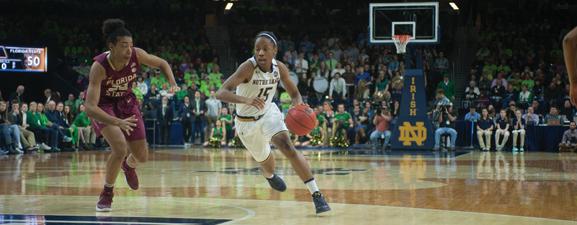
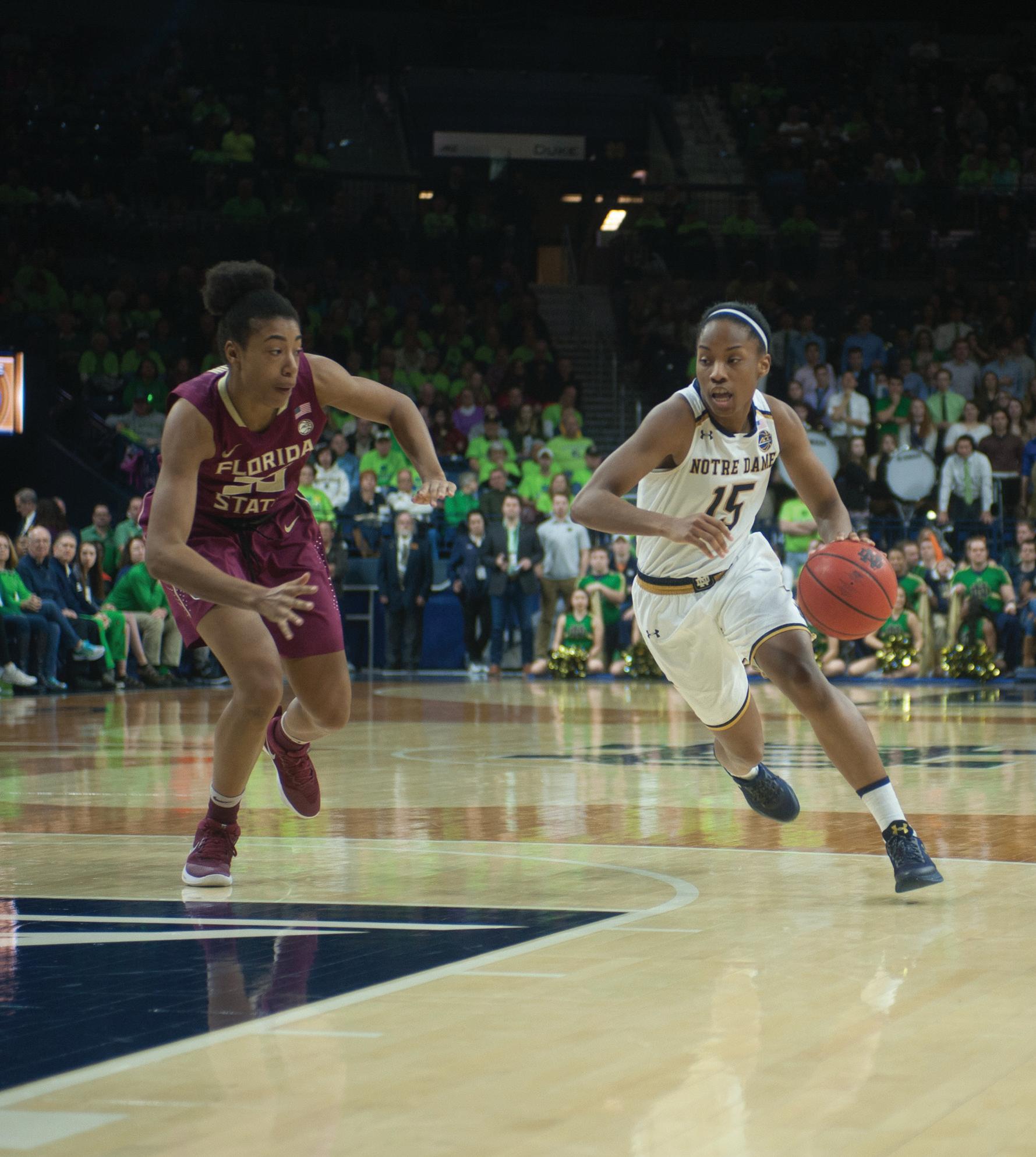
win over Florida State on Sunday at Purcell Pavilion. Allen tallied nine assists, six points and one steal in the victory.
quarter, cutting the i rish lead from 59-40 to 59-50.
m c g raw said. “ h aving that kind of experience helps. i t was that kind of game though where everyone was ready. we have some games where [sophomore guard] a rike [ o gunbowale] starts out shooting really well, some where [sophomore guard] m arina [ m abrey] started really well, but this time everybody was really in the zone and ready to go. i think the attitude was really good today.”
t he i rish widened their lead even further at the start of the second quarter, as junior forward b rianna turner added six unanswered points. a lthough the s eminoles hit six consecutive field goals to cut the lead to 11, the quarter ended with a llen hitting a jumper to give the i rish a 43-30 halftime lead.
Just like the previous two periods, the i rish began the third quarter on top, widening their lead to 19 points thanks to a turner layup. Just when it looked like the i rish could stroll to victory, however, the s eminoles clawed their way back into the game, if only for a moment.
w ithin the final 80 seconds of the period, Florida s tate scored eight unanswered points, followed by two more on the opening possession of the fourth
a fter giving up a 15-point lead to tennessee and seeing a lead at c lemson slip to two points after leading by as much as 17, m c g raw said there was some concern her team would again struggle to close the game out.
“ we have had that problem,” m c g raw said. “ i think having those close games against c lemson and s yracuse have given us some confidence in that situation, though. we righted things pretty quickly, though: we just got l indsay back, got [ westbeld] back in and with our starters we looked a lot better.”
t his time though, the i rish put the game away with ease. a k athryn westbeld 3-pointer at the end of the shot clock brought n otre d ame’s lead up to doubledigits again, and the i rish continued to roll through the final period.
a fter westbeld grabbed an offensive board with 51 seconds remaining, the crowd at p urcell p avilion took to its feet to honor the acc regular season champions. o gunbowale ended that possession in style by knocking down a 3-pointer, and a Florida s tate basket in the final 20 seconds did little to dampen the crowd’s spirits as the i rish secured the victory.
“ t hat was probably the best game we’ve played all year,” m c g raw said.
SWImmInG & dIvInG
ND heads to ACCs with momentum
By BRENNA MOXLEY sports writer
the notre dame men’s team is in atlanta for the acc men’s swimming championships, which take place this monday through thursday.
the men carry 89 points into the week from the diving championships that occurred two weeks ago during the acc women’s championships. Junior diver Joe coumos claimed first place in the one-meter acc championship with a score of 420.00. coumos’s performance marked notre dame’s first-ever acc championship medal for diving.
cuomos’ fourth-place finish in the men’s three-meter secured critical points for the squad to bring into this week. the men enter the championships with over 10 meet wins. last year, the notre dame men finished seventh in the acc championships with 678 points.
irish head coach mike litzinger explained what the squad needs to do in order to place higher than predicted, saying the key will be for his team to build on the momentum coumos created.
“ o ffensively we shot the ball well in every quarter. d efensively our zone was very good. we had a little upheaval in the third quarter but that was the only negative.”
turner scored 24 points and recorded five blocks for the i rish, while a llen recorded nine assists, which tied m ary g avin’s career record of 778. o gunbowale added 19 points, shooting 4-of-7 from 3-point range.
t he win gave the i rish both the acc regular season title and the top seed for the acc tournament. m c g raw said she was impressed with the way the team bounced back from early losses, including its conference opener.
“ we were anointed early on and didn’t handle it well, but we were able to earn our way back and i think this says a lot about this team and who they are,” m c g raw said. “ we wondered about the toughness when we were taking our lumps early, and i think they’ve really showed us a lot the way they came out today and played so hard. i love where they’re at right now.”
t he top-seeded i rish will play their first game of the acc tournament on Friday against the winners of v irginia and wake Forest’s second-round clash. t ipoff will be at 2 p.m. in c onway, s outh c arolina.
Contact Daniel O’Boyle at doboyle1@nd.edu
litzinger described the implications of this meet and the importance of being the final conference meet in the country.
“the acc has the advantage because it is the last men’s championship meet in the country,” litzinger said. “we already know the times the pac-12 and the big ten have put up so we have an idea of what times it will take to be invited to the ncaas. they usually invite the top 24 or 28 guys so if we put ourselves in that range then we’re going to be alright.” w hile the acc is the final conference meet, it is also one of the most competitive. litzinger said, with the exception of north carolina state, every place should be up for grabs.
“n c state has certainly separated themselves from the rest of the group — they are going for their third championship in a row and are heavily favored,” litzinger said. “however, second through eighth is going to be an interesting battle and is very evenly matched so it is going to be a dog fight for those few spots.”
“that was huge for our team and got us off to a good start,” litzinger said. “the key to meets like this is really relays because they are double points. i think we have really strong relays going into this meet.
“the key to all of the individual races is to make sure that our depth follows through. we will have a superstar in each event — for example, [junior] Justin plaschka — but we need the four guys behind them to step up and score big points as well. we are picked to finish seventh and that would be the key to finishing much higher than that. the goal is to swim as fast as we can and get to the ncaas.”
fencing
continued F rom page 12
notre dame came into cameron indoor stadium and swiftly defeated boston college, 24-3, duke, 20-7, and north carolina, 20-7, in a four-team round robin.
in foil, the irish women defeated boston college and duke with each score coming to 9-0, and defeated north carolina 7-2. in epee, the irish finished with a combined record of 20-7 against the three teams, and the sabre team finished with a combined record 19-8 to clinch the third title on the day.
both men’s and women’s most valuable Fencers came from notre dame, as simmons and massialas earned the coaches’ vote.
on saturday, the irish were cheered on by the irish women’s
beside cuomos’ performance two weeks ago, litzinger also said the women’ team’s seventh-place performance inspired the men and hopes the team unity will help the men in their quest for acc success.
“i things have settled down since last year and there is no mystery as to who we are — i think our identity is much stronger,” litzinger said. “how we are practicing and acting around the pool now is partly reflective of the women and their success last week. i think the men took a key from them and feel good and confident.
“now they just need to go out and execute.”
Contact Brenna Moxley at bmoxley@nd.edu
lacrosse team, which was in town to face duke on sunday. kvaratskhelia said the team appreciated the squad’s support throughout that first day.
“i want to give a shout-out to our notre dame women’s lacrosse team. they came and really equalized the pressure and we owe them a lot,” said kvaratskhelia. “excitement was through the roof and duke was going to defend their turf in this legendary arena and they almost got us.”
kvaratskhelia and the irish will look to continue this momentum into the ncaa midwest regional championships at matthei center in detroit on march 11, where the irish will try to fill the 12 maximum spots for the ncaa championships.
Contact Kyle Barry at kbarry@hcc-nd.ed
KATHLEEN DONAHUE | The Observer Irish guard Lindsay Allen drives toward the basket during Notre Dame’s 79-61
Hockey
continued F rom page 12
outright Friday night. Junior forward Jake evans buried his 11th goal of the season at midway through the first period by beating freshman terrier goaltender Jake oettinger high. bu evened the game by the end of the first period, but senior forward ben ostlie put the irish back in front late in the second, shoveling a rebound into the net with just over a minute and a half to play.
i n the third period, junior goalkeeper cal petersen and the i rish defense were the stars, as notre dame engineered back-to-back penalty kills within the first nine minutes. peterson later made several critical saves to keep the i rish ahead. t hen, with less than three minutes to go, evans scored his second of the night on a two-on-one rush to give the i rish a much more comfortable 3-1 lead. bu promptly pulled oettinger in favor of another attacker, but peterson turned away everything the terriers sent at him, finishing with 37 saves, including 23 in the third period. w ith the win, the i rish stretched their unbeaten streak to seven games.
“i think our team has grown up,” i rish head coach Jeff Jackson said. “a ll our freshman and sophomores get that experience and that confidence, and we become a much better team. a lot of [the recent success] has to do with just going through tough times in the first half — we were real inconsistent, but now we’re doing things we weren’t before, so that shows growth on their part.”
w ith boston college losing both of their games to umass l owell, the i rish took the ice saturday night knowing a win would earn them the hockey
east championship, and a tie earning them a share. neither outcome materialized.
Freshman forward m ike o’l eary put the i rish up 1-0 with his second goal of the season with just under five minutes left in the first period, but that was all the i rish would get against oettinger on saturday, as the bu goaltender totaled 40 saves.
t he terriers offense rewarded their goalie’s play by scoring two goals in the second period and two more in the third, securing a 4-1 victory and a share of the hockey east regular season title.
“one of the toughest things to do in college hockey is to win two games in somebody else’s building,” Jackson said. “especially when you’re playing a high-quality team. t here’s always going to be pushback. our guys did a great job last night. it took a lot out of them, physically and emotionally. we didn’t have enough in us tonight to do it again.”
a lthough notre dame’s loss saturday was disappointing in terms of what was at stake, Jackson said postgame that he was extremely proud of how the i rish finished out the regular season with consistency and confidence.
“i’m proud of what they’ve done,” Jackson said. “we talked about the lack of consistency for the first half of the year, and just this last month they’ve been very consistent in their approach and how they’ve played. i can’t do anything but tip my hat to them. i don’t think anybody thought we were going to come in here playing for first place … but they’ve been really good here in the last stretch. t he confidence is built, and that makes us a much better team.”
Contact Joe Everett at jeveret4@nd.edu
paid a dvertisement
continued F rom page 12
64-60 win over g eorgia tech at p urcell p avilion.
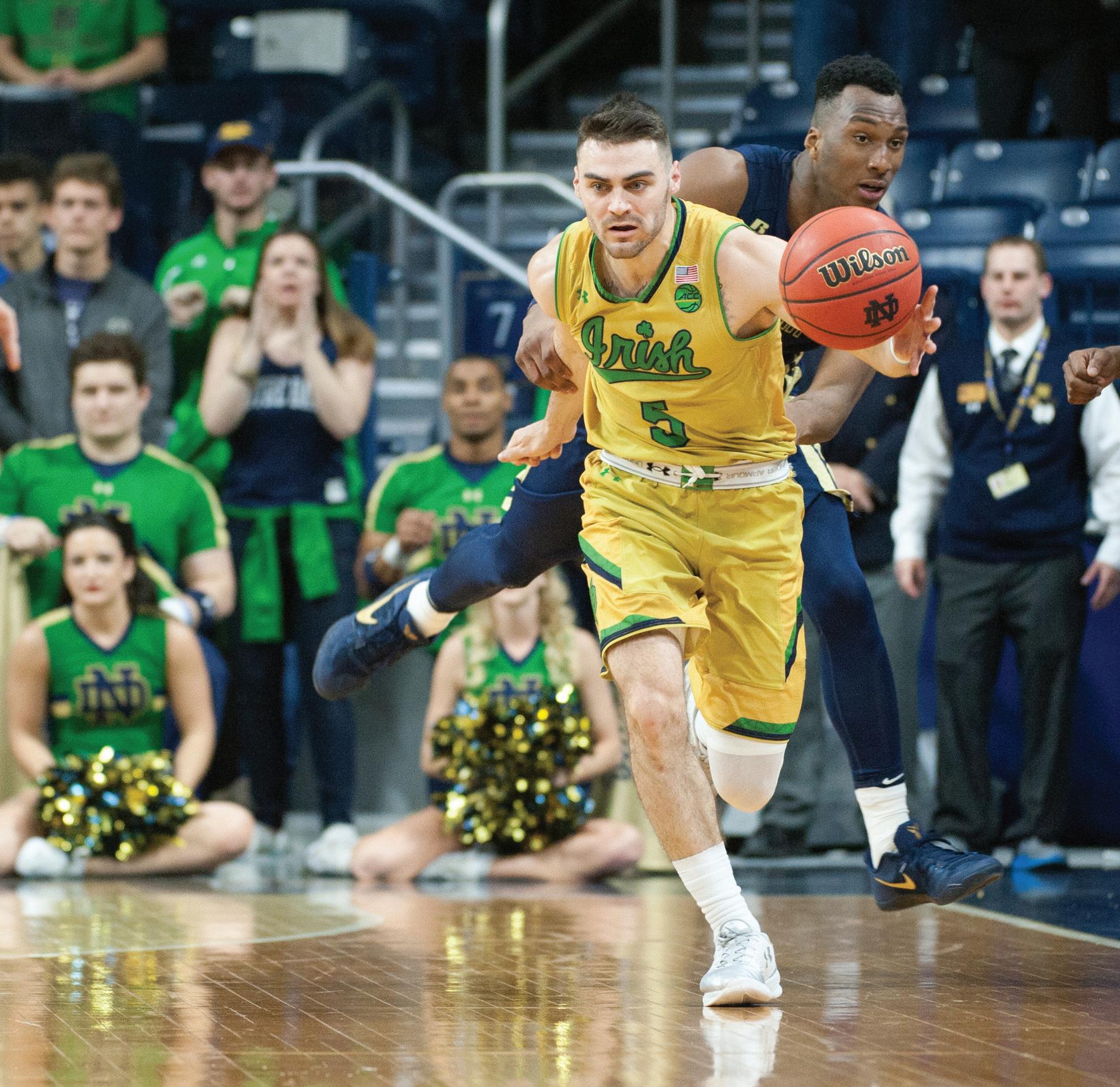
“ i saw the shot clock and then i saw the ball bouncing out of bounds, so i just threw it up and right when it left my hands, it looked good,” Farrell said, disagreeing with his defender.
t hough the i rish (22-7, 11-5 acc ) soon ballooned their lead out to 10, a combination of missed n otre d ame free throws and tadric Jackson buckets kept the yellow Jackets (16-13, 7-9) in the game until the final seconds, when Farrell buried two free throws to seal the victory.
i t was a gritty win for n otre d ame, which found a way to win this defensive battle with g eorgia tech; when the teams met 29 days earlier in a tlanta, it was the yellow Jackets who eked out a 62-60 win at the buzzer.
“ o ne of the things i told them today at shootaround was, ‘ w e haven’t been in the battles in a while,’” i rish head coach m ike b rey said. “a nd i said, ‘ i t’s kind of been an easy week. t here’s been nothing to frustrate you. s o when some frustrating stuff happens, and this game is gonna be a hard game, are we going to be mentally tough enough — like we’ve been, most of the season to be where we’re at — to fight through that and go back and guard, because i knew we’d have empty offensive possessions against them.”
w hile the final 25-plus
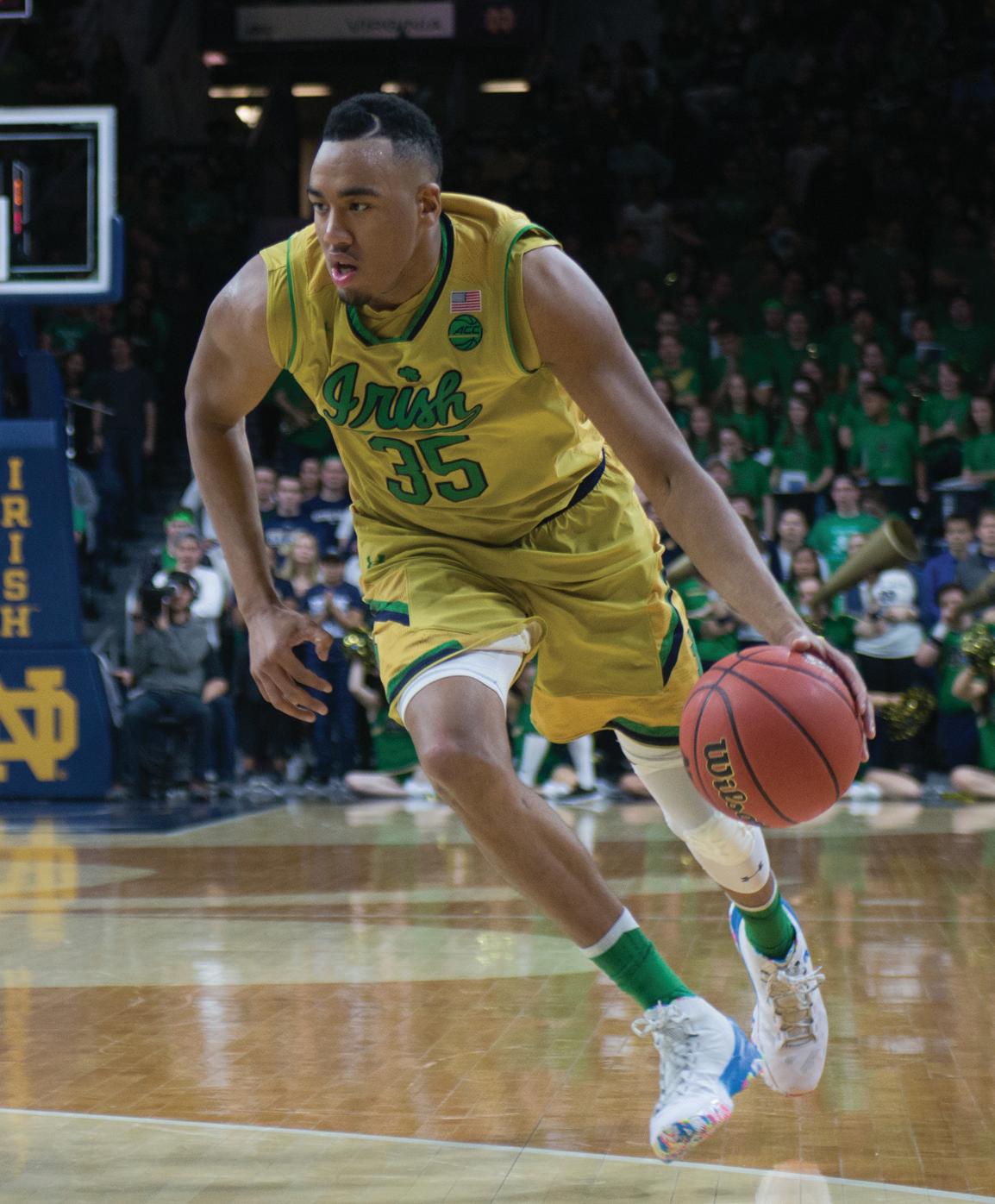
minutes were a slog offensively for n otre d ame on s unday, the first third of the game was anything but. d espite sitting after taking a ball to the face early, c olson scored 12 points over a seven-minute span to push the i rish advantage to 2720 with 6:46 left in the first half, forcing a yellow Jacket timeout.
b ut after that play, g eorgia tech tightened the screws defensively, surrendering just seven points until halftime, and just 25 over the game’s next 23 minutes.
t hat’s when Farrell’s desperation bucket hit, and the rest of the way, g eorgia tech never had the ball with a chance to tie or take the lead. i t may have been different, though, if c olson hadn’t capped another double-double performance with a key block on the yellow Jackets’ penultimate possession. i nstead of sending an i rish player to the line up two with 12 seconds left, Farrell walked to the stripe with just 3.4 seconds left, significantly decreasing the chance of a completed comeback.
w hile fans might focus on the offensive side of c olson’s 20-point, 11-rebound effort, b rey praised his junior forward’s defensive play after the win, noting the improvement over his career.
“ w here he’s really improved is defensively; he’s come so far as a defender since he got here as far as helping his teammates,” b rey said. “ … h e talks on defense, he knows what he’s talking about. h e can make an impact on both ends and
he did tonight.”
c olson, who’s been a double-double machine with 17 this season, said he focuses on sticking to what he does night-in, night-out.
“[ i ] just continue to play my game,” c olson said. “ e very time that ball goes up, i try to crash the glass to get every rebound there is possible. b ut on the offensive end, just play with confidence and my teammates give me confidence.”
t he yellow Jackets were able to keep n otre d ame at bay, in part, due to their deep repertoire of defensive schemes; a combination that included a 2-2-1 press, a 1-31 half-court and traditional man-to-man looks made things tough on the i rish.
“ t hat’s a really good defensive team; they make a lot of people struggle,” Farrell said. “ t hey change defenses constantly; they’re long, they’re athletic.”
s unday’s victory moves n otre d ame another step closer to a double bye and top-four seed in next week’s acc tournament. i f the i rish win out, the n o. 2 seed is likely, while it’s very possible for n otre d ame to finish in the top four even with a 1-1 finish.
t he i rish will return to action w ednesday against b oston c ollege for s enior n ight, with the i rish set to honor guard s teve vasturia, forward v.J. b eachem and graduate student forward p atrick m azza. t ipoff is scheduled for 8 p.m.
Contact Alex Carson at acarson1@nd.edu
MICHAEL YU | The Observer
Irish junior guard Matt Farrell avoids a Georgia Tech defender during Notre Dame’s 64-60 win over the Yellow Jackets on Sunday at Purcell Pavilion. Farrell scored 17 points in the victory.
mEn’S bASkETbALL | nd 64, georgia tech 60
Irish topple Georgia Tech in revenge matchup
By ALEX CARSON a ssistant manging e ditor
w ith fewer than four minutes to play and the shot clock nearing zero s unday night, n otre d ame had nothing going offensively. t he i rish had been held to just 18 points in the second half, and if you weren’t junior forward b onzie c olson, you were struggling from the field.
p erhaps fittingly, then, it took a desperation heave to break g eorgia tech’s lock on the i rish offense.
Falling out of bounds along the baseline, junior guard m att Farrell threw one up to beat the shot clock. a g eorgia tech defender yelled to let his teammates know the shot would be short.
h e was wrong.
Farrell hit the bucket to put n otre d ame up six, and the i rish hung on down the stretch, picking up the
see m bball PAGE 11
squads three-peat as acc champs
By KYLE BARRY sports writer
notre dame men’s and women’s fencing teams celebrated as they clinched the acc championship at cameron indoor stadium in durham, north carolina, on saturday and sunday.
both teams claimed their third consecutive conference titles.
in addition, the men came home with weapon titles it two out three weapons. t he men’s team, ranked fourth nationally, powered through to a victory against no. 9 duke by a score of 14-13.
irish head coach gia kvarataskhelia said he was very pleased on how his team stayed fully prepared and remained focused throughout the acc championships.
“it’s work every single day. we have a slogan that perfection is a habit, and we try to live with that expectation every single day,” kvaratskhelia said. “t hat produces the champions at the end.”
w ith the individual competition on sunday, the irish men
had six fencers advance to the semifinals and had two fencers make it to the finals in the foil competition. i n the epee final, freshman a riel simmons defeated reigning acc champion and fellow irish sophomore d ylan French,15-9, to clinch his first conference title. i n the foil final, senior k ristjan a rcher defeated another reigning acc champion, irish sophomore a xel k iefer, 15-11, to grab his first conference title as well. Junior Jonah shainberg took home runner-up honors in the sabre final.
t he women’s team, ranked third nationally, claimed all three individual titles for the first time saturday. in the foil, sophomore sabrina massialas defeated senior teammate l ee k iefer to clinch her second consecutive acc championship. Junior Francesca russo took home her first acc title in the sabre while sophomore a manda sirico clinched the title in the epee. on sunday, the i rish women competed for the team portion of the competition. i n a blowout,
nd WomEn’S bASkETbALL | nd 79, Fsu 61
Irish split with BU, clinch first-round bye in playoffs nd takes home sixth straight title
By DANIEL O’BOYLE sports writer
acc play for n otre d ame in 2016-17 started in the worst possible way — a 70-62 defeat to n orth c arolina s tate in which the i rish never led.
b ut the season ended the way it did the year before. a nd the year before that. a nd the year before that one, too.
Just like the every other season n o. 5 n otre d ame (273, 15-1 acc ) has spent in the acc , the i rish finished as outright regular season champions and the top seed for the conference tournament.
a nd though retaining the conference crown looked to be in doubt for much of the season, it was barely in doubt during s unday’s clash with fellow acc contender n o. 8 Florida s tate (25-5, 13-3).
t he i rish built an early lead they never relinquished and ran out comfortable 79-61 winners.
t he s eminoles came into
the game knowing a victory would earn them a share of the acc regular season title and the top seed for the conference tournament, but in the opening minutes only the i rish looked like conference contenders.
t he i rish raced to a 7-0 lead and were ahead 12-3 within three minutes when Florida s tate called a timeout. t he s eminoles soon cut the lead to 14-9, but the i rish again took control, with a layup from senior guard l indsay a llen just before the buzzer giving n otre d ame a 25-15 lead at the end of the opening period. i rish head coach m uffet m c g raw put the strong start down to a mix of attitude and the return of junior forward k athryn westbeld to the starting lineup for only the second time in 11 games. “ i think having [ westbeld] back definitely helps,”
see w bball PAGE 10
r iding a six-game unbeaten streak into its weekend series against n o. 6 b oston university, n o. 14 n otre d ame improbably found itself with an opportunity to win its first h ockey e ast championship. n eeding to sweep the terriers away from home, the i rish came up just short, splitting the series and wrapping up a regular season that ended with a lot of drama.
w ith the split, n otre d ame (19-10-5, 12-6-4 h ockey e ast) will be the n o. 4 seed in the h ockey e ast playoffs, earning a first-round bye and hosting a quarterfinal series from m arch 10-12 at the c ompton Family i ce a rena. bu (21-10-3, 13-6-3) claimed a share of the h ockey e ast title alongside b oston c ollege and um ass l owell, all with 29 points apiece. n otre d ame finished with 28. t he irish looked ready to claim the regular season title
JOE EVERETT sports writer
KELLY VAUGHAN | The Observer
Irish junior forward Jake Evans squares up for a faceoff during Notre Dame’s 4-4 tie with Vermont on Feb. 3.
fEnCInG | acc championships
HoCkE y | nd 3, bu 1; bu 4, nd 1
MICHAEL YU | The Observer
Irish junior forward Bonzie Colson drives to the hoop during Notre Dame’s 64-60 win over Georgia Tech on Sunday at Purcell Pavilion.