Professors critically examine causes and effects of Charlie Hebdo attack
By JENNIFER FLANAGAN news writer
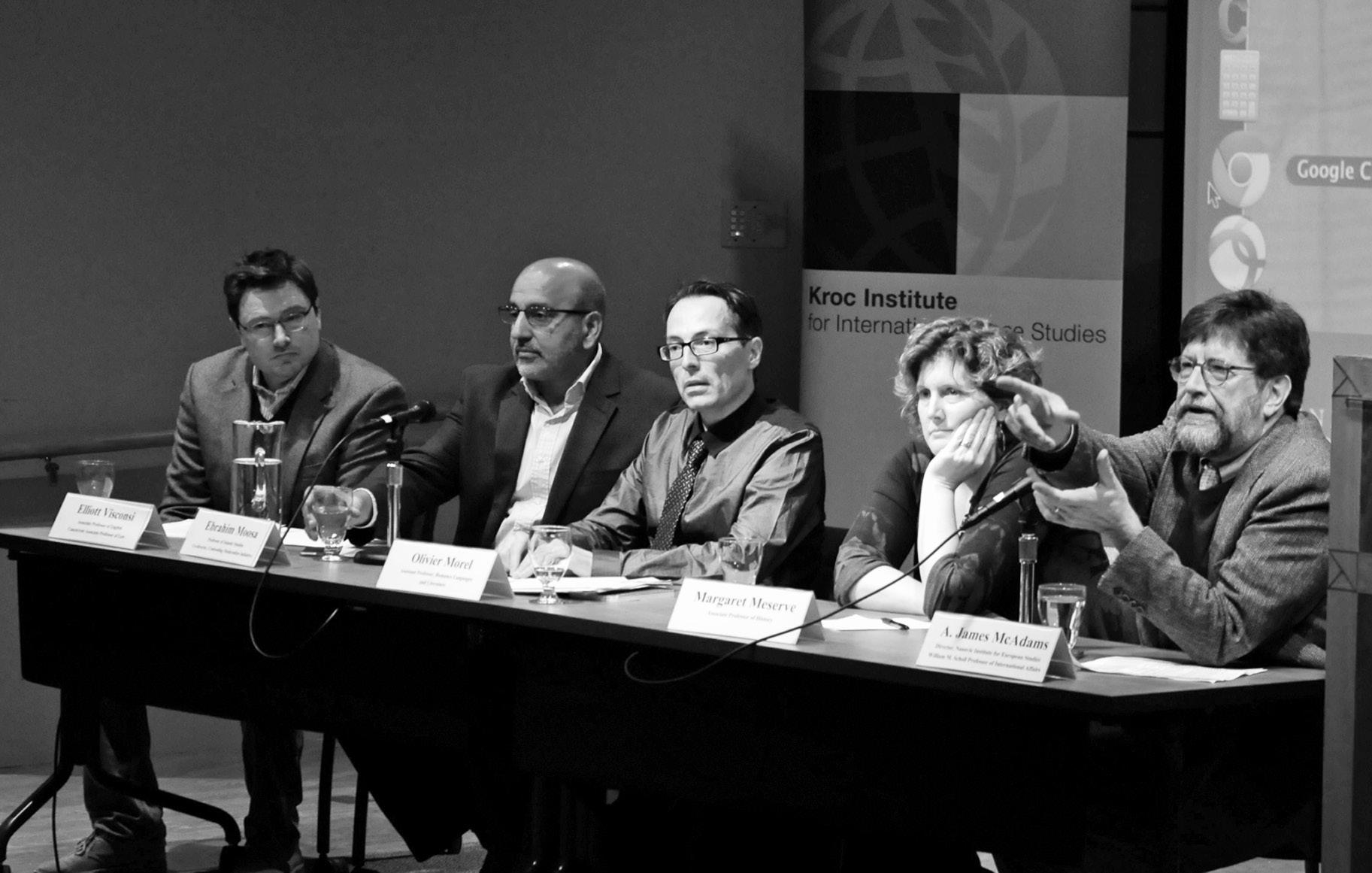
Four panelists brought the global conversation of free speech rights and extremism and western conflict to the hesburgh center auditorium on Tuesday as part of a panel called “paris 2015.”
The four panelists, margaret meserve, olivier morel, ebrahim moosa and elliot visconsi, and moderator a. James mcadams, discussed the international significance of the recent unrest in paris following the murder of more than a dozen French citizens by offering
see panel PaGe 5
smc adds two administrators
By MACAILA DeMARIO news writer
w ith the new year underway, s aint m ary’s c ollege
welcomed administrative changes at the start of the spring 2015 semester. The single office once dedicated
to “ s tudent i nvolvement and multicultural s ervices” is now split and led by two new directors, b rittany h ouse and g loria Jenkins.
“They provide different services and opportunities for students,” sophomore lydia h eller said. “ n ow that the offices are separate, they will be able to cater to more people on a more detailed level.”
h eller said she believes the combination of offices will have a positive impact on the c ollege.
s aint m ary’s newest administrators said they expect
the positive impact of their offices to extend to the students and themselves.
“ i enjoy working at smaller, private liberal arts colleges,
and i wanted to work for a women’s institution,” h ouse,
Fair to highlight organizations
By ANDREA VALE news writer
The c enter for s ocial c oncerns ( csc ) will host its annual s ocial c oncerns Fair tonight from 6 to 8 p.m. in rooms b 035 and b 036 of g eddes h all. r epresentatives from over 40 organizations, all of which offer students opportunities for outreach in the s outh b end community, will be in attendance.
s ome of the groups at last
year’s fair included the Family Justice c enter of st. Joseph c ounty, the a merican r ed c ross and hope m inistries.
“[The fair is] an opportunity for agencies like ours … to meet students directly interested in service, give us the chance to explain what we do and how we serve the poor and the marginalized in our community and give the students the chance to see how their particular talents and passion might be used in the
furtherance of the university’s mission and our mission to break the cycle of homelessness,” peter l ombardo, director of community involvement for the c enter for the homeless in s outh b end, said.
The c enter for the homeless is the largest provider of homelessness service in the community and is home to over 200 men, women, children and military veterans,
Students,
faculty share thoughts and firsthand experiences
By MARGARET HYNDS
ssociate news
in the wake of the Jan. 9 terrorist attack on the satirical magazine charlie hebdo and the hostage situation at a grocery store in paris, notre dame students and faculty shared their experiences and thoughts surrounding the violence and subsequent global response.
several students — including juniors sheridan rosner, madeline rogers and a nnalise burnett — are currently studying abroad in paris and were in
see paris aTTacks PaGe 4
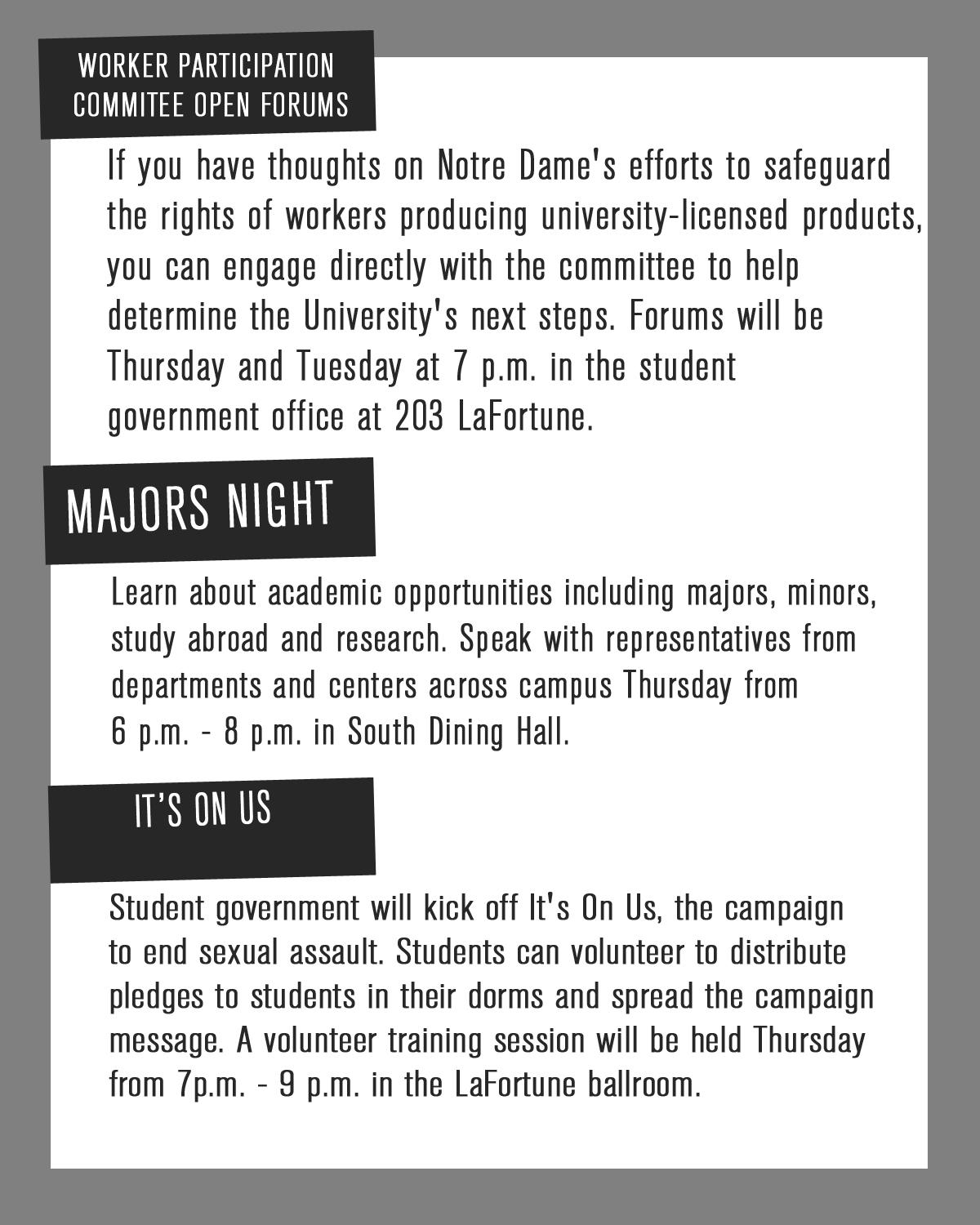
panel examines worker conditions
By CLARE KOSSLER news writer
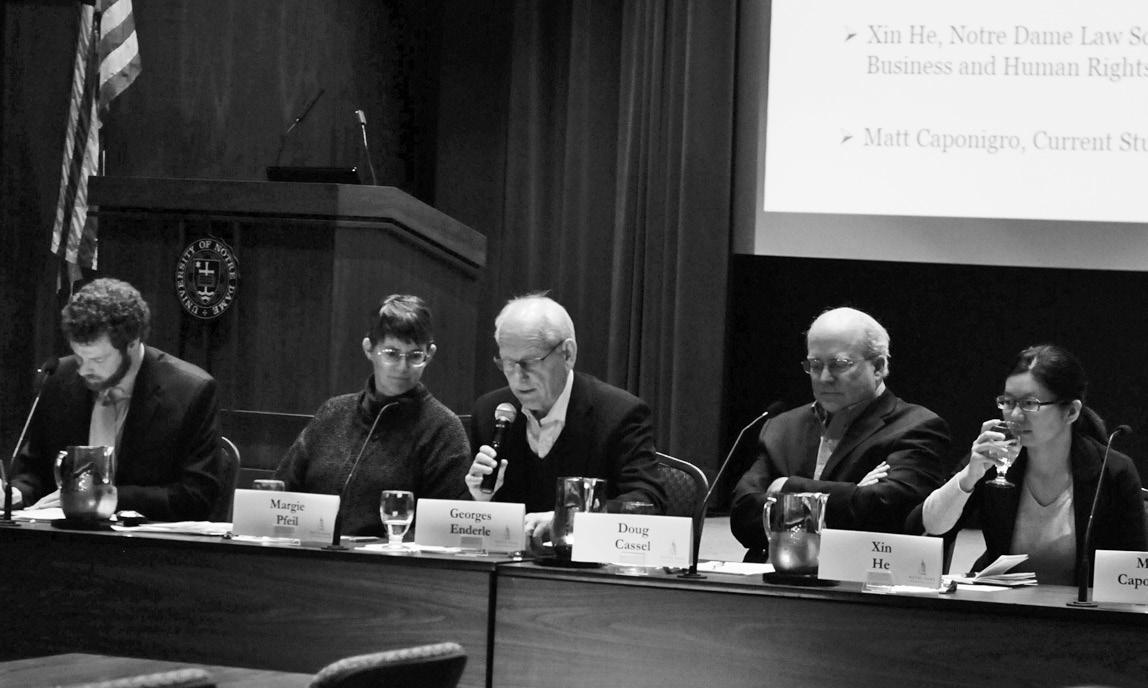
The office of the executive vice president hosted the “worker participation panel discussion” in the mckenna hall auditorium on Tuesday to discuss notre dame’s moral responsibility to support international workers’ rights and freedom of association.
The panel consisted of five members, including assistant professor of theology margie pfeil, professor of business ethics georges enderle, law professor
doug cassel, notre dame law school graduate Xin he, and senior matt caponigro. notre dame alumnus and student body president emeritus alex coccia moderated the panel.
“i am encouraged that this conversation is being brought to the wider community of notre dame because i think that there’s a lot that notre dame has to offer,” caponigro said.
The panel’s debate centered around whether notre dame should implement a pilot
SARAH OLSON | The Observer
Professors A. James McAdams, Ebrahim Moosa, Olivier Morel, Elliott Visconsi, and Margaret Meserve discussed the recent terror attacks in Paris as part of a panel called “Paris 2015” on Tuesday.
SARAH OLSON | The Observer
Tuesday’s Worker Participation panel highlighted potential human rights issues with companies abroad.
see direcTors PaGe 5
see csc Fair PaGe 5
photo@ndsmcobserver.com
Systems & Web Administrators (574) 631-8839
Question of the Day:
Beverly Kyalwazi
sophomore lyons hall
“definitely a beanie.”
Katie Dinardo sophomore lyons hall
“a
Jeff Agar junior alumni hall
“This
Maddy Luteran
junior welsh Family hall
“Fuzzy socks.”
Katie Guay junior welsh Family hall
“my warm fluffy boots.”
Mary Kate Whelan
junior welsh Family hall
“my big a merican flag infinity scarf.”
Today’s Staff
News
rebecca o’neil
margaret hynes
a ndrea vale
Graphics
e mily danaher
Photo m ichael yu
Corrections
Sports
renee griffin
greg hadley
gabriela malespin
Scene
maddie daly
Viewpoint
austin Taliaferro
The observer regards itself as a professional publication and strives for the highest standards of journalism at all times. we do, however, recognize that we will make mistakes. i f we have made a mistake, please contact us at (574) 631-4541 so we can correct our error.
Wednesday
“Journey to Italy”
DeBartolo Performing
Arts Center
7 p.m. - 9 p.m.
Film depicting a declining marriage.
Reading by Lucy Corin
Hammes Bookstore
7:30 p.m. - 8:30 p.m.
Reading by prominent novelist.
Thursday
Majors Night
South Dining Hall/ Reckers
6 p.m. - 8 p.m.
Learn about majors and academic programs.
Basketball Game
7 p.m. - 9 p.m.
Joyce Center
Women’s basketball plays Georgia Tech.
Friday
Graduate Student
Mass
Basilica of the Sacred Heart
5:15 p.m. - 6:15 p.m. Worship Service.
“Ronald K. Brown/ Evidence” DeBartolo Performing Arts Center
7 p.m. - 8:30 p.m. Dance performance.
Saturday
Tennis Match Eck Tennis Pavillion
2 p.m. - 4 p.m.
Men’s tennis plays Oklahoma State.
Vigil Mass
Basilica of the Sacred Heart
5 p.m. - 6 p.m. Worship Service
Sunday
“National Gallery”
DeBartolo Performing Arts Center
3 p.m. - 5 p.m.
Film about London’s National Gallery.
Rejoice!
lecture links business, peace
By JP GSCHWIND news writer
angela rivas, of the think tank Fundación ideas para la paz (Fip), lectured Tuesday at the hesburgh center for international studies on the role of business in colombia’s peace process.
in the kellogg institutesponsored lecture titled “when peacebuilding is your business: strategies for peace and peacebuilding in colombia,” rivas examined the peace process in colombia as the conflict between the colombian government and the revolutionary armed Forces of colombia (Farc) continues.
rivas said the damage caused by ongoing violence in colombia is widespread and rampant.
“more than 10 percent of the population has been directly affected by armed conflict,” rivas said.
rivas said since peace talks between the government and Farc became public in 2012, and delegates from both sides have reached tentative agreements on issues as
diverse as rural development, participation in politics and drug trafficking. Talks like this offer some hope of ending the bloodshed and destruction, and business can play a crucial part in this process, rivas said.
“a very diverse group of people, activities and firms including big multinational corporations and small family ventures can lend support,” she said.
rivas said firms’ interactions with the conflict range from perpetuating it to lessening its impact and even stopping violence.
“however, the majority of businesses are in the middle, simplifying dealing with the conflict,” she said.
rivas said that the social costs of colombia’s predicament are far-reaching.
“There is a large lack of job options,” she said. “unemployment is rampant.”
businesses can hire those whose livelihoods have been decimated by the violence and even former guerrilla fighters to remedy this, rivas said. other social programs
undertaken by businesses include training unskilled workers and investing in low-income communities.
“what we have found is that there are two primary reasons that companies engage in these initiatives,” rivas said. “The cost of the conflict is quite expensive, and there is moral or ethical dimension.”
business should also address human rights concerns as a priority, especially in the areas of security and risk assessments, she said.
“if we can’t have basic conditions of human rights, how can we hope to have peace?” rivas said.
she said the growth of publicprivate partnerships is an encouraging prospect, but the efforts of businesses and the government need to be sustained and comprehensive.
“There is no development if there no peace, and there is no peace if there is no development,” rivas said.
Contact JP Gschwind at jgschwin@nd.edu
University earns spot on CNCS 2014 honor roll
By CAROLYN HUTYRA news writer
The corporation for national and community service (cncs) awarded notre dame a spot on the 2014 president’s higher education community service honor roll. director of community engagement for the office of public affairs Jay caponigro said the honor roll recognizes the university’s commitment to three categories: community service, education and economic development.
“each year, colleges and universities are invited to share stories about their engagement in the community,” caponigro said. “unique to this year’s application, nd was recognized in all three categories where we applied.”
according to the cncs, the presidential award is presented to institutions that “support exemplary community service programs and raise the visibility of effective practices in campus
community partnerships.” although notre dame has received honor distinctions in the community service category in the past, caponigro said this is the first year the university applied and received recognition for the categories of education and economic development.
“notre dame has been recognized as ‘honor roll’ recipient or ‘honor roll with distinction’ or ‘honor roll Finalist’ for five of the six years this award has been given,” he said.
due to the university’s interest and subsequent participation in both national and international endeavors, caponigro said notre dame is constantly expanding its education and development programs.
“i believe notre dame received this recognition because we demonstrated breadth of student and faculty involvement, an infrastructure to support community-based activities and the institutional commitment to
paid a dverT isemen T
Pen pal program expands its reach
By ALLI SANCHEZ news writer
known for connecting saint mary’s students and local Title i schools, the college academy of Tutoring (caT) program is changing lives and expanding locations this semester.
“This semester, we are starting our tutoring program at a new school, harrison primary, for fourth graders,” caT student director christin k loski said.
“… we have tutoring programs at harrison and navarre and teacher’s assistants at harrison, coquillard and edison.”
she said the college will continue its pen pal program with coquillard and added harrison primary students to the list of letter recipients.
cat was formed in 2006 to provide support for “students in under-resourced schools in the south bend area,” k loski said. The program provides academic support, including teacher’s assistants, pen pals and afterschool resources.
k loski said she spearheaded the relationship between caT and harrison primary this year by visiting the school.
engagement that mutually impacts community and campus participants,” he said.
The university’s 2014 application featured numerous examples of student, faculty and staff engagement in the community, caponigro said. although the majority of students partake in some form of service, the director of community engagement said service is less about the number of people involved and more about the impact and mutual benefits that impact both volunteers and the community at large.
caponigro said key areas of involvement for the 2014 year included work in youth theater and entrepreneurship at the robinson community learning center as well as academic support and tutoring at non-profits.
local schools were widely supported, and broad volunteer service also occurred as a result of efforts conducted through communiversity day, caponigro said. additionally, community development partnerships were fostered with the northeast neighborhood, a neighborhood association in south bend.
“our office joins with many departments and staff across campus to invite students to continue to engage the community in meaningful partnerships and service opportunities,” he said.
“we welcome innovative studentleaders hoping to create new projects in the community, as well as support long-standing efforts with community partners that demonstrate impact year after year.”
Contact Carolyn Hutyra at chutyra@nd.edu
k loski said student participants in caT were able to experience that sense of inclusiveness first hand.
“later on in the semester, we ended our pen pal program with a literacy night at the school,” she said. “The pen pals from saint mary’s and harrison met one another and were able to get to know one another during the event. The literacy night was a great way for saint mary’s students to experience a local community setting.
“harrison primary was a place where saint mary’s students could see how well the south bend community and the school community were able to work together.”
sophomore and caT scholar Jade Johnson said meeting her pen pal for the first time at the end of the semester dinner was her favorite part of the program.
“you get to know all about [your pen pal] throughout the semester,” Johnson said. “without ever seeing their face, they become a part of your life. putting a face to their name was an amazing experience i’ll never forget.”
“my first experience with the school was their back-to-school carnival-themed night,” she said. “i volunteered at the school to experience the new school’s environment.”
k loski said her exploration yielded positive findings about the school’s environment.
“as the students and parents poured into the cafeteria, i was pleased to see how well the students, parents, staff and teachers communicated with one another,” k loski said. “There was such a great feeling of community at the school.”
The pen pal program is important because it helps enhance the reading and writing skills of the third and fourth grade students while giving them a consistent and positive role model, Johnson said.
“i encourage people to give it a try,” Johnson said. “volunteering through the caT program is a rewarding and exciting experience.”
k loski said all students are welcome to join the caT program — regardless of major.
Contact Alli Sanchez at asanch01@saintmarys.edu
Government sParknotes
Paris attacks
the city on the day of the attack.
rosner, studying at the université paris diderot, said she was initially unsure of what had happened.
“i was walking on rue de r ivoli parallel to the l ouvre about two hours after the attack when i noticed a huge police presence at every corner, directing traffic and surveying the area,” rosner said in an email. “several shopowners were gathered around T vs, so i checked the news on my phone. i was alarmed and concerned, wanting to know more about what had happened.
“i was in the middle of exams the week of the attacks and would check the news while studying. The grocery store hostage situation was taking place a few stops down the tram line from my university, although the tram was only blocked off two stops beyond where i get off.”
rogers, also a université diderot student, said she tried to stay as informed as possible about the attacks.
“my initial reaction was to learn as much about the story as possible, and i kept thinking that i should feel more afraid, but i didn’t. i felt a bizarre sense of security, which i still can’t quite explain,” she said.
rogers said she was most struck by parisians’ support on the streets in the days following the attacks.
“more than anything, i was moved by the amount of French citizens eager to show their solidarity,” rogers said. “immediately, ‘Je suis charlie’ signs appeared everywhere, in storefront windows, on banners in front of museums. Thousands of people poured into the streets the night of the attack to participate in demonstrations.”
The study abroad student was also impressed with the response in the states.
“i was also incredibly moved by the amount of people in the united states that were so concerned with my safety,” rogers said. “because i never felt a sense of fear or alarm, i didn’t think i merited much concern, but i was very touched by the amount of people who contacted me ‘just to make sure i was ok.’”
burnett, who is studying at the sciences po in the seventh arrondissement, expressed her frustration that notre dame did not send information regarding safety in the wake of the attacks.
“i received zero communication from notre dame regarding the attacks, which i was very disappointed about,” burnett said in an email.
“sciences po, my university here, sent out emails that they would be putting new security measures in place in line with v igipirate. v igipirate is France’s national security alert system and essentially their protocol in case of an emergency.”
Freshman Therese mccarry, who lives approximately 20
minutes outside of paris with her a merican family, described her experience, as well.
“i do think our experience was different because we do live outside the city, and ... we aren’t French, but it was just interesting because we tried to keep up with the news, but with this, you’re keeping up with the news in a daily, almost hourly, way because it’s happening right next to you, and i think there’s just a different sense of connection to what’s going on,” mccarry said.
burnett also described the effect of the attacks on her experience abroad as increasing her awareness of global issues.
“The attacks have impacted my study abroad experience so far in the sense that they have shown me that being in europe means you are not so isolated from the unrest currently going on in the world,” burnett said. “Throughout my time here i have felt this, even before the attacks, in terms of the isis attacks
and threats. everything is closer, and you can tell that you’re not as far removed from dangerous situations. specifically in paris, there is a very visible tension between the French and the a rabs.
“There is a lot of racism, social divides and complaining about middle eastern and north a frican immigration.”
professor a lison r ice, who teaches in French and Francophone literature, said she thought the attacks would have a lasting effect on cartoonists and writers around paris and France.
“The outpouring of support for charlie hebdo in France, both for the victims of the attack and for the ongoing activity of the weekly paper, is indicative of a widespread belief in the importance of freedom of speech,” r ice said in an email. “France is a country with a centuries-old tradition of playful mockery, and the millions who took to the streets of paris stood up for this
right to poke fun at a variety of topics.
“however, i think that in the future, many writers and cartoonists will pause and carefully consider the impact that their depictions might have. i hope that the massacre at charlie hebdo will not result in a paralyzing fear that serves to repress the freedom of expression in the future. but it will undeniably have an effect on those who touch on contentious topics in their writings and drawings. it will necessarily play a role in the decisions all artists make in their work because the memory of these attacks will not quickly fade.”
r ice said the potential cultural and political outcomes of the attacks on France were particularly interesting.
“w hat i hope most fervently is that the attacks will not result in greater prejudice against muslims in France,” r ice said. “Those who are quickly
categorized as black or a rab already face tremendous difficulty in France because of widespread racial stereotyping. it is hard for those who hail from (or whose parents or even grandparents come from) sub-saharan or north a frica to find good jobs and live in desirable locations in France, and it would be tragic if the attacks led to even greater suspicion and less respect for them.
“... The solidarity that was shown when millions took to the streets to peacefully unite in a march that included muslims, Jews and c hristians of various backgrounds is a gesture toward a future that i truly and desperately hope will be the most significant outcome of the attacks.”
News writer Jack Rooney contributed to this report.
Contact Margaret Hynds at mhynds@nd.edu
Panel
four different perspectives on the attack.
meserve, an associate professor of history, led the panel by focusing on the visual representations of the prophet muhammad that have appeared in historically opposed cultures.
“it may surprise people to know that there is a tradition of visual representation of muhammad in islamic culture,” meserve said.
meserve said this may be unexpected because idolatry is prohibited in islam. The images of muhammad portrayed by muslims compared to western depictions of muhammad differ vastly, as certain depictions can greatly showcase the relationship between a culture and a religion, she said.
“The particular form that various ages use to present muhammad tends to represent the concurrence of that particular age rather than the muhammad’s actual message or life or preaching,” meserve said.
incorporating pictorial examples on a projector, meserve focused on the evolution of muhammad’s relationship to the western world.
meserve said the western medieval muhammad, as evident in dante’s portrayal, was usually depicted as a false prophet.
The religious anxiety associated with the medieval muhammad, however, evolved in the 15th and 16th centuries into political fascination, she said.
meserve said muhammad’s history as a great military king and creator of divine and human laws interested many scholars, leading to a softening of his portrait in the 17th and 18th centuries as a kind of political phenomenon so that by the time of the enlightenment era, muhammad’s portrait had become tamed.
“what these portraits reveal as they progress from hostile to neutral to vaguely patronizing
is a west that has become more confident in the islamic world,” merserve said. “so what do we make of the seemingly anxious portraits now in modern world?”
morel, an assistant professor of romance languages and literatures and French citizen, answered meserve’s question with a native’s perspective on the tragedy.
morel called the attack a “political assassination” by “children on brothers” that brought a kind of shame to France because the kouachi brothers, who carried out the attack on the office of charlie hebdo magazine, were born and raised in France.
he said the attacks call attention to a divided nation at war with itself over immigration and muslim inclusion issues.
moosa, a professor of islamic studies, said the recent attack could be traced to a global marginalization of muslim youth.
moosa said that he believes that the recent terror attacks have something to do with the larger global unrest that has surfaced following events such as the 1979 iranian revolution, 9/11 and the united states and european campaigns in the war on Terror. in particular, moosa said that the war on Terror “not only awoke monsters but resulted in the deaths of thousands and destabilized many muslim communities and societies.”
as a result, moosa said there have been three decades for muslim youth to develop agendas in very complex and fragmented ways that now result in extreme forms of violence that cannot be controlled.
moosa said he believes this radicalization of muslim youth is a core reason that terrorist groups, such as the kouachi brothers, are mobilizing, more so than free speech issues regarding the depiction of muhammad.
moosa said that the lampooning of muhammad has evolved into a contested historical doctrine, as most mainstream muslims do not exhibit a desire to
current university policy to be preemptive.
punish lampooners by the death penalty as is written into classic islamic law.
most lay muslims living in secular societies do not invoke religious doctrine but do join protests to make known their religious wounds, he said.
“The globalized world is fragile… and we are mistaken if we highlight these woeful acts of terror as singular acts,” moosa said.
moosa said one possible solution is to update muslim theological doctrines, such as capital punishment, that have explosive sociological consequences.
To conclude the panel, visconsi, an associate professor of english and concurrent professor of law, provided context for thinking about the freedom of expression laws.
visconsi first described expression laws in the united states, as defined by the First amendment.
Free speech in america is centered on the individual, visconsi said.
“The freedom of expression in the united states is the right of the extreme speaker to say whatever they want in face of the overwhelming disapproval of the majority,” said visconsi.
visconsi said a highly controversial claim in France is that many French muslims feel that speech directed against muhammad is itself personal and results in muslims feeling unwelcome to take a full role in the democratic processes of the state.
visconsi warned against the creation of “democratic deficits” and said he believes the world should focus on developing a notion of value of each person’s democratic legitimacy.
“in a world by which global communication is nearly frictionless and speech transmits rapidly across borders, we may well need a new global framework for thinking of freedom of expression based on more than the individual,” visconsi said.
Contact Jennifer Flanagan at jflanag2@nd.edu
C sC Fair
con T inued F rom page 1
l ombardo said.
“They are striving to return to the community where the rest of us lives, free of the challenges that made them homeless, with a good and safe place to live, a job with dignity and connections to family and friends,” he said. “ we are looking for students to help us in all aspects of our work, students who wish to live out their university’s mission and our c atholic social tradition.”
l ombardo said that the c enter for the homeless hopes to welcome a variety of student talents. volunteer positions needed include tutoring children at the center in order to give them a role model and improve their classroom performance, teaching computer literacy skills to adults helping adults learn a foreign language or gain their ged, serving meals and helping at the front desk, he said.
s am c entellas, an executive director at l a c asa de a mistad, a community center in s outh b end that aims to assist and encourage the
directors
con T inued F rom page 1
the new director of s tudent i nvolvement, said. “ w hen i interviewed here, everyone was friendly and genuine. i was impressed — and still am — by the students i met during my interview. Their maturity, dedication, and intelligence are inspiring.”
b oth Jenkins and h ouse were introduced to the c ollege just last week, but both said they found s aint m ary’s appealing because of its identity as a liberal arts college and the character of its faculty, staff and students.
h ispanic community, said his organization will also have a table at the fair this year.
“it is always great to see so many notre d ame students that want to be involved in the local community,” c entellas said. “ we love working with notre d ame students. w hether in a communitybased learning class, getting some career-related experience outside of campus or just spending some time mentoring kids, we know notre d ame students take their commitments seriously and work hard to make an impact.
“ we want students to know they can come just once a semester, come once a week all semester or do an internship with us. we work hard to make sure your experience with us at l a c asa not only benefits the community but provides you with a meaningful experience.”
students who can’t attend the fair are invited to view the csc ’s 2014-2015 c ivic e ngagement g uide, found on the csc ’s website, for outreach opportunities.
Contact Andrea Vale at avale@nd.edu
really believes in serving others and mentoring women leaders. w hatever the needs are, that’s my job to do those needs.”
b oth offices, though similar in services offered to students, have different ways of implementing their ideas through the focus of their respective offices, h ouse and Jenkins said.
“The o ffice of s tudent i nvolvement will work with students and student organizations both,” h ouse said. “ i n my role as director, i plan to be interacting with students through the programs and events our office will be hosting.”
program aimed at increasing worker participation in several chinese factories. The pilot program, proposed by the worker participation committee created by executive vice president John affleck-graves, would allow for the production of notre dame-licensed items in china — a departure from the university’s policy regarding licensing since 1999. in its current form, the university’s licensing code of conduct states that “products bearing the name or other trademarks of the university of notre dame shall only be manufactured in countries where all workers enjoy the legal rights to associate freely, form independent labor unions and collectively bargain with their employers.”
pfeil said she believes the pilot program’s deviation from
“we have an existing licensing code of conduct,” pfeil said. “communal engagement around the appropriateness of our current code and whether it needs revision ought to come before pursuit of a pilot manufacturing program that involves violation of that code.”
enderle said he agreed with pfeil that the issue under discussion is an ethical one, but supports the implementation of the pilot program in china because of its potential to establish better relations with china on a business as well as academic level.
“we should be a source for the good, not only at notre dame on campus but also worldwide,” he said. “That is my deep conviction we should not shun china, but we should engage china. i can tell you that this is not easy.”
agreeing with enderle, Xin he said that with the transition to a new government in china, now
is the opportune time for notre dame to exert its influence — monetary and otherwise — to bring about an improvement to chinese workers’ rights.
“it’s a good time to review this policy,” Xin he said. “it’s a good time to engage with the chinese factories.”
cassel said he recognizes potential benefits of the program, but is “concerned that the focus on individual factories may not take adequate account of the broader country context.”
regardless of whether notre dame adopts the pilot program, enderle said, “we have to be careful in making judgments.”
coccia said a second panel discussion will be held tonight at 7 p.m. in mckenna hall auditorium, followed by a higgins labor café meeting in geddes hall on Friday at 4:30 p.m.
Contact Clare Kossler at ckossler@nd.edu
“[The campus] made a very good impression,” Jenkins, the new director of m ulticultural s ervices, said. “The mission and the values, everything that [students] do here.”
Jenkins said she intends to actively reach out to the women of s aint m ary’s and cater to their needs.
“The most important thing is making time for the students, getting to know them and trying to find out how in my role i can help the students and meet the mission of the institution as well,” Jenkins said. “ i want to find out how our offices can better serve the students.”
s ince Jenkins started her new role, she said she finds fulfillment in realizing her mission.
“ m y highlight of my workday is just meeting all the great students and having the opportunity to sit down and talk with them,” Jenkins said. “ i ’m someone that
h ouse said she is especially excited to help with the c ollege’s annual spring festival, Tostal, this semester.
Jenkins said she is particularly interested in “working on the b elles c onnect s cholars p rogram.”
b oth halves of the former office have an open-door policy meant to encourage students to engage in the planning of college events.
“ i ’m always open to ideas and suggestions from students on the types of programs and events they would like to see on campus,” h ouse said.
“ we will be working closely together,” Jenkins said. “ we will be continuing to work and collaborate together. we’re partners in making sure that there’s a good campus life on campus and that we meet the needs of the students.”
Contact Macaila DeMario at mdemario01@saintmarys.edu
Artist privilege
new year’s resolutions
Allie Tollaksen s cene e ditor
because it’s the start of a new year and semester, i feel obligated to write about new year’s resolutions.
as i’ve gotten older (and more active on social media), talk about the holiday has taken a bitter turn: people hate new year’s resolutions. social media platforms are riddled with angry veteran gym-goers and health enthusiasts haranguing about packed fitness centers and long lines at whole Foods. The overarching sentiment is that resolvers take up space and time with their new healthy lifestyles until February, when they’ll finally get out the way. i can’t help but be bothered by this response, so here is my case for new year’s resolutions.
First, i’ve heard detractors claim that new year’s is an arbitrary time to change or try something new. They insist the day is meaningless and that celebrating Jan. 1 with resolutions is as bad as buying a hallmark card on valentine’s day.
of course you can resolve to be a better person on any day of the year, but there’s something about the calendar resetting that gives resolutions their excitement and challenge. we tell ourselves this is the year and have the “2015” in every date holding us accountable. yes, gyms and Jenny craig capitalize on the holiday, but that doesn’t mean self-improvement is suddenly a sham.
second, although naysayers rant on social media about how the gym crowd won’t last or balk at a friend hitting the salad bar for lunch, they’re doing more than passively prophesying. breaking a habit or starting a healthier life is hard, but hearing over and over again that these attempts are unwelcome or unconvincing only makes them harder.
when your friends publicly declare their hopes for self-improvement, why not encourage them? why not appreciate their willingness to self-reflect, at the very least?
i’m not trying to tell you to make “be nicer” your new year’s resolution. i’m as guilty as anyone for mindlessly rolling my eyes at a “#transformationtuesday” instagram. still, this January, i’m resolving to remind myself every day that other people’s efforts and successes aren’t an affront to my own.
There’s no way of knowing whether the newcomer at the gym or teetotaler at the party won’t stick with their changes. There’s no way to know their intentions or whether they made their goals for the “right” reasons, and it’s easy to make snap judgments instead. it’s also easy to feel better about yourself when you wait around to watch others fumble or fail. what’s not so easy is giving the benefit of the doubt; it’s difficult to be supportive and empathetic.
so yes, it may take a bit more effort. it may mean making extra room or taking extra time, but i really believe that scoffing at those trying to self-improve is a collective habit worth breaking.
Contact Allie Tollaksen at Alice.K.Tollaksen.3@nd.edu
The views expressed in the Inside Column are those of the author and not necessarily those of The Observer.
i am sick of walking around this campus and seeing all this artist privilege. e verywhere i go, there’s a flock of artists strutting around in their matching artist gear.
They think they’re so cool, their artsy nametags swinging from their backpack. “ e mily wemily: varsity p ainting!” one brags in sparkles. “Joe s chmo: c lub c eramics” shouts another.
They make me feel excluded and inartistic, even though i paint for fun. i ’m just not good enough to make varsity, or that’s what i tell myself. i never tried out.
r egardless, i don’t have the time for such a commitment. i hear they paint for five hours a day in their special art studios that us p hilistines are not allowed in. h ow do they have time or energy for class? o r the real question: h ow do they have time to stand around taunting me unconsciously with their gear, nametags and artsy haircuts?
a s annoyed as i am, i can’t help but look to see if i recognize any of the artists. i can’t be obvious; i have to play it cool and pretend i don’t know how famous or talented they are (or are not). They might be one of the masters, or their artwork might not even get displayed. w hat if their sculptures were displayed in the o ’ s haugnessy hallway? That would make them campus celebrities.
o n s aturdays, almost every student has a ticket for the s nite art showing. Thousands of alums come to campus to pre-show with wine and cheese. Then, the whole campus pours into the s nite sporting “ g o nd s culpture” T-shirts. we amuse ourselves by attempting to cheer and dance in coordination, and sometimes we actually watch the artists attack the clay.
we sing a sentimental song when the artist wins. we sing if the clay wins, too. o nce, the art instructor told us we couldn’t sing if the clay got the best of the artist, but that made the student body mad, so now we’re allowed to sing no matter what.
g ood thing, because a lot of people (like me) don’t understand sculpture. we just go to the showing because we like singing the song and swaying, even
though it’s awkward sometimes.
a fter standing for three hours (The sculpting itself doesn’t take a long time, but there are so many commercial breaks and smoking breaks because it’s not healthy to ask an artist to sculpt without cigarettes), we all rush to the dining hall for a special candlelit dinner. The dinner is not that special, but the candles are — varsity sculptors sculpted them. The sculptors don’t see their artwork admired for they eat in the varsity artist lounge.
s ometimes i get annoyed that our school spends so much money on clay and canvases for the varsity artists. Then i remember how much money the tickets to the shows make, not to mention how much the bookstore makes from its pottery-themed gear; the art department easily pays for itself and probably makes a profit.
b ut then i get annoyed again when i remember how heavily admissions recruits artists. you let her in because she can throw a pot, but then you never display her artwork? Then i remember that the artists are probably good at academics. i chastise myself for letting the negative stereotypes get to me when they’re not true most of the time.
i should probably chill about this whole artist privilege thing. i t’s only a big deal if i make it one. i am so lucky to go to n otre d ame. i get to learn about the most random and relevant things at this beautiful school with sparkling snow, steamed veggies and a functioning heating system.
s o what if i don’t get to eat artist food or wear artist gear? i have normal food in my stomach and normal clothes on my back (and front).
l ife is good when i realize my complaints are stupid. a ctually, life is always good, but i don’t realize it until i stop complaining.
i may not have artist privilege, but i have life privilege, and it’s pretty good to be alive. i ’ll remember that as long as i ’m kept away from the sparkly nametags and pointed towards the sparkling snow.
Erin Thomassen is a sophomore studying mechanical engineering. Send her comments or questions about her sanity at ethomass@nd.edu
The views expressed in this column are those of the author and not necessarily those of The Observer.
Erin Thomassen The e xamined l ife
edItorIal Cartoon
“The Interview” is the least of our problems
Friends tend to gossip about one another — nothing particularly surprising there. people like to have information about not only their enemies, but also those closer to them. Typically lacking any sort of malicious intent, people often just want to know what’s going on in others’ lives. step back to the level of states and the interest in information remains the same, though hopefully for reasons of greater consequence. states spy on their enemies and their friends, as was made clear by the edward snowden leaks in the spring of 2013. The united states was spying on not only its own citizens and its enemies, but also its supposed allies. german prime minister angela merkel was none too pleased that the government of her alleged friend, president barack obama, had been going through her email and cellphone, a dilemma as old as those technologies themselves.
espionage of many varieties is tolerated on the international stage, despite vociferous protest by germany and other victims of the national security agency (nsa) that may indicate otherwise. it is a fact of life, and every country with the means to do so, does so.
That espionage occurs, and is generally tolerated, is nothing new. The means and methods of data collection, however, are changing rapidly and at times unpredictably. cyber-warfare is a strategic and tactical reality of not only modern espionage, but warfare as well. at once a tool of intelligence-gathering and offensive strikes, the next great war will undoubtedly have a significant cyber component. For those unfamiliar with the term, cyber-warfare refers to internet and software-based attacks on the information systems of a target actor, such as a state, business or individual. in practice, this has a wide range of forms, including but not limited to penetrating a computer network to steal information, planting viruses and denying access to
websites.
in the past eight years, the world has seen an increasing number of ever more advanced cyber-attacks. in 2007, russia attacked and disrupted estonian government websites. in 2010, a combined american and israeli effort implanted the notorious stuxnet malware program into iranian nuclear sites, causing widespread physical damage to centrifuges. The year 2014 bore witness to numerous alleged major hacks by the chinese and north korean governments on american government agencies and businesses.
only just recently, the us is believed to have responded to the sony hack by shutting down north korea’s internet for several days. The us was only able to definitively conclude that north korea was responsible for the sony attack because it had itself hacked north korean systems in 2010 on a large-scale, implanting various programs to collect data and map north korean systems.
rarely do hacks solely intended to gather information receive widespread attention, as they tend to fall into an acceptable range of expected espionage. attacks that are more offensive in nature, such as attacks intended to crash government websites or, in the rare case of stuxnet, cause physical damage to infrastructure, are met with swift condemnation.
in some cases, espionage has grown to unacceptable levels and has involved not intelligence operatives, but military personnel, as in the case of the more recent chinese hacks. often times, chinese-american cyberdueling pits the hackers of the people’s liberation army against those of the nsa, an interesting mix of uniformed members of a foreign military against more traditional intelligence agents.
This example is emblematic of the blurred lines of cyber-warfare, as not only are many attacks difficult to trace conclusively, but the lines between espionage and offensive strikes are difficult to discern. w hen a spy gathers documents, he is merely spying. w hen that spy
gathers documents and then plants a bomb, he becomes a saboteur.
attacks that cause damage are not espionage, but acts of war. Thus stuxnet could, and should, be construed as a hostile attack on one government by two others. yet other cases are not so simply categorized, for many hacks are meant to simply map the networks and defenses of potential adversaries in anticipation of later conflict. w hile mapping, as in the case of the united states and north korea, hackers may leave behind various software programs for data collection, early warning systems of future hacks and future offensive attacks.
This presents a strategic conundrum: how do states differentiate between espionage and offensive attacks? if states cannot determine what sort of hack has been conducted, they cannot respond proportionally. even if the perpetrator can be identified, there is significant risk of misinterpretation and an escalation in hostilities due to a disproportionate response by the victim or a lack of any response, encouraging future attacks.
The ambiguity of cyber-attacks places these developing capabilities somewhere in between espionage and open warfare. w hile no massive offensive attack has occurred, the world has also not witnessed large-scale, conventional interstate warfare in decades. states have been mapping and probing each other’s networks, occasionally disrupting them or even damaging physical targets. The united states maintains a list of potential cyber targets in the event of war, as many other countries likely do. w hen war does break out, the world will likely see what states have been preparing behind closed doors.
Chris Newton is a senior formerly of Knott Hall. He is a political science major and international development studies minor. He can be reached at cnewton@nd.edu
The views expressed in this column are those of the author and not necessarily those of The Observer.
p ro-l ife is practical
billy mcmahon’s Jan. 14 viewpoint “practically prolife” raises several concerns regarding the image of the pro-life movement in a merican society today. at first glance, being “pro-life” is rigidly synonymous with being against abortion; the word “pro-life” evokes images of fetuses rather than those of pregnant mothers, the hungry and the dispossessed. a lthough i agree with mr. mcmahon that we ought to put the marginalized first as Jesus did, i think he may be surprised to find that prolife people can — and, i believe, must — oppose abortion if they believe in the christian preferential option for the poor.
The preferential option for the poor is the principle that loving god and neighbor entails making the wellbeing of those deemed insignificant by the world our top priority. Though the phrase “preferential option for the poor” has been in use for less than a century, the underlying idea has been present in the Judeochristian tradition from as far back as we can historically trace. since mr. mcmahon implies the teachings of Jesus of nazareth support his position, i think it is appropriate to look at the immediate Jewish basis for those teachings: the commandment to give alms. For first-century Jews, giving alms was tantamount to fulfilling every god-given directive. notre dame professor gary a nderson provides a digestible overview of this idea in his book “charity.” a nderson argues that for Jews of the second Temple period (which includes the life of Jesus), almsgiving was conceived of as a loan to god through the poor — a loan that god promised to repay with blessings and deliverance from future troubles. The idea that one would receive any sort of repayment for such a loan seemed just as absurd then as it does today. it’s unreasonable enough to expect a beggar to settle a debt of spare change or several dollars, and someone who gives alms with the expectation of repayment is clearly committing an act of faith. however,
the idea seems even more radical when we consider the implications of the loan metaphor for almsgiving. w hen we start viewing this act of charity as a financial transaction, we begin to see the poor as actual people rather than worn-out statues holding coffee cups you toss coins into.
my belief that almsgiving is a loan to god has been reinforced by my experiences with beggars while i was working in dublin, ireland, this past summer. inspired by an irish priest’s homily on homelessness in the city, i decided to put the ideas laid out in “charity” into practice. w henever i came across a beggar, i would walk over to them, give them a warm greeting, give them spare change that i would have ready in my hand and then wish them well. in having the change in my hand, i was prepared to give without hesitation, but i also managed to thwart one man’s attempt to mug me at a bus stop. poised to take my wallet if i pulled it out, the man was dumbfounded when i opened my palm to reveal the gift i had ready for him. up until that point, i was very afraid of this apparently ill-willed man — it was thanks to my faith that i could see him as a good man despite all evidence to the contrary.
a s the summer progressed, my encounters with beggars proved to be more fruitful than i could have ever imagined. a fter buying a meal for one homeless woman during my lunch break, i had a great conversation with her about our favorite foods. several others thanked me and god for the money i gave them, and i was amazed at how some of the people i met conveyed a sense of faith and meaning in life that was more profound yet simpler in tone than what you might hear in a sermon or theology lecture. in the beginning, i would always close a conversation with those i gave to by saying, “have a good day,” like i would to any friend. by the end of the summer, i learned a more meaningful farewell from the people i met on street: “god bless you.”
The loans i made to my needy brothers and sisters in dublin have been repaid beyond the face value of the coins i placed in their hands. at the same time, i am saddened by the fact that these loans are far less than what my brothers and sisters need. one man who regularly begged outside the church i attended would always request a large sum of money in order to stay at a hostel. simply granting his request would not have been sufficed to ensure his well being; i felt in my conscience that i would have to go out of my way to be present at the hostel and pay in person in order to see to it that he was safe. in other words, this man above all needed people to care for him, to look after him — this man, our brother, needed a loving and supportive family.
From reason, we know that our brother at one point had family members in the descriptive, biological sense — there was a man and a woman who made his existence possible. somewhere down the line, our brother fell into poverty, and it wouldn’t surprise us if he inherited this situation from his mother or father. it is for this reason that sexual ethics enter the picture: if we truly want to reduce poverty, then we must love responsibly. For christians, responsible love is not simply sexual innuendo; it is a way of life, inside and outside the walls of our churches and bedrooms. Jesus taught us to “love one another as [he] has loved us.” Following Jesus, we ought to love each other as brother and sister — we ought to treat all human beings as actual people rather than insignificant objects. in carrying out this challenging call to love, we must care for all who are deemed insignificant, especially the poor and the unborn.
Christopher Newton stepping o ut o f The c ave
Jimmy Kelly
letter to tHe edItor
By KELLY McGARRY
s cene writer
w hen we think of the trials of those fighting for our country, we might imagine soldiers carrying weapons, braving gunfire and explosions in a distant unfamiliar country, the fear of death mingling with exhaustion. often forgotten is the war that follows veterans home, the battle with reliving the horrors of their experience and trying to return to a normal life.
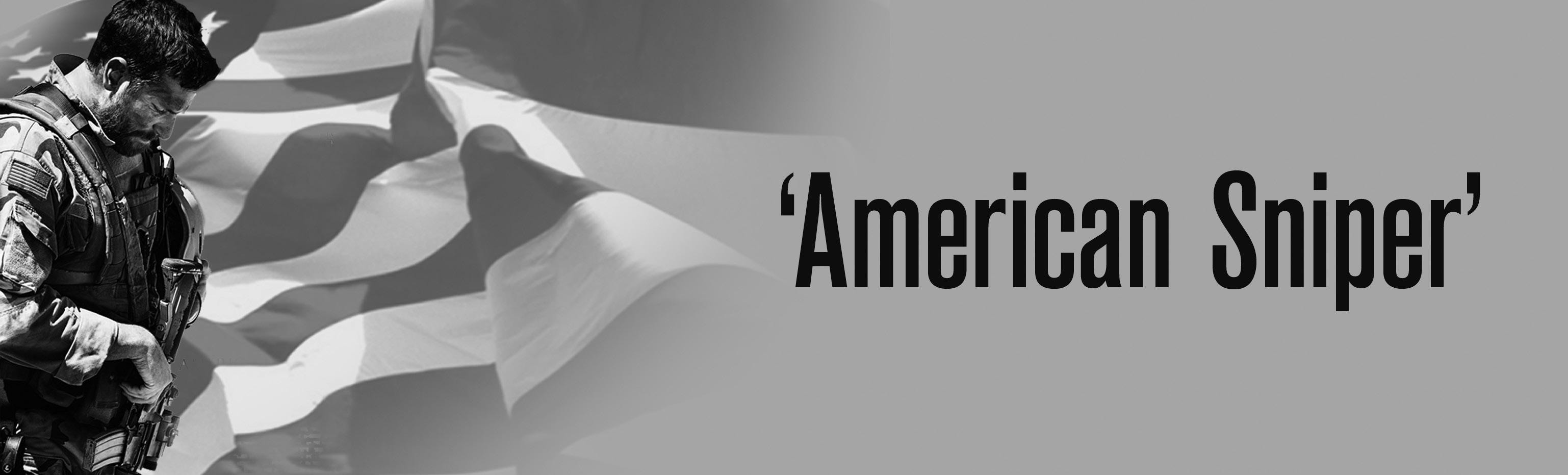
“a merican sniper” retells the trials and triumphs of navy seal chris kyle, as adapted from his autobiography. a s a boy, chris kyle learned from his father to not be a sheep or a wolf, but to be a sheepdog. The protector instinct is so deeply ingrained that hearing of the terrorist attacks on sept. 11, 2001, kyle is driven to join the military to protect the country he considers the greatest on earth.
The film broke box-office records and has received six oscar nominations. its enormous success may be an indication of a merican patriotism and an attitude of reverence for military heroes. in a time when war is less
relevant for a mericans, it serves as a reminder that war persists in the memory of veterans.
Throughout four tours of duty in iraq, kyle proves himself a legendary sniper. The ultimate protector, he watches over his men from above and eliminates threats. he has little trouble hitting his targets; the true challenge he faces is balancing an overwhelming sense of duty both to his family at home and his fellow seals in the war. he returns to iraq not only on tour after tour, but also constantly in his mind.
This harrowing tale of patriotism pays homage to an a merican hero. unfortunately, the movie as a memoir takes an overly reverent perspective, calling for a lack of flaws in the main character. his character is portrayed as perfectly patriotic and responds to a perfect sense of duty. his convictions remain steadfast throughout challenges, defending that his only regret from the war was that he could not protect more of his own. w ith even kyle’s widow involved in the making of the film, his character is portrayed with the level of depth of a family member’s eulogy. his strength is remembered along with the struggles he overcame, but he is not told as a
complete person with flaws and failures. Though kyle is troubled by his experiences in war, the challenges he overcomes only strengthen his heroic image. one might suspect a darker side to the most lethal man in u s. military history.
l eaning far in the direction of a biography, “a merican sniper” lacks the narrative quality connecting one moment to the next. nevertheless, bradley cooper does a remarkable performance in this important role. Faced with the challenge of honoring kyle’s memory, cooper manages to create an incredibly relatable character who is heroic yet humble and down-to-earth. given little evidence of weakness in the script itself, the troubled mind of the protagonist seems to appear in cooper’s eyes, in a performance reminiscent of clint eastwood himself. it seems that the construction of the movie is really a collection of moments. intense scenes of war mingle with heartrending personal experiences, creating an inspirational yet heartbreaking account that leaves the audience speechless.
Contact Kelly McGarry at kmcgarry@nd.edu
By HANNAH ECKSTEIN s cene writer
it was a holy-grail discovery of the musical world: Tucked away in the basement of a merican singer and songwriter bob dylan’s new york home lay pages of unrecorded song lyrics, written by the legendary folk artist himself.
For nearly five decades, these pages lay hidden, silently gathering dust. silent, that is, until one fateful discovery by dylan’s producer and two weeks of intensive jam sessions brought these lyrical time capsules to life. in the mid-1960s, bob dylan and The band were at the peaks of their careers. with incredibly popular songs such as “like a rolling stone,” this a merican rock-folk band was in high demand and thus constantly on tour. This life, however, was taking its toll on dylan, who reported heavy drug use and exhaustion.
in what some refer to as a blessing in disguise, dylan’s life took an unexpected turn. in 1966, he was involved in a devastating motorcycle crash and forced to take time off from touring. dylan retreated to his home in upstate new york, disappearing almost altogether from the public eye. during this time, fortunately, dylan continued recording music. working with The band in the basement of his new york home, dylan privately recorded songs,
providing major hits for many popular artists. luckily for the public, the product of all these secret music sessions began to leak into mainstream music, appearing in several bootlegged recordings. Finally, dylan’s work was brought to light on the "genuine basement Tapes," a set of five cds containing 107 songs created during these basement sessions. despite the immensity of these tapes, pieces of dylan’s music still remained hidden and unrecorded.
Forty-seven years later, new lyrics from this basement session were discovered and finally brought to life. w hile exploring this now-famous basement, dylan's producer discovered pages of never-before-recorded lyrics. he handed them down to T bone burnett, who jumped at the opportunity to work with these lyrics. burnett put together a musical “super-group,” calling on marcus mumford of mumford and sons, elvis costello, Jim James, rhiannon giddens of the carolina chocolate drops and Taylor goldsmith of dawes. Their daunting task: to revive these lyrics with new music, while evoking the unique sounds that made dylan so legendary.
The group took on the task, collaborating for two weeks in a basement, simulating the original basement tape recordings that began nearly five decades earlier.
a documentary called "The long lost basement Tapes," shows just how difficult it was for these writers to recreate
what bob dylan had done with those lyrics so many years ago.
a fter two weeks of tediously putting music to these lyrics, and a surprise musical appearance by Johnny depp, the band finally finished the album, a project that began 47 years ago. The result, "lost on the river: The new basement Tapes," is an incredible collaboration of past and present musical genius.
like a time capsule of dylan’s music, the lyrics on the "new basement Tapes" are haunting and timeless, a testament to dylan’s gift for songwriting and story-telling. The musical accompaniment highlights the creative talent of musicians like marcus mumford and rhiannon giddens. Tracks like "kansas city," recorded by mumford, sound like they could have come straight off a mumford and sons' album but still reproduce sounds that emulate dylan's Folk legacy.
other noteworthy songs on the album include "spanish mary," "Florida key" and "The w histle blowing."
a lthough the album caught some flack for sounding too contemporary, there is no denying that this collaboration is a testament to the artistic creativity and talent of these new artists — and the incredible legacy that dylan left behind.
Contact Hannah Eckstein at heckste1@nd.edu
By MATTHEW MUNHALL
s cene writer
on monday the domain name hipsterrunoff.com was put up for auction on the website marketplace Flippa. it was the final nail in the coffin of hipster runoff, the selfproclaimed "blog worth blogging about." a lthough it went inactive in 2013, the satirical website was practically required reading for indie kids in the latter half of the 2000s. run by carles, a pseudonymous character created by the blog's still-mysterious writer, hipster runoff satirized mid-aughts hipster culture with a heavy dose of ironic scare quotes. at the site's core was carles' never-ending desire to be "relevant." The site mocked the performed authenticity of a certain breed of hipster; it parodied the "entry-level alt" who valued the appearance of being in the know about new music trends as much as the actual knowing.
behind carles' self-knowing voice and use of internet slang, posts from hipster runoff's peak are often quite intelligent analyses of the hype cycle of online music blogging. a 2009 post about the critical acclaim surrounding a nimal collective's "merriweather post pavilion" questioned the reasons people listen to music and the commodification of indie music.
"in the musicsphere, there are a few key tastemakers
of different scales," carles wrote, "and most of them have aligned to tell you that a nimal collective is relevant+pro gressive+transcendent."
carles incisively described the natural culmination of indie rock: its commodification. in 2012, rob Trump smartly summarized hipster runoff's mission: "reading it was like pulling back the curtain on alternative culture, only to discover that the guy calling all the shots was just as cynical and profit-driven as everyone else. constructing your identity based on your cultural knowledge, the site seemed to say, was stupid and self-defeating."
w hat does it mean to have "good taste" in an industry where grizzly bear and st. vincent end up on a "Twilight" soundtrack and coachella sells out two weekends regardless of who's on the lineup? how "unique" are your tastes when they're dictated by a handful of indie rock blogs? once-hipsters have since largely shifted in the opposite direction, for the most part abandoning the pretentiousness that characterized the stereotype. "selling out," once the ultimate evil an indie rock group could commit, is now the new norm; indie rock was revealed to be just as much a commodity as the Top 40. hipsters experienced a collective existential crisis and moved away from ironic detachment. instead, acknowledging one's tastes sincerely and enthusiastically has become de rigueur. poptimism — treating pop music as worthy of critical
consideration as rock — is the default mode among most critical-minded music fans. pitchfork, still the most influential tastemaker in whatever can be called "indie music," has taken to regularly covering and praising mainstream pop artists like a riana grande, beyoncé and Taylor swift. similarly, normcore, the anti-fashion trend with new balance sneakers and acidwash jeans as its staples, was the epitome of embracing normality. it abandoned trying to be cool and gave in to the pleasure of wearing "normal" clothing. it was only a matter of time before hipster runoff came to its inevitable death. The self-serious, impossibly-cool hipster outgrew the characterization years ago. The intelligent cultural consumer of the 2010s is unabashedly voracious, enjoying art from both the mainstream and the underground without guilt.
carles’ last post in 2013 was a poem titled "is the scene still alive?" in it, carles muses, "They still seem to take it seriously. it still seems to define them. a re they holding on to something that doesn't exist any more?" hipsters let go of an impossibly idealistic vision of indie rock and stopped worrying about being "relevant." it seems like hipster runoff has finally done same.
Contact Matthew Munhall at mmunhall@nd.edu
By DANIEL BARABASI
s cene writer
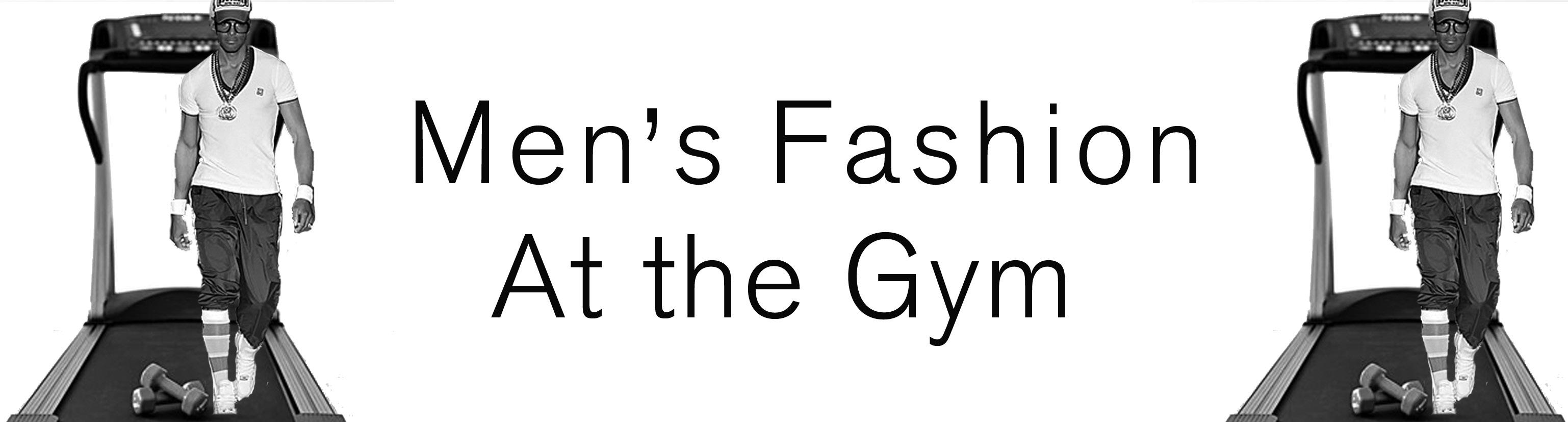
The fortress of the gym. sweaty bodies everywhere, putting your hands in the air like you do care about your fitness status. presumably the last place to hide from sartorial critique.
until now. incredulous at the idea of being fashionable while working out? Then read on, as i take on the "groutfit" culture putting up a final stand in the outskirts of rockne and rolfs with only a keyboard and clothing advice.
personally, i’d like to start by telling you that i've decided to order a pair of compression tights. intimidated yet? keep reading.
professional athletes tout tights' ability to keep muscles activated and facilitate more effective warmups. scientifically, they're shown to wick away sweat and improve blood flow, all while allowing for sick splits. plus, shia la beouf totally rocks a purple pair on jogs. if you can't take the pressure of compression tights, try joggers, the current all-around solution for men's
fashion. warm and modern, they leave space in just the right locales, while still keeping a trendy sweat feel. even though my mom still scolds if i throw on a pair on our way to boston, they’re the newest urban wear as well, so don’t be afraid to wear them out.
looking for something shorter? don't regress to outdated shorts. avoid short shorts, unless you're attending a rollerskating syr, or below the knee basketball “shorts." ball can still be life if you're wearing compression shorts, or if you want to stand, throw on a pair of sweat shorts.
now a quick hint on where to splurge: your feet. you can get the nicest active gear for your upper and lower body, but all that’s doing is making you less sweaty, and you should be showering at the end of a workout anyways. on the other hand, a tired pair of kicks brings down your entire game, messing with your stride and bone integrity. updating your shoe game is crucial for maintaining the health perks you would be looking for in a long jog.
but please, keep away from the five-toed abominations of the past. not only are they hideous, but studies have
shown that they are in fact harmful to your posture and feet, rather than providing the “natural” gait originally promised. instead, turn to five-fingered socks when out of the gym. Tight-fitting shoes, especially sneakers, do curl your toes and give you flattened, “hammer toes.” Toe socks let your digits take a breather, returning your piggies to a rounded, healthier state.
The final step in your workout transformation comes with the accessories. your gym bag should not compete with your carry-on in terms of volume. it should neatly contain your change of clothes, perhaps with an extra compartment for shoes. i use a “retro” leather singleshoulder sling bag that has one opening tied off with ropes. a lthough i’m pretty sure they stopped selling these back when my dad pumped iron, a leather duffle does have its place in your locker.
a nd if you want to bring your a+ game, throw on a suit over it all to keep you warm while braving the polar vortex. Just don’t have a singlet on underneath. i officially ban them.
Contact
Scherzer signing hurts Nationals
Brian Plamondon sports writer
w ith the inaugural c ollege Football p layoff in the books and the s uper b owl two weeks away, the sports world finds itself in a bit of a lull. e ven m ajor l eague b aseball has been relatively quiet since the w inter m eetings concluded in early d ecember, and spring training is still around a month away. yesterday, however, things changed when the washington n ationals inked m ax s cherzer to a seven-year, $210-million mega-deal.
o ver the last two seasons, s cherzer went 39-8 with a 3.02 era while striking out 492 batters. h e won the c y young in 2013. h e is one of the most durable pitchers in the game, having pitched 180 innings five years in a row. h e makes the n ationals instant favorites to win the 2015 world s eries. a nd yet, the n ats made a huge mistake by signing s cherzer.
l et’s first look at the history of hurlers getting ninefigure contracts. s cherzer’s contract falls just shy of the top pitcher on the list, c layton k ershaw and his $215 million. k ershaw signed the deal last offseason, so it’s too early to tell if the d odgers made a good deal.
The Tigers, s cherzer’s former club, gave Justin verlander $180 million, and he has returned the favor with a .538 win percentage and a 3.99 era over two years. i f verlander stays on this course, the Tigers are tied to a pitcher that is average at best until he is 37, all the while paying him $20 million per year.
cc s abathia was given $122 million over five years and over his last 40 starts has posted a 4.87 era . Johan s antana, he of the $137.5 million deal, has been nonexistent and missed two full seasons due to injury. b arry Zito (63-80, 4.62 era ) has been nothing short of awful in his seven years with the g iants. c liff l ee — another bust. a nd who has even heard of k evin b rown? s ure, there are exceptions to the rule — c ole h amels and Felix h ernandez come to mind. b ut the vast majority of $100 million-plus pitchers have crippled their respective teams and their payrolls. i can’t think of one
reason why the n ationals should have pulled the trigger on s cherzer. They should be worried about locking up their homegrown stars — Jordan Zimmermann, i an d esmond and s tephen s trasburg are all valuable commodities. i n this day and age of baseball, it is just not a smart move to let stars hit the open market and try to sign 30-year-olds to massive deals in free agency. a nother mistake the n ationals made in the s cherzer deal was deferring half of his salary. a lthough he will only play for the team for seven years, the n ats will pay him $15 million annually for 14 years. i don’t know about you, but i ’d prefer to just pay the guys that are on my team. a fter seven years, the n ationals will be paying s cherzer to either suit up for another club or to sit on his couch and count his millions.
i ’m sure the n ationals are looking at the deal as a win, as they get to keep a lower payroll in the short-term and still have some flexibility in free agency in the future. b ut there is another problem with the deferred money — for seven years after the deal has expired, the n ationals will be eating $15 million per year that they could be spending elsewhere. That’s a lot of dead money for a team that is already against its spending threshold and cannot come close to competing with the yankees, r ed s ox, d odgers and others when it comes to big salaries. w hat this comes down to is a win-now move for the n ationals. s cherzer gives them by far the best starting rotation in m ajor l eague b aseball, one that includes four a ll- s tars and a n o. 5 starter ( g io g onzalez) who could be an ace for some teams. They will be scary good. s till, s cherzer is an unneeded risk for a team that was already widely considered to be world s eries favorites. w hat about the next six years of his deal, or the seven after that?
The n ats are all in for 2015, but beyond that, things look a lot less clear — and maybe a little gloomy.
Contact Brian Plamondon at bplamond@nd.edu
The views expressed in this Sports Authority are those of the author and not necessarily those of The Observer.
Selection committee faces crowded tournament field
Associated Press
indianapolis — ncaa vice president d an g avitt sees a disparity between some of this season’s top college basketball teams and everyone else.
s election committee chairman s cott b arnes believes things are a little more balanced.
i t’s an argument that probably won’t go away any time soon — in public or behind closed doors. g avitt and b arnes took different sides Tuesday following a news conference to announce plans for this year’s Final Four in i ndianapolis. s election committee members met last week in w ashington.
“They gave the first committee reports and you know no one is ever eliminated until selection s unday,” said g avitt, who oversees men’s basketball. “ i n those reports, some of the very elite teams, i would say, if they stay healthy will be very, very high seeds and others who might normally get those high seeds may not this year.”
o f course, perceptions and resumes can change quickly in the college
basketball world.
Just ask w isconsin, whose hopes of returning to the Final Four suffered a blow last week when the b adgers said starting point guard Traevon Jackson needed surgery on his right foot. b ut even with k entucky and v irginia still unbeaten and d uke, a rizona and w isconsin all ranked among the top seven, b arnes was cautious about reading too much what’s happened so far.
“ i ’d say there’s been a lot of early upsets on home courts, more than i can remember in recent years,” the u tah s tate athletic director said. “There are some elite teams this year, but there’s a lot of parity out there as well.”
w hoever earns a trip to i ndy for the national semifinals a pril 4 and the championship game a pril 6 will have plenty of options to choose from.
h ost committee officials said Fan Fest would open a pril 3, youth clinics and a 5 k walk to help support c oaches vs. c ancer will be held a pril 4; 3,200 children would dribble around town a pril 5; and the annual m arch m adness m usic
Festival will be held a pril 3-5. p erformers for the musical shows should be announced by late February. i n addition, the host committee will hold a recycling drive m arch 28 for “just about anything with a plug,” is asking 10,000 children to participate in service-related projects a pril 3 and will help build or rebuild two basketball courts around town.
g avitt and b arnes were joined by two previous i ndiana m r. b asketball winners — former i ndiana star d amon b ailey, now an assistant coach with the b utler women’s team, and former a rizona star Jason g ardner, now the men’s coach at iupui
“For the Final Four to be in what i think is the best basketball state in the country, is a greater partnership,” b ailey said. “ h opefully, with a little luck, we will have some representation from teams in our state.”
Two i ndiana teams are currently ranked — n o. 8 n otre d ame and n o. 23 i ndiana. b utler has been in and out of the rankings this season and continues to draw votes, while valparaiso is 17-3.
dominant big 12 teams impact Top 25 rankings
Associated Press
w ith a national-best six ranked teams, the b ig 12’s conference race is having an every-week impact on the Top 25.
l ook no further than no. 11 k ansas for proof. The Jayhawks’ reward for splitting two games against ranked league opponents last week is two more games this week.
“it’s good and it’s tough for everybody,” coach b ill s elf said. “i don’t know if this is going to play out to be true
or not, but four or five losses will be an unbelievable record for the team that wins it, i believe.”
The league had six games matching two ranked teams last week and has three more this week to headline the national schedule.
k ansas beat no. 19 o klahoma 85-78 on monday night and travels to no. 17 Texas on s aturday, while the s ooners travel to no. 21 b aylor that same day.
The b ig Ten has the other two such matchups this week. iowa, which debuted
in this week’s poll at no. 25, travels to sixth-ranked w isconsin on Tuesday night, while no. 13 m aryland travels to no. 23 i ndiana two days later.
s T ill 1-2: For the second straight week, k entucky and v irginia topped the poll. k entucky was no. 1 in 63 of 65 votes cast monday, while v irginia stayed at no. 2. The w ildcats (17-0) have been no. 1 in every poll and were the unanimous choice for five straight weeks before two voters switched to the c avaliers (17-0) last week.
nCaa men’s BasketBall
Former Irish fencer returns as team director
By BRETT O’CONNELL sports writer
The senior members of the 2011 national championship squad, n otre d ame’s last title-winner, have all graduated and gone their separate ways, but one member of the team has found his way back to the world of fencing in a new role.
a lex b uell, 2011 national champion and 2012 graduate from the m endoza c ollege of b usiness, now works for the fencing team as its director of operations. i n the years since his last meet, he has taken on an active role in the team’s administration, and he said he sees the fencing team’s presence on campus
and in the national fencing community evolving with each passing day.
“ w hen i came into [ n otre d ame] i was interested in getting into professional sports,” b uell said. “[ i ] really thought it would be to get through m endoza and work with the n F l b ut it was really my experience on the fencing team all four years, especially that championship year, that made me reconsider.”
a nd while b uell did serve as an intern with the n F l’s c hicago b ears during his senior year, he found the variety unique to collegiate athletics too much to resist.
“ p ro sports, on a macro level, you’re just doing that
sport,” he said. “ i n college sports, there are opportunities to work with other sports.
“a t the same time, the big deciding factor for me was the higher purpose that college athletics serve. i ’m thoroughly convinced that, especially in today’s landscape where there are ongoing discussions about the role of sports in a college education. To me, i think it’s a no-brainer. i think athletics are some of the most transformational experiences a student can have in college. That’s what really brought me back.”
b uell said that his transition from the strip to the office was actually easier than
paid a dverT isemen T
he expected. “ i t’s probably one of the easiest transitions out there,” he said. “ i t’s a very unique opportunity to work with the coaching staff that coached me.”
w hen b uell arrived as d irector of o perations at the beginning of last season, the fencing program stood at a crossroads. a move from the m idwest Fencing c onference to the acc loomed. w orking with the other staff to help facilitate that transition has comprised a large body of b uell’s work. b uell said the move represented a great opportunity to grow the sport both on campus and nationally.
“ i n terms of the power five
conferences, there are only eight schools that sponsor fencing,” he said. “Four of them are now in the acc For us, heading into the acc championship, there is a lot of potential on the horizon to bring fencing to other schools and new audiences who just know acc sports.”
b uell said the team shared a vision spearheaded by now-retired coach Janusz b ednarski — to grow the brand of fencing through the n otre d ame identity.
“ i t’s our vision as a program,” b uell said. “ i t’s something that when i was hired, our previous coach Janusz was big on — finding ways to expand the sport and make it better, potential ways to change the ncaa format and make it more fan-friendly.
“[ o ur coaching staff] is very willing to try new things. For example, last season we added monogram patches to our uniforms. w e have patches on both arms to try and increase visibility. w e want people to be able to [say] ‘That fencer is from n otre d ame.’”
u ltimately, b uell said he is excited by the growth of the fencing brand on n otre d ame’s campus.
“ w e had 414 people come out to a meet last year,” he said. “a nd then that was broken when we had 698. This year, our meet was conservatively between 500600. Those numbers are not heard of in fencing.”
b uell said he knows fencing could be a tough sell for new audiences, but he is confident in the power of n otre d ame’s identity and its ability to introduce new audiences to a new sport.
“This is a very difficult sport,” he said. “ i t has a steep learning curve to watch it. b ut people understand things like n otre d ame versus p enn s tate. i t is a disservice to the sport if we don’t try to leverage that.”
The i rish resume their season s aturday when they travel to n ew york for a meet against s t. John’s.
Contact Brett O’Connell at boconne1@nd.edu
Oklahoma City takes down Heat
Associated Press
miami — r ussell westbrook scored 19 points and grabbed 10 rebounds, k evin d urant added 19 points and the o klahoma c ity Thunder moved over the .500 mark for the first time this season with a 94-86 win over the m iami heat on Tuesday night.
d urant also had eight rebounds and eight assists for the Thunder, who’ve won 18 of their last 26 games. r eggie Jackson scored 16 points and a nthony morrow added 12 for o klahoma c ity.
d wyane wade scored 18 points and c hris b osh added 16 for m iami, which fell to 7-13 at home.
d urant was 0 for 8 from 3-point range — matching the second-worst showing of his career — and the Thunder got to the foul line only 10 times, less than half their team average coming into the night. it didn’t matter, especially after m iami shot only 42 percent in the final three
quarters. The Thunder took 92 shots, m iami just 68.
m iami had three shots to tie or take the lead in the fourth quarter, all of them missing and the Thunder would eventually pull away.
Jackson’s 3-pointer with 2:54 left put the Thunder up 87-82, then westbrook got the next two baskets — the second of them an easy one after m iami’s 20th turnover of the night — to extend the lead to nine and send most in the crowd heading for the exits.
The game was the exact midpoint of the regular season for both teams. o klahoma c ity went 21-20 in its first 41 games, m iami went 18-23.
morrow’s jumper to open the fourth quarter put o klahoma c ity up 74-67, what was then the Thunder’s biggest lead of the night. The Thunder were down by nine early and trailed 50-49 at the half, then did what plenty of teams have done to m iami this season — clamp down in the third quarter.
rangers comes from behind to beat senators
Associated Press
new york — c arl h agelin deflected in d erek s tepan’s slick backhand pass 2:55 into overtime to give the n ew york r angers a 3-2 comefrom-behind victory over the o ttawa s enators on Tuesday night.
o ttawa had the better of the chances in the extra session, but h agelin put the winner behind goalie c raig a nderson as the r angers won their third straight and 16th in 19 games heading into the nhl a ll- s tar break.
c hris k reider tied it for n ew york in the third period. k evin h ayes also scored, and h enrik l undqvist made 33 saves.
e rik k arlsson and m ilan m ichalek had second-period goals for o ttawa. a nderson stopped 32 shots, but let n ew york’s only one in overtime get past him.
k reider tied it 2-all at 2:42 of the third period when he took a perfect feed from
paid a dverT isemen T
defenseman m arc s taal as he cruised down the slot, deftly shifted the puck to his forehand and lifted a shot past a nderson for his 10th of the season and fifth in 10 games. a fter falling behind 1-0 on h ayes’ goal, the s enators scored twice in quick succession to grab a 2-1 lead.
r ight after e rik c ondra was stopped by l undqvist, the s enators regained control of the puck and worked it around the r angers zone.
kyle Turris sent a crisp pass from the left circle to the right circle, and k arlsson snapped in his ninth goal at 13:38.
Then, just 9 seconds after n ew york’s l ee s tempniak was called for high-sticking, m ichalek got to a rebound in front and slid a backhander that slithered its way under l undqvist’s pad for his sixth goal, putting the s enators ahead with 5:19 remaining in the second.
The r angers had broken the scoreless deadlock at
9:29 when h ayes corralled the rebound of d an g irardi’s hard shot from the right point, calmly shifted left in the slot and scored his sixth goal.
The r angers finished their second straight period on the power play, this time the remnants of a two-man advantage created when d avid l egwand and e ric g ryba were whistled for infractions 46 seconds apart.
The teams slogged through a tight-checking first period that produced one power play for each club and a total of 16 shots — nine for the r angers, including a hard drive by r yan mc d onagh that was stopped at the buzzer.
no T es : n ew york’s a lain v igneault coached in his 932nd nhl game, tying r angers general manager — and former coach — g len s ather for 26th place on the league’s career list. ... Turris has a s enators-high 13 assists and 19 points on the road this season.
trouble getting back into competition.
“ i knew that, first of all, she’s a very strong person and a very tough competitor,” welsh said. “There was no doubt in her mind that of course she would compete again.”
s ure enough, she did, making her return against m ichigan s tate this year, and she said that she can feel herself returning to form.
“The m ichigann orthwestern meet [on Jan. 9] was the first time i felt like my old self, before i had surgeries,” g alletti said.
welsh says that he has noticed g alletti’s improvement this year too, not just in her recovery from injury, but also mentally.
“ w hat’s been wonderful this year is not only her own personal work ethic, but also that she’s become a very strong team player,” he said. “ s he supports her teammates; she works for the betterment of the group, and i personally have really appreciated that in her.”
s till less than a year removed from her surgeries, g alletti said she believes she has plenty of time to continue her recovery and improve her performances in the pool. welsh agrees.
“ w ithout any doubt, she’ll be better next year,” welsh
said. “ s he’s still not a year out of surgery. s he’s doing all of this and she had one surgery right after the other. i don’t think there’s any question that as time passes, her healing will progress; her strength will improve, and her best is still ahead of her.”
“ m y hopes are just to continue getting better and stronger and being able to help this team improve at acc s and ncaa s,” g alletti said. “ b eing able to swim
paid a dverT isemen T
for this university and being able to contribute to the university’s prestige has just been the best experience, and i want to continue that. you’ll have people who either love n otre d ame or hate it, and the people who hate it are just crazy.”
g alletti and the i rish dive back into the pool Jan. 30 for the s hamrock i nvitational in r olfs a quatic c enter.
Contact Daniel O’Boyle at doboyle1@nd.edu
Hockey
con T inued F rom page 16
h inostroza said he was drawn to notre d ame due to a combination of the program’s new hockey facilities, coach Jeff Jackson’s proven system and the slew of fellow “c hicago-landers” on the i rish squad, including senior defenseman robbie r usso, junior center Thomas d i p auli and sophomore defenseman Justin wade.
“it was just the right fit for me,” h inostroza said.
i n his freshman campaign, h inostroza compiled 32 points for the i rish, good enough to rank third on the veteran 2013-14 squad.
Then-seniors T.J. Tynan and bryan r ust, both nhl draft picks, were the only two i rish players who scored more than h inostroza.
o f the 51 points h inostroza has scored in an i rish uniform, 40 of them have been assists. he has always strived for this kind of unselfishness, he said.
“i enjoy getting assists more than goals,” h inostroza said. “g rowing up, i always have made that a focus of my game, and it’s something i’ve been able to develop the past couple years.
The i rish earned a bid to last year’s ncaa tournament in h inostroza’s freshman year, but this season they are currently 10-11-3. p art of that, h inostroza said, is due to the
team’s youthfulness.
“ we’ve had some struggles this year,” h inostroza said. “b ut after each weekend, we continue to come to the rink ready to work even harder than the last week.”
d espite these struggles and the young team’s growing pains, h instroza said he remains positive and has assumed a leadership role for the team, something he said last year’s upperclassmen did to help him mature.
“ e ven though i ’m only a sophomore, i think i would be considered an upperclassman, just because of how young the team is,” he said. “ i ’m just trying to take what i learned from our seniors last year and help out our younger guys this year.”
d espite n otre d ame’s struggle to maintain consistency, the i rish still sit in fifth place in the h ockey e ast, with a conference record of 5-2-3 and 13 points, within striking distance of conferenceleading b oston university (18 points).
“ we’re still in good shape in the hockey e ast, and we only have conference games remaining on the schedule, so that has to be our focus for the remainder of the year,” h inostroza said.
The i rish travel to b oston on Friday for a two-game series against conference-foe n ortheastern.
Contact Benjamin Horvath at bhorvat1@nd.edu
WEI LIN | The Observer Irish junior Catherine Galletti swims the 100-yard backstroke during Notre Dame’s 219-60 win over Valparaiso on Nov. 15, 2013.
MICHAEL YU | The Observer
Notre Dame sophomore center Vince Hinostroza handles the puck in a 3-3 tie with Connecticut on Jan. 16.
w Bball
con T inued F rom page 16
d ame, as she was the 2014 national h igh s chool Female a thlete of the year. s he also had big shoes to fill, as star forward natalie a chonwa graduated just before Turner arrived.
Turner said the encouragement and guidance of her teammates has been crucial to her development and success.
“a s a freshman, sometimes i get lost in practice, or in the game, i ’m not always running the right play,” Turner said. “ m y teammates communicate with me well and tell me where to be when i ’m confused and really make it easier for me.”
s ophomore forward Taya r eimer particularly helped Turner get her bearings on the college court, Turner said. Turner also named sophomore guard l indsay a llen and l oyd as mentors in her early experiences.
“[ l indsay], just being a point guard, she helps me get in the right spots, and she knows where i ’m supposed to be,” Turner said. “Then Jewell is such a great player and a vocal leader as well.”
Turner said acc play has been the most difficult aspect of the college game to adjust to, in addition to the overall higher stakes of games at this level.
“acc play is so physical,
and every single game is a tough match, so it can be hard just going out there and being ready to play,” Turner said. “c ollege basketball is louder and more physical. p laying in front of so many people, and with the other players being so strong, there’s a lot more physicality. i just try to go out there and play. o nce there’s a jump ball, i have to get up there and do my thing.”
playing with her teammates in a packed p urcell p avilion is Turner’s favorite part of i rish basketball, she said, an aspect highlighted during monday’s 88-77 victory over no. 5 Tennessee.
“The game against Tennessee stands out because we played great as a team against a really tough team, so that was a good win for us,” Turner said.
Though Turner has come a long way in terms of knowing the playbook and getting to the right spots, she hopes to continue to improve as the season progresses, she said.
“i can work on playing better defense, being in the right spot at the right time from a defensive standpoint. Just by watching film, i can see the mistakes i’ve made,” Turner said. “now, i’m just trying to finish off the season strong in the acc and get ready for the tournament.”
The i rish take the court at p urcell p avilion on Thursday to face g eorgia Tech at 7 p.m.
Contact Renee Griffin at rgriffi6@nd.edu
paid a dverT isemen T
KAT ROBINSON | The Observer
Irish freshman forward Brianna Turner plays defense during an 8853 victory over Chattanooga on Nov. 21.
MICHAEL YU | The Observer
Notre Dame freshman forward Brianna Turner jumps for a rebound during a 104-29 rout of Holy Cross on Nov. 23. Turner has won several awards this season, including five ACC Freshman of the Week honors.
Happy Birthday: Take care of responsibilities and prepare to move forward. l iving in the past or harboring regrets will hold you back. Forge ahead with optimism and the intent to give your all and reach your goals. d on’t let what others do cost you. l ook at the big picture and take care of what’s most important to you. your numbers are 6, 13, 21, 27, 33, 39, 42.
ARIES (March 21-April 19): participate and give back to your community or someone who has been there for you in the past. you will attract the attention of someone who can and will benefit you in the future. l ove and commitment are heading in your direction.
TAURUS (April 20-May 20): w hen dealing with time or money management, you will be at a loss. p ut your energy into something that will help you get ahead. Try to learn more and be positive about new developments. c hoose quality over quantity.
GEMINI (May 21-June 20): c onsider your options and it will become clear what you should do next. Follow your heart and assess what needs to be changed in your life to make things better. study, travel, love or doing your own thing will bring positive results.
CANCER (June 21-July 22): c oncentrate on financial deals or adding value to something you already own. d on’t be afraid to take a unique journey to reach your destination. c hanging your attitude or beliefs is likely and will bring interesting results.
LEO (July 23-Aug. 22): d on’t let others annoy you. Time is precious, and you can accomplish plenty if you focus on what’s important to you. Think big and work in conjunction with people who are intent on reaching similar goals.
VIRGO (Aug. 23-Sept. 22): step up and share your unique plans with others. a change in the way you live may be necessary in order to follow your dreams. g et together with people who are heading in the same direction as you.
LIBRA (Sept. 23-Oct. 22): d on’t worry about what others do or say. stand up and be counted and you will make a difference. your participation in various affairs will show others you are not one to push around. l ove and romance will bring about a positive lifestyle change.
SCORPIO (Oct. 23-Nov. 21): d on’t overlook fine but important details that can affect an important relationship. l et your intuition guide you when it comes to matters of a personal nature. c ommunicate from the heart and you will come out on top.
SAGITTARIUS (Nov. 22-Dec. 21): Take on more if it will allow you to show your finer attributes. a chance to impress someone who may be able to help you reach your goals will present itself. a n idea you have will bring in extra cash.
CAPRICORN (Dec. 22-Jan. 19): e motional matters will set you back mentally, physically or financially if you don’t take control and put your plans in motion before it’s too late. you don’t have to follow the crowd, and you shouldn’t pay for others’ mistakes.
AQUARIUS (Jan. 20-Feb. 18): keep your intentions a secret until you are sure you can deliver. l ove is on the rise, and planning something special will bring high returns. e xpanding your awareness, your family or your expectations is within reach.
PISCES (Feb. 19-March 20): keep an eye out for anyone trying to mislead you. Jealousy is likely to take place if someone you compete with gets ahead. use your energy to get ahead, not to find fault in what someone else does.
Birthday Baby: you are engaging, clever and outgoing. you are trendy and inventive.
jumBle | david hoyT and JeFF knurek
sudoku | The mepham group
HIGHly PunlIkely | chrisTopher brucker
Turner succeeds quickly in first college season
By RENEE GRIFFIN sports writer
a mere 19 games into her first collegiate season, brianna Turner has won five acc Freshman of the week honors, two national Freshman of the week awards and one acc player of the week title.
Three of those awards came this past week after the freshman forward led the no. 6 i rish (17-2, 4-1 acc ) to victories over boston c ollege and no. 12 north c arolina.
“it’s been really awesome [to win these awards]. it’s like my hard work is paying off,” Turner said. “it just tells me that i am getting better.”
Turner missed three games with a right shoulder injury earlier in the season, but in the 16 games she started, she posted 254 points for the second-highest total on the team behind junior guard Jewell l oyd’s 408. she has also recorded a team-high 49 blocks and 118 rebounds, and her shooting percentage of 67.8 is second in the country.
There were high expectations for Turner coming into notre
Small stature helps Hinostroza
By BENJAMIN HORVATH sports writer
a t 5-foot-9, sophomore center v ince h inostroza often finds himself dwarfed by players much taller than him on the ice.
b ut it is precisely this perceived disadvantage that h inostroza has been able to use to his advantage throughout his career.
“a ll the time i heard stuff growing up like, ‘ you’re too small,’ or, ‘ you’ll never make it in the next level,’” h inostroza said. “ i ’ve always used that as motivation.”
h inostroza said that he has been able to develop a strong set of offensive skills during his career crafted around this seeming disadvantage.
“ i like to think of it as a positive thing,” h inostroza said. “ b eing a smaller guy can definitely help you because you have a lower center of gravity and bigger guys can’t really get under you.”
This has allowed the center to zigzag and finesse his way through the offensive zone as the sophomore has been a catalyst for the i rish
during his two seasons at n otre d ame.
a lthough a three-sport athlete in high school (hockey, lacrosse and football), the b artlett, i llinois, native said he always knew hockey was his favorite sport.
The other sports merely served as “something to pass the time during the hockey off-season,” he said.
d uring his time in high school, h inostroza played for the ushl waterloo b lack h awks, racking up 128 points over the course of three seasons with the squad. i n 2012, he was drafted in the sixth round by the nhl’s c hicago b lackhawks, following his success at the ushl level.
h inostroza had to decide whether to enter into the b lackhawks minor league system or continue to develop his game at the college level before trying to enter into the nhl
“c ollege was the best route for me, so i could keep getting bigger and stronger,” he said.
Galletti stages comeback after hip surgeries
By DANIEL O’BOYLE sports writer
“They say that for every day you’re out of the water, it takes two days to make up,” c atherine g alletti says. a fter two hip surgeries kept her out of the pool for five-and-a-half months, g alletti certainly understands how difficult it can be for a swimmer to recover from injury. b ut with dedication and hard work, she has managed to make an impressive comeback, earning three ncaa ‘ b ’ cuts and winning 10 races this season.
g alletti, currently a junior, had a promising freshman year, competing in three relay events at the ncaa c hampionships for the i rish. a chieving her goals on the highest stage in her first year was an incredible experience, she said.
“ i t was the first year of college, so there were obviously a bunch of new experiences — meeting new friends, being on a new team, new
coach,” g alletti said. “ b ut going to national championships my first year, by whatever means, was always a goal of mine.”
a fter such a strong start, g alletti appeared destined for even better things in her second year. That d ecember, however, she discovered she would need surgery on her left hip.
“ i found out on the day of my accounting final actually, so that was fun,” g alletti said. “The strategy was just to see how long i could last, but after about a month i made the decision that i needed the surgery.”
d uring rehab, however, g alletti began to feel a similar pain in her right hip and discovered that it would need surgery as well.
i rish interim coach Tim w elsh, though — who at the time led the men’s team — said he had little doubt that g alletti’s strong character meant she would have little
HoCkey
MICHAEL YU | The Observer
Notre Dame freshman forward Brianna Turner drives to the basket in a 104-29 defeat of Holy Cross on Nov. 23.