
Men Against Violence launches its annual Pledge Drive, encourages
By SELENA PONIO news writer
n otre d ame’s m en a gainst v iolence ( mav ) launches its annual p ledge d rive today between 5:30 p.m. and 7:30 p.m. in n otre d ame’s dining halls.
The p ledge d rive will collect the signatures of men willing to take an active stance against sexual assault and raises general awareness about violence of this nature on campus. The signatures will be published in a later issue of The o bserver.
a ccording to mav ’s website, the public must stop pigeonholing rape and sexual
assault because every woman out there is a sister, daughter or mother to another person and therefore violence against women victimizes not only a gender, but also the wider community.
“ i see the p ledge d rive as a way to bring together the entire student body in a really simple way,” mav p resident Thomas d eranek said. “ i t reminds each student that sexual violence is an important issue that they are willing to stand against.”
d eranek said the d rive is vital to mav ’s ultimate goal: to witness an end to
men to actively denounce sexual assault

smc students, faculty reflect on Ferguson
By MACAILA DeMARIO news writer
s aint mary’s students and the c ollege’s Justice d epartment gathered o ct.
17, to reflect on the events in Ferguson, m issouri. The discussion was introduced
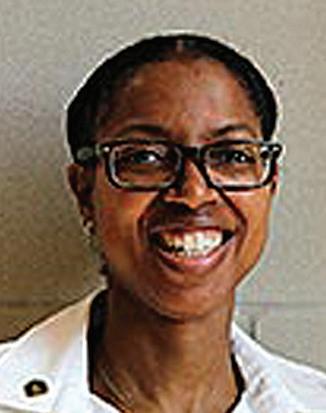
and facilitated by associate professor of religious studies stacy davis as part of the Justice Fridays series held in the s aint mary’s student c enter.
davis said responses regarding Ferguson can be divided into four sources: residents of the cities of Ferguson and st. l ouis, the police shift between Ferguson and st. l ouis c ounty, the d epartment of Justice and social justice groups.
davis said the circumstances in Ferguson raise the question: “ w hat does it mean when
police act like military?”
Ferguson began to pique to public’s interest when the police “left the uncovered body” of m ichael brown in the streets and began to “cover their nametags with black tape” to conceal their identities, davis said.
she said the public was surprised and appalled by “nonviolent protesters getting gassed in this country.”
davis said the pentagon should reconsider the consequences before it distributes extra military equipment to police officers.
“They are not soldiers,” she said.
davis discussed the significance of the Ferguson and st. l ouis c ounty police representations in the media.
“The police response to the shootings, in many ways, has been bigger than the shootings itself,” she said.
davis said the issues highlighted during the protests should not wane the same way passing trends do.
“ we want to keep this in the forefront,” davis said. “ we
students seek to shrink partisan divide
By JACK ROONEY
seniors sean l ong and a lex caton sat on l ong’s dorm room couch in st. e dward’s hall last year and dreamt of a student club that would shrink the partisan gap on campus and give politically active students a place to discuss politics in a constructive way. Their vision was realized this year with the creation of bridgend, for which l ong serves as the president and caton as vice president.

l ong said the traditional campus party model leaves little room for both sides to connect productively with one another, a problem bridgend seeks to rectify.
“we noticed a gap on campus in the way people talk about politics,” l ong said. “we found that, traditionally on college campuses, what you have is the college democratcollege republican model.
“we found a gap in that there’s no real connection between the two. it’s not that they need more competition;

it’s just that they need connection, both between c ollege democrats and college republicans and democrats and republicans.
“w hat bridgend sees is, to tackle that gap, we offer a place to talk about politics in new ways. a nd by new, we mean ways that are both constructive — in that we bring students from the left, right and anywhere in between to talk about politics constructively — and we talk about politics in a way that is actionable — in that we try to

generate our own proposals for a debate and actually have students see themselves as change agents.”
l ong said the club’s goals are threefold: to foster constructive and actionable debate, to promote a sense of camaraderie between members, regardless of political ideology and to connect politically interested students to their ideas.
“The goal for bridgend is for students to see themselves as change agents in politics,” he see bridgend PaGe 4
By KAYLA MULLEN news writer
music educator José a ntonio a breu received the final notre d ame p rize for d istinguished p ublic s ervice in l atin a merica. a breu was awarded the prize on s ept. 22 at a private on-campus ceremony.
The award spotlights those who have made a large impact in the lives of citizens of l atin
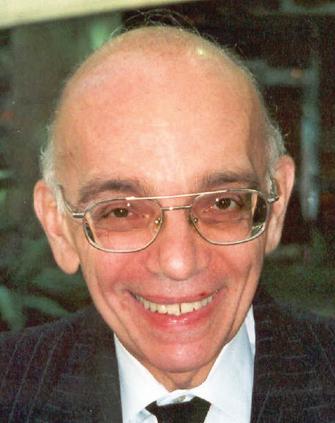
a merica, p aolo g c arozza, director of the helen Kellogg i nstitute for i nternational s tudies, said.
“ s ince 2000, in partnership
award PaGe 5
SUSAN ZHU | The Observer
see mav PaGe 5
Stacy Davis associate professor of religious studies
see Ferguson PaGe 4
a ssociate news e ditor
Question of the Day:
What
(574) 631-5303 viewpoint@ndsmcobserver.com
Sports Desk (574) 631-4543 sports@ndsmcobserver.com
Scene Desk (574) 631-4540 scene@ndsmcobserver.com
Photo Desk (574) 631-8767 photo@ndsmcobserver.com
Systems & Web Administrators (574) 631-8839
Policies
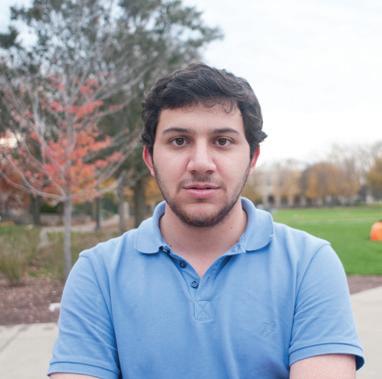
Carlos Concha fifth-year carroll hall “paige.”
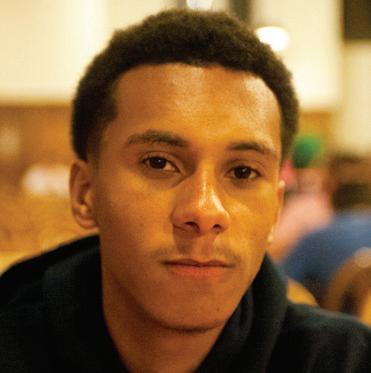
Dimitri Wolff freshman o’neill hall “obamaniqua.”
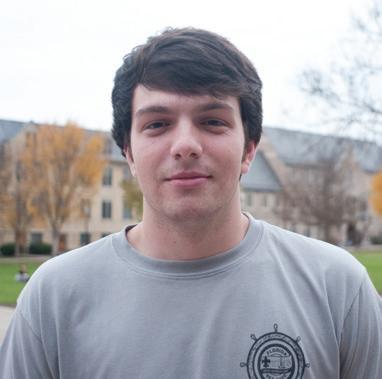
Matthew Freda junior alumni hall “olga or g ertrude.”
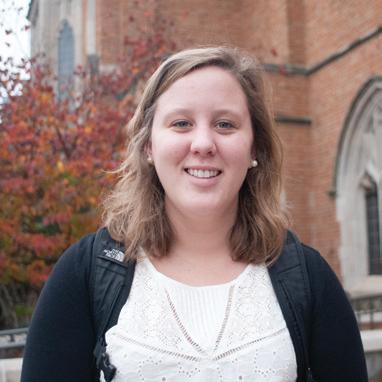
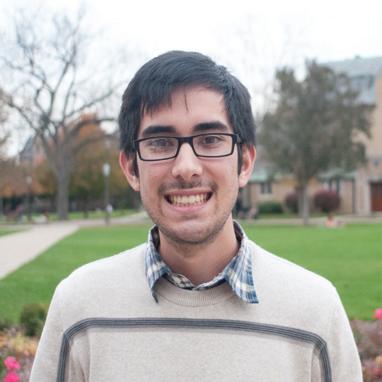
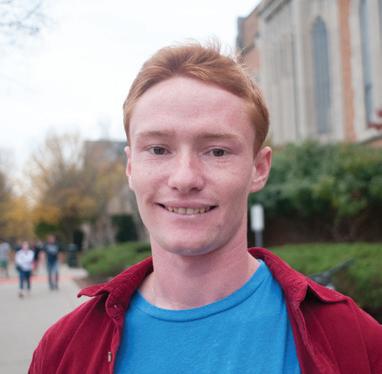
Megan Ball junior walsh hall “obadiah.”
Phil Dudeck fifth-year sorin college “e lmo or barney.”
Stephen Cray junior off-campus “voltron.”
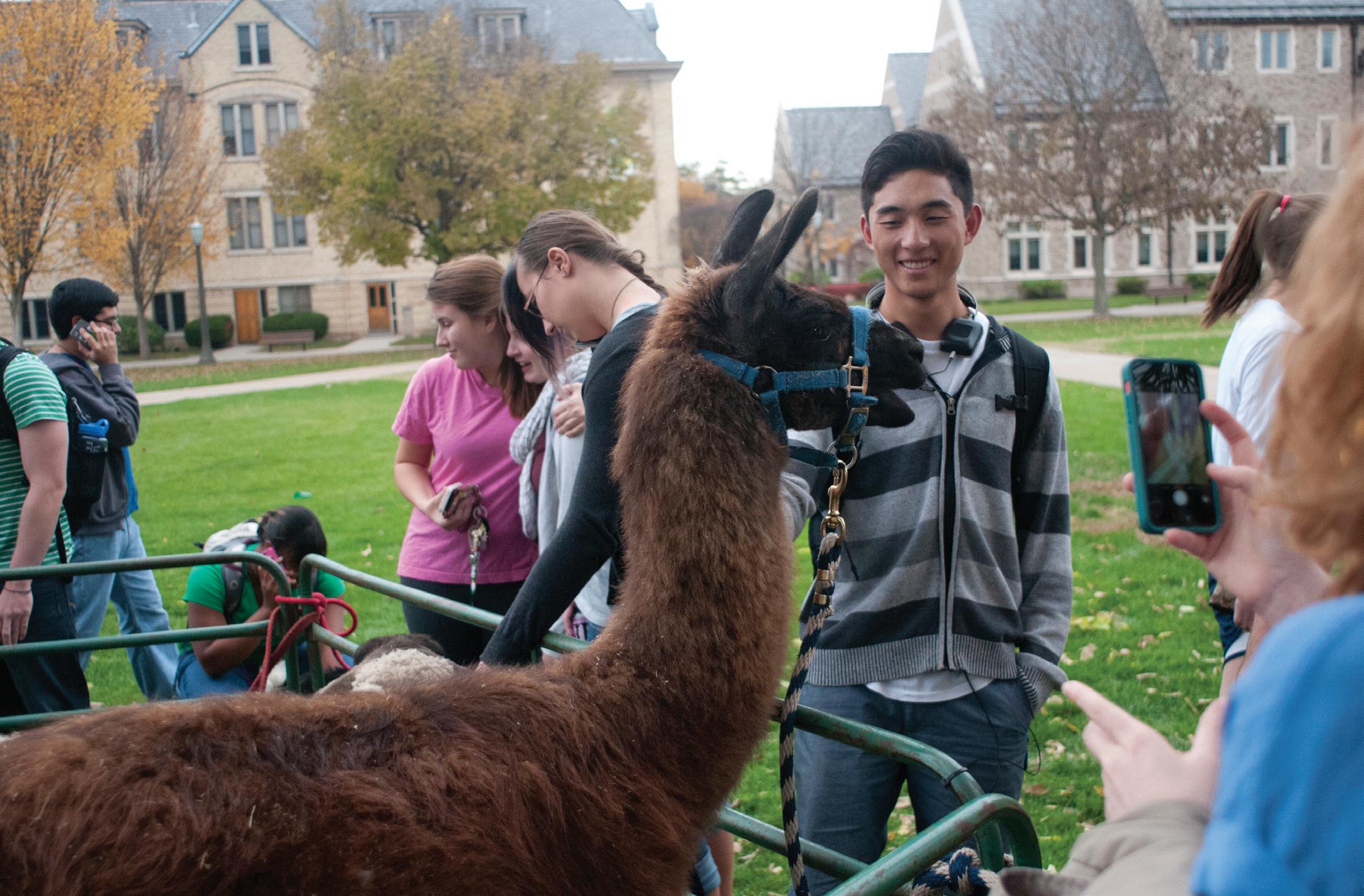
Junior Jeffrey Wang pets a llama from the petting zoo set up outside South Dining Hall on Monday evening. The zoo featured other animals such as a sheep, goats and a miniature pony.
Today’s Staff
News rebecca o’neil margret hynds e milie Kefalas Graphics
Photo
e mmet Farnan
Corrections
Sports mary green Kit l oughran marek mazurek Scene
maddie daly Viewpoint Tabitha r ickets
The observer regards itself as a professional publication and strives for the highest standards of journalism at all times. we do, however, recognize that we will make mistakes. i f we have made a mistake, please contact us at (574) 631-4541 so we can correct our error.
Tuesday “Democratic Poland” Mendoza College of Business
5:30 p.m. - 6:30 p.m.
Lecture featuring Hanna Suchocka.
“Defamation” Snite Museum of Art
7:00 p.m. - 10:00 p.m.
Courtroom drama by Todd Logan.
Wednesday
Men’s Soccer Alumni Stadium
7:00 p.m. - 9:00 p.m. ND vs. Michigan State.
Theology on Tap Legends of Notre Dame
8:00 p.m. - 9:00 p.m.
“Homosexuality - From Tolerance to Love.”
Thursday
Thriller Night Rockne Memorial
7:00 p.m. - 8:30 p.m. Free and open to Notre Dame students.
Interdenominational Fellowship Coleman-Morse Center 10:00 p.m. - 11:30 p.m. Meetings are held weekly in Room 329.
Friday
Women’s Volleyball Joyce Center
7:00 p.m. - 9:00 p.m. ND vs. Georgia Tech.
Men’s Hockey Compton Family Ice Arena
8:05 p.m. - 10:05 p.m. ND vs. Vermont.
Saturday
Men’s Basketball Joyce Center
2:00 p.m. - 4:00 p.m. ND vs. MinnesotaDuluth
Saturday Vigil Mass Basilica of the Sacred Heart
5:00 p.m. - 6:00 p.m. Includes music by the Women’s Liturgical Choir.
APA recognizes professor for contributions, research
By CAROLYN HUTYRA news writer
The a merican psychological a ssociation (apa) recently selected psychology professor Kristin valentino to receive the 2014 early career award for outstanding contributions to research in child maltreatment.
“w hen i was an undergraduate, i knew i wanted to pursue clinical psychology,”
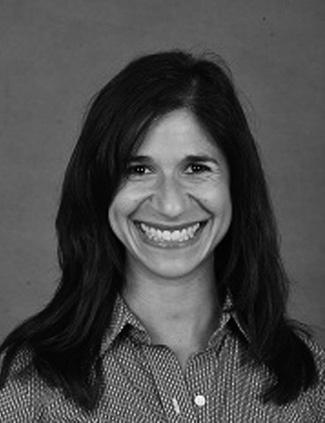
valentino said. “but it wasn’t until i took a course in developmental psychopathology, where i had the opportunity to work one-on-one with a child in a psychiatric residential facility who had a severe history of child abuse, that i became really interested in the topic.”
valentino said the class inspired her to develop a similar course on campus, p racticum in c hild maltreatment, which involves pairing local children in foster care with undergraduates to serve as their mentors.
“a fter developing a relationship with a child who had
been the victim of severe child maltreatment, i started learning more about the prevalence of child maltreatment in our country, and was shocked to realize how many children are affected by child abuse and neglect, and how little attention this issue generally received,” she said.
compared to other challenges to child development such as autism and adhd, valentino said far less attention and resources are devoted to addressing child abuse and neglect, despite the staggering rates at which they affect children.
“i feel passionate about bringing greater awareness to this issue, and beyond that, to using psychological research to inform policy and treatment efforts geared towards improving outcomes among children who have been affected by or are at risk for child maltreatment,” she said.
valentino is currently working on a randomized clinical trial ( rc T) called “Fostering healthy development among maltreated preschool-aged children” through funding from the national i nstitute of c hild health and human development ( nichd ).
“we are one and a half years into a five year project and ultimately will be enrolling
paid a dverT isemen T
240 families into the project overall,” she said. “e ach family participates in the study for one year.”
valentino said the project involves an intervention aimed at teaching maltreating mothers the necessary skills to enhance emotionally supportive communication with their children.
“i’m mainly interested in understanding if this brief intervention can improve maltreated children’s functioning in cognitive, emotional and physiological domains, if we can improve parenting and if we may identify the mechanisms that support positive intervention outcomes,” she said.
valentino said she will continue to conduct the longitudinal rc T design in order to fully evaluate whether her intervention — aimed at improving certain processes deficient among maltreating families — is effective and able to expand nationally.
“we think that teaching mothers to sensitively discuss children’s feelings and to talk more frequently with their children will enhance the mother-child relationship,” she said.
Contact Carolyn Hutyra at chutyra@nd.edu

e xhibit on polish history opens in l aFortune
By EMILY McCONVILLE news writer
a traveling exhibit detailing the history of p oland from the beginning of w orld w ar ii to the end of the c old w ar and the country’s role in international affairs during the 20th century opened m onday in the d ooley r oom of l aFortune s tudent c enter with a public reception.
The display, “From w ar to v ictory: 1939-1989,” showcases noteworthy events in p olish history, such as the 1939 g erman invasion that kicked off w orld w ar ii , p olish resistance during the war and years later during s oviet occupation, the emergence of the s olidarity trade union in 1980 and the first democratic elections since the beginning of the c old w ar. The exhibit tells its story through photos, quotations from p olish and other world leaders as well as explanations of events in both e nglish and p olish.
The exhibit was created by the i nstitute for n ational r emembrance, a w arsawbased organization which preserves p olish documents and provides education about 20th-century p olish history. The p olish c lub of n otre d ame, which has previously sponsored i nstitute of n ational r emembrance displays, brought the exhibit to n otre d ame, senior p olish c lub co-president Julia b anasikowski said.
b anasikowski said the exhibit emphasizes the p olish struggle for freedom and connects its history to its current status in the international community.
“This exhibit depicts crucial events in p oland’s history, and it shows what brought it to be such an influential part of e urope today,” she said. “For example, its former p rime m inister d onald Tusk was just chosen to be p resident of the e uropean c ouncil starting in d ecember. o bviously, they are going to have a big leadership position, and they’re a key u s . ally in talks about u krainian- r ussian tension.
“They’re a very important
part, not only for e urope, but also for the u nited s tates. s o this will be an interesting exhibit not only for people of p olish descent, but histori -
“It
shows Americans and people of different ethnicities the role Poland played in World War II and the post-war era during the Cold War.”
Arthur Laciak co-president Polish Club
ans, political science majors, anybody who is interested in e urope.”
s enior a rthur l aciak, the other co-president of p olish c lub, said the exhibit was a way to teach p olish history to those who may know nothing about it.
“ i t shows a mericans and people of different ethnicities the role p oland played in w orld w ar ii and the post-war era during the c old w ar,” l aciak said. “ i know a lot about p olish history and p olish politics because i grew up in a p olish family. i ’ve shared stories with friends and other people, but a lot of this history is not known outside p olish families, so it’s great to spread the word and tell other people.”
b anasikowski said the exhibit helps the club educate the community about p olish history and culture.
“The p olish community is not all about just p olish sausage and p olish beer and polka dancing,” she said. “ i t’s also about history and culture, and a lot of people overlook that. There’s a misconception of that. That’s something that we really want, is to teach people about the importance of p olish history.”
The exhibit is open to the public and will be on display through w ednesday.
Contact Emily McConville at emcconv1@nd.edu
Kristin Valentino psychology professor
ndso plans halloween concert
By RACHEL O’GRADY news writer
since its inception, the notre dame symphony orchestra (ndso) has attracted students and faculty alike to perform.
devoted to music from the 18th to 20th centuries, the orchestra is an opportunity for any interested member of the university community to participate — regardless of major or occupation.
senior michael prough, a biochemistry major who plays the french horn, said ndso is an accessible forum to display musical talents.
“i joined the orchestra my freshman year because i had always wanted to play in an orchestra but didn’t have the opportunity in high school,” he said.
sophmore political science major and clarinetist John mccready also said ndso provided opportunities his high school hadn’t.
“my high school didn’t have a lot of music programs, so i sort of looked to the youth orchestra programs in my area, and i really enjoyed that, so i really wanted to continue with that in college,” mccready.
prough said the group not only provides a community for its members, but also provides them with fantastic experiences.
“being a part of the ndso has been quite rewarding for me, and i’m looking forward to my last few performances with the group throughout this year,” prough said.
This Friday at 8 p.m., ndso will take the stage at the debartolo performing arts center (dpac) to perform the first of three shows this school year. The halloween performance will feature works by stravinsky and beethoven.
“it’s a really cool, spooky-themed show,” mccready said. “... we’re doing the last movement of a fivemovement piece about a witch. we’ve been preparing for this all year, thus far.”
The group performs three concerts a year in dpac and takes biennial tours off-campus.
“This year, the plan is in January to start in houston, Texas and work our way back up to campus ... going to st. louis and some other cities,” mccready said.
Contact Rachel O’Grady at rogrady@nd.edu
con T inued F rom page 1
don’t want people to forget. l ast month, colleges across the country have had panels and peaceful protests. [ s aint m ary’s] did the same. o n our first day of classes, a ug.
bridgeN d
said. “For example, our primary meeting structure revolves around bridge negotiations. we take one issue area and extend it to about a six-week period and over a period [of] three to four meetings, we actually dive into the issue.”
l ong said the club currently is addressing the issue of student debt in the context of sen. e lizabeth warren’s, d-mass., student loan refinancing bill that fell two votes short of being able to survive a republican filibuster.
l ong said members, also known as “bridgers,” set out to define the issue and hear from an expert either on-campus or via video call during the first meeting. members then divide into three “beams” — democratic, republican and mediator — and discuss the issue from these points of view. Finally, members of
paid a dverT isemen T
25th, there was a nationally renown #handsupwalkout campaign to raise awareness of police brutality and cruelty.”
d avis said supporters of the peaceful protest gathered in Ferguson and s t. l ouis between o ctober 9 and 13 to
each beam develop a concrete proposal to the issue at hand and in the next meeting, present the proposal to the larger group before holding a vote to decide which of the proposals will receive the club’s “bridge endorsement.”
l ong said this process might not always lead to a consensus, but the respectful dialogue it creates ultimately will help people from anywhere on the political spectrum better understand important issues and how to talk about them practically.
“it’s almost taking partisanship and seeing how we can still transcend that,” he said. “it’s ambitious. we talked to our members [at our last meeting] about how you define success, and we realize that we might not come to an agreement, but that doesn’t mean that we failed. The most important part is that we got people talking — both inside the meeting and outside the meeting.”
raise awareness about police brutality. “ w hat happened there affects all of us no matter where our political interests stand,” d avis said.
Contact Macaila DeMario at mdemario01@saintmarys.edu
l ong said the club also sponsors events, such as an oct. 2 lecture presented by philip K. howard, which bridgend cosponsored with the potenziani p rogram in constitutional studies. additionally, l ong said the club will promote any event held by other campus clubs so long as they can develop questions about the event that inspire constructive, actionable dialogue.
l ong said the club plans to hold an election-night event in november to “unite people socially in a way that doesn’t normally unite politically-inclined people.” The next night, he said bridgend hopes to host a professional politician to analyze the election results from his or her point of view.
bridgend meets Thursday nights at 8:00 p.m. a ny students interested in joining should email moderate@nd.edu.
Contact Jack Rooney at jrooney1@nd.edu

award
with the c oca- c ola Foundation, we have presented this distinctive award to a dozen distinguished l atin a merican leaders in recognition of their efforts to enhance the region’s public welfare,” c arozza said. “The notre d ame p rize celebrates the significant role visionary public figures play in strengthening democracy and improving the well-being of citizens across l atin a merica and the c aribbean.”
The criteria for the award include visionary leadership, distinction in public service and advancement of the wellbeing of the citizens of l atin a merica, c armen-helena Téllez, professor of conducting, said.
“a breu was chosen because he has matched these criteria in an unexpected field, that
of classical music. he created a network of youth orchestras in venezuela, now colloquially known in the u s . as e l s istema,” Téllez said. “Through this network, a breu offers young people under trying circumstances of poverty and crime an avenue for survival and selfdetermination through the discipline and camaraderie of orchestral practice.”
e l s istema has had a huge social as well as artistic impact in l atin a merica, Téllez said.
“m any people today say that a breu not only saved young people from a life of criminality, but also saved classical music from being considered irrelevant by certain pockets of society,”
Téllez said. “ m any think classical music is elitist, but they forget that the greatest classical composers have been humanitarians or defenders of
human dignity, and art is one of the tools of expression of the spirit. a breu instills these values through his work.”
The goals of a breu’s work and that of the Kellog i nstitute are the same, Téllez said.
“a s a l atin a merican artist and economist, a breu represents a geographical area of research for the Kellogg i nstitute,” Téllez said. “The Kellogg has become very important for its study of democracy and social advancement in the region. a breu’s work addresses these areas with unexpected tools and extraordinary results, and it is very fitting that the Kellogg institute has recognized his work.”
The award is the last of its kind, c arozza said.
“it is the last award because the entire initiative was funded by a large, multi-year grant from the c oca- c ola
paid a dverT isemen T
Foundation, and that funding has now been exhausted and not renewed,” c arozza said. “note, however, that a few years ago we started giving a different recognition, the notre d ame award for i nternational human d evelopment and s olidarity, and that is now going strong.”
a breu’s work provides an example to students of how thinking outside the box can provide new and exciting ways to help others, Téllez said.
“i think that undergrads can learn that doing good and transforming lives and communities, even in extraordinary ways, can come through anything and everything that they are called to do in life, so long as it is done with passion and love for others,” c arozza said.
Contact Kayla Mullen at kmullen2@nd.edu

F rom page 1
sexual assault and domestic violence.
“i want us to be widely seen as a group that is unafraid to start and to participate in the conversation of why sexual violence is still a problem at notre dame and what we can do [to] solve this problem,” deranek said.
according to mav ’s website,
“MAV was founded a number of years ago in the hope of freeing our campus of all sexual violence, and that is still the goal we are striving for today.”
Derek Kuns treasurer
MAV
the club’s creation was rooted in the belief that men should act as positive role models for other men and take responsibility to help end sexual violence against women.
“we believe that, as men, we should take pride in our masculinity and responsibility for our actions,” mav Treasurer derek Kuns said. “mav was founded a number of years ago in the hope of freeing our campus of all sexual violence, and that is still the goal we are striving for today.”
derenek said the pledge drive promotes awareness of and opposition to all sexual violence against women and is available for all men to sign.
“i remember that the only takeaway most of my friends got from Frosh-o in regards to sexual violence was that every male is a potential rapist,” Kuns said. “we shouldn’t think this way; rather, we should think that as men we can do a lot to prevent sexual violence just by taking pride in our actions and policing ourselves and our friends.”
Kuns said men must take a position of responsibility because they are too often the perpetrators of sexually violent crimes.
The pledge states that “real men care.”
“we appreciate that everyone is busy, but in less than a minute, the pledge can remind notre dame’s sons what it really means to be a man,” Kuns said.
a side from giving names to men’s faces that stand against sexual violence, deranek believes the pledge drive comes with even more benefits.
“most importantly, the pledge drive reminds everyone that it is something that all of us students stand against together, providing us with a sense of unity for a great cause,” derenek said.
Contact Selena Ponio at sponio@nd.edu
InsIde cOlumn
A great day to be nd

Zach Klonsinski sports Writer
After wandering trance-like around the Florida s t ate University campus for three hours after the game, I had every reason to feel disappointed or ticked off, pull out my hair in frustration or a combination thereof. e v ery right.
Yet I didn’t. Instead, as I sat by one of the fountains on campus, I couldn’t help but have a slight smile on my face. True, the outcome was not what I had travelled over 1,400 miles to witness, but I couldn’t help but see the big picture. Two things stuck out to me. First, I was fortunate enough to witness such a good college football game.
And second, I could not have been more proud of notre d a me. We beat Florida s t ate in everything that day: fans, band, pride and, arguably, football.
Talking with friends who watched the game on T v, e veryone said there didn’t seem to be many notre d a me fans there. What they don’t realize is F s U s cattered us all over. Perhaps this was meant to weaken the unity of our cheering. If so, it failed. From the moment the team in white came out of the tunnel, chants of “Let’s go Irish!” were taken up all across the southeast corner of the stadium. There were times Florida s t ate fans around me looked confused and helpless, the F s U band unable to overpower us enough to get that weird chop thing going in a vain attempt to drown us out. o u r band, on the other hand?
Let me put it this way: after only the first notre d a me touchdown, one female s e minole fan, visibly upset, complained, “d o t hey ever stop?!” no no t hey don’t, m s s e minole. After the game, grizzled s e minole fans shook my hand and said even against Florida or m i ami they had never seen anything like our fans in spirit, volume or number.
I have come to realize that we put a scare in Florida s t ate hearts s a turday; we made an impression they never expected coming in. We came into their house and hit them in the mouth, refusing to be overpowered in the stands, through the sound waves and, most definitively, on the gridiron. s o, as the F s U f aithful filed out of the stadium relieved — some to their cars, others to bars and frat parties — I couldn’t help but smile with pride at what notre d a me, collectively, had done.
Well that, and the thought of how great it’s going to feel when we smash them in the playoffs.
Contact Zach Klonsinski at zklonsin@nd.edu
The views expressed in the Inside Column are those of the author and not necessarily those of The Observer.
Regret: the story of Bob
h i s navy blue portfolio and b r ooks b r others cufflinks said it all: he had his stuff together. h e b rought up the b l ackhawks game at the end of the interview — how about that miracle shot in double overtime? h e w as in.
This is the story of b o b.
b o b was a good engineering student at the University of n o tre d a me. h e w ent to most of his lecture classes, except for 8:20 physics. h e d id not have the energy to discuss potential energy at 8:20.
h e f elt slightly guilty about cutting class, but realized it made for great conversation starters with fellow engineers.
“You make it to the 8:20 today?”
“ n o d i d you?”
“ n o pe.”
Friendships were made.
b o b liked the idea that he could get good, at least good enough, grades without going to class. h e a lso liked that other people thought he was naturally smart enough to ace tests without going to lectures.
b o b liked that he wasn’t considered a nerd anymore. h e a lso liked sleeping until 10. It meant he could stay up until two in the morning playing videogames with his quadmates and still get eight hours of sleep. Yay college.
s a rcasm aside, b o b loved college. h e u nderstood why adults called it the best four years of their lives.
b o b didn’t mind the lectures to which he did go. When he sauntered into class at 10:33, he felt cool. h e d ropped his bag with a thud. h e d idn’t care about being late. What he did care about was the latest activity on YikYak, so he pulled out his phone and scrolled through the newest posts for the next 10 minutes. Jokes about s mc chicks and Feve were worthy of his care, more worthy than the principles of statics the professor was going on about. h e k new what statics were: the art of staying still. h e h ad mastered this art during numerous n e tflix binge watches.
b o b was satisfied with life. h e w as satisfied with himself. h e h ad gotten the hang of college.
h e h ad learned how to get through college without learning anything. h e w ould purchase a piece of paper with his name and degree on it for $200,000. Would you like some knowledge with that? n o , thank you.
b o b landed a job in fall of his senior year; as soon as he met his interviewer, he was golden — as golden as the dome. h e s hook the employer’s hand firmly, letting him get a glimpse of his emerald class ring.
o n h is first day on the job, b o b got a tour of the office and a tutorial on the coffee maker (as if he didn’t know how to work a simple machine). h i s boss had invented the coffee maker, so b o b listened intently (at least pretended to listen intently — that high school drama requirement was finally good for something) as his boss described the newest improvements: recyclable filters and L e d - lit buttons.
h i s boss hit brew. The coffee brewed. The boss liked being obeyed.
The coffee maker served up a hazelnut concoction with the appropriate squirting sounds. d i d b o b know they had copyrighted the coffee maker squirting sound?
Finally, it was time for b o b to begin work. h i s boss handed him the hazelnut concoction and a folder containing his first project.
Looking over the briefs, b o b wished he had paid more attention during the coffee-maker tutorial. Too bad he had forgotten how to pay attention.
h e r ealized he didn’t know how a simple machine worked. h e d idn’t know how anything worked.
h e w anted to re-watch his boss explaining the coffee machine but couldn’t find the rewind button when he was living in 3- d h e c ouldn’t find the tutorial notes or recording online anywhere.
h e d id what he always did in college when he didn’t know what to do: he pulled out his phone and scrolled through Facebook. m a ybe one of his buddies had poured an ice bucket on his head recently.
h e f elt a cold chill above his head just thinking about dowsing himself in freezing water. Then he realized the chill was the cold breath of his supervisor, reading his newsfeed from behind his shoulder.
“ h o w’s the first day on the job, b o b?”
It was b o b’s last day on the job.
b o b wished he had paid attention in class in college and made the most of the education he’d paid for, but he couldn’t hit rewind or redo. Instead, he hit ‘regret.’
Erin Thomassen is a sophomore studying mechanical engineering. Send her comments or questions about her sanity at ethomass@nd.edu
The views expressed in this column are those of the author and not necessarily those of The Observer.
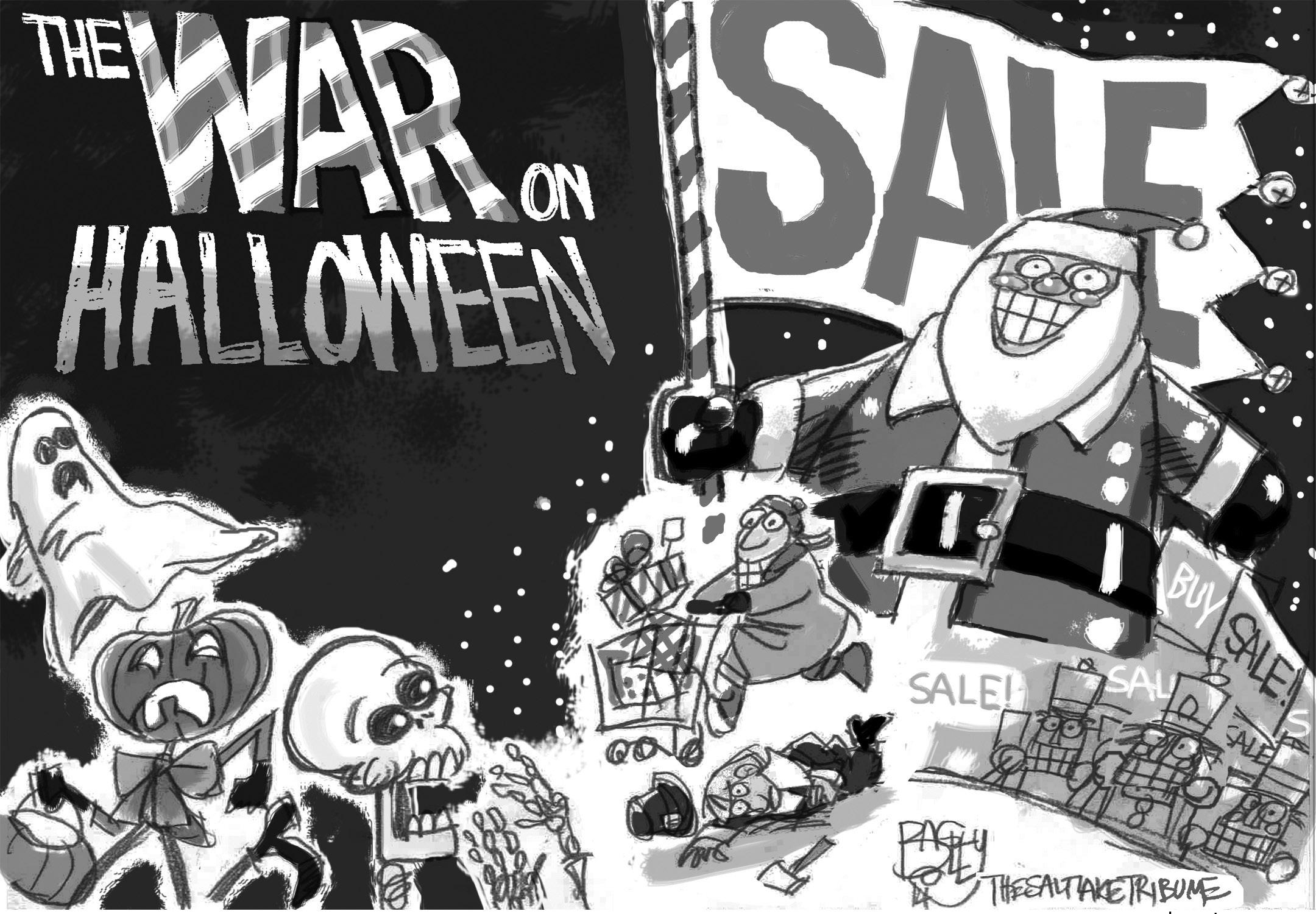
edItOrIal cartOOn
Erin Thomassen The e x amined Life
Billy McMahon blue c ollar
Whoever wins in November
The 2014 midterm elections are a week away. a lthough the outcome is uncertain, one thing is certain. w hoever wins in n ovember, not much will change.
c ongress is known for party bickering and gridlock while working people struggle through a recession that has long since ended for the elite. i t’s easy to understand why most people would see a broken system. The political system isn’t broken at all, however. i n fact, it is functioning perfectly. p eople tend to act in their own interests, and c ongress is no different. The average member of c ongress has a wealth of capital investments, and so naturally has different economic interests from the large majority of society that labors for a wage.
Keeping a mind on these different interests, the political structure begins to make sense. The electoral structure does not favor popular will. i n the 2012 elections for the h ouse of r epresentatives, d emocrats received 1.4 million more votes than r epublicans, yet r epublicans received 33 more congressional seats. voting districts cobbled together by politicians acting in their own interests disenfranchised whole societies.
b oth parties cheat the voters through gerrymandering; the r epublicans have just been more effective lately. p arty leaders play their own game to determine the outcome of elections. s ometimes the winner of their game coincides with the winner of the popular vote; sometimes it doesn’t. i t’s not that the popular vote is totally irrelevant; it’s just one factor among many that
determines a result that will be hailed as the people’s will.
w hen you read your ballot, you will have the illusion of choice. r epublican vs. d emocrat. This dichotomy, and the rage with which pundits and politicians fight over it, makes you think you are seeing a wide field of political options. b ut whichever you elect, neo-liberal free trade agreements will be signed and financial policy will be focused on the good of the stock market over the good of working people. b ombs will fall on s outh a sia; p alestine will starve, and coups will be instigated against l atin a merican democracies that challenge u s . business interests.
o ne might respond that major similarities exist because most a mericans support those policies. The problem is that political opinions are formed under institutional control. p eople base their views on their understanding of the world, which they receive from news and media outlets. w hen most of these outlets are controlled by just a few corporations, the information we receive about the world is regulated by a small class of people with very real political and economic interests.
i n spite of this, our history is filled with radical movements. The i ndustrial w orkers of the w orld, the old s ocialist p arty of a merica, the b lack p anthers — all were suppressed. o ver time, the mechanisms of control became more sophisticated. The First r ed s care saw mass arrests and political trials, but by the 1960s and 70s, the F bi could infiltrate and subvert organizations with false flag operations and just a few political assassinations.
i n part, this system functions so well because there is no mastermind. n o one is sitting in a
room pulling the strings. p olitical suppressions are obviously intentional, but our current power structures are largely the result of a capitalowning class just acting in its own interests day-to-day. i t doesn’t take leaders of state and industry plotting to undermine democracy. The system just adds up through the functions of its constituent parts.
The complexities of a constitutional convention and the fact that it would have to be called by the very elite which profits from the present system offers little hope to redrawing the rules through internal reform. d irect action is necessary. a mass movement with a cohesive program can fundamentally transform the political and economic structures of society. g iven the role of the economic elite in controlling the state, it is only through democratizing the economy that regular working people can seize more control of their society at large.
s o, if you want to vote, go vote. From election to election, there are some differences between candidates that you may find valuable enough to support one over another. d o the bizarre calculus of human suffering and decide who may cause the least. b ut when history looks back on the exploitation of working people or the abuse of the poor or the crimes of a merican imperialism, crying that you chose the lesser of two evils will not be an absolution, but an indictment. i f you participate in the system without also protesting it, you are responsible for its ills.
Billy McMahon is a senior studying Latin American history and is active in the labor movement. He welcomes all comments at wmcmahon@nd.edu
The views expressed in this column are those of the author and not necessarily those of The Observer.
Taking the urban plunge
m y u rban p lunge experience at the Father m cKenna c enter in w ashington d c ., was one i never expected and certainly one that i will never forget.
h aving grown up in the suburbs of d c . all of my life, i was unaware of the extent of urban poverty that existed just miles away. i knew there were poor individuals living in certain parts of the city, but i had never known what those conditions entailed or all of the obstacles those individuals had to overcome on a daily basis regarding things that many people take for granted. u rban p lunge broadened my perspective of a place i thought i knew well; it exposed me to the vicious cycle of urban poverty that dominates the lives of too many.
d uring my immersion at the men’s homeless shelter, i spent my time preparing and serving meals to the men, doing handiwork around the shelter and attending meetings to learn more about the social, economic and political
challenges that perpetuate poverty. i learned much in such a short amount of time and was truly immersed in the setting as we slept on church pews, served food and gathered for warmth during the polar vortex. o n the last day of the plunge, my group and i really made an effort to talk with the men at the shelter and hear more about their stories; this was the highlight of my experience.
o ne man explained how he accepted a life in poverty so that he could afford for his daughter to attend a private university and receive a topnotch education. h e beamed as he spoke of his two-year-old grandson whom he had not seen since he was an infant in hopes of preventing the child from being exposed to his unpleasant lifestyle. m any men also spoke of the prevalent mental health issues and numerous other challenges that make it seem impossible to get off of the streets and into a stable home. i remember hearing one story about a mother who had
earned enough qualifications to receive a wellpaying job outside of the city but could not afford to send her kids to daycare while she worked, ultimately forcing her to resort to a much lowerpaying, unsteady job.
Too many people assume that homeless individuals are lazy and unwilling to put in the effort to make a change, but that is not the case. s ometimes there are circumstances out of their control that force them to be stuck in poverty. Through u rban p lunge, i was able to become much more aware of these sorts of challenges, and my broadened viewpoint helps me to see the world in a new light. i encourage my peers to take advantage of this opportunity and learn more about the lives of others.
Kristen Loehle sophomore c avanaugh h all o ct. 27
blues

By MATTHEW MUNHALL s cene writer
l et's get one thing clear: Taylor s wift has always been a pop star. sure, swift was first introduced to a merica as a curly-haired nashville teenager who sang about Tim mc graw and slamming screen doors, but even early hits like "Teardrops o n my guitar" were pop songs at heart. b y the time Kanye west interrupted her acceptance speech at the 2009 vma s, she had secured her place as one of a merica’s biggest pop stars.
"1989," s wift's fifth album, has been touted as her "first documented, official pop album." it’s a promotional claim that feels somewhat disingenuous given her track record as one of the most consistently excellent pop songwriters of the past decade.
her last album, 2012's "red," was essentially a pop album — a great, if inconsistent, collection of songs — even if it was not documented and official. o n the album, swift tried her hand at a number of different genres, as if proposing multiple paths forward as an artist. There were vaguely-folk ballads with hints of Joni m itchell. There were springsteen-esque stadium anthems with soaring guitars. a nd of course there were top-40 smashes like " we a re never e ver g etting b ack Together" and "i Knew you were Trouble."
o n "1989," swift doubles down on the last of those paths: the big, broad max martin-produced pop song. martin, the s candinavian hitmaker behind 18 number-one hits over the past 15 years, produced the
album along with s wift. it’s a natural progression for the 24-year-old singer and also the least interesting route she could have taken.
o n past albums, swift's best songs grounded universal emotions in the specificities of her own experiences. it's hard not to think martin's influence smoothed off some of the rough edges and idiosyncrasies that made her songwriting so compelling. The songs off "1989" seem designed to take over the world, and i guess that's kind of the point. it's a decent pop album, but not a very Taylor s wift album.
That said, martin’s production work on the album is top-notch with a glossy sheen that, despite the album's title, sounds unquestionably like 2014. The album is indebted to the moody electropop of l orde, whom s wift has befriended in recent months, and the vocal affectations of l ana d el rey. swift also mines inspiration from the indie pop of groups like c hvrches, haim and bleachers (whose frontman Jack a ntonoff collaborated with s wift on two "1989" tracks). unfortunately, so many of the album's tracks come off as offensively generic like " welcome to new york," an ode to d isneyfied new york where "you can want who you want." w ith its cliche portrayal of the city, the song seems bound for a tourism ad in the coming months. The vindictive "b ad blood" is a takedown of a pop rival (rumored to be Katy perry) who "tried to sabotage [ swift's] entire arena tour." i ronically, it is the song that sounds the most like a Katy perry single with its bratty chorus and gratingly corny lyrics.
The results of swift's pop experiment are not
uniformly terrible. The fantastic "blank space" is a self-aware skewering of her public perception as a serial monogamist. "g ot a long list of ex-lovers, they’ll tell you i'm insane," swift sings on the chorus. "but i've got a blank space, baby," she continues, followed by the sound of a pen clicking, "and i'll write your name." similarly, "style" is an excellent, atmospheric 80s synth pop song about a guy with a "James d ean daydream look in [his] eye." it is one of her strongest tracks to date and undeniably swiftian, showcasing her unique storytelling ability and a clever (but notat-all-subtle) reference to her ex harry styles.
"1989" is ultimately the work of an artist in transition, trying to figure out her place in the pop landscape with mixed results. it's a minor misstep in swift's career as a musician — but then again, making mistakes is what your early twenties are all about.
Contact Matthew Munhall at mmunhall@nd.edu
“1989”
Taylor Swift
Label: Big Machine Records
Tracks: “Blank Space,” “Style,” “Out of the Woods”
If you like: Lorde, Chvrches, Lana Del Rey

By ERIN McAULIFFE
s cene writer
i initially had no inclination to see “st. vincent;" the “mean old man and young boy becoming besties” plot seemed contrived. however, while at home on break during my third consecutive hour in front of the T v, i watched bill murray on “The ellen show.” promoting the film clad in a velvet maroon fedora, murray went on about first-time director, Theodore melfi. it seems odd that murray, a big time, somewhat reclusive actor, would agree to star in a movie with a first-time director, but he said after reading the script he knew it would work and took the part of st. vincent. Thank god.
murray’s performance is phenomenal. The film opens with murray’s character, vincent, stealing an apple from a fruit stand as he passes by. The petty crime is worsened by the fact that he touched every type to find the best. vincent, a broke old man with a gambling and drinking problem who spends his time with “the lady of the night” is similar to the other lovelorn, exhausted characters he’s played in films like “rushmore,” “lost in Translation” and “life aquatic with steve Zizzou.” perhaps oliver, vincent’s twelve year-old neighbor and source of income via his babysitting services, summed the character up
best: “he’s sorta cool in a grouchy sort of way.” murray’s character has a depth exceeding the usual depressed, quirky characters he is known for, however. a lthough first presented as a grumpy slave to many vices, vincent develops into a complex character. oliver, first-time actor Jaeden lieberher and his mom maggie, melissa mccarthy, move next to vincent after a rough divorce. vincent takes on the unexpected role of babysitter — maggie needs someone close by to watch oliver after school as she works overtime at the hospital, and vincent needs the money. so begins vincent's role as a modern day mr. miyagi.
he teaches oliver to ward off bullies with a signature nose-breaking move, feeds him “sushi” (canned sardines), has him mow his “dirt patch” in the backyard and takes him to the bar and race track.
in one of the cutest scenes, the two win big at the racetrack but play it off as if they lost because a man v incent owes money to is in the crowd. They proceed to run out to the parking lot in slow motion — an example of melfi’s effective styling as a first-time director. The scene channels wes a nderson’s recurring use of slow motion, as he is a director murray has worked closely with.
other details in the film emphasize melfi’s involved directorial style, including a scene in which vincent
meanders all the way through a velvet-roped line at an empty bank to get to the teller.
a nother standout moment occurs during the credits — so don’t leave early. vincent steps outside to water a dead plant while singing bob dylan’s “shelter From The storm” along with his yellow walkman in a quirky, murray-esque ending.
melfi’s directorial approach is empowered by his witty, heartfelt script. Filled with hilarious one-liners delivered by every character, the film will have you laughing until you cry. literally.
a lthough a funny film, the story has a depth that will leave you crying next to your dad in the theater, passing back and forth the one napkin you got for popcorn finger-grease. Tip: get more than one napkin or see it with a grandma who always has a pack of tissues in her “pocketbook.”
The plot is, at its basis, a well-known, somewhat predictable story; however, the performances and writing elevate the film to the “this is going to win oscars” level it reaches. go see “st. vincent” to laugh, to cry and to see bill murray play his most “holy” developed character to date.
Contact Erin McAuliffe at emcaulif@nd.edu
Tomahawk stopped
Last-minute offensive pass interference penalty negates ND TD, preserves Florida State victory
There’s no debating Notre Dame is for real
TALLAHASSEE, Fla. — Heads hung low, Notre Dame was stunned.
Players moved slowly to the tunnel of the opposite end zone. While Doak campbell Stadium roared, the Irish were silenced.
Notre Dame had just topped the Seminoles — the defending national champions. Against the Heisman Trophy-winning quarterback. On the road.
but an offensive pass-interference penalty negated the touchdown. Florida State won.
We could debate the call.
We could debate the value of moral victories.
We could debate Notre Dame’s chances of a trip to the college Football Playoff.
There’s no debating Notre Dame is for real.
Doubts surrounded this Irish team the way #blameJameis signs enveloped the college GameDay scene.
Notre Dame hadn’t played anyone.
Notre Dame couldn’t run the ball.
Notre Dame got shredded by North carolina.
Some of the criticisms were warranted; some weren’t. None of that matters now.
because for 60 minutes, Notre Dame went toe-to-toe with Famous Jameis, the ‘Noles and the simple-yet-seductive war chant. The Irish outgained Florida State, 470-323. The Seminoles grabbed their first lead with just 7:39 remaining in the fourth quarter. Notre Dame punished Florida State in the trenches. Notre Dame did everything except win.
“We came in here 100 percent confident that we were going to beat them, that we were going to shock the world,” Irish sophomore receiver corey Robinson said. “It was us against the world today, and, unfortunately, we didn’t pull it out.”
Notre Dame’s players were confident. Ardent Irish supporters were confident. but who else was sold on the Irish? Apparently not “the world.” between Everett


penalty that negated the score.
Golson-Winston showdown brings game down
to wire
By MARY GREEN Sports Editor
TALLAHASSEE, Fla. — Much of the allure of Saturday’s matchup between Florida State and Notre Dame centered on the nation’s No. 2 team facing No. 5, but just as much intrigue came from the dueling No. 5s on the field.
Jameis Winston versus Everett Golson — two possible Heisman contenders and two quarterbacks who were supposed to make or break their teams.
And when both gunslingers stepped up to force the game to come down to the very last play, the most-watched and arguably best game of the season so far resulted.
“These guys going back and forth — somebody called and left me a message and said this is AliFrazier,” Seminoles head coach Jimbo Fisher said. “This is a slugfest, Thriller in Manila, standing toe to toe. That’s what it felt like.” Winston completed 23 of his 31 pass attempts for 273 yards.
He only notched 92 yards in the first half on eight completions, including an 11-yard touchdown strike to freshman receiver Travis Rudolph.
By SAMANTHA ZUBA Assistant Managing Editor
TALLAHASSEE, Fla. — “Pass interference” will ring in Notre Dame’s ears for a long time.
The Irish thought they had won when sophomore receiver corey Robinson hauled in a would-be two-yard pass from senior quarterback Everett Golson. Touchdown Irish — but the refs were waving their arms instead of raising them.
Offensive pass interference called on junior receiver c.J. Prosise.
“We execute that play every day, and we do it legally, and that’s the way we coach it,” Irish head coach brian Kelly said afterward. “We don’t coach illegal plays.”
With one more chance on fourth-and-18, Golson tossed the ball up under heavy pressure, and Seminoles freshman linebacker Jacob Pugh came up
Player of the game
C orey ro BINS o N
Ir I sh s OPh OMO r E r ECEIVE r
Robinson nabbed eight receptions for 99 yards and two touchdowns, including a couple of highlight-reel grabs (see his second score). Robinson hauled in a 20-yard reception on fourth-and-18 on Notre Dame’s final drive to set up the would-be, go-ahead touchdown in the final seconds.
with it — Florida State 31, Notre Dame 27.
“We needed to make one more play,” Kelly said.
A few snaps earlier, Golson had converted on fourth-and-18, connecting with Robinson for 20 yards to keep the Irish hopes alive, but the second effort didn’t pan out.
“They called the offensive pass interferences,” Golson said. “That’s something that you can’t argue with. You just gotta play through it. That last play on fourth-and-18, I probably could have made a play, so I think that’s what I’m more just disappointed in in getting that loss.”
Notre Dame ended the first half on a high, with a 17-10 lead after scoring on a 34-yard field goal by senior kicker Kyle brindza. but Florida State jumped out after halftime, outscoring the Irish in the second half, 21-10.
The Seminoles scored first in
The Notre Dame defense was able to get to Winston and hold back the Florida State offense as a whole. The Irish allowed just 19 rushing yards and five first downs, and the Seminoles, who failed to convert any of their four thirddown opportunities, punted three times.
However, Winston brought the heat in the second half.
“I think they came out with the attitude that they weren’t going to not score,” Irish sophomore defensive lineman Isaac Rochell said of Florida State after halftime. “I think there was a huge shift in their attitude. You could tell on the field their players were more engaged in the game.”
After his team began the third quarter down 17-10, Winston led three drives that ended with points for the Seminoles. One of those came in the fourth quarter to set up senior running back Karlos Williams’ one-yard touchdown scamper, which vaulted Florida State ahead for the first time in the game at 31-27.
ZACH LLORENS | The Observer
Top: Sophomore receivers Will Fuller and Corey Robinson celebrate Robinson’s would-be go-ahead touchdown. Bottom: Irish players await the offensive pass-interference
Mike Monaco Senior Sports Writer
QuarterBaCkS
Everett did throw one legitimate interception, but you can’t ask for a whole lot more from the quarterback going up against the No. 2 team in the country. Golson completed 31 of 52 passes for 313 yards and three touchdowns. He kept the final drive alive by finding corey Robinson on fourth-and-18.
ru NNINg BaCkS
For the second consecutive game, sophomore Tarean Folston was the main man out of the Notre Dame backfield. Folston toted the rock 21 times for 120 yards. He didn’t have a single rush for negative yardage. And while he wasn’t the pass-catching force he was against North carolina, Folston still turned in a strong all-around effort in the lead role.
reCeI verS
corey Robinson and Will Fuller — who hauled in eight catches each — combined for 178 yards and three touchdowns. Robinson, in particular, made some spectacular catches in key spots. c.J. Prosise (six catches for 59 yards) and chris brown (five grabs for 38 yards) chipped in as well.
offe NSI ve lIN e
Notre Dame’s offensive line consistently created running lanes for Folston, as the Irish racked up 157 rushing yards on 35 attempts (4.5 yards per carry). For the most part, Golson had enough time to throw.
defe NSI ve lI N e
The Irish defensive line earns the first solid ‘A’ of any position group this season. The Seminoles were limited to 50 yards rushing on 26 carries, and Jarron Jones, Sheldon Day, Isaac Rochell and Romeo Okwara kept a steady stream of pressure on Jameis Winston all night long.
lIN e BaCkerS
Joe Schmidt notched nine tackles and an interception, and Jaylon Smith added four. The linebackers held stifle the Seminoles run game, but Winston did find a lot of success through the air over the center of the field.
defe NSI ve BaCkS
Though Jameis Winston had his way in the second half, it’s tough to really condemn the Irish defensive backs. The reigning Heisman Trophy winner was bound to have some success at some point in the game. He picked apart Notre Dame in the second half.
SP eCIal teamS
Kyle brindza connected on his two field-goal tries (34 and 46 yards), but Notre Dame again couldn’t get much going in its return game with either Amir carlisle or cam McDaniel. The Irish allowed a couple of decent returns to the Seminoles, but the special teams were solid all things considered.
CoaCh INg
brian Kelly drew up an impressive game plan against the Seminoles, replete with a stimulated rushing attack and a strong passing game. brian vanGorder had the defense flying around in the first half but did give up some big plays to Winston in the second half.
o verall gPa : 3.44 ( a-)
Notre Dame played one of its best games in recent memory, outplaying Florida State for the bulk of the game, only to come out on the losing end in the final seconds. The offense clicked and the defense made life difficult on Jameis Winston, especially in the first half. brian Kelly, who called a strong game throughout, even drew up a seemingly perfect final play.
Play of the game
offe NSI ve PaSS-INterfere NC e P e Nalty o N N otre dame
could it be anything else? The offensive pass-interference penalty on Notre Dame’s final drive negated the would-be go-ahead touchdown — a two-yard reception by corey Robinson from Everett Golson. Instead, the Irish could do anything on fourth-and-goal from the 18-yard line.
the second half to even the score, 17-17.
“I said, ‘Think about this, as well as you got outplayed in the first half, you’re down one drive, 17-10,’” Seminoles head coach Jimbo Fisher said. “We got out, got the drive, got back in the game. Got the momentum and started playing our game.”
The adjustments Florida State made were evident on the field, Irish sophomore defensive lineman Isaac Rochell said.
“I think there was a huge shift in their attitude,” Rochell said. “You could tell on the field their players were more engaged in the game.”
That attitude was a refusal to quit, Seminoles redshirt sophomore quarterback Jameis Winston said.
“The one thing that people need to realize about the Seminoles team is when we’ve got our backs against the wall, we always rise,” he said. “We start playing harder.”
Winston threw for two touchdowns in the second half, and Florida State activated its running game for two rushing touchdowns.
before that, the Seminoles rushing attack hadn’t been rolling. Florida State tallied 19
rushing yards in the first half. The Seminoles added just 31 yards in the second half, but senior tailback Karlos Williams scored a two-yard rushing touchdown in the third quarter and added a second in the fourth.
The Irish, on the other hand, ran heavily at Florida State, particularly in the first two quarters as they racked up 115 yards before the half. Sophomore running back Tarean Folston handled the bulk of the work and finished with 120 yards on 21 carries.
On the third Irish drive of the game, five Folston carries drove Notre Dame from its own 16 to the Florida State 32. The Irish scored the first points of the game on a pass from Golson to Robinson.
Offensively, Notre Dame put itself in position to meet its goals, Kelly said.
“We needed to get into the 30s [in points],” he said. “We needed to have some balance in our offense, which I thought we did. We needed to have some tempo in our offense, which I think we did. And some ball control. I think we hit virtually all of those.”
Winston evened the score at 7-7 on the drive immediately following Notre Dame’s first touchdown with an 11-yard pass to freshman receiver Travis Rudolph. Irish senior safety Matthias Farley grabbed Rudolph but lost his
footing and slid out of bounds as Rudolph scored. Seminoles senior receiver Rashad Greene found space and turned it into 22yard and 33-yard gains, respectively, to set up the touchdown.
Facing a momentum shift after Florida State intercepted Golson, Irish senior linebacker Joe Schmidt intercepted Winston on the very next play. Junior defensive lineman Jarron Jones hustled Winston back toward his own end zone, and Schmidt snagged the off-balance throw. The resulting Irish touchdown increased Notre Dame’s lead to 14-7.
“Jarron got some great pressure and flushed him a little bit,” Schmidt said. “And [Winston] just threw it up there for what felt like a millennium, and thank God it just came down, and somebody whacks me from behind, which is kind of fun, and it was pretty cool.”
Golson played a clean game other than his interception and a fumble. He completed 31 of 52 passes and threw for 313 yards and three touchdowns. Winston was 23-for-31 with 273 yards and two touchdowns.
“I thought our quarterback played better than [Winston] tonight, just didn’t show up on the scoreboard,” Kelly said.
Contact Samantha Zuba at szuba@nd.edu
Kelly criticizes officials
By MIKE MONACO Senior Sports Writer
TALLAHASSEE, Fla. — barely
14 hours after brian Kelly and his players took the bulk of the blame for Notre Dame’s heartbreaking 31-27 loss to No. 2 Florida State on Saturday at Doak campbell Stadium, Kelly added a different tone Sunday.
The common refrain from the Irish in the wee hours late Saturday night and into Sunday morning was that they needed to make one more play. Kelly reiterated that sentiment on Sunday
but also criticized the referees — from the Acc — that adjudicated Saturday’s top-five matchup. Notre Dame was whistled for an offensive pass-interference penalty in the games final seconds, negating what would have been the go-ahead touchdown — a two-yard pass from Irish senior quarterback Everett Golson to sophomore receiver corey Robinson.
“I have less clarity,” Kelly said Sunday. “I guess it was actually called on [sophomore receiver] Will Fuller, not [junior receiver] c.J. Prosise. Just adds more
uncertainty as to the final play.
“Again, the play itself in terms of what we ask our kids to do, it was pretty clear what happened on the play. Florida State blew the coverage, and they got rewarded for it.”
Kelly said he didn’t think Fuller went out of his way to “impede the defender.”
“The official that was furthest from the play that had the ability to see it saw it differently,” Kelly said.
The official box score listed the
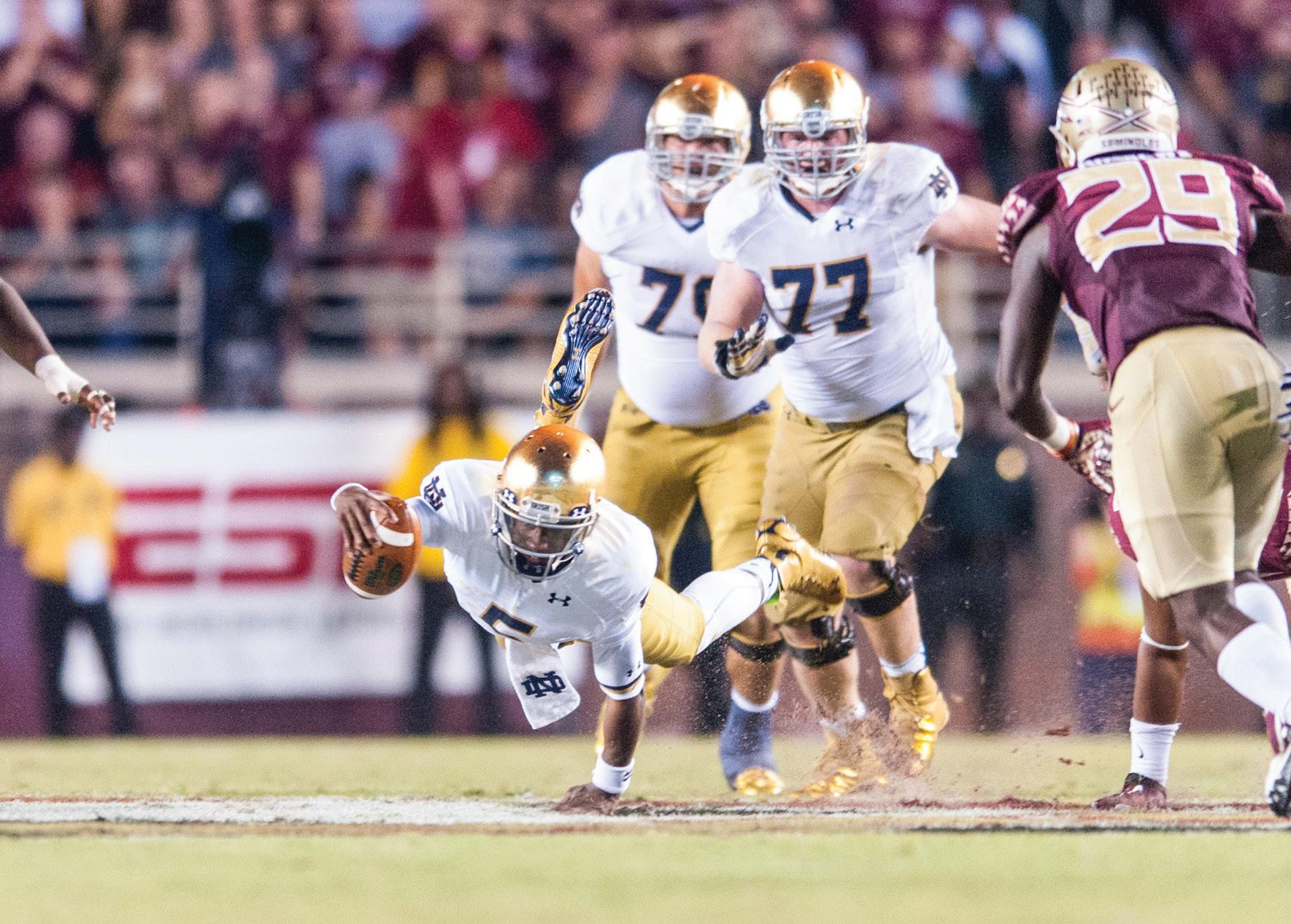
Irish senior quarterback Everett Golson sprawls forward during Notre Dame’s 31-27 loss to No. 2 Florida State on Oct. 18 at Doak Campbell Stadium in Tallahassee, Florida.
Irish
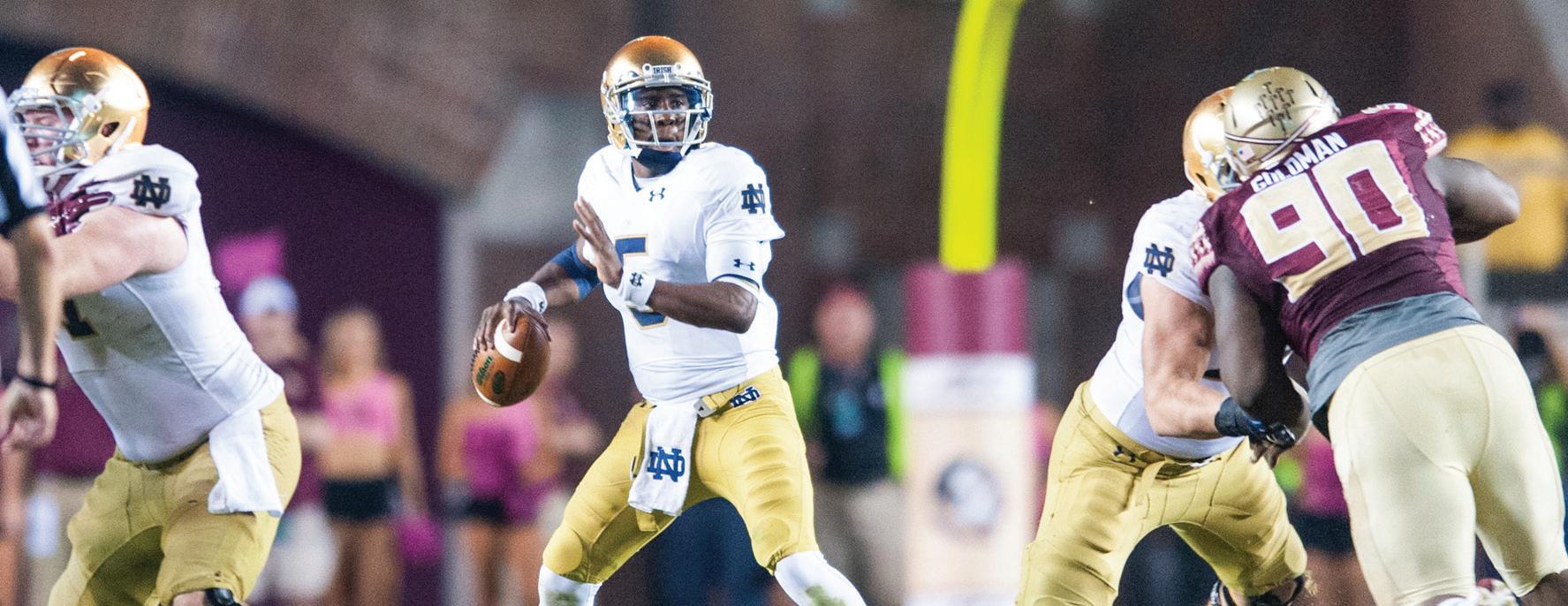
quarterback Everett Golson looks to fire downfield during Notre Dame’s 31-27 loss to Florida State on Oct. 18 in Tallahassee, Florida. Golson tossed three touchdown passes in the defeat.
cONTINUED FROM PAGE 1
“He’s a competitor,” Fisher said of the reigning Heisman Trophy winner. “He can compartmentalize and focus. And he can see. He has a drive to win. Drive for greatness. Not because of him but for his team. He really does.”
Golson picked up 313 passing yards, connecting on 31 of his 52 throws. He fired two touchdowns to Irish sophomore receiver corey Robinson, the first on a one-yard pass in the first quarter and the other on a nineyard pass in the second. The senior threw his third score to Irish sophomore receiver Will Fuller in the third quarter.
“Their quarterback is a heck of a player,” Fisher said.
On the final Irish drive of the game, Golson was sacked
Statement
Golson’s turnovers and the youth on defense, there were still unanswered questions.
All the off-the-field and onfield noise that had followed both teams throughout the season funneled in through the Doak campbell Stadium tunnels and exploded into a raucous environment for three hours and 27 minutes of entertaining, competitive football. but the Irish refused to let the neverending war chant deafen them.
Notre Dame answered all the questions. The players and coaches knew the answers beforehand. The studying was done. It was just time to teach everyone else.
“We knew that our football team was a good football team,” Irish head coach brian Kelly said. “And they were excited
SCorINg Summary

N otre dame 7, S yra C u S e 0
corey Robinson one-yard pass from Golson (brindza kick)
2:10 remaining
Drive: 12 plays, 84 yards, 6:43 elapsed
N otre dame 7, flor I da State 7
Travis Rudolph 11-yard pass from Winston (Aguayo kick)
penalty against Prosise. Kelly said it was his understanding the call on the field went against Fuller, though there hasn’t been any clarity since the end of the game.
“We’ll have our conversations with the supervisor of officials for the Acc here a little bit later this afternoon,” Kelly said. “I’m sure we’ll get even less clarification.”
Replays also show Florida State junior defensive back P.J. Williams remove his helmet after the play while still on the field. by rule, a
on third-and-12 at midfield. However, he then found Robinson on fourth-and-18 to give Notre Dame another chance to retake the lead with just over a minute left.
“The stadium got real loud and I knew this was it — we’ve got to make a play and I thought he was going to come to me, and I just put myself in the best position to get open,” Robinson said. “Luckily, I made the play and extended the drive.”
Golson also extended his streak of games with a turnover to four, tossing a second-quarter pick to Seminoles freshman linebacker Jacob Pugh. Florida State could not capitalize on the miscue, as Winston followed that up on the next play with an interception to Irish senior linebacker Joe Schmidt. However, it was Golson’s second interception of the night that
about the matchup. Look, they were on a national stage and I think they showed everybody what kind of football team they are tonight.”
Notre Dame is an elite team.
It isn’t a year ahead of schedule, although it can return nearly every starter next season. This is the new schedule. A playoff berth is within reach.
Kelly had his players truly believing they could win. Every time this season he’s been asked if he is “surprised” by his team, he says no, in so many words. He says he always knew the potential was there. Asked if he has been surprised at any point this season, Irish junior defensive end and captain Sheldon Day followed Kelly’s lead.
“I wouldn’t call it surprise,” Day said, “because we kind of established ourselves in camp to make sure that we live up to the expectations.”
player who intentionally removes his helmet during the down commits a foul for unsportsmanlike conduct.
“They said they missed a call,” Kelly said of the non-call. “They said they just missed it.”
A live-ball penalty (such as pass interference) followed by a deadball penalty (removing a helmet) results in penalties administered separately and in the order of occurrence.
Penalties and no-calls aside, Kelly did say the Irish just didn’t finish the job.
“You gotta take the belt from the champion,” Kelly said. “You
made the difference in the game.
On fourth-and-goal from the Seminole 18-yard line with 13 seconds left, he heaved up a door-die pass that Pugh grabbed to seal the Seminoles’ win.
That play followed what would have been Golson’s third touchdown pass of the game Robinson, but the score was negated by an offensive pass interference call against Fuller.
Winston’s team may have left Doak campbell Stadium with the 31-27 win, but Irish head coach brian Kelly said the quarterback in blue and gold outshined the one in garnet and gold.
“I thought our quarterback played better than [Winston] tonight, just didn’t show up on the scoreboard,” Kelly said.
Contact Mary Green at mgreen8@nd.edu
For the first time in a long time at Notre Dame, the Irish might be surpassing expectations with their performance. but the Irish themselves aren’t surprised. They expected to win.
And they nearly did.
“We needed to make one more play,” Kelly said.
Notre Dame did — then it hadn’t.
but that penalty — that controversy — changes little. Notre Dame proved itself Saturday night, and a season of opportunity lies ahead.
“Just keep your head up,” Golson said of his message to teammates.
He’s right.
Contact Mike Monaco at jmonaco@nd.edu
The views expressed in this column are those of the author and not necessarily those of The Observer.
can’t leave it up to a decision that’s made at the end.”
“When you get a team like this, you outplay them, you got to put them away,” he added later. “You got to make sure that you put them away, and we didn’t do that.”
Despite his noted frustrations, Kelly circled back to his attitude Saturday night.
“If you got the champ, you can’t win by split decision, you got to knock them out,” Kelly said. “I think that’s what we want to take away from this.”
Contact Mike Monaco at jmonaco@nd.edu


0:19 remaining
Drive: Four plays, 65 yards, 1:51 elapsed
N otre dame 14, flor I da State 7
Robinson nine-yard pass from Golson (brindza kick)
12:00 remaining
Drive: Two plays, 31 yards, 0:40 elapsed
N otre dame 14, flor I da State 10
Roberto Aguayo 28-yard field goal
4:46 remaining Drive: 10 plays, 39 yards, 3:41 elapsed
N otre dame 17, flor I da State 10
Kyle brindza 34-yard field goal
0:39 remaining
Drive: 14 plays, 67 yards, 4:01 elapsed
N otre dame 17, flor I da State 17
Rashad Greene 10-yard pass from Winston (Aguayo kick)
10:37 remaining
Drive: Nine plays, 70 yards, 4:17 elapsed
N otre dame 24, flor I da State 17
Will Fuller 11-yard pass from Golson (brindza kick)
7:26 remaining
Seven plays, 83 yards, 3:06 elapsed
N otre dame 24, flor I da State 24
Karlos Williams two-yard run (Aguayo kick)
3:38 remaining Drive: Seven plays, 75 yards, 3:45 elapsed
N otre dame 27, flor I da State 24
Kyle brindza 46-yard field goal
11:40 remaining
Drive: 10 plays, 29 yards, 4:01 elapsed
flor I da State 31, N otre dame 27
Karlos Williams one-yard run (Aguayo kick)
7:39 remaining
Drive: 10 plays, 75 yards, 4:01 elapsed

ZACH LLORENS | The Observer
senior

turmoIl IN tallahaSSee

Corey Robinson’s two-yard, go-ahead touchdown reception with 13 seconds left in regulation was wiped away by an offensive pass interference penalty on Notre Dame. Florida State held on to defeat the Irish, 31-27, on Oct. 18 in Tallahassee, Florida, at Doak Campbell Stadium. The Irish led or were tied with the Seminoles for roughly 52 of the 60 minutes and outgained Florida State by 147 yards.

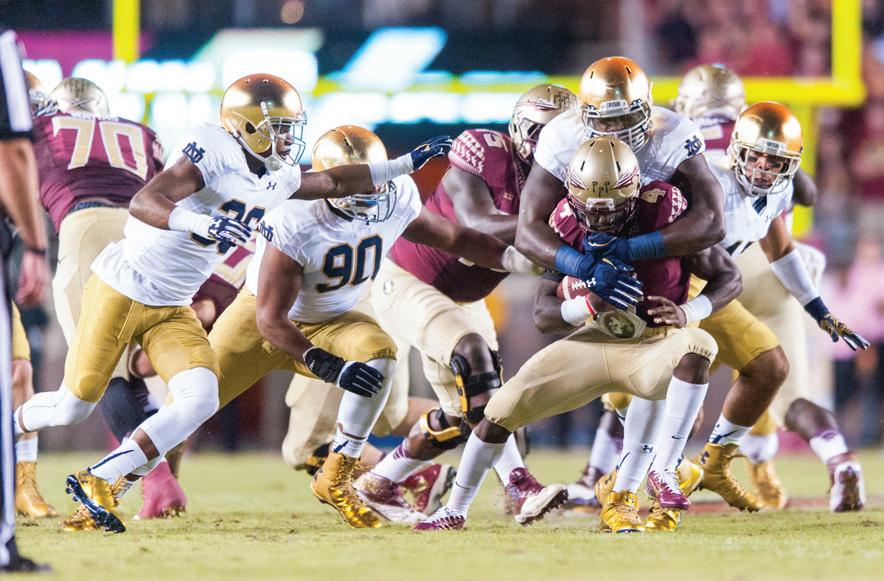

ZACH LLORENS | The Observer
Irish senior tight end Ben Koyack sprints downfield during then-No. 5 Notre Dame’s 31-27 loss to No. 2 Florida State on Oct. 18 at Doak Campbell Stadium in Tallahassee, Florida. The Irish dropped to 6-1 with the loss. Following a bye week, Notre Dame will face Navy on Saturday.
ZACH LLORENS | The Observer
Irish sophomore receiver Corey Robinson races across the field during Notre Dame’s 31-27 loss to Florida State. Robinson tallied eight receptions for 99 yards and two touchdowns.
ZACH LLORENS | The Observer
Irish sophomore receiver Will Fuller runs off a blocker during Notre Dame’s loss to Florida State.
ZACH LLORENS | The Observer
Irish players swallow up Seminoles running back Dalvin Cook during Florida State’s win Oct. 18.
ZACH LLORENS | The Observer
Irish junior receiver C.J. Prosise notched six receptions for 59 yards during Notre Dame’s 31-27 loss to Florida State on Oct. 18.

By MATT McMAHON s cene writer
it doesn’t take long for “The Trip” to introduce the personalities and cruxes of its two characters. steve coogan, or rather the fictionalized version of him, quickly clarifies to peer, colleague and long-time acquaintance rob brydon, also playing a fictionalized version of himself, that he had asked several other people to accompany him on a tour of northern england’s restaurants before calling brydon at the opening of the film. brydon hesitantly responds that he’d have to ask his wife before committing to the trip sponsored by the english publication, “The observer." brydon is not close to coogan’s first choice for companionship on his weeklong expedition, and brydon would obviously much rather be with his family. These qualifications inform the actors’ film-long journey across the english countryside’s acclaimed restaurants.
The film itself unfolds like a calmly paced, mature roadtrip comedy, mining for laughs through conversation instead of gross-out gags or huge set-pieces. in a slight skewing of the traditional form, the reason for the trip really is the trip and not some end objective; at one point, one of the men assures the other that it’s not about the destination — it’s about the journey. still, the two stars never feel compelled to ascend above their own childlike pettiness, with their meals and general interactions often devolving into impression-offs or tit-for-tat bouts of mostly friendly gibes and gritted teeth. competition between the two stoops down to as insignificant levels
as the appeal of their separately ordered appetizers and their individual singing ranges. in lesser hands, this central function of contention could come off obnoxious or even mean-spirited — especially in the defining cemetery scene in which coogan delivers a hypothetical eulogy to an inquiring brydon. instead, coogan and brydon have such an ingrained chemistry that their bickering feels completely natural and normal to their relationship. despite the fact that, at various times, they are both independently unwilling to admit to the weight of their friendship, their familiarity with each other is apparent throughout — particularly in this cemetery scene. coming after coogan has a conversation with his son revealing that coogan and brydon have known each other for 11 years, the scene pinpoints each character’s complex, flawed psyches. both coldly make jokes about the other’s career moves, clearly knowing and having at least a little appreciation for them, but not wanting to cede to any compliments. w hile these subtle complexities permeate the motivations for the two main characters, they lay buried under the utter ridiculousness of the tour mates’ conversations. coogan’s genius, auteur-only mentality clashes with brydon’s laidback demeanor and steady mainstream success. coogan never misses a chance to critique brydon’s work and unrelenting impression outbursts while brydon mindfully works in slight checks to coogan’s inflated ego. The actors’ awareness of each other’s ticks shows their knack for quick yet substantial improv, most apparent in their collaborative riff on a mel gibson-esque costume
drama’s climactic action. director michael winterbottom carefully catches all of the pair's masterful commitment and improvisation, finding laughs in the heated moments as well as the lulls and reactionary beats.
winterbottom lends a patient hand to his film’s other aspects as well. ably handling the sprawling scenery and the insular two-seated tables, he keeps the camera rolling past conventional timing and lets everything play its course. big scenic shots and behind-the-line cuts to the dishes being prepared praise the country and add character to the food. “The Trip” is therefore natural and relaxed, playing out almost like a documentary. events and drama rise to prominence for brief moments, providing momentary stakes. Then they sink back, lying dormant while subconsciously affecting the characters’ behavior. not every plot point is solved by the conclusion, acknowledging the trip’s brevity in comparison to the men's greater lives outside the movie.
“The Trip” ends on perhaps a melancholic note — much like the smaller ones sprinkled throughout in various line readings and reaction shots — juxtaposing coogan and brydon’s opposing lifestyles. however, coogan’s final career and life decision-making may provide a moment of hopefulness. still, these moments merely float in and out, as spending two hours eavesdropping on the weeklong trip shared by these two enigmatic personalities completely entertains and sometimes even offers slight revelations.
Contact Matt McMahon at mmcmaho7@nd.edu

By THOM BEHRENS s cene writer
Few bands in our lifetime have been able to hold us in the same kind of abusive relationship with their attitude, sound and emotion, so abusive to the listener but so essential to our world experience that we can’t imagine our world without them after that pivotal first listen. w hen we were youngsters, we had my c hemical romance to pin us into evenings of essential angst and needless sorrow in the bedrooms of our parents’ houses. but as we matured and our experiences in this world grew, we lost the need for this kind of emotional release, and my chemical romance became irrelevant and dissolved. but as they did, the experimental hip-hop group death grips rose to prominence, with a set of more mature context for our maturing problem set: an outlet for the seemingly unhinged testosterone of our young bodies, the sexual frustration of our hedonistic pastime culture and the revulsion of and revelry in each. but as we learned to contextualize these problems and develop ourselves into more sophisticated hominids, death grips, too, has acknowledged that their time had come. w ho, then, is to take up the heavy yoke of relating to our intimate fears, anxieties and secrets? The leading candidate in my book is l a .-based noise rap group c lipping. consisting of daveed diggs, Jonathan snipes
and w illiam hutson, this trailblazing trio represents all the confusion, chaos and self-indulgence, both in sound and lyrical content, that young twenty-somethings need to abuse their ears and lacerate their minds. diggs, the lead mc, offers an impressive flow, motivating listeners to throw hands in the air and hips against a partner. one part sleaze and two parts inyour-face, diggs canvases both of c lipping’s releases ("m id city" in 2013 and "clppng in 2014") with fast and furious verses concerned with anything you’ve ever regretted — and he does it with uncanny efficiency. i n the intro to "clppng" (released Jun. 10 on sub pop), which clocks in at only 1:05, diggs spits an intricate, smooth-yet-dangerously-sharp 296 words (that’s more than four words each second, if the context is helpful). delivered by an energetic and forceful set of pipes, this voice alone is enough to accompany the personal prescription to the head-banging, wall-punching, stairsprinting or guttural yelling needed for your emotional upkeep.
building the foundation for diggs to rap works the prodigy pair of snipes and hutson (Fun fact, they were college roommates). hutson, a current ph.d. student in performance studies at ucla , studies the effect of the sonic in art on the human brain. he once gave a talk at nyu’s conference for recorded music’s pop conference entitled “abrasive nostalgia: a noisescape
of deindustrialization." snipes, a seasoned band member, sound designer and producer, lays claim to association with 20 acts on his website. he is a current teacher of sound design at ucla and has given lectures across the world.
w hile it may seem strange to describe these gentlemen by their cvs, it is much less strange than trying to vet them by verbalizing the intricacies and ingenuity of their style and sound. The very name of the band gives away their expertise and intentionality about making music that pushes the boundaries; “clipping” is the phenomenon that occurs when an amplifier is overdriven by trying to give an output voltage beyond its capacity ( it sounds scary). The band’s first release is built with beats primarily from this effect. "clppng" features much of the noise and confusion of m id city while incorporating beats and hooks which are, although gentler in delivery, still bad to the bone. w hen performing live, the dJ duo provides an absolutely awe-inspiring intensity of noise while standing stony-faced and silent behind its animated and vocalized front man, in addition to sophisticated, seamless transitions and ad hoc rave-style dance outros.
This band is for danger, regret and confusion. This band is badass. This band is for you.
Contact Thom Behrens at tbehren1@nd.edu
Ryan will never be passed

Brian Hartnett managing e ditor
Few sports offer the opportunity for career longwevity that baseball does.
sure, there might be some older winners of golf tournaments — Jack nicklaus’s victory at The masters at the age of 46 comes to mind — or in nascar races.
if we liberally expand the definition of sports to things televised by espn, such as poker and bass fishing, we probably find a greater number of older champions — age and wisdom are likely major pluses in these competitions.
but as far as the big four sports go, baseball offers by far the best opportunity to play into your 40s. plenty of players have been key contributors at ages when they start facing graying hairs and a slowing metabolism — Tim wakefield, mariano rivera, bartolo colon and derek Jeter are some of the recent players to come to mind. heck, Jamie moyer and Julio Franco played until they were mere months shy of 50.
but in mlb’s extensive history, no player exemplified longevity as much as nolan ryan did.
ryan played a total of 27 seasons, beginning his career with the mets in 1966 and ending it with the rangers in 1993. he pitched in four different decades and played from his late teens to his mid-40s.
To put it in perspective, he entered the majors in sandy Koufax’s last season and exited it in the year of chipper Jones’ mlb debut.
a long the way, he accumulated some incredible statistics — 324 wins (along with 292 losses), a career 3.19 era, 222 complete games, 61 shutouts, eight a ll-star game appearances and seven career no-hitters, which is still the most all-time (Koufax is next with four).
ryan essentially did everything but throw a perfect game and strangely enough, win a cy young award, as he even won a world series title with the 1969 a mazin’ mets.
yet there is one ryan statistic that stands out from all the rest. it’s a number as large and as looming as his home state and his longtime playing home of Texas and as his place in baseball lore.
5,714.
That’s the number of strikeouts ryan amassed over his quarter-century-plus in the game. a nd that’s the one ryan record that will remain unbreakable, even more so than his nohitters record — no-hitters are
a function of chance, as seen by the number of hall of Famers who lack one and number of one-hit wonders who have one. ryan’s record will remain unreachable for two reasons.
The first is the longevity mentioned above. ryan played the most seasons in baseball history. Few starting pitchers today break into the league early enough to have 15, let alone 20, productive years, and the ones that do either rely on a specialty pitch — see wakefield and gaylord perry — or are precision pitchers — see the great braves duo of Tom glavine and greg maddux. it is doubtful that a pitcher in these above groups will contend for a strikeout title anytime soon. even the fireballers, such as randy Johnson, who remain the league long enough to challenge ryan’s longevity fall short of ryan’s mark — even after a 22year career, Johnson was still 839 strikeouts behind ryan.
ryan’s longevity belies the fact that he was worked at a rate most pitchers today wouldn’t come near, due to fears of arm injuries. ryan averaged 232 innings and 33 starts per season — only four pitchers in all of baseball pitched more than 232 innings this season. i can’t even imagine the reactions that would ensue in a front office if a team dared to send its star pitcher out for 332 innings, as the then-california a ngels did with ryan in 1974.
The second factor that renders ryan’s record unreachable is his incredible productivity across his entire career. make no mistake, ryan didn’t stop fooling hitters as he got older. he won 11 total league-wide strikeout crowns, but his final four came in four consecutive seasons between the ages of 40 and 43. a 42-year-old ryan struck out 301 batters in 1989 — for comparison, this year’s league strikeout king, david price, struck out 271 hitters.
he produced at such a level that any run at his strikeout record would require incredible productivity. a player who pitches for 20 seasons would have to average 286 strikeouts per season. even a pitcher who spends 25 seasons in the league would have to average 229 strikeouts per year to pass ryan a lthough baseball allows for the longevity to match ryan, there has yet to be and will never be a player who can outsmart and out-pitch hitters as well as he did for as long as he did.
Contact Brian Hartnett at bhartnet@nd.edu
The views expressed in this Sports Authority are those of the author and not necessarily those of The Observer.
Irish pair falls in championship match
By ZACH KLONSINKI sports writer
i rish coach Jay l ouderback said the day n otre d ame left for c hampaign, i llinois, last week the team had a good shot at taking home a singles title, a doubles title — or both.
Junior Quinn g leason and sophomore m onica r obinson almost succeeded in doing just that.
g leason and r obinson had three match points in the m idwest r egional doubles championship match but were unable to secure the win, falling to the m ichigan duo of senior e mina b ektas and freshman a lex n ajarian by a slim margin, 8-7 (8-6). The i rish pair, ranked 28th nationally, led the tiebreaker, 6-3, in a race to seven, but the w olverine team rallied for five straight points to win by two.
“The final was a great match,” l ouderback said. “Quinn and m onica played very well. i t was a high quality match, and we looked really good.”
g leason and r obinson were not the only i rish doubles duo to post a strong showing. Junior Julie v rabel and freshman a llie m iller fell to b ektas/ n ajarian in the semifinals, 8-1. The i rish came within one victory from playing each other in the championship.
“ w e had two doubles teams in the semifinals,” l ouderback said. “ b oth teams played really well. Julie v rabel and a llie m iller had a very good tournament.”
g leason and r obinson cruised into the championship match, beating teams from n orthern i llinois (8-4), m ichigan s tate (86), o hio s tate (8-5) and n orthwestern (8-1) along the way. v rabel and m iller advanced past pairs from i llinois (8-3), w isconsin (8-7, (7-3)) and e astern m ichigan (8-6) before losing to the eventual champions
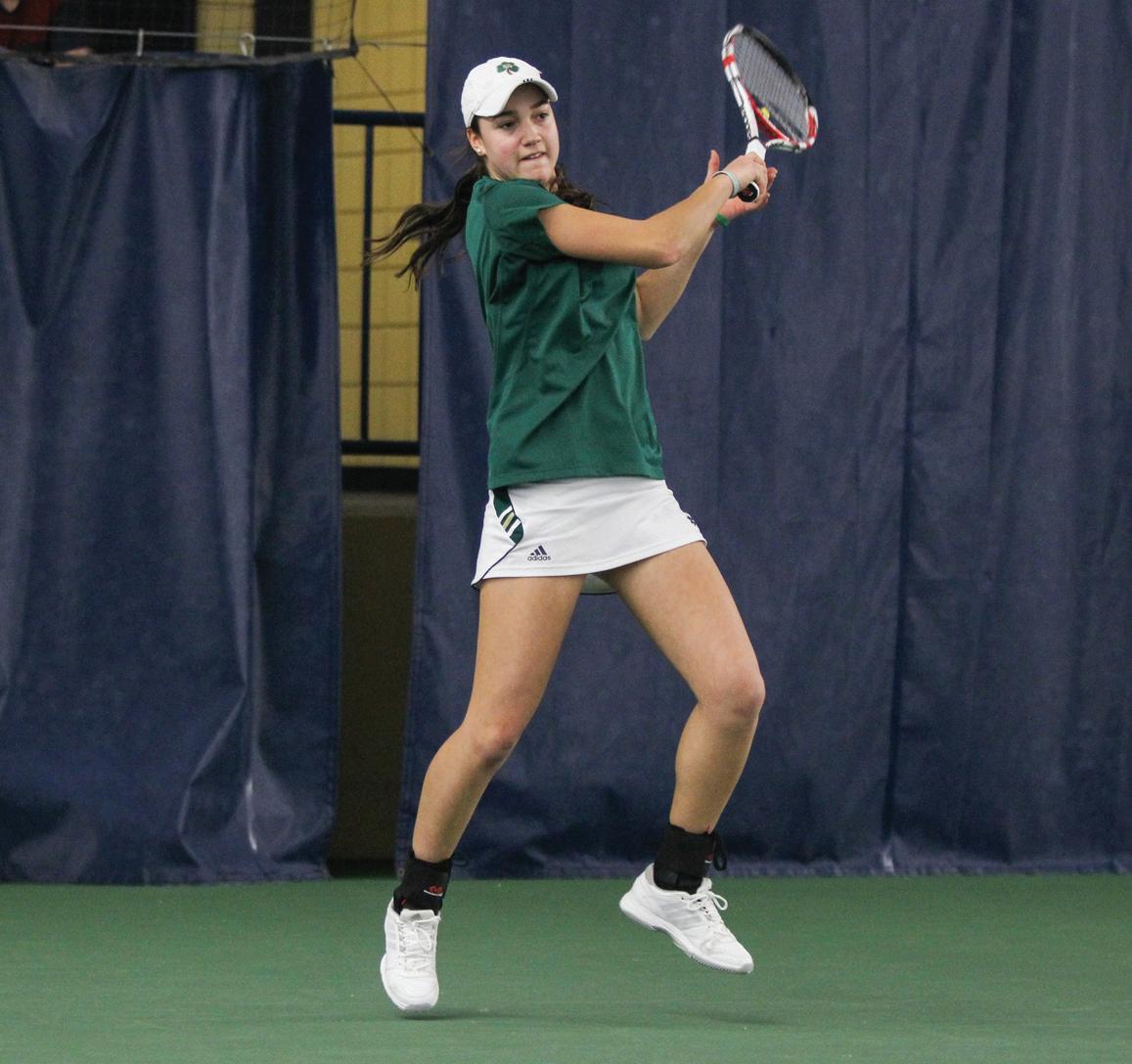
in the semifinals.
l ouderback said he was encouraged by the team’s performance, an improvement over the doubles lineup’s struggles last season.
“ i t’s still early, but it was good to see how well they did,” l ouderback said.
“a nd we’ve still got b rooke b roda, another freshman who hasn’t played yet … so it’s a little up in the air, but just getting to see how those two doubles teams who were in the semis did and how well they played together was great.”
r obinson also posted a strong showing for the i rish in the singles bracket, advancing to the semifinals before falling 6-4, 6-2, to m ichigan junior r onit y urovsky, the 21stranked singles player in the country and last year’s m idwest r egional champion. n orthwestern senior l ok s ze l eung knocked out g leason in the round of 16 in another tight match, 7-6 (7-5), 2-6, 6-3. v rabel, m iller and sophomore m ary c loss advanced to the second round before their tournament runs came to an end.
“ i t was a good tournament for us,” l ouderback said. “ m onica getting to the semis, Julie v rabel, m ary
c loss … a llie m iller qualified [for the main draw], which was great for her first road trip.”
i n addition to the early season action and the opportunity to play more matches, l ouderback said the tournament helped his team adjust to traveling. “ o ur first tournament we played was here, so it was good to get on the road,” l ouderback said. “ i t was good just to get them out, and a llie hadn’t been on the road yet with the team so that was good for her. … w e’ll be on the road a lot in the spring.
“ w e’ve been really excited about ... the extra time everyone has been putting in, and we really felt that at the regional it showed.” n otre d ame returns to practice for a couple weeks before its next competition. The i rish will send two players south to s arasota, Florida, to play on clay courts at the l akewood r anch i nvitational, and the rest of the team will travel to the w estern m ichigan i nvitational in Kalamazoo, m ichigan, on n ov. 7.
Contact Zach Klonsinski at zklonsin@nd.edu
EMMET FARNAN | The Observer
Irish junior Quinn Gleason returns a volley during a 4-3 loss to Georgia Tech on Feb. 21 at the Eck Tennis Pavilion.
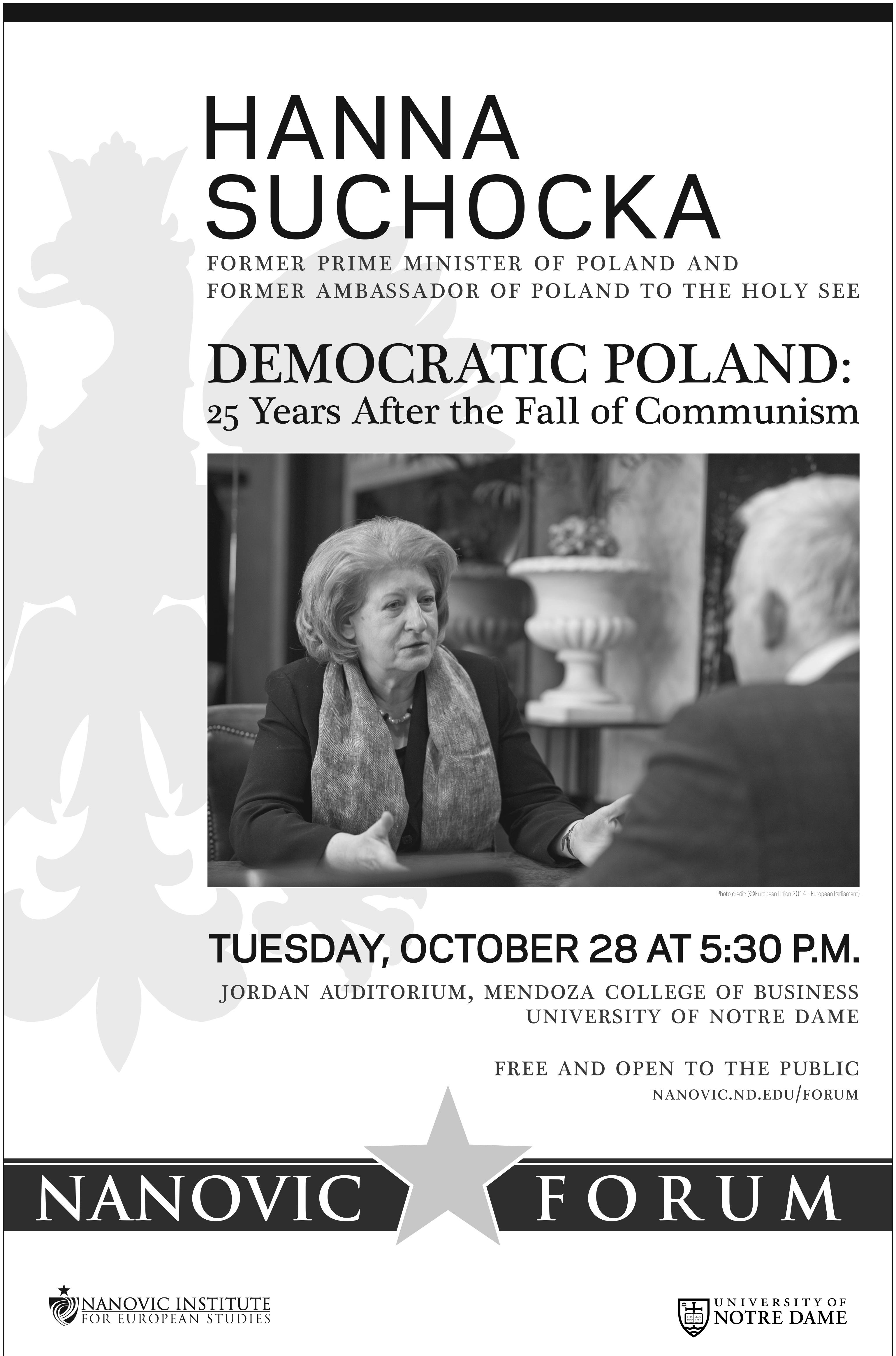
Notre Dame wraps up fall season
By KIT LOUGHRAN sports writer
The i rish concluded their fall campaign with a 13th-place finish at the b ridgestone g olf c ollegiate on s unday.
n otre d ame was unable to carry its second-round momentum into the final round of the 13-team event, hosted by n orth c arolina at g reensboro at the g randover r esort e ast c ourse in g reensboro, n orth c arolina. The i rish posted a final score of 903 (305-295-303). n orth c arolina finished first at 849 and v irginia Tech as runnerup at 861.
“ w e had a tough go of it this weekend,” i rish coach James Kubinski said. “ w e had some good individual rounds, [senior] Tyler [ w ingo]’s 70 and both [sophomore] m att [ r ushton] and [freshman] Thomas [ s teve] shooting 72, but that covers only 25 percent of our play.
“ w e made too many simple errors throughout the event, things our teams just don’t typically do.”
The i rish opened with a slow first round (305), but they managed to improve their overall score by 10 strokes for a score of 600 and the 12th-place standing after s aturday’s second 18. w ingo led n otre d ame’s comeback effort in the second round, posting a 2-under-par 70 for a share of 16th place at 146 (76-70).
w ingo shot three straight pars on the back nine to make the afternoon round his best 18-hole score of his 2014 season. w ingo finished the event with a score of 232 (76-70-86) and a share of 64th place.
s teve led the i rish across all three rounds, tied at 27th overall with a total score of 223 (72-77-74). h e tallied three birdies in the opening round for an even-par 72. Though two double bogeys landed s teve 5-overpar after the second round, the freshman birdied two par-5s to secure his second top individual placement
in the i rish starting lineup. h e posted three top-25 finishes throughout the fall campaign.
“Thomas posted two pretty good rounds, a good sign from the freshman,” Kubinski said. “ h e definitely competed his heart out, which is a trademark of a high-achieving player.”
s ophomore m att r ushton followed next behind s teve. The sophomore shot 12over overall (80-76-72-228).
r ushton shot 16 pars in the third round, gaining 16 spots on the leaderboard to snag a share of 51st place.
s enior p atrick g rahek tallied a 54-hole total of 231 (77-74-80) and tied for 62nd place. s ophomore l iam c ox completed the i rish lineup in 67th place with a score of 233 (81-75-77).
n otre d ame’s 13th-place finish caps off the program’s fall season. Though the b ridgestone g olf c ollegiate did not mark the team’s best performance this fall, the i rish secured four top10 finishes throughout the campaign. n ow, with the promise of young golfers and opportunities for the remaining lineup’s continued improvement, Kubinski said the i rish are prepared to step up for the spring season in 2015.
“ i n some sports, being bigger, stronger and faster will allow a team to overwhelm an opponent regardless of slightly better preparation or practice,” Kubinski said.
“ o ur sport is mostly a mental game. i t comes down to confidence and core beliefs.
“ n either is built overnight. i t takes long-term commitment to the sport and the process. w e need more players invested in this way. w e have physical talent. o ur task is to develop the most important area.”
The i rish begin their spring season at the Jones i nvitational at the v allencia c ountry c lub in l os a ngeles on Feb. 23-24.
Contact Kit Loughran at kloughr1@nd.edu
serves but was unable to capitalize and lost, 33-31. The cavaliers took the fifth set, 15-8, to win the match.
despite the squandered opportunity, bere said he took away some positives from the game.
“against v irginia we played well, and our distribution was really nice,” he said. “if we can do that again [in our upcoming matches], i think that will give us a little bit of a different look.”
a lthough victory eluded the irish against the cavaliers, their 72 kills and 67 assists were their highest single-game totals in nearly six years. They topped v irginia with a .256 attack percentage and 81 digs.
bere said he was impressed by the strong performance of junior setter hannah muzzonigro, who totaled seven kills, 54 assists and 16 digs, all career highs. muzzonigro’s passing helped smith tally 20 kills, and sophomore middle blocker Katie higgins added 14 more.
The irish host g eorgia Tech on Friday at 7 p.m. at p urcell pavilion before traveling to chestnut hill, massachusetts, for a rematch against boston college at 12 p.m. sunday.
Contact Andrew Robinson at arobins6@nd.edu


were turning the ball over at a great rate, and we were lucky we didn’t lose a goal through any of these turnovers.”
however, the only ball that beat irish graduate student goalkeeper patrick wall was a corner kick sent by indiana senior defender patrick doody, whose curving kick missed everyone in the six-yard box and banked off the far post before tucking into the net.
The irish reacted well to adjustments they made in the second half, gaining more possession of the ball in indiana territory and generating quality chances, clark said.
“i thought we could have taken something out of the game,” clark said. “would i say we deserved it? maybe not. ... i think they were able to play their game better than we were able to play our game. it was disappointing.”
notre dame jumped back into acc action saturday to host virginia Tech (7-6-2, 2-4-1 acc) at alumni stadium on the team’s senior night.
Two of the team’s senior defenders, graduate student and team captain andrew o’malley and senior max lachowecki, did not compete due to injury, but the irish defensive depth rose to the occasion.
To replace o’malley and lachowecki, junior michael shipp and sophomore matt habrowski, with the latter notching

his first collegiate goal in the 23rd minute. habrowski netted the rebound off a hodan shot to put the irish up, 1-0. hodan also tallied one goal for notre dame in the 3-1 victory, and gallagher iced the game in the 88th minute with his second goal of the season and his college career.
“michael and matt have both been two of our hardest working players all year,” clark said. “you need support. good teams have depth and have support, so it’s good these guys did well. and Jon gallagher, he and Farina have been doing tremendous as freshmen to be honest.”
The win put notre dame one point up on no. 14 north carolina in the acc standings, with both teams having only one conference game remaining on their respective slates. The irish travel to pittsburgh on saturday while the Tar heels (114-0, 5-2 acc) host virginia. notre dame beat north carolina 2-0 at alumni stadium on sept. 26. clark said he refuses to let his team get caught looking too far ahead though. The irish take to the alumni stadium pitch for their last home regular season wednesday against no. 15 michigan state, who notre dame beat last year in the ncaa tournament quarterfinals, 2-1. The game is slated to begin wednesday night at 7 p.m.
Contact Zach Klonsinski at zklonsin@nd.edu
connor hurley.
“The good thing is, we are getting a little better each game,” Jackson said. “steven [Fogarty] played extremely well for us, and really we had strong play across the board. hinostroza finally found some success offensively, and hurley really elevated his play as well. we are consistently improving, and that’s what you want to see especially with a young team.”
Jackson said he was also glad to see the power play unit succeed in saturday’s matchup. The power play has been a point of emphasis for Jackson, as the irish were 0-for-20 prior to saturday’s game. Jackson said he hopes saturday’s success will get the unit on track.
“consistency is the key,” Jackson said. “we had one good game on the power play, so hopefully that will increase confidence, but we have to keep improving and keep practicing to maintain that success.”
The goalkeeping competition for the irish continued, as both sophomore chad Katunar and freshman cal petersen played a game in each series. Katunar surrendered three goals in each game and made 51 total saves, and petersen allowed one goal while collecting 50 saves. Jackson
said he was pleased with the performances by both goalies but thought petersen in particular stepped up.
“i though both played well, but petersen has started to elevate himself,” Jackson said. “he’s especially been better on the penalty kill where he’s shown excellent rebound control. if chad can get better at that, we’ll have two very strong options.”
The irish notched four victories and improved a great deal, but Jackson said notre dame will have to continue to raise its level of play as the schedule gets tougher.
The irish play their first hockey east games of the season this weekend when no. 13 vermont visits compton Family ice a rena. The following weekend, the irish head to minneapolis to take on minnesota, the country’s top-rated team.
“with conference play starting and us playing some of the top teams in the country, it’s only going to get tougher from here,” Jackson said. “we have to just keep improving our play, take care of the puck and continue getting better each game.”
The irish and catamounts face off Friday and saturday. The puck drops at 8:05 p.m. Friday and 7:05 p.m. saturday at compton Family ice a rena.
Contact Josh Dulany at jdulany@nd.edu

con T inued F rom page 16
forward Kaleigh olmsted dribbled down the right side of the field and found bohaboy with a sharp cross, which the mission viejo, california native headed in for the goal. it was bohaboy’s team-leading seventh score and fifth in the last six games.
“[The goal was] just a great header off Kaleigh’s cross,” romagnolo said. “Kaleigh made that happen going one-v-one and [bohaboy], again, finding herself in the right place at the right time. [she had] great instincts around the goal to get there.”
defensively, the irish once again shut down their opponents, limiting the cardinals to five shots, including just one chance in the second half. notre dame also dominated possession, not allowing any corner kicks.
“we’re not allowing a lot of opportunities,” romagnolo said. “we’re denying crosses, denying shots. … we’re really controlling the ball and giving ourselves the opportunity to possess a lot more than the other team.”
The victory capped off a whirlwind week for the irish, who put away syracuse on the road, 2-0, on oct. 18 and then scrapped their way to a tough 1-0 win over no. 20 clemson on Thursday. romagnolo said she was pleased with how her team handled the
turnaround from the win over clemson to the louisville game.
“it was senior day, and they were excited to get a result for the seniors, but also to get a result to get into accs.” romagnolo said. “i think they responded really well.”
The win over the orange kept notre dame unbeaten on the road this season at 6-0-1, and the team’s two wins at home boosted its record at alumni stadium to 6-4. in those three games, the irish unloaded 64 shots and scored four times, for a shooting percentage of .063, below their season average (.103). heading into the acc tournament, the offense will have to convert on more of their chances, romagnolo said.
“i’d like to see us play a little bit faster,” she said. “especially in a sunday afternoon game, [we need] to come out and just attack an opponent [and] put two or three in the back of the net if we have those opportunities, not take for granted that we’ll have 22 shots like we had today. maybe we’ll only have five opportunities, and we need to capitalize on those.”
before notre dame heads to greensboro, north carolina, on nov. 7 for the acc championship tournament, the irish wrap up their regular season saturday in newton, massachusetts, against boston college. Kick-off is scheduled for 7 p.m.
Contact Greg Hadley at ghadley@nd.edu


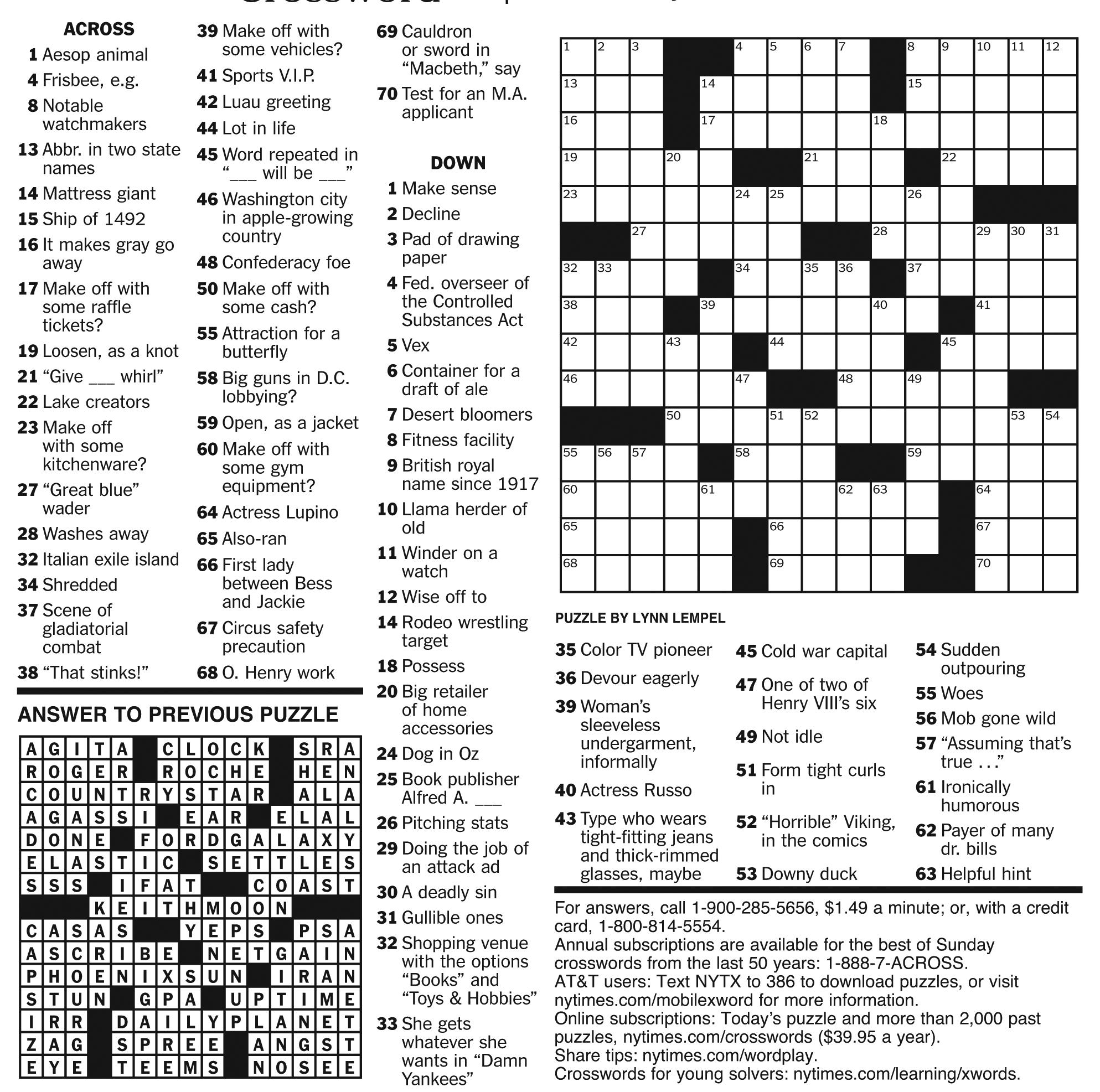

Complete the grid so each row, column and 3-by-3 box (in bold borders) contains every digit, 1 to 9. For strategies on how to solve Sudoku, visit www.sudoku.org.uk
Happy Birthday: l et your imagination run wild. c reativity coupled with excellent timing will help you gain ground this year. d on’t let the changes going on around you deter your plans. it’s important to follow your gut feeling and build the future that will bring you the greatest satisfaction. d on’t let anyone bully or manipulate you to take on responsibilities that don’t belong to you. your numbers are 3, 13, 19, 21, 23, 35, 48.
ARIES (March 21-April 19): Take control and do your thing. you’ve got what it takes to dazzle your peers and superiors. l et your intelligence and cooperative attitude shine through, and your desire to advance will come to fruition.
TAURUS (April 20-May 20): moneymaking ventures will pay off if you act fast, but don’t go over budget. Keep your deals simple and interesting. a career opportunity will lead to good fortune. use your charm and know-how to promote a skill you have to offer.
GEMINI (May 21-June 20): Focus on happiness and self-improvement. e xpand your interests and make your surroundings conducive to pursuing your goals. s hare personal thoughts and make plans that will enforce greater incentives. d on’t mix business with pleasure.
CANCER (June 21-July 22): networking will pay off, so don’t sit at home when you should be mingling. l ove is in the stars, and discussing plans with someone you think is special will help you build a relationship based on goals you share.
LEO (July 23-Aug. 22): stick to your plans and use intelligence when dealing with family or your lover. Taking in lighthearted entertainment or engaging in an activity that will challenge you physically or take you to an unfamiliar destination will broaden your horizons.
VIRGO (Aug. 23-Sept. 22): i nvest in your skills, your home and your future. d on’t be too eager to make a decision or give in to someone else’s plans. stay on course and use your experience to fine-tune your next move. Keep your emotions well hidden.
LIBRA (Sept. 23-Oct. 22): speak from the heart and listen to the suggestions offered, but don’t act in haste. you have time to mull over the information you gather and shouldn’t feel pressured by anyone giving you an ultimatum. a past experience will prove to be a lifesaver.
SCORPIO (Oct. 23-Nov. 21): you are on the right track, so don’t let anyone convince you otherwise. Keep your dreams intact and your vision clear. Taking a route that is unusual or unorthodox will end up being in your best interest.
SAGITTARIUS (Nov. 22-Dec. 21): you need a pick-me-up. r enovate, redecorate or take a day trip that will help lift your spirits. e motional matters can sway either way depending on the company you keep. m ake plans to have fun with someone who makes you smile.
CAPRICORN (Dec. 22-Jan. 19): you will face opposition concerning matters that deal with educational, financial, legal or medical institutions. a sk for any promise in writing. a last-minute change must be handled cautiously. d on’t be afraid to pull out of a deal if it doesn’t feel right.
AQUARIUS (Jan. 20-Feb. 18): Think before you act. s omeone will try to goad you into doing something by not giving you enough time to consider the pros and cons. b elieve in your abilities and opt to go it alone if you feel uncomfortable.
PISCES (Feb. 19-March 20): you will come in to money or find a way to raise your income if you are patient and pay attention to the circumstances. l ove is in the stars, and a promise made will lead to greater happiness.
Birthday Baby: you are engaging, intense and imaginative. you are strongwilled and unpredictable. l uck will be yours today if you act boldly and decisively. d on’t be afraid to try new things and meet new people, but remember those that you have left behind.
and mail
is $130 for one academic year enclosed is $75 for one semester
dOMe Nuts | alexandria wellman
Nd wOMeN’s sOccer | nd 1, louisville 0 MeN’s sOccer | nd 4, duKe 1; indiana 1, nd 0; nd 3, virginia Tech 1
nd continues fivegame win streak
By GREG HADLEY a ssociate sports e ditor
all year long, irish coach Theresa romagnolo has stressed to her ninth-ranked irish squad the importance of consistency. now, after a 1-0 victory over louisville on sunday at alumni stadium, that reliability has paid off for notre dame in the form of an acc tournament berth.
“The team that steps on the field right now, it’s the same team every given game,” romagnolo said. “we’re bringing toughness and a desire to compete. we’re organized, and we are getting a hold of the ball.”
with the victory over the cardinals (7-8-2, 3-4-2 acc), the irish (12-4-1, 7-2-0) finished the fall break with a 3-0 record, stretching their season-high win streak to five games. before this streak, notre dame had not won more than two games in a row on the season. during it, the irish have outscored their
opponents, 11-0, and outshot them, 127-25.
“a good toughness,” romagnolo said when asked what has been key in the recent stretch. “on the attacking side, we’re … building up the field and creating a lot of opportunities for ourselves.”
The win guaranteed the squad a top-four finish in the conference and a place in the acc tournament with one game left in the regular season. The irish also gave their six seniors a victory in the final home game of their careers.
“we knew what was at stake, and we wanted to play well not only to get to the acc [championship], but to finish the season strong for our seniors,” romagnolo said.
senior forward lauren bohaboy led the way against the cardinal defense sunday afternoon, recording five shots and the lone goal of the contest in 76 minutes of play.
in the ninth minute, sophomore
hOckey | nd 5, niagara 3; nd 7, niagara 0
Irish offense erupts
By ZACH KLONSINSKI sports writer
after scuffling for much of the season, no. 3 notre dame saw its offense explode over the mid-semester break.
The irish (9-4-2, 5-1-1 acc) tallied seven combined goals in acc victories over duke and virginia Tech to propel themselves into first place in the conference standings although they did see their winning streak snapped with a loss to no. 2 indiana 1-0 in a mid-week, non-conference tilt.
The irish traveled to durham on oct. 17 where they squared off against duke (6-8-1, 3-4-0 acc) and tied their season-high singlegame goal mark in a 4-1 victory. Junior midfielder patrick hodan led the irish in scoring, with backto-back goals just over two minutes apart.
Junior midfielder evan panken initiated notre dame’s drive in the 37th minute off an assist from graduate student forward leon brown, and freshman forward Jon gallagher buried his first collegiate goal to cap the scoring in
Irish sweep two series
By JOSH DULANY sports writer
no. 20 notre dame swept two consecutive weekend series to pick up its first four wins of the season.
on oct. 17 and 18, the i rish (4-2) took down l ake superior state, 5-3 and 5-1, before dominating niagara, 6-3 and 7-0, last Friday and saturday.
Junior center and captain steven Fogarty and junior left wing mario lucia starred for the i rish in their series against l ake superior state (0-8, 0-4 wcha). i n the 5-3 win, Fogarty tallied two goals and two assists as notre dame jumped out to an early twogoal lead and never trailed. The following night, lucia led the way with a hat trick. Two of his goals came in the third period, and the i rish scored three goals in the final frame to pull away with the 5-1 victory.
i rish coach Jeff Jackson said he was pleased with the offensive surge, the result of better play across the board.
“The offense was strong — we had a number of guys up front step up,” Jackson said. “That came out of just doing a better job of managing the puck. The turnovers for us really dissipated, and that’s always going to help the offense.”
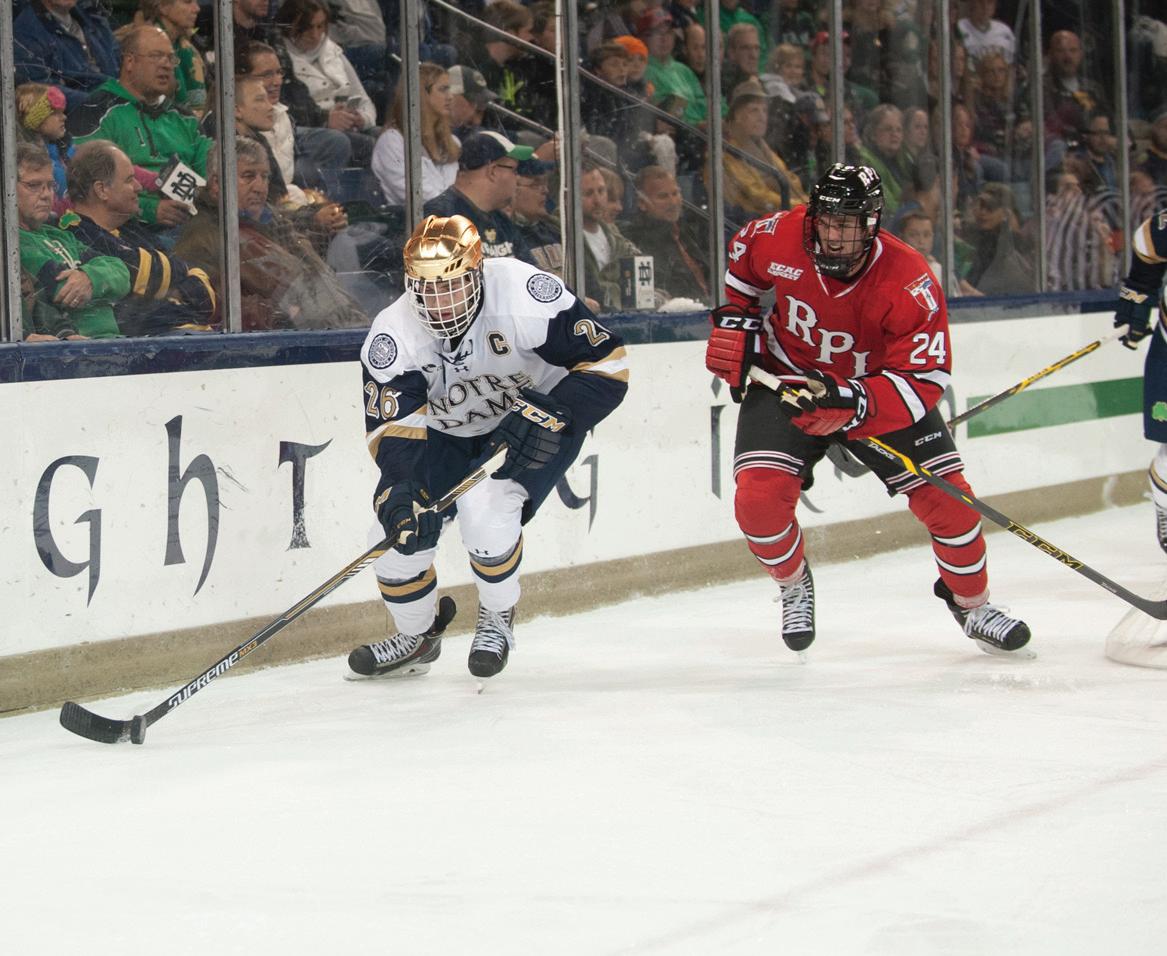
The offensive explosion continued last weekend as the i rish routed niagara (0-6, 0-2 atlantic hockey) by a combined score of 13-3. Junior left wing and alternate captain sam herr opened Friday’s game with two quick goals, and the i rish led 4-0 by the end of the first period. notre dame gave up three goals on the night, two of which came on p urple e agles power plays, but the i rish scored two goals in the third period to hang on for the win. it was notre dame’s turn to
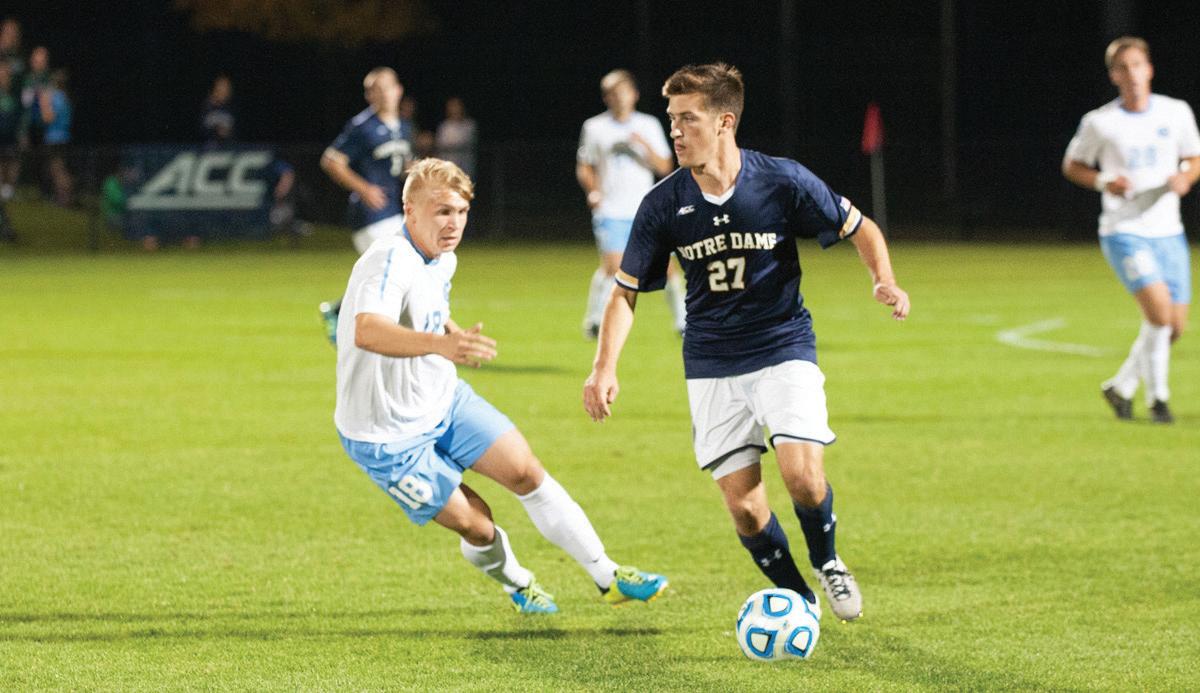
the 78th minute. Fellow freshman forward Jeffrey Farina registered two assists.
notre dame’s four goals matched its total in a victory over dartmouth on sept. 6 and fell just short of the five goals scored in an exhibition matchup against wisconsin on aug. 25.
“we didn’t start the duke game well, but we came into it,” irish coach bobby clark said. “The big thing was that we didn’t concede any goals in the duke game when
Nd VOlleyball
rule the power play saturday. The i rish were 3-for-9 on the night when they had an extra man and found the back of the net four more times while outshooting niagara, 3923. sophomore center v ince h inostroza had one goal and two assists on the night to spearhead the i rish attack.
Jacskon said the i rish are becoming more cohesive as a unit. he complimented especially the play of h inostroza, Fogarty and freshman center
we weren’t playing well.” notre dame then trekked to visit the in-state rival hoosiers (102-3, 3-2-1 big Ten) on wednesday. indiana dominated the first half, as sloppy notre dame turnovers gave the hoosiers several opportunities to score.
“[indiana] came out and got after us,” clark said. “They pressed us really hard, and we had a hard time completing passes. … we
nd clinches one, drops three
By ANDREW ROBINSON sports writer
The irish achieved mixed results over the last two weekends against four conference opponents, beating boston college at home after losing to clemson and then losing at virginia Tech and virginia.
notre dame (5-16, 2-8 acc) struggled from the start against clemson (15-7, 4-5), who capitalized on irish miscues and used its strong offensive attack to take the game in three sets, winning 2510, 25-19, 28-26.
The irish had eight service errors in the last set alone, as well as 23 hitting errors in the match and an attack percentage of just .075. in their next match, the irish played much closer from the start, but boston college (8-12, 3-6) was able to fend them off and take the first two sets, 25-23 and 25-19. notre dame, however, showcased its resilience, winning 25-22 and 25-18 to force a fifth set. in the final frame, the irish pulled away on an 8-0 run that put them up 115, ultimately winning 15-7 to capture a 3-2 win.
“in the boston college match, we didn’t come out and play extremely well right off the bat,” irish assistant coach craig bere said. “but we regrouped and continued to grind
and do the little things well.” senior middle blocker Jeni houser led the team with 13 kills, and graduate student outside hitter nicole smith and freshman middle blocker sam Fry each added 12. “outside hitting has been a point of emphasis for us,” bere said. “being consistent there has been important for us when we’re playing well.”
The irish seemed to carry their momentum into the next game at virginia Tech, taking a 21-14 lead against the hokies (9-13, 2-7) in the first set. notre dame could not hold on and dropped the set 27-25. notre dame’s struggles continued as the team hit just .070 for the match and was swept in three sets (27-25, 2520, 25-16).
notre dame made a quick turnaround and traveled to charlottesville, virginia, the following day for what turned out to be an exciting match against the cavaliers (13-9, 6-3). virginia was 7-1 at home coming in and took the first set, 25-23, but the irish took a 2-1 lead with 25-22 and 25-15 set wins.
what followed was an intense fourth set with 21 ties and 11 lead changes. notre dame had three chances to close the match on its see w soccer PaGe 14 see m soccer PaGe 13 see volleyball PaGe 12
MICHAEL YU | The Observer Irish junior midfielder Patrick Hodan dribbles down the field in Notre Dame’s 2-0 win against North Carolina on Sept. 26.
MICHAEL YU | The Observer
Irish junior center Steven Fogarty powers past a Rensselaer defender during Notre Dame’s 3-2 loss to the Engineers on Oct 10.