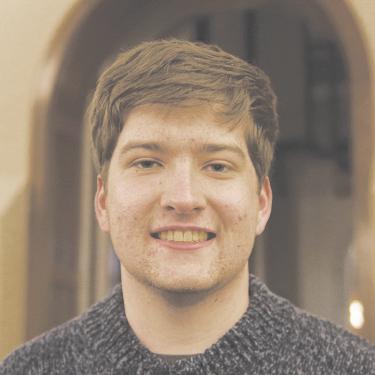
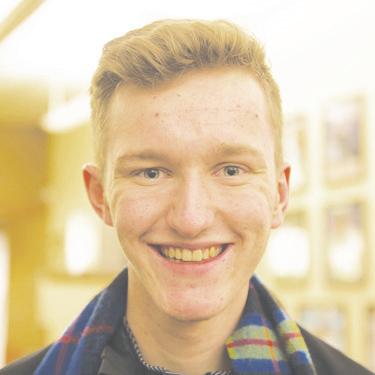
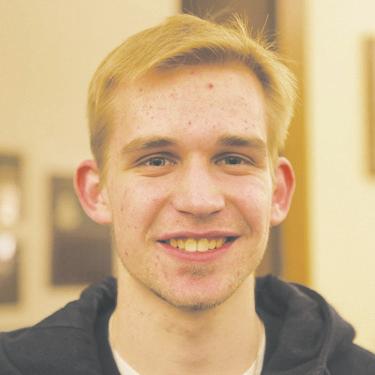
seating was scarce in mckenna hall auditorium on Thursday night as students and faculty gathered to listen to poems and excerpts of stories about race, discrimination and how to find hope in it all. poet, essayist and 2016 mac a rthur “genius” grant recipient claudia rankine delivered the second annual ernest sandeen memorial reading hosted by the creative writing program. she chose the poet solmaz sharif to accompany her for the reading as well as to share some of her own poems. a side from the packed auditorium for the reading, rankine and sharif also held a Q& a session earlier in the day that was
open to the public. both poets took questions about the role of poetry as a catalyst for change and reflected on the process it took to produce their works.
rankine talked about her book “citizen” — a book of criticism and poetry filled with images and artwork, as well as stories of microagressions and racist language. she said poetry is a successful method for talking about topics like these because of its ability to hold feeling.
“i think what poetry does that other genres don’t do that easily is … no matter what your approach is, the poem is still in the realm of feeling,” rankine said. rankine also discussed accountability in response to a
Speaker evaluates former pope’s canonization policy
By AIDAN LEWIS news writer
st. John paul ii’s approach to canonization and beatification was unprecedented in its scale, valentina ciciliot said during her lecture “John paul ii’s canonization policy: the italian case.”
“pope John paul ii declared a huge number of blessed, and more than half of all the saints proclaimed by the catholic church since the establishment of the sacred congregation of r ites in the 16th century,” ciciliot said Thursday evening at hesburgh library.
ciciliot, a postdoctorate fellow at the university’s cushwa center, said his new canonization policy was helped by expediting the traditionally long, drawn-out process.
“a direct consequence of the new legislation is particularly the possibility to start canonical processes after five years from the death of a candidate to sanctity,” ciciliot said. “before, it was 50 years.”
consequently, ciciliot said John paul ii was able to canonize more modern and relatable figures.
“now the church is able to compete with the heroes and stars proposed by civil society,” ciciliot said.
ciciliot said John paul ii’s tendency towards frequent canonizations was an attempt to provide the world with models of morality and sanctity to whom all people should aspire.
“John paul ii’s canonization policy has become one of the catholic church’s main instruments for the restoration of society,” ciciliot said.
The effect of John paul ii’s canonization policy was especially profound in italy, since a disproportionally large number of italians were beatified and sainted. ciciliot said she believes this was an intentional move by John paul ii to reinstate italy as a model of christian behavior.
“italy is the country which more than any other has been in the past a stronghold of the
christian message,” ciciliot said. “now it has the task of rediscovering its evangelizing rule and representing it with all necessary force to a modern world.”
ciciliot said John paul ii is also unique in the attention he paid to laypeople and, in particular, laywomen.
“during his pontificate, John paul ii led purely and powerfully, especially regarding women, maternity and family,” ciciliot said.
one very prominent example of John paul ii’s focus on women is seen in his canonization of gianna beretta molla, a mother who died after refusing to terminate a pregnancy she knew could result in death.
“The new saint was presented as an authentic layperson, as a woman who lived her life and her sanctity in a perfectly ordinary way, close to the experiences of any wife or mother,” ciciliot said. “no mother of a family had been made a saint
l ocal coffee shop builds community in south bend
By JORDAN COCKRUM news writer
on a fall day last year, first year elizabeth polstra walked into The local cup, a new coffee shop on the northwest side of south bend. polstra’s first visit to the shop was to drop off her friend and coworker, fellow first year annie maguire.
“it’s like a little community,” polstra said. “everyone’s there, everyone’s always talking. There’s always so many people there — it’s a great place.”
both students work at The local cup as part of the federal workstudy program. maguire said she spoke with rebekah deline, director of saint mary’s office for civic and social engagement, who suggested maguire look into working for The local cup.
“[deline] had mentioned that they had more opportunities for the federal work-study positions, so i was talking to her about how i could get involved with the community and also get a work-study
position in south bend,” maguire said. “she recommended The local cup.”
The local cup, run by four south bend residents, is open Tuesday, Friday and saturday mornings and sunday afternoon. The local cup has multiple functions within the south bend community; not only is it a coffee shop, but it also serves as a community center, maguire said.
“apart from The local cup coffee shop, there are community spaces that several groups in the community use to host events,” maguire said. “we have poetry slams, we have songs for peace, we have instrumental nights, and it really allows people in the community to bring people together based on interests. The coffee house itself is like a great union of the community space.”
This community continues within the coffee shop as well. The local cup not only hires college
see coFFee PaGE 3
MICHAEL YU | The Observer
Poet Solmaz Sharif reads excerpts of her writing at the second annual Ernest Sandeen Memorial Reading. Sharif and MacArthur Grant recipient Claudia Rankine also held a Q&A session before the reading.
Policies The observer is the independent, daily newspaper published in print and online by the students of the University of notre dame du Lac and s aint mary’s c ollege. e ditorial content, including advertisements, is not governed by policies of the administration of either institution. The observer reserves the right to refuse advertisements based on content.
The news is reported as accurately and objectively as possible. Unsigned editorials represent the opinion of the majority of the e ditor-in- c hief, managing e ditor, Assistant managing e ditors and department editors. c ommentaries, letters and columns present the views of the authors and not necessarily those of The observer. v iewpoint space is available to all readers. The free expression of all opinions through letters is encouraged. Letters to the
ditor must be signed and must include contact information.
Questions regarding Observer policies should be directed to Editor-in-Chief Margaret Hynds. Post
Question of the Day:
Have a question you want answered? Email photo@ndsmcobserver.com
How would you make Purcell Pavilion better?
Bobby Murphy senior sorin college
“more tickets for students.”
Ethan Williams sophomore Fisher hall
“Take Flex Points to concession stands.”
Will Marsh sophomore o’neill hall
“e nlarge the student section.”
D ays:
Friday
Soup and Substance: Health Care and Race Geddes Hall
12:30 p.m. - 1:30 p.m.
Fill your bowl, feed your mind.
Pulitzer Prize Winner Paul Maldoon: A Reading
McKenna Hall 3:30 p.m. - 5 p.m. Open to the public.
Saturday
Spring 2017 Freebies: Yoga Rockne Memorial 205
11 a.m. - noon Arrive early, space is limited.
28th Annual Notre Dame Student Film Festival
DeBartolo Performing Arts Center 6:30 p.m. - 8:30 p.m.
Sunday
Today’s Staff
The observer regards itself as a professional publication and strives for the highest standards of journalism at all times. We do, however, recognize that we will make mistakes. If
have made a mistake, please contact us at (574) 6314541 so we can correct our error.
Graham Johnson senior off campus
“Improve the water piping.”
Nik Procaccini sophomore duncan hall
“Flex Points at concessions.”
Patrick Paulsen freshman morrissey manor “better lighting.”
Want your event included here? Email news@ndsmcobserver.com
Monday
Women’s Basketball vs. Virginia Purcell Pavilion noon - 2 p.m. The Irish take on the Cavaliers.
Rejoice! Mass Dillon Hall
8 p.m. - 9 p.m. Celebrate Mass rooted in African-American tradition.
Kevin O’Leary of Shark Tank Mendoza College of Business
5 p.m. - 6:15 p.m.
Men’s Basketball vs. Duke Purcell Pavilion
7 p.m. - 9 p.m. The Irish take on the Blue Devils.
Tuesday
Pizza, Pop & Politics 2017: What to Expect in the Trump Administration Geddes Hall
5 p.m. - 6 p.m.
Extraordinary Minister of Holy Communion Training Basilica of the Sacred Heart
8 p.m. - 9 p.m.
Kroc fellow reflects on prayer
By MEGAN VALLEY Associate news e ditor
Tanya schwarz, a visiting research fellow at the Kroc Institute for International Peace studies, presented a lecture about the meanings and roles of prayer for faithbased organizations working in areas of peacebuilding Thursday afternoon in the hesburgh center for International studies.
“I’m interested in how do they pray, why do they pray, when do they pray — what is prayer doing?” schwarz said.
In the realm of international relations, schwarz said religion has been mostly absent from the discussion.
“I think my project fills that hole and starts to dig into the ways that prayer is used by religious organizations in international relations,” she said. “ … I also address how scholars think of prayer.”
schwarz listed three faith-based organizations that use prayer in their peacebuilding.
International Justice mission is a global organization made up of lawyers, investigators, social workers and other professionals around the world, and works to protect the developing world’s poor from violence.
“Prayer is very prevalent in the work of International Justice mission,” schwarz said. “They have what they call four spiritual disciplines — the first one, for example, is the employees have 30 minutes of solitude, where they’re expected to pray and communicate with God and prepare themselves for the day.
“Later, around 11 a.m. in every office around the globe, they have what’s called corporate prayer, where everyone in that office comes together and puts forth prayer requests.”
The second faith-based organization schwarz discussed was religions for Peace, which she said was the “largest multi-religious organization for peace.”
schwarz said that because religions for Peace has members from a variety of faiths, prayer has to be treated carefully in the workplace.
“They are very careful about how they approach prayer, partly because they’re very nervous about proselytizing, and they explicitly say they are against it,” she said.
The final group schwarz discussed was Taize, a monastic order of “over 100 Protestant and catholic brothers” in France.
“They’re known for these really popular
events they hold,” she said. “They have giant events focused on prayer for young people. They pray two or three times a day and have workshops about things like economic justice and environmental protection and intra-religious groups, although they do focus on christian communities.” evaluating the variety in practices of faith-based organizations, schwarz said we “need to think about what the ethics of prayer are.”
“We have to ask things like, is the inclusion of prayer inherently problematic?” she said.“can employee prayer be a type of proselytizing, even if you don’t mean it to be? What are the kind of things we need to think about when we consider missionizing? We need to talk about these issues.”
When utilizing prayer as a peacebuilding mechanism, schwarz said results can be difficult to recognize and interpret.
“In general, I think that, while it could be methodologically problematic, we need to ask if prayer can lead to more successful peacebuilding,” she said. “or at least think about how we possibly measure something like that and in what contexts.”
Contact Megan Valley at mvalley@nd.edu
students as team leaders and college mentors, but it also offers paid internships to high school students in the area, maguire said.
This dynamic allows for a unique work environment, Polstra said.
“[The other employees are] really helpful,” Polstra said. “i’m really glad i’m working with them. When you work with an adult, it’s a little bit more intimidating, but people your own age are more understanding.”
in addition, The Local cup takes on a role in the community with its ties to the near northwest neighborhood, a nonprofit organization that aims to better south bend and also pays for The Local cup’s rent, maguire said.
“That’s just kind of how we keep ourselves afloat,” maguire said. “You know, we don’t have any prices so it’s hard to maintain that sense of security.”
The Local cup has no prices because it operates on a “payit-forward” system, rather than a more typical style of business, Polstra said.
“Their pay system is totally different than normal,” Polstra said. “They go by this ‘pay-itforward’ method. so, when
con T inued from Page 1
since the middle ages.”
you come in, you can either take your coffee as a gift or you can choose to pay it forward. We don’t give numbers — you choose the donation that you want to give.”
This system allows The Local cup employees to interact with the customers more as a friend and neighbor than transactionally, maguire said.
“some customers pay what they would normally pay at another coffee shop, some customers pay the change in their pocket, other people accept the coffee for free and each payment option is completely acceptable,” maguire said. “We really run on other people’s generosity, which changes the dynamic of the interaction between the workers and the customers.”
The interaction of the employees and the customers is central to The Local cup — they strive to give “coffee and a conversation,” maguire said.
“These people aren’t interested in the commercial aspect of interacting, they are interested more in the community and building a relationship with their customers and viewing them as neighbors and friends,” maguire said. “That struck me the most. That’s something you don’t find at starbucks.”
Contact Jordan Cockrum at jcockrum01@saintmarys.edu
Through the canonization of molla, c iciliot said John Paul ii hoped to create a modern, ordinary saint out of a mother during a time when pro-abortion movements were sweeping italy.
Poet
con T inued from Page 1
question about the best way to get through to people who believe racism no longer exists in today’s society.
“i think i’ve spent a lot of my life watching things happen,” rankine said. “i don’t think you need to get to them — i think they’re around you and they’re getting to you all the time. a nd the question is, are you holding those moments accountable? if you hold your own space accountable that’s the first step to bringing it to those who are bringing it to you.”
Time and perseverance are necessary, rankine said, when it came to writing.
“it has to do with the patience of staying in there while you’re still finding your way,” rankine said. “i am inside these sentences, inside these lines and i can sit there for 12 hours.”
sharif, an iranian-a merican poet, said her first book, “Look,” is a book about the costs of war and the abuses of speech. in response to a question about the subtleties of poetry and how
“The aim was to record a moral high ground through a wider dogmatization of moral principles to which contemporary society should refer, or else face the risk of a breakdown of civilization,” c iciliot said.
Contact Aidan Lewis at alewis9@nd.edu
poetry can act as an impetus for social change, she said she tries to “remain faithful to the ways that poetry is not journalism, is not fast-acting.”
“[Poetry] never has been that kind of rational response to external events,” sharif said. “Yes there is something about this moment that feels an acute crisis. There’s a cabinet of selfidentified white nationalists. but to me a large part of that is a rupture in a kind of decorum … rather than an actual shift in ideology.”
sharif said although the themes she writes about have an element of urgency, she does not worry about the message getting lost in the subtleties of her writing.
“i have valued always that within these moments of crisis and urgency and urgent action we need those patient moments too,” sharif said. “so maybe the poem is that space for patience, for deliberation, for a kind of concentrated slowness within an otherwise chaotic and rapid world.”
Contact Selena Ponio at sponio@nd.edu
Paid a dverT isemen T
Paid a dverT isemen T
By OWEN LANE s cene Writer
Last year, a handful of artists (mostly in hip-hop) experimented in the music video medium. beyoncé’s “Lemonade” was a highly-acclaimed visual album that matched each of its songs with a music video. Frank ocean released two albums in 2016, the strictly-musical “blonde” and the audio-visual experience “e ndless.” even as far back as six years ago, we witnessed an early example of an ambitious music video project in Kanye West’s 34-minute “runaway” video. now we have the “Wyclef Jean” video. Young Thug released the video Jan. 16 for the single that opened his latest album “Jeffrey.” The video takes the form of “Wyclef Jean” director r yan staake “[explaining] how this video fell apart.” In the video, staake explains that
Young Thug never actually showed his face on the day of the shoot. r ather, months later Thugger sent the director footage of himself dancing by a plane. needless to say, the video does not follow its intended path, which originally involved Young Thug somehow interacting with toy cars, models and a mansion in the hollywood h ills.
staake’s video explains, through plain white text on black slides cut into the footage, how the director made the most with his opulent resources. The text playfully mocks viewers’ preconceptions of “behind the scenes” videos by showing a “wooden” bat bending in slow motion. It satirizes Young Thug’s decadent production choices by pointing out a child actor who Thug flew from m ississippi to have a small role in the video as a cop. It’s a remarkable accomplishment in editing. “Wyclef Jean” was not just some postmodern
ruse, either. A team from v ice’s music channel, noisey, witnessed and documented the train wreck to prove it.
Ironically, a video about the artist’s absence and indifference could not have been more suitable for Young Thug. staake deserves serious credit. Like Thugger himself, the video is funny, stylish, unpredictable and relentlessly lampoons convention. Artists such as Frank ocean and beyoncé obviously present visually stunning and meaningful music videos, but “Wyclef Jean” will make you question when you last felt truly entertained while watching a music video. This video provides yet another piece in the growing pile of evidence suggesting that Young Thug is one of the most brilliant, innovative rappers in the game.
Contact Owen Lane at olane@nd.edu
By BOBBY WOZNIAK s cene Writer
After signing to Top dawg e ntertainment back in 2013 and joining the likes of Kendrick Lamar, s choolboy Q and sZA as a part of the famed hip-hop label, Isaiah r ashad put his unique footprint on the music industry. With his debut album “c ilvia d emo,” he received vast critical praise for an inimitable hiphop album that explored themes of self-loathing, depression and anxiety. h is sophomore album, “The sun’s Tirade,” delved even deeper into the artist’s dark thoughts and glimpses of self-discovery, resonating with those that have ever felt isolated and insignificant. In songs like “Park” and “d ressed like r appers,” r ashad articulates his shadowy doubts in witty rhymes that bring a gloomy undertone to more energetic beats. As a whole, the work provides a collection of r ashad’s deepest thoughts and confessions mixed with master producing that serves to convey a personal diary while maintaining the artist’s signature musicality. Knowing I would be attending r ashad’s concert at the intimate “d ouble d oor” venue in Wicker Park, c hicago, I further familiarized myself with the artist’s discography to gain a better grasp of his tumultuous
journey through mental illness. With somber subject matter being performed on a small stage, I expected r ashad to deliver a serious performance that would leave the audience reflecting on their own struggles caused by a prejudiced society — almost reminiscent of one of Kendrick Lamar’s intimate “Kunta’s Groove s essions.”
Instead, r ashad emerged from the stage with an unexpected energy and vivacity that took his bleak confessionals to a proud exclamation of self-awareness and self worth. In “4r da s quaw,” r ashad lifted the mellowed beat with a strong proclamation of his realizations, rapping, “Alright now I got the moon and the stars beneath my feet / s o low I speak / s o I don’t wake them, praise the Lord, the God in me.” The atmosphere reminded me of a hip-hop version of a Twenty o ne Pilot’s show, with an enthusiastic crowd creating a cohesive, energetic environment that encouraged the expression of struggle rather than demonizing it. Proudly repping an “America” basketball jersey with the name “obama” across the back, r ashad also used his socially relevant lyrics to call attention to some of the nation’s most pressing injustices, including police brutality and mass incarceration.
Throughout the hour and a half-long setlist, r ashad returned to some of his roots, performing a few “c ilvia
d emo” favorites that kept the crowd pleased and connected to his story. In “heavenly Father,” he navigated through some of his worst suicidal thoughts while allowing the audience to reciprocate by perfectly reciting every single lyric into his outstretched microphone. As the show neared its end, the energy slightly dropped off with some of the crowd becoming more lethargic. In between songs, audience members could be heard yelling out specific songs they wanted to hear before he left the stage, most of which were ignored. As r ashad announced he was about to perform his last song, shouts of “Free Lunch!” could be heard throughout the crowd. Low and behold, the rapper’s most popular track surged through the venue, revamping the energy that had been lost only moments earlier. r ashad’s nimble flows cut through the air and lifted the audience into one final hoorah before he left the stage. As the crowd filed out of the venue, Kendrick Lamar’s “Alright” blasted from the speakers in an almost symbolic sense. not only was the audience left proudly chanting a fellow T de rapper’s lyrics, but they exited with the same feelings of empowerment and pride that r ashad fortified throughout the entirety of the show.
Contact Bobby Wozniak at rwozniak@nd.edu
Re-evaluate pass/fail and registration quotas
After two years of collecting faculty, student and alumni input, the core curriculum review committee announced an overhaul of the University’s core curriculum in november — the first such change to University requirements in more than 40 years.
With the implementation of this new core curriculum set to begin in fall 2018, we believe the timing is appropriate to re-evaluate other current academic policies in the same manner in order to possibly change them in ways that would benefit students even more.
currently, students must receive letter grades for any and all classes they take within their major, even if they have already completed major requirements and are taking a class out purely out of academic interest. The option to take a class “pass/fail” is restricted to classes that don’t count toward specific degree or University requirements as well as ones outside of a student’s major in minor, presumably in order to facilitate students’ enrollment in classes they would not ordinarily take.
While this is an admirable goal, limiting what classes are able to qualify for a pass/fail designation fails to encourage students to take classes outside their comfort zone, and many students graduate from the University without ever having taken advantage of the pass/fail option. Ultimately, the goal of pass/fail classes should be to encourage students to engage with material that interests them without worrying about their academic performance — to explore a wider range and breadth of subjects, yes, but also sometimes to go into greater depth within their major or minor. students who have finished their major or minor are still unable to take a class in their major pass/fail, and students are also unable to take a class cross-listed in different departments pass/fail if one of those departments contains their major.
When students finish the requirements for their major,
LETTEr TO THE EdiTOr
they should be encouraged to take higher-level courses that interest them. Under the current system, many students may hesitate to take such a class if it must count for a letter grade. even if a student is not receiving a letter grade for the course, the overall learning environment at the University is strengthened when its students take courses simply because they want to learn, not because they expect a high grade.
The practice of restricting certain courses to their departments’ majors is also a concern, and something that should be reconsidered when reviewing policies. much in the way that the University should be behind students taking more classes within their major, notre dame should also actively promote students’ development outside of their major and University requirements. While we recognize that certain courses will have necessary prerequisites — higher-level physics courses will require an understanding of higherlevel calculus, for example — and that departments need to keep seats open for their majors, the University could and should do more to make a higher volume of open seats accessible to more students. If an art history major is interested in taking a computer science course, why should he or she be unable to based solely on choice of major? similarly, the structure of how students register for philosophy and theology requirements could be altered to make it easier for students to take classes that interest them. While the requirements themselves are changing slightly with the implementation of the new core curriculum, this change to registration would also be beneficial. many students currently cannot get into their favored second theology or philosophy requirement due to the popularity of some classes. Therefore, they wait until they are seniors to enroll in order to have the best chance of getting into the class of their choice. despite essentially waiting their turn, they oftentimes are still unable to enroll in the classes they desire and are forced to fulfill their requirements with classes that do not interest them.
This reinforces the idea of these classes as “University requirements” — classes that are, by their very nature,
burdensome but nevertheless required in order to graduate with a notre dame degree. This conception is detrimental as notre dame’s goal of having a liberal arts-based curriculum is to give students a broad introduction to departments and courses that they ordinarily would not pursue. however, if students do not enjoy the classes that are meant to broaden their area of study, this goal is not achieved and the efforts are counterproductive to both faculty and student enjoyment of a course. Professors do not like teaching students who are not interested and engaged in a course, and students do not like learning about subjects that they do not find interesting or engaging.
Therefore, a better way to facilitate this goal would be to remove the quota on seats for freshman and sophomores in the theology and philosophy classes that fulfill the second University requirement. Underclassmen students do have to fulfill the same University requirements as the upperclassmen and therefore, do require the same classes as upperclassmen. however, underclassmen have more time than upperclassmen to fulfill their University requirements and should not have as many reserved spots in higher-level University requirements as upperclassmen. This would open up more spots to upperclassmen that wish to enroll in theology and philosophy courses to fulfill a requirement while also stimulating intellectual curiosity. by encouraging students to take classes in theology and philosophy that truly engage their interests, notre dame will be better serving its goal of providing a well-rounded education to its students.
notre dame students enjoy learning and want to explore areas of study in which they are passionate, both within their major and otherwise. The coming implementation of an improved University core curriculum provides a perfect time for the University to re-evaluate some of its academic policies in order to maximize student intellectual engagement and enjoyment. by reconsidering policies that may be hindering student curiosity, notre dame will be better positioned to educate the “mind, body and soul” of its student body.
valuing all human life
on Tuesday, a very thoughtful response to notre dame right to Life was published in The observer. The author was countering right to Life’s publicly declared support and move to partake in the march for Life in Washington, d c. on Friday. I greatly admire the author’s courtesy in her writing, and her clear respect for the other side — this is the kind of person with whom it is possible to engage in public dialogue and civil discourse, even civil disagreement. Put this in contrast to the many who are unwilling to even consider that another’s beliefs are worth listening to — a prime example arose this past week when the Women’s march, in a show of brazen discrimination, decided to exclude pro-life feminist groups from participating, an act which drew criticism from both political sides for its blatant disregard of inclusivity.
The author of the article in question declared her respect for the intentions of notre dame right to Life and those who “are pro-life in the fullest sense from the moment of conception until death,” but went on to attack the march for Life, which protests the roe v. Wade court decision. she defends a women’s “choice” with her main claim stemming from the dangers of illegal abortion (which, she claims, women will undoubtedly turn to should abortion be outlawed). The author is absolutely right to argue that illicit abortions are unsafe, but where she errs is moving from that fact to the assertion that this
justifies abortion.
she discusses the “cruel reality that restricting or altogether eliminating access to abortion unintentionally threatens the lives of women who fall into certain racial or socioeconomic groups.” What about abortion not just threatening, but directly and immediately destroying, the lives of millions of children who fall into all racial and socioeconomic groups? she urges people to “recognize that abolishing … abortion will have severe consequences that end up dehumanizing poor women and women of color whose lives have tremendous worth.” Is it not “dehumanizing” to kill and dismember the bodies of children of color, and all children, whose lives have tremendous worth? Women’s safety of course must be a concern, but it is wrong to use that as grounds to ignore the lives of the unborn. This argument is nothing more than a distraction from the fact that 56 million babies have never been given a chance to live since roe v. Wade. Yes, women must be given care and safety, no one denies that. but it does not come at the price of millions of innocent lives. It is a false dichotomy to maintain that there can only be one or the other: abortion, or women dying in the streets. This is precisely why the new GoP congress is striving to defund the abortive-laden Planned Parenthood and then direct those same funds to local community health centers which offer much
more comprehensive women’s healthcare, and outnumber Planned Parenthood clinics 20 to 1.
The pro-choice movement (at least, its more reasonable members) does have intentions of valuing life. but it is too limited a view. one cannot truly value all life until one values — well, all life, and by all life, I mean all life, including the unborn as well as women, those of different races, different socioeconomic statuses, etc. backalley abortions are a problem, yes. but let’s deal with that issue after we’ve established the basic grounds that all humans have an inherent right to life to start with, based on their fundamental human dignity.
This is why I am going on the march for Life on Friday. I uncompromisingly value all people — children, adults, women, men, poor, rich, those of color, those of different religion, those of different values and ideals — and not just certain groups who happen to fit my agenda. I thank the author of Tuesday’s article for her sincere and considerate thoughts, and I echo her closing sentiments, with one modification, wherein she encourages us all to “be open to productive conversations about how we can best defend and value [all] human life.”
Jan. 24
John Paul Ferguson freshman
Happy Birthday: Channel your energy into the pursuits and causes that bring you joy and satisfaction. Take on challenges and face opposition with an open mind and a willingness to work with others in order to bring about positive changes. Look for new and innovative ways to improve your life. Take stock of what isn’t working for you and make the necessary adjustments. your numbers are 4, 13, 20, 28, 31, 45, 49.
ARIES (March 21-April 19): Work through any discrepancies you face with thought and consideration. Ask pointed questions and reflect on past experiences to help guide you in a direction that will encourage gains instead of losses. Stay focused and practice moderation.
TAURUS (April 20-May 20): Don’t be driven to make an impulsive decision. rely on your own experience and practicality to choose the time to make your next move. you will learn from the mistakes others make. Sit back and observe.
GEMINI (May 21-June 20): Observation coupled with subtle changes will be self-serving. A calculated approach to helping others will ensure that you receive something in return. Set reasonable expectations and don’t back down. Don’t let a personal matter lead to a dispute.
CANCER (June 21-July 22): relationships should be your priority. Whether dealing with a personal or business venture, be sure to strive for equality. An open conversation will help you avoid discord. Share your ideas and listen to suggestions, and perfection will be achieved.
LEO (July 23-Aug. 22): g etting along with your peers will help you avoid controversy. It’s important to hang back and observe for the time being. As long as you take care of your responsibilities, you will be able to avoid being taken advantage of.
VIRGO (Aug. 23-Sept. 22): keep life simple and affordable. Making an impulsive purchase, lending or borrowing is not advised. Stay put and make do with what you have. Someone special will be happy to relax and enjoy a quiet day of togetherness.
LIBRA (Sept. 23-Oct. 22): Emotional situations will spin out of control if you aren’t mindful. Changes at home may come as a surprise if you haven’t been paying attention to how those around you are responding to what you do and say.
SCORPIO (Oct. 23-Nov. 21): A short jaunt will lead to an experience you won’t want to miss. The people you encounter and the things you learn will be instrumental in the choices you make moving forward. Self-improvement will lead to greater awareness.
SAGITTARIUS (Nov. 22-Dec. 21): Take better care of your health and the ones you love. Problems at home will mount if you are pushy or demanding. Offer incentives if you want help from someone. reconnect with people from your past.
CAPRICORN (Dec. 22-Jan. 19): Take action. rely on your gut feelings and desires to push you in the right direction. Don’t worry about what others do or say. Stay focused on the results you want to achieve. A childhood memory will inspire a workable solution.
AQUARIUS (Jan. 20-Feb. 18): you can bring about positive change by combining the old with the new. using one of your skills to rework a situation that needs adjusting will be valuable. follow your heart and achieve your goals without hesitation.
PISCES (Feb. 19-March 20): Make changes because you want to, not because you are emotionally caught up in a moment that leads to an impulsive decision. Having confidence, trust and faith in what you are capable of doing will ensure your success.
Birthday Baby: you are energetic, proud and adaptable. you are receptive and conscientious.
Chargers needed San Diego fans
Elizabeth Greason sports Writer
If I were from s an d iego, d ean s panos would be at the top of my m ost Wanted list. h e left many s an d iego football fans — and n FL commissioner r oger Goodell — brokenhearted after announcing earlier this month their beloved c hargers would be exercising their option to relocate to Los Angeles.
The problem with the relocation is not the fact that the team is moving. Professional sports teams have long histories of moving from place to place, seeking fans, money or a fresh start and doing so successfully. The problem revolves around the fact that the c hargers are not chasing after any of those things.
After 56 years in s an d iego, the c hargers have built a loyal fan base. Although that was not always reflected in home game attendance, it existed and was the lifeblood of the organization during its tenure in s an d iego. b ut the vast majority of those loyal fans will not be following the c hargers to Los Angeles. The relocation is a stab in the back for most fans, who gathered outside the c hargers’ headquarters to dispose of their soonto-be obsolete gear the day the relocation was officially announced.
And the c hargers certainly won’t be welcomed to Los Angeles with open arms. The n FL void that existed there was filled when the formerly s t. Louis r ams came to town last season. The r ams were based in Los Angeles for 48 years before moving to s t. Louis in 1994. Their return was a happy homecoming for many in the city; the c hargers, on the other hand, were never truly a Los Angeles team. They were located there for a single season. You’re more likely to run into a r aiders fan in Los Angeles than a c hargers fan. The city’s sports fans
will not be jumping onto the c hargers’ bandwagon, even though s an d iego fans have already abandoned ship.
m oney won’t be easy to come by in the c ity of Angels for the c hargers, either. Without fans, it will be tough to fill a stadium, despite the fact that they will be getting their start at the s tub h ub c enter, which has a capacity of under 30,000, while their shiny, new stadium — which will be shared with the r ams — is being built.
The c hargers organization wanted a new stadium, and it didn’t matter to them whether that stadium was built in s an d iego or elsewhere. The n FL offered the organization $300 million to help finance a new stadium in s an d iego, but s panos decided the c hargers still would not be able to swing the cost and instead elected to pay the $550 million relocation fee to move to Los Angeles.
The c hargers will be looking for a strong, fresh start when they take the field in Los Angeles, as evidenced by the firing of head coach
m ike m c c oy after the season ended — who went out with a 28-38 record — and hiring of Anthony Lynn to his first head coaching job. b ut, no matter how much Lynn is able to transform the team in coming years, chances are the move will still be a bust. If a team does not have fans and cannot fill a stadium, it will not be successful in the long run, no matter how many games it wins.
m oving to a city that doesn’t want you, leaving behind fans who don’t want you to go and actively working against the mission of the n FL is never the way to go.
b ut it’s exactly where d ean s panos has taken the c hargers. And it is a mistake.
Contact Elizabeth Greason at egreason@nd.edu
The views expressed in this Sports Authority are those of the author and not necessarily those of The Observer.
Swimming
Kelly Jacob. Kelly will also be involved in the freestyles as well.”
Jacob was a two-time us A s wimming s cholastic All-American at Lake c ountry high school back in o conomowoc, Wisconsin.
For the men’s team, Litzinger is excited to see how the freestyle relay team
does in this invitational.
“The guys in the freestyle are lightning fast and will be tough to compete with,” said Litzinger. “They are the fastest group on our team and will also be one of the keys to our success in these meets.”
Litzinger also stated the team learned many valuable lessons from its last outing in Indianapolis and will look to build on those lessons in the shamrock Innovational.
“I was saying that our team needs to gain confidence and not be intimidated by the teams that we face,” Litzinger said. “We need to race hard and be very competitive in each meet that we’re in.” notre dame will look to start off on the right foot at the shamrock Invitational on Friday at 5 p.m. at rolfs Aquatic center.
Contact Kyle Barry at kbarry@hcc-nd.edu
hockey con TI nued F rom PAGe 12
This game also marks the beginning of notre d ame’s final stretch in the hockey e ast. The Irish still have to play no. 11 vermont, no. 19 Providence and no. 1 b oston university. b ut for now, Jackson and his team are focusing on the e agles.
“We really can’t focus on it, but the fact is that we are playing good teams here for the rest of the way, we don’t have a weak opponent the rest of the way,” he said. “If we can win the next game, every time we say that it’s going to have a positive impact on where we finish, both conference-wise and nationally, so we need to focus on the next game, every next game is going to be as important. … There’s no easy way out of it, we have to take care of business over the next
month and a half here.”
b oston c ollege is also one of notre d ame’s biggest rivals, and for Jackson and his team, this game certainly means more than any other matchup.
“It’s a rivalry-type game, so you get all juiced up for it,” Jackson said. “We’ve had games where we’ve beat them, and there’s been games when they’ve beat us, and sometimes just like three years ago we knocked them out of the playoffs. That stung them, but probably not as much as it stung us to lose to them in the national championship game [in 2008]. There’s certainly a give-andtake with both teams, and I think they’re always good games. They’re always fun games to be involved in, and it’s usually a matter of who’s standing at the end that wins the game.”
Although this season will
be notre d ame’s last in the same conference as b oston c ollege, Jackson said it would not be the last time the Irish play the e agles.
“It won’t be next year, because it’s too late to be prepared for next year with the last-minute schedule from the big Ten, and the nonconference games that we already had committed, so it will probably be two years from now that we start back up,” Jackson said. “They like the games too, generally they’re fun games, they’re fast, I’m sure it’s not much different from when they play bu. I mean they’re amped up, we’re amped up, they play good, clean, fast hockey, and we try to do the same.”
The puck will drop s aturday at 7 p.m. in c hestnut h ill, m assachusetts.
Contact Tobias Hoonhout at thoonhou@nd.edu
KATHLEEN DONAHUE | The Observer
Sophomore defenseman Dennis Gilbert looks to pass during Notre Dame’s 2-2 tie Jan. 20 against New Hampshire at Compton Family Ice Arena. Gilbert has two career goals, both against BC last season.
W Bball
something i rish head coach muffet mc graw felt was one of the game’s turning points.
“at halftime, we were talking about [how] we have to withstand their run,” mc graw said. “because we were flatfooted in the first quarter. We just couldn’t get anything going. We had to withstand that. so, to get back to even at halftime i thought was a major accomplishment. Then, we were starting over and able to make a run. so i think that was important. We knew we just really had to buckle down defensively, which we did not do in the first quarter.”
notre dame struggled to contain d uke junior guard Lexie brown, who exploded for 12 points in the first quarter alone and finished with 22 overall.
mc graw was frustrated with her team’s inability to guard brown effectively and in the manner they had planned to, with the exception of senior guard Lindsay a llen.
“o ur plan was to faceguard, which means you’re not allowed to let her get the ball, and we couldn’t find anyone to do that until [a llen] guarded her in the fourth quarter,” mc graw said. “a nd, i thought after [a llen] guarded her, [the rest of the team] would see ‘This is how you do it.’ but they didn’t. so, that’s something that we need to work on. We haven’t worked on that a lot. You know, i think we were trying to deny a little, but we really didn’t get the concept at all.”
rebounds were the name of the game in the fourth quarter, however. They led the i rish to victory and got Purcell Pavilion on its feet.
a s d uke sophomore guard Kyra Lambert recovered an
offensive rebound, Westbeld seized the opportunity she saw, picking up a steal and getting the ball to a llen. a llen missed her layup, but freshman guard Jackie Young was able to get two consecutive offensive rebounds, although the i rish failed to convert before the blue devils rebounded the ball and regained possession. d uke promptly turned the ball back over, but sophomore guard marina mabrey missed a 3-point attempt. Westbeld was ready to fight, however, and managed to come up with the offensive board. mabrey missed another 3-pointer, but once again, Westbeld was ready at the glass to snag another rebound. This time, she took the ball to the hoop to herself, giving the i rish a ninepoint lead — their largest of the game up to that point, with 3:29 left in the game.
for Turner, who set the pace for the i rish with 25 points and
12 rebounds, Westbeld’s offensive rebounds were undoubtedly the defining moment of the game.
“it was an awesome boost for us,” Turner said. “We were able to extend the shot clock and have long possessions and just [keep] the ball away from d uke, which was the goal, so it was really crucial for us. it was really the game-winning plays.”
a nd while the blue devils were able to creep back into the game in the final two minutes, scoring seven unanswered points, the i rish hung on to secure a much-needed win against an acc rival. following the win, notre dame will next take the court against another conference foe in v irginia. Tipoff for the game sunday is scheduled for noon at Purcell Pavilion.
Contact Elizabeth Greason at egreason@nd.edu
M Bball
con T inued from Page 12
both upsets. o kogie scored 26 against the Tar heels and 35 against the s eminoles. Lammers recorded 11 and 18, respectively, while also hauling in 11 rebounds in each game.
When appearing on the m ike b rey r adio s how on Thursday night, i rish head coach m ike b rey said he wasn’t really surprised with the results. h e said he has always emphasized that anyone can win when it comes to acc basketball, and after a loss to v irginia, he noted how critical it is to move on mentally and focus on the road game against g eorgia Tech.
“ i t’s just like when we were in the midst of winning five in a row,” b rey said. “We turn the page quickly on wins to get prepared for the next one, and in the heat of battle in the regular season and the league it is this year, you gotta move on quick. n ow we play a g eorgia Tech team that just bumped f lorida s tate. They got them down 30. They’re very confident at home, and they beat n orth c arolina, so yet another example of this league being, by far, the best and deepest league in college basketball.” b rey recognizes that if it replicates its Tuesday night performance against g eorgia Tech, n otre d ame will struggle to walk away with their seventh conference win. i t shot just 16.7 percent from beyond the arc, and they were outrebounded 38-22.
The i rish have already been able to attack well offensively against a zone defense, which is what the Yellow Jackets will show s aturday. a gainst s yracuse this past s aturday, the i rish had no issues finding their rhythm: n otre d ame connected on 11 3-pointers, recorded 20 assists and outrebounded the o range, 39-28. b rey is hoping the i rish can replicate that success against the o range to rebound from Tuesday’s offensive struggles.
“We need to really play like [ g eorgia Tech] and let it rip and be loose,” b rey said. “ e specially on the road. That’s how we play. We’ve played like that on the road. i really need that demeanor back again on s aturday, and we’ve got to go for it. We can’t play safe, but we’re going to have to defend, and they’re gonna play probably six different zone defenses against us. … i hope we can attack the zone looks they give us like we did against s yracuse.” n otre d ame tips off against g eorgia Tech on s aturday at noon at m c c amish Pavilion in a tlanta.