

BY JUDITH TACKETT



BY JUDITH TACKETT




Vendors
La Noticia, one of the leading Spanish-language newspapers in the nation,
The Rip puts best buddies Matt Damon and Ben Affleck in the crosshairs. Watch this cop thriller today on Netflix.

Venmo has canceled our account, but you can still pay using Square! You must identify your vendor so we know where to send the payment. Here's how:
your phone camera and scan the QR code on this page. This will take you to the landing page: thecontributor.org/pay.
After clicking “checkout,” type your vendor's name and four-digit badge number in the “Required” field. This allows us to know which vendor to pay.
Please consider paying a minimum of $2.37 for one newspaper in consideration of the Square processing fee.



Since The Contributor started in 2007, more than 3,200 different vendors have purchased $2.3 million worth of The Contributor and sold over six million copies, generating over $15 million in income for themselves.
In 2019, our C.O.V.E.R. Program (Creating Opportunity for Vendor Employment, Engagement, and Resources) was the natural expansion of our mission of removing obstacles to housing. We now offer full case management, assistance with housing and rental expenses, addiction recovery, health insurance, food benefits, and SSI/SSDI assistance.
Requests





It may not sound like a very funny film – a poet’s experience of terminal cancer – but Andrea Gibson stuffed their short life full of love and laughter and connection, as Ryan White’s big-hearted new documentary attests. INTERNATIONAL NETWORK OF STREET PAPERS
Award-winning documentarian Ryan White still remembers the words with which legendary poet Andrea Gibson greeted him on their first meeting. “We showed up in the driveway,” White recalls, “and Andrea came outside and gave me a hug and said, ‘I guess you’re gonna be with me when I die. Welcome to my home.’” Thus began a creative and personal journey between the two artists that resulted in White’s new film, Come See Me in the Good Light , about Gibson’s final year of life after a diagnosis of terminal cancer.
White is an experienced and accomplished filmmaker – his past work includes Pamela, A Love Story (2023) and Ask Dr Ruth (2019) – but he admits he was initially “a little afraid of Andrea” and the daunting undertaking of documenting someone who is dying. Yet Gibson, by instantly embracing and welcoming White, quickly put him at ease. “The magic of Andrea,” White reflects, “both as a person and as a poet, is how disarming they are. They have an innate way of making people feel at ease and comfortable, and they did that with me very quickly.”
Come See Me in the Good Light began when White and his producing partner Jess Hargrave asked comedian Tig Notaro for an idea for a comedy film. “Honestly, we were pretty appalled when she pitched a cancer poetry film, which sounds like the opposite of funny on paper,” White laughs. “But Tig said, ‘Hear me out, you’re gonna want to hang up the phone, but this is one of the funniest people I’ve ever known in my life.’”
Notaro sent through some clips of Gibson performing, and White was floored. “I’m not a big spoken word poetry person, so I had never even heard of Andrea,” he says. “But two weeks later we were on a plane to Colorado. That’s how it all began.”
Indeed, it’s hard to imagine how a “cancer poetry film” could be joyful. The film is deeply affecting, filled with heartbreaking, emotionally swelling moments at which it’s almost impossible not to cry. And yet, it’s also surprisingly funny. “It’s an emotionally heavy film in every emotion,” White agrees. “And that’s how Andrea lived their life.”
Look up Gibson’s work, and you’ll find a treasure trove of poetry that is as incisive, witty and emotionally vulnerable as the poet themself. Good Light features footage of Colorado’s Poet Laureate performing several of their works, such as ‘Boomerang Valentine’, in which the lonely author sardonically remarks: “My friend musters every bit of New Age jargon she can fit onto her tongue and says, What if you are the love of your life? I think, Oh my god, I hope that’s not true, because I am absolutely not my type.”
BY IVANA BREHAS

The loves of Gibson’s life – from ex-girlfriends and friends to their partner Megan Falley – are crucial presences in the film. In an early scene, Gibson and Falley crack goofy, crude jokes about trying to use sex to get the cancer out of Gibson’s ovaries.
“That scene was literally the first night of filming,” White says. “That’s the day I met Andrea and Megan, and that’s how comfortable they were with us being in the room, from the very beginning.”
These moments of levity recur throughout the film, demonstrating Gibson’s surprisingly life-affirming attitude to their own looming death. It’s as if the certainty of mortality invigorates Gibson into appreciating every moment they have left. Gibson’s influence rubbed off on White, who describes the experience of making Good Light as deeply transformative.
“Before making this film, I was very uncomfortable with the concept of mortality, and terrified of delving into it,” he reflects.
“Making this film, and meeting Andrea and Megan, fundamentally changed a lot about me. It’s hard to talk about without sounding cheesy, but there’s definitely a ‘before’ Ryan and an ‘after’ Ryan. All my loved ones around me say that they saw me change in making the film.”
This impact is in no small part due to Gibson’s radical openness as a docu -
mentary subject. “Andrea was very different from most of my previous subjects,” White recalls, “in that they really showed no concern about what the finished film was going to be or how I was going to use footage. That almost never happens. Everything we wanted to film was always a ‘yes’ from Andrea… It was a really beautiful cracked-openness that I had never seen from a documentary subject before.”
The process of making a film about someone with a terminal illness is inherently unpredictable. White and his team had no way of knowing how much time they had left to spend with Gibson, or how their film was going to end.
On the crew’s second visit, Gibson received a bad result from their doctor. “The way that they internalised or digested that was like, they were gonna die very soon,” White says. “It was like, ‘Are we even gonna be able to make the movie about this, or is Andrea’s life gonna end at any moment?’ But the only way I can describe it is, we didn’t care. We were so addicted to getting to go there and be around them that we were willing to put everything else aside–all our films, our personal lives – and go there every few weeks. We felt so alive when we were around them in that house in Colorado. We just wanted to be around it and document it, even if it became nothing.”
Thankfully, it didn’t become nothing. Come See Me in the Good Light is an incredibly touching document of the final months of a brilliant artist’s life, and one that White hopes will leave audiences feeling just as transformed as he was. “We got to receive this gift by being around Andrea and Megan for their final year together, and my big hope is that we managed to bottle up that gift and share it with the audience. I think it can really shift people’s perception not only of mortality, but of the act of living, and how much you can fit into your time on this earth.”
Despite the specificity of its subject matter – a queer spoken-word poet navigating ovarian cancer and making art in Colorado – Good Light feels universally resonant. With this film, White and Gibson remind us that grief and loss are inevitable, but so are love, laughter and the relentless beauty of life.
In screenings that White has attended so far, the film’s impact is already evident. “I’ve had people tell me after screenings that they had to run outside and call their partner, or child, or parent, and tell them they loved them.”
BY LINDSEY LONGORIA
Like many other areas experiencing colonialism’s lasting impact, Ugandans hold on to some particular and peculiar white, Christian practices. In 2013, I studied abroad in Uganda and lived with host families. Though I do not dare speak on behalf of all Ugandans, the majority of the ones I know have two names — one birth name that is typically in their native tongue, and one Christian name — one often taken from the biblical text or strangely … American politics. For example, one of my first friends there was named Reagan.
My host siblings bore many biblical names: Peter, James, Nicodemus and Onesimus. Yes, my dark-skinned, nearly 7-foot tall big brother was named after the runaway slave in the book of Philemon. To this day, I wonder what it means to hold that name as part of his personal legacy. To be tied to atrocities like American chattel slavery, which, while different from Ancient Near East slavery, is still how many readers envision it. Or to be tied to the mess of American politics like Reagan.
We say that we now recognize the inhumane nature of institutional slavery and have moved past it. We claim to know and uphold the belief that owning other human beings, regardless of the criteria used, is misaligned with the will of a God who seeks liberation for all divine image-bearers. We like to believe ourselves to be Paul crying for freedom.
Yet we gun down those crying in the streets for restitution after their fathers are publicly choked out by an individual tasked with “protecting and serving” us. We force migrants clawing towards hope through the Sonoran Desert’s sand to die of dehydration and redirect our ample American resources to installing military surveillance to see them take their last breaths. We don’t blink an eye when we can get fresh tomatoes yearround, because we don’t pay the medical bills for Central American farmers who grow tumors from the carcinogenic weed killer used to provide them. We know the money we spend on renewing our car registrations and tags doesn’t go to filling our potholes, but many of us don’t know it also doesn’t benefit the inmates who produce our license plates, who on average make 17 cents per hour.
Like Reagan and Onesimus, we bear the marks of history we did not choose, but which we must reckon with if we are to move toward something new. Our incarcerated siblings will bear the sociopolitical mark of enslavement for the rest of their lives, even as they are released back into a society where they have virtually no rights. I use the word slavery here purposefully. You see, in our current system, imprisonment functions essentially as the last form of
Believing in a God who desires freedom and healing means following through by acting faithfully. It’s not enough for us to imply meaning or hold our convictions silently when people’s lives are at stake.
legalized slavery in this country. We choose to not only view, but treat, incarcerated individuals as if they do not belong in this nation unless they are going to produce something for it. We turn a blind eye toward massive prison structures so we do not have to come face to face with those residing within. We force them to produce hand sanitizer during a pandemic without providing them with adequate healthcare. We continue criminalizing marijuana because we do not want to pay these “employees” even minimum wage for their contributions.
With this in mind, let’s revisit the letter from Paul to Philemon concerning Onesimus.
The history of white, Christian supremacy and its related excuse-making, the same history which led us to our current carceral system, upholds that since Paul does not clearly direct Philemon to release Onesimus, his returning slave, that he had no problem with the institution of slavery as it existed in the early church, nor would he have questioned it in the Antebellum South. However, a keen reading of this text reveals something much different which may just impact the way we view those who are imprisoned/enslaved in our current system.
Here’s what Paul does address in this text: Paul never refers directly to Onesimus as a slave, nor does he call Philemon a master. Put another way, there is no divide between prisoner and warden or judge in this text. Instead, he uses the word “brother” for them both, four separate times. He calls them to reconcile with one another and reconceive their relationship as one rooted in the equality and freedom of Christ — a relationship that makes them partners, siblings, co-laborers. For Paul, Onesimus is not just a slave. He is a brother, and even Paul’s own son. With this focus on relationality, Paul breaks down the social divide and replaces it with one of kinship. With our modern lens, we might see this call as
an invitation to restorative justice, rather than punishment or “law and order.”
Beyond their relationship to one another, Paul also plays with their names. Philemon’s name translates to “lover of people,” and Paul uses this to remind Philemon of how he was created to, and literally named after, love. He says that love has “refreshed” both the hearts of the saints and Paul’s own heart. Philemon’s inherent gift to the world is one of offering refreshment. Contextually, to be “refreshed” means to be offered hospitality, financial support, and even rest from work — that sounds a lot like love-inspired manumission to me. Onesimus’ fairly common slave name means “useful.” But rather than using this translation to justify his enslavement, Paul argues Onesimus is now even more useful to the life of Philemon’s church as a member of the free and loving family of God.
Finally, Paul uses the word “heart” repeatedly, both in reference to Philemon having a big heart, and to Onesimus being “my own heart.” In Greek, this word is “splanchna,” and it literally means “guts.” Paul, Philemon and Onesimus, as well as others at that time, imagined compassion came from your “splanchna,” your guts. Imagine that with me. To love someone with your whole digestive tract.
For Philemon, and for us, if compassion means to be moved from the guts, then we should be sick to our stomachs at any sign of injustice. We should be sick to our stomachs every time we see another headline about an upcoming execution at Riverbend Maximum Security Institution or an unlawful deportation. We should be sick to our stomachs when the women at Debra Johnson Rehabilitation Center tell us about enduring yet another midnight strip search. We should be sick to our stomachs whenever we read that women and individuals of color are incarcerated at rates infinitely higher than their white male counterparts. We should be sick to our stomachs when
federal agents gun down a woman in the street for defending those with less privilege than her own.
And after our stomach-churning, we should be moved to action. Moved to replace that which is incompatible with human dignity and reconciliation with something more life-giving and justice-minded. Because Paul’s words carry both theological and ethical meaning.
Believing in a God who desires freedom and healing means following through by acting faithfully. It’s not enough for us to imply meaning or hold our convictions silently when people’s lives are at stake. It is our responsibility to be our siblings’ keeper in the midst of stratified systems which tell us we can be their master. It means speaking and acting boldly on behalf of those who do not have the recognized agency or power to make change by themselves. Concerning the hyper-incarceration of our siblings, it requires us to stand in solidarity with them in body, mind and spirit. We must stand against the over-policing of our poor and non-white siblings. We must advocate for police and prison reform at every level. Following Paul’s instructions, we must take on their financial burdens and charge them to our own accounts by paying toward bail funds and legal representation. We must listen to the stories from those on the inside so we have clear directions for how we can help on the outside. We can and we must create lasting change for those languishing behind bars in our very city, rather than continuing to turn away from them.
In the words of Paul, I leave you with this charge, full of grace and autonomy, which our incarcerated siblings do not always have access to — “I am bold enough in Christ to command you to do your duty, yet I would rather appeal to you on the basis of love ... Confident in your obedience, I am [communicating and standing with you], knowing that you will do even more than I say.” Amen.
Lindsey Longoria works as a housing navigator at The Contributor. Prior to joining our team, Lindsey earned a Master of Divinity degree from Vanderbilt Divinity School specializing in Spirituality and Social Justice, particularly as it pertains to modern American Christianity.
We’re now accepting submissions for Non-Toxic Theology, a column exploring faith and theology in ways that don’t suck — offering compassionate, thoughtful perspectives on homelessness and related issues. We welcome diverse voices and viewpoints, but reserve the right to publish only work that meets our editorial standards. Email your submissions to editorial@thecontributor.org.
“With 2 weeks to speak as my allotted time”
Written by Chris Scott Fieselman, Vendor #0015
To be able to say something? That’s meant to really matter. And end up, leaving them, Wondering?
Wondering what’s Coming after? When all you’ve got left? Is the right here and now. And you’re hoping, They get?
What you’re talking about? When everything, Happens for a reason, And of that, There is no doubt?
Then the effort, Is worth the achieving, Of another unknown, “Long Island Songwriter,” Scribbling Another, Un-sung, “Song of the South.”
Set the bar higher, And set an example, Garbage in, And Garbage out. Be the bigger person. Stand out in a crowd.
I’ve got nothing, To be ashamed of?
And I’m Damn sure, Not flying a sign. I may not make, A Good Beggar, And I may just be?
Wasting my time. But I am, Making a statement, Without ever, Making a sound. I may not now, Or ever be famous, But at least, I can say, “They know I’m around.” “To Say Something?”
Something coming, Is something to, Look forward to. Maybe I can say it, In a way, That manages, To get through to you? …
Written by Chris Scott Fieselman, Vendor #0015
Direction and Distance? … Cause and Effect? … Ready or Not? … Here Comes… What’s Next? … You can cruise The Less Traveled, Lost Long Way around? Or The Path of Least Resistance?
The things you can do? With a new pair of shoes? You’re stuck with me, And I’m stuck with you. & Every two weeks, I get to speak, Quite regularly, Paying My Dues. My stage is a page, To say what I choose, & Somehow, Come up with Something, Someone can use.
It’s a costly offer, I can’t afford, But can’t possibly, Walk away from, Turn down or refuse. I can’t seem to win, & I Can’t seem to lose.
I’m part of Music’s Universe, Because I write the words.
To some folk - That may sound - Absurd… What does it take to say something? And what doe’s it take to be heard?
Sight, Taste and Smell, Hearing and Touch.
Sometimes you have to wait, And anticipate… And sometimes, that’s asking too much. The Benefits and Blessings, God’s given us? Whatever God gives, Is more than enough. Yes… God has a plan, And yes… “In God We Trust” Is it Done out of, A Sense of Selfishness? Or is it Done out of, A Compulsion to Love?
I’m part of Music’s Universe, Because I write the words.
To some folk - That may sound - Absurd… What does it take to say something? And what does it take to be heard?

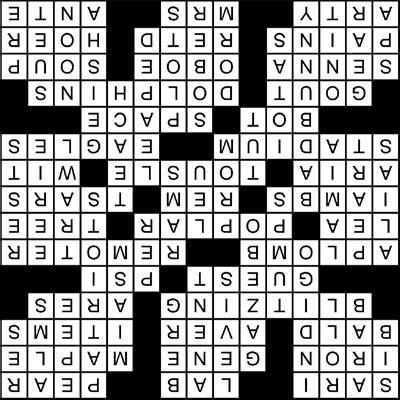
ACROSS
1. Pakistani attire
5. Research location
8. Partridge’s fruit tree
12. *Grid follower
13. *____ Upshaw, multiple Super Bowl winner
14. Canada’s national tree
15. Like Homer Simpson’s head
16. Allege
17. Agenda entries
18. *Adding a rushing player
20. Aphrodite’s lover
21. Not host
22. Tire meas.
23. Composure under strain
26. More distant
30. Thompson of “Some Kind of Wonderful”
31. Ubiquitous deciduous tree
34. Genealogical plant
35. Poetic feet
37. Dream time, acr.
38. The Romanovs, e.g.
39. Song for solo voice
40. Dishevel, as in hair
42. Clever humor
43. *SoFi ____, Super Bowl
LXI venue
45. *Last year’s Super Bowl winners
47. Web robot
48. Tesla Roadster with Starman location
50. a.k.a. podagra
52. *The only NFL team with perfect season
55. Plant-based laxative
56. Symphony member
57. “No ____ for you!”
59. No gains without them
60. Retired, abbr.
61. Field worker
62. Bohemian
63. Not Miss or Ms
64. Poker amount
DOWN
1. Bro to bro
2. Speedy steed
3. Chuck Berry’s “____
Over Beethoven”
4. Rainbow color
5. *Santa Clara’s ____ Stadium, Super Bowl LX venue
6. Beside, archaic
7. Titanic’s frozen enemy
8. *Team with most Super Bowl appearances
9. Fencing weapon
10. Charitable contributions
11. Hi-____
13. Garden shelter
14. Unhealthy atmosphere
19. Little hills
22. P in m.p.g.
23. Mark Twain to Samuel Clemens
24. Lively
25. Vampire of Greek mythology
26. *One of two teams to win while hosting Super Bowl
27. Long fishing line
28. Like haunted house
29. What the defense does?
32. High school dressy affair
33. Romanian money
36. *Super Bowl LX halftime show headliner (2 words)
38. Crosby, Stills, Nash & Young: “____ Your Children”
40. Egyptian boy king, for short
41. Long jump
44. I to Greeks, pl.
46. Rob Marshall’s 2005 movie “Memoirs of a ____”
48. On the wagon
49. Land parcels
50. *Shoulder pads and cleats
51. “Put a lid ____ ____!”
52. College dwelling
53. High part of day
54. Edible fat
55. Facial site
58. *Charlie Puth and Brandi Carlile, ____game stars
Have you ever showed up to your campsite and realized you forgot the cooler? The guilt of buying plastic and foam coolers can spoil all the fun. Well, here’s a really easy fix. Go to the back of any convenience store and grab a cardboard box or three. Get two that nest inside each other loosely. Take your Contributor newspapers and shred and crumple. Then stuff some in between the cavity of the two boxes. Dry leaves or moss also works, although dry leaves actually put out a bit of heat, so that’s a last resort. Damp leaves would be better. Then take several papers or cardboard and set those on top of your food. That’ll keep it cool for quite a while especially if you put ice bags in the bottom. Or you can put them in the bottom and the top, then layer the newspaper over it. If you put it behind and under some rocks on the north side of your campsite, this will help even more. You can also find or dig a hole. At about one foot down, the earth is 52 degrees. Lacking a nearby convenience store, use blankets or towels and place them in a hole or in between some rocks. How to avoid ants? Well, hopefully you brought Tupperware! If not, wrap it all in newspaper as tightly as you can.
Cook any meat you have right away. It will keep a bit longer if it is cooked. If you brought marinade, then it is fine to leave raw meat in the marinade if you’ve got it sealed off properly. If you brought fish and it’s not in the can, just eat it right away. That’s true anyway, isn’t it?!
Be sure to move your box back away from animals at night. If you are not in bear country, just flop your sleeping bag over it and you’ll be fine. Bobcats and foxes do like meat, but they are very shy of humans. Keep a flashlight handy. Lacking that, keep your lighter or your
BY FREEPRESSGMA, CONTRIBUTOR VENDOR
box of matches close so you can scare them off with fire if they get too interested. Raccoons on the other hand, I like to call them the North American monkey. They tend to run around in gangs and are a bit fearless. If this happens, throw some scraps into the woods and let them run after it. If that’s not working, you may have to give up a significant amount of your food, grab the box and find another spot. Ideally, you have a car! Lacking that, a campground bathroom with a door that doesn’t have any openings would be helpful.
If you forgot your can opener, just walk out to the asphalt and start rubbing the top round in circles on either cement or asphalt. Do this for quite a while. The top will wear off. Flip the can back over, fish out any potential metal particles, and you can heat it right in the can if you’re desperate.
When you cook your food, you can save fuel, or if the fire is burning low, remove the pot and set it in a hole, surrounded by newspapers to keep the dirt out. Throw dirt over it to keep the paper from catching on fire.Throw a bunch of newspapers on top, and then dirt if you like, or just a rock. After about 30 minutes, your food will be done cooking. It will also be just the right temperature to eat! Note: do not do this in dry arid areas! Only in the southeast or northeast when it’s rainy or the soil is damp. If you are in true desert, and there are no underground roots, you could be all right. But if you are in a dry forest, forget it!
Have you ever wondered how you could stay dry if you didn’t have a tarp? Well, gather as many long sticks as you can, and lean them across a bough (that is a tree that has branches all the way to the ground). Then lay sticks across the lengthwise sticks. Then cover it with
grass or leaves or whatever you can find that is fairly thick, dry material. Then throw dirt up on top of that. The dirt seems counterintuitive, but it will absorb rain. If it’s a downpour, this will not help quite so much. I suggest finding a cave, or an overhang!
One of the things that we tend to have trouble producing enough of when we’re camping is greens. Make sure you are acquainted with some of the more common Tennessee pioneer plants, meaning plants the pioneers brought over here, such as lambs quarter, violets, or wild oats, or native wild plants. Really easy ones to identify are violet leaves, lambs quarter, and miners lettuce. These are all quite edible. Just a small handful will do you. They are much more potent than your store-bought vegetables, so don’t eat too many at one time. You really don’t want to find out why. Suffice it to say that you will use up all your toilet paper.
If anyone in your group is getting overheated, wet down their clothes. If water is not handy, bring them around to the north side of a rock or a tree. Have them lay flat on bare ground or moss if possible. Yes, there are insects and things but the cool of the earth will help tremendously. Also, make sure they’re getting enough water, of course. If you’re low on electrolytes, do pick anything that doesn’t taste bitter and terrible. Any leaf or small green herb will help a lot. If the person has lost too much salt — I know this sounds horrible — they can lick their arms to get more salt in them!
If you keep your ankles, backs of knees, inside of your thighs, wrists, elbows, and head spritzed down with water as you are walking, you will stay much cooler. If you are wearing a hat, which hopefully you are, take it off and wave it over your head at intervals, so that the
Created by Mccollonough Ceili
Ever wanted to have a snowball fight indoors? Well, you can and it won’t make a mess. All you have to do is take sheets of newspaper and crumple each one into the shape of a ball. You can also add a bit of tape if you want it to stay in a ball shape longer. Make sure that you have enough “snowballs” for everyone who is playing to have at least four. Now it is time to use them like you would a real snowball.
sweat doesn’t get trapped in there and you can cool off, but put the hat back on. Note: the easiest way to avoid this kind of overheating is just to stay nice and quiet and take a nap in the heat of the day. Doh! Finally, if you get lost, walk downhill. You will end up at a stream or a road I promise. If you end up at a stream, just follow it downhill. Eventually, you’ll get to civilization. If you wind up on the road, well, I can’t help you quite as much but you’re more likely to run into someone that you could flag down for help. Wait! Finally, really finally, if you see a wild animal, just hold still and calm, and don’t approach it! They look so cute, but they’re five times stronger than you and easily startled. Even deer, or God forbid giant things like elk are very dangerous to humans. Let them continue about their business. If you need to, turn slightly to the side and walk slowly away. If this bothers them, just stop and wait. If it’s a bear, all bets are off. You might need to make lots of loud noise and confront it if it wants to approach. Finally, do not wear perfume or aftershave; they are filled with either synthetic or real animal musk! Animals will think you are yummy. This is bad … but fun to watch. Just kidding!
Finally well not finally, to keep mosquitoes and noseeums off you: rub crushed tree leaves all over your skin. If you smell like a plant, they won’t be nearly as interested. Be sure and do your ears and neck and face and scalp if you can.
Oh, and everybody hates this one: do not eat sugar! Eat fruit. Sugar metabolizes too quickly and makes you much more vulnerable to both heat exhaustion and hypothermia. Those are the tips of the day.

Bob Mendes served Nashville as an at-large member of Metro Council from 2015-2023, followed by a two-year stint as the Chief Development Officer in the Mayor’s Office. In October 2025, he stepped away from the Mayor’s Office and returned to private practice.
As an attorney, Mendes concentrated his law practice on the areas of commercial litigation, business bankruptcy, and business planning. He took a pause when he accepted the position under Mayor Freddie O’Connell and helped lay the foundation for Nashville’s East Bank redevelopment and other large development deals, including among them the Rivergate Mall, the Global Mall and a new fire facility at Dolly Parton’s downtown hotel.
Looking at your history working for the city of Nashville, you could be considered a poster child for public service. How would you define public service?
Public service comes in a lot of different forms. When people volunteer at their church or at any nonprofit, that’s a form of public service. In elected office and the Mayor’s Office, there’s more visibility to it. But fundamentally, whether people’s public service comes in the form of tutoring at the school or volunteering at church or being involved in politics, it all comes down to us working together to make our community better for all of us.
In the current political climate we live in, is public service still alive?
It’s challenging, for sure. In the political spectrum, it’s hard to be effective if you don’t take positions on difficult topics. And if you take positions on difficult topics, you’re going to run the risk of antagonizing [and] polarizing some group of people. It’s very acute and difficult at this time.
But if you read through American history and history of other parts of the world, I don’t know if there’s been a time where active political effort has been easy necessarily, but it definitely seems like there’s a lot of challenges these days. I think there is a significant risk from talking to friends and my own experience. You’ve got to take care of yourself and your family if you’re going to be involved in the rough and tumble of politics these days. Otherwise, people run the risk of getting burnt out.
In the current divisive political climate — from the federal, state, and local perspectives — what would you like to see local politicians do better to counteract some of that penetrating divisiveness that we see?
In Nashville, we’re trying to operate a successful city that happens to be predominantly Democratic voting [in] a supermajority Republican state and majority [red] federal government.
For local politicians, it is extremely challenging because you only really get to fundamentally choose one of three paths:
BY JUDITH TACKETT
You can appease the supermajority and run the risk of antagonizing the local population. You can be all in for all progressive all the time and incur the wrath of the supermajority. Or you can try to walk the middle and low-grade: annoy everybody all the time. That’s a little bit reductionist, but those are the three fundamental paths available to people trying to run a blue city in a supermajority red state right now.
My wish would be that people would be transparent about which path they were on, because I think it’s a value judgment. If you want to choose to appease the supermajority because peace and harmony for the city is maximized and that’s good for us. And so I’m going to appease the supermajority, let me say so.
Or alternatively, if your position is, “Hey, I’m principled, like I’m going to stick hard to principled progressive values and if the wrath is incurred, that’s their choice, not our choice,” say so.
And if you’re trying to walk the middle and be a little bit annoying to everybody, say so.
I think we’d be better off if political positions came with sort of an explanation of where people are trying to be on that spectrum.
If you answer that question for yourself, which path would you be on?
Well, I’m retired from government. You know, from the time that I was in the [Metro] Council, I became a believer that it’s really hard to have an opinion about what you would do if you don’t have to actually do it.
I know that as a council member, I was typically on the standing up for the values that I think the majority of the people in the city believe in. That was the position I took as a Council member. I think in the executive branch, in the Mayor’s Office, it’s more difficult to do that.
I think all the mayors through the course of the supermajority over the last decade have perhaps been more circumspect in the Mayor’s Office than they were while they were in the Council. I think we’ve seen that straight across the board. Some people could criticize that as, “Hey, you’re not the same person you were when you were on the Council.” But by the same token, you went from having one out of 40 votes to being the Mayor. And you’re fundamentally responsible whether you’re going to incur the wrath of the state or not. And it’s a different job.
So it’s hard for me, not holding a position in government, to say what I would do because I’m not in that position anymore.
What were some things that surprised you when you shifted from the legislative branch of local government to the executive branch?
I don’t know if there were surprises. If anything, it’s like people have an idea of what parenthood is going to be, but then you live it, and even though you knew it
was coming, it just feels different. The biggest difference is that [Metro] Council is a policymaking body. We could talk about something for a year and a half before a law gets passed. And in the Mayor’s Office you can get more stuff done in the real world in one week than you might be able to do in six months in the Council. Because you’ve got the entire executive branch, the entire government, reporting up to the Mayor’s Office, things move at a quicker pace there.
Again, not to say that one’s better, they’re just different beasts. The executive branch is a lot more about doing all day, every day and council is a lot more about policy over time.
What are some of the proudest moments and accomplishments in your 10-year service to the city?
I feel like I had a role in changing how traffic stop policies worked, and I think that was for the better. I’m proud of that. I feel the reforms we’ve made in tax and refinancing were valuable. I’m proud of that. Beyond that, some of the things that I’m proud of from when I was on the Council are ideas I had [where] I put other people in a position to accomplish. You know, with other council members who say they learned a lot from me, or I’ve managed to put other Council members in a position of succeeding. Those are all the “teamy” aspects where it’s more important to accomplish the goal than to have your name associated with it. Those quiet moments mean a lot.
The last thing I would say are the times when individual people would approach me out in the community thanking me for standing up for LGBTQ rights or for any marginalized community. Having somebody you don’t know stop you and personally thank you for having been a voice for them, for their community, those are private moments that have been most emotional and stick with me the most.
Why did you leave Metro in October and is there anything you would have liked to have more time on?
I believe in the model of citizen volunteers being involved in government. And I’ve absolutely intended to leave government after my eight years in the [Metro] Council. Freddie (O’Connell) asked me a handful or more times to take the position before I said yes. We agreed at that point that we were going to take it year by year.
He knew that my interest was in trying to help the new administration get some of these big projects like the football stadium out of the ground and the development agreement around the stadium — things that would have been distracting to the transit referendum efforts. I was interested in trying to get those things going.
All the large projects that he inherited are in some version of ongoing at this point. My interest was in getting the
framework set up, not in sort of project managing those things. So, once we got the East Bank Development Authority fully stood up and in the budget in June, I let the Mayor know the next month that it was time for me to go back to private practice.
I feel like the extra couple of years, I’m glad to have had the opportunity to help get those inherited projects to have some forward momentum and glad to have had the chance to do that.
You are currently working in your own law practice. What else may be next for you?
After 10-11 years of the intense merry-go-round of Metro, these last couple of months I really haven’t done a lot. I’m getting back into my professional life this year, and we’ll see. I don’t have anything in particular in mind.
Right now, it’s obvious federal funding cuts to food, homelessness, and other service programs are impacting the ways folks are able to operate locally. How are we doing as a city when it comes to taking care of vulnerable populations, and where do you see opportunities at the local level, despite what might be happening on a national scale?
It’s such a hard problem right now with the uncertainty from the federal government. It feels like forever, but we’re just one year into this administration. They never really pulled the trigger on cuts to education or changing the way education is funded from the federal government. I believe that that’s the biggest vulnerability that the city has from activities in Washington, D.C.
And so, one of the real challenges, I think, is the city’s revenue is fixed based on the budget. We should anticipate that more funding cuts will happen from the federal government. How do you plan for that? Do you address today’s problems? Do you keep powder dry for what’s going to happen in year two, three, and four of the [federal] administration? These are the impossible things that nonprofits, churches, and governments all over the country are trying to do with the uncertainty that’s been generated out of DC. I’ve got a lot of empathy for the challenge of anybody running a local government in America of really not knowing what the future is going to hold and therefore making it very hard to plan for it.
I think the approach that the Mayor’s had so far [is about] trying to make sure that we’re empowering and engaging resources outside government, so it can be addressed with government and outside government — I think that’s a good approach. But the reality is that obviously, if you go around the homeless community in Nashville and go out on the streets, it’s easier to find problems than solutions right now. And that’s a challenge that I’m afraid is bigger than local government can solve on its own.


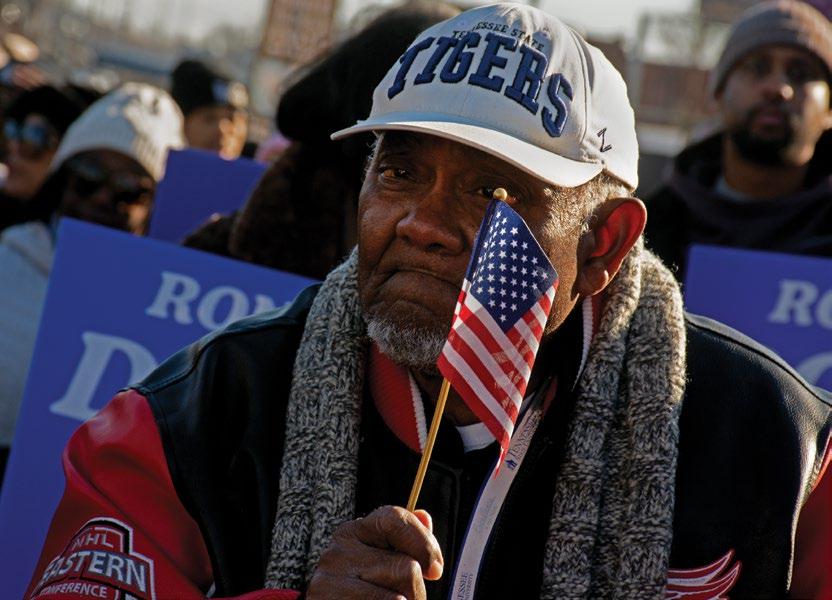
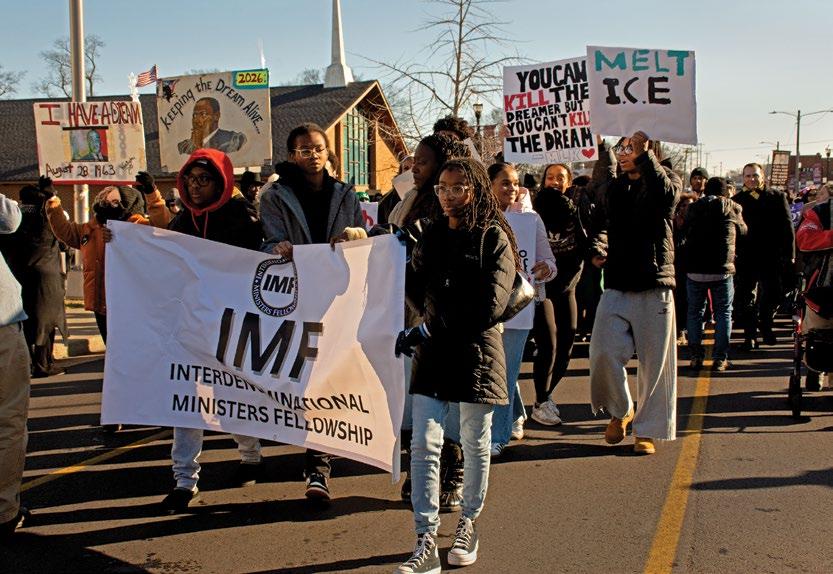

Tennessee Republicans unveil slate of bills that would require legal status checks, mandatory ICE referrals and create a state crime for immigrants illegally residing in the state
Tennessee Republicans started this year’s session by unveiling a slate of legislation targeting immigrants without legal status, crafted in cooperation with the White House, that could require public schools, vehicle registration centers, city governments and public health departments to verify, track and report immigration status.
Few details about the package of bills — eight or nine will ultimately be filed, Republicans said — were released initially and lawmakers said they were awaiting White House and Department of Education guidance on legislative language implementing immigration checks in public schools. Lawmakers could not give an estimate of the bills’ costs to the state.
House Speaker Cameron Sexton said the legislation was written after months of close collaboration with White House Deputy Chief of Staff Stephen Miller, a key architect of the Trump administration’s immigration crackdown. Tennessee Republican leaders said the legislation would serve as a “model for the rest of the nation.”
“The problem is you’ve seen over the country, whether you’re in Minnesota, you’ve seen fraud, abuse and waste by people here illegally,” Sexton said. “You also have seen crimes committed by people who are here illegally.”
Immigrant rights advocates were swift to push back on the Republican agenda, criticizing lawmakers for sowing division with legislation crafted at the direction of Miller, instead of focusing on kitchen table issues that impact all Tennesseans.
“It’s obvious that Tennesseans are facing rising costs of groceries, of healthcare, of housing, and families across the state are struggling in this economy,” said Lisa Sherman Luna, executive director of TIRRC Votes, the political arm of the Tennessee Immigrant and Refugee Rights Coalition.
“Yet, once again, the bills championed by our elected leaders and the supermajority do nothing to address the problems faced by everyday Tennesseans,” she said. Sherman Luna also cited the increased administration burden on state and local agencies across Tennessee performing immigration checks.
Immigrants in Tennessee, rather than being a drain on taxpayers, contribute $1.4 billion in combined state and local taxes in Tennessee, she noted.
Legislative Democrats accused Republicans of using immigration as an election-year tactic and distraction from high costs, saying they didn’t hear Tennesseans mention “illegal immigration” while canvassing the state last year.
“Immigration is part of the American story, and, as the daughter of an immigrant, it’s part of my American story, too,” Senate Democratic Caucus Leader Raumesh Akbari said in a statement. “Our immigration system is broken — but fear-based crackdowns and dangerous dragnet operations don’t fix anything. These policies separate
BY SAM STOCKARD AND ANITA WADHWANI

families, endanger Americans and distract our leaders from the issues that matter most to Tennesseans.”
Republican leaders said the bills are needed for a litany of reasons, but mainly to stop crime committed by immigrants without legal status. In a press release, it said nearly 2,720 people not lawfully present in the country were charged or convicted of crimes in Tennessee from October through December 2024, according to the Tennessee District Attorneys General Conference.
The same report by the DA’s conference says the immigrant population has a much lower rate than native-born Americans.
While President Donald Trump initially said his goal was to remove the “worst of the worst” from the country, lawmakers are focusing on anyone without legal documentation.
One bill creates a new state crime for immigrants who remain in Tennessee after receiving a federal deportation order, a measure that would likely face legal challenge. Only the federal government has the power to set and enforce immigration violations, which have been treated as civil violations.
State and local courts would be required to cooperate with ICE agents. Another measure would require all local law enforcement agencies to enter into so-called 287(g) agreements to work with ICE. More than 50 local law enforcement agencies have cur-
rently entered into the agreements, but some cities, including Nashville, have declined to participate.
Republicans also alluded to legislation designed to close “loopholes” in the state’s existing ban on sanctuary city policies, a measure widely seen to take aim at majority-Democrat Nashville.
The measure will require state and local governments, including public health clinics, to mandate referrals to ICE and Tennessee’s centralized immigration enforcement division when individuals’ lawful immigration status cannot be verified. The Tennessee Attorney General would be empowered to withhold shared sales tax revenue from “non-compliant municipalities.”
Another would require law enforcement conducting traffic stops to detain truckers and others with commercial drivers licenses who cannot verify their legal status, then immediately turn them over to federal immigration officials.
Doctors, nurses, teachers and others seeking professional licenses would also be required to provide proof of lawful immigration status.
And written driver’s license tests, now offered in scores of languages, would be offered only in English, with a one-year grace period that lawmakers said is intended to accommodate international companies operating in Tennessee.
Another bill would mandate the use of an E-verify system for all new state and local government hiring. State law requires Tennessee’s private employers with 35 or more full-time workers to use the federal system to verify whether a person is eligible to work. Businesses with fewer employees can follow a different set of rules.
Republicans released few details about what might be the most controversial and impactful legislation: a bill requiring Tennessee schools to verify the immigration status of students. Details about how the information will be guarded or shared with federal immigration authorities are still being worked out, Sexton said.
“We’re doing the details right now,” Sexton said, noting he was awaiting guidance from the White House and the Department of Education.
A bill last year by Sen. Bo Watson of Hixson and House Majority Leader William Lamberth of Portland to deny enrollment to K-12 students without legal status stalled amid questions of whether it would risk $1.1 billion in federal funding. The bill passed the Senate last year and could be brought back in the House this session.
Tennessee Lookout is part of States Newsroom, the nation’s largest state-focused nonprofit news organization. You can read this story and more at tnlookout.com.

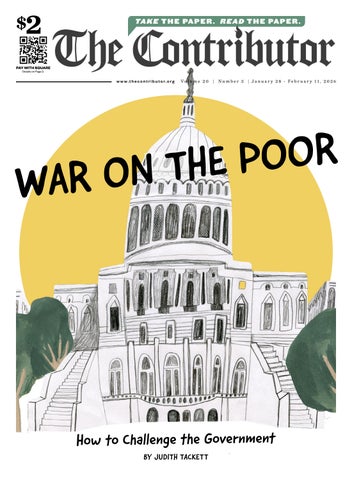
It feels like the War on Poverty, which was launched in 1964 by President Lyndon B. Johnson with the passage of the Economic Opportunity Act has turned into a War on the Poor.
In early January, the Trump Administration announced the cut of $2 billion in grants from the Substance Abuse and Mental Health Services Administration (SAMHSA), which falls under the Department of Health and Human Services (HHS). Due to a national public outcry, the administration reversed the grant cuts within hours.
At local levels the damage was already done. Chaos was created among
BY JUDITH TACKETT
providers, and I have even heard of some agencies in Middle Tennessee that had already announced that grant-funded staff would be let go. As of this writing, I am unclear whether all the grants have actually been fully reinstated yet.
In a public statement, the National Health Care for the Homeless Council, which is headquartered in Nashville, condemned the cuts and said, “This approach to funding decisions is inconsistent with the stability and care required to safeguard public health.”
Some of the grants that were placed on the chopping block were used “to
provide drug treatment, support employment and recovery services, street outreach, re-entry services, mobile treatment, specialty court programs, and more,” the statement from the National Health Care for the Homeless Council read. “Canceling these programs would sever access to care for many vulnerable people struggling with mental health and substance use disorders, increasing overdoses and other negative outcomes in communities nationwide.”
As we have seen, cutting and changing federal grants on a whim has become common. The Trump Administration
has already shown that it intends to significantly change the priorities in $3.8 billion in federal homeless funding, moving away from permanent housing toward forced treatment.
The U.S. Department of Housing and Urban Development (HUD) has abruptly changed a two-year homelessness funding model that was put in place under the prior administration in order to completely reverse HUD’s longstanding funding priorities. In essence, the changes would have threatened the housing of 170,000 Americans — at least 120 of Nashvillians — within the first few months of 2026.
Luckily, states, national organizations and cities — including Nashville — stepped up and challenged the federal government in court. That lawsuit is still ongoing, but a federal judge imposed a temporary injunction on the grant changes. As of now, the old funding model has been reinstated, and local organizations are working to renew their grants as originally planned.
But depending on the outcome of that lawsuit, HUD may change course again very rapidly. At the very least, the federal government will make the shift under the FY26 funding cycle. In essence, it is just a matter of time until changes are coming, shifting funding away from evidence-based permanent supportive housing practices that the federal government has promoted for more than a decade. The good news was that thanks to the legal challenges, local agencies will now have more time to adjust.
It seems ironic that the federal government wanted to cut $2 billion in SAMHSA grants for preventative measures in mental health and substance use care, while simultaneously trying to shift its HUD funding toward forcing people experiencing homelessness into treatment for mental health and substance use.
Shouldn’t we be able to expect the government to have a more coordinated approach?
One thing Nashville’s local government has done is try to look ahead. Just last month, the Metro Council unanimously passed a resolution to encourage the Office of Homeless Services (OHS) to work in coordination with the Homelessness Planning Council, a community board, to outline in a report how OHS intends to spend $4.4 million in Metro funds. The $4.4 million was part of a $5.5-million budget increase to OHS for the current fiscal year. OHS dedicated that funding for permanent supportive housing ($2 million) and Rapid Rehousing ($2.5 million). In essence, Metro Council gave OHS permission to evaluate those dollars to ensure no Nashvillian will lose their housing due to coming federal changes in homelessness funding.
OHS initially fought the non-binding resolution claiming that it would reduce funding for Strobel House. However, Metro Council members clarified that they are interested in seeing how OHS considers spending $4.4 million to keep people housed, which would include Strobel House. When I did a quick calculation, it was very clear that OHS had enough funding within that $4.4 million, even after spending $2 million on Strobel House, to keep the 120 people who could face housing loss under the federal HUD funding changes in their homes and retain those permanent supportive housing units for Nashville moving forward.
OHS currently has a total budget of more than $11 million, which is comparable to the federal homelessness HUD funding that Nashville-Davidson County receives that is expected to change. The $22 million in combined government funding
is the biggest bucket of homelessness funding in our city. Yet, there is still a lack of transparency from OHS about how exactly Metro spends its homelessness funding.
It has been apparent that Metro has been more focused on the coordination of encampment closures, collecting data and reporting housing placement rates than on long-term strategic planning involving the entire community. The goal, as in so many other cities, is to make homelessness invisible rather than solving it in the long run.
And the big talking point that echoes across the entire United States and is also shouted from the Mayor’s Office is that “government cannot do it alone.”
My question is, “Why not?”
To be clear, I do not believe that the government should do it alone. But the government has proven time and time again that when they want to give incentives and subsidies to corporations — or dare I bring this up here — finance a new sports stadium, they will find the money.
basic civil and political rights.”
With all this inequality that is out of hand and with a federal administration that furthers the war on the poor, hurting its own citizens while enriching the oligarchs, what can you do?
Besides calling your elected representatives in Congress, get involved at the local level.
The reality is that local governments, without a demand for transparency, also watch out for the rich over the poor. This isn’t something that happens nationally and disappears locally as a phenomenon. Most of our city leaders are great at responding and garnering publicity for quick fixes but truly suck when it comes to planning ahead to serve the bottom half of the population and keep the middle- and lower-income populations in Nashville.
Your tools include demanding more transparency from your local government officials — those who represent the city of Nashville and also those at the state of
With all this inequality that is out of hand and with a federal administration that furthers the war on the poor, hurting its own citizens while enriching the oligarchs, what can you do?
Let me zoom out from the local government and take a look at the global system.
Currently the 12 richest people in the world have more wealth than the poorer half of the Earth’s population combined (which make up more than four billion people), according to the recently published 2026 Oxfam Report. Oxfam is a global organization “that fights inequality to end poverty and injustices.”
The Oxfam Report* also shows that:
• Since 2020, billionaire wealth has grown by 81 percent.
• Billionaire fortunes have grown at a rate three times faster in the last year (since President Trump took office) than they did on average in the five previous years.
• Billionaires are more than 4,000 times more likely to hold public offices than ordinary people.
In short, the report outlines “how the super-rich use their extreme wealth to buy politics, media and justice to defend their own fortunes, dismantle and destroy progressive policies, and strip away our
people in cold weather shelters last winter (2024/25) that only opened at 32 degrees Fahrenheit. Shouldn’t they have served closer to 220 if they had utilized those empty rooms? The money was there to implement a solution within three to four months. Instead of focusing on solutions that may serve more people but not garner as much attention as the highly publicized shutdown of a large encampment, city officials regularly choose to blame nonprofits when asked tough questions or being criticized.
Or you could ask why Metro Social Services (MSS) needed to organize pop-up food events in low-income areas and does not already have permanent satellite offices in those underserved neighborhoods. While I commend Metro for stepping in and responding quickly when federal food assistance was compromised, it seems having already a steady presence in those areas would have been more effective. Satellite offices could have been co-located in existing community centers, libraries, or churches years ago. If done that way, more people could have been served over the years in a more consistent and ongoing manner in the neighborhoods they live. Rather, MSS chose to move from Downtown and rent a building for just under $1 million in Donelson. It is hard for populations that we refer to as the “working poor” to travel across town during the day while trying hold down one or two jobs. Certainly, pop-up events and resource fairs garner more positive media coverage as reporters pick up press releases. But a strategic vision like satellite offices, would have served more people in the long-term.
Tennessee. Specifically, you can ask questions to your council members. Most of them are very responsive and available. You can reach out to departments, and if they don’t respond, contact the board that oversees them. Question anything that looks too much like propaganda. Make public information requests to see how your taxpayer money is spent. Demand that local reporters hold the government more accountable and cover poverty in a consistent and transparent manner.
For example, you may want to ask Gov. Bill Lee’s office why he opted out of accepting $84 million in taxpayer funding you already paid for the federally funded summer food assistance program that would have served thousands of Tennessee children from low-income families.
Or you may ask the Mayor’s Office why they chose to keep 80 temporary motel rooms open for an entire year in anticipation of an encampment closure when they could have started a coordinated effort moving people from encampments to indoor settings in a less disruptive manner. Instead Metro regularly served 300+
In my experience, when you ask these questions, you will encounter bureaucratic excuses and rehearsed talking points. Don’t give up. Instead, double down and ask your local government representatives how the Office of Homeless Services ($11.6 million budget), Metro Social Services ($10.8 million), and the Metro Public Health Department ($99.4 million) collaborate with each other and with other Metro departments to implement a poverty reduction plan — if Metro has one — and keep Nashvillians housed (a move that would reduce homelessness in the long-term).
To me, those are ethical questions that you can and should ask. You don’t need to be an expert on poverty. Pick one issue, learn about it, and ask questions. Change takes time, but only if we consistently demand accountability and offer input for solutions.
Being engaged at the local level matters, especially in an environment where the federal government has declared a War on the Poor.
*https://www.oxfamamerica.org/explore/ research-publications/resisting-the-ruleof-the-rich/
Judith Tackett is a longtime homelessness expert and advocates for housing-focused, person-centered solutions. Opinions in this column are her own.
BY FREFOREVER, CONTRIBUTOR VENDOR
Gone are the days of online shopping
Replaced by soup, fuel and bread line hopping.
Dystopia
No gifts under the tree
We needed the tree to heat you and me.
Dystopia
We tried coal, electricity, and wind turbines
Now all that’s left is to let our little light shine.
Dystopia
One, two, three, four once the tree is done burning Next is the door.
Dystopia
Out in front waiting for a chance to earn a day’s pay at the plant.
“We want to work”
“Pick me to work”
Is the daily chant.
Dystopia
Another day has passed got there first, And Didn’t even get picked last.
Dystopia
What are we to do to change our condition?
We’ve already lost too many of our sons in the last insurrection.
Dystopia
Dusk is upon us and I have nothing more to say
I’m all out of words
Left only with my moans and groans to be interpreted above As I pray.
Dystopia
First, we were down
Then put out
Now, we’re left questioning
“What is this new life really all about?”
Dystopia
BY ZERO M.
How does it feel?
To hold the sun in your hands?
The warmth radiates from your fingertips and surrounds you. The first time someone hugs you, I mean, really hugs you,
You will remember.
Their arms pull you tightly to them, With a gentle yet firm grip. It will come at a time when your tears fall down like raindrops
And your heart is sunken in your chest. Their embrace surrounds you Long enough to stop the tears
But not too long that it feels suffocating. Love incinerates the thorns that wrap your heart
You are safe now.
Within your grasp holds the greatest truth, Humanity is not your enemy.
You are a picturesque stained glass window. The light that surrounds you beams color into this world. Your words have the capacity to move mountains, even the most solemn stop to listen I see you leave a trail of light wherever you go, Yet you still face the darkness when you walk. Slow down and turn around.
You are not alone.
BY AMY E., CONTRIBUTOR VENDOR
In South Africa an extinct white Rhino plays among the wild feeling isolated, not knowing that her body, blood and nature is helping the eco-system and tourists invest in future earth friendly architectural designs.
BY ANGEL F., CONTRIBUTOR VENDOR
Silence speaks softly in stillness I listen
finally calm alone in my Bliss
New beginnings sway in the wind,the sounds of chimes playing in the distance.
The air has a familiar smell. It crisps as it fills the air. Smiling at the sky as the sunset is on fire. My eyes light up.
Sky is gray with tones of pink. In awe of this beauty.
As the moon peaks bright in the dark blue sky I make a wish and I close my eyes. silent speaks as the full moon washes over me with peace. No worries, no fears, no sadness and no tears. Moon bring to light. Healing love healing night.
As I look into the sky feeling filled with love and light.
As I pause to feel the breeze, the moon is big above me. I stare into the sky take a breath and close my eyes. Silence speaks as a moonlight peaks.
Quiet sky.
Silent night.
Sending you lots of love and light.
BY SHAWNA B. CONTRIBUTOR VENDOR
Friendship is a gentle thread, that ties two hearts with words unsaid. Through every laugh and every tear, a friend is someone always near.
They see your light when skies are gray, and help your troubles drift away. With open arms and listening ears, they walk beside you through the years.
A friend is more than just a name, they know your soul, they share your flame. Through silly jokes and quiet talks, or silent, comforting evening walks.
They cheer you on when home is thin, and lift you up when strength wears thin. Through ups and downs, they always stay, like stars that never fade away.
So here’s to bonds that never end, the golden gift of every friend. For in this world, both wide and wild, a friend is life’s most cherished smile.
BY NORMA B., CONTRIBUTOR VENDOR
It’s not hard for me to imagine a dystopian society
Just look around and I’m sure you’ll see it too
People are suffering EVERYWHERE
If you don’t believe me, just watch your local news Injustice abounds
It is evident in the form of a lack of affordable housing and economic difficulties fueled by inflation
All those yearning for quality healthcare that does not exist for those who need it the most that is unless you have money to burn
Leaving those who are sick and infirm among us with nowhere to turn
Food insecurity is rampant among the young and old alike not only in distant parts of the world, but right here at home
Billions around the world lack access to clean water to drink
Not to mention what’s needed for sanitation and hygiene
These are basic necessities for ALL humanity
War, conflict and civilian unrest are common among many nations
Any talk of peace is short-lived and tenuous at best
The number of natural disasters continue to rise
Wreaking havoc and causing destruction to EVERYTHING in their path
Those left behind in their wake are scarred for life
Left to pick up the pieces of the lives
Often there is nothing but memories to hold on to Of the life they once knew
Unfortunately, things like these are not uncommon in our modern world
They ARE NOT the exception, they are the rule
To overcome all this negativity what must we do? Or is this simply a mere dream too?
BY NORMA B., CONTRIBUTOR VENDOR
It’s funny how life goes
One minute everything is going great Then out of nowhere something happens — change
It does not matter if it’s subtle or abrupt the affects of it are sure to come
It can be bright as the sun bringing warmth when they do
Or pouring like the rain of a monsoon
It often takes away the security of what is known, the status quo
In its wake it brings doubts and insecurity of the unknown
Yet change good or so they say
I suppose that depends on your state of mind on any given day














I made a lot of resolutions this year, Aquarius. Some would say too many. There’s just so much I want to change. But I’m finding that the more changes I pile on, the harder it is to keep up with any. I slip up once and by three in the afternoon I’m asleep in a bean bag chair under three empty cartons of vanilla ice cream. More rules seem to lead to more opportunities to fail. I think we might need to stick to the basics, Aquarius. Maybe just one-day-at-a-time it. Maybe for the rest of today, just treat yourself the way you’d like to be treated. Maybe try it again tomorrow.
The Mayans were drinking chocolate as early as the 6th century. It was mixed with water, chilis, and spices and served cold. This went on for at least 1,000 years before European explorers arrived. They knew chocolate was special and rare and so it must be valuable, but they didn’t love the taste. It wasn’t until the 17th century that someone decided to add milk and sugar and serve the drink hot. Who knows what you might discover this year, Pisces. Maybe something you’ve been doing the same way for ever that you could revolutionize just by changing a couple of ingredients.
Like most amateur astrologers, I have two cats. One’s friendly and playful and curious and sweet — like a sunbeam with whiskers. The other has always been … well, sometimes she’s downright mean. But lately, mean-cat has lost her hearing. It’s not unusual. Especially for older female cats. But something else has changed. She started sleeping right next to sunbeam-cat because she needs his ears. She’s gotten a lot more cuddly in general. She can’t do it on her own anymore so she had to make friends. It might be time for you to start leaning-in to those around you as well, Aries. I won’t question your motives as long as the results are positive.
In a 1981 interview, Barbara Walters famously asked Katharine Hepburn: “If you were a tree, what kind of tree would you be?” The moment followed Walters for years as an example of the kind of trite, unserious journalism she was associated with. The problem is, that moment didn’t really happen. Not exactly. In the interview, Hepburn said that she feels like a tree. Walters asked “what kind?” It was a relevant follow up to an odd metaphor. Sometimes it’s hard to shake the image people have of you, Taurus. Luckily, you don’t have to. Just do the work. Do it well. Don’t worry about your reputation and your results will speak for themselves.

It’s tough to keep resolutions. It’s hard to make a change. But I’ll tell you one thing you can do to improve your life in the new year that takes less than 30 minutes and will last you a good while. Clean out your spice cabinet. Throw out anything that’s expired or that you know you’ve had for too long. That dill weed that you bought just for that one lima bean casserole you made six years ago isn’t going to get used again. Throw it out. Buy yourself some new spices. Some new flavors could make for some big changes.
What was your greatest achievement of the last decade, Cancer? You did so many things. Did you get a job or a degree or an apartment? Did you get married or divorced or stay solo and in charge? Any of these might be huge landmarks in the history of you. But over the next decade, there’s something else I want you to look for. Go deeper. Don’t just change your status or your geography. Get quiet and find out what’s inside of you. In 10 years you could know yourself so much better.
As of 2017, there were 1.386 billion people in China. You probably don’t think about that a lot, but I thought you might be interested. It’s just that I know you wanted to get a fresh start on some things this year and I know it’s already slipping away. It’s hard to make new patterns. It’s tough to keep resolutions. But Chinese lunar new year starts on Jan. 25th this year. It’s almost the year of the Rat again! The first symbol in an ever repeating 12-year cycle. So I just thought I’d let you know that for you and 1.386 billion other people, there’s still another chance to start over. It’s coming right up.
It’s cold outside and the sun is down before I get home from work. Makes it hard to want to head out the door and go for a walk. Makes it hard to want to start a new project. Makes it hard to want to fold the laundry in the basket that I’ve been living out of like a portable closet I just want to crawl into bed and binge watch fantasy TV shows until I fall asleep and wake up in April. If you’re feeling the same, I’ve got two thoughts. One: you’re allowed to do exactly that. Hibernate if it’s what you need. Two: Before you pull the blanket up over your eyes, try to do one, just one thing to help yourself out. Fold some shirts. Call a friend. Go for a walkif only to the mailbox and back.
If you encounter an independent microstate led by two princes, don’t worry, you’re probably not stuck in a Spin Doctors song. You’re most likely just travelling through Andorra. The Principality of Andorra is a tiny nation on the border between Spain and France and, yes, it is a diarchy led by co-princes. It reminds me, Libra, that you’re in charge of a lot right now and in some areas it might be helpful to share the load. Consider finding a co-prince to bounce ideas off of, share responsibility, and split duties with. That’s what I said, now.
I’ve never been good at sports, Scorpio. I tried them all: 8th grade basketball, 8th grade football, 8th grade baseball. Now that I think of it, maybe it’s kind of weird that as an adult I base my perception of what I’m good at on what I was good at in 8th grade. I just assume that if I couldn’t learn to make the shot when I was 14 I couldn’t learn to make the shot now. Where does this kind of thinking make its way into your life, Scorpio. What did you try once and never try again? Maybe give it another go. Find out how you’ve changed.
It is said that Gautama Buddha lived into his 80s. His last meal was graciously prepared by a blacksmith named Cunda. It was a supper of either pork or mushrooms. It’s a strange detail to get hung up on, but it has caused some controversy. Cunda’s dish of “sūkaramaddava” can be translated either as “tender pig meat” or “a food enjoyed by boars” which, as everyone knows, is mushrooms. Vegetarian Buddhists insist that it’s the latter while other traditions celebrate the last meal by cooking their own feasts of pork. Communicate with clarity this week, Sagittarius. Maybe in 2600 years your followers won’t have to debate exactly what you meant.
What did you bring for lunch today, Capricorn? I’ve got some beans and rice and an apple and one of those little cheeses in red wax. What? You didn’t bring anything? Not even an empty lunchbox? This is a situation we can fix. Look, I’ve got enough beans and rice to share and, although I already ate the little cheese you can have this unicorn that I molded from the red wax. We’re only gonna get through this year if we can help each other out. Enjoy your half of the apple. And if you run into somebody else who needs a boost, help them out.
BY MAURICE B., CONTRIBUTOR VENDOR
Addiction is a “chronic” life-long condition where the the symptoms of just simply existing/ living reflect on our actions in life. Each individual with a consciousness has to deal with the multiple challenges of conditions/addictions in our daily lives. In every one of life’s growth spurts there is a certain degree of learning the processes and experiences that are always in conflict with the external environment.
For example, during adolescence there’s a high volume of not immediately knowing exactly the right way to solve a particular situation. Adolescents are faced with situations alone for the very first time. After the situation comes up a few more times, they come to the conclusion that mentally and emotionally fighting is their best option on resolving the situation. They find it’s best to hide it, or sweep it up under a rug, or set it to the side or even behind something. That action takes their mind off the importance of that matter and those learned and accepted behaviors is the mirror image of active addiction. The protocol of insanity is “doing the same thing and but expecting different results,” just like a mole in soft clay, an adolescent is moldedinto the best possible character given only for the reasons of the next generation to come.
There is a desperate need for family ties, and Allah/God has placed it as the foundation in all generations. It truly takes a nation to raise a child. The factors of “living with” a nation is
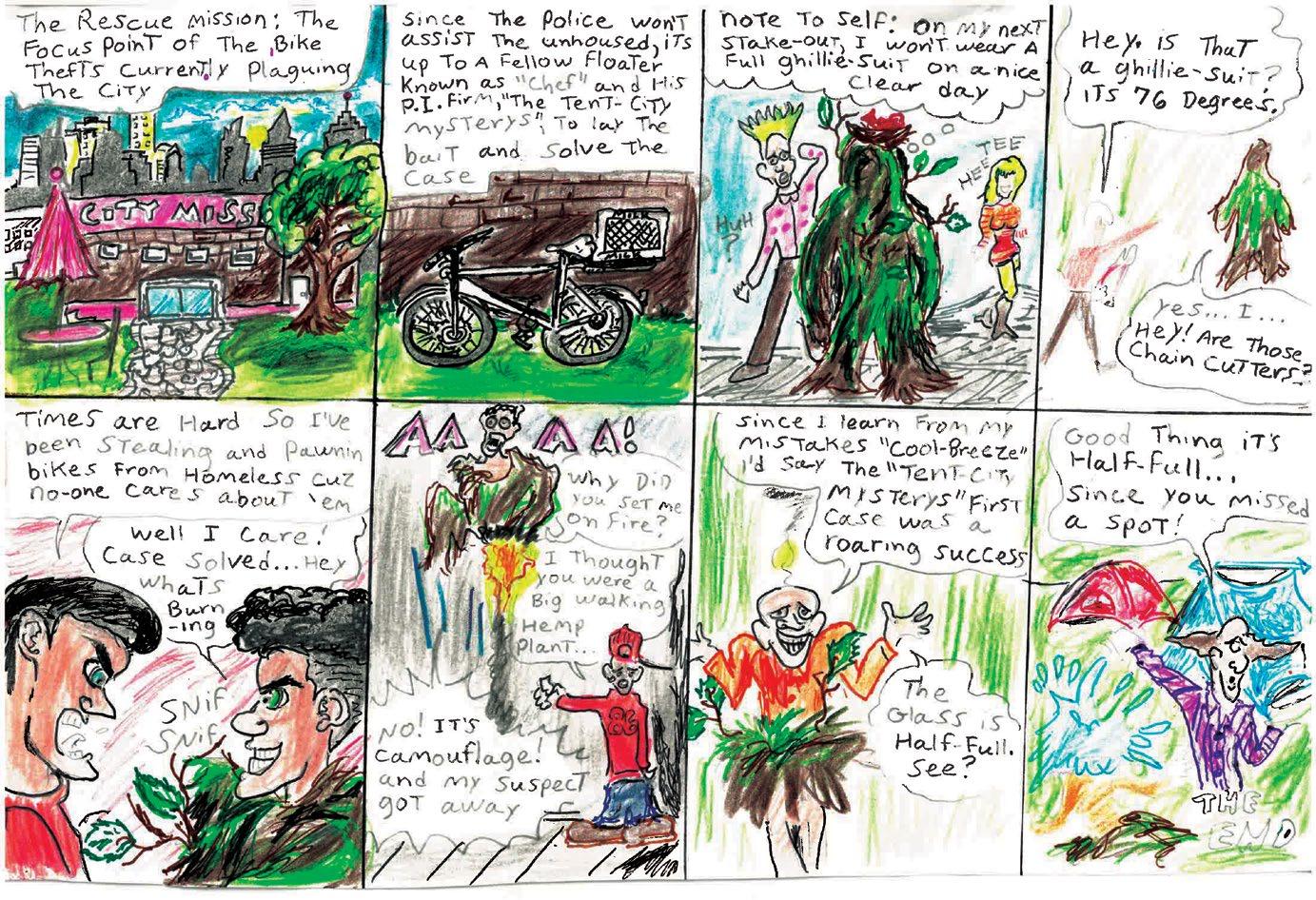
COMIC BY DENNIS T.
where agreeing to disagree is acceptable. At the same time to know one’s place and stay in that place is a major factor of respect and even goes into self respect and shows one their self worth.
Just as there are 360 ways to ask a question there are 360 ways to get an answer. Knowing one’s self worth is a commodity. It doesn’t have to get to a state of anger until one or the other feels that the challenge is too much and unbearable and one isn’t able to handle and maintain the mental or verbal aspects of that fight, in which that’s a part of “living with.” Those reactions are from unawareness and unlearned concepts.
Whatever particular established language one has been raised up under is how mankind is separated from humankind. Humanity is the overall principle to all human behaviors — the similarities and the differences of each individual’s character. Humanity is the ways individuals do and perceive things and themselves within any and every circumstance or situation that has occurred. For instance, being timid towards a particular situation or aggressive towards that same particular situation.
The act or acts of manifesting the differences of one’s character as a result of one of their behavioral defects may not necessarily mean that one way is always right and the other way is always wrong. The main point or focus is to find a solution. As that is also a part of “living with.
BY CHUCK C., CONTRIBUTOR VENDOR
The relationship between the unhoused here in Nashville and the general public has had it’s ups and downs over the years. The perception of the homeless was, to a great extent limited to being referred to as, “bums,” “tramps,” “winos” and “no goods.” Generations before they were, “hobos,” “transients” and “drifters.”
In my experience before the days of The Contributor, much of the only contact the public had with the unhoused was on street corners where “Will Work For Food” signs were displayed or the panhandler or the alcoholic drinking in public. Much of this public perception has changed to a great degree with the advent of The Contributor here in Nashville.
I can remember the time when a car would pull up beside someone who was holding a cardboard sign and you could immediately hear the sound of car door locks being engaged and see windows being rolled up. This
trend, I’m happy too say, has reversed itself to a great degree and we the vendors of The Contributor have made this change possible. Now, when cars approach our vending spots all over Middle Tennessee, there is animated conversation, positive exchange of ideas and insights and the building of community. What was once a very tense and often uncomfortable relationship between the unhoused and the general public now has the beginnings of the building of community. Working with each other to maintain a positive image to our customers and always putting our best foot forward as we engage folks is probably the best way we can build community and ensure our continued success.
This article is dedicated to the memory of the late Ridley Wills II who gave so much to The Contributor.
I watched a group of senior citizens almost end a man’s whole morning at 7:50 a.m. I was standing in a long like for the grocery store that opens at 8 a.m. for seniors only. I was waiting with my grandpa, when a young guy tried to cut to the front. An old lady calmly escorted him back to the parking lot ... with her cane. He came back again, and an old man punched him in the gut, kicked him down, and rolled him away like a broken shopping cart. When he limped back up a third time, bruised, tired, and fed up, he yelled, “LOOK — if y’all don’t let me unlock this damn door, NONE of your are getting in!”
“The Contributor” está trabajando con uno de los principales periódicos en español La Noticia para llevar contenido a más lectores en Middle Tennessee. Nuestros vendedores de periódicos han pedido durante mucho tiempo que nuestra publicación incluya contenido que apele al interés de residentes de habla hispana en nuestra comunidad.
“The Contributor” is working with one of the leading Spanish-language newspapers La Noticia to bring content to more readers in Middle Tennessee. Our newspaper vendors have long requested that our publication include content that appeals to the interest of Spanish-speaking residents in our community.

Dos tragos, dos historias: lecciones de un Jack & Coke y un Moscow Mule en el mundo de hoy
mesa, hielo brillando a plena luz del día, una rodaja de limón en una taza d e c o b
N
e x t r a o r d i n a r i o Y, sin embargo, horas después al volver a mirar esa imagen sentí que había ahí una pequeña metáfo r a d e l m o m e n t o que vivimos

Me reuní con una amiga la semana pasada mientras visitaba Perú No fue una reunión planeada al detalle, ni pedimos “lo de siempre” Fue una de esas coincidencias simples: ella pidió un Moscow Mule y yo pedí un Jack & Coke Dos bebidas clásicas Dos nombres cargados de geog rafía Y, en medio del clima político mundial actual, no pude evitar pensar: ¿de dónde vienen realmente estos tragos y qué cuentan sus ing redientes sobre el mundo que compar timos?
El Jack & Coke: un clásico americano que viajó más lejos de lo que parece
El Jack & Coke es directo, sin pretensiones: whiskey y cola, hielo y listo Pero su sencille z es engañosa En realidad, el trago conecta dos historias profundas de Estados Unidos
Por un lado está Jack Daniel’s, un símbolo de Tennessee y de la tradición del wh i s key a m e r i c a n o, a s o c i a d o a Lynchburg y a una marca que presume su historia desde el siglo XIX Por el otro lado está Coca-Cola, nacida en
A t l a n t a e n 1 8 8 6 , c u a n d o Jo h n
Pember ton llevó su jarabe a la far macia Jacobs’ y se sirvió el primer vaso Dos íconos del “imaginario estadounidense” en un mismo vaso Y aun así, cuando lo miras con calma, también es un recordatorio de algo más g rande: la globalización cotidiana La cola es probablemente uno de los productos más reconocidos del planeta Y el whiskey por más sureño y local


que se sienta es par te de un mercado inter nacional Ese “trago simple” termina siendo, en realidad, una conversación silenciosa entre marca, identidad, industria y expor tación
El Moscow Mule: un nombre r uso inventado en Los Ángeles
Si el Jack & Coke suena a Estados Unidos, el Moscow Mule parece apuntar directamente a Rusia Y ahí está el detalle: pese a su nombre , el Moscow Mule no nació en Moscú
La historia más ace ptada lo ubica alrededor de 1941, en Estados Unidos, como par te de un empuje de mercadeo para popularizar el vodka incluyen- do ver siones que se sitúan en Los Ángeles (en el bar Cock ‘ n ’ Bull) y relatos ligados a ejecutivos de bebidas y a la famosa taza de cobre La receta clásica es conocida: vodka, ginger beer y limón (o lima), servido en una taza de cobre helada
Y aquí entra otro punto interesante para estos tiempos: el vodka más asociado al Moscow Mule suele ser Smirnoff, una
Conoce tus derechos:
¿Que hacer en caso de una redada?
Mantenerse callado
Sólo dar nombre y apellido No mentir
Nunca acepte/lleve documentos falsos No revelar su situación migratoria No llevar documentación de otro país
En caso de ser arrestado, mostrar la Tarjeta Miranda sados en la Quinta Enmienda de la Constitución, derechos de guardar silencio y contar con un ogado fueron denominados Derechos Miranda go de la decisión de la Suprema Corte de Justicia Estados Unidos en el caso Miranda vs Arizona, 4 U S 436, de 1966
marca con raíces en Rusia, fundada en Moscú por Pyotr Smirnov en el siglo XIX, pero cuya historia moderna se expandió fuera de Rusia tras los cambios políticos del siglo XX En otras palabras: el nombre “Moscow” funciona más como símbolo, marketing y estética que como origen real Ing redientes que cr uzan fronteras
L u e go e s t á n l o s i n g r e d i e n t e s E l
Mos cow Mule no existiría sin ginger beer Y la ginger beer en su versión histórica tiene un recor rido propio: se popularizó en Inglater ra (Yorkshire) hacia mediados del siglo XVIII
Y el jengibre, por su par te, se origina en el sudeste asiático marítimo; su viaje es tan antiguo como las r utas comerciales humanas
¿Qué nos dice eso? Que incluso cuando un trago “ se siente” local, sus componentes casi nunca lo son Un vaso p u e d e c o n t e n e r s i n e x a ge r a r u n mapa del mundo: ag ricultura, comercio, mig ración, industria, cultura
Y la taza de cobre también tiene su simbolismo La taza no solo “ se ve bien”; se volvió par te central de la i d e n t i d a d d e l M o s c ow M u l e p o r razones prácticas (mantener el frío) y por mercadeo En un giro muy per uano y muy contemporáneo no pude evitar pensar en lo que re presenta el cobre hoy: un metal estratégico en el mu n d o m o d e r n o Pe r ú h a e s t a d o históricamente entre los g randes prod u c t o r e s y e x p o r t a d o r e s d e c o b r e , aunque en años recientes el ranking global ha cambiado y se discute con cifras anuales (por ejemplo, Reuters re por tó que en 2023 el Congo superó a Perú en producción, mientras Perú se mantuvo fuer te en expor taciones)
L a l e c c i ó n i n e s p e r a d a : n o m b r e s , banderas y humanidad Vo l v i e n d o a l a fo t o : u n “ M o s c ow ” a l a d e r e c h a , u n “ Ja c k ” a l a i z q u i e r d a Y e n e l c e n t r o, a l go q u e a ve c e s o l v id a m o s e n m e d i o d e l r u i d o p o l í t i c o : l a g e n t e c o m ú n s i g u e c o m p a r t i e n d o m e s a , c o nve r s a c i ó n y v i d a L o s n o m b r e s d e e s t o s t r a go s evo c a n p a í s e s y r e g i o n e s Y e n t i e m p o s d o n d e l a p o l í t i c a i n t e r n a c i o n a l s e c u e l a e n t o d o e n l o q u e c o m p r a m o s , e n l o q u e b o i c o t e a m o s , e n l o q u e t e m e m o s o d e f e n d e m o s va l e l a p e n a h a c e r u n a p a u s a y p r e g u n t a r n o s : ¿ e s t a m o s m i r a n d o e l m u n d o c o n c u r i o s i d a d o s o l o c o n s o s p e c h a ?
Esa tarde, sin planearlo, terminamos con dos bebidas que cuentan historias de migración, mercado, identidad, y también de cómo se construyen los símbolos Un Moscow Mule que nació en Estados Unidos Un whiskey de Tennessee que se convirtió en marca global Una cola nacida en Atlanta que se bebe en casi cualquier ciudad del plane ta Y en ese cr uce de historias en una mesa cualquiera me quedó una idea simple: a veces, lo cotidiano es un espejo Un recordatorio de que el mundo está más me z clado de lo que parece; y que, aun con tensiones, siempre hay espacio para el puente
En víenos sus sugerencias por e-mail: ne ws@hispanicpaper com ó 615-582-3757







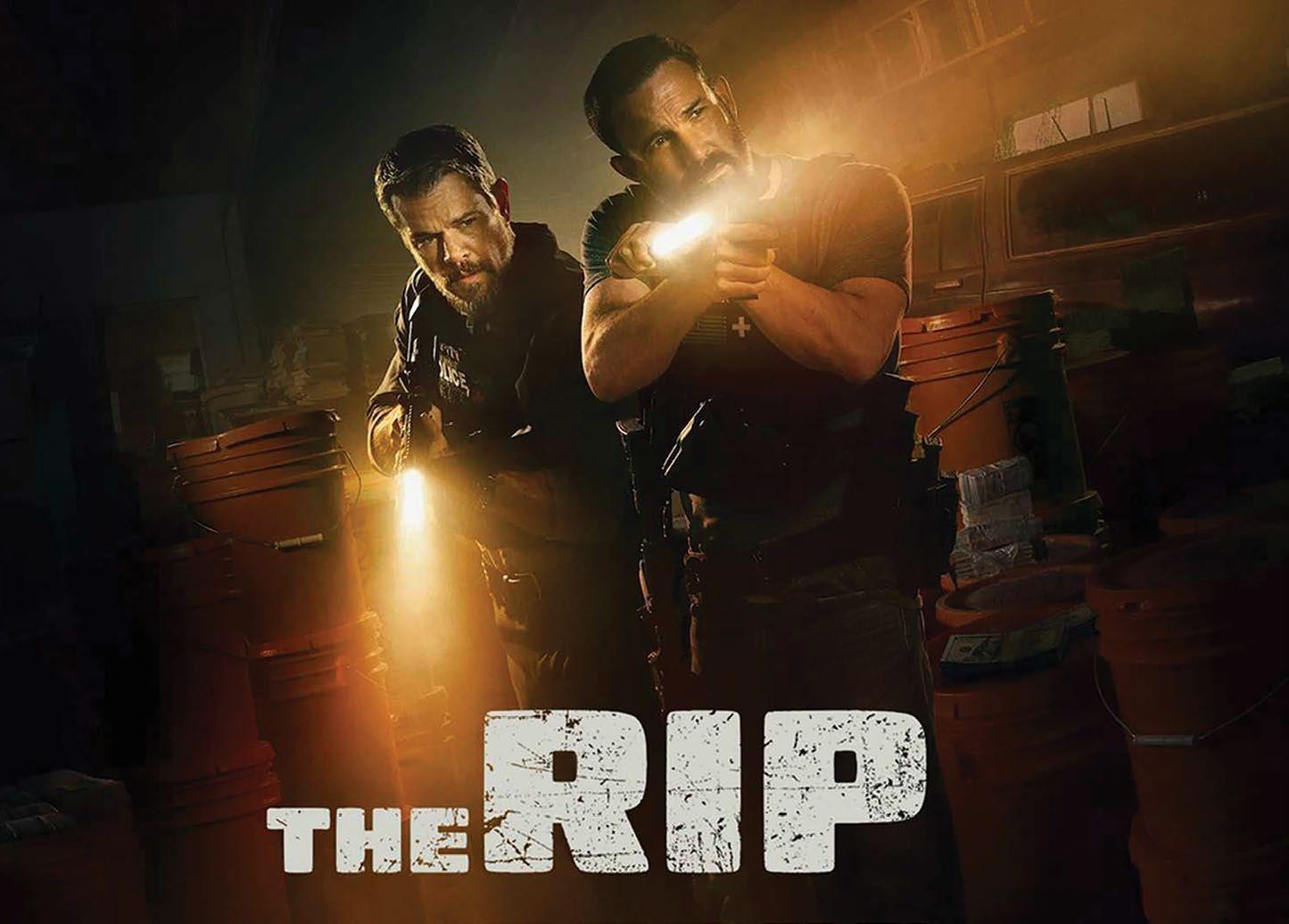
I love a great cop thriller. Movies like Heat , Serpico and The Departed give us intense detectives forming that thin blue line between chaos and order, operating between gutters and government halls, bedrooms and bank vaults. We hope for good guys with bad attitudes and villains with shiny badges. Crooked judges and honorable thieves may both make appearances. Long-suffering romantic partners and neglected kids are the expected collateral damage.
The new Netflix cop picture The Rip starts with a bang when the captain of a narcotics division is gunned down after communicating with an undercover agent. The Rip reunites Ben Affleck and Matt Damon as fellow narcs caught between bureaucratic ennui stagnating their boots-on-theground policing and the desire to solve their captain’s murder. Lieutenant Dane Dumars (Matt Damon) is promoted to replace the fallen captain, taking command of the Miami-Dade Tactical Narcotics Team alongside his partner and second-in-command, Detective Sergeant J.D. Byrne (Ben Affleck).
BY JOE NOLAN, FILM CRITIC
The team — including detectives Numa Baptiste (Teyana Taylor), Lolo Salazar (Catalina Sandino Moreno), and Mike Ro (Steven Yeun) — conducts a raid on a trashy stash house in hostile territory. Inside, they discover over $20 million in cash, almost certainly belonging to dangerous cartel operators. Under Miami law, the narcotics team must count every dollar on-site before leaving the premises, trapping them in the location with the massive seizure — a “rip.”
The circumstances that paralyze the team are both procedural and ethical. If they follow protocol they’re sitting ducks. If they break protocol they have paths to survival, but what if everybody has different motivations, and what if somebody on the team is actually responsible for their beloved captain’s death?
Damon’s lieutenant asking Affleck’s sergeant, “Do you think I want to jack this rip?” is my favorite movie line reading of the new film year so far, and that’s the question viewers will ask of most characters in the film. Writer-director Joe Carnahan
has fun flip-flopping Damon and Affleck for and against their familiar screen personas as every plot point turns twisty. One moment Damon’s lieutenant is the no-nonsense boy scout and Affleck’s sergeant is the good-hearted hothead, but in another moment the lieutenant seems conniving and blatantly dishonest. Affleck’s sergeant likewise never shows all of his cards and seems willing to undermine his leader and friend to do what he thinks is best for his career.
As the team works through the night counting the money, the clock is ticking. They receive ominous phone calls — seemingly from the cartel — warning that enforcers are coming to reclaim their fortune.
The Rip has a strong cast, and the premise of heavily armed police trapped in a house with a fortune buried in its walls could read like a super-intense stage play, but Carnahan doesn’t let his pressure cooker explode. The personalities and motivations of team members are only barely hinted at through bursts of banter that amount to little more than cliché movie cop jargon.
Detectives Baptiste and Salazar spend twothirds of the movie counting the money, outside the main action. Salazar alludes to how much the cash might help with raising her daughter, but that’s hardly revelatory. What are Baptiste’s motivations? Detective Ro undergoes his own transformation over the course of the film, but it feels more like a clunky function of plot than a genuine and gripping character revelation.
The Rip ’s cast is fully loaded and the film brings all the elements of an intense police drama, even with its misfires. Teyana Taylor just won a Golden Globe and I’ve been a fan of Steven Yeun since The Walking Dead . If you’re a Damon/Affleck fan and you love a cop thriller, The Rip should be on your winter weekend watch list.
Joe Nolan is a critic, columnist and performing singer/songwriter based in East Nashville. Find out more about his projects at www.joenolan.com.