



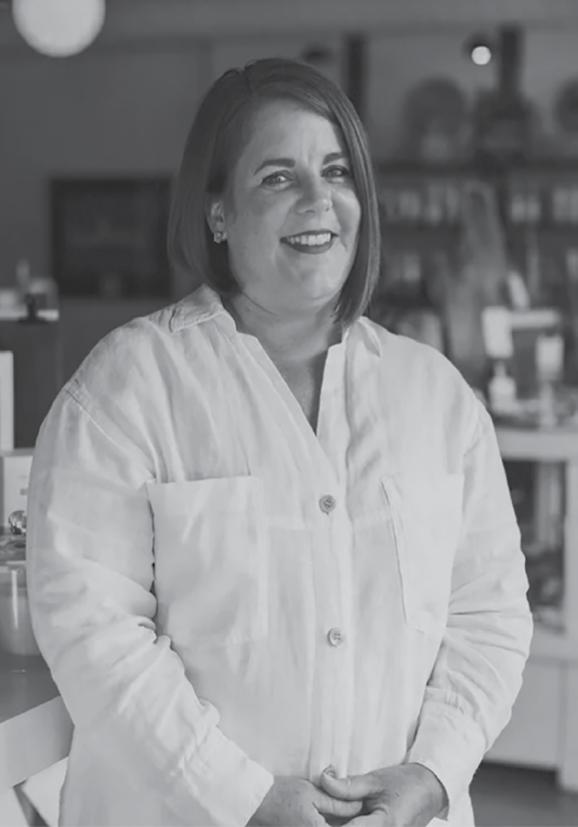
When Tasha Kennard became the CEO of Thistle Farms in 2022, she was looking for a change of pace.









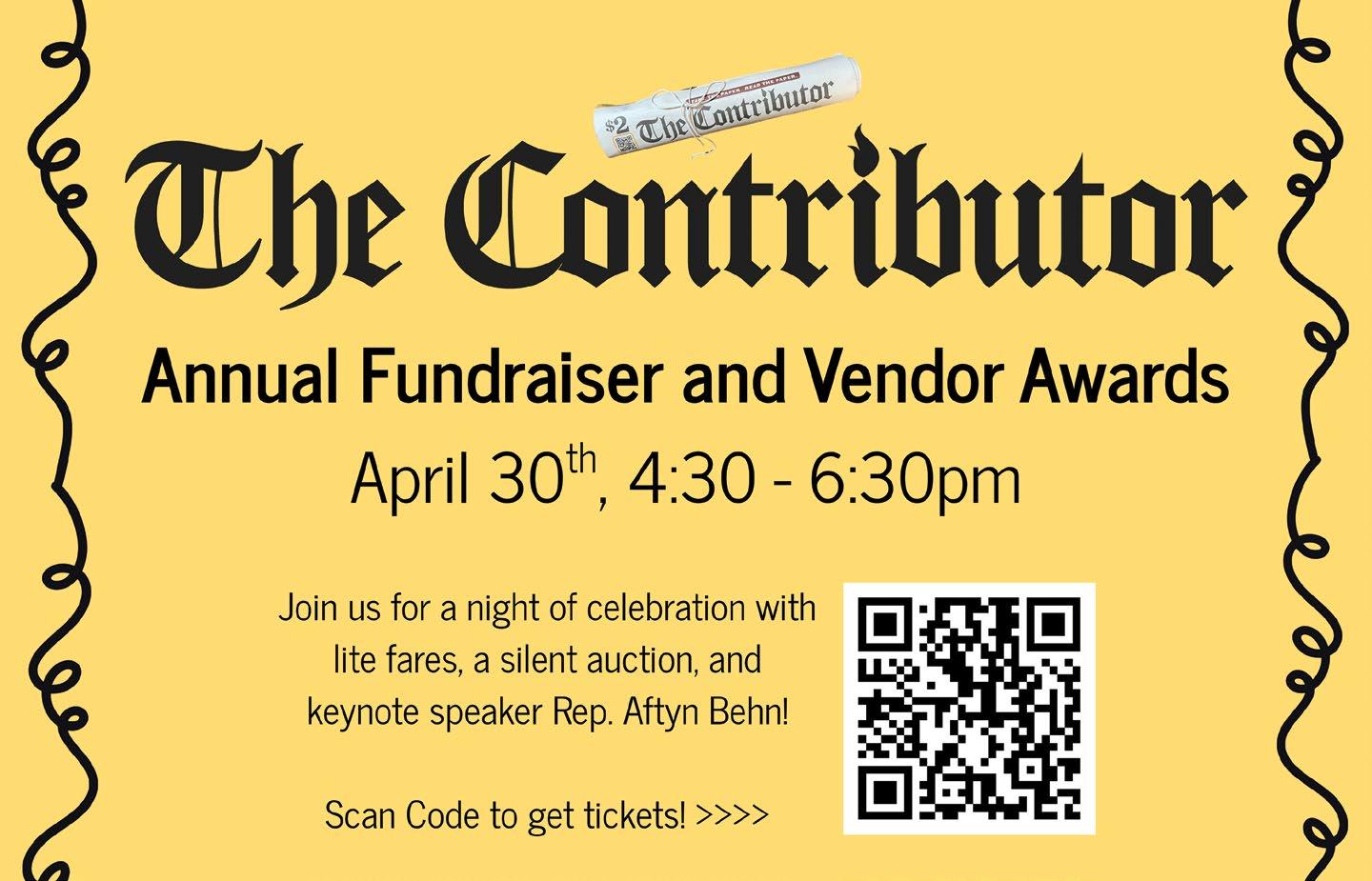
Venmo has canceled our account, but you can still pay using Square! You must identify your vendor so we know where to send the payment. Here's how:
After clicking “checkout,” type your vendor's name and four-digit badge number in the “Required” field. This allows us to know which vendor to pay.



Since The Contributor started in 2007, more than 3,200 different vendors have purchased $2.3 million worth of The Contributor and sold over six million copies, generating over $15 million in income for themselves. In 2019, our C.O.V.E.R. Program (Creating Opportunity for Vendor Employment, Engagement, and Resources) was the natural expansion of our mission of removing obstacles to housing. We now offer full case management, assistance with housing and rental expenses, addiction recovery, health insurance, food benefits, and SSI/SSDI assistance.





Tennessee policymakers are considering new legislation that would create a $30 million Starter Home Revolving Loan Fund to boost construction of smaller, more affordable homes as the state faces a growing housing shortage. A new fact sheet from the nonpartisan think tank ThinkTennessee says rising land values, construction costs, higher interest rates, and restrictive zoning regulations have sharply reduced the availability of starter homes, typically defined as houses under 1,500 square feet. The shortage is making it harder for first-time buyers to enter the market and for older residents to downsize while staying in their communities. According to the report, only 17 percent of homes sold in Tennessee in 2024 were below that size threshold. At the same time, more than two out of three Tennesseans cannot afford the state’s median new-home price of $399,580. “Tennessee’s housing supply isn’t keeping pace with demand, especially at the lower end of the market,” said Erin Hafkenschiel, president of ThinkTennessee. “Communities need more starter homes so young families can build roots in their hometowns, workers can live near new job opportunities, and older residents can downsize without leaving their neighborhoods.” The proposed revolving loan fund would be administered by the Tennessee Housing Development Agency and seeded with a one-time $30 million investment designed to become self-sustaining over time. Local financial institutions would issue 0% interest construction loans to builders, with funds repaid after the initial sale so the dollars can be reused for future homes. The loans would support construction of owner-occupied homes up to 1,500 square feet, including single-family detached houses and small multi-unit developments, with supporters saying the program could help expand homeownership opportunities for more Tennesseans.
After months of closure due to a fire in the parking garage, the downtown Main Library branch has reopened as of March 30. A conference area closest to the fire damage will remain closed as will the garage. Parking for $4 is now available at the nearby McKendree United Methodist parking garage at 140 6th Ave. N. The library is now open for its regular weekday hours, from 9 a.m. until 6 p.m. Readers, customers and guests will be able to browse the Library collection, check out books and materials, sign up for library cards and use public computers and WiFi Customers will be able to access all public areas of the Main Library, except for the conference center area, where restoration work will continue long term. The release also noted that hundreds of free programs, activities and helpful services have con-
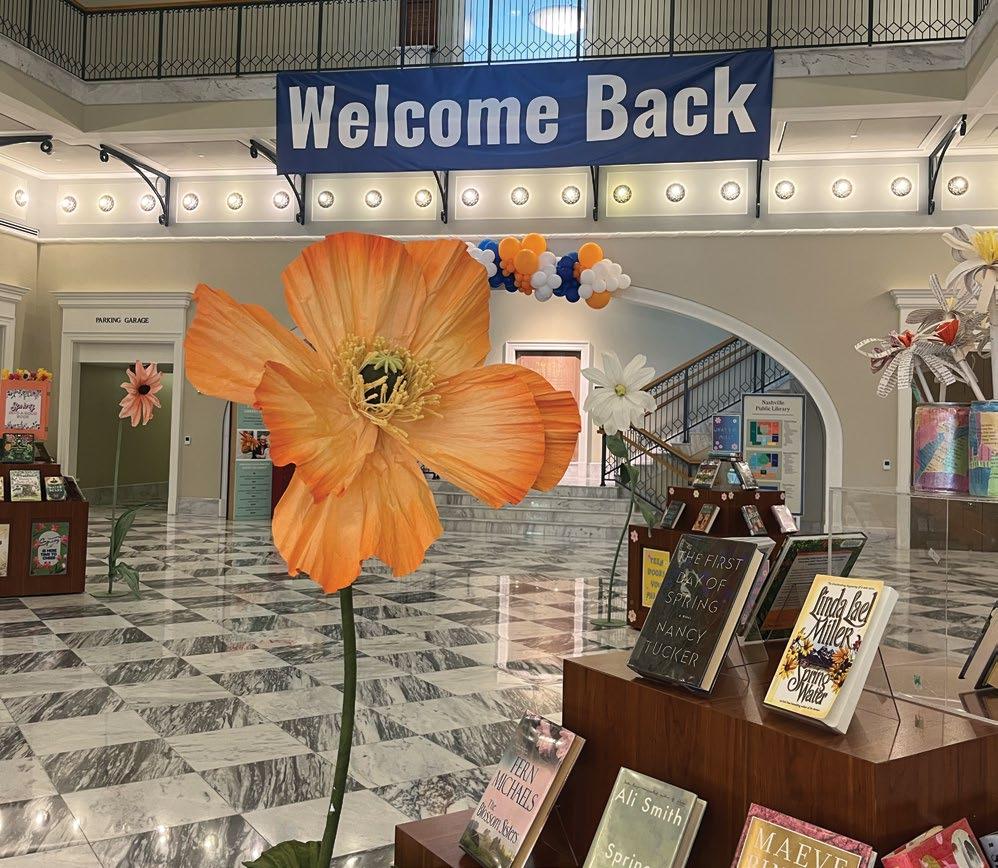
tinued at NPL’s branch locations across Davidson County since the Main Library’s temporary closure.
ThinkTennessee recently released the 2026 State of Our Counties Dashboard, an expanded interactive data tool designed to help local leaders, policymakers, and residents better understand economic well-being and opportunity across Tennessee’s 95 counties. The second edition of the online dashboard now includes more than 92,000 data points, a nearly 870 percent increase from its original 2024 version. The tool ranks counties across 132 metrics in nine issue areas, offering a cross-sector look at local conditions statewide. “This tool is about more than accessible data — it’s about helping Tennesseans build stronger, more prosperous communities,” said Erin Hafkenschiel, president of ThinkTennessee. “By compiling interdisciplinary, robust, and longitudinal data in one place, the State of Our Counties Dashboard empowers local leaders and residents to better understand where their county’s strengths and weaknesses are at a glance.” ThinkTennessee first launched the dashboard in 2024 after local leaders across the state
requested more county-level data. The platform includes rankings and data in nine categories: economic opportunity, county economy, elections and civic life, criminal justice and courts, housing, transportation and infrastructure, education, health and energy and environment. The 2026 version adds expanded county and regional data, including Tennessee’s nine Regional Development Districts and 18 commuting zones, along with longitudinal data covering the five most recent years where available. New features also include disaggregated data by gender, age, and disability status, interactive county rankings viewable as maps and bar charts, and downloadable prepopulated reports such as County Overview and All-Metrics summaries.
A new Nashville initiative is launching a pilot program aimed at helping families with school-aged children move from unstable motel living into long-term housing while keeping students connected to their schools and support systems. The program, Home Together Nashville, comes as nearly 4,500 Metro Nashville Public Schools students are experiencing homelessness, a 27 percent increase from the previous
year, according to MNPS special population services director Catherine Knowles. Organizers say many of those families are living in motels, cars, or doubled up with relatives while trying to keep children enrolled in school. The pilot is being launched through landlord partnerships with Freeman Webb and will include wraparound support from MNPS’ HERO program and Community Care Fellowship. Researchers at Vanderbilt University will help evaluate the model as it expands. Home Together Nashville is focused on families who have recently been paying out of pocket to stay in motels but earn too much to qualify for traditional housing assistance, leaving them in a gap between eligibility and affordability. Organizers say the goal is to provide long-term housing stability near the schools children already attend. The initiative is led by volunteers from Westminster Presbyterian Church, Deloitte, and local housing advocates, with Community Foundation of Middle Tennessee serving as fiscal sponsor to provide oversight and administrative support during the pilot phase. Supporters say the effort is designed as a long-term response to student homelessness, with the aim of helping families remain stably housed for as long as their children are enrolled in Metro schools.
When Tasha Kennard became the CEO of Thistle Farms in 2022, she was looking for a change of pace. Kennard had previously served as the farm program manager at Southall Farm and Inn in Franklin; before that she was the executive director of the Nashville Farmer’s Market for seven years.
She got a call from a recruiter about the CEO role at Thistle Farms.
“The more I talked to the recruiter, the board and the team at Thistle Farms, this opportunity felt like a clear invitation to step into work that was not just aligned with my skills, but also my calling,” she says.
She said she had to learn a lot about human trafficking but was already familiar with many of the same barriers that she saw in the food system, which was her main background in the nonprofit sector.
“We often think about leadership as something that we do … like a CEO role is about making decisions and being in charge and solving problems,” Kennard said. “But it’s really about how you care and who you care for.
“I’ve come to understand that real leadership begins with surrender, staying grounded in purpose and using the gifts that I’ve been given to serve others.”
What have you learned over the past four years that has surprised you?
I think one of the most powerful lessons that I’ve learned is that no one heals alone.
I’m a fairly independent person by nature. And before coming to Thistle Farms, I really approached challenges with the mindset that [you’ve] got to push through and figure things out, even if that means on your own. Being a part of this community has really shown me something different.
I’ve learned how much people truly thrive in relationship with one another, in the give and take and the tenderness and accountability and resilience that come from walking alongside others. Healing and growth, even leadership, are not solitary experiences. It’s something that is built in community. That’s been one of the biggest lessons.
It’s really surprised me how powerful that support can be, not only for the women that we serve, but for all of us that are a part of it in every role. And when people really feel seen, including myself, and valued and supported by a community that believes in us, I really think it creates a space for transformation. That just can’t happen alone.
Tell us a little about the work of Thistle Farms.
We’ve been around since 1997. We were founded by Becca Stevens. Many members in the community know of Thistle Farms’ work because of Becca’s big, bold vision that she had nearly 30 years ago.
The best way to describe us is that we’re a Nashville-based nonprofit that helps women survivors who have experienced trafficking, prostitution and addiction. Our role is to help them on their healing journey as they’re rebuilding their lives.
Our primary program, I often refer to it as our bread and butter, is a two-year residential
BY JUDITH TACKETT
program where women live in community, in a home that is provided by Thistle Farms. They get access to trauma-informed care, everything from well care, medical appointments, dental care, eye care, therapy, and they then begin their pathway towards stability and independence.
Alongside that bread-and-butter program, we operate a 30-day crisis stabilization home and offer transitional and permanent supportive housing to individuals that have completed our program. Women can come into our program by self-application or referral. It’s very common that women who are in or have completed our program will encourage [women they know need support] to come into the program. We also get referrals from judges, from justice involved agencies. We work closely with the Single-Point-of-Contact program in Tennessee and receive referrals from the agencies associated with that, as well as the TBI, and various different police departments throughout the state.
Beyond housing, we support women with case management. I mentioned all the healthcare access earlier. Then one thing that makes us stand out unique in this space is that we’ve created a job readiness program. It’s a curriculum that women can access for up to six weeks during their journey with us. After they’ve completed it, they can then go into employment, where the employment works around the program. So she can still go to all of her appointments and maintain her primary focus there as she is gaining more job skills on the job, receiving mentorship, and then career coaching
along the way.
You might wonder why we offer job training when so many of the other folks in this space don’t. It is because about five years into doing this, Becca and all the volunteers that were working with the women — it was called Magdalene at that time — they noticed that the women would complete the program, they would be doing great, and then there would just be this drop-off point a couple months after completing the program. It might be a relapse. It might be a reoccurrence of exploitation. It might be a bad relationship, or a loss of safe housing. A lot of that tied back to a lack of employment.
And so, back then in 2001, the volunteers and Becca decided, “OK, let’s take the things that we’re doing together in community, like making candles and blending oils, and let’s create products where we can create jobs [not only by making the product but also] in the sale and distribution of those products.
That really birthed what we know today as Thistle Farms: this model of a justice enterprise where we’re vertically integrated. We’re sourcing from artisan partners all over the world who are doing similar work to Thistle Farms. We’re creating these products in our 25,000-squarefoot manufacturing facility here in Nashville, and we’re retailing and distributing the products all over the world.
You also have a coffee shop, right?
Right. About 13 years ago, we stepped into a blended model of not just making and distributing our products but also inviting people in
to learn more about the organization because so many folks thought we were just a candle company or just a lotion company.
But there’s way more to that. We are a mission with a business, and we wanted to invite people into that mission. So, the Thistle Farms Cafe was born. It was first called the Thistle Stop Cafe, and then it was rebranded after some time. It’s become one of Nashville’s favorite cafes.
That café has afforded us an opportunity to partner with other nonprofits throughout our community. We have employees from Dismas House and from Mending Hearts, in addition to [those from] Thistle Farms, working in the café every single day. It’s creating an opportunity for people to come together around a meal, learn about our mission, but also an opportunity for individuals in our community who are in a healing journey, who aren’t a part of Thistle Farms to find employment and community as well.
It seems the homelessness nonprofits and human trafficking nonprofits are working in different systems that overlap at times. Where do you see opportunities for nonprofits to work closer together when it comes to housing people in need?
They run parallel. And the populations that we’re serving definitely overlap. Many survivors of trafficking experience homelessness, housing instability, or system involvement. I think because of that, one of the biggest areas for collaboration and opportunity is housing … and mental health.
Focusing on housing, I think it’s an opportunity for really strong collaboration that is beginning to bud in Nashville, particularly around coordinated entry and referral systems. Homelessness providers operate within this established housing continuum. With trafficking programs like Thistle Farms, we’re often maintaining a separate specialized pathway for survivors, really focused on safety and confidentiality.
If we can create stronger connections between these systems while protecting survivors along the way, we can ensure that more trafficking survivors have access to the full range of housing resources available in the community without organizations like Thistle Farms having to create specialized housing solutions.
I mentioned mental health earlier, and I think an important opportunity is expanding the trauma-informed, survivor-informed housing model, where we’ve got transitional and permanent supportive housing solutions that walk alongside homeless and trafficking survivors who need to stay connected to case management and support. That’s something that Thistle Farms has been doing for the past several years. We have transitional housing apartments, and we have permanent supportive homes where women, after they complete, can stay connected with us. And we’ve seen a significant increase in their ability to maintain independent living and thrive in their life post-program when they stay connected to case management and therapeutic services.
When you talk about the transitional housing and permanent supportive housing programs you have, did you build them on your
own outside of the homelessness system or how did you go about that?
For Thistle Farms, we actually redirected property that we had for a residential program. There was such a need for transitional housing support. And we could not get women into transitional housing apartments once they completed. So we decided to flip some residential beds into transitional housing apartments. Then we built more residential beds to support our program.
Now on the permanent supportive side, we did that through more collaborative partnerships. We’ve gotten funding from the Barnes Fund. We’ve worked with Affordable Housing Resources. We’ve also worked with other partners and sponsors in the community to help us build out permanent supportive housing options that are leasable and also permanent supportive housing where she’s the owner. That’s been a really beautiful partnership to see come online over the last five years.
What are your goals for the next five years?
My personal goal is to remain active and present in my kids’ lives. They’re going through some really formative years. I’m thankful that Thistle Farms gives me the opportunity to sit in the seat that I sit in but also sit in the right seat at home too, so that I can support them, cheer them on, and stay grounded as a family in partnership with my husband. That’s just incredibly important to me.
And for Thistle Farms, our goal is to expand our continuum of care locally, nationally, and internationally. We do that by supporting com-
munities where love heals and creating more opportunities for women to pursue economic freedom and long-term stability. There are two major focus areas of that visionary statement there. First, we want to deepen our collaboration around housing for women survivors of trafficking.
Just for some context, we currently have three two-bedroom transitional housing units that can support women for up to two years after they complete our residential program. And even with women earning a living wage in Nashville, once they complete our program, the cost of housing makes it incredibly difficult for them to transition beyond our support and to stable independent living.
So over the next five years, we want to work alongside housing providers, developers, other nonprofits, and expand transitional and affordable housing options for women leaving our program so that they can have a clear pathway to long-term stability. We have a vision of having up to 30 transitional housing apartments for women to be able to access. And this would open it up for women outside of Thistle Farms program. Maybe they’re completing a program somewhere else. Maybe it’s with Ancora or another agency across the state of Tennessee and their goal is to move to Nashville and live their life and have a job here in Nashville. We really believe having these 30 units will improve their ability to thrive post program.
Secondly, we want to continue to grow our justice enterprise operations. That’s our body and home manufacturing, our retail e-comm, as well as our café. And we want to further
Created by Mccollonough Ceili
develop and expand our product line while also investing in some new packaging and production equipment. This is going to advance the technical skills of the women who are seeking employment through our program. It will give them more transferable skills when they want to go work outside and stay in the type of jobs that are offered at Thistle Farms.
For local readers, how would you explain your national and international reach?
Over the past 20 years, Thistle Farms has expanded in building a national network of safe beds for women survivors of trafficking. We have partners in 33 states, and we also have 44 partners in 27 countries. These partners not only help with providing safe housing and programming but also with jobs and community for women survivors of trafficking. Many of these partners produce products just like [we do at] Thistle Farms, and we are one of their marketing and distribution partners. And so we purchase their products, and we retail them in our shop in the café as well as on our website.
Your background is in communications and marketing. What is your main advice to other nonprofit leaders on how they communicate during the current uncertain times with staff, board, and stakeholders?
I’ve always believed that communication should flow both ways. And it’s not just about what you say, but it’s about being curious, asking thoughtful questions, and really listening to the feedback you’re receiving. I think real listening creates a space for understanding, not
just a response. So in uncertain times, especially, people need opportunities to feel heard. And one of the best communication tips I have is to learn how to listen.
People want to know that their perspectives matter. They want to know that they belong, that they’re contributing, valued and supported and a part of something meaningful. And as leaders, we’ve got to have the ability to demonstrate that we can listen to other people. So I think strong communication and listening really creates a sense of connection and trust.
Anything else you’d like to add?
I keep finding myself in conversations where people are worried about hitting a barrier. Maybe they’ve got a new idea and they’re anxious about pitching it. Or they need to go ask a funder for support and they’re worried that they’re going to tell them no. Now, whatever that barrier is or that obstacle or just that fear of being told no. I just keep going back to a piece of advice that my grandmother gave me. I can remember sitting at her dining room table, which now sits in my dining room and her sipping a cup of coffee. And I was really worried about going for something, going for a promotion at work in my early 20s. And she said to me, “They can’t tell you yes if you don’t ask.”
I would just say this is so simple, but it’s also true that when you’re advocating for yourself or your community or something that you believe in, the first step is really having the courage to ask. And I would just say, go ahead, ask, make the call, start the conversation, and be ready for yes and whatever comes after that.

Written by Chris Scott Fieselman, Vendor #0015
The Bottle Ain’t Full, But? The Bottle Ain’t Empty. I’ve been there before. No matter what we’ve got? We fail to see it as a lot, And we always seem to want more. The Bottle Ain’t Full, But? The Bottle Ain’t Empty.
I’m still around, I know that I’m bound, To be found out… Sooner or Later?
What’s Music City Going to do to me? Do I look scared? Do I look like I’m afraid? And I never needed to feed off your pity. Thank God, I never let it? Be all about the Money.
The Bottle Ain’t Full, But? The Bottle Ain’t Empty.
There’s a message in the bottle, Too few ever get to find? But, like it or not? I left it behind, As a reminder, if they’re so inclined? And nothing ever, need be remembered, Just because it rhymed. It’s Rhythm, Rhyme and Reason, Sentence by Sentence & Line by Line, And… Is it Necessary? Is it Truthful? Is it Kind? As long as there are possibilities? I can be real and keep being me, Watching the sun setting upon Music City. What if this happened? What if that had never happened? To Be or Not to Be?
The Bottle Ain’t Full, But? The Bottle Ain’t Empty.
There’s a reason why?
I titled, the soundtrack of my life, “Familiar Lullabies”
One day they’ll understand why?
The Bottle Ain’t Full, But? The Bottle Ain’t Empty. I’m destined to reach New Heights? It’s all for Them or all for Me? I’m with you whether you like it or not? You could probably do better? But I’m all that you’ve got. How can I help? Can you find someone else? Sometimes I’m way too cold, And sometimes I’m way too hot. That’s what happens when you get old. Here I come now, Ready or Not?
The Bottle Ain’t Full, But? The Bottle Ain’t Empty.
Written by Chris Scott Fieselman, Vendor #0015
Songs that all along - Were meant to be heard, By those who hear the music - by reading the words. Songs sung in silence - that make perfect sense. And the music in the background… Echoing and Echoing and Echoing… Again and Again and Again… Excuse me?... What am I supposed to be? Accomplishing? Can songs heard by the words? Accomplish a thing? Someone might try - To decide to recite, The words that I have been - Inspired to Write. Like listening to a Long-lost, Long Island Songwriter, Sing…
I tried and I tried - But I couldn’t inspire - Curiosity… “I Wouldn’t Want to be With Me Either” - “I’m Sorry…” What do I have to do? To get through to you? To get you to Inquire? Then get you to Desire? What I’ve been Blessed - with a Gift to do? Like having more than enough, Good Wood to Burn, On a really cold night, and no way to light the Fire?
You take the Good with the Bad, and you Keep on Smiling. This too… Shall pass in a… Little While. I’m not about complaining ‘bout the way it is? Cause I know? That it can always get, worse than this? You take the Good with the Bad, and you Keep on Smiling.
Trials and Tribulations, and Everything Happens for a Reason. What presently seems like Devastation, Is no more than “Suffering for a Season” Nothing is really as bad as it seems. Thank God we’ve still got: “Ham Hocks and Beans.”
Written by Chris Scott Fieselman, Vendor #0015
What did it cost? What was Gained and what was Lost? After all they’re just Words of Encouragement, You can never say? That you never heard… “I’m Fighting a Good Fight, and look like I’m Winning. Sometimes I almost look like, I know what I’m doing?”
I’ll never be? So, you’ll never see?
A Performing Artist up on stage. But every two weeks, I do get to speak, And my lyrics “Consistently” appear on a page.
I can’t sing or play guitar. So, I can only take it just so far? I really don’t know? Where this road is leading? But right now, I’m right where you are?
And what am I really achieving? They say that “I’m a Very Bad Influence.” That I may have a lasting effect on your Conscience? I Pray what I say, leaves a Permanent Scar. It comes from my heart, just doing my part, And a long way’s away, from being a Star. So many souls, going down a lost road, That Only ends up lasting? Only so long? And? … There’s Only so much a guy, can try to do right? That might touch, so many lives, with a Song…

ACROSS
1. Ira ____ of NPR
6. Mr. Turkey
9. Gives the boot
13. Between octet and decet
14. Ginger one
15. Spherical bacteria
16. Popular ursine meme star
17. Public health org.
18. Mountaineer’s tool (2 words)
19. *Fly larva
21. *World’s noisiest insect
23. Comic book shriek
24. Like some excuses
25. Food safety org.
28. Man Ray’s genre
30. Temporarily, legally speaking (2 words)
35. Like unpleasant awakening
37. 4th down kick
39. Quarter-round molding
40. Computer operating system
41. Metal bar
43. Mine passage
44. Antonym of exhume
46. Expert
47. Strip of wood
48. Throws
50. It will
52. Concurrence word
53. Silo contents
55. Romanian money
57. *Bee’s bounty
60. *Boll weevil, e.g.
63. Aquarium scum
64. *Lightning bug trap?
66. Brandish
68. Part of a flower
69. Bonanza find
70. Courtroom excuse
71. Whiskey grain, pl.
72. Coniferous tree
73. #52 Across, pl.
DOWN
1. Econ. measure
2. Good earth
3. Wintour of “Vogue” fame
4. Marsh plant
5. Not impromptu
6. Diplomat’s asset
7. Antediluvian
8. Hajj destination
9. Cocaine plant
10. Got an A
11. March Madness org.
12. *Number of legs on an insect
15. Famous Roman orator
20. Giraffe’s stripedlegged cousin
22. Mischief-maker
24. Opposite of energetic
25. *____ fly, first living creature sent to space
26. “I don’t know,” casually
27. #43 Across, pl.
29. *____ beetle, world’s strongest insect
31. *Shape of a ladybug or carpet beetle
32. Not tomorrow, not yesterday
33. Like basketball’s final eight
34. *Lepidoptera members, not butterflies
36. Demi Moore and Bruce Willis, e.g.
38. Reason for suit
42. Tutu fabric
45. Duran Duran’s 1984 hit, with The 49. “Monkey ___, monkey do”
51. Wiggle room
54. “Have a great time!”
56. Useful
57. Performance with acts
58. Lecherous look
59. “Betcha Can’t Eat Just One” brand
60. Tea or beer
61. Hawaiian flower garlands
62. Major European river
63. Acronym, abbr.
65. “Roses ____ red”
67. Bad-mouth, slangily



STORY AND PHOTOS BY FREEPRESSGMA, CONTRIBUTOR VENDOR
There is nothing quite like experiencing cabin fever while trying to overcome agoraphobia.
The No Kings protest No. 3 was calling. My map system told me that the buses were not going to take me there directly because they had all been rerouted. This was enough to make me bound and determined to get there anyway. I’ve never been to Wasioto Park, so it was twice as scary as usual.
After taking my medications and doing some deep breathing, I stepped out the door and to the bus stop. I decided not to burden myself with signs or anything other than some water and a jacket in case I needed it.
Although the bus systems were trying very hard to keep from dropping people off at a convenient location for the protest, I managed to spot a giant inflated Cookie Monster. I followed him all the way to the protest, wending my way around the giant double Titans stadium. One finished, one not ….
About a half mile from the protest site, I could hear the roar of the crowd and the shout of the speakers who were speaking with great passion. Several of them could be our next Martin Luther King. One speaker reminded us that we have been here before. We have fought to win the right to vote, we have fought for civil rights, in fact, we have fought for about everything that is just and right. Therefore, this is not new to us and we know how to do this. It was extremely inspiring.
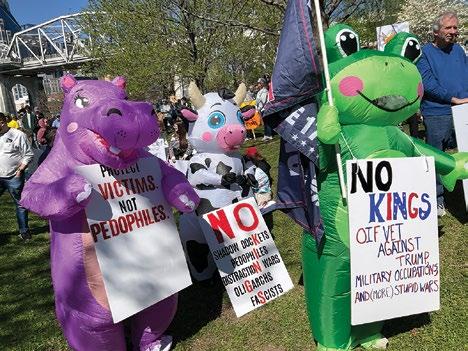
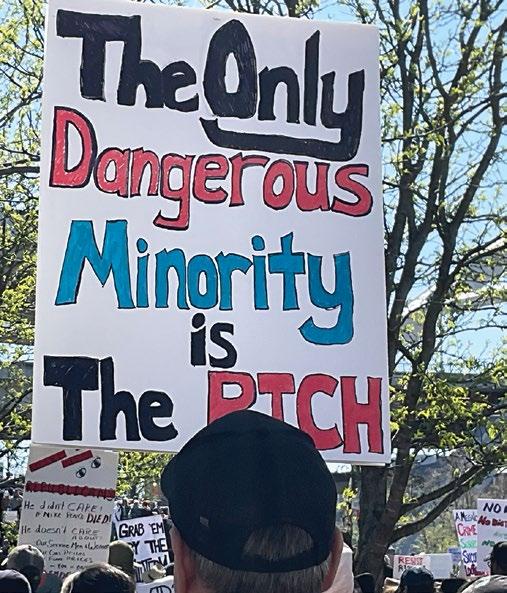
There were people everywhere with incredibly fun and intelligent signage, costumes, and even some handmaids from The Handmaid‘s Tale by Margaret Atwood. They were a little bit over lifesize and very sobering to look at.
I joined the SEIU tent and was rewarded with a great view of the stage. We were packed shoulder to shoulder in Wasioto Park. I’m not sure how many thousands of square feet that is, but it was thousands of people. It took us over
an hour to cross the pedestrian bridge 10 abreast and make it to the courthouse steps.
A couple of Apache helicopters decided it would be fun to fly about 100 feet over our heads. This felt dangerous. I later found out that they were not authorized to do this flyover. They are suspended as of now. Thank you 101st Airborne for at least talking about responsibility. Unlike the man in the White House, they are aware that they have a responsibility of safety toward their citizens.
It was exciting, invigorating and inspiring to be among so many people, and to realize that I am not alone. The letters I write and phone calls I make are being counted. These things do matter. And the will of the people shall always prevail.
Families and college students, old and young, people in colorful clothes, and people in regular dress, people of all sorts and all colors were there. One small boy held a sign that said “I am seven years old and I could do a better
job than him.” A very old man held a picture of a toilet that said, “his throne.”
A middle-aged woman held a picture of the Statue of Liberty that said, “Girl, hold my earrings!”
The organizers of the event made sure that it would be a safe place to protest, that all officials have been notified properly, and that our rights to protest and speak out were unimpeded. Many people were afraid to come because of what happened in Minneapolis, but ICE was nowhere to be seen.
“One of our SEIU union organizers called this a ‘Joytest’ and that really resonated with me,” said Magda Underdown-DuBois who was in attendance.
“Our community came together with fierceness and passion to demonstrate our strength. Now we need to take that energy into our everyday lives not just by contacting our representatives, but by feeding our neighbors, smiling at strangers and being kind whenever you possibly can.”



There is a demographic in the Homeless community that oftentimes goes unnoticed. I’ve named them Collateral Damage. They are the children in homeless families, who by no choice or fault of their own, find themselves having to live in vulnerable situations. Unable to process the fear and shame that have become a cloak of constraint and confusion providing little, if any, comfort to those forced to don it as a covering. They become Collateral Damage.
Homeless children aged 5-18 (students in grades K-12) are the true warriors, often are forced to carry a load of secrecy that is crippling their young minds, bodies and spirits. I was introduced to this demographic group and their behaviors and demeanors while assigned as a substitute teacher in many of their classrooms.
During these assignments I began to see signs that would become a guide to the dark side of life for these children. Sworn to a “vow of secrecy” protecting not only the guilty but the
BY FREFOREVER, CONTRIBUTOR VENDOR
innocent, their innocence was slowly fading away. Suffocated by the lies that have choked out the light in their eyes. “If someone doesn’t ask, don’t tell and if someone does ask, don’t tell as well,” was a learned behavior.
As a result, they were never fully able to participate in the social activities at school, especially making friends. Simple questions like:
Where do you live?
What do your parents do?
Can we have a play date? or
Let’s hang out at your house afterschool? would drain the blood from the faces of those students who were bound by a “code of secrecy” ball and chain, they not only had to carry, but also conceal.
Fear and anxiety are constant companions that follow close behind them throughout the day; creating darkness where sunlight once shown. Gone are the days of carefree bliss, now they have to worry about loose lips that sink ships. Walking on the eggshells that abound, having to remember which mask to wear when others
are around. We stress “safety first” when all they can hear are the pangs of their hunger and thirst.
Dissecting the symptoms, and never getting to the root; these students are labeled disciplinary problems, troublemakers, and anti-social. The truth is, they want to comply but because of their circumstances they have to protect the lie, at times to their detriment. Deep down inside they are dying, their spirit breaking under the pressure of their weighty disguise. These students are caught in a Catch-22, wearied from the constant charade, and worried about the price they would pay if they trusted someone with their truth.
Even a well-meaning teacher could ask too many questions and begin to suspect, or get too close to see the cracks in their mask. They become scarred by an identity that is now defining them, and for some this identity determines their destiny.
All is not lost. There are those who triumph despite this trial. More on this in part two of this article, titled: Collateral Damage: Signs and Solutions. Stay tuned.
“The
BY SEAN L. , CONTRIBUTOR VENDOR
It has got to get better, Think, and listen to me; Just because you’ve been had don’t mean D , I , and E.
Go on, pick up a number, Choose from one, two, or three. But, don’t waste your time barking. Leave that to a tree.
So, why the long face? You’ll get back on your course. Drop that big joker! And his raggedy horse!
Sadness won’t last so don’t sit down and cry; Even blue birds have to rise up and fly!
There goes that old smile! Must’ve been up your sleeve. Now, don’t have me hanging, Slap high-five ‘fore you leave!
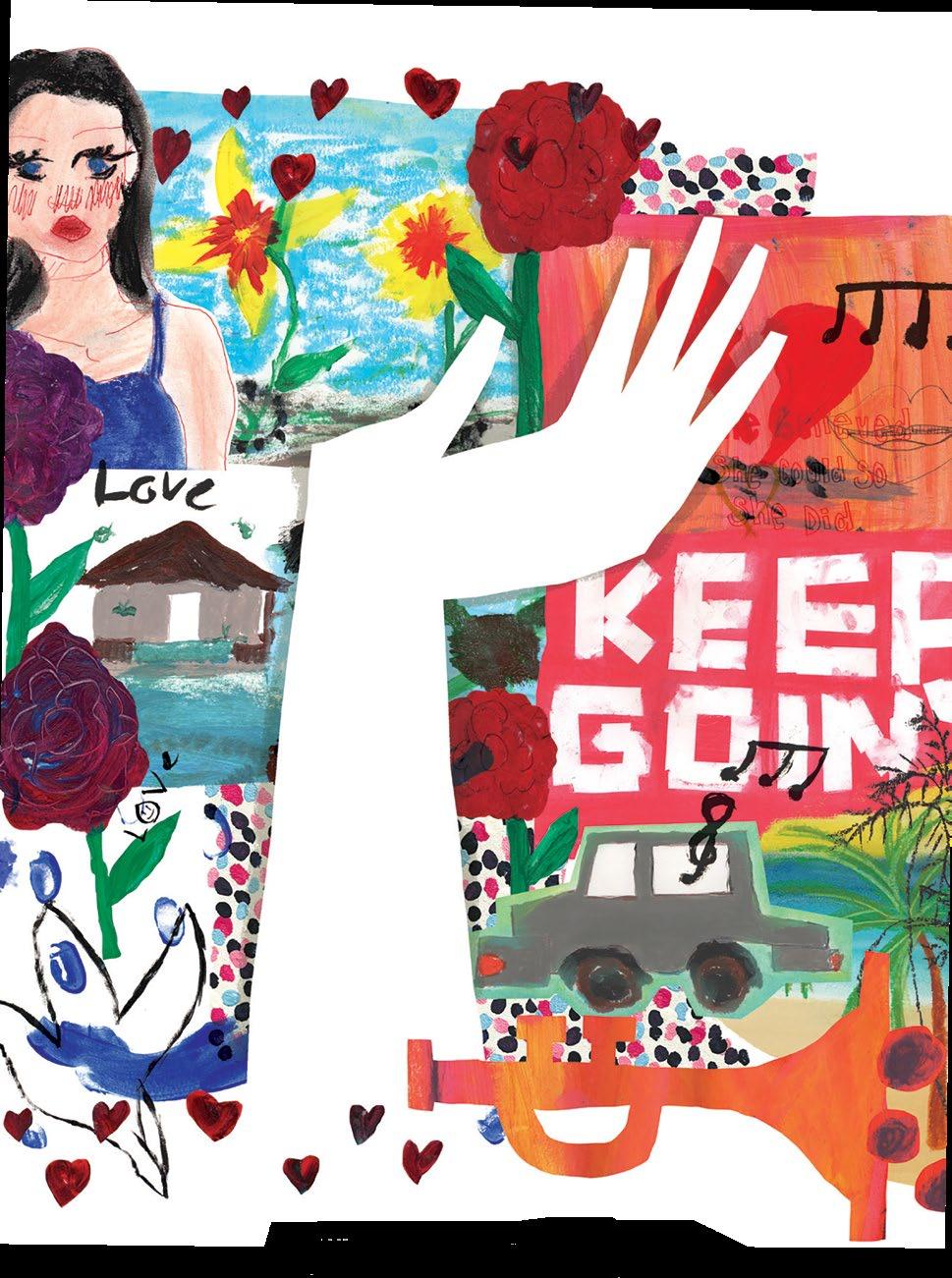
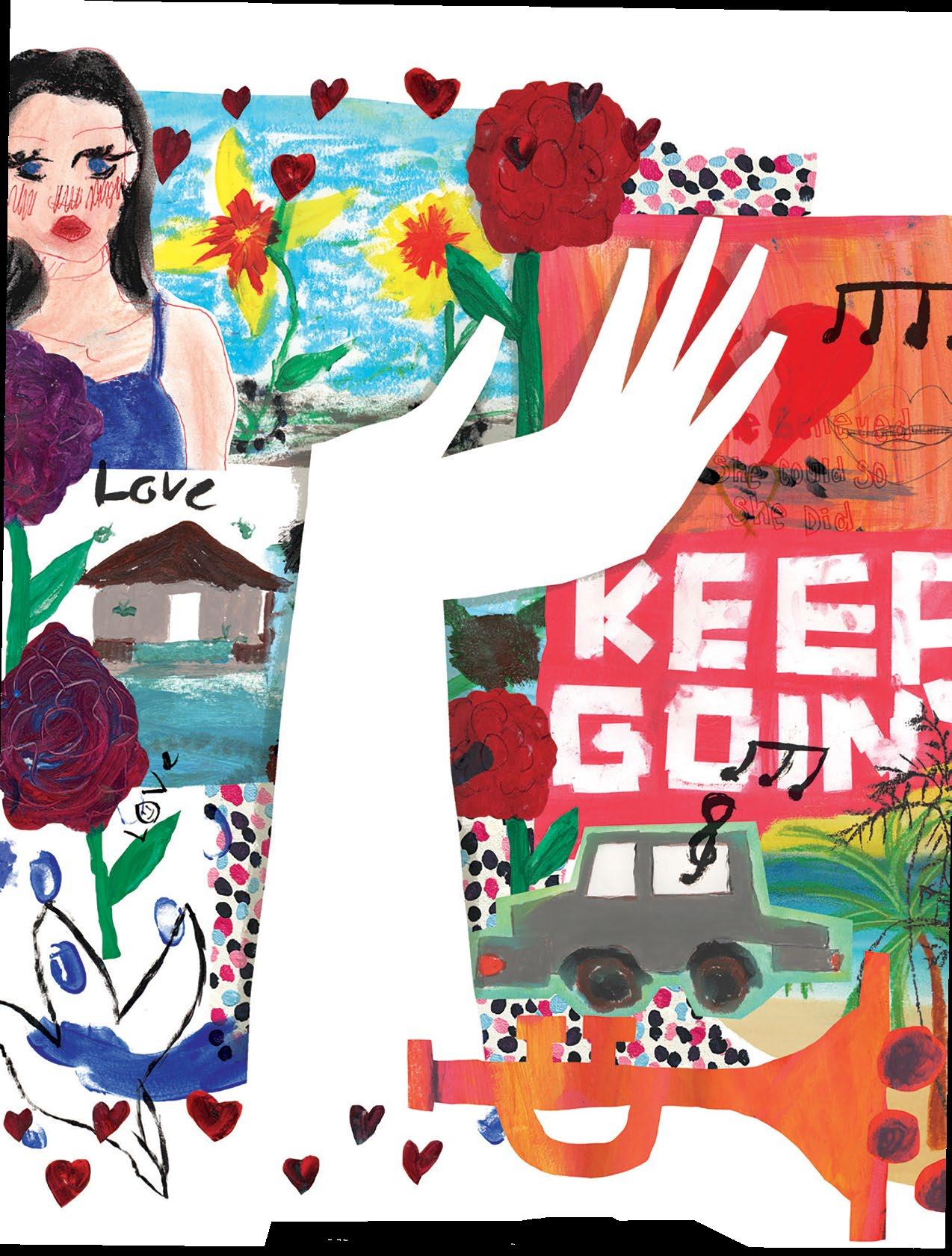
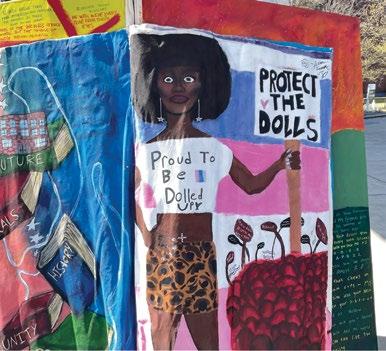
ARTWORK CREATED BY SURVIVORS WITH ARTIST DENISE GALLAGHER
Growing up, I used to think human trafficking happened when young women from poor countries were duped into fake modeling contracts that promised them to escape extreme poverty, only to end up as an escort service or a brothel in another country. Unfortunately, that is still part of it. But by far not all of it.
Once I started working in the homelessness sector, the stories about victimization kept coming. And it was not just women being exploited. It also was day laborers who were picked up at a shelter to do a job and then being stiffed on their promised pay or given $20 for a 10-hour day of hard labor.
BY JUDITH TACKETT
Metro’s Office of Family Safety defines human trafficking the following way: “Human trafficking happens when one person uses or exploits another person for their own personal gain.”
And the United Nations defines human trafficking as “the recruitment, transportation, transfer, harbouring or receipt of people through force, fraud or deception, with the aim of exploiting them for profit.”
Victims include men, women and children of all ages, and trafficking happens everywhere in the world. Traffickers often use violence — whether physical, sexual, emotional or financial — to force or coerce victims into commercial sex
or labor services. While the word trafficking can imply that this crime has to involve movement, crossing borders of states or even countries, human trafficking has many forms.
Tasha Kennard, the CEO of Thistle Farms (see our Q&A on page 4) said people often think that human trafficking is something that happens in faraway places or they envision a kidnapping in a parking lot.
“Most often it’s familial,” Kennard continued. “Most of the individuals that come into the care of Thistle Farms have experienced trafficking and exploitation early in their younger years by someone that they know, either by a parent or a relative or an intimate partner.
“And I think, we’re coming into an understanding in our greater community that human trafficking happens here,” Kinnard said. “It doesn’t just happen in far-off places.” In our conversation, we spoke about the overlap of housing insecurity and homelessness and how our local systems are starting to coordinate around housing needs. Yet, we are still too fragmented in our approaches, which I believe is due to our overall lack of accessible low-income housing combined with the lack of an actual living wage. This is not a symptom of any community alone, rather it shows the absence of a comprehensive safety net across the nation.
When you look into human trafficking, you will quickly stumble upon the Polaris Project, whose mission is to lead “a survivor-centered, justice- and equity-driven movement to end human trafficking.”
Polaris has operated the U.S. National Human Trafficking Hotline for nearly 20 years and through that collected data from callers but cautions that these numbers do not reflect the actual occurrences of trafficking. Thus, Polaris reports the “signals” they receive through the national hotline, SMS text messages, online reporting, emails and web chats.
The latest report from 2024 shows that since its inception in 2007, the U.S. Human Trafficking Hotline has received a total of 463,109 signals, most through the hotline, others through the Website, texts, emails or a web chat.
Through these signals, Polaris has identified a total of 112,822 cases of human trafficking and 218,568 victims that were identified in these cases.
The report also provides data for individual states and shows that during the same time period a total of 5,420 signals for Tennessee with 1,696 cases of human trafficking identifying 3,487 victims.
Again, these numbers likely do not even scratch the surface of the problem.
Worldwide an estimated 50 million people are trapped in modern slavery, more than half are stuck in forced labor. In the United States, it is estimated that one million are victims of modern slavery.
However, there is a clear distinction between the terms “human trafficking” and “modern slavery.” Hope for Justice, an organization that also works here in Nashville, explains the difference in the following way: “Modern slavery is where one person controls another for profit by exploiting a vulnerability. The victim can be forced to work or exploited sexually. This control can be physical, financial or psychological. Modern slavery is used internationally and in many legal jurisdictions as an umbrella term covering all forms of slavery, servitude, human trafficking and related exploitation, including forced labour, debt bondage, forced child labour, forced marriage, and commercial sexual exploitation.”
On the other hand, Hope for Justice says, “Under international conventions, for human trafficking to be present, all three of these elements must exist:
The Act is the recruitment, transportation, transfer, harbouring or receipt of people.
The Means can be through threat of or use of force, deception, coercion, abuse of power or position of vulnerability.
The Purpose is for exploitation.
For modern slavery, only two of these elements need to be present, the means and the purpose.”
Simply put, human trafficking is often the action which can lead to modern slavery. Young people are especially vulnerable to trafficking. A study by Laura T. Murphy that interviewed more than 640 runaway and homeless youth in Canada and the United States found that 1 in 5 of the youth had been a victim of human trafficking. A significant portion of the respondents in this study reported that they had already been trafficked by their family prior to experiencing homelessness.
Service providers are aware, which is also while larger shelters attempt to keep certain
The trafficker must do one of the following to people Recruit
Using one or more of these methods
Threat or use of force
Coercion Fraud Deception
Abuse of a position of vulnerability
Giving payments or benefits
Abduction
For exploitation
Human trafficking occurs when a trafficker uses force, fraud or coercion to control another person for the purpose of engaging in commercial sex acts or soliciting labor or services against his/her will. Force, fraud, or coercion need not be present if the individual engaging in commercial sex is under 18 years of age.
If you or someone you know is experiencing human trafficking or you’re unsure about your situation, please call one of the following numbers to speak to a trained advocate: Family Safety Center in Metro Nashville at 615-880-1100.
populations apart in attempts to protect victims. We see separate programs for youth, Domestic Violence (DV) survivors, and women that were trafficked, all with a special focus on safety.
However, it is not enough. What we need is housing where individuals can lock the door, feel safe, and build their lives back.
Recently I spoke with a local DV provider, and we discussed the occurrence of trafficking in encampments. It is an aspect that is hard to talk about and easy to ignore. But we all know it exists. People are exploited within the encampments.
I heard from a young woman who was forced to pay rent to another camper here in Nashville, just to stay there. She felt trapped but eventually got into housing thanks to the outreach and assistance from a worker from Hope for Justice who took the time to get to know her and build trust with her.
This shows that the way we do street outreach matters. And the way we close encampments also has a huge impact on whether human trafficking is simply moved behind closed doors when we relocate an entire encampment into a 100-unit temporary housing facility.
As I stated many times before, I am not against closing encampments, but it should be done in a coordinated, transparent way over an extended period of time. We need to invest the time to get to know the individuals in the encampments and learn their different needs, then help them obtain housing (even
transitional housing if they so wish) with the adequate and right support services.
Instead, Nashville, like so many other cities, follows a new fad that mostly supports well-meaning national consulting firms and presents yet another quick-fix approach that I predict will fade as soon as local politicians realize that our local outcomes are not as great as presented to them. We tend to rush things, implementing promising approaches through shortcuts rather than investing in long-term solutions. The cost is ultimately paid by the most vulnerable people whom we victimize over and over again.
The biggest victims in all of this are the women, men and youth, who are already stuck in the cycle of human trafficking.
Shelter is on top of the service request the Polaris Project receives on the national hotline. But because there is a lack of specific beds for trafficking victims, the best suited places to fill that gap are DV shelters.
For Nashville that means that we ought to provide specialized training for homelessness providers on the different aspects of trafficking and invest into specialized shelter beds, aligning with DV providers.
In addition, landlords are the ones who often are positioned to recognize human trafficking. However, they often do not know where to turn and see themselves forced to evict people including the victims. Establishing resources that landlords could reach out to when they see labor or sex trafficking
occurring in their rentals and training landlords about those resources could help break the cycle for many victims.
And above all, there need to be accessible, affordable, long-term/permanent places where victims of human trafficking can get away from their environment, recover, and work on gaining a sustainable, living income.
Kennard, the CEO of Thistle Farms, said that she has learned a lot from the women her organization serves.
“There is so much determination and self-determination to do something, to contribute,” Kennard said. “It’s one of the most beautiful pieces about walking alongside and working with women with lived experience. They can teach us a lot about determination.”
In all the conversations I had and the materials I read, it is clear. It takes a lot for a victim of human trafficking to decide to leave a really dangerous environment. And often, they cannot do it alone.
One of the things that we can do in the homelessness and housing sectors to help is to better align with survivor services and to provide supports that make it a little easier for trafficking victims to overcome their trauma, rebuild their self-worth, and build a new future where they can thrive.
Judith Tackett is a longtime homelessness expert and advocate for housing-focused, person-centered solutions. Opinions in this column are her own.













My check-engine light came on last Tuesday. I figured I’d take the car to my mechanic, but on Friday, it turned itself off! Great news, right, Aries? That must mean everything is fine. But then on Monday it came on again. And then it was back off by Wednesday morning. Do you think I should take it in or just wait? Maybe it’s nothing. It’s probably nothing. Am I better off not knowing? I mean, I need an oil change anyway. I could at least mention it. To be alive and in a body is to be acquainted with dread, Aries. We worry about what could happen. We fear taking this too seriously or not seriously enough. I’ll tell you what, Aries, I’ll take the car in. Whatever the story is, it’s not the end of every good thing. But it’s not the end of dread, either. We just move through this together. It’s the only way to find out what happens next.
Hello, 9-1-1?!? Yes, I’m at the Blistering Meadows Apartments and…yes on Fairfax and… well, the emergency? I’m not sure where to start. It’s terrible. It’s the ice cream truck…No, not exactly an accident. it’s…well, that’s just it. The ice cream truck hasn’t been here at all. Not once this year, operator…Yes, I know it’s only April. Can you please send somebody? Maybe just a couple of Klondike bars or an orange dreamsicle? Yes, thank you. Yes, I’ll hold. Oh, and Taurus, ask for what you need. You might get it.
Look at that sweet little cat, Gemini. He chases that little laser-pointer dot wherever I aim it. I can make him slide all around the kitchen floor. I can make him attack the chair in the corner. And then just when he thinks he’s got it — click! I turn it off and he stalks all around the living room looking for any sign of it. It’s good exercise, but I’m not sure it’s great for his mental health — chasing a spectral target he can never catch. How’s all that going for you, Gemini? Have you caught it yet? Are you still looking under the couch and across the table? Maybe take a moment to think about what you’ve been chasing. What’s an actually achievable next step?
Have you been watching that show where they cover up the contestants eyes and ears and make them choose a future-mate based only on how they smell? I think it’s called Love Stinks? Anyway, in the second phase they have to get engaged and sniff each other’s families while they share a fragrant meal. But I keep getting distracted by the matching gold-painted cups they use in every scene. Apparently, it’s a production thing to help with continuity in editing, but it really takes me out of the moment. What constraints are you putting on yourself in your relationships, Cancer? Are you using all your senses or are you accepting artificial limitations? This is real life. You can peek.

Hey, Leo, 1994 called! They want their cynical cold-indifference to current socio-political events back! No, I’m not joking, Leo. It sounded serious. I think it’s one of those time-rift things where you have to send something into the past in order to prevent a future cataclysm. Yes, they mentioned you specifically. I think all you have to do is look around until you find something you care about. Then you find some way to affect change in your community and do it. You probably don’t even have to come up with it yourself, just find somebody already doing good work and ask how you can help. Is it OK if I call 1994 back and tell them you’re working on it?
I’d like to go to a baseball game with you, Virgo, but not because I particularly enjoy being outdoors in a stadium while tiny faraway men throw, catch, hit, and stare at a white dot floating across a diamond. That’s all fine, but what I really want is one of those nacho-hats. You know the ones with the chips in the brim and the cheese bowl in the center that you can eat while you wear? I’m pretty sure those hats are only available at baseball stadiums and so I’d like to go to a game with you, Virgo. Yes, you can have some nachos too. I couldn’t possibly eat all those myself. And while we’re there, Virgo, I’ll tell you about how The Stars indicate that you should spend more time out with friends taking it easy.
I’ll give you three guesses what “Wolf’s guenons” are, Libra. Nope. No, that’s not it either. Yikes, definitely not that! Wolf’s guenons are a kind of West African lowland monkey, named by Dr. Ludwig Wolf. I like Wolf’s guenons because they’re known to associate with bonobos, colobus monkeys, and other kinds of monkeys that live close by. They’ve figured out that having different groups living closely together in the same area can be mutually beneficial in predator detection. Anyway, Libra, if you find yourself in proximity to somebody you think of as different from you, remember that you’re not the first primate to encounter that situation. And if you see a leopard coming, maybe blow a whistle for everybody’s sake.
Is it supposed to rain again today, Scorpio? I’m not complaining. I love a good soggy week in the spring. It’s just that I took my car-umbrella to work yesterday morning, but since it was sunny when I left, I forgot it. Then I walked my porch-umbrella down the street to Virgo’s house, and things dried while I was there so I left it. I haven’t seen my backyard-umbrella since last year and my work-umbrella disappeared during spring-cleaning. You see what I’m getting at, Scorpio. I’m going to have to order a 12-pack of umbrellas and surely I’ll always have one around. Preparedness is important, Scorpio. Sometimes overdoing it is the best way to cover your bases.
I was going through some papers and found a dollar bill you gave me, Sagittarius. Remember when you used to do that thing where you would draw on George Washington’s face to make him look like Maury Povich and then you’d make a speech bubble that said “Until next time, America?” And then the guy at Subway told us he couldn’t take the bill because “it’s a federal crime to deface currency” and he might have to report you to the FTC so we left without our sandwiches and went to Pinkberry instead? Anyway, I looked it up and the Subway guy was wrong. It’s not illegal to draw on a dollar bill. I hope you didn’t stop being creative, Sagittarius. And, even if you took a break, I hope you know you remember to start again.
We’ve talked it over, Capricorn, and we’ve decided to send you to the moon. Not immediately, of course, we’ll give you some time to prepare. Maybe next Thursday? Personally, I think this is a very exciting development for you. I think you’ll do great up there. Less gravity to worry about and all that. Before you go, Capricorn, could you please submit a list of the three people you’d like to go up there with you? We wouldn’t send you alone, of course. We aren’t monsters. Now that you have your list I’d like you to set up a meeting with each of those people. Go get coffee. Hang out. Take the day. Spend some time just appreciating each other. Wait, Capricorn, we’ve decided to send Libra instead. Still, I’d recommend you set up those meetings.
Gas prices, am I right, Aquarius? Uhhh… And what about those old phone chargers we all bought that don’t fit our phones anymore? How many of those do you have, right? I’m sorry, Aquarius, I’ve never really done stand-up comedy before. Is this working for you? I’m just trying to be relatable. Like, what about those security lines at the airport? Take forever much? Anyway, Aquarius, I hope you’ll tell us what’s going on in your life even if you’re afraid we won’t understand. Because even if we don’t really get it, we can listen and we can love you. And what about those $9 protein smoothies? Right, Aquarius?
I’ve got a bruise on my forearm and I don’t remember what it’s from. I probably just banged it on a doorknob or counter or something but it seems like I would remember that. It’s purple and yellowy and, OWW, still pretty tender. I guess I just shouldn’t push on it like that. It reminds me, Pisces, that we’ve all got spots where we’re damaged. Sometimes we’ve got big complicated stories about how it happened. Sometimes we don’t even know. And maybe somebody knocks against your sore spots and maybe you push into theirs. And then we react. It’s hard not to. We don’t have to stay quiet about it, Pisces, but we can stay ready to forgive.
Mr. Mysterio is not a licensed astrologer, a trained primateologist, or a vetted member of the Federal Trade Commission. Want more? Visit mrmysterio.com Or just give him a call at 707-VHS-TAN1.
BY JOHN H., CONTRIBUTOR VENDOR
science
Peter saw Jesus from afar in the water. Jesus stretched out his hand to Peter. Peter started walking across the water to Jesus. Thing about it is, when Peter took his eyes off Jesus, he started to sink. One reason why today in our everyday lives, we should keep our eyes on Jesus is by doing so we have a helper to get through these wicked times. I remember back when I first started to share God’s word in the Contributor, I stayed in a tent by the
museum. When I first met people like Tom, Johnny, Wilson and Frank and many other children of God around Nashville, I actually didn’t have to stay in a tent, but I figured I first had to start loving the poor and then come up. Not saying I’m rich but I had to love them just as Jesus loved the poor. I’m not rich but at that time I had a little bank saved from driving trucks, which either way it goes I knew I had a heavenly father that loved me very much. That’s
how I learned how to love my neighbors so well, regardless of what kind of people they may be.
Ya see, it took me a long time in life to learn to love people, although they have serious issues, such as hatred, greed, etc. you name it, I learned to be in control of actions. The rest God accompanied me. I let God be in control, just keeping my eye on God. So that’s my message to you all this week, keep your eye on God and life will be much easier.
BY FREEPRESSGMA., CONTRIBUTOR VENDOR
If you find yourself without air conditioning, get yourself and your clothes wet. Then get in the deepest shade you can find. Repeat as necessary. Don’t worry about being damp when the sun sets, you won’t be!
Possible sources of water
In the burbs: Ask someone
if you can use their hose for a bit or look for a creek.
In the semi-rural Davidson County: find a creek or pond. Bring an old tin can. Step carefully, looking out for those slithery triangle heads. Drip water all over yourself till fully wet.
In the City: Go to BiCentennial Park. There is a foun-
tain where the kids play. It’s OK to walk through it fully clothed. Near the Cumberland River: Don’t get all the way in! Currents, big boats and unpredictable wildlife abound. Use the tin can method.
Centennial Park: You can get away with sitting on the wall around the pond and dip your feet in.
BY LORA V., CONTRIBUTOR VENDOR
People are still trying to clean up tree limbs and branches out of their yards.
The ice downed a lot of trees north,south, east and west of town.
Poor Percy Priest State Park and Cheekwood had hundreds of trees to go down and some were not been able to be saved. A lot of people had to come in and help clean up. Luckily they got it done and were able to open up for the Spring season. The cold weather made a
lot of water pipes freeze and bust. It is a big headache to replace all them water pipes, not to mention the cost.
It’s bad and hard to believe 250,000 people were without electric for a week and some up to two weeks.
BY JAMES “SHORTY” R., CONTRIBUTOR VENDOR
This warm weather makes you want to start spring cleaning early. First, wipe all the walls down, disinfect all the sinks and counters. Vacuum all the rugs and carpet now. You can wash the rugs if you are that inclined. Next, you can sweep and mop all the floors down. While you are down there clean all the baseboards too.
When you are cleaning the bedroom, wash all the covers and bed sheets. Put clean ones on if you have them. You may decide to put a lighter cover on the bed. Vacuum the floor and wipe the baseboards down. Dust the night table down and dresser. In the kitchen, wipe the refrigerator down. Wipe all the cabinets down. Clean the
stove down good and clean the oven down. Kill all the germs on the countertop and off the sink. Don’t forget to wipe and wash down the ceiling fan (if you have one). Wash the windows if you like washing windows.
The most important thing is wiping down the TV screen. You got to be able to see the TV. That is a must.
SUBMITTED BY JIM P., CONTRIBUTOR VENDOR
“An artist cannot speak about his art any more than a plant can discuss horticulture.” - Jean Cocteau
A man walks into the lingerie department of Macy’s and tells the sales lady, “I would like a southern Baptist bra for my wife, size 34B.” With a quizzical look, the sales lady asks, “What kind of bra?” He repeats, “A southern Baptist bra. My wife said that you’d know what she’s talking about.”
“Oh, yes, now I understand,” says the sales lady. “We don’t get as many requests for them as we used to. Most of our customers lately want the catholic bra, the Salvation Army bra, or the Presbyterian bra.” confused, and a little flustered, the man asks,
“So, what are the differences?” The sales lady replies, “It’s really quite simple. The catholic bra supports the masses, the Salvation Army bra lifts the fallen, and the Presbyterian bra keeps them staunch and upright.”
He muses on that information for a minute and says, “hmm, I know I’ll regret asking, but what does the southern Baptist bra do?”
“Ah,” she replied, “the southern Baptist bra makes mountains out of molehills.”
BY DREW B., CONTRIBUTOR VENDOR


Jim Todd has served in Davidson County Courts for over 35 years as a prosecutor, a defense attorney, and a judge giving him a balanced perspective.
Having seen the courtroom from so many sides, Jim is able to find justice for victims and their families, to hold violent offenders accountable, and to respect the rights of defendants.
Jim has also led efforts to reform the broken bail system and to reduce repeat offenses — to make our communities safer. we






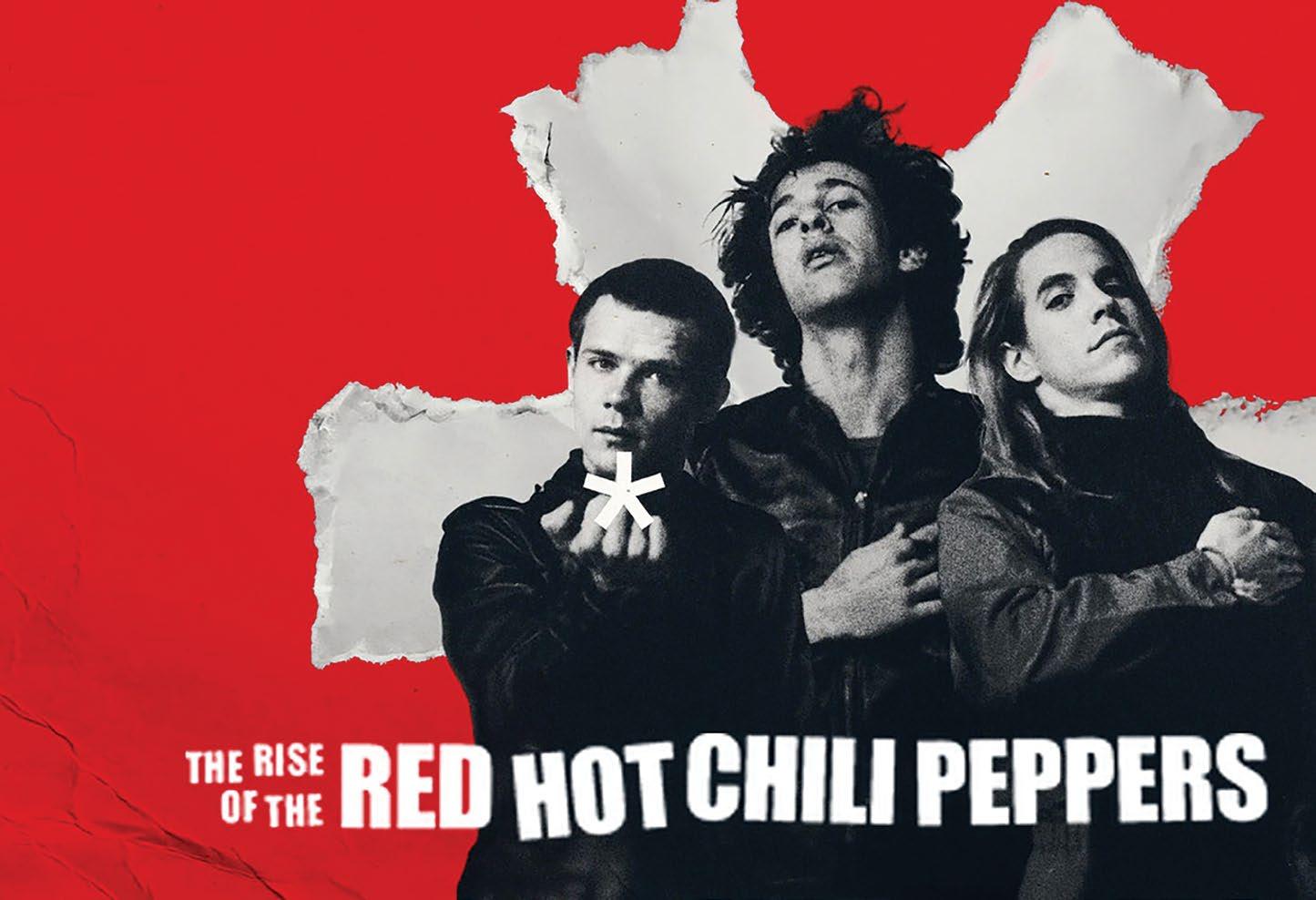
The Red Hot Chili Peppers released two double albums in 2022: Unlimited Love and Return of the Dream Canteen. In April, Unlimited Love debuted at number one in 16 countries including the U.S., and the single “Black Summer” hit number one on Billboard’s Alternative Singles chart.
In October, Return of the Dream Canteen debuted at number one in six countries including another U.S. number one on the Top Albums Chart. For any band, these accomplishments would mark a very successful year in music. For the Red Hot Chili Peppers, now in their fifth decade as a band, the one-two punch in 2022 marked the RHCP as both a legendary musical unit and a still-vital creative and popular force in the 21st century.
Director Ben Feldman’s new documentary
The Rise of the Red Hot Chili Peppers: Our Brother, Hillel traces the formative years of the Los Angeles band, focusing on founding guitarist Hillel Slovak, who died of a drug overdose in 1988 at age 26. The film chronicles the lives and times of three teenage outcasts who connected
BY JOE NOLAN, FILM CRITIC
in the late 1970s — Slovak, bassist Flea (Michael Balzary), and frontman Anthony Kiedis. The trio formed a found family and a delinquent magpie musical style, merging punk, funk and hip-hop into a unique new sound that’s still distinctive in the musical landscape of this new century.
Slovak was an Israeli-American visual artist and musician raised by an artistic mother who encouraged Hillel and his brother in their creative pursuits. Mrs. Slovak became a den mother to the entire group of misfits. As a teen, Flea avoided home and his abusive stepfather. Kiedis lived alone with his drug-dealing dad, who introduced his son to cocaine and marijuana at age 11. The three young musicians bonded through shared loves of music, comedy and recreational drugs, eventually forming multiple bands before founding the Red Hot Chili Peppers.
One of the band’s all-time best songs is “Under the Bridge.” The epic ballad finds Kiedis recounting painful memories of destroying his relationship with actress Ione Skye in favor of chasing after ever more dangerous situations where he could use heroin — like hanging out
with gangsters and getting fixed “under a bridge downtown.”
Kiedis has described the band’s teenage trio as “like three little homeless kids,” and Our Brother, Hillel recounts Kiedis’ brief stint at UCLA before he dropped out and started his “homeless period.” Instead of sleeping at night he stayed awake in a jungle of underground music clubs before crashing on various friends’ couches at dawn — or not. In the film, Flea reveals he “lived” on a couch in the corner of an underground club. The exact arrangement isn’t clear, but it is clear that Flea also spent time living in Los Angeles with no street address to claim.
Feldman uses archival footage, Slovak’s personal journal entries (read by an AI-generated voice), and emotional interviews with Kiedis, Flea, former Chili Peppers and Pearl Jam drummer Jack Irons, guitarist Alain Johannes, and funk legend George Clinton (producer of the band’s second LP) to paint an intimate portrait of adolescent friendship, creativity and loss. The voiceover words are taken from Hillel’s
personal journals. I found them effective and much less offensive than Feldman’s embracing of the dead tired and never good documentary animation trend.
The film also includes a great conversation with Gary Allen, the black, gay performance artist who befriended the band and first suggested that Kiedis, Flea, Slovak and Jack Irons form the lineup that took the Los Angeles underground scene by storm. Allen also reveals how he coined the band’s name. The documentary captures the gritty chaos of the 1980s Los Angeles music scene — its mayhem, its violence, its artistic ferment — and shows how the band’s rise to stardom precipitated a simultaneous decline into addiction, creative stagnation, and — eventually — death.
The Rise of the Red Hot Chili Peppers: Our Brother, Hillel is streaming on Netflix.
Joe Nolan is a critic, columnist and performing singer/songwriter based in East Nashville. Find out more about his projects at www.joenolan.com.
“The Contributor” está trabajando con uno de los principales periódicos en español La Noticia para llevar contenido a más lectores en Middle Tennessee. Nuestros vendedores de periódicos han pedido durante mucho tiempo que nuestra publicación incluya contenido que apele al interés de residentes de habla hispana en nuestra comunidad.
“The Contributor” is working with one of the leading Spanish-language newspapers La Noticia to bring content to more readers in Middle Tennessee. Our newspaper vendors have long requested that our publication include content that appeals to the interest of Spanish-speaking residents in our community.


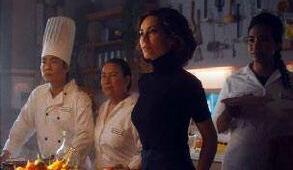
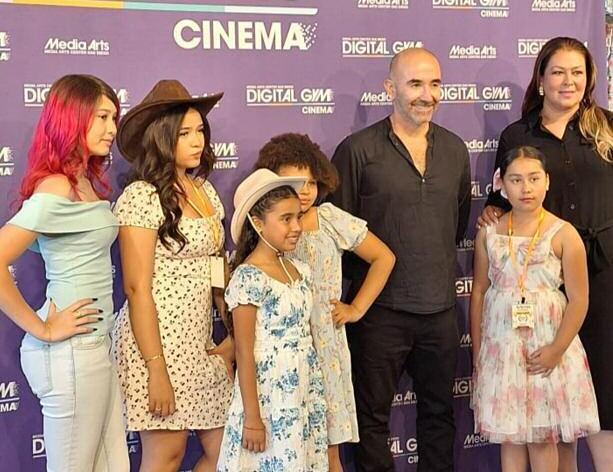
i c a , E s p a ñ a y E s t a d o s U n i d o s A c a s i d o s d é c a d a s d e h a b e r s a c u d i d o e l c i n e c o n s u d e bu t , c o nve r -
s a m o s e n e xc l u s iva c o n e l d i r e c t o r d e s d e e l M e d i a A r t s C e n t e r s o b r e e s t e r e e n c u e n t r o a r t í s t i c o c o n B á r b a r a
M o r i y C h r i s t i a n M e i e r E n e s t a c h a rl a , D e M o n t r e u i l p r o f u n d i z a e n s u v i s i ó n d e u n c i n e q u e u t i l i z a l a g a st r o n o m í a c o m o ve h í c u l o d e e m p at í a p a r a r e d e s c u b r i r l a i d e n t i d a d d e i n p a í s d e s d e s u r a í z
N o r m a : E l c o r a z ó n d e l a h i s t o r i a
L a h i s t o r i a s i g u e a N o r m a , u n a
m u j e r d e l a a l t a s o c i e d a d l i m e ñ a d e l o s 6 0 c u yo d ivo r c i o e n t o n c e s u n t a b ú a b s o l u t o s e c o nv i e r t e e n s u m o t o r d e l i b e r a c i ó n A l ve r s e o bl i g a -
d a a a b r i r u n r e s t a u r a n t e p a r a s u bs i s t i r, N o r m a r o m p e s u bu r bu j a d e p r iv i l e g i o s y d e s c u b r e e n l a g a s -
t r o n o m í a e l p u e n t e p e r f e c t o p a r a
c o n e c t a r c o n l a ve r d a d e r a d ive r s i d a d s o c i a l y c u l t u r a l d e l Pe r ú
E l r e e n c u e n t r o a r t í s t i c o
Tr a s u n a l a r g a e s p e r a d e s d e s u ú l t i m o p r oye c t o j u n t o s , e l d i r e c t o r v u e l ve a
c o n f i a r e n l a q u í m i c a d e B á r b a r a
M o r i , a c t r i z m e x i c a n a n a c i d a e n
U r u g ay, y e l a c t o r y m ú s i c o p e r u a n o
Reconocimientos y Premios: Mistura
Director: Ricardo de Montreuil
• San Die go Latino Film Festival (2026): Ganadora a Mejor Película (Best Nar rative Feature)
• Durango Inde pendent Film Festival (2025): Premio del Jurado y Premio del Público a Mejor Película Nar rativa; Mejor Actriz (Bárbara Mori).
M e i e r ap o r t a s u e x p e r i e n c i a y s o l i d e z a r t í s t i c a e
a r a n a r r a r l a t r a n s fo r m a c i ó n d
n s a j e s o c i a l y r e s i l i e n c i a A t r av é s d e Ó s c a r, u n c h o f e r a f r o p e -
r u a n o q u e a c t ú a c o m o m e n t o r s i l e n -
c i o s o, l a p e l í c u l a a b o r d a e l r a c i s m o y
e l c l a s i s mo c o n h o n e s t i d a d R i c a r d o d e M o n t r e u i l a c e p t a e l r e t o d e
C h r i s t i a n M e i e r M i e n t r a s M o r i s e i nvo l u c r ó p r o f u n d a m e n t e e n l a c o n st r u c c i ó n d e l g u i o n y l a t é c n i c a d e l a c e n t o l o c a l p a r a d a r v i d a a N o r m a ,


Miranda sados en la Quinta Enmienda de la Constitución, derechos de guardar silencio y contar con un ogado fueron denominados Derechos Miranda go de la decisión de la Suprema Corte de Justicia Estados Unidos en el caso Miranda vs Arizona, 4 U S 436, de 1966 Conoce tus derechos: ¿Que hacer en caso de una redada?
Mantenerse callado
Sólo dar nombre y apellido
No mentir
Nunca acepte/lleve documentos falsos
No revelar su situación migratoria No llevar documentación de otro país
En caso de ser arrestado, mostrar la Tarjeta
m o s t r a r l a d ive r s i d a d d e u n p a í s s i n t ap u j o s , i nv i t á n d o n o s a u s a r e l c i n e
c o m o u n p u e n t e p a r a t r a n s fo r m a r e l p r e j u i c i o e n r e s p e t o y a b r a z a r nu e s t r a
i d e n t i d a d p o r e n c i m a d e c u a l q u i e r m o d e l o e x t e r n o
C o n n o s t a l g i a y r e a l i s m o, M i s t u r a s e
r eve l a c o m o e s a n e c e s a r i a ' c a r t a d e a m o r a l Pe r ú ' q u e i nv i t a a r o m p e r
bu r bu j a s y c a m b i a r e l p r e j u i c i o p o r l a
c u r i o s i d a d A t r av é s d e N o r m a ,
R i c a r d o d e M o n t r e u i l n o s e n t r e g a u n m a n i f i e s t o s o b r e l a e m p at í a y l a r e -
c o n c i l i a c i ó n
E n u n mu n d o d iv i d i d o, e s t a o b r a n o s
r e c u e r d a q u e e l c i n e a l i g u a l q u e
u n a bu e n a m e s a p o s e e e l p o d e r d e
s e n t a r a d e s c o n o c i d o s f r e n t e a f r e n t e p a r a r e c o n o c e r s e c o m o i g u a l e s E s u n a i nv i t a c i ó n a e n t e n d e r q u e nu e s t r a e s e n c i a n o r e s i d e e n l a e xc l u s i ó n , s i n o e n l a r i q u e z a d e l a m e z c l
• Sarasota Film Festival (2025): Ganadora a Mejor Película Nar rativa
• Stony Brook Film Festival (2025): Premio del Jurado a Mejor Película
• Hollywood Inter national Diversity Festival (2025): Mejor Dirección y Mejor Actriz (Bárbara Mori)
• Sonoma Inter national Film Festival (2025): Tercer lugarPremio Favorito del Público.
• Newpor t Beach Film Festival (2024): Mejor Película Nar rativa, Mejor Guión y Mejor Actriz (Bárbara Mori)