















Venmo has canceled our account, but you can still pay using Square! You must identify your vendor so we know where to send the payment. Here's how: Use your phone camera and scan the QR code on this page. This will take you to the landing page: thecontributor.org/pay.
After clicking “checkout,” type your vendor's name and four-digit badge number in the “Required” field. This allows us to know which vendor to pay.



Since The Contributor started in 2007, more than 3,200 different vendors have purchased $2.3 million worth of The Contributor and sold over six million copies, generating over $15 million in income for themselves.
In 2019, our C.O.V.E.R. Program (Creating Opportunity for Vendor Employment, Engagement, and Resources) was the natural expansion of our mission of removing obstacles to housing. We now offer full case management, assistance with housing and rental expenses, addiction recovery, health insurance, food benefits, and SSI/SSDI assistance.





In sports, a “franchise tag” is supposed to lock in a player, keep them on the team, and keep them in the game. But being Black in America comes with something different, something we never asked for and can’t negotiate our way out of. I call it the “disenfranchise tag.” It’s that invisible label society sticks on us before we even open our mouths. It doesn’t protect us. It doesn’t reward us. It limits us, boxes us in and follows us everywhere we go.
I grew up being taught to work hard, stay respectful and carry myself with pride. And I still believe in all of that. But the older I got, the more I realized that the world doesn’t always play fair with people who look like me. There’s this quiet, unspoken system running in the background, one that pretends to be neutral but somehow always seems to land on the backs of groups labeled as “minorities.”
It shows up in the little things people swear “aren’t about race.”
Like being followed around a store even when you’re the one with the best credit score in the room.
Like being told you’re “so articulate” as if it’s a surprise.
Like watching someone clutch their bag when you walk by, even though you’re the one who held the door open for them.
Like being the only Black person in a meeting and suddenly becoming the spokesperson for 40 million people.
BY ANDREW J. TERRY IV, CONTRIBUTOR SOAR PROGRAM OPERATIONS TEAM LEAD
We build, we create, we lead, we love, we laugh, and we keep showing up. We carry our history with us, not as a burden, but as proof that we come from people who survived everything designed to break them. And we honor that by pushing forward.
Like knowing you have to be twice as good just to be seen as equal — and even then, the goalposts move.
And then there are the bigger things.
The résumé that gets ignored until you remove the “ethnic-sounding” name. The loan that mysteriously falls through.
The job interview where the energy shifts the moment they see your face. The healthcare system that treats your pain like an exaggeration.
The justice system that treats your existence like a threat.
These aren’t things you can fully explain to someone who’s never lived it. It’s a feeling. A pressure. A constant
awareness. It’s waking up every day knowing the world has already made assumptions about you before you even step outside.
That’s the “disenfranchise tag.”
Not given by a coach.
Not written in a contract.
Just placed on us by a society that still hasn’t dealt with its own reflection. But here’s the part they never expect: we rise anyway.
We build, we create, we lead, we love, we laugh and we keep showing up. We carry our history with us, not as a burden, but as proof that we come from people who survived everything designed to break them. And we honor
that by pushing forward.
That’s why I do the work I do now. I want to stand beside people who feel that same weight, who’ve been overlooked, underestimated, or written off. Everyone deserves a fair shot, access to healthcare, support, representation, and a chance to be seen for who they really are, not who the world assumes they are.
And I’m grateful for the folks who see me clearly, who give me space to grow, rebuild, and contribute. Shoutout to The Contributor for giving a space for people to show that they are more than any label society tries to stick on them. We are here, we are present and we are adding something real to the world.
The road isn’t easy. It never has been for us. But we keep walking it with purpose, with pride, and with the kind of resilience that can’t be taught, it’s inherited.
And that’s what Black History Month is really about. Not just looking back, but recognizing the strength we carry right now, every day, in a world that still doesn’t fully understand what it feels like to walk in our shoes.
Andrew J. Terry IV is the Program Operations Team Lead at The Contributor. In this role, he takes people to medical appointments, works with community partners, and obtains other key information all to help vendors gain entry into the SOAR program.
We stand on the backs of Black history … arched spines, scarred skin and names pressed into the soil so future generations could rise without chains on their ankles. These backs remember slavery, they remember 1619, and they remember 1885, when freedom had a date, but justice still refused to arrive. They carried lies dressed as law, racism disguised as policy and violence justified as order, all while being told to endure quietly.
We stood on the backs of Harriet Tubman, who bent low so others could stand tall; Frederick Douglass, whose spine carried words heavier than whips; and Sojourner Truth, who carried truth
BY REE CHEERS, CONTRIBUTOR DIRECTOR OF PROGRAM OPERATIONS
even when truth was dangerous. We stand on the backs of Rosa Parks, whose refusal shook a nation; Dr. Martin Luther King Jr., whose back absorbed hatred so his voice could dream; Malcolm X, who stood upright when silence was demanded; and leaders like Medgar Evers, John Lewis, and Fannie Lou Hamer, beaten, criticized, lied on, and still committed to our liberation.
These backs remember water hoses and bruised ribs, police dogs feeding on fear and jails memorizing Black names. They remember being called lazy while building a country for free, being labeled violent while surviving violence daily, and being promised equality that nev-
er reached our neighborhoods. Racism followed us through Jim Crow, through lynch ropes and burning crosses, through classrooms that erased us and systems that blamed us for their own design.
We stand on the backs of years like 1995, when prisons replaced plantations and statistics tried to summarize Black souls. We stand on the backs of people whose bodies became currency for systems that never loved them. And still, those same backs lifted hope high enough for a Black president — President Barack Obama — to stand, carrying the weight of history, racism, criticism and the burden of being “the first” in a nation still learning how to respect Black excellence.
So, when we stand, we stand carefully and gratefully, knowing our breath was paid for in bruises. These backs were never broken — they became the foundation. History of Black history is bent but unbowed, scarred but sacred and we are still standing because they refused to lay down.
Ree Cheers is a passionate Human Services Advocate with over 26 years of experience serving communities in Nashville, Tennessee. Ree currently provides services for SOAR, SSI/SSDI Outreach, Access, and Recovery (SOAR) is funded by the Substance Abuse and Mental Health Services Administration (SAMHSA).
“It takes a village to raise a child.”
You may have heard of this African proverb that describes that it takes an entire community, including family, friends, neighbors and teachers, to help a child reach its full potential in adulthood.
Reflect on this a little more and you’ll discover the profoundness of the phrase. In order for a village to raise a child to its full potential, the village itself must be healthy with the diversity and richness of resources available to raise its children.
No wonder then that the saying now often is interpreted as bringing together the entire community for real and lasting change. When that healthy village is missing, we see people — and entire segments of our community — left out.
This also affects how the nonprofit sector works. Established organizations are prone to thrive while others lack the capacity and access to resources. These underfunded nonprofits are often led by the people who want to fill a gap in their underserved neighborhood based on their own experiences growing up and living there. Unsurprisingly, these are often also minority-led, community-based organizations. This reality is often ignored by what some would term the nonprofit industrial complex.
The best way I know how to explain this is by looking at the example of homelessness funding. Nashville receives about $11.4 million in federal homelessness funding through the Department of Housing and Urban Development’s (HUD’s) Continuum of Care Program. While this involves a consolidated community application, the actual grants are awarded to eight individual nonprofit organizations and two government agencies.
When we look at the eight nonprofits, none of them were led by a person of color when the last round of grants was written and awarded. Then, in 2020, at the beginning of COVID, $10 million in federal one-time funding became available through the Emergency Solutions Grant. I recall there were several minority-led organizations that had not participated traditionally in these federal funding applications. In short, their applications failed due to a lack of capacity to weed through and manage the complexity of the requirements of these federal grants. But we’ll get into that more.
Before we dig in, I want to quickly examine my own role. I am an advocate and advisor in the homelessness field, but I have often been unaware of smaller nonprofit organizations that serve minority communities outside of the larger, known nonprofits in the homelessness field. That has made me complicit and a part of that nonprofit industrial complex — whether I like it or not. And the only way to overcome this is to be willing to reach out and learn.
The Village was the brainchild of Ron Johnson and Dawn Stone. At the time, Johnson served as the director of the Office of Community Safety under Mayor John Cooper, and Stone was the chief impact and diversity officer of the Center for Nonprofit Management, which is meanwhile known as the Center for Nonprofit Excellence.
Johnson and Stone recognized the gap in capacity building that plagued minority-led nonprofits and made it hard for them to compete in the nonprofit field for grants and funding.
To use the words from The Village, “Impact sectors leaders and organizations primarily serv-
BY JUDITH TACKETT
ing Black residents in our community have historically faced significant resource gaps, including limited access to funding, lack of mentorship opportunities, insufficient upscaling support, and restricted exposure to networks, both social and political. Moreover, the lack of operational structure within these organizations exacerbates their challenges, impeding their capacity to effectively address community needs.”
This phenomenon is not unique to Nashville, as only about 2.9 percent of total philanthropic giving in the United States went to organizations serving communities of color in 2022, even though “communities of color made up 44.3 percent of the U.S. population as of the 2020 Census.” This information stems from the inaugural Communities of Color Index (CCI) that was released in June 2025 by Indian University’s Lilly Family School of Philanthropy.
When disasters happen, we see politicians calling for an increased focus on neighborhoods where minorities live, whether Black, Latina, or other communities of color. But when the disaster is over, the funding usually does not go to community-based organizations to proactively strengthen their neighborhoods. Even though these nonprofits have been living and serving their communities for years, and even though their work has been focused on proactively strengthening the fabric of these underserved areas.
“So many of these organizations are some of your frontline community grassroots workers — some are advocates, some are providing those afterschool services and care,” Erika Burnett, the executive director of The Village, said. “Per government regulations around funding, they were marginalized in a very specific way from processes and procedures.”
Burnett further explained that organizations need to be able to pay for expensive audits that
sometimes exceed the cost of their entire programs in order to unlock government dollars. She describes exactly what happened in 2020 when minority-owned nonprofits were not able to compete for the federal COVID grants. Having written a few grants myself, I can tell you that such audits are part of the grant application, meaning even if an organization invests in one, there is no guarantee they will get the grant in the end.
All this explains why The Village was formed.
The Village was launched as an intentionally curated incubation space, [that] “provides a supportive environment for Black nonprofit leaders and organizations primarily servicing marginalized communities to upskill and increase capacity, access, and resources.” (Read more about the mission and vision at cfmt.org/thevillage.)
The Village on the Move
The Village started as a program under the Office of Community Safety in the Mayor’s Office. It was then moved over to the Center for Nonprofit Management for a little while before it became a program under the Community Foundation of Middle Tennessee.
Now, it is again on the move. This time, The Village, which is still run as a fiscally sponsored initiative under the Community Foundation, is evolving into its own, freestanding nonprofit organization. It has moved its offices in January from the Community Foundation building off Belmont Boulevard to a freestanding house it rents from The House of God Church in North Nashville. It shares the space with two other organizations.
Burnett (read our Q&A on page 6) joined the Community Foundation and became the executive director of The Village based on the suggestion of her friend, Renata Soto. If the name sounds familiar, Soto is the founder of Conexión Américas, after which she moved on to
launch Mosaic Changemaker, an organization focused on “uplifting, growing, and connecting changemakers of color diving community transformation.”
Burnett recalled that she was finishing her time as a mosaic changemaker (class of 2023) when Soto approached her. “She asked if I would be interested in having a conversation with Hal about this new initiative that was being incubated at the Community Foundation.”
With “Hal,” Burnett referred to Hal Cato, who had become the CEO of The Community Foundation of Middle Tennessee in 2022. Cato said in an interview with The Contributor, ”I think the role of a community foundation … is to make a community more of a community.”
He continued explaining that the Community Foundation needed to be “much more of a community leader where we step humbly into spaces where we can start weaving together providers, especially those who are newer and have ideas that are overlooked because they are not in one of the big powerful organizations.”
Burnett recalled that this was a time when new CEOs were in transition across Nashville, most notably at the Chamber of Commerce, United Way of Greater Nashville, the Community Foundation and the Mayor’s Office.
“We had a new mayor who received a significant amount of support from The Village during his campaign in addition to multiple newly elected members of our City Council,” Burnett said, adding that she saw an opportunity to exercise her expertise and leverage her relationships to deepen the impact the organizations of The Village had in a meaningful way.
The members of The Village are “also the organizations that in my eyes are having the most impact, especially with the populations that continue to be sort of pushed aside as the city grows and develops,” Burnett said.
The Village is intentionally made up of organizations that primarily serve Black members of the Nashville community. “Those who are most marginalized and individuals who are impact sector professionals who themselves need additional support,” Burnett explained.
To recap quickly, The Village is here to create an environment for leaders who often have lived expertise and their organizations that are at the grassroots level frontlines in our underserved neighborhoods.
The Village has left an impressive footprint. Achievements in 2025 alone include measuring a 92-percent increase in leadership confidence among their participants and being able to help with $179,850 in external member programming investment. In 2025, The Village:
• Served 459 nonprofit leaders;
• Hosted 69 programs;
• Reached 1,200 individuals weekly;
• Formed eight new collaborations;
• Strengthened 20 existing partnerships; and
• Engaged 415 organizations across 11 sectors.
While much work is left to do, The Village demonstrated how a focused approach can help strengthen systems that have and still are largely ignoring marginalized communities.
It will take time to get where we need to be as a Nashville where everyone is welcome to stay and thrive. And let’s remember the proverb we started with: It takes a village.
Happy Birthday, Chris Scott Fieselman
Written by Chris Scott Fieselman, Vendor #0015
“Lessons Learned from Wisdom’s Words” Are songs that were penned, That have yet to be heard. Written while living in poverty, In Nashville, Music City, Tennessee. It was April, 23rd, 2009, When I decided my life, was a waste of my time. I’d really not like, to try to explain. My life of addiction, to crack cocaine. But let me make one thing, perfectly clear. The end of the line, was what got me here. I arrived alive, on a Greyhound Bus, And from that moment on, “In God I Trust”
For my every need, my destiny, And my dream, that he promised, He’d help me achieve.
I knew I had something I wanted to say, And only through music, Would I find a way?
That was how it was back then. That was how it all began. That was how you ended up with… This book of songs penned, By the hand of a friend.
I started to write for “The Contributor”
A monthly, homeless sold, street paper. That’s where? My song lyrics, First appeared. Month after month, for seven long years. A lot has happened to me since then? There’s a movie about my experience.
A documentary called: “Saint Cloud Hill” I think it’s worth watching.
I hope that you will. I came here to Nashville, With nine songs produced. But getting them heard, Was a hard thing to do. Since then, I’ve added a few more to boot, And after this book, I’ll be sharing them too. My words put to music, Can change people’s lives. A book and, a movie and, “Familiar Lullabies” So now? with so much, I still have to do?
I’ll end this by saying, “Good Night, Sweet Dreams, And God Bless You”
Written by Chris Scott Fieselman, Vendor #0015
Now, I know better than ever before. I finally get it. I’m really sure. I wish that it didn’t take this long, To see, where I’ve been wrong. Now, I’m going to make it, Just watch and see. Something’s brought about a change in me. Like coming home, From a long ocean journey, When the boy becomes a man. Welcome to The Promised Land.
Ready to stand, in The Promised Land. No more wilderness experience. I survived, I made it out alive, Living on a prayer and a promise.
I clung to hope and hung on to faith, Knowing it would all be, worth the wait. I’m finally happy with who I am, And ready to stand… In The Promised Land.
Now, I’ve got to admit, that it’s hard not to quit, When the going is getting so rough. Throw up your hands and tell yourself you can’t, Believing that enough is enough. When it’s taken so long, just to come this far, And you’re thinking you were wrong, right from the start.
Don’t let go or give up my friend. You’re closer than you know to The Promised Land.
Ready to stand, in The Promised Land. No more wilderness experience.
I survived, I made it out alive, Living on a prayer and a promise.
I clung to hope and hung on to faith, Knowing it would all be, worth the wait.
I’m finally happy with who I am, And ready to stand… In The Promised Land.
There’ll be tales to tell, About how God held you, In the Palm of His Hand. How He provided for you, And finally brought you, Into The Promised Land.
Ready to stand, in The Promised Land. No more wilderness experience. I survived, I made it out alive, Living on a prayer and a promise.
I clung to hope and hung on to faith, Knowing it would all be, worth the wait.
I’m finally happy with who I am, And ready to stand… In The Promised Land.

ACROSS
1. *First cloned mammal
6. Fuel economy acronym
9. Land measure
13. Pascal of “The Mandalorian” fame
14. Second O in EVOO 15. a.k.a. sergeant fish or robalo
16. Plant fungus
17. *”Titanic” star
18. *”The ____ Whisperer” (1998)
19. *PepsiCo offering 21. *One of the Walsh twins, 90210
23. Long reef dweller
24. Reach a high 25. Color of passion
28. Agitate
30. Like Matryoshka inside Matryoshka
35. Gave the boot
37. Arab League member
39. One of Florida Keys
40. Summer month
41. Polished diamond surface
43. Safecracker
44. Lazybones
46. Before “saw” and “conquered”
47. Glitch
48. Watercraft
50. Remains repository
52. Like some martinis
53. Comfort
55. One in a pod
57. *____ bubble
60. *The 1990s, a.k.a. post____ ____ decade
64. Biblical patriarch
65. Sensitive subject?
67. “Bad news travels fast,” e.g.
68. ____ ____ shopping
cart
69. Father’s progeny
70. Trojan War epic
71. Difficult situation
72. Like jalapeÒo
73. So out it’s in
DOWN
1. Design detail
2. M¸nchen mister
3. Jittery
4. Irregularly notched
5. *Harry of Privet Drive
6. Gangster’s gal
7. *”American ____” (1999)
8. Geography class prop
9. Any minute, arch.
10. Cut at birth
11. Parks on a bus
12. ____ out a living
15. Israeli monetary unit
20. Remote in manner
22. Did a marathon, e.g.
24. Mollify
25. *Assassinated Gandhi
26. Radiate
27. Small wooded hollows
29. *Apple offering
31. Simon does what?
32. Influencer’s creation
33. Daytime moth
34. *Snoop ____ Dogg
36. Coloring substances
38. Nautilus’ captain
42. Allegro or lento
45. Repeat an echo
49. Pathet ____
51. *Fresh Prince’s town
54. *____ Mouth of “All Star” fame
56. Discombobulate
57. *Jeff Bridges in “The Big Lebowski,” with The 58. Made in Vegas
59. Makes lace
60. One-tenth of a dime
61. *”____ Wait... Don’t Tell Me!” on NPR
62. Petri dish gel
63. Do over
64. Fruit spread
66. *____ Goo Dolls of “Name” fame
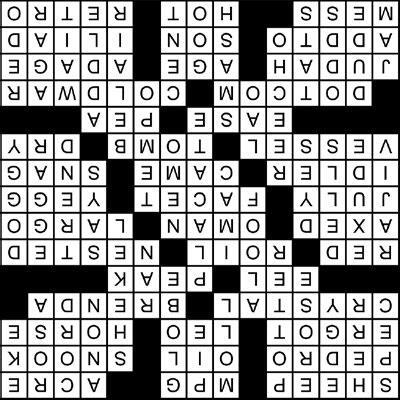
Erika Burnett has a tremendous track record in community leadership in the private and public sector. Most recently she served as the VP of Community Development at the Community Foundation of Middle Tennessee and the Executive Director of The Village (learn more about The Village on page 4).
Burnett describes herself as a leader who thrives on “collaboration, joy, and the unapologetic pursuit of transformative service delivery.”
In recent months, she has shepherded transitions at the Community Foundation of Middle Tennessee and at The Village, describing both organizations as being in a phase of transition.
What has your job entailed?
My primary responsibility is to transition and embed the work that has existed under my leadership at the Community Foundation’s Community Development department. We focused on identifying the Community Foundation’s priorities and most meaningful impact around civic leadership. My role now is to transition our learnings and the initiatives that we piloted to be more intimately embedded into the organization’s Community Impact work, which looks at dollars going out, and Philanthropic Services, which focuses on dollars coming in. The department I was hired to lead has been dissolved.
Over the next two months, I will work with colleagues at CFMT to identify the framing and strategies which will allow them to actualize their commitment to civic leadership while staying mission focused. So that’s that transition as of right now. Under my leadership, we incubated The Village, which was actually my entry point to the Community Foundation. The membership of The Village decided to stand up an independent entity to continue to deepen our proof of concept. I will steward this next phase of the organization’s growth towards independence as their Executive Director.
We talk a lot about innovation. Yet funding is tight. How can innovation leverage slow funding streams?
Unfortunately for us, the nonprofit sector has fallen prey to the negative implications of the charity model. The nonprofit industrial complex is real. Once we understand what fuels that machine, we also gain clarity around its limitations.
What we see unfolding before us is the machine doing exactly what it’s designed to do. Nothing more. This recognition, along with following historical patterns, paints a very clear picture: this system is not going to work for very much longer. So what does that leave: innovation.
Let’s look at The Village, for example. Innovation is the only way we’re going to survive, and it’s also necessary for our professional wellbeing, especially given the profile of our members. Innovation for us has looked like directing our resourcing internally, positioning our members as valuable experts in their field, and facilitating, upskilling and developing opportunities for other Village members. We are looking at the full landscape of funding trends against our budget limitations and individual capacity and then finding ways for more communal and subjective exchanges. Our goal is to first meet our pie chart of needs through our relationships and networks in a way that is aligned with our guiding values; only then do we look externally to our network for outsourcing. The North Star is to build the ecosystem of affirming self-sustainability which allows our members and organizations to move beyond the pit of scarcity,
BY JUDITH TACKETT
both in resources and mindset.
Innovation for us has also meant thinking critically about risk/benefits associated with our physical location. We are moving from being physically housed at CFMT Community to a collaborative space with at least two other organizations in North Nashville, renting a house from a local church that will be used as an office and gathering space. This is another example of what I mean by internally resourced. We turned to a local church for a reasonable space with place-based implications, we found cultural alignment with Village organizations, we upcycled office equipment from a collaborating partner on Jefferson Street, and we downsized and decentralized our orientation to our space.
Another point on how innovation is driving this next leg of our legacy is that we turned internally to our Village consultants and asked, “What have you learned over the last couple of years nationally that we need to learn together?” As a result, we collaborated with a local expert, curated a results-driven learning series, and we are using the series to develop The Village’s Liberatory Wellness Framework and Ecological Impact Model.
How do you define the nonprofit industrial complex?
I think of the nonprofit industrial complex as a machine. And the main components of this machine are: local/state government/agencies, federal government, private business, private foundations and nonprofits. Historically the requirements, pressures and allegiance necessary to satisfy funders, donors, policy/decision makers has existed in tension with the mission aligned outcomes for the nonprofits, the nonprofit professionals, and the populations they serve. At a super high-level, I use it to make meaning of the tension that has been created as service becomes a commodity.
On your LinkedIn profile you call yourself a Co-Conspirator of the Women of Color Collaborative, which you co-founded in 2018. What is the Women of Color Collaborative
The Women of Color Collaborative (WOCC) is a space for women of color to work, play and build in affirming ways that center our lived experiences and our unique identities. We challenge the ways in which white supremacy culture has taught us to behave and relate to ourselves, others around us, organizations that we work for and serve, and how we relate overall to the world around us. We explore cause and effect from the lens of those four domains through targeted programming.
I tell folks that a lot of the origin story for WOCC was rooted in a bunch of check boxes. I did the Nashville Emerging Leaders, I did New Leaders Council, Leadership Donelson-Hermitage, etc. I checked all of the boxes that I was told I should check professionally. And what I recognized is there was always an overlay of identity missing in those spaces. There was a gap when we did our Enneagram or DISC assessment that did not factor in my identity, lived experiences, point of view or even unique wiring. And so, the Women of Color Collaborative has been an opportunity for us to center our identity as it relates to these other experiences in the world.
Our primary engagement modality is cohort learning. We want women of color to be the most actualized version of yourself so that when you are in spaces — in the workplace, in academia, at school, in community — that you are able to
consistently stay grounded and affirmed in who you are, no matter what is happening around you. And you’re recognizing how your identity, even if lacking environmental representation, still has agency and value in space, along with the tools to relate to the things around us.
We recognize, honor and try to mitigate for the fact that Black women especially have been socialized to disassociate in order to survive, and even more consequential, the embodied disassociation allows us to stay in service to those around us. So, we teach Black women, especially, how to tap back into themselves and leverage everything that we have been taught and/or socialized around to be beneficial for us and our communities in the way that matters to our personal ecosystems first.
I have yet to experience a space in our environment where Black leaders can live and breathe the fullness of who they are while flexing the muscle of unlearning and learning to exist and lead free from the dominant gaze.
I could not and would not be able to do this work of The Village effectively if not for the foundation that the Women of Color Collaborative has laid.
What does leadership mean to you, and what motivates you?
Leadership to me means doing the thing that you are uniquely wired and positioned to do in a way that matters. For example, I used to do neighborhood cleanups with one of my cousins because she worked at a community center. And so to me, that’s leadership, recognizing that there is a need and that I am uniquely positioned to be the person to champion that and meeting that need. In this example I was the favorite little cousin. I made friends with the other community center staff. When I asked if they would be willing to hang out for an hour on a Saturday to help pick up the litter if my great aunt made her favorite chicken and dumplings, they said yes.
What motivates me is knowing that in a particular space there is some wisdom, knowledge, experience, action or curiosity I can offer, that otherwise may not be part of the problem-solving. My leadership is fueled by identifying what needs to occur in this moment that if we chose inaction the outcome would be less favorable for [the] community. This doesn’t always equate with urgency, but it does correlate with importance. So for me, if it’s important, then you prioritize and strategize against that. I ask myself and others, “What can be different? How can we be better in this moment?” And then, “How am I uniquely wired, positioned, skilled, resource to be able to facilitate that?” Finally, I bring people along on the journey because that’s how I choose to lead.
You serve as the chair of the Metro Action Commission (MAC). What is an example of a project where you feel local government has made a difference?
This is my first year as chair, and I want to talk about something that was super timely for us. With the cut at the federal level and the freezing of SNAP benefits, we saw such a tremendous outpour of commitment and activation as Metro Action Commission partnered with WeGo to make sure that residents had access to the Journey Pass program. I presented at MAC’s administrative office while community members were signed up. I am incredibly impressed with the institutional collaboration between WeGo and MAC. However, the real MVP award goes to the
MAC & WeGO employees who handled such tense and high-stakes situations with such grace, compassion, and patience.
It was so hot outside; there were lots of medical needs on the part of individuals who were there to get their passes. The level of professionalism, the level of dignity that our staff continued to show towards every customer, that’s what I’m proud of. I’m proud that this city is filled with government employees who understand that their job is to make sure that we are better as an entire community. The way that Metro Action has been able to rally around the needs of this community, in many instances stretching workload capacity, is what makes civic leadership meaningful as a member of the Commission. Director [Jamekia] Bies has stepped in and kept MAC moving with efficiency and impact.
What are some opportunities you see?
To anyone who’s heard me speak, this is no surprise. The opportunity here is really for local government to be much more intentional about collaborating with local impact sector partners and the philanthropic community. Ultimately, we need to be leveraging our intellectual and power gymnastics to identify ways for both public and private dollars to support public wellbeing. There are lots of barriers when it comes to dollars flowing through government entities. But many cities have figured this out. We really have to acknowledge first that there are multiple layers of historical harm and trauma between government and CBOs (community-based organizations). Although many of the folks who may have caused harm, and/or developed ill-fitting, and now antiquated infrastructure, policies, and procedures are no longer at the table, it doesn’t erase the residue of those actions, or inactions, from existing in [the] community. That’s true for local donors, that’s true for local foundations, but it’s also true for government. And it doesn’t serve the community for us to uphold ideologies and practices that don’t ultimately result in a reduction of negative community health indicators. We’ve essentially bottlenecked our own dollars because we have not taken the time to journey through some healing, some reconciliation, and an opportunity to see what deeper, meaningful, right-sized resourcing can look like. We have to get into rooms [together]. We have moved beyond “bless your heart” and engage in radical, courageous conversations. We have to sit at tables with integrity and play the hand that our stakeholders have dealtus, with the transparency around what we truly value and the SMIRF (social, moral, relational, intellectual, financial) capital we are willing to invest. We have to flex the muscle of meaningful compromise, radical collaboration and a refreshed approach to measuring success and what impact really looks like.
Overall, I think the biggest challenge and opportunity that can facilitate deep systems-level change is to broaden our appetite for long-term, sustained community work. Community transformation takes time, much longer than the three- or five-year funding commitments rotating in and out of our landscape. What all the research and case studies have proven is that impactful cross-sector collaborations require deep pockets and deep memories. This work takes time. We are comfortable with a sprint, but the marathon requires much more of us. I believe that with the right inputs, government, philanthropy and local CBOs, we are uniquely positioned to lead the way here.
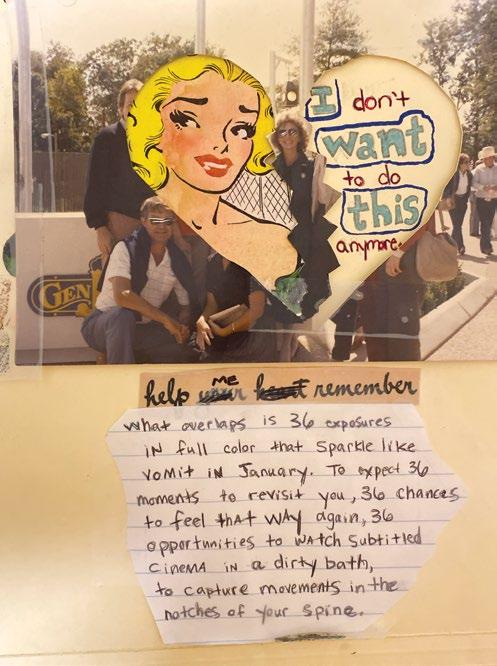
By Melissa Willis
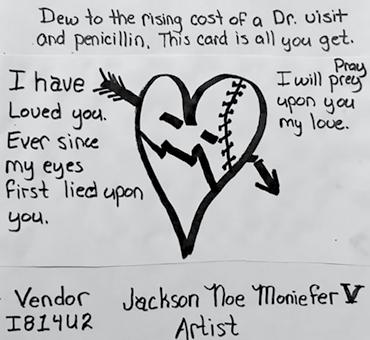
By Jeffery W.
Would You Be Mine?
Would you be mine? take your time to decide. Would you be mine? It will be a wild ride. We’d face life’s storms together. No matter the weather. You’d knock me over with a feather. If you and I could be tethered forever. Say you’ll be mine till the end of time. What do you have to lose? - Fre Forever.

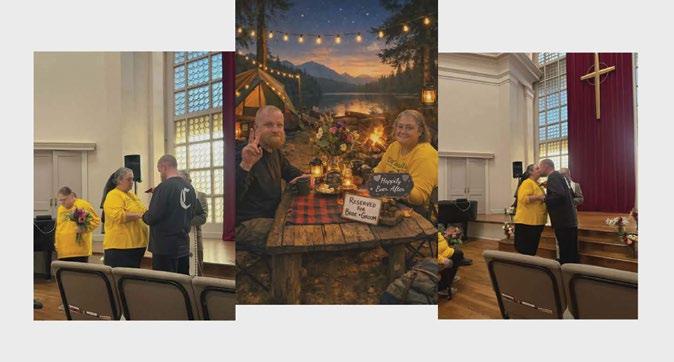
Our names are Matt and Katie Higby. We met 8 years ago and had an instant connection. On Nov 5th 2025 we were married. It was a very beautiful wedding thanks to our family at The Contributor. We have been vendors now for five years and sell our papers on 5th and Spring St in Nashville. If you happen to see us stop by and say hi we enjoy meeting new people.

VENDOR SUBMISSIONS
With all the wintery weather it is no surprise that I haven’t been on my corner at all since it began. I DO miss seeing my customers, but fortunately, I’ve ran into a few of them in other places. I even met a few new ones when I did go out and about both before and after the storm. Here are just a few examples.
I went to Kroger in Donelson to pick up something on clearance for my daughter (one item was $3.02 more at my local Kroger). It was utter chaos — no eggs, no bread and many other things I consider “basic” staples weren’t available either, though I did manage to find a case of water. It seemed like I’d made the trip for nothing, but as I was leaving a lady came up to me and said, “You’re the lady with The Contributor on OHB and Central Pike, aren’t you?” I nodded and said, “guilty as charged.” She let me know she’d missed a couple of papers, and I wouldn’t you know I just happened to have them on hand. She gave me $5, and we went our separate ways. When I went to stock up on kitty litter at the Petco on Murfreesboro Road, I was sitting outside waiting for my ride home and
First, create a shelter that has a domed roof away from prying eyes. Ideally, you can afford a domed tent. If not, bend branches in the middle and tie them with old plastic bags so that they stay curved. Cover with blankets. If you don’t have enough blankets, put mud and leaves and moss on the parts of the sticks that are sharp. You can gathering plastic from places that sell refrigerators or other large appliances that are packaged with large pieces of plastic. Start with your layer at the bottom, attach the plastic as best you can. Duct tape does not work in weather. I attach it with zip ties that are fairly cheap from an auto parts store. Then layer up to the next layer as if you are shingling a roof. When you get to the top, put a plastic cap on the whole thing. Water will run down, but not into your shelter. If you can, find a couple of pallets. See if you can beg an old yoga mat or camping mat from someone. Put the plastic over the mat because it will not be very waterproof. So, it should go: pallet, mat, then plastic. You can scrounge a sleeping bag from many homeless helping outlets.
Second, keep your boots or sneakers dry! If the weather is warm enough, try to wear some kind of all weather sandal so that your boots can stay dry for snow or really bad weather. Start collecting socks and undies from whoever is giving them away because you won’t have much opportunity to wash them. Try to invest in foot powder so that you can put powder in your boots every day. This will help keep your socks and feet dry. It goes without saying that you need a hat or secure hoodie plus gloves, scarf, or something to keep your neck warm,
BY NORMA B., CONTRIBUTOR VENDOR
a man approached me and asked if I needed help. I was caught off guard because I wasn’t even trying to sell the paper at the time, so I wasn’t sure why he asked. My daughter spoke up and said, “My mom sells The Contributor.” He immediately came over and handed me some money. I asked if I could give him something special and showed him our poetry book and the most recent poetry edition of the paper that featured Homer Simpson on the front page. His response? “Man! I LOVE Homer Simpson!” He took it and away he went.
The following day was more of the same. This time after a relatively slow but fairly productive day, I got to help one person get some food, and another get a safe place to stay for the weekend at very little cost to me, so that made my day. I have MANY nice things done for me, so it’s nice to pay it forward when I can — especially when I was sure the weather was going to be BAD.
Later that day, I went to Aldi and as soon as I rolled through the door, I was greeted by Ms. Donna B., who immediately apologized for not having been by my spot lately.
(I did wonder what had happened to her.) It turns out she’s caring for her son who lives in Tennessee some distance away. She told me, “Now don’t you be out in all the bad weather that’s coming, OK.”
I told her, “You don’t need to worry about that! If it does ANYTHING like what they’re saying on the news, I won’t be out AT ALL.”
And for the record, I wasn’t, except when it was absolutely necessary.
In return for her generosity, I offered her a choice between a History Corner book and a what I call a Poetry Packet, all six of the special poetry issues of the paper and the limited edition Ignite Nashville poetry book written by our little group of street poets. Her choice was made easy because it turns out, she already has the History Corner book!
The last incident occurred when I went to the doctor. I originally put it off, but I couldn’t wait any longer. When the nurse asked, “How have you been in all this bad weather?” I answered, “Pretty good, I guess, even though I haven’t been able to get out to sell papers at all this week!” She responded, “Is that what you’re doing out there?” I en-

and a few layers for the bottom half of you and of course, some kind of winter coat. These can all be acquired by going around to various free food sources. They often have free clothes or some people just offer free clothes.
Third, when you are good and secure in your spot, take one day when your food is fairly secure or you have enough snacks in your pocket, and go down to the governor’s office located at the State Capitol. Request to see the governor. Or go down to the Mayor’s Office with the same plan
thusiastically said yes. She informed me she passed by every day and had no idea what I was doing. I proceeded to show her the issues I had on hand. She left the room and returned with money, so I gave her two of the most recent issues of The Contributor and showed her the three zines I had in my bag, along with the poetry book. She let me know she didn’t care for poetry, but she was fascinated by my Driving Disasters zine and asked for one. I smiled and nodded yes! She wasn’t sure she had enough money with her to pay for it, so I showed her the QR code on the paper so she could pay on Square, but it turned out she did have the cash on hand. I was once told by a vendor to ALWAYS have the paper with you wherever you go because you never know when or where it might pay off. This story shows the wisdom in that! It also demonstrates the willingness of people to help those in need, and the vendor can can feel good because they have something to give in return, and it also gives proof that someone genuinely cares for them! Thanks to all who have tried to keep me safe and warm and out of the winter weather.
in mind. You will be refused because you don’t have an appointment. Explain that you don’t have a phone and that you need to submit a request to the governor. Either have them give you a pen and paper or make an appointment if you feel you can make the visit one more time. Here is your spiel: Ask for housing first. Everything else you need can follow. Suggest that they set up some shipping container housing or emergency housing with incinerating toilets and a gray water system. And some solar panels. This has already been done in Nashville and it’s
working very well as emergency housing that is very cheap. The other thing you could ask for is that the city and the state start buying old motels so that they can put people up at HUD rates. That means you won’t pay more than $25 a month until you can get on your feet and then just 30 percent of your income after that. A person should be allowed to stay for up to five years in this emergency housing so they can really get established. It usually takes you a year to just recover from homelessness. You might not believe me as you’re sitting on the street and thinking you’re gonna do all these great things when you get your apartment, but you’ll probably need a lot of sleep and a lot of medical care to start with.
Street Wise 101 for Women (The Fastest Growing Homeless Population)
• Snug fit shoes
• Lots of clean socks, panty liners
• Neck gator, hat, gloves
• Thick polyester hoodie
• Leggings and a skirt that you can run in
• Pepper spray
• Lotion and lip balm
• Body wipes
• Passport bag for I.D., money and phone when you have them. Always sleep with this on you!
• Avoid Fentanyl. Never accept an open container, even of water. Do not accept cigarettes, smokeables, inhalers or open food.
• Keep your pepper spray on a flexible wristband under the sleeve of your dominant hand.
Lived experience cohort says they’ll no longer meet without compensation from Metro
“Our pause is not a retreat,” Kennetha Patterson wrote to Nashville’s Office of Homeless Services Director April Calvin on Jan. 15. “It is a boundary rooted in integrity.”
Patterson, the self-titled “homeless CEO” and leader of Metro’s lived experience cohort, announced that she and her fellow advocates would stop participating in Nashville’s Continuum of Care — the federally-mandated body coordinating homelessness services. Metro refuses to pay her, or anyone else, for consulting as experts with lived experience of homelessness.
Her countermove came three weeks later. On Feb. 2, Patterson submitted a letter of intent for Synergy Cooperative, her organization, to facilitate the 20272030 strategic planning process. In the corporate world, this expertise—user research, service design feedback, quality assurance—commands high consulting fees and full-time salaries. Patterson’s bid forces Metro to decide: pay for that knowledge, or let people who’ve never navigated coordinated entry design the system alone.
April Burns Norris, another lived experience advocate, described the frustration of contributing while in poverty: “Everybody else … they get paychecks. We get nothing, but we really do have the solutions.”
OHS, backed by Metro Legal, has main-
BY MIKE LACY
tained that compensating advocates who are on committees of the Homelessness Planning Council (HPC) would violate procurement rules. The Metro Human Relations Commission, which has sought relief for Patterson, said in October that a workaround was “probably months away.”
As of press time, “there are no major updates.” OHS and Metro Legal didn’t respond to requests for comment.
Patterson and others aren’t asking to be paid as board members — they’re asking to be paid as consultants. Under a previous structure, MDHA compensated advocates as vendors through HUD planning grant funds. “No one has ever requested payment as board members,” Patterson wrote. “The issue is the required compensation for Lived Expertise participation in planning, governance, and system design.”
The HPC’s governmental status shifts depending on what’s convenient. When advocates pressed the HPC to exercise oversight of OHS, Calvin was explicit: “The HPC is not the oversight board for the Office of Homeless Services, since our office reports directly to the mayor.” Metro wants it both ways: governmental enough to justify not paying community experts, but not governmental enough to wield power over Metro policies or funding.
There’s reason to believe the real cause is less legalistic — rooted in curbing people like Patterson from influencing policy.
Nashville’s homelessness strategy is shaped by property owners who’ve never experienced homelessness and developers who profit from housing people, without anyone tracking how often those tenants end up evicted from subsidized units.
The perverse incentives of designing a dysfunctional homelessness are glaring. Eviction is a multimillion-dollar local industry: in 2025, attorneys represented landlords in over 9,000 Davidson County filings, generating an estimated $4 to $5 million in legal fees. Money flows freely through the system — just not to people like Patterson.
And there’s precedent for Metro undercutting equity to serve power.
Beginning in the Biden administration, Nashville began dismantling equity infrastructure. The Arts Commission’s Thrive program had paid individual artists for community-based projects without issue — until funding shifted toward smaller community organizations. The decision to halt payments came from Finance Director Kevin Crumbo, who had served as Board Chair and Treasurer of the Nashville Symphony immediately before joining Metro. His wife sat on the board of Cheekwood. Both institutions saw their budgets shrink under the equity-focused model.
At roughly the same time, the Health Department dissolved its Bureau of Health Equity and refused to pay community safe -
ty grant recipients, claiming there were no valid contracts (there were). In each case, Metro found obstacles for community-centered initiatives that never materialized for established players.
But, as many note, when Metro wants money to flow, it flows. The Nashville Downtown Partnership has collected more than $40 million in special assessment funds since 2004 without a single legally required budget authorization from Metro Council. Metro Finance sent $500,000 to Strobel House and hundreds of thousands more to private property owners — without contracts. The obstacles only materialize for people like Patterson.
Patterson’s letter of intent is a test. The city can pay for the same user expertise that corporations consider essential. Or it can confirm that the system was never designed to serve the people navigating it — just the powerful interests deciding where they’re allowed to be.
“We remain fully committed to our mission,” Patterson wrote, “and we will gladly return once the Collaborative Applicant chooses to engage with us as true and equitable partners. Until then we REST from unpaid labor.”
Mike Lacy is a local independent writer, investigator and advocate working at the intersections of the most and least powerful in Nashville.
During the ice storm in late January, a street newspaper vendor died while living outside. This is not an unpredictable tragedy unfortunately. It is a visible outcome of a condition that is deadly in every season: homelessness.
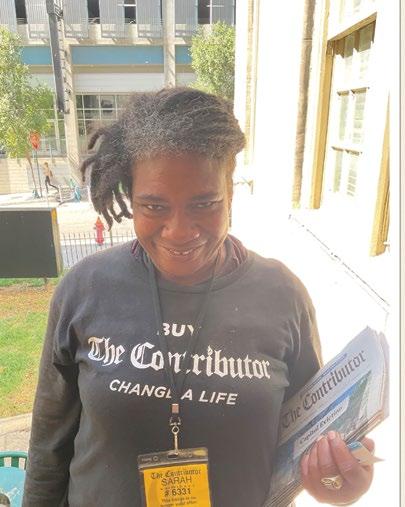
Contributor vendor Sharon Conyers was just 46 years old. She started selling the paper in August 2023 and sold 876 newspapers to her loyal customers. She really cared about her job, so much so that she would recruit anyone to become a vendor, even college students that she would meet on and off the job. She often spoke with loving concern to staff at The Contributor, her language laced with religious and mystical terms and energy. She inspired us and will be missed dearly.
Unfortunately, her death should not catch anyone off guard. People experiencing homelessness die prematurely at far higher rates than housed people because of exposure, untreated
BY WILL CONNELLY
illness, mental health crises, substance use, and the cumulative toll of living without safety or stability. Extreme weather accelerates these risks. It does not create them.
We know this because we see it. We bury people whose names quietly disappear from the streets. We watch health decline while people wait months and years for housing. We reassure one another that help is coming, even when we know it may not come in time.
Homelessness is often discussed as a housing issue, a social issue, or a funding issue. It is all of those things. But it is also a public health crisis. In a public health emergency, we would not accept delays as normal. We would not treat deaths as unavoidable. We would ask how quickly people were brought to safety, who was left exposed, and what barriers slowed intervention.
Frontline workers care deeply. Out-
reach teams work long hours. City staff operate under immense pressure. None of that changes the reality that the system itself is not organized to respond with the urgency that a lethal condition requires. It is an emergency when housed individuals lose power, and, of course, shelters must open to accommodate them, but it is also an emergency for unhoused people on a more consistent basis to be in the same elements.
People do not die because they failed. They die because systems move more slowly than trauma, illness, and exposure.
The measure of a city’s homelessness response is not how many reports it produces or how many plans it writes. It is whether people survive long enough to benefit from them. Preventing premature death is the lowest bar we should accept. Right now, too many people are falling beneath it.




BY AMANDA HAGGARD
As the effects of the ice storm began to wane for most housed folks in early February, emergency shelters that popped up to deal with the results of power outages began booting out unhoused people who were also taking shelter in those spaces. At the Madison Park Community Center, the site remained open for folks who did not have power at their homes, but after days in operation, unhoused people were asked to leave the space.
On a Wednesday evening in early February, it was warmer than it had been during the ice storm that left the area in
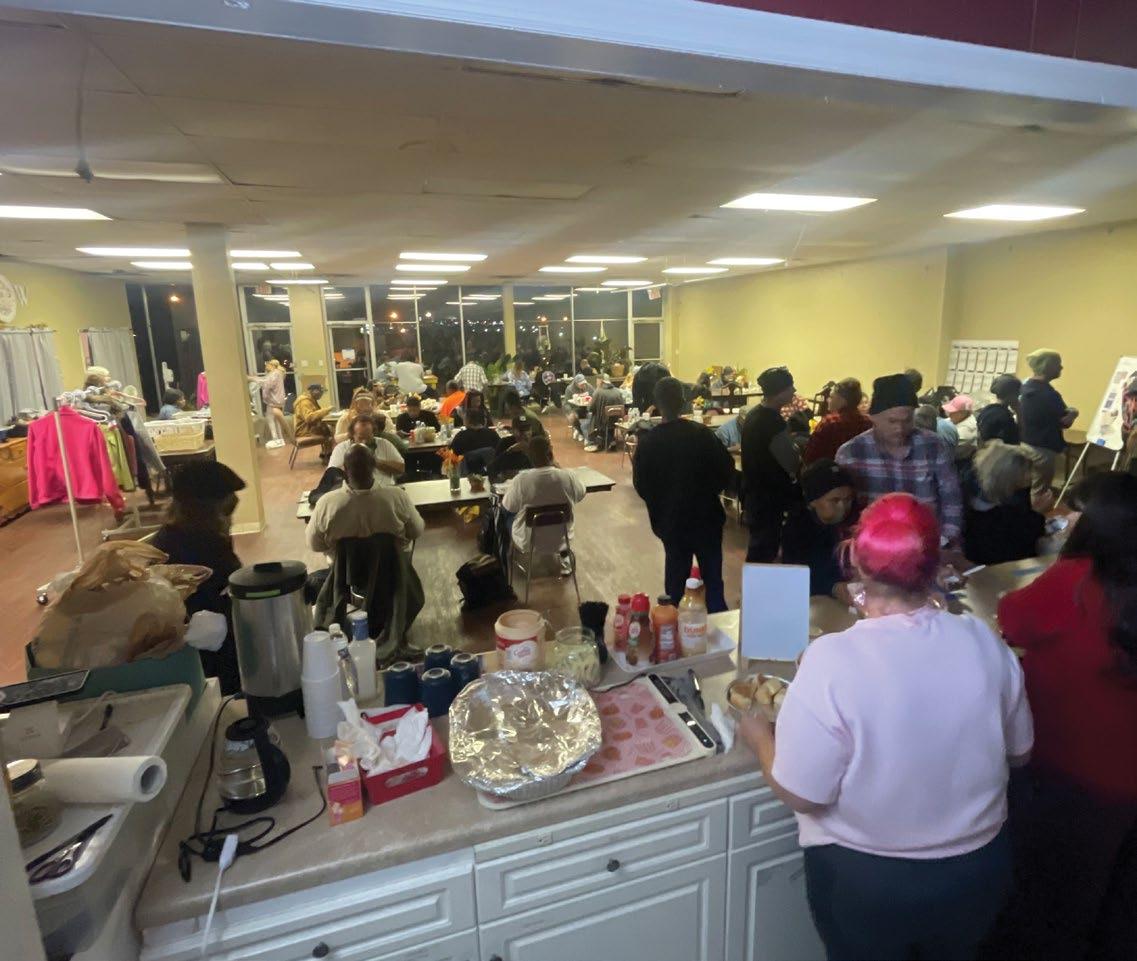
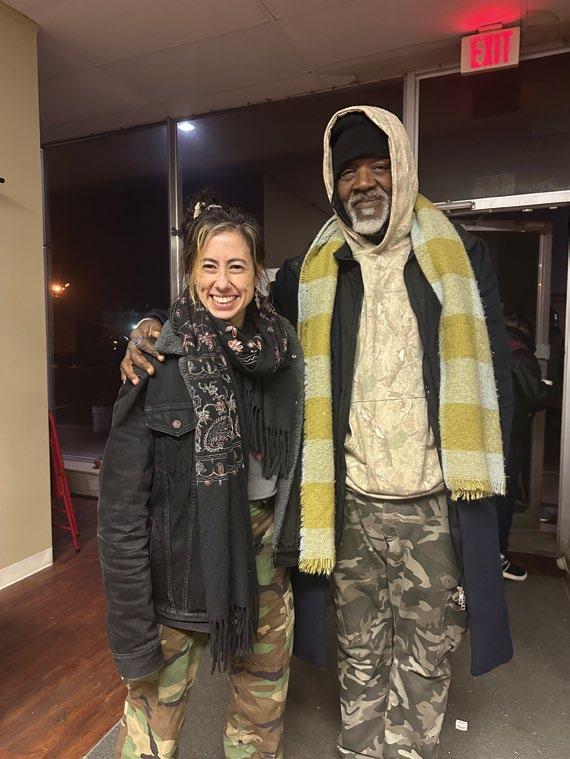
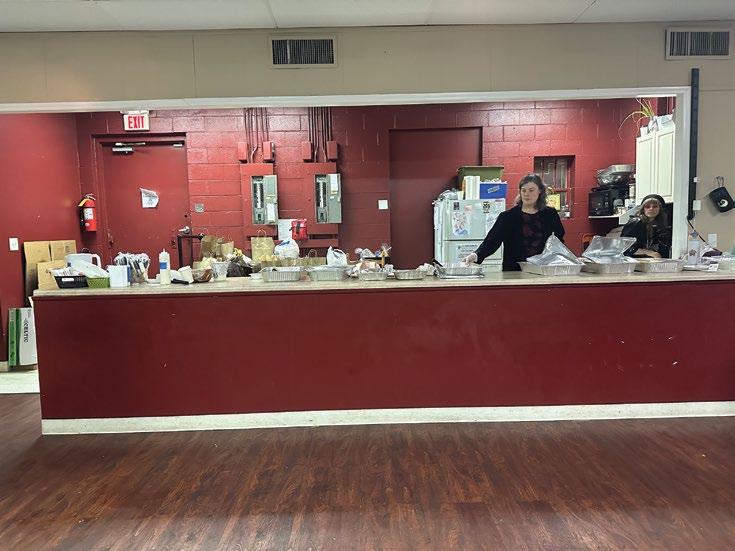
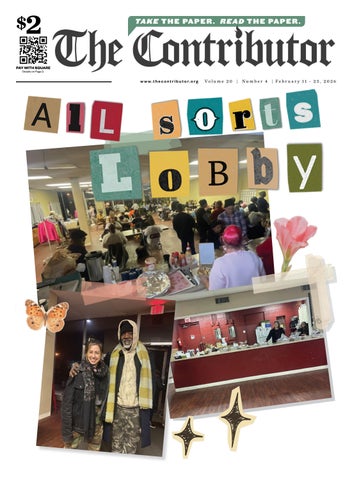
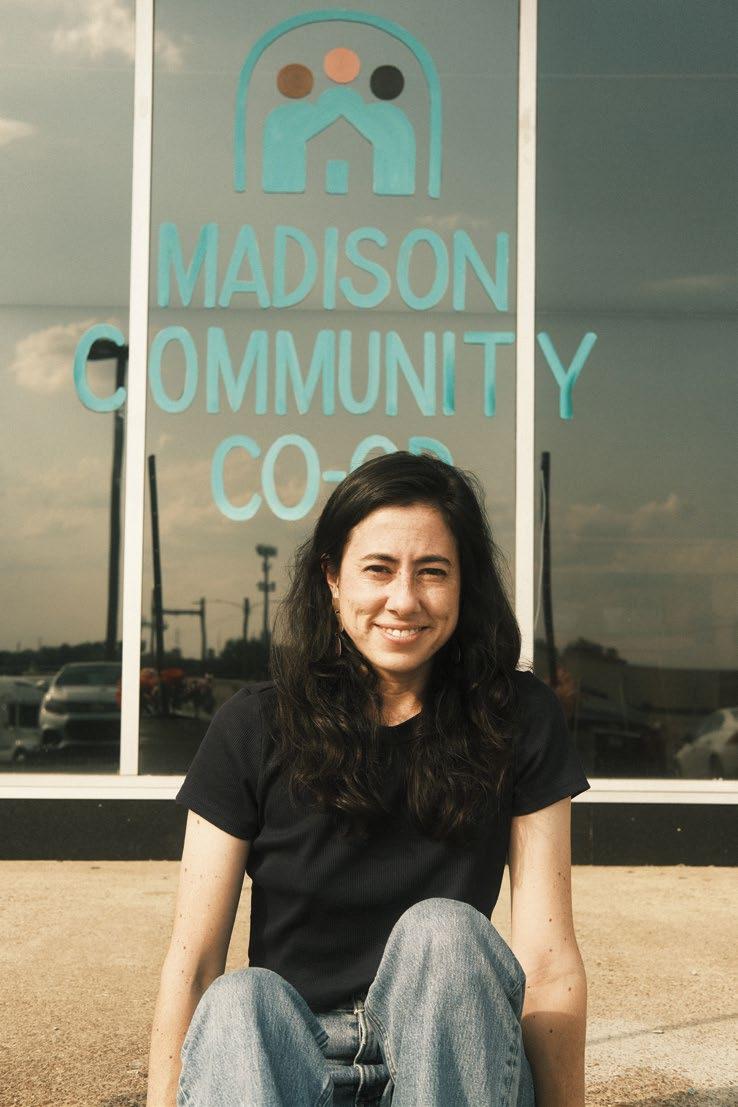
shambles in late January, but still in the frigid low 20s. At All Sorts Lobby in the Madison Community Co-op, the numbers of folks coming in for warmth and a meal were ticking back up as a result — 74 people came in over a less than three hour period the evening of Feb. 4. During the greatest effects of the storm, the organization’s numbers dipped, which is what Sarah Champion, who leads the All Sorts Lobby, said should have happened.
“We’re now seeing all of those people come back here,” Champion said.
The All Sorts Lobby started in Champion’s head after observing folks in Madison and seeing again and again what their
needs were and seeing the gap in evening warming spaces. In the winter of 2024, she worked with The Beat in Madison on their efforts to provide spaces and resources for people living on the streets. With others, she helped run a warming shelter for 70 of the coldest days of that winter. They also worked to transport folks to overnight shelters. As it morphed into the All Sorts Lobby, they moved into the space at 725 Madison Square this year. But before that, Champion and her guests got in where they fit in. Folks would gather in the Madison Church of Christ Benevolence Center and then at Amqui Station, all the while trying to
plan for something more sustainable and stable long term.
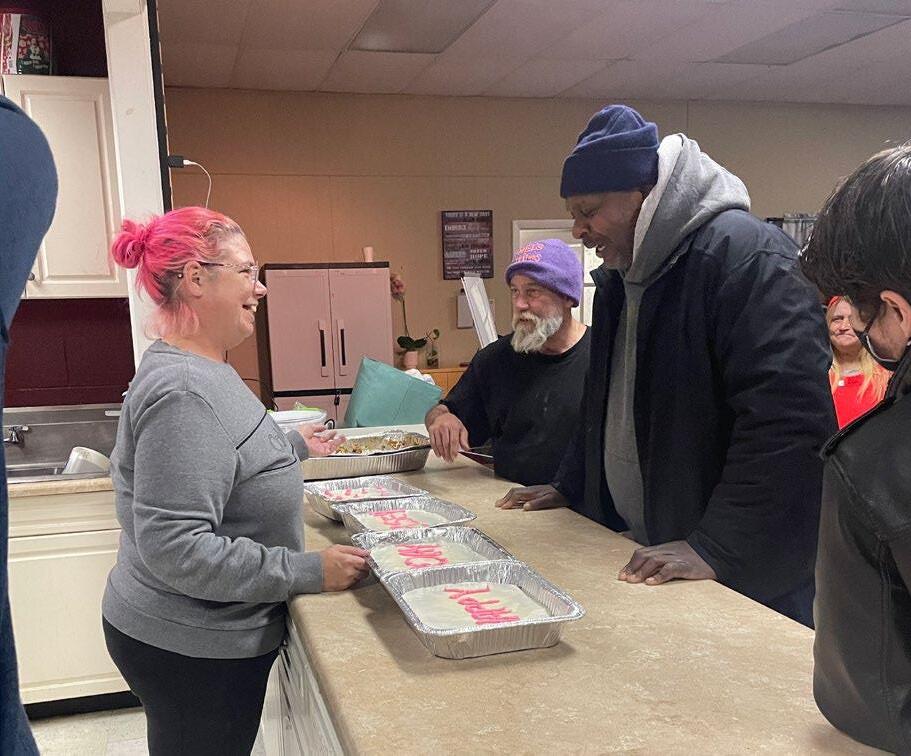
Building something together as they went along brought volunteers together with people living on the streets to form the type of community that helps everyone with no strings attached. Unhoused people help with set up and tear down in the space, clean up as dinner winds down and generally have pride in the space as much as the volunteers, but nobody is explicitly asked to do any of that. Champion says volunteers rarely have to clean up much after dinner because guests often take all of that on their own. It’s a space and time where everyone checks in everyone.




Helpers: This is the first in a series about people pitching in for their neighbors, friends and community in ways big and small.
In the winter months this season, the All Sorts Lobby welcomed 4,012 guests in the space for dinner and opened the space for them to warm up in the evenings. The most they’ve had to show up on any one evening is 99 people, but every night some number of people show up. Folks do not have to be unhoused to come to the warming shelter, and they don’t keep a roster of people who utilize it.
Consistency means a lot to Champion and her volunteers. They all talked about how important it was to just show up whether you had to be late or imperfect. Each and every evening, All Sorts Lobby opens for dinner and community. At 5 p.m. volunteers are there getting things set up. Donations start to arrive at around the same time.
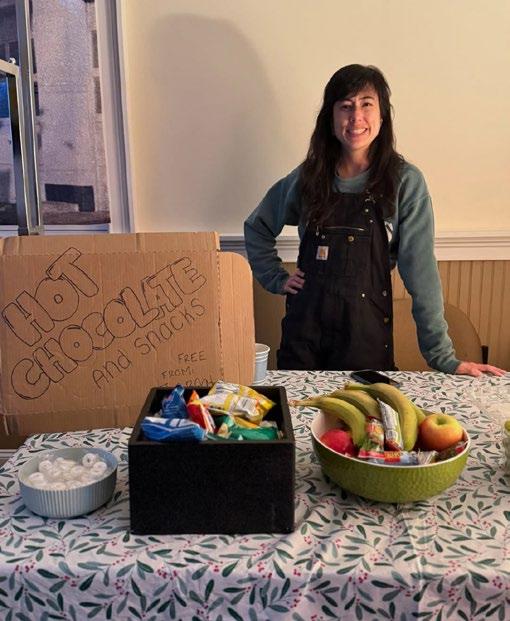
On Feb. 4, local food relief organization Mercy Chef provided tacos and guests had cake and banana bread, hot coffee and fruit punch or lemonade. Dinner is always donated in one way or another, potluck style, and everyone pitches in however they can that evening. An all-volunteer crew serves dinner buffet-line style at 6 p.m. And then they close up shop at 7:30 p.m. on nights when temperatures are above 50 degrees and until 8:30 p.m. when it’s below 40 after a shuttle comes to transport folks who want to go to the overnight shelter. Champions and volunteers often linger until they know everyone is on their way somewhere

that makes sense for them. Even the bus driver providing the rides to the overnight shelter adds this onto his already long day as a volunteer effort for his community.
Volunteer Nicki Pope has been helping out since Champion’s early efforts in Madison, and now shows up almost every night to help out. Her first time volunteering at Amqui Station, her friend pitched her on the idea of helping. Initially she thought the experience would be showing up for a while to hang out and maybe help with a few tasks. On the way over, they called and asked if she could canvas on her way for folks who might need to come in from the cold since not many had shown up to get warm and grab some snacks.
“To be honest at first I was kind of like, ‘Hmm I don’t know if I really do want to do that,’” Pope said, laughing.
One of the first people she approached was a woman sitting under a blanket by herself, and Pope was unsure how the woman might react to her just approaching. While she didn’t take Pope up on a ride to the warming shelter, she did show up the next night before the shelter opened up. Pope’s experience has been rooted in just showing up and letting folks know people are available consistently, and in realizing she could help in a way she didn’t think she could before.
“People often say they’re too busy to do anything,” Pope said. “Almost everyone who

volunteers here has a full-time job before coming in the evening. It is doable.”
Champion insists that people do not have to commit at Pope’s level to volunteer. They welcome one person who wants to help for one evening or someone who wants to plug in and come multiple nights on a regular schedule. Everyone finds a role in the space that makes sense for their level of commitment and availability.
A volunteer named Lin was zipping around with a guest check notepad, diligently taking down notes for needs folks may have that could possibly be filled with items on hand at the community coop. As items are donated and come in, the group makes an inventory and then attempts to distribute things on an as-needed basis in order to keep up with their supplies. Nicki Pope was serving food, answering questions for other volunteers and guests. Other volunteers served drinks, cleaned up the kitchen, manned the back door for security and just generally milled around chatting with folks.
On most evenings, Champion spends the evening bouncing from logistical tasks like jumping in to make coffee and find more cutlery to hearing guests out who might need help resolving conflicts and discerning their own needs. Sometimes Champion is just listening for long periods of time, not offering solutions, but an ear for people who just need another human being to see them in that moment. She
doesn’t like there to be a separation between folks serving food and guests there to use the space. People often ask if they can walk behind to get to the restroom, and expect there to be rules around who goes where, but the space itself is for everyone who enters. She acknowledges the imperfection in spaces — like in many shelters there can be conflict and incidents that need to be addressed — but wants to encourage others to not be afraid to engage in community building that addresses those needs or at least tries to.
That Wednesday evening, some guests watched basketball on a projected screen in a cozy corner of the room while others charged their phones, grabbed a cup of coffee and congregated at tables and in groups around the room. Some would come up to Champion to let them know others had needs or ask if she’d checked on a guest who may not have come up and let anyone know they had a need. Some would relay their high anxiety and tensions that came up around the recent bout of cold weather. Others were happily cutting up, telling jokes and working the room to find someone to share with.
“A lot of people look at doing something like this and think it could be dangerous, and incidents come up and things happen, and they do in these settings” Champion said. “But we approach this in a way and commit ourselves to being there every night and hope others come to experience it for themselves.”
BY SARAH C., CONTRIBUTOR VENDOR
Thought no one wanted to be my friend. In fact, the only sign of kindness toward me was the people who supported our charity. Yes, even the bus drivers became enemies as they witnessed me load the bus carrying huge bags of clothing as full of heavy blankets. They also assumed that I did not hold any fear and they rushed me to pay.
Screams and cries of strangers filled the air as all I could do was slay the insults in spirit. Up the street was a Publix. I did purchase a $2 lottery ticket, which had all ten numbers except one, the number 8.
You should have seen the look upon my face. I was a homeless person and helpless as some may say and in need of housing, yet I was only one number away from $300,000.
BY ANGEL F., CONTRIBUTOR VENDOR
In this dream, is it really reality?
Is it real or is it fake?
Past, present and future.
All we have is the present moment.
Duality ruled by autopilot
Trying to find the silence and peace.
Is it you or is it me? Ego blows threw the trees.
Breath is pure, mind is clear.
Slowing down, like time and like the seasons.
Days are longer nights grow dark early.
Time for rest. She listens to her body.
Winter is the feminine spirit.
Cozy and warm in her haven.
The snow falls on the pavement.
Winter has come. Joy in our heart.
Feelings come and go.
Harsh emotions run the show.
Showing compassion is what we know.
Letting it all go. Touch and go. Breathe and relax your body.
Time sits still. Reflection and thrill.
Life is so interesting and beautiful.
Is this a dream? Is it real?
In the present moment, so beautiful.
<3
BY FREEPRESSGMA, CONTRIBUTOR VENDOR
She paints with fabric. It is a joy to see. I copy her, and she is unhappy.
At first, I am filled with ill grace, arguing. “Imitation is the highest form of flattery“ I tell her.
Upon reflection, I think of all that was stolen from her and her ancestors. Land, children, autonomy. Their shattered lives filled with desperation. This time was not long ago. And the wounds are still fresh. In fact, the theft continues.
And so I tell her, “I trust you absolutely.“ I will not copy her. I will give credit where credit is due and name her as my inspiration in my other work.
One day, but that day is not today, we might finally be free. For both the prisoner and the imprisoned must suffer together.












Everybody knows that black bears hibernate during the winter. They enter a state of torpor in which their heart-rate, breathing and metabolism slow. They stop eating and live off stored fat while they sleep away the winter days. What you may not remember is that female black bears often begin hibernation pregnant. This allows young bears to be born at the beginning of spring so they have a whole season to grow and prepare for the next winter. If you’re feeling a pull to slow down for this season, it’s perfectly reasonable, Capricorn. You may even be incubating something new that can’t be rushed. Take your time and stay warm.
Nobody’s ready for my new take on Dracula! In this version, Dracula owns one of those used car vending machines where you buy the car online and they drive it to your house. So he falls in love with a line cook at the diner next door to his office and wants to turn them into a vampire but they won’t do it because the pay is better at the diner. Anyway, Aquarius, you’ve been hung up on details this week and I appreciate that. But there are infinite ways of telling the same story. I think you know what your role is here and who else is on your team. The rest will work itself out. Oh, and in my version, Renfield is the guy who cleans out the grease traps!
I like those movies where somebody comes back from the future to warn the present about how everything is about to go wrong. There’s always only one way to stop all the terrible things from happening and only one person who can do it! But I think that’s not quite right, Pisces. I think the future is probably something we all build together. And I think whatever small thing you do today that makes somebody’s life better, is kind of like saving the world. So even in it doesn’t seem like enough, everything good thing you do makes the future less scary. I’ll try to do something too.
My grandmother made the best pancakes. We’d wake up to the smell of batter in the skillet. And she always said the third pancake was the best. So the three of us would run to the table and she’d finish the first one and, as excited as we were for a pancake, we’d each say “I can wait.” Then we’d fight over the third one while the first two cooled on their plates. You know that good things are worth waiting for, Aries. But remember that good things are also worth sharing. And sometimes a bite of perfection is enough before you switch over to the good enough pancake number 2.

Ever since I moved into this place I’ve thought I should get a curtain for the bathroom window. But the glass is textured and frosted opaque, so I’ve always assumed nobody can really see anything through it except a little light. But yesterday when the landlord came to fix the bathroom fan I happened to be walking outside. His silhouette was so defined I could count the buttons on his overalls. People might know more about you than you think, Taurus, and that’s not necessarily a bad thing. Instead of trying to cultivate an image, why not tell your neighbors who you are. You get to be more authentically yourself and, besides, they may have already seen it.
You can’t surprise me, Gemini, I had a phone before there was caller-ID. I mean, can you believe there ever was such a time? It would ring and you’d think “I wonder who that could be?” and you’d just answer it with zero information about what might happen next. It could be a family member or a friend. It might be somebody making plans or just an hour long catch-up that you weren’t expecting but found you had the time for. Now all my phone calls are texts and if I want to talk to a friend, we have to schedule an appointment two weeks out. But that isn’t how it has to be, Gemini. Change your plans and make a connection this week. Reach out and touch someone.
They just released all the nominations for best movie of the year. I’ve only seen one of them, but I think I’ve still got time to catch up. Oooh, I heard this one’s good and it’s streaming already for $3.99. Wait a second, you expect me to pay $3.99 to see a movie on a service I already pay for? I won’t do it, Cancer. I’ll just watch another episode of The Real Tax Accountants of Akron, Ohio. Yes it’s boring and predictable and a waste of an hour, but at least it doesn’t cost four bucks! Wait a second, Cancer, what am I doing? Don’t spend a lot of time doing things that make you feel worse when you could spend a little money for something you actually like.
Do you have a flashlight, Leo? Not the one on your phone, like, a real flashlight? I’m just asking because my power is out and I don’t want to waste my phone battery, but it would be nice to be able to see what’s in front of me. I thought I was prepared, but it turns out all my emergency processes were pretty reliant on a stable power grid. It’s like that sometimes, Leo. We put too many of our eggs in the same fragile basket. But if we’ve got a neighbor with a flashlight and a willingness to ask, well that’s a good place to start.
I was doing great on my plan to exercise every day this year and then that storm hit. Can’t very well do my daily jousting-routine in the park when there’s ice all over the place. That’s why I’m still at home staring at my phone. You know, for safety. This reminds me, Virgo, that it’s absolutely fine to hit a bump in your routine. Sometimes circumstances are beyond our control. Sometimes emotions are. But it’s a good day to think about a pivot. Maybe your practice lance won’t fit in your kitchen, but could you do your routine with a broom? Perhaps.
They said to “dress for the job you want” but I can’t afford any of the space helmets on e-Bay right now. I guess I’ll go with pajamas again. It might not be a season to reach for the stars, Libra. It might be a season to get cozy and dream. Give yourself permission to rest. Even if just for today, Libra. Let your brain get off-task and undistracted and get creative. Tomorrow the space helmet market might dip and then you can take your opportunity.
I went to check on the weather, but first I clicked on a link that said “Burning Cities Star Miles Donald Wilkerson Slams Producers of Prop Comedy Roulette! for ‘Stolen Valour’” That really got my attention because I didn’t know what any of those things were. But it got me thinking, Scorpio, why is every celebrity news story a “slams” or a “blasts” or a “destroys” doesn’t anybody ever just remark or comment anymore? We all know it’s just about the clicks, Scorpio, but we click anyway. Just remember, you don’t really need to know what everybody else is feeling all the time. Make sure you know what you’re feeling first.
I like to sleep cold, all snug under a heavy blanket, so some winter nights I leave the heat off on purpose. Sure, I wake up to a chilly nose and indoor temps in the high 40s, but that can be reversed pretty quickly. It reminds me, Sagittarius, that not everybody has the luxury of flipping a switch and hearing that heater kick-on. Our preferences can be so finely-tuned but let them always be a reminder of what others may not be able to decide and help us act accordingly.
more? Visit mrmysterio.com Or
BY JOHN H., CONTRIBUTOR VENDOR
When God created man, God intended for us all to love as he does. Many have a problem with that. They think they can move as they please. In Mark 7:9 God said, “You have a fine way of setting aside the commands of God in order to observe your own traditions.” I see that so true in the day we live in now. Here’s something you can relate to. In James 2:15-17 God says, “If a brother or sister is without clothes and lacks daily food and one of you says to them, ‘Go in peace, stay warm, and be well fed,’ but you don’t give them what the body needs, what good is it? In the same way faith, it does not have works, is dead by itself.” You must have faith with works. “You believe that God is one. Good! Even demons believe ….” James 2:19.
Ya see, many preachers don’t say things as such in the pulpit simply because they don’t wanna upset the church. Me, myself, and I rather tell it like it is,
with no hesitation. The truth is the truth. Just as I’m sharing with you now, you must share the real truth with your children, and be careful of what you do on front of them cause they learn more from the parent than anything.
Lately I’ve been going through some changes, losing my corner at Lipscomb, among things at home at Trevecca. It’s been hard and depressing. I decided I would fast for a couple days and pray without ceasing, asking God to relieve me. I know God will do just that. I’m not perfect, don’t have many friends and spend much of my time alone. I try not to get too close to anyone. Many times when I meet someone, God speaks to my heart, therefore then I know what to expect.
All for now. I love y’all my Christian Brothers and Sisters. Until next time, keep the faith and don’t forget, add works to it.
BY MIKKEL S., CONTRIBUTOR VENDOR
Nashville is known to be a welcoming city in Middle TN. If you are a new arrival then you know and understand what I am saying … or do you?
The criminal and the lazy will find it difficult to prosper here and be well … come … see, but when the cookout is over so is your welcome. To the brave looking for a better life, there is none other than Music City, my friend. To the youth, be on your guard if you are alone. When seeking help ask the professionals that actually get paid to guide you.
Seek guidance within yourself. “Know thyself to know thyself,” said Aristotle.
It is not wise to seek guidance from bitter people. Read research and develop yourself. You are your own person. Too many have been too trusting, too tired, and too thirsty for too long to only be led into the lead itself without the RE or the PS attached. There are those who will take advantage of you and will not pay back in kind. Do not be the victim or the villain and again seek guidance by those who are employed.
Created by Mccollonough Ceili
BY “SHORTY” R., CONTRIBUTOR VENDOR
They said this is just a partial shutdown. It’s about how to fund ICE. They say they don’t want to short cut or hurry the process. We need to just pray. Maybe it won’t be a long time to decide how to fund it. Let’s get the USA back to running smoothly for a long time. It’s just bad timing considering the government was on the longest shutdown in history just a few months ago.
BY LORA V., CONTRIBUTOR VENDOR
I don’t consider myself old. I am in my 60s. My body tells a different story. I had a length of time with high blood pressure levels. My hands go numb and hurt and burn. That is on and off again. My legs only work when they want to. They feel like Jell-O. I don’t feel stable on my legs sometimes. I walk with a cane when I have to.
In the morning I awake to do my stretching. My body says, snap, crackle, pop and I am not eating the cereal.
SUBMITTED BY HOWARD P., CONTRIBUTOR VENDOR
A good Jewish boy announces to his father that he is moving out. About a year later he returns home and tells his father that he has converted to Christianity. The father is mortified and gets on the phone to his friend who is also Jewish, “Sol, you won’t believe this. My son David moved out and came back and told me he converted to Christianity.”
Sol says, “No way. you won’t believe this ... my son Benjamin left home for a year, and when he came back HE had converted to Christianity too!”
Both men were so upset that they called their Rabbi and explained the situation. The Rabbi says, “You won’t believe this, but my son Joshua moved away and when HE came back he told me he converted to Christianity too!” The Rabbi suggests that they call God and tell Him.
The Rabbi tells God that all three men had sons who moved away and converted to Christianity, and don’t know what to do. God says to them, ”You guys won’t believe this ....”

“The Contributor” está trabajando con uno de los principales periódicos en español La Noticia para llevar contenido a más lectores en Middle Tennessee. Nuestros vendedores de periódicos han pedido durante mucho tiempo que nuestra publicación incluya contenido que apele al interés de residentes de habla hispana en nuestra comunidad.
A s s o c
a
“The Contributor” is working with one of the leading Spanish-language newspapers La Noticia to bring content to more readers in Middle Tennessee. Our newspaper vendors have long requested that our publication include content that appeals to the interest of Spanish-speaking residents in our community.


o n o f Latino Elected and A p p o i n t ed O f f i ci a l s ( NA L E O ) S i n embargo, esta conm e m o r a c i ó n n o e s únicamente una celebración del pasado E s , s o b r e t o d o , u n a i nv
n l o q u e v i e n e : u n a d e m o c r a c i a m á s r e p r e s e nt at iva , m á s i n cl u s iva y m á s f u e r t e
Durante cinco décadas, NALEO ha sido una pie za c lave en el for talecimiento del liderazgo latino a nivel nacional En un contexto histórico en el que la re presentación latina era limitada o inexistente en muchos espacios de toma de decisiones, NALEO surgió con una misión clara: pre parar a líderes latinos para servir, ampliar el acceso al poder cívico y ase gurar que nuestras comunidades tengan una voz infor mada y efectiva en los asuntos públicos Ese le gado continúa hoy a través del NALEO Educational Fund, la principal organización 501(c)(3) del país dedicada a promover la par ticipación cívica y el liderazgo latino
“ E s t e m o m e n t o n o s l l a m a a l i d e r a r c o n p r o p ó s i t o Ju n t o s p o d e m o s c o n st r u i r u n f u t u r o d o n d e l o s l í d e r e s l a t in o s e s t é n p l e n a m e n t e p r e p a r a d o s y e m p o d e r a d o s p a r a fo r t a l e c e r a s u s c o m u n i d a d e s y m e j o r a r l a v i d a d e q u i e n e s r e p r e s e n t a n ” , s e ñ a l ó E r i c a
B e r n a l - M a r t í n e z , d i r e c t o r a e j e c u t iva d e NA L E O S u s p a l a b r a s r e s u m e n e l e s p í r i t u d e e s t a c e l e b r a c i ó n : m i r a r a t r á s c o n o r g u l l o y ava n z a r c o n r e s p o n s a b i l i d a d


50 Years of
Un le gado de impacto, en cifras
El trabajo de NALEO no solo se refleja en discursos o buenas intenciones; se mide en resultados concretos
E n m a t e r i a d e d e s a r r o l l o d e l i d e r a zgo , d e s d e e l a ñ o 2 0 0 0 l a o r g a n
the Le gac y, In vesting in the Future
Una experiencia personal y una mirada al futuro
En lo personal, tuve la opor tunidad de asistir a la conferencia nacional de NALEO en 2025, una experiencia que me dejó profundamente impresionado
La calidad de los paneles, la diversidad de líderes presentes y la profundidad d e l a s c o nve r s a c i o n e s r e fl e j a r o n e l impacto real de la organización a nivel nacional Fue evidente que NALEO no solo for ma líderes, sino que constr uye comunidad, visión y propósito compar tido
Mirando hacia adelante, el apoyo a NALEO hace posible una nueva etapa de crecimiento e innovación Entre los proyectos más destacados se encuentra e l l a n z a m i e n t o d e l C e n t r o d e
r e p a r a d o s p a r a e j e r c e r s u s f u n -
c i o n e s c o n é t i c a , c o n o c i m i e n t o y v i s i ó n d e l a r g o p l a z o L a bu e n a g o -
b e r n a n z a c o m i e n z a c o n l í d e r e s
c a p a c i t a d o s , y NA L E O h a d e m o s t r a -
d o s e r u n r e f e r e n t e e n e s a t a r e a
Otro pilar fundamental ha sido la promoción de la ciudadanía Desde 1988,
Conoce tus derechos:
¿Que hacer en caso de una redada?
Mantenerse callado
Sólo dar nombre y apellido No mentir
Nunca acepte/lleve documentos falsos No revelar su situación migratoria No llevar documentación de otro país
En caso de ser arrestado, mostrar la Tarjeta Miranda sados en la Quinta Enmienda de la Constitución, derechos de guardar silencio y contar con un ogado fueron denominados Derechos Miranda go de la decisión de la Suprema Corte de Justicia Estados Unidos en el caso Miranda vs Arizona, 4 U S 436, de 1966
NALEO ha asistido a 218,234 aspirantes a la ciudadanía, completando 46,018 solicitudes de natur alización entre 2020 y 2025 A través de una inversión de $4 07 millones en proveedores de ser vicios de naturalización, la organización ha log rado que las familias ahor ren más de $2 1 millones en exenciones y reducciones de tarifas La ciudadanía no solo abre la puer ta a nuevos derechos, sino que brinda estabilidad, opor tunidades y una voz plena en la vida democrática del país Asimismo, NALEO ha sido una fuente confiable de infor mación cívica Desde 1988, su línea telefónica bilingüe ha atendido 706,494 llamadas, ofreciendo orientación clara y en el idioma adec u a d o, e s p e c i a l m e n t e e n m o m e n t o s críticos como procesos electorales y cambios en políticas públicas En tiempos de desinfor mación, este servicio ha s i d o u n ve r d a d e r o s a l vav i d a s p a r a miles de familias
E xc e l e n c i a e n S e r v i c i o P ú b l i c o d e NA L E O e n 2 0 2 6 , q u e a m p l i a r á l a capacitación para funcionarios electos y designados en todo el país Además, la organización ya se pre para para el Censo 2030, desar rollando campañas de alcance comunitario basadas en alianzas duraderas y de confianza
De cara a las elecciones de 2026 y 2028, NA L E O c o n t i nu a r á p r o d u c i e n d o datos, análisis e infor mación estratégica sobre el electorado latino y las contiendas c lave, contribuyendo a una nar rativa nacional más precisa, justa e inclusiva
A cincuenta años de su fundación, NALEO demuestra que inver tir en lid e r a z go l at i n o e s i nve r t i r e n u n a democracia más sólida Celebrar este aniver sario es reconocer un le gado, pero también asumir la responsabilidad de se guir constr uyendo el futuro
Porque el trabajo continúa, y el próximo capítulo apenas comienza
En víenos sus sugerencias por e-mail: ne ws@hispanicpaper com ó 615-582-3757
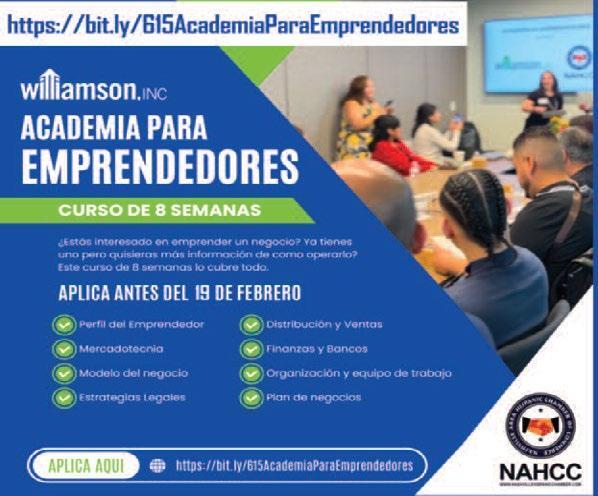


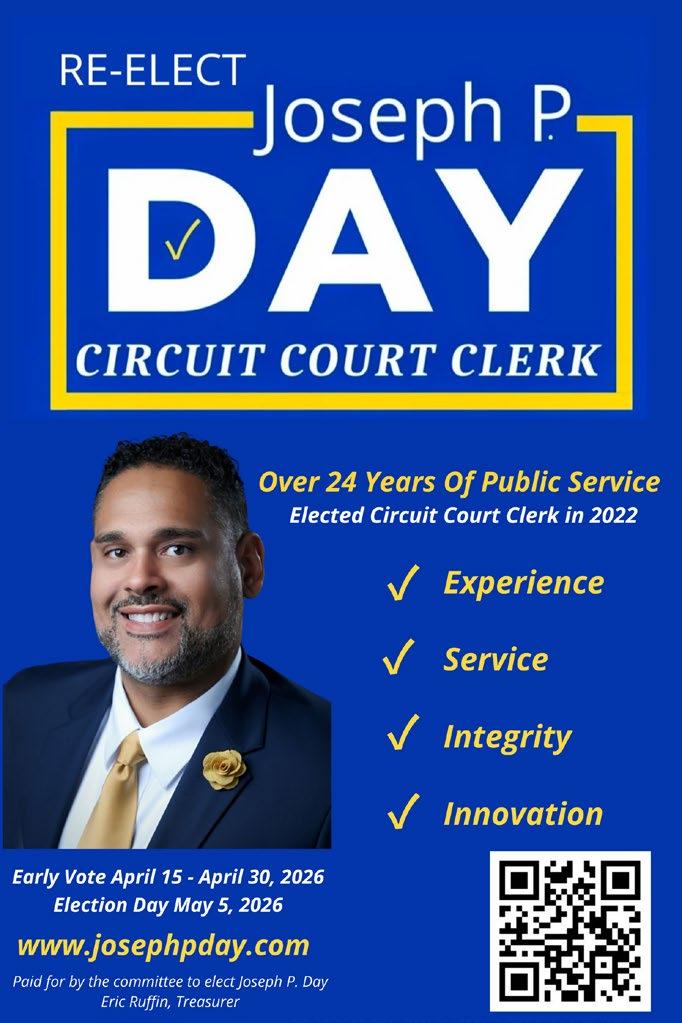

I’ve recently noticed streaming listings and mentions of films like Matewan and Harlan County U.S.A. Coal mining history and culture are shining black touchstones in the South, and the feature and documentary films that have captured the lightless tunnels, ringing picks, and dark-dusted faces of coal country have helped to define the Southern image in American cinema. A new feature dramatization does the same for contemporary mining culture in New Zealand. Pike River feels like a procedural, a contemporary labor fable, and a fight for justice all at once. This detail-focused film sometimes made me feel like I was watching a documentary.
Director Robert Sarkies (Out of the Blue) and screenwriter Fiona Samuel (Consent ) have crafted Pike River as a working-class drama about friendship forged in tragedy. On Nov. 19, 2010, an explosion ripped through the Pike River coal mine on New Zealand’s West Coast. Anna Osborne (Melanie Lynskey) rushes to the mine to search for her husband Milton, while Sonya Rockhouse (Robyn Malcolm) frantically tries to
BY JOE NOLAN, FILM CRITIC
contact her son Ben. After a second explosion, 29 men died underground.
The two grieving women form an unlikely friendship. Officials deliver incomplete answers and corporate spokespeople are evasive, but Anna and Sonya refuse to stop fighting for their lost loved ones. The women launch a years-long crusade for justice, taking on mining executives, government officials, and a legal system bent on protecting the powerful mining corporation rather than the victims. Pike River takes viewers from small-town streets to the halls of power. Union advocate Helen Kelly (Lucy Lawless) joins the cause, and the women face down Prime Ministers and push for legislation to improve workplace safety standards. Cinematographer Gin Loane and editor Peter Roberts conspire to capture the otherworldly beauty of New Zealand’s landscape and juxtapose it with the claustrophobic weight of grief in dark evening living rooms and morning kitchens.
The Pike River mine explosion on November 19, 2010, was New Zealand’s worst mining disaster since 1914. The tragedy resulted
from a methane gas ignition in mine shafts with inadequate ventilation. A subsequent Royal Commission determined the deaths were entirely preventable, and pointed out myriad safety violations: non-functioning gas sensors, flawed electrical systems, inadequate methane drainage and management prioritizing production over safety. It was also revealed that government regulators failed to properly inspect the mine or enforce compliance. Despite the overwhelming evidence of criminal negligence, not one individual has faced prosecution. The disaster shed light on systemic failures in New Zealand’s mining safety regime and corporate accountability, prompting legislative reforms but no criminal justice.
Pike River captures a small epic in the story of labor in the 21st century, but its best moments are its quiet evocations of smalltown working-class life. The performances by Lynskey, Malcolm, and Lawless are all gritty and grounded in Samuel’s rock-solid script. The beers at the pub clank and splash. The cue ball cracks on the break.
The bathwater drips and a dog barks down the block. I haven’t seen the documentary The Women of Pike River, which features interviews with the families of the fallen miners. The thing that separates a feature dramatization of a real-world event from a documentary is the way a movie like Pike River captures the presence of the people and the place while also constructing an effective dramatic narrative. Pike River manages to do both very well. The real-world mining disaster can seem like unfinished business, but Sarkies and Samuel manage to make their story feel whole.
Pike River is in limited theatrical release and available to rent on YouTube, Apple TV, and more.
Joe Nolan is a critic, columnist and performing singer/songwriter based in East Nashville. Find out more about his projects at www.joenolan.com.