


Managing
Business
Production
Features
Copy
Creative
Opinion

Managing
Business
Production
Features
Copy
Creative
Opinion
and the corresponding section editor. The Cascade reserves the right to edit submissions for clarity and length and will not print any articles or be a platform for any contributor or contractor who has shared racist, sexist, homophobic, or libellous content online in any form. Letters to the editor, while held to the same standard, are unedited, and should be under 200 words. Opinions expressed do not necessarily reflect that of UFV, The Cascade’s staff and collective, or associated members.
The Cascade is published on the traditional, unceded territory of the Stó:lō
Everyone and their dog thinks they can start a podcast these days. Lucky for UFV students The Cascade is someone and someone’s dog! So, we’ve delved into the world of audio journalism. Now what? What can students expect from it? We’re here to talk at each other, and in turn, talk to you.
Darien: So Cassie, what do you see the future of our podcast?
Cassie: D! I can’t believe it’s finally here. I see lots more chicken nuggets and laughs, but also can’t wait to bring in more guests and stories and use this as a platform to connect UFV students with the broader community. Why do you feel this is an important step for us?
D: Audio journalism is the future. So many people just exist in the online sphere and don’t bother to pick up a physical copy of a newspaper anymore. And their first instinct when they open their phones is to scroll Instagram or TikTok, not a news app. So we want to ensure that our news is accessible to students and in a format that they are most likely to consume.
C: I agree, I hope this gets people more interested in what’s going on around the world and right here at UFV and in the Fraser Valley. I think shifting from existing solely in the online sphere is the only way to find that sense of community that so many seem to crave here at UFV. Maybe a step closer to finally moving away from the “commuter campus” label. What do you think students can expect from the pod?
D: Well, our first episode was certainly a feral one, I feel like we laughed so much and spoke very candidly about ourselves and our life at the paper and at UFV. Sometimes I wonder if we were too candid, but we are a paper and I value transparency. So they can definitely expect hot takes from us. We’ve really opened the door to all our contributors and contractors so I think it’s going to be a very honest look at our current team and what they are most interested in covering on campus. And then of course, hopefully, some great profiles and stories from campus. Is there anything that you’re worried about when it comes to the podcast?
C: Probably longevity. You know, is this going to die with us when our time at The Cascade ends? So I hope we can get the student body involved and excited about this. Because as you said, it really is an open thing that’s aim is to benefit not just our paper but the UFV community.
If you’re ready to join us in this next stage, check out our first episode below!

Causes behind the increasing rabbit population
Rabbits and bunnies are taking over B.C.’s Lower Mainland with colonies of over 2,000 being found across local communities, and it’s getting out of hand because most of them are not wild but domestic.
The invasive species are primarily European and Eastern Cottontail rabbits who are appearing in backyards and parks, and can cause great damage to the environment and properties.
The Fur-Bearers, a non-partisan wildlife charity from Saanich, believes it’s due to irresponsible breeding, the selling of unsterilized rabbits, and uneducated pet owners. They have continued to pressure the B.C. government to regulate breeders, disallow rabbit sales in pet stores, and implement a rule that anyone adopting a rabbit must go through an official rescue organization like SPCA so they can be properly spayed and neutered. B.C.’s response has been “disappointing” according to Executive Director of The Fur-Bearers, Lesley Fox, who commented on the issue.
“I think oftentimes they’re marketed as, you know, sort of a starter pet or a children’s pet. And then they end up in a hutch outside for the rest of their lives…
“Or sometimes, and what we’re experiencing is, they’re simply dumped. And people turn their pet loose, whether it’s in a park or at a shopping mall, to survive on their own.”
Archway’s new food charter
On June 10, 2026 Archway Community Services announced their new community oriented Abbotsford Food Charter. It was formed in collaboration with Fraser Health, the University of the Fraser Valley, the City of Abbotsford, and Abbotsford ACCESS.
A food charter is a “broad statement,” as Archway calls it, that seeks to create an Abbotsford that is food secure.
The core values the charter is working towards as outlined include: Health and Wellbeing, Social Equity, Agriculture and Sustainability, Education, Culture, and Community Economic Development. These values were heavily influenced by a wide range of community members who participated in open online surveys and community engagement sessions.
Rebecca Thuro, manager of Food Security offered clarity on the goals of the new Abbotsford Food Charter, which was quoted in Archway’s press release.
“[The charter] helps ensure that future food - related initiatives reflect the needs and aspirations of Abbotsford’s diverse communities.”
Increasing wait times for specialists in B.C.
In recent years, there has been a 10 per cent rise in wait times to see specialists in British Columbia. This growth in number can be attributed to the province’s limited number of specialists and the higher number of patients that require specialist referrals.
According to a survey conducted by Doctors of BC , the rise in specialist demand is leading to less-than-ideal outcomes for patients and doctors.
“Specialist waitlists increased by 10% in just one year — reaching unprecedented levels and driving British Columbians to emergency departments and primary care for worsening conditions.”
With longer wait times, the Doctors of BC survey details that 36 per cent of specialists are beginning, or are thinking about, limiting their practice.
“They have either partially closed their practice to new referrals or may do so in the next year, while nearly 5% have already fully closed their practice to new referrals or are considering doing so.”
Doctors across the province are working to collaborate with the Ministry of Health to provide specialist s with the support they need, such as implementing the Specialist Waitlist Management Proposal and expanding specialist training programs.
Birthright Citizenship upheld in U.S. Supreme Court
On June 30, 2026, the United States Supreme Court upheld the 14th amendment regarding birthright citizenship, in direct opposition to President Donald Trump’s executive order to stop issuing citizenship to children born to undocumented people in the U.S. In 2025, Trump signed Executive Order 14160, which sought to redefine how the 14th amendment was interpreted, bypassing the need for a constitutional amendment. The court ruled that this order was unconstitutional.
They ruled on the landmark case 6-3, with Chief Justice Roberts and the five other justices, concluding that the president’s Executive Order 14160 violated the 14th amendment. The three dissenting judges argued that the 14th amendment is being weaponized by giving citizenship to anyone who happens to be born in the U.S.
While the ruling is a blow to Trump’s quest to limit and redefine American citizenship, he stated on Truth Social that he will still work on removing birthright citizenship.
Chief counsel at the Lawyers’ Committee for Civil Rights Under Law, Dariely Rodriguez commented on the ruling.
“We have endured an incredible test of our collective will as a nation and have prevailed.”
and 100 square kilometres of land, to be affected by landslides and liquefaction.
On June 24, four minutes past six p.m. local time, a doublet earthquake hit Venezuela with a 7.2 magnitude foreshock 23 kilometres off the city of Yumare followed by a 7.5 magnitude mainshock 39 seconds later. This bigger earthquake had its epicenter about five to 10 kilometres away from the previous one. The Venezuelan states of Aragua, Carabobo, Miranda, Trujillo, and Yaracuy were all affected, with cities like La Guaira and Caracas sustaining significant damage.
The United States Geological Survey (USGS) estimated the earthquakes exposed a significant area, between 10
Approximately half a thousand aftershocks have been registered in the area, with one of the strongest being of a 5.2 magnitude. Over 1,700 people were killed as a result of the catastrophic doublet, with more than 5,000 injured and nearly 50,000 still missing. The United Nations (UN) anticipates the death toll to increase to 10,000 and has provided body bags to Venezuela in anticipation for the additional casualties.
Venezuelan interim President Delcy Rodriguez issued a governmental commission to assess the damages caused by the earthquake to housing
and infrastructure across the country. Using data from the Sentinel-1 satellite constellation from the European Space Agency, Oregon State University estimated that over 58 thousand buildings in Venezuela have sustained damage or suffered collapses. Residents injured by the collapse of buildings have flooded the already weakened Venezuelan healthcare system, which was already struggling to care for patients in need of medical attention on a daily basis.
The financially strained country’s direct damages following the twin quakes are estimated at a whopping 6.7 billion U.S. dollars — this is on top of the economic, political, and social challenges
that Venezuela was already facing prior to the event. According to Humanitarian Action, around 7.9 million people in Venezuela were in need of humanitarian aid. The government of Canada announced in a news release that it has set aside $5 million Canadian dollars to aid Venezuela in this humanitarian crisis. The Canadian government also stated that they will match all donations made to the Humanitarian Coalition as well as to the Canadian Red Cross between June 25 and July 14, which is projected to raise the total support sum to $9 million.
CONTINUED FROM PAGE 03
Countries and entities including North and South America, Europe, and bodies like the Red Cross, and the United Nations have mobilized different resources — from specialized personnel and military assets, to search and rescue equipment, food rations and medical supplies, to help bring relief to the humanitarian emergency. Various support channels are open and receiving donations to aid people in Venezuela. Help can also be offered
by donating to humanitarian aid organisations to help provide medical aid, psychosocial support, non-perishable food, temporary household necessities, hygiene products, pet sustenance items, and more. Additionally, donations to channels with a Canadian presence can
be made to Humanitarian Coalition, Canadian Red Cross, Action Against Hunger, Canadian Lutheran World Relief, Shelter Box Canada, UNICEF Canada, UNHCR Canada, Crossroads Cares, Canada Helps, and Humanity & Inclusion.
RACHEL TAIT
On Apr. 22, a new family-owned business called OK HAPPY Consignment opened up in historic Downtown Abbotsford. The store consists of gently used and brand new pieces for women and children. Owners Logan Enns and UFV nursing alum Lauren Quezada shared with The Cascade why they opened their business, the public’s reception and their future goals.
What inspired you to start this business?
Logan: We have been thrifters and creators our entire life for the most part … and we felt that there was such a hole, especially in Abbotsford, in the consignment industry where there’s thrift stores, but there’s not a lot of consignment. Just talking to our peers and different people, there was a lot of enthusiasm with the concept of opening up a consignment shop.
What was the process like opening OK HAPPY?
Lauren: Logan and I had been keeping an eye on retail spaces in the downtown area for a while, just casually, because it would have to be the right space for us to want to [move] forward with anything. So much depends on the feel of the space and
how people feel in our store, especially when [they] try on clothes.
We saw this space and immediately it spoke to us in regards to how great and open it is … it’s a unique space for the downtown area because it’s not overly huge. It felt very bite-sized [and] manageable to start a business in and [we will] see how it grows.
Have you ever done something like this before?
Lauren: I was a co-founder of Foxglove Floral Cafe down on Montrose, and that was just such a different process because that was a build-up of a brand new space. I think this was a lot easier because it’s ready to go … [OK Happy] definitely felt more manageable to do.
How is OK HAPPY unique?
Lauren: Consignment is a fairly standard approach to resale fashion, but we definitely had a lot of intentionality when designing the space [to be] kid friendly. We want people who have kids to feel like they can shop with [them] and not [have] a nightmare experience because we’re both mothers and those are things that stand out so much when we go to places, [and] we wanted to be able to offer that.
How do you consign with OK HAPPY?
Lauren: We’re by appointment, not walk-in. People make an appointment, they can go on our website to consign with us … and then they would come in on their day and time and we would go through whatever items they bring and [select] what we think we need inventory wise in the store, what is seasonally appropriate, and what will sell … and then they would sign a consignment contract that agrees to a percentage split on the final sale price. Once that item sells, it would be added to their consigner account, and then they can use that as store credit or have it paid out.
Lauren, as a UFV alum, what program did you study?
Lauren: I’m a nurse, so I did the BSN program at UFV, and I [graduated] in 2013. I’ve been working as a nurse ever since, and I still do that casually.
What did you enjoy most as an undergrad?
Lauren: It’s a unique experience because you’re with the same cohort throughout the whole thing and I just really appreciated the relationships that built in the program. I thought the teachers were awesome and I really liked the smaller class size. I felt like their nursing program specifically is high quality and [they are] really prepared to see you.
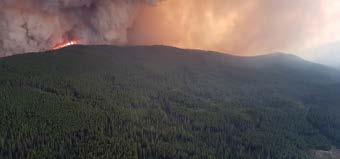
As the summer season hits its peak, B.C. is starting to feel the usual wildfire anxiety. At the time of this writing, the B.C. Wildfire Service lists 18 active wildfires in B.C., most of which are currently under control, with two out of control in Riley Creek, near Kamloops. The fire requires a “modified response” by fireteams due to the difficult terrain and is burning near Lillooet at a size of nearly 50 hectares.
The most significant contributor to the increase of wildfires seen in B.C. over the recent years is climate change. The Canadian Climate Institute explained that while the number of wildfires remains about the same, their intensity, expanse, and duration all increased with climate change.
The B.C. Wildfire Service’s seasonal outlook points to warmer-than-normal conditions across much of the province, with drought conditions already affecting
regions such as the Chilcotin, Lower Thompson, Okanagan, Vancouver Island, and the Northeast. When drought sets in, even when the area experiences rain, the land is still greatly susceptible to fires.
So far, this season does not appear to have as many destructive numbers of fires as previous years. The 2023 season, for example, became one of the worst wildfire seasons in the province’s recorded history, burning millions of hectares and forcing mass evacuations. In comparison,
What has that process been like shifting from two very different careers?
Lauren: There’s a lot of overlap of skills. I feel like I don’t have a business background, but I think my experience as a nurse has shaped my ability to prioritize, problem solve, critically think, communicate, and all these [skills] that are very transferable to opening and running a space … there’s so much overlap.
Why do you think consignment is a good option for students?
Lauren: I mean, you’re not paying wholesale price. Anything that we have is a 50 to 60 per cent markdown from its retail sale price, so regardless, it’ll be less than what you would pay for an item that’s brand new.
Is there anything else you’d like to add?
Lauren: We’re hopeful for more unique small shop retail experiences in this area so that there’s just that many more things that people can [do]. We love adding to the downtown and we love what’s already here. But I see that there’s just so much potential in this historic downtown area we’re excited about.
Q&As have been edited for length and clarity.
the current number of active fires is still sitting at a relatively low 20. However, experts are warning that the danger is not only about how many fires are burning today, but is heavily reliant on how much rain there is in the later half of the season. Wildfires also inordinately affect Indigenous peoples, who are impacted by over 42 per cent of wildfire evacuations, with 80 per cent of wildfires having
CONTINUED ON PAGE 05
FROM PAGE 04
occurred on Indigenous territory. Many First Nations communities are located in areas more susceptible to fires, where evacuation can be more difficult and emergency access may be limited. Fires can threaten homes, cultural sites, important local species, and relationships to land. When fires spread and evacuations are called for, this further compounds years of colonial abuses.
While only making up 4.9 per cent of the population, Indigenous people in B.C. are evacuated at a higher rate, and the conditions of that evacuation are often poor. In an article analyzing and interviewing Indigenous peoples within the evacuee system, researchers found that Indigenous experiences ranged from inadequate housing to racism, which negatively affected their experience, and that a community-based tailored evacuation
plan was received more positively.
Indigenous knowledge also provided an effective solution to the increasing wildfire problem, which included cultural burning, the practice of using controlled burns to better protect against future wildfires. This practice has been historically used by many Indigenous communities across the province, and helped keep the area safe from serious wildfires. In 1874 the colonial government passed the Bush fire act banning cultural burns, but the practice is slowly returning.
The B.C. Wildlife Federation also practices and encourages cultural burning and prescribed burns, and works together with Indigenous communities to both burn and train. Bringing back cultural burning and supporting Indigenousled fire stewardship has helped shift B.C. away from a fire-suppression-only approach and toward living more safely with fire.
Wildfire awareness starts with preparation. People should follow local fire bans, avoid open burning when restrictions are in place, properly extinguish campfires where they are allowed, and report smoke or flames immediately.
B.C. residents can report wildfires by calling 1-800-663-5555 or *5555 from a cellphone. Households should also prepare grab-and-go bags, know their evacuation routes, and monitor official sources such as the B.C. Wildfire Service dashboard, EmergencyInfoBC, DriveBC, and local government alerts.
On June 10, 2026, a first reading of Bill C-34, the Safe Social Media Act, was given by the federal government of Canada, which included both the Digital Safety Act and the Digital Safety Commission of Canada Act. The government has implemented these two Acts together to maintain appropriate and safe use of digital platforms.
“Bill C-34 is an essential step forward in ensuring the safety and well-being of Canadians on digital services.”
The Digital Safety Act was originally implemented to keep young users, below the age of 16, safe on online platforms, which include social media and artificial intelligence (AI).
“The Act requires these services to identify risks of harm on their platforms, adopt measures to address certain risks, implement safety-focused and age-appropriate design features, make user guidelines available, provide tools such as blocking and flagging, and submit publicly disclosed digital safety plans.”
This Act is meant to target seven types of harmful content, including material that is used to bully a child, incite violence, and content that induces a child to harm themself.
The role of the Digital Safety Commissions of Canada Act is to provide a framework and build a culture of online safety.
According to Global News, the government emphasized that social media
and artificial intelligence platforms have plans that will help maintain children’s safety.
“Those [designs] could include content warning labels, safe search settings for children, and measures to reduce addictive behaviours like endless scrolling.”
Canada has followed the same path of other nations such as Australia, France, and Malaysia in limiting social media access for children. Global News has also outlined Canada’s unique approach which, unlike Australia, is to restrict certain services rather than implementing a full ban.
“In practice, the strategy takes a less hardline approach than Australia, the first country to ban social media for youth under 16 and whose law contains no possibility for exemptions.”
Canada has considered exemptions should online service providers include “adequate safeguards” to protect children in digital spaces, according to CBC.
These exceptions have not yet been clearly defined by parliament.
“The ‘adequate safeguards’ themselves will need to be set by the Privy Council, which includes cabinet members and other officials. The commission would then use those regulations to determine whether a company qualifies for an exemption.”
According to Canada’s Culture Minister, Marc Miller, these exemptions will come into effect after 18 months from the date of the legislation’s passing into law.
There are mixed reactions from the public about the new Bill.
CBC interviewed several Canadian teens and parents, about their opinion on this new Bill. Some are confident that the Safe Social Media Act will be helpful while others remain skeptical. Those primarily affected are children under the age of 16 and they are not sure that this law will fully limit young users as there are ways to work around the restrictions.
Canadian parents, such as Farah Nasser, have commented on how difficult it can be to introduce this Act.
“Things are changing so fast: it’s like we’re on this highway ... going 100 and now we’re saying ‘OK, let’s retroactively put stop signs and street lights in.’ It’s a very difficult balance, but it’s so necessary.”
While teens, such as Theo De Decker, have pointed out valid concerns with these restrictions.
“Enforcing this ban, it’s probably going to come at the cost of some privacy. … How do they know if you’re under 16, right? They might do some things that could violate privacy and some ethical concerns.”
In contrast, a spokesperson from the technology company Meta deemed social media bans to be “counterproductive,” since some platforms, including Facebook, have already implemented safeguards such as Teen Accounts.
Other social media platforms, like TikTok, have also made adjustments for young users on the app.

“TikTok limits who can follow users between the ages of 13 and 17 as well as who views their videos and reads their bios. The app’s teen accounts can’t host live content, send or receive virtual gifts, or buy or sell products on TikTok Shop, and have a default screen time limit of 60 minutes while disabling push notifications at night.”
Technology analyst, Carmi Levy, suggested that adjustments should be anticipated regarding Bill C-34.
“We have not hit a finish line here. We’re just getting started.”
While efforts are being made to cultivate a culture of online safety, there is yet to be one simple solution to the concerns surrounding social media restrictions and the active participation of children on these platforms. As of writing this, Bill C-34 has not yet been passed and is still under review in parliament.
JASLEEN SANDHU
In recent years, the world has seen a decline in birth rates, and I, personally, hope to contribute to that statistic.
There are a myriad of reasons for people opting to not have children, ranging from cycles of generational trauma to maintaining a certain way of life.
According to BBC, there are several factors limiting people from having children, including the cost of living. Looking at the current economic situation, it’s not a simple “yes” to the question of having children. The common path of decades prior — finding a career, buying a home, and starting a family — isn’t achievable for many anymore.
When I think about my future, I don’t see children in it — not my own, at least. I would love to be the cool aunt, a person children feel safe around; but I simply don’t want to be a mother.
I believe too many people are having children and very few are equipped to. People should have kids because they truly want to and are capable of taking care of them. This isn’t a particular dig at anyone. If you want to have children, I hope your future is bright and fulfilling.
While there are reasons to have children, there are also explanations as to why someone wouldn’t want to have any.
There are many reasons why I don’t want to have children: the economic and political state of the world, my personal values and perceptions on life, and the fact that my own upbringing deters me from bringing anyone else into this world. I refuse to pass down my ancestors’ subpar genetics onto anyone else.
My parents definitely should not have had children. As the youngest, I witnessed my brother and cousins having to grow up too fast to take on the roles that our parents should have. No matter how much some of us may tell ourselves that we’re different from our parents, it’s hard not to fall back on patterns we’ve seen in
our lives. It can be difficult to completely remove ourselves from the cycles of generational behaviours and traumas, therefore it’s not uncommon to pass down these patterns unintentionally.
On the other hand, I sometimes look at my parents and feel overwhelmingly sad. I wonder about the things they wanted to do and couldn’t once they became parents. I hear stories about their youths and hone in on how happy they sound while reminiscing. Do they ever feel resentful? Will I, if I ever were to have children? These thoughts are difficult to entertain.
My parents, similar to other couples of their generation, fell into the status quo of getting married fairly young and having children, because that was the thing to do. Now, we have the ability to challenge that path. Each family’s and individual’s dynamics are varied.
I’ve never wanted children. I consider
it a jarring reality when people in their early 20s announce that they’re having children. I understand that everyone has their own path and timeline in life, but I can’t subside the strange feeling that overcomes me when I think too hard about it, because I consider myself a child. I’m still learning how to take care of myself, I’m dependent on my parents, and I don’t have any desire to procreate, ever.
My personal choice to not have children stems from my own childhood. Adulthood has been far kinder to me; childhood isn’t a time I yearn to return to, but I’m glad for the lessons it taught me. The lack of communication and harmful familial patterns that I was exposed to have allowed me to recognize that bringing children into the world isn’t something I want.
It’s possible to not want children and still want to make a difference in young
people’s lives. I think James Baldwin had it right:
“The children are always ours, every single one of them, all over the globe; and I am beginning to suspect that whoever is incapable of recognizing this may be incapable of morality.”
It never sits right with me when people claim, “It’ll be different when you have your own kids!” Care toward children shouldn’t be limited to biological affinity. We shouldn’t be having children because it’s “the thing to do.” For some, there are options such as adoption and foster care; for others, there aren’t any children in their lives at all. There is no one picture for what a family looks like. Just because someone’s dream is to have children, it doesn’t mean that others share that desire, and both are okay.

Summer: experience it how you want to

Illustration by Iryna Presley
I’ve noticed that each summer may come with expectations: to be productive, to make the most of it, to “glow up.” I feel summer includes a lot of anticipation to maximize time, and each year, I get overwhelmed by these expectations.
I understand that school’s out and everyone’s schedule tends to be a bit more flexible, but we shouldn’t have to force any kind of checklist for the summer. Not everything needs to be worthy of a social media post.
The expectations of summer feel counterintuitive to me. Why can’t summer be fun and simple?
Instead of perpetuating the notion that we have to be at the beach each week and sign up for every workout class available, why can’t we emphasize breathing in the fresh air from a bedroom window? We should eat fresh fruits and go on walks, because we want to; not to make these activities fit some sort of seasonal aesthetic. Summer, like every season, is a time we experience different elements of our earth and that should be enough. So, you should make the most of your summer, and what that means should be up to you. There’s no one way to experience summer.
BY JASLEEN SANDHU
I still remember the first time I witnessed my phone blasting the emergency alarm through BC Emergency Alerts. It was for an active shooter in Langley back in Jul. 25, 2022, and while I agree that public safety emergency alerts are necessary, it was a very jarring experience. I have a background of severe anxiety, and although I’ve made huge progress and can now control my anxiety really well, there still exist circumstances that can trigger a strong anxiety attack. If the lives of many are in danger, including potentially mine, then an anxiety attack is a price I was willing to pay in exchange for preparedness. Sadly, was. Not anymore. Not after I learned how B.C. employs its emergency broadcasts.
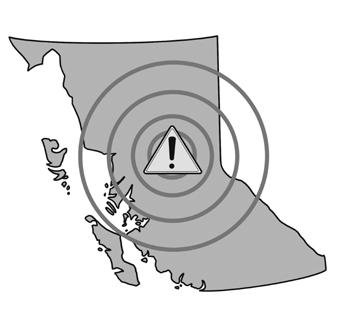
Emergency alerts issued to cellphones in B.C. function via connection to cellphone towers providing LTE service to the affected area, this means that any cellphones connected to towers in a specific region can be alerted. One important aspect to understand is that emergency alerts in B.C. can be issued only if three criteria are met: if there is a threat to human life, if the threat is immediate, and if there are recommended actions that may save lives. I believe this is not only reasonable, but very useful as well. The problem I identified, however, is that there is no distinction in the alert’s sound regardless of the type of event happening. You will hear the same alert for an early earthquake warning — where your life could be in imminent danger — as well as for an AMBER alert. In my view, this is a critical flaw.
I think notifying the entirety of the province for a child abduction using the same emergency notification system to use for an imminent public catastrophe is a massive disservice to both AMBER alerts and mass emergency life threat alerts. This happened for the AMBER alert issued at around 1:25 a.m. on May 11, 2026, let’s start by focusing on the widespread effects of using this specific alarm for a child abduction.
There’s a reflex in mammals called the startle response — it can be triggered by visual, acoustic, and tactile signals. It can increase responsiveness during fight or flight events, where one’s life may be in danger. Warning alarms are intentionally loud, intermittent, and designed to trigger a strong response. I couldn’t help but wonder what the potential danger is of having a kidnapper being startled by
such an alarm, and a subsequent fight or flight response influencing an impulsive reaction that could potentially mean more harm for the affected kids.
The purpose of AMBER alerts is to serve as an early warning system for child abduction cases, and to involve as many community members as possible to assist in the search of the missing children, and I completely agree with this. It is important to alert the community affected by the incident as quickly as possible for them to take action, but I believe there are flaws in this system. Firstly, members beyond the affected area were alerted — the abduction of May 11 took place in Terrace, B.C., about a 14 hour drive from the Mainland, where the majority of the population were likely powerless to provide any assistance for an incident that far out. Secondly, the alarm used was the same sound type as an imminent life threatening warning, which is capable of evoking very strong and prompt reactions. I was among those whose bodies reacted quicker than they could rationalize in order to turn off the startling noise quickly, only to find the notification disappeared right after.
I was only able to read it after researching for 20 minutes on how to find it. I don’t think the average person would take the time to do this, which is unfortunate because then the message is lost.
I think there needs to be a rework of the emergency broadcast system. I don’t think it is ideal to use the same sound for circumstances that demand very different reactions. Personally, I don’t think a sound designed to let me know I need to get out of my house right then and there should be the same one used to ask a community to be attentive of an abduction, let alone the entirety of the province. If the intention was to notify those who were already awake and on the streets to keep an eye out, then there should exist different alerts or sounds for every situation that adjust for the type of response that is needed from the public. I think they should be more localized to increase effectiveness and avoid public desensitization to the alarm that is designed to elicit strong, immediate responses. Allowing each alarm system to have their own identity would give both systems the distinction and respect they deserve.
How you and I can understand this summer’s
KARA DUNBAR
What they don’t tell you while applying to study abroad in England is that Football 101 will be on your class schedule, whether you sign up for it or not. In my 10 months across the pond, I made friends with enthusiasts, student coaches, and sports management students. It was unavoidable, there was no way I was walking out of the country without understanding the game.
I learned the rules of soccer in the most comically Canadian way — by comparing it to hockey. In a conversation at a pub, watching a game with strangers, and chatting with one of my flatmates we went through rules and ways of playing the game, and found the differences. This is what I credit most of my understanding of soccer to, so that’s how we’re going to review the basics today.
First, how long is the game? In hockey we have three periods of 20 minutes, we have a total of 60 minutes of play and a two and a half to three total hours dedicated to the game. In soccer, there is a total of 90 minutes of play, split into two 45 minute halves. In contrast to hockey, where the clock counts down and pauses for penalties, in soccer games, the clock counts up to 90, and even if play pauses, the clock does not pause except during halftime. This leads to the referees often adding time to the clock, with most games
in my experience, ending up being around 95-100 minutes.
Soccer always has 11 players on the field, while hockey only allows six on the ice at a time.
Substitutions also work differently. While in hockey players can return to the ice after substitution, in soccer, once you’re off, you’re off. There is no penalty box in soccer, instead there are yellow cards, brought out as a warning to players, two yellow cards gets an expulsion. Red cards on the other hand, mean immediate expulsion from the game, and the team must play one player down for the remainder of that game.
The timing and rules of the game were the most important for me to understand, and were key to being able to watch and enjoy it. Techniques and skills? Still working on understanding that.
When I informed folks at home I was studying in England, I was told to attend one game in person for the experience. That is how I found myself following one of my flatmates into a Manchester United versus Sunderland game in Old Trafford Stadium. It was worth it, tall banners all around, police on horses, near no empty seats, and no alcohol allowed in sight of the field.
During my time in England I’ve been privy to watching games in my flat, at the pub, and listening to many soccer conversations. By the time the FIFA World Cup
came around, I knew I would be following along Canada’s team. There is something about being away from home for a long time that makes one seek out those feelings of connection to home, and national sports teams provide that in droves.
So I found myself in London for the Canada versus Qatar match, and decided to meet up with a friend at The Maple Leaf Pub. The Maple Leaf is a Canadian themed pub in London, and during that game, we not only sang the anthem at the start, but also during halftime, and as the game concluded. That pub did not lose energy for any of Canada’s six goals, treating each one like the first. The energy in that comically Canadian pub was infectious, I would be willing to bet that the cheering for Canada was not louder anywhere else in the continent.
After a loss against Morocco in the Round of 16, Canada’s time in the FIFA World Cup has come to an end. The last time Canada even qualified for this tournament was in 1986, and in 2017 Canada was ranked 122nd in men’s soccer; this year we made it into the top 16. This team advanced further, much further, than the Canadian soccer team has gone before. It is a historic time for soccer in Canada, and I for one am excited to see where it goes. If there was any time to learn how soccer works, it might just be now.

The most badass rescuer I ever learned about

Illustration by Iryna Presley
The day is September 19, 1985. The ground shakes violently, buildings collapse, 10,000 lives are lost. Mexico was just hit by its historic magnitude 8.1 earthquake.
A man rushes to find his brother, knowing he was inside a building that was reduced to rubble. With his bare hands — no helmet nor equipment — he dove into the debris to attempt to free his brother, and succeeded. The rescue took hours, but he luckily found his brother alive and helped him out of the ruined building.
Others weren’t so lucky. They cried out for help desperately for their families to be rescued from the destroyed structures, Hector knew he could not simply walk away. So he stayed to help, rescuing countless others from the rubble along with other volunteers during the aftermath of the ginormous earthquake.
That was the day when the legendary “Topos Azteca” rescue brigade was born, with Héctor Méndez as their leader, now nicknamed “Topo Mayor.” Today, Méndez is assisting in the rescue efforts in Venezuela after the double earthquake hit. Still saving lives at 80 years-old, 40 years after he found and rescued his own brother from the same situation.
What a legend.
BY NATALIA TOSCANO MURÚA
ABBY HANSEN
Horror movies are taking centre stage this year, which is rather shocking considering that movie theatres are dead! At least, according to media conglomerates like Netflix’s co-CEO Ted Sarandos. When asked about the longevity of movie theatres in an interview at the 2025 TIME100 Summit, Sarandos referred to the theatrical experience as “an outmoded idea.” This is also an opinion seemingly shared by most major film studios, which are increasingly skipping theatrical releases and going straight to video-on-demand.
And yet, there seems to be a very specific genre of film that is repeatedly making major headlines — horror. I believe these films not only shatter
私はフランス語があ まり好きじゃない。
I have a promise to myself to become a polyglot at some point of my life, this is why I began learning Japanese and French a few years ago. French feels convenient because it is similar to Spanish and English, so a lot of elements bear a strong enough resemblance where one can potentially grasp French language concepts sooner if Spanish and English are already known languages. Japanese is wildly different to both Spanish and English, I had to learn new structures, words, and three different “alphabets” to understand it. And yet, I would choose to keep learning Japanese as opposed to French any day of the week.
I think a strong influence for how well you do with a new language comes from the learning journey. I’m convinced that although Japanese was more challenging, it felt good to study it. I’ve struggled to find the same likeness in French. Sometimes I feel that there’s this expectation that French should be easier for me to click with, but in reality, I’ve struggled more with it compared to the former. I just like Japanese more, I’m sorry!
Alas, my self made promise persists. I’ll learn both and become proficient with them, eventually.
BY NATALIA TOSCANO MURUA
mainstream ideas and expectations for film, but they also reveal a rising trend in the film world.
In Feb. 2026, Iron Lung (2026), which was entirely funded, created, and distributed by a single independent creator with a budget of around 4 million USD, shattered all expectations, earning just over 50 million worldwide at the box office.
Originally premiering at the Toronto International Film Festival (TIFF) in Sep. 2025, Obsession (2026) beat Disney’s Star Wars: The Mandalorian and Grogu (2026) with its May 15, 2026 theatrical release, bringing in over 300 million USD. Centred on a horror concept that originated as a 4chan post, 20-year-old Kane Parsons’ debut film Backrooms (2026) raked in 330 million USD.
Mark Fischbach’s Iron Lung, Curry Barker’s Obsession, and Kane Parsons’ Backrooms are all remarkable for several commonalities. The first is that they are all independent films directed by YouTubers.
Fischbach, better known online as “Markiplier,” has spent the last 14 years posting a variety of videos and series — one of which, In Space With Markiplier (2022), earned the creator an Emmy nomination. Parsons knows the lore of the backrooms well, having first gotten his start as “Kane Pixels,” where he posted self-animated videos set in the fictional, never-ending labyrinth. Barker’s thrilling yet tragic depiction of a woman having her autonomy stripped is a stark contrast to his YouTube channel “That’s a Bad Idea,” which features mainly crude but hilarious sketches.
This is what I think serves as a major contributing factor to these films’ success, and it’s where I can speak from experience.
I’ve managed social media accounts before. The personal nature of running an online account fosters an environment for quickly learning from the audience that I think many studios aren’t subject to. I don’t have to wait to hear feedback from viewers; I immediately see it in comment sections. And I can look at the analytics myself, which are sometimes accessible mere minutes after posting.
At times, it almost reminds me of being on a stage. Seeing people’s immediate reactions to what I create allows me to adjust in real time. It is very easy to learn what attracts viewers when you handle everything yourself. A perspective that I don’t believe can be achieved working with a large, multi-layered company that requires copious and, dare I say, detrimental amounts of bureaucracy.
Another notable element of these films is their emphasis on practical effects. In the age of CGI and AI-generated slop, these three films are a breath of fresh air. Fischbach claims that Iron Lung broke the world record for the most amount of fake blood used in a film. In an interview with Deadline in Feb. 2026, Fischbach, who had previously studied biomedical engineering, did the calculations himself and found that they used around 80,000 gallons of fake blood during production — which would dethrone Evil Dead (2013).
The endless twists and turns of Backrooms were almost entirely filmed on a set built on a Vancouver soundstage. According to an article published by Architectural Digest in early June, the production team for the movie built 30,000 square feet of hallways draped in dull-yellow wallpaper and musty old carpets — a set so extensive, it was housed across four soundstages and utilized scaffolding to
create multiple levels. Chiwetel Ejiofor, the actor who portrays Clark, even admitted in an online interview that he and other crew members often got lost on set.
The bone-chilling scene in Obsession where Nikki stands in a darkened bedroom corner, her barely visible face contorted and disturbingly uncanny, was achieved through practical effects with contour makeup. Some scenes in which her arms and legs moved in unnatural ways were simply footage played in reverse.
Dedication to the craft of filmmaking, as displayed by these three creatives, is what I believe truly speaks to audiences. The attention to detail and willingness to make their films feel as real as possible treats us, the viewers, with respect. I don’t think movie theatres are going anywhere. I think audiences were just waiting for creators to focus on filmmaking as the art form it is, rather than a means of making a profit.
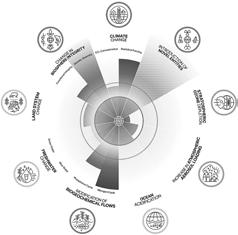
Welcome to The Environmentalist, your column for understanding the natural world. Today we will be talking about planetary limits
Almost everything in life has limits. There is a finite amount of money in a bank account. A phone battery can be fully depleted. Deadlines arrive. Our bodies burn out. But when it comes to the Earth’s forests, the oceans, freshwater, clean air, soil, and biodiversity, there seem to be no limits to what the Earth can give — or so it seems.
Planetary boundaries are thresholds within which the Earth system can still function in a relatively stable and sustainable manner. The framework of the planetary boundaries is used to monitor nine environmental systems including climate change, biodiversity loss, consumption of freshwater, land-system change, ocean acidification, nutrient pollution as well as the impact of synthetic chemicals such as plastics and man-made chemicals.
Crossing a single line does not necessarily mean that the whole world will come to an end immediately. It is similar to how ignoring warning lights on your car’s dashboard (as they start to flash) can allow you to continue driving for a while. But the longer you ignore them, the more the damage will cost you in the end, and the more dangerous it will become for you and others on the road. The 2025 Planetary Health Check shows that seven of the nine planetary boundaries have already been crossed.
The planetary limits concept highlights that climate change is only one of many environmental problems that are caused by humanity changing Earth systems in a wide variety of ways. Not only do we emit too much
carbon dioxide by abusing fossil fuels, but we also clear forests, drive species to extinction, affect freshwater systems, pollute the oceans, overuse fertilizers, and above all produce an enormous stream of synthetic materials which the Earth cannot process.
While there are many planetary limits that seem far away, their consequences for everyday life are already being felt. We can see this for example in the form of smoke from huge wildfires, extreme heat during summer months, pressure on the supply of drinking water, expensive food, microplastics present in our bodies, destroyed ecosystems, extreme weather events and in the fact that so-called normal weather is becoming abnormal. All of these problems are not isolated and are caused by systems that are being pushed to extremes.
This does not mean that all environmental responsibility falls on individual people. Planetary limits unfortunately cannot be solved only through personal lifestyle changes. The scale of the problem requires governments, corporations, cities and universities to stop treating ecological limits as optional. A society that depends on endless extraction, consumption and waste will eventually hit the boundaries of the planet that supports it.
Planetary limits are not a call to give up. They are a reminder that a good life on Earth is still possible, but only if we stop confusing excess with progress. As the Lorax once said, “Unless someone like you cares a whole awful lot, nothing is going to get better.” So, let’s care.
Canada has spoiled me for good
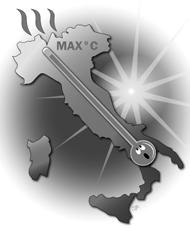
This summer, I spent half a month in Italy — which sounds dreamy until you realize I was basically a popsicle thrown into a convection oven. I kept thinking, “’tis a privilege, right? I should be enjoying this? ” But no. Absolutely not. Canada broke me. It was too hot, too crowded, too smoky (my asthmatic ass was fighting for dear life). When I got to Rome (38 degrees out), my first thought was, “is this what hell feels like? ” If you didn’t catch the news already, Europe is literally melting — streets buckling, animals burning their paws, people dropping like NPCs.
Navigating Rome and later Bari, I longed for Burnaby’s quiet. And getting home? A gauntlet: a frantic car ride, brutally delayed trains, a last-ditch cab, two planes, and my mom and sister nearly flatlining from stress.
Giovanna from Brazil — thank you for becoming my accidental travel buddy as we sprinted through transit purgatory. I will never forget you literally throwing yourself in front of that cab to make sure it’d be ours, since every train was cancelled. Icon.
As I landed in Vancouver and saw droplets of rain on the window, I almost let a few tears slip as I realized I’m home.
BY SKY S. TERRONES
Editor — Caitlyn Carr
All photos submitted by interviewees
Grad season at UFV just wrapped up and new graduates are now faced with their futures. Some have everything mapped out, but others may be left wondering what comes next — a question that many undergrads might also be asking themselves as they inch closer and closer to their degrees. That’s why, for this issue of The Cascade, we reached out to a handful of UFV alumni to hear about their experiences both during their time at UFV and after graduation. How did their experiences differ? What were their biggest challenges as students? What advice do they have for current students? Is there really any one “right” path? (Hint: the answer is no).
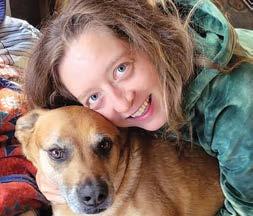
Bachelor of Arts in Global Development (2018-2022) Freelance Communications & Community Engagement Specialist
How would you describe the first three months after you graduated?
I had a bit of an existential crisis … My first job out of university paid $20 an hour, and it was a project coordinator job for a small environmental organization, and it wasn’t good at the time. I was there for a full year, and I’m still glad I did that job, because that job has opened doors to get other jobs … but $20 an hour wasn’t even living. I had to do side hustles on top of my full-time job to get by.
What does life look like for you now?
I did my masters, I got a job as a research assistant, and I’m teaching yoga, and things are good.
What would you say was your biggest struggle when you were a student?
The cost of living … I lived in my van too when I was in school, and I worked multiple jobs while in school. It would have been nice to not have to think about that so much … It was touch and go at some points.
Did you ever study abroad while at UFV?
I went on a study abroad trip to Ethiopia … Only three people applied, and so I was one of the three people that got it … There’s so many opportunities that I find that people don’t know about or don’t apply to.
If you could go back to when you were a student at UFV and do anything differently, what would it be?
I would make it more of a priority to connect with my professors. A lot of students I know got a job through a professor … I was friendly with a few teachers, but I
definitely didn’t make it a priority to reach out to teachers and try to network with them and try to make them remember me. You’re gonna need teachers to write you reference letters for a master’s degree, for a job, for a lot of different things. If you could change one thing about UFV, what would it be?
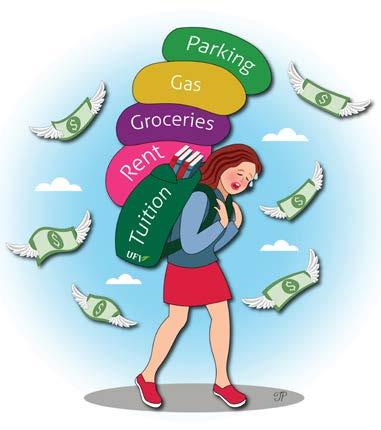
I hate paying for parking … We’re already paying so much for gas and groceries and tuition, and we’re paying this much for student fees, and all these administrators are earning six figure salaries … I [shouldn’t] have to pay for parking.
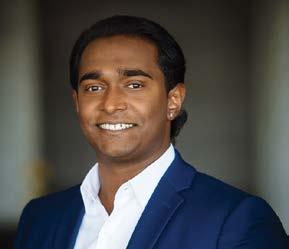
Bachelor of Kinesiology (2021-2023)
Former president of the UFV Student Union Society (SUS) Strategy Manager for Giesbrecht and Company
How has your time as a previous president of SUS impacted your life in the long term?
What’s interesting about my story is that I did my degree in kinesiology, but I ended up in government relations, and a lot of that was because of my experience as president of the Student Union, and my passion and joy that I got around making a change and making an impact.
What were those first few months like post-graduation?
It’s not so different [from] when you start university. When you come into university, there might be that aspect of fear or uncertainty with what you want to do with your life … but I think once I really embraced it and changed my attitude around it, that’s when things really started to turn around … You start to see how all your experiences from post-secondary and everything that you worked towards, how they translate into the real world and how they built you into essentially the person you want to become and the person you’re continuing to grow into.
What was your biggest struggle as a student?
Honestly, finding the balance of prioritizing studying versus going out was something that I think I struggled with.
Do you have any advice for current UFV students?
You’re in university for two degrees: the one you get inside the classroom and the one you get outside the classroom — and both of those are really important to building you into the person you want to become.
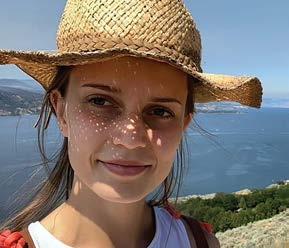
Bachelor of Arts in Creative Writing (2021-2024) Bookkeeping for Small Businesses Certificate Cashier at Art’s Nursery Garden and Home
What has life looked like for you since graduating?
I’m definitely taking a necessary brain break from studying, but I am planning to go back to UFV this August for their teachers program.
How did it feel immediately after you graduated to suddenly not be a student anymore?
It was a pretty intense finish [in] my last semester … so it was a really nice break initially, but as the months went on, I started to really miss it, especially the creative writing aspect of it and my peers, and being able to go over work together and seeing my friends every day.
What was your biggest struggle when you were a student?
I feel like I was working crazy hours [and] I was studying crazy hours, so I think burnout was a reality for me.
Do you have any advice for current students?
Try and enjoy every moment, because it goes by really quickly, and you may surprise yourself by actually missing being in school.
If you could change one thing about UFV, what would it be?
I wish the creative writing degree could have incorporated an editors component as well. Like a certificate or diploma that could have certified us in addition to our degrees. Something that could open more doors to grads as they enter the workforce.
Bachelors of Business Administration (2016-2021)
Professional Communication Essentials associate certificate Associate at Zacharias McCann LLP
What have you been up to since graduating from UFV?
Right after I finished, I wrote the LSAT [Law School Admission Test], and then I got into law school … I finished law school in April of 2025 and then May 2025 I started bardicling, and I just got called to the bar a few weeks ago.
How would you describe your overall time at UFV?
I was able to build a lot of connections … All the classes that I took in my undergrad directly helped with the kind of work I was doing in my co-ops … I [also] got to meet some cool people in my classes. I got to build good networks with my profs, and they even wrote me reference letters to get into law school.
Do you have any advice for students struggling to find balance in their lives?
I think being a planner and organizing your schedule and your exams and your tests and what needs to be done and when it needs to be done and just being super organized about that is probably the best way to go about it.
Any advice for current UFV undergraduates?
I would highly recommend doing a co-op or two and getting that experience, because there’s some really good job opportunities out there, and if you do those, that’s such a great thing to have on your resume. It gets your foot in the door, and even if you end up doing something completely different in your career, it’s transferable skills that you’re learning, and those are really easy to highlight.
“
I would highly recommend doing a co-op or two and getting that experience, because there’s some really good job opportunities out there, and if you do those, that’s such a great thing to have on your resume.

Bachelor of Science (2016-2022)
Medical Laboratory Science student at British Columbia Institute of Technology (BCIT)
How has the network you built at UFV helped you post-graduation?
That’s how I got my position out of UFV. I was doing an independent research project, one of the assistants for my biology labs was in contact with somebody who was looking for someone for this position, so because she knew me, she knew my work ethic, [and] she’d seen me doing research, I was the first thing that popped up in her head.
Any tips for building those connections?
I don’t think you have to make it so formal. If you even just go in regularly to ask questions or ask maybe for more detail about something you’re interested in [from] class during office hours, at least they know your face and you stand out from the 30 plus other students.
What would you say is the biggest difference between student life and life after graduating?
It’s the light at the end of the tunnel when you’re actually making money … compared to school, any time that you’re not working, you don’t have tests to study for, assignments, quizzes, homework, group projects … you can, guilt-free, enjoy the time that you have off work.
What have you been up to these days?
I decided to go back to school for medical lab science at BCIT … so I’ll be learning to run all the diagnostic tests that a doctor will base their diagnosis and their treatment on.
How would you describe the community at UFV when you were a student?
I think it is what you make of it … They call it a commuter campus for a good reason, but I think that if you are searching for something, a deeper connection with students or with profs, there is a lot available, but it’s not going to necessarily fall into your lap.
If you could change anything about UFV, what would it be?
Give us more summer courses … I could have taken like three classes over the summer. I would have happily done that and finished a little earlier, but they really had slim pickings for biology and chemistry, and from what I hear, that’s not uncommon to different programs.
“Some of the professors here are pillars in the community and advancing new innovation all over the place, so I think there are many ways to get engaged and work on some really unique projects in that capacity … Getting more involved at UFV and in the community around it would have been something that would have definitely been worthwhile.
TRISTAN TAYLOR
Liberal Arts Diploma (2018-2023)
Founder of Canadian & International AI Advancement Institutes
When you were a student, did you ever need to unexpectedly pivot from what you thought you would be doing?
It was maybe a few weeks out of high school, I was rear-ended and sideswiped by a three-ton transport truck … So [I] couldn’t walk properly, couldn’t talk properly. I could barely hold a conversation for more than 10 seconds within those first few months, just very dazed, disoriented, [with] significant concussive symptoms. I’d even forgotten some of my friends’ names in high school. It completely derailed the plans I had for my life at the time, which was to go to UFV, get a kin degree, and then become a physiotherapist.
Can you tell our readers how UFV supported you through that time?
They would switch the lights off in the classroom when I was attending, so we had natural light coming through the window that was more than enough to illuminate the space because of the light sensitivity that I was experiencing … It took me some time to initially come around to accessing everything that they had to offer, but as soon as I did, I was able to take my exams in a quieter place [and] I didn’t have to have the issues with the light sensitivity, because I was given a lamp, and other things that [made] it far easier.
If you could go back to when you were a UFV student and do anything differently, what would it be?
I would engage more with the community … Some of the professors here are pillars in the community and advancing new innovation all over the place, so I think there are many ways to get engaged and work on some really unique projects in that capacity … Getting more involved at UFV and in the community around it would have been something that would have definitely been worthwhile.
Bachelor of Arts in Criminal Justice (1994) Master of Arts (Criminal Justice) (2011) Abbotsford City Councilor & Senior Independent Chairperson for Federal Corrections
What drew you to Criminal Justice?
I had dreams of being a lawyer, but that didn’t come to fruition … I was raising my two children, and I was working at, it’s called Archway but it used to be [Abbotsford] Community Services, so I was getting a lot of life experiences, but … I thought, I probably need to get some kind of surety or consistency, and nothing is better than the greatest equalizer of government work, for women especially, and so I started getting involved in the probation area and I ended up being a probation officer. But I also thought to myself, this is great, and I’m going to gain a lot of experiences, but I want more.
What was your biggest struggle when you were a student?
What I really struggled with [was], what is a student? … I bought a big bag to put five binders in for five classes, because I didn’t know the etiquette … I’m also a mom, and I [was] thinking I want to be prepared. [Another struggle was] having that balance where [if] you don’t have child care that day, are you going to tell your professor, [and] are they going to understand?
Do you have any advice for current UFV students who are also parents?
Be open, be honest. I even took my child to one of my classes and the professor said, just bring them in. Unless you ask, you don’t know, and it’s not shameful or anything. Don’t be afraid … Communicate openly with those people that can make decisions so they know what’s going on too. Then they can help you.
If you could go back to when you were a UFV student and do anything differently, what would it be?
I think I would not be so afraid of the end goal. Like, when people [ask] “What are you going to do then once you finish? … When are you going to do it?” I think I would try to quiet that noise a little bit, and just say to myself, hey, one step at a time, you’re heading in the right direction. Don’t worry about what others are saying.
“ I even took my child to one of my classes and the professor said, just bring them in. Unless you ask, you don’t know, and it’s not shameful or anything. Don’t be afraid...
Sports Editor - Natalia Toscano Murua

My soul yearns to get a go at curling. It’s one of my favourite sports.
You may ask, how can it be that a sport I have never played is one of my favourites? Fair question, my answer is that I am convinced there are things in life that become our favourites for mysterious reasons. It’s a magnetic pull — it feels like it almost chooses you instead of the other way around.
Something decided that I love curling, and that’s that.
The precision it takes to bring one stone to its house, the rings that make up the “target” on the ice, aiming for the button (centre) is mesmerizing to me. The energetic sweeping and gentle screaming to instruct the team players how much love to give to the ice is both hilarious and exhilarating to me.
I am still waiting for the right opportunity to present itself, so that I may go to a live match, or even try curling myself. The day will come, I’m certain of this.
BY NATALIA TOSCANO MURUA

Ten… lift softly. Nine… adjust your stance. Eight… tilt your head until the sight clears. Seven… find your balance. Six… feel the weight in your hands. Five… relax your shoulders. Four… caress the iron lever. Three… breathe in. Two… out. One… Shoot.
People are often startled when I mention my love for shooting — unsurprising, given the steep prices here. But back in Peru, even two dollars bought hours at the range.
As a zombie-apocalypse apologist, I figured I should at least know how to handle a firearm. My sister — less into zombies but loving the sport all the same — joined every session. Maybe it’s our ADHDs, grateful for something that quiets the world.
As I play a shooting game at the Richmond Night Market, I find myself longing for my air rifle back home. I miss having my favourite sport within reach. Realizing how out of practice I am, I settle into the calm of knowing this is something I don’t need to excel at — I just miss it.
I encourage everyone to try it — not because zombies might take over one day, but because there’s a serenity that, in my experience, only a focused-leaning sport can offer.
BY SKY S. TERRONES
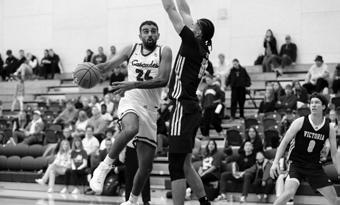
Challenging matchups in store for the Cascades’ men’s team
This upcoming season is shaping up to be a thrilling one for the UFV Cascades. After making the Canada West playoffs last year and finishing with a 14-8 overall record and 13-7 in conference play, the team returns with a mix of experienced players and talented newcomers who are ready to make an impact.
UFV returns with a strong veteran core, the Cascades also welcome a talented recruiting class. Ismael Hernandez, a 6’7” guard/forward from Spain, brings his size and versatility, averaging 12.4 points per game. Bennett O’Connor, who transferred from Skagit Valley College, averaged a team high of 15.4 points per game last season. The newcomers should make an immediate impact on the team, including transfer forward Ben Pearson arriving from MacEvan. Guard Jovin Sunner joins the Cascades adding another skilled player and backcourt option. Together the new players add size, depth and competitiveness as the team looks to build on last season
Before the regular season even begins, fans will get an early look at the team during the summer exhibition games. The Cascades will host several National Collegiate Athletic Association (NCAA) Division one opponents, including the teams of Washington State University, Idaho State University, Marquette University and the University of Oregon, while also taking on Purdue University at Capilano University. These exhibition games are a great opportunity for the players to test themselves and build chemistry before Canada West play begins.
Head Coach Joe Enevoldson returns for another season with the team looking to build on last year’s success. The coaching staff brought in talented players from across Canada, the U.S., and Europe, giving the team more depth while returning players continue to develop. The Cascades are aiming to compete with the top teams in Canada West and make a deeper playoff run.
One of the things new students coming to UFV can potentially look forward to is becoming part of the Cascades sports community. University does not mean attending classes only — it’s also about meeting new people, creating memories, and becoming part of something bigger by joining a community. For any alumni looking into sport related activities and ecosystems, supporting the men’s basketball team can be a great way of experiencing the Cascades culture. With an experienced coaching staff, a new group of players, and another competitive season ahead, the future looks bright for the UFV Cascades. For any basketball fans or simply for students looking for a fun way to get involved on campus, come out to a game this season and support the team! Upcoming Cascades matches hosted at UFV Athletic Centre include July 18 against Washington State University, July 30 against Idaho State University, Aug. 1 against Marquette University, Aug. 8 against the University of Oregon, and Sep. 3 against Portland State University. Additionally, the Cascades will be playing against Purdue University at Capilano University on July 29.
Go Cascades!
The Abbotsford community will have presence in the 2026 special summer sports event
among them, four individuals from the Abbotsford community.
From Aug. 11 to 15, Special Olympics British Columbia’s athletes will participate in the 2026 Special Olympics Canada Summer Games taking place in Medicine Hat, Alberta. The event will feature 10 different sports where athletes with disabilities will participate and chase personal bests with spirit and sportsmanship. The featured disciplines include Athletics, Basketball, Bocce, Tenpin Bowling, Golf, Powerlifting, Rhythmic Gymnastics, Soccer, Softball, and Swimming.
As stated by Special Olympics Canada Summer Games, their existence is all about honouring, respecting, celebrating, and increasing awareness of Special Olympic Athletes’ inclusion and participation in sports, all while creating community collaboration. This strongly aligns with Special Olympics British Columbia’s belief that sports open hearts and minds, as they, too, look to create inclusion and community across British Columbia.
Currently, Special Olympics Team BC 2026 is training hard and working toward competing in this year’s Canada Summer Games, going in with over 244 athletes with developmental and intellectual disabilities, along with 75 volunteer coaches and 22 mission staff. The lives of families and athletes from 42 different communities across British Columbia will be changed this summer,
In anticipation for the upcoming games, integrants from the Special Olympics Team BC shared their experience and thoughts going into the event, including the following team members from the Abbotsford community.
Ashley Rosenberger will be competing in Swimming for this event. Her athletic career in Special Olympics began when she was around 12-years-old, and she has competed in National level sports events in Bowling, Curling, and Rhythmic Gymnastics. She previously competed in Rhythmic Gymnastics for the 2025 Special Olympics BC Summer Games and took silver and gold home. Her goals and mindset going into this year’s games are to give it her best, and have fun along the way.
Daniel Boshart is a Track and Field athlete who started participating in Special Olympics in the fall of 2018. He was a part of the 2025 Special Olympics BC Summer Games, participating in 200 Metres with a gold medal, in Long Jump winning silver, and bronze in 400 Metres. He is proud of his progress and improvement over time, and loves competition, stating that he enjoys running really fast. His ambition is to become the fastest 200 Metre runner in Canada and is hoping to achieve that goal in the upcoming summer sports event.
Donna Bilous’ role is Medical Liaison Mission Staff, and she has been involved
with Special Olympics for 20 years. One of the things she is most proud about is the impact she has had on lives through Special Olympics and sports in general. The lessons she has learned along the way have helped her not only as a coach, but as a parent too. She loves how exciting the games are and always aims to make sure everyone has the most incredible and energetic experience possible. She is proud of being part of the team that will represent British Columbia, her goal remains to prepare athletes and coaches’ health and raise awareness of the challenges that sports involve.
Paige Norton is a Powerlifting athlete that first got involved with Special Olympics at the age of nine. She also takes part in other sports such as speedskating, athletics, soccer, swimming, basketball, softball, club fit, and golf. She was a part
of the 2025 Special Olympics BC Summer Games and competed in the Powerlifting discipline. The games taking place this summer in Medicine Hat will be her second National summer games event, where she took gold for her corresponding weight division. Her goals going into the summer games are to reunite with old friends and make new ones, and above all, to lift well and do her best.
For any fans looking to support the team, the 2026 Special Olympics Canada Summer Games Medicine Hat will be broadcast live by Skycron through TSN, where people can watch the live event online. The Special Olympics Team BC is also accepting donations through their official website to help cover transportation and equipment costs.

Qatar, which was ranked 56 in the world prior to their match.
Canada VS Switzerland
On June 24, Switzerland’s soccer team disrupted Canada’s vision of claiming the top spot in Group B for the FIFA World Cup 2026 with a 2-1 victory in BC Place.
Previously on the 2026 FIFA World Cup
On June 13, Switzerland faced off against Qatar, with the match ending in a 1-1 draw. Switzerland, the team housing players such as Switzerland’s Captain, Granit Xhaka, top scorer Breel Embolo, and defensive tank Manuel Akanji were unable to score more than one goal against
Subsequently, on June 18, Canada played against Qatar in a historic match which resulted in a staggering 6-0 win for the Canadians, where Jonathan David delivered a hattrick, Ismaël Koné’s leg was broken, and a post-match brawl broke out.
It was safe to say that Canadian fans believed that defeating Switzerland was a given, and they would witness the team be the leaders of Group B. Instead, the magic of football waved its fickle wand resulting in Canadian Geese losing to Swiss Cheese.
BC Place was at its max capacity, with 52,497 roaring fans. The match began with spirit and heart as the whole stadium buzzed with prideful energy. At the eight minute mark, fans paid tribute to Koné, holding out placards with his jersey number, number eight, reminding the world that though his absence was felt, his presence was still needed to fuel hope into the nation’s fire.
The first half of the match was an equal footed back and forth, as Switzerland began their attack with Embolo showcasing his skills early on, rushing towards the net, unleashing a powerful shot,
which was confidently denied by Maxime Crépeau. On the other end, Cyle Larin, Nathan Saliba, and Ali Ahmed continued their barrage of unsuccessful attempts to break Swiss goalie, Gregor Kobel.
It is important to note that alongside football, attendees were also entertained by the theatrics of men’s soccer as players from both sides, (mostly Switzerland) showcased their embellishment skills, rolling on the ground hoping to draw fruitful fouls. The match continued nonetheless as the referee clocked their acting antics. However, not every foul
was willfully ignored; Xhaka was given a yellow card for flippantly fouling Larin, while Larin also received a yellow card for delay of game.
The second half was the TSN Turning Point because 40 seconds in, the Swiss assault dismantled Canada’s fortifications. An Embolo assist, and Vargas goal bested Crepeau giving Switzerland their first lead, which was extended by Manzambi’s goal, making it 2-0 at the 57 minute mark.
At that point, the Canadian spirit was on full display as fans used their chants to pump life into team Canada’s players’ limbs, hoping to convert cheers into tangible results; and it worked! With 14 minutes remaining, Promise David took the team to the precipice of the promised land with a goal assisted by Saliba.
What followed the first Canadian goal was an onslaught of unsuccessful headers well into the six minute added time, leaving the match static at 2-1.
The match ended with huddles from both teams, with the Canadians subsequently thanking fans with applause, while Koné humbly walked across the field with his head high. The Swiss players on the other hand engaged in earned celebrations with their enthusiastic fans,
hooting, and hollering.
At the time of writing, Canada, after defeating South Africa, has lost 3-0 to Morocco, putting an end to their World Cup dreams. This was a valiant effort since it was their first time reaching this far into the FIFA World Cup. Though the journey has come to an end, it is important to applaud Canada’s effort, and record breaking performances.


RACHEL TAIT
This is Campus Fashion, your source of inspiration for seasonal trends, cool finds, and wardrobe basics to keep you looking stylish throughout the year.
Summer is here! This season is all about laid-back, relaxing outfits made from natural, breathable fibres, fun accessories, and fashionable footwear. The Cascade took a look at some of the most popular styles set for the hot season as the weather (hopefully) continues to warm up.
Beach cover-ups
What is a summer outfit without a beach cover-up?
The beauty of this style is that it comes in many shapes and forms, from an oversized T-shirt and shorts to a gauzy kimono-styled cover-up, there are plenty of choices for everyone. Try pairing an oversized, white cotton button-down shirt to a neutral coloured bikini with a straw summer hat and flip flops. For a more casual look, wear a pair of navy shorts and an oversized graphic tee over a black one piece swimsuit. Complete the look with a baseball cap and white tennis shoes.
Polka dots
Small, round, and cute, polka dots have been popping up in window shops and on the runway. A popular trend this year, you can wear a signature navy shirt dress with white polka dots, a white denim jacket, straw wedge sandals, a white tote bag, and a Panama straw hat for a day out with friends. You can also use it as an accent piece by adding a red and black polka dot scarf to a simple all black outfit.
Eyelet
An embroidered cotton material, eyelet is a summer staple that never fails. Wear a navy T-shirt with a pair of white eyelet shorts, white tennis shoes, and a navy baseball cap while running errands around town. For a more dressy look, the classic white eyelet dress and blue denim jacket look is always in style. Pair that with ballet flats or a kitten heel sandal for the full effect.
Beaded bags
One of the trending pieces of the summer, beaded bags add a fresh new look, and instantly adds a summery feel to any outfit. This summer, change up your beach look by pairing an oversized beaded handbag with your favourite swimsuit and cover up.
You can also combine a little black dress, black sandals, and a coral cardigan with a matching coloured beaded clutch purse for a nice evening out at a local restaurant.
Flip flops with toe rings
Flip flops with built in toe rings are all the rage this summer. Wear a simple black flip flop with a turquoise toe ring, a tropical print maxi dress, and a loose knitted white cropped cardigan. You can also pair brown toe-ring flip flops with cream linen shorts and a black T-shirt.
Linen
Summer is not summer without linen. From pants to shorts, T-shirts to dresses, there is a lot to choose from. On a cooler summer day, try wearing a pair of cream linen pants with a black crew neck T-shirt, a matching cream linen button-down shirt, and white sneakers. For hotter weather, pair a navy tank top with a pair of white linen shorts, a baseball cap, and sandals. For a night out, a maxi neutral or colourful linen dress looks great with a cinching belt and a fun patterned clutch purse.
There you have it, a list of some of the most sought after summer trends to date. May your summer be both fashionable and cool as you navigate the campus halls in style.

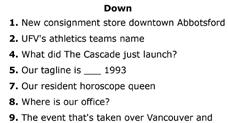

By: Lilith of Rhiannon
Aries - Mar. 21 to Apr. 19

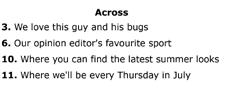

We all know you win in the end. Your in-chargeness is getting way too… in chargey. So, cool your jets. This whole act first, ask permission later thing is getting old. Stop biting the bread before it’s cut or the bread will bite you back. Ouch! It’s not even the soft kind, it’s that gross, hard, dry rye. Not a look for you, Mr. Aries.
Taurus - Apr. 20 to May 20
You know what’s annoying? Someone who thinks they can solve world hunger yet passes by the hungry everyday. Stop looking far and start narrowing in on the near. Your self-righteous, pseudo-saviour act is getting tired and no one is even following that Instagram account you started because you’re so goddamn preachy. Try saying something instead of just talking.
Gemini - May 21 to Jun. 21

I have a bias against Geminis because as a Leo, you tend to outshine me with your coolness. So even though the cards say you’re just radiating power right now and that you should hold on to it, I’m salty about those few Geminis who’ve wronged me in life. So your horoscope is text me back, dammit! I thought we were friends! (Anyone have a glass of water? My mouth is kinda dry.)
Cancer - Jun. 22 to Jul. 22

Yes! Curses! Evil intentions! Muahaha! Everyone loves a little summertime revenge! Indulge! Cast those spells to capitulate your foes! Do iiitttt! You know the rules of magic right? Nothing you put out in the world will ever come back three times over! Make! Bad! Choices!
Leo - Jul. 23 to Aug. 22
Oh me? Well, you’re perfect. Don’t ever change. We have got to hang this summer! DM me! HAGS xoxoxox.
Virgo - Aug. 23 to Sept. 22
Quit your job.
Libra - Sept. 23 to Oct. 23
You think you have no power, but just see? Look around you. According to quantum theory, we create our own reality. It’s literally that which exists within you. So when you think and feel negative energy but pretend it’s not there, it turns into some complicated quantum soup that no one wants to eat. Your need for everything to be fine is starting to turn into a dark obsession. Peace will come when you find it within, babe. Try on a little self-care for size, the toxic positivity is sickeningly tangible.
Scorpio - Oct. 24 to Nov. 21
The summer mania is hitting girl! Yesssss! Everything is a great idea right now and every impulse should be acted on right away! Literally nothing bad will happen and everything that glitters is in fact gold! Good for you!
Sagittarius - Nov. 22 to Dec. 21
You need a girls night and you need it bad. Intellectualizing everything isn’t as great an idea as you think it is because although you’re smart, you’re not that smart. There are giant gaping holes in your logic right now that look like black pits of death. I honestly don’t think they are though, I think you’re just spending too much time alone…
Capricorn - Dec. 22 to Jan. 19
So, you’re a werewolf? Honestly, it happens to the best of us. Take Oz’s advice from Buffy The Vampire Slayer and lock yourself alone in a room for one night every month. These types of changes are totally normal for a wolf, but they’re best dealt with in a dusty old crypt behind a set of rusty bars. We’ll see you on the other side. Kisses! Drinks when you’re over it, queen??


Aquarius - Jan. 20 to Feb. 18
Stop playing mother in an attempt to get other people to like you, it’s pretty cringe and weird. Plus these people you’re mothering are like, totally avoidant and don’t care about you as much as you do about them. Get the heckin heckskies outta there and mother yourself first!
Pisces - Feb. 19 to Mar. 20
Look I know you’ve been grinding your way to the end of that degree but maybe… just maybe, you’re totally miserable about it? Just a thought… cuz like, the cards told me so… but, just saying. Maybe you should book an appointment with a career counsellor, or maybe… an actual counsellor?
I think I want to go back for one of those crochet toques…
VERONICA POWELL
Another July has come, and that means it’s time for locals to enjoy Jam In Jubilee! For the 14th year in a row, hosted by Abbotsford Arts Council (AAC), CIVL Radio, and Fraser Valley Music Awards, this free concert series and market is happening every Thursday in July in Jubilee Park between 6-10 p.m. Plus, you can stop by Tipsy Barrel for the Jam After Dark series, from 10 p.m.-closing. The event is a chance to get to know Abbotsford’s artists and spend some quality time with family and friends. Vendors, live music, and food trucks? Yes please.
I attended the first day of the event on July 2 and the dismal, rainy weather wasn’t exactly the opening day I expected. However, people brought their umbrellas and rainboots determined to show up to support the community and hard work of the AAC. The Cascade had a chance to speak with the executive director of Jam In Jubilee, Meghan Dahl, and it’s safe to say the rain wasn’t dulling spirits.
“We’re excited that people have turned up despite all this weather, and we’ve got some die-hards in the audience who are obviously excited to have this. Yeah, [we’re] excited to be here.”
They’ve made some improvements for this year’s event compared to last year.
“We’ve got some brand advancing this year, so some upgraded materials, some of which will be still arriving next weekend. We’ve got a bigger, better stage this year so there’s better visibility for our guests.”
The ACC’s goal is all about creating connections and encouraging participation amongst local artists, artist lovers, and people who just enjoy creativity.
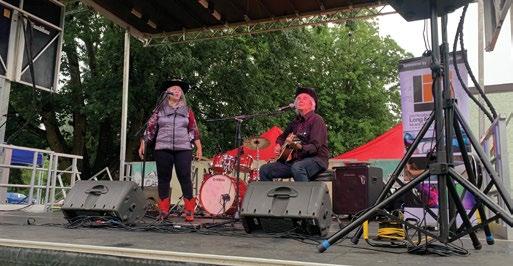
“We really love to get the community involved, both businesses and sponsors, volunteers, you know, we really love to have people come out and support the artists on stage, the artists sharing their crafts, and the artist market as well.”
J Likes 2 Crochet, a vendor run by Jaimie Baerg and her sister Eden Baerg, sell their crochet creations together, mostly cute toques. The Cascade asked Eden how they got started.
“We actually both have started crocheting in the last year, but we also love it just as a fun, creative pass time, and we ended up realizing we had so much stock so we just kinda kept making toques, [we had] too many for ourselves.”
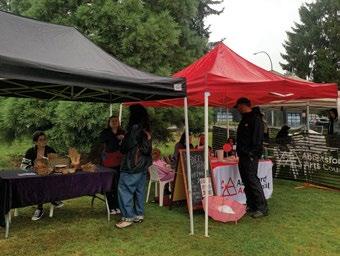
They currently use their Instagram, @ jlikes2crochet, to promote their creations but Baerg said an Etsy shop might be in the cards someday. She spoke for her sister when saying they want to constantly improve their designs and expand their selection. As for having a booth at the event, they have only a positive response.
“Yeah it’s really cool, it’s very cozy. We’ve had a few friends come visit which is fun. It’s just a lot of community and people, it’s cool to be connected in that way and the music’s great.”
Baerg said they would love to return next year.
Other vendors present at the event included Atangard, henna body art, Three
Raccoons, and of course The Cascade! The first week of performers included Soundwater, Doohickey Cubicle, Leo D.E Johnson, and Logan Farrell. As I listened to Soundwater singing Van Morrison and John Denver, I got an old-timey vibe from the openers of this week’s Jam In Jubilee. I encourage everyone to stop by and involve themselves in this community oriented event whether for half an hour or two hours. Even if you’re just there for the mini donuts.
Editorial note: The Cascade is a financial sponsor of Jam In Jubilee.
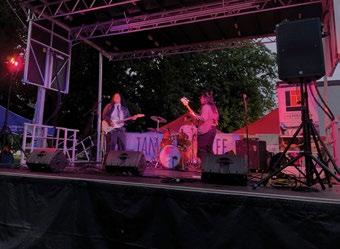
JACK KEATING
It’s the weekend after July 4, 1996, and the air is electric outside the Whitemud Cineplex Odeon in Edmonton. I’ve never witnessed such a crowd — extending far beyond the massive replica of the alien spacecraft looming over the marquee. A thin layer of trampled popcorn skins the pink-and-purple carpeting as hundreds of eager moviegoers shuffle around six-foot cardboard displays of the film’s promotional shorthand: ID4.
The advertising campaign had been relentless, and it paid off. Big time. Roland Emmerich’s sci-fi disaster juggernaut, Independence Day, broke multiple box-office records on its way to becoming the highest-grossing film in a year that included other massive hits like Scream, Mission: Impossible, and Happy Gilmore. Wait, what year are we talking about again?
Featuring an ensemble cast of stars and character actors, the film never stops moving while tagging all the bases — action, comedy, romance, drama — delivering a true four-quadrant hit.
Will Smith, ready to retire the family-friendly “Fresh Prince,” steals the show as a daredevil fighter pilot opposite Jeff Goldblum’s anxious, tech-savvy hero. Their hammy, crowd-pleasing performances fit perfectly within the tropey sci-fi spectacle — but Smith gets the iconic moment.
He brings down a spaceship, decks the alien inside, and yells “Welcome to Earth!” My favourite line, though, is the follow-up: channeling the late, great Groucho Marx, he chomps a cigar and quips, “Now that’s what I call a close encounter!” Already a household name in North America, Smith became an international superstar overnight. He headlined another sci-fi adventure, Men in Black, the very next year and then spent decades as one of the world’s most bankable movie stars.
Emmerich’s career also continued its positive trajectory. His filmography became synonymous with large-scale disaster flicks — glorified B-movies with A-movie budgets. From 1998’s Godzilla, to 2004’s The Day After Tomorrow and 2009’s 2012, through 2016’s Independence Day: Resurgence, right up to his last major release, 2022’s Moonfall, he’s directed the destruction of Earth’s most famous landmarks time and time again (taking particular exception to the United States).
Yet for all Emmerich’s landmark spectacle, one moment endures above the rest. Who could forget what is almost certainly the most repeated fictional speech in American cinema? Standing on the tarmac at Area 51, the U.S. President, played with exaggerated gravitas by Bill Pullman, notes the irony of Earth’s last stand happening on July 4 and manages a clumsy Dylan Thomas reference, earning cheers from the movie’s accumulated survivors and real-life audiences alike. Pullman’s speech lands with triumphant sincerity. As a kid, I felt that optimism deeply. The ending left my eight-year-old self with a strong
feeling of hope, a sense that we could overcome whatever the universe threw at us. This feeling would build to the end of the millennium, and if Y2K didn’t destroy the world, nothing could stop us.
Watching Independence Day now, it’s impossible to separate the imagery of the Empire State Building blasted to rubble from the real-life analogue of the September 11 attacks. I recall the common reaction to witnessing the event on television was that it looked like a movie.
In the years that followed, that shock reshaped how I understood the stories I’d grown up with. One of the after-effects of 9/11 — learning the parts of world history downplayed by American Exceptionalism — was a forced recontextualization of all the things I, as a child, believed, thanks to the blockbusters that dominated pop culture in the 80’s and 90’s. Generally, (American) heroes prevail and (alien) evildoers eventually face justice or destruction. Films like Independence Day reinforced that; it wasn’t a question of if our leaders would fight for us, but how
Unfortunately, our reality offers no such comfort. The ruling class continues to demonstrate their utter
contempt for life on Earth by hoarding wealth and wasting precious resources much to our, and our planet’s, detriment. Could anyone seriously imagine the current U.S. President giving a rousing, articulate speech about not being “consumed by our petty differences” and then bravely flying off in a fighter jet to save the world? Has that ever been the case in the last 30 years?
While promoting a less insidious form of globalization, Independence Day remains a lifelong favourite; an unforgettable, formative trip to the theatre that reminds me not to take movies too seriously. Emmerich’s modern mythos drops all pretensions, sidesteps politics, and leaves us with a hopeful message that transcends its schlocky sci-fi container: our greatest strength is our humanity.
Extraterrestrial entities can’t be the reason we collectively end oppression. We must consider our own actions, and what each of us can do to turn the tide. No one person can fight forever, and when we need a reprieve from the weight of it all, sometimes it’s just fun to watch Will Smith hit someone who actually deserves it.

Kahan’s latest release explores love, loss, and the resilience needed to keep
Apr. 24 saw the release of Noah Kahan’s fourth studio album, The Great Divide (2026), a drop fans had been eagerly waiting for. The momentum was immediate — and then, in a move that shocked everyone (myself included), he released The Great Divide: The Last Of The Bugs a mere 24 hours later. The extended version included four additional songs on top of the original 17 — “Lighthouse,” “Staying Still,” “A Few Of Your Own,” and “Orbiter” — all of which quickly gained traction on social media, garnering a very positive reception. For me, “Staying Still” became a fast favourite; something about it creates in me an overwhelming desire to sing along.
The 21-track album offers an emotional rollercoaster to listeners, each song depicting its own narrative of love and loss, and what results from fame and notoriety. The Great Divide: The Last Of The Bugs leans more heavily into folk rock than some of Kahan’s earlier work. Tracks like “Doors,” “American Cars,” and “Deny Deny Deny” carry a strong guitar presence and a powerful beat, while others — “Paid Time Off” and “Headed North” — lean into a distinctly folk sound. Yet, no matter the genre, every song delivers a catchy tune and a smooth lyricism.
The album itself elicits an ebb and flow of emotions from start to finish. The opening track, “End of August” sets
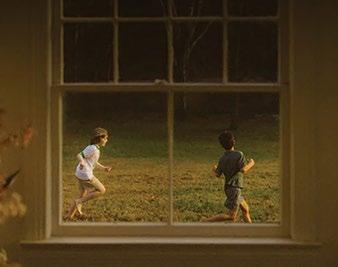
the tone: beginning as a slow and quiet melody, before building into a crescendo of instruments and passion. It grounds the audience in Kahan’s hometown of Strafford, Vermont, offering a sense of the album’s roots when the narrator says “‘Till it’s our town / And it’s ours now.” Kahan revisits Strafford through different songs, reminding the listener of the past and how the present is continually shaped by it.
“Dashboard” follows the story of someone who leaves their hometown
Image credit: official album cover
— either chasing something better, or trying to run away. However, the song makes it clear that the past cannot be outrun, and that the truths you carry don’t disappear just because you avoid them. Placed halfway through the album, it serves as a reconnection with Strafford and the initial track, deepening the narrative being built across the record.
“Dan” closes the album with a track that’s melancholic yet hopeful, following an evening spent between the narrator and his best friend Dan. The song itself
Deficit Hyperactivity Disorder) –– to thank for it.
flashing lights that matched his chaotic stage presence.
appears to mirror the album: when he says “Let’s talk about high school, talk / about death,” it encompasses a variety of the conversations had in each track — romance, friendship, mental health, and family troubles — all representing the range of the human experience. In “Dan,” the line “Most of the time, we don’t / have anyone / Where do we go, when we die / I wouldn’t mind right here / I wouldn’t mind at all” offers a quiet, hopeful conclusion. It acknowledges that bad things happen, but ultimately suggests one must find a reason to be satisfied and move forward with their life.
In my opinion, Kahan’s lyricism and vulnerability are what make this album stand out. He’s unafraid to “state a feeling like a fact,” and put his own raw experiences on paper for the world to scrutinize. While listening, I find myself connecting with each narrator, as each one paints a vivid picture of a life lived and tensions running high. Even when I don’t relate directly to the story, I feel anchored by the emotion and the message beneath it. Kahan’s album reminds people that sad things happen, but life keeps moving. “Staying Still” captures this perfectly with the line “All love, must leave, oh, but / search for it I will.”
The Great Divide: The Last Of The Bugs promotes perseverance and self-reflection, allowing those who sit with it to find pieces of themselves, recognize them, and continue moving forward.
I expected madness –– jumping, swinging, guitar-smashing, shirt-ripping. Basically the stage version of road rage. And that’s exactly what I got; a full Bailey Zimmerman special.
About a month ago now, I put on my cowboy boots and flare jeans and headed to Zimmerman’s, Different Night Same Rodeo tour at Abbotsford’s Rogers Forum, and the night was unforgettable. I’ve never seen that much energy come out of one person, and I have his passion for music –– and severe ADHD (Attention
After the tour’s openers, Canadian rising country artists Blake Whiten and Hudson Westbrook, finished their sets, the crowd was immediately pumped by a disembodied announcer who sounded like a mix of a rodeo emcee and a heavy metal vocalist. Then Zimmerman blessed the stage with a “wow” worthy entrance by popping out from a raised platform and flying to the main stage on a giant rope swing. Dripped out in his signature, pristine all-white denim, he charged into the set with sick pyrotechnics and
There were just as many moments throughout the show where he paused to thank his fans and it was genuinely cool to see how we’ve helped him reach his wildest dreams. For his OG listeners, he sang a surprising number of older, iconic tracks like “Never Comin’ Home.” Off his debut studio album Religiously (2023), I loved hearing him perform one
CONTINUED ON PAGE 22
From his Different Night Same Rodeo (2025) album, he opened the show with his banger collaboration with Luke Combs, “Backup Plan.” I branded it as one of his most meaningful songs because of the message at its core. Zimmerman has built his musical identity around a simple mantra: never give up on your dreams, never quit on what you want, and always get back up when something knocks you down or someone tells you you can’t. It may sound like cliche advice, but it’s a tried-and-true message that still matters –– and I stand by him completely. His inspiring, motivating nature is one of the biggest reasons why I love him, both as a musician and as a person.
CONTINUED FROM PAGE 21
of my favourites, “You Don’t Want That Smoke,” “Rock and a Hard Place,” and “Fall in Love.”
I truly loved his stage setup. It was super satisfying to watch how every song came with its own lighting design, and some even had smoke blasting from the stage during badass guitar solos. I became seriously nostalgic when glimmering gold waterfall sparks rained down during his cute dance breaks in the instrumentals of “Lost” in collaboration with The Kid LAROI, and “New To Country” (Taylor Swift’s music video for “Picture to Burn” comes to mind).
What had me laughing was when he
plunged himself into the crowd of obsessive fans –– including one who got a little too close and would’ve taken him down if he hadn’t kept running. Watching his security guards try to keep up with him was pure quality entertainment. I got serious goosebumps when he moved to a smaller, more intimate stage to perform “Holding On,” “Holy Smokes,” and even his own version of Miley Cyrus’s “The Climb.” His gritty voice gave the song a tone I didn’t expect to like, and you could feel every person in that arena connect in a way that felt like home.
While rocking an Abbotsford Canucks jersey, Zimmerman closed out the show with “All The Way,” his collaboration with BigXthaPlug, all while risking his
life balancing on the crowd railing. He followed it with one of his best songs “Where It Ends” –– but let’s be real, they’re all his best. Something I’ve never seen another artist do is spend as much time with fans after a show as he did, and on the actual floor rather than a private area outside the stage. He took his time signing everyone’s t-shirts, and hats, with his own shirt nowhere to be found. Classic Bailey.
Even if you’re not a country fan, I’d still recommend seeing Bailey Zimmerman live if you get the chance. He pours everything he has into a performance and leads with his heart, creating a meaningful experience that leaves you feeling fulfilled, celebrated, and
like you’ve gained another family in the process.

by
Hello, my fellow unicorns, fairies, and bears! June 1 marked the beginning of Canadian Pride Season, and thus your favourite rainbow dealer is back to report on their triple-feature queer marathon at the movies. That’s right — I spent an entire day going in and out of the theatre to colour my existence with a healthy dose of current gay content in this much-needed dreary summer.
Let’s take a moment to appreciate that there are four queer movies in theatres right now — wild to witness as a 90s kid from a highly conservative country. I still remember matinee shows at the only culture-leaning theatre two hours away from home, catching the single screening of Carol (2015) in a room quietly packed with lesbians. And the disaster that was watching Freeheld (2015), while people behind me whispered about how “disgusting” it was to see Laurel (Julianne Moore) and Stacie (Elliot Page) kiss. Joke’s on them because Elliot is actually a man.
Anyway, moment of appreciation over. Without further ado, here’s a super quick review of this sparkling marathon:
Leviticus (2026)
Let’s start with the obvious: critics love this movie, and as a huge horror fan, I had to see if the hype was real.
Leviticus follows a queer teen in a hyper-religious rural community whose relationship sparks escalating violence, paranoia, and supernatural dread — a metaphorical descent into the horrors of conversion therapy and internalized fear.
Cue an hour and a half of deep, raw depression. I felt miserable the whole
time.
Don’t get me wrong, it’s a great film. The performances are top-notch, and the technical craft is solid. It captures the terror of loving someone in a place where that love could get you killed. The metaphor of conversion therapy is sharp, and the psychological shaping of fear is painfully accurate.
The tension — the constant question of whether the protagonist is safe — feels like It Follows (2014). But this is one of those well-made films that simply isn’t for me. I left the auditorium with the same hopelessness I felt after Boys Don’t Cr y (1999). I wasn’t in the headspace to be reminded how hard it is to live in an ultra-conservative place where leaving is the only way to survive.
Some scenes had me screaming internally at the sheer stupidity of certain characters, but if you can mentally handle it, it’s a solid flick.
Blood Lines (2025)
Oh man, I really wanted to like this. On paper, it sounded perfect.
Blood Lines follows a Métis woman who returns to her hometown to reconnect with her roots, only to fall for a local girl who’s dealing with her own family history and community tensions.
I was willing to ignore the over-explained dialogue and choppy editing because the leads were genuinely good. But then the co-protagonist mentioned she was searching for her “lost family,” and my heart sank. My sister and I looked at each other and whispered, “please, no.” We knew exactly where this story was heading, and it prevented us from enjoying what was supposed to be a beautiful journey of self-discovery.
It’s hard to talk about this film without explicitly addressing where it went wrong, but suffice to say: as a queer audience member, the “twist” subplot felt unnecessary, distracting from the anti-colonial theme and dragging the story into telenovela territory. It also unintentionally fuels a long-standing historic mockery toward the queer community.
It’s an okay film, and it shines for its Métis representation, but if you’re looking for a romantic queer film, this is not it.
Based on Hayley Kiyoko’s song and directed by her as well, this film tells the story of two teenage girls navigating friendship, attraction, and messy queer first love in small-town America.
I saved it for last, sensing I’d need a pick-me-up after all the drama and tragedy. And while it’s cute and 100 per cent gay, I found myself frustrated with the
main couple. I know they’re high-schoolers and cliché drama is part of the package, but by the end, I wasn’t rooting for their relationship. There’s only so much toxicity I can handle, and without the book’s context, some choices felt hard to justify. I also wasn’t a fan of the dialogue — it felt more literary than how people actually talk. Still, with all its messiness, I reckon many baby gays will enjoy this one.
Regardless of results, I’m a sucker for queer content and have zero regrets about seeing all these films. 2SLGBTQIA+ cinema is often hit-or-miss, but the only way it grows is if we keep showing up.
Next up is Stop! That! Train! (2026) — I just couldn’t match the showtimes to squeeze in four movies in a row. Maybe next time. Okay, gays and allies, go support, reflect, and enjoy this Pride season.

KARA DUNBAR
For years now, I haven’t called Canada Day a celebration, but an observation. It has been a chance to learn more about my country — where we’ve been, where we are, and where we want to go. It is an opportunity to reflect on my place in it, and what I can contribute to the changes I want to see. For me, that observation starts with education. So this Canada Day, I’ve gathered a list of stories from Canada, especially stories about how people got here, and made a home here. These resources are just the tip of the iceberg.
A podcast about “the country you know and the stories you don’t” opens every episode of The Secret Life of Canada. This show is a treasure trove of Canadian history. Hosted by LeahSimone Bowen and Falen Johnson, it explores the strange, wonderful, and often horrible stories that shape this country. I have followed this podcast since its early seasons, and have relistened to many episodes; it always feels funny, honest, and fair. I could not choose favourites — there hasn’t been an episode I haven’t gained understanding from — but some highlights include “Where is Japantown”, “Crash Course on Canada’s First Mosque”, “The Punjabi Market”, “Crash Course on Ukrainian Canadians”, and “Canada’s historic Palestinian immigration you probably haven’t heard of”. One episode, “Crash Course on British Home Children”, even illuminated parts of my own family history I might never have dived into otherwise.
Turning to books, Hotline (2022) by Dimitri Nasrallah tells the story of a woman who fled the civil war in Lebanon
with her son in the 1980s and moves to Montreal. Though trained as a French teacher, she can’t find work in her field, and the only work she is able to get is at a call centre for a weight-loss food company. She’s good at it, and as her clients begin to trust her, she becomes privy to their many secrets. While fictional, the novel is inspired by true experiences of immigration to Canada. It is available through the FVRL system, as both a book and an audiobook on the Libby app.
From “no name” brand to the maple leaf, symbols are often the first identifying markers of a nation. If you’ve grown up in Canada, I am sure you could recognize the symbols of the CN Rail, CBC, and Roots. But how did these and many other symbols of Canada come to be?

The documentary Design Canada (2018) recounts the history of Canadian graphic design, even unpacking the messaging in our national hockey jerseys. Focussing on the 60s and 70s, a key period for the development of Canada’s national identity, Design Canada asks how national symbols shape a nation. This film sits down with the designers behind some of Canada’s most iconic imagery, and it is surprisingly touching — who knew graphic design could tug at the heartstrings. It is available for free on Kanopy with your library or student card.
In a time where Canada is reckoning with its history and identity, we cannot fix what we do not understand. If we hope to improve the country that we have inherited, we must seek knowledge. For me, Canada Day is rooted in that pursuit. These resources are only a small selection of the stories that come from Canada, and come to Canada. I’ll be looking for more this July 1, and every one after.


Welcome to The Cascade’s first ever shuffle! As Editor-in-Chief, I thought I should try and focus on something relevant to our campus or community. But then I thought: fuck it. So here’s my entirely self-indulgent playlist — full of songs I love with absolutely no relevance to anyone but me.
Souls of Mischief - “93 ‘Til Infinity”
This ‘93 banger screams summer. It’s all chillin’, good vibrations, and that distinct ‘90’s hip-hop sound I love. There’s nothing flashy about it, just some dudes hanging out — certainly something I wish I was doing instead of being someone’s said “silly bitch.”
BROCKHAMPTON - “BLEACH”
Again, a summer frickin’ banger. It’s the perfect blend of R&B, rap, and a hint of synth. This song is an instant dopamine hit from an artist I haven’t actually explored much… yet. Plus, frontman Kevin Abstract is an openly gay man who frequently raps about his sexuality, not something overly common in the hip-hop community. Neat! Happy Pride summer!
The Sundays - “Summertime”
God, how had I not listened to The Sundays before this summer? Somehow this band completely slipped under my radar. This track is an immensely upbeat satire about our relentless pursuit of love. Here’s a girl holding hands with her lover in the park (surely that’ll be me one day!?). Either way, trumpets!
Alice Phoebe Lou - “Sparkle”
I’ve never felt the same kind of magic I did in the spring of 2023. I solo-sailed to Victoria, stayed in a hostel, wandered over to the Capitol Ballroom, and stood absolutely raptured by the enchanting Lou for an evening. I refuse to explain my love for her — I’ll just leave you with these lyrics: “If you should see me / as I sparkle in the night / Don’t be a fool, it’s not for you / It is for the divine.”

01. NICKY MACKENZIE Morals
02. BREE TAYLOR Worship
03. BRETTYN ROSE
The wild West
04. GEN ERAL CHAOS Can’t Please ‘Em All
05. DANI BLACK Against My Better Judgement EP
06. SPENCER KRUG
Same Fangs
07. SONREAL
Honest Work
08. DOMINIQUE FILS-AIME
My World is the Sun
09. ANGINE DE POITRINE Vol. II
10. COOTIE CATCHER
Something we all got
11. CHARLOTTE CORNFIELD Hurts Like Hell
12. BEATRICE DEER
Inuit Legend
13. KATIE MAL

Time Heals (Most) Wounds
14. ARLO PARKS
Ambiguous Desire
15. PRAIRIE GAMBLE Prairie Gamble
16. CEC
BRIEFLY EP
17. LEEROY STAGGER Highlands Leaving
18. ASAL
Kiss The Sun
19. SORAN Daystar
20. LES LOUANGES Alouette!
Where your music taste matters by CIVL’s Music Director, Stephen Munga.

5:30 PM-7:30 PM Mill Lake Music
@Mill Lake, Abbotsford, Kariton Art Gallery Stage
7:30 PM That’s Wild Comedy Open Mic
@Abbey Road, 1851 Sumas Way, Abbotsford, BC
2:30 PM Summer Fest 2
@UFV Abbotsford Campus, Outside the SUB
6-10 PM Jam In Jubilee
@Jubilee Park, 2552 McCallum Rd, Abbotsford, BC V2S 2B9
9 AM-4 PM Stop by SUS: Friendship Bracelet
@UFV Abbotsford Campus, SUB Atrium
5:30 PM-7:30 PM Mill Lake Music
@Mill Lake, Abbotsford, Kariton Art Gallery Stage
9 AM-4 PM Stop by SUS: Friendship Bracelet
@UFV Abbotsford Campus, SUB Atrium
7:30 PM That’s Wild Comedy Open Mic
@Abbey Road, 1851 Sumas Way, Abbotsford, BC
9 AM-4 PM Stop by SUS: Friendship Bracelet
@UFV Abbotsford Campus, SUB Atrium
6:30 PM Sci-fi & Swordplay
@Jubilee Park, 2552 McCallum Rd, Abbotsford, BC V2S 2B9
6-10 PM Jam In Jubilee
@Jubilee Park, 2552 McCallum Rd, Abbotsford, BC V2S 2B9
12-5 PM Fraser Valley Pride Celebration
@Fraser River Heritage Park, 7494 Mary St, Mission, BC
3:00 PM Chilliwack Hardcore Festival
@Chill House 45910 Alexander Ave, Chilliwack, BC V2P 1L5
5:30 PM-7:30 PM Mill Lake Music
@Mill Lake, Abbotsford, Kariton Art Gallery Stage
7:30 PM That’s Wild Comedy Open Mic
@Abbey Road, 1851 Sumas Way, Abbotsford, BC
6-9 PM The Art of Papermaking
@Open Space, 33765 Essendene Ave, Abbotsford, BC
3:30-6:30 PM Blooming with Pride
@UFV Abbotsford Campus, Outside the SUB
6-10
PM Jam In Jubilee
@Jubilee Park, 2552 McCallum Rd, Abbotsford, BC V2S 2B9
6-8 PM Book Binding Workshop w/ Ember Munnin
@Open Space, 33765 Essendene Ave, Abbotsford, BC
6-10 PM Pride & Fuck Prejudice @Myth Valley Studios, 46230 Yale Rd #101, Chilliwack, BC V2P 2P3
10:30-12:30 PM SUS Public Board Meeting @S3103, Building S, Abbotsford Campus
5:30 PM-7:30 PM Mill Lake Music
@Mill Lake, Abbotsford, Kariton Art Gallery Stage
6-9 PM The Art of Papermaking
@Open Space, 33765 Essendene Ave, Abbotsford, BC
7:30 PM That’s Wild Comedy Open Mic
@Abbey Road, 1851 Sumas Way, Abbotsford, BC
6-10 PM Jam In Jubilee
@Jubilee Park, 2552 McCallum Rd, Abbotsford, BC V2S 2B9
5:00 PM Snippets @Trinity Memorial Church, 33737 George Ferguson Way, Abbotsford, BC V2S 2M4
Some of the e vents require tickets, and most are online. If something catches your eye, take to the Internet for more details, including those about any
sures for
