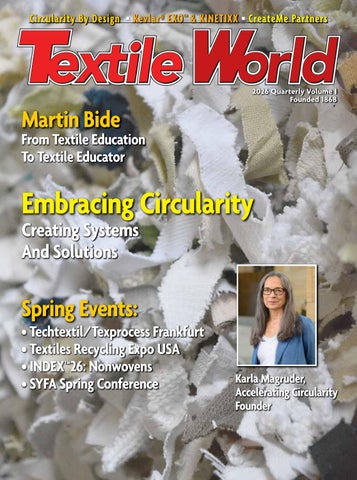
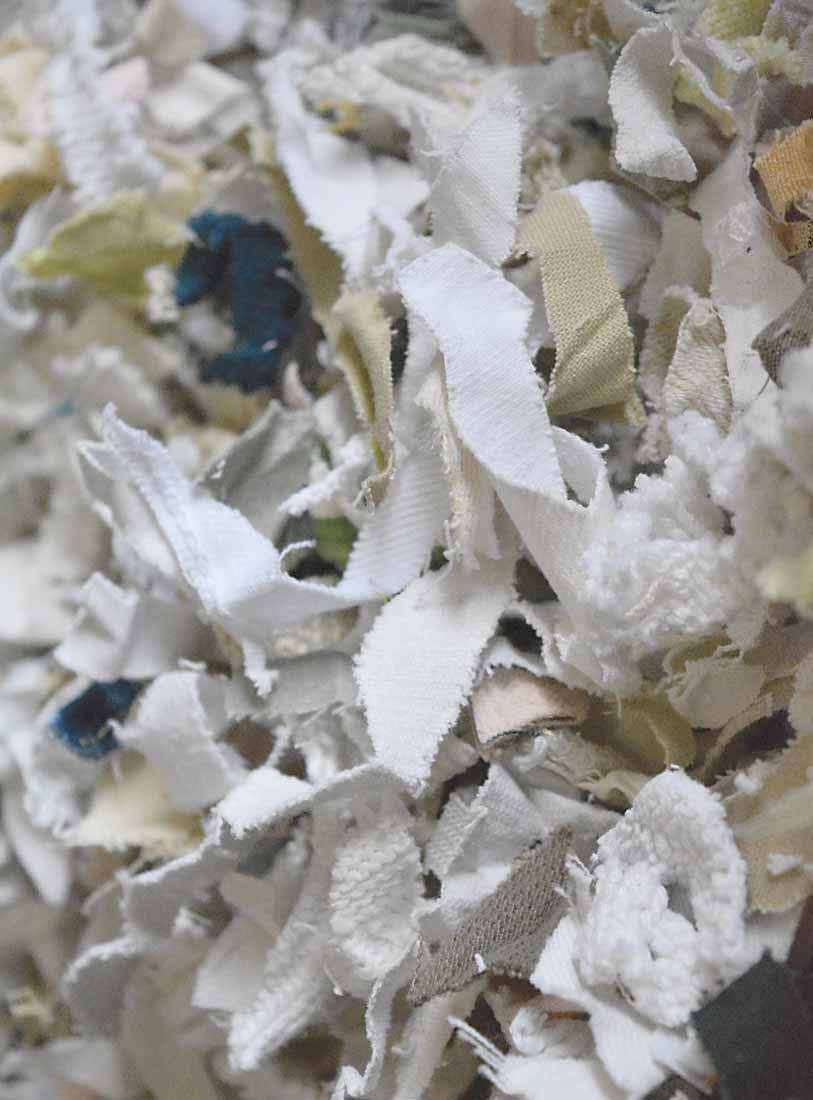
Embracing Circularity Creating Systems And Solutions
Spring Events:
• Techtextil/Texprocess Frankfurt
• Textiles Recycling Expo USA
• INDEX™26: Nonwovens
• SYFA Spring Conference
Karla Magruder, Accelerating Circularity Founder
Move into new application areas
Stäubli TF series weaving machines are the answer to the continuously expanding areas of application for technical fabrics. Selectable configuration and flexible design give mills the adaptability they need to meet individual and changing requirements.
Do you produce reinforcing fabrics for lightweight applications, heavy industrial textiles, fabrics with carbon fibres, ceramic weaves for aircraft – or something brand new? With Stäubli TF you have an extremely flexible, technologically advanced production system.
www.staubli.com
Karla Magruder, founder of Accelerating Circularity, leads efforts to build circular systems that turn used textiles into new feedstocks. An optimist with decades of industry experience, she builds coalitions that pilot scalable solutions, eliminating waste, reducing environmental impacts and promoting employment equity across
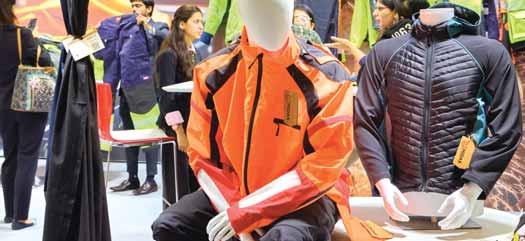
& Texprocess Frankfurt 2026 — Innovation on Display Advanced materials and sustainable technologies shape tomorrow’s textiles.
INDEX™26: A Global Nonwovens Exhibition
EDANA hosts four days focused on nonwovens manufacturing in Geneva. 11 SYFA Spring Conference — “Our Future in Every Fiber” Industry leaders gather annually to explore innovation, collaboration. 12
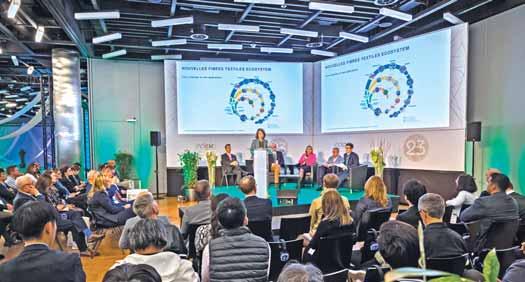
Textiles Recycling Expo USA: Maiden Voyage
Building on the success in Brussels in June 2025, the first edition of Textiles Recycling Expo USA comes to Charlotte, N.C.
A Conversation With Accelerating Circularity Founder Karla Magruder Magruder’s journey within a changing industry, where sustainability and circularity converge and negative environmental impacts are not options.
extend the performance envelope of aramid fibers with
in consumer-facing precision sporting systems.
Dyeing,Printing & Finishing
Martin Bide: Much More Than Colour Chemistry
Dr. Martin Bide shares his thoughts on a career in textiles, the changing industry, and his enthusiasm for textile education as a lifelong pursuit.
(Photo of Karla Magruder: The Cotton Board)
From Editor
The U.S.Textiles: Preserve and
Expand Berry?
TThe Berry Amendment remains the cornerstone of today’s US textile industry.Enacted in 1941 to protect manufacturing capacity — especially textiles — for military needs during World War II,it was made permanent in 1994 and codified into law in 2002.
The amendment safeguards U.S.textiles by mandating that the Department of Defense (DoD) (now Department of War) source most textiles,clothing,and materials from domestic producers — from raw fiber through finished garments.Many regard Berry as the foundation of the “Buy American”procurement policy for military outfitting.
More importantly,it incentivizes capital investment by the industry in readiness to serve the DoD as a dependable partner with the DoD offering predictable demand,allowing for capacity planning for military-focused yarn, fabric,apparel,and advanced textile solutions.
Berry has not been without opposition. Some argue that the amendment inflates procurement costs,limits competition,and guarantees demand to specific U.S.firms — effectively creating a “self-imposed blockade” on efficient sourcing from around the globe.
The National Council of Textile Organizations (NCTO) President Kim Glas notes that, “The U.S.textile industry provides $1.8 billion of high-tech and functional components for vital uniforms and equipment for our armed forces each year.The Department of War estimates that over 8,000 different textile items are purchased for use by the U.S. military — and over 30,000 line items when individual sizes are considered.”
One of the best examples of the need to protect U.S.manufacturing capacity is when the U.S.textile industry rapidly pivoted to produce Personal Protection Equipment (PPE) during COVID-19.Many say the response served as a compelling example for why
sustained support like the Berry Amendment is vital.Manufacturers quickly re-tooled their plants to supply more than $2 billion in Berrycompliant gowns,masks and gear for the DoD,HHS and FEMA,proving that domestic capacity exists but relies on steady demand to remain viable amid foreign competition.
A strong Berry Amendment drives innovation and investment in the U.S.textile industry by guaranteeing a stable market for advanced materials and cutting-edge products — in effect,incentivizing R&D knowing the DoD has a steady demand to consume high-performance military gear.
Recently,the NCTO announced the launch of the bipartisan Congressional Berry Amendment Caucus,co-chaired by Reps.Pat Harrigan (R-NC) and Don Davis (D-NC),with strong backing from NCTO and groups like the Warrior Protection and Readiness Coalition.
At the time NCTO’s Glas stated that the new bipartisan Caucus is,“aimed at strengthening national security and the U.S.defense industrial supply chain through the federal procurement of American-made missioncritical clothing,textiles and gear.”
The goals go beyond preserving Berry and include modernizing the amendment,closing the $150K small-purchase loophole and pushing for multiyear contracts to stabilize supply chains for uniforms,body armor and advanced textiles.
From WWII to COVID-19—no crisis was foreseen,yet dedicated leaders and a resilient industry proved the value of a robust U.S. textile base: ready to serve,built to endure.
James M. Borneman jborneman@TextileWorld.com
EDITOR IN CHIEF
James M. Borneman
TECHNICAL EDITORS
Dr. Lisa Parillo Chapman, Dr. Peter J. Hauser, Dr. Trevor J. Little, Dr. William Oxenham, Dr. Behnam Pourdeyhimi, Dr. Abdel-Fattah Seyam, Dr. Andre West
Marietta, Georgia 30068, USA Telephone +678-483-6102
www. T e x t i l e W o r l d .com
Stäubli To Merge U.S. Operations
Stäubli,a global supplier of industrial and mechatronic solutions,will merge its Stäubli Electrical Connectors unit in Windsor, California,and Stäubli Corporation in Duncan, South Carolina,into one legal entity named Stäubli Corporation,effective Jan. 1,2026.The consolidation streamlines processes across engineering, manufacturing,assembly, sales and service for Stäubli’s 350 North American employees.
The Windsor site will expand beyond Electrical Connectors to include Fluid Connectors,Robotics and Textile divisions,boosting West Coast service.
“Our goal is to accelerate growth and strengthen our business in North America,spanning all Stäubli divisions,”said Gerald Vogt,group CEO of Stäubli.“By bringing Electrical Connectors,Fluid Connectors,Robotics and Textile divisions together under one integrated organization,we can serve our customers more effectively and foster innovation.”
“Combining these operations under one legal entity allows us to leverage resources and expertise across divisions,”added François Masbou,managing director for North America.
Stäubli Electrical Connectors originally joined the Stäubli group through the acquisition of MultiContact in 2002 and has
since developed into a major pillar for the company.
According to the company, this merger marks a strategic step in consolidating operations under one organization in the U.S, with its main location in Duncan,South Carolina, a factory and R&D center in Windsor,California, complemented by offices in Novi,Michigan and Querétaro,Mexico.
Lenzing AG To Become Majority Owner Of TreeToTextile
Lenzing,Austria-based, The Lenzing Group is acquiring a controlling majority in Stockholmbased TreeToTextile AB, strengthening its leadership in sustainable,woodbased specialty fibers through a highly scalable, patent-protected cellulosic fiber technology platform. The transaction,executed through new share issuance,advances Lenzing’s premiumization strategy across textile and nonwoven markets.
TreeToTextile’s process offers improved sustainability,cost advantages and builds on innovations like viscose and Lenzing’s Lyocell technology.
“TreeToTextile is among the world’s most advanced next-generation fiber technologies,”said Georg Kasperkovitz,COO of Lenzing Group.“Since our initial investment in 2025,the collaboration has enabled significant technological progress.
Itema America Acquires Palmetto Loom Reed
Itema America,the U.S.subsidiary of Colzate (Bergamo), Italy-based Itema Group,has acquired Greenville,S.C.-based Palmetto Loom Reed,one of the nation’s last domestic reed manufacturers.The move expands Itema’s technical capabilities and underscores a long-term commitment to localized manufacturing support for North American textile producers.
Founded 113 years ago,Palmetto Loom Reed supplies custom weaving reeds and will continue operations with its 18-person team under President Gladys Richardson.“This is the best outcome I could imagine,”Richardson said.“Itema shares our customer-first values and respect for people.”
Itema America President Scott Malcolm called the acquisition “a strategic move toward becoming a fullservice domestic partner for the weaving industry.”
Itema Group’s Matteo Mutti added,“Producing reeds on American soil eliminates tariffs and delays — delivering faster,more responsive service to our customers.”
“At a time when others are retrenching,this investment shows confidence in U.S.manufacturing,”Malcolm said. “Itema America is stronger because we’re doing this.”
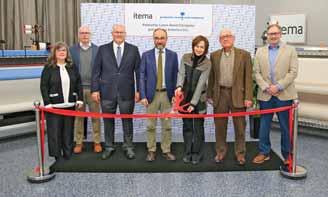
(lefto to right): Itema America CFO Stephanie Ort, Itema America Area Sales Manager Doug Merritt, Itema America President Scott Malcolm, Itema Group Chief Sales and Service Officer Matteo Mutti, Palmetto Loom Reed President and Owner Gladys Richardson, Palmetto Loom Reed Sales Manager Ron Lemonds, and Palmetto Loom Reed Business Development Phillip Gilliland cut the ribbon celebrating Itema America’s acquisition of Palmetto Loom Reed.
We are fully committed to joint scale-up and commercialization.”
“Innovation at industrial scale requires time,expertise, and strong partnerships,” said Dr.Roxana Barbieru, CEO of TreeToTextile. “Lenzing Group’s
increased ownership is a clear endorsement of our technology.”
Lenzing plans increased output at TreeToTextile’s Nymölla,Sweden, demonstration plant and preparation of a first industrial-scale facility.
(Photo: Devin Steele, eTextileCommunications.com)
Rieter Completes
Acquisition Of Barmag
Winterthur,Switzerlandbased Rieter has completed the acquisition of Barmag as of Feb.2,2026,a strategic move that makes Rieter the world’s leading system provider for natural and synthetic fibers.Barmag will be consolidated as of Feb.2 and integrated into the Rieter Group as the new Man-Made Fiber Division.
Barmag’s management will remain in place.Georg Stausberg will continue to lead the division,report to Rieter CEO Thomas Oetterli, and join the Group Executive Committee.
“Barmag’s know-how is a perfect fit for Rieter and will accelerate profitable growth as well as strengthen our market leadership in the important region of Asia,” Oetterli said.“The acquired filament know-how will help to expand our areas of expertise as a system provider and further advance automation and digitization solutions.”
The transaction is financed through a 2025 capital increase and longterm bank loans.
NONWOVENN Acquired By CorpAcq
Nonwovenn,nonwoven fabric-technology company based in Bridgwater,England, has been acquired by Altrincham-based CorpAcq,backed by TDR Capital,marking the successful exit of growth investor BGF.Founded in 2003 by Chairman David Lamb, Nonwovenn manufactures bespoke technical fabrics for niche markets,with a focus on harm reduction,including materials for protective clothing and wound treatment.
“We’re proud to have delivered such consistent growth and strong profitability over two decades,”Lamb said.“We’re excited to build on these strong foundations in our next phase of growth as part of CorpAcq.”
Nonwovenn manufactures bespoke technicalfabrics for niche markets.
“Nonwovenn has gone from strength to strength since our initial investment in 2016,”said Paul Oldham of BGF.
“Nonwovenn is an outstanding business with a leading market position and strong growth prospects,”added Stuart Kissen,head of acquisitions at CorpAcq.“We see significant opportunity in the fabric technology space.”
Huixing Machine Acquires Mayer & Cie.
Chinese textile machinery manufacturer Huixing Machine Co.,Ltd.has acquired key assets of Albstadt,Germany-based Mayer & Cie.,the German maker of circular knitting and braiding machines currently in insolvency proceedings.The deal includes Mayer & Cie.’s Albstadt property and subsidiaries in China and the Czech Republic. Huixing,based in Shishi City,plans to resume circular knitting machine production in Albstadt following regulatory approvals expected within six to eight weeks.
“With the sale of Mayer & Cie.’s circular knitting division to Huixing,we have found a prospect for the planned resumption of business,”said restructuring lawyer Martin Mucha of Grub Brugger.
Trustee Ilkin Bananyarli of PLUTA Rechtsanwalts GmbH called the outcome “a very welcome result for this long-established company.”
Volker Wintergerst of Wintergerst Societät added that persuading Huixing to invest “is a great success for all of us.”
Reju Selects Site In Rochester, New York
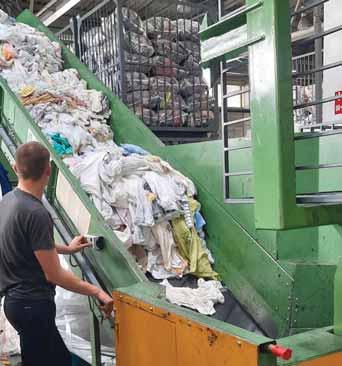
Reju,a textile-to-textile regeneration company,has selected an 18.9-acre site at Eastman Business Park in Rochester,New York,for its first U.S.industrial Regeneration Hub.The plant is designed to regenerate the equivalent of 300 million garments annually into rBHET,which will be repolymerized into Reju PET,supporting near-shoring and diversified manufacturing.The project remains subject to a final investment decision by the board of Technip Energies,Reju’s parent company.
“As our first Regeneration Hub in the United States,this site selection is a major leap forward in building a truly global circular system,”said Patrik Frisk,CEO of Reju.
“New York state is committed to creating good paying jobs,and supporting innovative projects and companies that are working to keep materials out of landfills and protecting our planet,”said Gov.Kathy Hochul.
Through partnerships with global brands,mills,and waste aggregators,Reju ensures full textile-to-textile traceability, transforming garments destined for landfills or incineration into raw material for a new,circular economy. TW
18.9-acre site in Eastman Business Park for first Reju Regeneration Hub in the U.S.
TECHTEXTIL AND TEXPROCESS 2026
technologies visibility, credibility and often the decisive impetus needed to turn research into industrial application,” Schmidt said.
This year’s themes mirror the industry’s broader transformation. Artificial intelligence and 3D design are increasingly shaping product development, supporting faster iterations, less waste and more agile production models.
Techtextil & Texprocess Frankfurt 2026 —
Innovation on Display
Innovation, advanced materials and sustainable technologies take center stage, showcasing the textiles shaping tomorrow’s industry.
TW Special Report
FFrankfurt am Main will once again become the global hub of textile innovation when Techtextil and Texprocess 2026 open their doors April 21–24 at Messe Frankfurt Fairgrounds. Organized by Messe Frankfurt GmbH, the dual trade fairs will bring together every link in the textile and apparel value chain, from fiber manufacturers and technical researchers to machinery suppliers and apparel producers.
Held concurrently, Techtextil and Texprocess have become synonymous with progress in high-performance materials, manufacturing technology and sustainable production. The 2026 editions promise a comprehensive look at how digitalization, automation and advanced materials are reshaping the industry’s future.
Reflecting A Complete Textile Value Chain
Techtextil will showcase the global scope of technical textiles and nonwovens across 12 application areas, covering the entire spectrum from research and fiber production, to coated fabrics, composites and apparel textiles. Exhibitors will span categories such as fibers and yarns, woven and knitted fabrics, nonwovens, composites, textile chemicals and performance apparel materials, complemented by
industry associations, media and consulting organizations.
Texprocess will center on technologies and services for garment and textile processing, including automation, software solutions and digital value-chain optimization, ensuring visitors can navigate from raw materials to finished products within a few exhibition halls.
“The simultaneous staging of Techtextil and Texprocess creates a unique ecosystem,” said Olaf Schmidt, vice president of textiles and textile technologies for Messe Frankfurt. “Especially in times of restrained investment, it becomes clear just how crucial innovative strength is. These fairs are where ideas are not only presented but further developed into market-ready solutions.”
Innovation Under One Roof
Innovation will take center stage at the Techtextil and Texprocess Innovation Awards, which honor pioneering developments in materials, digital processes and sustainable manufacturing. The awards embody the organizers’ vision of connecting research, technology and application — this formula has made the fairs leading launch platforms for industry-shaping ideas.
“The Innovation Awards make this strength tangible, giving new
Walter Wählt, chairman of the Texprocess Innovation Award and senior director of advanced creation at adidas, underscored the convergence of digital tools and human expertise. “3D design, virtual prototyping and AI drastically shorten development cycles and reduce material use,” he said. “Yet despite all the technological momentum, people remain decisive — creativity, experience and judgment cannot be automated.”
From Lab To Marketplace
At Techtextil, exhibitors will demonstrate how technical textiles now permeate every sector, organized into 12 application areas — from Agrotech for agricultural fabrics to Mobiltech for automotive and aerospace textiles, Medtech for healthcare, and Sporttech for sportswear and outdoor equipment. This cross-disciplinary format is designed to encourage collaboration: where “car manufacturers meet fashion designers and medical engineers meet industry specialists,” as Messe Frankfurt describes.
The fair’s visual navigation system will again feature easily recognizable icons on exhibitor stands, helping visitors connect quickly with materials and solutions relevant to their production needs.
Among the key themes, sustainability remains a competitive necessity rather than a niche pursuit. António Braz Costa, chairman of the Techtextil Innovation Award and general manager for CITEVE, emphasized the link between scientific research and industrial scale-up. “Sustainability, particularly when applied to highperformance materials and products, only becomes economically viable
(Photo: Jean-Luc Valentin / Messe Frankfurt)
through a virtuous tandem of research and innovation,” he said. “Recycling technologies, circular solutions or entirely new materials are meaningless if they remain confined to the lab. What matters is their translation into real industrial processes.”
That translation happens most visibly at events like Techtextil and Texprocess, where the interaction between R&D centers, brand engineers and equipment suppliers can accelerate pilot projects into scalable production.
Industry Dialogue In A Time Of Transition
While economic uncertainty and geopolitical tensions continue to challenge global supply chains, many experts view innovation as the sector’s most reliable growth engine. In a recent press discussion announcing the 2026 fairs, speakers from technology providers and brand manufacturers echoed this sentiment, pointing to innovation as a stabilizing force during market volatility.
“Today, innovation serves both as a lever for efficiency and a driver of growth,” noted Elgar Straub, managing director of VDMA Textile Care, Fabric and Leather Technologies. “Digitalization, automation and AI enable companies to conserve resources, produce flexibly and reposition themselves more effectively and competitively.”
Such perspectives resonate with an industry in transition. Beyond automation and AI, sustainability and circularity are bringing researchdriven startups, fiber laboratories and system integrators into closer dialogue with multinational manufacturers. That convergence, Messe Frankfurt representatives say, is exactly what defines Techtextil and Texprocess: a live environment for the cross-pollination of ideas.
Innovation As A Strategic Imperative
The 2026 editions will again illustrate how innovation — from smart textiles and bio-based fibers to limitpushing processing technologies —
The Scope of Technical Textiles — 12 Application Areas
Techtextil organizes its exhibits into 12 clearly defined application areas that illustrate the remarkable range of modern technical textiles and nonwovens. Each category is marked by an icon displayed on exhibitor booths, helping visitors identify relevant suppliers efficiently:
Agrotech: Textiles for horticulture, landscape and agriculture, including crop protection, shade structures;
Buildtech: Membrane and structural textiles for construction, civil engineering, and infrastructure projects;
Clothtech: Functional components for clothing, footwear and accessories;
Geotech: Technical fabrics used in erosion control, roadworks, and dam or landfill construction;
Hometech: Materials for interior furnishings, upholstery, carpets and flooring;
Indutech: Industrial textiles supporting filtration, mechanical and electrical applications;
is not merely a marketing theme but a strategic imperative for survival in a rapidly evolving global economy.
Each biennial event historically draws thousands of visitors from more than 100 countries. While exhibitor numbers will be confirmed later this spring, organizers expect strong international participation, reflecting the continuing demand for efficiency, sustainability and technical performance.
“Research, development and scalable implementation thrive best when the entire value chain is pre-
Medtech : Nonwovens and fabrics for hygiene and medical uses, from dressings to implantable materials;
Mobiltech : Textiles engineered for cars, aircraft, rail, marine and aerospace industries;
Oekotech : Environmental protection, recycling solutions, including filtration and waste management fabrics;
Packtech : Technical materials for flexible packaging, containers and protective coverings;
Protech : Personal and property protection textiles, from safety apparel to defense applications; and
Sporttech : Performance materials for sportswear, footwear, and outdoor and recreational gear.
Together, these categories show how far technical textiles reach — from agriculture to aerospace — and why Techtextil remains a key meeting place for cross-sector collaboration.
sent,” Schmidt added. “That’s why Techtextil and Texprocess happen side-by-side — this is how ideas turn into results.”
As April approaches, the textile world will once again look to Frankfurt for insight into what’s next. Whether through automation breakthroughs, fiber innovation or sustainable design systems, Techtextil and Texprocess 2026 will provide a concentrated look at the future of global textile manufacturing — where technology, creativity and collaboration converge. TW
April 21-23: 9:00a.m. — 6:00 p.m. April 24: 9:00a.m. — 4:00 p.m.
Messe Frankfurt Fairgrounds
Ludwig-Erhard-Angle 1
60327 Frankfurt am Main, Germany messefrankfurt.com
Seminar Program
INDEX™26: A Global
INDEX™26: A Global Nonwovens Exhibition
EDANA hosts four days focused on nonwovens manufacturing and technology in Geneva.
TW Special Report
INDEX™26, a global nonwovens exhibition, will take place May 19–22, 2026, at Palexpo in Geneva.
Organized by Palexpo on behalf of EDANA, the international association for the nonwovens and related industries, the event is designed as a comprehensive meeting place for the global nonwovens value chain — from raw materials through machinery, production and converting to end-use applications in multiple sectors.
Dufresne, director of INDEX™. “Today, it is no longer just about mass-produced disposable items, but about high-tech, durable and sustainable solutions to the most complex challenges of our time.” Dufresne described “a fundamental change in which reducing the carbon footprint per kilogram of nonwoven fabric is becoming the most important performance indicator for the entire value chain,” and said
"Innovation in the nonwovens industry today is powered by global collaboration rather than isolated breakthroughs."
— Murat Dogru, general manager of EDANA
On Display
Around 600 exhibitors from 40 countries are expected, alongside senior decision-makers from industries including filtration, transport, medicine, geotextiles, packaging, construction, cleaning and hygiene. The show positions itself as a central platform for assessing how nonwoven materials and processes are evolving, particularly as demand grows for lightweight, high-performance and more sustainable solutions.
“INDEX™26 showcases an industry that is resilient and determined to diversify,” said Magali Fakhry
INDEX™26 is where that shift becomes visible.
The event layout is intended to facilitate cross-sector exchanges as much as product sourcing. Exhibitors span the full process chain — raw material suppliers, machinery and equipment manufacturers, nonwoven producers, component suppliers and converters — allowing visitors to follow developments from polymer to finished article within a single venue. Free workshops, seminars and tutorials will run alongside the exhibition, offering structured opportunities for learning and discussion in smaller, more focused formats.
A key feature of INDEX™26 is its seminar program, which organizers describe as a strategic counterpart to the exhibition floor. Sessions are structured around three pillars: strategic market intelligence, sustainability and regulatory resilience, and innovation in specialized sectors such as filtration, geosynthetics and mobility. Drawing on EDANA’s industry data, the market intelligence track will examine how demand is shifting across end uses such as hygiene, wipes, construction and filtration, and how sustainability has moved from trend to baseline expectation.
The sustainability and regulation sessions will address topics such as carbon footprint reduction, resource efficiency and end-of-life options, as well as the implications of emerging environmental and product-safety standards for global supply chains. Innovation-focused sessions will look at how nonwovens support infrastructure projects and new mobility concepts, including lightweighting and acoustic management for electric and autonomous vehicles.
Collaboration Is Key
“INDEX™26 is far more than a showcase for individual products. It stands as clear evidence that innovation in the nonwovens industry today is powered by global collaboration rather than isolated breakthroughs,” said Murat Dogru, general manager of EDANA. “At a time when parts of the world are turning inward, INDEX™26 demonstrates the strength of an industry built on open exchange and interconnected value chains.” TW
May 19-21: 9:00 a.m. — 6:00 p.m.
May 22: 9:00 a.m. — 4:00 p.m. Palexpo
Route Fancois Peyrot 30 1218 Le Grand Saconnex, Geneva
Tickets &Questions: indexnonwovens.com
+41 22 761 11 11, index@palexpo.ch
SYFA SPRING CONFERENCE
SYFA’s Spring Conference attracts speakers from across the industry, preceded with the fourth SYFA Golf Tournament.
SYFA Spring Conference — The Fabric Frontier:
SYFA Spring Conference — The Fabric Frontier:
“Our Future in Every Fiber”
Industry leaders gather at SYFA’s 2026 Spring Conference to explore innovation, collaboration, shaping the future of textiles.
Special Report
ship at Gaston College’s Textile Technology Center, which trains students for technical careers in textile manufacturing. The Captain’s Choice format tournament offers prizes for longest drives, closest to the pin, and top overall team score — combining camaraderie with philanthropy.
TThe Synthetic Yarn and Fabric Association (SYFA) will host its Annual Spring Conference April 1-2, 2026, at the Sheraton Charlotte Airport Hotel, bringing together leaders from across the textile supply chain for two days of insight, connection, and innovation. Themed “The Fabric Frontier: ‘Our Future in Every Fiber,’” the event continues SYFA’s tradition of uniting fiber producers, yarn manufacturers, and fabric innovators to address both technical progress and market dynamics.
Each year, the SYFA Spring Conference attracts decision-makers and technical experts seeking to understand the intersection of material science, business strategy and global trade. The 2026 program includes speakers from across the industry, such as Mike Hall of Drake Extrusion, Shannan Billings of S&P Global, Marianne Nardella of Nilit, and Mevlut Tascan of Syre, with presentations handpicked to address the most pressing issues facing textile companies today.
Sessions will focus on technologydriven manufacturing methods, product advancement, trade conditions, compliance, logistics and marketing trends. With a balance between economic awareness and innovation, the agenda aims to provide actionable insight for executives navigating shifts in supply chain
structure, consumer demand and sustainability.
“The SYFA is a reminder that the industry is bigger than one person, program, or company,” said Meredith Boyd, EVP, Chief Product Officer, UNIFI®, and SYFA President. “It’s a network of capability and every conference puts that on display both in the content of the speakers and the quality of the networking. Attending is an opportunity to collaborate, seek input for challenges, and often find solutions through the capability in the room.”
Boyd emphasized that the conference benefits professionals from all sectors and experience levels within the textile ecosystem. “Content and conversation will draw those of all backgrounds and experiences,” she said. “Material developers, marketers, executives, entrepreneurs, start-up founders, and many more all benefit, and are meaningful contributors. Those just entering the industry gain from the wealth of knowledge, connections, and learning, while those who are more tenured bring experience and wisdom.”
Supporting Workforce Development
The conference is preceded by the SYFA Annual Spring Golf Tournament, to be held March 31 at the Rocky River Golf Club in Concord, North Carolina. The event supports the SYFA Scholar-
“Four years ago, we introduced the annual golf tournament to benefit a scholarship at the Textile Technology Center at Gaston College,” Boyd said. “The membership and SYFA leadership had long looked for a way to benefit the industry, and the textile technology programs at Gaston College align perfectly with that goal.”
Continuing the Mission
Now in her leadership role as SYFA President, Boyd said she sees the association as a vital connection point for an evolving industry. “It has been an honor to serve as president of the SYFA board,” she said. “I am looking forward to continuing to support the organization and finding ways that SYFA can benefit both its membership and the industry through education, thought leadership and collaboration.”
With its blend of timely content, peer connection and purpose-driven programming, the SYFA Spring Conference offers a rare opportunity for textile professionals to engage with the industry’s future — one fiber at a time. TW
Golf Tournament, March 31, check in 10:00 a.m., play starts 11:00 a.m.
Spring Conference: April 1: 11:30 a.m. — 7:00 p.m. April 2: 7:30 a.m. — 12:00 p.m.
Sheraton Charlotte Airport Hotel 3315 Scott Futrell Dr., Charlotte, NC28208
Building on the success in Brussels in June 2025, the first edition of Textiles Recycling Expo USA comes to Charlotte, N.C. with the wind at its back.
TW Special Report
Textiles Recycling Expo USA: Maiden Voyage
CCharlotte, N.C., will host the first Textiles Recycling Expo USA, described by organizer Applied Market Information Ltd. (AMI) as “the first dedicated exhibition and conference for textile recycling in North America.”
Wyomissing, Pa.-based AMI will hold the event April 29–30, 2026, at the Charlotte Convention Center. Admission is free.
New U.S. Event Based On Prior Success
AMI launched the Textiles Recycling Expo in Brussels, Belgium, in 2025 as its first event focused on textile waste, building on its long experience in plastics recycling. The
Brussels edition provided a dedicated forum for stakeholders to examine textile recycling and circularity across the supply chain.
According to AMI, the strong response in Europe made expansion into North America a logical next step, supporting its goal of developing a global platform to advance textile recycling as a scalable and normalized practice.
Fertile Ground
The U.S. textile and apparel sectors — as well as consumers — are ready for an event focused on textile circularity. AMI describes the expo as “a dedicated platform for the region’s industry leaders to connect, collabo-
rate, and accelerate progress toward a more circular textile economy.”
Early Supporters
“We are very excited to bring the Textiles Recycling Expo to the USA,” said Zied Chetoui, event manager for the show. “Conversations with American attendees at our European launch made it clear there’s a real need for a meeting place for the North American textiles recycling community.”
Founding partners include the Secondary Materials and Recycled Textile (SMART) Association and American Circular Textiles™ (AMICIRC). Rachel Kibbe, AMICIRC founder and CEO, said the partnership “under-
scores the importance of alignment among recyclers, manufacturers, brands, and policymakers to scale textile circularity nationwide.”
Structural Partner Accelerating Circularity and Event Impact Partner Goodwill® have also joined, along with sponsors including Trützschler, Reju, and the American Association of Textile Chemists and Colorists (AATCC).
“We’re looking forward to building on the momentum that began in Brussels,” said Karla Magruder, founder of Accelerating Circularity.
Expo And Conference Highlights
Booth 600 will host the Textile Innovation Engine Showcase, featuring the National Science Foundation (NSF)-funded Textile Innovation Engine. Based in North Carolina, the initiative connects NC State University, Material Return, the Manufacturing Solutions Center, the Gaston Fiber Innovation Center and Goodwill Industries of Northwest North Carolina. Its aim is to align regional innovation efforts and accelerate the development of scalable circular textile solutions.
Enthusiastic Expectations
The Brussels debut in June 2025 featured 126 exhibitors and drew 3,336 visitors from 67 countries, making it the largest meeting to date focused on textile recycling. Twelve percent of attendees traveled from Africa, Asia, and the Americas.
Whether Charlotte will achieve similar results remains to be seen — but organizers are optimistic that momentum is on their side. TW
Textiles Recycling Expo USA Speakers
Sarah Coulter Americas Program Director Accelerating Circularity
Camille Tagle Co-Founder FABSCRAP
David Eagles Executive VP &COO Goodwill Industries International
Raymond Randall Sr. Manager of Textile Recycling WM
Barbara Maida-Stolle President & CEO Goodwill Industries of Northwest NC
Jimmy Summers VP of Environment, Health & Safety, and Chief Sustainability Officer Elevate Textiles
April 29-30, 2026 9:00a.m. — 5:00 p.m. Charlotte Convention Center 501 S. College St., Charlotte, N.C. 28202
for Free Tickets events.amiplastics.com/ textiles-recycling-expo-usa
Morgan Ginn Footwear Circularity Program Manager The Footwear Collective
Sheng Lu Professor &Director of Graduate Studies in the Department of Fashion & Apparel Studies University of Delaware
Jené D’Ambrosio President & Co-Owner D’Ambrosio Trading
Paschalis Alexandridis Distinguished Professor University at Buffalo, The State University of New York (SUNY)
Joanne Brasch Director of Advocacy California Product Stewardship Council Heath Nettles Deputy Director National Stewardship Action Council (NSAC) Tony Rossi Chief Sales Officer TerraCycle Mattias Wallander
Amelia Eleiter Co-Founder & CEO Debrand
Piers Fairclough Director of Busness The Salvation Armuy Terri Riedle Head of Partnerships, North America Samsara Eco
(information accurate as of TW ’s press time)
ExecutiveForum
A Conversation With Accelerating Circularity Founder Karla Magruder
Accelerating Circularity has its origins with Karla Magruder’s personal journey in an industry embracing change, where sustainability and circularity converge, and where waste and negative environmental impacts are not options.
By James M. Borneman, Editor In Chief
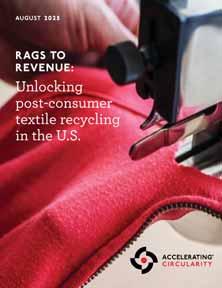
KKarla Magruder is the founder of Accelerating Circularity,a nonprofit working to make textile-to-textile recycling a practical reality for the industry.With more than 30 years in textiles,she has held roles across the supply chain, including key positions with Burlington Performance Fabrics and Ingeo. Along the way,she built a reputation for connecting the dots between fiber makers,mills and brands to scale lower-impact materials and recycled polyester.That real-world textile experience inspired her to start Accelerating Circularity,bringing together a coalition of well-known companies and brands to turn used textiles into valuable new feedstocks.Recently,the organization published “Rags to Revenue: Unlocking post-consumer
textile recycling in the US,”delving deeper into the business case and challenges to commercialization.Today,Magruder draws on her deep industry relationships and technical know-how to help partners move from talk to action,piloting systems and solutions that show how circularity can work in day-to-day business.
And most importantly, Magruder is,in her words, focused on“making the transition to new business models that are totally different than today’s.
Models where waste and negative environmental impacts are not options and there’s safety and equity in the employment sector.”
And — she’s an optimist.
T e x t i l e W o r l d : When did you become interested in textiles and what was your early career like?
Karla Magruder: I have always been interested in textiles.I started sewing young and went to The Fashion Institute of Technology in New York because of my love of textiles.My career was always working with textiles,from men’s silk tie fabrics in one of my first jobs to traveling around the world researching fabrics in my 20s. My career has been spent developing and marketing new materials,focusing on more sustainable options.
TW : One of your early roles in the industry in the 1990s was with Burlington Performance Fabrics.How did that experience impact your understanding of supply chains,technical aspects of textiles and textile trends?
Magruder : Burlington was great for building an understanding of how textile manufacturing
works as well as learning about the needs of brands. How they ordered fabrics, timing,quality….etc.
Importantly,the need for flexibility and staying up to date on market needs was key.At the time, Burlington was based 100% in the USA,we shipped a lot of material overseas where the manufacturing was done.It became obvious that we had to make changes to adjust to the market if we wanted to continue to do business.
Driving Toward Sustainability
TW : Later you became involved with the bio-based fiber Ingeo?
Magruder :I had been working in Italy and saw that they were much further ahead in sustainability.When I came back to the USA, I intentionally wanted to work on textiles that had a positive environmental
Karla Magruder
(Photo: The Cotton Board)
impact versus business as usual.Burlington was compliant and very careful about their impacts,but I wanted to do more.
TW : What was it like embracing sustainability, renewable resources,and scaling an innovation into a sustainable commercial fiber product?
Magruder : There were a lot of things to learn and to teach.At the time, we spent a lot of time explaining to people the meaning of sustainability. Definitions still are very important.
On the flip side,getting the industry to transition to a new fiber was a huge undertaking: from feedstock to chip,dyeability, spinning,knitting,and weaving,all were opportunities to try to fit something new into existing systems. These challenges are true today for new fibers.
TW : How did this effect your understanding of renewable/sustainable textiles and did it bring you to circularity?
Magruder : It allowed me to understand how to develop the path to get sustainable materials into the market.
The path to circularity was not exactly straight forward.It was a matter of things coming together for me.
Circularity as a concept wasn’t in use while I worked for Ingeo.After,
when people were using the word,it seemed to me that most people didn’t understand what it really meant.
So,back to the need for agreed upon definitions. I really felt that people needed to understand what circularity was ... it is not recycled.Many people were equating the two,which was not true.
You may have a recycled product but that doesn’t
make it circular.If that were the case,we would have more circular fabrics in the market today.
TW : With your involvement in Textile Exchange (TE),what brought about the Recycled Polyester (rPET) Working Group?
Magruder : I started the Recycled Poly working group at TE.At the time
they had an organic cotton working group. I felt that the industry needed to understand and develop recycled polyester.
At the time,recycled polyester was new,there were quality issues and capabilities issues.For instance,color consistency was an issue.
Many of those issues have been solved.
According to Magruder, circularity isn’t something that can be done in pieces. Everything has to function at the same time. You can’t commercialize one step and have the system work.
Establishing Accelerating Circularity
TW : Was there a formative moment that brought you to establishing Accelerating Circularity?
Magruder : I was at the Outdoor Retailer tradeshow,in the midst of a lot of industry people. I was talking about the need for the industry to get together and define circularity ....that was basically the start.
TW : What was the initial Mission of Accelerating Circularity?
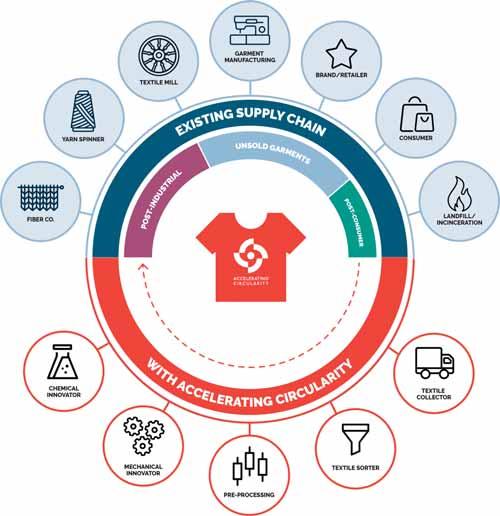
Magruder : Our mission hasn’t changed; over time we have clarified a word or two but not the foundation,which is to build circular systems to turn used textiles into new raw materials.
TW : How were the early days of Accelerating Circularity?
“It’s all about systems. Without the entire system, circularity is not going to work. Over time, as we’ve learned all the actors necessary to build the system, we’ve asked them to join the work.
Our work is about building connections and taking action to make the circular transition possible.” —
Karla Magruder
Magruder : Busy,we had to set both expectations and goals for the work with a wide variety of stakeholders.
TW : Who were the first to support the mission?
Magruder : We gathered major brands,like Target,Nike,VF Corp in the U.S.; and Inditex, Zalando and Amazon in the EU.And large fiber producers working on recycled fibers joined us including Unifi,Milliken and Lenzing.
TW : What was the momentum path — key date,events,milestones?
Magruder : Our 501(c)3 status was granted in December 2019.
While that was a major milestone,there were earlier meetings where we gained alignment with our founding members to move forward in our mission and incorporate.
After that,it was a matter of bringing on additional participants for trials in both the U.S.and EU.
We had the opportunity to share our message at industry events including GreenBiz,Textile Exchange, Dornbirn,Sourcing Journal and many others. Having completed trials in the U.S.and EU,showing that textile-to-textile products from postconsumer materials was possible at commercial scale, was a highlight.Seeing products at retail at Target and Walmart through Wrangler was a big deal.
TW : It appears from the outside that you’ve built a coalition,what is your approach to establishing partnerships?
According to Accelerating Circularity, the three key barriers to scaling textile-to-textile recycling in the U.S. are: Usable recycling feedstock is lost in every step of the value chain; Post-consumer textile-to-textile processes are expensive and largely unprofitable; and Demand for recycled fibers is low.
Magruder : It’s all about systems.Without the entire system, circularity is not going to work.Over time,as we’ve learned all the actors necessary to build the system,we’ve asked them to join the work.
Our work is about building connections and taking action to make the circular transition possible.
TW : How do you balance the variety of partners needs and goals?
Magruder : When you put the entire system together,and the actors in a room,they learn from one another,and understand each other’s needs.The conversation turns to what will work versus what one specific node needs.It starts to function as a system.
TW : Most recently, Accelerating Circularity published“Toward Circular Systems for Trims and Ignored Materials (CSTIM)”— how would you describe CSTIM?
Magruder : All the work that Accelerating Circularity does is in service to developing a functioning system. “Rags to Revenue”and “Toward Circular Systems for Trim and Ignored Materials”were developed to identify roadblocks and gaps in circular systems.
By understanding these gaps,they can be addressed by putting
systems in place to address them.
TW : Why is CSTIM important and where does it take the process of Accelerating Circularity?
Magruder : CSTIM is a working group — a cross-sector working group — addressing the complex role trims play in sorting,deconstruction, and preprocessing, while shaping circular infrastructure and product design guidance for the industry.
I call trims the“bad boys”of circularity. They cause a lot of the problems.
A New Model
TW : What are the challenges of broad adoption — hurdles to cross in the future?
Magruder : Thinking and working in systems. Doing everything all at once.
Circularity isn’t something that can be done in pieces.Everything has to function at the same time. You can’t commercialize one step and have the system work.
Each node in the circular system must function for it to work and scale.
TW : As Founder of Accelerating Circularity, when will you know the group’s goals have taken root and what is a sign that the mission is accomplished?
Magruder : Our vision is a world in which textiles are no longer wasted.The ultimate sign would be to see functioning systems for all materials at what we now think of as their end of life.
TW : What question hasn’t been asked? Please ask and answer.
Magruder : The most important and hardest question to answer is, “How do we make a transition to a textile
industry that accounts for environmental and social impacts while creating financially robust businesses?”
The answer lies in our ability to make a transition to new business models that are totally different than today’s.
Business models where waste and negative environmental impacts are not options and there’s safety and equity in the employment sector.
I’m an optimist. TW
Accelerating Circularity partnered with Wrangler, proving that making textile-to-textile products from post-consumer materials at commercial scale for retail is possible
Nonwovens / TechnicalTextiles
Atomic-6 Space Armor® To Fly Aboard SpaceX
Marietta, Ga.-based Atomic-6 announced that Portal Space Systems has selected its Space Armor ® tiles as the primary Micrometeoroid and Orbital Debris (MMOD) protection system for an upcoming spacecraft launching on SpaceX’s Transporter 18 Rideshare mission in October 2026.
The mission marks the first operational orbital deployment of Space Armor ® , validating its use in commercial and national security applications. “Portal is pushing the boundaries of what’s possible in orbit, and they need protection that keeps up with their ambitions,” said Trevor Smith, CEO of Atomic-6.
“Our customers rely on Portal spacecraft to remain maneuverable over extended timelines,” added Jeff Thornburg, CEO of Portal Space Systems. “Incorporating Atomic-6’s Space Armor ®
Atomic-6 shot a 3mm particle into its Space Armor® tile to simulate untrackable debris. Traveling at Low Earth Orbit (LEO) speeds of 7.2 km/s, this test proved both protection and no harmful secondary debris was created.
tiles expands our ability to deliver sustained on-orbit performance.”
Lighter and thinner than traditional metallic shields, Space Armor® tiles offer fragmentation resistance, RF permeability and scalable debris protection for spacecraft systems.
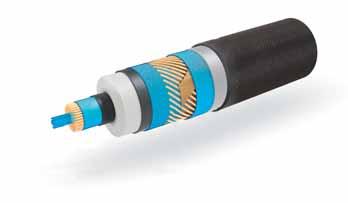
Freudenberg Performance Materials will return to the Wire trade fair in Düsseldorf, Germany, April 13 17, to showcase its portfolio of high-performance cable tapes for power, data and specialty applications. The Weinheim, Germany-based company will present solutions for medium and high voltage cables — MV, HVAC and HVDC — including semiconductive and non-conductive water-blocking, binding, bedding, separation and specialty tapes.
The tapes enhance cable protection and durability through advanced swelling performance and conductivity. For submarine cables, Freudenberg offers tapes engineered to expand instantly on contact with water, sealing against moisture intrusion.
“Freudenberg is a globally preferred partner for cable manufacturers,” said Jochen Bialek, head of global sales, cable and electro. “By returning to Wire in Düsseldorf, we’re strengthening our industry relationships and supporting customers as they address today’s and tomorrow’s energy and digital demands.”
Care Range
Nonwovenn, a global supplier of nonwoven fabric technologies, is expanding its PFAS-free, activated carbon filter media for ostomy pouches, addressing the medical sector’s growing demand for safer and sustainable filtration materials.
The new media combines odor and gas adsorption with lowpressure drop and carbon integration, while meeting evolving global regulations on per- and polyfluoroalkyl substances (PFAS). In the EU, proposed PFAS restrictions under REACH and U.S. medical device regulations are intensifying compliance requirements.
“Demographic trends and regulatory changes are driving the need for next-generation ostomy care technologies,” said John Birkett, MediTech business director at Bridgwater, England-based Nonwovenn. “We’re focused on delivering high-quality PFAS-free filter media that meet the practical and regulatory demands of modern ostomy systems.”
Nonwovenn’s products are engineered without intentionally-added PFAS and supplied as roll goods or filter inserts for standard pouch formats. TW
Photo: Atomic-6, Inc.
Flax-Linen & Hemp Expands
Bio-Materials Presence
The Paris-based Alliance for European Flax-Linen & Hemp will expand its presence at JEC World 2026, joining the newly renamed and enlarged Bio-Materials Village in Hall 5. The space has grown more than 30% to 333 square meters and will host 14 Alliance members and partners representing the full natural fiber composite value chain.
New participants include Norafin, Biofibix and GreenPoxy by Sicomin, alongside returning innovators such as Bcomp and Safilin. Highlights include Bcomp’s JEC Innovation Award-winning flax composite components for BMW and Safilin’s Ecotrain rail interior project with Stratiforme.
Bcomp’s JEC Innovation Awardwinning flax components for BMW demonstrate new natural fiber composite applications.
Alliance experts will also lead a March 11 roundtable, “From Data to Applications,” on leveraging environmental and technical data to accelerate adoption of natural fiber composites. “This expanded showcase demonstrates the maturity, credibility and innovation capacity of Europe’s flax and hemp composites sector,” said Bruno Pech, innovation project manager at the Alliance.
New Shape-Memory Thermoplastic Hybrid From Porcher
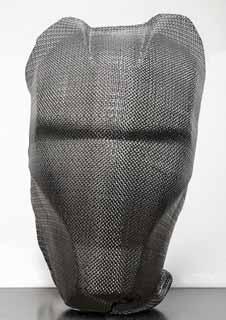
Badineres, France-based Porcher Industries has unveiled an advanced range of multilayer hybrid textiles, featuring shape-memory thermoplastic technology for sports, automotive, medical and industrial applications. Developed for in situ consolidation, the new fabrics address the limitations of traditional thermoplastic prepregs by combining exceptional deformability, drape and formability. According to the company, traditional prepregs reach their limits with complex shapes. Porcher Industries hybrid textile structure, made from commingled glass, carbon or aramid fibers, allows precise, high-speed molding with fewer plies and greater efficiency. Designed for fast cycles — under 10 minutes using suitable heating and cooling systems — the hybrid material supports vacuum molding and advanced consolidation processes. Its recyclability and low energy production align with sustainable manufacturing goals. The innovation, showcased at JEC World 2026, reinforces Porcher Industries’ leadership in thermoplastic composites and its commitment to scalable, responsible solutions for next generation materials.
Bally Ribbon Mills to Highlight 3-D Continuous Weaving
BALLY, Pa. — Bally Ribbon Mills (BRM), a manufacturer of specialized engineered woven fabrics, will showcase its advanced 3-D weaving capabilities at JEC World 2026, March 10-12 in Paris-Nord Villepinte, France, Booth #6K104. BRM will feature its film-infusion process for 3-D woven joints, which ship as pre-made assemblies to ensure quality control and reduce customer processing costs. “BRM has perfected the science and art of 3-D continuous weaving to fabricate complex shapes such as ‘Pi,’ double ‘T,’ and ‘H,’” the company said. Visitors can also explore BRM’s woven thermal protection systems (TPS) and the 3DMAT Quartz Material — developed with NASA for the Orion spacecraft and named the 2023 NASA Government Invention of the Year. “Our advanced weaving technologies help customers build lighter, stronger, and more cost-effective composite structures,” said a BRM spokesperson. TW
Fabric with shape-memory properties
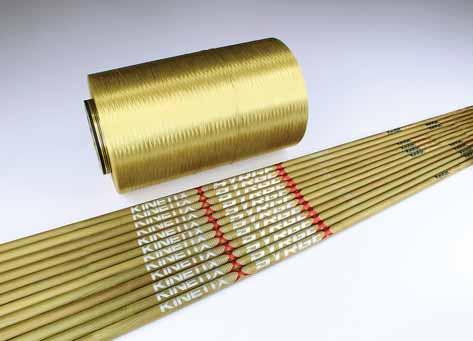
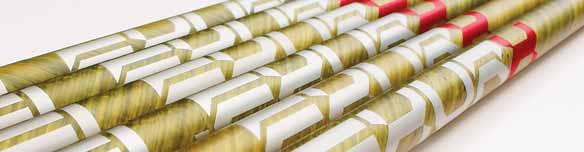
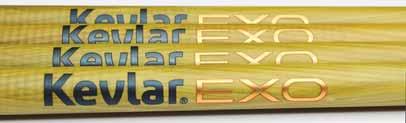
DuPont and KINETIXX extend the performance envelope of aramid fibers with Kevlar® EXO™ in consumer-facing precision sporting systems.
TW Special Report
Kevlar® EXO™ & KINETIXX
Collaboration Transforms
Advanced Golf Shaft Composite Architectures
AAfter more than fifteen years of material research, polymer development and qualification in extreme industrial- and aerospaceadjacent environments, Wilmington, Del.-based DuPont’s Kevlar ® EXO™ is now being translated into precision sporting systems where energytransfer dynamics, structural resilience, torsional control and fatigue resistance are mission-critical.
Kevlar ® EXO™ represents a generational shift in aramid fiber technology. Unlike legacy Kevlar ® grades, Kevlar ® EXO™ is a copolyamide fiber platform incorporating a new monomer chemistry that improves molecular alignment and chain mobility. This architecture delivers a rare combination of high tensile strength, elevated elongation, controlled flexibility, thermal stability and intrinsic flame resistance, collectively outperforming traditional para-aramids across multiple performance measures.
These properties have already enabled breakthrough solutions in nextgeneration soft armor, flexible containment systems and aerospace deployables, where durability after extended service life and repeated high-strain loading is essential.
Composite Engineering
From a composite engineering standpoint, Kevlar ® EXO™ exhibits an unusually favorable strainto-failure profile, allowing it to absorb and return energy under dynamic load rather than dissipating it through brittle fracture. Its elongation capability — approximately 1.5 to 2 times greater than highmodulus carbon fiber — enables enhanced ductility and impact tolerance while maintaining low density. Kevlar ® EXO™ also retains structural integrity at temperatures exceeding 500°C, mitigating risks associated with resinmatrix softening or thermal degradation in high-energy environments.
KINETIXX Prepregs At Commercial Scale
Building on the extensive validation of Kevlar ® EXO™ across ballistics protection, flexible fuel bladders, orbital debris shielding and aerospace deployable structures, San Clemente, Calif.-based KINETIXX’s engineering team has integrated the fiber into proprietary golf shaft composite systems using precisely controlled fiber architectures. Crucially, KINETIXX is not merely a materials integrator, but the sole owner and manufacturer of the novel unidirectional prepreg architectures used in these shafts. KINETIXX develops, qualifies and produces these prepreg materials in-house at commercial scale — a vertically integrated capability unmatched in the golf industry and virtually nonexistent across premium sporting goods. These designs tune axial stiffness, torsional rigidity, hoop strength and vibration damping to meet the highly
dynamic, cyclic-loading conditions inherent to the golf swing — conditions that differ fundamentally from static or quasi-static industrial applications. This proprietary unidirectional prepreg platform is not a single-use solution. It represents a foundational materials technology that KINETIXX is actively deploying across a broader innovation roadmap, including future applications in adjacent sporting categories, industrial systems and advanced medical devices, where controlled flexibility, fatigue resistance and structural reliability are paramount.
Two Platforms
KINETIXX is the only golf shaft manufacturer with exclusive access to Kevlar ® EXO™ and has developed two distinct shaft platforms — SyrgeX and FlexurX — to fully exploit the material’s mechanical advantages through utility-patented hybrid construction methods. Because KINETIXX both engineers and produces
the underlying composite materials, no other manufacturer can replicate these shaft architectures, their performance envelopes or their manufacturing consistency. Quite simply, these shafts cannot be reverse-engineered, licensed or table-rolled into existence elsewhere.
“We couldn’t be more excited to partner with KINETIXX on a project that brings together two innovation-driven brands,” said Scott Janco, Kevlar ® EXO™ Application Development. “By combining KINETIXX’s advanced composite architectures with the breakthrough material science behind Kevlar ® EXO™, we are extending the performance envelope of aramid fibers into precision sporting systems — an application space that demands both extreme mechanical efficiency and refined tactile response.”
The SyrgeX Platform
The SyrgeX platform utilizes a vacuum-cured hybrid architecture, combining high-modulus carbon fiber core flags (30T at 0° for longitudinal strength and 40T at 45°for torsional resistance) with a homogeneous, circumferential filament-wound Kevlar ® EXO™ exoskeleton. Filament winding aligns continuous Kevlar ® EXO™ fibers along calculated helical and hoop-load paths, creating a structurally “spineless” shaft with exceptional concentricity and resistance to ovalization under high load. Vacuum curing minimizes resin content and air voids, producing a dense, low-void composite that maximizes fiber volume
With KINETIXX’s golf shaft platforms, FlexurX and SyrgeX, customers can directly experience the Kevlar® EXO™ fiber application technology compared to traditional golf shafts.
fraction and energy return. This construction allows SyrgeX shafts to simultaneously optimize carbon fiber’s compressive stiffness, and Kevlar ® EXO™’s tensile toughness and impact absorption, a balance previously unattainable in golf shaft design.
The FlexurX Platform
The FlexurX platform applies Kevlar ® EXO™ innovation to a vacuumcured, table-rolled architecture, pairing a 30T/40T high-modulus carbon fiber core with an ultra-thin (0.10 mm) proprietary Kevlar ® EXO™ unidirectional outer ply oriented at 45°. This Kevlar ® EXO™ bias layer functions as an external stabilizing exoskeleton, suppressing torsional deformation and shaft ovaling during high-speed loading while adding elongation and vibration damping that carbon-only constructions cannot provide. The result is a lighter, more forgiving structure that preserves precise loading and unloading behavior, even on off-center impacts.
End To End
“What makes this moment truly different is that we are not adapting
someone else’s material to golf,” said Jason Horodezky, CEO of KINETIXX. “We own the material science, the prepreg architecture, and the manufacturing process end to end. That allows us to engineer performance at the molecular, fiber and structural levels simultaneously. There is no other company in golf — and very few anywhere — that can design, produce and scale composite systems like this. These shafts are the first visible expression of a much larger materials platform that will ultimately extend far beyond golf.”
Across both platforms, KINETIXX’s use of vacuum curing rather than conventional air-cured or mechanically-compacted processes ensures uniform resin distribution, reduced void content and repeatable mechanical properties from shaft to shaft. Unlike centerlessground shafts, KINETIXX shafts are produced as true net-shape composites, preserving the concentricity and structural symmetry critical to torsional consistency and dispersion control. By integrating Kevlar ® EXO™ into load-bearing and stabilizing regions of the shaft, KINETIXX has redefined the traditional
carbon-dominant composite paradigm used in premium golf shafts. The resulting structures demonstrate improved energy efficiency, reduced vibration transmission, enhanced fatigue life and superior damage tolerance, while maintaining the stiffness-to-weight ratios demanded by elite players.
Consumer-Facing Performance
The Kevlar ® EXO™ and KINETIXX collaboration exemplifies how polymerlevel and fiber-level innovation can unlock new composite architectures beyond the traditional trade-offs of stiffness, toughness and weight. It further underscores a broader trend: aerospaceand defense-grade materials being re-engineered for consumer-facing performance systems, where durability, consistency and structural optimization are as critical as peak output. TW
For more information on Kevlar® EXO™ please visit https://www.dupont.com/ kevlar-exo.html. For more information on KINETIXX, https://www.kinetixxgolf.com/
Sponsored content provided by DuPont Kevlar ® EXO™
Dyeing,Printing & Finishing
Atlas Publishes EV Interior Durability Testing
Atlas Material Testing Technology has released the“Atlas EV Weathering Testing Guide,”a new resource to help electric vehicle development teams and testing laboratories evaluate the durability of exterior and interior materials under real-world environmental stress.
The guide combines accelerated laboratory weathering,benchmark outdoor exposure and practical test guidance to improve confidence in long-term material performance.It addresses combined exposure factors — UV radiation,heat,mois-
Mahlo Adds AI For Smarter Weft Straightening
Germany-based Mahlo GmbH + Co.KG has introduced the Orthopac RVMC-20 plus,an advanced weft straightening system that integrates artificial intelligence for higher precision,efficiency and sustainability.Building on the proven Orthopac RVMC-15,the new model adds double scanning with AI supported feed-forward and closed-loop control,enabling real-time correction of fabric distortion,even at high processing speeds.
ture and thermal cycling — that can cause material fading,cracking or delamination.
“Durability results can be difficult to compare if exposure conditions and setup details aren’t aligned,”said Dr.Oliver Rahäuser,senior product manager at Mount Prospect,Ill.-based Atlas.“The guide highlights parameters that teams need to control and document,so results can be compared more reliably across methods,labs and test partners.”
Atlas operates benchmark outdoor exposure sites in Miami and Phoenix for correlation and validation of accelerated test results.
precise weft straightening at high production speed.
A retrofit option allows existing RVMC-15 units to be upgraded by adding a second scanning unit,extending machine
life while improving accuracy and material yield.
“Innovation doesn’t always mean starting from scratch,”said Thomas Höpfl, Mahlo sales director.“With the RVMC-20 plus, we’ve shown that progress can also mean making the best even better — smarter, more precise and more sustainable.”
With thousands of systems in operation, Mahlo’s latest upgrade offers manufacturers a cost-effective path to consistent quality and reduced production waste.
Jet precision dyeing pioneer Alchemie Technology,based in Cambridge,England,has partnered with Acatel,a sustainable textile manufacturer in Portugal,to validate and optimize Alchemie’s fully-electric,non-contact dyeing process for knitted cellulosic fabrics.
The 12-month R&D program,based at the Acatel Innovation Hub,will prepare this technology for large scale production,demonstrating major reductions in water,energy and chemical use,while improving consistency and efficiency.
“Transforming one of the world’s most resource-intensive processes has required resilience,vision and innovation,”said Dr.Alan Hudd,founder and CEO of Alchemie Technology.“Being part of the Acatel Innovation Hub represents the kind of bold partnership needed to scale sustainable textile solutions globally.”
“Acatel’s commitment to innovation and environmental stewardship aligns perfectly with Alchemie’s mission,”added Tércio Pinto,Acatel board member.
RUDOLF Global Distribution Of Sanitized®Textile Technologies
RUDOLF Group,based in Geretsried,Germany, has assumed exclusive global distribution rights for Sanitized ® textile technologies from Burgdorf, Switzerland-based SANITIZED AG,marking the full implementation of their strategic partnership announced in 2025.The transition phase,begun in September 2025,ensured continuous customer supply and technical support, paving the way for longterm global cooperation and a more resilient international supply chain.
“With Sanitized ® technologies,RUDOLF expands its comprehensive textile chemistry portfolio from pretreatment to finishing,offering customers a single global point of contact,”the company said.
The Sanitized ® range includes Odorex™ (biocide-free odor neutralization),Puretec™ (antimicrobial odor control),and Silvertec™ (durable antibacterial protection).Complementary solutions such as OX20, a non-biocidal,bluesign ® approved additive for long-lasting freshness, demonstrate growing demand for sustainable hygiene performance.
Together,RUDOLF and SANITIZED provide brands and manufacturers worldwide with coordinated, high-performance technologies and global technical service for durable textile innovation. TW
ExecutiveForum
Martin Bide: Much More Than Colour Chemistry
From textile education to textile educator, Dr. Martin Bide shares his thoughts on a career in textiles, the changing industry, and his enthusiasm for textile education as a lifelong pursuit.
By James M. Borneman, Editor In Chief
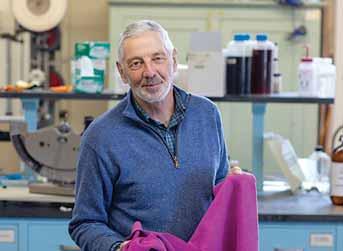
DDr.Martin Bide is a respected textile scientist whose career spans decades of teaching,research and leadership in fiber and dyeing technology.He has served on the faculty at the University of Rhode Island (URI) and at the University of Massachusetts Dartmouth (UMassD), where he has guided countless students and advanced the field of textile chemistry.Bide is the author of more than 100 papers,book chapters,and patents.His achievements have earned him the American Association of Textile Chemists and Colorists’(AATCC) Olney Medal,one of the profession’s highest honors. Today,Bide remains a leading voice in sustain-
able textile development and innovation across the global industry.He recently sat down with Textile World to discuss his career in textiles,the changing industry,and his enthusiasm for textile education as a lifelong pursuit.
TextileWorld : Dr.Bide, you’ve spent your career at the intersection of fiber science,dyeing and textile innovation,from the classroom to being internationally recognized for your research.Looking back,what first sparked your interest in textiles?
Bide: My 18-year-old self decided that “colour chemistry”sounded like a more interesting major than plain chemistry,without knowing it was really all about textiles and
dyeing.I did this at Bradford University in the UK—they gave me a color vision test when I toured,and I thought that was smart.
And being a student was fun,so when the offer came to stay and do a PhD….Sure!
TW : How did you transition from student to educator and researcher?
Bide: Spending a few years in UK dyestuff research,I was reading the JSDC (The Journal of the Society of Dyers and Colourists) and one Friday afternoon I saw a UMassD ad for a textile chemistry professor.I thought,“I’ll never get this,but what the heck”but I did — thanks to the Dean who looked at the search committee’s reject pile and overrode
the reject reason “he’s in England”— and it was off to the USA in 1981.
TW : How did you relate to reentering the university environment,now as a professor?
Bide: The academic world is similar wherever you are,so the move was straightforward.Great students — and I am still in touch with several of them — UMassD was one of the traditional textile programs, derived from New Bedford and Fall River textile schools,supplying trained grads to industry.Our peers were NC State, Clemson,Georgia Tech, Philadelphia Textile and Auburn.There was the full spectrum of textile courses: dyeing I and II,printing, finishing,man-made fibers,
Martin Bide
(Photo: AATCC)
yarn I and II,weaving I and II,knitting,and so on. Those university curricula have mostly disappeared or morphed into “materials”, with the notable exception of NC State.
TW : What brought about this change in textile education programs?
Bide: The industry was shrinking,along with the number of students. For me,it meant moving to URI in 1991.
URI was a different flavor of textile program, derived from the old “clothing and textile”
component of Home Economics that was present in all the original land grant state universities.
URI’s program had evolved into“Textiles, Fashion Merchandising and Design,”with large student numbers,and instead of colleagues who were teaching yarn,weave, knit,testing,statistics,I had a new set who were dealing with merchandising, textile history,fashion design,social and psychological aspects of fashion.
TW : That is a different role entirely…
“I enjoyed my teaching career, especially trying to put myself in the shoes of a student so I could communicate complex ideas in a way that made sense to them,” said Bide, pictured here at the University of Rhode Island (URI).
Bide: I was the lone scientist having to deal with all the technical aspects: so,I had to learn the weaving,spinning and so on. My main assignment was teaching a junior course that covered all that stuff, with a lab on fiber identification,and textile testing.
TW : How did you approach course materials?
Bide: Textbook?
Tortora’s Understanding Textiles,later Collier and Tortora,and eventually Collier,Tortora and Bide — having made critical comments to prior editions, it was easier to have me inside “the tent”! I finally went on to the online text “Itextiles”that was more regularly updated,and again,I could put my 2 cents in,get inaccurate content straightened out without waiting for a new hard copy edition to come out.
TW : What interested you in remaining in an academic career?
Bide: I enjoyed my teaching career,especially
trying to put myself in the shoes of a student so I could communicate complex ideas in a way that made sense to them.So,while I may know a lot about dyeing isotherms,the derivation of the CMC Color difference equation,the difference between worsted and woolen yarn production and so on,I had to distill that into its essentials and keep it simple enough for a student focused on Fashion Merchandising and Design to benefit.
My mantra was to suggest that if they were stuck on a long flight to China with a dyer,yarn spinner, color scientist,etc.,then they should be able to have a sensible conversation.
TW : You recently published “Color: From Concept to Consumer — How Hard Can it Be to Dye the Right Color?”— how did you approach the project?
Bide: The genesis of “Color: From Concept to Consumer”was that distillation of the essentials of
(Photo: University of Rhode Island, Beau Jones)
Dr. Martin Bide’s achievements earned him the American Association of Textile Chemists and Colorists’ (AATCC) Olney Medal, one of the profession’s highest honors. (Photo: AATCC)
color,textiles,dyes and dyeing,put in the context of a supply chain that must define a color,oversee its communication to a dyer, and accept or reject it.All within the pressures of time and commercial viability.And what was suitable for the students of Fashion Merchandising and Design at URI also seemed appropriate for AATCC’s “concept to consumer”interest group.
I’m not getting any royalties — this was a labor of love!
TW : What drove you to put it down on paper?
Bide: Being regularly involved with AATCC and seeing very similar questions and issues coming up at meetings.That,coupled with not being able to find a book that covered all the topics in (hopefully) an easily digestible format that I could use in my courses.
TW : The other half of being a professor means doing research,and you got the Olney medal for your work.How did you approach that research?
Bide: Encouragement from my boss,Ron Perry at UMassD.I learned the fact that academics share much with the “oldest profession” and will not turn down funding if an opportunity shows up — Wool scouring? Soil release on navy uniforms?...
Other inspirations from ex-students with questions: “Can you do thin layer chromatography on vat
dyes?; Why is alginate better than synthetic thickeners for printing?; We have a new analytical method, will it work on dyes?”.
TW : So,applied research played an important role?
Bide: A major part of my research career — and the main reason for the AATCC Olney medal — came from the husband of a former student of mine.
In 1990,he was working on artificial artery research at a Boston Hospital.He’d ask his textile chemist wife questions about the polyester the arteries are made of,and eventually she told him to talk to me. They now run BioSurfaces in Massachusetts with a manufacturing facility and 15 employees (biosurfaces.us/).
Bumping into the attitude of non-textile people who think,“How hard can textiles/dyeing be, anyway?”led to several opportunities to be the textile voice — someone who knows the complexities — in multidisciplinary efforts.Arriving at URI, joining the chemical
“The genesis of ‘Color: From Concept to Consumer’ was that distillation of the essentials of color, textiles, dyes and dyeing, put in the context of a supply chain that must define a color, oversee its communication to a dyer, and accept or reject it. All within the pressures of time and commercial viability.” — Dr. Martin Bide
engineers doing pollution prevention in local textile mills.That began a long engagement in pollution prevention,later called “sustainability,”that accelerated as my more formal research projects wound down with the approach of retirement,which included a TEDx talk (uri.edu/tedx/ talks/swimming-in-a-seaof-polyester/).
TW : Looking back at that decision by“your 18-year-old self”to pursue textiles,what are your thoughts?
Bide: The great thing about textiles,that made my career so much more interesting — and for me, relevant — is that it is essentially practical.
We all wear clothes! It’s impossible to live/work in textiles in an academic silo. So,textile teaching and research exists side by side with what is happening in the real world,and that is where the AATCC comes in.
Life-long learning and relevance comes from conferences,technical meetings,etc.where academics and industry get together.
Learning from the formal presentations and casual conversations,and building networks — so you know who to ask later. Those activities continued my learning long past any formal education and has been essential to my teaching and research.We had enough local industry in Rhode Island that I could take students on field trips, essentially to show that I wasn’t making it up when I taught stuff! I could figure out the weaving and spinning when I went to URI.And so,on
TW : Your advice on how to enrich a textile career?
Bide: What would I say to others? Join! Go to meetings! Ask questions! Get to know people! And I have no clue how any of this works in the age of social media! TW
Editor’s Note:Dr.Martin Bide’s recent publication, “Color:From Concept to Consumer — How Hard Can it Be to Dye The Right Color?”is available now at aatcc.org/ colorbook25/
Fiber World
Fabric made from cotton-like fancy yarns with a soft, voluminous structure for textile surfaces with a natural, cotton-like appearance.
BARMAG DTY Future Of Fancy Yarns
As demand grows for textured and differentiated fabrics in fashion,home and automotive markets, fancy yarns are gaining new importance.Remscheid, Germany–based Barmag is advancing Draw Textured Yarn (DTY) production with flexible,modular texturing technology that creates “cotton-like,linen-like, thick & thin,two-tone, different shrinkage and elastane-covered”yarns.
According to the company, Barmag systems deliver precise,reproducible-effect structures with stable crimp and uniformity, even in complex applica-
tions.The company’s solutions allow reliable combinations of POY, FDY and elastane while maintaining energy efficiency and process control.
Barmag’s atmos.io digital platform further enhances production by tracking each yarn package and enabling real-time data-based decisions.
Digitizing the entire material flow allows yarn manufacturers to intervene when necessary.
According to Barmag, integrating flexibility, quality,and digitalization, Barmag’s DTY systems provide a reliable,economical path to premium fancy yarn production.
Ascend Emerges From Chapter 11
Ascend Performance Materials,based in Houston,Texas, announced it has successfully completed its financial restructuring and emerged from Chapter 11 bankruptcy protection.The company’s Plan of Reorganization,confirmed by the U.S.Bankruptcy Court on Dec.9,2025,is now effective.
Through the process,Ascend reduced its long-term debt by about $1.3 billion,secured a $350 million asset-based credit facility,and gained more than $600 million in new capital from shareholders,strengthening liquidity and lowering debt service costs.
“Today marks the final milestone in Ascend’s restructuring process,and we are thrilled to emerge with significantly less debt and a much stronger capital structure,”said Patrick Schumacher,Ascend’s newly appointed CEO.“Thanks to our people and new ownership group,we are better positioned for growth and continued leadership in nylon resins and engineering thermoplastics.”
Ascend plans to reinvest in reliability,efficiency and long-term growth initiatives.
Trevira®CS Eco Fabrics Using Recycled FR Fibers
Bangkok–based Indorama Ventures is advancing circularity in home and contract textiles with new Trevira® flame-retardant fibers and filament yarns made from 50% recycled textile material.The innovation debuted at the Heimtextil trade show in
Arclin Agrees To Buy DuPont’s Aramids Business
Arclin has entered a definitive agreement to acquire DuPont’s Aramids business,including the Kevlar® and Nomex® brands,in a transaction valued at approximately $1.8 billion. The purchase broadens Arclin’s advanced materials portfolio into aerospace,electrical infrastructure,electric vehicles,defense and personal protection,complementing its existing operations in construction,infrastructure and transportation.
Approximately 1,900 employees will transfer with the business when the deal closes, expected in the first quarter of 2026 pending regulatory approvals.
“We are confident that under Arclin’s leadership,these businesses will continue to thrive and expand their impact in new industries and applications,”said Lori Koch,DuPont CEO. Arclin,headquartered in Alpharetta,Ga.,specializes in engineered materials and bonding solutions used in industrial,building and transportation markets.
Frankfurt,Germany,in mid-January.
“This innovation is possible through Indorama Ventures’joint venture with Jiaren Chemical Recycling,” said Jesper Nielsen,global key account manager,flame retardancy.“Jiaren transforms post-consumer and industrial textile waste into recycled polyester chips, from which we produce our modified Trevira® flameretardant fibers and yarns.”
Fabrics made with these materials can qualify for the Trevira CS Eco brand, combining circular design with the proven,permanent flame-retardant performance of Trevira CS.The partnership with Jiaren, announced in November 2025,supports Indorama Ventures’long-term goal of achieving large-scale textile circularity without compromising safety or comfort. TW
Carbon-14 Analysis Determines
Figure 1: Biobased testing reveals the percentage of biobased versus fossil carbon content in a given sample.
Biobased carbon testing helps manufacturers develop materials that meet the expansion of governmental initiatives to increasingly eco-conscious consumers.
By Jordan Turner, SGS Beta
The Carbon-14 Method for Seamless Biobased Textile Authentication
TThe global biobased textiles market was valued at US$5.80 billion in 2024 with projections indicating growth of 11.6% between 2025–2034. This growth is the result of improvements in global environmental regulations, increased demand from eco-conscious consumers favoring sustainable products and expansion of governmental initiatives. These industry developments favoring the use of eco-friendly materials necessitates a reliable method for manufacturers and distributors to ensure their textiles are produced using renewable biomass resources like plant fibers. ASTM D6866 biobased carbon content testing via carbon-14 analysis is an accurate, well-established third-party analytical tool that can be used to meet these industry goals and standards by validating the biobased content of a material or finished product.
Untangling the Definition of “Biobased”
The ASTM D6866 analytical standard defines the term “biobased” as “containing organic carbon of
renewable origin like agricultural, plant, animal, fungi, microorganisms, marine, or forestry materials living in a natural environment in equilibrium with the atmosphere.” Biobased products are produced using renewable raw materials from marine, forestry, or agricultural sources. A biobased textile is fully or partially sourced from renewable biomass resources such as plants and animals. Biobased textiles serve as a renewable alternative to fossilbased synthetic fibers like polyester, which is currently the most prevalent fiber accounting for 57% of global fiber production. Despite this seemingly straightforward definition, there are some nuances within the textile industry when it comes to the three types of fibers that are typically referred to as biobased: natural, regenerated (or semi-synthetic), and synthetic biobased fibers.
Natural fibers include cotton, wool, hemp, linen and silk. These are of biological origin, coming from plant or animal sources. Therefore, natural fibers clearly fall within the definition
of biobased. These fibers are obtained via harvesting directly from the plant or animal before entering the production process. Natural textiles have been used for millenia. However, modern innovation within the industry has led to the development of two additional types of fiber that are considered to be biobased.
Regenerated or semi-synthetic fibers come from renewable biological resources like wood and plant fibers, pulp and cellulose. These include viscose from bamboo fiber (also known as rayon) and lyocell from wood pulp. Although they are derived from renewable biomass, thus fitting the definition of biobased, regenerated fibers are man-made. Their components must be extracted and chemically dissolved then reformed into fiber before being processed into textiles.
While synthetic biobased fibers are also considered to be biobased, their journey from raw material to fiber is much different from that of natural and regenerated fibers. They are made by synthesizing biomass raw materials
Products Can Be:
USDA BioPreferred® Program Product Categories
Intermediates — Fibers and Fabrics25%
Intermediates — Textile Processing Materials22%
Rugs and Floor Mats23%
Mattresses, Mattress Toppers, and Pillows25%
Window Coverings — Drapery25%
Woven Fiber Products25%
Table 1
The USDA BioPreferred® Program outlines categories and sets a minimum biobased content percentage for textile intermediates, processing materials, and finished products.
either chemically or biologically. Developed as an alternative to fossilderived synthetics like polyester and nylon, the most common biobased synthetic fibers are polytrimethylene terephthalate (PTT) fibers, polylactic acid (PLA) fibers, polyethylene terephthalate (PET) fibers, and polyamide (PA) fibers. Like regenerated fibers, synthetic biobased fiber is man-made, created by converting biomass such as corn, sugar beet, sugarcane and castor into monomers or molecules. This is achieved through fermentation or chemical synthesis. These monomers are then polymerized and processed into fiber.
All of these types of fibers fit into the definition of “biobased” as they are obtained from renewable biomass. However, they differ when it comes to the level of processing required to produce the fibers. There is some flexibility in the interpretation of what it means for a product to be “biobased,” especially between the United States and the European Union. Therefore, it is important for textile producers and
manufacturers globally to have a reliable method in their toolkit to ensure their textiles and fibers are authentic by verifying their exact biobased carbon content, according to internationally recognized standards like ASTM D6866 and EN 16640.
Measuring Up: Carbon-14 Biobased Testing
Biobased carbon content testing is performed using an Accelerator Mass Spectrometry (AMS) instrument to measure the amount of carbon-14, or radiocarbon, in a raw material (e.g. cotton) or finished product (e.g. linen garments). Carbon-14 is a radioactive isotope that is present in all living organisms. It is formed in the upper atmosphere and enters the global carbon cycle in the form of carbon dioxide which is then taken in by plants through photosynthesis and by animals when they eat plants. Upon the death of the organism, this exchange ceases and the amount of carbon-14 begins to decrease through the process of radioactive
decay. The detection limit of carbon14 analysis is 43,500 years before present (BP). This is a particularly valuable trait of the method because fossil-derived materials are significantly older than this detection limit, and they no longer contain any carbon-14. Therefore, only the portion of the sample that comes from recently-expired biomass will retain a measurable amount of carbon-14.
Biobased testing is applicable to liquids, solids, and gaseous samples, and is carried out according to internationally recognized analytical standards such as ASTM D6866 and EN 16640. The method accurately reveals the biobased carbon content of organic materials that were in direct equilibrium with atmospheric CO 2 until respiration or metabolism ceased, either by the organism coming to the end of its natural life or by a crop being harvested. Carbon-14 analysis distinguishes between the amount of biomass-derived, biobased carbon as opposed to fossil-derived carbon in samples of both raw materials and end products. Measuring the carbon-14 isotope is ideal for verifying the amount of biobased content in a material. As this method directly measures the amount of biomass present, biobased testing via carbon-14 analysis is the most accurate analytical method for identifying the exact percentage of carbon that comes from renewable biomass sources.
In addition to being highly accurate, biobased carbon content testing results are also easy to understand. Results are presented in the form of a percentage (%), a ratio representing the exact amount of biobased carbon versus the amount of fossil carbon, or absence of carbon-14 in a sample (Figure 1). This ratio, falling between 0% to 100%, clearly identifies the portion of the sample that comes from renewable biomass. A material that is fully fossil-derived has 0% biobased content while completely biomassderived materials will have 100% biobased content. Any percentage in between is indicative of a mixture of fossil and renewable components.
Pinning Down the Applications of Biobased Testing
Biobased testing has a number of beneficial applications that biobased textile manufacturers and distributors can take advantage of to authenticate the composition of their fibers and finished products, and to support marketing claims. From research and development (R&D), to marketing, to certification programs, the data provided by biobased testing can help support business goals at every step. Obtaining accurate third-party analytical verification of biobased content is an excellent marketing tool that can be used to prove textiles and final products are made from renewable, biomass-sourced components instead of synthetic petroleumderived fibers. Authentication of biobased content provides scientific back up to ensure products can withstand consumer scrutiny. These results are accurate enough to be used by R&D teams to verify the biobased content of end products and confirm that materials obtained from external suppliers are genuine.
Additionally, biobased testing results are required by some thirdparty programs in order for the applicant to meet the criteria for voluntary labels and certifications. These programs can be pursued to improve brand image and appeal to customers who are sustainability-conscious, while providing scientific evidence of marketing and label claims.
Stitching it all Together:
Biobased
Certifications
& Eco-Labels
One certification program that has outlined criteria for the biobased textiles market is the USDA BioPreferred ® Program. The program requires ASTM D6866 biobased testing to meet their certification requirements for biobased products. It recognizes 139 product categories, setting a minimum biobased content percentage for 14,000 products as of September 2025. Successful certification of a product under the BioPreferred ® program allows manufacturers to use the USDA
Certified Biobased Product label on their product packaging and marketing materials, clearly displaying information about the product’s biobased content to consumers. Additionally, BioPreferred® certified products gain an advantage when it comes to United States government procurement as federal agencies have mandatory purchasing requirements for certified biobased products.
The USDA BioPreferred ® Program product categories include a range of textile products as well as intermediate fibers and fabrics; processing materials like treatments and finishes; woven, tufted, and knitted rugs and carpet; window coverings; mattresses and pillows; and fabric dyes (Table 1). Clothing and footwear have a minimum biobased content of 25%. Intermediate fibers and fabrics used to manufacture finished products also have a minimum biobased content of 25%. Bedding, bed linens, and towels, including blankets, sheets and pillowcases, have a minimum biobased content of 12%. Fiber floor coverings like carpets require 7% biobased content. Additionally, the SGS Green Marks Biobased Certification is another program that requires ASTM D6686 and EN 16640 standardized biobased content testing. To qualify for the label, a product must have a biobased content percentage of at least 20%.
In Europe, two eco-label programs that require biobased testing include Din Certco’s DIN-Geprüft Biobased Certification scheme and Nordic Swan. The DIN-Geprüft Biobased certification program accepts products that have a biobased content of 20% or more according to ASTM D6866 or ISO 16620. Products receive a label representing one of three quality levels depending on their biobased content: 20-50%, 50-85%, or >85%. Nordic Swan’s eco-label for textiles sets requirements for certifying natural and synthetic textiles, hides, and leather. The criteria requires biobased synthetic fibers to contain at least 90% biobased raw material that has been confirmed
Biobased carbon content testing is performed using an Accelerator Mass Spectrometry (AMS) instrument.
using ISO 16620, ASTM D6866, or equivalent testing such as carbon-14 biobased testing.
Tying Off the Thread
Carbon-14 biobased carbon content testing is a key resource for companies seeking to ensure their label claims are supported and their products and materials are transparent under consumer scrutiny. Biobased testing verifies the exact amount of biobased carbon in a material or end product to prove it was sourced from sustainable biomass instead of fossil fuel sources. Further, a number of third-party certification programs including the USDA BioPreferred ® Program require biobased testing results in order to apply for their certifications and eco-labels. The percentage of biobased content obtained through biobased testing also supports marketing and R&D goals, like improving brand image, validating label claims, and appealing to their sustainabilityconscious customers. The accuracy and wide applicability of biobased testing make it a valuable option for sustainability-focused manufacturers to consider when seeking a solution for determining the authenticity of their biobased textiles. TW
Editor’s Note: Jordan Turner is marketing coordinator for SGS Beta. Please see textileworld .com for a complete listing of references.
CreateMe, UNTUCKit & Supima® Unite To Launch
First Digitally Bonded Garments
CreateMe is partnering with UNTUCKit and Supima® to debut the first commercially available digitally bonded T-shirts, produced in the U.S., showcasing how automation can strengthen domestic manufacturing and deliver durable, premium apparel at scale.
TW Special Report
NNewark, Calif.-based CreateMe Technologies has announced a strategic partnership with New York apparel brand UNTUCKit and Supima ® cotton to launch the first commercially available digitally bonded garments. The partnership marks a significant step toward automated, on-demand apparel manufacturing using robotics and adhesive bonding technology.
Through this collaboration, CreateMe will debut its first bonded men’s T-shirt, made from U.S.-grown Supima® cotton and produced domestically using the company’s proprietary Pixel™ bonding and MeRA™ automated assembly systems. Supima ® cotton, prized for its extra-long staple fibers, delivers greater softness, strength, and color retention than traditional cotton — qualities that align well with CreateMe’s focus on durable, high-performance apparel.
New Manufacturing Model
The partnership with UNTUCKit demonstrates the commercial maturity of CreateMe’s digitally bonded
garment technology and its readiness to manufacture at scale. Pixel™, CreateMe’s digital adhesive application system, serves as the foundation of its process, enabling precision and flexibility in garment construction without traditional stitching. Together with MeRA™, the system represents a shift toward a more agile, automated manufacturing model, capable of meeting rapid market demands.
“Partnering with UNTUCKit accelerates the shift toward a more modern way of making clothes,” said Cam Myers, founder and CEO of CreateMe. “UNTUCKit built its brand by challenging convention, and this collaboration brings that same mindset into manufacturing. It proves that high-quality apparel can be produced competitively in the U.S. at scale, while giving consumers a better, more durable product. This is the first of many bonded garments we’ll bring to market.”
The partnership follows CreateMe’s commercialization roadmap, with initial product development and pilot testing leading to retail intro-
duction. Plans call for production to scale to approximately 50,000 bonded T-shirts per year beginning in the third quarter of 2026.
Bringing Innovation To Classic Apparel
For UNTUCKit, known for redefining the classic button-down shirt, the alliance offers an opportunity to apply material and process innovation to its well-established brand identity. “At UNTUCKit, we’re always exploring innovations that enhance product performance and the customer experience,” said Bjorn Bengtsson, chief product and supply chain officer at UNTUCKit. “CreateMe’s adhesive bonding technology opens exciting new opportunities to rethink how we approach apparel construction in a more efficient and responsible way.”
This approach reflects broader industry trends toward domestic, technology-driven production. Faced with rising global production costs, long lead times and supply chain uncertainty, brands are increasingly looking for solutions that balance cost efficiency with flexibility. CreateMe’s automated bonding technology reduces reliance on overseas production, shortens turnaround time and allows manufacturers to respond more closely to real consumer demand.
Supima® Strengthens The Collaboration
As the third partner, Supima ® brings both material quality and deep industry heritage to the project. The American-grown cotton is a natural companion to CreateMe’s U.S.-based production and UNTUCKit’s focus on everyday comfort and quality. “Supima could not be more excited to work with fashion technology innovator CreateMe and our longtime partner and fashion disrupter UNTUCKit to bring innovation and style to the fashion market,” said Buxton S. Midyette, vice president of marketing and promotions at Supima® Supima’s involvement underscores how premium fiber innovation con-
CreateMe, UNTUCKit and Supima® advance U.S. apparel manufacturing with Pixel™ bonding and MeRA™ robotic assembly to craft durable, premium t-shirts through advanced bonding automation.
tinues to intersect with technological advances in apparel production. Pairing advanced robotics and bonding with one of the world’s most recognized cotton varieties showcases the potential for U.S. textile manufacturing to combine heritage materials with next-generation processes.
Scaling A Sustainable System
CreateMe envisions the UNTUCKit partnership as a first step toward a larger ecosystem of bonded apparel. Building on its bonded T-shirt program, the company plans to extend production capabilities into women’s styles and additional T-shirt variations as part of its 2026 roadmap.
The enterprise sits within CreateMe’s broader mission to localize and digitize soft-material manufacturing through automation. The company operates on the premise that “The Future of Fashion is Bonded™”— not
sewn — and holds more than 95 patents across robotics, adhesives and automation. Its proprietary technologies include Pixel™ micro-adhesive bonding, the MeRA™ robotic assembly system, and Thermo(re)set™ reversible-adhesive science. Together, these innovations enable precise, waste-reducing garment production closer to end markets.
As automation gains ground in textiles, CreateMe’s collaboration with UNTUCKit and Supima® serves as a proof of concept: that bonded apparel can meet the quality, consistency and scalability required by global brands while strengthening domestic supply chains. In a sector defined by long-distance sourcing and intensive manual labor, the move toward digitally bonded, robotically assembled garments could redefine how — and where — clothing is made. TW
Knitting / Apparel
Ibex Taps Nuyarn®
For Next-Generation 3D Knit Sweaters
Brooklyn, N.Y.-based Ibex has partnered with Nuyarn® to launch the Nautilus Fisherman Sweater, blending tradi-
Partnering with Ibex, Nuyarn® Nautilus Fisherman sweater uses a 3D knitting process.
tional knitwear aesthetics with advanced twist-free yarn and 3D knitting technology. Produced in an 8-gauge, 2x2 rib using a 70% merino wool and 30% nylon Nuyarn® blend, the sweater delivers greater durability, stretch, and thermal efficiency while minimizing waste through seamless 3D knitting.
“This partnership with Ibex is a perfect example of
how Nuyarn technology can be applied to redefine classic silhouettes,” said Monica Ebert, New Zealand-based Nuyarn vice president of sales.
“By integrating our twistfree yarn into a bespoke 3D knitting process, Ibex is demonstrating our technology isn’t just for performance layers.”
“We’re seeing incredible opportunities in outdoor luxury — where performance meets everyday style,” added Andy Wynne, Nuyarn CEO. The madeto-order collection is produced domestically in Brooklyn with a six to nine day turnaround.
Authentic And Guess? Inc. Founders Take Guess? Private
New York-based Authentic Brands Group and Guess?, Inc. announced the completion of their transaction to take Guess? private. Authentic now owns 51% of substantially all Guess? intellectual
GenuTrace & Kinset Partner To Help Brands Defend Cotton Claims
GenuTrace and Kinset have announced a partnership to help global brands substantiate cotton origin claims amid new anti-greenwashing and forced labor regulations. The collaboration combines Brightwaters, N.Y.-based GenuTrace’s fiber level isotope testing — which scientifically determines cotton’s geographic origin — with Kinset’s Digital Product Passport (DPP) data-ready platform to provide verifiable, regulator-legible supply chain proof.
“Regulation has fundamentally changed the question brands must answer,” said MeiLin Wan, founder and CEO of GenuTrace. “It’s no longer ‘where did you intend to source from’ — it’s ‘can you prove it?’”
“Digital Product Passports only work if the data behind them is credible,” added Katie O’Riordan, CEO and cofounderof Dublin, Ireland-based Kinset. “Our collaboration links physical verification with digital traceability so companies can strengthen compliance without rebuilding their systems.”
The initiative helps brands meet Germany’s new antigreenwashing rules and U.S. enforcement of the UYGHUR Forced Labor Prevention Act with evidence-based sourcing.
property, while co founders Paul and Maurice Marciano, Nicolai Marciano, CEO Carlos Alberini and affiliated entities retain 49%. With $6 billion in global retail equivalent sales, Guess? becomes Authentic’s second largest
KARL MAYER & Lenzing Partner To Advance Warp Knitting
The Lenzing Group and Obertshausen, Germany-based KARL MAYER, are collaborating to improve processing of TENCEL™ Lyocell and Modal fibers with Micro Technology on warp knitting machines, advancing sustainable solutions for high-quality textile applications. The innovation project will debut February 3-5 at Première Vision Paris.
“We opted for Ring Compact and SIRO Compact spinning because it guarantees yarns with low hairiness and higher performance,” said Bernd Schleuchardt, senior manager of apparel business development at Austria-based Lenzing. “By combining fiber innovation with downstream expertise, we aim to enable scalable, industrial solutions for cellulose fibers in warp knitting.”
“The project with Lenzing has shown that efficient processing of cellulose fibers is possible when using the right spinning process,” added Markus Otte, senior expert in textile development at KARL MAYER.
Using SIRO Compact yarns notably reduced fiber abrasion and machine contamination, demonstrating stronger industrial viability for sustainable warp knitted fabrics.
brand, bringing the group’s portfolio to $38 billion in annual retail sales.
“What makes Guess? compelling is its exceptional leadership and iconic heritage,” said Jamie Salter, founder, chairman and CEO of Authentic.
“We’re honored to partner with the Marciano family, to accelerate this next phase of growth.”
“I’m incredibly proud of the brand we’ve built over 45 years,” added Paul Marciano, Los Angelesbased Guess? cofounder and chief creative officer.
“Joining Authentic’s platform positions us to expand globally while staying true to the Guess? DNA.”
Guess? management will continue leading operations worldwide. TW
website / magazine / e-newsletter
Subscribe to Textile World for complete coverage of the U.S. and global textile manufacturing industry — the latest technologies, applications, regulations and trends.
Website, eNewsletter, Magazine, and now Digital Magazines available.
Magazine advertisers receive additional reach and linking with free inclusion in Digital Magazines.
read / share / engage
People
Marco Bruno Appointed Global R&D Head at Avgol
Israel-based Avgol,an Indorama Ventures company,appointed Marco Bruno as Global R&D Head.With more than 20 years’experience and 10-plus patents,Bruno’s key goal is to drive innovation and value-chain collaboration, developing next-generation personal care applications.
Angelica Taylor Named President of Cabot Hosiery Mills
Cabot Hosiery Mills,located in Northfield,Vt.,is pleased to promote Angelica Taylor to President,its first non-family leader.She previously served as CFO and COO,overseeing brands including Darn Tough Vermont.“Angelica’s leadership has proven time and time again she’s going to do big things in our industry,”said CEO Ric Cabot.
Fawn Knadler Promoted As PrimaLoft’s North American Sales Director
Latham,N.Y.-based PrimaLoft,Inc. promoted Fawn Knadler to North American Sales Director,having led key accounts including Nike and Patagonia.Knadler will now oversee regional sales strategy across the U.S.and Canada.“I’m thrilled to step into this new role and continue building strong partnerships with our customers across North America,”said Knadler.
Behnam
Pourdeyhimi
To Step Down, Raoul Farer Promoted To NWI Director
After more than 25 years as executive director of The Nonwovens Institute (NWI) in Raleigh,N.C., Behnam Pourdeyhimi will step down Dec.31.
AFFOA Appoints Four Industry Leaders to Board
Advanced Functional Fabrics of America (AFFOA) in Bedford,MA,appointed four leaders to its Board of Directors to accelerate functional fabric technology and national security initiatives.New members include Brian Johnson,president of MassMEDIC,bringing deep medical device market knowledge; Francisco J. Martinez,vice president of R&D at Bethel Industries will guide AAFOA government relationships; Stacy Swider, vice president of investments at MassVentures leverages high-potential deep-tech startup experience ;and Steven Tran,executive vice president of finance and contracts at Activate has knowledge in financial planning,audits,contracting, and grant processes.Their expertise further strengthens AFFOA’s mission to advance smart textiles manufacturing and commercialization nationwide.
“We are excited about the wide-ranging expertise of our board,”said Sasha Stolyarov,Ph.D.,AFFOA CEO.“I am looking forwardto working with each new board member in expanding our impact regionally and nationally.”
Stacey Bridges Appointed VP of Sales & Operations Clover Knits
Under Pourdeyhimi,NWI became the first accredited academic program in engineered fabrics.
Stepping up is Raoul Farer,executive deputy director and a professor of textile engineering,chemistry and science.
“I’ve been incredibly impressed with his accomplishments and firmly believe he is the right choice to lead the institute into the future,”Pourdeyhimi said.
Clover Knits,Inc.,in Clover,S.C., appointed Stacey Bridges to the newly created position Vice President of Sales and Operations.With more than 30 years of textile experience,Bridges previously served as VP of Sales at Hanes Dye & Finishing. “Stacey’s vast experience makes him the perfect fit to drive sales growth,”said President Kevin McCarter.
Cindy Cooperman Promoted With Pantone, Now VP & GM
X-Rite Pantone ,in Grand Rapids, Mich.,promoted Cindy Cooperman to Vice President and General Manager of Pantone.Cooperman has more than 25 years of experience leading strategic colorconsulting initiatives.In her new position,she will strengthen Pantone’s role in shaping color workflows, color standards in digital workflows and help create a seamless customer journey from inspiration to product.
(clockwise from upper left) Brian Johnson, Stacy Swider, Steven Tran and Francisco J. Martinez
Bruno
Taylor Knadler
Pourdeyhimi
Farer
Bridges
Cooperman
TSG Finishing Names
First Non-Family Partner
TSG Finishing,LLC ,a 125-year-old textile finishing leader based in Hickory, N.C.,appointed Benjamin Harris as its first non-family partner.Harris,formerly COO,will guide strategic decisions,operations,and long-term growth while supporting innovation and the company’s ongoing evolution.“I’m honored to take on this responsibility,”said Harris.“It’s a testament to the company’s vision of building a strong foundation for future generations.”
MMI Textiles Strengthens Executive Team
MMI Textiles in Cleveland, Ohio,announced two leadership updates to position the company for continued growth and operational excellence, while advancing innovation and growth across its diverse markets.
People
Robert MacMeccan Named General Manager at Turf
Located in Chicago, Turf appointed Robert MacMeccan,Ph.D.,WELL AP, as general manager,leading the next phase of growth in design-forward acoustic solutions for the architecture and design industries.With more than 18 years of executive leadership experience at Milliken & Company and a systems-driven yet creative approach to leadership, MacMeccan will support Turf’s continued momentum, building on the brand’s strong legacy of customization, service,and design integrity.
Fire-Dex Appointed Maged Baskhron VP of Operations
Medina,Ohio-based Fire-Dex, manufacturer of head-to-toe PPE for first responders,appointed Maged Baskhron Vice President of Operations.Baskhron is intentional about trust,accountability and enabling teams to act.“I’m eager to help our teams build it right,deliver it right,and keep safety as the starting point,”Baskhron said.
Renfro Brands Promotes Jay W. Robinson President & CEO
Jay W.Robinson,with more than 30 years in consumer products and apparel, has been promoted to President and CEO of Renfro Brands.,based in Mount Airy, N.C.His leadership approach combines strategic vision with a commitment to building high-performing teams.“We have a tremendous team here at Renfro Brands and I am honored to be entrusted with guiding our efforts at such an exciting time in the Company’s long history,” said Robinson.
Kathleen Wagner has joined as Director of Sales, bringing 15 years sales and leadership experience and a fresh perspective from outside the textile industry to support the company’s next phase of growth.
Scott Roubic has joined the company as Chief Financial Officer,bringing 30 years senior financial leadership experience across public,private,and private-equity-backed organizations.
Children’s Brand Hanna Andersson Appoints Kacey Sharrett Chief Digital Officer
Hanna Andersson,in Portland,Ore., appointed Kacey Sharrett as Chief Digital Officer.She will lead the brand’s digital strategy,customer experience,and ecommerce initiatives,leveraging nearly two decades of digital and direct-to-consumer leadership experience.
“Kacey’s experience modernizing digital capabilities and driving performance marketing at scale will be invaluable in unlocking new ways for customers to experience our brand.”shared Aimée Lapic,CEO Hanna Andersson.
Cotton Incorporated ,based in Cary,N.C.,appointed Bev Sylvester to the newly created role as chief marketing officer,where she will lead demand-building initiatives,shaping compelling narratives around cotton’s value,aligning with the needs of mills,manufacturers, brands,and retailers.
Formerly with Unifi Manufacturing,Inc.,Sylvester led efforts with mills to drive adoption and fiber preference for REPREVE,providing insight on fiber-level supply chain decisions. Her appointment aligns with Cotton Incorporated’s market-driven approach with a focus on strengthening industry engagement while maintaining consumer demandbuilding strategies. TW
MacMeccan
Baskhron
Robinson
Wagner Roubic
Sylvester
Harris Sharrett
MARCH
10-12 :JEC World 2026, organized by JEC Group; Parc des Expositions, Paris Nord Villepinte,Paris. Visit jec-world.events.
10-13 :EXINTEX,organized by ANITEX and CITEX;Puebla Exhibition Center,Puebla, Mexico.Visit exintex.com.
11-13 :Yarn Expo,organized by Messe Frankfurt;National Exhibition and Convention Center (Shanghai),China.Visit yarn-expo-spring.hk.messe frankfurt.com/shanghai/en.
11-13 :Intertextile Shanghai Apparel Fabrics,organized by Messe Frankfurt;National Exhibition and Convention Center (Shanghai),China. Visit hk.messefrankfurt.com/ hongkong/en.
18 :STA — Southern Division Spring Meeting organized by Southern Textile Association; Hyatt Regency Greenville. Visit southerntextile.org.
23-26 :AAPN Carolina Mill Tour,organized by Americas Apparel Producers Network;SpringHill Suites by Marr iott Char lotte City Center.Visit aapnetwork.net/ 2026-carolina-mill-tour.
23-24 :INDA Advocacy and Fly-in Summit,cohosted with ISSA.Royal Sonesta Washington. Visit inda.org..
30-April 1 :Women in Textiles Summit 2026,organized by Advanced Textiles Association (ATA);Embassy Suites Asheville Downtown. Visit textiles.org/events.
31-April 2 :2026 Conference on AI in the Textile and Fashion Industries,NC State Wilson College of Textiles.Visit ftbec. textiles.ncsu.edu/2026-ai-in-thetextile-and-fashion-industries/.
31-April 2 :SYFA Spring Conference,organized by Synthetic Yarn and Fabric Association;Sheraton Charlotte Airport Hotel.Visit thesyfa.org.
27-30 :SAMPE Seattle 2026 Conference and Exhibition, organized by The Society for the Advancement of Material and Process Engineering (SAMPE®); Seattle Convention Center. Visit sampeamerica.org.
28-30 :Heimtextil Colombia, organized by Inexmoda;Plaza Mayor,Medellín,Colombia. Visit heimtextilcolombia.com.
29-May 1 :SEAMS Spring Networking,organized by SEAMS – The Association and Voice of the U.S.Sewn Products Industry;Grandover Resort & Conference Center,Greensboro, NC.Visit seams.org.
MAY
5-7 :Febratextil Brazil,organized by B Group US;Expo Center Norte,Sao Paulo,Brazil.Visit febratextil.com.br.
19-20 :The Federal and Defense Textile and Tactical Equipment (FEDTEX) Summit,organized byThe North Carolina Military Business Center (NCMBC);NC State University,McKimmon Conference Center.Visit fedtex.ncmbc.us/event-info/.
29-31 :Texworld,Hometextiles Sourcing,Apparel Sourcing New York,organized by Messe Frankfurt;Javits Center, New York City.Visit texworld-usa. us.messefrankfurt.com.
28-31 :Colombiamoda, organized by Inexmoda; Plaza Mayor,Medellín,Colombia. Visit colombiamoda.com.
29-August 2 :World of Wipes® International Conference,organized by INDA – Association of the Nonwoven Fabrics Industry, Grand Hyatt Nashville. Visit worldofwipes.org.
AUGUST
4-6 :Techtextil North America, organized by Messe Frankfurt Inc.,Raleigh Convention
11-13 :Apparel Sourcing Show,organized by VESTEX, Tika Futura Hotel &Convention Center,Guatemala City. Visit vestex.com.gt.
18-21 :Febratex,organized by Febratex Group,parque Vila Germanica,Blumenau,Brazil. Visit febratex.com.br.
25-26 :RISE® — Research,Innovation,& Science for Engineered Fabrics — 2026 Conference, organized by INDA;NCState University.Visit riseconf.net.
SEPTEMBER
16-18 :Dornbirn Global Fiber Congress,organized by the Austrian Fibers Institute;the Kulturhaus,Dornbirn,Austria. Visit dornbirn-grc.com.
15-16 :66th FILO Yarn Fair,Fiera Milano,Rho,Italy.Visit filo.it.
15-17 :SEAMS Annual Conference,organized by SEAMS – The Association and Voice of the U.S.Sewn Products Industry,Crown Plaza,New Orleans.Visit seams.org.
21-24 :CAMX 2026,the Composites and Advanced Materials Expo,organized by ACMA and SAMPE,Georgia WorldCongress Center,Atlanta. Visit thecamx.org.
22-24 :EDANA’s OUTLOOK 2026,organized by EDANA, Hotel Miragem,Portugal. Visit edana.org.
OCTOBER
4-6 :AATCC International Summit,organized by American Association of Textile Chemists and Colorists (AATCC),Hotel Ballast Wilmington,N.C. Visit aatcc.org.
14-15 :ITMF Annual Conference,organized by International Textile
22-24 :ITF Intertex Tunisia, organized by BGroup US,Foire Internationale de Sousse. Visit intertextunisia.com.
28-29 :FiltXPO™ 2026, organized by INDA – Association of the Nonwoven Fabrics Industry,Minneapolis Convention Center.Visit filtxpo.com.
28-30 :2026 SPESA Executive Conference,organized by SPESA – Sewn Products Equipment & Suppliers of the Americas;Hotel Valencia,San Antonio,TX. Visit spesa.org.
NOVEMBER
3-5 :Advanced Textiles Expo 2026,organized by Advanced Textiles Association (ATA), Orange County Convention Center,Orlando,Fla. Visit advancedtextiles expo.com.
16-18 :ITF Intertex Spain, organized by BGroup US, Pabellón de Convenciones — Casa de Campo,Madrid,Spain. Visit intertexspain.com.
16-19 :Hygienix™ 2026,organized by INDA;Hyatt Regency Houston,TX.Visit hygienix.org.
20-24 :ITMA Asia + CITME 2026,organized by ITMA Services Pvt.Ltd.;National Exhibition and Convention Center (NECC) Shanghai. Visit itmaasia.com/shanghai2026.
MARCH 2027
23-25 :IDEA®27,organized by INDA – Association of the Nonwoven Fabrics Industry; Kansas City Convention Center. Visit ideashow.org
SEPTEMBER 2027
16-22 :ITMA 2027,organized by CEMATEX;Messegelände Hannover,Germany. Visit itma.com. TW
Quality Fabric
Peak Performance’s R&D Helium Loop Anorak — Circularity By Design
Circular anorak proves high-performance apparel can marry collaboration and circularity.
(Photos: Peak Performance)
CONTACT:
For more information, contact Scott Kaier, Formidable Media, scott@formidablemedia.com
SStockholm, Sweden-based sportswear brand Peak Performance is testing a new template for circular performance outerwear with its R&D Helium Loop Anorak, developed in partnership with ALLIED Feather + Down, NetPlus, Pertex and Resortecs. The project targets a longstanding problem for technical apparel: complex, mixed-material garments that perform well in the field but are nearly impossible to recycle at end of life.
Traditional performance jackets combine insulation, shell fabrics, zippers and elastic trims in ways that make cost effective disassembly unrealistic once the product is worn out. The R&D Helium Loop Anorak tackles that challenge up front, using materials and construction methods designed for eventual recovery and recycling rather than landfill or incineration.
“For years now, brands have wanted to introduce more circularity into their products, but the onus has fallen on their ingredient partners and startups to make that happen,” said Matthew Betcher, creative director at Montebello, Calif.-based ALLIED Feather + Down. “The reality is that garments need to be designed for circularity before any sense of recyclability can even start to be possible.”
ALLIED supplies 800-fill power down as insulation, positioning a renewable, recyclable and biodegradable material at the core of the concept. NetPlus, developed by Redondo Beach, Calif.-based Bureo, converts discarded fishing nets into 100% post-consumer recycled nylon yarn, capturing plastic waste before it becomes pollution. Padiham, England-based Pertex then weaves the yarn into the shell and liner
fabrics used in the anorak. Resortecs, based in Brussels, Belgium, contributes Smart Stitch™, a heat-activated thread engineered to melt away under controlled conditions, enabling the Smart Disassembly™ process.
“The core insight is that true circularity isn’t about accepting compromises, it’s about engineering garments to be unmade as thoughtfully as they’re made,” said Marie Andersson, designer at Peak Performance. “Our R&D Helium Loop proves that when premium materials meet thoughtful disassembly design, with end of life in mind, circularity becomes a performance advantage, as every component maintains its highest value across multiple lifecycles.”
Together, these elements create a garment that can be “unmade” as deliberately as it is made. In practice, the Smart Stitch threads allow the shell and liner to separate from the down insulation during an industrial disassembly process, so each material stream can be recovered and recycled individually at its highest possible value. That design for disassembly approach addresses technical and economic barriers that have limited circularity in insulated outerwear.
“The Helium Loop project demonstrates how responsible materials and design can prevent pollution and reduce reliance on fossil fuels – a win for the outdoor community,” said David Stover, CEO of Bureo, the company behind NetPlus. “By connecting better materials with thoughtful design, the Peak Performance team was able to explore the worthwhile challenge of building products suited for end-of-life recycling and push forward on the industry transition away from fossil fuels.”
The R&D Helium Loop Anorak is a step toward Peak Performance’s goal of achieving total range circularity by 2030. TW
The R&D Helium Loop Anorak jacket is designed for circularity, using materials chosen for the Smart Disassembly process.
website / magazine / e-newsletter
Add Your Digital Magazine Today
Subscribe to Textile World for complete coverage of the U.S. and global textile manufacturing industry — the latest technologies, applications, regulations and trends.
Now you can receive your Textile World magazine anywhere you go.
Magazine advertisers receive additional reach and linking with free inclusion in Digital Magazines.
read / share / engage
NORTH AMERICA’S LEADING EVENT FOR TECHNICAL TEXTILE AND NONWOVENS!
Featuring a diverse exhibitor showcase, on-floor educational Tech Talk sessions, the highly acclaimed Symposium, and more. This is your destination to explore new technologies and materials, learn from experts on industry trends, and uncover opportunities to grow your business.
Mark Your Calendars for the 2026 Edition of Techtextil North America!