
Texas Wildlife - March 2026

Page 1


This land can satisfy many ambitions Whether you need it to expand your farm or ranch operation, for recreational purposes or as a future homesite, we can help you make it yours. For more than 100 years, we ’ ve been in the business of helping Texans get the loans they need for land like this That’s because

And just like that, spring is upon us! I hope you are ready to shake off the cold, pack up your winter hunting gear, and welcome all the amazing beauty Texas offers as the green creeps back in and our wildlife takes on a new season of life.

There is so much to look forward to this time of year. From turkey season (a shout out to Eastern wild turkey restoration efforts) to our Texas bass fisheries, there is an abundance of riches that Texas offers when spring arrives. I hope you will be joining family and friends soon taking in all that it offers in our great outdoors.

And your Texas Wildlife Association gets busy as well. Please remember that one of the best things we do is educate. This month we will be at the Houston Rodeo with a Ranching & Wildlife Expo, and we’ve got a free Wild at Work webinar about the vital role joint ventures play in habitat restoration. We also will be offering two Women of the Land workshops. Please refer to our TWA website for more information about these educational opportunities.

And then of course, we have our Texas Big Game Awards scholarship deadline at the end of the month. Each year TWA grants scholarships to nine candidates of college bound high school seniors or college students majoring in agriculture or a natural resources related field. These scholarships serve to continue our legacy of wildlife conservation by supporting the leaders of tomorrow. It is the very reason TWA and the Texas Parks & Wildlife Department created the Texas Big Game Awards: to promote education and recognition of quality habitat and quality wildlife in Texas. These scholarships play a critical role in supporting that worthy endeavor. If you know of a graduating high school senior or a freshman, sophomore or junior in college who meet the criteria, please be aware that March 31st is the deadline for applications. Details are on the TBGA website.

The scholarships are presented at our WildLife 2026 Convention this summer along with our TBGA awards recognizing individuals for their harvest of quality big game animals from this past hunting season. Also recognized are the landowners and the land managers responsible for those remarkable animals. We also recognize the achievements of young hunters and first-harvest hunters. As you are making summer plans, please consider attending the 41st annual TWA Convention held at the JW Marriott in San Antonio, July 9–11 to celebrate our hunting heritage in a meaningful way. It really is the family-friendliest party in Texas that offers meaningful educational workshops and an easy opportunity to support your Texas Wildlife Association while providing your family with a great time too. You can register online now at www.texas-wildlife.org.

In the meantime, enjoy the wildflowers, wildlife and a beautiful Texas spring.

Texas Wildlife Association MISSION STATEMENT

Serving Texas wildlife and its habitat, while protecting property rights, hunting heritage, and the conservation efforts of those who value and steward wildlife resources.

OFFICERS

Nyle Maxwell, President, Georgetown Parley Dixon, Vice President, Austin

Dr. Louis Harveson, Second Vice President for Programs, Alpine

Spencer Lewis, Treasurer, San Antonio For a complete list of TWA Directors, go to www.texas-wildlife.org

PROFESSIONAL STAFF/CONTRACT ASSOCIATES

ADMINISTRATION & OPERATION

Justin Dreibelbis, Chief Executive Officer

TJ Goodpasture, Director of Development & Operations

Denell Jackson, Director of Finance & Administration

OUTREACH & MEMBER SERVICES

Sean Hoffmann, Director of Communications

Karly Bridges, Membership Manager

CONSERVATION LEGACY AND HUNTING HERITAGE PROGRAMS

Kassi Scheffer-Geeslin, Director of Youth Education

Andrew Earl, Director of Conservation

Amber Brown, Conservation Education Specialist

Gene Cooper, Conservation Education Specialist

Sarah Hixon Miller, Conservation Education Specialist

Megan Pineda, Conservation Education Specialist

Lisa Allen, Conservation Educator

Kay Bell, Conservation Educator

Denise Correll, Conservation Educator

Christine Foley, Conservation Educator

Yvonne Keranen, Conservation Educator

Terri McNutt, Conservation Educator

Jeanette Reames, Conservation Educator

Louise Smyth, Conservation Educator

Marla Wolf, Curriculum Specialist

Noelle Brooks, CL Program Assistant

Matthew Hughes, Ph.D. Director of Hunting Heritage

Mason Huffman TYHP Program Manager

Bob Barnette, TYHP Field Operations Coordinator

Taylor Heard, TYHP Field Operations Coordinator

Briana Nicklow, TYHP Field Operations Coordinator

Kim Hodges, TYHP Program Coordinator

Kristin Parma, Hunting Heritage Program Specialist

Jim Wentrcek, Adult Learn to Hunt Program Coordinator

Abbye Shattuck, Hunting Heritage Administrative Assistant

TEXAS WILDLIFE ASSOCIATION FOUNDATION

Justin Dreibelbis, Chief Executive Officer

TJ Goodpasture, Director of Development & Operations

Denell Jackson, Director of Finance & Administration

ADVOCACY

Joey Park, Legislative Program Coordinator

Mignon McGarry, Legislative Consultant

MAGAZINE CORPS

Sean Hoffmann, Managing Editor

Publication Printers Corp., Printing, Denver, CO

Texas Wildlife Association

6644 FM 1102

New Braunfels, TX 78132 (210) 826-2904

FAX (210) 826-4933

(800) 839-9453 (TEX-WILD) www.texas-wildlife.org

Texas Wildlife

Paul E. Stafford

MARCH

March 2-7

Houston Rodeo Ranching & Wildlife Expo, Houston. Visit our TWA booth! Details at www. rodeohouston.com/plan-your-visit/ranchingwildlife-expo/

March 20-22

Women of the Land Workshop, Mason Mountain Wildlife Management Area, Mason. For details and registration information visit www.texaswildlife.org/wotl/

March 25

Wild at Work Webinar: The Role of Joint Ventures in Habitat Restoration in Texas, 12-1 p.m., online at www.texas-wildlife.org/waw/

March 27

Women of the Land Workshop, East Foundation El Sauz Ranch, Port Mansfield. For details and registration information visit www.texaswildlife.org/wotl/

March 31

Texas Big Game Awards Scholarship Deadline. For details visit www.texasbiggameawards.org/ scholarships/.

APRIL

April 2

TWA X Tecovas Mixer, 5:30-8 p.m., 1500 S. Congress Ave., Austin 78704. Details TBA.

APRIL

April 17

Salado Membership & Adult Education Social, 5-7 p.m., Barrow Brewing Co., 108 Royal St., Salado 76571

April 28

Camo & Clubs Golf Tournament, The Clubs of Prestonwood, Dallas. Sponsor & register https://events.golfstatus.com/event/2026camo-clubs-golf-tournament

JULY

July 9-11

WildLife 2026: 41st Annual TWA Convention, J.W. Marriott Hill Country Resort & Spa, San Antonio. Presented by Nyle Maxwell Family of Dealerships. Registration info coming soon!

July 31

TBGA Region 6 Banquet, Lufkin. Details TBA.

AUGUST

August 6

TBGA Region 1 Banquet, Alpine (in conjunction with the Trans-Pecos Wildlife Conference). Details TBA.

August 28

South Texas Wildlife Conference, Cotulla. Details TBA.

Texas Wildlife Association members are encouraged to provide feedback about issues and

HELP PROTECT AND PRESERVE FUTURE OUTDOOR EDUCATION.

A western slimy salamander at a spring along the Blanco River, part of a relict population shaped by ancient climates and modern refuges.

Lessons Creeping Beneath Our Feet

What Texas herps taught me about land, change, and participation

In 2021, I turned a lifelong fascination with reptiles and amphibians into a year-long project to document their diversity across Texas. These animals, collectively known as herps, from a Greek root meaning “to creep,” have always drawn my attention, first as a kid exploring creeks and later as a wildlife professional. Over the course of that year, I traveled to nearly every corner of the state, finding and photographing more than 170 species. The effort was voluntary and self-imposed, but it gave structure to something I had been rediscovering for years: the simple satisfaction of learning a place by paying attention to its smallest and often most overlooked inhabitants.

Along the way, I learned that these often-overlooked animals are wonderful teachers, revealing how land use, water, climate and human decisions shape the natural world. Through herps, familiar ecological concepts like adaptation, isolation and recovery became tangible, no longer abstract lessons drawn from textbooks or lectures about birds and mammals, but living patterns unfolding beneath logs, along rivers and across working landscapes.

As I shared photographic vignettes and short field stories from the project, I saw that others are drawn to these lessons as well. The stories accumulated, and in 2024, I was invited to share them with more than 500 wildlife professionals at

the annual meeting of the Texas Chapter of The Wildlife Society, in a plenary talk titled Herping Texas: A Photographic Atlas of Texas Herp Diversity. That experience affirmed what the Big Year had already taught me: reptiles and amphibians offer a uniquely clear window into how landscapes change, which species benefit from those changes, and which quietly disappear. Eventually, the increased attention led me from simply searching to actively participating – another kind of relationship with the wild that can be even more instructive. It was through these encounters that the broader story of Texas herps took shape.

GENERALIST VS. SPECIALIST

The Gulf Coast Toad was one of my earliest finds during that year, and I didn’t have to travel far to find it. I discovered one tucked beneath a cooler beside my garage, a reminder that some instructive wildlife encounters happen close to home. This toad is common across much of eastern Texas and has steadily expanded its range westward over the past several decades, following human development and the moisture provided by irrigated lawns, roadside ditches and altered drainage.

Biologists describe species like the Gulf Coast Toad as generalists, animals capable of surviving across a wide range of habitats and conditions. Generalists don’t require ecological perfection; they tolerate disturbance and often thrive in simplified or human-altered landscapes. In Texas, that flexibility appears to have enabled the Gulf Coast Toad to increase both its abundance and its geographic range. Although native to the state, its expansion raises important questions about how changing landscapes can unintentionally favor certain species over others.

The Houston Toad tells the opposite story. This imperiled species is a specialist, closely associated with the deep sandy soils, intact pine and oak woodlands, and seasonal wetlands of east-central Texas. I encountered Houston Toads near Bastrop years earlier during graduate school fieldwork and while assisting with surveys, but despite knowing where and when to look, I did not document this species during my Big Year.

For specialist species like the Houston Toad, adaptability has limits. When landscapes are fragmented, moisture regimes are altered, or breeding habitats are lost, these animals fade from the scene altogether. Their absence is

A Gulf Coast toad, an adaptable generalist, seems to thrive in the altered landscapes many specialist species cannot.
A Big Bend slider basks along the Rio Grande, an encounter that revealed how introduced relatives can quietly threaten native species through hybridization.

Lessons Creeping Beneath Our Feet

not dramatic, but it is telling. Specialists function as quiet barometers, indicators of how closely our land-use decisions align with the unique ecosystems these animals require.

Together, these two toads show how changing landscapes can reorder the cast and sometimes invite new players in.

NATIVE, EXOTIC AND THE CONSEQUENCES OF MOVEMENT

One of the most memorable wildlife encounters of my Big Year came not on foot, but from the seat of a kayak. A group of friends and I were paddling upstream through Santa Elena Canyon on the Rio Grande, working our way toward an overnight camp. Basking turtles dotted the boulders along the river’s edge, slipping into the muddy water one by one as we passed. At one bend, I used my kayak as a floating blind, easing closer until one turtle lingered just long enough for a photograph before vanishing like the rest.

At the time, it felt like a small victory, just another river moment. It wasn’t until later, after sharing the image online, that another herper pointed out what I hadn’t realized in the field: the Big Bend slider I photographed, a species native only to the Rio Grande basin, had clean markings suggesting it hadn’t hybridized with red-eared slider, which had become established in some reaches of the Rio Grande. It was a reminder that fieldwork doesn’t always end in the field. Sometimes the community helps you see what you missed.

Red-eared sliders are native to parts of Texas. They’re also among the most widely introduced turtles in the world, spread largely through the pet trade. Highly adaptable and tolerant of disturbance, they seem to thrive wherever freshwater and land meet. When introduced into new watersheds, they don’t

just compete with local species, they may interbreed with them if closely related. Over time, that blending can quietly erase the genetic identity of more localized animals, even when turtles remain abundant.

Texas also hosts its share of exotic reptiles and amphibians. During my Big Year, I encountered several, including Mediterranean house geckos clinging beneath porch lights and a population of spiny-tailed iguanas established near Brownsville decades ago. Some exotics become familiar neighbors, their impacts limited or still poorly understood. Others, like the Argentine black-and-white tegu now raising concern in Southeast Texas, pose far greater risks: rapid expansion, heavy predation and long-term disruption if left unchecked. The Texas Parks and Wildlife Department is grappling with the risk this species, still common in the pet trade, could pose and is working to prevent it from getting a foothold.

In wildlife conservation, movement itself isn’t the problem. It’s what movement, unchecked, can quietly undo.

RELICTS OF PAST CLIMATE AND ISLAND BIOGEOGRAPHY

Some Texas reptiles and amphibians don’t tell stories about arrival at all. Instead, they tell stories about staying put.

Near where I live in Central Texas, shaded limestone canyons cut deep into the Hill Country, sheltering cool, lush pockets of habitat fed by clear springs. Among the broad river valleys and narrow canyons, lives the Western Slimy Salamander, a lungless species that breathes through its skin and depends on constant moisture to survive. Locally, these salamanders can be common, tucked beneath the damp leaf litter and fallen wood. What makes them remarkable is not their abundance, but their isolation.

Small, secretive, and easily overlooked, the western pygmy rattlesnake reminds us that some of Texas’s most compelling wildlife lessons emerge only when we slow down and look closely.

A successful alligator harvest reflects one of North America’s greatest conservation recoveries, built on regulation, stewardship, and participation.

Introduced decades ago, spiny-tailed iguanas now persist as a naturalized population in deep South Texas, raising complex questions about exotic species and coexistence.

Found above 7,000 feet in the Davis Mountains, this mountain short-horned lizard represents a sky-island remnant from a cooler past.

The nearest continuous populations occur hundreds of miles away to the northeast, and the Central Texas animals persist as relicts of a time when cooler, wetter conditions connected habitats across a much broader landscape. As the climate warmed and glaciers retreated northward, suitable habitat disappeared across much of the landscape. Where springs persisted, steep topography provided shade, and moisture lingered, the salamanders endured. These pockets of persistence function much like islands, separated not by water but by heat and dryness.

A similar pattern appears in the mountains of far West Texas. Rising abruptly from the surrounding Chihuahuan Desert, ranges like the Davis, Guadalupe and Franklin mountains form an archipelago of “sky islands” – higher, climatically-buffered refuges that harbor species otherwise associated with distant regions. Among them is the Mountain Short-horned Lizard, a species typical of the Rocky Mountains. Unlike most lizards, it gives birth to live young, an adaptation well-suited to cooler, high-elevation environments where eggs could struggle to develop. Together, these species reveal a quieter truth about Texas biodiversity: not all distributions are shaped by expansion or invasion. Some are shaped by endurance, by the ability to persist in place as the world around them changes.

ENDEMISM AND LIFE AT THE EDGE

Texas is a biological crossroads, and few groups illustrate that better than its reptiles and amphibians. From east to west and north to south, the state spans dramatic gradients of rainfall, elevation and temperature. In one direction lie pine forests and wetlands; in another, desert basins and isolated mountain ranges. Where these influences meet, species reach the edges of their ranges or, in some cases, exist nowhere else at all.

Along the lower Rio Grande, that sense of edge is unmistakable. Working in the Rio Grande Valley during my Big Year, I spent evenings walking through the humid oldgrowth palm forest of Sabal Palm Sanctuary near Brownsville, the air heavy with heat and humidity that clings long after sunset. At night, the calls of Mexican treefrogs and Rio Grande chirping frogs carried through the palms, while daytime encounters sometimes stopped me mid-step, none more so than the sudden flash of turquoise and black scales belonging to a speckled racer. This sleek, fast-moving snake is far more familiar to the tropics of Mexico and Central America. In Texas, its entire range is limited to the state’s southernmost county, making it a true peripheral species, present but only just.

The Mexican burrowing toad represents another narrow margin. Misnamed (it’s not a toad) and rarely seen, it spends most of its life underground, emerging only during intense tropical rain events that may occur just a few times a year if at all. Its entire U.S. distribution is confined to a handful of deep South Texas counties. I was fortunate to encounter one during a late-night drive following a rare deluge, an experience that underscored how some species persist in Texas not just through abundance, but also through a perfect balance of timing and resilience.

If peripheral species define the margins of Texas biodiversity, endemic species define its core. Nowhere is that more apparent than in the state’s rivers. Among my favorite discoveries were Texas’s map turtles, named for the intricate, topographic map-like lines etched across their shells. While several map turtle species occur in the state, two, the Texas map turtle of the Colorado River basin and Cagle’s map turtle of the Guadalupe basin, exist nowhere else in the world. Their lives are bound to flowing water and intact river habitats, making them living expressions of the landscapes they inhabit. In Texas, river health often depends on management upstream, including on private land.

Together, these species, those living at the edge and those found only here, reveal a defining truth about Texas herps. Biodiversity is shaped not just by how far species can spread, but by how tightly some are tied to place.

A Texas ratsnake navigates a neighborhood dog park, illustrating how some generalist species readily adapt to human-dominated environments.
Rarely seen and mostly underground, the Mexican burrowing toad appears only during explosive rains at the extreme northern edge of its range in Texas.

UMBRELLA SPECIES, GAME MANAGEMENT AND THE VALUE OF PARTICIPATION

By the end of that year, I began to see some species not just as indicators, but as umbrellas or animals whose needs encompass the needs of many others. Few reptiles illustrate this better than the Texas horned lizard.

During my career, I’ve had the chance to see horned lizard recovery efforts firsthand. At Mason Mountain Wildlife Management Area in the Hill Country, where horned lizards had previously disappeared, I helped relocate a recently reintroduced individual as part of an effort to restore the species to landscapes it once occupied. During my Herping Texas Big Year, I was also able to contribute to these recovery efforts by collecting regionally diverse horned lizards for breeding programs coordinated with Texas Parks and Wildlife

Department and the San Antonio and Fort Worth zoos. In the wild, I still encountered horned lizards in their remaining strongholds of West Texas, South Texas and the Panhandle. Each encounter felt like a small celebration, an opportunity to rejoice with these grumpy-looking little dragons that have earned their place as the Texas state reptile.

Like bobwhite quail, horned lizards require more than isolated fixes. Their persistence depends on healthy rangelands with intact soils, native vegetation and abundant food. Across Texas, some of the best examples of these conditions are found on large tracts of private land where development pressures remain limited. In that sense, horned lizards tell the same story quail do: conservation at scale is inseparable from land stewardship, and recovery depends on how entire landscapes are managed.

Herping, after all, is a form of hunting – rooted in searching, patience and restraint. In Texas, it is one of the few nongame pursuits that requires a hunting license and special endorsements, a structure that helps fund wildlife management, research and public-land stewardship. Participation matters, not just for the data and dollars it generates, but for the way it deepens our understanding of how conservation works on the ground.

A few years after my Herping Texas Big Year, that philosophy came full circle in a very different setting. Standing at the edge of a coastal marsh, I took part in an American alligator hunt, an experience I had been increasingly curious about since that year spent flipping logs and walking creeks. It was unlike any hunt I had experienced, yet deeply familiar in spirit. The American alligator represents one of the greatest recovery stories in North American wildlife conservation. Once driven toward extinction by unregulated commercial harvest, alligators rebounded through a combination of habitat protection, enforceable regulations, sustainable farming and carefully managed harvest.

Today, alligators are abundant across much of their historic range. Regulated hunting now serves an essential role, providing population data, reducing conflict, deterring poaching and funding conservation. Although alligators are not beneficiaries of familiar federal funding models like game mammals and birds, their recovery reflects the core principles of the North American Model of Wildlife Conservation: wildlife held in the public trust, sciencebased management, regulated use and a public willing to invest in long-term stewardship.

For me, participating in that harvest was not about conquest or indifference. It was about responsibility. I’m sharing the meat with family and friends, tanning the hide for future use, and keeping the skull as a teaching tool –a reminder of what alignment between people, policy, and ecology can accomplish.

From shaded Hill Country canyons to subtropical river valleys and coastal marshes, reptiles and amphibians reward those willing to pay attention. They show us how landscapes change, which species adapt, which persist quietly, and which may be lost when connections fray. In learning to see these animals more clearly, I came to understand something else as well: conservation is not a spectator sport. It asks us to participate with humility, restraint and care.

Students observe a copperhead in the field, an encounter that turns fear into curiosity and learning through guided, respectful engagement.
Graduate students walking across the continuous pasture towards a vegetation plot in September after severe drought in 2023. Photo by Ty Goodwin.

Understanding Grazing Impacts on Desert Grasslands Ranching in Dry Country

Healthy grasslands are the foundation of ranching and wildlife habitat in West Texas, yet the desert grasslands of the Trans-Pecos face unique challenges that make their management especially complex. Rainfall is scarce and unpredictable, drought cycles are frequent, and soils vary widely even across short distances. In this environment, many landowners want to know how their grazing systems actually influence grass production, plant diversity, and soil moisture. A recent study conducted at the Dixon Water Foundation’s Mimms Unit sought to answer that question, offering practical insights for ranchers. By studying nearly 700 vegetation plots and comparing three

grazing systems across two major soil types, the research provides a look at how grazing interacts with drought and soil characteristics in the Marfa Grasslands.

The study took place across the Mimms Unit’s adaptive multi-paddock (AMP), or rotational grazing system, its single large continuous grazing pasture, and a set of longterm exclosures that have been free of livestock for over 15 years. Research also focused on two soils (Marfa clay loam and Musquiz clay loam) to understand how soil interacts with grazing. Each plot was sampled for forage production, plant species, and soil moisture during a relatively wet year of 2023 and during a severe drought of 2024. The first

For ranchers managing land in the Trans-Pecos, this study underscores the importance of adapting grazing plans to soil and climate conditions. No single grazing system is best for every situation.

conclusion from the study was that rainfall overwhelmingly determines how grasslands respond in this region. Total forage production dropped by about half from 2023 to 2024 as rainfall fell from roughly 10 inches to only about 3 inches. No grazing system, whether rotational or continuous, was able to compensate for this extreme moisture shortage. In dry years, plants simply do not have the water required to regrow, meaning differences in grazing systems become far less pronounced. For ranchers who already adjust stocking rates based on rainfall, this finding reinforces field experience: grazing management matters, but water availability matters more.

Although drought overshadowed many grazing effects, the study found that well-managed grazing increased plant species richness. Both the rotational and continuous grazing systems consistently supported twice the grass species than the ungrazed exclosures, regardless of year or soil type.

Exclosures had the lowest species diversity in every comparison. This supports long-standing ecological theory that moderate disturbance, such as grazing, promotes healthier and more diverse plant communities than eliminating livestock. In practical terms, this means that keeping cattle on the landscape, when done correctly, helps maintain resilient grasslands. Grazing stimulates regrowth, prevents a single species from dominating, and promotes a mosaic of vegetation that benefits both livestock and wildlife.

One of the more interesting outcomes of the research involved soil type. Marfa clay loams and Musquiz clay loams responded differently to grazing, revealing that the land’s underlying soil dictates much of its ecological potential. On Marfa clay loam, neither rotational nor continuous grazing significantly changed forage production within vegetated patches, though both slightly reduced the overall proportion of ground covered by vegetation. These soils already hold more moisture, so vegetation tended to remain fairly consistent. In contrast, on Musquiz clay loam, shallower soils that retain less water, continuous grazing actually increased the proportion of land covered by vegetation. These findings counter the common assumption that continuous grazing always reduces cover. Soil moisture increased more under continuous grazing than under any other treatment, particularly in the Musquiz soils. This is likely due to a combination of reduced vegetation density (lower transpiration) and

Dixon Water Foundation’s hereford yearlings on the Mimms Unit in West Texas during the midst of the rainy season.
Graduate student researchers Ty Goodwin (left) and Hayley Shultz (right) collecting volumetric soil moisture and vegetation composition between plots with different grazing systems.
PHOTO BY DR. CARLOS GONZALEZ
PHOTO BY ELIANA GOODWIN

increased infiltration. These results suggest that continuous grazing, when moderately stocked, can perform well on certain soil types and should not automatically be dismissed as inferior to rotational systems.

Across all treatments, forage production within vegetated areas, the biomass of grass produced per unit area, did not differ significantly among rotational grazing, continuous grazing, or the exclosures. This supports the long-held concept that under light to moderate stocking rates, grasses often exhibit compensatory growth. When plants are grazed but given time and moisture to recover, they often produce biomass similar to that of ungrazed plants. This is especially true in desert ecosystems where water is the limiting factor. The differences among grazing systems were therefore expressed not in how much biomass individual plants produced, but in how much of the landscape remained vegetated versus bare. In years with adequate rainfall, these differences may become more pronounced, but the 2024 drought muted many potential contrasts.

The study also explored how individual grass species respond to grazing pressures. Blue grama emerged as a

dominant species in all systems, and areas where blue grama was especially strong tended to support fewer other species. Burrograss often appeared in patches with few or no additional grasses, particularly near the edges of vegetation bands. These patterns align with long-term observations of desert grasslands, where some species expand during drought while others diminish. Although statistical analysis in the study showed limited power to explain variation in species composition, the ecological patterns were still evident: grazing tended to increase species richness, drought tended to reduce it, and soil type shaped which species persisted.

When all these findings are viewed together, a clear message emerges for landowners. Grazing is not simply a disturbance; it is a tool. Both rotational and continuous grazing supported healthy levels of plant diversity; neither reduced forage production within vegetation bands, and continuous grazing even improved soil moisture on certain soils. Excluding livestock entirely did not provide ecological advantages and often reduced species richness. However, the effectiveness of any grazing system depends strongly on soil type and, most importantly, on rainfall. In wet years, the differences among grazing systems may become more pronounced, while in dry years, drought is the dominant driver of grassland behavior.

For ranchers managing land in the Trans-Pecos, this study underscores the importance of adapting grazing plans to soil and climate conditions. No single grazing system is best for every situation. Instead, the landowners and land together should guide management decisions. Rotational grazing may suit soils that respond well to rest, while continuous grazing may be appropriate for soils that benefit from lighter, more consistent pressure. Regardless of system, moderate stocking rates are key to maintaining plant health, and grazing plans must always be flexible during drought. Proper placement of water sources, careful monitoring of vegetation, and understanding soil properties all contribute to better outcomes.

Ultimately, our research highlights that sustainable ranching in the Chihuahuan Desert is not only possible, it is already happening. Grazing systems, when applied thoughtfully, can support biodiversity, maintain productive grasslands, and enhance soil function. While drought remains the greatest challenge, good management can help rangelands withstand dry periods and recover when rainfall returns. In a landscape shaped by moisture, soil, and time, the rancher’s role is not simply to graze livestock but to manage the land as a dynamic, living system. This study provides valuable guidance for doing exactly that, helping ensure that the grasslands of the Marfa Highlands remain healthy and resilient for future generations.

CENTER

STEWARDSHIP

Ty Goodwin collecting grass species to compare forage crop production from long term effects of grazing management.

Fon Texas working lands Fighting Fire With Fire

Prescribed fire for wildlife habitat

ire has always shaped Texas landscapes and the wildlife that depends on them. Long before fences, roads, and fire suppression altered natural cycles, periodic fires maintained open grasslands, diverse forb communities, and patchy cover that supported iconic Texas species like the white-tailed deer and wild turkey across much of the state. Today, as landowners face increasing wildfire risk driven by land-use change, invasive plant encroachment, and weather variability, prescribed fire is being reintroduced not only as a risk-reduction tool, but as one of the most effective ways to restore wildlife habitat on working lands.

“In Texas, we don’t really have a single fire season—it’s a year-round possibility,” said Morgan Treadwell, Ph.D., range specialist with the Texas A&M AgriLife Extension Service and professor in the Texas A&M Department of Rangeland, Wildlife and Fisheries Management.

LEARNING FROM A FIRE-ADAPTED LANDSCAPE

Treadwell said understanding how fire historically shaped Texas ecosystems provides important insight into how land managers can steward habitat today.

“Our state’s diverse ecosystems evolved alongside regular intervals of fire,” she said. “The frequency of these fires varied by region but ultimately shaped our native plant communities.”

Historic records, fire scars, and ecological models allow fire ecologists to estimate how often different regions burned. That information now guides prescribed fire planning, helping land managers mimic natural processes that many wildlife species still depend on.

“Prescribed fires are intentional, highly controlled, and tailor-made for the ecosystem you’re working in,” Treadwell said. “As resource managers, we use these fires to replicate this natural process to benefit native plant species, improve

wildlife habitat and livestock forage, and reduce fuel loads to mitigate the risk of uncontrolled wildland fires. We’re literally fighting fire with fire.”

FIRE ON THE GROUND, WILDLIFE RESPONSE ACROSS THE CANOPY

The benefits of prescribed fire are visible almost immediately, especially from a wildlife perspective. Just inches above the soil surface, northern bobwhite quail respond to fire as dense litter and woody cover are reduced. Recently burned areas improve chick mobility and increase insect availability during the brood-rearing season. When fire is applied in a patch-burn pattern, it creates the mix of bare ground, nesting cover, and escape habitat quail need throughout the year.

Standing a few feet taller, wild turkeys benefit from improved nesting and brood-rearing habitat as fire opens the understory and increases insect abundance, while still maintaining nearby cover for roosting and escape.

For white-tailed deer, prescribed fire stimulates the growth of nutrient-rich forbs and soft mast plants, like American beautyberry, particularly in the first one to three growing seasons following a burn. These post-fire plant communities often provide higher-quality forage than untreated areas, supporting body condition, lactation, and fawn survival.

Flying in above it all, whistling mourning doves are often drawn to recently burned areas where fire enhances seedproducing annual plants, like native croton, and creates the conditions needed for feeding, especially during fall migration and hunting season.

“Our native plant and wildlife communities evolved with fire,” Treadwell said. “Prescribed fire allows us to reintroduce that natural process in a way that aligns with modern land-use goals.”

MANAGING WITH PURPOSE, NOT UNIFORMITY

From a wildlife management standpoint, prescribed fire is rarely about burning everything at once. Instead, fire is used strategically, rotated across smaller units, and applied at different seasons and intervals to create habitat diversity across space and time.

“Fire doesn’t need to be applied everywhere, every year,” Treadwell said. “The real benefit comes from variation with different burn seasons, different intervals, and different objectives depending on what species you’re managing for.”

That flexibility makes prescribed fire especially valuable on working lands where wildlife management is balanced with livestock production. Fire can improve forage quality, reduce reliance on mechanical brush control, and maintain open landscapes that benefit both ranching operations and wildlife.

STEWARDSHIP THROUGH COLLABORATION

Decades of fire suppression, combined with land fragmentation and invasive species, have altered many Texas ecosystems. Dense woody cover and accumulated fuels now dominate areas that historically supported grasses and forbs, reducing habitat quality while increasing the risk of high-intensity wildfire. Prescribed fire helps reverse those trends, but successful implementation requires knowledge, planning, and community support.

Seed producing annuals bounce back quickly after controlled burns to the benefit of mourning doves and other seed-eaters.
White-tailed deer consume nutrient-rich growth following a prescribed burn.

“We’re part of a collaborative effort to build a culture that is knowledgeable and accepting of land management practices like prescribed fire,” Treadwell said. “The more we empower landowners and communities to manage fuel

loads and reduce wildland fire risk, the healthier and safer our state will be.”

Treadwell was the lead author of Wildfire: Preparing the Ranch, an educational resource developed by AgriLife Extension specialists, Disaster Assessment and Recovery agents, and the Texas A&M Forest Service to help landowners reduce risk while maintaining productive wildlife habitat. AgriLife Extension has also established a prescribed fire coordinator position to work with the Prescribed Burn Alliance of Texas and its member associations to expand training, technical support, and peer-to-peer learning statewide.

“This knowledge will empower them to proactively put ‘good fire’ on the ground in their communities and help educate the public,” Treadwell said. “Learning about something from your neighbor oftentimes goes a long way in terms of positive impact.”

A TOOL FOR THE FUTURE OF TEXAS WILDLIFE

For landowners managing for native species, prescribed fire offers more than short-term gains. It supports healthier plant communities, improves habitat diversity, and restores a natural process that shaped Texas wildlife long before modern management began. Used thoughtfully and collaboratively, prescribed fire remains one of the most effective tools available to steward Texas working lands— and the wildlife that depends on them—into the future.

Prescribed fire improves nesting and brood-rearing habitat for wild turkeys.

At Braun & Gresham, we are deeply committed to protecting our client’s land and legacy. As a trusted legal partner for rural property owners across Texas, we provide experienced, ethical counsel tailored to the unique challenges of land ownership. More than just legal representation, we are a lifelong resource for our clients. LEARN MORE

TRANSMISSION

LINE ROUTING

RENEWABLE ENERGY

CONDEMNATION BUSINESS

REAL ESTATE

PROPERTY TAX

CONSERVATION EASEMENTS

ARTICLE & PHOTO BY BRAUN & GRESHAM ATTORNEYS AT LAW
Sharon Lane, center, is all smiles with Braun & Gresham and NPAT staff and friends after completing conservation easement documentation for her Navarro County Shadow Mountain Ranch.

“Nature has always been something I’ve marveled at,” professes Sharon Lane. “In one place, you have oceans, in another place, you have milehigh mountains. It is just such a wonder.”

Lane was raised in Texas’ rural Rio Grande Valley among a family of farmers and hunters. “I used to take my afternoon naps in the bottom of my mother’s deer blind,” she chuckles. “But my favorite thing was sitting in a tree reading a book.”

As she grew up, Lane had a persistent dream of owning her own ranchland. When it finally became financially feasible for her to do so, Lane happened upon Shadow Mountain Ranch in northwest Navarro County, while just driving along some backroads in 2003.

“We saw a sign, called the real estate agent, and when we drove in, we drove directly down to the lake, and it was like, ‘Wow,’” recalls Lane. “The ranch is about 431 acres total, a combination of mesquite scrub land, open pasture, open grassland, and post oak and juniper forests. Then there’s the lake and a wet-weather stream. Shadow Mountain Ranch was part of a 1,200-acre property owned by a wealthy woman in Germany who had bought it as an investment; she was beginning to divest her assets, so she was selling this Texas ranch she had never ever visited. Three months later, I signed the papers, and it was mine.”

Initially, Lane intended to use the property for hunting, fishing, and other recreation. She began attending seminars and workshops to learn how to properly manage the ranch for wildlife, and the more she learned, the more her interest in land conservation deepened.

“I started learning what was native, what was not, and how all the native flora and fauna work together,” Lane remembers. “We’re losing our wild, parcel by parcel. Up here, the Dallas-Fort Worth Metroplex is creeping closer every day.”

Over the next 14 years, Lane became a Texas Master Naturalist and worked tirelessly at reversing the overgrazing and habitat loss Shadow Mountain Ranch had suffered. She and her partner, Pat, renovated an existing airplane hangar into a barndominium (an apartment, two garages, a storage area, and workshop) and moved onto the property. Through brush management, native seed reintroduction, prescribed burns, regenerative grazing, and bird-box installations, Lane slowly restored her land to a native prairie habitat.

“Then, one day, a friend said to me, ‘You can’t take it with you, you know,’” notes Lane. “And I thought, maybe not, but I can protect this piece of it. So that really cemented in my mind the idea of putting the ranch into a conservation easement.”

Lane was unsure of how to begin the process of a conservation easement. None of her neighboring landowners--or even other Navarro County landowners--had done it, so there was no one to get a recommendation or referral from. But over the years, she had subscribed to the Braun & Gresham newsletter and had consistently agreed with the firm’s approach to land management, so she decided to give them a call.

Firm founder David Braun spoke with Lane, but she soon realized she didn’t yet have the funds to move forward with a conservation easement. Four years later, she did, and in 2021, Lane called again and teamed up with Attorney and Counselor Natalie Cavellier.

“A conservation easement is a legal agreement between a landowner and a land trust or government agency, where

the individual retains ownership and use of the property, but agrees to permanently restrict future development, even if the land is inherited or sold, in order to preserve its natural habitats forever,” Cavellier explains. “We began by helping Sharon find a land trust with objectives that fit her vision for her land; that land trust is Native Prairies Association of Texas (NPAT). Once Sharon had a partner in NPAT we applied for easement funding from the U.S. Department of Agriculture Natural Resources Conservation Service (NRCS). She received the funding she applied for, but there were several hurdles to overcome between the grant receipt and the completed conservation easement.”

Cavellier went to work to clear title issues, collaborate with NPAT staff to draft terms that accomplished Lane’s, NPAT, and NRCS’ objectives, and ensure all documentation to complete the easement complied with NRCS requirements. But the road, it turned out in the end--three years later-was indeed a long and winding one.

“Natalie always kept me informed, telling me, ‘This is what’s happening, and this is what we’re going to do,’” Lane attests. “When that didn’t work, she said, ‘OK, we’re going to Plan B.’ I think we eventually got to Plan Z. But whenever something was happening, someone at Braun & Gresham let me know. And they guided me without pushing me one way or another – their guidance was gentle, but knowledgeable. All that made the process a lot less painful. The timing was painful, but the process wasn’t.”

“Sharon stuck with it and kept things moving forward,” reciprocates Cavellier. “Having a client who is that patient and engaged was extremely helpful to getting it done.”

Sharon Lane also worked closely with Braun & Gresham Attorney and Counselor Margaret Menicucci, who specializes in estate planning, to incorporate the conservation easement into her posthumous plans. The easement is a vital piece of Lane’s estate plan because it controls the succession of the land ownership and who has access to the ranch.

For now, Lane continues her conservation efforts at Shadow Mountain Ranch, doing all her own work on the land along with Pat. She partners with the Texas Parks & Wildlife Department and other organizations to host conservationbased workshops on the property.

Additionally, Lane serves as a board member with the Western Navarro Bobwhite Recovery Initiative (WNBRI), a regional group committed to the recovery of the bobwhite quail and other grassland bird populations through education and land stewardship. An avid birder, Lane notes that her lake provides a wonderful wetland habitat for more than 100 bird species she has personally identified on the ranch.

“If you love your land, then I think one of the most important things you can do is protect it,” asserts Lane. “And if you want to protect your land and keep it for not only your future generations, but for all future generations, then you need a conservation easement. It’s the ultimate protection. And to do it correctly, you need advocates to guide and support you. That’s what the team at Braun & Gresham did for me. Natalie and Margaret are phenomenal. Most of the time, I forget they’re lawyers – they’re really more like friends.

“I urge anyone who has land they care about to work through the process of a conservation easement,” she concludes. “It’s not easy, it’s not fast, but it’s worth it.”

The State Historical Survey Committee erected this historical marker in Anahuac, Chambers County, in 1965.
PHOTO BY BRIAN ANDERSON, HMDB.ORG

A Disturbance in Early Texas

This issue of Texas Wildlife is hitting your mailbox during the peak of the 190th anniversary of the Texas Revolution. This peak, at least as I define it, occurs between the March 6 anniversary of the fall of the Alamo and the April 21 Texian victory at San Jacinto. Conventional thinking holds that the Texas Revolution began on October 2, 1835, with the Battle of Gonzales. However, the Texas Revolution we celebrate today was actually the culmination of a series of clashes, some political, some social, and some violent. This conflict began soon after immigrants from the United States began arriving in Spanish Texas. One of the more notable of these events occurred in the new port town of Anahuac during the summer of 1832. Known as the “Anahuac Disturbances,” this tumult captured the political mood of the time and foreshadowed the lengths to which the new “Texians” were willing to go to protect their freedoms.

Spain encouraged immigration into Texas in the late 18th century. French interest in Texas, as well as the sale of Louisiana to the United States, intensified Spain’s need to reinforce its claims to the region. In the early 19th century, immigrants began arriving from the United States to settle on the fertile land near the Trinity River and Galveston Bay. Family names such as White, Burrow and Wallis began agricultural operations in what is now Chambers County. In 1831, Governor Ramon Musquiz of the Mexican state of Coahuila y Tejas sent a land commissioner, Don Francisco Madero, to issue land titles to these settlers as the Mexican government had promised. Madero had the power to establish towns and did so by creating the munici-

pality of Liberty and installing Hugh B. Johnson as its first alcalde (mayor). There was only one problem: the Mexican government was in chaos.

During this same time period, a conflict was brewing in post-revolutionary Mexico between the Centralists, who favored a return to a government more closely resembling the monarchy that had ruled New Spain, and the Federalists, who supported the Mexican constitution of 1824. There was even a more local conflict within the state of Coahuila y Tejas with two different factions, one in Monclova, one in Saltillo, disputing each other’s rightful claim to govern the state. In other words, two legislatures claimed sovereignty.

This anarchic state of affairs reached the far-flung regions of the Trinity River as Madero tried to carry out his mandate to issue land titles to the settlers. Mexican military colonel John (Juan) Davis Bradburn was in charge of a Mexican garrison at Anahuac. Bradburn had taken part in several failed attempts to wrest Texas from New Spain before the Mexican Revolution. He had also participated on both sides of the Mexican revolution, loyalty not being his highest characteristic. No stranger to conflicting political interests, Bradburn had Madero and his surveyor arrested. Bradburn claimed to have dissolved the municipality of Liberty and consolidated authority at Anahuac. Bradburn also closed all Texas ports except Anahuac to keep a close eye on commerce. In the settlers’ eyes, Bradburn had seized dictatorial power over Southeast Texas. Additionally, Bradburn’s soldados were mistreating the local population.

Many of Bradburn’s soldiers were presidarios, that

Texas Map compiled by Stephen F. Austin, 1836.

is, convicts who were conscripted into the Mexican army to work off their sentences. In one notorious incident, four of Bradburn’s men happened upon a settler’s homestead and found the wife alone. They attempted to assault her, but she fought them off until help arrived. Her rescuers broke down her door and captured one of the four assailants. The men agreed the soldier should be kept alive but decided to make an example of him as a warning to his comrades. The residents covered the offending soldier in tar and accepted the victim’s gift of the feathers from her bed to cover the soldier head to toe. The Texians then paraded the offender through the settlement and turned him into Bradburn’s fort. Bradburn was enraged. He immediately ordered the arrest of all involved, and some who weren’t. This particular incident was merely one of a series of perceived outrages Bradburn visited upon the settlers.

Another incident involved Bradburn’s harboring of runaway slaves from Louisiana. Though arguably within his rights under Mexican law to detain the runaways, the Louisiana slave-owners sent a man to Anahuac to attempt to retrieve them. The Louisiana man hired William Barrett Travis

as his attorney to pursue the matter. Travis sent or delivered a fake note to Bradburn alleging that a large militia was on the march from Louisiana to retrieve the fugitives by any means necessary. When Bradburn discovered the deception, he arrested Travis and another lawyer, Patrick Jack. Their arrest resulted in a series of meetings of Texians from the Trinity to the Brazos to organize a response to Bradburn’s perceived oppression.

Patrick Jack’s brother William traveled from San Felipe, the capital of Austin’s colony, to try to negotiate with Bradburn for the prisoners’ release, or at least a trial in a civilian court. Bradburn refused and informed Jack that the prisoners would be sent before a military tribunal in Vera Cruz. Jack returned to San Felipe convinced that the settlers would have to use force to free the prisoners. Word was sent to assemble at Anahuac to march against Bradburn. Several hundred men joined the militia and set out for Anahuac.

On the way, the militia captured some of Bradburn’s cavalry without firing a shot. The group then established

Frank W. Johnson commanded Texian forces during the 1832 Battle of Anahuac.
The only known portrait of William Barret Travis (1809-1836) in his lifetime, sketched by Wiley Martin (1777-1842).
Bradburn’s actions inspired the Texians, in true democratic fashion, to draft a series of resolutions to explain their actions. Among other things, these “Turtle Bayou Resolutions” complained of Bradburn’s actions, such as arresting Madero, imposing military rule on the region, and imprisoning the Texians for trial in military courts.

a camp on Turtle Bayou, a few miles north of Anahuac. From this camp, the party sent negotiators to Bradburn to seek a resolution to the various conflicts. The negotiation was unsuccessful except that the parties agreed to exchange their respective prisoners. The Texians released the captured Mexican cavalry and sent a contingent to escort the Texian prisoners to camp. Instead of freeing his prisoners, however, Bradburn attacked the Texian envoys! The Texians made their escape back to the camp on Turtle Bayou.

Bradburn’s actions inspired the Texians, in true democratic fashion, to draft a series of resolutions to explain their actions. Among other things, these “Turtle Bayou Resolutions” complained of Bradburn’s actions, such as arresting Madero, imposing military rule on the region, and imprisoning the Texians for trial in military courts. Interestingly, the resolutions also expressed support for the “highly distinguished chieftain Santa Anna.” At this point in time, Santa Anna claimed to be a federalist, though he would shortly declare himself a dictator whose actions would make Bradburn’s seem like small change.

While the Texians wrote their resolutions and gathered more men to the Turtle Bayou camp, Bradburn sent for help. He appealed to Colonel Jose de las Piedras, who commanded a Mexican garrison at Nacogdoches. Piedras arrived in Anahuac with 150

men and began attempts to ascertain the nature and particulars of the dispute. After discussing the situation with all parties, Piedras ordered the Texian prisoners freed and had Bradburn arrested! Bradburn was returned to Mexico, though he would return to fight against his fellow Texians as part of General Urrea’s command in 1836. The Texians returned to their

A Disturbance in Early Texas

homes, the crisis having been averted, albeit temporarily.

William Barrett Travis would, of course, emerge as a leader in the Texas Revolution and would perish while commanding the Texian defenders at the Alamo. Patrick Jack would go on to serve as a Justice on the Supreme Court of Texas. After the Texas Revolution, Bradburn retired to a ranch in present-day Hidalgo County, where he died in 1842. The La Lomita Chapel on the outskirts of Mission, Texas, sits on Bradburn’s former ranch.

The Anahuac disturbances were a microcosm of what was to come in the fight for Texas independence. Like Bradburn, Santa Anna would use intimidation and oppression to attempt to suppress the many federalist rebellions against his dictatorship, including in Texas. Stephen F. Austin advocated and pursued every diplomatic effort to enforce Texians’ rights, to no avail. Like the militia at Turtle Bayou, the Texians would memorialize their resolve in a declaration of independence at Washington-on-the Brazos on March 2, 1836. In the face of a series of military defeats, the Texians ultimately prevailed at San Jacinto, and Texas was free.

THEPOSSUM CO P CHRONICLES

PHOTO BY MILES BRAESICKE

An Unlikely Road

“Idon’t like the feel of this,” J.D. said as he quietly got back into his pickup and shut the door.

It was a typical East Texas Friday night during deer season in November of 1973. J.D. and his longtime friend, Harley, were on a “meat hunt” on a county road at the edge of an undeveloped subdivision outside of Magnolia. J.D. had gotten out to retrieve a yearling doe he had just shot, but he gave up when he heard the intermittent low rumble of a vehicle off in the distance.

“Where’s the deer?” Harley asked as J.D. slid behind the wheel.

“I heard a car running up and down one of them roads over there,” J.D. replied.

“It’s probably a game warden,” Harley whispered. J.D. turned to his friend and said, “I’ve been hunting around here two or three years and I ain’t never seen no game warden nowhere.”

Erring on the side of caution, the two men decided to scat on out of there, just in case. J.D. started the truck and eased on down the road.

Shortly thereafter and out of nowhere, the world around them was lit up by headlights and the red glow of a spotlight from a car that was right on their tail. J.D. stopped and got out of his truck and saw a tall slender man in uniform with a black tie, black boots and a cowboy hat walking his way. J.D. knew who he was, but the man told him anyway: “State Game Warden.”

asked Warden Greaves to explain what happened, and Greaves laid it all out very professionally just like it happened.

When the judge asked J.D. for his side of the story, he said, “It was just like the warden told you.”

Of course, J.D. didn’t tell the judge or Warden Greaves that he went back later to pick up that deer. J.D. wasn’t the type to let meat go to waste.

Anyway, at this point in the proceedings, the judge asked J.D. and Harley for a plea, but before the two defendants could say anything, Warden Greaves said, “Judge, these boys didn’t give me any trouble and they were very cooperative. Do you think you could go a little lenient on ‘em?” The judge said, “How lenient?” Greaves said that he’d like to drop all the charges except for “Hunting Deer at Night.” The judge approved the request and then asked the two defendants, “How do y’all plea?” In unison they said, “Guilty, sir.” The judge said, “Okay, the fine will be 25.”

It wasn’t hard for anyone to figure out what J.D. and his buddy were up to. A spotlight and a .243 rifle were in plain sight inside the truck, but they didn’t have a deer. So, the game warden explained the severity of the situation with an alarming estimate of what their fines could be and wrote each man a couple of tickets apiece for various violations. The warden then told them to meet him at the justice of the peace’s office the following Monday morning, and he cut them loose.

That Monday J.D. and Harley arrived at the courtroom, a garage/office connected to the judge’s house, at the appointed time. Game Warden Leonard Greaves was already there and ready to present his case. With everyone present, the judge

J.D.’s knees buckled a bit at that number, especially when he thought about how Warden Greaves had told them about the severity of what they’d done and how much it was going to cost them. He asked the judge, “Twenty-five dollars, or twentyfive thousand?” The judge giggled and said, “Twenty-five dollars.” Now, back in 1973, $25 was a lot of money – about a day’s wages for a guy who drove nails for a living –but J.D. and his friend had that on them, so they paid their fines and started to leave.

“Wait,” said Greaves as he walked towards J.D. “Do you work around here? Do you know this area?” J.D. replied, “Yessir. I’m a trim carpenter. I know this area like the back of my hand.” Greaves continued, “How ‘bout tomorrow I pick you up when you get off work and you come ride with me while I patrol?” J.D. didn’t know what to think. He liked that big, fast car the warden was driving, but he wasn’t too sure about that emblem on the door. Throwing caution to the wind, he agreed. After they had left, J.D. told his buddy about the deal, and Harley said, “Man, that’s great! Ride around with him and find out where all the deer are, and then we can go hunt!”

A Texas deputy game warden badge.

When J.D. got home from work the next day, Warden Greaves was waiting for him in his driveway. Greaves met J.D. with a handshake and said, “Get in.” Still in his sawdusty work clothes and carrying his lunch box, J.D. did what the man said.

They rode around for a while, looking at different areas. Eventually, J.D. asked, “What are we doing?” “Working,” Greaves replied. “You call this working?” “Yep,” Greaves said as he pulled into the area where he had caught J.D. and Harley and shut off the engine. It was dark; probably around 9 or 10 p.m. They cranked down their windows and sat in silence save for the sounds of the night birds singing in the pines. Greaves pulled out a huge thermos of coffee which he shared with his new sidekick.

There they sat, sipping coffee, watching and waiting. In between sips, Greaves asked, “You know people who hunt out here?” J.D. said, “Yeah” and didn’t elaborate any further.

Along about midnight…BOOM! They heard a shot. Greaves bolted upright and was about to start the car, but J.D. said, “Wait - that shot came from that creek over there. If you start this big ol’ engine and get to running around, whoever shot is probably gonna hear you. There’s only one way out of where they’re at. Let’s ease on up to the highway and wait at a little spot I know.” Greaves followed J.D.’s advice.

Sure enough, after they got to the spot, it wasn’t long before they saw headlights headed their way. When the truck drove past them, J.D. recognized it as belonging to a guy he occasionally drank beer and shot pool with over at Henry’s Hideout on Saturday nights. When the driver saw the game warden car, he hit the gas and started to run. Greaves fired up that big engine and was on the truck’s bumper in no time. He hit them with the red spotlight, and the truck pulled over.

Once stopped, Greaves met the driver at the truck’s tailgate, where he could see a doe in the bed. When Greaves asked the driver about it, the guy started lying like a dog in the street. “We found that deer,” the driver said, and

J.D. assists with the release of a nuisance alligator into the Nueces River.
J.D. and Game Warden Miles Braesicke with dove taken over a baited area.
Game Warden Leonard Greaves (left) with Deputy Game Warden J.D. Beeson in 1975.
Deputy Game Warden J.D. Beeson (3rd from left) and game wardens (l-r)
Brad Meloni, Matt Robinson and Norman Anthony with 4,000 pounds of marijuana confiscated from drug runners on Falcon Lake.

when he saw J.D., he looked at him and said, “I heard you was running around with a game warden,” like maybe he’d just found out that J.D. was a charter member of the local chapter for People for the Ethical Treatment of Animals or something. “Well, you heard right, ‘cause here I am,” J.D. said unashamedly. Greaves issued citations, took the deer, and cut the guy loose.

From that point on, James Devaun “J.D.” Beeson, Jr. was hooked. Shooting a deer at night from a public road was one thing, but catching a guy red-handed in the act of doing it was a whole new level of adrenaline rush. When Greaves asked him to ride with him again the following night, J.D. was all in.

Greaves was there to pick him up the next night, and the next night, and the next. After a while, J.D. told Greaves, “I ain’t one to tell you no, but how long are you going to keep coming over here and picking me up?” Greaves said, “Until I break you of illegal hunting.” J.D. said, “I’m broke!”

J.D. may have been broken, but he didn’t quit. He worked with Greaves through hunting season, and when water safety season came around, he went and worked weekends on Lake Conroe. The two men became great friends who valued and respected one another. When Greaves asked J.D. if he was interested in becoming a deputy game warden, J.D. jumped at the chance.

Deputy Game Wardens are commissioned, though not as peace officers, through Texas Parks and Wildlife, and they

can enforce state laws related to hunting and fishing and the conservation of wildlife and marine animals. There are currently 19 deputy game wardens in Texas. They are not paid by the state, but many of them are compensated by private landowners as security personnel.

After completing his 72 hours of training at the Texas Game Warden Academy in College Station and getting sworn in as a deputy game warden in 1975, he was eventually offered a job as a ranch security man for a large ranch in South Texas in 1978. Since then, he has worked for many South Texas ranches, all the while maintaining his deputy game warden commission. Now, after 50 years of service, he’s hanging it up.

J.D. has been an invaluable asset to the landowners he has worked for as well as Texas Parks and Wildlife, the citizens of Texas and the many game wardens he has worked with, backed-up, mentored and taken care of during his service. And amongst those wardens who have known him, and since that fateful night on that county road in 1973, J.D. has travelled an unlikely road that has taken him from being an East Texas poacher to a South Texas poachercatching legend.

J.D.’s friend and mentor, Game Warden Leonard Greaves, passed away at the age of 56 in January of 1989. He would’ve been proud.

ogttx.org

Purpose

O er rewards up to $1,000 for information leading to the arrest & conviction of natural resource crimes

Provide nancial aid to the families of game wardens & park peace o cers killed in the line of duty

Obtain technologically advanced equipment for game wardens, resulting in safer & more e cient operations

Outreach & educate all Texans in order to protect our natural resources and private property rights

If a violation is currently in progress, call 800 792-GAME or text to 847411 keyword TXOGT

Operation Game Thief is a 501(c)(3) nonpro t organization whose mission is to improve our quality of life by intentionally engaging individuals and communities across Texas to prevent theft and destruction of our natural resources through outreach, education, and a direct con dential link to report violators.

A classic French twist on wild game Frites de Chevreuil

Irecently found myself in a kitchen in Paris, France.

The instructor, Chef Ronan Lecieux, an older French man, round and bald with fuzzy eyebrows, walked in carrying brown paper bags which he carefully unfolded to reveal beautiful ingredients: a crusty loaf of fig bread, salted butter, apples, pears, funky cheeses and gorgeously green herbs like tarragon, parsley and basil. His list of accomplishments is long—decades of fine dining, culinary instruction, and mentorship—but he carried it all with the calm ease of someone who had nothing to prove. My assignment? Mise en place for a light tomato sauce accompanied by escargot. I closed my eyes, hoping to

never forget the sights, sounds and smells of his kitchen classroom. When I praised his style of cooking, he grinned and stated, “Simple cooking is the best cooking.” His French accent is the stuff of fairytales, and if I could have carried Chef Lecieux in my pocket forever, I would have.

In that moment, I understood what makes French cuisine timeless. It isn’t about excess or complicated techniques, it’s about reverence. From the earthy mushrooms, gently wiped and peeled with a paring knife, to the glass of champagne or cider carefully chosen to complement a dish, each ingredient is selected for its quality, treated with respect, and allowed to speak for itself. Every dish is both humble

and elevated, a reflection of patience and precision rather than extravagance.

When I returned home to South Texas, I carried that lesson with me. Inspired by the balance and grace of French cooking, I wanted to bring a taste of that to the wild game I’ve long celebrated here at home. The result was Frites de Chevreuil, a French twist on venison steak and fries. I had been thinking about it for two days—ever since dining at the famed Le Relais de l’Entrecôte, a Parisian institution that serves only one dish: sirloin steak with the restaurant’s famous (and secret) sauce, alongside golden, thin-cut French fries. No ketchup allowed, just a pungent spicy mustard for dipping. I obsessively went through the steps I would take to create my first meal back home.

In both kitchens, Parisian and Texan, I’ve learned that great food doesn’t come from the complexity of a recipe, but from the heart and hands of the cook who believes that simple, honest ingredients can tell the most beautiful stories. And that is where my story begins and ends, on a plate crafted with the understanding that cooking wild game is about more than feeding people, it’s about honoring the ingredients, the land, and the experience itself.

3 garlic cloves, smashed

2 sprigs fresh rosemary or tarragon

For the Pan Sauce:

1 shallot, minced

1 garlic clove, minced

¼ cup dry red wine

½ cup venison stock (or beef)

1 tbsp Spicy Dijon mustard

2 tbsp cold butter, cubed

Fresh herbs such as parsley, tarragon, basil and rosemary

– finely chopped

FOR THE FRITES (FRENCH FRIES):

2 lb russet potatoes, peeled and cut into ¼-inch sticks (batonnet)

Cold water, for soaking Lard or beef tallow, for frying

Sea salt, to taste

INSTRUCTIONS

Prepare the frites:

1. Soak batonnet potatoes in cold water for at least 30 minutes. This removes excess starch for crispier fries.

2. Drain and pat completely dry with paper towels.

3. Heat lard or tallow in a heavy pot or deep fryer to 325°F.

4. Fry potatoes in batches for 4–5 minutes, until softened but not browned. Remove and drain on paper towels.

5. Increase oil to 375°F.

6. While Venison rests, return frites to lard and cook until golden and crisp, about 3–4 minutes. Drain and salt immediately. Keep warm.

COOK THE VENISON:

1. Season generously with salt and pepper or your favorite seasoning.

2. Heat olive oil in a large skillet over medium-high heat.

3. Add venison and sear on all sides until rare to mediumrare (120°F – 130°F).

4. During the last minute, add butter, garlic, and herb of choice. Tilt the pan and spoon melted butter over the venison.

5. Transfer steaks to a plate and rest for 5–10 minutes.

PAN SAUCE

INGREDIENTS

Qty: 4 servings

FOR THE VENISON:

Venison backstrap, about 4-6 oz per serving

2 tsp sea salt and black pepper, or your favorite seasoning.

I use Hardcore Carnivore Black

2 tbsp olive oil

2 tbsp unsalted butter

1. To the skillet you seared the venison in add shallot and garlic, sauté until soft, about 1 minute.

2. Deglaze with wine, scraping up browned bits. Pass through a fine mesh sieve to produce a smooth liquid.

3. Add venison stock and reduce by half.

4. Whisk in Dijon and cold butter until smooth and glossy. Add herbs.

5. Taste and adjust seasoning if needed. Serve immediately with sliced venison and hot crispy frites.

The author, far left, with Chef Ronan and classmates.

For generations, American families have taken to the field in pursuit of wild game. Parents, grandparents, and children have all played a role in cultivating and carrying forward our important hunting culture. For young kids, air guns in the form of BB and pellet guns have served as a formative tool that in many cases serve those kids well, in a variety of ways, for the remainder of their lives.

Life Lessons, Bottled in a BB Gun

Award winning author, Richard Louv, in his book, “Last Child in the Woods,” claims that today’s younger generation is the first or perhaps the second generation in the history of our American society to grow up with no meaningful relationship with our natural, outdoor environment. Indeed, the vast majority of our American society has been relegated to a mainstream setting that is surrounded by a concrete forest, and our habitat often takes on a form, where requisites, such as water, come out of a bottle instead of a well or cistern; food from a cellophane wrapped package, as opposed to coming out of the garden or pasture; protection in the form of a handgun, instead of your bare knuckles; and space in the form of playroom, as opposed to a woodlot behind your home. Sounds of whippoorwills, tree frogs, neighborhood kids playing at twilight, and a bawling coon hound have been replaced by the noises of sirens, airplanes, iPod tunes, and uncensored language from the television.

Our environment shapes who we are, what we do, and how we do it. I contend that various societal changes that have taken place over the last several decades have compromised our need and desire to develop and rely on natural human senses – senses that have essentially made us a highly adaptable and “successful” species. To this point, I’d like to reflect on the experiential benefits for kids that tote a BB gun around when they are young.

My earliest memories of hunting date back to when I was either five or six years of age, carrying a Red Rider BB Gun around the woodlot behind our house. I can still recall instructions handed down by my Pawpaw and Dad when I was given that BB gun, that related to things such as gun safety, the importance of identifying my target, proper care of this gun, and the general responsibility that goes along with that privilege of owning and using a gun. I still remember that, at first, any bird perched within range of my Red Rider, was in serious jeopardy of being pegged, regardless of its kind, until my Pawpaw sternly convinced me that I best focus on starlings and English sparrows and leave the cardinals and mockingbirds alone.

The patch of woods that I spent most of my time with my BB gun only comprised a few acres, and was my sacred world, with an adventure each time I took to the field, which was every chance I got. That was my world, my virtual safari, and I learned at a very early age to become intimately familiar with just about every bush and tree that was in my hunting territory. These were formative times, and the things I learned during these adolescent forays have probably served me in ways that I can only appreciate now, as I take a bit more introspective look back.

It is my sentiment that kids who are introduced to hunting at an early age, and who have the fortunate opportunity to regularly take to the field with their BB gun, or perhaps their .22 rimfire, or their .410 shotgun, have an advantage in developing quality human life skills that can serve them well in all endeavors of their life, while also nurturing their natural senses that include vision, hearing, olfactory, touch, and intuition. Let’s take a closer look.

APPRECIATION FOR LIFE, AS WELL AS DEATH

I still remember my first bird claimed by my BB gun, some kind of finch as best I recall. With the lifeless bird

in the palm of my hand, I can still recollect having mixed feelings of accomplishment, as well as a sense of sadness, knowing that little feathered critter was dead. There was a sense of finality, and even at six years of age, I knew that bird was not coming back. It was not Disney. It was not make-believe, and I truly believe it taught me a lesson about the reality of life and death. Appreciation and respect for life of animals, all animals, is undoubtedly an important cog in human decency.

RESPECT FOR GUNS

The small bloody spot on the bird made me realize that a gun was not a toy, and the consequences of what could happen when that gun was fired, were real, and irreversible. From that day forward, I think I paid more attention to the direction of the gun’s muzzle, and had more respect for the gun, in general. Figuratively, understanding the consequences, intended or otherwise, of “firing a gun” likely has applications that can be applied to things such as firing off comments without considering all possible outcomes. Thus, “guns” of life can come in various forms, each with their own potential consequences, which tells us the importance of “measuring twice and cutting once” before pulling the triggers of life.

Experiential development that is gained through participatory naturebased activities, which help nurture our God-given senses, ultimately elevating our ability to more successfully deal with life’s challenges.
Moving past the fears of the unknown, and developing self-confidence, are traits often developed in the woods.

Few things speak to our innate desires more so than preparing a meal in the field over an open fire. Such culinary activities allowed for subsistence in the past and such activities can be fundamental in kids gaining the confidence and learning the basic techniques of fending for oneself when it comes to food preparation. Plus, for many people, there are spiritual properties tied to food preparation in natural, outdoor settings, especially when game meats are involved.

PATIENCE AND PERSEVERANCE

Young hunters who spend enough time in the woods will eventually learn that wild creatures have their own schedule, and it is independent of the hunter’s schedule. Good things often come to those who wait. Problem these days is that many kids don’t want to wait or know how to wait. In fact, studies show that kids that have grown up with no meaningful relationship with the natural, outdoor world tend to suffer from various attention deficit disorders. When I think of the important virtue of patience, I’m reminded of Joyce Meyer’s observation of “patience is not simply the ability to wait – it’s what we do while we are waiting.” My contention is that successful young hunters are imprinted with this virtue during a formative time in their life that serves them well for the remainder of their life.

UNDERSTANDING YOUR ENVIRONMENT

I learned at an early age that the “open game” English sparrows had particular areas they frequented at certain times of the day, and these areas were often different than where the “off limits” birds were found at those same times. Further, I learned where the sparrows would seek shelter when they spooked. I learned they had a certain level of tolerance, and if I stayed still, they would be more prone

to land within range of my Red Rider. Why do you think some of the finest soldiers who have fought for our country, happen to be individuals who grew up hunting? They know how to read their environment, and how to react to their environment, which is trait that will serve you well in all endeavors, whether it be at home, at the workplace, driving in the big city, or on the battlefield.

RELYING ON AND TRUSTING YOUR SENSES

I learned early that the sound of a stick falling to the ground might mean that a bird or squirrel was above. I learned that the slightest movement was not necessarily the wind blowing blades of grass, and that when you spend more time looking for things that are not obviously apparent, you are able to recognize things that you did not initially observe. Life is full of the subtle cues, and those who learn to use their God-given senses to their full potential will be rewarded in ways beyond description. Making the most of our eyes, ears, nose, and heart, feeds the brain beyond measure, allowing us to make better choices as we navigate the obstacles of life.

RESOURCEFULNESS

When I graduated from a BB gun to a Benjamin pump pellet gun, I quickly learned that squirrels and rabbits were

good table fare, and that their skins made great decorations in my room. Learning and enjoying how to cook game meat as a kid served me well as I moved off to college and has continued to serve me well today. Early on, I learned that tin foil and an empty metal coffee can were the only cooking ware needed to cook a meal while in the field. When I had no raincoat, I found that three simple cuts in a trash bag provided a convenient option for keeping dry and warm. These are simply a few examples of how young hunters often learn the importance of being resourceful, during an era when gluttony tends to overflow.

THE ARTS

I can still remember when I was a child sketching images of rabbits, squirrels, deer, and birds. My early, rudimentary art pieces compelled me to better understand anatomical features of animals and how to recreate such anatomical correctness on paper. My work also instilled a great appreciation for fine art and admiration for those accomplished artists.

HAND-EYE COORDINATION

Kids that grew up throwing rocks at cans and shooting BB guns beyond a doubt are engaged in practices that help build hand-eye coordination. There’s plenty of published material that speaks to the broad benefits associated with good hand-eye coordination, including enhanced academic performance in kids, reduced injury risk, increased perfor-

mance in athletics and sports, boosted cognitive and social development in children, and improved everyday functioning. Hand-eye coordination is much more than a childhood milestone or an athlete’s secret weapon - it’s a foundational skill that shapes how we interact with the world.

OVERCOMING FEARS

I still remember the first time I got turned around in the woods after dark. I was probably 7 or 8 years of age at the time, shortly after I had graduated from my Red Ryder to my Benjamin. I suspect I was only about 500 yards from home, but I still remember how panicky I felt at first, but I also remember thinking that as long as I took my time, did not lose my cool, that I could find my way back home in the dark. I never seemed to be afraid of being “caught out in the dark” after that, literally or figuratively, whether it be going on my first hunting trip alone when I was 17, some 300 miles away from home, or venturing off to college in a big city, or starting my own business fresh out of college. Moving past the fears of the unknown, and developing self-confidence, are traits often developed in the woods, with BB gun in hand, but have application in many other of life’s journeys.

Who would have ever thought a BB gun could profoundly shape the lives of those who toted them around in the woods? Sometimes, silver bullets of life are packaged in the form of a small, spherically shaped object 0.177” in diameter.

A male wild turkey making a quick exit from a capture site.

East Texas Wild Turkey Restoration

Wild turkey restoration is one of North America’s greatest wildlife conservation success stories. Throughout the 19th and early 20th century, the wild turkey suffered widespread population declines driven by unregulated overharvest and habitat loss. The number of wild turkeys in the United States fell to fewer than 500,000 by the mid-20th century, but through combined translocation efforts, harvest regulations, and habitat restoration we estimate nearly 5 million wild turkeys live in the United States today.

Texas has a thriving wild turkey population, with the central region of Texas encompassing the historical range of the Rio Grande wild turkey. In east Texas, however, eastern wild turkeys exist on the southwestern border of the subspecies’ historic range. While the Piney Woods region of East Texas is locally suitable habitat for eastern wild turkeys, restoration efforts have had mixed results over the last several decades. Currently, 12 east Texas counties have a spring eastern wild turkey season, supporting a harvest of approximately 200 males in 2025.

ABOVE: Biologists place a GPS transmitter on a wild turkey.
RIGHT: Ever alert and cautious, a male wild turkey with an aluminum band surveys the area.
The success of super-stocking has been encouraging for the future of wild turkeys in East Texas, but more work needs to be done.

Restoration activities supporting wild turkeys in east Texas began in the early 20th century, with initial efforts translocating Rio Grande wild turkeys or pen-reared eastern turkeys. Initial efforts failed, so from the late 1970s to the early 2000s the Texas Parks and Wildlife Department (TPWD) worked in collaboration with state wildlife agencies across the U.S. and the National Wild Turkey Federation (NWTF) to translocate more than 7,000 eastern wild turkeys using block-stocking methods. Block-stocking involves moving 3-5 males and 12-15 females to multiple sites within a county during the same year. Recently TPWD began using a super-stocking technique involving fewer sites with more wild turkeys released at each site, typically releasing over 80 turkeys out at one location within focal landscapes along the Neches, Sulphur, and Trinity River watersheds. The goal of focal landscapes is to restock large landscapes in a daisychain to promote population and genetic exchange over time. Super-stocking has thus far shown promising results at East Texas release sites over the past 20 years.

Super-stocking is providing a strong foundation for restoration of wild turkeys in East Texas, and research is ongoing to ensure that restoration efforts lead to good outcomes for all stakeholders. Combining translocations with advanced tracking technology for wild turkeys allows researchers to closely monitor restoration activities and support Texas Parks and Wildlife Department with land management activities and private landowner outreach. Data collected from translocated wild turkeys allows university scientists and state biologists to assess what type

of habitat wild turkeys are using, how wild turkey behavior changes throughout the year, when and where females nest, how individuals interact with each other, and to collect a wide variety of information that TPWD uses to support restoration. Ongoing translocations in East Texas use these data to improve the efficacy of translocations, along with making comparisons between translocated wild turkeys and the established pockets of wild turkeys previously established in East Texas.

The first test of super-stocking in East Texas was done in collaboration between TPWD, Stephen F. Austin State University (SFASU), the NWTF, and a cooperative of several landowners in the mid 2000s. Over 300 eastern wild turkeys were translocated from South Carolina and Tennessee to East Texas, and thus far has been generally successful. After the initial test stockings, TPWD assessed East Texas to determine what areas were potentially suitable for future super-stocking efforts. Translocation sites needed to contain at least 15 square miles of usable space for wild turkeys and show a history of effective land management practices such as forest thinning and consistent prescribed fire. Usable space can be difficult to define for wild turkeys, as wild turkeys are a generalist species that can survive in a wide variety of landscapes. Ideally, translocation areas should contain a mosaic of habitat types including open pine forests, hardwood bottoms, and forest openings, each of which is commonly used by wild turkeys. Interconnectivity between habitat types is important, so wild turkeys can easily access resources like food or mates in a variety of habitat

A pair of male and a pair of female wild turkeys interact next to a recent prescribed burn on the edge of dense East Texas pine forest.

types. Effective long-term land management is key to usable space, as without land management practices what was once usable space can quickly become unusable. The combination of forest thinning and prescribed fire can promote vegetative growth in the understory while reducing thicker understory plants like yaupon which restrict movements, reduce visibility (vision is a wild turkey’s primary defense against predators), and provide little benefit to wild turkeys. Effective land management improves the ease of movement and foraging for wild turkeys, and it also provides additional cover reducing predation and allows for insects to thrive-an important food source for wild turkey broods. Large amounts of usable space are needed because in the first year of translocations wild turkeys tend to use 50% more space than local wild turkeys use.

In 2016 we initiated several research projects focused on translocated wild turkeys in East Texas. Our first project was done in the Angelina National Forest in 2016 and 2017, and the second project was on a cooperative of private properties in Angelina County from 2021 to 2024. Eastern wild turkeys were captured annually in Iowa, Maine, Missouri and Tennessee and flown to East Texas to be released in January through March. In 2024, TPWD also captured Rio Grande wild turkeys in south Texas and translocated them to private property in Angelina County. Around 100 wild turkeys were translocated to each property during the two study periods, with 15% to 20% of translocated individuals being male. More females are translocated because a relatively small number of males can mate with a large number of females, and female reproduction and survival drive wild turkey population stability and growth. Counties or portions of counties restocked are closed to wild turkey hunting, resulting in around 80% annual male survival (as opposed to 55% for hunted males). Researchers at Louisiana State University put GPS transmitters on translocated wild turkeys and tracked their move-

ments, survival and reproduction in the first year after they were released. Along with the translocated wild turkeys, researchers were simultaneously tracking extant wild turkeys in East Texas and across the Sabine River in west-central Louisiana to monitor the same behaviors.

Female wild turkeys have annual patterns of movement that are tied to reproduction. Reproduction begins when daylight hours begin to increase in late winter and early spring. Male gobbling increases in mid-March, which in combination with increased daylight signals the females to break up from their winter flocks to form social groups that go out and find mates. Once a female breeds with a male (or two), that female will separate from the others to begin laying her eggs to eventually incubate. In the first year of translocations, females who nested would use about 3,000 acres of space, with some females using over 8,500 acres. One translocated female could cover an area 1/3 the size of the entire city of Lufkin just looking for mates. However, females that were released in the second year used close to 1,200 acres, as they were able to associate with other wild turkeys that were currently on the landscape.

Females in the first year of translocations only nested around 55% of the time, but in the second year of translocations females nested 75% of the time. In the first year of translocations only 6% of nests hatched successfully, but that increased to 12% in subsequent years of translocation, which was similar to wild turkeys captured and tracked in nearby regions in Texas and Louisiana during the same period.

Surviving males and females from the first year of translocations likely help the new females in subsequent translocations more easily find mates, boosting reproductive success. Female wild turkeys are most vulnerable to predation when incubating a nest or raising a brood, so if the nesting rate in the first year of translocations is low

The author, Dr. Chad Argabright, prepares to put an aluminum band on a wild turkey.

then survival is typically higher. Unfortunately, only 60% of females survived after the first year of translocations, but in subsequent years of releases at each site around 80% of females survived. Around 40% of males died in the year after translocation, which is a bit higher than we would have liked. The combination of poor reproductive output and survival both cause difficulties in establishment of local wild turkey populations but the improvements over time are encouraging. This research has motivated TPWD to spread restocking efforts over multiple years allowing the firstyear release birds to provide greater stability and survival to wild turkeys released in subsequent years.

The ongoing research conducted by TPWD continues to help support the use of the super-stocking method in use across Texas. The ultimate goal has been for translocation sites in Texas to become long-term sources producing wild turkeys that can disperse to the surrounding areas. With solid source populations in place in translocation sites, it is less likely that wild turkeys will become isolated from

The success of super-stocking has been encouraging for the future of wild turkeys in East Texas, but more work needs to be done. Private landowners manage 90% of the Piney Woods region in East Texas. The clear path to success for the East Texas wild turkey is effective land management practices being conducted by private landowners across the region. We have already seen wild turkeys spread out from our translocation sites, so effective land management can yield immediate results. Long-term efforts to thin and burn forests (among other management practices such as daylighting roads) can help wild turkeys to settle on your property to reproduce, which can become self-sustaining over time. Land and forest management practices can help the overall ecological health of the landscape for a wide variety of species, along with eventually yielding economic benefits as well. If a property has a sustainable community of wild turkeys, then hunting leases could be more valuable, and the region may see more wild turkeyhunting supporting local communities and businesses. The success of wild turkey restoration in East Texas will require a concerted and cooperative effort from government agencies, non-governmental organizations, universities, private landowners and hunter conservations. We look forward to East Texas continuing to join with the rest of the southeastern U.S. as having a strong culture of sustainable land management and wild turkey hunting that can be

New for 2026! Show your TWA pride with our sticker promo package. Slap ‘em on coolers, cups, laptops and trucks! They’re designed to handle the Texas elements. We’ll ship both to your door for only $10! Scan the QR code to order today.

Texas Bass Fishing’s Future

On a quiet winter morning at Lake Fork, the water still carries a reputation heavier than any lunker largemouth swimming beneath its surface.

For more than four decades, anglers from across the Lone Star State and the world have launched boats at the East Texas reservoir, all chasing a ghost — an 18.18-pound bass pulled from Fork’s stained waters in 1992 — a fish that still stands as the official state record. It’s a number etched into Texas fishing lore, repeated in bait shops and dockside conversations long before social media entered the chat.

Texas certainly has no shortage of lunker largemouth lairs.

From Sam Rayburn, Toledo Bend and Conroe to Alan Henry, Falcon and O.H. Ivie, the state’s differing reservoirs consistently produce fish that would be once-in-alifetime catches anywhere else in the country. Yet despite better electronics, improved fisheries management and

an increasingly knowledgeable angling population, that 18-pound benchmark remains untouched all these years later.

The question also certainly echoes louder every year: Will Texas ever produce another record-breaking bass?

The answer, according to biologists, avid anglers and conservationists, lies not in luck — but in deliberate, evolving stewardship of the overall Texas bass fishery itself.

TEXAS’ RECORD BASS

The Lake Fork record didn’t happen by accident.

Well, yes and no.

The long-told account of Barry St. Clair’s record-breaking largemouth itself has been etched into lore far and wide in the years since he landed the gargantuan bass — while fishing for the much more dainty crappie. St. Clair was dunking minnows with fishing buddies in January 1992,

TPWD biologists use ShareLunker entries to produce “Lone Star Bass,” which are then put back into state lakes in hopes of carrying on premium largemouth genetics.

hoping to latch onto keeper-size papermouths (aka sac-alait) when he literally hooked into the biggest bass anyone had ever seen.

After taking it to be weighed at a nearby marina, the fish was certified at 18.18 pounds and history was made. The fish would be collected by the late David Campbell, longtime coordinator of the ShareLunker program, and taken to the Texas Parks and Wildlife Department’s Tyler Fish Hatchery to be used in selective breeding, which was still relatively new at the time.

While St. Clair’s unintentional target turned out to be one for the record books, the attention and effort put into making Texas the premier bass fishing destination in the world would go far beyond luck for TPWD fisheries officials.

Fork, impounded in 1980, was still a relatively young reservoir in the early 1990s, flooded with fresh habitat and stocked heavily with Florida-strain largemouths — fish genetically inclined to grow larger than their northern counterparts. The lake had abundant forage, limited fishing pressure compared to today and a growing culture of catchand-release ethics.

That convergence of factors produced not just one giant, but an era of giants.

It also produced something else: the ShareLunker program.

BACKBONE OF BIG BASS CONSERVATION

Launched in 1986 by TPWD and first dubbed “Operation Share A Lunker,” the Toyota ShareLunker program is typically cited as one of the most successful fisheries conservation initiatives in the country. The first premise was simple but powerful: anglers who caught bass weighing 13 pounds or more could donate the fish for selective breeding before being returned to the lake from where they were caught.

Those donated fish become broodstock, their genetics used to produce fingerlings stocked into public waters across Texas. Dubbed “Lone Star Bass,” the fish are pure

Florida strain largemouth bass exclusively from broodfish produced from Legacy Class (13-plus pound) entries into the ShareLunker program.

The program in recent years adopted a year-round option offering anglers three additional levels of participation for catching bass over 8, 10 and 13 pounds in Texas public waters. Anglers simply must have a qualifying fish and enter some data points into the ShareLunker app or at TexasShareLunker.com and will be in the running for prizes administered by TPWD. In addition to providing basic catch information, anglers have the option to send a DNA scale sample from their bass to TPWD researchers for genetic analysis. Each of these options provide vital data to fisheries biologists, helping them continue their quest to create bigger, better bass in Texas.

Jan. 1, 2026, marked a special milestone with the start of the 40th season of the Toyota ShareLunker Program. It has come a long way since the first 17.67-pound lunker caught by Mark Stevenson at Fork in November 1986, which at the time was the state record, and stood until St. Clair’s fortuitous flip of a shiner into the same lake.

“For 40 years, the Toyota ShareLunker Program has partnered with anglers to grow bigger, better bass and elevate Texas into a world-class fishing destination,” said Natalie Goldstrohm, Toyota ShareLunker Program Coordinator. “Every Legacy Class fish shared with TPWD helps advance selective breeding and stocking efforts that benefit bass fisheries statewide. This milestone season is a celebration of the participating anglers, TPWD Inland Fisheries Division employees, our partners and sponsors, and the collaborative fisheries conservation efforts that make these incredible catches possible.”

In essence, Texas anglers aren’t just catching trophy bass — they’re helping create the next generation of them.

“The 2025 collection season was another standout year for the Toyota ShareLunker program, and it’s all thanks to the

Mark Stevenson’s November 1986 state-record bass was the first largemouth entered into the ShareLunker program.
Barry St. Clair’s state-record largemouth was caught in January 1992 from Lake Fork. While that record has been challenged in recent decades, it has stood the test of time. PHOTO COURTESY TPWD PHOTO COURTESY

BIGGEST

LARGEMOUTH BASS CAUGHT IN TEXAS

1. 18.18 lb — Barry St. Clair (Lake Fork)

• Date: January 24, 1992

• Weight: 18.18 lb

• Length: 25.50 in

2. 17.67 lb — Mark Stevenson (Lake Fork)

• Date: November 26, 1986

• Weight: 17.67 lb

• Length: 27.50 in

3. 17.64 lb — Stan Moss (Lake Fork)

• Date: April 1, 1989

• Weight: 17.64 lb

• Length: 28.00 in

4. 17.63 lb — Jerry L. New (Lake Fork)

• Date: August 28, 1990

• Weight: 17.63 lb

• Length: 26.25 in

5. 17.29 lb — Larry Barnes (Lake Fork)

• Date: February 14, 1988

• Weight: 17.29 lb

6. 17.08 lb — Troy Coates (Lake Fork)

• Date: February 26, 1991

• Weight: 17.08 lb

• Length: 25.50 in

7. 17.06 lb — Brodey Davis (O.H. Ivie)

• Date: February 24, 2022

• Weight: 17.06 lb

• Length: 27.25 in

8. 16.90 lb — Earl Crawford (Pinkston Reservoir)

• Date: February 16, 1986

• Weight: 16.90 lb

• Length: 27.66 in

9. 16.89 lb — Bryan Turner (Lake Fork)

• Date: February 8, 1993

• Weight: 16.89 lb

• Length: 25.50 in

10. 16.80 lb — Tommy Shelton (Sam Rayburn)

• Date: May 31, 1997

• Weight: 16.80 lb

• Length: 28.75 in

dedication and passion of ShareLunker anglers,” Goldstrohm said. “With new lakes joining the Legacy Class ranks, and returning favorites like O.H. Ivie continuing to impress, it’s clear that lunker bass fishing in Texas is thriving.”

In recent years, the program has evolved with new technology. Genetic testing now helps identify pure Florida-strain bass and hybrids, allowing TPWD to finetune stockings with unprecedented precision. The result is smarter, more targeted efforts to grow trophy-class fish in lakes that can support them.

THE NEW GOLDEN ERA?

Ironically, some of the best evidence that the state largemouth record could fall has emerged only recently. During the winters of 2021 and 2022, lakes like O.H. Ivie shocked the fishing world, producing multiple bass over 16 pounds for the ShareLunker program, and several that flirted dangerously close to the state record.

Social media lit up.

Weigh scales were scrutinized.

Rumors flew.

Yet the record held.

Biologists would point out that these near misses are actually encouraging signs. Texas’ waters as a whole certainly are still capable of growing bass at the extreme upper edge of the species’ potential. However, growing an 18-pound bass isn’t just about genetics — it’s about longevity, too. A lunker that size is likely 10 to 15 years old, akin to a wily, old whitetail that has eluded hunters for multiple seasons, in addition to droughts, freezes, pressure and natural mortality. Despite the excellent and daring work of biologists, Mother Nature bats last — and she can be fickle.

Texas bass fisheries do in fact face other challenges today that didn’t exist in the early years of the ShareLunker program and into the early 1990s. Fishing pressure has

Fishing at night can be a great way to beat the heat and forego extra traffic on Texas’ best bass lakes. Always ensure you have proper safety gear and lights as dictated by law.
PHOTO BY WILL LESCHPER

exploded to an all-time high, driven by tournament growth, social media exposure and advances in sonar technology that make finding fish easier than ever. Even with strong catch-and-release ethics, repeated handling also takes a toll on older fish.

TPWD fisheries biologists, in addition to their ShareLunker success, also have conducted innovative tracking studies of largemouths at both Lake Fork and Toledo Bend Reservoir in recent years.

Their findings are quite insightful into the habits of lunker bass and could play a role in producing the next state record.

Despite reduced catch rates reported in surveys of anglers from 2018-20, electrofishing data biologists gathered on fish populations remained consistent. Biologists wanted to explore if increased fishing activity on the lakes had altered the behavior of the fish, which in turn led to a decrease in angler catch rates.

The study at T-Bend and Fork focused on seasonal habitat use, the movement and home range of largemouth bass and how it correlated with angling activity. It also explored the effects of boat motor noise and angling activity on fish behavior. Biologists monitored the movement patterns of individual largemouth bass ranging from 16 to 24 inches. Biologists implanted radio transmitters into 43 fish at T-Bend and 38 at Fork to track them.

“Some of the biggest surprises were the small home ranges that these fish actually had and how little of an area they occupied throughout the course of a year,” said Jake Norman, Inland Fisheries Division Tyler District Supervisor. “I think most anglers and even biologists, me included, expected to see more seasonal movement especially of individual fish. Overall, we just didn’t see that happen on a larger scale. For example, on Lake Fork, the average total home range these fish occupied was 60 acres or less over the course of the entire study, and the average core use area was just over 10 acres.”

The study also revealed interesting findings about boat noise and the reaction by fish when hearing a motor. Biologists indicated that 59% of all the relocated fish reacted to boat noise in some capacity. Norman added that fish size was a relevant indicator for how likely they were to react. They found that fish over 20 inches were more likely to react to boat noise. In addition, fish that were in vegetation reacted more often than when vegetation wasn’t present.

The results of the study also provided valuable insight to anglers on how to target fish and to fisheries biologists in their approach to management.

“A big take home of this study is how important it is to be as stealthy as possible when fishing for largemouth bass,” Norman noted. “When anglers are sight fishing and see a fish on a bed, they should do everything they can to make a cast to the fish before it knows they are there. Truthfully, that should be the angler’s mindset throughout all the seasons no matter if they are fishing in a foot of water or 30-plus feet of water. Doing everything you can to be as stealthy as possible will increase your chances of catching the fish you are targeting.”

Overall, when it comes to locations, the traditional target spots proved to be the best when angling for largemouth bass.

“The fish in these studies still selected more of what I call ‘high-percentage spots’ like drops, points, creeks and other habitat structure,” Norman said. “The places where anglers

typically look for to target bass are the areas the fish are still utilizing the most. The study also shows that they are really educated and are very wary when noting an anglers’ presence, which could correlate to the reported lower catch rates.”

WILL THE RECORD EVER FALL?

Ask 100 Texas bass anglers, and you’ll get 100 confident yeses — each convinced they’ll be the one holding the fish. Biologists are more cautious but far from pessimistic.

The ingredients still exist: world-class reservoirs, proven genetics, a conservation-minded angling culture and programs like ShareLunker that actively push the fishery forward. If anything, Texas has more tools than ever to grow big bass.

What’s missing is predictability.

The next record fish may already be swimming somewhere deep, old and unseen — feeding at night, avoiding hooks, growing ounce by ounce. Or it may never come at all, an outlier that belonged to a perfect moment in time.

Either way, Texas bass fishing isn’t defined by a single number on a scale.

It’s defined by the belief that the next cast could be the one — and by the collective effort to ensure that, record or not, the state’s waters continue to produce fish worth dreaming about.

And somewhere out there, under a glassy spring surface, that dream still has gills.

Land Stewardship for Small Acreage Properties

Alarge and growing group of landowners in Texas are those who own and manage small acreage tracts. While most of the total acreage in Texas is still operated by larger landowners, the greater numbers of landowners are those with smaller tracts. In nearly every region, the trend is for smaller size tracts as larger properties are split up. While we may lament the fragmentation that is taking place, we should applaud and appreciate the impressive number of stewardship-minded landowners who are now caring for these smaller tracts.

It would be a mistake to assume that owners of small tracts are in any way less than their neighbors who own large properties. I have had the privilege of working with many Texas landowners over the last 50 years including all

property sizes from very small to very large. Each has its own characteristics but both have been equally gratifying to work with and I have learned great lessons in stewardship by observing small and large landowners alike.

LEOPOLD, THE SMALL LANDOWNER

The great conservationist, Aldo Leopold was himself a small landowner. His “farm” in central Wisconsin was only 150 acres in size, but has become one of the most famous examples of what can be accomplished when people set their heart, mind, body and pocketbook to the goal of stewardship. Before the Leopold family acquired the property, it was a worn out farm, devoid of ecological character. But guided by a love of the land and the inner ethic of stewardship, he and

Regardless of the size of the property, building stewardship ethics into the next generation is vital.

his family worked tirelessly to restore what had been lost by the mismanagement of the past.

Not everything they tried worked the first time, but that did not dissuade or discourage them. The small farm never produced a crop in the traditional sense of the term, but it did provide plentiful and perpetual crops of wildlife, wood, wildflowers, recreation, aesthetic beauty and immense gratification. The Leopold farm was the center of their activity and the glue that kept the family bonded. The farm never generated a dollar in monetary income and in fact, from a purely economic standpoint, it lost money. But, their investment of time, labor, love and money, guided by the ideals of stewardship, gave dividends to the family that far exceeded any amount of financial gain.

WHAT IS LAND STEWARDSHIP?

The basic concepts of land stewardship are the same regardless of the size of the property, but there are differing ideas of what constitutes real land stewardship. Some government agencies and private conservation groups equate stewardship with the adoption of practices such as brush control, native grass planting, prescribed fire and water development. By this measure, the more practices you accomplish, the better the steward you are. However, it is a mistake to rush too quickly into the practices before understanding basic land principles.

Genuine land stewardship is fundamentally about the owner’s relationship to the land and the resulting attitude of care and husbandry of the land. While stewardship does usually entail active hands-on management, simply performing a checklist of recommended practices is not the essence of stewardship. What is more important is to take the time to learn the land so that you can select the right

Small landowners are usually more tolerant of brush species such as tasajilo that have high wildlife value.
Smaller tracts can be very conducive to songbird management and many small landowners delight in the study and observation of birds.
Many smaller landowners are interested in flowers and butterflies more so than traditional agriculture.
PHOTO BY STEVE NELLE

If grass growth becomes excessive, small landowners will often work with adjacent ranches to flash graze for several months.

RULES OF THUMB FOR SMALL LANDOWNERS

• Learn to understand the land before rushing into land improvement

• Slow down; be patient; learn to enjoy your land

• Develop your own personal vision for the land

• Invest your heart, mind, body and pocketbook into your stewardship

• Strive to be a good neighbor to adjacent landowners

• Maintain realistic expectations of what is possible

• Be discerning about receiving advice

• Adopt the mindset of the caretaker and custodian

suite of management for your particular situation. It is also important to realize that doing nothing is sometimes the best form of management, especially at first.

DIFFERENT SKILLS

Many small size landowners rely on different skills compared to their larger acreage neighbors. For larger, multi-generational properties, culture, tradition and ingrained agricultural knowledge usually play a dominant role in how the land is managed and there is a strong sense of inertia in doing things the way they have been done. The larger, traditional properties have seen what works for them and are usually resistant to change. This can be good or bad, depending on the stewardship culture of the previous generation.

For smaller landowners who often acquired the land later in life, they usually come in with no preconceived ideas on how to best manage the land. Many of them were successful in business and professional life and have chosen to spend their best years living on the land. They tend to be very intelligent and innovative people with good work ethics and who are able to apply critical thinking to see the issues and solve problems. The same skills that served them well in their careers, now serve them well as landowners and land managers. They are willing to try new ideas and readily adapt to change. They listen to outside advice and soak up information like a sponge.

SOURCES OF ADVICE

One of the challenges for the small landowner, especially those who are more recent landowners, is the multitude of advice received. Advice comes from neighbors, relatives, agencies, conservation groups, the feed store, as well as countless articles and on-line information. The volume of advice is staggering and can be confusing.

Not all land management advice is good advice, and most of it does not apply equally to all situations, so there is a great need to sort out the good from the bad and the relevant from the irrelevant. Furthermore, land management advice that may work well for one landowner may not work for you since each piece of land is different and each landowner has unique and different goals. Due diligence is needed to help determine which advice should be set aside and which may have some applicability.

Sometimes, newer, small landowners want an outside expert to develop a blueprint of what they should do, but this is usually not a good idea. The new landowner should first spend a year or more studying the land, getting to know the plants, animals, soils and how the water flows. Then each landowner needs to develop their own personal vision of what they want the property to look like. A trusted advisor can be helpful, but don’t let an outsider, no matter how qualified tell you how your land should look or what your vision should be. The role of the advisor is to help you accomplish your vision for the land.

Larger and more traditional landowners are often well connected with the government agencies that provide technical and financial assistance. The smaller landowner sometimes feels uncomfortable approaching these agencies that are geared to offer traditional advice and cater to larger landowners. The small landowner may be more

PHOTO BY STEVE NELLE
For those who purchase land solely for investment and future financial gain, stewardship ethics might not be very well developed.

likely to receive advice from local chapters of Texas Master Naturalists or the Native Plant Society, or organizations such as Hill Country Alliance. These groups are sometimes better equipped to help the smaller landowner.

THE ADVANTAGES OF SMALL

It can be an advantage to own and manage a small piece of land. The small landowner is often very curious and observant to notice any new thing on the property. They marvel at every step on the path, each turn in the road and each season of the year in a way that the larger landowner usually cannot do.

The small landowner can become very familiar with every acre, every mott of brush, and every patch of wildflowers or weeds. They know the place like the back of their hand. This higher degree of familiarity allows the small landowner to apply a more detailed level of skill and managerial craftsmanship compared to the larger landowner who operates at a different scale.

Another advantage is that small landowners are often able to purchase adjacent small tracts as they come up for sale. By amalgamating several contiguous tracts, the small landowner is helping to reverse the effects of land fragmentation in the most vulnerable areas.

SHARED RESOURCES

Due to closer proximity to other tracts, the small landowner is more subject to the actions of adjacent landowners. They learn that natural resources are often shared resources and neighbors must work together for the greatest common good. If the adjacent landowner allows the over-harvest of bucks, it will affect many nearby landowners. If one landowner overpumps the aquifer, water levels will drop in neighboring wells or reduce the flow of the creek. If the adjacent landowner builds a pond upstream from your property, it is likely to affect the waters on your property.

Be mindful of how your plans will affect nearby landowners. Building a house on top of a scenic hill may give you a nice view, but it spoils the view of many neighbors. Cooperating with neighbors for common benefits can be very gratifying but can also be challenging.

DIFFERING OBJECTIVES

Small landowners often have different reasons for owning and managing the land than larger landowners. The small landowner may be more interested in songbirds, butterflies, ecological restoration and habitat diversity, while larger

landowners may be interested primarily in livestock production or producing trophy deer. These different goals necessarily mean different forms of management.

While most small landowners are not interested in traditional agriculture, they may be open to some form of agriculture where it fits their goals for the land. For example, when grass cover gets too thick for wildflowers, allowing a neighbor to graze cattle or cut hay periodically can provide mutual benefits. Where low brush is getting thicker than desired, the small landowner can allow a neighbor to put their goats on the place for a while.

INVESTMENT

For those who purchase land solely for investment and future financial gain, stewardship ethics might not be very well developed. With the primary goal of financial return, these investors may never develop a fond affection and appreciation of the land. They may do things which they perceive will increase the economic value of the land but they are often not aware of the many ecological and emotional facets of owning and managing the land.

The genuine land steward is also an investor, but of a different kind. They also expect a high return, but the return is in the satisfaction of being a conscientious caretaker and knowing that they have enriched the soils, waters, plants and animals that comprise the land. Perhaps the biggest reward for the land steward is when the next generation learns to love and appreciate the land and desires to continue the stewardship investment.

In the end, it’s not about how many acres you have. What is needed regardless of the size of the property are owners who love and respect the land and who strive to understand the land. This in turn serves as the foundation for management and the benchmark for a lifestyle of stewardship.

Small landowners often target their stewardship to provide greater habitat diversity.
PHOTO BY STEVE NELLE

The Urge to Comprehend

This classic bit of Leopold wisdom is timeless and even more relevant now than it was in 1938. Today, we have much more sophisticated and powerful ways to manage and manipulate the land but our tendency is to rush toward a solution before we really understand what we are trying to fix.

An example of this is the mechanic who attempts to fix your vehicle without really understanding it. The outcome is predictable. Or, even worse a quack doctor trying to treat your loved one. Today, pseudo experts are everywhere, spewing opinions and solutions often without the basic comprehension of their subject matter. For most of us, there is a strong urge to fast-forward to a solution before we invest the time and effort to understand and think through the issue. That is the culture of our day, but it is faulty and foolish.

One of the areas where this applies on Texas ranches is in brush control. Everyone knows we have excessive brush densities on many ranches, and many ways have been discovered to kill or suppress brush. But, still after a century of brush control, there is much we have not yet learned about basic brush ecology. We know how to kill nearly any species, but we still do not comprehend the ecological role of brush or the consequences of widespread aggressive removal.

Some of the most costly government funded brush control projects were those intended to increase the state’s water supply. State and federal agencies implemented widespread brush control programs, with an assumed outcome of increased streamflow and spring discharge, even against the recommendations of leading hydrologists. The anticipated new sources of water never materialized and millions of taxpayer dollars were wasted by failing to heed Leopold’s advice.

Deer managers have also been guilty of violating this principle. Many firmly believe that aggressive culling will materially improve antler genetics for future generations. Even with a large body of strong and convincing scientific evidence showing the ineffectiveness of culling, many managers still cling to their ideas and practices.

In Leopold’s day, when there was a lack of quail, the quick fix solution was to raise them in pens and release them for hunting. There was little interest in understanding the underlying reasons for low quail numbers and Leopold’s early efforts to promote habitat management to increase quail numbers were ridiculed.

Yet, Leopold himself was also guilty of trying to reform without first comprehending. He was a strong and outspoken advocate of predator eradication in the Southwest in the 1920s. He knew that fewer predators would mean more big game, so he promoted one of the most aggressive and successful predator eradication programs in history. He later discovered the consequences of no predators, as exploding mule deer populations overbrowsed their habitat which led to malnutrition, starvation and habitat damage. Even the best ecologists and managers sometimes fail to think through the consequences of their actions. But in this case, Leopold learned from his mistake. Once he saw the results of his faulty thinking, he gradually reversed his position on predator eradication.

Meredith Ellis, of the G Bar C Ranch in North Texas, has observed the trend of some agencies and landowners rushing to apply conservation practices. She has learned and now teaches others to first seek to understand the principles of the land before implementing practices.

When trying to comprehend the big picture of any natural resource issue, it is important to keep asking “why”. Why are quail numbers low? Why are pronghorn not thriving in some places? Why is there excess runoff? Why is KR bluestem expanding? Why are prairie chickens declining? Asking these kinds of questions will help us think through the issues before we attempt to fix them. This does not mean that we must delay doing anything until we fully understand every facet about a given issue. But it does mean that we place a priority on seeking to understand the underlying principles before we attempt to come up with a solution.

“The urge to comprehend must precede the urge to reform.”
ALDO LEOPOLD, 1938
Photo Courtesy of the Aldo Leopold Foundation and University of Wisconsin-Madison Archives

Turn static files into dynamic content formats.
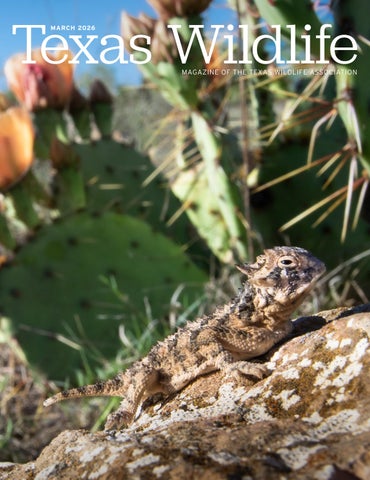
Create a flipbook