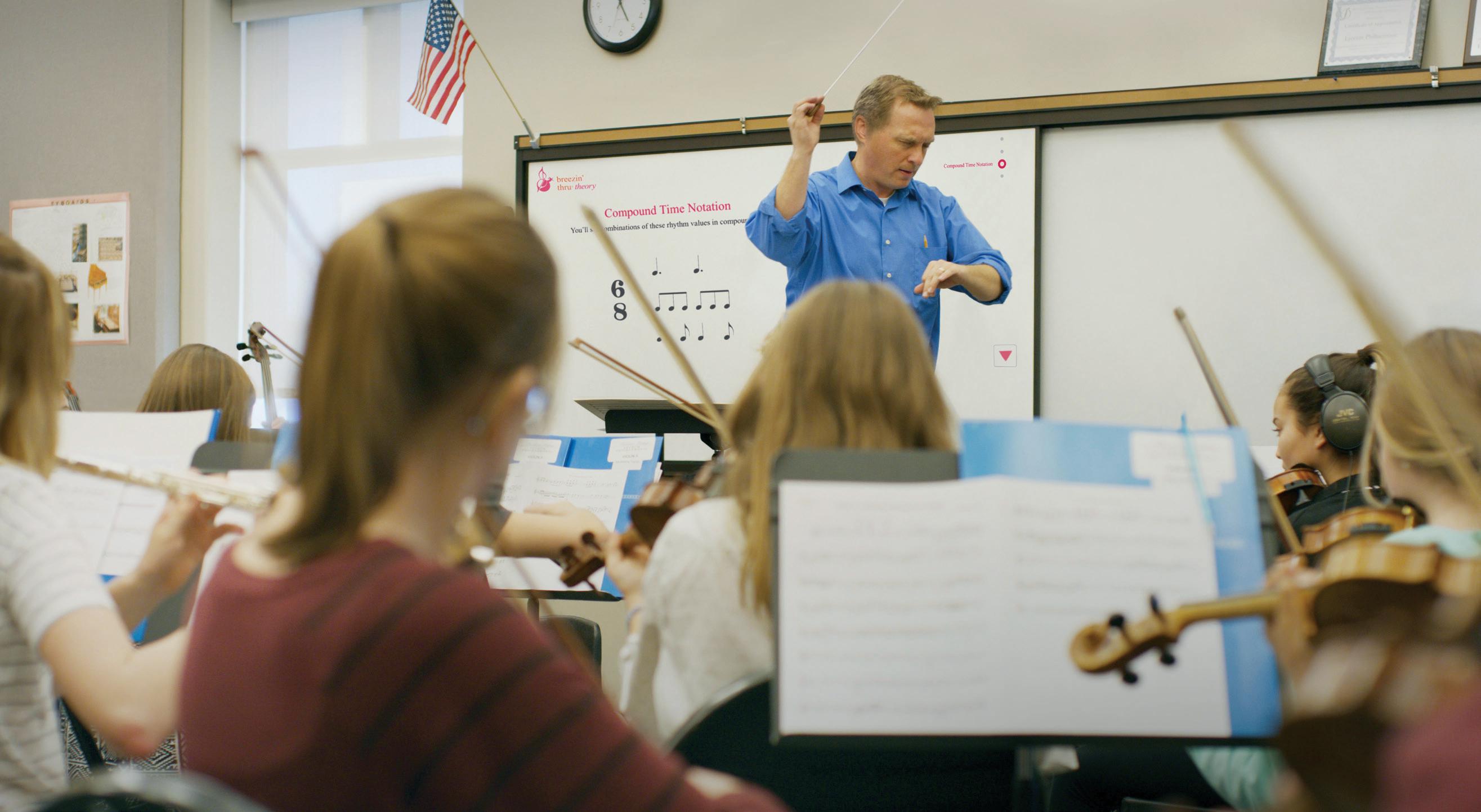
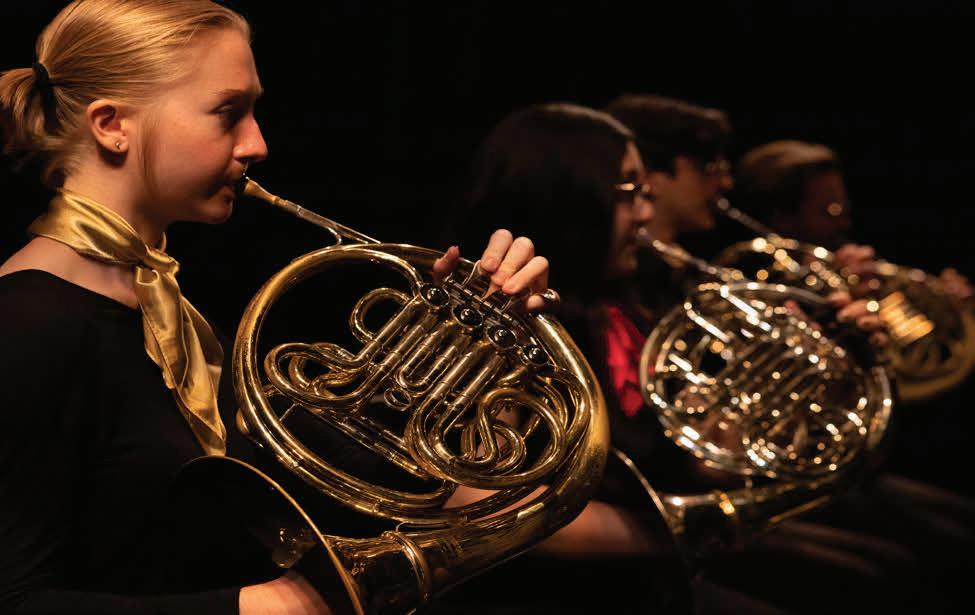
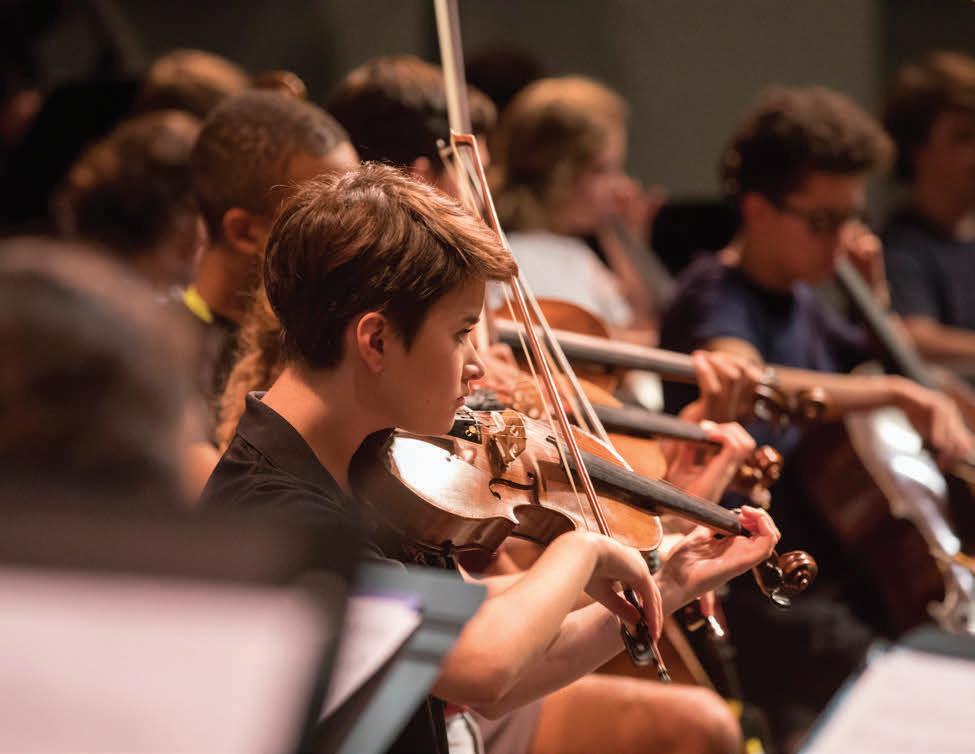
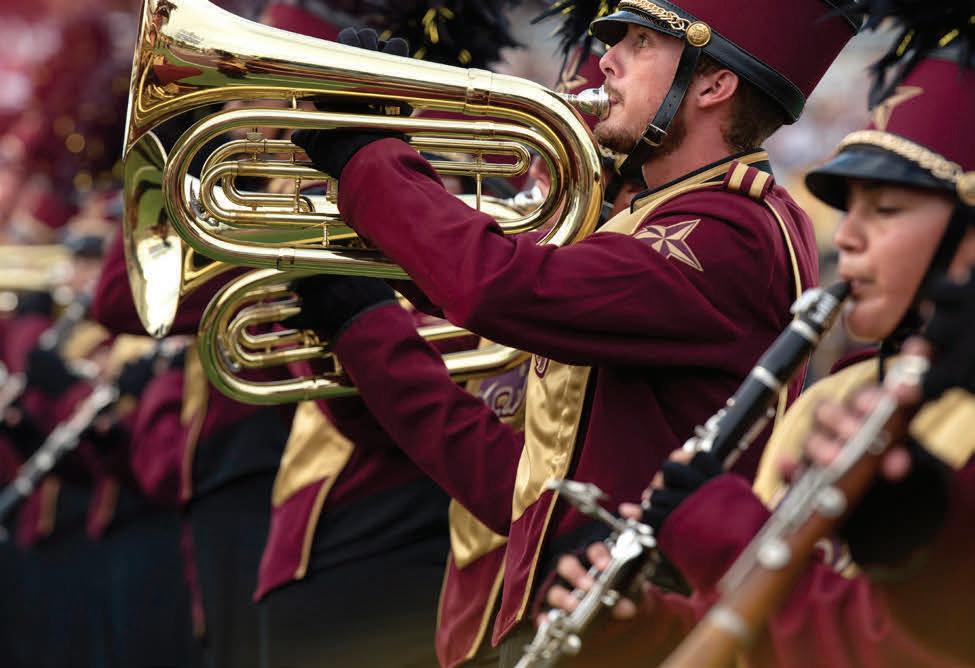
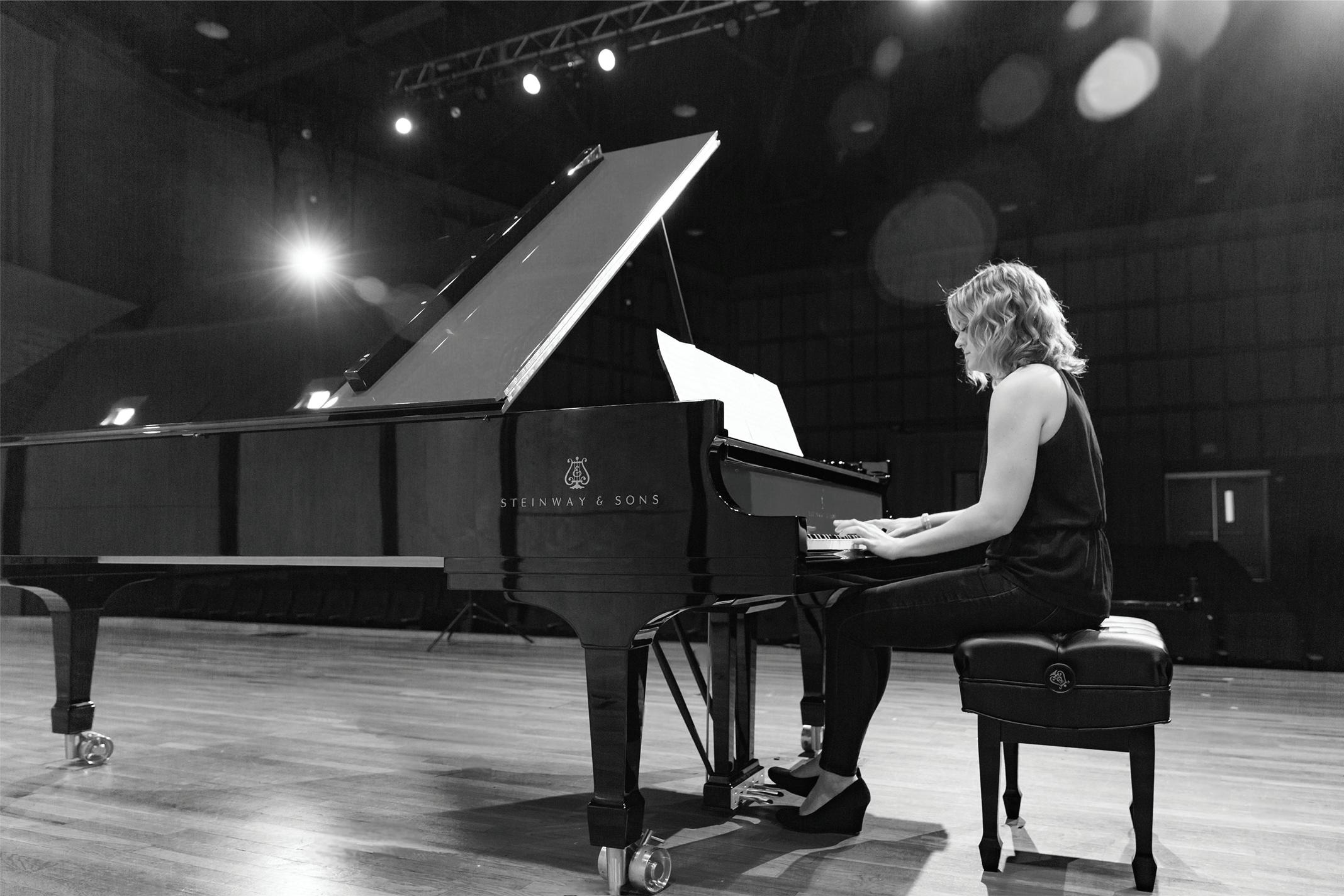
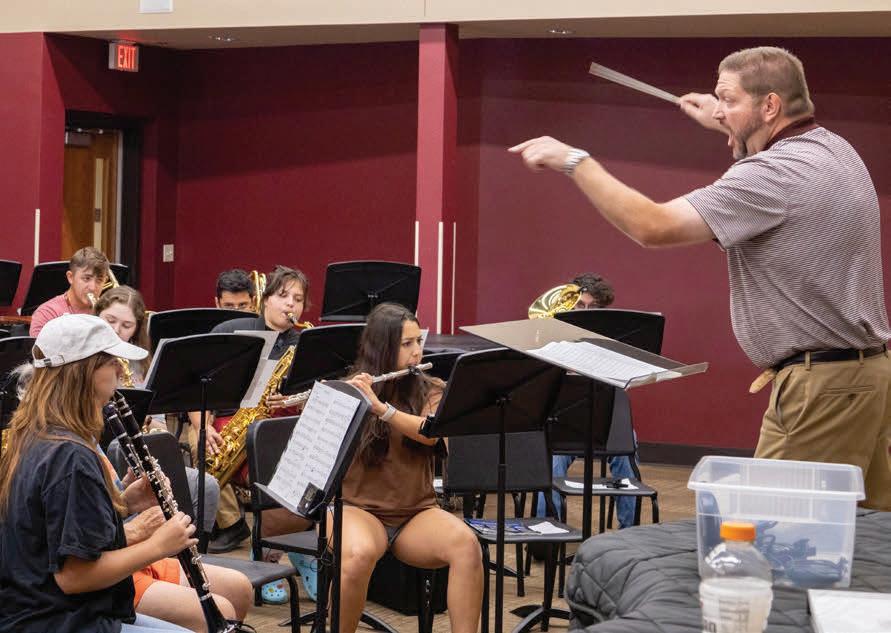
When students can quickly connect theory to the music in front of them, everything changes. Breezin’ Thru Theory builds rapid response, stronger sight reading, and deeper understanding. It’s fun and supports teachers in two powerful ways:
• In-the-moment: with NEW Theory On The Go and Breezin’ Thru Fingerings, you can address concepts quickly during rehearsals.
• Beyond rehearsal: with 24 chapters of sca olded content, it builds skills methodically thru the year, ensuring no learning gaps, and saving you class and marking time.
The result? Less time struggling, more time making music, and rehearsals that really sing.
12 Celebrating a Career Shaped by a Lifelong Love of Music by
karen cross
Following 19 years of service, Kay Vanlandingham retired from her position as TMEA Administrative Director. Learn more about Kay’s musical journey and her lasting impact on the association.
20 Plan with Purpose. Teach with Intent. by
laura bell and katie lewis
Starting with student engagement this summer and backward planning for the year ahead, you can build program success and foster confident, disciplined, and inspired musicians.
26 Beyond the Notes by
tony mariano
From personal experience to deep data analysis emerged five essential elements for meaningful music-making in a successful classroom environment.
36 Storybook Lessons for Social-Emotional Learning by
meredith mooney
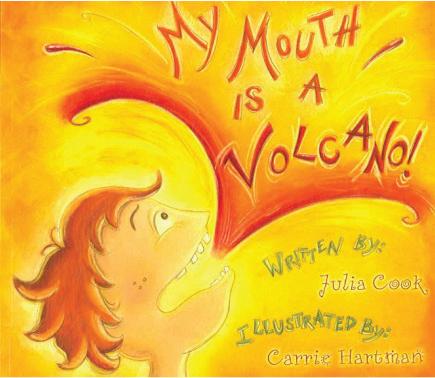
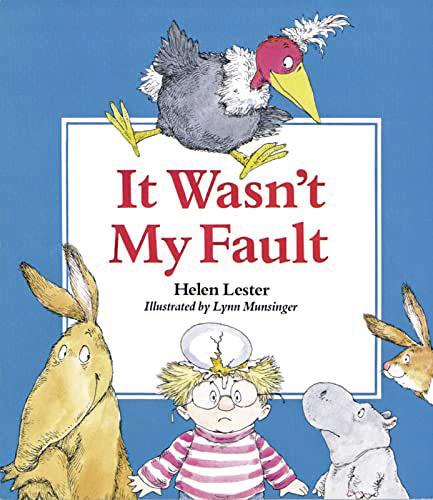
Integrate social-emotional learning into your classroom through creative storybookbased lessons. Foster connection, character development, and musical growth in young learners.
COLUMNS
2 From the Editor
4 TMEA News
6 President
16 Band
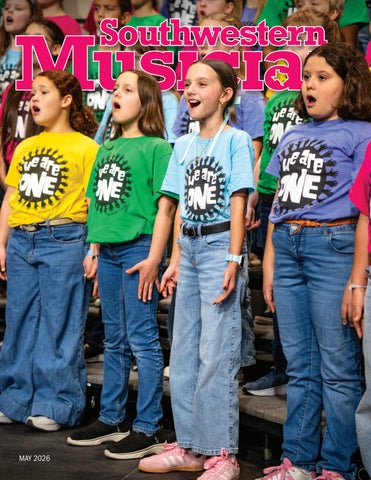
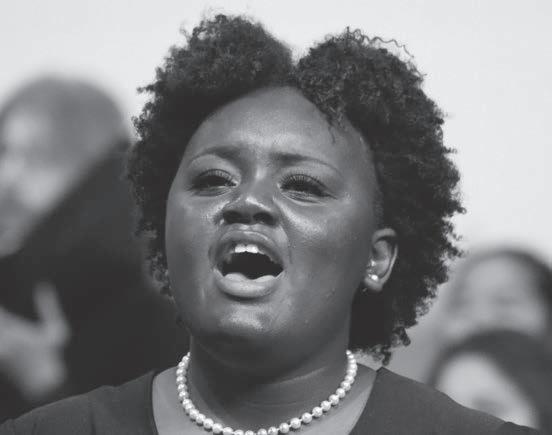
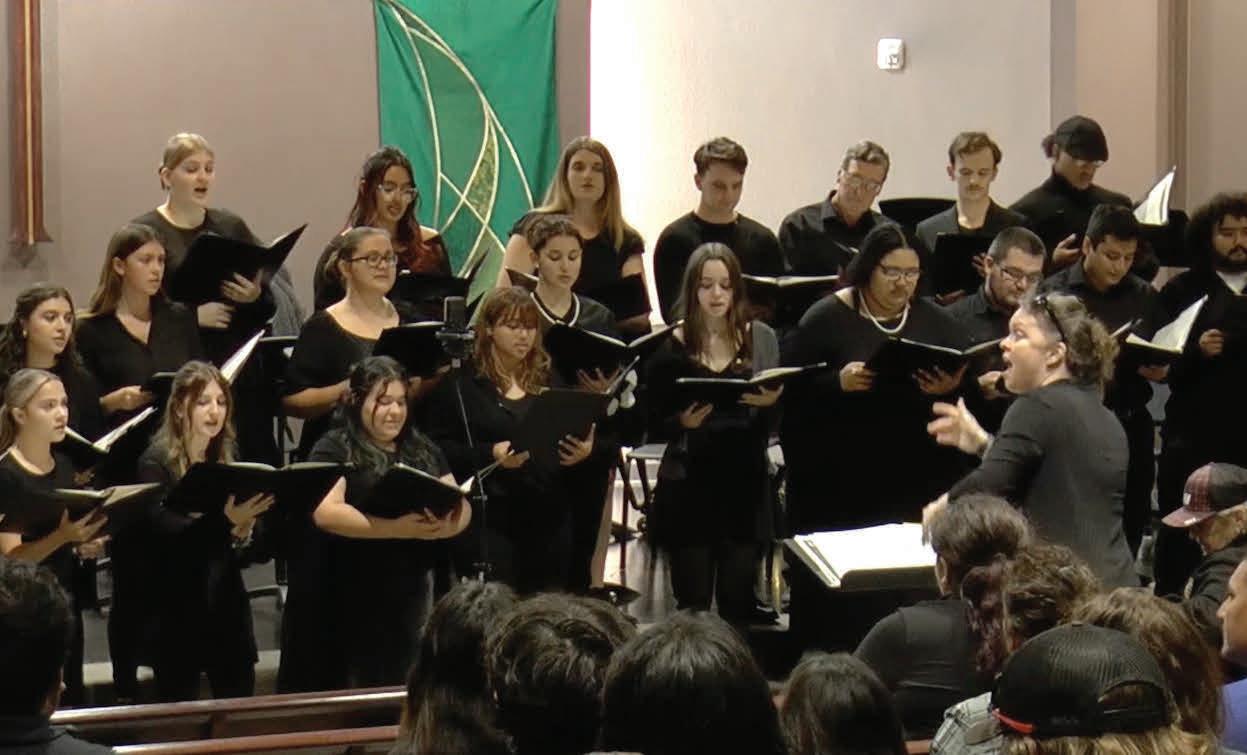
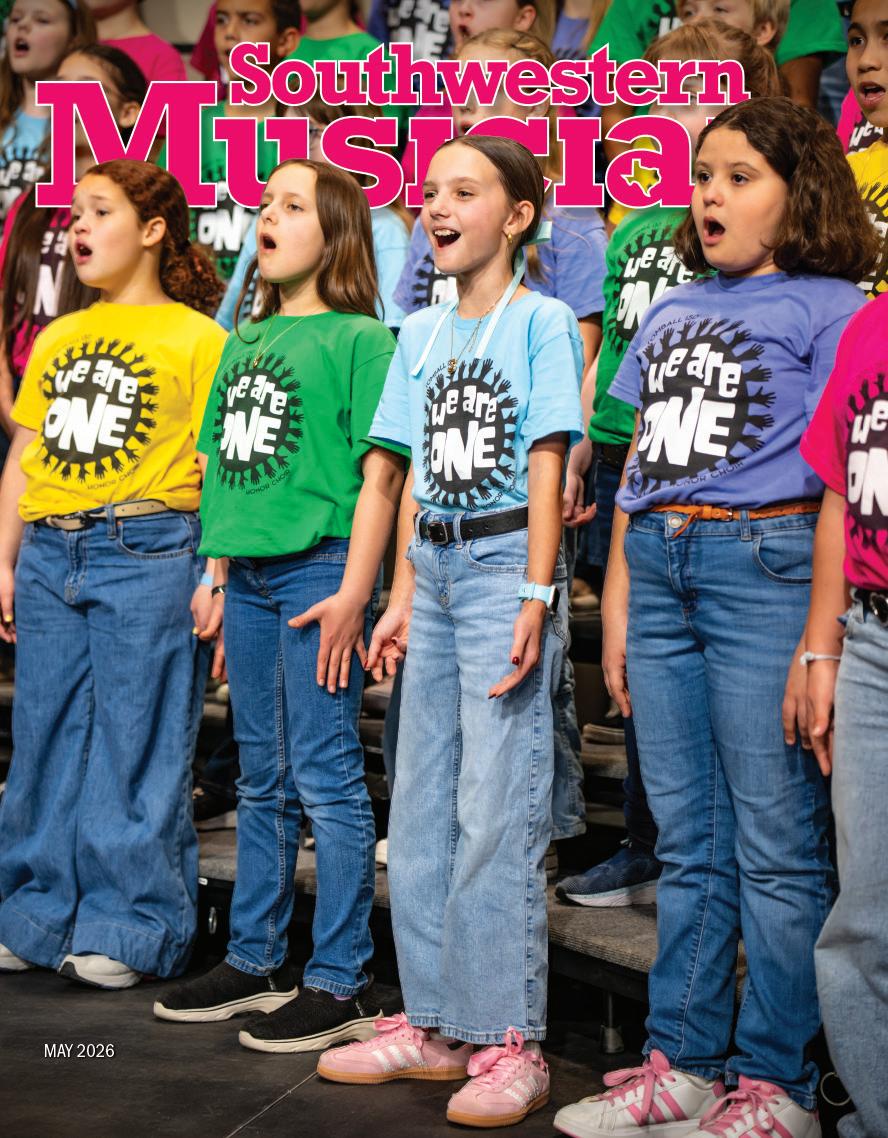
ON THE COVER: (L–R) Sarah Toyens Ojeda, Ellis Unser, Stella Hindes, and Alexandria Gutierrez perform with the Tomball ISD Honor Choir during the 2026 TMEA Clinic/ Convention. Photo by Joe Aigner-Varoz/AV Photography.
24 Orchestra
32 Vocal
38 Elementary
42 College
7 Membership Update and Renewal
40 Online Learning for Elementary Educators
From the Editor
The end of the school year also brings the conclusion of this volume of Southwestern Musician. Throughout the year, music educators have shared insights from diverse educational environments, offering valuable strategies and teaching techniques to assist teachers and promote student engagement and success. On behalf of our readers, I extend sincere thanks to those who authored full-length feature articles, shared actionable strategies in our one-page Sound Ideas series, and responded to questions in our Q&A segments. Your contributions to this volume are invaluable.
This issue contains insights and pedagogy to foster high-quality music education across the state. The feature articles share information about setting a plan for future success, the benefits of guitar curriculum for students, and the creation of storybook lessons for the elementary music classroom. TMEA News includes updates on programs, legislative developments, and our strategic planning process, while our Vice-Presidents’ columns provide important divisional information.
Additionally, on page 12, we recognize Kay Vanlandingham on her retirement following 19 years of service.
This resource would not be possible without the support of institutional and sustaining members. Throughout the eight issues of this volume of Southwestern Musician, you have seen advertisements from our partners who assist you in the classroom and create a lifelong love of music that helps TMEA fulfill our mission. We are deeply grateful for their contributions and support in bringing you the best possible music education magazine.
As this chapter of the school year closes, pause to recognize the positive impact you’ve made on the students who have grown through music education under your leadership. No matter what their starting point, your dedication and investment in them will remain with them for life. You’ve helped them not only recognize their potential but also discover the power of music in their lives. Through your guidance, they’ve experienced how music can inspire and give voice to emotions that words alone cannot express.
Enjoy the conclusion of the school year and your well-deserved time off!
Joe Muñoz Executive Director jmunoz@tmea.org
Editor-in-Chief: Joe Muñoz
Managing Editor: Karen Cross
Advertising Manager: Zachary Gersch
TMEA Executive Board
President: Jennifer Martin, Fort Worth ISD president@tmea.org / 817-814-2640
President-Elect: Joshua McGuire, Rock Hill HS presidentelect@tmea.org / 945-678-2971
OFFICIAL PUBLICATION OF TEXAS MUSIC EDUCATORS ASSOCIATION
JUNE 9-13, 2026
Texas Tech University School of music
Texas Tech University School of music
Band & Orchestra Camp
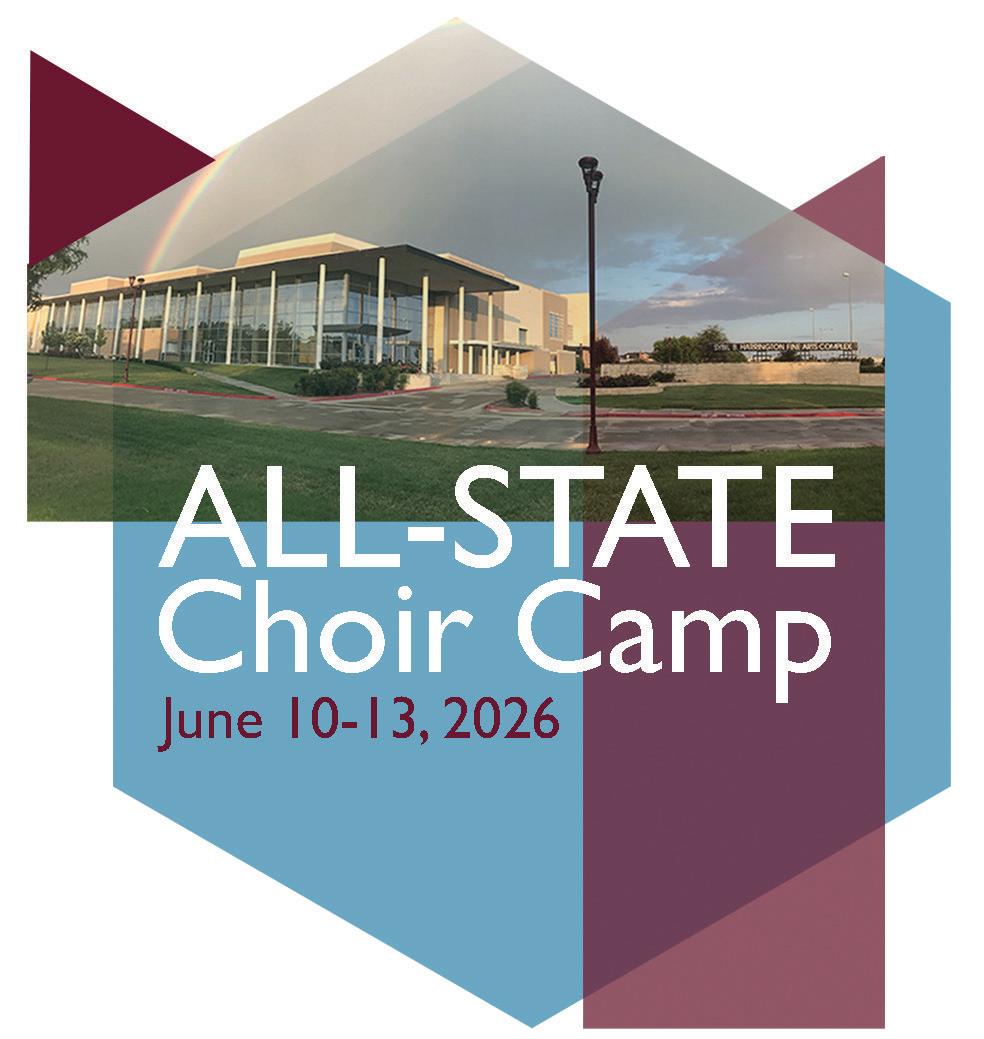
JUNE 28-July 4, 2026 All-State Choir Camp
TMEA News
By Joe Muñoz
As we finish out the school year, it is a great time to look back at all that you and your students have accomplished. You navigated changes presented at the beginning of the year and still found ways to ensure highquality music education reached every child involved in music in Texas. This time of year also marks the start of TMEA’s cycle of preparing for the nation’s largest music educators professional development opportunity. As this year concludes, look at the positive impact your students experienced because of your investment in them and in music education.
STRATEGIC PLAN
The TMEA Strategic Plan creation process is underway. In April, stakeholders were engaged through surveys, focus groups, and individual interviews. Participants represented all divisions, areas of the state, and teaching levels and included industry partners and staff members. The Strategic Planning Task Force will meet this month to review the data provided through this process and begin discussions on how to chart TMEA’s future. We anticipate sharing the 2027–2030 TMEA Strategic Plan in January 2027. Thanks go to everyone who contributed to this important project.
REGION MEETINGS
While some meetings were held in April, many are this month. Elections for Region leadership will be held and business updates shared, so be sure to attend. Go to www.tmea.org/regionmeetings.
Members should attend their Region meeting reflected in the 2026–2028 Region alignment, found at www.tmea.org/align. Finally, make a note in your calendar for late July to check the meeting schedule webpage again so you don’t miss the equally important fall meeting, where critical information about the start of the school year is shared.
CONVENTION PROPOSALS
Clinic and Music Showcase proposals are accepted online until June 1. Whether you apply or simply encourage others to, know that this component of our convention is vital to thousands of music educators. Members have consistently communicated that learning from Texas music educators who teach in situations like theirs is essential to their success. Go to www.tmea.org/proposals to learn more.
New this year, if you submit a clinic proposal for the 2027 TMEA Clinic/Convention, you can agree to have your proposal also considered for an invitation to create a video course for the Online Learning platform.
NEW ONLINE LEARNING COURSES
We recently released new courses on the TMEA Online Learning platform. Since its inception in October 2024, TMEA members
have earned over 500 hours of CPE credit, learning from several amazing educators in our state. This summer is a great time to learn at your own pace at www.tmea.org/online-learning.
LEGISLATIVE UPDATE
The election cycle is in full swing. By the arrival of this issue, the candidates for the state Senate, House, and SBOE will have been selected for the November general election.
Now is the critical time for you to engage in the elections in your respective legislative and SBOE districts. As we move toward the November election, you will hear more from us through the Texas Arts Education Campaign, and we will be sharing the general election candidates’ Fine Arts Survey responses in September.
Now is the time to sign up at www.txartsed.org/join-us!
RENEW YOUR MEMBERSHIP
TMEA memberships expire on June 30. By renewing your membership for 2026–2027 now at www.tmea.org/renew, you’re taking a proactive step to ensure your membership is in good standing before the busy start of the new school year in August. This early renewal will give you peace of mind and a sense of preparedness.
When you renew your membership, you can also elect to add liability insurance. This insurance is not just a small investment; it’s a crucial step in ensuring you have support when you need it. As the educational landscape continues to evolve, the importance of this coverage only increases.
SUMMER CONVENTIONS
The summer conventions hosted July 16–19 by Texas Bandmasters Association, Texas Choral Directors Association, and Texas Orchestra Directors Association offer us a wonderful opportunity to reconnect and get reenergized for another school year. TMEA staff and Executive Board will attend, and we hope to see many of you there, ready to learn and be inspired.
TMEA STAFF UPDATE
Kay Vanlandingham retired from TMEA on April 30, after serving 19 years as the Administrative Director. She has helped shape our association in critical ways, ensuring that Regions’ policies and procedures align with TMEA’s mission. Kay also administered the TMEA Scholarship Program, Texas Future Music Educator chapters, Region Financial reporting, the TMEA Mentoring Network, and Online Learning. Her leadership has helped shape TMEA’s future, and I know our members will always remember her kindness and willingness to support them. TMEA is grateful for her dedicated service and passion for music education and our association. We wish her all the best in her retirement! I invite you to read more about Kay and her impact on page 12. 0
UNIVERSITY OF TEXAS AT EL PASO DEPARTMENT OF MUSIC
SUMMER CAMPS 2026
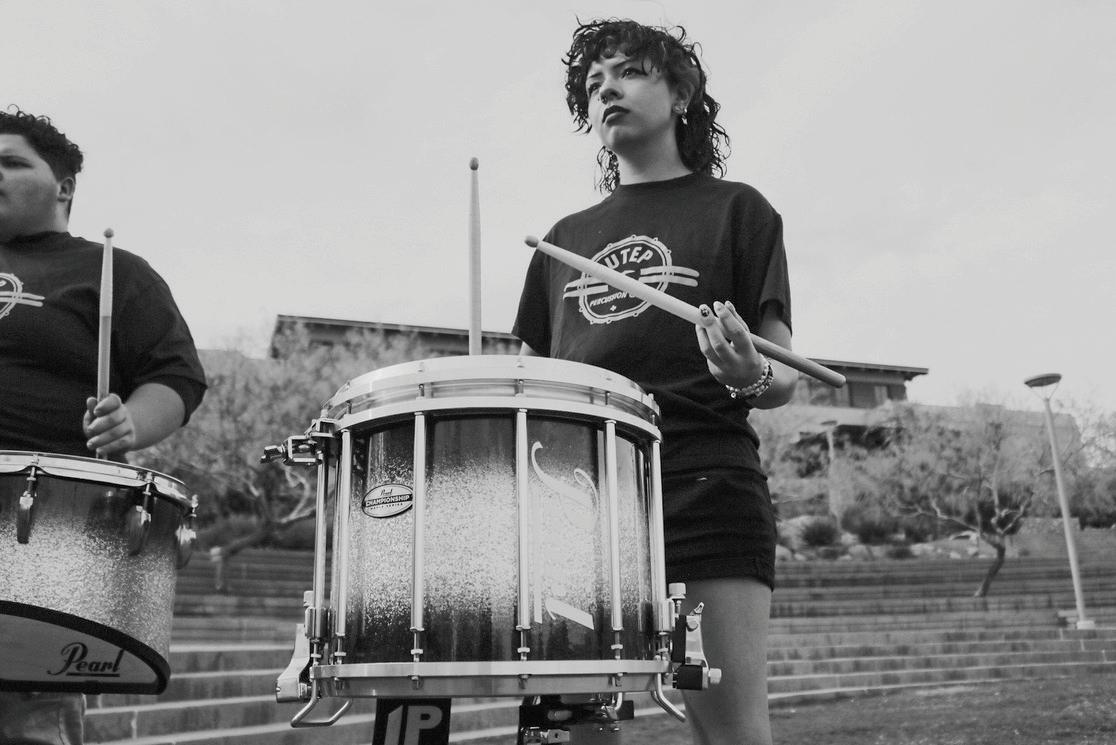
Drum Major Camp
June 15th-18th
UTEP Bands invites you to enjoy summer with us, establishing new friendships, collaborating with peers, receiving mentorship from UTEP Department of Music faculty, and much more.
All State Choir Camp
July 6th-9th
Join other talented singers in a fun-filled week of activities geared towards learning the Texas All-State literature.
TMEA PRESIDENT
JENNIFER MARTIN
Your students, your friends, your family and, most importantly, you deserve the version of you that is grounded, whole, stable, and rested.
Essential Rest
As we near the finish line of another school year, it’s a great time to celebrate the many wins, big and small, of this year. I can guarantee that regardless of the number of external accolades that came your way this year, the music and your work made students’ lives better! Your class was more than just a favorite—it was a place where students felt truly accepted. It gave them a reason to come to school, a space to express themselves without words, and the freedom to create. Most importantly, it was where they could be fully themselves, knowing they had an adult who believed in them and stood firmly in their corner.
The behind-the-scenes work that makes this possible is demanding in many ways, and by the end of the year, it can leave us worn down or even burned out. Teaching is a marathon, not a sprint, and yet it often seems as if we are running at full speed nonstop! So, just as rest is essential for recovery from intense workouts, it is equally vital for us as educators. Taking time to rest and recharge allows us to restore both our bodies and our minds so we can continue showing up for our students.
I’ve found music educators, including me, to be notoriously bad at taking time to rest! While rest is a simple word and seemingly simple concept, it’s actually a pretty deep topic. Sometimes getting eight hours of sleep is not the key to getting back your energy and spark. As you look toward this summer, consider trying out multiple types
MARK YOUR CALENDAR
check www.tmea .org for updates
May—Attend your spring Region meeting (www.tmea.org/regionmeetings).
May—Renew your membership for the 2026–2027 school year.
May 1— Deadline to nominate students for a Texas Music Scholar award.
May 1–June 1—2027 Clinic/Convention proposals accepted online.
June 30—All 2025–2026 TMEA memberships expire.
July 16–18—TBA, TCDA, TODA conventions in San Antonio.
of rest. The following are seven types often shared by experts on the topic.
PHYSICAL REST
This one is one of the more obvious types of rest and one that comes to mind quickly for good reason. With the myriad of obligations, music educators are regularly engaged early in the morning until late at night and on weekends. Combine that with personal and family commitments, and you are likely running on fumes by now and in need of sleep! Summer is a great time to start developing more consistent sleep habits. However, you likely need more than just physical rest to feel fully refreshed.
MENTAL REST
In the ’80s and ’90s, multiple research studies reported on the number of decisions that teachers make every day (some citing around 1,500). I imagine that number has only increased with the growing complexity of our jobs. Music educators must be mentally engaged and sharp in and out of rehearsal to be effective. Being on all the time is taxing, and yet it also can be tough to turn off. Take time to find activities that allow your brain to rest.
Slow your thoughts and block out of the noise of day-to-day life.
EMOTIONAL REST
I believe teaching is one of the most emotionally demanding careers. You’re guid-
ing students not just through music but through the ups and downs of growing up during some of the most important transition periods of their lives. You cheer for their wins, support them through frustrations, and carry emotions throughout the
TMEA Membership
Update Your Record
Consider Liability Insurance
TEXAS LUTHERAN UNIVERSITY’S
JUNE 21 - JUNE 26, 2026 BAND | ORCHESTRA | CHOIR
MIDDLE & HIGH SCHO O L BANDS
ACHIEVEMENT- BASED SCHOLARSHIPS AVAILABLE FOR MORE DETAILS, EVENT UPDATES, AND TO REGISTER, VISIT TLU.EDU/SMA
year. The highs are amazing, the lows can hit hard, and it truly is a roller coaster. It’s incredibly meaningful and deeply rewarding work—but it can also be exhausting. Take time to recharge by surrounding yourself with people you can be authentic and honest with. Spend time with people and with activities that bring you peace.
SENSORY REST
Sensory overload is an obvious consequence of our work as music educators. All beautiful performances must start somewhere, and it all happens in our classrooms. Besides the sound of music in progress, there is the constant barrage of emails, texts, app notifications, announcements over the PA during class, and questions from students. We are surrounded with all sorts of stimuli these days. Many fun ways to relax come in the form of a screen—video games, online reading, reels, and more. They certainly have their place in recreation time, but overreliance can prevent the restoration you need. Spend some time away from a screen and away from the busy stimuli of the world!
SOCIAL REST
Pay attention to your social battery and spend time with people you connect with and enjoy this summer. If you have a more introverted nature, prioritize your time alone and with people who are easier to be around. If you are more extroverted by nature, be intentional to schedule time with positive people on a regular basis.
CREATIVE REST
This is the one on the list that at first seemed strange to me. We are all musicians and got into the business because we love the arts and creativity, right? However, if we spend all our time doing, our brains and bodies don’t have time to take it all in and synthesize. We potentially derail our best work by not letting things take time to breathe. Be a consumer and patron of the arts, not just a producer! Attend concerts or shows, go to an art museum, read books, or travel somewhere breathtakingly beautiful. Carve out some time to immerse yourself in great art not to academically learn it, but to soak it in and simply exist in that space.
SPIRITUAL REST
This will look different for different people, but we can all benefit from feeling connected to something greater than
ourselves. For me personally, this can mean finding connections in a way that doesn’t require me to be in charge or run everything. We spend so much time running our classrooms and programs that there is rest in being a different part of the team.
While each of these types of rest could be presented in much more depth, I hope that reading about them might motivate you to consider what could help you recharge. If reading any of them immediately made you think there’s no way I can possibly get that type of rest, it may be what you need the most! You are worth it to find a way!
Finally, all the information in the world on types of rest won’t help if you won’t give yourself permission to rest. Your students, your friends, your family, and, most importantly, you deserve the version of you that is grounded, whole, stable, and rested.
EXECUTIVE BOARD MEETING REPORT
The Executive Board met on March 27–28 and covered a wide range of business. The Board examined TMEA policies and procedures, All-State processes, and ensemble participation rules, while also evaluating the 2026 convention through reports on attendance, logistics, and services and planning for the 2027 convention’s scheduling.
Based on TMEA member requests and Region reports, the Board approved multiple changes, including audition policies about electronic device use, materials for visually impaired students, All-State student participation policies, and the renaming of the two All-State Mixed Choirs to the 1A–4A Mixed Choir and the 5A–6A Mixed Choir. All changes are reflected in their respective documents (e.g., statelevel audition policies and convention performance agreements). The Board’s next meeting is June 19–21, 2026.
CONVENTION PROPOSALS
TMEA convention session proposals are accepted online May 1–June 1. Your experiences, ideas, and solutions come straight from our classrooms, rehearsal halls, and communities and are readily applicable to attendees. Submitting a proposal to present at the TMEA convention is a powerful way to share what’s working, spark new ideas, and contribute to the collective growth of music education across our state!
SUMMER CONVENTIONS
I hope to see you in San Antonio for the TBA, TCDA, and TODA conventions. It’s the best way to make the transition back to the school year! 0
Jennifer Martin is the Orchestra/ Mariachi Specialist for Fort Worth ISD. president@tmea.org
HONORING 19 YEARS OF LEADERSHIP AND SUPPORT
On behalf of the TMEA Executive Board, I offer our sincere thanks and hearty congratulations to Kay Vanlandingham on her retirement! Kay has selflessly served and supported 19 Executive Boards through thick and thin. She has collaborated with excellence, grace, and her patented wit and charm. She has been “on call” for 19 years— handling phone calls, texts, emails, and more requests that you can imagine. Whatever was needed, Kay always made sure it happened, and she also made you feel valued, encouraged, and supported. Thank you, Kay!
Be a part of the Largest Summer
Early registration deadline is June 17, 2026.
Printed Packet deadline is June 1, 2026.
CONVENTION HIGHLIGHTS:
• 50+ member curated clinics and reading sessions
• 15 publisher sponsored reading sessions
• *New* mini-clinics in the Exhibit Hall
• Ecumenical Worship Service
• TCDA Elementary Honor and MS/JH All-State Choirs
• Opportunities to connect with colleagues and friends
PERFORMING GROUPS:
• Chrysalis Chamber Choir - Adrian Kirtley
• Segundo Barrio Children’s Chorus - J. Garza & R. Castillo
• St. Paul Choral Scholars - Matthew Perez
HIGH SCHOOL STUDENT LEADERSHIP DAYS:
July 24, 2026 - Houston, San Antonio, Dallas, Rio Grande Valley, San Angelo, Lubbock
July 25, 2026 - Austin
It’s TODA’s 65th Anniversary!
Register for the Annual Convention todaweb.org or call (512) 474-2801.
Register by June 15 to receive the early DISCOUNT. Book your hotel online now for best choices.
HEADLINERS:
CONVENTION HIGHLIGHTS:
• 65th Anniversary Fiesta with entertainment
• Clinics featuring Rehearsal Strategies, Recruitment, Inviting Cultures through Leadership, Cello Hardy Party, Music Literacy Beyond Rhythm and Pitch and so much more!
• 9 Reading Sessions
• Invited School Ensembles
• Celebrations and Awards Event
DON’T MISS!
• Thursday Welcome party with “Open Mic”
• Friday Anniversary Fiesta and Silent Auction
• Featured luncheon for Retired Directors
• Young Directors Coffee
• NEW! Exhibit Hall Mini-Clinics: Discovering Secrets of UIL; Harmony Dir. Introduction and Everyday Uses; Work, Rest Play; Creating Student-Centered Music for the Modern Classroom
• NEW! Exhibit Hall brief performances
NEW THIS YEAR!
Academy for New Teachers
Thursday July 16, 7:30am - 5:00pm For first year directors • Attendees receive CPE credit
Strategic Booster Institute
Saturday July 18, 8:00am - 5:00pm Open to all choir and orchestra boosters
June 15 deadline to order printed TCDA reading packets. Register by July 1 to receive the early DISCOUNT. Book your hotel online now for best choices.
Dr. Derrick Fox Associate Dean at Michigan State University Headliner Sessions
Gemma Arguelles
Holy Names University Elementary Honor Choir Conductor
Robert Gibson Missouri State University MS/JH All-State Conductor
Leah Elaine Hanley
MS Orchestra Director and Founding Director, Salute to Music, Bronx, NY
Jeffery Grogan Baylor University Director of Orchestral Activities
Khristine Raymond MS Orchestra Director, Queens, NY 2023 Big Apple Educators Award Recipient
Music Conventions
San Antonio, Texas
TBA Welcome BBQ
Wed, July 15, 6:00pm - 9:00pm Families invited too!
Early Bird Discount through June 15.
Academy for New Teachers
Thurs, July 16, 7:30am - 5:00pm
For first-year teachers. Attendees receive CPE credit plus TBA Active Membership and convention entrance for FREE
65+ CLINICS
TBA Student Summit Sat, July 18, 8:00am - 4:00pm
Strategic Booster Institute Sat, July 18, 8:00am - 5:00pm
Complete list of clinics on TBA website (over 30 additional clinics designed for ALL DIRECTORS) Middle School Clinics:
• Beginner Clarinet - Dr. Scott Deppe, Rachel Johnstone, Lauren Jones
• Beginner Saxophone - Billy McPhail, Sherry Poteet
• Beginner Trumpet - Kenny Capshaw, Jarred Dodd, Lynne Jackson
• Beginner Trombone - George Little, Adrian Teti
• Building the Band, Building the Culture - John Liner, Erika Uribe
• Intentional Sectional Design - Melodianne Mallow, Chris Meredith, Darcy Vogt Williams, Gary Williams
• Let’s Talk Literature - Laura Bell, Katie Lewis
• Midwest MS Director Panel - Amy Allison Rivera, Meredith Bishop, Catharine Klein, Liz Love, Ross Patterson
• Organizing Your Year for Meaningful Student GrowthMeredith Bishop
• Preparing Beginners for Performance Bands - Britni Hummel
High School Clinics:
• Marching Band Demo Clinics - Santa Clara Vanguard Brass, Longview HS, Raymondville ECHS, Vandegrift HS
• UDB Series:
#1 Setting Drill - An Interactive Director Clinic: Jeff Young, Reid Atkinson; #2 Guard for Non-Guard Directors: Tykeen Rainey, Reid Atkinson; #3 Enhancing Teaching & Learning at the Field Level: Kendall Santos, Reid Atkinson
Carrollton Wind Symphony
Pete Hazzard, Conductor
Cypress Winds Community Band
Todd Clearwater & Tom Harrington, Conductors
• Concepts for Outdoor Percussion - Kennan Wylie & Marcus HS Percussion
• Developing Expressive Performers - Michael Rosales & Gene Tomas HS Band
• How to Teach Style - Richard Floyd
• Individual Player Development - Jana Harvey, Travis Pruitt
• Rehearsal Techniques - Robert Herrings, III & Vista Ridge Wind Ensemble
• Taking the “Chore” Out of Choreography - Zach Santos
• Translating DCI Rehearsal Techniques to HS Band and Sound Like Texas, Move Like Avon - Matt Hartloff, Dean Westman
• TAME Mariachi Clinics
Jazz Clinics:
• Blues and the Big Band: The Power of Unison - Peter Blair
• Jazz Piano and Drum Set for the Jazz and Non-Jazz Musician - Richard De La Riva, Dan Witte
• Starting Strong: Building a Year-Long Blueprint for Jazz Ensemble Success - Amanda Stevenson & Churchill HS Jazz Ensemble
NEW THIS YEAR! - “TED Talk” Style Clinics:
• Corey Graves, Matt Harloff, Robert Herrings III, Jeremy Spicer, Dean Westman, Darcy Vogt Williams
PERFORMANCES:
U.S. Coast Guard Band
Capt. Adam R. Williamson, Director
U.S. Air Force Band of the West
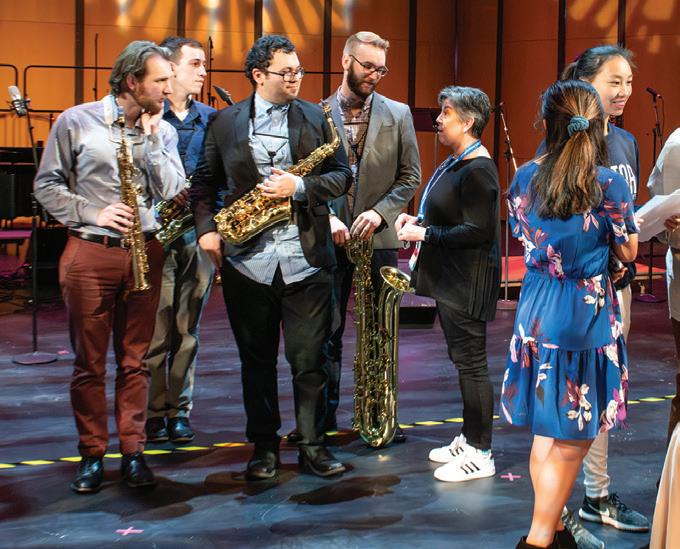
Capt. David C. Regner, Commander and Conductor Moanin’ Frogs Saxophone Sextet
RANDALL STANDRIDGE 2026 Featured Composer
DR. STEPHEN PETERSON 2026 Featured Clinician
Celebrating a Career Shaped by a Lifelong Love of Music
By Karen Cross
When Kay Vanlandingham joined the TMEA staff in 2007, she brought 31 years of teaching and conducting experience and a lifelong love of music. She proved to be fiercely independent and quick to learn, applying the agility and confidence required of any successful music educator to the job.
For 19 years, the connecting door between her office and mine has rarely been closed. And while eavesdropping was almost never my intent, I’ve overheard her side of countless phone calls with members, homeschool parents, scholarship applicants, Region Chairs, and more. I’ve caught snippets of her conversations with fellow staff members, Board members, and service providers. After years of hearing her voice through that open door, it felt only right, as her retirement approached, to finally sit down together and learn more about her story. I’m grateful to share some of it here.
How did you get your start as a music educator?
That’s a good question, because growing up, I had no picture of what a music ed degree looked like. All the way through school, I didn’t have a single teacher trained as an orchestra director.
My first real influences were the Fort Worth Sagamore Hill Baptist Church minister of music, Gerald Ray, and his wife, Trevelyn. As a child, I was in choir, and that was my happy place. That’s where I fell in love with music. They saw something in me and encouraged my mom to get me piano lessons. But, we couldn’t afford a piano, so, when I was seven, my parents went to a pawn shop and bought me a violin instead. A neighbor taught me twice a week for $2 a lesson. And when my parents told her we couldn’t keep that up, she gave me one of those two for free each week. People invested in me early on and that made a difference.
What were your school days like as a violinist?
My middle school orchestra was directed by the choir teacher
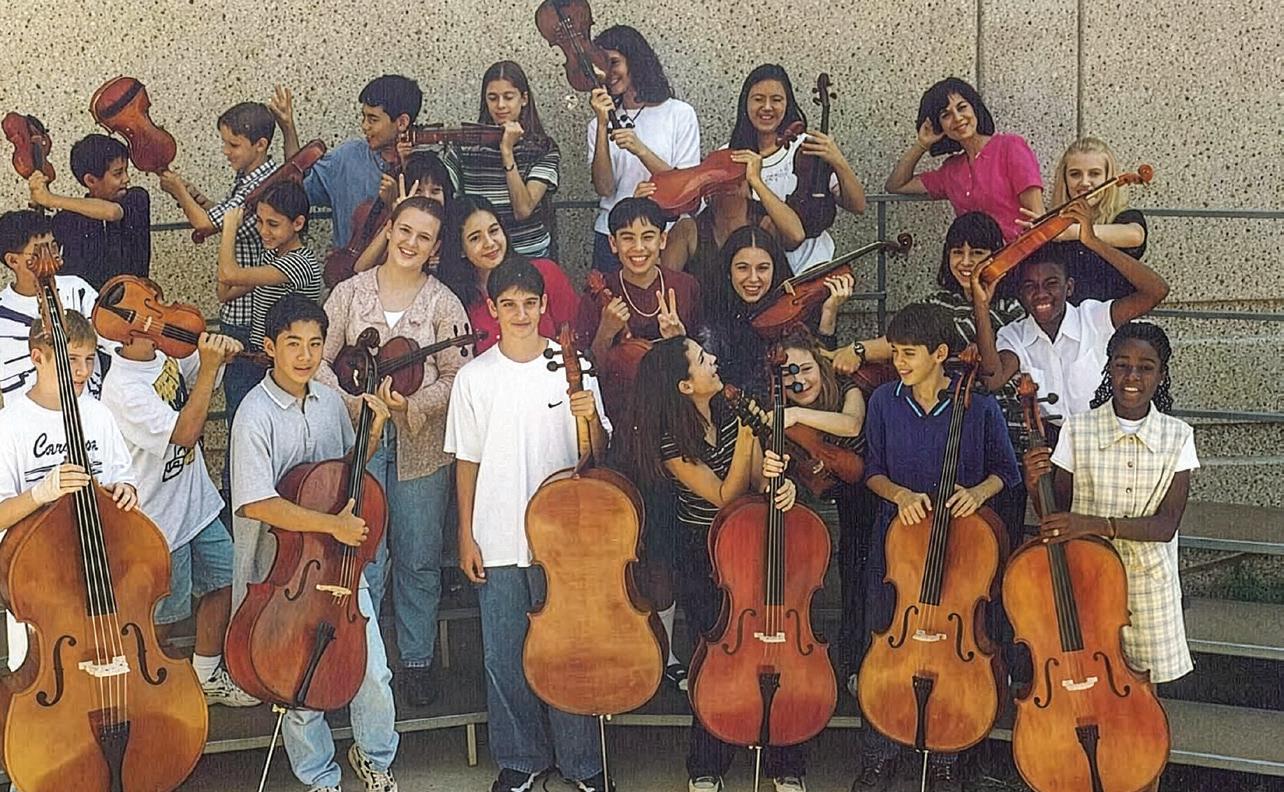
one year and the band director the next. When we moved to San Antonio for a bit, there was no orchestra at that school, so I learned to play horn and was a member of the band. When we returned to Fort Worth, I was in a high school orchestra class, led by a band director who mostly used that time as his planning period! Each day, I walked to school, violin case in hand. I placed it in its cubby, and at the end of the day, I got it back out and took it home. As far as ever being in an orchestra program like we’d think of now, I never had that experience. In high school, I did audition for the Fort Worth Youth Orchestra and made it. Then I auditioned for the All-City Orchestra, and I got principal second—all with no lessons, as my parents couldn’t afford them any longer.
With that as your beginning, how did you end up at TCU? I did well enough on the concerto competition that I placed second and got a small scholarship. Then, my high school orchestra director—the band director—did go to bat for me with somebody at TCU. And our principal’s secretary was a good friend of my mom’s, and she worked hard to get me a scholarship. So I ended up going to TCU with the help of some scholarships. When I started there in 1971, a semester hour cost $50, which was expensive, so I worked and lived at home for a couple of years. Growing up in Fort Worth, I already loved the Frogs and always wanted to go there.
Did you ever question your decision to major in music?
Oh yeah—when I got my first schedule! I saw how many hours I was going to have to be in class, how many labs I’d go to, and how many rehearsals I would be in. I looked at my schedule and then looked at my friend’s much lighter schedule as an English major and I was not happy! But, I stuck with it. I had a compassionate private lesson teacher, Alice McDaniel, who met me where I was and helped me grow. And I learned conducting from John Giordano, the Fort Worth Symphony conductor who also taught at TCU.
As the 2022 TODA Orchestra Director of the Year, Kay was invited to conduct the 2023 All-State Symphony Orchestra in playing the national anthem.
After you graduated, what was it like to be a new teacher? When I started, there was no support system or mentorship. It was just here’s your job, now go teach. In my first job in Arlington, I remember kids coming up saying, “Hey, we want to audition for TMEA,” and I had no idea what they were talking about! I had no background with TMEA; I had no experience with auditions. Now, when I talk with brand-new teachers, I know exactly how they’re feeling.
After marrying Glen, I joined him in Kenedy, Texas, where he was working as a music minister. With no orchestra program there, I taught middle school band, started a choir program, and even taught eighth grade English! After a couple of years, we moved to Round Rock and started a family. While staying home with our sons, Chris and Jeff, I taught private lessons. Then, earlier than I had planned, I was asked to take a position in Round Rock. I agreed, and began teaching orchestra at Grisham and Deerpark Middle Schools and at Westwood High School with Jerome Brillhart, who became my trusted mentor.
Three schools on your first job back—what was that like? Back in the ’80s, that was not at all uncommon. That said, when you have three different schools and five different preps, you have a lot to do. That’s when I really started learning how to organize. I think I’ve become more organized over time, especially in the position I’m in now, but it happened gradually. It’s not my natural inclination, and that surprises people. But no—it’s something I learned out of necessity, especially during all that travel.
What did you enjoy most about teaching?
I loved the preparation—what takes place before you ever step on the podium. Before the first rehearsal, there’s the research— historical, cultural, all of that—and then the composer’s background. What was going on at the time that prompted the composition? Then comes breaking the piece down to teach in logical, sequential steps. I love the preparation. Walk in prepared, and then you can teach with a certain level of confidence and inspire the people in front of you. That’s true at any age.
What is a standout moment from your teaching days?
It was a trip with the high school orchestra, once with Round Rock and once with McNeil High School, to Kenedy, Texas. We played in an un-air-conditioned high school auditorium, and the high school and middle school were let out so all the students could come hear the orchestra. We were playing for an audience who had never before heard music like that live. It was so much more rewarding than going to any festival and playing for three judges. Both times, my students came back with so much appreciation for what they had. I think it’s an opportunity many don’t think about doing. Reach back or reach out. It doesn’t require a lot.
With the benefit of hindsight, what lessons learned do you want to share with students and teachers?
It is important to take advantage of opportunities that come your way—especially those beyond your comfort zone. I can point to several experiences that helped shape who I am today. In first grade, when my teacher asked me to come in before school to help a classmate learn to read, I discovered a true love of teaching. As an eighth grader, I taught myself to play the mellophone and marched with the band. I experienced the power of community and the discipline required to be part of something larger than
myself. I also remember auditioning for a Broadway musical as a ninth grader—that deepened my appreciation for performance and collaboration. In different ways, each helped prepare me to be an effective music educator.
You mentioned what it was like to be a new teacher. So, what were your first days at TMEA like?
Bob Floyd hired me in 2007, and when I started at TMEA, I wasn’t completely sure about changing careers, but I thought I should at least give it a try. I was at retirement age as a teacher, but I couldn’t retire. I just felt the freedom to try something different, and this job let me still be connected to music education.
In my first days, the hardest thing was learning to use the postage machine! But the biggest highlight? And this really was great I realized I could make a copy without having to bring my own paper or worry about a page count! Seriously, though, at first, I dreaded when the phone would ring. What’s going to be on the other end? What question am I going to have to ask or answer? Now, after 19 years, I’m feeling pretty good about it. Helping people is always fulfilling.
Texas Future Music Educators is just one of our programs that has grown under your leadership. What have you enjoyed about that work?
I know not every student who’s in TFME is going to be a teacher. I wasn’t sure at that age what I wanted to do, but I knew I loved music. That was a no-brainer, but having never had a really good experience in a music classroom at school, I couldn’t see myself doing that. For TFME students, being able to come to the convention is important. They hear music that is probably more sophisticated than what they hear at their school. They go through the exhibit hall and see the instruments, they see the excitement, they sit in on a clinic or two. Planting that seed is very important during those high school years. Those students probably admire their music director, but then when they get to the convention, they see a lot more of those types of people around—that has to make a big impression. They see all these people dedicated to music education, and it’s something they can make a career of. This is a possibility!
With the Deerpark Middle School Orchestra students in the 1990s.
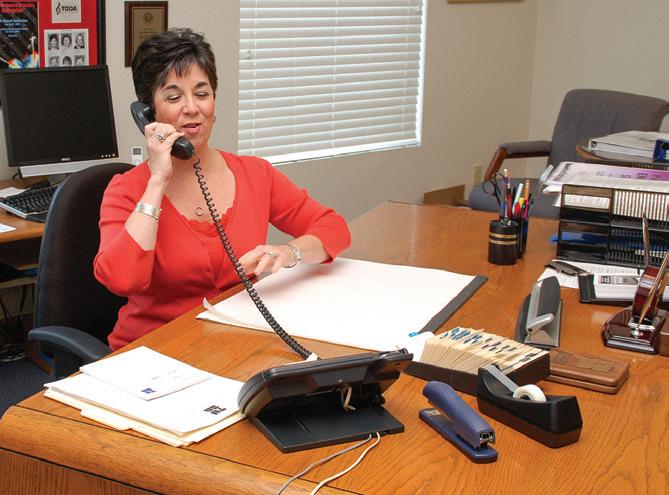
At TMEA in 2007, taking one of those first-year phone calls.
Your work on the 2020 convention production “It Starts With Music” was incredible—what did it mean to you? Oh, I loved it. It was an opportunity to be creative, to do something new. It’s probably one of my favorite memories!
I remember really well when we were talking about what to do for the general session of our centennial celebration. I floated the idea of having student groups perform. I was kind of like, “Why not? What a novel idea—let’s have some music for our music convention! ”
That said, I did question whether it was going to work. I had done productions before—I’d been part of productions—but this was for a bunch of music educators! So, we brought in Kris Andrews to produce and direct with me, and Darrell Umhoefer was the technical director. We worked on it every day leading up to the convention. The moment I will never forget is when the Duncanville choir member sang “Stand By Me.” Then the audience joined in—I just got goosebumps. I remember that experience so clearly. Every one of those groups rose to the occasion. It really was something so special!
As you retire, what would you like to share with the membership?
During my career, it has been a profound joy to guide thousands of students along their musical journeys—welcoming them on their very first day of band, orchestra, or choir, supporting them through the audition process, celebrating as they earn TMEA scholarships, and seeing them graduate with music education degrees. It is even more rewarding to watch the transformation of those students into highly successful educators and leaders within our great association. Mission accomplished!
Thank You, Kay
I am grateful to Kay for the steadfast support she has provided in her role on our staff. Her care for every member and attention to detail have strengthened our association and its mission. On behalf of the staff, I offer our collective thanks and wish her well in this well-deserved retirement! —Joe Muñoz, TMEA Executive Director
There are so many things Kay does, seen and unseen, that benefit the members of TMEA and fine arts students throughout the state. We are indebted to her standards of consistency and excellence and her ability to model and guide stability for our association. I am grateful for the encouragement she will continue to provide as a mentor and resource for years to come. —Joshua McGuire, TMEA President-Elect
Kay is a brilliant, relentlessly hardworking, and deeply loving mentor whose “tiny but mighty” spirit has been my guiding light since I first played under her baton as a student. Embodying grace and integrity, she is my forever orchestra mom, friend, and inspiration. —Colleen Whatley, Westwood HS
Thank you for your dedication to our profession, your character and class, your patience, and most of all, your friendship. I will forever be grateful that our paths crossed because of TMEA. I hope you enjoy your retirement as much as our association has been blessed by your service. Now—I need a new ribbon!
—Ross Boothman, TMEA Past-President
The word that comes to my mind when describing Kay is grace. I have been honored to serve with her on the TMEA Board and with CEDFA. In every situation Kay exemplifies grace, professionalism, and consistency. What Kay quietly and efficiently does for our organization is profound. I unabashedly adore this woman and count her as my most honest mentor and friend. —Dinah Menger, TMEA Past-President
Kay has been a transformational leader to generations of music educators. Her unique ability to balance a love for people, understanding of systems, elevating processes, and commitment to excellence has been a blessing to TMEA and everyone fortunate enough to work with her. We are incredibly grateful to Kay, and her influence will be felt for many years to come.
—Shane Goforth, TMEA Past-President
I want to thank Kay for the way she has invested in leaders by building capacity, offering guidance, and empowering so many to grow in their service to students and the profession. I am grateful to be among those she supported, as she also poured that same encouragement and belief into me. —Jesse Cannon II, TMEA Past-President
Karen Cross is TMEA Communications Manager and Managing Editor of southwestern musician.
0
It has been my true pleasure to work alongside my friend Kay these 19 years, shouting questions through our open door, leaning on each other during difficult days, and cranking up Aretha’s “Respect” when we needed a quick dance break to bring us back to joy. Thank you, Kay, and all the best to you in retirement!
Kay’s dedication to serving music educators is unmatched! In addition to her wellknown administrative skills, Kay is an exceptional musical showcase producer. It was awe-inspiring to watch her develop and rehearse the two amazing TMEA music productions “It Starts With Music” and “Celebrate Music Together.” We will miss her smile and ever-positive attitude!
—Darrell Umhoefer, Retired (Midway ISD)
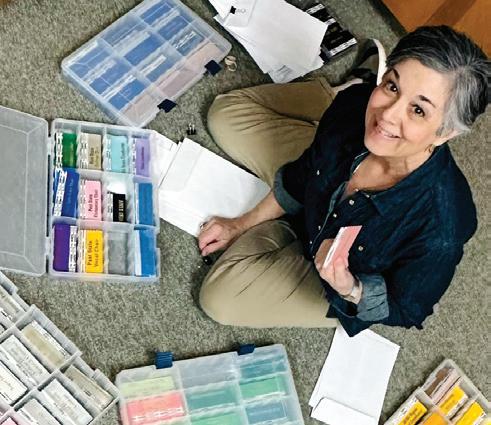
So many convention ribbons!
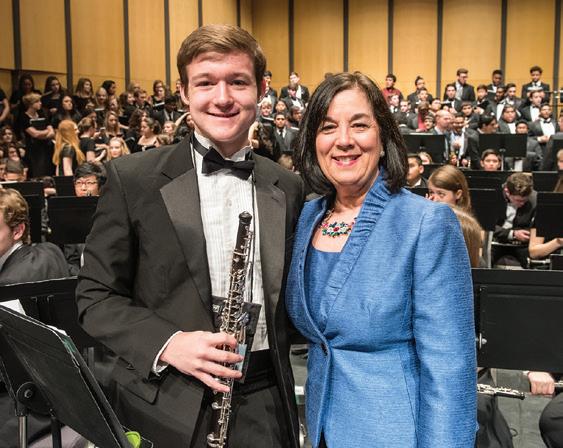
Josh Owens, 2016 All-Stater, who Kay directed in the Austin Youth Orchestra.
In rehearsal for the 2020 convention production, “It Starts with Music,” honoring TMEA’s centennial.
and Assistant Professor of Upper Strings
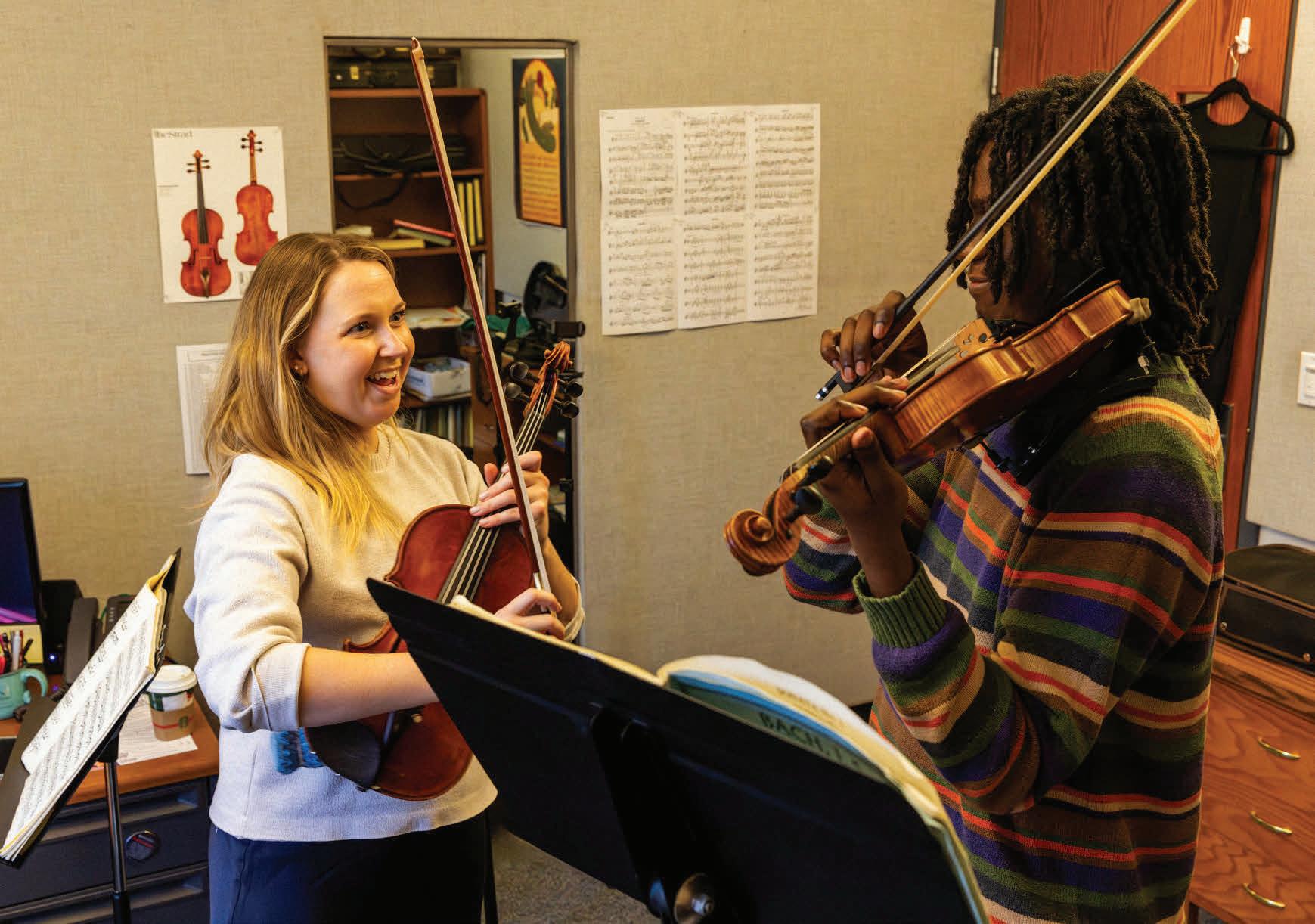
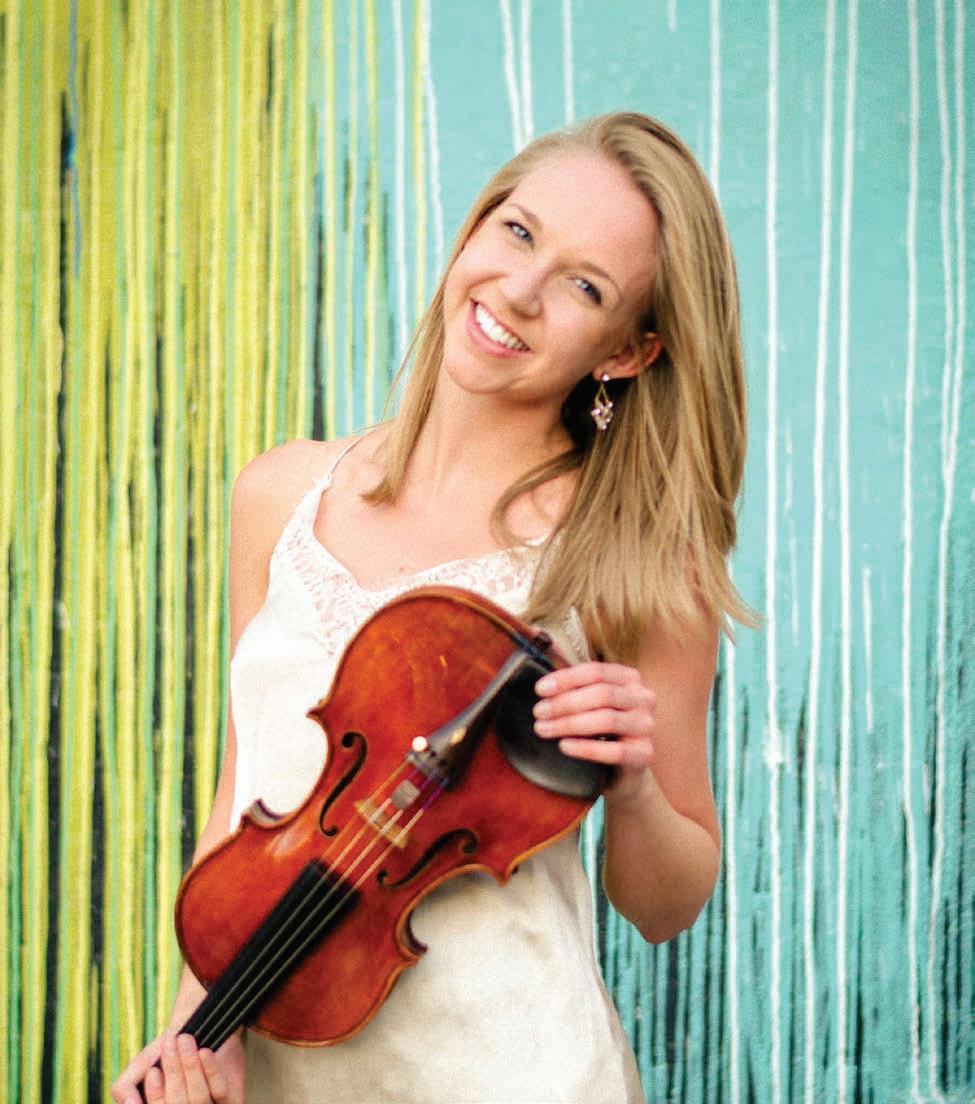
Internationally performing violinist Eva Dove brings world-class orchestral leadership to Southeast Missouri State University. Described as “dynamic and compelling” by the Charleston City Paper, Dove has performed across the country in venues ranging from Carnegie Hall to the Spoleto Festival.
At SEMO, Dove serves as assistant professor of upper strings and concertmaster of the Southeast Missouri Symphony Orchestra, mentoring the next generation of string musicians while leading performances on the River Campus.
CONCERTMASTER 95%
Students studying strings at SEMO gain hands-on orchestral experience, close mentorship from accomplished performers, and opportunities to collaborate across ensembles in a vibrant arts community. for graduating SEMO Music Majors
Department of Music • (573) 651-2141 • music@semo.edu
Follow us @semomusic__
BAND DIVISION
KIM SHUTTLESWORTH, STATE VICE-PRESIDENT
We are tasked with preparing students to be future leaders and positive contributors to their communities, using the lessons music uniquely teaches.
If These Walls Could Talk
When I was told I could write about anything, I panicked, to be completely transparent. I tend to be a structured person who does well with lists and objectives. To be able to talk about anything brings the slightest bit of fear. So, my first thoughts were to write about programming, or pacing, or anything I feel super confident with. Yet, these topics seemed somewhat heavy for the end of the year. So, as I sat up thinking, I started looking at past photos and thinking about what the end of the year typically looks like for me: celebrations, goodbyes, thank-you conversations, transitioning new students, leadership, and the evolution of the next chapter of the program.
The end of the year is a true celebration, not because of the so-called summer break we all probably work through, but because a set of seniors will go out into the world, hopefully better for having been part of band. We get the privilege of building relationships with students in our programs over six to seven years. Throughout that time, the lessons are not always about notes on a page or drills for their feet. What I’ve come to understand most about why our work matters so much is that we are tasked with preparing students to be future leaders and positive contributors to their communities, using the lessons music uniquely teaches.
May—Attend your spring Region meeting (www.tmea.org/regionmeetings).
May—Renew your membership for the 2026–2027 school year.
May 1— Deadline to nominate students for a Texas Music Scholar award.
May 1–June 1—2027 Clinic/Convention proposals accepted online.
June 1— Program Spotlight application Parts 2 & 3 due.
June 1 —Invited MS/HS Jazz and HS Percussion application deadline.
June 30—All 2025–2026 TMEA memberships expire.
July 16–18—TBA convention in San Antonio.
Each year, I ask myself what I want students leaving the program to have learned. The list has grown over the years, but some of the priority items are:
• How to work hard: Making it to their senior year means they have learned how to navigate an instrument, from how to open the case to how to clean it. They learn how to earn the required P.E. credit while marching in a variety of weather conditions. Through the All-State process, they learn to detail, refine, and build consistency through performance.
• How to be committed to something: If they reach their senior year, they’ve learned commitment to a craft, cause, and experience. This will transfer to their next skill, whether in college or everyday work. In this instant gratification world, band teaches that success doesn’t come quickly; the process of learning is supported by perseverance and daily practice.
• How to prioritize time: From sectionals to marching band rehearsals, students learn the motto “To be early
is to be on time, and to be on time is to be late.” This applies to managing time and staying on top of commitments amid busy schedules, academics, extracurricular activities, work, and community events.
• How to be a team player: Our year is divided into three major projects: marching season, concert band, and chamber ensembles. In each project, students must work collaboratively, achieve group goals, and create a product that reflects everyone’s contributions. We must start and end together and support students as they learn the skills of active listening, leadership, following, and sacrificing for others.
• How to appreciate music and its role in growth as an individual: Over your tenure, you may have taught hundreds—if not thousands—of students, yet only a small number go on to become band directors or professional musicians. Our goal should be to equip all students with skills to achieve through music education.
If they continue to play well, while learning to prioritize, work collaboratively, and continually improve their craft, that’s even better.
As the year ends, I look around the band hall and see how they’ve made it their own. The pictures on the walls tell stories about joyful moments, exciting trips, and notable accomplishments. Every year near graduation, I share this statement with our senior class. I can’t take credit for it; I found it from another director who shared it from something they found. It always resonates with me:
Before you leave the band room for the last time, stop and take a look around for just one moment. These four walls have seen you at your worst and at your best. They have watched families be created and families fall apart; they have seen love between two people and one-sided crushes; they have seen your most joyous days and maybe melancholy ones; they have seen the person you were when you walked in for the first time and now have seen the person you are for the last time. Know that the walls are silently weeping and maybe
RENEW YOUR MEMBERSHIP
Before summer break, be sure to renew your membership for the 2026–2027 school year. Your membership will need to be current at the start of the school year to enter students into the audition process. Renew now and purchase liability insurance coverage that TMEA offers as a benefit of membership for only $30 annually. Visit www.tmea.org/renew for more information.
SPRING REGION MEETING
Region meetings are continuing in the month of May. Elections for important Region leadership will be held and critical updates shared. I encourage you to attend and let your voice be heard. Go to www.tmea.org/regionmeetings for schedule details.
Have a great summer! I hope to see you July 16–18 in San Antonio for the TBA convention. 0
Kim Shuttlesworth is the Director of Bands and Fine Arts Department Chair at Coppell HS in Coppell ISD. bandvp@tmea.org
2/6/26 | 2/20/26 | 3/20/26
Schedule your audition today!
2/20/26 | 3/6/26
3/20/26 | 3/28/26
2/13/26 | 3/6/26 | 3/27/26
with purpose with intent
by laura bell and katie lewis
Aperforming ensemble’s success doesn’t happen by chance. It is built from thoughtful planning, intentional instruction, and consistent accountability. One of the most effective ways to support that success is to begin each year with the end in mind. Use backward planning to help you identify your goals, from individual student milestones to programming specific music for concerts and contests. With intention, every sectional, rehearsal, and assessment become elements of your blueprint for success and can make an immediate impact on your program, regardless of classification, size, or location.
SUMMER: LIGHT ENGAGEMENT WITH BIG BENEFITS
Planning begins in the summer, but not with traditional rehearsals. This is an effective time to focus on activities that build community and keep your performing band students engaged in the musical learning process. You can host an open band hall time when students can practice together, spend time with friends, and ask for teacher input. It’s an opportunity to have regular mini rehearsals that focus on pep tunes for the upcoming year, while allowing students the chance to converse and reconnect throughout the summer. Summer is also a wonderful time to reintroduce ensemble fundamentals they will use in band, but in a smaller setting without the pressure or time constraints. We use this time to notice the strong leaders and identify potential future soloists.
Students thrive with challenges and opportunities for growth (and prizes don’t hurt either!). During the summer, use your favorite LMS (Google Classroom, Canvas, etc.) to create weekly challenges that keep students engaged and learning. Present challenges that are short and attainable, such as performing a scale. Create a tiered
system where students earn more points for going faster or playing something from memory. Students crave rewards for their efforts, so award prizes and recognize winners of the challenges when school starts.
Summer is a wonderful time to start crafting your list of potential pieces for the year! When you attend professional development conventions, try to incorporate specific sessions that expose you to newly published literature. One example is the Phi Beta Mu Reading Band session at the Texas Bandmasters Association convention each July. Take a little time during your summer break to listen to music, talk with other seasoned teachers about their suggestions, check out our Band BFFs podcast with helpful information on specific pieces, and work to construct your perfect lineup for the year!
FALL: GAUGE THE GROUP AND DEVELOP THE INDIVIDUAL
When school starts, we immediately focus on assessing students. Who are the rising stars? Who might be a great soloist for the year? Which sections are strong and which need more attention? By taking this time up front, you can customize instruction and set realistic and ambitious goals for each group. When planning literature options for the year, listen with these students in mind. Tailor your literature selection to teach music that not only fits your band but also celebrates their strengths as they grow together throughout the year.
When leading sectionals, take time to review objectives that focus on individual growth specific to their instrument. Assess students’ tone and articulation quality, articulation speed, sightreading
skills, scales performance, and overall fundamentals, including posture and hand position. Completing this assessment checklist will help you identify who is excelling and has the potential to lead others throughout the year.
Teach the concepts students have not been exposed to or those that need review. Early in the year, we find students often need articulation reinforcement. This is a great time to check on students’ individual fundamentals. During sectionals or in-class pullouts, keep working with the individual musicians on these concepts to continue
refinement throughout the year. Track individual growth, as this documentation becomes valuable data to share with administrators.
If you plan to perform a piece in 6/8 meter, in the fall, teach students how to count and perform a variety of rhythms in this time signature from a rhythm sheet. Teach the concept independent of the music to help students transfer the new knowledge more easily. Program an easy 6/8 piece for your fall concert to solidify these skills and create more confidence as they continue to develop.
Summer Percussion Camp 20 26
June 15-19, 2026
June 22-26, 2026
Featuring guest artist Ben Patterson, former lead trombonist for USAF Airmen of Note.
The value of consistently recording student growth throughout the year is worth repeating. This can serve as data-driven evidence for your T-TESS or TIA evaluations. Assess each student in sectionals, prioritizing tone quality issues, tuning tendencies, and articulation clarity from the beginning. Once areas for growth have been identified, provide intentional instruction. Give achievable objectives to each student to foster slow and steady progress.
All-Region audition preparation is an excellent growth opportunity. Regardless of the outcome, the process builds discipline and skill. Use these auditions as opportunities to teach how to practice, not just what to practice. Use tempo-bumping strategies to build confidence while preventing rushing or sloppy technique. We’ve had success building practice sessions by giving students a Practice Menu with a range of options:
• Appetizers: long tones, flow studies, etc.
• Entrées: specific measures they should be working to improve.
• Desserts: fun little extras to keep them motivated and encouraged.
Providing appropriate options gives them some flexibility and independence while
Spring meetings include the election of Region leadership. Don’t miss this important meeting and opportunity to network with colleagues from your Region.
www.tmea.org/regionmeetings
ensuring they’re reviewing the important skills you have prioritized. This not only creates variety but also allows students to oversee their learning process at home.
To maximize your time, you could create a sectional lesson plan that includes technique, repertoire, and a schedule of assessments. Focus on instrument-specific pedagogy, such as flow studies, lip slurs, and articulation exercises. Incorporate rhythm drills and mock auditions, and use tools like the Wheel of Names to keep things fun. (We jokingly call it the Wheel of Doom!) This is a free website or app where you input names on a wheel randomizer. The wheel can even be customized and saved so you don’t have to re-create it with each use. We use it during informal assessments, to call on students for answers, and even for playing order on a test. Most importantly, use sectional time to build relationships and grow each individual musician.
Whether you have regular sectionals or not, ensure students are held to high standards. If sectionals aren’t feasible, consider inviting neighboring directors to assist, or find a mentor in the state using the TMEA Mentoring Network.
SPRING: MAXIMIZE REHEARSAL EFFICIENCY
Make the most of every rehearsal minute! We find one of the best ways to do this is by marking the music in advance for our students. This gives us the opportunity to see every part from their perspective. For example, mark accidentals, write out difficult rhythms, include phrasing considerations, or notate alternate fingering and technique issues. This helps streamline the learning process so you can focus on musical detail.
Efficient rehearsals start with the fundamentals and the basics. Incorporate daily exercises that target specific skills, like articulation, dynamics, or rhythmic clarity. Create custom melody sheets and rhythm studies that unify the band, regardless of instrument. Keep students accountable with regular pencil and tuner checks to reinforce daily habits. Monitor posture, hand position, and foot tap. Don’t neglect these basics, even late in the year. Have clear, planned rehearsal objectives that outline your priorities. Record yourself to assess how you’re using time, and adjust as needed. Avoid getting stuck in
Teaching band is an art and a science. Success comes from intentionality in planning, purposeful instruction, and genuine care for students.
one section or difficult passage. If a group needs help, ask a coworker or student leader to step in. You can also provide students with individual practice plans to revisit in sectionals or future rehearsals.
PLAN YOUR LITERATURE LINEUP
Structure your curriculum around intentional performance milestones. Each concert should develop your students’ skills and confidence. Plan ahead with the goal in mind. If you want to program a piece by a specific composer in the spring, consider introducing a similar work by them earlier in the year to build familiarity with their writing style. If you are considering a work in a difficult key signature, prepare for the tuning challenges.
• Fall Concert: Highlight your advanced musicians and have fun with spooky or seasonal music. Invite select students to perform their Region etudes, scales, or chromatic to reduce performance anxiety and show off their new skills.
• Winter Concert: Increase technical demands and give more students opportunities to shine with solos or small ensemble features. Push range, endurance, and articulation requirements without the pressure of a formal evaluation.
• UIL Preparation: Focus on musical precision and clarity. Feature your strongest sections and individuals. Because you have had a yearlong literature plan, students are set up for success and mastery.
• Spring Concert: Stretch students,
especially younger ones, with more challenging parts. Pave the way for an easy start to the next school year by programming some pep tunes or pop pieces that can be performed in the future. This allows you to focus more on fundamentals at the start of the year instead of learning all new pieces at once. This is a game-changer for non-varsity and sub-non-varsity groups!
TEACH WITH INTENT
Teaching band is an art and a science. Success comes from intentionality in planning, purposeful instruction, and genuine care for students. This process is not always easy, but when you backward plan, you create an enjoyable and successful year for the entire program. Plan with purpose and teach with intent so you don’t just help students play the music, you help them become confident, disciplined, and inspired musicians. 0
They are co-creators of the Band BFFs podcast, available from bandbffs.com.
Laura Bell is the Director of Bands at Stafford MS in Frisco ISD.
Katie Lewis is the Director of Bands at Maus MS in Frisco ISD.
ORCHESTRA DIVISION
SABRINA BEHRENS, STATE VICE-PRESIDENT
Reflecting with peers reminds musicians that orchestral growth is a shared endeavor.
Time for Reflection
In the whirlwind of rehearsals, performances, and contests, it’s easy for an orchestra to move from one piece to the next without pausing to consider the journey. Yet, taking intentional time to reflect—both individually and as a group—can make every performance richer and every musician stronger. Reflection is the quiet moment where music meets insight: where we celebrate successes, learn from challenges, and set our sights on what’s next.
After the final note fades and the applause settles, the post-concert moment is perfect for reflection. On the day after a concert, I lead a structured reflection time with the students. Each performance provides valuable feedback: Did our phrasing convey the emotion of the piece? Was the balance between sections clear? Even small observations—tuning, dynamics, timing—can elevate future performances. Post-concert reflection can look like an open dialogue between you and your students, or it can be more structured with feedback protocols like Glow & Grow or TAG (Tell, Ask, Grow). What went well? What didn’t go as well, and how can we use that as an area for growth?
PEER REFLECTION
Orchestral music thrives on collaboration. Engaging in peer reflections—whether during sectionals, after rehearsals, or in informal discussions—strengthens both musical and interpersonal connections. Constructive feedback between students can highlight nuances we might miss on our own, from interpretive choices to ensemble cohesion. Reflecting with peers reminds musicians that orchestral growth is a shared endeavor, built on trust, communication, and a collective love of music. With some simple sentence stems, even our youngest
MARK YOUR CALENDAR check www.tmea .org for updates
May—Attend your spring Region meeting (www.tmea.org/regionmeetings).
May—Renew your membership for the 2026–2027 school year.
May 1— Deadline to nominate students for a Texas Music Scholar award.
May 1–June 1—2027 Clinic/Convention proposals accepted online.
June 1— Program Spotlight application Parts 2 & 3 due.
June 1— Honor Orchestra Parts B&C and recording deadline (except HS String).
June 1— Invited HS Mariachi application deadline.
June 4–5— Honor Orchestra listening at Westlake HS.
June 30—All 2025–2026 TMEA memberships expire.
July 16–18—TODA convention in San Antonio.
students can learn to provide targeted feedback on their performances or the performances of their peers. More importantly, we are teaching our students how to give and accept constructive feedback.
INDIVIDUAL FOCUS
Amid the collective effort, individual reflection remains essential. Musicians benefit from setting aside time to consider personal technique, expression, and musical goals. This is equally true for teachers. As educators, we must continue to learn, grow, and refine our craft to be the best leaders for our students. Journaling rehearsal experiences, evaluating progress on challenging passages, or simply listening critically to one’s own playing fosters self-awareness. Personal reflection ensures each musician’s contribution remains purposeful and expressive.
One of my most and least favorite reflection techniques is video-recording my conducting and teaching. Then, with scores in hand, I watch the recording. Are my gestures clear and easy to read? Am I clearly conveying the music? If I were in the ensemble, would it be clear what the conductor wanted me to do? While watching yourself teach can be awkward at best, it is a great way to improve.
BUILD THE HABIT
Reflection isn’t just a post-performance exercise—it’s a habit that can shape an orchestra’s growth throughout the year. By regularly pausing to consider both individual and ensemble performance, musicians deepen their artistry, strengthen collaboration, and ensure that each rehearsal and concert is meaningful. Reflection becomes the bridge between rehearsal and performance, between individual effort and collective excellence. It is the quiet note that resonates long after the music ends, guiding every musician and every ensemble toward their highest potential.
LEARNING OPPORTUNITIES
This summer is a great time for growth. I look forward to learning more and reconnecting at the summer TODA convention in San Antonio, July 16–18. Regardless of whether you can attend, you can also gain fantastic ideas through TMEA’s online learning.
TMEA’s Online Learning platform offers courses you can complete at your own pace and the opportunity to earn credit
for learning. This resource continues to expand, and there are currently six courses applicable for orchestra and mariachi educators. Learn more about it and view courses at www.tmea.org/online-learning.
MEMBERSHIP RENEWAL
Now is a great time to renew your membership for the 2026–2027 year. If you don’t already purchase it elsewhere, be sure to take advantage of TMEA’s member benefit of access to low-cost liability insurance. Finally, if you know directors who are new to the profession or new to Texas, encourage them to join before the busy start of next school year. Go to www.tmea.org/ membership to learn more and renew.
CONVENTION PROPOSALS
From May 1 to June 1, proposals for clinics and music showcases are accepted online at www.tmea.org/proposals. What I love most about TMEA is that what makes it so great is the membership, learning from and growing with each other. To that end, I hope you consider submitting your ideas to be presented in February. Some topics that are highly requested include: rehearsal techniques, instrument pedagogy, teaching methods, repertoire selection, and classroom management. If this isn’t your year to propose, I hope you’ll encourage a colleague who you’d like to learn from to submit.
INVITED SPOTLIGHT ORCHESTRAS
Thanks go to all who have completed Part A
of the Orchestra Division Invited Program Spotlight application. Note that recordings and final submissions are due no later than June 1. We seek to feature exemplary and innovative teaching within programs that represent diverse socioeconomic environments across the state through this clinic/ performance presentation.
INVITED HS MARIACHI ENSEMBLE
Each year we feature one of the many outstanding mariachi ensembles in the state as our Invited HS Mariachi Ensemble. The selected ensemble will present a fulllength concert at our 2027 convention. Submissions are due June 1, including video uploads. I can’t wait to see the amazing submissions we will receive this year!
HONOR ORCHESTRA
This is a reminder for directors who completed Part A for the HS Full, JH/MS Full, and JH/MS String Honor Orchestra competitions. Parts B and C, including recordings, are due by June 1. Entry fees must be received at the TMEA office by June 1. Mailed scores and other required materials must be received by the contest chair by June 2. We hope to see many members at the Honor Orchestra judging on June 4–5 at Westlake HS in Austin. 0
Sabrina Behrens is the Director of Orchestras at Travis HS in Fort Bend ISD.
orchestravp@tmea.org
BEYOND THE NOTES: Helping Students Experience Meaning and Significance
By Tony Mariano
Take a moment to pause and reflect on your life as a music student. Can you remember a time when a teacher made you feel good and when your efforts led to something meaningful? Think of an experience when a teacher celebrated your work and affirmed your artistic self. If you can picture a time like that, what stands out?
For me, one experience comes to mind. It was in seventh-grade guitar class, and we had just finished a playing test. On our way out, my teacher pulled me aside and said, “You did a great job today. That was beautiful, and I really enjoyed it. You are good at this.”
THE POWER OF ENCOURAGEMENT
As simple as those words were, they made me feel better about myself than anything else I’d experienced in school up to that point. At that moment, I was hooked. I knew I loved making music. I felt like I had discovered a purpose—a new world was opening in front of me because someone else saw promise and artistry in something I created. That moment was deeply significant to me, and it still shapes my life as an artist and teacher today.
From high school guitar class to conservatory, graduate school, and now my work as Director of Community Education at Austin Classical Guitar, that moment has stayed with me. It carries me through difficult times and reminds me that when I apply myself, I can create something meaningful and beautiful.
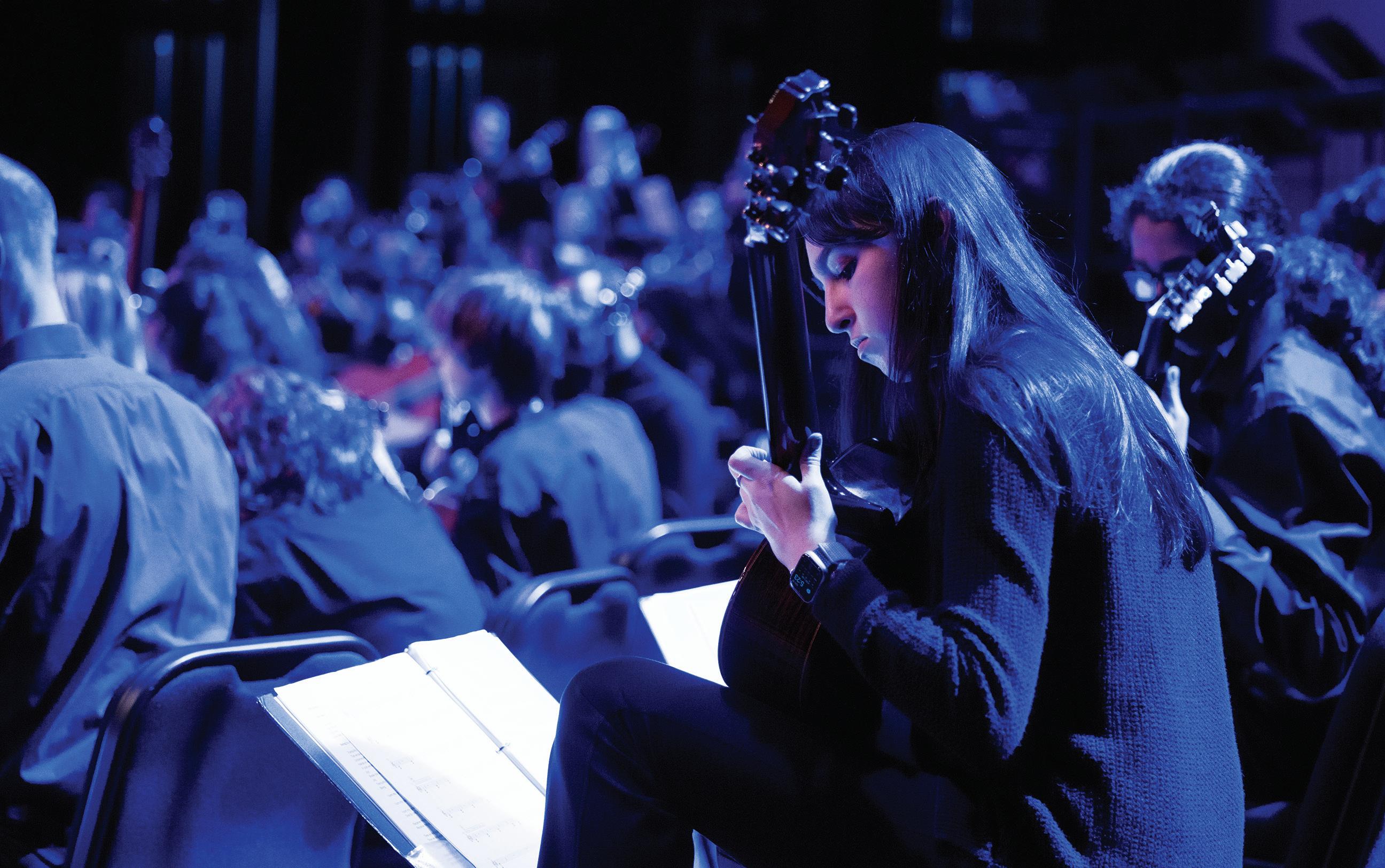
Today I train classroom guitar teachers and work directly with students, consulting with dozens of classical guitar programs across Austin ISD and throughout Texas. My hope is to help others discover moments like that for themselves and for their students.
Austin Classical Guitar (ACG) is the largest nonprofit of its kind in the country, working nationwide to help build classroom guitar programs, provide curriculum resources, and train teachers. For 25 years, ACG has partnered with Austin ISD to build and support these programs. This long-term partnership has placed us in a unique position with access to meaningful student data about what is happening inside guitar classrooms.
WHAT THE DATA REVEALS
In 2023, we analyzed districtwide data on student performance, including STAAR scores and behavior referrals. Guitar students were matched with peers from the broader student population at their campuses who shared similar demographic backgrounds, allowing for more meaningful comparisons.
What we saw was striking. Guitar students consistently performed better on STAAR tests than their matched peers, and they received behavior referrals at a lower rate. Something about being in those guitar classrooms was making students less likely to exhibit problematic behaviors, and that was worth paying attention to.
Also in 2023, the U.S. Surgeon General released a health advisory describing what he called the “Epidemic of Loneliness and Isolation.” The report noted that loneliness and isolation pose health risks comparable to smoking multiple packs of cigarettes a day—a startling reality.
It made us think about the young people we work with every day. In recent years, students have faced increasing ways to feel isolated. Technology and social media, designed to connect us, can sometimes create distance instead. Many of the students we serve feel this deeply. In that context, the data we were seeing in
2026 SUMMER CAMPS
June 6–14
16th Texas State
International Piano Festival
June 14–19
TXST Band Camp
June 21–26
TXST String Camp
June 28–July 1
TXST Choir Camp
(large school and small school camps)
July 20–23
TXST/Conspirare Choral
Conducting Symposium
guitar classrooms took on additional significance. The teachers we were working with were clearly doing something right.
Years earlier, when ACG was beginning to build new classroom guitar programs across Austin ISD, we partnered with the School of Social Work at the University of Texas at Austin to conduct a qualitative social impact study of guitar classes across the district. The goal was to better understand the experiences inside these classrooms that seemed to support student success.
UNDERSTANDING THE STUDENT EXPERIENCE
Researchers asked 67 students to write statements describing what guitar class meant to them. Then 400 students sorted those statements into groups of similar ideas and ranked them by importance. Using those rankings, researchers created a concept map built entirely from the students’ own words, visually illustrating what mattered most to them.
At the center of that map was self-esteem. Students spoke about the satisfaction of doing a good job and the feeling of being acknowledged and celebrated. They also spoke about belonging. “I mattered to the outcome,” some students wrote. “I’m important.”
Close behind was the idea of the guitar classroom as a unique learning environment defined by safety. Students described a place where it was acceptable to make mistakes and where they felt supported by both teacher and peers.
FIVE ELEMENTS OF SUCCESSFUL CLASSROOMS
From these findings, along with many hours observing teacher behavior in classrooms across the district, our team at ACG identified what we now call the Five Elements —essential factors that must be present in a successful classroom environment:
• Belonging/Safety: we are safe and seen, and we can make mistakes.
• Personal Responsibility: each one of us is important to all of us.
• Perseverance: small challenges make small victories.
• Performance: we take time to make beauty every day.
• Celebration: what we did was special.
These elements became the foundation of our teaching philosophy and inform our daily decisions. When we speak with teachers or train them in classroom guitar curriculum, these ideas are always at the center of the conversation.
Belonging and Safety: Do the students we serve trust that we have their best interests in mind? Do they feel free to express themselves and take risks? Music classrooms naturally involve vulnerability. Students are asked to demonstrate skills publicly while expressing something personal through sound. In a safe learning environment, students trust that mistakes are part of the process. They know their teacher will help them improve and that their peers will support them rather than judge them.
Personal Responsibility: Do students believe their role in the ensemble matters? Do they understand that their effort contributes to the success of the group? In the strongest classrooms, students recognize their individual progress affects everyone around them. Their role matters not only to their own growth but also to the shared musical experience of the ensemble.
Perseverance: Are students regularly encountering challenges that are difficult enough to require effort, but achievable with persistence? Skilled teachers carefully sequence learning so that each challenge builds toward a larger goal. Small successes accumulate over time, helping students develop confidence while steadily moving toward more complex musical achievements.
Performance: Do students regularly have opportunities to share what they have learned? Healthy guitar classrooms are full of performance opportunities, both formal and informal. Students perform not only at concerts but also in daily classroom moments where they share their progress with their peers.
Celebration: Are moments of progress acknowledged? Are students encouraged to feel pride in their accomplishments? While this final element is often overlooked, celebration is where moments become memories. A brief “great job,” a round of applause, or a moment of recognition can transform a small success into a lasting source of confidence.
The moment with my teacher all those years ago that I described happened because all five of these elements were present. I felt safe in that classroom, which allowed me to take risks. The challenges were structured so that success was possible with effort. I had the chance to perform and share what I had learned. Most importantly, when the moment arrived, my teacher celebrated it. He smiled and told me I had done something beautiful.
The students reflected in the data we analyzed, those receiving fewer referrals and performing better academically, are likely experiencing similar moments in their guitar classrooms each week. When these elements are present, classrooms become places where students feel valued, connected, and motivated to succeed.
CREATING A SPACE FOR MEANINGFUL MUSIC-MAKING
Musical mastery can be achieved without these five elements. Many generations of musicians were trained through more rigid approaches that focused primarily on technical outcomes. But when we consider the opportunity we have as educators, we recognize that teaching music can be about more than the notes and technique. It can be the space where students encounter moments of meaning and significance.
Think again about that moment I asked you to consider at the beginning of this article. Did it happen because you felt safe and trusted your teacher? Because you belonged and knew your contribution mattered? Were the challenges thoughtfully structured so that success was within reach? Were you given the chance to share something meaningful with others? And did the moment stay with you because someone took the time to celebrate it?
Let’s ensure every student has ample opportunities to be challenged, supported, and celebrated in their music-making. 0
Dr. Tony Mariano is Director of Community Education at Austin Classical Guitar.
MUSIC
BM
MUSIC EDUCATION PERFORMANCE COMPOSITION
BA
MUSIC
MUSIC MINOR
MAT (MASTER OF ARTS IN TEACHING)
5TH YEAR PROFRAM FOLLOWING THE BM
• Faculty who focus on UNDERGRADUATES
• Frequent national and international ENSEMBLE TOURING
• 100% JOB PLACEMENT for music education majors (35+ consecutive years)
• 16 ensembles, private lessons, and chamber music available to ALL STUDENTS, regardless of major
• 11 FULL-TIME music faculty + 22 applied artist-teachers
• Located in CULTURALLY VIBRANT San Antonio
• Study at one of the nation’s top liberal arts institutions
VOCAL DIVISION
JENNIFER GALLAGHER, STATE VICE-PRESIDENT
Consider thinking creatively when planning for next school year. Traditions do matter, but reflection matters, too.
Consider a Creative Change
While May is full of events in the days leading to final exams and graduation, it is also when we begin planning for the next school year. We attend calendar meetings, review budgets, and turn over systems and leadership in preparation for the fall.
As you navigate this month, I’d like to offer two ideas for consideration as you plan for next school year. Understand that these ideas evolved from trial and error, and if they aren’t the right fit for you, I hope they still motivate you to think on a different approach that can be effective for your program. Teaching through the pandemic taught me that nothing is truly set in stone. Even with established traditions, it is okay to reflect and make real changes, in real time, to best serve yourself, your program, and your community.
END WITH A MASTERWORK
For a variety of reasons, we begin the year with a pop show, rather than a traditional fall concert. While pop shows are my least favorite, for many of my students, it is their favorite. Recruiting is still happening at the beginning of the year, so while we’re simultaneously establishing rehearsal norms and reviewing music theory basics, we are also teaching pop literature, often in unison and by rote.
MARK YOUR CALENDAR
check www.tmea .org for updates
May—Attend your spring Region meeting (www.tmea.org/regionmeetings).
May—Renew your membership for the 2026–2027 school year.
May 1— Deadline to nominate students for a Texas Music Scholar award.
May 1— MS/HS Invited Choir application deadline.
May 1–June 1—2027 Clinic/Convention proposals accepted online.
June 30—All 2025–2026 TMEA memberships expire.
July 16–18—TCDA convention in San Antonio.
Texas Woman's University
PIONEER ALL-STATE CHOIR CAMP
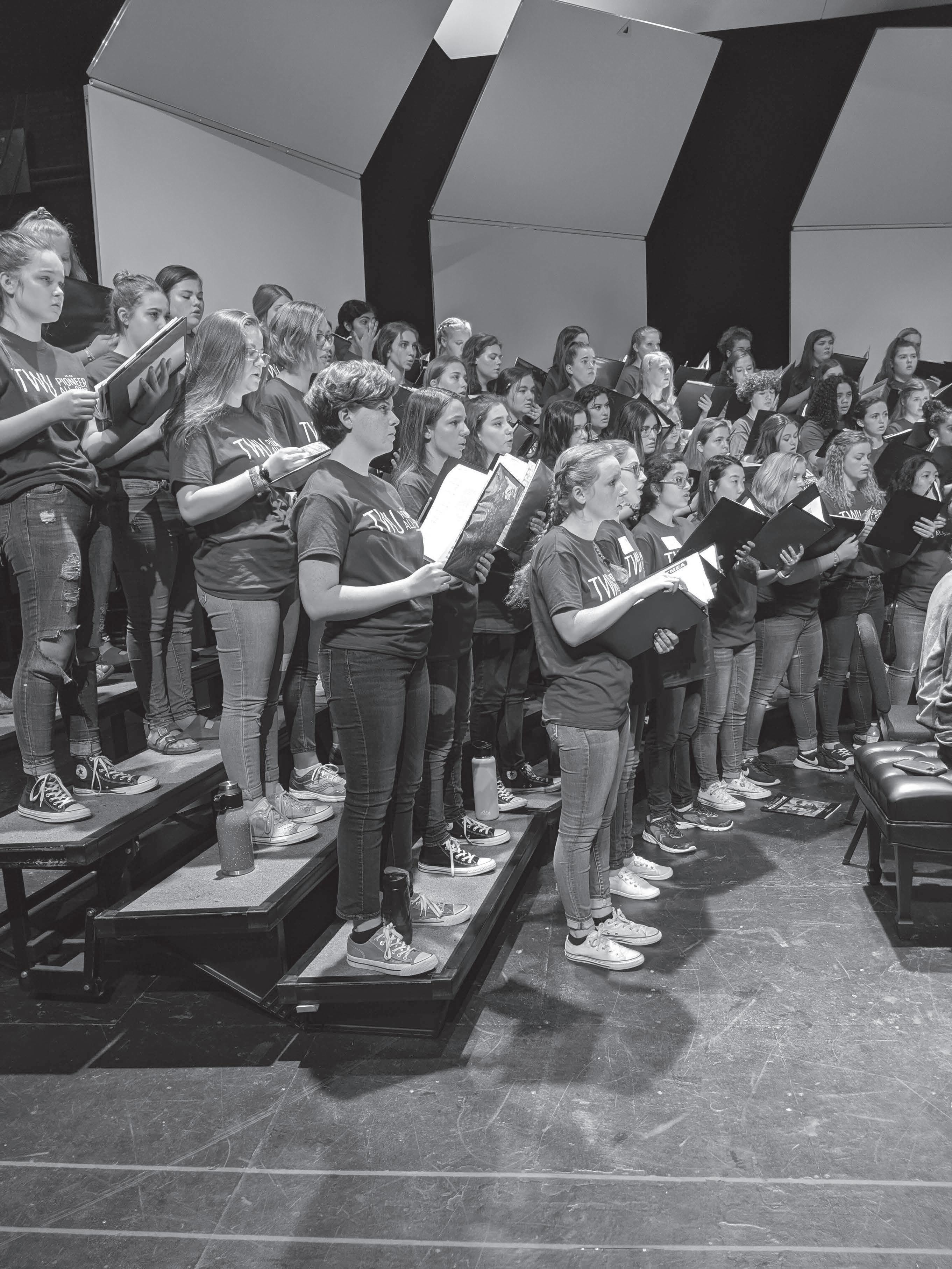
A 3-day immersive camp for singers in grades 9-12, focusing on the Texas All-State Choir music. Participate in group rehearsals, sectionals, individual coaching sessions, and more. Friends and family are invited to attend end-of-camp concerts on July 22 and July 25.
July 20-22 Small School Camp July 22 Area Workshop
July 23-25 Large School Camp
Registration begins February 16, 2026. Visit pioneerchoircamp.twu.edu for more details.
Logistically, this also allows more time to measure everyone for uniforms, which we wear for winter performances. We have found this to offer a strong transition for our beginning and intermediate students. Beginning our year with pop, I am often asked about how we work with students on tone building. In our experience, we have found that pop music just gets our students singing—it gives students permission to go for it! Then, we find it is easier to refine sounds as the year continues, rather than struggling to get our students to sing out. The dancing and backstage shenanigans also allow the students to bond in a way that other concerts do not, and this soldout show gives us funding from the start of the school year.
All that said, the main reason we begin with a pop show is because we end our school year with a major-work concert. We call this final concert our Cadence Concert. We feature outstanding soloists and a major work, where we bring in a guest conductor and often collaborate with our campus band and orchestra programs. Our beginners typically learn the first and final movement, and the varsity
classes perform all the inner movements. We take time to recognize our seniors, and we invite alumni back to the stage to sing the school song and our senior song, An Irish Blessing.
I cannot overstate the benefits I have noticed since scheduling this major work concert at the end of our year. After UIL season, when our choirs are often singing at their peak, we then expose them to a new level of music-making. This ensures each student in our program has a Regionlevel experience, regardless of whether they qualified to a Region Choir or the varsity mixed choir.
During AP testing and all the field trip days that occur in May, all choirs are working on the same material, so students can pop into another rehearsal when needed. Beginners attend varsity rehearsals and start to get a taste of that rigor. Varsity students attend beginner rehearsals and lead their peers. Most have been singing SA or TB literature for most of the year, and singing SATB mixed literature is thrilling and engaging on a different level. This scheduling has also removed the stress of chore-
ography and staging during this month in which our members miss rehearsal more often.
This is a sampling of some of the works we have performed in our closing concerts:
• Missa brevis in G Major (W.A. Mozart)
• Magnificat (Giovanni Pergolesi)
• Requiem (Gabriel Fauré)
• Requiem for the Living (Dan Forrest)
• A Vision Unfolding (Kyle Pederson)
• Considering Matthew Shepard (Craig Hella Johnson)
• Gospel Mass (Robert Ray)
For the 10-year anniversary of our campus and program, we commissioned a masterwork by Reginal Wright, with poetry by Coty Raven Morris, entitled A Myriad of Colors. As this issue mails, we will be a few weeks away from premiering the work, with Mr. Wright conducting. Our students truly unlock a new level of musicianship and understanding by being a part of something bigger than themselves and that’s why it is my favorite concert of the year!
If you teach at a junior high, your interpretation of this idea will clearly be different. Still, how fun it might be to collaborate with your vertical team in a large project. I have also seen middle school colleagues incorporate innovative composing projects or community service as they near the end of the school year.
I have asked my good friend and colleague Jennifer Agbu (Adams JH, Katy ISD) to share a bit about the parody project she leads in her program:
The Parody Project is a great way to round out either the fall or spring semester, especially in the space between a concert and final exams. During that time, I like giving students a project that focuses on analyzing song structure.
We start by watching examples of parodies and writing one together as a class. For example, a parody of “Let It Go” with bathroom humor was a big hit with a group of sixth grade boys! Once students understand the process, they are split into groups of four to six and given a week to write and present their own parodies.
Students receive a rubric, so they know exactly what they are working toward. The rubric includes time spent writing lyrics, creating cover art, and the performance itself, with extra credit available for costumes and choreography.
There will always be a few duds, but there are also some real gems! When I present the project in the fall, it also gives students a sneak peek of what pop show collaboration looks like. Some students come for the choral music, but others end up coming back year after year for these parody projects!
As you enter the grind that can be the month of May, I encourage you to consider thinking creatively when planning for next school year. Traditions do matter, but reflection matters, too. We must not allow ourselves to be stuck or become stagnant; the ingenuity in something new might just be what you and your students need! Cheers to dreaming big!
ALL-STATE CHOIRS RENAMED
As you will read in the President’s column that begins on page 6, the Executive Board approved multiple updates after considering Region reports and other member feedback. One of those changes is to the names of the Small School Mixed Choir and Large School Mixed Choir. They are now:
• 1A–4A Mixed Choir
• 5A–6A Mixed Choir
RENEW YOUR MEMBERSHIP
All TMEA memberships expire on June 30, so renew now for the 2026–2027 year so you can check that off your to-do list. If you don’t already purchase it elsewhere, be sure to take advantage of TMEA’s member benefit of access to a low-cost liability insurance policy. Finally, if you know directors who are new to the profession or new to Texas, encourage them to join before the busy start of next school year. Go to www.tmea.org/membership to learn more and renew.
REGION MEETINGS
Please be sure to attend your important spring Region meeting. New officers are being elected in most Regions, a proposed budget must be voted on, and your Chair will discuss policy updates that will affect you and your students during the next audition cycle. For details, go to www.tmea.org/regionmeetings. Be sure to attend based on the 2026–2028 alignment. Get involved by showing up locally!
2027 CONVENTION PROPOSALS
Clinic and music showcase proposals may be submitted online May 1–June 1. If you don’t feel ready to present, and you know someone else who has wonderful ideas, reach out to them and encourage them to submit! Your encouragement could be the push that your colleague needs to impact others in a positive way. The most requested topics for the Vocal division are:
• Rehearsal techniques
• Repertoire selection
• Teaching methods
• Recruiting & retention
• Conducting techniques
• Classroom management
• Title I/low-income programs
• Music theory
• Mental health & wellness
• Assessment
SUMMER IN SAN ANTONIO
Finally, I hope to see you July 16–18 in San Antonio for the TCDA convention! It’s a great place to gain innovative ideas for next school year and to reconnect with colleagues from across the state. 0
Jennifer Gallagher is the Choir Director at Shadow Creek HS in Alvin ISD. vocalvp@tmea.org
Your work makes a lasting difference in the lives of your students and the strength of our communities. Thank you for inspiring, challenging, and championing your students every day.
Storybook Lessons for Social-Emotional Learning
BY MEREDITH MOONEY
In the 2021 Texas legislative session, self-management skills, interpersonal skills, self-awareness, social awareness, and responsible decision-making were added to the character traits and personal skills expectations identified in the K–12 TEKS. As educators, perhaps we had begun to observe a decline in these skills before, but the isolation, fear, and trauma of the covid pandemic only exacerbated these deficiencies.
For example, being able to identify and manage one’s emotions is not always an easy thing for adults, much less children. When children struggle with this task, everything is more difficult at home and certainly at school. What’s the cause of these lagging social and emotional skills? Technology addiction? Social media? Does it even matter? The bottom line is, we teachers, counselors, and administrators are charged once again with filling the gaps.
In fall 2021, our school counselor came to the specials team (music, art, and P.E.) with a request to help her with the social emotional learning and character development part of the curriculum. Teachers were struggling to help students catch up from the 2020–2021 year and they needed support. I started out using our 22-minute “rotation Friday” times to deliver the lessons directly from the provided material. I soon realized there were more ways I could convey character concepts to students while maintaining the integrity of our curriculum.
One way I began addressing these needs in my classroom was through integrating SEL into music lessons using storybooks. An
important note here is that I am Orff certified, so that methodology is where I am the most comfortable, but any of these activities can be adapted to fit your needs and those of your students.
SEL-RELATED STORYBOOK MUSIC LESSON
The first lesson I created to support SEL objectives was written for My Mouth Is a Volcano!, by Julia Cook, illustrated by Carrie Hartman. The story teaches self-control in a relatable way—the main character, Louis, has so many important things to say, they explode out of his mouth! Below is a brief outline of the lesson. You can view other lesson plans I refer to in this article at www.tmea.org/mooney2026.
Social-Emotional Focus: Respect/self-control
Techniques/Objectives: Contrasting ostinati, hand drum technique, using body percussion, performance in two parts
Materials:
• My Mouth Is a Volcano! (The book or read-aloud video from cookiebytes.com)
• Rhythm sticks
• Hand drums
Procedure:
1. Read the book to students.
2. Ask questions. What is the big problem? How did Louis’s mom help him overcome it?
3. Use echo imitation to teach the following pattern with clapping body percussion (same or different day).
Words be-gin to wig–gle Then they do the jig-gle!
4. Once students are confident with this pattern, add a contrasting ostinato, using a different body percussion movement.
Oh! Here we g o! Not my vol- ca- no!
Grades K–1: Divide the class into two groups and have them take turns performing each ostinato on rhythm sticks (pattern 1) and hand drums (pattern 2). If you have large hand drums this is fun to do with a soft mallet. How often do your kids get to play the largest drums?
Grades 2–5: Divide the class into two groups and have them perform the ostinati at the same time. This works best if you establish one pattern first and then bring the other pattern in.
Closing: Review with students what steps they should take when they have something they really want to say but they don’t want to erupt (interrupt).
ADAPTING LITERATURE FOR YOUR
LESSONS
Step one is simply to choose a book. There are so many great books in the world, and life is too short to use material you don’t love.
Next, determine what musical skills and techniques you’d like students to experience in the lesson. For example, when I adapted My Mouth Is a Volcano!, I chose to focus on having students perform two simultaneous, contrasting rhythmic ostinati. This introductory partwork objective is directly related to TEKS for second and third graders. Younger students can still access the material by performing the ostinati one at a time.
When adapting It Wasn’t My Fault by Helen Lester and Lynn Munsinger, I chose to focus on creating opportunities for instrumental melodic improvisation in the C pentatonic scale. Improvisation is included in Music TEKS from first through fifth grade.
1. Identify obvious elements that can help you musically:
a. R hyming text: In My Mouth Is a Volcano!, I identified the repeated words “Words begin to wiggle, and then they do the jiggle” to use as one of my ostinati. I then created a rhythmically contrasting phrase to use alongside it.
b. Repetitive structure: In It Wasn’t My Fault, the story is progressive, with the protagonist encountering several different animals and then accusing each of contributing to his problem. Each one answers with a variation on “Yes, but it wasn’t my fault.” I took that idea and created a short, simple
song featuring those words and adding a few of my own. Structurally, the simple song is used as connective material to attach the various improvisations together.
c. R hythmically strong text: The rhythmic text of the animals pleading their cases in It Wasn’t My Fault fits into this category. “Horrible aardvark screamed and scared me” and “Nasty pygmy hippo stepped on my tail” are almost exact adaptations of the author’s text. They work very well for performance, whether you choose an improvisation route or other mode.
2. If no obvious elements are present, is there another way you could create a lesson using the book as a starting point? Movement? Existing music?
I wanted to use Ricky Sticky Fingers by Julia Cook because it had such an important message about not stealing and about being honest. However, there were many more words in this one, and the textual features that made the other books easy to adapt weren’t as readily apparent. That’s when I was able to make a connection between the rhythm of one of the phrases and an existing folkdance tune from Ireland, “Brian Boru’s March.” Then we could approach the storybook from a movement lens!
3. If you still can’t think of a way to simply adapt the book but you just love the book and its message, maybe this is the start of a new composition for you or your students.
I love Extra Yarn by Mac Barnett. It’s a story about a girl who finds a magical box of yarn and changes her whole town for the better. Something about this little fable really connected with me, and one day while sitting alone in a car dealership service department, I wrote down an original song to go with it. You can access this at www.tmea.org/mooney2026.
WHAT DID WE ALL SIGN UP FOR?
In 2020, I was named campus teacher of the year and just after submitting my platform essay about issues facing education, our school doors closed and we entered a major educational crisis. When it became clear that everyone expected technology to save the school year, I knew that my essay, which railed against the over-reliance of technology and negative impacts on kids’ social and physical skills, would never see the light of day. I laughed about the poor timing, but I truly don’t believe I was wrong. I believe the crisis that continues to unfold in schools of all demographics stems from the lack of basic human connection.
As a brand-new teacher back at the turn of the 21st century, I had some big ideas about choosing music solely for its musical value. I also had some strong opinions about songs I might have considered to be sappy or excessively inspirational. My opinions have changed, and now I believe it is incumbent upon the elementary music teacher to choose material that helps facilitate human connection. We achieve this through opening conversations about social skills and character and teaching students how to play games, take turns, and practice kindness. We must teach kids first and music second. 0
Meredith Mooney is an Elementary Music Educator at Dr. “Red” Duke Elementary School (Alvin ISD).
ELEMENTARY DIVISION
LAUREN SUMMA, STATE VICE-PRESIDENT
No matter where you are on your journey, you’ve got strengths! Make room for reflection and education this summer in the areas you’d like to improve.
From Energy to Expertise
This week I’ve been singing “Johnny Works with One Hammer” with our kindergarten classes. We sit in a circle and sing the song with hand movements. After “working with five hammers and falling asleep,” I transition into a mallet technique exercise:
Each student gets one mallet to tap to the steady beat. I hand out the mallets using “Amazon Delivery” by sliding a mallet on the floor across the circle to each student. If I miss, we laugh about the mallet going to the wrong house. Mistakes are okay! We make sure everyone gets their “hammer” so they can work like Johnny!
We start by bouncing the mallet to the beat on the floor—it is the easiest to hit and does not require regulating the amount of force. Then we move to our shoes, knees, belly buttons, shoulders, chins, and noses, getting more accurate and using less force as we progress. We finish by tapping each finger and thumb with light accuracy.
When it is time to clean up, I tell the students I ordered the wrong hammers, and we have to return the ones I handed out. Each student has a turn to slide their mallet back to the delivery person—me! Sometimes we chant “send it back” or explore vocal contour following the path of the mallet on the floor.
In Memoriam
Geraldine “Gerry” Smith 1932–2025
May—Attend your spring Region meeting (www.tmea.org/regionmeetings).
May—Renew your membership for the 2026–2027 school year.
June 15— Invited Elementary Ensemble application deadline.
May 1–June 1—2027 Clinic/Convention proposals accepted online.
June 30—All 2025–2026 TMEA memberships expire.
July 16–18—TCDA convention in San Antonio.
SCHOLARSHIP AUDITIONS TEXAS LUTHERAN UNIVERSITY SCHOOL OF MUSIC
Scholarships are available for both music and non-music majors. These awards are intended to provide recognition for scholarship and talent in the study of music.
Eliza Jeffords Director of Strings ejeffords@tlu.edu
Melissa Lubecke Sarabia Director of Vocal Studies mlubecke@tlu.edu
SungEun Park Director of Piano Studies supark@tlu.edu
Brett A. Richardson Director of Bands brichardson@tlu.edu FACULTY
Carol Brittin Chambers Composer in Residence & Composition
Lauren Casey-Clyde Asst. Professor, Trombone & Euphonium
Jimmy Cheung Asst. Professor, Piano & Collaborative Pianist
Sean Holmes Asst. Professor, Horn & General Music
Stephanie Hulsey Instructor, Flute
Michael Keplinger Instructor, Guitar
Martin Kesuma Asst. Professor, Piano & Music Theory
Elizabeth Lee Asst. Professor, Cello
Katherine Martz Instructor, Bassoon
Scott McDonald Instructor, Saxophone, Jazz Band & Music Education
Carla McElhaney Asst. Professor, General Music
David Milburn Instructor, Double Bass
Daniel Orban Instructor, Trumpet
Keith Robinson Instructor, Tuba & Music Education
Jill Rodriguez Instructor, General Music
Eric Siu Asst. Professor, Violin
Yu-Hsin Teng Asst. Professor, Collaborative Pianist
Bryce Turner Instructor, Percussion
Shareen Vader Instructor, Piano & Music Education
Mika Allison Valenzuela Instructor, Oboe
Yvonne Vasquez Instructor, Mariachi
Tyler Webster Asst. Professor, Clarinet & General Music
Once or twice a class period, I see a student who looks like they are ready to throw the mallet across the circle for me to catch in the air. When that happens, I say, “Take it easy on me! I’m like a grandma over here!” That phrase gives students a chance to rethink their actions and make a safer choice. It works beautifully! I am not above using my age as a behavior management tool in my classroom.
I am writing this article just a few days away from my 50th birthday. While it is hard to wrap my brain around the fact that I am 50, it is more difficult to believe that I have been teaching over half of my life. I’m finishing up my 27th year, and while I am not technically a grandparent, I am definitely starting to see the appeal. Getting older is a privilege, and I am not at all sad about hitting the mid-century mark. Aging is surprising. My knowledge and skills in the classroom are at an alltime high, but my knees are having an identity crisis.
When I started working in the classroom, I didn’t have a wide array of teaching tools, but the ones I possessed made my classroom inclusive and exciting for students. Unlimited stamina, patience, and optimism got me through those first years.
My teaching has evolved since I first started teaching. Here is how I have changed from then to now:
KNOWLEDGE
Then: Don’t ask me how I got through any lesson! I was so caught up in learning the daily workings of a school, I rarely had time for curricular study. But I loved making music, and my enthusiasm was contagious! I had an extremely limited repertoire of games and learning experiences to draw from.
Now: I finally feel like I know some things. Creativity and a deep reserve of experience are making the years leading up to retirement run smoothly. Sometimes I have too many ideas, and I must narrow my choices by considering the current needs of my students.
STAMINA
Then: I could keep up with the kids easily! I’d stand on my head in class, lay on the floor in a circle while we talked about music we liked, chase the students on the playground, and show off my gymnastics skills. I was endlessly patient and could manage any slight setback. I was enthusiastic and ready to tackle any issue!
Now: I am missing much of the wonder
TMEA’s Online Learning for Elementary Educators
Check out our growing number of video courses, including six targeted for Elementary Educators. Each is presented by music education colleagues from across the state. These 30-minute courses offer Active TMEA members Continuing Professional Education credit. To preview and take these courses, go to www.tmea.org/online-learning .
and enthusiasm I had my first year. The only surprises in my week come from my joints. I know what I want to see out of a lesson, and I can be impatient when unwanted behavior derails our progress. I more often manufacture opportunities for whimsy and wonder to keep my spirits up.
ENGAGEMENT
Then: I was entertaining, and my students loved my class. It helped that the only media they had access to were TV, video games, and dial-up internet. It was not difficult to get students’ attention with very few advanced teaching skills. All it took was a silly dance.
Now: I am still entertaining, but that is not enough anymore. While I am cute, there is no way for me to be as continuously entertaining as the apps and games they have access to at home. I must do the harder work of making students love the subject to keep them engaged.
PROCEDURES
Then: I never knew what was going to happen, so I was constantly in survival mode. My procedures weren’t informed enough to carry me through unexpected occurrences. I did not fully understand how children’s brain development impacted their decision-making skills.
Now: I can see potential problems. I am very rarely blindsided, and when I am, it is usually by a kindergartner at the beginning of the school year. My systems are mature and tested, and they keep the class going when a diversion happens. I’ve been in the classroom long enough to understand the behavioral characteristics of students at different grade levels and plan accordingly.
Take time this month to think about how you’ve grown as a teacher. No matter where you are on your journey, you’ve got strengths! Make room for reflection and education this summer in the areas you’d like to improve. As for me, I’ll be singing Stephanie Leavell songs while doing yoga stretches!
RENEW MEMBERSHIP EARLY
All 2025–2026 TMEA memberships expire on June 30. Get ahead of the game by renewing now as online renewals, liability insurance purchase, and convention registration are all already available! Go to www.tmea.org/membership to learn more.
With no increase in dues or fees, check that box early so your membership is current before the new school year begins!
ATTEND YOUR SPRING REGION MEETING
Celebrate the end of another school year at your spring Region meeting! Some Regions held theirs in April, but many of you still have the chance to attend in May. Talk to your Elementary Chair about submitting session proposals, applying to be an Elementary Invited Performing Group, or volunteering at convention. It is also a great time to give feedback on the convention or any TMEA business you’ve been thinking about. Your questions and feedback are important! Go to www.tmea.org/ regionmeetings for more information and to verify your Region for 2026–2028 to ensure you attend the right meeting.
ONLINE LEARNING FOR ELEMENTARY EDUCATORS
I hope you’ll take advantage of TMEA’s online learning courses targeted for elementary music teachers. The Elementary Division has the most course offerings and more will continue to be added. Each of these free courses is a benefit included
in your membership, and these courses qualify for continuing professional education credit. Learn more and watch at www.tmea.org/online-learning.
2027 CLINIC/CONVENTION PROPOSALS
Proposals for the 2027 convention are now being accepted! Tired of seeing the same old sessions every year? If it feels like you’ve seen it all, you may have reached a high level of expertise as a music teacher. Congratulations! Now it’s time to submit a proposal.
Elementary Division sessions addressing the following criteria will be prioritized:
• Teaching methods
• Classroom management
• Special-needs instruction
• Title I/low-income programs
• Technology integration
• Rehearsal techniques
• Assessment
• Mental health & wellness
• Repertoire selection
• Funding/grant writing
Music Department
Go to www.tmea.org/proposals to learn more about the application process.
APPLY TO PERFORM AT THE 2027 CONVENTION
Ready to see your students on the stage in the Stars at Night Ballroom? Consider submitting an audition video to be selected as an Elementary Division Invited Performing Group. Yes—I know this can seem intimidating. Remember that the selection committee is rooting for you and your students! Your group might be exactly what TMEA members need to see. Submissions are confidential! Go to www.tmea.org/elementary.
SUMMER CONFERENCE
Take some time to rest and recover and then head to San Antonio for the TCDA convention held July 16–18! Meet teachers from across the state and get energized for the upcoming school year. Learn more and register at www.tcda.net/convention. 0
Lauren Summa is an Elementary Music Teacher at Melba Passmore Elementary in Alvin ISD. elementaryvp@tmea.org
Band • Pep Band Drum and Bugle Corps
Choir • Orchestra Song Keepers Private Lessons
Located in the beautiful Texas Hill Country of Kerrville, Texas, Schreiner University helps students of all majors achieve more, including the Bachelor
of Arts in Music degree (with an optional Minor in Teacher Certification). Students of all majors are eligible for competitive financial aid.
COLLEGE DIVISION
CRYSTAL GERRARD-RAMIREZ, STATE VICE-PRESIDENT
No matter where we are in our careers, developing new habits and routines can help us prepare for a more balanced and rewarding year ahead.
Reconsidering Work–Life Balance
We wear many hats as educators, students, scholars, musicians, parents, pet parents, spouses, friends, and more. All aspects of our lives require attention; however, it can be challenging to allocate our time and energy so we can show up fully in everything we do.
Recently, I was asked to share my experiences with work–life balance. I remember thinking I was the least qualified person to speak on the topic. Each day felt chaotic, and I struggled to be consistently productive at work and present in my personal life. As a mother to a toddler, I experienced a lot of guilt. At work, I thought about my family, and at home, I thought about the work I still needed to do.
I’ve learned that while I can’t change the number of hours in a day, I can make minor adjustments that give me more time and energy to be fully present in each moment. Confident that I’m not alone in this struggle, I’m sharing these changes in case others might find them helpful for achieving a bit more balance.
To better understand how I allocate my time and energy, I listed my daily activities and routine tasks. They included preparing for class, reviewing literature for my research, planning and making meals, doing chores around the house, and playing with my kiddo. Upon
MARK YOUR CALENDAR
check www.tmea .org for updates
May—Attend your spring Region meeting (www.tmea.org/regionmeetings).
May—Renew your membership for the 2026–2027 school year.
May 1–June 1—2027 Clinic/Convention proposals accepted online.
June 30—All 2025–2026 TMEA memberships expire.
July 16–18—TBA, TCDA, TODA conventions in San Antonio.
October 9— College Division Fall Conference in Austin.
reflection, I realized I was exhausting unnecessary mental energy throughout the day, and by the time I got home, I was running on fumes with little energy left for my family. Something had to change. I began considering daily decisions I could make in advance to conserve mental energy.
To reduce guesswork in my life, each Sunday, I planned out the following for the week:
• Preparing meals and snacks. This helps reduce decision fatigue and is an effective way to achieve nutritional goals, like increasing fiber or protein and reducing sugar intake.
• Deciding my outfits, including shoes and accessories, including post-work outfits, for me and my child—this used to require a lot of mental energy and time every morning.
• Scheduling chores and spreading out tasks helps me avoid dreading a weekend full of endless cleaning and home maintenance.
• Prioritizing time for myself, loved ones, friends, pets, etc. My kiddo is
growing up so fast, and I don’t get this time back. That thought alone has helped me keep things in perspective and adjust my priorities.
When planning my workweek, I organize my daily schedule by:
• Setting goals for the month, quarter, and semester—without clear direction, it’s easy to lose focus.
• Creating a list of manageable tasks—I break down each item into smaller, achievable tasks to help me feel less overwhelmed by large goals. For example, write a paper is a big task and might not be finished in one day.
• Assigning tasks to specific days or times—this helps me track my progress and achieve daily goals.
After I make my plans, the next step is to implement them. To do so, I:
• Finish high-energy tasks early—if I wait until later, I often lack the energy or motivation to handle my major tasks. Writing, for me, demands high energy, so I need to schedule time for it earlier in the day.
• Limit distractions by keeping my phone face down or out of sight—I have been guilty of procrasti-scrolling on social media. A quick break can easily turn into 30 minutes or more of lost time.
• Planning and taking breaks are important—I try to avoid binge working as much as possible. Finding time to get up, stretch, walk around to increase my step count, and breathe in fresh air helps me reenergize.
• Treat myself! It’s important to have something to look forward to, especially because our work often involves delayed gratification.
Work–life balance is often discussed during the school year and at conferences, especially during busy periods; however, now is a great time to consider steps to improve it. No matter where we are in our careers, developing new habits and routines can help us prepare for a more balanced and rewarding year ahead.
Wishing you a wonderful summer!
REGION MEETINGS
In the College Division, we hold two main meetings each year: the Fall Conference in October at the TMEA office in Austin and the College Division business meeting in February during the TMEA Clinic/ Convention. One way to stay connected with members of other divisions and stay informed about the latest local and statewide issues relevant to our preservice teachers is to attend Region meetings. These meetings are scheduled in the spring and fall each year. Meeting times and locations are available at www.tmea.org/ regionmeetings.
MEMBERSHIP RENEWAL
This is a reminder that current TMEA memberships expire on June 30. Your ongoing support and dedication to the organization are appreciated. To continue enjoying the available member benefits and resources, visit www.tmea.org/renew. As you renew, please consider making a scholarship donation. TMEA offers multiple scholarships for high school, undergraduate, and graduate students. More details are available at www.tmea.org/ scholarships.
This is also the perfect time of year to encourage graduating seniors to upgrade their College Student membership to Active when they renew (or encourage them to join).
CLINIC AND MUSIC SHOWCASE PROPOSALS
June 1 is the deadline to submit proposals for the 2027 TMEA Clinic/Convention. Clinics provide a great opportunity to share your expertise, so please consider submitting your ideas. We look forward to reviewing a wide range of topics that will benefit our members.
College Faculty:
• Teaching methods
• Research methods & results
• Rehearsal techniques
• Private lesson strategies
• Technology integration
• Recruitment & retention
• Instrument methods
• Funding/grant writing
• Repertoire selection
• Legal & legislative issues
Texas Music Education Research
From the annual TMEA College Division Research Poster session, a group of research reports is further reviewed, edited, and compiled into each issue. TMEA has published Texas Music Education Research since 1978, and over 400 research reports are available online. www.tmea.org/college/research
College Students:
• Rehearsal techniques
• Classroom management
• Repertoire selection
• Music theory
• Conducting techniques
• Teaching methods
• Private lesson strategies
• Instrument methods
• Mental health & wellness
• Composing/arranging
Music showcases are an excellent way to honor college faculty and students. These performances are scheduled Thursday–Saturday and are in open locations throughout the convention center. Visit www.tmea.org/musicshowcase for detailed information, including images of each location.
2026 COLLEGE DIVISION FALL CONFERENCE
As you plan for the upcoming academic year, mark the College Division Fall Conference on your calendar. This year’s conference is set for Friday, October 9, at the TMEA office in Austin. The week of our conference is different from previous years because of a major music education conference the week prior. The Fall Conference is open to all College Division faculty. More details will be shared soon. 0
Crystal Gerrard-Ramirez is Assistant Professor of Music Education at the University of North Texas. collegevp@tmea.org
TMEA values the opportunity to publish a magazine that informs members of association news, offers them sound pedagogical concepts, and results in an archival record of our history. Our sincere gratitude goes to the following companies and institutions that advertised with us in one or more of the issues in Volume 94, making this resource possible.
THANK YOU, ADVERTISERS!
Abilene Christian Univ
Alfred Music Publishing
American Classic Tours & Music Festivals
Arnold Rosner Music
Austin Chamber Music Center
Austin College
Baylor Univ
Blinn College
Bocal Majority
Boston Conservatory at Berklee
Breezin’ Thru Inc.
Central Michigan Univ
Clark W. Fobes
Dallas Baptist Univ
Del Mar College
Disney Imagination Campus
East Texas A&M Univ
East Texas Baptist Univ
Echelon Music Press
Embrace Strings
Forrests Music, Inc.
Foundation for Music Education
Hal Leonard
Hardin-Simmons Univ
HDL Promos LLC
Ithaca College
JodyJazz/Chedeville/Rousseau
Loyola Univ New Orleans
Manhattan School of Music
Marco Group, Inc.
Merlin Patterson
Mighty Music Publishing
Mika Hasler Competition
MindaMusic School & Store
Music Is Elementary
Musical Bridges Around the World
MusicFirst
Northwestern State Univ
Note-Able Travel Experiences
Pacific Lutheran Univ
Peripole Music
QuaverEd
Sam Houston State Univ
Schreiner Univ
Schwob School of Music at Columbus State Univ
Southeast Missouri State Univ
Southern Methodist Univ
Stephen F. Austin State Univ
Student & Youth Travel Association
Texas A&M Univ
Texas A&M Univ/Corpus Christi
Texas Association for Symphony Orchestras
TBA/TCDA/TODA
Texas Lutheran Univ
Texas State Univ
Texas Tech Univ
Texas Woman’s Univ
The Tuba Exchange
Trinity Univ
Tyler Junior College
Univ of Houston
Univ of Mary Hardin-Baylor
Univ of North Texas
UT/Arlington
UT/Austin
UT/El Paso
UT/Tyler
Vizi-Air LLC
West Music
West Texas A&M Univ
Yamaha
Storage built to keep the beat. Bandstor by Marco is built to keep up with the pace of your music program. Tough, smart, and always in rhythm with your needs. Made in the USA with a limited lifetime warranty. Storage that’s as solid as your sound.
Scan to learn more or visit madebymarco.net/bandstor/