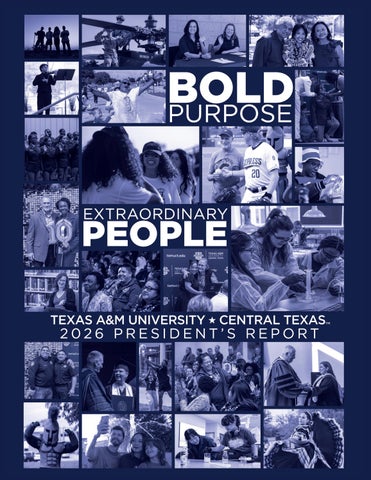
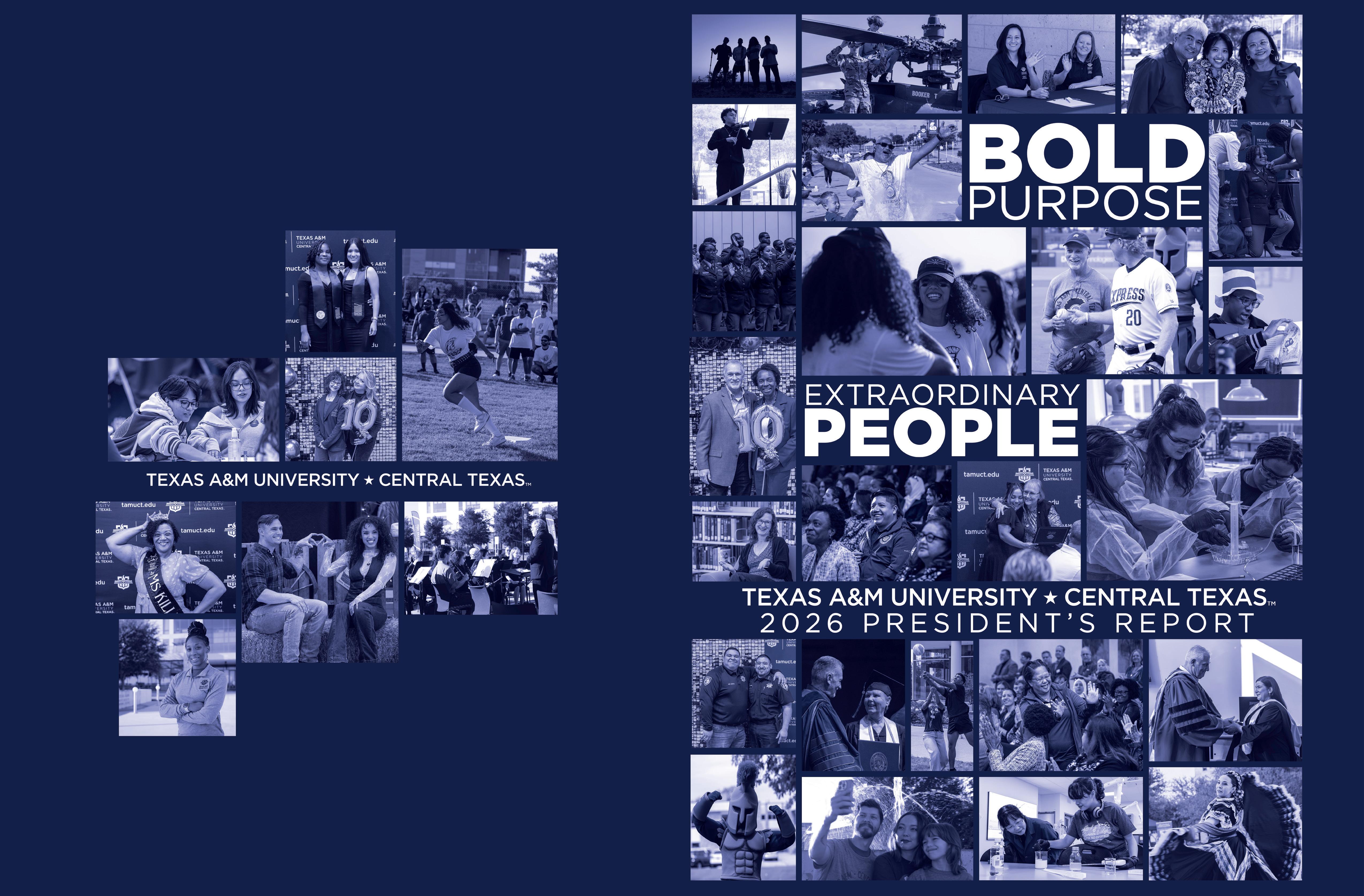
Word Origin: Latin extraordinārius or extrā ordinem, literally meaning “outside the usual”
Earliest known use of the word is from the Middle English period (1150-1500), and the Oxford English Dictionary records the earliest evidence of its written use from the 1460 original writings of justice and political theorist, John Forescue.
1. Going beyond what is usual, regular, or customary
2. Being exceptional and significantly exceeding what is usual or conventional, remarkable, rare, or wonderful
3. Surpassing what is considered typical or expected, intended for a special purpose that is not ordinary
FORTY YEARS AGO, A BOLD IDEA BECAME REALITY: A UNIVERSITY FOR CENTRAL TEXANS BUILT ON POTENTIAL, NOT PRIVILEGE. THAT SIMPLE, BUT PROFOUND GUIDING
PRINCIPLE BECAME
A VIBRANT REALITY IN 2009. TODAY, OUR FOUNDERS’ VISION IS MORE THAN ALIVE HERE – IT IS ACCELERATING.
In last year’s 2025 President’s Report, we didn’t mince words about being a different kind of university. We put everything right out there. Admissions policies created to gather people in rather than count them out. Degree programs designed to respect past academic work and those who earned it rather than finding reasons to reject it at the students’ expense. And a tuition and fee structure and special tuition programs created to save our students time and money. It was almost like we turned the old paradigm on its head on purpose.
To be completely honest, we didn’t do anything our founders did not want us to do. They wanted to create a university that reflected the best of the kind of neighborly values that have been a part of Texas for as long as any of us can remember: common sense, integrity, hard work, prosperity, and conviction. And we take this opportunity to say how much we love Texas. Just check out our name: Texas A&M University-Central Texas. It is no exaggeration to point out that we are the only university in the Lone Star State to have literally bookended our very name with its name. In 2026, the inspiration for our very being is more than alive—it’s accelerating. As of our most recent commencement in December 2025, we have awarded 12,823 graduate and undergraduate degrees. And as good as that news is, there is more. Our tuition and fees were ranked the most affordable in the United States by EdSmart and
the growth in our graduate programs has been exponential. In fact, so much so in some areas that we have had to hire additional full-time faculty just to satisfy the need.
Speaking of degree programs, we are seeking approval for our graduate program in social work, and a doctorate in both business administration and education. But just so that the point is made, we have one more thing.
The value of our degrees – beyond the immense personal and professional significance to our graduates and their families – was recently documented by an economic research firm that found that our Alumni working in Texas generated $468M in economic activity. Locally, the economic power of our presence generated a whopping $77M both locally and regionally. Kinda reminds us of the late President George W. Bush who said, “Some folks look at me and see a certain swagger, which in Texas is called ‘walking.’”
Only A&M-Central Texas is not just walking; we are in every sense of the word taking every opportunity to keep pace with a future that is on the fast track. New programs and new partnerships in high-demand fields. Expanded research initiatives. Stronger partnerships with industry and community. Every step forward is powered by the same promise we made decades ago: to deliver an undergraduate and graduate degree education that is exceptional, affordable, and life changing. Because it’s not just what we do. It’s who we are and who we were meant to be. It is our bold purpose.
WHO WE SERVE IS WHO WE ARE
THE FACTS ABOUT WARRIORS
BY AGE GROUP
3 OUT OF 4 STUDENTS ARE PURSUING THEIR BACHELOR’S DEGREE
1 IN 4 STUDENTS IS PURSUING THEIR MASTER’S DEGREE
PART-TIME STUDENTS
FULL-TIME STUDENTS
(ACTIVE DUTY, VETERAN, OR FAMILY MEMBER)
A&M-CENTRAL TEXAS HAS TEXAS COVERED
OUR STUDENTS LIVE & WORK IN OF THE 254 TEXAS COUNTIES. ~ AND ~
IN ALL 50 STATES, THE TERRITORY OF PUERTO RICO, AND 104 DIFFERENT COUNTRIES 216
6 SEMESTERS
69.9% OF UNDERGRADUATE STUDENTS
PERSIST IN THEIR DEGREE PROGRAMS 84%
57.2% OF GRADUATE STUDENTS RECEIVE SOME FORM OF FINANCIAL ASSISTANCE OF OUR GRADUATES WERE THE FIRST IN THEIR FAMILY TO RECEIVE A UNIVERSITY DEGREE 49% IN 2025,
46.2% OF STUDENTS RECEIVE PELL GRANTS
STUDENT DEMOGRAPHICS
AVERAGE TIME TO COMPLETION OF A BACHELOR’S DEGREE: 97.5% COURSE COMPLETION SOURCE:
WE RISE. WE PUSH. WE TAKE ON WHAT’S HARD AND WE ACCOMPLISH WHAT’S GREAT: A MESSAGE FROM RICHARD RHODES, PH.D.
PEOPLE WITH PURPOSE
BARBARA PEEK
PRAVEEN MALALI
ANDREW FLORES
ANDREA SCHWEGLER
TETYANA QUILES
SHAWN KELLEY
ANGIE GRIFFIN
SHUYANG GU
VICKY EASTES
EXTRAORDINARY RESEARCH & SCHOLARSHIP
ECONOMIC
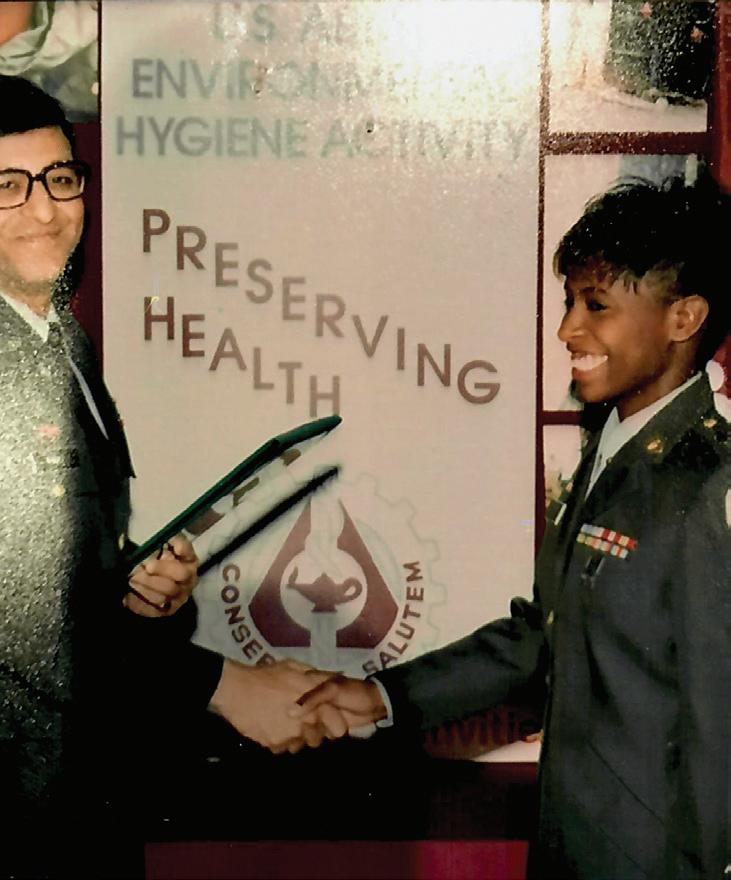
A&M-Central Texas Office of the Provost Executive Assistant III, Barbara Peek, 53, remembers how it all began. Not her employment with the university, though she will gladly outline that, too. Military service. Motherhood. Marriage. And, eventually, a master’s degree. Relocation and retirement with her husband, George, brought her to the university where she has amassed a slew of colleagues and friends over the years.
PEOPLE WITH PURPOSE COLLECTION THE
there is any measure of tranquility or relaxation to be had when picking up everything and moving it almost 3,000 miles away.
Unable to afford the cost of shipping one vehicle, they did the only logical thing, dividing their two kids, two hamsters, and one cat, and drove. And drove. And then drove some more. Without GPS. Georgia. Alabama. Louisiana. Texas. More Texas. Still More Texas. Until eventually, Colorado, Utah, Oregon, and finally Washington.
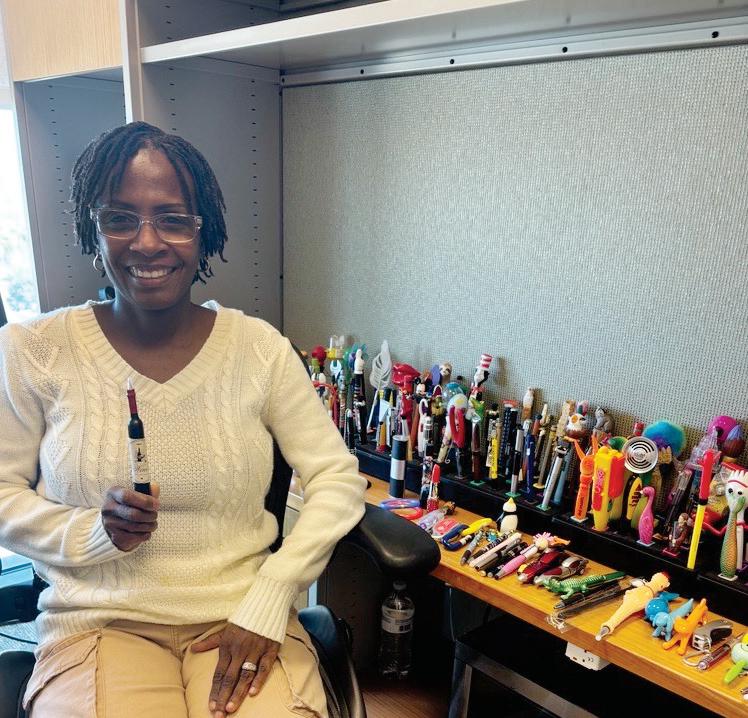
Her office is a testament to that. Certificates of Appreciation for Five Years of Service. Then 10 Years of Service. Framed pictures of her daughters, a formal event with her husband, and her beloved cats. And one more thing: an impressive collection of novelty pens.
“Twenty years ago, our family was leaving Fort Benning, Georgia and going to Joint Base Lewis-McChord in Washington state,” she said. “That is how it began. One pen back then is now 150 pens today. All because of that one trip.”
If it sounds idyllic, it isn’t meant to. Peek – and any military family who has ever made a multi-day, multi-state, multichild, multi-pet, cross-country, military relocation trip –will quickly disabuse the absurdly romantic notion that
Days upon end, she says. And while it may not be yesterday, there’s a very good chance she remembers the exhaustion.
She in her white Nissan Pathfinder and her husband in his white Lincoln Towncar ahead of her. That is an important detail, she says, her obsidian eyes barreling into the conversation as if something is coming.
“Lemme tell you,” she added whispering, “I can do stress as well or better than most people, but the stress from that trip accumulated way faster than the mileage. I’m pretty sure that if I could have turned around, I would have.”
The only thing interrupting the monotony was food and potty breaks, occasional stops to visit family when their paper maps, respective family trees, mileage, and levels of general fatigue overcame the desire to keep going and just get there already.
“About halfway through the trip, we were someplace in Louisiana,” she remembered. “I was past the point of exasperation from being behind my husband’s car, and I had to stay in sight of him because he was the only one who knew the way.”
In that place and at that time, Peek had one need: a clean(ish) restroom and a place to refuel. So, when her husband signaled a turn, she sighed with relief. Had she known then that one stop – that one random pullover in some town she still can’t name – offered a completely unexpected delight.
But it would. And it did.
Right there on a remote Louisiana highway, Peek and her husband pulled into a relic of a gas station. He busied himself with refueling both vehicles slurping gas from a pair of 1940s gas pumps that ticked away the gallons and the price not on any modern digital gray numerals but click by click in ancient one inch metal plates dropping methodically into position with each drop.
This was no Buc-ee’s. But it didn’t need to be. All she wanted was a reasonably clean restroom and something for her and the kids to eat. Once inside, unexpectedly, there, in mid-thought, something unusual caught her eye.
It could have been easily overlooked, nestled randomly on the dusty counter alongside a 15-gallon tank of minnows, moon pies wrapped in cellophane, spark plugs in a large glass cookie jar, boiled peanuts in a dented metal pot, and pickled eggs the owner swore were ‘fresh enough.’ She reached out her hand and held it between two fingers: a jovial Mardi Gras jester, masked and festooned in regal purple, lush green, and festive gold.
She can’t remember what she paid for it that day. Maybe a dollar. Clearly, not enough for instant unexpected fascination. To her, it was worth whatever she paid and then some because just looking at it erased the tension in her neck and made her smile before she realized she was doing it.
nourished by friends, family, and co-workers who appreciate the simple joy it provides.
To her, it is an arsenal of appreciation for the small things that sometimes too easily go unnoticed in the rough and tumble of life. Just wait, she winks. Wait until you see the pen that farts.
Not everything has to represent something to have value, she says in her characteristic stoic fashion. Sometimes, it is enough just to make time to be happy. Even if happy is something, like Peek, that gets wedged in between meetings and other obligations.
She doesn’t resent those things that make up her job. In fact, she is one of those people that every office should have to be considered lucky. She is resolutely unflappable. Moving from one task to another as she ensures that the university’s provost’s office runs as smoothly as possible.
Today, on the credenza behind her desk, her pen collection stands at attention, arranged in straight rows like a veritable army of friendly allies. A crocodile pen, wine bottle pen, palm tree pen, french fry pen, chopsticks pen, giant red lips pen, Etch A Sketch pen, seahorse pen, pliers pen, basketball hoop pen, penguin pen, Kylo Ren pen, fish pen, flamingo pen, and perhaps provocatively, a presumably contraband reefer pen, right there next to a Big Mac pen, and this pièce de résistance, specifically for those who ever played the board game, Operation. Yes, boys and girls. There is a nostalgic Cavity Sam pen. And his nose turns red. Of course, she beams, they all work.
For those who wonder what to make of this pen pulchritude, Peek doesn’t feel the need to justify her collection or over explain its significance. For the last two plus decades, it is always growing. Sometimes by her hand, and sometimes
People around campus don’t just know of her, they admire her. An indefatigable work ethic, seldom a moment idle, and purposefully friendly despite a rigorous work routine and multiple demands on her time. Pssst, they ask each other, “Have you seen Barbara’s pen collection?”
If not, they add, it is worth it. Indeed. Sometimes all anyone needs is a small reverie of intrigue followed by a, “Hang on. Is that what I think it is?’ conversation to spark up a bond of belonging between colleagues and co-workers.
In the end, Peek is fully aware that her pens are, strictly speaking, novelties. It’s just that that’s not all they are. And anyone who’s ever stood in her doorway would — and has — emphatically agreed.
They’re proof that whether it is our longest roads or our longest workdays that bring us together, the smallest things can still make it happen. And if that moment of connection comes courtesy of a pen in the shape of a fiery pink flamingo or wine bottle? Well, she thinks, that’s just another bit of happenstance — the same kind that found her on a forgotten stretch of Louisiana highway all those years ago.
TAMING THE UNIVERSE
Mechanical Engineering Technology Program is Accelerating
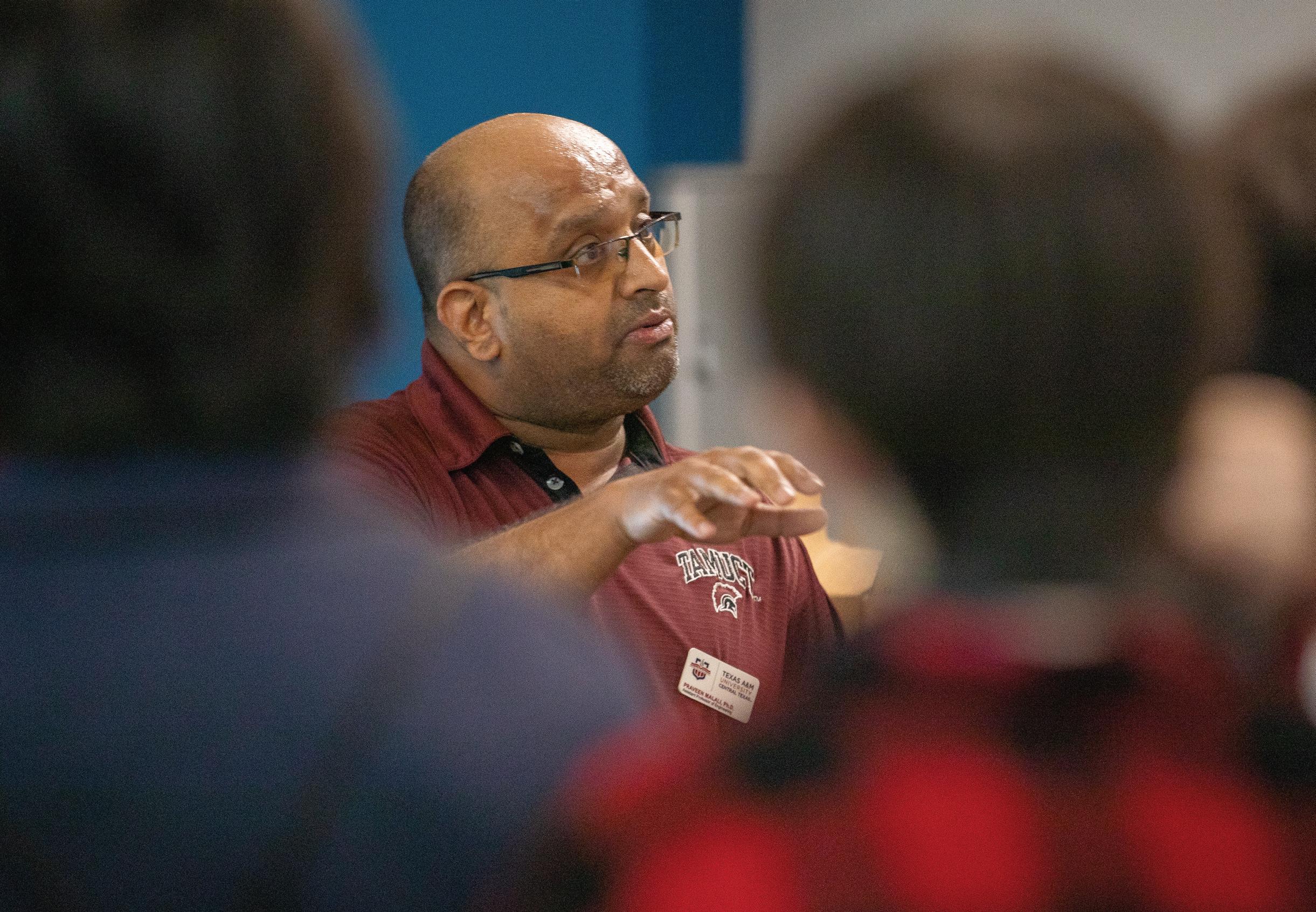
When A&M–Central Texas Assistant Professor of Engineering, Praveen Malali, 41, is in his mechanical engineering technology lab, he is very much—pardon the pun—in his element.
On the fourth floor of Warrior Hall, an impressive inventory of pump systems, flow meters, AC trainers, heat exchangers, conduction plates, and free and forced convection devices hums around him. As much as he loves working with those machines, he loves working with his students even more.
The engineering technology program, he says, truly began in 2020, when then–Texas A&M University
System Chancellor John Sharp awarded the university $1 million to purchase a state-of-the-art scanning electron microscope and fund critical staffing. One of the first hires was Research Fellow Tyler Harvey, helping launch what would soon become one of A&M-Central Texas’ fastest-growing programs.
The first cohort was small—three or four students, he recalls—but mighty. And they knew it would grow. They were right. Enrollment has quadrupled in six years, creating ample opportunities for students to learn hands-on in the lab that Malali knows as intimately as most people know their own kitchens.
He has, after all, been “eating and sleeping” physics and engineering for more than 30 years.
Each tool in the lab reveals a different slice of the invisible mathematics powering the physical world. Pump systems demonstrate how pressure and flow interact across water systems and industrial plants. Flow meters measure velocity and volume. AC trainers break down vapor-compression and the looping dance of pressure and temperature. Heat exchangers move energy between fluids without mixing them. Conduction plates explain why heat races through copper but crawls through foam. Convection rigs showcase the tug-of-war between drifting and force-driven airflow.
To understand any of it, students must master algebra, calculus, thermodynamics, physics, and—eventually— engineering design.
It can be intimidating. But this is where a learning-centered professor makes all the difference. In the whir of a pump or the rising line on a temperature gauge, Malali teaches students to see the math beneath the metal.
A flow meter becomes algebra in motion.
An AC trainer becomes a thermodynamic story.
He grew up in a home where real genius echoed daily. His father, Dattatry, tutored students in Heisenberg, Einstein, and the mysteries of the universe. As an eighth-grader, Malali listened in awe. That sense of wonder never left.
His childhood was typical and extraordinary: sports, family, games—and science. He played cricket. He built memory devices out of cardboard to understand particle physics. He mastered hopscotch with the devotion of someone who masters almost everything he touches. And the scents of his mother Padma’s cooking—yogurt rice, dosa, mustard seeds, curry leaves—formed the backdrop to those early days.
His students may someday forget the formula for a Nusselt number. But they will not forget the professor who taught them to see the hidden lines that make the universe make sense.
A heat exchanger becomes an exercise in geometry, calculus, and differential equations. Convection becomes a world of Reynolds and Nusselt numbers—those quiet ratios that determine how heat moves.
Sixteen weeks per semester suddenly feels justified. And it makes even more sense that the person guiding students through this complexity has spent decades mastering it himself. For Malali, it’s not tedious. It’s a celebration of inquiry—every class, every lab.
His credentials match his passion. Only about six in every thousand people ever earn a doctorate in mechanical engineering, and he earned his at research-rich Old Dominion University. But he waves off the “genius” label. He’s even hesitant about the other g-word: geek. And yet the evidence is there.
As an undergraduate, he found himself unexpectedly in front of a classroom, explaining superfluidity and competing in a lecture contest on Brownian motion against more than 80 peers. He placed third, comfortably explaining the chaotic movement of microscopic particles long before he stepped into a doctoral lab.
Today, his enthusiasm for teaching is unmistakable. He is happiest when students transform theory into impact. Just last year, when the bulbs in campus bollard lights began failing–and replacements cost thousands–his colleagues came to the makerspace. Under his guidance, students used 3D printing to design a conduit allowing far less expensive bulbs to be used. Problem solved.
When the lab doors close and the hum quiets, what remains is the thing Malali has been building all along— not machines, not experiments, but minds. Minds shaped by curiosity, steadied by discipline, and lifted by the joy of understanding something difficult and beautiful.
His students may someday forget the formula for a Nusselt number. But they will not forget the professor who taught them to see the hidden lines that make the universe make sense. And because of that, the future of mechanical engineering technology at A&M–Central Texas isn’t just growing. It’s accelerating.
PEOPLE WITH PURPOSE
Student. Officer. Chief. Leader.
A LIFE BUILT ON SERVICE
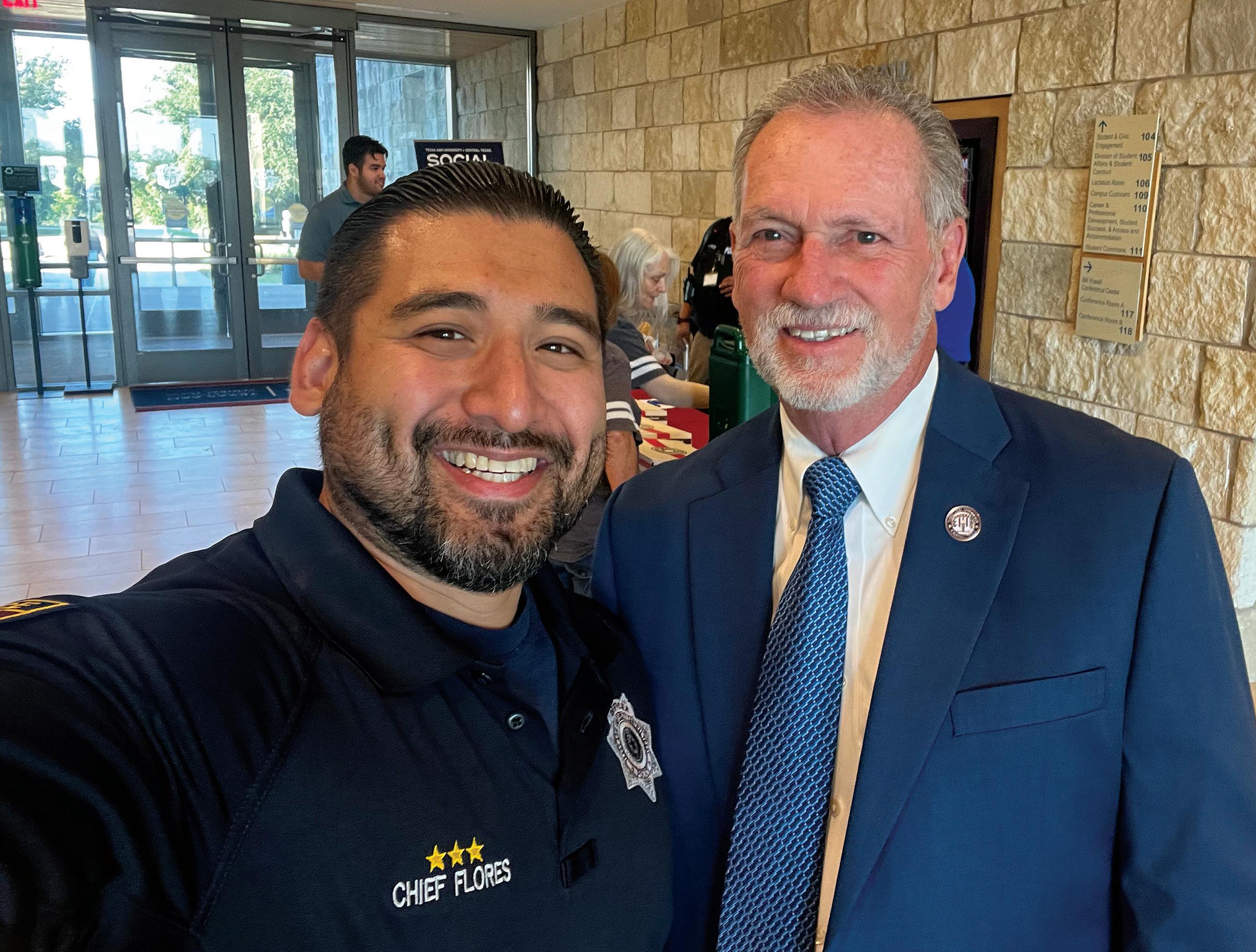
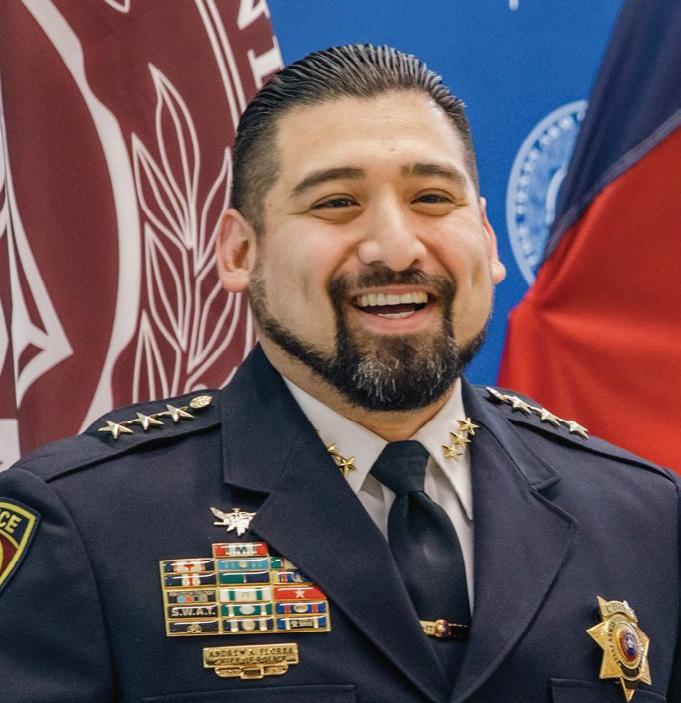
A&M–Central Texas University Police Chief Andrew Flores never chased titles or promotions. Looking back, he credits his path to the values his family taught him, the love of a woman smarter than him, and mentors who saw leadership in him before he ever did.
In high school, he excelled at everything: a 3.8 GPA, student government class president, and quarterback. He volunteered, ran track, powerlifted, boxed, and practiced martial arts.
“I’d been quarterback for a while, and it was great,” he said. “But I was more into hitting hard than the status of it, so I switched to defensive end and linebacker.”
Not a mean streak — then or now — just teenage intensity and a second-born’s instinct to define himself on his own terms.
One look at him and it tracks. Charm for days, and brains to match. A people person equally at home in a Metallica T-shirt at the taqueria or in full uniform behind his desk.
ANDREW FLORES, UNIVERSITY POLICE DEPARTMENT
Broad shouldered, sturdy, and capable of dropping for 50 burpees just because he can.
But he insists he’s no giant — “only 5’8.” His warm, tiger eye brown eyes disagree, framed by dimples that surface the instant he smiles. A smile that might mean he’s thinking about lunch — or doing that subtle pre-emptive mental sweep of the room that trained people do, while the rest of us are just trying to remember where we left our keys. That blend of charisma and competitiveness followed him off the football field and into the next chapter.
After two years at Stephen F. Austin State University, he realized the college kid lifestyle felt inauthentic. “I never did anything that would make my mom doubt the boy she raised,” he said. “It just didn’t feel right, so I came home.”
That decision set everything else in motion.
At Temple College, department chair Lesley Keeling Olson, Ph.D., saw something in him — something that made her believe he’d make a fine officer. “I was standing in her doorway asking about becoming a cop, and she suggested I apply to the academy. She even offered to endorse me,” he said, still sounding surprised.
He got in. His classmates weren’t as welcoming. No subtlety in their cruelty. He didn’t fit in, and they made sure he knew it. But he stayed focused. He knew exactly what he was made of.
Stephanie — the girl he met in high school — stayed with him through all of it. She saw his potential clearly, so she suggested he return to school for a bachelor’s degree. “She told me, ‘This is where you need to go,’” he said. “Even my brother echoed it.”
He enrolled that fall, paying tuition by working in home health care with a 16-year-old special needs client twice his size. He could have been frustrated, but he wasn’t. That job, he says, taught him the meaning of service and authenticity — lessons he carried into university policing.
“A smile that might mean he’s thinking about lunch — or doing that subtle pre-emptive mental sweep of the room that trained people do.”
By 2011, he had his associate degree in criminal justice, his academy certificate, the highest score on the TCOLE exam, and the top physical training ranking. He didn’t mention the earlier ACL/MCL repair — a story he could have leaned on but didn’t. Scars, he says, are badges of honor. And staying down has never been his nature. He applied to the Temple Police Department repeatedly and waited months without a call. No complaints. He picked up odd jobs, including washing dishes. Raised eyebrows don’t bother him. “I stocked bread at H-E-B at 4 a.m. in high school,” he says. Humility feels more authentic to him than bitterness.
“When I look back on the last 14 years, I’m amazed and grateful,” he said. “I was a part-time officer and graduate in 2012, then full-time in 2013. Then corporal. Then sergeant. I owe a lot to this university.”
The university owes him just as much. Long before becoming chief, Flores approached everything the same way he approaches people: with respect, attention, and genuine care. Rank mattered less than doing the job well. His wife pushed him again — this time toward graduate school. He hesitated. No one in his family had gone that far. But once he started, he realized his vision for university law enforcement had a place. His coursework and conversations affirmed it.
Today, he says, his officers do more than patrol — they build relationships. “This week, Officer Gallegos saw a stalled vehicle on Clear Creek. He ran back, grabbed our gas can, and helped. That’s who we are.”
He wasn’t done with school, either. He completed his master’s, began teaching, and has now finished his doctoral coursework — the first in his family to earn a master’s and, soon, a doctorate.
Sometimes, in the middle of teaching, he pauses. “I realize I’m doing exactly what my professors did for me,” he said. “That moment means everything.”
If this is what the journey was for, he says, he is humbled. Ready. And grateful that every step — every setback, every nudge — brought him here.
PEOPLE WITH PURPOSE
Psychology Faculty Thwart the Space-Time Continuum — And Turn Distance Into Belonging
There are no empty-calorie euphemisms for what Andria Schwegler, 57, and her colleagues in the Counseling and Psychology Department have built. No talk of lowhanging fruit or paradigm shifts.
What moved them wasn’t jargon. It was their students—and the evidence is everywhere as undergraduate enrollment grows and a once-struggling graduate program has surged from flailing to flourishing in under three years.
Schwegler would never claim she and her colleagues are more inspired than anyone else on campus. They were simply answering the same calling that shaped their own lives—hers beginning decades ago inside a renovated small-town hotel where Troy State held evening classes.
Her mother, Judy Foote—married, working full-time, raising two kids—took night classes and often brought young Andria along. While her mother took notes in makeshift lecture halls, instructors handed the quiet 10-year-old hardcover books from their own shelves. Turning borrowed pages, she got her first taste of academic exploration. She also sensed the weight of her mother’s choice.
“All of my mom’s friends married at 18 and had children by 19,” she said. “She was doing something outside the norm—and she took me with her, almost as if to show me what was possible.”
By high school, Schwegler imagined studying psychology, but her traditional Southern family discouraged it—
ANDRIA SCHWEGLER, COLLEGE OF EDUCATION & HUMAN DEVELOPMENT
believing it irrelevant at best. She deferred, out of respect. But fate, she says, has its own sense of humor.
In college she worked 40-plus hours as a waitress, tutored English during the week, and carried a full course load. A scholarship and modest aid filled the gaps. Just before graduation, she became engaged to a new U.S. Army officer. Another defining challenge began: the delicate balance of two careers, two ambitions, and the instability military families know well.
“We married in my last semester so I’d have medical insurance,” she said. “He was stationed in Oklahoma; I stayed in Alabama to finish school. When I finally joined him, he deployed to Saudi Arabia for Operation Desert Shield. I was 22 and a thousand miles from everything I knew.”
What followed became the rhythm of their lives: thirteen moves in 27 years, dozens of TDYs, five combat deployments, and long stretches of living alone in unfamiliar places. She searched for a public school teaching job and may have missed her chance with a single missed phone call in the pre cell phone era. Then opportunity returned.
Saddam Hussein in Ad Dwar,” she said. “My parents and I heard the news on television over breakfast. He wasn’t with me, but it’s a date neither of us will forget.”
Schwegler is at A&M–Central Texas today through what she calls a “karmic boomerang.” Twice—once in 2005 and again in 2009—she earned coveted tenure-track positions. Twice she left: once for another relocation, once for the birth of her sons. But the Army sent them back to Fort Hood, and she returned to the university.
“Third time’s the charm,” she laughed, crediting colleagues Jeff Kirk, Coady Lapierre, and Sam Fiala for welcoming her back and the colleagues she has worked with so closely who never hesitated to bridge the distance between online and in-person learning. They saw the possibilities for something better, she said. And they named it for what it was and fixed it.
“I was offered a chance to teach basic psychology at a technical college. I had a master’s in education, so I qualified. I couldn’t have guessed it, but engaging with those students was so fulfilling that I knew I’d come back to the subject I’d once surrendered.”
Within a few years she earned a second master’s—this time in experimental psychology—and then committed to a doctorate. The Army moved them again, forcing her to surrender a spot at Auburn and restart at UT Arlington. From there came Kansas, then Killeen, and another deployment while she stayed behind.
On the day of graduation, she said, “My husband, Eric, was deployed as part of the support team that captured
“There was no reason not to integrate the formats,” she said. “Now remote and on-campus students interact in real time, whether they’re here or at a distance. Everyone is thriving.”
Even the department’s clubs and service groups operate as blended communities, gathering in a large, renovated classroom designed for both in-person and remote engagement.
She calls it irony; her colleagues call it insight. Years of living far from everything familiar inspired her – and them – to build something better. They have woven that lesson into every class—bringing online and on campus students closer than they’ve ever been.
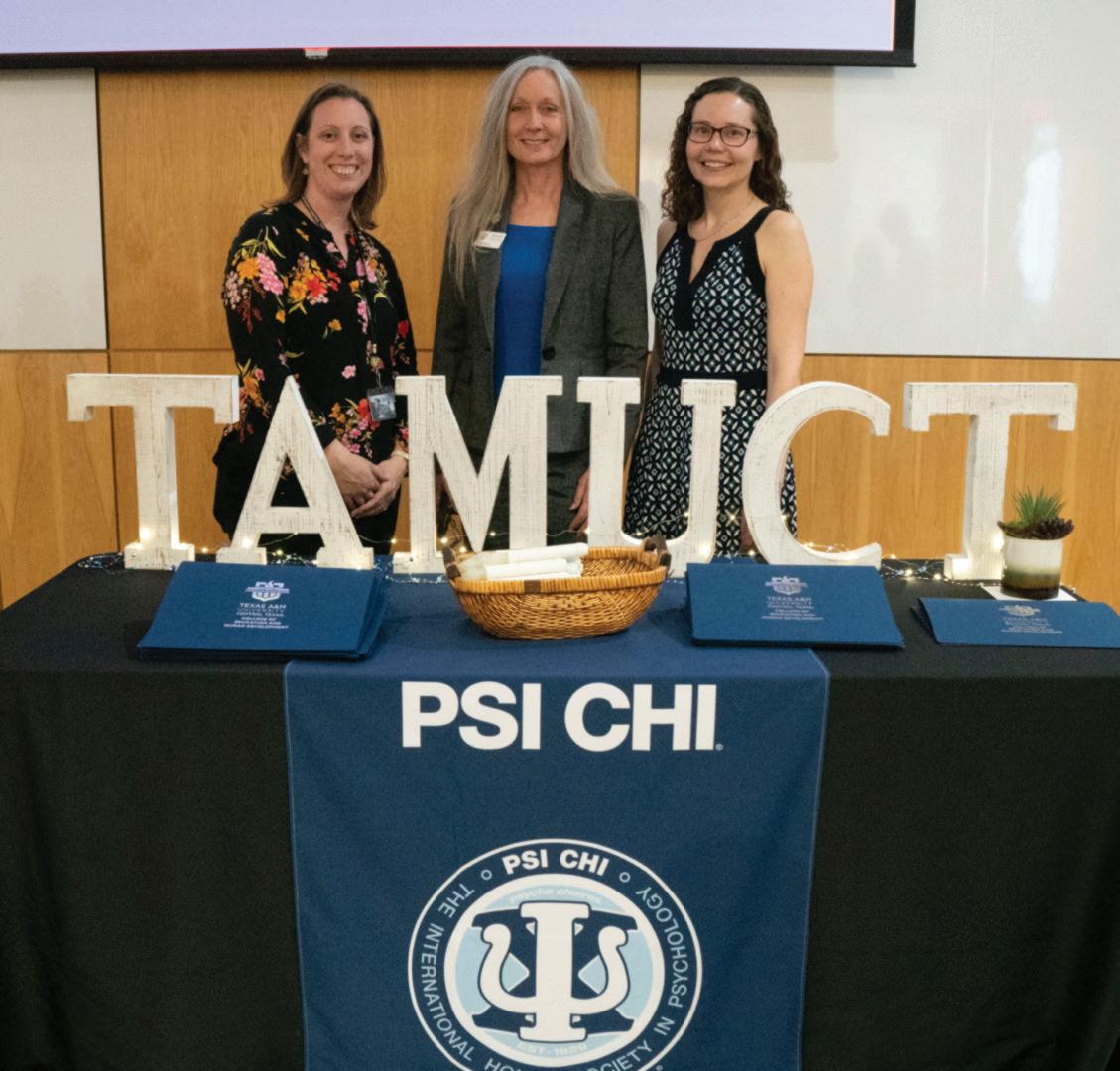
Left to Right: Dr. Madelynn Shell, Dr. Andria Schwegler, and Dr. Malin Lilley
THE SUBTLE ART OF A SEAMLESS DAY PEOPLE WITH PURPOSE
On the fourth floor of Founders Hall, the quiet is a decoy. Phones hum. Radios crackle. Doors whisper open and shut. A senator arrives early. A donor is en route. A lectern needs to move five inches left. A soundcheck catches a mysterious hum in the back row.
At the center of it—steady, smiling, already several steps ahead—is Tetyana Quiles.
“Let’s pivot the seating. B row to C. Yes, bring the backup mic. No—the short cable.”
She says it softly, as if it’s obvious. She makes it look easy. This is her gift: orchestration without spectacle.
Working in collaboration with fourteen colleagues across police, facilities, safety and security, A/V and IT teams, parking coordination, custodial staff, and grounds services, Quiles supports the public life of Texas A&M University–Central Texas. Ceremonies, convocations, visiting dignitaries, research symposia, board meetings, community and school district partnerships—the events that shape a university’s presence all pass quietly through her hands.
In a recent year, her office supported 505 events (360 internal, 145 external). Surveys reflected 87% “extremely satisfied” and 8.5% “moderately satisfied.” To her, these are not accolades. They are expectations.
A Quiles-run event rests on a hidden foundation: contracts negotiated, budgets aligned, vendors coordinated, security teams synced, A/V mapped and tested, and a campus calendar monitored with the discipline of an air traffic grid. A dozen micro frictions disappear before they spark. And when the surprise arrives—as it always does—she absorbs it, reroutes it, and keeps the room steady.
Colleagues say the same thing in a dozen ways. She sees around corners. She anticipates what most notice only when it breaks. She calls it “making the day seamless.”
Her team of work studies mirrors that instinct, operating with the cohesion of a practiced string quartet—one eye on the schedule, but always centered on the human
in front of them. When a dean needs a last-minute seating chart, when facilities reroutes a hallway, when an accessibility request arrives late, they don’t ask who misstepped. They ask, “How do we make this easy?”
That tone flows from her: the laugh heard before she’s seen, the quick wave in the hallway, the check in text that arrives at exactly the right moment. High standards wrapped in high warmth.
Quiles speaks five languages—English, Russian, German, Czech, and Ukrainian—moving fluidly between event jargon, hospitality, vendor conversations, and international visitors. It is not a flourish. It is operational empathy. Off campus, she serves the region with the same precision.
As a Greater Killeen Chamber of Commerce Board member and Sector Chair for Leadership & Workforce Development, she guides regional work to strengthen leadership pathways and align education with industry and military transition needs—essential efforts for long term economic resilience. She also serves with the Harker Heights Chamber of Commerce as a founding member of LeadHers, a women’s leadership initiative connecting emerging and established leaders across industries.
Her community portfolio includes strengthening partnerships with Killeen ISD, Central Texas College, and Texas A&M University–Central Texas; supporting the Young Professionals Council and Leadership Killeen; and facilitating inclusive leadership opportunities for women, diverse professionals, and military affiliated individuals. She also helps convene executive level forums that connect senior leaders across sectors. It is civic infrastructure built on relationships and results.
Quiles holds two graduate degrees from A&M–Central Texas—an MBA (finance emphasis) and an M.Ed. in Higher Education Leadership—and a doctoral degree on the horizon. Leadership theory shows up in her planning; finance shows up in her budgets; a research mindset shows up in the way she analyzes surveys and applies them.
Before higher education, she managed luxury fashion boutiques across Europe— Italy, Germany, France. Buying. Curating. Negotiating exclusives. Growing a footprint from one shop to nine. Different industry; same fundamentals: precision, people, systems.
Ask what fuels her work, and she offers one word: gratitude. For mentors who pushed her.
For night classes that sharpened both her English and her discipline. For the community college faculty member who told her, “Keep going—not someday; now.”
From undergraduate work study to graduate student to doctoral candidate, the campus has been her proving ground. Not titles—but systems, templates, and timelines colleagues adopt and re adopt: “Let’s do it that way again.”
Events are easy to underestimate— mistaken for decorations or name tags or run-of-show binders. But Quiles and her colleagues know the truth: events are how an institution keeps its promises in public. They are trust, unfolded in real time—the place where mission meets microphone and is measured not by rhetoric, but by whether people felt welcomed, seen, informed, moved.
In Founders Hall, the room is ready. The hum is gone. The lectern sits five inches left, the way it should. Waters are placed. Notes are in hand. The clock strikes the minute the invitation promised. From the back, Quiles watches. Not hidden. Not spotlighted. Just present. Listening for the detail no one else will hear. Ready if needed. Invisible if not.
When the applause fades, her team resets the room. And she begins the next checklist. Because tomorrow has already begun.
TETYANA QUILES, PRESIDENT’S
THE RENAISSANCE PEOPLE WITH PURPOSE
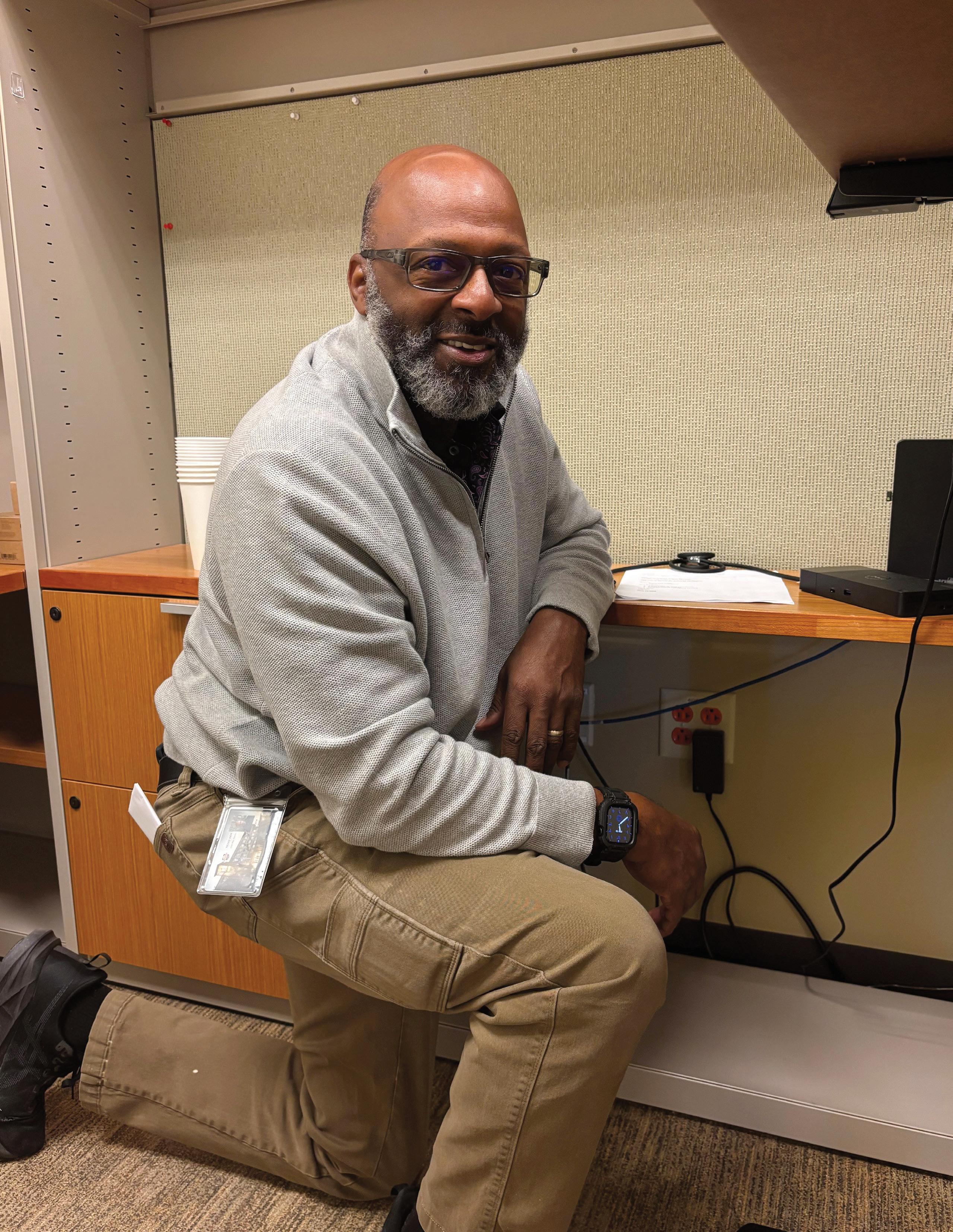
If Central Texas handed out a “Most Interesting Man” award, Shawn Kelley, 61, would be a contender whether he wanted the title or not. And he wouldn’t.
He’d just laugh — that easy, self-effacing laugh — and insist he’s just a man doing a job he enjoys. But one conversation is all it takes to realize he’s extraordinary.
Kelley is the Manager of Facilities, Safety, and Support Services at A&M–Central Texas, a role that keeps expanding around him like a story that can’t stop unfolding.
He retired from the U.S. Army and National Guard after 21 years of service. He and his wife, Deborah, settled in Copperas Cove with three kids headed to college, and he started applying for university jobs.
He didn’t get the first few. He kept trying.
He landed a position assisting the dean of the College of Business Administration, back when the university operated out of leased space on the Central Texas College campus. From there, he moved into the office of the university’s first CFO, Gaylene Nunn.
When the permanent campus opened, he was among the first to move into Founders Hall, watching the university grow from one building to three.
And as the campus expanded, so did his responsibilities: space use, construction oversight, safety, risk management, and whatever else the day demanded — even things no job description ever covers.
He stands with the posture of the soldier he once was, “high and tight” haircut intact, but carries himself with humility. He laughs easily. His presence puts people at ease. And then he tells stories that make colleagues wonder if someone quietly slipped him an action adventure script.
MAN IN RESIDENCE
There have been two brush fires on campus — one started by lightning, the other by a careless cigarette. He navigated a global pandemic.
He’s handled vermin, including venomous snakes. He coordinated the landing of two Blackhawk helicopters for the ROTC program. And then there was the calf.
“Oh, the calf,” he laughs. “We spotted him near Warrior Hall, just out for a stroll.”
With University Police flanking him, Kelley — on foot — herded the confused animal all the way to Clear Creek Road, finally guiding it back through the fence onto Fort Hood land.
“That poor calf was more scared of us than we were of him,” he says. “But he wasn’t safe where he was.”
He’s dealt with a few more since then. And yes, a fullgrown cow can jump a barbed wire fence, if properly motivated. He’s seen it.
A framed Bronze Star from his family. The First Cavalry Stetson that went with him to Iraq — all three times. Antique woodworking tools mounted like art. Baseball caps hanging from handmade pegs. Decorative crosses gifted during his years as a chaplain assistant.
And then the showstopper: a life-size handmade warrior mannequin, decked out in helmet, crest, chainmail, breastplate, and greaves. Kelley made it all, piece by piece — and has worn it as the university’s first (unofficial) warrior mascot.
When there’s no runaway livestock to wrangle, Kelley stays busy.
He chaired the university’s graduation committee for years and has even sung the Star Spangled Banner a cappella at more than one commencement ceremony.
He holds an associate degree in wastewater treatment, a bachelor’s in applied management, and an MBA from A&M–Central Texas.
But the part that surprises most people?
Shawn Kelley is a wildly talented artisan, craftsman, and builder. Walk into his fourth floor office in Warrior Hall and it feels like stepping into a living museum. Military history and hand-crafted works blend into a space overflowing with stories.
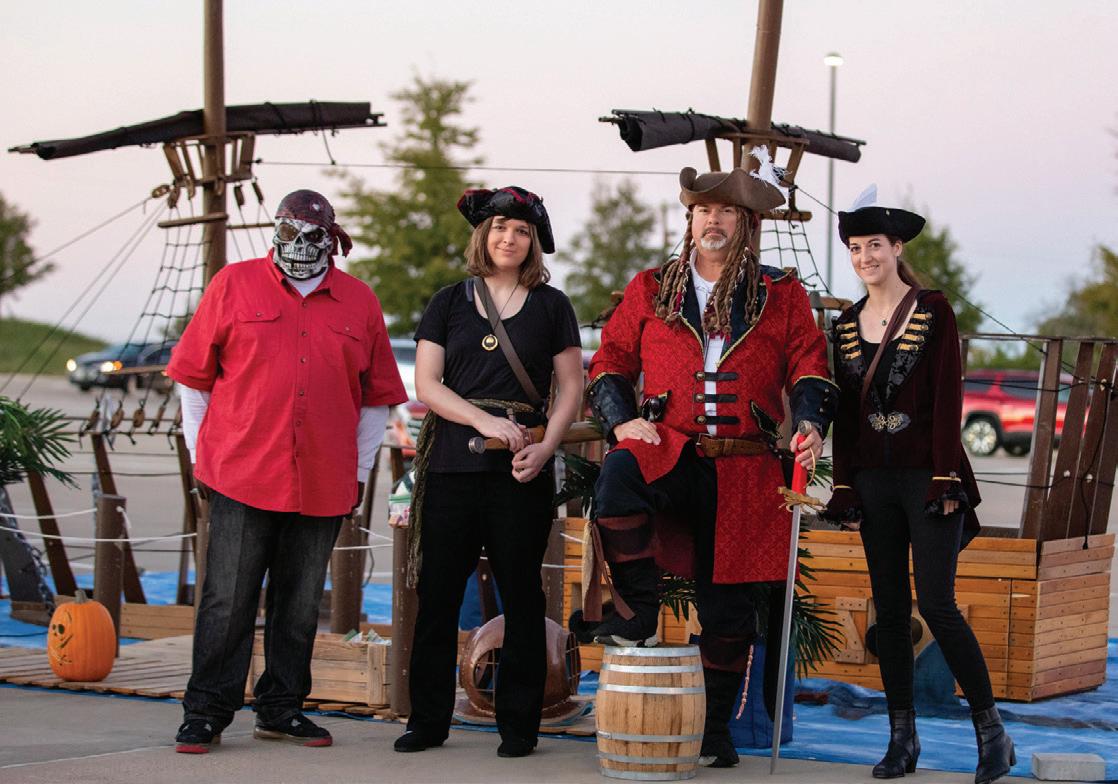
Larger creations don’t fit in his office: a 22 foot pirate ship originally built as a Copperas Cove High School band prop (which he later doubled in size), a small scale DeLorean for a Back to the Future banquet, and an X-Wing fighter now hanging from the ceiling of the Galaxy Bar and Grill in Killeen.
He holds a Bronze Star, three Meritorious Service medals, five Army Commendation medals, even Army Achievement medals, two National Defense Service medals, and more — including a NATO medal.
He also knows how to throw a grenade and has the badge to prove it. But he shrugs all of it off.
Thing is, Kelley isn’t defined by any one thing. He is former soldier, husband and father, colleague and giver of generous hugs and happy encouragement, safety guru, innovator and woodworker, builder of pirate ships, song singer, storyteller, artist, wandering livestock wrangler, and—well—just an average Central Texan: our quiet hero and renaissance man in residence. Or so he says.
PEOPLE WITH PURPOSE
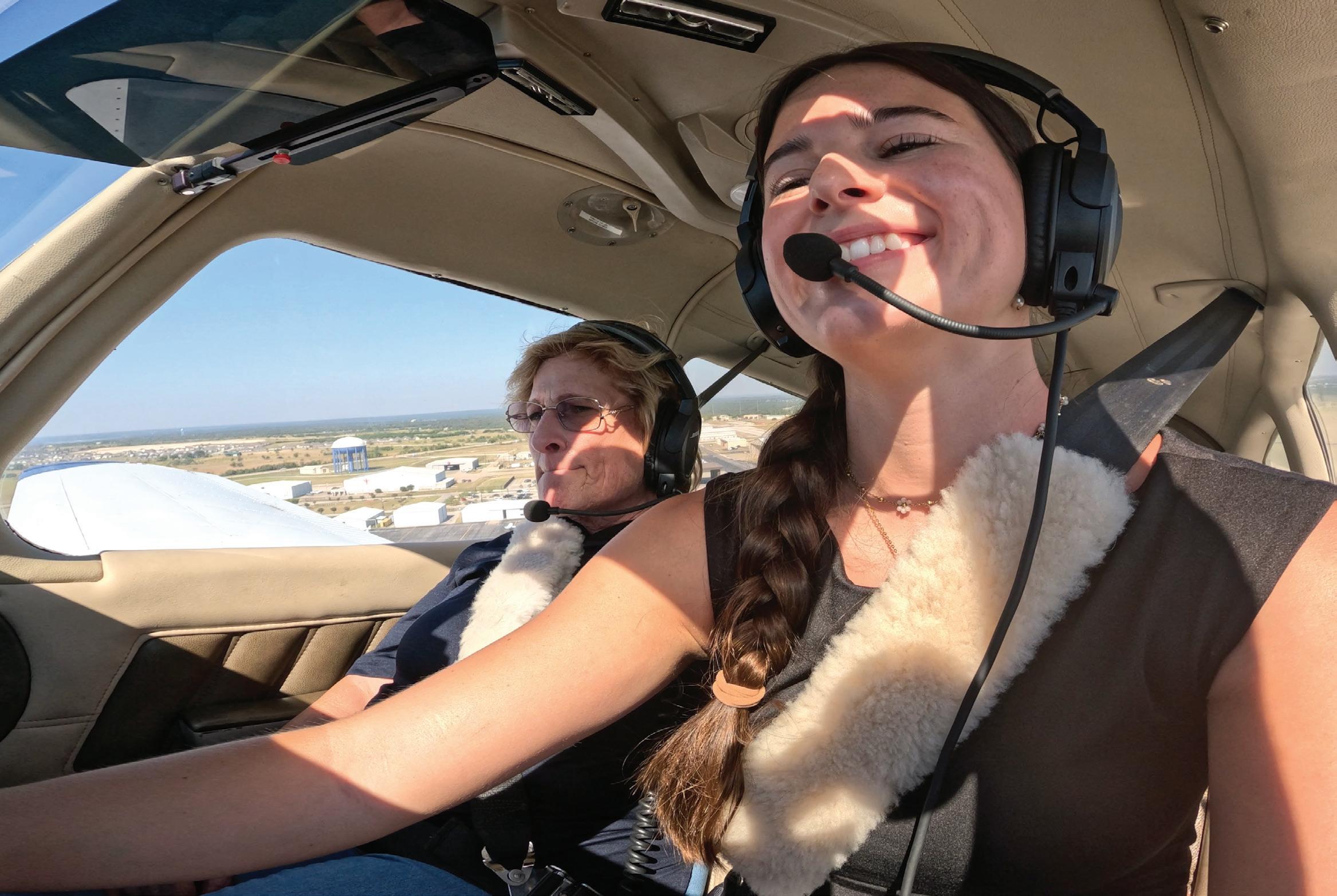
THE WHIRLY GIRLS A&M-Central Texas Aviation Program Growing
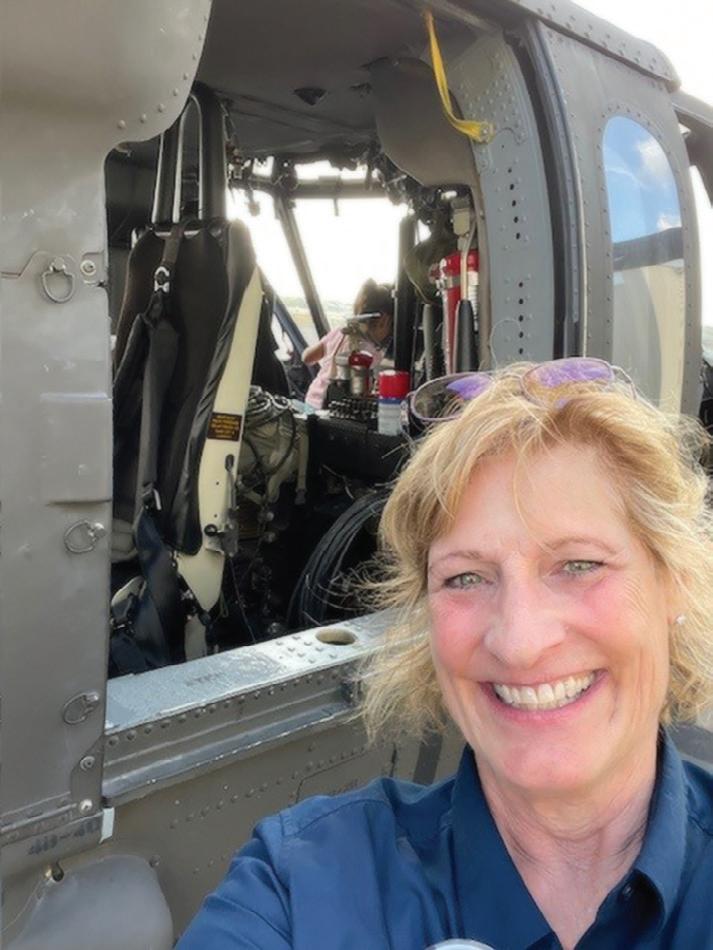
For more than two decades, Angie Griffin, 64, lived a full and accomplished life as an experiential counselor, corporate team builder, charter school guidance counselor, and university administrator. Her career was predictable in its upward climb — until the day it wasn’t.
Today, her three grandchildren call her “Grangie,” but she’s hardly a stereotypical grandmother. Griffin is a member of the Female Helicopter Pilots Association, known as The Whirly Girls, and the newest faculty member in the A&M–Central Texas Aviation Program.
She understands the magnetic pull of flight — the blend of physics, instinct, and sheer nerve — and she knows destiny sometimes whispers before it thunders.
Even with my counseling background, I have to be practical about flying,” she says.
Her face, however, gives everything away.
When Griffin talks about how aviation found her, her whole expression shifts — eyebrows rising and falling, bright green eyes sparking, and an irrepressible 500-watt smile that ricochets around the room. There is no hiding it: Angie Griffin loves helicopters. But it took fate — and a glacier — to make her see it.
Two decades into her career, nearing 40, she felt something changing. Not a crisis, she says. Not a lightning bolt. More like a low, persistent hum she couldn’t ignore. Friends teased her. “Mid-life crisis,” they said. “Buy a convertible.” But what she needed didn’t sit on four wheels.
ANGIE GRIFFIN, COLLEGE OF ARTS & SCIENCES
She invited her parents on a trip — something to shake loose the routine. They chose Juneau, Alaska, and booked a dog sledding adventure on Mendenhall Glacier.
To get there, they boarded a helicopter.
“The minute that helicopter left the ground, the whole world burst into color,” she says. “Years of routine just… disappeared. And I knew, right then, I was meant to learn to fly.”
Four months later, she enrolled in flight school at Houston Southwest Airport. Griffin had saved diligently throughout her career — enough to fund her newfound calling. But it wasn’t glamorous. Not even close.
After her very first lesson in a Cessna two-seater, she stepped onto the tarmac soaked through — boots, khakis, and cotton shirt drenched in Houston heat amplified by a sealed cockpit. “I looked like someone had wrung me out,” she laughs.
Still, she pressed on. One month later, she earned her private pilot’s license. Learning to fly forced her to abandon every assumption from her counseling career. Helicopters demand spatial awareness, a working understanding of physics, risk management, and above all, patience.
“The first time my instructor asked me to hover, I wobbled that helo all over the place,” she says. “Nothing pretty about it. But you learn to let the aircraft become part of you — and you become part of it.”
From there, her life tilted skyward. She earned her FAA licenses for both helicopters and airplanes, immersed herself in flying culture, opened (and later closed) an aviation business, and eventually followed an opportunity to Central Texas. Looking back, she realizes the signs were always there.
When she was a child and assigned a book report, she always picked Amelia Earhart.
She never forgot that. Has she ever wished she had pursued aviation earlier? Maybe, maybe not.
“We follow the paths we believe are available,” she says. “I don’t regret counseling. I just wish I hadn’t taken so long to recognize my passion for flying.”
In the end, she found a way to merge both worlds. One of the reasons she joined the A&M–Central Texas Aviation Program was the chance to blend her love of education with her love of flight — teaching future pilots how to think, fly, and navigate both the skies and the responsibilities that come with them.
Today, her time is fully claimed by students: guiding them through ground school, flight skills, decision-making, and the realities of aviation as a career.
“I’m a practical person,” she says, a blush warming her cheeks. “I don’t romanticize things often. But the luckiest people in the world are the ones who love their job. Our pilots feel that. And so do I.”
She pauses, then adds, “As much as I love to fly… I love this just as much. Maybe even a teensy bit more.”
EXTRAORDINARY IMPACT DOESN’T
PEOPLE WITH PURPOSE
A LEGACY OF LEARNING
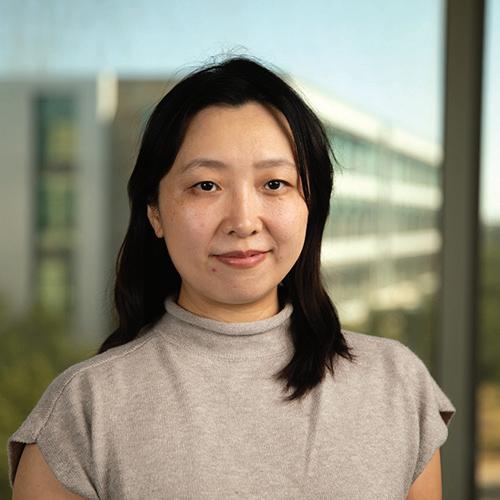
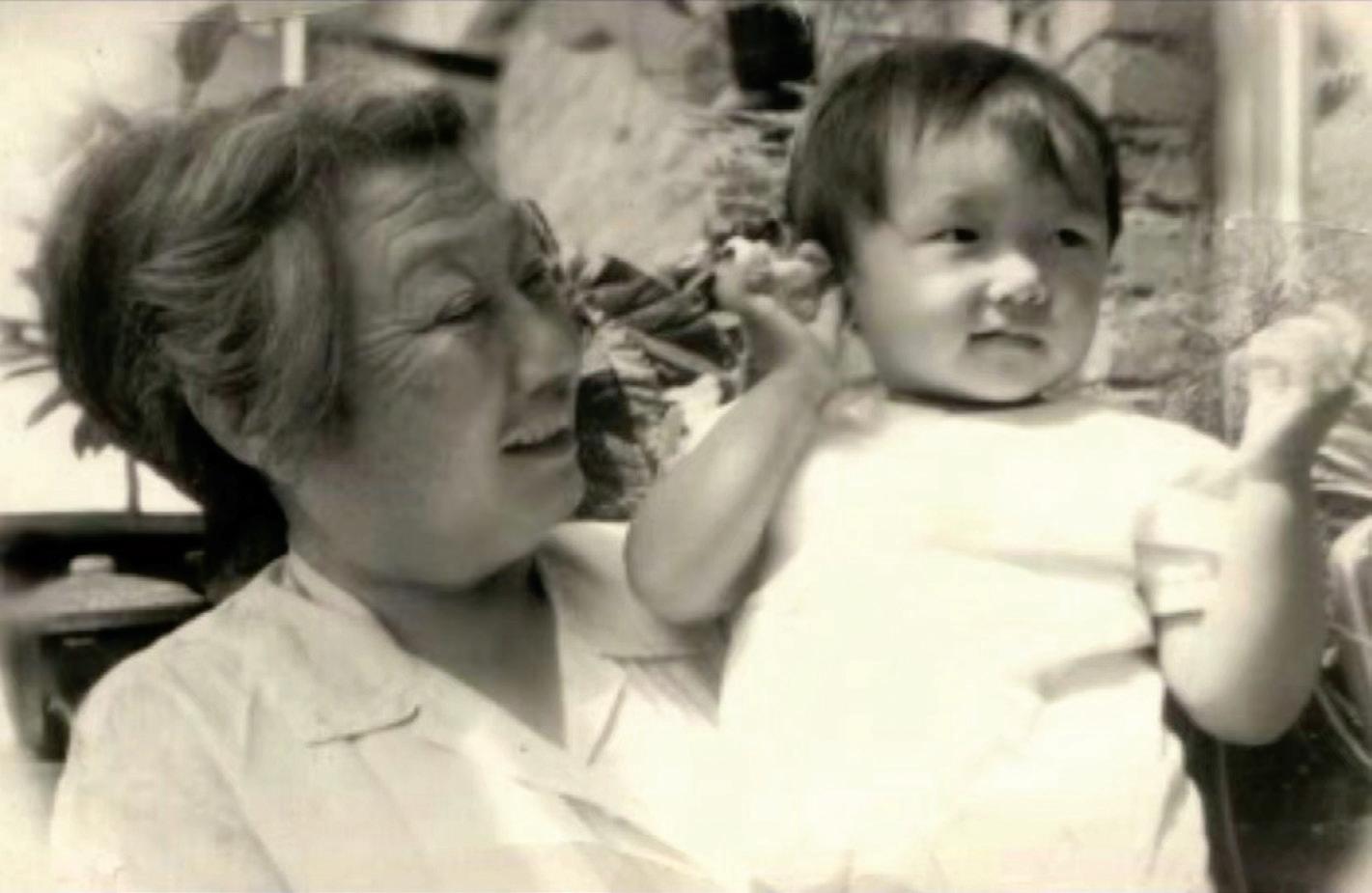
Shuyang Gu, 44, was born humbly but securely in the northern Chinese province of Hebei to parents Fang Che and Ming Hua Gu.
Neither could have known that their only child would one day walk in the footsteps of her grandfather, fulfilling an educational dream that had not been available to them.
Her father, an engineer, and her mother, a kindergarten teacher, grew up during the Cultural Revolution. Their formal schooling ended after middle school, their careers assigned by officials rather than chosen.
“She was not the first child on the block to own a bicycle — but she was the first to have a pink one with white tires and a pedal brake.”
But the limits placed on their generation never dimmed their innate talents. From early childhood, Gu’s father introduced her to physics; her mother shared her love of art and geography. Learning was simply the air they breathed.
Outside of that, she insists, she had a perfectly ordinary childhood. Her community was tightly knit, full of families who knew each other well. She wore a school uniform on Mondays to honor her country’s flag and spent afternoons playing video games, especially at the apartment of a family lucky enough to have a Nintendo console.
When not competing for controller time, the neighborhood kids played hide and seek, Chinese ropes, or adventured in the nearby forest overlooking the waterfront.
She adored school, doted on her Papillon mix puppy, Taotao, and reveled in gifts sent by her grandmother, Enzi Wang, who traveled often to Canada.
Her grandmother’s packages brought small luxuries rarely seen in the neighborhood: Nike tennis shoes, Western clothing, and blue jeans she wore until they faded to threads.
SHUYANG GU, COLLEGE OF BUSINESS
She was not the first child on the block to own a bicycle — but she was the first to have a pink one with white tires and a pedal brake.
“We were fascinated by anything from the West,” she says, her eyes shining with nostalgia.
Today, the things that matter to her are far less material. What brings her joy is honoring the family whose sacrifices shaped her path — especially a grandfather she never truly knew but feels deeply connected to.
Her paternal grandfather, Jinjiang Gu, was the son of a customs officer, which afforded the family relative means, though not guaranteed access to education.
Literacy rates were low, and university—at that time— was a privilege reserved for very few. Determined that his son would rise, Gu’s great grandfather imposed a rigorous study routine: only three days a year free from lessons, the rest devoted to The Four Books and Five Classics, ancient texts dating back nearly 700 B.C.
Her journey, she explains, began literally at her father’s knee, learning physics and mathematics at the age of five. But her grandfather’s influence — his devotion to learning, his improbable ascent — became the quiet foundation of her life.
“My family says he held me when I came home from the hospital,” she says. “He called me ‘Dandan,’ meaning ‘red,’ because my face was that color.”
Today, as an assistant professor in the College of Business Administration at A&M–Central Texas, Gu sees her life as part of a long generational arc: her family’s love of learning, their determination, their triumphs, all culminating in her own career.
“When I saw the advertisement for the position, I applied immediately,” she laughs. “I was so happy to be able to teach — and to stay in Texas, a place I’d grown to love.”
Now in her third year at the University, Gu teaches data science and specializes in social networks and their technological foundations.
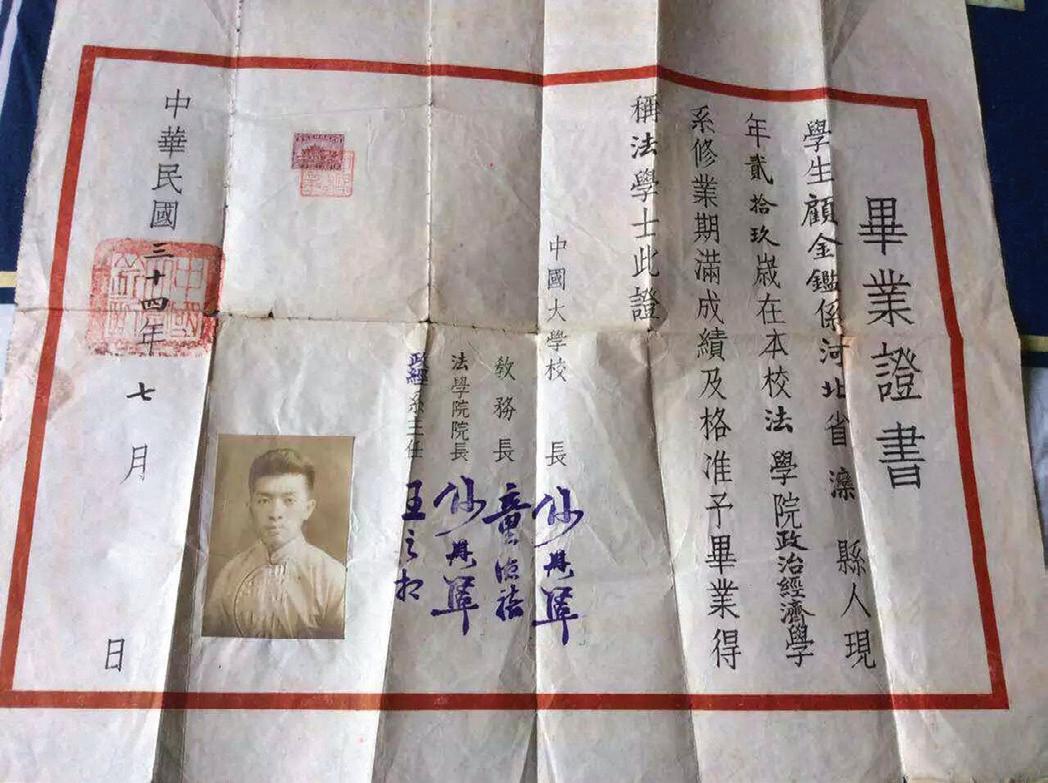
“I read an autobiography about him,” she says softly. “He accomplished the impossible. He earned a university degree in law.”
She carries a photograph of her grandfather’s diploma — dated to the 34th year of the Republic of China, 1945 — written vertically, right to left. In the photo attached to it, he looks solemn, almost reserved, his pride visible only between the lines.
“Later in life, he wrote that science and technology were the way forward,” she says. “He had no idea how true that would be — especially for me.”
She praises the supportive environment, the generous exchange of teaching strategies among colleagues, and the students whose curiosity reminds her of her own childhood.
Perhaps this is how fate works. What is denied to one generation appears in the next. And in that unfolding, everything changes.
Her work — her teaching, her scholarship, her devotion to learning — is her way of giving back: to the family who gave her so much, and to the students she hopes will carry knowledge forward into futures of their own making.
Her Grandfather’s Diploma from China
PEOPLE WITH PURPOSE
HOLDING HISTORY The University Archives Sustain Research and Scholarship
Georgetown resident and Associate Librarian and Archivist Victoria “Vicky” Eastes has been fascinated with museums and libraries since childhood—long before she understood how completely that early curiosity would shape her life’s work.
Now approaching her ninth year as the University’s first archivist, she still talks about historical materials with the unmistakable reverence of someone who sees more than paper inside a box. To her, an archivist is part librarian, part historian, and part quiet guardian—someone
who notices meaning in the scraps and fragments others might overlook.
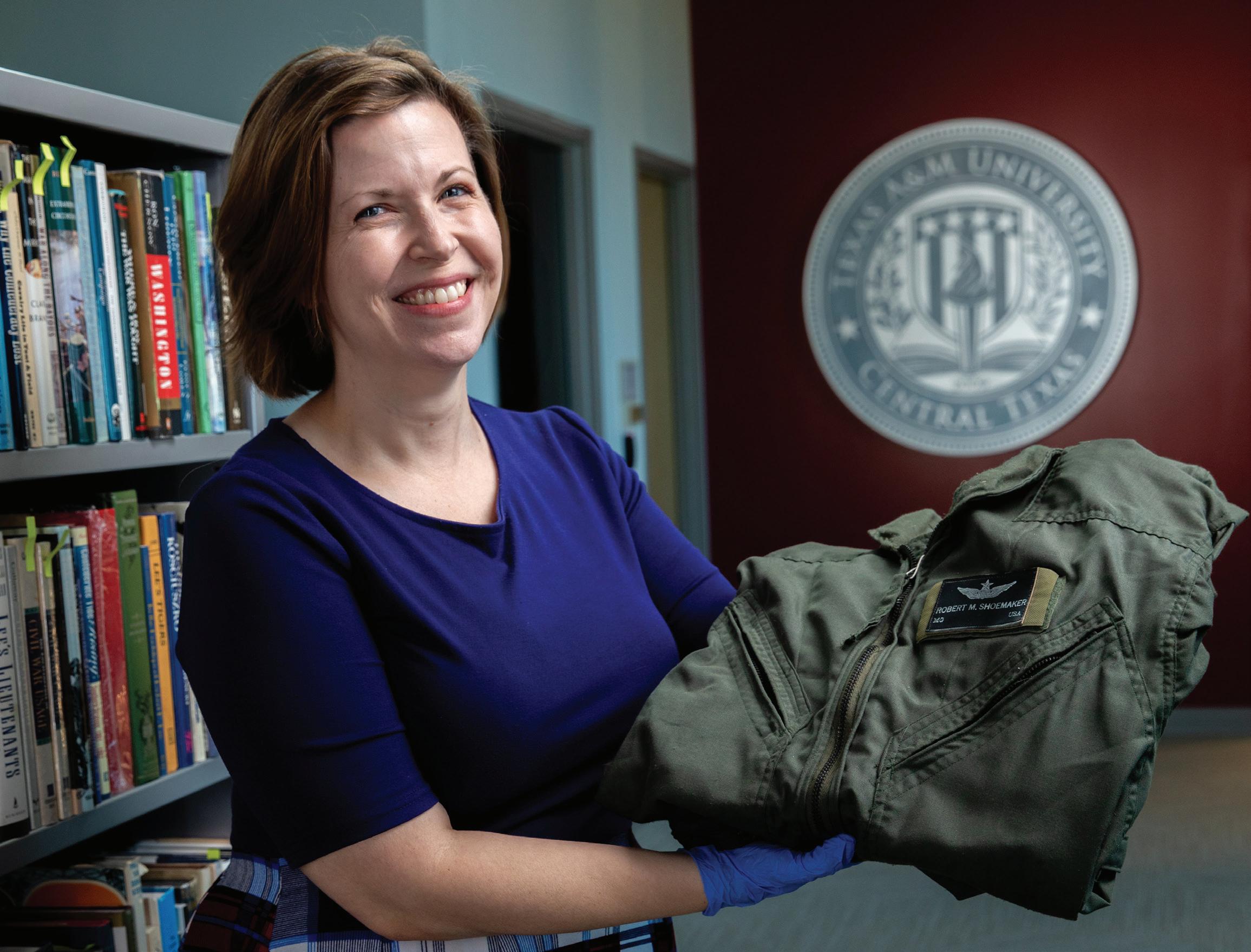
That, she says, is the essence of the job: preserving a permanent, usable record of history. In her case, it is the story of the University itself and a growing roster of notable collections documenting both regional and national history. Among them are the papers of the late Gen. (Ret.) Robert M. Shoemaker and Tuke Shoemaker, the late Gen. (Ret.) Pete Taylor, and the Eula “Sis” Beck Collection.
VICKY EASTES, UNIVERSITY
“There are several collections that individually and collectively show that our university existed as three different institutions before we became A&M–Central Texas,” Eastes said. “That history mattered, and it still matters—to the legislative effort that brought us into the A&M System and to the community members who made it possible. We never want to forget that legacy.”
Some people assume that history—important as it is— has limited use in what they call “the real world.” Eastes understands that perception, but her day to day experience proves otherwise. The Killeen Public Library Historical Collection, she says, is a practical touchstone of a sort called upon by city planners, local officials, and business owners. As entrepreneurs renovate historic downtown storefronts, they study old photographs and records to make design choices that honor the city’s past. It is practical, tangible, and rooted in evidence.
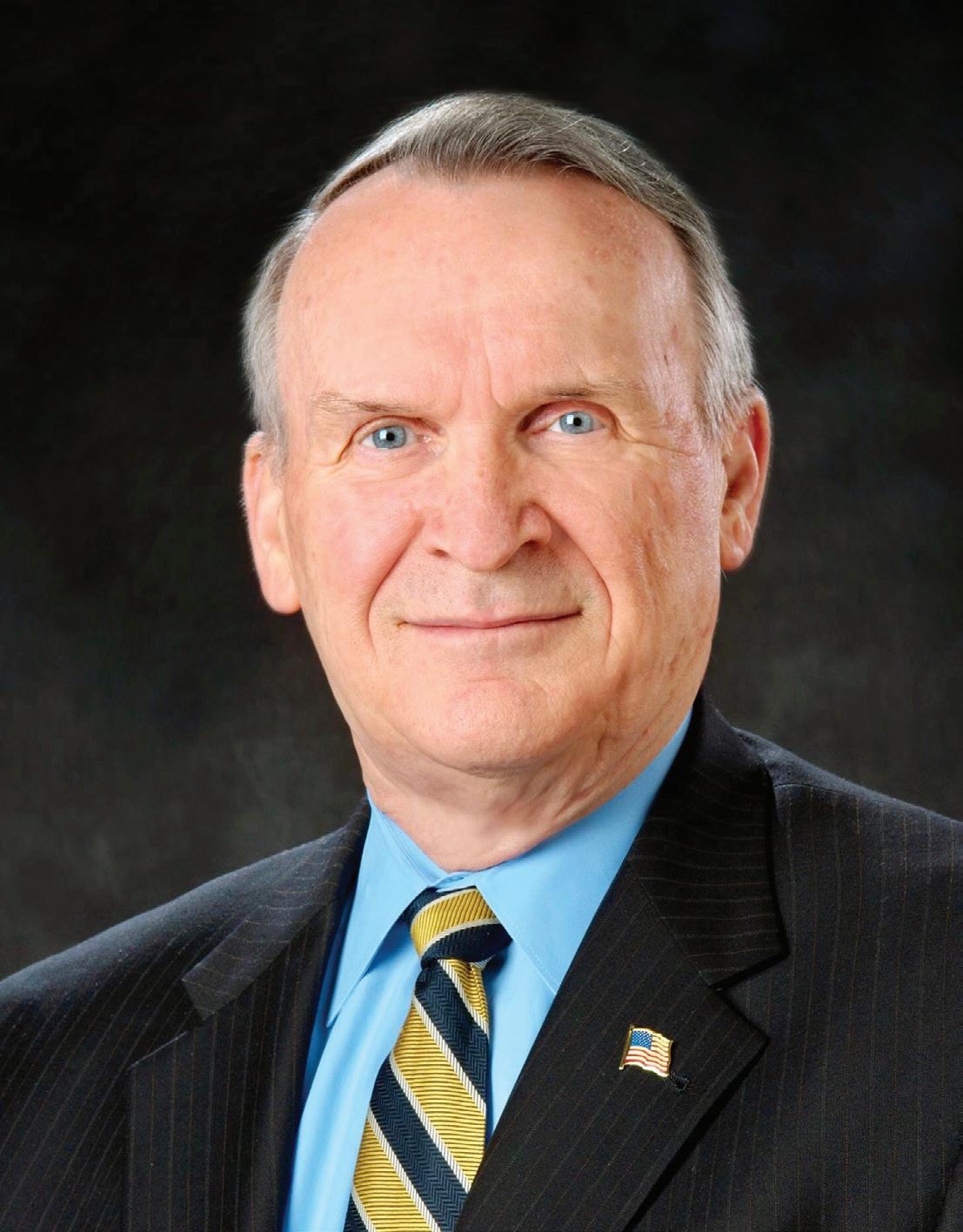
For scholars in history and political science, the archives offer an equally important resource. Primary documents—letters, photographs, plans, recordings, ephemera— provide the kind of nuance that shapes dissertations, articles, and policy analyses. One standout example is the collection of the late Texas Senator William “Bill” Moore, donated by his granddaughter Mary Elizabeth Moore.
Every item—no matter how plain—must be evaluated without bias. A scrap of paper containing a half-legible note, a generic office notepad, or an unlabeled envelope may carry a clue that sharpens a historian’s understanding of an event. Context often hides in the margins.
Her favorite part, she admits, is the tactile experience: holding history in her hands. While processing the Moore Collection, she sifted through black-and-white and color photographs.
“They’re more than snapshots in the literal sense,” she said. “They’re glimpses into the life of the Texas Senate— from the cigar smoke curling above an all-male chamber to later photos showing the first women legislators.”
“She has stood beside the ancient rubble of Hadrian’s Wall, complete with Roman concrete. And she once held a piece of the Berlin Wall, gifted to her by an uncle after its fall.”
“When those boxes came to us, we knew right away it was a significant addition,” Eastes said. But like most archival donations, the collection arrived in less than perfect condition.
What followed was the slow, meticulous work that all archivists know by heart. Eastes drove a pickup truck to the Bryan–College Station area, loaded dozens of cardboard boxes, and hauled them to a barn in Williamson County. There, among dust and sunlight slanting through wooden boards, she began the process of stabilizing the materials—carefully removing the silverfish that had nearly consumed the precious contents.
“Archival work is incredibly labor intensive,” she said. “And it’s never the same routine twice.”
Beyond regional history, the University Archives also holds collections with national significance: the Colodny Collection, the Hubert Humphrey Campaign Papers, and the Luke Nichter Research Collection, best known for its focus on the Cold War, the modern presidency, and U.S. political and diplomatic history from the Kennedy years through Watergate.
A professional archivist, Eastes emphasizes, is an impartial steward of both the written record and the three-dimensional artifacts that history leaves behind. Her appreciation for that responsibility began long ago. She still vividly remembers her first encounter with a true artifact: as a graduate student at Texas A&M University, wearing white gloves, she held an original bound copy of Erasmus’ 16th century translation of the New Testament—found in a small school in Kansas.
Are there close seconds? Certainly, she says, with a wry, Mona Lisa smile. She has stood beside the ancient rubble of Hadrian’s Wall, complete with Roman concrete. And she once held a piece of the Berlin Wall, gifted to her by an uncle after its fall.
To Eastes, these objects—paper, stone, ink, fragments of another life—are more than remnants. They are memory. They are evidence. And archivists like her are their caretakers, protectors, and admirers, working on behalf of scholars today and generations who have yet to begin asking their questions.
PEOPLE WITH PURPOSE
The Way Her MOTHER TAUGHT HER
Amelia Terry Smith carries Harlem the way some carry a prayerbook— close, steady, and worn from use. Named for her grandmother, Amelia Chisolm, she grew up in New York City, in the stretch of Harlem where migration, music, marches, and kitchen windows all braided together to shape a community that is remembered – even after one of its own is long gone.
She’s a transplant to Texas now, and perfectly fine with that, but her vowels still give her away. The accent never softened into a drawl—and never will.
You notice her exterior first: the hard-as-nails bearing, the steady, obsidian gaze, the stillness that reads as impenetrable until you take a second look. At 5’9”, some mistake that steadiness for intimidation. She laughs about it. Only her family knows the real cue: if her hands go to her hips, the argument is over. Otherwise, she’s warm, direct, dry humored, and focused on whatever task she’s decided must be done.
Her colleagues talk about the eyes that can cut through nonsense and the humor that can cut tension just as quickly. But what they mention more quietly is the steadiness beneath it—the Harlem grit, yes, but also the inherited resilience of someone raised in a world where family carried one another through everything.
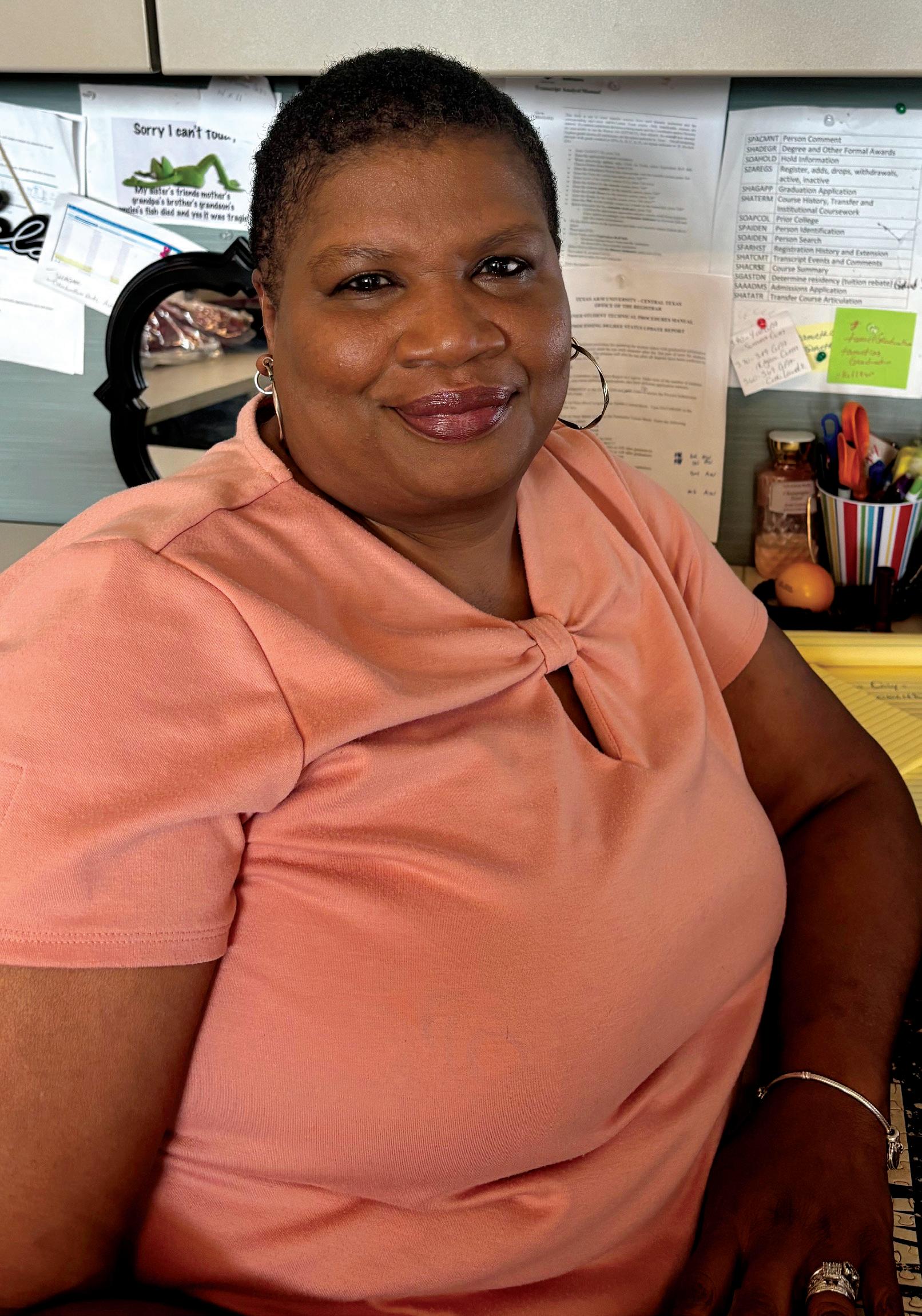
That resilience shows up in her work every day. Amelia is the university’s graduation coordinator—not the ceremonial role, but the one who
AMELIA SMITH, ENROLLMENT MANAGEMENT
touches every graduation application, checks every degree requirement, reviews every grade, every substitution, every potential snag that might threaten a student’s walk across the stage.
One cycle can involve around 250 graduates; with three ceremonies a year, that’s 750 lives depending on her precision. When one wave is done, the next is already rising behind it.
Anyone less determined would have run within a year. Amelia doesn’t flinch. She believes in the students too much.
That belief comes from her mother, Rebecca Chisolm, who raised ten children—six boys, four girls—in the Drew Hamilton projects off 7th Avenue. Amelia was the third youngest: willful, stubborn, the girl who loved school but refused to undress for PE.
She failed gym every year rather than get sweaty and ruin her clothes. Stubborn? She grins. Probably. It’s the same stubbornness that sent her to night school to retake PE, helped her land a job in a law office, put her into college, and pushed her through an unplanned pregnancy in year two.
She learned the math of survival early. Weekly pay. Pampers. Subway tokens. Babysitter. Twenty dollars left until Friday. She doesn’t tell it with regret, just the matter-of-fact tone of a single mother who’d already learned you keep going when quitting isn’t an option.
It took two pushes. After that, she went all in. Amelia earned her associate degree in 2009, then transferred to A&M–Central Texas for her bachelor’s. Determination took over. Full-time work. Full-time school. No shortcuts.
But life did not pause. Midway through her degree, Tyronne became terminally ill. Amelia offered to withdraw. He refused. With the help of her sisters, she stayed by his side as both wife and student. None of her professors knew. He died shortly before her graduation. She finished anyway.
Later, she married Bernie Lee Smith. Grief returned again when she lost her father—and three months later, her mother—while pursuing her graduate degree. Her family folded into each other, urging her forward. They knew the truth: what she starts, she finishes.
“That belief comes from her mother, Rebecca Chisolm, who raised ten children—six boys, four girls—in the Drew Hamilton projects off 7th Avenue in Harlem.”
By the time her daughter was thirteen, Amelia was working as a medical transcriptionist at a hospital. That’s where she met and married her first husband, Tyronne. His passing in 2011 marked her sharply—and arrived just as higher education was becoming her professional home.
At Central Texas College, she met her boss, Elaine Raley, who recognized both Amelia’s talent and her hesitation. Elaine nudged gently at first, then insistently: enroll, Amelia. Take a class. Try.
For Amelia, being seen for who she was mattered. Too many people had offered unsolicited advice—soften your accent, be less direct, tone yourself down. She never did. Elaine didn’t ask her to. Instead, she pushed Amelia toward the one thing she had quietly wanted for years: a return to college.
Ask her colleagues today what they see, and they will start with her work ethic—unshakable, cleareyed, meticulous. They will talk about her humor, her steadiness, her ability to anchor a room. And then they’ll tell you about the mentoring: how she guided three colleagues—Yvonne Clark, Tametha Jeffries, and Melanie Mason—through their own degree completions. She nudged them the way Elaine nudged her. Some resisted more than she ever did. She pushed anyway. She stayed through the long work. She celebrated at the end.
She says this kind of seeing—the instinct to notice someone’s potential before they notice it themselves—is either in your bones or it isn’t. You either look at a person and see the future version of them, or you don’t. She always has.
And now, after everything, that’s what her work has become: a way of honoring her mother, a way of paying forward the belief someone once held for her. A quiet purpose. A resonating impact. A life built on the lesson she learned early and kept close: Do the work. See the person. Don’t quit.
PEOPLE WITH PURPOSE
COVERING THE FIELD
in A&M-Central
Texas Information Technology
Maurice “Mo” Powell grew up in Decatur, Georgia, where childhood felt like kid heaven with responsibilities. He laughs when he says it. Counting brothers, sisters, cousins, and cousins’ kids, he estimates he helped raise fifty or sixty children. It wasn’t a burden. It was a rhythm — like breakfast at seven, the bus at 8:10, and the quiet understanding that families in tight-knit neighborhoods share the load.
His father drove long haul. His mother, Liz, worked in a factory. He had one sibling, a younger sister named Consuelo. But in truth, he belonged to a much larger constellation of relatives who kept one another afloat. Powell remembers the names of those kids the way the heart and muscle remember: Connie, Ernestine, Tamika, Damon. Their neighborhood had its own geography. There were two baseball fields — one in an interracial area, one in the predominantly Black neighborhood — and every patch of open ground in between. When not corralling younger kids, Powell could be found with a ball in hand, inventing games that matched how many other players they had that day. “One Hop” for speed. “Roll the Ball Hit the Bat” for timing. These weren’t just childhood diversions; they were small, daily lessons in problem solving, quick thinking, and adapting on the fly.
By high school, he had a nickname. “The Runt,” he says, grinning. At 5’10’’, skin and bones and willpower, that nickname stuck. Ten uncles — two coaches — and natural southpaw ability didn’t hurt. He made varsity as an eighth grader, moving from first base to the outfield to the mound as needed. Catching, he jokes, was a left-handed logistical nightmare. But he loved the game, and the game loved him back enough to teach him flexibility, patience, and the value of showing up where he was needed. School came easily, especially math and science, but he says, he did just enough to get by. Structure and discipline made more sense to him in motion, which is why the Army appealed. At 18, he joined the reserves; by 22, he was active duty Army, working on heavy construction equipment — bulldozers, scrapers, earthmovers, “big ass lifters.” He learned fast. He learned from mistakes even faster. “Hydraulic fluid will baptize a person,” he says with a half laugh. Twice was enough for that lesson to take.
Military life gave him more than technical skill. It gave him endurance, problem-solving instincts, and a stubborn faith that anything could be taken apart, understood, and put back together — machines, plans, and sometimes people, too. He finished as an E5, 62 Bravo, after working across multiple states and in at least one foreign country.
Computers caught his interest next. He went from playing Pong to a bachelor’s from A&M–Central Texas in 2023, then a master’s in 2025. Nothing was handed to him. He started at the university IT helpdesk while still a student. During COVID, when campus access was restricted, he volunteered for full time coverage even though he wasn’t yet full time. Between shifts, he cut lawns and cared for his granddaughter. He muscled through a challenging database course and passed on the third try.
Colleagues know him now as the calm presence who fixes what’s broken: printers, software installs, and the occasional “my computer hates me” emergency. He doesn’t love being watched while he works, but he does love being welcomed. “When they smile when I walk in,” he says, “that makes me smile too.” He enjoys solving puzzles, but he enjoys helping people even more — something that has quietly guided him since childhood.
He’s proud of owning a home, like his parents did. Proud to represent first-generation persistence. And proud of the scar he carries from an appendix rupture that nearly killed him not long after he went full time. He vividly remembers how Debbie Morrison in HR navigated the donated sick leave pool so he wouldn’t lose pay during recovery. That moment reshaped his understanding of the university.
“If this is what it’s like to be part of this university,” he thought then, “this is where I plan to stay.”
Mo never chased the spotlight. He covered the ground in front of him and made the plays – over and over again. And when the university covered for him in his hardest inning, he recognized the gesture instantly: this team doesn’t leave its people stranded. For a man who has spent his life bringing others home, staying here was the easiest call he ever made.
FOUNDATION
LTG (R) Pete Taylor THE LIFE THAT BUILT THE LEGACY
When the late U.S. Army LTG (R) Horace G. “Pete” Taylor envisioned a future for Central Texas, he saw more than military installations, educational institutions, or community organizations. He saw people. He saw potential.
And above all, he saw a responsibility to nurture the next generation of leaders who would carry forward the values he spent a lifetime exemplifying: integrity, service, resilience, and commitment to community. Those values now live on through the Warrior Legends Scholarship, a fund built upon his remarkable legacy.
A Leader Forged Through Service
General Taylor’s life in service began in 1960 and stretched across more than three decades, including two tours in Vietnam and command of III Corps at Fort Hood from 1991 to 1993. Not only did his career reflect impressive military accomplishments, but it also demonstrated a steadfast dedication to soldiers, families, and the community.
After retiring in 1993, Taylor settled in Central Texas, but “retirement” proved to be a suggestion for this man of resolute action focused on the bettering the lives of the people in this community.
He became a tireless advocate for education, community development, and military families, leaving an imprint on nearly every major institution in the region. He helped found Texas A&M University–Central Texas, served as a Killeen ISD trustee, established the Heart of Texas Defense Alliance, and co-founded the Military Child Education Coalition (MCEC), now a global force advocating for the needs of military children. His public service earned him distinguished honors, including the prestigious Jefferson Award.
A Vision That Became a Legacy
General Taylor believed that access to undergraduate and graduate degrees was crucial to the Central Texas region, and the A&M-Central Texas “bold mission” and “extraordinary impact” would forever be central to our purpose – and his.
He knew that communities thrive when potential meets purpose and advocated accessibility, opportunity, encouragement, and support which he himself routinely practiced mentoring countless students, staff members, and soldiers.
The Warrior Legends Scholarship was created in his honor and inspired by the ideals he modeled throughout his life. It recognizes students who do more than excel academically; it lifts those who lead, serve, and persist in the face of adversity.
Each year, the University Foundation Board carefully selects those students who reflect the character and resilience of the “Warrior” identity at Texas A&M University–Central Texas, awarding Warrior Legends Scholars status with financial support.
What It Means to Be a Warrior Legends Scholar
The criteria for this scholarship reflect its purpose of supporting students who demonstrate excellence, leadership, and dedication to bettering their communities. Eligible students must meet rigorous academic standards, including a minimum 3.25 GPA, a full time courseload, and an academic record of at least half of their coursework taken at A&M–Central Texas. Transfer students must bring a minimum of 45 transferable hours.
Beyond grades and credits, the Warrior Legends Scholarship seeks something even more meaningful. Recipients must show:
Leadership—as demonstrated through campus or community involvement.
Service—a commitment to improving the lives of others.
Resilience—the ability to overcome personal, economic, or other forms of hardship.
Applicants submit two professional letters of recommendation and an essay reflecting on the importance of contributing to family, community, country, and the university.
Awarded by the University Foundation Board, the scholarship can provide up to $10,000 annually, helping relieve the financial pressures that often stand between students and their educational goals. Scholars are honored publicly at the annual Distinguished Warrior Awards ceremony, a celebration of achievement, character, and promise.
Ensuring the Future of the Warrior Legacy
At the Warrior Legends Gala, supporters gather each year to ensure this scholarship and General Taylor’s vision endures, and the establishment of a permanent endowment for the Warrior Legends Fund reflects the community’s commitment to carry forward his legacy for generations to come.
Contributions ranging from $2,500 to $25,000 help build a foundation that will continue to empower students throughout the decades.
Through gifts recognized on the Warrior Legends Donor Wall, donors become part of the story General Taylor helped begin a story of service, opportunity, and unwavering belief in the potential of students who lead with courage and compassion.
A Legacy That Lives On
General Taylor’s impact on education and community life in Central Texas is profound, enduring, and deeply human. His work strengthened the bond between the military and the surrounding community, expanded educational access, and created support systems for military families. But perhaps most importantly, he recognized that leadership is cultivated not inherited and he dedicated his life to cultivating it in others.
The Warrior Legends Scholarship is more than a financial award; it is a living embodiment of Taylor’s values. It honors students who uplift others, persist through hardship, and serve with purpose. It reflects a leader who believed not only in excellence, but in the human potential that lies within every Warrior.
And through this legacy, General Taylor continues to lead, guiding new generations of students toward futures that honor his vision, his service, and his enduring belief in the power of education.
mentorship, and a pathway to lasting impact.
RESEARCH & SCHOLARSHIP UPDATES
COLLEGE
OF ARTS & SCIENCES
The History Department celebrated its first Ph.D. recipient, as A&M-Central Texas alum and former graduate student, Bearington Curtis, successfully defended his doctorate at The Dale Center for the Study of War and Society at The University of Southern Mississippi this spring. Congrats, Dr. Curtis! • Laura Weiser Erlandson, Ph.D., was invited to speak at the Bell County Master Gardeners Inaugural Spring Forum, received the Distinguished Achievement Award in Teaching from the Southwestern Branch of the Entomological Society of America, earned certifications as a Bell County Master Gardener and Central Texas Master Naturalist, co-authored Substances of Health Concern: Label Accuracy of Cannabidiol and Tetrahydrocannabinol in Cannabis and Cannabinoid Research, and delivered multiple invited presentations including Community Informed Entomology at the FIT Symposium, Ecology in Practice at the Faculty Spotlight Series, Butterflies in the Garden for the Bell County Master Gardeners, Compete or Cooperate for the Central Texas Master Naturalists, and Enhancing Entomology Education with Artificial Intelligence at the Southwestern Branch of the Entomological Society of America • Linh Pham, Ph.D., was awarded the Bill Yowell Junior Faculty Fellow, co-authored Substances of Health Concern in Cannabis and Cannabinoid Research, authored an introduction to network analysis in plant biology, developed a model to study gene expansion and retention in plants, and with co-author Chamindika Siriwardana published on substances of health concern in cannabidiol and tetrahydrocannabinol • Biology students presented their research at professional conferences including the American Chemical Society National Meeting, the Southwestern Branch of the Entomological Society of America, and the Texas Academy of Science Annual Meeting, showcasing studies ranging from label accuracy of cannabidiol and THC products to cabbage impacts on Pieris rapae fecundity and egg-laying preferences • Mike Daley and Peggy Pittman-Munke published Back Home: Opportunities and Challenges of Social Work with Rural Communities with Oxford University Press (2025) • Claudia Rappaport published “Breathlessness: Dr. Richard Cabot’s 1908 Conceptualization of Social
Work Burnout” in Social Work in Health Care (2025) • The Social Work Phi Alpha chapter won the national organization’s Community Service Award • Amber Dunai published “Picturing Chaucer’s Fame: Three Drawings and Three Meditations” in Postmedieval (2026) • Gabriel Araujo’s compositions were performed at Ondes Croisées in Chalon sur Saône, France, and at the Future Traditions and Cohen New Works Festival in Austin • Cadra McDaniel published “Isaak Levitan’s Images of the Unknown” in Experiment: A Journal of Russian Culture and “The First World War’s Significance for Contemporary Russia” in Canadian Slavonic Papers (2025) • Timothy Hemmis was named a Society of Colonial Wars Fellow at the George Washington Presidential Library and published “A Conversation of Conspiracy” in the Kent State University Press volume Where East Meets West (2025) • Bruce Bowles co-authored “Through the Looking Glass: Reflecting on Roles and Expectations Between Graduate Students and Their Advisor” in the Journal of Response to Writing and authored “When a Measure Becomes a Target: The Dangers of Using Grades in Writing Center Assessment” in WLN • Stefan Schöberlain, Ph.D., was awarded the Dr. Marc Nigliazzo Faculty Fellow of Humanities, served as guest chair of the academic podcast C19, was interviewed by the Wall Street Journal for his research on Whitman’s Southern Sojourn, was named editor of the Walt Whitman Quarterly Review, secured a three-year NEH grant announced in the New York Times, and co-authored a research article with student Cassandra Simms • Steve Moog, Ph.D., completed a three-week FSCR funded research trip to Bandung, Indonesia, collecting ethnographic data on the impacts of COVID-19 to produce three short films for academic and public audiences, and with former student Lexy Rodriguez co-authored work exploring punk culture’s do it yourself and anti authority practices as teaching methods in social science • Vitor Gonçalves completed his first semester teaching criminal justice at the university and co-authored three articles examining residential permanency and street and cybercrime during the COVID 19 pandemic and cumulative disadvantages in the Brazilian criminal justice system • Tammy Bracewell, Ph.D., and Christine Jones coauthored research on building a campus-based outdoor forensic lab and bridging methodological gaps in forensic science through the study of hydrochloric acid and human dentition, and Dr. Jones co-authored a Texas Historical
Commission report on the Priddy Cabin at Parrie Haynes Ranch • Roxana Perez, Ph.D., conducted research exploring cultural factors related to Latinx adolescent parents’ healthy relationship outcomes and intimate partner violence • Jeffrey Dixon, Ph.D., published a research article exploring how Tolkien used medieval Catholic philosophy to address moral questions of warfare, with publication forthcoming in Mythlore • Christopher Thron received a Fulbright Faculty Fellowship at Ibn Zohr University in Morocco where he taught stochastic optimization and developed AI-based curriculum, coauthored Correcting Scale Distortion in RNA Sequencing Data in BMC Bioinformatics, and presented Interactive AI for Accelerating OR Development at the Institute of Operational Research and Management Science of Nigeria and Mathematical Insights into Artificial Intelligence at the International Conference on Mathematical Sciences and Optimization • Taylor Harvey and Praveen Malali completed a successful ABET on-site review; Malali coauthored Assessing the Effects of Engineered Oyster Reefs on Shoreline Change Using Drones in Frontiers in Ecology and Evolution and Technology Readiness Level Assessment of Hydrokinetic Energy Converters in Energy Reports, and collaborated with students to design and produce interface collars for cylindrical urban light fixtures on campus • Amy Mersiovsky, Ph.D., published Risks and Benefits of Social Media for Children and Adolescents in Pediatric Nursing and The Nurse’s Role in Preventing and Treating Congenital Syphilis in Nursing 2025, presenting this work at the Faculty Spotlight Series, Sigma Theta Tau, and the CTX Nursing & Stakeholder Coalition Summit • Dawn Reiss, Ph.D., published Integrating Artificial Intelligence Ethically in Nursing Education in Nursing, submitted a systematic review on faculty readiness for AI integration (under review with Springer Open), and presented at the CTX Nursing & Stakeholder Coalition Summit, the TAMUCT Nurse Educator Workshop, the CATIE Chancellor’s Conference, and the Sigma Theta Tau Research Symposium • The University’s U.S. Army ROTC program, led by Major Azucena Towne, commissioned 22 officers in Spring 2025, one in December 2025, and is on track to commission 17 more in Spring 2026 • Political Science graduate and MPA student John Vann earned the Gold President’s Volunteer Service Award for completing more than 500 hours of community service in one year and has been accepted into three law schools
• Graduate student Hollee Anne Ragsdale, set to complete her homeland security degree this May, is the youngest District Chief for the Texas Department of Emergency Management overseeing seven Central Texas counties, and will begin her PhD in Fire and Emergency Management this fall • Alumna Kathleen Curtis serves as a sergeant with the Harker Heights Police Department • Alumna Chelsea Roseman is the Assistant County Attorney for Lampasas County • Recognized for 25 Years of Service: Claudia Rappaport • Recognized for 15 Years of Service: Christopher Thron • Recognized for 10 Years of Service: Tammy Bracewell, Michael Daley, Amber Dunai, Cadra McDaniel, Linh Pham, and Liana Taylor • Recognized for 5 Years of Service: Amy Mersiovsky and Dawn Riess.
COLLEGE OF BUSINESS ADMINISTRATION
Ankita Singhvi, Ph.D. was appointed Faculty Director of Community-Based Learning and organized the Faculty AI Summit Workshop with 50+ attendees • Daniel Kim, Ph.D. published in the Review of Corporate Finance Studies and secured a British Academy/Leverhulme Trust Research Grant, a highly competitive international funding award • Ran Li, Ph.D. published or had accepted six peerreviewed works in 2025, including pieces in The CPA Journal, Today’s CPA Magazine, and International Journal of Information Security, and founded the university’s first Volunteer Income Tax Assistance (VITA) site, contributing 80+ volunteer hours and converting the experience into a credit-bearing practicum enrolling 11 students. She was also named Faculty Ambassador for the Texas Society of CPAs and joined the IMA Austin Chapter Board • Brian Johnson, Ph.D. led the Bell County Jail Financial Literacy Program, providing financial education to incarcerated individuals • Martin Hanby, Ph.D. provided expert financial commentary to WalletHub and regional news outlets • Jody Fry, Ph.D. received a lifetime achievement award from the Management, Spirituality, and Religion division of the Academy of Management for his influential body of work • Jaisang Kim, Ph.D. received a $230,000 grant from the National Research Foundation of Korea to
RESEARCH & SCHOLARSHIP UPDATES
COLLEGE OF BUSINESS ADMINISTRATION (cont’d)
study consumer privacy behaviors related to AI-driven hyper personalization • Rebecca McPherson, Ph.D. and Lucas Loafman, J.D. are under contract with Palgrave McMillan to co-author Strategic Staffing: Foundational Concepts, Theory, and Practice • Graduate students in Dr. McPherson’s HRM 5303 course designed 26 employer adopted training programs, providing direct workforce development support and meaningful community impact • Khaldoon Dhou, Ph.D. and Leyla Orudzheva, Ph.D. co-authored the book chapter “Data Integrity and AI Ethics” in Advances in Artificial Intelligence in Education Dr. Leyla Orudzheva and students volunteered at the Operation Stand Down Central Texas event, offering support and services to homeless civilians and veterans • Chester Xian (Xiang), Ph.D. published “Time Dependent Shortest Path Optimization in Urban Multimodal Transportation Networks with Integrated Timetables” in Vehicles • Sunme Lee, Ph.D. won 1st Place in the Teaching Innovation Competition at the American Marketing Collegiate Association • Sunme Lee, Ph.D. published research on student persistence and IoT privacy compliance in Interdisciplinary Education and Psychology and International Journal of Information Security and served as an invited speaker at both the CATIE AI Webinar and the Texas A&M System Academic Leaders’ Symposium, elevating the university’s visibility across the system. She also established a paid internship pipeline by converting an unpaid role into a $15/hour position and secured a second AI team pathway internship through an international corporate partnership • Anitha Chennamaneni, Ph.D. published four journals (IEEE, ACM, and Elsevier) and two peer-reviewed conference publications and received a TEES grant as co-principal investigator for the Secure and Intelligent Emergency Management System with colleagues Lavanya Elluri, Ph.D. and Deepti Gupta,
Ph.D. • Rahul Dwivedi published in an A Journal as first author in the Communications of the Association for Information Systems • Lavanya Elluri, Ph.D. received the Best Paper Award at the IEEE TPS Conference for the paper “PRvL: Quantifying the Capabilities and Risks of Large Language Models for PII Redaction • Shuyang Gu, Ph.D. published the book chapter “Non monotone DR Submodular Maximization” in Handbook of Combinatorial Optimization • Abhijit Nag, Ph.D. received both IEEE and ACM Senior Membership status, the highest professional grade in both organizations, and was featured in the Killeen Daily Herald for his teaching expertise and the university’s growth in cybersecurity programs. • Recognized for 15 Years of Service: Barbara Altman (Retired) • 10 Years of Service: Rebecca McPherson • Recognized for 5 Years of Service: Khaldoon Dhou, Shuyang Gu, Ankita Singhvi, and Savannah Chester.
COLLEGE OF EDUCATION AND HUMAN DEVELOPMENT
In Educational Leadership & Human Development, three staff members, five students, and faculty attended the 2025 Texas Chapter of the American College of Sports Medicine Annual Meeting in Waco (Feb. 20–21) • Sara Melendez was named “Major of the Year” (top student selected from each university) and placed as a Top 10 finalist among 86 undergraduate poster presentations • The Exercise Physiology & Human Performance Student Bowl Competition team ranked 32nd out of 44 teams, with a strategic goal to rise into the Top 20 next year • In Educator Preparation Services, faculty and staff hosted a series of certification test preparation bootcamps to support teacher candidate success • Educator Preparation Program was approved to offer the new Texas Teacher Residency Preparation Route, expanding access to enhanced
certification options and creating pathways for paid district residencies • Dean Lorrie Webb was appointed to represent the university on the AUSA Central Texas Chapter Board of Governors and was selected as a fellow in the 10th Cohort of the Deans for Impact Fellowship Academy • Dr. Webb also published “Transformational Technology Leadership in Higher Education: A Systematic Review of Pedagogical Practice” in a special edition of Contemporary Issues in Technology and Teacher Education • Department of Counseling & Psychology hosted the 3rd Annual Student Research Symposium (Dec. 2025), with seven psychology students presenting to represent CEHD • CMHC faculty are bringing the Chi Sigma Iota counseling honor society to campus, with the first induction planned for Spring 2027 • Dr. Gonzales, Dr. Lapierre, and graduate student Becca Hopkins earned 1st place recognition for her research poster at the annual Texas Association of School Psychology conference • School Psychology faculty hosted an educational event providing continuing education credits to local school psychologists • Psy2 (Psychology Club & Psi Chi) faculty advisors: Dr. Madelynn Shell and Dr. Malin Lilley • Psy2 members led a donation drive for Bell County children in foster care (featured by local media) • Psy2 hosted “Planting Self Esteem,” a hybrid National Self Esteem Month event (decorated flowerpots, origami flowers, written affirmations) to foster belonging and self compassion for in-person and online participants • The university’s Psi Chi chapter was named a 2024–25 International Model Chapter • 2025 Student Organization Advisor of the Year: Dr. Madelynn Shell • 2025 Student Organization of the Year: Psy2 • 2025 Commitment to Excellence Award: Ariana Espinosa Grimaldo • Psi Chi Induction: 32 new members were welcomed during the chapter’s 2nd annual ceremony on Apr. 11, 2025 • Psychology students presented their research at the Southwestern Psychological Association annual conference • Students & faculty in Psi Chi earned $8,525 in national funding for grants, travel, awards,
scholarships: $3,000 Christian Ladd Hall Scholarship for Ariana Espinosa Grimaldo in Summer 2024 • $400 Regional Travel Grant for Michelle Sandy in Spring 2024 • $1,500 Research Grant + $125 living expenses for Ariana Espinosa Grimaldo in Fall 2024) • $1,500 Faculty Stipend for Malin Lilley, Ph.D. in Fall 2024 • $400 Regional Travel Grant for Abigayle Rocha in Spring 2025 • $400 Psi Chi Regional Research Award for Ariana Espinosa Grimaldo in Spring 2025 • $400 Psi Chi Regional Research Award for Amanda McHugh in Spring 2025 • $400 Psi Chi Regional Research Award for Amanda McHugh in Spring 2024 • $400 Psi Chi Regional Research Award for Queen Miller in Spring 2024 • Ariana Espinosa Grimaldo presented research at the 2025 Undergraduate Research Day at the Texas Capitol • Yu Lun Tai, Ph.D. is focused on the science of exercise and published articles including A Single Bout of CrossFit® Exercise May Not Significantly Affect Inhibitory Control, Heart Rate Variability After Different Orders of Upper and Lower-Body Resistance Exercise in Men, and Acute CrossFit® Exercise Enhances Cognitive Processing Speed and Stabilizes Response Variability in Trained Individuals • Morgan Lewing, Ph.D. and Lisa Bunkowski, Ph.D. published Structurally Framing Service Learning as Teaching Excellence: An Examination of Collaborative Efforts Between Community Engagement and Faculty Development Centers in the Journal of Community Engagement and Higher Education • Heather Caldwell, Ph.D. published The standardization of Colorado schools to offer opportunity through equal education in the International Journal of Educational and Pedagogical Sciences and Lone Star Legends: Teaching Social Studies Through Texas Olympians, in The Social Studies Texan • Recognized by the university for 25 Years of Service: Coady Lapierre • Recognized for 15 Years of Service: Carolyn Webb • Recognized for 19 Years of Service: Caroline Norris • Recognized for 5 Years of Service: Kimberly Kuklies •
PROVEN.
A&M-Central Texas strengthens the regional workforce, advances economic mobility, and expands the Texas economy.
$76.9M ANNUAL OPERATING & CAPITAL SPENDING
ANNUAL STATEWIDE ECONOMIC IMPACT
$38.4M ALUMNI LIVING & WORKING IN TEXAS 15,856 LABOR INCOME GENERATED STATEWIDE $39.2M MULTIPLIER EVERY $1 SPENT PRODUCES $2.01 IN TEXAS ECONOMIC ACTIVITY
2.01X OF INCOMING STUDENTS IN 2023 WERE PELL-ELIGIBLE HIGHEST SHARE AMONG PEER INSTITUTIONS, A STRONG INDICATOR OF ECONOMIC MOBILITY AFTER GRADUATION 85%
The average direct cost of undergraduate tuition and fees is only $437 –far below the $8,520 average at peer institutions – supported by a tuition guarantee that locks costs for three years. Source: April 2025
SHARE YOUR THOUGHTS! Click here to take our one-minute survey.