OFFICIAL CALL TO THE 2026 ANNUAL SESSION OF THE TEXAS
DENTAL ASSOCIATION
HOUSE OF DELEGATES
62 MULTIDISCIPLINARY MANAGEMENT OF A PATIENT WITH LOCALIZED BULLOUS PEMPHIGOID: A CASE REPORT WITH 2-YEAR FOLLOW UP LILLIAN CARMINA LYONS, DDS, MS 76 FBI: FOUND BUT NOT IDENTIFIED (YET)
KATHLEEN A. KASPER, DDS, D-ABFO
Dental practice financing1
Our practice specialists can help you achieve your goals
We’ll work with you to determine the financing1 solutions that best fit your plans, and help guide you through the process.
New office startups
Get started with up to 100% project financing.
Practice sales and acquisitions
Benefit from our many years of experience helping clients purchase practices.
Business debt consolidation1
Let us help you restructure your debt and improve your cash flow.
Office improvement and expansion
Competitive terms when you remodel or expand.
Commercial real estate2
Buy, refinance or relocate with conventional or Small Business Administration (SBA)³ loan options.
Equipment financing
Choose from a variety of options and flexible terms tailored to meet your needs.
To learn more, call 800.428.2847 to talk to a practice specialist, or visit bankofamerica.com/practicesolutions.
Proudly endorsed by:
1 All programs subject to credit approval and loan amounts are subject to creditworthiness. Bank of America may prohibit use of an account to pay off or pay down another Bank of America account. Other underwriting standards and restrictions may apply.
2 Owner occupied commercial real estate will be determined in underwriting and requires occupancy by the borrower/guarantor. Please note SBA guidelines require at least 51% occupancy to be considered Owner Occupied. Flood insurance is required for properties located in a flood zone.
3 Requires approval through the SBA 7(a), SBA 504 or SBA Express programs and subject to SBA guidelines. Subject to approval under Bank of America’s credit standards, loan terms, collateral, and documentation requirements. Products and programs of Bank of America are subject to change at any time.
All promotional and marketing materials are Bank of America Practice Solutions property and, as such, cannot be changed, altered or modified, orally or in writing. All questions regarding these materials should be directed or referred to a Bank of America Practice Solutions Sales Associate.
Sponsorship of endorser’s products and services is not an expressed opinion or approval by the Bank.
“Bank of America” and “BofA Securities” are the marketing names used by the Global Banking and Global Markets divisions of Bank of America Corporation. Lending, derivatives, other commercial banking activities, and trading in certain financial instruments are performed globally by banking affiliates of Bank of America Corporation, including Bank of America, N.A., Member FDIC. Trading in securities and financial instruments, and strategic advisory, and other investment banking activities, are performed globally by investment banking affiliates of Bank of America Corporation (“Investment Banking Affiliates”), including, in the United States, BofA Securities, Inc. which is a registered broker-dealer and Member of SIPC, and, in other jurisdictions, by locally registered entities. BofA Securities, Inc. is a registered futures commission merchant with the CFTC and a member of the NFA.
Investment products offered by Investment Banking Affiliates:
Texas Dental Journal (ISSN 0040-4284) is published monthly, except January-February, March-April, July-August, and November-December, which are combined issues, by the Texas Dental Association, 8701 W Hwy 71, Ste 201-M Austin, TX 78735, 512-443-3675. Periodicals Postage Paid at Austin, Texas, and at additional mailing offices. POSTMASTER: Send address changes to TEXAS DENTAL JOURNAL, 8701 W Hwy 71, Ste 201-M, Austin, TX 78735. Copyright 2026 Texas Dental Association. All rights reserved. Annual subscriptions: Texas Dental Association members $17. In-state ADA Affiliated $49.50 + tax, Out-of-state ADA Affiliated $49.50. In-state Non-ADA Affiliated $82.50 + tax, Out-of-state Non-ADA Affiliated $82.50. Single issue price: $6 ADA Affiliated, $17 Non-ADA Affiliated. For in-state orders, add 8.25% sales tax. Contributions: Manuscripts and news items of interest to the membership of the society are solicited. Electronic submissions are required. Manuscripts should be typewritten, double spaced, and the original copy should be submitted. For more information, please refer to the Instructions for Contributors statement at tda.org. All statements of opinion and of supposed facts are published on authority of the writer under whose name they appear and are not to be regarded as the views of the Texas Dental Association, unless such statements have been adopted by the Association. Articles are accepted with the understanding that they have not been published previously. Authors must disclose any financial or other interests they may have in products or services described in their articles.
Advertisements: Publication of advertisements in this journal does not constitute a guarantee or endorsement by the Association of the quality of value of such product or of the claims made.
Anesthesia Education & Safety Foundation
Two ways to register: Call us at 214-384-0796 or e-mail us at sedationce@aol.com Visit us on the web: www.sedationce.com
NOW Available: In-Office ACLS & PALS renewals; In-Office Emergency Program Live Programs Available Throughout Texas
Two ways to Register for our Continuing Education Programs: e-mail us at sedationce@aol.com or call us at 214-384-0796
OUR GOAL: To teach safe and effective anesthesia techniques and management of medical emergencies in an understandable manner. WHO WE ARE: We are licensed and practicing dentists in Texas who understand your needs, having provided anesthesia continuing education courses for 34 years. The new anesthesia guidelines were recently approved by the Texas State Board of Dental Examiners. As practicing dental anesthesiologists and educators, we have established continuing education programs to meet these needs.
New TSBDE Requirement of Pain Management
Two programs available (satisfies rules 104.1 and 111.1)
Live Webcast (counts as in-class CE) or Online (at your convenience)
All programs can be taken individually or with a special discount pricing (ask Dr. Canfield) for a bundle of 2 programs:
Principles of Pain Management
Fulfills rule 104.1 for all practitioners
Use and Abuse of Prescription M edications and Provider Prescription Program Fulfills rules 104.1 and 111.1
SEDATION & EMERGENCY PROGRAMS:
Nitrous Oxide/Oxygen Conscious Sedation Course for Dentists:
Credit: 18 hours lecture/participation (you must complete the online portion prior to the clinical part)
Level 1 Initial Minimal Sedation Permit Courses:
*Hybrid program consisting of Live Lecture and online combination
Credit: 20 hours lecture with 20 clinical experiences
SEDATION REPERMIT PROGRAMS: LEVELS 1 and 2
(ONLINE, LIVE WEBCAST AND IN CLASS)
ONLINE LEVEL 3 AND 4 SEDATION REPERMIT AVAILABLE! (Parenteral Review) Level 3 or Level 4 Anesthesia Programs (In Class, Webcast and Online available): American Heart Association Advanced Cardiac Life Support (ACLS) and Pediatric Advanced Life Support (PALS) Initial and Renewal Programs
NOTE: ACLS or PALS Renewal can be completed by itself at any combined program Combined ACLS-PALS-BLS and Level 2, 3 and 4
Program
WEBCASTING and ONLINE RENEWALS AVAILABLE! Live and archived webcasting to your computer in the comfort of your home. Here are the distinct advantages of the webcast (contact us at 214-384-0796 to see which courses are available for webcast):
1. You can receive continuing education credit for simultaneous live lecture CE hours.
2. There is no need to travel to the program location. You can stay at home or in your office to view and listen to the course.
3. There may be a post-test after the online course concludes, so you will receive immediate CE credit for attendance
4. With the webcast, you can enjoy real-time interaction with the course instructor, utilizing a question and answer format
OUR MISSION STATEMENT: To provide affordable, quality anesthesia education with knowledgeable and experienced instructors, both in a clinical and academic manner while being a valuable resource to the practitioner after the programs. Courses are designed to meet the needs of the dental profession at all levels.
Our continuing education programs fulfill the TSBDE Rule 110 practitioner requirement in the process to obtain selected Sedation permits. AGD Codes for all programs: 341 Anesthesia & Pain Control; 342 Conscious Sedation; 343 Oral Sedation This is only a partial listing of sedation courses. Please consult our www.sedationce.com for updates and new programs. Two ways to Register: e-mail us at sedationce@aol.com or call us at 214-384-0796
Notice
Texas Dental Association Delegates
Per the TDA Bylaws, “The proposed annual budget shall be submitted by the Board of Directors to the members of the House of Delegates at least thirty (30) days prior to the opening of the annual session of the House of Delegates.”
Thus, the 2027 Proposed Budget, including a financial report from TDA Secretary-Treasurer Dr Oshmi Dutta, will be available on tda.org.
Board of Directors Texas Dental Association
PRESIDENT Glen D. Hall, DDS 325-698-7560, abdent78@gmail.com
PRESIDENT-ELECT Elizabeth Goldman, DDS 214-585-0268, texasredbuddental@gmail.com
PAST PRESIDENT
Georganne P. McCandless, DDS 281-516-2700, gmccandl@yahoo.com
VICE PRESIDENT, SOUTHEAST
Matthew J. Heck, DDS 512-280-8800, matthewjheckdds@gmail.com
SPEAKER OF THE HOUSE* Gregory W. Rashall, DDS 936-336-5171, rashdent@sbcglobal.net
PARLIAMENTARIAN**
Jodi D. Danna, DDS 972-377-7800, jodidds1@gmail.com
EDITOR**
Jacqueline M. Plemons, DDS, MS 214-507-0815, drplemons@yahoo.com
LEGAL COUNSEL** Carl R. Galant
INTERIM EXECUTIVE DIRECTOR** Lee Ann Johnson, CAE 512-443-3675, ljohnson@tda.org
*Non-voting member **Non-voting
Malpractice insurance
As a dentist, you face unique challenges every day. That’s why at MedPro Group, we created an industry-leading malpractice policy that keeps you safe. Join the 45,000+ dental professionals who trust MedPro.
Get affordable coverage. Practice more safely.
Your premium costs may be discounted for claims-free history, risk management CEs, part-time practice, and more. Plus, get stronger coverage with options like Occurrence policies and a pure consent clause — all designed to give you peace of mind at a fair price.
With 24/7 access to our free risk resources and on-staff experts, you and your practice will be better prepared for every day challenges. We don’t just defend claims, we help you avoid them.
Protect your good name.
The average dentist is sued at least once in their career, which is why we’re in your corner when it matters most. We lead the industry with a 95% dental trial win rate (plus 8 out of 10 claims close without payment).
Official call to the 2026 Annual Session of the Texas Dental Association House of Delegates
HOUSE OF DELEGATES: In accordance with Chapter IV, Section 70, paragraph A-1 of the Texas Dental Association (TDA) Bylaws, this is the official call for the 156th Annual Session of the Texas Dental Association House of Delegates. All sessions of the House will be in the Stars At Night Ballroom of the Henry B. Gonzalez Convention Center, 900 E. Market Street, San Antonio, Texas. The opening session of the House will convene at 9:00 a.m. on Friday, May 8, 2026. The second meeting of the House will be at 8:00 a.m. on Saturday, May 9, 2026. The third meeting of the House will be at 1:30 p.m. on Saturday, May 9, 2026, followed by the fourth meeting at 3:00 p.m. until close of business.
IMPORTANT NOTE: This year’s House of Delegates will take place in a 2-day format. Please check dates & times carefully while planning your attendance.
Please see the TDA Meeting website for details and additional information (www. tdameeting.com).
Component Societies are urged to certify an accurate list of Delegates and Alternates to fill each of their seats on the floor of the TDA House of Delegates.
REFERENCE COMMITTEE HEARINGS: Reference Committee hearings will be combined and will follow the First Meeting on Friday, May 8, 2026, and open to all members who are present in the Stars At Night of the Henry B. Gonzalez Convention Center, 900 E. Market Street, San Antonio, Texas (same room as the House of Delegates meetings). Hearings will conclude when no further testimony is presented.
Combined Topics:
• Administration, Budget, Building, House of Delegates, Membership Processing
• Dental Education, Dental Economics, Health and Dental Care Programs
• Legislative, Legal and Governmental Affairs
• Constitution, Bylaws, Ethics & Peer Review
The agenda for the Reference Committee hearings will be included in the Reference Committee section of the House Documents.
REFERENCE COMMITTEE REPORTS: Reference Committee Reports will be made available in PDF format to the members of the House of Delegates (reports may be downloaded from any location with Internet access). Printed copies will not be provided.
TDA CANDIDATES FORUM: The ADA/ TDA Leadership Candidates Forum will be held on Friday, May 8, 2026, from 4:00 p.m. to 5:30 p.m. in the in the Stars At Night Ballroom of the Henry B. Gonzalez Convention Center, 900 E. Market Street, San Antonio, Texas (same room as the House of Delegates meetings).
In the event there are no contested TDA statewide elections and no participation by candidates for ADA elected offices, the candidate’s forum will not be held.
DIVISIONAL CAUCUSES: Divisional Caucuses (Northwest, Northeast, Southwest, Southeast) will be facilitated at 5:30 p.m. on Friday, May 8, 2026, in the Convention Center and open to all current members - please see the TDA website for details and additional information. (Room assignments: SW-301C; NE-302A; NW-302B; SE-302C).
DELEGATE MATERIALS: In accordance with TDA Bylaws, the House documents will be available 30 days prior to the Annual Session of the House of Delegates. The supplements to the House documents, containing the agenda and subsequent reports, will be sent after the April 2026 TDA Board of Directors meeting. The minutes of the TDA Board shall be posted on the members’ side of the TDA website and made available to the general TDA membership once the minutes are approved by the TDA Board of Directors in accordance with Policy 26-2018-H. Delegates and alternates will receive all House Documents in PDF format. Printed copies of the House Documents will not be provided. Wireless internet access will not be available in the House chamber— please download all House materials on a fully charged laptop or device prior to attendance (charging stations will be centrally located in the meeting rooms).
OFFICIAL CALL FOR NOMINATIONS
OFFICIAL CALL FOR CANDIDACY ANNOUNCEMENTS AND SUBSEQUENT NOMINATIONS:
SPEAKER OF THE HOUSE, SECRETARY-TREASURER, AND EDITOR
OFFICIAL CALL FOR SPEAKER OF THE HOUSE CANDIDACY ANNOUNCEMENTS AND SUBSEQUENT NOMINATIONS
Candidacy announcements for the statewide elective office of Texas Dental Association (TDA) Speaker of the House may be submitted to TDA Secretary-Treasurer Dr Oshmi Duta for the upcoming 2026 House elections. Only an active, life, or retired member in good standing of this Association shall be eligible. A curriculum vitae (CV) must be submitted, and the candidate will also have to sign a conflict of interest statement. Nominations are in order at the first meeting of the House of Delegates and remain open until the close of the second meeting of the House of Delegates; however, announcements of candidacy should be made as early as possible so that membership eligibility may be verified. To become a nominee, a delegate must place the name of the candidate in nomination at the first meeting of the House of Delegates. Please see the Manual on Caucus, Campaigns, Nominations and Elections at tda.org for full details.
Duties of the Speaker of the House are enumerated in the Bylaws and include the following (excerpt):
1. To serve as an ex-officio member of the Board of Directors without vote or the privilege of proposing resolutions.
2. To serve as an ex-officio member of the Executive Committee without vote or the privilege of proposing resolutions.
3. To preside at all meetings of the House of Delegates.
4. To determine the order of business for all meetings, subject to the
approval of the House of Delegates, in accordance with Section 140B of this chapter.
5. To appoint tellers to assist him/her in determining the result of any action taken by vote.
6. To appoint members of reference committees in consultation with the president, president-elect, and the immediate past president by the Board of Directors’ first meeting of the calendar year.
7. To notify the divisional officers and the Committee on Credentials, Rules and Order, prior to the annual session, the number of delegates and alternates necessary to constitute a quorum.
8. To meet with the divisional officers prior to the meeting of the divisional caucuses at the annual session to review the Rules for Caucus Procedures, Nominations, And Elections.
9. To appoint a parliamentarian pro tem, should it become necessary for the parliamentarian to be absent during a session of the House of Delegates.
10. To serve as presiding officer of the TDA Candidates Forum, unless the Speaker is in a contested race, at which time the Speaker Pro-tem will preside.
11. To be a certified parliamentarian or be in the process of certification
Candidacy announcements are to be mailed to TDA Secretary-Treasurer Dr Oshmi Dutta, Texas Dental Association, 8701 W Hwy 71 Ste 201-M, Austin, Texas 78735; or, emailed to TDA Interim Executive Director Lee Ann Johnson: ljohnson@tda.org.
(See TDA Bylaws, Chapter IV, House of Delegates—Sections 100 (Officers), 110A (Duties), 150C(3), 150D, Chapter V, Board of Directors—Sections 10 (Composition); TDA House Manual; Speaker Manual).
OFFICIAL CALL FOR SECRETARYTREASURER CANDIDACY
ANNOUNCEMENTS AND SUBSEQUENT NOMINATIONS
Candidacy announcements for the statewide elective office of Texas Dental Association (TDA) Secretary-Treasurer may be submitted to TDA Secretary-Treasurer Dr Oshmi Dutta for the upcoming 2026 House elections. Only an active, life, or retired member in good standing of this Association shall be eligible. A curriculum vitae (CV) must be submitted, and the candidate will also have to sign a conflict of interest statement. Nominations are in order at the first meeting of the House of Delegates and remain open until the close of nominations at the end of the second meeting of the House of Delegates; however, announcements of candidacy should be made as early as possible so that membership eligibility can be verified. To become a nominee, a delegate must place the name of the candidate in nomination at the first meeting of the House of Delegates. Please see the Manual on Caucus, Campaigns, Nominations and Elections at tda.org for full details.
Duties of the TDA Secretary-Treasurer are enumerated in the Bylaws and include the following (excerpt):
1. To serve without vote as member of the Board of Directors and the House of Delegates.
2. To serve without vote as chair of the Budget Committee.
3. To examine the income and expenses of this Association and report at each meeting of the Board of Directors.
4. To ensure that the minutes of the House of Delegates and the Board of Directors be maintained.
5. To be responsible and perform such other duties as shall be specified by the Board of Directors and the Bylaws
Other duties as Secretary include the following:
• Serve as recording officer and custodian of the records of the House of Delegates and the Board of Directors.
• Serve as secretary to the Executive Committee, without the right to vote.
• Serve as secretary to the House of Delegates.
• Serve as the secretary of the American Dental Association Fifteenth Trustee District Delegation.
Candidacy announcements are to be mailed to TDA Secretary-Treasurer Dr Oshmi Dutta, Texas Dental Association, 8701 W Hwy 71 Ste 201-M, Austin, Texas 78735; or, emailed to TDA Interim Executive Director Lee Ann Johnson: ljohnson@tda.org.
(Ref. TDA Bylaws, Chapter IV, House of Delegates—Sections 70A-B (Notice and Publication-Official Call & Publication of Actions, 110B (Duties); Chapter V, Board of Directors—Sections 10 (Composition), 80B (Officers-Secretary); Chapter VI, Elective Officers—Section 90G (Duties); Chapter VIII, Fifteenth Trustee District American Dental Association Delegates and Alternate Delegates—Section 80 (Delegation Secretary); Board Manual; Secretary-Treasurer Manual).
OFFICIAL CALL FOR EDITOR CANDIDACY ANNOUNCEMENTS AND SUBSEQUENT NOMINATIONS
Candidacy announcements for the statewide elective office of Texas Dental Association (TDA) Editor may be submitted to TDA Secretary-Treasurer Dr Oshmi Dutta for the upcoming 2026 House elections. Only an active, life, or retired member in good standing of this Association shall be eligible. A curriculum vitae (CV) must be submitted, and the candidate will also have to sign a conflict of interest statement. Nominations are in order at the first meeting of the House of Delegates and remain open until the close of nominations at the end of the second meeting of the House of Delegates; however, announcements of candidacy should be made as early as possible so that membership eligibility can be verified. To become a nominee, a delegate must place the name of the candidate in nomination at the first meeting of the House of Delegates. Please see the Manual on Caucus, Campaigns, Nominations and Elections at tda.org for full details.
Duties of the editor are enumerated in the Bylaws and include the following (excerpt):
1. To be editor-in-chief of all journals and publications of the Association and exercise full editorial control over such publications, subject only to policies established by the House of Delegates, Board of Directors, and these
Bylaws and provided such content is not in conflict with or contrary to the TDA’s established policies, legislative agenda, or advocacy efforts.
2. To control the selection of scientific material published in the Journal. The editor may appoint associate editors, with the concurrence of the Board of Directors, to gather and/or review material for publication. Such associate editors shall serve as long as the editor deems necessary; but never longer than the term of the editor.
3. To attend all open meetings of the Board of Directors and the House of Delegates of this association, and the annual session of the American Dental Association.
4. To hold no other office in this association or the American Dental Association while serving as editor, except the editor may be elected as delegate or alternate delegate to the ADA House of Delegates from his/her respective division.
5. To cooperate with his/her successor upon termination of the Editor’s term of office.
Candidacy announcements are to be mailed to TDA Secretary-Treasurer Dr Oshmi Dutta, Texas Dental Association, 8701 W Hwy 71 Ste 201-M, Austin, Texas 78735; or, emailed to TDA Interim Executive Director Lee Ann Johnson: ljohnson@tda.org.
exas, and mor ts are looking for in-network dental care near you. Want in? Joining our network is f t of contact, it’s ev ou’re in.
Single point of contact
In-netw oviders receive consistent service through a dedicated contact who can resolve issues and answer questions directly.
Wide variety of plan options
Connec ts acr yer gr Medicare Advantage and feder
Prompt payment ocess within 14 calendar days.*
Streamlined onboarding
St ts quickly–our average new ovider credentialing time is just 2.2 days.**
or visit Humana.com/
to find out how many Humana members live near y actice and connect with us today.
* In 98.95% of cases based on Provider Customer Service and Dental Claims Metrics 2025 results.
Multidisciplinary Management
of a Patient with Localized Bullous Pemphigoid
A Case Report with 2-year follow up
Lillian Carmina Lyons, DDS, MS
Board Certified in Periodontology and Dental
Implant Surgery
Private Practice in Houston, Texas
ABSTRACT
Background: Bullous pemphigoid (BP) is a rare acquired autoimmune subepidermal bullous disease that affects primarily the skin. Intra-oral manifestation of BP is rare. Proper diagnosis and adequate treatment is of vital importance due to high patient morbidity.
Methods: This case reports on the multidisciplinary management of a patient affected by BP in conjunction with periodontal disease. The initial differential diagnosis included other similar mucocutaneous bullous diseases. The final diagnosis was made based on the patient’s medical history, clinical presentation of the patient’s skin and intra-oral lesions, and histopathological analysis including direct immunofluorescence. His treatment consisted of the referral to a dermatologist for the systemic treatment of BP with corticosteroids, non-surgical periodontal treatment, in addition to local corticosteroid therapy for the oral lesions. A 2-year follow up of this case is presented.
Results: Although systemic and local corticosteroid treatment was established in conjunction with non-surgical periodontal treatment, continuous episodes of remission and exacerbation of the oral lesions offered a significant management challenge, which halted the periodontal surgical phase of treatment to take place.
Conclusions: Appropriate periodontal maintenance intervals and good plaque control kept the patient’s periodontal condition stable. Accurate and expeditious diagnosis of this rare condition affecting the oral cavity is necessary for both prevention and progression of its complications.
Key Findings: The treatment of periodontitis may be challenged by the presence of autoimmune diseases affecting the skin and the oral cavity. The accurate and prompt diagnosis of bullous pemphigoid is crucial for the proper multidisciplinary management of patients with periodontal disease.
Surgical soft tissue regenerative periodontal therapy may be postponed in these cases unless there is a period of remission of the mucogingival lesions.
Prevention and elimination of infection are vital components of periodontal therapy. This is of great importance when other diseases that affect the oral tissues are found in combination with periodontitis. Autoimmune mucocutaneous blistering diseases such as cicatricial or mucous membrane pemphigoid (MMP), linear IgA disease (LAD), chronic bullous dermatosis of childhood (CBDC), and pemphigus vulgaris (PV) may affect both the oral mucosa and the skin. These diseases share a similar oral characteristic clinically manifesting as desquamative gingivitis, which is erythema, epithelial desquamation, ulceration, and the presence of vesiculobullous lesions in the oral mucosa and gingiva.1
MMP involves the oral, conjunctival, nasal, esophageal, laryngeal or vaginal mucosa. It shows predilection for women with an average age of 60 years. Ocular involvement is the most significant complication of MMP due to the formation of symblepharon leading to blindness. Direct immunofluorescence demonstrates linear deposits of IgG, IgM, or IgA, and or complement (C3) in the tissue. Other entities with similar histological characteristics are epidermolysis bullosa acquisita (EBA) and linear IgA disease (LAD).2 PV is an autoimmune disease of bullae formation involving the skin with typical lesions on the lip with possible intraoral manifestations of minor oral mucosal insult including desquamation of the oral tissues (Nikolsky’s sign) with histological acantholysis and suprabasilar bullae formation. Direct immunofluorescence analysis shows deposition of complement and IgM, IgG
or IgA within the intercellular epithelium spaces. Although lichen planus (LP) is a common dermatologic disease manifested also in the oral mucosa as desquamative gingivitis, its histological characteristic includes the degeneration of the basement membrane and thickening of the basal lamina, occasionally exhibiting as an artefactual clefting or separation of the basal layer giving rise to Mac Josephs space.1,12
In contrast to blistering diseases, bullous pemphigoid (BP) is a rare acquired autoimmune blistering disease that affects the skin in older individuals, in which autoantibodies are directed against components of the basement membrane zone of the skin. IgG autoantibodies bind to components of the hemidesmosome adhesion complex, specifically the BP230 and BP180 antigens. It occurs equally in men and women (>70 years) but can also affect children and younger patients.3
Histological evaluation of the biopsies taken from patients with BP show mast cell degranulation, dermal edema, eosinophil-rich leukocytic infiltrate, and subepithelial separation with deposition of immunoglobulin IgG and complement against either bullous pemphigoid antigen 1 (BPAg1) or bullous pemphigoid antigen 2 (BPAg2) along the basement membrane zone.4,5 BP can be further classified as generalized and localized. In the localized form of BP, the presence of subepidermal pruritic blisters of 1-3cm can be seen in normal or inflamed skin of the lower trunk, groin, and flexor surfaces of the extremities. Very few case reports have mentioned the involvement of mucous membranes,
with the oral mucosa most frequently affected.3,4
A complete medical history, oral and physical examinations, histological evaluation and direct immunofluorescence are necessary for an accurate differential diagnosis and proper treatment of this disease.6 Depending on the severity and the progression of the disease the treatment approach can be topical or systemic. Topical treatment, including a high potency corticoid is the first choice of therapy and is indicated in presence of oral lesions with less aggressive manifestations. Systemic treatment with immunosuppressive drugs may be used in more severe cases and when disease does not respond to initial topical treatment.7 Immediate referrals to an ophthalmologist and a dermatologist to prevent the ocular complications and assessment of other mucosal involvement is critical.
Dentists’ knowledge of the autoimmune oral and systemic presentations of lesions is a key factor for the early identification, referral, and prompt intervention of treatment resulting in optimum outcomes of patient with bullous pemphigoid.
CLINICAL PRESENTATION
A 43-year-old African male was referred by his general dentist for a periodontal evaluation and treatment of various erythematous ulcerated lesions in his mouth. His chief complaint was painful gingival tissues and halitosis. The patient reported having no history of systemic diseases but noted fragility of his skin with frequent development of
blisters and erosions on his feet and hands for the previous 2 years. He also noticed the appearance of oral lesions 1 year prior to his dental visit.
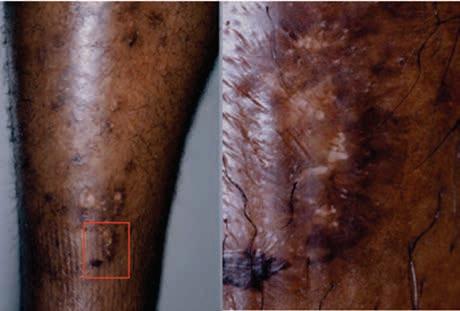
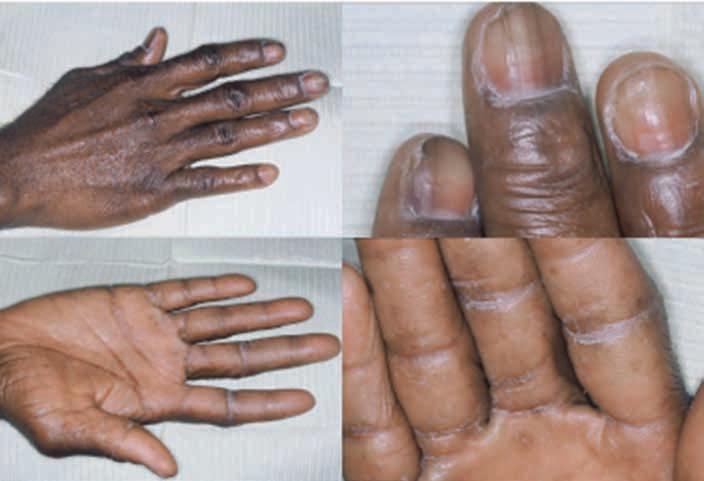
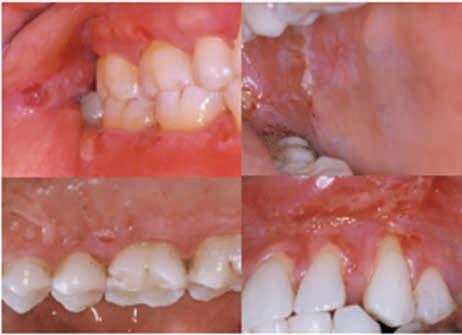
The initial oral exam showed multiple non-painful bullae on the buccal mucosa and gingiva of the palate, white striation of the buccal mucosa, gingival inflammation, and generalized gingival recession combined with the presence of supragingival calculus and bacterial biofilm. His arms and legs were presented with hyperpigmented pruritic areas with a white center (Figure 1). His hands were also affected with similar small lesions and hyperkeratosis skin of the palms. His fingernails had several grooves (Figure 2).
Figure 1. Clinical view of the anterior area of the lower right leg of a patient. Photography on the right is a magnification of a flat pruritic lesion with hyperpigmented border and white center tense area of skin.
Figure 2. Dry thickened skin of the palm of the right hand of the patient, with dark grooves on fingernails.
METHODS
The management of this patient consisted of the diagnosis of his periodontal condition, biopsy of the involved oral soft tissues, and treatment of his periodontal disease. The patient was immediately placed on topical application of fluocinonide gel 0.05% twice a day, and he was promptly referred to a dermatologist for the diagnosis and treatment of his skin lesions.
During his periodontal examination, a markedly reduced maxillary vestibule with some degree of rigidity and a short frenum was noted in conjunction with localized buccal gingiva recessions and absence of attached gingiva on the maxillary canines, as well as the anterior mandibular left central and lateral incisors. Bilateral buccal maxillary exostoses with desquamative gingivitis and small ulcerated erythematous lesions were detected at the gingival margins and the maxillary right first molar and left second premolar. A large (5mm x 15mm) ulceration of irregular erythematous border with a light centered area was present on the left buccal mucosa extending to the upper lip. Additional lesions also involved the buccal mucosa and the palatal gingiva (Figure 3).
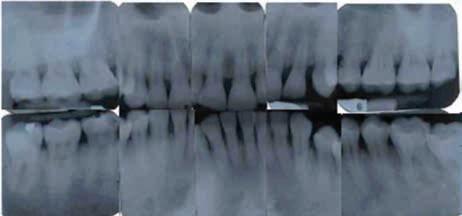
Probing depth (PD) and clinical attachment loss (CAL) for his whole mouth ranged from 3 to 6mm. Full mouth periapical radiographic evaluation revealed moderate horizontal alveolar bone loss with localized vertical bony defects and furcation radiolucencies of all mandibular molars (Figure 4).
The patient was diagnosed with periodontitis combined with desquamative gingivitis and multiple
Figure 4. Full-mouth radiographic view of the patient with generalized moderate bone loss.
Figure 3. Initial oral presentation of a bullous lesion on the mucosa of the right cheek. White striation over erythematous ulcerated mucosa of the left cheek. Ulcerated gingiva of the right palate and large ulcer involving the gingiva buccal to the anterior maxillary left teeth and the buccal mucosa of the lip.
sites of gingival recession. Periodontal treatment was planned as follows: 1) an initial periodontal therapy phase including oral hygiene instructions recommending the use of an extrasoft toothbrush, gentle flossing, and interdental brushing, full mouth scaling and root planing, extractions of all third molars, and reevaluation 4-8 weeks following non-surgical therapy was completed 2) a surgical periodontal phase was planned and included free gingival grafts with the intention of increasing the band of keratinized gingiva on the facial of the maxillary canines and the mandibular left central incisor, and 3) periodontal maintenance every 2-3 months.
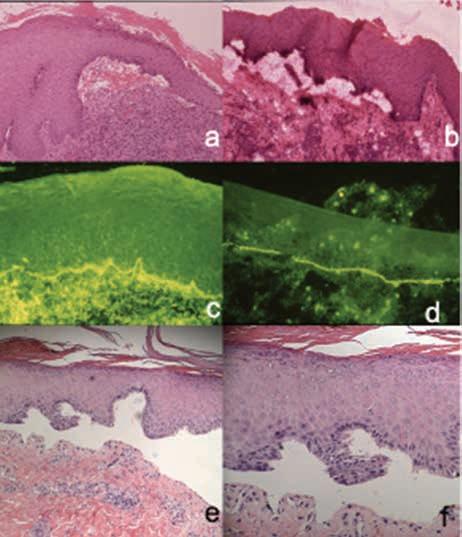
Previous to the beginning of his initial periodontal therapy (Figure 5a), two oral tissues biopsies were obtained from the interproximal area of the maxillary right first premolar and canine, and between the mandibular right premolar areas. One specimen placed in 10% formalin for histopathological analysis; and the second gingival sample was submerged into Michel’s solution for direct immunofluorescence.
Histopathological studies showed chronic mucositis with focal areas of subepithelial clefting consistent with either BP or MMP (Figures 5a and 5b). Direct immunofluorescence from the oral lesions showed strong linear homogenous immunofluorescence reactivity for IgG and C3 along the basement membrane zone. Weak and focal linear positivity for IgA was noted. IgM autoantibody was negative. Fibrinogen positivity localized to the areas of subepithelial clefting was also noted (Figures 5c and 5d).
Figure 5. A) and B): Histology of the buccal papilla mesial of # 5 showing chronic mucositis with focal areas of subepithelial clefting. C) Direct immunofluorescence from a sample taken from the buccal gingiva of the right mandibular molar. D) Reactivity for IgG and C3 along the basement membrane zone. Weak and focal linear positivity for IgA. Fibrinogen positivity localized at the subepithelial clefting areas. E) Histological view of the biopsy sample taken from the skin of the anterior area of the lower zone of the patient’s right leg. F) Subepithelial separation.
The patient was concomitantly referred to a dermatologist whom at the initial visit obtained a biopsy of his lower leg (shown in Figure 2) for histological study (Figures 5e and 5f).
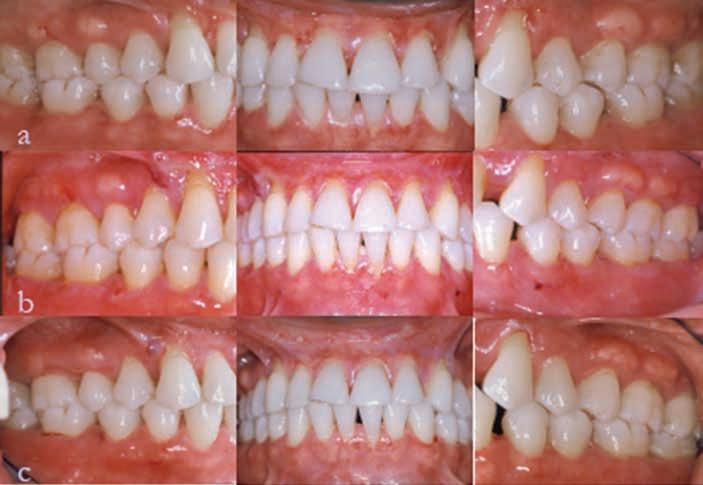
Full mouth scaling and root planing was performed with chemotherapeutic use of 0.12% Chlorhexidine gluconate, rinses twice a day for 2 weeks (Figure 6a).
RESULTS
Once the definitive diagnosis of Bullous Pemphigoid was established, a tapered dose of systemic corticosteroids was
started by the dermatologist using Prednisone 60mg/day initially. The patient was also referred to an Oral and Maxillofacial Surgeon for the surgical extractions of the impacted third molars. These extractions were performed under sedation in 2 different visits due to the fragility of the soft tissues and the patient recovered with no complications.
The patient responded well to the initial periodontal therapy. One could see marked reduction of marginal gingival inflammation and reduced probing depths and percentage of sites with bleeding on probing. The surgical phase
of his periodontal therapy (i.e., soft tissue grafting) was not possible due to his very thin biotype, friable gingival, and propensity to develop ulcerations. The patient was then placed on strict periodontal maintenance and seen at 2 month intervals. His condition was monitored for 2 years. Overall, his oral hygiene, severity of periodontal disease, and clinical appearance of the oral lesions were noticeably improved after 6 months of therapy (Figure 6b). Recurrence of the mucocutaneous oral lesions was seen at his 1-year maintenance visit (Figure 6c).
Figure 6. Clinical presentation of a) periodontal re-evaluation after 4 weeks of SRP, b) at periodontal maintenance 6 months after SRP, and c) 1 year after treatment was initiated.
Two-year follow up visit (Figure 7) showed significant improvement of the patient’s oral condition with resolution of most of his BP oral lesions of the anterior maxillary and mandibular sextant. Patient decided not to pursue surgical periodontal therapy and did not return to his following periodontal maintenance appointment.
DISCUSSION
Authors such as Wojnarowska et al have developed guidelines for the management of bullous pemphigoid patients.3 However, due to the rarity of superimposing conditions and despite newer and more sophisticated seroimmunologic tests such as enzyme-linked immunosorbent assay and immunoblotting, direct immunofluorescence (DIF) studies are still the gold standard in the assessment of the patients with bullous disorders.8
To my knowledge, the literature has not offered clear guidelines for the treatment of Bullous Pemphigoid in patients who are also affected by periodontitis. However, other types of vesiculobullous diseases affecting the oral mucosa have been reported in the literature with successful periodontal surgical therapy.2,9 In an 8-year followup case report, Damoulis and Gagari treated a patient with periodontal disease combined with mucous membrane pemphigoid.2 In addition to local application of corticosteroids, gingival augmentation and pocket reduction surgical procedures were performed with no complications. Lorenzana et al. reported a case of a patient diagnosed with cicatricial pemphigoid and gingival recession.9 In this case, after 1 month of topical application of fluocinonide 0.05% gel the oral lesions subsided with no immediate recurrence.
Figure 7. 2-year follow-up showing resolution of the oral lesions on the anterior maxilla and mandible.
Since completion of this case study, an additional medication has been approved for the use of mediations that inhibits interleuking (IL)-4 and IL-13 that may be related to BP. In February 2005, FDA approved the use of a prescription interleukin inhibitor single dose prefilled syringe or pen (Dupilomab) for the treatment of adults with bullous pemphigoid in combination with a tapering course of oral corticosteroids initially, and once the disease control has occurred, gradually taper corticosteroids to continue Dupilomab as a monotherapy.10,11
This case shows a successful outcome with stabilization of the patient’s oral and skin conditions while following his medication therapy and periodontal treatment.
SUMMARY
1. There are several autoimmune conditions that affect the oral cavity. They create additional challenges for the treatment of periodontal diseases. The multidisciplinary management of bullous pemphigoid and chronic periodontitis is possible with the establishment of an accurate diagnosis of both conditions and the proper treatment management.
2. A multidisciplinary approach is necessary for the successful management of BP. Early referral to medical and dental specialists is likely the path to follow to prevent serious complications.
3. Routine histopathologic examination and immunofluorescence studies should be performed for definitive diagnosis of chronic vesiculobullous skin and oral lesions. A
multidisciplinary approach of treatment of these types of conditions is recommended.
4. A decision to initiate the surgical phase of periodontal therapy should happen only if and when the gingival tissues are considered healthy enough to withstand the surgical manipulation without impairing the healing process. In the current case, although the patient was treated with systemic and local corticosteroids and both his oral hygiene and clinical appearance of the ulcerated lesions improved dramatically, his soft tissues remained too compromised for surgical manipulation. The patient’s oral soft tissues were extremely thin and fragile. Due to these findings, a decision to treat this patient very conservatively and maintain close monitoring of his conditions was considered the best choice.
5. A systemically well-controlled BP affected patient often presents with periods of remission and exacerbation of the skin lesions. This appears to be true for the oral lesions as well.
ACKNOWLEDGEMENT
The author sincerely thanks Antonio J. Moretti, DDS, MS, Nadarajah Vigneswaran, BDS, DrMedDent, DMD and Catherine M. Flaitz, DDS, MS, for their expert advice and valuable contributions to this work. Appreciation for its support is also extended to the Oral and Maxillofacial Pathology Services of UTHealth Houston School of Dentistry for their continuous support.
This case shows a successful outcome with stabilization of the patient’s oral and skin conditions while following his medication therapy and periodontal treatment.
REFERENCES
1. Position Paper. Oral features of mucocutaneous disorders. J Periodontol, 2003;74:1545-1556.
2. Damoulis PD, Gagari E. Combined treatment of periodontal disease and benign mucous membrane pemphigoid. Case report with 8 years maintenance. J Periodontol 2000;71:1620-1629.
3. Wojnarowska F, Kirtschig G., Highet AS, Venning VA, Khumalo NP. Guidelines for the management of bullous pemphigoid. Br J Dermatol 2002;147:214-221.
5. Mimouni D, Mousari C. Bullous pemphigoid. Dermatol Ther 2002;15(4)369-373.
6. Yih WY, Maier T, Kratochvil FJ, Zieper MB. Analysis of Desquamative gingivitis using direct immunofluorescence in conjunction with histology. J Periodontol 1998;69(6):678-85.
7. Ramos-e-Silva, M Ferreira A, Jacques CD. Oral involvement in autommune bullous diseases. Clin Dermatol 2011;29:443-454.
8. Jukic, IL, Marinovic B. Significance of immunofluorescence in the diagnosis of autoimmune bullous dermatoses. Clin Dermatol 2011;29:389-397.
9. Lorenzana ER, Rees TD, Hallmon WW. Esthetic management of multiple recession defects in a patient with cicatricial pemphigoid. J Periodontol 2001;72:240-237.1
10. FDA Approves Dupilumab for Bullous Pemphigoid. Medscape Medical News. FDA Approvals. Splete Heide. June 20, 2025.
11. Le ST, Herbert S, Haughton R, Nava J, Toussi A, Ji-Xu A, Maverakis E. Rituximab and Omulizmab combination therapy for bullous pemphigoid. JAMA Dermatol. 2024 Jan 1;160(1):107-109.
12. Martí De Gea K, Pons-Fuster E, López-Jornet P. Digital Characterization of Clinical Subtypes of Oral Lichen Planus by Means of a Semi-Automated Morphometric Analysis: A Retrospective Observational Study. Diagnostics (Basel). 2025 Dec 16;15(24):3217.
Those in the dental community who have recently passed
David W Ashmore Tomball
12/25/1958–2/02/2026
Good Fellow: 2009 • Life: 2021
Donald Brevard Bedford New Braunfels 5/15/1934–8/25/2025
Good Fellow: 1983
Life: 2000 • Fifty Year: 2008
Richard Cole Carnes San Antonio 8/3/1925–12/11/2025
Good Fellow: 1977
Life: 1990 • Fifty Year: 2002
John P Cassity Nacogdoches 11/4/1942–5/4/2024
Good Fellow: 1992
Life: 2007 • Fifty Year: 2017
Thomas W Daniels Conroe 12/3/1945–9/22/2025
Good Fellow: 1998 • Life: 2010
Bill Glynn Edwards Lubbock 3/1/1938–2/24/2026
Good Fellow: 1990
Life: 2003 • Fifty Year: 2015
William Hathaway George Sumner 5/25/1941–6/05/2025
Good Fellow: 1988 Life: 2006 • Fifty Year: 2019
Mark S Geyer Dallas 12/5/1951–3/16/2026 Life: 2024
Your dental practice is more than a business—it’s your legacy.
At Henry Schein Dental Practice Transitions, we specialize in helping practice owners with seamless, stress-free transitions tailored to personal, professional, and financial goals.
Why Choose Us for Your Practice Transition?
• Unlock your practice’s true value with expert, data-driven valuations
• Gain access to 36,000+ purchasers
• Full-service support from your first consultation to final closing
• Unmatched expertise backed by local insights and deep industry connections
Start your journey to a rewarding retirement today.
Contact us or scan the QR code to schedule a complimentary consultation.
800-988-5674
DPT@henryschein.com
FBI: Found But not Identified (yet)
A series of articles intended to assist Texas Medical Examiners in giving a name to “unidentified” individuals using postmortem dental evidence. Do you recognize the dental work/conditions presented?
Kathleen A Kasper, DDS, D-ABFO
The Extent of the Problem
Over 600,000 individuals go missing in the United States every year. Fortunately, many missing children and adults are quickly found, alive and well. However, tens of thousands of individuals remain missing for more than 1 year—what many agencies consider “cold cases”.1
It is estimated that 4,400 unidentified bodies are recovered each year, with approximately 1,000 of those bodies remaining unidentified after 1 year.2
Medical examiner and coroner offices reported 11,380 unidentified remains on record as of 2018.3
“Estimates suggest there are as many as 40,000 unidentified human remains nationwide at any given point in time. The cumulative effect of so many missing and unidentified persons cases has created a significant societal burden as families and communities are left to deal with the ambiguous loss of their missing neighbors, friends, and loved ones.”4
The challenge in giving a name to these unidentified decedents is that the research and time invested can be extensive, expensive, and after normal protocols have been exhausted, many individuals still remain unidentified. The hope in writing this series of articles on long term unidentified in Texas is that one of the many Texas dentists who read the Texas Dental Journal will recognize the dental work presented as theirs or possibly remember a dental condition or feature that can give a name to the unidentified described and help bring closure to the family.
The Medical Examiner’s Protocol to Legally Identify Individuals
Medical examiners follow a specific protocol to identify individuals who are found without any presumptive identity. This protocol is described below and, in this order, depending on the condition of the body.
Latent Prints (finger, palm, sole) are the fastest and least expensive way to make a positive identification. This method of identification is not always possible if remains are severely decomposed, incinerated, or skeletonized.
Medically Implanted Devices (hip/joint replacements, pacemakers) require knowing what hospital/physician placed the device to get the matching serial number, which can be difficult.
Dental Records are also an easy, fast, and inexpensive way to identify a decedent; however, success depends on a presumptive identity and availability/existence/ quality of those antemortem (before death) dental records. If all leads for a presumptive identity are exhausted, then a postmortem (after death) dental charting/ profile is created and entered in the NamUs (National Missing and Unidentified Persons System) and NCIC (National Crime Information Center) databases.
Anthropologic Methods will use skeletal features to make a positive identification. DNA samples are collected. This takes the longest period of time and is most expensive. Depending upon the individual, it may involve obtaining DNA samples not only from the decedent but also from family members or multiple family members if known. If no matches are obtained, then:
DNA Samples are submitted to Combine DNA Index System (CODIS), which is a computer program that operates local, state, and national databases of DNA profiles from convicted offenders, unsolved crime scene evidence, unidentified remains, and missing persons. This is maintained by the Federal Bureau of Investigation. If this search fails then the State of Texas requires medical examiners to submit a DNA sample from long-term unidentified decedents to the University of North Texas Center for Human Identification for additional genetic testing and comparison. This comparison may take up to a year to process, and a decedent may still remain unidentified once completed. This is the proverbial end of the road; therefore, all Texas dentists, dental auxiliaries, and staff; Can you help the Tarrant County Medical Examiner’s Office give a name to the unidentified male decedent described on the next page?
Author
Kathleen A. Kasper, DDS, D-ABFO
Dr Kasper has been practicing general dentistry in Carrollton, Texas, since 1994. She is a graduate of the University of Iowa College of Dentistry.
She provides 3 counties in the Dallas-Ft. Worth Area with forensic dental services. These include Collin, Dallas, and Tarrant Counties. She is currently the only active board certified forensic dentist in north Texas.
She received her formal forensic odontology training at the University of Texas Health Science Center San Antonio, Texas, Center for Education and Research in Forensics (CERF) in 2003-2004.
Dr Kasper obtained Board Certification from the American Board of Forensic Odontology in 2010.
She is a fellow of the American Academy of Forensic Sciences, a member of the American Board of Forensic Odontology, and a member of the American Society of Forensic Odontology.
She is the current American Board of Forensic Odontology Dental Age Assessment Committee Chair.
Dr Kasper is also a published author in the Journal of Forensic Sciences and coauthor of a chapter in each of 3 forensic textbooks.
Perhaps one of her greatest undertakings was chairing a working group for the American Dental Association that has published the “Technical Report” for Forensic Dental Age Estimation which went on to become a “standard” for the Organization of Scientific Area Committees (OSAC) for Forensic Science.
The Unidentified Individual: Tarrant
County Medical Examiner (TCME)
Case #2507573
Date of Death (Decedent found): May 5, 2025
Cause of Death: Blunt Force Injuries
Manner of Death: Accident
Body Condition: Recent Death/Fresh
Sex: Male
Ancestry: White or Hispanic
Age Interval: 51-83 years (Anthropological Assessment)
Height: 5 Feet, 4 Inches
DNA analysis produced no matches
Scene Description:
The decedent was an unidentified White or Hispanic Male who was found on the side of the road with blunt force injuries secondary to a motor vehicle impact in a suspected failure to stop and render aid incident. The Fort Worth Police Department is investigating the death. Potential charges are forth coming if the driver of the vehicle that struck this decedent is found.
The medical history of the decedent is unknown.
Details of the incident: According to Detective (Det.) Mask with the Fort Worth Police Department, the decedent was reportedly found unresponsive on the side of the road by a passerby. This passerby proceeded to a traffic stop and talked to a Lake Worth Police Officer to report that “he thought he saw a dead body” on the side of the road. A call was initiated at 6:35 AM and Lake Worth Emergency Medical Services arrived at the scene to pronounce the victim dead at 6:55 AM. The Tarrant County Medical Examiner’s Forensic Death Investigator (FDI) arrived on the scene at the northbound service road. To the south of the scene was a grassy field with nothing along that part of the service road. To the north was Highway Loop 820. The decedent was located against the curb of the second lane. There were no obvious tire marks. However, prior to the FDIs arrival, it was reported that there were car parts located along the roadway, from the undercarriage of a Nissan vehicle, which were collected prior to the FDIs arrival. A wooden stick and metal tool was located near the decedent which were not collected. There were no signs of alcohol, tobacco, illicit or prescriptions drugs. There were no other belongings found and no identification located. There was a debit (Visa) with the name “Rosa Espinoza”. Det. Mask suspects that the decedent may be a transient individual.
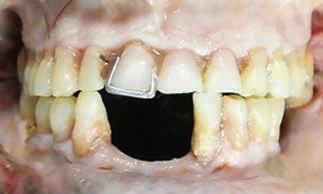
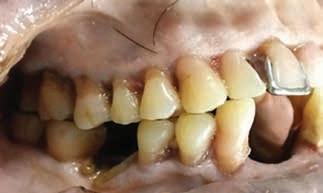
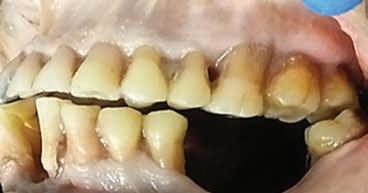
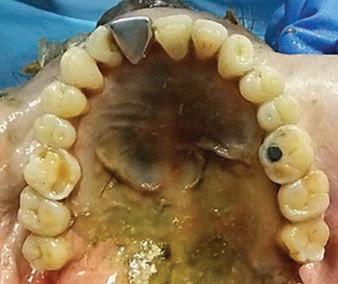
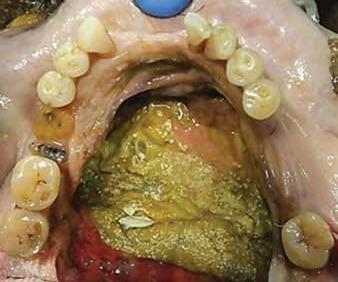
Dental Evidence Recovered: Maxilla and Mandible Frontal View
Dental Postmortem Photographs TCME Case #2507573:
Right Lateral View
Left Lateral View
Maxilla Occlusal View
Right Left
Mandible Occlusal View
Right Left
Dental Postmortem Photographs TCME Case #2507573:
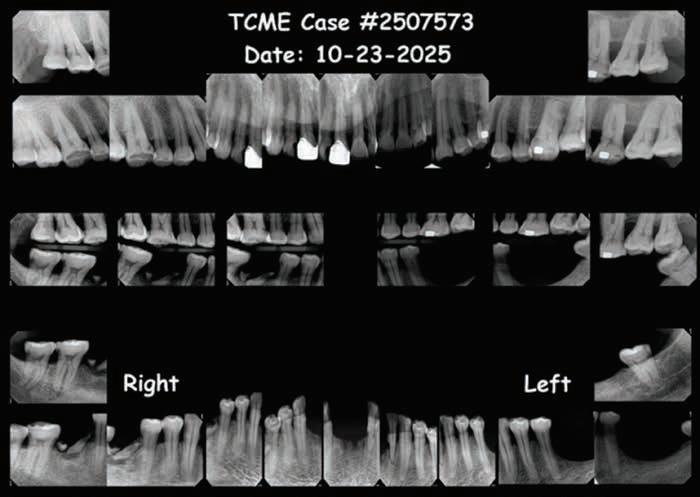
Dental Postmortem Radiographs TCME Case #2507573:
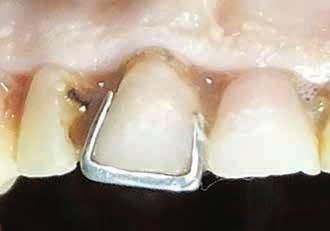
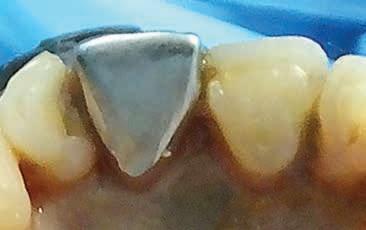
Facial View Tooth #8, (Metallic Crown with Natural Tooth Facing)
Lingual View Tooth #8, (Metallic Crown) #8 #8
Closing
If you believe you have any dental records, dental radiographs, intraoral/extraoral dental photographs, dental scans, or other dental information regarding the unidentified White or Hispanic male decedent described above as TCME Case #2507573, please contact the Tarrant County Medical Examiner’s Office, 817-920-5700, extension 8387 ask for Christian Crowder, PhD, D-ABFA Chief of Human Identification Services.
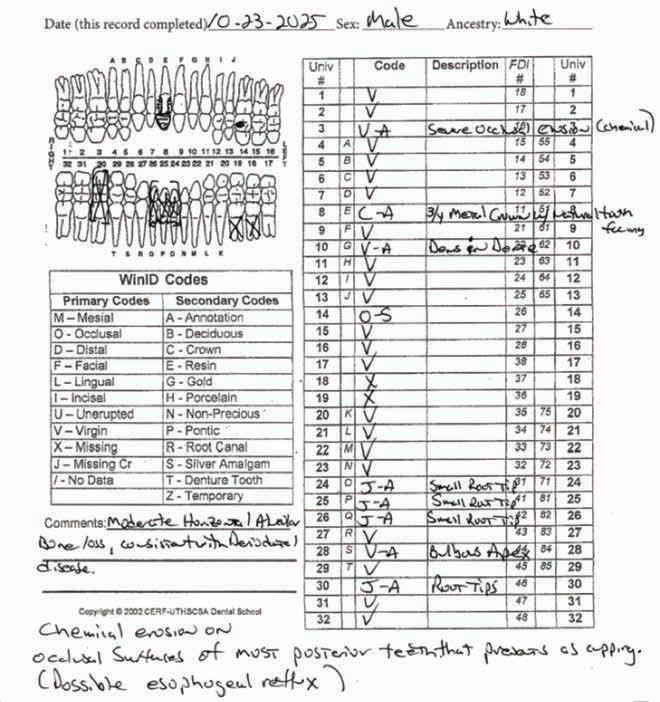
Let’s give this individual a name! Dental Existing Conditions
References
1. Between 2007 and 2020, an average of 664,776 missing persons records annually were entered into the National Crime Information Center. See https://www.fbi.gov/ services/cjis/ncic
2. Medical Examiners And Coroners’ Offices, 2004. Matthew J. Hickman, Ph.D., Kristen A. Hughes, M.P.A., Bureau of Justice Statistics, Kevin J. Strom, Ph.D., Jeri D. Ropero-Miller, Ph.D., DABFT, RTI International
3. Medical Examiner and Coroner Offices, 2018. Connor Brooks, Bureau of Justice Statistics, November 2021
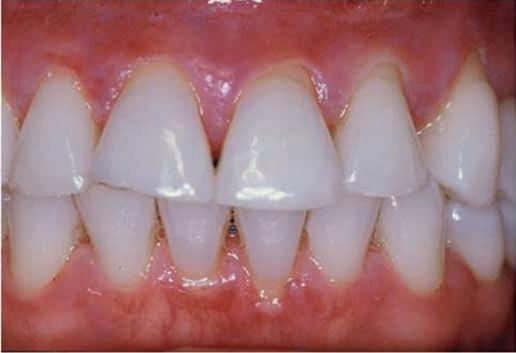
Tooth whitening has transitioned from an elective cosmetic service to one of the most frequently requested esthetic procedures in dental practice. While patient demand has increased substantially, driven in part by social media and digital self-presentation, the success and safety of whitening remain grounded in chemistry and biologic response. For dental hygiene professionals, understanding the mechanisms of peroxide-based whitening agents, their interaction with light, and their clinical implications is essential for delivering evidence-based care.
The Chemistry of Tooth Discoloration
Tooth discoloration is primarily the result of chromogenic organic molecules incorporated within enamel and dentin. These molecules often contain conjugated double carbon bonds, which allow electrons to delocalize across the molecular structure. This electron movement enables absorption of visible light, resulting in darker tooth coloration. The greater the degree of conjugation, the more stable the chromogen and the more resistant it becomes to oxidation.1
Oxidation and the Mechanism of Whitening
Whitening is achieved through oxidation reactions that disrupt these conjugated systems. When peroxide-based agents release reactive oxygen species (ROS), these unstable molecules attack the double carbon bonds, fragmenting chromogens and changing them to single bonds, resulting in smaller, less complex structures that no longer absorb visible wavelengths of light. As a result, teeth reflect more light and appear whiter.1,3 This chemical process occurs within the tooth structure and cannot be replicated through mechanical stain removal alone.
Hydrogen Peroxide vs. Carbamide Peroxide
The 2 most used professional whitening agents, hydrogen peroxide and carbamide peroxide, share the same fundamental mechanism of action but differ significantly in their chemical kinetics. Hydrogen peroxide acts as a direct
oxidizing agent. Upon decomposition, it generates ROS such as hydroxyl radicals and perhydroxyl ions, which aggressively seek electrons and rapidly disrupt chromogenic double bonds.3,4
Because hydrogen peroxide decomposes quickly, it produces a high concentration of ROS over a short period of time. Clinically, this rapid oxidative activity results in faster whitening outcomes but also increases the risk of transient tooth sensitivity and pulpal irritation if exposure is not carefully controlled.4,5 For this reason, hydrogen peroxide is typically used in short-duration, professionally supervised whitening procedures where concentration and exposure time can be closely managed.
Carbamide peroxide, in contrast, is a compound of hydrogen peroxide and urea. When applied, it dissociates slowly, releasing approximately 50% of its peroxide in 2-4 hours, then experiences a slow decline. Carbamide peroxide is a stable complex that breaks down in contact with water to release hydrogen peroxide thereby producing a prolonged whitening effect. This slower release results in lower peak concentrations of ROS at any given time, allowing oxidation to occur more gradually.
From a clinical standpoint, carbamide peroxide’s sustainedrelease chemistry makes it well suited for extended or overnight whitening protocols. While whitening results may take longer to achieve, the ultimate color change is comparable to that of hydrogen peroxide when sufficient contact time is allowed.7 The slower kinetics may also reduce the incidence or severity of sensitivity in some patients.4,6 Urea not only keeps the peroxide stable but also helps in raising the pH during whitening treatments.
The Role of Light Activation
Not all stains respond equally to peroxide-based oxidation. Certain intrinsic discolorations, such as those associated with aging, fluorosis, or tetracycline exposure, contain highly stable conjugated systems that resist breakdown through chemical action alone.8 In these cases, light activation may enhance whitening efficacy by accelerating peroxide decomposition.
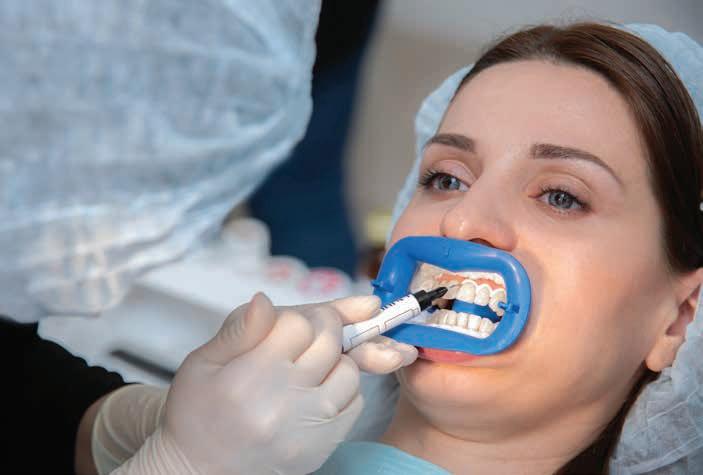
Whitening lights do not whiten teeth independently; rather, they provide photochemical energy that increases the rate of ROS formation. Blue-spectrum visible light has been shown to enhance peroxide degradation, supplying the activation
energy required to disrupt more resistant double carbon bonds.8,9 Both theoretical and empirical work suggest that when the yellow stain chromophore absorbs the blue light photons emitted, it energizes electrons within the yellow chromophore, making the carbon bond much easier to break than using hydrogen peroxide alone. Thus, more yellow stains are eliminated providing increased whitening efficacy.
The blue light accelerator and the yellow color of the stain chromophore are opposite on the color spectrum of visible light, therefore yellow absorbs blue. Importantly, contemporary whitening lights function primarily through photochemical rather than thermal mechanisms, minimizing heat-related pulpal risks when used appropriately.8
Biologic Considerations and Tooth Sensitivity
Biologic response remains a critical consideration in all whitening protocols. Tooth sensitivity occurs when peroxide or ROS diffuse through enamel and dentin to the pulp by way of small rapid movements of fluid that occur within dental tubules. The likelihood of sensitivity is influenced by peroxide concentration, exposure duration, dentinal permeability, and the rate of radical formation.4,5 Slower-release systems and controlled light activation may help reduce pulpal stress by limiting prolonged oxidative exposure.3,10
Social Influences on Whitening Demand
Beyond the science of whitening, social factors increasingly influence patient demand. The rise of social media has significantly altered perceptions of smile esthetics. Highly curated digital images emphasize bright, uniform smiles, often enhanced through filters or photo editing. Surveys have shown that many adults compare their smiles to those seen online and report reduced confidence as a result.11 This social comparison has contributed to growing interest in whitening procedures, particularly among younger populations.
Clinical Decision-Making in Whitening Protocols
For dental professionals, this cultural shift highlights the importance of patient education and expectation management. Patients influenced by social media trends may seek rapid or aggressive whitening without fully understanding the biologic implications. Clinicians serve as essential gatekeepers, translating esthetic desires into safe, evidence-based treatment plans grounded in scientific principles rather than visual trends.
When selecting a whitening approach, clinicians must balance patient expectations with clinical findings. The choice between hydrogen peroxide and carbamide peroxide should be guided by stain type, desired speed of results, sensitivity history, and the ability to control exposure time. When faster results are desired, or resistant
For dental professionals, this cultural shift highlights the importance of patient education and expectation management. Patients influenced by social media trends may seek rapid or aggressive whitening without fully understanding the biologic implications.
intrinsic stains do not show significant improvement with lower concentrations or over-the counter options, light activation can be an effective option for enhancing whitening outcomes in appropriately selected patients.
Conclusion
Tooth whitening exists at the intersection of chemistry, biology, and modern esthetic culture. A comprehensive understanding of peroxide kinetics, chromogenic structure, and photochemical interaction enables dental hygiene professionals to deliver whitening treatments that are effective, predictable, and biologically responsible in an era of heightened esthetic demand.
TDA members have access to exclusive discounts on Philips Sonicare and Zoom! products through TDA Perks Program. For more information, visit tdaperks.com (Compliance & Supplies) or call 800-422-9448 and mention you have a “key account” with TDA Perks Program.
References
1. Joiner A. Tooth colour: a review of the literature. J Dent. 2004;32(Suppl 1):3–12.
2. Watts A, Addy M. Tooth discoloration and staining: a review. Br Dent J. 2001;190(6):309–316.
3. Dahl JE, Pallesen U. Tooth bleaching—A critical review of the biological aspects. Crit Rev Oral Biol Med. 2003;14(4):292–304.
4. Browning WD, Cho SD, Deschepper EJ. Effect of whitening agents on tooth sensitivity. J Esthet Restor Dent. 2007;19(5):256–263.
5. Matis BA, Cochran MA, Eckert G. Review of the effectiveness of various tooth whitening systems. Oper Dent. 2009;34(2):230–235.
7. Matis BA et al. Clinical evaluation of bleaching agents. Oper Dent. 1999;24(4):229–238.
8. Buchalla W, Attin T. External bleaching therapy with activation by heat, light or laser. Dent Mater. 2007;23(5):586–596.
9. Torres CRG et al. Influence of light activation on hydrogen peroxide degradation. J Dent. 2003;31(6):423–428.
10. Kwon SR, Wertz PW. Review of the mechanism of tooth whitening. J Esthet Restor Dent. 2015;27(5):240–257.
11. Forbes Health / OnePoll Survey. Social media impact on smile perception and confidence. 2023.
12. J.C Ontiveros, R.D Paravina, Color change of vital teeth exposed to bleaching performed with and without supplementary light, J.Dent 37 (2009) 840-847.
classifieds
Opportunities Online at TDA.org and Printed in the Texas Dental Journal
CLASSIFIEDS INFORMATION
DEADLINE
Copy text is due the 20th of the month, 2 months prior to publication (ie, January issue has a due date of November 20.)
MONTHLY RATES
PRINT: First 30 words—$60 for ADA/TDA members and $100 for non-members. $0.10 each additional word.
ONLINE: $40 per month (no word limit). Online ads are circulated on the 1st business day of each month, however an ad can be placed within 24 business hours for an additional fee of $60.
SUBMISSION
Ads must be submitted, and are only accepted, via www.tda.org/MemberResources/TDA-Classified-Ads-Terms. By official TDA resolution, ads may not quote specific incomes or revenues and must be stated in generic terms (ie “$315,000” should be “low-to-mid-6 figures”). Journal editors reserve the right to edit and/or deny copy.
PRACTICE OPPORTUNITIES
ALL TEXAS
LISTINGS
FOR MCLERRAN &
ASSOCIATES.
AUSTIN (ID #745): Established, 2-location GD practice in the Austin area. The practice serves a large, diverse, FFS/ PPO patient base with excellent new patient flow, a combined 14 equipped operatories across both locations (with substantial room for expansion at one of the locations). The practice comes fully equipped with digital radiography, digital sensors, digital scanners, digital pano, CBCT, and paperless charts.
AUSTIN (ID #749): Established GD office located in the heart of central Austin. The practice has an impeccable online reputation in the community and features a strong hygiene recall program with multiple avenues for future growth. 3,000+ sq ft office, 4 active operatories, ample room for expansion, equipped with a digital scanner, intra oral cameras, digital x-ray sensors, and paperless charts. AUSTIN (ID #762): Established GD office in the heart of central Austin with a majority PPO patient base, 1000+ active patients, a robust hygiene recall program, and a strong reputation online and in the community they serve. The 1,500 sq ft office space contains 3 total operatories, computers throughout, a digital x-ray scanner, and intra-oral cameras. The practice has consistently generated revenue of mid-6 figures with abundant upside opportunities to expand production/cash flow through
launching strategic marketing & advertising initiatives, driving new patient flow, and offering additional advanced procedures in-house.
AUSTIN (ID #777): Legacy, GD office in the hill country west of Austin. FFS/PPO patient base, approximately 1,000 active patients, and features a spacious 2,000 sq ft facility with upgraded equipment/technology. The office contains 4 equipped operatories with computers in each, digital x-ray sensors, a CBCT, a digital scanner, and paperless charts. This is a well-established, turn-key practice with solid growth potential. AUSTIN (ID #787): Large, GD practice with a great reputation in north Austin. Large facility in a free-standing building with great visibility featuring 8 fully equipped operatories with computers in each, digital radiography, an iTero digital scanner, and a 3D CBCT unit. FFS/PPO patient base, 25+ new patients per month, and a stellar online reputation. AUSTIN (ID #790): Established periodontic practice in highly sought after Central Austin with abundant upside potential. The well-appointed 1,840 sq ft space has 5 fully equipped operatories with room for future expansion, computers throughout, digital x-ray sensors, and paperless charts. The 100% FFS practice is built on an impeccable foundation with a diverse referral network, solid hygiene recall, and virtually no investment in marketing & advertising. AUSTIN (ID #795): Established, 100% FFS, high-end, boutique cosmetic dental
office with an impeccable reputation in the heart of downtown Austin. The modern 2,200 sq ft condo has incredible cityscape views, 3 fully equipped operatories with room for a 4th, computers throughout, digital x-ray sensors, iTero digital scanner, dental laser, etc. you are seeking a turnkey office in a prime location with abundant upside potential and strong, consistent cash flow, please reach out for details! AUSTIN (ID #797): Established GD office in south Austin. PPO/FFS practice, 1,800+ active patients, strong hygiene recall program
The Premier Sell-Side Advisor for Dental Practice Owners
classifieds
with 30%+ of annual production coming from the hygiene department. Four total operatories (3 equipped) and comes furnished with a digital pano, digital scanner/x-ray sensors, intra-oral cameras, and is fully paperless. This is a profitable, turn-key practice with multiple avenues for future growth.
AUSTIN-NORTH
(ID #798): Established, highly profitable GD office located less than an hour north of Austin. Large PPO/FFS patient base, approximately 40 new patients per month. Modern, well-equipped facility located in a high traffic retail location. 5 operatories, furnished with computers throughout, digital x-ray sensors, panoramic x-ray unit, 3D CBCT, digital scanner, intra oral cameras, and is fully digital. AUSTIN (ID #801): Rare opportunity to acquire a high-upside, modern general dentistry practice in central Austin. Large FFS/PPO active patient base. Spacious facility off a high-traffic roadway. Five total operatories, all digital equipment including a pano, and paperless charts. The practice has immense upside potential and we expect this listing to move quickly.
AUSTIN-SOUTH
(ID #803): GD practice located south of Austin in a high-traffic retail center. Five fully equipped operatories with an additional ortho bay set up, digital radiography, intra oral cameras, paperless charts, a digital pano, and a digital scanner. Large PPO/FFS/Medicaid patient base with over 1,900 active patients and see 45+ new patients per month. If you are looking for a
practice that is primed for continued growth in a growing suburb of Austin with great visibility, reach out to learn more!
HOUSTON-SOUTH (ID #682): Established, multi-specialty dental office in a suburb about 20 miles south of Houston. Large (4,000 sq ft), easily accessible office condo with 13 equipped operatories, computers throughout, CBCT, and digital scanner. Massive PPO/FFS patient base (3,000+) with over 50 new patients visiting the office per month. The practice revenue averages over 7 figures annually with strong net cash flow, and there is room for expansion through enhancing the hygiene recall and focusing on standardizing the procedural mix. With approximately 55% of the dentistry being restorative, 25% pediatrics, 10% ortho, and 10% OMS, the office is on a stable foundation with the opportunity to take it in whatever direction you choose. HOUSTON (ID #772): Legacy GD practice and free-standing real estate located north of downtown Houston. Majority PPO patient base, 1,300+ active patients, and 20+ new patients visiting the office per month. Approximately 3,000 sq ft facility contains 6 total operatories (5 equipped), computers in each operatory, digital x-ray sensors, pano, digital scanner, dental laser, and paperless charts. The practice has consistently realized revenue mid-6 figures with robust net cash flow (45-55% on average) and upside opportunities to expand production through adding additional specialty
procedures, equipping the open operatory, and implementing a strategic marketing initiative.
HOUSTON-SOUTHWEST (ID #782): Large, modern GD practice located in a high-visibility retail center on the southwest side of Houston. The spacious 3,900 sq ft practice features 6 fully equipped operatories (with several additional ops built out and ready to equip), is fully digital with CBCT, digital scanner, digital radiography, intra oral cameras, and computers throughout. The practice serves a mix of PPO/FFS patients, has realized revenue of approximately 7 figures over the last several years, and has a fantastic reputation within the community and online.
HOUSTON-NORTHWEST (ID #802): Premier
GD practice in northwest Houston. State-of-theart office, fully equipped with 6 operatories, digital radiography, intraoral cameras, digital pano, and a digital scanner. Large PPO/FFS patient base, over 4,000 active patients, and a robust hygiene recall program accounting for 20%+ of annual production. HOUSTONPROSTHODONTIC (ID #805): High-end implant focused practice in the heart of Houston. Stateof-the-art office, 6 fully equipped operatories with computers in operatories, digital sensors, CBCT and a digital scanner. The practice also features a full in-house lab with lab technicians on staff. The practice has maintained strong revenue, primarily through implants, with the vast majority of those patients coming via
internal referrals and advertising. The seller is open to remaining on for 6-12 months to assist with the transition.
SOUTH TEXAS COAST (ID #783): Established GD office in a quaint town near the Texas Gulf Coast. 100% FFS office, multi-generational active patient base (1,000+), in a 1,600+ sq ft facility containing 3 operatories with computers in each, digital x-ray sensors, a Pano, and fully digital charts. The practice has impressive net cash flow margins (75%+) and there are several opportunities for postsale growth. This is a unique opportunity to step into a growing practice with outstanding fundamentals and maximum upside potential.
WEST TEXAS (ID #796): Large pediatric dentistry and orthodontic practice located in a large metro area in west Texas. The practice has a fantastic reputation in the local community, large, predominantly FFS/PPO patient base, strong growth potential, and a massive, turn-key facility with 15+ operatories. The owner doctor would love to continue worki ng part-time for up to 3 years following closing before eventually transitioning into retirement. TO REQUEST MORE INFORMATION ON MCLERRAN & ASSOCIATES’ LISTINGS: Please register at www.dentaltransitions.com or contact us at 512-900-7989 or info@dentaltransitions.com.
CENTRAL TEXAS HILL COUNTRY: For sale by owner, thriving fee-for-service general dental practice. Established rural four operatory
classifieds
dental practice for sale in the heart of the beautiful Texas Hill Country. This all-digital practice with a new pano produces mid-6 figure income with just two days per week of operation, offering great room for expansion and growth. The recently renovated real estate which offers a modern, welcoming environment for patients is also for sale. This is a perfect opportunity for a dentist looking to step into a successful, modern and established dental practice with plenty of room to expand. Contact dentalofficesale2024@gmail.com for more information and showings.
KERRVILLE: Well established general practice and real estate located in a scenic Hill Country town. This 3-operatory practice was completely remodeled in 2016. There is a steady new patient flow with a mid-6 figure yearly production on a 4-day week. This is a great opportunity for someone wanting to escape a big city practice or begin and grow. Contact Dental Practice Sales 713-504-7117.
MANSFIELD: Explore a remarkably unique dental practice for sale in the DFW area. Great start-up opportunity for GP or specialist. Discover the possibilities online at www. yournewdentalpractice.com.
WATSON BROWN PRACTICES FOR SALE: Practices for sale in Texas and surrounding states, For more information and current listings please visit our website at www. adstexas.com or call us at 469-222-3200 to speak with Frank or Jeremy.
INTERIM SERVICES
HAVE MIRROR AND EXPLORER, WILL TRAVEL: Sick leave, maternity leave, vacation, or death, I will cover your general or pediatric practice. Call Robert Zoch, DDS, MAGD, at 512-517-2826 or drzoch@yahoo.com.
Designed for dentists, with dentists, the new ADA Member App is here and ready to put the resources you need in the palm of your hand.
• Chat 1:1 or with your network
• Newsfeed customized to your interests
• Digital wallet to store your important documents