Contents Karakia
1 Executive Summary
3 Wai Māori around the motu
6 Operational performance against annual plan
10 Financial performance against plan
11 Comments on financial performance

Ko Rangi, Ko Papa, ka puta ko Rongo, ko Tane Mahuta, ko Tangaroa, ko Tumatauenga, ko Haumietiketike, ko Tawhirimatia.
Toko te Rangi ki runga, ko Papa ki raro.
Ka puta te ira tangata ki te whai ao, ki te ao marama.
E Rongo, whakairia ake ki runga, kia tina! Tina!
Hui e, taiki e!
Executive Summary
This is Te Wai Māori’s quarter three (Q3) report to iwi against the 2024/25 Annual Plan and covers the period 1 April to 30 June 2025. As with our previous quarterly reports, this report has been developed to give regular insight into the work the Trust undertakes on behalf of the beneficiaries of the Māori Fisheries Settlement, including Mandated Iwi Organisations.
Tēnā koutou katoa,
We are pleased to present to you our third quarter report of the 2024/25 financial year.
This year’s work programme supports the strategic priorities and long-term outcomes detailed in the Trust’s Annual Plan. These include:
+ Enhancing the health and wellbeing of indigenous fisheries and their habitat
+ Enhancing the recognition and status of indigenous species
+ Providing better opportunities for the participation of iwi and hapū in resource management decision making processes as they relate to freshwater fisheries and habitat
+ Promoting and sharing indigenous fisheries expertise, knowledge and understanding
+ Increasing the quality and range of information to iwi and hapū on freshwater fisheries and habitat
+ Supporting iwi and hapū capacity and capability in freshwater fisheries.
As always, we welcome your feedback on the structure and content of our reporting.

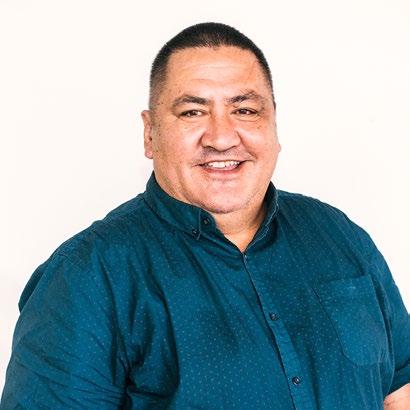
Rawiri Faulkner Chair, Te Wai Māori Trust
Nāku noa, nā
Wai Māori around the motu
The 2025 Māori Freshwater Fisheries Conference
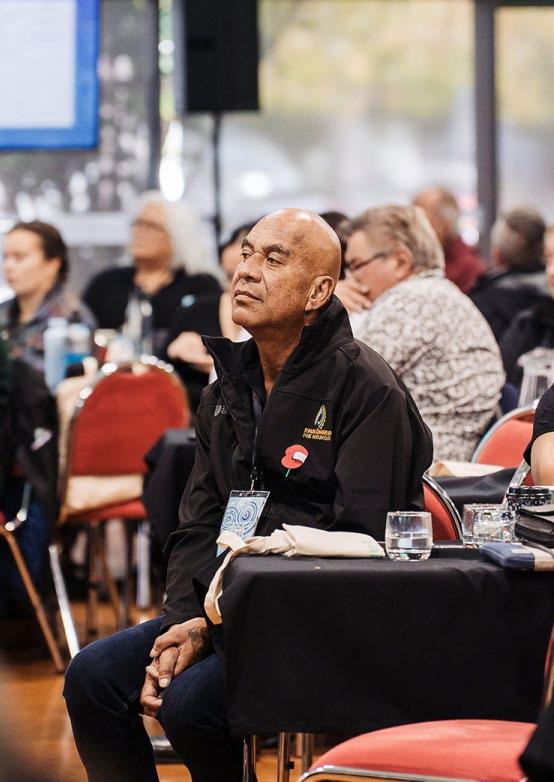
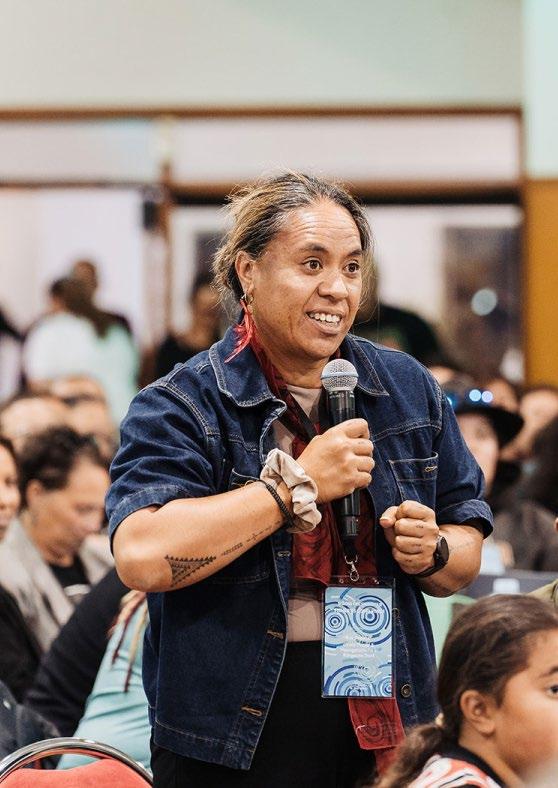
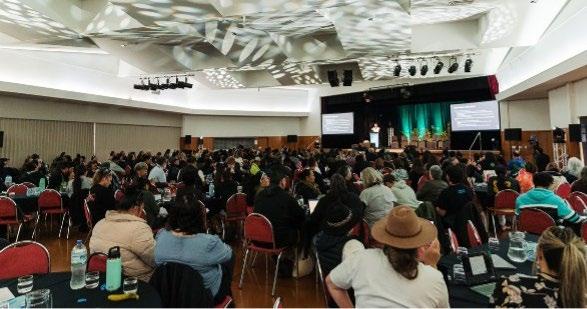
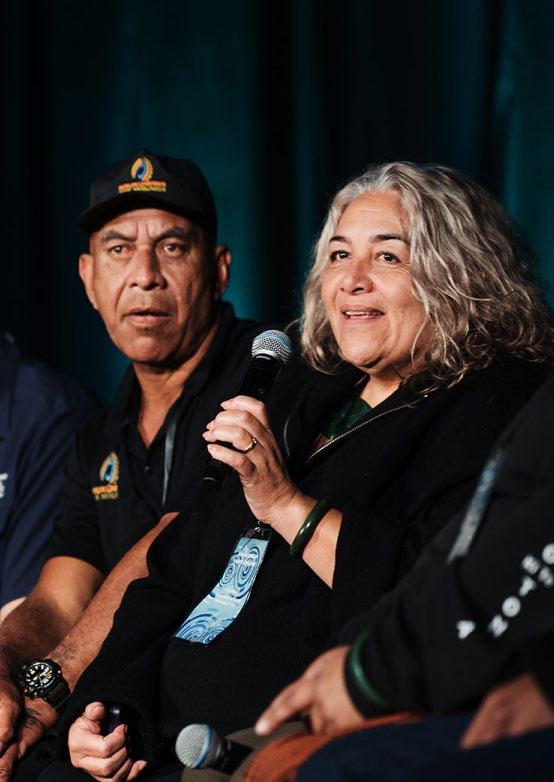
This year, the sixth Māori Freshwater Fisheries Conference was held in Te Kūiti from 7 April to 8 April, under the korowai aroha of Ngāti Maniapoto. Since 2015, the Conference has travelled all over Aotearoa, from Whangārei to Whakatū, gathering the crucial network of kaitiaki working with freshwater taonga and providing a forum to kōrero and connect. It is a key event organised by the Trust and has grown and matured over the years, as evidenced by this year’s full allocation of 300 registrants.
To mirror the uncertainty in which our mahi as kaitiaki currently takes place, the theme of this year’s Conference was he wai pūnehu – navigating murky waters This theme was a call to gather kaitiaki from across the motu to consider how we can build on our collective actions to achieve enduring positive outcomes for our freshwater taonga, despite the difficulties of our current context. This call was undoubtedly answered, as a total of 39 kaikōrero across 17 presentations shared their mātauranga on a range of topics including the integration of traditional methods with Western science, whānau-friendly taiao monitoring resources and habitat protection and restoration.
“This theme was a call to gather kaitiaki from across the motu ... This call was undoubtedly answered, as a total of 39 kaikōrero across 17 presentations shared their mātauranga on a range of topics ...”
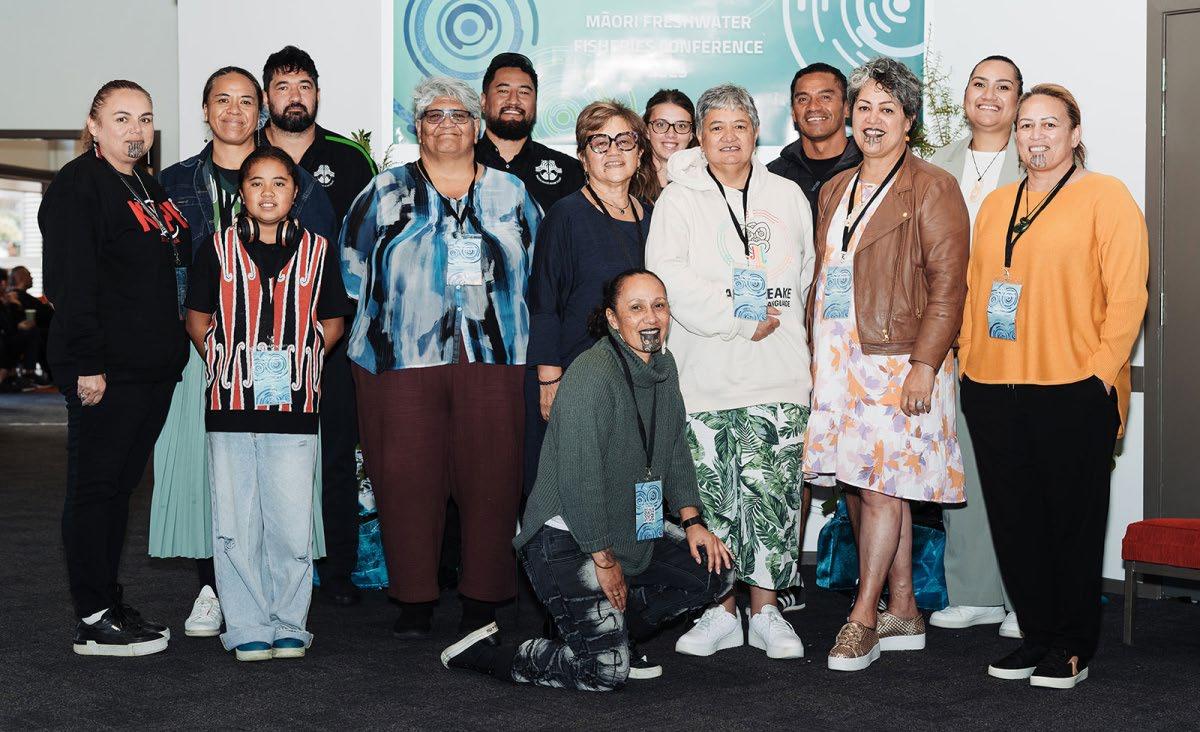
PICTURED IS THE GROUP GATHERED FOR THE ANNUAL FISH FUTURES SYMPOSIUM IN MOTUPŌHUE/BLUFF AT TE RAU AROHA MARAE
SOURCE: FISH FUTURES, DAVE
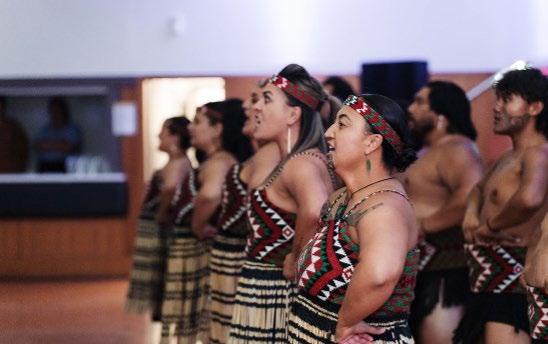
THE CONCLUSION OF THE TWO-DAY LONG HUIHUINGA SAW THE TRANSFER OF THE MAURI STONE TO NGĀTI KAHUNGUNU, WHO PLACED A TONO TO HOST THE NEXT MĀORI FRESHWATER FISHERIES CONFERENCE WITHIN THEIR ROHE.
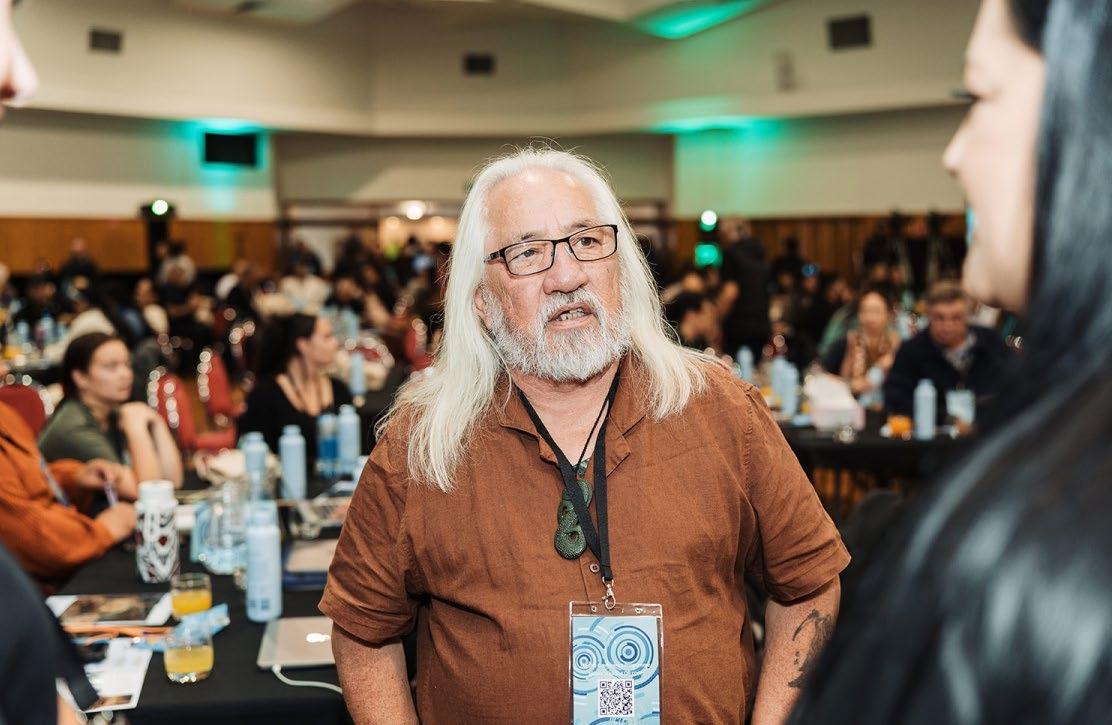
Day one of the Conference featured inspiring kōrero from different rōpū and the restoration activities within their respective rohe, replacing Western sampling methods with traditional practices, the presence of taonga species in man-made drains, and the process of returning salmon home to their tūrangawaewae in California, The United States of America. The second day of the Conference commenced with kōrero from a mana whenua rōpū on monitoring activities within their takiwā and the development of new mātauranga and waiata in line with contemporary taiao observations. This then led into an invigorating kōrero on strategies for resistance and systemic change which was particularly relevant given the theme of this year’s Conference. Tuna was the focus of the middle of the day which shifted into kōrero on habitat protection methods such as pest control and electric fish barriers. And finally, our Conference concluded with heartening kōrero from our future kaitiaki and their mahi in the taiao.
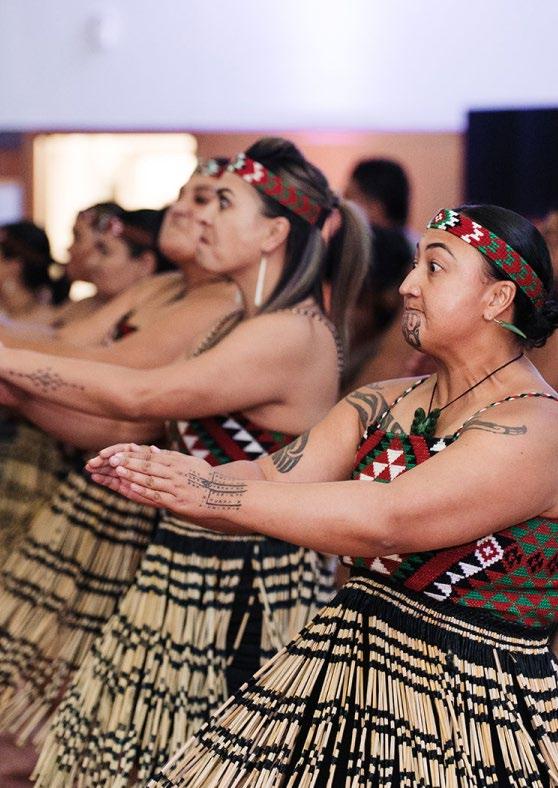
The manaakitanga of Ngāti Maniapoto knows no bounds as to what was felt throughout the entire duration of the Conference in Te Kūiti. Te Kūiti Pā not only accommodated over 70 attendees, but also, it provided a safe space for building and fostering relationships and sharing kōrero and mātauranga outside of the Les Munro Centre in which the Conference was held. Mana whenua rōpū shared insightful kōrero on taiao restoration activities at place, the local hāpori provided kai for over 300 Conference attendees, and local band Zentarge and Te Matatini Kapa Haka rōpū - Ngā Pua o Te Kōwhara provided spectacular performances during the wrap-up Conference Dinner and Evening Function.
Operational performance against annual plan
1. Enhance the health and wellbeing of indigenous fisheries and their habitat
Fish Futures Working Group
This quarter the Trust prepared a draft work programme for the Fish Futures Working Group and participated in planning sessions held with Cawthron research leads, to plan out the remaining 18 months of the programme and beyond. A key focus for management is finalising work priorities for rohe partners. Legal advice has also been commissioned regarding Fish and Game stocking of sports fish within significant waterbodies affecting taonga species and scoping alternative freshwater fisheries governance models.
2. Enhance the recognition and status of indigenous species
Te Mana o Ngā Tuna
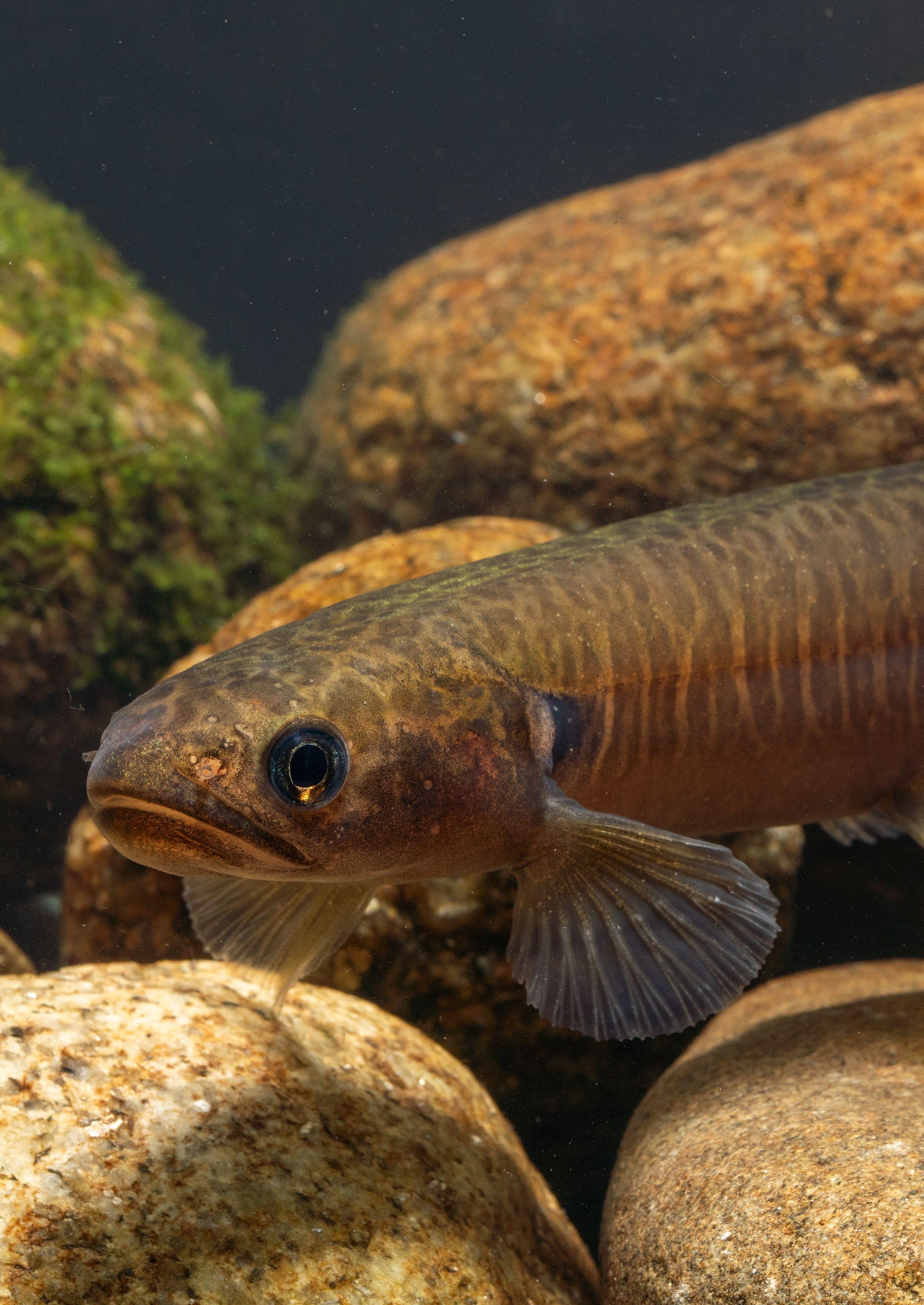
The tuna workshop facilitated by the Te Mana o Ngā Tuna Chairs Erina Watene and Erina Wehi-Barton at the Māori Freshwater Fisheries Conference in Te Kūiti was well attended, drawing together tuna practitioners from across the motu. The workshop attendees considered challenges faced such as barriers to fish passage, overallocation, commercial eeling, gravel extraction, flood pumps and failure to recognise mātauranga Māori. They also provided examples of measures that could help, this included
As part of the workshop a list of names and contacts was also pulled together of those interested in being part of a tuna kaitiaki network
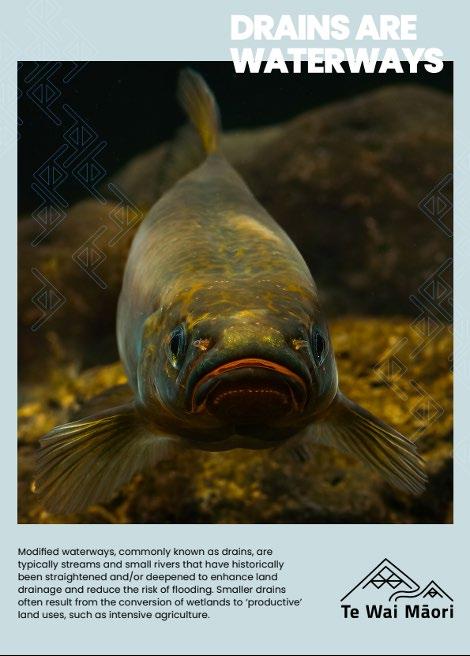
Drains are waterways
The Drains are waterways brochure was finalised and launched at the Māori Freshwater Fisheries Conference. The document was created in partnership with Kitson Consulting and was developed to increase awareness of the important ecological role that modified waterways (commonly referred to as drains) play for indigenous freshwater species and of the adverse impacts of clearance on these species. It also includes measures to mitigate these impacts.
Click here to view the Drains are Waterways brochure.
Spinoff article - Mass Mortalities
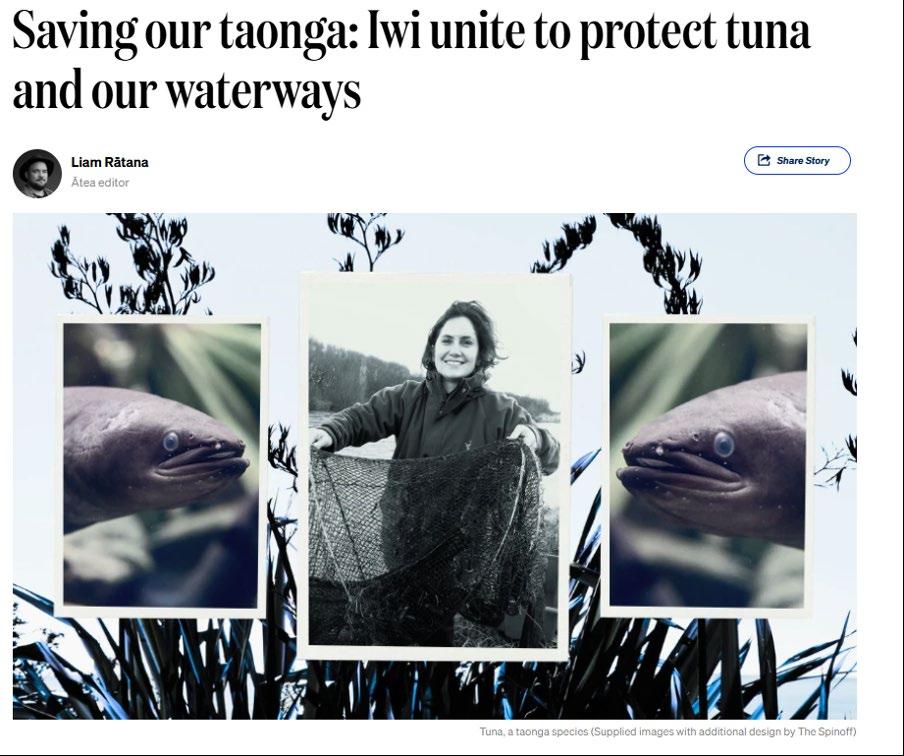
On ANZAC day a story prepared in partnership between the Trust and the Spinoff was launched intended to raise awareness of mass mortality events, particularly of tuna, the pressures facing our indigenous freshwater species and to raise the profile of the Trust.
The story features interviews with Dr Jane Kitson (Kitson Consulting) and Erina Watene (alternate Director Te Wai Māori Trust) and can be found. To further promote the story the article was included in the Spinoff’s email newsletter The Bulletin on 13 May.
Click here to read the article.
3. Providing better opportunities
for the participation of Iwi and hapū in resource management decision-making processes as they relate to freshwater fisheries and habitat
Resource Management and other Reform
The Trust continues to respond to legislative changes that are underway. This included drafting
a response opposing the Regulatory Standards Bill (RSB). The Bill would see the establishment of a Regulatory Standards Board, which would have sweeping powers to enquire into new and existing legislation.
The Trust’s response drew heavily on the Waitangi Tribunal’s Interim Regulatory Standards Bill Urgent Report released on Friday 16 May 2025. Key concerns included the following.
a. There was no targeted consultation with Māori on the proposed Bill despite official advice. The Crown’s actions in progressing the Bill without targeted and meaningful engagement with Māori, was in breach of the te Tiriti principle of partnership and violated its obligations to consult with Māori in good faith.
b. The Bill is of specific interest for Māori given its constitutional significance and the relevance of kāwanatanga and tino rangatiratanga to the process of law-making. Te Wai Māori agreed with the Tribunal’s finding that the three aspects of the Bill most concerning are:
i. The potential impact of the Bill on Aotearoa New Zealand’s constitutional arrangements, specifically its creation of a ‘regulatory constitution.’
ii. The lack of an exemption in the Bill for Treaty-related legislation (beyond Treaty Settlement legislation), as well as the lack of a Treaty of Waitangi legislative design principle; and
iii. The inclusion of a ‘rule of law’ legislative design principle that includes the subprinciple that ‘every person is equal before the law.’
Starting in early July, the Finance and Expenditure Select Committee will convene for only 30 hours over four days to hear public submissions on the RSB. This is despite a wave of opposition to the Bill with 150,000 submissions lodged.
In other updates the Environment Committee has recommended that the Resource Management (Consenting and Other System Changes) Amendment Bill be passed (with minor amendments). The Local Government (Water Services) Bill is still before the select committee. Staff are continuing to keep a watching brief on the Water Services Bill and the Proposed Wastewater Environmental Performance Standards.
4. Promote and share indigenous fisheries expertise, knowledge and understanding.
Māori Freshwater Fisheries Conference
See Wai Māori around the Motu section.
5. Supporting Iwi and hapū capacity and capability in freshwater fisheries.
Wai Ora Fund
This quarter, the Trust continued to support 2024 funding round recipients: Te Arawa Lakes Trust, Wakatū Incorporation, Te Rūnanga o Ngāti Mutunga, Te Waiau Mahika Kai Trust, Hokonui Rūnanga Floriculture Limited, Ngātiwai Trust Board and Aki Tai Here Ltd. The Trust also continued
to support two projects from the 2023 funding round: Tuawhenua Trust, Ngāti Kahungunu Iwi Incorporated and one from the 2021 funding round: Te Ani Waata Whānau Trust. The Trust also supported Maungataniwha ki Rangaunu to achieve their milestones and conclude their Wai Ora 2023 project.
Tiaki Wai Fund
This quarter, the Trust is working to enter into agreement with two groups: Aoraki Environmental Consultancy Ltd and Te Maru o Ruahine Trust for Tiaki Wai funding.
The Trust continues to support Patuharakeke
Te Iwi Trust Board and Te Kūpena Hōu Ltd.
MfE Essential Freshwater (Tangata Whenua) Fund
The Te Mātāpuna o te Wai fund has a pool of $12.8 million to develop the capability and capacity of hapū and iwi in their aspirations for their freshwater taiao. Te Mātāpuna o te Wai offers a three-year investment through planning support for Te Mana o te Wai/Taiao System approaches and supporting the capacity of hapū and iwi by resourcing kaimahi (full time employees).
The management of funding agreements and deliverables under the Te Mātāpuna fund was again the focus for the quarter (led by subcontractors Poipoia Limited).
Financial performance against plan
The following table summarises each area of work identified in the 2025 annual plan by comparing actual to budgeted expenses for the year to date. These figures have not been audited.
Te Wai Māori Finance Report to 31 March 2025
Comments on financial performance
+ Te Wai Māori have generated a $351k net surplus to 31 March 2025, which is $93k behind budget.
+ Te Wai Māori have generated a $916k net surplus to 30 June 2025, which is $368k ahead of budget.
+ Total costs were $6.858m, of which the bulk ($5.991m) relate to the MfE Essential Freshwater (Tangata Whenua) Fund.
+ Budget 2025 reflects a surplus of $708k, being the return required to offset inflation i.e. maintain the real value of settlement funds.
+ Portfolio performance has recovered from losses at the start of Q3 and YTD returns are now $100k ahead of budget.
+ Operational cost savings are $51k, mostly in HR of which $15k is temporary.
+ Excluding MfE Essential Freshwater (Tangata Whenua) Fund, project costs are $68k behind budget. Indigenous Freshwater Species funding is $42k underspent and Tiaki Wai Funds are $15k underspent.
+ MfE Essential Freshwater (Tangata Whenua) Funding received is the full $15m as contracted. To date distributions are $9.726m and program costs are $1.839m. The balance of funds on hand on 30 June was $3.434m.