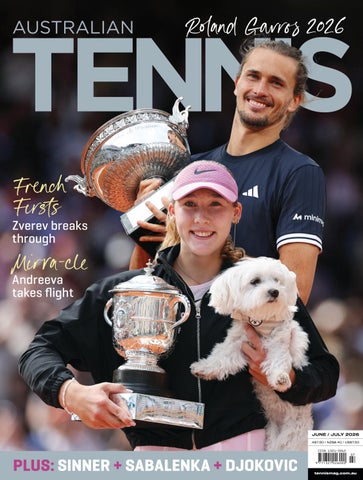
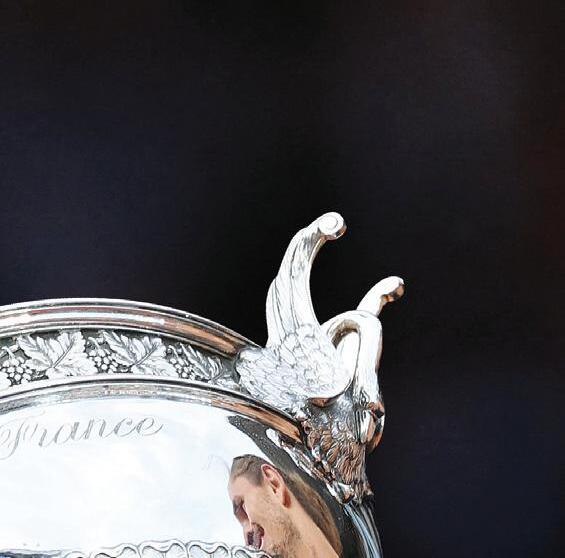
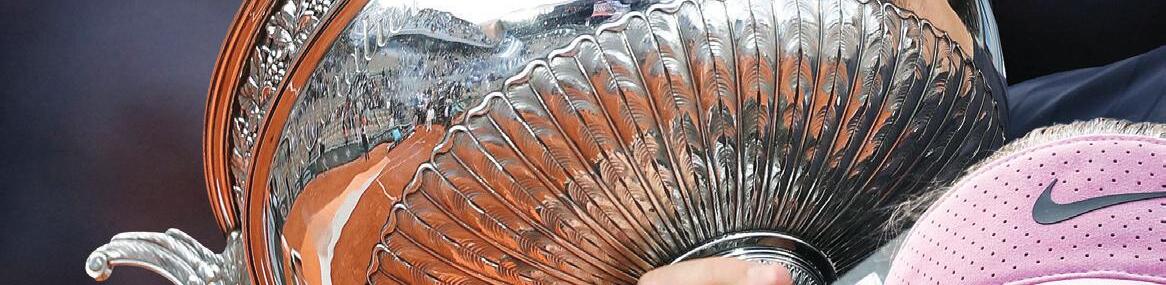
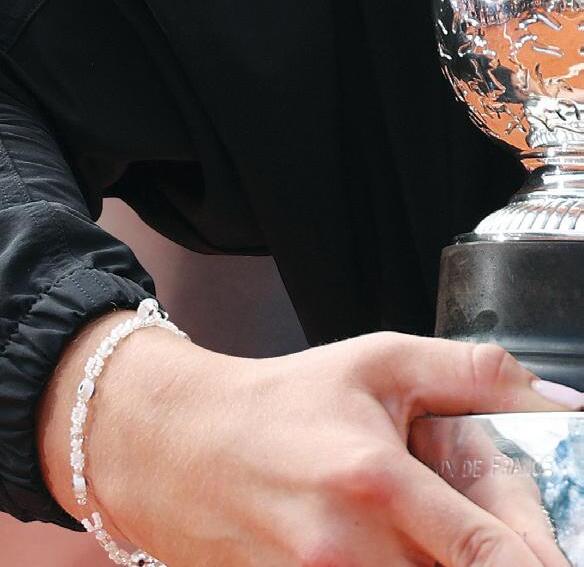
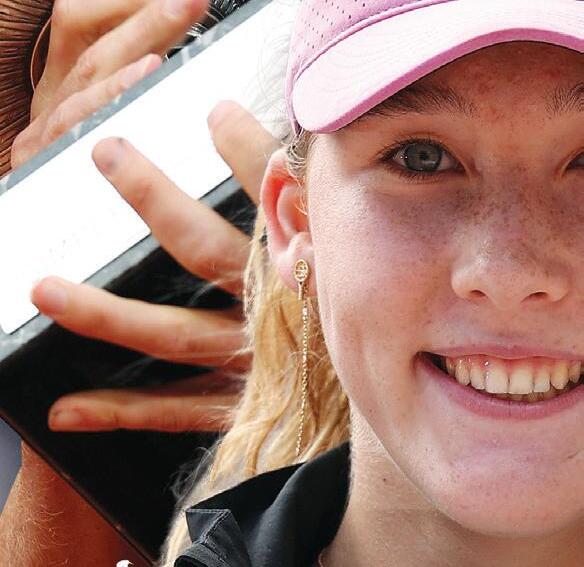
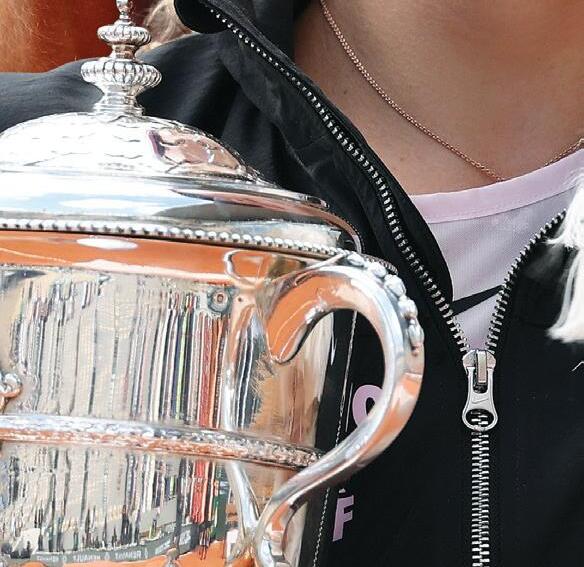
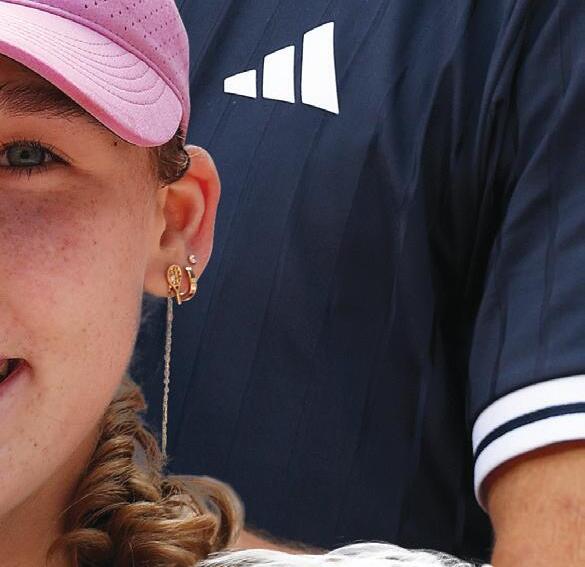
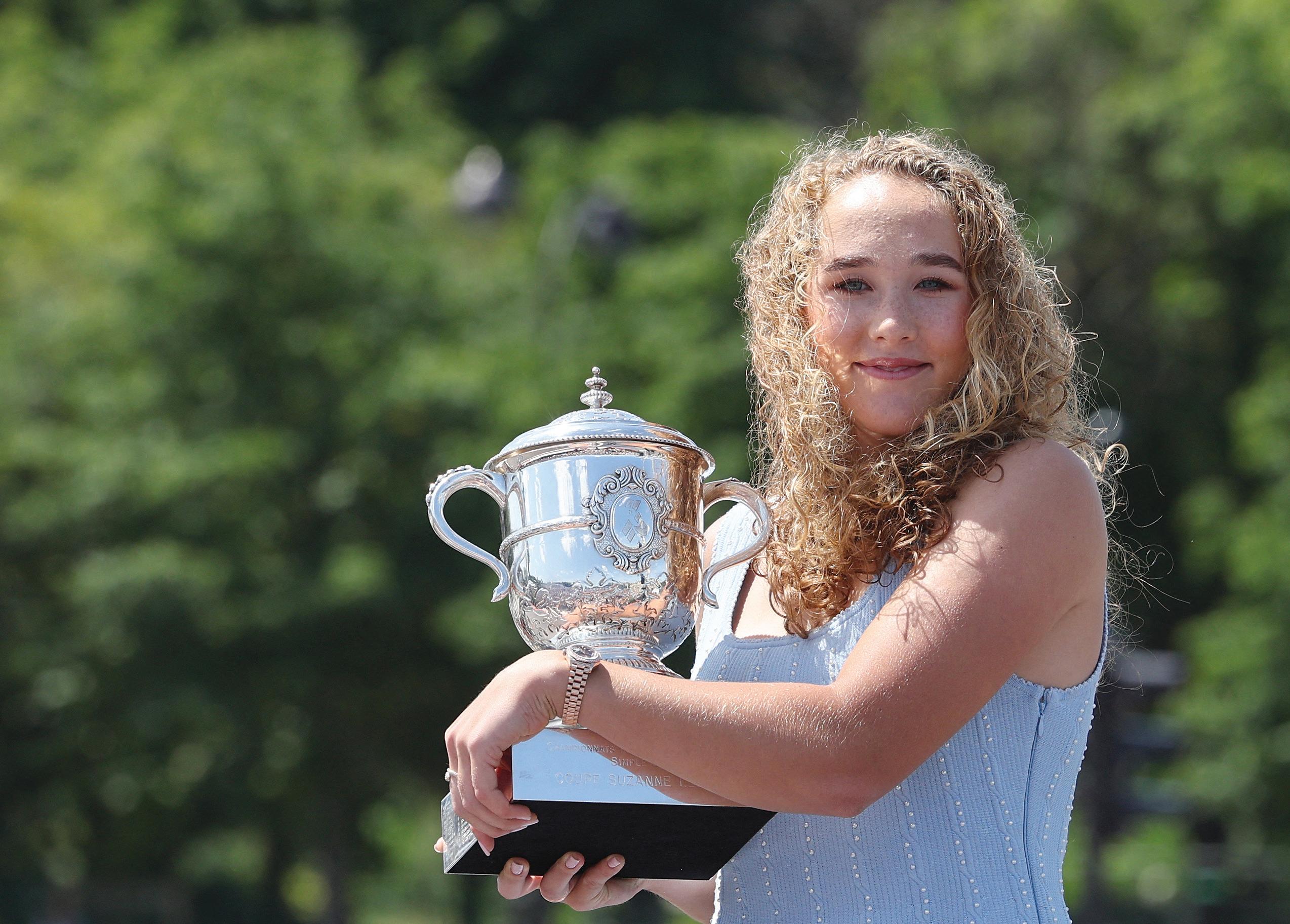
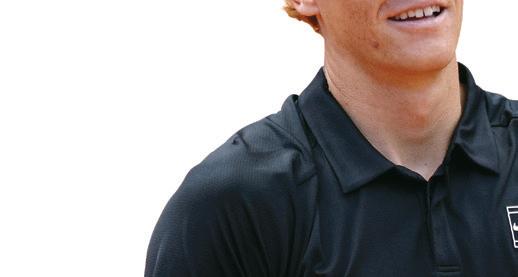
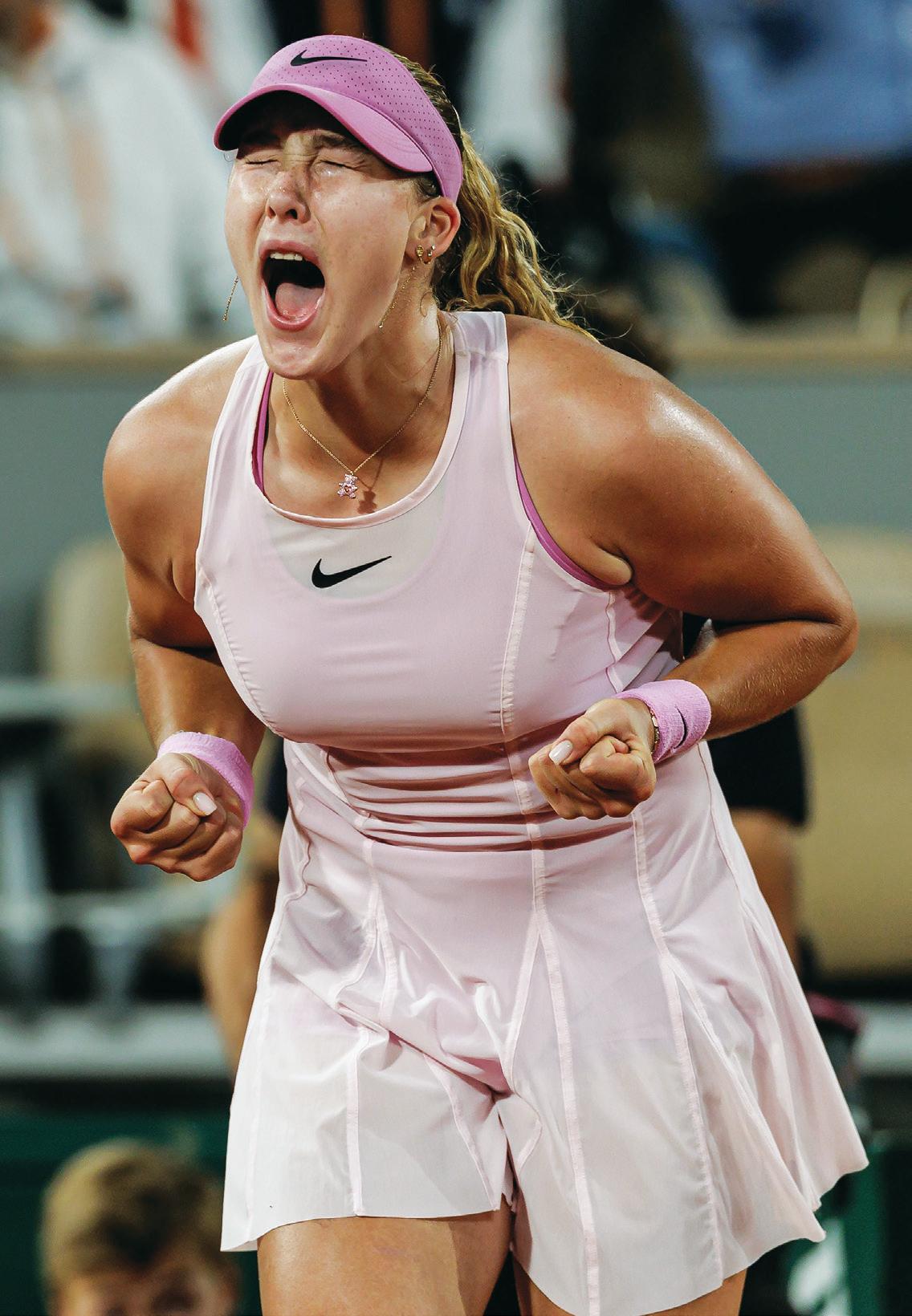
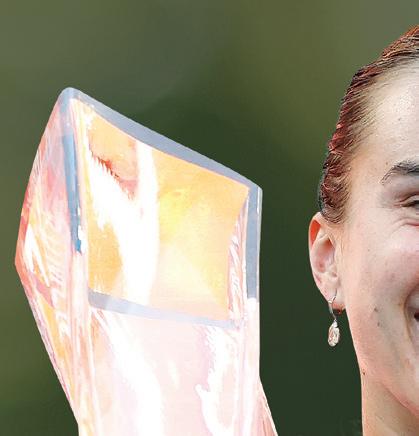
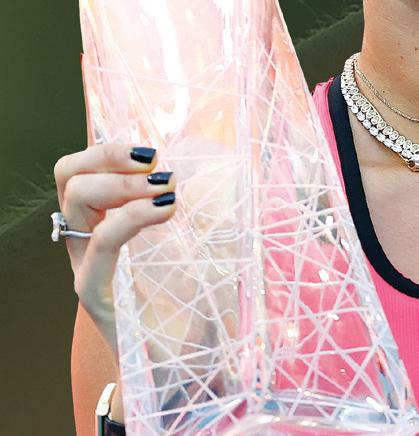
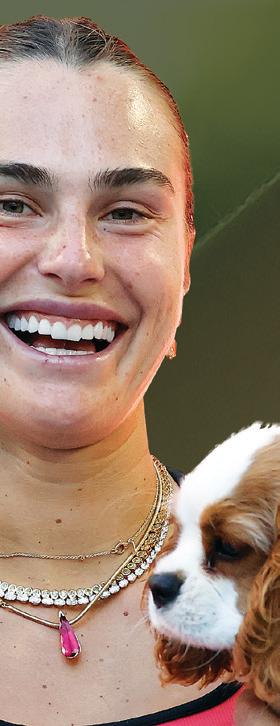
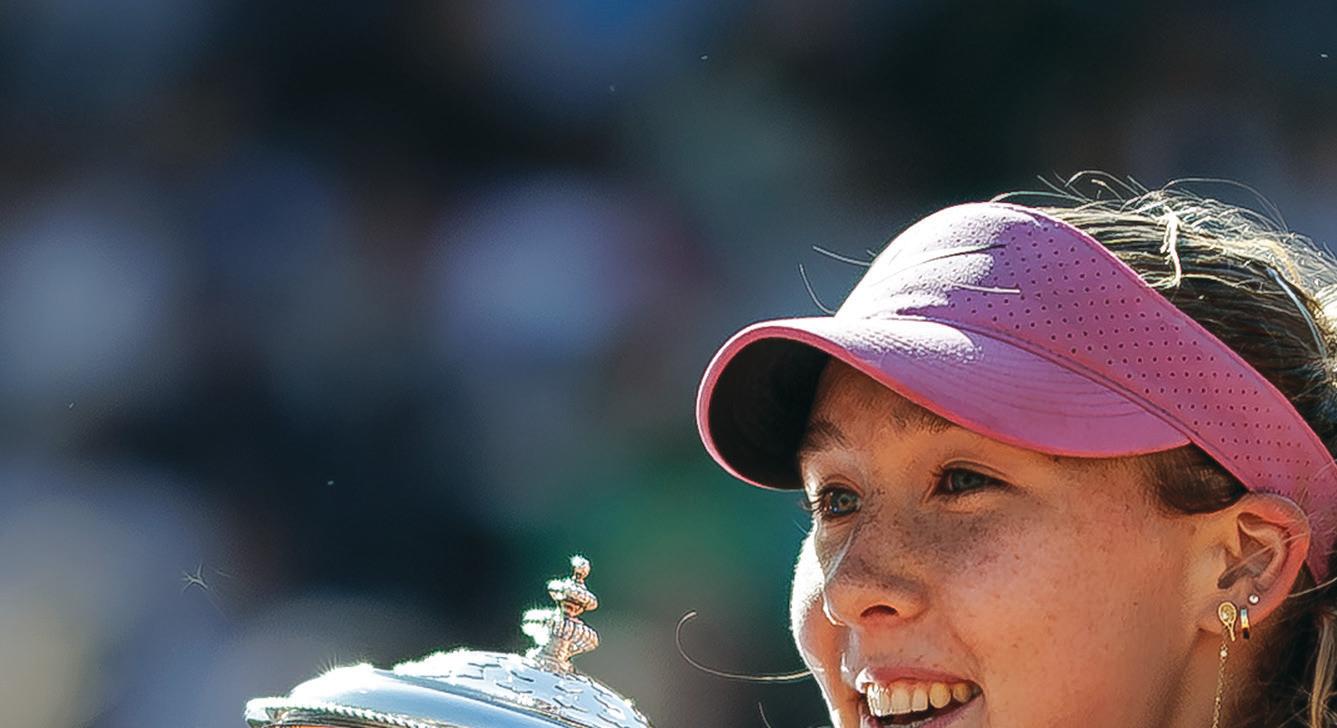
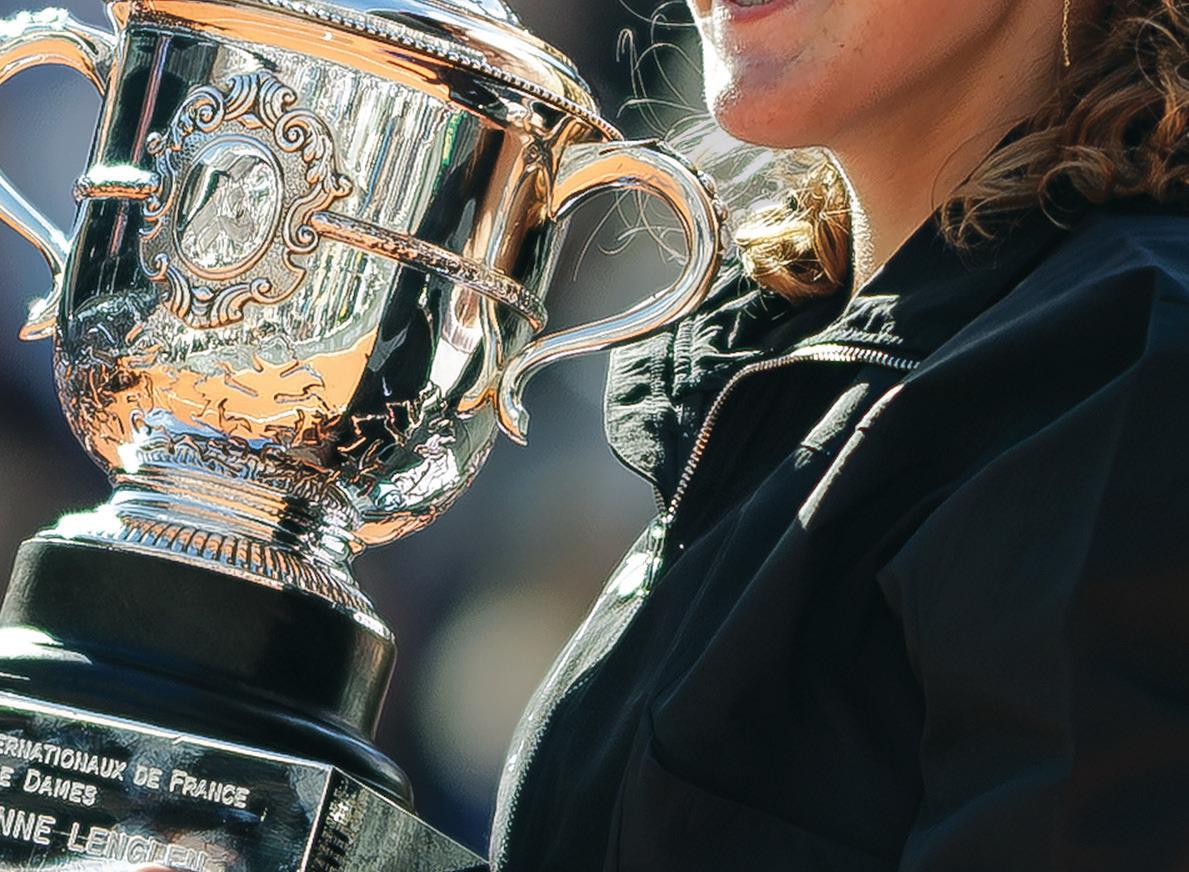
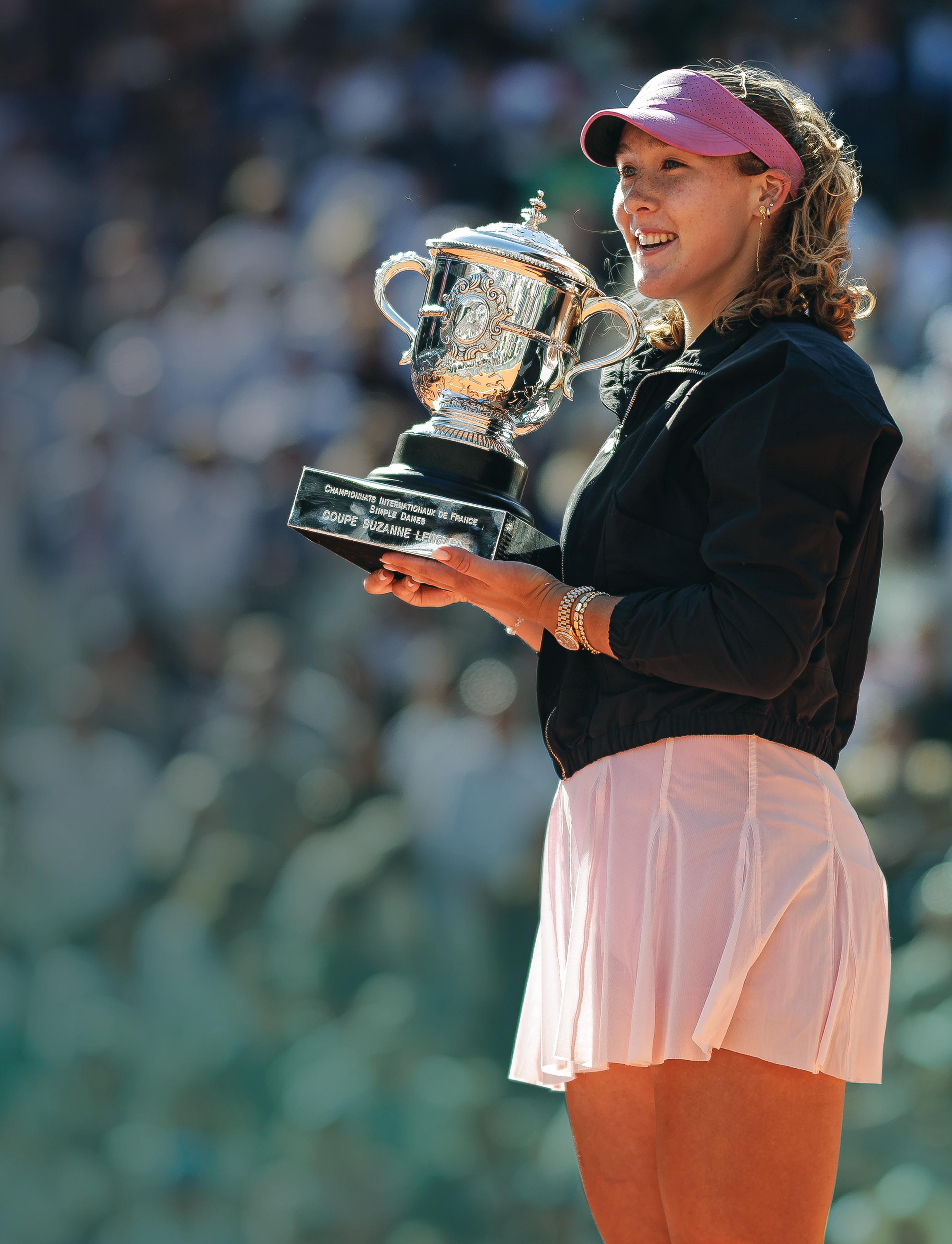
A teen phenom became a Grand Slam champion when 19-year-old Mirra Andreeva dominated the field at Roland Garros.
FEATURES
18 THE BALANCED APPROACH
As player commitments intensify, Aryna Sabalenka is leading a shift for smarter scheduling to maximise careers.
28 WORTH THE WAIT
42 STEADY AS SHE GOES
With a strong will and healthy mindset, Jessica Pegula has turned injury setbacks into a launchpad for new milestones.
21
JANNIK SINNER: THE LONG GAME
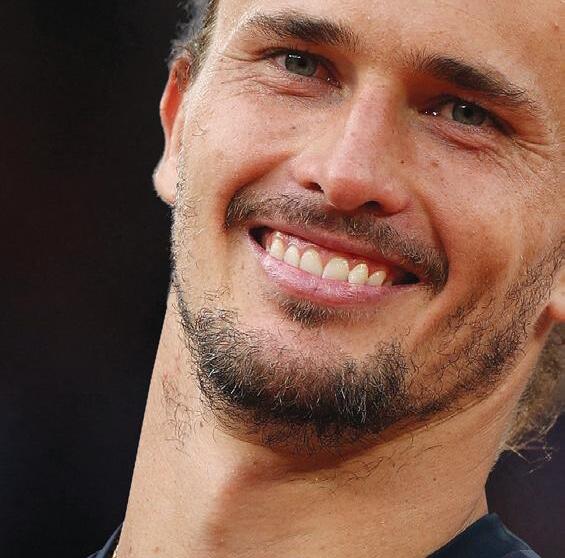
At age 29 and in his fourth Grand Slam final, Alexander Zverev at last celebrated major success at Roland Garros.
Printed in Australia by Ive
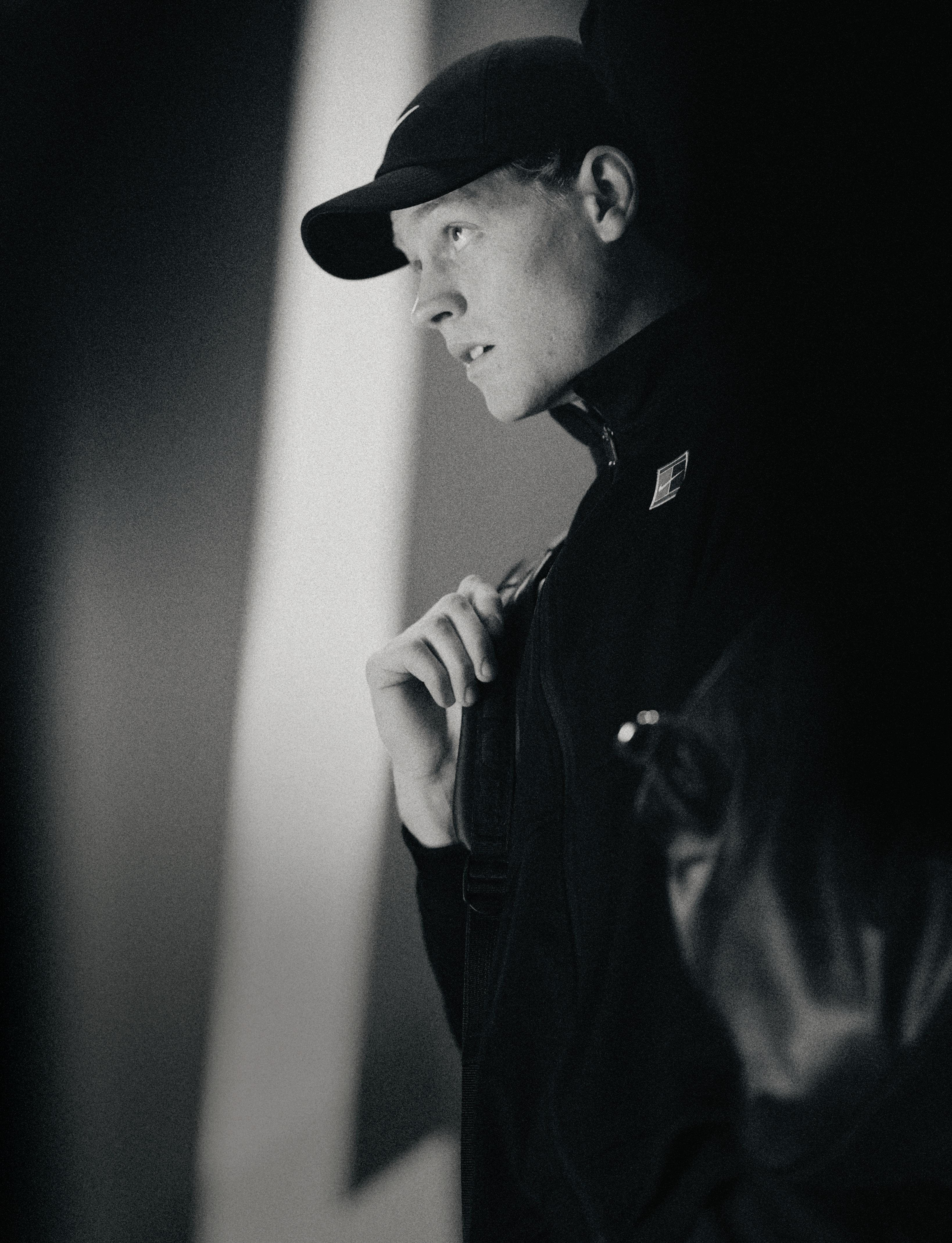
While he left Paris without a career Slam, Jannik Sinner remains the benchmark by which every player is measured.
46 A DIFFERENT BATTLE
Alongside the usual challenges of life on tour, several players are also managing long-term health conditions.
51 THE BREAKTHROUGH WITHIN
As support expands, sustained mental health is becoming an essential element of player performance.
54 JELENA DOKIC: CHAMPION OF RESILIENCE
Jelena Dokic can celebrate an award-winning career forged under the most extraordinary circumstances.
64 ROLLING INTO ROLAND GARROS
AO Top Gun Ballkids Elisabeth O’Connor and Jackson Chaponnel were proud to represent Australia in Paris.
48 FOUNDATION OF SUPPORT
Marta Kostyuk’s rise to new career heights is accompanied by the passion to support compatriots in Ukraine. 6
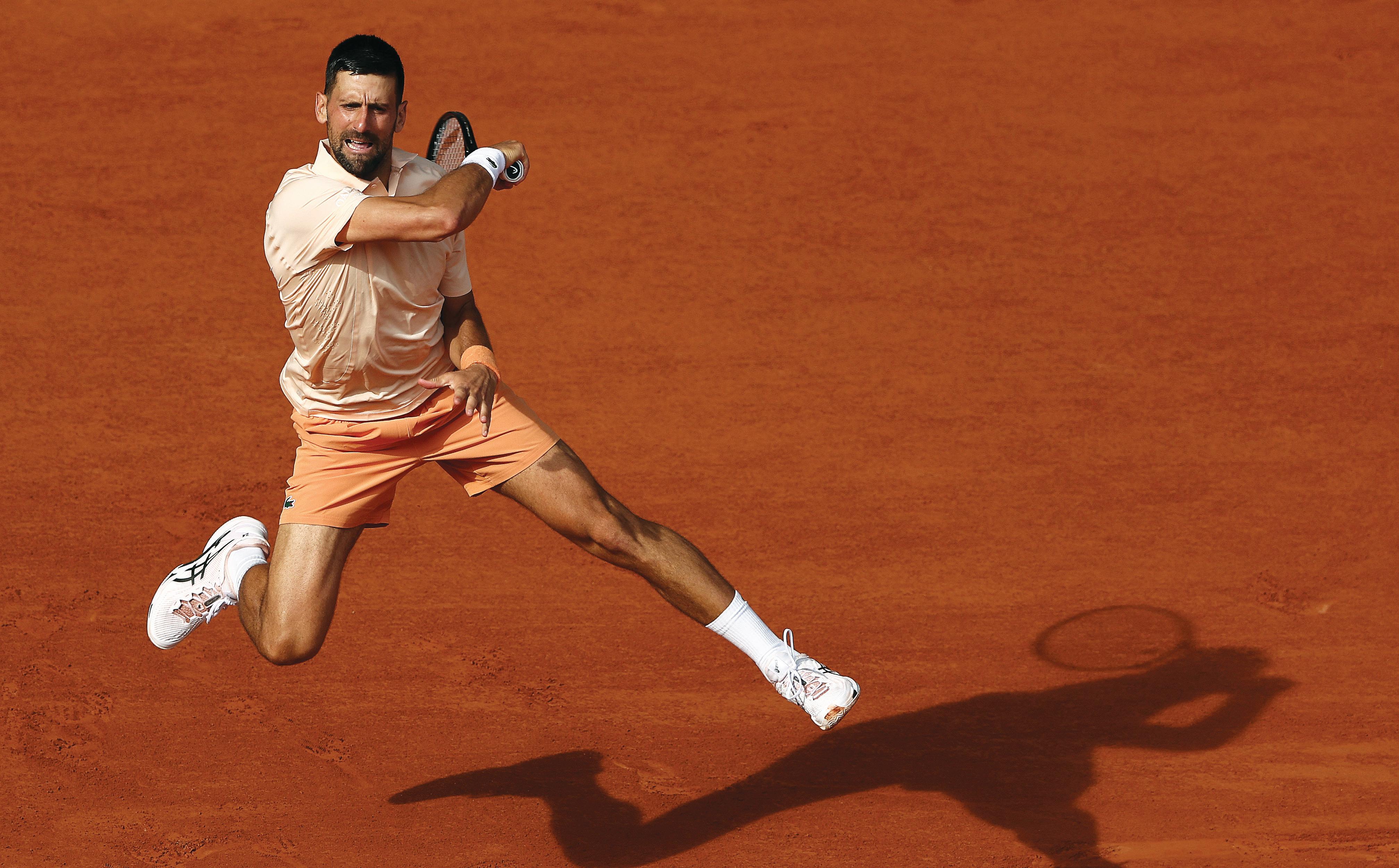
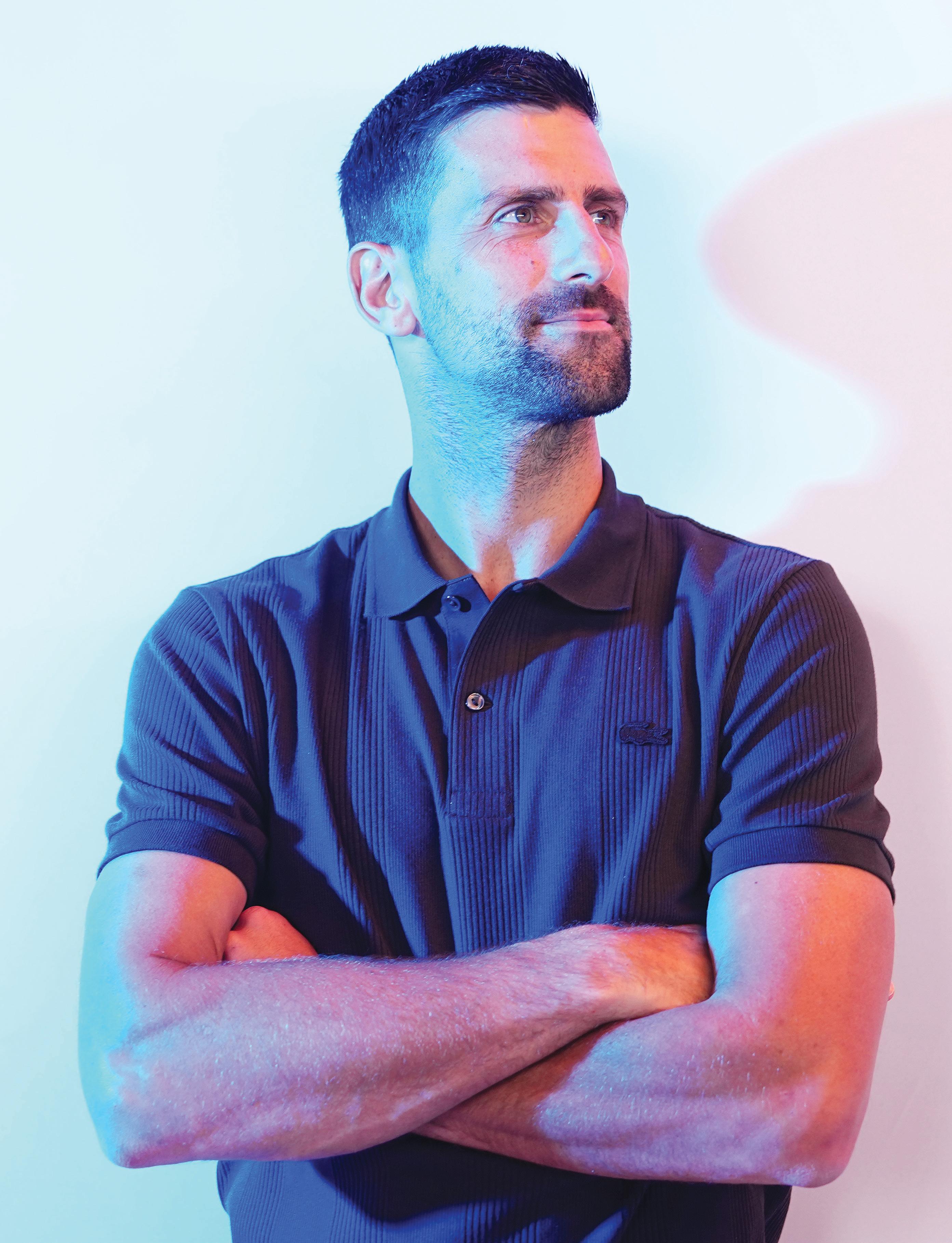
14 NOVAK DJOKOVIC: REDEFINING THE LIMITS
With a career transformation sparked by earlier frustrations, Novak Djokovic has been revolutionising tennis on and off the court for more than 15 years.
ADAPTING to thrive
For all its glamour, and the opportunities it presents to achieve history-making milestones, there is no question that professional tennis can at times be a brutal sport.
The 2026 edition of Roland Garros provided the perfect case in point. Even before the first ball was struck on the velvety clay of Porte d’Auteuil, the game’s challenging – some might say cruel – nature was exposed when Carlos Alcaraz, sidelined by a wrist injury, announced he was unable to defend the title he had claimed the previous two years.
The world No.2 Spaniard was not the only player whose Roland Garros ambitions were thwarted, as a series of extraordinary scenarios unfolded in Paris. With conditions ranging from wintery rain in qualifying to a week-one heatwave, then cool and gusty temperatures, players were forced to adapt physically and mentally at every turn.
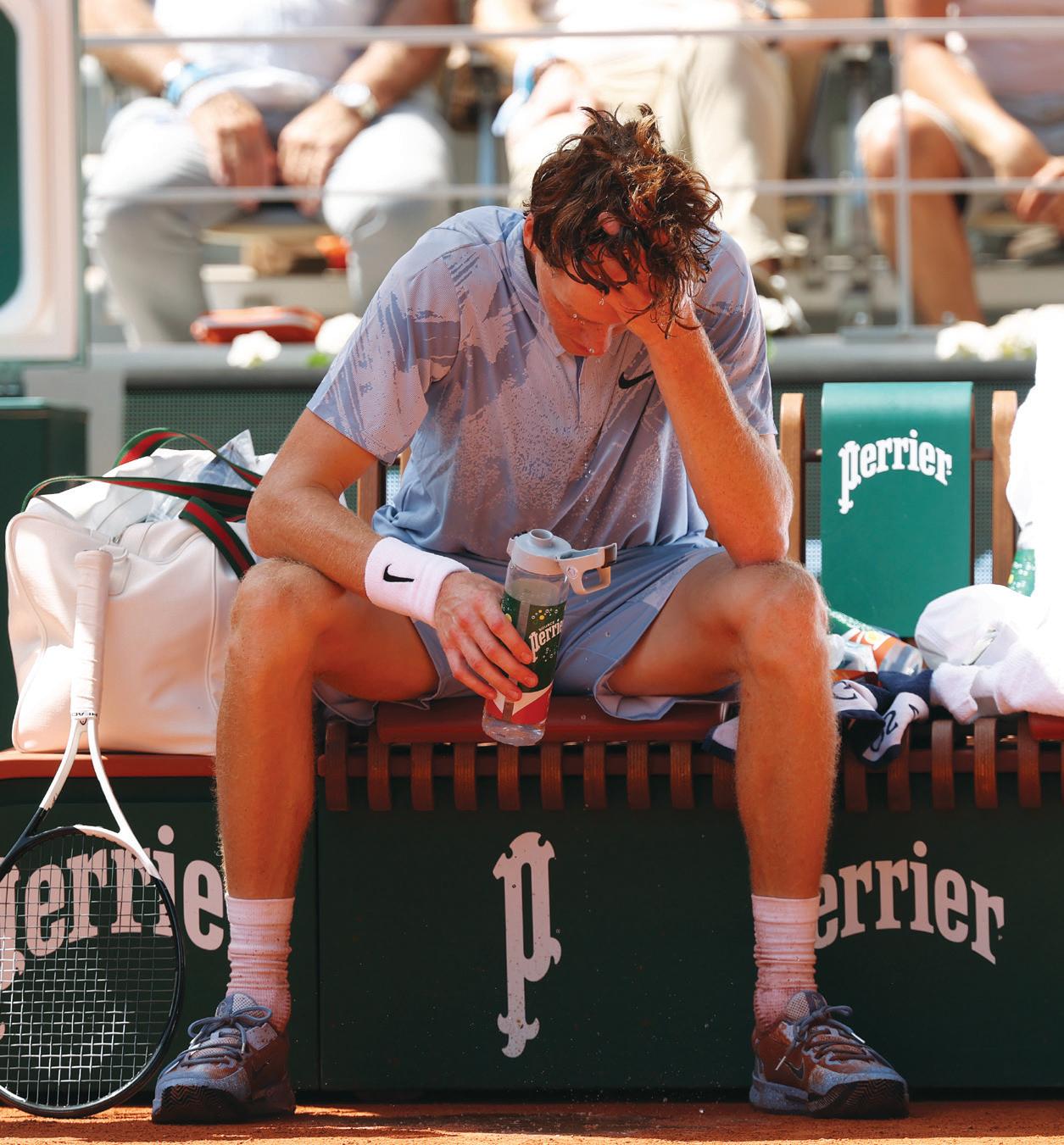
For some, that test simply proved too tough. After winning all five ATP Masters 1000 tournaments this year, world No.1 Jannik Sinner was clearly impacted by heat as he lost to Juan Manuel Cerundolo in the second round. Three-time champion Novak Djokovic, who expressed injury concerns pretournament, progressed for just one round further.
Defending women’s champion Coco Gauff was also eliminated in the third round, while fourtime winner Iga Swiatek fell in the fourth round. When world No.1 Aryna Sabalenka exited to Diana Shnaider in the quartfinals, no former Grand Slam champions remained in either draw.
It provided a timely reminder of why a holistic approach to health has become so important
for today’s players. On the world’s biggest stages, seemingly certain victories can crumble into dispiriting losses. And as they face those inevitable disappointments, many are also managing health and injury challenges.
In this wellbeing-themed issue, we explore the many ways players are supporting their physical and mental health – through recovery, nutrition, mindfulness, scheduling, psychology and more.
For many, those efforts provide the foundation for sustained success in the modern game.
“I really want to do my best to experience this for the second time.”
Amid those challenging Roland Garros circumstances there were also thrilling glimpses of the future as names including Maya Chwalinska, Flavio Cobolli, Marta Kostyuk and Jakub Mensik achieved new Grand Slam heights.
The “other” Rafa – 19-yearold Jodar – showed signs of emulating prolific fellow Spaniard Rafael Nadal in his exciting charge to the quarterfinals. Joao Fonseca, a five-set winner over Djokovic and former finalist Casper Ruud, thrilled Brazilian fans as he revived memories of countryman Gustavo Kuerten’s three Roland Garros titles between 1997 and 2001. But none stepped more spectacularly into the spotlight than Mirra Andreeva and Alexander Zverev. Just two months on from her 19th birthday, Andreeva delivered on the major promise she’d long showcased by completing her stunning campaign with the loss of just one set.
The 29-year-old Zverev, by contrast, achieved his longawaited breakthrough with a 125th match win at a major, and in his 41st Grand Slam campaign. Both appear poised to build on that success. For Andreeva, Grand Slam success was addictive. “I really want to do my best to experience all of this for the second time,” she smiled.
And with his Grand Slam high following many challenges, Zverev is inspired to do it all again. “Now that I’ve won this ... I feel more free,” he commented. “Maybe in a way I can enjoy these Grand Slams more. I can enjoy being these finals more and play my best tennis. Hopefully this is just a start.”
Vivienne Christie editor@tennismag.com.au
MIRRA ANDREEVA
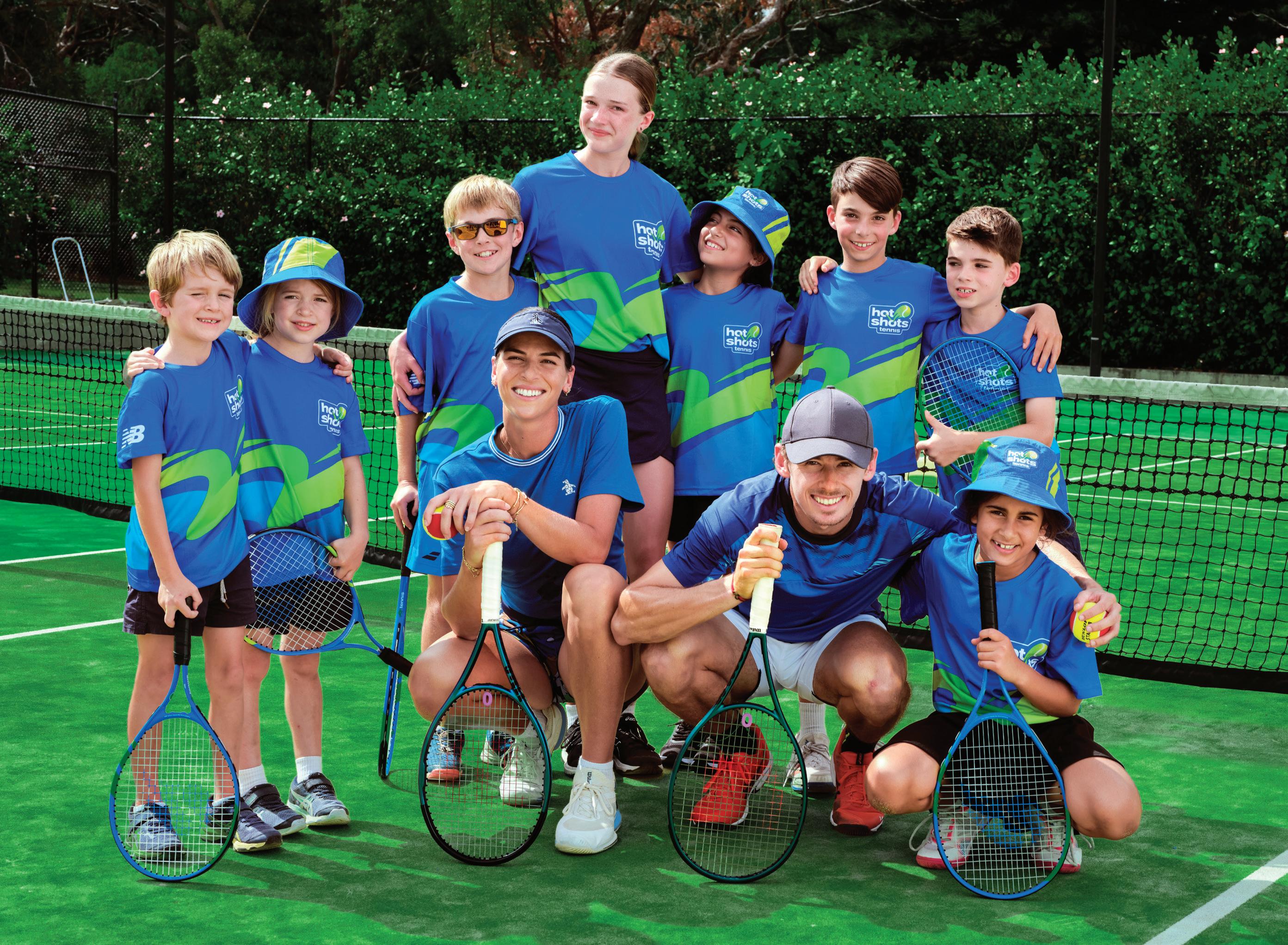
Alex de Minaur and Ajla Tomljanovic Tennis Superstars
REDEFINING THE LIMITS Nov ak Djokov ic
With a career transformation sparked by an unusual diagnosis, Novak Djokovic has revolutionised tennis on and off the court for over 15 years. JACKSON
If Novak Djokovic’s career had followed its original trajectory, tennis history might look very di erent.
A er becoming the rst Serbian to win a Grand Slam singles title at age 20 at Australian Open 2008, the young Djokovic was battling physical issues that le many questioning whether he could sustain success at the top of the sport.
Almost two decades on, he owns a record 24 major singles titles and remains among the world's elite at age 39 – a transformation he links to a remarkable overhaul of his health, recovery and mindset.
Two consecutive Grand Slam quarterfinal losses in 2010 – to Jo-Wilfried Tsonga at the Australian Open and Jurgen Melzer at Roland Garros –provided a pivotal turning point.
Against Tsonga in Melbourne, Djokovic suffered breathing troubles and even vomited during an on-off court break. In Paris, he was mentally crushed after surrendering a two-set lead to his Austrian opponent.
“I cried when I left, that was a bad moment. I wanted to stop playing tennis and saw only black,” he has since related. “But it was also a transformation. Because after this match I freed myself.”
Later that year, Djokovic consulted with nutritionist Dr Igor Cetojevic during a trip to Croatia for a Davis Cup tie.
TRANSFORMED:
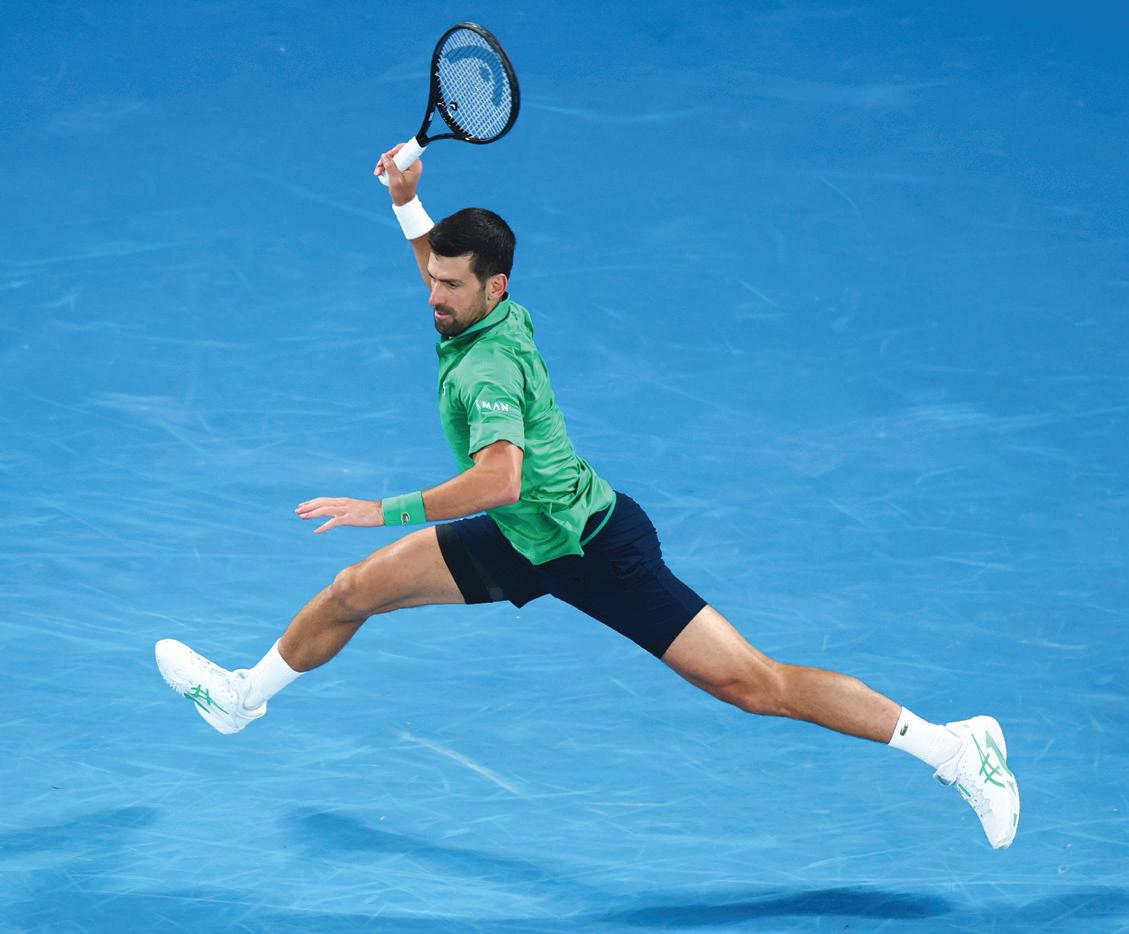
Now a veteran of 82 Grand Slams, Novak Djokovic overcame earlier health issues to thrive in his career.
A test to help pinpoint those issues – involving a piece of bread placed on his stomach – detected gluten and dairy insensitivities.
Djokovic’s subsequent diligence towards diet, mindfulness and recovery has seen him become arguably the most durable tennis player of all time. By contrast, his biggest rivals, Roger Federer and Rafael Nadal, increasingly succumbed to injury late in their careers.
To place the transformation into perspective, Djokovic has only retired or forfeited ve matches since 2012, compared to 11 matches between 2005 and 2011 – including four times at Grand Slams.
MANSELL reports
His prolonged success was strengthened by a willingness to adapt to the sport’s constantly evolving nature.
“One of the biggest lessons I have learned probably mentally throughout my career is that, even if you nd a formula that works, it’s not a guarantee, and most likely it’s not going to work the next year,” he said a er li ing the latest of his 24 Grand Slam trophies at the US Open in 2023.
“There are always changes happening, literally on a weekly to monthly basis in my approach to training, to recovery to mental training. There’s always something that I’m trying to add so that I can up my performance in my game, at least for a few per cent.
“You need to reinvent yourself, because everyone else does. As a [then] 36-year-old competing with 20-year-olds, I probably have to do it more than I have ever done it in order to keep my body in shape, to be able to recover so that I can perform at the highest level consistently.”
Djokovic’s ability to challenge for major titles has drawn admiration from the generation seeking to succeed him.
A er reaching his 38th major nal at Australian Open 2026 –the most ahead of Roger Federer, who contested 31 – eventual champion Carlos Alcaraz described the Serbian’s ability to continuously defy the odds as “inspiring for all athletes.”
ARYNA SABALENKA THE APPROACH Balanced
As the calendar becomes more densely packed and player commitments intensify, world No.1 Aryna Sabalenka is leading a shift for smarter scheduling to maximise careers. MATT TROLLOPE reports.
ennis players have, rightfully, highlighted the struggles that accompany the length of the tournament calendar, ever since the sport o cially entered its professional era in 1968.
“The thing that’s funny, it’s the same today as it was 50 years ago — the schedule is the biggest issue in the game,” Stan Smith, a former world No.1 and two-time major champion in the early 1970s, said on a recent episode of The Sit-Down podcast.
Those scheduling issues have only intensi ed since compulsory 1000-level events expanded to two weeks, clogging an already-dense 11-month calendar. And on the women’s side, with the 2024 introduction of new rules increasing the number of mandatory tournaments, some players have reached breaking point.
It’s why new WTA Chair Valerie Camillo sent a letter addressed to players and tournament partners, acknowledging the situation.
and personal pressures of competing at the highest level,” she wrote in February.
“Today I am establishing the Tour Architecture Council, a representative working group convened by the WTA to develop meaningful improvements to the calendar, commitments and other core elements of the Tour framework.”
“Over my first 90 days, there has been a clear sentiment across the Tour that the current calendar does not feel sustainable for players given the physical, professional
Any changes stemming from this council’s work will not be implemented until 2027, at the earliest. In the meantime, world No.1 Aryna Sabalenka has taken matters into her own hands –intentions she made clear at the beginning of 2026.
because I struggled a lot last season. Even though the results were really consistent, some of the tournaments I had been playing completely sick or I’ve been really exhausted from overplaying.
“So this season we will try to manage it a little bit better, even though they are going to ne me by the end of the season.”
“The season is definitely insane, and that’s not good for all of us, as you see so many players getting injured,” Sabalenka said in Brisbane, where she went on to lift the trophy.
“The rules are quite tricky with mandatory events, but … I’m skipping a couple events in order to protect my body,
Current WTA player commitment rules require an elite player like Sabalenka to play 21 tournaments – the four Grand Slams, the WTA Finals, all 10 WTA 1000 tournaments, plus six WTA 500 events – in one season. The penalty for skipping these? “A player will receive a zero ranking point result for each Commitment Tournament she does not play, which must count on her WTA singles ranking,” the WTA rulebook explains.
Twenty-one tournaments is a number approaching what Sabalenka used to enter several years ago, when she was a rising star. In 2018 and 2019, she played 23 and 24 tournaments respectively, seasons she nished just outside the top 10. She also played in 21 events in 2022.
Yet since becoming a major champion at Australian Open 2023, Sabalenka has scaled that right back. In the past three
ARYNA
SABALENKA
“We’re taking some extra time to be more ready for every tournament, to show up with the best tennis I can.”
completed seasons she has averaged just 16 tournaments, and it might be even less in 2026, given that through the Madrid Open, which ended in early May, she’d played just five events –the least of any top 10 player. Everyone else in this bracket – barring Amanda Anisimova, who played six before injury halted her transition to clay –had competed in at least seven. Mirra Andreeva and Jasmine Paolini had notched 10.
Yet at that point Sabalenka remained the tour’s dominant world No.1, almost 2000 ranking points clear of secondranked Elena Rybakina.
A minor hip injury meant Sabalenka did not compete in the Middle East, and another injury ruled her out of Stuttgart. But the fact she refuses to play through pain and shrug o minor ailments, simply to meet mandatory playing requirements, hints at a longerterm vision for sustained excellence at the highest level.
She did not compete in February, skipping WTA 1000 events in Doha and Dubai. The decision angered Dubai tournament director Salah Tahlak, who in response called for harsher penalties on Sabalenka and other top players for late withdrawals, like docking ranking points.
“I don’t think he showed himself in the best way possible,” Sabalenka observed. “For me it’s actually so sad to see that the tournament directors and the tournaments are not protecting us as a player. They just care about their sellings, about their tournament and that’s it.
“His comment was ridiculous. I’m not sure if I ever want to go there a er his comment. For me it’s too much.”
The world No.1 made the most of her time off tour. After attending a show for Gucci –a brand she now endorses – at Milan Fashion Week in February, Sabalenka arrived at Indian Wells with a new puppy, Ash and her engagement to boyfriend Georgios Frangulis. Within that period, she also appeared on the cover of Esquire magazine.
The balanced approach appears to be working. Prior to a quarter nal exit in Madrid, Sabalenka had completed the Sunshine Double and was 26-1 for the season, her only loss a narrow defeat to Rybakina in the AO 2026 nal.
“Probably I wouldn’t really believe it because the statistic sounds really crazy,” Sabalenka replied when asked if she’d predicted such form, “but at the same time with the scheduling and with my body, we’re taking some extra time to be more ready for every tournament, to show up with the best tennis I can.”
RECLAIM YOUR GAME
JANNIK SINNER
THE LONG GAME
He may have left Paris without a much-discussed career Grand Slam, but Jannik Sinner remains the benchmark by which every other player is measured.
RHYS DE DEUGD reports
By any reasonable metric, 2026 has been a masterpiece for Jannik Sinner.
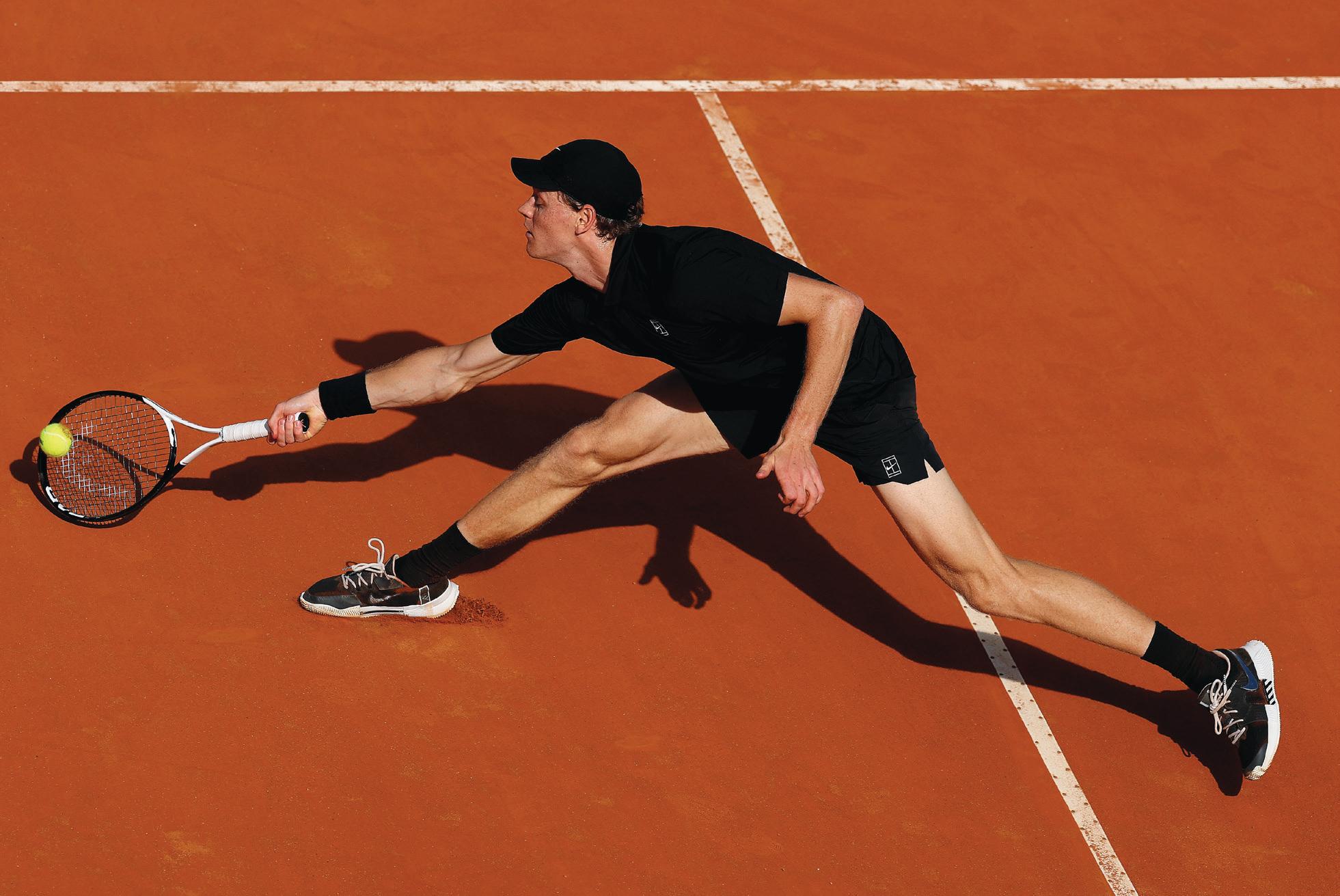
Though he didn’t li a Grand Slam trophy through the rst two majors of the year, the world No. 1 was rewriting records at a staggering pace – and by early June, had lost just one match outside the two majors.
Carrying an undefeated streak through the ATP Masters 1000 events, he became the youngest player, and only the second in history, to complete the “Golden Masters” – winning each of the nine ATP Masters 1000 titles.
The feat cemented his place atop the world rankings and saw him head to Roland Garros as the runaway favourite – looking to create more history and become a winner of every major.
But sometimes, even for one of the shortest-priced Grand Slam favourites in history, the stars refuse to align.
One service game away from a straight-sets victory over Juan Manuel Cerundolo, a perfect storm of illness, heat, and lack of sleep le the Italian doubled over and in a world of hurt on Court Philippe-Chatrier.
A depleted but determined Sinner stayed on court until the very end, but the Argentine underdog seized his moment to end the Italian’s career-best 30-match winning streak –leaving last year’s finalist one Roland Garros title away from the career Grand Slam.
Sinner, however, was measured and gracious in defeat, his focus already shi ing forward.
“I always try to look the positive side,” he said. “Coming here, also how I was playing tennis, I felt very well. You know, hitting the ball in a good way, moving well, and today was just not meant to be.
Now I need really some time o , recover completely, also mentally, and then be ready to go again [for Wimbledon].”
Tennis o ers little room for regret, and the next opportunity arrived almost before the last one had settled.
highest-ranked man in the world and the most successful Italian player in history, yet he remains remarkably unfazed by the pressure that accompanies those achievements.
on, things changed – it changed Italy a bit.”
JANNIK SINNER
With a quick transition from clay to grass, Sinner's attention demands, Sinner understands the signi cance of moving on
With a quick transition from clay to grass, Sinner's attention soon turned to Wimbledon, where he was chasing back-toback titles at the All England Club.
“I think one good thing is that it didn’t all arrive at once,” he said, when asked in Rome how handles rising expectations.
handles rising expectations.
“It has always grown gradually.
“It has always grown gradually. The rst time it really arrived was, I think, when I won the rst Slam in Australia [in 2024]. From then
in Australia [in 2024]. From then
Possessing the resilient mentality that the sport demands, Sinner understands the signi cance of moving on quickly.
don’t play Rome, maybe I come here and I still have a day like this where you feel sick,” he
“If I don’t play Madrid or if I don’t play Rome, maybe I come here and I still have a day like this where you feel sick,” he reflected.
don’t know if things would have changed if I would maybe skip Madrid and play only Rome or maybe skipping Rome and come
“A very early exit was not what I was looking for, but you also don’t know if things would have changed if I would maybe skip Madrid and play only Rome or maybe skipping Rome and come here – you never know.”
one of Sinner's greatest strengths. At just 24 years old, he is the
It is a perspective that re ects one of Sinner's greatest strengths. At just 24 years old, he is the
“I’m very happy to have my mum and very happy to have my dad. They’re a true inspiration to me.”
the first to scale the world No.1 ranking.
There has never been a superstar like Sinner in Italy –the first from his nation to win at multiple Grand Slams, and the first to scale the world No.1 ranking.
It is a far cry from the small mountain town of Sexten, in Northern Italy, where Sinner’s rst sporting choice was skiing. While the attention rarely troubles him, Sinner admits he is protective of the people closest to him.
“I try to protect my family, which for me is the most important thing,” he said. “When they come at me, there’s no problem. But when I see them coming at my family – that bothers me.”
Asked a er his Madrid triumph what his mother means to him on Mother’s Day, Sinner provided a rare view of the values that were shaped by his family.
“She’s de nitely a role model, and I’m very happy to have my mum, and very happy to have my dad, they’re a true inspiration for me.
“I just try to be a little bit like them, you know, because then I know that I’m a good person.”
He also re ected on the di cult decision to leave home at 13 to pursue his tennis dreams at Riccardo Piatti’s academy in Bordighera.
“I think it was tough for me, but it was for sure more tough for parents because they also would like to see the kid growing up” he said.
More than a decade later, the sacri ce still resonates for the Italian star.
“I missed out [on] a little bit [of] time, spending time with my parents. I would like to catch up as much as I can” he said.
is still balancing the cost of a life spent chasing greatness.
“It’s great to see Carlos [Alcaraz], for example, travelling with [his] family and brother, and I think he’s doing very well” Sinner said.
“When somebody is not there anymore, then you regret it.
“So hopefully I can have some more time with my parents and the people I love.”
When possible, he nds peace returning to see family and friends in the charming village, which is nestled in the UNESCO World Heritage Dolomites.
In the documentary Forza Jannik by AO Originals, Sinner is shown enjoying a visit home with his maiden Australian Open trophy and explained it brings “always special feelings”.
had decided to go away [to develop his tennis at Riccardo Piatti’s academy in Bordighera].”
But the coach who knew him in his earliest years is impressed with how his prodigy has matured and now possesses the best mix of coaches to ideally prepare mentally.
“I wasn’t particularly enthusiastic, but now in retrospect, he had a good handle on it,” he said.
“They have a golden touch with [Simone] Vagnozzi, [Darren] Cahill, they have built a great team around him.”
FORGING FORWARD:
“Obviously at home [in Sexten], Grandma and Grandpa, the parents of my mum, they’re still both alive.
“I understand her very much that she wants to stay at home and spend as much time as possible with them. But I also would like to have more time with family, you know.”
It was a quiet admission from a player who rarely shows vulnerability, highlighting that he
Childhood coach Heribert Mayr has seen that connection up close for most of Sinner’s young life.
Despite an early exit in Paris, Jannik Sinner entered the grasscourt season with wins in 37 of 40 matches this year.
“He was the type of person who is on the road for three days, that was okay, but anything over three days away, so anything longer, that made him homesick,” Mayr said.
“That was also a reason that I was very surprised that Jannik
Resilient on court and grounded o it, Sinner has transformed into the player nobody wants to face and the person his hometown still recognises.
Already so dominant this year, he becomes so much scarier when you consider the fact he will be hungrier to win after an early loss at Roland Garros.
While the career Slam had to wait at least another year, there was soon grass underfoot and a new opportunity to break records on the horizon.
Mirra’s
MAGNIFICENT MOMENT
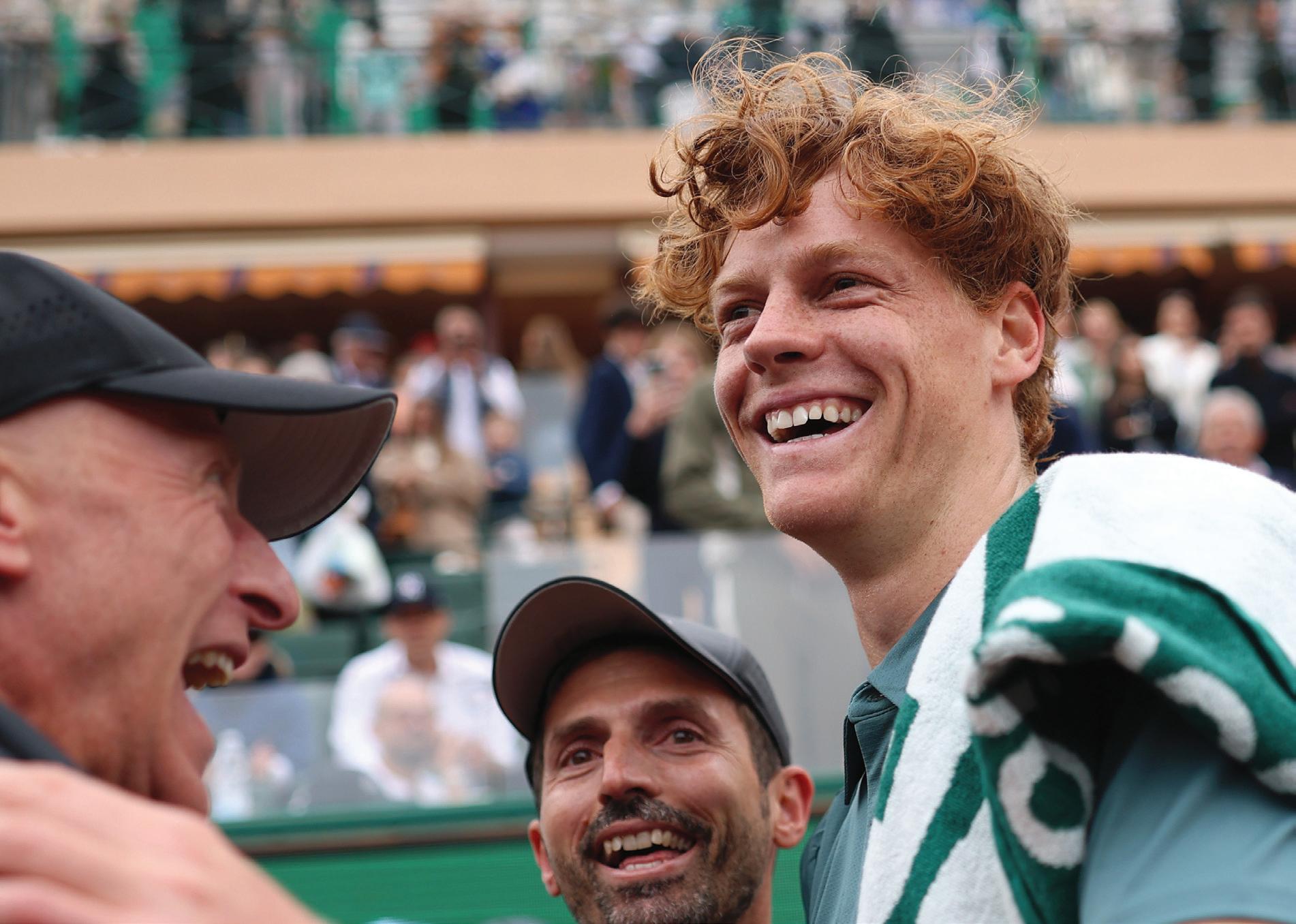
A teen phenom became a Grand Slam champion when 19-year-old Mirra Andreeva dominated the field at Roland Garros. By MATT TROLLOPE
t Roland Garros 2026, where stark momentum swings, stunning upsets and unlikely names dominated conversation, Mirra Andreeva remained steady. Sweltering conditions characterised week one, and gusty winds swirled through week two, yet the talented teen adapted, navigating her path all the way to the title.
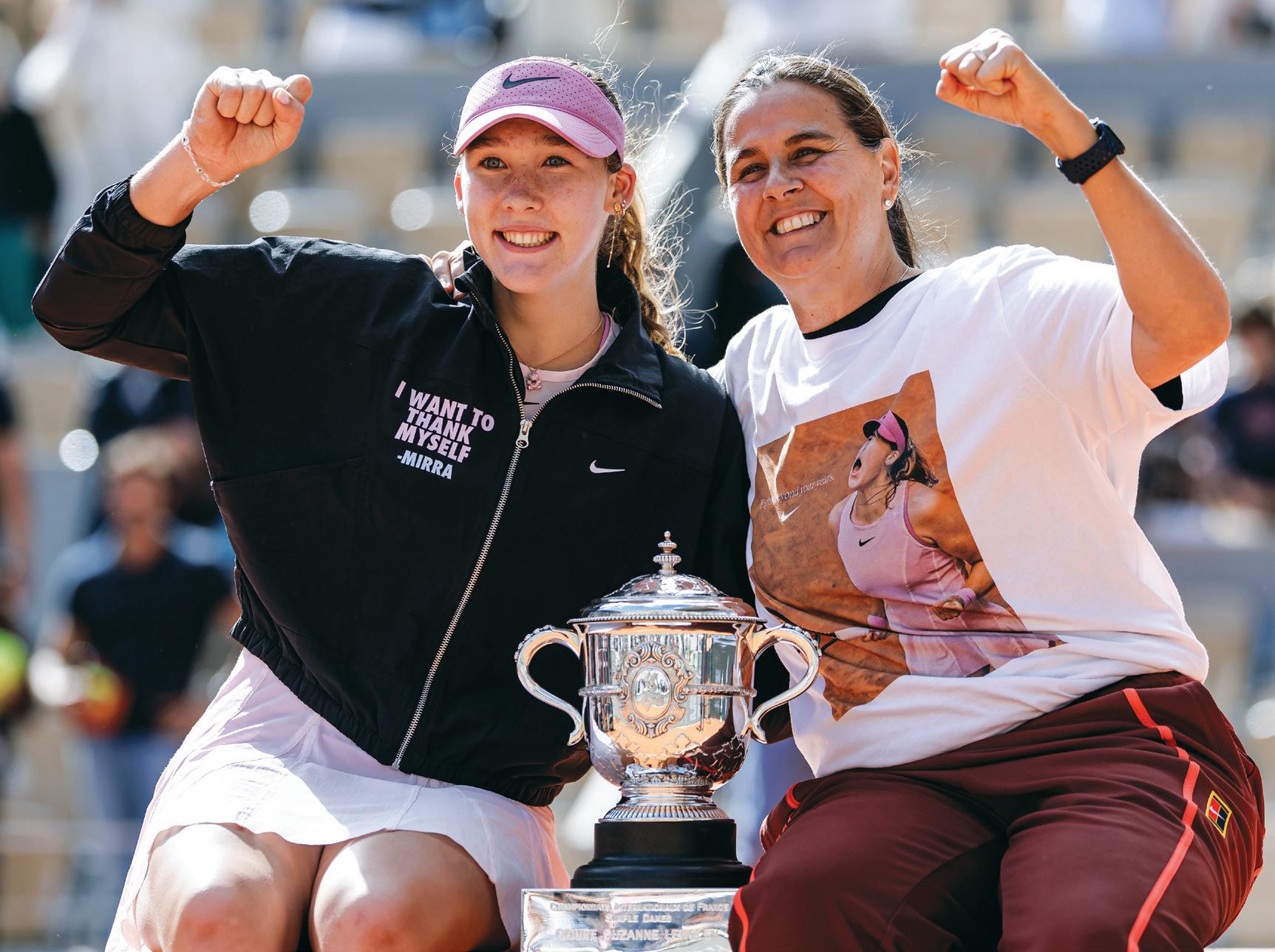
Attaining heights many had long predicted she would reach, Andreeva dominated qualifier Maja Chwalinska 6-3 6-2 in a one-hour, 22-minute final, becoming the youngest women’s winner at Roland Garros since Monica Seles in 1992.
Already a talented top-10 member, she’s repositioned herself as one of the sport’s truly elite.
“I still cannot believe that I’m doing a press conference with a Grand Slam trophy by my side,” said Andreeva, now No.1 in the WTA Race to the Finals.
“I’ve done a lot of visualisations before. Not just this tournament, but I’ve had dreams, I’ve had a lot of thoughts on how it’s going to happen, if it’s going to happen, when it’s going to happen, where.
“The feeling in real life is so much better … looking at this trophy and realising that this is actually true, and I can call myself a Grand Slam champion.”
Such a mature, assured performance from the 19-yearold was no guarantee. Despite remarkable completeness as a player, and already with
several big titles under her belt, there were moments in the past 18 months where emotions had overwhelmed her.
But not in Paris, where the work she’d done on the mental side of the game, and the lessons she’d absorbed from past greats – including coach Conchita Martinez – coalesced perfectly on one of the sport’s biggest stages.
Neither the wind, nor Chwalinska’s tricky style – which confounded nine consecutive opponents in Paris – seemed to bother Andreeva, who from 3-2 down in the first set won the
next nine games to effectively end the final.
During the trophy presentation, as has become a sweet tradition, Andreeva thanked herself, while also acknowledging she’d been “ ghting so many demons inside of me”.
be in the right state of mind before these, I would say, most important matches of my life.
WINNING TEAM: Mirra Andreeva emulated the major feats of coach Conchita Martinez with her first Grand Slam title.
“I feel like I did handle my nerves a little bit better these two weeks,” said Andreeva, revealing she had talked to her psychologist before the semi nal and nal.
“I thought that it would help me
“I just decided that, like my psychologist says, that you can always choose how you’re going to be on the court and how you’re going to play and who you’re going to be as a person as well … I just decided to choose to be a fighter.”
Having also taken cues from Roger Federer’s serene on-court “aura”, Andreeva’s progression
MOMENT
through the draw in Paris was reminiscent of Federer at his peak. A er losing her only set of the fortnight in the second round, Andreeva then won her nal 12 in a row – dropping a total of just 25 games in those 12 sets.
It capped a magni cent claycourt season, during which she won titles in Linz and Paris, reached the Madrid nal and Stuttgart semis, and won 22 of her 25 matches.
Now within striking distance of a top-four debut, Andreeva’s motivation has only increased since this breakthrough, and she’s enjoying the attention that comes with her blossoming pro le.
“Honestly, now I’m already thinking of how I’m going to prepare for the grass season, how I’m going to play grass tournaments,” she said.
“I feel like this thing is a little bit addicting, and I really want to do my best to experience all of this for the second time.”
CHWALINSKA’S FAIRYTALE RUN
Before Roland Garros, Chwalinska had only twice played in the main draw of a Grand Slam. She’d never cracked the top 100, nor competed in the main draw in Paris, and her lone win in a major main draw had come four years ago at Wimbledon.
Now, the Polish player has soared to world No.21 a er a lifechanging three weeks in France.
“I didn’t feel like I’m playing my best tennis, which is kind of weird,” said Chwalinska, just the second qualifier in history
to reach a major, after Emma Raducanu at the 2021 US Open.
“I feel like I gained a lot of con dence, because I’ve never really played against the highranked players before. It was the very rst time that I face them.
“[My life and career] will be different, for sure, but I think and I hope I’ll adapt. I definitely will work hard ... I’ll give my all to be better each and every day, and I’ll see what the results will be. But de nitely very grateful for this time.
“I feel like I’m pretty grounded. I have good people around me. I know my priorities, so I’ll focus on them.”
Chwalinska carved her way across the clay and through opponents in astounding fashion. The cra y Pole surrendered only one set in nine wins, in myriad conditions, en route to the nal.
rst two rounds – overwhelming
With her variety of spin, angles and pace, Chwalinska dominated seasoned performers Zheng Qinwen and Elise Mertens in the rst two rounds – overwhelming both players 6-4 6-0 – then beat former world No.3 and Roland Garros semi na ist Maria Sakkari 1-6 6-3 6-3, the one set that she dropped. I know my priorities, so I’ll focus conditions, en route to the nal.