Fast Track Tennis Australia: A Complete Guide to Practising Tennis at Home
Practising tennis regularly can help players improve their technique, timing, movement, and confidence on the court. However, finding a training partner, booking a court, or attending coaching sessions is not always easy. A home tennis training setup can make practice more flexible and help players build a regular routine. Fast track tennis australia is a useful topic for players, parents, and coaches looking for ways to practise tennis outside traditional training sessions. With suitable equipment, players can work on their strokes, develop hand-eye coordination, and enjoy more practice time without depending on another person. Whether you are a beginner, a recreational player, or a parent supporting a young tennis player, understanding how to choose and use tennis training equipment can help you make better decisions for your practice routine.
https://shop.tennisassist.com.au/
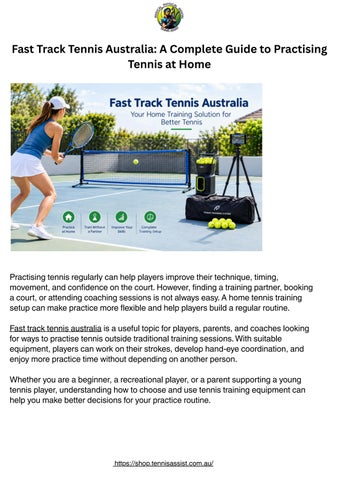
What Is Fast Track Tennis Australia? The Fast Track Tennis Feedback System is a portable tennis training system designed for players who want to practise independently. It combines a ball feeder, a portable net, specially marked practice balls, and a smartphone tripod for a more structured training experience. Unlike traditional tennis training that requires a full court and a hitting partner, this system is designed for smaller spaces such as a garage, backyard, or suitable indoor area. You can explore the Fast Track Tennis training system to see its features and decide whether it suits your training needs.
Why Practise Tennis Without a Partner? Finding a regular tennis partner can be difficult, especially when everyone has different schedules. Solo practice gives players more control over when and how they train. Here are some benefits of practising independently: Better consistency: Repeating forehand and backhand strokes helps players become more comfortable with their technique. Improved timing: Regular contact with the ball helps players develop better coordination and prepare for each shot. Flexible practice: Players can fit short sessions into their daily routine without arranging a match. Focused training: You can spend more time working on a particular stroke instead of playing a full game. For example, a recreational player could spend 15 minutes practising forehands before work or use a short evening session to work on backhand control. The key is to focus on one skill at a time and practise at a comfortable pace.
https://shop.tennisassist.com.au/
How to Choose the Best Ball Machine Tennis Equipment When comparing the best ball machine tennis equipment, it is important to understand the difference between traditional ball machines and compact tennis training systems. A conventional tennis ball machine is generally designed for use on a full-sized court. Depending on the model, it may offer adjustable speed, direction, spin, and feed intervals. These features can be useful for players who want to practise movement and match-style drills. A compact tennis trainer focuses more on controlled repetition and training in limited spaces. The Fast Track system includes a feeder that delivers balls at regular intervals, a portable net, and smartphone-compatible feedback features. Its feeder is designed to release a ball approximately every three seconds, allowing players to concentrate on their strokes.
The right choice depends on your training space, experience, and the type of practice you want to do.
https://shop.tennisassist.com.au/
Junior Tennis Fitness Training at Home Young players need more than regular matches to develop their tennis skills. A balanced routine can include stroke practice, coordination exercises, movement drills, and rest. Junior tennis fitness training can help children develop useful physical skills while keeping tennis enjoyable. Parents can introduce simple activities such as: Shadow swings to practise forehand and backhand movements. Side-to-side footwork drills using cones or floor markers. Short ball-catching activities to develop hand-eye coordination. Controlled hitting sessions with age-appropriate equipment. For younger children, short sessions are often easier to manage than long practice routines. Begin with simple movements and allow children to build confidence before increasing the difficulty. A compact tennis training system can provide additional opportunities for supervised stroke repetition. However, it should support regular coaching rather than replace it. Parents should also make sure the practice area is clear, stable, and suitable for the child's age and ability.
Why Tennis Training Balls Matter Choosing suitable tennis training balls can make a difference to the quality of a practice session. Standard tennis balls, pressureless balls, and low-compression balls each have different uses. The right option depends on the player's skill level and the equipment being used. Pressureless balls are often useful for repeated practice because they are designed to maintain their bounce over extended use. Low-compression balls can be helpful for younger or developing players who need more time to prepare for each shot. The Fast Track Tennis Feedback System includes 12 specially marked orange pressureless balls designed for use with its app. The product information also states that it is compatible with standard tennis balls and Padel-Tennis balls. When buying replacement balls, check compatibility with your training equipment. Keep the balls clean and inspect them regularly so that your sessions remain consistent.
https://shop.tennisassist.com.au/
How to Build a Simple Home Tennis Training Routine A regular routine can make solo practice more productive. You do not need to spend hours training every day. Start with a manageable session and gradually adjust it as your control improves. Example 20-minute practice session
Keep the pace comfortable, especially when starting out. If you notice discomfort or fatigue, take a break. Players can also use smartphone feedback, where available, to review their practice and set a goal for the next session.
Make Home Tennis Practice Part of Your Routine The right tennis training equipment can make it easier to practise regularly, even when a court or partner is unavailable. A portable setup, suitable practice balls, and a simple training plan can help players make better use of their available time.
https://shop.tennisassist.com.au/
For Australian players looking for a compact solo training option, Tennis Assist provides the Fast Track Tennis Feedback System for home and court practice. Before purchasing, review the product's dimensions, included equipment, power requirements, and current price to make sure it suits your available space and training goals.
Frequently Asked Questions 1. What is Fast Track Tennis Australia? It refers to the Fast Track Tennis training system available in Australia, designed to help players practise independently using a portable net, ball feeder, practice balls, and smartphone-compatible feedback. 2. Can I practise tennis without a partner at home? Yes. A suitable tennis trainer or ball machine can help you practise strokes and coordination independently. Make sure you have a safe practice area with enough room to swing your racket. 3. Is the Fast Track system suitable for beginners? The system is designed for beginners and intermediate players as well as recreational players. Beginners should start with controlled sessions and focus on timing, contact, and basic stroke technique. 4. What tennis training balls should I use? Choose balls that are compatible with your equipment and appropriate for your skill level. Pressureless balls can be useful for repeated practice, while low-compression balls can help developing players learn control. 5. Is a traditional ball machine better for every player? Not necessarily. Traditional ball machines are useful for varied feeds and full-court movement drills, while compact systems are designed for more focused solo practice in smaller spaces. Your choice should depend on your training goals and available space.
https://shop.tennisassist.com.au/