On the Frontlines of Disaster: A Summer with UMCOR in the Philippines
By: Tema Finau
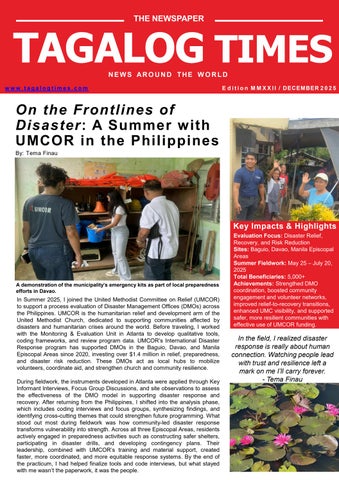
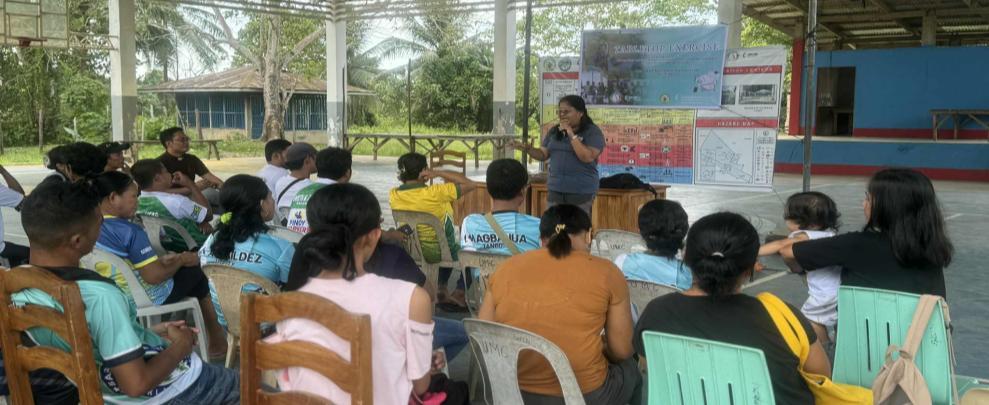
A demonstration of the municipality’s emergency kits as part of local preparedness efforts in Davao.
In Summer 2025, I joined the United Methodist Committee on Relief (UMCOR) to support a process evaluation of Disaster Management Offices (DMOs) across the Philippines UMCOR is the humanitarian relief and development arm of the United Methodist Church, dedicated to supporting communities affected by disasters and humanitarian crises around the world Before traveling, I worked with the Monitoring & Evaluation Unit in Atlanta to develop qualitative tools, coding frameworks, and review program data UMCOR’s International Disaster Response program has supported DMOs in the Baguio, Davao, and Manila Episcopal Areas since 2020, investing over $1 4 million in relief, preparedness, and disaster risk reduction These DMOs act as local hubs to mobilize volunteers, coordinate aid, and strengthen church and community resilience
During fieldwork, the instruments developed in Atlanta were applied through Key Informant Interviews, Focus Group Discussions, and site observations to assess the effectiveness of the DMO model in supporting disaster response and recovery After returning from the Philippines, I shifted into the analysis phase, which includes coding interviews and focus groups, synthesizing findings, and identifying cross-cutting themes that could strengthen future programming What stood out most during fieldwork was how community-led disaster response transforms vulnerability into strength Across all three Episcopal Areas, residents actively engaged in preparedness activities such as constructing safer shelters, participating in disaster drills, and developing contingency plans Their leadership, combined with UMCOR’s training and material support, created faster, more coordinated, and more equitable response systems By the end of the practicum, I had helped finalize tools and code interviews, but what stayed with me wasn’t the paperwork, it was the people
Key Impacts & Highlights
Evaluation Focus: Disaster Relief, Recovery, and Risk Reduction
Sites: Baguio, Davao, Manila Episcopal Areas
Summer Fieldwork: May 25 – July 20, 2025
Total Beneficiaries: 5,000+
Achievements: Strengthed DMO coordination, boosted community engagement and volunteer networks, improved relief-to-recovery transitions, enhanced UMC visibility, and supported safer, more resilient communities with effective use of UMCOR funding.
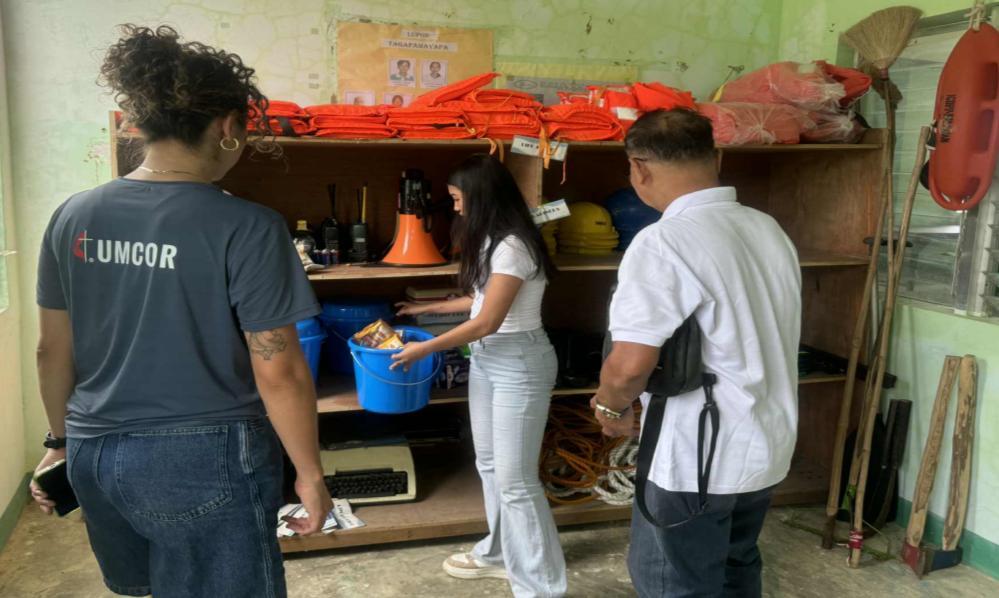
In the field, I realized disaster response is really about human connection. Watching people lead with trust and resilience left a mark on me I’ll carry forever -
Tema Finau
Beyond Checklists:
Capturing the Human Side of Preparedness
This newspaper explores what disaster preparedness can look like beyond formal reports, showing how knowledge emerges through stories, humor, creativity, and everyday community practice, that invite the readers to imagine preparedness in ways that metrics alone cannot capture My realization began with a joke that caught me by surprise During a focus group in the Philippines, a woman describing the aftermath of a fire smiled and said, “When it’s raining outside, it’s raining inside.” She was referring to the gaping hole the fire had burned through her roof, rain that should have fallen safely outside now poured directly into her home The room erupted in warm, communal laughter It was the kind of laughter Donna Goldstein (2003) describes in Laughter Out of Place: laughter that emerges from the tension between what hurts and what must be endured In that moment, I realized that this work had to wrestle with a difficult but essential question: How do we honor that kind of truth when we write reports, collect data, and attempt to describe people’s lives? How can we preserve both the human complexity and emotional texture of experience in ways that formal metrics often erase?
In humanitarian work, “sharing” is often reduced to reports, slides, and dashboards For UMCOR and the three DMOs in the Philippines, these metrics matter because they track grants disbursed, volunteers trained, and families reached. Yet numbers alone cannot capture lived experience Stories, humor, and improvisation reveal how communities interpret risk, build resilience, and make sense of disasters long before official protocols take hold (Goldstein, 2003). This aligns with Maha Hilal’s (2023) discussion on the Pluriverse podcast, which emphasizes recognizing multiple, coexisting ways of knowing rooted in lived struggle, relational insight, and embodied experience. In the Philippines, disaster preparedness worked in this pluriversal way: community members were not merely recounting events, they were interpreting them, negotiating meaning, and co-constructing knowledge through dialogue. Their understanding was relational, dynamic, and impossible to compress into tidy metrics
These observations point toward a reimagined vision of preparedness, one that moves beyond top-down instruction to honor relational, emotional, and cultural realities Arts, storytelling, and embodied practices make knowledge visible, memorable, and actionable. Dramatizations,
participatory mapping, and narrative workshops allow learners to inhabit experiences, translating abstract procedures into tangible understanding They engage multiple senses, honor local knowledge, and create space for humor, improvisation, and courage to emerge. This insight frames the series of pieces that follow: these feature articles highlight everyday practices and creative strategies communities use to prepare and imagine training that participants remember because they live it, not merely hear it. Storytelling and arts-based approaches are not decorative, they are epistemological, offering ways to recognize, transmit, and preserve knowledge that matters most By embracing these methods, disaster preparedness can reflect the plurality of human experience, honor community wisdom, and build resilience through shared understanding, emotion, and collective imagination
From Codebooks to Comics:
Rethinking How We Share Preparedness Knowledge
In much of conventional development work, knowledge is treated as something to be reported upward, translated into spreadsheets, dashboards, and formal reports. While these formats meet accountability requirements, they often obscure the subtle, human dimensions of how communities prepare for and respond to crises During my summer in the Philippines, focus group conversations surfaced stories filled with quick thinking, courage, and humor, forms of knowledge that defy neat categorization These encounters revealed the improvisation, social insight, and lived experience that standard evaluation tools overlook, motivating me to explore ways of capturing preparedness knowledge that honor the realities people actually face
Numbers are important, but they gain meaning when paired with human stories: split-second decisions, adaptive strategies, improvisation under pressure, and quiet
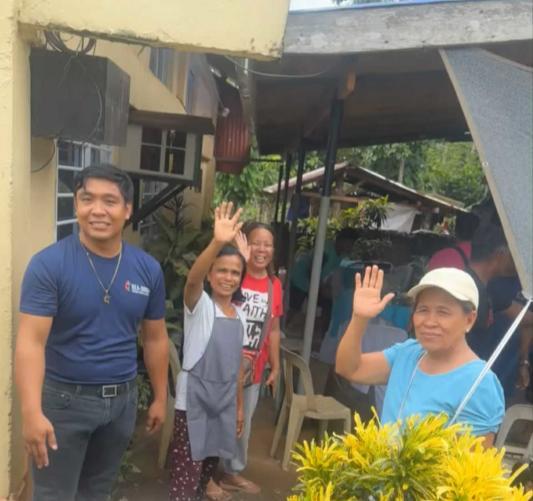
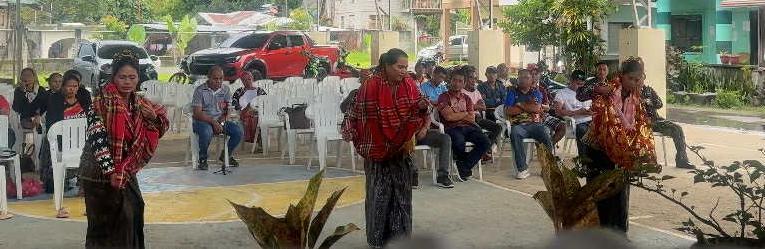
Family captured in traditional regalia at the National Museum of Anthropology
acts of courage Comics offer a medium uniquely suited to convey this richness In Historieta Doble: A Graphic History of Participatory Action Research (Rappaport, Flórez G., & Pérez Altais, 2015), the authors show how graphic storytelling translates community experiences into compelling, accessible narratives that communicate both emotion and action For instance, a comic could depict a landslide sweeping through a hillside village: a mother guiding her children, neighbors improvising ropes from fallen debris, whispered encouragements, nervous laughter, and rapid problemsolving. Through motion, gesture, and visual atmosphere, comics can convey both emotional stakes and practical actions in ways that charts or codebooks cannot Comics are also participatory and inclusive, allowing communities to contribute by storyboarding, illustrating, and annotating evacuation routes or hazard zones, ensuring that the content reflects local priorities and overcomes literacy or language barriers Far from being entertainment, comics serve as serious educational tools. Workshops might involve students mapping the impact of a recent landslide, creating character panels representing affected families, and highlighting key decision points where neighbors collaborate By combining storytelling, drawing, and discussion, participants inhabit scenarios, practice improvisation, and internalize strategies in ways static instructions cannot
The versatility of this approach allows it to be applied across a wide range of hazards and contexts Earthquakes, floods, landslides, or health emergencies, all defined by uncertainty, improvisation, and high emotional stakes, can be rendered in visual narratives. Panels can include local geography, culturally specific responses, and community decision points, creating content that is both locally grounded and broadly instructive In this way, comics become co-produced knowledge, preserving improvisation, courage, and solidarity while providing actionable guidance that is both memorable and contextually relevant By capturing these experiences visually and interactively, this method bridges abstract preparedness protocols with the lived realities of communities, setting the stage for a deeper exploration of multimodal, embodied learning approaches
Multimodal storytelling aligns with participatory and sensory anthropology, emphasizing that knowledge is cognitive, emotional, relational, and embodied (Dattatreyan & MarreroGuillamón, 2019) By combining narrative, visual, and interactive elements, comics enable communities to explore complex scenarios safely, practice decision-making under stress, and encode lessons more effectively than static guidance alone Visual storytelling accommodates diverse
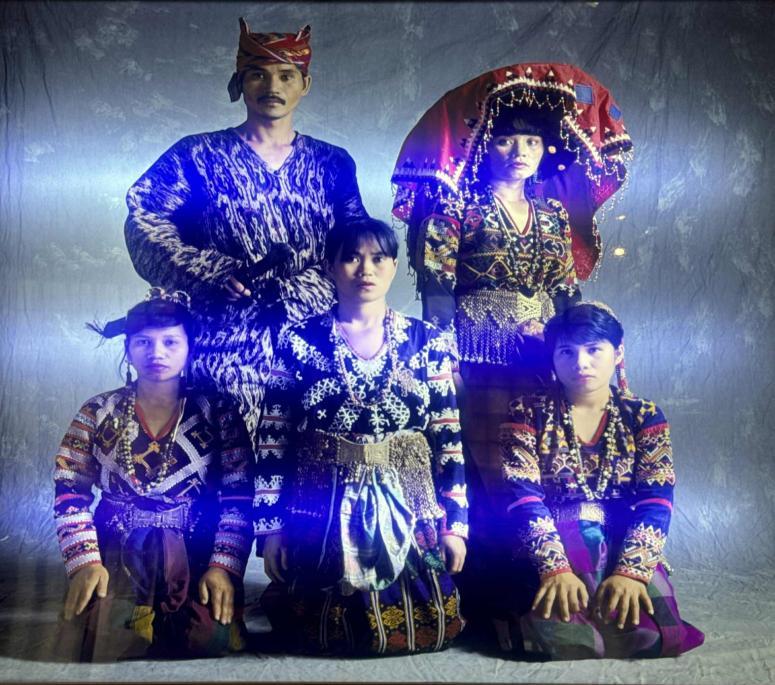
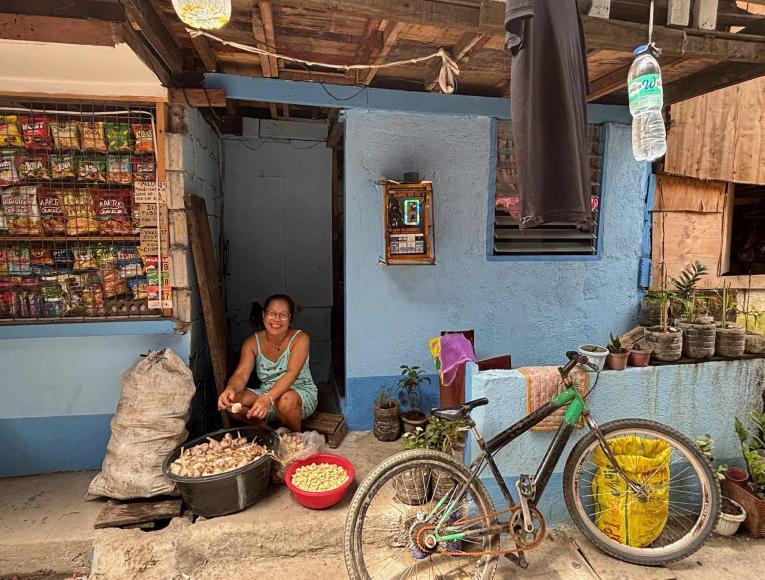
A woman preparing food for her market stand on the streets of Baguio learning styles, transforms abstract protocols into tangible practice, and ensures preparedness knowledge is felt, enacted, and shared. Furthermore, the visual and participatory nature of comics allows language barriers to be bridged, enabling participants with different linguistic backgrounds to access, interpret, and contribute to the knowledge collectively. By centering emotion, improvisation, and relational engagement, this approach makes learning more inclusive, memorable, and directly applicable to realworld crises
Essentially, transitioning from codebooks to comics and from spreadsheets to storytelling is about using a medium that reflects and engages with real-life experiences This approach empowers participants to act, centers emotion and improvisation, and transforms abstract procedures into knowledge that is both memorable and actionable By connecting technical preparedness with the realities of human experience, comics offer a replicable model for disaster education worldwide, fostering resilience, strengthening community capacity, and making the lessons of crisis not only practical but deeply human
LARP-ing Can Save Lives:
Why Disaster Preparedness Needs More Play
Disaster preparedness is often thought of as checklists, drills, or manuals, but the most lasting learning occurs when people engage with it through their bodies, imagination, and
emotions Arts-based approaches, such as storytelling, theater, and improvisation, transform abstract instructions into lived knowledge, making both fear and resilience tangible These methods shift preparedness from a static set of rules to a dynamic, adaptive practice where participants inhabit decisions, navigate uncertainty, and experience the consequences of action in real time, cultivating judgment and collaboration in ways that rigid procedures rarely teach (Desjarlais & Habrih, 2022)
Traditional dance performance by the women in Kidapawan
Volunteers themselves recognize this gap as one stated in a focus group, “What I think we need is more on how to manage, how to innovate our strategies now We are asking for more trainings We should not stay with the old practices We need new innovations.” Their words capture a fundamental tension in disaster preparedness: the systems and training designed to protect communities often cannot reflect the unpredictable realities people face Traditional approaches prioritize compliance and technical instruction, yet they overlook the relational, emotional, and improvisational dimensions that shape how communities respond to crisis This insight underscores why creative, experiential practices are not optional add-ons, they are essential.
Christopher Melville (2020) illustrates this in his TED Talk LARPing Yields Powerful, Unexpected Results, recounting a live-action role-playing (LARP) workshop. LARP is an immersive simulation in which participants physically enact scenarios to practice decision-making and problem-solving In one exercise, a child admitted he could not outrun “monsters ” Rather than panic, the child learned to turn and face them, practicing the skill of confronting fear directly Melville
highlights that acting out high-pressure situations is one of the most effective ways to process anxiety and cultivate emotional regulation LARPers often describe it as “playing at war rather than becoming warlike”: performance channels instinctive fear into constructive learning By giving participants the chance to inhabit crisis scenarios safely, simulated exercises teach lessons that transcend memorization, embedding skill, creativity, and confidence (Melville, 2020).
Adults gain similar benefits from immersive methods, where exercises involving disruptions, blocked bridges, malfunctioning generators, and missing neighbors challenge participants to make decisions, improvise, and cooperate under pressure Preparedness becomes a space for experimentation and embodied learning, where the tactile, relational, and improvisational elements of response are just as vital as any protocol As Desjarlais and Habrih (2022) emphasize, disasters are experienced as visceral, sensory, and embodied events, not merely
statistical phenomena Their work on the 2015 Paris floods shows how people navigate uncertainty, improvise solutions, and build resilience through lived experience This perspective validates the use of theater, participatory exercises, and LARP: by simulating the unpredictability of real disasters, participants practice strategies that directly map onto real-world challenges, linking skill acquisition to emotional and social intelligence.
At its core, disaster preparedness is an enacted practice, requiring communities to act together, signaling neighbors, carrying supplies, supporting the vulnerable, and improvising solutions Arts, storytelling, immersive simulations, and embodied exercises transform preparation from abstract instruction into lived experience, teaching people to respond with skill, creativity, and emotional composure Fear becomes a resource, not a hindrance,
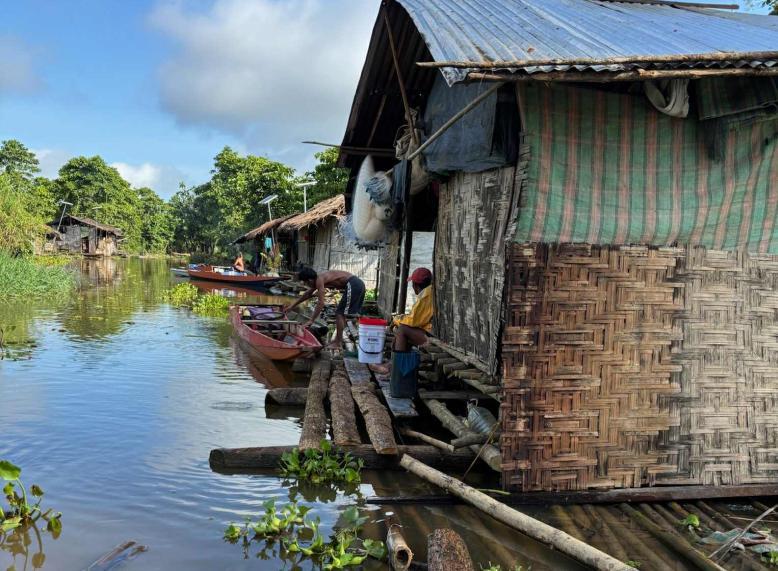
Floating houses captured in Mambalili
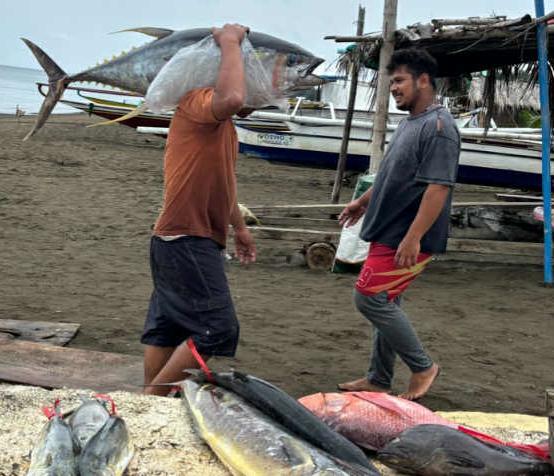
Fisherman unloading the catch from the boat before weighing and selling in infanta
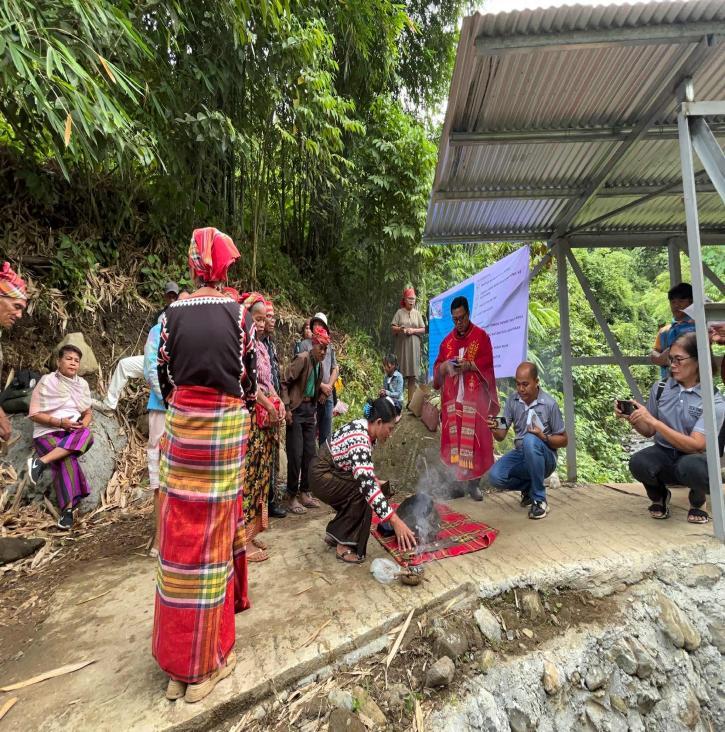
Final preparations for the bridge opening ceremony, with the community ready to celebrate.
and improvisation becomes an asset By embedding creativity, emotion, and hands-on learning, communities can cultivate resilience that goes beyond procedures, turning training into lived practice, protocols into embodied knowledge, and disaster response into a collaborative, adaptive, and socially grounded effort The volunteer’s call becomes the guiding mandate: old procedures alone are insufficient We need approaches that reflect the complexity, unpredictability, and relational depth of the world communities face today
National Theatre for Children’s:
“Ready or Not: Preparing for Wildfires”
For children, disaster preparedness can feel abstract and distant from daily life, yet the ways they first encounter risk, safety, and uncertainty often shape how they respond to crises well into adulthood Traditional methods, such as lectures and handouts, teach rules but rarely convey the emotion, ambiguity, and real-time decision-making inherent in emergencies; training that relies primarily on passive, memory-based instruction often fails to promote the practical application of knowledge needed in unpredictable disaster contexts (Renger et al , 2011) Programs like the National Theatre for Children’s Ready or Not: Preparing for Wildfires point to a different path By centering storytelling, performance, and interactive learning, preparedness becomes something children experience rather than memorize, laying an early foundation for confidence, judgment, and adaptive response that can carry forward across the life course (Varzi, 2018).
Introducing preparedness through theater at a young age reshapes how children come to understand disasters over time Instead of seeing emergencies as overwhelming or incomprehensible, children encounter them through performance, such as stepping into roles, responding to cues, and improvising within unfolding scenes Songs, scripted moments, and interactive demonstrations allow children to rehearse risk recognition, decision-making, and communication as collective practices rather than isolated tasks (Vidali, 2016) These early rehearsals matter: when children practice navigating fear and uncertainty in supportive settings, they build emotional regulation and
problem-solving skills that remain relevant as they grow into adolescents, volunteers, and eventually community leaders Preparedness becomes a habit of mind and body, not a onetime lesson
This long-term impact becomes most visible when imagined in practice. Consider a classroom transformed into a staged earthquake-to-landslide simulation Desks become narrow “evacuation routes,” audio of rumbling ground establishes atmosphere, and students move through the space practicing “duck, cover, and hold,” navigating unstable terrain, assisting classmates acting as injured neighbors, and identifying blocked paths that require alternative exits Afterward, students reflect creatively with mapping evacuation routes, illustrating the emotions they felt, or reworking the scenario into a short play or comic These exercises do more than teach immediate procedures; they help children internalize how to remain calm, collaborate, and adapt under pressure that will resurface years later when they face real emergencies as adults
These approaches also deepen school partnerships Schools are not only classrooms but community anchors, evacuation centers, and hubs of local leadership Teachers and staff, many of whom already serve as trained volunteers, can integrate safety education into daily routines As one pastor observed, “Not only the LGU but also institutions like the school have participated in getting involved The elementary school have actively participated for the construction of the seedling banks simply because they have the space for the construction of the seedling banks and they are there all the time and a welcome development They want to become a partner with that specific project ” This reflects how schools can become active collaborators in preparedness initiatives, offering space, continuity, and commitment. Programs like Ready or Not can leverage this potential, embedding disaster education into lessons, after-school clubs, arts activities, and family engagement events, making preparedness both routine and relational.
Such approaches draw directly on Vidali’s (2016) concept of multisensorial anthropology, which emphasizes that learning
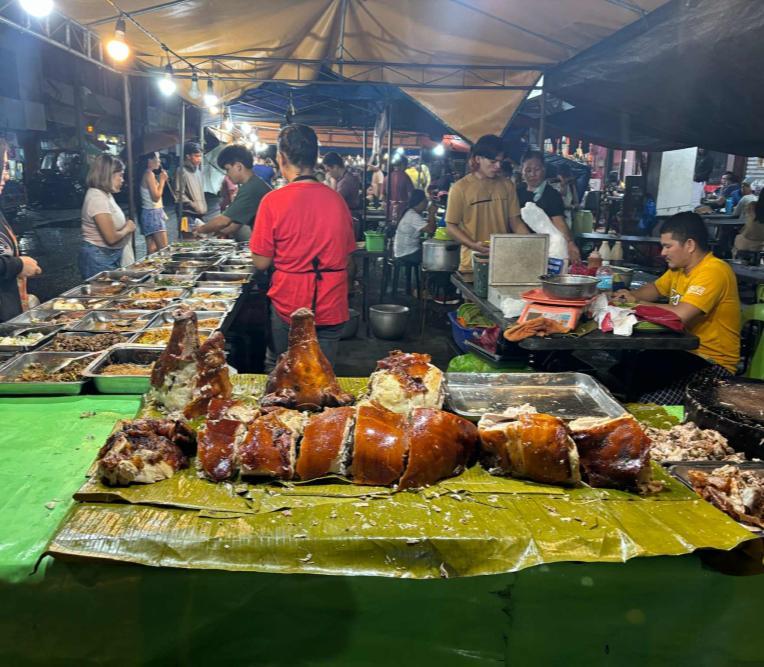
Lechon and other Filipino delicacies in the street of Kidapawan
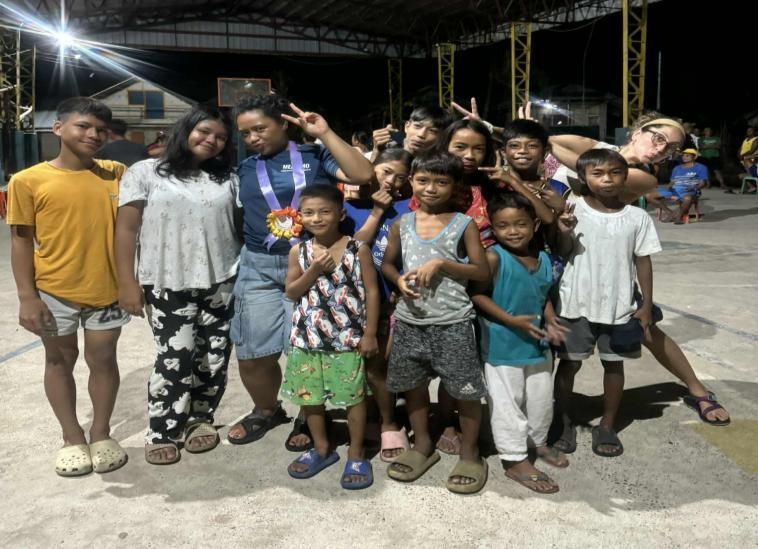
Joining the festivities with the kids in Bonbon
occurs through bodies, senses, and emotions, not verbal instruction alone. Performance and play activate these channels, transforming information into embodied understanding that persists over time Varzi’s (2018) call for multimodal anthropology further reinforces this perspective: movement, sound, imagery, and narrative reflect the layered, lived nature of experience When preparedness training mirrors how disasters are actually encountered, through noise, motion, confusion, improvisation, and collective care, it equips children with durable forms of knowledge that can be adapted to new hazards, contexts, and responsibilities as they age
Taken together, these perspectives point toward preparedness as a long-term investment rather than a oneoff intervention When children rehearse evacuation movements, narrate their decisions, and transform disaster scenarios through performance and creative storytelling, they engage multiple senses and forms of expression at once Learning becomes embodied and relational, children do not simply remember what to do; they have felt it, practiced it, and shared responsibility with others By embedding narrative, theater, multisensory learning, and multimodal creativity into early education, disaster preparedness becomes a lived, human-centered practice that grows with the child In communities vulnerable to earthquakes and landslides, starting preparedness early strengthens not only immediate safety but also future resilience, positioning schools as critical spaces where a culture of preparedness is cultivated across generations
Limitations & Future Work
The groundwork being laid signals the potential for disaster preparedness to evolve into more creative, communitycentered practices When implemented thoughtfully, approaches such as visual narratives, participatory theater, and embodied simulations can expand from small pilots into sustained programs DMOs could embed these methods into volunteer trainings, helping responders grasp not only procedural steps but also the emotional, social, and relational stakes behind every decision. Over time, such practices could move from optional supplements to core components of preparedness education, cultivating a system that is more resilient, adaptive, and responsive to the lived realities of the
communities it serves.
Despite existing constraints, the foundations now in place point to the potential for meaningful transformation in disaster preparedness. Creative methods, when thoughtfully implemented, can grow from pilot initiatives into sustained, community-centered practices DMOs could integrate visual narratives and participatory simulations into volunteer trainings, helping responders engage not only with procedures but also with the emotional, social, and relational stakes behind each decision Schools and DMOs could serve as hubs where students transform evacuation experiences into plays or comics, families co-create illustrated guides rooted in local knowledge, and volunteers participate in simulations that mirror the uncertainty and improvisation of real disasters Fieldwork showed that resilience emerges when communities interpret challenges together, acknowledge fear, use humor to lighten tension, and recognize courage as everyday improvisation Over time, these approaches could shift from optional supplements to core components of preparedness education, fostering systems that are adaptive, resilient, and grounded in lived experience
These approaches extend far beyond the Philippines and a single type of hazard Earthquakes, floods, landslides, hurricanes, and health emergencies, all defined by unpredictability, emotional intensity, and collective problemsolving, can be translated into visual, performative, and interactive learning methods Comics can illustrate evacuation routes, improvised community responses, or culturally specific coping strategies, while participatory theater and simulations allow participants to rehearse decision-making in realistic yet controlled scenarios By conveying complex information through images, movement, and enactment, these methods also overcome language and literacy barriers. Globally, communities from Caribbean islands planning hurricane evacuations to mountainous South American villages mapping landslide risks can adapt these tools to local hazards, geography, and cultural norms In every case, participants co-create, reflect, and practice
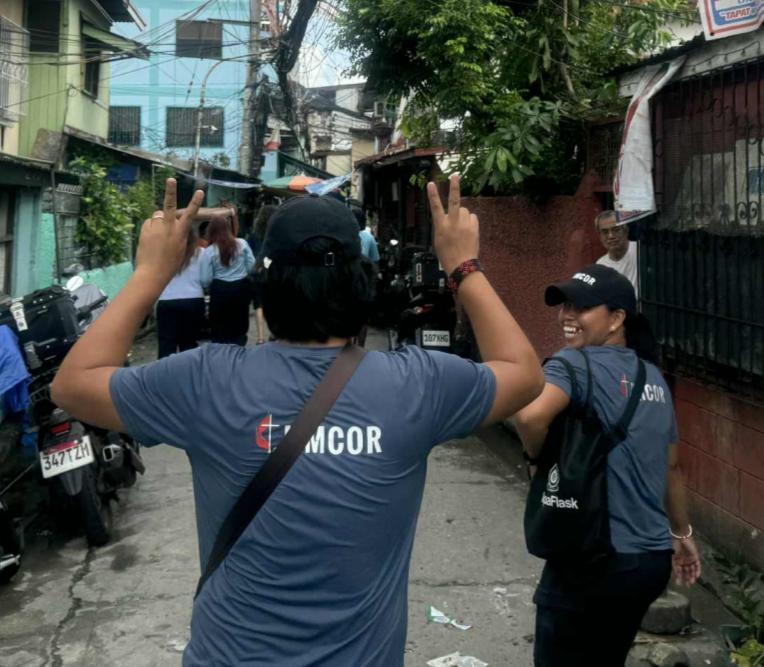
Visiting those in Pandacan that were affected by the fire
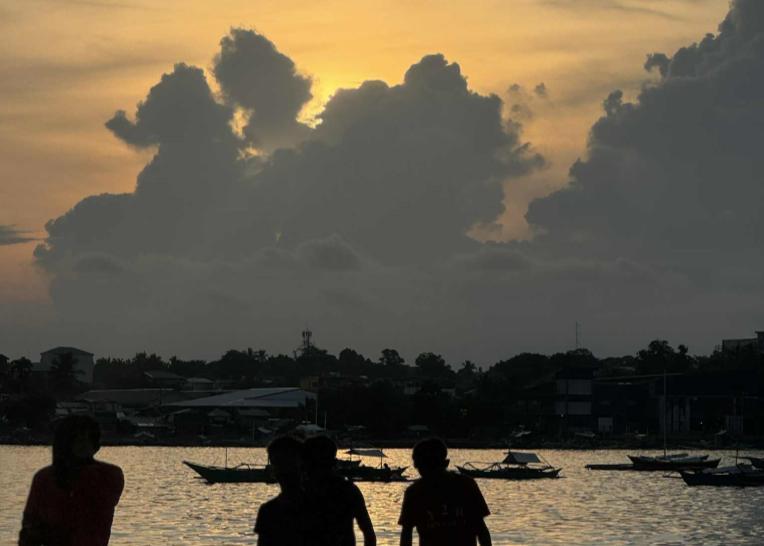
Golden hues of the sunset casting long shadows across Narra’s local park
adaptive strategies, embedding preparedness into daily life rather than treating it as abstract instruction These insights highlight the power of participatory, culturally grounded, and multisensory approaches in international development Creative, embodied, and collaborative preparedness education builds practical skills while fostering agency, trust, and community cohesion. Sustained and supported, these methods can make preparedness a lived, adaptable practice rather than a set of instructions The challenge ahead lies in integrating these approaches into daily routines, building local capacity, and ensuring knowledge is experienced, shared, and passed across generations, transforming preparedness into a resource as reliable and essential as any emergency kit.
Sources
Dattatreyan, Ethiraj Gabriel, and Marrero‐Guillamón, Isaac 2019 Introduction: Multimodal Anthropology and the Politics of Invention American Anthropologist 121(1):220–228.
Desjarlais, R , & Habrih, K (2022) Traces of violence: Writings on the disaster in Paris, France University of California Press.
Goldstein, D M (2003) Laughter out of place: Race, class, violence, and sexuality in a Rio shantytown University of California Press.
Lavelle, B D (Host) (2025, March 4) Toward pluriversal practice in our movements with Maha El-Sheikh and Katrine Bregengaard [Audio podcast episode]. In Precisely! Podcast Apple Podcasts https://podcasts apple com/us/podcast/toward-pluriversalpractice-in-our-movements-withmaha/id1799983091?i=1000697657683
Melville, C (2025, August 15) LARPing yields powerful unexpected results | Christopher Melville | TEDxYouth@ShorelineBlvd [Video]. YouTube. https://youtu be/L6xl-qYRHco
Rappaport, J , Flórez G , L , & Pérez “Altais,” P (2024) Historieta Doble: A graphic history of participatory action research University of Toronto Press Ted Talk
Renger, R , Wood, S , & Granillo, B (2011) Using Experiential Learning Theory to design emergency preparedness training curricula Journal of Emergency Management, 9(5), 57–63 https://doi org/10 5055/jem 2011 0074
Varzi, R (2018) The knot in the wood: The call to multimodal anthropology American Anthropologist https://www americananthropologist org/articles/the-knotin-the-wood-the-call-to-multimodal-anthropology
Vidali, D S (2016) Multisensorial anthropology: A retrofit cracking open of the field American Anthropologist, 118(2), 395–400