
Academic Authors: Neha Verma, Ayushi Jain
Creative Directors: Bhavna Tripathi, Mangal Singh Rana, Satish
Book Production: Rakesh Kumar Singh, Tauheed Danish
Project Lead: Jatinder Kaur
VP, Learning: Abhishek Bhatnagar
All products and brand names used in this book are trademarks, registered trademarks or trade names of their respective owners.
© Uolo EdTech Private Limited
First edition 2026
This book is sold subject to the condition that it shall not by way of trade or otherwise, be lent, resold, hired out, or otherwise circulated without the publisher’s prior written consent in any form of binding or cover other than that in which it is published and without a similar condition including this condition being imposed on the subsequent purchaser and without limiting the rights under copyright reserved above, no part of this publication may be reproduced, stored in or introduced into a retrieval system, or transmitted in any form or by any means, electronic, mechanical, photocopying, recording or otherwise, without the prior written permission of both the copyright owner and the above-mentioned publisher of this book.
Book Title: Tekie.AI Advanced Robotics 5
ISBN: 978-93-89789-25-6
Published by Uolo EdTech Private Limited
Corporate Office Address: 91Springboard, 3rd Floor
145, Sector 44, Gurugram, Haryana 122003
CIN: U74999DL2017PTC322986
Printed by: Printpro Solutions
Illustrations and images: www.shutterstock.com, www.stock.adobe.com and www.freepik.com
All suggested use of the internet should be under adult supervision.
Robotics is the study and creation of robots. Robots are machines that can perform various tasks. They are built using parts like metal, wires, and circuits, and programmed with special instructions to tell them what to do.
Some robots look like humans, while others are designed to work in specific places, like factories, hospitals, or even outer space! For example, a robot might assemble cars in a factory or explore the surface of Mars where humans cannot go easily.
Robots can sense their surroundings using sensors. These sensors act like the robot’s eyes, ears, and hands, helping it understand distance, temperature, or touch. Once the robot knows its surroundings, it can make decisions based on its programming.
The field of robotics combines science, technology, engineering, and mathematics (STEM) to solve problems and create amazing inventions. It is an exciting way to bring creativity and technology together!
Robots are made up of different parts that work together to help them move, sense, and do tasks. These parts are grouped into three main types: mechanical, electronic, and coding interface. Let us learn about them.
Mechanical parts are like the bones and muscles of a robot. They include wheels, gears, motors, and arms. These parts help the robot move, pick up things, or spin. For example, wheels let a robot roll around, and motors make robots move by turning wheels, spinning gears, or lifting arms.
The electronic parts are like the robot’s brain and nerves. They include circuits, sensors, and batteries. These parts help the robot think and sense its surroundings. Sensors act like eyes, ears, or even a nose for the robot, allowing it to detect light, sound, or obstacles. The battery gives the robot the power it needs to work.
Coding is how we talk to robots and tell them what to do. Coding means writing instructions for them to follow. The coding interface is the program or app used to give these instructions. Once coded, the robot can move in a specific direction, stop when it sees something, or even dance.
By combining these three parts—mechanical, electronic, and coding—robots come to life and do amazing things.








































































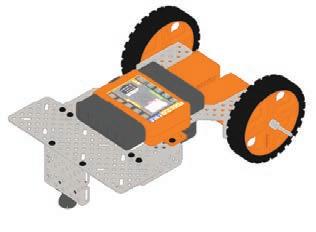













The Robotics Advanced Kit (RAK) is a comprehensive tool for young innovators who are curious to explore the subject of robotics. It features the Robotics FULL 2.0 BLE Brain, which powers the kit’s projects. The kit also includes exciting projects, thereby encouraging creativity and problem-solving in students. With hands-on components and coding opportunities, RAK makes robotics fun-filled and accessible, inspiring students to think critically about robotics and innovate its programming. Let us explore its various components.
Electronics Parts


9.
• Long Connecting Cable × 1
• USB Cable × 1


Construction Parts
Plastic Parts


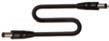


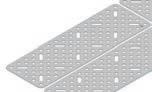
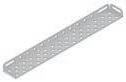
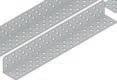

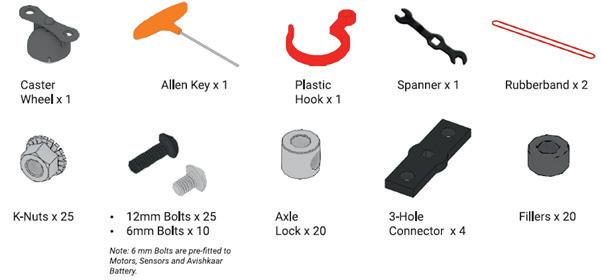
A comprehensive metal design system allows you to make from easy to complex mechanical bot designs.


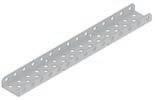

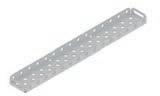


Let's understand how the motors work.
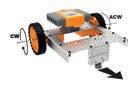
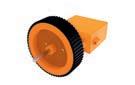
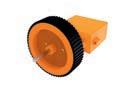
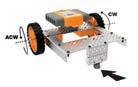
Robots move in different directions by the combination of the rotation from each wheel. For example: Robot Movement
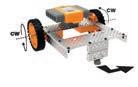

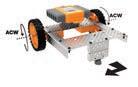
Let’s understand some basics of building:
Tightening Screws:


Tightening Axle Lock:




Tighten (Rotate Clockwise)


Tighten (Rotate Clockwise)
Tightening a Motor to a Plate:


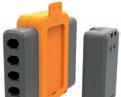
Loosen (Rotate Anti-Clockwise)
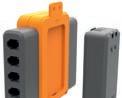
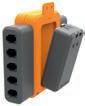
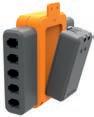
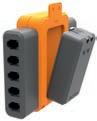
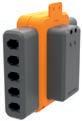
Loosen (Rotate Anti-Clockwise)


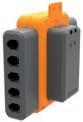
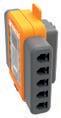
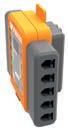
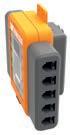
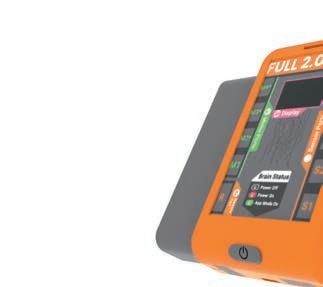
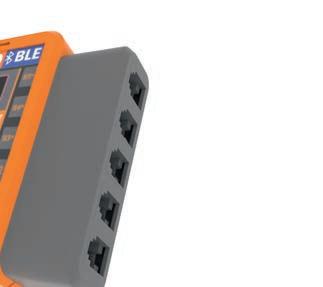
Let’s understand how the Full 2.0 Brain works.
Let’s understand how the Full 2.0 BLE Brain works.
the Ultrasonic Sensor to the brain.
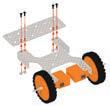
1 Insert the axle lock and the 3.5” axles into the high-speed motors, as shown.
2 After attaching the axles to both motors, screw them to the chassis using the 6mm bolts, as shown.
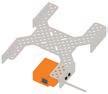
3 Repeat the previous step to attach the second high-speed motor to the other side of the chassis.
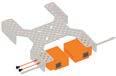
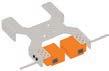
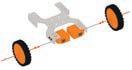
4 Add a filler to the axle, then add the wheel and lastly add another axle lock. Do this for both axles.

5 Screw a 7.5 inch rectangular plate using 12 mm bolts with the first two holes of both the right and left sides of the chassis.
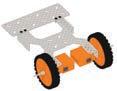
6 Attach two U-Beams, one on top of the other using 6mm bolts. Then, screw the Caster wheel to both U-Beams using 2 K-nuts and 6mm bolts, as shown below.
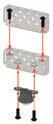

7 Attach the previous assembly to the chassis as shown, with 12 mm bolts.
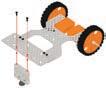
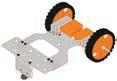
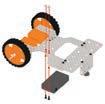
8 Screw the Battery at the bottom of the chassis using 6mm bolts as shown.
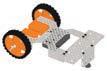
9
Screw the Brain to the chassis using 6mm bolts. Connect the Brain to the Battery using Male to Male DC Jack wire.
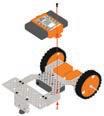
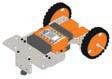
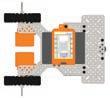
Connect the left motor to the "M4" port and the right motor to the "M3" port of the Brain using the short connecting cables.
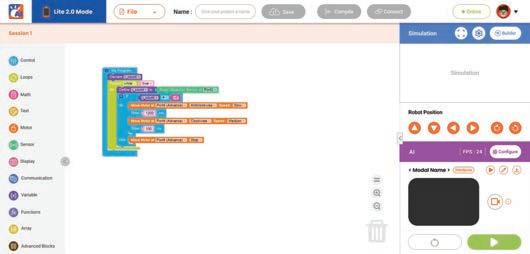
The coding interface serves as the central hub for your kit, acting as an Integrated Development Environment (IDE) that enables you to write code for all of your experiments. This code is then transferred to the hardware.
The coding interface consists of the following components:
1. Workspace Area: This is where you drag blocks for the code you want to write.
2. Blocks Panel: The blocks from the Blocks Panel help make your code.
3. Share Code: The Share Code option in the File drop-down menu generates a link for the project to share with others.
4. Control Buttons: The Control Buttons consist of Save, Compile, and Connect buttons.
• Save Button: The Save button helps save your code.
• Compile Button: The Compile button helps compile your code.
• Connect Button: The Connect button helps burn your code to the hardware.
5. Arena: This is where you can see the output.
6. Buttons: The buttons help move the bot front, back, left, or right. The buttons also help rotate the bot clockwise and anticlockwise in the virtual arena.
7. Play Button: The Play button runs the code.
8. Reset Button: The Reset button resets the arena.
Burning means loading your code into the hardware. This process, mainly, has the phases as shown:
Arrange the blocks to create the code Save the code In case of error, recheck the code.
Compile the code Burn the code
1. Once you have completed your experiment, connect the bot to a PC/Laptop using a USB cable or Bluetooth.
2. Save and compile your code by clicking on the Save and Compile buttons, respectively.
3. Now, click on Connect.
4. Click on the USB Connect option or the BLE Connect (Bluetooth) option.
5. Click on the Connect Device button, and a small window will appear. Thereafter, select your connected device, and then click on Connect.
6. Now click on Burn to write your program into the bot.
7. You have successfully written your code into the hardware. Now you can experiment on the bot. 2 3
Learn how to control a robot by making it move forward, backwards, left, and right using motors. This helps in understanding the basics of how robots work and is a great start to learning robotics!
In this experiment, the concept of time delay is used to suspend the execution of a program for a particular time. Let us understand this by looking at the process of cooking a dish in the microwave.
Let’s Code
1. Click on the Control category from the Blocks panel.
2. Drag the My Program block to the workspace to begin your program.
3. Move the Bot Forward
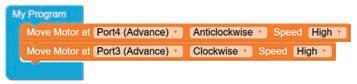
• Drag the Move Motor at block from the Motor category and drop it inside the My Program block.
• Configure the motor at Port4 (Advance) as anticlockwise by selecting the Anticlockwise option from the drop-down.
• Select the speed of the motor as High, Medium, or Slow from the Speed drop-down.

• Similarly, drag another Move Motor at block and drop it below the previous block.
• Select the Port3 (Advance) option from the drop-down menu.
• Configure the motor at Port3 as clockwise by selecting the Clockwise option from the drop-down menu.
• Select the speed of your choice from the Speed drop-down menu.
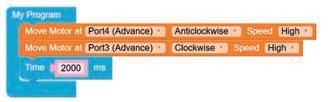
• Drag the Time block from the Control category and drop it below the second Move Motor at the block.
• Type "2000" in the value box of the block. This will allow the forward movement of the motor for 2000 milliseconds or 2 seconds.
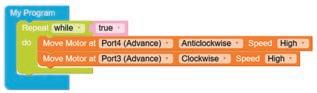
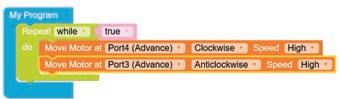
• To move the bot forward for infinite time, use the Repeat while block from the Loops category with the Move Motor at blocks.
4. Move the Bot Backward
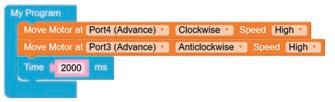
• Similarly, to turn the bot backwards, configure the motor at Port4 as Clockwise and Port3 as Anticlockwise by making the respective selections from the drop-down menus.
• To move the bot backwards for infinite time, use the Repeat while block from the Loops category with the Move Motor at blocks.
5. Move the Bot Right
• To turn the bot to the right, configure the motor at Port4 and Port3 as Anticlockwise and add a delay of 1100 ms by adding a Time block.
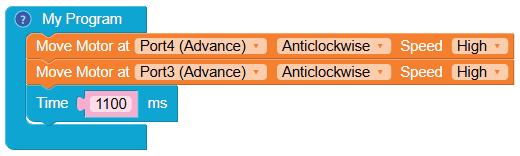
6. Move the Bot Left
• To turn the bot to the left, configure the motor at Port4 as Clockwise and Port3 as Clockwise too.
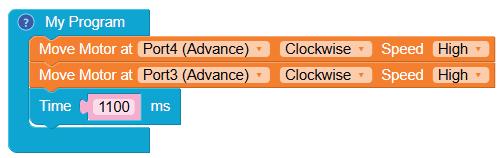
Note: When you turn the bot left or right, the time value may vary from system to system. Therefore, to make a 90 degree turn, you can configure the time value accordingly.
7. Give a name to your program, save it, and then compile it.
8. Now, the program is ready to burn on the RAK.
Scan QR code to view output
A. Tick () the Correct Option.
1 Which block is used to start your program?
a My Program
c Begin Program
b Start Program
d Your Program
2 The execution of all the blocks in a code occur .
a timely
c in a loop
b step by step
d with delay
3 In which direction should the motors rotate to turn the robot to the left?
a Both motors clockwise
c Left motor clockwise, right motor anticlockwise
B. Answer the Following.
b Both motors anticlockwise
d Left motor anticlockwise, right motor clockwise
1 How should the motors be configured to move the robot in the right direction?
2 What is the use of the “Repeat while” block?
C. Apply Your Learning.
1 Where can you see the applications of a moving robot in daily life?
2 What will happen in your project if you don’t use the “Repeat while” block?
Objective
Make your robot move to create different patterns or shapes to practice its movements.
Background
This experiment is based on the concept of time delay.
Let’s Build
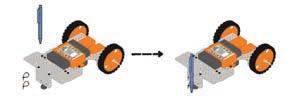
• Attach a pen to the RC bot as shown here, using zip-ties.
Let’s Code
1. Click on the Control category from the Blocks panel.
2. Drag the My Program block to the workspace to begin your program.
3. Drag the set pen block from the Robot category and drop it inside the My Program block.
4. This block is set to ON by default. Select any colour of your choice from the colour box.
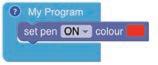
5. Drag and drop two Move Motor at blocks from the Motor category. Configure the first Move Motor at block at Port4 (Advance) as Anticlockwise by selecting the Anticlockwise option from the drop-down.
6. For the second Move Motor at block, select Port3 (Advance) from the drop-down menu. Configure this block as clockwise by selecting the Clockwise option from the drop-down.
7. Drag the Time block from the Control category and drop it below the second Move Motor at block. Type "4000" in the value box of the block. This will allow the forward movement of the motor for 4000 milliseconds or 4 seconds.
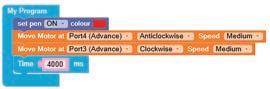
8. Now, drag two Move Motor at blocks for Port4 (Advance) and Port3 (Advance) to Stop the two motors. This will instruct the bot to stop.
9. Now, drag and drop the Time block to stop the bot for "1000" milliseconds.
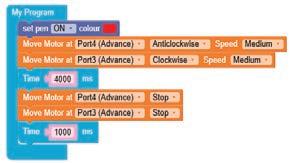
10. Now, configure both motors in Anticlockwise direction. Also, drag and drop the Time block to move the bot right for a specified time.
11. Post taking a right, stop the bot for 1000 milliseconds.
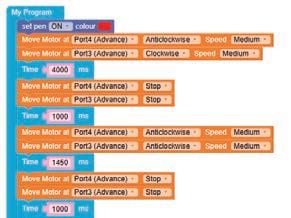
Note: When you turn the bot left or right, the time value may vary from system to system. Therefore, to make a 90 degree turn, you can configure the time value accordingly.
12. Repeat the above steps 5 to 11 (to move the bot forward, stop, turn right, and then stop again) till you create a pattern. The final code should look like this:
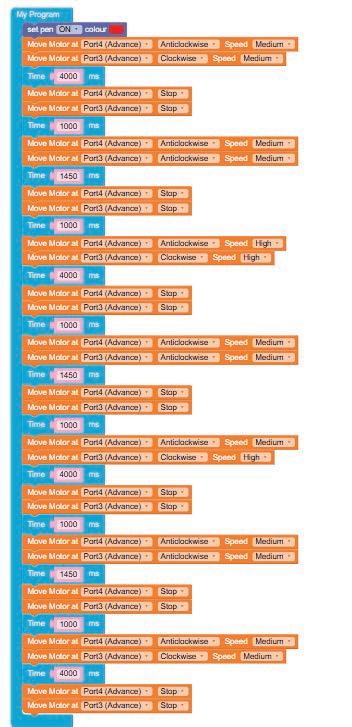
13. Give a name to your program, save it, and then compile it.
14. Now, the program is ready to burn on the RAK.
Scan QR code to view output
A. Tick () the Correct Option.
1 Which block is used to move the robot for a specified time?
a move robot in
b stop robot for time
c time d stop robot
2 How many times will your robot move and take turns to make a square type pattern?
a 4 b 5
c 6 d 7
3 What is the purpose of the “set pen” block?
a To draw shapes
c To stop the robot
B. Answer the Following.
1 What is the default value of the “set pen” block?
b To make the robot move
d To turn the robot
2 Which block is required to stop the motors?
C. Apply Your Learning.
1 Can you draw any other pattern with the robot? If possible, write the code.
2 Recreate the program using the “Repeat while” block and test it on the RAK.
Using IR sensors, students will program their robots to smartly detect and avoid the edges of elevated platforms. This activity strengthens their understanding of sensor-based navigation while promoting problem-solving skills in practical scenarios.
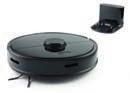
The concept of edge avoider is mostly used in the automatic vacuum cleaners.
In this experiment, the following concepts are used:
1. Variables
• Variables are used to store information to be referenced and manipulated in a computer program.
• Variables in coding are not just static values; they also provide a way of labelling data with a descriptive name, so our programs can be understood more clearly. This data can then be used throughout your program. For example, i_count is the name of a variable.
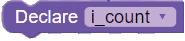
: Used to declare a variable

: Used to modify/change the value of a variable

: Used to store a value in a variable
2. Conditionals
• Human beings (and other animals) make decisions all the time that affect their lives, for eg. a. "Should I eat one cookie or two?" b. "Should I play cricket or badminton?"
• Similarly, to make decisions and carry out actions accordingly, in our code, we use conditionals.
3. If block
• Conditional blocks have conditions, and the program’s flow is based on whether the condition is true or false.
• To apply conditions in code, use the if block. The if block has else if and else blocks.
• If the condition given in the if block is true, then the set of code is executed; otherwise, the code given in else block is executed. If there are multiple conditions to check then else if block will be used.
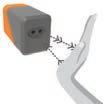
• An infrared (IR) sensor is an electronic device that measures and detects infrared radiation in its surrounding environment. Everything around us, including our bodies and objects, gives off heat in the form of infrared radiation. Warmer objects emit more infrared radiation than cooler ones.
• In the IR sensor, the sensor state is high when a reflective object is in front of it. Black or dark-coloured objects do not reflect the IR rays.
After creating the RC car, follow the given steps to create your Edge Avoider robot:
1 Connect the 7.5” U-Beam to the 2.5” U-Beam in the RC Car assembly using 12mm Bolts and K-Nuts.
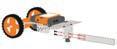
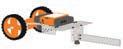
2 Connect the IR Sensor to the 7.5” U-Beam using a Bolt. Connect the IR Sensor to Port S5 of the Brain.
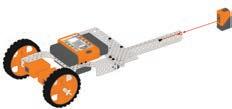
3 Finally, the assembly for the Edge Avoider robot looks like the one shown.
1. Click on the Control category from the Blocks panel.
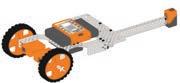
2. Drag the My Program block to the workspace to begin your program. The execution of all the blocks inside this occurs step by step.
3. Drag the Repeat while block from the Loops category and drop it inside the My Program block to begin the infinite loop. By default, the loop value is set as true.
4. Click on the Variables category.
5. Click on the Create Variable button. A pop-up box appears.
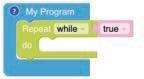
• Enter a suitable variable name in the New variable name box like IR_Sensor.
• Click on the OK button. This will create a variable to store the data of the IR sensor value received from the sensor.
6. Drag and drop the set to block from the Variables category and place it inside the Repeat while block.
7. Then drag the Read IR Sensor at block from the Sensor category and place it next to the set to block. Set the value of the Read IR Sensor at block as Port5 (Advance).
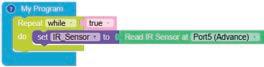
8. Drag the if block from the Control category and place it below the set to block.
9. Click on the settings icon of the if block. A pop-up box appears.
10. Drag the else block and place it below the if block in the pop-up box (refer to the image below).
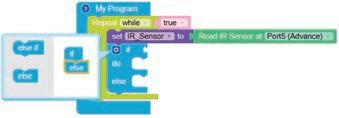
11. Again, click on the settings icon to hide the pop-up box.
12. Define the condition for the if block using the block from the Control category.

13. Drag the IR_Sensor block from the Variables category and drop it in the left value box of the block.
14. Select the '>' sign from the drop-down list of the block.
15. Drag the block from the Math category and drop inside the right value box.

16. Type '400' in place of 0. If the value of the IR_Sensor variable is greater than 400, i.e., the IR Sensor senses the ground/floor, blocks under the if block will be executed, otherwise the blocks under the else block will be executed.
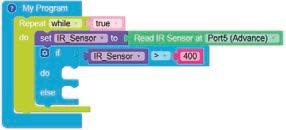
17. Drag and drop the Print Data block in the do part of the if block. Drag the empty Text Box block from the Text category and drop it inside the Print Data block. Type “Moving forward” in the Text Box block.
18. Now, we have to set both the motors to move in the forward direction when there is a surface below. For this, drag and drop two Move Motor at blocks from the Motor category. Configure the Motor at Port4 (Advance) as Anticlockwise and Port3 (Advance) as Clockwise.
19. Set the speed of both the motors to High.
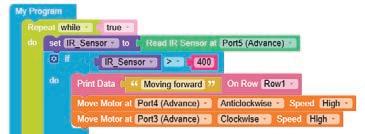
20. For the else part, drag and drop the Print Data block in the do part of the if block. Drag the empty Text Box block from the Text category and drop it inside the Print Data block. Type “Edge Detected” in the Text Box block.
21. Set both motors to Stop by dragging and dropping the Move Motor at blocks.
22. Also drag and drop the Time block from the Control category to instruct the bot to stop for 500 milliseconds when there is no object or surface detected below.
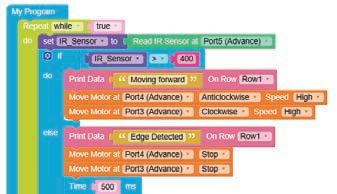
23. Set both motors to move backwards followed by left direction (you can turn the bot to any direction as you wish). This will instruct the bot to move back and then left when no object or surface is detected. Adjust the value in the Time block as shown.
24. Now, set both the motors to Stop.
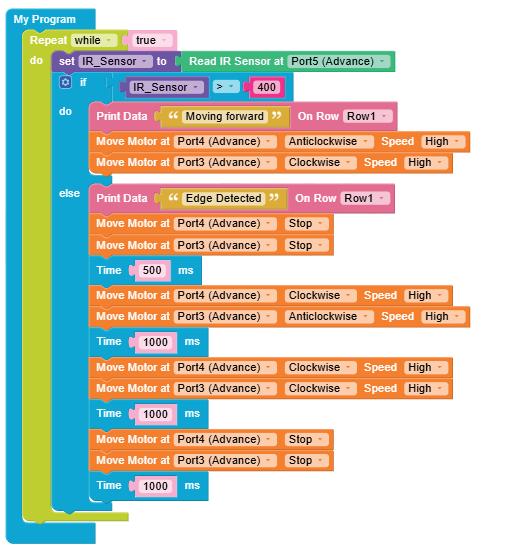
25. Give a name to your program, save it, and then compile it.
26. Now, the program is ready to burn on the RAK.
Scan
A. Tick () the Correct Option.
1 What does an IR sensor do when a reflective object is close to it?
a Changes the LED to red
c Sets the sensor state to HIGH
2 Which block is used to apply conditions in code?
a Repeat while block
c if block
B. Answer the Following.
1 What are variables used for in a program?
b Stops the motor
d Starts the program
b Move Motor block
d My Program block
2 How does the “if” block help in decision-making in code?
C. Apply Your Learning.
1 Imagine you are programming a robot to avoid puddles on the floor. Describe how you would use an IR sensor to detect puddles and make the robot change direction.
2 If your robot’s IR sensor detects an edge, how would you program it to stop and turn safely?
Students will use both IR and touch sensors to program their robots. The robots will stop when they detect something with the IR sensor. When the touch sensor is pressed, the robot will turn right. This experiment helps students learn how sensors work together and how to control their robots.
1. IR Sensor
• An infrared (IR) sensor is an electronic device that measures and detects infrared radiation in its surrounding environment. Everything around us, including our bodies and objects, gives off heat in the form of infrared radiation. Warmer objects emit more infrared radiation than cooler ones.
• In the IR Sensor, the sensor state is high when a reflective object is in front of it. Black or dark-coloured objects do not reflect IR rays.
2. Touch Sensor
• Touch sensor works like a push button or a limit switch. It simply gets triggered when it is touched or pressed.
• In a Touch sensor, the sensor state is HIGH when the sensor is pushed with any object.
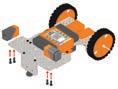
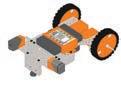
1 Attach IR Sensor to the front on holes 1 and 2 in row 4 of the Chassis using 6mm bolts.
2 Connect the IR Sensor to port S5 of the Brain.
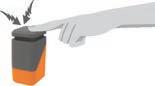
3 Attach the Touch Sensor to the side using 6mm bolts and connect it to port S4 of the brain.
1. Click on the Control category from the Blocks panel.
2. Drag the My Program block to the workspace to begin your program. The execution of all the blocks inside this occurs step by step.
3. Drag the Repeat while block from the Loops category and drop it inside the My Program block to begin the infinite loop. By default, the loop value is set to true.
4. Click on the Variables category.
5. Click on the Create Variable button. A pop-up box appears.
• Enter a suitable variable name, such as "IR_Sensor ".
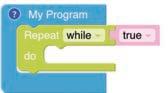
• Click on the OK button. This will create the IR_Sensor variable to store the data of the IR sensor value received from the sensor.
• Similarly, create one more variable named Touch_Sensor to store the data of the Touch sensor value received from the sensor.
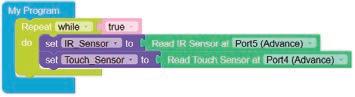
6. Drag the set IR_Sensor to block from the Variables category and drop it inside the Repeat while block.
7. Then drag the Read IR Sensor at block from the Sensor category and attach it to the set IR_Sensor to block. Select Port5 (Advance) option from the drop-down menu.
8. Similarly, drag the set Touch_Sensor to block from the Variables category and drop it below the set IR_Sensor to block.
9. Drag the Read touch Sensor at block from the Sensor category and attach it to the set Touch_Sensor to block. Set the value as Port4 (Advance).
10. Drag the if block from the Control category and drop it below the set Touch_Sensor to block.
11. Click on the settings icon of the if block. A pop-up box appears.
12. Drag the else if and else blocks and place them below the if block in the pop-up box (refer to the given image).
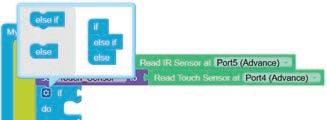
13. Again, click on the settings icon to hide the pop-up box.

14. Drag block from the Control category and drop it to the right of the if block.

15. Now, drag two blocks from the Control category. Drop this one block to the left of the block and drop the second block to the right of the bock.
16. Select the ‘>’ operator from the drop-down list of the block to the left and select ‘<’ operator from the drop-down list of the block to the right.
17. Drag and drop the IR_Sensor block from the Variables category and place it in the left value box of the block.


18. Drag block from the Math category and drop it inside the right value box of the block. Type ‘400’ in place of 0.
19. Similarly, drag and drop the Touch_Sensor variable block inside the left value box of the and block inside its right value box. Type ‘400’ in place of 0.

20. If the value of the IR_Sensor variable is greater than 400, i.e., the IR Sensor senses the object and Touch_Sensor variable value is less than 400, i.e., the Touch Sensor does not detect any touch, blocks under this if block will be executed.
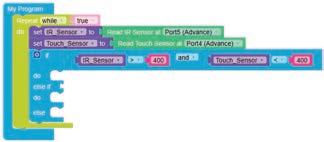
21. Drag the Print Data block from the Display category and drop it in the do part of the if block.
22. Drag the Text Box block from Text category and drop it in the empty part of the Print Data block. Type "Bot Stopped" in the Text Box block.
23. Now, set both motors to stop. For this, drag and drop two Move Motor at blocks from the Motor category. Select Port4 (Advance) for the first Move Motor at block and Port5 (Advance) for the second Move Motor at block. Make sure the "Stop" option is selected for both the blocks from the drop-down menu.
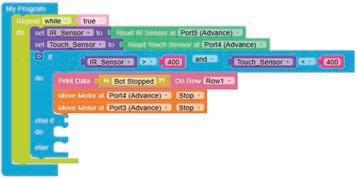
24. Similar to the condition defined for the if block, define the condition for the else if block using the or and and operator blocks from the Control category. You can select the or option from the drop-down of the block.

25. If the value of the IR_Sensor is either greater or less than 400, i.e., the IR sensor got triggered or not, but the value of the Touch_Sensor is greater than 400, i.e., the Touch sensor detects a touch; blocks under this else if block will be executed.
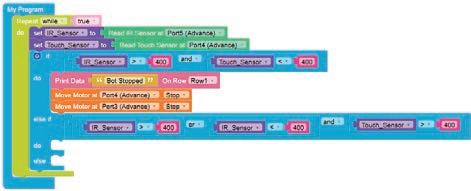
26. Now, set both motors to move left when the Touch sensor is pressed. For this, configure the motors at Port4 (Advance) and Port3 (Advance) to Clockwise. Change the speed of both the motors to be Medium.
27. Drag and drop the Time block from the Control category and set it to '1100' ms. This will move the bot left for 1100 milliseconds.
28. Now, Stop both the motors for '1000' ms.
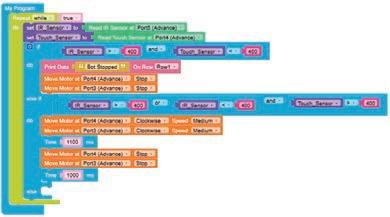
29. Drag the Print Data block from the Display category and drop it in the else part of the if block.
30. Drag the Text Box block from Text category and drop it in the empty part of the Print Data block. Type "Bot Moving" in the Text Box block.
31. Now, set both the motors to move forward as long as no object is detected ahead.
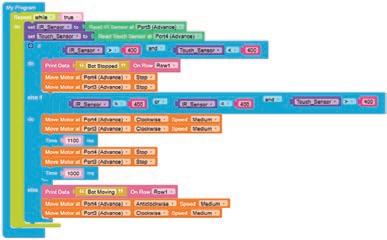
32. Give a name to your program, save it, and then compile it.
33. Now, the program is ready to burn on the RAK. Scan QR code to view output
A. Tick () the Correct Option.
1 Warmer objects emit infrared radiation than cooler ones.
a less
c more
b a few
d many
2 The sensor works like a push button or a limit switch.
a infrared
c heat
b touch
d rain
3 From which category of blocks, you can get the “Print Data” block?
a Variable
c Display
B. Answer the Following.
b Control
d Sensor
1 What is the difference between the “and” and the “or” operator blocks?
2 What is the difference between the IR sensor and the touch sensor?
C. Apply Your Learning.
1 If the sensor car moves on the road, what challenges could it face?
2 Can you think of any other application of the sensor car in real-life?
By strategically utilising two IR sensors, the students will program the robot to accurately track and follow a specific line. This activity develops their understanding of sensor-based navigation and improves problem-solving skills in robotics.
The major use of line follower is in Advanced Driver Assistance Systems (ADAS) in cars as Lane Assist.
Let’s Build
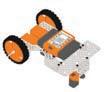
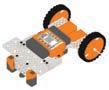
1 Connect IR Sensor to the lower 2.5” U-Beam of the RC Car using 6mm Bolts. Also connect the IR Sensor to Port S4 of the Brain.
Let’s Code
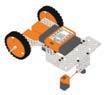
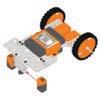
2 Similarly, connect another IR Sensor to the U-Beam of the assembly. Also connect this IR Sensor to Port S5 of the Brain.
1. Click on the Control category from the Blocks panel.
2. Drag the My Program block to the workspace to begin your program. The execution of all the blocks inside this occurs step by step.
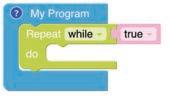
3. Drag the Repeat while block from the Loops category and drop it inside the My Program block to begin the infinite loop. This block is set to true by default.
4. Click on the Variables category.
5. Click on the Create Variable button. A pop-up box appears.
• Enter a suitable variable name, such as "rightIR".
• Click on the OK button. This will create a variable to store the data of the IR sensor value received from the right IR sensor.
6. Drag the set rightIR to block from the Variables category and drop it inside the Repeat while block.
7. Then, drag the Read IR Sensor at block from the Sensor category and drop it next to the set rightIR to block. Configure this block to Port4 (Advance).
8. Now, similarly create another variable named "leftIR".
9. Drag and drop the set leftIR to block. To its right, drag and drop the Read IR Sensor at block. Configure this block to Port5 (Advance).
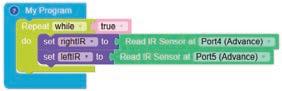
10. Drag the if block from the Control category and drop it below the set leftIR to block.
11. Click on the settings icon of the if block. A pop-up box appears.
12. Drag the else if block three times and place it below the if block in the pop-up box (refer to the given image).
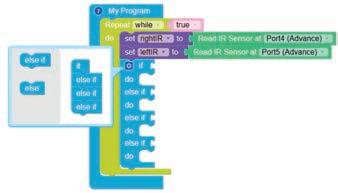
13. Now, click on the settings icon again to close the pop-up box.

14. Drag the block from the Control category and attach with the if block.
15. Drag two blocks from the Control category and drop them inside the left and right boxes of the block.
16. Select the '>' sign in place of the '=' sign for both the blocks.
17. Drag the rightIR block from the Variables category and drop it in the left value box of the block.
18. Drag and drop the block from the Math category inside the right value box of the block. Type '400' in place of '0'.
19. Similarly, set the condition of the leftIR variable.
20. If the value of the rightIR and leftIR is greater than 400, i.e., both the IR sensors detect the white lines, then, blocks under this if block will be executed.
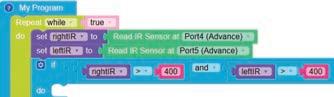
21. For the if part, configure the motors at Port4 (Advance) to Anticlockwise direction and Port3 (Advance) to Clockwise direction. This will instruct the bot to keep moving forward when it is on top of the black line.
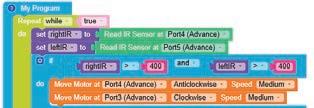
22. Similar to defining the condition for the if block, define the condition for the first else if part. Set the rightIR value as less than 400 and set the leftIR value as greater than 400. The code under this else if part will execute when the right IR sensor detects the black line below.
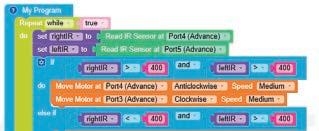
23. For the first else if part, set both motors to turn right. For this, configure the motors at Port4 and Port3 as Anticlockwise. This will instruct the bot to turn right as long as the right IR sensor is on top of the black line.
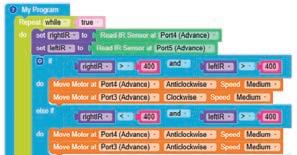
24. For the second else if part, use the comparison blocks to set the rightIR value as greater than 400 and set the leftIR value as less than 400. The code under this else if part will execute when the left IR sensor detects the black line below.
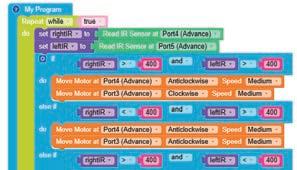
25. For the second else if part, set both motors to turn left by configuring the motors at Port4 and Port3 as Clockwise. This will instruct the bot to turn left as long as the left IR sensor is on top of the black line.
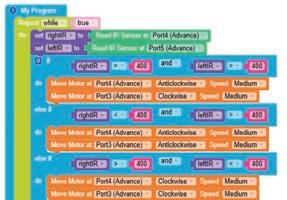
26. For the third else if part, use the comparison blocks to set the rightIR value as less than 400 and set the leftIR value as less than 400. The code under this else if part will execute when both the left and right IR sensors detect the black line below.
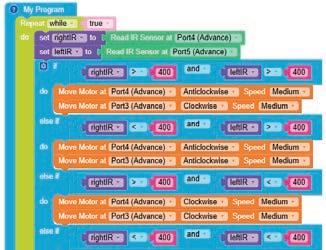
27. For the third else if part, set both motors to Stop. This will instruct the bot to stop if both the sensors detect the black line below.
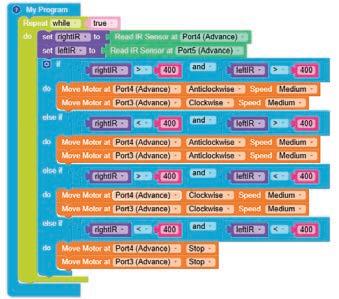
28. Give a name to your program, save it, and then compile it.
29. Now, the program is ready to burn on the RAK.
A. Tick () the Correct Option.
1 What value indicates that an IR sensor has detected a white line?
a Less than 200
c Exactly 300
b Greater than 400
d Less than 100
2 When both IR sensors detect the black line, what action does the bot perform?
a Moves forward
c Turns left
B. Answer the Following.
b Turns right
d Stops
1 Why are two IR sensors used in the line-following bot?
2 What is the purpose of using variables like rightIR and leftIR in the code?
C. Apply Your Learning.
1 Imagine your bot detects a white line with only the right IR sensor. Describe what the bot should do to stay on the line.
2 If you want the bot to turn left only when the left IR sensor detects the black line, how would you set up the motors?
Objective
Utilising touch sensors, students will program their bots to exhibit distinct dance moves triggered by sequential touch inputs, providing a playful introduction to programming logic and interactive robot behaviours.
Let’s Build
1 Attach the Axle Lock and the 3.5” Axles to the high-speed Motors, as shown.

2 After attaching the Axles to both Motors, screw them to the Chassis using the 6mm Bolts, as shown.
3 Repeat the previous step to attach the second high-speed Motor to the other side of the Chassis.
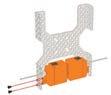
4 Add a Filler to the Axle, then add the Wheel and lastly add another Axle Lock. Do this for both the Axles.
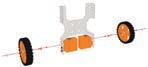

5 Connect a 7.5” Rectangular plate to the Chassis using K-Nuts and 12 mm Bolts as shown in the figure.
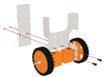

6
Connect a 2.5” L-Channel to the 7.5” Rectangular plate using K-Nuts and 12 mm Bolts as shown.
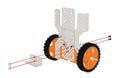

7 Connect a 2.5” U-Beam to the 2.5” L-Channel using Nuts and Bolts.
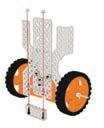
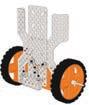
8 Screw the Caster wheel to the 2.5” U-Beam using Nuts and Bolts.
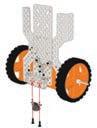
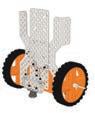
9 Connect the battery to the Chassis using Nuts and Bolts.
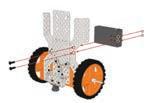

10 Connect the Touch Sensor to the Chassis using a Nut. Also, connect the Touch Sensor to Port S5 of the Brain.
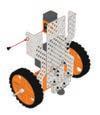
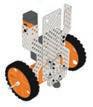
11 Finally connect the FULL 2.0 brain to the Chassis using Nuts and Bolts.
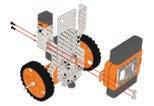
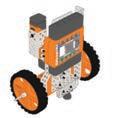
12 Finally, the assembly looks like the one shown.
Code
1. Click on the Control category from the Blocks panel.
2. Drag the My Program block to the workspace to begin your program. The execution of all the blocks present inside this occurs step by step, in sequence.
3. Click on the Variables category.
4. Click on the Create Variable button. A pop-up box appears asking you to create a New variable name.
• Enter a suitable variable name, let’s say "count" to store the number of times the touch sensor was pressed.
• Click on the OK button.
5. Drag the set to block from the Variables category and drop it inside the My Program block.
6. Then drag the number block from the Math category and attach this block with the set to block.
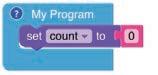
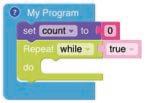
7. Drag the Repeat while block from the Loops category and drop it below the set to block to begin the infinite loop. The Repeat while block is set to true by default.
8. Now, similarly, create another variable named "Touch_Sensor" to store the data of the touch sensor value received from the sensor.
9. Drag the set to block from the Variables category and drop it inside the Repeat while block.
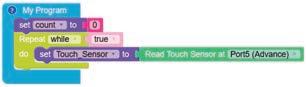
10. Select the "Touch_Sensor" variable name from the drop-down menu.
11. Then, drag the Read touch Sensor at block from the Sensor category and attach it with the set to block. Configure the Read touch Sensor at block to Port5 (Advance).
12. Drag the if block from the Control category and drop it below the set to block.
13. Click on the settings icon of the if block. A pop-up box appears.
14. Drag the else block and drop it below the if block in the pop-up box.
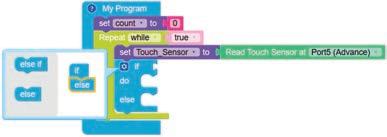
15. Click on the settings icon again to close the pop-up box.
16. Drag the equal operator block from the Control category and attach it to the right of the if block.
17. Select the '≥' option from the drop-down menu of the equal operator block.
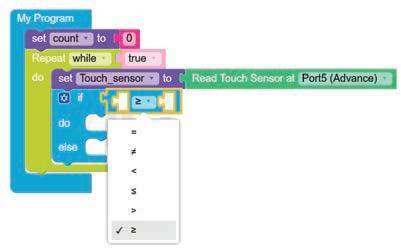
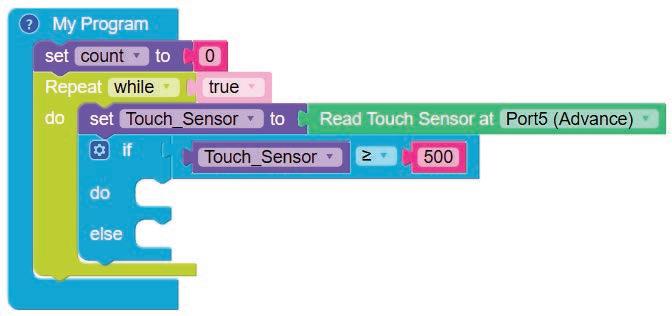
18. Drag the Touch_Sensor block from the Variables category and drop it in the left part of the greater than equal to operator block.
19. Now, drag the number block from the Math category and drop it in the right part of the greater than equal to operator block. Type "500" for the text part of the number block. Now, if the value of the Touch_Sensor variable is greater than or equal to 500, i.e., the touch sensor is pressed, then blocks under the if block will be executed, else the blocks under the else block will be executed.
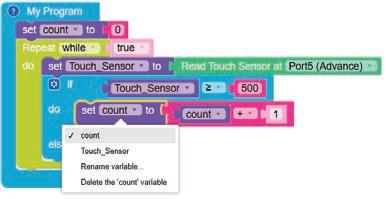
20. Drag the set to block from the Variables category and drop it below the second set to block. Select the count variable from the drop-down menu of the set to block.
21. Drag the add operator block from the Math category and attach it with the set to block.
22. Now, drag the count variable block and drop it inside the left part of the add operator block. This adds a sum of "1" to the variable count every time the touch sensor is pressed.
23. Now, drag the if block and drop it below the set to block. Drag the else if block and drop it below the if block twice in the pop-up box.
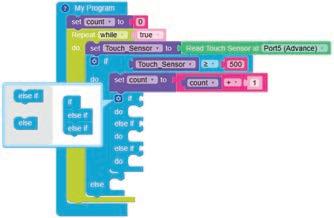
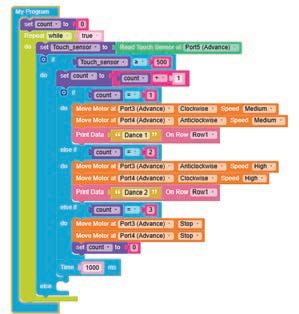
24. Now, define the condition for the first if block using the equal operator block from the Control category. If the value of the count variable equals "1", then blocks under the if block will be executed.
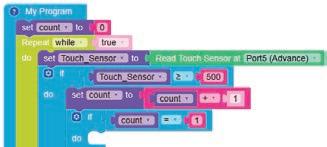
25. Drag and drop two Move Motor at blocks in the do condition block.
26. Configure the first motor at Port3 (Advance) as clockwise by selecting the Clockwise option from the drop-down menu. Select the speed of the motor as Medium.
27. Similarly, select Port4 (Advance) from the drop-down of the second Move Motor at block. Configure the motor as anticlockwise by selecting the Anticlockwise option from the drop-down. Select the speed of the motor as Medium.
28. Drag and drop the Print Data block in the do part of the if block. Drag the empty Text Box block from the Text category and drop it inside the Print Data block. Type “Dance 1” in the Text Box block.
This will set the first dance move of the robot in the forward direction.
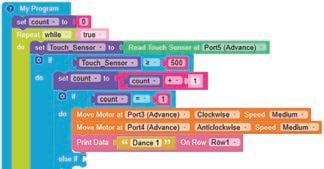
29. Repeat the above five steps and set the value for the number block as "2" instead of "1" for the else if condition. Also, type "Dance 2" in the Print Data block.
30. Change the motor movement to Anticlockwise for the first motor and Clockwise for the second motor with speed value high. This will set the second dance move of the robot in the backward direction.
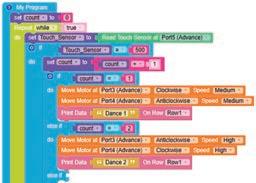
31. Use the equal operator block for the second else if condition to set the value of the count variable block to "3".
32. Then, set both motors to Stop.
33. Drag and drop the set to block below the last Move Motor at block. Also, set the value of the count variable to "0" to reset its value.
34. Drag the Time block from Control category and drop it after else if block as shown below in the image.
35. Drag and drop the Print Data block in the do part of the if block. Drag the empty Text Box block from the Text category and drop it inside the Print Data block. Type “OFF” in the Text Box block.
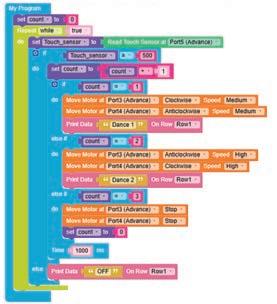
36. Give a name to your program, save it, and then compile it.
37. Now the program is ready to burn on the RAK.
Scan QR code to view output
A. Tick () the Correct Option.
1 What is the objective of the "Dancing Car " experiment?
a To build a robot that responds to voice commands.
b To use touch sensors to make the robot perform dance moves.
c To create a robot that moves continuously without stopping.
d To use sensors to avoid obstacles.
2 What is the role of the “Repeat while” block in this program?
a To play a sound whenever the touch sensor is pressed.
b To continuously check if the touch sensor is pressed.
c To count the number of LED colour changes.
d To set the direction of motor movement.
3 What does the "count" variable do in the program?
a It stores the sensor’s sensitivity level.
b It keeps track of the number of times the touch sensor is pressed.
c It sets the colour of the LED lights.
d It controls the speed of the motors.
B. Answer the Following.
1 Describe the steps required to attach the motors and wheels to the chassis.
2 Explain how the "if" and "else if" conditions are used to create different dance moves for the robot.
C. Apply Your Learning.
1 How would you modify the program to make the robot perform a fourth dance move?
2 If you want your robot to stop after a specific number of touch inputs, how would you update the program to achieve this?
Objective
To make a shredding machine that can shred paper inside the machine.
1 Connect the 2.5” L-Channel to two 2.5” U-Beam using 12mm Bolts and K-Nuts.


2 Connect 2.5” Square Plate to the 2.5” L-Channel using K-Nut and 12mm Bolt.


3 Connect High Speed Motor and 3.5” Axle to the 2.5” Square Plate using Axle Lock.
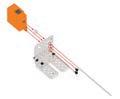

4 Connect two Big Spur Gears and a Medium Spur Gear in between to the 3.5” Axle using Fillers.
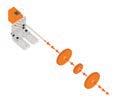

5 Connect 2.5” Square Plate to the 2.5” L-Channel using a Nut and a Bolt.
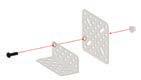

6 Connect the High Speed Motor to the assembly from the previous step using 3.5” Axle and Axle Lock.
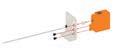

7 Connect the Medium Spur Gear to the 3.5” Axle using Fillers.
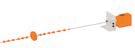

8 Connect the assembly from the fourth step to the assembly from the previous step by inserting the 3.5” Axles in the 2.5” Square Plates as shown.
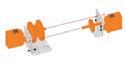

9 Now attach the Axle Locks to both the Axles.
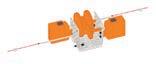
10
Now insert a Bolt in the hole of 2.5” L-Channel and tighten the Bolt using a Nut.


11 Similarly, insert a Bolt in the hole of the 2.5” L-Channel (on the opposite side of the previous 2.5” L-Channel) and tighten the Bolt using a Nut.


12
Now, connect 7.5” L-Beam to the 2.5” U-Beam using Nuts and Bolts.
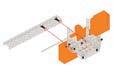
13

Connect the FULL 2.0 Brain to the 7.5” L-Beam using Nuts and Bolts.
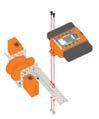
14
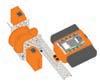
Connect the IR Sensor to the 7.5” L-Beam using Nuts.
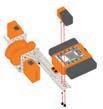
15
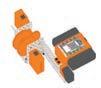
Finally, connect the Full 2.0 Brain with the Battery.
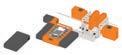
16
17

Connect IR Sensor to Port S5 of the Brain.
Connect High Speed Motors to Ports M3 and M4 of the Brain.
1. Click on the Control category from the Blocks panel.
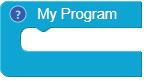
2. Drag the My Program block to the workspace to begin your program. The execution of all the blocks inside this occurs step by step.
3. Drag the Repeat while block from the Loops category and drop it inside the My Program block to begin the infinite loop. The loop value is set to true by default.
4. Click on the Variables category.
5. Click on the Create variable button. A pop-up box appears asking you to enter a new variable name.
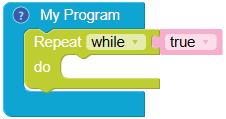
• Enter a suitable variable name, let us say "IR_Sensor ", to store the data of the IR sensor value received from the sensor.
• Click on the OK button.
6. Drag the set to block from the Variables category and drop it inside the Repeat while block.
7. Drag the Read IR Sensor at block from the Sensor category and attach it to the set to block. Select "Port5 (Advance)" option from the drop-down menu of the Read IR Sensor at block.
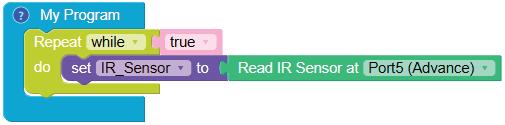
8. Drag the if block from the Control category and place it below the set to block.
9. Click on the settings icon of the if block. A pop-up box appears.
10. Drag the else block and place it below the if block in the pop-up box (refer to the image below).
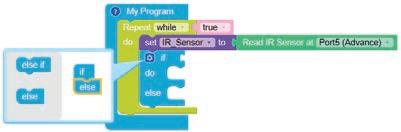
11. Click on the settings icon again to hide the pop-up box.
12. Drag the equal operator block from the Control category and attach it to the right of the if block.
13. Select the ">" option from the drop-down menu of the equal operator block.
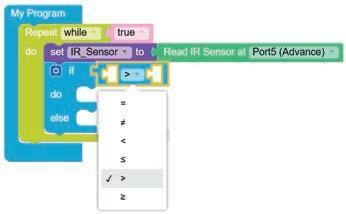
14. Drag the IR_Sensor block from the Variables category and drop it in the left part of the greater than operator block.
15. Now, drag the number block from the Math category and drop it in the right part of the greater than operator block. Type "400" for the text part of the number block. Now, if the value of the IR_Sensor variable is greater than 400, then blocks under the if block will be executed, else the blocks under the else block will be executed.
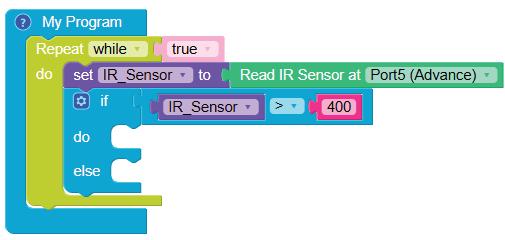
16. Drag the Print Data block from the Display category and drop it in the do part of the if block. The Print Data block is set to Row1 by default.
17. From the Text category, drag the Text Box block and drop it in the empty space of the Print Data block.
18. In the Text Box block, type the text "Shredding Started".
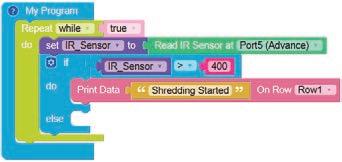
19. Drag two Move Motor at blocks from the Motor category and drop them below the Print Data block.
20. Configure the motor at Port4 (Advance) and Port3 (Advance) as Clockwise. The block is set to High speed by default.
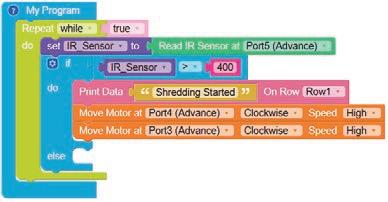
21. Similarly, drag another Print Data block and drop it in the else block.
22. Drag the Text Box block and drop it in the empty space of the Print Data block. In the Text Box block, type the text "Shredding Paused".
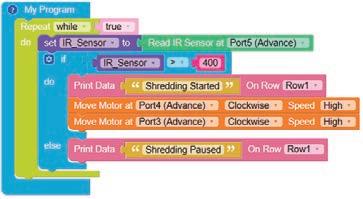
23. Drag two Move Motor at blocks and drop them below the Print Data block.
24. Configure the motor at Port4 (Advance) and Port3 (Advance) to Stop.
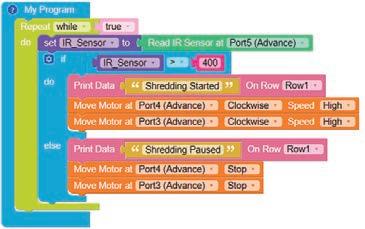
25. Give a name to your program, save it, and then compile it.
26. Now, the program is ready to burn on the RAK.
Scan QR code to view output
A. Tick () the Correct Option.
1 To which category does the block belong?
a Sensor b Display
c Variables d Control
2 Which among the following is a variable block per the program of the experiment?
a Print Data b Move Motor at
c IR_Sensor d My Program
3 Which part of the code will be executed if the IR_Sensor value is less than 400? (Refer to the screenshot below)
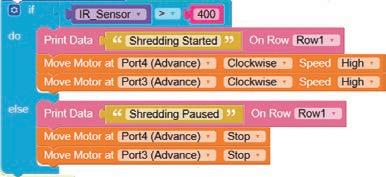
a The blocks under the else block.
c The code will never be executed.
B. Fill in the Blanks.
b The blocks under the do part of the if block.
d None of these
1 There are number of port options in the ‘Move Motor at’ block in the RAK kit.
2 We can make the bot move in the direction by configuring two motors as clockwise.
3 We can set a variable to a specific value by selecting the number block from the category.
4 The ‘Move Motor at’ block is set to speed by default.
C. Apply Your Learning.
1 Which real-life application involves breaking down paper and other materials for reuse after shredding?
2 Sana’s family has a shredding machine at home. Her parents use it to destroy old bills, bank statements, and other documents. Why do you think shredding these papers is important for Sana’s family?
Objective
Create a lift for the construction site where the mechanism for lift is made using the combination of motor and pulley to lift objects.
In this experiment, the program controls a motorised lift mechanism, allowing it to lift or drop objects based on sensor input. The code uses a touch sensor to detect interactions and operates the motor at different speeds and directions according to the current count value.
You can see the use of construction site lift at the following places:
1. Buildings Construction

2. Lifting Heavy Load
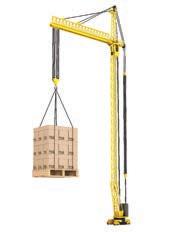
3. Bridges and Roads

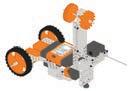
After creating the RC car, follow the given steps to create your Construction site lift robot:
1 Connect the 2.5” L-Channel to the 7.5” Rectangle in the assembly from the previous step using Nuts and Bolts.
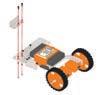

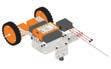
2 Connect the High Torque Motor to the 2.5” L-Channel in the assembly from the previous step using 3.5” Axle, Axle Lock, and 6mm Bolts.
3

Connect the 7.5” L-Beam to the 7.5” Rectangle of the assembly in the previous step using Nuts and Bolts.
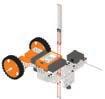
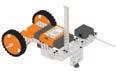
4 Connect the 7.5” L-Channel to the 7.5” L-Beam of the assembly in the previous step using Nuts and Bolts.
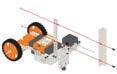

5 Connect two Big Spur Gears to the 7.5” L-Channel in the assembly from the previous step using 3.5” Axle and two Axle Locks as shown.
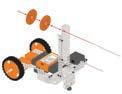

6 Connect the Big Wheel (after removing its rubber) to the Axle of the Big Spur Gears, Fillers, and an Axle Lock.
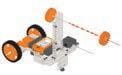
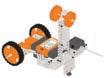
7 Connect the Touch Sensor to the 7.5” Rectangle in the assembly from the previous step using Bolts. Also connect the Touch Sensor to Port S5 of the Brain.
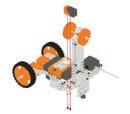
8 Finally, the assembly looks like the one as follows.
1. Click on the Control category from the Blocks panel.
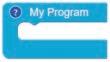
2. Drag the My Program block to the workspace to begin your program. The execution of all the blocks inside this occurs step by step, in sequence.
3. Click on the Variables category.
4. Click on the Create Variable button. A pop-up box appears asking you to create a New variable name.
• Enter a suitable variable name "count".
• Click on the OK button. This will create a counter variable that tracks the number of touches detected.
5. Drag the set to block from the Variables category and drop it inside the My Program block.
6. Then drag the number block from the Math category and attach this block with the set to block.
7. Drag the Repeat while block from the Loops category and drop it below the set to block to begin the infinite loop. By default, the loop value is set to true.
8. Click on the Variables category.
9. Click on the Create variable button. A pop-up box appears asking you to enter a new variable name.
• Enter a suitable variable name, let us say "Touch_Sensor".
• Click on the OK button.
10. Now, drag and drop the set to block from the Variables category and drop it inside the Repeat while block.
11. Drag the Read Touch Sensor at block from the Sensor category and attach it to the set to block. Select the option "Port5 (Advance)" from the drop-down of the Read Touch Sensor at block.
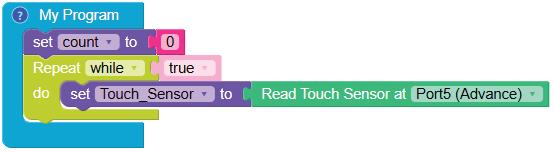
12. Drag the if block from the Control category and place it below the set to block.
13. Click on the settings icon of the if block. A pop-up box appears.
14. Drag the else block and place it below the if block in the pop-up box (refer to the image below).
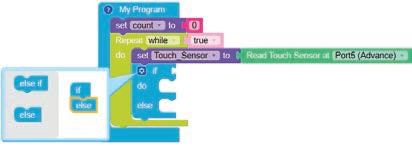
15. Click on the settings icon again to hide the pop-up box.
16. Drag the equal operator block from the Control category and attach it to the right of the if block.
17. Select the '≥' option from the drop-down of the equal operator block.
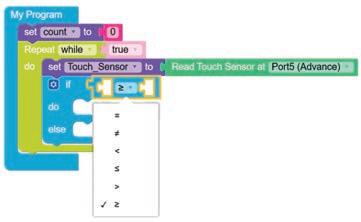
18. Drag the Touch_Sensor block from the Variables category and drop it in the left part of the greater than equal to operator block.
19. Now, drag the number block from the Math category and drop it in the right part of the greater than equal to operator block. Type "400" for the text part of the number block. Now, if the value of the Touch_Sensor variable is greater than 400, then blocks under the if block will be executed, else the blocks under the else block will be executed.
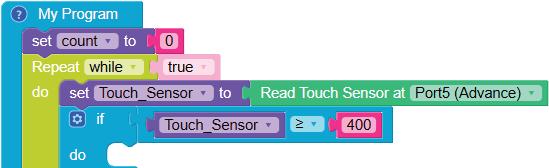
20. Drag the set to block from the Variables category and drop it in the do part of the if block. Select the "count" option from the drop-down of the set to block.
21. Drag the add operator block from the Math category and attach it to the set to block.
22. Now, drag the count variable block and drop it in the left part of the add operator block. This adds 1 to the variable count every time the touch sensor is pressed.
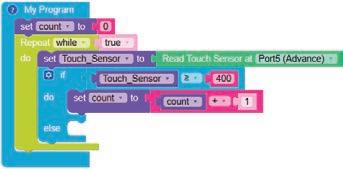
23. Drag another if block and place it below the set to block.
24. Click on the settings icon of the if block. A pop-up box appears.
25. Drag the else if block and place it below the if block in the pop-up box (refer to the image below).
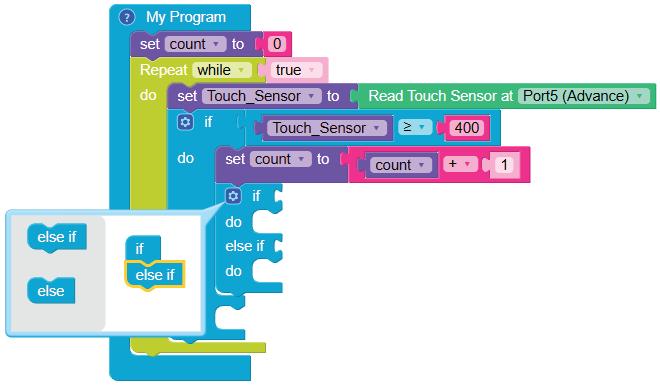
26. Click on the settings icon again to hide the pop-up box.
27. Drag the equal operator block and attach it to the if block.
28. Drag and drop the count variable block in the left part of the equal operator block.
29. Drag and drop the number block in the right part of the equal operator block. Type "1" in the text part of the number block.
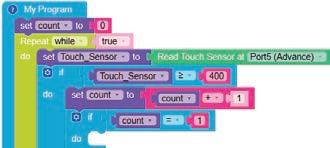
30. Drag the Move Motor at block from the Motor category and drop it in the do part of the if block.
31. Configure the motor at Port2 (Advance) as Clockwise. Set the speed of the motor to Medium.
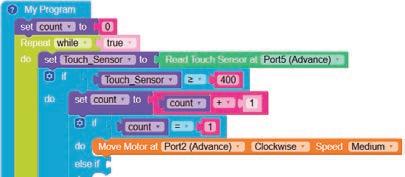
32. Drag the Print Data block from the Display category and drop it in the do part of the if block. The Print Data block is set to Row1 by default.
33. From the Text category, drag the Text Box block and drop it in the empty space of the Print Data block.
34. In the Text Box block, type text "Lifting".
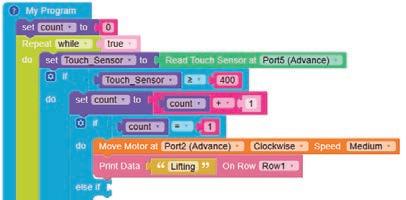
35. Similarly, drag the equal operator block and attach it to the else if block.
36. In the left part of the equal operator block, drag and drop the count variable block and drag and drop the number block. Type "2" in the text part of the number to its right.
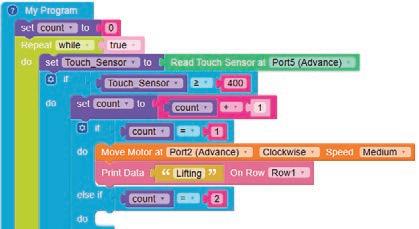
37. Drag and drop the Move Motor at block in the do part of the else if block. Configure the motor at Port2 (Advance) as Anticlockwise. Set the speed of the motor to Medium.
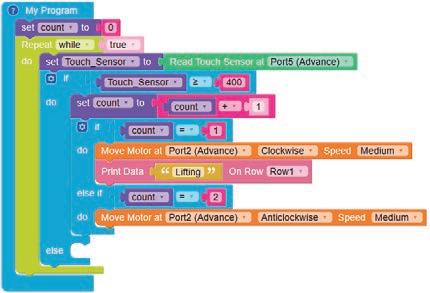
38. Now, drag the Print Data block and drop it below the Move Motor at block.
39. Drag the text box block and drop it in the empty space of the Print Data block. In the Text Box block, type text "Dropping".
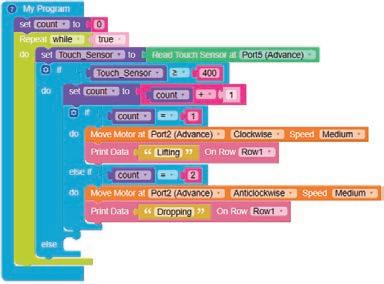
40. Drag the set to block and drop it below the Print Data block. Select the "count" option from the drop-down of the set to block.
41. Drag the number block and attach it to the set to block. The number block is set to "0" by default.
42. Drag the Time block from the Control category and drop it below the else if block. The Time block is set to “1000” milliseconds (ms) or 1 second by default.
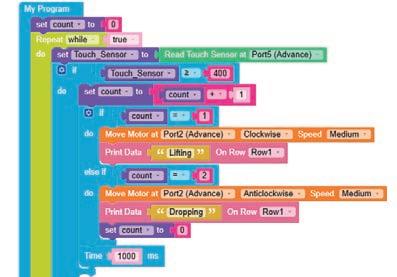
43. Drag the Move Motor at block and drop it in the else part of the if-else block. Configure the motor at Port2 (Advance) to Stop.
44. Now, drag the Print Data block and attach it to the Move Motor at block.
45. Drag the text box block and drop it in the empty space of the Print Data block. In the Text Box block, type text "Stopped".
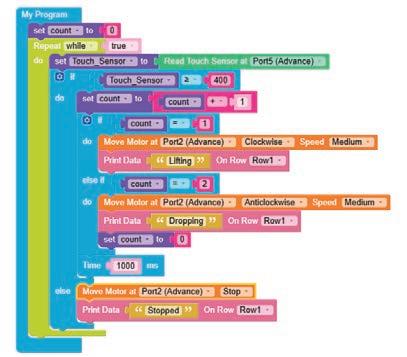
46. Give a name to your program, save it, and then compile it.
47. Now, the program is ready to burn on the RAK.
Scan QR code to view output
A. Tick () the Correct Option.
1 The primary objective of this experiment is to:
a Build a robot to play music.
b Create a pulley system that rotates in circles.
c Create a lift mechanism to lift and drop objects.
d Design a counting system for a touch sensor.
2 The motor ’s direction is controlled in the program by:
a A light sensor
c A touch sensor
b A distance sensor
d A colour sensor
3 The purpose of the variable named “count” in the program is to:
a Track the lift’s speed
c Control the motor’s power
B. Answer the Following.
b Track the number of touches detected
d Display the program status
1 What is the purpose of using a touch sensor in the construction site lift experiment?
2 Explain how the motor is controlled to lift and drop objects in this experiment.
C. Apply Your Learning.
1 Think about another real-world situation where a motor and pulley system could be useful.
2 Imagine you want to modify the program to increase the speed of the lift when it detects more than 10 touches. What changes would you make to the program?
Objective
To lift objects on construction sites using a motor, pulley, and AI-powered RAK bot with a construction lift mechanism.
Artificial Intelligence (AI)
Artificial Intelligence or AI, is the field of computer science that deals with the study of the principles, concepts, and technology for building machines that enable them to think, act, and learn like humans. Machines possessing AI should be able to mimic human traits, i.e., making decisions, recognising patterns, predicting outcomes based on certain actions, learning, and improving on their own.
Natural Language Processing (NLP)
NLP is a domain of AI that enables computers to understand human language and generate appropriate responses when we interact with them. It allows computers to talk to us in a way that feels natural to us. Popular examples of NLP applications include Google Assistant, Siri, Alexa, Google Translate, etc.
Computer Vision
Computer Vision is a domain of AI which uses cameras to see and understand visual information.
Some of the real-life examples of NLP are:
1.


Some of the real-life examples of Computer vision are:
1. Face Recognition in Smartphones 2. Self-driving Cars
Follow the given steps to add camera and speech plugins for AI experiments:
• Click on the Project tab and choose the Plugins option.
• Now click AI/ML option.
• Select Camera Capture Mode or Speech Recognition Mode as per requirement.
• A pop-up box with name 'AI/ML - Camera Capture Mode Plug-in' or 'Plugins - AI/ML - Speech Recognition Mode' appears based on your choice.
• Click on Add Plug-in tab and then click on Plug-in Added tab.
• A new category of blocks named AI will be added to the Blocks panel on the left and a new AI window will be added to the right panel.
In this experiment, the use of NLP in the RAK includes:
• Recognising speech that includes lift or drop.
• Converting spoken commands into actions that the bot can execute.
• Detecting unclear user input and prompting the user to repeat commands.
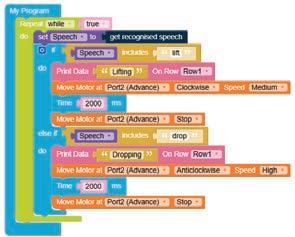
1. Click on the Control category in the Blocks panel.
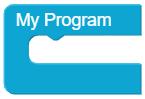
2. Drag the My Program block to begin your program. The execution of all the blocks present inside this occurs step by step.
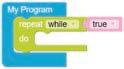
3. Drag the repeat while block from the Loops category and drop it inside the My Program block to begin the infinite loop. The loop value is set to true by default.
4. Click on the Variables category.
5. Click on the Create variable button. A pop-up box appears asking you to enter a new variable name.
• Enter a suitable variable name, let us say "Speech".
• Click on the OK button.
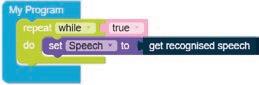
6. Drag the set to block from the Variables category and drop it inside the repeat while block.
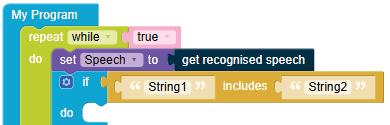
7. Drag the get recognised speech block from the Speech Recognition category and attach it to the set to block.
8. Now, drag the if block from the Control category and drop it below the set to block.
9. Click on the settings icon of the if block. A pop-up box appears.
10. Drag the else if block and drop it below the if block in the pop-up box (refer to the image below).
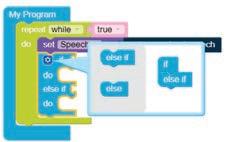
11. Click on the settings icon again to hide the pop-up box.
12. Now, drag the includes block from the Text category and attach it to the if block.
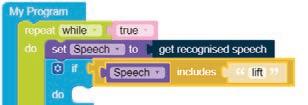
13. Drag the Speech block from the Variables category and drop it in the left text box of the includes block.
14. Type "lift" in the right text box of the includes block.
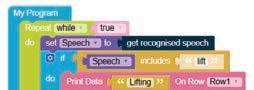
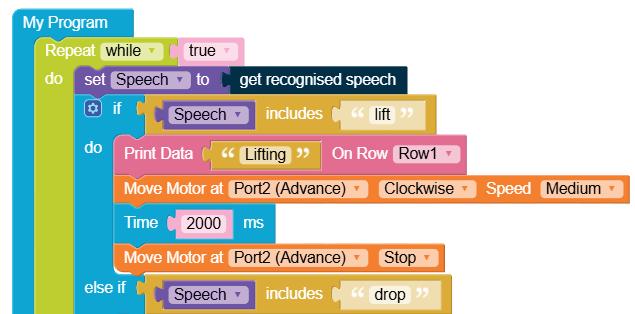
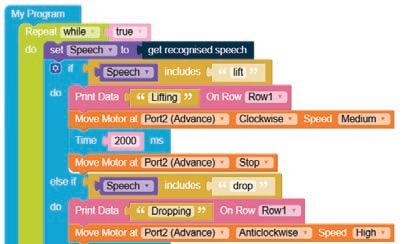
15. Now, drag Print Data block from Display category and drop it inside the do part of the if block.
16. Drag the Text Box block from Text category and drop it in the empty space of the Print Data block. Type "Lifting" in the Text Box block.
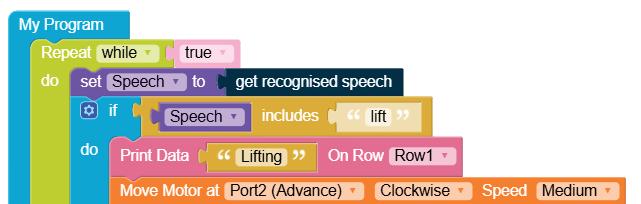
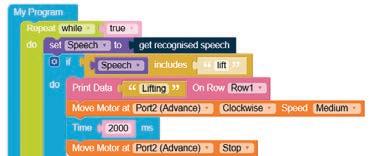
17. Drag the Move Motor at block from the Motor category and drop it below the Print Data block.
18. Configure the motor at Port2 (Advance) as clockwise by selecting the Clockwise option from the drop-down.
19. Select the speed of the motor as Medium from the Speed drop-down.
20. Drag the Time block from the Control category and drop it below the Move Motor at block.
21. Type "2000" in the value box of the block. This will allow the bot to lift an object for 2000 milliseconds (ms) or 2 seconds. Now, drag Move Motor at the block for Port2 (Advance) to Stop the motor. This will instruct the bot to stop.
22. Similarly, drag another includes block and attach it to the else if block.
23. Drag the Speech block and drop it in the left text box of the includes block.
24. Type "drop" in the right text box of the includes block.
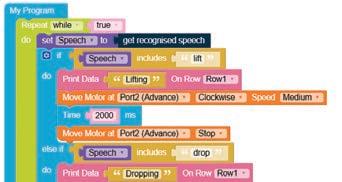
25. Now, drag Print Data block from Display category and drop it inside the do part of the else if block.
26. Drag the Text Box block from Text category and drop it in the empty space of the Print Data block. Type "Dropping" in the Text Box block.
27. Now, drag the Move Motor at block and drop it below the Print Data block.
28. Configure the motor at Port2 (Advance) as anticlockwise by selecting the Anticlockwise option from the drop-down.
29. Select the speed of the motor as High from the Speed drop-down.
30. Drag the Time block and drop it below the Move Motor at block.
31. Type "2000" in the value box of the block. This will allow the bot to drop an object for 2000 milliseconds (ms) or 2 seconds.
32. Now, drag Move Motor at block for Port2 (Advance) to Stop the motor. This will instruct the bot to stop.
33. Give a name to your program, save it, and then compile it.
34. Now the program is ready to burn on the RAK, and you can play the game.
Note: The RAK should be connected to your computer through a Bluetooth or USB cable for the experiment to run.
35. Click on the Run button on the AI window.
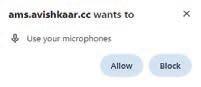
36. Allow the system to use your microphone to hear your commands.
37. Click on the microphone button present on the AI window.
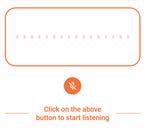
38. Give any command (lift or drop).
39. Again, click on the microphone button and observe the output on the RAK.
In this experiment, computer vision is used to recognise hand gestures through the camera.
• The AI model is trained to detect specific hand poses, such as “Palm,” and “Fist”.
• Once trained, the model can identify these gestures in real-time.
• Each gesture then triggers specific actions within the game.
Instructions
Before we start writing the code, let us train our AI Model. Follow the given steps:
1. Allow the system to use your camera.
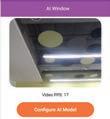
2. Click on the Configure AI Model button in the AI Window on the right of your screen.
3. Choose your model by selecting Handpose from the Create Your Model pop-up window.
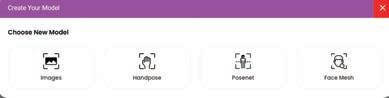
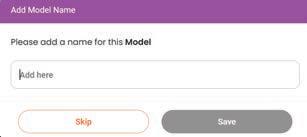
4. Add a name for your model and save it. You can also skip it.
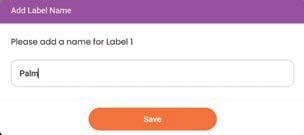
5. Now, add the label name as "Palm" and click on the Save button.
6. Click on the Start Recording button and show your palm up to 60 Frames on the camera.
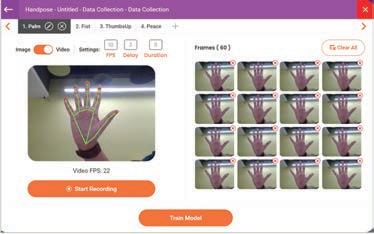
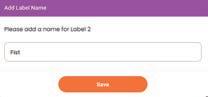
7. Now, click on the Plus sign on the top left corner and add a name for Label 2. Here, the name of the Label 2 is "Fist". Then, click on the Save button.
8. Similarly, show your fist on the camera and record different fist postures by showing your fist on the camera.
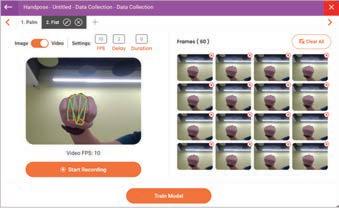
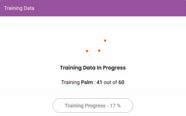
9. Now, click on Train Model button to train the AI about these poses. It will take a few minutes.

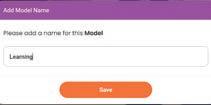
10. Add an appropriate model name and save it.
11. Test your model to check whether the AI is able to recognise the palm and fist poses correctly.
12. Now, click on the Download button.
13. You are now ready to write your code.
1. Click on the Control category in the Blocks panel.
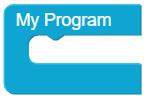
2. Drag the My Program block to begin your program. The execution of all the blocks present inside this occurs step by step.
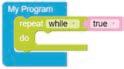
3. Drag the repeat while block from the Loops category and drop it inside the My Program block to begin the infinite loop. The loop value is set to true by default.
4. Now, drag the if block from the Control category and drop it inside the repeat while block.
5. Click on the settings icon of the if block. A pop-up box appears.
6. Drag the else if block and drop it below the if block in the pop-up box. Repeat this for two times.
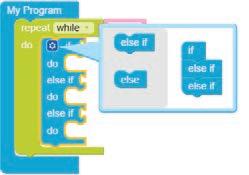
7. Click on the settings icon again to hide the pop-up box.
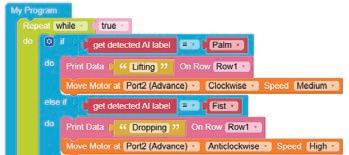
8. Drag the equal operator block from the Control category and attach it to the if block.
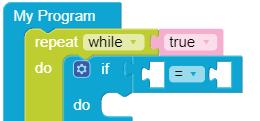
9. Now, drag the get detected AI label block from the AI category and drop it in the left part of the equal operator block.
10. Drag the Palm block from the AI category and drop it in the right part of the equal operator block.
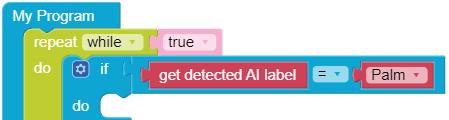
11. Now, drag Print Data block from Display category and drop it in the do part of the if block.
12. Drag the Text Box block from Text category and drop it in the empty part of the Print Data block. Type "Lifting" in the Text Box block.
13. Drag the Move Motor at block from the Motor category and drop below the Print Data block.
14. Configure the motor at Port2 (Advance) as clockwise by selecting the Clockwise option from the drop-down.
15. Select the speed of the motor as Medium from the Speed drop-down.
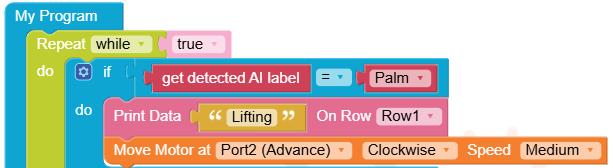
16. Similarly, drag another equal operator block and attach it to the first else if block.
17. Now, drag the get detected AI label block and drop it in the left part of the equal operator block.
18. In the right part of the equal operator block, drag and drop the Palm block from the AI category. Select the Fist option from the drop-down of the Palm block.
19. Now, drag Print Data block from Display category and drop it in the do part of the else if block.
20. Drag the Text Box block from Text category and drop it in the empty part of the Print Data block. Type "Dropping" in the Text Box block.
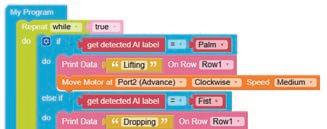
21. Now, drag Move Motor at block and drop it below the Print Data block.
22. Configure the motor at Port2 (Advance) as anticlockwise by selecting the Anticlockwise option from the drop-down.
23. Select the speed of the motor as High from the Speed drop-down.
24. Similarly, drag another equal operator block and attach it to the second else if block.
25. Now, drag the get detected AI label block and drop it in the left part of the equal operator block.
26. In the right part of the equal operator block, drag and drop the Palm block from the AI category. Select the None option from the drop-down of the Palm block.
27. Now, drag Move Motor at block and drop it in do part of the second else if block.
28. Configure the motor at Port2 (Advance) to Stop.
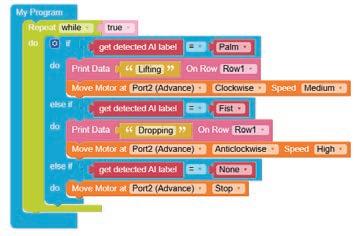
29. Give a name to your program, save, and then compile it.
30. Now the program is ready to burn on the RAK, and you can play the game.
Note: The RAK should be connected to your computer through a Bluetooth or USB cable for the experiment to run.
31. Click on the Run button on the AI window.
32. Show any pose with your hand (Palm or Fist) on the camera.
33. Observe the output on the RAK.
A. Tick () the Correct Option.
1 Which category contains the block used to detect AI labels?
a Display b AI
c Motor
d Control
2 Which among the following blocks gets the speech recognised as text in this program?
a Move Motor at
c Print Data
b get recognised speech
d My Program
3 What hand gesture should you show to make the lift move up?
a Fist
c Thumbs up
B. Answer the Following.
b Wave
d Palm
1 What happens when the AI detects no handpose on the camera?
2 How does Natural Language Processing (NLP) contribute to this experiment?
C. Apply Your Learning.
1 How could you make the RAK respond to an additional command, like “stop” in speech recognition mode?
2 What would happen if the “None” block was not included in the code in camera capture mode?




























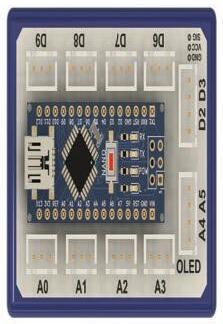
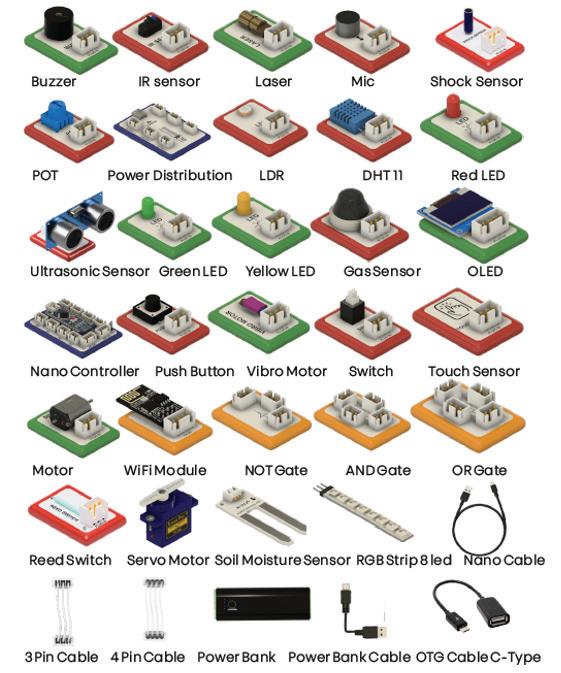
The Tinker Orbits Kit is an innovative, hands-on STEM learning platform designed to ignite curiosity and creativity in young learners. This kit provides playful and practical introduction to electronics, circuits, sensor integration, and the Internet of Things (IoT) through engaging, student-friendly DIY projects.
Follow the given steps to login on AI Connect:
1. Click on the Go to Practice button to start the practice. You will be directed to the AI Connect web page as shown.

2. Click on Tinker Orbits Coding box or click on the Create button in the box to create a new project.
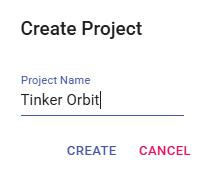
3. A Create Project pop-up box appears. Type the name of the project, here, we have typed ‘Tinker Orbit’ and then click on the CREATE tab.
4. Click on the “Yes, Show Me!” button to take a quick demo of the workspace. Otherwise, click on “No, I’m Good” to proceed further.

5. You will be directed to the workspace.
a. Click on the Installation tab and then click on the Download EXE tab and download the .exe file provided.
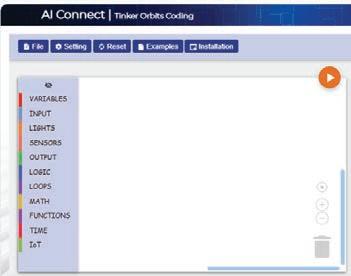
b. Locate and run the setup package (probably in your Downloads folder) and follow the instructions of the setup wizard. Do not change the default installation path.
c. Click Finish to complete the installation.
Note: Make sure to run the agent file every time before logging in to AI Connect. This file must always run in the background while using Tinker Orbits.
6. You can now start building your code.
The coding interface serves as the central hub for your kit, acting as an Integrated Development Environment (IDE) that enables you to write code for all of your experiments. This code is then transferred to the hardware.
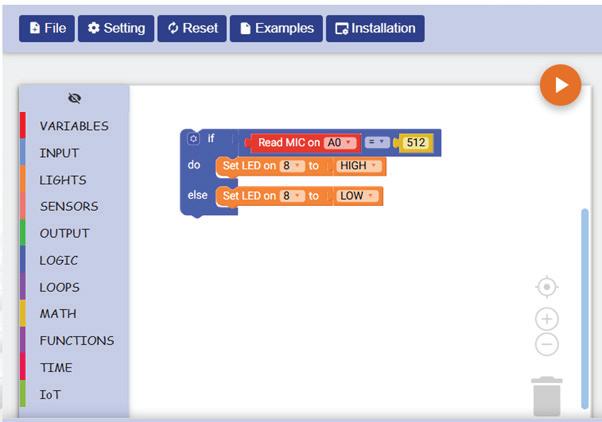
The coding interface consists of the following components:
1. Workspace Area: This is the area where you drag blocks for the code you want to write.
2. Blocks Panel: The blocks from the Blocks Panel help make your code.
3. Upload Button: The Upload button transfers the code to the brain module.
4. Menu Bar: In the menu bar on the top, you can see options like:
• File: Allows you to open, save, or download your coding projects. You can also export your blocks or code or describe activity (in the About option under this menu).
• Setting: Adjust configuration (ports, devices, etc.).
• Reset: Clears the workspace to start fresh.
• Examples: Opens ready-made sample Tinker Orbits coding activities.
• Installation: Helps install Tinker Orbits Agent.
Burning means loading your code into the hardware. Once you have arranged the blocks to create the code, follow the given steps to burn your code.
1. Connect the brain module to the computer/laptop through the USB cable.
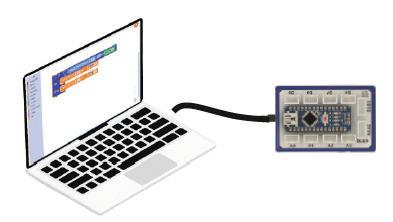
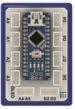
2. Click on the Setting option from the menu bar, then select Refresh.
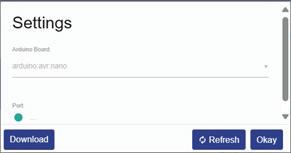
3. Choose the visible COM port from the list and click Okay.
4. Click on the Upload button on the top of the workspace.
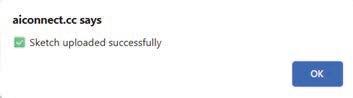
5. After a while, “Sketch uploaded successfully” prompt will be displayed indicating that the code has been successfully uploaded to the microcontroller.
Let’s learn how to use an LDR (Light Dependent Resistor) to detect light intensity and control an LED based on light conditions. You will see how the LDR changes its behaviour when the amount of light changes and how it can turn an LED on or off automatically.
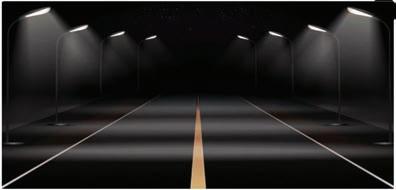
Have you ever wondered how streetlights automatically turn on when it gets dark and turn off when the sun rises? These lights are controlled by a simple electronic system that can sense the amount of light in the environment.
In this activity, you will make a similar setup using an LDR to sense light levels and an LED to act like a streetlight. Just like real streetlights save energy by working only when needed, this activity will show you how sensors and circuits work together to make smart systems.
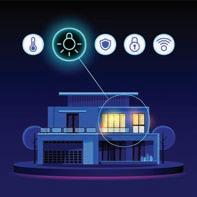
Some of the real-life examples of light-sensing systems are:
1. Smart Home Lightning System

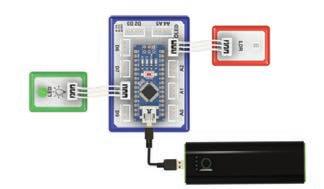
Circuit
• Connect an LED module to D8 pin of the brain module using a 3 pin cable.
• Connect an LDR sensor module to A3 pin of the brain module using another 3 pin cable.
• Connect the power bank to the brain module using a USB cable to supply power.
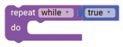
1. Drag the repeat while block from the LOOPS category and drop it to the workspace.

2. Drag the true block from the LOGIC category and attach it to the repeat while block.
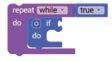
3. Drag the if block from the LOGIC category and drop it inside the repeat while block.
4. Click the settings icon of the if block, then drag and drop the else block below the if block in the pop-up box.
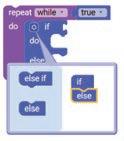
5. Click on the settings icon again to hide the pop-up box.
6. Drag the equal operator block from the LOGIC category and attach it to the if block.
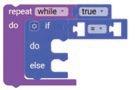
7. Select ‘<’ from the drop-down of the equal operator block.
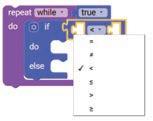
8. Drag the Read LDR on block from the SENSORS category and drop it in the left part of the less than operator block. Set the pin number to A3.
9. Drag the number block from the MATH category and drop it in the right part of the less than operator block. Type ‘255’ in the text part of the number block.
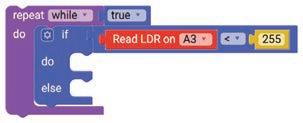
10. Drag the Set LED on block from the LIGHTS category and drop it in the do part of the if block. Select ‘8’ from the drop-down menu of the Set LED on block.
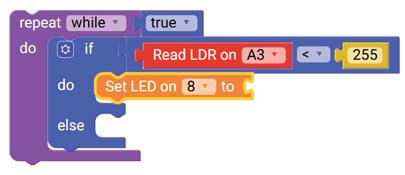
11. Drag the HIGH block from the LIGHTS category and attach it to the Set LED on block.
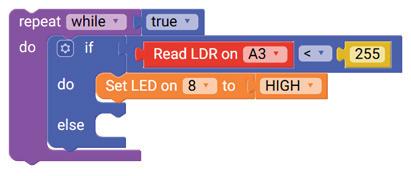
12. Similarly, drag another Set LED on block and drop it in the else part of the if block. Select ‘8’ from the drop-down menu of the block.
13. Attach HIGH block to the Set LED on block and select LOW from its drop-down.
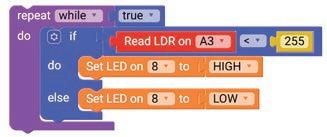
14. The brain module uses the LDR to sense light levels and turns the LED on in darkness and off in brightness.
Note:
• Make sure to run the agent file every time before logging in to AI Connect. This file must always run in the background while using Tinker Orbits.
• After completing each experiment, remember to burn (upload) your code by connecting the brain module to your computer/laptop, selecting the correct COM port, and clicking the Upload button. Wait for the “Sketch uploaded successfully” message to confirm.
Scan QR code to view output
A. Tick () the Correct Option.
1 What component is used to detect light intensity in this experiment?
a LED
c LDR sensor
2 When does the LED turn ON automatically?
a When it is bright
c When the LDR is removed
3 What is the function of the LDR in the circuit?
a To store energy
c To blink the LED
B. Answer the Following.
1 What does LDR stand for?
b Resistor
d Buzzer
b When it is dark
d When the power is off
b To sense light levels
d To control voltage
2 What should you do to confirm your code is uploaded successfully?
C. Apply Your Learning.
1 What real-life system works like this experiment?
2 How does this experiment help save energy in real life?
Let’s learn how to create an automatic fan system using an IR sensor and a motor. You will see how the IR sensor detects objects and triggers the motor to turn on, simulating an automatic fan.
Have you ever wondered how the lights in some rooms turn on automatically when you enter? This happens because of a simple electronic system that detects your presence. In this experiment, we will use an IR sensor to detect object and turn on a fan. This will help you learn how sensors and circuits work to make our lives easier.
Smart Home
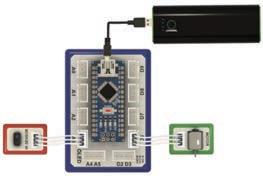
• Connect an IR sensor module to A3 pin of the brain module using a 3 pin wire.
• Connect a motor module to D6 pin of the brain module using another 3 pin wire.
• Connect the power bank to the brain module using a USB cable to supply power.
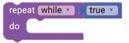
1. Drag the repeat while block from the LOOPS category and drop it to the workspace.

2. Drag the true block from the LOGIC category and attach it to the repeat while block.
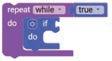
3. Drag the if block from the LOGIC ategory and drop it inside the repeat while block.
4. Click the settings icon of the if block, then drag and drop the else block below the if block in the pop-up box.
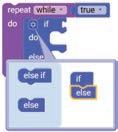
5. Click on the settings icon again to hide the pop-up box.
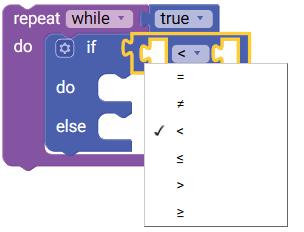
6. Drag the equal operator block from the LOGIC category and attach it to the if block.
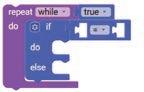
7. Select ‘<’ from the drop-down of the equal operator block.
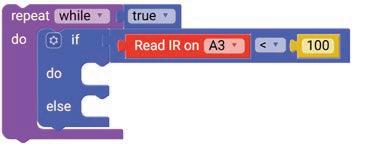
8. Drag the Read IR on block from the SENSORS category and drop it in the left part of the less than operator block. Set the pin number to A3.
9. Drag the number block from the MATH category and drop it in the right part of the less than operator block. Type ‘100’ in the text part of the number block.
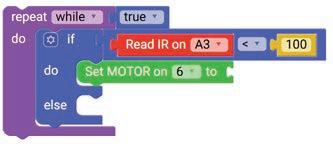
10. Drag the Set Motor on block from the OUTPUT category and drop it in the do part of the if block. Set the Motor pin to ‘6’ from the drop-down.
11. Drag the HIGH block from the OUTPUT category and attach it to the Set Motor on block.
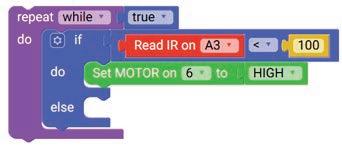
12. Similarly, drag another Set Motor on block from the OUTPUT category and drop it in the else part of the if block. Select ‘6’ from the drop-down menu of the block.
13. Attach HIGH block to the Set Motor on block and select LOW from its drop-down.
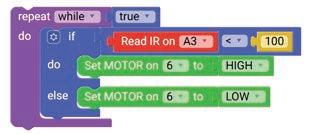
14. The IR sensor detects when someone is near and sends a signal to the brain module, which then turns the fan on or changes its direction.
Note:
• Make sure to run the agent file every time before logging in to AI Connect. This file must always run in the background while using Tinker Orbits.
• After completing each experiment, remember to burn (upload) your code by connecting the brain module to your computer/laptop, selecting the correct COM port, and clicking the Upload button. Wait for the “Sketch uploaded successfully” message to confirm.
A. Tick () the Correct Option.
1 What sensor is used in this experiment?
a LDR sensor b IR sensor
c Ultrasonic sensor d Sound sensor
2 What happens when the IR sensor detects an object?
a The motor turns on b The light blinks
c The motor turns off d The system resets
3 Which block category contains the if block?
a OUTPUT b LOGIC
c SENSORS d MATH
B. Answer the Following.
1 What is the main goal of this experiment?
2 Why is it important to use the “repeat while true” block in this experiment?
C. Apply Your Learning.
1 If the IR sensor doesn’t detect any object, what will happen to the motor?
2 How can this experiment be used in real life?
Let us design a simple intruder alarm system using an LDR sensor, LED, laser and buzzer. When the laser light falling on the LDR is blocked, the LED glows, and the buzzer makes a sound. Through this activity, students will learn how light sensors can help detect movement or entry in a restricted area.
In robotics and modern security systems, sensors are widely used to detect motion or changes in the environment. Light sensors, such as LDRs (Light Dependent Resistors), help identify when light is present or blocked. These sensors are often used in automatic security alarms, where breaking a light beam triggers alerts like sirens or warning lights to signal unauthorised entry.
Some of the real-life applications of the LDR sensor are:
1. Intruder Detection Systems
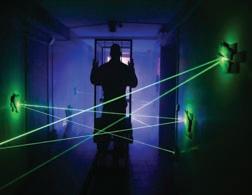
2. Home Security Systems
• Connect the Laser module to pin A2 on the brain module using a 3 pin wire.
• Connect the LDR module to A0 pin on the brain module using a 3 pin wire.
• Connect the LED module to D6 pin on the brain module using a 3 pin wire.
• Connect the Buzzer module to D8 pin on the brain module using another 3 pin wire.
• Connect the Power bank to the brain module using a USB cable to supply power.
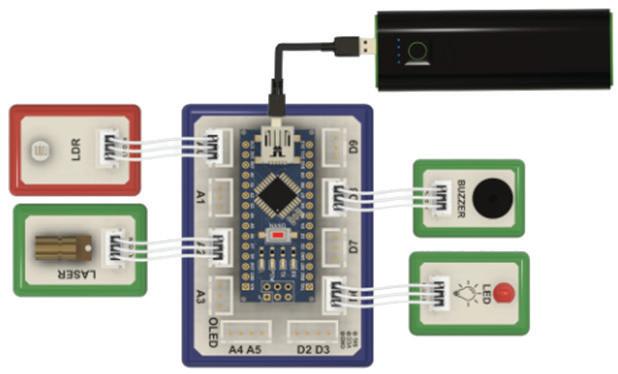
1. Drag the Set LASER on block from the LIGHTS category and drop it to the workspace. Set its pin to ‘A2’ from the drop-down.

2. Drag the HIGH block from the OUTPUT category and attach it to the Set LASER on block.

3. Drag the if block from the LOGIC category and drop it below the Set LASER on block.
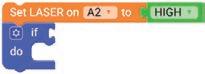
4. Click on the settings icon of the if block and drag and drop the else block in the pop-up box.
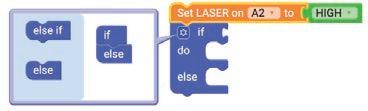
5. Click on the settings icon again to close the pop-up box.
6. Drag the equal operator block from the LOGIC category and attach it to the if block. Select ‘>’ option from the drop-down of the equal operator block.
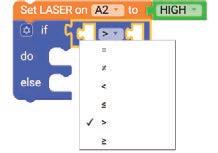
7. Drag the Read LDR on block from the SENSORS category and drop it in the left part of the greater than operator block. This block is set to pin ‘A0’ by default.
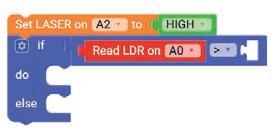
8. Drag the number block from the MATH category and drop it in the right part of the greater than operator block. Type ‘500’ in the text part of the block.
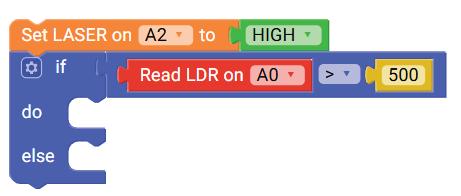
9. Drag the Set LED on block from the LIGHTS category and drop it in the do part of the if block. Set the LED pin to ‘6’ from the drop-down.
10. Drag the HIGH block from the LIGHTS category and attach it to the Set LED on block. Select LOW from the drop-down of the block.
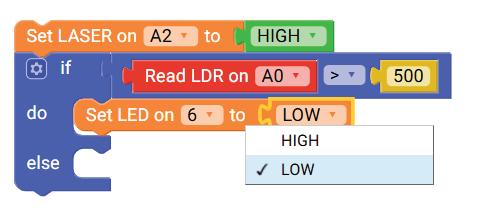
11. Drag the Set BUZZER on block from the OUTPUT category and drop it below the Set LED on block. Set its pin to ‘8’.
12. Drag the HIGH block from the OUTPUT category and attach it to the Set BUZZER on block. Select LOW from the drop-down of the block.
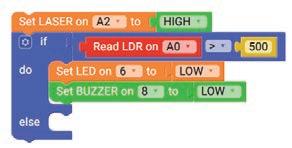
13. Similarly, drag another Set LED on block with pin ‘6’ and place it in the else part of the if block. Configure this block to HIGH.
14. Drag Set BUZZER on block with pin ‘8’ and drop it below the Set LED on block. Configure this block to HIGH.
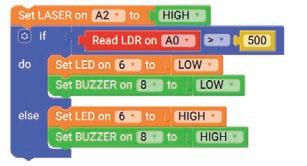
15. The laser keeps the LDR active. When the light path is blocked, the brain module senses the change and turns on the LED and buzzer as an alarm.
Note:
• Make sure to run the agent file every time before logging in to AI Connect. This file must always run in the background while using Tinker Orbits.
• After completing each experiment, remember to burn (upload) your code by connecting the brain module to your computer/laptop, selecting the correct COM port, and clicking the Upload button. Wait for the “Sketch uploaded successfully” message to confirm.
Scan QR code to view output
A. Tick () the Correct Option.
1 Which component is used to detect light in this experiment?
a LED b LDR Sensor
c Buzzer d Laser Module
2 What happens when the laser light falling on the LDR is blocked?
a The LED turns off b The buzzer stops making sound
c The LED glows and the buzzer makes a sound d Nothing happens
3 Which component acts as the alert device in the intruder alarm system?
a LDR Sensor b Laser Module
c LED and Buzzer d Brain Module
B. Answer the Following.
1 Write any two real-life applications of an LDR sensor.
2 What role does the buzzer play in the intruder alarm circuit?
C. Apply Your Learning.
1 How can you modify this circuit to alert the user with a message on an OLED display instead of a buzzer sound?
2 Suggest one way this intruder alarm can be useful in daily life (for example, at home or in school).
This book introduces learners to the captivating realm of robotics, with a learner-friendly, motivating, and hands-on approach. It combines theoretical understanding with practice, through insightful examples of real-world applications, while promoting creativity and coding skills. Emphasising a project-based learning methodology, the book provides a series of projects, each with detailed instructions. These instructions can be effortlessly executed using the accompanying robotics hardware kit. The assembly and programming of the robotics systems are done through block-based coding, and simulation environments; accelerating the experiential learning journey of the learners.
• Hands-on Experiments: Engaging experiments that allow students to build and test-run robots themselves.
• Detailed Coding Practice: Step-by-step coding instructions to program robots, making it easy for beginners to learn.
• Things Around Us: Each experiment connects robotics to real-world scenarios, showing how technology solves everyday problems.
• Comprehensive Background: Clear explanations of the concepts and the technology behind each experiment, helping students understand the "why" and the "how."
• Interactive Exercises: Exercises at the end of each experiment to reinforce learning and to challenge students to think critically.
Uolo partners with K-12 schools to provide technology-enabled learning programs. We believe that pedagogy and technology must come together to deliver scalable learning experiences that generate measurable outcomes. Uolo is trusted by over 15,000+ schools across India, Southeast Asia and the Middle East.