![]()


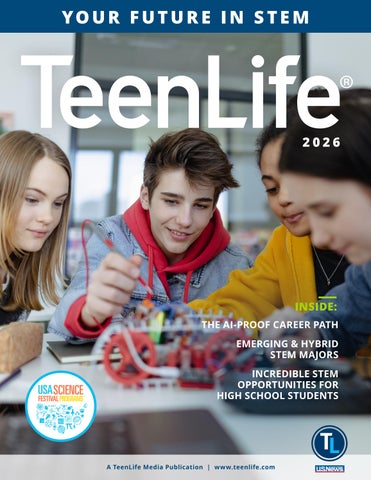
re you already building an app, fascinated by bioinformatics, or excited by the prospect of space exploration? Learn how to channel your passion into an unstoppable career. We’ve curated the ultimate roadmap for navigating the modern STEM landscape. Whether you dream of designing hyper-efficient solar grids, developing personalized cancer treatments through genetic engineering, or finding new ways to tackle climate change, these dynamic careers are within your reach.
Inside this essential guide, you’ll discover emerging and hybrid STEM majors, competitive STEM career salaries, actionable steps you can take now to prepare for a college STEM major, and an “AI-proof” career path.
Why STEM? It’s the future. It mixes AI, sustainable tech, and groundbreaking discoveries, using your creativity for real solutions. You don’t have to choose between a logical mind and an imaginative spirit—STEM demands both. In the next decade, the U.S. Bureau of Labor and Statistics projects that STEM occupations will continue to grow at double the rate of non-STEM jobs, making them a sound choice for the future.
If you’re excited by science but need a starting point, explore our list of curated summer programs. These experiences offer a no-pressure environment to try out different STEM careers. Whether you’re interested in coding or just curious about what’s next in biotech, these hands-on opportunities are perfect for building the skills and portfolio that truly stand out on college applications—and launch your career beyond.
PUBLISHER
TeenLife Media, teenlife.com
EDITOR
Editor-in-ChiefNancy Li, nancy@teenlife.com
Managing EditorJodi Ireland, jodi@teenlife.com
Associate Editor - Stefanie Tedards, stedards@joincollegeadvisor.com
ADVERTISING SALES
Director of SalesBrenda Boos, brenda@teenlife.com
Sales Account ManagerJen Fisher, jen@teenlife.com
Sales Account ManagerGina Messina, gina@teenlife.com
Sales & Support AssociateRegan Beiermann, regan@teenlife.com
DISTRIBUTION
Digital Marketing ManagerDustin Silvaer, dustin@teenlife.com
DESIGNER
Kathy Tilton, kbtilton@gmail.com
To download a PDF of this Guide, go to: teenlife.com/guides/yfi-stem
To connect with opportunities found in this guide, go to: teenlife.com/request-yfi-stem
• 1, 2, 3, 4 and 6-week programs
• Credit and Noncredit courses
• Explore college majors and potential careers
• Build a resume and/or portfolio
• Make new friends from around the world
• Stand out to college admissions
• Aerospace Engineering
• Artificial Intelligence Application Development
• Biomedical Engineering
• Clinical Immersion
• Coding: Learn to Code
• And more! EXPERIENCE COLLEGE

• Cybersecurity
• Electrical Engineering
• Environment and Society
• Forensic Science
• STEM in Sports


A major reason I decided to come to RIT was because I could earn a Biotechnology and Molecular Bioscience Bachelor of Science Degree with a Bioinformatics Master of Science Degree and have multiple opportunities to play my clarinet as a Performing Arts Scholar.
RIT doesn’t offer majors in performing arts, which means that any musical ensemble I am interested in is open for me and students of all majors to audition for. RIT has allowed me to play in a variety of ensembles as a creative outlet–including RIT Wind Ensemble, RIT Philharmonic Orchestra, and the RIT Game Symphony Orchestra (a student-run club that specializes in video game music). I have grown as a musician through taking individual private clarinet lessons and standard academic courses like Music Theory. All these courses and activities have been inclusive and welcoming.
My professors in both music and biotechnology are supportive of either of my passions and welcome opportunities that come my way in either field. Over the past four years, they have become friends and close mentors that have supported every step of my academic journey. Participating in music allows me to practice professional skills like leadership, communication, and collaboration, that are transferable to my future career in biotechnology.

By: Jodi Ireland
o you want to build the next world-changing AI, engineer sustainable cities, or find the cure for a rare disease? Fantastic! The world needs your brain. But if you’re looking at Tier 1 or Ivy League STEM programs, a 4.0 GPA and a love of Minecraft won’t elevate you above the other applicants.
9 th grade
Every year, thousands of students with perfect SAT math scores apply to MIT, Caltech, Georgia Tech, Stanford, Carnegie Mellon, and other popular STEM schools. Gaining admission requires changing your approach. You must think like a specialized innovator, not “a student who gets good grades and test scores.”
Admissions officers want “pointy” students — people who are deeply, almost obsessively, interested in a specific area of STEM.
• Join the robotics club, try a coding elective, enter a local science fair, or enroll in a STEM summer program.
• Focus on building a strong foundation in math.
• Don’t worry about becoming president of a club yet. Show up and see what sticks.
10 th grade
• Pick one or two areas and get granular. For instance, if you like robotics, start learning computer-aided design (CAD) or Python on the side.
• Look for summer programs or pre-college intensives to learn even more about what interests you.
• Start working toward leadership roles in your extracurriculars.
11th grade
• Consider junior year as your heavy-lifting year. Seek university-level research or high-level competitions.
• Start your STEM portfolio. Take the American Mathematics Competitions (AMCs) or go for a statelevel placement in Science Olympiad.
• Focus on opportunities that prove you can handle college-level rigor.
12th grade
• Curate your story. Your applications shouldn’t just list what you did; they should explain why your experiences and interests matter.
• Polish your portfolio/ GitHub, write your essays, and hit those early action application deadlines.
When you’re exploring STEM extracurriculars, think quality over quantity. Admissions officers are experts at spotting resume padding. They want to see longevity, leadership, and tangible results.
Independent research and passion projects
Use your weekends and free time to pursue your own research. Documenting a project from problem to solution shows more initiative than you’d demonstrate in most clubs.
Specialized competitions
Elite schools love to see specialized, meatier challenges, like AMC 10/12 (math), USACO (coding), or Regeneron Science Talent Search (science).
Internships and university research
How do you get a research spot at a local university if you’re still in high school? Try a cold email. Look up professors at local colleges who are doing work you think is cool.
Send a short, professional email: Dear [Professor’s name], I’ve read your paper on [topic], and I’m a high school student interested in [area]. Do you have any room for a volunteer assistant this summer?
Alternatively, ask your parents, older friends, or family members if they have any connections to the department you’re interested in volunteering for. Maybe they can make an introduction.
Let’s address the elephant in the room: ChatGPT. Don’t use it. Admissions officers use high-tech and old-school sleuthing to identify content generated by a machine, not a human.
• AI detectors: Tools like GPTZero and Turnitin’s AI writing detector are becoming standard.
• The voice check: Admissions officers read thousands of essays. They know how a 17-year-old’s voice sounds.
• Verification: Submitting a finely-tuned, smooth essay, but having average English grades or a low SAT reading score is a red flag.
→ PRO TIP: Use your voice, including slang (in moderation), personal anecdotes, and specific examples about your experiences — especially failures and what you’ve learned from them. AI can’t write about failure. It tries to make everything sound perfect. Perfect is boring. Personality makes an impression on admissions officers.
GitHub is becoming the new resume for all STEM students because you can show what you’ve built.
• Host your research papers, non-confidential datasets, and high-resolution images of your lab setups. Create a “read-me” file to explain your hypothesis, process, and results.
• Upload your CAD files and use the Wiki feature to document your build logs. Admissions officers love to see the iteration process in action.
• Host your solutions to complex problems or your LaTeXformatted papers.
A digital portfolio gives admissions officers a chance to click through and see the depth of your work and shows that you walk the walk of a hopeful STEM professional.
While some colleges and universities remain test-optional, other schools like MIT and Purdue have reinstated testing requirements. Regardless, schools want to know whether aspiring STEM students have the math chops to excel in a rigorous calculus sequence, for example. If you’re applying to selective programs, submit your score(s).
Do you need a superscore?
Colleges take your highest section scores from different test dates and combine them into one “super” score. Most Tier 1 colleges do superscore. Check individual websites for details. Resist the temptation to take your SATs/ACTs over and over, either, which could suggest testing fatigue.
The digital SAT has become adaptive. The test has two modules. How you perform on module one determines the difficulty of the second. If you ace the first set of math questions, the second set becomes harder, but it’s the only way to reach that elusive 800 score.
For the most elite STEM schools, even a perfect 1600 score won’t necessarily help you stand out. The SAT measures how well you follow instructions. The AMC measures your ability to solve problems you’ve never seen before. A respectable score tells an admissions officer that you’re in the top tier of mathematical thinkers — globally.
If math isn’t your primary thing, don’t sweat it. Focus on your research or personal projects instead.
Remember: admissions officers at the best universities aren’t looking for automatons. They want to foster and maintain a diverse student body, and they’re looking for humans who will enhance the school.


Your great adventure needs a next step. At Belmont, we know you have big goals, as well as talents and passions all your own. And we know this world is better when you’re living a life that lights up your soul. Our hometown of Nashville, Tennessee, knows a thing or two about careers fueled by curiosity, creativity and innovation.
COLLEGE OF SCIENCES & MATHEMATICS: Mathematics, Biochemistry & Molecular Biology, Neuroscience, Physics, Computer Science, Engineering Physics, Psychology, Pre-Health Concentrations*
COLLEGE OF PHARMACY & HEALTH
SCIENCES: Pharmacy (PharmD), Exercise Science, Public Health, Social Work, Physical Therapy (DPT), Occupational Therapy (MS, OTD)
COLLEGE OF NURSING: Bachelor’s, Master’s and Doctorate degrees
COLLEGE OF MEDICINE: Doctor of Medicine (MD)
*pre-health advising available to all undergraduate majors

By: Jodi Ireland
eality check time! AI isn’t coming for all the jobs, but it’s coming for the boring ones. Instead of avoiding technology-related careers, why not become the person technology can’t live without?
AI is increasingly replacing entry-level roles focused on routine tasks. Does AI’s evolution herald the death of STEM? Hardly. But the bar has been raised.
You may wonder how, as a new graduate, you’ll get the experience to move beyond that junior-programming level. Others have raised concerns about the junior pipeline evaporating. Employers and colleges are:
• Rethinking internships by creating opportunities where emerging professionals collaborate with AI to enhance learning.
• Strengthening mentorships by connecting experienced developers with newcomers to pass down knowledge and best practices.
• Modernizing education by combining core technical training with lessons in AI fluency.
• Prioritizing potential over productivity and understanding that cultivating talent yields lasting value beyond immediate results.
AI literacy has become an accepted part of everyone’s lives.
The art of the prompt
You may have heard the term prompt engineering in passing. Some folks may think it’s a fancy way of saying typing into a chat box. They’re wrong.
Prompt engineering is the art and science of structuring input to guide AI toward generating high-quality results.
Think: Garbage in, garbage out. The better the prompt, the better the product.
• Ad hoc users ask vague questions and get generic, hallucinated fluff.
• AI-literate people use techniques like chain-of-thought (forcing AI to show its step-by-step logic) and few-shot prompting (giving AI examples of what a good answer looks like).
Welcome to STEM’s new search skill. Today, you have to know how to steer LLMs.
Is using AI cheating?
Ah. The million-dollar question for teens. Here’s my golden rule: AI’s my co-pilot, but it doesn’t replace my brain. If you use AI to write your lab report because you don’t understand the chemistry, you’re not hacking the system. You are handicapping yourself, however.
When the AI hallucinates and invents a fake chemical reaction, you won’t have the foundational knowledge to catch its error. Plus, leaning into AI to do all your thinking means you shortchange your own growth.
AI literacy means knowing when the machine is lying to you. Sure, you can use AI to explain a complex physics concept in four different ways. But that final approve button? That’s yours. That’s where your value lies.
So if AI can code and analyze data, what’s left for us humans? Plenty. The most secure jobs require complex judgment, empathy, and ethical reasoning. Here are three burgeoning fields where humans are — and will remain — essential.
Bioethics and governance
AI helps decide who gets an organ transplant or which new drug gets fast-tracked. Who writes the rules for these decisions? AI lacks a moral compass, but it does follow patterns. Bioethicists and governance specialists ensure technology doesn’t bake bias and discrimination into our healthcare and legal systems. This hybrid career is part science, part philosophy, and part law.

Have you ever used an AI tool and felt frustrated because you couldn’t figure out why it gave you a certain answer? User experience (UX) for AI makes the black box transparent. We need designers who can build interfaces that help humans trust and understand automated decisions — something AI can simulate but never actually feel.
High-stakes systems engineering
In a video game, an AI glitch is funny. In a nuclear power plant or a self-driving car? Potentially catastrophic.
Systems engineering includes safety, validation, and managing black swan events — those weird, unprecedented moments not included in the AI’s training data. AI can predict the likely future. Only humans can prepare for the impossible future.
The most successful people in the AI era will have a T-shaped skill set . Develop deep expertise in one technical area — whatever STEM topic you love. Cultivate a broad ability to work across disciplines, speak to AI, and lead teams.
Check out these T-shaped professionals:
• A software developer (deep coding skills) who also understands marketing principles and UX (broad skills).
• A marketing manager (deep campaign strategy) with strong data analysis and basic design skills (broad skills).
• A project manager (deep process management) with general knowledge of finance, HR, and IT (broad skills).
Identify and develop what you want as your core. Explore broadly, learning about related fields and soft skills. Seek feedback and input where your breadth could improve. And apply and synthesize, using your broad knowledge to enhance your deep expertise (and vice versa).
In a world where everyone can access the same powerful AI, those who can explain the vision and make the ethical call will get promoted first.
The AI-proof career is a mindset. It requires moving from a worker-bee to a systems-architect mentality.
The robots won’t take over the world, but they have begun to take over parts of jobs that most people didn’t like anyway. Your job? Stay curious, stay critical, and stay human.


When I first heard about Summer Discovery, I knew right away that I wanted to get a glimpse of what college life was actually like. I’ve always been someone who likes to plan ahead and get a sense of what’s coming next, so spending part of my summer on a real college campus sounded like the perfect opportunity. I wanted to understand what it feels like to live, study, and make connections in a college environment before it’s time for me to apply. I figured, why wait until senior year to experience that when I could start exploring early and get a deeper perspective than most students my age?
I spent three weeks at UT Austin and then three weeks at UCLA, and honestly, that combination couldn’t have been more perfect. I was extremely privileged to experience two programs over the summer, which felt like a great fit for me since I had already spent about five to six weeks away from home during previous summers. That extra independence helped me feel comfortable right away and let me really make the most of both experiences.
For teens considering a program like this, my biggest piece of advice is to go for it. I remember when my older cousins came home from college for the holidays and immediately said, “I can’t wait to go back.” I had that same exact feeling after Summer Discovery. When I got home, all I could think about was, “When can I go back?” It is that same feeling of belonging, growth, and excitement, and it is something you will carry with you long after the summer ends.

THE ACADEMIES BY HARVARD STUDENT AGENCIES: SUMMER ON-CAMPUS ACADEMIES
$1,800
9th, 10th, 11th & 12th
In-Person & Online
1 Week
The Academies offers two fantastic pre-med programs for students looking to explore the medical world. Our Biology & Chemistry course exposes students to molecular, cellular, and bodily processes, and how diseases spread. Our Anatomy & Physiology course allows students to discover different systems of the body, from cardiology to myology. Students gain a valuable introduction to what it means to study biology, chemistry, and anatomy at the college level and participate in panels with future medical school students. Apply today!
Learn more »
ACADIA INSTITUTE OF OCEANOGRAPHY
$3,300
7th, 8th, 9th, 10th, 11th & 12th
In-Person
2 Weeks
Acadia Institute of Oceanography’s summer marine programs allow students from around the globe to get their feet wet in the world of oceanography! Students live, study, and explore on Mount Desert Island in Maine, home to Acadia National Park. Working with highly qualified faculty members, students get to learn all about physical, chemical, geological, and biological oceanography!
Learn more »
$2,000 - $4,000
9th, 10th, 11th & 12th
In-Person & Online
5 Weeks
Are you a high school–age student with a passion for design—or just want to explore your creative side? Interested in architecture, interior design, landscape design, engineering, game design, sustainable design, or digital media? Boston Architectural College Pre-College Summer Academy lets you dive into creative problem-solving and shape the future of communities. In person or online—no experience required. In-person students can add the Urban Design and Planning Studio, exploring climate change, social justice, and sustainability alongside industry professionals and peers worldwide. Learn more »
$699 - $2,500
7th, 8th, 9th, 10th, 11th & 12th
In-Person & Online
1 - 3 Weeks
$1,595
9th, 10th, 11th & 12th Online
Varies
Award-winning teen summer programs in science, medicine, business, and engineering offer expert teachers, premium campuses, and hands-on learning. Nationally recognized in Forbes, NYT, and Parents, students can choose from four distinct program types. Three-week competitive admissions programs offer research in an advanced field, attract students worldwide, and enhance college admissions credentials. One-week programs introduce teens to exciting specialties not encountered in school. Pre-HS programs ignite passions. Edge tutorials prepare students for fall STEM courses. Day and residential options are available. Learn more
Case Western Reserve University’s pre-college program offers online courses in Astrophysics/Evolutionary Biology, Engineering, Neuroscience, and Biomedical Engineering for high school students. You’ll learn from CWRU instructors, receive expert mentorship throughout the course, and earn a Certificate of Completion. The program offers courses that are 100% online so you can complete the course whenever your schedule allows. Experience engaging recorded video lessons, unit assignments, and a final project to showcase all you’ve learned. Learn more »
CHAMPLAIN PRE-COLLEGE SUMMER PROGRAMS VIEW WEBSITE
$4,600
10th, 11th, 12th & College
In-Person
Weeks
Explore what it takes to be an innovator alongside other motivated high school students at Champlain College’s Pre-College Summer Programs. Champlain’s industry-expert faculty work with students to help them find their path. Our handson learning model, in state-of-the-art labs and studio facilities designed to replicate real-world professional environments, provides students with the opportunity to develop tangible skills and portfolio work in these highly desirable fields. Burlington, Vermont -- one of the Best College Towns in the U.S. Space is limited. Learn more »
$5,750 - $7,250
9th, 10th, 11th & 12th
In-Person
3 - 4 weeks
CIEE’s High School Summer Abroad STEM programs offer hands-on global learning across topics such as engineering, marine biology, sustainability, and more. Master robotics in Tokyo, study aerospace in Toulouse, or conduct ocean conservation research in Cape Town. Whether exploring wildlife in Botswana or urban design in Seoul, you’ll solve real-world challenges alongside local experts. These 3- to 4-week immersive experiences combine field work with cultural discovery, empowering you to build technical skills while gaining a global perspective. Learn more »
WEBSITE
$7,250
10th, 11th & 12th
In-Person
2.5 Weeks
Colorado College’s 2026 Pre-College Block invites students to immerse themselves in dynamic science courses. In Environmental Science and Studies, students venture across the Pike’s Peak Region to investigate Colorado’s striking ecological and geological diversity. In Human Anatomy, students develop a strong understanding of the human body—an ideal experience for students considering careers in medicine or the life sciences. Both courses provide an academically rigorous, experiential approach supported by CC’s expert faculty and the unparalleled natural laboratory of the Rocky Mountains. Learn more »
COLUMBIA UNIVERSITY: SUMMER PROGRAMS FOR HIGH SCHOOL STUDENTS VIEW
Varies
9th, 10th, 11th & 12th
In-Person & Online
1 - 12 Weeks
Discover Pre-College Programs for high school students at Columbia University in New York City. Choose from 70+ courses across a dozen subject areas, ranging from intensive STEM research to creative arts and professional development. With residential, commuter and online options, choose from on- campus courses like Anatomy and Physiology, Introduction to Rehabilitation Science and Physical Therapy, and Intensive Modern Chemistry Laboratory, or online courses such as Introduction to Clinical Medicine, Cell and Molecular Biology of Medicine, and Neuroscience of Psychiatric Disorders. Find out more at sps.columbia.edu/ teenlifestem . Learn more »
CORNELL UNIVERSITY’S PRECOLLEGE
$1,950/Credit (additional charge for Residential Program)
10th & 11th
In-Person & Online
3, 6, or 8 Weeks
Cornell University’s Precollege Studies provides high school students entering their junior or senior year with an opportunity to obtain an Ivy League education prior to their college application or attendance. Whether participating in our residential program in Ithaca, NY, or online, students learn from distinguished instructors in undergraduate-level courses such as Fundamental Programming Concepts, Engineering Operations: Data Science & Decision Making, and Veterinary Medicine: Science and Practice, earning college credit and a Cornell transcript. Learn more »
DARTMOUTH PRECOLLEGE ONLINE STEM PROGRAMS VIEW WEBSITE
$1,895
9th, 10th, 11th & 12th Online Varies
Step into the future of science with the Dartmouth Precollege Online Program. We offer a front-row seat to expert-led instruction in STEM courses like Biology, Psychology, Regenerative Medicine, and more. Forget traditional textbooks—you’ll engage with interactive video lessons, collaborate with mentors, and complete a unique final capstone project that brings your learning to life. 100% online and flexible, these courses let you earn a Certificate of Completion on your own schedule. Learn more »
THE BUSINESS OF TECH AND ENTREPRENEURSHIP WITH EXPERTS AT WIRED.
JUNE – JULY 2026 | AGES 15–18 | NEW YORK
If you’re fascinated by technology and want to think like an entrepreneur this summer, WIRED Summer Academy is looking for you!
• Step inside New York City’s tech ecosystem
• Learn with WIRED editors and tech industry insiders
• Explore tech trends from AI to cybersecurity
• Visit startups, innovation labs, and tech companies
• Pitch your startup idea to a panel of experts
• Enhance your resume and college application

Apply Now to join the inaugural cohort. Spots are limited.
• Leave with new friends and a powerful network wirededucation.com
$525 - $2,600
8th, 9th, 10th, 11th & 12th
Online
1 - 8 Weeks
Learn the skills necessary to succeed in college and life. In a world of rapidly evolving AI, our online programs will help you leverage design thinking and AI to develop yourself as a leader, entrepreneur, and innovator. Whether you like to sleep late or start early, you can choose from morning or afternoon sessions. Our Innovation Certificate also offers 3 units of pre-college credits from UC San Diego Department of Extended Studies. Enroll today & prepare for the future you want! Learn more »
$1,895 - $3,995
9th, 10th, 11th & 12th
Online Varies
Good at science? Curious about the different career paths you can take in the fields of tech, engineering, or medicine? Georgetown University’s pre-college online STEM courses offer the perfect way to get a head start on your college education and your future. Learn with Georgetown University professors, gain insights from experts in your field of interest, and even earn college credit for select courses. If you are thinking about a future in STEM, we can help you find your fit.
Learn more »
Varies
7th, 8th, 9th, 10th, 11th & 12th
In-Person
1 - 3 Weeks
There’s nothing like hands-on experience when it comes to STEM learning! Service learning adventure meets targeted learning in countries around the world. Embark on a transformative STEM journey in Peru, where science meets adventure, and where curiosity unlocks the mysteries of ancient South American landscapes. Learn more »
$4,180+
10th, 11th & 12th
In-Person & Online
4 or 7 Weeks
Harvard’s Summer College Programs for high school students are intensive programs designed to give students a glimpse of college and the opportunity to challenge themselves in college-level academics. You’ll meet new friends from around the world and build important life skills that can make your future college experience successful while strengthening your college application.
Learn more »
$300+
7th, 8th, 9th, 10th, 11th & 12th
In-Person & Online
1 - 4 Weeks
Make This Summer All About STEM! Students engage in STEM-driven programs that cover topics such as programming, robotics, sustainability, math, AI, game design, science and research, human sciences, and many more—all at Chicago’s leading tech-focused university. Not only will students broaden their knowledge and enhance their skills while being exposed to highly relevant, tech-driven topics, but they’ll make friends and get a taste of college life and all that an Illinois Tech education offers. Learn more »
INTEGEM AI, ROBOTICS, DRONES, GAME DESIGN, RESEARCH & STARTUP
$599 - $3,999
7th, 8th, 9th, 10th, 11th, 12th & College
In-Person & Online
1 Week+
Join the #1 AI & AR STEM program (in-person & online). Students build smart robots, fly AI drones, create 3D AR games/animations, and earn NVIDIA AI Certificates. No prior experience needed. Go beyond the camp: join the Research Institute to publish professional papers in Science/Engineering/Humanities with PhD mentors or launch your Startup, design innovative products, build services, and file a patent. NVIDIA AI Partnered and ACS WASC accredited. 200K+ students joined integem since 2018. Enroll now, build your future! Learn more »
$3,900
9th, 10th, 11th & 12th
In-Person, Online, & Hybrid
Varies
Johns Hopkins Engineering Innovation Pre-College Programs offer high school students who are passionate about math, science, and technology the power to engineer the future and earn college credit from our top-tier research university. This summer, tackle college-level engineering courses alongside creative and bright students from around the world through on-campus and online courses. Learn more »
$895 - $7,000
7th, 8th, 9th, 10th, 11th, 12th & College
In-Person
1 - 7 Weeks
The LA Biotech Center offers hands-on science education taught in a biotech research laboratory by professional industry scientists. Our innovative programs impart essential knowledge, advanced skills and inspiring mentorship not found anywhere else. Step into the shoes of a researcher and explore cutting-edge science through wet-lab experiments and authentic real-world learning. With 16 years of success offering courses for middle and high school, we’ve helped countless students discover their passions, build strong resumes, prepare for college and pursue STEM careers. Learn more »
$11,100
Exploring Engineering invites motivated high school students to experience engineering firsthand through an engaging, on - campus summer program in Los Angeles. Participants explore mechanical, civil, and electrical engineering while completing hands - on design projects, including building and testing a fully functional robot. Through these guided activities, students strengthen key analytical, problem - solving, and communication skills and gain insight into real engineering practices. Students who successfully complete the program earn college credit. Eligible participants must have finished their junior year by summer 2026. Learn more »
$8,000
10th, 11th & 12th
$6,600
9th, 10th, 11th & 12th In-Person 2 Weeks MASTERSCHOLAR
$11,250
9th, 10th, 11th & 12th
In-Person
3 Weeks
MasterScholar offers in-person, pre-college summer programs taught by faculty from leading U.S. and U.K. universities. The newest MasterScholar Program, the Kensington Engineering Institute (KEI), is a two-week intensive summer research program taught by Imperial College London faculty hosted at the Kensington Park School in London, U.K. KEI gives students the chance to take part in a rigorous and hands-on engineering curriculum culminating in group research projects, as well as tours of three top U.K. universities. Learn more »
The MasterScholar North Carolina Math Camp (NCMC), a two-week summer program taught by Duke University faculty, presents a valuable opportunity for high school students to delve deeper into the study of advanced mathematics. Recommended by MIT as an alternative to the renowned PRIMES program, NCMC not only offers teaching resources from a top-tier university but also focuses on nurturing students’ independent research and teamwork skills. Learn more »
The MasterScholar UCSB Summer Research Program provides an engaging and immersive pre-college academic experience for high school students interested in sustainability, engineering, and environmental science. Hosted on campus and taught by UCSB faculty, the program helps students explore sustainable technology solutions — benefiting from the university’s research focus and its unique beachfront location. Students are also offered outdoor activities and a day trip to LA. Learn more »


$4,295
9th, 10th, 11th & 12th
In-Person
9 Days
At the NSLC on Cybersecurity, you’ll learn how experts protect sensitive information and safeguard the systems that power our digital world. Explore the principles behind data privacy, cryptography, and network security, and discover how ethical hackers think creatively to identify vulnerabilities before they’re exploited. Through collaboration and critical thinking, you’ll see how cybersecurity professionals play a vital role in business, government, and everyday life. Explore cybersecurity through hands-on workshops and team challenges that mirror real digital defense scenarios. Learn more »
$4,395
9th, 10th, 11th & 12th
In-Person
9 Days
At the NSLC on Engineering, you’ll discover how science, mathematics, and creativity come together to solve real-world challenges. Explore concepts in civil, mechanical, electrical, and chemical engineering as you learn how professionals design systems that power progress. Gain a deeper understanding of how engineers apply imagination and precision to design solutions that improve everyday life. Build robots, design a drone, and explore alternative energy sources as you apply the engineering design process from concept to creation. Learn more »
$4,295+
9th, 10th, 11th & 12th
In-Person
At the National Student Leadership Conference (NSLC), take part in exciting handson workshops and simulations as your explore a future in one of today’s most intriguing STEM professions. Select from 13 outstanding STEM summer programs including Environmental Science & Sustainability, Forensic Science, Game Desgin and more! Gain a deeper understanding of new concepts through hands-on experience, dive into your favorite subjects in ways traditional classwork can’t offer, and gain valuable knowledge for your future by test driving a potential career. Learn more »
$4,495
9th, 10th, 11th & 12th
In-Person
Days
At the NSLC on Marine Biology, you’ll explore the relationship between humans and marine ecosystems through conservation efforts, dissection workshops, and cutting-edge labs. Study how environmental change affects marine life and biodiversity, and discover how science and policy work together to protect habitats. Discover marine biology through hands-on workshops that explore marine biodiversity, sustainability, and the balance of aquatic environments. Investigate the impact of climate change and gain insight into how research and innovation drive the future of marine science. Learn more »
$300 – $6,105
7th, 8th, 9th, 10th, 11th & 12th
In-Person, Online, & Hybrid
1 - 11 Weeks
Discover a summer of challenge, creativity, and connection at Northwestern University and beyond. CTD’s 2026 programs offer academic adventures that inspire and empower—whether diving into a favorite subject, earning high school credit through honors and AP ® courses, or exploring new interests. Choose from online classes or in-person day and residential camps led by expert instructors. Learn more »
NORTHWESTERN PRE-COLLEGE ONLINE STEM PROGRAMS VIEW WEBSITE
$1,895
9th, 10th, 11th & 12th
Online
Varies
The Northwestern Pre-College Online STEM Programs offer high school students a chance to dive into exciting fields like engineering, medicine, artificial intelligence, and more. With flexible courses designed by faculty, students can explore realworld challenges, complete a final project, and earn a certificate. Engaging video lessons make learning enjoyable and accessible from anywhere, anytime, at your own pace. Take the next step to discover your passions and find your Northwestern direction. Learn more »
$1,795
9th, 10th, 11th & 12th
Online Varies
$3,000+
9th, 10th, 11th & 12th
Get ready to explore the world of STEM with the University of Notre Dame’s precollege online courses. Designed for students 13 and up, these courses offer fun and flexible learning in topics like biology and psychology. Taught by expert faculty through engaging video lessons, you’ll dive into real-world applications, connect with mentors, and earn a certificate of completion—all at your own pace. Whether you’re curious about science or planning your future, this is your chance to level up your skills. Learn more »
Experience NYU and explore careers this summer! Immerse yourself in a one-of-akind college and career readiness experience at NYU’s Career Edge Summer High School Program. These one-week summer sessions allow you to explore career possibilities and gain a competitive edge on your college applications. Meet friends from around the world, explore NYC, and live in an NYU dorm! Get a taste of the real-world workplace while preparing for college life—only at NYU SPS! Learn more »
$2,400
10th, 11th & 12th
In-Person
2 Weeks
ONE Lab Summer Studio 2026 for rising 10th graders to graduating HS seniors takes place over 2 separate 2-week sessions. Class includes a design studio, discussion, lectures, worksite tours and guidance on advanced study and potential careers in environmental design, at the Brooklyn Navy Yard. You’ll learn about topical environmental issues, hear from top design experts, industry leaders, and innovative change-makers in the field and work with biomaterials in designing and producing objects that address today’s environmental challenges. Learn more »
$2,950
9th, 10th, 11th & 12th
In-Person
1 Week
Outset is America’s best camp for teens exploring medicine. Our 1-week pre-college programs are hosted at leading universities like UNC-Chapel Hill, UCLA, Vanderbilt, and Columbia. The camp is designed for 9th-12th graders interested in STEM, pre-med, and physician or nursing careers. Students are taught by physicians and medical faculty, learn hands-on skills, and get insider career advice from healthcare professionals. Learn more »
£8,995
11th & 12th
In-Person
Weeks
$10,695
9th, 10th, 11th & 12th
In-Person
4 Weeks
Oxford summer programmes for ages 16-18, taught by world-leading University of Oxford faculty. Dive into cutting-edge subjects including AI and machine learning, entrepreneurship, climate innovation and leadership, while building and training models using Python as you develop real-world coding skills. Hosted in Oxford’s historic city, our two-week, in-person courses offer an immersive academic experience, giving you a taste of university life, the opportunity to meet new friends from around the world, and earn an official Oxford University certificate. Learn more »
The Program in Algorithmic and Combinatorial Thinking (PACT) is a monthlong summer program for motivated high school students interested in the mathematical foundations of computer and data science. Through interactive lectures, problem solving, and discussion, students explore combinatorics, probability, and graph theory while developing strong proof-writing and analytical skills. Living on the UPenn campus, they join a vibrant community of curious peers and leave with a solid foundation in theoretical computer and data science, prepared for advanced study. Learn more »
Kettering is more than you think— it exceeded my expectations. I had hands-on work and real responsibilities beyond training. You can’t really see the full value until you come here and make that jump.
CHRISTIAN LOPEZ ’25
HOMETOWN: Canton, MI
CO-OP: BorgWarner/PHINIA
MAJOR: Industrial Engineering

Christian Lopez’s Kettering experience unlocked incredible opportunities: a full-ride BorgWarner scholarship with a Co-op offer, hands-on experience designing assembly line parts and optimizing a warehouse, and Co-op roles that took him from Dearborn, MI to Ithaca, NY — to Blois, France. BorgWarner sent Christian to Europe, expenses paid, where he gained valuable insights into global operations. This is the advantage of Kettering: meaningful connections, hands-on learning, and opportunities that open doors worldwide.


One-Of-Its-Kind College Experience Scan the QR Code to learn more about Kettering and our unique Co-op program and research initiatives that prepare students to lead in industry.
$1,500 - $3,700
9th, 10th, 11th & 12th
In-Person
1 - 2 Weeks
Spark your curiosity and transform your summer with Quinnipiac University’s pre-college summer programs. Explore college-level topics under the guidance of expert faculty and create portfolio-ready projects free from academic pressure. Choose from one- or two-week STEM-focused programs in Game Design, AI Innovation, Data Science, Forensics and more! With overnight and commuter options available, you’ll have the opportunity to experience college life while making new friends who share your interests. Visit qu.edu/summer to find your summer adventure. Learn more »
$8,600+
9th, 10th, 11th & 12th
In-Person
2, 4, or 6 Weeks
The Reach Cambridge STEM course combines hands-on learning with theoretical knowledge from each of STEM’s four key areas. In our courses, students are exposed to the latest scientific innovations and to the research and development work that is carried out before a product/test is released into the market. STEM at Reach is ambitious, exciting, and inspiring, without being intimidating with our qualified and inspiring STEM tutors. Come to the academic home of Newton, Darwin, Hawking, Ramanujan, Oppenheimer, and many more. Learn more »
RICE UNIVERSITY PRECOLLEGE STEM PROGRAMS VIEW WEBSITE
$1,795
9th, 10th, 11th & 12th
Online
Varies
Are you hoping to test out a subject before college? The Rice University Precollege Program offers online courses for motivated high school students in subjects like: genome engineering, psychology, physiology, aerospace, and engineering. Experience learning from top Rice professors through engaging, tech-forward videos and demonstrations; and collaborate with in-the-know mentors. Work at your own pace and earn a Certificate of Completion from Rice University. Learn more »
ROSETTA INSTITUTE: BIOMEDICAL CAMPS
$400 - $3,500
7th, 8th, 9th, 10th, 11th & 12th In-Person & Online 2 Weeks
We offer workshops on molecular medicine for high-achieving high school and middle school students interested in pursuing careers in medicine or related fields, such as pharmacy, nursing, bioengineering, or medical research. There are online and inperson options available, including residential camps held at some of the world’s best universities. Workshops include Molecular Biology of Cancer, Molecular Neuroscience, Medicinal Chemistry, Medical Bioinformatics, Molecular Immunology, Molecular Biology of Aging, Biomedical Research, Neuroinformatics, AI-Enhanced Bioinformatics, FutureMD, and Intro to Cellular and Molecular Medicine. Learn more »
$4,895
9th, 10th, 11th & 12th
2 Weeks
Our students gain a preview of STEM-college life. Classes are Monday-Friday morning with a break for lunch, followed by a 1pm-4pm class block. After class, students can explore campus and downtown Northampton, take part in activities, or simply relax and build friendships. We offer a unique curriculum not typically offered in high school. Students choose from courses such as: Genetic Analyses, Designing Intelligent Robots, Chemistry, Neuroscience, Exercise Science, Plant Biodiversity, Applied GIs, Bacteriophage Discovery, and Global Young Women’s Health. Learn more »
$1,000/Week (commuter),
$2,375/Week (residential)
11th & 12th
In-Person
Varies
Looking to gain hands-on experience at a top-ranked STEM school? Stony Brook University invites you to spend a week or more on campus this summer exploring a topic you’re interested in. Choose from a variety of courses across STEM disciplines, ranging from biotechnology and robotics to environmental science and health professions. You’ll work directly with world-class faculty, bond with new friends over social activities and campus events, and gain the skills needed to start college ahead of the curve. Learn more »
SUMMER DISCOVERY: TRANSFORMATIVE SUMMER PRE-COLLEGE ACADEMIC EXPERIENCES
$3,499+
7th, 8th, 9th, 10th, 11th, 12th
2 - 6 Weeks
Summer Discovery is the #1 pre-college enrichment program recommended by high school college counselors. We’re built on a simple belief: students shouldn’t have to choose between serious academics and fun summer experiences. Holistic enrichment perfectly balances rigorous learning with exploration, growth, and lasting memories. Our portfolio of 450+ courses across 20+ top universities, deliver tangible results: strengthened applications, certificates of completion, letters of recognition, and clarity about your future. Apply today for Summer 2026! Learn more »
Explore STEM with a pre-college program, on campus at a top US university. From Aerospace Engineering to AI to Pre-Med, dive deep into a subject of your choosing for two weeks as you get a taste for college life. Learn more » Varies
7th, 8th, 9th, 10th, 11th & 12th In-Person & Online
2 Weeks
$2,900
8th, 9th, 10th, 11th & 12th
3 Weeks
Summit Research Scholars (SRS) helps students launch their high school research journeys. Students build foundational skills, from research methodologies to programming, data science, and statistics. Students also learn how to apply research to solve real-world problems in their field of interest and develop their own Research Capstone. Applications are reviewed on a rolling basis, and students are encouraged to apply as early as possible. In 2025, Summit programs received 4,500+ applications from 100+ countries. Learn more »
$875
8th, 9th, 10th, 11th & 12th
Weeks
The Summit STEM Fellowship (SSF) brings together top STEM students around the world. Students learn from mentors at Harvard, Stanford, and MIT, explore diverse opportunities and careers in STEM, and join an alumni network spanning 50+ countries. The fellowship is a flexible 10-15 hours/week commitment, allowing students to participate alongside other summer activities. Applications are reviewed on a rolling basis, and students are encouraged to apply as early as possible. In 2025, Summit programs received 4,500+ applications from 100+ countries. Learn more »
$1,075
9th, 10th, 11th & 12th In-Person 1 Week
The Summer Pre-College Programs at Susquehanna showcase the university’s colleges of the arts, business, humanities and sciences by offering exciting and engaging, weeklong on-campus workshops designed especially for high-achieving high school students. Faculty and college student mentors challenge high schoolers who want to learn new skills, improve their abilities or explore topics that can add to their college résumé. Learn more »
SYRACUSE UNIVERSITY PRE-COLLEGE PROGRAMS VIEW WEBSITE
$2,500/Week
10th, 11th & 12th
In-Person & Online 1 - 6 Weeks
For over 65 years, Syracuse University Office of Pre-College Programs has been providing high school students with the opportunity to explore college majors and potential careers through its renowned pre-college programs. Students choose from over 80 credit or noncredit courses either On Campus, Online, or On Location in NYC or Los Angeles. Students learn to balance freedom and responsibility much like a college student and return home feeling confident, enthusiastic, and college ready. Learn more »
$4,119+
9th, 10th, 11th & 12th
In-Person
2, 3, or 6 weeks
Join UMass Amherst’s Summer Pre-College program and experience the advantage of studying STEM at a major R1 university. Offering residential and online options at UMass Amherst and the UMass Charles River campus in Newton, MA. Featuring faculty-led courses, unique lab research opportunities, and the #1 ranked campus dining in the U.S. STEM topics include animal science, anthropology, architecture, astronomy, biochemistry, chemistry, computer science, engineering, kinesiology, math, microbiology, physics and public health. Unlock your potential while having fun this summer! Learn more »
$1,595
9th, 10th, 11th & 12th
Online
Varies
If you have a passion for STEM, explore these fields with one of the world’s leading research universities. The University of Rochester offers engaging online courses in subjects like medicine, biomedical engineering, video game design, and more for high school students ages 13 and up. Each course features engaging video by URochester faculty and access to mentors. The program is available year-round, and the online format lets you study anywhere, anytime, at your own pace. Learn more »


$2,290+
7th, 8th, 9th, 10th, 11th & 12th
Online
2 Weeks, Quarter, Other
Founded & run by Harvard graduate students & alumni, Veritas AI is an AI program for high school students. In the program, students learn the fundamentals of AI and build an independent project using AI (example projects include: using AI to detect cancerous cells, using neural networks to detect football shot location, and assessing the health of a farmland using satellite imagery). Programs available: AI Scholars, AI Fellowship, Deep Dives Programs in AI + Finance and AI + Medicine.
Learn more »
WAKE FOREST UNIVERSITY ONLINE STEM PROGRAMS VIEW WEBSITE
$1,595
9th, 10th, 11th & 12th Online
Wake Forest University offers exciting online pre-college STEM programs in bioscience, psychology and more. These engaging, self-paced courses allow high school students to explore fascinating topics, learn from experienced faculty, and work on hands-on projects—all while preparing for future studies. With flexible scheduling and a certificate of completion, it’s a great way to boost your skills and stand out in college applications. Start your STEM journey today!
Learn more »
WENTWORTH INSTITUTE OF TECHNOLOGY’S PRE-COLLEGE PROGRAMS VIEW WEBSITE
9th, 10th, 11th & 12th In-Person
1 - 4 Weeks
Students can experience many opportunities through Wentworth Institute of Technology’s summer pre-college programs, immersing themselves in campus life while exploring hands-on courses led by our faculty. Come experience hands-on learning in the heart of Boston this summer. Learn more »
$1,595
9th, 10th, 11th & 12th
Online
Varies
William & Mary’s online pre-college STEM courses are perfect for high school students eager to dive into subjects like medicine and psychology. With flexible, engaging courses designed by top faculty, you can explore exciting STEM fields, work with mentors, and complete a final project to showcase your skills. Plus, you’ll earn a certificate of completion to boost your college applications. Get started on your STEM journey today! Learn more »
WIRED Summer Academy is a program for curious high school students who are fascinated by technology – how it’s built, how it evolves, and how it powers the products, platforms, companies, and movements shaping our world today. Set in New York City, one of the world’s most important tech and innovation hubs, and powered by WIRED’s expertise and unrivalled network, students will develop the mindset and skills to become creators, builders, and innovators across any industry. Learn more »
$2,395 - $2,995
7th, 8th, 9th, 10th, 11th & 12th
2 - 4 Weeks
World Scholars Academy offers summer STEM courses and research internships taught live online by world-leading instructors selected from top academic institutions. Study for success with individual feedback and personalized academic guidance in our exclusive small-group classes (max 6 students), providing high-level instruction in Engineering, Computer Science, and Mathematics. Secure letters of recommendation and research publications for university applications, and connect with other ambitious peers from around the world. Limited summer 2026 places available for aspiring World Scholars ages 12-18. Learn more »

$43,750 Private Nashville, TN
Research and fieldwork are essential for a STEM career — yet most colleges don’t offer these opportunities until students are years into their program. At Belmont, you’ll start conducting research your first year. Our programs emphasize hands-on experiences, allowing you to explore what excites you. That early experience helps our graduates stand out to employers and graduate schools. In dynamic STEM fields, our evolving curriculum — and professors who know and support you — keep you prepared for what’s next. Learn more »
$50,650
Private Flint, MI
Engineering
Kettering University is where driven students turn ambition into action. Its distinctive 50/50 academic model alternates 11-week cycles of rigorous coursework and full-time, paid Co-op employment beginning in year one. This immersive structure has been recognized by The Wall Street Journal for career preparation and return on investment. Students graduate with 2.5 years of industry experience, significant earnings, and established professional networks.
Learn more »
$230 per credit/hour
Private Online Biology, Chemistry, Mathematics
With a rolling enrollment and asynchronous delivery, students can take Portage Learning courses at a self-directed pace and receive college credit through one of our accredited partner institutions. Portage Learning has been specializing in distance learning since 1972 and has sent transcripts to over 2,000 colleges and universities nationwide. From STEM to the arts, students can find the courses they need to further their educational goals.
Learn more »
$61,804
Private Rochester, NY
Engineering
RIT is a creative and innovative university offering exemplary STEM degrees, combined accelerated bachelor’s/master’s programs and hands-on opportunities via co-ops, internships, and undergraduate research. Performing Arts Scholars audition to receive an annual renewable scholarship. RIT has built the leading program in the nation for STEM majors who are also performing artists. Your interest in music, theatre, dance, and technical theatre isn’t just a pastime, it’s a passion! Learn more »


When I applied to the Summit STEM Fellowship, I was only a high school freshman interested in math, computer science, and engineering, but I had no idea how to apply them to something I could pursue in the real world. The fellowship’s mentorship opportunities, strong community, and STEM resources really appealed to me. I liked the idea of learning firsthand how people my age had made a real impact and the lessons they learned from their experiences. I participated in SSF because it seemed like the perfect way to explore STEM beyond the classroom.
Fortunately, I was accepted into the program and immediately knew that the Summit STEM Fellowship was the right choice. Thanks to the program’s flexibility and part-time commitment, I could attend over the summer while pursuing other opportunities. The schedule was one of the most appealing features initially because I could participate fully alongside my other classes and activities.
The advice I would offer teens considering attending similar programs is that you get what you put in. If you treat the experience just as a box to check for your resume, you likely won’t have the same fulfillment that I did. On the other hand, showing up curious and open to new ideas will change how you think about yourself and your future. Summit STEM gave me mentors for advice, friends who share my passions, and the motivation to pursue ambitious goals, which I will carry with me for years to come.

By: Jodi Ireland
hoosing a college major used to be a pretty straightforward process: you picked biology, chemistry, or engineering and followed a predictable track. But today, it’s a lot different.
Understanding these new pathways is one key to entering a workforce where how you use your knowledge (not just the knowledge itself) defines success. Here’s an in-depth look at some of the new and hybrid STEM majors redefining the future of education and careers.
HYBRID MAJORS
These emerging fields mash together different disciplines to create entirely new career paths.
1. Sustainability and green tech
The transition to a green economy has moved from the fringes of environmental science to the core of high-tech engineering and data analytics.
Climate data science: Statistics + computer science + meteorology
This hybrid major combines environmental science with advanced statistics and big-data analytics.
What you’ll do: You might use machine learning to track carbon monoxide reduction, manage smart water use in urban areas, or analyze complex composting and waste disposal systems. Or maybe you’ll use AI to optimize carbon footprints for global corporations or track illegal deforestation in real time using satellite data.
Renewable energy engineering: electrical engineering + materials science + urban planning
This field merges mechanical and electrical engineering with a deep focus on sustainability. Its goal? Improving the cost-effectiveness of green technologies compared to conventional fossil fuels.
What you’ll do: You might design smart cities where every building shares energy wirelessly and EVs charge automatically while driving. You may learn about additive manufacturing (3D printing), which uses green materials and produces significantly less waste, often leaving zero material on the cutting room floor compared to traditional manufacturing methods.
Circular economy design: industrial design + chemistry + business
This hybrid of industrial design, materials science, and business moves away from the old takemake-waste model toward a circular model where every product is designed to be disassembled and reused.
Hands-on experience: Students often use makerspaces to prototype products from recycled materials, learning how their properties change throughout their lifecycles. Perhaps you’ll redesign products using cradle-to-cradle methodologies , ensuring every part can be disassembled and reused in a new product.
Biodigital convergence merges the biological sciences with digital technologies like AI, robotics, and computer programming.
Bioinformatics and computational biology
This major uses digital tools to solve biological puzzles that we’ve been unable to decode previously.
Career outlook: There’s a massive demand for specialists who can bridge the gap between biological research and the data analytics required to process genetic information.
Synthetic biology
This field treats biology like software. Students learn to reprogram or design new biological parts and systems to perform specific functions.
The student experience: You might work in a lab where you study hair protein and mitochondrial DNA to understand why people have different hair patterns, and then use that knowledge to design new, bio-based products. The goal is to produce new, sustainable products that are more effective than traditional chemical-based alternatives.
Neural engineering: Neuroscience + electrical engineering + robotics
Neural engineering combines neuroscience with electrical engineering to create technologies that can interact with the human nervous system.
The challenge: This major addresses how we can expand our understanding of the human brain to treat, cure, and prevent disorders and injuries. You might work on developing prosthetic limbs that an amputee can control with their thoughts or creating intelligent systems for better, more equitable healthcare access.
human factor
Students who pair a traditional STEM major with a minor or hybrid liberal arts focus have become highly prized recruits.
STEM and philosophy/ethics
As we move toward a world dominated by AI and autonomous systems, the human questions become the most important.
Why it matters: Companies need AI ethics auditors who understand the math behind the algorithm but can also debate the philosophical implications of bias and privacy.
What you learn: Philosophy teaches you how to deconstruct an argument from its roots. When an engineer faces a grand challenge, like equitable water distribution, the ability to think critically about social impact is just as important as the ability to build the pump.
Real-world application: A student designing a self-driving car must understand the ethical implications of how that car makes decisions during an accident.
STEM and psychology
Understanding human behavior — how we learn, interact, and react — is essential for the next generation of software and hardware engineers.
Designing for users: Students might use virtual environments to assess social skills, or develop intelligent tutoring systems that adapt to a learner’s individual psychological needs in real time.
The entrepreneurial hybrid
Many students are choosing pathways that combine STEM with business and the arts, which we refer to as STEAM (STEM + Art).
Real-world application: A math lesson might include calculating the profit and loss of a product the student designed, prototyped, and built in their computing and design class.
Logic & people
Nature & coding
Building & living systems
Math & money
Symbolic systems, cognitive science, AI ethics
Bioinformatics, climate data science, agroecology
Bioengineering, neural engineering, mechatronics
Financial engineering, computational economics
Why this shift? Why now?
STEM is a pathway to relevant, future-proof skills such as creativity, problem-solving, and critical thinking. Yes, STEM careers need these skills, but so do the arts, sports, politics, entrepreneurship, and business.
You won’t find all STEM careers shoehorned into neat little boxes anymore. Now they live at the intersections of different fields, where biology meets big data, engineering meets ethics, and art meets manufacturing.
Don’t be afraid to be a hybrid. The world’s most interesting problems are waiting for people who can bridge the gaps between two different worlds. Check our blog to see which colleges and universities offer hybrid STEM majors.

By: Stefanie Tedards
TEM is generally considered one of the highestpaying career categories. With the average wage for all STEM occupations averaging $103,000, it’s easy to see why. However, signing up for STEM isn’t a guaranteed shortcut to a lucrative job.
Across different STEM fields, your level of education directly impacts your career and what salary you can earn. For instance, technologists and technicians (hands-on roles that
apply science rather than research it) earn less than other STEM roles but only require an associate’s degree. On the other hand, physicists and astronomers tend to earn significantly more, but reaching a high six-figure salary typically requires a PhD.
Your employer, location, and level of experience can also influence your salary. If you’re looking for a good starting point, here are 60+ jobs in STEM and their average salaries, according to the Bureau of Labor Statistics:
AGRICULTURAL & FOOD SCIENCE TECHNICIANS: $48,480
ENVIRONMENTAL SCIENCE & PROTECTION TECHNICIANS: $49,490
GEOLOGICAL & HYDROLOGIC TECHNICIANS: $50,510
BIOLOGICAL TECHNICIANS: $52,000
CHEMICAL TECHNICIANS: $57,790 FORENSIC SCIENCE TECHNICIANS: $67,440
CONSERVATION SCIENTISTS & FORESTERS: $69,060
ZOOLOGISTS AND WILDLIFE BIOLOGISTS: $72,860 AGRICULTURAL AND FOOD SCIENTISTS: $78,770
ENVIRONMENTAL SCIENTISTS & SPECIALISTS: $80,060
EPIDEMIOLOGISTS: $83,980
$92,060 GEOGRAPHERS: $97,200
SCIENTISTS, INCLUDING METEOROLOGISTS: $97,450
GEOSCIENTISTS: $99,240
SCIENTISTS: $100,590 BIOCHEMISTS AND BIOPHYSICISTS: $103,650
TECHNICIANS: $104,240
$115,440
PHYSICISTS AND ASTRONOMERS: $166,290
SURVEYING & MAPPING TECHNICIANS: $51,940
ENVIRONMENTAL ENGINEERING TECHNOLOGISTS & TECHNICIANS: $58,890
CIVIL ENGINEERING TECHNOLOGISTS & TECHNICIANS: $64,200
INDUSTRIAL ENGINEERING TECHNOLOGISTS & TECHNICIANS: $64,790
DRAFTERS: $65,380 MECHANICAL ENGINEERING
& TECHNICIANS: $68,730
SURVEYORS: $72,740


etting a STEM degree is a smart move, but piling on college debt? Not so much. Scholarships offer one of the easiest ways to boost your return on investment and potentially graduate debt-free.
A word to the wise: scholarships come in all shapes and sizes. Some have simple, quick application requirements. Others ask
AMERICAN CHEMICAL SOCIETY (ACS) CATALYST SCHOLARSHIP
Amount: $10,000 Deadline: March
Students pursuing chemistry or chemistry-based sciences can apply to this new renewable scholarship from ACS. Applicants need strong academics, a commitment to personal growth, and must clearly communicate chemistry’s impact on improving lives and addressing global challenges.
you to basically invent the next big thing or uncover a new law of the universe. While the application process can feel like a lot of work, the payoff is huge — especially if you land a full-tuition or full-ride award.
The trick? Focus on scholarships that match your identity and passions. Here are 14 scholarships worth checking out.
AT MICROSOFT SCHOLARSHIP
Amount: $2,500 – $5,000 Deadline: March
Each year, Microsoft offers up to fifty-five BAM scholarships to high school seniors of African descent. Applicants must demonstrate leadership, a passion for technology, academic achievement, and financial need.
AMERICAN INSTITUTE OF AERONAUTICS AND ASTRONAUTICS (AIAA) ROGER W. KAHN SCHOLARSHIP
Amount: $10,000 Deadline: January
Supports high school seniors pursuing engineering or aerospace-related degrees. Applicants should have aerospace-related extracurriculars and must be AIAA members (joining is free!).
Amount: $250,000 Deadline: June 9th through 12th graders interested in physics, mathematics, or life sciences can apply for this scholarship. Students must create an original two-minute video presentation explaining a scientific idea and submit peer reviews for five other submissions.
Amount: $10,000, $25,000, or $50,000 Deadline: February
This scholarship evaluates students on original, independent projects submitted in distinct Science, Technology, Engineering, or Mathematics categories. Each has its own requirements and judging standards.
Amount: $50,000 Deadline: January
Southern California Edison service area students pursuing eligible STEM majors are considered based on academic achievement, financial need, and leadership potential. Finalists submit a short video showing how they plan to make a difference in their communities through STEM.
Amount: Up to $10,000 Deadline: May Applicants should excel academically, give back through community service, participate in work and extracurricular activities, and overcome personal challenges. The online application requires a short essay.
Amount: Up to $5,000 Deadline: March
The HITEC Foundation supports Hispanic students pursuing technology careers. This scholarship covers many majors, including artificial intelligence, telecommunications, cybersecurity, and web development.
Amount: $500 – $5,000 Deadline: April This scholarship supports computer science students who identify as LGBTQIA+, women, or BIPOC. Applicants share their plans for combining coding skills with other passions to bring diverse, innovative perspectives to technology.
Amount: $2,500 Deadline: March
NFPA Scholarships are open to high school seniors enrolled in programs that teach fluid power, including engineering, technology, and related fields. Applicants are evaluated on essays about career goals, experience with hydraulics or pneumatics, and extracurriculars.
NATIONAL STEM EXCELLENCE SCHOLARSHIP PROGRAM
Amount: $10,000 Deadline: April
Students planning to pursue a bachelor’s degree in any STEM field can apply. Eligible applicants should demonstrate academic excellence, financial need, and meaningful participation in extracurricular activities.
Amount: Up to $250,000 Deadline: November
High school seniors submit an original, independent research project for this scholarship. The top 40 finalists receive a $25,000+ scholarship and a trip to Washington, D.C., to present their research.
Amount: Varies Deadline: March
SWE’s Emerging First Year Scholars program provides scholarships to incoming college freshmen enrolled in an ABETaccredited engineering, technology, or computing program. Awards typically range from $1,000 – $5,000.
Amount: $20,000 Deadline: Fall
This scholarship, funded by Cards Against Humanity, awards five scholarships to women and non-binary students pursuing STEM degrees. High school seniors must submit a three-minute video to apply.
PRO TIP: Don’t overlook state and local scholarships! For instance, New York’s STEM Incentive Program covers full SUNY/CUNY tuition for top students who stick with STEM in the state. Your own state or town might have similar programs — a quick search could identify some opportunities to apply for serious cash.
Check out this list of organizations and programs — plus five exciting STEM competitions!
» ADAFRUIT LEARNING SYSTEM
Project-based tutorials for learning electronics, coding, and hardware design.
» AMERICAN ASSOCIATION FOR THE ADVANCEMENT OF SCIENCE
Science resources, research insights, and education initiatives across STEM fields.
» APPINVENTOR
A programming platform for building Android apps using visual, block-based coding.
» ARDUINO PROJECT HUB
Showcases community-built Arduino projects that teach coding, electronics, and prototyping step by step.
» ASSOCIATION FOR ADVANCING PARTICIPATORY SCIENCES
Connects students to tools and citizen science projects where they can contribute to real research.
» ASSOCIATION FOR WOMEN IN SCIENCE
Supports women pursuing careers in STEM.
» CAREER CORNERSTONE CENTER
Career guides and degree pathways for STEM professions.
» CODE
Introductory computer science lessons and activities for students of all levels.
» THE COSMIC SHAMBLES NETWORK
Articles, podcasts, and videos exploring science, culture, and big ideas.
» EXCEL EASY
Step-by-step tutorials for learning Microsoft Excel and data skills.
» FIRST
Team-based robotics programs focused on engineering and innovation.
» FREECODECAMP
Free coding lessons with hands-on projects and certifications.
» GIRLS WHO CODE
Coding programs and resources designed to support girls in technology.
» HARVARD’S CS50 PROGRAMS
Introductory computer science courses offered by Harvard University.
» HHMI BIOINTERACTIVE
Multimedia biology resources, including videos, case studies, and interactive activities.
» HIPPOCAMPUS
Free video lessons covering different math and science subjects.
» iNATURALIST
A platform for documenting biodiversity and contributing to scientific research.
» KAGGLE LEARN
Short lessons in data science, machine learning, and programming.
» KHAN ACADEMY
Self-paced lessons and practice across math, science, and computing.
» MAKE DIY projects and resources focused on engineering and maker culture.
» MATHTV
Video-based explanations of math concepts and problemsolving techniques.
» MIT INTRODUCTION TO TECHNOLOGY, ENGINEERING, AND SCIENCE
STEM resources curated by MIT.
» MU ALPHA THETA
A national honor society recognizing achievement in mathematics.
» NASA STEM ENGAGEMENT Programs, videos, and learning resources connected to NASA missions.
» NATIONAL STEM HONOR SOCIETY
Recognition and leadership opportunities for STEM-focused students.
» NATIONAL SCIENCE FOUNDATION
NSF-supported STEM resources for at-home learning.
» NEW YORK ACADEMY OF SCIENCES
Student research programs and articles covering STEM topics.
» NIH STEM RESOURCES
Student magazines, videos, and interactive quizzes covering biomedical and health sciences.
» NUMBERPHILE
Short videos exploring mathematical ideas and concepts.
» PHILADELPHIA EDUCATION FUND (PEF)
Local, regional, and national STEM programs and resources.
» THE PHYSICS CLASSROOM
Interactive lessons and tools for learning physics and chemistry.
» PROJECT LEAD THE WAY
Hands-on STEM curriculum for middle and high school students.
» RESOURCES FOR WOMEN IN COMPUTER TECHNOLOGY
A curated list of resources supporting women in computing fields from Purdue.
» SCIENCE BUDDIES
A searchable collection of student STEM projects and activities.
» SCIENCE FRIDAY
News stories and discussions about current science topics.
» SCIENCE NEWS
Reports on recent scientific discoveries and research.
» SCIENCE UPDATE
An online magazine covering science, medicine, and technology.
» SCRATCH FOUNDATION
A block-based coding platform for creating interactive projects.
» STEM WORKS
A searchable database of STEM programs for all grade levels.
» SOCIETY OF WOMEN ENGINEERS
Scholarships, mentorship, and outreach for women in engineering.
» SMITHSONIAN SCIENCE EDUCATION CENTER
STEM videos, curriculum, and resources based on Smithsonian research.
» TINKERCAD
A free online tool for 3D design, electronics, and basic coding.
» USA COMPUTING OLYMPIAD
Competitive online programming contests focused on algorithms and problem-solving.
» VERITASIUM
Educational videos explaining science and engineering concepts.
» WOLFRAM|ALPHA
Type in math or science questions and get instant answers with explanations.
» ZOONIVERSE
A platform that connects volunteers with real-world research projects.
» AMERICAN ROCKETRY CHALLENGE
A national competition where students design and launch rockets; 5,000 students compete annually.
» B.E.S.T ROBOTICS DESIGN CONTEST
High school teams design, build, and program robots to complete specific tasks within a limited timeframe.
» ENVIROTHON
A hands-on environmental competition that challenges teams of students in various ecological subjects.
» MAJOR LEAGUE HACKING
The official league for student hackathons, hosting virtual and in-person coding competitions worldwide.
» PHYSICS BOWL
A nationwide physics exam competition covering core topics such as mechanics, energy, waves, and electricity.