Update on Policy Connect’s ATech Skills for Social Care Commission
Welcoming TSA’s new Chair
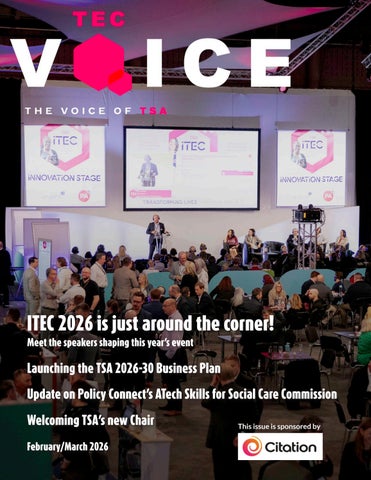
February/March 2026 ITEC 2026 is just around the corner!
This issue is sponsored by
The voice of Technology Enabled Care
Alyson Scurfield TSA Chief Executive
What an inspiring start to 2026 it’s been.
Last month, we launched TSA’s new five year Business Plan at the House of Commons - a milestone moment not just for TSA, but for the entire TEC community. Standing in that room, surrounded by policymakers, members, innovators and people with lived experience, I felt a real sense of momentum. This plan isn’t just a document; it’s a commitment to action. A commitment to shaping a future where people’s everyday lives are enriched, enhanced and enabled by TEC.
And now the real work begins. Over the next five years, we’ll focus on strengthening our role as a trusted strategic partner to government, building a digitally confident TEC-enabled workforce, driving quality and safety across the sector, and embracing new technologies so more people can benefit from TEC. I can’t wait to get stuck in.
Speaking of new chapters, I’m absolutely delighted that Professor Martin Green OBE has now officially joined TSA as our new Chair. Martin brings deep sector expertise and a powerful reputation as an advocate for people drawing on care, a driver of policy change and a leader who has shaped service transformation across the country. His guidance will be invaluable as we deliver our ambitious business plan and support a sector navigating rapid change. You can read more about Martin on page 10.
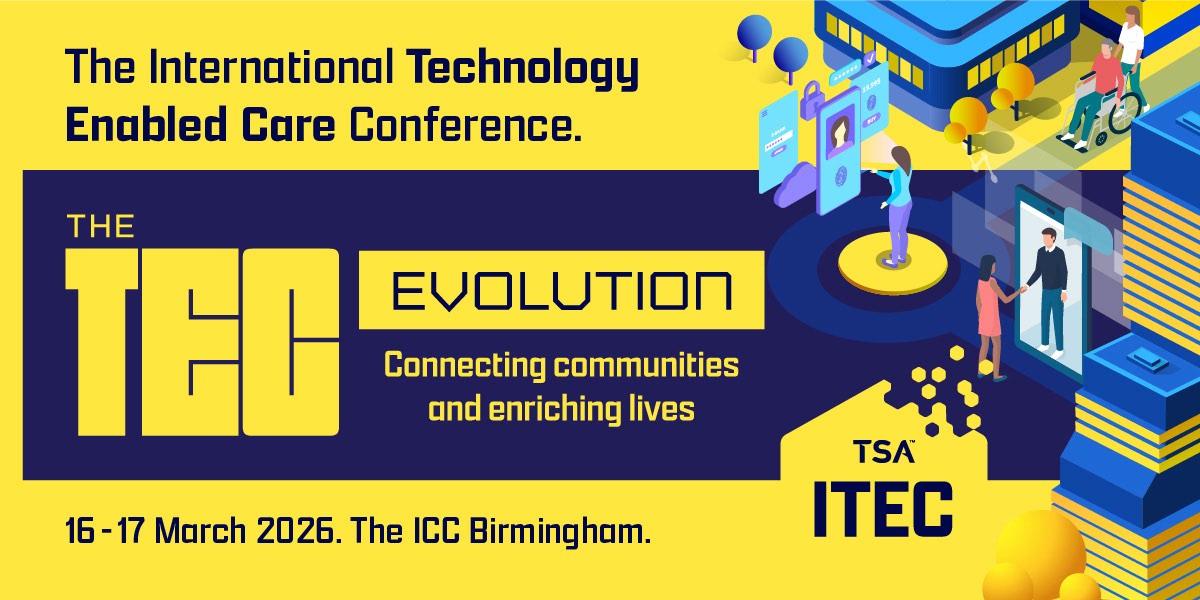
Of course, no February edition of TEC Voice would be complete without looking ahead to the biggest moment in the TEC calendar: ITEC 2026. We’re now just four weeks away from bringing the sector together at the ICC Birmingham on 16–17 March, and the energy is building. This year’s programme is packed with practical insights, lived experience, community driven models, and future focused conversations about AI, data, digital confidence and the switchover. Turn to page 4 for speaker highlights, programme themes and everything you need to know - and if you haven’t booked your ticket yet, now’s the time!
We’ve also been continuing our work to influence national policy. TSA was proud to contribute to Policy Connect’s ATech Skills for Social Care Commission throughout 2025, helping shape recommendations on digital capability, workforce development and the emerging role of the Care Technologist. It’s encouraging to see TSA’s Virtual Home and TEC Quality CPD offer recognised in the final report, and we look forward to supporting the next phase of this important work. Find out more on page 12.
As ever, thank you for being part of this brilliant, passionate, ever evolving community. I hope you enjoy this issue - and I look forward to seeing you at ITEC next month!
TSA Launches 2026–2030 Business Plan at the House of Commons
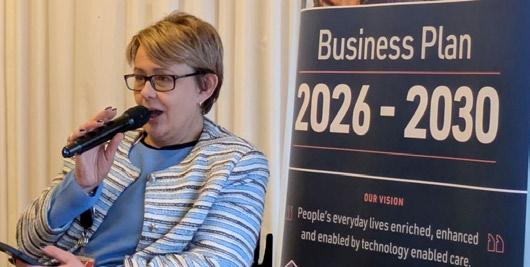
In mid-January, the TEC Services Association (TSA) and TEC Quality were proud to launch our 2026–2030 Business Plan at the House of Commons, bringing together senior leaders from across technology enabled care in the Terrace Pavilion.
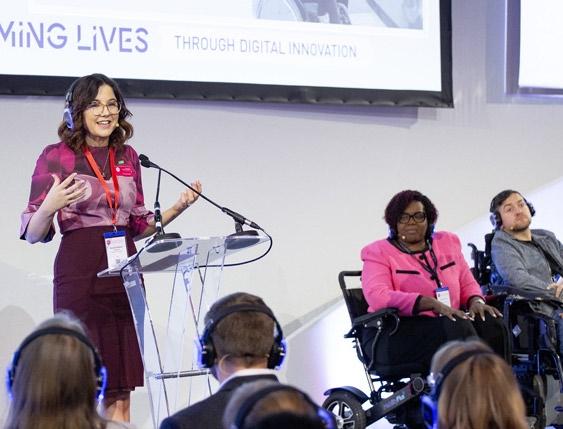
Hosted by Baroness Tanni Grey-Thompson, the event marked an important milestone in the development of a plan shaped by members, partners, and people with lived experience.
The launch featured speeches from Baroness GreyThompson, Alyson Scurfield, Chief Executive of TSA, Professor Martin Green, Chair of TSA, and Sir David Pearson, Chair of TEC Quality. Each reflected on the sector’s progress, the challenges ahead, and the importance of collective leadership in shaping the future of technology enabled care.
The formal programme was followed by an afternoon of networking and open discussion, giving members and partners space to share experiences, explore common challenges, and strengthen relationships across the sector.
The Business Plan, formally approved by both Boards in November 2025, sets out a clear and ambitious direction for the next five years. It is grounded in a strong understanding of the political, economic, social, and technological context in which TEC operates, and reflects the rapid pace of change facing services and communities.
Crucially, people with lived experience are embedded throughout TSA’s governance and have played an active role in shaping the plan from start to finish. Their perspectives have helped ensure that the priorities set out are rooted in real-world experience and focused on outcomes that genuinely improve lives.
Developed through extensive engagement, including member events, Board discussions, and sector activity at ITEC 2025, the plan is built around a mission-centred approach to innovation. It has been tested and refined with sector leaders, stakeholders, and people with lived experience at every stage.
The 2026–2030 Business Plan provides a shared framework for action. It brings focus to our priorities, aligns the TEC community behind common objectives, and supports practical, deliverable progress across health, housing, and social care.
Launching the plan in Parliament reflected the growing national importance of technology enabled care and TSA’s role in convening, supporting, and representing the sector.
We look forward to working with our members, partners, and stakeholders over the coming years to turn this shared ambition into meaningful, lasting impact.
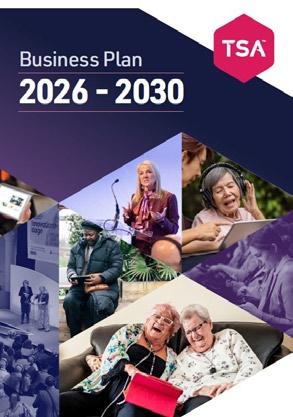
Read the business plan here: https://www.tsa-voice.org.uk/about-tsa/tsa/tsabusiness-plan-2026-2030/
ITEC 2026:
One Month to Go – A Defining Moment for
Technology Enabled Care
With just over a month to go until ITEC 2026, the programme is now in place, and there is a strong sense of momentum around this year’s event. Looking across the two days, what stands out is the depth, ambition and practicality of what has been put together, and how closely it reflects the reality of working in technology enabled care in 2026.
At its heart, this year’s programme is focused on how TEC works in people’s lives, in homes, in services, and in the daily decisions made by staff, managers and commissioners. Across housing, health and care, there is a shared understanding that progress depends on how well ideas become part of everyday practice, and this runs through ITEC 2026.
With the analogue to digital switchover now less than a year away, this focus feels especially timely. For many organisations, the switch is no longer a future project but a live operational priority, shaping investment, workforce planning and engagement with residents. Readiness is uneven, and the consequences of delay are becoming clearer. ITEC 2026 provides space to share learning, test assumptions and build confidence as services prepare for one of the most significant infrastructure changes the sector has faced.
Creating space for conversation
Across the two days at the ICC Birmingham, sessions are spread over the Plenary, Innovation Stage and Knowledge and Networking zones, creating space for different kinds of conversation. Delegates will be able to spend time with the issues that are most pressing for their own organisations, learn how others are responding, and test their thinking against real experience from across the country and beyond.
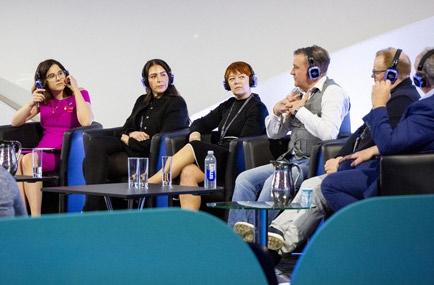
The opening plenary, The TEC Evolution: Connecting Communities and Enriching Lives , sets that tone from the start. It focuses on what people experience when technology is used well, including earlier response, stronger coordination, and support that fits more naturally around daily life. Housing, health and care are brought into the same conversation, alongside a strong emphasis on trust, leadership and workforce confidence.
Empowering the workforce
That attention to delivery continues throughout the programme. Sessions on digital transformation and regional collaboration look closely at what happens after strategies are written and pilots come to an end. Learning from the North East, from TSA’s Virtual Home programme, and from preventative work happening locally is shared in ways that stay close to day-to-day practice.
Running alongside this is a clear recognition that digital readiness now carries real consequences. As analogue services are withdrawn, gaps in infrastructure, skills or engagement will be felt quickly by residents and frontline teams. Several sessions reflect this through housing-focused discussions, data and resilience work, and conversations about operational delivery.
Workforce development is one of the strongest threads running through ITEC 2026. Beyond the Tech: Workforce Strategies That Turn Innovation into Everyday Care looks at how technology only becomes part of everyday care when the workforce has the confidence, clarity and skills to use it well. Drawing on learning from Skills for Care, Policy Connect and TSA’s programmes, the session reflects how capability grows through ongoing support and consistent leadership.
This connects closely with the plenary Confidence, Capability and Co-Design Across Systems and Communities, which brings together system leadership and workforce development . It explores how change is led across complex local systems while keeping communities involved in shaping support.
Housing remains a major focus. Connected Living: Enhancing Independence and Wellbeing looks at where housing associations currently stand on digital switchover and wider TEC adoption, recognising both progress and uncertainty, particularly in sheltered and supported housing where continuity matters deeply.
International learning also plays a significant role. The plenary The International TEC Evolution and the Innovation Stage session on the ADMIT programme in Catalunya explore how health and social care integration has been developed at scale, offering insight into governance, funding and delivery.
Data, digital resilience and governance form another important strand. Sessions on data-driven care, cybersecurity and device management platforms explore how organisations protect systems, manage information and maintain confidence as digital dependency increases.
Knowledge, networking & innovation
Evidence and Impact of Technology Enabled Care is also given dedicated space, showcasing how organisations are bringing critical services together to create efficiencies and streamline operational processes.
The programme continues to provide space for emerging thinking through Emerging Innovation in Technology Enabled Care, which looks at how new ideas develop and move into routine delivery.
Alongside this, the Knowledge and Networking sessions create opportunities for smaller, focused conversations where delegates can explore detail, share experience and make sense of what they have heard elsewhere.
Taken together, the ITEC 2026 programme reflects a sector that is ambitious, thoughtful and increasingly confident in its direction. It recognises pressure and complexity, including the approaching analogue to digital switchover, while staying grounded in what helps services work well.
With delegate bookings still open, ITEC 2026 offers an opportunity to step away from daily pressures, connect with peers across housing, health and care, and take part in conversations shaping the future of technology enabled care at a critical point of transition.
Secure your place now
For anyone working in the sector, this year’s event has been designed to be engaging, practical and genuinely worth the time.
ITEC 2026
Delegate bookings for ITEC 2026 remain open. Visit the TSA website to secure your place:
itecconf.org.u k
Sponsored by:
Meet the Speakers : Voices Shaping ITEC 2026
The ITEC 2026 programme brings together people who are actively shaping how technology enabled care develops in practice, not just in theory.
From national workforce leadership and social care policy, to digital health accreditation, clinical innovation, and international standards, our speakers reflect the real breadth of the sector.
In this edition of TEC Voice, we introduce four contributors whose experience spans frontline delivery, system leadership, research, and global collaboration. Alongside our conference Chair, Tanni GreyThompson, each brings a distinctive perspective to ITEC 2026. Together, they represent the depth, credibility, and ambition behind this year’s conference.
Recognised internationally as a leader in digital health, Liz Ashall-Payne has built a career focused on using technology to improve outcomes and system efficiency. With a clinical background as a trained NHS professional, her work bridges frontline experience with strategic innovation.
Liz holds several influential roles, including Board Member at techUK and Vice-Chair of its Health and Social Care Council, where she helps shape national policy. She is also an NHS England NIA Alumni Fellow and a Coach for the NHS Clinical Entrepreneur Programme, supporting emerging innovators across the system.
In academia, Liz is an Honorary Lecturer at University of Central Lancashire and an Honorary Researcher at University of Warwick. She also serves as an Ambassador for the UK Department for Business and Trade and is Entrepreneur in Residence at the University of Plymouth.
Her advisory work includes roles with the IEEE Health App Accreditation Group and the EU Task Force for Digital Health, contributing to international standards and frameworks.
Alongside this, Liz is Founder of ORCHA Health UK, a global leader in digital health accreditation. Her influence, however, extends far beyond one organisation, helping shape how digital health is trusted, adopted, and scaled.
Shea Christopher Gregg
Dr. Shea Christopher Gregg is a trauma surgeon, entrepreneur, and board leader based in the United States. He is Chair of Surgery at St. Vincent’s Medical Center, part of Hartford HealthCare, where he continues to care for critically ill surgical patients. He also serves as a board director and committee chair of the Connected Health and Safety Association.
As an entrepreneur, Dr. Gregg founded FallCall Solutions in response to the growing number of older trauma patients he was treating and the stigma surrounding traditional medical alert systems. Under his leadership, the FallCall Life Safety Platform has expanded across four continents, supporting thousands of older adults and caregivers with 24/7 emergency monitoring at lower cost.
Balancing clinical practice, innovation, and family life, Dr. Gregg brings an international perspective on how technology can improve safety, independence, and dignity in later life.
Oonagh Smyth CBE
Oonagh Smyth CBE is Chief Executive Officer of Skills for Care, the strategic workforce planning and development body for adult social care in England.
Since joining in 2020, she has led major sector-wide work to strengthen workforce capacity, capability, and sustainability. This includes overseeing the development of the first comprehensive Adult Social Care Workforce Strategy for England.
Oonagh holds a degree in law, a Master’s in Human Rights Law from Queen’s University Belfast, and a Master’s in Executive Coaching from Ashridge Business School. Her background combines policy, governance, and equality-focused leadership.
Before Skills for Care, she spent eight years at Mencap as Executive Director of Strategy and Influence and served as Acting Chief Executive. She continues to work closely with national and local partners and sits on advisory groups including Think Local Act Personal and Coventry University’s Vice Chancellor’s Health Advisory Board.
Oonagh is also a Non-Executive Director at CU Health and Care Limited and an accredited executive coach, bringing both strategic and personal development expertise to her work.
Martin Green OBE
Professor Martin Green OBE has had an extensive career in NGO development in the UK and internationally. He is Chief Executive of Care England, the largest representative body for independent social care services in the UK.
He also serves as Vice President of The Care Workers Charity, Commissioner of the Royal Hospital Chelsea, and Chair of TSA.
In 2013, Martin was appointed Visiting Professor of Social Care at Buckinghamshire New University. Earlier, in his role as DHSC Independent Sector Dementia Champion, he led the development of the Dementia Care and Support Compact for the Prime Minister’s Challenge on Dementia.
He was named Care Personality of the Year in 2008, awarded an OBE in 2012, and received the Health Investor Outstanding Contribution Award in 2019.
A regular writer and broadcaster on social care, Martin also serves on the Editorial Board of Community Care Market News and Care Talk magazine, helping shape national debate on care policy and practice.
Liz Ashall-Payne
Welcoming Professor Martin Green OBE as TSA Chair
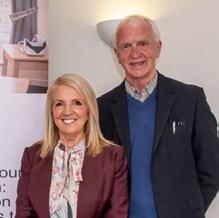
Martin joins TSA at a moment when the national conversation about health and care is shifting. As Chief Executive of Care England, and with decades of experience across policy, advocacy and system reform, he has long argued that TEC is not a ‘nice to have’ but a vital component of a modern, sustainable health and care system. His message at our Business Plan launch was unequivocal: if the Government is serious about delivering the three shifts in its 10-Year Health Planfrom sickness to prevention, hospital to community, and analogue to digital - TEC is one of the levers capable of making that ambition real.
TSA is entering 2026 with renewed purpose, fresh leadership and a clear mission for the years ahead.
Alongside the launch of our new five-year Business Plan at the House of Commons, we are thrilled to welcome Professor Martin Green OBE as our new Chair.
The urgency is clear. Demographic pressures, workforce shortages and rising public expectations have exposed the limits of a system still shaped by a 1948 model.
Martin’s view is that we need a fundamentally different operating model - proactive, preventative, productive and, above all, people centred.
That is where TEC comes in. Martin speaks powerfully about what good technology enables: dignity, choice and control for people; more equitable access to support across communities; and better integration between health and care.
This philosophy aligns closely with TSA’s new Business Plan, which sets out missions to empower people to avoid hospital and residential care and to revolutionise wellbeing in the home.
Martin Green commented:
“I’m excited to have been appointed Chair of the TSA at one of the most pivotal times in the organisation’s development. The launch of the business plan builds on the firm foundation that has been established over many years and gives TSA the potential to move to the next phase of its development. Technology will be the most important element in delivering a 21st-century health and care system, and I know that TSA will ensure that this technology revolution is delivered with a framework of ethics and quality at its centre.”
As Martin steps into the role, we want to pay tribute to our interim chair, Professor Roy Sandbach OBE who has guided TSA with exceptional clarity and strategic oversight for the past 18 months. Roy Sandbach said:
“It has been a great privilege to chair TSA through a period of reflection, change and growth. Working with a wonderful executive team and supported by a committed and insightful board. What more could I have asked for!”
“We’ve delivered a vital upgrade in governance with super external engagement, developed every current business sector and created some disruptive, mission-centric challenges….for a fast-changing TEC world.”
“I couldn’t be handing over to a better incoming Chair. Martin Green is already adding new and powerful perspectives from his wealth of experience and expertise. We are so lucky to have him. He will, I am sure, lead us with strategy at heart, to craft TSA as the most powerful voice for TEC in care. I wish him every success.”
With Martin at the helm, TSA is poised to help the sector move decisively into a new era - one where TEC is recognised not as an add on, but as essential infrastructure for the future of care.
Professor Martin Green OBE, Chair, TSA
Professor Roy Sandbach OBE
TSA contributes to Policy Connect’s ATech Skills for Social Care Commission
During 2025, TSA was invited by Policy Connect to participate in a series of evidence sessions supporting the ATech Skills for Social Care Commission. The Commission brought together voices from across social care, education, technology, and policy to explore how skills, learning, and workforce development must evolve to support the growing role of technology in care.
Across the evidence sessions, discussion focused on the current skills landscape within social care, the training and development programmes already in place, and the tools and support available to the frontline workforce.
TSA contributed insights from across its membership, sharing examples of good practice that demonstrate how organisations are actively building technology enabled care awareness and strengthening digital capability across their workforces.
It was particularly valuable to see TSA members Kyndi involved in the roundtable discussions, showcasing their workforce development and training programmes alongside Kent College and Medway Council. These examples brought the conversation to life, highlighting how collaboration between local authorities, care providers, educators, and technology specialists can deliver practical, scalable skills development.
Alongside positive case studies, the sessions also addressed the significant challenges still facing the sector. These included ongoing staff shortages, recruitment and retention pressures, and persistent
hesitancy around the use of technology. Cyber security risks were also raised as a growing concern, reinforcing the importance of equipping the workforce not only with digital confidence but with the knowledge to use technology safely and responsibly.
Despite these challenges, the discussions were both thought-provoking and encouraging. There was a clear, shared ambition across the room to ensure the social care workforce is properly supported through accessible learning and development routes, enabling staff to continue delivering high-quality care while confidently adopting technology where it can add real value.
TSA was also delighted to attend the official launch of the Commission at the House of Commons on Thursday 11 December, marking an important milestone in taking this work forward with policymakers.
Key themes and recommendations from the Commission
The Commission’s report, which builds on earlier work exploring smarter homes and assistive technology, sets out several key themes and recommendations discussed during the evidence sessions.
A central focus is the need to expand training opportunities and secure sustainable funding to support workforce development.
The report highlights gaps in current provision and calls for more strategic, joined-up adult social care workforce planning, with clear routes to develop digital and assistive technology skills.
The role of the Care Technologist emerged as a particularly important area. While Skills for Care has profiled the role and published training expectations, discussions highlighted a lack of clarity around how the role should be trained, maintained, and recognised in practice. This includes implications for pay scales, career pathways, and commissioners’ expectations. The emergence of a new Professional Association for Assistive Technologists was welcomed, but the Commission noted a disconnect between this body, Skills for Care, and existing sector infrastructure, including TSA, underlining the need for greater alignment.
Other themes included the importance of making social care careers more attractive to young people leaving education, and the potential for new models such as assistive technology labs. Kent’s exploration of technology suites in libraries, linked to police and Integrated Care Board partners, was highlighted as a promising approach that could be scaled nationally and may be of interest to suppliers and commissioners alike. The report also notes that while Technical Excellence Colleges have been designated by government, they have yet to meaningfully focus on social care, with strong calls for this to change.
Overall, the Commission identifies a risk of fragmentation if emerging initiatives are not better connected, and stresses the importance of collaboration across the sector to avoid duplication and confusion. The report sets out seven recommendations in total, four aimed at government and three directed at the sector.
TSA’s contribution and recognition within the report
TSA and TEC Quality are referenced directly within the Commission’s recommendations. Recommendation five, aligned with the Workforce Strategy for Adult Social Care in England (2024), calls on the sector to collaborate to enhance the Digitising Social Care directory of digital skills training opportunities. This includes surveying social care organisations and skills providers to identify training not currently listed, such as TSA’s Virtual Home and TEC Quality CPD courses, as well as identifying gaps and commissioning new provision where needed.
The report also includes a dedicated case study and overview of both the TSA Virtual Home and TEC Quality CPD offer within its main body, recognising their role in supporting workforce competence and confidence in technology enabled care.
“The Commission highlighted just how strong the shared commitment is across the sector to support the social care workforce with the skills and confidence they need to use technology well. Collaboration and clear pathways for learning will be essential if we are to deliver safe, high-quality, technology enabled care.”
The full Commission report can be accessed here
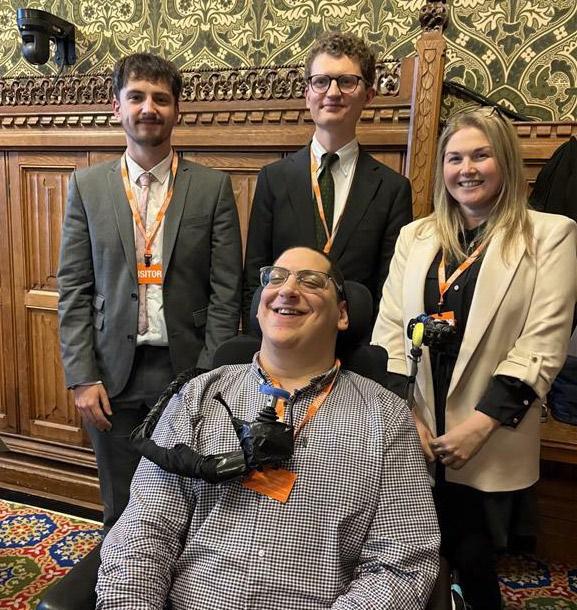
Right: Emma Quest and Henry Lockett from TSA attending the Commission launch at the House of Commons
Back row: Henry Lockett (TSA), Robert McLaren (Policy Connect), Emma Quest (TSA). Front row: Clive Gilbert (Policy Connect)
Neighbourhood Care Needs Neighbourhood Data: Closing the Visibility Gap
By Nerys Hebdon Head of TEC Customer Enablement,
The shift to neighbourhood-based care models represents social care’s most significant transformation in a generation.
However, data from the Office for National Statistics* released in July last year shows the number of people aged 65 and over living alone has risen to over 4.3million. This, coupled with ongoing recruitment challenges and workforce sustainability pressures, creates huge gaps in coverage.
For people living with dementia, this creates a dangerous blind spot. Professional visits show one picture. Daily reality often shows another.
Between assessments, decline happens gradually and invisibly. Families notice something feels wrong but lack objective evidence. By the time crisis occurs, options become limited and can result in emergency residential care or hospitalisation.
Neighbourhood care depends on neighbourhood visibility— breaking down the silos that keep families, care workers, housing teams, health services and social workers operating with different information about the same person.
Access TEC addresses this by combining sensors with secure AI to monitor daily patterns to support independence while providing a safety net. The AI learns what’s normal for each person - movement, kettle use, nighttime routines - and identifies when patterns change. When intervention is needed, alerts reach the right people in the neighbourhood support network. AI acts as an assistant, providing continuous presence without cameras or intrusive surveillance.
The shift from reactive to proactive care requires introducing technology early not at the point of crisis. Establishing baselines before significant decline enables teams to spot changes early and intervene before emergency services become necessary.
True neighbourhood care requires technology that connects the community. Access is the only TEC provider delivering this level of integration across health, social care, commissioning, care delivery and housing systems.
Visit The Access Group website to find out more.
*Source: Office for National Statistics stat
From New Starter to Finance Lead: Kaden Lyons’ Journey at TSA
When Kaden Lyons joined TSA in April 2022, he did not arrive with a fixed career plan. Having completed his law studies at college, he was unsure whether a legal career was right for him. What mattered most was finding an organisation where he could learn through experience.
His legal training gave him strong analytical skills and attention to detail, which soon proved valuable. During his first year, Kaden began taking on more finance-related responsibilities and quickly found his direction. “I began taking on more finance-focused tasks and quickly realised that this was an area I really enjoyed,” he explains. Around 18 months after joining, he decided to formalise this path by starting a Level 4 apprenticeship alongside his role.
Learning finance without a formal background brought challenges. Professionally, he had to build technical knowledge while delivering day-to-day work. Personally, he adjusted to the demands of fulltime professional life. “Finding my feet came through gaining confidence, asking questions and having the support of colleagues who were willing to guide me,” he reflects.
Alongside his apprenticeship, Kaden completed the CIMA Certificate in Business Accounting, covering financial and management accounting, economics, ethics, and governance. Balancing study and work required real commitment.
“I’ve always learned best through hands-on experience rather than purely academic study, so my main focus was joining an organisation where I could be supported to learn a role and gain a strong understanding of the business.”
“I often had to dedicate evenings and weekends to studying, but the experience was incredibly valuable and worthwhile.”
Mentoring, trust, and flexibility have been central to his progress. TSA supported his studies and invested in his development, giving him opportunities to grow. Being trusted with managing the organisation’s finances has been a defining moment. “It’s reinforced my confidence, pushed me to take ownership, and made me feel genuinely valued,” he explains.
Looking back, Kaden’s confidence, skills, and sense of direction have grown significantly. For anyone considering an early career role at TSA, his message is simple: “The support you receive isn’t just about doing the job, but about building a long-term career.”
Find out more about the team behind TSA at: www.tsa-voice.org.uk/about-tsa/tsa/tsa-team/