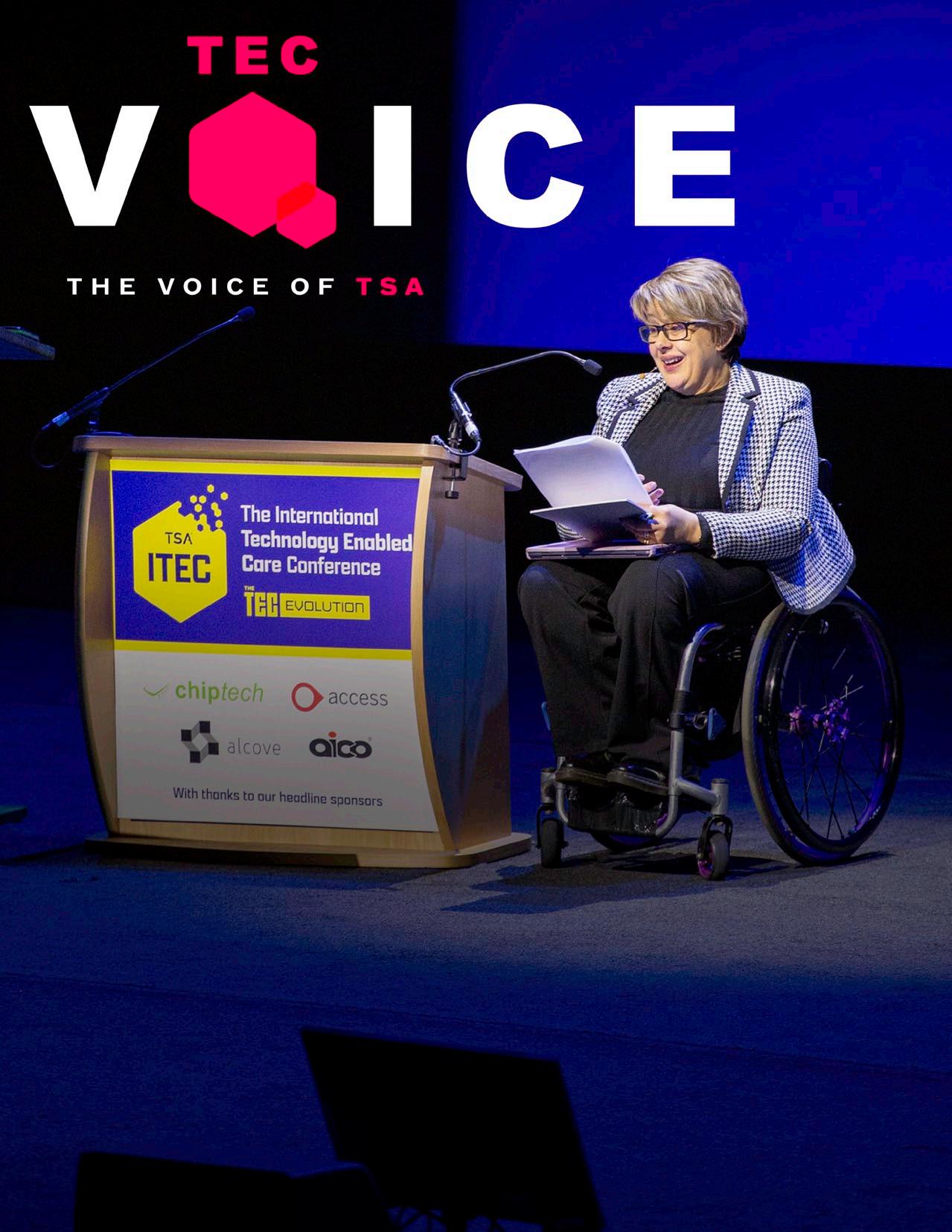
Looking back at ITEC 2026
A sector coming together
TEC Outlook 2026: Sustaining progress, scaling impact
Digital by default? A viewpoint from our lived experience adviser
This issue is sponsored by
April/May 2026




A sector coming together
TEC Outlook 2026: Sustaining progress, scaling impact
Digital by default? A viewpoint from our lived experience adviser
This issue is sponsored by
April/May 2026

Alyson Scurfield
TSA Chief Executive
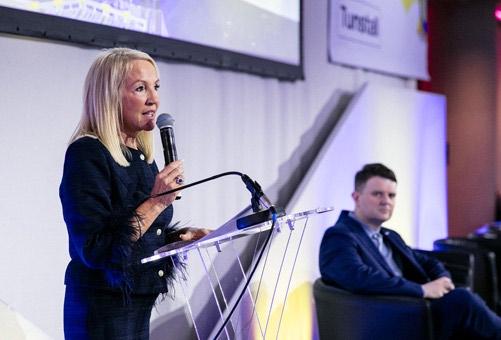
With ITEC 2026 fresh in our minds, I’m feeling energised by everything we experienced together in Birmingham. It was wonderful to see so many of you - a record number of attendees, exhibitors and international visitors - all under one roof. When I think back on those two days, three words keep coming up: collaboration, partnerships and trust.
For years, TSA has championed the idea that meaningful reform in health, housing and care can only happen when those three things come together. We know that TEC has an absolutely essential role here, but digital services can only transform lives when they’re built on trusted relationships and shared purpose. And at ITEC, you could genuinely feel that alignment. Trust between suppliers and service providers. Trust in TSA as the national body for our sector. Trust in TEC Quality and the standards that underpin safe, highquality services. It felt more tangible than ever.
The ITEC Awards brought this to life beautifully. In both the Service Transformation category and the Innovation and DataDriven Impact category, the
Stay up to date with what’s happening in the TEC sector with all the latest news from our valued members, including all of the latest developments and views from Access, Chiptech, Aico, Alcove and the Virtual Care Agency, Careium, Taking Care and many more.
Visit our Member News page here for mor e, and remember to bookmark the page!

winners were collaborations - suppliers, service providers and commissioners working side by side.
Read more about all the winners on page 7.
This year marked our first ever International Zone, and the learning exchange was extraordinary. Colleagues from America, Spain, Canada and beyond shared their insights, but also learnt from the pioneering TEC innovation in the UK. It truly felt like an ‘international’ technology enabled care conference.
You’ll also hear in this issue from someone who spoke so powerfully at ITEC, lived experience adviser, Debra Edwards. Her article, on page 8, about the realities of ‘digital by default’ is a powerful reminder that technology must be shaped with people, not simply delivered to them.


TSA continues to represent the TEC sector at the highest levels of government. Days after conference, I joined a ministerial roundtable on telecoms modernisation, reinforcing the need for strong regulation and standards as the UK transitions to digital infrastructure. Baroness Liz Lloyd, Minister for the Digital Economy, requested a meeting with TSA to take this conversation around standards forward and I will report back on the progress we make.
In other news, TSA is further building the argument for TEC via our brand new Sector Support programme. This work is about bringing evidence together, strengthening the financial case for TEC, and making it far more visible. We’ll be sharing the full roadmap and partners behind
it shortly, and I’m hugely excited for what this collective effort will unlock.
Finally, turn to page 11 for a profile of one of the brilliant TSA team members who make all this possible - Henry Lockett, our Membership and Workforce Engagement Officer.
Thank you, as always, for being part of this ambitious, passionate and everevolving community. I hope you enjoy this issue.

New report highlights growing ambition for technology enabled care, but warns workforce confidence and better use of insight will be key to progress.
A new report from PA Consulting and TSA has found that adult social care leaders across the UK want to move faster on technology enabled care, with growing recognition of its role in prevention, independence, and more sustainable services.
The report, TEC Outlook 2026: Sustaining progress, scaling impact, is based on research with 79 senior decision makers across 71 adult social care organisations. It shows strong belief in the potential of technology enabled care to support earlier intervention, improve outcomes for people, and help services respond to rising demand. At the same time, it points to several barriers that still need to be addressed if that potential is to be fully realised.
Among the headline findings,78% of senior leaders said they want to accelerate their TEC programmes, while 96% said their organisation would rethink how care is delivered if TEC could enable prevention more effectively.
Among the headline findings,78% of senior leaders said they want to accelerate their TEC programmes, while 96% said their organisation would rethink how care is delivered if TEC could enable prevention more effectively. The report also found that nine in ten leaders believe learning from peers across the sector will be one of the most effective ways to make progress over the next year.
That ambition sits against a challenging backdrop. Adult social care services are under growing pressure, and leaders are looking for practical ways to support independence, manage demand, and make better day to day decisions. The report suggests TEC is increasingly seen as part of that answer, particularly

when it is embedded as part of wider transformation rather than treated as a standalone initiative.
However, the findings also show that progress is being held back by persistent challenges. Workforce understanding remains a major issue, with only 16% of leaders saying their workforce has a strong understanding of TEC’s benefits. More than half said practitioners would benefit from more support to speak confidently about TEC. The report also highlights missed opportunities around data and insight, with many leaders saying that while data is being generated, it is still not being accessed or used consistently enough to inform decision making in practice.

Alyson
Scurfield, Chief Executive of TSA, said:
“Across adult social care, we are seeing growing recognition of the role technology enabled care can play in helping people live independently for longer and supporting services to respond to rising demand.

What this research highlights clearly is the importance of confidence and capability across the workforce. Technology only delivers real value when people feel able to use it, understand the insight it generates, and apply that insight in everyday decision making.
By sharing learning across the sector and building that confidence, we can scale approaches that improve outcomes for people while helping services deliver more proactive and preventative support.”
There are also concerns around long term financial sustainability, alongside continued variation in how TEC is being used across different groups. Of particular note, the report points to lower levels of use among younger adults, including people with learning disabilities and autism, despite the potential for technology to support more personalised and preventative approaches.
The report sets out a clear picture of where the sector is now, where momentum is building, and where more support is still needed. It also offers practical actions for leaders looking to accelerate adoption, strengthen workforce confidence, and make better use of TEC insight in everyday care.
Download the full report to explore the findings and recommendations in more detail.



You could sense it quite early on, in the conversations before sessions started, in the exhibition hall filling up, in people picking up where they left off with colleagues they had not seen for a while. There was a real sense that the sector has advanced since last year, and that we are now working through some of the most important decisions we have faced in a long time.
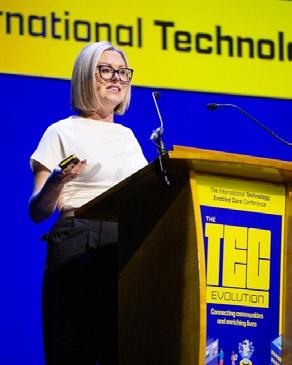


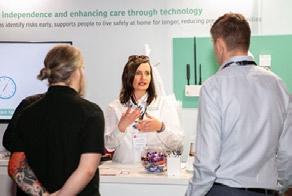
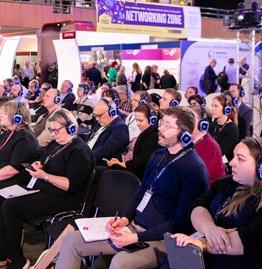
Over two days at the ICC in Birmingham, more than 1,200 people joined us, alongside 55 exhibitors and over 80 speakers. It made for a busy, energetic couple of days, but more than that, it brought together a mix of perspectives that you do not often get in the same room – suppliers, commissioners, and people from health, housing and social care all dealing with the same pressures from different angles.
A lot of the conversation came back, in one way or another, to the analogue to digital transition. With less than twelve months to go, there was no sense of this being something on the horizon anymore. It is here, and it is shaping decisions now. What came through strongly was the need for clarity, for leadership, and for organisations to feel supported as they work through what this means in practice, not just technically, but operationally and culturally as well.
Alongside that, there was real focus on how services are evolving more broadly. Proactive and preventative care came up repeatedly, as did the role of housing, the importance of integration, and the need to make sure that technology fits into people’s lives in a way that feels natural and supportive rather than complex or intrusive.
What stood out, particularly, was how open people were being. There was a willingness to talk honestly about what is working, what is not, and where things still feel uncertain. That kind of openness matters, because it is how we learn, and how we avoid repeating the same mistakes across different parts of the system.
Away from the sessions, the exhibition hall was full from start to finish. It is always one of the most valuable parts of ITEC, and this year was no different. There were constant conversations, ideas being shared, practical challenges being worked through in real time. Our exhibitors are a huge part of that, and the way they engaged, listened, and worked alongside services over the two days did not go unnoticed.
The Gala Dinner and ITEC Awards gave everyone a chance to celebrate and take stock. It was a genuinely special evening, and a reminder of just how much good work is happening across the sector. Congratulations to all of the finalists and winners, the standard this year was incredibly high, and it is clear that the bar continues to rise.
None of this happens without the people involved. To our speakers, thank you for being so open with your experience and insight. To our sponsors, thank you for backing the event and the wider work of the sector. To our exhibitors, thank you for the energy and expertise you bring. And to every delegate who joined us, whether you were listening, challenging or simply connecting with others, thank you for being part of it.
This year also marked the end of our time in Birmingham. The ICC has been home to ITEC for many years, and it has played a big part in how the event has grown. It felt right to close that chapter with a conference that reflected just how far the sector has come.


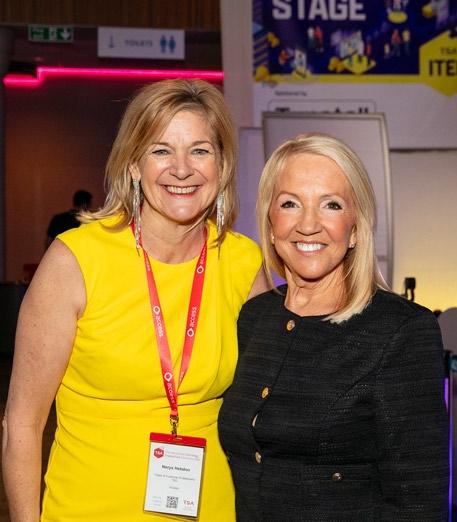
From 2027, we will be moving to the Liverpool Experience Campus, formerly known as ACC Liverpool. The move gives us the space to grow, to welcome more people, and to build on what ITEC has become, while keeping the same sense of community that sits at the heart of it.
For those who joined us this year, thank you again. We hope you left with new ideas, new connections, and a clearer sense of where things are heading. And for those who could not make it, we look forward to seeing you in Liverpool.
The prestigious ITEC awards were held on the first evening of ITEC, and we are delighted to announce the winners of each award. Congratulations to all who were shortlisted, and a huge well done to those who won on the night!
Innovation & Data-Driven Impact Award
Alcove, Yokeru and Enovation
International TEC Award
NOBI
Sponsored by:

Service Transformation Award
London Borough of Sutton
In partnership with The Access Group and Medequip Connect
Rising Star Award
Chidinma Nwahiri
DCASC, Reading Borough Council

Workforce Development, Digital Skills & Culture Award
These Hands Academy Ltd
Connected Care Programme
Strategic Leader Award
Hellen Bowey
Alcove Founder & CEO


By Debra Edwards, lived experience adviser
Last year my GP surgery’s booking system went digital. To see a doctor, you have to go online, write what the problem is and they get in touch. That’s fine if you’re confident with tech but some of my neighbours, people who are older or have disabilities, felt they were being left behind.
An alternative was found where surgery staff made the online appointment on their behalf, but it didn’t work well. My neighbours told me staff were impatient and they felt like a burden.
We had a similar situation with my landlord’s repairs system. When something breaks in my flat, I call to report it, but over the last year, I’ve had to wait longer to get through. The council wants people to report repairs online and they’ve scaled down their call handlers.

It felt empowering to have my voice heard, particularly as someone who draws on care. But it doesn’t happen enough, especially around technology.
Don’t get me wrong, digital has made a serious difference to my life. I volunteer at a large foodbank and as a wheelchair user, devices help me do things most people take for granted.
I use a voice assistant to open my curtains and put on the lights. AI helps me respond to emails and apply for a disabled parking space. In my old flat, I opened the front door with a tablet and a care tech system called for help if I fell.

We raised this at a residents’ meeting, explaining that repairs reporting had to be more accessible. The council listened, and they’ve added more call centre staff.
It felt empowering to have my voice heard, particularly as someone who draws on care. But it doesn’t happen enough, especially around technology.
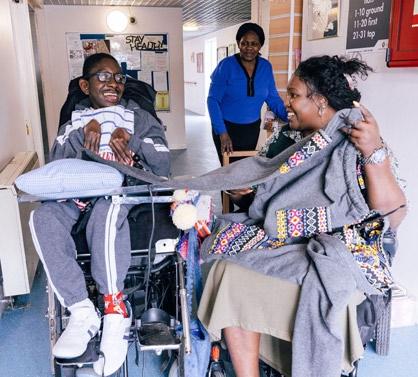
It makes sense that digital is the starting point for care, health and housing. But good non-digital options must be available to those who need them. Crucially, technology must not replace people and the vital role they play in care.
When I was suffering with poor mental health, it was a care professional who visited and encouraged me to get help.
For my neighbours, it’s the in-person conversations they have with social workers, physios and carers that are vital to their health and wellbeing.
If you haven’t used care services yourself, it’s hard to grasp the reality of navigating all the pathways. That’s why people with lived experience must be involved when digital services are designed. It makes sense practically, commercially and morally.
But I often think the older or more disabled you are, the more invisible you become. There is a

TSA are also working on their own co-production vision which will power their approach and how they support the TEC suppliers and providers they represent to coproduce TEC solutions and services.
Digital care will only work if it’s shaped with the people who rely on it most. When lived experience is valued, services become fairer and they work better. It’s time to make coproduction the rule, not the exception.
preconception that you will complain, take up time or won’t say anything valuable. And that’s why people with lived experience, the absolute experts here, are not engaged enough when digital services are developed. Instead, professionals make decisions on our behalf – like making things digital by default, with no offline alternatives. If this continues, then digital transformation will make existing inequalities worse.
Co-production is one way to help. It’s about codesigning services with the people who will use them and there is guidance out there about where to start.
TSA, the national advisory body for technology enabled care has contributed to two important coproduction resources that are worth looking up: the TAPPI project (Technology for our Ageing Population: Panel for Innovation) and the TEC Action Alliance’s guide to getting started in co-production.
Co-production is one way to help. It’s about co-designing services with the people who will use them and there is guidance out there about where to start.
Debra Edwards is a former midwife living in North London. She was a co-production champion for a project called ’Technology for our Ageing Population: Panel for Innovation’ (TAPPI) and volunteers for a number of organisations including her local church, where she helps out at the food bank.
Last year, the Independent Commission on Adult Social Care, chaired by Baroness Louise Casey, was set up to reform England’s social care system and create a new National Care Service.
Over the past year, the Commission has been hearing from people who draw on care, their families, frontline staff and local leaders, with early recommendations due this year and a full reform plan expected by 2028.
At the Nuffield Trust Summit in early March, Baroness Louise Casey shared her first public update. In her speech, she described the current situation as a ‘moment of reckoning’ for social care and called for a system that is more human, focused on relationships, and centred on what matters most to people.
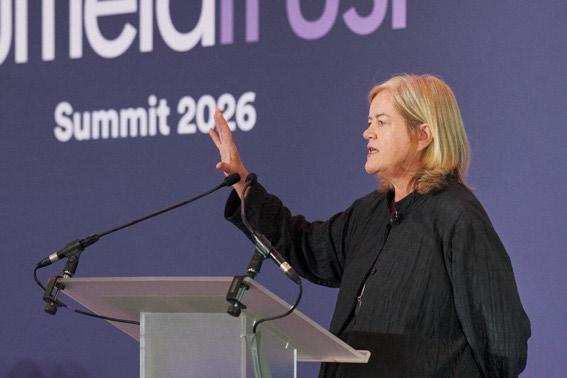
While she kept detailed proposals under wraps, her message was clear: the system is stretched, families face too much complexity, and we need a national conversation about what good care should look like. She also highlighted areas where action is urgently needed, including safeguarding and support for people with dementia and motor neurone disease.
For those of us working in technology enabled care, this is a pivotal moment. TEC helps people stay in

their own homes, maintain their independence, and stay connected to the people and routines that matter most. It also supports the workforcereducing admin, improving quality and safety. And by enabling support to be more preventative and proactive, it reduces pressure on what Louise Casey describes as a ‘creaking’ care system, held together by ‘sticking plasters and glue’.
TSA continues to make the case for TEC, so it is recognised as a core part of the future National Care Service, not an optional extra or add-on.
This work sits alongside our ongoing push for Government to deliver on the commitments it made when the Commission was launched last year. Back in January 2025, DHSC announced plans for new national standards and trusted guidance on the best technology in care. Engagement began, but fourteen months later, those standards still haven’t been published.
TSA continues to press for progress on both fronts. Clear, evidence-based technology standards - and recognition of TEC within the Casey Commission - will be essential if meaningful reform is to take shape. We’ll keep members updated as the Commission’s work gathers pace.
Find out more: https://caseycommission.co.uk/
When Henry Lockett joined TSA as a Business Support Officer in August 2024, he expected a steady progression within the operational side of the organisation. What followed moved far more quickly than he had anticipated.



That early recognition set him on a different trajectory. Since joining, Henry has progressed from Business Support Officer to Membership and Workforce Engagement Officer, a transition that has allowed him to play a more direct role in shaping TSA’s work with members and across the workforce agenda.
Like many starting out in technology enabled care, Henry found the sheer breadth of knowledge required initially overwhelming. “It was quite difficult at first to navigate such a wide range of information and expectations,” he explains. What made the difference was the environment around him. Through attending external webinars, shadowing experienced colleagues, and learning directly from those with deep sector knowledge, he was able to build his understanding quickly and start contributing with confidence.
A standout moment came when Henry was invited to the House of Commons for the launch of the Policy Connect ATech Skills for Adult Social Care report, to which TSA had contributed evidence. Seeing that connection between day-to-day work and national policy left a lasting impression. “It was a really valuable experience to see how the work I’m directly involved in is contributing to something at a national level,” he says. “Being part of an initiative that informs policy and supports the development of skills in adult social care was both rewarding and motivating.”
“I didn’t anticipate advancing as quickly as I have,” he says. “As I settled into the role, my strengths were recognised early on, and I was given the opportunity to move into a position where I could use those strengths on a daily basis.”
Since then, Henry’s role has continued to evolve, particularly through his work on the Virtual Home. Being trusted with ownership of such a key part of TSA’s workforce offer has been a defining part of his journey. “Eighteen months ago, I wouldn’t have imagined being considered an ‘expert’ in this area,” he reflects. “Reaching that point has been a significant milestone, and seeing the tangible impact of my work across the sector has given my role a real sense of purpose.”
Support has been a constant throughout. From mentoring and training, including development in areas such as public speaking, to opportunities like the Future Leaders programme, Henry has been given both the tools and the trust to grow. Alongside this, a strong and supportive team culture has helped him develop both professionally and personally.
Looking back, the difference is clear. His confidence, skillset, and sense of direction have all grown significantly, supported by experience and shaped by opportunity.
For anyone considering an early career role at TSA, his advice is simple and grounded in experience:
“TSA is an organisation that recognises your strengths and gives you opportunities to use them… you’re given the tools and trust to grow.”
Earlier this month, TSA was invited to represent the technology enabled care sector at a ministerial roundtable convened by the Department for Science, Innovation and Technology (DSIT), focused on the approval of three new telecommunications modernisation charters.
The session, chaired by Baroness Liz Lloyd, Minister for the Digital Economy, brought together senior leaders from across the telecoms landscape, including major communication providers, Ofcom, and industry bodies such as techUK and MobileUK. TSA’s invitation reflects the growing recognition of the sector’s critical role as the UK transitions from analogue to digital infrastructure.

services. While the new charters mark a positive step forward, it was highlighted that telecare does not yet benefit from the same level of structured requirements seen in other areas of critical national infrastructure.
This builds on TSA’s ongoing work around the PSTN switchover and the 2G sunset of roaming SIMs, where sustained engagement with government and industry has ensured that the needs of people relying on TEC services are firmly on the agenda.
During the discussion, Alyson Scurfield and Tim Mulrey reinforced the importance of regulation and standards in underpinning safe, resilient TEC
Alyson reflected after the session:
The Minister welcomed this challenge, prompting a broader conversation about the role of regulation in the sector. TSA was clear that proportionate, welldesigned regulation would strengthen alignment with health and social care, support innovation, and provide greater assurance for people who depend on these services every day. There was also a shared recognition that regulation must be matched with a robust compliance framework and developed in partnership with the sector.
The roundtable concluded with agreement on the adoption of the three voluntary charters, now published by government, alongside a request from the Minister for a dedicated follow-up meeting with TSA and DHSC to explore regulation and standards in more detail.
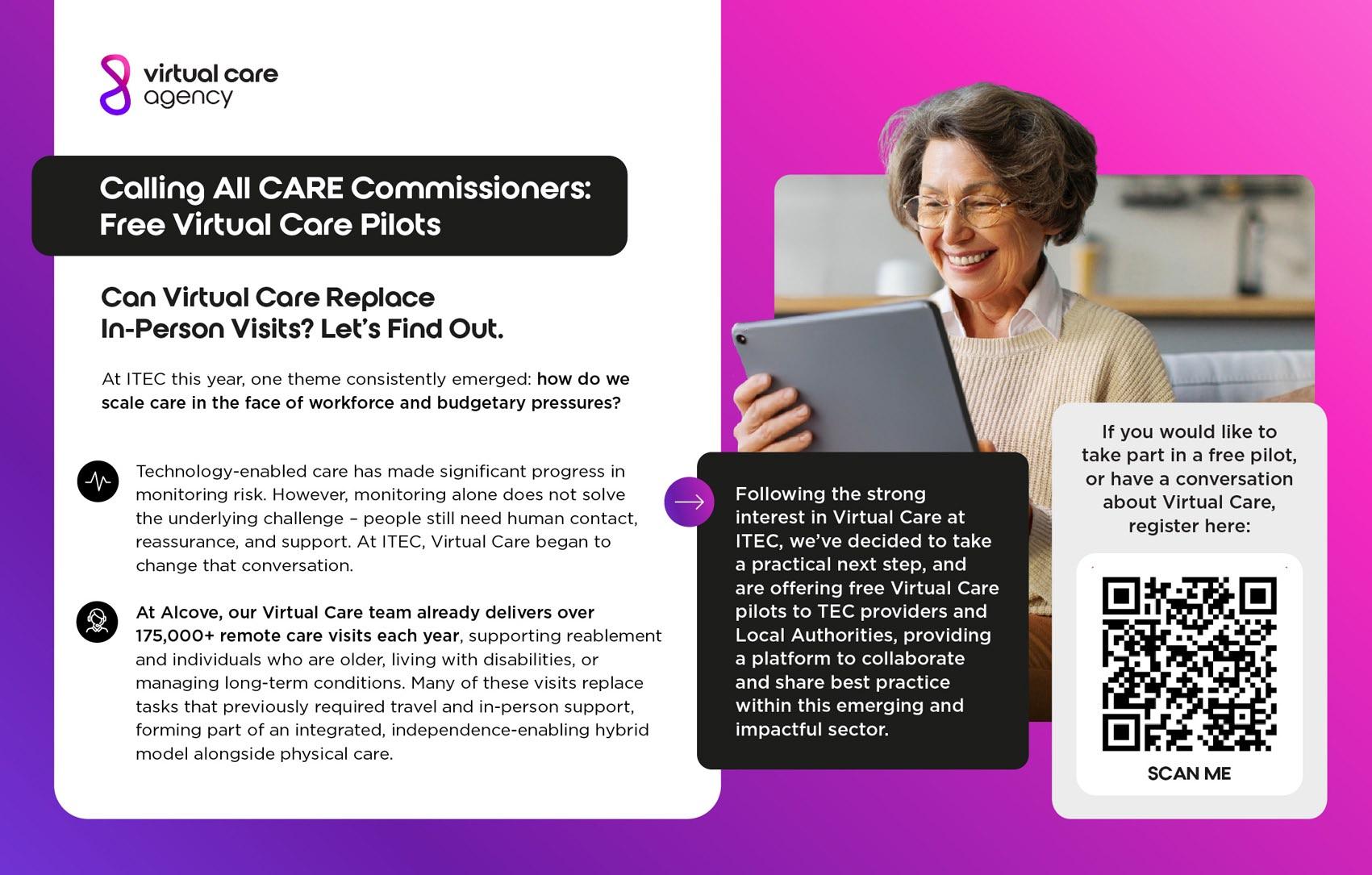

“This was a highly successful and collaborative discussion, with communications providers and government demonstrating a clear commitment to customer safety. The agreement to adopt three voluntary charters is an important step in protecting people who rely on technology enabled care during the transition to digital services.”
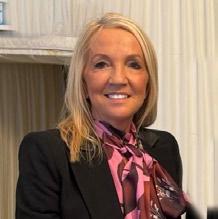
TSA will continue to work closely with government, regulators and industry partners, ensuring the sector’s voice is heard at the highest levels and that members remain informed as this critical work progresses.
Align your brand with TEC Voice, the only dedicated publication in TEC, and engage a dedicated, receptive audience that can transform your business. Secure your space today and connect with leaders shaping the future of Technology Enabled Care.
With an engaged readership and limited, high-value advertising opportunities, your message will reach those making impactful decisions. Don’t miss this exclusive chance to be part of TEC’s only dedicated magazine! marketing@tsa-voice.org.uk