Time Management Strategies for Students & Lifelong Learners
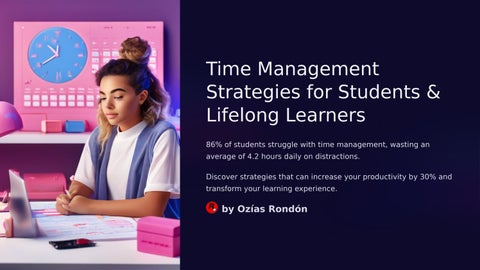
86% of students struggle with time management, wasting an average of 4.2 hours daily on distractions. Discover strategies that can increase your productivity by 30% and transform your learning experience.
by Ozías Rondón
The Cost of Poor Time Management
Sleep
Deprivation
41% of students report inadequate sleep
Reduced Retention
Last-minute cramming decreases memory by 35%
Health Issues
73% experience stress-related health problems
Missed Opportunities
Lost chances for experiences and connections
Understanding Your Time Style
Time Chunkers vs Sprinters
Morning Larks vs Night Owls
Sequential vs Parallel
Long focused sessions or short bursts of activity
Peak productivity times vary by individual
One task at a time or multiple simultaneous projects
Convert big projects into manageable steps Prioritize Tasks Distinguish between urgent and important
Planning Cycles
Weekly, monthly, and semester-long plans
Strategy 3: Time Blocking & Calendar Management
Dedicated Activity Blocks
Assign specific times for different tasks to create structure and eliminate decision fatigue.
Color-Coding System
Use visual organization to quickly identify types of activities and maintain balance.
20% Buffer Rule
Add transition time between activities to prevent overscheduling and reduce stress.
Calendar Integrity
Treat scheduled blocks as appointments with yourself that cannot be easily broken.
Strategy 4: Digital Tools & Resources
Leverage technology to streamline your workflow. Task management apps organize responsibilities. Focus apps eliminate distractions. Calendar synchronization ensures consistency across all devices.
Strategy 6: Energy Management
Peak Performance Periods
Schedule difficult tasks during your natural highenergy hours. Match cognitive demands with your biological rhythm.
Strategic Breaks
Use microbreaks to prevent mental fatigue. Active breaks boost creativity and problemsolving abilities.
Physical Foundations
Optimize nutrition, sleep, and exercise. Your brain needs proper fuel and recovery for maximum efficiency.
Stress Management
Practice mindfulness and relaxation techniques.
Chronic stress depletes mental resources rapidly.
Adapting Strategies for Different Learning Environments
Environment Key Strategies Special Considerations
In-Person Courses Active note-taking, location transitions
Commute planning, social study groups
Online Learning Digital organization, scheduled login times
Self-pacing, minimizing digital distractions
Work-Study Balance Integration of calendars, boundary setting Role transitions, energy preservation
Adult Learning Life experience integration, spaced practice
Family responsibilities, applied learning focus
Digital Distractions & Solutions
The Distraction Problem
Social media consumes 2.5 hours daily. Notifications interrupt focus every 8 minutes.
Notification Management
Batch processing alerts. Schedule specific check times. Use do-notdisturb modes.
Environment
Design
Create device-free zones. Use website blockers. Design spaces that minimize interruptions.
Creating Sustainable Time Management Systems
Habit Formation
Average of 66 days to establish new routines
Acknowledging milestones and achievements
Weekly Review Regular assessment and adjustment of systems
Measurable metrics for accountability Celebration
Progress Tracking
When Time Management Fails
Recognize Burnout Signs
Emotional exhaustion, cynicism, and reduced efficacy signal a system breakdown requiring intervention.
Recalibration Techniques
Step back, reassess priorities, and adjust expectations to align with realistic capacity.
Seek Support
Learn to delegate tasks, ask for extensions when necessary, and utilize available resources.
Learn and Adjust
Use setbacks as data points to improve your system rather than as evidence of personal failure.
Case Studies: Time Management Success Stories
The Academic Transformer Student raised GPA from 2.7 to 3.8 using time blocking and Pomodoro technique.
The Working Parent Completed degree while maintaining family time through energy management and calendar integration.
The Student Entrepreneur Built successful startup while maintaining full course load through delegation and systems thinking.