Cardio vs. Strength Training: Which One is Better?
Discover which exercise approach best aligns with your fitness goals and lifestyle. This presentation explores the benefits, myths, and practical applications of both training methods.
by Ozías Rondón
Introduction
Cardio Training
Strength Training
Cardiovascular exercise elevates your heart rate. It includes activities like running, swimming, and cycling. These exercises primarily improve heart and lung function. They build endurance over time.
Resistance exercises challenge your muscles. Examples include weightlifting, bodyweight exercises, and resistance bands. These activities focus on building muscle mass. They enhance overall body strength and power.
Benefits of Strength Training
Muscle Development
Builds lean muscle tissue. Enhances physical appearance and functional strength.
Metabolic Boost
Increases resting metabolic rate. Burns calories even when not exercising.
Skeletal Strength
Increases bone mineral density. Reduces osteoporosis risk as you age.
Calorie Burn Comparison
Cardio Exercise
Typically burns 400-700 calories per hour during activity. The calorie burn stops soon after exercise ends.
Strength Training Burns 200-400 calories during workout. Creates "afterburn effect" that continues for up to 48 hours.
The Verdict
Cardio wins for immediate calorie burn. Strength training provides better longterm metabolic benefits.
2 After Cardio Returns to near-normal within 1-2 hours. Minimal lasting metabolic impact.
3 During Strength Training
Moderate increase of 15-20% above baseline. Creates micro-tears in muscle fibers.
4 After Strength Training
Elevated for 24-48 hours during muscle repair. Each pound of muscle burns 6-10 calories daily.
Time Efficiency
Time Investment
Consider how much time you can realistically commit to exercise each week.
Cardio Sessions
Typically require 30-60 minutes per session for optimal benefits.
Strength Sessions
Can be effective in as little as 20-30 minutes with proper intensity.
Short, intense strength workouts can deliver results comparable to longer cardio sessions. High-intensity interval training offers another time-efficient option.
Injury Prevention
Strong Muscles
Support joints and improve stability
Bone Density
Prevents fractures and osteoporosis
Better Balance Reduces fall risk and improves coordination
Cardiovascular Health Improves exercise tolerance and recovery
Both training types contribute to injury prevention in different ways. Cardio builds endurance while strength training creates structural support.
Long-term Health Impacts
1 Cardiovascular Health
Cardio reduces heart disease risk by 30-35%
Muscle Preservation
Strength training prevents age-related muscle loss
Cognitive Function Both slow cognitive decline and reduce dementia risk
4 Longevity
Regular exercise adds 3-7 years to average lifespan
Combining Cardio and Strength Training
21%
VO2 Max Increase
Combined training improves cardiorespiratory fitness more than single-method approaches
Strength Gains
Percentage increase in overall strength with balanced training programs
60%
Adherence Rate
People stick with varied routines longer than single-method programs
High-intensity interval training (HIIT) offers an efficient combination approach. It alternates intense work periods with recovery phases to build strength and endurance simultaneously.
Personalization Factors
Fitness Goals
Weight loss, muscle gain, athletic performance, or general health will dictate your ideal balance.
Enjoyment Factor
You'll stick with activities you actually enjoy, regardless of theoretical "optimality."
Health Status
Consider existing conditions like heart disease, arthritis, or osteoporosis when choosing exercises.
Available Time
Be realistic about your schedule and create a sustainable routine you can maintain.
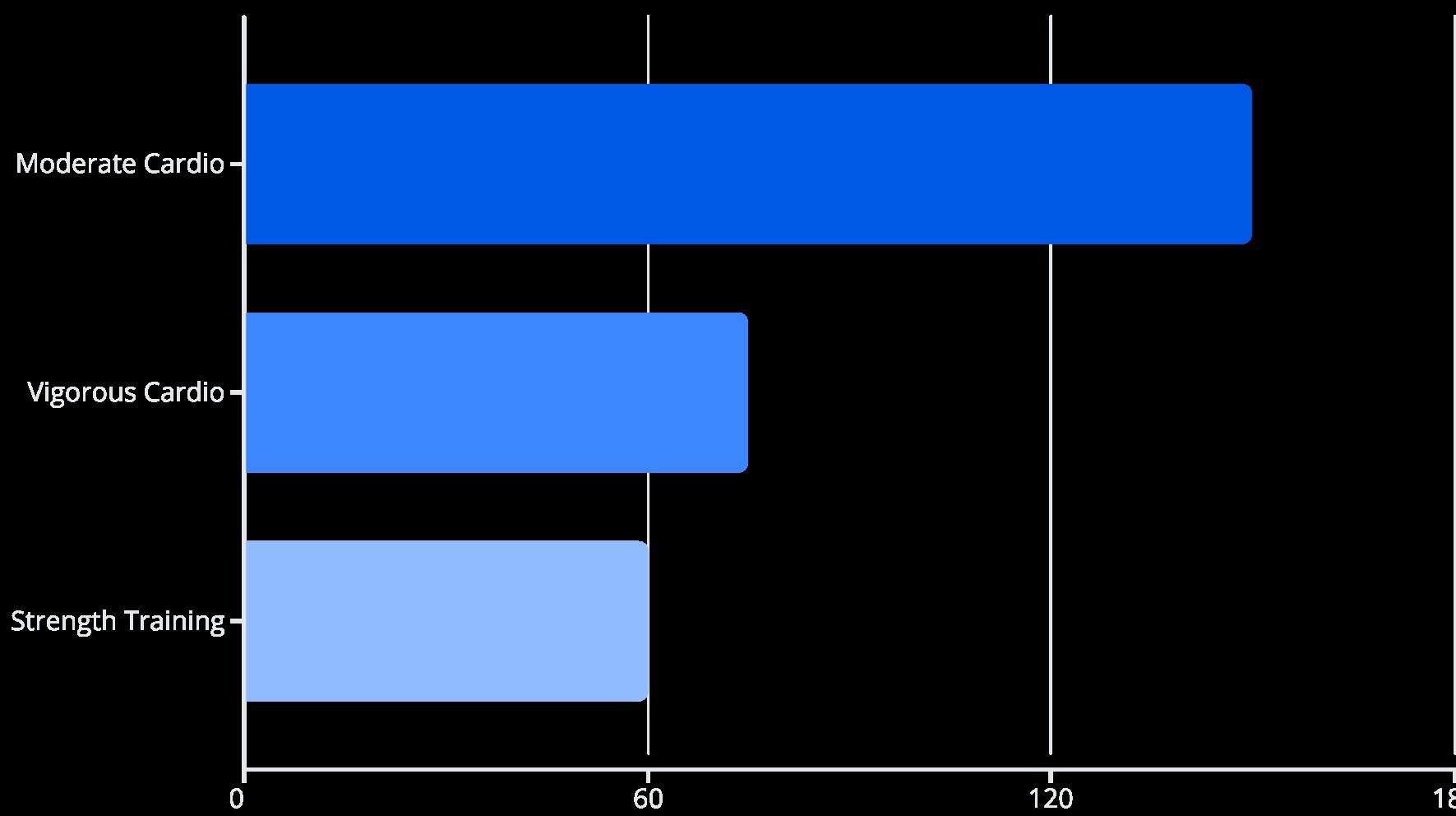
Recommended Guidelines
Common Misconceptions
Myth: Cardio is the only way to lose weight
Fact: Diet and strength training are equally important components of sustainable weight loss.
Myth: Women will get bulky from lifting weights
Fact: Most women lack the testosterone levels needed for significant muscle bulk.
Myth: You must keep your heart rate in the "fatburning zone"
Fact: Total calories burned matters more than the specific heart rate zone.
Myth: You can spot-reduce fat with targeted exercises
Fact: Fat loss occurs throughout the body regardless of which muscles you work.
The Importance of Nutrition
Protein Essential for muscle repair and growth. Aim for 1.6-2.2g per kg of bodyweight when strength training.
Carbohydrates Primary fuel for intense cardio workouts. Timing matters more than total amount.
Fats Support hormone production and joint health. Essential for recovery and overall health.
Tracking Progress
Track both performance metrics and body composition changes. For cardio, monitor heart rate, distance, and time. For strength, record weights, reps, and sets.
Conclusion
The Cardio Advantage
The Strength Advantage
Balanced Approach
• Immediate calorie burn
• Cardiovascular health
• Endurance improvement
• Stress reduction
• Long-term metabolism boost
• Muscle development
• Bone health
• Functional fitness
For most people, combining both types offers the best overall benefits. Personalize your ratio based on goals, preferences, and schedule.