
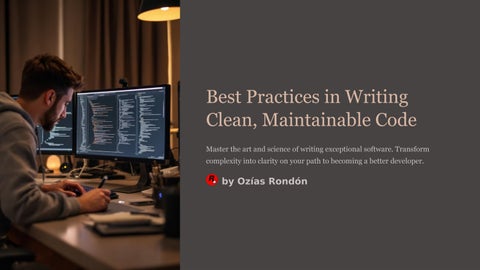
Best Practices in Writing Clean, Maintainable Code
Master the art and science of writing exceptional software. Transform complexity into clarity on your path to becoming a better developer.

by Ozías Rondón

Master the art and science of writing exceptional software. Transform complexity into clarity on your path to becoming a better developer.
by Ozías Rondón
Reduction in software maintenance costs
Improvement in team collaboration
Decrease in technical debt
Clean code enhances overall software quality. It makes reading and understanding easier for everyone on the team.
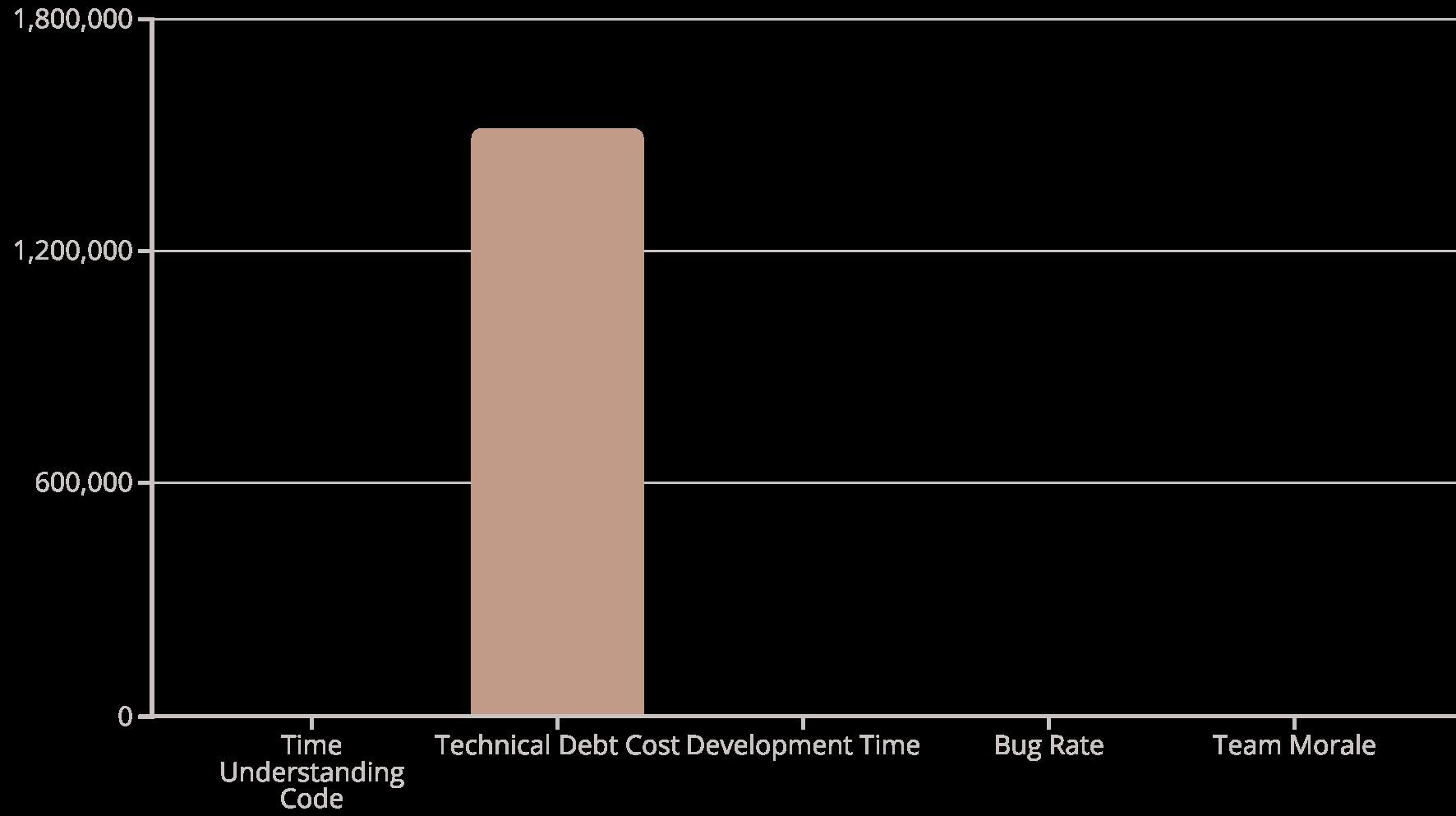
Five design principles that make software more understandable, flexible, and maintainable.
Don't Repeat Yourself. Every piece of knowledge should have a single representation.
Keep It Simple, Stupid. Simplicity should be a key goal in design.
Responsibility
A class or module should have only one reason to change.

int a; void fx(int b); class Proc {};
int userAge; void calculateTax(int income); class OrderProcessor {}; Use meaningful names that reveal intent. Avoid abbreviations and cryptic names that confuse readers.




Keep Functions Small
Functions should do one thing well. Aim for 20 lines or less.
Limit Arguments
Three or fewer arguments is ideal. Use objects for more parameters.
Single Purpose
Each function should solve exactly one problem. No side effects.
Pure Functions
Same input always produces same output. Easier to test and understand.


Logical Organization
Files and folders reflect your domain structure


Use standard indentation and formatting rules


Modular Design
Build independent, reusable components


Separation of Concerns
Each module handles one aspect of functionality


Self-explanatory Code
Clear code reduces the need for comments
Explain Why, Not What
Comment on reasoning, not obvious operations

Updated Documentation
Keep documentation synchronized with code changes
Good documentation helps new team members understand your code quickly. Focus on explaining complex decisions.
Anticipate Errors
Plan for failures and edge cases
Log Everything

Maintain detailed logs for troubleshooting

Use Try-Catch
Implement proper exception handling
Meaningful Messages
Create descriptive error messages


Algorithmic Efficiency
Understand big O notation and complexity analysis.

Profiling and Benchmarking
Measure performance before and after optimization attempts.

Data Structure Selection
Choose the right data structure for your specific needs.

Targeted Optimization
Focus on critical paths and bottlenecks only.


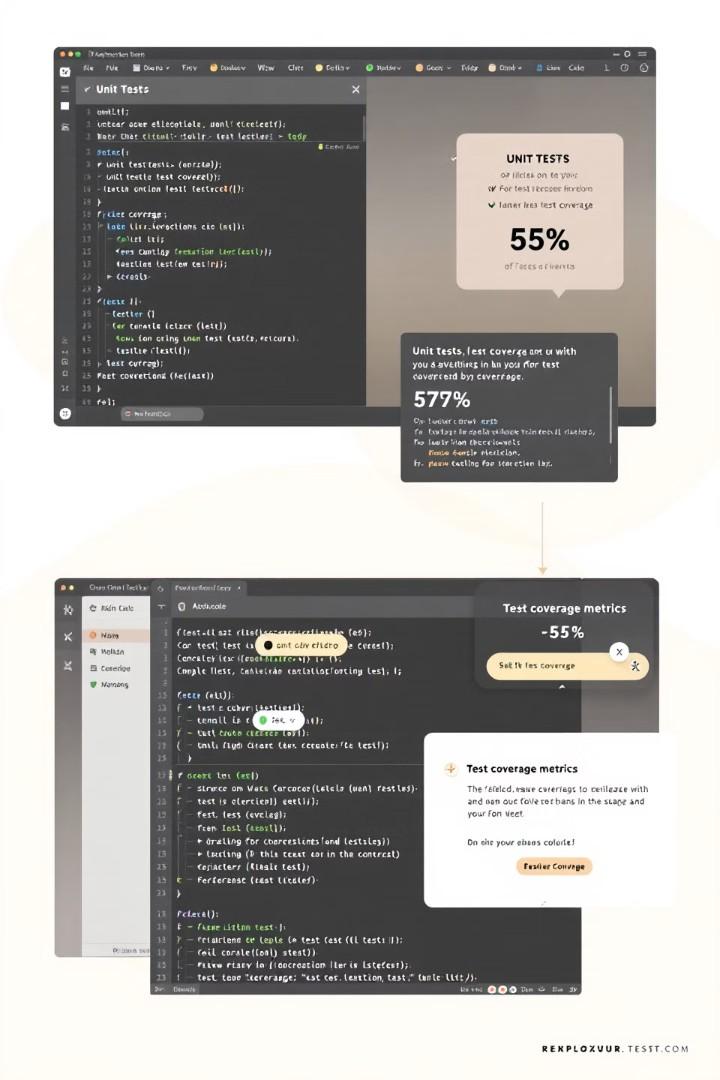
Test individual functions and components in isolation.

Aim for 80%+ code coverage with meaningful tests.
Write tests before implementing features.

Set up CI pipelines to run tests on every commit.

Branching Strategy
Use feature branches for isolated development.

Atomic Changes
Each commit addresses a single logical change.

Write clear, descriptive commit messages.


Use PRs for code review before merging.
Automated Checks
Use linters and static analysis tools to catch basic issues automatically.
Peer Review
Have teammates examine code for readability, logic, and potential improvements.
Constructive Feedback
Focus on the code, not the developer. Suggest solutions, not just problems.
Continuous Learning
Treat every review as a learning opportunity for the entire team.

Apply Techniques
Extract methods, rename variables, simplify conditionals.
Refactor with tests to prevent introducing bugs.
Identify Code Smells
Recognize patterns that indicate potential problems.


Find Balance
Improve without perfectionism paralysis.
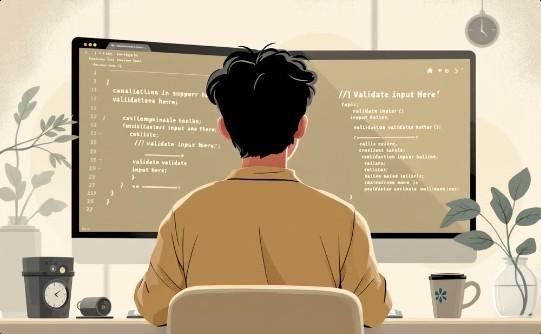


Never trust user input. Validate all data before processing it.
Protect sensitive data at rest and in transit with proper encryption.
Regularly scan and update libraries to patch security vulnerabilities.

Read Widely
• Classic programming books
• Technology blogs
• Research papers
Engage Community
• Attend meetups
• Participate in forums
• Contribute to open source
Practice Regularly
• Daily coding exercises
• Side projects
• Coding challenges
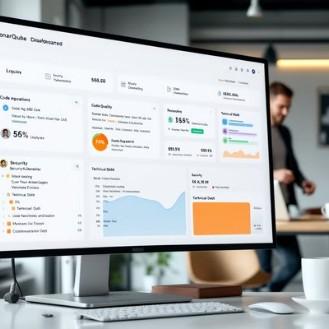

Leverage these tools to enhance your coding practices. Quality tools help catch errors early and enforce standards.

Comprehensive Guides
Step-by-step tutorials covering all aspects of clean coding.

Expert-Written Content
Learn from industry professionals with years of experience.

Practical Examples
Real-world code samples you can apply immediately.

Affordable Learning
Professional-quality education at budget-friendly prices.






Visit Today
Go to The AZ Code
Browse E-books
Explore our comprehensive programming guides.
Get Special Offers
Use our exclusive affiliate link for discounts.
Transform Your Skills
Begin your clean code journey today.
Focus Area
First Steps
Implementation Start with one principle each week
Improvement Track progress with code quality metrics
Knowledge Sharing Host weekly team discussions on clean code
Philosophy Code as if the maintainer will be you
Code with purpose, clarity, and passion. Your future self and teammates will thank you.