... what it’s all about
IN THIS ISSUE
... what it’s all about
By Marco Pasqua
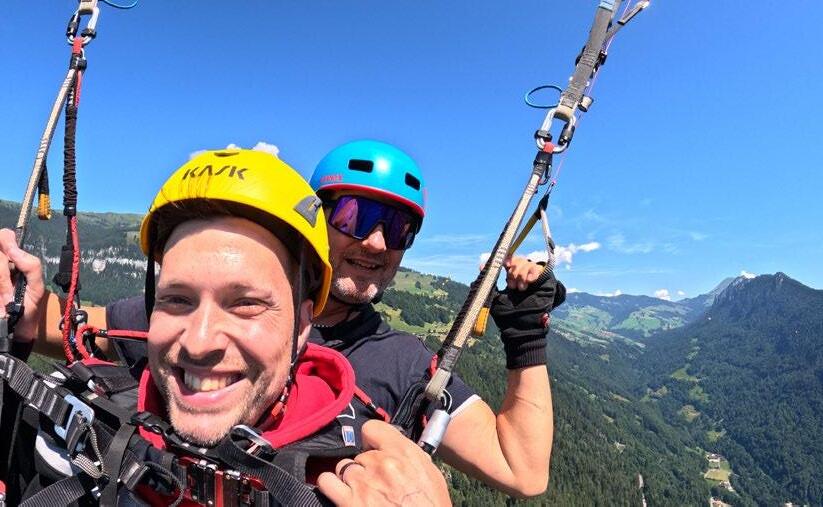
Iam, by my own admission, afraid of heights. So paragliding off a mountain in Interlaken, Switzerland, was not something I approached casually.
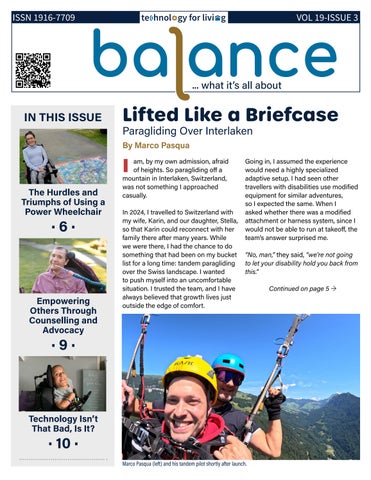
In 2024, I travelled to Switzerland with my wife, Karin, and our daughter, Stella, so that Karin could reconnect with her family there after many years. While we were there, I had the chance to do something that had been on my bucket list for a long time: tandem paragliding over the Swiss landscape. I wanted to push myself into an uncomfortable situation. I trusted the team, and I have always believed that growth lives just outside the edge of comfort.
Going in, I assumed the experience would need a highly specialized adaptive setup. I had seen other travellers with disabilities use modified equipment for similar adventures, so I expected the same. When I asked whether there was a modified attachment or harness system, since I would not be able to run at takeoff, the team’s answer surprised me.
“No, man,” they said, “we’re not going to let your disability hold you back from this.”
Continued on page 5 →
BALANCE NEWSLETTER IS PUBLISHED QUARTERLY BY TECHNOLOGY FOR LIVING
#103-366 East Kent Ave. South Vancouver, BC V5X 4N6
604.326.0175 604.326.0176
info@technologyforliving.org Globe technologyforliving.org
EXECUTIVE DIRECTOR
Ruth Marzetti
DESIGN / EDITOR
Taylor Danielson
CONTRIBUTING WRITERS
Marco Pasqua • Lisa Coriale • Marnie Essery • Deepi Leihl • Jules Ke • Michael Bossaer • Wayne Pogue
Technology for Living does not research, endorse, or guarantee any of the products or services within the newsletter. We strongly recommend investigating products and companies before purchasing or using them.
Permission to reproduce: All Balance articles are copyrighted. Non-commercial reproduction is welcomed. For permission to reprint articles, either in part or in whole, please email info@technologyforliving.org
Technology for Living houses the Provincial Respiratory Outreach Program (PROP 1.866.326.1245) and the Technology for Independent Living Program (TIL 604.326.0175). PROP is funded by the Province of British Columbia Ministry of Health through Vancouver Coastal Health. TIL is funded by the Province of British Columbia Ministry of Health and other independent funders.
Publications Mail Agreement No. 41682526 © 2026 Technology for Living
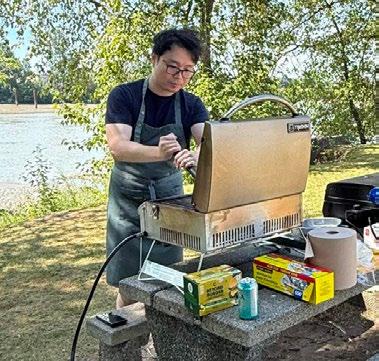
Technology for Living held its annual barbecue on July 15 at the TFL office. The weather was perfect, sunny with a gentle breeze off the Fraser River, and it gave the whole TFL team, staff and peers spread across British Columbia, a chance to connect in person over good food.
A television was set up outside for the World Cup semi-final, where a crowd watched Argentina come from behind to beat England 2-1 in the closing minutes.
Thank you to our grill master Benson, and to the biomeds for setting up the TV!
The inaugural OneAbility Games ran May 13 to 17, 2026, at the Richmond Olympic Oval, with more than 1,200 athletes across the week. It opened with 300 children with disabilities parading into the Oval. The Games ran two streams: PLAY, introductory adaptive sport for K-12 students, and ACHIEVE, competitive events for provincial and national athletes. Sports included soccer, lacrosse, wheelchair basketball, goalball, and blind hockey. The week also hosted the 2026 National Wheelchair Basketball Championships, the Senior National Goalball Championships, and the BC Blind Hockey Cup.
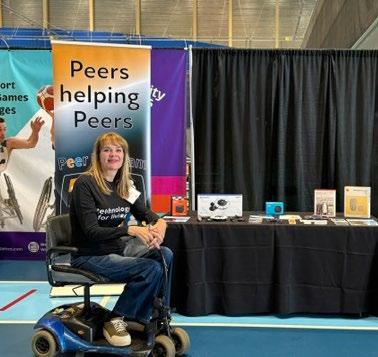
Technology for Living had a booth at ConnecTra Society’s Abilities Expo on Monday, June 8, 2026, at the Roundhouse Community Centre in Vancouver. This was the fifteenth Abilities Expo, and this year’s theme of Connected Futures put the focus on innovation, accessible technology, and inclusive design. The day brought together exhibitors, guest speakers, and community resources for people with disabilities, families, caregivers, and the clinicians who work with them. Admission was free and lunch included. Thank you to everyone who stopped by to say hello and talk about our services and equipment. We will see you next year!
Apple is making its devices more accessible with a range of new features coming later this year. The update includes an improved VoiceOver with more detailed image descriptions, a smarter Magnifier, and more flexible Voice Control for a better hands-free experience.
Apple is also adding automatic subtitles for personal videos, plus new accessibility features for Apple Vision Pro, including eye-tracking support for controlling compatible power wheelchairs. Using your eyes alone, you will be able to steer in eight directions and stop. At launch this works only with Tolt and LUCI drive systems in the United States, but more are planned!
We are always happy to discuss any member’s needs. Simply phone us at:
604.326.0175 or send an email to info@technologyforliving.org
Many TIL devices run on batteries you change occasionally, but it’s easy to forget the ones that plug in and charge. Smart locks, smart blind openers, and smart doorbells all need a routine recharge to keep running smoothly. Whether yours are disposable or rechargeable, a quick check of the power levels in the app is a great habit to get into.
By Wayne Pogue
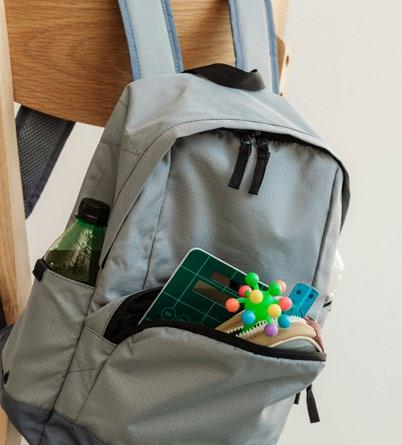
Whether you love going to school or love sleeping in, it’s time for many of our younger members to head back to school, and we wanted to outline some of the ways TIL can assist you in making this the best school year yet!
While TIL does focus on assistive technology within your home, there are many things we can do to assist you in getting ready for your school day.
Voice assistants, like Google, Alexa, or Siri, are great devices to help kickstart your day. Not only do they help voice control other devices in your home, but you can also use them to set alarms, reminders, check the weather (hoping for a snow day), having it read your calendar, or so many other tasks.
Nothing wakes you up like a shot of sunshine! With smart blind/curtain openers, you can set your curtains or blinds to open at a certain time, inviting daylight into your room for the day.
TIL has many options when it comes to mounting your smart device in a place that’s convenient. If you’re a wheelchair user, we can have your phone mounted to make it usable for your day at school. We can also help with access to your smart device, by voice or switch.
Time to get out and make your way to school? TIL can assist with that too… we have an ADO application available to TIL members. If approved, we can help in getting an ADO set up in your home, so you can open the door remotely.
Although we don’t provide assistive technology for school, if your school has access barriers, we’d be happy to set up a consultation with you and the school staff, to see if there are solutions to overcome these barriers, like access to doors and elevators.
After school…it’s Game Time! If you’re into video games, TIL has accessible gaming controls available, to help make gaming more accessible for our members. We have a range of accessible controllers, joysticks, and buttons, to help you play your favourite games on PS5, Switch, or Xbox.
If you have questions about any of this tech, want to set up a school consultation, or would like TIL to assist with your return to school, please contact us.
A growing number of Health Canada-approved mechanical insufflator-exsufflator (cough assist) machines has opened the door to sneak peek trials with PROP members. As primary day-to-day users of specialized equipment, your insight is highly regarded and valued in shaping the direction of our equipment fleet. Thank you to those who have taken part.
Interested in a future equipment trial? Email prop@technologyforliving.org.
If you need respiratory advice or support please contact the PROP team at phone-alt 1.866.326.1245
Wildfire smoke season runs well into the fall, and people with sensitivities to air quality are at higher risk from it than the general public. The best protection is filtered indoor air, and the best time to sort it out is before the smoke arrives. Air quality maps, warnings, and how to choose or build an air cleaner: vch.ca/en/wildfire-smoke.
The Action Plan is a fill-inthe-blank worksheet: where you will go for cleaner air, what to have on hand, and who checks in on you.
By Michael Bossaer, RRT
One of the most rewarding parts of working as a respiratory therapist with the Provincial Respiratory Outreach Program (PROP) is getting to know the people behind the diagnoses. Every person has a story, and every now and then, one of those stories reminds you just how quickly technology is changing what’s possible.
I recently had the opportunity to see that firsthand with one of Technology for Living’s members, Vancouver Police Sergeant Lee Marten. On May 20, 2026, at Toronto Western Hospital, Lee became the first Canadian living with amyotrophic lateral sclerosis (ALS) to have a Neuralink brain implant fitted here in Canada. One other Canadian with ALS had received an implant before him, but that surgery took place in the United States. Lee is the 26th person in the world to undergo the procedure, and the first anywhere to have it done by a new, less invasive method. With this technology, he can control his computer using his thoughts.
“Every now and then, one of those stories reminds you just how quickly technology is changing what’s possible.”
ALS gradually affects a person’s ability to move, speak, and eventually breathe. As respiratory therapists, we spend a lot of time helping people maintain comfort, independence, and quality of life as those changes occur. Being able to share a thought, ask for help, or simply say “I love you” never loses its value. That’s what makes Neuralink so exciting. The implant gives people another way to communicate when speaking or using their hands becomes
difficult. It’s still early days, but the possibilities are remarkable.
Participating in a clinical trial takes courage. Lee’s willingness to be part of this research may one day help improve the lives of countless others living with ALS and other neurological conditions.
The procedure places more than 1,000 electrodes, each thinner than a human hair, into the motor cortex, the part of the brain that plans movement. Surgeons open the skull and prepare the site, but a two-metre-tall robot inserts the electrodes.
Until Lee’s operation, surgeons also peeled back the dura, the protective membrane covering the brain. Lee was the first person anywhere to have the electrodes placed straight through it, leaving the membrane intact. His surgeon called it a tremendous advance that could make the operation simpler and safer.
Source: CBC News
Working with people like Lee is a reminder that assistive technology isn’t just about devices or innovation; it’s about preserving independence, connection, and dignity. Sometimes the most meaningful advances aren’t about changing the diagnosis—they’re about helping people continue to live their lives.
Lee Marten’s story was reported by Lyndsay Duncombe for CBC News on July 2, 2026. Watch the video at cbc.ca/player/play/video/9.7257004.
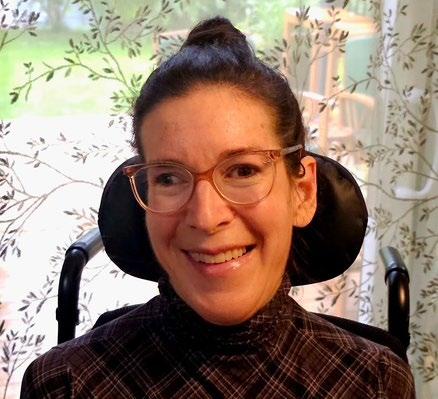
My name is Lisa Coriale. I am a daughter, sister, auntie, friend, artist, author, lifelong learner, and advocate. I was born with cerebral palsy. I have five degrees and a passion for writing. Spending time with people I love and care about inspires and encourages me in my writing journey. I have two books published, a poetry book “Transparent” and children’s book “Beautiful, Beautiful Bird.” I enter writing contests in my spare time.
We are always happy to discuss any member’s needs. Simply phone us at:
604.326.0175 or send an email to peer@technologyforliving.org
Balance is looking for new writers. You do not need to be a writer. Our editor works alongside you, from the first idea to the finished page, at whatever length suits your story. If it connects to living with a disability, our readers will get it. Peers with lived experience are compensated for their work. Email peer@technologyforliving.org
Continued from page 1

Instead of making the experience feel complicated or clinical, they explained the plan: two people would support me on either side, lift me by the arms “like a briefcase,” run alongside the paragliding pilot, count down from three, and give me the momentum I needed to take off.
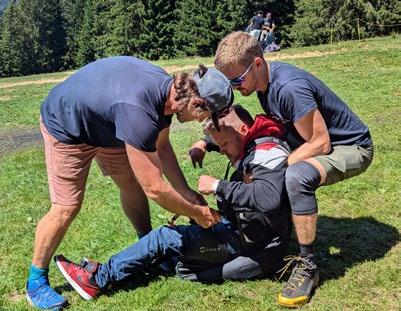
It sounds wild when I describe it now, and honestly, it was. But in the moment, they made me feel completely safe, respected, and included. There was no pity, no overthinking, and no sense that I was a problem to solve. They simply adapted the process, trusted their skills, and gave me the same thrilling experience anyone else would have.
The result was one of the most exhilarating moments of my life. I was soaring above the mountains and clouds, looking down at a landscape that felt almost unreal. It was beautiful, terrifying, freeing, and unforgettable all at once.
What made it so meaningful was not just the adventure itself, but what it represented. Accessibility is not always about creating a separate or overly complicated experience. Sometimes it is about having the right people, the right attitude, and the willingness to adapt in a way that keeps the spirit of the experience intact.
For me, paragliding in Interlaken was a powerful reminder that disability does not need to define the edges of possibility. With trust, creativity, and the right support, those edges can move a lot farther than we think.
I also wrote about this experience in my book, “From Potential to Purpose,” because it connects so strongly to the message I try to share in my work and life: seek discomfort, challenge assumptions, and do not let others define what is possible for you.
By Lisa Coriale
Iwould like to invite you to join me on a journey of learning about the challenges I have overcome with using a power wheelchair. Despite these obstacles, I have found a way to create art and express myself using the technology of my powerchair.
Being able to operate my powerchair requires a team effort, including support from my family and assistants. Throughout my life, I have received several makes and models of wheelchairs, such as Tilt-in-Space chair and Lightweight Titanium chair. Each time I receive a new wheelchair, my wheelchair technician and occupational therapists help me to form the wheelchair to my body’s needs. When all these aspects come together, it helps me use the technology and gives me the ability to drive.
I have also been privileged to have a couple of power wheelchairs. Together with my support team, we explored different options for controlling the powerchair, including hand controls and head controls. Currently, I use a headset called “GyroSet Vigo” that connects to my chair through Bluetooth. Several different speeds programmed within the chair allow me to go fast or slow.
Learning to operate this highly technical system took time and patience from everyone involved. When I place my headset on my head, it beeps to indicate it senses its direction from my movements. I tilt my head back to go forward, forward and down to stop, turn my head left to go left, and right to go right. To move backward, I must put my head in exactly the right spot, otherwise the chair will go forward. It takes a fair amount of concentration and precision to operate my powerchair to go where I want to go. I also exercise my neck muscles because stronger and more controlled movements help me steer more accurately.
I enjoy going for walks in my powerchair in my neighbourhood. While my assistants are walking, I am rolling beside them. When I go for a walk, I have to keep my eyes focused ahead. If I look at anything around me, I may move in that direction. At first, I could not carry on a conversation while driving, because all of my attention was focused on learning the controls. As my confidence grew, I became able to talk while safely operating my chair.
When I drive, I have to follow the rules of the road. I need
to focus because it is a big responsibility to operate the equipment. I would compare it to someone learning how to drive and learning from their mistakes. I started very slowly, but I became more confident to increase my speed. I enjoy practising outdoors or in big open spaces at malls, but there are still obstacles. I practised with my wheelchair technician and assistant at the grocery store, navigating the narrow spaces of the aisles. I am unable to use my powerchair in my home because the doorways are too narrow.
Sometimes when practising, I was afraid when a car came down the road — it would make me close my eyes! My assistants also have to pay attention; they have a stop button in case I run into trouble, like running into a tree! When practising, there were many challenges and bumps along the way, including a few accidents.
It is exciting to have a powerchair and this technology, which gives me a sense of freedom I never had before. My personal assistants change regularly, so I often have to teach new people how to work with me while I am driving,
and it can get tiring. There are times when my assistants try to tell me how to drive, like what to do or where to go. While their intentions are good, they do not know how I feel being the one sitting in the chair or what it is like to operate it. Sometimes, I take the opportunity and run away!
There have been some technical difficulties with my headset, and now I am waiting for it to be linked to my chair again. Once the system is reprogrammed, I will have to relearn how to operate my powerchair. Waiting for the technology to work properly is very frustrating because it limits my freedom and creativity. It prevents me from moving forward, both literally and figuratively.
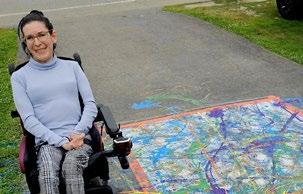
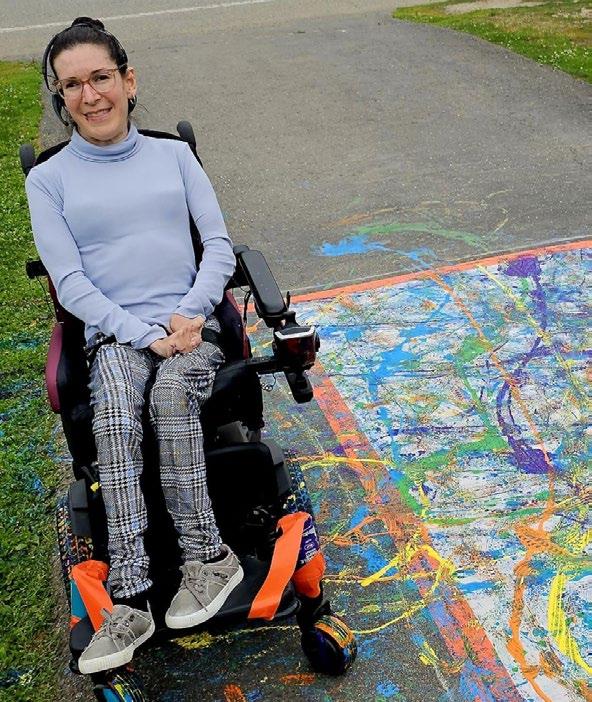
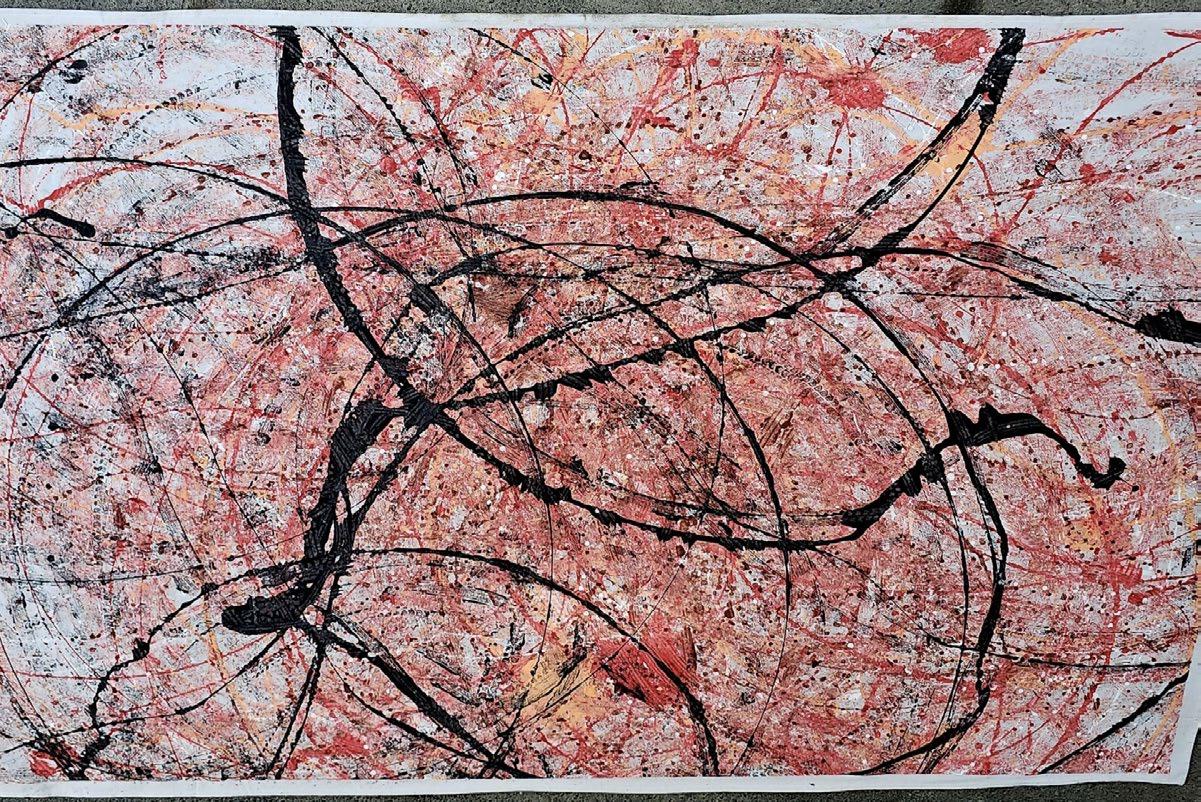
I was inspired to create art, and I realized it was possible with my powerchair to do so independently. As part of my Master’s thesis, I made an exhibit with different forms of art, including pieces by artists with diverse abilities, and showcasing accessible ways to create art. I decided that my wheelchair art would be the centrepiece of my exhibit. I attached bottles of water-based paint to my powerchair near the front and back wheels using tape. Different
colours of paint would drip down onto the large canvas secured to the pavement. The movements that I made by changing directions created shapes in my art. After completing my piece, my wheels were covered in many colours of paint!
I felt calmer and more relaxed the second time I made a painting. I used both vibrant and dark colours to creatively express myself while I was dancing in circles on canvas with my power wheelchair. It feels like an outof-body experience to go round and round, creating art independently. I originally wanted to write a word across the page, but later, I realized it would be too difficult with the size of the canvas. I decided to focus on my emotions and the experience of movement, expressing myself creatively and painting patterns and shapes with my powerchair.
Although this type of technology gives me the independence I desire, there are still many factors and steps toward being able to use it. I am very grateful for my powerchair and the technology which gives me the ability to operate it independently.
By Jules Ke
My name is Jules Ke! I’m an engineering student at UBC Okanagan who believes in accessibility, transparency, and shareability. I’m pursuing an engineering career because I want to use math, science, and good design to solve worthwhile problems, and it’s for those reasons that I created the AceLace: an open-source, 3D-printed device that simplifies the complex motions of tying a shoe. After mounting it to your laces, you simply twist to tighten, pull to release, and push to do it all over again.
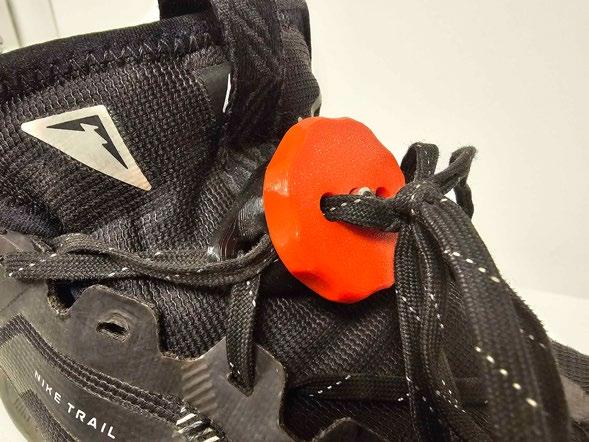
The AceLace’s invention began in Dr. Sabine Weyand’s Inclusive Design course, where we were tasked with creating dressing aid devices. It was here that the first prototype of the AceLace was born. Project deadlines meant that it was still flawed in many ways, but it showed great promise, and I finished the course with ample motivation to continue iterating on its design. After the course, my groupmate Ishita and I agreed to submit it to the Simon Cox Student Design Competition.
“You simply twist to tighten, pull to release, and push to do it all over again.”
Once we entered the competition, Ean Price, of Technology for Living, directed us towards Accessibility Okanagan, where we found a user able to help us test our new AceLace designs in daily use. Along with her feedback, my groupmate and I personally tested the device by wearing it everywhere we went as we continued
to iterate on the design. Besides merely improving the design, we wanted to turn it from a prototype into a product: a prototype might contain unseen and unexpected points of failure that would be unacceptable in a polished product—especially one meant for accessibility.
“Its story doesn’t end with the competition.”
In order to do this, we decided to open-source it. This allowed us to reach a much wider audience than would otherwise have been possible. This was important not only to get the AceLace into the hands of as many people as possible who would benefit from it, but also because it has let us gather far more everyday-use feedback than the three of us—my groupmate, our tester, and I—could produce on our own. After open-sourcing it, we wrote, shot, edited, and published the video submission, and we were off to the races!
If you want to produce it yourself, links to the AceLace’s files can be found on my website, jules-ke.ca, along with my contact information. If you don’t have access to a 3D printer or would benefit from pre-assembled units, AceLaces are also available for purchase through carrke.ca, a print farm operated by myself and a friend. The wonderful thing about open-sourcing the AceLace is that its story doesn’t end with the competition: it remains a living project, uniquely positioned to respond to user feedback as we continue to improve its design into the future.
The competition runs on ideas from peers. If there’s something in your day that doesn’t work the way you’d like, whether at home, at work, getting around, or doing something you love, that’s exactly the kind of challenge a student team would want to take on next year.
By Marnie Essery
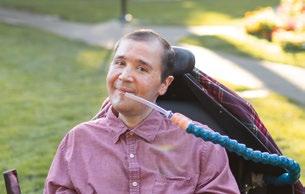
Ryan Yellowlees is a Registered Clinical Counsellor and disability activist who has turned his own experiences with ableism into a career helping others. Growing up with a physical disability, he saw firsthand how little mental health support existed for people with disabilities and their families. Determined to change that, he pursued counselling so others would not have to face life’s challenges alone.
His educational journey was filled with barriers. While completing his Master of Counselling degree, Ryan found that his university’s disability advisor did not know how to apply for disability education grants. He taught the advisor how to complete them so he could access the funding to finish his degree. During his practicum he faced disability discrimination and received little help in addressing it.
Today, Ryan has practised for four years and operates Life Empowered Counselling. His goal is to empower people living with disabilities and chronic illnesses to live authentically and purposefully, and wherever possible to thrive. The name of his practice reflects his belief in passing the torch of empowerment to clients, encouraging them to advocate for themselves and challenge ableism when they choose.
Advocacy is a large part of that work. At a client’s request, Ryan helps them build the confidence and skills to advocate for themselves or become activists, and many have won real personal victories after learning to stand up to discrimination and inaccessible systems. Persistence in the face of ableism often leads to success, he says, and speaking up can create meaningful change. The greatest reward is seeing clients accomplish goals they once believed were impossible.
Adaptive technology has played a life-changing role in Ryan’s own success. Dragon NaturallySpeaking, Kurzweil 3000, Grammarly, and iPhone Voice Control enabled
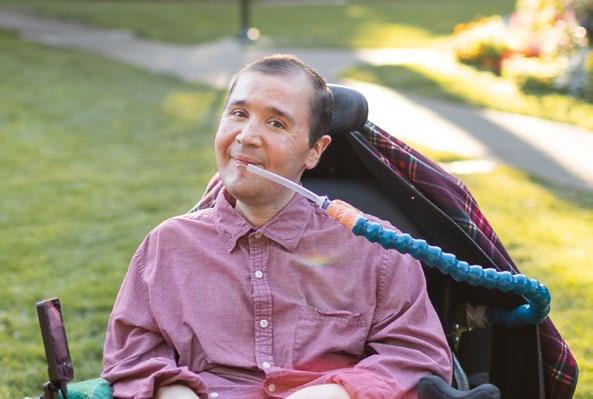
him to complete his education and build his practice. He encourages people to be patient while learning these tools, because the benefits can be profound, and points to Assistive Technology BC, the Neil Squire Society, WorkBC Assistive Technology Services, and Technology for Living.
Persistence in the face of ableism often leads to success.
For people with disabilities considering a career in counselling, Ryan says empathy, compassion, emotional resilience, and the ability to stay present with clients through trauma and grief are essential. He also advises them to be ready for ableism inside the profession, and to stay determined in spite of it.
Ryan offers counselling online and by telephone, Monday through Saturday, 12:00 p.m. to 7:00 p.m. His sliding-scale fees run from $50 to $120 per session based on income, and he reserves several pro bono spaces for people who cannot afford counselling.
By Deepi Leihl
People often have strong opinions about technology. Some say it has become too advanced, that it has made society less connected, or that it has changed our lives for the worse. Others believe it has created opportunities that previous generations could never have imagined. So, who is right? Is technology helping us or harming us?
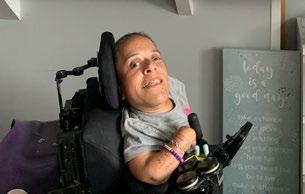
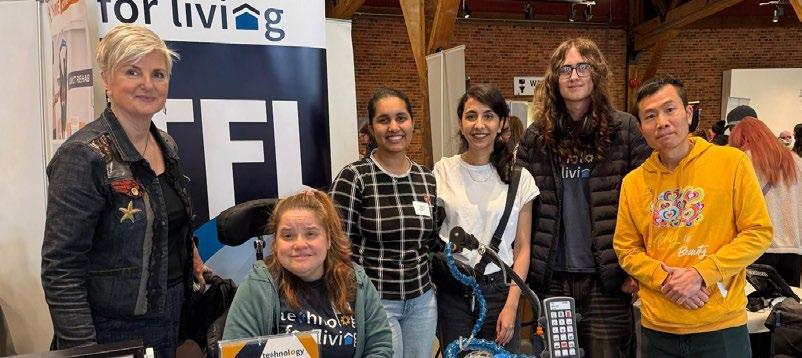
For many years, I had heard about Technology for Living (TFL) while attending community events where they would often have information booths set up. I was aware of the incredible work they did to support people with disabilities, but at the time, I never thought their services applied to me. I assumed I was managing well enough on my own and didn’t see a need to explore assistive technology.
That all changed in April 2022…
“For someone with a physical disability, the ability to perform even simple tasks independently can have a profound impact on confidence, dignity, and quality of life.”
Like many people, I found that the COVID-19 pandemic dramatically altered my life. During that time, I spent six weeks in the Intensive Care Unit at Richmond Hospital battling pneumonia. Throughout my hospitalization, I was repeatedly placed on and off a ventilator. The experience took a tremendous toll on my body. I lost a significant amount of weight, my lungs were weakened, and the intubation affected my vocal cords.
Most importantly, the experience changed the way I viewed independence.
Living with a physical disability since birth, I have always relied on support from family members, caregivers, and community support workers. While I deeply appreciate the support I receive, my hospitalization forced me to think about what would happen if that support was not available.
What if a support worker called in sick? What if a family
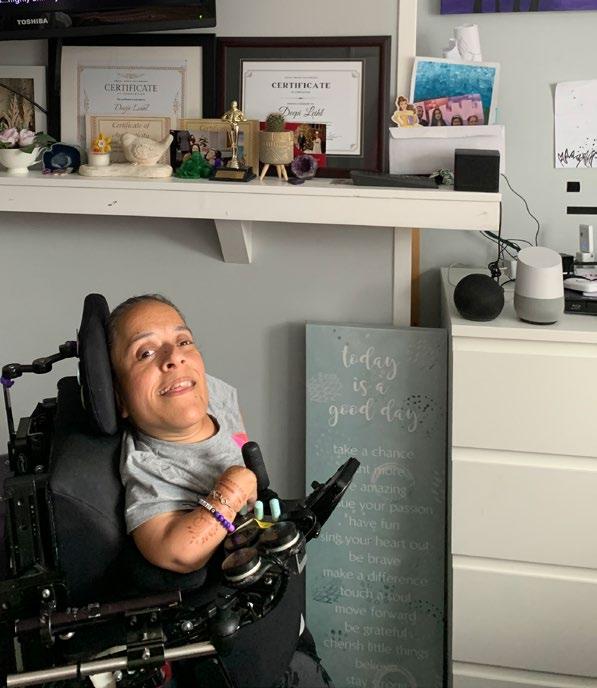
member was unavailable? What if someone’s own health challenges prevented them from helping me? These questions stayed with me long after I left the hospital. For the first time, I began thinking seriously about how I could increase my independence and take greater control of my daily life. I wanted the ability to manage my environment on my own terms whenever possible. I wanted the freedom to turn on a light, change the television channel, operate a fan, or play music without always needing to ask someone else for assistance.
To many people, these tasks might seem small and insignificant. However, for someone with a physical disability, the ability to perform even simple tasks independently can have a profound impact on confidence, dignity, and quality of life.
At the same time, my twin sister was working with the
Assistive Technology Service at GF Strong Rehabilitation Centre to have an iPad mounting system installed on her power wheelchair. During that process, her occupational therapist suggested that I contact Technology for Living.
The therapist explained that TFL specializes in helping individuals with disabilities overcome accessibility barriers through assistive technology and innovative solutions. They also understand that many people face financial challenges when trying to access specialized equipment and support.
I reached out to TFL by email and explained my situation. They responded with kindness and understanding, connecting me with one of their biomedical engineering technologists through their Technology for Independent Living program.
“Technology for Living did more than provide equipment. They provided an opportunity.”
From our very first conversation, I knew I was in good hands.
The technologist took the time to learn about my goals, daily routines, challenges, and interests. Rather than assuming what I needed, he asked thoughtful questions to better understand my lifestyle and what independence looked like to me.
This personalized approach was incredibly valuable. Technology can sometimes feel overwhelming because there are so many devices, applications, and options available. As someone who is not particularly knowledgeable about electronic equipment, I appreciated having someone guide me through the possibilities and help identify solutions that matched my needs.
Through Technology for Living, I was introduced to voiceactivated smart home technology, including Alexa and Google Home devices.
With a simple voice command, I can turn lights on and off, adjust devices throughout my home, play music, access information, and manage many everyday tasks that once required assistance from someone else.
For many people, these technologies may simply be convenient gadgets. For me, they represent something much more meaningful.
They represent freedom, confidence, independence—and, most importantly, greater control over my own life.
Technology for Living did more than provide equipment. They provided an opportunity. They helped remove barriers that had limited my independence and showed me that technology can be a powerful tool for inclusion and accessibility.
Even today, their support continues. They regularly check in to ensure everything is working properly and to see whether additional support might be helpful. That ongoing commitment speaks volumes about the organization’s dedication to the people they serve.
Their work is not simply about technology. It is about empowering people to live fuller, more independent lives.
Because of Technology for Living, I feel more confident, more capable, and more empowered than ever before.
So, returning to the question I asked at the beginning: Is technology really making our lives worse?
My answer is no.
Like any tool, technology can be used in both positive and negative ways. However, when thoughtfully designed and used to remove barriers, technology has the power to transform lives.
I know because it transformed mine!
Deepi received assistance from Technology for Independent Living (TIL), one of TFL’s three programs. Its technologists help members find and set up the technology that makes a home easier to manage on your own: smart speakers, mounting systems, door openers, environmental controls. They also work around the cost barriers that specialized equipment usually brings.
To talk about your own setup, call 604.326.0175 or email info@technologyforliving.org.


This is a virtual event via zoom


All required AGM documentation, including the Meeting Agenda, Meeting Minutes and the Independent Auditor’s Report are publicly available on our website on the “ABOUT” page. www.technologyforliving.org Date and Time:


Got empty beverage containers at home? Every bottle and can you return can now support assistive technology for people with disabilities across BC!