A LETTER FROM USOPA PRESIDENT
Hello Olympians & Paralympians,
As we welcome a new year, I am reminded of the extraordinary strength and unity within our Olympian and Paralympian community. Our legacy is built not only on the medals we have earned but on the character, perseverance, and leadership each of you continues to exhibit long after your competitive days have ended. It is an honor to serve as President of the United States Olympians & Paralympians Association and to champion the values that define who we are.
In 2026, we are committed to deepening our collaboration with National Governing Bodies (NGBs). These partnerships are essential for ensuring that Olympians and Paralympians remain connected to the sports that shaped us, while also helping pave the way for future athletes. By working hand-in-hand with NGBs, we aim to enhance athlete engagement, support long-term development, and amplify the voices and experiences of our alumni across all levels of sport.
Our alignment beyond sport will also continue to grow this year. We are strengthening relationships with affiliated organizations that share our mission, institutions and community groups across the country. These alliances allow us to expand our reach and provide greater opportunities for Olympians and Paralympians to contribute, lead, and inspire. Together, we can build initiatives that honor our values and create lasting impact in the communities we serve. One of our core priorities remains supporting the vital work of our chapters. Chapters are the heart of USOPA—they preserve our history, foster local

engagement, and create meaningful spaces for connection. In 2026, we will continue uplifting chapter leadership, encouraging collaboration among regions, and empowering chapters with the tools they need to thrive. Your commitment at the local level ensures that our legacy remains alive, accessible, and visible to those who look to us as examples of excellence.
Finally, this year we will place renewed emphasis on legacy outreach. Each Olympian and Paralympian carries a story that can inspire, educate, and elevate. By sharing those stories with schools, community programs, museums, and future Team USA hopefuls, we honor the generations before us while shaping the generations ahead. Our legacy is not something we leave behind—it is something we actively build, protect, and pass forward.
Best,
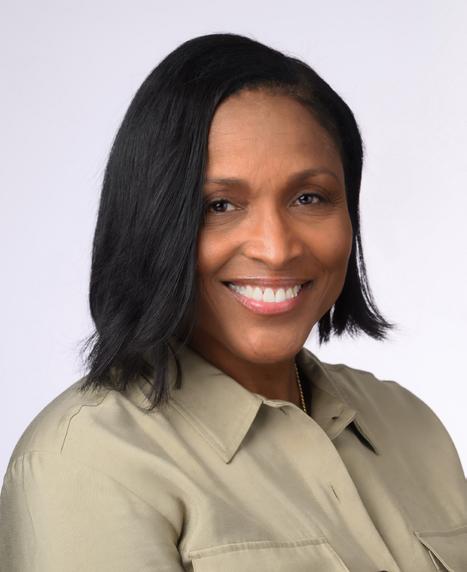

FROM PRESIDENT

ALUMNI RELATIONS UPDATE
Dear USOPA members,
Well, if it isn’t another Olympic and Paralympic year! Here at the USOPC, we’ve watched our teammates work tirelessly behind the scenes to support the athletes who will don the red, white, and blue in Milano-Cortina in the snow and on the ice, and we couldn’t be more excited to welcome yet another class of incredible USOPA members at the conclusion of the Games. We hope you’re as ready as we are to cheer on Team USA – thank you to those of you who let us know that you are headed to Italy: Have fun! And if you’re cheering from home like us, be sure to get ahold of your Chapter President and join the watch parties we’ll be encouraging. Part of what I miss the most about sport is the togetherness around a big event: Get your fix of teammate time by joining up to cheer on this year’s athletes!
Things we’re really excited about this year are continuing to offer more funding than ever to Chapters for community-driven activities, recognizing members for the impacts they have on their worlds beyond sport with the expansion of the Award of Excellence from Oregon to the nation, kicking off a commemorative project that combines art and sport, working closely with NGB alumni services in ways we never have, and continuing to expand collaborative efforts between USOPA and the organizations that make up the USOPC’s Affiliate Organizations Council: Those largely grassroots groups that make big differences on local levels, just like you. We’ll also be launching a digital mentorship platform for you to connect with peers across the industries you entered beyond sport!
Many of the initiatives we’re most excited about were born because you, USOPA, told us what you wanted, and we plan to keep listening in 2026 and beyond. Two different alumni listening projects will wrap up this spring, giving us clear direction and shining light on shared pain points that we can address. We held our first USOPA-wide Office Hours virtually in 2025, and will be hosting that full hour just for you to tell us what’s up, every second Friday of the month in 2026, from 1-2pm MST. We’d love to see you there.
Hitting the ground running,
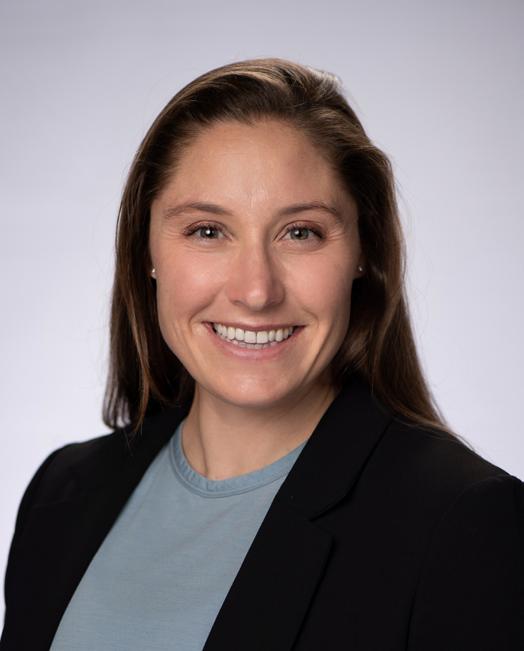

Kara Winger

GAMES SPOTLIGHT
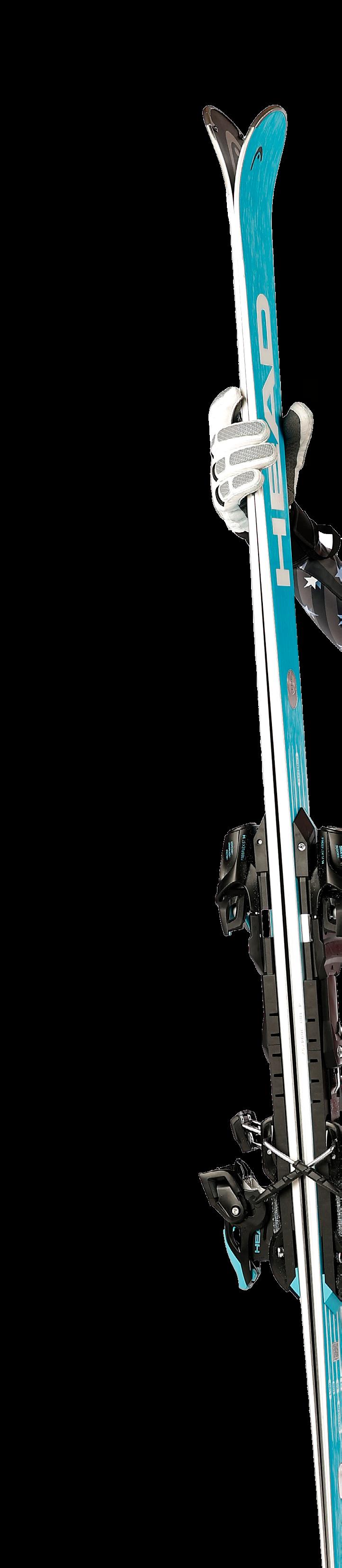

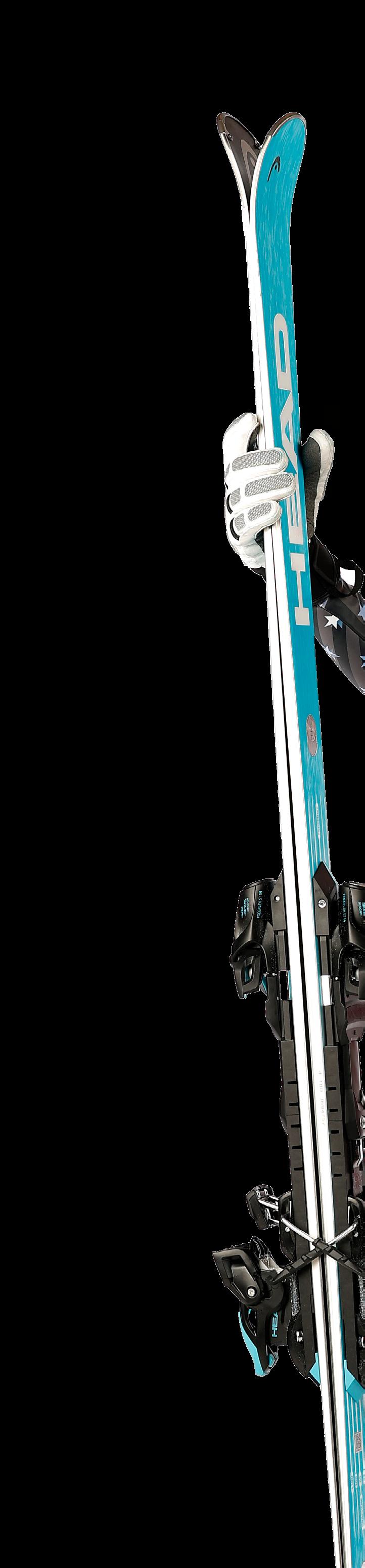
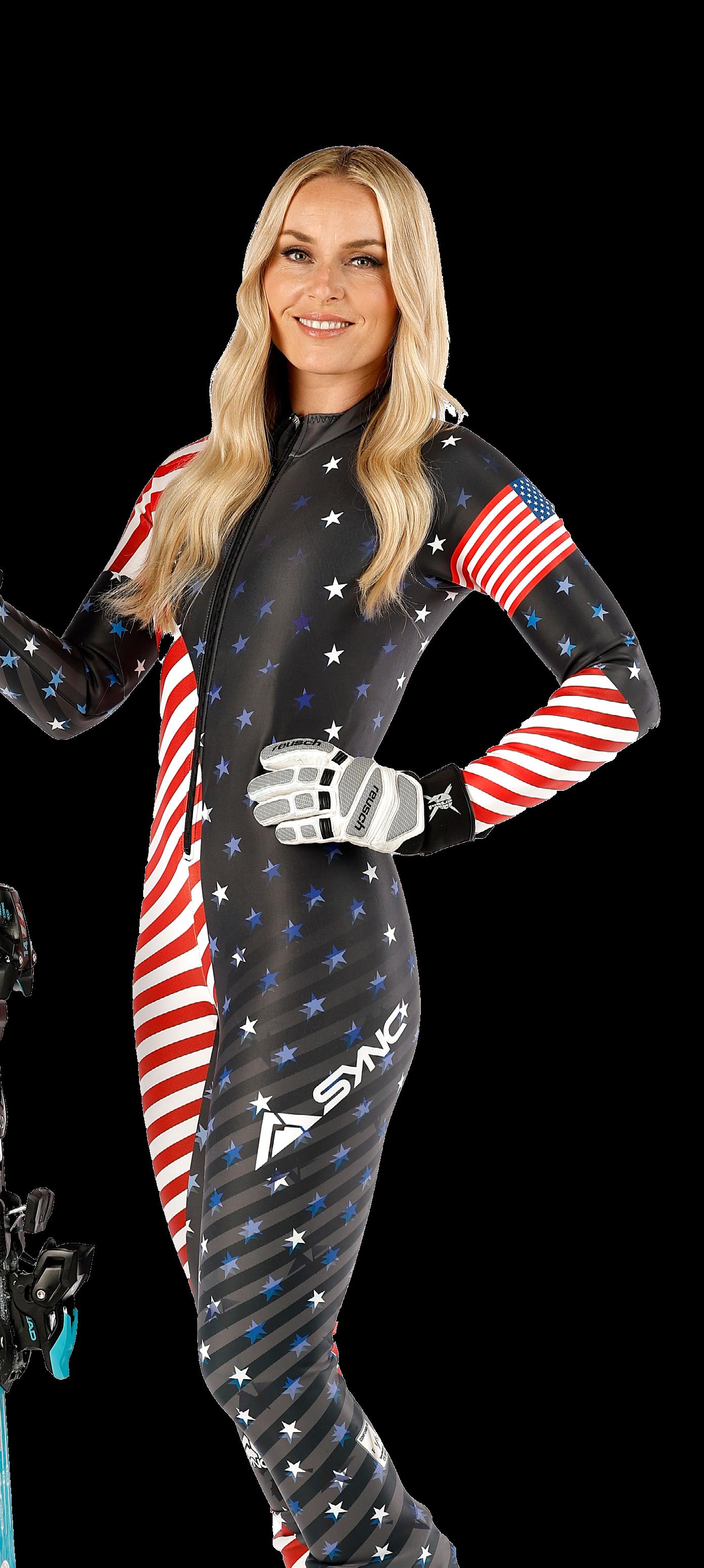
CHECK OUT MAKING TEAM USA FOR REAL-TIME

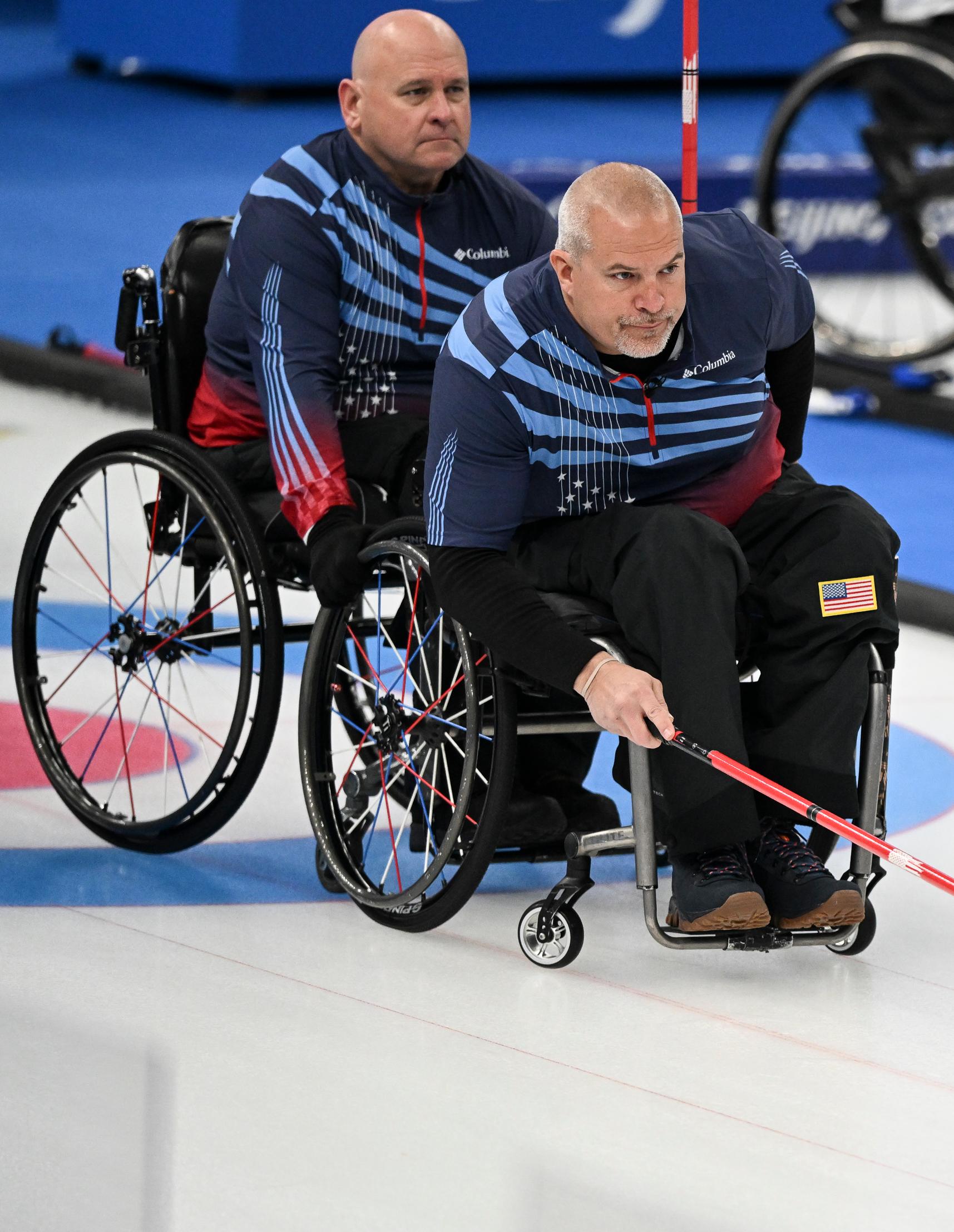
Congratulations to the Olympians and Paralympians who have been named to the Milano-Cortina 2026 Olympic and Paralympic Teams! You can keep up with who will wear the red, white, and blue on the slopes and ice in Italy in just weeks by heading to the Making Team USA landing page for all the latest info. Be sure to get ahold of your USOPA chapter leader so you don’t miss any watch parties! We want to know how you’re cheering on Team USA.

USOPA HAPPENINGS CHAPTER EVENTS
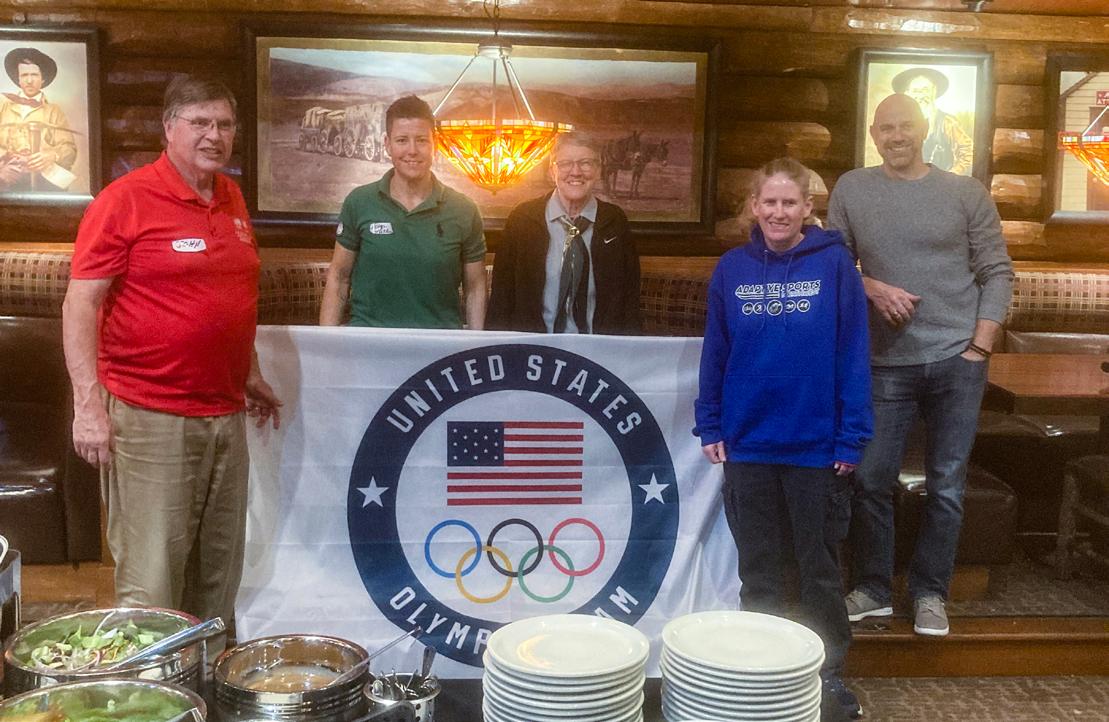
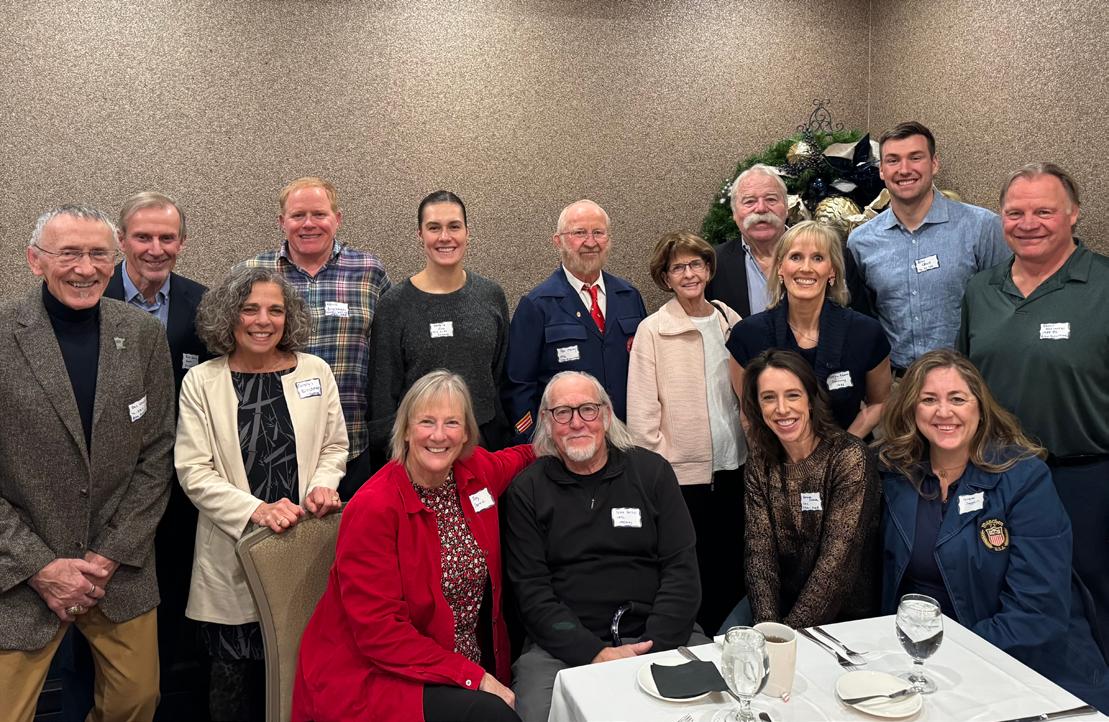
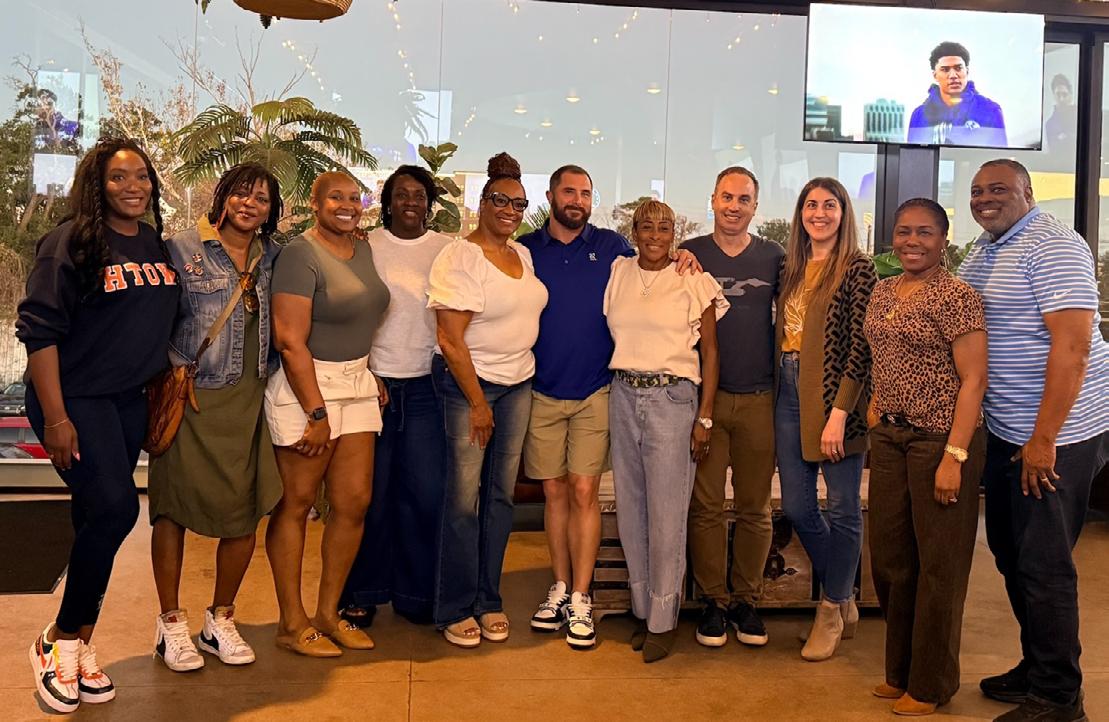
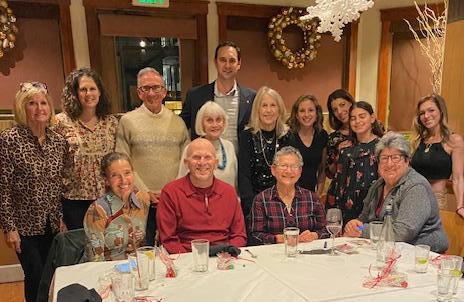
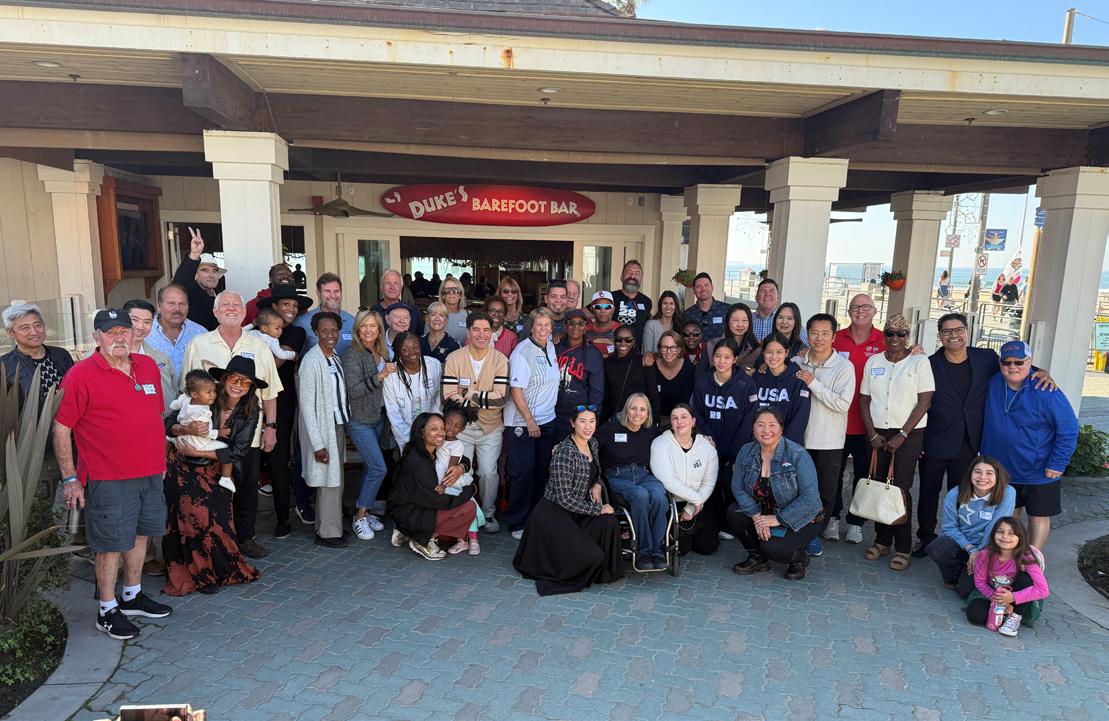
USOPA Chapters across the country gathered together at the end of the year! The Austin-San Antonio Chapter represented in a big way at the largest 10K race in all of Texas, the ThunderCloud Subs Turkey Trot on Thanksgiving Day. Chapter President Randy Lipscher (Field Hockey 1984) plans to make this an annual gathering, so let him know if you’re in for 2026 (we’ll connect you)! Southern California’s Chapter held their second annual brunch holiday party at Duke’s in Huntington Beach. Conversation at Oregon’s Portland Metro area holiday gathering naturally went to getting goalball (due to highly decorated member Asya Miller’s attendance) into the Marion/Polk County YMCA for future USOPA events together. The Houston Chapter combined pickleball and holidays as a precursor to a tournament they’ll throw in 2026. Northern California members enjoyed a holiday dinner together, as did the Minnesota Chapter!
Did your Chapter have a get-together to end the year? Are you planning a Milano-Cortina watch party? What’s in store for your Olympic and Paralympic Day celebration in June? Let us know what you’re planning and what support you need!
NEW CHAPTERS ADDED
Two new and/or revitalized USOPA Chapters join us in 2026! Patty Collins, PLY will lead the DMV Chapter, and Al Mead, PLY heads up the Georgia chapter, with the strong support of Chris Kinney, OLY.
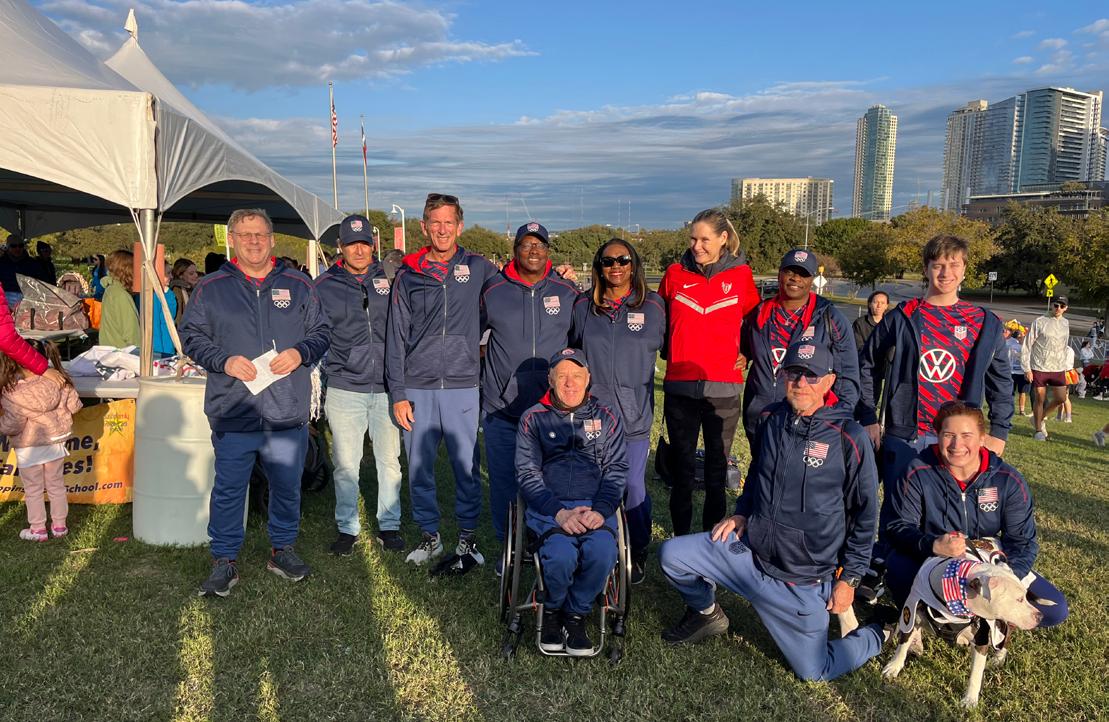
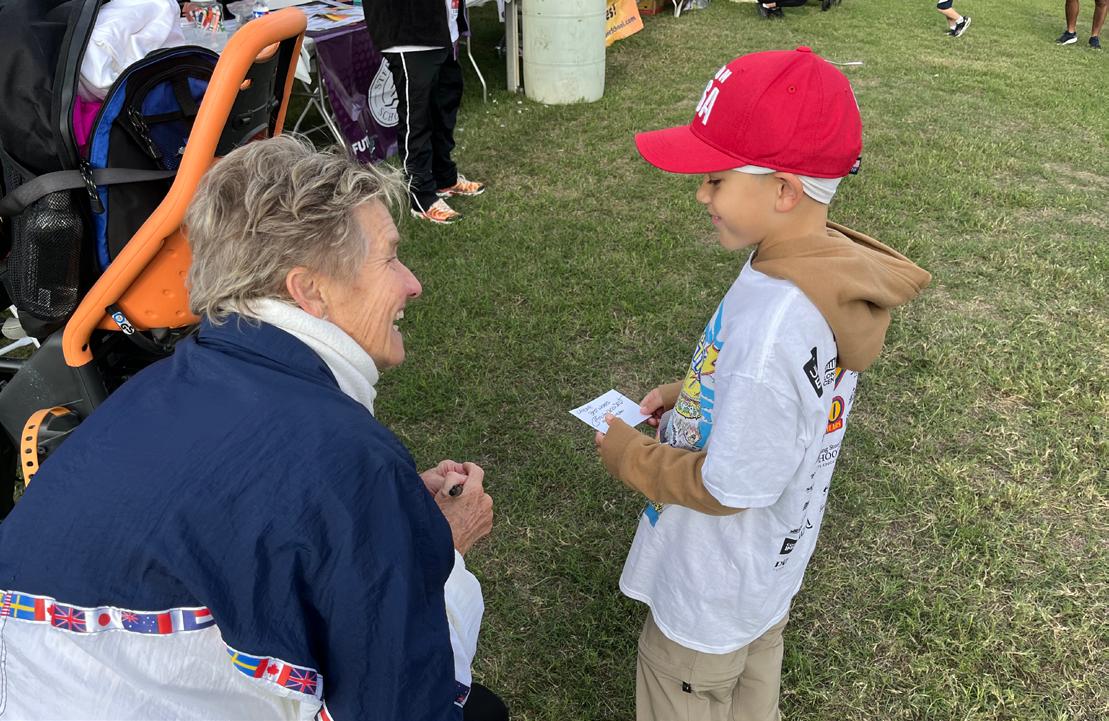

A dozen members represented USOPA at Texas’s largest 10K on Thanksgiving Day and signed autograph cards for kids!
HAPPENINGS

Yes,
Brunch and the
What could be better, and SCOPA did it two years in a row at
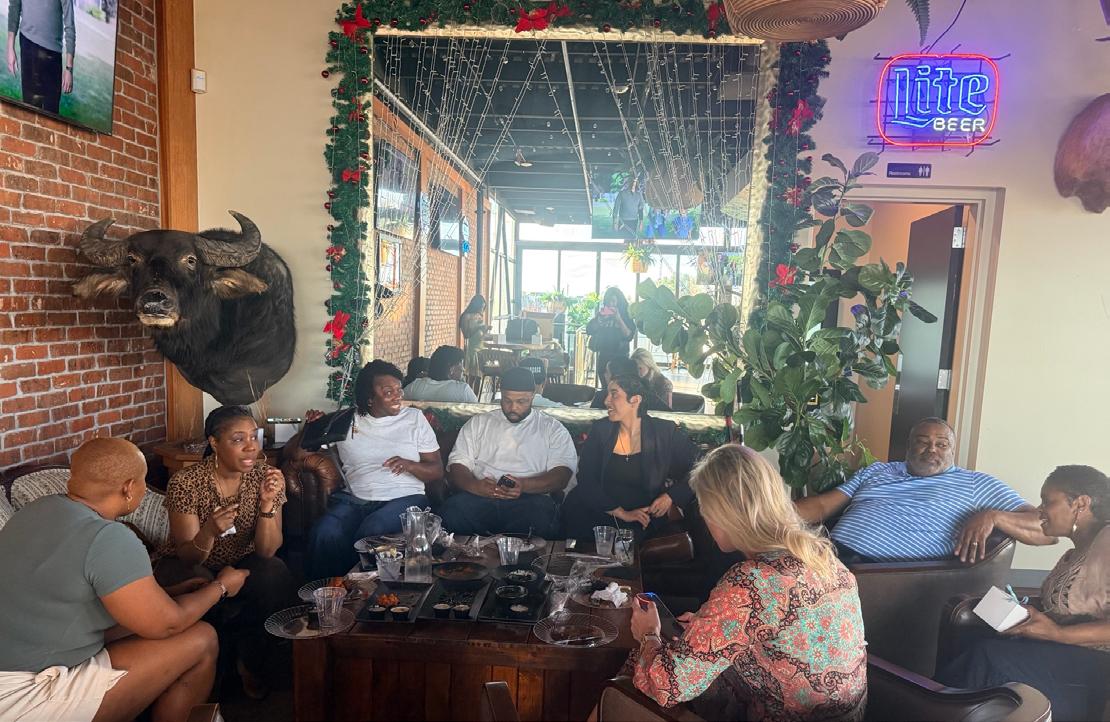
Oregon USOPA members together at the holidays!
A great turnout for Minnesota’s holiday gathering!
Pickleball at the holidays?
when Houston is planning a tournament in 2026!
holidays?
Duke’s
NCOPA’s holiday dinner!

USOPA HAPPENINGS
AOC CONNECTION
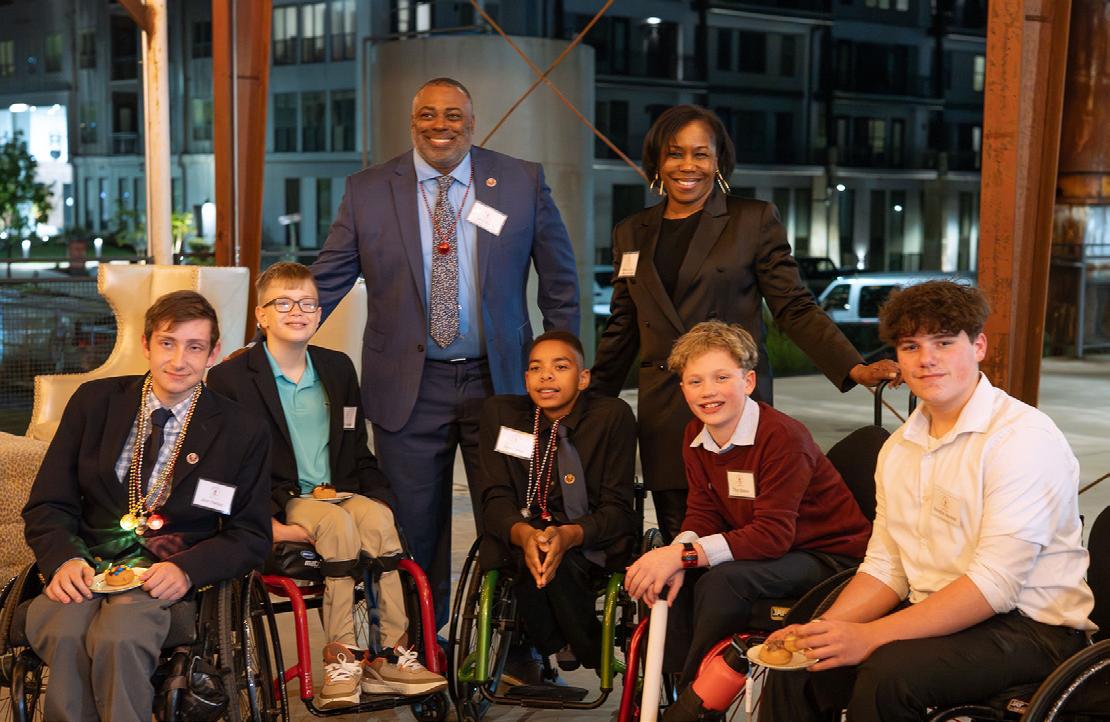
The Affiliate Organizations Council of the USOPC connected with members of the USOPA Executive Committee at the 2025 U.S. Olympic and Paralympic Assembly, and forged connection of USOPA members to events that entities who belong to the AOC are hosting. In 2025, we got the ball rolling with a Deaflympics team sendoff event at the Japanese Embassy in Washington, D.C., and BlazeSports’ Triumph of the Human Spirit Gala in Atlanta, GA. If you have natural connections with organizations who belong to the AOC, please let us know so that we might enhance this relationship, and get more athlete stories told in rooms with audiences eager to hear them!
DEAFLYMPICS TEAM SENDOFF
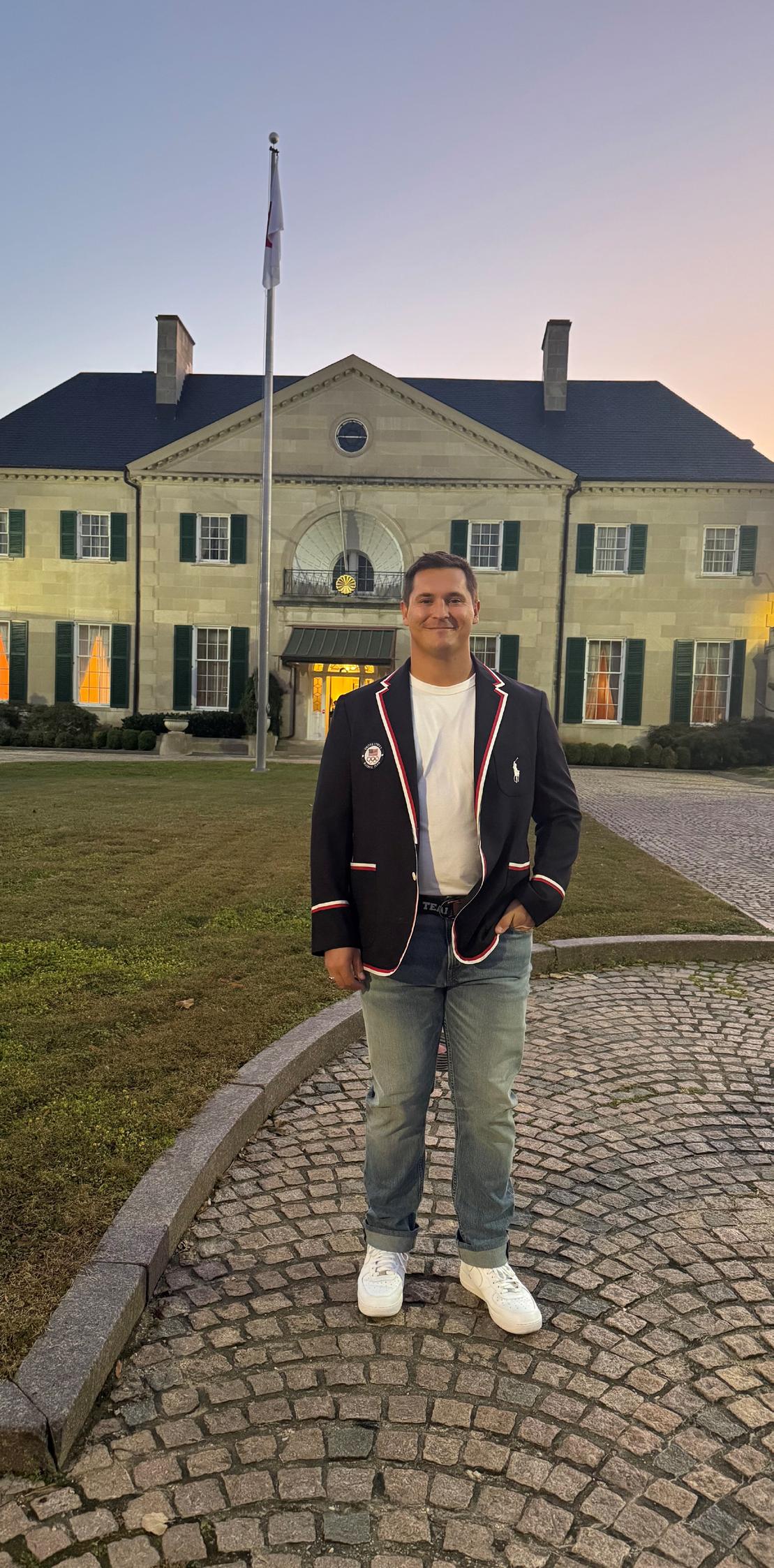
Rudy Winkler (Track & Field 2016, 2020, 2024), Aquil Abdullah (Rowing 2004), and Lynnette Love (Taekwondo 1988, 1992), along with their guests, mixed and mingled in October at the Japanese Embassy in D.C. with the U.S. team who were on their way to compete in Tokyo at the 2025 Deaflympics, the 100th anniversary of the event.
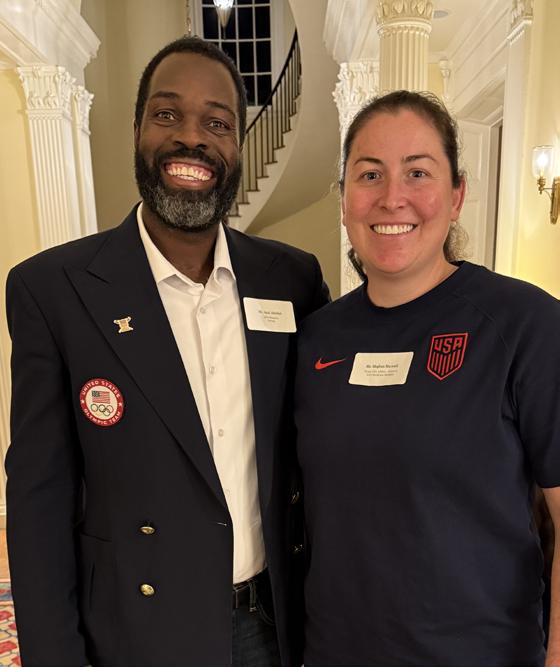
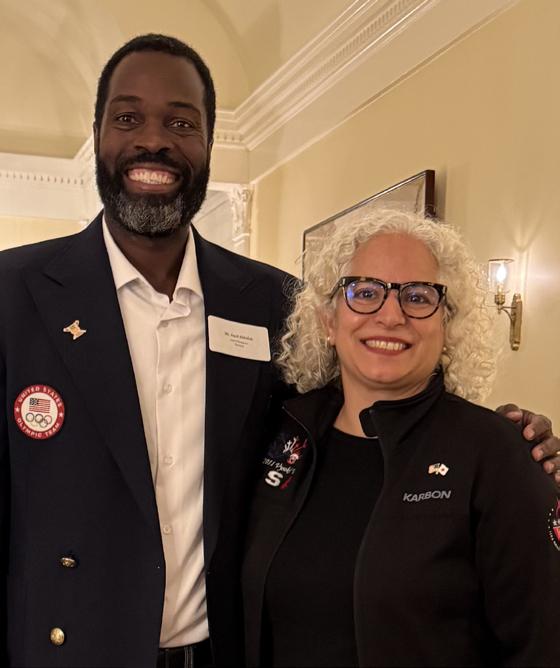
Aquil with Meghan Maiwald and Senda Benaissa, members of the U.S. Deaflympics team in soccer and downhill skiing, respectively. The soccer team won gold in Tokyo, Meghan’s second career Deaflympics victory!
Rudy pictured outside the Embassy.
BLAZESPORTS GALA AND
INVOLVEMENT
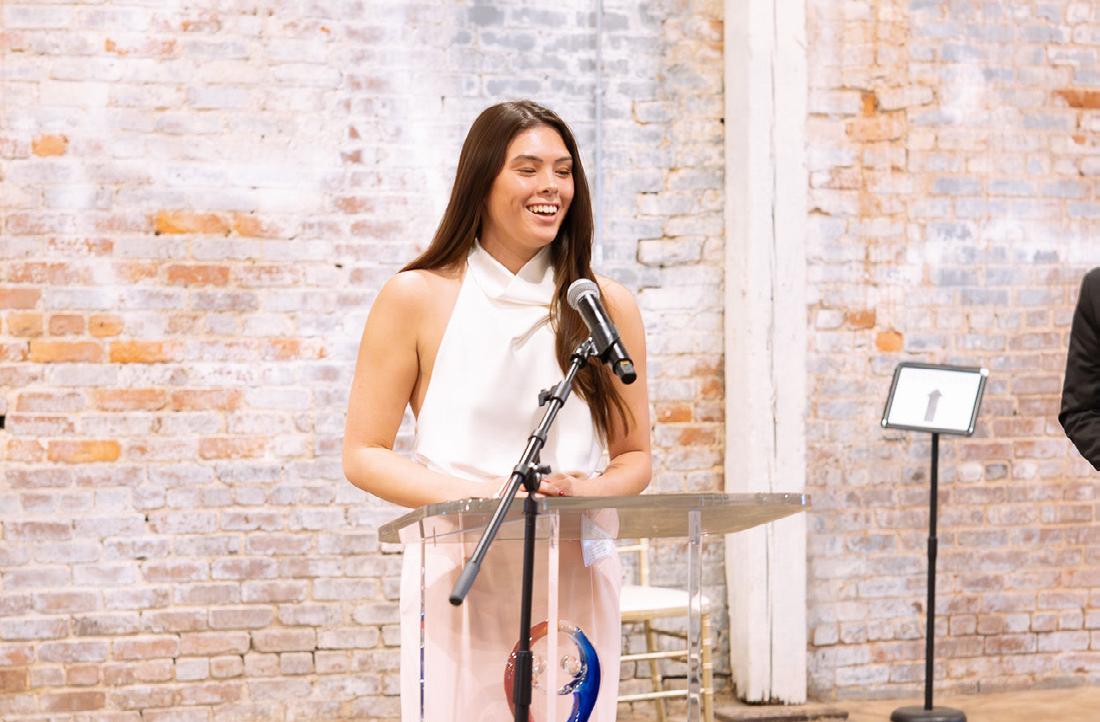
Gia Pergolini (Para Swimming 2020, 2024) was featured as the keynote speaker at BlazeSports’ Triumph of the Human Spirit Awards Gala, an annual event honoring those Atlanta individuals who have made significant impacts through adaptive sports and recreation. “So many of our athletes connected with her that evening,” said BlazeSports Executive Director Dawn Churi about Gia’s delivery, “and it was special to see.” Dawn’s impact resulted this year in a USOPC Rings of Gold program award, and she has been essential in forging the connection between Atlanta-based USOPA members and her organization, as well as the creation of a USOPA Chapter in Georgia, as new President Al Mead (Para Track and Field 1988, 1992) has a long relationship with BlazeSports! Also to thank for the moves happening in Atlanta is Michelle Finn-Burrell (Track and Field 1992), who attended the Gala along with husband and fellow USOPA member Leroy (Track and Field 1992), and remains committed to the work in building AOC relationships with her fellow Chapter Working Group members of the Executive Committee.
SPECIAL OLYMPICS OPPORTUNITIES
We’ve walked into 2026 with a nationwide opportunity to get involved as a volunteer with the Special Olympics! There are two ways to do so, depending on how involved you’d like to be.
SPECIAL OLYMPICS USA HONORARY COACH
Help Special Olympics USA prepare for their next global competition as the honorary coach! As Special Olympics USA, the national team that represents the country at global Special Olympics events, prepares for the Special Olympics World Games Santiago 2027, the honorary coach will provide inspiration and motivation to the athletes, Unified partners and coaches.
Responsibilities may include participating in virtual team meetings or webinars, attending in-person gatherings like Team Trials or the sendoff celebration and sharing support of the team on social media.

SPECIAL OLYMPICS USA GAMES ATTENDANCE
The 2026 Special Olympics USA Games (held June 20 - 26, 2026) will be a monumental celebration of ability and inclusion set against the backdrop of the beautiful Twin Cities. Olympians and Paralympians are invited to join over 3,000 Special Olympics athletes and Unified partners from across the United States in this inclusive event that celebrates ABILITY, delivers the highest quality experiences for all who participate, and leaves a legacy of positive change in Minnesota.
Opportunities to engage include supporting athletes at Opening Ceremony, being fans in the stands during competition, presenting awards and so much more.
Gia Pergolini delivers keynote to BlazeSports’ annual awards gala attendees.
Michelle and Leroy Burrell pose with attendees of the Triumph of the Human Spirit Awards Gala, athletes in BlazeSports’ programs.
Feature Month: NATIONAL BRAILLE LITERACY MONTH

Written by: Kyle Coon, PLY
DOTS, DISTANCE, AND THE POWER OF LITERACY
In 2024, I swam in the River Seine, biked down the Champs-Élysées, and ran across the Pont Alexandre III. When I began my Paralympic journey in 2018, my sights were firmly set on Tokyo. But if I am honest, Paris was always the deeper dream. I am a sucker for nostalgia and symbolism.
What if I—a totally blind guy—could compete on the world’s biggest stage in the very place where Braille was invented? What if I could race in the city where, nearly 200 years earlier, a young French teenager named Louis Braille created a system of raised dots that would change the lives of blind people around the world?
Louis Braille lost his vision at the age of three after an accident in his father’s workshop. As a student at the Royal Institution for Blind Youth in Paris, he encountered raised-letter systems that were difficult to read and impossible to write independently. In 1821, he was introduced to “night writing,” a military code designed for silent communication in the dark. Braille recognized its potential and refined it into a simple, elegant six-dot system that allowed blind people to both read and write efficiently using their fingertips. Though it was resisted during his lifetime, Braille’s system endured—and ultimately reshaped access to education, employment and independence for blind people worldwide.
That impact has been personal for me. Braille opened the world for me. Growing up, it allowed
me to attend school alongside my sighted peers. It gave me access to reading, writing and mathematics. It helped me learn how to think independently, how to organize ideas, how to truly comprehend—not just consume— information. I would argue that Braille is one of the primary reasons I am employed today and why I have been able to navigate adulthood with confidence rather than dependence.
And yet, we are living through a Braille literacy crisis. Today, only about 10 percent of people who are blind or visually impaired read and write Braille, though some estimates place the number slightly higher. Employment statistics are even more telling: roughly 30 percent of blind and visually impaired adults are employed. Among Braille readers, that number jumps to approximately 85–90 percent. Literacy matters. Access matters. Independence matters.
I love technology. I rely on my iPhone, MacBook, Audible, Kindle and smart glasses every single day. These tools are incredible and have expanded access in ways Louis Braille could never have imagined. But there is something profoundly grounding about placing my hands on a sheet of Braille paper, a refreshable Braille display, or an elevator keypad and knowing I can read for myself.
Recently, a Delta flight attendant proudly handed me a safety card in Braille. On a recent Air Canada flight, the row numbers along the overhead bins were labeled in Braille. I did not have to ask for help or second-guess myself. I simply knew. Those moments may seem small, but they add up.
That sense of independence is echoed by Matt Simpson, a goalball athlete and law clerk for a judge on the U.S. Court of Appeals for the Fifth Circuit. Matt began learning
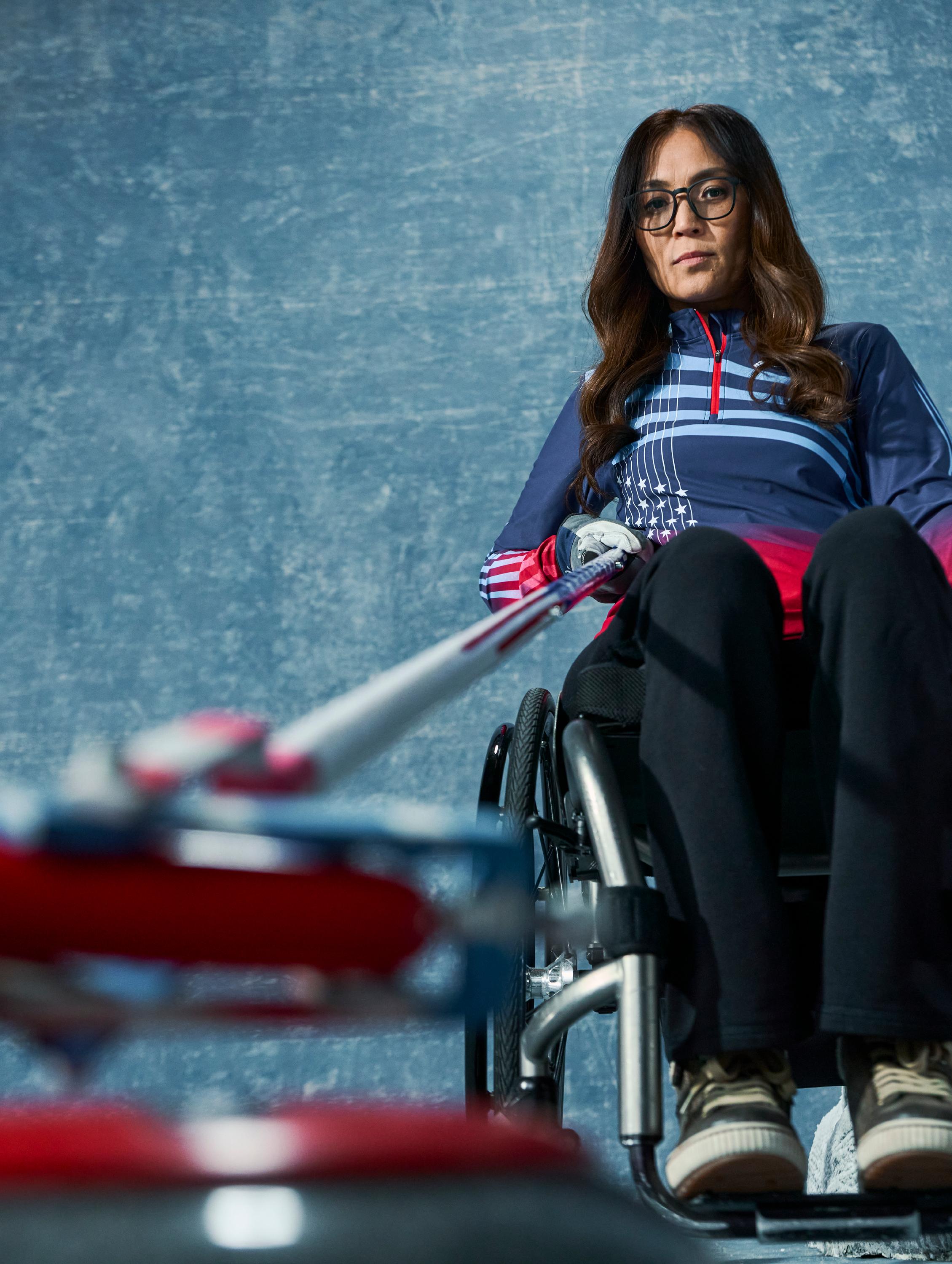
Paralympian Kyle Coon penned this powerful personal reflection on his and fellow Paralympians’ use of Braille for National Braille Literacy Month this month.
BRAILLE MONTH

Braille in second grade after being diagnosed with a degenerative eye condition and even switched schools to access proper instruction. While audio tools have always been part of his life, Braille remained essential—especially as electronic Braille displays became more advanced. As he put it, sometimes you need to see the granular detail, and audio just cannot provide that.

One of the most meaningful ways Matt uses Braille today is reading to his children. With electronic Braille displays, he can download nearly any book and read alongside them. It has even led to moments of humor—when one of his kids once laughed and said, “Oh yeah, Daddy can’t read that page because it doesn’t have scales.” That small exchange captures something much bigger: presence, participation and dignity.
Braille’s value also shows up in more informal moments. Five-time Paralympian Tyler Merren shared that while he uses Braille regularly, he is not yet as proficient as he hopes to be. Still, Braille has made travel easier and everyday social experiences more accessible—whether navigating unfamiliar spaces or sitting around a table with friends using Braille playing cards. “I love promoting Braille,” Tyler said, noting that improving his own fluency remains a personal goal. His perspective underscores an important truth: Braille is not all-or-nothing. Even partial access can meaningfully expand independence, inclusion and joy.
Not everyone has had the opportunity to build that foundation early. Goalball athlete Calahan Young has shared that he wishes he had learned Braille when he was younger. At the time, he resisted the idea, believing technology would always be enough. Looking back, he now sees Braille as a skill he wishes he had embraced
earlier—a reminder that literacy decisions made in childhood can echo for a lifetime.
There is a striking parallel between Braille and the Paralympic Games. Both were born out of necessity. Both were misunderstood, underestimated and resisted. Both required champions who believed access was not charity, but justice. And both create pathways—not guarantees, but pathways— to excellence, dignity and self-determination.
Louis Braille refined his system in just three years. I began my Paralympic journey in 2018 and three years later represented Team USA on the world stage. Six years after I started, I raced in Paris—the birthplace of the system that made me literate.
Six years. Six dots.
And fittingly, I finished eighth—because of course there is also an eight-dot Braille code, expanding literacy into science, mathematics and computer programming.
Braille Literacy Month is not about nostalgia. It is about recognizing that progress does not mean abandoning foundational tools. The Paralympic Movement exists because access creates opportunity. Braille exists for the same reason.
Dots matter. Literacy matters. And when we invest in access, we do far more than teach people how to read— we give them the ability to move through the world with confidence, independence and belief.
Just like sport.


THE PODIUM
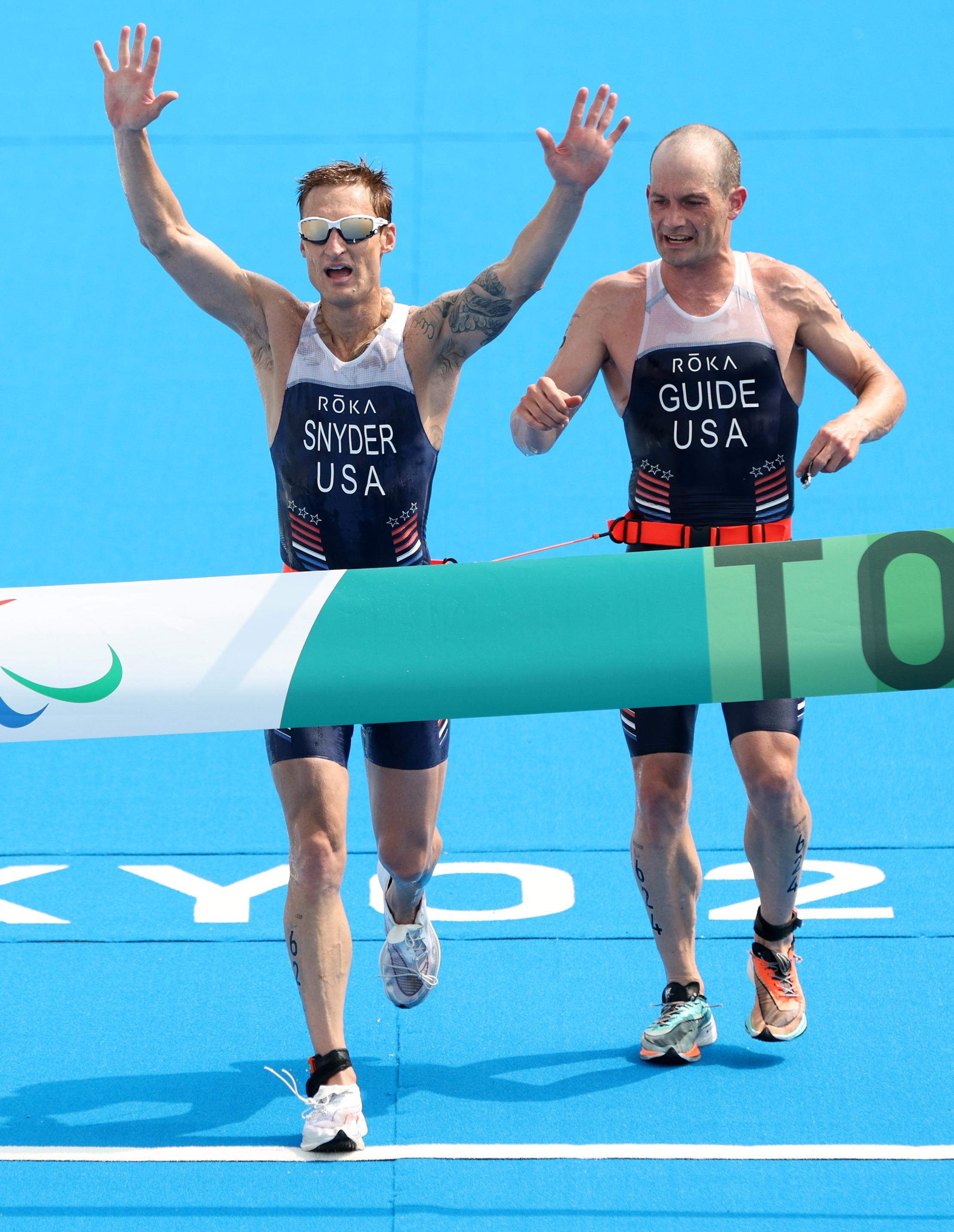
Brad Snyder and guide Greg Billington of Team United States react as they cross the finish line to win the gold medal during the men’s PTVI Triathlon on day 4 of the Tokyo 2020 Paralympic Games at Odaiba Marine Park on August 28, 2021 in Tokyo, Japan. (Photo by Adam Pretty/Getty Images)
Welcome to The Podium, a quarterly spotlight of life updates, career or personal milestones, and more from USOPA members across the country. This is an opportunity to stay connected with fellow alumni who choose to take the podium and give us an inside look into their lives!
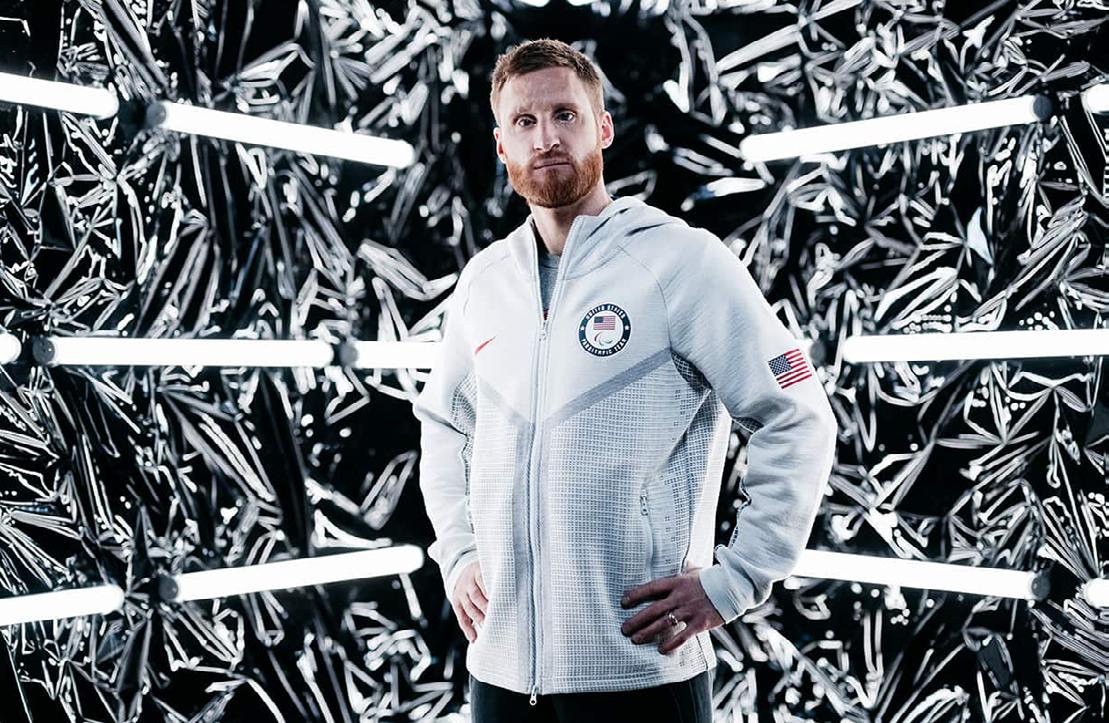
Brad Synder, PLY
Swimming, ParaTriathlon | 2012, ’16, ‘20
Brad Synder, 3x Paralympian and 8x medalist across two sports, was officially elected as an at-large member to serve a four-year term on the IPC Governing Board. Brad brings expertise, leadership and passion as an athlete, military officer, educator and USOPC Board member. This role will be especially important when looking ahead to this upcoming decade of sport. With Brad’s election to the IPC Governing Board, he will transition from a Team USA Athletes’ Commission Elected Director on the USOPC’s Board of Directors to an ex-officio member.
Read Here: Article via IPC
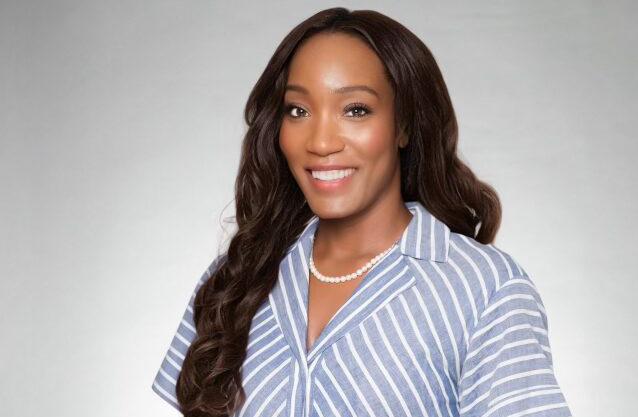
Funmi (Jimoh) Blakemore, OLY
Track and Field | 2008
Funmi (Jimoh) Blakemore has been appointed executive director of the Team USA Athletes’ Commission. As executive director, Blakemore is charged with enhancing the commission’s operational capacity and ability to advocate on behalf of Team USA athletes. Most recently, Blakemore served as Director of Administration for Rice Athletics. She was inducted into the university’s athletic hall of fame in 2015. Blakemore also currently serves as the president of the Houston chapter of USOPA.
Read More: Funmi (Jimoh) Blakemore Joins Team USA AC
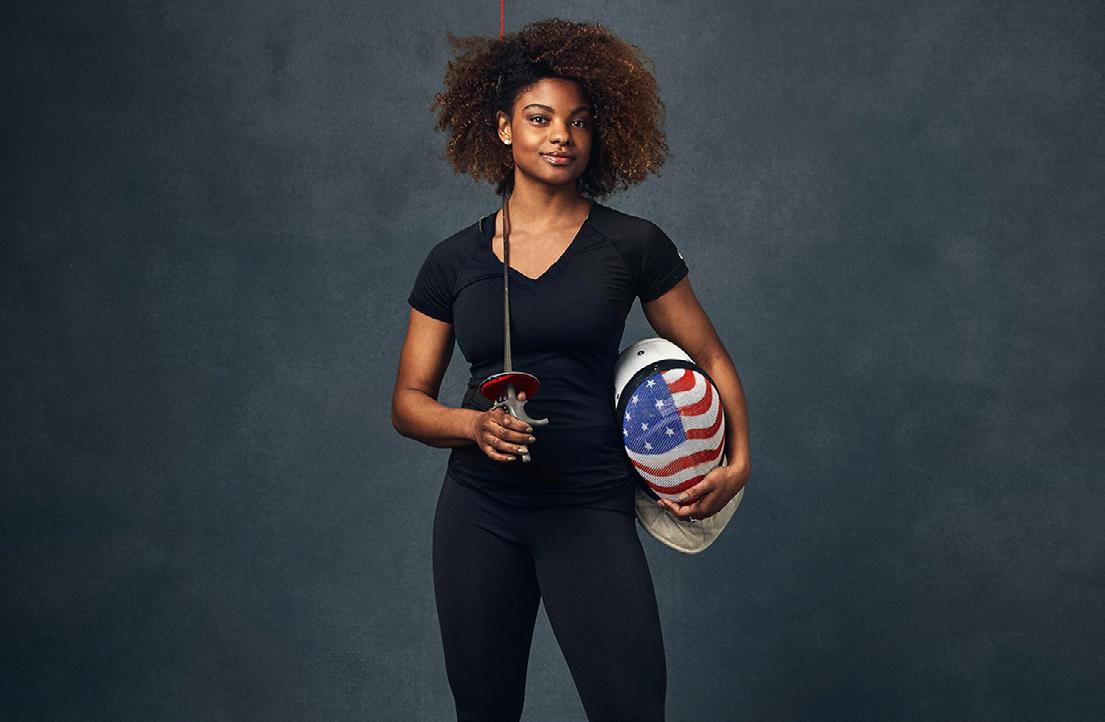
Nzingha
Prescod, OLY
Fencing | 2012, ‘16
Two-time Fencing Olympian Nzingha Prescod has built The Prescod Institute for Sport, Teamwork and Education (PISTE) which is a non-profit community fencing program and learning center, providing students with pathways to become champions, leaders, and scholars at no-cost to families. PISTE is a USA Fencing premium club member, teaching fencing and its principles of discipline, strategic thinking, problem solving, fitness, and respect. Nzingha has used her own experience in fencing to accomplish great things and now is giving back to her community so they can do the same.
Read More: PISTE Website
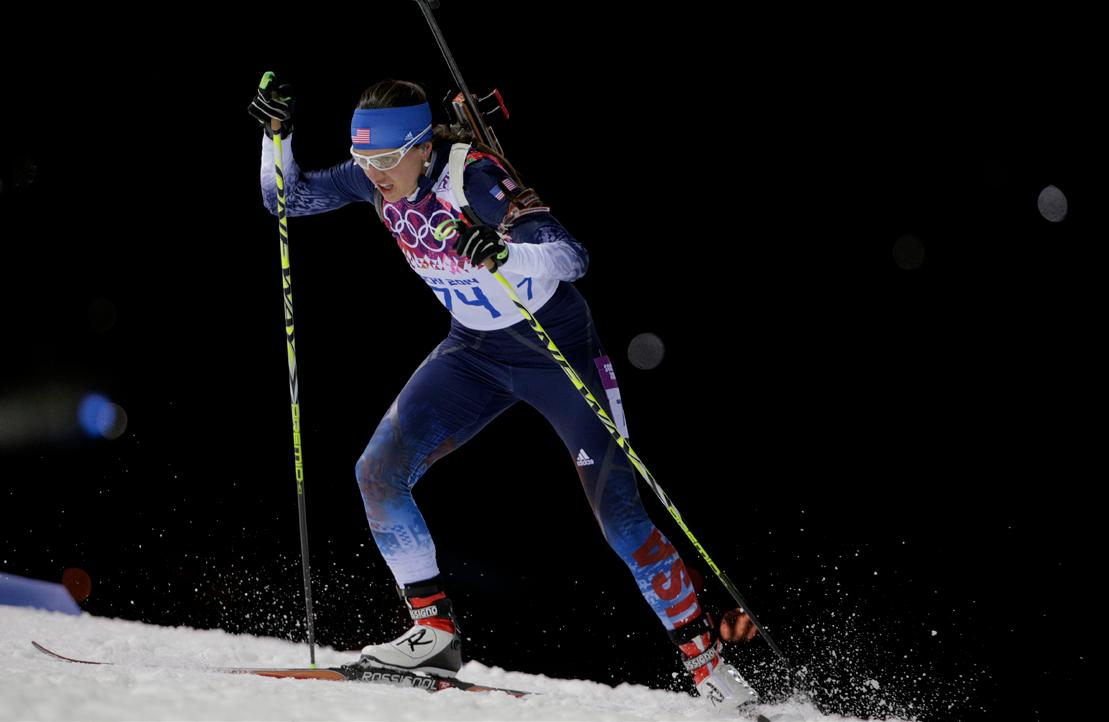
Sara Studebaker-Hall, OLY
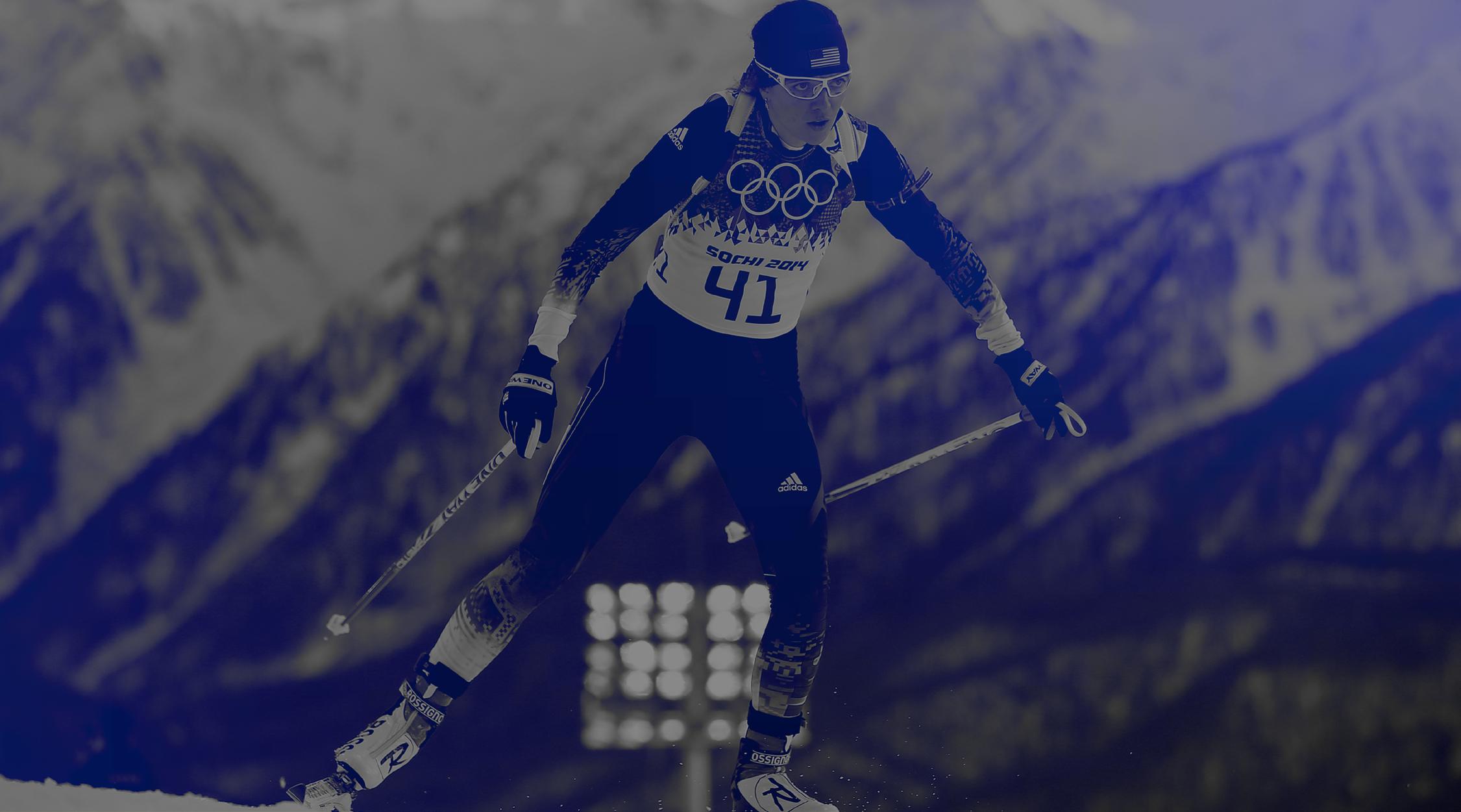
Biathlon | 2010, ‘14
Sara Studebaker-Hall continues to break barriers for U.S. biathlon, adding another remarkable chapter to her career. After competing at two Olympic Games, she has transitioned seamlessly into sport leadership, becoming the first U.S. woman to earn an International Biathlon Union Technical Delegate certification and to serve as an international biathlon delegate. Her work as an International Referee has already taken her to the highest levels of the sport, including World Cup events, and she remains deeply involved in international officiating as she now sets her sights on officiating at the 2026 MilanCortina Games. From athlete to official, Sara’s journey is one of dedication, leadership, and inspiration for the entire Team USA and U.S. biathlon community.
Read More: U.S. Biathlon
Micki King, OLY
Diving | 1968, ‘72
Micki King’s book Break of a Lifetime is officially out now, marking an exciting new chapter for the legendary athlete and trailblazer. With honesty and insight, King reflects on the opportunities, challenges, and pivotal breaks that led to a life of achievement and resilience. The book’s release celebrates her enduring legacy while offering readers inspiration to recognize and seize their own life-changing moments.
Book Order: Break of a Lifetime
Step up to The Podium and share your life updates, career milestones, and more with our USOPA community. Submissions will be featured on the Team USA alumni website and in the USOPA quarterly magazine.


Sara Studebaker of the United States competes in the Women’s 15 km Individual during day seven of the Sochi 2014 Winter Olympics at Laura Cross-country Ski & Biathlon Center on February 14, 2014 in Sochi, Russia. (Photo by Richard Heathcote/Getty Images)
STAY CONNECTED
Update your contact information and stay in the know of all things USOPA. We want to connect you to active Chapter leadership across the country! Help us help you network with your Olympic and Paralympic peers!

health, wellness, or youth sport initiatives.
between their nonprofit and themselves, to expand their impact in the communities they
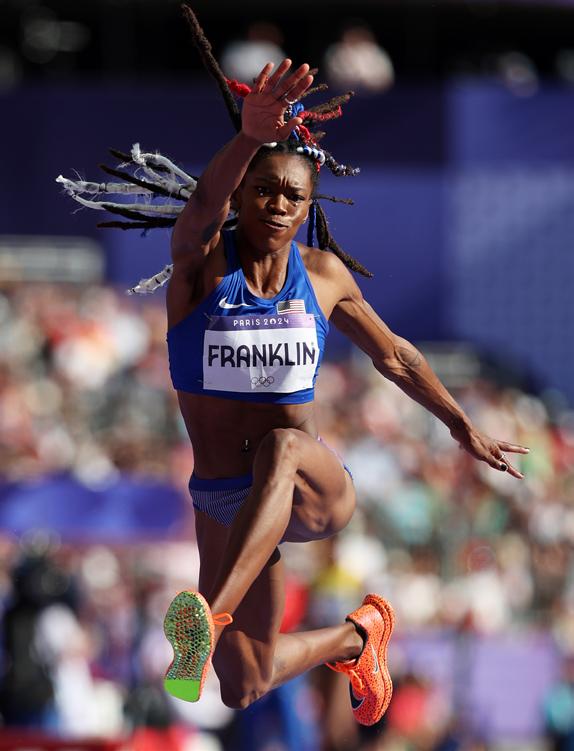
Tori Franklin, OLY
Track and Field | 2020, ‘24
A two-time Olympian in track and field, Tori Franklin was selected as a 2025 Team USA Community Champion for her leadership as co-founder and CEO of The Live Happii Project. Through this nonprofit, she organizes holistic health and wellness retreats for high school and college-aged students from Black, Indigenous, and people of color (BIPOC) communities, focusing on personal growth, selfdiscovery, and balance. Her work emphasizes mental health, purpose, and wellness, helping young people develop tools to thrive both on and off the field of play.
The Live Happii Project: Here

Ezra Frech, PLY
Para Track and Field | 2020, ‘24
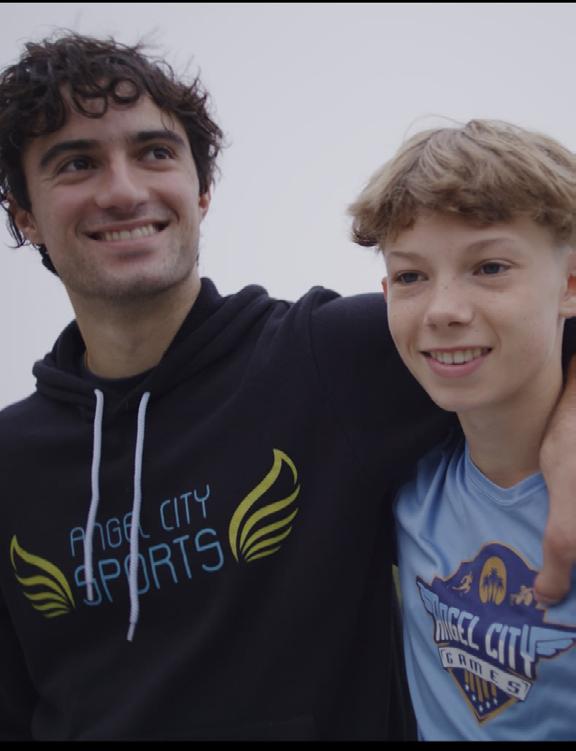
Ezra Frech, a two-time Paralympic gold medalist, earned recognition as a Community Champion for founding Angel City Sports and its expanded initiative, the Angel City Alliance. Since 2013, the organization has delivered free adaptive sports opportunities including over 250 yearly clinics and the annual Angel City Games, providing more than 4,000 athlete experiences across Southern California. His efforts have significantly increased access to sport for youth, veterans, and adults with disabilities, building a vibrant community that celebrates inclusion and empowerment.
Angel City Alliance: Here
The Team USA Community Champions in partnership with Comcast honors Olympic and Paralympic athletes whose nonprofit service advances
Each recipient receives a $25,000 grant, split equally
serve.
Keith Gabel, PLY
Para Snowboarding | 2014, ’18, ‘20
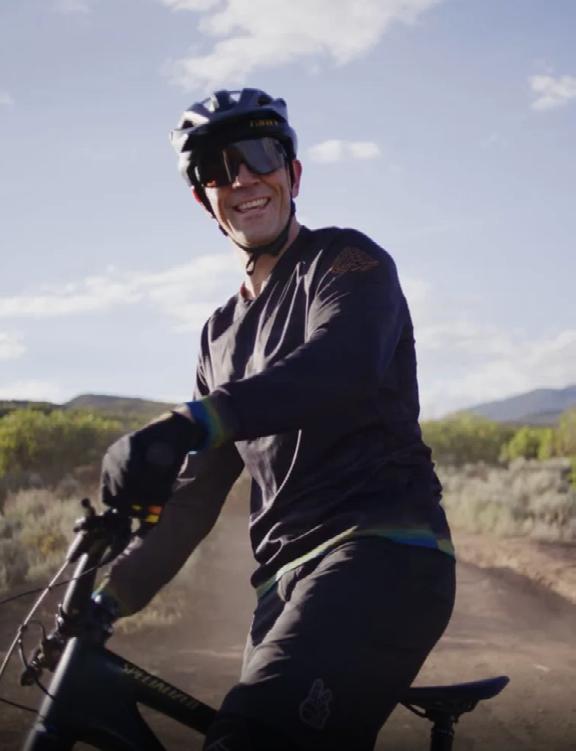
Keith Gabel, a two-time Paralympic medalist in snowboarding, was honored for his service on the board of the Aspen Valley Ski & Snowboard Club, where he helps expand winter sports access for children in Colorado’s Roaring Fork Valley. His leadership supports efforts to ensure that kids, regardless of financial means, can benefit from quality coaching, facilities, and developmental opportunities. Gabel’s work reflects his commitment to youth sport participation and community enrichment through athletic engagement.
Aspen Valley Ski & Snowboard Club: Here
Jeffrey Louis, OLY
Breaking | 2024
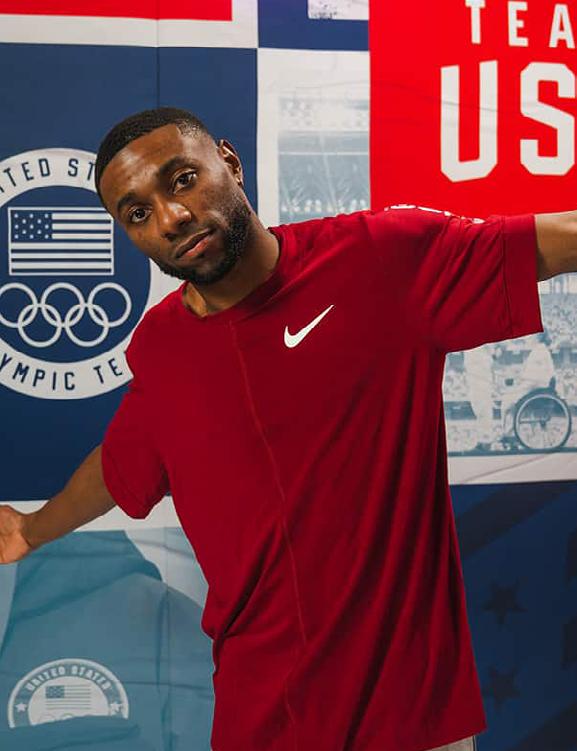
Jeffrey Louis, also known as “Bboy Jeffro” was recognized for his community impact through Houston reVision, an organization focused on providing positive pathways for young people in Harris County, Texas. His work aims to break cycles of juvenile justice involvement and homelessness by connecting youth with mentorship, constructive peer networks, and creative outlets for artistic expression. Louis’s dedication embodies the award’s emphasis on improving health, wellness, and opportunity for underserved communities.
Houston reVision: Here
ADE MENTORSHIP
SPOTLIGHT: MENTORSHIP
Written by: Ethan Lievense, Manager of Athlete Partnerships and Development
Coming in March 2026, The USOPC will be launching a brand-new career readiness platform – aiming to provide curated career and mentorship opportunities for 10-year Team USA Athletes, from those who are most invested and devoted to the mission of athlete transition. We believe Team USA Alumni have a BIG role to play in this effort. In digesting athlete feedback, it’s become clear that in addition to career opportunities, Team USA Athletes are interested in connection and mentorship – so who better to serve in that role than Team USA Alumni who have been in their shoes! Alumni have also expressed the desire to aid in athlete transition – you have all been there, and know how challenging it can be to navigate the switch from athlete life to the rest of it. Team USA Alumni will have the opportunity to create a profile on our new career readiness platform and become available for 10-Year Team USA
Athletes to select them as a mentor. Once a Team USA Athlete selects you as a mentor, you will have the opportunity to discuss what stage of their transition they’re at, what their goals are, how you navigated opportunities post-competition, and whatever the athletes deem would serve as the greatest impact to their next chapter. If you’re interested in serving as a mentor, please send Robbie (robbie.fulton@usopc. org) an email with the subject line “I want to be a Mentor,” cc’ing Kara at kara.winger@ usopc.org.
Again, if you’re a USOPA member within ten years of your last Team USA eligibility qualifying event, you’ll have access on the platform to career and mentorship opportunities, and if you’re an alum (10 years out of your career), you can sign up to mentor younger generations. Future state, we’d love to open the mentee side of things to alumni as well, if there’s interest! Let us know. Thank you and Go Team USA!
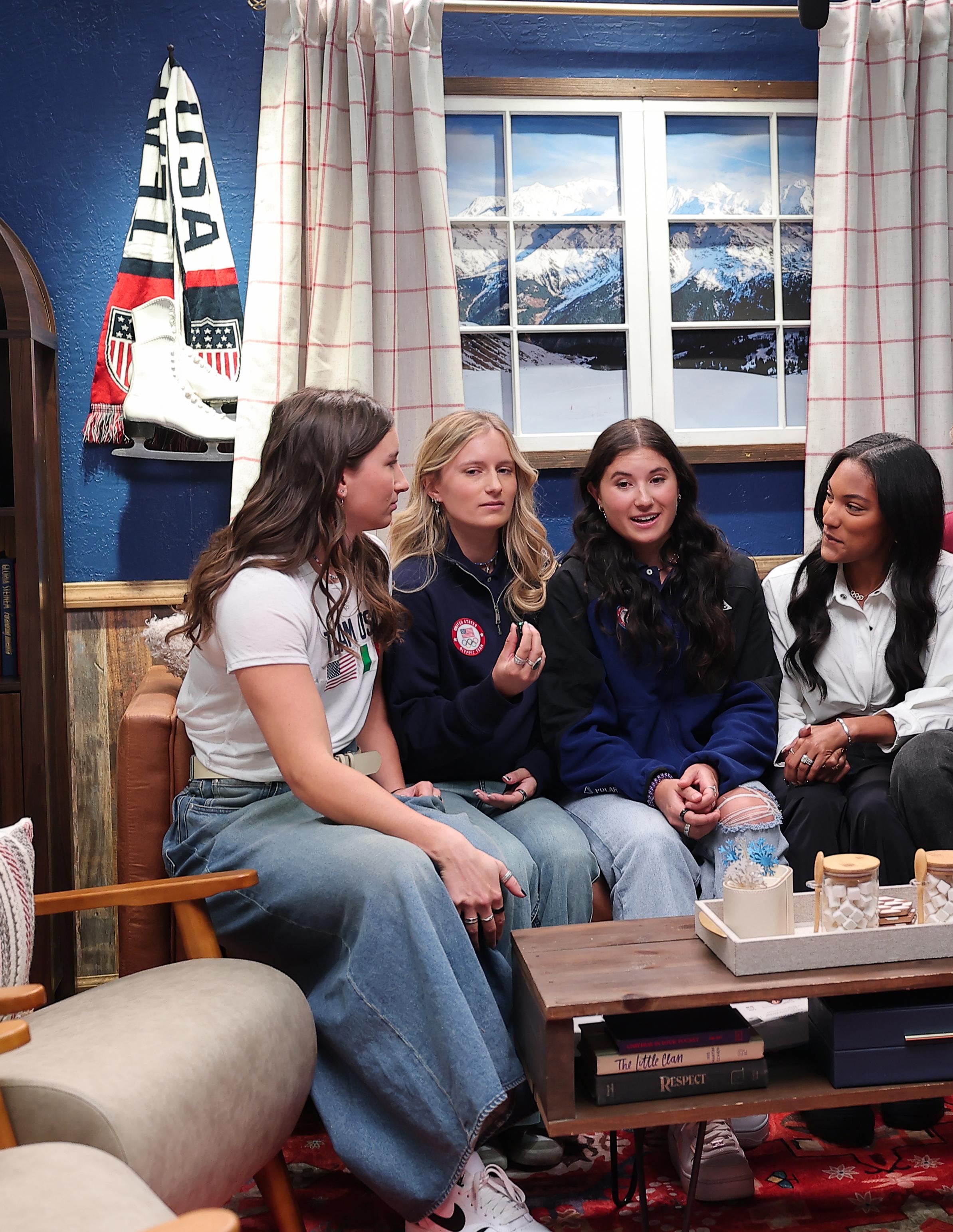
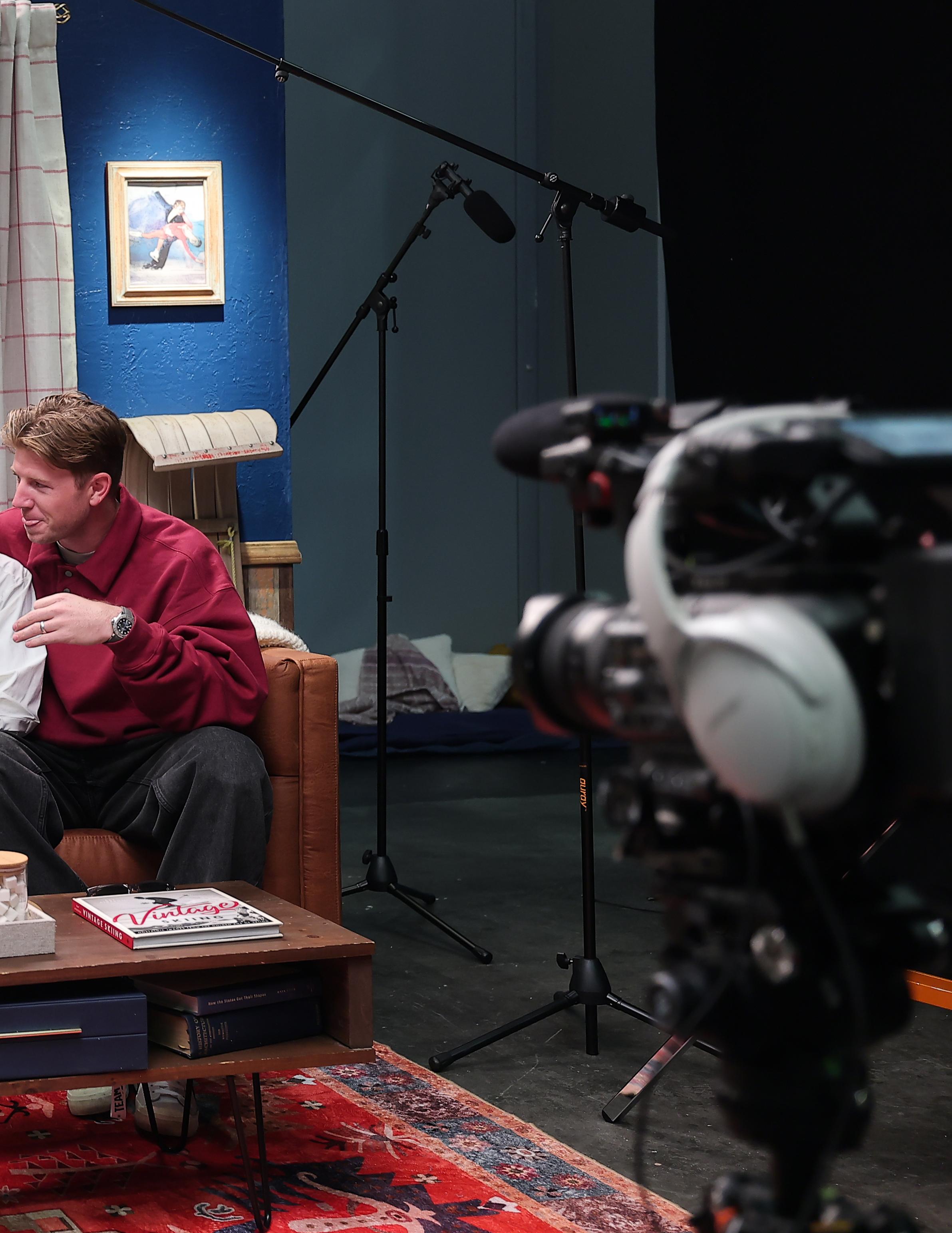
Lauren Macuga, Sam Macuga, and Alli Macuga speak with Tara Davis-Woodhall and Hunter Woodhall at Team USA Media Summit at the Javits Center on October 28, 2025 in New York City. (Photo by Dustin Satloff/Getty Images)
ADE SPOTLIGHT: INSIDE TEAM USA’S OF ITS KIND PRE-GAMES ATHLETE SUMMIT
Written by: Robbie Fulton II
One hundred days out from Milano-Cortina 2026, nearly 55 athletes came together for a first of its kind Pre-Games Summit. Some were well-established athletes, many still deep in the qualification process, all of them deeply rooted in Team USA pride and excellence. This was not a typical high-performance meeting or a briefing. It was something warmer, something that felt like the beginning of a team long before the roster was finalized. And for the Athlete Development and Engagement team and USOPC…that was the point!
THE SUMMIT
Across two days, athletes sat side by side; this included snowboarders with figure skaters, para curlers with biathletes, first-time hopefuls with seasoned veterans. Conversations stretched well beyond sport: What does pressure feel like? What surprised you at your first Games? How do you find calm? What do you wish you had known?
Those shared stories became a kind of glue. They built trust. By the end of the two-day summit they were all connected, they all shared a new experience of being in the heart of NYC with a village of people they can call teammates despite any upcoming results of qualifications. They reminded us that even though sports can look wildly different, the heartbeat of the journey is the same.
There is a comfort that comes from realizing you’re not doing anything alone. The Summit gave that comfort shape, name, and community.
THE IMPACT OF DONORS
Behind this event was something equally meaningful: Donor support that met a very real, long-standing athlete need. Athletes told the ADE team via surveys that they craved this sort of togetherness prior to mounting the biggest stage in sports, and a gift met that desire.
The Summit didn’t exist simply because it sounded like a nice idea or just an opportunity to spend time in New York. This event would not have been possible without the generous support of the Eric and Wendy Schmidt Fund for Strategic Innovation. They said yes to community, and yes to the belief that athletes thrive when they are connected and cared for as people, not just performers.
We all know that these kinds of gatherings don’t directly produce medals. But they produce environments where medals and memories become possible due to a sense of belonging and opportunity.
A REFLECTION OF GRATITUDE
From my own experience, I can say this: as someone who was around Team USA athletes for the first time in my short time with the USOPC, the entire experience felt refreshing. It is hard to put into words because the
SPOTLIGHT: FIRST PRE-GAMES
connections were so genuine that trying to describe them almost feels like a disservice. There were moments you simply had to be there to understand. You could feel the mix of anticipation and vulnerability in the room. When the athletes first arrived, many of us on staff were hands on as we tried to help create a sense of comfort. Very quickly, we reached a point where we could step back and let the athletes be themselves and connect naturally with one another. What stood out just as much was the sense of gratitude. Athletes do not often get moments to slow down and simply be together, especially with only about 100 days until the Games.
The thing that struck me first was how deeply Team USA athletes understand who they are. Every athlete I spoke with carried a strong sense of pride, yet equally, they carried a real appreciation for one another for sharing that same pride. It felt like a community recognizing itself.
I spent a lot of time in the athlete lounge. I had the chance to interact, play Nintendo, specifically Super Mario Kart (which Iris Pflum, USA Snowboarding athlete beat me three times in a row at), and share stories about the journeys that brought everyone here. More than once, I caught myself pausing to take it in because I knew the experience mattered. It reminded all of us that being part of Team USA is not defined by a single competition or just competition in general. It is defined by belonging to a community that represents all of us, whether you are an athlete, a staff member, a vendor, or a fan. One for all, after all.
ONE BRICK STARTS THE BUILD
For ADE and for the broader USOPC community, this Summit marks a significant shift. It shows what can happen when athletes, organizational leadership, and donors align behind a shared purpose.
The ADE team and USOPC created an environment where connection is not an afterthought but a priority. It laid groundwork for future Games and now the organization can’t wait to build on that success for the LA28 PreGames Summit. Now that athletes have experienced this kind of Pre-Games unity, it’s hard to imagine going back. The Summit set a new standard. A standard rooted in fun, collaboration, and the belief that great teams are built long before they ever take the field of play.
As we look toward Milano-Cortina, the USOPC knows that there is a sense of togetherness, a recognition that whether you’re on the ice, in the start gate, or cheering from home, you are part of the fabric of Team USA.
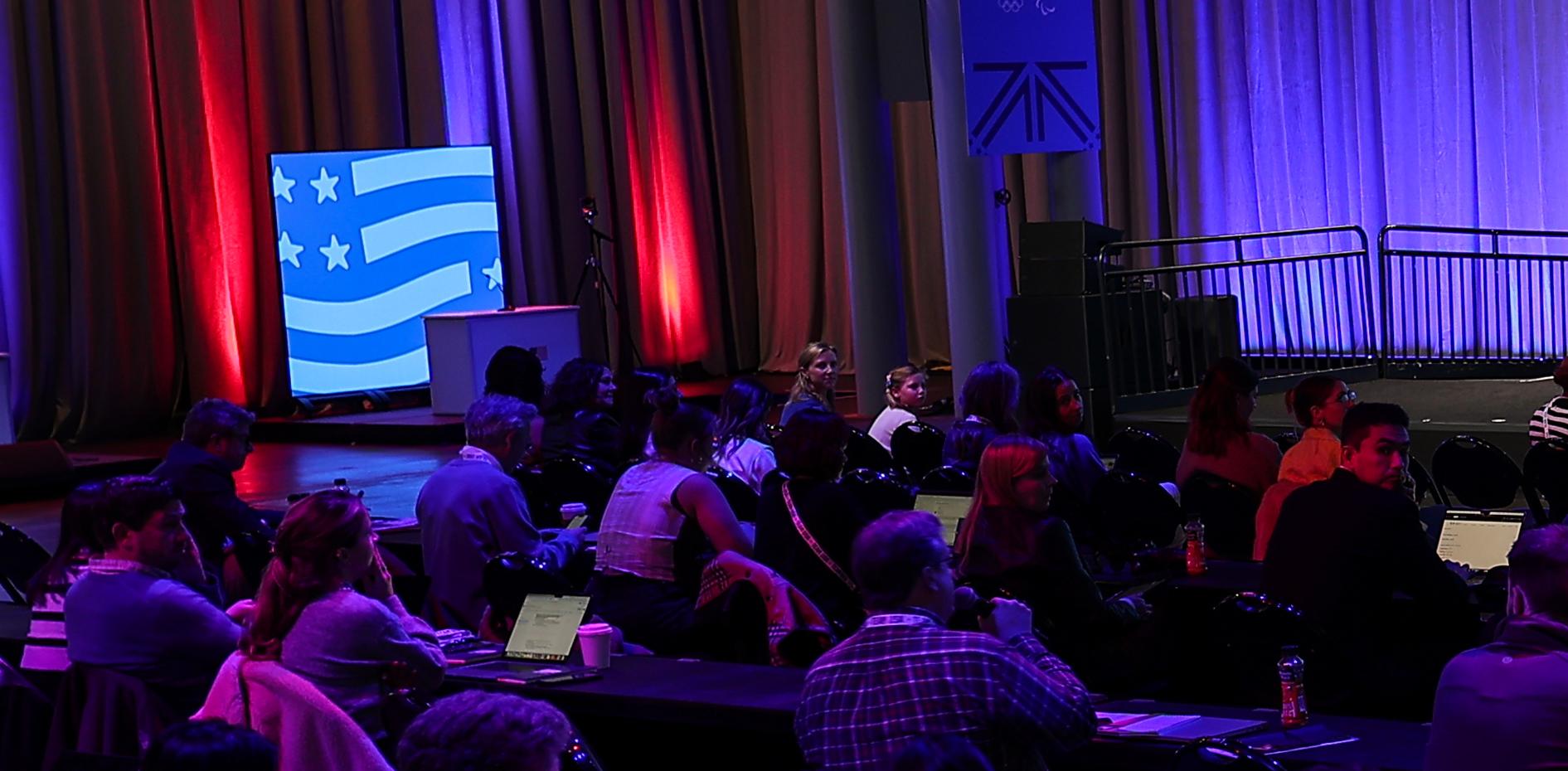
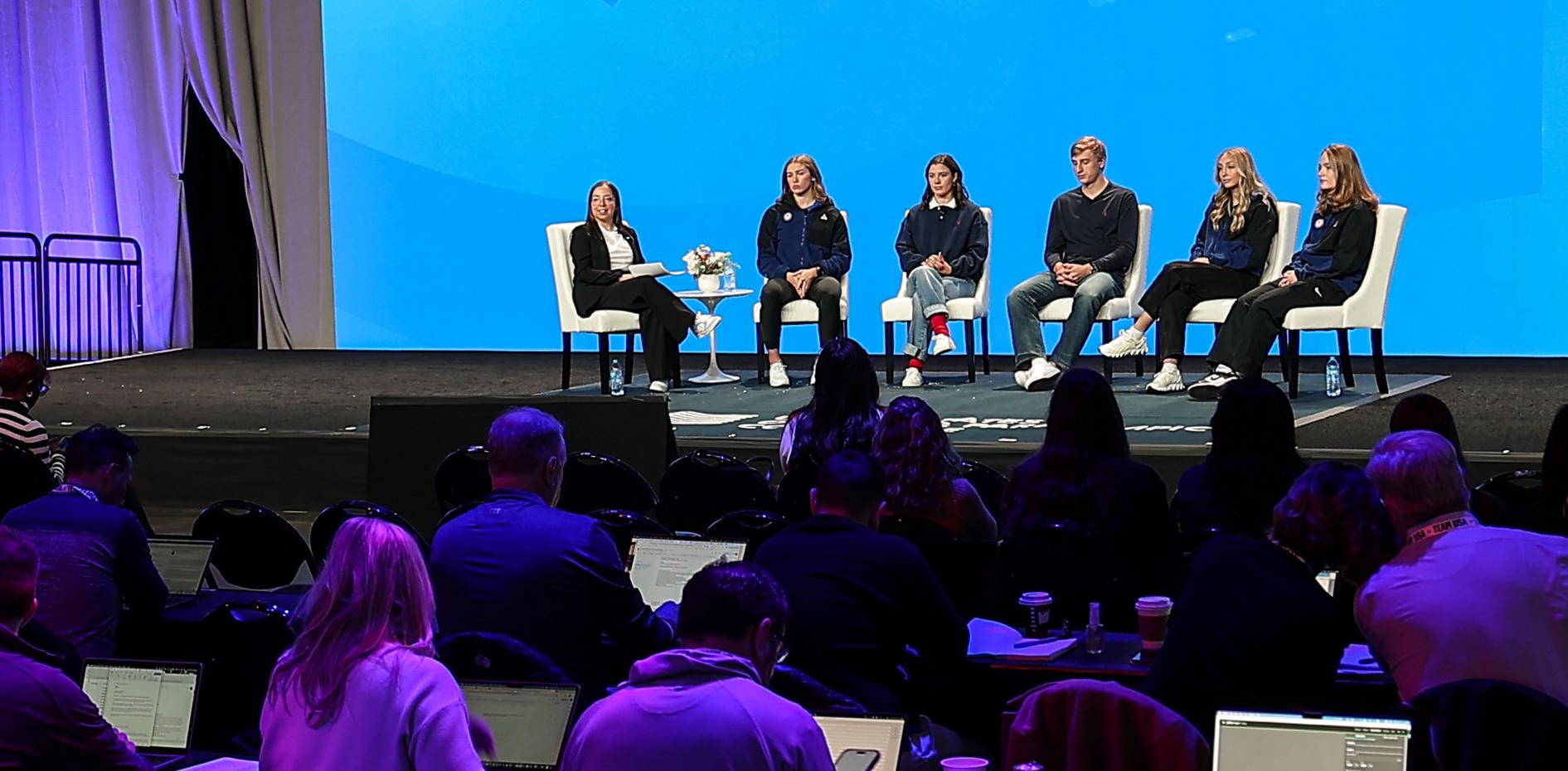
A view of a panel speaks to the media during the Team USA Media Summit at Javits Center on October 28, 2025 in New York City. (Photo by Dustin Satloff/Getty Images)


2025 MEMBER SPOTLIGHT REPOST
2025 USOPA MEMBER SPOTLIGHT REPOST
Hey, Kara here, your Olympian on the inside (Director of Alumni Relations). I know many of you, treasure our connections, and it is my sincere mission in this role to get to know, one by one, as many of you as possible. In that spirit, we started a column in the bi-weekly Scoop newsletter that shines light on one person at a time whose continued living example of the Spirit of the Games has moved me personally. All 2025 features are compiled in the following pages. As the founder of the Olympics said (paraphrased),
“The most important thing is not winning but taking part; the essential thing in life is not conquering but fighting well.”
While this quote can be seen as a consolation prize after failure at the Games (speaking from personal experience), it has also, so truly, come to define and enrich my career and life. I hope you have enjoyed getting to know our peers through my eyes: These features will continue as close to bi-weekly as we can manage in 2026!

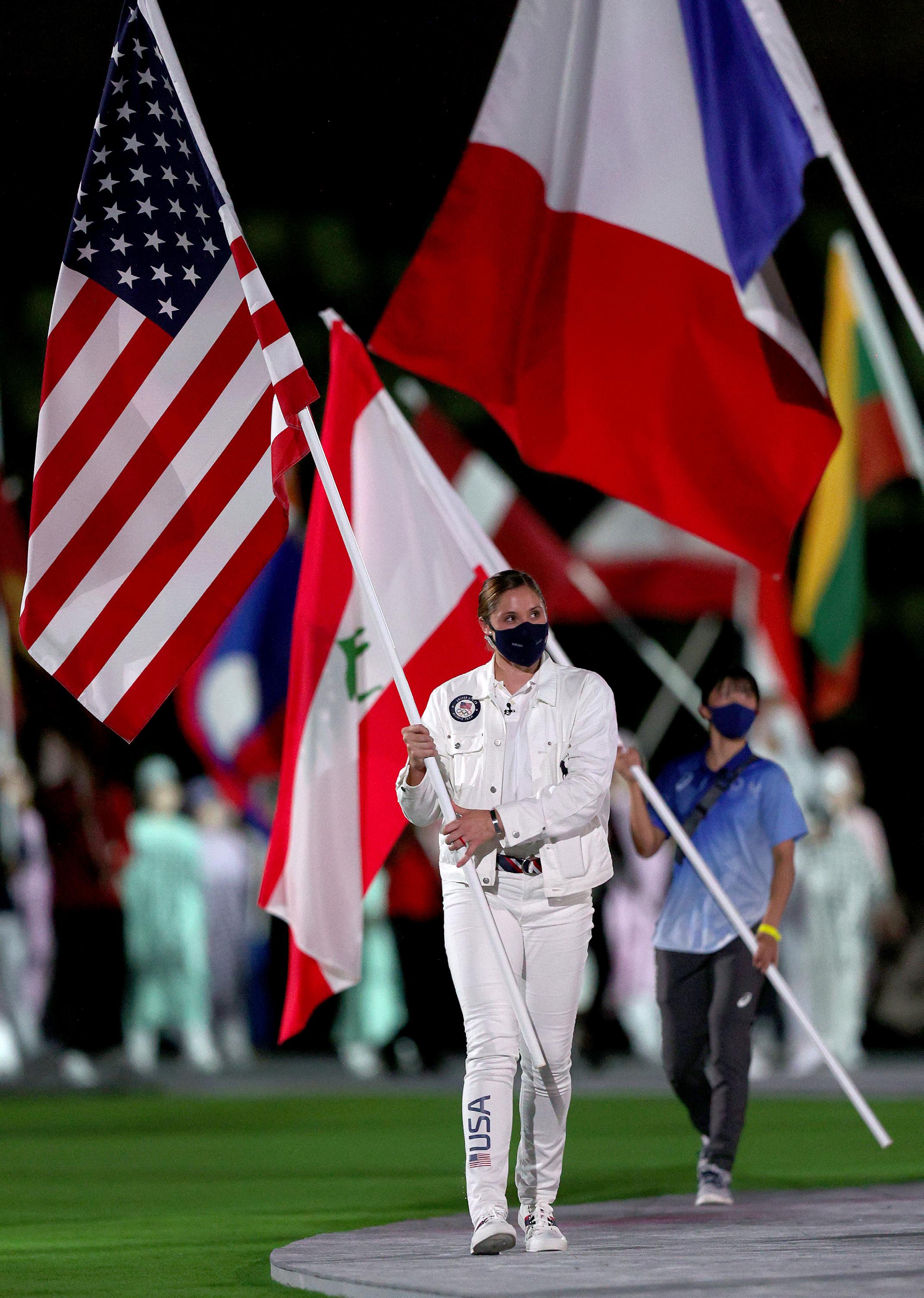
Photo: Flagbearer Kara Winger of Team United States during the Closing Ceremony of the Tokyo 2020 Olympic Games at Olympic Stadium on August 08, 2021 in Tokyo, Japan. (Photo by Ezra Shaw/Getty Images)
MARIO RODRIGUEZ
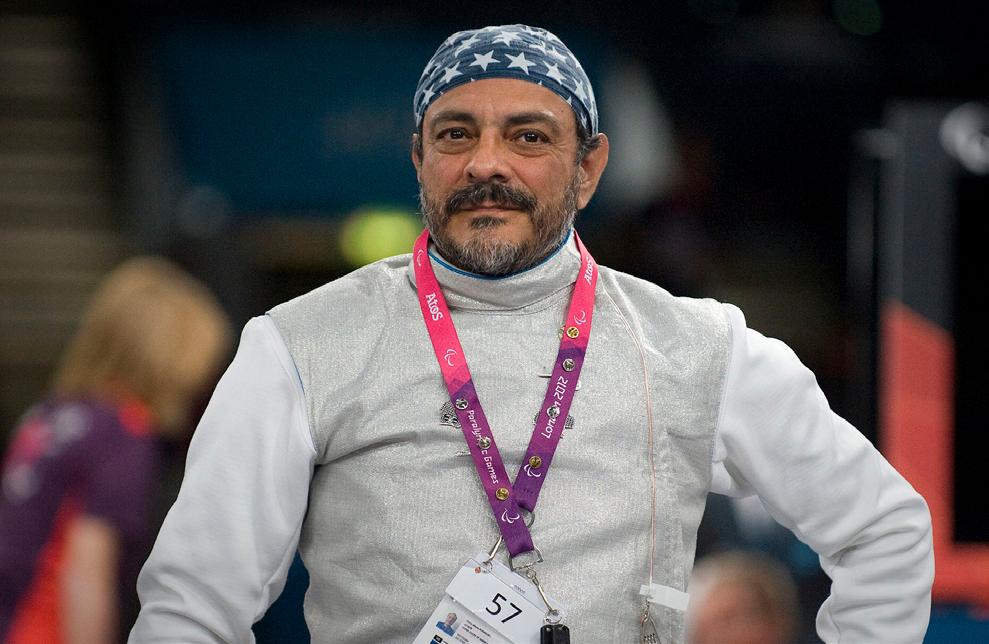
I met Mario Rodriguez via a colleague and the woman who achieved second place in Saber (Sabre if you’re British) at April 13’s North American Cup/Division I Para Fencing National Championship, Alanna Flax-Clark. Unprompted, she told me how much he’s done for the Wheelchair Fencing community, from donating his own chairs and gear to coaching newbies at big tournaments in high-pressure situations. I needed to know more.
4x Paralympian (1996, 2000, 2004, 2012) Mario’s work with the American Red Cross has turned into a metaphor for his life: He spent wonderful years teaching swimming lessons and aiding others’ paths to lifeguard status, and has come to think of himself as a Life Guard. The parallel of watching over people, keeping them safe, has extended from life before the elective amputation of his hip and leg (due to an incurable tumor) into his long involvement in wheelchair fencing, encouraging others to live healthy lifestyles, and retention of focus on the value we all start sport for: Having fun.
Mario’s historical perspective struck me particularly: One of the many common threads between the Olympics and Paralympics is fencing! Olympic founder Pierre de Coubertin counted it famously as one of his favorite sports, and wheelchair fencing has been featured at every Paralympic Games since the first one in Rome in 1960, its therapeutic benefits for spinal injury rehabilitation (most notably at the time in WWII survivors) highly touted by Paralympic founder Sir Ludwig Gutmann. An Air Force veteran himself, Mario has participated in Athletes’ Advisory Committees and was on the Houston 2012 bid committee in an era when Paralympic representation was just gaining steam. His
advocacy seems to have always come with a healthy dose of perspective and self-assuredness: He knew he wasn’t alone, took stock of similarities between Olympians and Paralympians in ways that brought peers closer together, and was a grounding voice for change and inclusion in the Movements, even if this spotlight is the first time you’re publicly hearing that voice.
Mario has used that advocacy experience to notice shifts in his sport that are significant for athletes, and show those shifts toward progress his support. He praises Geoff Russell, coach with 40 years of experience in wheelchair fencing who is highly involved in the Los Angeles scene, with revitalizing the way the sport is presented in the area. Geoff hosts clinics to instruct new athletes in a weapon (epee, foil, or saber), then conducts tournaments right away to challenge and delight those new-to-the-sport athletes. Mario, now coach and supporter, is also delighted.
We bonded on the phone over the way we’ve both experienced success by finally getting out of our own ways and letting the respective games we play be just that, games. That mindset goes for athlete life and life beyond, too. I loved how Mario put his feelings that came from showing up to the tournament last weekend:
“You go to make someone’s day better, however you get hooked into that. But those kids made my day: It was so little I felt like I gave them, and in return they gave me this incredible vignette into their experience. It fills your heart.”
Fencing bouts draw parallels to the way we all eventually feel about our athletic careers as a whole: You prepare for months, and they’re over in seconds. The magic he sees in his continued involvement is in watching new athletes both retain childlike joy, and develop killer instincts, those mental tactics that are so essential in combat sports. On Alanna’s performance: “The last thing you would expect from Alanna would be for her to pick up a sword and hit you with it! But when you watch her fence you can see that there’s a lot going on in her head, AND she’s having fun. She has really taken to the thinking part of a tournament.”
Alanna started fencing saber only six months ago, and yes, her future is bright. In this short period of time, though, she took immediate stock of the calm passion and influence that Mario Rodriguez continues to have on the wheelchair fencing world. This Life Guard is continuing on in the way he always has: Watching carefully, providing small tidbits of help that let individuals flourish how they need to, and celebrating each impactful story as it comes.
Thank you for sharing the joy you continue to feel in being involved in the Movement, Mario. Proud to be your peer.
MIKE HAZLE
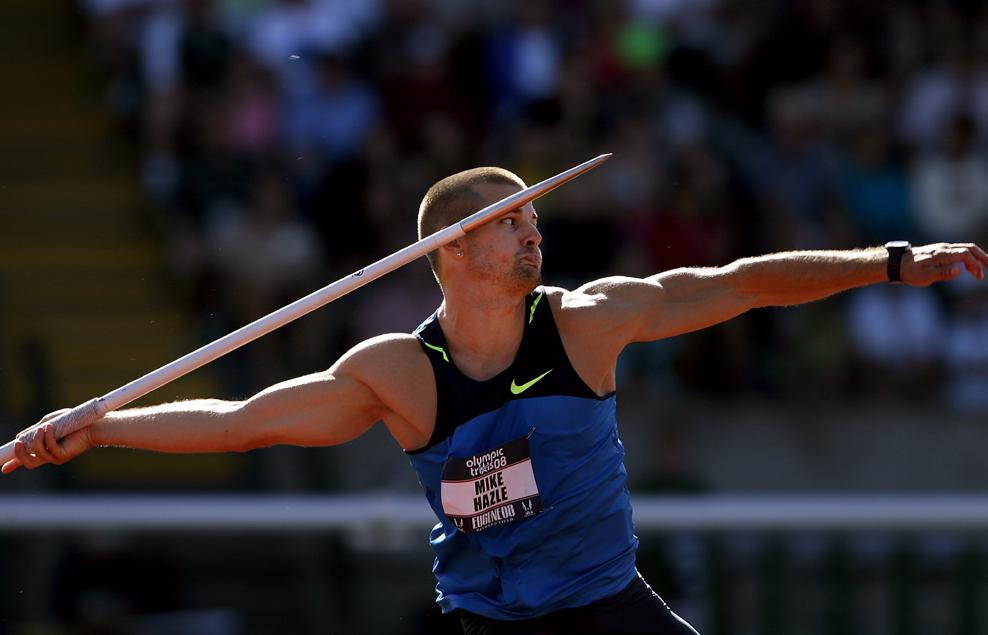
2008 Olympian Mike Hazle’s American pride was built on global experiences. He traversed the earth first as an athlete and then as a military member. In the decade I spent throwing the javelin after the three years we spent training together in Chula Vista, CA, not only could I always hear his voice in my head, pushing me with the exact right words in hard moments, but I felt heavy gratitude for the small moments, big appreciation for where I got to be in the world, and inspiration that I had right then and there to do something as unique, fun, and personally challenging as being an athlete citizen of the globe. Mike taught - and continues to teach - me that.
My first memory of our time as training partners was Texan Mike yelling, “Isn’t this amazing!?” regarding the landscape of Lower Otay Lake and its surrounding hills, adjacent to the Chula Vista track and throwing fields. (Sidenote: It is, and every time I go it gets more beautiful.) In a visit to his and wife Leah’s house this fall, 16 years later, his sentiment about his own property was exactly the same. Whenever Mike would travel for javelin competitions, his stories upon his return while we warmed up for practice were about awesome dinners with friends, moped rides through the wine country of the Italian alps, saunas in Finland, etc. He would have also thrown great, probably after an airline losing his luggage and borrowing competitors’ uniforms, shoes, and javelins (seriously, his PB came in that exact scenario), but the guiding force of his love of sport - and life - has always been people, and meaningful experiences alongside them.
Said the retired U.S. Air Force Special Warfare Combat Controller of his Olympic berth, “It’s my
second greatest achievement behind being a father and a husband. The Olympics are only every four years. There aren’t that many of us.”
A competitive effort in the javelin doesn’t take long: Sprint down the runway, turn sideways, stop, and throw. You might cover a distance of 40 meters with your body, and hopefully propel the implement, if you’re Mike, more than 80 meters. Each throw takes about five seconds. Like he tells it, “I trained eight years to make this team. It was eight years for 15 seconds of work.” And worth every one of those short seconds, for reasons far beyond Beijing outcome.
“When you die, people aren’t gonna talk about your accomplishments, etc. When I get to heaven, I’m not gonna be remembering my truck. Relationships are what it’s all about.”
He has always intentionally surrounded himself with people who act the way he wants to. The few stories I’ve gotten to hear about his service revolve around the humans on every continent he’s had the opportunity to connect with. His elevation of friends, teammates (athletic or military), and his family is always clear. In his marketing role at KEISER, he gets to further fellow athletes’ understanding of his self-described compass: A healthy lifestyle.
Behind the laid-back, family-first, just looking for a good time forefront of Mike Hazle lives one of the most resilient people I have ever met. On his military service and retirement, “I’m hurting, but I’m capable. I’m going to be just fine.” The total knee replacement he had recently was surgery number 14. In his words, “something is constantly blowing a gasket or springing a leak,” and I remember that being true already when we trained together: I witnessed Mike’s recovery from a major procedure only to become USATF National Champion in the same season, and that’s just one example from the beginning of his epic journey so far.
Mike’s training days to meet physical performance metrics are over, and he describes workouts these days as two and a half hours long, “because I have to do so much preventative care.” That effort is worth it though:
“I’m training my a** off to be able to dance at <my daughter’s> wedding. I need to be able to pick her up and twirl her around the dancefloor.”
He appreciates what he has and continues to explore new borders alongside Leah, and as they further their understanding of how they fit in the world together, he says, “If you really look at this planet and how good of a deal we’ve got, it sets the tone for the rest.”
Thank you for your grounded perspective, Mike. Proud to be your peer.
CECE MAZYCK
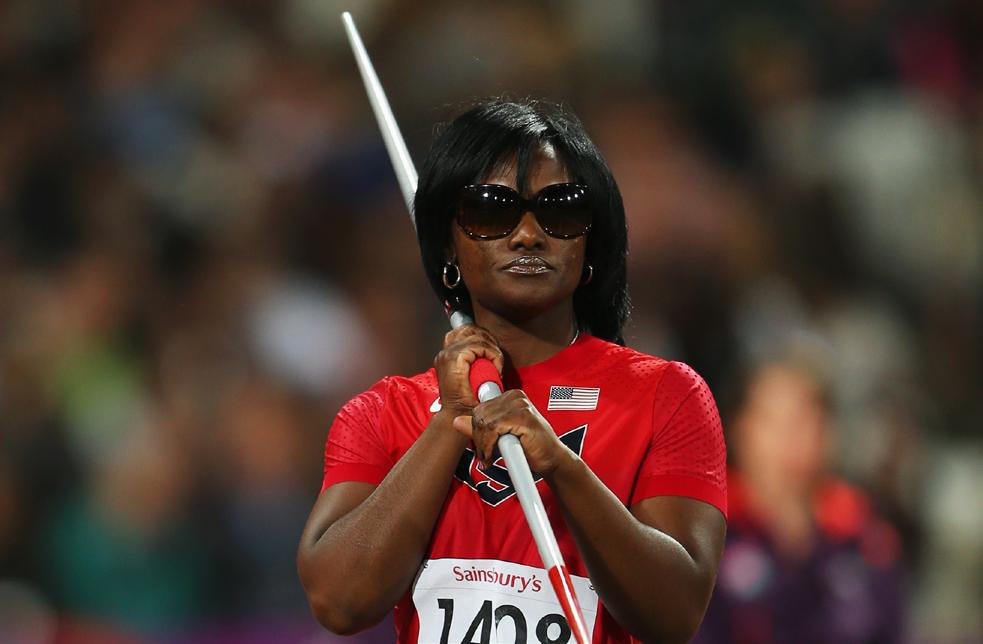
Centra “Ce-Ce” Mazyck brings the heat, and not just on her Adult DIII NWBA Team out of Columbia, South Carolina. The honest, motivating tenacity you feel in talking to her about anything makes her recovery journey from a parachute training accident in 2003 seem inevitable for this force: She now walks with a cane after being paralyzed from the waist down on that Wednesday in November. That’s the trick with elite athletes though, right? We make the really difficult stuff look simple, tackle enormous goals with poise, even succeed while carrying fear and doubt if necessary. Like Ce-Ce says,
“There is a big bad world out there and you need to get in it, experience it.”
Like most paths in life, Army Veteran Mazyck’s has not been linear. She dabbled in fashion prior to entering the Reserves, then opted to earn a Sociology degree before focusing on the Paralympic Games. She discovered her affinity for all adaptive sport through rehab after her injury, but National Veteran Wheelchair Games and Winter Sports Clinics couldn’t compete with her education - and her family - first. She stayed active in sports while back at school, wanted to do everything, and shares really cool perspective on what drove her in recovery:
“A large part of it was for myself, too. Getting injured when my son was only 1 was heartbreaking. But it was like, ‘What are you going to do now? Giving up is not an option.’”
Focus on one sport - let alone one event - didn’t happen overnight for the London 2012 F57 javelin thrower. It took fellow Army Veteran Paralympian, John Register, to convince her to stop being a trick of all trades, and
become a master of one. Even then, fun fact, Ce-Ce qualified for London in both the shotput and the javelin. She chose to hone in on the spear.
Like so many of us, she was left wanting more from her Games experience. I relate hard to what she said to me about London and not medaling: “I knew I could have!” And she took that internal fire into World Championships in France the next season, earning a bronze medal in 2013 before shoulder injuries ended her throwing career.
Former First Sergeant Mazyck describes her life as a series of sets of rules, and she has carried Paralympic ideals through all of them while retaining her strong sense of self. Apparently, at the Paralympics, athletes are often hosted by a local family. Ce-Ce’s host family named her “Jav Diva,” mostly because people perceived her use of lip gloss as flash rather than the utility that it actually was (her dry lips phobia meant she applied it before every throw!), but the gloss became a selffulfilling prophecy.
“If you look good, you perform.”
This determined Mom, this force, has retained the flair of her fashion school beginnings. She’s definitely kept the internal drive she started out with, and only enhanced it through the twists and turns of her journey so far. “Believing in yourself, and knowing that you want something so bad...having the determination to go all the way through the aches and the pain. I could never give that up.” She has shone within each set of rules she has encountered, from being raised in a military family, to being a member of the ranks of the Army, to her new set of rules for her body after her accident, to the Paralympics, and beyond. Her internal belief, this drive that lives within an entire aspect of her sense of self that she can’t even really explain, has always been there.
Another set of rules that Ce-Ce keeps encountering - and thriving within - are different communities she belongs to. She describes meeting Michelle Carterthe Shot Diva - during the Washington D.C. visit after London as a mutual exclamation of “what a blessing to meet a(n) O/Paralympian!!” She still takes part in Winter Sports Clinics and National Veterans Wheelchair Games, and has added Summer Sports Clinics in California to the mix. She’s involved with PVA, DAV, and the Christopher & Dana Reeve Foundation. And although she lovingly describes her local Columbia Heat wheelchair basketball team as “geriatric,” the self-deprecation very thinly veils the heat within. She continually puts herself in positions to grow, learn, try, and thrive, bringing others along on the journey. She even took part in the first parabolic weightless research flight with a Disabled crew last year.
“I always say, ‘How do you want your book to read?’ You fall down, you get back up, then you start the next chapter. Every step is worth it.”
Thank you for being exactly you, Ce-Ce. Proud to be your peer.

ALLISON JONES
You know when athletes just fit their sport(s)? And then you realize that maybe it’s not that, maybe they just have that much swagger. And then you come to understand, hey, they just bring self-awareness and assuredness and a calm zest for life and desire for adventure that’s motivating in all the live-your-best-life ways? That’s Allison Jones.
8x Paralympian Jones started skiing and cycling at a very young age, like many athletes who reach the pinnacle of sport. One of my favorite things about chatting with her though, is the obvious cool factor: These sports are simply, as she put it about her continued involvement in cycling, “Pretty much a part of (her) culture.” She continues adding to that culture, bringing her affinity for the outdoors into the way she keeps piling adventure on to her resume: Allison picked up Para Climbing last year and immediately got fifth at Nationals. “If they had Para Mountain Biking I’d totally do that instead of racing on the road,” says the London 2012 Individual Road Cycling Time Trial gold medalist (among others).
In this first USOPA member spotlight about an athlete who continues to compete, I want to explore the phenomenon of understanding yourself in the context of elite competition. Allison, only the second U.S. woman to stand atop the podium in both Winter and Summer Paralympic Games for the USA, retired from cycling in 2018. She says it felt natural to do so after she’d already left the slalom slopes behind. She had experience leaving a winter sport in the rearview mirror, so the same process with her summer specialty didn’t feel like a big deal, and she was excited about the next move: Rear shock design for SRAM. She says riding bikes is part of the job description, but the lens through which she wanted to view the sport changed. New perspective
for a new phase. Enthusiasm for a new adulting situation, new growth. She was as stoked to pursue engineering as she had been to be an athlete for all those years.
“I was really excited to hit that full-tilt.”
Allison got comfortable at work for a few seasons, watched the Summer Paralympics (Tokyo) from her couch for the first time in 20 years, then hopped back on the bike. Felt that internal drive, needing to be fulfilled. Wasn’t totally “couch potatoed-out,” wanted to challenge herself again. Three years later, she was an alternate for Paris 2024, which she says, for where she’s at, wasn’t bad.
That honest reflection is what struck me. Not bad. The simple self-assessment that, “I’ve been riding really well and I really enjoy it,” aka hitting power numbers and performance goals she thought she’d never touch again, but taking those milestones day by day. Jones’s ability to freely share that, with climbing, she can see where her improvement could happen to get to the next level, but maybe she doesn’t want to go that route. She’d rather dabble, enjoy the problem solving of it for what it is: Fun, new, adventure. She gets to choose.
She’s aware at 40 that:
a) for women, it’s the new 20
b) the fresh talent on the Para Cycling team might mean she does have to finally pass the baton, that getting to “be back there and to see that happen” is part of the privilege of competition again, and
c) she knows exactly what it takes to reach the top, and exactly where she wants to focus her efforts. We, as athletes, get to choose. And sometimes that choice makes the competitive edge a little sharper. But the choice to do something else is just as powerful and fun.
“Getting outdoors and participating in what Colorado has to offer is really important to me. I’d consider retirement from competition and go into full-time adventuring, getting more invested in that work-life balance. I think you can transition where you get your adrenaline rush: Now it’s, ‘I want to go camping for a week, did I pack the food right, do I have the dog set up.’ Can I convert a different type of fix to the emotional freedom of being in the mountains, self-sustained?”
Sports, especially at this level, can feel like a compulsion, but they’re always a choice. It’s so clear that Allison understands herself, her motivation, and her role in each area of her life, and chooses where her energy is expended. That understanding is also forever a work in progress, for all of us! Making the choice to apply the intentionality we’ve all brought to our sports to other areas of life, too, is very cool.
Thank you for your introspection, Allison. Proud to be your peer.

ASYA MILLER
Someone told Asya Miller about the discus, after she’d been cut from every other sport she tried out for: “You’re pretty strong, you should do that.” Having not yet been exposed to the sport that would become her legacy, she puts it simply, “So, I did.” In her Paralympic F13 discus debut in Sydney 2000, she earned bronze.
Before that bronze, she chose to walk on to the Track & Field team at Western Michigan University, along with four of her high school teammates. Division one talent in the discus wasn’t enough for this fitness- and wellness-lover though: Another reason for her attendance at this particular university was the unmatched accommodations for visuallyimpaired students. The coordinators of the visual rehab program also ran goalball practice, and a star was born! She didn’t just throw discus in Sydney, she finished 6th in the team goalball event, and has competed at every Paralympics in goalball since, except Paris. Asya even took her track teammates to play goalball back in college.
And that’s the thing about her: She brings people along. She connects her experiences to theirs in ways that enable her to help them better.
Asya’s long-time goalball partner, Lisa Czechowski, was also a thrower prior to the international success that she and Asya have had as teammates, and Asya and I chatted about the understanding of self that comes with multisport experience. Maybe they both knew from individual sport, too, that they wanted connection on-court with a fellow human.
Coach Miller stays in touch with her throwing roots via
private coaching. “I do it because it’s fun! There’s also a need.” She taught herself how to throw the events other than discus, and even coaches Highland Games athletes. Her focus in coaching is primarily high school and middle school populations, also known as the future.
“There’s nothing better than the satisfaction of a Mom sending you video with a caption, ‘My kid just PRed!’” says the 5-time Paralympic medalist. She shared about the legacy of U.S. goalball on the women’s side, that from the 1980’s until Paris, they’d always been in the mix or medaled. That she and Lisa hadn’t done as well as they wanted in London in 2012 (their fourth Paralympics together), and so decided to respond for Rio. They got bronze. I chuckled a bit when Asya kept rambling about legacy she wanted to be part of, and I said, “Asya, it sounds like it’s your legacy.” She shrugged. And after not qualifying for Paris in 2024, she and Lisa are on a redemption arc.
But just like when she brought her track teammates to goalball practice, she seems to be bringing others along on that arc. “I want the younger players, the newer players to be better so that I can leave this program in their hands. It’d be nice if I could leave it better.” Talk about the Spirit of the Games: A legacy she already treasures, actively pushing it to be even better than when she started, and then furthering the idea in mentoring the younger crop of players? Admirable leadership, in a nonchalant style.
She makes her interest in wellness obvious in the rest of her life, too: A stretchologist at Stretch Lab three days a week and a personal trainer another thrice per seven days, Asya is also pursuing an undergraduate certificate in nutrition and wellness, and a few certificates through the NASM as well. It’s pretty simple: She helps people, she enjoys it, and the actions she’s taking mean she’ll just be able to help people better, outside the gym.
“When people come in for a stretch, we talk about all sorts of stuff. As a personal trainer, you’re not going to be able to change their lifestyle in that little bit of time. I want to do more.”
The redemption arc she’s on will surely mean she makes it to LA28 (she more than knows what it takes, after all), and she’ll ponder retirement after that. But I keep going over the words she spoke so simply, “It’s fun,” and “There’s a need.” Isn’t that so true? Sometimes as athletes we keep our own dreams alive so that others’ dreams, those coming after us, might get even bigger than they imagined at first. How lucky goalball, Asya’s family, and all her clients are to have her keep-going, well-rounded attitude about competition, bettering herself and those around her, and, well, life.
Thank you for your consistency, Asya. Proud to be your peer.
2025 USOPA MEMBER SPOTLIGHT REPOST
ANDREW BLASER
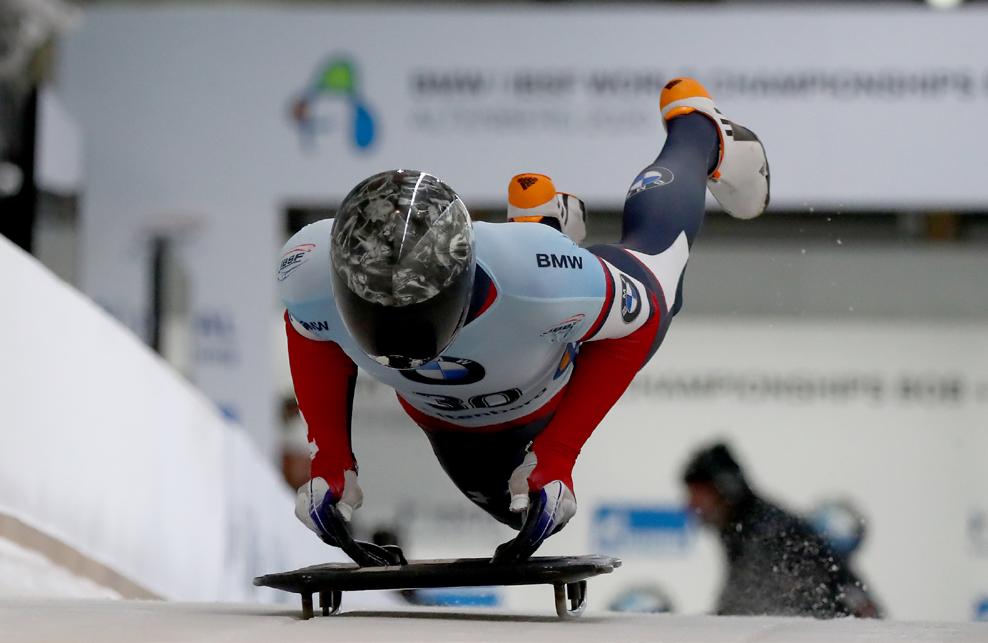
When we got to train together for a few summers, this guy was simply magnetic in the CSOPTC weight room. Anyone and everyone there, he knew. Big laughter sometimes, but mostly the feeling that he knew something, just behind the friendly face, that you didn’t. Like his joy in being a little part of your journey was because he had some insider information that you were going to be great. That was Andrew Blaser as a training partner. And you believed him. When he made his Skeleton Olympic debut in Beijing in 2022, the thing that stood out to me most, watching from home from my final training camp in my final season, was that same mentality that he brought to the track from our weight room days. It felt like I could see through his helmet, that he was believing in himself just as much as he seemed to believe in others, and simply doing his best. When the helmet came off, there was that joy, the gratitude just to be there. Andrew being a big Sara Bareilles fan, it was a THRILL to see on social media that she wished him luck during the Games, catching the fever we all get when watching Team USA thrive on the other side of the world. Andrew, my friend, had FUN. He might not have known it until he looked back, but he has always enjoyed the process. Very early on, he took solace in the physicality of training, the focus of driving the sled, the discipline that elite sport takes: A run down any ice track for bobsled and skeleton takes two to three minutes, and the requirement of his attention helped him deal with a difficult breakup.
“For those two to three minutes a day, I couldn’t think about the pain. It was healing. It’s the reason I think I’ll always love it.”
Any of us who have been through something difficult and channeled it into our athletic efforts can relate.
Training as therapy is a thing that I miss a lot.
From there, Andrew grew into deep appreciation for each day’s opportunity. For him, it wasn’t about the Games. It was about the four years every day that built up to it.
Having begun his athletic career in the decathlon, he recognizes the value in competitor relationships, and got to learn about the little parts of who he is as a competitor via Track & Field, then take that into Skeleton. His stories about fellow sliders, namely John Daly (3xOLY), whose team spot Andrew ended up taking, are told with gratitude filling his voice, like being a decathlete and seeing up close how people fight their inner demons equipped him to be a particularly understanding and supportive teammate. He and John went out for beers after that team announcement was made, and Andrew says John told a story about a competitor of his own when he was just starting out at 15. That athlete of a different generation would say to teenager John, “Things might get tough, but we get to go sledding every day!”
After hearing that story and before his Olympic berth, Andrew saw a tiny flexi-flyer sled necklace in a shop one day, snatched it right up, and has worn it ever since.
“I run five steps and lay down,” he says self-deprecatingly, but to shed light on the mentality that continues to define his involvement in sports: This is fun.
Today, Andrew has played many different roles in sport after putting his own speedsuit and sled away: Coaching, broadcasting, mentorship, and various work opportunities that help him give back. He used to coach Heptathlete Chari Hawkins when she was just starting out at Utah State, and got to watch her compete as an Olympian in person on Paris’s purple track last summer. In a position in Boise, where he lives, he works closely with a special education department. The kids know he’s an Olympian, and while he might only run five steps, he does that really fast, so they like to race him.
“I may or may not have dropped a baton, and they will not let me live it down.”
All those moments, this journey that involves not just his own Olympic career but knowing that he has impacted many athletes around him in multiple ways, have come together: He now gets to work with Skeleton athletes in the lead-up to Milano-Cortina, an opportunity that he says is a cherry on top of all of his experiences in the Movement.
“You get the label when you compete, but you become an Olympian in all your early workouts and the decisions you make. We all have experiences that shape us and the way we feel. But we still get to mold how we feel about it at the end. It took work but now I get to help with others’ momentum.”
“It’s really fun for me to help people fall in love with the sport that I love.”
Every time I get a text from Andrew, I know it will be about lifting a fellow athlete up, and it’ll make me smile. Thank you for your joyful attitude, Andrew. Proud to be your peer.
2025 USOPA MEMBER SPOTLIGHT REPOST
JON FISH
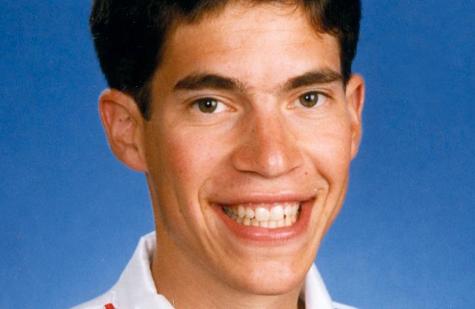
What part of the Movement hasn’t Jon Fish participated in? A question with no answer, but I’m also sure he’ll find yet another way to learn, attempt to satisfy his curiosity, and contribute to athlete experience in the way that a coxswain of his caliber does: Watching out, communicating, keeping the boat on its course.
A New York City resident now, 1988 Olympian Jon calls NYC “like Mayberry:” He runs into friends all the time, and fellow athletes from different sports. He intentionally fosters belonging with his family, lots of cousins and nieces and nephews and their kids who grew up in different places but have now landed in the city. As a professor and supportive boss, his mission is first to support others, but he’s always learning, too.
“I get out a lot more than I put in, and I put in a lot,” says the career CFO, who contributes his talents and understanding of the intersectionality of many issues at the corporate level and in life to big firms and small nonprofits alike, across various industries.
Jon’s function as a connector, a facilitator, a leader by example is obvious. He has taken the opportunity to be involved in so many areas of the Movement, either to participate and grow in or to receive athlete input and voice: When he meets friends in Mayberry (aka NYC), he shares what he’s up to, and therefore spreads the message that involvement is an option for everyone. He’s been an athlete liaison at the Winter Games in 1994, was ViceChair of the Team USA AC during the same time period, served on various Boards of Directors (US Rowing, the USOPC overall, the USOPF), and offered specific audit committee expertise on those Boards, took a Salesforce reskilling program most recently, and played a pivotal, very outspoken role in the creation of USADA. Jon and I are graduates of the same MBA program via DeVry University’s Keller Graduate School of Management, a partnership from 2011-2020 between the school and the
USOPC.
A rockstar athlete rep and fellow Rowing Olympian played a role in his decision to be so involved: When he was the youngest US Rowing team member in 1982, fellow Penn graduate and now Hall-of-Famer Anita DeFrantz knew exactly who he was on a tram in Lucerne. Her career as athlete advocate had just begun as well, and later on, she shared what under-represented groups and the organizations they serve get out of athletes seeking roles in organizations:
1. Athletes could represent the interest of the benefitting group (the organization they’re serving) by understanding the issues and representing the point of view of the beneficiaries.
2. People (athletes) see people like themselves on Boards/in those rooms, so they can aspire to those roles. Representation.
3. Participating gives you, the athlete, leadership experience, and an opportunity to share your skills and expertise to benefit the organization.
As Jon first navigated such positions, he was told outright by established members of those groups that athletes were to be seen and not heard. That would set most of our hackles to rising, but the way Jon’s hackles seem to go up in is a relatable, fun, to-the-point way that gets his point across while facilitating forward progress. He’s clear in his opinions, and describes his own advocacy as passionate, especially in the area of anti-doping, as he has strong feelings that his teams missed out on a higher medal on the medal stand in Worlds competition in the 80’s. But it’s obvious – and appreciated – that, like Anita, he keeps conversations moving forward.
He works well with others, and encourages them to do so, like the accomplished coxswain he is.
The plethora of organizations that he has helped, and the diversity of industries they represent, just echo the zest for life that Jon possesses otherwise. He will not stop learning! And brings his joy about the world into not just his advocacy, but his navigation of his personal life, too. Having mostly rowed on fresh bodies of water, but grown up on the south shore of Long Island, Jon described to me how fascinated he is by the study of navigation and tides. His time in NYC on the Harlem River and then on the River Thames at Oxford and London fed this curiosity, and he now walks from his home to the river to feed his soul multiple times a day.
The parallel of tides and athlete voice across the Movement is pretty magical to me in the context of Jon’s life. So many factors contribute to the powerful body that is the water, or athlete presence in the context of the Olympic and Paralympic Games. It’s consistent that the moon and athletes will be involved in each phenomenon, but how much pull will they have, when? These huge questions are ones that Jon Fish has the energy to answer, and has been seeking answers to for years. I can’t wait to hear about what he learns next. Thank you for your insatiability, Jon. Proud to be your peer.
2025
DARRELL HILL
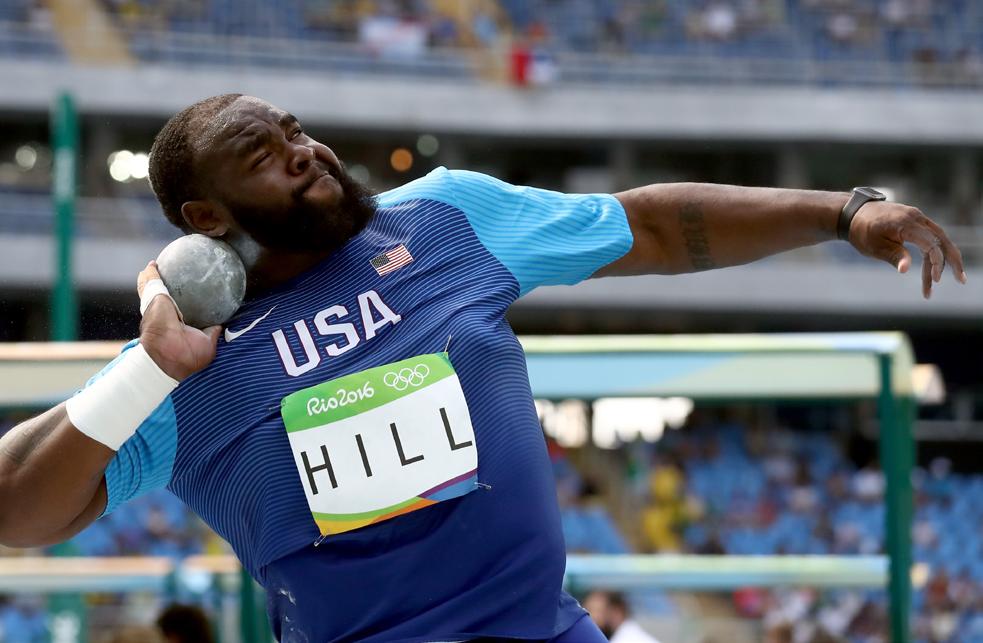
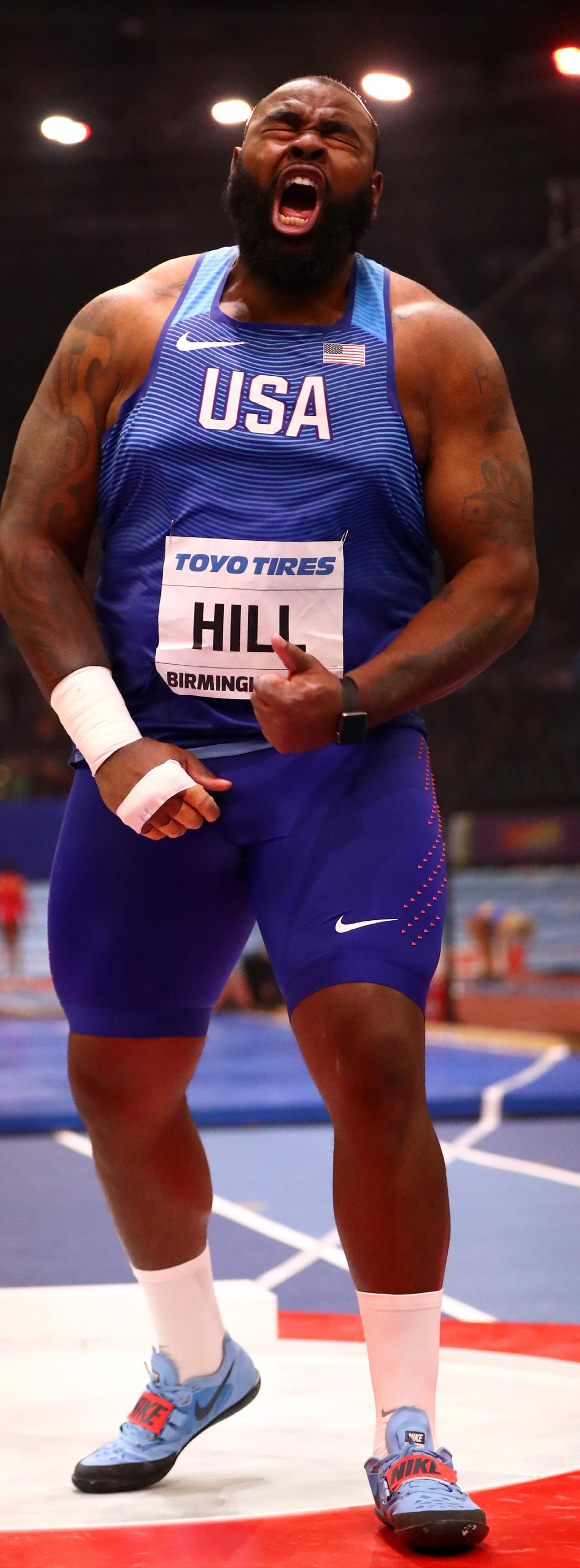
I constantly forget how tall my friend Darrell Hill is. Every time I see him in real life, I’m surprised. But I shouldn’t be. Everything about this guy is B1G. He expands into spaces, grows with the times, collects experiences and then turns around and shares them in ways that invite others to join, to also grow. As a shotputter, bigness just comes with the territory, but his personality matches in ways that are both literal and abstract. He said it best himself when we chatted the other day. It’s presence.
As far as big personalities go, his radiates. It’s resonant, not loud. It ponders, doesn’t pontificate. He came from behind to lead a U.S. sweep when he took down behemouths and Rio Olympic teammates Ryan Crouser and Joe Kovacs at the Brussels Diamond League Final in 2017. Earlier that summer, I remember witnessing the first time he attempted a 500-pound bench press at a training camp in Leuven, Belgium. A spotter touched the bar as it was clearly, unassisted, on its way up.
I read recently that the anatomy of a comeback, some of the science behind the incredible things we witness in athletics, is acceptance of reality, facing it fully, and making decisions about what to do next, quickly and clearly for yourself so that you may move ahead. But the acceptance part of that has to come first. Ignoring what’s in front of you doesn’t work, you must face the facts and THEN act. Darrell does that in spades. That day in Leuven, he just sat on the bench for a minute, head hung in thought. First probably successful attempt at 500#, that barrier that’s mental and physical, and a rite of
passage in the shotputting world, thwarted by one finger that wasn’t his on the bar. But soon enough, he was up, letting disappointment (reality) be known, but moving forward with intention and continued belief in his abilities. Not too long after, the Diamond trophy was his in historic fashion.
The 2018 USATF Champion and 2019 World team member (competitor in the best men’s shotput competition in World history at that year’s final meet in Doha) was met with obstacle after obstacle post-COVID in his athletic career. He always responded with a deep breath, a plan to move forward, and an absolutely respectable showing at the national level in the face of the hand he had been dealt and an ever-growing talent pool in the U.S., a trend he helped start. After not competing since 2023, he officially put his shotput at the back of the metaphorical shelf and announced his retirement last summer.
Then he kept right on going, making a difference in the sport that he still gets to be such an integral part of.
Growing up in Philly, Darrell says, he had a lot of influences in a negative direction. But the voices he actually heard were those of the teachers and coaches who were influential the other way. Their positive voices didn’t stick right away, but he heard them, digested them, then brought them back when he was ready to implement their knowledge. Sat on the bench for a second, absorbing reality, then acted.
Just before and during recovery from his 2023 pectoral repair surgery, he started coaching in Arizona at the high school level. That same Fall, Darrell was hired as Throws Coach at the University of Delaware, a debut NCAA coaching job at the DI level. He got a promotion in year two. Then, this Fall, Penn State, his alma mater, called him home. Guiding fellow Nittany Lions just two full years into a coaching career? That’s doing it big. But the reason it’s all happening is that his heart is as big as his ambition.
“One of the more influential people in my life is my high school coach, Lenny Jordan,” says Darrell. “The coach-athlete relationship is transactional in a way, I recognize that, but I’m so far removed from that version of the relationship that now it turns into real life. I try my best to always give back and make sure I’m staying in touch with him: That’s how I let him know how valuable he is to me, by maintaining that genuine contact.”
On other coaches, too, he says, “These are people who still coach me, in buying a house, in relationships, in my next career move.” And in watching him foster relationships with his charges now, it’s clear that he’ll carry that phenomenal example forward for the generations he gets to help shape.
Another fantastic example that Darrell is setting?
Broadcasting field events with his blend of positivity, knowledge, edge, and continuous growth mindset. As an athlete, he says that he had always tried to improve on his interviews every time out: Listen to others and study how they added personality, humor, and more. Anyone who knows him knows he’s also a total natural, but that’s the thing about him that’s common knowledge too: He’ll always level up.
And, in his debut opportunity with NBC covering Paris, he walked away an Emmy winner.
“Working the Olympics last year, I was so locked in. In a way I was in a Village. I had shuttle times, I had meetings, I had a call room. I had my own experience of being part of the Olympics and it lasted the entire time. I’m almost in a foreign country: I gotta go to bed so I can get ready for tomorrow. I found that zone, and once I put the headphones on, and you can hear the crowd and hear the stadium, it’s a different level. I was able to tap into some of my athletic experience.”
He continues to authentically pad his resume with broadcast and coaching gigs. He’s done both interviewstyle live shows with USATF and continued field event coverage, including teammate Ryan Crouser’s debut season of the World Shot Put Series. His first senior level USATF National Team coaching position was this summer in the Bahamas, as North American Central American Caribbean Senior Championships throws coach. The experience, calm, and perspective he brings to that role have me thinking we’ll see him on team staff for years to come. He’ll just keep leveling up.
“I’m enjoying this next phase. I feel like I’ve found where I need to be. That’s a really cool thing, that I’m working in my purpose.”
Thank you for your big intentionality, Darrell. Proud to be your peer.
2025 USOPA MEMBER SPOTLIGHT REPOST
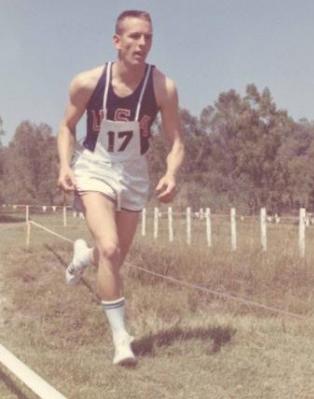
TOM LOUGH
I’ve only spoken to Tom Lough on the phone a handful of times. I may have had the privilege of meeting him at the 1968 Team’s 50-year reunion event here in Colorado Springs in 2018, but I was just soaking up the awe, witnessing a team of people who still remembered each other’s facial expressions after their races and games, incredible, groundbreaking peers who also were just teammates. I recognized their undeniable greatness in the same glance that told me they were just pumped to be together again. Because of Tom’s effort.
According to many articles written about him, Tom describes himself, like I tend to, as not that great of an athlete, but as I remind myself, there are different measures of athleticism. His obvious resilience, consistency, and discipline in continuing to grow in his life are extensions of his athletic and military career, and we should all lead such rich existences. His Games were in 1968, and after visiting Mexico City again in 2007, he realized he missed his teammates.
I think we’ve all been there. Looking at photos from
your Games experiences and reminiscing on the fun you had. Seeing a social media post from a roommate or suitemate reminds you of a moment you might treasure. Or visiting the site where you became an Olympian or Paralympian again. Nostalgia is a common experience that many of us simply sit in. What’s uncommon is the way Tom turned that feeling into action.
He estimates that he has reached 90% of his 1968 Team. His effort shines through in the way you can see that team interact with each other when they’re together. He’s a connector, a doer, a celebrator of the beauty in the world. The few interactions I’ve had with him so far are riddled with moments that make it obvious we share a passion for noticing and honoring the little moments in life.
I know this won’t be the last time I write about Tom, and I know many of you already know him. I feel grateful to join the club of humans who appreciate the way this man lifts others up and honors their stories. And the story he told me this week is the one I want to share more broadly now:
We lost one of ours this week (9/12/25 at time of writing). Well, Tom’s team lost one of theirs. Joe Dube, 1968 bronze medal-winning weightlifter, passed on Monday. Tom called to let us know, and to ensure that an Olympic flag would arrive in time for the services scheduled quickly for tomorrow (Saturday). Another teammate, Paul Beacham (Canoe/Kayak 1968), will deliver the flag.
It’s meaningful to stay involved, with each other, with the Movement. We, as athletes, get caught up in competition at young ages, swept into social situations that just so happen to be fabulous, aligned, relatable with peers who are the only ones who know how special this path is. It takes effort to reflect on it, to bring its joy back into your life. Tom Lough has created that space for his peers.
Tom coordinated parts of the 1996 Atlanta Torch Relay, and two of the individuals who showed up were Joe Dube and Paul Beachem. On Saturday, the plan is for Paul to bring his torch, for Joe’s kids to get his torch out too, and just like 30 years ago, be reminded of what it means to pass the flame.
May Joe, like many other 1968 teammates whose stories have been amplified and treasured by Tom Lough, rest in peace.
Thank you for your genuine friendship with others, Tom. Proud to be your peer.

deseret.com
2025 USOPA MEMBER SPOTLIGHT REPOST
CURT BRINKMAN
I had reason to be perusing a list of Paralympians recently, from 1960 to now, and came to understand that too many of them are no longer with us. This is the natural order of life, of course, but it has weighed heavy on me and a) bolstering our database is a top priority of our department, especially as it relates to Paralympians, and b) I’ll always celebrate an amazing story.
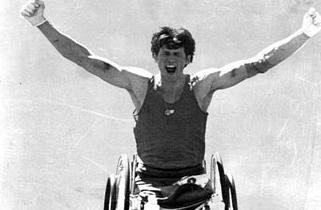
One of those athletes from this list is Curt Brinkman. Raymond Curtis Brinkman, a two-time Paralympian (1976 Toronto and 1980 Arnhem) in Track & Field, won his final marathon in 2007 at the age of 54, two short
years before he passed due to health complications, some of which were connected to the accident that took both of his legs when he was 16.
The motivational speaker, athlete, and author was also, judging by quotes from his son Greg in articles celebrating his life, a great dad and example. One of those quotes: “We’ve heard from people who he maybe only met once or who saw him speak once but said that Curt changed their life forever.” May we all aspire to this level of relatability and impact.
Five-time Paralympic gold medalist Curt hailed from Shelley, Idaho, where there is now a local Park in his name. His accident occurred there, and local lore about how he responded to adversity has impacted generations of residents, including a former Temple University student who shared a hometown with Curt, was inspired by his local hero, and applied the lessons learned from him to the way he navigated being a medical professional at the Boston Marathon bombing in 2013. One of the reasons there was such synergy between this student’s desire to be in Boston and Curt’s legacy? Curt was the first wheelchair Boston Marathon winner to complete the course faster than the runners, when he set a world and course record of 1:55:00 in 1980. He won many more races throughout his remarkable life.
I know that this won’t be the last time in this role that I’ll be left wanting to chat with a person I just learned belonged to our community and can no longer meet. It’s not the first time I’ve felt this way as a fellow ‘Lympian in my career, either. I’d love to talk to you, now.
Thank you for your tenacity, Curt. Proud to be your peer.

NICK BAUMGARTNER
written by Manager of Alumni Relations Robbie Fulton II I had the chance to attend the Pre-Games Summit in New York City last week (originally published 11/7/25), a gathering meant to bring together Team USA athletes to focus on what’s ahead for the 2026 Winter Games with 100 days out while also fellowshipping with peers. The summit felt like a blend of reunion and renewal: familiar faces, new perspectives, and that quiet reminder that this movement is built not just on medals, but on the people who show up with heart and passion, not just for Games years but day after day chasing greatness in their discipline.
And last week, I saw exactly what it means to carry that heart and passion into every room when I met Nick Baumgartner.
Nick is a four-time Olympic snowboarder, a 2022 Olympic gold medalist, and an X Games gold medalist. But more than anything, Nick doesn’t just enter a space, he charges into it with a contagious brightness that makes you look up before you even realize why you’re smiling. Within minutes, he had everyone laughing, leaning in, opening up. He joked more than once about being “the old guy,” but the truth is that every athlete and staff member who crossed paths with him felt the opposite: his energy was the spark that lifted everyone a little higher and brought us all a little closer.
What struck me most was how grounded he is in the responsibility of being who he is. Nick’s career has spanned long enough to watch teammates rise, retire, return, and reinvent themselves, and yet he shows up with the enthusiasm of someone just getting started.
Anyone could see he wears his longevity as both a badge of honor and a source of pride in the community that raised him.
During an NBC interview at the Media Summit in NYC, Nick said, “This is no pressure… I can just have fun and enjoy myself. And when you’re just having fun, it makes you dangerous, even at 44.” THAT… that outlook, joy, energy, gratitude is what makes Nick who he is.
At one event the Athlete Services team organized, I sat next to Nick on a couch while he watched his teammates bowl. We talked about where we were from and shared pieces of our journeys. And then Nick said something that confirmed everything I’d already sensed about him: “I’m grateful I can still be a part of this.”
That small but mighty statement from someone who has reached the pinnacle before was powerful. He’s already earned it all, yet he wants more, and he wants it with joy. The gratitude he carries so openly, whether he’s decked out in Team USA gear, wearing a Team USA hat, or simply saying hello to strangers, becomes something shared, something that binds all of us a little more tightly to just simply be grateful.
This is just one story among many from the incredible athletes at the Team USA Pre-Games Summit. I am appreciative for moments like these, for witnessing the people behind the achievements, the ones who make our Team USA community feel alive and whole. They are the “athletes in the arena.” And as a fan, I can only imagine what it feels like to spend countless hours, days, weeks, months, and years chasing a dream with that level of devotion.
Thank you, Nick. And best of the luck!
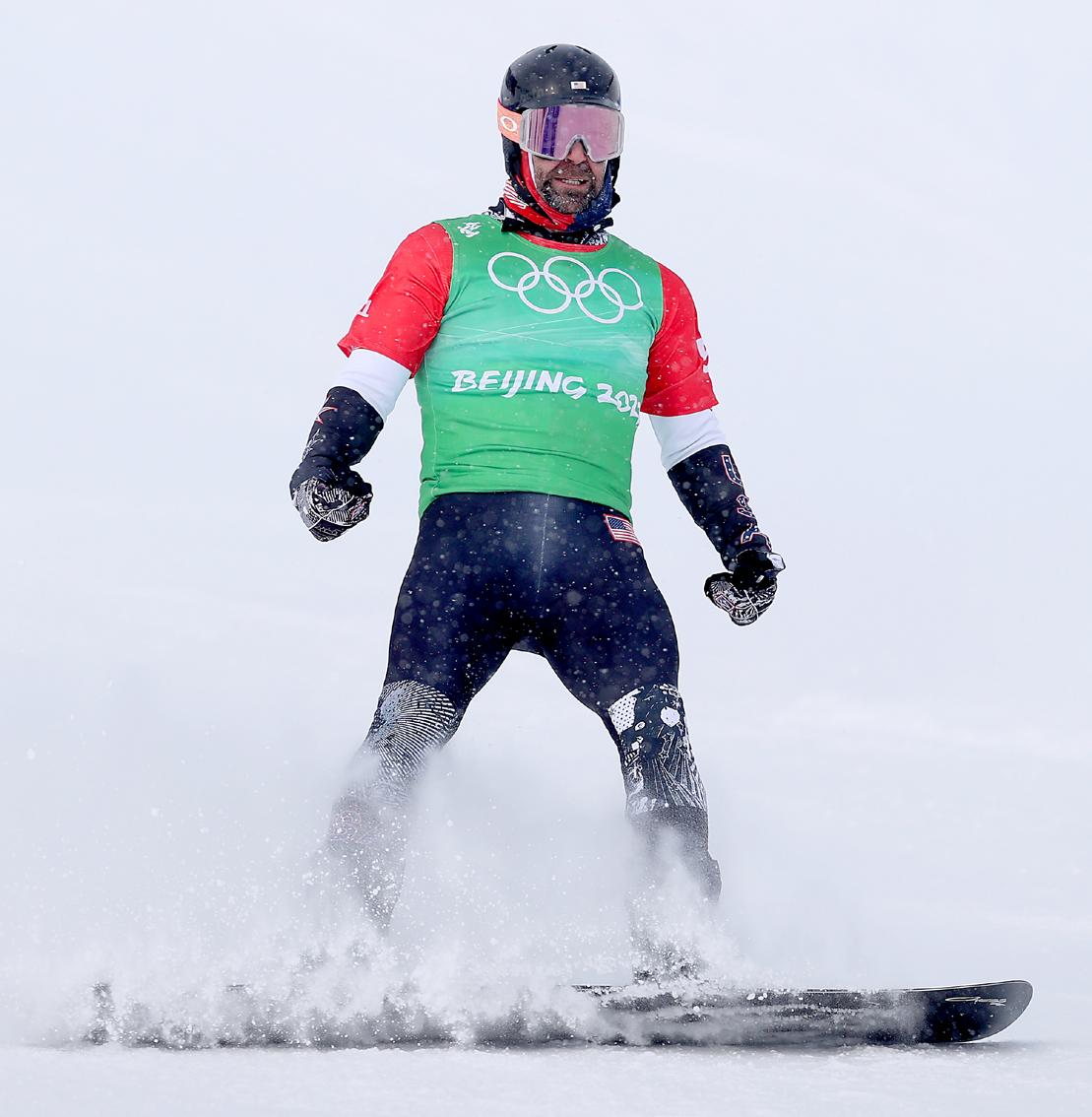
2025 USOPA MEMBER SPOTLIGHT REPOST
JENNIE FINCH
I got to attend an event last weekend (originally published 10/24/25) at the U.S. Olympic & Paralympic Museum. The space, built for us to come home to as Olympians and Paralympians, and for the community to learn all of your incredible stories (it’s a place that honors every journey, celebrates non-medalists as much as medalists, truly), is often used as event space, and when this happens, athletes come in to chat with attendees as living exhibits. It’s really fun to bring niche sport to life for people who don’t expect to be captured by something new.
On Sunday, I saw exactly what it means to honor every story in meeting Jennie Finch-Daigle.
This isn’t the first time a superstar has proven to be an even better human, and I know it won’t be the last. In fact, that phenomenon is, gratefully and spectacularly, ubiquitous amongst our peers. Kindness, warmth, and genuine interest abound. Mutual respect is the default. I felt the same way when I, wildly, sat between Allyson Felix and Kerri Walsh-Jennings during their Hall of Fame induction this summer.
Jennie is a gold and silver medalist in Softball from 2004 and 2008, respectively. We’re Beijing Olympic teammates, but as the star on the pitcher’s mound for that incredible team that inspired the literal world to be involved in the sport, our experiences were very different in 2008. I threw one Olympic standard to qualify for the team, five meters further than I’d ever chucked a javelin in my life, culminating in a classic flop of a first Olympic appearance, and Jennie showcased nerves of steel, effort after effort, leading a team whose
talent surpassed so many other countries that the sport took a break from the Olympic program for a whole decade after that.
There was no stopping Jennie, though, when softball was removed from the Olympics. She’d been a star in the NCAA for the Arizona Wildcats before the softball world series truly picked up steam. She stood on the shoulders of the women who came before her professionally, always expressing gratitude to the trailblazers who wouldn’t see as many headlines as she does. She isn’t the earliest advocate for softball, and she knows that, takes the responsibility of being the most visible one seriously, and with incredible warmth.
She’s providing not only opportunities for young girls to see what’s possible at every turn, but support. Jennie’s Jennie Finch World Series (which celebrated its tenth year in 2025) serves as not only a playground for girls in the tournament, but sometimes the site of distribution of some of the MLB’s Jennie Finch Empowerment Awards, the award in its seventh year of making a difference in athletes’ lives. The location of scholarship awarding has shifted to take place at the four major MLB development events each year, highlighting young stars during the games and tournaments that might shape them. Jennie’s visibility lends itself to that effort.
Finch-Daigle’s involvement with Major League Baseball started soon after Beijing, and she has appeared as a color commentator, celebrity exhibition pitcher in numerous strike-outs of MLB stars, and continues in her role as the organization’s youth softball ambassador. In a sport that lost its biggest stage when it was removed from the Olympic program, grassroots efforts such as this are important to keep the flame alive, and it’s clear in the way Jennie speaks about her role that she knows that. But it is best accomplished by paying attention to each and every story about the girls she is empowering.
Jennie asked me if we could take a photo together at the end of our shared time in the Summer Games Gallery at the USOPM, and suggested I pick up my PanAms medals while she held her Olympic ones. “Medals are medals” she said. And while that sentiment isn’t new to me or a new experience from someone like her, it felt really good to have acceptance in this community solidified just a bit further by a simple interaction with a star. Her focus on her family and hard work in the business she and husband Casey built together shines through in the way she treats each peer (in sport or in life) as equal. It was just fun to be in her presence for a bit.
I hope it’s clear that I feel that way about all of you, and I’ll keep celebrating the new interactions I get to have in this cool role on your behalf.
Thank you for your heart, Jennie. Proud to be your peer.
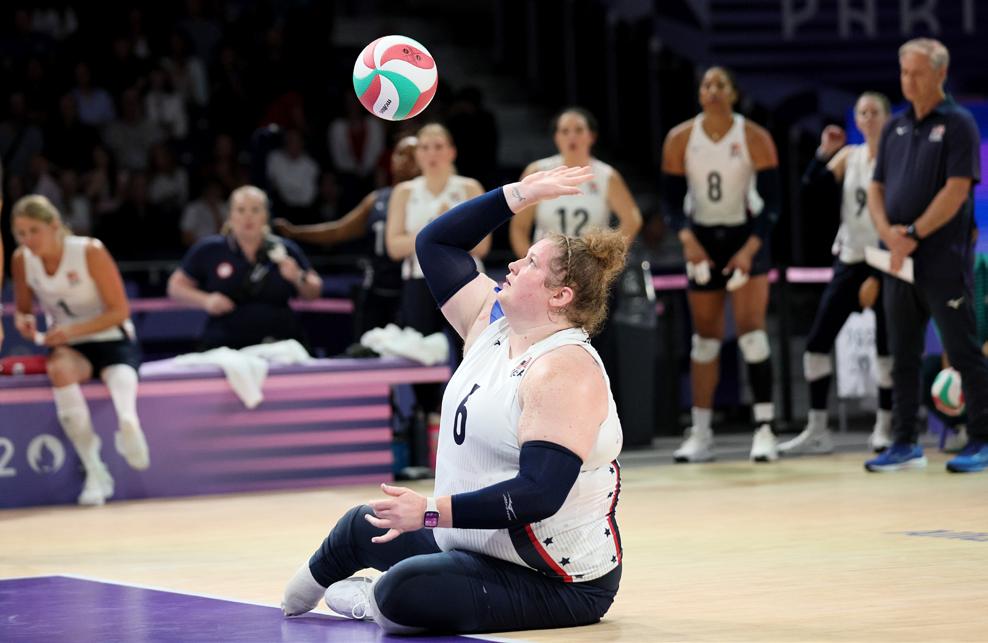
HEATHER ERICKSON
I just met Heather Erickson this summer: She’s a fellow in the Team USA Athlete Fellowship program at the USOPC, currently in her first rotation of that program.
(Sidenote: Are you recently retired? Trying to figure out your next move? Maybe keep your eyes out for the fellowship program! Heather and her cohorts seem to be thriving in it.)
I now wish I’d known her since we both made our ‘Lympic debuts in 2008, and I’m looking forward to being her fan on this side of sports. This USOPA Member Spotlight is going to be short and sweet, as even though Heather is a legitimate force, legend, pioneer, superstar athletically, it also strikes me that she flies under the radar perhaps a bit intentionally.
Let it be known, though, that her role on the Women’s U.S. Sitting Volleyball team has been essential.
If you click on Heather’s USA Volleyball profile and scroll down a bit, you’ll find “Career Timeline,” followed closely by “Most Notable.” Then, you’ll have to keep scrolling, as a career as long and fantastic as Heather’s has many entries in that area. A highlight of those highlights? MVP at the Paris 2024 Paralympic Games, when her team took their third straight gold, and Heather won her 5th straight Paralympic medal (two silvers started her tenure in Beijing and London before they threepeated from Rio (where she was also MVP) to Tokyo, to Paris).
I relate a whole lot to the decision that Heather made after Paris: To walk away. It’s clear that the friendships she shared with teammates get carried forward: I asked for some input on Sitting Volleyball players who might
be great for a project I’m up to, and she freely offered a thoughtful list of people who have shown up. It’s clear that she put her all into her athletic career: The stories I’ve read about her stoic leadership are resounding, and she obviously loved the game (she’s had coaching success as well: When an athlete is surrounding themselves with their sport on purpose? That’s true passion. It’s most clear to me, though, that Heather is an advocate for herself, and knows when it’s time for the next thing.
She joined the national team at 14 years old, and an article I read stated that she “didn’t talk for three years” (see: intentionally flying under the radar, above). She’s now 32, with an accolade list to match any other 5-time Olympian or Paralympian, and a new dream: What’s next? The curiosity I’ve watched her display in the short time I’ve known her (in trying new programs and embracing the fresh inspiration of relationships and tasks that come from them), the straightforward warmth she brings to all rooms (bringing little presents for the office once a month but acting like it’s no big deal to put forth that genuine delight in a person’s day), and the relatability she has met me with in this particular moment in my life (which is just a phenomenal part of being in this particular community but also takes a special human) all tell me she’ll be just fine, no matter what the future holds.
Thank you for your self-assuredness, Heather. Proud to be your peer.
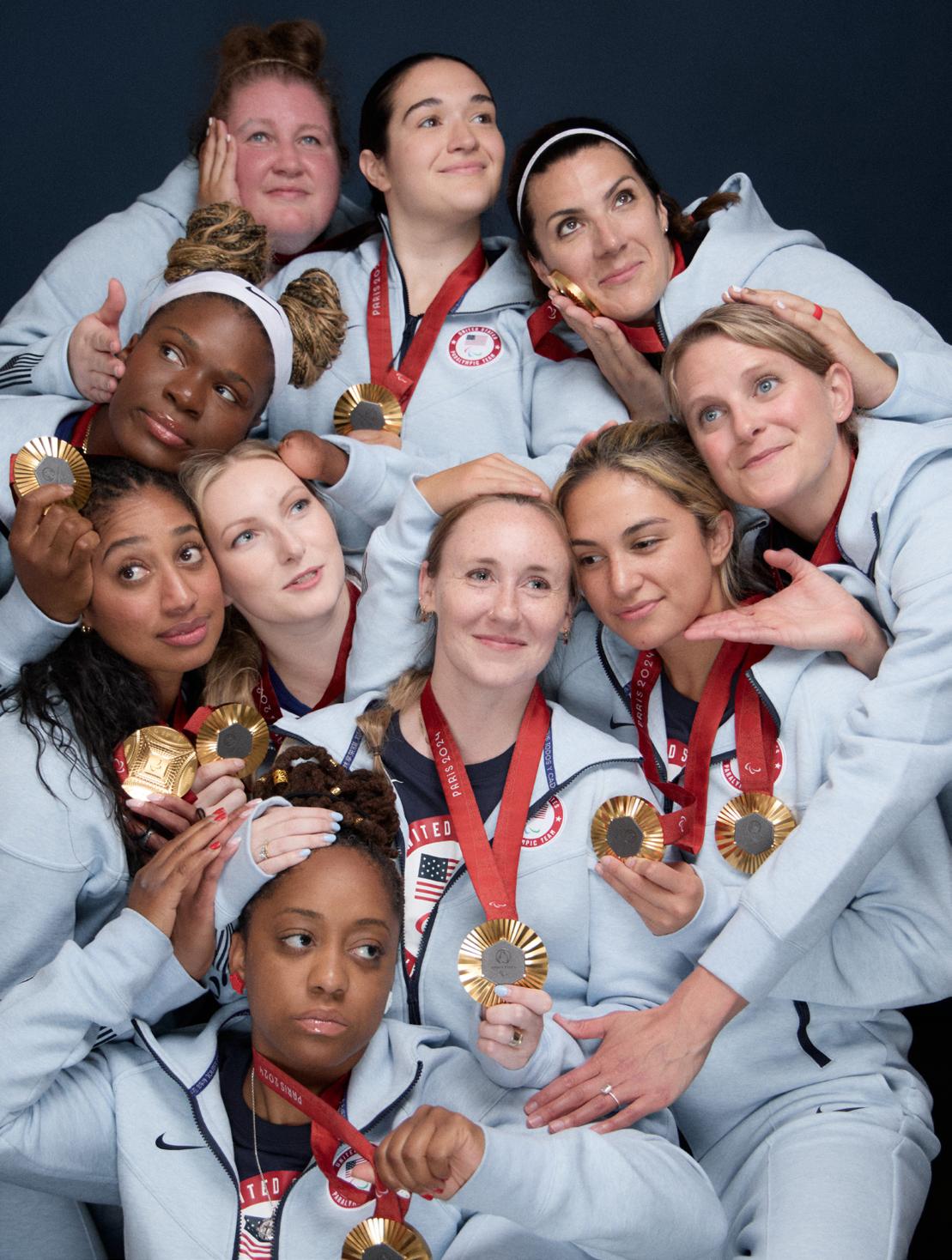
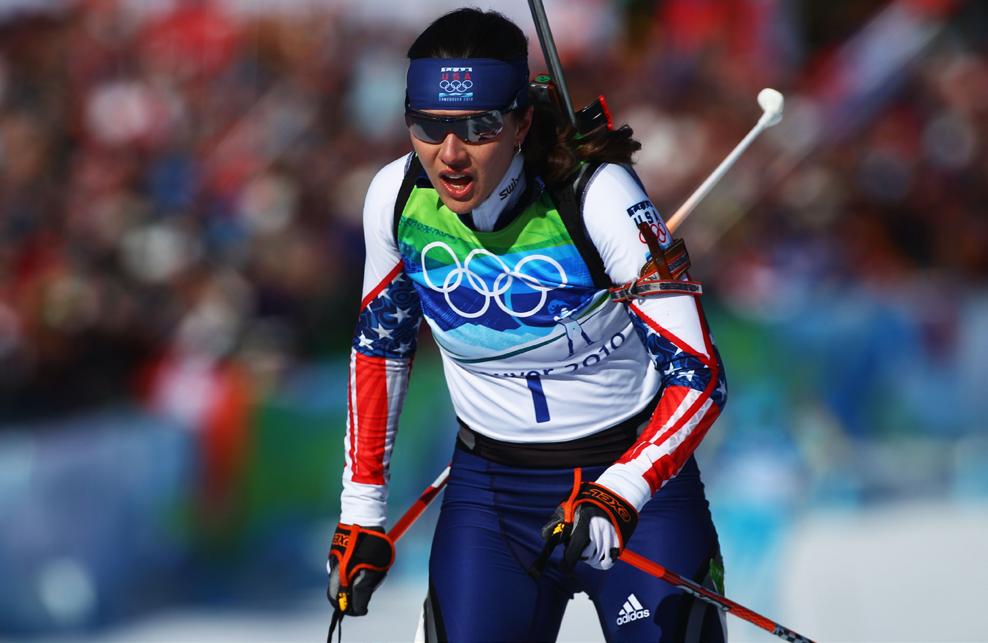
2025 USOPA MEMBER SPOTLIGHT REPOST
SARA STUDEBAKER-HALL
“I hope most athletes leave sport feeling overall: ‘I really love this sport. I may be disappointed with how some things went, but I really love this sport.’”
Sara Studebaker-Hall said that to me at the end of our conversation, but she had oozed the sentiment the entire hour we chatted. I’ve since read multiple articles about Sara’s advocacy and continued involvement in Biathlon (she’s a 2x Olympian (2010 and 2014), has coached, and now works for U.S. Biathlon and is a high-level international official in the sport), and it strikes me that paragraphs about her “fighting” for gender equity and extended participation of athletes in multiple areas of sport after retirement isn’t quite the right descriptor. “Fight” illicits causing others’ hackles to raise and deployment of contentious strategies, but what this team player actually does is spread positive contagion:
• She has stayed connected to the cohort of women who took the IBU’s Technical Delegate certification exam with her: Eight of the ten individuals who took the test that year were women, and Sara became the first American woman and only 7th American overall to receive her Technical Delegate certification. She remains connected to those 7 women from other countries who are also helping the sport keep running.
• Sara not only achieved her technical delegate certification sooner than most people are able (4 years of officiating experience is usually required, but her athlete and coaching experience helped her accelerate into the exam in just three), but was
also elected to the IBU Technical Committee that same year, and remains the only U.S. representative on that body. The U.S. is not traditionally strong in Biathlon (they’re still seeking a first Olympic medal, which might come in Milano-Cortina), but she’s a strong voice from this small (Biathlon-wise) country.
• Along with fellow U.S. officials and within her role as Operations Director at U.S. Biathlon, she is changing the game to encourage parents, coaches, and former athletes to get involved on the officiating and logistics side of the sport. Being actively involved increases interest and engagement from all parties, and just helps the entire pie grow! She describes building a pipeline of officiating talent that will help grow the sport in the U.S., and it’s working.
Sara has been a visual example of joy in the behind-thescenes process in the roles she now fills post-athletic career. We bonded over the way that officials (I’m one in Track & Field) are doing their job if they’re invisible, and how the secret role we get to play in each athlete’s experience, a tiny touchpoint along the big arc of their career, is such a privilege. The peace, contentment, and motivation Sara feels in contributing to the organized chaos of running an event well is reserved for the fellow officials and coaches who will actually see that effort, but we’ve both experienced a few athletes who take note of it, too!
I think quite a bit, as I know many of us do, about the skills that translate from athlete life to the rest of life, and Sara exemplifies direct translation of those skills to a slightly different arena within the environment that she thrived in for years as an athlete. How comforting might it be for some of us to dive directly into a behindthe-scenes role within the sport we were already so deeply familiar with? What I see that she gets to keep enjoying is international friendships and travel, detail and precision practice and importance, fairness and sportsmanship, objectivity in outcomes, and the endurance and adrenaline of the sport itself. She has no desire to race anymore – I relate completely to how her competitiveness in the sport arena just seemed to disappear – but she still gets to live and breathe Biathlon. And yet, it’s not her whole life.
Sara married fellow biathlete Zach Hall, and they’ve welcomed their kids in the course of Sara’s growth as an official. The IBU supported bringing her parents to a 2023 event in order that they could watch her
daughter during races, a year after Studebaker-Hall had officiated while six months pregnant. Zach has founded a few different biathlon teams, and since moved on to a different industry.
Her biggest assignment so far came earlier this year when she was named Technical Delegate (leading lady) for World Championships, the first woman to be named to that position. Early in 2026, she’ll return to the Olympic stage, behind the scenes. “I’m really excited to return to the Games, not in an athlete role,” she said. On getting recruited to officiate in the first place: “It’s cool when people reach out to you and say, hey, I think you can and should do this. Scary but cool.”
Sara will be at the start/finish as a referee in MilanoCortina, a bright beacon that for continuing to love sport in new ways, and contribute to it in really meaningful ones. Thank you for your joy in the process, Sara. Proud to be your peer.
Bi-weekly features will continue in 2026! Please email or call Kara (719-606-9834) if you’d like to chat.

TEAM USA TIME MACHINE
US FIGURE SKATING AT THE OLYMPICS

Written by: Max Montiel, Archives Researcher
From its earliest appearance on the Olympic stage, figure skating has been a defining arena for Team USA’s identity, resilience, and artistry. The sport debuted at the 1908 Summer Olympics in London, long before the establishment of the Winter Olympics, and quickly became a platform where athletic innovation and expressive performance intersected. While early Olympic champions came from Europe, the seeds of American excellence were already being planted.
Team USA’s Olympic figure skating journey began in earnest at the 1920 Summer Games in Antwerp, where Theresa Weld earned bronze in the women’s singles. Penalized for having jumps more difficult but “unladylike” for the era, Weld nonetheless became the first American to win an Olympic figure skating medal. Her achievement laid the foundation for the sport’s growth in the United States. When the Winter Olympics debuted in 1924 in Chamonix, figure skating became a permanent Olympic sport, and Americans soon emerged as consistent contenders.
The interwar years introduced Team USA’s first sustained stars. Beatrix Loughran competed at three Olympic Games and became the first American figure
Cortina 1956 Olympic Winter Games, Figure Skating. Women’s Singles Figure Skating, Tenley Albright (USA, gold).
The Crawford Family U.S. Olympic & Paralympic Archives
skater to win three Olympic medals at three different Games, including a historic pairs silver with Sherwin Badger in 1932—Team USA’s first medal in the discipline. Maribel Vinson, a nine-time U.S. champion and Olympic bronze medalist, further defined the era, both through her competitive success and her lasting influence on American skating.
When the Olympics returned after the end of World War II, Dick Button won Team USA’s first Olympic gold medal in figure skating at the 1948 St. Moritz Games. Button revolutionized the sport, landing the first double axel at the Olympics and later defending his title at the 1952 Oslo Games, an achievement unmatched by any other American man. The 1950s continued as a golden age, highlighted by Tenley Albright, a childhood polio survivor and pre-med student, becoming the first American woman to win Olympic gold in 1956 (photo left).
Tragedy struck in 1961 with the loss of the entire U.S. World Figure Skating Team in a plane crash en route to the World Championships. The impact was felt for years, but resilience prevailed. Peggy Fleming’s gold medal at the 1968 Grenoble Games—Team USA’s only gold across all sports at those Olympics—symbolized the sport’s renewal.
The decades that followed produced icons who shaped public perception of figure skating. Janet Lynn at the 1976 Sapporo Games and her dominance of the free skate, prompted the addition of the short program. Lynn remains a popular figure in Japan, laying the groundwork for one of the most dominant skating nations. Dorothy Hamill’s 1976 Olympic gold brought unprecedented popularity, while Scott Hamilton’s victory in 1984 restored American dominance in men’s singles. Brian Boitano’s gold at the 1988 Calgary Games, in the legendary “Battle of the Brians,” and Debi Thomas becoming the first black person of any nation to win a Winter Olympic medal marked the end of the compulsory figures era and the beginning of modern technical progression.
By the numbers, no skater has defined US Figure Skating more than Michelle Kwan. Winning five World Championships and nine U.S. titles, Kwan entered both the 1998 and 2002 Olympics as the favorite. At Nagano in 1998, she earned silver behind Tara Lipinski in one of the most debated results in Olympic history. Though she did not win gold, Kwan’s Lyra Angelica free skate became one of the most celebrated programs ever performed, inspiring future Olympic champions worldwide. At Salt Lake City in 2002, Kwan again shouldered immense
1968 Grenoble Winter Olympics, Women’s Figure Skating. Gold medalist Peggy Fleming (USA).
The Crawford Family U.S. Olympic & Paralympic Archives
Olympic Winter Games Calgary 1988, Figure Skating - Men’s Singles. Brian Boitano (USA, gold) during medal ceremony.
Photograph by Steve Powell/Allsport, The Crawford Family U.S. Olympic & Paralympic Archives

expectations, ultimately earning bronze after an uncharacteristic fall. Despite never capturing Olympic gold, she is widely regarded as one of the greatest figure skaters of all time and remains an enduring ambassador for the sport.
The modern era has continued Team USA’s tradition of excellence. Sarah Hughes’ stunning upset in 2002, Evan Lysacek’s gold in 2010, the emergence of the team event in 2014, and Nathan Chen’s redemption and Olympic title in 2022 all reflect the depth and resilience of American skating. Today, Team USA figure skating stands as a legacy built by pioneers, sustained through adversity, and elevated by icons whose impact transcends medals and generations.


St. Moritz 1928 Olympic Winter Games, Figure Skating. USA Women’s Single Figure Skaters from left to right: Theresa Weld-Blanchard (10th), Beatrix Loughram (bronze), and Mirabel Vinson (4th).
The Crawford Family U.S. Olympic & Paralympic Archives
Left photo: Opening Ceremony. U.S. delegation enters stadium led by flag bearer Jim Bickford, Jr (4-man bobsledder at the 1936, 1948, 1952 and 1956 Games).
Olympic Winter Games Nagano 1998, Figure Skating. Michelle Kwan (USA, silver), women’s singles.
Photograph by Steve Powell/Allsport, The Crawford Family U.S. Olympic & Paralympic Archives

The U.S. Olympians & Paralympians Relief Fund (OPRF) provides support to U.S. Olympians and Paralympians who are recovering from natural disasters and other hardships.
Our PURPOSE remains steadfast
To offer financial assistance and solidarity to U.S. Olympians and Paralympians facing difficulties or hardships (such as personal loss, injury, accident, illness, or natural disaster) in the past twelve months.
Our MISSION continues unwavering
To raise funds, guide USOPA members through the application process, and provide OPRF Financial Assistance Grants to eligible members meeting the qualifying guidelines.
For information on how to apply for a grant, visit OPR.fund.
Please contribute if you can. Here are ways to give:
- Visit OPR.fund
- Click the DONATE button and give through PayPal
- Write a check and mail it to the address below.
- Arrange for a disbursement from your donor-advised fund (DAF) or family foundation.
- Make a distribution from your IRA or another retirement account.

FOUNDATION
TEAM USA FUND: THE MORE YOU KNOW!
Written by: Kara Winger, OLY
You may have noticed increased attention on fundraising here at the broader USOPC: With the public launch of the organization’s first ever comprehensive fundraising campaign in 2024, the U.S. Olympic & Paralympic Foundation publicly shared their commitment to raise $500 million to fund strategic priorities to support Team USA athletes in three primary focus areas – Athlete Health & Wellness, Sport Performance Innovation, and Athlete Career & Earnings. The Team USA Fund supports programs that benefit Team USA Athletes. Funds raised provide essential resources that help Team USA athletes thrive on and off the field of play. As the fundraising arm of the USOPC, the USOPF is a 501(c)(3) nonprofit organization dedicated to advancing the mission of Team USA. One hundred percent of donations made to the Team USA Fund go to Team USA Athletes and the programs that make their dreams possible. What does that actually mean for USOPA members? In very significant ways, those within ten years of their last Team USA Athlete qualifying event (their last delegation event or pathway event to Games, as defined by their NGB) directly benefit from donations to the Foundation via the donor-funded resources available to that population within Agora: Everything from financial advising, to tools to help with transition out of sport, to
tuition assistance via grants, to varied mental health services.
The most visible and significant example of a donorfunded program that may have been on your social channels or in your conversations with peers recently is the Stevens Award. Milano-Cortina athletes will be the first to benefit from it. The award grants U.S. Olympic and Paralympic team members $200K for their financial security and long-term stability, and USOPC Alumni Relations will support athletes’ education around timing and structure of the “$100K To Live” portion of the gift: Athletes will be able to access $100K of the award 20 years after their qualifying Games or at age 45, whichever is later, and the grant will be paid over the course of four years, used for any purpose. Other gifts that hit the Team USA Fund go to high performance funding via NGBs, and are then directly allocated to athletes to manage costs of daily training and recovery, travel, and the like.
All of this to say, the Team USA Fund exists to directly support the dreams – athletic and otherwise – of Team USA Athletes today. The evolution, growth, and impact of the Foundation can’t be understated: It’s incredible to witness the moment that current athletes understand the benefits they receive from making Team USA! A decade of support, and opportunities to restart that decade with continued competition success, is pretty overwhelming to comprehend when you’re still focused on the sport part, but comes sharply into focus when retirement hits and the next phase is upon you. And
SPOTLIGHT
individuals make individual decisions: Some jump right into utilizing the ecosystem of well-being resources, and some wait until the jerseys are all hung up for good. The beauty of the system is that they get that choice, and that’s largely thanks to the donors who make the programs possible.
We understand that, depending on when you were a member of Team USA, not having access to these robust benefits is tough, but typically, you USOPA members whose generations just missed this era of support from the USOPC have expressed the same sentiment: Progress is progress, and it’s great to see current athletes be supported.
This article is meant to shine even more light on the few spotlights we’ve included in the last couple of magazines: The Foundation brings alumni along as ambassadors, to share the perspective that we’ve heard from most of you, that even if they didn’t directly benefit from the kinds of donations that are coming in today, they’ve seen firsthand the tremendous impact that these programs are having on Team USA in real time. So far, thanks in part to those USOPA ambassadors, the majority of funds have been given by large individual donations. But, as the $500M line gets closer, the USOPF is focused on growing donations at all levels and is inviting Team USA fans to join them by giving in any amount to the Team USA Fund.
You, USOPA, can help, if you want to! There are three ways to do so:
WATCH: Have you seen the new Team USA Fund hype video? Take 60 seconds and watch fellow Team USA members and Milano-Cortina hopefuls. This is one way we are reaching out to inspire fans to become donors. We hope it gives you goosebumps!
SHARE: As a member of Team USA, your endorsement of this work means so much. You can spread the word to friends, family and fans, letting them know how they can support Team USA by sharing on your favorite social platforms. Here are direct links to the Team USA Fund video on Instagram, Facebook, Threads, and X.
GIVE: If it feels right for you, consider adding the Team USA Fund to your list of causes and make a donation to support current Team USA athletes. Don’t worry, by using this link we can ensure that you will not be added to mail or email lists for further solicitation! We want to ensure we maintain the valued relationship we have with you, USOPA members who built the current legacy that these athletes stand on.
If you have any further questions about funds raised for the Team USA Fund, how gifts benefit athletes, or what you can do to be even more involved, please let Kara know and she will direct you to the Foundation!
Erin Jackson | Speedskating

Legacy Library: USOPM’s Virtual Book Club
Join the U.S. Olympic & Paralympic Museum’s Legacy Library, a free virtual book club connecting sports fans, book lovers, and Museum supporters. Each quarter, we feature a book by an Olympian or Paralympian, followed by a live Zoom discussion where participants explore the athlete’s journey, challenges, and triumphs. To view past sessions and register for new ones, visit usopm.org/bookclub/.
If you are interested in having your book featured, please contact communications@usopm.org.
America’s Athletes. Your Museum.
As Olympic and Paralympic alumni, you are the reason this Museum exists—a living tribute to the legacy you’ve created through dedication, perseverance, and excellence.
Your stories are the heartbeat of the Museum. Every exhibit, every artifact, and every visitor’s experience reflects the values you embody and the inspiration you continue to provide. You are the foundation of this extraordinary place, and it’s your legacy that makes the Museum vibrant, meaningful, and timeless.
Thank you for being the driving force behind it all. It’s our honor to celebrate your achievements and share your stories with the world.
As Olympic and Paralympic alumni, you receive complimentary admission! Explore the incredible legacy of Team USA through guided tours, live artifact demonstrations, and engaging events designed to bring history to life. Have questions or want to connect? Reach out to us at athletes@usopm.org for more information.
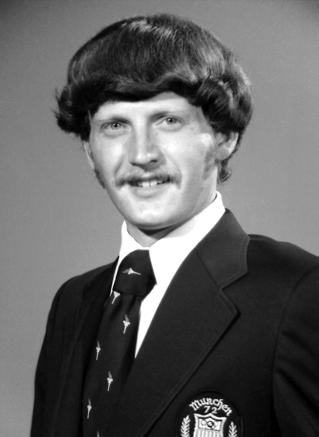
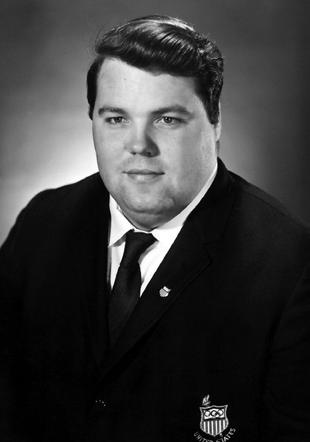
Larry Caton Team Handball 1972
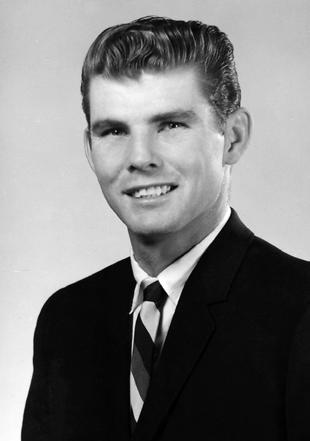
Carin Cone Vanderbush Swimming 1956
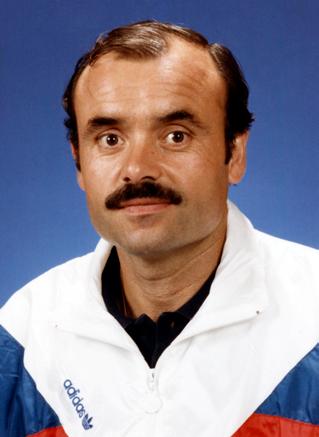
Jack Daniels Pentathlon 1956, ‘60
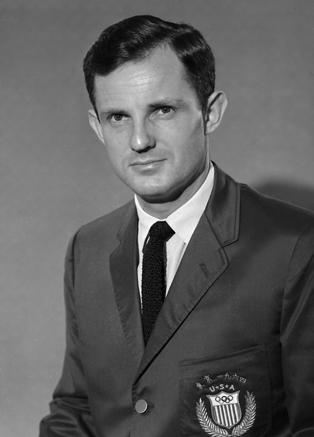
Paul Deem Cycling 1976
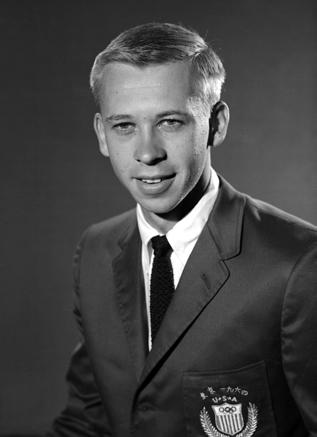
Stanley Fail Speedskating 1964
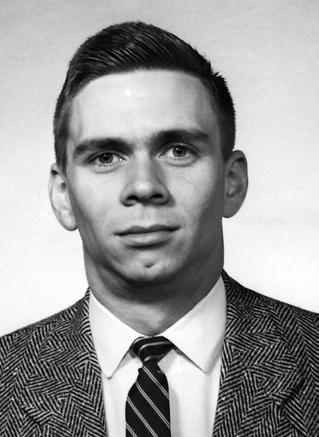
Richard Pew Fencing 1956

Joseph Dube Sr. Weightlifting 1968
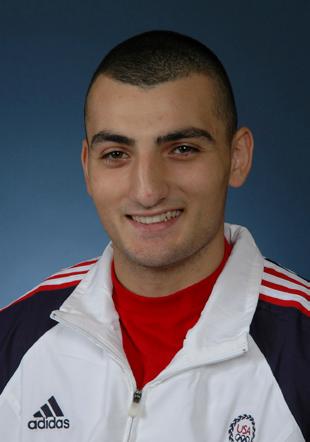

Javier Garcia-Cuesta Team Handball Coach 1984 Neomia Rodgers Track and Field 1960
Eugene Hamori Fencing 1964
William Kund Cycling 1964
Patricia Dowdell Volleyball 1980 Vanes Martirosyan Boxing 2004
Richard “Dick” Roth Swimming 1964
Wendy Wagner Ski and Snowboard 2002, ‘06
Leonard (Lenny) Wilkens
Basketball 1992, ‘96 Coach
Jayne McHugh Volleyball 1988
Murray Williamson Ice Hockey Coach 1968, ‘72
“ONCE


Cortina d’Ampezzo - southern Dolomites chain of the Alps