Design is not merely a skill. It involves critical thinking and can serve as a tool to systematically respond to contemporary challenges. In 2024, Taiwan Design Research Institute (TDRI) continued to honor this conviction and actively promoted the innovative application of design in industry upgrades, social good, and local governance under the dual global waves of sustainable development and digital transformation. We hope to establish a more solid foundation for the implementation of the next phase of Taiwan's vision and allow Taiwanese design to shine even more brightly on the international stage.
Design-driven Industrial Upgrading: Dual-track Advancement of Technology and Sustainability
TDRI strives to promote innovation through design and create new momentum for industries. The Executive Yuan's "Program for Promoting Six Core Strategic Industries" explicitly states that digital transformation is the key to driving industry innovation. During the past two years, TDRI helped 271 companies to integrate design thinking, which resulted in the development of 212 innovative products, services, and technologies, all under the "Industrial Design-Driven Innovation Subsidy Plan." Currently, a total of NT$230 million has been invested towards increasing the competitiveness of Taiwan's industries in the era of smart manufacturing and digital economy.
Environmental sustainability is also an important direction in the promotion of industrial innovation and transformation. As an International Energy Agency (IEA) report indicated, design plays an indispensable key role in the reduction of carbon emissions throughout a product's life cycles. TDRI has been promoting and carrying out design-centered green transformation in response to the "Taiwan's Pathway to Net-Zero Emissions in 2050" plan. Under the "Net-Zero Carbon Emissions Demonstration and Guidance Program", we facilitate corporations in developing products and services that meet the sustainable development goals. These efforts have not only successfully established 20 benchmark cases but are also realizing the circular economy from the origins, providing actionable blueprints and innovative models to help Taiwan achieve its goal of net-zero emissions by 2050.
Design for Social Good: Building a Foundation for Urban and Educational Innovation
In addition to serving industries, design also provides solutions for social good. According to the United Nations' Sustainable Development Goals (SDGs), smart cities are a strategy to respond to the challenges of urbanization. In recent years, TDRI has worked with design teams to transform the wayfinding systems of multiple metro stations and hospitals. We have also instigated a national standard for public signage system, which helps to improve the quality and efficiency of access to public services, paving the way for future sustainable smart city development.
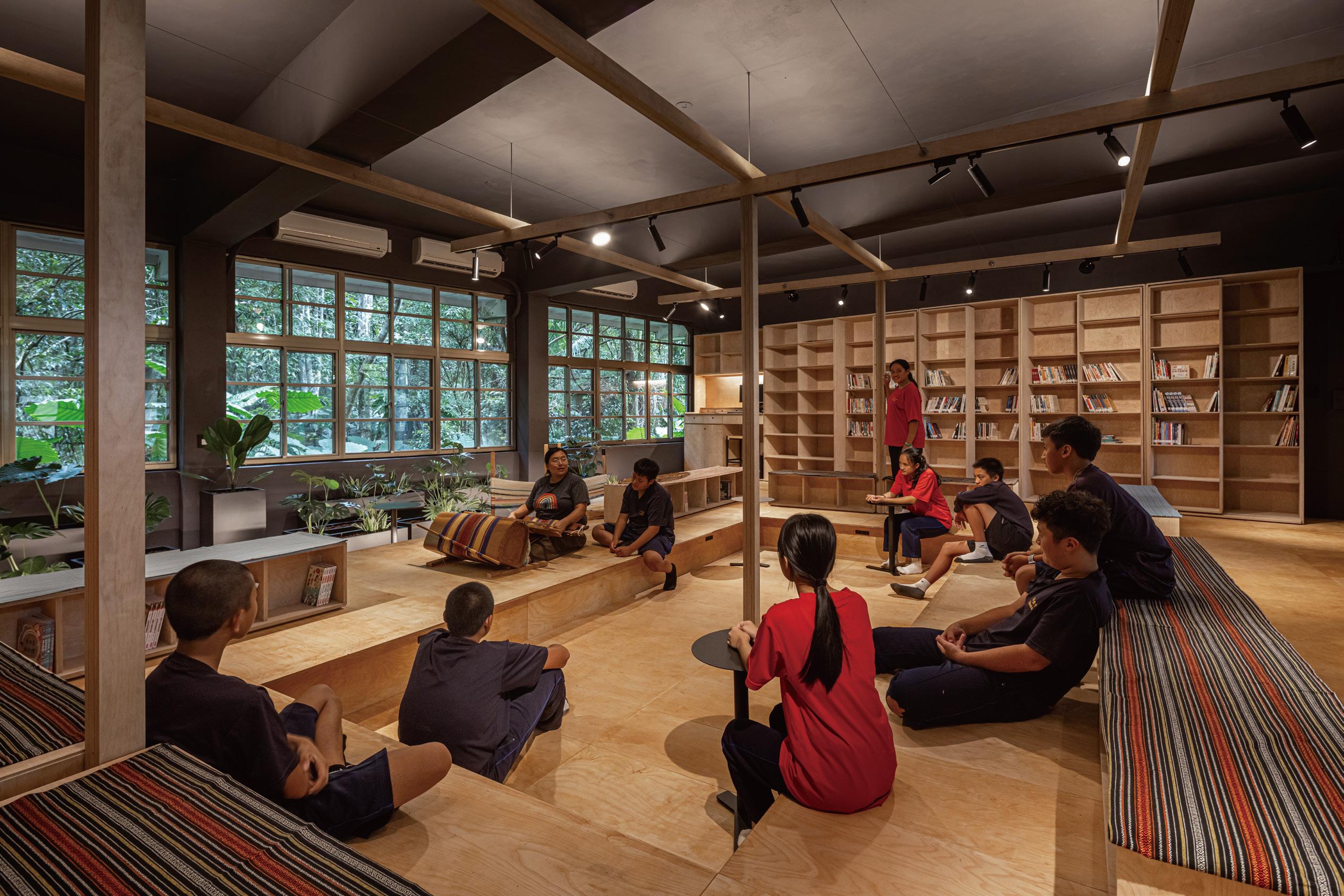
Education is a long-term project. TDRI is introducing design onto campuses and transforming learning spaces through the "Design Movement on Campus" project. Over the past five years, we have helped 91 public and private senior high schools, vocational schools, junior high schools, and elementary schools to become demonstration schools for aesthetic learning environments that are capable of cultivating the aesthetic qualities of children while also inspiring the creativity of future generations. Looking ahead, TDRI aims to extend the innovative mechanism behind "Design Movement on Campus" from the 12-year basic education period into colleges and universities, to help create more functional spaces, establishing more model successful transformation case studies for the cultivation of Taiwan's future generation of innovators.
Introducing Design into Local Governance: Resonance of Culture and Economy
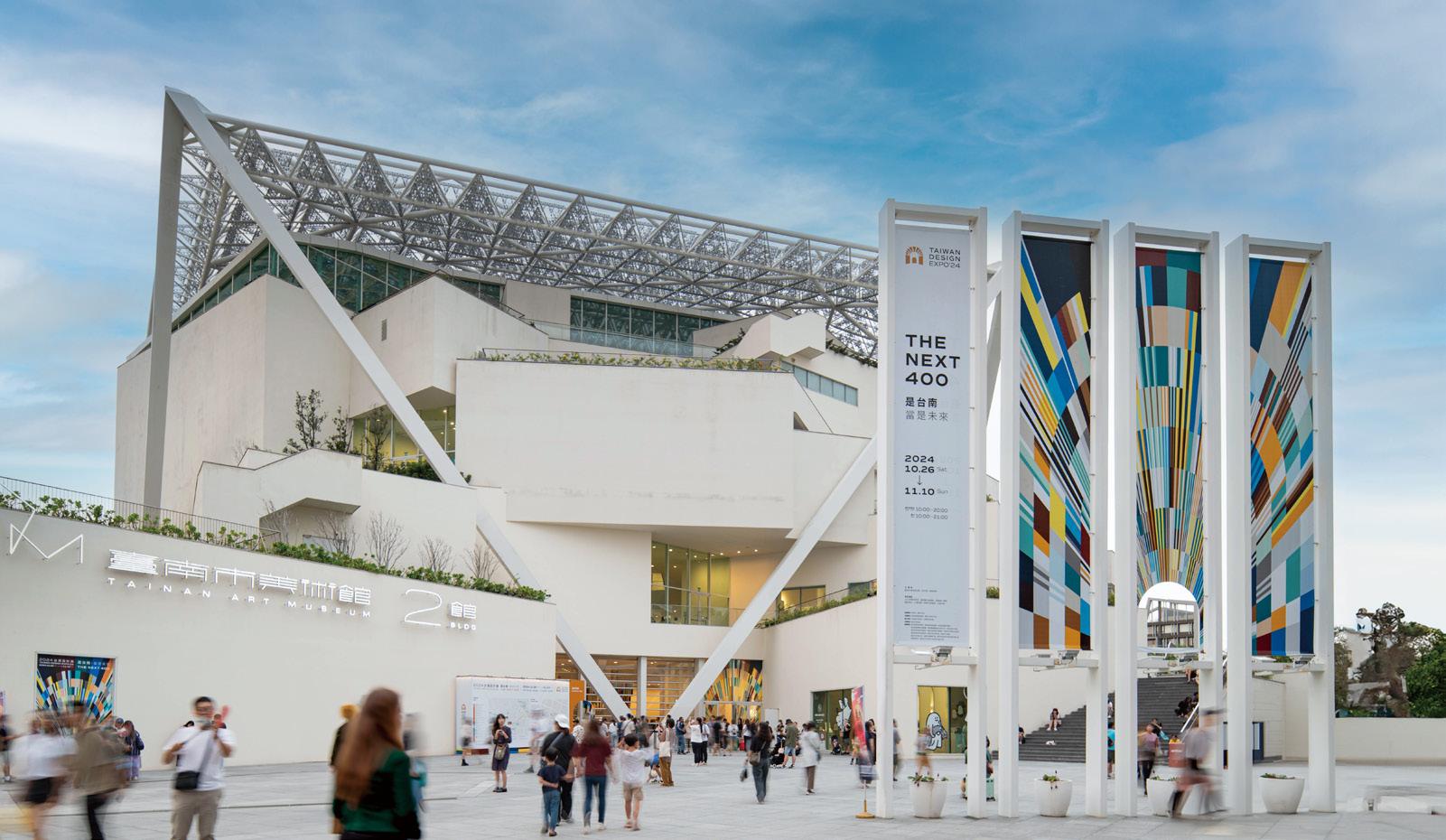
One important long-standing issue that has concerned TDRI greatly is how design can be used to assist local governance. "Taiwan Design Expo" has evolved from a simple exhibition to a platform for promoting local governance and shaping city brands. The 2024 Taiwan Design Expo took place in Tainan and coincided with an important milestone, the 400th anniversary of the city's founding. The exhibition used design to meld history and culture, local life, traditional industries, and forward-looking technologies and present the past and present of the city while thoroughly explaining how design
connects local memories and innovative growth. This design extravaganza attracted 4.2 million visitors and generated a tourism output valued at NT$5 billion, proving that design can not only revitalize cultural assets, but also promote the local economy and establish an urban governance model.
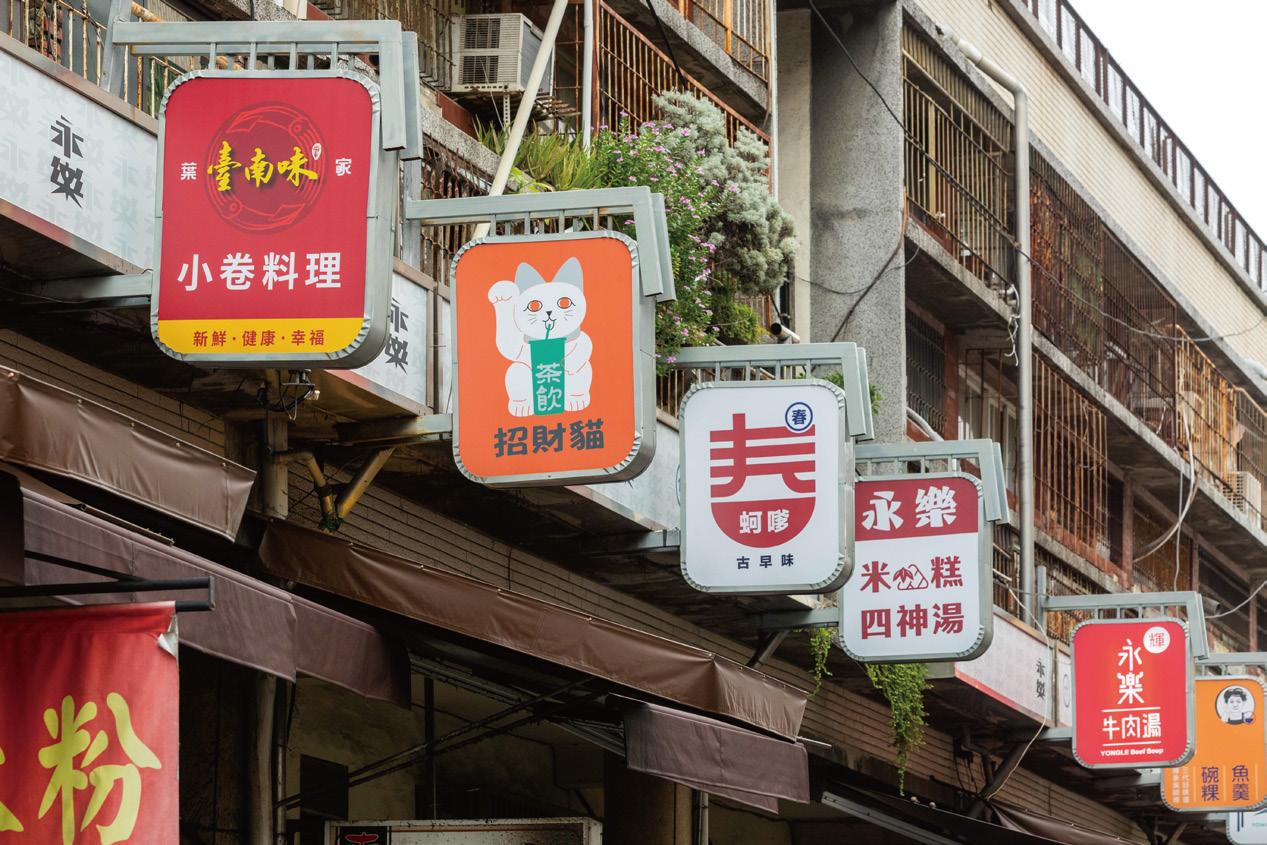
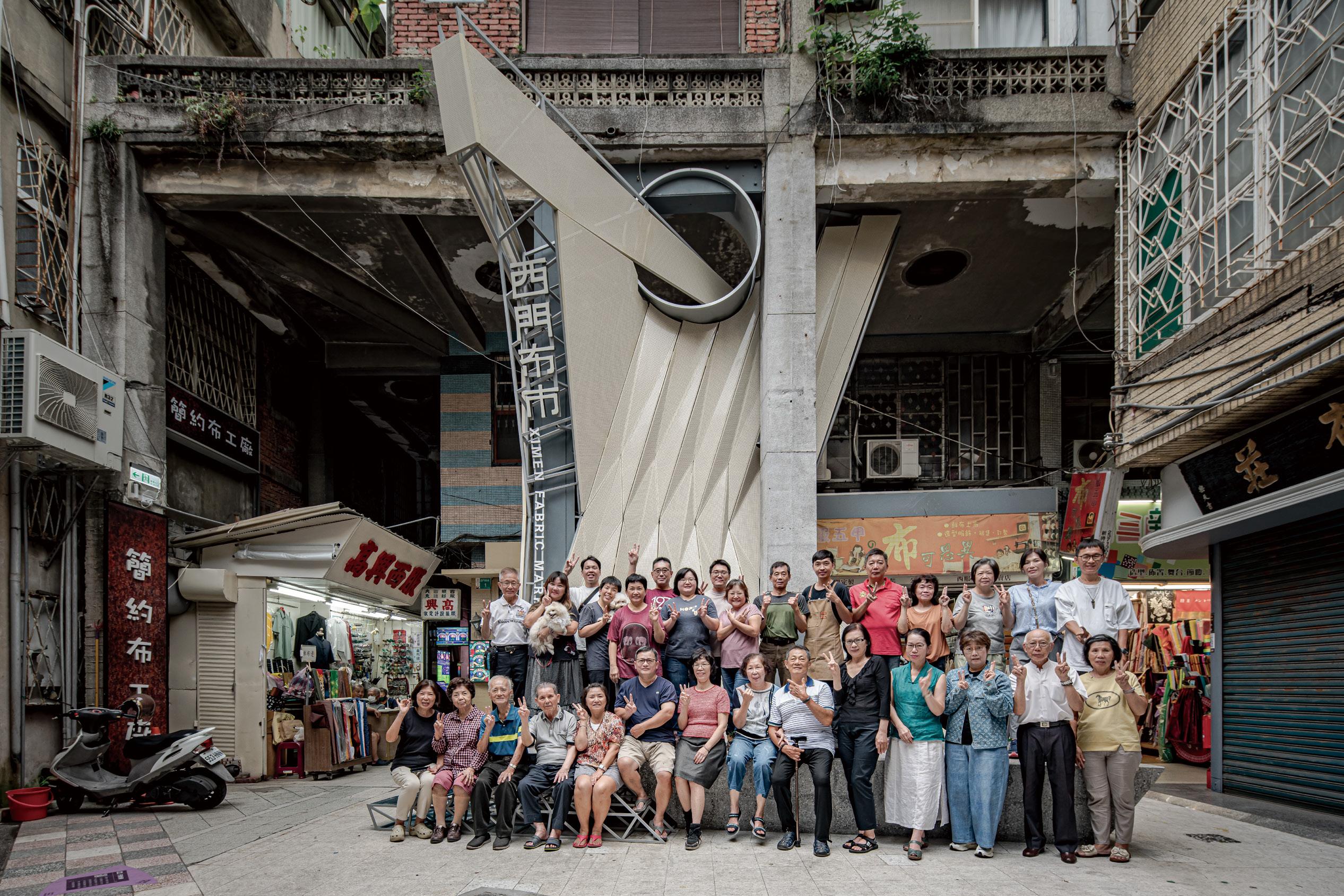
TDRI has also connected locals, both residents and businesses, through the "Design Movement in Commercial Districts" initiative for adding value to commercial districts through design. The successful transformation and revitalization of the four demonstration commercial districts of Changhua's Xiaoxi Street, Tainan's Confucius Temple and Guohua-Youai streets, and Kaohsiung's Hamasen strengthened regional characteristics, boosted business momentum, and consolidated the sense of belonging and identity of communities, thereby demonstrating the role and influence of design in local governance.
Reinforcing Design R&D Capabilities: Aligning Global Trends and Local Strengths
According to the World Economic Forum (WEF)'s "The Future of Jobs Report 2025," AI and digital technologies are the major drivers of the future labor market. In recent years, TDRI has promoted the R&D of seven design assistance tools integrating AI and big data technologies with the aim of helping designers to boost their work efficiency and creating complete digital design solution platforms for industries. TDRI continues to deepen its "Design in Taiwan" research and provide more detailed evaluation indicators for companies and cities in order to help them formulate and implement design strategies.
TDRI also successfully secured the right to host the International Association of Societies of Design Research (IASDR) 2025 conference, which will have the theme "Design Next" and explore the new role that design will play in future knowledge, ecology, and society. This is an affirmation of Taiwan's design research capabilities and an important breakthrough for Taiwan on the international design research stage.
Design as a Light That Illuminates the Future
TDRI takes design as its core driving force to respond to the global trends of industrial innovation and sustainable growth and continues to create value for industry, society, and local areas in conjunction with Taiwan's policy vision. TDRI's achievements have been recognized by numerous domestic and international awards. In 2024, TDRI's "Taiwan Public Pictogram System" and "Textbooks Re-Designed" stood out from among 5,773 global entries to win Japan's Good Design Award. "2023 Hakka Expo: Taiwan Pavilion" was a platinum winner at the London Design Awards, a gold winner at the Melbourne Design Awards, and a Red Dot Design Award winner. "2024 Young Designers' Exhibition: Beyond Sustainability The Borrowing Project" was a gold winner at the London Design Awards. "2023 Taiwan Design Expo in New Taipei City" received the Taiwan Events Excellence Award for its achievements in promoting urban development.
These honors are not only a strong affirmation of TDRI's innovative capabilities, but also a compelling recognition of Taiwan's design soft power. TDRI would like to wholeheartedly thank all of its partners for their trust and support. In the future, TDRI will continue to deepen the innovative applications of design, integrate forward-looking technologies and creative thinking, push for design integration into more domains, and use design as a light that solves present challenges and creates value to create a brighter future for Taiwan and the world.
Chi-Yi Chang
President of Taiwan Design Research Institute
INTRODUCTION
DESIGN RESEARCH INSTITUTE
跨域整合設計創價服務平台 以國家設計政策引領產業創新,發展高價值設計知識與應用
「設計」正以前所未有的速度影響全球,它在國家經濟、文化、社會當中所扮演的角色重要性與日俱增, 且越來越多其他產業將設計視為核心競爭力,藉由設計能量驅動企業,帶動國家整體的經濟發展。因此政 府於2020年2月4日成立國家級設計研究院 「財 團法人台灣設計研究院 」(簡稱「設研院」 )(Taiwan Design Research Institute, TDRI)。
Interdisciplinary Value-Added Design Service Platform
Leading industrial innovation with national design policy to develop high-value design knowledge and applications
Design is taking the world by storm. It plays an increasingly important role in the economy, culture, and society of a country. Meanwhile, more and more industries are treating design as a core competitive advantage. With this in mind, the government is establishing the "Taiwan Design Research Institute" (TDRI) in 2020. The aim of this project is to capitalize on Taiwan's strengths in design to drive industrial development and the overall economic growth.
TDRI plans to consolidate public resources from a wide range of government agencies with "the power of design", promoting design as a central governance value and as a national defense strategy. The Institute is expected to guide the sustainable development of industries and society, which should in turn improve the living quality of the general public. It can assist the government in making national design policy and increasing governance efficiency. In addition, through an integrated interdisciplinary approach, the Institute will introduce design-based thinking into government administration, drive talent cultivation in the private sector, and build businesses that lead the design industry.
HISTORY
1990年
2011年
2013年
2014年
中華民國對外貿易發展協會「產品設計處」轉型成立「設計推廣中心」(Design Promotion Center, DPC),是TDC的前身。
DPC首次舉辦「台灣國際創意設計大賽」。
DPC於臺北華山文化特區舉辦首屆「台灣設計博覽會」。
政府為推動文化創意產業發展,成立國家級設計中心「財團法人台灣創意設計中 心」(Taiwan Design Center, TDC)。
The Product Design Department of the Taiwan External Trade Development Council was restructured as the Design Promotion Center (DPC), the predecessor organization of TDC.
DPC organized the first Taiwan International Design Competition
DPC organized the first Taiwan Design Expo at Huashan 1914 Creative Park.
In order to boost the development of the cultural and creative industries, Taiwan Design Center (TDC) was established by the government as a national design organization.
TDC entered formal operation at Nangang Software Park, taking over the organization known as the Taiwan International Design Competition, a categorized design competition and predecessor to the Golden Pin Concept Design Award. The Global Design Industry Information System was renamed Taiwan Design BOCO with the intention of allowing TDC to build an online resource center for creative design.
TDC established the National Design Award, an award open to those who passed the Taiwan Good Product Design Evaluation and the predecessor to the Best of Golden Pin Design Award. TDC took over the publication of the Design magazine and reformatted the magazine.
TDC helped Taipei City win the right to host the 2011 International Design Alliance (IDA) Congress, from amongst 19 competing cities from 13 countries. This was the first IDA Congress after the creation of the IDA by Icsid, Icograda, and the International Federation of Interior Architects/Designers (IFI).
The National Design Award was officially renamed the Golden Pin Design Award.
The Taipei City Government, the Industrial Development Bureau, and TDC cosigned a collaborative agreement to repurpose the Songshan Tobacco Plant into a center for the development of arts, design, and the cultural and creative industries.
TDC moved its headquarters from Nangang to Songshan Cultural and Creative Park, establishing the Park as an iconic multi-functional venue that combines industry interaction, consultancy, research and development, talent cultivation, exhibition, aesthetic experience, promotion, and marketing.
TDC established the Taiwan Design Museum, the first specialized museum among all Chinese communities dedicated to showcasing creative design. TDC held the first IDA congress in Taipei/Taipei World Design Expo.
With the help from TDC, Taipei City was selected as the 2016 World Design Capital; TDC established the Red Dot Design Museum Taipei.
Faced with the shift in global economic trends, the Golden Pin Design Award was redefined as the "top design award in the global Chinese marke"; the award's first year received record-breaking 1901 entries from both domestic and overseas contestants.
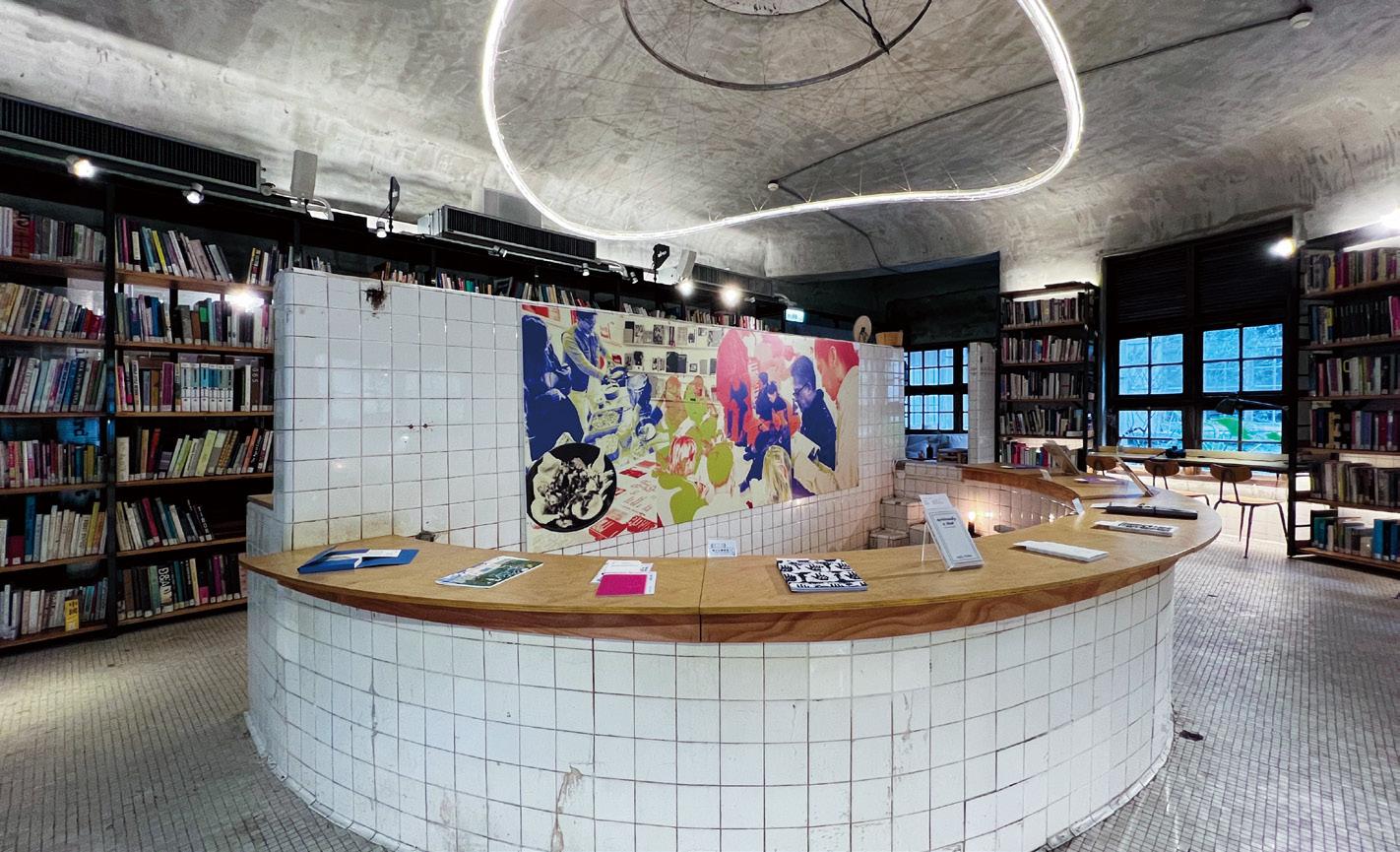
The Design magazine was made available in both Chinese and English. Not Just Library was opened to the public, to create a new library that was more than just a library. TDC collaborated with the American Institute in Taiwan (AIT) to establish the first American Innovation Center (AIC) in Asia.
The Golden Pin Design Award adjusted its brand to include the new Golden Pin Concept Design Award (previously the Taiwan International Design Competition) and Young Pin Design Award (previously the Young Designers' Award) along with the original Golden Pin Design Award, rebuilding the brand image for the set of awards.
TDC organized and held the six official events of the 2016 Word Design Capital Taipei, showing the world how adaptive a city Taipei is. TDC released "design x boco", an online media integration of the Design Magazine and Taiwan Design BOCO.
TDC was awarded the 2017 Design Value Awards for its 2016 World Design Capital Taipei program, becoming the first design organization in Taiwan to receive such an honor and the only winner of the year to integrate design into a system of public service
facilities, demonstrating how creative design, the integration of design thinking and corporate strategy into holistic marketing, and financial strategy can help an organization innovate and create value.
The Creative Expo Taiwan's topic-based curation approach in the Cultural Explosion exhibition took the design community by storm, winning the internationally acclaimed Good Design Award and Good Design Award Best 100 of Japan.
Not Just Library was moved to the first floor of Songshan Cultural and Creative Park's Office Building, where Taiwan Design Museum and Cafe Solé are also located, to form a design community of spatial uniqueness
TDC was awarded the 2018 Ladislav Sutnar Prize from the University of West Bohemia in the Czech Republic. The prize is awarded to individuals or organizations with outstanding performance in the field of applied arts and design. TDC is the first Asian design organization to become a laureate of the award.
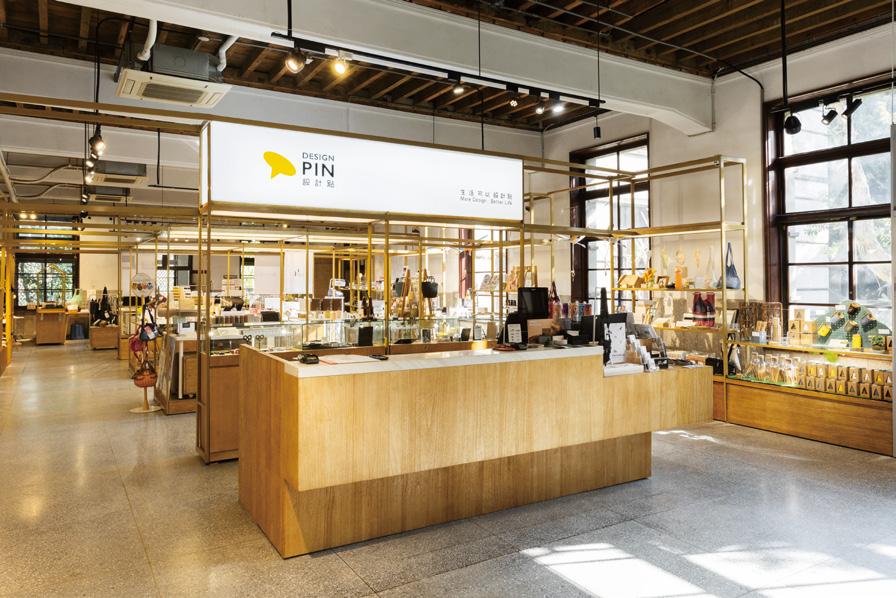
The Taiwan Design Museum, Not Just Library, DesignPin, and the American Innovation Center were united under a single banner to handle issues such as exhibition exchanges, the curated selection of concept stores, and reading materials and hands-on creative design. The new space was dubbed Song Yan Court in reference to the square court at its center.
In her closing ceremony speech at the National Design Congress organized by the Ministry of Economic Affairs, President Tsai Ing-wen of the Republic of China announced that Taiwan Design Center (TDC) will be elevated and renamed Taiwan Design Research Institute (TDRI) in 2020. TDC's promotion was selected as one of the top ten significant cultural & creative events in La Vie's 2019 Creative Awards.
TDRI President Chi-Yi Chang was selected as a member of the 2019-2021 World Design Organization Board, boosting Taiwan's voice in the international design community.
Taiwan Design Center (TDC) was officially renamed and elevated to Taiwan Design Research Institute (TDRI). Through the utilization of design capabilities, TDRI integrates inter-ministerial resources and increases the influence of Taiwanese design.
President Tsai Ing-wen personally awarded TDRI the 4th Presidential Innovation Award in the group award category. This highest honor in innovation is the latest presidential award received by TDRI after the Presidential Cultural Awards, Presidential Science Prize, and President Educational Award.
After being first elected in 2019, TDRI President Chi-Yi Chang was re-elected as a member of the World Design Organization Board in 2022 and continues to boost Taiwan's voice in the international community.
The World Design Organization hosted the 33rd World Design Assembly in Tokyo, Japan. The President of TDRI, Chi-Yi Chang, and Vice President of R&D, Shyhnan Liou, delivered a presentation of city design power indicators at the assembly and received recognition from experts of all sectors. TDRI also won the WDO 2023 President's Award, awarded biennially to honor the contributions and impacts of WDO members on the global design community. The Vice President of TDRI, Oliver Lin, was successfully elected as a member of the 2023–2025 Board of Directors.
TDRI's commitment to building a happy workplace environment earned it the 2023 Happy Enterprise Gold Award──Mass Communication, Education, and Social Welfare Category. TDRI will continue to build a positive work environment, offer competitive benefits, and create growth opportunities for employees.
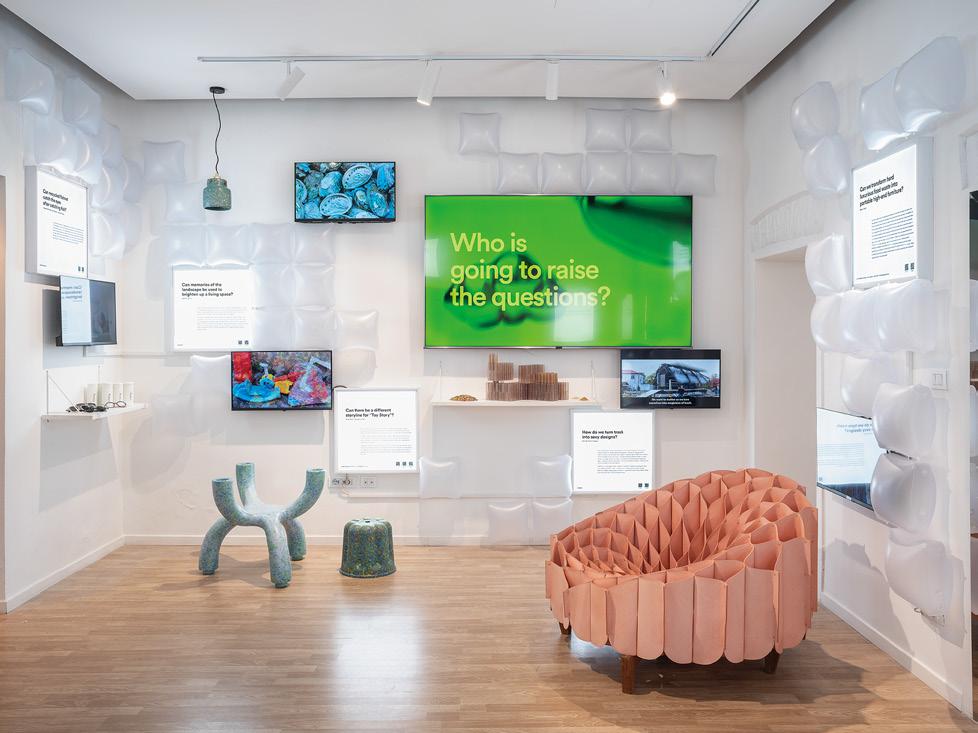
台灣館首登米蘭設計週,以「台灣設問 Who is going to raise the questions? The questions are designed in Taiwan」為主題,集 結15件榮獲金點設計獎肯定的台灣頂尖設計品牌參展,展出在地 文化與全球議題的對話,從設計思考角度提出一系列關於未來的 問答。
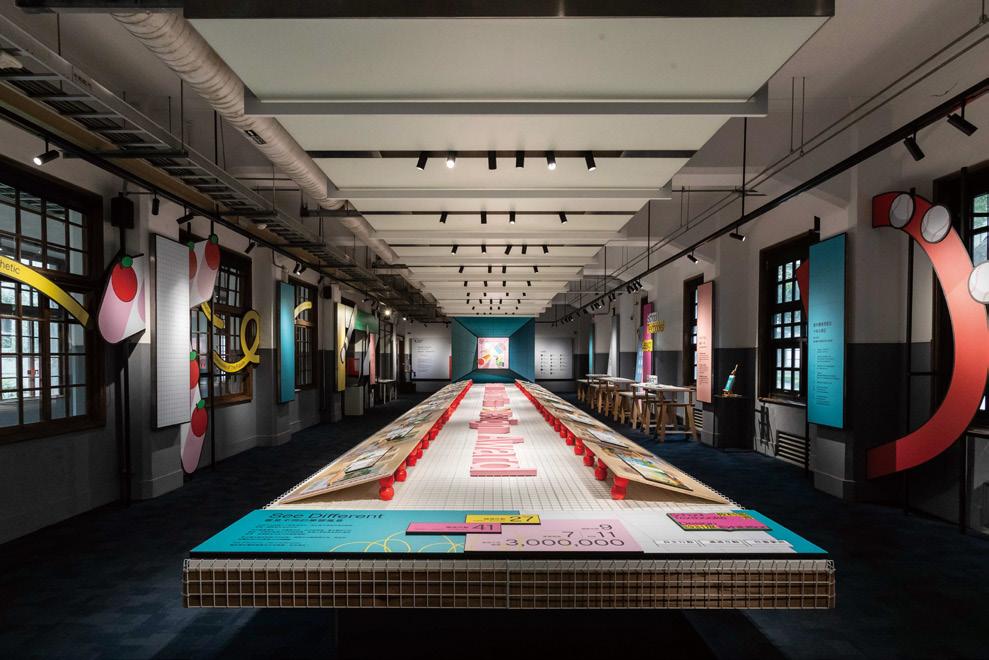
《SEE DIFFERENT 教科圖書設計展》於台灣設計館展出,看見 創新教科書帶來的不同學習風景。
TDRI signed a letter of intent with MacKay Memorial Hospital on cooperation to introduce cross-domain design, promote innovation in medical services, and advance the progression of smart hospitals into cross-domain industry accelerators. Under this agreement, design will be used to integrate medical treatment, technologies, environments, and experiences to construct a more complete and logical patient journey and experience.
TDRI and the Ministry of Health and Welfare (MOHW)'s Hospital signed a letter of intent with Social Welfare Organizations Administration Commission in cooperation to improve the public medical treatment service experience through bilateral cooperation on the wayfinding experience, innovative technology applications, and the introduction of sustainable design at MOHW's affiliate hospitals.
TDRI and the Chinese Institute of Design won the right to jointly host the International Association of Societies of Design Research (IASDR)'s 2025 conference.
TDRI signed a letter of intent with Tri-Service General Hospital Songshan Branch in cooperation to promote the introduction of design into cross-domain innovative services. This marked the first inroad into the military healthcare system following similar agreements with national health insurance-contracted hospitals and private hospitals. Under this agreement, cooperation in cross-domain technologies and design will create a sustainable system of medical services that is beneficial to both physical and mental development.
Taiwan Pavilion made its debut at Milan Design Week. The exhibition's theme was "Who is going to raise the questions? The questions are designed in Taiwan" Fifteen leading Taiwanese design brands that won the Golden Pin Design Award participated in the exhibition, displaying a dialogue between local culture and global topics and using a design thinking perspective to pose a series of questions and answers about the future.
The exhibition "Educational Textbook Design Exhibition 2024: See Different" was held at Taiwan Design Museum, and showcased the different learning landscapes made possible by innovative textbooks.
The 43rd edition of the "Young Designers' Exhibition (YODEX)" took place at Taipei Nangang Exhibition Center Hall 2. The theme was "Beyond Sustainability," which echoed the global trend of sustain-
ability. The exhibition not only focused on the sustainability of the environment and materials, but also emphasized socially conscious solutions.
Jun.
Taiwan Design Museum invited 12 famous Taiwanese architectural and design teams to serve as cicerones and select 35 classic Italian designs under the theme "CONNECTING CHOICES Taiwanese Designers Meet Italian Design" to mark Italian Design Day.
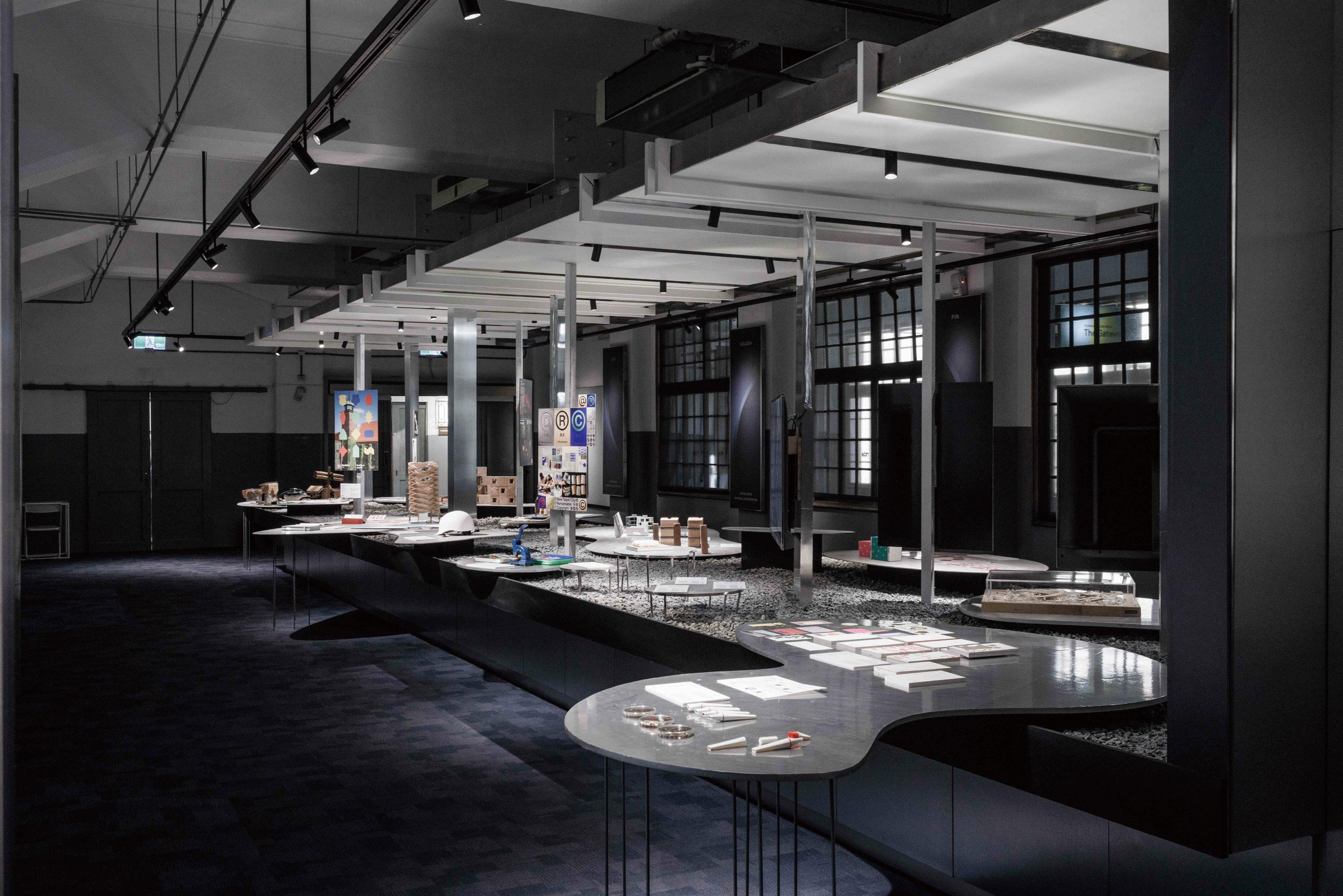
"The Design Movement for Public" exhibition was held at the Taiwan Design Museum, showcasing innovative solutions for public spaces. 85 cross-domain teams were recruited to propose the best solutions for the urban evolution of 14 public service venues in Taiwan. The design concepts and strategies behind the 14 remodeling cases were also presented interactively.
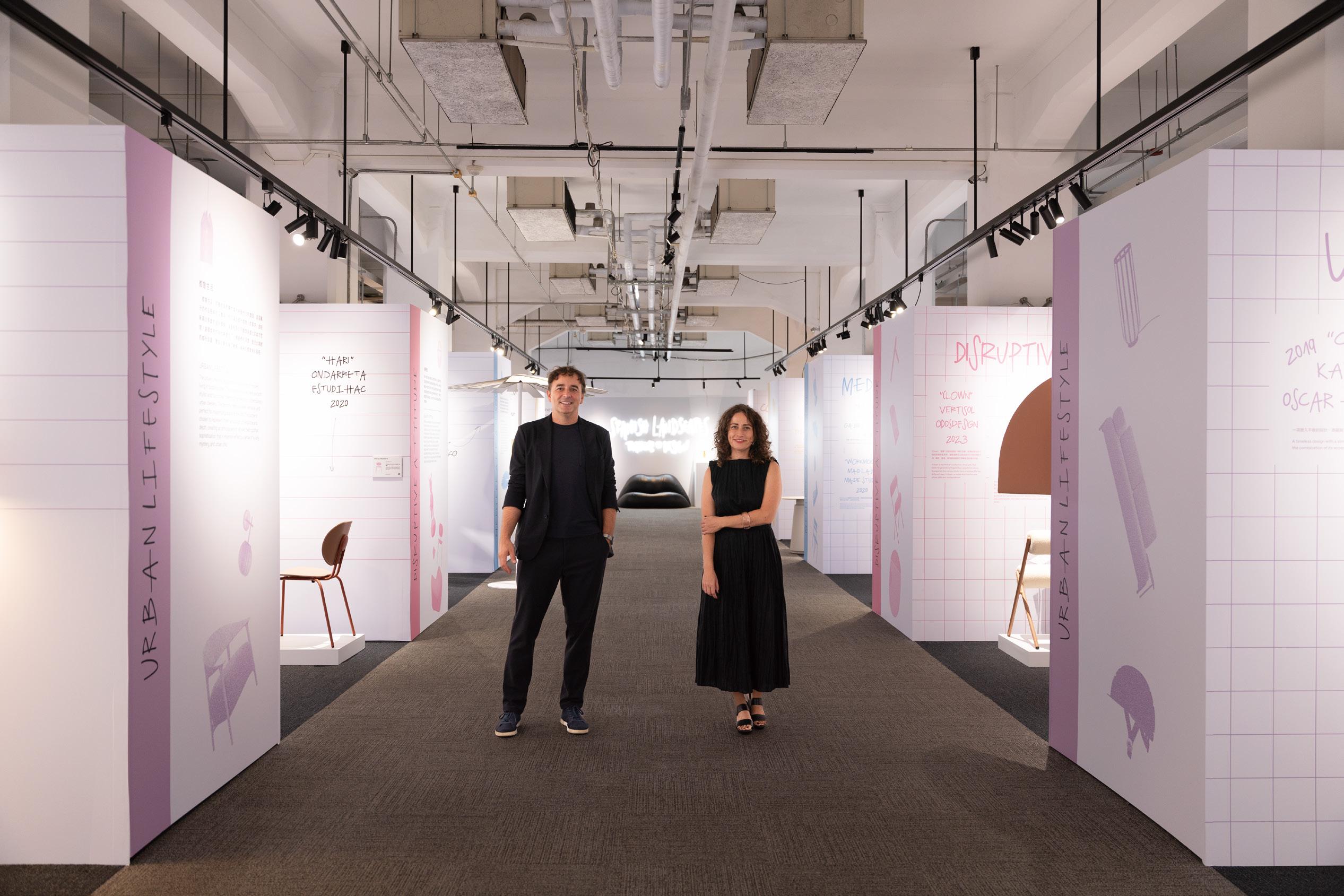
The exhibition "Spanish Landscapes: Timeline to Design" took place at Taiwan Design Museum, and showcased the Spanish design spirit from classic to contemporary periods.
TDRI and Indonesia's Ministry of industry renewed their cooperation agreement. TDRI also held its Design Talk and Business Matching event in Jakarta for the first time, helping to promote the internationalization of Taiwan's design services.
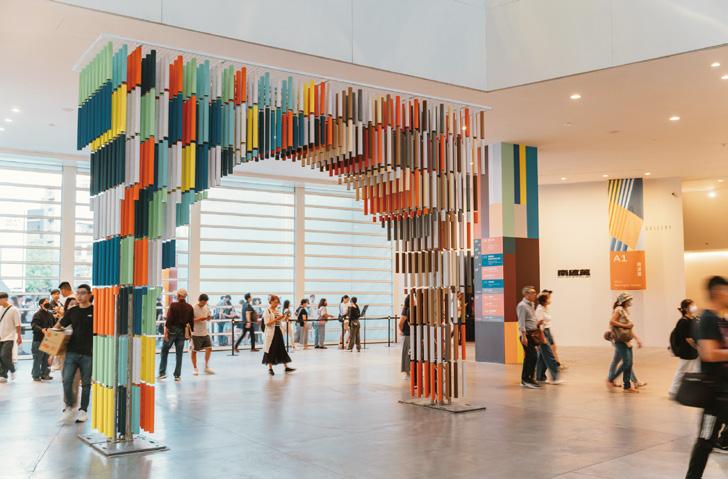
The "2024 Taiwan Design Expo" coincided with the 400th anniversary of Tainan's founding. The multilayered facets of the city's history and culture, local life, traditional industries, forward-looking industries, circular design, future city, historic sites, and micro-renovations of commercial districts were fully presented through the integration of design. The 16-day event attracted a record 4.2 million visitors.
TDRI and the Ministry of Transportation and Communications' Central Weather Administration signed a memorandum of cooperation to elevate meteorological services, aiming to infuse design innovation into meteorological services, strengthen service communication, and develop more comprehensive and friendlier meteorological services.
The "Golden Pin Design Award 2024 Exhibition" at Taiwan Design Museum featured a curated selection of nearly 200 works that won the Golden Pin Design Award or Golden Pin Concept Design Award in 2024.
Dec.
TDRI and The Japan Research Institute, Limited signed a memorandum of cooperation for in-depth cooperation in Taiwan-Japan design research, digitized forward-looking design, City Design Power Index applications, and transnational knowledge exchanges with the aim of jointly creating new opportunities for academia, research, and culture.
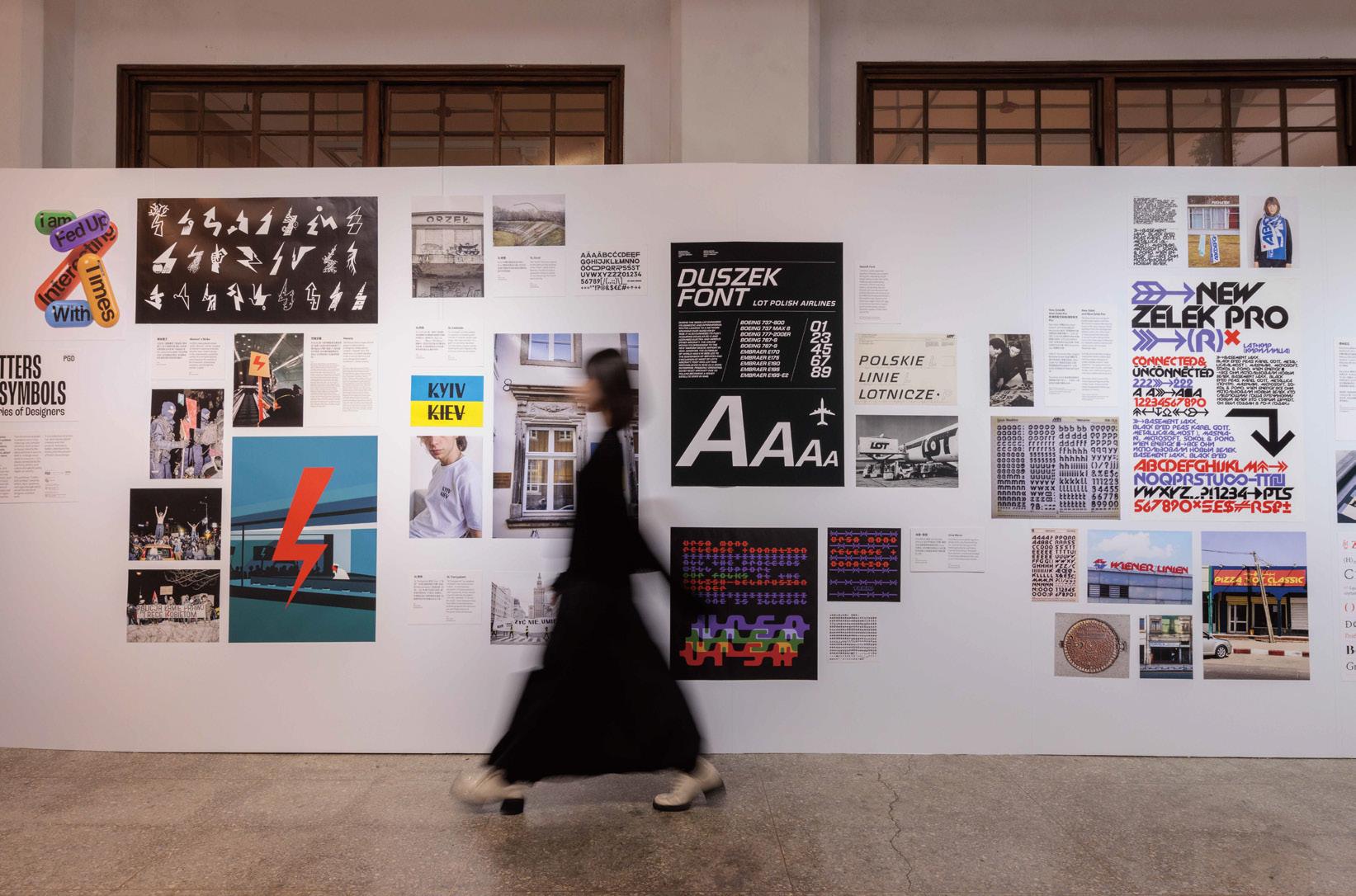
The focus of the second edition of "Taiwan Design Week" was "Design x AI." Hundreds of designers and industry experts from nearly 20 countries participated in the 9-day event, which also attracted 250,000 visitors. TDRI signed memorandums of cooperation with the Polish Graphic Design Foundation and South Korea's Design Center Busan, providing the Taiwanese design community with a voice in the international arena and a platform for exchanges.
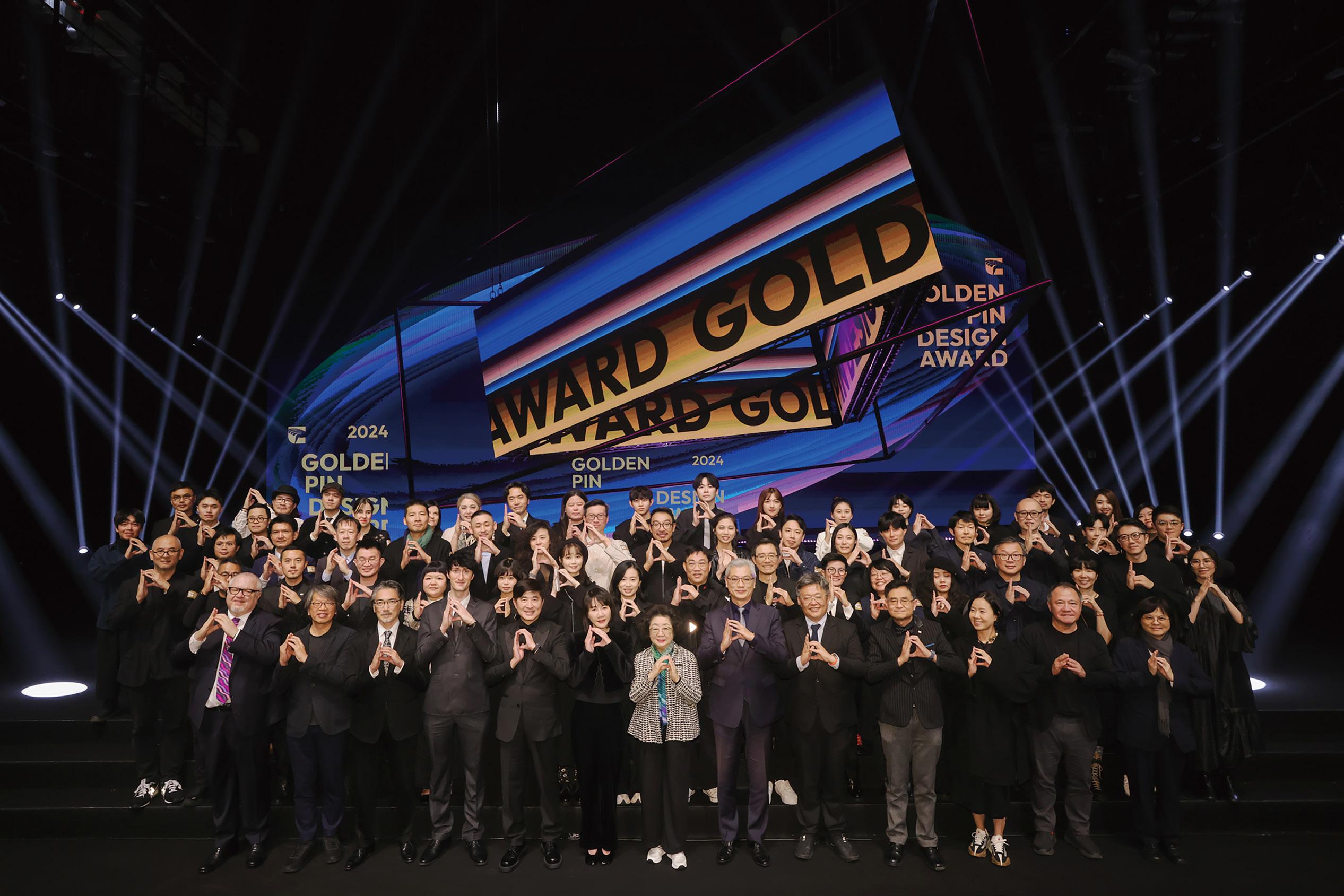
The "2024 Golden Pin Design Award Ceremony" was held at Taiwan Traditional Theatre Center. Circular sustainability, public service, and social inclusion were spotlighted.
財務概要 Financial Highlights
2024
收支營運決算表 Income Statement
收入總額 Total Revenues
業務收入 Operating Revenue
業務外收入 Non-operating Revenue
支出總額 Total Expenses
業務支出 Operating Expense
業務外支出 Non-operating Expense
所得稅費用 Income Tax
年度結餘(短絀) Net Income (Loss)
資產負債表 Balance Sheet
非流動資產 Non-current
資產合計
註:年度財務報表係未經會計師查核,列示僅供參考。
非流動負債 Non-current liabilities
負債合計 Total liabilities
淨值
負債及淨值合計
Note: These financial statements have not been audited by accountants and are presented for reference purposes only.
2024 ACCOMPLISHMENTS
TAIWAN DESIGN RESEARCH INSTITUTE
建立設計研發機制
Establishment of Design Research & Development Mechanisms
TDRI hopes to build a collaborative mechanism for interdisciplinary innovation from a policy planning perspective, by improving the effectiveness of policy communication in between departments and teams. Through interdepartmental promotion mechanisms, we have introduced design thinking to important development policies and government forward-looking plans by formulating design policies in national development strategies and creating a well-designed environment for development. By integrating across disciplines through design, we established TDRI and its corresponding promotion platform mechanism, which elevated the value of design innovation research, public services, industry-driven fields, and connected Taiwan with international design resources, accelerating Taiwan's design policy development.
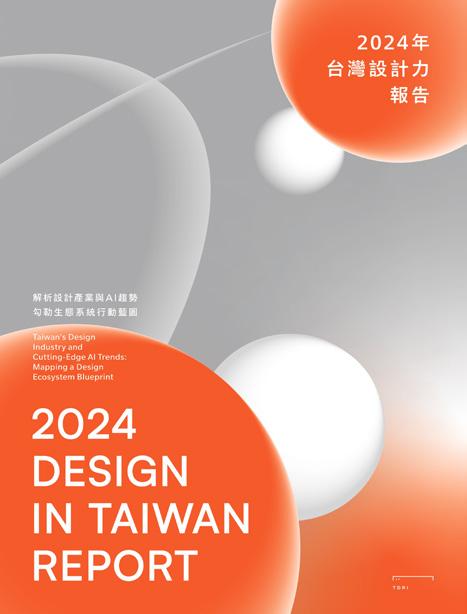
(1) 2024年台灣設計力報告
解析設計產業與AI趨勢,勾勒生態系統行動藍圖
本研究報告深入探討台灣設計產業現況及未來發展,以設計生態系統八大構面作為分析框架,結合204份 設計產業調查問卷與41位產官學研界專家之訪談成果,勾勒設計產業未來藍圖。報告聚焦生成式人工智慧 (GenAI)對設計產業的衝擊,並依據「新加坡未來技能(SkillsFuture Singapore)」的「設計技能框架 (Skills Framework for Design)」訪談專家後,綜整提出AI時代設計師需培養的十大關鍵技能,例如溝
Taiwan's design industry and cutting-edge AI trends: mapping a design ecosystem blueprint
This report investigates the current status and future development of Taiwan's design industry in depth. It uses eight dimensions of Taiwan’s design ecosystem as the analytical framework and integrated the results from 204 design industry questionnaires and 41 expert interviews, and research to outline a blueprint for the future of the industry. The report also focuses on the impact of generative artificial intelligence (GenAI) on the design industry and proposes the 10 key skills that designers should cultivate in the AI era using interviews with experts on SkillsFuture Singapore's "Skills Framework for Design" as the basis. Examples include communication skills, critical and independent thinking skills, creative thinking skills, and technological adaptability.. In general terms, the domestic design industry is easily affected by the external macroeconomic environment, and the company scale is small. Young professionals dominate the talent structure, market demand is highly segmented, and there is a high degree of professional division of labor. The main challenges faced by the design industry include a gap between academia and industry, international competitiveness, and insufficient policy support.
This report summarizes the results of the design industry survey and ecosystem dimensions research, and then outlines 5 key challenges where continued efforts are needed and suggests 10 action plan recommendations to enhance the competitiveness of Taiwan's design industry and promote innovation and sustainable growth. The " " not only serves as strategic guidelines for design professionals but also promotes the comprehensive practice of design value across the public, corporate, and social sectors to assist Taiwan's design industry in responding to global trends and future challenges.
(2) Strategic guidelines & evaluation system for corporate design
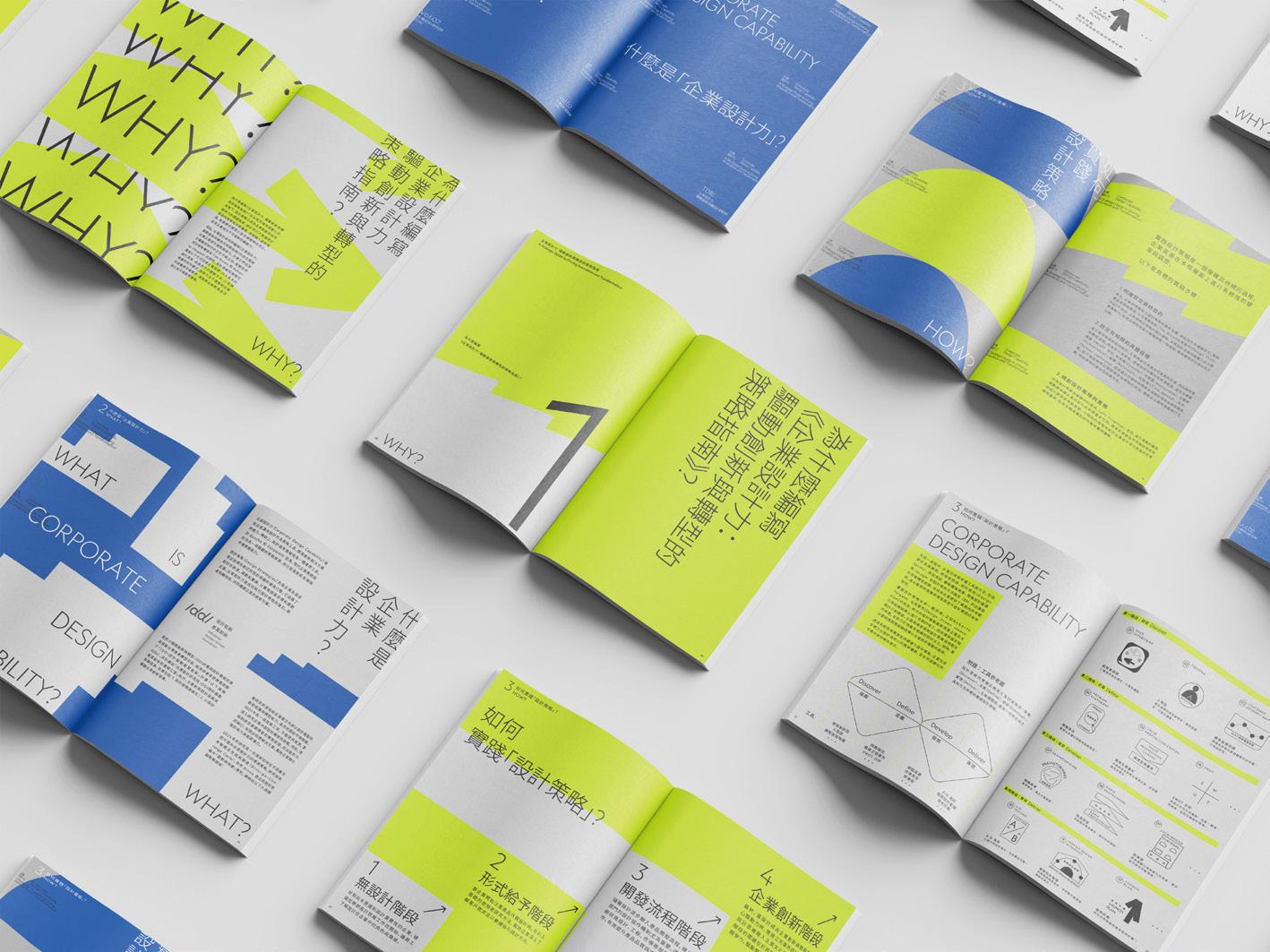
The "Corporate Design Strategic Guidelines and Evaluation System" uses the concept of "introducing design for innovation and added value" to improve the autonomous operating capabilities of the design service industry, facilitate cross-sector cooperation and co-creation, and enhance the status of design within companies. The "Corporate Design Strategic Guidelines" focus on improving the design application capabilities at different levels within domestic companies. After multiple rounds of concept generation and selection, along with corporate interviews, nine key strategies were uncovered. Complete practical implementation methods were also provided so that companies would have clear guidelines to help them understand the crucial points of design strategies. In addition, a "Corporate Design Evaluation System" was developed to assist companies in assessing the current status of their own design capabilities. The evaluation results are used to conduct design diagnoses, which help medium, small, and micro enterprises to identify gaps in their design strategies and innovative development.
(3) Future Thinking Toolkit
This card deck is designed to inspire dialogue and imagination around both the "near future" and the "distant future," offering an alternative approach to thinking about what lies ahead. The toolkit can be used in (non-) governmental organizations, academic and research institutions, or corporate organisations, offering participants an alternative way of thinking to stimulate long-term perspectives. The deck includes categories such as: Scale Cards (A), Trend Cards (B), History Cards (C), Theme Cards (D), Current Events Cards (E), and Technology Cards (F). Beyond prediction and imagination, these cards encourage users to consider the interconnectedness of the past, present, and future, fostering a broader understanding and mastery of "preferable futures."
(4) Urban innovation participatory action tools
Design is an important means to encourage people to participate in the co-creation of public value. It is also the foundation of future urban development. Through co-creation and co-discussion, the public becomes co-planners for their environment and helps the government to formulate development blueprints that are more inclusive and responsive to needs.
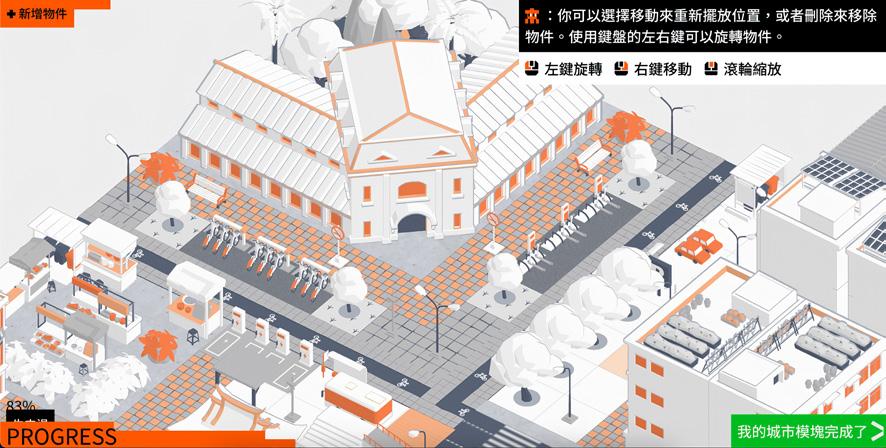
"My City Modules" is a digital and online co-creation platform. This modular tool invites the public to participate in discussions on urban issues, materialize their own visions for their city, and express their memories of their city. Through a "demand relay" mechanism, the public's ideas persist and collide in continuous dialogues, thereby generating new perspectives. The platform has a simple interface to enable people of all ages to participate in the conversation and lower the threshold to participate in municipal administration.
There were around 69,000 interactive exhibitions taking place at the Taiwan Design Expo in Tainan, successfully strengthening people's emotional connection with the city and their interest in related topics. Participants not only revealed their visions for future cities, but also used interaction to deepen their connection with cities. "My City Modules" uses an interesting way to enhance understanding of and participation in urban planning, showing the effectiveness of design in public participation.
Taiwan Design Research Institute (TDRI) oversees the implementation of the Ministry of Economic Affairs' Department of Industrial Technology's "Design Technology Development and Industry-Research Co-Creation Plan." In 2024, with AI technologies as the core, the plan achieved the in-depth integration of data and design and propelled design research and policy decision to new heights. The three major tools that were developed all fully demonstrate the potential and value of AI applications:
(1)
Product Data Explorer
This tool is a one-stop product data analysis tool integrating AI technology. It includes information on 1.3 million products, including smart home appliances, smart mobile products, healthcare products, and maternal and infant/child care products available in Taiwan and the U.S. in the past five years, and is able to analyze 16 design elements such as usage scenario, color, material, finish and functions. In 2024, a product trend report function was added. Users can now quickly understand market trends with the help of AI, while designers and product managers are able to make more accurate decisions and speed up the concept-to-product process.
(2) User Data Explorer
This tool is able to quickly sort through millions of reviews by real people and extract user needs. Designers can use AI to automatically generate personas, user journey maps, and stakeholder maps. They can even upload interview
transcripts and get an analysis with one click. A qualitative report function was added in 2024. It converts template contents into concrete design insights, further shortening the research time and improving the analysis accuracy, thereby helping designers to more effectively understand the needs of users.
(3) AI Design Strategy Generation Tool
This tool was designed specifically for exploring market opportunities and evaluating design proposals. AI can rapidly generate PESTEL analyses, competitive product positioning, action plan suggestions, and scenario deductions. Text to text and text to image generation functions were also added to effectively process large amounts of textual data and generate intuitive visual materials. This not only supports systematic innovative thinking, but also provides comprehensive strategic support for cross-sector product and service design.
With its design resource platform Design R&D Lab as the core, TDRI will continue to integrate AI technologies and design research, provide innovative tools and resources, promote the competitiveness of the design industry, and assist companies and designers in welcoming the challenges of the digital era.
Design excels at discovering needs and forecasting trends. It can be used to drive innovation in products, services, and organizations, as well as spur sustainable growth through detailed insights, thereby continuously creating future opportunities. Design R&D Lab is a platform established by TDRI that focuses on sharing research and trend research resources. It integrates design with digital technology and provides multiple ways such as self-developed toolkits, data analysis reports, or specialized courses and workshops to conduct co-creation and exchanges with the industry. It provides designers, R&D teams, and design managers with comprehensive support. The platform also integrates digital tools developed by TDRI such as the "Product Data Analysis Tool" and the "User Research Digital Tool" for designers to use in project development.
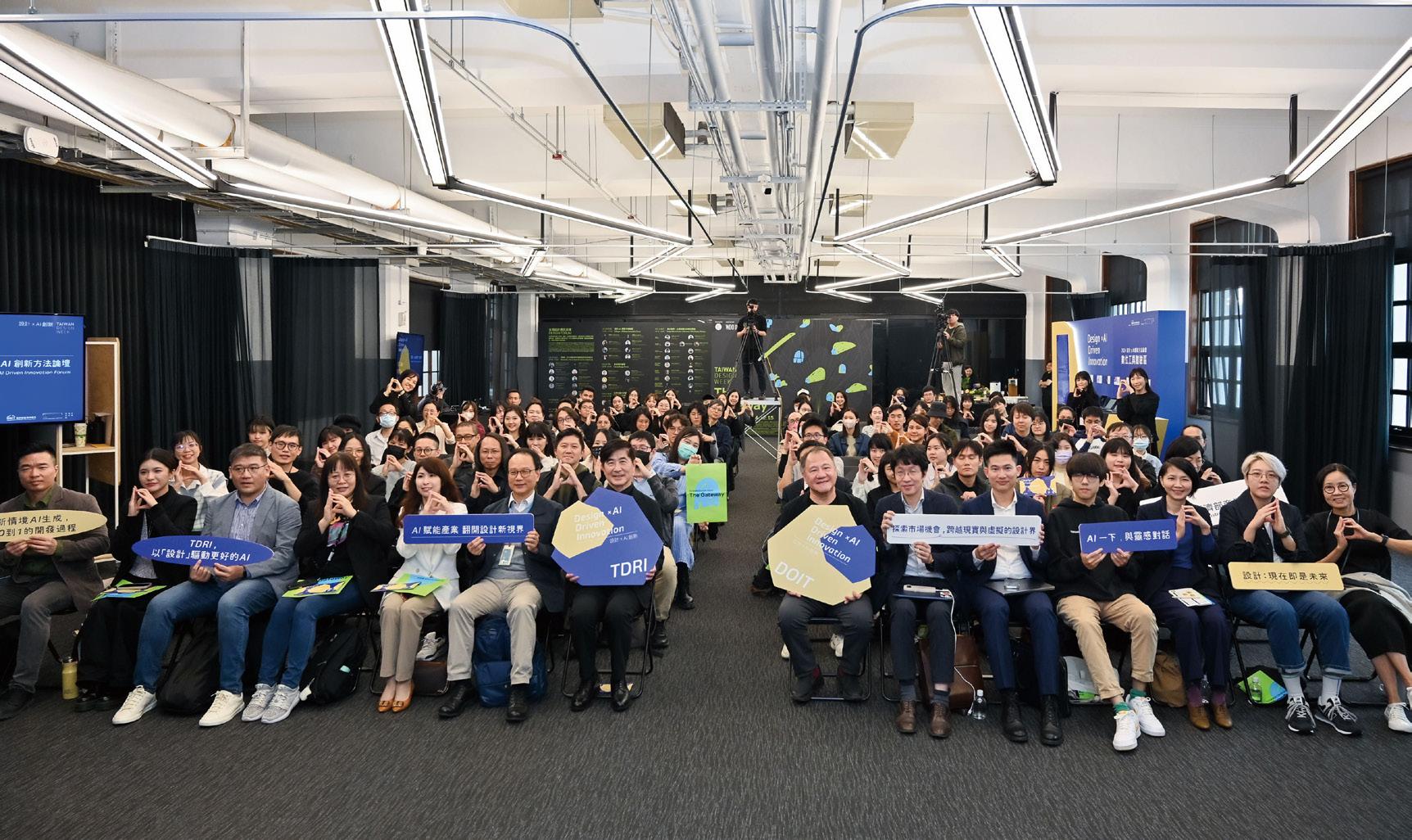
TDRI not only regularly develops research methods and template tools on related industrial topics, but also cooperates with domestic and international expos such as COMPUTEX or Young Designers' Exhibition to publicize research results, reaching over 3,000 experiential participants as well as potential partner companies and educational institutions. Every year, TDRI also organizes a forum to publicize results, inviting participants from industry, government, academia and research to interact, thereby facilitating industrial innovation. The theme of the 2024 forum was "Design x AI-Driven Innovation," and participants included representatives from the Taiwan Package Design Association, Interaction Design Association Taiwan, Taiwan Graphic Design Association, Service Science Society of Taiwan, and National Chengchi University's Center for Creativity and Innovation Studies. Together, they promoted the use of digital design tools to increase the efficiency of the design process by assisting professional users such as researchers and designers to conduct pre-design research and strategic development, understand market trends, accurately analyze target consumer groups, and use data-driven decision-making to promote the generation of innovative concepts, thereby constructing a more robust ecosystem for Taiwan's design industry.
In 2024, TDRI helped numerous domestic R&D entities and industries to explore forward-looking technological innovation and development opportunities through design, respond to rapidly changing market environments, reposition technologies, and redefine business models. Partners included the Cycling & Health Tech Industry R&D Center, Precision Machinery Research & Development Center, Mind & Idea Fly Co., Stone & Resource Industry R&D Center, and Lotos (Techome Technology Co.). The value of design in research and innovation was demonstrated through the introduction of design and the situational application of practical technologies in bicycle design, smart manufacturing, and material circulation.
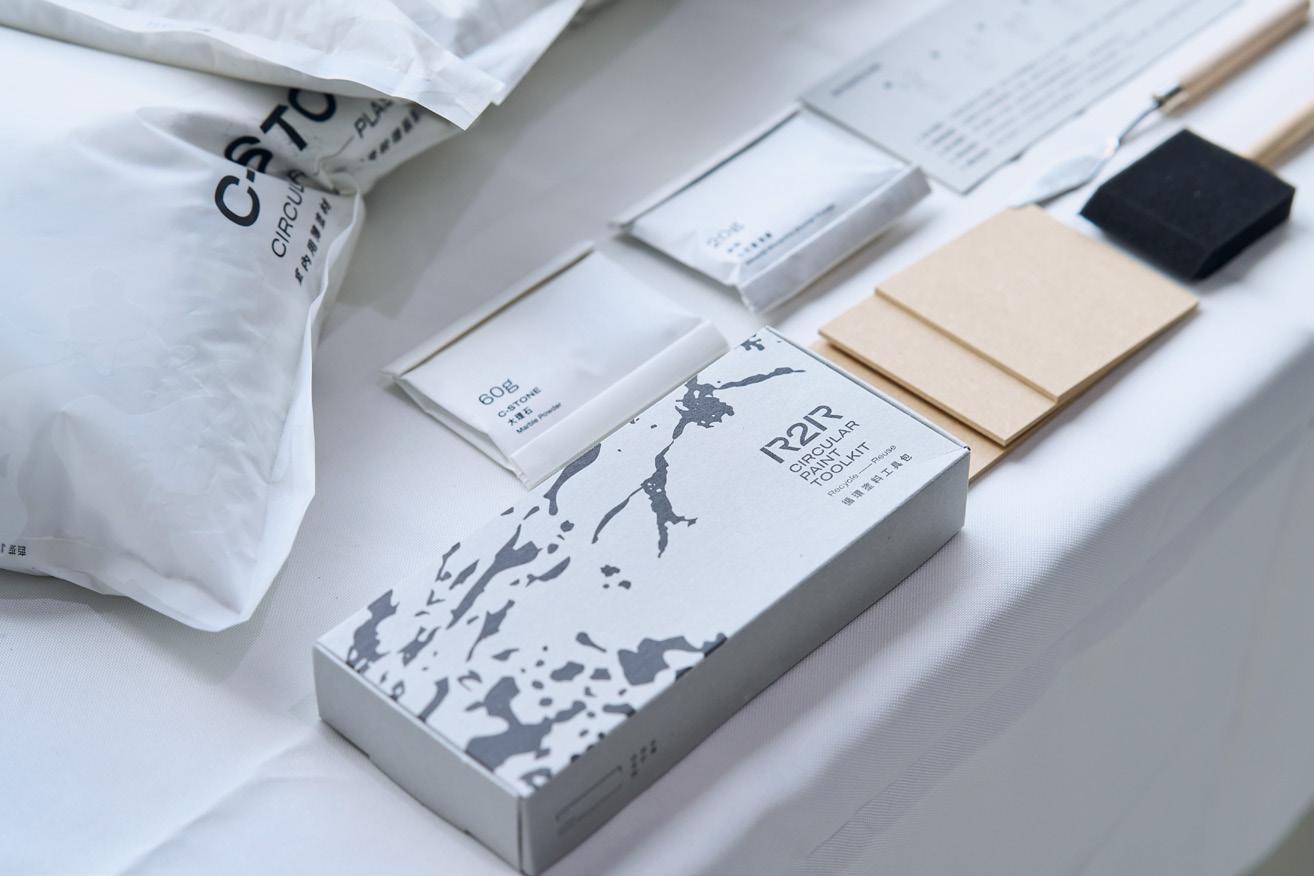
For bicycle design, design research and GenAI were introduced to develop industry-applicable digital tools, optimize the design process, and improve the innovative efficiency and proposal quality of domestic bicycle companies. For smart manufacturing, the design and development of XR modules for machine tool displays improved the digital showroom and sales experience and satisfied equipment display, sales, and after-sales service requirements. For material circulation, numerous parties worked together to promote the circular use of stone sludge waste and develop an innovative paint prototype that was successfully used in eight demonstration spaces (including rural villages, special education schools, and communities). The 19 TV and media reports that followed highlighted the potential value and social influence of low-carbon material applications.
To facilitate cross-domain exchanges, TDRI organized 11 technology x design innovation workshops in 2024. A total of 270 designers, technical experts, industry professionals, and members of the public attended the workshops. The key influence of design in technological R&D was demonstrated from situational exploration to solution implementation, helping to spread design-driven industrial R&D and innovation capabilities.
1-5. Design-Driven Innovation for Industry Development
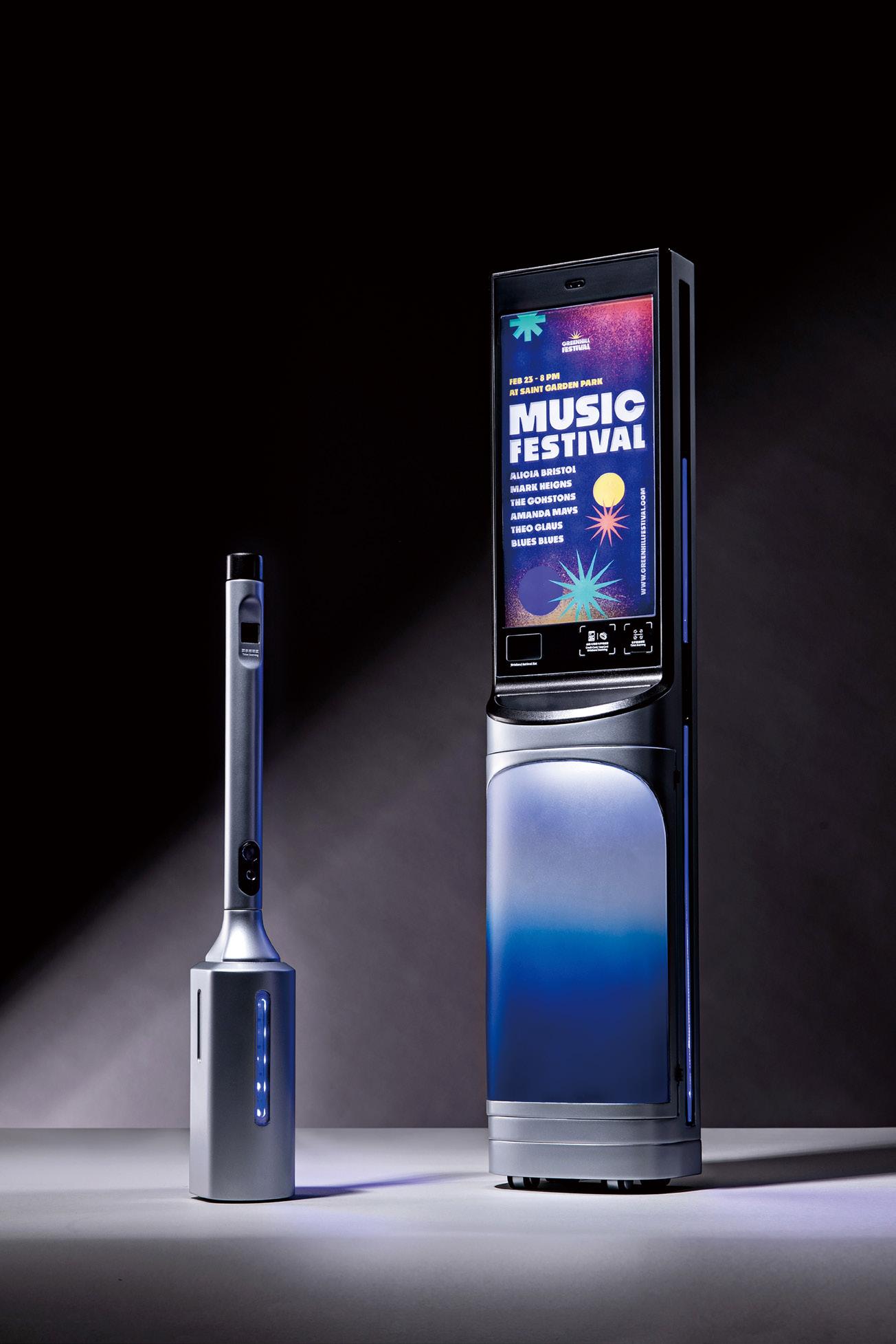
Leveraging design insights across healthcare, manufacturing, mobility, and daily life, our institute integrates sustainability and AI technology to optimize industrial capabilities, enhance technological value, and create diverse applications. Over the past three years, we have collaborated with enterprises from various technical fields, resulting in the development of 19 prototype products and services. For example, to build a city-wide plastic recycling system, we designed and developed the Smart PET Bottle Recycling Machine, which goes beyond traditional single-function recycling machines. This innovation integrates AI-based bottle recognition and color-sorting technology, an automatic crushing system, and a minimalist aesthetic designed to blend seamlessly into public spaces. The intuitive user interface encourages public participation, while features such as point accumulation and cashback rewards for returned bottles increase user engagement and promote recycling behaviors.
In the agricultural sector, to enhance the value of recycled agricultural waste, we co-created the Modular Natural Fiber Extraction Machine with farmers and machinery manufacturers, improving both fiber extraction efficiency and quality. This machine enables automated fiber extraction tailored to different fiber types, such as such as pineapple leaf fiber and banana stem fiber, facilitating a fully circular agricultural material system. Furthermore, we have established the Natural Fiber Circular Alliance with yarn spinners, garment manufacturers, leather producers, brand owners, and biomedical companies. Together, we promote locally developed and manufactured fiber extraction machines, offering one-stop production and service solutions to maximize the value of agricultural waste.
The practical application of research is the key to demonstrating the value of research. A key opportunity for design to drive forward-looking technological applications lies in how the technology and design industries can drive the development of technological application scenarios through collaboration; promote interaction between users, the environment, and technology; and develop innovative applications.
Focusing on cross-industry cooperation to solve pain points in industrial development
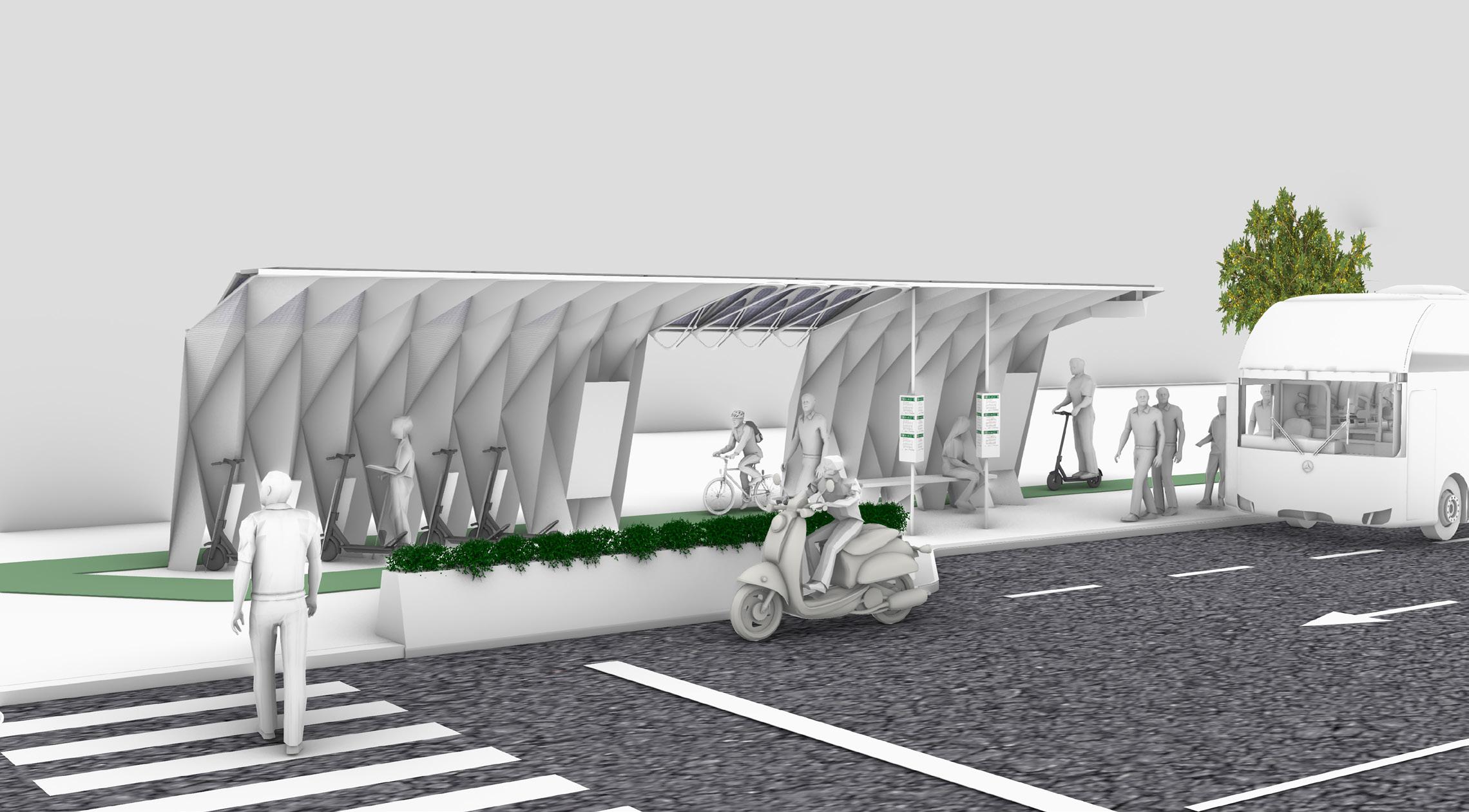
In 2024, participatory action research from scenario construction to field practice was promoted through a design-oriented living laboratory framework, opening up the development vision of the micro-mobility industry in facing future cities and target users. Interdisciplinary and cross-industry co-creation resolved industry development bottlenecks and proposed the "micro-mobility innovative application trends and guidelines," allowing R&D-oriented design outcomes to be used as new methods to spread design influence.
Strengthening participatory research to drive the development of innovative services
To strengthen the practice of participatory action research in the field, TDRI first laid the foundation for collaboration with the technology industry and then linked the design industry so that they could jointly make proposals for future cities. "Infrastructure and mobile services adapted to Taiwan's micro-mobility situation" was proposed to provide future cities with innovative solutions for mobility.
In a rapidly changing social and industrial environment, how companies can accurately predict future trends, formulate growth strategies, and deploy technological innovation has become key issues affecting competitiveness. In 2024, TDRI focused on improving the fit between technological development and future needs with scenario exploration and design methods as cores. It helped companies to identify the correct R&D directions and optimize their resource allocation.
Using AI to drive scenario explorations
To deepen the application of scenario design methods, we developed the "Vision Design Generator," an AI-collaborative tool that provides companies with a digital solution for simulating future scenarios. This tool integrates a design thinking framework, digital system, and GenAI technology to achieve cross-domain cooperation and innovation. The tool has text to text generation (using OpenAI ChatGPT-4o) and text to image generation (using Moonshine Creation's Junto AI) functions to assist companies in visually exploring different possibilities.
Improving innovation efficiency: human-machine collaboration and visual support
Human-machine collaboration enables the generation of more diverse ideas and solutions in product and service innovation. Intuitive visual system tools enable seamless AI collaboration, allowing users to co-create future business opportunities. This not only enhances a team's internal communication efficiency but also fosters harmony between creativity and technology.
Navigating uncertainties, seizing opportunities
In a constantly changing industrial environment, flexible responses and forward-thinking are crucial for a company to remain competitive. Our AI-driven scenario exploration tool helps companies identify opportunities amid uncertainty and establish a foundation for future growth.
Design was used to form interdisciplinary cooperative alliances for jointly promoting and establishing innovation mechanisms and models for the industry, becoming a driving force for industrial innovation. Through carrying out forward-looking research, putting industry co-creation into practice, and operating interdisciplinary design platforms, agile co-creation was achieved through R&D and technology and design thinking was implemented to find valuable technological applications, instill design powers in industries, and establish a design innovation strategy for Taiwan.
The Ministry of Economic Affairs' Industrial Development Administration established "Industrial Design-Driven Innovation (IDDI)" in 2023 to encourage Taiwan's industries to use design to transform and update and entrusted Taiwan Design Research Institute to implement it. The "design service industry" and "manufacturing industry" were designated as the targets. The program uses design thinking as the strategy and ascending the design ladder as an indicator. Under the program, a cross-field design team collaborates to jointly draw up a design blueprint to help companies utilize design-driven innovation to upgrade and transform, and then develop innovative products or services and business models, thereby increasing their market competitiveness.
The program has successfully assisted 88 companies (of which over 90% are SMEs) in 13 cities and counties over the past two years. Over 270 cross-disciplinary design teams have cooperated in the program, and nearly 200 new design-related job opportunities have been created. Following the deepening and expansion of their design capabilities, 17 companies established design-related organizations, while over 18 projects distinguished themselves in international competitions. The program not only promoted the balanced growth of regional industries and local economic vitality, but also injected new momentum into industry transformation.
2-2. Zhenfu Symbiotic Community Center: dementia-friendly model of symbiosis between design and community
Taiwan is set to become a super-aged society in 2025. TDRI recruited UXI Design, ExE Design, and nessdesign to transform Yonghe Cardinal Tien Hospital's "Zhenfu United Clinic," which had remained idle for many years, into a demonstration base that is the first in Taiwan to combine the concepts of "dementia-friendly" and "age integration. "Zhenfu Symbiotic Community Center" demonstrates the possibilities resulting from the symbiosis of design, medical care, and community.
The spatial experience was based on "dementia-friendly space indicators." It was extended from the public pictogram system and integrated barrier-free design and various requirements. The spatial aesthetics were improved while creating a multifunctional, shared venue where the concept of dementia care is naturally integrated into daily life. Special facilities such as the "light meal food court" or "laundry station" provide convenient commercial services in addition to creating opportunities for social interaction between elderly people with disabilities or dementia, embodying economic sustainability and community connection.
Through the introduction of design, both cross-age and dementia groups were re-empowered and the social value of creative solutions to practical needs was underscored. This base utilizes innovative design to drive a brighter future for Taiwan and give its age-integrated society greater hopes and possibilities.
In 2014, TDRI started promoting the "YODEX Industry-Academia Cooperation" program. Through the model of "companies posing problems, academia solving problems," a cross-industry and cross-field "cross-domain innovation experimental platform" was constructed to encourage companies and design academia to jointly explore innovative solutions, thereby helping companies to reduce their time cost and accelerate innovative applications. The program continued expanding in depth and breadth in 2024, creating diverse cooperation models and promoting cross-domain innovation.
(1) YODEX Industry–Academia Cooperation
The project has been operating for the 10 years between 2014 and 2024. In 2024, the system was adjusted to focus on industry and academia jointly exploring innovative solutions. Every year, that year's themes and trends are announced
and companies are invited to form teams and provide guidance. The theme in 2024 was "Beyond Sustainability," and students were guided on following international trends.
(2) Regional Industry–Academia Cooperation
This model focuses on regional innovation needs. It invites main or potential industries to put forward their needs, and recruits nearby colleges and universities or design units to conduct industry status observations and propose innovative solutions that resolve problems plaguing local industries while also attracting talents.
Participating companies in 2024 included Yee Chain International, Kenda Tires, Slicethinner Manufacturing Co., and Tair Chu Enterprise Co.
COC Co-Creation is supported by the Ministry of Economic Affairs' Industrial Development Administration and integrates TDRI's cross-disciplinary resources. It promotes the upgrading of local manufacturing industries and supply chain restructuring to realize the sustainable growth of the manufacturing industry while simultaneously elevating the international visibility of city brands.
The plan uses Design as the core strategy to help the manufacturing industry align with consumer requirements and global market trends through brand strategy, product design, and service model innovation.
In 2024, the focus was on the city of Tainan. The project cocreates with local companies by integrating design as the main tool. Tainan joined forces with industries in Japan's Sumida City, transcending borders while also introducing international cooperation, sustainable applications, and innovative business models in various industries, from food and scents to textiles and architecture.
Tainan's 400 years of cultural heritage were added to the modernization momentum, allowing manufacturing innovation to be reflected in life and shaping the unique charms of city life.
In the future, this program will continue promoting cooperation between cities and industries, helping manufacturing technology to develop new value via design, meanwhile engaging industries and local government to address urban issues. The COC project hopes to reshape the city's image and inject new momentum into the economy, aiming to achieve local prosperity and sustainable development.
The AGRICULTURE CO-WORKER (ACO) program, which is about to enter its seventh year, promotes the transformation of Taiwan's quality agricultural products. So far, it has coached 50 agricultural businesses with potential. The unique value of Taiwan's agriculture is uncovered through professional consultations on e-commerce channels and brand design.
In 2024, 10 innovative agricultural produce brands from all around Taiwan joined the program, and 16 tireless farmers with an average age of 35 applied themselves to agricultural innovation. They quickly absorbed e-commerce market trends with the same enthusiasm they showed in returning to their hometowns to become farmers. They were advised in topics ranging from brand establishment and product specification standards to packaging design optimization and e-commerce graphic and text design so that their brand will resonate with consumers.
ACO took "harmony of all things" as its annual co-creation axis in a nod to the trend of sustainable growth. It collaborated with the e-commerce platform "Buy Directly from Farmers," a Certified B Corporation, to design the "Harmony of All Things - Universal Sustainable Fruit Gift Box" based on the United Nations' Sustainable Development Goal 12 (SDG 12) of "responsible consumption and production." The product integrates the concepts of friendly planting, environmental protection, and resource reuse so that customers can enjoy seasonal experiences while supporting sustainability. It leveraged the innovative influence resulting from the cross-domain collaboration between design and agriculture.
2-6. Commercial District Aesthetic and Design-Driven Project
The result of the first-ever collaboration between the Ministry of Economic Affairs' Administration of Commerce and TDRI was the " Commercial District Aesthetic and Design-Driven Project." This project used the introduction of design innova tion to improve environmental aesthetics and integrate stakeholder resources, bestowing a new service value on Taiwan's commercial districts. It emphasized cross-domain co-creation, harnessing the power of the central and local govern ments, commercial district associations, and design teams to start off by addressing three major aspects: venues that are user-friendly, services that are upgraded experiences, and people that highlight local characteristics, thereby driving commercial districts towards sustainable growth.
The project used the "Double Diamond" design thinking process to explore the requirements of commercial districts, integrate aesthetic design and service innovation, comprehensively optimize brand images and public spaces, and aggregate local cohesion. In the first year, Changhua's Xiaoxi Street, Tainan's Confucius Temple and Guohua-Youai streets, and Kaohsiung's Hamasen were transformed and revitalized, reconstructing the customer experience and the regional aesthetic value along the way. The results were outstanding. There were over 141 media reports and the satisfac tion rate among residents and businesses was nearly 90%. Taiwan Design Expo also successfully attracted tourists. A sustainable model for the development of city economies and business districts was created.
To support the sustainable development of talent in the design industry and cultivate Future Talent equipped for emerging needs, our institute focuses on circular and sustainable design, digital transformation, public service, and social as core themes. We organize a variety of domestic and international design forums, lectures, workshops, and exhibitions to empower talent through diverse learning opportunities. In addition, to bridge the gap between academic training and practical industry needs, we incorporate global design development trends and research on the core competencies within design school curricula. Through these approaches, we established a Career Development and Training Guideline for designers, which serves as a reference for Taiwanese enterprises, design service providers, and students in design-related fields to support learning and career planning.
TDRI empowers Taiwan's SMEs in their green design transformation. With the circular economy at its core, it fosters collaboration in circular design development through product modularization, choice recyclable materials, ease of repair, and co-shared services or systems, driving the transformation and upgrading of SMEs. Through the promotion of circular design trends and outcomes via design exhibitions, we collaborate with over 15 partners, including design service providers, manufacturers, material suppliers, brand owners, distributors, and recyclers, to establish a sustainable, carbon-reducing green ecosystem. This collaboration accelerates Taiwan's industrial progress toward the 2050 net-zero carbon goal.
2-9. 協助出口企業導入產品減碳品牌包裝設計輔導
為協助台灣企業因應國際碳稅,以設計協助台灣中小企業導入減碳包裝,以利MIT產品外銷出口並提升品
牌形象,設研院執行國貿署減碳包裝輔導計畫,建立減碳包裝設計指引、媒合設計業與製造業合作設計開 發20案、策劃全球首個減碳包裝設計展Packaging Future, Making Better,展示超過80件以上之減碳包裝 應用產品與材質。
2-9. Carbon-Reducing Packaging Design for Exported Products
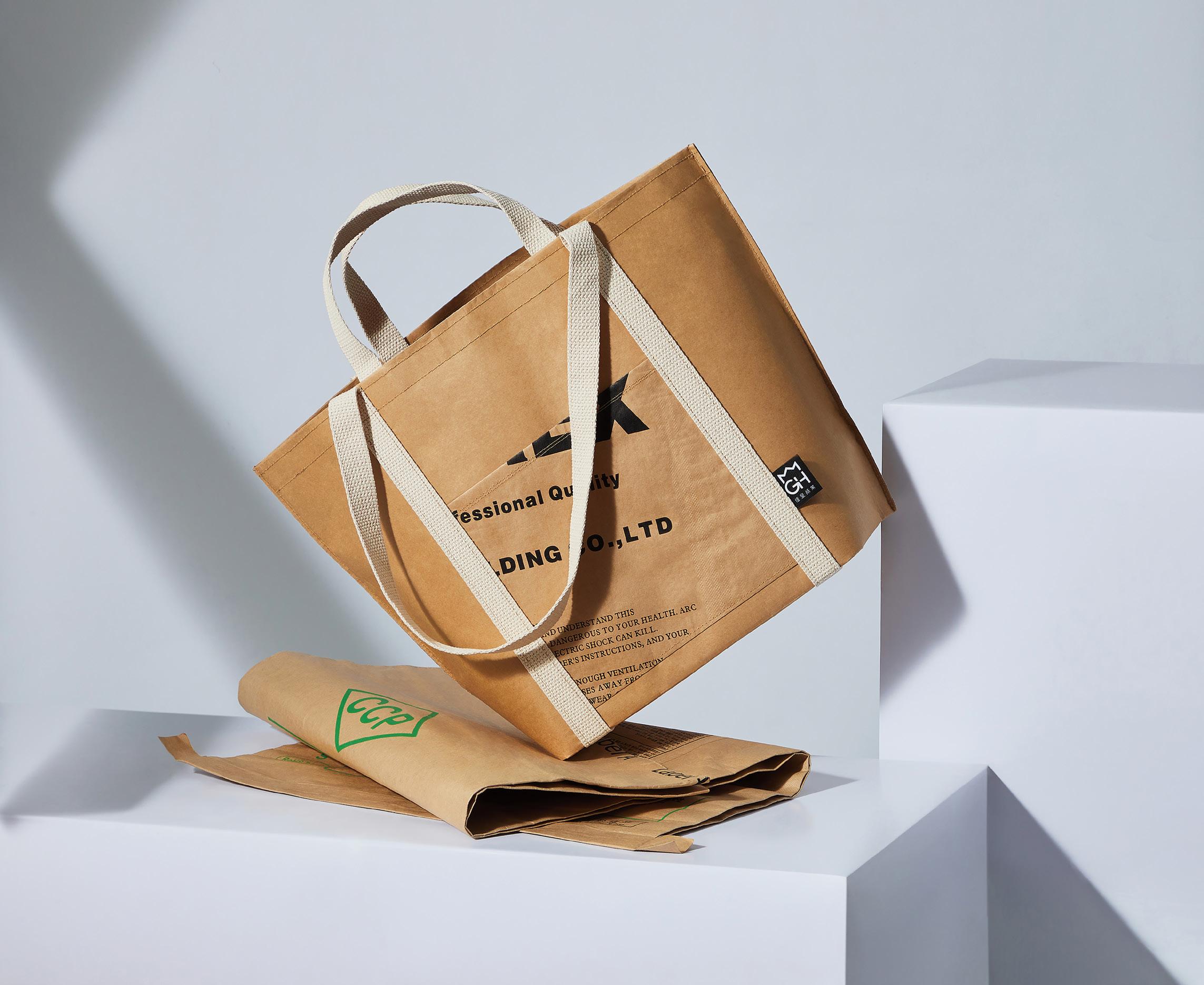
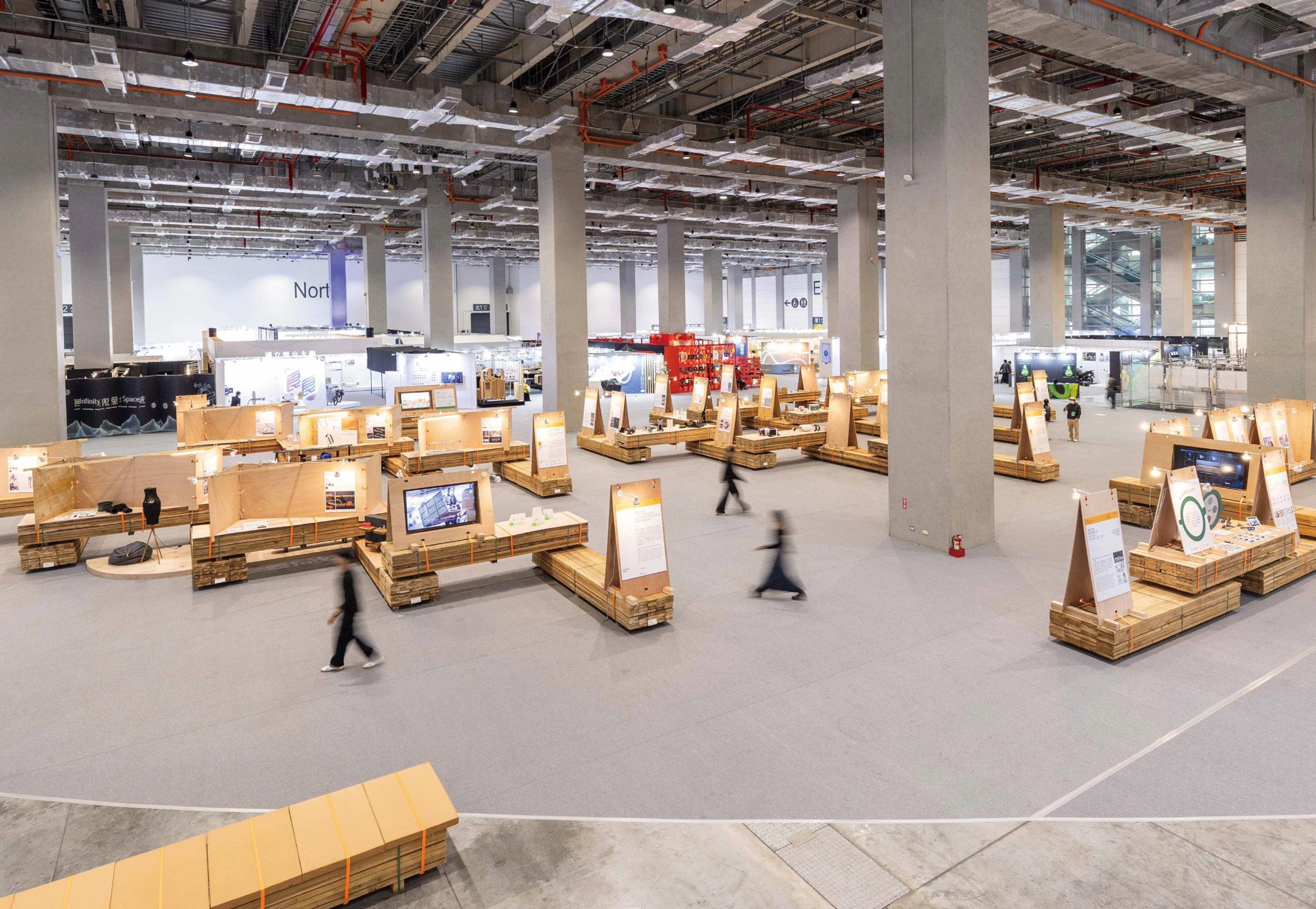
TDRI assists Taiwan's SMEs in adopting carbon-reducing packaging designs to enhance the export competitiveness of MIT brands and products. TDRI has developed the Sustainable Packaging Guidelines and facilitated 20 collaborative design projects between design agencies and manufacturers. We also curated the world's first exhibition on packaging design for carbon reduction, "Packaging Future, Making Better." It showcased over 80 applications of low-carbon packaging products and materials.
2-10. Promoting Circular Economy through Green Design and Public Engagement
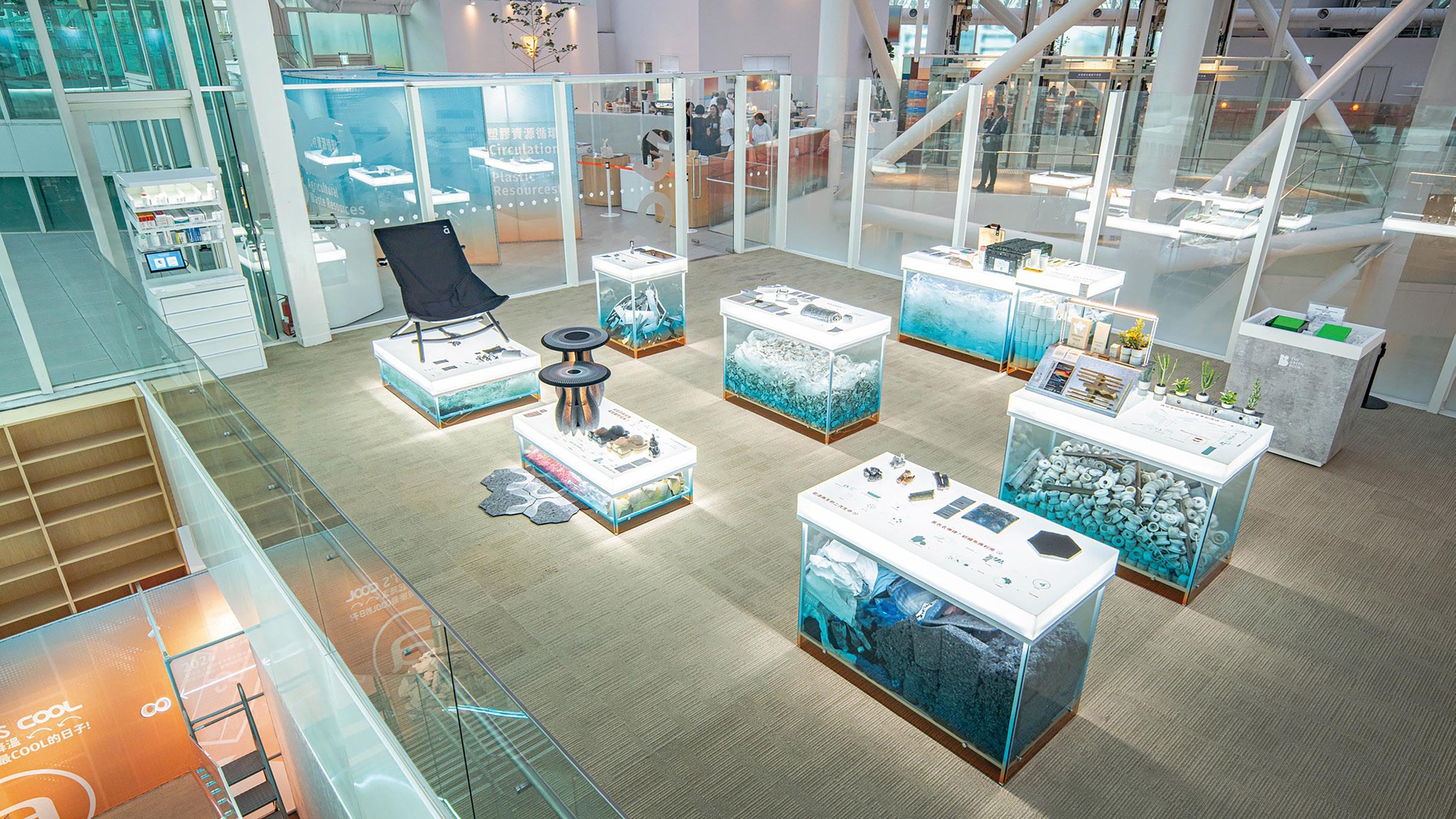
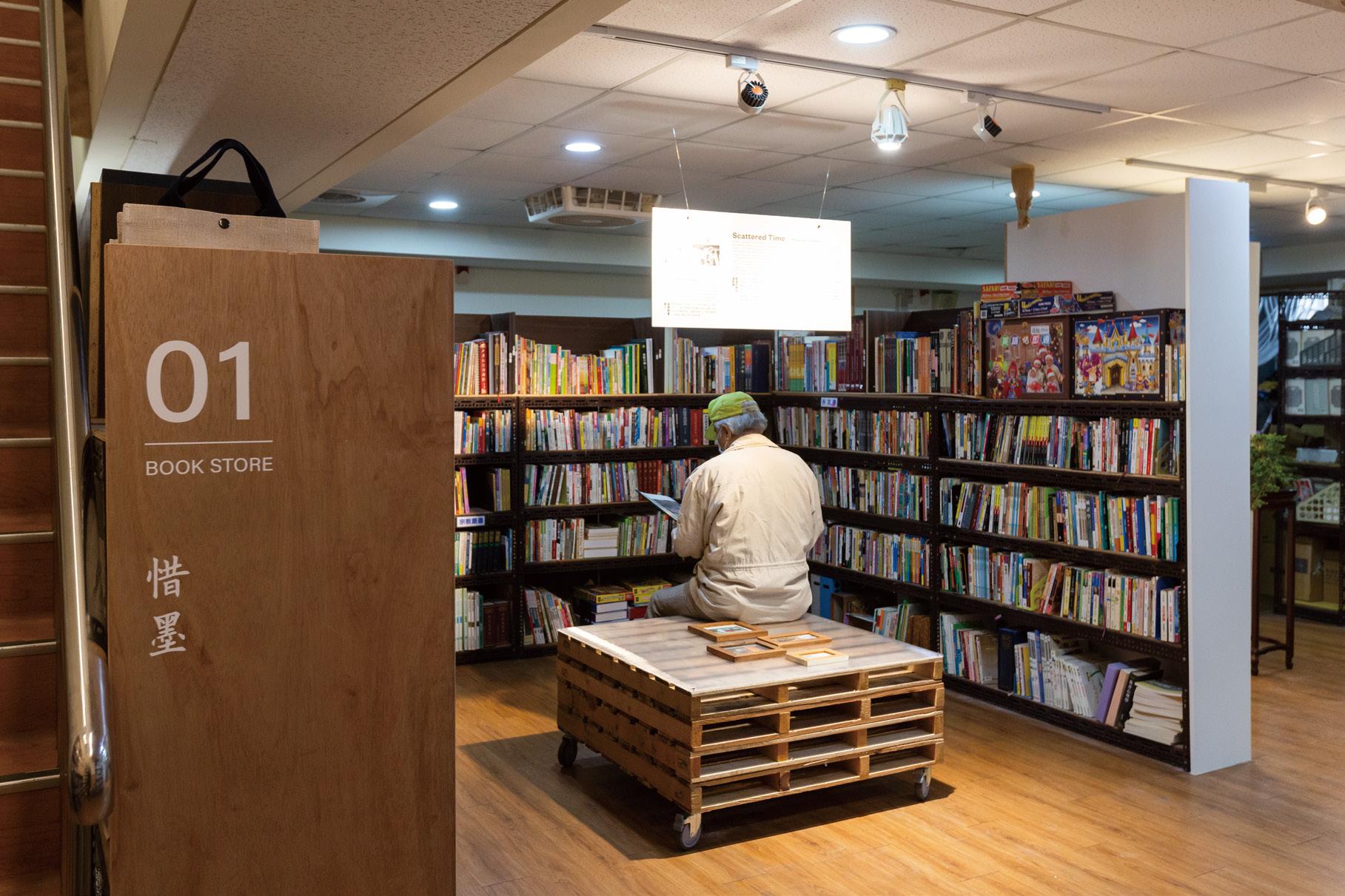
TDRI cooperated with the Resource Circulation Administration of the Ministry of Environment to integrate green design into the resource circulation system. To encourage people to repair rather than discard, exchange rather than purchase, and adopt more sustainable consumption habits, design has been applied to develop plastic recycling systems, revitalize second-hand stores through spatial and brand service redesign, and upcycle discarded materials to enhance their value. By embedding design into everyday practices, we strive to achieve social and economic circularity as a part of daily life.
2-11. Demonstration of Landscape Aesthetics into Rural Development Design Planning
To support rural revitalization in Taiwan, we promote the integration of design aesthetics into rural areas to aid local development. TDRI collaborates with over 10 central and local government units and organizations, introducing bottom-up participatory design to jointly shape a vision for rural living, production, and ecology. Focusing on Chaoyang Community in Su'ao Township, Yilan, as the core demonstration site, TDRI has design planned the Sustainable Agriculture Area, an Ecological Conservation Area, and an Art and Cultural Innovation Area. This initiative aims to create Taiwan’s first model of a resilient rural village, using design to foster rural tourism and encourage youth to return to their hometowns.
The 43rd edition of the Young Designers' Exhibition (YODEX) took place from May 24-27, 2024 at Taipei Nangang Exhibition Center Hall 2, bringing together 55 schools, 116 departments, 10,000 students, and 3,500 design works. Twelve top design institutions from seven overseas countries and regions, including the U.S.' Harvard University, Malaysia's Sunway University, Japan's ICS College of Arts, Thailand's Chulalongkorn University, and the Hong Kong Polytechnic University, also took part in the exhibition. The theme of the 43rd edition was "Beyond Sustainability," which echoed SDGs and domestic industry trends. Students were guided to practice sustainable values through design, and participating schools responded with enthusiasm and support. The exhibition design and execution was recognized with the Best of Golden Pin Design Award 2024.
The four-day exhibition attracted 80,000 visitors and generated 386 domestic and international media reports. On display were co-creations resulting from the "YODEX Industry-Academia Cooperation" project. Industry and business representatives were invited to visit, and nine talks on topics ranging from AI applications and sustainable design to educational design and intellectual property protection were held to encourage the exchange of diverse viewpoints. YODEX not only serves as a stage for up-and-coming design students to show off their innovative design outcomes, but also as platform linking industry and academia so that they can identify outstanding design talents and recognize outstanding creativity.
2-13. Golden Pin Design Award and its Associated Awards
Founded in 1981, the Golden Pin Design Award is the oldest and most authoritative professional design award in Taiwan. In 2015, it became a family of 3 major awards, namely, the Golden Pin Design Award, Golden Pin Concept Design Award, and Young Pin Design Award, diversifying for different groups to commend innovative and outstanding design products and works. In recent years, more than half of the entries have come from abroad. In 2024, the number of entries from New Southbound Policy countries reached an all-time high, demonstrating the flourishing growth of design community exchanges and innovation in the Asia-Pacific region.
The Golden Pin Design Award organizes a grand award ceremony each year to honor that year's winning works. It has become a highly anticipated annual event in the design industry. The Golden Pin Design Award 2024 Exhibition highlighted six major design trends and exhibited nearly 200 outstanding design works from 12 countries and regions that were awarded the Golden Pin Design Award or Golden Pin Concept Design Award. Visitors were given the opportunity to experience the unique charms of design from multicultural perspectives.
(1) 金點設計獎 Golden Pin Design Award 針針對已商品化及上市銷售之作品,開放全球設計團隊及業者報名角逐。
The Golden Pin Design Award is open to global teams and companies, targeting commercialized works on the market. It certifies the quality of outstanding designs through annual selection and advocates the importance of design for R&D to drive innovation and enhance brand value.
In 2024, 2,339 entries from 20 countries and regions around the world were received. After three phases of selection, 642 works were ultimately selected as winners, earning the privilege to use the Golden Pin Design Mark. Of these 642 works, 34 received top honors: 32 received the "Best Design Award," one received the "Special Annual Award - Sustainability" and one received the "Special Annual Award - Social Care." These awards recognize works that exemplify the spirit of the Golden Pin Design Award and have demonstratable significance for society and industry. The 2024 "Honorary Award" went to Professor Shu Chang Kung from the Graduate Institute of Architecture at National Yang Ming Chiao Tung University in recognition of his long-standing contributions to advancing design aesthetics and nurturing design talent in Taiwan.
(2) 金點概念設計獎 Golden Pin Concept Design Award 針對尚未量產銷售之作品、非客戶委託專案及未實際執行之提案,開放世界各地的學生、設計師或公司,提 出與眾不同的新穎創意或解決方案。與金點設計專業獎相輔相成,為發掘並獎勵創新概念設計、促進永續卓 越設計的孵化平台。
The Golden Pin Concept Design Award is aimed at works that haven't yet been mass-produced or sold, projects that weren't commissioned by clients, and proposals that haven't yet been implemented. Students, designers, and companies from around the world are invited to propose new and original ideas or solutions. This award complements the Golden Pin Design Award, and serves as an incubation platform to discover and reward innovative conceptual designs, as well as advancing sustainable design excellence.
In 2024, the competition received 1,900 entries from 14 countries and regions around the world. After three phases of selection, 47 conceptual works were ultimately selected as winners, earning the privilege to use the "Golden Pin Concept Design Award" Design Mark. Three works stood out and claimed the top honor of "Best Design Award. "They covered the categories of spatial design, communication design, and integration design, and fully demonstrated innovation, insight, and potential for future development in their respective responses to social issues, environmental solutions, and product innovation concepts. The winning individuals or teams each received a certificate, a trophy, and a cash prize of NT$300,000.
2-14. The 2nd School Textbooks Design Award: competition and promotional plan
The "School Textbooks Design Award" is an innovative, cross-domain collaboration between Taiwan's education system and the design field. Its purpose is to redefine the learning and aesthetic value of textbooks. Two editions comprising competitions, exhibitions, and design coaching programs have taken place since 2021. Over 1,000 works have participated. The cover design of 24 books and the inner pages of three books have been successfully edited and transformed, significantly improving the textbook visual and usage experience of over three million students.
The "School Textbooks Design Coaching Program" established a cooperation mechanism for publishers, designers, and coaching experts, allowing them to integrate design thinking to optimize the learning environment. Innovative practices were also introduced to the textbook editing process to deeply connect teaching needs and aesthetic design. In addition to physical results, resources are also made public through exhibitions and digital platforms, allowing design results and concepts to be displayed and shared with the aim of continuing to inspire innovation in textbooks.
The Young Pin Design Award is the only official award of the Young Designers' Exhibition (YODEX), the world's largest joint showcase of emerging design talents. In 2024, TDRI once again joined forces with the Sustainable & Circular Economy Development Association to organize the "Young Pin Special Award for Circular Design," which recognizes works that use circular and sustainable design thinking to propose innovative solutions.
In 2024, the competition received 4,974 entries from 116 departments at 55 schools in Taiwan. After two rounds of selection, 65 jurors from different fields selected 9 "Best of Young Pin Design Award" winners, 61 "Young Pin Design Award" winners, 3 "Young Pin Special Award for Circular Design" winners, and 3 "Young Pin Special Award for Packaging Design" winners.
In 2023, 5,005 submissions were received from 55 schools and 121 departments. After the preliminary and final selections, 66 judges selected 9 winners for the Best of Young Pin Design Awards, 51 for the Young Pin Design Awards, 3 for the Young Pin Circular Design Special Award, and 3 for the Young Pin Packaging Design Special Awards.
Through analyzing public service development trends and key service elements, TDRI planned and introduced service design mechanisms and strategies to the government sector and trained government agencies to use design methods and tools, so as to grasp the needs of the public and move towards a public service system where policy design is conducted using design thinking, driving the overall energy of innovation.
By devising public service design regulations and following up on improvement, we provided a development direction to optimize the quality of service in the public sector and further enhanced the overall rank of the domestic public design ladder. We hoped to build a public space that incorporates innovative thinking to encourage the government to conduct long-term thinking on public service strategies and future development, and to create benchmark exemplary cases so as to drive more public service design cases
3-1. Information Design Standard for Taiwan Public Bus
Public buses that travel back and forth along city streets and alleys are not only a daily part of people's lives, but also an important transport mode for foreign tourists. Public buses are very representative of Taiwan's public transport mobility experience.
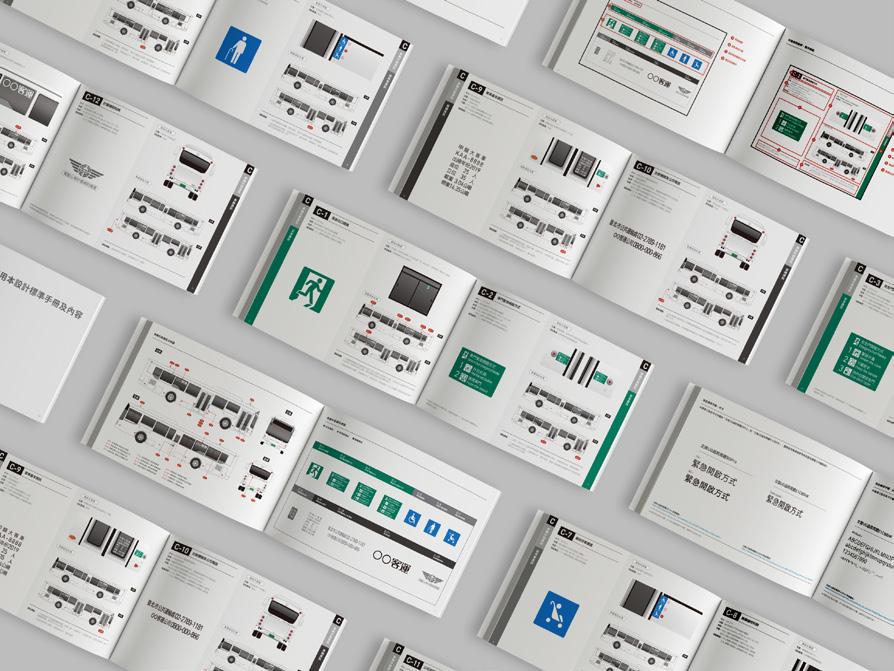
Taiwan's public buses currently have multiple visual elements and usually utilize techniques such as information overlay, making recognition more difficult for users. To improve the public transportation environment of city buses, TDRI and 247Visualart collaborated on the "Information Design Standard for Taiwan Public Bus" project. They reorganized the information hierarchy, and formulated visual element specifications and information presentation methods and positions. They also worked with the Ministry of Transportation and Communications, Vehicle Safety Certification Center, and the Highway Bureau to progressively revise four vehicle-related regulations and introduce a pictogram system and font specifications that align with international standards and incorporate humanistic thinking. The design standards have been extended to all bus categories.
The updates that will affect nearly 10,000 public buses in Taiwan will be diffused in the future by announcing the standards and adjusting and revising regulations. For this project, we guided vehicle operators in converging their information presentation methods, established a model for the information system of domestic public buses, optimized the public's everyday bus riding experience, and enhanced the image of Taiwan's public transportation.
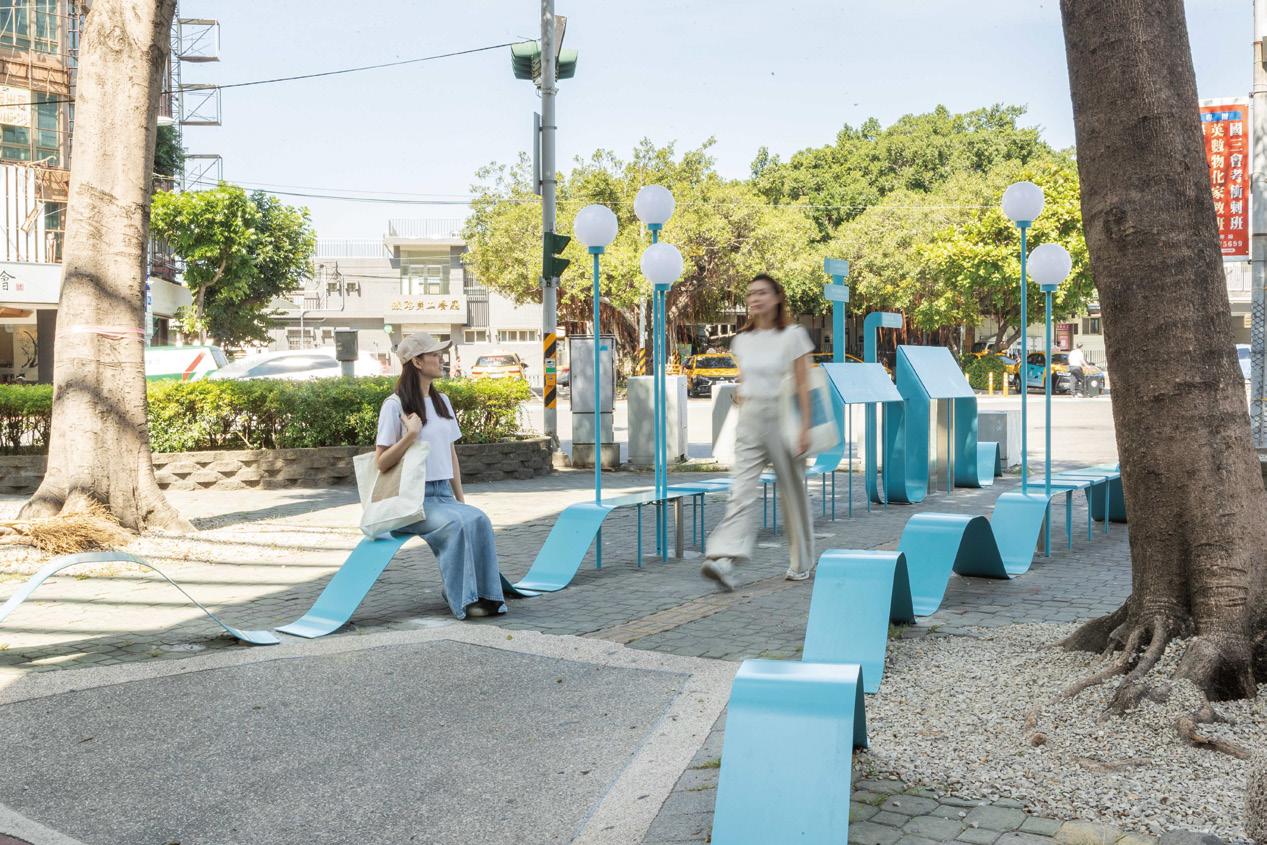
The "Design Movement for Public" project is an innovative mechanism: a co-creation platform for Taiwan's public works. It conducts meticulous research and front-end investigations, collaborates with multiple stakeholders to build innovative value, and then develops the most suitable integrated design and planning strategy. Since 2023, the project has expanded across 12 cities and counties, collaborating with over 50 cross-domain experts, 150 teams, and 60 public sector units to renovate 26 public spaces and services. The accumulated government investment has reached NT$1 billion.
The core of the project is "design thinking," which serves as an innovative tool for municipal governance. Aligned with major national policies, the public sector identifies urban development issues of public concern that will have a long-term impact on culture, society, and the economy. The scope of the transformation extends beyond immediate visible changes. Instead, from a long-term, higher-level perspective, it aims to develop a more comprehensive master plan to not only resolve current problems but also focus on more futuristic and forward-thinking developmental flexibility. In this way, the public environment, residents’ lives, service quality, and city image are all improved. Over the next three years, as the renovation projects are progressively completed, they will serve as key drivers and push Taiwan's public spaces and services toward the vision of "people-centered, cross-domain co-creation."
「學美.美學」計畫本身及各校改造成果,不僅囊括 Good Design、iF、金點設計獎…等全球共53座獎項, 亦曾獲《台灣建築雜誌》連續2年特別專輯報導,並發表於日本《事業構想》月刊、美國《Interior Design》、英國《Wallpaper》…等眾多國內外媒體。
3-3. Design Movement on Campus
"Design Movement on Campus" is a project that, through an open selection process involving schools and design teams, fosters collaboration between the education and design sectors. By integrating forward-looking design thinking with educational philosophies, teaching methods, and various design - including architecture, interior design, product design, and landscape design - the initiative has established 112 exemplary aesthetic learning environments over the past six years. These model spaces serve as benchmarks for schools, and teachers' professional development spaces across Taiwan, setting new standards for learning environments.
The project started with space, but the end goal is to inspire changes in people through learning environments. "Design Movement on Campus" is based on a communication platform for multi-party collaboration and drives mechanisms at all stages. It not only allows a space to become a venue in the experimental upgrading process, but also leads to the empowerment of teachers and students. As learning environments evolve into diverse spaces, the remodeling cases will reflect the latest trends in education. Many teaching spaces, including those designed to accommodate innovative teaching methods, are in urgent need of transformation, and various educational and activity spaces for special education students are successively joining the ranks. Demand for counseling and mentoring spaces is also rapidly rising; teachers and students have become design participants. The spirit of having the entire spectrum of users co-create campus environments is gradually taking shape in campus transformation.
The project itself and the remodeling results of various schools have won 53 awards from around the world, including the Good Design Award, iF Design Award, and Golden Pin Design Award. Magazine "Taiwan Architecture" also published special reports for two straight years, and reports have also appeared in Japan's "Project Design Online," the U.S.' "Interior Design," and the UK's "Wallpaper" magazines.
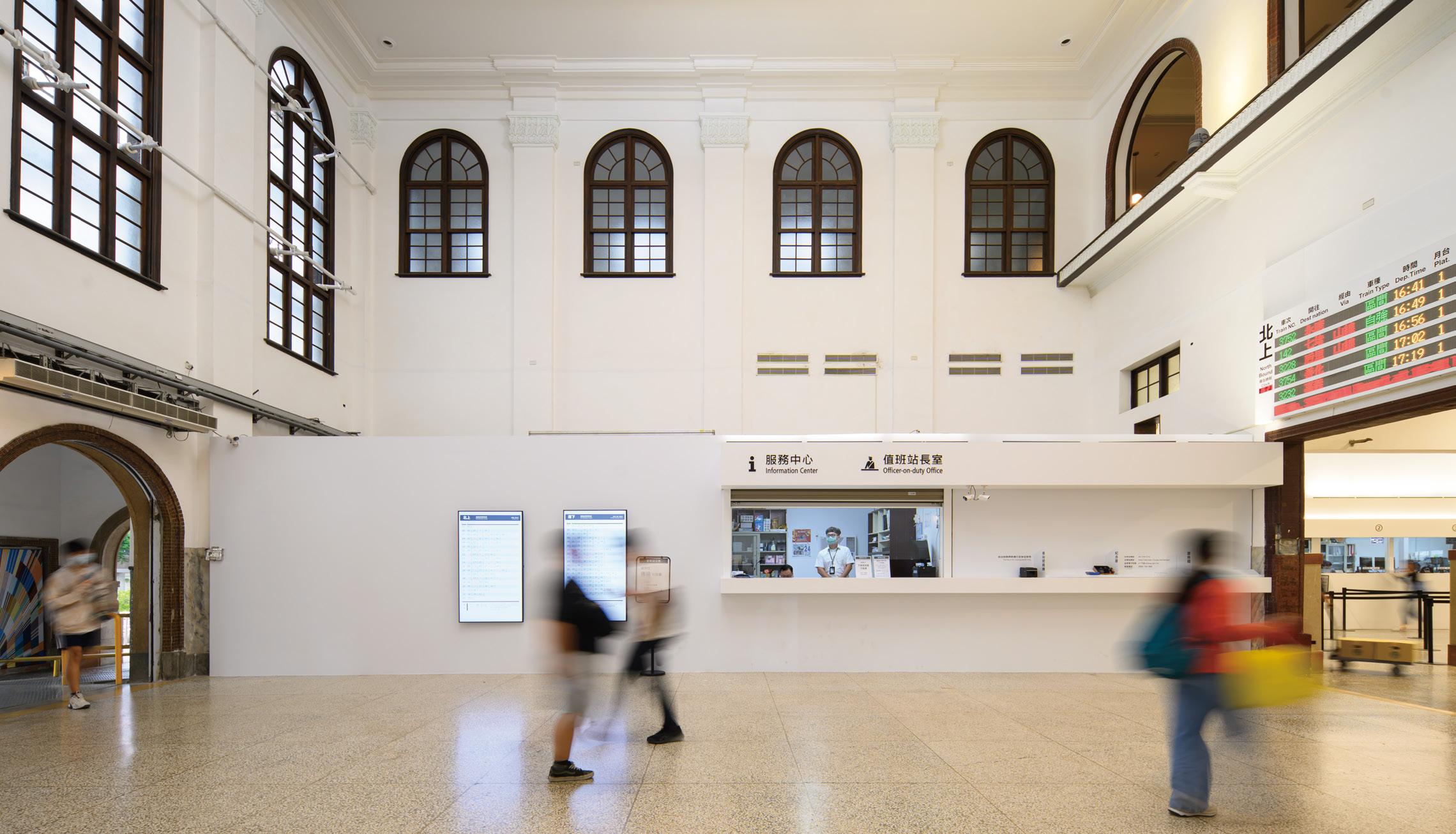
Tainan Station is a gateway into Tainan and an important traffic hub. It was first completed in 1936,carrying the city's historical memories, and bearing witness to the changes in Tainan over the years.
In conjunction with the 2024 Taiwan Design Expo, TDRI and Taiwan Railway once again joined forces to launch the "Tainan Progressing" micro-renovation project. In the transitional period between the restoration of a historical monument and the construction of a new station, "Tainan Progressing" became a bridge connecting the past and future. It sought to improve and renovate the central industrial zone environment under the overriding doctrine of preserving the historical monument. Through subtractive organizing, system integration, and lighting design, the historical monument's spaces, service routes, wayfinding system, hardware facilities, and bento stores were comprehensively optimized, making the station brighter and more comfortable with clearer divisions and smoother circulation. In addition to improving the travel experience, the graceful façade of the historical site was also highlighted. A new pictogram system was introduced during this renovation and supplemented by natural plant landscapes to align the historical building with current trends, thereby creating a new atmosphere that blends the classical, the modern, and Tainan's unique urban vibes.
3-5. Public Signage System Design Verification Workshop
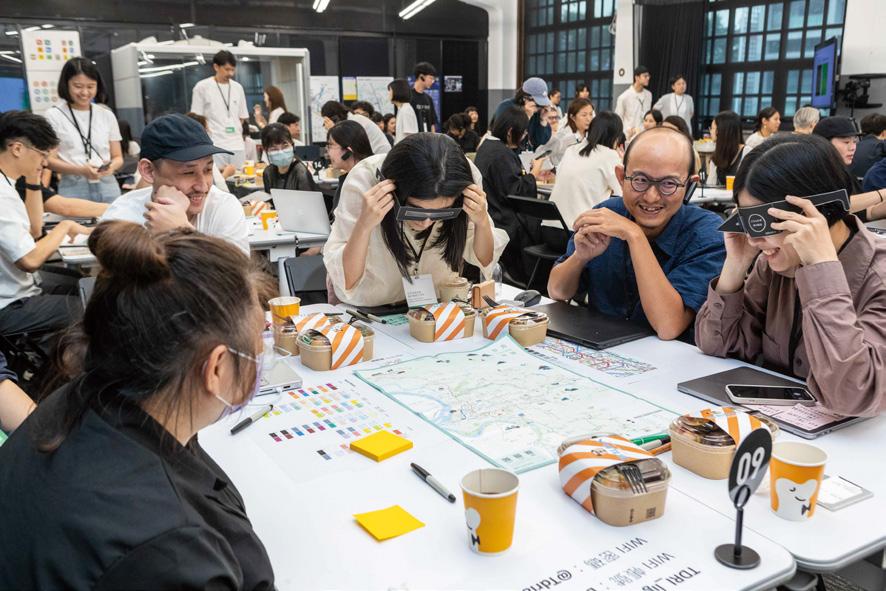
"Environmental signages" are prevalent in daily life, and can be found at transport hubs, medical institutions, parks, and campuses. The main function of these signages is to guide users to their destinations smoothly. To improve the wayfinding experience in public spaces, TDRI teamed up with Japanese design group GK Sekkei to launch the "Public Signage System Design Verification Workshop" at July 12, 2024. The workshop focused on "design verification methods" for environmental signages. Through the course and practical operations such as layout logic and professional tools simulating situations such as visual impairment, designers were able to master the essentials of verification and develop professional environmental signages capabilities. The workshop attracted nearly 100 cross-field design professionals, along with public agencies, and had a satisfaction score of five points. Participants described the content as practical, rich, and greatly beneficial and applicable to projects that are currently being implemented.
發展社會設計創新 Development of Social Design Innovation 4
Reflect on industry, social, and environmental issues; integrate local businesses, NPOs, and NGOs; and facilitate public participation in interdisciplinary design to achieve system innovation, build new life models, and increase overall social value. Concurrently, combine new material knowledge with innovative application to revitalize traditional crafts and facilitate transmission and use social innovation to drive revolutionary reforms in all aspects of society.
T22從2021年底走入花蓮石材產業,經過四年的經營與推動,不僅推出了結合設計與通路的聯名產品、石 材特展,更走入花蓮工廠進行大規模改造,並透過地震板見學團與 Stone Salon 等創新媒合計畫,成功媒 合11件石材多元應用案例,如米其林餐廳、國際飯店、民宿、藝術空間、甜點店、公共藝術、公共家具及 企業禮品等不同合作案型,展現出花蓮石材產業在品牌價值與市場拓展上的重大成就,讓花蓮的業者重新 找回信心,凝聚成共生共好的團隊「究石都意俱樂部」,未來將持續為花蓮石材產地共同努力。
4-1. Revitalization of Local Industries with Design
For the third year, T22: Yingge teamed up with Pottsware Yinggooo to organize "Yingge Open House." This event connected 30 exhibitors, including local ceramic factories, Yingge Old Street proprietors, and senior craftspeople, and offered five professionally guided routes. Three famous Japanese pottery towns were also invited to establish a presence. For the first time, six kilns and three local elementary schools were matched to work together on exhibitions and sales.
The T22 project entered Hualien's stone industry at the end of 2021. Following four years of operations and promotion, co-branded products integrating design and distribution were launched, along with a special exhibit on stoneware. Large-scale renovations were also carried out inside Hualien factories. Through innovative matching programs such as the Seismic Slabs Study Group and Stone Salon, 11 diverse applications of stone were successfully matched with entities such as Michelin-starred restaurants, hotels, guesthouses, art spaces, dessert shops, public art, public furniture, and corporate gift suppliers. These different cooperation models demonstrated the major achievements made by Hualien's stone industry in brand value and market expansion and allowed Hualien's businesses to regain their confidence. Businesses formed the "Just Do It Stone Club" cooperative, which will continue working hard for Hualien's stone industry in the future.
The 2024 Taiwan Design Expo was jointly organized by the Ministry of Economic Affairs' Industrial Development Administration and Tainan City Government and jointly executed by TDRI and Tainan City Government's Cultural Affairs Bureau. Its theme was "The Next 400." The expo welcomed over 4.2 million visitors, and was praised by Tainan residents as well as people from all over Taiwan. The visitor satisfaction rate was 92%, and the expo generated an estimated value of NT$5 billion.
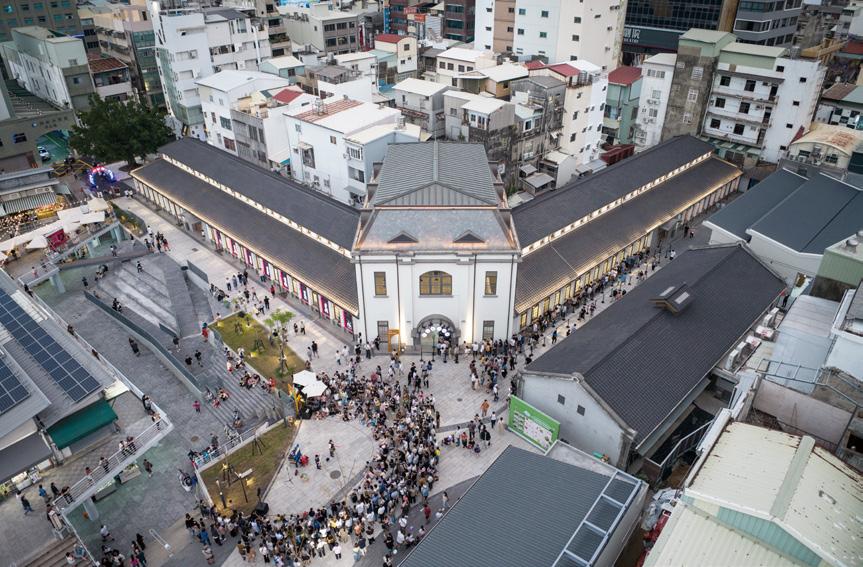
The main zones were Tainan Art Museum Building 2, West Market, and Banana Warehouse. Three hundred design teams and nearly 550 industry participants came together to carefully plan nine major themed exhibitions, five satellite exhibitions, 15 design responses, and nine urban revitalization projects. They presented content on Tainan's traditional industries, forward-looking industries, and introduction of design.
The design energy that is active everywhere in Tainan was explored through the cultural appeal of Tainan blend of old and new. A dialogue on municipal governance and design thinking was also initiated to guide the public to traverse the long river of history and witness the city transformation and growth.
Foster the participation of top Taiwanese cross-disciplinary teams on international stages and connect with global design resources and networks to amplify Taiwan's voice. Leverage design as a medium for international exchange to enhance Taiwan's industrial visibility, foster collaborative opportunities, and showcase the depth and strength of Taiwanese design globally.
5-1. 建構國際設計網絡
鏈結全球設計社群,拓展台美設計合作
2024年11月設研院參與世界設計之都 World Design Capital (WDC) 2024 聖地牙哥 / 提華納系列活動,以 「Beyond Boundaries - Design a Better World」為主題,探討設計如何促進城市發展與社會創新。設研院主 辦“Taipei Night”於 WDC Finale Week 開幕,吸引全球65位設計專家、當地政府及產學界參與,促進跨國 設計對話,並與美國工業設計師協會(IDSA)、加州大學聖地牙哥分校 Design School(UC San Diego D Lab)、The Design Academy、墨西哥 CETYS 大學簽署合作備忘錄(MoU),展現國際合作成果。
設研院於WDC設計政策論壇(DPC),發表「City Design Power Index Model」,與國際專家探討設計在
城市永續中的應用。同時,於城市網絡會議(NoC)代表台北市,並與新北市政府共同分享設計實踐經 驗,強調設計在公共服務與社會創新中的關鍵角色。並受邀參加首屆「唐·諾曼設計獎頒獎典禮(Don Norman Design Award,DNDA)」,深化與國際設計組織的交流,為未來合作奠定基礎。本次參與充分展 現設研院在國際設計界的影響力,推動台灣設計邁向全球舞台。
5-1. Building International Design Networks
Linking the global design community, expanding Taiwan-U.S. design cooperation
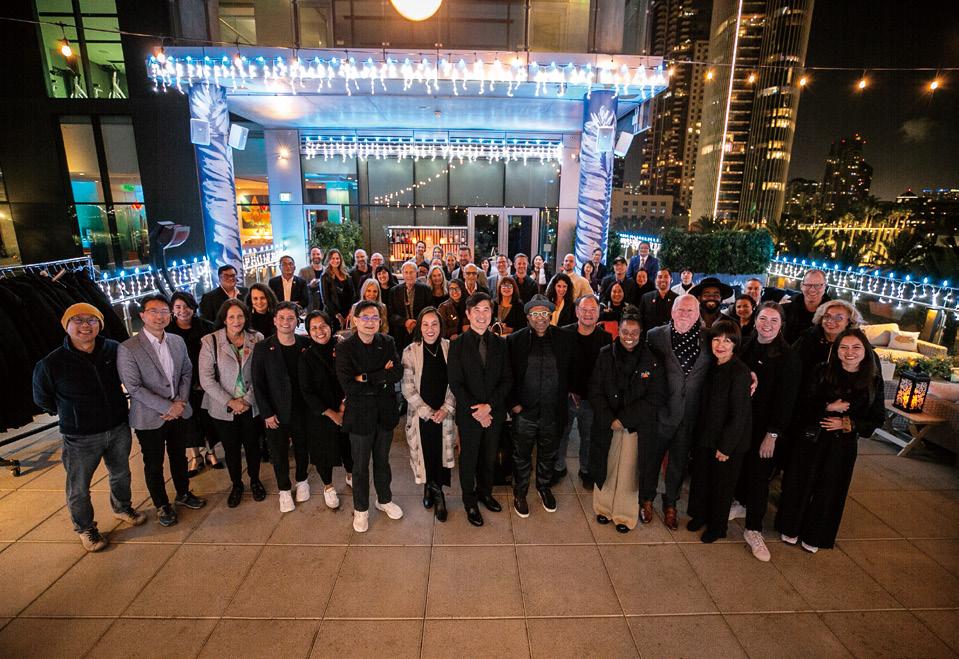
In November 2024, TDRI participated in World Design Capital (WDC) San Diego Tijuana 2024 activities, whose theme was "Beyond Boundaries - Design a Better World." They explored how design can boost urban development and social innovation. The institute also hosted "Taipei Night" during the WDC Finale Week, attracting the participation of 65 design experts and representatives from local governments, industry, and academia from around the world. This event promoted transnational design dialogue, and TDRI signed memorandums of understanding (MOU) with the Industrial Designers Society of America (IDSA), University of California San Diego Design Lab, The Design Academy, and Mexico's CETYS Universidad, revealing the achievements made in international cooperation.
TDRI presented its "City Design Power Index Model" during the WDC Design Policy Conference (DPC) and discussed the applications of design in urban sustainability with international experts. It also represented Taipei at the Network of Cities
5-2. Expansion into the International Design Market
Deepening connections with New Southbound Policy countries, facilitating different types of design cooperation
Major milestones relating to the deepening of design exchanges between TDRI and Southeast Asian countries were reached in 2024, with TDRI successfully launching different types of influential international collaborations with the Philippines, Indonesia, and Thailand. TDRI signed a design cooperation MOU with the Philippines. It held the Design Talk and Business Matching event in Manila and Cebu, with a focus on the circularity and sustainability of product design. It also promoted the Golden Pin Design Award, paved the way for the Cebu City Government to participate in international city design research, and persuaded The Design Center of the Philippines to form a delegation and attend Taiwan Design Week. Meanwhile, TDRI renewed its design cooperation agreement with Indonesia's Ministry of Industry and held the Design Talk and Business Matching event in Jakarta and Bandung, which received an enthusiastic response from furniture and packaging design businesses. In 2024, Indonesia once again commissioned TDRI to hold a design workshop, award-winning IGDS designers were invited to Taiwan, and plans were made for designers from well-known domestic companies to join for the first time to explore new trends in the integration of technology, sustainability, and culture.
TDRI also signed an MoU with the Thai Lifestyle Product Federation (TLPF), demonstrating the Thai industrial sector's recognition of Taiwan's design strengths. TDRI will help link Taiwan's design sector with Thailand's industries, provide excellent design services, and open up a new chapter of mutually beneficial cooperation. Transnational interaction has not only successfully raised Taiwan's international design profile, but also deepened its design connections with New Southbound Policy countries, creating more opportunities for international industry-government-academia design cooperation.
5-3. 行銷臺灣設計形象
鏈結全球設計社群,拓展台美設計合作
2024年台灣首度參與全球設計盛事米蘭設計週,以台灣館展覽呈現設計的多元面貌與潛力,策展主題以「台 灣設問:Who is going to raise the questions? The questions are designed in Taiwan」為核心,探討設計在 當代社會中的角色,彰顯其解決全球議題的價值。呼應設計週主題「Materia Natura」(自然物質),台灣 館以「永續循環」與「友善環境」為策展原則,展出15件金點設計獎作品,結合在地文化與全球議題,從設 計視角提出關鍵問答,邀觀眾思考人類與環境的未來關係。
Continuing to promote Taiwanese design to the world, tackling Milan Design Week for the first time
Taiwan participated in Milan Design Week for the first time in 2024. The Taiwan Pavilion exhibition presented the diverse aspects and potential of design. The exhibition's theme was "Who is going to raise the questions? The questions are designed in Taiwan." It investigated the role of design in contemporary society and demonstrated its value in resolving global issues. The pavilion also responded to "Materia Natura (matter nature)," the theme of Milan Design Week 2024, by designating "sustainability and circularity" and "friendly environments" as its curatorial principles. On display were 15 Golden Pin Design Award winners. They integrated local culture and global topics and used design perspectives to pose important questions and answers, inviting visitors to reflect on the future relationship between humans and the environment.
This exhibition was not only about expanding into the international design market, but also about promoting Taiwanese design through multiple channels. During Milan Design Week, the exhibition generated nearly 250 local and international media reports, demonstrating its broad influence. TDRI also took advantage of this opportunity to promote upcoming exhibitions in Taiwan on Italian industrial design and Spanish design and discuss bilateral Design Week cooperation with DesignSingapore Council. These achievements greatly boosted the international image and competitiveness of Taiwanese design.
Forging the global influence of Taiwanese design: using design to drive the future, connect creativity and internationality
The theme of Taiwan Design Week 2024 was "The Gateway," which symbolized the passage leading to the world used by Taiwanese design. It also meant exploring the possibilities of AI technologies linking past experiences with future innovation. The aim of Taiwan Design Week is to showcase Taiwan's design perspectives and interact with the world. This year, 34 design teams from Taiwan and abroad and over 50 international public figures participated in the event, which included nine design forums and five design nights. The event also featured a series of related creative activities such as online film festivals and book fairs.
This year, Taiwan Design Week invited Poland to serve as the Partner Country. The depth of Taiwan and Poland's bilateral design exchanges was seen through themed exhibits and the Taiwan-Poland Future Design Dialogue forum. Sixteen speakers shared their design perspectives during the forum. TDRI signed collaboration MOUs with Polish and South Korean design organizations to promote transnational design exchanges. Organizations and international media delegations from the Philippines, Czech Republic, UK, Japan, Thailand, Indonesia, and Australia came to Taiwan for the event, helping to broaden Taiwanese design's international visibility.
Through international links and creative exchanges, Taiwan Design Week will continue to deepen the international influence of Taiwanese design, create more cooperation opportunities and international visibility for the design industry, and demonstrate the infinite possibilities of a design-driven future.
DesignPin's core concept is "More design, better life." It shows how aesthetics and tastes can change lives through the Golden Pin Design Award and award-winning domestic and foreign design works. It connects Taiwan Design Museum and Not Just Library, demonstrates the innovative capabilities of Taiwanese design through various activities such as exhibitions and readings, and conveys the soft power of Taiwanese design to the world.
In 2024, DesignPin launched eight themed plans based on the results of its coaching programs. One was "Taiwanese Food Impression," which had Taiwanese agricultural products as the spindle and integrated packaging design to highlight the unique charms of local ingredients, thereby demonstrating the added value of design aesthetics and creating new brand images for Taiwan's agricultural products. In conjunction with the exhibition "Spanish Landscapes: Timeline to Design," DesignPin introduced Spanish lighting and furniture to integrate Spanish design into daily life and narrow the distance between international design and daily life
DesignPin also curated themed pop-up events during the Golden Pin Design Award Exhibition that brought recent winners together and presented the latest trends in and diverse styles of Taiwanese design. Through these innovative plans, DesignPin has become the best showcase of Taiwan's design capabilities. It allows domestic and foreign tourists
Incorporate the historical background and environmental features of the old tobacco plant; integrate "Taiwan Design Museum" and "Not Just Library"; and design "Design Pin" service areas for stores. Provide an exhibition, learning, and creation spaces for design and life aesthetics enthusiasts, and create comfortable exchange spaces that inspire creations for designers and creative people.
"Taiwan Design Museum (TDM)" was established in 2011. It is the global ethnic Chinese diaspora's first specialized museum with "design" as the core. The museum collects design classics and connects design and life through varied and multidisciplinary exhibitions. Its objective is to provide design aesthetics education. In 2024, the museum organized 10 multidisciplinary exhibitions, with topics ranging from public services and industrial innovation to international trends, aiming to deepen the public's understanding of and identification with design and strengthen design's social influence.
Major exhibitions in 2024 included "Educational Textbook Design Exhibition 2024: See Different," which was organized by the Ministry of Education. It displayed award-winning junior high and elementary school textbooks and explored how to create possibilities for education through design. "Design with Circulating Water" was a collaboration with the Taiwan Institute of Landscape Architects. It presented a dialogue between the city of Taipei and its landscapes. "Spanish Landscapes: Timeline to Design" was curated by Spanish design studio OdosDesign and invited 60 designers to express the characteristics and cultural connotation of Spanish design from classic to contemporary.
The museum also organized a children's design camp for the first time. "Design Hide-and-Seek Summer Camp in TDM" explored seven major design areas, aiming to cultivate children's creativity and aesthetic perceptions from an early age. Through these exhibitions and activities, Taiwan Design Museum presents design and serves as an important platform connecting education, industry, and the international community. It aims to continue broadening design's influence and transmitting Taiwan's design energy to the world.
"Not Just Library" is a "book bathhouse" that was formerly the Songyan Women's Bathhouse. It combines books, scents, plants, and sunshine to create a nook for the soul that has both design and culture. It's not only a library, but also a platform that brings different perspectives together and stimulates cross-disciplinary dialogue. Through the theme of "not just," it has created a new cultural experience.
In 2024, Not Just Library aligned with Taiwan Design Museum's exhibition themes, and they jointly promoted design aesthetics education and organized six inspirational book fairs. "The Best Dutch Book Designs" showcased the innovation of the Netherlands' book designs and the beauty of its printing and binding craftsmanship. "Kids Around the World" used photos and illustrations to present the daily lives of children from around the world, inspiring imagination in education. "The very old, brand new neue Serie57® Exhibition" displayed the "neue Serie57®" font in its entirety for the first time and explored the history of and innovation in font design. "Islands: Type Design from Impressions to Expressions" was a collaboration with justfont. A hundred works by young Taiwanese designers used fonts to narrate Taiwan's story. Winsing Art Place curated the "Realm of Stories: A Journey Through Contemporary Spanish Architecture" exhibition, which led visitors on an in-depth exploration of the distinctive charms of Spanish architecture. "Letters & Symbols - Stories of Designers" was held in conjunction with Taiwan Design Week and its Partner Country Poland, and expressed universal, cross-cultural emotions through ensign design.
Not Just Library also planned over 20 talks during the course of the year to deepen the understanding of exhibition themes. Not Just Library is not just a place for reading, but also a cultural incubator that stimulates inspiration and expresses the unlimited possibilities of design through interdisciplinary cooperation.
★ Design Movement on Campus - Zhongfeng Elementary School, Nantou County "Magic Tree Classroom"
★ Textbooks Re-Designed
★ Notail & Banana Animal School
★ Taiwan Public Pictogram System (TPPS)
★ 2023 Taiwan Design Expo - When Mountains and Rivers Start
★ Pro-Iroda Industries – Tenderflame Katana tabletop fire pit
★ Zero-Cement Units – CORAL.ctor coral construction
★ Hibāng - first completely circular eyewear that combines functionality and sustainability on the planet
Red Dot Design Award 2024
— Red Dot winner
★ 2023 Hakka Expo: Taiwan Pavilion "Roots and Prosperity - Better with Hakka"
7
iF DESIGN AWARD 2024
— Interior Architecture
★ Design Movement on Campus x CloudForm Laboratory x Kuang Jen Catholic High School, New Taipei City: "Resonance Field of Light and Sound"
★ 2022 Taiwan Design Expo - Make Pro City of Creations
— Architecture
★ Design Movement on Campus x Meta House x Guang Wu Primary School, Kaohsiung City: "The Recycling Center in Guang Wu Primary School "
— User Experience (UX)
★ Electoral Aesthetics x Central Election Commission: "Election Bulletin"
— Service Design
★ IDDI x UKL Enterprise Co.: "UKL PALF Pineapple Leaf Fabrics and Yarns " - design project for functional clothing made from recycled and eco-friendly pineapple fibers
— Product
★ IDDI x UKL Enterprise Co.: "Multi-Way Outfits in PALF Pineapple Leaf Fabrics"
- design project for functional clothing made from recycled and eco-friendly pineapple fibers
★ IDDI x Pro-Iroda Industries: "Tenderflame Katana"
- product design focused on biofuel producing safe and clean flames
★ IDDI x Gau Yang Yi: "Low-carbon furniture made from Taiwanese materials " - value added project utilizing Taiwan serpentine low-carbon furniture and service experience innovation
★ IDDI x Hwa Meei Optical Co.: "720 Sustainable Circular Eyewear "
Research and Development International Development
2022~2024
-Developed 7 digital AI design tools, databases, and platforms that garnered 35,000 users and over 1,300 members.
-Developed over 42 sets of design thinking tools, organized 55 workshops to promote industry innovation, empowered 2,000 people through design.
-The number of registered research and development results reached 82 (including patents, trademarks, writings, trade secrets), of which the number of patents reached 10
-Published 16 books, including guidebooks, on industry innovation, held eight international research presentations, reached over 5,700 people.
2022~2024
-Innovation results were extended to 28 countries (increase of 40% compared to 2023).
-Won 117 domestic and international design awards and competitions.
-Collaborated with over 29 international design-related organizations, signed 33 memorandums of cooperation.
-Accumulated over 6,629 international media reports.
Industry Innovation Public Services
2022~2024 2022~2024
-Developed 6 strategies for cross-domain design innovation.
-Administrated 180 projects that introduced design into industry, with 2,622 teams directly and indirectly participating in the projects.
-Promoted industry-academia cooperation, resulting in the participation of 5,955 students and the cultivation of 10,184 personnel skilled in industry innovation.
-Corporate investment totaled NT$600 million with a related output value of over NT$1.2 billion and 4,197 companies sharing in the results.
-Rallied 69,032 people to co-create participatory interactive experiences.
-Collaborated with 182 public sector units to promote innovation in public services (27% of the public sector).
-Established over 19 design specifications, made 16 regulatory proposals.
-Reached 20,333 innovation talents in the public service sector (4.6% of civil servants).
-Gave rise to investment of NT$4.69 billion in design innovation by the public sector, with a tourism output value of NT$13.16 billion and a tourism output value benchmark of over 151 million experiential participants.
國家圖書館|國立公共資訊圖書館|新北市政府|臺中市政府|彰化縣政府|臺南市政府|臺南市文化局 |臺南市美術館|高雄市政府|衛生福利部附屬醫療及社會福利機構管理會|國防醫學院三軍總醫院松山 分院|臺北表演藝術中心|新北市文化基金會|交通部中央氣象署|Taipei Economic and Cultural Office in the Philippines|Manila Economic and Cultural Office|Design C enter of the Philippines
教育單位 :
國立政治大學創新與創造力研究中心|UC San Diego Design Lab|Domus Academy Design School|
CETYS University|iF International Forum Design GmbH
各界夥伴:
財團法人中華民國對外貿易發展協會|仁寶電腦工業股份有限公司|財團法人資訊工業策進會|宏碁股份 有限公司|上威企業股份有限公司|佳世達科技股份有限公司|上銀科技股份有限公司|WDO世界設計組 織|光寶科技股份有限公司|和碩聯合科技股份有限公司|財團法人工業技術研究院|友松娛樂股份有限 公司|財團法人台北市文化基金會|中華民國設計學會|台灣包裝設計協會|台灣互動設計協會|中華平 面設計協會|台灣服務科學學會|財團法人自行車暨健康科技工業研究發展中心|財團法人精密機械研究 發展中心|米菲多媒體股份有限公司|財團法人石材暨資源產業研究發展中心|成大昶閎科技股份有限公 司|鎰呈行股份有限公司|建大工業股份有限公司|盈傑木業有限公司|苔曙企業股份有限公司|真福聯 合診所|臺南市國華友愛街區發展協會|臺南市孔廟商圈產業促進會|彰化縣小西文化協會|財團法人車 輛安全審驗中心|社團法人新北市陶次瓦代代合作會|張瑪龍陳玉霖聯合建築師事務所|台灣電力股份有 限公司|合美工程股份有限公司|華碩電腦股份有限公司|藝途科技股份有限公司|桃園國際機場股份有 限公司|台灣基督長老教會馬偕醫療財團法人馬偕紀念醫院|赫綵電腦有限公司|元茂國際企業股份有限 公司|浮空有限公司|黑洞創造股份有限公司|天下雜誌股份有限公司|樂鈞科技股份有限公司|全家便 利商店股份有限公司|品客國際股份有限公司|圓祥大眾傳播有限公司|美兆文化事業股份有限公司|忠 泰生活開發股份有限公司|黑潮文化股份有限公司|巨思文化股份有限公司|非常木蘭投資股份有限公司 ||欣傳媒股份有限公司|英屬蓋曼群島商家庭傳媒股份有限公司城邦分公司|聯合線上股份有限公司| 方法原創有限公司|亞洲商訊網路股份有限公司|一頁文化制作股份有限公司|立詰企業有限公司|誠品 生活股份有限公司|財團法人中華民國兒童福利聯盟文教基金會|台灣日立江森自控股份有限公司|玹瓏 實業股份有限公司|活立國際事業有限公司|愛進化科技股份有限公司|必應創造股份有限公司|遊戲橘 子數位科技股份有限公司|GK Design Group|公益財 団 法人神戸ファッション協会|Design Business Chamber Singapore(DBCS)|Industrial Designers Society of America(IDSA)|Eco-Mo Foundation |Monotype Software Consulting(Shanghai)Co., Ltd|THAI LIFESTYLE PRODUCTS FEDERATION
台灣設計研究院 Taiwan Design Research Institute
2024 年報 Annual Report
總編輯
張基義
副總編輯
林鑫保 艾淑婷 劉世南
編輯委員
趙麗玲 蘇秋珍 李建臻 劉矩宏 洪明正
吳湘寧 孫善蓉 蔡昀蓉 吳於軒 陳廷碩
簡思寧 許盈盈 黃麗寧 王冠婷 楊玉婷
陳筱廸 鄭育芬 何英碧 常靜潔 周如蕙
陳郁真 王翊任 林雁淳 劉宛育 謝瑩奕
許佳惠 趙尉翔
執行編輯
陳琬珺
共同編輯
陳彥伶 陳玗君 黃莉庭 黃柏倫 郭瑀琁
郭憶璇 陳彥綸 賴毓庭 謝宇昕 廖柏政
陸聯婕 彭毓雲 張竣能 呂珮瑜 林 盼
林盈臻 何婉慈 施伊庭 張嘉云 陳儷方
黃瑋儒 范乃文 蘇祺斌 陳俋伶 陳大齊
陳姵樺 張詠凰 李雅涵
平面設計
角白設計
出版單位
財團法人台灣設計研究院 台北市110信義區光復南路133號 (松山文創園區)
Tel: +886 2 2745 8199
Fax: +886 2 3322 9028
Website: www.tdri.org.tw
Chief Editor
Chi-Yi Chang
Deputy Chief Editors
Oliver Lin, Nina S.T. Ay, Shyhnan Liou
Members of the Editorial Board
Li-Ling Chao, Sofina Su, David Lee, Chu-Hung Liu, Patrick Hung, Charlene Wu, Steffy Sun, Yun Rong Tsai, Vivian Wu, Ting-Shuo Chen, Isis Chien, Ying-Ying Hsu, Lovelyn Huang, Summer Wang, Carol Yang, Eden Chen, Janice Cheng, Becky Ho, Ginger Chang, Ruby Chou, Jill Chen, Eason Wang, Nancy Chen, Yan-Chun Lin, Wan-Yu Liu, Ying-Yi Hsieh, Agnes Hsu, Wei-Hsiang Chao
Managing Editor
Wan-Chun Chen
Co-Editors
Yen-Ling Chen, Yu-Chun Chen, Li-ting Huang, Ben Huang, Jessica Guo, Yi-hsuan Kuo, Yen-Lun Chen, Rita Lai, Yu-Xin Hsieh, Po-Cheng Liao, Ruby Lu, Doris Peng, Eddie Chang, Pei-Yu Lu, Pan Lin, Ying-Chen Lin, Sarah Ho, Yiting Shi, Chia-Yun Chang, Leigh Chen, Wei Huang, Irene Fan, Micky Su, Yi-Ling Chen, Michael Chen, Ebbie Chen, Yung-Huang Chang, Claire Lee
Graphic Design
WHITEr Design Studio
Publishing Organization
Taiwan Design Reseach Institute
No. 133, Guangfu South Road, Xinyi District, Taipei City (Songshan Cultural and Creative Park)