Vol. LIV, No. 14
The Signal
Serving The College of New Jersey since 1885
For the love of science: Professor George Leader’s daunting trip

by George Leader
By Sky Pinkett
Features Editor
Two thousand kilometers long, temperatures that can reach over 100 degrees and not a single body of water or place of shelter in sight. Sounds like a fun vacation spot, right?
This difficult terrain is the Namib Desert. And in 2024, archaeologists George Leader and Dominic Stratford spent 12 days braving this harsh terrain in the name of research.
“I work in Africa, southern Africa,” Leader said. “I study human evolution archaeology, so human beings’ ancestors. I study deep time human evolutionary archaeology.”
Leader spends many summers in South Africa and Namibia collaborating with an international research team that engages in field work. For him personally, he has a very specific aspect of human archaeology that he’s passionate about exploring.
“What I’m really interested in are the stone tools that our ancestors made about a million and a half years ago,” Leader said. “So that’s sort of my area of expertise. And in the Namib Desert of Namibia, it’s the oldest and one of the driest deserts on the planet where there’s evidence that our ancestors like Homo erectus were occupying that space.”
TCNJ offers bundled tuition and course material for fall semester
By Ashley Ragone News Editor
In an email sent to students on April 23, Associate Vice President and Dean of Students Jordan Draper announced the launch of “TCNJ Book Bundle,” a program intended to simplify how course materials are received.
In a packaged fee placed on the tuition bill automatically, students can choose to pick up or ship their required course materials before the first day of class. It will be offered for the fall 2026 semester at $347 for full-time undergraduate students and $175 for part-time undergraduate students.
“It’s a program with over 220 campuses and over a million students using our program across campuses and we’re growing,” Barnes and Noble Manager Kimberly Zaun told The Signal in an interview. “The main reasons campuses are choosing to go with inclusive access is going to be affordability, ease of access and the student choice and convenience factor is really, truly what’s driving its growth.”
While faculty still get to choose their class materials and there will be no meaningful differences in the classroom, the College aims to provide a more affordable way to support student learning.
“We know that there’s a fair amount of students that actually can’t get their books until after they get their refund check…so students are starting classes for



two weeks without books,” said Draper. “So this program puts in on the term bill and essentially the college pays Barnes and Noble, and then the students pay the College.”
The program was originally created after the pandemic in 2020, with schools looking to create an easier way for students to receive class materials without having to travel and having a lower cost option.
As explained in the April 23 email, students will be prompted to review their chosen courses to see what their pricing options are. Based on the price of the individual books compared to the “Book Bundle” fee on the tuition bill, students can decide if they want to opt out of the program.
Mercer County Community College students only residing on campus are not eligible for the program, while transfer students are. Items not eligible for the program include those that are only usable once, including lab equipment and medical kits.
“Our goal is truly to help the students who need it,” said Zaun. “The majority of students save money with this program across the country, hence the reason why we’re doing it and opting everyone in. Students that are unsure should absolutely come to the bookstore. Our goal will never be to tell everyone to be opted in if they should not be.”
across the Namib Desert
With this being the case, Leader and his best friend and colleague, Stratford, set out to explore the Namib Desert with a series of questions they were seeking to have answered about our human ancestors.
“What we’re interested in looking at is when could these hominids live in this desert? It’s very dry now, but at certain times it was wet when rivers broke through. And so which kind of environment was it?” Leader said as he went through their list of questions. “Was it sort of this when a river broke through, was it a tiny little stream? How much vegetation did it support? And thus, did it support enough that we find fossils of… all these animals? So we’re basically trying to reconstruct the environment as it was 500,000 years ago when Homo erectus was still moving through there, or 100,000 years ago when modern humans were actually out there. That’s our goal research-wise.”
To describe their work more clearly to those unfamiliar with the archaeology field, Leader gave a relatable example.
“So if a developer said that they were going to take a big, empty piece of land where you’re from… and they’re going to build 100 new houses in a development there, you would want to send archaeologists first to see if there’s any old Native American sites or old historical sites that were important that need to be saved and studied. And so you would have archaeologists walking back and forth and maybe digging some test
pits to look for the kind of artifacts that were there.”
“The same is really true for what we’re doing here in the desert,” Leader continued. “But we just did it over 160 kilometers over an entire desert.”
Because of the extreme environment of the Namib Desert, Leader and Stratford originally decided to reduce their exploration team to just the two of them. However, as the remarkable prospects of their trip settled in, they decided that this incredible experience was something worthy to be shared with the world.
“We were like, man, this is actually going to be really cool and totally different than the normal archaeology we do.”

Inside TCNJ’s push for more state funding
By Isabella Darcy Editor-in-Chief
Governor Mikie Sherrill on March 10 stood in the Assembly Chamber at the New Jersey State House to give her inaugural budget address for the coming fiscal year. Because New Jersey is earning less than it is spending, Sherrill proposed cutting state spending and scaling back some state programs.
For the state’s public four-year universities, the governor’s $60.7 billion plan would keep their operating aid at virtually the same levels as the current fiscal year. The College asked for nearly $36 million for FY27, but the governor is recommending it receive about $35 million. That’s a less than 1% increase from the FY26 budget.
“We’re grateful that we were not cut,” said Kari Osmond, the College’s associate vice president for government and community relations. “But, remaining flat is in itself a cut, because costs have increased, utilities have increased, healthcare has increased.”
There is still time for the College to receive more money from the state. The legislature is currently reviewing the governor’s budget proposal and holding hearings to decide what adjustments to make.
As hearings take place, the campus community is advocating for more state
investment in the College. Administrators, faculty and students are telling lawmakers why the College deserves more funding.
Once hearings are over, the legislature will prepare the final Appropriations Act and give it to Sherrill. The governor can then either sign the legislation as is or use her line-item veto power to cancel specific spending items.
In the case of a veto, the legislature can override the governor with a two-thirds majority in both houses. The budget must be finalized and approved by July 1, the start of FY27, to avoid a government shutdown.
College administrators make their case in Trenton
Working closely together, Osmond, President Michael Bernstein and Raj Manimaran, the director of the Office of Government and Community Relations, are leading the College’s advocacy efforts in Trenton. The administrators are going to the State House and pushing for both immediate needs and long-term funding initiatives.
One priority in the effort is reevaluation of the state’s Outcomes-Based Allocation formula, which distributes aid based on performance metrics rather than enrollment. Currently, the College receives less OBA funding than most other public four-year institutions in the state.
Archaeologists George Leader and Dominic Stratford braved the Namib Desert in the name of research.
Photo
Photo by George Leader George Leader walking in the desert.
Acting NJDEP Commissioner visits TCNJ for Earth Week’s politics forum
By Raeanne Raccagno Correspondent
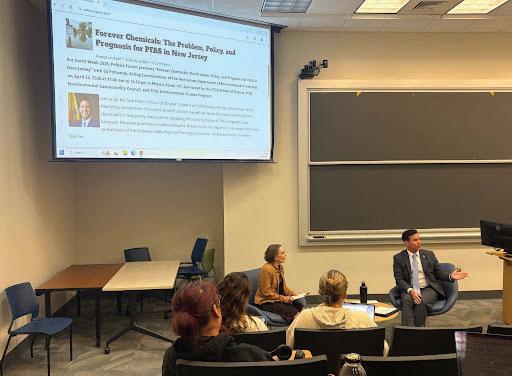
The acting New Jersey Department of Environmental Protection, Ed Potosnak, was the guest speaker for Earth Week’s politics forum to discuss New Jersey’s current state of “forever chemicals” and what state supervision is underway.
This is the second visit to the College from a NJDEP commissioner, following previous commissioner Shawn LaTourette’s visit in the fall.
This event was a part of the College’s Politics Forum, co-sponsored by the College’s political science department, environmental studies program, the
school of science and the Environmental Sustainability Council.
“For Earth Week we wanted to feature a speaker who could enlighten us on an important aspect of environmental politics or policy,” Kathryn Foster, a political science professor at the College, the current chair for the Politics Forum and the College’s former president, said.
“The goal was to give the audience a good feel for the nature and extent of PFAS in New Jersey.”
Potosnak was nominated as acting commissioner by Gov. Mikie Sherrill on Jan. 16. Before he assumed his current position, he was the executive director of New Jersey League of Conservation
TCNJ is Elevating Excellence with comprehensive fundraising campaign

By Natalia Tomczak Opinions Editor
The College announced the public launch of its fundraising campaign, “Elevating Excellence” on Saturday, April 25. The campaign for “Elevating Excellence,” the second fundraising campaign in the College’s history, launched an effort in July 2022 to fundraise $76 million across six years. The College has raised nearly $41.9 million to date, with two years and two months left to achieve their goal. The College is 55% of the way towards their goal.
The first campaign launched publicly exactly 11 years ago on April 25, 2015. This first comprehensive fundraising campaign was called “Innovate, Inspire, Engage.” It ran from July 1, 2012 through June 30, 2018.
When the College was considering its first campaign, they were told by a
Voters and a council member for Franklin Township from 2022 to 2025. Potosnak was also nominated by former New Jersey Gov. Phil Murphy for a position on the Delaware Valley Regional Planning Commission Board, according to the NJDEP website.
The acting commissioner has a chemistry and teaching background. He told the audience how he briefly worked in the flavor and fragrance industry and how he found it fascinating how something made in a lab could be labeled as natural, due to policies.
During his previous career as a high school chemistry teacher, he also became frustrated by how chemistry testing was not a part of the No Child Left Behind Act, another policy matter. Potosnak learned more about policy and government after working in Washington, D.C. as a recipient of the Albert Einstein Distinguished Educator Fellowship.
“What I do now is a lot of policy, and this is sort of my story,” Potosnak said.
While the talk centered on PFAS, Potosnak also told the crowd a few areas the NJDEP is focusing on with the new Sherrill administration. Including environmental justice, decreasing permit time by 25% and flooding. Potosnak explained to attendees what exactly PFAS and forever chemicals are and how present they are in everyday items and products.
“It’s [PFAS] probably closer than anything,” Potosnak said. “I nearly guarantee every one of us has it in us, that’s how close it is.”
Potosnak brought up how other states, not including New Jersey, are looking into ways to label materials so there is
complete transparency with the consumer and the product they’re buying. He also explained how PFAS has multiple compounds, so one label may convey how it does not have one compound, but it will have another harmful compound. During the Q&A session, Foster asked Potosnak what exactly led New Jersey to have such a large PFAS problem. While Potosnak said there are many factors, the two he highlighted were the substances being manufactured in the state and New Jersey being the most densely populated state.
Potosnak also said that while the population size may increase the usage of PFAS-filled products, the state is also a leader in addressing the chemical. New Jersey was the first state to establish and enforce a Maximum Containment Level for any PFAS in 2018, and in 2020, the NJDEP set MCLs for PFOA and PFOS. He also explained how the issue goes further than everyday items and also affects the water supply. He brought up the issue of firefighting PFAS-filled foam, aqueous film-forming foam, and how not only is it toxic and a carcinogenic risk to firefighters, but the dangerous chemicals will get washed into local streams and rivers.
In 2024, New Jersey passed a law that restricts the usage and sale of firefighting foam with PFAS, which will go into effect on Dec. 31, 2026. The law also directs the NJDEP to have a program for the collection and disposal of the foam. Currently, the NJDEP and New Jersey’s Department of Community Affairs are having an AFFF collection campaign.
Read more on our website!
Trenton Thunder undergoes series of changes for upcoming 2026 season
consultant that they would be likely to raise $20 million. President Emerita R. Barbara Gitenstein took it as a challenge, and doubled their goal to be $40 million. In the end, they raised $47.5 million. The college is aiming even higher with their second campaign.
This campaign is running exactly a decade later, from July 1, 2022 to June 30, 2028. A combination of endowed and annual giving will support the campaign’s four key priorities: academic enrichment, student experience, capital projects and access and affordability.
Academic enrichment programs immerse students and provide experiences. Funds for academic enrichment will go towards programs such as community-engaged learning, the Educational Opportunity Fund, endowed chairs/endowed faculty positions, global engagement, study abroad, internships, career-connected experiences, the pathway program and Mentored Undergraduate Summer Experience.
It was announced that Gitenstein and her husband Donald Hart have made a gift of $4 million — the campaign’s largest gift to date and one of the largest gifts from private donors in the College’s history, which will greatly support academic enrichment.
Three million dollars will be used to help fund, in perpetuity, one of the College’s top campaign priorities, the Mentored Undergraduate Summer Experience. They will also establish the Donald Brett Hart Undergraduate Research Fellowship, which will fund the participation of three students in MUSE annually, beginning this summer.
The other $1 million of this gift will go towards the Gitenstein-Hart Sabbatical Prize and the Library Endowment.
Read more on our website!

By Franc Romanowski Staff Writer
The upcoming 2026 Trenton Thunder baseball season will be different for fans as the club works to complete the second phase of ballpark renovations and welcomes a change in team ownership.
Recent renovations to the more than 30-year-old ballpark include a new playing surface designed to reduce rain delays, upgraded sound and video boards and the installment of a suite-style indoor area for fans called Victory Lounge, Mike Warren, director of broadcast and media relations for Trenton Thunder, told The Signal in a phone interview.
“I mean, there’s so much going into it and so many more things that we’re going to be able to do at that ballpark because of all that’s being done,” Warren said. “I think that fans are really going to enjoy what we have to offer, not just in 2026, but so much beyond that.”
The renovations to the ballpark began prior to the 2025 season with upgrades to player facilities as the first phase of the approximately $25 million investment in the ballpark. During the first phase, clubhouses, locker rooms, batting tunnels and the safety net were completely remodeled, according to the Thunder’s website for the project.
The second and final phase of renovations are expected to be completed before the Thunder takes the field for opening day on June 2, according to Warren.
Additionally, the Mercer County Park Commission and Trenton Thunder stockholders approved a transfer in team ownership from now-former owners Joe Plumeri, Joe Finley and Joe Carusco to Diamond Baseball Holdings in early April.
“Our vision was always about families and building the community,” said Plumeri in a press release.
Read more on our website!
Photo by Kit Ackerman
President Bernstein toasts the audience.
Photo courtesy of Raeanne Raccagno
Kathryn Foster (left) and acting NJDEP Commissioner Ed Potosnak (right) sit down for a Q&A after the commissioner’s initial introduction.
Photo by Mike Warren
The Samuel J. Plumeri Sr. Field undergoing improvements over the 2025 offseason as part of phase two of Trenton Thunder’s two-year renovation project.
Cop Shop: Stolen clothes, a letter from prison and an Orbeez attack
By Devyn Briones Arts & Entertainment Editor
The Signal and Campus Police work together on a weekly basis to inform the campus community about crime on and around campus. All records given to The Signal are public records and do not contain personal information. Some information provided may be triggering for some students.
April 14: Microwaved soup
At approximately 7:10 p.m., Campus Police were dispatched to Townhouses East for a smoking microwave coming from one of the units. A resident of the unit advised that soup was cooking in the microwave when it began to spark and smoke. The food was being cooked in a microwave-safe container, yet the right interior wall of the microwave appeared bubbled and melted, which caused the malfunction. The microwave was removed from the unit and a work order was placed to replace the microwave.
April 15: Wells Fargo fraud
A student reported to the Campus Police headquarters that she had been receiving suspicious phone calls from an unknown number claiming to be Wells Fargo. The student stated that she had received numerous calls from different phone numbers saying that her identity was used to open Wells Fargo accounts and those said accounts were being used for money laundering. The student contacted Wells Fargo fraud department, and they confirmed that there is only one account utilizing her name. These other attempts, as stated by the Wells Fargo representative, are believed to be phishing attempts. The student was advised to be wary of any texts, calls or emails that may seem suspicious.
April 15: Missing wallet
A Ewing Township resident lost his wallet, and believes he lost it when picking up food from Campus Town on April 14 at around 9:18 p.m. On April 15, the resident received fraudulent charges on two of the cards that were in his wallet; both purchases were blocked by their respective institutions. He has frozen the cards that have fraudulent charge attempts, along with the others in his wallet. His vehicle was seen parking, but the majority of his car is out of camera view. The case is marked as closed unfounded due to a lack of investigative leads to follow up on.
person.
The student claims that he is confident of leaving the gym and forgetting to grab his wallet, but said the alternative is that he could have lost his wallet while traveling through campus. The student realized his wallet was missing around 3:30 p.m., and returned to the gym to check if they had it, but no wallets were lost and found.
The wallet is described as a basic, black leather wallet, with no special markings or brand. It holds his New Jersey driver’s license, his student ID, a debit card, some gift cards, a PBA card and about $100 in bills. The gym only has cameras that capture the initial entrance and the welcome desk.
April 16: Juveniles in Lot 7
April 17: Juveniles pt. 2
At approximately 1:27 p.m., Campus Police were informed to receive resource materials in connection with the crowd of juveniles that was observed on campus. Six profiles for the juveniles were given, and five out of the six were current students at Ewing High School. As of the two students that were fighting, one was expelled for an unrelated incident, and the other was suspended. Only one student present reported that there was a firearm during the fight. That student and his mother reported to Campus Police Headquarters to discuss the incident. The student stated that as he walked near the Campus Town South Lot, he heard someone calling out a name. The student described the individual and claimed that he was holding something in a manner that conveys a firearm is in his pocket, as he was confident it was a firearm. The student stated that the interaction was brief and that he
a sprinkler head, popping, and then wetting the smoke alarm, causing the activation. Students were asked if they had seen anyone throwing a waterfilled condom, but all responded that they had not.
April 22: Water Damage pt. 2
Around 2:03 a.m., a fire alarm went off in a Wolfe Hall room on floor five. There were no signs of fire or smoke, but the same smoke detector had activated from the water damage from the April 21 incident. At 2:30 a.m., all evacuated residents were allowed to reenter Travers and Wolfe Hall. However, an alarm in one room of the sixth floor of Travers was still activated. After an hour of attempted resets to silence the alarm, all residents of the sixth floor were advised to stay at a friend’s dorm for the night.

April 17: Another missing wallet
Around 4:21 p.m., a student at the College reported his wallet missing. The student stated that around noon he arrived at the Campus Town gym and finished his workout about an hour later. He was using a treadmill near the cubbies and placed his wallet in the cup holder. At 1:50 p.m., he left the gym without securing his wallet in
Around 7 p.m., a group of 25 to 30 juveniles dispersed and scattered from Lot 7 and made their way towards Lot 12. A separate group of individuals were at the Lot 7 entrance, but claimed that they weren’t sure of what had happened. Campus Police walked towards Lot 12 and intercepted the group of juveniles who stated they were from Lawrenceville. When asked what was occurring amongst the group, the response was that they did not know what had happened and that many people were arguing and yelling at Lot 7 prior to Campus Polices’ arrival. This group was unable to identify anyone involved due to them attending Lawerence High School.
Returning back to Lot 7, two female juveniles who were walking nearby were stopped and asked what had happened. One responded that they did not see anything, just that people were being loud and arguing. A group of high school students from Ewing were spoken to and advised that there was a lot of yelling coming from the area of Lot 7. There was no observation of individuals in a physical altercation, as well as no medical attention needed. Around 7:47 p.m., all individuals left the area.
continued to leave campus. The student also was not present for the fight, but gave contact information to someone who was.
April 17: Lost jacket
A non-resident student at the College reported around 6:15 p.m. that she left a medium size men’s green in color bomber style jacket in room 120 of the AIMM Building sometime around April 13. The area was checked along with security camera footage, but nothing was discovered.
April 21: Water Damage
Around 10:49 p.m., a fire alarm was activated in Wolfe Hall. The point of activation was coming from the fifth floor. While there were no signs of smoke or fire present, there was water on the ceiling tile and smoke alarm. Further down the hall had more water and a condom. The trajectory of the water-filled condom looked to be thrown from down the hall, hitting
April 23: Wet cement is not an Etch A Sketch
The recent sidewalk patch work near Alumni Grove was vandalized. Campus Police was notified around 7:36 a.m., and reviewed camera footage by the area. It was seen that the patch work was completed by 1:04 p.m., but from 1:57 p.m. until 5:55 p.m., multiple individuals wrote in the wet concrete as they passed by the sidewalk. No individuals have been identified because of the camera quality and angle. Five separate areas of patch work were completed, three in Alumni Grove, one on the sidewalk leading from Alumni Grove towards Packer Hall and on the large sidewalk between Packer and Eickhoff. All areas had writing etched into them.
April 24:
Phishing email
A student had received a phishing email from an email account that appeared to be posing as residential housing. The fake account was sending emails to the student resident accusing them of inappropriate content while on the “Welcome-to-TCNJ” Wi-Fi network. The email gave the student two options: to write a 750 word essay regarding the incident, or to accept “one formal strike” and pay a fine of $50. However, there was no link or directions given to pay the fine. The email used to get in contact with the student used “@gmail.com,” whereas all official emails from the College contain “tcnj.edu.” The student was directed to contact the IT department and report the suspicious email.
April 26: Hair
dryer
An activated smoke detector went off in a Cromwell Hall room. The student resident of the room said she was using a hair dryer when the smoke detector in her room activated, and how this is not the first time it’s gone off when using the hair dryer. There was no smoke or fire in the residence hall.
Features
DESERT / Professor George Leader’s daunting trip across the Namib Desert
continued from page 1
“It’s kind of adventure-y… I get filmmakers that reach out to me regularly because everybody’s looking for cool archaeology in Africa and exciting, really neat things to film, and we never do it. And we’re just like, well, let’s just reach out to them.”
This trek would be no walk in the park. Leader and Stratford, along with their filmmaking crew, had to prepare meticulously for the journey and plan every aspect.
“The research station is just outside of the desert. We were dropped off… and we walked all the way across this.” Leader said as he pulled up a map of the Namib Desert, drawing a line right through the middle of it. “We walked across this over 12 days. And then we were picked up on the
coast here by professional drivers who drove us all the way up the coast back to Walvis Bay where we got a nice big cheeseburger and milkshake and enjoyed that very much. Then about an hour-and-a-half on dirt roads back to the research station where is our point for research.”
Even with all their planning, the team still faced some close calls. As the trailer for the documentary hints at, the Namib Desert challenged the crew with tall sand dunes, supply transportation issues and a lack of water, electricity and shelter.
Nevertheless, the team pressed on and found some pretty interesting findings as a result, as well as many new unanswered questions. But as Leader told The Signal, that’s a big part of science itself.
“The best part about research is that
you always get some answers, but you sometimes end up with more questions than answers,” Leader said.
The unanswered questions Leader and Stratford left with have motivated them to seek further answers on future trips to the Namib Desert. But for the present moment, Leader’s biggest takeaway from the trip was how he could use the experience to broaden student minds on what science can be.
“I am excited that I get to communicate my science with the world a little bit,” Leader said. “That’s the important thing. Science doesn’t have to be dressed up to be fun and exciting for everybody. I want to get my students excited about fieldwork, research and science. I hope that it brings something special and unique to my TCNJ students.”
The goal for Leader in his
archaeology practice, and one of the non-research related objectives of the Namib Desert trip, wasn’t necessarily to entice other students to make groundbreaking trips to remote locations in the world. Rather, he hopes to use this trip to foster a passionate love of learning in his students that will transcend college.
“How many of my students would have ever cared about little broken rocks in Africa?” Leader chuckled.
“Maybe not. But the next time they see an article on CNN or BBC or a website about that, they’ll say, ‘hey, I know about that; That’s interesting.’ It will continue to foster lifelong learning.”
The trip’s documentary, Across the Namib, is gearing up to be widely released to audiences in the future. In the meantime, viewers can check out the trailer on YouTube.
ADVOCACY / Inside TCNJ’s strive towards more state funding
By Isabella Darcy Editor-in-Chief
With the recent confirmation of Margo Chaly as the new secretary of higher education, Osmond sees an opportunity to push for a formula that more equitably supports the College.
Administrators are also urging the state to fully cover employee health benefits. Right now, the College absorbs the costs for hundreds of state-employed staff, according to Osmond.
At the same time, administrators are collaborating with the New Jersey Association of State Colleges and Universities to ask for a dedicated, recurring fund to address capital projects and deferred maintenance. Other states have this, while New Jersey does not. The College alone has around $68 million in “shovel-ready” deferred maintenance projects, which is part of a $1 billion statewide need.
“Students say campus facilities are a critical factor in their college choice. If you take a look at New Jersey where we’re bleeding out 25 to 30,000 students to outside states,” Osmond said. “If there is a stable recurring fund that addresses infrastructure needs on college campuses, that could potentially help mitigate this migration of college students.”
The president is echoing a similar message: that investment into New Jersey schools is an investment in the state itself. In meetings with lawmakers, including Senator Joseph Cryan, Senator Andrew Zwicker and Assemblywoman Linda Carter, Bernstein is emphasizing that increased state investment in the College directly benefits students and strengthens New Jersey higher education.
Faculty “ramp up” advocacy efforts
Faculty and other American Federation of Teachers union members at the College are making plans regarding how they will get the message to legislators that “amazing things” happen at the College, according to Matthew Wund, the president of TCNJ AFT and biology professor.
Relative to other New Jersey public institutions, the College is underfunded. So, the AFT has “ramped up” outreach to legislators over the past few years, according to Wund. Each budget season, AFT members attend budget hearings and meet with legislators over Zoom to tell them that the College produces successful alumni, and maintains high graduation and retention rates.
“Right now TCNJ is faring pretty well with [Sherrill’s] proposal relative to other institutions,” Wund said. “That has to be a direct result of the AFT and the president’s office really getting our story out there.”
Even so, more state investment is needed. It would allow the College to maintain its good reputation and make improvements, rather than “hard choices” about where to tighten the belt financially. Wund said some places the AFT would like to see state dollars go towards include College employee salaries and campus infrastructure upgrades.
Like administrators, Wund said state investment in the College is beneficial for everyone. Students benefit from education, employees benefit from having a job, surrounding communities benefit from the economic activity that the College generates and the state benefits from graduates who contribute tax dollars to the state.
“There is room in the budget to support higher education, because that’s going to pay long term dividends and make the budget situation better in the future,” Wund said.
While faculty and administrators make their data-driven cases, students can make
personal cases. This, Wund said, is why student voices are integral in getting lawmakers to understand why they should invest in the College.
“When students talk about their experiences, you can see that connection made with legislators,” Wund said. “You [students] are all a very powerful voice to advocate for TCNJ.”
Students bring their voices to lawmakers
Sarah Kasziba-O’Rahilly, a senior political science major and student government vice president of governmental affairs, has been collecting written testimony from students since March. The testimonies detail what students appreciate about the College and why they believe the state should allocate more money to the school.
“Students are very big on the community, big on the involvement and big on the campus size,” KaszibaO’Rahilly said. “They really enjoy the campus itself, which is something you have to upkeep. I would love to see more funding so that we could add more stuff to the campus community that people benefit from.”
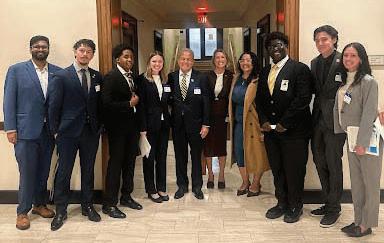
Kasziba-O’Rahilly, along with other student leaders from the College attended New Jersey Association of State Colleges and Universities Day at the State House in late March. The students met with legislators to advocate face-to-face on behalf of the College.
“They want to advocate for the student budget. They know higher education at the federal level right now is up in the air on how much funding schools can get based off what they’re teaching, based off who they’re bringing into their college and if they’re following guidelines that are changing left and right, so they’re trying to protect at the state level,” KaszibaO’Rahilly said.
Student leaders, along with Osmond and Manimaran, have been and will continue to be going back to the State House in the coming weeks to continue their conversations with legislators at the Senate Higher Education Budget and Assembly Higher Education Budget Hearings.
“I will keep advocating a million times, because when you advocate there’s always a chance they’ll say yes,” KaszibaO’Rahilly said. “You have to keep pushing for it, otherwise nothing will change.”
Photo courtesy of Sarah Kasziba-O’Rahilly
Representatives from the campus community have been visiting the New Jersey State House to meet with lawmakers to advocate for more state investment in the College. interviews them about anything and everything.
Mayo Business Competition winners reflect on Nari’s impact

By Brinda Patel Correspondent
After time spent playing basketball together, Julian Soni and Ansh Kulkarni decided to team up again to compete in the annual Mayo Business Competition.
In the midst of juggling school and work, they created Nari, an app that helps psychiatrists and mental health clinicians treat patients struggling with anxiety and depression by using screentime data to
monitor digital addiction and propose interventions if needed. “The name Nari is rooted in the Japanese word ‘to become,’” Kulkarni said.
Soni, a junior public health major, had wanted to compete a year before, and tried this time with the help of Kulkurani. Kulkurani, a senior biology major, helped Soni form a concrete plan, and put in the long hours and commitment to kickstart Nari.
This was more than an idea itself, so
it was hard to find someone last year that had the same vision and same work ethic as me,” Soni said. “We both work and have different classes, so we’d have a lot of late working nights. There were weeks in a row of just working straight almost every day into the night to make it happen.”
Both winners said creating Nari was more than just about placing first, it was built on real problem solving that can make an impact in the long haul, despite AI trying to solve problems with chatbots.
“It was always made with the intent of strengthening the connection between a clinician and their patient,” Kulkarni said. “With AI and other technological developments that are happening, there is a real push to alleviate the bird of mental healthcare. It is mental healthcare in particular where the human touch is incredibly important.”
Both Soni and Kulkarni wanted to be intentional about making a tool that supports that connection. Nari helps patients get in touch with a clinician to determine what changes have to be made to figure out a solid solution.
They interviewed over 50 clinicians as they were developing Nari through the National Science Foundation. They were surprised by each clinicians approach to treating their patients.
“We did over 50 interviews,” Soni said. “But the one thing that surprised us was that every clinician has a different style of treating patients and we realized it’s less black-and-white and mental healthcare
because there’s so many different styles of treatments.”
They said that their prize money will go toward building a HIPAA compliant that has security certifications and accessibility features that are of great quality, adding that they are moving fast and want to continue the same momentum.
“It’s really important to take a step to make sure that it is something that is safe for everyone to use and effective,” said Kulkarni. “It delivers on the results that we are hoping it can deliver on. Building a whole application is what’s going to be done with the money, the Mayo money, and making sure it has the strongest protections of the possible work in place.”
When asked about the long term impact of Nari, they said they are focused on continuing to improve health outcomes with the help of clinicians.
“For both patients and clinicians, the biggest thing we are trying to target is not only helping people be intentional with their lives, but also provide the type of data against them a way to connect their collision, giving them more accountability, and a better lens to exactly what they’re doing,” Kulkarni said.
Kulkarni says he will continue working on Nari post-graduation, with Soni and everyone in their ecosystem.
According to the College’s website, 17 teams competed this academic year and a total of $60,000 in prize money was awarded through the TCNJ Foundation— $30,000 went to Team Nari.
Sarah Kasziba-O’Rahilly, one of 12 winners of TCNJ’s Blue and Gold Award
By Gloria Vittadello Staff Writer
Sarah Kasziba-O’Rahilly, known on campus as “Sarah KO,” can often be found walking backwards dressed in blue and white stripes, leading newstudent orientation or encouraging students to vote.
Despite her involvement on campus, she said she did not expect to receive the College’s Blue and Gold Hall of Fame Award this year.
A senior political science major with minors in law, politics, philosophy and criminology, Kasziba O’Rahilly, was one of 12 students honored with this award earlier this month. Established in 2015, this annual award recognizes students who have made lasting contributions to the College throughout their time here.
Getting the award comes in three parts. First, students are nominated by any staff member on campus. Then, they submit an application, which decreases the pool of nominees for an in-person interview.
Kasziba-O’Rahilly’s Involvement
“I didn’t really think about the award all that much up until this year, considering I was nominated,” she said.
Kasziba-O’Rahilly is involved in multiple organizations on campus, most notably Student Transitions, Student Government, Alpha Xi Delta sorority and TCNJ Votes.
Before getting to college, she explained she wasn’t very involved in high school. While she worked a customer-service job and she played lacrosse, she wasn’t a part of clubs at school. She said this trend seemed like it was going to continue, but during the second half of her freshman year, she took the steps to join a sorority and applied to be an orientation leader.
“Joining OL changed everything for me, which seems dramatic, but I didn’t know how to do anything,” she said with a smile. She questioned how she even got the job, considering she didn’t have much to write when the interviewers asked her, “tell us about
your involvement.”
“I remember when she first came into her interview. She was so cool,” Cherese Telemaque, the Associate Director, CoCurricular and Leadership Development chair at the College said. “I was like, ‘I like her vibe.’”
Kasziba-O’Rahilly explained that during her time as an Orientation leader, her and Telemaque grew to have a blossoming professional relationship.
Becoming an Orientation Leader, and eventually Transition Leader Coordinator, where she managed incoming and active OL’s, helped Kasziba-O’Rahilly realize how much she loved helping people. Becoming an OL shaped what she did with the rest of her involvement, she said.
“I’ve worked in customer service my whole life and I’m always inserting myself trying to be helpful,” KaszibaO’Rahilly said. “That’s how I was raised. Student transitions gave me the opportunity to do that with a bunch of other people. It’s how I learned how much I loved helping people.”
“What made Sarah such a great transition leader is that she’s authentic to herself,” Telemaque said. “As a TLC, she showed that she is very detailoriented and takes initiative. I can push her outside of her comfort zone, and she doesn’t clam up at all.”
She attributed her award to her family’s support and the helpful advice of the people she worked alongside in Student Transitions. “Everything I’m involved in now stemmed from meeting someone in student transitions who encouraged me to try it because they believed I would benefit,” she said.
Kasziba-O’Rahilly is now an OL and an ambassador. While she didn’t get the ambassador job her freshman year, with a friendly push from the friends she made as an OL, she built up the confidence to try again. This time she had less of a resume-building mindset, and more because she truly wanted to get more involved.
“Student transitions kind of taught me that your resume is not as important. It’s about what you’re learning and how
you’re helping.” She explained.
While she loves to help people, she didn’t realize the impact she was having on them. This award has helped her realize that what she’s doing has had a positive effect on the people she meets, she said.
“Everyone at TCNJ has taught me something. Every single person,” she said. “Blue and Gold showed me that my connections with those people didn’t just impact me, but had an impact on somebody else.”
The Biggest Lessons She’s Learned
“Once I stopped caring about people’s perceptions of me, I was able to do a lot more,” she said.
It’s easy to get consumed with what people think of you, but once you move away from that, you’re able to find what you really love to do, she explained.
“Finding something that you actually care about is so important,” she said in reflection. “It’s the love of the game, you don’t want to join something you’re not passionate about. It just drains you. Do things you’re going to gain something from and what you can do for other people.”
She said she learned how important it is to make mistakes, and learn from them.
“I’ve made a lot of mistakes. A lot.
Hundreds and thousands of them. That’s just how you grow and learn,” she said. “I was even making mistakes as a TLC. I was learning how to lead a group, within that I made my own mistakes, but now I know what to do. In your professional life you’re always growing, learning and trying to figure things out. Those mistakes are the best thing that can happen to you. You learn how to not make the same mistake again.”
Although she expresses she wishes she could fix these mistakes, it was the only way to truly grow into the leader she has become.
To current students who are scared of the future, Kasziba-O’Rahilly said, “Go Lions, don’t give up on yourself, It gets easier and it all works out,” she said. “That’s something I needed to hear when I was a freshman.”
Future Plans
“I’m staying at TCNJ for my masters in public policy and I’m working in the office of curricular leadership development as a grad assistant. I’m still going to be applying for internships in the fall and spring just to work.”
She also mentioned she might be working on campus with the sustainability institute, which is a nonprofit organization that functions on campus.
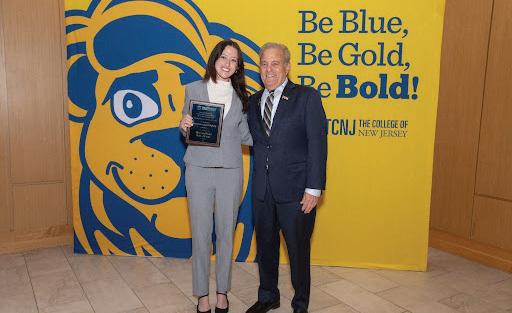
Photo by Skylar Stewart
Creating Nari was more than just about placing first, it was built on real problems.
Photo courtesy of Sarah Kasziba-O’Rahilly Sarah Kasziba-O’Rahilly with President Bernstein.
The political journey of N.J. Assemblywoman Andrea Katz

By Brinda Patel Correspondent
From academic challenges during childhood to majoring in glassblowing at Bucks County Community College while searching for her path, Assemblywoman Andrea Katz is an example of confronting any hurdle to become the best version of yourself.
Today, Katz represents the 8th Legislative District, which includes Atlantic and Burlington counties, alongside Assemblyman Anthony Angelozzi. She started her political journey 12 years ago after she and her husband moved their family to Chesterfield. During that time,
Chesterfield had only one person running for public office. There wasn’t a Democrat candidate on the ballot.
“I looked at my ballot the day of the primary, and there was just one Republican guy running for township committee,” said Katz. “And no Democrat. So partisan stuff aside, that meant he’d win uncontested from primary to general.”
This did not sit well with Katz and she wrote out a campaign proposal for herself at 3 p.m. that very afternoon. However, she said her efforts were in vain because there is a prerequisite threshold of votes she’d need to meet to be considered as a candidate.
As she reflects on that time, Katz said that her husband was worried for her. He couldn’t believe she had written herself in for this political race. His colleague, Grace Power, took Katz under her wing after he told her about his wife’s political aspirations.
Consequently, Katz headed the Women’s Political Caucus of New Jersey. Their mission encourages women’s participation in the political process and creates a safe space for all women running for public office.
Katz said she was motivated and was looking for anybody to run alongside her in 2014. There were three seats available at that time and there wasn’t a Democratic Party in town.
“It just ended up being me at the end against three men because my running mate had dropped out,” said Katz. “And I didn’t win. And I will tell you, that was one of the hardest nights ‘cause I had knocked on so many doors. I had put so much effort into this.”
Despite the loss and negative feedback, she was motivated to help her school
district.
“Chesterfield is an underadequated school district, and I intended to change that,” said Katz. “And they all laughed at me.”
She served on the Chesterfield Township school board and advocated for children, school funding and increased mental health services and awareness for the youth in her town and beyond it. During her time there, she also built a coalition for mothers across New Jersey to make sure that every kid gets the academic help they need.
Although she loved her time on the school board, her main goal was to run for public office no matter any obstacle.
She ran once again in 2016, and won. She was the highest vote getter on the ballot in Chesterfield. She holds only gratitude for this victory.
“We now have two parties in town,” said Katz. “Sometimes the Republicans have control and sometimes the Democrats do. But we always have competitive elections and I take pride in that because that’s what started me wanting to make sure that people in my town had that choice.”
In the present day, Katz said she has no plans of slowing down her advocacy. She serves as the Chair for multiple committees in the Assembly. She is currently advocating for a three bill package: A4013, A4014 and A4015, protecting kids from the harms of prolonged social media use to be signed into law. As of Feb. 19, the bill package passed the Assembly.
Her three children, ages 19, 17 and 14, were the source of inspiration for these proposed legislations and her overall political ambitions, she said.
“What I see in my kids is what
inspires me to keep going to make sure that tomorrow is even better than today,” said Katz. “And that today is better than yesterday.”
Katz said she does not know how her journey in the Assembly will wrap up down the line. She is leaving it up in the air because there is so much more to be done. However, she said she is grateful to have met so many people that have inspired her. Assemblywomen Luanne Peterpaul, Margie Donlon, Rosie Bagolie and Carmen Morales have become her best friends, she added.
“Assemblywoman Katz brings a thoughtful and steady voice to the Assembly,” said Bagolie. Her commitment to public service and her willingness to work collaboratively on behalf of New Jersey families reflects the very best of what public service should be.”
The Office of Assemblywomen Peterpaul and Donlon shared the same sentiment for Katz in a joint statement.
“Asw. Katz is a true advocate for our youth, and has been a tremendous partner in the Assembly. Her proposed legislation to hold online service providers more accountable is the kind of protection our children, and their families, deserve. I am proud to cosponsor her ‘New Jersey Kids Code Act,’ to share such important values with a legislator of her caliber, and to call her a friend.”
Katz said her advice to her past self, when she was starting her political journey is to “not let anybody tell you to be different” and “stay authentic to who you are and what’s important to you.” She said she believes that her younger self, 10 or 20 years ago, would be in awe of how far she has come and what she has been able to accomplish.
TCNJ women say campus safety is strong, but precautions still matter
By Isabella McHugh Staff Writer
Many women at the College say they feel safe on campus, though students, staff and Campus Police described specific safety concerns and experiences.
In a “yes” or “no” tally with 20 women across campus, all answered “yes,” they felt safe at the College.
Freshman elementary education/art major Silvana Valdeiglesias acknowledged that “campus feels safe for women, but it’s important for us to stay aware.” She added, “Even in like, secure areas, there’s still the fear in the back of your mind like what if that person is actually following me, or will I be safe if I attend this event off campus?”
Freshman nursing major Olivia White experienced her sense of security on campus falter, and described two isolated incidents that changed the precautions she takes to ensure her safety.
White returned to her dorm after winter break to find her crystals scattered across the floor and a book from her shelf in the trash.
“I was confused because I didn’t touch them and my roommate left before I did,” White said, adding, “My book could have fallen over because it was down, but I don’t think it could have ended up in the trash can. So, you know, definitely it was not a coincidence.”
She described a second incident the day after she returned from break. While lying in bed, she noticed a pair of feet visible beneath her door. The person then tried to enter by aggressively turning the knob, but failed since the door was locked. According to White, the same situation happened three times over the following week.
White reported the incidents to her community advisors, who looked into the situation but did not identify who was responsible.
“If this just happened, I would have thought, oh, like people do this all the time, like a practical joke,” White added. “But because
somebody had come into my room and broken stuff the day before and I didn’t know what else they could have possibly done. I was really freaked out.”
Following these incidents, White now keeps her door locked at all times to prevent anyone from entering her dorm.
Campus Police Sergeant Cheryl Campbell pointed to a similar past incident in which a male student entered women’s dorms “and would touch them or touch their leg or something like that,” she said.
Campbell also emphasized that many safety concerns for women on campus stem from meeting strangers and allowing them into residence halls, calling the issue both “concerning” and “prevalent.”
From a residential perspective, Dorian Williams, a junior psychology major and community advisor, identified stalking and unwanted social advances as some of the most common concerns he observed, particularly when men attempt to insert themselves into spaces with a high number of women. While Campus Police protect students within campus boundaries, that protection does not extend beyond the College’s jurisdiction, Campbell said.
Williams added that Thursday nights, often referred to as “college nights,” draw the College’s students to Cooper’s Riverview, known to many students as “Rho.” Having previously worked there as a bartender, he said environments like Rho, where alcohol is involved, can increase the likelihood of violence.
At the same time, he pointed to security measures in place during those events. “There were maybe five to eight security guards per college night, which is the night most college students go,” he said.
Campbell contrasted campus policing with township departments, noting that agencies such as Ewing Township Police Department interact with students differently. College officers build familiarity with students while local departments lack that same relationship.
Williams recalled an incident last Halloween when a man approached his female friend. Although the interaction initially seemed normal, he noticed the man stepping closer as his friend backed away. Recognizing her body language allowed him to intervene before the situation escalated.
Based on his observations, Williams said women tend to be more aware of their surroundings than men because they have to be. He added that women often recognize discomfort in others more quickly due to that heightened awareness.
“That’s why I believe women are the first ones to step up when they notice another woman is uncomfortable,” he said.
Campbell echoed a similar point, noting that female officers often approach situations with greater sensitivity and tend to rationalize more effectively, particularly when dealing with women.
Williams also pointed out that men typically do not consider their safety to the same extent, while women often feel the need to remain more alert.
White reinforced that perspective, explaining that she consistently keeps her guard up. She recalled walking back to her dorm at night when an older man stopped her to ask for directions to an ATM. She said she backed up while answering briefly, then quickened her pace toward her dorm. Although they were heading in the same direction, she chose a longer route out of concern that he might follow her.
“Even though it was nothing, that’s the type of, like, situation where you know, something really bad could have happened,” White said.
Despite these moments, White said she feels reassured knowing she can contact Campus Police in an emergency. Valdeiglesias said she always pays attention to her surroundings, even during the day. “As women, we need to be more alert, but I feel secure since I practice being aware of my surroundings, and that’s what I’d encourage other women to do as well to feel safe.”
Campus Police offer an escort system in which officers can walk students back to their dorms or provide a ride upon request. Campbell noted that students no longer use the service as frequently as they once did, though the department continues to promote it, particularly during welcome week.
Williams suggested the escort system could be better advertised, adding that many students do not take advantage of it. Campbell also encourages more students to participate in selfdefense programs offered by Campus Police.
“We just started a self-defense class. In fact, one is coming out soon in a couple weeks. And I would like to see the students participate in that,” Campbell said.
Students can access several safety resources on campus. The College’s Police Department can be reached at (609) 771-2345 or by dialing 911 in an emergency. The College’s Office of Anti-Violence Initiatives, located in Forcina Hall, Room 308, also provides support services and can be contacted at 609-771-2571 or by email at oavi@tcnj.edu. Campus Police also offer the R.A.D. (Rape Aggression Defense) program, which teaches women self-defense tactics.
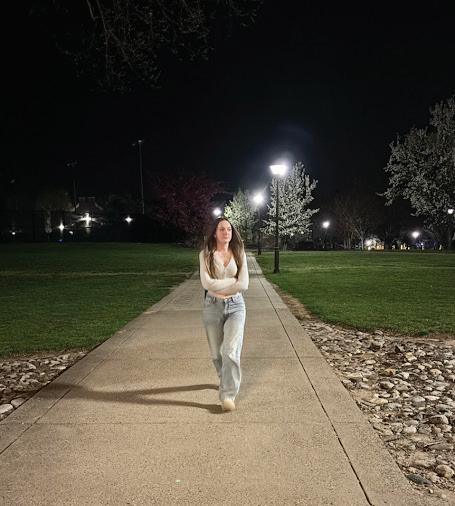
Photo by Brinda Patel
Assemblywoman Andrea Katz speaking.
Photo by Isabella McHugh Freshman Olivia White walks at night.

NASCAR should reconsider the playoff format

By Cooper Dey Correspondent
The 2026 NASCAR season has been historic in just three races. Tyler Reddick became the first driver in NASCAR’s 78 years to win the first three races of the season being the Daytona 500, Autotrader 400 and Duramax Texas Grand Prix. While drivers like Matt Kenseth in 2009 and Jeff Gordon in 1997 came close to winning the first two opening races, Reddick’s performance has lifelong fans to firsttimers questioning if early season success should carry more weight in deciding NASCAR’s champion.
Reddick’s three peat highlights flaws in the current postseason playoff format “The Chase.” The Chase format will be formed at the end of the 26 race regular season where the top 16 drivers in points advanced to The Chase. The points are split up among these 16 drivers giving the regular season champion a 25 point advantage from second place, second place has a 10 point separation from third, and third and the remaining 14 drivers have only a five point separation from each other.
The Chase is made up of 10 races with no elimination unlike previous years and the finale is at Homestead-Miami Speedway where the driver with the
most points at the end of this race will be crowned champion.
This means a driver could dominate the regular season, winning multiple races like Reddick is doing now, and still lose the championship if they struggle during the final 10 races. Regular season wins do not serve a big purpose overall as it is a good start to improve the points reset, giving the rest of the 15 drivers 10 races to save their season.
As where the points run, Reddick has a 105 point gap over second place while that can go down or even increase with a bunch of races left that gap will go down to 25 automatically at the start of The Chase making this historic start somewhat irrelevant in the postseason.
Seasons in the past like the 2018 season and last year’s 2025 season can be used as examples, where a driver or multiple drivers dominated and were the class of the field all season being flat out better in all categories compared to the rest of the other drivers and failing to claim the ch ampionship title because they struggled during the playoffs. The way the playoff format is shaped, a champion can be crowned without winning a single race or leading a single lap.
Before The Chase format, NASCAR used the Winston Cup Series points
system, from 1971–2003, which awarded the championship to the most consistent and successful driver throughout the entire season.
Through dominance early in the year a driver could mathematically build a lead large enough that the title would be decided before the final races. While this format sometimes shortened the season, it rewarded drivers who consistently excelled rather than those who peaked at the end.
From a July 2025 report in The Daily Down Force, Dale Jr. who is a NASCAR first ballot Hall of Fame driver, race team owner and son of seven time Winston Cup Series Champion Dale Earnhardt Sr. Dale Jr., shared his opinion about the Winston Cup Series format saying, “It’s very entertaining! Agree that it’s the preferred method.”
The main reason NASCAR implemented the elimination style format was to maintain suspense and excitement throughout the season.
The traditional points system allows a driver to be able to dominate early and secure the championship before the season ends, while the playoff system ensures that multiple drivers remain in contention until the final races.
Another hot topic that Reddick has shown from his three-peat has to do
with the Next Gen car that NASCAR is currently using. In a May 2021 report from Fox Sports, Bob Pockrass explains what the Next Gen hopes to achieve by stating, “Teams are getting parts and pieces now and won’t be allowed to modify them. That would seem to limit the ability for mechanics and engineers to have an impact on performance.”
In past seasons looking back to the 2000s era NASCAR teams were allowed to make their own parts, adjust suspension, and overall had a ton more freedom on crafting their racecar to make it the fastest for Sunday’s race. Today NASCAR has limited teams to a tightrope and teams can only adjust so many parts to a certain point.
Joey Logano, a full time NASCAR Cup Series driver who pilots the number 22 Penske Pennzoil Ford Mustang who is also a two time NASCAR Cup Series Champion, simplified the next gen car by comparing it to golf, saying, “You can give everyone the same 9-iron, but the way you hold it, swing it, everything becomes what makes the winners and the losers when it comes to golf, right?”
NASCAR designed the Next Gen car to level the playing field making all the cars perfectly symmetrical to each other, putting a lot more control into drivers. If the Next Gen car is meant to create equality, shouldn’t dominance like Reddick’s carry more significance? The Next Gen car is supposed to make these races come down to which driver has the best skill.
Reddick’s historic start raises questions about what NASCAR values. Should the championship reward the best driver across the entire season or the driver who peaks late?
If the sport wants to award skill and award consistency with a car designed for equalness it may be time to reconsider a playoff system that ignores early season achievements.
Returning to a full-season points format, like the Winston Cup Series system, could ensure that victories like Reddick’s are not just celebrated, but truly matter in the championship race.
Watching sad movies is healthy for the heart and the mind

By AJ Mun Staff Writer
Recently, I watched “Perks of Being a Wallflower” for the first time and I cried rivers all throughout and after the film. The story itself is about a freshman in high school, Charlie, who finds the most unlikely of friends and is forced to deal with the ghosts of his past. Even though the movie put me in a heartbroken state
for a few hours, it truly felt so freeing to cry so hard at a movie so beautifully done.
Crying during a sad movie is like factory resetting your emotional systems. If you’re like me and have a hard time crying at things in the present, sad movies force you to reconnect with those feelings deep inside. For example, I had a stressful experience traveling on my own for the first time out of the
country. Though many things had not gone according to plan, when I watched “The Notebook” on the flight home, I wept right there in my economy seat next to a girl my age who side-eyed me with as much judgement as she could manage.
Now I’ll admit, the judgement was most likely mixed with a bit of concern, but to cry in that way was a huge release of all the stress I had felt in my solo travel abroad. The movie forced me to let go of my control and focus on somebody else’s story for just two hours.
It should be noted that movies like “Perks of Being a Wallflower” and “The Notebook” aren’t overtly sad throughout the entire film. It’s important to pay attention to all aspects of these films, as they have lessons and takeaways about more things other than hurt. Most of the time, the movies that we don’t watch because they are sad, actually have beautiful stories of complexity, love and thought.
Emotional films force the viewer to see into the minds of someone else for a moment. They boost empathy and
challenge the perspectives of audiences. In turn, the reaction could be internal sadness or feelings of hurt as you are empathizing with the character that you have gotten to know over the span of just a few hours.
In real life, we often forget that we are not the only ones with pain, thoughts or complexity. Everyone goes through the same things at their own pace, but emotional films ground us in a way that’s not readily available in the day to day. That’s the beauty of it. Then when you return to the real world, you may second-guess yourself on an initial judgement you make or offer those who have shown remorse a second chance. Given the current state of our world, a place so divided and full of hate, kindness and empathy is more important now than ever. We must not shy away from art or media that we know will make us feel, because feeling is an essential part of living. To be alive is to feel; to know love and pain as equals. Face the emotional, gain the empathy, grow with love.
Photo courtesy of IMDb
Sad movies are actually very healthy for our minds and hearts.
Photo courtesy of Wikimedia Commons
Before The Chase format, NASCAR used the Winston Cup Series points system.
Letter from the editor: I love The Signal

By Isabella Darcy Former Editor-in-Chief
After eating dinner at The Atrium at Eickhoff Hall during my first month at the College, I came down with a terrible stomach ache. I assumed I had food poisoning, considering how much buzz surrounded poor food quality on campus.
The stomach pain persisted throughout the following day, so much so that I skipped my classes. However, there was one commitment that I refused to skip: covering an event for The Signal. The event wasn’t a big story by any means, but I was a new staff writer and didn’t want to let down my editors (who definitely would’ve encouraged me skip the event if I had told them I was sick).
I went to the event, conducted
interviews, took photos and wrote my story. By the next afternoon, I was at Capital Health Medical Center in Hopewell getting prepared to have an emergency appendectomy. What I thought was food poisoning was actually my appendix getting ready to burst.
Flash forward to fall 2025, and poor food quality was still a hot-topic. As a journalist, I was in a unique position to actually do something about this issue. My editor at an internship I was pursuing (which I got because of the editorial experience I gained at The Signal) encouraged me to investigate whether on-campus dining locations were abiding by health department standards. Numerous were not.
This was one of many stories that allowed me to bring light to issues and real, human stories. Having the opportunity to

meet people from different backgrounds, communities and even geographic regions has been a wonderful experience.
One of the first things I learned in my Introduction to Journalism course was that it’s best journalistic practice to avoid clichés when writing articles. I’m choosing to ignore that right now to say that The Signal has been my home for the past four years.
I remember my first interaction with Signal editors. It was my freshman year fall semester in The Signal’s old Forcina Hall office. The editor-in-chief gave a brief talk about the paper to my Intro class and explained how he made it to the highest position.
To 18-year-old me, who had never even heard of AP Style, a spot on The Signal’s editorial board seemed out of reach. But once I began writing articles every week as a staff writer, I knew I wanted to make it to the top. What I didn’t know was that I’d be making the climb with so many amazing people.
I’ve taken classes with journalism professor Kathleen Webber nearly every semester during my time at the College. She taught me everything from how to master an anecdotal lede to how to sleuth for sources. Along with teaching tons of classes, Webber has served as The Signal’s advisor during my time here.
She has been a mentor when I’ve needed guidance, and is always one of my biggest cheerleaders. Most of all, though, Webber has been the heart of journalism at the College. She makes every class, meeting and interaction enjoyable, no matter the subject matter or time of day. I hope to grow up to be the kind of person she is.
Two more of my role models are also two of my best friends. When I joined The Signal’s editorial board, I clicked with
The Signal
https://www.tcnjsignalnews.com/
Email: signal@tcnj.edu
Business Email: thesignalbusiness@gmail.com
Editorial Staff
Isabella Darcy Former Editor-in-Chief
Alena Bitonti Editor-in-Chief
Ashley Ragone
Andre Paras
Managing Editors
Ashley Ragone
News Editor
Devyn Briones
Arts & Entertainment Editor
Natalia Tomczak
Opinions Editor
Sky Pinkett
Features Editor
Joseph Caruso
Sports Editor
POLICIES
Ally Uhlendorf and Matthew Kaufman immediately. These are two incredible journalists who have taught me tons about reporting and editing. They’re also so fun to be around.
Some of my favorite Signal memories are with these two former EIC’s. Ally and I can hardly be in a room together without laughing. This made joint interviews 10 times harder, but 20 times more fun. Matt and I can hang out and yap for hours, which is probably why I never get stories done around him (I wouldn’t want it any other way).
Thank you, Ally and Matt, for setting the EIC-ing bar high, and for always being by my side.
As I stepped into the EIC role, I had my lovely friends and managing editors Eddie Young and Alena Bitonti by my side.
Eddie has kept me grounded throughout our time in The Signal. I can always count on him to give honest feedback or crack the funniest joke I’ve ever heard. Alena is a beam of light — her energy lights up every room she is in. She has always been a great writer and editor, but this semester I have loved watching her grow even more. With Alena taking over as EIC, I know this paper is in great hands.
Last, but certainly not least, I’ve been lucky to work with an editorial board full of extremely talented creators. When Eddie, Alena and I chose this board, we knew we had a great staff. Our expectations were exceeded over and over. I am so thankful to have worked with the most fantastic team. All this to say, being a part of The Signal has been one of the most fulfilling experiences of my life. I will forever cherish the friendships, connections and opportunities this organization gave me. I love this paper and I can’t wait to see the great things it has in store for the future.
Administrative Staff
Sandra Abrantes Multimedia Coordinator
Andre Paras Video Editor
Abigail Holliday Copy Editor
Amanda Incalcaterra
Erin Reilly Social Media Editors
Ally Uhlendorf Editorialist
Jenna Weldon Web Editor
Sky Stewart Editorial Cartoonist
Cristina Collins Business Manager
Kathleen Webber Faculty Advisor
The Signal is published bi-weekly during the academic year and not financed by the Student Activity Fund, but solely by advertisement revenue. Any student may submit articles to The Signal. Publication of submitted articles is at the discretion of the editors. All materials submitted become the sole property of The Signal.
The Letters section is an open forum for opinions. Submissions that announce events or advertise in any way will not be printed.
The Signal willingly corrects mistakes. If you think we have made a mistake, contact us at signal@tcnj.edu.
Cartoon by Sky Stewart
Isabella Darcy has been part of The Signal for 4 years, graduating as Editor-in-Chief.
Cartoon by Sky Stewart



Sudoku

White House shooting suspect charged in the attempted assassination of President Trump
By Lake DiStefano Nation & World Editor
The suspected shooter at the recent White House correspondent’s dinner has been charged with attempted assaination of President Donald Trump, following his first court appearance, according to NBC News.
The suspect faces three felony counts of attempted assassination of the president of the United States, transportation of a firearm and ammunition over state lines with the intent to commit a felony and discharge of a firearm during a crime of violence. This is also allegedly the third assassination attempt that Trump has faced, according to ABC News.
Armed with multiple weapons, the suspect is said to have exchanged gunfire with law enforcement in the Washington hotel’s lobby before being tackled, police said, according to NBC News. The incident marks the third time in the last two years in which Trump has faced the threat of gunfire.
The shooting, which occurred on April 25, started just after 8:30 p.m., in the basement of the Washington Hilton. The president was on stage, with the other thousands of attendees being seated at more than 250 tables, when popping noises started to be heard from the lobby, according to The Washington Post.
“I thought it was a tray going down,” Trump would later say.
A California teacher and engineer, Cole Tomas Allen, 31, allegedly believed it was his responsibility to target Trump administration officials, according to a note he sent family members minutes before the attack, according to NBC News.
Allen allegedly wrote that administration officials were his targets, “not including [FBI Director Kash] Mr. Patel,” and were “prioritized from highest-ranking to lowest,” the criminal complaint said. He also allegedly wrote that the Secret Service agents were targets “only if necessary, and to be incapacitated non-lethally if possible,” according to ABC News.
The note included other stipulations, such as the hotel security, Capitol police and the National Guard being “not targets if at all possible (aka unless they shoot at me),” and hotel employees and guests were “not targets at all,” according to ABC News.
The note also included a final point, about how he was willing to “go through most everyone here to get to the targets if it were absolutely necessary,” adding, “‘I really hope it doesn’t come to that,” according to ABC News.
Assistant U.S. Attorney Jocelyn Ballantine said the government was seeking Allen’s continued detention pending trial.
Ballantine further went on to say that Allen attempted to assassinate Trump using a 12-gauge pump action shotgun, along with also carrying a .38 caliber semi-automatic pistol, three knives “and other dangerous paraphernalia,” on his person, according to ABC News.
“He either unfolded a part of the gun or pieced it together,” Helen Mabus, a volunteer ticket checker, said. “It became longer before my eyes. And within seconds, he was shooting.”
Trump would later say he “wasn’t worried” during the shooting, as he was evacuated from the packed ballroom.
Maritime tensions between the US and Iran begin to intensify as regional violence spreads
By Isabella McHugh Staff Writer
The United States seized an Iranian tanker transporting oil from Iran in the Indian Ocean one day after Iran attacked three ships and seized two on April 23, according to the AP News.
The recent conflict intensified maritime hostility and has closed off the Strait of Hormuz as a trading route, NBC reported.
The Department of Defense published a video showing U.S. troops aboard the oil tanker Majestic X after it was captured in the Indian Ocean, AP News reported.
“We will continue global maritime enforcement to disrupt illicit networks and interdict vessels providing material support to Iran, wherever they operate,” The Pentagon said in a statement, according to AP News.
The Pentagon also warned international vessels not to aid Iran, stating, “International waters cannot be used as a shield by sanctioned actors,” and added that “the department would continue to deny illicit actors and their vessels freedom of maneuver in the maritime domain,” according to the New York Times.
President Donald Trump recently voiced the order to “shoot and kill any boat” laying mines in the Strait, according to his Truth Social post.
He further wrote, “There is to be no hesitation,” and that the U.S. “mine ‘sweepers’ are clearing the Strait right now.”
Trump extended the truce before it expired according to the New York Times. However, the recent naval operations have put pressure on that peace, according to The Washington Post.
Iran thought the ceasefire to be pointless since the U.S. was still continuing its naval blockade which violated the deal. Iran also refused to negotiate until the blockade is lifted, according to NPR.
Trump also told Fox News on April 22 that there was “no time pressure” to settle a truce or find dates to discuss ending the war, according to NPR.
The forensics chief of Iran said close to 3,400 people were killed in the country since the U.S. and Israel opened fire on Feb. 28, NBC news reported. Over 2,200 people were killed in Lebanon, the source also wrote.
Israeli strikes in Lebanon this week killed several people, including journalist Amal Khalil. In response, Hezbollah launched attacks in southern Lebanon, according to Reuters.
As tensions rise, Israel is also reportedly coordinating with Lebanon’s government against Hezbollah and has warned it may expand the conflict, potentially resuming military action against Iran.
Israel and Lebanon “ambassador-level talks” were scheduled for April 23, according to the New York Times. In the U.S., concern over gas prices continues due to the war with Iran. Trump announced that Americans should prepare to be paying higher gas prices “for a little while,” and did not give a specific time frame, according to CNBC.
When questioned about the war’s length, Trump told reporters “I have to be honest, the stock market is at an alltime high right now. I thought it would have been down 20, 25%.”
A nationwide survey of 1,000 participants found that almost 80% of people “changed their spending habits” due to the high gas prices.
April ceasefire between Israel and Lebanon faces uncertainty amidst recent threats

By Frankie Sanchez Correspondant
that announcement, President
said
spoke with the leaders of both nations, and that Prime Minister Benjamin Netanyahu of Israel and Prime Minister Nwaf Salam of
Lebanon both welcomed the agreement.
Trump also announced that the 10 days could be extended with the consent of both countries. The announcement came in the midst of a previous ceasefire between the United States and Iran, which expired on April 21.
For the ongoing talks between the U.S. and Iran the Israeli-Lebanese conflict represents a roadblock to the success of those talks. The continued fighting that, according to Lebanon, had so far cost 2,500 lives was preventing their participation in any long-term negotiations between the U.S., Iran and Israel.
A major concern of the Israeli-Lebanese ceasefire is the lack of official involvement from Hezbollah, the group that Israel is primarily engaged with in Lebanon. Hezbollah claimed it will abide by the truce, but Hezbollah is not directly controlled by the Lebanese government, and is accused by Lebanon of being funded by Iran.
Since the ceasefire was declared Israel and Hezbollah have continued to exchange attacks, primarily in Southern Lebanon. Israeli forces engage in on the ground operations in Lebanese villages and towns, and Hezbollah has fired rockets and drones into Israel.
Netanyahu had said that the ceasefire might be a chance for fu -
ture long-term peace between Israel and Lebanon, but this depends on the disarmament of Hezbollah.
Recently, the leader of Hezbollah Naim Qassem has said that Hezbollah would not “relinquish any of its weapons or defenses.” More recently the Israeli Prime Minister has accused Hezbollah of, “essentially disintegrating the cease-fire.”
It was hoped the ceasefire in Lebanon would help bring Iran closer to the negotiating table, but in addition to that The United States has blockaded the Strait of Hormuz, where Iranian oil passes to reach global markets. U.S. officials like Defense Secretary Pete Hegseth have also made it clear that the U.S. forces are ready to reinitiate attacks on Iranian infrastructure whenever necessary.
“While you are digging out, we are only getting stronger,” Hegseth said, according to The New York Times.
The Trump Administration faces pressure to end the war from home as well. Midterm elections are approaching in the U.S., and the war is not only unpopular, but across the U.S. gasoline prices have risen.
Internationally, American allies in Europe are reluctant to help blockade the Strait, a vital artery of global trade, and despite guarantees that any non-Iranian vessels are permitted to enter, traffic through has still slowed.
President Donald Trump announced an initially 10 day ceasefire between Israel and Lebanon hours before it took effect on April 17, 2026, according to the New York Times. The ceasefire has since been extended and is still in effect as of April 29th. In
Trump
he
Photo courtesy of Wikimedia Commons This is only a recent development in a series of pressure points within the region.
Labor secretary, Lori Chavez-DeRemer, out after allegations of abuse of power

By Frankie Sanchez Correspondant
The White House announced the departure of Labor Secretary Lori Chavez-DeRemer on Tuesday, April
21, according to AP News. Chavez-DeRemer was confirmed to the President’s Cabinet in March 2025; before, she had represented an Oregon district in the House of Representatives until she lost reelection
NASA launches Artemis II, its
first fully-crewed lunar mission in decades
By Gauri Patel Correspondant
The Artemis II mission officially launched on the evening of April 1, from the Kennedy Space Center in Cape Canaveral, Florida, marking the first time humans have traveled beyond low Earth orbit since the Apollo program ended in 1972.
Lifted into space by NASA’s Space Launch System rocket, the Orion capsule carried four astronauts: Reid Wiseman, Victor Glover, Christina Koch and Jeremy Hansen, on a roughly 10-day mission around the moon, according to Reuters.
“The nation, and the world, has been waiting a long time to do this again,” said Wiseman, the Artemis II commander, according to The Guardian.
The primary goal of Artemis II was not to land on the Moon, but to test the systems that will eventually allow humans to return there safely as a part of future missions. After launching from Florida, the Orion spacecraft first entered Earth’s orbit before performing a key engine burn that propelled it toward the Moon.
This path, known as a “free-return trajectory,” allows the spacecraft to loop around the Moon and naturally return to Earth using its gravitational pull, which added on an extra layer of safety in case of emergencies or in the event of a system failure, according to Reuters.
During this phase, astronauts travelled farther from Earth than any humans in history, even exceeding the distance reached during the Apollo 13 mission.
The crew travelled 252,756 miles from Earth, according to NASA, which broke the record of 248,655 miles set by the Apollo 13, according to The Guardian.
The Apollo 13 mission became a rescue mission after an oxygen tank exploded in the Service Module, leading to the crew using the Lunar Module as a lifeboat, and splashing down in the Pacific Ocean, according to NASA.
While orbiting the Moon, the crew passed behind it, temporarily losing com-
in November 2024. The position of Labor Secretary will be filled by the Deputy Labor Secretary Keith Sonderling.
As Labor Secretary, ChavezDeRemer continued with the administration’s early deregulatory push. She oversaw decisions such as removing a required minimum wage for home health care workers and people with disabilities, as well as rolling back safety regulations for mines.
Former Secretary ChavezDeRemer has left her position as labor secretary following multiple allegations of abuses of power such as drinking alcohol on the job and having an affair with a subordinate. Chavez-DeRemer’s departure was uniquely revealed by a White House aide, instead of Trump.
In his statement on social media, the White House Communications Director Steven Yeung praised Chavez-DeRemer and said that she would be taking up a position in the private sector, according to AP News.
Yeung said that, “She has done a phenomenal job in her role by protecting American workers, enacting fair labor practices, and helping Americans gain additional skills to improve their lives.”
According to AP News, ChavezDeRemer has been under investigation since at least January.
The New York Times reported on
April 15 that the Inspector General of the Labor Department had material showing that Chavez-DeRemer, some of her aides and family members had engaged in texting and personal messages and requests to some of the young aides.
Per The New York Times, Chevez-DeRemer’s husband and father exchanged messages with young female staffers. Chavez-DeRemer herself was accused of drinking alcohol on the job as well.
In response to those allegations, Chavez-DeRemer claimed that they had been, “... peddled by high-ranked deep state actors who have been coordinating with the one-sided news media and continue to undermine President Trump’s mission.”
Similarly, the White House also dismissed the allegations initially, but after more allegations came out, the scrutiny on Chavez-DeRemer became too much for the administration.
AP’s report quoted Republican Senator John Kennedy of Louisiana saying, “I think the secretary demonstrated a lot of wisdom in resigning…”
In a statement from April 20, Chavez-DeRemer said, “While my time serving in the Administration comes to a conclusion, it doesn’t mean I will stop fighting for American workers.”
Jury finds that Ticketmaster and its parent company Live Nation acted as a monopoly
munication with Earth before reestablishing contact. This portion of the mission was planned and was especially important for testing navigation and communication systems in deep space.
Throughout the journey, the crew had actively been monitoring and testing life support, propulsion and onboard controls, while also capturing images and observations of Earth and the moon, according to Reuters.
These tests are critical for ensuring that future missions, like Artemis III later in the decade, can safely carry astronauts to the moon’s surface.
This final stage tested the spacecraft’s heat shield and recovery procedures, both of which are crucial for longer missions beyond Earth’s orbit.
The mission concluded with the Orion spacecraft splashing down at 8:07 p.m. ET on April 10, 2026, off the coast of San Diego, according to NASA.
Millions of people viewed the televised splashdown all around the world, with coverage from major networks like ABC, NBC and CNN, alongside official NASA feeds on YouTube and NASA+.
Following splashdown in the Pacific Ocean, the astronauts were recovered by a joint NASA and U.S. military team. They were helped out of the spacecraft while in open water and airlifted by helicopter to the USS John P. Murtha, where they underwent initial medical evaluations, according to NASA.
The Artemis II crew also shows how space exploration is becoming more diverse and global. Christina Koch became the first woman to travel this far into deep space, Victor Glover the first Black astronaut to go beyond low Earth orbit and Jeremy Hansen the first Canadian to join a lunar mission, according to Reuters.
Artemis II represents a significant step toward returning humans to the Moon. Although it was primarily a test mission, it played an essential role in ensuring that systems are reliable for future lunar landings.
By Rebecca St Fleur Correspondent
Live Nation and its subsidiary Ticketmaster, a popular ticket sales site, illegally monopolized event markets and overcharged consumers, found a jury on Wednesday, April 15, according to The New York Times.
After four days of heavy deliberation, the federal antitrust trial ended with this decision. Ticketmaster is one of the largest ticket sellers in the United States live entertainment space, and a roadblock in their competitive practices could reshape the entire industry.
Live Nation and Ticketmaster merged together back in 2010 and since then, have continuously garnered criticism from both fans and artists alike for their handling of concert sales, most notably in Taylor Swift’s 2023 Eras Tour. Fans spent hours waiting in online queues just to look at the website and then it crashed, sending customers right back to the beginning of the time-consuming process.
In combination with Ticketmaster, Live Nation owns hundreds of venues and has deals with various artists on tour, while the subsidiary sold the tickets to those places, putting them in position to touch multiple aspects of the live entertainment industry.
“In 2024, the Justice Department, under the Biden administration, filed a lawsuit accusing Live Nation of unfairly wielding its power over concert promotion, artist management, venue operations and ticketing services to shut out competition in the industry. The DOJ contended that Ticketmaster controlled around 80% of concert ticketing in the primary marketplace, plus a growing share of the resale market. The District of Columbia and 39 states joined the government’s case,” reported NPR.
While penalties have not yet been determined by the court, there are many factors that could still potentially undermine the verdict. A few days into the trial, the Department of Justice under President Donald Trump’s administration announced a tentative $280 million settlement with Live Nation. Critics thought the terms of the settlement were
a mere slap on the wrist and more than 30 states were not moved by this agreement. The settlement would also need a federal judge’s approval and so the trial continued.
In damages, jurors found that “...Ticketmaster had overcharged customers $1.72 per ticket in 22 states, which a judge could order the company to pay back. That could cost Live Nation hundreds of millions of dollars,” stated AP News. The cost of these damages may add up to be a similar amount to the settlement the company entered.
But what does this verdict mean for consumers? As of now, not very much. Nothing will immediately change ticket prices or how they are sold. The court would have to order structural remedies such as behavioral restrictions, which is the next step in this trial. But Live Nation still can and plans to pursue motions and appeals, meaning the conclusion consumers are waiting for remains far in the future.
In a joint letter filed on Friday, April 24, Live Nation, the Justice Department and the states that initiated the lawsuit, released opposing schedules for the upcoming motions, beginning another battle.
“The filing is the major post-verdict fight over whether the holdout states’ push for broader remedies — including a potential breakup of Live Nation and Ticketmaster — will move forward promptly or be forced to wait until after the DOJ’s more limited settlement has already been reviewed and potentially entered by the court,” according to TicketNews.
That distinction matters because the DOJ settlement does not require Live Nation to divest Ticketmaster. Instead, it relies on a package of conduct restrictions, ticketing-access provisions, venue-related obligations, a monitor, an eight-year decree term, penalties for violations, and a roughly $280.4 million settlement fund,” Ticket News specified.
Judge Arun Subramanian has the final say on which of the different approaches will move forward. Depending on what he adopts, the ongoing fight could be delayed, which is exactly what Live Nation is seeking.
This follows a seeies of other exits within Trump’s administration.
Photo courtesy of Wikimedia Commons

From past to present, 5 generations celebrate 60 years of WTSR
By Devyn Briones Arts & Entertainment Editor
With years of weather reports and live music from the Kendall Hall basement, WTSR celebrates its 60th anniversary with previous alumni and current students who have and continue to make the magic of WTSR possible.
On April 15 in Brower Student Center, previous and current students involved with WTSR connected to share their experiences, memories and celebrated this huge milestone.
The first hour of the event allowed attendees to talk and get to know one another, followed by dinner and a show. Five generations of WTSR members took stage and recounted their times at the station.
Events like the break of the Beatles, the Voyager spacecraft and, of course, the start of Ms. Sue’s show was all broadcasted on WTSR.
“We want to make sure we celebrate the impact that WTSR has had, not only in our lives, but is having in our current students’ lives,” Paul Alfieri, class of ‘97 said. “It has made an impact into the Mercer County community.”
“The Eras of Panel” on stage included Tom Weiss, class of ‘75, Laurie Evans, ‘86, Kenyatta Cheese, ‘96, Madison Ouellette-Hays, ‘16 and the current station manager, Addie DiPietro, a junior history secondary education major. Alfieri hosted the panel and asked the generations questions about their time

at WTSR. Listening and watching the five panelists looked and sounded like a live podcast. Everyone in the audience was laughing and interacting with those on stage.
Weiss reminisced on his first memories of WTSR, and how the organization itself is what kept him at the College. As a commuter, Weiss felt like he was in thirteenth grade rather than in college. He didn’t really have a college feeling or felt connected, so by the end of his first semester, he was ready to leave.
One night, Weiss was in the Kendall Hall basement looking for his English professor’s office to turn in a paper, but found himself quite literally lost in the darkness. He saw the letters “WTSR” written on the wall with an arrow pointing right, and followed the directions until he finally found light.
Weiss was greeted by a guy sitting
Ravenna Gemignani talks about self-published book
By Tasnim Oyshi Staff Writer
U-lab room 206 of AIMM was packed with students, who gathered for Ravenna Gemignani’s return to campus after her graduation in 2024. The former IMM student gave a presentation on her first book, “Lodi and Parmar’s Sweet Treat,” at the Department of Design and Creative Technology’s DCTea event on April 16.
The children’s book follows the two protagonists in their attempt to bake a treat for an upcoming harvest celebration, receiving help from friends along the way. Having written, illustrated and published the book by herself, Gemignani explained her process to the attendees and how she got started after finishing college.
Starting from her first step, Gemignani shared that her initial ideas came from a mentorship class she took with illustrator and author Prescott Hill. There, she began creating the characters of Lodi and Parmar with inspiration coming from her friends and the world around her, including the Apple logo, cartoons like “Chowder” and books like the “Little Critter” series. Gemignani had known from the start that she wanted the setting to be early fall and for there to be a focus on apples. The lesson she wanted to share in the final product was always clear to her: “It’s okay to ask for help.”
Spending her days working at her dad’s company, Gemignani set the night aside to develop her story and illustrations. She emphasized the importance of getting a little bit done everyday. Although she would try to do one illustration a day, some of them would take her a week.
On the more technical side, Gemignani went over her selection of page size, fonts, brush sizes, the rendering process and
more. She suggested using Nomad Sculpt to those illustrating on iPads as it was particularly helpful for her.
She also described how title pages, copyright pages and dedications worked. As shown on the first few pages, Gemignani dedicated the book to her grandmother who always told her, “Many hands make light work.” This would essentially become the core message of “Lodi and Parmar’s Sweet Treat.”
During her editing process, Gemignani sent the book out to some friends, many of whom she had based her characters on. At first, she tried to reach out to agents, but that didn’t work out. Agents prioritize authors having a portfolio of work as opposed to the singular book Gemignani had so far.
Thus, Gemignani decided she would publish the work herself. She went into depth about what comes after the book is finished for self-publishers. There are ISBN and bar codes to buy, copies to order, shipping to select, marketing to set up; all of which are decisions that involve spending money.
When it comes to earning that money back and making a profit, Gemignani spoke about selling at craft shows.
Read more on our website!

with his feet up on a desk, reading a magazine. He bopped his head in and had his first interaction Brian McElvoy, the current station manager at the time. McElvoy gave Weiss a tour of the studio, where he saw the news booth, the on-air studio, conference room and production studio. Weiss immediately fell in love, but was hesitant to join since he wasn’t planning on returning.
About a week later, he found himself back in the basement to fix woodworking trim that wasn’t finished. Soon enough, Weiss spent his time in between classes and after classes in the studio. Weiss decided to stay at the College and return next semester because of the people he met and his involvement in WTSR.
“WTSR gave me the clubhouse feeling that I needed to have, and I didn’t until I came here,” he said. “WTSR has the power to change people’s lives. I
know it because it changed mine.”
While WTSR was celebrating 60 years, a special shoutout was made to Ms. Sue, also known as, “Ms. Sue Ms. Sue,” a DJ legend at WTSR, who reached her 50th anniversary at the station. Ms. Sue’s time spent on air and at the station is all volunteer work.
“WTSR has been my life,” Ms. Sue said. “And I talk to my friends, they say, ‘why do you do that? They don’t pay you.’ But the pay is that I’ve met so many beautiful people in my life. I see students come in as babies and grow up to be seniors and move on in their life.” As much as Ms. Sue has helped WTSR, WTSR and music itself has helped her through her own personal life.
DiPietro has also always had a love for music, which is what pushed her to join WTSR. When her and her mom were touring colleges, she’d always make sure to check out the radio stations. Joining the first semester of her freshman year, DiPietro started on music staff and then to DJ training and becoming a dayside DJ. By the end of her freshman year, she’d already worked her way up to music director.
“I am so insistent on getting new and interesting music out there, so I’ve helped turn WTSR into a platform for the music that no one else will give a chance, maybe because it’s too weird or because it’s too small, but we’ll play it here on WTSR,” she told The Signal.
Read more on our website!
A duo poetry reading to remember
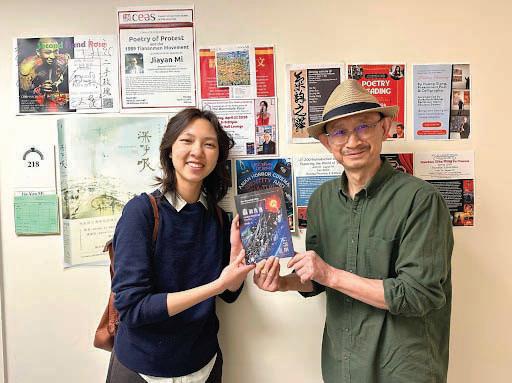
By Mahnoosh Arsalan Staff Writer
Renowned New York poet Vanessa Y. Niu and associate professor of English and world languages and cultures, Jiayan Mi, came together at the College’s Bliss Hall for a duo poetry reading on April 27 in celebration of Chinese American culture. The event was hosted by Dr. Mi as his new poetry collection “The Wormhole Rose” was just published, where he also held a book signing for himself and Q&A for Niu.
Niu is a New Yorker whose poetry has been recognized by The Kennedy Center, New York Fashion Week, The Guggenheim and Teen Vogue. She attended the Special Music School in New York and recently graduated. She now studies here in New Jersey at Princeton University.
Niu performed numerous poems with powerful range. She went from discussing young love and summer nights to the physics behind the universe, the mundanity of being human and the act of self-isolation. It was evident how personal her poetry was, her vulnerability with a completely unknown audience is extremely commendable. She was able to take these raw, emotional parts of herself and make them relatable for audiences and even teach others about some aspects
of her culture. Her personification, creative descriptions, fluid writing and excellent performance really captured the audience, taking them along the road for her life journey.
During the Q&A at the end of the event, Niu gave the audience insightful messages on poetry and life. When asked about her exigence for writing poetry, she said “there’s so much art in everything you do in life,” and that “the spirit possesses me.” These two short and sweet answers really illustrate the importance of passion and the arts.
The arts and humanities are extremely vulnerable forms of expression, so when paired with the idea that art is in every aspect of life, it can make expression feel so raw and scary. Niu did an excellent job in portraying this awkward emotion in her poetry, it connected with the audience in a beautiful way.
In addition to the incredible poetry by Niu, the College’s very own Dr. Mi did a live reading of some poems from his new book “The Wormhole Rose.” Mi’s performance was translated into English by other professors from the English department as well as Niu, but even without the translation, Mi’s performance evoked emotion from the audience.
He sprinkled in some humor throughout the readings and made the audience feel very comfortable in their position, but was still able to hit the audience where he wanted to and keep everyone hooked. Mi held a book signing at the end of the event, a lovely closing to the whole afternoon.
Ultimately, these two strong poets came together for an emotional and introspective afternoon. This event not only highlighted the importance of the arts, but also the need for more voices of color. The arts should continue to be a place where all voices are welcome. Hopefully, this event connected this idea to students at the College, showing them what a lovely space poetry can provide.
Photo by Diego Albert
President Bernstein speaks to attendees of WTSR’s 60th anniversary banquet.
The story of two friends baking treats.
Photo by Tasnim Oyshi
Photo by Mahnoosh Arsalan
Jiayan Mi’s new poetry book.
‘Tomodachi Life: Living the Dream’ is a delightfully odd escapist fantasy

By Gabbi Pie’ Correspondent
When “Tomodachi Life” was released for the Nintendo 3DS back in 2013, it was unlike anything else on the console at the time, let alone anything Nintendo had ever released. Serving as a sequel to the 2009 Japan-exclusive “Tomodachi Collection,” this social simulation game was similar to “The Sims,” only it starred Nintendo’s quirky Miis, little customizable humanoids with funny faces and tiny bodies that were first introduced on the Wii.
In “Tomodachi Life,” players could
make Mii versions of anyone imaginable: themselves, their families, friends, celebrities and even fictional characters. These Miis could talk with each other, form relationships, have children and much more. The game became hugely popular for its almost limitless possibilities and odd sense of humor. Even long after its release, fans continued to enjoy the game and hope for a sequel. Finally, after over a decade of hoping, a Nintendo Direct in April 2025 announced that a sequel called “Tomodachi Life: Living the Dream” would be released the following year. In January, a Tomodachi Life Direct was
‘The Legend of Aang: The Last Airbender’ leaked ahead of its October Release
By Mariah Coefield-Elie Correspondent
“The Legend of Aang: The Last Airbender” was leaked in its entirety on X on April 13. The film was set to release in October of this year, but hackers had other plans.
Originally, the animated movie was scheduled for a theatrical release, but plans changed in December. 2025 when Avatar Studios and Paramount announced that the movie would premiere on Paramount+. This shift left fans upset. Not only were their expectations unmet, but a theatrical release is what many of the fans anticipated for this beloved franchise.
Lauren Montgomery, an animator for the original animated series and director for the new film, took to Instagram to share that the movie had finally wrapped up back in March 2026, and to share her dismay with its streaming release as well, stating, “The recent decision to move us from theatrical to streaming might give the impression that the quality wasn’t sufficient, but that couldn’t be farther from the truth. This movie deserves to be seen on a big screen!!!”
The Change of release left the fandom with mixed emotions. Comments under Montgomery’s Instagram post are a clear display of this. One user said, “I’m honestly so sad about this decision. I was so excited to watch the new Avatar Aang movie on the big screen. It’s the kind of story that deserves that experience. Finding out it might just go to Paramount+ instead really breaks my heart. I’ve been waiting for this for so long, and now it feels like that dream is gone.”
Another user commented, “Congrats! I’m sure it will be amazing! Disappointed I won’t be able to see it on a big screen, but so it is.” This outrage is believed to be the reason behind the movie leak!
Between April 11 and 12, user @ImStillDissin had released clips of the movie to X with the caption, “Nickelodeon
released, going into more detail about the game and announcing it would be released on April 16. To generate hype, a demo was released on March 25, allowing for the creation of three Miis and access to a few of the game’s features.
Now, with the full game available to the public, fans have jumped at the opportunity to flood their islands with Miis and see what the long awaited sequel has to offer, complete with an entirely new original soundtrack and high-resolution graphics.
The layout of this game differs from the first one in several ways, starting with its customization features. There are many more customization options for creating Miis, such as additional eye types, hair styles and colors and a face paint feature that players have already exploited impressively.
The game also allows Miis to identify as nonbinary and have specified dating preferences, creating a LGBTQ+ friendly experience that is a vast improvement from the first game, where samesex marriage was controversially not included. The game has also quickly become infamous for its lack of censorship when it comes to customizable phrases for Miis, leading to some funny, vulgar interactions that have gone viral online.
The island itself can also be customized via house construction, town building and terraforming. Custom items can even be created. The Mii characters can also be seen freely walking around and talking to each other out in the open. Whereas the first game had
a fixed landscape for the island, this game is reminiscent of other life sims such as 2020’s “Animal Crossing: New Horizons” and adds a fresh new element to the gameplay that makes every player’s copy unique.
There are, however, certain features that this game lacks when compared to the first game. For example, while the 3DS game allowed for the creation of 100 Miis, “Living the Dream” only allows 70 to be created. This is likely because of the Miis’ expanded mobility across the island and players can have multiple islands across different Nintendo Switch profiles, but this has nevertheless led to some complaints from players who have endless ideas for Mii characters.
In addition, the Concert Hall, where Miis could perform customizable songs of different genres, does not make an appearance in this game. This was one of the 3DS game’s most beloved features, as it allowed for many goofy moments, and so it is no surprise that fans have expressed disappointment.
However, despite these differences, the reception to the game has been overwhelmingly positive, with fans excited that the franchise has finally made a comeback after years of waiting. The original game has a lot of nostalgia tied to it for many players, and thankfully, the sequel is just as wacky and off-thewalls as its predecessor. It is not hard to smile when seeing your Miis say strange sentences, have weird dreams or talk with each other about pasta. “Living the Dream” is a game that radiates joy, goofiness and good vibes.
Rebel Wilson faces defamation lawsuit
accidentally emailed me the entire Avatar aang movie…” The post was taken down within 24 hours, but the internet responded quickly.
Within hours of the takedown, the entire movie appeared online, starting with 4chan and spreading to X. Despite the production’s attempts to remove the film, accounts across X and other platforms continued to share the movie. Fans shared their thoughts on the film and even made edits.
WIRED reported, “According to @ ImStillDissin, a screen-grabbed version of Avatar: Aang, The Last Airbender was circulating among people he knew from his days in the hacking community, one of whom shared it with him.”
Paramount launched a swift investigation, shortly after Singaporean police arrested a 26-year-old. Singapore’s Strait Time reported that the man had gained unauthorized access to the server and posted parts of the film online. “He is currently being investigated for unauthorised access to computer material, which carries a maximum jail term of seven years, a fine not exceeding $50,000, or both.”


By Tasnim Oyshi Staff Writer
Rebel Wilson appeared in the Federal Court of Australia for her nine-day defamation trial on April 20. The actor is being sued by Charlotte MacInnes, who played one of the leads in Wilson’s 2024 directorial debut, “The Deb.”
The claims brought forth against Wilson were that she allegedly lied in four social media posts about MacInnes being sexually harassed by one of the film’s producers, Amanda Ghost. In addition, Wilson apparently falsely stated MacInnes retracted her statement in exchange for career opportunities.
The event Wilson is allegedly referring to took place between filming for “The Deb” at Bondi Beach on Sept. 5. According to Deadline, MacInnes’ barrister, Sue Chrysanthou SC, clarified the situation in court from her perspective.
MacInnes and Ghost were swimming that evening when Ghost had an allergic reaction to cold water, a condition known as cold urticaria. “Ghost was shaking uncontrollably and came out in hives,” Deadline states.
As stated by the Australian Broadcasting Corporation, MacInnes wrote in her
affidavit that she took her back to their shared apartment and ran a shower and bath, with another producer at the scene. MacInnes joined Ghost in the bath when the two producers suggested it would help her warm up as well.
Wilson’s most recent account is that MacInnes had made a complaint about what happened and felt uncomfortable, which MacInnes denied saying. According to news.com.au, a series of texts between Wilson and Ghost from that time revealed that Wilson told Ghost, “Charlotte says all good. She just meant ‘it was a bizarre situation’ not that she personally felt uncomfortable x.”
Wilson also claims that MacInnes allegedly took back her complaint because Ghost offered her a record deal and a role in a “Gatsby” show she was producing, which Dauid Sibtain SC, Wilson’s barrister, addressed in court. “Ms Ghost even sent Ms MacInnes a ‘confidential’ audition tape of another actress, to help prepare, the court heard,” according to the ABC News. “Ms MacInnes was eventually cast as Daisy in the play.”
“MacInnes agreed the producer had given her a lot of help, including providing feedback and networking opportunities,” stated an article by the Guardian. “MacInnes said she felt her dreams were coming true when she was performing on super yachts and flying in private jets, partly thanks to Ghost.”
Another incident that has been brought up as the case has progressed was four months prior to the event at Bondi Beach when MacInnes dined with Ghost instead of going to see a theater production with Wilson and her other castmates. Texts between the two showed MacInnes apologizing for losing track of time and Wilson stating she “appreciates” it.
According to the Guardian, Wilson added, “In the future, it is terribly rude to say you wanted a ticket to a show and then you don’t reply or follow up…not a great start to our working relationship.”
Read more on our website!
Photo courtesy of Wikimedia Commons
The official logo for “Tomodachi Life: Living the Dream.”
Aang stands with Katara and Sokka.
Photo courtesy of IMDb
The “Pitch Perfect” star is being sued.
Photo courtesy of IMDb
‘Michael’: Remembering the time of the pop king’s reign
By Molly Tursi Correspondent
Since the reign of the “King of Pop,” few musicians have held a flame to the meteoric fame Michael Jackson achieved in his life. Fondly remembered as the figurehead of 80s pop, Jackson extended his star power from his beginning as a fledgling child performer in The Jackson 5 to his spectacular solo career. Even in death, Jackson’s legacy continues to shine through to the now and beyond.
As a once in a lifetime talent, Jackson’s image cannot be eclipsed by any stage presence today, but his nephew Jaafar Jackson comes admirably close. Competing with the inordinate number of MJ impersonators, Jaafar Jackson channels the spirit of his uncle to paint a portrait of the artist as a dazzling young star in the biopic “Michael.”
Announced in 2022, “Michael” stirred up mixed feelings of anticipation and hesitancy for fans of the legendary pop star. Beginning in 1993, Michael Jackson has been the subject of controversy for decades, with an onslaught of allegations tarnishing his celebrity. In the wake of the incendiary 2019 documentary “Leaving Neverland,” the production of “Michael” was indefinitely compromised.
Although Jackson’s allegations remain in heavy discourse, “Michael” was eagerly put into production by director Antoine Fuqua. Taking creative liberties with Jackson’s biographical depiction, Fuqua had a specific objective in mind: to breach the barrier of fame and experience Michael Jackson through his flawed personhood.
In an interview with Deadline, Fuqa explained, “I wanted to humanize Michael. I wanted people to get to know him: How eccentric he

was, how he was as a young man. I always felt that younger generations didn’t know Michael or his story. In order to tell anything about Michael, you had to remind people about the magic of him, the power of the music, and the fun that he brought into the world and his own insecurities. He’s one of the most complex characters to tell a story about. My approach was to ground him as much as we can, so that he’s relatable to anyone outside of being on that stage.”
“Michael” was released in United States theaters on April 24. The film has already broken financial records over its explosive opening weekend, raking in $217.4 million at the global box office according to The
Noah Kahan tells his story in ‘The Great Divide’

By Gabbi Pie’ Correspondent
Singer-songwriter Noah Kahan’s return to music has been highly anticipated ever since his third album “Stick Season” skyrocketed him to fame. After months of teasing new music, Kahan’s fourth album “The Great Divide” is out.
The title references the “divide” between individuals, accentuated by the album cover of young boys running. “Stick Season” was quiet, introspective and sorrowful, while “The Great Divide” is outspoken, resentful and angry with a more rock-influenced sound.
Kahan crafted the album’s sound with “Stick Season” producer Gabe Simon and legendary producer Aaron Dessner, known for The National and working with Taylor Swift and Gracie Abrams.
The opening track, “End of August,”
is about the fleeting nature of things.
“Everything you see out here will die…”
The song slowly builds, with accentuated drum hits and horns before it ends with a little piano melody.
“Doors” is about the struggle of opening up to someone you care about. The spiraling sounds accompany Kahan’s spiral into why he feels as though his partner should leave him.
In “American Cars,” Kahan sings to a person who’s always there when he’s struggling: “you’re gonna fix it, you’re gonna patch it up.” The song discusses friendship and how it can help a person through tough times.
In “Downfall,” Kahan sings about someone leaving town, being happy but also “rooting for [their] downfall” and hoping they come back. There is resentment as Kahan hopes “[they] open up to someone kind, and they hold it all against [them].”
“Lighthouse” is a melancholy track about loss. “But I look out at the wreckage of you…I curse them…when they f–k up your story”. The lighthouse is a metaphor for searching and coming home.
“Paid Time Off” is about exhaustion with fame. Kahan reflects on how spending time away can help him, not caring about anything else but the present moment: “... you don’t care, and I don’t mind at all”.
“Staying Still” discusses the feeling of being stuck while everything else moves around him, lamenting that he “can’t keep on starting over,” asking his town if it’s “good at staying still.”
Read more on our website!
Hollywood Reporter.
The film chronicles Michael Jackson’s humble beginnings growing up as a young boy in Gary, Indiana, alongside his four (in real life, there were five Jackson brothers; however, the movie truncates the nine Jackson siblings to five for efficiency), to his resounding solo career.
As per Fuqua’s directorial intent, the film approaches Michael Jackson’s life with compassion for the person, and especially the little boy behind the icon. The 12-yearold actor and Michael Jackson impersonator, Juliano Krue Valdi, plays an endearingly precocious young Michael Jackson, whose coming of age falls under unique
circumstances.
Experiencing the unconventional childhood of a child prodigy, Jackson is relentlessly exploited by his mercenary father and manager, Joe Jackson. Convincingly played by the wide-ranging actor Colman Domingo, Joe Jackson acts as the formidable foe of the story. While “Michael” is a commemorative story of resilience, fame and untouchable talent, the insidious presence of a strained father-son relationship lords over the story.
“Michael” marks Jaafar Jackson’s acting debut, a special feat for the singer-actor, who honorably portrays his late uncle’s orbit in superstardom. Jaafar’s scrupulosity to the idiosyncratic cadence, disposition and musical agility of the singer is rivaled only by Michael Jackson himself. Spectacularly emulated, Jaafar’s efforts pay a striking homage to his Jackson heritage.
The movie ends while the fuse is still burning, proposing to audiences that there is more to come. A sequel to “Michael” is possible, made permissible by its torrential success at the box office.
Commenting on a sequel, Fuqua told Billboard, “He’s a superhero on the stage. Just like a human being, movies have the power of empathy to just say this is a human being. No one is perfect. It was important to take the audience through a process of how do you get to wherever it’s going to go in a second movie; for people to get a bigger idea of his personality and what shaped him.”
The triumphant turnout of “Michael” mirrors that of the singer himself, who is still celebrating posthumous winnings. Replete with sensational music, enveloping cinematography and pristine sound design, “Michael” is an absolute romp that raises the artist back to life in its fleeting two-hour runtime.
Fans ‘drop dead’ for Olivia Rodrigo’s new song
By Sandra Abrantes Multimedia Coordinator
From a promotional mural wall in Los Angeles being repainted each day, to the announcement of Olivia Rodrigo’s third studio album, “you seem pretty sad for a girl so in love,” the teasers have completed, and a first track was released.
On April 17, Rodrigo released the song “drop dead,” which has spent over 10 consecutive days as of April 28 at the No. 1 spot on Spotify’s United States chart, with approximately 27.9 million streams according to Billboard. Her music video, debuting the same day, has 21 million views and counting a week after its release.
Most of her fans are incredibly excited for this new album, and a new chapter in Rodrigo’s music career. With “drop dead” being a love song, fans were excited to see a positive, upbeat song that embraces happiness in relationships. Another factor of interest is the rebranding Rodrigo is doing with the release of this single.
With the completion of her promotional wall mural, it is clear the shift Rodrigo is hoping to make. While the wall started as her signature lavender purple, it transitioned over the course of eight days to a light pink, and on the final days of painting, included the title of her third album. This change is drastic from the artists’ previous albums, following a fourletter-name theme and purple as a motif color. Additionally, Rodrigo’s style has developed and changed, featuring a rufflefilled babydoll dress, shorts and stocking trio which is unlike her typical pop-rock
look.
Despite being a top charting song right now, Rodrigo has received mixed reviews from fans, some expecting a newer sound from her. While this first single is not indicative of how the entire album will sound, some reviews are worried it will be. Some noted that the sound is the generic synth-pop that is popular currently in many top-charting pop songs, however, as charts indicate, this is not everyone’s perspective. In interviews with Rodrigo, however, she has stated the album is full of sad love songs, so fans expect the themes of her past two albums to remain, with the addition of her recent alleged breakup with British actor Louis Partridge. Rodrigo also confirmed in interviews that she was working on this album and writing these songs recently, within 2026.

Photo courtesy of IMDb
Jaafar Jackson as Michael Jackson in “Michael.”
Photo courtesy of Wikimedia Commons
“The Great Divide” album cover.
Photo courtesy of Apple Music Rodrigo swings into her new album.
Lions lash Montclair, land in NJAC final against
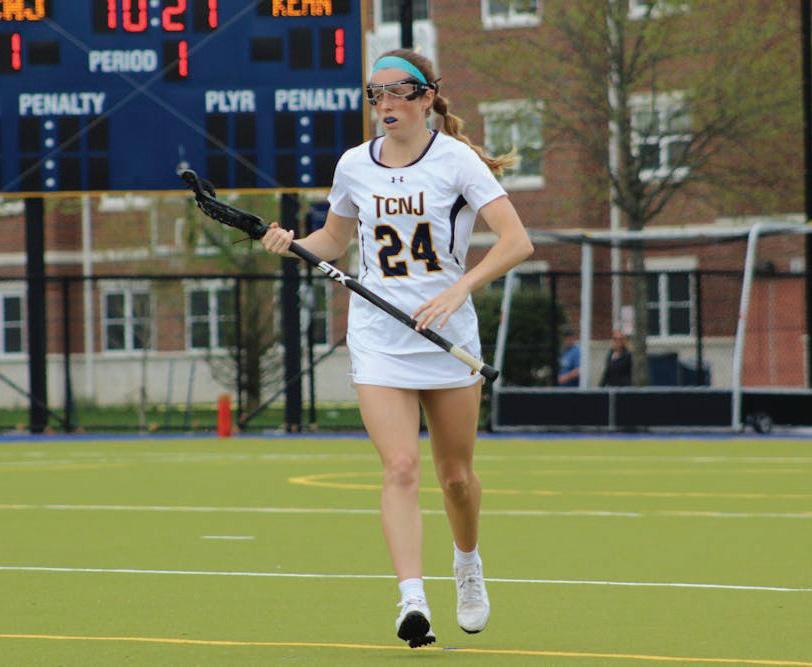
By Tyler Fennell Staff Writer
It was a cloudy afternoon, on Wednesday, April 29. Rain was impending, and the slick surface it would create, would reflect the slippery slope Montclair would experience in the semi-finals of the NJAC championship for DIII women’s lacrosse. The College secured their ticket to the NJAC Final in a dominant win against Montclair State with a final score of 17-3.
The College didn’t allow a single goal in the second half of the game. The College dominated every aspect of the match, in their biggest game of the season so far.
The first quarter opened with five
goals from the college. Sophomore Kelly Nevins scored a pair, the first of which was the opening goal of the game, and the second would turn out to be the game winner.
Sophomore Abby Teefy, freshman Evie Campbell and junior CJ Kole would all contribute with goals of their own in the opening quarter.
Montclair still showed pushback, scoring two goals of their own, however they wouldn’t score enough to recover the deficit already made by the Lions.
The second quarter saw a much slower pace as the rain began to come down, and the turf became slick. The College still didn’t let up with goals from senior Marissa Lucca, Kole and Campbell.
Montclair would score their last goal of the game, as well as their season in this quarter. It would turn out to be a terrible day for rain for the Redhawks.
As the rain stopped, and the third quarter began, the Lions would slam on the gas yet again, scoring another five goals. A pair from both Lucca and Kole, as well as another goal from Nevins, would further secure the College’s lead.
Any offense that Montclair hoped to achieve was snuffed out by the Lions defense or the college’s fifth year goalkeeper Haily Wexler.
With the College up by 10 going into the fourth quarter, one would think the pace would slow down. This was not the case. The College potted another four goals with pairs from Teefe and Nevins.
In total, four Lions recorded hat tricks, with Nevins leading the pack with five goals in the game, followed by Kole with four and Teefe and Lucca both with three. Lucca also recorded six assists, bringing her point total in the game to nine.
As the crowd departed, “Kelly” chants could be heard from the college’s bench in celebration of Nevins’ five goal game.
The College will go on to play against Rowan in the NJAC championship final. The winner will automatically clinch a playoff berth in the 2026 NCAA Division III Women’s Lacrosse playoffs. In the Lions’ last meeting with Rowan on April 25, the college walked away victorious with a score of 14-7. Instead of meeting them in Glassboro, Rowan will have to defeat the College on their own turf at the TCNJ Field Hockey and Lacrosse Complex on Saturday, May 2.
TCNJ Athletics Schedule
Softball
Thursday, April. 30
Away against Stockton
Track
Saturday, May. 2
NJAC Championships
Lacrosse
Saturday, May. 2
Home against Rowan
Men’s Tennis
Saturday, May. 2
WIAC Championships
Track
Sunday, May. 3
NJAC Championships
Women’s Tennis
Friday, May. 8
NCAA Tournament
Track
Saturday, May. 9
Williamstown, MA.
Baseball’s dissapointing season comes to a close after senior day heartbreaker

Baseball wraps up their season after senior day double-header.
By Joseph Caruso Sports Editor
The College’s baseball season came to a close after dropping both games of their senior day doubleheader against No.11 ranked Kean, finishing off 2026 with a 16-23 record, their worst record in a nonshortened season in over 20 years.
After defeating William Paterson
in their previous game, the Lions aimed to carry some momentum into their senior day showdown with nationally ranked Kean. Seniors Mike Doran, Jack O’Donnell, Brian Lovaglio, Tyler Provost and John DiCostanzo were all celebrated prior to the first pitch of the first game, getting a worthy sendoff for their contributions to the Lions.
Sophomore Jack Reardon got
the start in game one, but took a shellacking surrendering 12 hits and nine runs to the Cougars, six of which were scored in the first two innings as Kean flexed their muscles to jump ahead 6-0.
Reardon bounced back over the next two innings, keeping Kean off the board until the top of the fifth, where they added on three more to take a commanding nine-run lead. The Lions got on the board in the bottom half of the inning, as O’Donnell broke the ice with his first of three RBIs in the game.
Kean would add three more runs, but O’Donnell smashed a two-run homer in the bottom of the seventh, marking the fifth of his career. Despite the impressive showing from the senior, the College dropped the first game 12-3.
In the latter half of the doubleheader, The Lions aimed to end their season on a higher note, and got off to the perfect start.
Sophomore Chris Salmon got the Lions started with a sacrifice fly in the bottom of the second, and Provost followed up with a single to score O’Donnell in the bottom of the third putting the College ahead 2-0.
Kean didn’t waste any time however, responding immediately in the top of the following inning, tripling in a run to cut the Lions lead in half.
The score would hold at 2-1 for the next handful of innings, on the back of an impressive outing from
freshman Austin Hanni, tossing five innings of one-run ball, giving the College something to look forward to in the future.
Both teams exchanged scoreless innings until the top of the ninth, with the College just three outs from ending their senior day with a victory.
Freshman pitcher Andrew Wilkinson had a good day in relief, but opened up the ninth inning allowing two Cougars to reach base, as they singled and walked to put the tying run in scoring position.
Dicostanzo was then put in to close it out, with two on and one out. However, the senior walked the following two batters, the latter of which scored a run to tie the game. With the bases loaded and one out, Kean cashed in on a fielder’s choice to take a 3-2 lead.
The College threatened in the bottom of the ninth, with two hits to put the winning run in scoring position for O’Donnell. However, O’Donnell came up empty swinging and missing for strike three, as the College ended their season in devastating fashion losing 3-2 and getting swept on their senior day.
In a fitting end to the year, the Lions will be happy to put 2026 behind them. It was a transition period for the College, with three new coaches on the staff, including first-year head coach Chris Collazo. The College will look to get back on track in the 2027 season.
Photo courtesy of Elizabeth Gladstone Lacrosse advances in NJAC Tournament.
Photo courtesy of Elizabeth Gladstone


Softball Advances to NJAC Seminfinals
Pitching duo leads to fifth straight victory
By Joseph Caruso Sports Editor
The College’s softball team took home a victory in the first round of the New Jersey Athletic Conference Tournament 2-0 against Montclair State, marking their fifth consecutive win as they punched their ticket to the semifinals.
After conquering the Redhawks in both of their matchups last week, the Lions would try to beat them for the third time in a row,
not an easy task against a fellow playoff team, especially considering they won the two games by just four combined runs.
Junior star Maya Knasiak got the nod at the bump, having recorded 14 wins on the year, with fellow pitcher senior Elizabeth Gosse standing at the ready in the bullpen if needed.
Knasiak’s regular season was nothing short of historic. She allowed just 14 earned runs in 119 innings pitched to the tune of a 0.82 ERA, leading all NJAC starters.
Among starters with at least 50 innings, the junior also finished atop the conference in hits allowed (51), batting average against (.127) and strikeouts (157).
In addition to being the best pitcher in the NJAC, Knasiak was second in the conference as a hitter in OPS (1.165) and was first in slugging percentage (.718).
The opening round of the playoffs was a stalemate through the first five innings, as Knasiak handled business against a pesky Montclair State lineup. After running into
trouble in the sixth, Gosse was called upon in relief.
With two runners on, Gosse didn’t need to record an out of her own, as sophomore catcher
Grace Brouillard picked off a runner attempting to steal third, and the score held at zero heading to the bottom half.
With two outs and nobody on, the College rallied as a double from senior Camryn Kitchin, her 100th career hit, plated the first run of the evening. Freshman Emily Evans followed up with a two-bagger of her own, vaulting the Lions ahead multiple runs in the bottom of the sixth.
Kitchin has enjoyed another productive season in her fourth year at the College, being a consistent hitter at the plate and providing good defense in the infield. Her double on Tuesday brings her career RBI total to 54.
Holding a two to nothing lead, Gosse took the mound looking for both the victory and the save. After allowing the first batter of the inning to reach base and enabling the tying run to step to the plate, she sat down the Red Hawks to secure the victory and send the Lions to the semifinals.
As a result of Knasiak’s season, Gosse has become underrated for the Lions. The senior pitcher has thrown 78.1 innings to a stellar 1.97 ERA, good for eighth in the conference. For her career, she has eclipsed the 400 inning mark with an ERA of 1.73 with 256 strikeouts, easily cementing herself as one of the best pitchers in the history of the school.
Beating a team three consecutive times is no easy feat, especially a playoff team in Montclair State. Now riding a five-game win streak, the College has as good a chance as any team to come out on top of the NJAC for the first time since 2023.
The College look ahead as they gear up to take on No.16 ranked Stockton on the road, who also hold the No.1 seed in the NJAC. They will face off on Thursday, April 30.
Women’s tennis team takes 43rd consecutive NJAC Title
By Jhett Laurie Staff Writer
The College’s women’s tennis team captured their 43rd consecutive New Jersey Athletic Conference championship. They defended their historic streak by taking down RutgersCamden to extend the longest continuous conference championship streak in NCAA history. Men’s tennis looks to capture their first ever Wisconsin Intercollegiate Athletic Conference championship. They are taking on University of Wisconsin-Whitewater for the fifth year in a row. The team looks to turn the tide and capture their second ever win against UW-Whitewater.
The men’s team defeated RutgersCamden in the semi-finals in a decisive 7-0 victory on April 18. The Lions gave up only one game, with every match ending in favor of the team. RutgersCamden only brought five players to the match, falling short of the necessary six to run every contest.
This resulted in only two doubles matches and five singles, handing the Lions two free matches. The senior pair of Asa Wong and Harrison MaitlandCarter as well as junior Nathan Chan and senior Alberto Thomas both secured their respective doubles win. In the singles category, Chan, MaitlandCarter, Thomas, freshman Faris Shehata, and junior Aidan Twamley all
won their matches.
The team also took on Stevens April 24 and fell 3-4. The Lions got up early, taking a 1-0 lead after sweeping Stevens in doubles matches. Senior Brett Schuster and Shehata secured two victories for the Lions, putting them one match away from victory.
The Ducks pulled off the impossible, rallying from a seemingly insurmountable 3-0 deficit by securing four consecutive singles victories. Twamley made a valiant effort, taking the final match into a tiebreaker; however, he was not able to overcome his opponent, as the College fell 4-3 in their final match before the WIAC Championship.
The College takes on UWWhitewater on May 2 in Whitewater, WI.
The women’s tennis team extended their record against NJAC opponents to 231-0. They have won every single NJAC women’s tennis championship since 1983 (only six years after the first-ever high five).
The pair of junior Gabriella Robinson and sophomore Elizabeth Ring secured a 6-0 bagel, followed by junior Zoey Albert and sophomore Shruti Mannan taking down the pair of Gabby Albert and Bella Albert.
Robertson got another point for the team with a 6-0, 6-0 doublebagel, followed by senior Eleni Dakos

Women’s tennis remains ubeatable in conference play.
securing a 6-0 bagel, followed by a 6-1 breadstick. Ring sealed the win with another double-bagel.
The continued run of dominance from the Lions sounds fake, but head coach Scott Dicheck has the women’s tennis squad extending their rule for a fourth straight decade. To put it into perspective, the last time the College didn’t win the NJAC, Dicheck had yet
to graduate from middle school.
With that being said, the Lions are looking to make some noise in the NCAA Tournament after getting shutout in the second round in the 2024-2025 season. Despite their unparalleled greatness inconference, the College is seeking their first NCAA Title since 1986.
The first round of the NCAA Tournament begins on May 8.
Photo courtesy of Elizabeth Gladstone
Softball earns shutout as they advance in tournament.
Photo courtesy of Albert Nunez