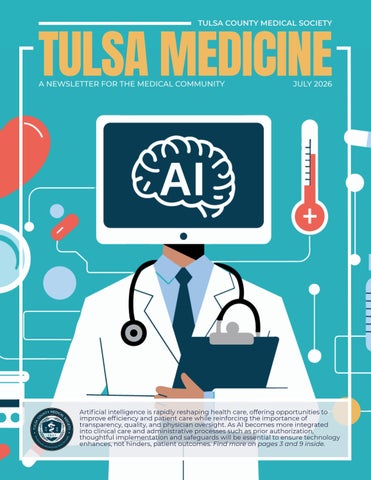
TULSA MEDICINE
A

JULY 2026



A
JULY 2026
JUL 03 Independence Day (Observance) Offices Closed In Observance of Holiday
JUL 04 Independence Day Wishing you a Happy 250th Independence Day!
James Webb, Jr., MD Sharon D’Souza, MD Henry Haskell, MD
Ondria Gleason, MD Stephen Bruns, MD Geoffrey Chow, MD
Chris Emerson, MD Diane Heaton, MD Brian Macha, MD
Reetu Singh, MD Sharon Smallwood, MD John Tedesco, DO Ex-Officio Members Dennis Blankenship, DO OSU-COM Dean Boyd Burns, DO OU-SCM - Int. Dean
Lily Robistow, MS-4, OU, SRC Chair Ha Huynh, MS-3, OSU, SRC Vice-Chair
TCMS Foundation - Board of Directors
David Griffiths, MD Peter Aran, MD Sharon D’Souza, MD
Ondria Gleason, MD Michael Hairston, CTFA Martina Jelley, MD
Brian Macha, MD David Minielly Kulsum Siddiqui
James Webb, Jr., MD Matthew Wenger, MD
Mark McElreath, MPA
Executive Director TCMS & TCMS Foundation mark@tcmsok.org
Joetta Cunningham Director of Operations TCMS joetta@tcmsok.org
Pam Oppelt Care Coordinator
Project TCMS pam@tcmsok.org
Ashley Bishop Development Coord. Project TCMS ashley@tcmsok.org
JUL 08 TCMS Board of Directors Meeting At TCMS, 6 PM
JUL 10 TCMS & OSMA Host Lunch for incoming OU Medical Students
AUG 04 TCMS & OSMA Host Lunch for incoming OSU Medical Students
AUG 07 OSMA Board of Trustees Meeting 12:00 PM at OSMA in OKC or via Zoom
AUG 27 Physician and Project TCMS Volunteer Appreciation Night 6:00 PM at the Main Event Tulsa Enjoy 3 hour of arcade games, bowling, laser tag, elevated ropes, food, and more! See page 6 for more details.
Sept 02 TCMS Foundation Board Meeting at TCMS, 6 PM
Sept 11-12 Oklahoma Allergy and Asthma Society (OAAS) Annual Meeting OKANA Resort, OKC 7:30 AM - 2:00 PM Contact Joetta Cunningham for more info
Sept 23 PLICO Grand Rounds at TCMS, 5 PM
JUL 17
SEP 11
NOV 12
DEC 04 Friday, July 17, 12-1 PM Friday, September 11, 12-1 PM Thursday, November 12, 6-7 PM Friday, December 4, 12-1 PM
Speaker: Cori H. Loomis, JD., McAfee & Taft Free for OSMA members & $75 for non-member physicians
To sign up, or for more information, contact Katie Kemper, 405-601-9571, kemper@okmed.org, or visit www.okmed.org
*Signed into law in 2018,
By Darius Tahir, KFF Health News
Bill Curry, 65, raises cattle on the same land in rural Oklahoma once owned by his father and generations before him. Each quarter, for several years, he has made the 2½hour drive to Oklahoma City for an epidural in his spine to treat his back pain.
But this year, because of a new Medicare program, Curry has traveled a little more often.
In February, during one trip, he was told unexpectedly that he needed preapproval for the procedure. Then he went again a month or so later to get the injection, for a total of 10 hours on the road. His clinic wanted him to come in a third time, which they had never asked of him before. That appointment was “just to fill out a piece of paper to tell them how you feel again,” Curry said, so he hasn’t gone.
In January, Oklahoma became one of six states to begin a pilot program testing the use of preapprovals in traditional Medicare, the federal health insurance program for people 65 and older or with disabilities. Medicare had previously eschewed the practice — also known as prior authorization — which requires patients or someone on their medical team to seek insurance approval before proceeding with certain procedures, tests, and prescriptions.
Epidurals like Curry’s are among 13 medical services subject to the new program because the Trump administration says they’re prone to fraud or misuse. Powered by artificial intelligence, the program — called the Wasteful and Inappropriate Service Reduction Model, or WISeR — is intended to save the federal government money and protect patients from potentially unsafe or unneeded care.
Yet early reviews from Oklahoma and the other pilot states — Arizona, New Jersey, Ohio, Texas, and Washington — suggest WISeR’s rollout has not been smooth. Patients, doctors, and other healthcare professionals who spoke with KFF Health News say the effort has created confusion, errors, long wait times, and stress. Some described the rollout as “horrendous” and say people enrolled in Medicare in the pilot states are now getting ensnared in the same red tape as those with private insurance.
One key concern is that it all happened too hastily. WISeR was announced in June 2025 and launched in mid-January.
That was “quicker than normal” for the federal government, said Todd Baker, who recently stepped down as CEO of the Ohio State Medical Association. Doctors “just sort of had to figure it out,” added Jeb Shepard, director of policy at the Washington State Medical Association.
Government contractors have also acknowledged the rapid pace. “We’ve had an aggressive rollout from the time of being notified to going live,” said Jeremy Friese, CEO of Humata Health, the vendor for Oklahoma. Tech executives servicing other states have said they were still adding features to their products in the spring.
Abe Sutton, director of the Center for Medicare and Medicaid Innovation, which is administering the program, didn’t comment on the rollout schedule. But he said in a statement that the goal of these reforms is to ensure that prior authorization is efficient, fast, and streamlined.
“The model aims to reduce inappropriate care without delaying appropriate care,” he said.
Mehmet Oz, the leader of the Centers for Medicare & Medicaid Services, told NewsNation in December that they were “rolling out some prior authorization on abused practices.”
“The purpose of these is not to deny care,” Oz continued. “It’s to make sure you get the care you need and deserve, not the care some unscrupulous doctor wants to use on you.”
Medicare has struggled in recent years with suspected fraud associated with particular services. The Department of Health and Human Services’ inspector general warned in September that the program’s spending on skin substitutes, for example, had surged nearly 700% over two years, raising “major concerns about fraud, waste, and abuse.”
Skin substitutes are among the 13 therapies currently subject to review under WISeR.
The program also imposes prior authorization requirements for kyphoplasty, a surgery for spinal fractures, which a report by the Medicare Payment Advisory Commission flagged as overused.
Sutton acknowledged, however, that “the percentage of providers committing waste, fraud, and abuse is small.” Consumers and clinicians largely detest prior authorization.
Even as federal health officials test the process for Medicare, the Trump administration is trying to scale it back for those with private insurance. According to a KFF poll conducted in January, 69% of insured adults consider prior authorization a burden for care.
Through WISeR, doctors and their staff log in to online portals to submit medical records that justify the procedures. Using artificial intelligence, the systems quickly approve applications that meet the program’s criteria, Friese, Humata’s chief executive, told KFF Health News. He said there is an “immediate yes” in 88% of cases for which clinical data supports an approval.
CMS has touted the process as one in which decisions are returned within 72 hours. After that, clinicians receive a “universal tracking number,” which allows them to schedule the procedure and get paid. In practice, however, participants say the process is anything but easy.
The University of Washington's medical system alone had nearly 100 patients waiting earlier this year for epidural injections due to WISeR-related delays, according to an April report from the office of U.S. Sen. Maria Cantwell (DWash.) that drew on hospital association data. “Now, patients are subject to delays or denials which did not exist prior to the WISeR Model,” the report said.
Curry, the Oklahoma cattle farmer, said he might go to Kansas for future treatments to avoid the approval process.
Dorota Gribbin, a New Jersey-based physical medicine and rehabilitation physician, said that by the time authorization came for one of her patients who needed a back pain procedure, the patient had gone to the hospital for more expensive care.
Jennifer Valle, a precertification and insurance supervisor at Clinical Radiology of Oklahoma, said when it comes to kyphoplasties, there has been a lot of “nitpicking” from reviewers. Other times, information her practice provides to CMS gets overlooked, she said, and reviewers ask for imaging that’s already in the file.
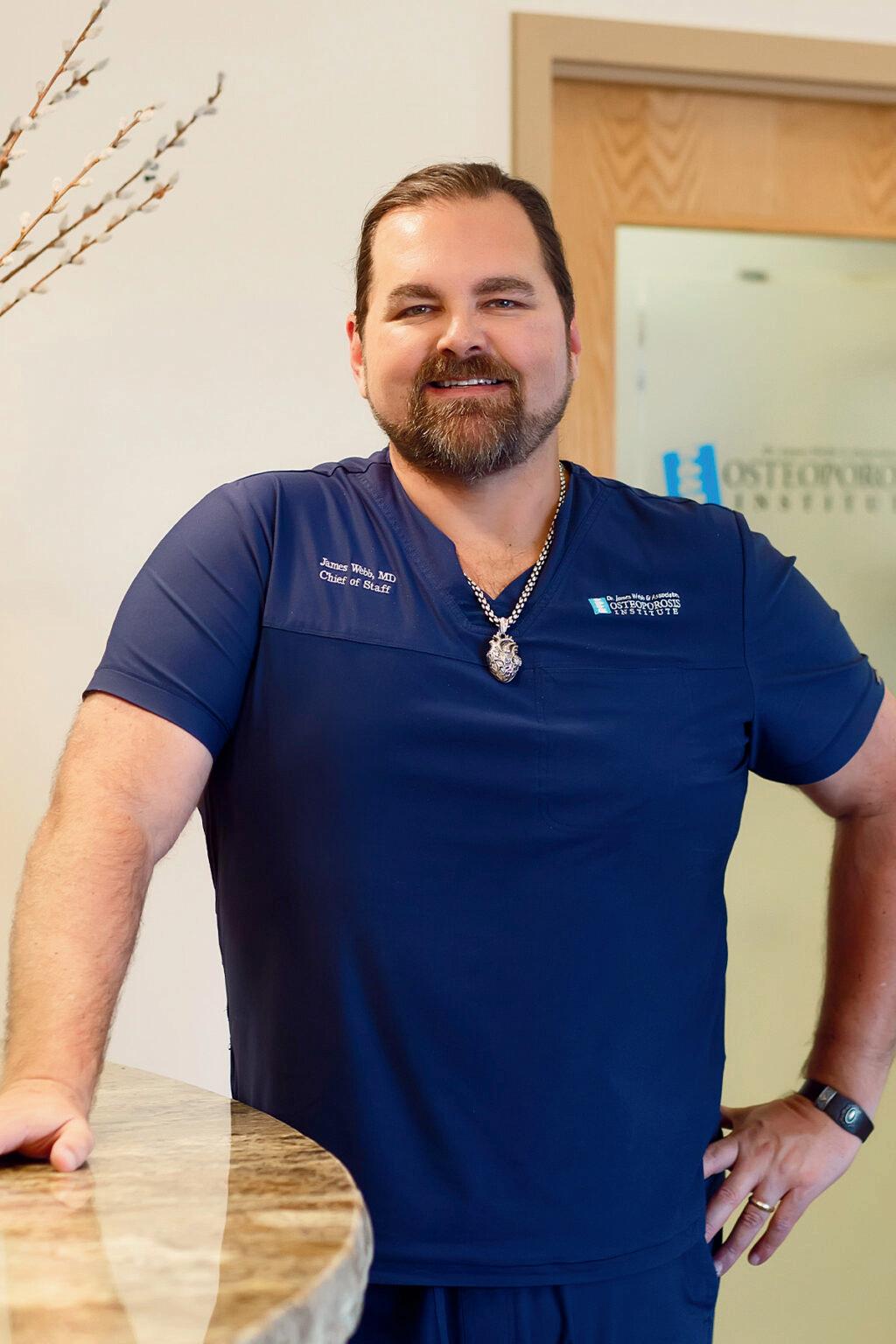
Claims with no problems are supposed to be paid within 15 days, said James Webb, a musculoskeletal radiologist in Tulsa, Oklahoma, who has also been frustrated by the prior approval and reimbursement process for kyphoplasties. “Six- to eight-week delays is what we’ve been seeing,” he said.
“It’s been horrendous,” said Jerry Sobel, a Phoenix-area pain management doctor. “Right from the beginning, there seemed to be no organization.” Sobel said that as of May, he hadn’t gotten paid by Medicare for nine epidurals.
“We continuously monitor operations and work closely with stakeholders to address questions and improve the provider experience,” said Sundar Subramanian, the CEO of Zyter, which has the contract for Arizona.
During an April webinar, another Zyter executive acknowledged a large backlog in payments stretching to January. Those backlogs “are currently being resolved,” Medicare’s Sutton said, without providing further detail.
When asked about other issues — including what doctors suspect are AI-driven errors — Medicare’s Sutton said the agency appreciates “feedback on provider experience.” It will be used “to help providers better understand WISeR processes,” he said.
Although CMS vendors say humans make the final decisions on approvals, doctors and their staffs believe artificial intelligence is playing a large role in the process and that denials are sometimes the result of AI hallucinations that garble or make up information.
One Arizona doctor, who wasn’t authorized by his practice to speak, recalled a denial saying his patient wasn’t eligible for procedures in the thoracic region, or mid-back. The patient needed an injection to the neck. Webb, the Oklahoma radiologist, documented four times that a patient lacked numbness, and yet his WISeR application was still denied, citing numbness, which, in the reviewer’s interpretation, would rule out the spinal surgery procedure.
Friese, Humata’s CEO, said he hasn’t heard about any AI hallucinations.
The process is also raising government costs. With more rejections, more appeals are being filed with Medicare’s administrative contractors. The government pays the contractors to handle the appeals, and Medicare’s Sutton acknowledged that the agency has “accounted for potential changes in the volume of Medicare appeals because of the WISeR program and its associated costs.”
Eighty-four percent of commercial insurers already use AI tools, according to a survey released in 2025 by the National Association of Insurance Commissioners, though they have consistently said AI isn’t used to deny prior authorization requests.
Its use in Medicare risks introducing friction and frustration into the program — and piling costs onto its beneficiaries.
Prior authorization saves money for insurers partly by making patients pay a price in wait times and inconvenience, said Miranda Yaver, a University of Pittsburgh health policy researcher studying the technique.
“People will end up getting ensnared in a lot of red tape, having to be on hold, and getting rerouted,” she said. She often wonders whether prior authorization simply shifts costs to patients and doctors, rather than saving them. Some doctors involved in Medicare’s prior authorization experiment believe it will inevitably expand beyond a few services officials in Washington consider fraud-prone.
“Everybody knows that if this pilot project works, it will be prior auth for basically all procedures,” said Mary Clarke, a family practice physician in Stillwater, Oklahoma. “If they can show that they can save money, then that’s going to be extrapolated and rolled out to other procedures and multiple other things in other states.”
When asked whether CMS is considering expansion of its prior authorization pilot, Sutton said in his statement that there are “currently no changes” considered for the list of services subject to the WISeR program, “but CMS continues to assess whether any changes are warranted.”
For more information or to view the complete article visit: https://kffhealthnews.org/medicare/medicare-ai-priorauthorization-wiser-delays-errors/? utm_campaign=KHN%3A%20First%20Edition&utm_medium =email&_hsmi=425119622&utm_content=425119622&utm_s ource=hs_email
Oklahoma State Medical Association
Oklahoma WISeR Project Looking for Feedback
To help inform advocacy on this issue, AMA and OSMA are asking physicians to complete a survey regarding their experiences with the WISeR program. If you have encountered prior authorization requirements under this new program, please complete this survey.
OKMGMA // July 14, 2026 - 12:00 PM, CDT
This webinar covers the HR fundamentals every practice administrator needs to know: the employment laws that apply to your practice; how to handle employee complaints and performance problems before they become legal issues; documentation that actually protects you; and when to handle something yourself versus when to call for backup. No legalese, no theory, just real answers for the people-related issues you face every day. Register Here or using the image below.
The Oklahoma State Medical Association (OSMA), the OKAAP, the OAFP and the OOA are gathering physician input on the current state of Oklahoma's Medicaid (SoonerCare and SoonerSelect) managed care programs and the anticipated impact of federal budget changes. Your responses will directly inform our advocacy priorities and communications.

OKMGMA webinars are FREE for members! You must be logged in to register.($75 non members)
TCMS, OSMA, Project TCMS
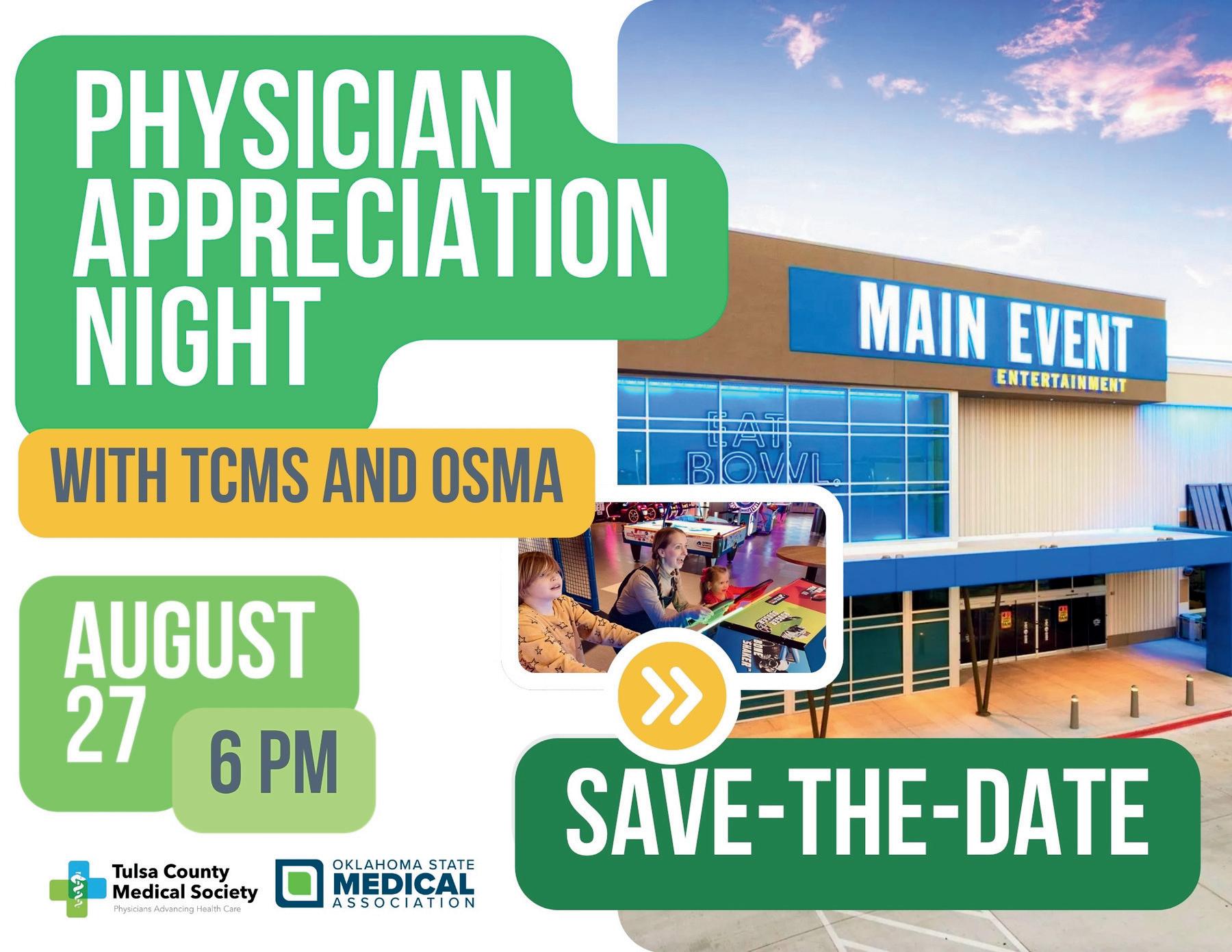
Join the TCMS and OSMA for an evening of fun, food, and appreciation — open to members and nonmembers alike! Bring your colleagues, friends, and family for a night filled with connection and entertainment. This event is FREE but registration is required.
All-You-Can-Play Arcade (3 hrs) 22 Bowling Lanes
Smokehouse BBQ Food & Drinks
Laser Tag
Billiards Tables
Gravity Ropes And more!
When: Thursday, August 27 6:00-9:00 PM
Where: Main Event - 7830 S Santa Fe, Tulsa, OK 74132
PRE-REGISTER NOW - Space is Limited
Tulsa County Medical Society and Oklahoma State Medical Association
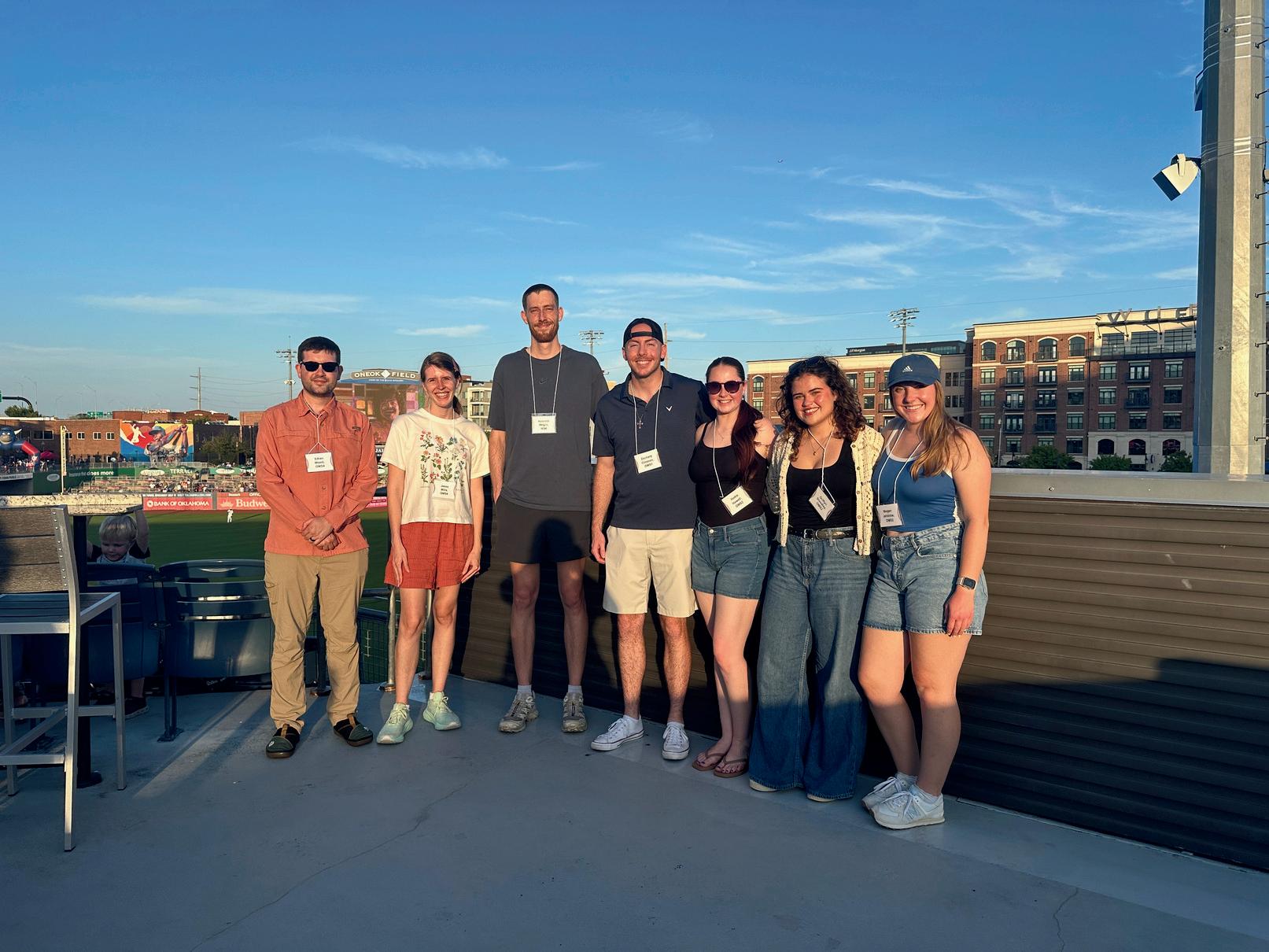
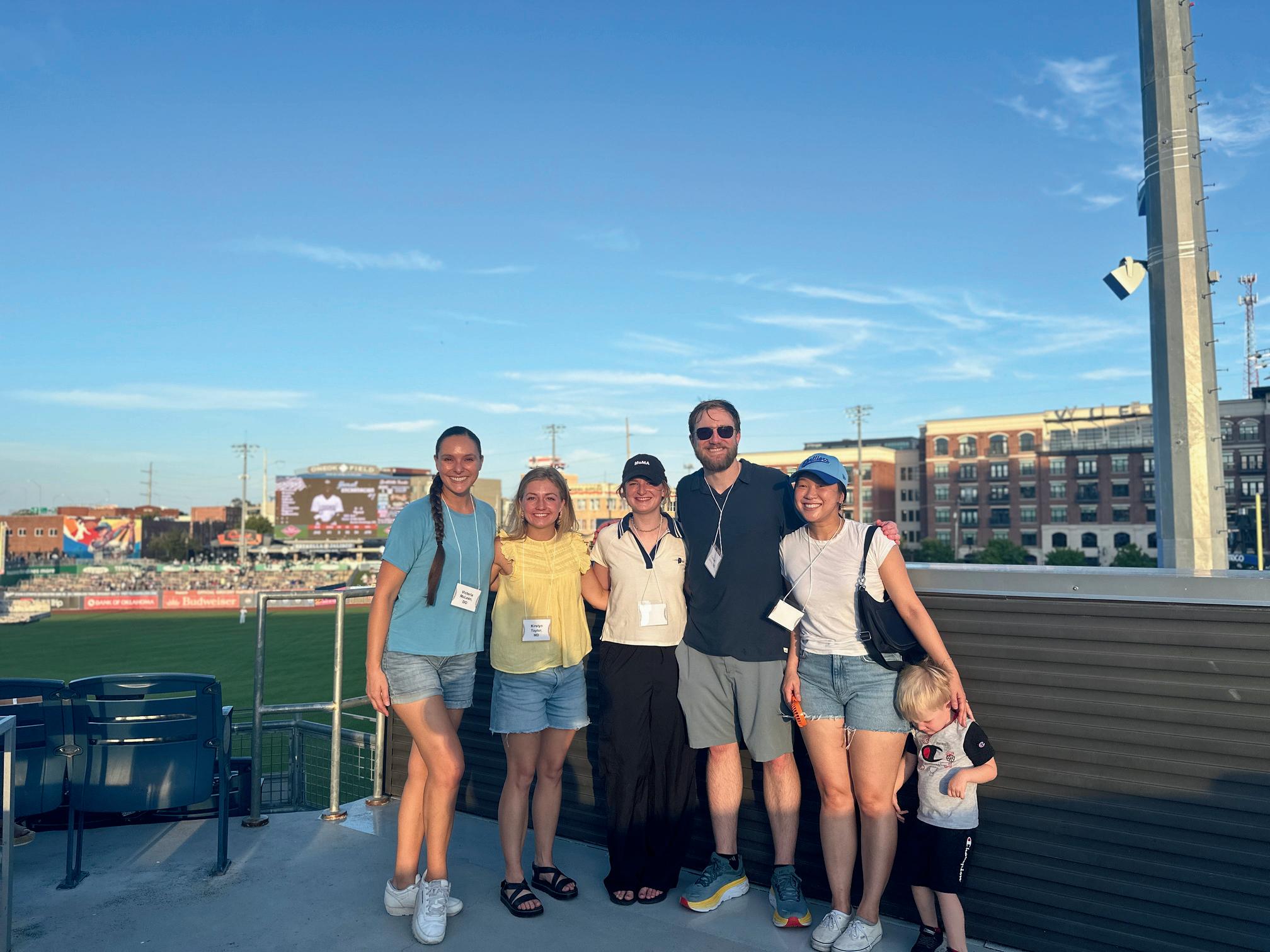
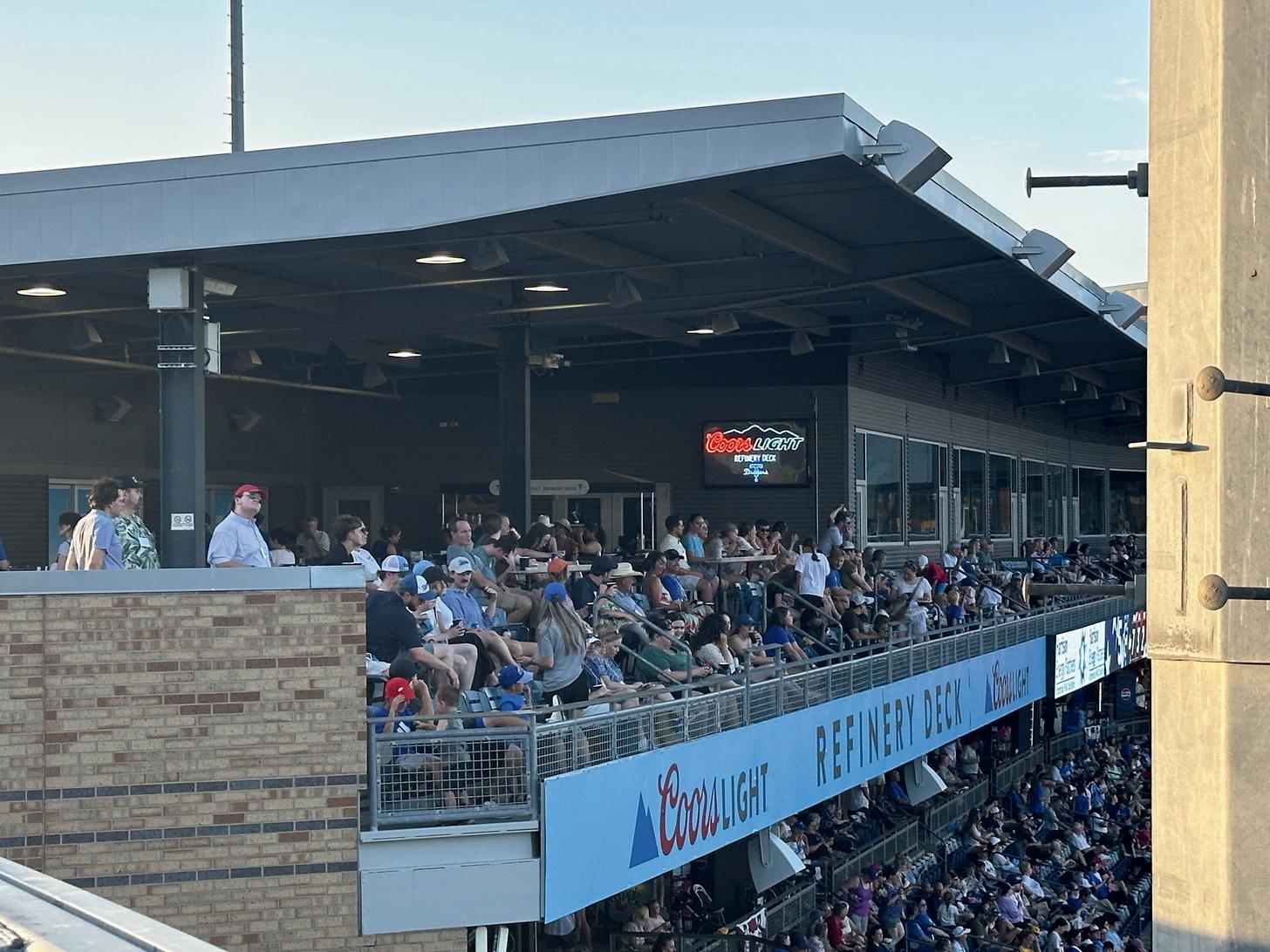
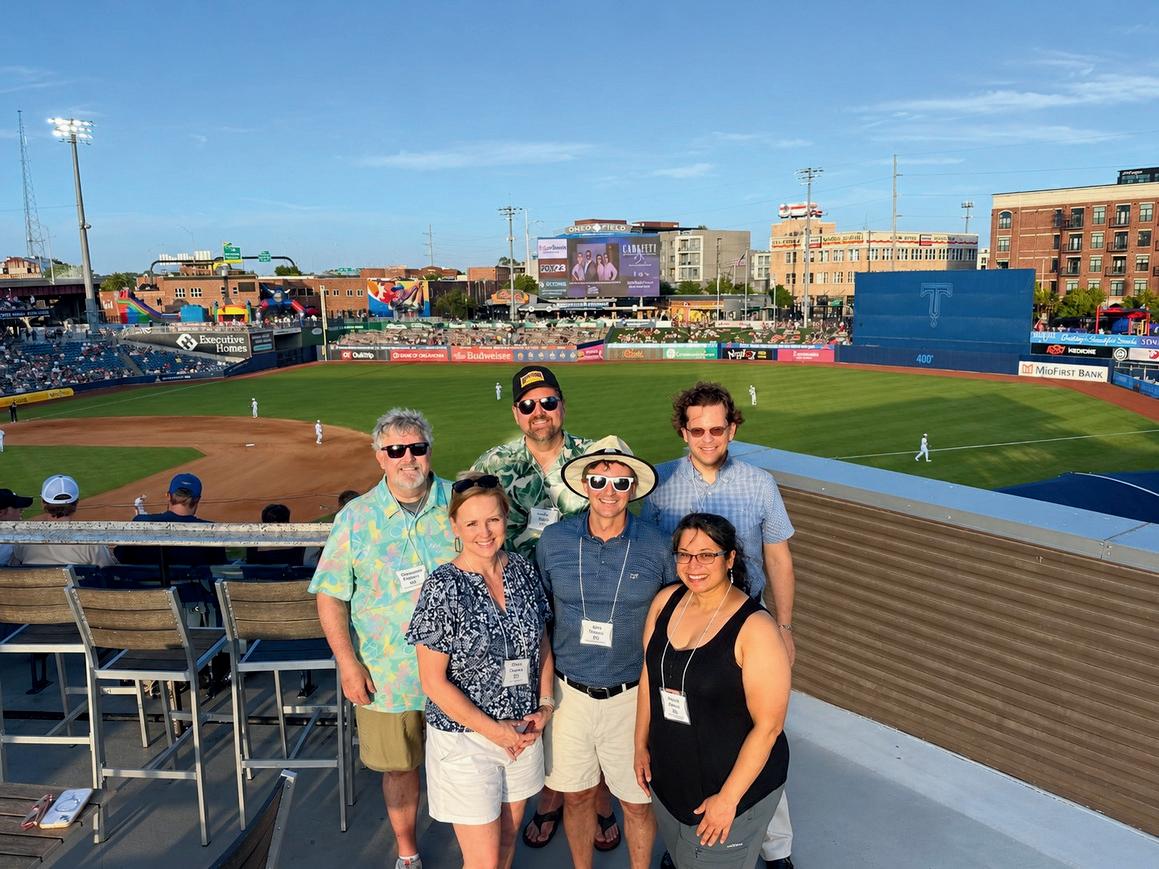
The Tulsa County Medical Society (TCMS) hosted a fantastic evening of fun and friendship at our fifth annual Drillers Night on the Coors Light Deck at ONEOK Field. Members and their families gathered to enjoy a perfect summer night filled with baseball, delicious food, and great company. The lively atmosphere, complete with classic ballpark fare and stunning views of the game, offered a wonderful opportunity for members to relax, connect, and celebrate the camaraderie that makes TCMS such a strong community.
The evening concluded with a spectacular fireworks show that lit up the Tulsa skyline, capping off a memorable night and a great way to start the July 4 Holiday. Events like Drillers Night highlight the importance of community and connection outside of clinical settings, and we’re grateful to everyone who joined us. Thank you for making the night a success - we look forward to many more opportunities to come together and celebrate our incredible organization and our members!

Thank you to our Sponsors:

Drinks Sponsor:


Tulsa County Medical Society and Oklahoma State Medical Association
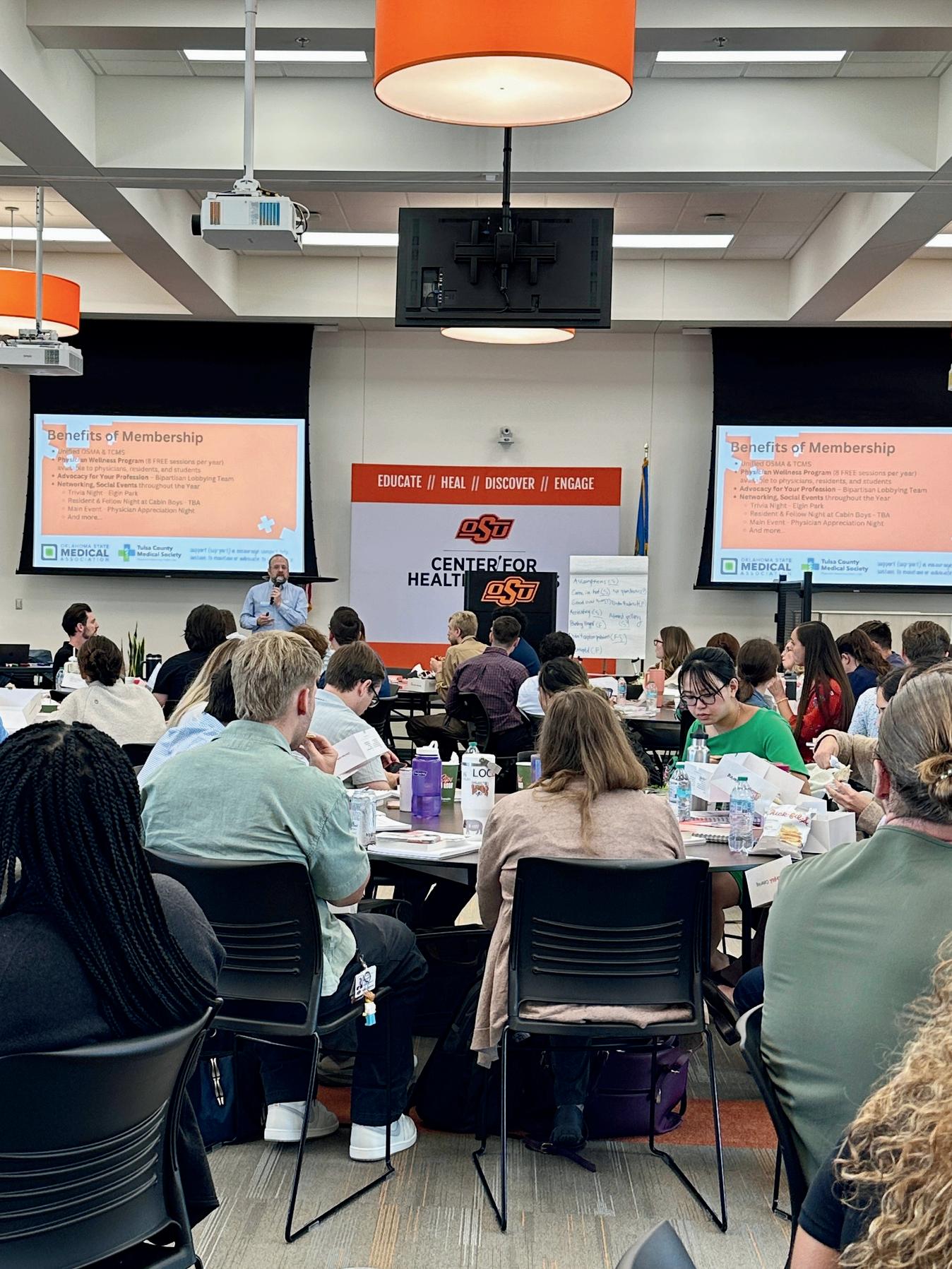
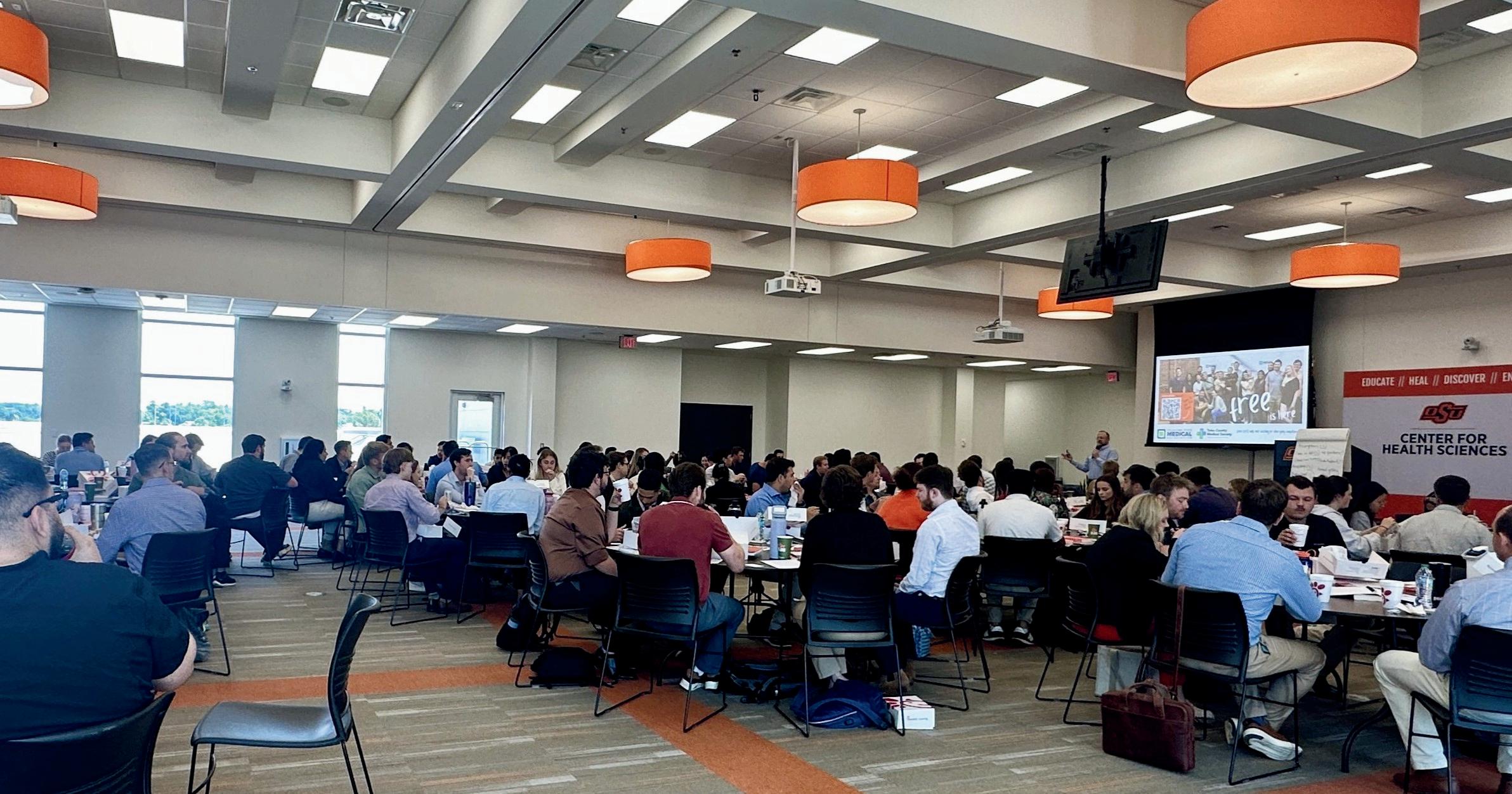
The Tulsa County Medical Society (TCMS) and the Oklahoma State Medical Association (OSMA) proudly welcomed new medical residents to Tulsa this June with events held at both the Oklahoma State University (OSU) and University of Oklahoma (OU) campuses. These gatherings served not only as warm welcomes but also as opportunities to connect and learn more about organized medicine in Oklahoma.
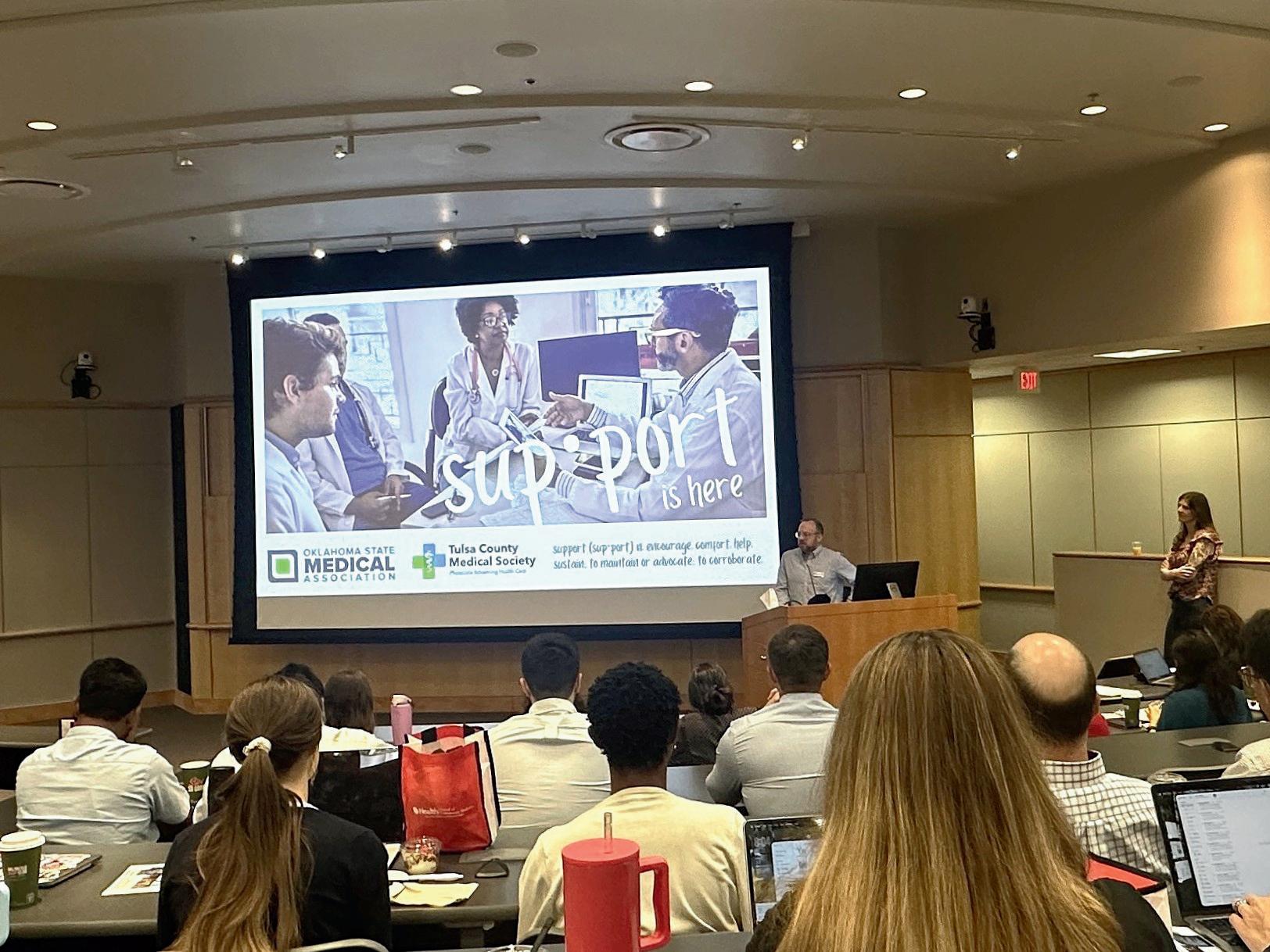
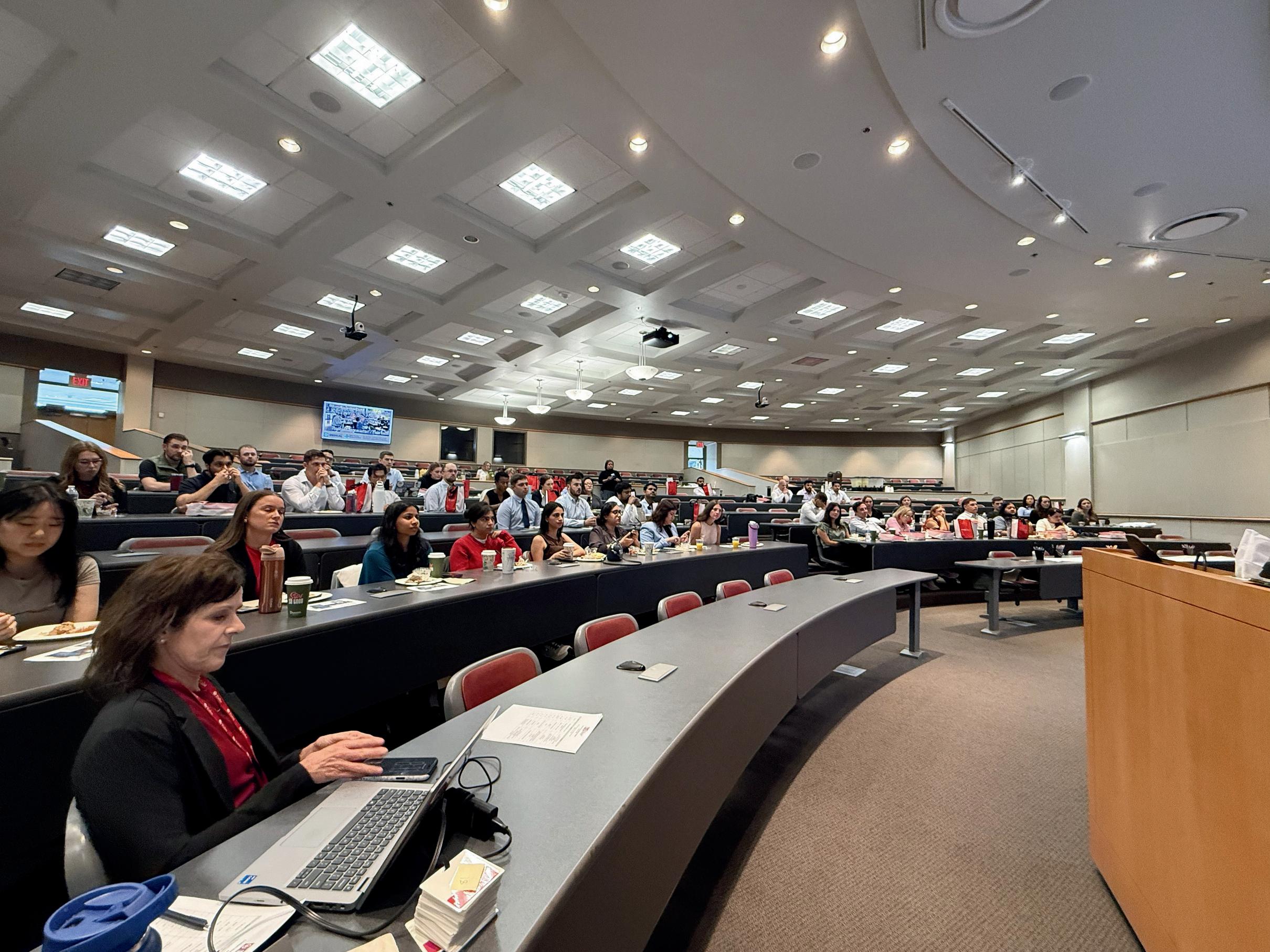
On June 16, TCMS and OSMA partnered with OSU to host lunch at the annual Crucial Conversations meeting, providing Chick-fil-A lunch to more than 130 new residents. Mr. Mark McElreath, Executive Director, addressed the group, sharing insights about the importance of advocacy, community engagement, physician wellness and professional development through organized medicine.
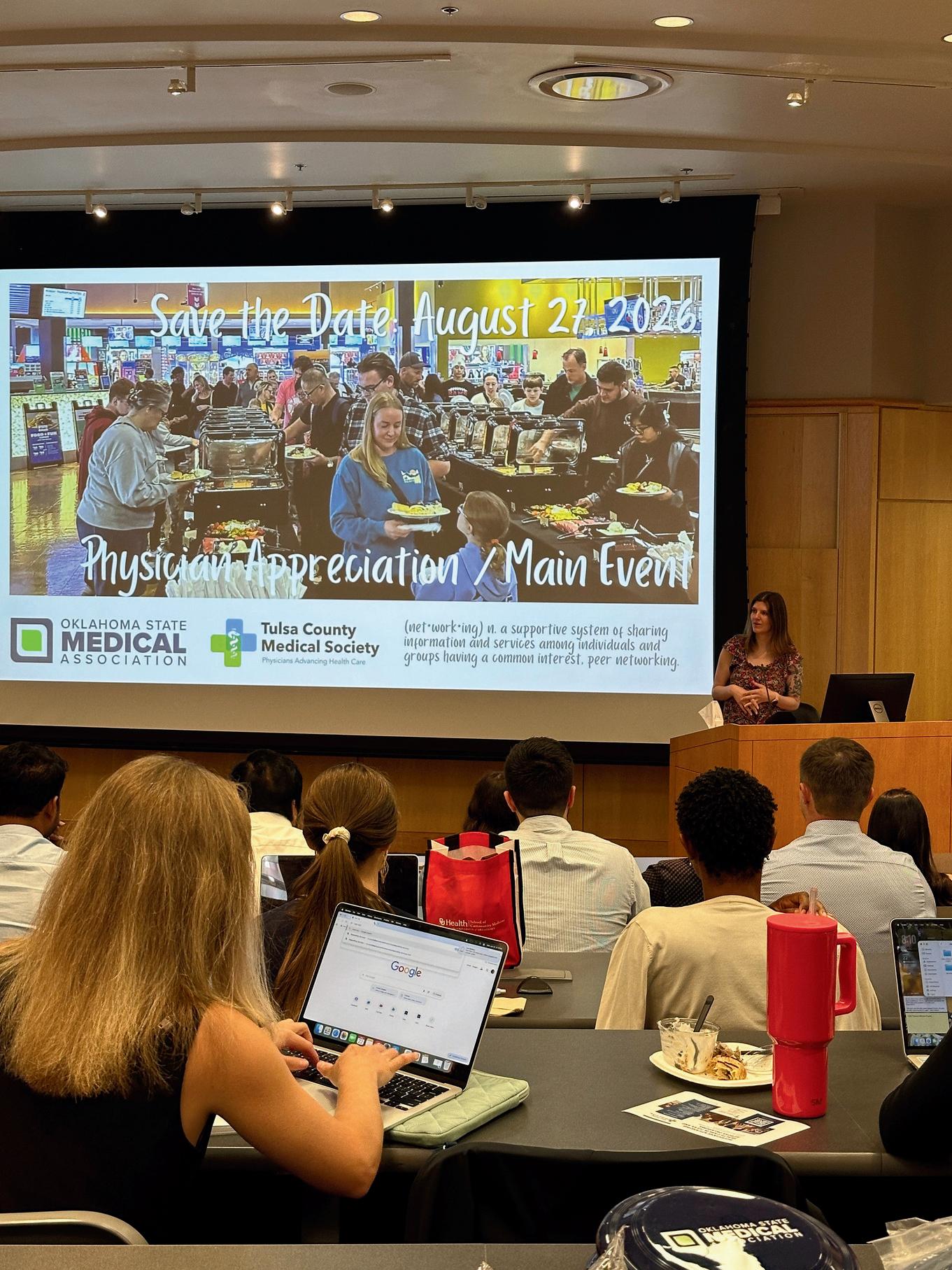
Later in the month, on June 22, TCMS and OSMA visited the OU-Tulsa campus to greet over 50 new residents with a welcome breakfast. Mr. McElreath and Lily Robistow, MS4 and OSMA Medical Student Trustee, offered words of encouragement and support. They also spoke, emphasizing our organizations ongoing commitment to resident involvement. These events reflect TCMS and OSMA’s continued dedication to supporting the next generation of physicians in Oklahoma, fostering early connections between residents and their medical community.
By Tanya Albert Henry, AMA Affiliated Groups
As augmented intelligence (AI) deepens its roots in medicine, delegates to the 2026 AMA Annual Meeting moved to ensure that evidence-based care is integrated in all health AI systems and that transparency remains at the forefront of efforts.
One big area of concern: The way in which AI-enabled decision support systems are reshaping how information is synthesized and applied in the practice of medicine. AI tools can offer rapid analysis and evidence-informed recommendations that enhance human expertise, not replace it. And they can improve efficiency, workflow and detection of high-risk conditions. But there is reason to be wary.
“AI has enormous potential in healthcare, but it cannot replace physician judgment,” said AMA CEO John Whyte, MD, MPH. “Patients deserve care decisions that are informed by the latest medical evidence and guided by a physician who understands their individual needs. Whether AI is helping a physician make a clinical decision or assisting with an insurance review, there must always be transparency, accountability, and meaningful physician oversight. Technology should support better care—not stand between patients and the care they need.”
Long-term validation of AI’s full impact on patient outcomes is undetermined and concerns about transparency, bias and explainability linger, says an AMA Council on Science and Public Health report introduced at the meeting.
Today, evidence-based medicine is the cornerstone of clinical decision making in medical practice, using a multistep process to provide the best outcome for each patient. Integrating those principles—such as graded evidence hierarchies and rigorous appraisal—into AI systems “could strengthen confidence in integrating AIenabled technologies into clinical care,” the council’s report says.
“However, significant challenges persist, including opaque model reasoning, inconsistent standards for transparency, a lack of transparency mandates in regulatory structures, and risks of confabulations in generative models,” the report says. “As clinical guidelines and medical education continue evolving to keep pace with rapid evidence generation, AI offers substantial potential to support realtime updates and organize and analyze large amounts of information, provided that transparency, reliability and user-centered design remain central.”
The AMA says that “AI should be viewed as an augmenting tool that complements human judgment, reinforces evidenced-based practice and supports clinicians in delivering high-quality, patient-centered care.”
To foster evidence-based medicine in AI tools, the AMA will:
Recognize and promote the importance of transparency and explainability so physicians have sufficient information to make sound clinical decisions when using AI clinical decision support tools, which depending on the tool, may include information such as the grading of medical evidence including the data sources.
Collaborate with medical specialty societies, relevant key parties, regulators and AI developers to establish standards and develop a framework for evidence attribution, evaluation and validation in AI clinical decision support systems.
Encourage medical education stakeholders to incorporate training on the utility, limitations and interpretation of evidence-based medicine practices when using AI tools in clinical decision-making.
Monitor best practices and policies of AI transparency and evidence-based recommendations to improve the quality and reliability of patient care.
From AI implementation to digital health adoption and EHR usability, the AMA is fighting to make technology work for physicians, ensuring that it is an asset to doctors. That includes the AMA Center for Digital Health and AI, which works to ensure physicians help shape how AI is developed, implemented, and regulated across the healthcare system, with patient safety and physician-led care remaining at the center of those efforts.
In an effort to be more efficient and save time, physicians and other health professionals are beginning to use AI to generate notes. But with that comes physician and clinician responsibilities.
Physicians need to make sure they understand the tool they are using. The medical record could contain an error specifically related to AI-generated documentation that could interfere with care.
Given that risk, the House of Delegates adopted new policy stating that “prior to the use of AI in the medical record, training in the use of AI is highly recommended and to include the benefits of AI, as well as the potential harms that could exist in an AI-generated document.”
It’s becoming increasingly common for health plans to use AI and algorithmic black-box tools to deny, reduce, or terminate coverage or payments for medical care. But these tools often rely on datasets that don’t reflect regular updates in the science or clinical guidelines across specialties.
While the AMA’s human-in-the loop policy ensures that a physician makes a final call, the AMA will also boost its efforts in this area by advocating:
Federal and state regulations and legislation requiring health plans and third-party payers to provide physicians and the insured patient with the specific clinical logic, evidence-based sources and version history of any AI or algorithmic tools used in the issuance of an adverse determination. That any AI-driven or algorithmic tool used for clinical review must be transparently audited—with reaudits triggered by material changes to the AI model, its training data, or applicable clinical guidelines, and with periodic comprehensive audits at minimum annually regardless of such changes—to ensure it reflects the current evidence-based clinical guidelines and recognized standards of care.
“When health plans use AI-driven tools to deny or delay care without explaining how those decisions were reached, physicians and patients are left in the dark,” Dr. Whyte said. “AI should never function as an unaccountable black box. Health plans must be transparent about how these tools work, what evidence and data sources they rely on, and whether a qualified physician reviewed the decision.”
With physicians uniquely qualified to lead coordinated care teams—a model that has been shown to be the best way to support high-quality care and lower costs—the AMA will “make efforts to educate physicians on evidence-based artificial intelligence tools that can strengthen collaboration with nonphysician clinicians through improved interdisciplinary communication, decision support and workflow integration.”
The House of Delegates also adopted policy to:
Support the development and dissemination of best practices for AI integration into physician-led care teams, with emphasis on safety monitoring, transparency, cyber hygiene and preserving physician leadership in clinical decision-making.
Encourage further research on AI interventions that demonstrate how AI can enhance physician-led team effectiveness, reduce misalignment of clinical risk perception, and improve coordination of care.
In a separate action, delegates directed the AMA to advocate legislation and regulation related to the use of AI in autonomous or semiautonomous circumstances in healthcare—including diagnostics, prescriptions, care management or other functions—requiring that such tools must:
Integrate with the physician-led team and be used at the direction of the treating physician.
Respect the continuity of care and best practices related to transitions of care.
Have transparent, auditable data demonstrating safety and efficacy.
Be subject to relevant and appropriate regulations, including but not limited to those related to liability and documentation.
Adhere to AMA policy on AI in healthcare (PDF).
Delegates also directed the AMA to “study emerging concepts around the regulation and licensure of autonomous and semiautonomous AI performing clinical functions, and their potential impact on the profession and the patient-physician relationship.”
Read about the other highlights from the 2026 AMA Annual Meeting.
Click here to view the complete article online: https://www.ama-assn.org/practice-management/digitalhealth/ai-increasingly-part-care-transparency-and-qualityare-musts
Tulsa County Medical Society and TCMS Foundation
The TCMS Foundation is pleased to announce that it is now accepting scholarship applications from the OU-TU School of Community Medicine and OSU College of Osteopathic Medicine Medical Students. From July 1 to August 31, 2026, medical students are invited to apply for this prestigious scholarship opportunity.
The Scholarship Fund was established in 1964 as a 501(c)3 organization from proceeds received from a community-wide mass immunization for Polio sponsored by TCMS. In 2010, the fund became a program of the Tulsa County Medical Society Foundation. The Fund had a total of $31,500 in the beginning. It was envisioned that approximately $2,500 annually would be presented until the fund was depleted.
To date, over $1.57 million in scholarships has been given to 1,351 medical students. The number of applications received annually ranges from 40 to 50.
The Educational Assistance Award Scholarship aims to support and empower the next generation of healthcare professionals by providing financial assistance to eligible candidates.
To be eligible, students must be in good standing and enrolled in their second, third, or fourth year in the 2024-2025 academic year at OU School of Community Medicine or OSU College of Osteopathic Medicine.
TCMS Foundation Scholarship Fund - Click Here to Give Now
The TCMS Foundation, a nonprofit 501(c)(3) charitable organization, is dedicated to:
Supporting Education: Providing scholarships to medical students through educational and charitable giving. Creating a Lasting Legacy: Ensuring the enduring impact of the Tulsa County Medical Society.
By joining TCMS and OSMA our members are among friends, colleagues, and peers, who share their interest, concern, and dedication, to the medical profession. Our strength relies on individual members like these, who are committed to making an impact on the field of medicine. Share with them the opportunity to join! Have them visit www.tcmsok.org/join or have them contact Mark or Joetta at 918.743.6184 or email tcms@tcmsok.org.
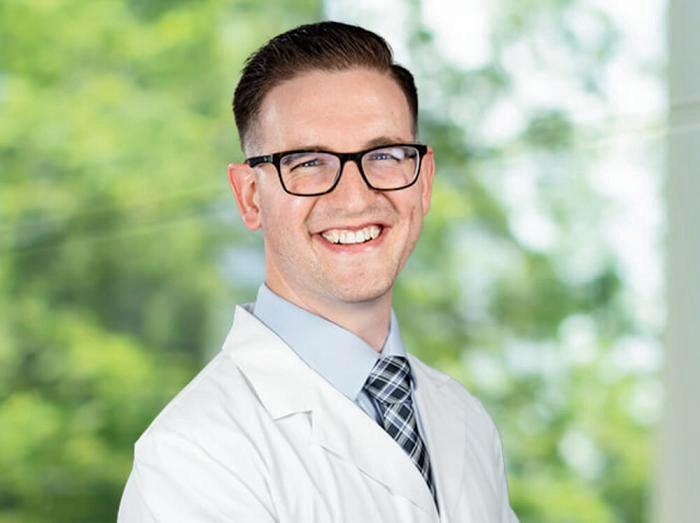

We take a moment to honor the memory of our esteemed members and colleagues who have passed away, leaving behind a legacy of dedication and compassion in the field of medicine. Their contributions have profoundly impacted countless lives, and their absence will be deeply felt within our community. As we reflect on their lives, let us remember the words of Ralph Waldo Emerson: "To live in hearts we leave behind is not to die." We encourage all members to share their memories and tributes, celebrating the remarkable individuals who have shaped our society and inspired us all.
Member Since July 31, 1979 - 47Years
Robert Howard Nelson, "Bob" to his friends, "Robert" to his family, "Dad" to his children, "Papa" to his grandchildren, and Dr. Nelson to his patients and colleagues passed away on June 6, 2026, at the age of 79, from complications of pancreatic cancer. He was born the second child of Howard and Opal Nelson. As a small child, Bob knew that medicine would be his passion.
Bob lettered in both football and track at Pryor High School, where he graduated in 1965 as an excellent student and champion hurdler. He enrolled at Oklahoma State University, a Cowboy to his core, where he pledged Sigma Alpha Epsilon and became a member of numerous student leadership organizations. On a blind date, he met Beth, and they married on April 5, 1969, in Bennett Chapel on the OSU campus — a union that would last more than 57 years.
He earned his medical degree from OU in 1973 (but never cheered for the Sooners). Robert then headed west to U.C. Davis, for his ENT residency.
Bob settled his family, now including son Scott and daughter Holly, in Tulsa, joining Eastern Oklahoma Ear, Nose, and Throat in 1979, where he would practice for nearly four decades before retiring in 2016. From his first day to his last, he wore a tie beneath his white coat, "out of respect for my patients." He loved his partners, his team, and his patients.
Bob raised his family at Kirk of the Hills Presbyterian, in Tulsa, "the Kirk.” He taught Sunday School, participated in church ski trips, enjoyed the same small group for years, and gave himself to the congregation as both deacon and elder, and participated in numerous short-term-mission trips with teams from the Kirk. He enjoyed Bible Study Fellowship, and especially benefitted from the fellowship. Bob was a lifelong learner.
Bob's Oklahoma State loyalty was absolute. He held OSU football season tickets for decades, and in later years could be found at basketball games, wrestling matches, and softball games. He bled orange. In retirement he enjoyed researching his ancestry, travel, time spent with grandchildren, and caring for the best lawn on the block with his dog beside him.
After retirement, Robert and Beth relocated to Dallas, then to Stillwater, where he spent his final years close to family. In the place he stated towards the end, “Stillwater has always been HOME.”
Click here to view the complete obituary for Dr. Nelson.

5315 S. Lewis Avenue
Tulsa, OK 74105-6539
Return Service Requested