March
New fees approved by board
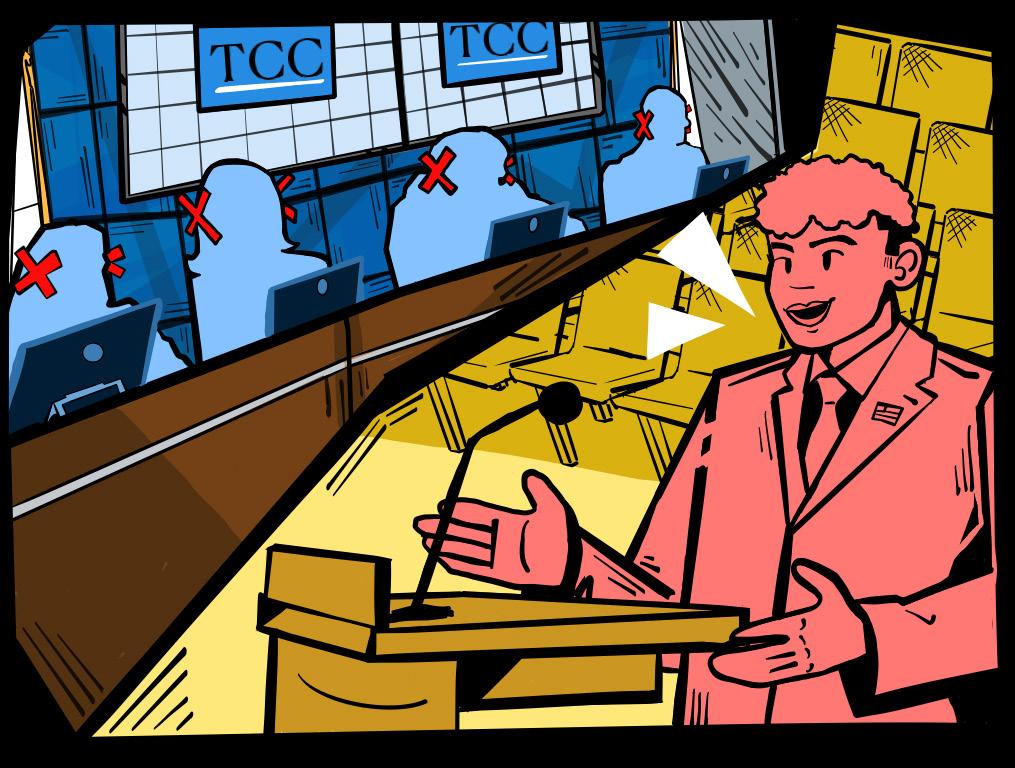
SGA member voices student grievances on financial burden
ASH PETRIE
editor-in-chief collegian.editor@tccd.edu
A Student Government Association leader said students are concerned about how they’ll pay for college next semester after student fees are implemented.
“I’ve spoken with students who are working two jobs just to afford school,” said Aden Golden, senate chair for South Campus’ SGA. “For them, this isn’t just a line item. It’s the difference between taking another class or stepping away for a semester.”
He made a public comment at the Feb. 26 board of trustees meeting where they voted to implement student fees, which will add $672 more to an Associate of Arts degree.
“I understand that the college is navigating real financial pressures, especially with tuition caps and limited flexibility in property tax exemptions,” Golden said. “However, I believe students should be the last group asked to absorb financial strain.”
For them, this isn’t just a line item. It’s the difference between taking another class or stepping away for a semester.
Aden Golden South SGA senate chair
To compensate for the loss in revenue due to a tuition freeze mandated by Gov. Greg Abbott since 2024 and multiple legislative tax exemptions, Chief Financial Officer Pamela Anglin said the college put together a group to explore all the ways the college could increase its revenue.
“There had been a plan put in place to increase tuition $5 a year,” Anglin said. “I think, with the situation now, we’d probably be looking at some fees also.”
Different campus deans, vice presidents and student success organizations compared TCC to other Texas colleges similar in size. They determined there were many amenities TCC paid on behalf of students that those colleges didn’t as well as credit hour fees the state allows that were never implemented.
See Fees, Page 2
SOUTHEAST
Students protest ICE

ASH PETRIE editor-in-chief collegian.editor@tccd.edu
Whistles and chants echoed across both TR and NE Campus as students protested Immigration and Customs Enforcement in unison on Feb. 25.
“My family members are scared to leave their house,” said TR student Azeneth Triana as she held a Palestinian flag. “It’s sad to see. Beautiful people shouldn’t have to be afraid.”
Triana choked on her words as she said why she was protesting.
“Immigrants shouldn’t be afraid of being torn apart from their families,” she said.
TR students Landis Hinesly, Corrine Steele and Alexandria Williams coordinated their campus walkout while Sasha Crouch and Arlo Hewitt organized the NE protest.
Outside the Idea Store on TR, students stood on the curb of Cherry Street facing the Tim Curry Criminal Justice Center right next to the jail.
“Hopefully, some people in there can be happy looking down at us,” Williams said.
Holding signs that read “Hate never made America great,” “Fight ignorance not immigration” and “Families belong together” while blowing whistles, students stood outside for two hours during the first 80-degree
day in months.
Semi-trucks, banged-up Fords and even a Tesla honked in support as they passed, causing the crowd to roar even louder.
However, not all were glad to see the students. One person walked beside them asking if they were the future Karens of America while another individual in a car flipped students off.
“We have people coming out, recording us, standing over there,” Steele said. “I think it’s a really big statement.”
She said students were out to not just protest ICE but the entire government, and not just since Donald Trump was elected president.
“We are just fed up, and I’m ready to see some people care and change and do something,” Steele said.
Protest coordinators handed out whistle kits with instructions on how one can use it to warn the surrounding community of federal ICE agents.
“It’s three short blows if you see ICE, and three long blows if they’re detaining someone,” Williams said. “The best thing I can do is just try to bring people together and find ways to pass out information or give knowledge to the next person.”
TR organizers said there is more to caring than just saying you do. They put the walkout together to support students like Chris Martinez and Jenaro Vedia, who said
they’ve both felt a rise in hate against immigrants.
“Unfortunately, the norm nowadays in America is that immigrants need to get out,” Martinez said. “So, having this here at TCC, I know at least bigotry doesn’t stand with this group of people.”
Vedia said the current administration’s idea of immigrants is wrong, but because people believe it, it’s become increasingly dangerous for immigrant families.
“Some people are from immigrant households, whose parents came here legally. So, they might have an accent but they’re still American,” he said. “So, if you have an accent or you’re slightly colored, you’re still getting attacked and detained.”
Fourteen miles away, student Chriss Aguirre marched around NE Campus chanting loudly with other students, passing out informative zines to others.
She said she printed about 100 of the zines the night before, some in English and some in Spanish. These zines outlined the rights of citizens and undocumented immigrants when confronted by federal agents.
“They have information on things to say if you’re approached by ICE, how to keep yourself safe and not make you a target,” Aguirre said. “How to get ICE alerts, which sends you texts whenever ICE is spotted in your ZIP code.”
See Protest, Page 3
Argentine visitors practice English, embrace Texas culture
What started out as a group of acquaintances quickly turned into close friends after a few weeks away from their home on the other side of the world. As a part of a study abroad partnership with SE Campus, five students from Argentina visited Texas from Feb. 9-28. This was possible through a partnership with San Patricio Language Institute outside of Buenos Aires. SPLI was founded over 50 years ago and people of all ages attend the institute to learn English.
“Nowadays, we have students from kindergarten level until well from old ages. We have groups of kids, groups of teens, groups of adults,” travel coordinator Tomás Nielsen said. “Facundo [Capra, one of the students] has been studying with us since he was 9 years old. So, you can basically spend your childhood and your adolescence there going through different levels of English.”
The students attended classes and SE Campus events as well as visited the local area. The location most of the students enjoyed was the Fort Worth Stockyards. While not every student went to a rodeo, they all went shopping and experienced the famous cowboy culture.

Oscar
“My favorite place is definitely the stockyards because I feel like it’s the heart of Texas, you know?” student Celeste Ilabres said. “Like, it’s your culture, and that place is where you can be closer to that because if you’re not in that place, maybe you lose some of that.”
As well as a student, Ilabres works for the institute as an English teacher for young children. She said she was surprised to make friends in America because she expected everyone to be serious and quiet.
“I will miss definitely the people that I met because I was expecting to not make
friends, you know?” she said. “Because in Argentina, we are very warm. We are friendly, direct, and here it is very different.” Each of the students stayed with a SE faculty member, creating lasting relationships.
“But I had the chance, the opportunity being with a family that is very lovely, and they are very kind to me,” Ilabres said. “They are like family to me, and we are like best friends now. I love them.”
As well as her host family, Ambar Pajon said she will miss shopping as well. She said everything was cheap. She bought 11 bottles of perfume and countless pieces of clothing. Many of her fellow group members did the same. Capra went all out and purchased a full Texan outfit with boots, jeans, a belt with a buckle and even a cowboy hat. He purchased most of his things from the stockyards but also from his favorite place, Sixth Street in Austin.
“That’s more my vibe,” Capra said. “They told us to go to Sixth Street because I’m totally into heavy metal, rock and all that stuff. And I bought some pretty cool things there.”
He said it was weird adjusting to the drinking age of 21. He just
Diego Santos/The Collegian
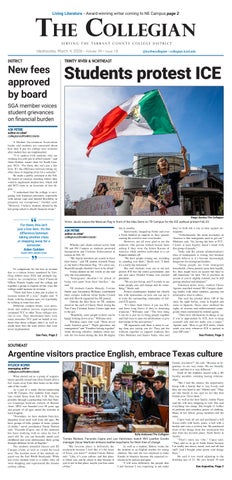
Victor Jacob waves the Mexican flag in front of the Idea Store on TR Campus for the ICE walkout protest Feb.25.
Kelly Amtower/The Collegian
Tomás Nielsen, Facundo Capra and Leo Valviviezo watch Will Leather Goods manager
Martinez emboss leather keychains for them free of charge.
RYLEIGH ROPER managing editor collegian.editor@tccd.edu
Texas Monthly editor to speak on campus
article “Midnight in the Garden of East Texas,” about a 38-year-old mortician who killed his companion: a wealthy 81-year-old widow.
Award-winning writer Skip Hollandsworth will speak to students at this semester’s NE Campus “Living Literature” event.
“Skip Hollandsworth is a Texas legend. ... We hope that our students and anyone attending can gain insight into the arts of narrative writing, storytelling and publishing from him,” said event facilitator and NE English instructor Amanda Brotherton.
The event on March 24-25 will be headlined by Hollandsworth and literary agent David Hale Smith.
Hollandsworth is the executive editor for Texas Monthly magazine and a four-time National Magazine Award finalist, the industry’s equivalent of a Pulitzer Prize. His career started with student journalism, covering the Texas Christian University football team for TCU’s school newspaper, The Daily Skiff.
In 2010, he won the National Magazine Award for Feature Writing for “Still Life.” It was the story of John McClamrock, a Dallas high school football player paralyzed after a tackle in 1973, and the strength of his mother Ann. She cared for him for the rest of his life, dying just eight weeks after him in May 2008.
Hollandsworth co-wrote the 2011 film “Bernie” starring Jack Black, which currently holds an 88% on Rotten Tomatoes’ Tomatometer. The movie is based on his Texas Monthly
Fees (continued from page 1)
“The impact for that full degree would be going from $4,440 to $5,112, based on a typical student schedule,” Anglin said.
All students will be charged $10 more per credit hour and $24 more per lab-credit hour. This means if a student takes five classes in the fall and two classes have one lab hour, then they’ll pay $174 more than they did this semester.
“Increases in student fees may look small on paper, but for many of our students, even a modest increase can have a significant impact,” Golden said.
Music students will pay $100 more for their private music lessons, and courses utilizing Capstone will be charged $50 for the software.
DISTRICT CRIME LOG
Feb. 26
South: A report was made for refusal to give information to police in parking lot 4.
NW: An unattended vehicle was hit in North parking lot 2A. The report was closed with no suspects or witnesses.
Feb. 25
South: A report on stalking was made in the learning center.
Feb. 24
NW: Unattended vehicle was struck with damages costing less than $200 in South parking lot 1A.
SE: Property was stolen in the east wing. The cost of the item was less than $100.
Feb. 23
TR: An active report of a drug law violation was made.
TR: Report of one person in possession of drugs.
NW: Unattended vehicle was struck with damages costing less than $200 near NW02.
NE: An unattended vehicle was hit in parking lot F1. The report was closed with no suspects or witnesses.
NW: A report of criminal mischief was made on the Alliance West Transportation Campus.
Feb. 20
SE: A report of an assault that caused an injury was made in the Campus College High School.
SE: An active investigation was reported on stalking at the Campus College High School.
SE: Harassment was reported at the Campus College High School and is being investigated.
Feb. 18
NE: A parked car was struck in parking lot F1.
SE: An act of clery stalking was reported.
He has written profiles about numerous celebrities including Farrah Fawcett, Sandra Bullock and Troy Aikman. He is also the author of the historical true-crime book “The Midnight Assassin,” a New York Times best-seller about America’s first serial killer.
“I just love his writing so much,” Brotherton said. “It’s always been an escape and great source of entertainment for me.”
NE English instructor Brock Kingsley is helping facilitate the event, but he credits Brotherton for students having this opportunity.
“She played the largest part in bringing Skip Hollandsworth to campus,” he said.
The other speaker, Smith, works for InkWell Management Literary Agency. He operated his own agency in Texas before joining InkWell in 2011, where he represents Hollandsworth, as well as many other successful authors including New York Times best-sellers Greg Rucka and Blake Crouch. He actively sells film and television rights for his clients.
Rucka has had multiple of his comic series and novels adapted for the screen, notably Netflix’s film “The Old Guard,” based on the Image Comics series, and ABC’s television show “Stumptown.” Crouch has also had novels adapted for the screen: “Dark Matter,” “Good Behavior” and the “Wayward Pines” trilogy.
“David Hale Smith has been at Inkwell Publishing for many years and has a long his-
Nursing students, both registered and vocational, will have additional technology fees.
“This is to provide them their access code to the software that provides them their training,” Anglin said.
Golden said he is a self-supporting student barely making it by. Along with the SGA, he’s taking 17 credit hours, working two jobs and teaching tennis on the side.
“I do not think they kept students’ struggles in mind when making the decision, which is why I had to step up and speak up,” he said.
At the meeting, all board members praised Golden for his courage to stand before them and speak on behalf of the student body.
tory of publishing both fiction and non-fiction,” Brotherton said. “We hope he will provide audiences with some insight into the publishing industry from an agent’s perspective.”
On both dates, there will be a Q&A and
Board President Jeannie Deakyne said she had been in his place before, approaching her college’s board about how fees affected students when she was a part of the SGA.
“I’d like to say a few things that are specifically tailored for the student who’s listening,” Deakyne said. “TCC has done an exceptional job of evaluating the environment that our tuition and fees are being administered in today.”
She encouraged students to be active in their state and local government to express how legislative tax exemptions are affecting the student and public college experience.
However, Golden said he felt like the administration lacked any communication with students before or after its decision.
“Many were disappointed and felt [it
(continued from page 1)
said he was slightly bummed since he always drinks on his birthday. For him, it was definitely a culture shock he was getting used to.
The biggest culture shock for most of the students was the lack of public transportation. They now understood why cars are so vital to America.
“The whole culture that surrounds cars, it is not as big in Argentina. The fact that you don’t have developed public transport system. Yeah, I basically came here to try to understand those systems that you have here,” student Leonel Valdiviezo said. “It is a system that was developed because of the way of living here. That basically life revolves on the consumption of fast food.”
Nielsen said that in Argentina he likes to drive his car, but in America there is too much driving daily.
“Here, nothing is walkable. There are no pedestrians here. Everyone just drives your car,” he said. “And I like driving my car but at the same time, if I want to take a walk, that’s almost impossible or when I ride my bike. You have no public transport here.”
One thing the students hope Americans will learn about Argentina is that it’s not like Mexico. Nielsen said that when Americans think about Latin America they typically picture Mexico, he said that’s not true. Argentina has a large amount of diversity.
“Even Argentina people are very different from people from Bolivia, from Chile, from Hawaii,” he said. “And so, it’s a huge diversity. Not all Latinos are the same.”
Capra also said he ran into many people who assumed Argentina was like Mexico.
was] another way for the school to dig into their pockets,” he said. “I don’t think the college made it a priority to inform students, as a vast majority of them had no idea and learned about it either though their teachers or through SGA and fellow students.”
Golden said the college missed the opportunity for deeper student engagement, and instead just made students feel like they’re only recipients of outcomes to TCC’s decisions.
“Students want to be partners in problem solving,” Golden said. “Greater transparency, earlier communication and structured opportunities for student input before decisions are finalized would go a long way. When students feel heard and included, even difficult decisions become easier to understand.”

“That we’re not like Mexico. I’ve encountered many Americans that they just think, I’m not mad about it though, but that all South America is just like Mexico,” Capra said. “We’re also very mixed. Like in Argentina, you can find Germans, Italians, Hispanic people, even people from Africa, Asians, all that stuff.”
Nielsen said this study abroad opportunity was not only a great experience for the students to practice and strengthen their language, but it was also a great bonding experience. Beforehand, the students didn’t really know each other, but now Nielsen said they are all friends.
“I think this was a really good experience for them because if they were able to understand what was going on in class and participate in class, then that shows that they can actually communicate in English,” he said. “Also, I think that the group has barely known each other. I knew some of them. I mean, I had seen them before, but I think that it is a really nice group. Like, we’re all friends. So maybe that was part of the program itself.”
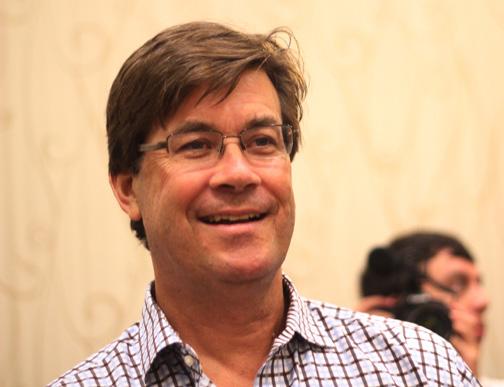
Courtesy of InkWell Management
Skip Hollandsworth, whose article inspired the Jack Black film “Bernie,” will be the feature speaker at the Living Literature event on NE Campus March 24-25.
Argentina
Photos by Kelly Amtower/The Collegian
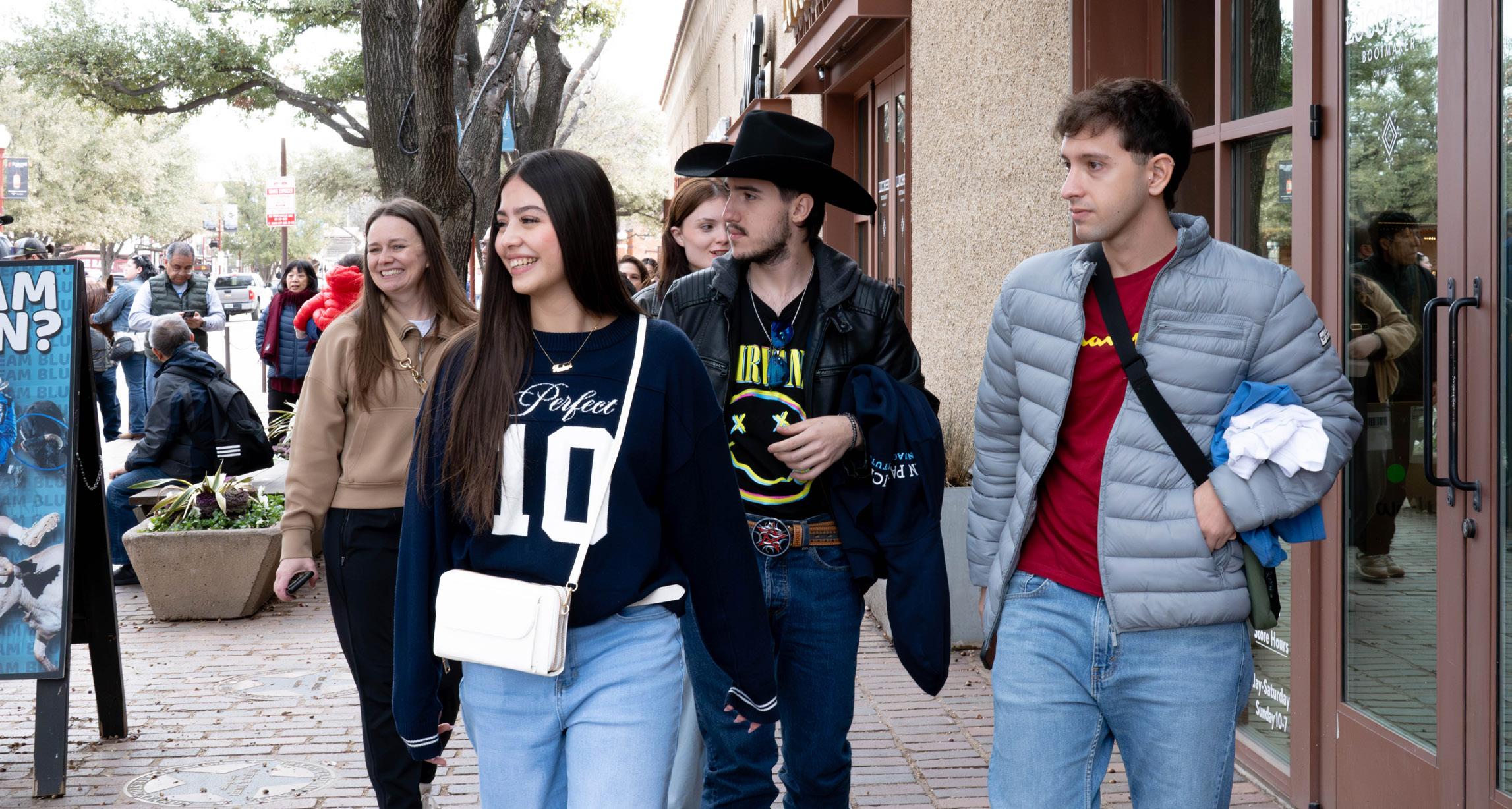
Argentine students Celeste Llabres, Ambar Pajon, Facundo Capra and Leo Valviviezo tour the Fort Worth Stockyards.
Travel program coordinator Tomás Nielsen discusses the San Patricio Language Institute with student Ambar Pajon in the Fort Worth Stockyards.
TRINITY RIVER
Law enforcement officers share experiences with students
CARA COCO campus editor collegian.editor@tccd.edu
Criminal justice students on TR Campus recently had the opportunity to learn from a former-TCC-student-turned-police officer and a veteran Department of Public Safety sergeant.
TR instructor Steve Romero, a former federal agent, organized the visits where the law enforcement officers answered students’ questions and shared their experiences.
Dallas police officer Hismael Veloz, who was a student of Romero’s, told the students on Feb. 17 he is not a recruiter and will not answer questions like a recruiter.
“I do want to help out people, those who can’t help themselves,” Veloz said. “But then there’s the main part for me, which was this job just looked fun. You know, you drive fast and have a badge and a gun. Every day is a new day.”
Veloz graduated from TCC in 2024, transitioning from sitting in a classroom studying criminal justice to enforcing it. He said after he graduated from TCC, Romero kept in touch with him and recently asked him to speak with the class.
“It’s very important not to get emotionally involved because people will push buttons, try to push you to the limit,” Veloz said. “I try to be like a Robocop.”
Veloz explained the police academy training process and what the job looks like for him on a daily basis.
The police academy is usually around 10 months long and is made up of four phases, including rigorous physical training and on-thejob training. The police academy also has law enforcement students undergo a psychological exam, where the students are judged on how they would handle frightening and personal hypothetical situations.
Texas Ranger Sgt. Germaine Gaspard, unlike Veloz who is fresh to law enforcement, has 25 years under his belt. He is a recruiter for the Department of Public Safety, which is responsible for statewide law enforcement and driver license administration.
“What differentiates us between the county and the PD [police department] is that we are a proactive law enforcement agency,” Gaspard said to the class on Feb. 26. “They are reactive. It’s not good. It’s not bad. It’s just a difference.”
As a Texas Ranger, Gaspard investigates a range of crimes from homicide to smug-
Protest
gling contraband to political corruption. Texas Rangers also act as emergency tactical relief and handle organized crime such as human trafficking and gangs.
“What I can promise you, if you wear this uniform, we’re gonna put you in a patrol car. I’m not going to give you a partner,” Gaspard said. “We’ll give you four weapons systems. We’ll give you a gun to put on your hip. I’m gonna give you a backup weapon, a long gun and a shotgun. ... I’m going to send you to the most dangerous places in Texas, and I’m not going to guarantee that you have backup right around the corner. That’s the job, right?”
Gaspard emphasized the need to effectively communicate and connect with people as well as maintaining a level-headed control of every situation one enters. He called this a command presence.
(continued from page 1)

Hewitt, who helped organize the protest, said the purpose was to spread awareness to students that their group doesn’t stand with ICE.
Waving signs and chanting phrases like “F*** ICE,” the group drew a few responses from others, some in support and others not.
While in his Bible study outside the library, Carlos Carranza shouted “Make America Great Again” as the protestors went by.
“ICE is technically doing their job. [They’re] just trying to remove illegal aliens, especially those who committed crimes,” Carranza said. “Even illegals, who came here to this country illegally, they also broke the law too.”
Vice Chancellor for Communications and External Affairs Reginald Gates said the college understands that students want to protest.
“We respect freedom of speech,” Gates said. “So, for our students, we’re here to sup-
port that.”
Police Chief Jay Tillerson said his department’s role is to make sure people are safe, even during a protest. He said he would appreciate it if students would reach out beforehand.
“We love coordinating that,” Tillerson said. “So, if we have questions or students need something, we have that dialogue.”
Steele said they believe nothing can go back to how it once was, because even then it wasn’t that great.
“It’s not just one against everyone. It’s all of us against them,” she said. “We are the ants, and the government’s the grasshoppers, brother.”
Instead, she said people must come together to curate change for a better future.
“I think that this works,” Steele said. “It may not work in this very moment, but in time it’s going to work because it has to.”
Both command presence and integrity, to Gaspard, are vital for law enforcement.
“Your integrity is your ability to think, speak and do the same thing,” Gaspard said.
“What we’re looking for are people that are intelligent enough to be attorneys and hard enough to stop bad people from doing bad things.”
Chandler Webb, one of Romero’s students, is completing his base curriculum classes at TCC before he transfers to Tarleton to study to become either a game warden or border patrol. Webb said what stuck out to him about Gaspard’s talk with is the emphasis on communication.
“It’s one of those things of not necessarily knowing when to leave work at the door but knowing how to get through work and find the right people to surround you,” Webb said.
Both Gaspard and Veloz highlighted communication as a vital skill in their fields.
“Believe it or not, a majority of our job is talking to people,” Veloz said. “This is something called verbal judo. It’s a lot of communicating or deescalating with words, interacting, building rapport.”
Romero said he often applies the tools he used managing federal agents to how he runs his classroom.
“This is what I tell them when they come to this classroom. I said, ‘If you don’t like controversy, you’re probably not in the right course,’” Romero said.
TR Campus will host a free criminal justice job fair on March 10 with over 45 law enforcement agencies to speak with participants and criminal justice students. The event will be on Main Street from 10 a.m. to 2 p.m.

Dominic DePaule/The Collegian
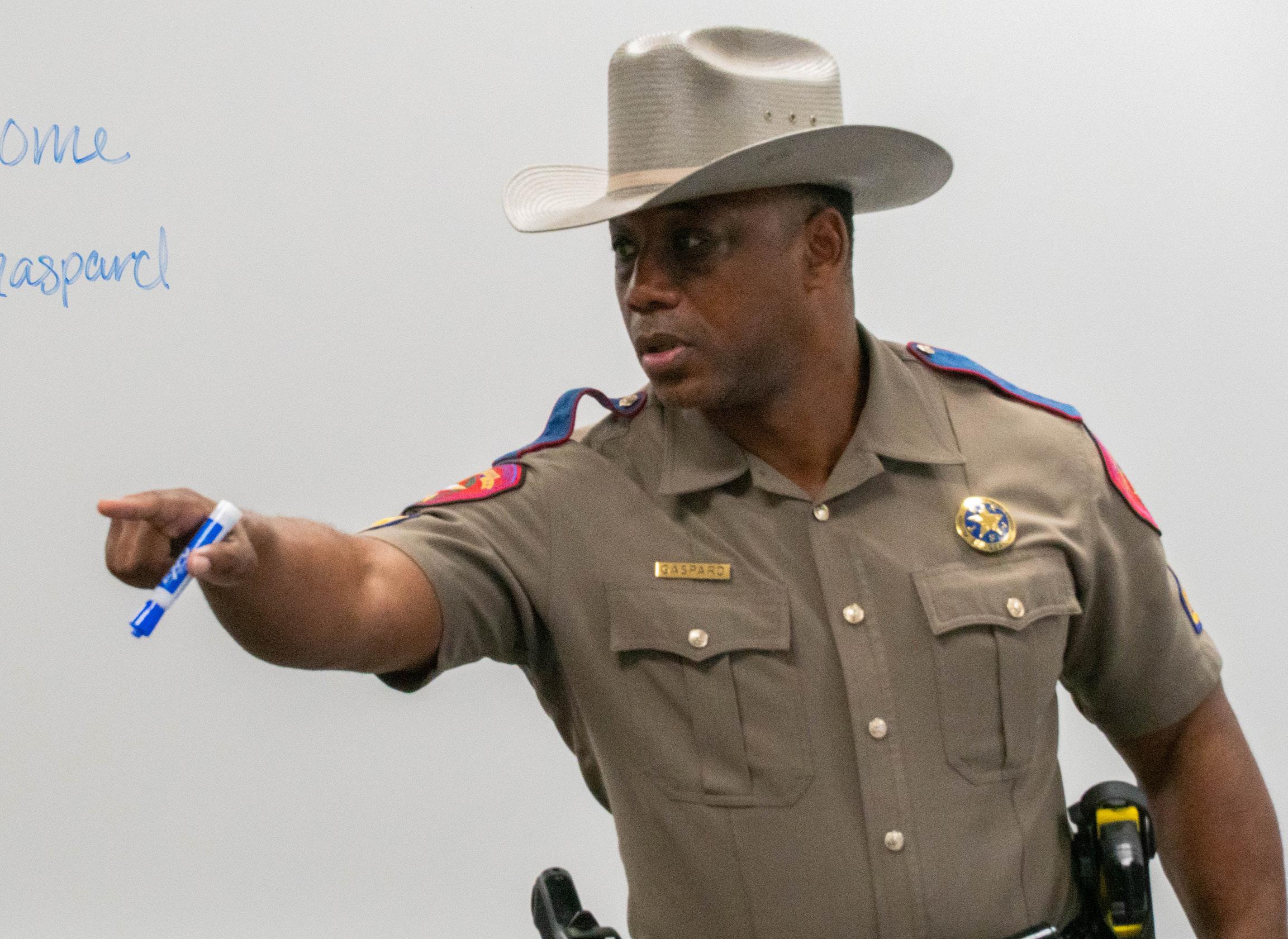
Department of Public Safety Sgt. Germaine Gaspard speaks to criminal justice students at TR Campus about the responsibities of a Texas Ranger and his experiences on the job.
Kelly Amtower/The Collegian
NE student Jax Kiernan leads student protesters on march during ICE walkout.
Student fees are inevitable. We get it.
Revenue has gone down while expenses have gone up, and our college is scrambling to make ends meet. That sounds like faculty, staff and students’ daily life.
But when the community isn’t involved in the process, our administration can’t say it keeps the TCC community in mind when it makes decisions.
Every semester, it seems the administration makes changes that affect our budgets without actually having us involved in the conversation.
Students may have been more understanding about adding fees if the first time we heard about them was before the trustees debated our future at their work session.
Also, the information would be easier to swallow if we hadn’t also heard about board members attending a convention in Washington, DC, where they discussed new legislation and funding procedures.
While they were eating nice warm meals, sipping cocktails and enjoying the city, we were stuck here trying to navigate the implications of their decision.
They work hard and deserve their cup of tea. We’re not saying they don’t. However, it’s hard to not be upset when the college asks us to cough up the money it’s lost in revenue, when the chancellor makes $551,565 annually, plus stipends.
It’d also be easier to swallow if the individuals involved in the
student fee decision weren’t vice presidents and deans, whose salaries are over $120,000 and who students barely, if ever, interact with.
Everyone is feeling the weight of inflation, so while a six-figure salary seems grand to us who struggle to keep any money in a savings account, it’s not wise for us to assume this doesn’t affect everyone.
When board member Laura Pritchett says “$50 is not a significant amount, but also not insignificant,” shows how out of touch
The judiciary branch of the federal government is the only one functioning properly, despite what many say. The executive branch has been starting wars without congressional approval, running cover for pedophiles and spying on American citizens for decades. The legislative branch has been at a stalemate for decades due to the two-party system. For over 150 years, the Supreme Court has had nine justices. Some Democrats have been calling for adding justices, or packing the court, since former President Franklin Delano Roosevelt came up with the idea in 1936. Courtpacking dangerously waters down the checks and balances of the judiciary branch. If one party breaks the long-standing tradition of keeping nine justices in an effort to gain a temporary upper hand politically, the other party will just add its own new justices when it regains

MATT PENROD campus editor collegian.editor@tccd.edu
power. It’s genuinely a childish concept that would somehow result in a larger, less efficient and more polarized government. FDR ended up serving four presidential terms before the 22nd Amendment in 1951, which limited presidents to two terms. In his time as president he appointed eight Supreme Court justices, the second most in history. He was still able to reshape the court without adding justices. While the Supreme Court has conservative and liberal blocs,
from our reality they are. For a lot of students, $50 is equivalent to about five hours of working at our part-time job. Sure, that doesn’t sound too bad on paper, but $50 doesn’t even cover a week’s worth of groceries for one person anymore.
Their math evaluating how much fees would add to the overall cost of an associate of art degree is only for a student on a two-year path. The additional $627 their PowerPoint presentation said will be added to an AA degree doesn’t
the justices’ job is to interpret the Constitution the way they see it, regardless of which president they were appointed by. The executive and legislative branches have been using the judiciary as a scapegoat and pawn in their games of achieving unchecked power. In 2016, Republicans had control of the Senate, and they blocked then-president Barack Obama’s nomination of Merrick Garland to the Supreme Court, citing the fact that it was an election year, so the people should decide the direction of the court with their presidential votes.
This concept was introduced by Joe Biden in 1992. A senator at the time, he hypothetically argued that if a vacancy occurred, George H.W. Bush should wait until after the election to make a nomination, or the Senate should consider delaying confirmation.
Once Republicans cited this in the Garland situation, Biden tried to
consider the “real” community college student. Not all of us begin our journey knowing what we want to do. If we do, it’s more likely that our path will change or we will try something different. That’s why we chose community college, to have the option to experiment and decide what it is we want to do for the rest of our lives before heading off to a university where a degree change costs us an arm and a leg.
The state has changed how it
deny it, but even the Washington Post acknowledged that he said it.
In President Donald Trump’s first term, he appointed three justices to the court, one of which Senate Republicans confirmed even though it was during an election year.
As hypocritical as it is, anyone pretending Democrats wouldn’t have played the same political game is being purposefully naive.
In 2021, a number of congressional Democrats introduced legislation to expand the court from nine to 13 justices, and Biden set up a commission to study the court’s structure, including the number of justices. Thankfully, these efforts went nowhere. That doesn’t mean they are going to stop, though.
Jasmine Crockett, a major player in the Texas Senate race, urged Democrats in August 2025 to pack the court when they regain power.
The conservative bloc of the court just proved critics like her wrong by ruling against many of
funds community colleges from being enrollment-based to now focusing on how many of us complete a degree.
So, our college is demanding high school students, 18-year-olds and 27-year-olds with families to have everything figured out within two years to get us out of TCC for revenue benefits. It doesn’t sound like a very “student-focused” decision.
For those of us who’ve been on campus since before the fall 2024 semester, we know how fun our campuses used to be. Now, after all the budget cuts, our community is gone.
We don’t have anymore events where we learn how to dance, play interactive-educational games or celebrate culture with food and music. We just get informational tables with pamphlets.
And now to add on top of all these cuts, we’re being asked to pay more for a college that doesn’t want to support student success if it’s outside the classroom.
Again, we are mindful of how operating costs, legislative mandates and funding changes affect the college’s revenue. But did the college think about how all these changes affect us?
If the administration would like a more positive response to their decisions, they should try having real conversations with students about their daily life, struggles and needs, not just congratulating them when they receive an award.
Trump’s tariffs. They aren’t just doing his bidding. They’re not afraid to go against him if they feel what he’s doing is unconstitutional. Three conservatives ruled against the tariffs. Chief Justice John Roberts siding with the liberal bloc isn’t much of a surprise. What is surprising is Trump appointees Neil Gorsuch and Amy Coney Barrett voting to strike down a pillar of his economic plan. It’s doubtful they wanted to betray the man who gave them the opportunity of a lifetime. Their first priority is clearly upholding their interpretations of the Constitution. The left argues that it’s OK to pack the court since the conservative bloc holds a majority, but it’s just how things worked out. If Hillary Clinton won the presidency in 2016, the liberal bloc would hold a majority. But she didn’t, so they don’t. Democrats need to embrace common sense and drop radical ideas like packing the court.
Intramural sports give students shot at finding community
Every March, college basketball takes over the country. Brackets are filled out between classes, buzzer-beaters dominate social media and entire campuses rally behind teams chasing championships during March Madness.
At universities with major athletic programs, sports become part of a school’s identity.
At TCC, the atmosphere looks different.
There are no packed football stadiums or nationally televised games drawing crowds across campus. Many students arrive for class, finish assignments and head straight to work or back home. As a commuter college, connection does not always happen naturally.
But inside campus gyms, something quieter, and just as important, is happening.
Students who might never speak to each other in class become teammates. Between lectures, work shifts and personal responsibilities,

D’MYRIA WILLIAMS campus editor collegian.editor@tccd.edu
intramural sports create a space where competition turns into camaraderie.
Community college students are often defined by what they do not have: fewer traditions, fewer resources and fewer opportunities to experience the “college atmosphere” people imagine when they think about higher education. That assumption overlooks how community colleges create connection. What often goes unnoticed is what students build anyway.
The Collegian is a
Intramural sports at TCC offer more than recreation. For many students, they provide a reason to stay on campus longer than necessary.
They become a way to relieve stress after long workdays, meet new people and develop a shared sense of belonging.
During recent intramural basketball nights at the NE Campus gym, students lingered long after games ended, talking courtside and planning rematches for the following week. Moments like these may seem small, but they transform a commuter campus into a community.
At large universities’ athletics often serve as the center of campus culture. Game days create shared traditions, packed watch parties and memories passed down from one graduating class to the next.
At commuter colleges, that sense of identity has to be created intentionally.
Intramural tournaments give
students a chance to compete simply because they want to. There are no scholarships on the line or professional scouts watching from the stands.
Players show up after class anyway, motivated by pride, teamwork and the opportunity to be part of something meaningful. That effort matters more than many people realize.
For students balancing academics, jobs and family responsibilities, staying late on campus is rarely convenient. Choosing to participate means choosing connection over routine. It means carving out time for joy in schedules often dominated by responsibility.
Sports have always been about more than winning. They build leadership, resilience and friendships that extend far beyond the court. A teammate who starts as a stranger can quickly become a study partner, a support system or even a lifelong friend.



On weeknights, sneakers echo across half courts as teammates call out encouragement, and laughter carries through the gym. The energy may not make national headlines, but it creates something just as valuable, a sense of belonging.
Moments like these challenge the idea that school spirit only exists where varsity athletics dominate campus life.
Community colleges may not have televised rivalries or sold-out arenas, but they still create pride through participation and shared experience.
They remind students that college is not only about grades or graduation timelines. It is also about discovering confidence, learning teamwork and finding spaces where people feel seen.
Sometimes, community is not built in sold-out arenas.
Sometimes, it is built on half courts between strangers who decided to become teammates.
Izzie Webb/The Collegian
Releases:






March Media Madness


Cillian Murphy returns as the iconic Tommy Shelby in the new “Peaky Blinders: The Immortal Man” movie.
The film is a sequel to the hit Netflix series “Peaky Blinders” occurring in post-World War I Birmingham, England. The show centers on the Shelby family’s criminal empire and their conflicts with rival gangs, and the film will take place six years after the show left off. This time Tommy’s son, who he practically abandoned, is running the show.
There is no world in which this film disappoints. With a phenomenal cast, most of which are returning from the show, and the same team who created the stunning series, I cannot wait to be blown away in the cinema.


Harry Styles returns after a three-year hiatus with his third album “Kiss All the Time. Disco, Occasionally.” The album has 12 songs with zero features, with the first track, “Aperture,” already available for listening.
Based on the song that has already been released, this album is sure to be one to make you sweat from dancing. I anticipate all the clubs will have “Disco Nights” with the album on full blast and the people attending will be unable to stay still.
Harry Styles has returned and so has hope for the world.



The upcoming Pokémon card set, Perfect Order, is one that has less excitement than recent releases. The new art styles and updated looks for some Pokémon have not been enough to get the community fully engaged with this release.
Unlike past sets that are built around a major card featuring a top sought-after card, this set lacks a standout card to drive demand and hype for the upcoming release. This release could be seen as a filler

The internet’s favorite indie animated series is returning with its second to last episode.
“The Amazing Digital Circus” is a YouTube animated series created by Goosworx and produced by Glitch Studios. Episode Eight will air with a three month and eight-day gap since Episode Seven. Pomni, voiced by Lizzie Freeman, becomes trapped in a virtual circus game run by an AI ring master named Caine, voiced by Alex Rochon. Pomni along with other humans trapped in zainey virtual avatars are forced to go on absurd adventures.

The pilot episode of “The Amazing Digital Circus” rose to virality following its release in October 2023, which currently stands at 400 million views. The show is popularized by its psychological themes, internet-based comedy and video game references.
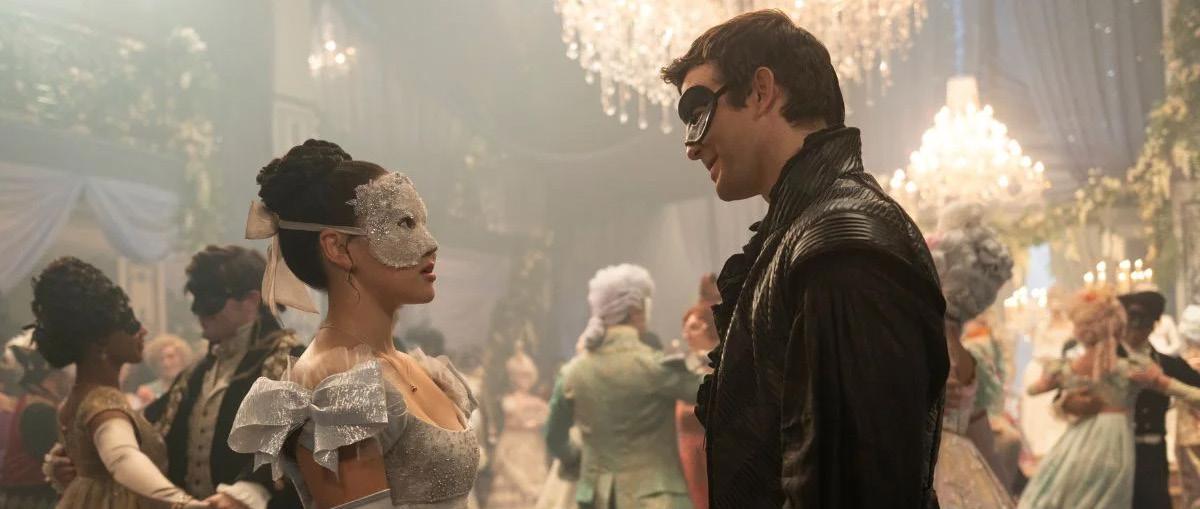
a maid. In their society they are not allowed to wed.
After watching the first half of Season Four of “Bridgerton,” I was skeptical of the outcome of the show and the rank it held in my personal media collection. But after finishing the second half, I can confidently say that it has secured its spot in my top five series.
Set in the British Regency era, “Bridgerton” follows eight close-knit siblings of the powerful Bridgerton family and their attempts to find love.
While this season focused on Benedict Bridgerton and his potential match, it was the subplots that made this season exceptional.
This society is made possible by the mother and the maids, so it was refreshing to see their roles highlighted this season.
The main love interest is a maid and lives in a similar situation to the famous Cinderella story with Benedict as her Prince Charming. Through her story, the audience was introduced to the larger society behind the glamour giving a face and heart to the maids and all the people that work behind the scenes of the nobles. Benedict, who is a nobleman, is faced with a hard choice as he has fallen in love with
The mother of the Bridgerton family, who is a widow, Violet, carries this season. She herself faces a new love match and must decide if it is worth pursuing. The decision she makes in the end is inspiring and wholesome.
Through everything, Violet values love. She is a woman of great respect in the town, and she holds her responsibilities as so, but the one thing she will never waver on is the love of her children. No matter who or what the situation is, if one of her children fell in love, she would make sure it worked out.
While this might sound dramatic, “Bridgerton” has gotten me through the darkest of times. The first season was released in December 2020, which helped guide me through the isolation of quarantine with a little bit of romance to give me hope.
The second season was in March 2022. This was the end of my junior year of high school, and I was starting to form into my true self. This season gave me the space to yearn for a love like Kate and Anthony’s. In some ways, this protected me from the terrors of high school boys as my standards for men were through the roof, and I was hellbent on never settling.
The third season was released in May 2024. At this time, I believed I was in love and
shared a similar situation as the main couple of the season, Colin and Penelope. In their season, Colin couldn’t see the love his dear friend Penelope had for him until he was hit with it himself. I thought this would also happen to me. Spoiler alert: It did not and thankfully so. Now with the release of Season Four, I can confidently say that I know what it is like to truly be in love and to be loved back. It’s an interesting feeling to watch a show like this and to know what the characters are feeling for one another.
I see the show in a new light just as Eloise Bridgerton has come to see love in a new perspective by the end of the season. She is one of my favorite characters because she constantly criticizes the ridiculous rules of society and advocates for women’s freedom. While she has been a great critic of the need to get married, she starts to understand love throughout the season by observing her siblings.
The one issue I had with this season was the need to shove the result of Season Three down the audience’s throat. Every time Colin and Penelope was on screen, they were all over each other, and it was sickening. Their love felt ingenuine and forced. Still, I encourage those who enjoy a good period piece romance with a touch of modern glamour to watch this series.
Ryleigh
Kiarah Smith, Izzie Webb - Series
Ryleigh





Club Corner TR Guitar Club
by Cara Coco
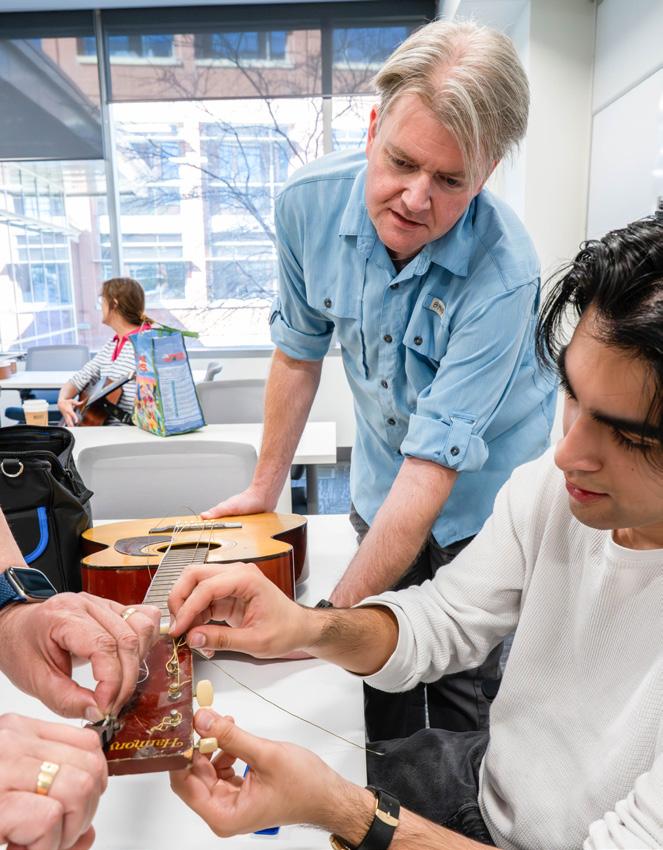
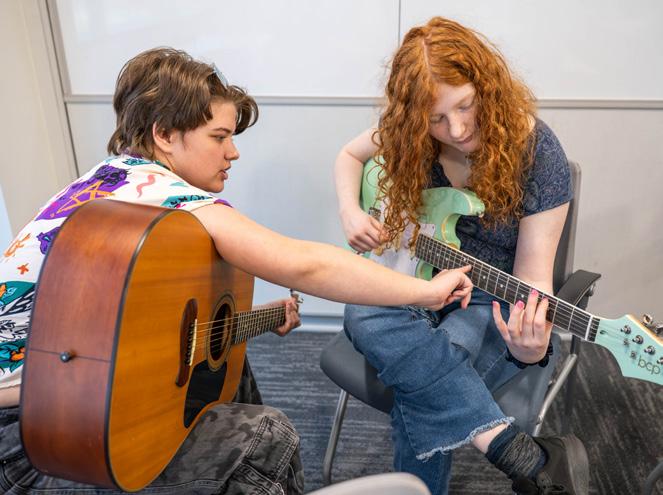
The Guitar Club on TR Campus gives students a space to jam out and connect over a shared love of music.
The club meets up every Tuesday from 11:30 a.m. to 12:30 p.m. and Friday from 11 a.m. to noon. The meetings are sometimes held in the Student Connection Center and sometimes in a classroom.


Club treasurer Landis Hinesly described the meetings as a “group mentorship.” The club members often learn new skills or songs together, helping those who are new to guitar.
At a typical club meeting, students set up instruments, chat with club members and rehearse for the Guitar Club concert.
Every semester, the club sets up camp in the cafeteria and puts on a performance to showcase their progress and draw in student interest. This semester’s club concert will be held on May 7.

“It’s phenomenal,” club adviser Hal Macias said. “We have students that are very, very introverted that come in and start on the guitar, and then they play out there in front of everybody. ... It’s not only learning about the guitar and meet ing all these other people, but it’s also self-confidence.”
Selecting songs for the end-of-the-se mester concert is usually the responsibility of the club leadership. However, any member is free to give suggestions.


“It’s definitely more of a group kind of decision,” club president Naomi Cepeda said. “I mean, we throw ideas out there, and we kind of just look at how easy it is, since we do have students coming in from never playing to experienced players, so they kind of want a song to include everyone.”
This semester, these guitarists will mostly play alternative songs like



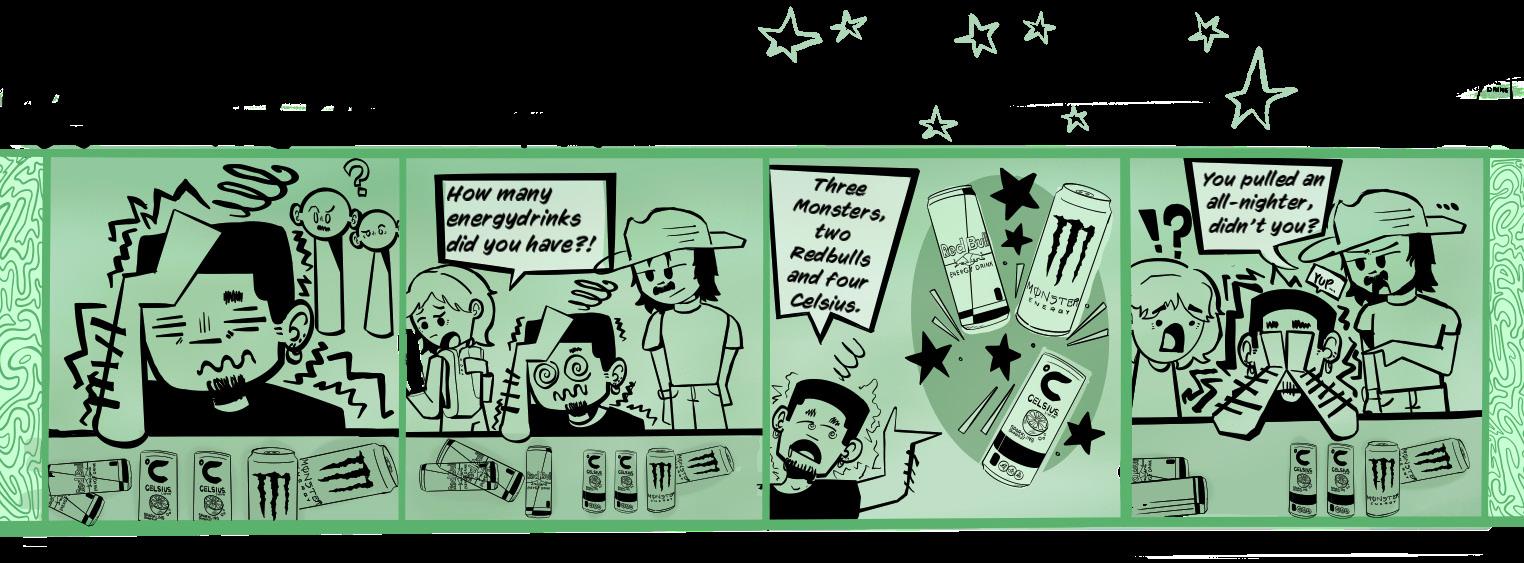
Q:“What in the world is stressing you out?”

Jaz Rivera NW Campus
“Probably just a lot of the international conflict going on. A lot of people just all over the news. The whole thing with Mexico right now, I’ve been seeing a lot of that.
The whole thing with Palestine and Israel and just in America in general right now as well. It’s just very parted and everyone against each other. It’s very different sides, and it’s just a little concerning how bad it’s going.”

Karla Murgaria TR Campus
“I guess it would be the chaos happening in Mexico. That cartel leader got killed, and now the other cartel members are terrorizing Mexico, and I have family in Mexico, so it’s really scary. ... They’re okay, thank God, but yeah, that’s what’s bothering me right now. ... I’m just worried about my family that’s over there, because they’re like fifteen minutes away from all of it.”

“How
our immigrants. A lot of the immigrants that come here are coming here to seek a better life, and they’re being treated the opposite. This is supposed to be the ‘land of the free’ and they’re being treated like animalssomething even worse than that, they’re being treated like aliens. These are people. Bleed the same blood as us, breathe the same air. It doesn’t make any sense and it’s not right.”


NE Campus
A lot of things ... School, and work. I work in McCormick; it’s a spice company. So, they’re having new rules and they’re becoming stricter and stricter, it’s getting stressful and I don’t like the environment over there, it feels negative so it’s stressing me out. And school, well, I have a lot of assignments waiting for me and exams.”
Illustration by Izzie Webb/The Collegian
Illustrations by Izzie Webb/The Collegian
Noor
Reem Ahmed
“Creep” by Radiohead and “Zombie” by The Cranberries. The Guitar Club will host a “Camp Fire Strum Along” on March 6 from 5:30 p.m. to 8:30 p.m. at Trinity Plaza. Students are encouraged to bring their own instruments and join in on the jam session.
Photos by Kelly Amtower/The Collegian TR Faculty sponsor Jared Stewart helps guitar club member Nathan Dominguez restring his guitar.
Club treasurerLandis Hinesly assists club member Elice Lund with a chord on her guitar.