
Former TXU Power Plant off the market
ASH
editor-in-chief collegian.editor@tccd.edu
The former TXU Power Plant has been taken off the market after the college received only one bid in an auction, which could not be accepted.
Chief Financial Officer Pamela Anglin briefed the Fort Worth Historic and Cultural Landmarks Commission during its meeting where it
Students celebrate history with competition
CARA COCO campus editor collegian.editor@tccd.edu
Students gathered on South Campus to celebrate the 100th anniversary of Black History Month with a night full of laughter, competition and community.
The Black Student Union organized a fierce game of Jeopardy with three teams competing to answer Black history trivia.
Teams shouted at each other across the room. Every table was decorated in shades of black, red and green. These colors, which originated from the Pan-African movement, symbolize the fight for liberation, renewal and richness of culture.
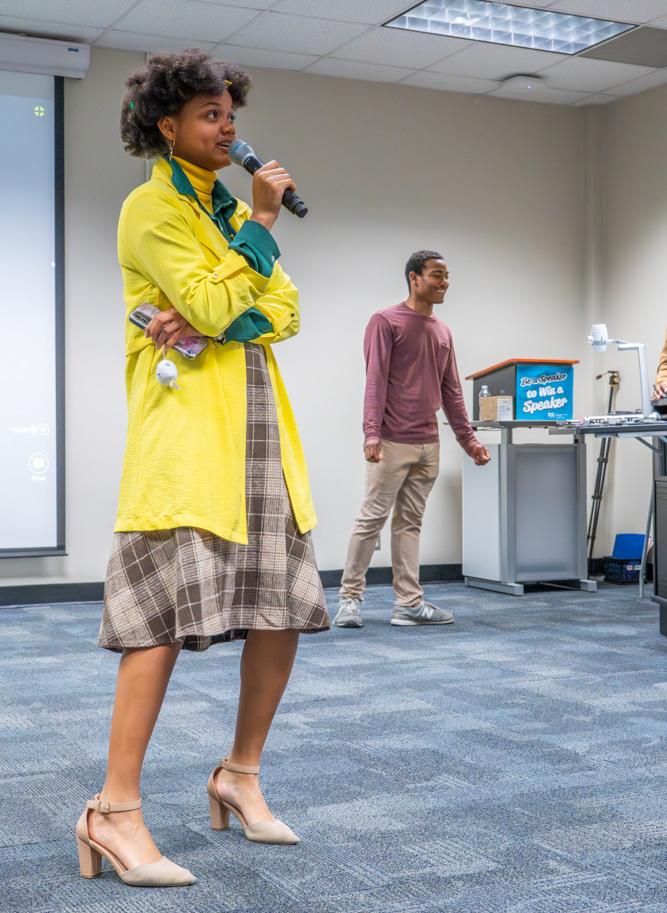
The BSU vice president, Monae Terrell, was the colorfully dressed game show host, clapping when a team guessed correctly and playfully teasing when they did not.
Terrell said she hoped that everyone there was inspired to dig deeper into Black history.
This event focused on both learning black history in a fun, interactive way and simply spending time together.
“We’re always trying to reach out. We have meetings like this every week. It’s either game nights or controversial topics,” said Curtis Taylor, former BSU president. “We try to do what we can to stand within the rules of everything. ... I mean, there’d be so much more we can do if I had more leeway, or if there weren’t so many rules.”
BSU is one of many student organizations across Texas that are feeling the weight of SB-17 restrictions.
The Texas law outlines several restrictions on higher education regarding diversity, equity and inclusion initiatives. Student organizations and clubs are permitted cultural events and celebrations but without support from the college or its faculty.
“I think when it first came out, whatever it seemed like, it kind of put off everybody else, like they didn’t want to join, but they feel like they couldn’t join anymore because they were restricted,” Taylor said about SB-17. “‘Well, y’all can’t get people to join or be part of the leadership. This can’t be a thing. These, like, safe spaces? Get rid of them.’ But we push through. We all came together as not just the BSU, but OLAS (Organization of Latin American Students) and everything. Like, we’re all stuck together.”
Black History Month which was originally “Negro History Week,” was an unofficial recognition of the long-overlooked history of Black Americans created by the Black historian Carter G. Woodson in 1926. It officially became Black History Month in 1976, when President Gerald Ford recognized it.
voted to recommend adding “Highly Significant Endangered” status to the 113-year-old building on Feb. 9. Anglin did not return message seeking comment from The Collegian, but she told the Fort Worth Report that the only bid that was received was under the appraised value of the property.
“We’re required (by state law) to get the appraised value,” Anglin said in the interview. She confirmed the building
was no longer for sale, and TCC wouldn’t oppose historic protection.
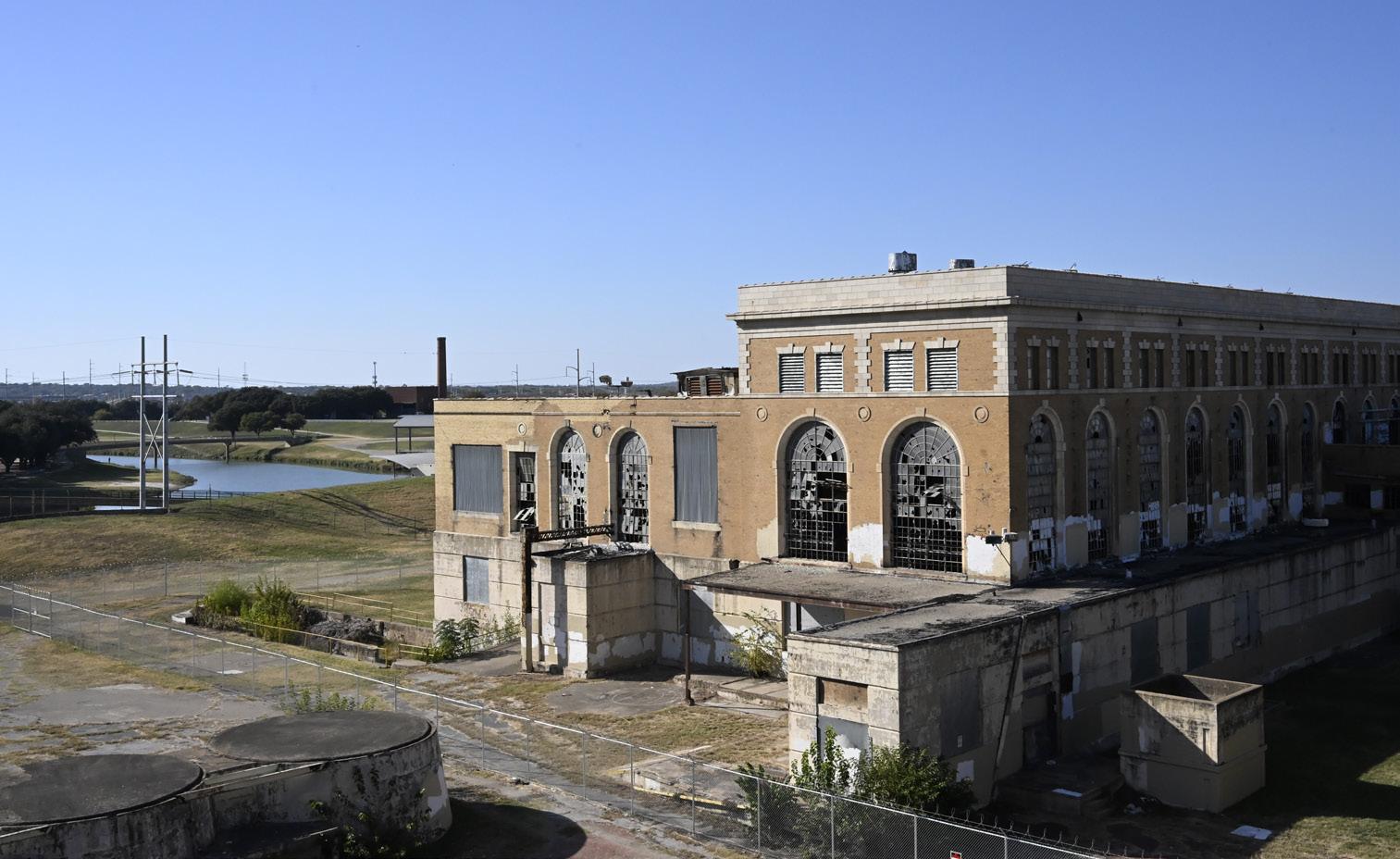
The Beaux Arts-style industrial building from the early 20th cen
tury has been owned by the col
lege since 2004 when it purchased land for the TR East Campus. Built between 1911 to 1913, the plant powered all of Fort Worth for over 40 years.
Multiple organizations requested the college to designate the building as a historical landmark
over the years, but their attempts were unsuccessful.
“We really wanted to save the building,” said Bill Perdue, Tarrant County Historical Commission chair. “It’s just sad that they’ve let it go to hell in a handbag.”
Perdue said the commission had sent letters not only requesting the designation of the landmark but also giving advice to the college on how to maintain the power plant.
“There’s federal grants or state
grants that could help them offset some of the cost,” he said. “There’s a lot of stuff that we could help them with and do, and they just weren’t interested.”
He said if any historical designation had been put onto the property, the college would have been required to prevent it from deteriorating. The grants they could’ve gotten through the landmark would
Hundreds welcome monks home

CARA COCO campus editor collegian.editor@tccd.edu
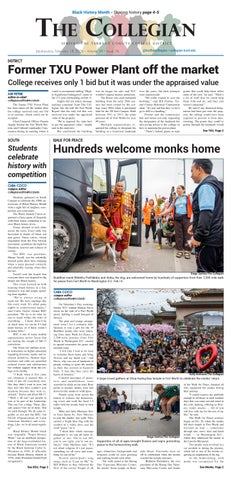
On Valentine’s Day morning, former TCC student Bonnie Davis stood on the side of a Fort Worth street, holding a small bouquet of flowers.
The pink and orange arrangement wasn’t for a romantic date. Instead, it was a gift for the 19 Buddhist monks who were returning from their Walk for Peace, a 2,300-mile journey from Fort Worth to Washington D.C. created to spread awareness for peace and national unity.
“I felt like I had to be here to welcome them home and bring flowers and say thank you,” said Davis, who was one of hundreds of people waiting to greet the monks as their bus arrived at Eastover Park. “I feel like they carry the hearts of America.”
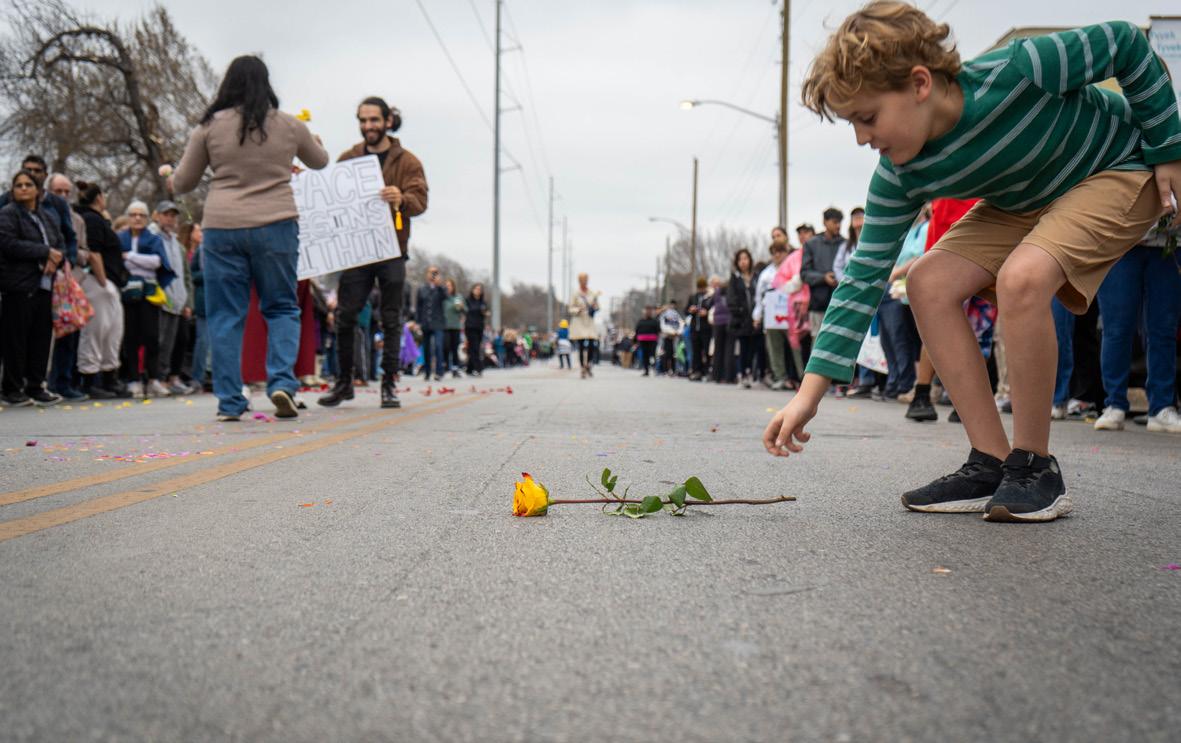
Colorful messages of peace, love and mindfulness were scrawled in chalk on the road. Rose petals in autumn shades were laid down for the monks to walk upon.
People came from across the nation to witness the homecoming event and walk the final 1.2 miles with the monks back to their temple.
Mike and Julie Martinez flew in from Santa Fe, New Mexico, to join the monks’ last walk. They carried a bright blue flag with the symbol of a white dove and the word “peace” on it.
“I think their whole message altogether is we can all come together as one. You’re not left, you’re not right, you’re not political,” Julie Martinez said. “It’s not about religion. It’s just peace, something we all crave and something we can all do.”
Several participants sang songs, such as “Lean on Me” by Bill Withers as they followed the flow of the crowd. People of all

ages, ethnicities, backgrounds and religions could be seen greeting and walking beside each other. The walk ended at the Huong Dao Vipassana Bhavana Center, the monks’ home temple on Rose-
dale Street. Fireworks were set off
celebration when
and leader
of the Walk for Peace, thanked all who supported the monks during their journey.
“I cannot express my gratitude enough to all those in such weather days that you came out and stand in the cold, shaking, offering us flowers, water, snacks. ...
in
the monks reached the temple entrance. Bhikkhu Paññākāra, the vice president of the Huong Dao Vipassana Bhavanaa Center
Kelly Amtower/The Collegian
Diego Santos/The Collegian

Students get creative in photography
wish to try out a more professional camera.
The SE Photography Club aims to open the world of photography to all students no matter their experience level.
Club members meet every Friday from 12:30 to 1:30 p.m. in room SE05 1706. They start off by opening the floor for students to share any photos they took using the principles they learned in the previous meeting.
The first meeting of the semester focused on basic camera knowledge, and the second revolved around perspective.
SE student Mark-Collin Cocauthrey shared photos he took while in Dallas. He’s been a part of the club for two years and said he never realized all the work that goes into a great photo that tells a story such as the rule of thirds, aperture or ISO.
“The photo is supposed to make you think of something or feel something,” he said. “A photo of a cat can make you see this or that. It’s supposed to train your brain.”
After being in the club since he’s been at TCC, he keeps returning because of the community he has experienced among the other members and for the art.
He admires the bravery of his peers for following their passions and their ability to make photos out of anything.
“One of the photography members takes photos of exclusively animals, and every single time he’s always got something different to show,” he said. “Whether it be a cat, whether it be a rooster, whether it be a pelican, he’s always got something. He’s very brave.”
Club president Trang Duong said she also keeps returning to the club for the community. When she joined in January 2025, Duong wasn’t looking to become president,

but with the support of the club adviser, English instructor Geoffrey Saari, she took the position.
“We have professor Saari, who is really nice. He helps me out whenever I need because I’m not good at English,” she said.
Saari has been the adviser for the club since it was first created 14 years ago. He has seen a range of students come in with varying levels of experience and gear. From students taking pictures with their phone to students coming in with fancy gear but not under standing how to use it, Saari said everyone has room to improve and grow.
“A lot of students only have cell phones, which is fine because cell phone photos are tremendous these days,” he said. “But they have the desire to learn more about photogra phy and using a DSLR and stuff.”
Through fundraisers in previous years, the club was able to buy a few cameras that members of the club can check out if they
The club also tries to take at least three field trips a semester to practice what they learn in the club.
They are planning to take a future trip to the Dallas Museum of Art and also visit nearby parks.
“It’s just so students can make friends with people that share their likes and things and have fun,” Saari said. “And if they can learn other things on the way in this club, that’s good. I’m happy if they just have fun.”


Welding program sparks growth
The TCC Welding Technology Program located at the Erma C. Johnson Hadley NW Center of Excellence for Aviation, Transportation and Logistics is currently working on a lab extension projected to double class sizes. In previous semesters classes have filled up within 48 hours. The students are helping to expand the lab themselves putting their welding knowledge to use. Companies like Lockheed Martin, Watts Water Technologies and BP Aero have hired program graduates proving the program gives students the opportunity to go straight into the welding industry after completion. Find the full story online at collegian.tccd.edu.


(continued from page 1)
Taylor said it is important to not only know how this celebration of Black Americans began but what impact it has on Black Americans today.
“Black History Month means to me, basically the history of our people, that we’re not forgotten, and accomplishments that we have taken, and sacrifices our people have made just for us to get where we are today,” Taylor said. “And it’s our job to teach, to not only learn but to teach those ones, I mean that’s our children. And that the history continues, like, you can accomplish anything you put your mind to. You are somebody.”
He said he wished Black history wasn’t reduced to one month, especially when a lot of it isn’t taught in schools.
One of the Jeopardy questions was “Who founded the Black Lives Matter movement alongside two other organizers?”
“When I was in the military, they had
(continued from page 1)
have helped with those costs, Perdue said.
“Maybe they were afraid it would put restrictions on them,” said Susan Kline, a preservation consultant who specializes in the preparation of nominations for the National Register of Historic Places.
She said by making the building a historical landmark, whoever owns the building must have any rehabilitation plans approved by the landmark commission.
“It will protect it from demolition,” Kline said. “That will ensure that whatever is done to it is done appropriately so that its historic features are kept.”
Making the building a historical landmark doesn’t completely prevent it from being modernized, and Perdue said the commission had recommended it could be used as a facility for classrooms or labs.
“They didn’t follow any of the direc -
The overall goal is just making sure we leave our mark on this campus.
Monae Terrell Vice President of BSU
pulled us all aside and it was like, ‘If you join Black Lives Matter’, you’ll be subject to the full penalty of the law because they’re classified as a terrorist group,” Taylor said.
One of the BSU members, Adrian Jackson, said he never knew Booker T. Washing-
tions or recommendations that were given to them,” he said. “It’s destruction by neglect. In other words, they didn’t have to do anything, so they didn’t. So, it just fell apart.”
Now that the Fort Worth’s Historical and Cultural Landmark Commission voted to recommend the TXU Power Plant be historically recognized, the Fort Worth City Council, will hear the case in March. The council is the last stop before it becomes a city historical landmark.
“I think we’re still in good shape,” Kline said. “I think there could be positive things happening.”
For Perdue, the current state of the building means more to him than any prospects.
“The thing is, once you have destroyed something ... it can never be recreated,” he said.
ton was the founder of Tuskegee University until the event.
Despite the roadblocks, BSU members are still doing the work of building community and giving opportunities to students.
The BSU plans on volunteering for a Historically Black College and University Expo that will be held Feb. 28 from 11 a.m. to 2 p.m. in the SSTU Dining Hall. The expo connects students with HBCU alumni and recruiters along with providing scholarship and transfer information.
“The overall goal is just making sure we leave our mark on this campus because I know some of the other campuses don’t have as much leeway as the South Campus,” Terrell said. “Since some of us are graduating, some of us are leaving, we want to make sure that we have a legacy to continue, so that more people can come in and more people can know about it. It’s not just another club.”

(continued from page 1)
dedication and time they gave to the journey. The crowd erupted into cheers and clapping when the monks’ pet companion,
was introduced. Many of those in attendance also brought their own dogs.
As a steady rain began to fall, several Texas politicians expressed their support for the monks’ message. Rep. Salman Bhojani of Euless said the pilgrimage “offered a living example of what peace requires,” which is discipline, sacrifice and daily practice.
“You called all of us back to a deeper responsibility, to one another, to a shared dignity and to the common good,” he said.
“I can say with confidence that your journey is also a profound expression of patriotism. ... It is not lost on me that today we also celebrate Valentine’s Day. And we welcome the monks on this very special day, a day of love and compassion. ... It is something we prove through sacrifice, discipline and service to others. That is exactly what each of you have modelled in this country.”
Pannakara chose to honor the people who showed up in support of his journey by standing in the pouring rain with them.
“Thank you so much for all this love and support that you have shown us,” he said. “I really cannot stand seeing you staying in the rain for us like this. Every single time, for the last 110 days, when I seen people coming out under the rain, the cold and the ice, I cannot bear those feelings. It aches my heart.”
Tammy Bailey, a resident of Waco, began to tear up near the end of Pannakara’s speech.
“I’m here to try to heal,” she said. “I’m not sure where my life is at this moment, not sure what tomorrow brings, but I’m going to be here.”
Pannakara encouraged the crowd to follow the monks’ example by fostering peace and mindfulness in their neighborhoods, schools and homes.
“That is how we change this world together,” he said. “The monks alone cannot make this happen, but it requires all of us. Remember that moment when we say, ‘Today is going to be our peaceful day together.”
Kelly Amtower/The Collegian
Photos by Diego Santos/The Collegian
Kelly Amtower/The Collegian
The former TXU Power Plant was taken off the market by the college. The property came with land TCC purchased for TR East Campus in 2004.
NW Welding student Mairangela Bassett-Lupovici performs oxy fuel cutting on hers base metal at Erma C. Johnson Halfey NW Center of Excellence of Aviation.
NW Welding student Brendan Lee-Wo grinding a base metal during his class on Feb. 12.
NW welding student Shawn Privett Brown welding his base metal at his workstation in the welding lab.
NW student Brendon Lee-Wo shows off his project that he’s about to start in his welding class.
South student Monae Terrell emcees jeopardy night with Gavin Leberitt.
Aloka,
Illustrations by Izzie Webb/ The Collegian
TCC fails to recognize Black History Month
It’s Black History Month, and TCC’s website doesn’t list a single event to celebrate it.
Since Gov. Greg Abbott signed Senate Bill 17 in 2024, which banned diversity, equity and inclusion from institutions of public higher education in Texas, our college has been over compliant with the law.
TCC’s website says the law prohibits the college from establishing a DEI office, conducting DEI training and giving employment preferences based on DEI, all of which concern the internal functions of the college, not the college celebrating culture.
The website also says that cultural events are allowed under SB-17 if they are inclusive and do not give preferential treatment based on race, ethnicity or protected characteristics.
So, why is our college saying it’s OK for them to host events, but then it doesn’t?
We believe it’s because our college is adhering to the law far beyond what is necessary.
Since taxpayers fund our school, TCC has removed events for cultural celebration from its calendar to appease those in the community who frown upon diversity. So, instead of focusing on creating a lively on- campus environment like it used to have, it’s listening to the demands of people who aren’t students.
VIEWPOINTS
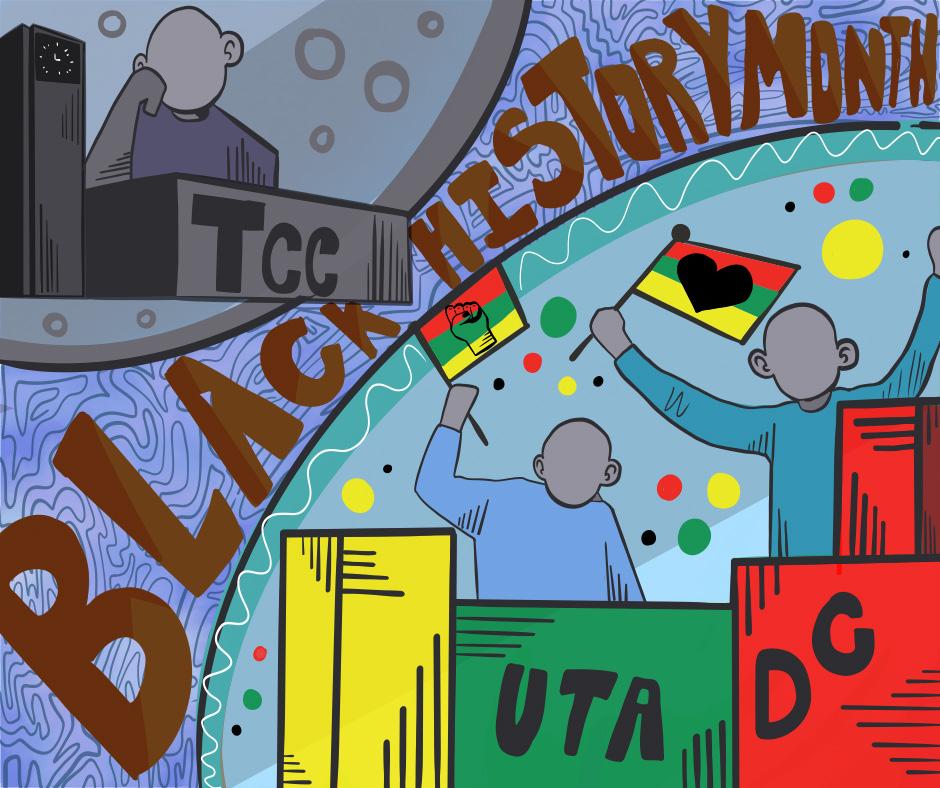
And this doesn’t look good, especially because other public institutions of higher education in Texas are hosting multiple events all month long that are put on by both student organizations and the college.
UTA’s event calendar lists every event its Black Student Union is hosting in its calendar. South Campus’ Black Student Union is hosting events, but they’re not in TCC’s calendar.
Dallas College has an entire page dedicated to all the events it is hosting for Black History Month.
One day, it’s having a vendor fair featuring departments, community partners and Black-owned businesses.
Amarillo College’s engineering instructor Vanessa Miles and her daughter Victoria Miles, a mechanical engineer, will be guest speakers for their series “Girls Who Science,” to speak about the importance of representation and access to diverse roles in STEM education.
Lone Star College’s Student Success Institute Program worked beside it’s Black Student Union to host a painting with a twist event for
students with a live DJ and a Black History Month fashion show. The last time TCC hosted events for Black History Month was in 2024. There were 15, one of those being the last time the college held Celebrating Strides, a districtwide celebration of African Americans that was held for 12 years. The theme that year focused on African American art and the stories behind its creativity.
TR had speakers from the Tarrant County Black Historical and Genealogical Society share the history of the African American experi-
ence in the county.
South Campus hosted a field trip to visit Greenwood Rising Black Wall Street History Center. Connect Campus held a speaker panel with five distinguished Fort Worth community members discussing the evolution of Black excellence. SE hosted a luncheon to discuss the historical achievements made by Black people. NW Student Activities and Intercultural Network, now called Student Center, joined their African American Student Organization to celebrate Black art and food to honor the rich history of the community.
Last year, student clubs struggled to host cultural events, stating it was because the college wasn’t allowed to fund, organize or help clubs during their process. Before SB-17, clubs had the help of an adviser, but now they’re limited to what they can do to support a club. Also, the process for higher-ups approving events became a longconvoluted process that typically resulted in clubs obtaining their event’s approval on the scheduled day of the event.
The college praises the unique diversity on its webpage for why TCC is right for you, stating Black students make up 18.9% of our campus population.
Instead of using diversity as a ploy for enrollment, TCC should show the students already enrolled they support them and their culture.
Both Super Bowl halftime shows further divide Americans
America’s biggest sporting event shouldn’t turn into a political debate over a Puerto-Rican popstar and a pre-recorded Kid Rock concert.
Turning Point USA held its own alternate Super Bowl halftime show, featuring multiple country artists and Kid Rock, to supposedly rival the official Bad Bunny performance. Both halftime shows missed the mark. Most Americans can’t understand Bad Bunny, and Kid Rock hasn’t been relevant for two decades. It’s about audience, not identity.
The problem with this year’s halftime controversy isn’t cultural representation. It’s that both sides forgot a basic concept of mass entertainment. If you’re performing for over 100 million people, most of them should be able to connect to it. Neither show felt like a unifying cultural moment.
VIEWPOINTS
El inglés no es el único idioma hablado en el mundo, aunque muchos estadounidenses desearían que lo fuera.
Más de la mitad del mundo habla dos o más idiomas y, según la Academia Americana de Artes y Ciencias, son principalmente estadounidennses los que no pueden. Después de el show de medio tiempo del Super Bowl LX de Bad Bunny, muchos conservadores se quejaron de que no podían entender la música no estadounidense. Pero ¿por qué? Quién hubiera pensado que algo tan simple podía enfadar tanto a la gente. No quiero vivir en un país que tenga miedo de un idioma diferente. Creo que un copo de nieve es alguien que se enoja cuando escucha hablar otro idioma. Los idiomas son hermosos. Solo los niños hacen berrinches cuando no pueden entender las cosas. Nunca entenderé cómo la gente puede escuchar o ver cosas que no


Instead, they felt like niche programming forced onto a national stage. No one wants to go through the effort of changing the channel just to watch a washed-up Kid Rock perform. He was part of the halftime show in 2004, which is remembered for Justin Timberlake exposing Janet Jackson’s breast to the world, as well as a Diddy performance. So, he sounds like the perfect guy to headline a Christian, conservative show. It’s also ironic that one of his biggest songs is called “Bawitdaba.”

han experimentado antes y elegir no aprovechar la oportunidad para aprender algo nuevo. Aunque todavía estoy aprendiendo español y necesito practicar más, he aprendido más sobre la vida de lo que nunca supe posible a través de este idioma. Puedo hablar con personas con las que antes no podía. Puedo escuchar sus historias y reír, llorar, aprender y, lo más importante, entender.
La comunicación y la comunidad son muy importantes para la
The chorus is literally gibberish. The whole point was that people can’t understand what Bad Bunny is saying. The lack of self-awareness by Turning Point USA since Charlie Kirk’s assassination is baffling. Pointing out that most viewers don’t understand Spanish while rallying around a man whose greatest hit is anchored by the lyric “bawitdaba da bang da dang diggy diggy” isn’t exactly the most logical hill to die on. While the chorus is an interpolation of early hip-hop lyrics, they were never used as the focal point of a song.
President Donald Trump has taken issue with Bad Bunny’s performance. Right or wrong, he should be more focused on ending overseas conflicts, fixing the economy and securing the border without American citizens being killed by federal agents. Trump’s typical trash-talking should no longer be
vida y aprender español me ha dado una comunidad completamente nueva.
Lo que la gente necesita entender es que en la mayoría de los países, es irrespetuoso suponer que todo el mundo sabe inglés, y hablar más alto no ayuda. Si un turista espera que el inglés sea conocido y no trata de hablar el otro idioma, probablemente será tratado mal, y eso es comprensible. Porque es más común que la gente hable más de un idioma. Se sabe que la gente que no pueden es estadounidense. Este país cree que hablar solo un idioma es un privilegio, cuando en realidad les impide reconocer la belleza de otras culturas. El único privilegio que tiene este país es la capacidad de ignorar y faltar al respeto a cualquier cosa con la que no esté de acuerdo. Este país tuvo el privilegio de elegir no ver a Bad Bunny cantar. Sin embargo, los puertorriqueños no tenían
taken seriously. At this point, all it does is distract people from his administration’s handling of the Epstein files.
Neither of these halftime shows represent America like Kendrick Lamar’s did last year. The only people upset with Lamar’s halftime show were Drake and Lil Wayne, and Drake is Canadian anyway. Lamar’s was the most viewed halftime show ever, surpassing Michael Jackson’s. The NFL is a private company with the right to do as they wish, but they just lost over 5 million viewers due to the unforced error of holding a halftime show that less than 15% of the country can understand. It’s not that people don’t want to celebrate culture, it’s that over 85% of the country doesn’t understand the language. Bad Bunny has actually already performed at the Super Bowl halftime show in 2020. It was an
otra opción que observar cómo los Estados Unidos convirtieron su isla en un territorio estadounidense. Y ahora la ley 60 de Puerto Rico ha gentrificado la isla permitiendo incentivos fiscales para atraer a inversores estadounidenses adinerados y desplazar a los residentes nativos. Pero parece que a los estadounidenses adinerados no les importa cómo sus acciones afectan a los demás cuando explotan la cultura mientras descansan en la playa. Cuando llamas “privilegiados” a los estadounidenses, la mayoría se enfada, como si quisieran saber lo que realmente se siente al ser borrado. No ven el hecho de que, mientras beben margaritas de vacaciones fingen formar parte de la cultura que intentan borrar cada día.
La gente decidió enojarse tanto por un idioma, ¿y para qué? ¿Realmente quieren separarse de aquellos que hablan y se ven diferentes? ¿No es eso racismo?



all-Hispanic halftime show featuring Shakira, Jennifer Lopez, J Balvin and Bad Bunny. There were parts performed in Spanish, but the show as a whole was predominately performed in English. It felt more celebratory and unifying than this year’s show. There was more controversy about the sexual nature of Shakira’s and Lopez’s performances than the language they were speaking. This year, the show was predominately performed in Spanish. The problem isn’t Bad Bunny’s race or culture. The problem is that when music has lyrics, most people want to understand them, or better yet relate to them.
Unfortunately, the alternative to “BAILE INoLVIDABLE” was “Bawitdaba.”
The NFL needs to use common sense selecting artists for the halftime show, and Turning Point needs to check what year it is.
No, claro que no, porque no creen que estén haciendo daño a nadie. Es casi como la película “Chicas malas”, pero en vez de arruinar la reputación de una chica de secundaria, están causando un daño irreparable a la vida y la cultura de las personas.
Creo que es importante agradecer a aquellos que han aprendido inglés porque no es un idioma fácil de aprender. Mucha gente a tu alrededor habla inglés, pero no es su lengua materna. Y aquellos que aprender otros idiomas son más inteligentes y resilientes que aquellos que no lo hacen. Y eso es lo que la gente enojada no quiere admitir: No están enojados porque no entienden, están enojados porque no pueden hablar. La próxima vez que se enoje al escuchar otro idioma, pregúntese si alguna vez intentó entenderlo primero. English version can be found at collegian.tccd.edu.
Izzie Webb/The Collegian
SHARING BLACK HISTORY
What does Black History Month mean to you & who’s a prominent figure that symbolizes Black history to you?
Black History Month has celebrated the achievements of African Americans annually since 1915, marking this year as it’s 100th anniversary. From civil rights activists to musicians, novelists, entrepreneurs and scientists, this month is time to honor the contributions and legacies of African Americans throughout U.S. history. Since 1976, every U.S. president has designated February as Black History Month. The month of February was chosen to recognize Black history because the birthdays of famous abolitionists, Fredrick Douglass and Abraham Lincoln, fall during this month. TCC students from different campuses share what Black History Month means to them and the Black figures who’s achievements inspire them.
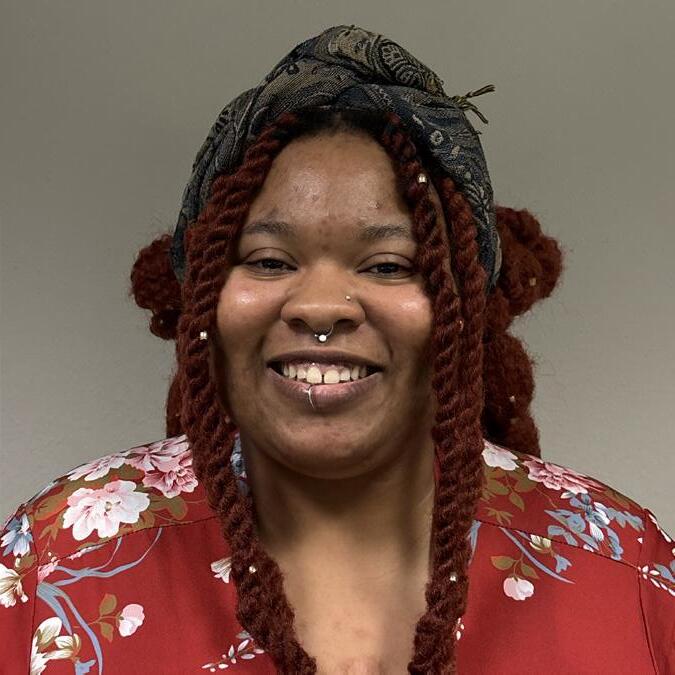
Berry Varnado South Campus
“Black History Month, for me, just means being able to also keep myself informed. Well, to keep myself informed of all the things that we weren’t taught growing up and keep the exposure available to people who don’t grow up in the culture. It’s basically about awareness and who to thank for what, and just to be more empowered in our own culture that’s not often talked about or shared.”


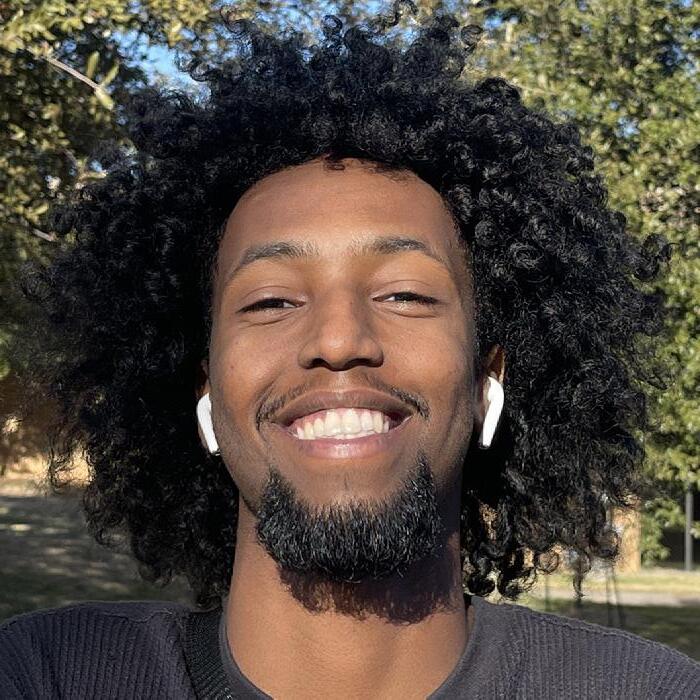
Ahmed Ahmed NE Campus
“Well, I’m not only a Black man, I’m also a Muslim. So, right now, around February 17th, it’s going to be as well the Holy Month of Ramadan, and as a Black man in a holy month we have to fast 30 days. I mean, it’s amazing. It’s amazing especially how Black History Month, it’s not only just a symbol. ... It highlights every single African American that mean a lot. ... I mean, I really just walk around and think to myself that all my brothers and sisters who have worked hard, very, very much over the years kind of represent not only themselves but also represent every other Black brothers and sisters out there.”

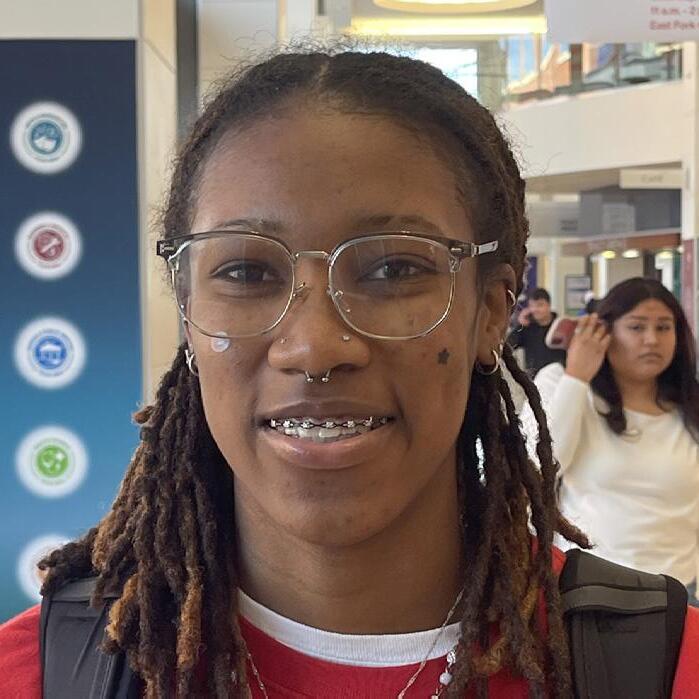
Keirson Gray TR Campus
“Well, in today’s day and age, it means a lot to me personally because things are becoming harder for Black people. But to see that we’re still persevering and representing means a lot to me, and that’s being recognized means a lot to me and inspires me to kind of be the person to keep going.”

Temitope Odubona SE Campus
“What it means to me is the celebration of all the successes of Black men and women, and all the sacrifices they went through to help people like me have the freedom to do what we want to do. I believe that Black History Month shouldn’t just be this month, should be year-round, because every day Black people always strive to be the best that we can be.”

Mugoli Mulemangabo NW Campus
“I think it’s a reminder that we’re all people. We’re all the same. Color doesn’t matter. And it’s just a month to remind us that we’re all united, you know? Like I said, different color doesn’t matter, we shed the same blood. So, I bleed red, you bleed red. [The] month is just like a reminder, a unity, that we’re all one.”



Peter Kilde South Campus
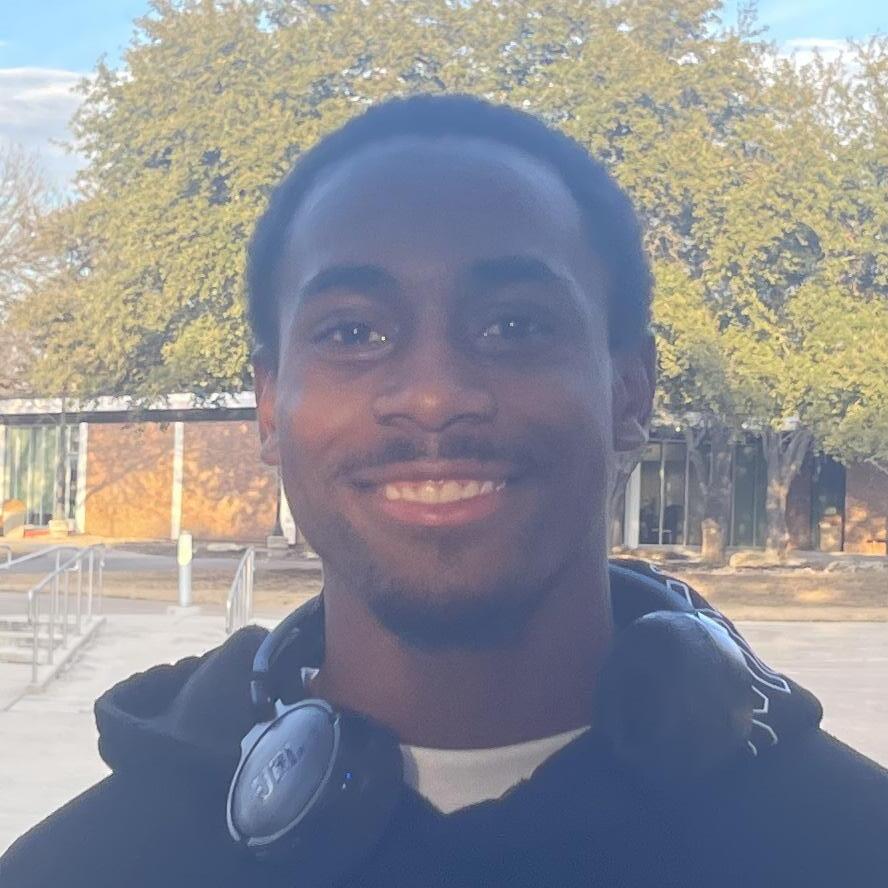
“Black History means a lot. For one, the voices of my people. So for me, I’m not from this country, well I am but my parents aren’t, so me being able to basically go to school to educate myself and to just have the ability to have knowledge and spread that with other people, that means a lot.”

Madam C.J. Walker
Suggested by TR student Gianna Walker.
Claudett Colvin
Suggested by NW student Brianna Yate.
Claudett Colvin was a civil rights activist. On March 2, 1955, 15-year-old Colvin boarded a bus home from Booker T. Washington High School in Montgomery, Alabama. The white section filled up and a white woman was left standing. When the row Colvin was sitting on was told to move for the woman, three students got up but not her. She was roughly arrested by two cops, pulled off the bus, assaulted and charged with three crimes. She would later become one of the plaintiffs on the federal case, Browder v. Gayle , which led to the desegregation of Montgomery’s buses.
“Sometimes you have to stand up for what you think is right even if you have to stand alone.”
Madam CJ Walker was born Sarah Breedlove in 1867 in Delta, Louisiana on the same plantation her parents had been enslaved before the end of the Civil War. She was the first of her siblings to be born free after the Emancipation Proclamation. From farm laborer to owning the most infamous salon of the Harlem Renaissance, Madam CJ Walker is known as the first female self-made millionaire in America. She made her fortune from her homemade line of hair care products for Black women and used her fortune to fund scholarships for women at the Tuskegee Institute, the NAACP and the Black YMCA.
“I want you to understand that your first duty is to humanity. I want others to look at us and see that we care not just about ourselves but about others.”

Eddie Hazel
Suggested by South student Jermiah James
Eddie Hazel, founding guitarist for Parliament Funkadelic Crew, was a pioneer in blending spaced-out psychedelic rock and 70s funk. His solo in Funkadelic’s “Maggot Brain,” a 10-minute-long bluesy and emotional tune, acknowledged by artists as one of the most important guitar anthems of the decade. Hazel worked as a Motown guitarist and composer for artists like the Temptations and served as a musical director for Bonnie Pointer. The Brooklyn-born artist taught himself to play the guitar after his brother bought it for him. By 19, Hazel was touring with Funkadelic, and his acid-rock fusion with funk was recorded.
“Just keep playing that over and over.”

Suggested by TR student Sharie Brooks
James Baldwin was a novelist and civil rights activist known for his works “Go Tell it on the Mountain” and “The Fire Next Time,” which addressed the struggles of African Americans during the early 21st-century. He advocated for social justice and equality through his writing and public speaking. Criticized for moving to Paris at 24 and writing novels condemning America, he said it was because he couldn’t tolerate the racism and homophobia that made him a target of violence there. An advocate of universal love, his voice is essential to the civil rights movements by expressing the Black identity and the state of racial struggle.
“I love America more than any other country in this world and exactly for this reason, I insist on the right to criticize


Suggested by TR student Paris Lewis
Muhammad Ali was a professional boxer and activist widely known by the nickname “the Greatest.” Regarded by some as the greatest heavyweight boxer of all time, at 18 Ali had two national Golden Gloves titles, two Amateur Athletic Union national titles and 100 victories against eight losses. In 1960, he won the light heavyweight gold medal in the Summer Olympics. However, his titles were revoked and his boxing license suspended after refusing to serve in the Vietnam War. For three years he protested against the war and in 1970 support for Ali grew, and the New York State Supreme Court ordered his license reinstated, and he returned to the ring. “Impossible is just a big word thrown around by small men who find it easier to live in the world they’ve been given than to explore the power they have to change it.”
Muhammad Ali
James Baldwin
New Releases:

Star Trek: Voyage Across the Unknown
Feb. 18

The Night Agent Season 2 Created by Shawn Ryan and Matthew Quirk
Feb. 19

The Last Thing He Told Me Season 2
Created by Laura Dave and Josh Singer
Feb. 20

How to Make a Killing Directed by John Patton Ford
theaters Feb. 20

Album by Baby Keem
Graduates crowdfund thriller film
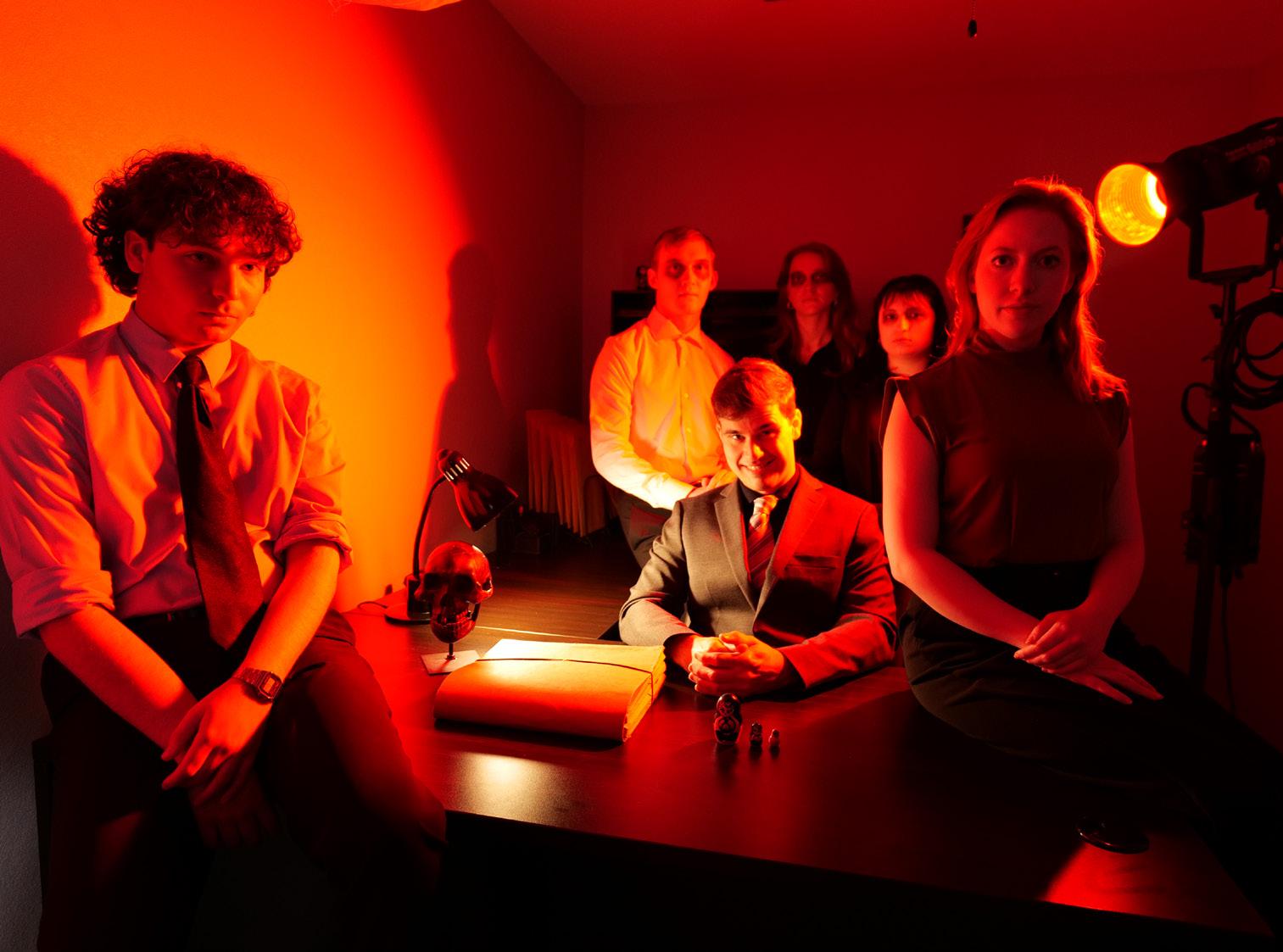
Filming has finished for “Deadline,” a movie created largely by current and former students of the NE Campus radio, television and film program.
“Deadline” is a satirical psychological thriller about a recent graphic design graduate who returns to his hometown. In order to make money, he takes a job completely unrelated to his artistic passions, corporate data-entry.
“It’s primarily an awareness piece on corporations,” said TCC graduate Matthew Paget, who handled multiple jobs off-screen including line producer and director of photography. “We’ve seen this idea kind of come out in some other films and other mediums like ‘Severance’ or ‘The Truman Show.’”
The film’s budget was crowdfunded with a 60-day campaign on the website Indiegogo. The website uses an all-or-nothing model, meaning if the goal isn’t met by the end of the campaign, the money is returned to the individuals who donated. The team behind “Deadline” set a $10,000 goal and reached it on the campaign’s final day.
“It was a bit of a nerve-wracking position to be in. ... But it was an incredible feeling when we hit that $10,000 goal,” Paget said.
The project is directed by TCC graduate Bronwyn Beasley, who is currently a student at the University of Texas at Arlington, working toward her acting degree. She built a creative partnership with Paget while at TCC and has co-directed and worked as an assistant director on previous projects, but “Deadline” marks her first time directing a film of this scale on her own. For Beasley, the most important part of directing wasn’t just executing the shot-list, it was setting the tone on set.
“I decided to, right away, make the most important thing about directing my crew and my cast be that they are human beings, and
emphasizing the importance of that,” she said. Paget credits the NE Campus radio, television and film program for giving him a wide base of knowledge.
“[The program] really covers the entirety of the film crew side that I really enjoyed, and it kind of sets you up to be able to take on all these different hats that I’m wearing,” he said.
The crew worked with the Fort Worth Film Commission to secure filming locations in Arlington and Mansfield. One of the locations was a house which visually fit the film but ended up being under the flight paths of DFW International Airport, making capturing good audio a struggle.
“We were cutting in the middle of good takes just because there’s a plane over our heads,” Paget said.
NE student Kaylie Craver worked as the
second camera assistant on “Deadline.” She expressed the sense of pride multiple TCC students felt after filming was completed.
“Anything is possible if you put your mind to it,” Craver said.
“Deadline” is currently in post-production, with plans to submit to regional and potentially national film festivals. A portion of the film’s budget has already been allocated specifically for festival entry fees.
Paget is simultaneously editing “Deadline” and its behind-the-scenes documentary with extensive footage captured by NE student Zain Altahes, offering an inside look into the indie filmmaking process.
Paget said he is excited to see the trajectory of the current TCC students involved.
“They’re producing a lot of talented students out there that are going to turn out to be professionals in the industry,” he said.
Classic love story returns with spice
picture a man masturbating. They are soon shocked by the image of a man being hanged while the crowd is celebrating his death. This sets a dark tone for the film and lets the audience know this is more psychological thriller than romance.
People on the internet have become such movie snobs that it almost robs them of one of key values of film: magic.
“‘Wuthering Heights’” perfectly encapsulates the imagination of a child but in an adult fashion.
While the movie is based on the 1847 novel “Wuthering Heights” by Emily Brontë, this isn’t a direct adaptation.
Director Emerald Fennell said she created the film the way she imagined the book when reading it as a young teenager.
I have not had the pleasure of reading the novel, but I believe that gave me the ability to enjoy the film at face value.
This film was erotic, fantastical and a visual masterpiece. From the costume design to the soundtrack, this movie builds a sensual world of pleasure.
The movie opens with someone moaning and a dark screen, making the audience
Throughout the film we hear the score by the hit pop star Charlie XCX. Of all her music, the album she made for this film is by far my favorite. It’s chilling and tragic.
Margot Robbie’s character Cathy is extremely annoying, entitled and acts like a spoiled brat. She treats the character Heathcliff, played by Jacob Elordi, as if he is her pet. Her father brought Heathcliff under his abusive wing when both he and Cathy were children. They grew up together, and in doing so, fell in love with each other.
The main conflict of the film is that Heathcliff is just a servant, and Cathy must marry a rich and noble man to secure her future. After she secures her fortune with a rich neighbor, Heathcliff is overcome with shame and jealousy, so he runs away. He doesn’t return for five years, leaving Cathy in despair.
This causes Cathy to fall into a spiral of

going through the motions in her marriage. The audience is presented with a montage of Cathy overindulging in the wealth she just married into, and yet she still was never satisfied. The montage perfectly criticizes the wealthy class in showing all the ridiculous ways they spend their money while people like Cathy’s father rot in poverty back where she grew up.
Then Heathcliff returned, and it was all downhill from there. This leads to an affair, depression and ultimately a tragic end. The flowing of blood is highlighted throughout the film, starting with a river of blood in the beginning that came from the slaughterhouse Cathy’s family ran and ending with a river flowing through her room. The reds in the film were always bright and apparent in Cathy’s wardrobe as well.
I watched this film on Valentine’s Day alongside my partner, and let’s just say by the time the credits were rolling, his shoulder was covered in my tears. The ending was devasting, but I loved the fact that there was no happy ending. There is nothing more addicting to me than a tragic love story. And this film is nothing but tragic.
The movie presents an overall campy vibe, giving it an artistic feel that so many movies lack these days. I’m tired of dull gray films. I want drama and color with that feeling we had watching movies as kids. Just because we are adults doesn’t mean we should be expected to lose our sense of whimsy.
The only other recent film to do this well is “Dracula: A Love Tale,” which is still in theaters. So, if you long for a sense of magic in film with a side of tragic romance like I do, I highly recommend checking them both out on the big screen.
The film takes you into that imaginary world we used to experience as kids watching fairytales like “Beauty and the Beast” except with adult realties like gore and sex.
The one issue I had with this film is actually the promotion of it being an absolute “Fifty Shades of Grey” level freak show. It honestly made me go into the theater with a level of fear. There’s nothing I hate more than a piece of media that lacks plot and is only sex. But both my partner and I agreed that it wasn’t as erotic as the previews had led us to believe.
While yes, some of the sex scenes sometimes felt like they went a few seconds too long, I didn’t find this film to be nearly as freaky as Fennell’s more controversial film, “Saltburn.” That film made me uncomfortable at times.
The people slandering this film online, excluding the book readers, aren’t looking at this film in the right lens. We should stop focusing on the lack of historical accuracies and take the movie at face value. If you do that, this film will make you feel the movie magic we loved so much in our childhoods.
Courtesy of IMDB
The official movie poster for ‘Wuthering Heights,’ shows Margot Robbie as Cathy and Jacob Eloridi as Heathcliff in a romantic embrace with one another.
Courtesy of Matthew Paget Behind the scenes photography of the cast for the movie “Deadline.”