The publishers reserve the right to refuse, withdraw, amend or otherwise deal with all advertisements without explanation. All advertisers must comply with the British Code of Advertising practice.
The views expressed in this publication are not necessarily those of the publishers.
All written and image rights are reserved by the author as displayed.
Reproduction in whole or in part without prior permission from the publisher is strictly prohibited.
Copyright brand TaxiPoint 2026. Creative Common image licences displayed where applicable.
FROM THE EDITOR INTERNATIONAL & DOMESTIC
The Easter period is traditionally one of the quietest stretches for London’s cab trade, and this year has followed the same pattern. The ranks are longer and the work simply is not there in the way it is during busier periods. For many drivers, it offers a rare chance to pause before the pace inevitably picks up again once the holidays end.
That lull can be put to good use, whether it is taking some time off or in my case getting organised to put together this magazine edition. But beneath the surface, there are some worrying signs that things may not be entirely straightforward when we all return post-Easter. There is growing rank chatter around less visitor numbers, with some pointing to ongoing events in Iran as a possible factor. Any sustained dip in international
travel has the potential to feed through into demand across the UK.
Away from that, there has been meaningful movement on the political front. The Devolution Bill has edged forward with a key amendment made in the House of Lords. While it may not dominate headlines, it represents groundwork that is likely to influence how taxis are regulated nationally in the years ahead.
For now, the focus remains on navigating the quieter spell while keeping a close eye on developments both internationally and more locally.
Be lucky,
Perry Richardson TaxiPoint Editor and Founder
NEW ENFORCEMENT POWERS MAY TIGHTEN SAFETY OVERSIGHT, YET DEEPER STRUCTURAL ISSUES IN TAXI AND PHV LICENSING REMAIN UNRESOLVED
The Government’s proposed amendment to the English Devolution Bill marks a notable shift in how the taxi and private hire sector is regulated, but for many it does not go far enough to resolve the long-standing tensions created by cross-border working.
At its core, the amendment introduces a practical and widely supported change. Licensing authorities will be given the power to suspend drivers, vehicles and operators regardless of where they were
originally licensed. If a driver is operating in an area and presents a risk, that local authority can act immediately rather than relying on another council to intervene.
For years, this gap has frustrated both regulators and those working within the trade. Enforcement has often been limited by geography, even when the risks were not. The ability to act locally, in real time, is therefore a logical and necessary development.
It is no surprise that parts of the industry have welcomed the move. Addison Lee Interim CEO Patrick Gallagher said: “We welcome the Government’s proposed amendment to the English Devolution Bill which would give taxi and PHV licensing authorities the power to temporarily suspend a licence, regardless of which authority originally issued it.
“This is a vital modification to the licensing framework and marks a meaningful step forward in strengthening enforcement and protecting public safety. It is a position Addison Lee has championed for some time, and we are proud to have worked closely with the Department for Transport to help make it a reality.
“While this development goes some way towards addressing inconsistencies under the current framework, we believe a percentage-based system for out-of-area bookings would go further in supporting responsible operators and ensuring a
level playing field for drivers. We look forward to continued collaboration with the Government as we work together to build a modern licensing system that truly reflects the needs of those it serves.”
That final point is where the debate now shifts. Because while stronger enforcement is welcome, it does not fundamentally change the economic and regulatory dynamics that have shaped the industry over the past decade.
Cross-border working has not developed by accident. It exists because licensing conditions vary significantly between authorities. Fees differ, vehicle requirements differ, and in some cases the cost of entry into the trade is markedly lower in one area than another. Drivers and operators have responded rationally to those differences, choosing to licence where it is cheapest or least restrictive, then working where demand is highest.
The amendment does little to alter that behaviour.
A driver licensed in a low-cost area can still spend
most of their working time elsewhere. The only real change is that they now face the risk of enforcement action from multiple authorities instead of just one.
From a safety perspective, that is progress. From a market perspective, it leaves the core imbalance intact.
In a recent TaxiPoint Premium article it was suggested that without further reform, the industry will continue to operate within a fragmented framework where enforcement is national in reach, but standards remain local in design. This mismatch risks creating a system where authorities can punish poor practice more effectively, but cannot prevent the conditions that allow it to emerge.
One of the other discussed solutions is a cap on outof-area bookings. The idea, referenced by Gallagher, would limit the proportion of work a driver or operator can undertake outside their licensing area. In theory, this would encourage stronger alignment
between where drivers are licensed and where they actually work.
Such a measure would not be without complexity. It would require clear definitions, robust data collection and consistent enforcement. However, it goes further than the current amendment in
addressing the root cause rather than the symptoms.
There is also the question of national standards. The bill signals a move in that direction, but without full clarity on what those standards will include, it is difficult to assess their impact. If implemented effectively, they could reduce the incentive to licence in certain areas purely for cost or convenience. If applied unevenly or with significant local variation, the current disparities may persist.
For local authorities, the amendment brings both opportunity and responsibility. The ability to act decisively is a step forward, but it also requires
greater coordination, better data sharing and a more consistent approach to enforcement if it is to be effective. Local authorities in some regions may also be forced to use and up their own budgets to police out-of-area drivers, which could in turn push up the cost of local licensing fees creating an even bigger gap between the cost of licenses.
This amendment is an attempt to catch up, at least in part. It strengthens the hand of enforcement and sends a clear signal that public safety should not be constrained by administrative boundaries.
But it does not yet resolve the deeper question of how the industry should be structured in a modern, mobile and increasingly platform-driven environment.
Until that question is addressed, the debate around cross-border hiring, licensing disparities and fair competition is unlikely to fade. The current proposals move the conversation forward, but they do not bring it to a conclusion.
IS A PRICING WAR SET TO BEGIN?
WILL A NEW UBER-STYLE PRICING WAR START WHEN DRIVERLESS CARS LAUNCH IN LONDON?
The imminent introduction of autonomous vehicles into London’s transport network could disrupt the capital’s taxi and private hire market, particularly if operators deploy heavily subsidised fares to gain market share, according to the Licensed Taxi Drivers’ Association.
Speaking to TaxiPoint, Steve McNamara raised some worries that autonomous vehicle operators may adopt aggressive pricing strategies similar to those used by early
ride-hailing platforms such as Uber and Bolt when entering the London market.
“Our biggest concern however, is that it could be Uber MKII in so far as it could be massively subsidised when launched and deliberately run at a massive loss to secure market share and that could impact on us,” McNamara said. “We share Addison Lee’s concerns on that.”
Such a strategy could have widereaching implications for market stability, particularly if autonomous fleets are
backed by significant capital and are able to sustain prolonged periods of loss-making operations. Industry stakeholders have previously argued that similar approaches in the early 2010s reshaped pricing expectations across London’s private hire sector.
McNamara suggested that while private hire drivers are likely to face the greatest long-term disruption from automation, the licensed taxi trade may prove more resilient due to its service-led model. “It’s obviously going to hit private hire massively in the long term, the impact on us (taxi drivers) will be far less, our whole business is based on customer service etc which a robot cannot give,” he said.
Alongside pricing concerns, regulatory and operational questions remain unresolved. McNamara highlighted uncertainty around the location and qualifications of remote operators responsible for overseeing autonomous vehicles.
“We have safety concerns on whether the controller (remote drivers) will be based in UK or even hold UK driving licences- in the US trials the controllers are based in the Philippines,” he said.
Congestion is another potential issue flagged by the LTDA, particularly regarding how autonomous vehicles would operate between fares. “They will add to congestion- where does the car go when it sets down and does not have another job? Does it just drive around?” McNamara added.
The comments come as policymakers and industry leaders continue to assess how autonomous vehicle technology could be integrated into existing transport systems. While no confirmed timeline for widespread AV deployment in London has been announced, ongoing trials globally and partnerships between technology firms and mobility platforms suggest commercial rollout may accelerate in the coming years.
AS MANY AS HALF OF ALL TAXIS ARE FAILING REGIONAL SAFETY TESTS AS NEW WHITE PAPER REPORT WARNS OF ‘SERIOUS PUBLIC RISK’
Nearly half of taxis and private hire vehicles in some areas are failing annual safety inspections at the first attempt, according to a new industry white paper analysing responses from licensing authorities across England.
The report, produced by Mobility Services Limited in partnership with CheckedSafe, found first-time failure rates ranging from 3% to as high as 49%, with common faults including tyres, brakes, lights and suspension. In one licensing area, almost half of vehicles were deemed unroadworthy at the point of inspection, indicating they had likely been operating with defects prior to testing.
Data gathered through Freedom of Information requests to councils covering two thirds of England’s taxi and PHV fleet also showed that roadside enforcement is identifying significant compliance issues. Some authorities reported that up to 15% of vehicles stopped were suspended or revoked due to safety concerns, while others recorded dozens or more vehicles taken off the road annually.
The most frequent defects identified during both roadside checks and annual inspections were tyres, brakes, steering and lights. The report highlights external data showing defective brakes
contributed to 750 casualties, while tyre defects caused 491 casualties and 12 fatalities, underlining the potential consequences of poor vehicle maintenance.
Researchers warn that current regulatory frameworks relying on annual or six-monthly inspections are insufficient, particularly as fleets age and vehicles often cover between 20,000 and 40,000 miles per year. Department for Transport guidance discouraging strict vehicle age limits is expected to accelerate this trend, increasing reliance on maintenance compliance rather than replacement cycles.
The report states that “it is possible that a driver uses a vehicle with serious faults for many months prior to an annual inspection,” particularly in cases of cross-border working where enforcement powers are limited. It adds that some areas have minimal on-street inspection capacity, further reducing oversight between formal tests.
As a result, the authors are calling for mandatory daily walkaround checks by drivers, supported by digital reporting tools. They argue that “a daily check of each vehicle could have significantly reduced the number of such failures” and would provide a measurable improvement in compliance and passenger safety.
DARRAN HARRIS Q&A
SOLICITOR, DIRECTOR & CO-FOUNDER OF CHECKEDSAFE
Your recent white paper suggests there is currently a significant safety gap in the taxi and private hire sector. What were the key findings that led you to that conclusion?
“We came to this through our work with Pendle Borough Council and, amongst other things, reading your articles where we keep seeing that more and more vehicles that are being stopped for enforcement purposes are sufficiently unsafe as to require removing from the road immediately. When we started looking into the various licence requirements for the various local authorities we were surprised by how few made it a condition of the licence that a pre-use or daily walkaround check was completed before the vehicle enters service for the day. Some licensing conditions
allude to vehicles being required to be safe but the enforcement stops make it clear that vehicles are not being kept safe.
“Indeed how bad would it be if the enforcement stops had not highlighted this issue. Those vehicles are only taken out of service because they have been stopped. Imagine the situation had they not been so, we would have vehicles driving around with bald tyres etc.
“Most people assume that if they see a taxi licence plate on the rear of the vehicle then the vehicle is safe, that is evidently not the case.
“Virtually every other vehicle or equipment used for commercial purposes is required to have a preuse check, taxis should be no different.
“Lots of taxis are of course safe and comply with the law in which case where is the downside to undertaking a pre-use check to demonstrate that fact. It is a feather in the cap of the taxi driver that they are serious about their work.”
Tyres, brakes, steering and lights are listed as the most common faults found during enforcement checks. Why do these basic issues persist despite existing compliance systems?
“It is primarily because there is no mandatory preuse check and no national objective standard, something that is currently being considered by the Government and the Transport Select committee.
“These items fail on the MOT, which we need to remember, is the minimum standard a vehicle has to meet in order to be legally driven on UK roads. So if a taxi, which is likely to be on the road much much more than a domestic family car, cannot
meet the minimum standard then that alone tells us there is a problem.”
Your data shows that in some areas up to 49% of vehicles fail their annual inspection first time. What does that tell us about current maintenance standards across the sector and why does it vary so much from region to region?
“I would say that maintenance standards vary significantly primarily because there is no objective national standard. Take the standard MOT test, it is an objective standard, everyone knows what that standard is and has to meet it, it cannot be difficult to have a similar national standard for taxis.
“In addition if there is no enforced mandatory preuse check backed up with random enforcement stops, standards will slip. If drivers are mandated to do something generally they will do so, otherwise
they will chose the path of least resistance and do nothing.
“In terms of region to region variations some of this is because of the cross border issue (see below) and sometimes because of a lack of resources. I have had discussions in the past with the DVSA on this very issue and they told me that often if they want to carry out some enforcement stops the licensing authority does not always have the resources to supply officials to assist with such enforcement stops.”
How does the practice of cross-border working impact compliance and oversight?
“The primary issue is that usually it is only the authority that has issued the licence that can enforce licence conditions against the driver. So if a driver from Town A operates in Town B, and there is an issue, enforcement officers from Town B
cannot take the driver to task. They need an enforcement officer from Town A present at such random stops, which is why we see lots of joint operations with Wolverhampton and other areas, given the volume of licences issued by Wolverhampton.
“If there was a national standard and any enforcement officer from any area could enforce those standards it will change the position significantly. It would mean drivers cannot hide behind the rule that they probably know currently prevents the same.
“It is a curious point as well because any motorist from anywhere in the UK can be stopped by any police officer for vehicle defects. Imagine being from Lancashire, being stopped in Yorkshire and saying to a Police officer, ah well you cannot do anything officer as I am from Lancashire and my vehicle is registered there.
“It just seems to me to be an odd anachronism.”
You make a strong case for mandatory daily walkaround checks. What difference would this make compared to the current inspection model?
“We do and for good reason. As I said, virtually every other area where commercial vehicles and or equipment is used a mandatory pre-use check is required. It is trite to say that a vehicle that has been checked to be safe is less risky.
“If a pre-use check is not carried out then how can anyone know there are no issues. Frequently someone will say to me, yes but I know the vehicle as I drive it all the time. I would say they are a bigger risk as that complacency is the enemy of safety. How can a driver know if they have picked up something during use, such as a gouge out of a tyre sidewall unless they actually look. And if the vehicle is in good condition then why not do a check to confirm the same? Where is the downside?
Looking ahead, what would success look like if your recommendations were adopted across the UK taxi and private hire sector?
“To me we would see taxis become more respected, professional and have the confidence of the public. All taxi drivers should be treated with respect and dignity so by professionalising it that will come, but rogue drivers need to be weeded out otherwise it can affect the public’s perception of taxi drivers generally.
“I went to a town hall meeting for Pendle Council a couple of years ago, before our system was adopted in Pendle and a local councillor told the chair that she would not allow her own mother to be carried in a taxi licensed by Pendle because the state of the vehicles was so bad. We cannot have that situation. The public need to be able to trust the state and condition of vehicles that are licensed.
“I would also go further and have mandatory driving/working limits for taxi drivers. I can see no justification for taxi drivers not being subject to either the GB Domestic Hours rules or the Working Time directive. A couple of councils have realised the ramifications of drivers being able to work as many hours as they wish unchecked is a recipe for disaster and have taken steps to address it. More councils need to do the same.
“I am aware of some drivers doing shift for a bus company and then when coming off shift do another shift driving a taxi, meaning they can be driving for up to 16 hours, sometimes more. This is not policed. There is a reason rules for driving time were introduced for HGV’s and PCV’s and that is driving is tiring and in short people need protecting from themselves as well as protecting the public.”
Join TaxiPoint Premium to unlock more taxi and private hire industry news vital to your business. For just £4 per month you get all the latest exclusive Premium news and full unrivalled access to our Premium library. Join the Premium debate to stay one step ahead and to support the trade’s most trusted news source.
Enforcement powers are tightening, yet the underlying market imbalance continues to drive out-of-area working INSTANT LICENCE SUSPENSIONS: TAXI REFORMS LOOK TO MOVE IN THE RIGHT DIRECTION, BUT CROSS-BORDER HIRING PROBLEM REMAINS
FUELLING
CONCERNS
Conflict-driven oil volatility risks embedding higher operating costs across the UK taxi sector, with limited short-term relief mechanisms available to drivers.
The sharp rise in fuel prices seen in March may prove to be only the opening phase of a longer and more disruptive cost cycle, as the war involving Iran continues to destabilise global energy markets and expose structural weaknesses in fuel supply chains.
What began as a rapid spike linked to geopolitical tension is now evolving into a sustained period of uncertainty. Oil prices have already surged above $100 per barrel and risen more than 50% since the conflict began, with analysts warning that continued disruption could push prices significantly higher. In more extreme scenarios, forecasts suggest oil could climb towards $150 or even $200 per barrel if supply routes remain constrained.
At the centre of the disruption is the Strait of Hormuz, a critical shipping route for around a fifth of the world’s oil and gas. Any prolonged restriction to flows through this corridor has an immediate and amplified impact on wholesale energy markets, which then feeds directly into pump prices paid by drivers. Even partial interruptions have already tightened supply and pushed up refined fuel costs such as diesel at a faster rate than crude itself.
For the UK taxi and private hire sector, the implications are becoming more of a concern as each day passes. Fuel remains one of the single largest operating costs for drivers, particularly those running diesel vehicles over high annual mileages. Unlike many other industries, the sector has limited ability to hedge
or absorb volatility. Drivers buy fuel at retail prices, in real time, with no buffer against sudden increases.
The core problem is not simply that prices are rising, but that they are becoming structurally unpredictable. Oil markets are now reacting not just to physical supply disruptions, but to risk. Military escalation, attacks on infrastructure and uncertainty over the duration of the conflict are all being priced in by traders. A single development can trigger sharp daily swings, as seen when oil jumped nearly 7% following signals of prolonged military action.
For taxi drivers, this volatility translates into a constant mismatch between costs and income. Fare structures across most of the UK are not designed to respond to rapid market changes. Instead, they rely on retrospective cost assessments, meaning drivers can be exposed to
months of elevated fuel prices before any tariff adjustment is approved.
If the conflict persists, this lag effect becomes more damaging. A prolonged period of high oil prices would not only increase day-to-day costs but could fundamentally reshape driver behaviour. Some may have to increase their hours to cover costs or avoid longer jobs with more dead mileage attached to the return journey. Others may delay vehicle replacement until the market is more stable, but some may switch to more fuel-efficient models, though such transitions require upfront capital that many drivers do not have over a period of uncertainty.
There are also wider supply chain considerations. Rising fuel costs are already feeding into inflation across transport, logistics and goods distribution. Fuel accounts for a substantial proportion of operating costs in freight and shipping, meaning
sustained increases will push up prices across the economy. For taxi drivers, this compounds the pressure, as higher living costs coincide with rising business expenses.
Governments and regulators face limited shortterm options. While some countries have introduced fuel subsidies or tax cuts, such measures are costly and often temporary.
The current crisis reinforces how dependent the transport sector remains on global oil markets that are inherently exposed to geopolitical shocks. As highlighted by analysts, the instability created by the Iran conflict may accelerate calls for alternative energy adoption, not solely for environmental reasons but for economic resilience.
However, for today’s drivers, that transition offers little immediate relief. Electric vehicle adoption in the taxi sector remains uneven, constrained by
infrastructure, vehicle costs and licensing requirements. Until those barriers are addressed at scale, the majority of drivers remain tied to diesel and petrol, and therefore to the volatility of global oil markets.
The outlook for fuel costs remains skewed to the upside. Even if hostilities ease, markets may look to retain a risk premium for some time, keeping prices elevated. If the conflict escalates or supply disruptions worsen, further sharp increases cannot be ruled out.
The Iran war has not just triggered a temporary spike in fuel prices, it has exposed a structural vulnerability in how the industry operates. Without faster mechanisms to adjust fares or reduce dependence on fossil fuels, drivers will continue to carry the financial burden of global events far beyond their control.
KEEP MOVING, KEEP EARNING
HOW CURB FLOW IS HELPING LONDON’S BLACK CAB DRIVERS EARN MORE FROM EVERY SHIFT
Ask any black cab driver and they’ll tell you: London is busy, but that doesn’t mean every shift feels it. The city was just named the world’s most-searched travel destination for 2026, yet between street hails and the quieter spells in between, there are still gaps. Curb Flow fills them.
One Platform, Multiple Sources
Curb Flow aggregates ride requests from multiple demand sources into a single platform, routing metered trip opportunities directly to drivers through their existing Curb VTS2 system. When demand slows, the platform fills the gap, turning quieter spells into earning time without changing how drivers already work.
You Keep the Full Fare
Curb Flow is launching with a 0% commission model, meaning drivers keep the full fare from trips completed through the platform. They are always in control, with the ability to choose which trips to accept, opt in or out of different demand sources at any time, and work without quotas or penalties. With London’s operating costs continuing to rise, that combination of flexibility and keeping 100% of the fare can make a meaningful difference across a
week, a month or a year on the road.
“With everything coming through one system, the day runs a lot smoother. I’m not switching between platforms or sitting around waiting for the next fare. There’s a constant flow of trips, which really adds up when it comes to earnings over the course of a shift.
”
Scott Jerrom, London Black Cab Driver
Drivers
Curb Flow integrates with licensed metering systems and is fully compliant with Transport for London (TfL) regulations. It is available exclusively to licensed London black cab drivers, purposebuilt for the profession from the ground up.
Earn More, Starting Now
Complete just 3 Curb Flow trips and earn £375. Introductory driver rates are available for early signups.*
Curb Flow is already delivering results across North America, where booking volume has grown approximately fourfold since its 2023 launch and continues to climb. Drivers on the platform have seen up to a 40% increase in earnings.
Sign up today by visiting www.gocurb.co.uk/driver-sign-up. For any questions, call 0333 666 1000 or email
DriverServicesUK@gocurb.com.
*Terms and conditions apply. Eligible drivers must opt into Curb Flow by 31st May 2026 and complete three (3) rides by 31st August 2026 to qualify.
Proven Performance, Now in London
GOVERNMENT LEVEL CHANGE NEEDED
CROSS-BORDER HIRING
LOOPHOLE IS BLOCKING LONDON
MINICAB CAP, WARNS DEPUTY MAYOR OF
LONDON
Efforts to introduce a cap on private hire vehicle numbers in London are being undermined by long-standing crossborder hiring rules, according to transport officials, who say the issue must be resolved before any meaningful limits can be enforced.
At a recent session of the London Assembly Transport Committee, Deputy Mayor of London Seb Dance made clear that the current system
renders local caps ineffective. “The problem with the cap is that whilst you have the cross-border issue, cap is essentially meaningless,” he told Assembly Members.
Under existing legislation, private hire drivers can be licensed by one local authority but carry out journeys in another. In practice, this has enabled a significant number of drivers licensed outside London to operate predominantly within the
capital, without being subject to Transport for London’s specific regulatory standards.
This legal framework stems from national legislation governing private hire vehicles, which allows operators to accept bookings across authority boundaries as long as the driver, vehicle and operator are all licensed by the same authority. While originally intended to provide flexibility for pre-booked journeys, the system has evolved alongside app-based platforms, enabling large-scale cross-border working.
TfL Commissioner Andy Lord told the committee that this has become a “real concern” for both safety and market fairness. He warned that vehicles operating in London may not meet the same requirements as those licensed by TfL, including standards related to vehicle age, emissions and driver vetting.
“It’s potentially that there’s vehicles in London that aren’t to the same specification and safety requirements as London licensed vehicles,” Lord said, adding that such drivers are “plying in an area where they weren’t actually licensed or regulated”.
change. “We really do have to seek to have action on the cross-border issue,” he said, noting that only after this is addressed could measures such as caps be meaningfully considered.
Transport for London has been lobbying the Department for Transport (DfT) for changes to the current system. Proposed reforms are expected to be included within the Government’s English Devolution Bill, although the precise scope of those changes remains under discussion.
TfL has limited powers over drivers and vehicles licensed outside its jurisdiction, making it difficult to take action against non-compliance or poor practice when it occurs within London.
This lack of control has direct implications for any proposed cap on PHV numbers. Even if TfL were granted powers to limit the number of licences it issues, drivers licensed in other parts of England could continue to enter and operate in the London market, effectively bypassing the restriction.
Dance indicated that this dynamic makes crossborder reform a prerequisite for wider regulatory
Lord suggested that one potential approach would involve restricting drivers to operating primarily within the area in which they are licensed. “If a city elsewhere or licensing authority elsewhere in the country licenses a vehicle, it is primarily to be used in that licensing authority’s area,” he said.
However, he acknowledged that any new framework would need to retain a degree of operational flexibility. For example, drivers undertaking long-distance pre -booked journeys into London would still need to be able to complete those trips legally, raising questions about how enforcement boundaries would be defined.
The scale of cross-border activity is not fully quantified, but industry stakeholders have consistently raised concerns that it is contributing to oversupply in the capital. With over 100,000 licensed private hire vehicles already operating in London, additional vehicles entering from neighbouring authorities are seen as further intensifying competition.
This has implications for driver earnings as well as congestion. TfL has previously warned that an oversupply of vehicles risks reducing income levels, as more drivers compete for a finite pool of passengers. Cross-border hiring adds another layer
of complexity, as it expands the effective size of the market beyond TfL’s control.
The issue has also become a point of tension between different parts of the industry. Londonlicensed drivers and taxi representatives argue that they are subject to stricter and often more costly regulatory requirements, while out-of-area drivers can operate in the same market under different conditions.
At the same time, some private hire operators have defended cross-border flexibility as essential to maintaining service availability and meeting fluctuating demand, particularly during peak periods or major events.
The challenge lies in balancing these competing priorities while ensuring passenger safety and fair market conditions. Any reform is likely to require
changes to primary legislation, making it dependent on government action rather than local decision-making.
The growing political focus on the issue, including its link to broader concerns raised in Baroness Casey’s review into exploitation and safeguarding, has increased pressure for reform. Ministers are now considering how best to standardise licensing and reduce inconsistencies across regions.
Until those changes are implemented, TfL’s ability to manage the size and structure of London’s private hire market will remain constrained. As Dance’s comments suggest, without closing the cross-border loophole, attempts to introduce a cap risk being ineffective in practice.
BOLT WARNS SWEEPING
OUT-OF-AREA TAXI LICENCE SUSPENSION POWERS COULD RISK SIDELINING THOUSANDS OF PHV DRIVERS
Ride-hailing giant Bolt has warned that proposed new enforcement powers allowing licensing authorities to suspend entire private hire operator licences could risk preventing tens of thousands of drivers from working, as the Government moves forward with reforms to taxi and private hire vehicle regulation in England.
The intervention comes as peers in the House of Lords revisit cross-border hiring rules, part of a broader push to modernise national taxi and PHV standards for the first time in nearly 50 years.
Kimberly Hurd, Bolt’s Senior General Manager for the UK, said the company supports reform in principle but cautioned against unintended operational consequences.
Hurd said: “We also have concerns about recent government proposals for licensing officers to be given powers to suspend entire operator licences.
“An issue with a single vehicle could result in suspension of an entire operator licence, preventing tens of thousands of drivers from working and disrupting journeys for millions of passengers.”
The company’s warning highlights the potential scale of impact across the sector, where large operators rely on extensive networks of selfemployed drivers. A suspension at operator level, rather than targeting individual vehicles or drivers, could halt services across multiple regions simultaneously, raising concerns over service continuity and workforce stability.
Hurd described the proposals as “a fundamental change to taxi and PHV licensing” and stressed that they “must be developed with industry input”. She urged policymakers to ensure reforms are “evidence-based, proportionate, and workable”, reflecting concerns among operators about
regulatory overreach and enforcement consistency.
Alongside enforcement powers, Bolt also addressed the ongoing debate around cross-border hiring, where drivers licensed in one local authority undertake jobs in another.
Hurd said: “Licensing across local authority borders is a complex issue and one that I would encourage policy makers to work more closely with the industry on.”
She added that restricting drivers to localised boundaries could create unintended disruption. “If we restrict drivers to arbitrary geographical boundaries, we risk significant travel disruption, increasing costs and passenger and driver frustration, without actually improving safety,” she said.
Bolt cited internal data to challenge assumptions around safety, stating: “There is a misconception that ‘out-of-area’ drivers are inherently less safe, but our data suggests otherwise. Complaint data shows
virtually no difference between drivers licensed locally and those from other areas.”
The company also pointed to operational reliance on cross-border activity, particularly for airport journeys. According to Bolt, 82% of trips to Manchester Airport are completed by drivers operating outside the local licensing area, suggesting that tighter geographic restrictions could significantly affect passenger access.
While supporting national standards and stronger enforcement tools in principle, Bolt said any changes must avoid destabilising the sector. Hurd said: “We welcome national standards and enhanced enforcement powers to support safety across the industry, and we support licensing officers’ ability to intervene when problems are identified.”
“Let’s work together to protect public safety and transport access, ensuring drivers can earn a living and passengers can get home safely, wherever they are,” Hurd said.
Female leaders from across the UK taxi and private hire industry gathered in Bristol on 6 March for the third annual Women in Taxi event hosted by mobility technology firm iCabbi, where discussions focused on increasing female participation, improving safety and preparing fleets for future technology changes.
More than 70 attendees, including operators, entrepreneurs and industry partners, attended the event which was held ahead of International Women’s Day. The gathering included a gala lunch followed by panel discussions examining gender perspectives within transport and the future direction of the sector.
One of the central issues discussed was the low proportion of women working as taxi and private hire drivers. According to figures highlighted during the event, only around 3 percent of drivers in the UK are women, leaving the profession among the most male dominated roles within the transport sector. Participants debated the barriers behind the imbalance and shared ideas
on how fleets could make the profession more accessible to women considering entering the industry.
The first panel brought together speakers including Madison Veck of Women in Transport, Natalie Jones of Apollo Taxi Wrexham, Amberine Nawaz of Pink Ladies and Sonia Nijjar of Cross Street Cars. Discussions explored how gender bias can emerge in transport design and urban planning and how taxi and private hire services can help shape mobility systems that work more effectively for all users.
Safety for both passengers and drivers was another major topic raised throughout the session. Operators and industry representatives discussed the role that policy, fleet management and community engagement could play in improving safety and encouraging more women to join the workforce.
A second panel focused on future industry developments, including artificial intelligence, autonomous vehicles and the competitive position of traditional taxi fleets in a rapidly changing mobility landscape. Speakers noted that taxi and private hire operators combine local knowledge and community relationships with evolving technology, positioning them between global mobility trends and local service delivery. The event was sponsored by private hire platform Veezu, whose Integration Director Amy Tingle said encouraging more women into the sector would be critical to its future workforce. “Bringing more talented women into the taxi and private hire industry is essential to its future,” she said, adding that the event offered an opportunity “to listen, learn and play our part to make the sector more welcoming to women at every stage of their careers.”
During the Bristol gathering, iCabbi also announced a new partnership with Women in Transport that will allow Taxi Alliance member fleets to nominate an employee to join the organisation, with membership costs covered by iCabbi. The initiative aims to provide access to professional networks, mentoring and industry events intended to support the development of women across the taxi and private hire sector.
Sinéad Gillett, CMO at iCabbi, said the aim of the initiative extends beyond recognition of women already working in the trade. Gillett said: “I’m incredibly proud of what Women in Taxi represents. The goal is not simply to celebrate women in the industryalbeit this is absolutely of high value, but to
already leading that change and celebrating their achievements. It’s also a great chance for us to listen, learn and play our part to make the sector more welcoming to women at every stage of their careers – and to show that this can be a realistic, rewarding choice for many more women in the years ahead."
IMAGE CREDIT: ICABBI
BUSINESS NEWS
LEVC RESHAPES LEADERSHIP AS GEELY STRENGTHENS OVERSIGHT OF UK ELECTRIC TAXI MAKER
London EV Company (LEVC) has announced a restructuring of its UK leadership team, with Alex Nan stepping aside as chief executive and Tony Chi appointed acting CEO as part of a wider strategic shift within parent group Geely.
The move sees Nan continue in his role as chairman while taking on broader responsibilities across Geely’s international operations. The company said the change is intended to strengthen coordination between LEVC and Geely’s global business units, as the group looks to scale its commercial electric mobility ambitions.
Tony Chi, who has more than two decades of experience within Geely Group, will now lead LEVC’s day-to-day operations. His background in overseas markets is expected to support closer alignment between the UKbased manufacturer and Geely’s wider international strategy, particularly as competition intensifies in the zero-emission commercial vehicle sector.
To support the transition, Lee
Boyce has been appointed to a newly created general manager role. Boyce, a former manufacturing director at LEVC with over 30 years of OEM experience, is expected to play a key operational role, working alongside Chi to maintain production and development continuity.
GRANITE UNDERWRITING LAUNCHES NEW TAXI FLEET INSURANCE PRODUCT FOR FLEETS RUNNING MORE THAN 25 VEHICLES
Granite Underwriting has launched a new insurance product aimed at taxi fleet operators running 25 or more vehicles, expanding its presence in the UK’s specialist commercial motor market.
The managing general agent, part of Acorn Group, said the product is now available to brokers nationwide and is designed to support both private hire and public hire fleets, including complex and non-standard risks.
The new fleet product covers vehicles written on CCE, Book and Bonus, as well as new ventures entering the market. Granite said the offering draws on more than 40 years of taxi insurance experience within the wider Acorn Group, positioning it as a specialist solution for brokers working with larger operators.
Alistair Rose, Managing Director at Granite Underwriting, said: “This launch underlines our ongoing commitment to the taxi fleet market. We’ve built our reputation on designing tailored solutions for complex risks, and our in-house claims team means we can support taxi fleet operators from policy inception through to claims settlement.”
BLACK CAB APP GETT SECURES ROYAL ALBERT HALL TAXI DEAL
Gett has been named the preferred taxi partner of the Royal Albert Hall, in a new collaboration designed to improve transport options for concertgoers attending events at the historic venue.
The agreement will see the taxi booking platform connect audiences with licensed London black cabs before and after events through its app. The partnership aims to streamline journeys for ticket holders attending performances at the 154-year -old venue, which stages more than 400 events each year and attracts close to two million visitors annually. Through its network of licensed black taxis, Gett says passengers can typically secure a pick-up in less than
four minutes across central London. The company’s platform connects riders with Knowledge-certified drivers operating within the capital’s black cab fleet.
Chris Lewis, Managing Director at Gett, said:
“London’s black cabs are part of the city’s DNA and so is the Royal Albert Hall. We’re incredibly proud that Gett has been chosen as the Hall’s preferred taxi partner, bringing together two organisations that are woven into the fabric of London life. Whether it’s an unforgettable performance or a journey home afterwards, this partnership ensures visitors can experience the very best of the capital from start to finish.”
UBER AGREES TO BUY BLACKLANE IN PUSH INTO EXECUTIVE CHAUFFEUR MARKET
Uber Technologies has agreed to acquire Blacklane, the Berlin-founded chauffeur booking platform, in a move that deepens the US group’s push into luxury and executive travel. The companies said on 30 March that the transaction is expected to close by the end of 2026, subject to regulatory approvals and other customary conditions. Financial terms were not disclosed.
Dara Khosrowshahi, Uber CEO, said: “Premium travel is one of the most exciting growth areas of Uber’s business. We want to offer the widest selection of options to meet our riders where they are: from the everyday commute to luxury rides. We’re incredibly impressed by what Blacklane has built and we’re eager to work with them to amplify how we deliver truly exceptional service to more people in cities around the world.”
LONDON NEWS
TAXI INDUSTRY VOICES URGE FRESH FINANCIAL BACKING AS LONDON TAXI NUMBERS KEEP FALLING A YEAR AFTER MAYOR’S ACTION PLAN
Taxi industry figures are stepping up calls for new financial support for London’s black cab trade, saying the Mayor’s Taxi and PHV Action Plan has yet to deliver the intervention needed to slow the sector’s decline.
27 March 2026 marked one year since the publication of the Taxi and PHV Action Plan, which set out ambitions to support the capital’s taxi and private hire industries. The plan described taxis as a vital part of London’s transport network and included a commitment to halt the decline in black cab numbers. Since then, however, licensed taxi numbers have continued to fall.
According to the latest licensing figures cited, the number of licensed London black cabs has dropped from 14,540 in 2025 to 13,784 by March 2026. That represents a fall of about 5% over the year, adding
to a much longer-term trend that has seen driver numbers reduce sharply over the past two decades.
Freenow by Lyft and the Licensed Taxi Drivers’ Association (LTDA) said the past year has been marked by a lack of meaningful action to help drivers cope with the rising cost of operating a cab. They argue that without targeted financial help, more drivers will leave the trade, further weakening a part of London’s transport system that remains important for accessibility, night-time travel and point-to-point journeys.
The issue carries wider implications for passengers who depend most on licensed taxis. Industry figures pointed to Department for Transport data showing that 23% of taxi and private hire passengers have a disability that limits day-to-day activity, while disabled adults take 67% more taxi trips than nondisabled adults. With the fleet continuing to
contract, trade leaders say the availability of fully accessible, door-to-door transport is coming under growing strain.
The private sector has begun offering limited support, but industry representatives say that is not enough to reverse the trend. Freenow by Lyft has introduced its own financial subsidy to support students taking the Knowledge of London, the capital’s long-standing taxi licensing test. Trade figures say such measures may help at the margins, but they do not replace a broader policy response from City Hall and Transport for London.
Industry leaders are now calling on the Deputy Mayor for Transport and the TfL Commissioner to update the London Assembly on what further backing is being considered for the taxi trade. Their central argument is that the Action Plan set out the right diagnosis but has not yet been matched by the scale of support needed to keep drivers in the industry and maintain service levels for Londoners.
Danny O’Gorman, General Manager, Freenow by Lyft UK, said: “One year after the Taxi and Private
PADDINGTON POP-UP
TAXI RANK: PRAED STREET ENFORCEMENT ESCALATES AS PCN VOLUMES REACH TRIPLE FIGURES FOR CABBIES
Taxi drivers operating around Praed Street and Craven Road are facing a sharp rise in enforcement action, with penalty charge notices now being issued in “treble figures”, according to the Licensed Taxi Drivers’ Association (LTDA).
In a fresh warning issued, the LTDA urged drivers to avoid the area altogether, stating that the risk of receiving an £80 fine is no longer justified given the scale of enforcement activity now underway.
The update follows earlier confirmation that Westminster City Council and Transport for
Hire Action Plan was announced, the number of taxi drivers is still declining.
“Financial support from TfL and central government has become almost non-existent, while new drivers face increasing costs related to the Knowledge of London and licensing. Existing drivers also face rising licensing fees, vehicle purchase prices, surging EV charging costs, and often uncertain incomes. We are calling on the Deputy Mayor and TfL Commissioner to update City Hall on the Mayor’s Transport Strategy. It is time to turn rhetoric into results by providing concrete financial support that ensures the taxi trade remains a viable and attractive profession.”
Steve McNamara, General Secretary of the Licensed Taxi Drivers’ Association from LTDA, said: “The Mayor’s Taxi and Private Hire Action Plan 2025 was launched to bolster our industry through four key pillars: driver recruitment, safety, passenger experience, and sustainability. However, time is running out.”
London (TfL) had moved to a zero-tolerance approach on illegal ranking along Praed Street, a location that has become an informal ‘pop-up rank’ for drivers serving Paddington Station. Authorities have already removed previous grace periods, with enforcement officers now issuing PCNs immediately to vehicles found waiting unlawfully. Notices can also be issued by post, increasing the likelihood of drivers being penalised even if they leave the location quickly.
HELP COMING IN APRIL: TFL SIGNALS PROGRESS ON POTENTIAL FINANCIAL SUPPORT SCHEME FOR BLACK CAB DRIVERS
Transport for London (TfL) has indicated it will provide further details on a proposed financial support scheme for black cab drivers by the end of April, following scrutiny from Assembly Members during a London Assembly Transport Committee session. The session saw Deputy Mayor for Transport Seb Dance and Transport Commissioner Andy Lord questioned on a range of industry issues, including the affordability of new taxis and support mechanisms for drivers transitioning to cleaner vehicles.
Responding to the development, Danny O’Gorman, General Manager at Freenow by Lyft UK, said the company welcomed the commitment to provide more clarity on the proposed scheme.
O’Gorman added that industry stakeholders have been pressing for intervention to address these cost pressures. “We’ve been calling on the Mayor to introduce a financial support package for black cab drivers to mitigate the high costs associated with purchasing a new vehicle,” he said.
“We are encouraged by the London Transport Commissioner’s commitment to provide more detailed information about the proposed financial assistance scheme for black cab drivers by the end of April,” O’Gorman said.
The potential introduction of financial support comes amid ongoing concerns about the cost of purchasing purpose-built taxis, particularly zeroemission capable models such as the LEVC TX, which represent a significant upfront investment for drivers.
TfL has been under increasing pressure to balance its environmental targets with the economic realities faced by drivers, many of whom are required to upgrade vehicles to meet emissions standards while managing rising operating costs.
“We’re delighted to hear that TfL is seriously considering such a scheme to support the purchase of new and second hand taxis,”
O’Gorman continued. “We look forward to hearing more and are ready to work with TfL to support the development and roll out of this crucial initiative.”
TAXI DRIVERS TOLD TO CAP WORKING HOURS:
RUSHCLIFFE BOROUGH COUNCIL SETS OUT DRIVER HOURS GUIDANCE IN UPDATED TAXI AND PHV POLICY
Rushcliffe Borough Council has outlined new guidance on working hours and rest periods for taxi and private hire drivers as part of its updated licensing policy, stopping short of imposing formal limits but signalling stronger expectations around fatigue management. The policy confirms there are over the hours that Hackney Carriage/Private Hire drivers can work”, aligning with the broader national framework where taxi drivers are not subject to the same regulated hours as heavy goods vehicle or public service vehicle operators.
unless there is an agreement in place to extend working time. This reflects existing working time principles applied in other regulated transport
In addition to weekly limits, the policy introduces clear expectations around rest breaks during shifts. Drivers working between six and nine hours per day are advised to take breaks totalling at least 30
However, the council states that driver fatigue remains a public safety concern and is encouraging drivers to follow comparable limits used in other transport sectors. It notes that “the number of hours worked by drivers can impact on public safety” and sets out recommended thresholds designed to mitigate risk.
Under the guidance, drivers are expected to work to an average of 48 hours per week, calculated over a 17-week period. The policy allows flexibility for peak demand periods, stating drivers may work up to 60 hours in a single week provided the overall 48-hour average is maintained.
Night working is also addressed, with the council advising that shifts should be limited to 10 hours
While the measures are set as guidance, they may influence future compliance expectations, particularly where incidents or complaints raise questions about driver fitness to work.
The policy forms part of Rushcliffe’s broader licensing framework aimed at maintaining safety standards and public confidence in taxi and private hire services across the borough.
TAXI FLEET EQUIPPED
WITH EMERGENCY BLEED KITS FOLLOWING FATAL STABBING IN CHIPPENHAM
Taxi drivers across Chippenham and nearby Malmesbury have begun carrying emergency bleed control kits in their vehicles following the fatal stabbing of 16-year-old Shayne Hambakachere.
The initiative has seen 60 taxis fitted with the kits, which are designed to help stem severe blood loss in the critical moments before paramedics arrive. The rollout has been supported by the charity RAPAID, with backing from the James Dyson Foundation.
Local MP Sarah Gibson welcomed the initiative, stating: “I am grateful to RAPAID, the James Dyson Foundation and our local taxi drivers for working together to bring these emergency bandage kits to Chippenham. Having lifesaving equipment carried by taxis across the town means help could be close at hand when it matters most.”
Wiltshire Police also backed the scheme, highlighting the potential role of taxi drivers in emergency situations. Inspector Pete Foster said the kits enabled the taxi community “to provide immediate help that could save lives”.
NO KNOWLEDGE NEEDED: TOPOGRAPHICAL TESTS DROPPED FROM PRIVATE HIRE LICENSING POLICY IN FAREHAM FOLLOWING STATUTORY GUIDANCE REVIEW
A Fareham Borough Council licensing committee has confirmed that topographical knowledge tests will no longer form part of private hire driver licensing requirements, following updated statutory guidance and a full policy review.
The change emerged during a review of taxi and private hire licensing policy, where members were advised that national statutory guidance explicitly states that topographical testing should not be imposed as a condition of licensing for private hire drivers.
As a result, the authority has formally excluded any requirement for applicants to demonstrate detailed local geographical knowledge through testing, marking a shift away from practices historically used by some licensing bodies.
The decision forms part of a wider policy update carried out after consultation with both the public and the taxi trade, alongside consideration of updated case law and best practice standards. The revised policy has now been approved, with authority delegated to officers to finalise and publish the updated framework.
‘CLOSE THE LOOPHOLE’: CRAWLEY BOROUGH COUNCIL WARNS CROSS-BORDER TAXI HIRING RISKS SAFETY AND FAIR COMPETITION
Crawley Borough Council has formally raised concerns over the growing prevalence of cross-border taxi and private hire vehicle operations, warning that current legislation is undermining local safety standards and creating unfair market conditions.
The issue was debated at a Full Council meeting on 25 March, where councillors approved a motion highlighting how provisions within the Deregulation Act 2015 are being used by some drivers and operators to work predominantly outside the area in which they are licensed.
Council leaders pointed to findings from the Casey Review, indicating that cross-border hiring weakens the ability of local authorities to enforce consistent regulatory standards. This, they argue, risks public safety and places locally licensed drivers at a competitive disadvantage.
The motion stated that passenger safety should not vary depending on location, and that councils are best placed to regulate vehicles operating within their own boundaries. It added that Crawley and private hire sector plays a vital role in both the local transport network and wider economy, and should not be undermined by what it described as regulatory loopholes.
Crawley Borough Council is now urging central government to introduce legislative reforms that would require drivers to be licensed in the areas where they primarily operate. The authority is also calling for the reintroduction of previously removed licensing controls.
Among the measures proposed are the introduction of national minimum standards covering driver
Licensing Sub Committees also retain the power to suspend or revoke licences where concerns are raised about whether a licence holder remains a fit and proper person.
existing legal routes, and each case would continue to be assessed on its individual circumstances.
The consultation is open to stakeholders including licensed drivers, operators and members of the
ENFORCEMENT NEWS
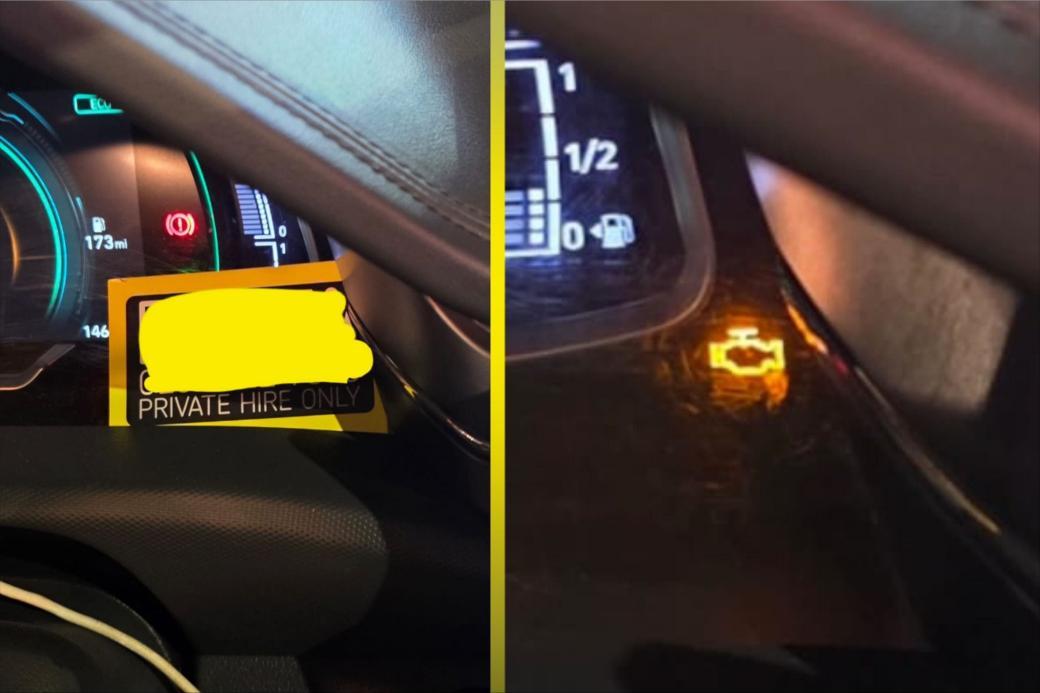
LIVERPOOL OFFICER SUSPENDS KNOWSLEY PHV LICENCE AFTER DASHBOARD WARNING LIGHT
‘ROBUST’ OPERATION: LICENSING BLITZ LEAVES THREE TAXI AND PRIVATE HIRE DRIVERS SUSPENDED OVER COMPLIANCE FAILURES
deliberately covered to conceal a potential fault.
In a statement posted on social media, LCC Licensing said its officers identified a Knowsley-licensed PHV with an engine management light obscured during an evening inspection.
“Anything blocking the instruments on a dashboard is immediately suspicious,” the authority said. “This evening, LCC Licensing Officers found a Knowsley PHV with an engine management light deliberately obscured. The PHV licence was suspended following the discovery.”
Officers stopped a total of 13 vehicles during the checks. 13 warnings were issued for
various compliance issues, while three cases were deemed serious enough to warrant immediate licence suspensions due to breaches
A CROSS-BORDER CRACKDOWN: NEARLY 200 CABS STOPPED AS POLICE UNCOVER DANGEROUS DEFECTS AND OFFENCES
lmost 200 taxis were stopped and inspected during a coordinated enforcement operation across Preston, Chorley and South Ribble, resulting in multiple vehicle suspensions and traffic offences being identified.
The operation, led by Lancashire Constabulary’s Roads Policing Unit and Neighbourhood Policing Teams, took place on Saturday 14 March and involved licensing officers from Preston City Council, South Ribble Council, Sefton Council, Knowsley Council, Blackburn with Darwen Council and Wolverhampton Council.
A total of 198 licensed vehicles were examined at checkpoints set up across key locations in the three areas. The inspections focused on vehicle safety, licensing compliance and identifying unlicensed or unlawful activity within the taxi and private hire sector.
Authorities confirmed that 12 taxis were suspended from service after being found with dangerous defects. Issues identified during the checks included illegal tyre tread depth and faulty lighting, both of which present safety risks to passengers and other road users.
In addition to vehicle compliance checks, officers dealt with a number of wider offences during the operation. A man who is not a licensed taxi driver was arrested on suspicion of drink driving, while two searches were carried out under Section 23 of the Misuse of Drugs Act.
More than 50 passengers were also engaged during the enforcement activity, with officers providing safety advice and reassurance around the checks being carried out. Police said passengers were broadly supportive of the initiative and its focus on public safety.
Sgt Ben Elliott from the Roads Policing Unit said:
“Our priority is making sure that everyone who heads out to enjoy their night in Preston, Chorley or South Ribble can do so safely, and that includes getting home.
“This operation brought together multiple agencies to ensure people are kept safe, that taxis are properly licensed, roadworthy and driven by people who meet the standards expected of them.
“By working together, we’re giving the public confidence that the vehicle they step into at the end of the night is safe, legal and responsible and we will continue operations like this one so that those enjoying a night out can do so safely.”
PRIVATE HIRE DRIVER LOSES APPEAL AFTER WOLVERHAMPTON REVOKES