Tarahát

published since 1990s

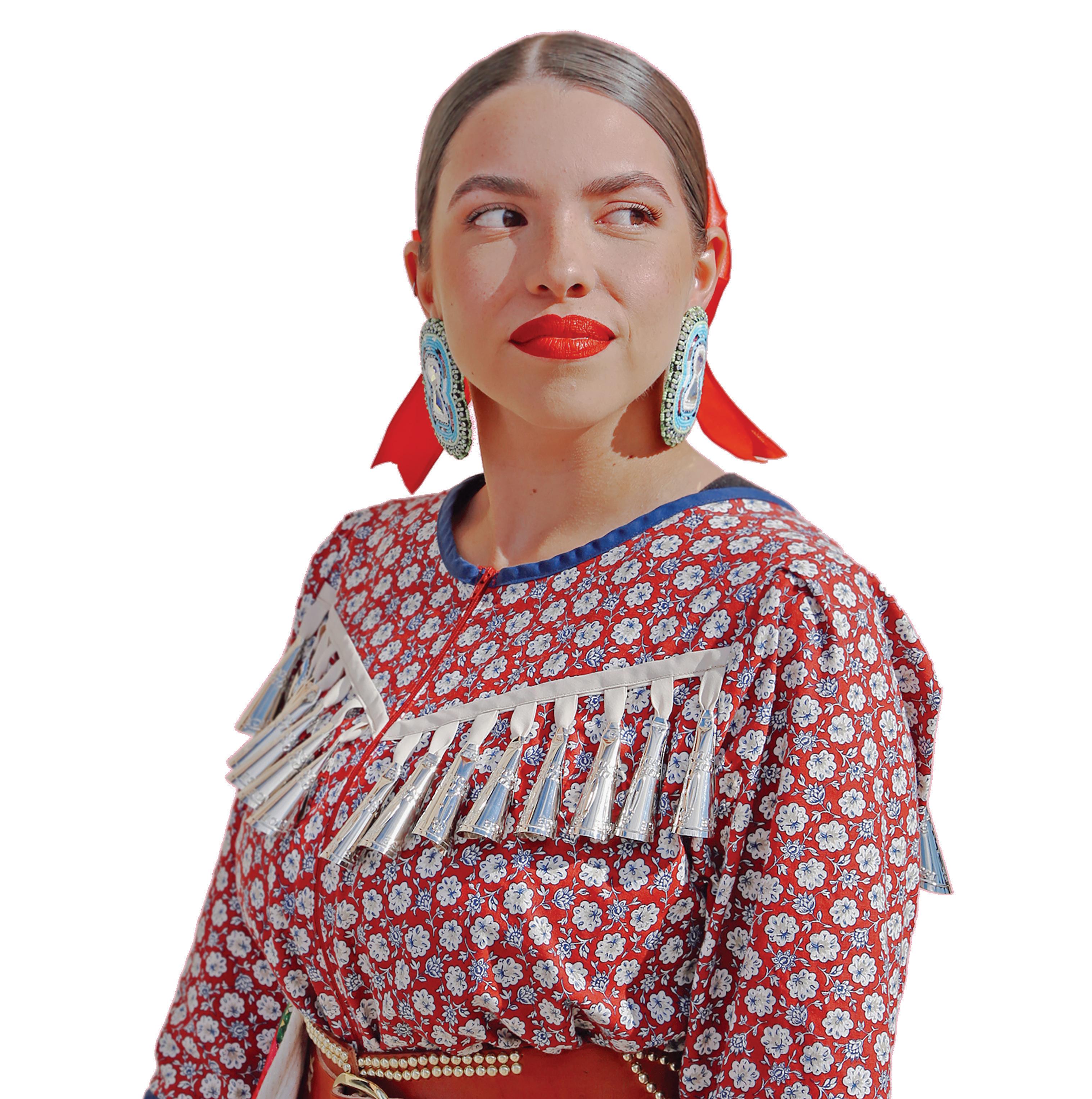
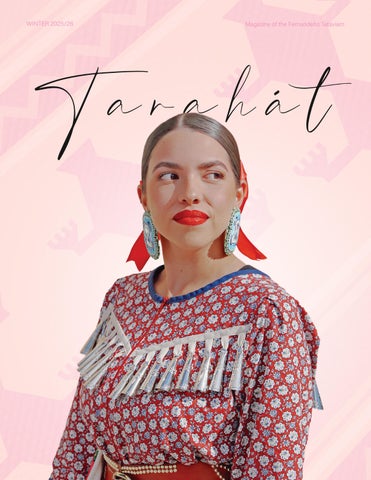
Tarahát (The People) is a bi-annual publication that celebrates the stories, news, and culture of the Fernandeño Tataviam Band of Mission Indians. With limited print distribution and a digital presence, Tarahát serves as a vital platform for connecting the Tribe’s citizens and sharing their rich history with a broader audience.
Rudy J. Ortega, Jr., L.H.D.
Kimia Fatehi
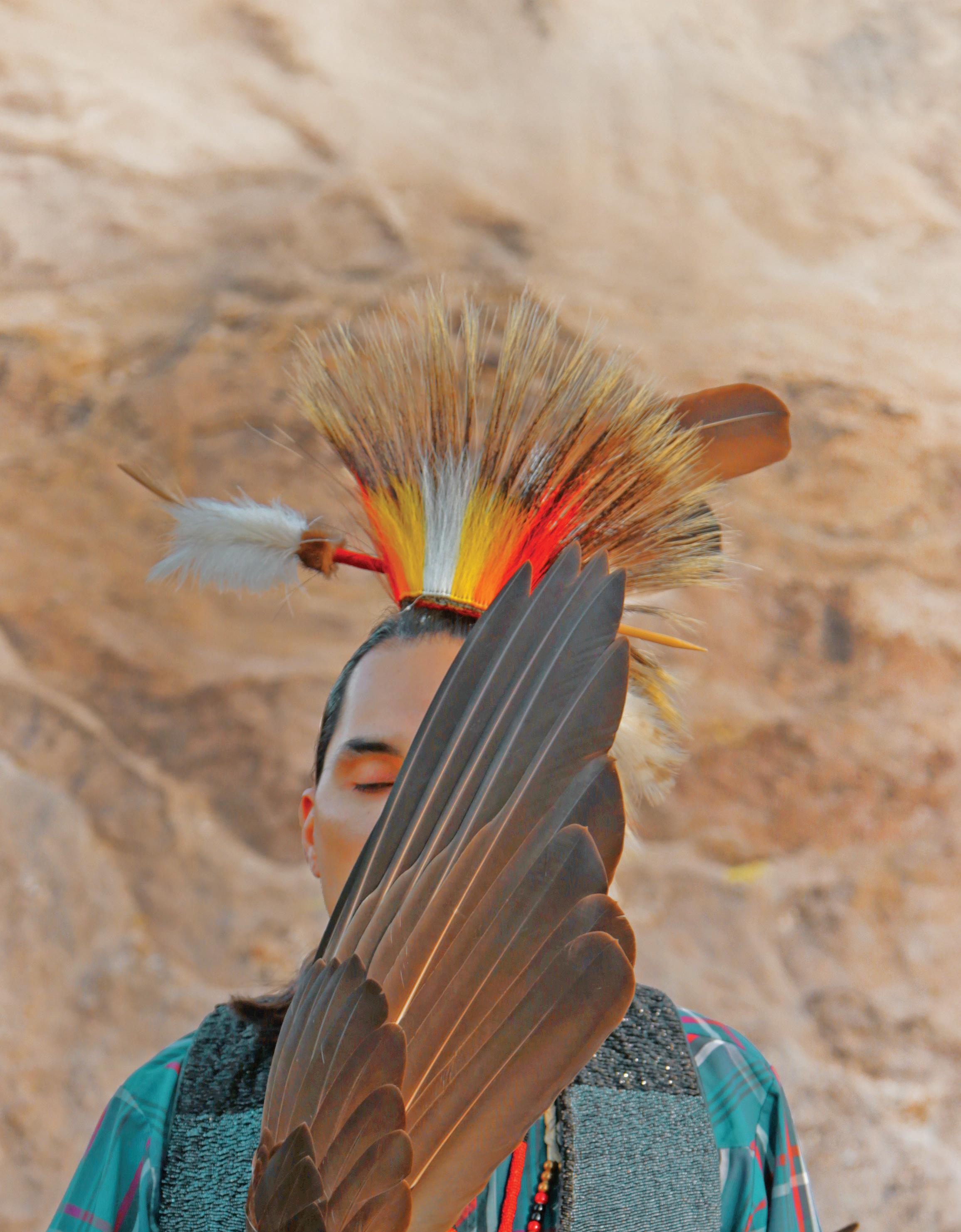

As the President of the Fernandeño Tataviam Band of Mission Indians, I extend my heartfelt gratitude to each of you for taking the time to read our magazine. Though our administration is small, we are indeed mighty, and your interest and engagement mean the world to us.
Through our publication, we aim to share not only our rich history and vibrant stories but also the cultural essence and the challenges and triumphs we experience as a community. The recognition of our Tribe is one of the oldest social justice issues in Los Angeles County, and all too often, we remain invisible.
With this magazine, we hope to shine a light on our existence and experiences, increasing our visibility for the next seven generations. Thank you for joining us on this journey. Together, we can ensure that our voices are heard and our stories are told.
Rudy J. Ortega, Jr., L.H.D.
President
Mark Villaseñor Vice President
Lucia Alfaro Secretary
Elisa Ornelas Treasurer
Mary Acuña
Senator
Jesus Alvarez Senator
Joe Bodle
Senator
Crystal Crowe
Senator
Stephanie Manriquez Senator
Cheryl Martin-Perez Senator
Jorge Salazar
Senator
cultural community services
Samantha Ortega Chair
R. Tolteka Cuauhtin
Nahua Xicanx, Vice Chair
Lauren Van Schilfgaarde Cochiti Pueblo Secretary
Leon Worden Treasurer
Mary Acuña Fernandeño Tataviam
Cathy Salas Fernandeño Tataviam
Matthew Vasquez Fernandeño Tataviam
Executive Director
Pamela Villaseñor Fernandeño Tataviam
tataviam land conservancy
Jesus Alvarez
Fernandeño Tataviam President
Lucia Alfaro
Fernandeño Tataviam Vice President
Sarah Brewer Thompson Secretary
Katherine Pease
Alan Salazar
Fernandeño Tataviam
Kevin Nuñez
Gabrieleño Xaapchivit
Executive Director
Luis Cervantes
tïuvac’a’ai tribal conservation corps
Miguel Luna Chair
Rudy J. Ortega, Jr. L.H.D
Fernandeño Tataviam Vice Chair
Julia Samaniego Fernandeño Tataviam
Bruce Saito
Executive Director Kaelynn Faustinos
native first lending
Severyn Aszkenazy
Ken Molina Fernandeño Tataviam
Elisa Ornelas Fernandeño Tataviam
Shawn Imitates Dog Oglala Lakota
Executive Director
Raymond Salas Fernandeño Tataviam
paséki strategies corp
Rudy J. Ortega, Jr. L.H.D President
Mark Villaseñor Vice President
Elisa Ornelas
Fernandeño Tataviam Treasurer
Nicole Raphaely, J.D. Secretary
Executive Director
Raymond Salas
Fernandeño Tataviam

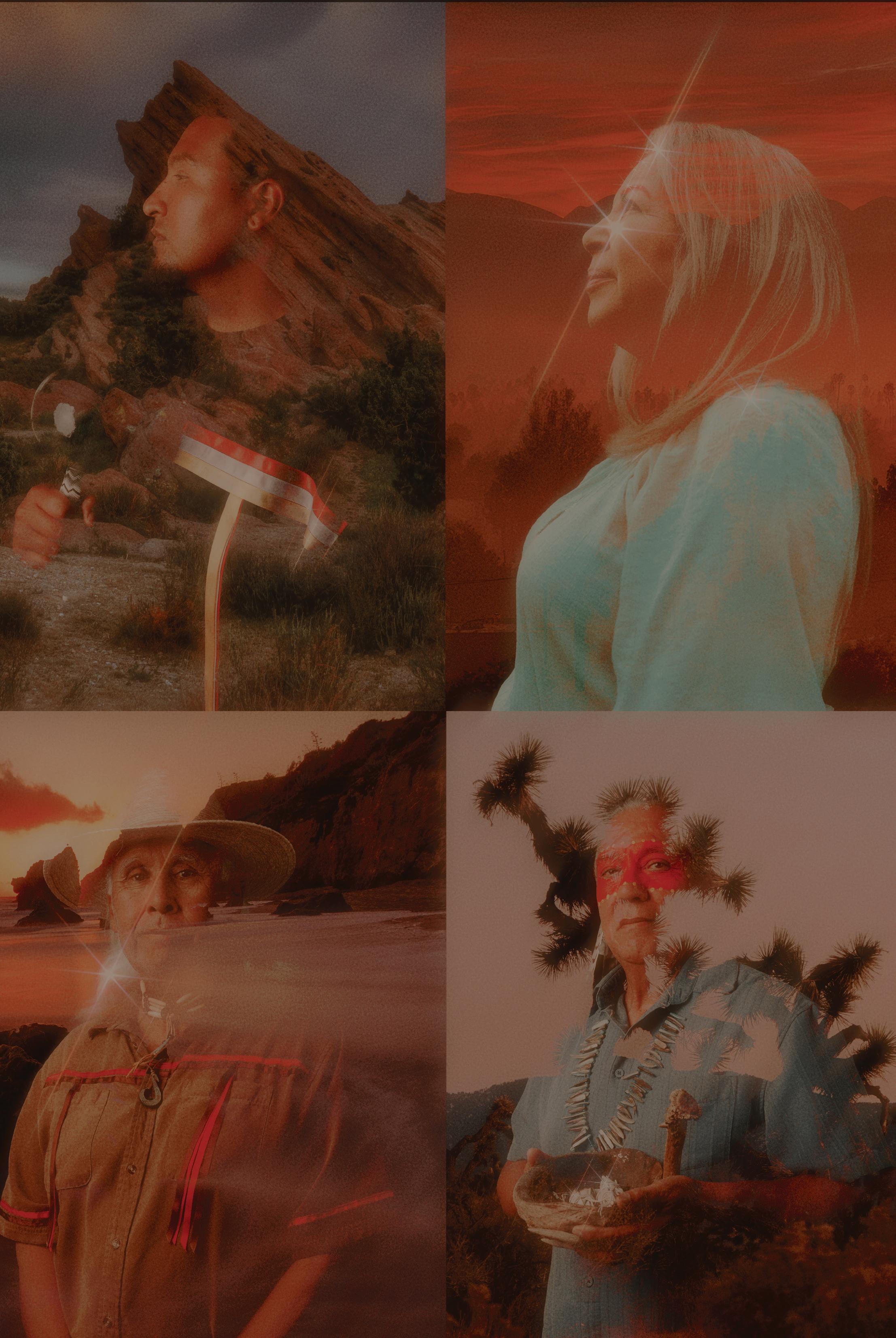
Language Identity
Regional Identity
Village Identity
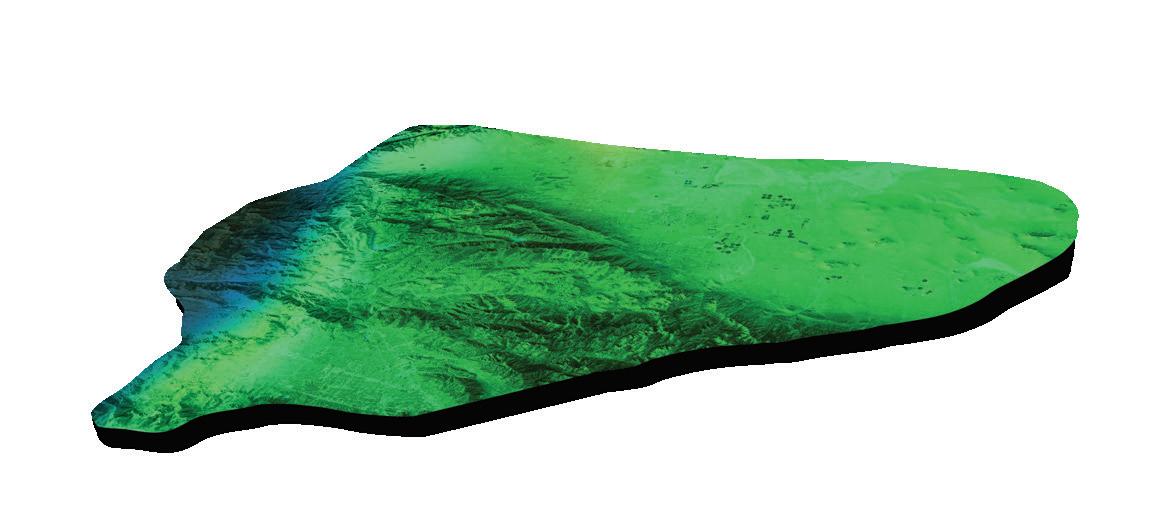
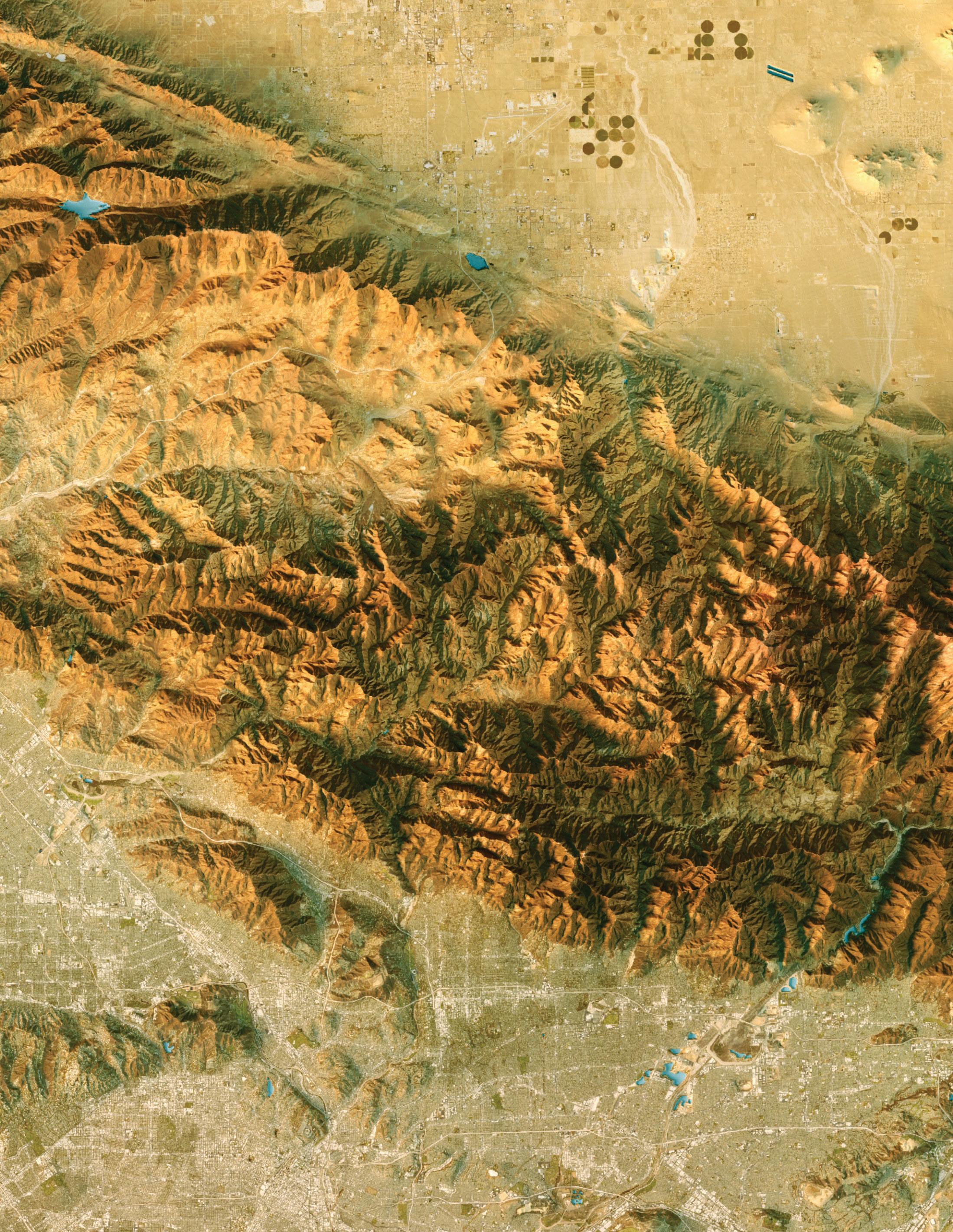
The citizens of the Fernandeño Tataviam Band of Mission Indians are the First Peoples of northern Los Angeles County. Yet even today, a common misconception persists that the Tribe consists soley of just “Tataviam” people. The reality is far richer and far older.
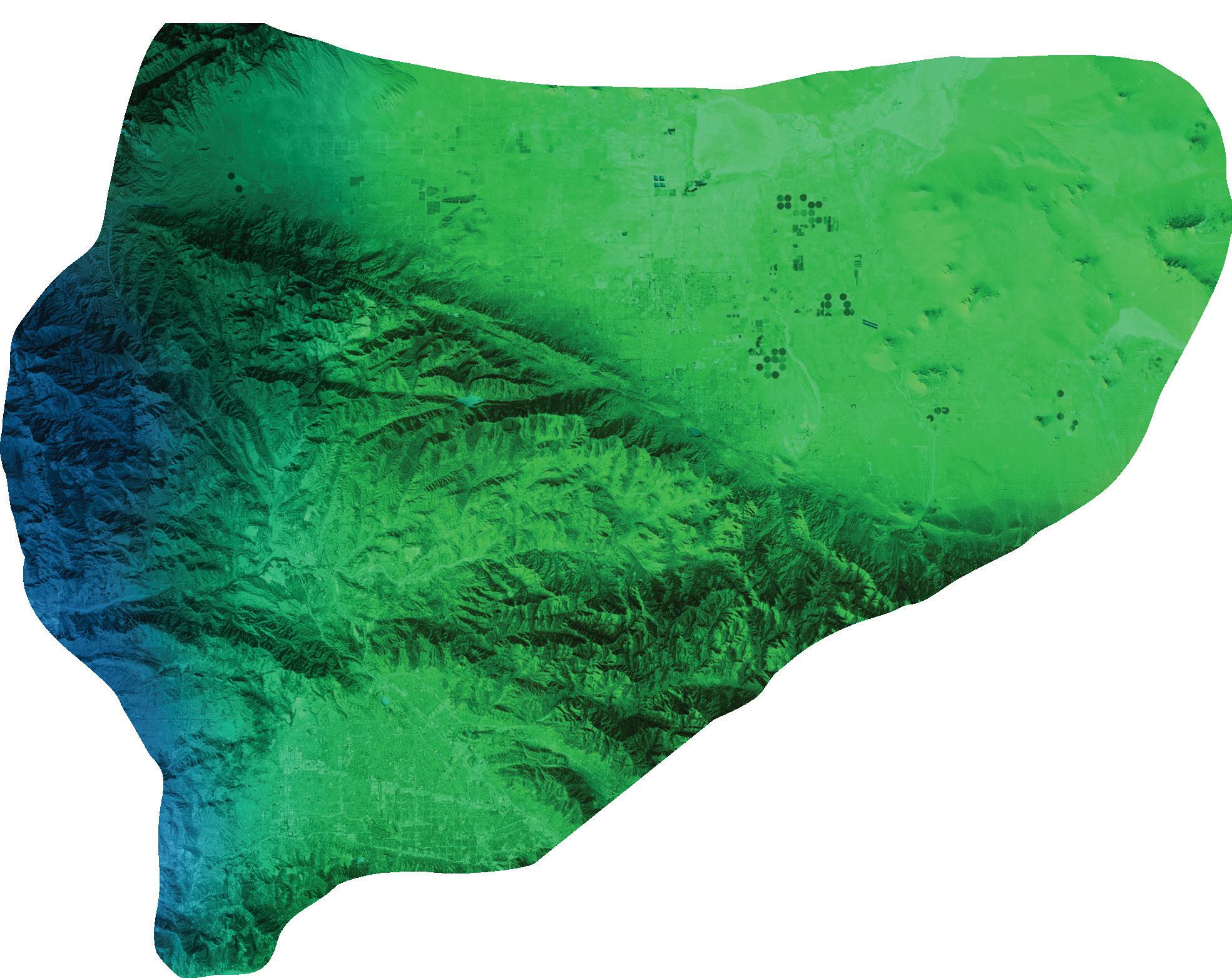
The Tribe is made up of the descendants of villages that were rooted in a specific landscape across the valleys, mountains, and deserts of what is now northern Los Angeles County. The villages held lineages that were affiliated with regional groups that existed for thousands of years before colonization and remain inseparable from the Tribe’s identity today.
Early ethnological records, including interviews conducted with Fernandeño ancestors at the turn of the twentieth century, document the continued use and recognition of these regional group names. Over time, however, this complexity has been increasingly oversimplified.
The Fernandeño Tataviam Band of Mission Indians is not a monolith. Understanding the Tribe’s identity requires looking beyond modern labels and returning to how Native societies in this region actually functioned, as interconnected networks of villages, cultures, and lineages rather than a single, uniform group.
While Fernandeño people embody many identities shaped by family, history, and community, Tribal Citizenship is a distinct, formal bond with the Fernandeño Tataviam Band of Mission Indians. It does not diminish these identities, but rather organizes them, grounding each citizen in ancestry, law, and shared responsibility within the Tribe.
Tribal Citizenship does not erase the layers of Fernandeño identity; it organizes it.
Before the arrival of settlers, Native life in Southern California was organized around independent, self-governing villages. There was no single leader presiding over all villages, because each village was independent.
Each village maintained its own lineage, leadership, traditions, economy, and defined territory, grounding identity first and foremost in place. Only one lineage existed within a village, and it was passed through families over generations by birth.
Because there was no overarching authority governing multiple villages, the village itself was the highest form of government and was considered the Tribe. Birth in a village meant enrollment in that village’s lineage and established an person’s Tribal affiliation.
Today, village identity remains one layer of Fernandeño identity, carried alongside others that together shape the whole.
pi’iruknga piinga juunga
chaguyanga mapipinga
quissaunga
coaynga
jucjauyanga sikwanga sesevenga vijanga pakoinga tochononga tobimonga
ta’lopop
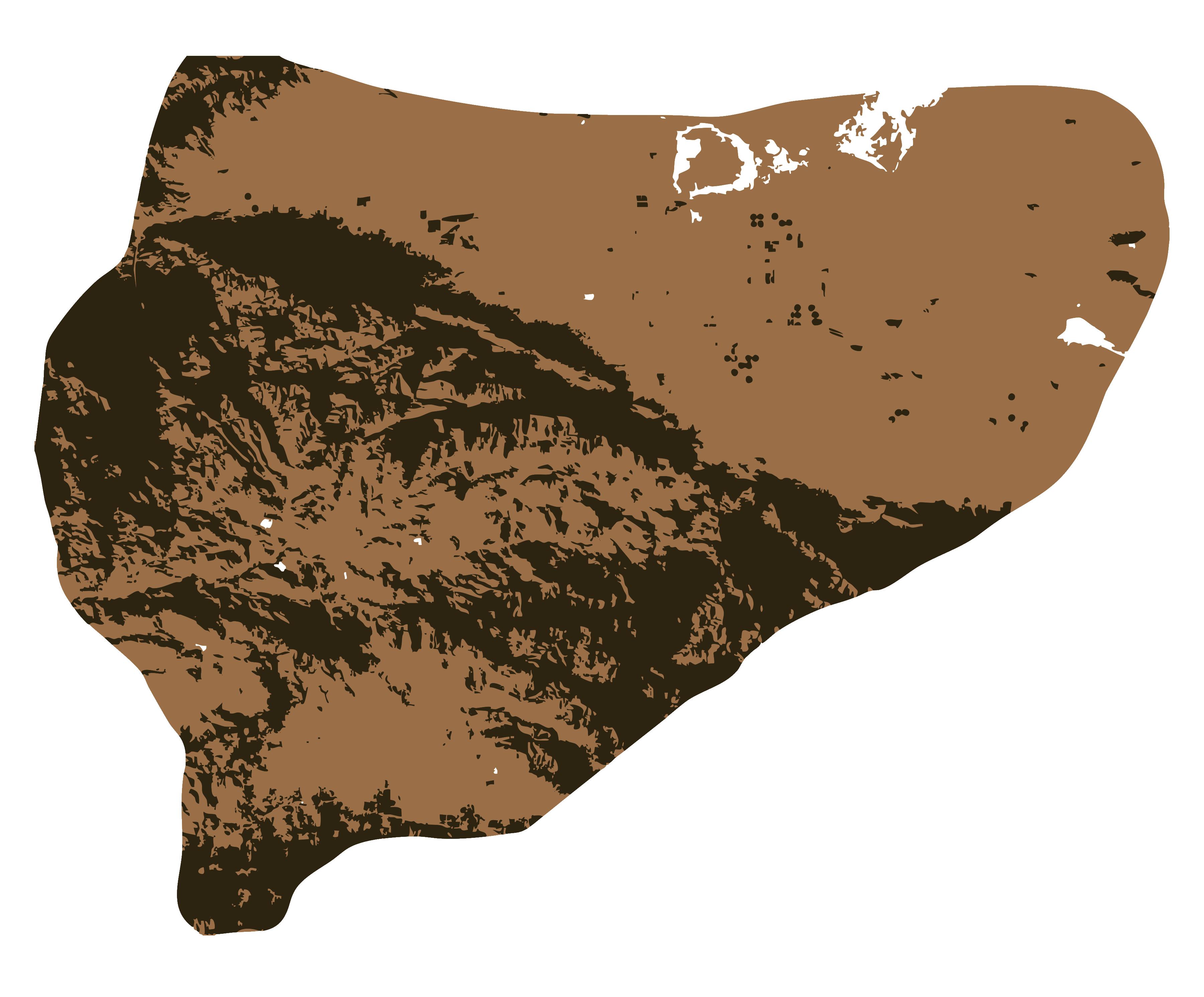
kawenga tujunga siutcanga
Encino, CA
Villages are one strand within a complex identity. Through village affiliations, Tribal Citizens map social and blood relations, weaving together family, place, and ancestry. For example, the village of Siutca was known as Siutcanga, with -nga meaning “place of.” The village itself was the tribe, and its people were called Siutcavitam, meaning “people of Siutca.”
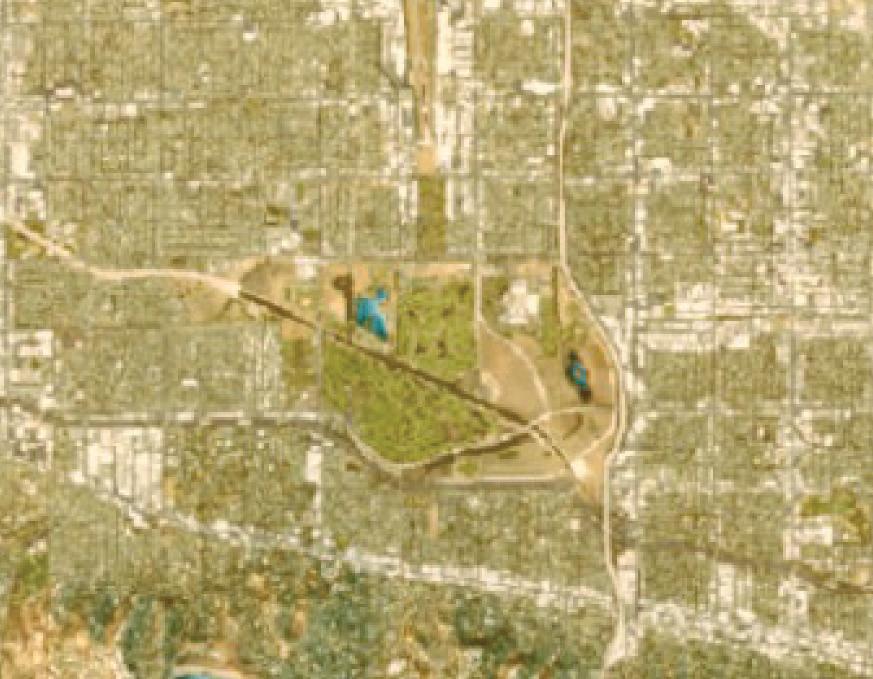
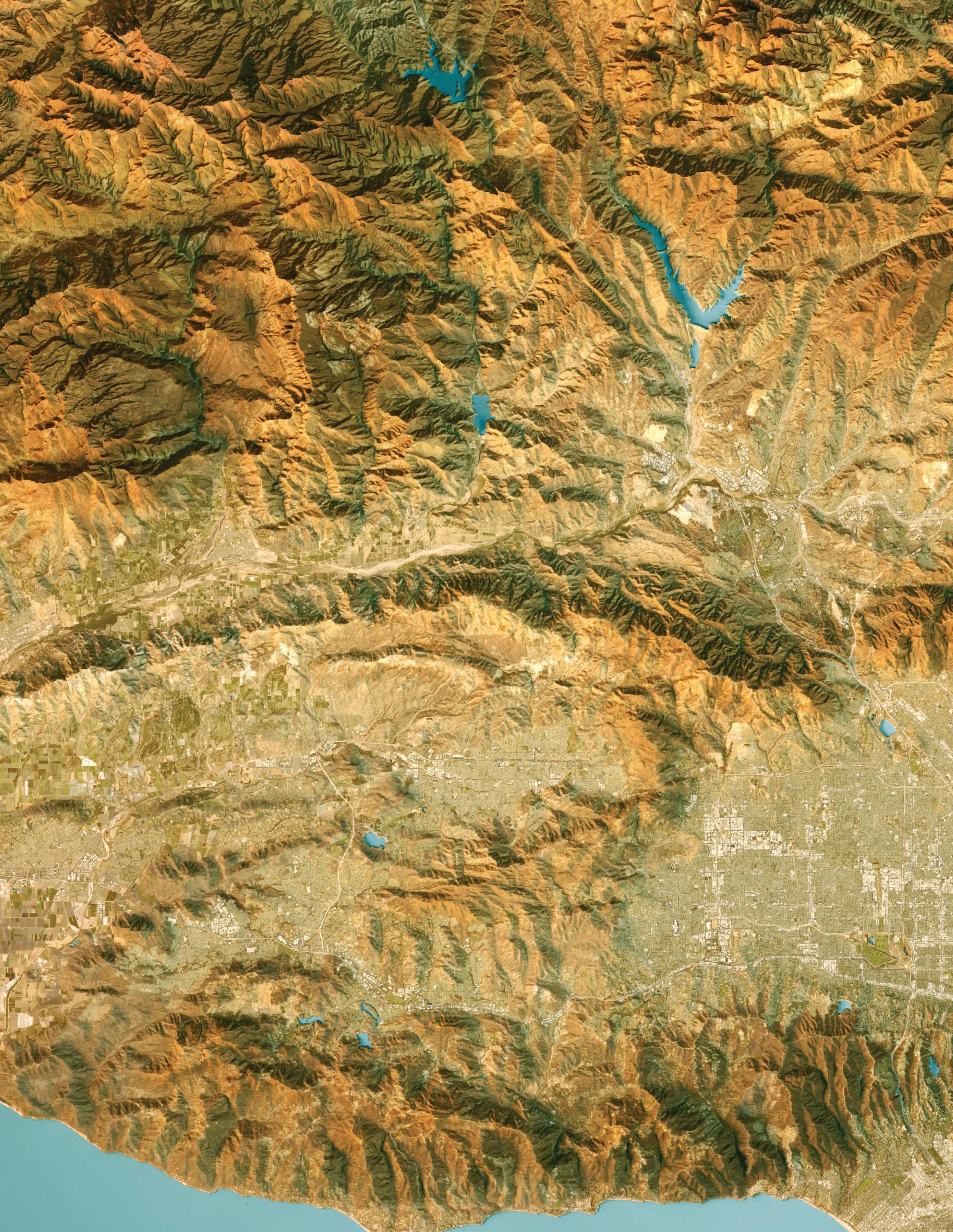
While politically independent, the villages were not isolated. Strong social and economic relationships were built through exogamy, the practice of marrying outside one’s home village. These marriages created lasting networks of kinship, responsibility, and shared life between communities. Through birth, marriage, and family ties, individuals often belonged to more than one village.
Exogamy was also strategic. Marrying into neighboring villages strengthened alliances and ensured access to resources that one village alone might not possess. These relationships supported trade, seasonal movement, and mutual support. As a result, Tribal Citizens today often trace their ancestry to multiple villages, reflecting an identity shaped by connection, cooperation, and shared survival across the landscape.

Moving to a spouse’s village did not change the language, culture, or political structure of that community. The village retained its distinct identity, while the spouse carried both their birth and marital identities. Historically and today, spouses are not eligible to vote in the village government.
Marital patterns did not alter the Tribe’s territory or political boundaries. For example, if a citizen of one country marries a citizen of another country, the marriage does not change the political borders of either country.
2
CHUMASHAN LANGUAGE
GROUP
Ventureño Dialect
Interior Dialect
UTO-AZTECAN LANGUAGE
GROUP
[Takic Branch]
Fernandeño Dialect
Tataviam Dialect
Serrano Dialect
Kitanemuk Dialect
The Fernandeño territory encompasses two major language groups, each comprising several distinct dialects. These dialects varied in accent, rhythm, and sometimes vocabulary, with entirely different words used for the same concept. Individuals typically spoke the dialect of their home village and, through marriage and family relationships, also learned and used the dialect of their spouse’s village. This multilingualism reflects the deep interconnections among villages and the layered, relational character of Fernandeño identity.
Language boundaries did not correspond to territorial boundaries. Linguistic differences did not define the limits between communities, and many villages were multilingual environments in which multiple language families and dialects were spoken side by side. Although a village might favor a primary language, this did not imply exclusive ownership of a linguistic territory. The meaningful boundaries were those between villages themselves rather than between languages.
A useful comparison can be drawn with the global use of English today: people across many countries speak English, yet they do not belong to a single political entity. In a similar way, Fernandeño villages often shared languages or used multiple dialects simultaneously.
Language functioned as a medium of connection rather than a marker of political control, which helps explain the variations in village names found in historical records.
Language was a tool for connection, not a marker of political control.
VILLAGES WERE SOCIALLY CONNECTED BY REGIONAL BELIEF SYSTEMS:
Centered in the Santa Clarita Valley and surrounding mountain ranges.
From northern Los Angeles County, spanning foothill and basin lands into what is now Kern County.
From the Antelope Valley, linking desert and mountain ecosystems.
From the Simi Valley, connected to extensive coastal and inland trade networks.

From the southern San Fernando Valley, associated with cultural connections extending to Catalina Island.
The people of San Gabriel Mountains, a regional group later referred to as Serrano.
The ancestors of today’s Fernandeño Tataviam people come from many villages associated with diverse regional groups.
These place-based cultural regions shaped daily life and ceremony across northern Los Angeles County and surrounding regions. Together, these regional groups reflect the deep cultural diversity that continues to shape the Fernandeño Tataviam Band of Mission Indians identity.
For example, Tataviam was the name of one regional group among many, each composed of multiple villages connected by shared language, cultural practices, and belief systems. Within a regional group like the Tataviam, several villages could belong to the same cultural network, holding common understandings of the afterworld and social order while maintaining their own distinct village identities. This regional structure allowed for both cultural continuity and local autonomy across the landscape.
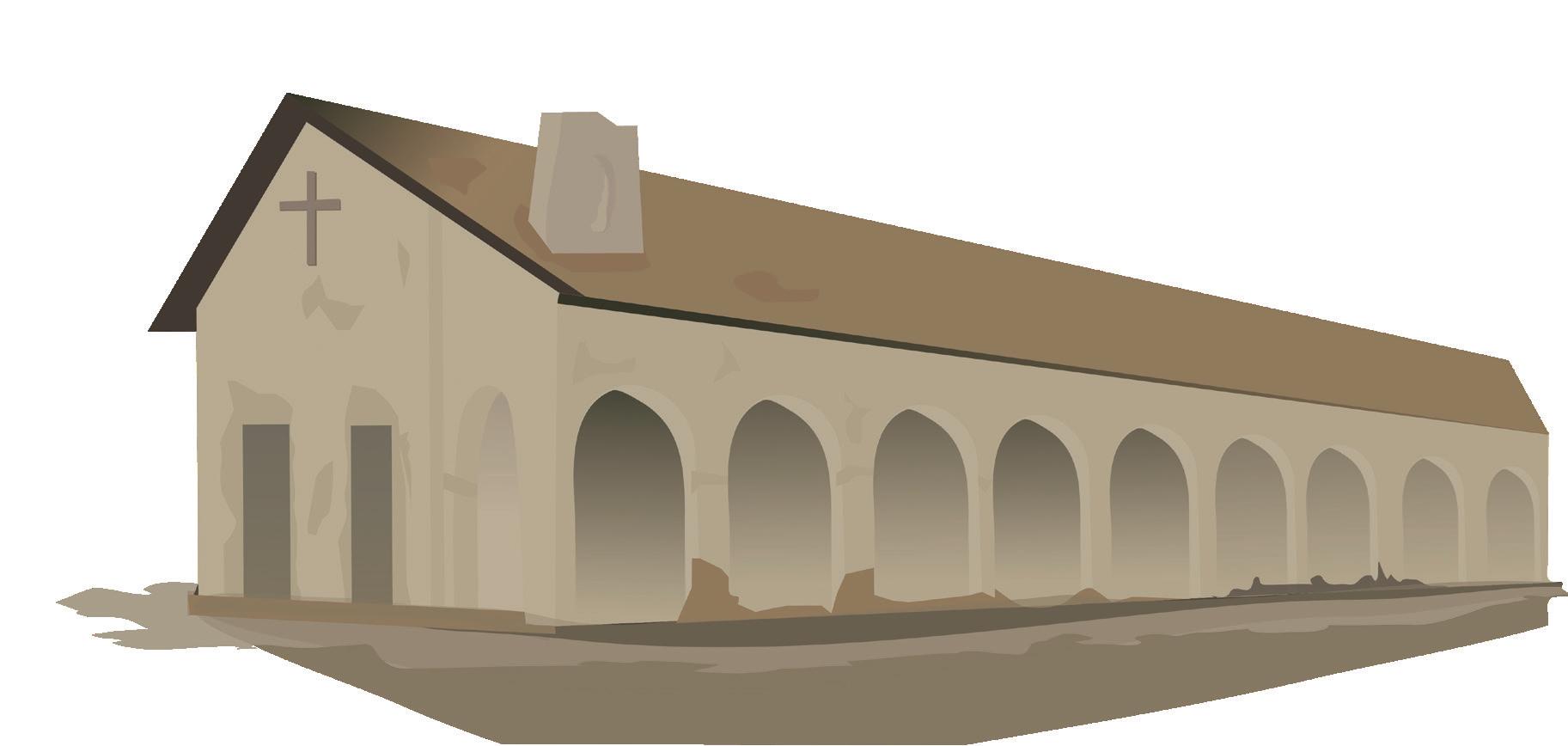
Everything changed in 1797 with the establishment of Mission San Fernando Rey de España. Native people from the Simi, San Fernando, Santa Clarita, and Antelope Valleys were forcibly taken to the Mission and subjected to enslavement. There, Spanish authorities collapsed multiple villages and cultures into a single imposed identity: Fernandeño, a name derived not only from ancestry, but from captivity.
Families were torn apart. Children were married off. Sacred sites were destroyed.
Traditional food systems collapsed as invasive species spread and the land was
reshaped to serve colonial needs. Disease, hunger, violence, and forced labor killed thousands of Native people.
After baptism, Native individuals were recorded and referred to as Fernandeño by colonial officials and outside observers, from 1797 to today. The name did not reflect who they were before the Mission, but it would come to define a people who survived it.
Of the 2,992 Fernandeños recorded as baptized at Mission San Fernando, only three families survived into the twentieth century.
Today, the Tribe is composed of more than 900 citizens who descend from three surviving family lineages. These lineages are identified through the surnames of their ancestral family leaders: Ortega, Garcia, and Ortiz.
Assigned during the Mission period, these surnames came to signify far more than colonial recordkeeping. They represent lines of survival, families who endured enslavement, land dispossession, and forced assimilation, and who carried their identity forward during generations when many were forced into silence.
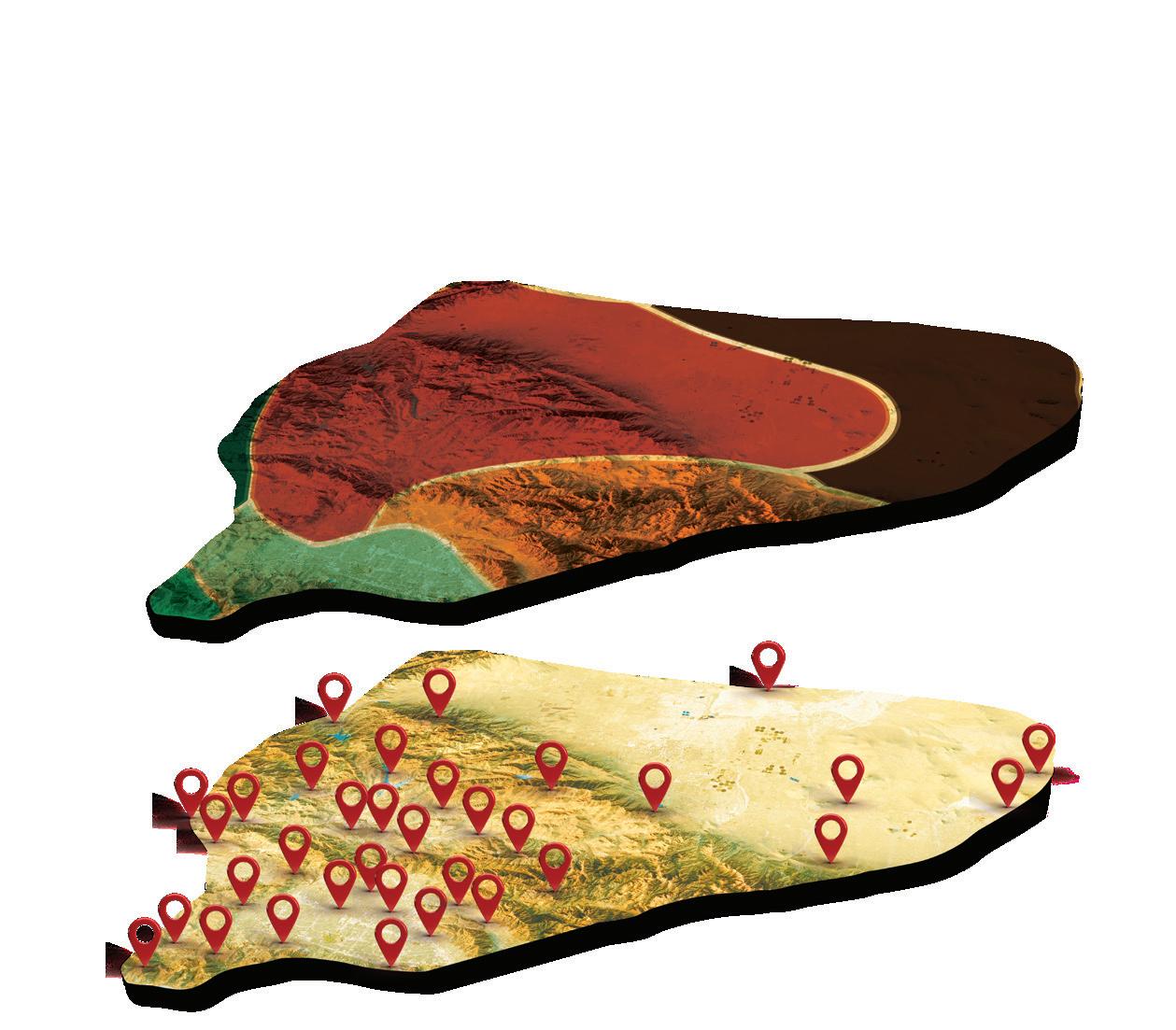
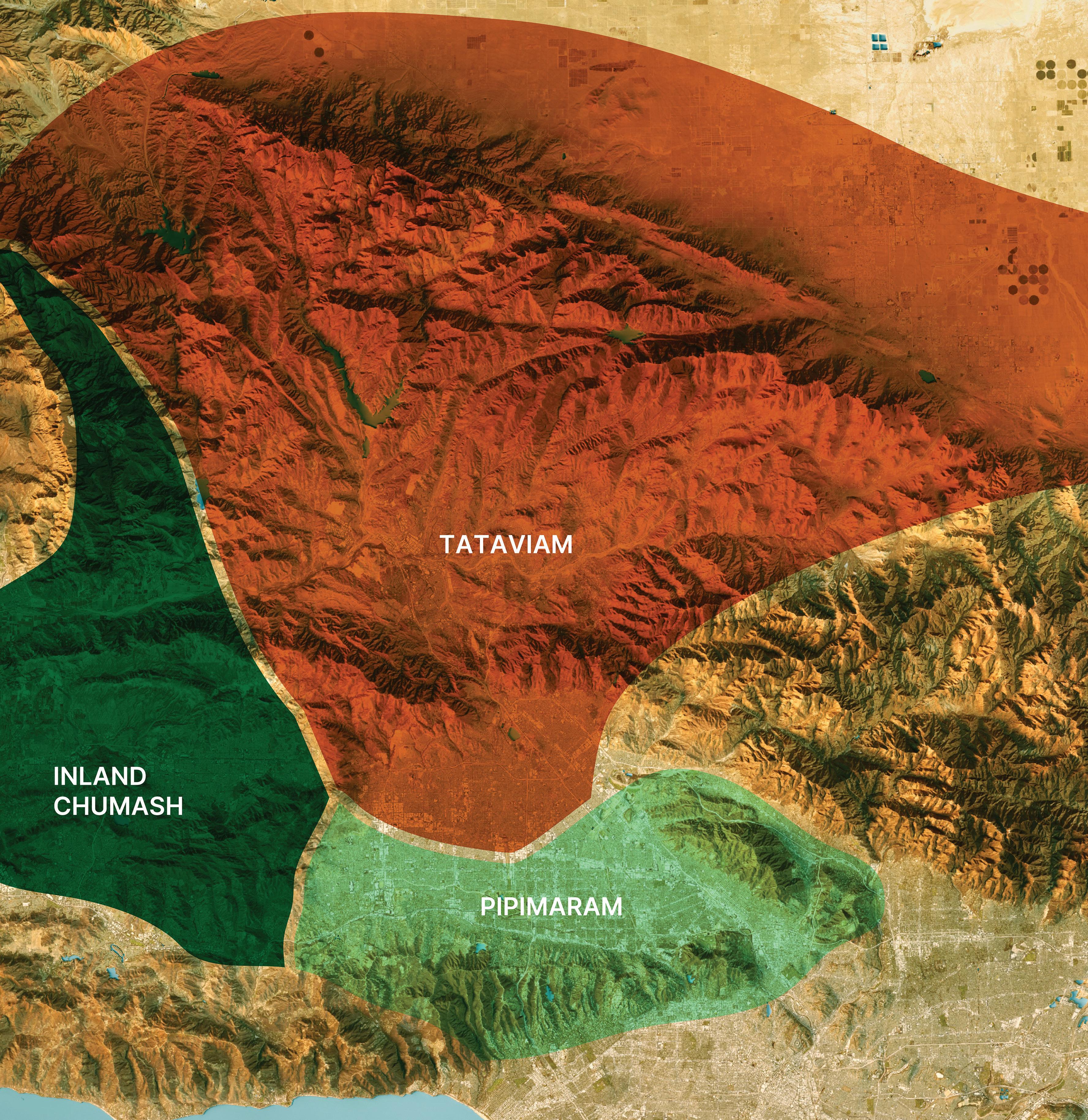
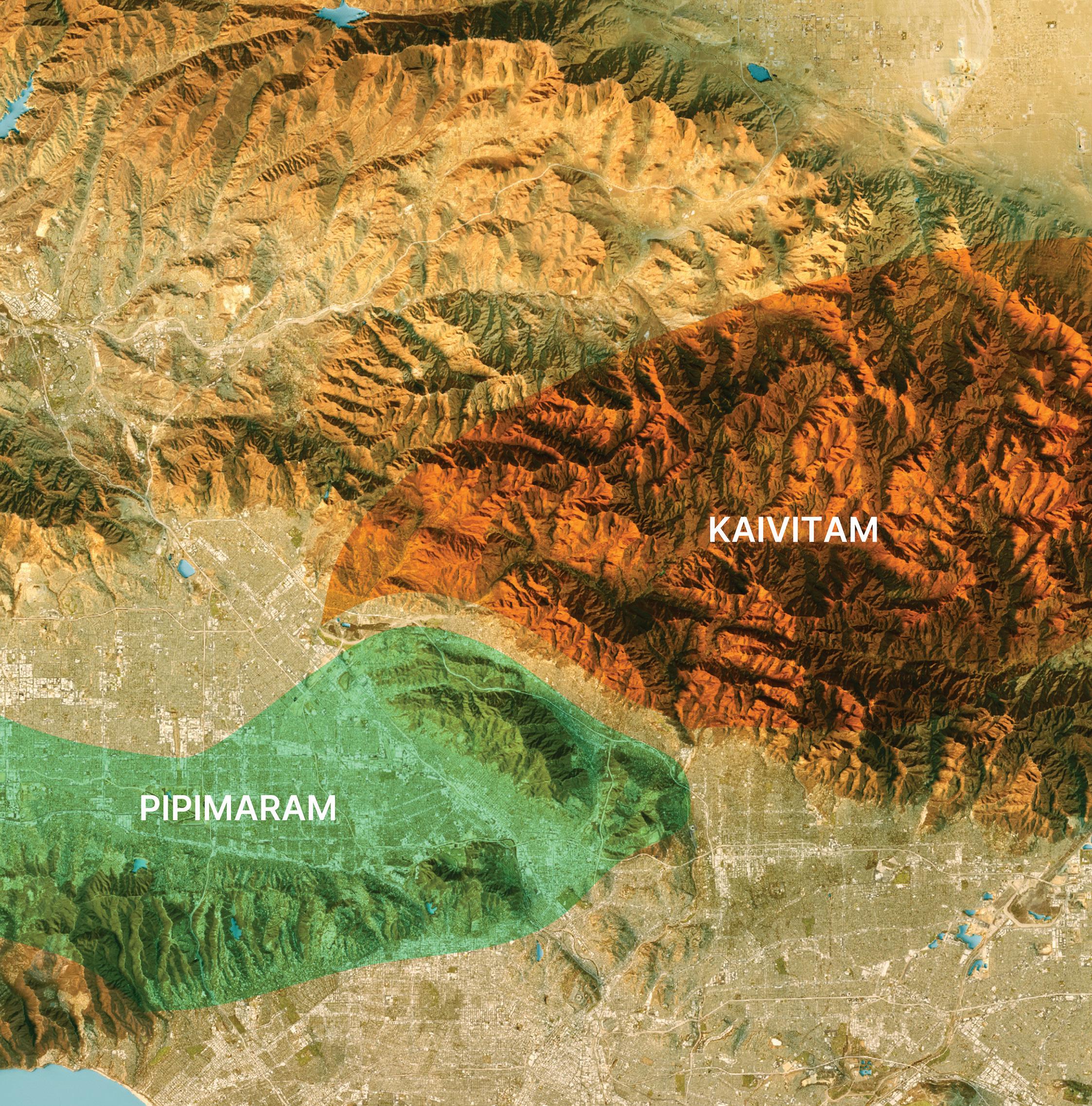
The Ortega lineage thrived in the fertile valleys of San Fernando, Simi, and Santa Clarita, where oak woodlands and rivers shaped daily life. Reflecting their inland Chumash descent, shells played a meaningful role in ornamentation, trade, and ritual, connecting the Ortegas to broader coastal-inland networks. Their descent from villages in these valleys, as illustrated on the map, shows that they were part of distinct regional groups that held their own and seasonal cycles guiding subsistence, ceremony, and community responsibilities.

indicates the recorded villages from which this lineage descends

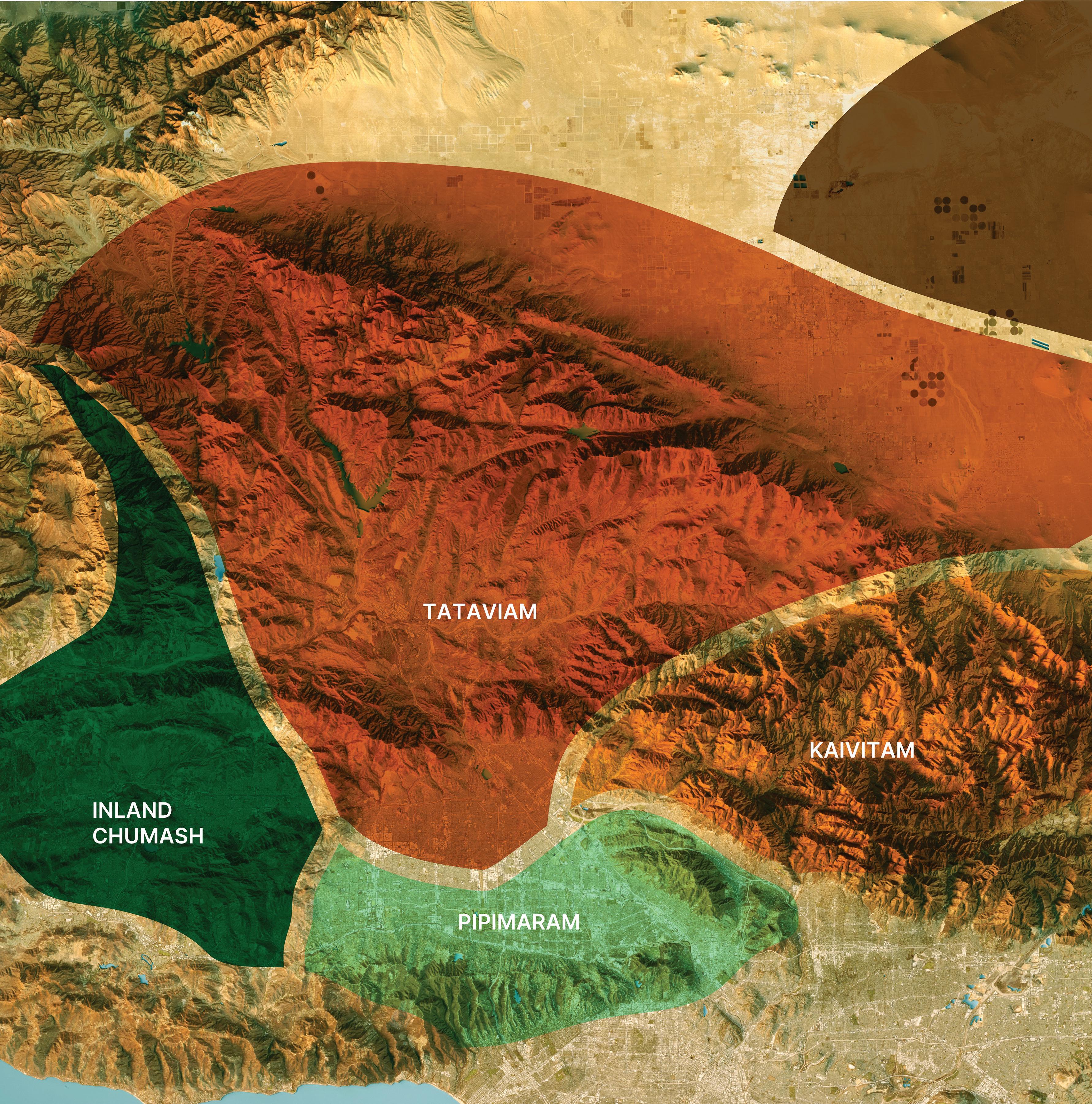
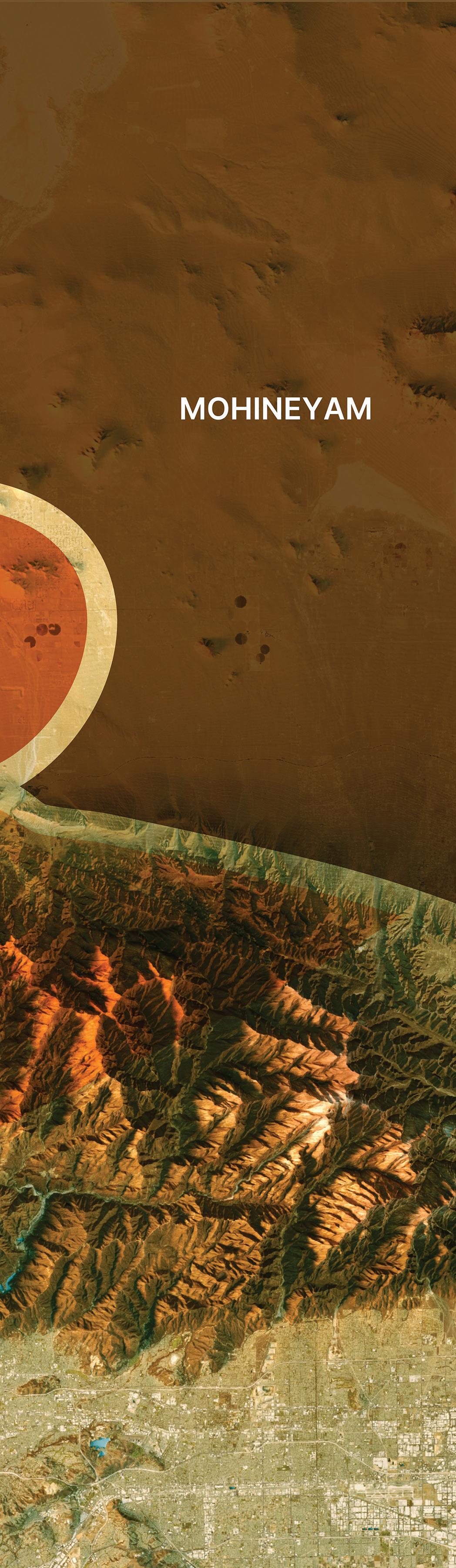
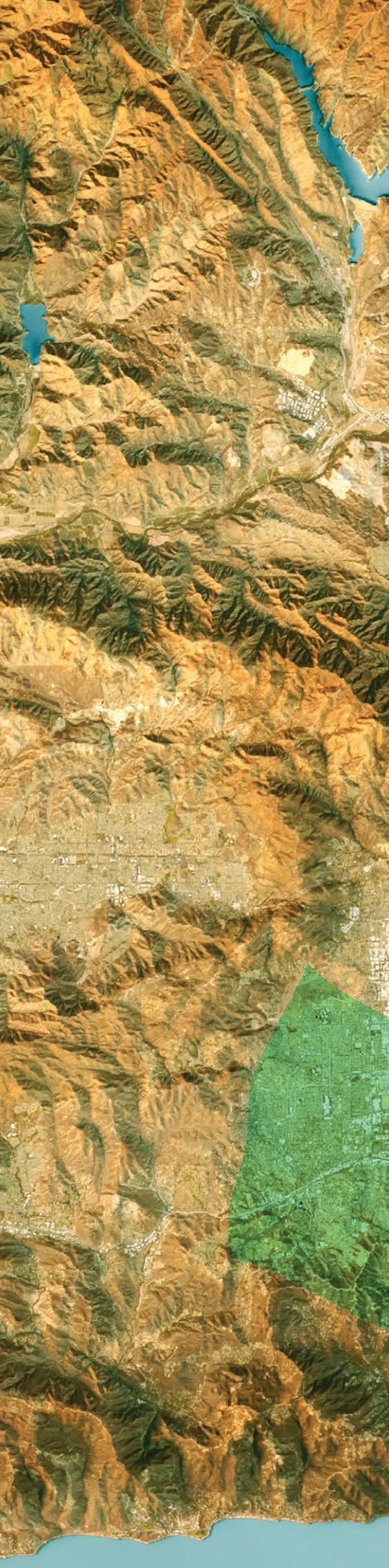
The Garcia lineage originates in the arid expanse of the Antelope Valley, a desert homeland demanding ingenuity and resilience. Ancestors adapted to scarce water and extreme seasonal changes while maintaining social and marital ties with communities in the Santa Clarita and San Fernando Valleys. Through these networks, desert knowledge, trade, and cultural practices flowed across regions, blending environmental mastery with broader inter-village connection. Their descent from villages in these valleys, shown on the map, reflects membership in a distinct regional group shaped by desert landscapes and inter-village ties.
indicates the recorded villages from which this lineage descends
The Ortiz lineage centered on inland villages, distinct from the coast but linked through trade and kinship. Their ancestors exchanged goods, ideas, and ceremonial knowledge with coastal communities, while strong marital alliances with western San Fernando Valley villages reinforced social cohesion. These inland–coastal ties nurtured enduring networks of relationship, belief, and cultural continuity that anchored the Ortiz people across generations. Their descent from the villages marked on the map illustrates that they were part of a distinct regional group, with its own social and ceremonial networks.
indicates the recorded villages from which this lineage descends

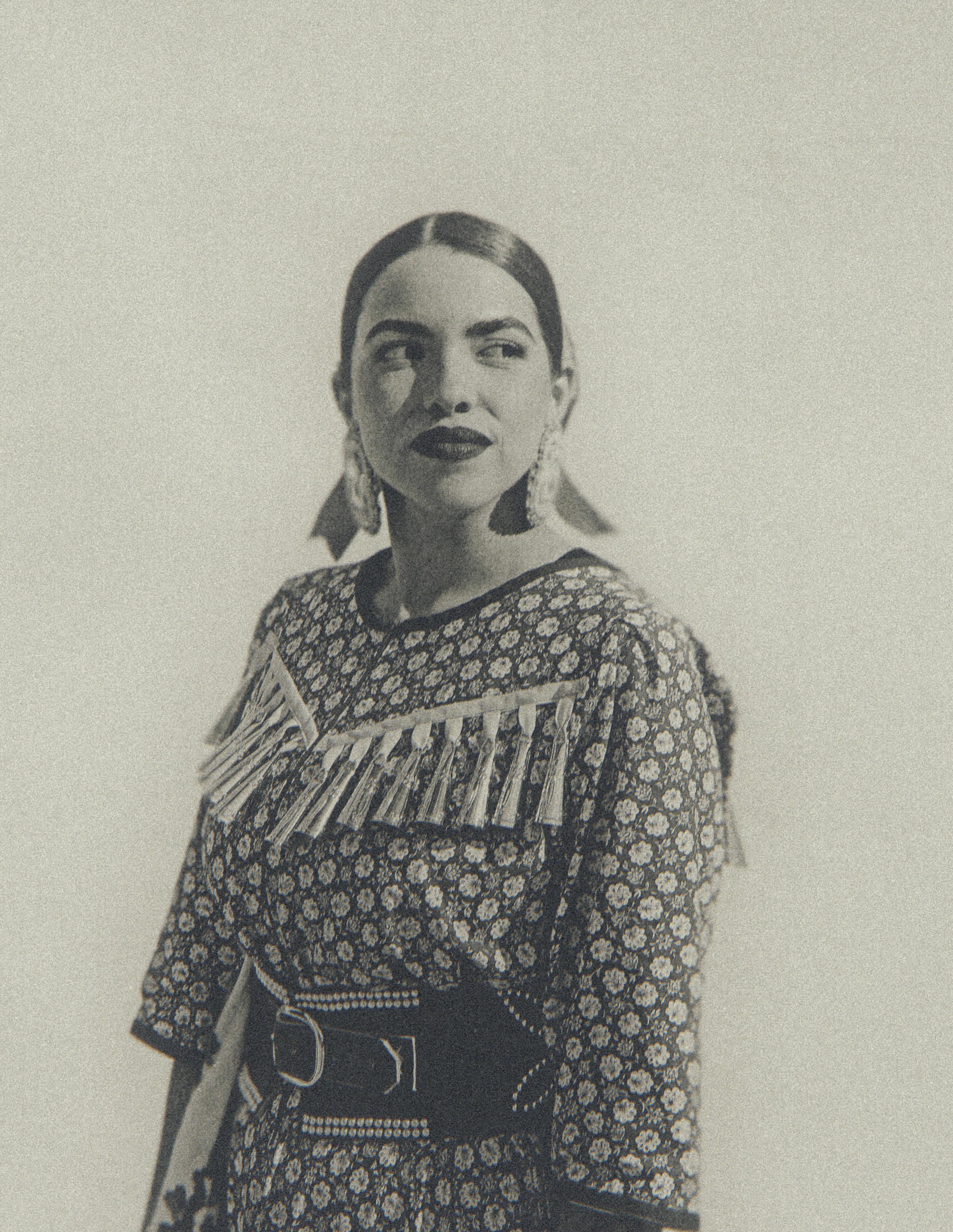
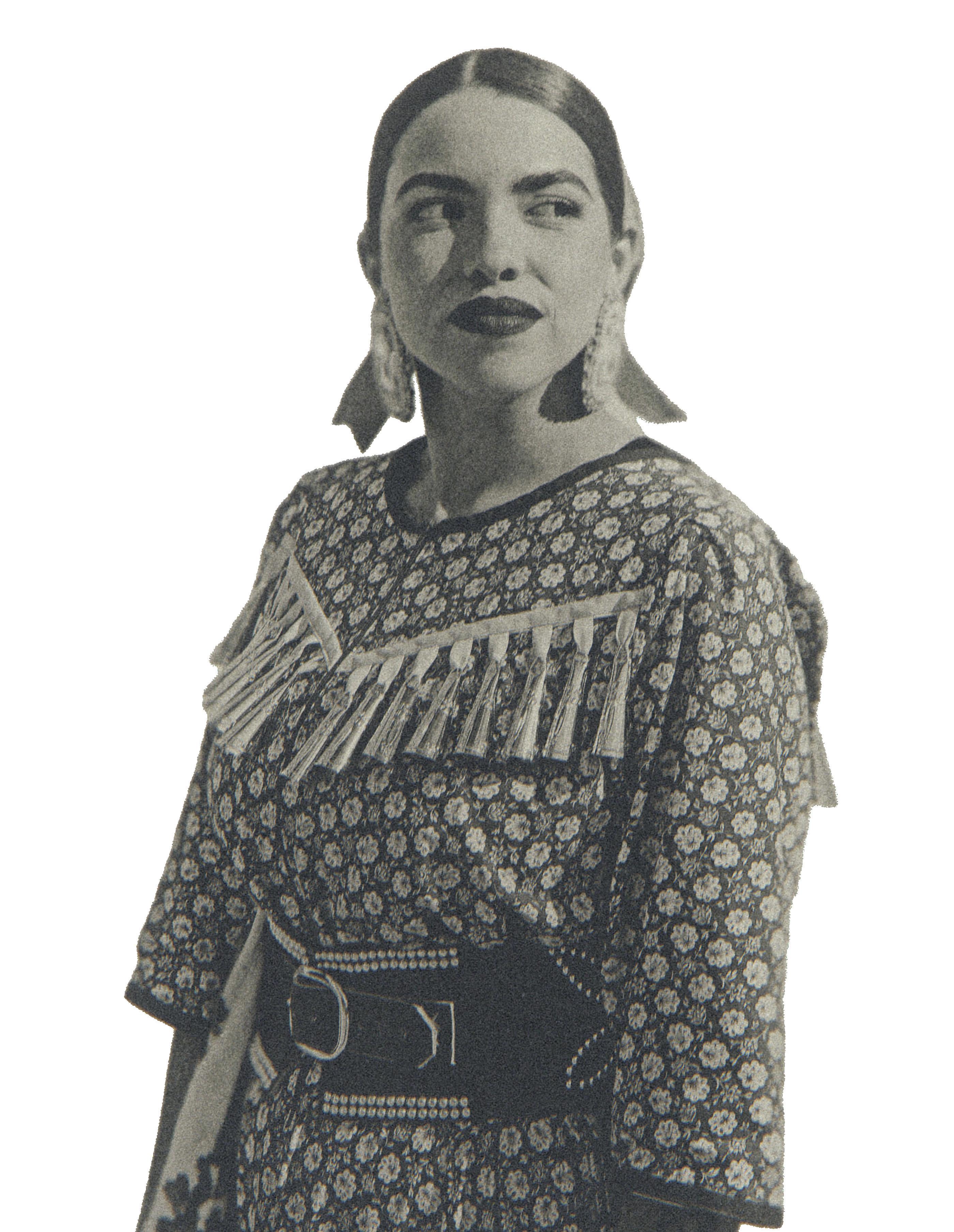
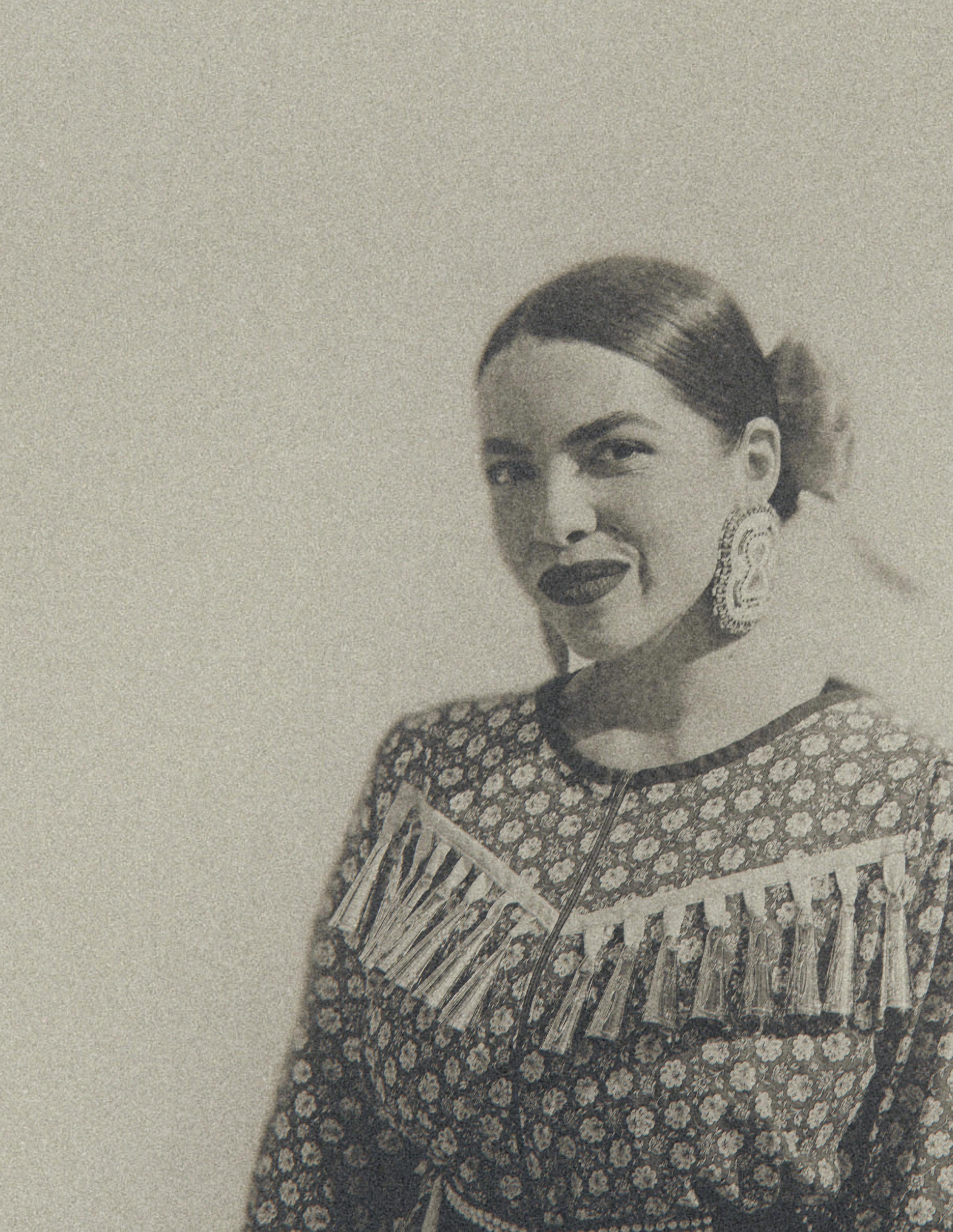
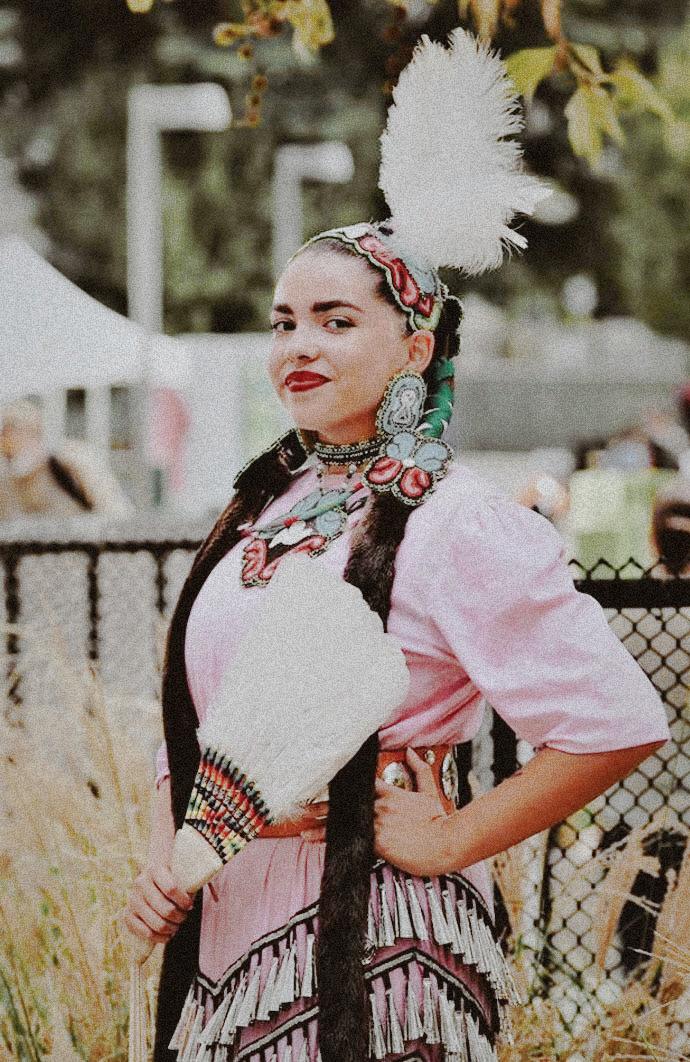
At 25 years old, Bella Hope Spahr stands at the intersection of tradition, creativity, and community leadership - a Native woman coming into her own while carrying the teachings of those who raised her. A proud citizen of the HoChunk Nation, Bella was born and raised in the San Fernando Valley, far from her ancestral homelands yet deeply rooted in her identity.
Her story reflects the lived experience of many urban Native youth: navigating visibility, belonging, and cultural continuity in a city that often overlooks Indigenous presence. Through it all, the Fernandeño Tataviam Band of Mission Indians’ Education and Cultural Learning Department (ECLD) has been a constant foundation, helping shape Bella into the leader, artist, and advocate she is today.
Growing up Native in Los Angeles was not always easy. Like many Indigenous youth in urban environments, Bella did not regularly see herself reflected in her schools, curriculum, or community spaces. Yet from a young age, she felt a pull toward her culture—an instinctive understanding that her identity was something powerful and worth nurturing. That connection began to take shape in 2011, when she first stepped into
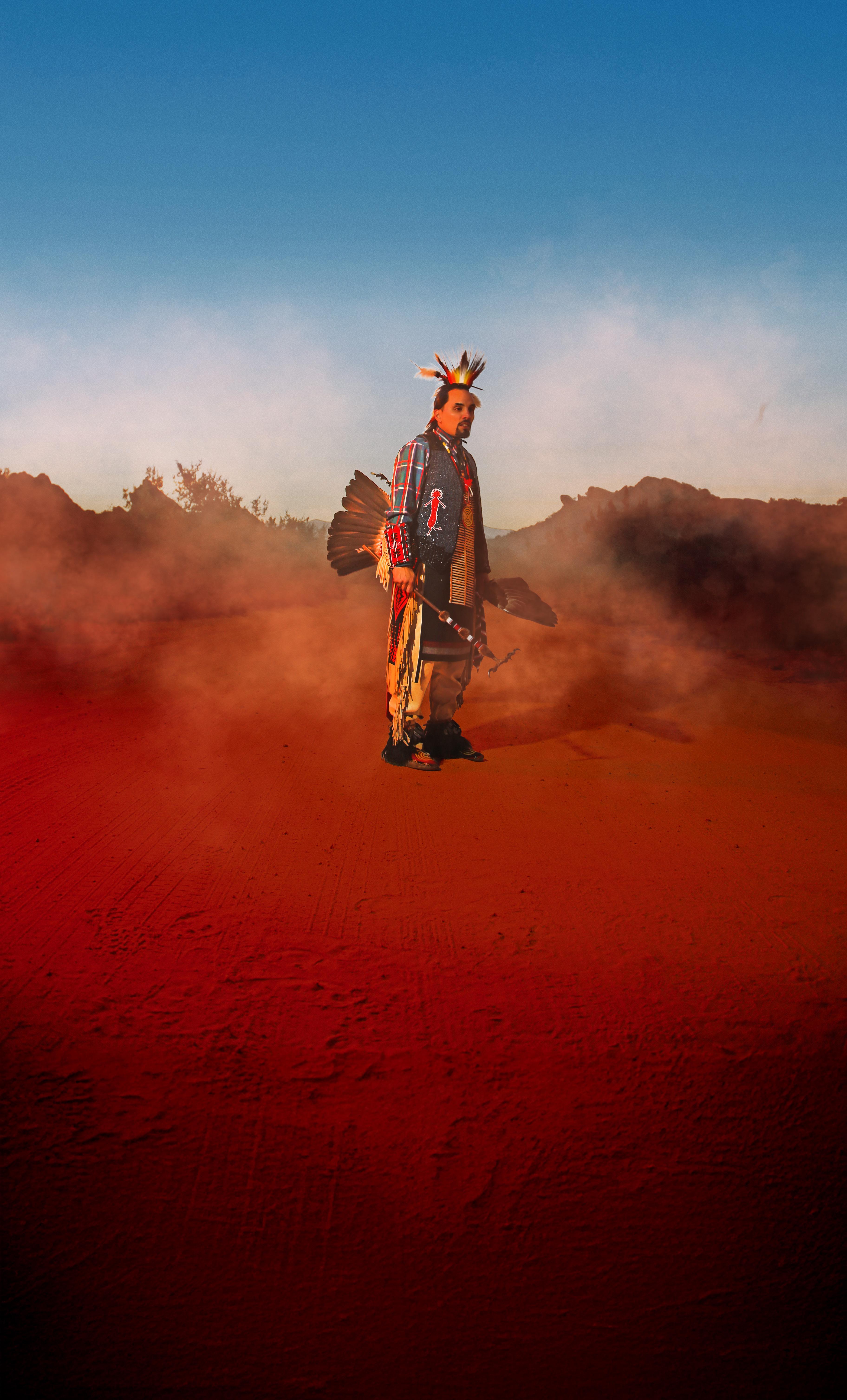
the pow wow circle. From that moment on, dance became more than movement; it became a language, a form of prayer, and a way of grounding herself in who she was. Over the years, Bella continued dancing, carrying song and ceremony with her as both personal practice and communal responsibility.
In 2014, Bella participated in her coming-of-age ceremony at the Hart of the West Pow Wow, a milestone that marked her transition into young womanhood. Surrounded by community, culture, and intertribal relatives, the experience affirmed her place within a living tradition. “Growing up in the city, I did not always see Native people or Native spaces,” Bella reflects. “But the ECLD gave me a community where I felt seen. It reminded me that who I am is something to celebrate.” That sense of belonging, so vital for Native youth, became a cornerstone of her development.
Bella officially joined the Tribe’s Education Department in 2011, entering a space designed to uplift Indigenous students through culturally grounded learning. The ECLD offered workshops, mentorship, and opportunities that went far beyond conventional education. It was a place where culture and creativity were encouraged, where being Native was centered rather than sidelined. For Bella, the department became a second home. “The ECLD helped me understand that my culture is not something separate from my life,” she says. “It is my life. They helped me carry that with me everywhere I go.” In a city where Native representation remains limited, this affirmation proved transformative.
As Bella grew, so did her leadership. In 2015, she served as Head Girl for the CSUN Pow Wow, a role that required discipline, humility, and visibility. Standing at the forefront of a major community gathering, she represented not only herself but generations of dancers and cultural leaders before her. That same year, Bella took her advocacy beyond the pow wow grounds and into civic spaces, speaking before the Los Angeles Unified School District Board of Education to advocate for the recognition of Native American Heritage Month. “I was nervous,” she admits. “But the ECLD taught me that our voices matter, even in rooms where Native people have historically been ignored.” Her words echoed the experiences of countless Native students and helped push for long-overdue recognition.
By 2017, Bella’s relationship with the ECLD came full circle when she returned as the
“
The Department taught me that our voices matter, even in rooms where Native people have historically been ignored.
girls’ dance instructor for the Pow Wow Dance Workshop. Teaching younger dancers allowed her to step into a mentorship role, passing down teachings she herself had received. “I wanted them to feel what I felt growing up in the program...that they belong and that they have a place in the circle,” she says. For Bella, instruction was not just about technique; it was about confidence, cultural pride, and creating safe spaces for Native youth to grow.
Bella’s path eventually expanded beyond community spaces and into the entertainment industry. Since 2018, she has collaborated with Disney’s Creative Talent Development and Inclusion team, contributing to initiatives that uplift diverse voices and push for more authentic Native representation in media. Her work bridges culture and creativity, challenging stereotypes and advocating for Native stories to be told with care and accuracy. “Working with Disney showed me how much our stories are needed,” Bella explains. “The ECLD helped prepare me for that by teaching me to speak confidently about who I am.” In an industry where Native voices have long been marginalized, Bella is helping carve out space for truth and representation.
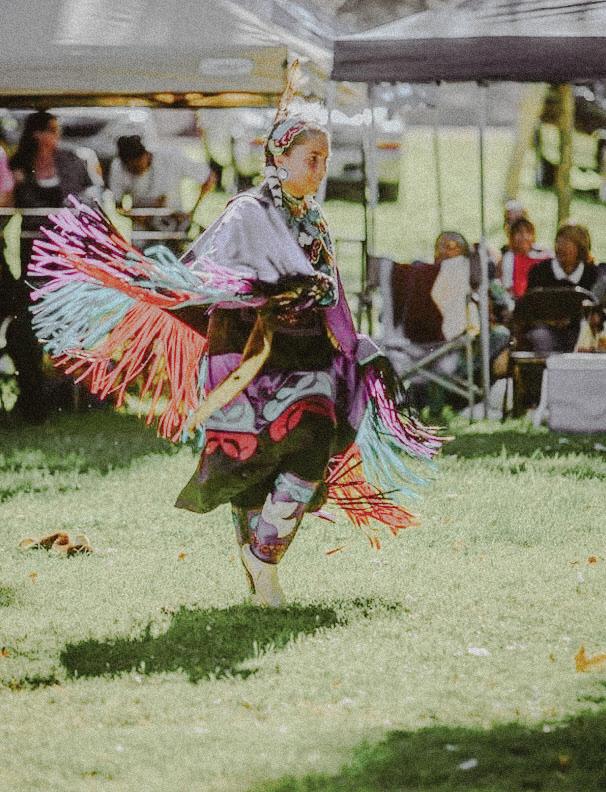
Most recently, Bella has joined the Tribe’s Re-Indigenize Your Bookshelf program as a reader, further extending her commitment to cultural advocacy. Through this initiative, she helps evaluate and promote Native-authored books, supporting Indigenous storytelling and literary sovereignty. “Books shape how young people see the world,” she says. “Being part of this program means helping Native youth see themselves reflected.” Whether through dance, media, or literature, Bella remains dedicated to ensuring that Indigenous narratives are told by Indigenous people.
Looking back, Bella is clear that her accomplishments are inseparable from the support she received through the ECLD. “Without the ECLD, I do not know where I would have found the community and confidence that shaped my path in Los Angeles County,” she reflects. “They helped me understand that being Native in an urban place does not make me any less Native. It just means my story looks different.” Her journey speaks to the power of culturally rooted education and the impact it can have on young people finding their way.
Today, Bella Hope Spahr is a dancer, advocate, mentor, and creative collaborator—an Indigenous woman establishing a name for herself while remaining grounded in community. She represents what is possible when Native youth are supported, celebrated, and given room to lead. As she continues forward, Bella carries the teachings of those who guided her and embraces the responsibility to pass them on. Her story is not only her own; it is a testament to the strength of Indigenous communities and a reminder that Native voices, identities, and futures matter.
To learn more about ECLD, visit www.ftbmi.education
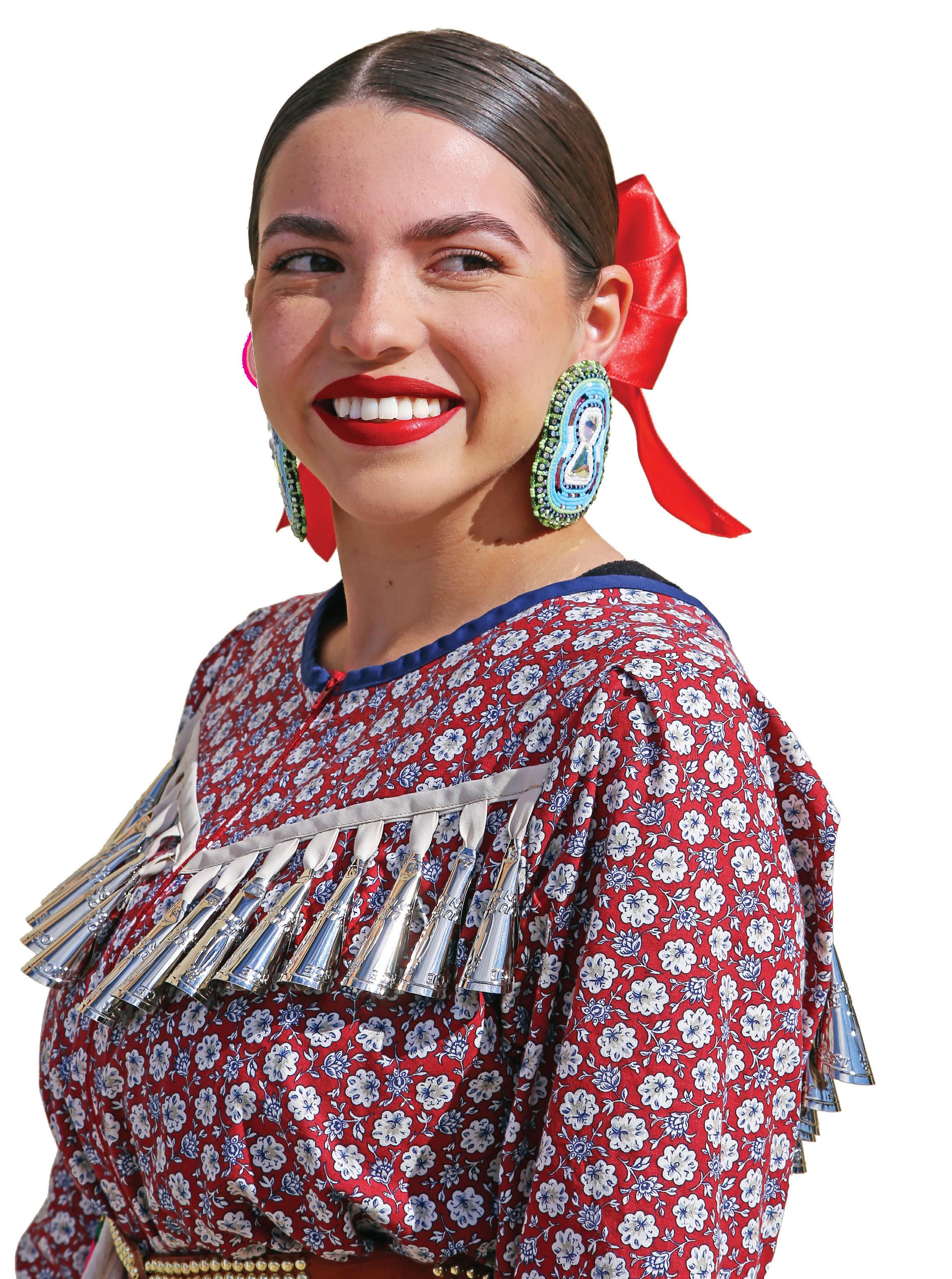

In a county shaped by freeways and film studios, the Tribe’s stereotype-breaking billboards mark a historic moment for Native visibility in Los Angeles County.

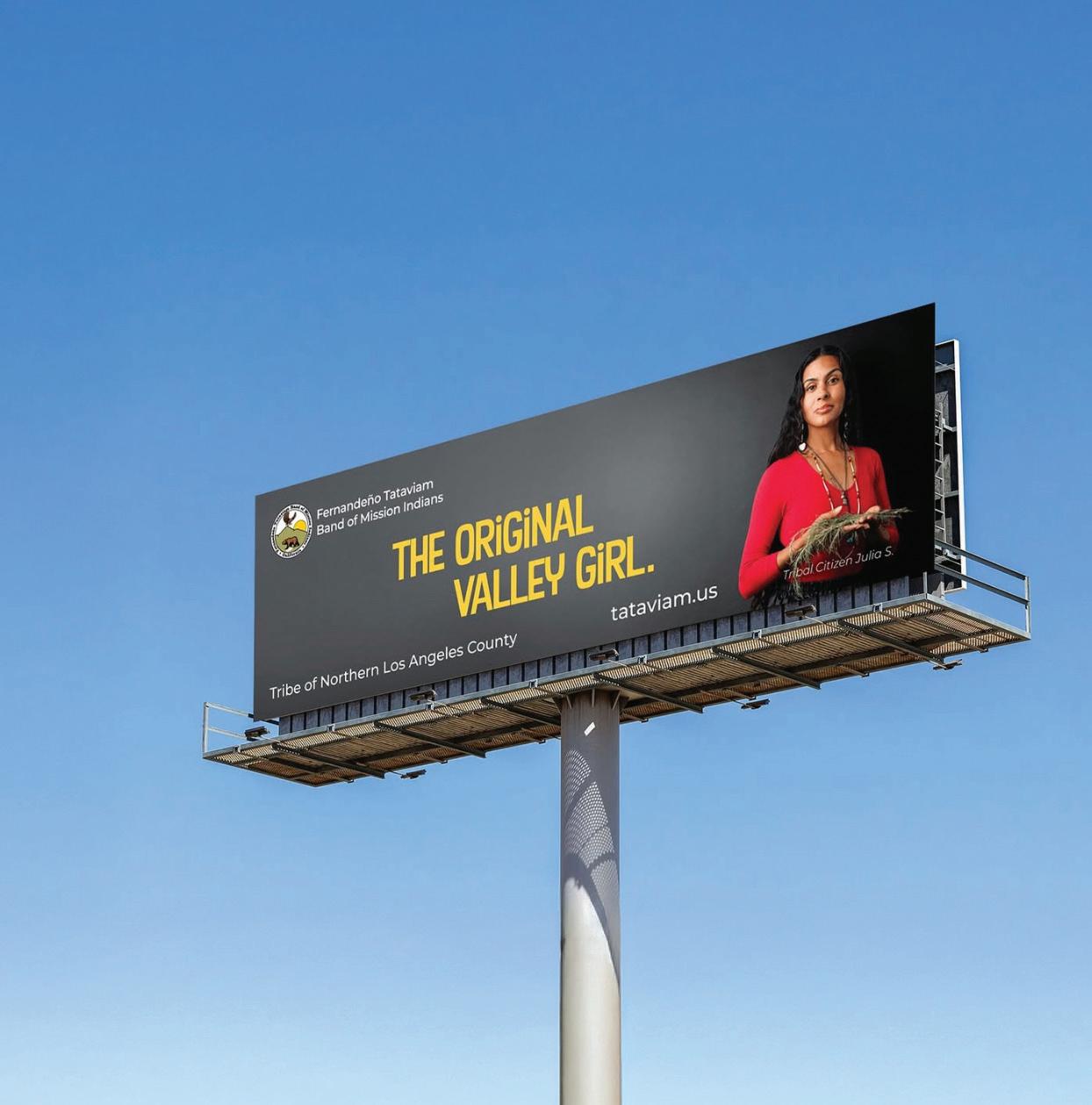

Towering above freeways that cut through their ancestral homelands, the signs feature vibrant portraits of Tribal Citizens paired with playful, pointed slogans. One reads, “Not just in history books (we’re in traffic, too).” Another proudly introduces an “Original Valley Girl,” reclaiming a phrase long associated with San Fernando pop culture and returning it to the people whose homelands stretch across the San Fernando, Santa Clarita, and Antelope Valleys.
Beneath the humor lies a deeper message about presence, identity, and the power of being seen in a region that rarely acknowledges its First Peoples. Los Angeles County — home to more than ten million residents and some of the world’s most influential cultural industries — offers endless visual noise but has historically left little space for Native visibility.
“For generations, people have lived on our homelands without ever learning who we are,” said Tribal President Rudy Ortega Jr., a Fernandeño Tataviam Tribal Citizen. “Seeing our people on billboards across the county is a reminder that we’re not just part of history. We’re part of Los Angeles today.”
Until now, the Tribe’s presence had remained largely absent from everyday public space. These billboards change that, inserting Native identity directly into the daily commute of millions. The campaign deliberately avoids stereotypes. Instead, the images depict Tribal Citizens confidently facing viewers — modern, joyful, and unmistakably present.
“So much of what the world thinks about Native people has been shaped without Native people,” said Kimia Fatehi, Chief of Staff, who oversaw the campaign’s development with President Ortega. “This project gives the public a chance to meet the Tribe on their own terms. By placing Fernandeño Tribal Citizens above the freeways that cross their ancestral lands, the campaign quietly disrupts and powerfully rewrites the public story of Los Angeles.”
Until now, the Tribe’s presence had remained largely absent from everyday public space. These billboards change that, inserting Native identity directly into the daily commute of millions. The campaign deliberately avoids stereotypes. Instead, the images depict Tribal Citizens confidently facing viewers — modern, joyful, and unmistakably present.
“So much of what Hollywood thinks about Natives has been shaped without Native people,” said Kimia Fatehi, Chief of Staff, who oversaw the campaign’s development with President Ortega. “This project gives the public a chance to meet the Tribe on their own terms, on their own land. ”

Drivers inching along Los Angeles County freeways this fall noticed something unexpected rising above the familiar sea of movie ads, concert promos, and personalinjury lawyers.

“The campaign embraces a modern, accessible tone, far removed from the outdated stereo- types that Hollywood has perpetuated for decades.
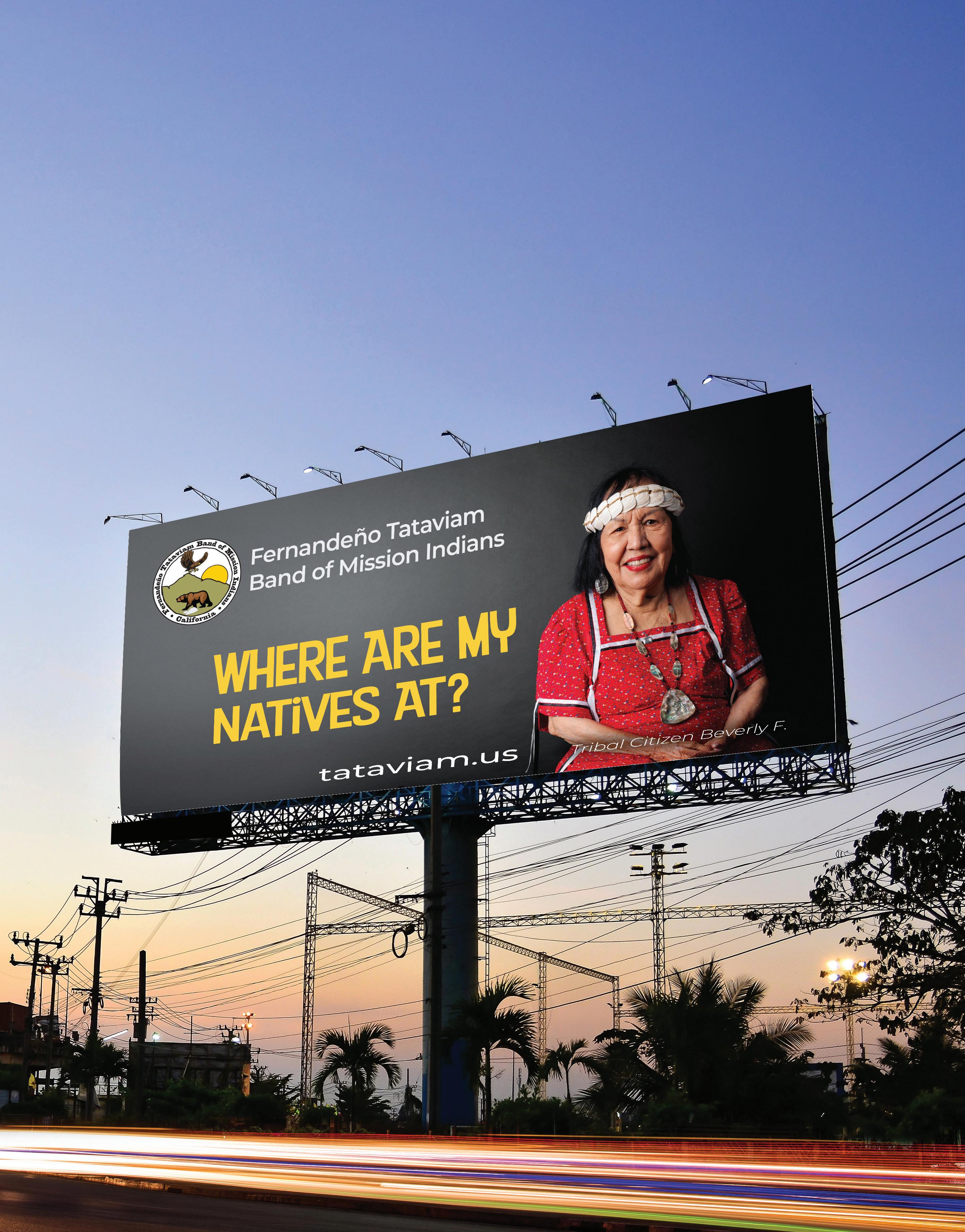
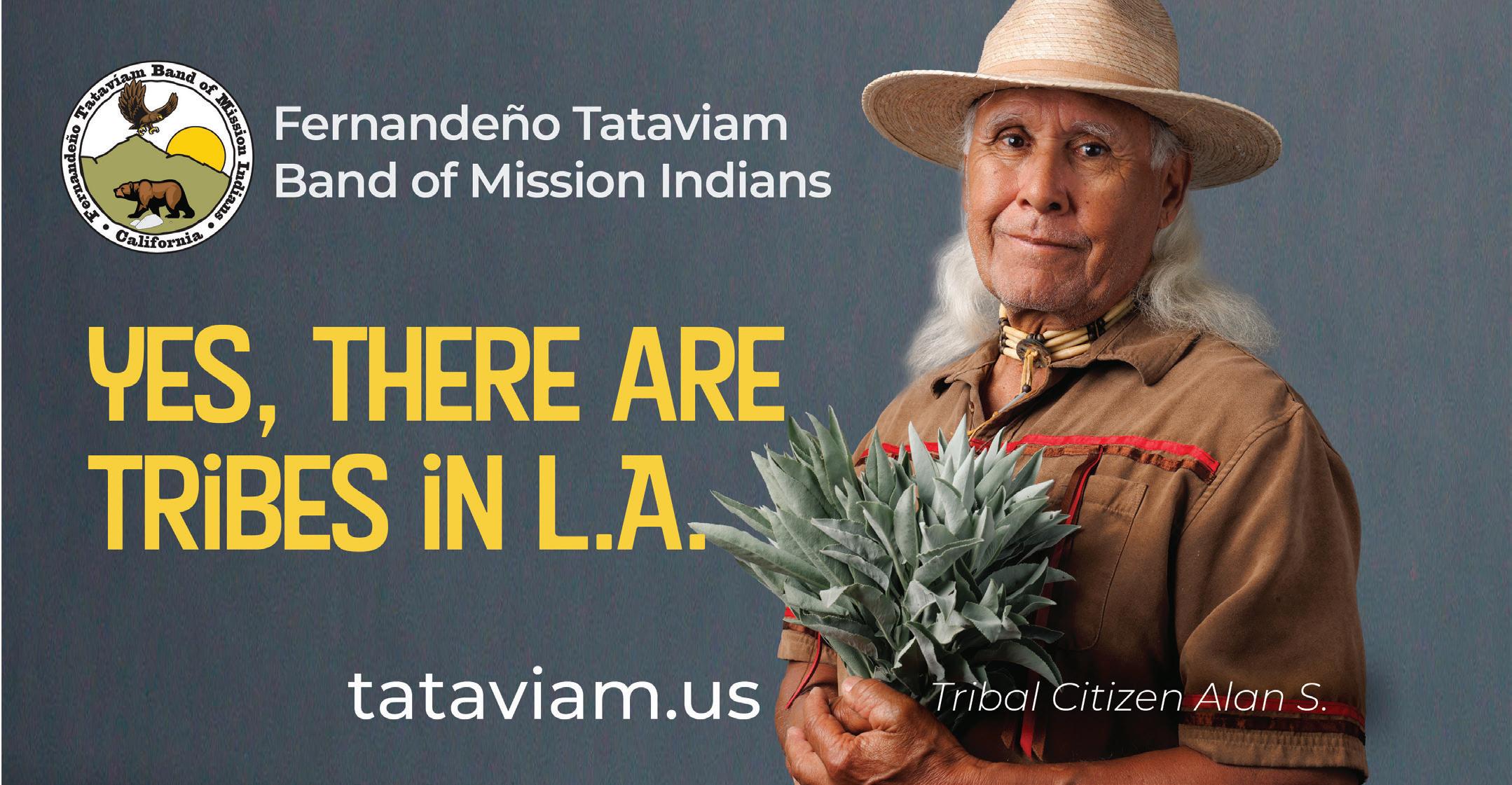
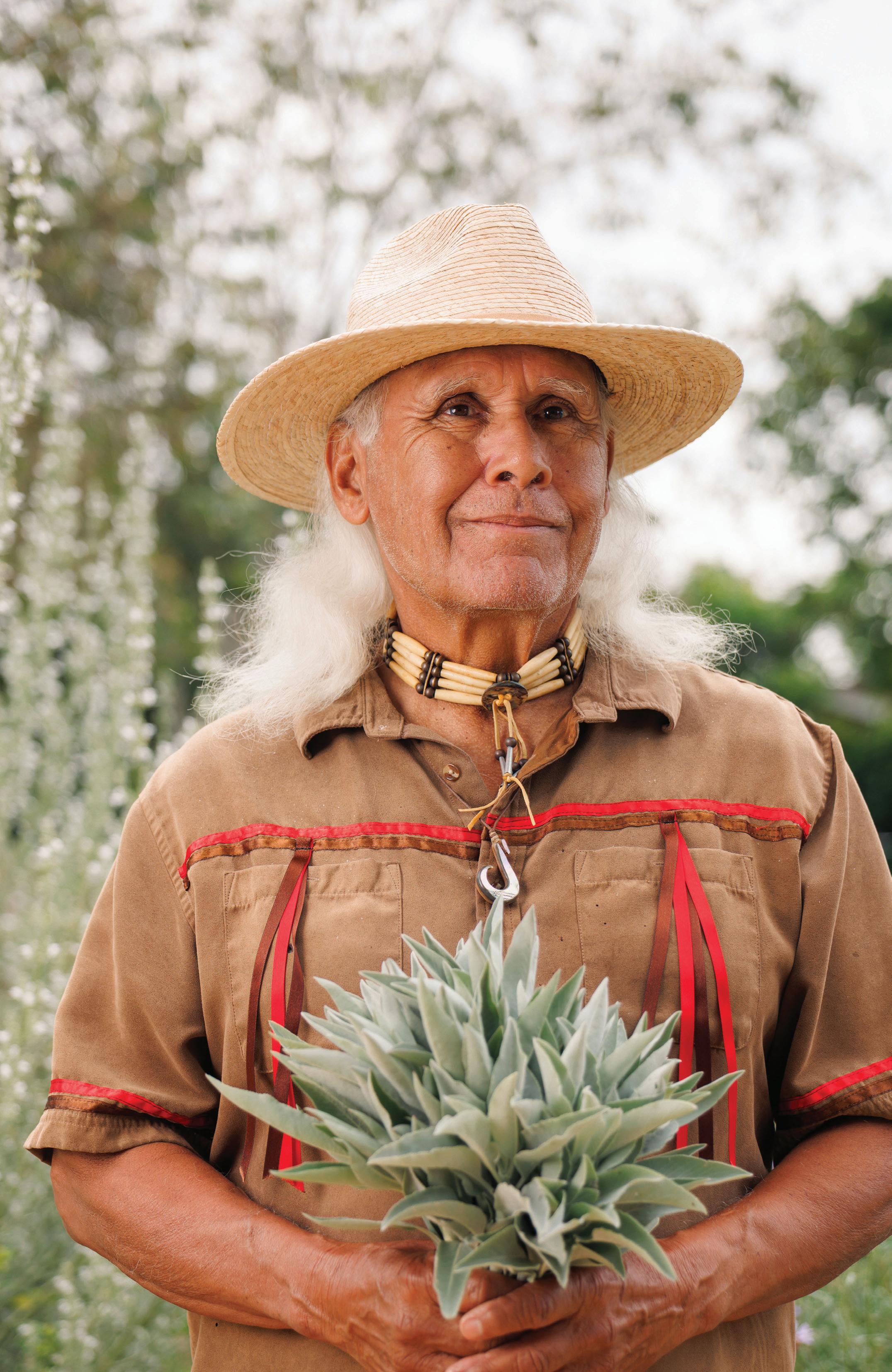
From a creative standpoint, humor became a bridge. The slogans — playful yet pointed — celebrate Indigenous continuity and regional identity, pairing contemporary portraits with lines that challenge the notion that Native identity belongs only in history books or museums. Despite more than a century of billboard advertising, this marks the first time the original people of Los Angeles County have appeared on large-scale public signage in an educational, noncommercial context.
“We funded this campaign ourselves because it mattered that the message came directly from us,” Ortega said. “This is our homeland. Our story deserves to be visible.”
The billboards have already sparked conversations among families, teachers, students, and commuters. For children who recognize faces that resemble their own — and for adults just learning that their neighborhoods sit on Fernandeño land — the campaign offers a rare moment of connection between the pace of contemporary life and the region’s deep Native history.
“This is about continuity,” Ortega added. “We aren’t going anywhere. Our people are still here. Our culture is still here. And our future is here.”
In a county defined by reinvention, the Fernandeño Tataviam billboards do something different: they ground Los Angeles. They remind drivers that long before the studios, the suburbs, or the freeways, the Fernandeño people lived here. And as the billboards make unmistakably clear, they are still here — thriving, visible, and finally seen.


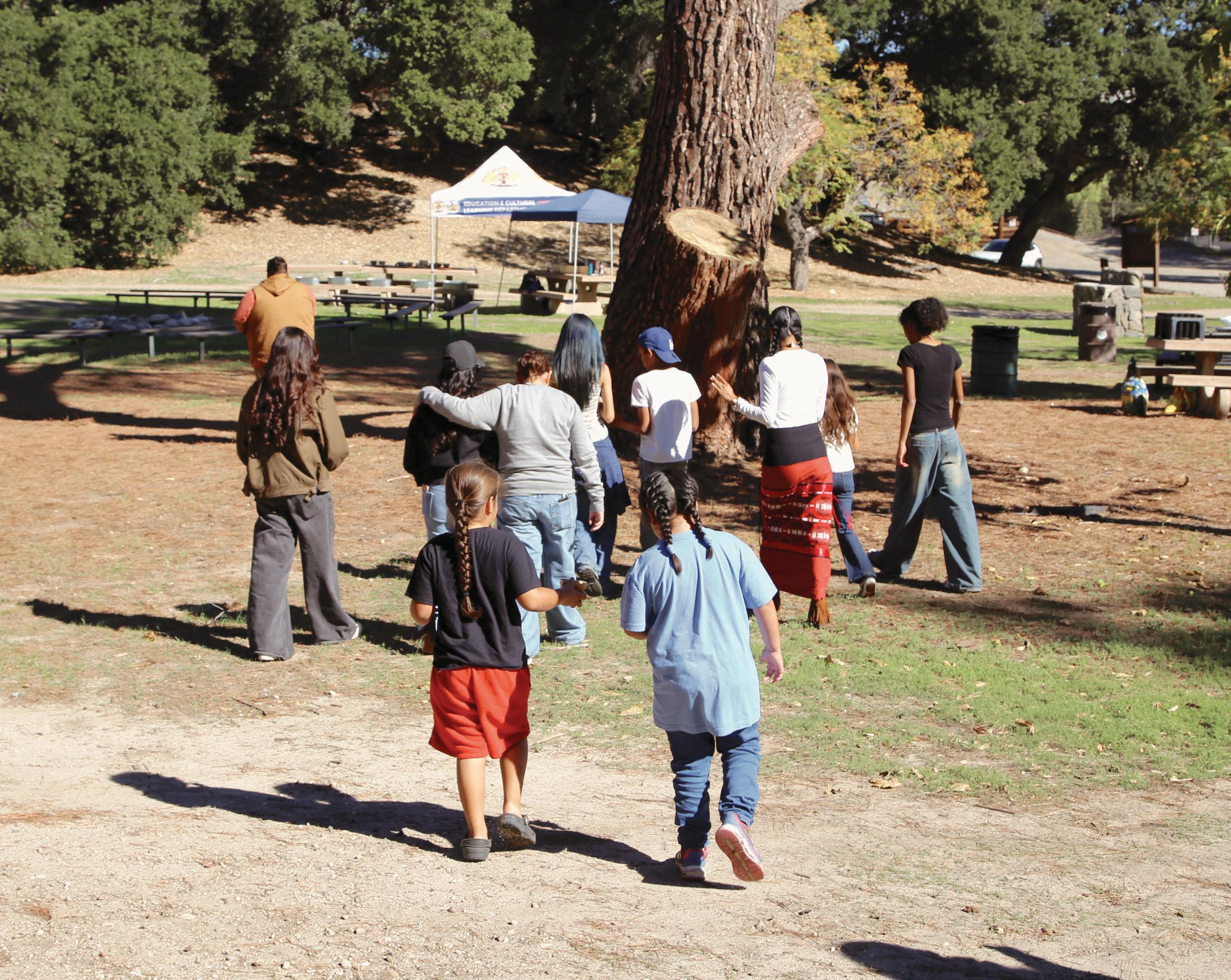
On Nov. 8, the Education and Cultural Learning Department of the Fernandeño Tataviam Band of Mission Indians hosted an acorn gathering workshop at William S. Hart Park, the historic site of the village known as Tochonanga. More than a cultural activity, the gathering reflected the Tribe’s ongoing commitment to food sovereignty and the revitalization of traditional food systems.
Food sovereignty affirms the right of communities to control their own food systems, including how food is grown, harvested, prepared, and shared. For Native communities, it is inseparable from cultural identity, health, and traditional ecological knowledge. Through hands-on workshops rooted in ancestral homelands, the Tribe is reclaiming traditional practices disrupted by colonization
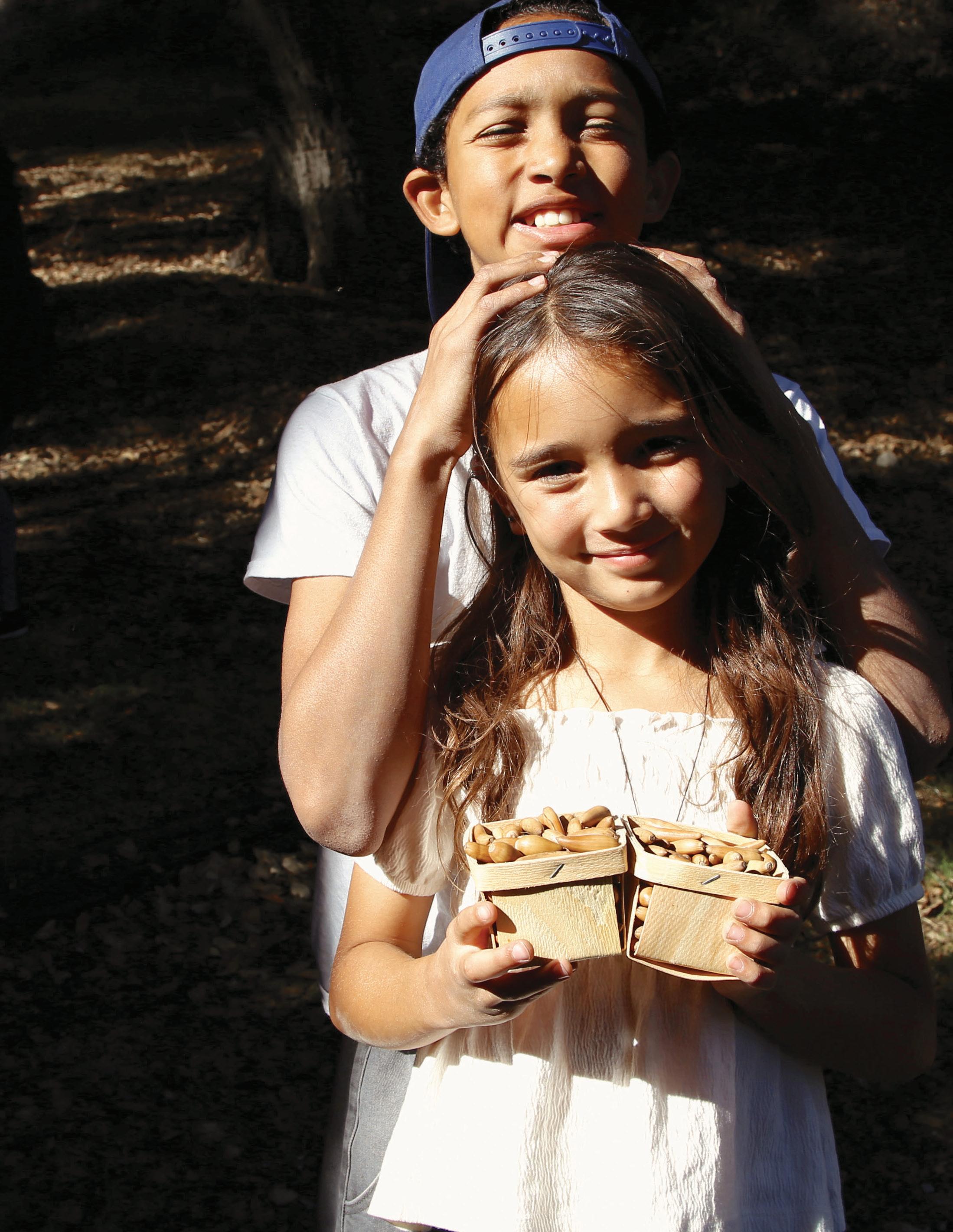
and strengthening community relationships to land and nourishment.
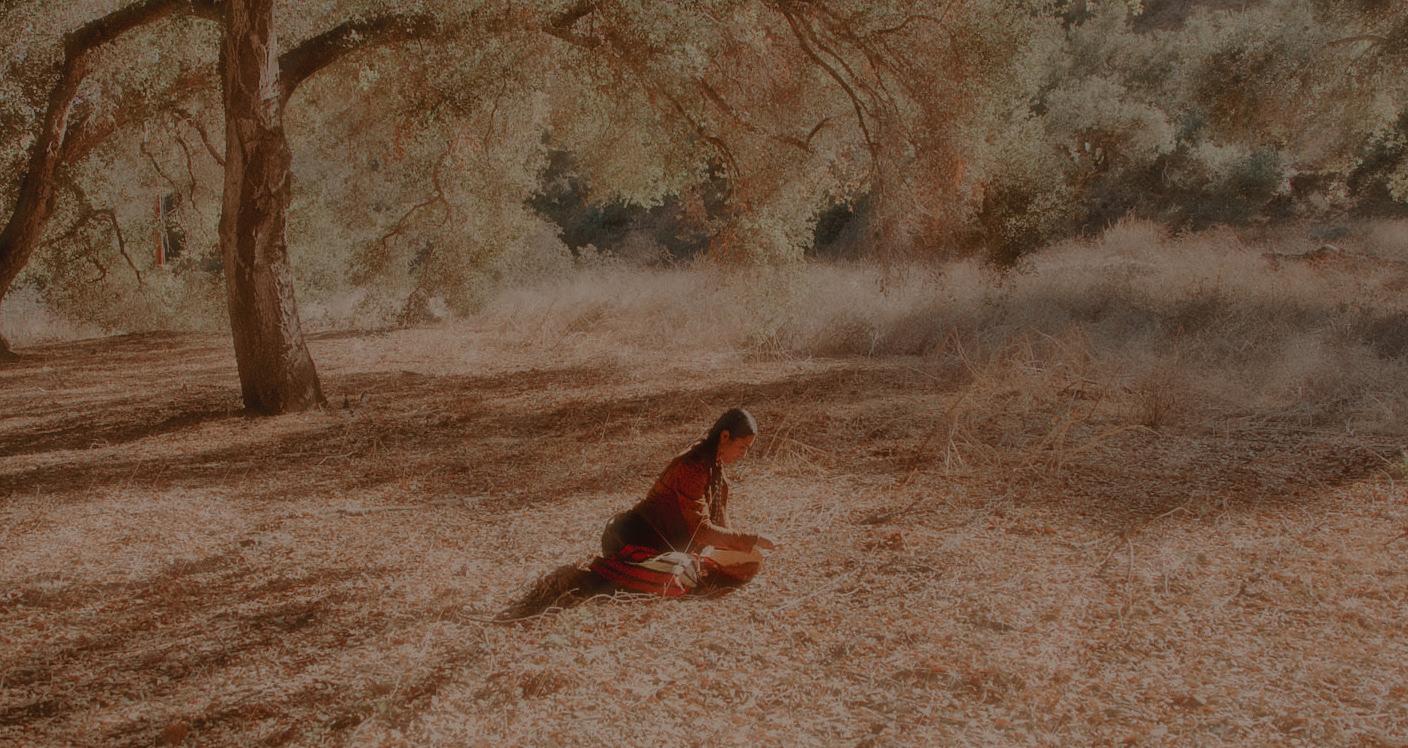
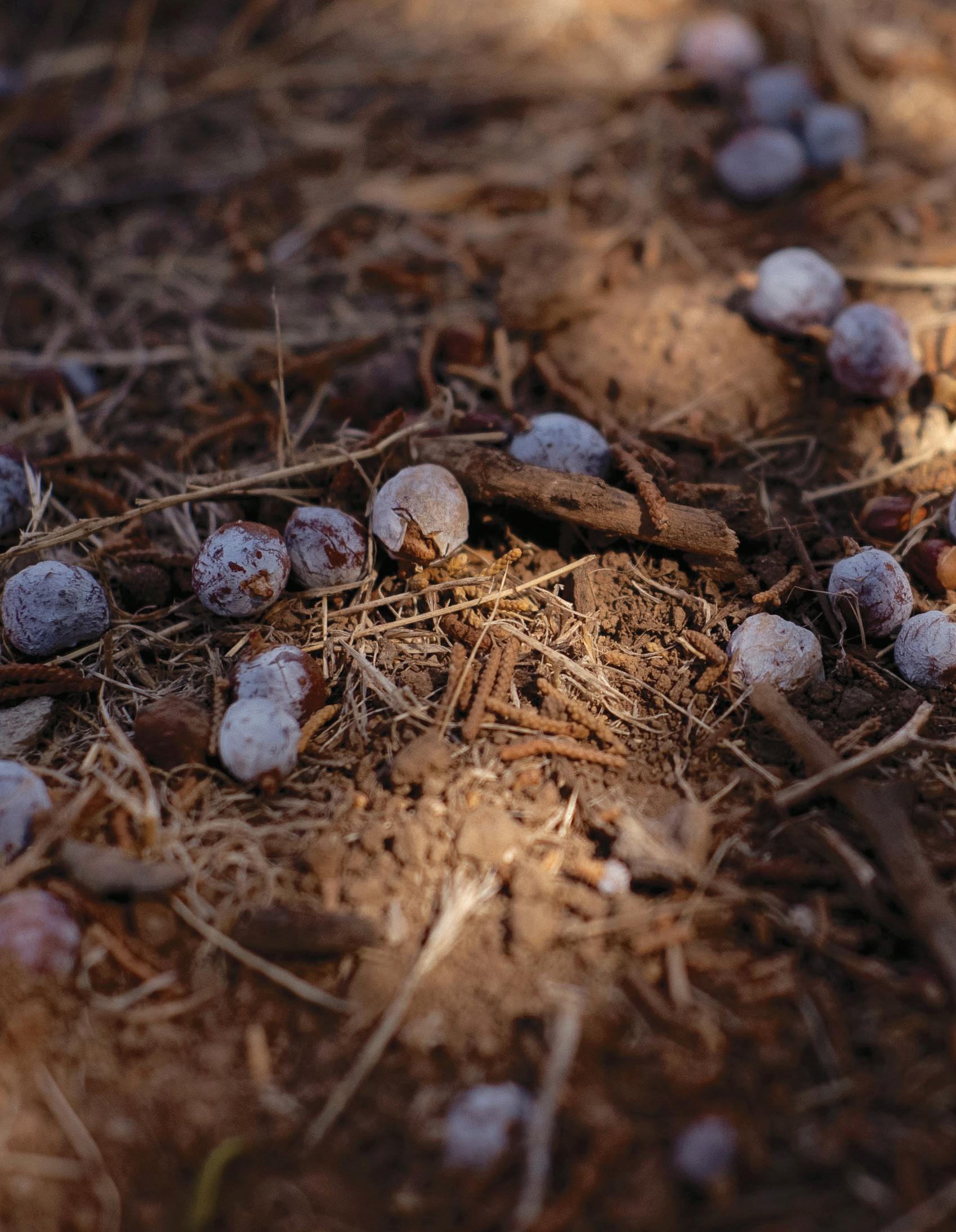
Participants began the morning by acknowledging the land and offering thanks to the oak trees before collecting acorns. This expression of gratitude, grounded in Fernandeño teachings, underscored a foundational principle of food sovereignty: reciprocity with the natural world. Harvesting was approached not as extraction, but as a relationship.
“It is important for our community to practice these traditions together and to pass them on to the next generation,” said a Tribal Citizen whose child is enrolled in the Tribe’s Education and Cultural Learning Department.
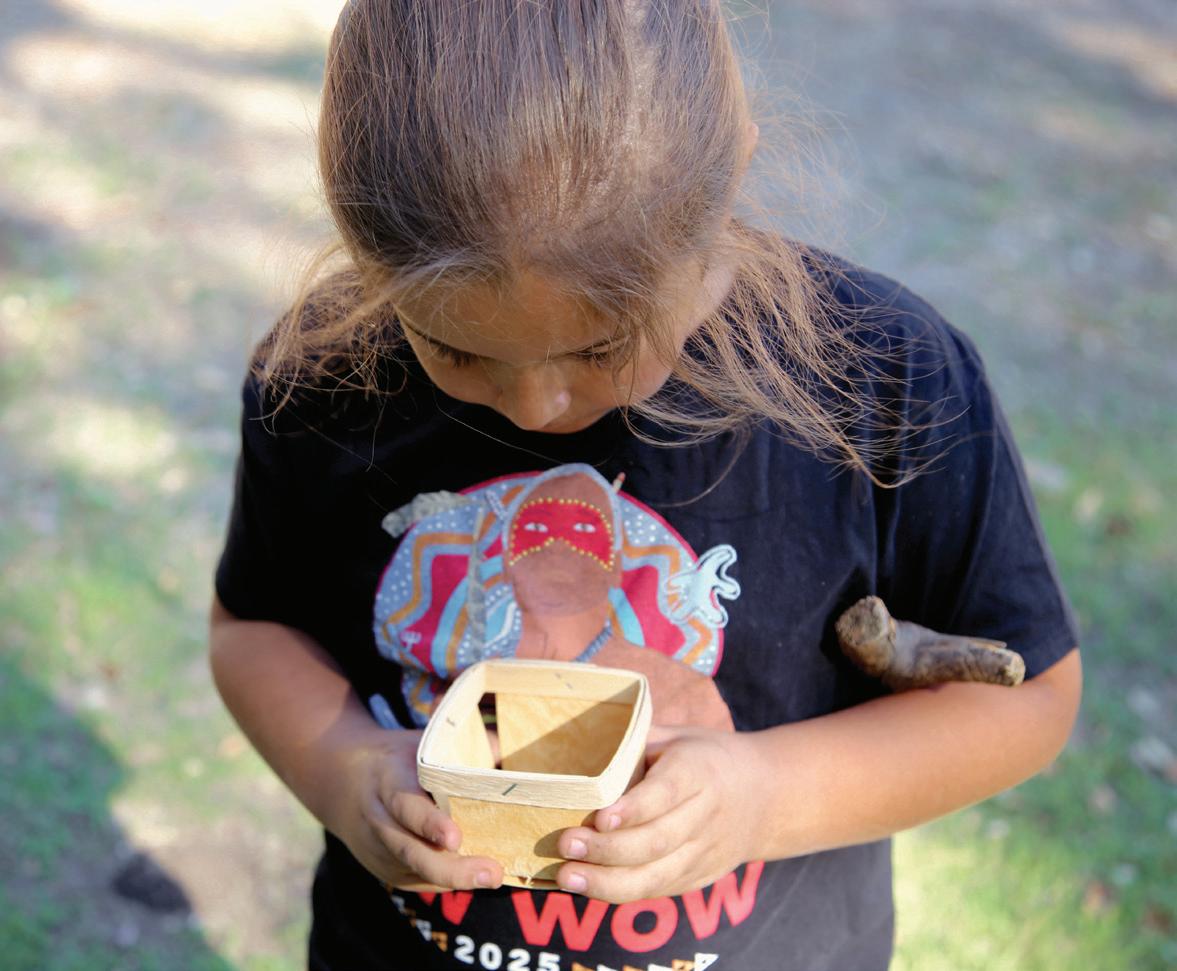
Youth played an active role throughout the workshop, learning to test acorns by floating them in water, grind them into flour, and leach them for purity. These steps illustrated how acorns, a traditional staple food, are transformed into a nourishing and culturally significant source of sustenance. By teaching these processes, organizers emphasized the importance of restoring knowledge about Indigenous foods that sustained the Fernandeños for generations.


Tochonanga and Mapipinga were significant villages within the Tataviam regional culture that sustained life and community across this region for generations. Tochonanga, located in the mountains northwest of San Fernando near the headwaters of the Santa Clara River, was known as a place of care and hospitality. Ancestors tended the land, gathered acorns and other foods, welcomed travelers, and may have held ceremonies there. Mission records from Mission San Fernando Rey de España document many chiefly names associated with the village.
Mapipinga, near present-day Agua Dulce, was closely connected to neighboring communities and shared in broad networks of culture and exchange. Both villages are deeply tied to the Fernandeño Tataviam Band of Mission Indians through descent and kinship. During the early mission period, many ancestors from Tochonanga and Mapipinga were taken to Mission San Fernando, where they were forcibly baptized and renamed Fernandeño.
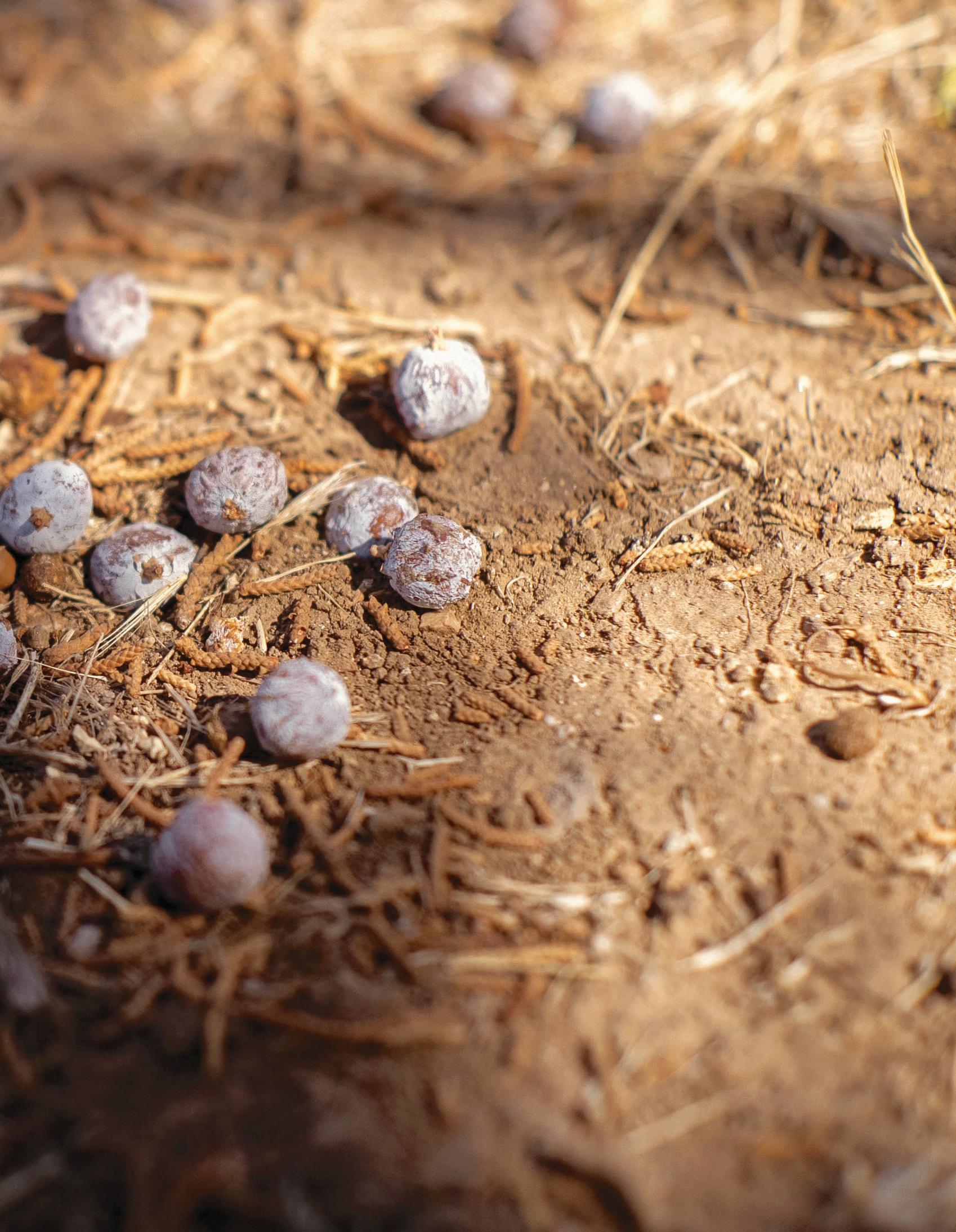

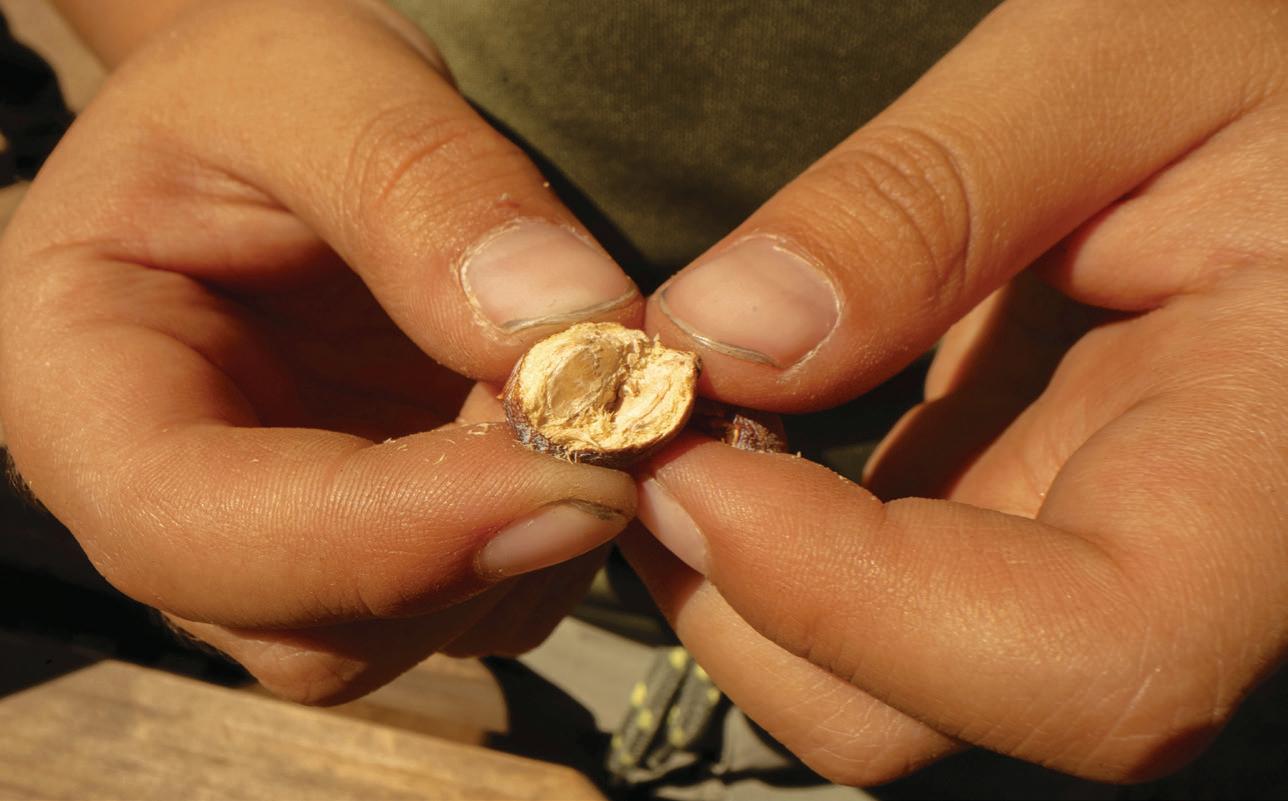
Creative activities complemented the harvesting lessons. Participants painted birdhouses, crafted acorn necklaces, and made acorn tops. While artistic in nature, these activities reinforced a broader message: food sovereignty extends beyond consumption. It encompasses cultural expression, ecological stewardship, and the responsibility to care for the systems that sustain life.
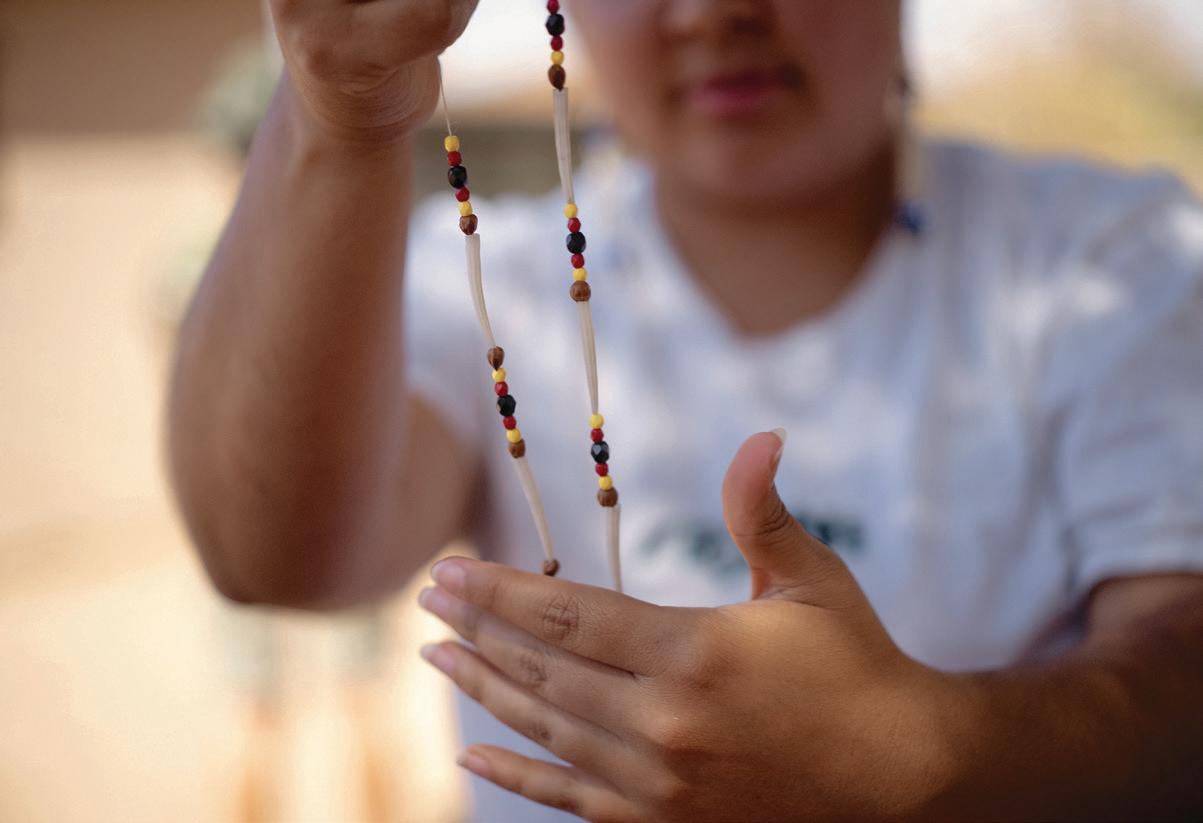
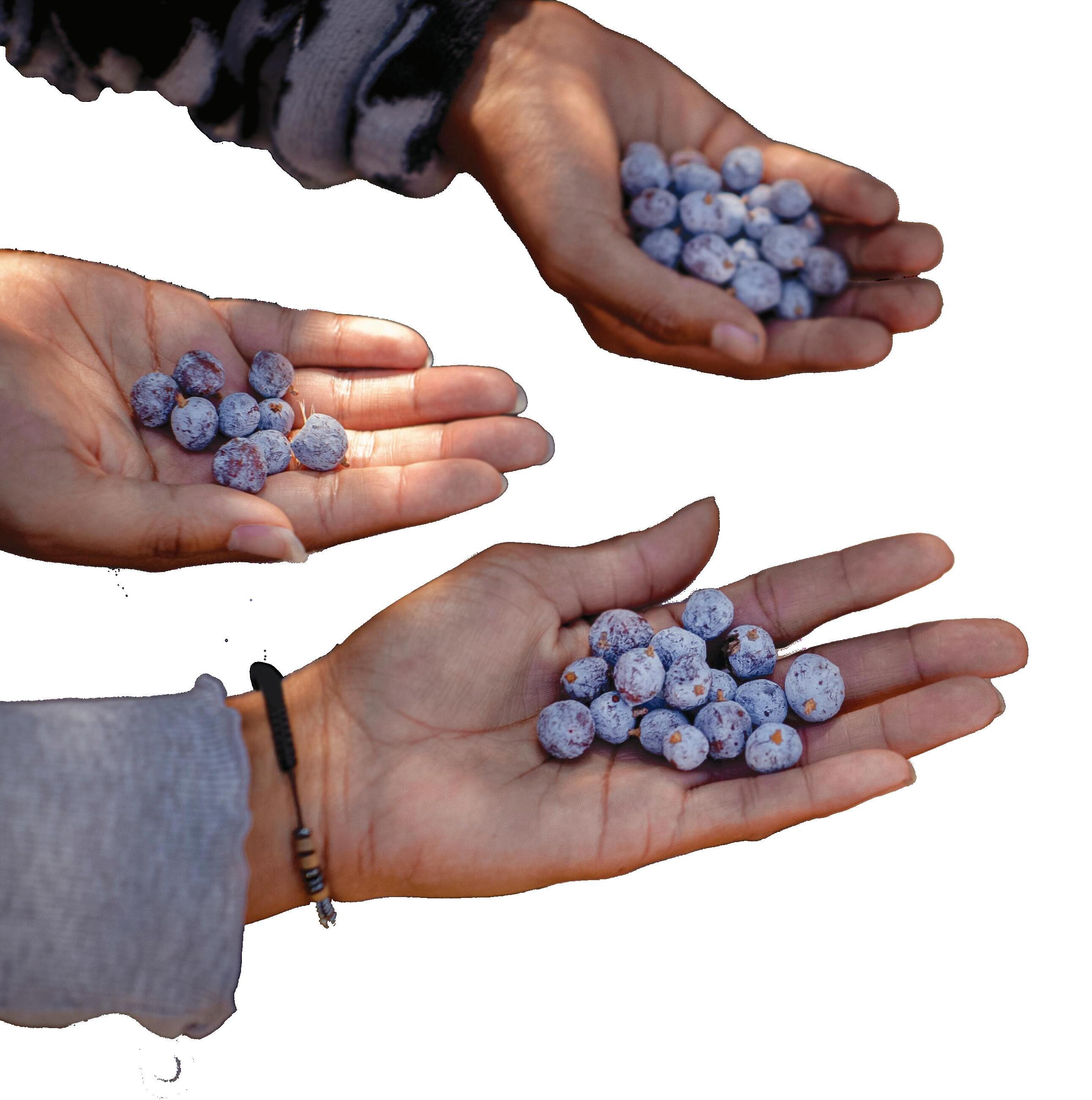
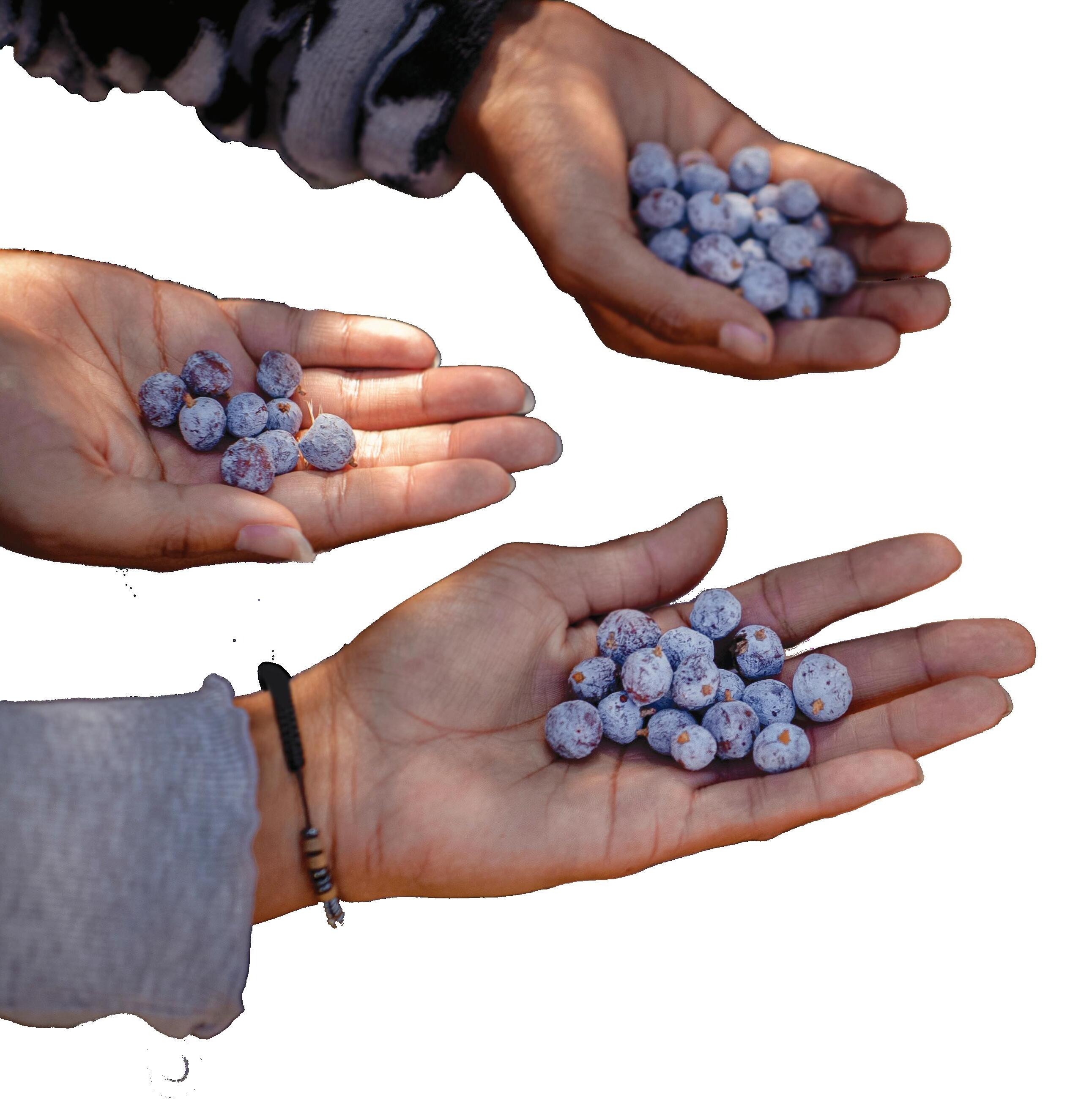
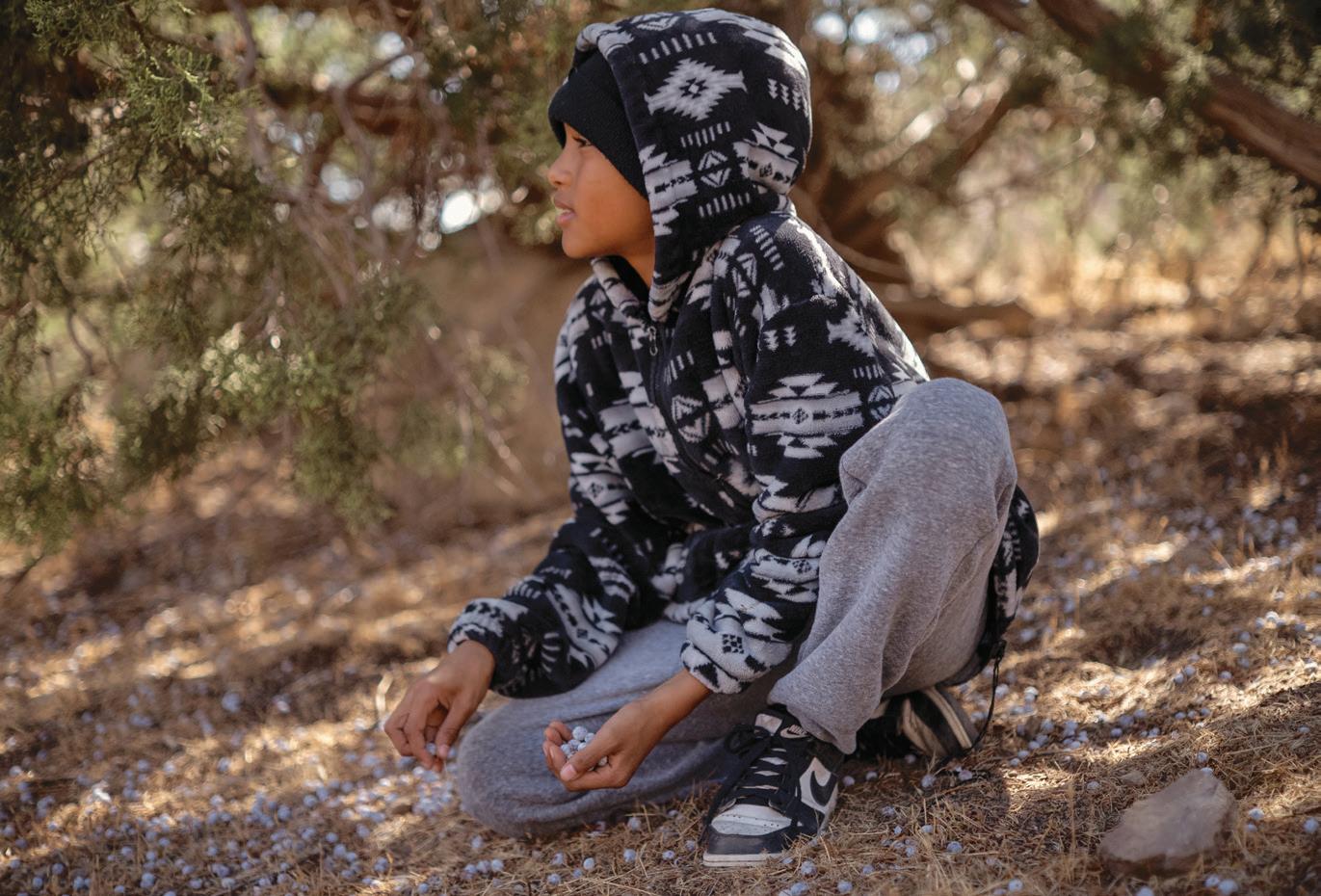
Just weeks earlier, on Sept. 27, families gathered at Vasquez Rocks Natural Area Park, the ancestral site of Mapipinga, for a juniper harvesting workshop. There, participants practiced the respectful collection of berries and learned about their protective and spiritual significance in Fernandeño tradition.

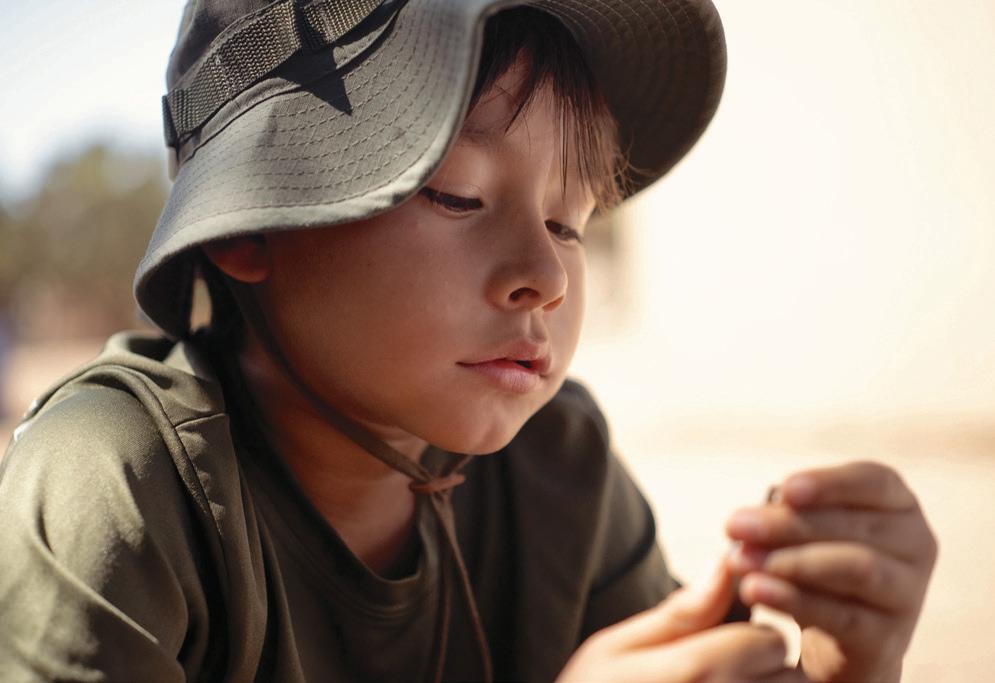
Seeds from the berries were later shaped into jewelry, transforming natural materials into mean ingful adornments that carry ancestral knowledge forward.
Like the acorn gathering, the juniper workshop highlighted that food sovereignty is rooted in place. Harvesting in ancestral homelands
strengthens connections to villages such as Tochonanga and Mapipinga and reinforces the Tribe’s enduring relationship to the land.
“These gatherings remind us that culture stays strong when we practice it together and remain rooted in place.”
Together, the workshops demonstrate
that food sovereignty is not an abstract concept but a lived practice. By reclaiming traditional foods, teaching youth ancestral harvesting methods, and grounding education in cultural values, the Tribe is advancing community health, intergenerational learning, and self-determination. Through these efforts, traditional ecological knowledge continues to guide the present and shape a more sustainable future.

quissaunga
storytelling
tujunga
The Fernandeño Lineage Carries 250 Years of Memory Across the Antelope Valley
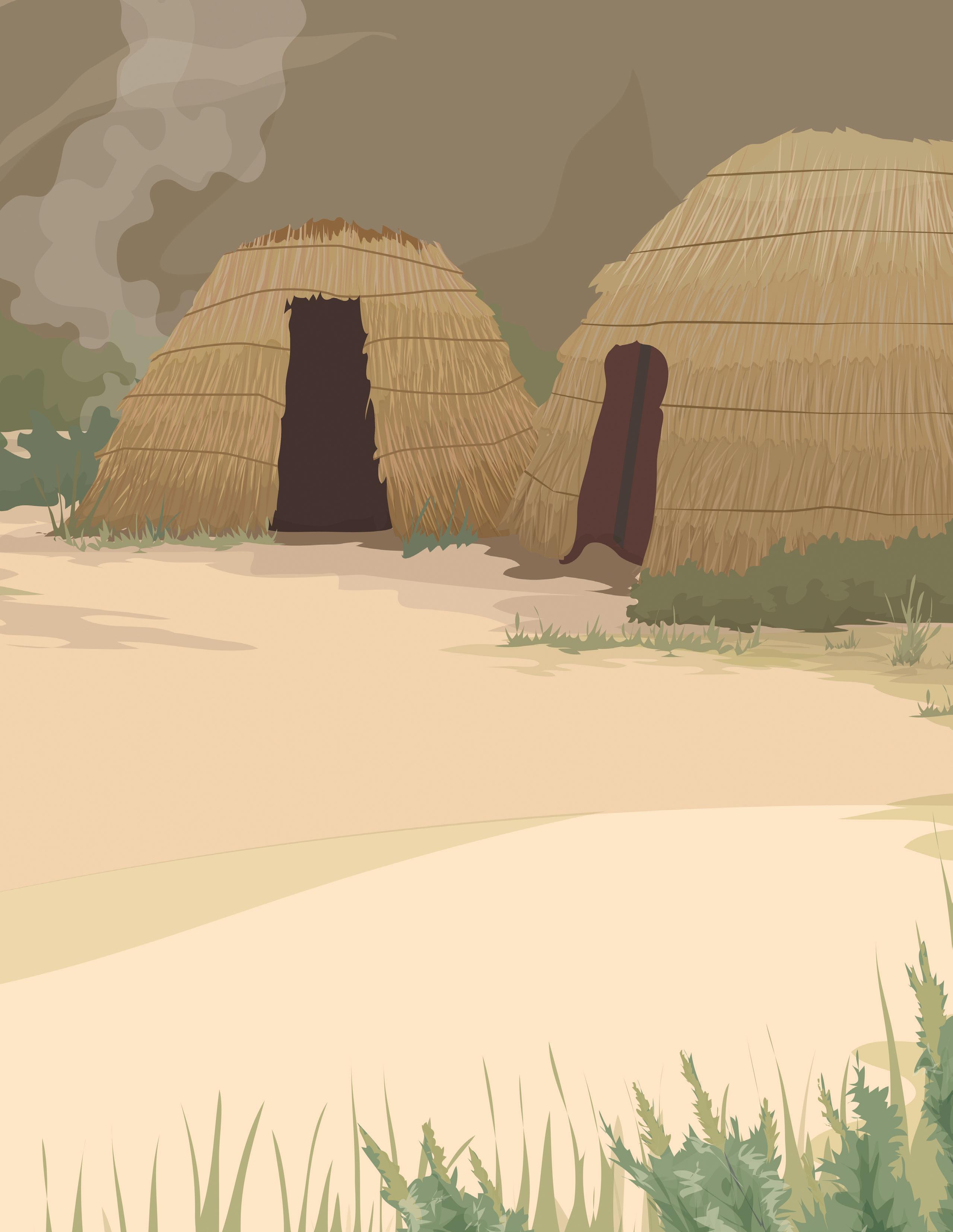
Across the dry lands stretching from the Mojave Desert to the northern valleys of Los Angeles County, the history of the Fernandeño Tataviam Band of Mission Indians is embedded in specific places. The Mojave River basin, oak lined foothills, and mountain valleys form a connected homeland shaped by generations of movement, settlement, and relationship. For the Tribe, these places are not abstract geography. They are locations tied to family histories and long standing responsibility to the land. Within this landscape, the Garcia lineage represents one of the Tribe’s three foundational family lines, with roots that extend deep into the desert and mountain regions.
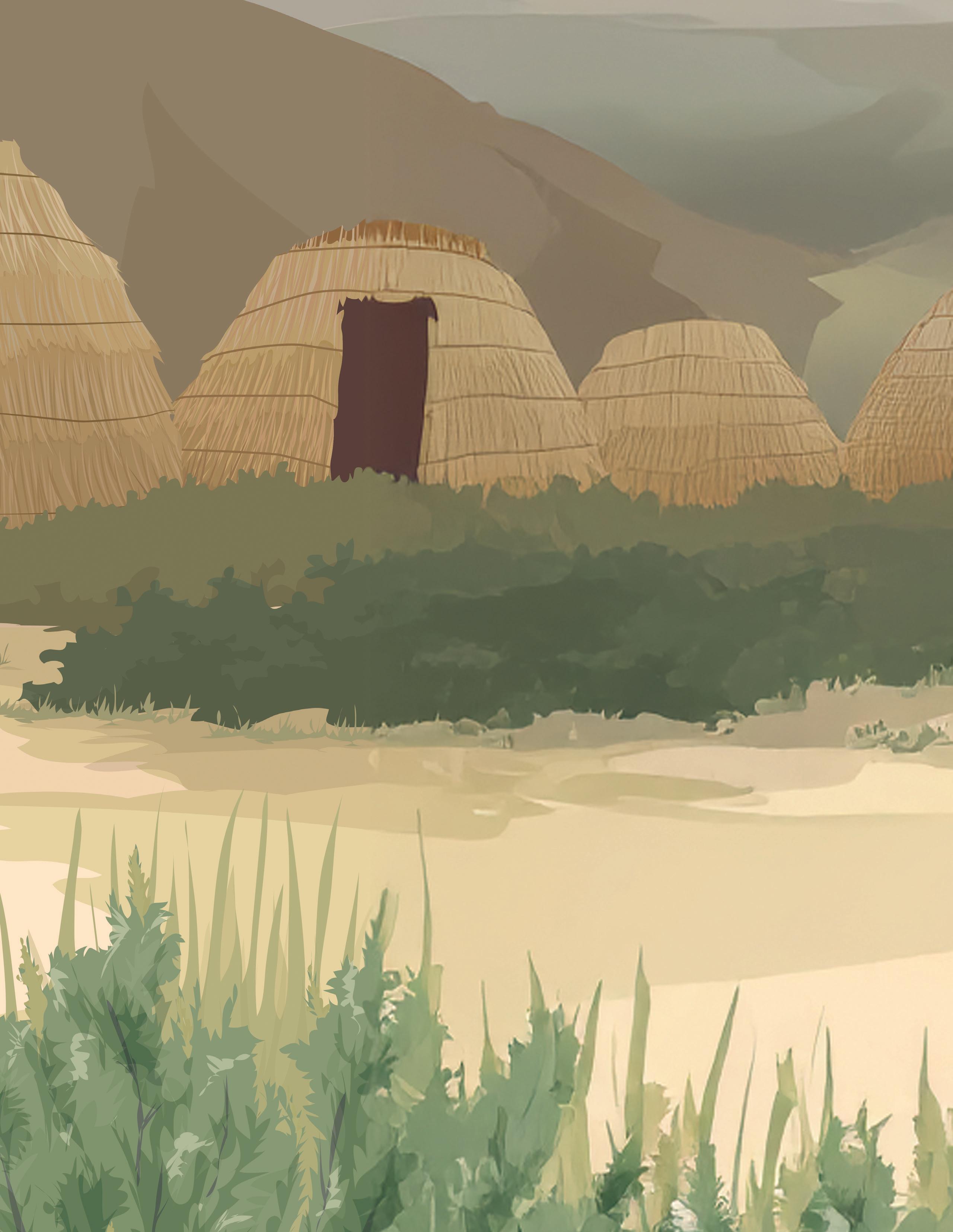
Before the establishment of Mission San Fernando
Prior to Spanish contact and the establishment of missions, the Garcia lineage was centered in a desert village known as Topipanga, a homeland near Victorville and Barstow.
Around 1751, a child named Zenona was born there. Her Native name was Purichi. Her early life unfolded along the Mojave River, where seasonal movement between villages followed established patterns shaped by kinship, trade, and land stewardship.
Purichi’s family maintained strong ties between Topipanga and Quissaunga, a village near what is now Acton. Travel between these communities was part of daily life, not relocation. These connections reflected a regional system of governance, ceremony, and mutual support that existed long before outside borders were imposed.
In 1773, Purichi’s daughter Paulina was born. Known by her Native name Yucsauiban, Paulina continued the lineage rooted in Topipanga. She later married Taari, a Native man from the same village. Their daughter, Teofila, was born in 1799. Through marriage and kinship, relationships between desert and mountain communities continued to strengthen, including ties to areas near present day Acton and Vasquez Rocks.
These family connections reflected broader networks that linked villages through shared responsibility, resource exchange, and governance. Long standing relationships between communities were reinforced through marriage and collective participation in regional life.
The Mission Era and the Written Record
The arrival of the Spanish mission system brought forced relocation, labor, and loss. It also produced written records that now serve as documen-
tation of the Tribe’s presence across its homeland.
In 1811, Purichi was forcibly taken on foot from the Mojave River region to Mission San Fernando. At sixty years old, she endured a seven day journey through desert terrain and mountain passes, amounting to over 90 miles.
On April 1 of that year, a priest recorded her baptism as Baptism No. 1917. At the time, the entry was one among thousands. Today, it serves as a documented link between her descendants and their ancestral land.
Paulina and Teofila were also recorded in the mission books. Teofila was forcibly baptized after her arrival at the mission. For these women, baptism was not voluntary. It functioned as a condition of survival within an imposed system while cultural knowledge and identity continued within family life.

Purichi was about sixty years old when she survived a forced seven-day journey of nearly 120 miles from the Mojave River basin to Mission San Fernando. She crossed desert heat, climbed the San Gabriel Mountains, and endured long stretches without water or shade. Her survival became an unbroken thread linking her descendants to their homeland today.
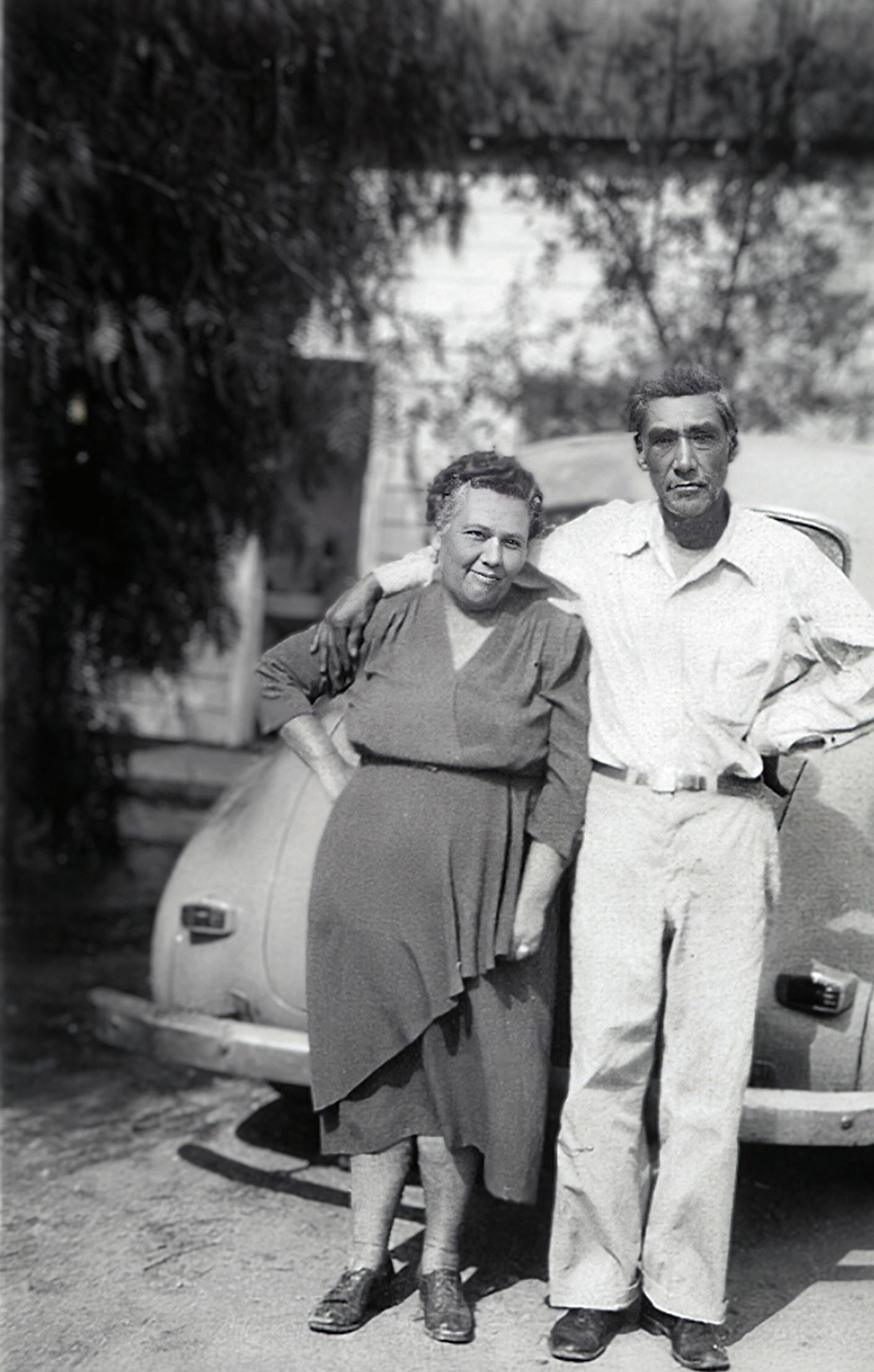
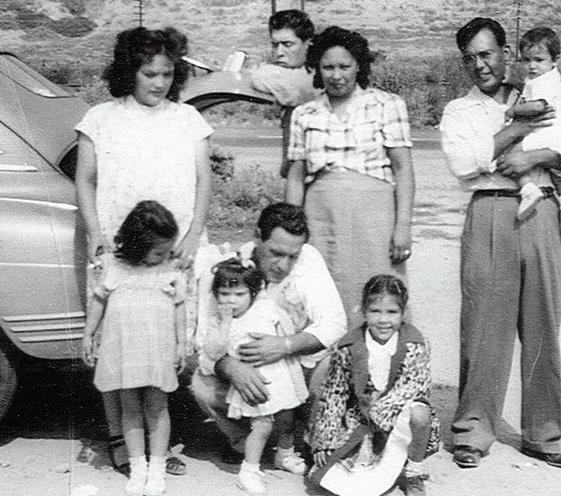
Sr. leading a cultural demonstration in 1973. While the Garcia family are direct descendants of the Antelope Valley, the late Tribal President represented the Fernandeño community through cultural demonstrations in the mid-20th century.
Teofila later married Francisco del Espíritu Santo, born in 1808. His family originated at Quissaunga, a village near present-day Acton. Their marriage joined the desert-based village of Topipanga with mountain villages in the San Gabriel Mountain region of Quissaunga. These areas had long been connected through travel and alliance, and their union formalized relationships that already existed.
At the same time, another village existed in the mountain region near Big Tujunga Creek called Tujunga. Albaro, whose Native name was Anamait, and his wife Albara, were both marched from Tujunga and baptized at Mission San Fernando at approximately eighty years old, long after their lives had been shaped by traditional ways.
The marriage of Purichi’s descendants with the descendants of Albara formed the foundation of the Garcia lineage as it exists today.
Written records and archaeological evidence provide documentation, but the history of the Garcia lineage continues through family memory and connection to place. It remains present along the rock formations at Topipanga, in the mountain corridors between Tujunga and Quissaunga, and within present day Fernandeño Tataviam citizens.
From Zenona to Paulina, from Teofila to Francisco, and from Topipanga and Tujunga to the Tribe’s leadership today, the Garcia lineage represents continuity through profound disruption.
Their ancestors appear in mission books, but they are not defined by them. The Garcia lineage endures as descendants of the desert river and mountain valleys, rooted in land, history, and ongoing responsibility.
And their story continues.

Yarmar translates to Spring

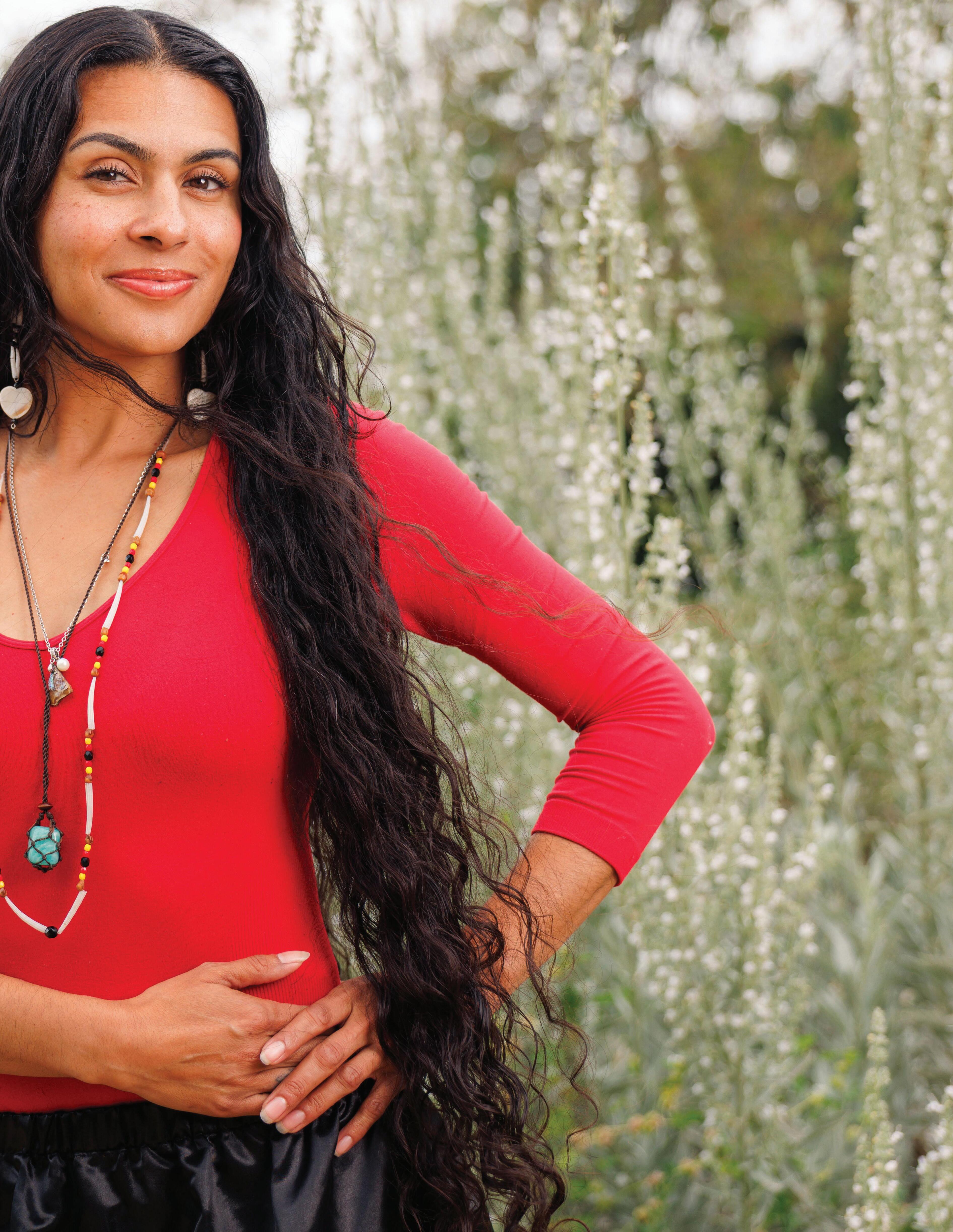
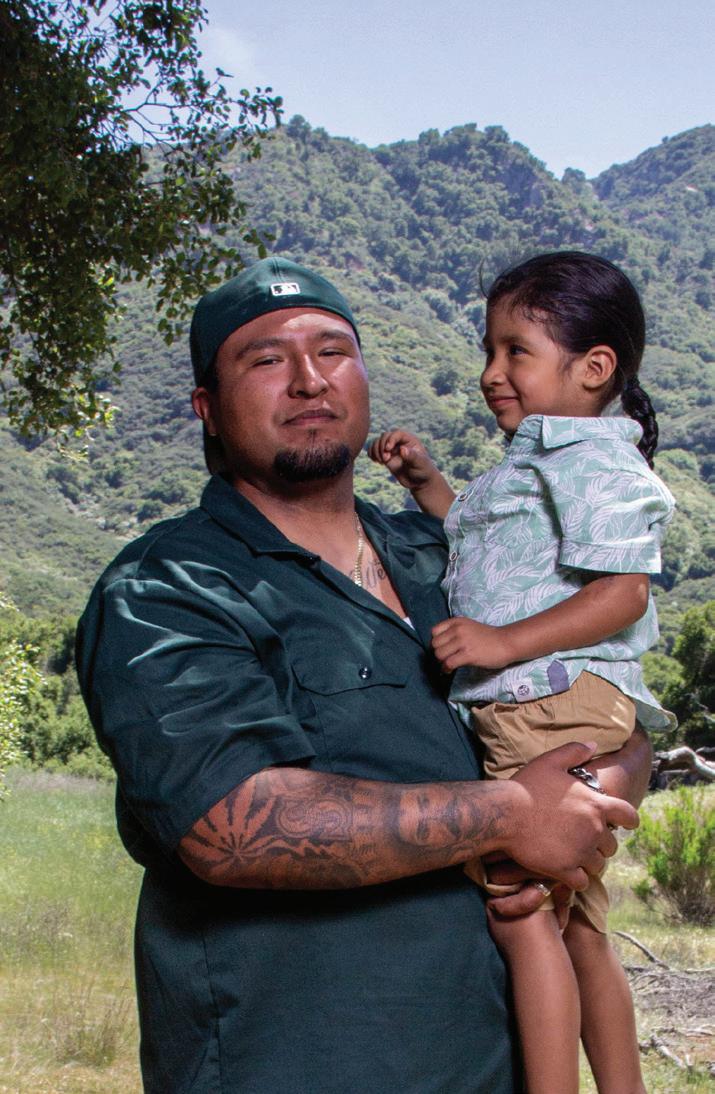
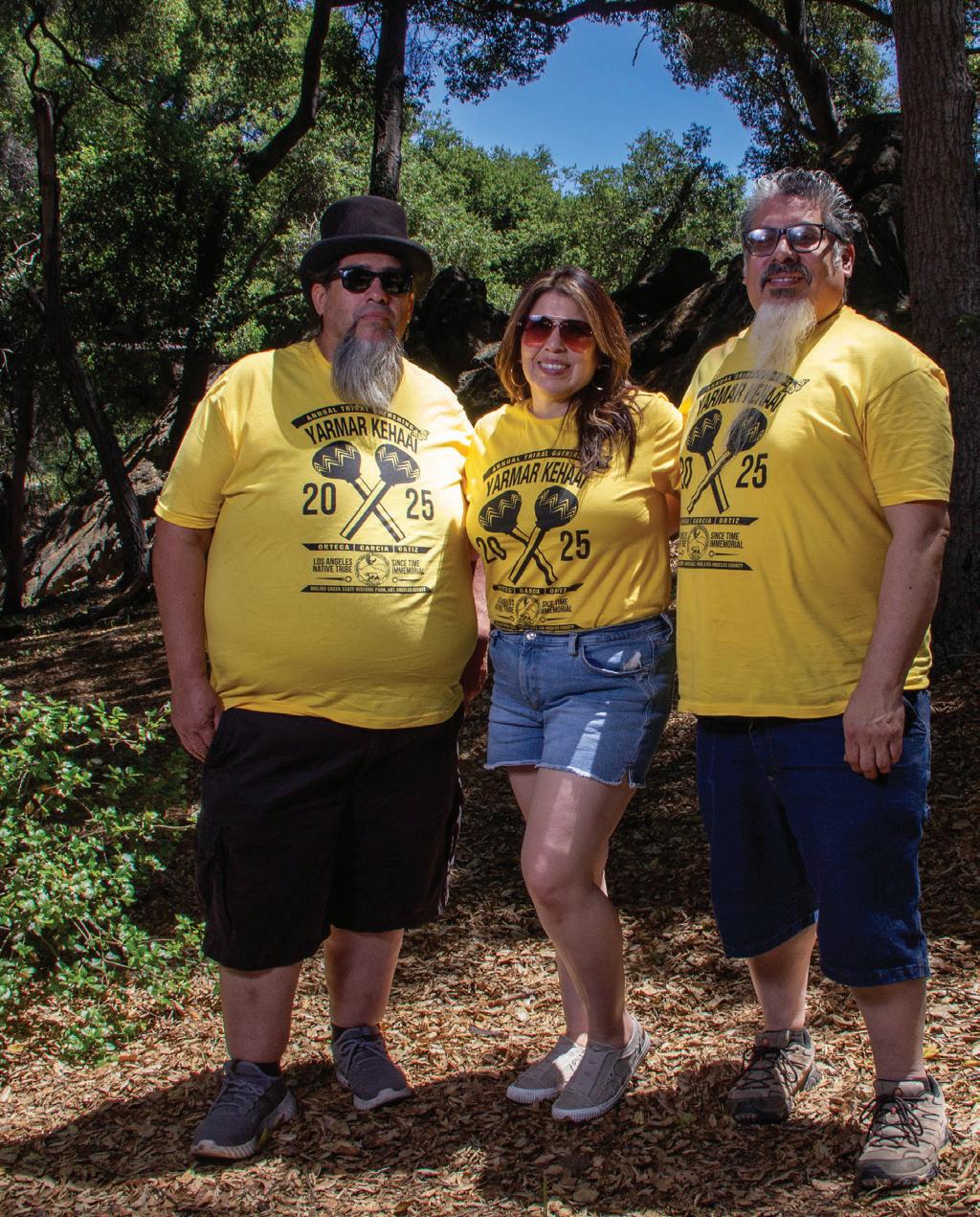
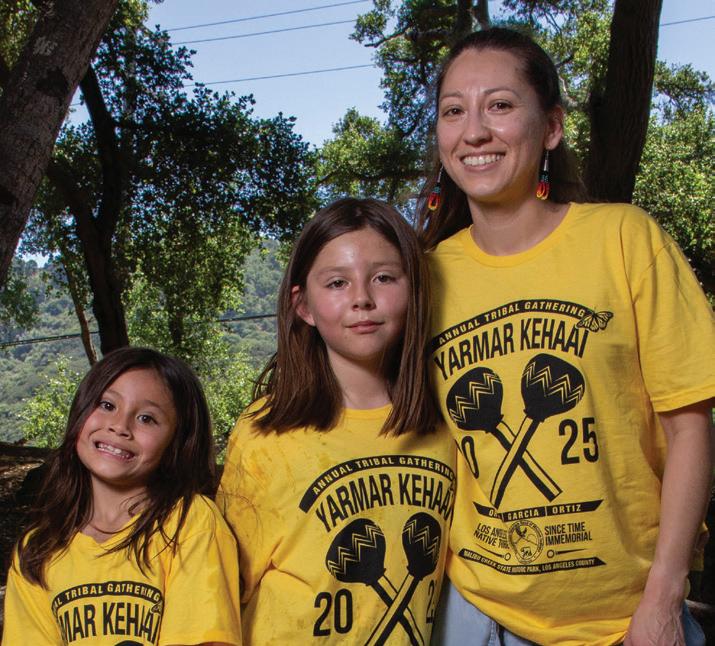
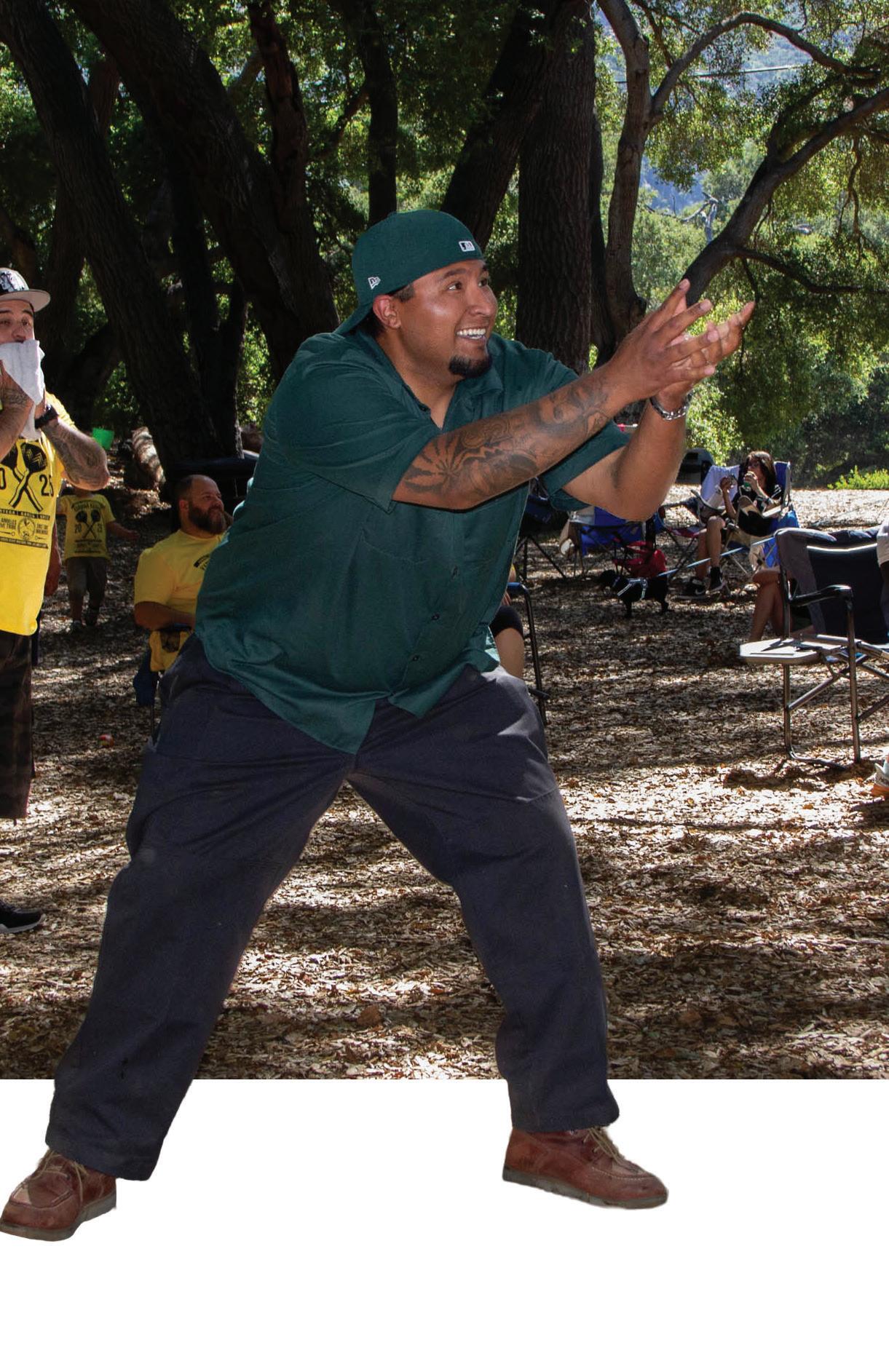
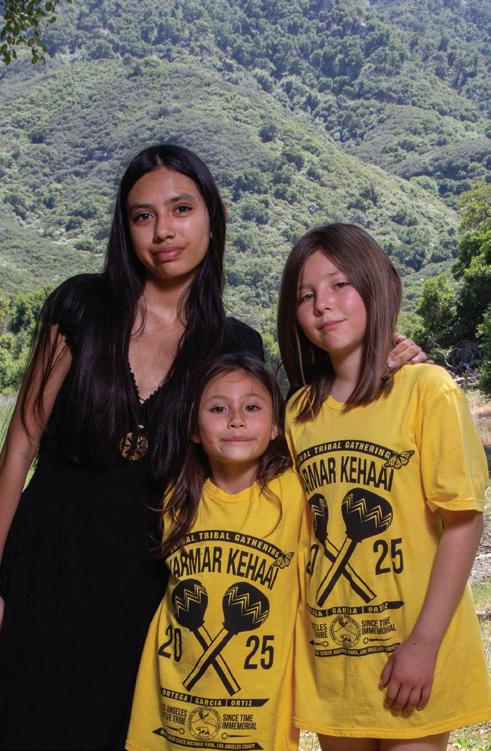
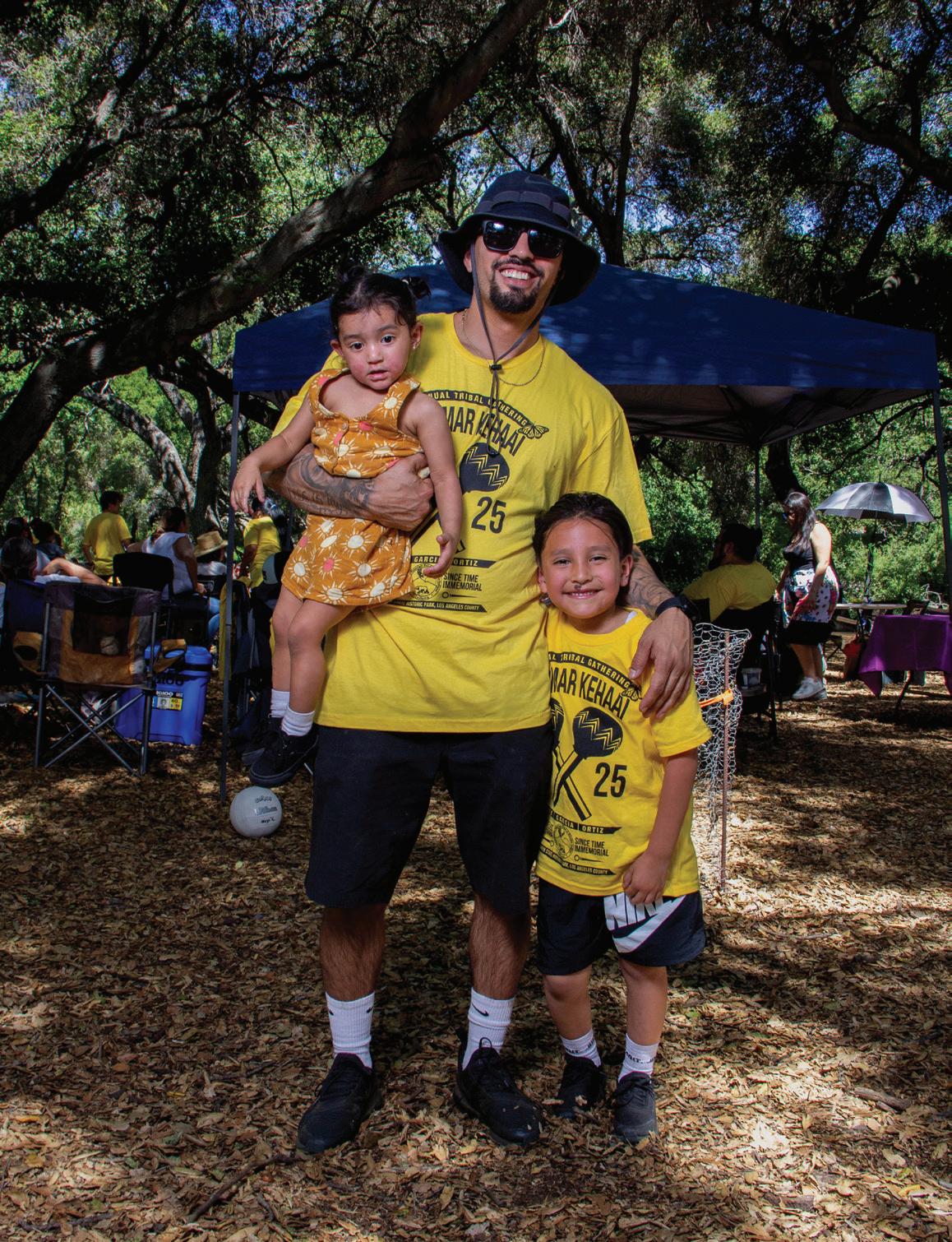
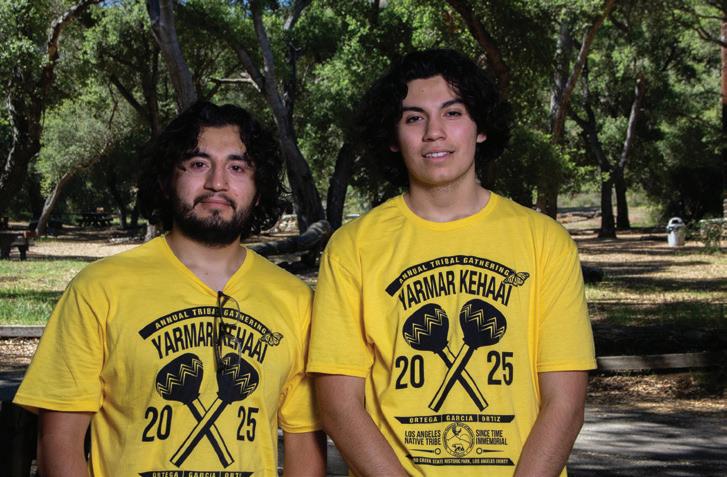
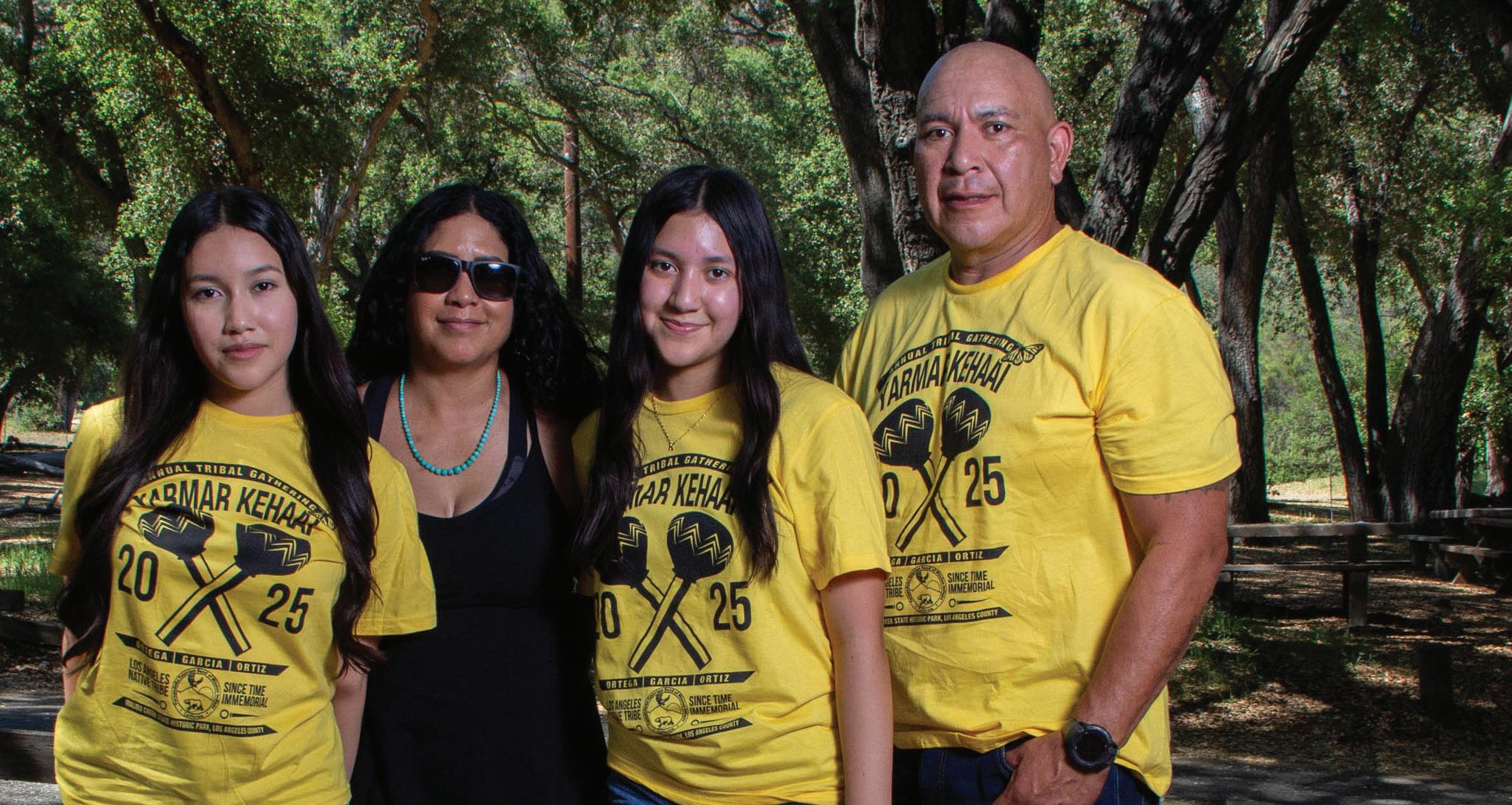
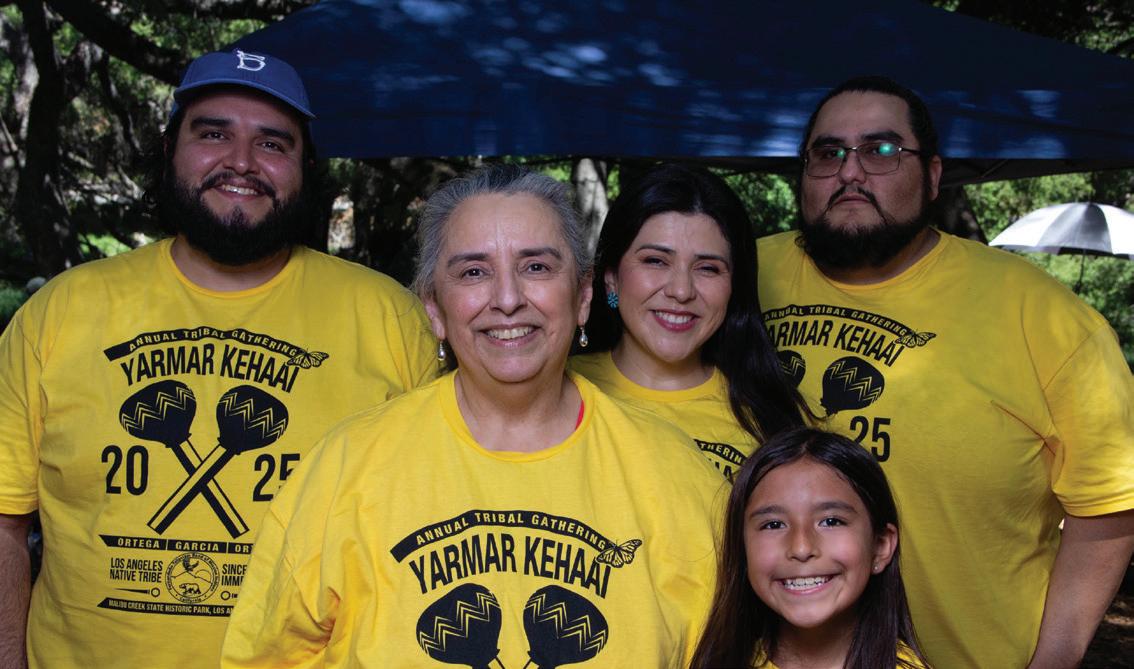
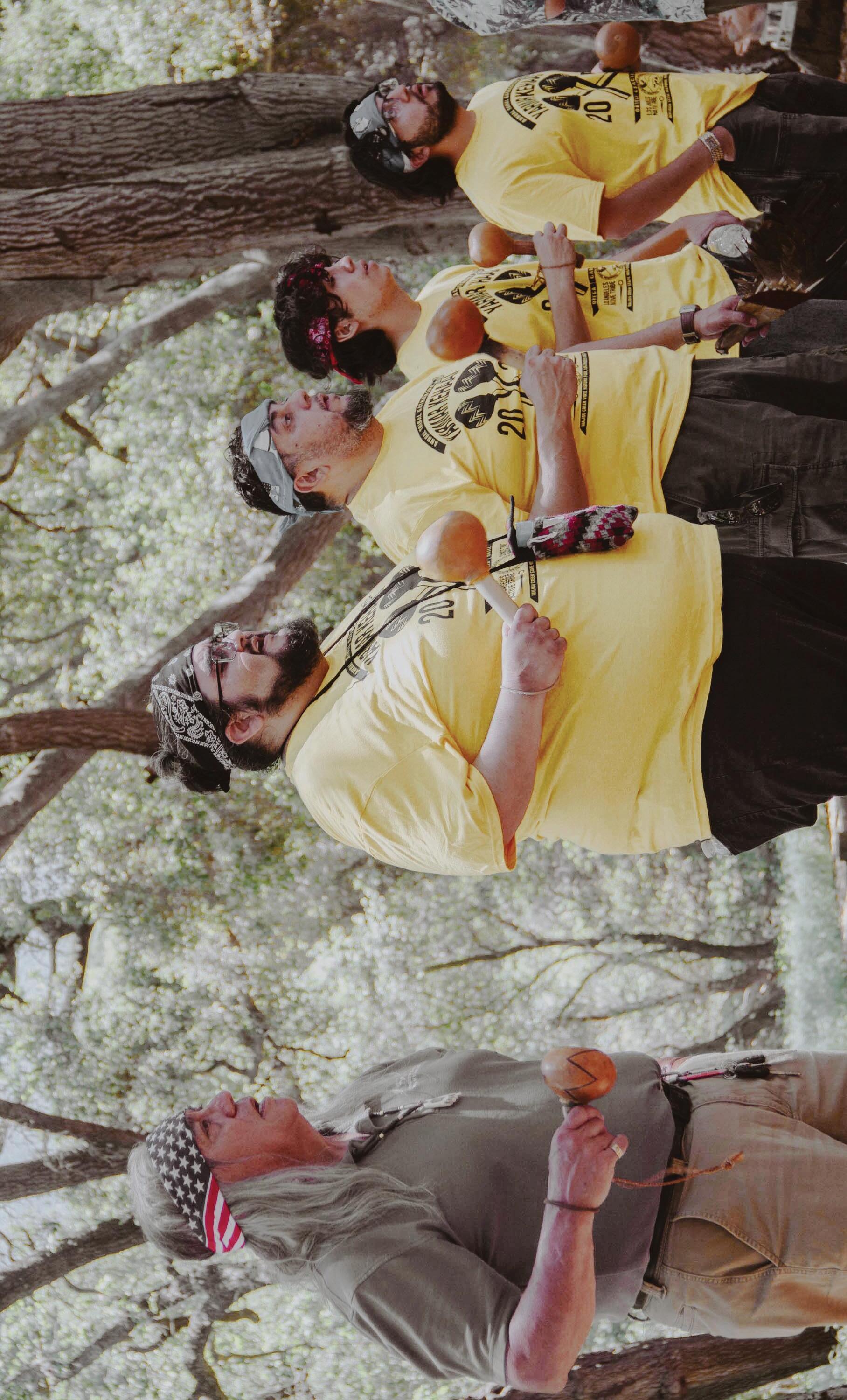
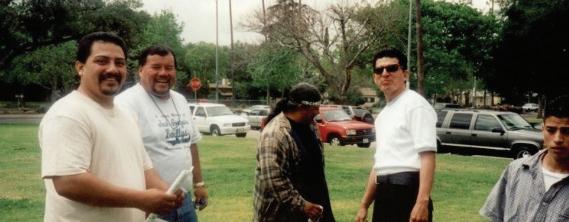
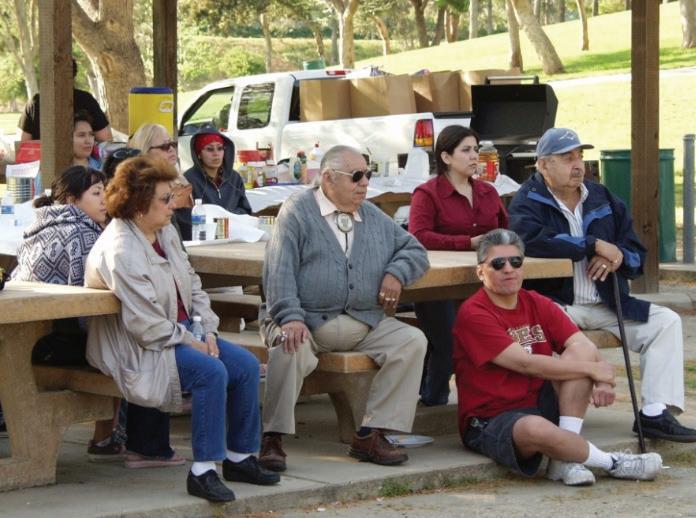
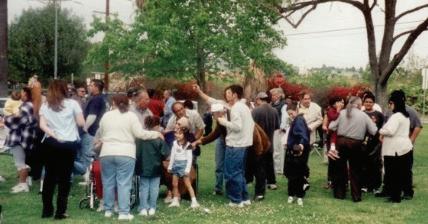
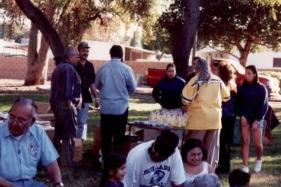
In the spring of 2025, families of the Fernandeño Tataviam Band of Mission Indians reunited for Yarmar Kehaai, the Tataviam Family Reunion. This annual spring gathering has carried through generations since the 1940s, offering a space for connection, celebration, and continuity. For decades, Fernandeño families gathered at Brand Park across from Mission San Fernando, a place marked by both memory and survival. As families grew and spread across the valleys of their homelands, the gathering evolved, shifting locations to ensure that every lineage remained connected.
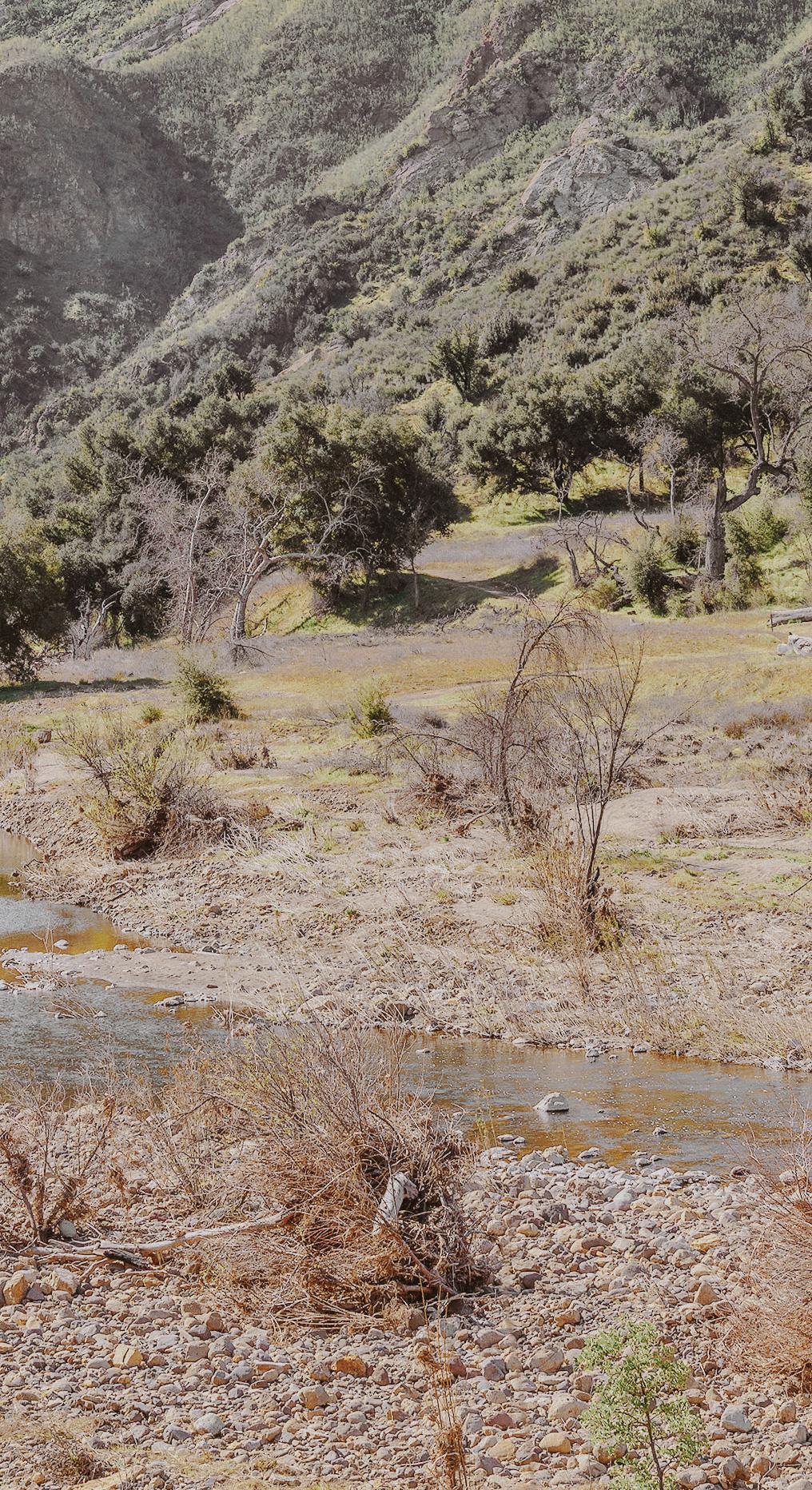
This year, the Tribe hosted its annual Yarmar (spring) Kehaai at Malibu Creek State Historic Park near the historic village of Ta’lopop. Beneath oak trees and rising spring heat, laughter, language, games, and reunion filled a landscape where Fernandeño ancestors once lived, traded, crafted, and celebrated.
Long before the State Park carried its modern name, the village of Ta’lopop thrived as part of a network of Native villages stretching from the coast to the inland valleys. Its people were craftsmen, traders, diplomats, and astronomers who tended the land and built alliances that supported an interconnected regional economy.
Villages exchanged shell-bead money, traded resources across ecological zones, and strengthened kinship ties through marriage, festivals, and seasonal gatherings much like Yarmar Kehaai itself. Canoe builders crafted water-worthy tsá’atsh, similar to tomols, for
water travel. Artisans shaped beads and figurines that moved along far-reaching trade routes, while astronomers read the stars for ceremony and navigation.
After the establishment of Mission San Fernando in 1797, every Native person living at Ta’lopop was enslaved and given the imposed name “Fernandeño.” Despite the violence of missionization, three lineages survived and persevered into the present day.
Interconnectedness can be understood through the lineages of the Fernandeño Tataviam Band of Mission Indians. Their Ortega lineage descends from Siutcanga, the village at Encino, their Garcia lineage descends from Efren, a Fernandeño Native born at Jucjauyanga (inland dialect) or huwam (coastal dialect), and their Ortiz lineage descends from José Miguel Triunfo, a Fernandeño Native whose name reflects a cultural connection to the town of El Triunfo, known as hipuk in the coastal dialect. Together, these three lineages descend from villages that maintained bonds





translates to Gathering
with Ta’lopop and remained interconnected through their continued coalition as a Fernandeño tribal entity.
Yarmar Kehaai has been hosted by the Tribe for decades as an annual reunion centered on family and cultural continuity. This year’s Yarmar Kehaai brought together families from all three Fernandeño lineages in a celebration that blended cultural revival with joy and play. Children darted across a blooming landscape while cousins reunited and elders caught up under the shade of oaks.
As in years past, the Tribe continued its tradition of hosting toy giveaways and prizes. Dodgers tickets and gift cards were awarded during cultural trivia and bingo, weaving learning and laughter into the day’s activities. Traditional and contemporary games kept every generation engaged, reinforcing the idea that culture is shared through both teaching and play.
Amid the laughter, games, and shared meals, the deeper meaning of Yarmar Kehaai moved quietly through the gathering. This is a tradition that predates missions, colonization, and modern city boundaries.
Food was a central part of the gathering, anchoring the day in both memory and creativity. The potluck table reflected generations of care, with family recipes prepared alongside newer adaptations shaped by contemporary tastes and ingredients. Many dishes carried names known only within families, some spoken in traditional Fernandeño dialects, serving as quiet markers of lineage and belonging. Each shared plate told a story of survival and continuity, where ancestral knowledge met living practice and nourishment became another way culture was remembered, adapted, and passed forward.
As the sun dipped behind the ridgeline and families packed up chairs and coolers, one feeling was unmistakable. Yarmar Kehaai is not simply a tradition continuing from the twentieth century; it is a modern expression of ties that began in time immemorial, alive, evolving, and carried proudly into the future.
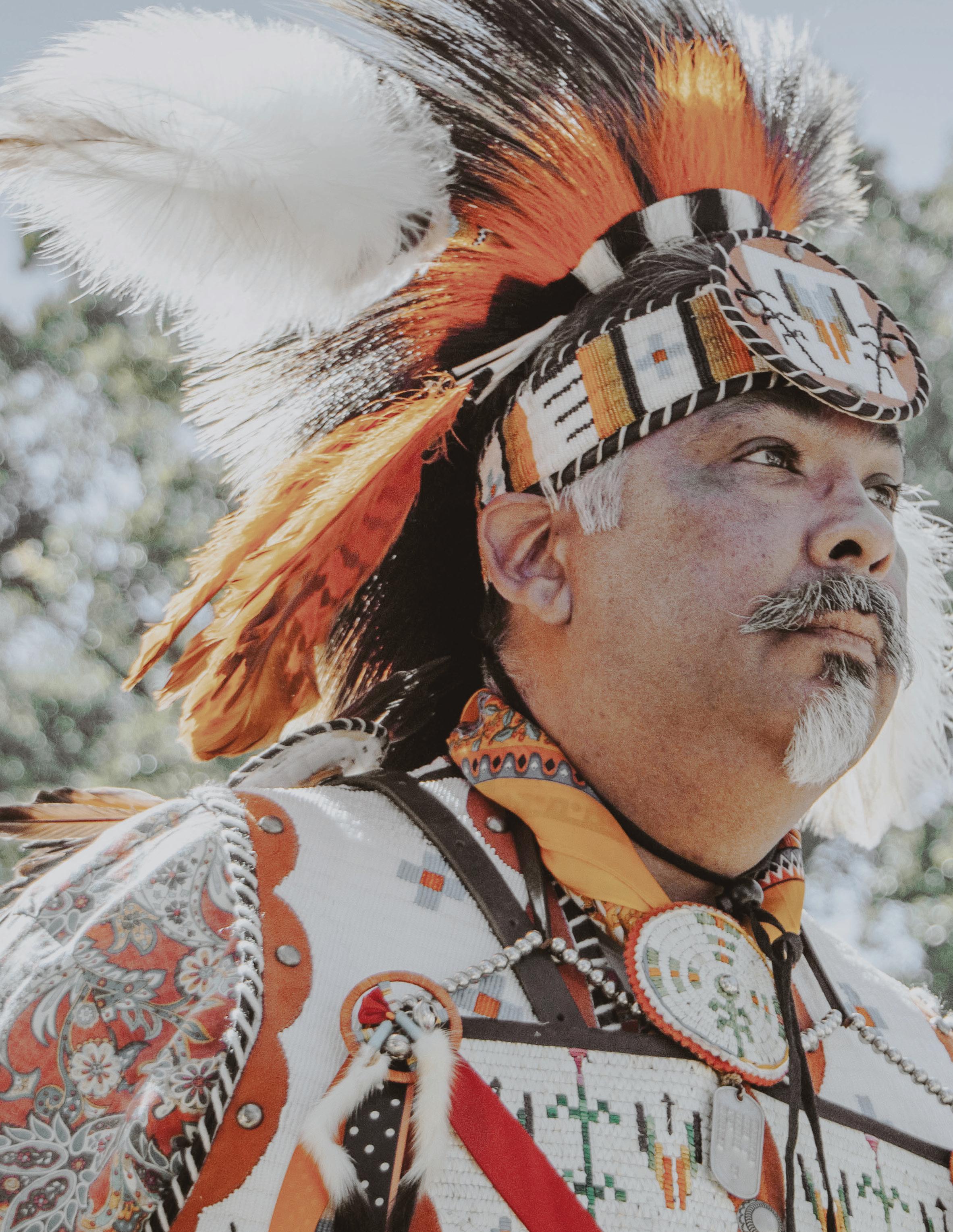



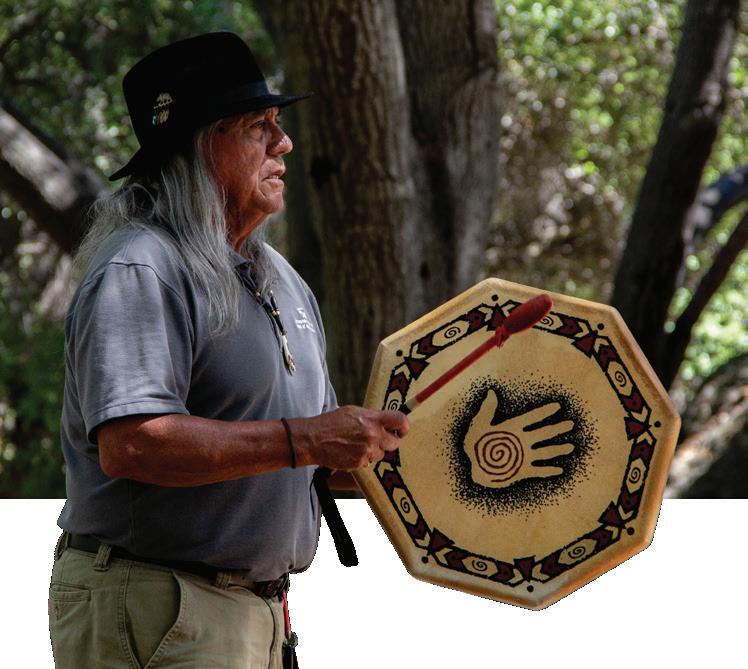
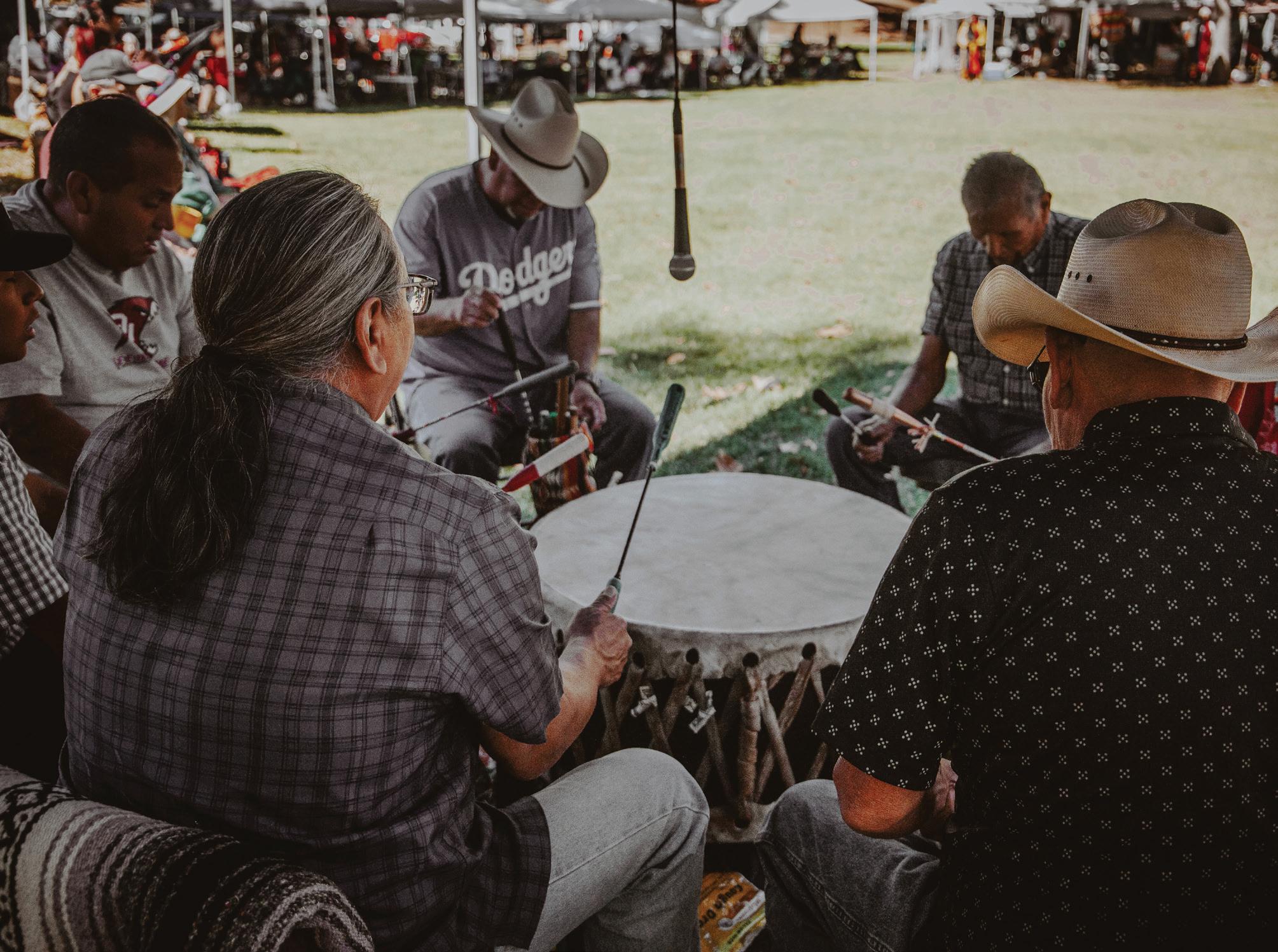
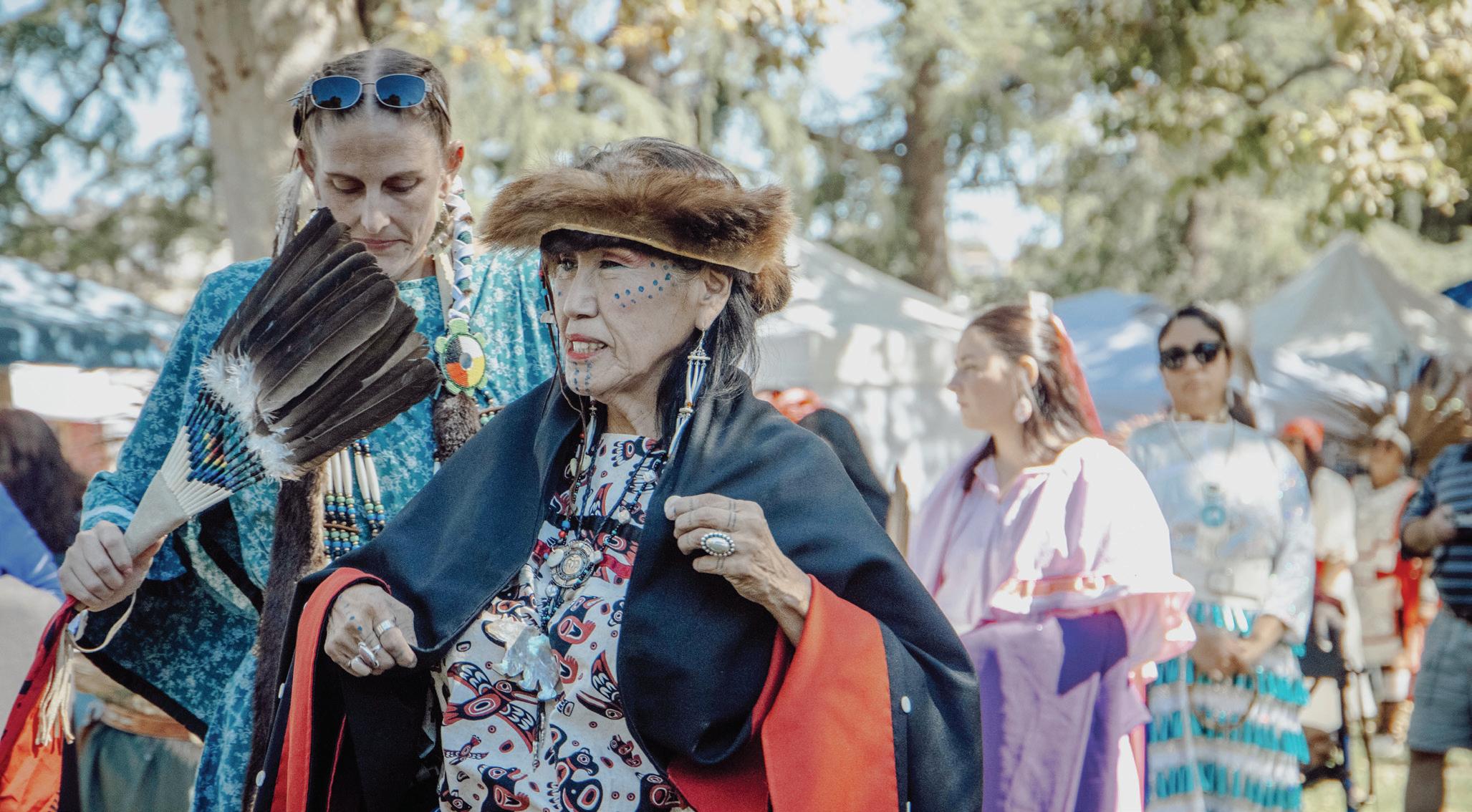
The drums were the first thing you felt.
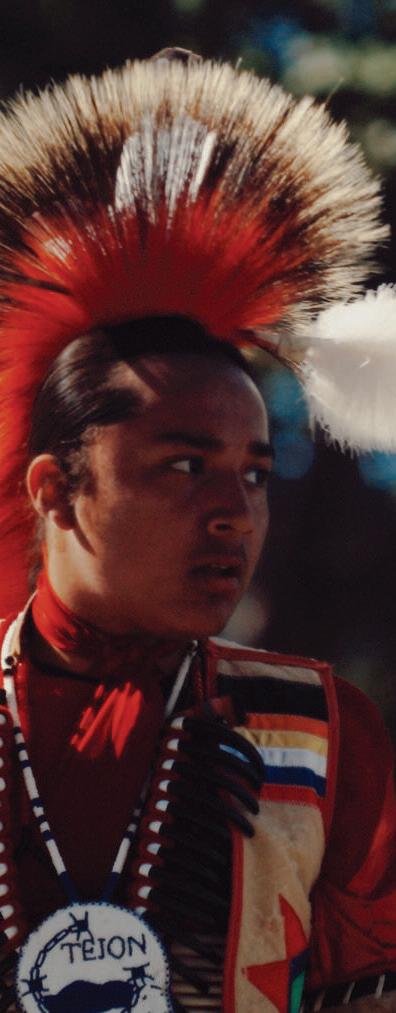
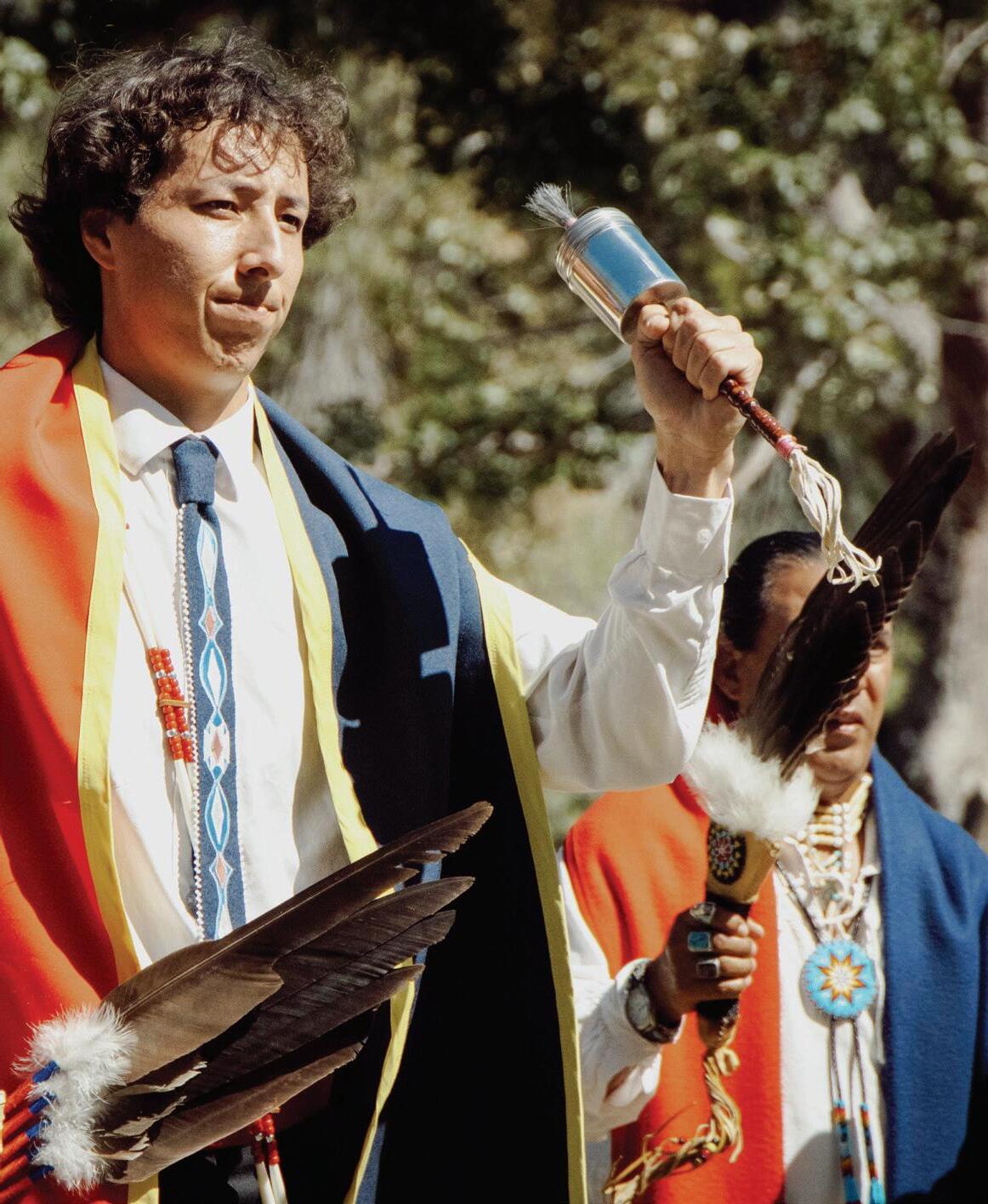
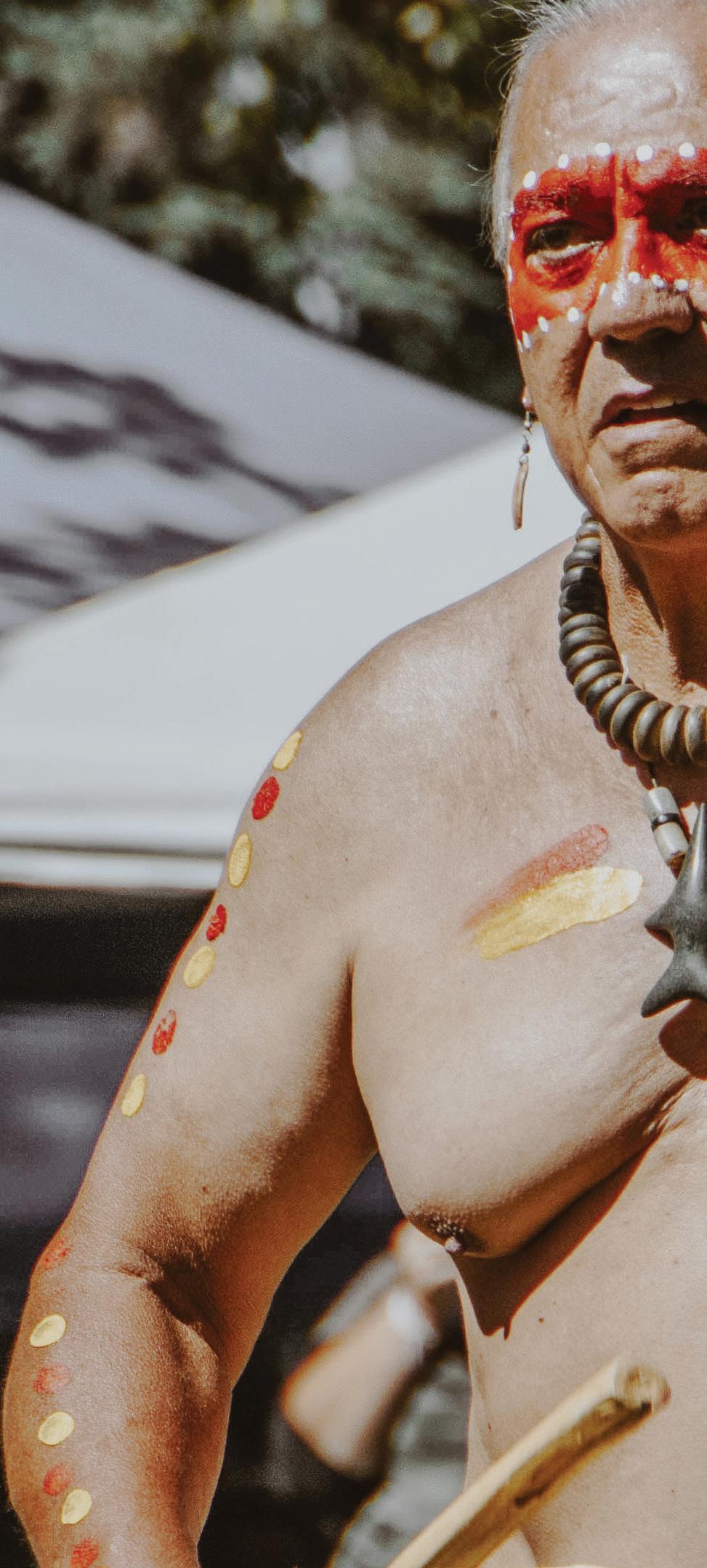
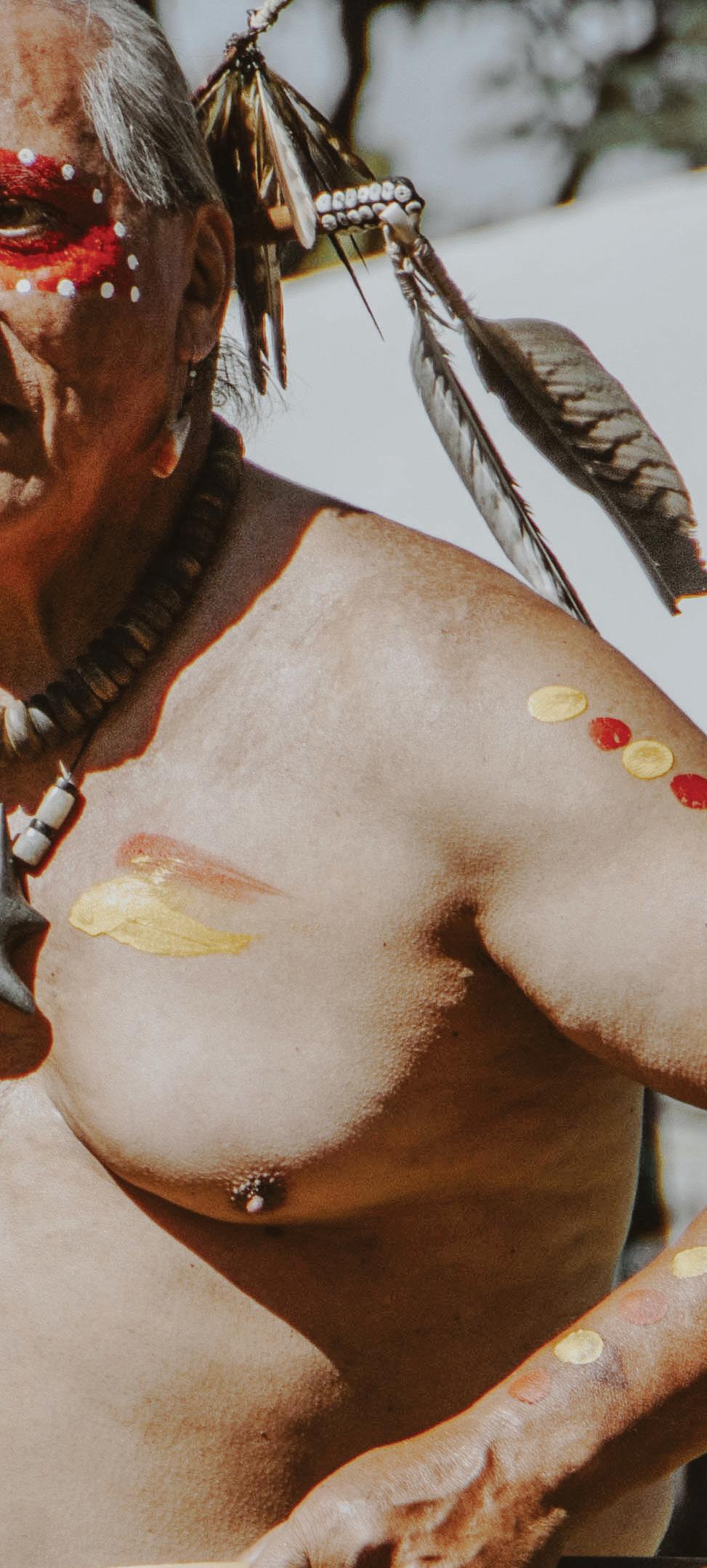
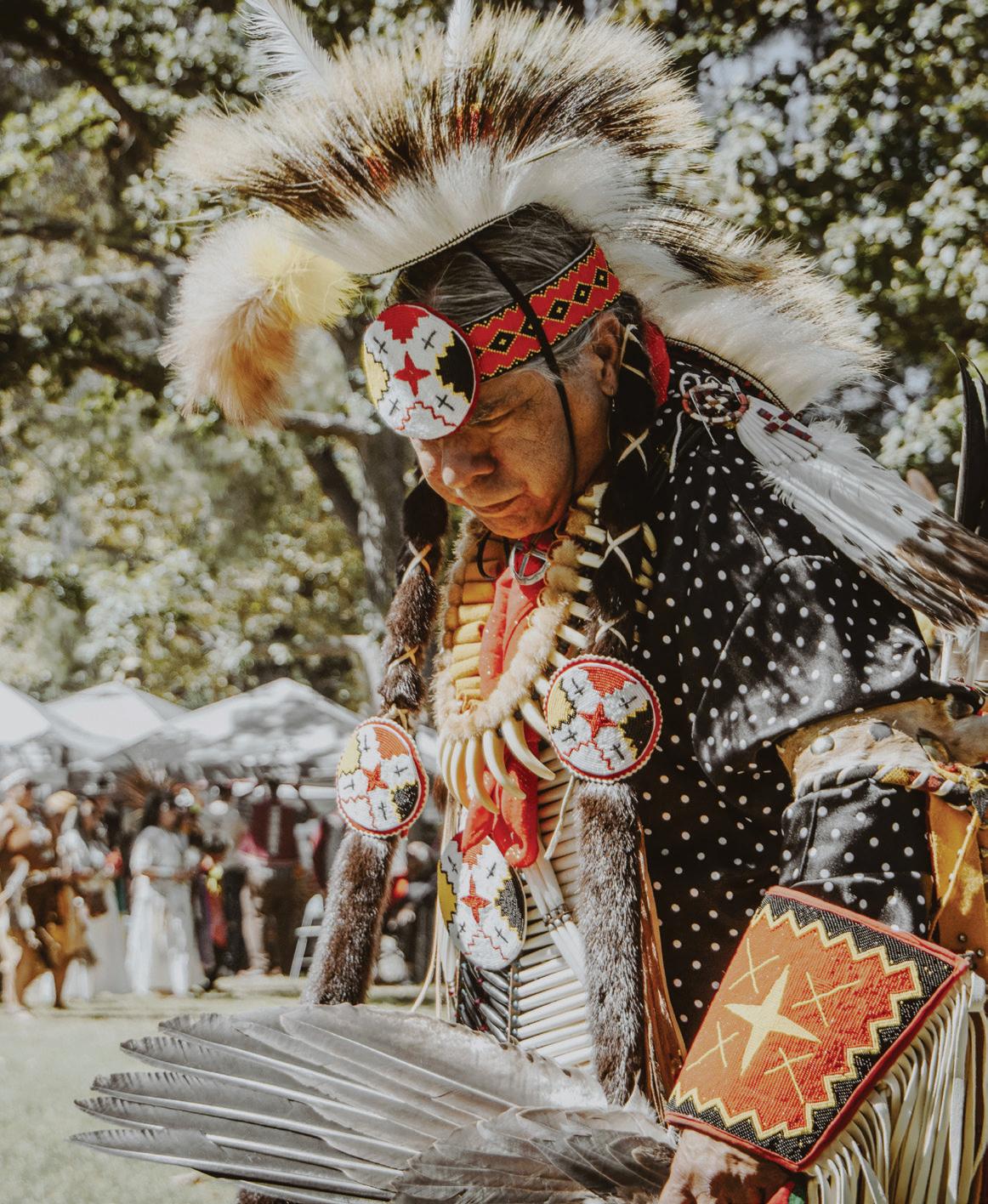
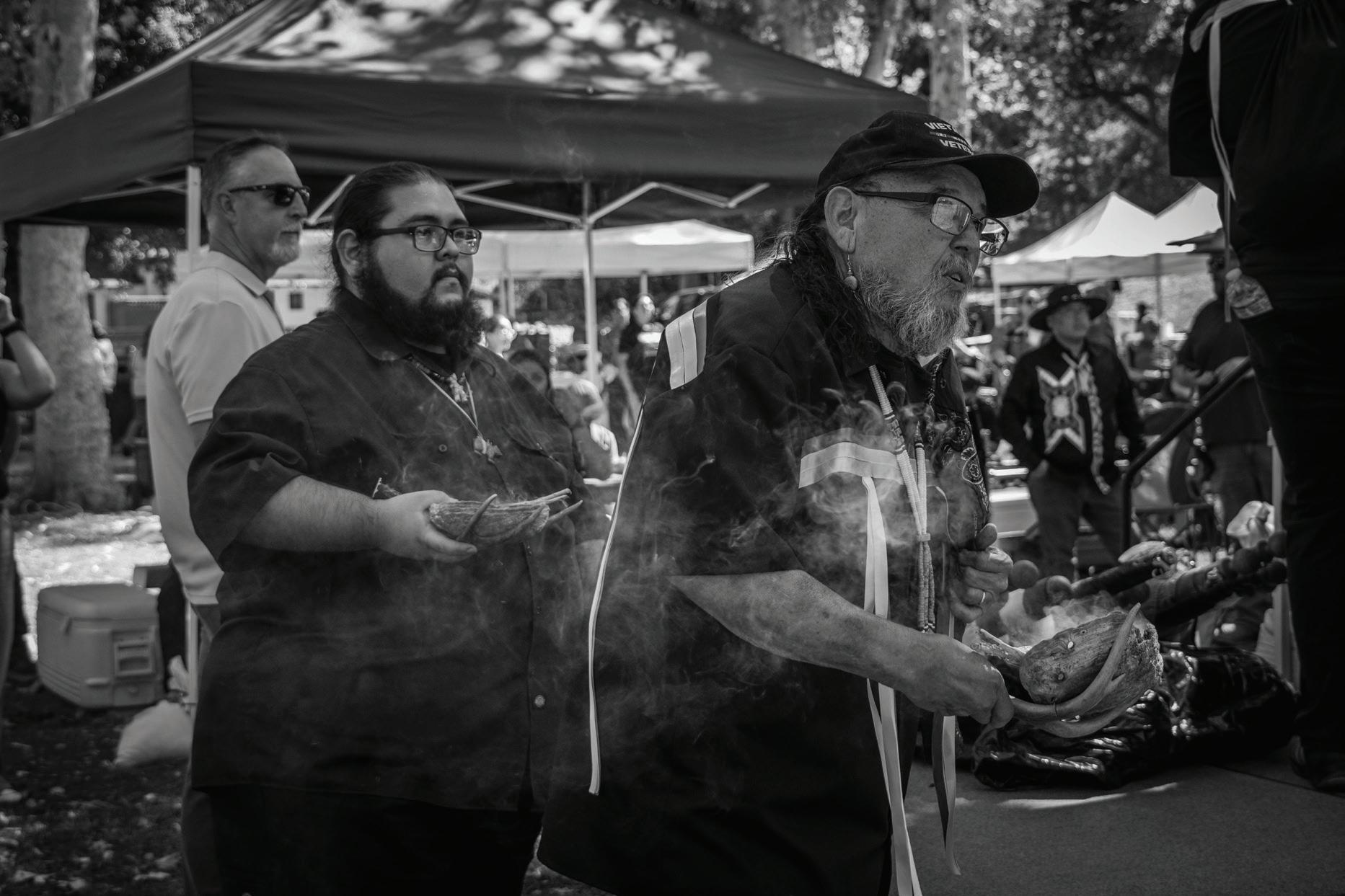
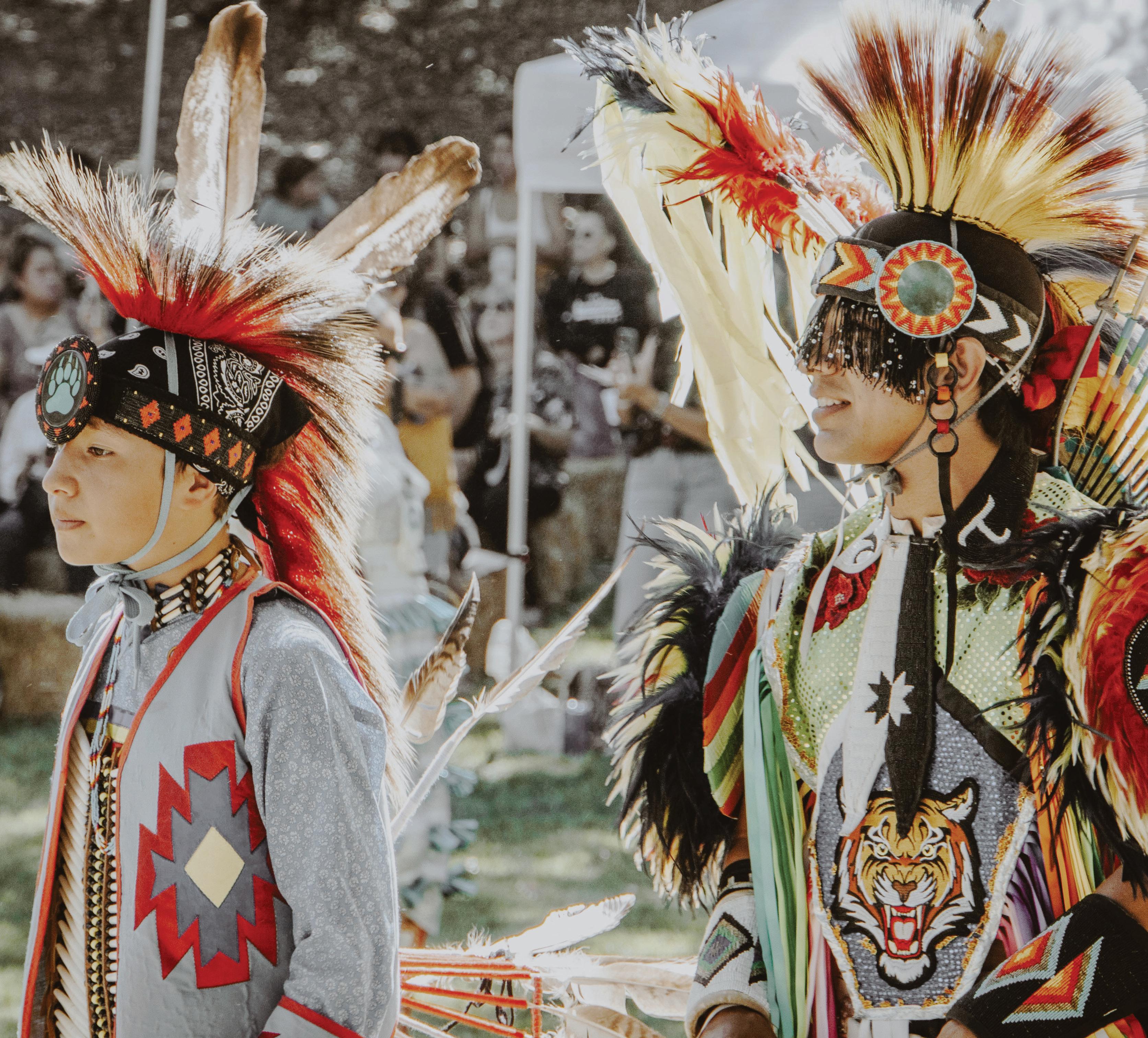
Long before the crowd filled in or vendors opened their booths, a deep, steady rhythm rolled across William S. Hart Park, an ancestral heartbeat echoing through the valley. When the Grand Entry began, dancers stepped into the arena in waves of color, their regalia catching the light as the drum guided every movement.
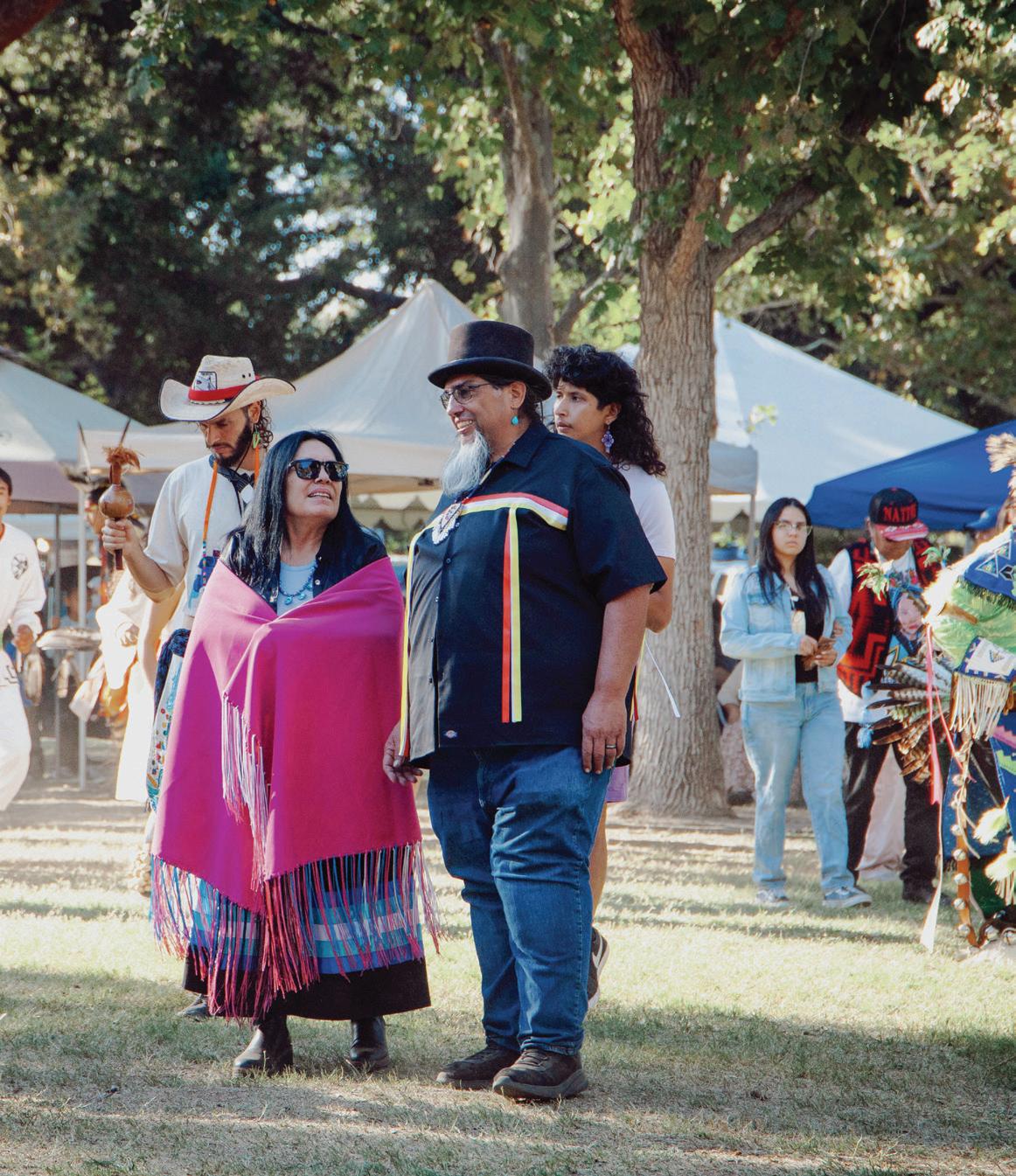
For the thousands who gathered in Santa Clarita, the Hart of the West Pow Wow offered more than a day of festivities. Now in its 31st year, the annual event hosted by the Fernandeño Tataviam Band of Mission Indians has become one of Southern California’s most meaningful cultural gatherings, a place where tradition is carried forward through song, dance, and shared experience.
More than 100 Tribes from across the country joined the celebration, transforming the park into a vibrant
circle of nations. Amid the dancers and drum groups, the presence of the Fernandeño Tataviam People, whose homelands include the very ground beneath Hart Park, grounded the event in place and purpose.
“We’ve met so many Natives who live right here in the county or in Santa Clarita,” said Tribal President Rudy Ortega Jr. “Our Tribal Citizens have enjoyed singing, participating, and being part of how we keep our traditions alive.”
What began decades ago has grown into an intergenerational space where families reconnect, elders are honored, and young people learn by watching, listening, and stepping into their roles.
While dancing draws many to the arena, the full sensory experience of the Pow Wow keeps them there. Across the grounds, the smell of fresh fry bread drifted through the air, mingling with the sound of bells and the steady resonance of the drum.

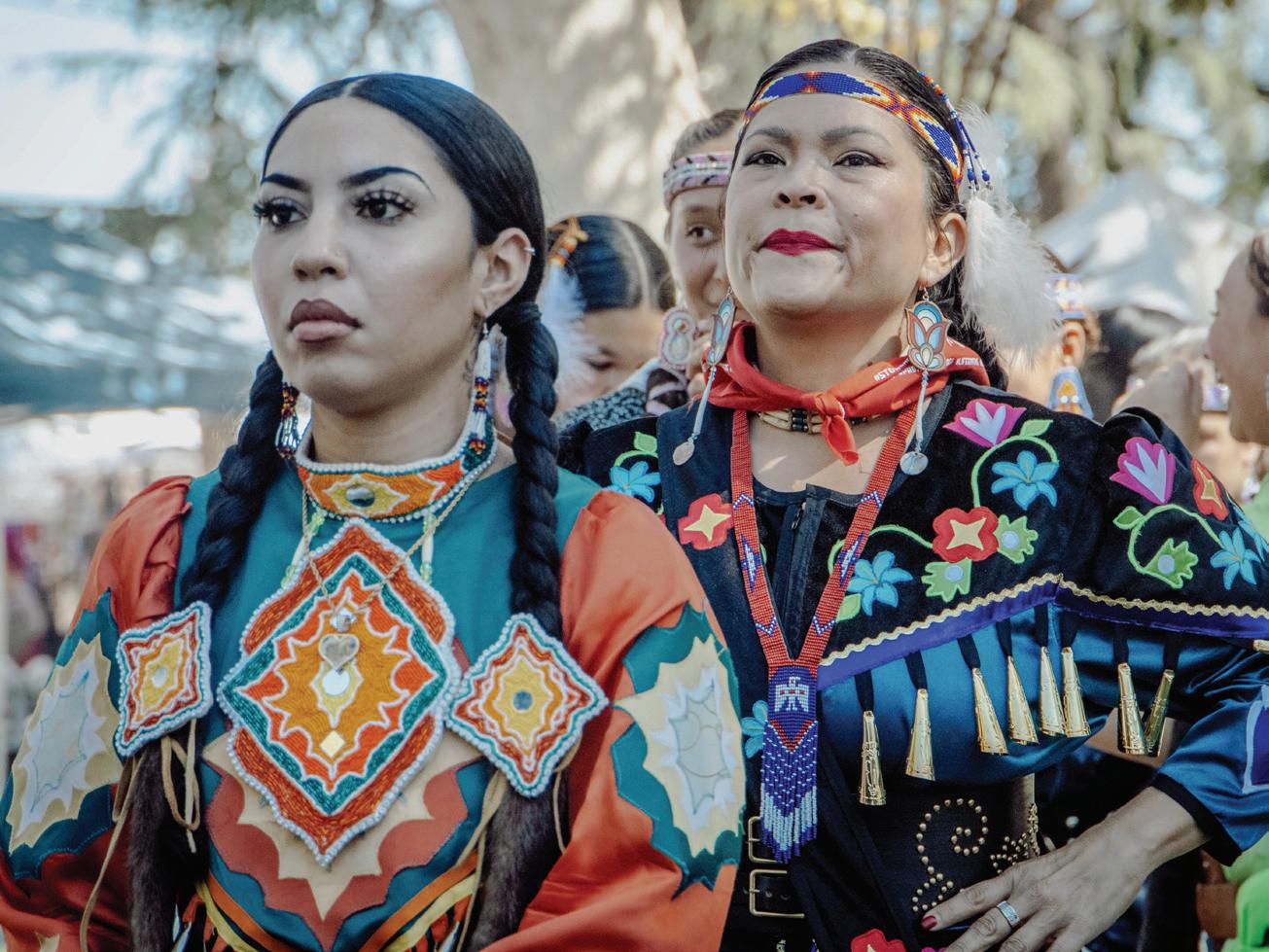
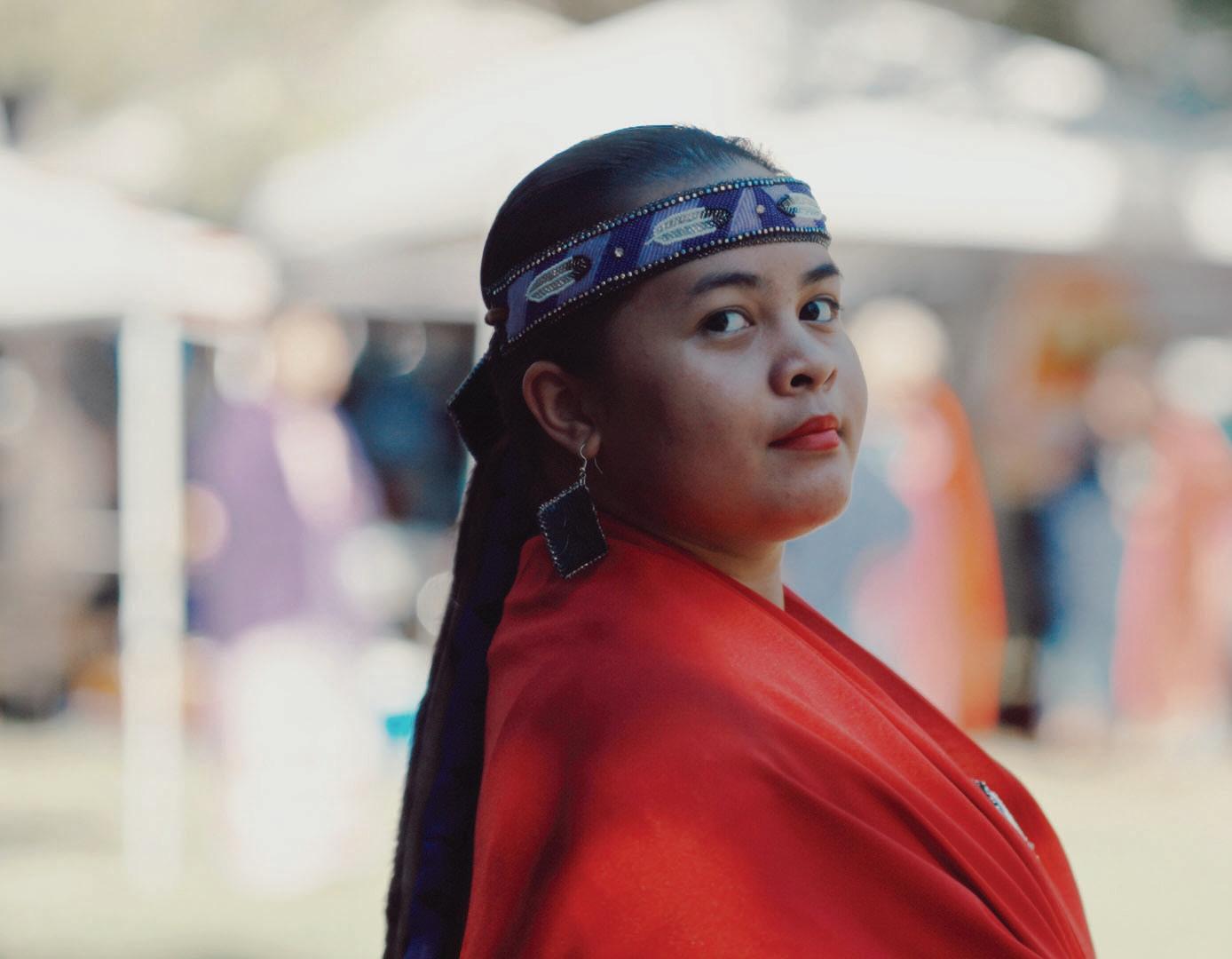
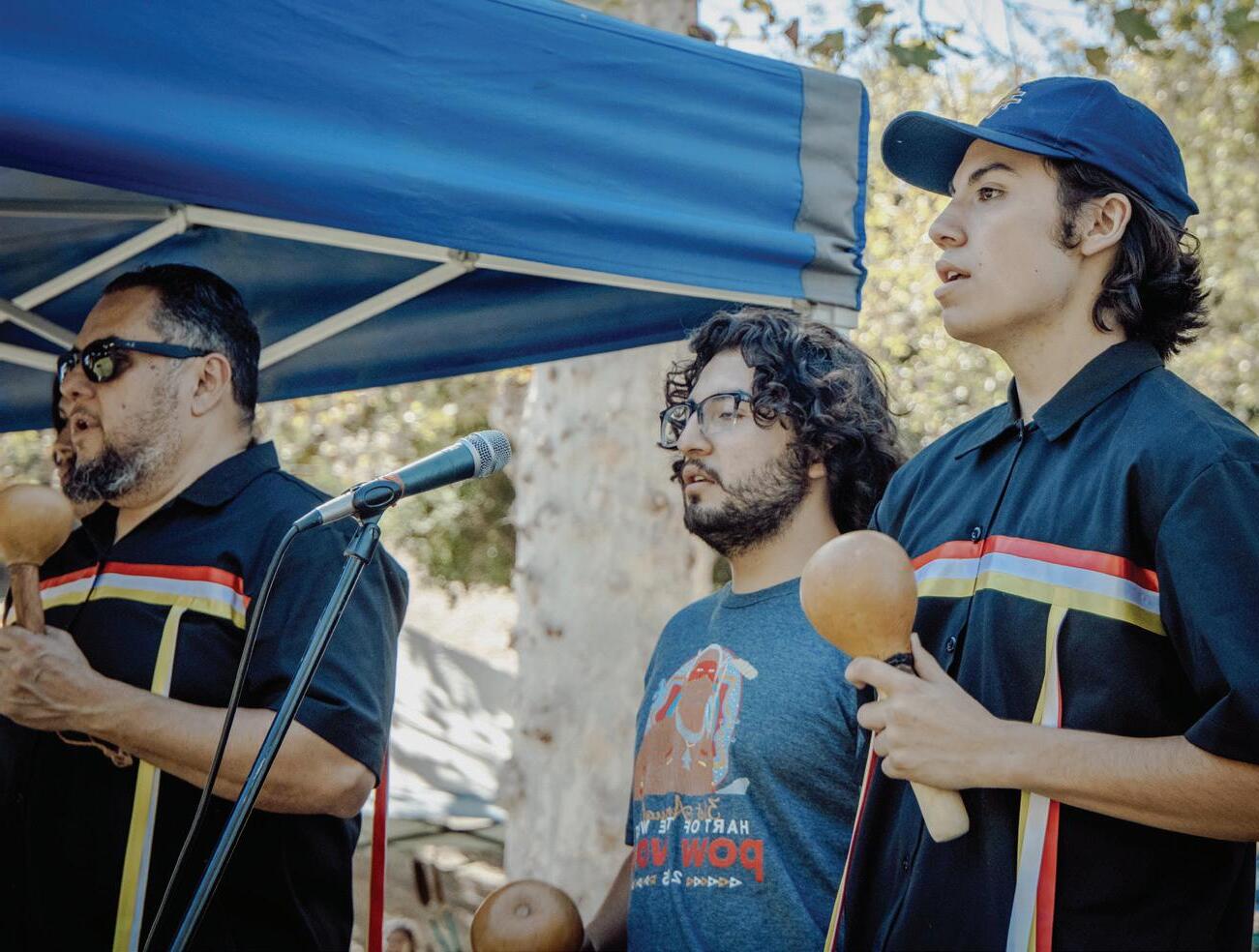
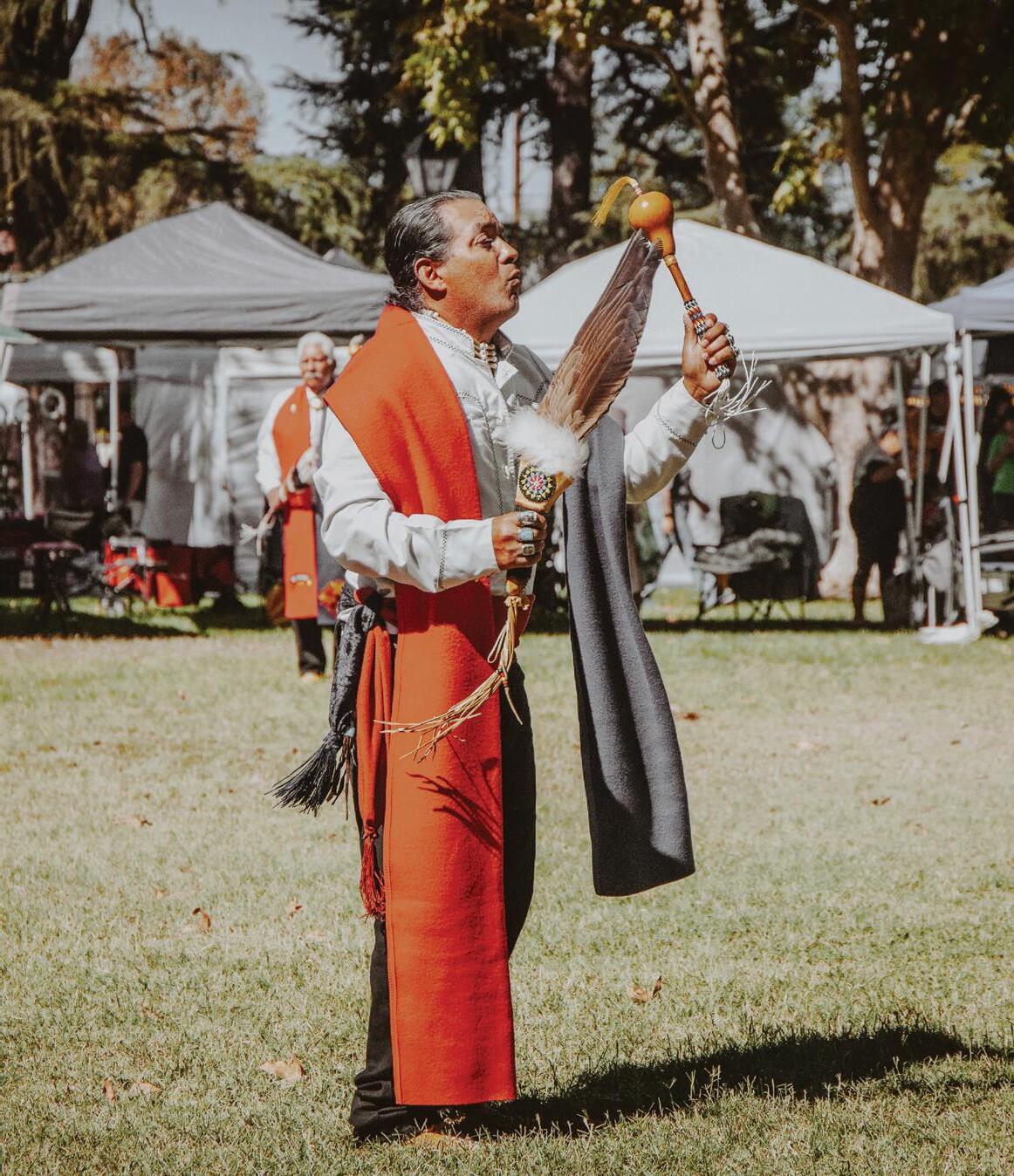
“It’s more than cooking,” said one Fernandeño Tataviam Tribal Citizen preparing food at the event for the dancers. “It feels like feeding the spirit, yours and everyone else’s.” Nearby, Tribal artisans displayed beadwork, clothing, and baskets, each piece reflecting generations of skill and cultural knowledge. Cousins from the Tribe who specialize in basket weaving shared the story behind their work and the many hours poured into each piece.
“We can be private people,” one weaver said. “But weaving brought us closer to our roots. Sharing it makes us feel con-
nected to our ancestors and to everyone who stops by our booth.”
Their baskets, vibrant with color and detailed pattern, became part of the larger story unfolding throughout the Pow Wow, a celebration of traditions carried by hand, heart, and memory.

As the arena filled with dancers from Tribal Nations across the country, a sense of unity became impossible to miss. Young dancers learned steps from elders. Families cheered from the sidelines. Drum groups kept the heartbeat constant.
“Every year, I’m reminded how many similarities we share across Nations,” said one Fernandeño Tataviam Tribal Citizen. “Our ways may differ, but there’s so much that connects us.”
That sentiment echoed
www.tataviam-nsn.us
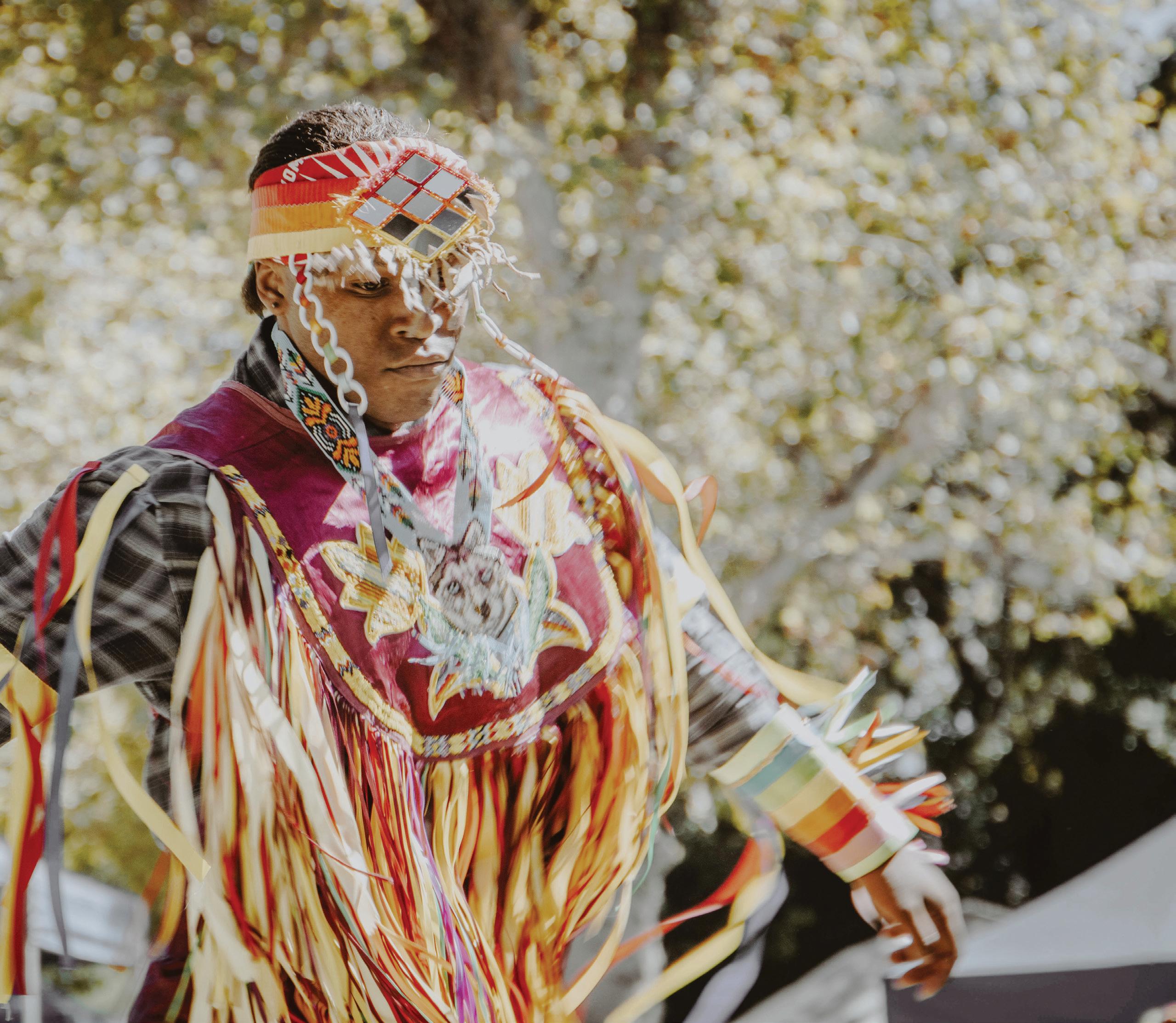
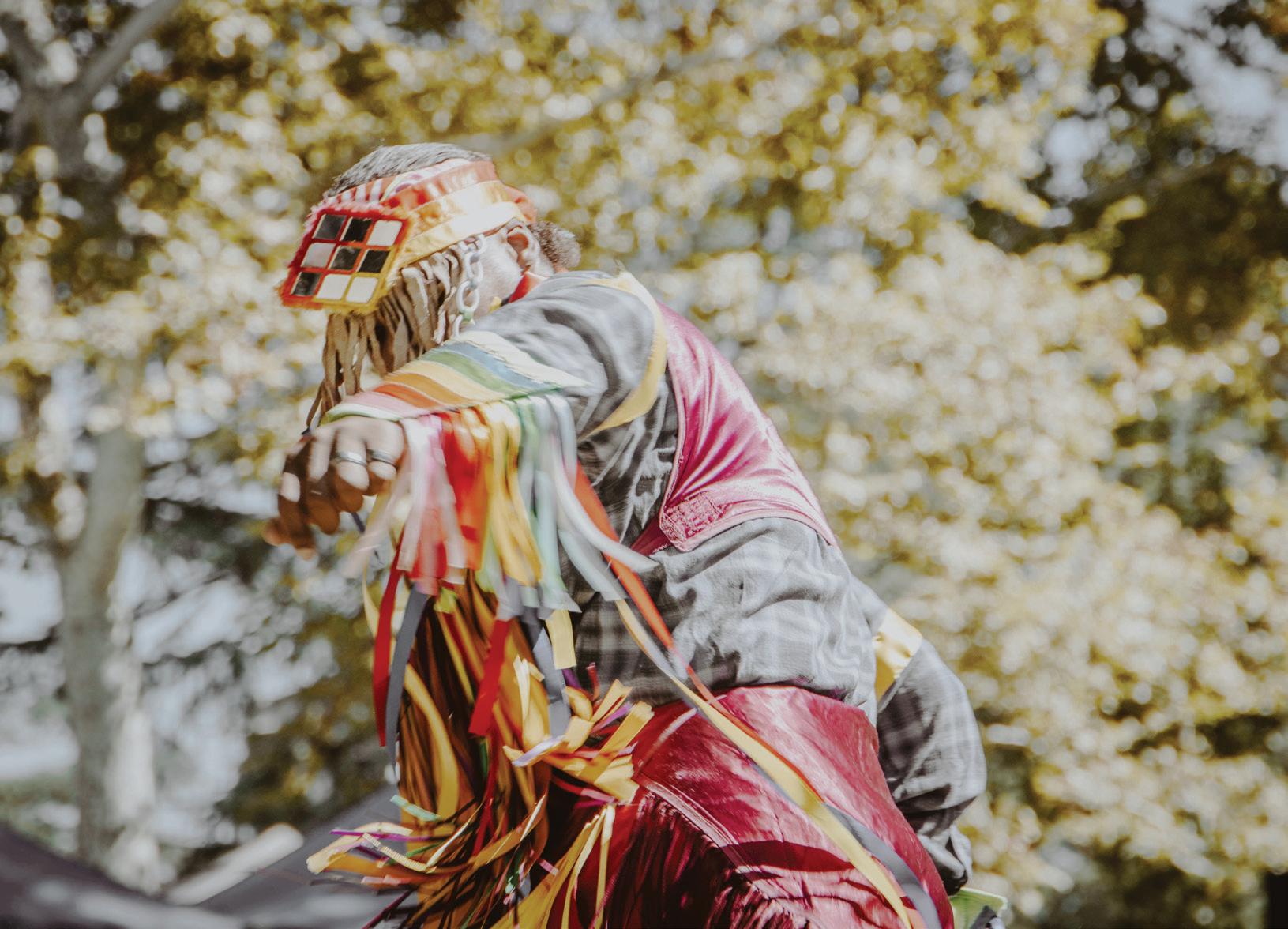
throughout the weekend as dancers in traditional, fancy, jingle, and grass styles entered the arena, each honoring their Nation while standing together in community.
By late afternoon, sunlight dipped behind the
aviam Band of Mission Indians, this Pow Wow is more than an annual celebration. It is an act of cultural endurance, affirming presence, sovereignty, and belonging on ancestral land.
At the Hart of the West Pow Wow, every beat brings past and present closer together.
Did you know this event has been renamed by the Tribe? Now known as The Heart of Tataviam Pow Wow, the gathering honors the Fernandeño Tataviam Band of Mission Indians and stands as the only pow wow hosted by a Tribe in Los Angeles County.
www.tataviam-nsn.us
On mOst days, the vacant lOt did nOt draw much attentiOn. tucked within the steady hum Of the city Of san fernandO, the quiet patch Of earth simply waited. few peOple knew what it was waiting fOr, but fOr the fernandeñO tataviam band Of missiOn indians, the Original peOple Of nOrthern lOs angeles cOunty, this land carried memOry and hOpe.
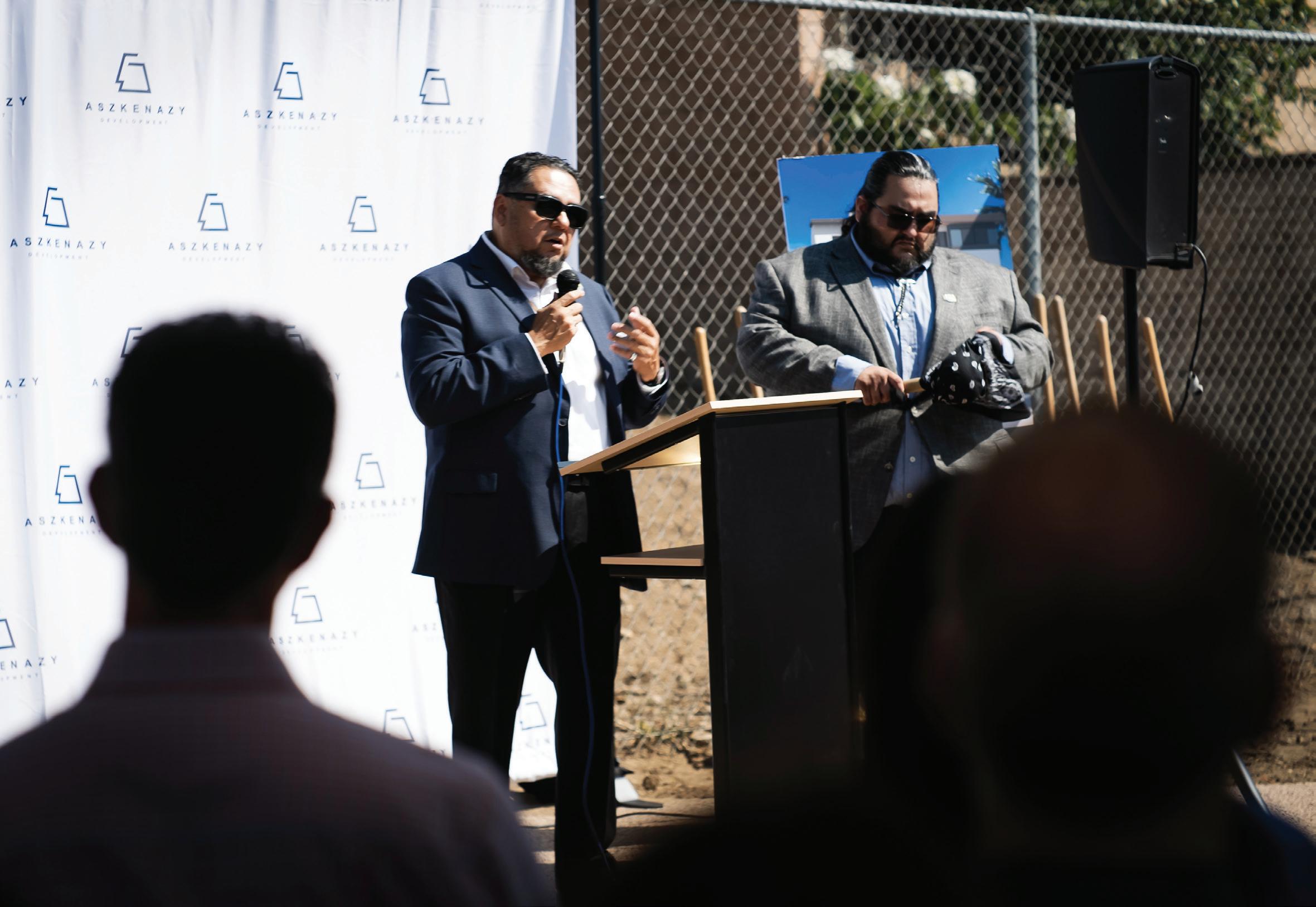
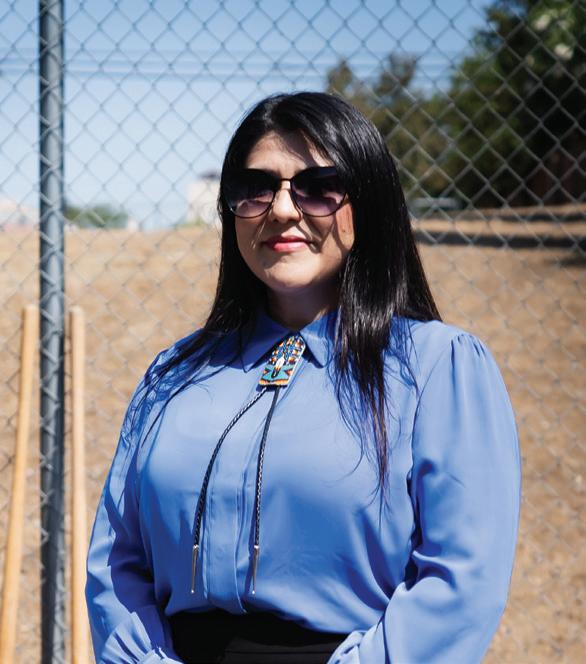
executive directOr
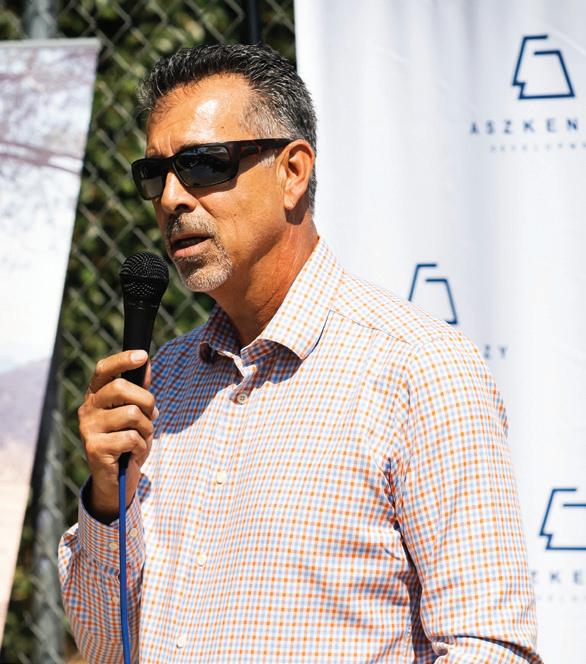
severyn aszkenazy president Aszkenazy Development Inc.
Now, after more than a century of forced displacement and erasure, it carries something even more powerful. It carries the promise of home.
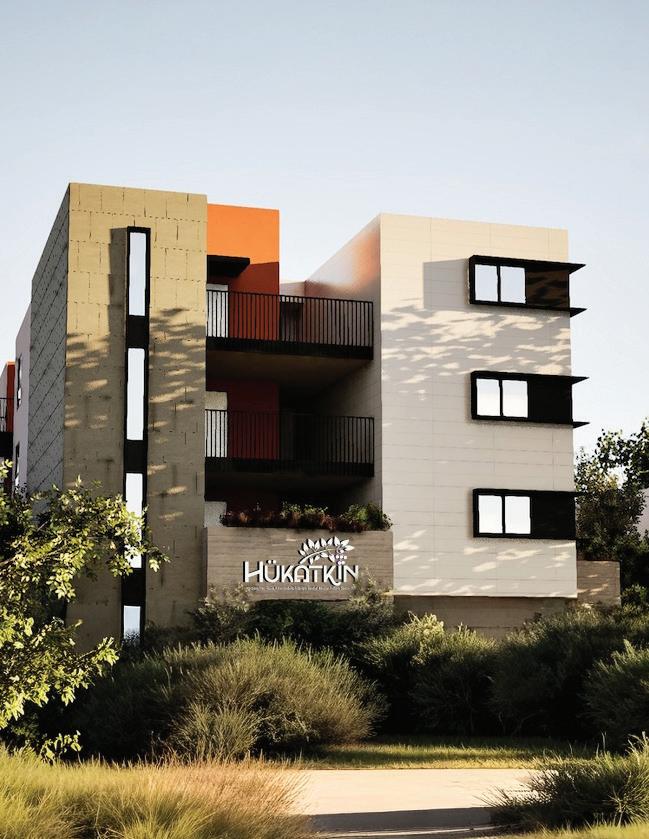
This winter, Tribal leaders, community elders, and partners gathered on this unassuming plot of land to celebrate the beginning of a project that will transform lives. The FTBMI San Fernando Project, created through the partnership of the Tribe, its nonprofit Pukúu Cultural Community Services, and Aszkenazy Development, Inc., will bring 26 permanent and affordable homes to Native and non Native el-
www.tataviam-nsn.us
ders. It will be the first senior housing development in Los Angeles County built by a Tribe whose ancestors come from the land beneath it. For the Fernandeño Tataviam, this is more than construction. It is a return to a place their people were never meant to leave.
a histOric step fOrward
Tribal President Rudy Ortega Jr. grew up surrounded by stories of how his ancestors were pushed from their homelands in the late 1800s. Those losses were not only about land. They were losses of stability, community, and the ability to keep elders sheltered and cared for close to home. Now, standing on land that will soon welcome Tribal and local elders into affordable housing, he names this moment clearly. It is historic.
“Native Americans were the first to be displaced from our homelands and often remain the last to receive support,” Ortega said. “This investment is a crucial step in enhancing the quality of life for our elders and all Native Americans.”
In 2024, Governor Gavin Newsom announced more than ninety one million dollars in funding for Tribal housing, aimed at addressing the in-
equities that prevented many Tribes from securing the land base needed to build housing for their people. Through this Tribal Homekey funding, along with support from Los Angeles County and the Conrad N. Hilton Foundation, the Fernandeño Tataviam are moving boldly to shape their future.
hOnOring the ancestOrs by hOusing the present
For Pamela Villaseñor, Executive Director of Pukúu Cultural Community Services, this project fulfills a vision that her ancestors lived and fought for. She speaks with gratitude for the generations who stood in California’s courtrooms to defend their homelands. Their persistence led to recognition and opened the door to moments like this one.
“More than one hundred years later, we will house the people once again,” she says.
Pukúu will offer culturally rooted support that ensures the housing is not only affordable but nourishing. Residents will have access to community resources, cultural connections, and traditions that honor their identities. Elders will find a place where care is woven
with understanding.
building with purpOse Aszkenazy Development, Inc. has shaped affordable housing in the City of San Fernando for more than three decades, yet this project carries a unique sense of responsibility. CEO Severyn Aszkenazy describes it as a rare alignment of purpose, history, and community.
“It is not often that a project blends purpose, history, and community so seamlessly,” he reflects. Constructing housing on Tribal ancestral land is
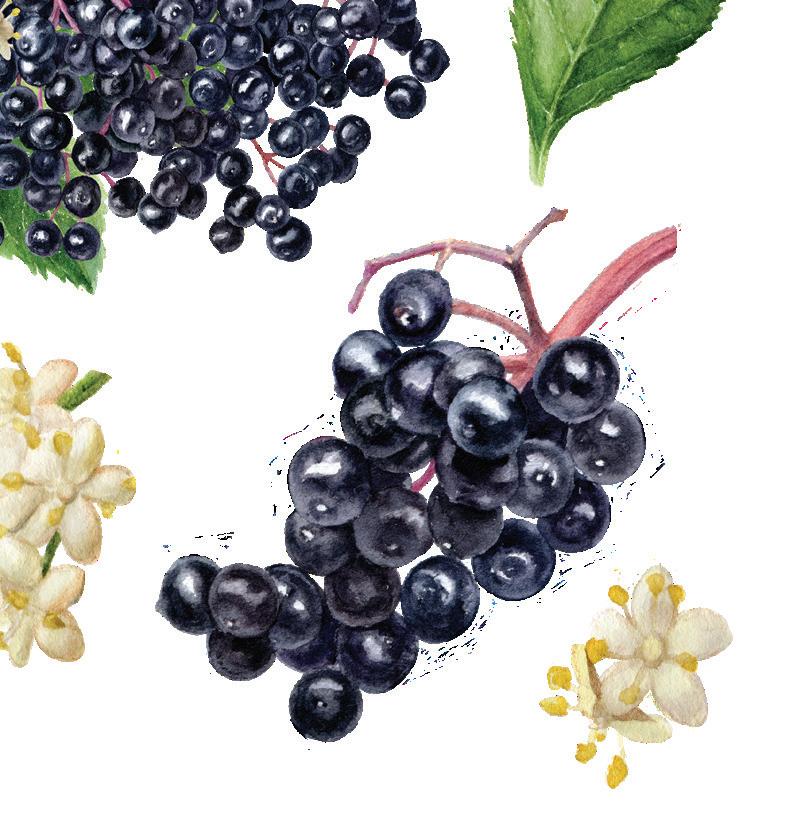
The Development is called “HÜKÁTKIN,” which translates to Elderberry House in Fernandeño.
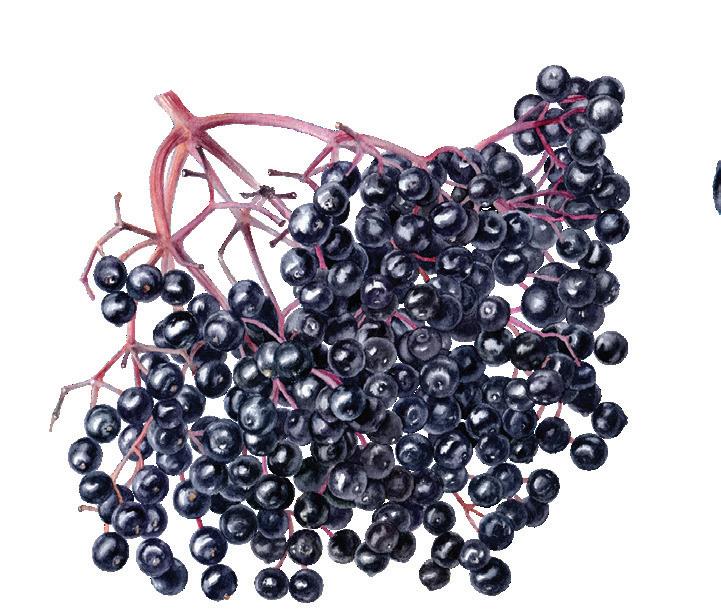
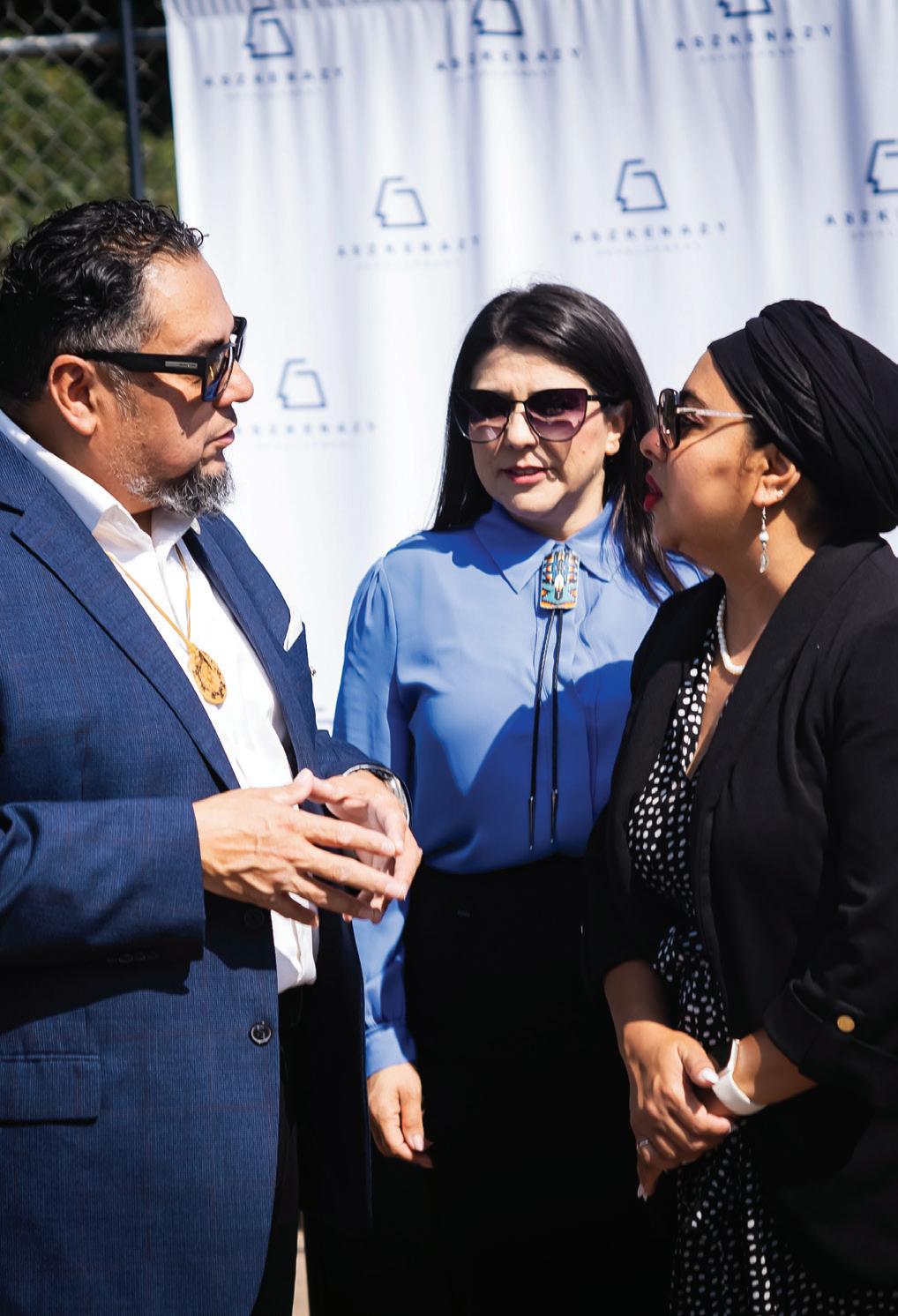

meaningful work. “Housing is a foundation for dignity and stability, and it is an honor to help create a space that reflects the values and resilience of the Tribal community.” His team will build the structure, but the heart of it belongs entirely to the Tribe.
restOring stability thrOugh culture
The senior housing units are part of a larger strategy to address ongoing housing insecurity among Native Americans. Across the country, Native communities continue to experience the long term effects of displacement and underinvestment. For many Tribal Citizens, especially elders, the struggle for stable housing in their own homelands is a
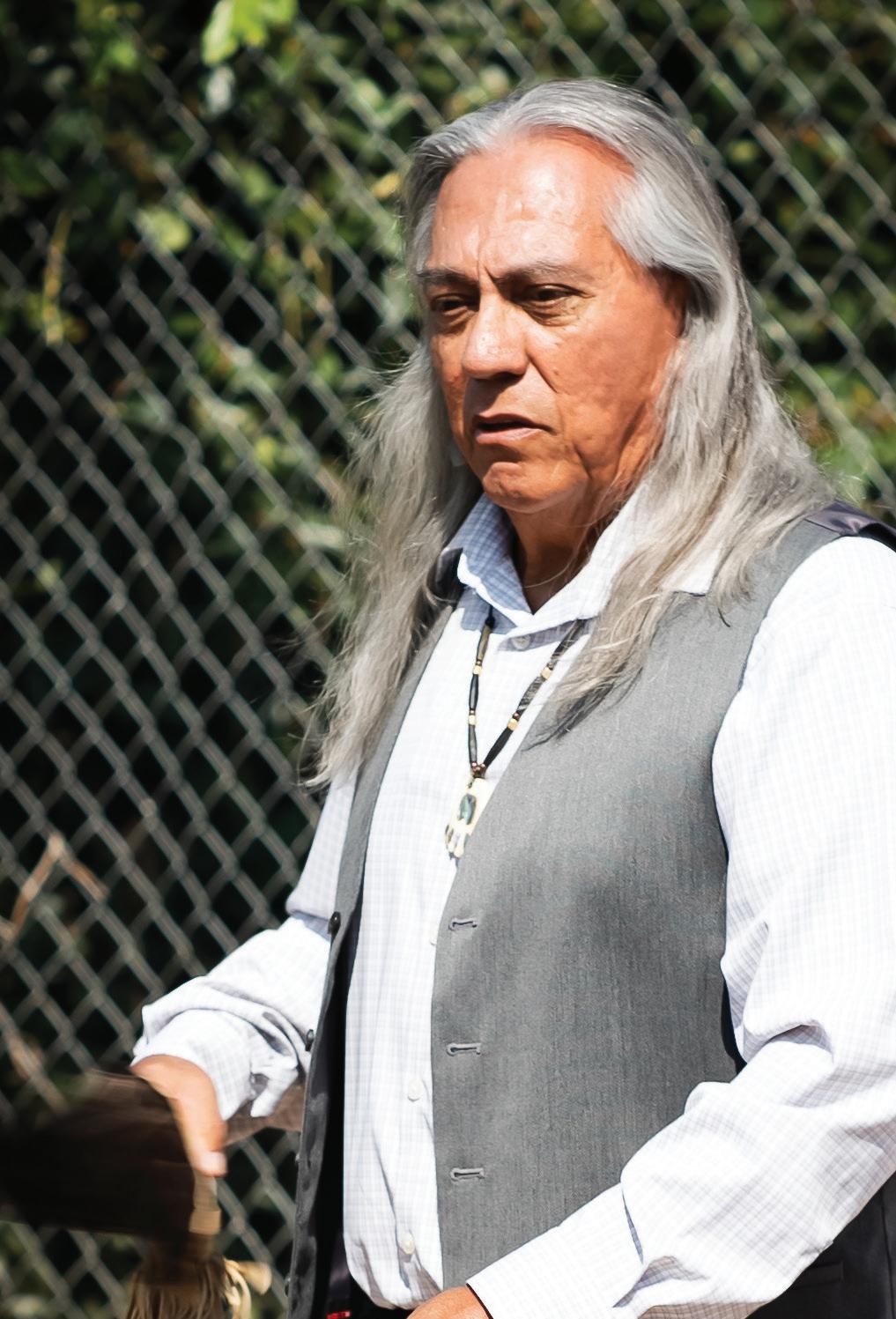
painful reminder of a history that still shapes daily life.
The San Fernando Project is designed to change that story.
Here, future residents will wake each morning to the same mountains their ancestors once looked upon. They will gather in communal spaces created with intention, places where cultural teachings can be passed on, where Native languages can be spoken, and where intergenerational connection can thrive.
As construction begins, the lot that once stood

still is alive with movement. Fences rise. Soil is shifted. Crews arrive each morning ready to build. Yet beneath the sound of progress, there is something even stronger. It is the quiet pulse of anticipation.
For the Fernandeño Tataviam Band of Mission Indians, this land is no longer waiting. It is transforming. It is returning. It is becoming home once more.
And soon, this home will welcome elders into a place filled with dignity, healing, and belonging, one apartment and one heartbeat at a time.
The Project is LOCATED just 1 mile from the historic homes built and owned by Tribal Citizens in the 19th CENTURY, still standing today in San Fernando, CA.
From L to R: Los
of
Housing and Homelessness Liaison
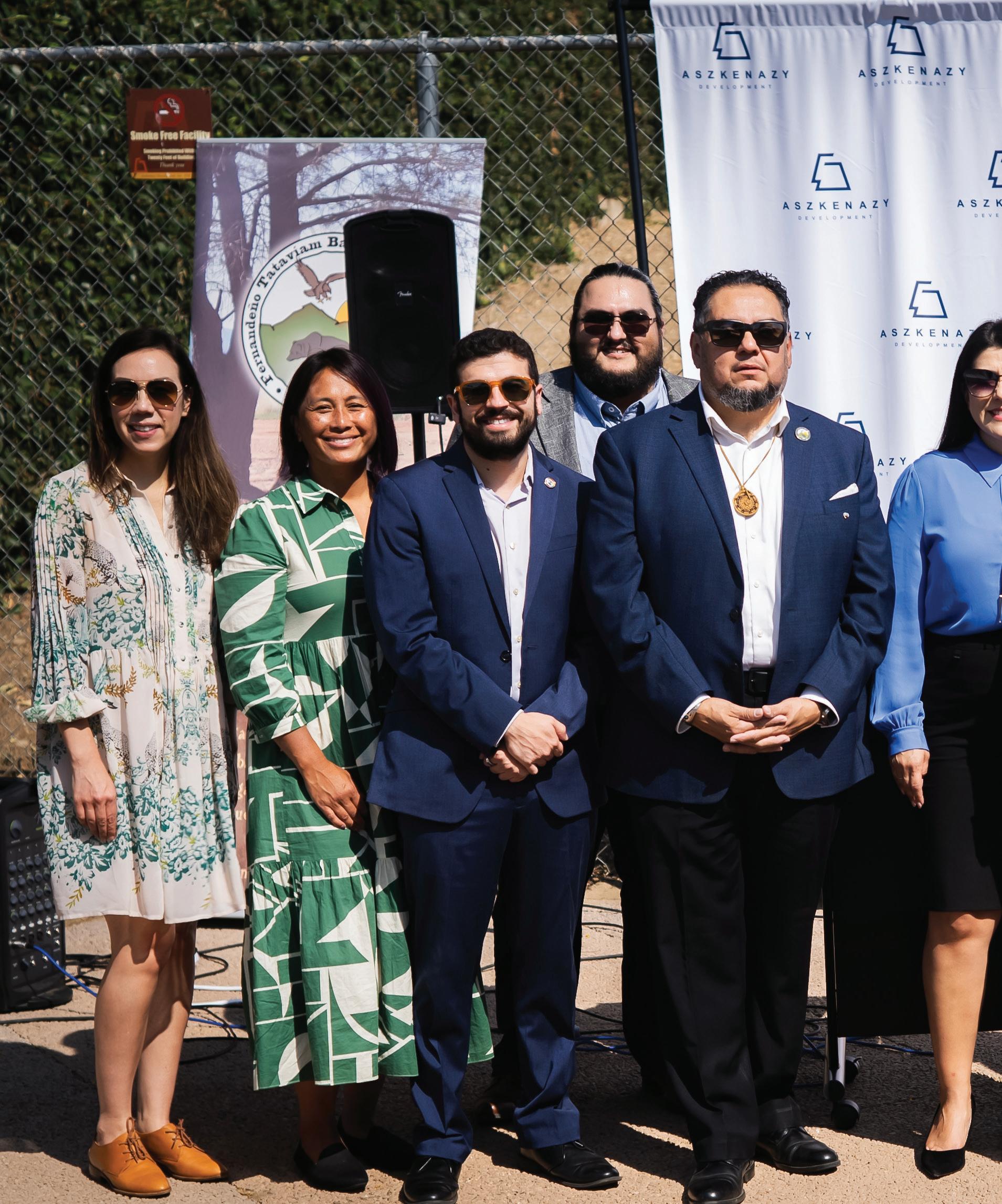
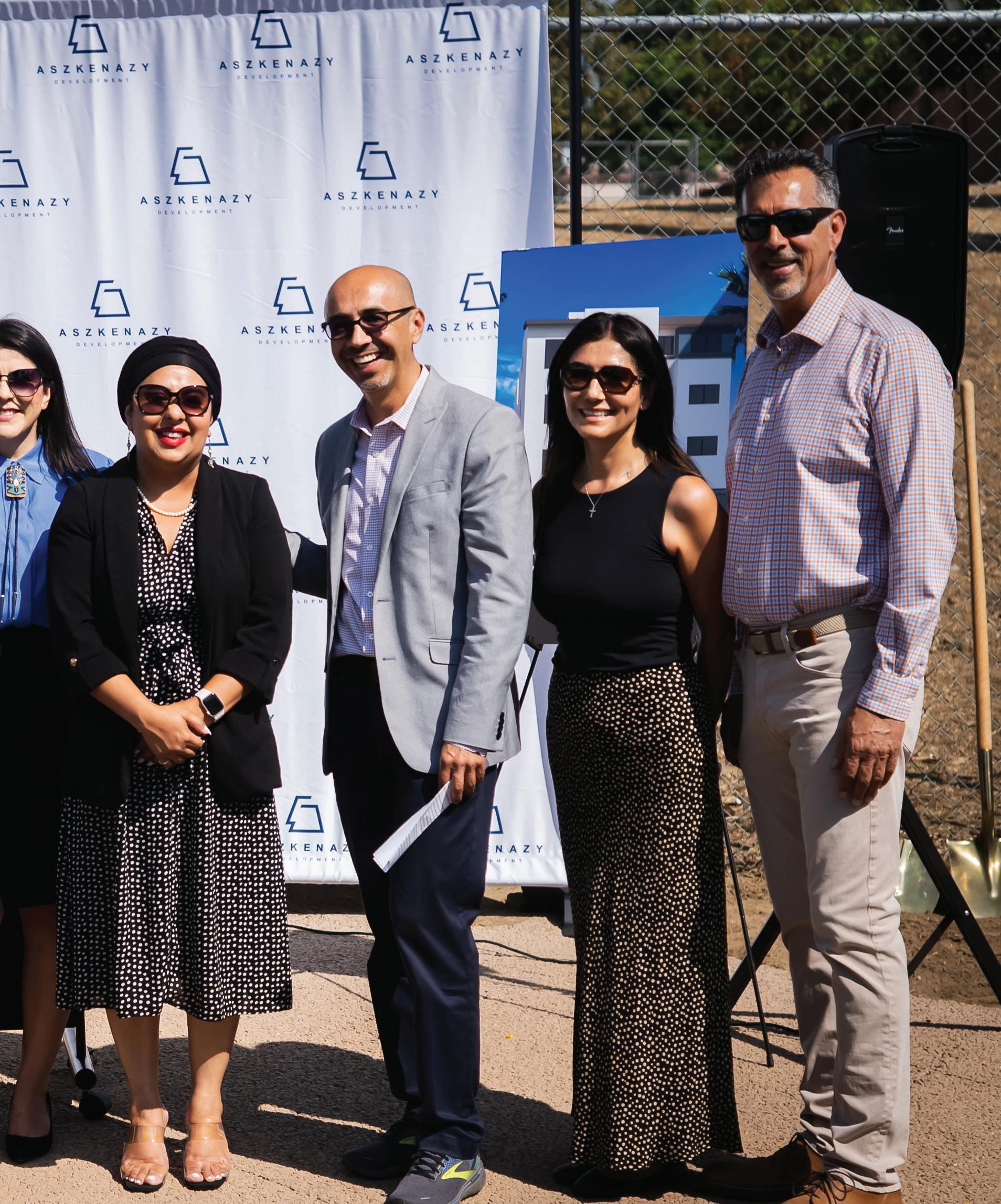
The California Housing Community Development Department, The Conrad N. Hilton Foundation, & The Los Angeles County CEO Office of Homeless Initiative.
1019 2nd Street, San Fernando, CA 91340

www.tataviam-nsn.us