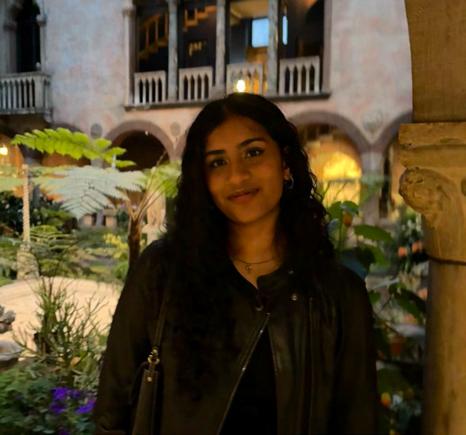
Favorite Venue Madison Square Garden Tastemaker Since Spring 2026
Quote “You miss 100% of the shots you miss.”
Major Politics, Philosophy & Economics
Graduating Spring 2028
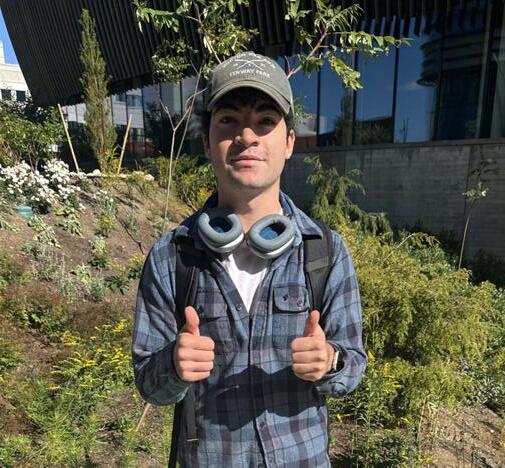
Favorite Venue The Chapel Tastemaker Since Spring 2026
Quote “No because that’s something I've always said.”
Major Media Arts and Communication
Graduating Spring 2026
Favorite Venue MGM Music Hall Tastemaker Since Fall 2025
Quote
“Life to love, greatness to be, peace to spread! Forever thankful.”
Major Business & Politics, Philosophy, Economics
Graduating Spring 2029
Favorite Venue The Salt Shed Tastemaker Since Fall 2025
Quote "Embarrassment doesn’t matter if the goal is to experience."
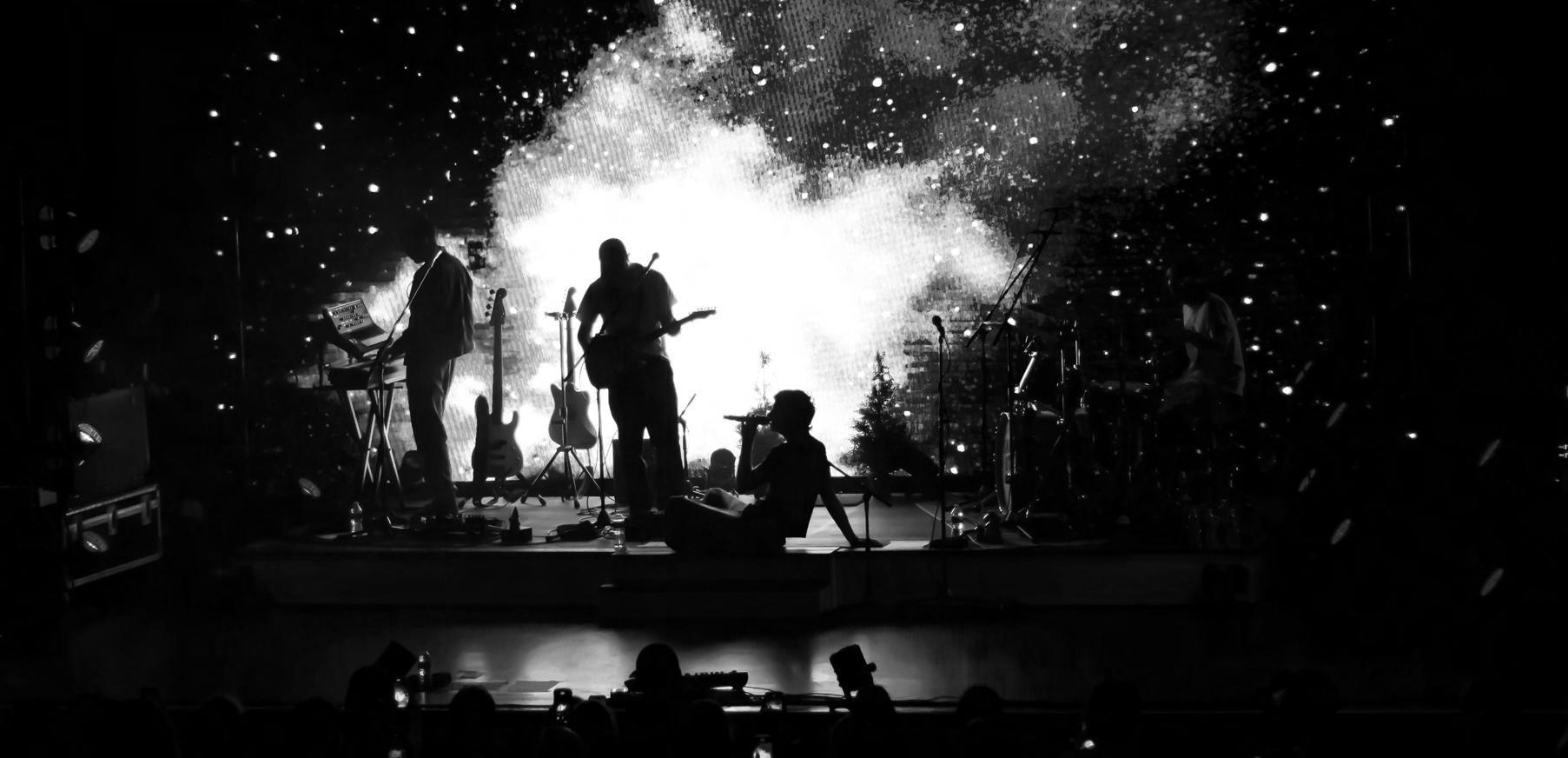
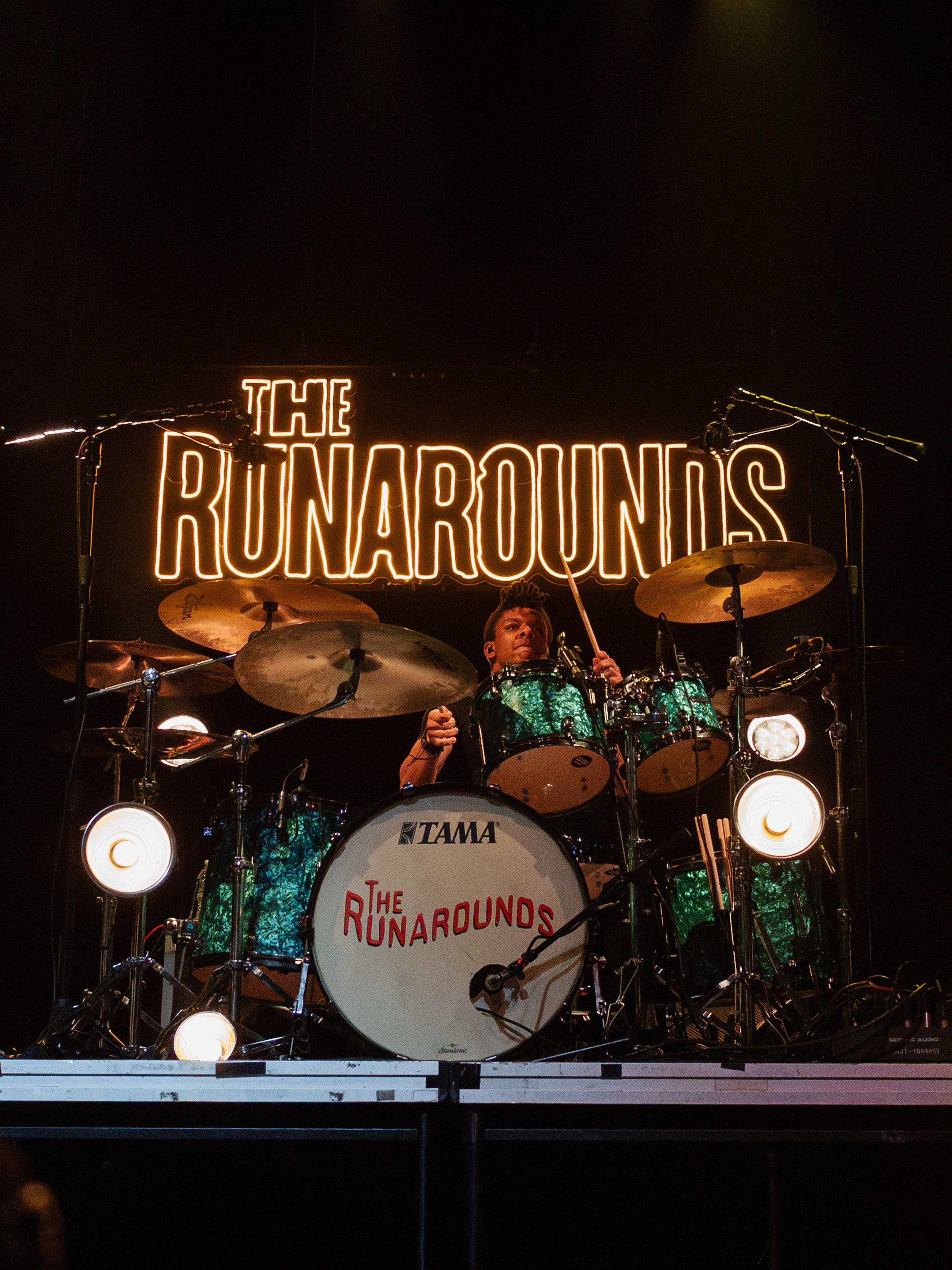
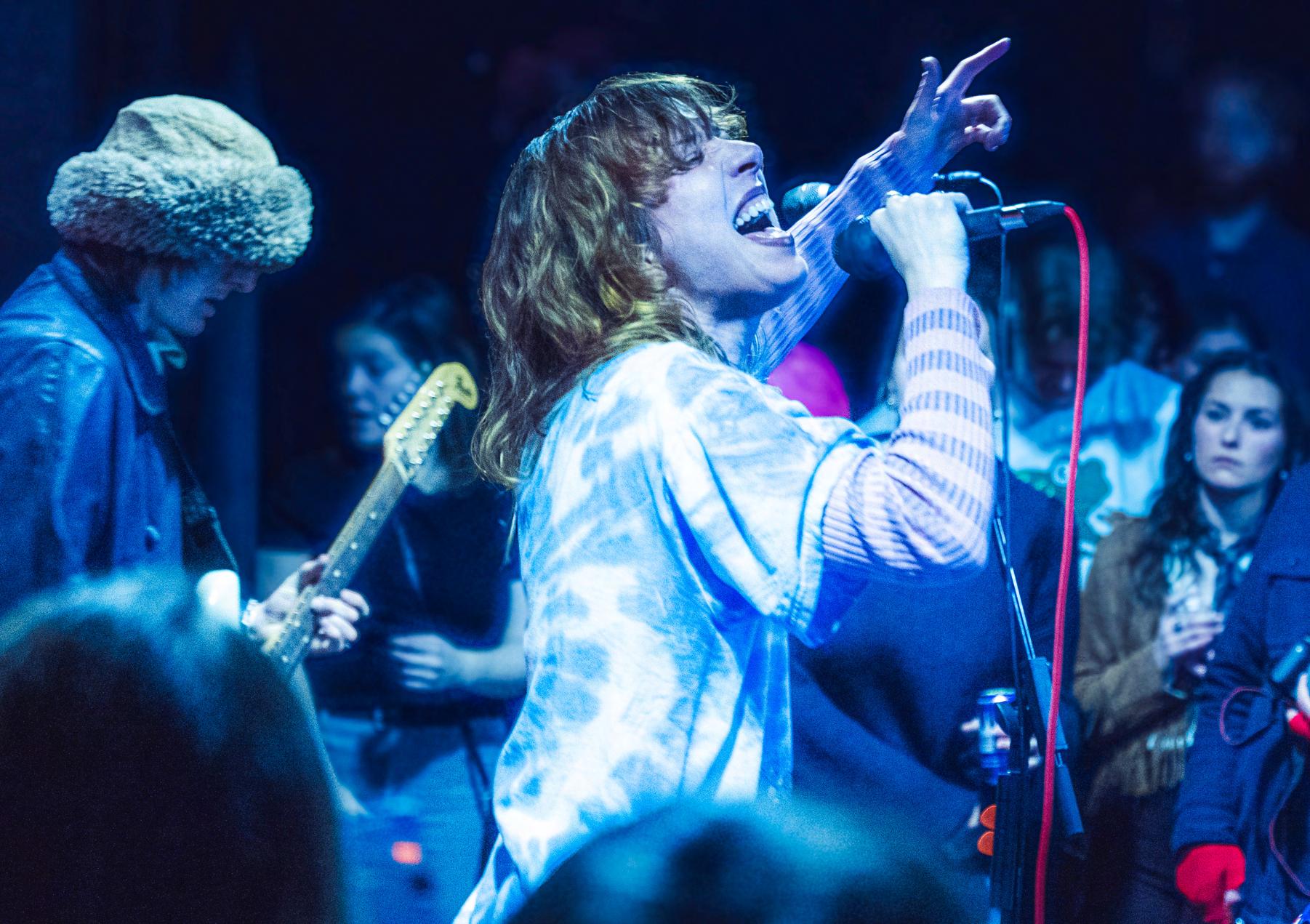
The Runarounds, House of Blues
Photo by Maya Abel (Communications & Media Studies)
Table of Contents
Cover Story
28
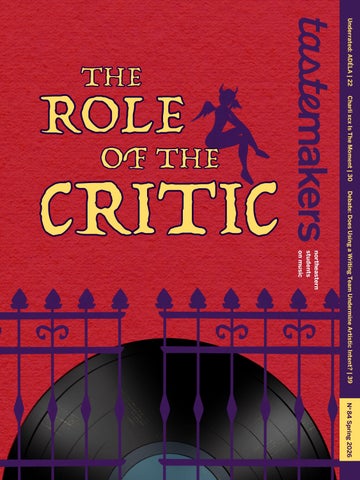
The Role of the Critic
To steep music journalism in stan activity is to remove the nuance necessary to uphold the importance of meaningful music making and consumption.
Reviews
8
Album Reviews
The Fall-Off, Icon, Wuthering Heights, Kiss All the Time. Disco, Occasionally
Features
14 24 26 30 34
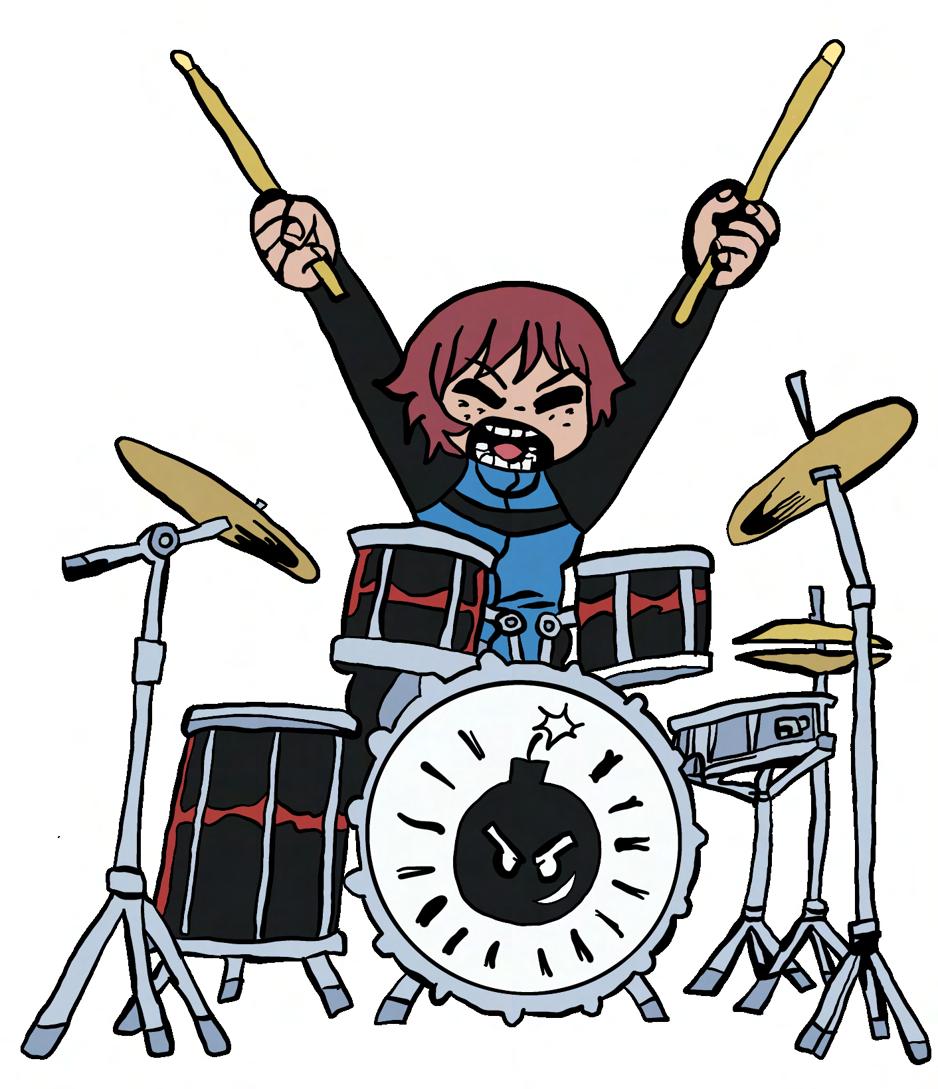
Scott Pilgrim Rocks On
In-universe and in the real world, music is a life-altering force in the Scott Pilgrim franchise.
Now Raving: Hollywood, Infected
Nothing else quite captures the present as accurately as electronic and techno music, and directors are noticing.
Media Illiteracy: Interpretive or Tone Deaf?
What is media literacy, and what does it actually imply for musicians and consumers of the music produced?
Charli xcx Is The Moment
Charli xcx’s longevity is largely due to her ability to straddle the general and the extreme. “The Moment” reveals the cracks in her self-concept.
Club Gone Global: How Regional Rhythms Took Over the Rave
As sounds from Brazil, the Caribbean, and various regions in Africa continue to proliferate in American club spaces, the dance floor’s identity became one of a globalized shared purpose.
42 43 44 47 48 50 52
KNEECAP: How Artists Handle Political Backlash
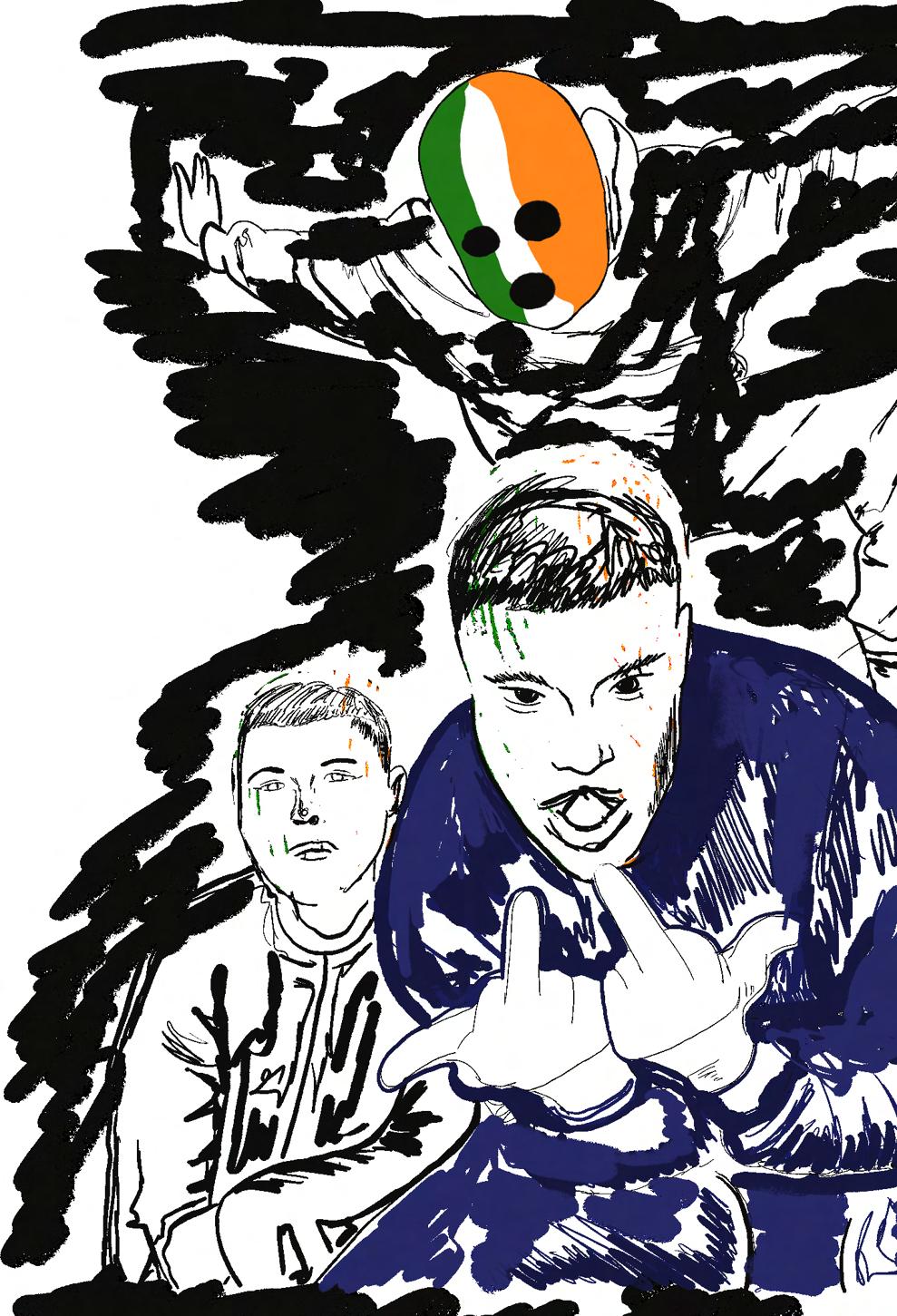
Musicians like the Irish rap trio KNEECAP are living proof that, despite the previous taboo in the music industry, politics and artists are undeniably intertwined.
The March Against the Electric Guitar
One of the oddest occurrences in music history was the 1967 protest against the electric guitar in Brazil. Why did this protest against a musical instrument occur?
The Controversies Surrounding Musician Biopics
When a movie focuses solely on the "greatest hits" of a life, it skips over the quiet, mundane, or truly difficult moments that actually shape a person’s character.
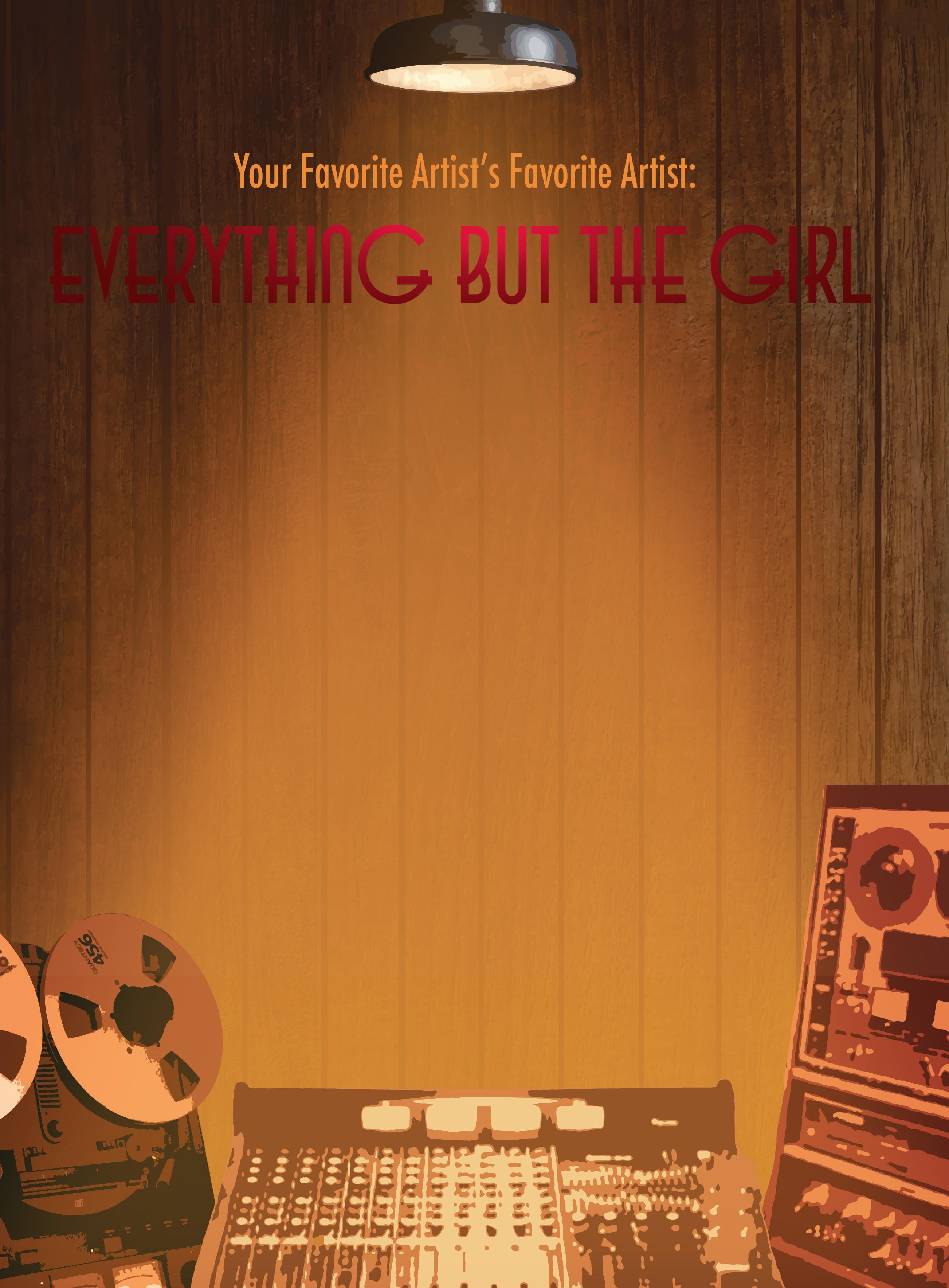
Your Favorite Artist's Favorite Artist: Everything But The Girl
UK duo Everything But The Girl shared timeless, formative ideas with trip-hop, DnB, and house that are revisited by many of today’s electronic musicians.
2026 is the New 2016
Was 2016 a great year for music, or are we all looking back at it with Rio De Janeiro–tinted glasses?
Sound Without Sight: The Genius of Blind Musicians
Explore the music of four blind musicians who together reshaped popular music both sonically and institutionally.
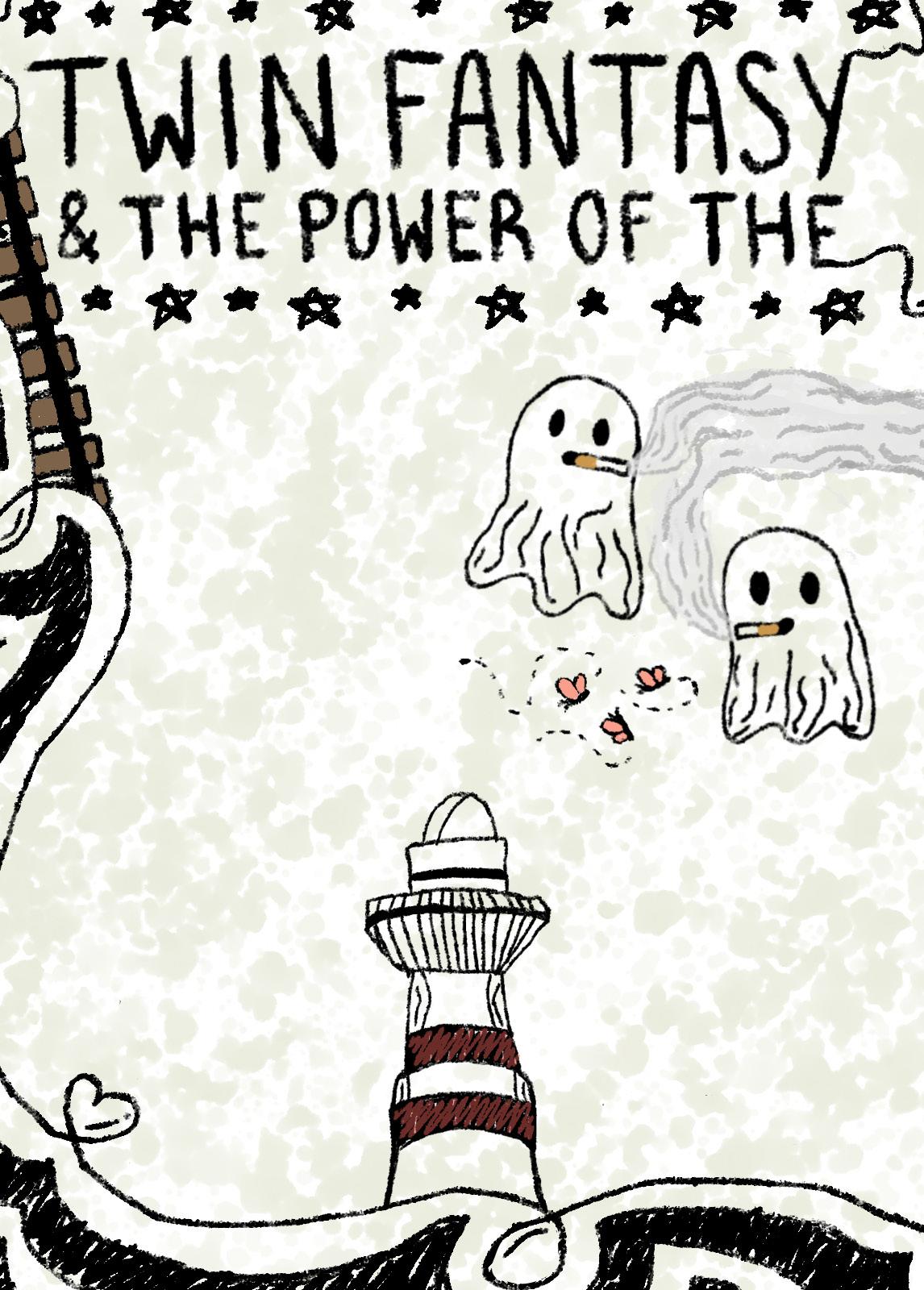
Twin Fantasy and the Power of the Concept Album
Car Seat Headrest’s concept album Twin Fantasy transforms a feeling and relationship into its own little world that fans still appreciate over a decade later.
Etcetera
12
16 18 22 37 39 46
An Interview with Ivory Farm, Our Battle of the Bands Winners
Ivory Farm discusses their inspiration and their path ahead after their first place Tastermakers Spring 2026 Battle of the Bands performance.
Local Talent: Mari Sitzmann
Nearing her graduation from Berklee College of Music, singersongwriter Mari Sitzmann discusses her songwriting and the next steps of her career.
The Very Best of the 1975
Throughout their rise that coincided with the growth of the Internet, the 1975 has been effortlessly cool for a long time.
Underrated: ADÉLA
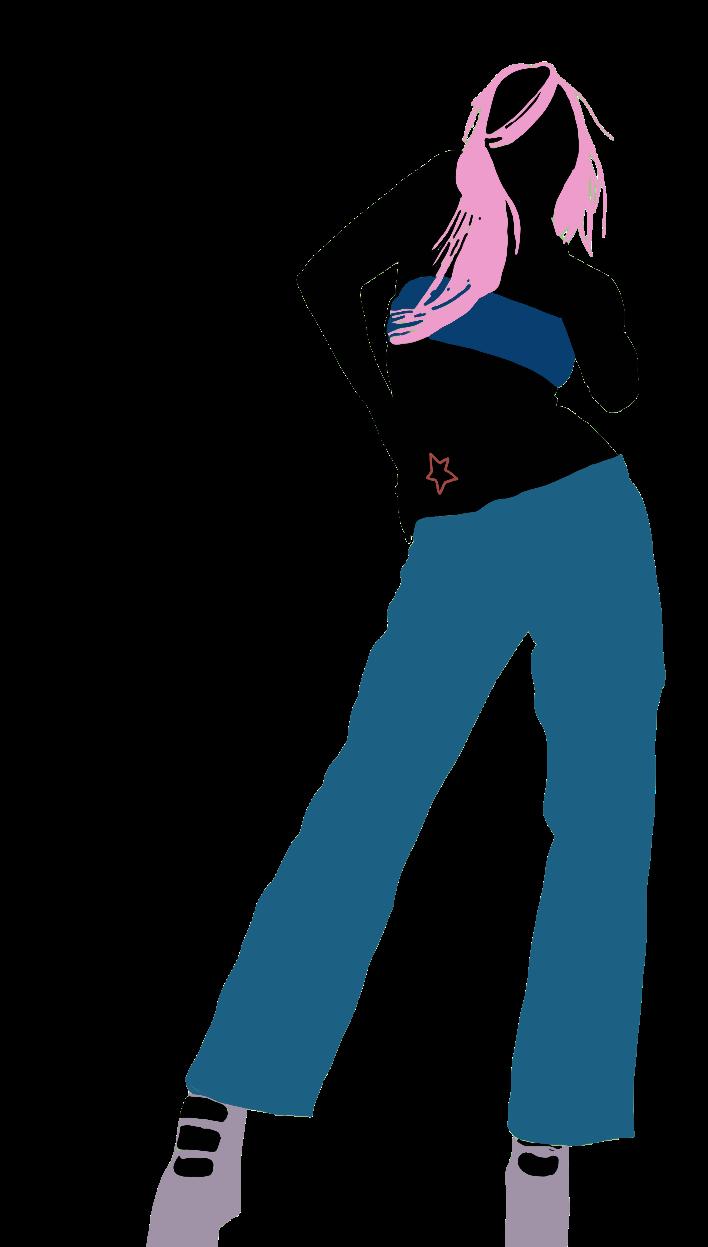
Fueled by hard work, dedication, and pink hair dye, ADÉLA is more than ready to keep shocking the world by being herself.
Taste of Nostalgia: Crying, Laughing, Loving, Lying
Despite his lack of recognition, English pop-folk singer Labi Siffre’s inclination to create timeless tracks places him among the strongest voices of his time.
Debate: Does Using a Writing Team Undermine Artistic Intent?
Many popular musicians have written their own music, and others have used a writing team. Is one strategy more sincere than the other?
In Defense Of: Glee Covers
When pondering which artists have charted the most on the Billboard Hot 100, the greats of the past half century come to mind. One contender likely gets forgotten: the Glee Cast.
29 30
ROCK OMM ENDS
5 Seconds of Summer
June 5 @ TD Garden
Following the release of their latest album, EVERYONE’S A STAR!, 5 Seconds of Summer are bringing their arena-ready pop-rock sound to TD Garden. Expect to hear high-energy standouts from your favorite boys in a “Boyband,” and don’t be surprised if they become your new “No. 1 Obsession.” With their ever-evolving sound and undeniable stage presence, “I’ll Find You” in the crowd for their summer show.
Kaitlyn Conly (Human Services and Psychology)
PinkPantheress
May 12 @ MGM Music Hall
Her name is Pink and she’s really glad to meet you at her show on May 12th at MGM Music Hall! It’s bound to be a funfilled evening of danceable electronic pop, and you’ll certainly Fancy Some More from PinkPantheress by the end of the night.
Emily Seitz (Health Science and Psychology)
Charlie Puth
May 22 @ MGM Music Hall
You’ve been hearing his hits since the 2010s, now this musical genius is headed to Boston on May 22nd for his Whatever’s Clever World Tour! Step into a night of nostalgia with some throwback classics and some new melodies from Charlie Puth’s that you won’t be able to get out of your head!
Ananya Singh (Political Science and Economics)
Rosalia June 11 @ TD Garden
Rosalía is sure to make you dance like you’re at Berghain June 11th at TD Garden! Her LUX tour will bring genre-bending Latin electronic music to Boston in a way that is sure to stick in your Memória.
Lucy Weld (Health Science)
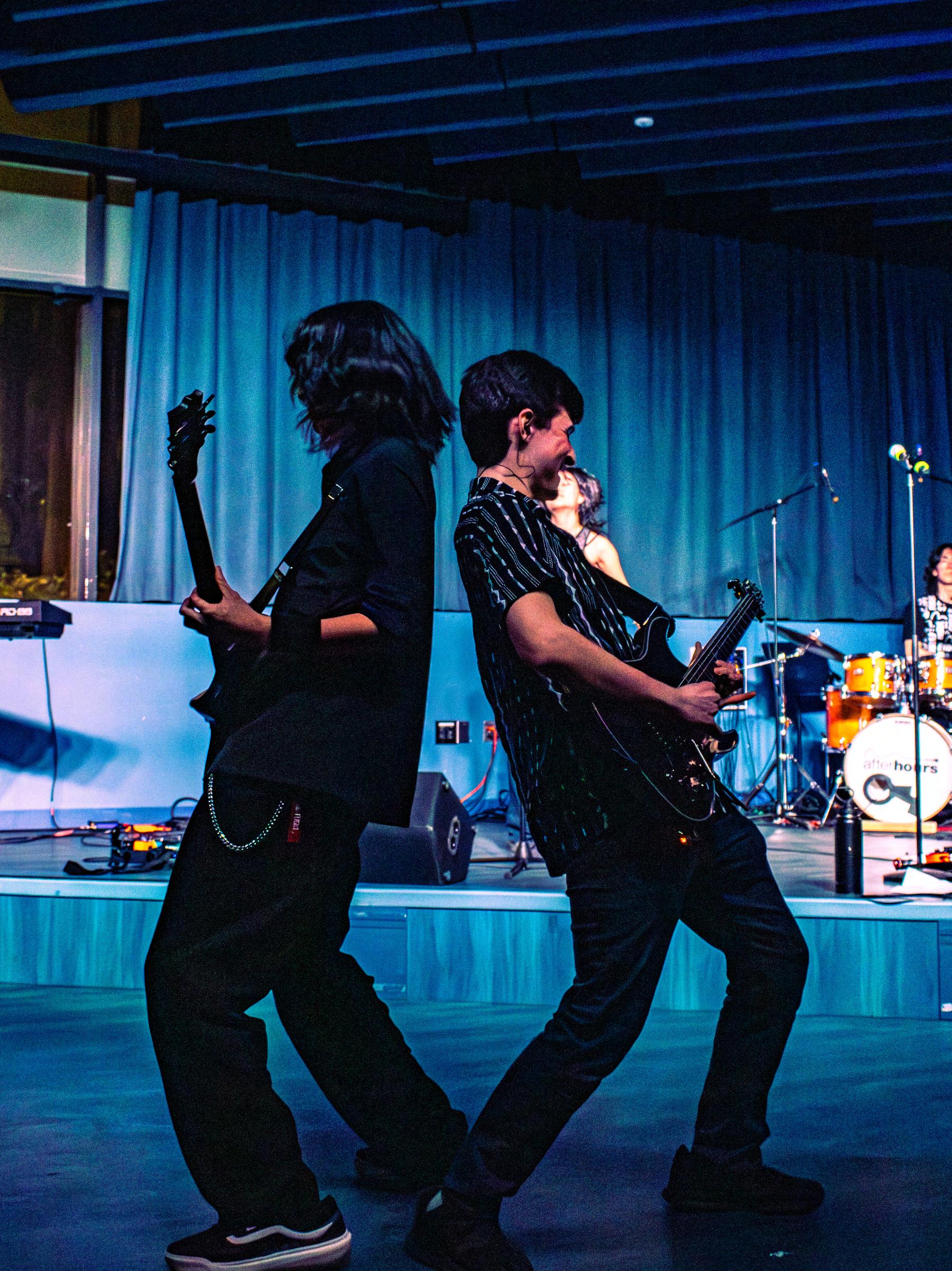
Juno Myers, Afterhours
Photo by Aya Souissi (Explore Program)
Album Reviews
J. Cole
The Fall-Off
Released February 6, 2026
Label Interscope Records
Genre Hip-hop
Tasty Tracks "SAFETY," "Poor Thang," "The Fall-Off is Inevitable"
There is a classic tale in hip-hop of an artist who displays remarkable initial talent that inexplicably shrivels when they get too comfortable. For some it happens swiftly and for some it takes decades. None are immune.
Snoop Dogg, who in a past life embodied youth and rebellion, now can be seen performing with Soulja Boy and Rick Ross at crypto-funded political rallies. Following the poorly-received release of “Tha Carter VI”, Lil Wayne can be found starring in Amazon commercials. With fading talent and often motivation, selling an image to maintain relevance is a reasonable choice. To J. Cole though, this is unimaginable.
For years now, Cole’s image has been defined by exceptional humility. Pictures of him riding a bicycle through New York City or buying a deli sandwich populate the internet to poke fun at his modesty. A common joke circulates of a “J.Cole McDonalds Meal,” a plain hamburger served with a humble glass of water. All of this is to say that J.Cole does not relish in luxury, he instead remains concentrated on his passion. However, now aged 41 and a father of two, there are greater priorities in his life than climbing the rap podium. The Fall-Off serves as a chronicle of those priorities changing in real time.
Recorded over the span of ten years, Cole has fittingly declared it to be his final album, and at 24 tracks, he has a lot to say before he goes.
Prior to its release, Cole revealed The Fall-Off would be a concept album. Each
disk would document a return visit to his hometown of Fayetteville, North Carolina, disk one occurring at 29 years old and disk two at 39. Cole has long cited Fayetteville as a major influence, providing him with his first exposure to rap music, but also to gun violence and poverty. “Two Six”, the project’s opening track, highlights this dichotomy. Cole’s immense pride for his city is palpable, but he is simultaneously unafraid to discuss the trauma that many of its residents endure. This unsteady relationship is what defines disk one and makes for a string of deeply compelling opening songs. “Poor Thang,” one of the project’s liveliest tracks, unapologetically targets a former high school acquaintance who fell under the pressure of localized violence. Condemning the violent nature of his hometown is nothing new for Cole, but here it is utilized as a means of reflection. At age 29, 2014 Forest Hills Drive would become his highest charting album to date, propelling him to new heights of stardom. As he returns from New York with a college degree and a Roc Nation deal, Fayetteville’s violence now serves as a reminder of just how distant he has become, both from his past struggles and his peers.
“Legacy” is a classic demonstration of J.Cole’s embarrassingly personal yet earnest approach to love songs. Tackling his inner conflicts and how they influence his relationships with women, the lyrics range from cleverly introspective: “So busy looking back that I can't see what God has made for me,” to eye-rolling: “I need a Yelp for hoes.” This approach can be found across both disks, and makes for some of the album’s least engaging moments. The worst offender is “Only You,” a sluggish ballad to Cole’s wife that is only slightly redeemed by a serviceable Burna Boy feature. While Cole’s spree of love songs comprises many of the album’s weak points, they are admittedly emblematic of his changing personal life. Cole has often stated that as time goes on, his interest in hip-hop wanes and his love for his family grows. His writing comes from a sincere place, but the stale and at times awkward delivery diminishes the impact of his message.
Some of the album’s strongest moments occur when J. Cole is examining his relationship with rap itself. On disk two, this theme is accompanied by samples of and references to “golden age” hip-hop. The most obvious example is “I Love Her Again,” which draws inspiration from Common’s “The Light” and “I Used to Love H.E.R.” The track explores how Cole’s view of rap, both
as an industry and art form, has changed. His infatuation slowly turns to resentment as the genre becomes unrecognisable from what he grew up loving. Eventually, he accepts that rap will never stay where he wants it to be for long. Holding on to talent in the hip-hop world is near impossible and new talent will always sprout. Like a self-fulfilling prophecy, Cole finds himself in that exact place which has transformed his idols into lifeless husks. While he attempts to examine this genuinely intriguing topic over disk two, he also unintentionally embodies it. With tracks like “Man Up Above” and “Old Dog” which notably lack focus, Cole’s grey hairs begin to show. J. Cole has always been transparent about his mindset as an artist. With The Fall-Off, he makes it clear that what is on his mind now is retirement. Cole’s embrace of his inevitable decline is praiseworthy, but it does not shield him from criticism. Moments of undeniable talent still shine through, but the project as a whole is bogged down by tracks which lack focus and intensity. He says it best himself: “if you're ever blessed enough to make it to this spot, you'll see the ones you looked up to, unfortunately, had to drop.”
From the first few seconds of “white noise,” the opening track of R&B superstar Brent Faiyaz’s Icon, it is clear that the album does not conform to the usual structure of others in the R&B genre. First, a sole violin, soon followed by an array of strings. Layer by layer, an instrumental builds: a deep, brooding bass, contrasted by the calculated plucks of strings. An orchestral introduction; grand, meaningful, and cinematic. The violins cry out, emotions seeping through their harmonies and eventual resolution, completely subverting a first-time listener’s expectations from the album’s opening notes.
After five successful studio albums, numerous award nominations, and the creation of his own record label, Brent Faiyaz has been deemed a powerhouse in the R&B scene. His projects have continued to evolve since his beginnings as a teenage producer, each album revealing a higher production quality and an increasingly impressive feature list. His newest album Icon flips the formula Faiyaz has established in his past on its head, completely shattering the narrative of both his music and modern-day R&B.
In an age of popular artists releasing overbloated albums and overpacked features, Icon is a breath of fresh air. Faiyaz is not a stranger to short projects; Icon, however, feels intentionally concise. The lack of features is a conscious decision, establishing Faiyaz as the project’s sole narrator. Shying away from his usually overt storytelling
methods through interludes and spoken word, he opts for dialogue portrayed through instrumental and thematic elements. Each track and its accompaniment feel precisely distinct – no two sound exactly alike, from the disco-inspired beats on “other side.” to the stripped-down acoustic of “vanilla sky.” Each offers a different lens for the picture, a different season of emotion. Every title is fully lowercase and ends with a period, symbolizing a full stop; the following song introduces an entirely new concept.
The four seasons are the main focus of Icon, as each phase contributes a different feeling of love and its associated emotions. From infatuation and obsession to anxiety and fear, each song is a different testament to the fragility of human emotions, how feelings of love can shift as easily and as fleeting as summer shifting into fall. There are moments where Faiyaz displays himself as almost untouchable, like on “have to.” as his confidence piques enough for him to take charge: “I’ll drive this ship myself if I have to.” In direct contrast, there are just as many lows; “strangers.” is raw and intimate, as he faces the bloody aftermath of a broken relationship, and questions, “Is it something I did?” Icon manages to encapsulate every stage of love and grief in a relationship, from its anxious, playful beginnings on “butterflies.” to finally coming to terms with its end on “vanilla sky.”
As Faiyaz masterfully blends the concepts of love and change, he also does so with the technicalities of both modern-day and old-school R&B. “other side.” perfectly encapsulates the attitude of 80s R&B, perfectly blending his signature vocals and lyricism with a style reminiscent of Michael Jackson's early discography with its funky bass and glissandos. 90s era R&B and soul are melded together on “pure fantasy.” and when combined with his layered, melodic harmonies, it provides a floaty, out-of-body experience of a fantastical type of love — standing out against his own back catalogue, along with any charting R&B song in the previous decade. There are still some distinct elements that Faiyaz continues on these records; his recognizable pitched-down/up vocals are scattered throughout, along with his signature sinfully smooth, passionate vocals that are always expected.
Upon release, Faiyaz declared Icon as his “most expansive and intentional body of work to date,” an accurate description of the album. Icon is thematically, lyrically, and sonically expansive, different enough to stand
out against the crowd, yet not straying too far from the timeless R&B he is acclaimed for. Brent Faiyaz has cemented himself as exactly what he set out to be: an icon.
Remi Santos (Political Science & International Relations)
Charli XCX Wuthering Heights
Released February 13, 2026
Label Atlantic Records
Genre Synth/Alt Pop
Tasty Tracks " Dying for You," "Seeing Things," "My Reminder," "Funny Mouth"
Wuthering Heights was born out of exhaustion and the strange clarity that follows it. By her own account, Charli xcx reached burn-out long before the Bratmania was beginning to wear off of the rest of us. She wanted a reset, but what she really needed was an out. When Emerald Fennell suggested Charli make a song or two for a new movie adaptation of the 1847 gothic classic, Charli counteroffered with a whole album and set out to make something "elegant and brutal."
Wuthering Heights is Charli's second soundtrack album and her seventh studio record. Of course, this isn't the first time a pop artist has translated the literary classic into the contemporary. Kate Bush did it in 1978, her otherworldly debut single still lingering in Charli’s work. Charli does the same, and makes it entirely hers. Working inside someone else's world is not only central to the way this album breathes, but the reason it buckles at certain points.
Yet, the true touchstone for this album is Charli’s 2013 debut, True Romance, the desperately bright and emotionally uninhibited record she spent the following decade running away from. She turns back toward it with her ear tuned to Nine Inch Nails and The Velvet Underground: strings, gothic claustrophobia, and the immensity of a woman alone inside feelings all too large for her. Unmistakably Charli, Wuthering Heights presents untamable emotions boiling
underneath heavy layers of processing. Strings thread through and between the album’s more electronic moments, sometimes in harmony and sometimes in dissonance. The album opens with “House,” a spoken word track where The Velvet Underground’s John Cale murmurs a warning over atonal strings: "If there's beauty, say it's enough." The moment lands slowly, like a last breath before hypothermia sets in. It’s not the cozy type of cold, but the cold of the Yorkshire moors burrowing deep beneath your skin. Emily Brontë understood how to capture that. Charli xcx seems to have felt it too.
The imagery of houses, altars, and chains scribble love architecturally into a labyrinth of desire you can't escape. “Wall of Sound" discovers an ache buried alive, lyrics reaching across a distance they're not able to close. Suffocating strings wrap around the deliberately restrained vocals until raw, intimate distance is all you feel: the very definition of yearning. Unable to break away, "Chains of Love," pits cinematic strings against crisp percussion while the melody loops back on itself until you feel the chains before she names them. Then, Charli takes the chains and builds a shrine. "Altars" turns obsession into blind worship with eyes wide open, the lyrics throwing themselves down at the feet of something that would never break the fall.
The middle stretch of the album is where mud starts to track onto the carpet. "Eyes of the World" should be one of the record’s defining moments. Sky Ferreira sounds like someone recording from captivity, which suits the album’s themes, but the orchestration repeatedly drifts without giving her anything to collapse onto. That fault moves in the opposite direction on "Out of Myself," with the song’s composition doing the heavy lifting as Charli snarls masochistic pleas that seem to bleed in place. The album's stickiest hook doesn't bother with any of this showmanship: "I think I'm seein' shadows of your hair / I think I'm seein' things." In spite of its plain production and simple writing, "Seeing Things" lands harder than some of the record's more grand gestures.
Still, the rot in the walls only amplifies the sublime. Elegance and brutality collide head-on in “Dying for You,” production reaching for a dance-rock track while inconsolable lyrics hemorrhage underneath. It’s the record’s clearest gem and the friction between pleasure and pain evokes exactly what Emily Brontë set out to capture. "Funny
Mouth" holds the wreckage between its teeth: strings swell and writhe against brittle synths catching static in the bass churn. The vocal, stretching so taut it warps, takes the contortion in stride. Everything empties out slowly until the album wearily surrenders with a bitter smile.
Wuthering Heights stands out not because it's Charli’s strongest album, but because it demonstrates that she can work entirely inside someone else's world and still sound like no one other than herself. Wuthering Heights is not the type of record that will ever be the public's favorite, but it’s the type to reward the “angels” over the “brats.”
Alejandro Hernandez (Computer Science & Music)
Harry
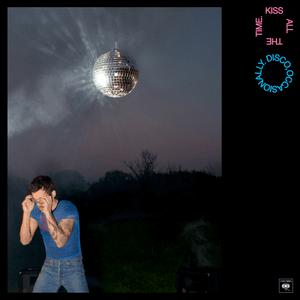
Styles Kiss All the Time. Disco, Occasionally
Released January 30, 2026
Label Atlantic Records
Genre Pop
Tasty Tracks “Dance No More,” “Ready, Steady, Go!,” “Coming Up Roses”
Marathon runner Harry Styles has returned to music. Following his Grammy win for Harry’s House, Styles felt it necessary to take an elongated break before getting back to work. He spent this time living what he described as a “slower lifestyle” – running three marathons, clubbing across Berlin, and roaming the streets of Italy – being as detached from celebrity as possible. His time in solitude to reflect is apparent on Kiss All The Time. Disco, Occasionally, a record that explores his relationship to fame with a sound that is less polished, but perhaps more experimental and mature than his previous works.
Styles launched this new sound with an understated first single. “Aperture” serves as a gentle transition into the new electronic sound that Styles taps into on this record. The song itself is underwhelming, repeating three chords for five minutes with only a mere suggestion of an actual chorus. It slowly builds using pulsating synthesizers and backing vocals, but never reaches a satisfying destination. “Aperture” is a culprit of Styles’s biggest critique: his music relies more on “vibes” than substance. However, the song’s vague optimism helps to establish the theme of community which Styles introduced throughout his massive Love On Tour, a feeling that translates onto Kiss All the Time. Disco, Occasionally
Styles was honest in naming the album,
as there really is only disco occasionally. When he leans into a less muted sound, he does so incredibly well. “Dance No More,” reminiscent of the 1978 disco hit “Le Freak,” is by far the standout track on the album. The song perfectly captures the exciting and disorienting feeling of being on a dance floor “where there’s no difference in between the tears and the sweat,” experimenting with strange vocal effects, multiple synth textures, and a fun call-and-response.
The album is devoid of the big choruses and typical pop-structures that made Styles’ last two albums such radio successes. There is no “Watermelon Sugar” to be found on this record; Tracks like “Ready, Steady, Go!” place Style’s vocals in the background in favor of the bassline, chaotic drums, and borderline annoying yet addictive synths. At moments on the album, this departure from form feels like it holds songs back. “Taste Back” desperately wants to reach the highs of “Satellite” from Harry’s House, but falls short with a far less gripping hook. “American Girls,” Styles’s best Matty Healy impression, comes closer to achieving this pop status, but still feels somewhat restricted and muted without Styles at the forefront.
The album’s ultimate paradox lies in Harry’s desire to be vulnerable about his relationship with fame while remaining guarded in his lyricism. He best addresses these complex feelings on “Paint By Numbers,” a softer acoustic ballad. He sings, “It’s a little bit complicated when / They put an image in your head, and now you’re stuck with it.” He’s clearly no longer the sixteen year old star of One Direction, but much of his fandom still idolizes him in the same way they did then. His desire to reinvent on this album may be Styles’s way of trying to put distance between himself and this old image. “Holding the weight of the American children whose hearts you break” possibly addresses his feelings towards fellow One Direction member Liam Payne’s passing in 2024, echoing what he expressed in his Apple Music interview earlier this year.
Beyond these snippets of directness, Styles characteristically tries to avoid being the subject of his own material. On “Are You Listening Yet,” he ponders different questions regarding his life as an artist, yet directs them at the listener. He follows a similar writing pattern in “The Waiting Game,” where he shares different bits of advice that feel like they were meant for him, but again directed at a nameless receiver. This lyric style never asks the listener to think
about Style’s connection to the music he is creating or the songs he is writing, making him replaceable in his own material. Whether it be wanting to explore dance and electronic music while also wanting to play it safe, or wanting to be vulnerable in his lyricism but fearing exposing too much, Styles can never quite commit on Kiss All The Time. Disco, Occasionally. The listening experience is still pleasant, and the songs are still guaranteed to hit at his upcoming thirty night residency at Madison Square Garden. The album is evidence that Styles, though, is still clearly trying to figure out who he wants to be as an artist, celebrity, and person.
Katie Colella (Music Industry)
AN INTERVIEW WITH IVORY FARM, OUR BATTLE OF THE BANDS WINNERS
In February, Tastemakers hosted our annual Battle of the Bands a competition of young, local talent with winners selected by a panel of judges. As the only Northeastern band competing against three Berklee groups, Ivory Farm undeniably held their own and won the top spot. Composed of Angie Yap (vocals), Jeffrey Lam (guitar), Ben Farb (guitar), Brady Yip (bass), and Adrian Tong (drums), the band stood out for their electric stage presence and vibrant musicianship. We sat down with Ivory Farm following their performance to learn more about their inspirations and the path ahead.
This interview has been edited for brevity and clarity
Tastemakers Music Magazine (TMM): What are you guys currently listening to?
Ben Farb (BF): A lot of a band called Thank You Scientist. They make jazz, prog-metal stuff.
Brady Yip (BY): I’ve been rocking with some melodic hardcore, like I Promised The World and Poison the Well.
Adrian Tong (AT): I just listen to stuff that sounds good.
Jeffrey Lam (JL): Instagram reel audios?
AT: Oh yeah!
TMM: Do your music tastes align with each other or are they wide ranging?
Angie Yap (AY): I think our tastes are similar enough. A lot of what we listen to bleeds into what we write.
JL: It’s all very compatible. We’re all obviously into heavier music at the very least, but the specific details and subgenres vary.
TMM: How’d you guys start playing together?
BF: Jeffrey and I met in N.U.in Northern Ireland. The first conversation we had was on Avenged Sevenfold and Metallica. We hit it off basically right away. After a few months we were like, “Hey, what if we started a band when we got back?”
AY: I put out one of those Class of 2028 Instagram posts and mentioned that I’m a vocalist if any bands want to adopt me. Jeffrey sent me a message really early on asking if I would want to start something. At the time I actually turned him down because I was in Boston and he was abroad. But once everyone else came back to main campus, I got roped back into it.
BF: Around last October, Brady, who we knew from Northern Ireland, was like, “Hey, I can play bass for you guys if you want.” We were like, “Sure, Brady. Thanks!” Then we spent a month putting up flyers and interviewing drummers. Adrian was one of the last ones to try out, and he ended up being the one we picked.
TMM: This is a great advertisement for N.U.in.
JL: Please don’t use me. Worst mistake of my life.
TMM: Where does the name Ivory Farm come from?
AY: Oh God.
JL: For a while we didn’t have an actual name. We used a temporary name for gigs. We had a document with a lot of very foul names. Ivory Farm was one of the more tame ones there.
TMM: What were some of the losing names?
Brady Yip: I don’t think you want to know, bro.
JL: Pulsion and Reverie were runners-up.
AY: Oh my God. Don’t read past that.
BF: Every time we got a name, we’d comb through social media to see if there were any bands that already had it. We had to keep searching until we found something just for us.
AY: Ivory farm started off as a complete joke. It eventually just grew on all of us.
TMM: How would you guys describe your sound to someone who hasn’t heard you?
JL: We’re definitely some heavy metal subgenre. We draw from a lot of different subgenres, so all of our specific tastes come together when we write. We also don’t really approach songwriting with a specific genre in mind. Whatever comes together, comes together.
TMM: What does your songwriting process look like?
BF: It’s been different for every song we’ve written. I’d say the first one came from Jeffrey. He demoed out a guitar track and then brought it in. We all collaborated, and eventually it turned into one final project, which we’re hopefully going to record soon.
AY: With our song “Immune,” Ben had a full eight minute demo of it. We all learned it and I separately wrote melody and lyrics. We always do make a lot of changes, though, to account for everyone’s individual styles.
BF: We trust each other enough as musicians so everyone can write their own part how they think is best.
TMM: Let’s talk about Battle of the Bands. Was it intimidating to be the only Northeastern group against three Berklee bands?
BF: I think so. We were running one rehearsal a week, so we definitely
had less ability to work as a unit than Berklee bands do. But we were also confident enough in our stage presence and songwriting to feel like we had a chance.
AY: I was amazed at the sheer amount of control the competing vocalists had. I thought, “I kind of need to optimize here.” If I can’t beat them in technique, I’ll put my all into things I know I’m specifically good at.
TMM: Something that really stood out about your performance was the stage presence and crowd engagement. How did you guys learn to be so comfortable while performing?
JL: Mostly just playing gigs and getting used to it. I think it comes pretty naturally after a while. We did really want to emphasize our dual-guitar setup, though, so a lot of our bits ended up being just Ben and I.
BF: It’s important for us to interact with each other on stage because the audience can really feel that connection.
TMM: You guys have done a lot of different local gigs. Do you have a favorite part of the Boston music scene?
BF: We’ve become friendly with some other bands just from playing with them a lot. We go to their shows and they come to our shows. I think that community is something that I’ve really enjoyed about playing in the area.
TMM: What can we expect next from Ivory Farm?
BF: Hopefully, recording and releasing a song very soon!
JL: Next year or so, we should have a full EP out.
AY: Fingers crossed. I’m really excited to write more stuff and get in the studio. This has easily been one of my favorite projects I’ve done.
Emmett Pearlman (Mechanical Engineering)
S CO TT PI LG R I M Rocks On
music is both his weapon and shield. He impresses Knives Chau, the high schooler he’s dating at the series’ inception, by playing with his band and introducing her to “good music.”
In the movie, he wields his bass-playing skills against Ramona’s evil exes in video game style fights. Scott’s admittedly not great at his instrument, but nevertheless, his story is inextricably tied to it.
One of the most memorable aspects of Scott Pilgrim is Scott’s band, Sex Bob-Omb. Scott and his friends Stephen Stills, Kim Pines, and Young Neil are part of a garage rock band that’s noisy, abrasive, and canonically average. Yet, their jam sessions are electric and invigorating in every iteration of the story. Along with characterizing Scott and his
Along with characterizing Scott and his friends, music also plays a part in propelling the plot.
of deafening guitars and drums surround them as speech bubbles articulate the lyrics to their songs. The illustrations by cartoonist and series creator Bryan Lee O’Malley bring the music to life.
In the movies, the most iconic musicdriven moments is Scott’s amp vs. amp battle with the Katayanagi twins, evil exes five and six. They intimidate Scott and Sex BobOmb by using their wall of amps and expert keyboard skills to summon a pair of dragons that attack the band. However, Sex Bob-Omb fights back by conjuring a giant yeti when Scott turns on the distortion pedal on his bass. It’s an epic battle where soundwaves and visualized energy surround the musicians and the apparitions they have created. And it’s all
fueled by music.
Music’s impact in Scott Pilgrim transcends the fictional version of Toronto that the story takes place in. What many people don’t realize is that the franchise wouldn’t be the same without the influence of female musicians in the real-life Canadian indie scene.
What many people don't realize is that the franchise wouldn't be the same without the influence of female musicians
in the reallife Canadian indie scene.
In fact, Scott Pilgrim as we know it wouldn’t exist at all.
Before creating the comics, Bryan Lee O’Malley was an avid fan of the east coast Canadian indie music scene. He discovered an indie rock band called Plumtree, which consisted of Halifax natives Carla and Lynette Gillis, Amanda Braden, and Nina Martin. The women were teenagers when the band was formed, and their career spanned a short seven years. Unbeknownst to the band, O’Malley became one of their biggest fans. While trying to figure out what his next comic would be about, O’Malley decided to pay tribute to Plumtree by naming his main character after their song “Scott Pilgrim.” It was history from there.
Since then, Plumtree has been referenced in all forms of the Scott Pilgrim story. Most notably, Scott’s most iconic outfit is a yellow and red Plumtree shirt. Some side characters share names with the band members and the titles of other Plumtree songs are referenced throughout the story. The band’s angsty adolescent rock influence permeates throughout the soundtrack, video game, and anime. And yes, “Scott Pilgrim” appears on the soundtrack to the movie, along with Plumtree’s “Go!”
Plumtree isn’t the only time O’Malley was inspired by female Canadian musicians. He’s also a fan of the band Metric, and based the design of the character Envy Adams on the group’s frontwoman, Emily Haines. He wanted the character to be “tough and complicated and sexy” but also marked by having gone through a lot of change in a short
time. O’Malley resonated with how Metric’s music explored the same narrative arc. Little did he know that years later when his graphic novel was adapted into a movie, the same band would be involved in the franchise.
In Scott Pilgrim vs. the World, the most well-known musical moment is when Envy Adams and her band the Clash at Demonhead perform “Black Sheep.” During the production of the movie, director Edgar Wright reached out to Metric and asked if they could contribute a song to the film.
“Black Sheep” was a perfect fit; Brie Larson captured the haughty attitude of the song during her performance as Envy Adams and the lyrics of the song fit with the theme of looking back on the past eerily well.
“Black Sheep” isn’t the only song on the movie soundtrack that features Emily Haines.
“Anthems for a Seventeen-Year-Old Girl” by Broken Social Scene also features her vocals. The song plays briefly when Scott runs into
his ex-girlfriend, Knives. “Anthems” recalls the feeling of reflecting on your past self and realizing your naivety. The song not only aligns with Knives’ arc, but spotlights another Canadian indie band. Broken Social Scene is a popular music collective from Canada, and their impact still persists today.
In-universe and in the real world, music is a life-altering force in the Scott Pilgrim franchise. Whether illustrating the physical sensations of listening to music, embedding references to an underappreciated band, or giving Canada’s best indie bands another stage to shine on, O’Malley’s adoration for the music he loves is fundamentally linked to his career-defining graphic novel. As the series lives on, O’Malley’s fictional world where his favorite indie bands are massively popular becomes closer to being a reality.
Rilyn Szabo (Behavioral Neuroscience & Design)
• Rachel Viets
the very best of
THE1975
With a cigarette in hand and a penchant for lengthy song titles, The 1975 has long radiated effortless cool. The band’s lineup of Matty Healy as lead vocalist, George Daniel on drums, Ross MacDonald on bass, and Adam Hann on guitar has stayed the same for the band’s decades-long career, a testament to the friendships between the members that kept the band together. While many politically outspoken rock bands have come and gone over the years, The 1975’s longevity has enabled audiences to see the band grow up and evolve in real time, expressing new perspectives on each album, a strength that sets the band apart. Entering the mainstream at a moment when the internet provided newfound ways to share and connect, the band’s early success reflects the utopian vision of what the digital age had to offer. Looking at The 1975’s work, one can trace the gradual extinction of optimism about the promises of the internet, and a philosophy on how to survive a world that no longer makes sense.
TASTY TRACKS:
“The City,” “Heart Out,” “She Way Out”
The 1975 (2013)
There’s a palpable excitement bursting at the seams on the band’s debut album, where possibilities feel endless and consequences far off in the distance. The teenage angst of desperately waiting for your life to begin courses through the energetic kick drum punctuating the production on “The City,” while “Chocolate” conveys a sense of rebellion and recounts struggles with authority on a track where the titular treat acts as a radio friendly stand-in for marijuana. Inspired by the boredom in small town life, the song’s lyrics speak to the restlessness felt by the band and the antics they get up to in order to pass the time. Perhaps no song captures the adolescent spirit better than “Girls,” where Healy pierces the illusion that being a teenage girl hanging around with middle aged men is something worth bragging, while an addictive guitar hook keeps the song bubbly. These elements naturally lend themselves to a broader theme of coming of age, which explains the teen cult following the band quickly developed on social media. Indeed, any analysis of the early years of The 1975 is incomplete without mentioning Tumblr. The band’s carefully curated black and white aesthetic excelled on the visual-heavy platform, offering fans a space to obsess and share clips from music videos and concerts. Grayscale imagery of cigarette smoke, GIFs of music videos, and ironic posts of lyrics fluttered around the digital realm, strengthening the sense of community and cementing the era in pop culture memory. In the same way music videos revolutionized pop music in the 1980s, social media provided a new way for artists to connect with fans, and the millennial band members were perfectly suited to take advantage of the medium. Healy in particular was heavily active on the platform, creating a sense of intimacy that balanced out the less relatable aspects of the band’s lifestyle. Their music had a similar effect, incorporating familiar elements of pop and rock to feel approachable, while including just enough edge for fans to find the music rebellious and aspirational.
I like it when you sleep, for you are so beautiful yet so unaware of it (2016)
After initially scaring fans with a pretend break-up publicity stunt, The 1975 ditched the black and white color scheme and marked their new era with a softer pink and white aesthetic. I like it when you sleep marked a change not just in imagery but in their sound as they pivoted towards the resurgent 80s synthpop genre. This new style is apparent on the pensive track “Somebody Else,” using a heavy reverb and an atmospheric synth production for the soundtrack of a heartbroken singer struggling to move on from an ex, tormented by the thought of them with someone else. The song’s bridge wrestles with the battle between pursuing love or financial success, posing the question of what matters more. This is one of many lyrics teasing out a more mature perspective influencing the band’s songwriting, especially on the topic of drug use. The track “A Change of Heart” opens with the lyrics “Am I too old to be this stoned?” while “UGH!” recounts a cokedup Healy bouncing off the walls at a party, desperate for another high and so amped up on his own persona that he’s uninterested in what other people are talking about. It’s
possible this kind of behavior inspired Healy’s ex-girlfriend Halsey to sing “I hope you make it to the day you’re 28 years old” in an ominous reference to the ill-fated members of the 27 Club. There’s certainly a degree of self awareness on Healy’s part, such as in the lyrics of festival-staple “The Sound” where Healy sings “It’s not about reciprocation /it’s just all about me / a sycophantic, prophetic / socratic junkie wannabe.”
This admittance to a battle between ego and humility, coupled with a front-row seat to social media’s evolution, informed the band’s shifting perspective on the promises of the digital age. This is clearest on the funkpop track “Love Me,” which indicts fame’s tendency towards vanity and goes on to mock an increasingly vapid society with lyrics such as “You look famous, let’s be friends and portray we possess something important.” It serves as an admission that an obsession with the superficial had displaced the internet’s founding principle of authenticity, with grim implications for the ability to find genuine connection in the online world.
TASTY TRACKS: “UGH!”
“A Change of Heart,” “Somebody Else,” “The Sound”
A BRIEF INQUIRY INTO ONLINE RELATIONSHIPS (2018)
With the simple lyrics “Modernity has failed us” The 1975 offered a diagnosis on the unease plaguing the world during the late 2010s. The album exposes the ways social media and the internet have revolutionized relationships, with a clear sense of disappointment about what the world has become. The band uses a Siri-esque voice on “The Man Who Married A Robot/Love Theme” to depict a central character who has turned to the internet as his best friend, eschewing human connection and failing to notice what he’s lost. It’s a message that has only gotten more poignant amid stories of humans lost to AI delusions and chatbot romances. Several of the album’s songs were written by Healy while he spent a two month stint in rehab, giving him the space to reflect not only on his personal struggles, but the issues filling headlines as well. This philosophical observer shines through on the slow-building shouts of “Love It If We Made
It,” which critiques Donald Trump’s history of sexist comments, police brutality, and the prison-industrial complex.
For an album delving into love in the digital age, the more electronic production is a natural fit. The autotune added to Healy’s voice on “How To Draw/Petrichor” and trap beats on “I Like America & America Likes Me” represented new territory for the band, one navigated exclusively by Healy and Daniels as they oversaw the production of the album, their first without collaborator Mike Crossey. The signature 1975 sound still makes itself heard, particularly on “It’s Not Living (If It’s Not With You)” which opens with a guitar hook that would feel right at home on either of the band’s previous releases. Both lyrically and sonically, A Brief Inquiry represents the band maturing and coming into their own, ready to look introspectively and try new things.
NOTES ON A CONDITIONAL FORM (2020)
TASTY TRACKS:
“IF YOU’RE TOO SHY (LET ME KNOW),”
“NOTHING REVEALED/ EVERYTHING DENIED,” “GUYS”
Up to this point, the opening track of each album had used the exact same lyrics, modifying the production to fit the unique sound of each respective project. Notes On A Conditional Form represented the first deviation from this trend by lending the spotlight to Greta Thunberg as she delivers a warning and rallying cry for climate action. With a message that playing by the rules no longer works and that it’s time to rebel, political angst sits at the center of the album. The punk-rock track “People” is the least subtle about this concept, as Healy screams out for listeners to wake up and take action against the problems besetting the world.
By 2020, the idealistic vision of social media had collapsed, replaced with a reality in which political divisions were exacerbated by digital echo chambers and any pretext of civility was thrown out the window. Younger generations were increasingly inundated with reminders of global crises, pointedly identified by the album to be the climate crisis and a growing interpersonal chasm fueled by toxic masculinity. Rather than providing a place for community, the internet had transformed into a hellscape that overwhelmed many’s capacity for bad news, leaving millennials and Gen Z in desperate need for escape. The album’s themes of challenging complacency and treasuring genuine human connection stand as the band’s solution. This is made clear on the heartfelt album closer “Guys,” which is inspired by Healy’s fellow band members after they paid the bill on his rehab stay.
Notes defies any one particular genre, and with its hour and twenty minute runtime, there’s certainly room for everyone. The indie-folk “Jesus Christ 2005 God Bless America” brings in Phoebe Bridgers to sing over a gently strummed guitar, while “Roadkill” mixes elements of rock and a twangy country guitar as Healy recounts the less glamorous aspects of life in a band. Gentle piano keys open “Nothing Revealed/Everything Denied,” which breaks down the delicate line between public persona and the less brash inner-self. The variety in production at times allows the lyrics to take center stage, as evidenced by “God Bless America,” while other tracks like “Yeah I Know” pair more repetitive lyrics to shift focus towards the dance floor. Although the album’s length can at times feel bloated, the core themes emphasizing human connection in response to political upheaval resonate strongly.
BEINGFUNNYINA FOREIGNLANGUAGE(2022)
TASTY TRACKS:
“THE 1975,” “I’M IN LOVE WITH YOU,” “ALL I NEED TO HEAR”
The first sign that The 1975 means business comes from the album’s runtime, a succinct 39 minutes consisting of only ten songs. After a decade of putting out albums that easily lasted an hour and often included multiple instrumental interludes, Being Funny In A Foreign Language reflected the more polished and poised identity the band had assumed. This message was further driven home by the band’s stylistic choices during the tour, with each member donning a black suit and tie, a noticeable change in aesthetic from their earlier unkempt indie sleaze days.
Although the album reflected a refreshed style, it still contemplates many of the same ideas the band has long discussed. The pains of adolescence are acknowledged on the album’s opener as Healy’s repetition of “I’m sorry if you’re living and you’re 17” brings listeners into the album’s universe on familiar footing. But rather than retreading the same concepts over and over, the band reflects on their younger selves through older and wiser eyes, including on “Part Of The Band,” where Healy reflects on old relationships and fantasies with a healthy dose of self-deprecation. Allusions to their previous work continue throughout the album, most notably on TikTok sensation “About You.” The song opens with an intro reminiscent of their own “Robbers,” pairing saxophone flourishes with hazy guitars to soundtrack a story of heartbreak
and longing. The song’s social media success echoed the band’s previous dominance on Tumblr, and the band further embraced the parallels during their performances by adopting the pose from the “Robbers” music video on stage while singing.
The band wisely picked their battles on when to lean into the self-referential, and when to deviate from their usual style, such as on the track “I’m In Love With You.”
Originally, Healy wanted to incorporate a biting sarcasm into the song’s lyrics in the band’s classic tongue-in-cheek style. Instead, Daniels and Hann pushed him to embrace the earnestness completely, resulting in the adoring if slightly cheesy chorus repeating “I’m in love with you.” The album reflects not only on the value of romantic relationships, but also highlights the significance of family, notably on the Christmas tune “Wintering.” Built from vignettes about each relative, it revels in the simple details of life with a saccharine-sweet holiday feel. Through this emphasis on the foundational support provided by friends and family, the album is a natural successor to Notes’ acknowledgement that the modern internet tends to divide far more than it connects. Coming from a band that in part owes their success to the digital boom, it’s a powerful message telling you it might be time to log off.
Connor Bedell (Political Science)
ADelA
Adéla Jergová was unknown to the world for most of her life. Now, at just 22, she has released a seven track EP with a breakout single “Superscar” and amassed over 100 million listens all in her first year of putting out music. Shes’s made her mark on the modern pop scene by opening for Demi Lovato, one of her idols and musical inspirations.
Born and raised in Slovakia, Adéla spent most of her life knowing she wanted to be a performer. At just three years old, she began classical training for ballet. During that time, she discovered pop star Hannah Montana, and her dream of performing for people was born. Fascinated by the seemingly endless amount of stars coming out of the US, Adéla taught herself English through American music and media. She realized if she wanted to be a star, she needed to get out of Slovakia and get to Los Angeles. With over 15 years of ballet training and success under her belt, Adéla was more than ready to begin her desired career. She applied for The Debut: Dream Academy where she was accepted out of 140,000 applicants to train for a spot in a global girl group (which became KATSEYE). At last, she had a reason to leave Slovakia and begin her journey to the City of Stars.
Her time on the behind-the-scenes docuseries Popstar Academy: KATSEYE was short lived but memorable. Carrying herself with confidence fueled by her hard work, she became an older sister figure for the other girls and unknowingly secured a spot in the hearts of those that watched the series. Inspired by the dystopian experience that was Popstar Academy where rigorous vocal and dance training _ and her relationship to ballet, she wrote and released her EP The Provocateur under her name stylized as ADÉLA on August 22, 2025, two years after the series debuted.
Bridging modern hyperpop sounds with themes and visuals inspired by Madonna, ADÉLA begs the music industry to answer her questions about what parts of yourself you need to lean into or lose to achieve success. “Superscar” directly addresses the pushes and pulls of the industry on women, specifically through the sexualization of their bodies and attitudes. While this is a theme throughout the EP, “Superscar” ties in her bizarrely controlled experience in Popstar Academy with, “Prove how bad you need it / Put on a show for me.” Without knowing her backstory, her music strikes a cord in anyone who has achieved success or been reduced to their sexuality by those in power. For female pop stars, this isn’t news, but for ADÉLA it’s something to write, rage, and perform about.
Pairing five out of her seven songs with a music video to show off her dancing abilities, ADÉLA keeps her ballet background at the center of her work. With this history at the core of her drive, she depicts ballet as a double edged sword that channels her feelings while stripping away her sense of self. One prime example is in the music video for “DeathByDevotion,” where she uses documentary-style filming to show a behind-the-scenes view of her dance practice. Taking a drag off a cigarette before entering the studio, Adéla uses this dichotomy of play versus practice to show what it takes to be the performer she wants to be.
It’s clear upon first watch or listen that each song is filled with the energy and confidence of someone who has formed a solid persona and image. Pairing ballet with her music, Adéla has carved out a distinct style that pushes the boundaries of femininity in ballet. Aside from her visuals, her now iconic neon pink hair and refined dance technique, ADÉLA’s sound comes from heavy synth chords, overbear ing bass and booming vocals. She doesn’t shy away from the mic nor the instruments in her studio, instead she brings them into her art to create a grand sonic stage that shocks listeners into nodding along.
ised, fans are eager for more of the unrelentingly provocative and energetic sound that she’s given them a taste of. For those of us in the know, ADÉLA has made an exciting splash that can only be followed by a tidal wave of a career. Fueled by hard work, dedication and pink hair dye, ADÉLA is more than ready to keep shocking the world by being herself.
Kate Yanulis (English)
Twen, Rockwell
Photo by Curtis DeSmith (Media Arts)
Eleri Ward, Red Room
Photo by Charlene Lam (Mechanical Engineering)
NOW RAVING: HOLLYWOOD, INFECTED
A film score has one job: telling you how to feel before you’ve figured it out yourself. But at some point, deep rolling basslines started edging out the strings. Not that it’s something to complain about. Who’s really asking for the orchestra back, anyway? Even so, electronic scoring is nothing new. Synthesizers have been creeping into the cinema since the seventies, but for a long time they’ve largely stayed in one lane: horror, sci-fi, the margins. Techno is a different question. What changed and made directors want to try to bring the warehouse into the theater?
Gaspar Noé was among the first to treat film music as a drug delivery mechanism. His 2009 psychedelic melodrama Enter the Void follows a drug dealer’s consciousness drifting through Tokyo after he’s killed. Noé originally wanted Daft Punk’s Thomas Bangalter to score the film, but Bangalter was already committed to scoring Tron: Legacy. Instead, he handed Noé a palette of drones and ambient sounds. Noé curated around that palette using experimental and electronic music of the sixties and seventies, creating a collage of techno and ambient abstraction that dissolves the screen and drops you into the protagonist’s disembodied spirit. Mainstream critics didn’t quite have the framework for a soundtrack like this, but the film found its audience the way midnight movies do: late at night, among people who needed a two-and-a-half-hour ego death.
The following year, Daft Punk’s score for Tron: Legacy made the case for electronic scoring as a blockbuster language to a much larger room. The biggest electronic act on the planet worked on a film carved to their music, giving Tron’s digital universe a pulse and identity it didn’t have before. Wendy Carlos had used her synthesizer to imitate an orchestra for the original 1982 film, but Daft Punk brought in 85 live musicians and drowned them in an electronic mix so completely that they sounded synthetic anyway. Turns out, $400 million at the box office had quite a way of fighting the argument against electronic music’s place in Hollywood blockbusters.
Shortly after, Nine Inch Nail members Trent Reznor and Atticus Ross composed their first score for The Social Network and the Academy handed them an Oscar for it. Droning synth pads and processed keys accumulate so slowly you don’t register the betrayals behind the founding of Facebook, the score an interface where the film’s lawsuits and fallouts arrive pre-accepted and scrolled past. They went on to confirm their magic wasn’t a one-off with their work on The Girl with the Dragon Tattoo (2011) and Gone Girl (2014.) Each of those movies, all directed by David Fincher, touch on the performance of a normal life while something corrodes underneath, and in every case, the score is the corrosion.
Meanwhile, Noé was busy plotting something much more deranged. His 2018 feature, Climax, runs on cold club classic needle-drops and a new song by Daft Punk. The film follows a French dance troupe in an empty school, celebrating the end of their final rehearsal before the night spirals into paranoia and violence after someone secretly spikes the sangria with LSD. Before it kicks in, Noé delivers a 5-minute dance sequence filmed in one shot, set to Cerrone’s “Supernature.” It’s the only part of the film you’ll ever want
to rewatch, if you can stomach knowing what comes after. What follows is a not-so-gradual descent into hell that the music never signals. Aphex Twin and Dopplereffekt continue at full volume in complete indifference to the atrocities taking place on the screen. That’s, in some ways, one of the most disturbing things about the movie: the soundtrack is a chemical pulse baked into the concrete walls, never intended to stop even as the party cannibalizes itself. This ninety-minute bad trip will implicate you with the rest of the room and leave you crawling away from the scene, terrified of ever touching a psychedelic drug.
That unsympathetic pulse became intentional as it bled into indie black comedy and prestige horror. Gen Z group-hysteria satire, Bodies Bodies Bodies (2022) was driven by maximalist dance tracks that belong to the same social world that causes the damage. By 2024, Hollywood was commissioning original scores that adapted Noe’s sensory hostility. Coralie Fargeat’s The Substance won Cannes’ top prize, and its signature motif is a synthesized whirl each time the titular substance is injected, birthing a clone or forcing the switch back. It hits like a luxury drug, the body’s excitement indistinguishable from its alarm. Fargeat handed the score to London producer Raffertie and asked for “electronic violence and roughness.” He constructed something that mirrored the film’s own body-horror logic the way he builds his experimental club music: kicks and sub-bass engineered for speakers that are able to rearrange your internal organs.
Earlier that year, Reznor and Ross scored Challengers, a non-linear love triangle with a Berlin-rave heartbeat where traditional romance would be set against the psychological warfare of competitive tennis. Hypnotic synth pulses and four-on-the-floor kicks build without release, escalating tension right up to the edge before resetting. The director took the approach of editing the film to follow the score further by allowing the score’s looping structure to govern the film’s narrative itself. The arpeggiated synths and industrial grooves never resolve so much as reset, every volley returning desire and rivalry to the same locked cycle. Reznor and Ross sustained that friction by releasing a continuous 28-minute version of the score, mixed by Boys Noize, to let the tension exist on its own as a techno record.
In 2025, Sirât opened with seventeen straight minutes of bassheavy and rough-edged tribal techno, a massive endurance challenge for the speakers and everyone sitting in front of them. A father and son comb through the raves of Morocco in search of their missing daughter, and Kangding Ray’s score drops you right into the clouds of dust. It then dematerializes slowly into ethereal soundscapes as the desert absorbs the ravers whole, the music hardening into a landscape no longer tied to the bodies that once moved with it.
That brings us to The Moment (2026,) a mockumentary about pop stardom. A.G. Cook’s score keeps Charli XCX’s voice entirely separate, letting it exist only on screen while the music runs independently as the industry’s operating system. Squelching acid lines and throbbing basslines drop without warning into empty space, the chords neither here nor there. The music doesn’t resolve so much as vanish, dropping the scene into silence before the next loop intrudes. All of this is layered
over visuals strobing so fast they could send someone to the hospital. By the end, her voice returns only as distortion, biological residue digested by the industrial machinery that once rejected her.
Nothing else quite captures the present as accurately as electronic/ techno music, and directors are noticing. The sound of the warehouse has become a precise language not only for desire, dread, and transformation, but for systems that act on the body and keep running after it’s gone. On the dance floor, the music is a service: a collaborative loop designed to keep the dancer moving. Inside the theater, that service is severed: the loop keeps running and it’s no longer for you.
“Hearing music, but failing to truly listen to the artist and develop a meaningful connection to their art, is what defines media illiteracy.”
inconsiderate to take a song about a real, profound loss the artist experienced and make people believe it’s about missing your boyfriend.
While McAlpine is unfortunately one of the many artists who face more misconceptions about their music due to a career jump-started through their own social media engagement, artists who grew without substantial social media promotion have also been affected by media illiteracy. On his most recent tour in Summer 2025, Hozier displayed large “X’s” over a silhouette of someone proposing on the screens at each location before performing “Cherry Wine.” Though lighthearted, it was a sincere request that audience members refrain from proposing during the song, as someone had done years prior – a reasonable ask, considering that the track delves into domestic abuse. Although social media is a huge proponent of illiteracy, the issue is clearly more deeply rooted and has been a detriment to live music experiences for both the artists and audiences. Both on and off social media, it is overwhelmingly apparent when interpretations of music have become flat-out tone deaf, and these incidents were completely avoidable if listeners cared more to observe the lyrical content of the music they claim to love.
Aside from distasteful trends and misconstrued lyrics, media illiteracy spilling into the live music scene highlights how it has grown beyond just a “TikTok issue” or buzzword. People are not consuming music the same way they used to, with social media making it much easier to form superficial connections with music that don’t require listening to the whole track or album. This is not necessarily a bad thing, but the issue resides in the disconnect between the artist’s intentions and how people perceive them. Social media allows for these misinterpretations to spread far across the internet as people hop on a bandwagon for a week of internet fame, and increases the odds of these ridiculous takes and trends getting back to the artists. Media illiteracy affects the artists just as much, if not more, than the listeners, and it is necessary to think more critically about what artists produce and how they want their work appreciated. Be as interpretive as you want when listening to music, but when personal connections blur into careless consumption, you are no longer listening – you have simply gone tone deaf.
Emily Seitz (Health Science & Psychology)
For music, apps like Musicboard, Rate Your Music, and Wavelength function as tracking and rating systems for music listeners, and on Feb. 5, Spotify released a beta “About the Song” feature that uses AI summaries of internet sources to describe and critique the makeup of a track and its quality.
But, Pitchfork’s pivot is different. In a publication built on the talent, selectivity, and pretension of their writers, the introduction of lay-opinions is unprecedented and sends a chilling message to music and arts criticism as
takeover and five-star review was called everything from “shameless” to “paid marketing” by readers online (it feels to be both, though payola was never confirmed). It was a disappointingly impish pivot from the publication once hailed as the most important voice in the music industry — and underscores the heightened importance bestowed upon Pitchfork in that moment as the remaining intelligently ruthless publisher of criticism. But, with the new model, Pitchfork shies away from the opportunity to crown itself as top dog.
tery’s sake, but to use it as a form [of storytelling], undeterred by slow-eared fans who’ll only highlight his ‘simplest lines,’” as critic Matthew Trammell, who gave DAMN. a 9.2, wrote for the publication in 2017. It’s shocking that now Pitchfork would equate the importance of these two opinions by displaying them side by side at the top of each review.
It’s not to say that every professional critical voice should be taken at face value as unbiased gospel, but good criticism forces listeners to think harder about the media they
• Isabella Bernstein (Criminal Justice and Journalism)
• Sarah Cao ( Business Administration and Design )
Charli xcx has always been interested in what it takes to be a popstar. At times, she’s shamelessly proclaimed that she wants to be one of the biggest stars in the world. At others, she’s shied away from the title, leaning instead into her role as an underground savant in a world of corporate taste and predictable trends. Charli’s longevity is largely due to her ability to straddle the niche and the popular, the esoteric and the commercial, the general and the extreme. After starting out as a teenage rave DJ, her debut album True Romance thrusted her into a life of movie music, radio play, and songwriting sessions. Over a decade later, Charli’s inimitable approach and tenacity would deliver the BRAT era to its unexpected heights.
the possibilities for her work wide open and got DJs spinning her tracks in clubs. Her subsequent collaborations with A.G. Cook and other members of the PC Music camp on Number 1 Angel and Pop 2 would continue pushing her to incorporate new styles and textures, turning Charli into a collaborative force closer to a rapper than a pop star. The now-infamous scrapped album XCX World offered a boundary-breaking vision for the future of pop co-signed by the far-sighted SOPHIE. By the release of how i’m feeling now in 2020, a project created in an eight week pandemic-era blitz with virtual assistance from fans, it was clear that Charli had mastered the art of the esoteric, underground “pop star.”
began to decay, appearing more and more tattered at each festival performance. By the end of her 2025 Glastonbury set, she set the curtain ablaze.
Nearly two years after BRAT’s release, Charli continues her exploration of this tension in the pseudo-mockumentary
The Moment directed by Aidian Zamiri. In the film, Charli plays a fictional
“I don’t give a fuck about what you think a pop star should look like,” Charli told Rolling Stone in 2014 while promoting Sucker, the most sugar-crashed and sickly-sweet album of her discography. For a twenty-two year old with a career on fawn legs, her statement was a bold rejection of the image her label and the public were pushing her to sell: an uncanny Cher Lloyd impersonation that relied as much on Charli’s looks as it did on her talent. Charli seemed as uncomfortable with the persona as the audience was; Although “Break the Rules” was another smash hit in her growing catalog of earworms, the album failed to generate the kind of excitement in the UK and abroad that would have placed Charli in the league of other 2010s pop powerhouses.
A year later, Charli would push her pop project to the fringe in her work with SOPHIE on the Vroom Vroom EP. Instead of trying to appeal to radio as she had done with “Boom Clap” and “I Love It,” Charli turned to more experimental settings. Focusing instead on maintaining her devoted base of “angels,” SOPHIE’s entrance to Charli’s circles blew
As an effort to prove she has what it takes to go mainstream, CRASH was Charli’s self-proclaimed sellout album. Charli tapped into a vapidness and thirst that had been curbed by the cerebral, introspective quality of her post-Sucker work. Although CRASH was created with lofty commercial aspirations, it saw middling success, landing Charli a new entry on countless Target playlists and her first radio play since 2017’s “Boys.” Charli’s point was made, though. She had the charm, sass, and grit required for the type of superstardom she was chasing. Even more importantly, her five-album contract with Atlantic was finally fulfilled after more than a decade of conflict over the direction of her sound. In a surprising twist, Charli resigned to Atlantic after poking fun at the label throughout the roll-out of CRASH, revealing Charli’s willingness to “sell out” for another stab at mainstream success.
So when BRAT exploded into the mainstream in 2024, Charli’s angels were oftentimes more surprised than anyone else. They were used to following an artist who took broad swings, and for the most part, missed. That was part of the thrill of being an early angel: you got it even when no one else did. The BRAT marketing campaign quickly morphed into a multi-media, fully immersive cultural phenomenon. The rollout was built to last, constantly upping the ante and pushing “Brat Summer” past its breaking point. Charli wanted to overstay her welcome. As she wrapped up the Sweat tour and subsequent Brat Tour shows, the iconic Brat curtain, which had become a centerpiece of the show,
version of herself, Charlie xcx, who is navigating the breakout success of her new grungy, electronic album BRAT while resisting endless industry expectations and tasteless concert film directors. The audience catches on quickly, but the wheels come off the wagon shortly after.
Brat and it’s completely different but also still brat, a remix album created in the
whirlwind months following the success of the original record, explores many of the same themes that Charlie wrestles with in the film. The Moment channels the Charli of “Everything is Romantic featuring Caroline Polachek:” overworked, sleep-deprived, and cripplingly aware that this rush won’t last forever. Charli’s interest in exhibiting these themes of BRAT reveals a discomfort with her current level of fame, even as she chases new frontiers by transitioning to film music and acting. The Moment feels like an explanation, or even an apology, for her mainstream success. In the film, when Charlie is accused of leading her fans to communism by the conservative press, a label employee exclaims “She’s not a communist, she has an H&M campaign!” Charli is hyper-aware of the way her stardom looks from the outside. This glance behind the curtain, while guarded by satire, imagines a dimension where Charli leveraged the success of BRAT to become a messier, British version of Taylor Swift. Perhaps we’re supposed to applaud the fact that she didn’t. The Moment is Charli’s opportunity to excise the corporate waste of BRAT from her identity as an artist. The ethos of BRAT as an album and what BRAT became culturally after its release are inseparable, but incompatible. By the end of Brat Summer, the concept seemed to have spiraled completely out of Charli’s control. It’s hard to reconcile an album with lines like “Let’s do a little key, let’s have a little line” with the rebrand of Kamala Harris’ presidential campaign and Pret-A-Manger combo meals. The mainstream bought into Charli’s coolness, trying to co-opt some of it for themselves. The process became addictively simple: “This is brat. That isn’t.”
The Moment attempts to reclaim some of that stolen ground. Charli keeps herself at a distance from the industry, poking fun at record executives and brand deals. Charlie struggles to maintain control of her own image and identity as the world of BRAT continues expanding. For an “outsider,” though, Charli(e) seems to have friends in some very high places. The Moment is as much posturing as it is parable. Kylie Jenner, who exemplifies the self-branding and hyperexposure that Charli has been flirting with, offers the artist advice between friends in a luxury spa. Jenner also played a part in the long-running marketing campaign leading up to the film’s release. In the music video for “Residue,” a track from the film’s score, the camera pans across a room full of Charli look-alikes going full “partygirl” before settling on Jenner’s backlit silhouette. When the lights come up, Jenner is docked out in full BRAT gear: white tank top, wavy hair, black bra peeking out. Jenner (who doesn’t even smoke) puffs on a sexy, slim cigarette before giving the camera a knowing look. The image of BRAT, and by extension Charli, has become recognizable in its own right, worn on a celebrity model like a high fashion brand. Jenner’s presence is not only a nod to the celebrity culture Charli is playing in, but sustains the credibility needed to take her work to the big leagues.
The Moment is most interested in the cracks in Charli’s image. For new fans, the experience may invite uncomfortable laughter. It feels strange to see an artist at Charli’s level present her fears so unflinchingly. BRAT proves that Charli knows exactly who she is, flaws and all, but the fallout of the album demonstrates that she’s not finished growing into her fame. Longtime fans, however, understand that the neuroticism of The Moment has always underpinned Charli’s work and is an essential component of her persona. The film is an admission that pop stardom is fertile but unsteady ground; Charli feels the tectonic plates shifting beneath her whether she likes it or not. Regardless, Charli’s integration of BRAT into the mainstream proves her ability to read the room. Sometimes all you need to do to make yourself welcome is to invite Kylie Jenner to stand alongside you.
Joseph Manganello (Political Science)
Ratboys, The Sinclair
Photo by Cullen Thurston (Environmental Science)
How Regional Rhythms Took Over the Rave
to the second half of a tumultuous decade, critics and ravers alike face the difficult task of pinning down the dance trends of the 2020s. While past eras have been easy to define (such as the 2010s, where progressive house sets made for festivals eventually bled into inescapable pop-with-a-drop radio mainstays), the modern period’s identity appears murkier. This is partly attributable to the expected factors; the pandemic sent clubbers home and killed the last of the saccharine pop-EDM lingering on the radio. Meanwhile, streaming fragmented listening habits, causing the new wave of DJs that created tracks during lockdown to pull from a far greater set of influences than before. After an explosive return to the club once restrictions lifted, the dance scene has, on first glance, failed to coalesce its flavor-of-the-month musical trends into an identity like it had in years prior. But turn your eye to the international influences supplying EDM with a wealth of regional rhythms, and a vision of globalized post-pandemic club culture reveals itself.
The United States, frequently a lagger when it comes to electronic dance music, has mostly regressed to pre-pandemic headliners. The “freshest” festival trend – in-your-face tech house popularized by high-rollers FISHER and John Summit – has stagnated into monotony, and ravers are increasingly turning away from major shows in favor of underground
DJs who incorporate global club styles into their mixes. International dance trends have had limited success in rooting themselves into American sets, but there are signals that this pattern is coming to an end. Look no further than the most ubiquitous example: funk brasileiro. Originating in the 1980s, Brazil’s sonically diverse scene has given birth to a number of modern genres in recent years. Funk mandelão, a rawer bass-heavy form of the style, began its rise to prominence in the 2010s and has seen prominent crossover between Brazilian and international artists. DJ Blakes infamously mashed up and remixed tracks from American rapper Travis Scott into 2024’s Mandelãoworld, a bursting half-hour of intensity that racked up millions of streams. Fresh off her hedonistic and thunderous Funk Generation, Brazilian star Anitta contributed to one of two mandelão tracks on The Weeknd’s Hurry Up Tomorrow (2025). The same year, São Paulo-based DJ Caio Prince linked up with PinkPantheress for a fast-paced ritmada track, blending both of their signature styles into a sonically fresh hit that represents mandelão’s growing worldwide appeal.
On Bad Bunny’s “NUEVAYoL”, he boasts that “con reggaeton y dembow,” he will become the new King of Pop. Indeed, dembow, a genre finding its roots in the Dominican Republic, has begun to pierce a reluctant United States. The genre uses a sped-up version of the dembow riddim from Shabba Banks’ “Dem Bow” (1990), which is widely cited as the “father track of reggaeton.” Different elements from the song are estimated to be identifiable in 80% of all reggaeton tracks ever produced. The dembow genre sped up this rhythm and provided a foundational basis for neoperreo, an eclectic dance subgenre that pulls from influences like trap, R&B, dancehall, and even avant-garde deconstructed club and hyperpop styles. Today, neoperreo is increasingly inescapable. The rhythms rooted in the genre are utilized by festival mainstays and legacy acts updating their sets in the name of Caribbean flavor; Diplo, Major Lazer, and Calvin Harris to name a few. Meanwhile, pop stars and visionaries are prepared to take reggaeton and its related subgenres to the stratosphere: Bad Bunny and Karol G sell out American stadiums regularly, while more experimental acts like Rosalia and Arca infuse dembow and neoperreo into textured tracks that explore spirituality and promise within the darkness of the club.
Across the Atlantic, African music genres that experienced local success have begun to proliferate beyond the continent. Afro house, which blends traditional relaxed deep house grooves with elements of various indigenous and ethnic traditions, enjoyed moderate commercial stability for most of the 21st century, but in recent years received international attention. South African dance producers, headed by hitmaker and record producer Black Coffee, have collaborated with North American artists such as Usher, Travis Scott, and Drake to create a new era of globalized party hits. In 2022, Black Coffee became the first African artist to win a Grammy Award in a Dance/Electronic category, receiving the accolade for his project Subconsciously – a sign of the genre’s increasing global influence. Other afro house DJs have enjoyed virality; 6-year-old DJ Arch Jr.’s mashup afro house performance on various Got Talent productions has garnered hundreds of millions of views.
Amapiano, a more recent development in South African house music, emphasizes a relaxed atmosphere and intricate percus-
sion and quickly became the dominant regional house genre. Though amapiano took off shortly after the pandemic, it has already seen introduction into sets stateside, mostly in New York City’s nightlife scene. DJ Tunez, a prominent producer in both the United States and Nigeria, plays amapiano and other Afro-fusion styles in his sets, and often incorporates tracks by smaller amapiano producers. Tyler ICU and Kabza de Small (both South African) rose to fame in the first half of the 2020s and quickly established themselves as major figures within the genre, frequently collaborating with local talent while amplifying the dance style’s visibility abroad. These styles have seen a stunning rise in acceptance within the American dance scene in just a few short years, a testament to the genre’s worldwide appeal and increasing cultural exchange and circulation in club music culture.
This trend has little historical comparison in the United States. America has been infamously resistant to dance music in general compared to its contemporaries overseas, and most of the trends that made their way into the clubs and festivals were influenced solely by
musical styles that failed to break out internationally. The current acceptance of these rhythms from the Global South represents a sharp deviation from the standard set by decades of American dance music. An explanation rooted in globalism would say that this trend is the natural progression of an increasingly interconnected music land scape. As more and more people around the world acquire Internet access and hop online, musical ideas and clips are shared to millions of interested viewers. This is especially true for regions in South America and Africa, which experienced intensified efforts to expand their economies through technological infrastructure and digital connectivity over the last half-decade. Furthermore, the pandemic environment may have set the stage for this cultural diffusion of ideas; travel restrictions forced producers to share stems and mixes across continents, tearing down a barrier to cross-continental partnerships. Meanwhile, audiences had more time on their hands when they lost access to traditional nightlife. With the help of algorithms amplifying a more diverse set of musical influences, fans of dance music had all the time in the world to explore the new global club ecosystem.
But, an alternative explanation would point to the political state of the nation. Current government leadership demonizes interna tional culture as a pollutant of a “pure” American ideal. This ideology disregards a long history of cultural dialogue between other parts of the globe and the United States, one that has especially manifested itself in dance music. The rave has long been political and celebrates the differences that make up a community, even in America. House music’s origins in Chicago honored the diverse crowd that frequented the local scene, and techno (born in Detroit) offered a vision of a fu ture severed from the industrial decline-induced poverty that caused racial and class division within the city. It is not a stretch to speculate that Americans are finally embracing global club styles as a rejection of the attacks spearheaded by its leaders. To partake in the rave is to celebrate the diaspora of the world we live in, and the music that filters through the speakers – made for dancing and expressing joy even in difficult times – is a powerful form of resistance.
Dance music in the 2020s resists categorization. As sounds from Brazil, the Caribbean, and various regions in Africa continue to proliferate in American club spaces, the dance floor’s identity has shifted to one of a globalized shared purpose. The rave is becoming a meeting point for international dialogue in a society where threats to cultural exchange escalate. Whether this trend is explainable by digital globalization or a more conscious form of defiance is uncertain, but its impact is certainly tangible. At the end of the day, the defining trend of the decade might not be any genre or style, but the strength of the global network and its shared rhythm.
Gabriel Barbier-Saiah (Criminal Justice/Psychology)
“I may not always sing in tune / And sometimes you don’t hear me / But you don’t have to be near me / To know that I’m singing” English pop-folk singer Labi Siffre declares on his 1972 release, Crying, Laughing, Loving, Lying. This is just one way Siffre proves himself prophetic. Siffre is not a household name in the world of folk singer-songwriters. Instead, Siffre acts as the oxygen for the music around him, breathing life into his successors across genres without distinct notice from many. Despite his lack of recognition, Siffre’s inclination to create timeless tracks places him among the strongest voices of his time. Crying, Laughing, Loving, Lying, Siffre’s third and most heralded release, is a magnificently intimate and exemplary testament to folk music’s ability to provide both sincere storytelling and a musical touchstone for all that comes after it.
What is astounding about Siffre’s discography is his propensity to balance stark self-assuredness and political commentary with emotive delicacy. This fully blossoms on Crying, Laughing, Loving, Lying. Opening track “Saved” is entirely a cappella, making Siffre’s introduction powerful and earnest as his distinctive and euphonious tenor voice soars. Siffre begins the album with the profound line “I am a free man, and my father, he was a slave,” before adding the reassurance: “I have been broken, but my children will be saved.” This hopeful perseverance continues: rejecting his Catholic upbringing that vilified his queer identity, Siffre declares, “I don’t need religion to tell me what to do / I know that I should love you.” The emotional throughline of the album establishes itself quickly: the love and care we give to each other is greater than any higher power.
Siffre is at his best when creating tracks that, both musically and lyrically, communicate sobering insight with hopeful centers. Standout “Cannock Chase” builds upon rippling guitar fingerpicking that creates a bittersweet feel. A walking bassline keeps the track strolling along as strings and horns build from staccato accents to sweeping strides. The song expands into swells of heartening drive as Siffre communicates acceptance and optimism in the face of hardship (“I thought my day would never come / Maybe it won’t but I’ll have fun”). A similarly evocative, melodic fingerpicked line propels the album’s title track as Siffre plays within four paralleling verses with ironic contradiction. Siffre claims, “Loving never did me no good no how / That’s why I can’t love you now.” Only moments later, he reveals, “Lying never did nobody no good, no how / So why am I lying now?”
In more sly ways, Crying, Laughing, Loving, Lying also houses a collection of sincere queer love songs. Siffre, who had come out of the closet by the album’s release, sings of
his love life in ways that are powerfully simplistic and subtle to the untrained ear. “Fool Me a Good Night,” where Siffre is joined only by a single acoustic guitar, musically reveals Siffre’s loneliness as he anxiously claims to a lover “I don’t care if there’s another man / I don’t care if there’s three or four.” Siffre then points covertly to the queer experience in the ‘70s, explaining, “I don’t care because it’s better than the way I was living before.” “Blue Lady” /seems/ to be a love song, describing in detail a woman sitting at a bar just before Siffre asks, “Blue lady / Pardon if I stare?” In actuality, Siffre is merely an admiring people-watcher, exploring what possible life this woman lives: “Blue lady, a mother may be.” He communicates his simultaneous appreciation and disconnection with the repeated line “I hope that somewhere somebody cares.” In contrast, songs that intimately document Siffre’s romantic love, such as “It Must Be Love” and “‘Til Forever,” strategically omit any gendered language altogether. Siffre’s lyricism on Crying, Laughing, Loving, Lying is both a time capsule and timeless, capturing the experiences of a closeted gay man during a less accepting era through lyrics that transcend the specific to be universally applicable.
Peeling back the layers, Siffre takes on a particular brilliance in tracks that embrace poignant musical simplicity. “My Song” lays low as Siffre skillfully plunks piano keys one by one, his powerful and clear vocals resonating through. “My Song” may be best recognized in a reworked state as the refrain of Kanye West’s “I Wonder.” Siffre croons “I wonder” in between West’s rapped verses, but West steps away each refrain to let Siffre’s voice shine. Siffre’s talents can be translated on a multi-genre and multi-generational scale, his works inspiring the likes of Dr. Dre, Kenny Rogers, and Jay-Z. Yet, as West shows, Siffre excels when unembellished.
With a tracklist entirely produced and written by Siffre himself, Crying, Laughing, Loving, Lying proves the endurance that comes from artistry straight from the soul. Even five decades later, tracks find their way into modern palettes: “Crying, Laughing, Loving, Lying” needle-drops in the Oscar-winning 2023 movie “The Holdovers,” and “Cannock Chase’s” swirling guitar picking has soundtracked thousands of viral videos online. Though often unseen, Crying, Laughing, Loving, Lying paves a pathway for queer songwriters, Black musicians, and folk storytellers solely by delivering musical mastery with emotional candor.
Paige Pataky (History, Law and Culture)
Ivory Farm, Afterhours
Photo by Aya Souissi (Explore Program)
D BATE Tastemakers
is rare. As artists grow and try to appeal to mainstream audiences, writing teams are brought in to churn out Billboard-ready songs, turning away longtime listeners. “Fame changed them!” echoes in comment sections as artists stray from self-written art and rely on industry-built teams to be and sound like everyone else.
An external writing team is defined as writers crafting songs for artists independently of the artist’s input. While collaborating with external writers can enhance the delivery of an artist’s songwriting, a song completely generated by a separate team is different; the artist has little to no input, only performing or interpreting the song. With collaboration, an artist has influence: the topic is still personal; the lyrics are still theirs. The real question isn’t whether the artist was alone in the writing room, but whether the work is reflective of them. With the increase of writing teams mass-producing songs engineered to top the charts, the music industry must embrace genuine storytelling as a key factor that makes artists artists, not just a carefully crafted product.
Honest, authentic lyrics are the foundation of a song’s emotional impact. Without real emotional weight, listeners are less likely to connect with the artist and their music. Although listeners relate
McAlpine describes the feeling of taking something for granted, only feeling the weight of its importance when it’s suddenly taken away. Later, McAlpine parallels this: “I play with my food, then I throw it away.” Without her father, McAlpine now takes on the parental role herself; “So hard to believe I had to grow up this way.” McAlpine’s writing makes her grief impossible to ignore, holding emotional weight unachievable by ghostwriters. If written by an external writing team, the song would’ve been stripped of the genuine connection that makes it so powerful.
Genuine connection separates an artist from industry-produced performers. Lady Gaga is known for her strong, emotional vocal performances, yet her top hits’ selfwritten lyrics remain simple. However, that simplicity carries an emotional intensity that the most intricate metaphors crafted by writing teams couldn’t replicate. Her emotional connection to her songs about trauma and self-acceptance power her performances in a way no ghostwriter could. Many wonderfully talented performers excel in dance or vocal talent, but music’s true artistry lies in moving someone through the
YES
song itself. If the industry becomes “hire the best writers and performers and piece them together like a puzzle,” then music just becomes a product with chart-topping, yet
Visual artists are expected to paint their own paintings and authors to write their own books; music shouldn’t be any different. The beauty of music, like all art, is its ability to forge a connection with the interpreter. When the sincerity of writing is taken away, all that’s left is a carefully engineered product in the form of a song; calculated, cold, and lacking authenticity.
NO
In nearly every corner of course, the hierarchy is predictable: the artist who writes their own songs is canonized as “authentic,” while the performer who works with a writing team is quietly diminished. Authorship is treated as the primary metric of artistic legitimacy. As a result, pop stars are routinely dissected for their songwriting credits as if those liner notes alone determine whether their work qualifies as art. Under closer scrutiny, the binary casting the writer as a “real” artist and the performer as a corporate byproduct collapses, revealing a deeply flawed understanding of the music making process.
Prior to the rise of the modern singer-songwriter, music operated through an
because they don’t write their own lyrics is to misunderstand how the pop industry has functioned for decades.
Within this context, writing teams are a continuation of longstanding practices rather than a departure from them. Professional songwriters like Amy Allen and Julia Michaels have built careers on their ability to translate emotional nuance into concise, resonant lyrics. Their craft centers around adaptability as they write for different voices, genres, and public personas in a way that is authentic to the performing artists. Sabrina Carpenter offers a contemporary example of how this collaborative framework can deepen artistic intent. A frequent collaborator of Allen’s, Carpenter has embraced co-writing
vocal interpretation transformed it into a definitive cultural text that resonated far beyond its initial release. Grande’s meticulous attention to melody and vocal layering constitutes a form of creative authorship in its own right, shaping the sonic landscape of her music as decisively as any lyricist. The ability to inhabit a lyric and render it emotionally convincing is thereby an equally legitimate form of authorship.
Music is, and always will be, an art rooted in performance. Even the most self-written song must be performed to exist in the world. What we interpret as “authenticity” is itself a performance—a carefully constructed aesthetic that signals intimacy or vulnerability. A singer-songwriter strumming an acoustic guitar on a dimly lit stage is performing authenticity just as much as a pop star executing choreography under stadium lights. Authenticity derives from the power of the performance, the resonance of the song, and the enduring human connection that both solitary writers and collaborative teams strive
It’s no secret that politics is tied into almost every aspect of our modern world. Whether you’re a CEO, a college student, or a musician, the topic seems inescapable. But, for artists, that wasn’t always the case. Musicians like the Irish rap trio KNEECAP are living proof that, despite the previous taboo in the music industry, politics and artists are undeniably intertwined.
In November 2024, KNEECAP’s Mo Chara was accused of waving a Hezbollah flag at a London show. Hezbollah is considered a terrorist group in the UK and US. The Shiite Muslim political party and militant group, based in Lebanon, opposes Israel and Western influence in the Middle East. Although the singer denied the allegation and the case was eventually dismissed in September 2025, this, along with their strong pro-Palestine views, got the group into trouble with a number of governments.
But KNEECAP is just the most recent example in a long line of artists punished for their political views. In 2003, The Chicks got a taste of just how interconnected their politics and public reception were. Just before the Iraq War, band member Natalie Maines said during a London concert “We do not want this war, this violence, and we’re ashamed that the President of the United States is from Texas.”
The statement flipped their career overnight. Their single “Travelin’ Soldier,” which had previously reached No. 1 on the Billboard Hot Country Songs chart, was abruptly pulled from the air following listener complaints. Cumulus Media, one of the country’s biggest broadcasting companies, went as far as to ban the group’s music from their radio channels. Fans burned CDs and fellow country artist Toby Keith performed in front of an image of Maines beside Saddam Hussein. Needless to say, The Chicks saw just how harsh the industry could be.
More recently, in 2018, Taylor Swift got her own crash course in pop politics. Breaking her previous political silence, Swift took to Instagram to endorse Tennessee Democrats Phil Bredesen and Jim Cooper. “Running for Senate in the state of Tennessee is a woman named Marsha Blackburn,” wrote Swift. “As much as I have in the past and would like to continue voting for women in office, I cannot support Marsha Blackburn. Her voting record in Congress appalls and terrifies me.”
The announcement sparked sharp criticisms from the singer’s right-wing fans. “If you haven’t heard, multimillionaire pop star Taylor Swift came down from her ivory tower to tell hardworking Tennesseans to vote for Phil Bredesen,” read a post by the National Republican Senatorial Committee. She quickly bounced back from the criticism, but the aftermath revealed the harsh truth about whether the voices of musicians are welcome in the world of politics.
Today, things look a little different. Political backlash is inevitable, but how artists handle the controversy is what makes all the difference. After the claims made against KNEECAP, Mo Chara was charged with a single count of terrorism in the UK, which, after nearly a year of uncertainty, was officially laid to rest this March. The group had numerous European shows canceled, including Budapest, Cornwall, and a handful of shows in Germany. Last September, they were officially banned from Canada. KNEECAP also canceled their U.S. tour, which conflicted with Mo Chara’s scheduled hearing.
In contrast to The Chicks or Swift, however, the rappers used the controversy to their advantage. Band member Móglaí Bap announced that he would run ten kilometers in each city on the group’s November tour to raise money for Palestine. KNEECAP hosted a virtual concert in place of their canceled U.S. shows and unabashedly denounced pro-Isreal celebrities. Support for Palestine became intertwined with
the group’s brand, making them a cultural phenomena in Ireland and across the globe. KNEECAP took their controversy and ran with it.
The Chicks and Swift didn’t necessarily do anything wrong, but were working within the constraints of politics and the music industry at the time. But sometimes, you have to game the system; KNEECAP did so expertly. Their approach to criticism took a potentially career ending incident, and spun it on its head, leading to widespread success for the trio; a model that has the power to change the long-standing clash between the music industry and artist’s freedom of political expression.
Tristen Schilling (Journalism)
the march against the ELECTRIC GUITAR the march against the ELECTRIC GUITAR
The decades-long Cold War placed countries in ideological conflicts and tensions raised against each other. While Brazil was not initially at the forefront of Cold War events, the nation eventually found itself involved as Brazilian and US governments enabled a military regime over the country that lasted from 1964 to 1985. The military censored various media outlets, musical and television productions, affecting everyday life in Brazil.
the streets yelling, “put down the guitar.” You’d think that in a time of oppression they’d be much more worried about the larger issues they were facing. Instead, they prioritized protesting a musical instrument.
Brazilian music is deeply rooted in African influences. Genres such as bossa nova and samba inherit complex rhythmic patterns, rich syncopation, and expressive vocal melodies that originated in AfroBrazilian musical traditions. These elements began taking shape in the 16th century, when enslaved Africans were brought to Brazil and carried with them musical practices, instruments, and spiritual traditions with them that reshaped the country’s cultural landscape. Over centuries, these African musical foundations blended with Indigenous and Portuguese influences, giving rise to the distinctive rhythmic vitality and melodic character that define Brazilian music today. However, centuries later, a new musical force emerged in Brazil: rock music, which was heavily influenced by American culture. The energetic, anti-safety, rowdy music took over the US and UK by storm, and by the late 60s, the wave was finally hitting Brazil. This genre provided new opportunities for artists to use music as a form of resistance.
Unlike earlier styles that evolved within Brazil’s existing musical traditions, rock introduced unfamiliar sounds, aesthetics, and instruments that challenged what many Brazilians were accustomed to hearing.
In 1965, a Brazilian TV program, Jovem Guarda (“young guard”), made its debut on national TV and became a part of the major cultural shift happening in Brazil. The musical television program showcased artists who copied the styles of American and British rock artists, like The Beatles, Jimi Hendrix, The Rolling Stones. Rather than embracing tradition, the Jovem Guarda stars embraced new sounds, capturing the attention of Brazil’s youth. It became so culturally relevant that the years the program was on air became known as the “Jovem Guarda era.”
A country that was once dominated by African-influenced rhythm and percussion was now being taken over by the distorted, loud, and troublesome electric guitar.
jovem guarda july 17, 1967
On July 17, 1967 protesters walked over two miles along the streets of Sao Paulo holding banners and chanting “abaixe a guitarra” (“put down the guitar”) and the slogan “defend what is ours.” They were protesting against the electric guitar.
This protest was (and still is) viewed as a bizarre act for that period in time. In the midst of various protests and fights, this protest was, well, unnecessary. So many conflicts involving social justice and human rights were facing the nation and could have been brought to attention. Instead, musicians, fans, and community members marched down
The most ironic element of this event is most of the artists that were present at the march, if not already using rock elements in their music, would soon go on to. The prominent figures that are mentioned the most when referring to this event are Elis Regina and Jair Rodrigues. Others, like Brazilian icon Gilberto Gil, say they participated in the protest just to tag along with their friends. His infamous writing partner, Caetano Veloso, watched from afar with disappointment as to maintain his distance from the conservative Brazilian popular music wing.
Those who didn’t participate viewed the protestors as a fascist group trying to police Brazilian music. The march wasn’t directed against the instrument alone, but what it represented. Traditionalist leftists believed that people who were embracing other cultures were submitting to other cultures. Instead, they wanted to continue creating music that captured Brazil’s ancestry.
So why was the electric guitar chosen as the victim? The electric guitar symbolizes the essence of rock music itself. Its volume, rebellious energy, and association with foreign cultural influence makes it a powerful and controversial emblem of this musical movement. In attempting to resist authoritarianism, the protesters paradoxically imposed their own restrictions by telling others what they should and should not play.
conclusion
Brazilian music fans who are aware of this tale reflect on it today as one of the most outlandish and embarrassing moments in Brazilian history. How can a musical instrument be viewed as a threat to culture, given that it has helped enrich musical culture and open doors for more artists to explore their artistic creativity? The first signs of electric guitar use in Brazil started in the 1940s, decades before rock became mainstream.
Interestingly enough, Regina and Rodrigues had their own musical TV program, O Fino da Bossa (“The Best of Bossa”) that began losing its popularity during the months following the event. Their program was bossa nova heavy while the competing program, Jovem Guarda, was bringing in a new sound and gaining a large audience. So, was this all really a fight for a cause, or just another calculated move to attract a larger audience?
Victoria Eduardo (Music Industry and Business)
THE CONTROVERSIES SURROUNDING BIOPICS MUSICIAN
For over two decades, the commercial success of the musician biopic has created a “greenlight” culture in Hollywood that consistently prioritizes box-office profit and awards-season prestige over authentic, human storytelling. This has resulted in a genre defined by tired, formulaic tropes that have become so predictable they border on parody. Instead of a deep, psychological contemplation of an artist’s life, major studios have defaulted to a rigid “rise-fall-redemption” blueprint. In this standard arc, the artist experiences a cliché “eureka” moment while writing a hit song, followed by a meteoric rise to fame, which inevitably leads to a dark spiral defined by substance abuse, crumbling relationships, or another form of manufactured drama that the writers choose. The film then concludes with a triumphant comeback performance designed to leave the audience on a high note. These adaptations have become flashy, uninspired “Oscar grabs” that reduce complex human legacies into a predictable and repetitive commercial product.
The primary issue with this over-saturated market is that these films rarely allow the artist to be a person; instead, they are treated as icons whose lives must be retrofitted into a three-act structure. When a movie focuses solely on the “greatest hits” of a life, it skips over the quiet, mundane, or truly difficult moments that actually shape a person’s character. This shallow approach does more than just bore the audience; it suggests that creative genius is a linear path of obstacles rather than a messy, lifelong process of trial and error.
It is not impossible to create a “good” biopic that transcends these limitations. The 2004 film Ray, directed by Taylor Hackford, remains a gold standard because it anchors its musical sequences in genuine emotional stakes rather than using them as mere set dressing. The film avoids the trap of the “flashy” adaptation by grounding Ray Charles’ genius in his internal world—specifically his lingering, haunting trauma from his younger brother’s tragic death. This trauma isn’t just a plot point; it is a recurring ghost that explains Charles’ later struggles.
Furthermore, Ray succeeds because of how it uses the camera to convey the “language” of music. While much has been said about Jamie Foxx meeting Ray Charles in 2002 to practice on dual pianos, the film’s success lies in how it captures the passion of the act. When the camera focuses on Foxx’s fingers or the way his body shakes in rhythm with the blues, it isn’t just showing a musician playing; it’s showing a man communicating. This is a vital distinction: a good biopic doesn’t just play the music for the audience; it uses the music to tell us how the character feels. In Ray, the “Hit the
Road Jack” sequence isn’t just a recording session; it is a manifestation of the real-time resentment between Ray and his backup singer, turning a famous song into a piece of narrative dialogue.
If Ray represents the best of the traditional biopic, James Mangold’s A Complete Unknown provides a fresh, more honorable alternative to what many call the “Wikipedia” structure. One of the most common mistakes in the genre is trying to cover seventy years of history in two hours, which inevitably leads to a rushed story where no single moment has time to breathe. A Complete Unknown rejects this by focusing on a transformative four-year window of Bob Dylan’s life.
By centering the narrative on Dylan’s arrival in New York from Minnesota and his subsequent pivot to electric guitar at the Newport Folk Festival, the film creates a focused character study. A standout moment that illustrates this depth is the scene where Dylan, played by Timothée Chalamet, visits his dying idol, Woody Guthrie. When Dylan plays his original composition, “Song to Woody,” at Guthrie’s hospital bedside, the music serves a narrative purpose far beyond entertainment. It symbolizes a literal passing of the torch. Because the film doesn’t rush to show Dylan’s entire life, this single interaction has the space to become the thematic anchor of the whole movie. It shows that Dylan’s journey wasn’t just about “becoming famous,” but about navigating the heavy weight of influence.
Now, when it comes to music biopics that feel artificial, with predictable formulaic tropes and a lack of authenticity, Bohemian Rhapsody – without even a creative name – is the cream of the crop. The film functions less like a biography and more like a series of checkboxes designed to hit specific emotional beats, regardless of their truth. This sin is most egregious in the fabrication of the band’s “breakup” before Live Aid. By portraying Freddie Mercury as a “villain” who betrays his family-like bandmates for a solo deal, the filmmakers aren’t telling Mercury’s story; they are simply fulfilling the “Fall” portion of a mandatory “Rise-Fall-Redemption” arc. In reality, the band was never estranged, and the solo project was a mutual decision. This manufactured drama doesn’t just simplify history; it actively rewrites the character of the artist to fit a hollow, predictable screenplay structure that has fundamentally broken the genre.
When an artist’s estate has significant control over a narrative, the result is often a movie that functions as a feature-length advertisement rather than a piece of cinema. This was notably seen in Bohemian Rhapsody, where Freddie Mercury’s
internal struggles and his navigation of his sexuality were often pushed to the periphery or treated as “dark” distractions from the music. The film’s reliance on these tropes resulted in a sanitized version of Mercury that prioritized “brand safety” over human complexity; by flattening a revolutionary icon into a standard “troubled genius” archetype, the film lost the very soul it claimed to celebrate. It proved that when the industry prioritizes a commercial formula over the facts, the audience is left with a flashy but ultimately uninspired product that treats great lives as a predictable commercial asset.
This pattern appears to be repeating with the upcoming release of Michael Jackson’s biopic, Michael. The film has already received tremendous amounts of criticism, with critics claiming the script is an “out-and-out attempt to completely rewrite” the child abuse allegations that plagued Jackson’s career. Because the biopic is being backed by the Michael Jackson Estate, there is a deep concern that it is a “fantasy” or highly polished version of his life that lacks objectivity. Ultimately, as the industry continues to favor estate-approved narratives, the future of the genre doesn’t really look that bright.
In conclusion, musician biopics are and have been in a tricky situation, with most in the modern day being centered around advertising their late legacies through the common tropes of drug addictions, manufactured drama, “flashy” depictions of the artists’ lives that don’t make them feel authentic by any means. It’s as if the writers and directors are resorting to the bullet points on Wikipedia to guide their script instead of actually doing deep research and showing great interest in exploring these artists’ iconic lives and depicting them on the big screen so modern day audiences can remember them in a good way, rather than prioritizing how much money and how many Oscars they will receive. It would seem that “The Show Must Not Go On” when it comes to the future of musician biopics and it’s arguably for the best.
Mat Kurti (Mechanical Engineering)
•
in defense of: g ee covers
Glee was also known for their mashups, one of the most notable being the Adele mashup “Rumour Has It/Someone Like You.” These songs were an unlikely combination from Adele’s catalog, posing as emotional opposites. But pairing the drama of “Rumour Has It” with the quiet heartbreak of “Someone Like You” creates a compelling performance suited perfectly for the emotional stakes in context with the show. With the powerhouse voices of cast members Amber Riley and Naya Rivera leading vocals on the song, this version became so popular that even Adele herself publicly praised it.
When pondering which artists have charted the most on the Billboard Hot 100, the greats come to mind – Taylor Swift, Michael Jackson, Beyonce, and The Beatles. One contender likely gets forgotten: the Glee Cast. With an impressive 207 chart entries, at the show’s peak the ‘gleeks’ ruled the world. Glee premiered its pilot in 2009 as a musical high school comedy-drama with low expectations. While no one would bat an eye at a musical TV-series today, in the early 2010s Glee was anything but the norm. The show followed a diverse high school Glee club in midwestern America navigating adolescence, complex social issues, and keeping their club alive through singing Katy Perry hits. Despite its massive cultural impact, the show hasn’t aged seamlessly. Looking back, Glee often had questionable storylines and poor handling of social issues, at times perpetuating racial stereotypes or using minority identities only to further a plotline. With this in mind, many cringe at the thought of having to expose that Glee Cast made it in their Spotify Wrapped. Still, Glee’s musical legacy continues to remain relevant over ten years after its finale – and for good reason.
Glee has been a fixation of public scrutiny for many years since its release. The show has a reputation for being intended for ‘theater kids’, and theater kids have a reputation for being annoying. In a culture where nonchalance is awarded, Glee sticks out like a sore thumb in its over the top theatricality. Covers have been criticized for being sung in a ‘theater accent’, where lyrics in pop songs become awkwardly enunciated or sung with more proper vocal training than necessary. Glee was also a capstone of its time, often unafraid to include gems from the early 2000s like “The Fox (What Does The Fox Say?),” or have the show choir teacher rap “The Thong Song.” This quality is what makes the show both cringe and relatable, because many people were, unfortunately, streaming kitchsy songs like “Gangam Style” during the show’s airing. Sometimes the discomfort of these performances made them hard to listen to. But when Glee was able to lean into a more satirical tone, the awkwardness only elevated the show’s comedy and made covers deliberately camp.
While many will argue that a cover can never be better than the original, different interpretations can hold their own special value. Glee took creative liberties with their covers that made them stick in the cultural zeitgeist. One highlight from the series was their performance of Michael Jackson’s “Smooth Criminal.” In their rendition, the song is reimagined as an acoustic duet accompanied by two dueling cellos, heightening its intensity and dramatic tension. The cellos fit the atmosphere of the track so well that, while of course Jackson’s version is its own genius, it’s hard to imagine the song never had them.
Beyond the creative production choices Glee made with their covers, they also used music as a vehicle to explore important and under-represented social issues. In Season 2, as the two characters Santana and Brittany begin to navigate their sexualities and feelings towards one another, their teacher encourages them to find a song to help express the emotions they can’t articulate. The resulting emotional rendition of “Landslide” by Fleetwood Mac is a pivotal moment in Santana’s journey towards self-acceptance. Within the context of the show, the lyrics are reframed to reflect the challenge and uncertainty of coming to terms with one’s identity, despite the hardships they face. This message not only develops the show’s characters, but also resonates with viewers who were struggling with queer identities in a time where conversations about sexuality were much less normalized.
The show’s popularity even led to a tangible increase of participation in school show choirs and performance groups –dubbed the “Glee effect.” While in 2009 school choirs were never viewed as aspirational, Glee put a spotlight on these types of organizations. Specifically Glee’s choice of repertoire, consisting largely of popular hits that teens were already familiar with, created a draw for the youth to join in. While performing traditional choral arrangements may have created some apprehension to joining show choir, seeing students getting to perform Lady Gaga and Bruno Mars helped to bridge the gap between these two worlds and get people to find community in music.
Glee was messy, but at its core also incredibly earnest. In its mission to create a space in network television for outcasts and music nerds, it left behind a legacy of performances that remain etched into pop-culture. Pairing the operatic climax of Queen’s “Bohemian Rhapsody” with a teen pregnancy unfolding during a show choir competition is clearly ridiculous, yet the chaotic plots entangled with music’s greatest hits provides a listening experience truly unlike any other.
■ Katie Colella Industry)
Electronic music continues to evolve in the United Kingdom, and 90s duo Everything But The Girl is silently shaping the sound. Ben Watt and Tracey Thorn met at university in 1982, fatefully forming Everything But The Girl. Thorn’s rich, sullen voice was a serendipitous match to Watt’s intentional, intricate acoustic production. During this time, Watt and Thorn began a romantic relationship, which brought the vulnerability of intimacy to their music. Over the next twelve years, Watt and Thorn crafted a discography of seven albums defined by cutting, pensive lyrics floating over resonant, jazz-pop production. In 1994, the band took a step into electronic music that would indelibly change the genre.
Everything But The Girl took over house music in 1994 with Amplified Heart. The album explores the different facets of familial, romantic, and self love through painful pasts and a hopeful present. The album’s 6th track, “Missing,” was a standout hit and the band’s best-known song today. Watt’s guitar riff recontextualizes Thorn’s vocals, modulating between passion and regret. A tribal four-on-thefloor underscores the song’s reverberating minor melodies. Thorn’s iconic hook makes the track: “And I miss you / Like the deserts miss the rain.” The song became influential with Todd Terry’s club remix. By adding infectious percussion and a pounding kick, Terry’s addictive combination of meaningful lyrics and amplified energy took over dance floors across Europe and America. The popularity of this remix elevated house beyond upbeat, rhythmic dance tracks. Everything But The Girl brought something new to the dancefloor: Emotionality.
In 1996, Everything But The Girl embraced their nightclub stardom with Walking Wounded. Watt and Thorn journeyed through London’s clubs and experienced firsthand the power of jungle, breakbeats, drum and bass. As DnB reached new audiences in the UK through the 90s, Watt’s production shifted in step. In a significant, yet natural contrast
British producer and pop sensation PinkPantheress cites the duo as an influence on her music. Her song “Pain” employs tools from Walking Wounded to dissect her relationships, crafting with sampled breakbeats and vintage reese basses. This song uses understated production and surprising elements to invoke the same nostalgic memories as Everything But The Girl. Nia Archives, a London-based DJ and singer-songwriter, brings Watt and Thorn’s ideas to their modern conclusion on “Forbidden Feelingz.” The DnB artist intentionally mimics analogue production reminiscent of Ben Watt’s Akai sampler. This song has the high BPM and sporadic vocal chops characteristic of today’s DnB, but lives in an introspective space first carved by Thorn and Watt. Many electronic musicians look to the past for guidance and find bands like Everything But The Girl.
Everything But The Girl built a similar, ground-breaking niche in trip-hop. “Protection,” an incipient collaboration between Thorn and Massive Attack, helped create this genre in 1994. Everything But The Girl continued to test the waters of trip-hop with their 1999 album, Temperamental. Songs like “Downhill Racer” and “Hatfield 1980” detail bleak and exhausted stories, punctuated by satisfying vinyl kicks and punchy electric pianos. The band’s contributions to early trip hop reinvented classic 90s boom bap rap as poppy, atmospheric records that sound like a rainy late-night walk back home. In her earlier works, alternative pop and trip hop legend Dido found inspiration in Everything But The Girl. “White Flag” by Dido combines moody pads and orchestral strings with downtempo drums in what feels like a natural continuation of Everything But The Girl’s discography. The band and their diverse works gave way to a wave of contemporary creativity that continues to ripple across myriad artists and genres.
When James Blake moves crowds with heart-wrenching lyrics, or when Fred Again.. brings a rave to tears, they tap
• Sarah Thomas (Politics, Philosophy, Economics)
2026 is the new 2016
2016 can be encapsulated by taking a short glance at its trends. Skinny jeans and chokers, fidget spinners, and hoverboards felt inescapable, and Musical.ly spread new trends faster than wildfire. Swiping through Instagram, every photo was drenched in the pinks, purples, and oranges of the Rio De Janeiro filter. This filter captures the very essence of 2016; with all its vibrance and care-free nature, the year itself felt like an eternal summer in LA. At least, this is how most people reminisce about the year, especially about its music. Nostalgic recollections of 2016 have been popular since the pandemic, and it’s only natural for younger millennials and Gen Z to feel attached to such a pivotal year in music, technology, and politics. But was 2016 such a great year for music, or are we all looking back at it with Rio De Janeiro-tinted glasses?
challenge, an incredibly prominent pop culture moment that served as the catalyst for many online trends to come. Trap was the baseline that became modern-day rap and hip-hop, breaking these genres out into the mainstream, gaining listeners from a mainstream audience rarely seen before.
The music of this year was filled with heavy-hitters; many powerhouses of the pop industry released new albums that defined the era. Rihanna released ANTI in January, starting the year strong with major hits “Needed Me” and “Work,” and it remains Rihanna’s last major project. The spring had giants Beyonce, Drake, and Ariana Grande release Lemonade, Views, and Dangerous Woman respectively, which further cemented these artists as pop legends, and established their strong fanbases as staples of the 2010s. Bruno Mars also released 24k Magic at the end of the year, completing his shift in sound from pop to R&B while furthering his fame through inescapable tracks “That’s What I Like” and “Finesse.” All of these artists were, and continue to be, massive and respectable, and their music has proven to have longevity over the past decade. 2016 proved to be a critical rung in the ladder of fame for major pop artists.
Pop was not the only genre that was big, however, as almost every genre of music had an iconic album released in 2016. R&B had Blonde, Frank Ocean’s massively successful sophomore album, introducing experimentation and vulnerability into the genre itself, ushering in a new era of R&B. With Blonde, Frank Ocean also became one of the first major artists to achieve success while also being openly queer, paving the way for larger representation in the music sphere. Hip-hop also had several contributions, The Life of Pablo by Kanye West being the most notable, which furthered his career as a domineering producer, rapper, and overall pop culture icon while resonating with the rising Gen Z audience. All of these renowned project releases point to 2016 as not just a good year in music, but a standout year for pop culture that cemented many musicians as legends. Trap music also flared up in 2016, with songs like “Bad and Bougie” and “Black Beatles” being memorable and charting hits. The latter spawned the Mannequin
While these artists continue to be praised for their successes even after 2016, certain forgotten artists and genres weren’t able to hold onto their fame, slowly losing relevance as these trends died out. Songs “Closer” by the Chainsmokers and Sia’s “Cheap Thrills” seemed to gain endless fame at the time, but as the 2010s slowly faded out, so did their relevance and ability to capture a stable listening base. Other music trends also fall victim to aging poorly; EDM remixes stand out as a clear product of their time. Songs like “I Took a Pill in Ibiza” and “Roses” were remixed for the radio and received massive popularity that eclipsed the original songs, as the remixes were often upbeat, electropop, and dance-ready hits that were played both on the radio and in the club. Even if these songs are looked back upon fondly, EDM remixes certainly don’t have the level of influence they used to throughout these years.
Even if many music trends and artists were left behind, 2016 is still looked back on fondly by the majority of Generation Z. 2016 nostalgia is an amalgamation of reminiscence about the 2010s as a whole: all of the decade’s music, pop culture, and overall aesthetic lumped together. Its position in the middle of the decade and its cultural significance are the perfect storm for its long-standing nostalgia. Most regard it as the “last good year” before modern-day consumerism set in. Many of the Gen Z and younger millennials who are nostalgic for this era were still young at this time, which also adds a sense of childlike wonder to their memories of this specific year. Longer trend cycles allowed for songs to chart longer and ride out more fame, which continued to perpetuate these artists as giants in the industry, as their music would stay relevant for months, if not years. There was less focus on physical media as well, since streaming had just begun to popularize, and an appreciation for CDs and mixtapes was just beginning to taper out. Major music streaming platforms like Spotify were introduced earlier in the decade, which made music instantly more accessible, and in turn, producers and artists were attempting to target the youth, who were more likely to utilize these platforms. Online streaming was a natural progression from physical media, boosting music to levels of popularity never seen before, and viral moments began to be a key tool to gain attention for new projects. While ANTI’s fame had been propelled by its highly viral accidental leak online – mere hours before its official release – its relevance was in reaction to a genuine moment. Nowadays, virality is manufactured rather than earned, with
artists having press and social media teams dedicated to creating a “wow moment” that had previously come spontaneously.
Social media in 2016 wasn’t as relevant as it is now, and Musical. ly had yet to become TikTok; the latter also contributed to a shift in the industry’s target audience. In the modern-day music landscape, everything seems to be shaped around consumerism and streams, with artists focusing on virality in the form of short soundbites. While music in 2016 targeted the youth as well, it did so organically through music that authentically connected with Gen Z and their experiences. The internet was a brand new market, and things like dance trends and song “challenges” felt like a fresh, new way to engage younger listeners. This stands in stark contrast to 2026, where artists create TikTok dances to their own songs as a weak attempt to manufacture a trend. Both consumers and producers were unaware of the effects social media and online streaming would later have on the music industry; artists inflating albums with endless amounts of songs, rereleasing an incessant amount of “variations” of the same album, and caring less about quality and more about profit. While 2016 nostalgia overemphasizes its good features, the year definitely lacked many of the problems we have in the 2026 music industry.
The phrase “2026 is the new 2016” begs a question within itself: Can the 2016 aesthetic be replicated today? We’re currently witnessing the answer to this question through pop-star Zara Larsson. The singer, well known in 2016 for her hit “Lush Life,” has recently regained popularity on social media. She has completely rebranded herself to fit the nostalgia aesthetic by fully leaning into the whimsical and campy nature of the 2010s era as a whole. Recently performing at the Grammys and receiving even more success on her remix of “Stateside” by PinkPantheress, it seems as though Larsson has been able to take what made her famous before and blend it with the trends of the modern-day, creating a sound that fully resonates with people fond of both. “Lush Life” itself was seen as such a big moment within pop music in that it both regained its earlier success and pushed Zara Larsson back into the spotlight, proving the hold nostalgia has on current music culture. Larsson was able to reinvent herself using a mold that was built in 2016, and reshaped it to fit her sound today. Will she be able to receive the same longevity that many of these past artists had failed to reach? Only time will tell. Almost a decade later, in 2026, we can look back at 2016 with a nostalgic lens; although the year wasn’t perfect, it is a masterful time capsule of everything that made that era unique – individuality, Snapchat filters, and a bold, distinctive music scene.
Remi Santos (Political Science / International Affairs)
ReveRend Gary davis: Harlem Street Singer
couple years, he started to lose his sight, and by age seven, he was completely blind. Shortly thereafter, he enrolled in the Florida School for the Deaf and the Blind, an opportunity
Blind Boys of
The Blind Boys of Alabama formed in 1939 when six students at the Alabama Institute for the Deaf and Blind were inspired by the gospel music they heard on the radio and decided to start their own group. After a career that included an appearance in an Obie Award-winning musical, a Grammy nomi nation, and tours with artists as diverse as Prince, Bonnie Raitt, and Peter Gabriel, the group released Spirit of the Century in 2001. By then, the lineup of the group had changed, but its ethos had not. Founding members Clarence Fountain and George Scott, alongside newcomers Jimmy Carter and Joey Williams, all blind, deliver impas
Stevie Wonder was born six weeks premature and was placed in an oxygen-rich incubator to help him develop. By the time he was able to go home, he had developed retinopathy of prematurity, a condition that left him blinded for life. Around age three, he began to teach himself piano by ear. Ten years later, he ended up with a number one hit on the Billboard Hot 100. From there, his career skyrocketed, culminating in a four-album run from 1972 to 1976 which few artists have ever matched.
Talking Book is the first of those four al bums, and it sees Wonder follow in the paths Sly Stone, Marvin Gaye, and Issac Hayes had blazed in breaking away from the Motown hit factory that had defined his youth. But whereas those musicians could best be de scribed as band leaders, Wonder became the whole band. He played nearly every instru ment heard on Talking Book, including his revolutionary use of the synthesizer. Before Wonder, it had largely been used in spacier compositions such as prog rock or krautrock, but in his hands, it became as soulful and touching as a church choir. Songs like “I Be lieve (When I Fall in Love It Will Be Forever)” and “Blame It On The Sun” pair Wonder’s
• Gabe Lynch (Civil Engineering)
At their best, the songs within an album work together to become more than just a collection of unrelated stories and disconnected melodies. Albums are often connected by interwoven ideas, or at the very least inspirations and experiences. Through these themes, artists are able to create projects that feel focused and fleshed-out, bringing the listener into a world of their own. No format better captures this as concept albums. As opposed to your standard project, concept albums are defined by the message that encompasses the entire body of work. While a typical album strays and covers a variety of topics, concept albums stick to a central vision, whether it be a topic, feeling, or completely fleshed-out narrative. Through the lens of a narrative album, artists are able to explore topics in a much more vivid and intimate way. In projects like Kendrick Lamar’s To Pimp A Butterfly and Lorde’s Melodrama, one is able to explore concepts such as institutionalized racism in America, or to hone in on the emotional chaos of late adolescence with a newfound complexity. In Car Seat Headrest’s Twin Fantasy, that central theme is one of young love and emotional dependence.
Since 2015, Car Seat Headrest has cultivated a cult following for their raw indie-rock sound and intimate lyrics. Although nearly all their projects are narrative-based in some way or another, their work is best synthesized by their magnum opus Twin Fantasy, a ten-song chronicle about what it means to be queer and exploring feelings of love for the first time. At its core, Twin Fantasy is a coming-of-age story, taking you on a journey of self-discovery amidst a toxic relationship.
Twin Fantasy kicks off by introducing themes of love and captivation. As the album continues, our protagonist continues to fall deeper and deeper into a doomed relationship and the self-destructive ideas he’s built up in his head. When his partner begins to exhibit unhealthy behavior, the narrator pulls him closer, pleading with him to stay. This urge acts as the ultimate tragedy in both the album and story, starting a cycle that will slowly ruin them both. The first ‘act’ of
Twin Fantasy culminates in “Nervous Young Inhumans,” which introduces the main issue in the relationship with the two characters struggling to communicate with each other, creating an unhealthy balance in their relationship. This concludes the first half of the album, where all the narrator wants is closeness, though all he’s left with is an ever growing space between them.
“Nervous Young Inhumans” sets a darker tone for the rest of the album. Coming down from the high of the relationship and the love that the two share, the second half of the album guides the listener through the subsequent fallout of the relationship. As in “Cute Thing,” the narrator begins pushing bad habits onto his partner all in the name of staying together: “Keep smoking, I love you.”
The album’s final moments are marked by obsession and complete emotional dependence. “High To Death” is the culmination of this, showing the narrator alone and contemplating
Car Seat Headrest’s work aims to show that no matter how much you try to hold on to your love for someone, sometimes love alone isn’t enough.
death, as he doesn’t know who he is without his other half. The track ends with an audio clip of a woman presenting her AP Art project “The Lady,” in which she monologues about the growth she’s made since the making of it – leading directly into and setting the tone for the epilogue of the album. The final track is told with the perspective of having had the relationship years in the rearview. It’s calmer and more mature; the character finally sees the fantasy for what it was. Through the final song, the listener is left with uneasy acceptance of the grief that’s plagued him for the entirety of the project. Only with time, the fake reality that was built up in his head crumbles, the fantasy finally broken.
Twin Fantasy is ultimately a story about self-growth and the journey that it takes to get there. From the beginning of the album to the end, the listener is brought into a relationship ruined by unhealthy expectations. Car Seat Headrest’s work aims to show that no matter how much you try to hold on to your love for someone, sometimes love alone isn’t enough.
Although originally released in 2011, Twin Fantasy’s fame came about in 2018 with the release of the “Face-To Face” edition of the album. The “Face-To Face” edition features completely different
production and grew to now be what most listeners recognize as the sound of Twin Fantasy. The original release, now dubbed the “Mirror-To-Mirror” edition, has a much grittier and raw sound due to singer Will Toledo’s mental state at the time. The mirror is used as a metaphor for many of the themes around the relationship and album as a whole. When looking at his partner, Toledo sees them as a reflection of himself rather than a separate entity. The mirror is a symbol of projection, an object to blur the line between who is who and the instability that comes with those expectations.
When expressing themselves via concept albums, creators are able to add names and events to an otherwise intangible idea, letting the listener visualize the scene laid out in front of them – such as through the frame of a failing relationship. By exploring themes within his own life, Toledo created a masterpiece that stayed in the hearts and minds of audiences over a decade later, one further solidified by the overhauled production on “FaceTo-Face.” Through a narrative, Twin Fantasy manages to transform a feeling and relationship into its own little world, serving as proof to just how powerful a concept album truly can be.
Charlie Settimi (Business and Politics, Philosophy & Economics)
Issue 84
Puzzles
CROSSWORD
ACROSS
ACROSS
2. We all wish for an “Eternal Summer,” so this artist wrote a song about it
2. We all wish for an “Eternal Summer,” so this artist wrote a song about it
6. "Midnight Sun" singer known for her rainbow dolphin aesthetic
6. "Midnight Sun" singer known for her rainbow dolphin aesthetic
7. In the summer, Beabadoobee loves this type of weather
7. In the summer, Beabadoobee loves this type of weather
8. Off of their Voulez-Vous album, ABBA reminisces about a ______ Night City
8. Off of their Voulez-Vous album, ABBA reminisces about a ______ Night City
9. Be careful! If you’re in the sun too long, you might get this Devon Again song...
9. Be careful! If you’re in the sun too long, you might get this Devon Again song…
DOWN
DOWN
1. This song by Bazzi is where everyone wants to be for their summer break
3. It wouldn’t be a true summer getaway without “bumpin’ that” song by Charli xcx
1. This song by Bazzi is where everyone wants to be for their summer break
4. Alysa Liu skated to this artist’s song for her gold medal performance
5. This artist was experiencing some “Summertime Sadness” in 2012
3. It wouldn’t be a true summer getaway without “bumpin’ that” song by Charli xcx
7. A type of dress worn in warmer months that doubles as the title of an A$AP Rocky song
4. Alysa Liu skated to this artist’s song for her gold medal performance
5. This artist was experiencing some “Summertime Sadness” in 2012
7. A type of dress worn in warmer months that doubles as the title of an A$AP Rocky song
SPOTIFY PLAYLIST
Summer vacation is finally on its way… what’s a beach day without something to sip on and a copy of TMM Issue 84 to read?