Tarrant County Bar Association The Verdict (May/June 2026)
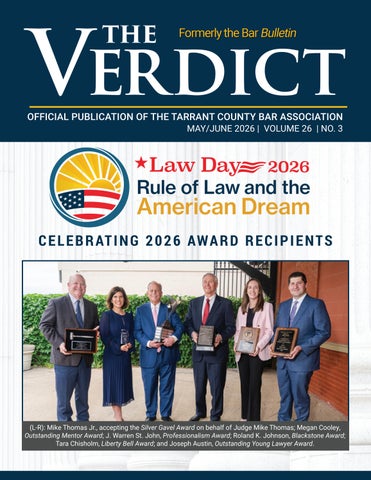
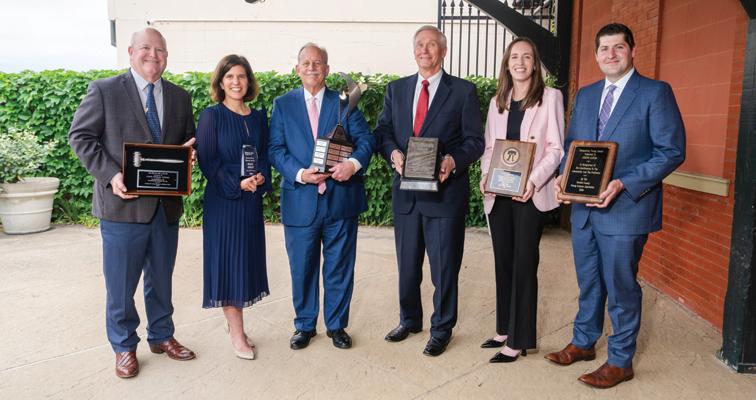
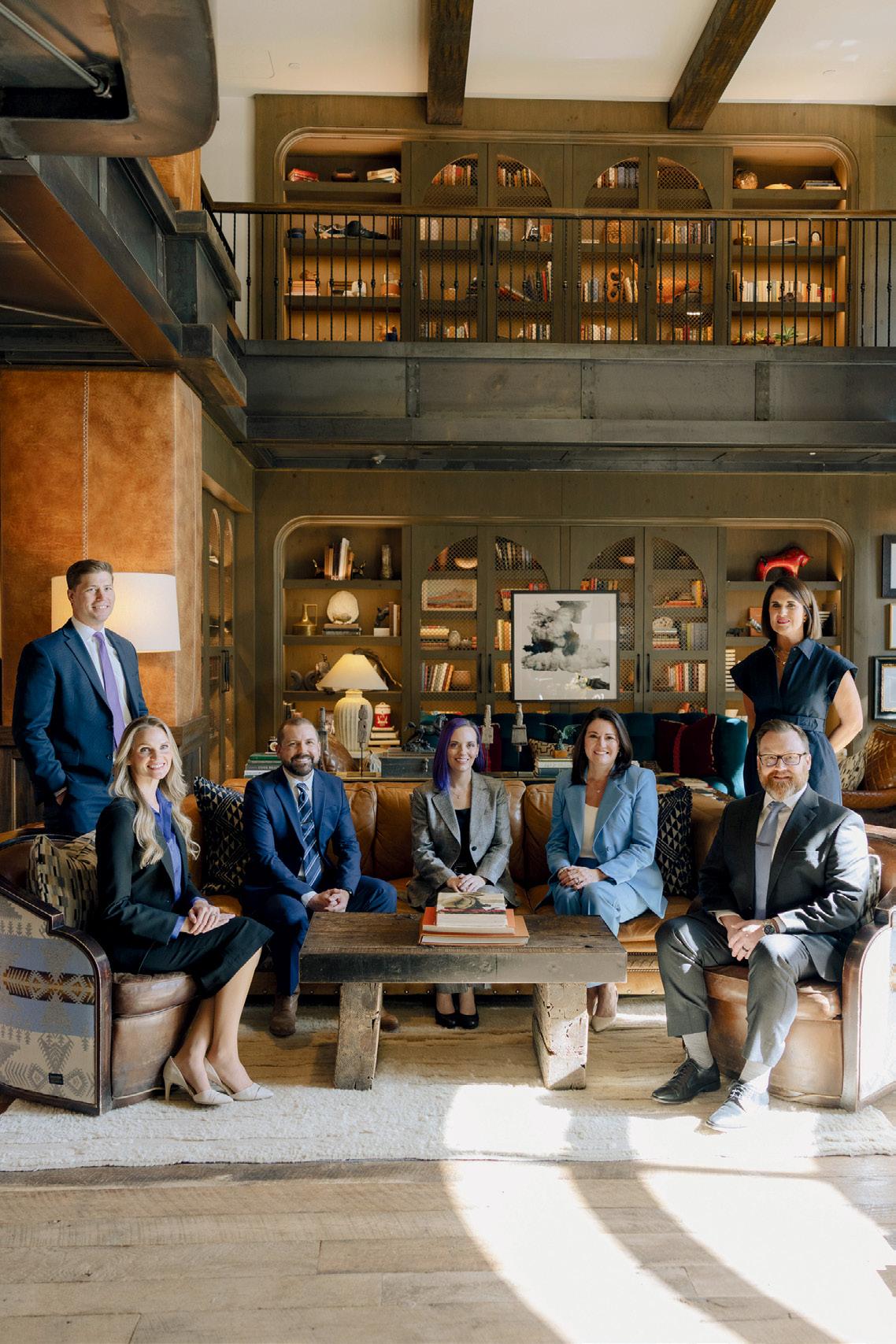
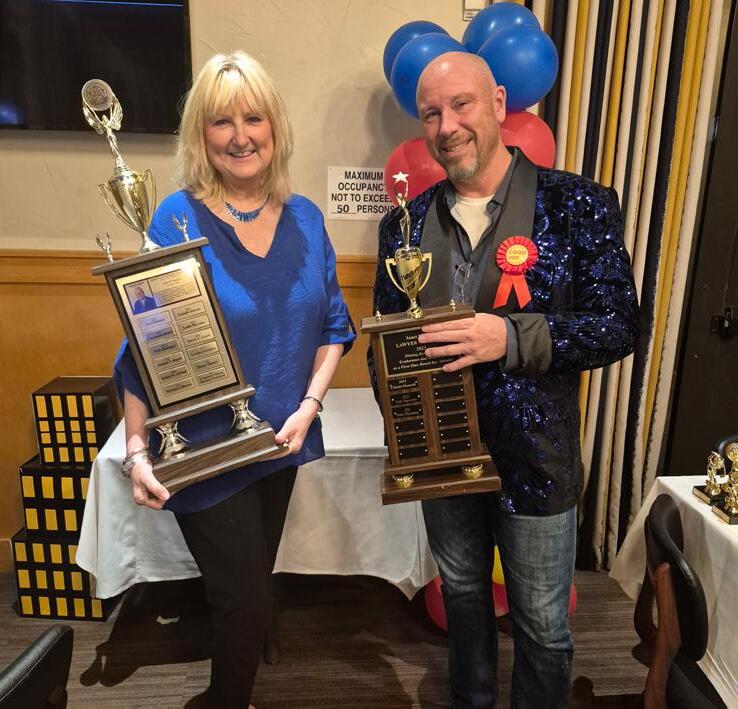
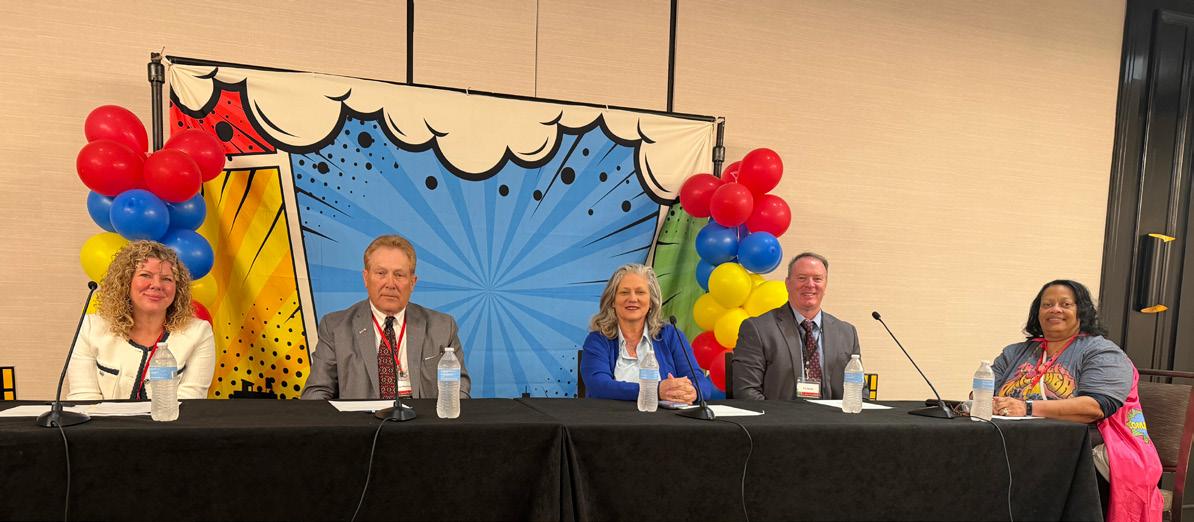
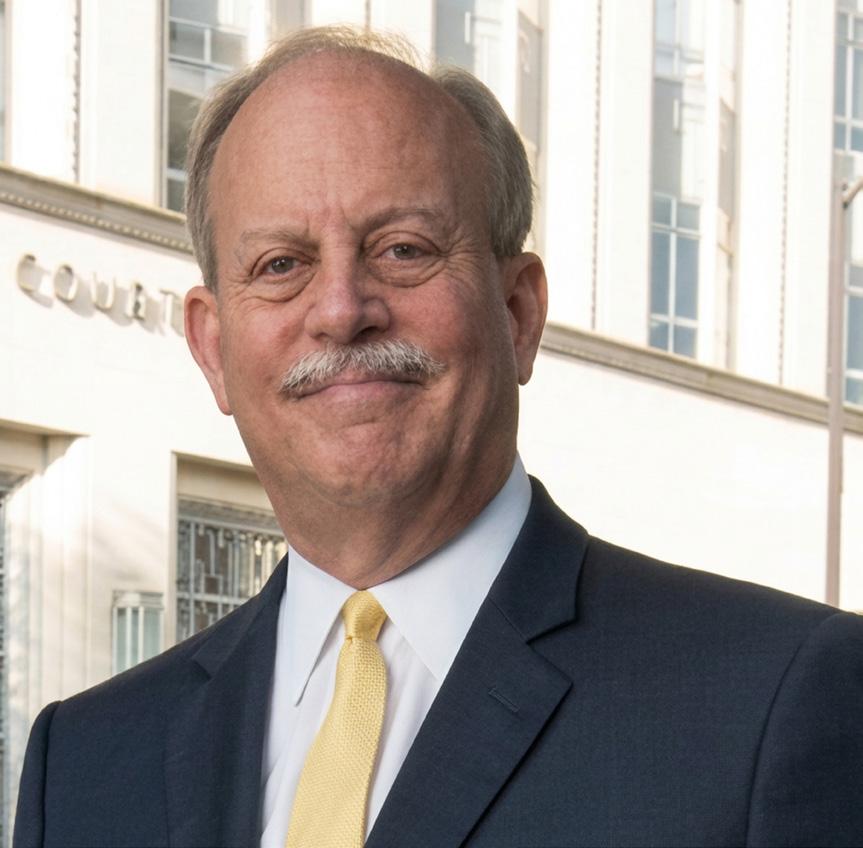
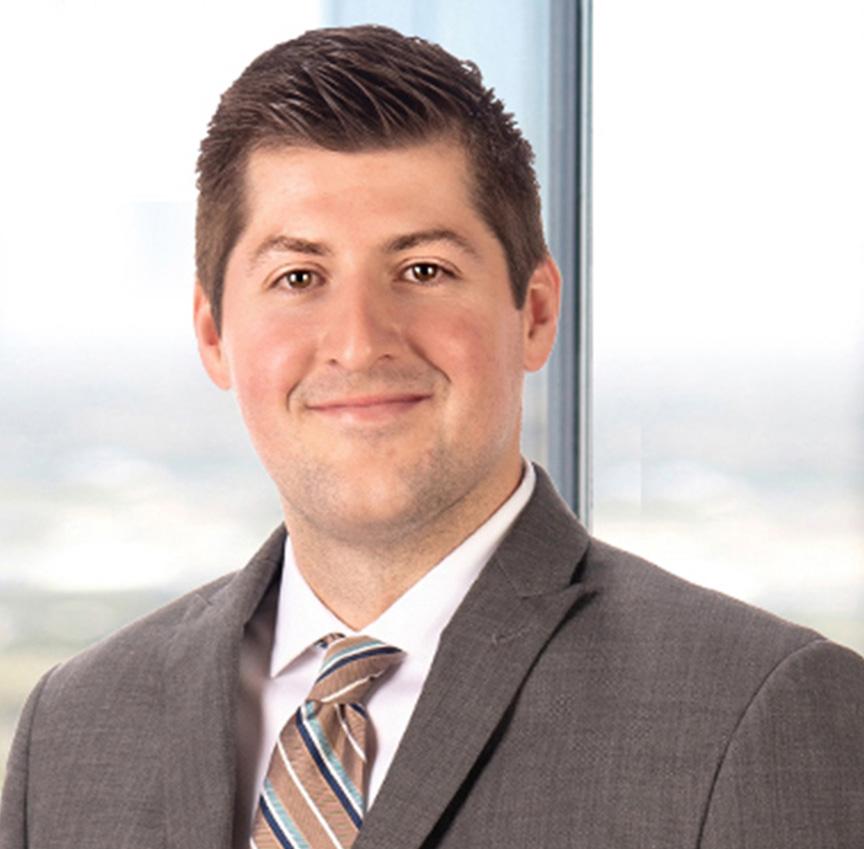
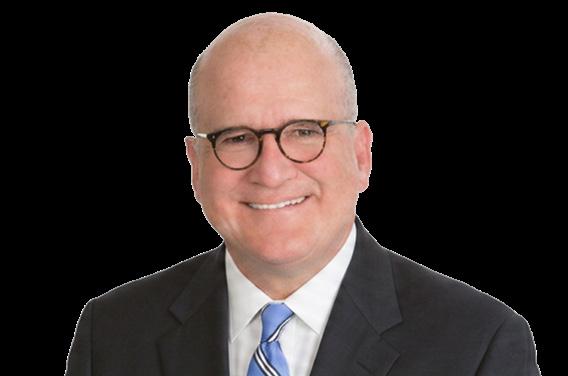
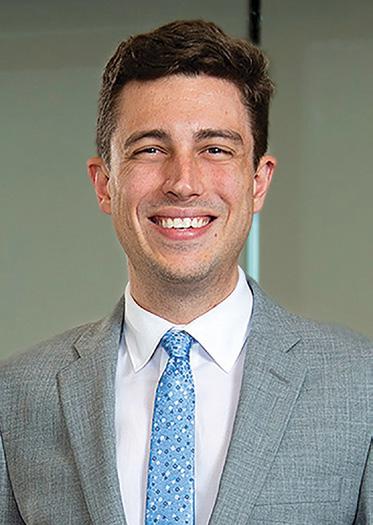
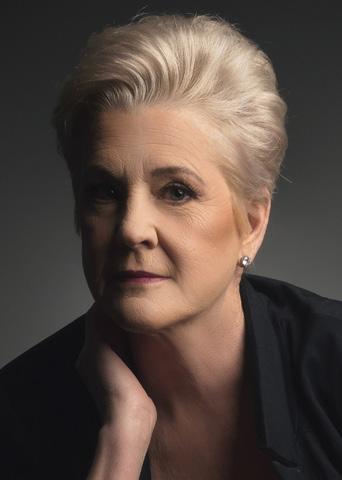
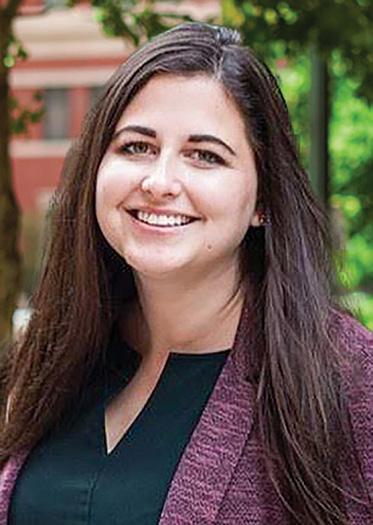
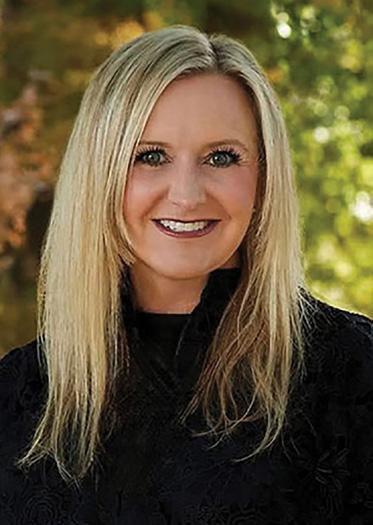
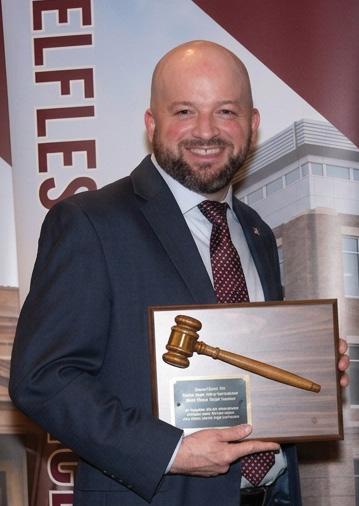
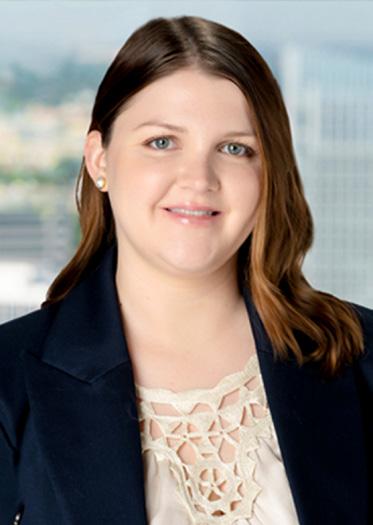
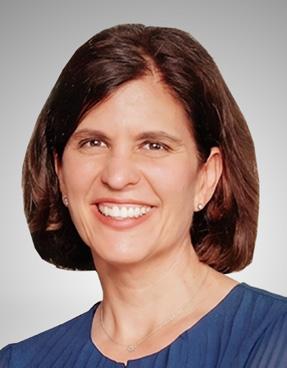
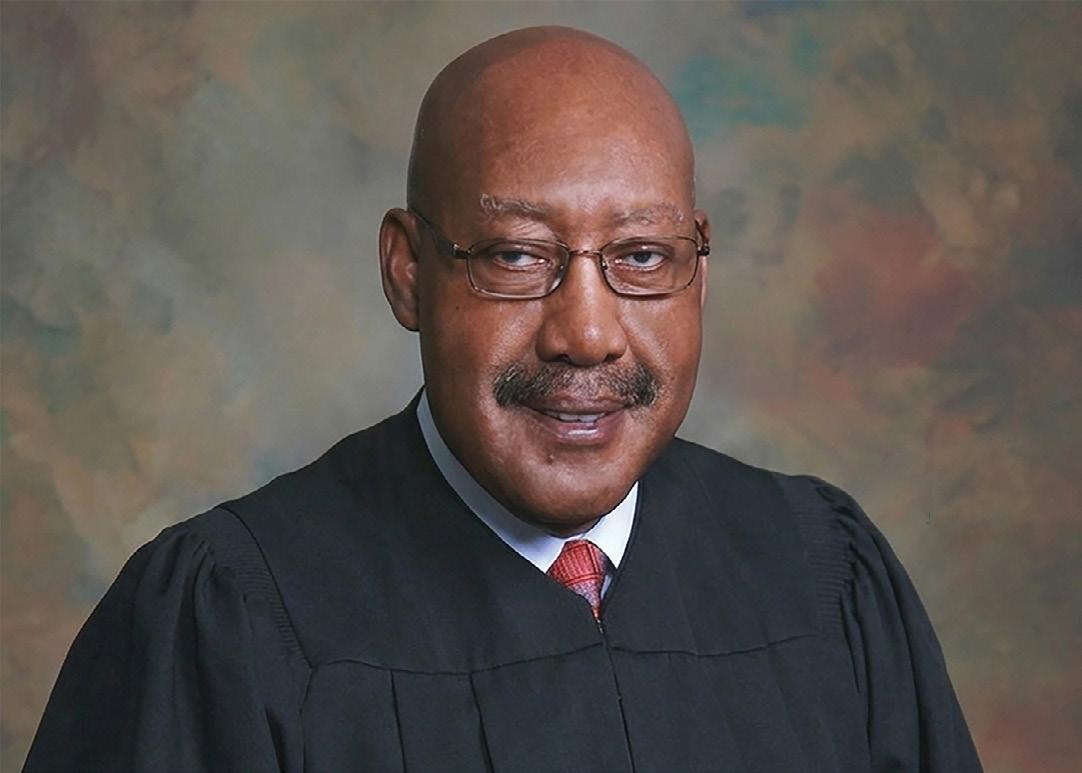
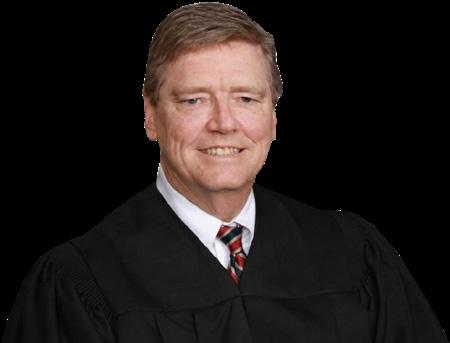
(L-R): Mike Thomas Jr., accepting the Silver Gavel Award on behalf of Judge Mike Thomas; Megan Cooley, Outstanding Mentor Award; J. Warren St. John, Professionalism Award; Roland K. Johnson, Blackstone Award; Tara Chisholm, Liberty Bell Award; and Joseph Austin, Outstanding Young Lawyer Award
PRESIDENT'S PAGE
MARVINA ROBINSON
It’s Been a Good Ride
When I think about this past year, that is the phrase that keeps returning to me. Not because the journey is ending, but because every mile has mattered. Every conversation, every collaboration, every opportunity to serve alongside the members of Our Bar has reaffirmed what I already believed — we are part of something special.
This year has reminded me that progress rarely happens by chance. It happens when dedicated people show up with open minds, steady hands, and a shared commitment to excellence. And this year, Our Bar showed up.
We have seen stability where it matters most. Our staff — the steady engine behind everything we do — has remained intact throughout the year. Continuity in a team is not just about consistency; it is about trust, institutional knowledge, and a shared sense of purpose. Because of that stability, we have been able to build momentum instead of rebuilding processes.
Listening has also been a priority. Through member feedback, Our Bar has introduced new programming designed to meet the evolving needs of our legal community. This includes increased programming from the wellness and community service committees. Thoughtful programming does not simply fill a calendar; it reflects a willingness to adapt, to innovate, and to ensure that the Bar remains relevant and responsive to those it serves. When members speak and leadership listens, meaningful growth follows.
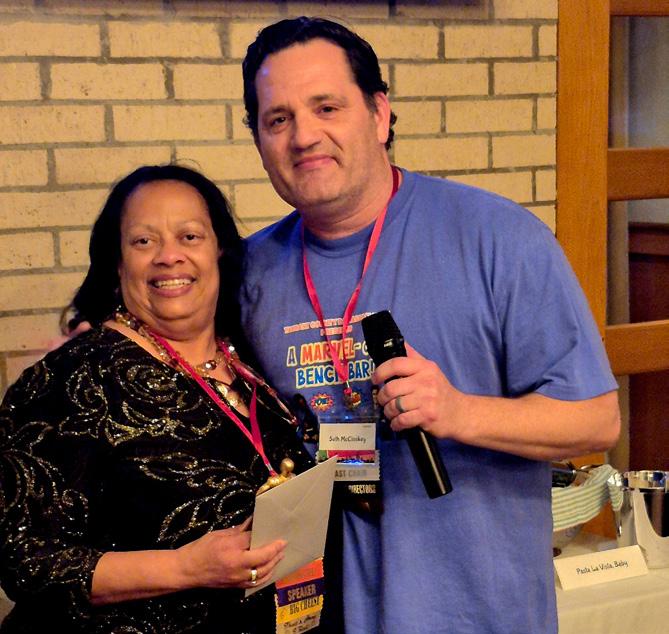
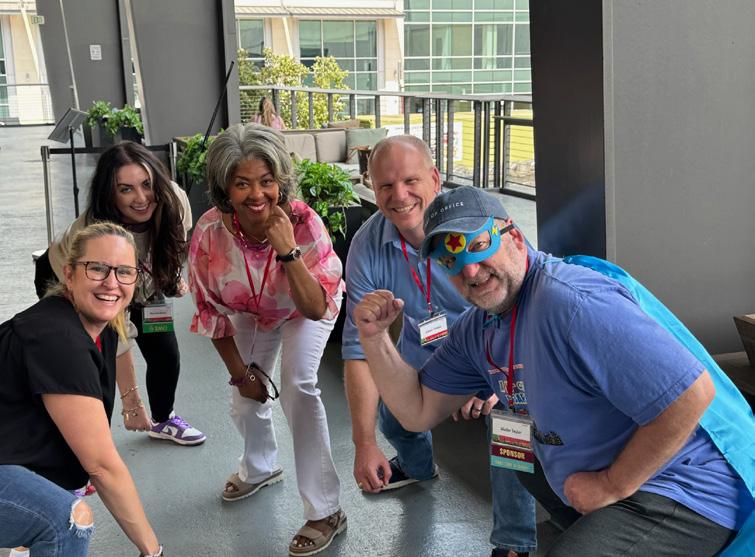
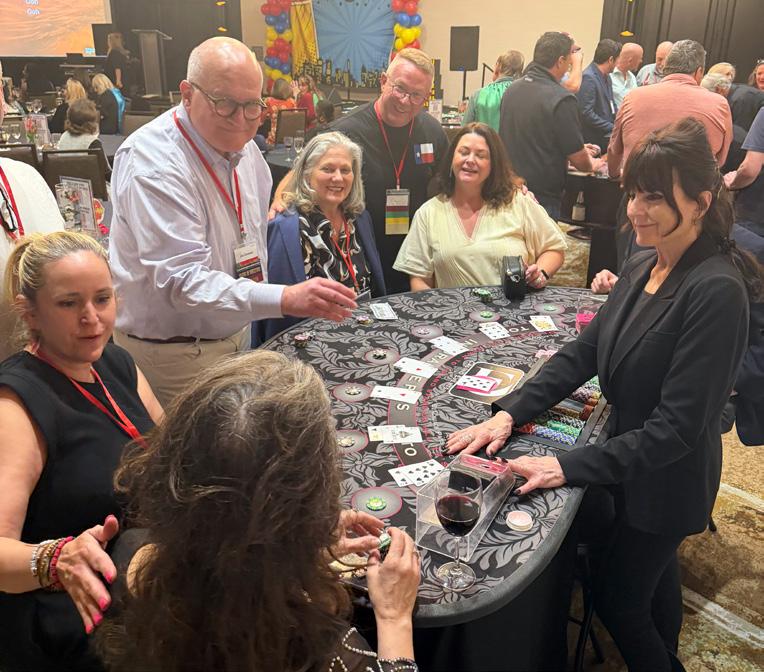
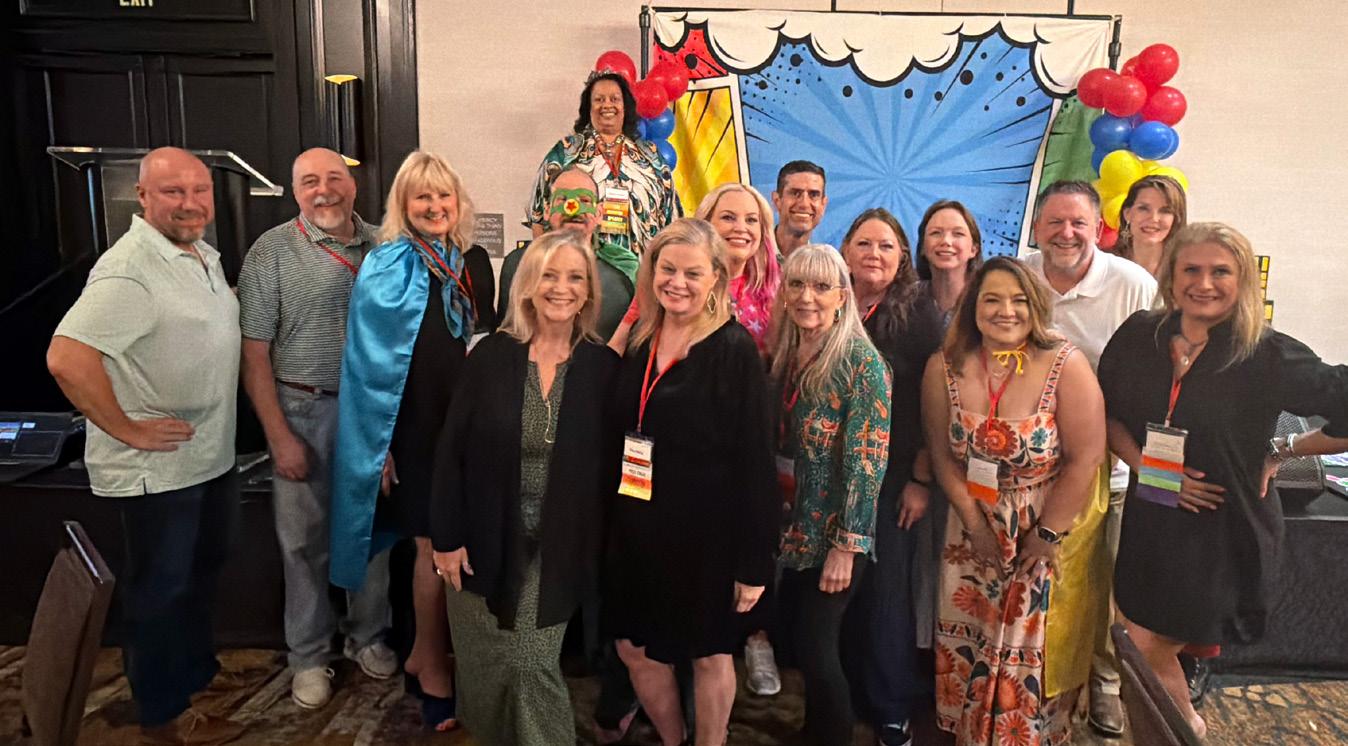
And of course, this year’s Bench Bar Conference was a tremendous success. The energy, camaraderie, and collaboration between bench and bar reminded us why this gathering has endured for more than three decades. Bench Bar continues to embody what is possible when we come together not only to learn, but to strengthen professional relationships and mutual respect. The conversations that began there will continue shaping our work long after the conference ends.
This year also marked a visible investment in the future of Our Bar. Thanks to the leadership and support of the Bar Foundation, the renovation of our building has created a refreshed space designed to welcome members, foster connection, and support the work we do together.
Like any worthwhile journey, this year required effort, adaptability, and faith in the road ahead. But what stands out most is the spirit of collaboration that defines Our Bar. When we work together, we elevate one another. When we share ideas, we strengthen the profession. When we invest in community, we ensure that the ride continues for those who follow.
As I reflect on this season of service, I am grateful for the opportunity to travel this stretch of road with each of you. The work of justice is ongoing, and the path ahead remains full of possibility.
It truly has been a good ride — and the journey continues. Let’s keep going. g
Congratulations to our 2026 March Madness Bracket Challenge winners!
The TCBA thanks everyone who participated and brought the competitive spirit this season.
Men’s Bracket Winners
1st Place: Wayne Olson Free TCBA membership for 2026–2027
2nd Place: Tracy Card 50% off membership
3rd Place: Bryan Pope 25% off membership
Women’s Bracket Winners
1st Place: Reba Martin
Free TCBA membership for 2026–2027
2nd Place: Melissa Wilks
50% off membership
3rd Place: Brooke Hubbard
25% off membership
YLA SNAPSHOT
JOHN EASTER
OLA CAMPBELL
2025–2026 TCYLA President
2024–2025 TCYLA President
TCYLA Leadership Updates and Law Day Award Recipients
The Tarrant County Young Lawyers Association is pleased to announce several new leadership updates. Please join us in congratulating Desireé Malone on her election as President-Elect and Julia Hood on her election as SecretaryTreasurer. Desireé and Julia will join current President-Elect Marylynn Smitherman on the TCYLA Executive Board for the upcoming term.
TCYLA is also proud to recognize this year’s Law Day award recipients, who exemplify the very best of our legal community:
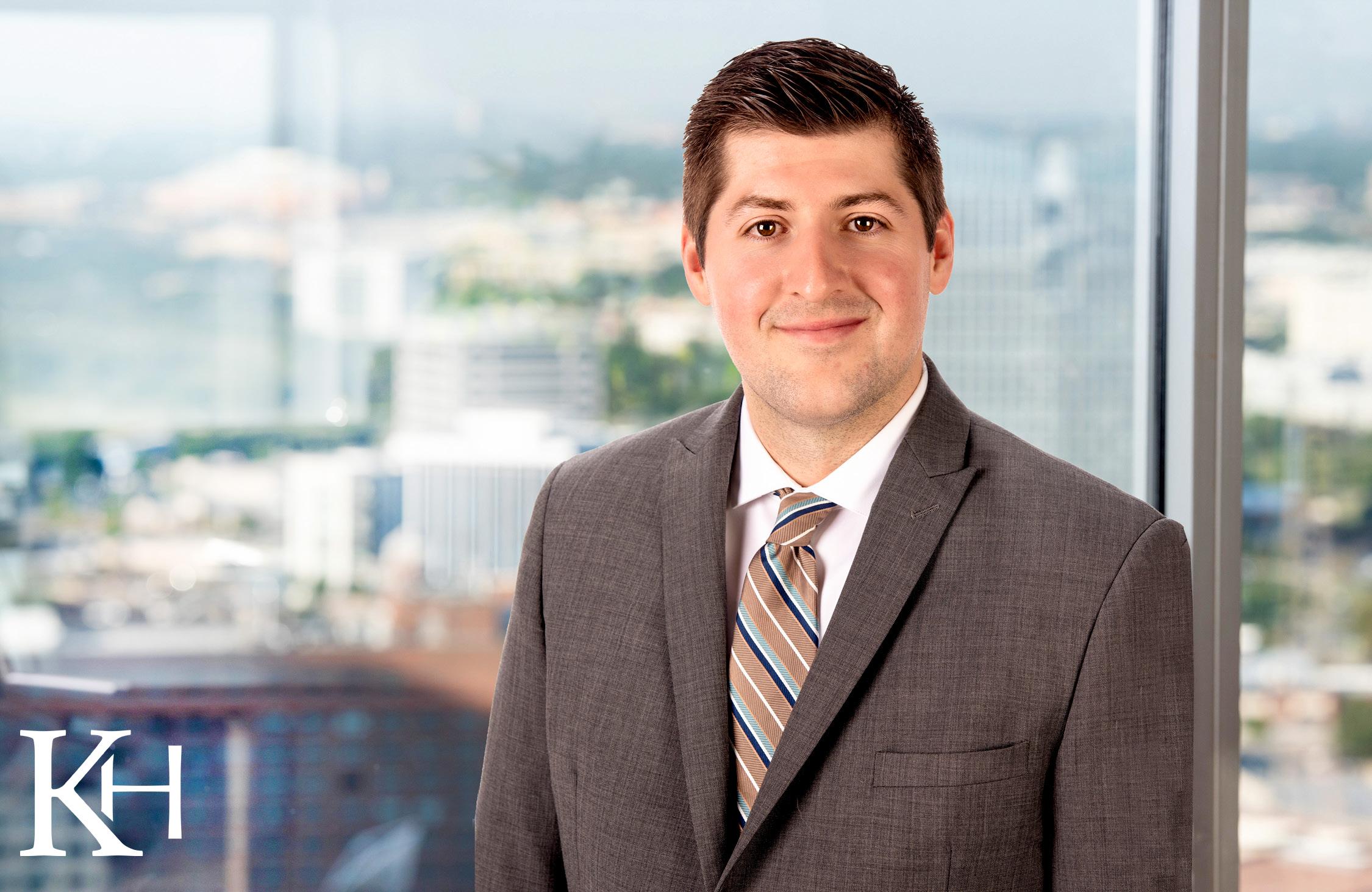
• Outstanding Young Lawyer Award – Joseph Austin of Kelly Hart & Hallman LLP, recognized for his professional achievement, service to the profession, and meaningful contributions to the community.
• Outstanding Mentor Award – Megan Cooley of Texas Wesleyan University, recognized for her consistent commitment to mentoring and supporting young lawyers in our legal community.
• Liberty Bell Award – Tara Chisholm of Transition Resource Action Center, a non-lawyer recognized for her outstanding contributions to strengthening the effectiveness of our system of justice and promoting a greater understanding and appreciation of the law.
These awards each reflect an important piece of what makes our legal community strong: professional excellence, mentorship, and service. Please join us in celebrating these outstanding individuals! Looking ahead, there a few dates to add to your calendar:
• Happy Hour – May 21 from 5:30–7:30 p.m. at Sarah’s Place.
• Joint Happy Hour with the Solo and Small Firm Section – June 18 from 5:30–7:30 p.m. at Maple Branch Craft Brewery.
Whether you are a young lawyer looking to get involved or a member of the broader bar interested in supporting TCYLA, we encourage you to join us. g
Stay Connected with TCYLA
For updates, registration links, and event details, follow us:
EVENT CATEGORIES
May 2026 June 2026
Law Day Award Luncheon
Ashton Depot | 11:45 a.m. – 1 p.m.
TCBA Fiscal Year Ends JUN 2 JUN 4 JUN 9 JUN 10 JUN 11 JUN 18 JUN 18 JUN 23 JUN 24 JUN 25 JUN 30 MAY 6 MAY 8 MAY 12 MAY 12 MAY 13 MAY 14 MAY 15 MAY 15 MAY 18
19
21
27
28
Brown Bag Seminar Series: Collections TCBA | 12 – 4 p.m.
TCYLA CLE: “The Discoverability of AI Prompts”
100 Throckmorton St., Fort Worth 12 – 1 p.m.
Mahon Inn of Court Meeting #6 The Fort Worth Club | 5:30 – 8 p.m.
Construction Law Section TCBA | 12 – 1 p.m. LegalLine
Remote | 5 – 7 p.m.
Texas Lawyers for Texas Veterans Clinic 1 – 4:30 p.m.
Wellness CLE with Wayne Basist TCBA & Zoom | 4 – 5 p.m.
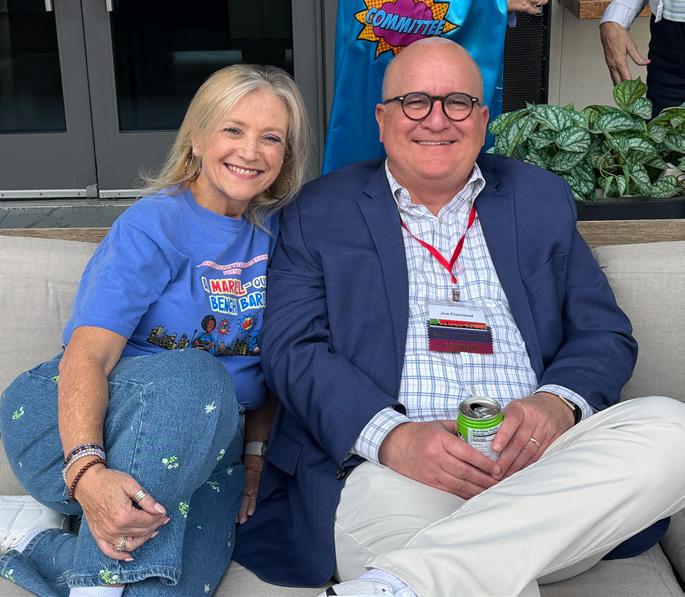
Mentor Monday with Joe Cleveland TCBA | 12 – 1 p.m.
Tax & Estate Planning Section Cannon
Teleconference City Club | 12 – 1:30 p.m.
Energy Law Section The Fort Worth Club | 12 – 1 p.m.
TCYLA Happy Hour Sarah’s Place | 5:30 – 6:30 p.m.
Court Staff Seminar Series – Part One TCBA | 12 – 4 p.m.
5
Mahon Inn of Court – Masters Luncheon
The Fort Worth Club | 12 – 1 p.m.
Docket Call Social
Location TBD | 5 – 7 p.m.
TCYLA CLE Luncheon
100 Throckmorton St., Fort Worth 12 – 1 p.m.
Construction Section Luncheon TCBA | 12 – 1 p.m.
LegalLine
Remote | 5 – 7 p.m.
Texas Lawyers for Texas Veterans Clinic
Remote | All Day
TCYLA Happy Hour 5 – 6:30 p.m.
Tax & Estate Law Section Cannon Teleconference City Club | 12 – 1:30 p.m.
Court Staff Seminar Series – Part Two TCBA | 12 – 4 p.m.
LegalLine
Remote | 5 – 7 p.m.
Members of the 2025-2026 100 Club
*List Reflected Below is as of April 15, 2026
Adams, Lynch & Loftin, P.C
Albert, Neely & Kuhlmann, LLP
Anderson, Cummings & Drawhorn
Anderson & Riddle, LLP
Baker Monroe Huston, PLLC
Barlow Garsek & Simon, LLP
Blaies & Hightower, L.L.P.
Bonds Ellis Eppich Schafer Jones, LLP
Bourland, Wall & Wenzel, P.C.
Brackett & Ellis, P.C.
Brown, Proctor, Peck & Piwetz, LLP
Bruner & Bruner, PC
City of Fort Worth – City Attorney’s Office
Cook Children’s Health Care System
– Legal Department
Curnutt & Hafer, LLP
Decker Jones, P.C.
Dismuke & Waters, P.C.
Factor, Campbell & Baker
Freeman Mills PC
Friedman, Suder & Cooke, P.C.
Gardner Smith & Vaughan, PLLC
Griffith, Jay, & Michel, LLP
Harris, Finley & Bogle, P.C.
Harrison Steck, P.C.
Haynes and Boone, LLP
Holland Johns & Penny LLP
Jackson Walker LLP
Kelly Hart & Hallman LLP
Killen & Dennis, PC
KoonsFuller, P.C.
Linebarger Goggan Blair & Sampson, LLP
Law Offices of Paup, Shutt & Associates, P.C.
Lively & Associates, PLLC
McDonald Sanders, P.C.
Munsch Hardt Kopf & Harr, P.C.
Naman, Howell, Smith & Lee, PLLC
Nelson Bumgardner Conroy PC
Noteboom – The Law Firm
Padfield & Stout, LLP
Patterson Law Group
Pham Harrison, LLP
Phelps Dunbar LLP
Pope, Hardwicke, Christie, Schell, Kelly & Taplett, L.L.P.
To be eligible for the 100 Club, any law firm, government agency, law school, or corporate legal department with four or more members must attain 100% TCBA membership compliance for the 2025–2026 bar year. This qualifies them for the “100 Club.” The firms/ organizations listed above have already paid their membership dues and qualify for 100 Club membership
for the new bar year. Any firm/organization that qualifies in the future will have its name published in every issue of the The Verdict for this bar year. TCBA takes pride in the participation of these law firms and other groups. The new bar year began on July 1. If you have not paid your renewal invoice, please contact Tiffany Myles at tiffany@tarrantbar.org. g
Law Day, observed annually on May 1, was established in 1958 by President Dwight D. Eisenhower as “a day of national dedication to the principle of government under law.” In 1961, Congress designated May 1 as the official date for its observance. Each year, Americans recognize the importance of the rule of law and reflect on the enduring strength of our legal system.
The Tarrant County Bar Association and the Tarrant County Young Lawyers Association commemorate Law Day by honoring individuals whose service and contributions have strengthened both the legal profession and the broader community.
The Blackstone Award, established in 1963 and named for jurist Sir William Blackstone, recognizes a legal career defined by professional excellence, integrity, and courage. This year’s recipient is Roland K. Johnson, whose distinguished career reflects these qualities.
The Silver Gavel Award recognizes a member of the judiciary who has made a significant and lasting contribution to the legal profession. This year’s recipient is Judge Michael Thomas (posthumously).
The Professionalism Award honors a member of the bar who exemplifies the highest standards of integrity, character, and respect within the legal profession. This year’s recipient is J. Warren St. John.
The Outstanding Young Lawyer Award, presented by the Tarrant County Young Lawyers Association, recognizes a young attorney who has demonstrated professional excellence, service to the profession, and dedication to the community. This year’s recipient is Joseph Austin.
The Outstanding Mentor Award recognizes an attorney or judge who has shown a strong commitment to mentoring and supporting young lawyers in the legal community. This year’s recipient is Megan Cooley.
The Liberty Bell Award honors an exceptional non-lawyer whose contributions have strengthened the American system of justice and fostered a greater understanding and appreciation of the law. This year’s recipient is Tara Chisholm.
2026 AWARD RECIPIENTS
BLACKSTONE AWARD
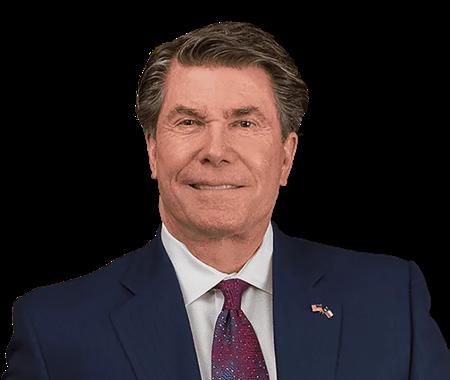
Roland K. Johnson
Roland Johnson is a proven leader in the Texas legal community. He is a former president of the State Bar of Texas and the Tarrant County Bar Association, and he has been honored for his professionalism and legal knowledge.
An attorney at Harris, Finley & Bogle, P.C. since 1982, Roland’s experience benefits his clients and the community in their quest for access to legal services and to receive justice in commercial litigation, dispute resolution, and legal malpractice arenas.
Roland is a Fellow of the College of Commercial Arbitrators, a member of the American Board of Trial Advocates, a member of the American Law Institute, treasurer of the Texas Access to Justice Foundation, Vice Chair of the Texas
Access to Justice Commission, and was inducted into the honorary Serjeant’s Inn of the Dallas and Fort Worth Inns of Court. He serves on the American Arbitration Association’s Commercial Panel and Large, Complex Case Panel. He was previously honored with TCBA’s Professionalism Award and served as chair of the College of the State Bar of Texas.
But perhaps most importantly, he has served as Swine Barn Superintendent for the Southwestern Exposition and Livestock Show since 1998. Roland and Cindy are proud parents of two sons, two daughters-in-law, and four grandsons who call him “Pops.”
SILVER GAVEL AWARD
Judge Michael R. Thomas
Judge Michael R. Thomas enjoyed a distinguished legal and judicial career in Fort Worth spanning more than 56 years. Raised in DeLeon, Texas, he attended Baylor University on a football scholarship and began law school there while still playing varsity football. He was admitted to the State Bar of Texas in December 1969 and joined the Tarrant County District Attorney’s Office in 1970 as an Assistant District Attorney.
From 1972 to 2003, Judge Thomas built a reputation as a highly respected and accomplished criminal defense attorney. He associated and shared offices with some of the most prominent lawyers of the era, including Roland Hill, Bill Magnussen, and Ward Casey, and defended cases alongside legendary trial lawyer Richard “Racehorse” Haynes. Much of his career was spent in federal and state courtrooms, where he was widely known for his professionalism and skill. In January 1977, he became Board Certified in Criminal Law by the Texas Board of Legal Specialization.
In 2002, Judge Thomas was elected judge of Criminal District Court No. 4 in Tarrant County, where he served with
distinction for 20 years. On the bench, he was known for his class, dignity, and unwavering integrity. Attorneys, staff, and litigants alike respected his fairness, preparedness, and the courtesy he extended to everyone in his courtroom.
Beyond the courtroom, Judge Thomas enjoyed traveling, playing golf, and following sports. He was deeply involved in numerous professional and civic organizations, including the Tarrant County Bar Association, Tarrant County Criminal Defense Lawyers Association, and Texas Criminal Defense Lawyers Association. He was a Life Fellow of the Texas Bar Foundation and a member of the College of the State Bar of Texas. His community involvement included service with Girls, Inc., Colonial Charities, the Gladney Center for Adoption, University Christian Church, and the Rotary Club of Fort Worth. He also served in leadership roles at Colonial Country Club, including President from 1991–1992, and was a longtime member of the Colonial Golf Tournament Committee.
Above all, Judge Thomas was devoted to his family. He and his wife, Patsy, were married for 59 years and shared three children and four grandchildren. Judge Thomas passed away on April 14, 2026, following a lengthy illness.
PROFESSIONALISM AWARD
J. Warren St. John
The Wilson/St. John family began practicing law in Texas in 1896 and has a rich history, with various family members practicing different types of law, including his great-grandfather, James C. Wilson, who was the first United States District Judge assigned to Fort Worth in 1919. St. John has tried hundreds of complex felony trials in both federal and state courts throughout Texas.
Cases of national interest include:
• The first-ever Amber Alert trial in the United States; MAY/JUNE 2026 ▪
• The first-ever Antifa terrorism trial in the United States;
• The “American Sniper” (Chris Kyle) capital murder trial in Stephenville, Texas;
• The cartel organized crime federal murder trial; and
• The January 6th insurrection case in Washington, D.C. – dismissed by the U.S. government
What sets St. John apart is his integrity and honesty with all his clients, no matter the charges they face. St. John represents his clients zealously within the bounds of the law to get the very best results he can for them.
OUTSTANDING YOUNG LAWYER AWARD
Joseph Austin
Joseph Austin is a partner in Kelly Hart’s Litigation section, representing clients in commercial disputes and bankruptcy matters. Originally from Mont Belvieu, he moved to Fort Worth after marrying his wife, Erin.
He earned his accounting degree from Abilene Christian University in 2013, where he also deepened his faith and commitment to service through an internship as a hospital chaplain at Texas Children’s Hospital. After considering seminary, accounting, and law, he chose law, graduating from Texas Tech University School of Law in 2016. There, he served as Vice Chair of Appellate Advocacy and received the Fortney Award for Ethics.
Joseph is actively engaged in both his community and the legal profession. He has held the position of Board Chair at Cancer Care Services and is part of Leadership Fort Worth’s Class of 2025. He currently serves on the Tarrant County Bar Association’s Judicial Polls Committee and the State Bar’s
Pattern Jury Charges Committee. He previously served on the board of the Tarrant County Young Lawyers Association. His civic involvement also included service on Fort Worth’s Historical and Cultural Landmarks Commission. Since 2019, he has been recognized as a Texas Super Lawyers Rising Star. Joseph lives in Fort Worth with his wife and their two sons. They are members of Legacy Church of Christ, where he
OUTSTANDING MENTOR AWARD
Megan Cooley
Megan Cooley is the General Counsel at Texas Wesleyan University, where she serves on the President’s Cabinet and oversees all legal matters for the University. Prior to joining Texas Wesleyan, Megan proudly served the Tarrant County legal community as Executive Director of the Tarrant County Bar Association and the Tarrant County Bar Foundation. Megan began her legal career at Kelly Hart, where she practiced commercial litigation for more than 14 years.
A child of educators, Megan teaches constitutional law to political science majors at Texas Wesleyan University. She also serves as an adjunct professor of law at Texas A&M University School of Law, where she works with students placed in public interest externships. She is a Master of the Eldon B. Mahon Inn of Court, currently serves as Chair of the Tarrant County Bar Association’s Mentorship Committee, and is a member of the State Bar of Texas Local Bar Committee. Megan is also a Fellow of the Texas Bar Foundation and the Tarrant County Bar Foundation.
Megan and her husband, Randy, have two sons, Noah and Hank. In her free time, she enjoys music, reading, spending time with family and friends, and volunteering for the Miracle League and other community organizations.
Tara Chisholm
Tara Chisholm is a Housing Program Manager at the Transition Resource Action Center (TRAC), where she leads six housing programs serving young adults across North Texas. TRAC supports youth who are disconnected from a family or community support system as they work toward stable housing, education, employment, and long-term stability.
A Fort Worth native, Tara has become a leading force in Tarrant County’s response to youth homelessness. She has helped strengthen how the community serves vulnerable young adults through expanded housing opportunities, stronger coordination, and advocacy for youth facing barriers within social service and legal systems. She was instrumental in securing more than $4.2 million in federal funding through the Youth Homelessness Demonstration Program and helped champion successful zoning approval for TRAC’s future 15bed crisis transitional living facility. She currently serves as the elected Chair of the Tarrant County Youth Committee, representing youth-serving agencies. Tara is widely recognized for her expertise in youth engagement, housing systems, and community collaboration, and has presented at local, state, and national conferences.
She attended Fort Worth Country Day School before earning a bachelor’s degree from Northwestern University, where she played Division I field hockey. She later earned a Master’s degree in Social Work from the University of Texas at Arlington and is currently pursuing a second master’s degree in Criminology and Criminal Justice.
Tara’s leadership has been recognized across Tarrant County for community impact and excellence, including the 2022 Leading the Way Award for homeless services and the 2025 Homeless Management Information System High Achievement Award for exceptional data quality and performance.
Cantey Hanger LLP
Friends of Judge Mike Thomas
Munsch Hardt Kopf & Harr, P.C. Pham Harrison, LLP
Boyd, Powers & Williamson
Myers Law
Texas
A&M University School of Law
Justice Mike Wallach
Editorial Note
Biographical information in this publication is provided by the honorees and published as submitted. Any references to specific matters reflect the individual’s professional experience and do not constitute endorsement by the Tarrant County Bar Association. Remarks made by recipients, presenters, and other speakers are their own and do not necessarily reflect the views of the Association.
Law Day
By Joseph F. Cleveland, Jr. Brackett & Ellis, P.C. | jcleveland@belaw.com 2025–2026 TCBA Board of Directors
In 1958, President Dwight D. Eisenhower declared that May 1st shall be observed as Law Day, U.S.A. Codified in 1961, Law Day was given the force of law through the adoption of Section 113 of Title 36 of the United States Code, which provides that:
Law Day, U.S.A., is a special day of celebration by the people of the United States—
(1) in appreciation of their liberties and the reaffirmation of their loyalty to the United States and of their rededication to the ideals of equality and justice under law in their relations with each other and with other countries; and
(2) for the cultivation of the respect for law that is so vital to the democratic way of life.
This year’s Law Day offers us the chance to reflect upon and to foster our appreciation for the fundamental principles established by the rule of law: respect for our laws, the nation’s desire to resolve disputes through law rather than violence, equal justice under the law, and the importance of an independent judiciary.
The U.S. Supreme Court has long held that “the federal judiciary is supreme in the exposition of the law of the
Constitution, and that principle has ever since been respected by this Court and the Country as a permanent and indispensable feature of our constitutional system.” Cooper v. Aaron, 358 U.S. 1, 18 (1958); Marbury v. Madison, 5 U.S. 137, 177 (1803) (“It is emphatically the province and duty of the judicial department to say what the law is.”)
Court rulings, of course, are not beyond reproach. Under the First Amendment, criticism of judicial opinions is protected free speech and vital to the growth and development of the law. But as Chief Justice John Roberts cautioned, it is never appropriate to engage in open disregard for court rulings. See also Cooper, 358 U.S. 1, 24 (“Criticism need not be stilled. Active obstruction or defiance is barred.”) (Frankfurter, J. concurring). We, as lawyers, should publicly reaffirm our nonpartisan commitment to the independence of the judiciary and the rule of law and join the statement of Chief Justice Roberts on these issues.
So let us celebrate not only the meaning of this special day but also promote our profession’s seminal role in our democracy and proudly display our ongoing commitment— and the vow we undertook, on our oath—to support the Constitution of the United States, the Constitution of the Great State of Texas, and the rule of law that serves as the bulwark of our democracy. g
The Rule of Law and the American Dream
We asked TCBA members what does “The Rule of Law and the American Dream” mean to you this Law Day?
I have represented clients from more than 20 countries across the globe. Almost all of them who had their case tried, and even when they lost, appreciated that they were heard in a civil court, with an impartial judge or jury, and they had time to put on their cases. So many talked about how many resources the community puts into a trial—not just the parties—to settle disputes the judge or jury knew nothing about beforehand. Due process is not just a right most of the world lacks; it is a fundamental part of the American Dream.
— Mark Mansfield, Mansfield & Mansfield, P.C.
To members of the legal community, the Rule of Law is the foundation that makes the American Dream possible. It means that justice is applied fairly, rights are protected, and opportunity is not limited by power or status. In legal work, it requires integrity, impartiality, and a commitment to uphold the Constitution and the rights of every person. In the community, it builds trust that disputes will be resolved fairly and that laws protect everyone equally. In life, it represents the promise that, through fairness, accountability, and equal justice, individuals can pursue their goals and contribute to a free and stable society.
— Larry Cotton, Cotton Schmidt, LLP
The American Dream means that the place you start in life does not determine where you end up. With hard work, the right opportunities, and some luck, each person should get a fair shot at their own “pursuit of happiness.” The Rule of Law is what makes that possible. When the law is impartial, it gives people the freedom and support to chase their own goals. In my work, I try to preserve the Rule of Law—an institution we inherited—so that this dream stays alive.
—Brian Singleterry, Haynes and Boone, LLP
I view the Rule of Law as an equalizer. It is meant to ensure justice is not dependent on wealth, status, or influence. Yet, many people cannot access justice without help. I believe God entrusted me with my practice as a ministry that allows me to help those who would otherwise go unheard. I define the American dream as the ability to serve others with purpose and integrity. It is the freedom to use my skills to help others, protect families, and bring stability amidst chaos. Ultimately, the two intersect in a profound truth: justice should be within reach for everyone.
—Wendy Hart, The Law Office of Wendy Hart
This is the worst we have seen in our lifetimes of infringement of constitutional liberties. The very survival of democracy and the Rule of Law are at risk. People will say history will save us, the constitution will save us, we’ve had worse times in history. But democracy only works if the people do the work to save it. Democracy depends on ordinary people acting when institutions fall. The American Dream is what we will lose. One day years from now will be judged by what we did in this moment.
—Cindy Stormer, Attorney at Law
My dad (an immigrant) says he lived the American Dream— only country where it’s possible to build the life he did, because most everyone gets a fair shot. Rule of Law is the beacon of equality in our society. Arguably the most famous symbol of law is blindfolded Lady Justice, signifying her impartiality. As impartiality is a cornerstone of the Rule of Law, equality is a cornerstone to the American Dream. When right to the pursuit of happiness is attacked, the Rule of Law protects it. Rule of Law, therefore, is both the beacon and guardian of the American Dream.
—Danielle Reagan, Panther City Law Group
The Rule of Law is the foundation that distinguishes a just society from all others. It ensures process over passion, protects the weak against the strong, and allows for outcomes guided by principled wisdom rather than whim. We as lawyers are duty-bound and privileged to protect and uphold these ideals, knowing others look to us to lead and speak for those who cannot. Our collective way of life depends on the stability, predictability, and justice that flows from the consistent implementation of the Rule of Law.
—Scott Lindsey, Boyd, Powers & Williamson
The Rule of Law and the American Dream are inseparable. One cannot exist without the other. My faith calls me to serve the least among us, and as a legal aid attorney, I witness daily how justice delayed—or denied—dismantles dreams before they can take root. The American Dream promises equal opportunity, but opportunity means nothing without equal access to the legal system that protects it. Consistency in applying the law ensures that a person’s zip code or bank account does not determine their rights. When I advocate for someone who couldn't otherwise afford representation, I am defending that DREAM!
—Amy Allen, Legal Aid of NorthWest Texas
The American Dream is the reason I am here. My parents came to America from Nigeria in the 1970s in search of a better life for their children who were all born in Texas. Learning the Rule of Law brought me out of my less than fortunate circumstances to a respected profession with stellar colleagues. Our society is nothing without the Rule of Law, and we are blessed to know how to interpret it in pursuit of the American Dream.
—Idris Akinpelu, Akinpelu Law Firm
The American Dream is often framed as the product of individual effort alone. However, effort only holds meaning where outcomes are shaped by rules and not by power. The Dream depends on a shared belief that effort can lead somewhere—that outcomes are guided by legal rules applied consistently and fairly. The Rule of Law does not guarantee success. It protects the possibility of it. When the Rule of Law weakens—when contracts don't hold, laws are applied unevenly, or outcomes feel predetermined—the ground shifts. The Dream does not disappear. It becomes unreliable. To preserve the Dream, we must not only uphold the law. We must trust it. Without that trust, people stop trying, participation fades, and the American Dream becomes a fairy tale for most, while remaining real for those insulated by power.
—Angelia Megahan, Law Office of Angelia Megahan
The Rule of Law is the last bastion between liberty and tyranny. Our founders envisioned a country where even the greatest institutions of power could be curtailed by law. We are, and must remain, “a government of laws, and not of men.” As lawyers, we are called to stand between the powerless and the oppressor, whether the full force of government or a corporation with limitless resources. Foundational though it is, the Rule cannot be taken for granted. We must zealously guard against its erosion. Only this duty can secure the Rule’s greatest promise: that all are equal before it.
—Benson Varghese, Varghese Summersett
There are currently 195 countries in the world. The United States of America is unique. It is the only country that allows jury trials in civil and criminal cases, which is imperative for a society to be truly free. The Rule of Law is what has always made America free and great. I dream that all Americans will
Continued on page 18
Continued from page 17
realize this very soon like my daughter, Amelia. She is a junior in high school. She told me recently she will play college volleyball while studying political science and economics in undergrad. She told me she will attend law school. She told me she will make a difference in our society while helping people. She told me she will lift others up while fighting for justice. She will. I am a very proud Dad. The Rule of Law and the American Dream are intrinsically intertwined, and Amelia knows it.
—Gil Daley, II, The Law Office
of
Gil L. Daley II
The Rule of Law is a principle that everyone is subject to and accountable under state and federal laws. At its core is the importance of impartiality, the presumption of innocence, and the right to a trial by jury. American residents rely on a democratic government system where power is vested in the people, either directly or through elected officials. The Rule of Law is crucial to maintaining this form of government.
—Leslie Hunt, City of Fort Worth
To me, the Rule of Law means a justice system where courts faithfully apply the Constitution and follow precedent, ensuring consistency and fairness. It requires that every person, including the indigent, can appear in court without fear of detention, deportation, or inability to pay. It guarantees the right to counsel at no cost in criminal and quasi-criminal matters. Upholding the Rule of Law is both a moral imperative
and an ethical duty under Texas and national professional responsibility standards. It demands integrity, accountability, and equal protection, so justice is not reserved for the powerful but accessible to all people alike.
—Karon Rowden, Texas A&M School of Law Family & Veterans Advocacy Clinic
Every day, lawyers should rededicate themselves to professionalism and civility. In pursuing life, liberty, and happiness, we—stewards of the law—must uphold its principles if we expect others to do the same. Lawyers and judges are not perfect, but the pursuit of excellence must remain our goal. When we honor the Rule of Law with integrity and humility, we strengthen the foundation that allows every person in this nation to breathe the air of freedom and to pursue their hopes and dreams to the fullest measure of their ability.
—Hon. Brent Carr, 8th Administrative Judicial Region
The Rule of Law is the foundation that makes the American Dream possible. It ensures that justice is not reserved for the powerful, but accessible to every person who walks through our doors. In my work as a lawyer in a general community practice, I see every day how clear rules, fair courts, and ethical advocacy create stability for families and opportunity for future generations. The American Dream depends on trust that the law will be applied consistently and fairly. As lawyers, we are entrusted not only to uphold the law, but to protect the promise it represents.
—Sarah Clower Keathley, Keathley & Keathley Law Firm g
Tarrant County Bar Association
LAWYER REFERRAL & INFORMATION SERVICE
The Lawyer Referral & Information Service (LRIS) is a service of the Tarrant County Bar Association that benefits both TCBA member attorneys and the public.
Approved by the American Bar Association, TCBA’s Lawyer Referral & Information Service allows member attorneys to receive client referrals and build their business, while helping callers quickly find an attorney in the area of law they need.
The program is intended to help individuals who are able to pay normal attorney fees but have difficulty finding legal representation due to lack of experience with the legal system, lack of information about needed services, or fear of costs.
LRIS is completely customizable for participating attorneys with:
LRIS is pleased to announce that Gregory Jackson has earned the title of Top Referral Attorney for TCBA’s Lawyer Referral & Information Service for the period from July 1, 2025, to present. Through his dedicated participation in the program, Gregory earned $108,000.00!
Why Join LRIS?
• Maximize Your Earnings: Like Gregory, you can earn substantial rewards by offering quality referrals.
• Grow Your Practice: Connect with clients in need of your expertise and grow your client base.
• Build Your Reputation: Build valuable relationships and be recognized for your exceptional service. Questions about
For more details about joining LRIS, please visit www.tarrantbar.org/joinlris or email lris@tarrantbar.org.
New Members of the TCBA:
ATTORNEYS
Frankie Adler
RobertBarbee
Micala Bernardo
Elizabeth Brammer
Brenda Colon
Delia Cruz-Bruno
Lane DeYoung
Nayelly Dominguez
Amy Eades
Ian Furman
Elizabeth Haslam
Alissa Jackson
Nancy Jakowitsch
Michael Kelly
Bailey King
Chnequa Kirby
Harrison
Zachary Kosut
Brittany Lannen
Robert Loudermilk
Ben Parsons
Bailey Pompea
Alison Porterfield
Adam Rideau
Tyler Scholes
Robert Shannon
Reagan Smith
Susan Smith
Katherine Soley
Jimmy Tom
Zoe Wachter
Matthew Wegner
Andrew Zachry
HONORARY
Clarence Allen
JUDICIARY
Hon. Patrica Baca
Bennett
Hon. Lauren Melhart
LEGAL STAFF
Melissa Matej
ASSOCIATES
Abby Richmond
Mary Schaff
LAW STUDENTS
Jacqueline Bishop Jones
Priscilla Doe
Anwar Hannun Welcome
Membership Renewal Season is Around the Corner MEMBERSHIP REPORT
Membership renewal season is approaching, and we want to make sure you know what to expect over the next few weeks.
Firm billing statements will be sent to firm administrators in mid-May . These statements reflect all attorneys currently affiliated with the firm and provide a convenient opportunity to renew memberships in one streamlined process. If your firm typically handles renewals centrally, please be on the lookout for this communication.
Individual membership renewal notices will be emailed directly to members in early June. These notices will include a link to renew online quickly and securely.
We encourage members to renew promptly to ensure uninterrupted access to TCBA benefits,
By Tiffany Myles, Membership Director
including CLE opportunities, networking events, member resources, and programming that supports both professional growth and our local legal community.
If your contact information or firm affiliation has changed recently, please let us know so we can ensure your renewal information is delivered correctly.
Thank you for your continued support of the Tarrant County Bar Association. Your membership helps us strengthen the connection between the bench and bar, support pro bono initiatives, and provide meaningful educational and networking opportunities throughout the year.
Questions about membership or renewals may be directed to our team at tiffany@tarrantbar.org. g
LAWYERS ON THE MOVE &
in the News
Dustin Fillmore Named Shareholder and Director at McDonald Sanders, P.C. McDonald Sanders, P.C. has announced that Dustin Fillmore has been named a shareholder and director of the firm. Fillmore focuses his practice on business transactions involving real estate, energy, and finance, and also assists attorneys across the firm on a range of matters. His experience includes handling civil cases in litigation and arbitration, including construction disputes.
Fillmore earned his Juris Doctor from University of Texas School of Law in 2017, where he received the Dean’s Achievement Award for Outstanding Student in both Oil and Gas and Bankruptcy, and served as a Staff Editor for the Texas Review of Law & Politics. He received his Bachelor of Arts in English and Music from Southwestern University. Before joining McDonald Sanders, Fillmore began his legal career in Dallas and completed internships with a United States Magistrate Judge for the Northern District of Texas, a Criminal District Court in
Tarrant County, and the State Office of Administrative Hearings. He has also performed title clearance work for properties across Texas for a national title insurance company. A native of Fort Worth, Fillmore practices in his hometown. He and his wife have two children. g
Lezlee Liljenberg Reappointed Chair of Surplus Lines Stamping Office of Texas
Lezlee Liljenberg has been reappointed Chair of the Surplus Lines Stamping Office of Texas (SLTX), effective March 28, 2026.
Liljenberg has more than 22 years of experience in the insurance industry and has served on the SLTX board for the past five years. She also serves as an insurance expert witness through her firm, Liljenberg Insurance Expert Witness.
In her role as Chair, Liljenberg will preside over meetings, appoint committees, and serve as an ex officio member of all committees. Liljenberg earned both her Bachelor’s degree in Journalism/Public
Relations and her Master’s degree in Political Science/Public Administration from University of Texas at Arlington. She also holds multiple industry certifications, including Certified Insurance Counselor (CIC), Management Liability Insurance Specialist (MLIS), and Construction Risk Management Specialist (CRIS). g
Bailey C. Pompea Joins Bonds Ellis Eppich Schafer
Jones LLP as Partner
& Rodeo and the AgTrust Young, Beginning and Small Farmer Advisory Board. She and her husband reside in Fort Worth. g
Aaryn Landers Lamb Honored as Great Woman of Texas
Bonds Ellis Eppich Schafer Jones LLP has announced that Bailey C. Pompea has joined the firm as a partner. Pompea focuses her practice on bankruptcy, restructuring, and complex civil litigation. She represents both debtors and creditors in Chapter 11, Chapter 7, and Chapter 13 matters, and has handled contested bankruptcy hearings, plan confirmations, motions practice, and other proceedings in state and federal courts. Her litigation experience also includes real estate, employment, construction, contracts, and business disputes.
Prior to joining Bonds Ellis, Pompea served as Senior Counsel at Michael Best & Friedrich LLP in Denver and previously practiced with Allen Vellone Wolf Helfrich & Factor, P.C. and Hackstaff Snow Atkinson & Griess, LLC.
Pompea earned her J.D. and LL.M. in International Business Transactions from the University of Denver Sturm College of Law and holds a B.A. in Political Science and French from Austin College. She is licensed to practice in Texas, Colorado, and California. Originally from the Dallas–Fort Worth area, Pompea has returned to North Texas, where she resides with her husband. g
Tave Parker Doty Joins Bonds Ellis Eppich Schafer
Jones LLP as Partner
Bonds Ellis Eppich Schafer Jones LLP has announced that Tave Parker Doty has joined the firm as a partner in its Fort Worth office and is a member of the firm’s corporate practice group. Doty advises companies, private equity sponsors, and strategic investors on transactions including acquisitions, divestitures, and joint ventures. She also advises on corporate governance and general corporate matters.
Doty joins Bonds Ellis from Winstead PC. She holds a bachelor’s degree and both a master’s degree and Ph.D. in statistics from Baylor University and earned her Juris Doctor from Texas A&M University School of Law.
A Fort Worth resident for more than a decade, Doty has ties to the community and is involved in the Fort Worth Stock Show
Aaryn Landers Lamb, Executive Director of Methodist Justice Ministry, has been recognized by The Business Press DFW as part of the 2026 Class of Great Women of Texas. She was honored alongside other women across the community for her leadership and contributions.
Lamb leads Methodist Justice Ministry, a nonprofit organization that provides legal services to underserved individuals in North Texas. Her work focuses on expanding access to justice and supporting vulnerable populations through legal advocacy and community outreach.
The Great Women of Texas program recognizes women who have made significant contributions to their professions and communities. g
Brent Doré Receives 2026 Rising Aggie Lawyer Award
Brent Doré was honored with the 2026 Rising Aggie Lawyer Award at the Texas Aggie Bar Association’s Annual Conference on March 28, 2026.
The award recognizes early-career attorneys who demonstrate professional achievement and a commitment to the legal profession. Doré was recognized alongside other honorees, including the recipient of the Distinguished Aggie Lawyer Award.
Doré is a member of Doré Rothberg Law in Fort Worth, where he focuses on business litigation, oil and gas disputes, and estate planning and probate matters. g
Madison Nagra Joins Kelly Hart & Hallman LLP Fort Worth Office
Kelly Hart & Hallman LLP has announced that Madison Nagra has joined the firm as an associate in its Fort Worth office. She is a member of the firm’s Labor & Employment practice group, representing employers in employment law matters and business disputes. Prior to joining the firm, she practiced in Dallas. Nagra earned her B.A. from Texas Tech University and her J.D. from Texas A&M University School of Law. g
PROGRAM COMMITTEE
By Megan Cooley
Texas Wesleyan University 2025–2026 Committee Chair
The Mentorship Committee Introduces the “How Do I?” Webinar Series
TCBA’s Mentorship Committee works to support law students and new lawyers as they transition to practice. Current opportunities include the mentor match program, which connects participants with experienced attorneys, and Steve Laird’s Mentor Monday program, where lawyers and judges share practical insight on the profession. (If you miss a Mentor Monday, you can view the CLE recording and earn one hour of ethics for free.)
In a new program, the Mentorship Committee has launched a new webinar series—How Do I?—designed to address discrete, practice questions that arise in early legal practice. Topics might include the introduction of evidence at court, preparing for a mediation, drafting effective written discovery, or communicating difficult news to a client. The How Do I series will feature experienced local lawyers or judges in a short-format webinar, with opportunities for participants to ask questions.
The Mentorship Committee thanks Jason Smith (Law Office of Jason Smith) for speaking at the inaugural webinar of the series, held last month and titled “How Do I . . . Prepare for and Take a Deposition?” During the webinar, Jason walked participants through the deposition process, offered practical tips, and shared a helpful preparation checklist. The webinar will be available through TCBA’s online CLE library.
The next webinar will answer the question—How Do I Defend and Use a Deposition? Additional details will be circulated soon. In the meantime, the Mentorship Committee welcomes topic suggestions from law students and new lawyers to help guide future programming. g
Have a question or topic to share?
Proposed questions may be shared with TCBA staff or sent directly to Megan Cooley at cooley@txwes.edu.
The Lawyer Referral Two-Step
Looking for lawyers in all the wrong places? Here are some tips for choosing a good one.
By Steven C. Laird Law Offices of Laird & McCloskey | laird@texlawyers.com
Finding an experienced and qualified attorney for a specific legal issue can sometimes be more challenging than finding an honest politician.
So how do you know who’s good and who’s not? Unfortunately, there is not a textbook to refer to when asking this question. What you want to accomplish is to find someone who fits your legal needs, and what you want to avoid is a bad experience (keeping in mind that even the best lawyer cannot guarantee a particular result).
When choosing a lawyer or getting a referral, think in terms of what type of attorney you need. You wouldn’t want a real estate lawyer for a medical malpractice case. You also wouldn’t want a tax attorney for a criminal matter. However, you shouldn’t hesitate to ask any lawyer for a referral to an attorney who is experienced and has a good reputation.
Once you have determined what type of lawyer you need, ask family and friends for suggestions. This has proven time and again to be the best source for locating a good lawyer. The Tarrant County Bar Association also maintains a current list of lawyers who handle certain types of cases or specialize in certain areas of law. The State Bar of Texas can also provide information on an attorney, such as whether he or she is board certified. To become board certified, a lawyer must have obtained references from other lawyers and judges, practiced a minimum of five years, and passed an examination demonstrating specialized knowledge of that area of the law. There are many lawyers, however, who are not board certified but are still well qualified to handle a variety of cases.
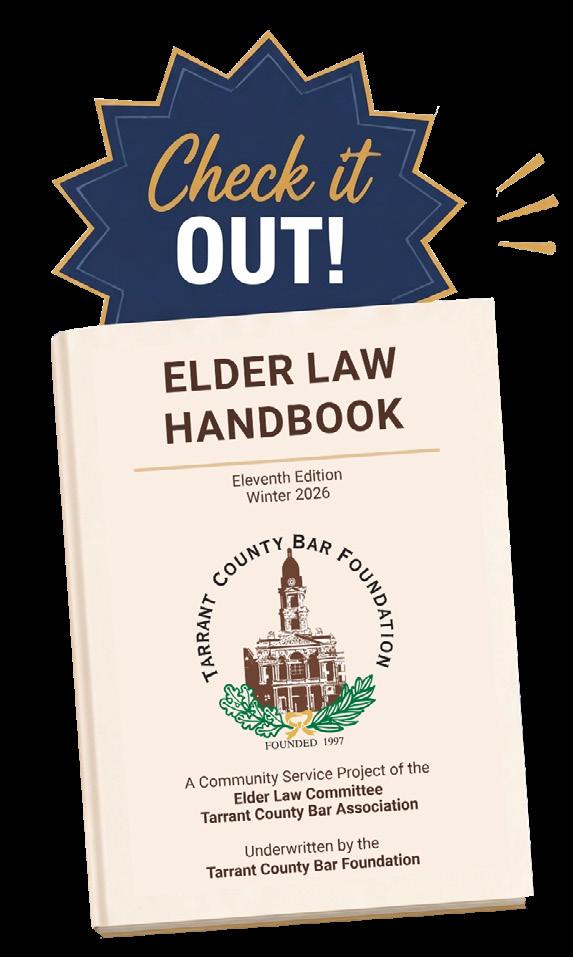
Elder Law Handbook
CRelying on advertising alone, without any other information, is usually a risky proposition when choosing a lawyer. Most lawyers are competitive by nature. In law school, for example, almost every student is scared to death that someone else is going to get one point higher on an exam, study one hour longer for a test, or have a slightly better outline for a course. This competition certainly does not stop when a lawyer starts practicing. One need only look at the phone book or television to see how competitive lawyers really are.
The most important thing to consider is your comfort level with the lawyer. Don’t hesitate to interview more than one lawyer before making a decision. No lawyer should ever pressure a potential client into becoming an actual client. In fact, it is against the law for a lawyer to contact a potential client without being asked to do so. You should pick the attorney; the attorney shouldn’t pick you.
Finally, results speak for themselves. Don’t be shy about asking your lawyer about his or her experience and results. You wouldn’t dream of hiring a designer to remodel your kitchen without seeing photos of his or her work, and you want to know at least as much about your lawyer. After all, you may have to live longer with the results from your lawyer.
Originally published in Fort Worth, Texas: The City’s Magazine (June 2002). This article is reprinted with permission from Steven C. Laird, of the Law Offices of Steven C. Laird, P.C., Fort Worth. g
heck out the newly revised version of our Elder Law Handbook! Thank you to the committee, and everyone who contributed their time and expertise to make this update possible. Your hard work helps ensure this resource continues to serve and inform our community. The TCBA gratefully acknowledges the contributions of the committee: Amy Allen, Donald Buckman, Sara Correa, Karen Denney, Charles Kennedy, A. Lance Mitchell, Judge G. Quentin McGown, Hannah Orand, Lisa Ramirez, Aleed Rivera, Karon Rowden, Cary Schroeder, and Laurie Weir. g
By Sarah Hall Hoffman, Pro Bono Programs Director
A Note of Thanks from the Women in the Law Committee Chair
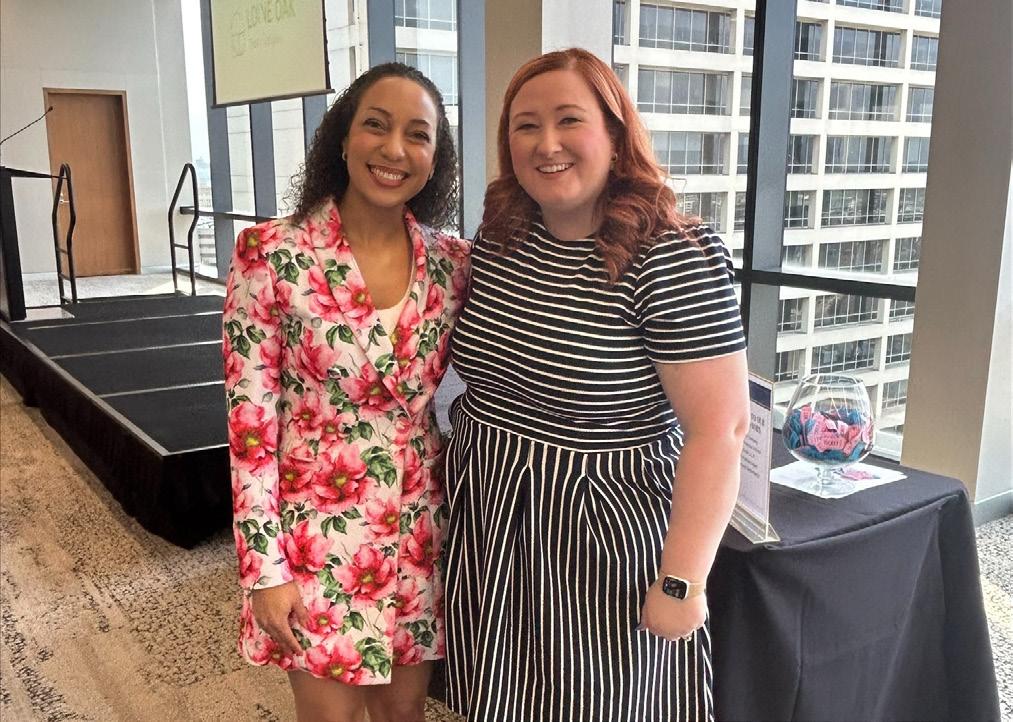
Thank you to everyone who made this year’s Women in the Law Luncheon such a meaningful and inspiring event!
To our sponsors, thank you for your continued support. Without your generosity, it would be impossible to bring this event to life.
To our brilliant planning committee, your thoughtful coordination and dedication to putting together the best event possible ensured every detail reflected the purpose and spirit of the occasion. Your work behind the scenes created an environment where ideas, encouragement, and shared experiences could flourish—and as always, you picked out amazing raffle prizes.
To all who attended, we thank you for showing up, engaging, and fostering connection within the legal community!
Finally, a special thank you to our roundtable hosts and our keynote speaker, Kaleisha Stuart! Your shared wisdom challenged and encouraged us to lead with confidence, authenticity, and purpose.
Chelsea Casiano 2025–2026 Committee Chair
Roundtable speakers for their time, expertise, and insightful contributions:
Sue Allen
Kate Casey
Nikki Chriesman-Green
Megan Cooley
Leah Duncan
Caroline Harrison
Susy Johnson
Sarah Keathle
Rosalyn Lark
Spencer Mainka
Kelly Martin
Marissa Matthews
Katie Owens
Rachel Saltsman
Maritza Sanchez
Hon. Elizabeth Kerr THANK YOU!
Hon. Mollee Westfall
Hon. Melody Wilkinson
Women in the Law Committee members that made this event possible:
Chelsea Casiano, Chair
Heidi Angel
Hannah Beall
Jay Bartley
Tanya Boyce
Susy Johnson
Deanna Kelly-Hill
Lezlee Lijenberg
Ann Lopez
Kara McHorse
Skylar Moore
Tiffany Myles
Sara Norman
Norma Ondarza
Hannah Orand
Maddie Royal
Jennifer Scherf
PREMIER SPONSOR
Event Sponsors
Table Sponsors
American National Bank & Trust
Bailey and Galyen
Cantey Hanger LLP
Consilio
Duane Morris LLP
Haynes and Boone, LLP
Jackson Walker LLP
Munsch Hardt Kopf & Harr, P.C.
Pham Harrison, LLP
Phelps Dunbar LLP
Texas A&M School of Law
Women Attorneys Section
Gift Sponsors
Argent Trust Company
Jay Bartley, Financial Advisor
Harris Cook, L.L.P.
Kristina Voorhies Legan
NFP Structured Settlements
MENTOR MONDAY SEMINAR SERIES
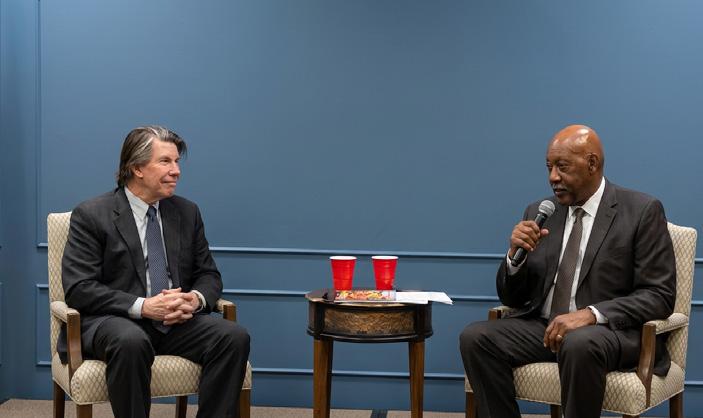
In Conversation with... Judge Louis E. Sturns (Ret.)
Tarrant County 213th District Court
Q: You’ve had a long and distinguished career on the bench. What has kept you engaged and motivated throughout the years?
Well, to be absolutely candid with you, I enjoyed being a judge. It was a job that I felt was my calling. It was just something that I enjoyed doing, and I enjoyed the interaction that I had with the attorneys, with the staff, as well as the idea that perhaps I was doing something that was beneficial to society. I got fulfillment out of it.
Q: Mentorship has played an important role in many legal careers. Who were some of the mentors who influenced you and what impact did they have?
My very first mentor would have been Judge L. Clifford Davis. I think most people know that, because he was the man who gave me my first job out of law school. And he was just a very important part of my life. But along the way, there were others.
In the judiciary, there were several people that I looked up to. I thought the world of Judge Clyde Ashworth and Judge David Ballou, who was a federal judge here. One judge that I actually looked up to, from the way he handled himself in the courtroom, was Judge Tom Cave—he was a very fair and important judge.
Another person who was helpful to me in my career was Attorney Dee Kelly. He taught me some lessons about treating people and being responsive to your clients.
There were just a number of other judges. And I feel bad that I named a few and left off some others, like Judge Charles Mary, who was a civil court judge, but just one of the finest gentlemen that you would ever meet.
Q: What responsibility do experienced lawyers and judges have to mentor the next generation?
I think we have a great responsibility to talk to the next generation of lawyers, to emphasize the things that we think are important for lawyers to do and the attributes that we think are important for them to have, such as conducting themselves honorably and with integrity. I’ve always been proud of the fact that in Tarrant County there was a degree of civility that perhaps did not exist in some other large counties. I’d like to think that we have an obligation to pass those things on to the next generation of lawyers so that they will continue that kind of tradition of being civil and treating people correctly.
Q: What qualities have consistently distinguished the lawyers who earn the court’s respect?
I would have to say it would be honesty. That was what I was looking for in lawyers. A reputation of dishonesty gets around real quickly when you’re among the judges.
Q: Looking back, is there a lesson you learned early in your career that has stayed with you throughout your time in the law?
Yes, there is—to be on time. And I laugh about this because I’ll never forget it, but there were two instances. One was when I was practicing with Clifford Davis and had just started practicing. He had directed me to go up to federal court in Paris, where Judge William Wayne Justice was the presiding judge. And of course, I didn’t leave home early enough to account for the traffic, the other conditions, and the distance I had to go. So I arrived about 15 minutes late, and Judge William Wayne Justice dressed me down. And I always remembered that.
And then, one other time, shortly after that, I had a pretty busy docket by this time, but I was still a young lawyer and I was handling civil, criminal, and family law matters. And I didn’t know how to handle the fact that I had several cases all set at 9:00 a.m. So I just chose my own way to go, and I went to the criminal court first. I arrived at Judge James Wright’s 141st District Court about 9:30, after I had taken care of those other courts. And he lectured me on the order of courts. And I learned from that point on which courts took priority. And so I learned that lesson, and I learned one other thing. If I had a conflict, I learned to make sure that I or my secretary called those courts in advance to notify them that I had a conflict, but that I would be there.
Q: How has the practice of law changed over the course of your career, and what advice would you give lawyers navigating today’s legal environment?
Practice in general has changed with all of the new technology. When I started, of course, office equipment was an old typewriter. And of course, we didn’t have copy machines. Certainly, we didn’t have emails or anything of that nature—rapid communication.
And of course, back then we invested in libraries and spent a lot of money on books. Now they can get that same information online and have it all in their desktop computers. And then, of course, in the area of criminal law, there have been so many changes that have been brought about as a result of the evolving nature of discovery in criminal cases. It made it less of a matter of trying to figure out what the state’s case was. You now have full discovery, so that is a major change in criminal law.
Q: If you hadn’t gone to law school, if you hadn’t become a lawyer, what would you have been doing instead?
Oh, boy. Well, I guess I probably would have been a political scientist. Because my undergraduate major was in political science, and I recall that one of my professors actually tried to convince me to get an advanced degree in political science. So perhaps I would have done that, but I don’t think I would have been nearly as happy. g
Watch the recorded session and earn 1 hour of free ethics CLE at www.tarrantbar.org/cle-mentor-monday-sturns.
Section CLEs
Business Litigation Section
Topic: Charting New Territory: Texas Business Courts’ First Year
Speakers: Judge Jerry Bullard, Eighth Business Court Division
Judge Brian Stagner, Eighth Business Court Division
Moderator: Judge Chris Taylor, 48th District Court
CLE: 1 hour ($20 for TCBA Members, $10 for Law Students)
Construction Law Section
Topic: Change Order Reviews: Validity & Reasonableness
Speaker: Akshaya Iyer, Peritia Partners
CLE: 1 hour ($20 for TCBA Members, $10 for Law Students)
Intellectual Property Law Section
Topic: Trade Secret – Litigation in Federal Court
Speaker: Chris Granaghan, Nelson Bumgardner Conroy PC
CLE: 1 hour ($20 for TCBA Members)
Real Estate Section
Topic: The Platting Process with the City of Fort Worth
Speaker: Alex Parks, City of Fort Worth
CLE: 1 hour ($25 for TCBA Members)
Brown Bag Seminar Series
Topic: Ethics
CLE: 2.25 hours
($65 for TCBA Members, $25 for Paralegal/Staff)
Topic: Employment Law
CLE: 3 hours
($65 for TCBA Members, $25 for Paralegal/Staff)
Topic: AI and the Law
CLE: 4 hours, .75 hour Ethics
($65 for TCBA Members, $25 for Paralegal/Staff)
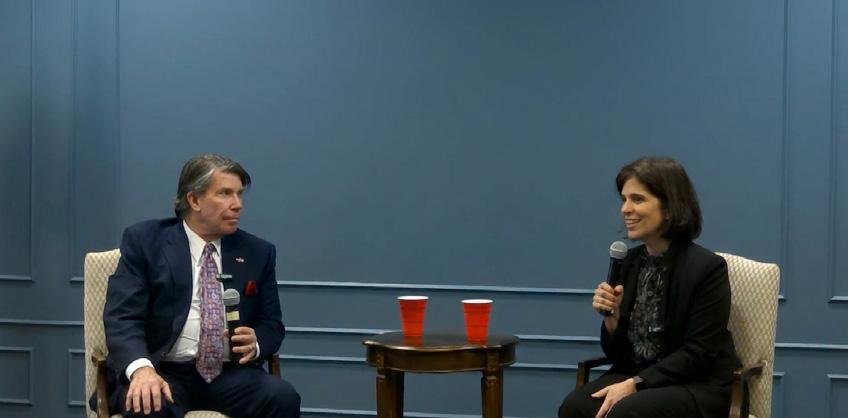
Judge Sturns spoke during April’s Mentor Monday Seminar, an interactive, informative session moderated by Steve Laird.
Snippets
ASK JUDGE BOB
Judge Carey Walker, County Criminal Court No. 2
Civil and Criminal
by Judge Bob McCoy g County Criminal Court No. 3
Judge Bob, what is “contract with the voters” doctrine?
Contract with the voters” doctrine: It is elementary that the proceeds of bonds voted by the people must be expended for the purposes for which they were voted.
South Texas Indep. School Dist. v Busse, 696 S.W.3d 773 (Tex App.—Corpus Christi 2024).
THE PACK’S MONTHLY PARAPROSDAKIAN (a figure of speech in which the latter part of a sentence or phrase is surprising or unexpected; frequently humorous)
You know nothing for sure...except the fact that you know nothing for sure.
— John F. Kennedy
Abigail, Mary, and Martha Elijah
THE PACK’S QUOTE OF THE MONTH
A dog without a master is a forlorn creature; no society of other dogs seems to console him; he wanders about disconsolate, till he finds some human being to whom to attach himself, and then he’s a made dog—he pads about with an air of dignity, like a dog that is settled in life.
Harriet Beecher Stowe, “Our Dogs and Other Stories”
THE Editor's NOTES FROM
THE FARM
If you don’t have a saddle in the back of your pickup, you cannot come home for Christmas.
CRIMINAL ITEMS OF INTEREST
1. 5th Amendment
The scope of the right against self-incrimination protects a person not only against being involuntarily called as a witness against himself in a criminal prosecution, but also permits
him ‘not to answer official questions put to him in any other proceeding, civil or criminal, formal or informal, where the answers might incriminate him in future criminal proceedings.’ Bloxham v. State, 702 S.W.3d 732 (Tex. App.—Houston [1st Dist.] 2024).
2. Custodial Interrogation
The Court of Criminal Appeals has outlined four general situations that may be custodial. The first three situations are when (1) the suspect is physically deprived of their freedom in any significant way; (2) law enforcement tells the suspect not to leave; or (3) law enforcement creates a situation that would lead a reasonable person to believe that their freedom of movement has been significantly restricted. In the fourth situation, custody is established when probable cause has been manifested to the suspect, law enforcement did not tell the suspect they can leave, and, when considering the surrounding circumstances, a reasonable person would believe they are restricted to a degree associated with arrest. Addison v. State, 702 S.W.3d 745 (Tex. App.—Houston [1st Dist.] 2024).
3. Extraneous Offense
When considering a Rule 403 objection, the trial court must balance: (1) how compellingly the extraneous offense evidence serves to make a fact of consequence more or less probable (probative force); (2) the potential of the evidence to impress the jury in some irrational, but nevertheless indelible way; (3) the time the proponent needs to develop the evidence, during which the jury will be distracted from consideration of the indicted offense; and (4) the proponent’s need for the evidence. Holland v. State, 702 S.W.3d 836 (Tex. App.—Waco 2024).
4. Sixth Amendment
A defendant may waive his Sixth Amendment right to be physically present at trial to confront the witnesses against him if, after the jury has been selected with him in attendance, he voluntarily absents himself from the proceedings. Yonko v. State, 702 S.W.3d 844 (Tex. App.—Houston [1st Dist.] 2024).
5. Mens Rea
“Proof of a culpable mental state almost invariably depends upon circumstantial evidence and may be inferred from any facts tending to prove its existence, including the acts, words, and conduct of the accused.” Malone v. State, 702 S.W.3d 866 (Tex. App.—Corpus Christi 2024).
6. Double Jeopardy
Generally, a defendant in a criminal case may not be put in jeopardy by the State twice for the same offense. Because a
defendant has a right to have the jury empaneled and sworn in his case to try it, the protection provided to defendants under the Double Jeopardy Clause attaches after the jury is sworn. Absent exceptional circumstances that show the prosecutor intentionally provoked a mistrial, the Double Jeopardy Clause is not violated if the trial ends prematurely. State v. Rushing, 703 S.W.3d 356 (Tex.App.—Beaumont 2017).
7. Sentencing
A sentence that is outside the maximum or minimum range of punishment is unauthorized by law and constitutes an illegal sentence. State v. Cuarenta, 703 S.W.3d 429 (Tex. App.— Amarillo 2024).
CIVIL ITEMS OF INTEREST
1. Civil Practice and Remedies Code Section
82.008 – Product Liability
Section 82.008 entitles a product manufacturer to a presumption that it is not liable for injuries caused by its product’s design if the manufacturer establishes that (1) the design complied with mandatory federal safety standards or regulations, (2) the standards or regulations were applicable to the product at the time of manufacture, and (3) the standards or regulations governed the product risk that allegedly caused the harm. American Honda Motor Co., Inc. v Milburn, 696 S.W.3d 612 (Tex. 2024).
2. Constitutionality
An as-applied challenge, as the name suggests, asserts that a statue is unconstitutional in its particular application to the challenger even if it operates constitutionally in other applications. Texas Dep’t of Ins. v Stonewater Roofing, 696 S.W.3d 646 (Tex. 2024).
3. Notice – Trial Setting
Failure to provide notice of a trial setting to a party who has appeared in the case “violates basic principles of due process,” warranting a new trial. Failure to comply with the notice requirements in a contested case deprives a party of his constitutional right to be present at the hearing and to voice his objections in an appropriate manner. State v Heath, 696 S.W.3d 677 (Tex. Crim, App 2024).
4. Titles Matter
In construing a statute, whether or not the statue is considered ambiguous on its face, a court may consider among other matters the…title (caption) within the statutory framework. Miracle Auto v Geico County Mutual Ins., 696 S.W.3d 713 (Tex. App—San Antonio 2024).
5. Dominant Jurisdiction
Where two actions involving the same subject matter are brought in different courts having concurrent jurisdiction, the court which first acquires jurisdiction should retain such jurisdiction, undisturbed by the interference of another court,
and dispose of the controversy.
In Re Pioneer Energy Services Corp, 696 S.W.3d 743 (Tex. App— San Antonio 2024).
6. Plea to the Jurisdiction
A plea to the jurisdiction can take two forms, (1) a challenge to the plaintiff’s pleadings regarding the allegations of jurisdictional facts, or (2) an evidentiary challenge to the existence of jurisdictional facts. Thus, the plea may challenge the pleadings, the existence of jurisdictional facts, or both. Bellamy v Allegiance Benefit Plan Mgmt., 696 S.W.3d 751 (Tex. App—Eastland 2024).
7. Governmental Immunity
Governmental immunity embraces two concepts: immunity from suit and immunity from liability. Governmental immunity deprives a trial court of subject-matter jurisdiction for actions in which certain governmental units have been sued unless the unit has expressly consented to suit. On the other hand, immunity from liability is an affirmative defense, not a matter of subject-matter jurisdiction; however, this immunity must also be waived. Governmental immunity may also apply and extend to protect private companies who contract with the State or other governmental entities under certain circumstances. Bellamy v Allegiance Benefit Plan Mgmt., 696 S.W.3d 751 (Tex. App—Eastland 2024).
8. Health Care Liability Claim
A health care liability claim has three elements: (1) a suit against a physician or health care provider; (2) the claims asserted are grounded in treatment, lack of treatment, or a departure from accepted standards of medical care, health care, or safety or professional or administrative services directly related to health care; and (3) the defendant’s act or omission must have proximately caused the injury to the plaintiff.
South Texas Indep. School Dist. v Busse, 696 S.W.3d 773 (Tex. App.—Corpus Christi 2024).
9. Parental Termination
In evaluating whether a parent is credible, safe, and sober, the trial court may sense “the ‘forces, powers, and influences’” that are not apparent through virtual testimony. Similarly, the parent’s and child’s interests “in the accuracy and justice of the decision to permanently end [the parent-child] relationship” heavenly favors “providing [the parent] with an opportunity to participate in the proceedings and communicate with his attorney during trial.
Interest of D.K., 696 S.W.3d 787 (Tex. App.—Eastland 2024).
LAWYER’S QUOTE OF THE MONTH
No brilliance is needed in the law. Nothing but common sense, and relatively clean fingernails.
— John Mortimer
QUOTE OF THE MONTH
Never cross a bridge until you come to it.
— George Armstrong Custer, 1875 g
Deal or No Deal? Get It in Writing!
By Len Wade Jackson Walker, LLP | jlwade@jw.com
2025–2026
TDispute Resolution Section Chair
he scene is a familiar one: The mediation has been challenging. Both sides have vented, all lawyers have had the opportunity to advocate, and the strengths and weaknesses of the parties’ positions have been explored for hours. Now, both sides have worked hard and are willing to enter into an agreement that is slightly less favorable than they ever thought would be agreeable, but the resolution will bring certainty and an end to litigation expense. After working all day, everyone is weary, and the last thing anyone wants to do is spend time preparing a written settlement agreement. After all, the lawyers all know one another; they will work together to get the agreement documented later, and surely none of the parties will have second thoughts—right?
Rule 11 Requires a Written Agreement
Unfortunately, second thoughts are somewhere between typical and universal after mediations, so it is vital for an advocate to be sure any settlement agreement in any mediation is documented in writing. Rule 11 of the Texas Rules of Civil Procedure provides that “no agreement between attorneys or parties touching any suit pending will be enforced unless it be in writing, signed, and filed with the papers as part of the record, or unless it be made in open court and entered of record.” Tex. R. Civ. P. 11. So, as a practical matter, Rule 11 compels a responsible advocate to be sure no mediation ends without a written agreement.
In typical practice, a written agreement can take one of two forms. Some attorneys come to mediations armed with a Word version of a proposed final settlement document that the parties can review, edit and sign in the mediation so no future drafting is required. This is obviously ideal, but in many cases the editing and negotiations about the final documents take too long to complete in a mediation session. More typically, the mediator assists the parties by preparing a bullet-point list of material terms to be included in a final settlement document drafted after the mediation by counsel as designated in the written agreement.
Critically, any writing, whether a final settlement document or an agreed list of material terms, must contain all important provisions your client wants included in a final agreement. Typically, this will include payment terms, release and indemnity terms, representations and warranties as to ownership/no prior transfer of claims being released, dismissal obligations, confidentiality and nondisparagement terms. As a practical matter, if your client is going to insist on a particular term being part of the final settlement agreement, that specific term needs to be included in the written document.
Signature Requirement
If you are in an in-person mediation, the mediator may assist the parties in preparing a written document for physical signature by the parties or their counsel. Alternatively, in Zoom mediations, mediators may assist the parties in preparing a written document confirming an agreement via return email. If an email agreement is prepared, the Texas Uniform Electronic Transactions Act (UETA) recognizes electronic signatures as legally valid if the parties have “agreed to conduct transactions by electronic means,” with the agreement “determined from the context and surrounding circumstances, including the parties’ conduct.” Tex. Bus. & Com. Code § 322.002–322.007.
Most mediators send a list of material agreed provisions and receive confirmation of an agreement from counsel via email. Because caselaw concerning whether there is an “agreement to conduct transactions by electronic means” is satisfied merely by a signature block on an email, cautious attorneys will include a recitation in the settlement agreement which confirms an agreement to confirm the settlement provisions by electronic means or will include a signature line for counsel or for the party. See, e.g., Thang v. Defy Int’l, LLC, 712 S.W.3d 647 (Tex. App.—Houston [14th Dist.] 2025, no pet.); Cunningham v. Zurich American Ins. Co., 352 S.W.3d 519 (Tex. App.—Fort Worth 2011, pet. denied).
General Contract Principles Apply
As with all contracts, a party seeking to enforce a settlement agreement must establish the existence of a valid contract, including mutual assent, consideration, and compliance with applicable formalities. Martin v. Black, 909 S.W.2d 192 (Tex. App. Houston [14th Dist.] 1995, pet. denied). If any fact issue exists as to a party’s intention to be bound by the agreement, the party is entitled to a jury trial on that issue. Id. The Texas ADR statute confirms a settlement agreement is “enforceable in the same manner as any other written contract.” TEX. CIV. Prac. & Rem. Code §154.071(a).
Practical Considerations
1. Talk to your client about what they want to accomplish in a settlement. Don’t wait until the mediation to talk with your client about what they are trying to accomplish in a settlement and what legal issues or potential terms need to be included in a final settlement document. A pre-mediation conference allows your client ample time to discuss all factual and legal concerns with you
outside the context of the time pressures associated with your mediation.
2. Be prepared with all material settlement terms. While most mediators will be aware of some general terms that are typically included in all agreements, if you want your agreement to be as strong as it can be, come to the mediation with all your proposed terms both in a written document and in Word format so they can be reviewed, discussed with the mediator and opposing counsel, and edited if needed. If you have a good relationship with opposing counsel, you may consider exchanging proposed material terms before the mediation.
3. Plan your mediation so you will have adequate time to document your agreement.
In many mediations, the negotiations go right down to the finish line or into overtime, leaving little to no time for preparation of an agreement. While this can work with lawyers you know well and clients who don’t change their minds, it is less than ideal. The “we don’t have any more time to prepare an agreement” syndrome is so widespread that many mediators are only conducting full-day mediation sessions to have time to allow the parties to work through and complete a written agreement without being in a last-minute rush. A good rule of thumb is to allow at least 30 minutes for bullet-point, material-term email agreements in less complicated cases and at least an hour in more difficult cases. If the parties are trying to complete a final signed settlement document in the mediation session with no further drafting or negotiations, at least an hour will be needed.
Conclusion
Mediations are amazingly helpful because they give parties the benefit of a discussion with a neutral third party while also allowing counsel to advocate and discuss the strengths and weaknesses of the client’s case along with related risks and expenses. To be sure your client has an enforceable agreement, Texas statutes and caselaw indicate that all counsel should anticipate and insist upon a written agreement containing all important material terms. The agreement must be properly signed by all parties and/or counsel either by physical signature or via an electronic signature which satisfies the Texas Uniform Electronic Transactions Act. To protect your client, discuss settlement issues before the mediation, be prepared to provide all material terms to your mediator and opposing counsel for review and discussion, and ensure the mediation is planned with adequate time to document your written settlement agreement. g
TCBA Career Center
Connecting Talent with Opportunity
Looking for a job or hiring legal talent? Visit our Career Center to browse opportunities or post a position. Classified advertising is available at tarrantbar.careerwebsite.com.
By Tracy Card, CLE Director TCBA Sections Liaison
Welcoming Summer: A Look Back and What’s Ahead
Bye-bye, spring, and hello, summer. As we enter the summer months, it’s a great time to reflect on all the events your sections have hosted this bar year. I hope you’ve taken advantage of the wealth of knowledge shared during CLE sessions.
More great events are on the way, so be sure to watch your email to stay up to date on the latest news and updates. Remember, the bar year ends June 30, so don’t forget to renew your membership.
If you haven’t already, please begin submitting nominations for your section’s leadership teams. Whether you’re volunteering yourself, nominating someone else, or expressing interest in continuing in your current role, we welcome your support. g
Fixing (Criminal) Judgment Errors and Flowchart
By Andréa Jacobs
Tarrant County Criminal District Attorney’s Office – Post Conviction atjacobs@tarrantcounty.com
Introduction
How important is a written judgment? “It is not the conviction or acquittal itself.”1 But it “is the written declaration of the court signed by the trial judge and entered of record showing the conviction or acquittal of the defendant.” 2 So, while it may not be the conviction, it may be the only evidence in the record of what that actual conviction and sentence were. Therefore, an incorrect judgment could lead to a defendant serving an incorrect conviction or sentence. A correct judgment is very important.
Types of Judgment Errors
Judgment errors fall into two categories: judicial and clerical. “The determination of whether an error is clerical or judicial is a matter of law.”3 And whether the error is clerical or judicial depends on the nature of the error, not on who erred.4
In its simplest terms, a judicial error is an error that occurs in the rendering of the judgment, not the entering of the judgment, and “arises from a mistake of law or fact that requires judicial reasoning to correct.”5 Examples of judicial errors are: illegal sentences based on a mistake of law or fact; the failure to enter a deadly weapon finding; not awarding discretionary time credits for confinement spent as a condition of probation; or when the court changes its mind.
A clerical error, on the other hand, can be (1) “a discrepancy between the entry of a judgment in the record and the judgment actually rendered”6 or (2) when the trial court unintentionally failed to do some required ministerial action “that is so obviously spelled out that the judge would not have any discretion about whether or not to perform the duty.”7 The
1 Ex parte George, 913 S.W.2d 523, 526 (Tex. Crim. App. 1995).
important take-away is that a clerical error is unintentional. Examples of clerical errors are any scrivener error (e.g., degree of offense, sentence, cause number, defendant’s name, place of confinement, etc. ) and omitted special findings required by law (e.g., pre-trial time credits, sex offender registration/ age of victim, findings made by the jury, etc.).
Jurisdiction to Fix Errors
Judgments can only be corrected by courts with jurisdiction. “Jurisdiction cannot be ‘inherent;’ it is conferred by constitution or by statute.”8 Subject matter jurisdiction cannot be created by agreement of the parties.9 Thus, gone are the days of “we can do this if no one complains,” because, frankly, someone will eventually complain. To determine who has jurisdiction to fix the judgment error, we must look at (1) timing and (2) relief.
Timing and Available Vehicles for Relief
The relevant time periods are (1) 0-30 days after judgment entered (note: not date of signing), (2) 30-45 days after judgment entered, (3) over 45 days after judgment entered, and (4) on appeal.10
Generally, the trial court retains plenary jurisdiction for 30 days after the judgment is entered.11 Within this time frame, a defendant can file a motion for amended judgment, a motion for new trial, or forego the trial court and file a notice of appeal.12
In the absence of a timely filed post-judgment motion, the trial court’s non-habeas jurisdiction is limited to nunc pro tunc authority after 30 days.13 From 30-45 days, a defendant who has not yet filed a notice of appeal may do so with a
8 State v. Patrick, 86 S.W.3d 592, 596 (Tex. Crim. App. 2002) (DNA proceeding).
9 Ex parte Sledge, 391 S.W.3d 104, 108 (Tex. Crim. App. 2013).
10 After the appellate mandate falls under “over 45 days after judgment.”
11 Ex parte Matthews, 452 S.W.3d 8, 13 (Tex. App.—San Antonio 2014, no pet.) (“Generally, in a criminal prosecution, a trial court’s plenary power continues ‘for the first thirty days after sentencing.’” (citation omitted)).
12 See, e.g., Williams v. State, 603 S.W.3d 439, 443 (Tex. Crim. App. 2020); Tex. R. App. P. 21 and 25.2; but see, Harris v. State, 153 S.W.3d 394, 395 (Tex. Crim. App. 2005) (Court cannot re-sentence a defendant unless the original sentence was illegal or unauthorized).
13 Ex parte Matthews, 452 S.W.3d 8, 13 (Tex. App.—San Antonio 2014, no pet.) (“If no party timely files a post-judgment motion, the trial court’s plenary power expires thirty days after the sentence or appealable order.”); Tex. R. App. P. 21-23.
motion for leave to file the notice of appeal or may forego direct appeal jurisdiction and file a habeas corpus application, if applicable.14
After 45 days, if the case is not on appeal, the only remaining jurisdiction is that through nunc pro tunc or habeas corpus authority.15 The type of error determines what vehicle for relief is proper.
In Practice: Clerical Errors – Limited but Simple to Correct
If the error can be placed into the clerical error category, it is much easier to correct. Clerical errors may be corrected through a nunc pro tunc order by the trial court or the appellate court, if it is apparent from the record that the error was clerical.16 The only time-constraint on the trial court’s nunc pro tunc authority is when the case is on direct appeal.17 Of course, the trial court may also correct the clerical error through an amended judgment if it is done within 30 days of the entry of the judgment.18 Both the defendant and the State can request the court to correct clerical errors.
In Practice: Judicial Errors – Much More Complicated
If the error is judicial in nature (i.e., the result of a judicial decision or mistake), the trial court cannot nunc the problem away. The trial court will have 30 days to correct the error through an amended judgment or the granting of a new trial. After 30 days, the appellate court may be able to modify the judgment, depending on the error; however, it is more likely that the appellate court will vacate and remand the judgment back to the trial court to correct the error. Once the appellate mandate issues, or 45 days have passed without an appeal, the only available relief is an application for writ of habeas corpus in the applicable court. Habeas relief is only available (1) if the defendant is still restrained in his liberty and (2) the error rises to the level of a constitutional, fundamental, or jurisdictional error. If the error is merely statutory, it is not correctable through habeas corpus.19 While the State can move for an amended judgment, or ask the appellate court to correct or vacate, the State cannot file a motion for new trial or a habeas application on behalf of a defendant.20
Conclusion
While every error in the judgment is not fatal to the overall conviction, it is still important that the judgment be errorfree. Unfortunately, the older the judgment, the harder it will be to correct. The accompanying flowchart can assist in determining what vehicle for relief is available. g
14 Tex. R. App. P. 25.2, 26.3.
15 Tex. R. App. P. 23; Tex. Code of Crim. Proc. Chapter 11.
16 See Tex. R. App. P. 23; Ette v. State, 551 S.W.3d 783, 792 (Tex. App.—Fort Worth 2017) (“Appellate courts may modify incorrect judgments to make the record ‘speak the truth’ when they have the necessary data and information to do so.” ).
17 See Tex. R. App. P. 23.1.
18 See, e.g., Williams v. State, 603 S.W.3d 439, 443 (Tex. Crim. App. 2020); but see, Harris v. State, 153 S.W.3d 394, 395 (Tex. Crim. App. 2005) (Court cannot re-sentence a defendant unless the original sentence was illegal or unauthorized).
19 “The writ cannot be invoked for mere statutory irregularities in the proceedings below.” Ex parte Sanchez, 918 S.W.2d 526, 527 (Tex. Crim. App. 1996).
20 See Tex. R. App. P. 21.1 (“on the defendant’s motion”); Tex. Code Crim. Proc. art. 11.12 (“The party for whose relief the writ of habeas corpus is intended, or any person on behalf of that party, may present an application for a writ of habeas corpus to the proper authority for the purpose of obtaining relief.”). However, the State may file a motion under TCCP articles 1.051 and/or 11.074 for appointment of habeas counsel, if habeas relief is necessary.
LOCAL JURY TRIAL VERDICTS
Civil District Court Jury Trial Verdicts
February 2026–March 2026
2/1/2026–3/31/2026 sorted by judgment date.*
*Does not include cases designated as “on appeal” with the Clerk’s Office as of 4/26/2026.
RY’LENCIA LEE V. RACETRAC, INC.
096-343341-23
Hon. Pat Gallagher (96th District Court)
Trial: January 6–7, 2026
Judgment: February 6, 2026
Attorney – Plaintiff: Jonathan J. “Jack” Walters
Attorney – Defendant: David R. Anderson and Alyssa N. Rodriguez
Summary:
Plaintiff, a RaceTrac store manager, alleged that a coworker aggressively confronted her while she was working, attempted to lure her to the back of the store, and directed another individual to lock her inside the store against her will, causing fear and emotional distress. Plaintiff further claimed she was later terminated for reporting the incident. She asserted claims for false imprisonment and intentional infliction of emotional distress. The jury found that the employee did not falsely imprison Plaintiff and did not intentionally inflict severe emotional distress. Because liability was not established, the jury did not reach questions regarding scope of employment or damages. The court entered a takenothing judgment in favor of Defendant.
EVANS MOGUCHE v. ANNA RAE
096-356845-24
Hon. Pat Gallagher (96th District Court)
Trial: January 12–13, 2026
Judgment: February 6, 2026
Attorney – Plaintiff: Steven Pierret
Attorney – Defendant: William Shultz
Summary:
Plaintiff alleged that he was stopped at a yield sign when Defendant negligently failed to maintain a proper lookout and safe following distance, striking the rear of his vehicle and causing injuries. Defendant denied liability and asserted defenses including comparative responsibility and lack of causation. The jury found that Defendant’s negligence proximately caused the occurrence and returned a 10–2 verdict in favor of Plaintiff. The jury awarded $6,483.31 in past medical expenses and $2,400.00 in lost wages but declined to award damages for pain and suffering. The court entered judgment for Plaintiff in the total amount of $10,873.58, including prejudgment interest and costs.
DEON DEGRAFFE
v. CHAYTON GRAY-
GORYEWS
AND ONCOR ELECTRIC DELIVERY COMPANY, LLC
096-341563-23
Hon. Pat Gallagher (96th District Court)
Trial: October 21–27, 2025
Judgment: February 19, 2026
Attorney – Plaintiff: Paige Eldridge
Attorney – Defendants: Brad Dowell
Summary:
Plaintiff alleged that Defendant driver failed to yield the right-of-way at a stop sign in a parking lot, causing a collision and resulting injuries. Defendants denied liability and asserted comparative responsibility. The jury found that both Plaintiff and Defendant were negligent and that each proximately caused the occurrence, assigning 50% responsibility to each. The jury awarded $8,722.87 in past medical expenses, $160.00 in lost wages, $160.00 for past physical impairment, and $500.00 for past mental anguish, while awarding no damages for other categories. Because Plaintiff was found 50% responsible, the total damages were reduced accordingly.
TEXANS FOR VACCINE CHOICE v. JACKIE SCHLEGEL, TEXANS FOR VACCINE FREEDOM, AND TEXANS FOR VACCINE CHOICE PAC
017-330567-21
Hon. Melody Wilkinson (17th District Court)
Trial: January 7-12, 2026
Judgment: February 23, 2026
Attorneys – Plaintiff: Jonathan Strain, et al. Attorneys – Defendants: John Zavitsanos, et al.
Summary:
This case involved a dispute over control and branding of a nonprofit organization, where the plaintiff alleged that a former executive director and related entities improperly used its name and assets after termination. A jury found that the plaintiff owned the “Texans for Vaccine Choice” trademark and that the former executive director and affiliated PAC infringed it, though a related nonprofit did not. The jury also found a breach of contract but awarded minimal damages, and while it found a breach of fiduciary duty, it awarded no damages on that claim. The court entered a final judgment granting
a permanent injunction prohibiting use of the mark and awarded substantial attorney’s fees to the plaintiff.
KAY STEWART v. TODD ANTHONY BRANSON, AS REPRESENTATIVE OF THE ESTATE OF HENRY KENNETH BRANSON, DECEASED D/B/A BRANSON DENTAL, AND TAMRA MONTROY, DDS
096-347005-23
Hon. Pat Gallagher (96th District Court)
Trial: February 23–25, 2026
Judgment: March 20, 2026
Attorneys – Plaintiff: Brian W. Butcher and Charles M. Noteboom Attorneys – Defendants: Vernon L. Krueger and Thomas E. Gavigan
Summary:
Plaintiff alleged that during a January 27, 2011, root canal, Defendant dentist broke and left a drill bit in her jaw without disclosure. Plaintiff remained unaware until 2023, when another provider identified and removed the object, which allegedly caused a bone infection and required additional treatment.
Plaintiff asserted negligence, malpractice, and fraudulent concealment. Defendants denied the claims and asserted that they were timebarred. During trial, the Court granted Defendants’ motion for directed verdict on that basis.
The jury was nevertheless asked to decide negligence and unanimously found no proximate cause. The Court
entered a take-nothing judgment in favor of Defendant.
CARTEZ WILLIAMS v. GEORGE CROW, RAUDEL NAVARRO, AND NAVARRO TRANSPORTATION
LLC
067-350884-24
Hon. Don Cosby (67th District Court)
Trial: March 10–12, 2026
Judgment: March 23, 2026
Attorney – Plaintiff: Paige Eldridge
Attorneys – Defendants:
Zach T. Mayer and Vanessa M. Williams
Summary:
Plaintiff alleged that a tractor-trailer operated by Defendant driver negligently executed a right turn and collided with Plaintiff’s vehicle, causing injuries. Plaintiff asserted claims for negligence, negligent entrustment, negligent hiring, and gross negligence against the driver and his employer. Prior to submission to the jury, the court granted a directed verdict in favor of Defendants on Plaintiff’s claims for negligent entrustment, negligent hiring, training and supervision, and gross negligence, leaving only the negligence claim against the driver for the jury’s consideration.
The jury found that both Plaintiff and Defendant driver were negligent and that each proximately caused the occurrence. The jury assigned 20% responsibility to Defendant
and 80% responsibility to Plaintiff. Because Plaintiff was found more than 50% responsible, the jury did not reach the issue of damages. The court entered a takenothing judgment in favor of Defendants, dismissing all claims with prejudice.
TICOBRA BURLESON v. NGUYEN AN NGOC PHUONG AND TUAN THANH PHAN
096-357721-24
Hon. Pat Gallagher (96th District Court)
Trial: March 10–12, 2026
Judgment: March 23, 2026
Attorney – Plaintiff: Joseph Mokodean
Attorneys – Defendants: Stephanie M. Rhima and Matthew S. Halpin
Summary:
Plaintiff alleged that during a September 25, 2022 pedicure at LD Nails, a technician negligently cut her feet, causing an infection and resulting injuries. Plaintiff asserted claims for negligence and negligent hiring, training, and supervision against the salon owners.
Defendants denied the allegations and contended that the technician was an independent contractor and that Plaintiff’s injuries were not caused by any negligence attributable to Defendants.
The jury unanimously found that the technician was not acting as an employee of Defendants and that no negligence by the technician or Defendants proximately caused Plaintiff’s injuries. The jury also rejected
Plaintiff’s negligent hiring theory. As a result, the jury did not reach damages. The Court entered a takenothing judgment in favor of Defendants.
GLENDA WINSTON v. IAN KINNE, et al. 236-306395-19
Hon. Dusty Fillmore (236th District Court)
Trial: March 9–11, 2026
Judgment: March 24, 2026
Attorneys – Plaintiff: Paige Eldridge, Miguel Cazarez, and Charles Ray Nichols
Attorneys – Defendants: Mark J. Dyer and Brice A. Barnes
Summary:
Plaintiff alleged that Defendant driver negligently struck her vehicle while attempting to pass and merge back into her lane, causing personal injuries. Defendants denied liability and contended that Plaintiff’s own negligence contributed to the occurrence.
The jury found that both Plaintiff and Defendant were negligent and apportioned responsibility 75% to Defendant Ian Kinne and 25% to Plaintiff. The jury awarded Plaintiff $13,151.25 in past medical expenses and $12,500.00 in past damages, including physical impairment, pain and suffering, and mental anguish. The jury declined to award any future damages. After reduction for Plaintiff’s comparative fault, the Court entered judgment in favor of Plaintiff.
Continued on page 36
Continued from page 35
TOM AND DAWN MILLER v. DAVID BARRY
342-353531-24
Hon. Kimberly Fitzpatrick (342nd District Court)
Trial: February 23–25, 2026
Order: March 24, 2026
Attorneys – Plaintiffs: Brian K. Garrett, Stefan G. Garcia, Matthew B. Fronda, Owen C. Babcock, and Megan M. McKenna
Attorneys – Defendant: Steve Snelson, Griffin Evans, and LeAndra Burcham
Summary:
Plaintiffs alleged that Defendant, a general contractor, breached a construction agreement and engaged in negligent and fraudulent conduct in connection with a farmhouse renovation project. Plaintiffs contended that the project, originally estimated at approximately $347,000, resulted in payments exceeding $1.3 million for incomplete and defective work, along with damage to the property.
Defendant denied the allegations and asserted that the work and billing were proper, that Plaintiffs approved the work and invoices, and that any alleged damages were not attributable to Defendant.
Following a jury trial, the jury unanimously found that Defendant did not fail to comply with the contract and that no negligence by any party proximately caused the occurrence in question. A take-nothing judgment in favor of
Defendant was entered.
GARY KENNEDY, et al. v. GHAP, LLC, et al.
153-341520-23
Hon. Susan McCoy (153rd District Court)
Trial: March 9–10, 2026
Judgment: March 26, 2026
Attorneys – Plaintiffs:
John Victor Mastriani and Finis E. Cowan
Attorneys – Defendants:
Pro se (Brady Speers and Julie Speers)
Summary:
Plaintiffs alleged that Defendants solicited investments in connection with real estate transactions through material misrepresentations and false promises regarding the use and repayment of investor funds. Plaintiffs asserted claims for fraud, statutory real estate fraud, and related causes of action, contending that Defendants misapplied investor funds and operated a scheme to obtain and retain those funds.
Following a jury trial, the jury unanimously found that Defendants Brady Speers and Julie Speers committed fraud and statutory real estate fraud, acted with actual awareness of the falsity of their representations, and engaged in unlawful appropriation and misapplication of property held in a fiduciary capacity.
The jury awarded Plaintiff Gary Kennedy $583,500 in actual damages and $25,000 in mental anguish damages, along with exemplary damages of $1,000,000 against Brady Speers and
$500,000 against Julie Speers. Plaintiff Ramon Menchaca was awarded $350,000 in actual damages and $25,000 in mental anguish damages, along with exemplary damages of $1,000,000 against Brady Speers and $500,000 against Julie Speers.
TUONG THAN TO v. MICHAEL QUOC NGUYEN AND HANGUYEN, LLC D/B/A 7-ELEVEN STORE #33717
017-346992-23
Hon. Melody Wilkinson (17th District Court)
Trial: February 24–March 3, 2026
Judgment: March 27, 2026
Attorney – Plaintiff: Lu Pham
Attorney – Defendants: Martin R. Griffin
Summary:
Plaintiff alleged that Defendants engaged in fraud and deceptive trade practices in connection with a failed transaction involving the purchase and operation of a 7-Eleven store, claiming he paid substantial sums but was never transferred ownership. Defendants contended that the transaction was conditional on Plaintiff qualifying as a franchisee and that Plaintiff failed to meet those conditions, asserting that the agreement was later cancelled and partially repaid.
The jury found that Defendants engaged in false, misleading, or deceptive acts and that such conduct was committed knowingly or intentionally. The jury
awarded $126,600.00 in damages for unpaid purchase money related to a buyback of the store but declined to award damages for mental anguish, exemplary damages, or attorney’s fees.
The court entered judgment in favor of Plaintiff for $126,600.00, plus $21,188.16 in prejudgment interest. Thereafter, the parties reached a post-verdict settlement, and the court entered an Agreed Modified Final Judgment dismissing all claims with prejudice and providing that no monetary recovery would be awarded to either party, with each side bearing its own costs and fees. g
LAWYERS ON THE MOVE & IN THE NEWS
If you are a TCBA member and would like to place a free announcement in the The Verdict, we would like to hear from you. Please submit information by email to Elizabeth Banda, Communications Director, at elizabeth@tarrantbar.org.
Voices of the Women Attorneys Section: Progress, Challenges, and the Path Forward
By Hannah E. Orand Brown Pruitt Wambsganss Dean Forman & Moore, P.C. | horand@brownpruitt.com 2025–2026 Women Attorneys Section Social Events Director
Since its founding in 1997, the Women Attorneys Section of the Tarrant County Bar Association has created a safe space for connection, mentorship, and candid dialogue among women in the legal profession. Nearly three decades later, those conversations reveal a profession transformed in many ways—yet still grappling with familiar challenges.
Expectations and First Impressions
For many, early experiences in the profession highlighted the gap between expectations in schools versus lived reality. One of our members recalled:
“At my initial interview, I learned there were seventeen attorneys employed by the firm and only one female attorney. It was a stark reminder that practice may not reflect my schooling —approximately half of the law students in my class were women. ” — Anonymous, Licensed 9 Years
Even where overt barriers have diminished, implicit expectations persist. Haley Shaw noted that while some traditional norms have faded, others remain embedded in professional culture: “If a woman is a tough negotiator, she is immediately hard to work with, whereas that attribute is celebrated in men.”
One of our members recalled that opposing counsel told her that “all female attorneys are either meek or total [profanity] and that was why he liked to only work directly with partners.” Given the lack of female partners at the firm at that time, the comment stung.
Such observations reflect the continued presence of gendered perceptions that shape how attorneys are evaluated—not only for their work, but for how they perform it.
Early Career Realities: Barriers, Bias, and Breakthroughs
For more senior attorneys, the barriers were often more explicit. Lynn Kelly described entering practice at a time when even workplace policies reflected stark inequities:
“When I first started [working], women were not allowed to wear pants to work! After about a year, we were allowed to wear pants but only if part of a ‘matching set pantsuit.’ I also noticed that when a male colleague got married or had a baby, he would be called into the [supervisor’s office] to receive notice of a salary increase. The rest of us received raises, but they seemed to be based on length of service. Other than the
salary issue, I never felt like I had to prove myself differently than male colleagues.”
Within these constraints, Lynn Kelly found opportunities for advancement:
“I noticed that many of the female prosecutors became supervisors after demonstrating hard work, persuasive skills with juries, and organizational skills so I concentrated on those specifics and was rewarded by being promoted from misdemeanor to felony in about 9 months.”
Mentorship: Peer Support and a Path Forward
Across generations, every single interviewee noted the importance of mentorship in shaping career trajectories.
“I have been fortunate enough to have both male and female attorneys mentor me throughout my legal career. I met [a mentor] at a fundraiser hosted by my law firm back in 2021, and we bonded over our shared love of literature. He asked me to join his rotary club, and he has helped my career advancements ever since. I met two women [redacted] at Advanced Family Law back in 2023, and they have been my go-to mentors when it comes to everything family law. Without their mentorship, I would have likely struggled and not had the same success and opportunities within family law.”
– Haley Shaw
“I was fortunate to have a mentor take me under her wing and teach me both the substantive law of my practice areas and those unspoken rules that are crucial to success: navigating relationships with clients, opposing counsel, and colleagues. When I felt isolated at work, my mentor encouraged me to join various sections of the bar, including the Women Attorneys Section and to build a community outside of my workplace. It was through her that I realized how important a community is and how establishing boundaries in my personal life would actually help me thrive in my professional life.”
– Hannah Orand
“Upon graduating from law school in California, I was hired [redacted] as a prosecutor in December of 1989. I planned to stay for a year but stayed for almost 5 years, because I loved the interesting opportunities and also because of the great camaraderie among the attorneys and others who worked with us. A big part of this rapport was mentorship and I can specifically think of four female attorneys who were my supervisors at various times and who were excellent mentors.
These four attorneys ranged from having just a couple of years’ more experience to having many more years of experience than me. Two of them were unmarried, admitted “workaholics” but the other two were married with young children. Observing how the attorneys who were moms balanced their lives was interesting to me, although it was very similar to what I already knew as a daughter of a mom who had a career. As I think back, the way each of them became a mentor to me was that they were assigned to be my supervisor, but then took the extra time to get to know me personally even outside of the workplace. Every legal role has its positives and negatives, but having a mentor and also being a mentor can be such an enjoyable part of learning to be a better practitioner and a better person. Returning to private practice after being on the bench for six years has meant a learning curve for me, and without the mentorship of a few very patient attorneys at my current firm, it would have been much more difficult.” – Lynn Kelly
Credibility and Standing Your Ground
Younger attorneys reported a recurring need to assert their credibility in ways not equally experienced by male colleagues. Haley Shaw described two such encounters:
“I cannot count the amount of times I have had another older attorney try to convince me that I did not know the law and that I should defer to whatever they wanted. More subtly, some attorneys have tried to ‘gently’ persuade me that they are just looking out for me and trying to save me the embarrassment of having a hearing when they knew exactly how that hearing would go. All of this was just a test. They were hoping I was weak-willed. I have spoken to multiple male colleagues of approximately the same age, and none have reported a similar experience to mine.”
Navigating Parenthood and Professional Expectations
Balancing professional responsibilities with family life remains a complex and deeply personal challenge. Lauren Sorokolit shared:
“I have had three children throughout my legal career, all of which were born during my previous in-house counsel role. I was nervous each time I told my employer I was pregnant and would be taking leave because I was fearful of leaving my work behind, but I never received any kind of repercussions or negative response to my announcements. I did not get full pay during my pregnancy leave, but I received disability payments and while in California, I received paid family leave through the State. My work was always handled while I was out, but I was expected to jump back into it once I was back in the office. I did not get a break just because my babies were not sleeping at night, or we had a virus running through the house. My supportive husband and amazing babysitters were almost just as important as my understanding job.”
Redefining Success in the Law
Perhaps the most striking evolution across generations is the shifting definition of success. Lauren Sorokolit reflected on how her perspective has changed over time:
“As a new attorney, I thought success was working 24 hours a day… Over time, I’ve learned that hours worked does not necessarily equate to quality of work. Most of the time, my home life is more important. The balance with work is not always perfect, but it feels manageable.”
An anonymous member noted that she was told that her only goals should be to “be a moneymaker” and “make partner within 8 years.” After practicing for a few years, this member decided that she could serve her clients and still have a personal life – focusing on her family, friends, and hobbies. She credits this shift in mindset to an improved professional life as she no longer resents her job and is able to show up in more meaningful ways for her clients.
This reframing signals a broader cultural shift within the profession—one that values sustainability, well-being, and long-term fulfillment alongside traditional markers of professional achievement.
Looking Ahead
The voices reflected here tell a story of meaningful progress alongside persistent challenges. Each generation of women attorneys has contributed to reshaping the profession— expanding opportunities, challenging norms, and redefining success.
As the legal community continues to evolve, the role of organizations like the Women Attorneys Section of the Tarrant County Bar Association remains essential: fostering dialogue, strengthening mentorship, and ensuring that the next generation enters a profession more equitable than the last.
The Women Attorneys Section invites members of the legal community to continue these conversations at its upcoming end-of-year social at Courtside Kitchen this May 2026. g
Thank you to our recent People’s Law School Speakers!
Matthew Bourque
Sara Correa
Jeremy Gordon
Samantha Kehl
Julie Sladek
Angel Williams
And thank you to our Committee Chair, Cara Sitton, for all of her work to help make our event a success.
MENTOR MONDAY SEMINAR SERIES
In Conversation with... Megan Cooley
General Counsel, Texas Wesleyan University
Q: Megan, you began your career as a litigator, later served as an executive director of a bar association, and now serve as general counsel for a university. What factors influenced your decisions to pursue these different roles?
I think each role involves something I fundamentally loved. I always wanted to be a lawyer. For the bar, I wanted to serve other lawyers and our community, and I was able to do that as a pro bono director and the bar director. For the general counsel role, I have always valued learning and education. I’m a child of educators and like being able to practice law in the environment of higher education.
Q: At different stages of your career, did your definition of professional success change? And if so, how?
Oh, definitely. I think what our law career looks like, or what we want it to look like is different as we gain experience and grow. At the beginning, I just wanted to have a career as a lawyer, not make a mistake, and set myself apart. Now that I’ve had more experience, I see success as being able to help my client succeed and navigate challenges, as well as have meaningful professional relationships and a strong connection with our bar.
Q: Many attorneys consider alternative career paths but hesitate to make a change. What gave you the confidence to pursue opportunities outside of traditional practice?
I don’t know if it was confidence. I took a leap of faith. I’m very thankful for my non-traditional career path. I don’t know if it’s for everyone, and you have to be very intentional about your ultimate goals. For me, I wanted to do something different, but also stay within the legal profession. I’m so thankful for
my time at the bar. It helped me gain experience and learn new skills that have helped me in my current role as general counsel. It also allowed me to meet lawyers from all different practice areas. But I do think, for those thinking about stepping out, I would consider what kind of skills and relationships that new role might bring and whether that will serve you in the long run.
Q: How did your experience leading a bar association shape the way you approach problem solving and decision making as general counsel?
I really do think my time at the bar prepared me for the role of general counsel. I think I learned perspective by working with lawyers and people from all walks of life. I learned project management because working at the bar required managing different stakeholders and being thoughtful of the different needs of each of them. I also think working at the bar and serving in a non-legal role has hopefully made me more empathetic to my client and the people who work for Texas Wesleyan. I know how it feels to have responsibilities related to the operation of a nonprofit, whether it is completing a tax return, planning an event, or some other obligation. I would like to think that I use that experience to understand and anticipate their needs or legal questions.
Q: How does working as in-house counsel for a university differ from private practice? And what should lawyers know if they’re considering making a similar transition?
I love working in-house. I’m mission-driven, and I like working internally to support the mission of the university. Sometimes in private practice, I may have felt a bit more removed from the everyday work of supporting an organization. My inhouse role feels different than being a litigator in private practice because I’m trying to keep us out of any legal issues, so it’s more proactive work. As a litigator, many times you get involved with a case after the problem has already happened and you work to resolve it.
Q: What guidance would you give attorneys who feel called to explore a new direction in their legal career? Be open to opportunities. I think perhaps when I was younger, I had a limited view as to what my career could (or should) be. A fulfilling legal career can look like a lot of different things. For those exploring new directions, I would talk to those you trust and listen to their feedback—even if it’s not what you want to hear. That’s why mentorship is so important. If you have somebody you can trust who will tell you the pros
and cons of a potential path, it’s good to evaluate it and also do your research. I would be intentional about the ultimate direction and substance of your career, but know it may look different getting there than you originally planned.
Q: Speaking of mentorship, who are some mentors who have really guided you along your career that you can shout out, and what are some lessons that they taught you?
While in private practice, I am thankful to have worked with many great lawyers. Some of my mentors at Kelly Hart include Dee Kelly Jr., Brian Stagner, and Shauna Wright. My experience at Kelly Hart provided the foundation for my legal career. When I transitioned to the bar, Tricia Graham showed me how to serve and support our legal community with care and dedication. I was lucky enough to work with Patti Gearhart Turner, first at the bar in her volunteer leadership role, and then as her successor in the general counsel role at Texas Wesleyan. She supported me as I transitioned to the general counsel position and continues to be my mentor on all subjects— whether it be law or life. I feel lucky that I’ve had people from all walks of my professional career take time to mentor me. I have learned from all of them.
Q: If you weren’t a lawyer, what would you be?
If I wasn’t a lawyer, I like to volunteer, so I would just be a “professional” volunteer. Or, I would be a florist. g
Megan spoke during March’s Mentor Monday Seminar, part of the Mentor Monday Series, in a session moderated by Steve Laird.
Watch the recorded session and earn 1 hour of free ethics CLE at www.tarrantbar.org/cle-mentor-monday-cooley.
TCBA members are invited to participate in a national research project highlighting exceptional legal mentors. A group of law professors is currently working on a forthcoming book, What the Best Law Mentors Do (Harvard University Press), focused on identifying and sharing the qualities of effective mentorship in the legal profession.
If you know a mentor who has made a meaningful impact, particularly in guiding newer attorneys or modeling strong ethical standards, you are encouraged to submit a nomination. Nominations are open through September 1, 2026.
Nominate a Mentor: www.tarrantbar.org/best-law-mentors
Recent Developments in Merchant Cash Advance Litigation in Texas
By Bryan C. Assink
Bonds Ellis Eppich Schafer Jones LLP | bryan.assink@bondsellis.com
2025–2026
Bankruptcy Section Chair
Merchant Cash Advance (“MCA”) companies have become an increasingly prominent topic in recent years. In a merchant cash advance, the MCA company purportedly purchases a portion of a company’s (designated as the “Seller”) revenue stream at a discount, receiving periodic payments that are supposedly based on a percentage of the Seller’s revenue stream. The business in need of cash enters into these agreements as a temporary solution to bridge gaps in cash flow and to provide additional working capital. Ultimately, however, in many cases, the funding is so expensive—and collection tactics so aggressive—that entering into such an agreement results in the company ending up in bankruptcy court.
As a result, bankruptcy courts have increasingly been confronted with litigation involving MCA companies. Debtors and trustees have pursued litigation against these MCA companies seeking not just to invalidate the agreements as disguised loans that violate state usury laws but also to recover all amounts paid to such companies as fraudulent transfers and various other forms of relief.
A threshold issue in these cases is what state’s law should apply to a plaintiff’s claims of usury under an MCA agreement. Most MCA agreements include a choice of law provision that designates the law of a state that tends to be more favorable for the MCA company, often New York. However, under conflictof-laws principles, a Texas court still has discretion to apply the law of another state in analyzing the substance of the MCA agreement.
Texas applies Section 187 of the Restatement (Second) Conflict of Laws (the “Restatement”) to determine in a conflicts case whether a choice of law clause is enforceable. Int’l Interests, L.P. v. Hardy , 448 F.3d 303, 307 (5th Cir. 2006) (citing DeSantis v. Wackenhut Corp ., 793 S.W.2d 670, 677 (Tex. 1990)). Under the analysis of the Restatement, the law of the state chosen by the parties will be applied “unless the chosen state has no substantial relationship to the parties or the transaction and there is no other reasonable basis for the parties’ choice,” or the application of the law of the chosen state would be contrary to a fundamental public policy of a state that has a materially greater interest than the chosen state in the determination of the particular issue, and would be the state law that would otherwise apply by application of section 188 of the Restatement. Id.
Usury in Texas is governed by the Texas Finance Code. For commercial loans under Texas law, a creditor may not contract for and receive interest that exceeds 28 percent per year. Tex. Fin. Code §§ 303.009(c), 306.002(a).
A creditor who contracts for interest that is greater than the amount authorized by the Texas Finance Code in conn-
ection with a commercial transaction is liable to the obligor for an amount equal to three times the amount computed by subtracting the amount of interest allowed by law from the total amount of interest contracted for, charged, or received. Tex. Fin. Code § 305.001(a-1). The prevailing party in an action for usury under the Texas Finance Code is also entitled to recover its reasonable attorney’s fees. Tex. Fin. Code § 305.005.
In Texas, to determine whether a transaction is a loan or a sale, courts ascertain the “intention of the parties as disclosed by the contract, attending circumstances, or both.” Korrody v. Miller, 126 S.W.3d 224, 226 (Tex. App.—San Antonio 2003, no pet.). The substance of the agreement controls to ultimately determine whether the agreement will be characterized as a loan rather than a true sale of receivables. See First USA Mgmt., Inc. v. Esmond, 960 S.W.2d 625, 627 (Tex. 1997).
Recently, in an apparent first, the U.S. Bankruptcy Court for the Northern District of Texas, Dallas Division, issued an opinion finding that certain MCA companies had violated the Texas Finance Code by charging interest far in excess of the rate allowed under Texas law. See Denali Construction Services, LLC v. Cloudfund, LLC, et al., Adv. Proc. No. 2403083 (Bankr. N.D. Tex. March 20, 2026).
In Denali , a Chapter 11 debtor brought suit against a number of MCA companies, asserting a series of claims, including declaratory relief that the MCA agreements were disguised loans and violated Texas usury laws, fraud, and constructive fraudulent transfers.
While most of the defendants settled prior to trial, the debtor-plaintiff pursued the two remaining defendants, Infusion Capital Group, LLC (“Infusion”) and InstaFunding, at trial. After trial, the court determined that the MCA agreements were in substance loans under Texas law and that the defendants each charged interest in excess of the amount allowed, and the agreements were therefore void. The court found that Infusion charged excess interest of $886,076.32 and InstaFunding charged excess interest of $869,301.19. The court therefore imposed damages against Infusion and InstaFunding in an amount of three times the excess interest charged pursuant to the Texas Finance Code, which was $2,658,228.96 as to Infusion and $2,607,903.57 as to InstaFunding.
This ruling underscores the significant risk MCA companies face when their agreements are characterized as loans under Texas law. Despite contractual labels, courts will examine the substance of the transaction to determine whether the transaction is a loan rather than a true purchase of receivables. If the transaction is determined to be a loan, the Texas Finance Code’s usury penalties—particularly the availability of treble damages—can expose MCA companies to substantial liability. g
A destination feel— without the destination travel.
We’ve reserved the entire property exclusively for the TCBA—creating an experience designed for connection, conversation, and community.
Your favorite programming. A completely new atmosphere. SAVE THE DATE APRIL 16–18, 2027
By Sarah Hall Hoffman, Pro Bono Programs Director
Spotlighting members practicing law beyond Fort Worth
Ben Westbrook with his family
Q: How long have you been practicing law and what area of law do you practice?
I’ve been practicing for 12 years and I do personal injury trial law.
Q: What made Benbrook the right place for you to call your office?
I’ve always liked the community. I kept my eye on the building we are in now because I knew if I had the chance, I wanted to set up my office in this area.
Q: What do you enjoy most about living and working on the outskirts of Fort Worth?
I like being outside the town. I’ve got cows that come up to my backyard fence to graze. Being from a small town in East Texas, it is nice to get outside the city into a little bit more country atmosphere.
Q: What initially drew you to the legal profession, and what keeps you engaged today?
I’ve always been drawn to helping people. Before I was an attorney, I was a high school coach and teacher. I have a passion for helping people out.
Q: What is one professional skill or habit that has made the biggest difference in your career?
I think being more proactive. Most of the time, making a good decision quickly is more important than waiting too long trying to make the best decision.
BENBROOK, TEXAS
A Q&A with TCBA Member
Ben Westbrook
Q: What do you enjoy most about being part of the Tarrant County legal community?
I like the camaraderie. I find practicing with other Fort Worth attorneys and judges in the courts here is much more civil and enjoyable than when I step out into other counties, such as the one located east of here.
Q: Outside of practicing law, how do you like to spend your time?
I enjoy spending time with my family. I have four sons. They’re involved in a lot of sports and we like to do games and camping and stuff when we have time.
Q: What’s something people might be surprised to learn about you?
I really like board games a lot. My favorite is probably Gloomhaven.
Q: If you weren’t a lawyer, what do you think you’d be doing instead?
I would still be coaching football. g
A dvertise
The Tarrant County Bar Association’s award-winning publication*, The Verdict, is a multi-faceted magazine published six times a year for TCBA members. It includes substantive articles, member news, Bar initiatives, and information about membership events and activities. The Verdict is distributed electronically to all TCBA members, with an optional paid print edition also available. Each issue reaches an average of 2,500 readers through email, print, social media, and online access through TCBA’s website.
*Under its former name, The Bulletin, TCBA’s publication received the 2018, 2019, 2022, and 2023 Division III Stars of Texas Bars Award for Best Overall Newsletter from the State Bar of Texas. Advertising rates vary depending on ad size and frequency. For rates and availabilty, contact Elizabeth Banda, Communications Director, at elizabeth@tarrantbar.org.
IN MEMORIAM
The Honorable Michael Roy Thomas 1944–2026
Michael (Mike) Roy Thomas was born August 12, 1944, to Roy and Florene Thomas and passed away April 14, 2026, surrounded by family. Mike was born in Bridgeport, TX, and raised in De Leon, TX. His success on the gridiron for the Bearcats led to a football scholarship at Baylor University, where he was a three-year letterman for the Bears. While still playing football, he began classes at Baylor Law School and was proud to have taken a law school final and played in a football game on the same day.
It was at Baylor where Mike met the love of his life, Patsy Watson. Upon graduation from law school, Mike and Patsy moved to Fort Worth, where he went to work for the Tarrant County District Attorney. He then opened his own office and built his career as a sole practitioner for over 30 years, specializing in criminal defense. In 2002, he took another step in his career by being elected a State District Judge, a position he held until his retirement in 2022.
While Mike experienced success in all facets of life, he was most proud of his family. Mike and Patsy raised three kids in a welcoming home where their many friends ensured the house was always bustling with activity. They always had an open door for anyone who might stop by.
Mike loved to travel and was fortunate to visit many destinations around the world, including playing many of the greatest golf courses. His favorite destination was Crested Butte, where the entire family spent countless trips enjoying the outdoors.
An avid sports fan, he loved watching sports of all types. He never missed a game any of his children played, including coaching many of their teams. In later years, his greatest joy was watching his grandchildren compete, either by attending in person or streaming online.
Mike had a charitable heart, displayed through his pro bono legal work, service to dozens of charities, and involvement on many boards. He was a member of Colonial Country Club for over 50 years, spending decades on the Tournament Committee and serving a year as President of the Club. He was also a member of the Fort Worth Breakfast Club.
Mike had a very outgoing personality, and his favorite thing was learning as much as he could about anyone he met, anywhere he went. He had the rare ability to connect with people from all walks of life and treated everyone he met with the utmost respect.
Mike was preceded in death by his parents, Roy and Florene Thomas; his in-laws, Clayton and Margaret Watson; and his brother-in-law, Mike Watson.
Mike is survived by his wife of almost 59 years, Patsy; son Michael Thomas Jr. and wife Kerri; son Brandon Thomas; daughter Anne Smith and husband Stephen; grandchildren Margaret Smith, Katie Beth Thomas, Thomas Smith, and Caroline Thomas; brother Trent Thomas; sister Paula Burnett and her husband Joe; several cousins and nieces; and his beloved “granddogs.” Published by Harper & Lucas Funeral Home. g
Obituaries for past or current TCBA members may be submitted for publication and distribution to the membership at www.tarrantbar.org/obituary. Submissions are reviewed by TCBA staff prior to distribution.
LegalLine
Do you have two hours to assist someone in need of legal advice?
Upcoming Volunteer Dates
Thursdays | 5:00 PM–7:00 PM May 14 May 28 June 11 June 25
Tarrant County Bar Association 1315 Calhoun Street Fort Worth, TX 76102-6504
If any of your contact information is incorrect, please submit the corrected information to the TCBA office at 817.338.4092, or email admin@tarrantbar.org
The Tarrant County legal community is full of mentors! Do you have someone who has made an impact on your legal career that you’d like to shout out in The Verdict?
Submit your recognition: www.tarrantbar.org/mentor-highlight
Let us celebrate this milestone in the next issue of The Verdict! To ensure recognition, please verify that the retiree is a current TCBA member.
Member Benefits Vendor List
TCBA members may take advantage of discounts provided by the following vendors:
AMO Office Supply guarantees the lowest prices on office supplies for TCBA members, with next-day delivery and free shipping. Call 800.420.6421.
For the last 17 years EVERNET Consulting has served the legal industry, supporting law firms nationwide. Our services include email, network, and computer support, practice management solutions, website development, marketing, social media management, online reviews, and client outreach. Contact us today for a TCBA member discount: https://evernetco.com/lp/tarrant-county-form/
Falcon Document Solutions delivers fast, reliable process service, scanning, printing, copying, e-discovery, litigation displays, and trial boards. Available 24/7 at 817.870.0330 or falcondocs.com. TCBA members receive discounted rates.
Fort Worth JSB Co., Inc. offers a 10% TCBA member discount on business cards, letterhead, envelopes, brochures, flyers, and more. Call 817.577.0572 for a quote.
Fort Worth Zoo offers discounted tickets for TCBA members—$20 adult, $16 child/senior. Contact Tracy Card at tracy@tarrantbar.org or 817.338.4092.
Martinizing Cleaners offers TCBA members VIP service and exclusive savings: $25 off your first order and 15% off all services, plus convenient home and office pickup and delivery. Visit 5950 Cityview Blvd., Fort Worth, go to www.martinizing.com/Fort-Worth-Cityview or call 817.292.0605.
Thomson Reuters offers TCBA members 15% off new Westlaw subscriptions or upgrades, including Westlaw Edge. Contact Ben Galloway at Ben.Galloway@TR.com.
Submit your recognition: www.tarrantbar.org/retirement-recognition Printed on Paper with 10% Recycled Fiber
For IT Help:
Juris Fabrilis provides members with discounted rates on web-based tools to assist in managing their law practices. For more information, call 817.481.1573 ext. 101.
For Shredding and Document Disposal:
Magic Shred is a secure shredding business that offers TCBA members a 10% discount to TCBA members. They provide on-site document shredding services. TCBA also organizes 4 free shredding events per year exclusively for its members. Members can bring up to five boxes for shredding free of charge. Call 940.783.6580 for details. g