
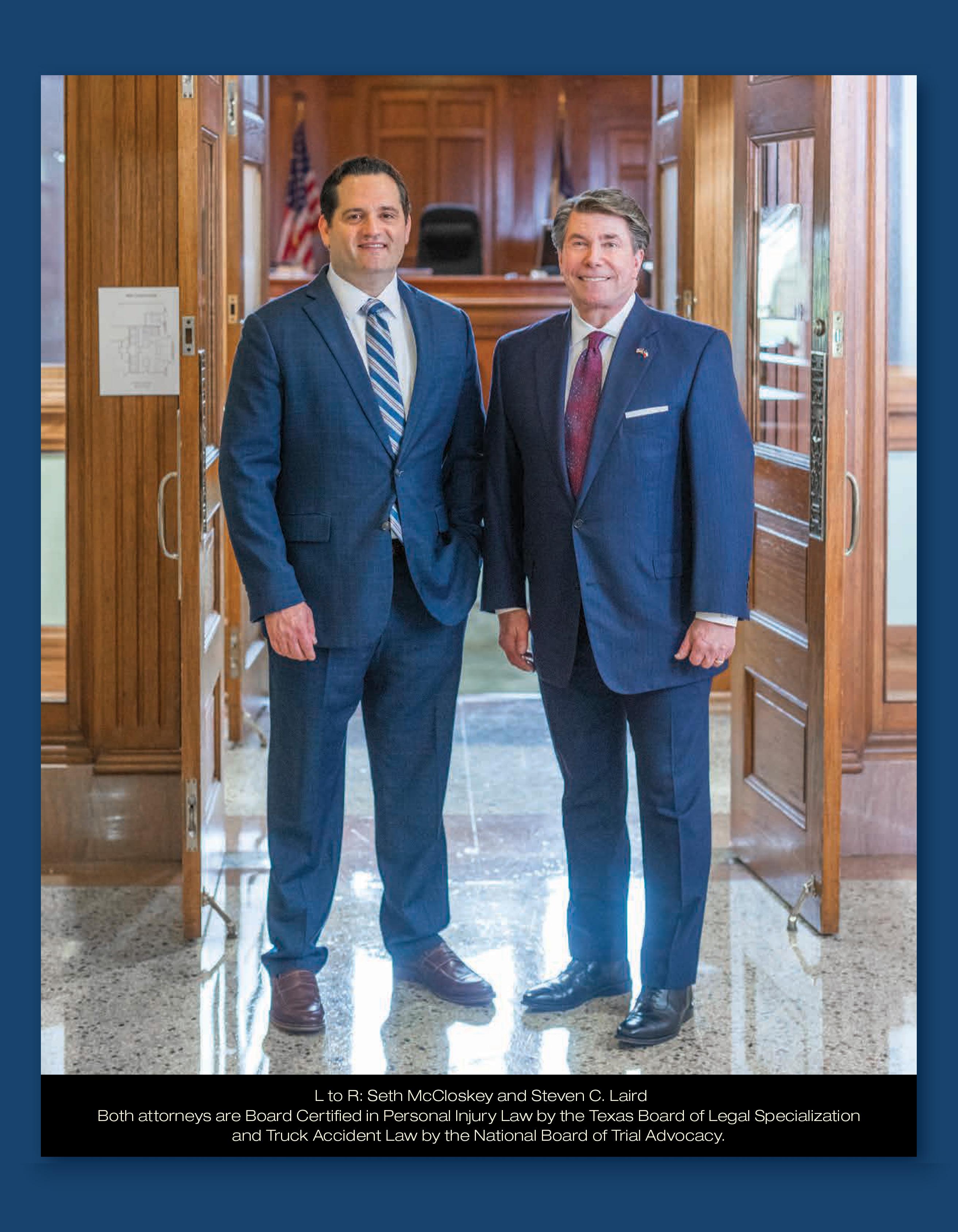













President...................................Marvina
President-Elect..............................John
Vice
Secretary-Treasurer...........................Joe
Directors
Director.....................................Robert














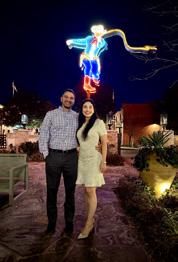


President...................................Marvina
President-Elect..............................John
Vice
Secretary-Treasurer...........................Joe
Directors
Director.....................................Robert
*List Reflected Below is as of February 6, 2026
Adams, Lynch & Loftin, P.C
Albert, Neely & Kuhlmann, LLP
Anderson, Cummings & Drawhorn
Anderson & Riddle, LLP
Baker Monroe Huston, PLLC
Barlow Garsek & Simon, LLP
Blaies & Hightower, L.L.P.
Bonds Ellis Eppich Schafer Jones, LLP
Bourland, Wall & Wenzel, P.C.
Brackett & Ellis, P.C.
Brown, Proctor, Peck & Piwetz, LLP
Bruner & Bruner, PC
City of Fort Worth – City Attorney’s Office
Cook Children’s Health Care System
– Legal Department
Curnutt & Hafer, LLP
Decker Jones, P.C.
Dismuke & Waters, P.C.
Factor, Campbell & Baker
Freeman Mills PC
Friedman, Suder & Cooke, P.C.
Gardner Smith & Vaughan, PLLC
Griffith, Jay, & Michel, LLP
Harris, Finley & Bogle, P.C.
Harrison Steck, P.C.
Haynes and Boone, LLP
Holland Johns & Penny LLP
Jackson Walker LLP
Kelly Hart & Hallman LLP
Killen & Dennis, PC
KoonsFuller, P.C.
Linebarger Goggan Blair & Sampson, LLP

Law Offices of Paup, Shutt & Associates, P.C.
Lively & Associates, PLLC
McDonald Sanders, P.C.
Munsch Hardt Kopf & Harr, P.C.
Naman, Howell, Smith & Lee, PLLC
Nelson Bumgardner Conroy PC
Noteboom – The Law Firm
Padfield & Stout, LLP
Patterson Law Group
Pham Harrison, LLP
Phelps Dunbar LLP
Pope, Hardwicke, Christie, Schell, Kelly & Taplett, L.L.P.
Robbins Travis PLLC
Robert Huseman Law PLLC
Ross & Matthews, P.C.
Second Court of Appeals
Stephens Law Firm, PLLC
Stoy Law Group, PLLC
Tarrant County District Attorney’s Office
Taylor, Olson, Adkins, Sralla & Elam, LLP
The Blum Firm, P.C.
The Colaneri Firm, P.C.
Underwood Law Firm, P.C.
Varghese Summersett PLLC
Vartabedian Hester & Haynes LLP
Watson, Caraway, Luningham, Bradley & Trammell, LLP
Whitaker Chalk Swindle & Schwartz PLLC
Whitley Penn, LLP
Wick Phillips
Wieser Taylor PLLC
Winstead PC
To be eligible for the 100 Club, any law firm, government agency, law school, or corporate legal department with four or more members must attain 100% TCBA membership compliance for the 2025–2026 bar year. This qualifies them for the “100 Club.” The firms/ organizations listed above have already paid their membership dues and qualify for 100 Club membership
for the new bar year. Any firm/organization that qualifies in the future will have its name published in every issue of the The Verdict for this bar year. TCBA takes pride in the participation of these law firms and other groups. The new bar year began on July 1. If you have not paid your renewal invoice, please contact Tiffany Myles at tiffany@tarrantbar.org. g

MARVINA ROBINSON 2025–2026 TCBA President
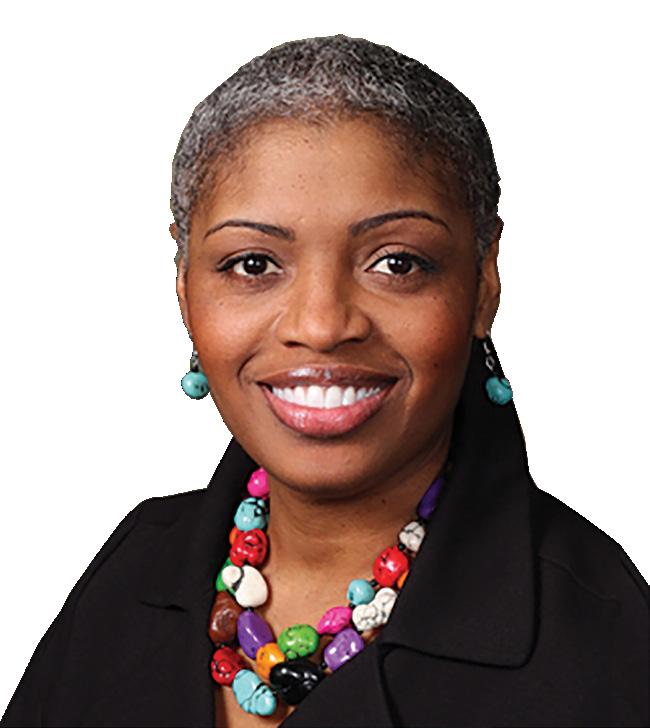
Marvina: For someone who has never attended Bench Bar, how would you describe it?
Karmen: It is a very interactive, learning, fun environment that you don't see in many other places.
Marvina: What makes Bench Bar different from a typical CLE conference?
Karmen: It’s not boring. You’re not just sitting in a conference room being cold and not enjoying yourself. You enjoy yourself and learn something.
Marvina: This is the 31st year of Bench Bar in Tarrant County. Why do you think Bench Bar still matters in 2026?
Karmen: Because the bench is ever-changing, and we’re always getting new lawyers in town. So the thought of them interacting with each other is always going to be available. I’ve been in Tarrant County all those 31 years, and there are judges sitting on the bench right this second that I will have to get to know because they’re newer. So I think that’s beneficial for both older lawyers and the new ones coming in.
Marvina: Okay, let’s take a little bit of time to talk about what Bench Bar is—what can attendees expect in terms of programming and substance?
Karmen: There are presenters and speakers on a wide variety of topics, and although the basics are the same as you practice family, probate, criminal, or civil litigation, how you interact and practice those areas of law is different and everybody's take on that is different. The perspectives that are brought to the seminar are very different, and it brings an avenue that a lot of people don't see. I tell people all the time, I don't know everything, but I bet I can find somebody who knows it.
Marvina: Who is Bench Bar really for? Judges, seasoned attorneys, new lawyers?
Karmen: All of the above. It's for everyone.
Marvina: What is the value of having both judges and attorneys in the same space for two full days?
Karmen: You build respect and camaraderie all at the same time, which is not something that generally happens between the bench and the bar at other places.
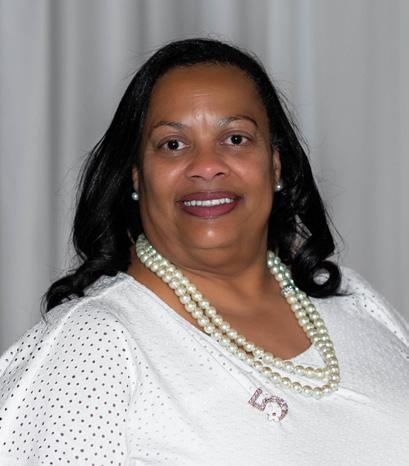

Karmen Johnson 2025–2026
Bench Bar Chair
Marvina: Okay, we’ve talked about what it is. Now let’s talk about what it’s not. What are some common misconceptions about Bench Bar?
Karmen: That it’s a wild party. I think that’s what some people think. And it’s really not.
Marvina: What efforts do you take to make Bench Bar not intimidating to first-timers?
Karmen: I can see someone who doesn’t know a lot of people being somewhat apprehensive about meeting new people, especially a large number of people. But I think the way that we in Tarrant County handle Bench Bar is marvelous . We interact with the newer lawyers and try to seek them out and make sure they feel welcome. Somebody has to take the initiative and say, “Hey, why don’t you come and do this with us? Why don’t you sit and have breakfast with us?”
Marvina: Why is the informal time, the meals, the socials, the hallway conversations, just as important as the sessions?
Karmen: Because it’s how you get to know people. There was a judge on the Court of Appeals, and I know I’m not going to say his name, but I didn’t know who he was from Adam's house cat. But we were having sandwiches or something, and we just started talking and laughing, and then I found out who he was. And I was like, oh, that’s the name that goes with the person? Well, okay! So it worked out well.
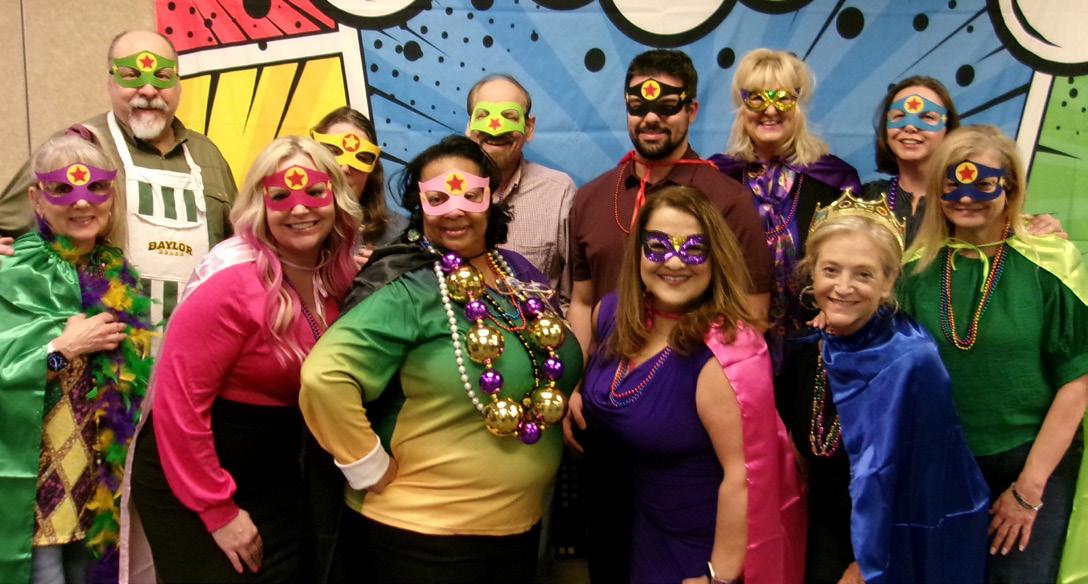
Marvina: Well, this year’s theme, as you alluded to earlier, is the MARVEL-ous Bench Bar. How does the theme enhance the experience?
Karmen: Tarrant County lawyers are marvelous. The Tarrant County bench is marvelous. I mean, you can’t get this sort of camaraderie just anywhere. If you practice in Tarrant County, it’s very different from practicing anywhere else. And anybody from any other area, once they come through, they say, “Oh no, I love coming to Tarrant County because you all are different.” And we like that.
Marvina: Why did you personally say yes to chairing this year’s conference?
Karmen: I got forced into it. No—I thought it was an honor. It was a surprise that anybody would even think to ask me. So I really couldn’t say no.
Marvina: If someone’s on the fence about registering, what would you tell them?
Karmen: Jump on our side. Jump on over. Come on. Let’s go.
Marvina: Anything else you want to add about this year’s conference?
Karmen: We plan to learn a lot, laugh a lot, and have a lot of fun. That’s the plan for this year. g




Voting for the 2026 Tarrant County Bar Association Board of Directors began on March 3 and will continue through 4:00 p.m. on March 26.

PRESIDENT-ELECT
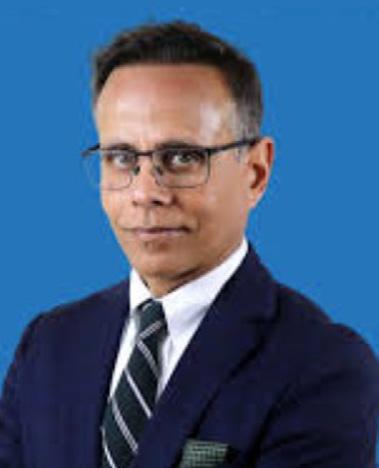
Caroline Harrison
VICE PRESIDENT
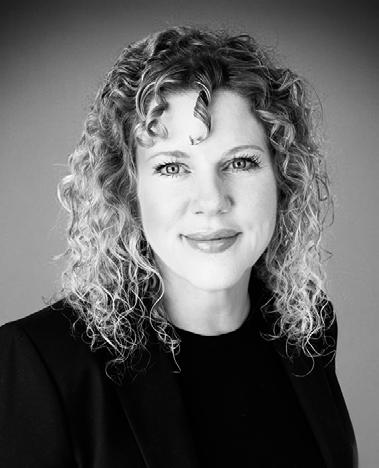
Joe Cleveland
SECRETARY-TREASURER
Robert Blankenship
Mollee Westfall
DIRECTOR, PLACE 1
Trey Loftin
Christopher Sisk
DIRECTOR, PLACE 2
Nikki Chriesman-Green
Karon Rowden
DIRECTOR, PLACE 3
Amy Allen
Clark Rucker
Eligible members should have received an email from BallotBox containing their official ballot on the morning of March 3. All attorney members who live or practice in Tarrant County are eligible to vote. If you believe you are eligible but did not receive a ballot, please contact the Tarrant County Bar Association.
Members are encouraged to review candidate biographies and video introductions online before casting their vote. Preview the Candidates »
27.

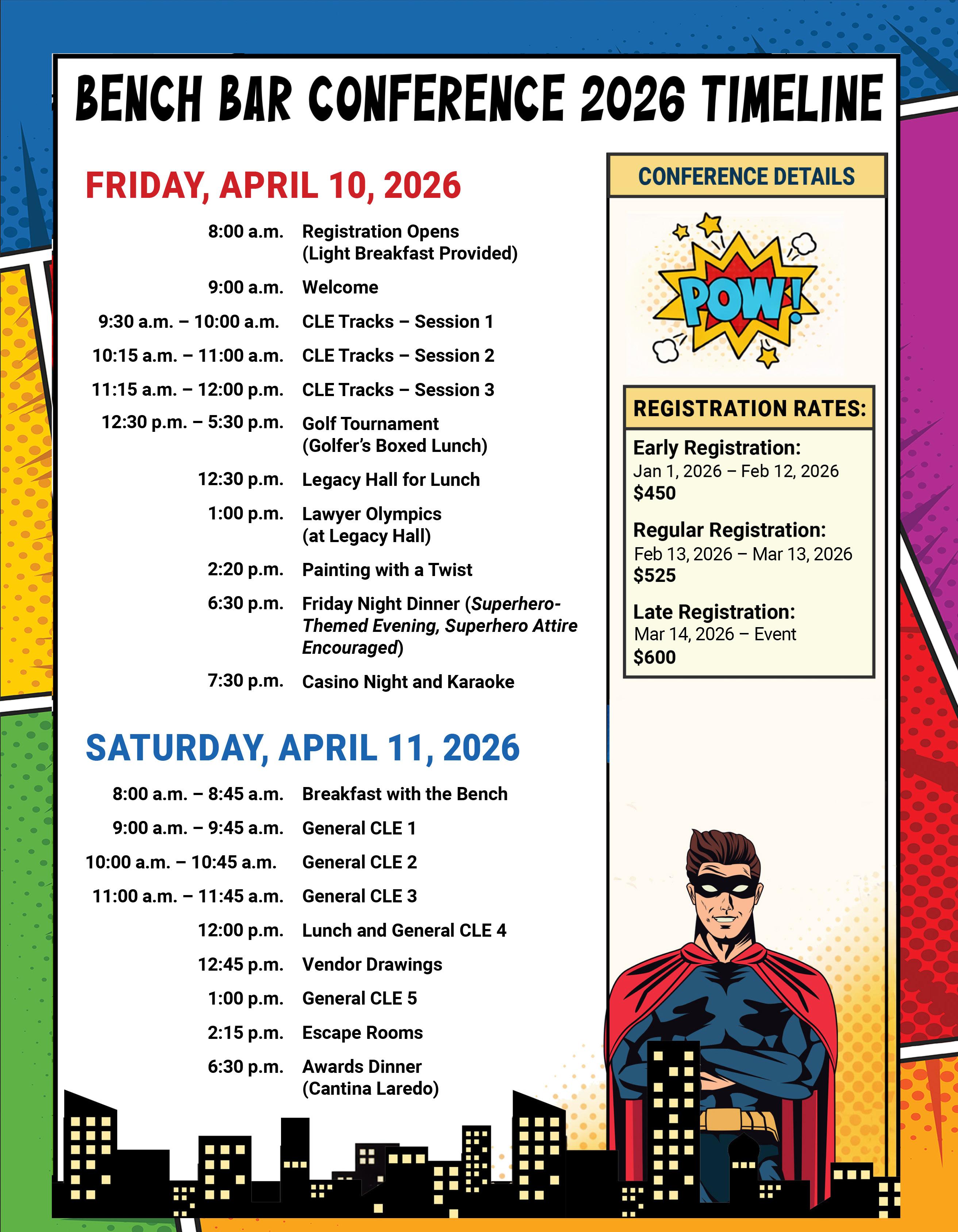



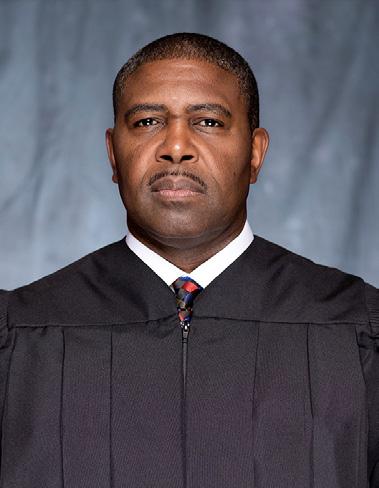
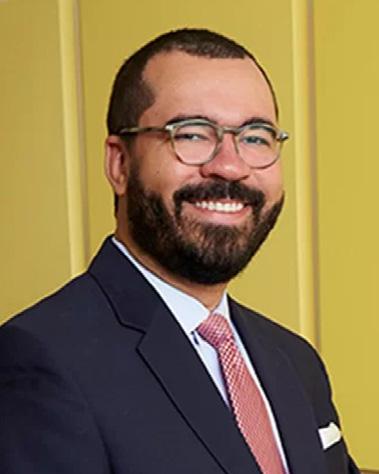
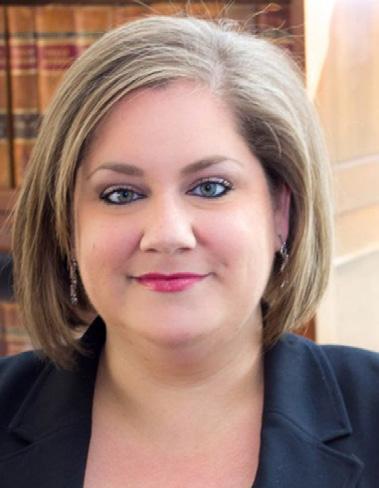
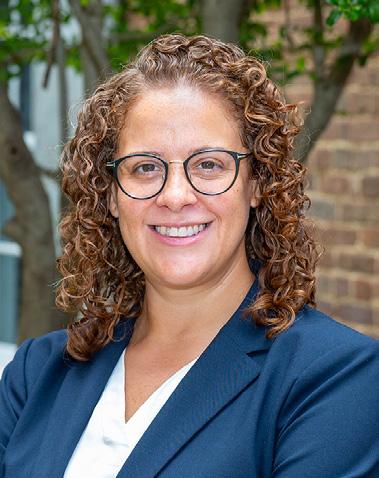
FRIDAY, APRIL 10, 2026
9:30 a.m. – 10:00 a.m.

10:15 a.m. – 11:00 a.m.
CLE Tracks – Session 1
Give Me Rent
Judge Don Pierson, Tarrant County Court at Law No. 1
Sam Johndroe, Johndroe Law, PLLC
Marvel Playbook: Power-Up the Toolbox
Bryan Williams, LexisNexis
Truth, Justice, and the American Rule: Recovering Attorneys’ Fees in Texas
Jody Sanders, Kelly Hart & Hallman LLP
CLE Tracks – Session 2
With Great Power Comes Great Responsibility: AI in Legal Practice
Spencer Mainka, Pham Harrison, LLP
Guardians of the Docket: Judicial and Practitioner Strategies for Vexatious Litigants
Judge Kenneth Newell, 233rd District Court
Steve Lund, Tarrant County Criminal District Attorney’s Office
Sometimes Heroes Need Saving: A Guide to Veteran’s Treatment Court
Leon Reed, Law Office of Leon Reed, Jr.
11:15 a.m. – 12:00 p.m.
CLE Tracks – Session 3
Probate and Real Estate
Beth Edwards, Edwards Law, PLLC
Turning Points: Navigating Juvenile Law in Texas
Frank Adler, Law Office of Frank Adler
Protecting the Heroes of Justice to Ensure Safety for Attorneys, Courts, and Clients
Karon Rowden, Texas A&M School of Law – Family & Veterans Advocacy Clinic
SATURDAY, APRIL 11, 2026
8:00 a.m. – 8:45 a.m.
9:00 a.m. – 9:45 a.m.

10:00 a.m. – 10:45 a.m
Breakfast with the Bench: The A-Team Edition
No Masks, No Chaos: Hiring, Training and Retaining Emotionally Inexpensive Lawyers
Anna Summersett, Varghese Summersett PLLC
Mental Health is Everyone’s Superpower
Judge Brent Carr (Ret.), County Criminal Court No. 9
Dr. Carol Nati, MHMR of Tarrant County
11:00 a.m. – 11:45 a.m
12:00 p.m. – 12:45 p.m.
1:00 p.m. – 1:45 p.m
Not All Heroes Wear Capes: Law, Ethics and Surrogacy
Lauren Duffer, Gaydos Duffer, P.C.
The Multiverse of Courtrooms: Trial Tips from the Bench
Moderator: Karmen Johnson, Attorney at Law
Panelists: Judge Patricia Burns, Probate Court No. 1
Judge Kimberly Fitzpatrick, 342nd District Court
Judge James Munford, 322nd District Court
Judge Eric Starnes, County Criminal Court No. 7
Superpowers in Plain Sight: Misunderstood and Underused Discovery and Evidentiary Rules
Preston Mundt, Kelly Hart & Hallman LLP
Dwayne Smith, Gardner Smith & Vaughan, PLLC













• Listed as the title sponsor on all marketing materials – “Bench Bar brought to you by the Tarrant County Bar Association and [Your Firm Name].”
• Exclusive sponsorship of one special event with custom signage (see attached table for options).
• Complimentary suite upgrade for one designated attendee (first-come, first-served).
• One complimentary attorney registration for the event.
• 50% off one additional registration.
• Four complimentary golfer registrations.
• Prominent placement on t-shirts, signage, and all pre-event marketing materials, including a backlink to your firm’s website.
• May distribute one branded promotional/swag item during your sponsored activity.
• Special recognition at the event, including the opportunity to address attendees prior to the Friday night dinner.
• Business cards/firm swag included in the attendee goody bags.
• 50% off one registration for the event.
• Complimentary suite upgrade for one designated attendee (first-come, first-served).
• Exclusive sponsorship of one special event with custom signage (see attached table for options).
• Prominent placement on t-shirts, signage, and all pre-event marketing materials, including a backlink to your firm’s website.
• Two complimentary golfer registrations.
• May distribute one branded promotional/swag item during your sponsored activity.
• Special recognition at the event, including a representative or committee member publicly thanking your firm and addressing attendees prior to the special event.
• Exclusive sponsorship of one special event with custom signage (see attached table for options).
• Prominent placement on t-shirts, signage, and all pre-event marketing materials.
• One complimentary golfer registration for the event.
• May distribute one branded promotional/swag item during your sponsored activity.
• Special recognition at the event, including a representative or committee member publicly thanking your firm and addressing attendees prior to the special event.
• Exclusive sponsorship of one special event with custom signage (see attached table for options).
• Placement on general marketing materials at the event.
• Mention on signage and marketing materials at the event.










• All rates are for ONE person representing the vendor. Additional representatives may be added for $250 per person (meals not included). Activities are extra.
• Vendor tables are intended for both Friday and Saturday. No discounts will be given for attending only one day of the conference.
• Premiere table placement.
• Priority pick for introductions to attendees.
• 50% off registration.
• Participation in conference giveaway.
• Exclusive sponsorship of one special event with custom signage (see attached table for options).
• Prominent placement on t-shirts, signage, and all pre-event marketing materials, including a backlink to your firm’s website.
• Two complimentary golfer registrations.
• May distribute one branded promotional/swag item during your sponsored activity.
• Special recognition at the event, including a representative or committee member publicly thanking your firm and addressing attendees prior to the special event.
• Exclusive sponsorship of one special event with custom signage (see attached table for options).
• Placement on t-shirts, signage, and all pre-event marketing materials.
• One complimentary golfer registration for the event.
• May distribute branded promotional/swag items during your sponsored activity.
• Special recognition at the event, including a representative or committee member publicly thanking your firm and addressing attendees prior to the special event.
• Table selection privileges after Guardian tables have been assigned, with priority based on registration order.
• Introduction to attendees during one CLE session.
• Opportunity to participate in a conference giveaway.
• Placement on general marketing materials at the event.
• Introduction to attendees during one CLE session.
• Opportunity to participate in a conference giveaway.
• Table selection privileges after Guardian and Captain tables have been assigned, with priority based on registration order.
• Table only.
• Opportunity to participate in a conference giveaway.
• Table selection privileges after Guardian, Captain, and Iron tables have been assigned, based on availability and registration order.




SOLA CAMPBELL
JOHN EASTER
2025–2026 TCYLA President
2024–2025 TCYLA President
pring is an amazing time to get plugged into the Tarrant County Young Lawyers Association, and we have an exciting lineup of events designed to bring value to lawyers across Tarrant County.
If you have been thinking about getting more involved or encouraging a young lawyer in your office to do the same, this is the perfect season to jump in.
We start with a Happy Hour on March 19 from 5:30–7:30 p.m. at Rabbit Hole Pub. These gatherings are relaxed, welcoming, and intentionally low-pressure. TCYLA happy hours are one of the easiest ways to build relationships and expand your professional circle.
Next, on April 14 from 12–1 p.m., Sasha Begovic will present a CLE on cybersecurity risk management. Cyber threats aren’t slowing down, and lawyers need to understand how to manage digital risk. Sign up early for this lunchtime program to secure your spot!
We will close out April with one of our signature events, Spring Fiesta on April 23, 2026, at Joe T. Garcia’s. Great drinks,
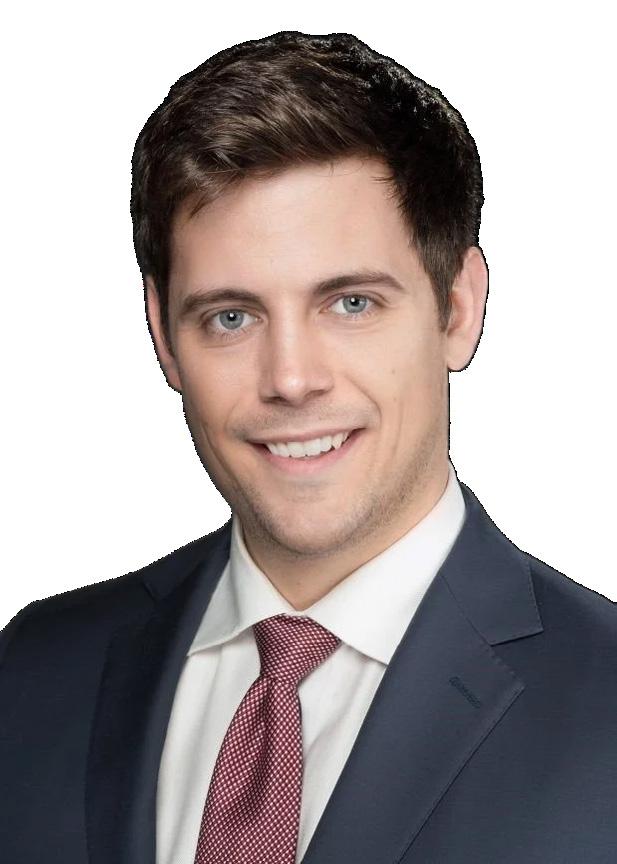
great atmosphere, and even better company. Spring Fiesta is consistently one of our most well-attended events, and it’s a fantastic opportunity to bring a colleague and experience firsthand what makes TCYLA such a strong community. g

For updates, registration links, and event details, follow us:



New Members of the TCBA:
Abbie Adkins
Adeline Adkinson
Sion Alford
Jasmine Avery
Amanda Baker
Heather Banahan Nease
Clarissa Bellomy
Theo Bruton
Marleigh Bunch
Tayler Canton
Kacey Cargile
Edward Chin
Connor Clark
B.C. Cornish
Spencer Crichton
Nathania Davis
Rolando de la Garza
Michael Doss
Catherine Edwards
Chase Evans
Rashelle Fetty
Ellen Fleischmann
Roy Golsan
Stephanie Gramada
Andrew Griffin
Taylor Harris
Charles Hill
Jason Hornsby
Angela Hough
Katelyn Kaske
Michael Kelly
Sydney Lawson
Madison Littlefield
Sophie Mathews
David May
Brittney McClinton
Ashlyn Moore
Paula Moore
Alessandro Pauri
Lisa Potter
Victoria Powell
At a recent meeting, the TCBA Board of Directors approved an adjustment to membership dues, effective for the upcoming membership year, beginning with the extended promo on April 1, 2026.
This decision was made thoughtfully and deliberately. Our last dues adjustment was a few years ago, and during that time the cost of delivering high-quality programming, expanding CLE offerings, and investing in staff and technology has steadily increased.
Even with this adjustment, TCBA continues to have the lowest membership dues among the Texas Metro Bars. We remain firmly committed to accessibility while strengthening the value and impact of membership.
The updated annual dues structure will be:
Attorneys
Attorneys (5+ years)
Attorneys (1–5 years)
Attorneys (<1 year)
Judges & Government
Attorneys*
$190 → $225
$125 → $150
$62.50 → $75
$90–$130 → $150
Other Membership Categories
Law Student Membership
Legal Staff
Associate Members
Faculty
$0 → $15
$40 → $40 (no change)
$150 → $175
$130 → $150
*To simplify and align our public service categories, all government attorneys and members of the judiciary will move to a unified rate, as opposed to previous years when we have had seven categories.
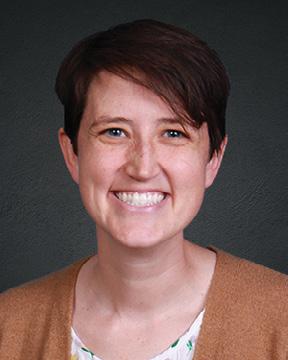
By Kayla Dailey, Executive Director
This change allows TCBA to:
• Maintain and expand meaningful CLE programming
• Support signature events
• Invest in membership technology and communications
• Sustain our operational costs
• Continue providing staff support to sections and committees
Membership in TCBA is more than CLE hours. It is:
• Professional connection
• Leadership development
• Mentorship
• Community service
• A seat at the table shaping our local legal community
We are deeply grateful for the support of our members. Your engagement is what makes TCBA strong, relevant, and impactful.
If you have questions about dues or membership categories, please do not hesitate to reach out. g

Taylor Harrington focuses his practice on litigation, where he manages complex legal issues and particularly enjoys motion practice. He is skilled at crafting strong, strategic responses to plaintiffs’ filings.
Taylor earned his J.D. from Texas A&M School of Law and holds a bachelor’s degree from Dallas Baptist University. He joins Brackett & Ellis as an associate. g
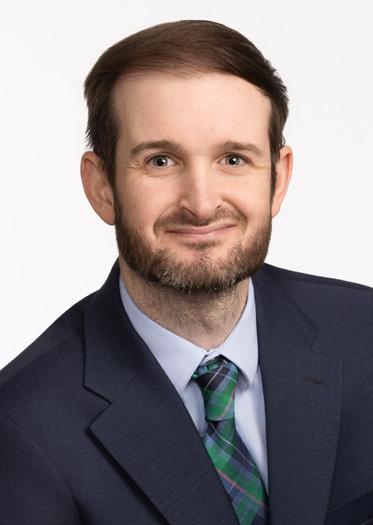
Carmack earned his J.D., magna cum laude, from Mitchell Hamline School of Law, where he graduated in the top 10 percent of his class and was published in the Mitchell Hamline Law Review He received his B.A. in Political Economy from Hillsdale College.
Shannon Pritchard
Emily Pyle
Leon Reed
Stephanie Reynolds
Samuel Rosado
David Routzon
Erin Rutherford
Aubrian Sanders
Haley Shaw
Lauren Smith
Scott Stewart
Sven Stricker

Brandon Carmack is a senior associate in the firm’s Trial Practice Group. His practice focuses on complex commercial litigation, including contract disputes and matters involving soft intellectual property such as trademarks, copyrights, and trade secrets. He has experience handling all phases of litigation in federal and state courts, from case strategy through discovery, motion practice, expert depositions, and trial.
Prior to joining Duane Morris, Carmack practiced at national and regional law firms representing both plaintiffs and defendants in a wide range of commercial and IP litigation matters.
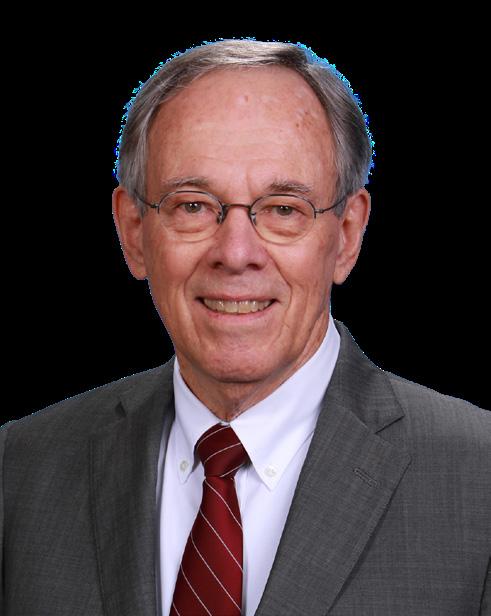

Taylor Winn is a senior associate in the firm’s Employment, Labor, Benefits and Immigration Practice Group. He counsels employers on a wide range of workplace issues, including employee management matters, employment agreements, and compliance with federal employment laws. He also represents employers in administrative proceedings and litigates discrimination, wage and hour, and noncompete disputes.
Prior to entering private practice, Winn served as an Honors Program Assistant U.S. Attorney in the Criminal Division of the U.S. Attorney’s Office for the Northern District of Texas, where he conducted criminal investigations and prosecuted federal offenses and handled appellate matters before the U.S. Court of Appeals for the Fifth Circuit.
Winn earned his J.D. from Texas A&M University School of Law and his undergraduate degree from Texas State University. g
What type of law did you practice?
Intellectual property (Registered Patent Attorney)
What is one takeaway from your time as an attorney?
Satisfaction of obtaining patents for clients for more than 30 years.
Where did you work and how long?
• Tandy Corporation, Fort Worth — Computer R&D and Law Department (17 years)
• Howison & Arnott, LLP, Dallas (6 years)
• Whitaker, Chalk, Swindle & Schwartz PLLC, Fort Worth (21 years)
How do you plan to spend your retirement?
Spending more time with family; reading and writing (essays and memoirs); traveling; and serving on boards of higher education institutions. g
Desiree Strong
Carrie Tapia
Evan Taylor
Jessica Temple
Levi Thomas
Deana Tillotson
Melissa Tucker
Alexis Vestal
Carla Vogel
Adrienne Wall
Donald West
Edward Wilkinson
James Williams
Jason Wright
LEGAL STAFF
Susy Johnson
ASSOCIATES
William Abigail
John Doyen
Kristin Getz
Konrad Halbert
Amanda Lewis
Negin Pahlavan
Satchel Stillwell
LAW STUDENTS
Patricia de Lima
David Humphreys
Katie Johnson
Brandon Rubsamen
Joseph Sute
Clarence Warren
By Jason Smith Law Offices of Jason Smith (Fort Worth) | jasons@letsgotocourt.com
When people think about pro bono, they usually picture a courtroom. A hearing. A brief filed late at night. A lawyer standing next to someone who needs help navigating a system that was not built for them.
That work matters. I have deep respect for it. That’s what I do.
But there is another kind of pro bono that is just as real, just as necessary, and far less visible. It is the work that happens before the press release, before the ribbon cutting, before the moment the public sees something and assumes it simply appeared.
It is transactional pro bono. Contracts. Reviews. Terms. Negotiation. The unglamorous documents that determine whether an idea becomes a reality, or stays a good intention stuck in a planning meeting.
In January, Mattel released the Dr. Opal Lee Barbie, honoring the Fort Worth educator known as the “Grandmother of Juneteenth,” as part of Barbie’s Inspiring Women collection.
I am proud that my firm, the Law Offices of Jason Smith, played a small role behind the scenes, providing pro bono legal support connected to the contracts and terms necessary to help bring that tribute to life.
I cannot and will not share confidential details. That is not the point. The point is the principle and the invitation.
Because this is exactly the type of moment where lawyers should recognize the full range of what we can offer.
Community projects, legacy tributes, nonprofit partnerships, and mission-driven collaborations often involve multiple stakeholders. Sometimes those stakeholders include major brands. Sometimes they include foundations, designers, event organizers, or community leaders. Each party has responsibilities, expectations, and risk.
A well-drafted agreement does not just protect a party. It protects the project.
It can clarify who has approval rights, who is responsible for what, what happens if timelines shift, and how each party honors the name, likeness, and legacy of the person
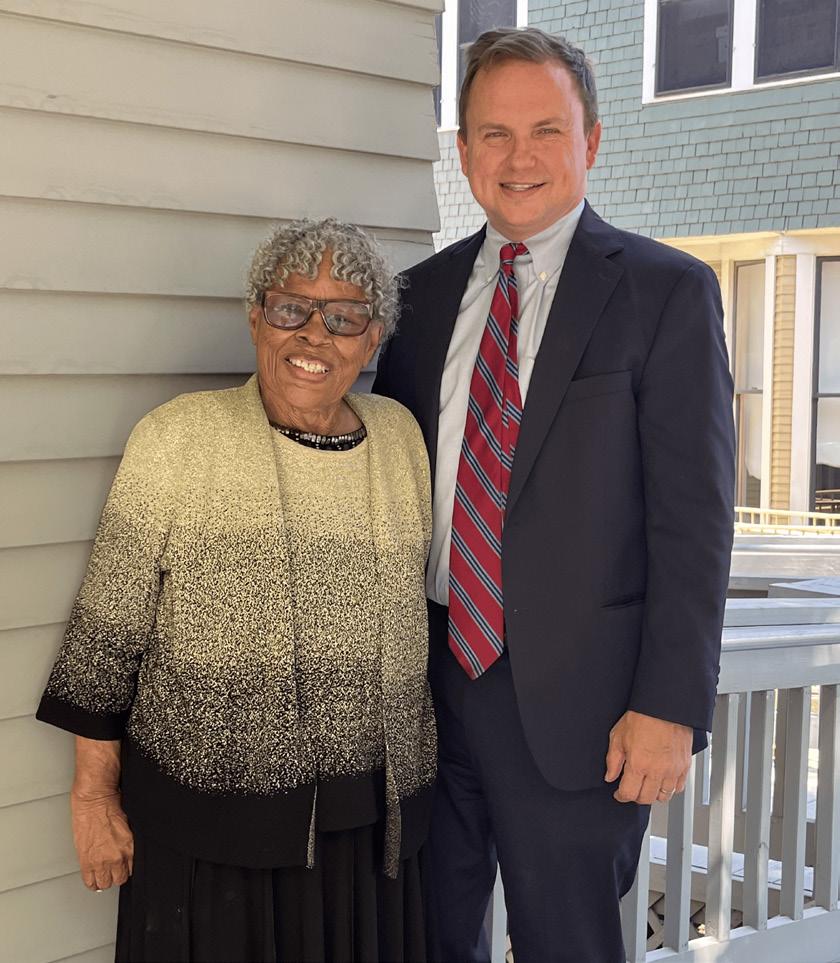

“I hope my story encourages the next generation to never underestimate the power of one voice. As I often say, one person can start a change, and that can change the world.”
—Dr. Opal Lee, “Grandmother of Juneteenth”
at the center of the work. It can reduce misunderstanding, minimize future conflict, and keep a project from drifting off course when momentum builds and attention arrives.
In other words, contract work is not separate from impact. It is often the structure that holds impact up.
What made this moment especially meaningful is that Dr. Opal Lee’s story is rooted in Fort Worth, Texas, but her legacy belongs to the country.
Ms. Opal is the most hopeful person I have ever met. She has said, “I hope my story encourages the next generation to never underestimate the power of one voice.”
That quote is true in civic life, and it is true in professional life too. Sometimes one voice is an activist, a teacher, an organizer. Sometimes one voice is a lawyer who reads the fine print, asks the extra question, and helps a project move forward with clarity.
If you are a lawyer who wants to do pro bono, find the

opportunity. Start with the Tarrant County Bar LegalLine. The Second Court of Appeals offers pro bono opportunities too. Maybe your church, or your mosque, or your favorite nonprofit needs help with a legal matter. Make it known you are willing to help.
Offer to review agreements for a nonprofit. Help a community group understand a contract before they sign it. Assist with negotiation so expectations are realistic and responsibilities are clear. In many projects, that support is what makes it possible for the mission-driven people to focus on the mission.
Pro bono does not have to be one shape. It can be litigation. It can be appellate work. It can be transactional support. It can be mentoring. It can be educating. It can be any form of legal skill used in service of the public good.
The work is not always visible. But it is often foundational. And when a Fort Worth icon’s legacy is honored in a way that reaches families across the country, it is a good reminder that sometimes impact is built quietly, one paragraph or one case at a time. g
By Sarah Hall Hoffman, Pro Bono Programs Director
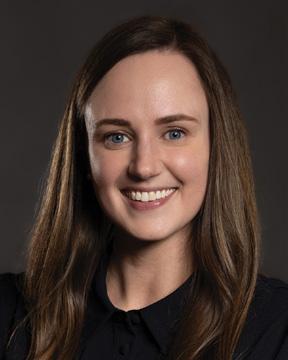
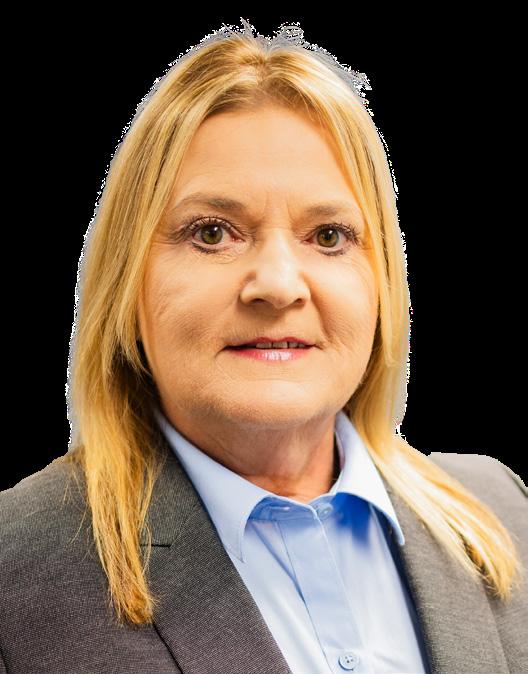

Julie Sladek is Assistant General Counsel of Legal Operations at MHMR of Tarrant County, where she provides legal counsel and advice to staff and leadership in accordance with state, federal, and administrative agency law. She has practiced law in Tarrant County since 2006, starting her career at the Tarrant County District Attorney’s Office in the family violence protective order and civil mental health sections of the Civil Division. Following her time with the District Attorney’s Office, Julie served as a Regional Attorney for the Department of Family and Protective Services, Adult Protective Services. She later worked for Legal Aid of
NorthWest Texas and helped form a Medical-Legal Partnership with MHMR of Tarrant County to provide direct legal representation to individuals in services with MHMR. Julie has worked closely within Tarrant County to aid vulnerable disabled adults and older adults through her work with Guardianship Services, Inc., where she served as Director of the Financial Exploitation Prevention Center and currently serves on the Board of Directors. She has been a member of the Tarrant County Bar Association since 2006 and enjoys providing legal education and resources to the local community. Julie earned her Juris Doctor from Texas Tech School of Law and holds a degree in Business Administration from Wayland Baptist University. g



The Lawyer Referral & Information Service (LRIS) is a service of the Tarrant County Bar Association that benefits both TCBA member attorneys and the public.
Approved by the American Bar Association, TCBA’s Lawyer Referral & Information Service allows member attorneys to receive client referrals and build their business, while helping callers quickly find an attorney in the area of law they need.
The program is intended to help individuals who are able to pay normal attorney fees but have difficulty finding legal representation due to lack of experience with the legal system, lack of information about needed services, or fear of costs.
LRIS is completely customizable for participating attorneys with: practice areas


LRIS is pleased to announce that Richard Hyde has earned the title of Top Referral Attorney for TCBA’s Lawyer Referral & Information Service for the period from July 1, 2025, to present. Through his dedicated participation in the program, Richard earned $19,882.18!


• Maximize Your Earnings: Like Richard, you can earn substantial rewards by offering quality referrals.
• Grow Your Practice: Connect with clients in need of your expertise and grow your client base.
• Build Your Reputation: Build valuable relationships and be recognized for your exceptional service. Questions about how to help? Please contact lris@tarrantbar.org.
For more details about joining LRIS, please visit www.tarrantbar.org/joinlris or email lris@tarrantbar.org.

By Leslie Hunt
City Attorney’s Office – City of Fort Worth | leslie.hunt@fortworthtexas.gov 2025–2026 TCBA Board of Directors
You drive to work every day. Perhaps you typically drive the same route or your route varies depending on what Waze reveals about traffic and the number of “police reported ahead.” Near your house is a vacant lot. It’s a lot that’s been vacant for as long as you can remember. In the past, developers have wanted to build apartments on the lot, but they’ve faced zoning challenges because the lot is located in an area zoned commercial, which doesn’t allow for multifamily housing. Nearby neighbors who don’t want the lot developed into apartments pay attention. They consistently show up to oppose requests for a zoning change that would allow an apartment complex.
One day, as you’re driving by the lot, you notice construction is underway. Then you see a sign that reads “Future Home of The Sherwood: Affordable, Modern Apartment Homes.” You immediately wonder what happened—did your neighbors miss the notice of a zoning change request? You arrive at work and draft an email to your neighborhood distribution list to see if anyone knows what’s going on. Someone replies: Senate Bill 840.
Texas Senate Bill 840, approved by Texas lawmakers during the 89th Texas Legislature, reduces local government control by allowing multifamily housing to be built in areas zoned for commercial, office, warehouse, retail, or mixeduse without the need to seek a zoning change. As a result, some nonresidentially zoned properties are now eligible for
multifamily developments without the need to rezone to a residentially zoned district.
Allowing development to progress without a public hearing and City oversight is sometimes referred to as “allowed by right.” If a land use is allowed by right, developers are not required to go before a zoning commission or City Council. As a result, the public notices your neighbors rely on so they can attend public hearings and voice their opinions are a thing of the past.
Senate Bill 840 contains limited exceptions for properties located close to heavy industrial areas and land located near an airport or military base. Furthermore, the law does not prohibit cities from enforcing regulations related to the preservation of historic districts or landmarks.
Proponents of Senate Bill 840 believe it will help improve the state’s housing shortage in larger cities. The new law only applies to cities with populations over 150,000 located in counties with more than 300,000 people which results in an impact to approximately 20 Texas cities, including but not limited to, Fort Worth, Arlington, Grand Prairie, Dallas, Houston, Austin, Round Rock, San Antonio, McKinney, Irving, Plano, and Frisco.
Senate Bill 840 became effective on September 1, 2025. It amended Chapter 211 of the Texas Local Government Code by adding Section 211.0011 and Chapter 218 of the Local Government Code. g






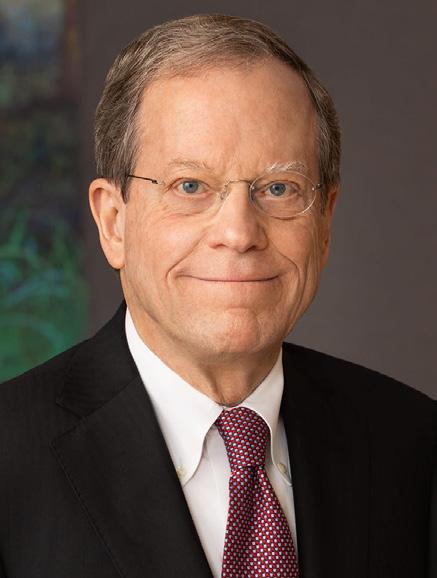
Q: What has being part of the Eldon B. Mahon Inn of Court meant to you?
What I appreciate about the Mahon Inn is consequence of it being the only Inn in Tarrant County. In some other areas of the state and nation there are many Inns whose membership is generally tried to a specific practice area. Our membership includes lawyers with all types of practice, backgrounds, and levels of experience. To me, one of the Mahon Inn’s greatest selling points is that it is one place where you see and meet and learn from lawyers, and judges, of different backgrounds, practice skills, and experience from your own.

Q: Why do the Inns of Court still matter?
The American Inns of Court mission statement is to “advance the rule of law by achieving the highest level of professionalism through example, education, and civility.” Membership in an inn provides an opportunity for lawyers to be in a setting where you are learning from others you might not otherwise know and are exposed to other perspectives while maintaining a level of civility and professionalism.
Q: What does being selected as Sergeant of the Inn mean to you?
The prior recipients are all wonderful lawyers and people whom I respect greatly, so I am very honored to be included on the list. g
Want to know how you can join the Mahon Inn? Email kayla@tarrantbar.org for more information.


By Perry Cockerell Perry Cockerell, P.C. | perry@perrycockerell.com
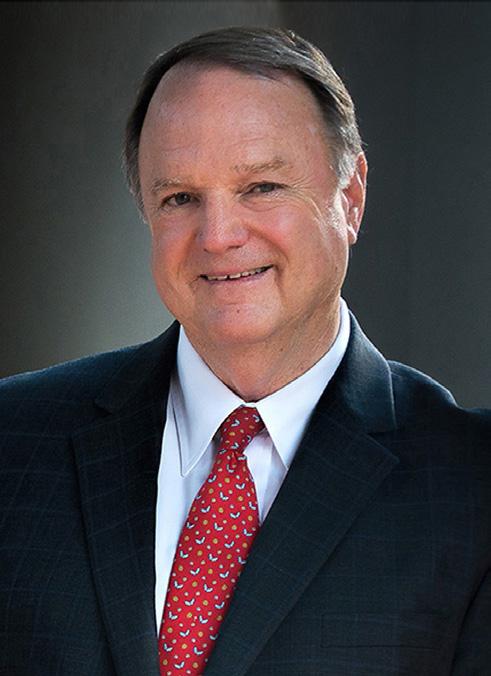
For three years, from 1983 to 1986, Fort Worth attorney Michael A. McConnell served as the bankruptcy judge for the Northern District of Texas in Fort Worth.
McConnell was born in Fort Worth in 1947. After graduating from Nolan Catholic High School, he attended Loyola University and received his Bachelor of Arts in 1969. After receiving his draft notice during the Vietnam War, he enlisted in the U.S. Air Force and was assigned to the 6990th Security Squadron in Kadena Air Force Base in Okinawa. He was selected as a Mandarin Chinese language specialist and flew on high altitude reconnaissance missions on RC-135s. He logged over 1,000 hours in the air. He was discharged from the Air Force as a sergeant. He received many honors for his service.
In 1975 he graduated from the University of Texas School of Law. After law school he clerked for United States District Judge Eldon B. Mahon in Fort Worth. In 1977, he joined Cantey, Hanger, Gooch, Munn & Collins in Fort Worth where he handled banking, creditor’s rights and bankruptcy matters from a creditor’s perspective. In 1981 he made partner at the firm.
In 1983, after Bankruptcy Judge John A. Flowers ended his term on the bench, McConnell was appointed to the court. At his swearing-in ceremony he said that he had “big shoes to fill.”
McConnell joined the court during a tumultuous time in the history of the bankruptcy court system. In 1982 in Northern Pipeline Construction Co. v. Marathon Pipeline Co, 1 the U.S. Supreme Court held that the broad grant of jurisdiction granted to bankruptcy judges under 28 U.S.C. § 1471 violated Article III of the U.S. Constitution. During part of his term, McConnell operated under an emergency
1 458 U.S. 50 (1982).
2 Toren v Braniff, Inc., 50 B.R. 393 (Bankr. 1984).
3 In re Braniff Airways, Inc., 1986 WL 20577 (Bankr. 1986).
4 In re Braniff Airways, Inc., 42 B.R. 443 (Bankr. 1984).
5 61 B.R. 567 (Bankr. N.D. Tex 1986).
6 50 B.R. 468 (Bankr. N.D. Tex. 1985). 26 www.tarrantbar.org
order from the U.S. District Court. The 1984 Bankruptcy Amendments and Federal Judgeship Act cured the constitutional issues.
As is typical of a bankruptcy judge, McConnell issued many decisions on a day-to-day basis while serving on the bench. When he chose to write opinions, he usually selected novel issues that had not been decided by other courts.
Braniff bankruptcy. McConnell issued some of the last decisions in the Braniff bankruptcy proceeding that originated during his predecessor’s term. After filing Chapter 11 in May 1982, Braniff reached an agreement in 1983 with the Hyatt Corporation to resume domestic airline flights and confirmed a plan of reorganization. The company changed its name to the Dalfort Corporation and created a subsidiary company referred to as the “New Braniff” to resume flights in 1984 with 30 Boeing Aircraft. Not long thereafter, New Braniff experienced considerable losses. New Braniff proposed leasing its aircraft under a joint services agreement. McConnell found the agreement violated the confirmed plan of reorganization and enjoined the agreement. 2 In another Braniff case he denied a creditor relief from the automatic stay to file suit for personal injuries from filing suit because the creditor failed to file a proof of claim in the case and the claim was therefore discharged under the plan of reorganization.3 He held that prepetition setoffs of debts could be allowed, but not allowed against post-petition payroll taxes due to the United States.4
Administrative freeze. In the case of In re Williams, 5 McConnell found that a bank acted in good faith when it imposed an administrative freeze on the debtor’s bank account to assert a right of setoff after it learned of the bankruptcy. Section 542(b) of the Bankruptcy Code permits a creditor to refuse to turn over funds if it has a right of offset and Section 362(a) (7) provides an automatic stay to set off a debt. McConnell harmonized the two provisions of the Code.
Homestead exemption/estoppel. McConnell decided the case of In re Niland, 6 one of the most controversial cases interpreting Texas homestead exemption law. The case even stumped the Fifth Circuit Court of Appeals that had trouble deciding
the case.
The case involved former Dallas Cowboys offensive guard, John Niland, who played for the team from 1966 to 1974. Niland secured a loan from a lender and submitted false affidavits claiming that the property as collateral for the loan was not his homestead. He even designated another property as his homestead. Niland went into default on the loan and the property was sold at foreclosure to Darwin Deason. Niland filed Chapter 13 bankruptcy and moved to invalidate the foreclosure sale by claiming that the property was his homestead and therefore the sale was void.
Judge McConnell found that Niland was not estopped from claiming property as his homestead despite his affidavits to the contrary. He found the foreclosure sale to be void and granted equitable subrogation to Deason for discharging the prior liens to the extent of a partial failure of title, being the actual value of the portion which title had failed, minus the value of improvements with prejudgment interest at the legal rate. He granted an equitable lien on that part of the property that was not exempt. District Judge Barefoot Sanders affirmed the decision.
The Fifth Circuit reversed the decision, finding Niland estopped from claiming the homestead because he benefitted from two homesteads.7 On rehearing the Fifth Circuit withdrew its decision and affirmed the district court, except that the court denied the equitable lien and constructive trust on the homestead.8
ERISA plan was not a spendthrift trust. In the case of In re Brooks , 9 McConnell found that the ERISA plan was not a spendthrift trust and could not be exempted under Section 42.002 of the Texas Property Code. The court found that the debtor’s post-petition salary was exempt.
Adequate protection. In In re Western Preferred Corporation, 10 McConnell held that banks were not entitled to lift the automatic stay to foreclose their lien on capital stock of the debtor’s operating subsidiaries. The court found the liquidation value to be $55 million and the fair market value to be between $65–75 million against a debt of $105 million. Since there was no equity in the collateral and the banks met their burden of proof. However, the court found that a foreclosure would cause the Debtor to lose net operating loss carry forwards and deferred taxes and would result in unsecured creditors and shareholders receiving nothing. The court found that the collateral was necessary for an effective reorganization and that there was a reasonable possibility of a successful re-
organization with a reasonable time. The court found adequate protection to the banks to be the amount of interest on the liquidation value from the date of foreclosure. The court looked to the petition date of the bankruptcy being the date the foreclosure was prevented. The realization value of $55 million and an immediate reinvestment at 10.37 percent. This decision was a win for undersecured creditors.
This decision was controversial because it allowed undersecured creditors to receive interest on their claims during the bankruptcy proceeding. In the case of In re Timbers of Inwood Forest Associates, Ltd., 11 the Fifth Circuit ruled that under secured creditors were not entitled to interest when their collateral was not decreasing in value.
Adequate protection. In In re Snelus, 12 McConnell found that in a Chapter 13 plan where the IRS had tax liens on the debtor’s homestead that did not exceed the value of the collateral, the court would not lift the automatic stay and would allow the IRS to be paid out over the plan with interest computed under section 6621 of the Internal Revenue Code.
Dismissal of bankruptcy in bad faith. In 1985, during his second year on the bench, McConnell was frustrated by a new Chapter 11 bankruptcy filing in the case of In re Little Creek Development Company , 13 that involved a one-asset real-estate case. The dispute between the debtor and the lienholder began in state court where the state court ordered an injunction bond to be posted to enjoin the foreclosure. When the debtor could not post the bond, the debtor filed Chapter 11 reorganization to stop the state court litigation. After the case was filed, the creditor moved to lift the automatic stay. The debtor responded to the motion to lift stay by bringing forward the claims made in the state court case. At the motion to lift stay hearing, McConnell dismissed the Chapter 11 proceeding based on admissions of the Debtor’s counsel regarding the purpose of the bankruptcy filing. McConnell found the bankruptcy filing to be filed in bad faith and to be an unjustifiable imposition on “already strained judicial time and resources to use the automatic stay as a replacement for an injunction conditioned upon a bond the Debtor could not or would not provide.” Following that hearing McConnell issued an opinion to supplement his ruling and set out findings of fact and conclusions of law. The Fifth Circuit reversed the decision finding more evidence was required to support the dismissal, that the issue of dismissal
Continued on page 28
7 In re Niland, 809 F.2d 272 (5th Cir. 1987).
8 In re Niland, 825 F.2d 801, 816 (5th Cir. 1987).
9 60 B.R. 155 (Bankr. N.D. Tex. 1986).
10 58 B.R. 201 (Bankr. N.D. Tex. 1985).
11 793 F.2d 1380, 1388 (5th Cir. 1986).
12 1944 WL 15649 (Bankr. N.D. Tex. 1984).
13 54 B.R. 510 (Bankr. N.D. Tex. 1985).
Continued from page 27
of the entire proceeding had not been raised in the motion to lift stay hearing. The court found that McConnell was correct in striking the defenses alleged in response to the motion to lift stay.14
Constructive trust. In the case of In re Jones, 15 McConnell found that the debtors had committed common-law fraud and deceptive trade practices by obtaining $500,000 from a businessman. The court imposed a constructive trust over all property which was acquired directly or indirectly by the debtor by fraud and imposed an equitable lien of $110,000 on the Debtor’s homestead which was used for the down payment and pierced the corporate veil of the company. The court did not impose exemplary damages or find a civil conspiracy regarding the Debtor’s accountant.
Interpleader. McConnell held that a bank had properly interpleaded funds and was not liable for legal fees or costs.16 He found that the bank had a legitimate fear or multiple demands or claims against a single fund and had not engaged in improper conduct. The court denied legal fees to the bank in seeking $9,843.91 for attorneys’ fees and costs.
Letter of credit. In the case of In re Originala Petroleum Corp, 17 McConnell granted a temporary restraining order from drawing against a letter of credit. Following the injunction hearing the court denied a temporary injunction. The court analyzed that letters of credit involve three separate and independent contracts: (1) the underlying contract between the customer and beneficiary; (2) the customer's contract with the issuing bank to issue the letter of credit; and (3) the issuing bank’s contract to pay the beneficiary upon submission of certain documents specified in the letter of credit. (a “documentary” letter of credit) or simply upon the presentation of a draft (a “clean” letter of credit). The court held that the letter of credit was a “clean” letter of credit and not a documentary letter of credit. A clean letter of credit requires only the submission of a draft (or drafts) for payment, while a documentary letter of credit requires specified accompanying documents as well. McConnell found no proof of fraud or forgery in the documents or in the transaction or a likelihood to prevail on the merits.
Oil and gas mechanic’s liens. In In re Meg Petroleum Corp., 18
McConnell found oil and gas mechanic’s liens to be invalid because they were not filed within six months of the work performed, but another set of mechanic’s liens to be valid and would relate back to when the work was delivered thereby making them prior to a deed of trust on the property.
Preferential transfer/guarantor. In the case of Aerco Metals, Inc. , 19 McConnell held that a bank’s security interest in inventory, accounts and contract rights taken within one year of the filing of bankruptcy was a “double transfer” for purposes of §547(b)(1) because it benefitted not only the bank but also the insider guarantors because it reduced their liability under their guaranty contracts. The court found that the Trustee failed to offer proof of the insolvency of the debtor at the time of the transfers and they would have received under Chapter 7. McConnell held that even if the transfer of the security was a preferential transfer that he would restrict the recovery to the insider who guaranteed the note and not the bank. McConnell wrote: “The Court does not wish to punish the Bank for the prudence it exercised in obtaining a guaranty.”
Substantive consolidation. In DRW Property Co. 82 d/b/a Apache Arms , 20 McConnell denied the debtor’s request to substantively consolidate 109 related nondebtor partnerships to form a single limited partnership for all purposes. He found that the benefits of substantive consolidation did not outweigh the harm it would cause creditors. In the same case, undersecured creditors filed an objection to the disclosure statement in the Chapter 11 case and requested that the statement disclose that nonrecourse undersecured creditors could file deficiency claims to be treated in the plan. 21 The court held that the undersecured creditors were not entitled to file deficiency claims, except in two circumstances not applicable here, and overruled the objection. In the same case, he held that investors could be classified into one voting classification for voting purposes.22
Plan confirmation. In In re Neff, 23 McConnell confirmed a Chapter 11 plan in a farming operation, finding it feasible and in the best interests of creditors over objections that the debtor grossly overstated future expenses and income. The court found the projections to be reasonable based on past performance. One class of creditors accepted the plan and
Continued on page 29
14 In the Matter of Little Creek Dev. Co., 779 F.2d 1068, 1070 (5th Cir. 1986).
15 50 B.R. 911 (N.D. Tex. 1985).
16 Central National Bank of San Angelo v. Jones, 61 B.R. 48 (Bankr. N.D. Tex. 1986).
17 30 B.R. 1003 (Bankr. N.D. Tex. 1984).
18 61 B.R. 14 (Bankr. N.D. Tex. 1986).
19 60 B.R. 77 (Bankr. N.D. Tex. 1985).
20 54 B.R. 489 (Bankr. N.D. Tex 1985).
21 57 B.R. 987 (Bankr. N.D. Tex 1986).
22 60 B.R. 505 (Bankr. N.D. Tex. 1986).
23 60 B.R. 448 (Bankr. N.D. Tex. 1985).
28 www.tarrantbar.org ▪ MARCH/APRIL 2026
Continued from page 28
another class rejected the plan. The court confirmed the plan (“crammed down”) finding that the secured creditors would receive the value of their collateral.
Attorneys’ fees. McConnell made adjustments and denied legal fees to a law firm in the case of In re Consolidated Bancshares 24 The court denied legal fees to attorneys who had filed a shareholders’ derivative suit that had been filed prior to the bankruptcy proceeding. The plan called for the litigation to be settled. The attorneys sought the fees of $231,947.50 on the grounds that they had made a “substantial contribution” to the case. The U.S. Trustee opposed the fees. McConnell granted the objection and denied the fees.
In 1986, after three years on the bench, McConnell resigned to return to private practice. He joined the firm of Kelly, Appleman, Hart & Hallman. Later he set up McConnell & Associates and McConnell, Goodrich & Lenox and moved to
24 49 B.R. 467 (Bankr. N.D. Tex. 1985).
Jackson Walker, LLP.
In 2013 he returned to Kelly Hart & Hallman and headed the firm’s Reorganization and Bankruptcy Practice until he passed away in 2023. During his legal career, he often served as a bankruptcy trustee, examiner, and plan administrator. He was an avid sailor and sailed competitively for over 50 years. He held every office at the Boat Club in Fort Worth and in 1987 was named Commodore. He was a lover of military history.
On March 25, 2023, he passed away at the age of 76. A memorial service was held at All Saints’ Episcopal Church in Fort Worth followed by a reception at River Crest Country Club. g

Perry Cockerell is a Dallas attorney and founder of Perry Cockerell, P.C. His practice focuses on real estate litigation, land title disputes, and trial and appellate litigation in state and federal courts.


General CLEs
Foster Youth Grant Project - What It Can Do for Your Client
Speaker: Samuel Sanchez, Texas A&M University School of Law
CLE: 1 hour (FREE for TCBA Members)
Section CLEs
Appellate Law Section
Topic: How Lawyers Can Uphold the Constitution & Rule of Law
Speaker: Dr. Bill Chriss, Chair of the Appellate Section of the State Bar of Texas
CLE: 1 hour ($40 for TCBA Members)
Business Litigation Section
Topic: Charting New Territory: Texas Business Courts’ First Year
Speakers: Judge Jerry Bullard, Eighth Business Court Division
Judge Brian Stagner, Eighth Business Court Division
Moderator: Judge Chris Taylor, 48th District Court
CLE: 1 hour ($20 for TCBA Members, $10 for Law Students)
Construction Law Section
Topic: Subcontract Negotiations: The 2026 Way
Speaker: Kimber Davison, Griffith Davison
CLE: 1 hour ($20 for TCBA Members, $10 for Law Students)
Topic: Truth or Tech – Navigating AI Generated Evidence in the Courtroom
Speaker: Beth Silverman, ArcherHall
CLE: 1 hour ($20 for TCBA Members, $10 for Law Students)
Topic: Design Professional Contract Negotiations
Speaker: James Pruden, Freese and Nichols, Inc.
CLE: 1 hour ($20 for TCBA Members, $10 for Law Students)
Topic: Change Order Reviews: Validity & Reasonableness
Speaker: Akshaya Iyer, Peritia Partners
CLE: 1 hour ($20 for TCBA Members, $10 for Law Students)
Topic: Private Equity in the Real Estate Development and Construction Industries

Speaker: Benton Wheatley, Duane Morris LLP
CLE: 1 hour ($20 for TCBA Members, $10 for Law Students)
Energy Law Section
Topic: From Pipelines to Powerlines – Opportunities and Obstacles for Energy in the Rapid Growth of Data Centers
Speaker: Mark Doré, The Doré Law Firm, LLC
CLE: 1 hour ($30 for TCBA Members)
Topic: Navigating Safe Harbor: The Texas Division Order Statute
Speaker: Megan Knell, Steptoe & Johnson, PLLC
CLE: 1 hour ($40 for TCBA Members)
Topic: Produced Water in Texas: A Fluid Frontier
Speaker: Kyle Weldon, James D. Bradbury, PLLC
CLE: 1 hour ($40 for TCBA Members)
Fort Worth Business & Estate Section
Topic: 2025 Hot Topics in Estate Planning Seminar
Speakers: Mike Bourland, Bourland Wall & Wenzel, P.C.
John Porter, Baker Botts LLP
Lee Schwemer, Current Lecturer - UTA
Steve Akers, Bessemer Trust, Dallas
CLE: 1 hour (FREE for Section Members)
Topic: The Biggest Retirement Expense Your Clients Don’t Expect
Speaker: Colby VanSickler, F3 Wealth Management, LLC
CLE: 1 hour (FREE for Section Members)
Topic: Current Events
Speaker: Kasey Pipes, Corley Pipes Consulting | High Water
Strategies | The Pipes Company
CLE: 1 hour (FREE for Section Members)
Topic: The Charitable Trust Planning Toolbox
Speaker: Levi Dillion, Riverstone Law, PLLC
CLE: 1 hour (FREE for Section Members)
Intellectual Property Law Section
Topic: Trade Secret – Litigation in Federal Court
Speaker: Chris Granaghan, Nelson Bumgardner Conroy PC
CLE: 1 hour ($20 for TCBA Members)
Real Estate Section
Topic: The Platting Process with the City of Fort Worth
Speaker: Alex Parks, City of Fort Worth
CLE: 1 hour ($25 for TCBA Members)
Topic: Walking Thru the Closing Process and Navigating the Title Commitment
Speaker: Patricia Nicholson, Baker Firm - Fidelity National Title
CLE: 1 hour ($25 for TCBA Members)
Mentor Monday Seminar Series with Steven C. Laird
Guest Speaker: Federal Magistrate Judge Hal R. Ray, Jr.
United States District Court for the Northern District of Texas
1 hour Ethics (FREE for TCBA Members)
Guest Speaker: Glenn Lewis, Linebarger Goggan Blair & Sampson, LLP
1 hour Ethics (FREE for TCBA Members)
Guest Speaker: Judge Pat Gallagher, 96th District Court
1 hour Ethics (FREE for TCBA Members)
Guest Speaker: Lu Pham, Pham Harrison, LLP
1 hour Ethics (FREE for TCBA Members)
Guest Speaker: Major Brandon Reese, United States Marine Corps
1 hour Ethics (FREE for TCBA Members)
Guest Speaker: John Easter, Padfield & Stout LLP; 2025–2026 TCYLA President
1 hour Ethics (FREE for TCBA Members)
Guest Speaker: Judge Bob McCoy, County Criminal Court No. 3
1 hour Ethics (FREE for TCBA Members)
Brown Bag Seminar Series
Topic: Hot Topics
CLE: 3.25 hours
($65 for TCBA Members, $25 for Paralegal/Staff)
Topic: Legislative Update & Trial Practice
CLE: 3.25 hours
($65 for TCBA Members, $25 for Paralegal/Staff)
Topic: Ethics
CLE: 2.25 hours
($65 for TCBA Members, $25 for Paralegal/Staff)
Topic: Employment Law
CLE: 3 hours
($65 for TCBA Members, $25 for Paralegal/Staff)
Topic: Wills & Estate
CLE: 3 hours
($65 for TCBA Members, $25 for Paralegal/Staff)
Topic: AI and the Law
CLE: 4 hours, .75 Ethics
($65 for TCBA Members, $25 for Paralegal/Staff)
Child Welfare 2025 Seminar
CLE: 3 hours
($65 for TCBA Members, $25 for Paralegal/Staff)
Appointment Wheel CLE: 2025 Juvenile Law Seminar
CLE: 3.5 hours, .5 hour Ethics
($20 for TCBA Members, $15 for Paralegal/Staff)
Bench Bar 2025 Conference
Civil Law Track
CLE: 3 hours
• What I Wish You Knew About Immigration
• Recent Supreme Court Cases for PI Attorneys
• Assault and Defense: Expert Witnesses Under Robinson and its Progeny
Criminal Law Track
CLE: 3 hours
• Disappearing Acts: Exploring the World of Expunctions & Nondisclosures
• Evolving Discovery Landscape in Criminal Cases
• Trying FV Cases When They Overlap with a Family Law Case
Family Law Track
CLE: 3 hours
• Takes a Village- Strengthening Your Client and Their Story
• Divorcing a Pro Se
• Enforcement Actions in Family Law Cases
The Balanced Bar - A Mental Wellness CLE Series
Topic: Session 1 – Law & Loss: Navigating Grief While Practicing
Speaker: Kate Casey, LPC, JD, Autumn Ridge Counseling and Wellness
CLE: 1 hour Ethics (FREE for TCBA Members)
Topic: Session 2 – Mind-Body Law: Integrative Wellness for Legal Professionals
Speaker: Mary Johndroe, Cantey Hanger LLP
CLE: 1 hour Ethics (FREE for TCBA Members)
Topic: Session 3 – When You’re Not Okay to Practice
Speaker: Lara Bubalo Manor, President and CEO of Filuent
CLE: 1 hour Ethics (FREE for TCBA Members) g
By Sarah Hall Hoffman, Pro Bono Programs Director
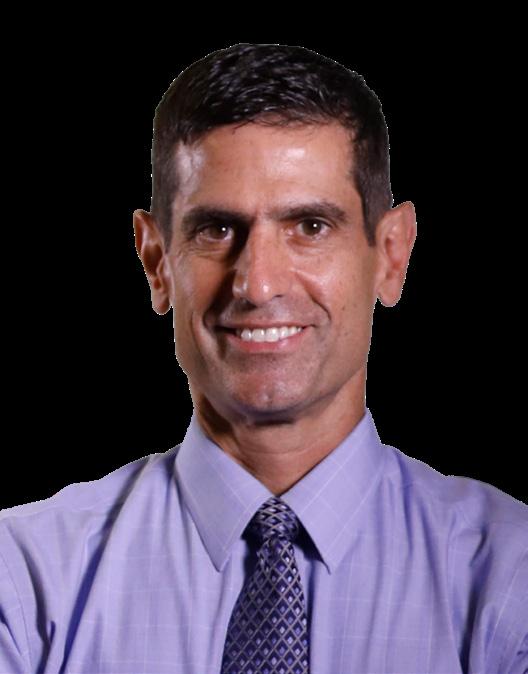
Nick Bettinger is a shareholder at McDonald Sanders with more than 30 years of civil litigation experience representing employers, commercial landlords and homeowners’ associations. Nick’s extensive tenure representing Texas nonsubscribing employers is something only a few attorneys in his field can claim.
Nick has been an active volunteer with TCBA LegalLine for over two decades. He genuinely enjoys donating his time
to provide free legal guidance to members of the community who may not otherwise have access to legal advice. He values the opportunity to help individuals better understand their rights, reduce uncertainty, and make informed decisions during challenging situations. During his tenure as LegalLine Chairman, Nick was instrumental in converting LegalLine registration to its current online portal.
Nick is also an expert balloon sculptor and donates his talent at charity events, creating intricate works of art and bringing smiles to children’s faces. g

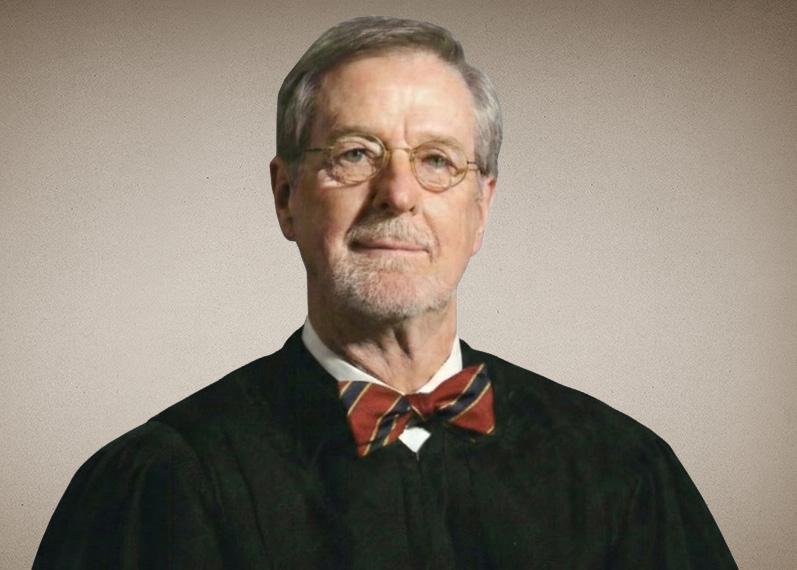
Q: How have the benches you’ve served on shaped the way that you view the practice of law?
I’ll answer a slightly different question to give you some perspective. On the civil district court trial bench, you’re generally arguing about money. On the court of appeals, you’re reviewing what someone else did—we reviewed cases from about 80 courts. In misdemeanor criminal court, the goal is often to help someone not reoffend. If you can do that, it helps both the individual and the public. Sometimes that takes a carrot, and sometimes it takes a stick.
Q: From your perspective on the bench, what separates effective advocates from those who struggle in the courtroom?
Experience and preparation.
Q: What guidance would you offer lawyers on maintaining professionalism when things get tense?
Take a deep breath and focus on the big picture. Confidence comes from preparation and experience, and that allows you to handle whatever situation arises.
Q: Looking back over your career in the law, what is one piece of advice you would offer to attorneys just starting out?
Prepare. It also helps to spend time around experienced lawyers and observe how they approach cases. But preparation is the key—if you know you’re prepared, you’ll have the confidence to handle whatever situations come your way.
Q: What does preparation look like from the bench?
It means I don’t have to ask why you’re doing something or what you mean by it. Prepared lawyers know what they’re
doing, avoid frivolous arguments, and focus on arguments that matter. That applies across the board—from misdemeanor courts to oral arguments in the court of appeals and civil district courts.
Q: Are there courtroom behaviors or habits you wish lawyers paid more attention to?
Respect for the court and for opposing counsel. You don’t want to be disrespectful to anyone. For example, if you’re disrespectful to my court coordinator, you might as well be disrespectful to me—I’ll hear about it after you leave her office. That applies to opposing counsel and to the court as well.
Q: Looking back at your early years in practice, what skills took the longest to develop as a lawyer?
I was an engineer before I became an attorney. Engineering tends to be black and white, but the law is full of shades of gray. It takes time to shift your thinking from looking for one clear answer to recognizing that legal issues often involve multiple interpretations.
Q: Who were some of the mentors who influenced your legal career, and do any of their lessons still stick with you today?
I started as a briefing attorney at the Texas Supreme Court, and I worked for Jim Wallace, who was somewhat of a father figure in the sense that at the time he was probably the age of my father and he was a straight arrow. He told you exactly what he thought and why he thought it. Once I moved from that to the Shannon Gracey Law Firm, I would say that Vic Anderson, who is no longer with us, and Kleber Miller, who is still with us, those were examples for me. They were examples of how to practice law, how to try a case, that sort of thing. So those would be the first three people who come to mind.
Q: If you weren’t a judge or a lawyer today, what would you like to be doing instead?
I’d be a farmer and a rancher or a professional baseball player. g
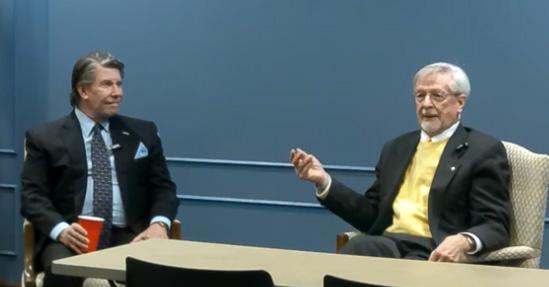
Judge McCoy spoke at February’s Mentor Monday Seminar, an interactive and informative session moderated by Steve Laird.
Watch the recorded session and earn 1 hour of free ethics CLE at www.tarrantbar.org/cle-mentor-monday-mccoy.

Pursuing the legal profession is still high on the list
By Steven C. Laird Law Offices of Laird & McCloskey | laird@texlawyers.com
Sometimes it seems that almost everyone is a lawyer or has a law degree. The vast majority of legislators are lawyers. Obviously, all judges have a law degree and once practiced law. Even many executives in the corporate world have had some legal training or a law degree. What is it that still makes going to law school a goal for so many people of different ages and backgrounds?
First, being a lawyer is still considered to be one of the top ten professions. It is interesting that sometimes kids know from the time of grade school that they want to become a lawyer someday. This may be from an influential family member or friend, or simply from being impressed by watching some of the current legal shows. Most lawyers will readily admit, however, that what we see on television or on the movie screen does not accurately reflect the daily practice of law. That reality would probably not get very good Nielsen ratings.
Not everyone who goes to law school practices law. Many people simply want the benefit of a legal education or the increased marketability that a law degree provides. First and foremost, legal training teaches one (or at least attempts to) to be very analytical in attempting to solve problems. Actually knowing the law is an important, but sometimes secondary, aspect of a legal education. Since the law seems to be ever changing, it is of utmost importance for a lawyer to know how and where to find “the law”.
Many people may remember the movie “The Paper Chase”, with Professor Kingsley attempting to create lawyers from the “minds of mush” of his first year law students. Simply put,

The Tarrant County Bar Association extends its sincere thanks to the members of the Elder Law Committee for their work in preparing the latest edition of the Elder Law Handbook. This resource was created to provide citizens of Tarrant County and surrounding communities with helpful information about legal issues commonly faced by individuals age 65 and older.
The handbook offers a general overview of Texas and federal laws, as well as resources and support organizations available in the Tarrant County community. While it is intended to inform readers about common legal topics affecting
one has to think like a lawyer before one can act as a lawyer. Law students and lawyers are certainly taught basic concepts of law and how to do legal research in order to find cases or laws that will be relevant to their situation.
But it is the persuasive arguing ability of most lawyers that people seem to respect and admire. To be able to argue effectively a particular point, whether it is with another lawyer or before a court, one has to analyze the law in a way that is going to be favorable for his or her client. That’s where the benefit of a legal education comes in.
Some lawyers have “transactional practices”, where they seldom have the need to go to court. Their practice may consist of preparing complex legal documents, for example, or advising clients about what they should or should not do when entering into business relationships. Others may simply use their law degree in jobs that are as widely varied as law enforcement officers to entrepreneurship.
So if your son or daughter tells you they want to be a lawyer or that they want to go to law school, it may be a good idea to humor them and even encourage them. After all, if your kids are going to argue with you, it might be to their advantage to start thinking like a lawyer.
Originally published in Fort Worth Magazine in the column “City Counsel.” This article is reprinted with permission from the author. Although written years ago, its insights continue to resonate and hold renewed significance today. g
By Sarah Hall Hoffman, Pro Bono Programs Director
older adults, individuals should consult an attorney regarding their specific circumstances.
This edition was revised by the 2025–2026 Elder Law Committee of the Tarrant County Bar Association. The Association gratefully acknowledges the contributions of Amy Allen, Donald Buckman, Sara Correa, Karen Denney, Charles Kennedy, A. Lance Mitchell, Judge G. Quentin McGown, Hannah Orand, Lisa Ramirez, Aleed Rivera, Karon Rowden, Cary Schroeder, and Laurie Weir. Special thanks also go to Kayla Dailey and the TCBA staff for their assistance in bringing the handbook to publication. g
By Kayla Dailey, Tarrant County Bar Association Executive Director
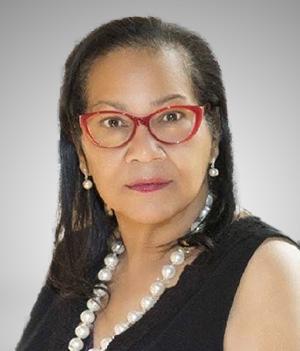
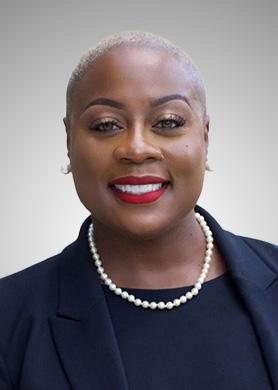
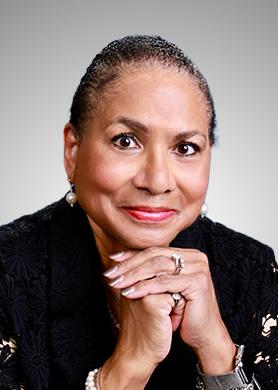
On February 26, 2026, the Black Women Lawyers Association of Tarrant County made a historic decision to rename the organization the Maryellen Hicks Black Women Lawyers Association. I spoke with honoree Judge Maryellen Hicks, BWLA President Crystal Gayden and former Blackstone Award Recipient Mattie Peterson Compton about why this moment matters.
K: Why was this the right moment in the organization’s history to make this change?
CG: First, she was in agreement. There had been a request to do this, and she had always, in her humbleness, said no. And so, over time, I think influence from her sister, Councilwoman Deborah Peoples, and other members softened her acceptance of this opportunity. And so that was the biggest thing, her saying yes, and then us quickly pivoting and moving forward to get it done before she changed her mind.
K: What conversations were happening internally that led to the decision?
CG: A lot of it had to do with giving people their flowers while they’re here, right? We didn’t want to do anything posthumously. And so that was the conversation, like pushing her approval of it more and more, because at some point it was going to happen. We all knew that it was going to happen. We just wanted it to happen in the spirit where she could appreciate and observe and feel and see the appreciation from our members, from the city, from the county, and of course, from the state. And so it was appropriate
K: What does this renaming signal about the current state and future of BWLA?
CG: We’re still here first and foremost, right? What this did was revive and revamp and energize our membership. You’d be surprised, since yesterday, how many people have said, “Oh, I want to be a member! How can I be a part?” And especially when Karmen said yesterday that you don’t have to be a woman, you don’t have to be Black, and you don’t have to be a lawyer to be a member of our organization.
We believe putting her name on our organization is going to continue to catapult our organization into the lives and homes of everybody that hears and knows about her. And particularly for those who don’t know about Maryellen Hicks, we learned in some of our meetings that some of our attorneys didn’t even know who she was. And so what this is going to do is ensure that her name and her legacy continues throughout our community and through our organization.
K: How does this moment reflect where Black women lawyers are today in Tarrant County?
CG: Of course, from what I understood, there weren’t many Black lawyers in 1986 when the organization was founded. And that has since changed. We’ve tripled, if not quadrupled, in our presence in Tarrant County. And so this just continues to signify that there is growth among our demographics in the legal community.
Continued on page 36
K: Judge Hicks, when you began your legal career, what did the landscape look like for Black women in the profession?
MEH: For Black women, we were invisible. We were not that many in number. We were underrepresented in law schools all over this nation. So there were very few of us. And when I became a judge, I’ll be honest—white faces in black robes. That’s the best way to describe it.
K: Were there moments when you realized you were walking into spaces that weren’t built with you in mind?
MEH: Absolutely. Absolutely. And really sad things for me were, quite frankly, when I got appointed municipal court judge, which is nothing but traffic tickets, and Class C misdemeanors. And there was so much opposition from fellow lawyers, judges that I really respected. It was very, very sad. And they attacked the people who got the job and appointed me to those positions.
K: What sustained you in those early years?
MEH: My siblings and I were raised both Methodist and Catholic. So my faith, for one, because I can remember, and I’ll just say it, calling on the higher power to sustain me and protect me and guide me. But as well, I had this amazing family. My great uncle W.J. Durham was a civil rights lawyer in Texas. My grandfather, my mother’s father, and his brother, and siblings were all businessmen. The sad thing is that some of them had to leave Texas to pass as white. But I was determined to make my dad, my mother, my stepparents later, and everybody in my family proud. I just had to do that.
K: Did you feel at the time that you were breaking barriers, or were you just focused on doing the work?
MEH: I knew it may be first in this and first in that, but I didn’t look at it like that. I would have rather had somebody already there to say, “Welcome, Maryellen. Well done. Now join us and keep on going.” It was very lonely. And that’s why for me, Black Women Lawyers—those young women gave me so much peace.
K: What did Judge Hicks represent to you and to other Black women lawyers early on in your career?
MPC: When I moved back to Fort Worth, I was really impressed by the fact that Judge Hicks was already on the municipal court bench. I came back here to work in the city attorney’s office, which of course was right across the street from the municipal court. And I was just stunned to know that a woman—and she was not a Fort Worth woman—had been appointed to the municipal court bench. And so that was inspiring to me, and it also was helpful for me at that time.
K: How did your presence on the bench change what felt possible?
MPC: Well, it just meant that Fort Worth was finally moving forward. When I went away to college, I had never attended integrated public schools here in Fort Worth. I grew up in an era when there were colored and white signs on water fountains, things of that type. To know that we had moved to that point with Judge Hicks was really an inspirational thing.
And then just to watch—before I had a child, I would go to lots of public functions that had to do with African American people, and Judge Hicks was there, and she brought her daughter with her. That was also a great thing for me to see—to know that here was somebody who was not waiting for this school system to expose her daughter to the requirements of citizenship, which are that you are engaged, but that she took her daughter along to teach her that lesson face to face. And so when my son was born, we were at everything. Kathleen wasn’t the only little person in the room. Joseph was in the room too.
K: What makes Judge Hicks uniquely deserving of this honor?
CG: My gosh, I mean, you can lay it out. The first in so many areas, uniquely qualified in that she’s the last serving African American woman elected judge in Tarrant County. And that was some 35, almost 40 years ago, right? She’s the first to serve on the Court of Appeals. And so her being the first in so many realms in her life just continues to show her greatness and why it was an easy decision to rename our organization after her.
K: What does her legacy mean to younger members of the association?
CG: I hope it means that she shouldn’t be the last. She opened the door for many of us to walk through. And we need to continue to strive to make sure that the door is not closed behind her. And we continue to push the door open and continue to break those ceilings.
K: Can you share a story that captures who Judge Hicks is not just as a judge, but as a woman and a leader?
MPC: We belonged to an organization together, and one of the things that I noticed was in any setting, she is never going to repress what she thinks and feels. She is both compassionate and she’s very vocal about the things that she believes in. We might be in a chapter meeting, and somebody stands up and says, “Well, I know we’ve already voted that we’re going to give scholarship money to so-and-so. But there’s this child, a young man at my church, and he needs money for this.” She’s going to be the first one to say, “Well, I move that we give him some money, even if we have to get into our purses and pockets to do it.” Other people might be thinking it, but
her ability to say out loud what she thought we were doing. The other thing I remember that really impressed me is at a time when Tarrant County changed from blue to red while she was on the bench. And there were some people who joined the Republican Party so they could be or remain on the bench. I’m not saying that their conduct on the bench was not in alignment with my values and my political leanings about things. But she was one person who said, “I’m not doing that. Even if it costs me an election, I’m not doing that.” There are not a lot of people who have the backbone to stand up for what they have stood for all along. Her personal principles go before her personal interests.
K: How does it feel to have your name attached to an organization that will serve generations to come?
MEH: It was like Mother’s Day, a birthday, Christmas, Fourth of July, and Juneteenth. It was every holiday. I was so proud. They had asked me before, and I said, “No, I don’t need that.” But I have cried some tears. I have wiped the tears from my face. It was so classy last night. And I looked at the plaques of Judge L. Clifford Davis and Kleber Miller in the room. In the first big trial I ever had as a district court judge, Kleber Miller was one of the lawyers. And I hope I have made the two of them proud of everything that I have done.
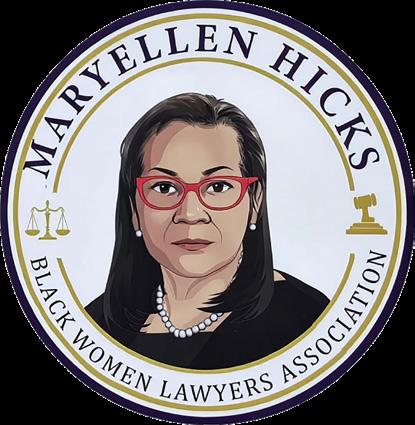
K: What responsibility comes with putting a name, especially this name, on an institution?
CG: Exactly. It’s not just Black women lawyers anymore. I mean, we’re walking in the footsteps of a legal giant. What that means is this continued responsibility in showing up, continued responsibility in integrity, continued responsibility in giving back to our community and serving, making sure that we are a voice, making sure that we provide top-notch representation. Not that we weren’t already doing that, but it definitely puts a lens and a microscope on us as moving forward under her name and in her spirit.
K: What do you hope people say 25 years from now about the Maryellen Hicks Black Women Lawyers Association?
MPC: That it was populated by some ****** women. I mean, they are running for office. Doesn’t matter whether they win or not, they’re going to stand up for what they believe in. And we need to honor her now because our history is being
suppressed, negated, demeaned.
And to have an organization that says, we’re going to lift her name up, because she was our forerunner, she was our trailblazer, but she was a woman who never pulled the ladder up behind her. She always kept extending it down to bring other people up. And so that's what I hope they say about all these women in this organization, the Maryellen Hicks Black Women Lawyers Association of Tarrant County was an organization filled with women who were pushing that ladder down to bring other people up and making sure that our young people know our history.
CG: Dang, will they sit down? Do they ever stop? I would hope that it would be that they did everything they could to ensure that her name remained a household name and that her legacy continued. Even though she was the first in many things several decades ago, we’ve not forgotten her. We don’t want her to be forgotten. Oftentimes, that’s what happens when people move on in life or they even pass away. The legacy and the spirit are there, but it’s just not prominent much anymore. And we want to ensure that she will never be forgotten.
MEH: I think they’re going to say, “What an outstanding group of women.” And the other thing about this group— every one of them is so involved in the community. If you’re not giving back, you’re useless to me. And it’s also a thank you to my family. By adding my name, it’s also thanking my family.
K: If a young law student was reading this interview, what would you want her to know?
MEH: To be the very best you can be. There are still obstacles, but so what? Especially in the times in which we live. Dickens said it best, “It’s the best of times and the worst of times.” Be engaged in community, be engaged in hospitality to others. Love community service. And make us proud. And so many of us are doing that. They’re doing it today, and I know they’ll do it in the future.
MPC: Keep hope alive. You can never let the dark period that we might find ourselves in defeat you or make you give up. I hope that they would read this and know that we will always and we must always persevere.
K: Judge Hicks, when history looks back at your career, what do you hope it says about the doors that you opened?
MEH: They’re going to say, “Maryellen Hicks was crazy.” She was outspoken. She opened doors, but she wanted to open even more doors. And she had a passion for the community and the legal profession. I was so proud last night to see a lot of judges and lawyers there—not just the ones of color, but people I worked with. It made me feel proud. But I think people will say, “Maryellen Hicks cares about everybody.” And I mean that. g

By Dwayne Smith
Everyone reading this article has probably gotten the call: “My son’s friend’s next-door neighbor’s friend wants to file for divorce and needs help. It should be easy.” Famous last words! This brief article will outline the basics of what you need to know to either handle your first (or next) divorce or otherwise let you know when you may be over your head and need to consider referring the case to someone who specializes in the practice of family law.
To be eligible to file for divorce in Tarrant County, one (not necessarily both) of the parties must have lived in Texas for six months prior to filing and in Tarrant County for ninety days. Tex. Fam. Code § 6.301. Absent a finding of family violence or a party being the subject of an active protective order, the parties must wait sixty days from the date the petition was filed in order to get divorced. That doesn’t mean the parties cannot settle their case prior to sixty days—it simply means that the judge cannot grant the divorce for sixty days.
Most divorce petitions contain the temporary restraining order described in section 6.501 of the Texas Family Code, which contains twenty-seven restrictions on the client’s behavior. Many people get scared when they see the words “restraining order” thinking that it means they can’t communicate with their spouse or kids, can’t go to the house, and can’t spend any money. Of course, read through the order carefully to ensure that isn’t the case. The overwhelming majority of TROs simply provide orders to maintain the status quo—that is, no harassing or tracking the other party, no making abnormal financial transactions, no canceling insurance, no accessing the other person’s accounts, no excluding the other person from the residence, and orders to that effect. After reading through the restraining order, work to calm the client’s nerves and assure them that the TRO is standard practice and typically does not include an allegation of wrongdoing by the client.
The TRO expires by operation of law fourteen days after it is signed, which means that your client will get served with a notice of court proceeding setting a hearing where the judge will turn the TRO into a temporary injunction (that is, it will last for the duration of the case). You can confidently tell your client that the TRO will be turned into a mutual temporary injunction (i.e. it will be in effect as to both parties) at or before the hearing. In fact, if you call the lawyer
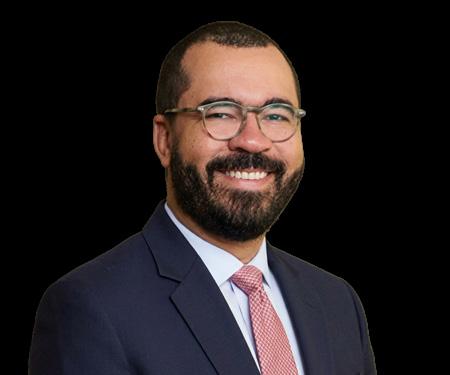
representing the petitioner, she is likely to agree to do so in short order and without the necessity of a hearing.
Along with the judge considering turning the TRO into a temporary injunction, the temporary-orders hearing is used to establish the ground rules for the parties during the pendency of the divorce. Those orders can address, among other things, temporary conservatorship of the children, a possession and access schedule for the children, temporary child support, interim spousal support, interim attorney’s fees, and a decision as to who gets to reside in the parties’ home while the case is pending.
Be sure to read Tarrant County Local Rule 4.05(2), which requires parties to take to the temporary-orders hearing the following documents: (a) a concise written summary of the relief requested by the party, (b) a written summary of monthly income and expenses, (c) all payroll stubs or wage statements for the past three months, (d) federal income tax returns, including all attachments and schedules, for the two years immediately prior to the hearing, and (e) financial statements filed by the parties with any financial institution within the past two years. Also, if the client is self-employed, you must provide all profit and loss statements, balance sheets, income statements, personal and business bank account statements, credit card statements, and all other evidence of earnings for the previous twelve months. Everyone recognizes the amount of work it takes to gather such a large number of documents in such a short period of time, but it’s important to inform the client that the judge could—at best—reset the hearing if the client doesn’t provide the documents. Or, even worse, if the client is self-employed and fails to provide the required documents, the judge has the power to presume that she earns sufficient income to pay the maximum amount of child support and spousal support provided by the Family Code!
Depending on which court your case lands in, you can reasonably expect to have a limited time to present your case at a temporary-orders hearing. Prepare yourself and your client to present her case in roughly twenty minutes, including cross-examination. This is not your opportunity to tell the judge all of the facts of the case. Your client will get her day in court later. The purpose of the temporary-orders hearing is to give the judge enough information to make an initial determination about the use of financial resources, the use of the residence, and, most importantly, about orders that are in the kids’ best interest. Be efficient. Be thorough. And, most
importantly, don’t beat a dead horse at this hearing!
Once you have gotten temporary orders in place, the next step in a divorce is to evaluate the nature and extent of the community estate and each party’s separate estate. If you’ve made it this far in the article, you likely are already familiar with the various forms of discovery – requests for production, interrogatories, requests for admission, and depositions –that can aid you in that task. With respect to evaluating the estate, the goal of discovery is to put together an “inventory and appraisement,” which the rest of the world calls a balance sheet, where both sides swear under oath that the listed assets and liabilities are a full disclosure of the estate. Local Rule 4.05(4) requires the parties to exchange inventories, along with documents supporting the existence and value/balance of each asset and liability identified, not later than 120 days after the filing of the first answer or general appearance.
In Tarrant County, all divorce cases and all custody cases are referred to mediation prior to trial unless the case involves family violence. Prepare your client for the distinct possibility that they will attend mediation if you’re unable to resolve their case in relatively short order.
Most family law cases do not result in a final trial; instead, most clients’ disputes are resolved either through informal settlement negotiations or mediation. Your client’s “day in court,” if they have to have one, will be through a relatively brief temporary orders hearing that occurs approximately two weeks after the divorce is filed. Prepare your client for that reality, and know going into any divorce case that the first month is a bit of a fire drill that requires your client to gather evidence very quickly.
Finally, keep in mind that our Tarrant County Family Law Bar Association is a congenial bunch who generally are easy to work with, open to reasonable extensions of time, and focused on peaceful resolutions. If you ever find yourself in a bind, reach out to any of our amazing family lawyers, and I’m confident they’ll all be willing to lend a hand! g


By Sarah Hall Hoffman, Pro Bono Programs Director


Wendy Hart started her career performing adoptions for foster parents. She later worked for the Texas Attorney General’s Office in the Child Support Division for three years before opening her own firm in Fort Worth. She has been a solo practitioner since 2001, focusing primarily on family law issues. Her office is now located in Arlington, where she and Nick, her husband and paralegal, serve their varied clientele.
She has been a member of the Tarrant County Bar Association since 2002 and has served on numerous committees.
She has consistently dedicated her time to TLTV and was the recipient of TLTV’s Steadfast Service Award in 2020. Nick is an Army retiree, so supporting military families is especially meaningful to them.
Wendy says she became a lawyer because it allowed her to experience the best of both worlds—building a meaningful career while still being present for her family. The profession gave her the flexibility to provide for her family while also making time for the moments that mattered most as a mother.
She has five sons—three grown men and two who have passed away. She thanks God for this career path and for all the opportunities He has opened to her through it. g
12/1/2025–1/31/2026 sorted by judgment date.*
*Does not include cases designated as “on appeal” with the Clerk’s Office as of 2/6/2026.
TRENTON STONE v. CASEY CLARK
352-353958-24
Hon. Josh Burgess (352nd District Court)
Trial: October 20–23, 2025
Judgment: December 2, 2025
Attorney – Plaintiff: Scott Callahan
Attorney – Defendant: Ashley Whatley
Summary:
Plaintiff was a passenger in Defendant’s vehicle when Defendant, driving under the influence, crashed. Plaintiff sustained severe injuries. The jury found Defendant 100% at fault and awarded Plaintiff $552,515.54 in damages.
LAZANDRA JACKSON v. MARTIN PEREZ AND PEREZ FAMILY BUILDERS, LLC
348-345184-23
Hon. Megan Fahey (348th District Court)
Trial: October 27–29, 2025
Judgment: December 8, 2025
Attorney – Plaintiff: Laura Andrade
Attorney – Defendant: Mark Teague
Summary:
This case arose from a motor vehicle collision.
The jury found Defendant
negligent and awarded Plaintiff $30,000 in past medical expenses.
JOHN TYLER v. AGENT DIGGS, et al.
048-332440-22
Hon. Chris Taylor (48th District Court)
Trial: September 29–October 2, 2025
Judgment: December 10, 2025
Attorney – Plaintiff: Wes Dauphinot
Attorneys – Defendant: David Luningham, Jim Jeffrey, Jr., and Drew Siegel
Summary:
The jury found Plaintiff was unlawfully detained by Defendants while acting as bounty hunters. Plaintiff recovered a total of $27,500 for past mental anguish, apportioned among Defendants.
CALAIS CUSTOM HOMES, LLC v. THE BIRCH RACQUET AND LAWN CLUB, LLC, et al.
017-346398-23
Hon. Melody Wilkinson (17th District Court)
Trial: November 4–13, 2025
Judgment: December 12, 2025
Attorney – Plaintiff: Eamonn Wiles
Attorneys – Defendant:
Robert Castle and Terry Criss
Summary:
One Defendant agreed to sell the same property to two companies, including Plaintiff. The jury found Defendants breached the contract and awarded Plaintiff $15,000 in damages. The jury also found Plaintiff filed a fraudulent lis pendens and awarded one Defendant $250,000 in damages, plus attorneys’ fees.
ANTHONY THOMAS v. BNSF RAILWAY COMPANY
342-359718-24
Hon. Kimberly Fitzpatrick (342nd District Court)
Trial: November 10–12, 2025
Judgment: December 18, 2025
Attorneys – Plaintiff: Scott MacLean and Ralph Duggins
Attorney – Defendant: Justin Rodriguez Summary:
Plaintiff was thrown from a freight car while working for BNSF Railway and sustained a crushing foot injury.
The jury awarded Plaintiff $1,132,403.51 in damages.
MICHELLE RODRIGUEZ v. BARBARA PTACEK WILLIAMS, AS

REPRESENTATIVE OF THE ESTATE
352-330002-21
Hon. Josh Burgess (352nd District Court)
Trial: December 15–22, 2025
Judgment: December 29, 2025
Attorney – Plaintiff: Christopher Sisk
Attorney – Defendant: Mark Teague Summary:
Plaintiff was struck by a vehicle while walking. The jury awarded Plaintiff $625,000 in damages and attributed 15% responsibility to Plaintiff, reducing the award accordingly.
TONYA NEUMANN v. XITLALI GARCIA
342-352478-24
Hon. Kimberly Fitzpatrick (342nd District Court)
Trial: December 1–3, 2025
Judgment: January 7, 2026
Attorney – Plaintiff: Mark Mathenge
Attorney – Defendant: Ray Albertson Summary: Defendant rear-ended Plaintiff. The jury awarded Plaintiff $5,000 for medical expenses.
LETSSEEWHATSTICKS LLC v. THRYV, INC. 236-326406-21
Hon. Tom Lowe (236th District Court)
Trial: October 1–30, 2025
Judgment: January 8, 2026
Attorney – Plaintiff: Dwight Francis
Attorneys – Defendant: Clark Johnson and Brett Charhon
Summary:
Plaintiff sued for breach of contract, and Defendant asserted counterclaims. The jury found in favor of Thryv, Inc. and awarded actual damages against multiple defendants totaling more than $11 million.
ROBERT BACA v. STATE FARM LLOYDS, et al.
096-347427-23
Hon. Pat Gallagher (96th District Court)
Trial: December 9–11, 2025
Order: January 16, 2026
Attorney – Plaintiff: Clifford Nkeyasen
Attorneys – Defendant: Will Davis and Michael Klein
Summary:
Plaintiff asserted claims for unfair and deceptive practices. The jury found Plaintiff to be the prevailing party, but the Court determined no additional recovery was owed beyond amounts previously stipulated.
HANI KAWASMI v. ADVANCE ACCESS RIDE, LLC, et al.
348-347222-23
Hon. Megan Fahey (348th District Court)
Trial: January 5–9, 2026

Judgment: January 20, 2026
Attorney – Plaintiff: Jessica Murray Attorney – Defendant: Gregory Scott
Summary: This case arose from a motor vehicle collision. The jury found both parties negligent and entered a take-nothing judgment.
MARK ERIC JAMES v. ACE WORLD ADVANTAGE, L.L.C., et al.
141-350354-24
Hon. John Chupp (141st District Court)
Trial: January 12–14, 2026
Judgment: January 22, 2026
Attorney – Plaintiff: Alex Ivanov
Attorney – Defendant: Angela Buchanan
Summary: This case arose from a motor vehicle collision. The jury found Defendant negligent and awarded Plaintiff $1,575,000 in damages. g
If you are a TCBA member and would like to place a free announcement in the The Verdict, we would like to hear from you. Please submit information by email to Elizabeth Banda, Communications Director, at elizabeth@tarrantbar.org.


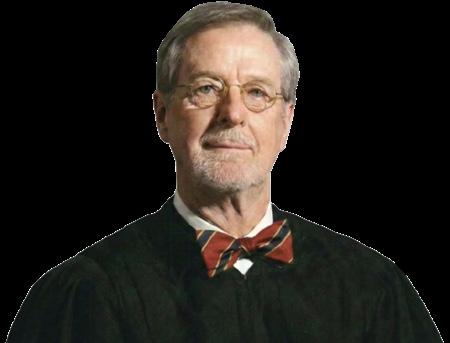
Judge Carey Walker, County Criminal Court No. 2
by Judge Bob McCoy g County Criminal Court No. 3
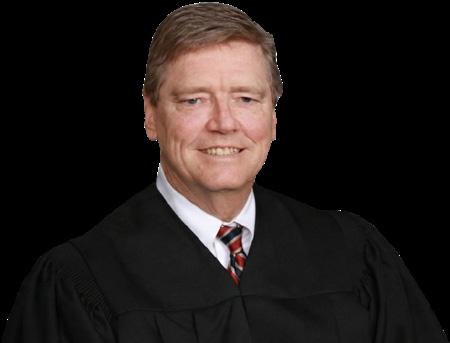
Judge Bob, what is complete preemption?
Complete preemption is a federal removal doctrine relating to whether a case may be removed from state to federal court because it is considered a federal claim arising under federal law from its inception.
Southwest Airlines Pilots v Boeing Co., 704 S.W.3d 832 (Tex. App—Dallas 2022).
PARAPROSDAKIAN (a figure of speech in which the latter part of a sentence or phrase is surprising or unexpected; frequently humorous)
If at first you don’t succeed, skydiving is not for you.

Abigail, Mary, and Martha Elijah

Buy a pup and your money will buy love unflinching. —Rudyard Kipling
Bull riding: You know you have a bad bull when you ask an experienced rider, “What does he do after his second turn?”
Answer: “No one knows.”

An expert’s testimony based on a scientific forensic analysis that was performed by a nontestifying scientist is admissible if (1) the expert independently analyzes the data generated by the nontestifying scientist and develops her own conclusions from the data and (2) the lab report created by the nontestifying scientist is not offered into evidence.
Gourley v. State, 710 S.W.3d 368 (Tex.App.—Fort Worth 2025).
A criminal law is unconstitutionally vague if it is not sufficiently clear to: (1) give a person of ordinary intelligence a reasonable opportunity to know what is prohibited; and (2) establish determinate guidelines for law enforcement. It is a basic principle of due process that a statutory enactment is void for vagueness if its prohibitions are not clearly defined.
Ex Parte Taff, 710 S.W.3d 438 (Tex.App.—Eastland 2025).
An offense is a lesser-included one under article 37.09(1) “if the indictment for the greater-inclusive offense either: (1) alleges all of the elements of the lesser-included offense, or (2) alleges elements plus facts (including descriptive averments, such as non-statutory manner and means, that are alleged for purposes of providing notice) from which all of the elements of the lesser-included offense may be deduced.”
Johnson v. State, 710 S.W.3d 447 (Tex.App.—Austin 2025).
The Sixth Amendment right to confrontation comes into play at “the initiation of criminal proceedings.” And it goes out of play after trial. Parole revocation comes after trial and deprives a person “only of conditional liberty” and so “is not part of a criminal prosecution.”
Ex Parte Zubiate, 710 S.W.3d 724 (Tex.Crim.App. 2025).
“Under the Due Process Clause, a criminal conviction must be based on legally sufficient evidence.” Evidence is legally sufficient if “any rational trier of fact could have found the essential elements of the crime beyond a reasonable doubt.”
Gutierrez v. State, 710 S.W.3d 804 (Tex.Crim.App. 2025).
The United States Supreme Court has established a two-step procedure to determine whether a suspect has waived his previously invoked right to counsel. The first step requires proof that the suspect himself initiated further communication with the authorities after invoking the right to counsel. The second step requires proof that, after he reinitiated communication with the authorities, the suspect validly waived the right to counsel.”
Wharton v. State , 711 S.W.3d 92 (Tex.App.—Houston [1st Dist.] 2024).
Once the defendant specifically challenges the plaintiff’s choice of venue, the plaintiff has the burden to present prima facie proof that venue is proper in the county of suit. This prima facie proof is not subject to rebuttal, cross-examination, impeachment, or disproof.
Rush Truck Centers of Tex., L.P. v. Sayre, 704 S.W.3d 857 (Tex. App.—Dallas 2023).
All property on hand at the dissolution of marriage is presumed to be community property. However, this is a rebuttable presumption, and a spouse claiming assets as separate property may establish their separate character by clear and convincing evidence.
Despain v. Despain, 704 S.W.3d 866 (Tex. App.—Austin 2024).
Using a competitor’s product does not make one a competitor.
Biote Medical, LLC v. Carrozzella, 705 S.W.3d 793 (Tex. App. —Fort Worth 2023).
Significantly, the sort of “false information” contemplated in a negligent misrepresentation case is a misstatement of existing fact. A promise to do or refrain from doing an act in the future is not actionable because it is not a misrepresentation of an existing fact.
Fagin v. Inwood Nat’l Bank, 705 S.W.3d 802 (Tex. App.—Dallas 2023).
To establish a claim for conversion of personal property, a plaintiff must prove that: (1) the plaintiff owned or had legal
Welcome to the time of year when things seem to get a fresh new start. Spring is arriving, the flowers are blooming, and birds are singing. It is also the time of year to give your CLE portfolio a quick overview. Are you where you need to be with your CLE hours? Your sections are very active and always on the
possession of the property or entitlement to possession; (2) the defendant unlawfully and without authorization assumed and exercised dominion and control over the property to the exclusion of, or inconsistent with, the plaintiff’s rights as an owner; (3) the plaintiff demanded return of the property; and (4) the defendant refused to return the property.
Fagin v. Inwood Nat’l Bank, 705 S.W.3d 802 (Tex. App.—Dallas 2023).
A contract is subject to being avoided on the ground of fraudulent inducement. However, there is an exception where sophisticated parties represented by counsel disclaim reliance on representations about a specific matter in dispute.
Ybarra v. State , 705 S.W.3d 819 (Tex. App.—San Antonio 2024).
See Tex. Code Crim. Proc. art. 4.01(2) (providing that the “[c]ourts of appeals, other than the…Fifteenth Court,” have jurisdiction in criminal actions).
Kelley v. Homminga, 706 S.W.3d 829 (Tex. 2025).
For an extensive review of sanctions for pleadings and discovery responses, see Reynolds Energy Transport, LLC v. Plains Marketing, L.P., 706 S.W.3d 845 (Tex. App.—San Antonio 2024).
All is not butter that comes from the cow.
— Dr. Thomas Fuller, London, England (compiled 1732)
Lawsuit, n. A machine which you go into as a pig and come out as a sausage.
— Ambrose Bierce, The Devil’s Dictionary g

By Tracy Card TCBA Sections & CLE Director
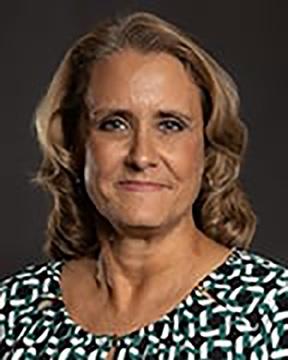
hunt to find the latest updates pertaining to your area of law. Be sure to check our calendar of events often and register to attend these great seminars. Also, if you have suggestions or questions, feel free to reach out! g
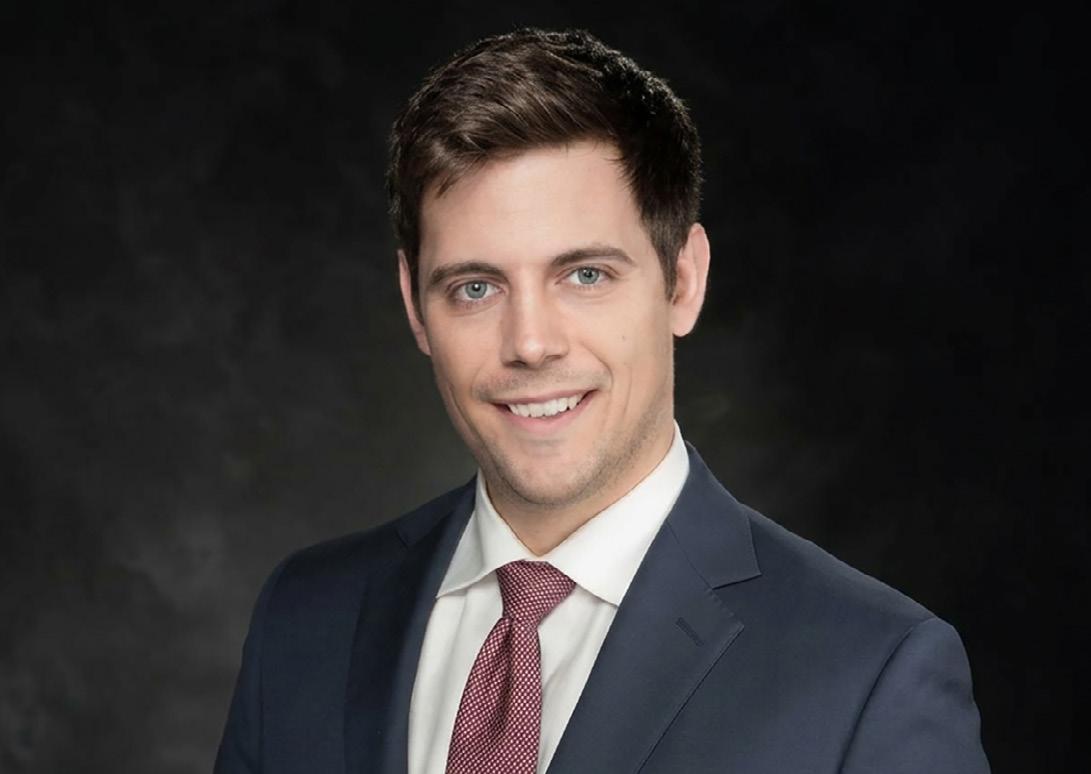
Q: What has surprised you most about the practice of law?
I think the relationships and the interactions between attorneys and between judges and clients are what surprised me the most. I expected a lot of writing, I expected a lot of arguing, but I think I was honestly pleasantly surprised by the amount of behind-the-scenes conversation and camaraderie that I've experienced so far.
Q: What motivated you to step into a leadership role with the Tarrant County Young Lawyers Association, and what have you learned from serving as president? I was participating with some of the volunteer opportunities with young lawyers, and I was interested in starting a softball team. Andrea Palmer encouraged me to join the board, and things kind of took off from there. It was largely because I enjoyed being around these folks, and it was an organization that helped me a lot personally.
Q: What intentional steps have you taken to build credibility and trust in the legal community?
I think that the key thing I’ve done is just try to be purposeful. Purposeful with my communications, purposeful with what I choose to do and choose not to do. And I think just taking a breath and not reacting instinctively, but instead just trying to be intentional about those actions is something that I’ve focused on.
Q: How did you develop your voice and your confidence, whether in court, with clients, or within the bar?
It’s something that develops over time. You may not have it your first time in court or your fifth time in court, but I think preparation is what best helped me. I was an anxious young
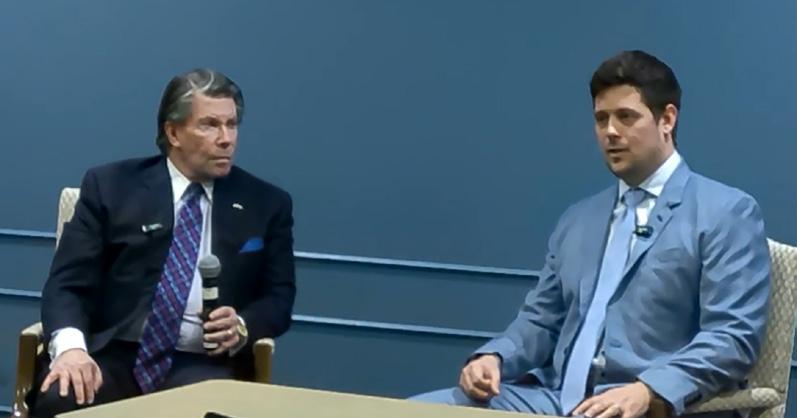
lawyer. What helped me the most was just perhaps being overprepared, but that then gave me confidence. And then I was able to use that confidence in court and those things compound.
Q: How have mentors influenced your career so far? They’ve been very important to my career so far. I’ve been blessed with the firm I’ve been a part of and had excellent mentors there. Matt Giadrosich has held my hand since I was a first-year attorney—taking me to court and assisting me with just the practice of law. I know I mentioned Andrea Palmer earlier, but I mean, as far as being involved with the legal community, she really helped open my eyes to “there's a whole lot more to the practice of law than just working for your firm or handling your cases.”
Q: What advice would you give young attorneys about seeking out mentorship?
Do it early and do it often. I think you can’t have too many mentors, and you can have different mentors for different parts of your life. But I think just going out and socializing and attending legal events or other areas of interest and connecting with people who you think are helpful or fun, and then you’re going to build a network of mentors that can help you throughout the rest of your life or your career.
Q: How has bar involvement impacted your professional growth, and why should young lawyers consider getting involved?
Being involved has helped me meet a network outside of my practice area. It’s not often I run into criminal or family law lawyers in civil litigation practice, but I’ve been able to do that through bar involvement. And I don’t think your professional growth is going to be complete without trying to give back to our community.
Q: If you weren't a lawyer, what would you be doing?
I think I’d probably be a taxidermist. My dad was a taxidermist. I’m an outdoorsman, and I really love that lifestyle. g
John spoke during January’s Mentor Monday Seminar, part of the Mentor Monday Seminar Series, a session moderated by Steve Laird.
Watch the recorded session and earn 1 hour of free ethics CLE at www.tarrantbar.org/cle-mentor-monday-easter.


Q: Where do you live and practice in Tarrant County, and what do you love most about your community? I live in Roanoke, which is technically Denton County, but my office is in Southlake.
Q: What do you love most about your community there?
I really love the small-town charm of Roanoke. The downtown area is super walkable, the people are incredibly friendly, and it’s close enough to the big city that it’s very easy for me to get into Fort Worth or to the airport, and I don’t feel like I’m missing out on big-city life. As far as practicing in Southlake (laughing), I like the restaurants.
Q: What inspired you to become a lawyer, and what keeps you motivated in your work today?
So I never planned on becoming a lawyer until after I had already been in the workforce. My undergrad is in accounting, and it was honestly just kind of a boring job, and I didn’t want to be filling out tax returns for the rest of my life. I looked at what kind actually interest me and thought about the law. Because it’s a huge investment and career change, I took what I think is the most boring, dry course I could think of before I made that decision to apply for law school—a legal writing course. And I told myself, “If I can get through that and I still really like it at the end, then this is the right move for me.”
Q: What area of law are you practicing?
I am a defense attorney. I specialize in medical malpractice, employment, railroad, and personal injury law.
Q: Who’s been a mentor or a major influence in your legal career?
It’s going to be the partners that I work for at the firm I’m with. I’ve worked for them since graduating from law school. Lyn Robbins and Susan Travis have taught me everything I know.
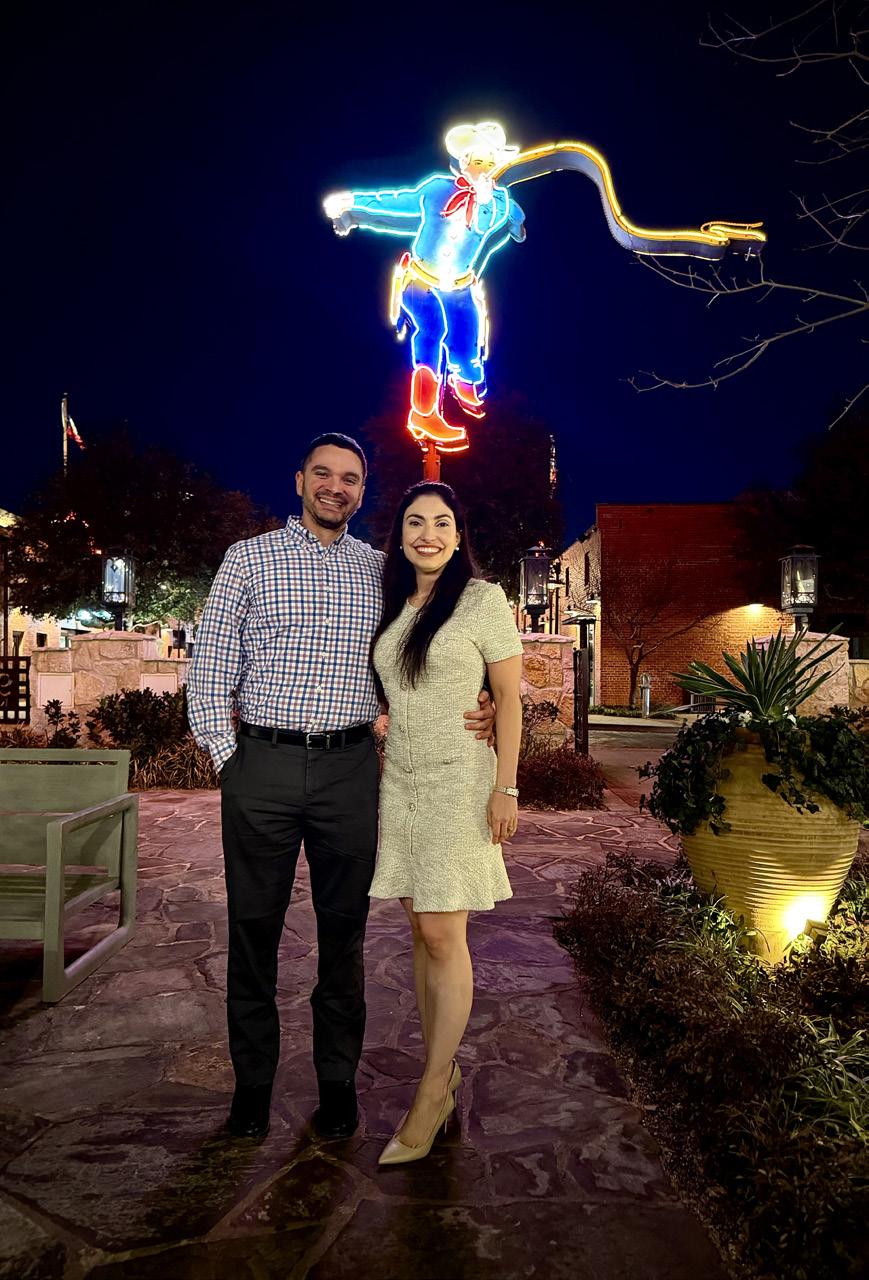
Q: What is a fun or surprising fact that people probably don’t know about you?
I constantly lie to myself that I’m not going to buy another book that I won’t read. I have an irrational fear that if I see a book that looks interesting, I’m never going to see it again, so I’d better hurry up and buy it.
Q: If you weren’t a lawyer, what do you think you’d be doing instead?
I’d probably be teaching. I really like helping people, and it’s a great feeling to see the results of giving someone the tools to do things for themselves. g



By Sarah Hall Hoffman, Pro Bono Programs Director
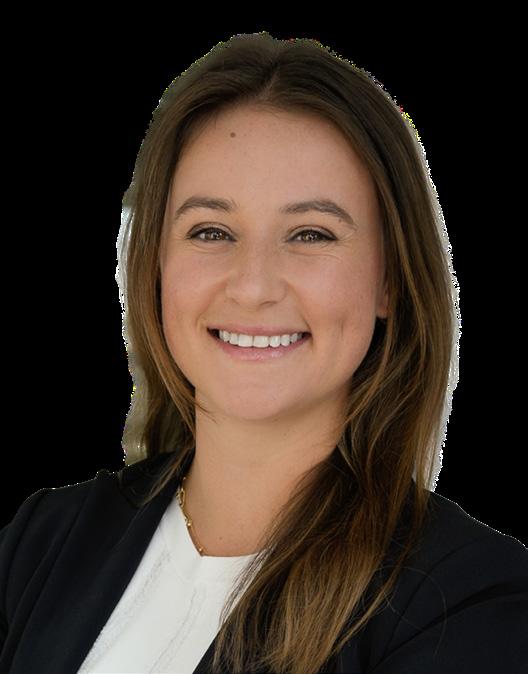
Devon Davis is a Fort Worth native and an attorney at Cantey Hanger LLP where she practices civil litigation. She joined the firm in 2023 after previously serving as a summer associate. Devon earned her Bachelor of Arts in Politics from Sewanee: The University of the South and her Juris Doctor from Washington and Lee Uni-
versity School of Law. During law school, she clerked for the Montgomery Circuit Court of Virginia, gaining experience in trial court proceedings and the judicial decision-making process. Prior to her legal career, Devon served as a Legislative Assistant for the Tennessee House of Representatives, where she contributed to the review and enactment of legislation, reinforcing her commitment to public service and community engagement. g
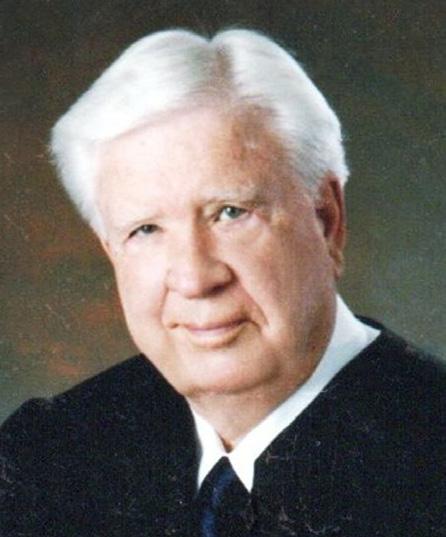
Judge Rufus James Adcock passed quietly on January 15, 2026, in his cherished home with family. Rufus was born to Floyd and Floy Adcock on September 20, 1930, in Proctor, Texas. Judge Adcock received his law degree from The University of Texas at Austin in November 1959. He began his service to the residents of Tarrant County when he accepted a position as a prosecutor in the District Attorney’s Office in 1960. He was appointed judge of the newly created 297th Criminal District Court in January 1982. In January 1983, Judge Adcock was appointed chief prosecutor for the Tarrant County District Attorney’s Office. In January 1986, Judge Adcock was appointed to the newly created County Criminal Court No. 6, where he served until his retirement in December 1998. In all, Judge Adcock served the citizens of Tarrant County for 38 years. While serving in the District Attorney’s Office as a prosecutor, Mr. Adcock was motivated to give his utmost effort on behalf of crime victims, which was evidenced by his decorum and success in the courtroom.
Retirement years included his hobby of raising registered Black Angus cattle at his farm in Gustine, Texas, and enjoying his golden years with his beloved wife, Barbara.
Rufus is preceded in death by his parents, Floyd Adcock and Floy Herzog. Rufus is survived by his loving wife of 35 years, Barbara V. Adcock; stepchildren Craig Green and wife Pamela, Jim Green and wife Jennifer, and Diane Collins and husband Donald; cousins Carol Teich, Jamie Littlejohn and wife Cathy, Mark Littlejohn and wife Sherry, and Trenton Littlejohn; and many grandchildren, great-grandchildren, fishing and hunting buddies, and friends. Submitted by the family. g
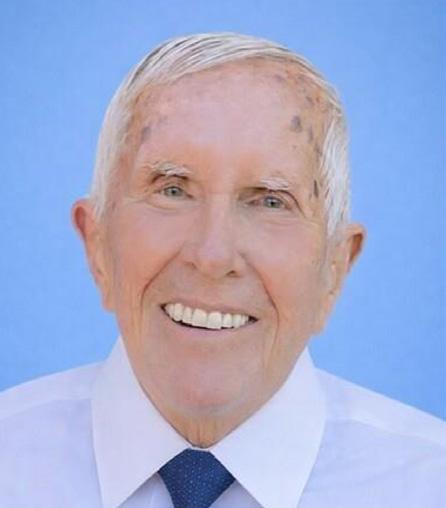
On February 22, 2026, Retired Senior District Judge, Sidney C. Farrar, Jr., 94, peacefully
Judge Farrar enjoyed a long, distinguished career as a practicing attorney, District Court trial judge, and Associate Justice on the Second Court of Appeals in Tarrant County, Texas. Judge Farrar was born on April 25, 1931, in Fort Worth, Texas, to Sidney Clifton Farrar and Marjorie Dickey Farrar. He graduated from R.L. Paschal High School, attended Texas Christian University, and received a B.B.A. from the University of Texas at Austin. He earned his law degree from the University of Texas School of Law in 1955.
After passing the bar, he enlisted in the United States Army as a private and was deployed to ASCOM City Area Command in Korea where he served as Courts and Boards Specialist for the Area Command. Upon his discharge from the Army in 1957, Judge Farrar returned to Fort Worth and went to work for the firm of Kelly, Morris & Walker.
In 1962, he and fellow attorney Jim Claunch established the law firm of Farrar & Claunch in the historic Sinclair Building in downtown Fort Worth, where they practiced for the next 20 years. During that time, he served as a director in the Tarrant County Bar Association and as Chairman of the Grievance Committee. He was also active in the Democratic party in Tarrant County serving as the Precinct Chairman and Election Judge for several years on the county’s south side.
In 1981, Republican Governor William P. Clements appointed Farrar – a lifelong Democrat – to serve as Judge of the 153rd Judicial District Court, without requesting that he change political parties. Judge Farrar served in that capacity until 1992 when Democratic Governor Ann Richards appointed him to the Second Court of Appeals where he served for two years as an Associate Justice.
In 1996, he joined the Farrar Law Firm, established by his son, Stephen, as Of Counsel. In addition, Judge Farrar continued to serve as a visiting judge and mediator on several high-profile cases through 2011 when he retired.
Judge Farrar was known for his steady temperament, sharp legal mind, and unwavering sense of fairness. Lawyers who appeared before him respected his preparation and integrity, while friends and family cherished his wit, humility, and deep faith. He believed the law was a calling, not merely a profession.
But as much as he loved practicing law, by his own admission it was not the most important aspect of his life. That was reserved for his Lord and Savior Jesus Christ.
He was a long-time member of First Christian Church in downtown Fort Worth, where he served in various capacities, including deacon, elder, church board member, and highly regarded adult Sunday School teacher. He later became an active member of Believer’s Fellowship Bible Church in Fort Worth, and continued to attend Bible study regularly up until the time of his passing.
Sidney married his soulmate, Jeannie Hicks (Dr. Virginia Farrar), on October 23, 1959. Together they enjoyed camping, fishing, and traveling, and especially enjoyed spending time with one another and the family at the “Pretty World” that was the family’s farm. After his days of raising beef and cutting hay were over, Sidney donated the use of the land to Peaceful Valley Donkey Rescue and he and the family took delight in the attention and antics of the resident herd.
Sidney and Jeannie’s marriage was filled with love for each other, for their children, and for the many Boston Terriers that were a part of their lives.
He was preceded in death by his beloved wife of 64 years, Dr. Virginia F. Farrar. He is survived by his brother, S. Dickey Farrar of Oklahoma City; his son, Stephen C. Farrar (Laura); his daughter, Diane E. Smith (Bridget); his grandchildren, Monique Rivers (Jeremy), Alexander Smith (Molly), Renée Smith (Keegan) and Sydney M. Farrar; as well as by his greatgrandchildren, Timothy, Eve, Audrey, Lucy, Conrí and Winnie.
His family would like to honor those people whose love and gentle care made it possible for Sidney to live his life to the fullest over his later years: Mia Stevenson, Tommie Green, Cindy Evartt and most especially Sandra Russell who was his nearconstant companion, close friend, and co-conspirator in countless escapades. Published by Greenwood Funeral Homes. g
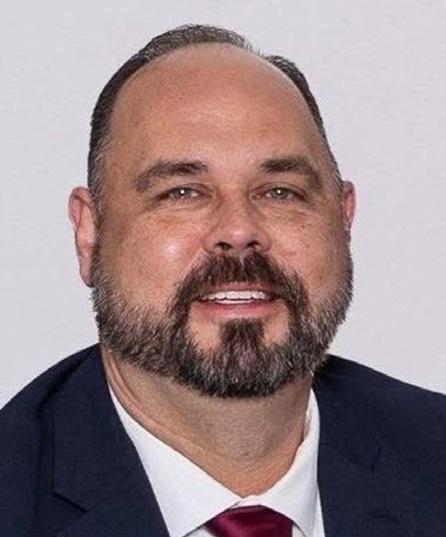
Daniel Paul Webb, 46, of Fort Worth, TX, passed away on January 28, 2026, leaving behind a legacy as big as Texas and a heart even bigger. Born on January 10, 1980, in Arlington, TX, he lived his life with purpose, conviction, and joy. Danny, as he was affectionately known, was a devoted husband, an extraordinary father, a cherished son and brother, and a respected lawyer. Danny loved his community and was the kind of man who never met a stranger—only friends he hadn’t talked to yet. He lived his life serving the people around him by being a light in dark places in every way he could—whether it be through food, stories, volunteering, outdoor adventures, or sharing his home. He brought the same sense of service and passion to his legal career, where he was known not only for his sharp mind but for his fairness, humor, and unwavering commitment to the people he represented. His dedication to his faith and his desire to spread laughter and kindness to everyone he encountered epitomized his joyful and generous nature.
Above all else, Danny was a family man. He was the beloved husband of Sarah Ann Elliott Webb, his partner in life, love, and faith. He was an amazing father to Elliott and Anna, two teenagers who were the pride and joy of his life. He showed them how to live with kindness and courage, work hard, laugh loud, and love deeply—and they will carry those lessons with them always.
Larger than life, quick with a laugh, and with a generous spirit, Danny had a way of energizing any room. His stories were legendary, his loyalty unwavering, and his presence unforgettable. Though his time here was far too short, the impact he made will be felt for generations.
Danny is survived by his wife, Sarah; his children, Elliott and Anna; his mother, Jenett Pierce and her husband, Ronnie Pierce; his father, Durward Webb, Jr. and his wife, Sheila Webb; his brother and sister-in-law, Chris and Susan Webb, and their three children. He also leaves behind extended family and countless friends, colleagues, and faith family who were proud to know him and loved him dearly. Danny is predeceased by his brother, Daniel Kelly Webb, and his grandparents, Durward & Mary Webb, and JL & Mary McDaniel. Published by Thompson’s Harveson & Cole Funeral Home. g
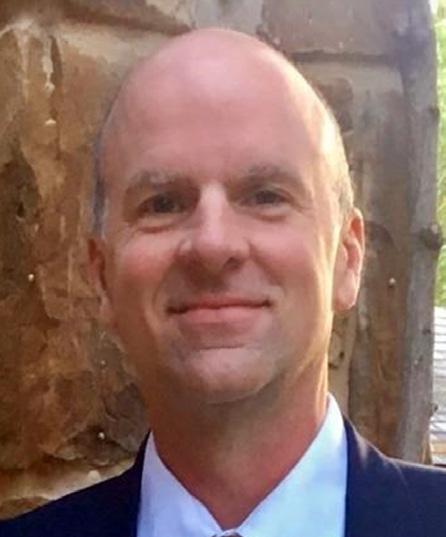
Ben Barlow was a truly remarkable man—brilliant, fearless, and deeply alive. Everything he did, he did well, and everything he loved, he loved with passion. He lived with integrity, believed fiercely in justice, and had a romantic soul that never lost its sense of adventure. Ben was endlessly curious and exuberant about life. He approached the world with an adventurous spirit, always eager to explore new places and try new things. On any trip, he signed up for everything—surfing, parasailing, skiing, snowboarding, kayaking, hiking, ziplining, rappelling, snorkeling—if there was an experience to be had, Ben was in. Long before it was mainstream, he was a pioneer of snowboarding and even owned one of the original snowboards. He loved the thrill of motion, speed, and discovery, and he brought that same enthusiasm into every corner of his life.
A natural debater with a sharp mind and quick wit, Ben was destined to be a lawyer. He loved to argue any point— sometimes even one he didn’t believe—simply for the joy of the discussion. After graduating from Vanderbilt and the University of Texas Law School, Ben practiced with Bracewell & Patterson in Houston before returning home to Fort Worth. Here, he practiced law for 25 years with Barlow, Garsek and Simon, focusing on school law and family law, and helped countless people along the way. One of the great joys of his professional life was working every day with his father, Jim, who was not only his mentor but his best friend.
Ben was guided by a deep sense of fairness and justice. He believed in doing what was right, standing up for others, and treating everyone with respect. His integrity was unshakable.
A born leader, Ben served as president of his class at Arlington Heights High School, president of his fraternity, and later as President of the Tarrant County Bar Association. People were drawn to him—for his brilliance, his humor, his kindness, and his easy acceptance of all people. He was a loyal friend and had many, many close friends who treasured him. Ben was also known as one of the best poker players in Fort Worth. He could be found at almost any poker table in town and won numerous tournaments, including those at the Fort Worth Club, The Highlander, the Annual Barlow Family Reunion Poker Tournament, and many more. He even competed in the World Series of Poker in Las Vegas. Many considered him the smartest guy in the room—and the one you least wanted to face across the table.
Travel was one of Ben’s great loves. As a young man, he stormed the beaches of Normandy on a bicycle, ran with the bulls in Pamplona and spent a month studying at the Old Bailey in London. In later years, he especially cherished traveling with his family and making memories in places like London, New York City, California, New Mexico, Colorado, Mexico, and Hawaii.
At the center of Ben’s world was his family. His wife, Alice, was the love of his life, and together they shared a rare and beautiful bond. They supported one another fully, encouraged independence, celebrated each other’s passions, and took genuine joy in one another’s successes. Together, they built a life rooted in love, respect, music, laughter, and friendship. Ben adored being a father. His children, Townes and Eleni, were the greatest joy of his life. He loved skiing and riding waves on boogie boards with Townes, and Eleni was his beloved go-to girl in the garden. The two of them spent countless hours making sandcastles when at the beach and planting flowers and working side by side in the yard, a quiet joy they both treasured. Ben made sure his children always knew how deeply they were loved.
Music was another lifelong passion. Ben shared a special connection with Alice through music, and together they loved gathering with friends and family to play guitars and sing. They passed this love of music on to their children who loved to have sing-a-longs in the car and dance parties as they were growing up.
Nine years ago, Ben suffered an anoxic brain injury. While this changed the course of his life, it remained rich with meaning, connection, and purpose. On any given day, you might find Ben bowling, working out at The Fort Worth Club, riding his one-wheeler through Park Hill or enjoying fish tacos at Fuzzy’s. Ben became part of a men’s group made up of other accomplished professionals who had experienced similar brain injuries, meeting twice a week to share stories, experiences, and friendship. Ben’s close friends organized a standing Tuesday lunch so he could stay connected to the people who mattered most. Ben was still moving through the world with determination, independence, and joy. Ben also found deep fulfillment volunteering at the 4Saints Food Pantry, where he became affectionately known as the “Egg Man,” greeting clients with his warm smile and making sure they left not only with food but also with a moment of genuine human connection.
He was preceded in death by his father, James Bruce Barlow; his brother, James Edward “Ned” Barlow; and his grandparents, Frada and Rupert Barlow, Louisa Wilson Haun, and J.T. Haun.
Ben is survived by his wife, Alice Pritchard; his children, Townes and Eleni Barlow; his mother, Karen Haun Barlow; his sister, Karen Barlow Parrish; his nieces Maggie Parrish and Caroline Barlow; his mother-in-law, Roberta Corder; his brotherin-law, Evan Pritchard; and his many aunts, uncles, cousins, and dear friends who will miss him beyond measure. Published by Harper & Lucas Funeral Home. g

Tarrant County Bar Association 1315 Calhoun Street
Fort Worth, TX 76102-6504 ADDRESS
If any of your contact information is incorrect, please submit the corrected information to the TCBA office at 817.338.4092, or email admin@tarrantbar.org


The Tarrant County legal community is full of mentors! Do you have someone who has made an impact on your legal career that you’d like to shout out in The Verdict?
Submit your recognition: www.tarrantbar.org/mentor-highlight

Let us celebrate this milestone in the next issue of The Verdict! To ensure recognition, please verify that the retiree is a current TCBA member.
Submit your recognition: www.tarrantbar.org/retirement-recognition

TCBA members may take advantage of discounts provided by the following vendors:
AMO Office Supply guarantees the lowest prices on office supplies for TCBA members, with next-day delivery and free shipping. Call 800.420.6421.
For the last 17 years EVERNET Consulting has been established in the legal industry, growing nationwide to support law firms across the country. Our wide range of services include email, network, and computer support, as well as practice management solutions. Our expertise also extends to website development, marketing, social media management, online reviews, and new client outreach. Contact us today and receive a discount on our services: https://evernetco.com/lp/tarrant-county-form/.
Falcon Document Solutions delivers fast, reliable process service, scanning, printing, copying, e-discovery, litigation displays, and trial boards. Available 24/7 at 817.870.0330 or falcondocs.com. TCBA members receive discounted rates.
Fort Worth JSB Co., Inc. offers a 10% TCBA member discount on business cards, letterhead, envelopes, brochures, flyers, and more. Call 817.577.0572 for a quote.
Fort Worth Zoo offers discounted tickets for TCBA members—$20 adult, $16 child/senior. Contact Tracy Card at tracy@tarrantbar.org or 817.338.4092.
Martinizing Cleaners offers TCBA members VIP service and exclusive savings: $25 off your first order and 15% off all services, plus convenient home and office pickup and delivery. Visit 5950 Cityview Blvd., Fort Worth, go to www.martinizing.com/Fort-Worth-Cityview or call 817.292.0605.
Thomson Reuters offers TCBA members 15% off new Westlaw subscriptions or upgrades, including Westlaw Edge. Contact Ben Galloway at Ben.Galloway@TR.com.
Juris Fabrilis provides members with discounted rates on web-based tools to assist in managing their law practices. For more information, call 817.481.1573 ext. 101.
Magic Shred is a secure shredding business that offers TCBA members a 10% discount to TCBA members. They provide on-site document shredding services. TCBA also organizes 4 free shredding events per year exclusively for its members. Members can bring up to five boxes for shredding free of charge. Call 940.783.6580 for details. g