READINESS AND ENVIRONMENTAL PROTECTION INTEGRATION PROGRAM 2026 | 20th Annual Report to Congress
Submitted on behalf of the Assistant Secretary of War for Energy, Installations, and Environment. This document outlines the Department of War (DoW) Readiness and Environmental Protection Integration (REPI) Program’s use of cost-sharing agreements to limit encroachment and other constraints on military training, testing, and operations, as well as the activities undertaken pursuant to the Sentinel Landscapes Partnership.
The estimated cost of this report or study for the Department of War is approximately $14,000 in Fiscal Years 2025–2026. This includes $8,460 in expenses and $5,940 in DoW labor.
Executive Summary
The Department of War (DoW)’s mission is to maintain a ready, lethal, and resilient military force capable of deterring aggression and defending the United States against all threats. To achieve this, the Department must ensure its installations and ranges, where warfighters live, train, and deploy from, remain secure and mission-ready against evolving encroachment threats. Readiness requires the ability to train combat-ready forces, test emerging technologies, and sustain access to critical land, air, and sea domains that mirror real-world operational environments.
The Office of the Assistant Secretary of War for Energy, Installations, and Environment (OASW(EI&E)) plays a pivotal role in this mission. Operating under the Office of the Secretary of War, EI&E provides oversight of the DoW’s portfolio of installations and environmental programs, enabling military operations through robust and resilient installations. The Military Departments and their installations are responsible for maintaining safe, sustainable, and mission-capable platforms that enable warfighters to execute operations at home and abroad.
EI&E MISSION STATEMENT
To protect critical testing and training capabilities and ensure long - term mission assurance, EI&E implements critical programs such as the Readiness and Environmental Protection Integration (REPI) Program. Congress authorized the REPI Program under 10 U.S. Code (U.S.C.) § 2684a in 2002 to address these evolving risks. Under this authority, DoW can take actions to prevent or mitigate encroachment and land use changes that disrupt or restrict access to DoW lands, waters, and critical airspace. Through the REPI Program, the Military Departments enter into agreements with Federal, state, and local partners that preserve access to critical training and testing areas. The REPI Program provides installations with funding to mitigate land use conflicts near installations, address environmental restrictions that limit military activities, and maintain or improve military installation resilience, helping installations reduce vulnerabilities and maintain uninterrupted operational capability.
The 2026 REPI Report to Congress outlines the Department’s continued progress and success in implementing this authority, highlighting how REPIsupported efforts ensure installations remain ready, adaptable, and capable of supporting the warfighter, now and into the future.
Installations are weapons systems that operationalize energy and resources through responsible stewardship and strategic partnerships, delivering quality support to Service members and their families, increasing the mission-readiness of our warfighters.
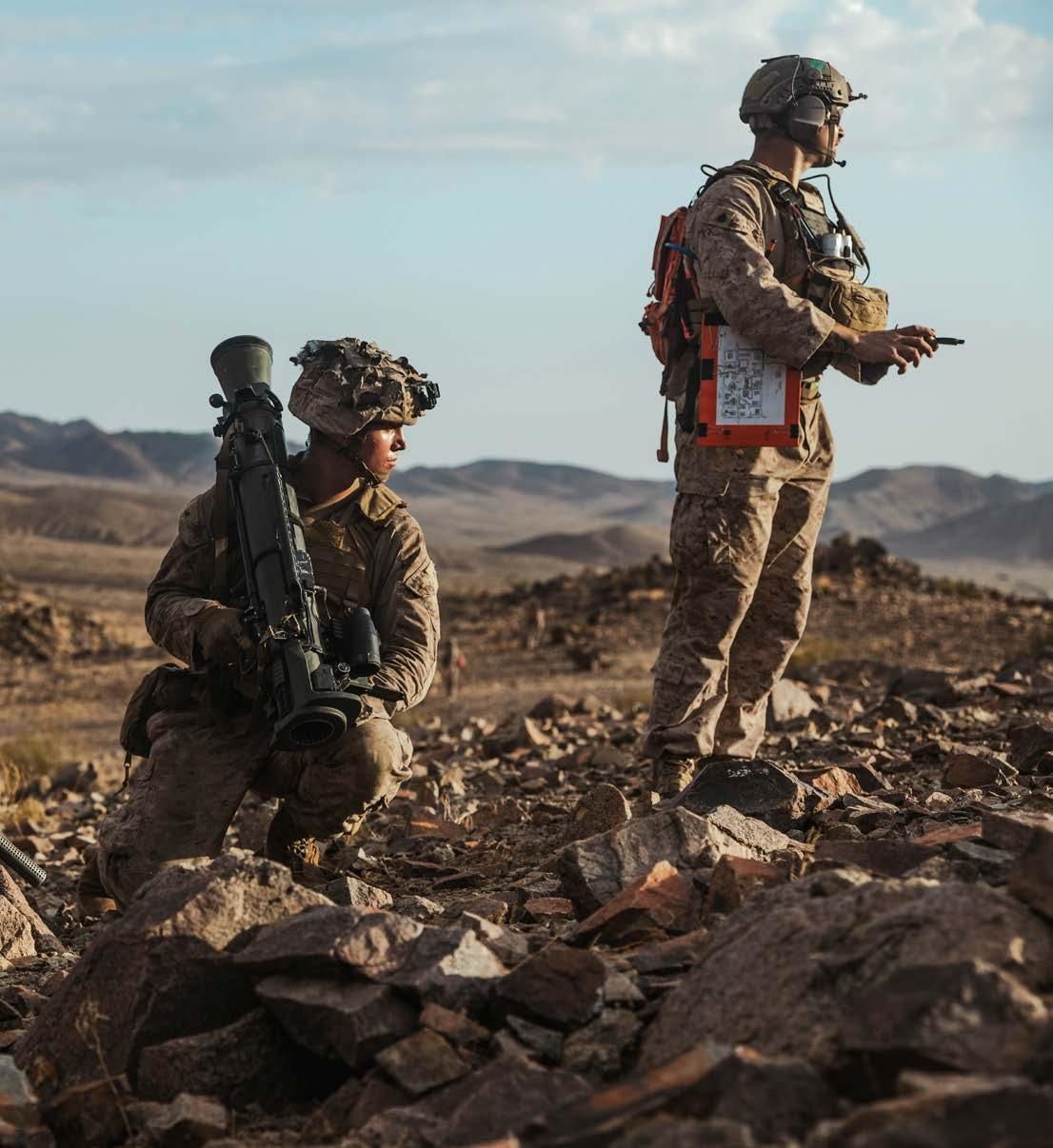
A U.S. Marine with Tactical Training and Exercise Control Group, Marine Air Ground Task Force Training Command, Marine Corps Air Ground Combat Center, and U.S. Marines with 2nd Battalion, 5th Marine Regiment, 1st Marine Division, await further instruction during urban company raids at Range 230, MCAGCC, Twentynine Palms, California. (U.S. Marine Corps photo by Lance Cpl. Gracelyn Hanson)
REPI Program Impact on Readiness
Pivotal REPI Program Years
From FY 2003 through FY 2025,1 the REPI Program, Military Services, and partners have achieved the following milestones to sustain mission capabilities across areas of strategic importance for the Department.
Click on a date in the timeline to learn more
National Defense Authorization Act (NDAA)
Congress established the REPI Program in 2002 as part of the FY 2003 NDAA, recognizing growing encroachment risks to military readiness and authorizing 10 U.S.C. § 2684a.
Sentinel Landscapes Partnership Established
In 2013, the DoW, the United States Department of Agriculture (USDA), and the Department of the Interior (DOI) established the Sentinel Landscapes Partnership through a Memorandum of Understanding.
Sentinel Landscapes Partnership Codified in Statute
In 2018, Congress codified the Sentinel Landscapes Partnership in statute through Section 317 of the 2018 NDAA.
REPI Support For the Navy’s First Intergovernmental Support Agreements (IGSA)
The REPI Program continued to scale its partnerships and projects, laying the groundwork for milestone achievements in the years ahead. In FY 2020, through support of the REPI Program, the Navy signed its first IGSA with the State of New Jersey designed to fund natural infrastructure improvements that maintain or improve military installation resilience.
The Readiness and Recreation Initiative Established
In 2023, DoW and the Department of the Interior partnered to protect land around military installations and expand outdoor recreation access for millions of Americans. Through the Readiness and Recreation Initiative, this partnership directly reinforces the nation’s defense mission by securing critical training areas and sustaining the natural landscapes essential to long‑term readiness.
REPI Challenge
In 2012, the REPI Program launched the first REPI Challenge, which targets projects that expand innovation and leverage partnerships. This competitive opportunity provides dedicated funding for large-scale projects that protect critical testing and training capabilities while providing vital habitat and defense community benefits.
Congressional Expansion of the Sikes Act Authority
Congress expanded DoW’s authorities under Section 103A of the Sikes Act (16 U.S.C. § 670c-1), enabling natural resource management and improvement activities beyond installation boundaries.
Congressional Expansion to Improve Military Installation Resilience
Congress expanded the REPI Program’s authorization under 10 U.S.C. § 2684a to include activities that maintain or improve military installation resilience. Under 10 U.S.C. § 2684a(a)(2)(B)(3), REPI funds off-base, nature-based solutions to protect training lands, infrastructure, and public safety.
Over One Million Acres Protected
In FY 2022, the REPI Program surpassed one million acres protected.
REPI Impact: Lands Conserved and Partner Funds Leveraged
As of FY 2025, the REPI Program, Military Service, and partner funds has enabled 3,091 completed transactions across the Military Services, protecting, managing, or improving more than 1.4 million acres. Total contributions, including DoW, Service, and partner investments, exceed $3.2 billion, underscoring the scale and strategic value of REPI’s impact on installation resilience and national defense.
REPI Program Key Accomplishments
From FY 2003 through FY 2025, the Department has leveraged $1.7 billion with an additional $1.5 billion from partner contributions to protect over 1.4 million acres of land at 141 project locations across 41 states and territories (Figure 1) to preserve key operational assets, infrastructure, and capabilities.
Figure 2: REPI Fiscal Year Funding (in millions)
Figure 1: Accomplishments by Service under 10 U.S.C. § 2684a, Sikes Act, and IGSA Through
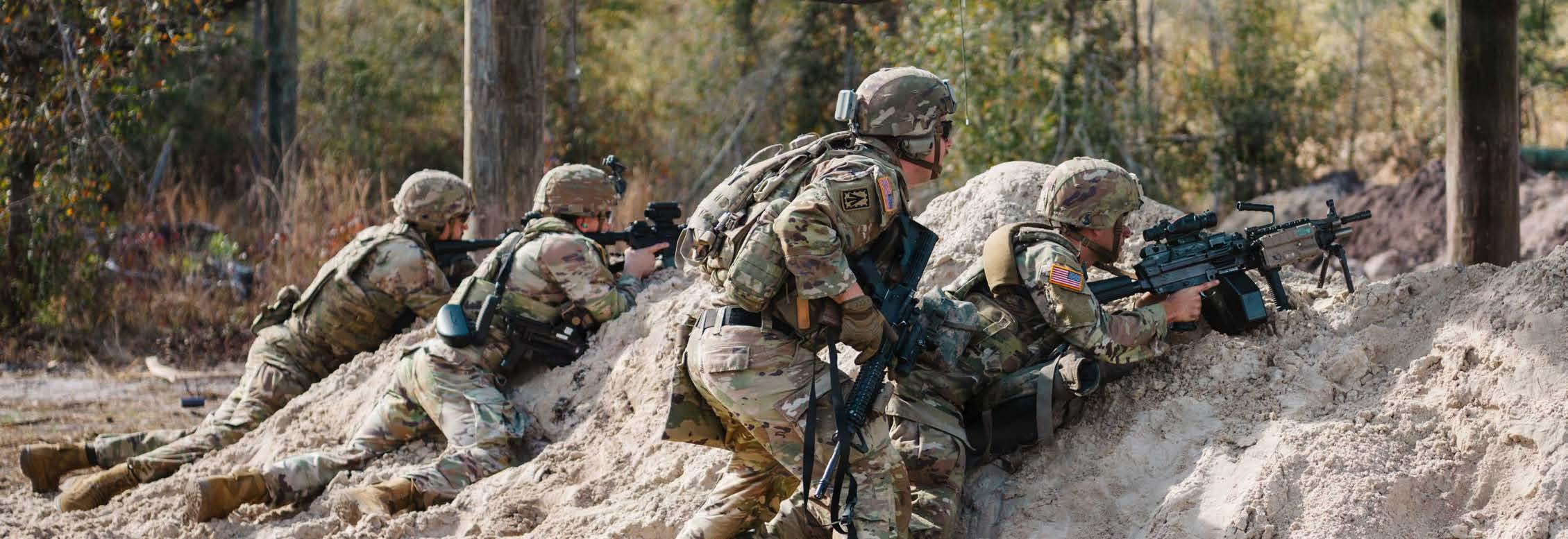
Soldiers conduct squad tactics training at Camp Blanding Joint Training Center, Florida. (U.S. Air Force photo by Staff Sgt. N.W. Huertas)
REPI Program Key Accomplishments (continued)
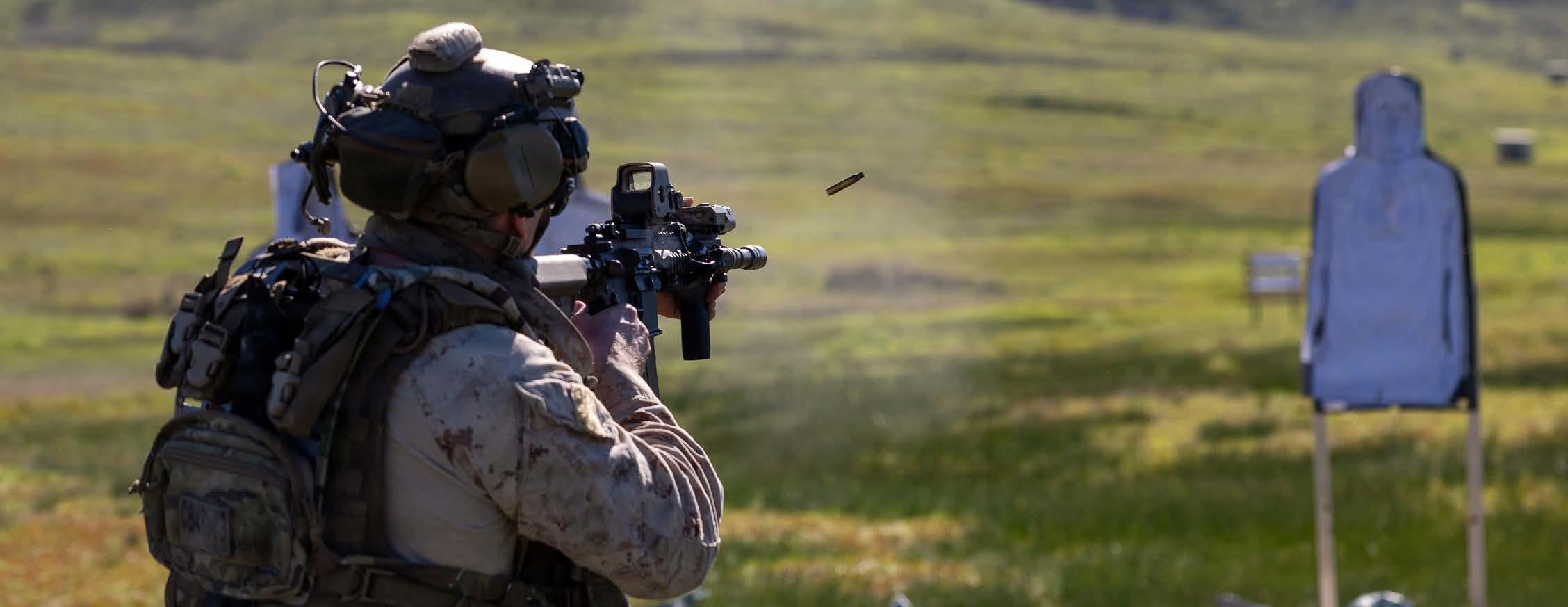
Marine Corps Sgt. Cameron Barnes, a team leader assigned to the Maritime Raid Force, 11th Marine Expeditionary Unit, fires an M27 infantry automatic rifle at a target during a live-fire range at Marine Corps Base Camp Pendleton, California. (U.S. Marine Corps photo by Cpl. Avery Wayland)
Safeguarding Defense Capabilities Through Encroachment Mitigation
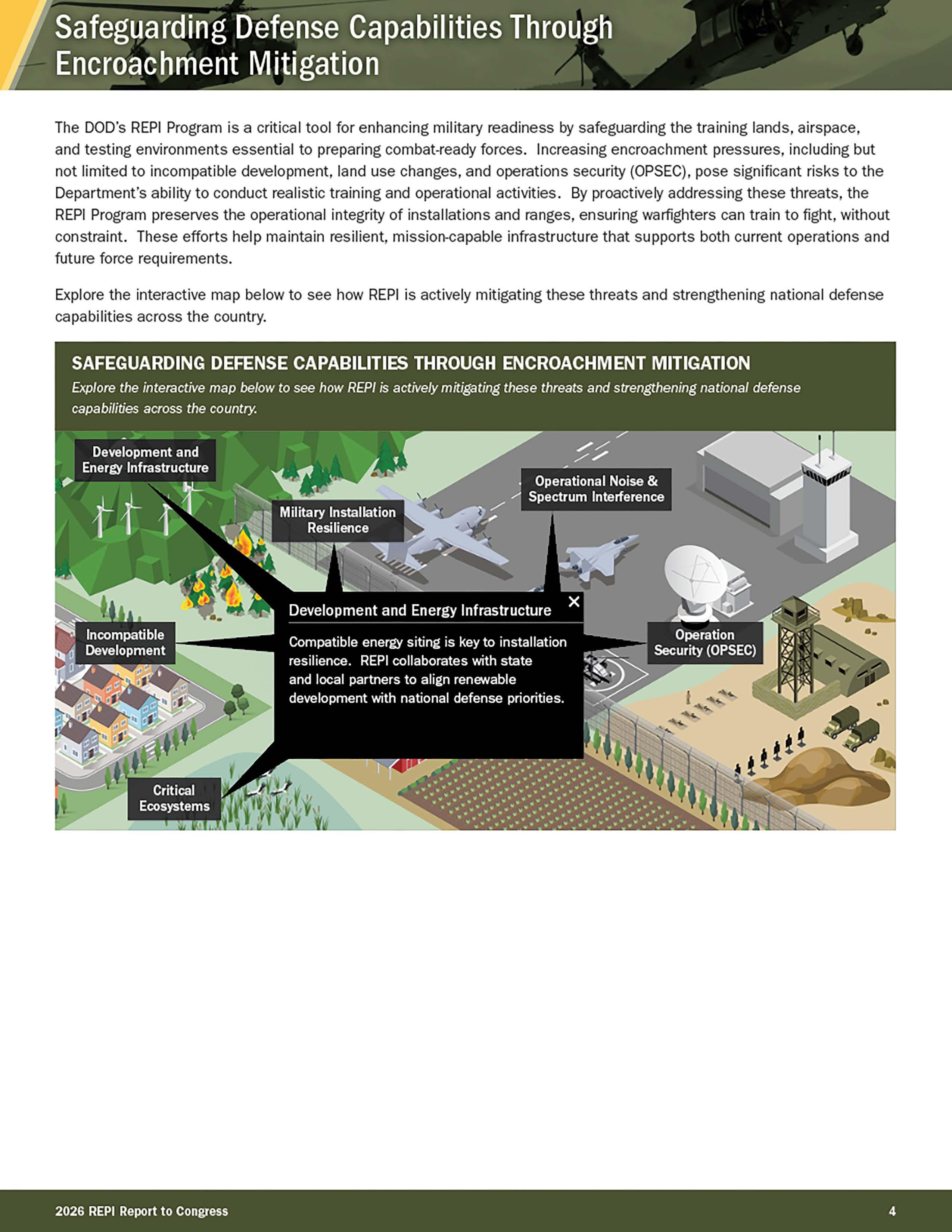
The DoW’s REPI Program is a critical tool for enhancing military readiness by safeguarding the training lands, airspace, and testing environments essential to preparing combat-ready forces. Increasing encroachment pressures, including but not limited to incompatible development, land use changes, and operations security (OPSEC), pose significant risks to the Department’s ability to conduct realistic training and operational activities. By proactively addressing these threats, the REPI Program preserves the operational integrity of installations and ranges, ensuring warfighters can train to fight, without constraint. These efforts help maintain resilient, mission-capable infrastructure that supports both current operations and future force requirements.
ENCROACHMENT THREATS AND REPI PROGRAM SOLUTIONS
Explore the interactive map below to see how the REPI Program is actively mitigating these threats and strengthening national defense capabilities across the country.
REPI Investments Supporting Warfighter Capabilities Across the Military Services
To ensure REPI Program funding aligns with Military Service priorities and supports national defense objectives, installations are required to submit detailed annual project proposals that include both qualitative and quantitative data. These submissions must demonstrate how proposed REPI investments will enable current and future operations, preserve access to critical training and testing lands, safeguard valuable infrastructure, and protect unique testing environments essential to warfighter readiness and for defending the nation. OASW(EI&E) evaluates each proposal using a set of strategic metrics designed to prioritize funding where it will have the greatest impact on mission assurance.
REPI Proposal Evaluation Metrics
Mitigation of incompatible development, including the prevention of adverse land ownership changes, such as unwanted foreign investment, that could compromise key mission capabilities, such as nuclear deterrence, air defense systems, and autonomous platforms.
Support for DoW strategic priorities, including enhanced capabilities and partnerships in the Pacific region.
Protection of high-value military assets, based on the capacity, usage, and uniqueness of the capability being preserved.
Strategic cost effective investments, including leveraging additional Federal, state, or local resources and introducing new tools that enhance long-term mission readiness.
Timeliness and execution, especially the ability to complete land transactions or implement nature-based solutions efficiently.
Defense community engagement and planning, as demonstrated through participation in local and regional efforts, including the Office of Local Defense Community Cooperation, Compatible Use Studies, and Installation Readiness Projects.
Holistic funding strategies, including the level of investment from partner organizations and other government entities.
Advancement of Sentinel Landscapes Partnership goals, supporting landscape-scale resilience and safeguards mission-critical training environments.
Each Military Service administers its own REPI Program in accordance with OASW(EI&E) guidance, tailoring implementation to Service-specific operational requirements and resource structures. Military personnel are actively involved throughout the lifecycle of each REPI project, ensuring that funded activities directly support the most critical mission capabilities.
To explore Service-specific case studies and learn more about how REPi supports mission assurance across the Department, select a Military Service:
U.S. ARMY PROJECTS
REPI PROGRAM OVERVIEW
The Army’s REPI Program helps ensure a trained and ready force by protecting the land needed for maneuver exercises, live-fire training, and other mission-critical activities. Under 10 U.S.C. § 2684a, the Department may partner with state, local, and private organizations to prevent encroachment and strengthen installation resilience. The Army implements this authority through the REPI Program, overseen by the Assistant Secretary of the Army, Installations, Energy and Environment. Active Army agreements are managed by the U.S. Army Environmental Command under the U.S. Army Installation Management Command, while Army National Guard REPI agreements are managed by the Army National Guard G-9, Installations & Environment. KEY METRICS
Total Projects:
THROUGH FY 2025
Note:
CASE STUDY: FORT INDIANTOWN GAP, PENNSYLVANIA
Fort Indiantown Gap (FIG) in Pennsylvania serves as a critical platform for Defense Support to Civil Authorities and frequently mobilizes activated units, supporting both domestic response and global readiness. Rotary-wing training capabilities are centered at Muir Army Heliport, which includes the Eastern Army Aviation Training Site, the 28th Combat Aviation Brigade, and their maintenance and support infrastructure. Wind turbine projects, noise and light-pollution concerns, and vertical obstructions pose significant risks to this dense aviation corridor. Through the REPI Program, FIG is mitigating these encroachment pressures to ensure the installation remains a premier readiness hub for Army aviation. From FY 2014 through FY 2025, FIG has permanently secured over 13,000 acres by leveraging over $23 million in REPI funding with over $14 million in partner contributions. These investments safeguard training capabilities and preserve operational flexibility for Army aviation forces.
CASE STUDY: WHITE SANDS MISSILE RANGE, NEW MEXICO
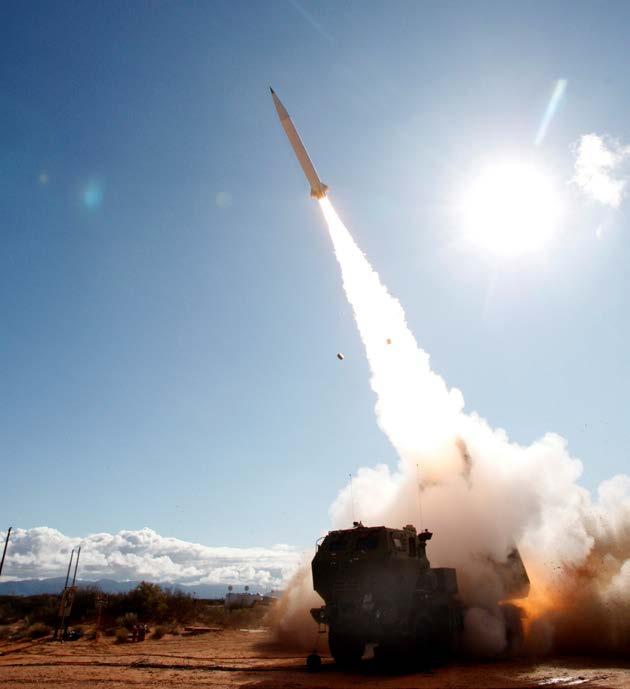
White Sands Missile Range (WSMR) in New Mexico is the largest military installation in the United States and plays a vital role in testing and evaluating advanced weapons systems, including hypersonic, missile defense, and space capabilities. Long-range testing requires vast, unobstructed land and airspace, but incompatible development could compromise mission safety, data integrity, and operational readiness. REPI projects at WSMR are preserving these critical landscapes and preventing encroachment that would interfere with national defense priorities. From FY 2018 through FY 2025, WSMR has permanently secured over 373,500 acres by leveraging $25 million in REPI funding with nearly $23 million in partner contributions. These efforts ensure the installation can continue to support cutting-edge weapons testing and maintain its role as a cornerstone of U.S. military capability.
*The
U.S. NAVY PROJECTS
The Office of the Chief of Naval Operations works with installations throughout project development to ensure alignment with operational mission needs, while the Naval Facilities Engineering Systems Command (NAVFAC) executes Navy projects by conducting real - estate due diligence, overseeing natural resource management and installation resilience efforts, and completing required transactions, supported by Community Plans and Liaison Officers who manage relationships with neighboring communities and address encroachment challenges.
KEY METRICS THROUGH FY 2025
Total Projects: 39 Total Expenditures:
CASE STUDY: NAVAL SUBMARINE BASE KINGS BAY, GEORGIA
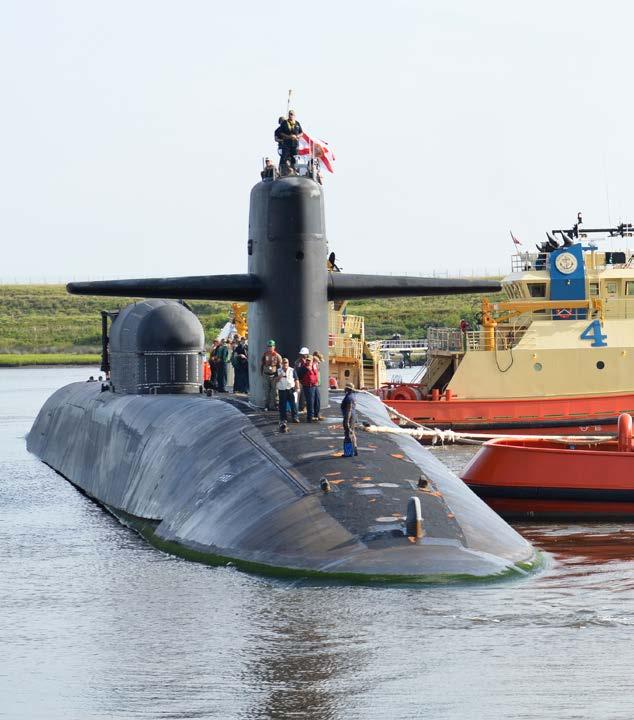
Naval Submarine Base Kings Bay (NSB) in Georgia is the East Coast homeport for the Navy’s ballistic missile submarine fleet, a cornerstone of U.S. strategic deterrence and national security. Incompatible development around the installation threatens secure transit routes, operational flexibility, and the infrastructure that supports the Navy’s sea-based nuclear deterrent. Through the REPI Program, NSB Kings Bay is protecting surrounding lands to preserve mission readiness and military installation resilience. From FY 2020 to FY 2025, the installation permanently secured more than 27,000 acres by leveraging over $20 million in REPI funding alongside over $69 million in partner contributions. These investments safeguard the Navy’s strategic capabilities and ensure its ability to operate without compromise.
CASE STUDY: PACIFIC MISSILE RANGE FACILITY, HAWAI‘I
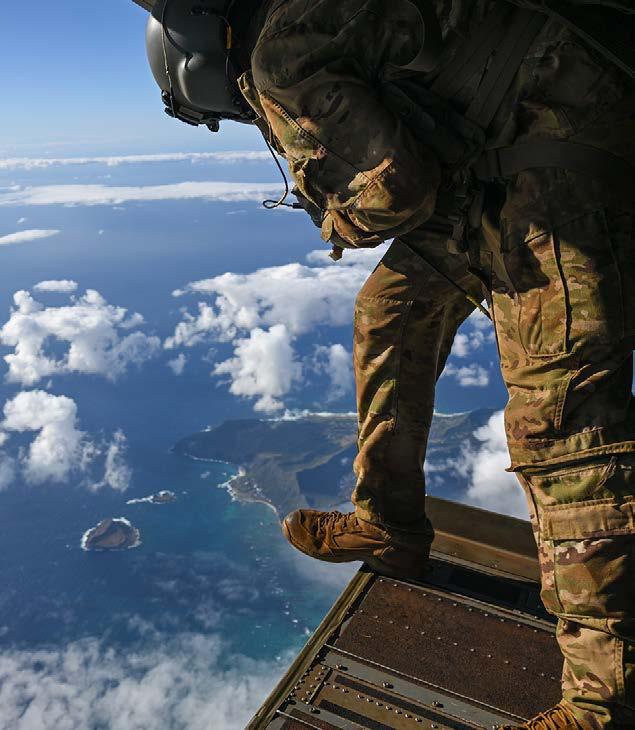
The Pacific Missile Range Facility (PMRF) in Hawai‘i is a critical asset for the U.S. Indo-Pacific Command and other Combatant Commands, enabling advanced testing and training across hypersonic, air, surface, and subsurface domains. Operational risks, including airfield flooding and Bird/Wildlife Aircraft Strike Hazard threats, directly affect mission safety and readiness. REPI projects at PMRF reduce these risks by securing compatible land use, preventing encroachment, strengthening installation resilience, and preserving training flexibility. From FY 2018 to FY 2025, PMRF protected more than 260 acres by leveraging over $12 million in REPI funding alongside over $4 million in partner contributions. These efforts help ensure PMRF remains a premier testing and training hub for the Pacific theater and a cornerstone of U.S. operational advantage.
*The
U.S. MARINE CORPS PROJECTS
REPI PROGRAM OVERVIEW
The Marine Corps Installations Command oversees the REPI project development process and works alongside the installation officials, including Community Plans and Liaison Officers, to manage relationships with the neighboring communities and address pressing encroachment issues.
KEY METRICS THROUGH FY 2025
Total Projects: 15
Total Expenditures:
MISSIONS PROTECTED*
*The mission capabilities listed here are not exhaustive and do not represent the full scope of the installation’s operational responsibilities or defense mission sets.
CASE STUDY: MARINE CORPS BASE QUANTICO, VIRGINIA
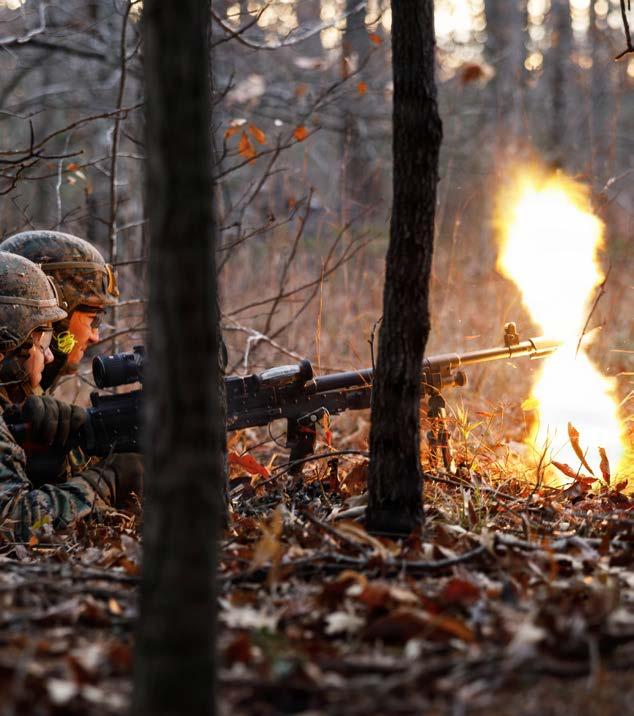
Situated outside of Washington, D.C., Marine Corps Base Quantico faces threats from rapidly expanding residential incompatible development immediately adjacent to the heavy weapons impact range and a redevelopment area neighboring the demolition range. Without proactive management, urbanization has the potential to increase noise complaints, obstruct airspace, and exacerbate habitat loss, which may create future regulatory challenges. Through the REPI Program, the installation is targeting the permanent protection of large tracts of land to mitigate encroachment risks and protect the only live fire range complex in the National Capital Region. From FY 2008 through FY 2025, the installation has prevented incompatible development and conserved essential natural resources across nearly 1,000 acres using a combination of over $4 million in Military Service and REPI Program funds and nearly $3 million in partner contributions.
CASE STUDY: TOWNSEND BOMBING RANGE, GEORGIA
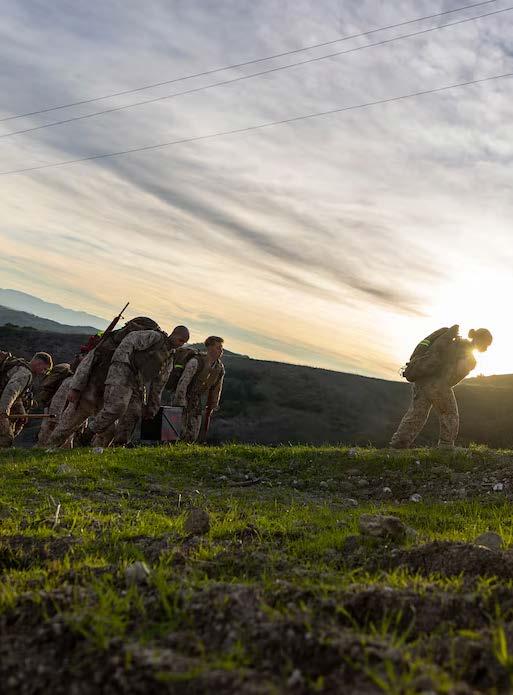
Townsend Bombing Range is the East Coast’s leading air-to-ground training range, featuring a complex of Special Use Airspace and low-angle strafing training. The 33,000-acre range trains Marine Corps aviation units, Navy, Air Force, Air National Guard, and Army units from more than six states. These vital training operations, essential for our warfighters, face pressure from land use changes and urbanization in the surrounding counties. Large areas of nearby forest lands are at risk of being converted to incompatible development, which could restrict night training, create tall structures that interfere with low-altitude flight operations, and raise safety concerns in approach and departure corridors. To preserve compatible rural and agricultural lands and maintain operational flexibility, the Marine Corps has leveraged the REPI Program to secure restrictive-use easements and mitigate habitat-based encroachment risks, including those associated with the threatened gopher tortoise. From FY 2008 through FY 2025, the Marine Corps has invested more than $32 million in REPI funding, leveraged with an additional $49 million from partner contributions, to reduce risks from incompatible development and emerging regulatory pressures across more than 57,000 acres. These efforts help ensure Marine Corps aviators can continue to meet the training requirements essential to deterring conflict and safeguarding our national security.
U.S. AIR FORCE PROJECTS
The Air Force’s Compatible Use Development Branch oversees the Air Force and Space Force's REPI projects, reviewing proposals for projects that the installations identify and allocating project funding amounts to them for obligation on Air Force Civil Engineer Center approved agreements.
KEY METRICS THROUGH FY 2025
Total Projects: 46
Total Expenditures:
MISSIONS PROTECTED*
*The mission capabilities listed here are not exhaustive and do not represent the full scope of the installation’s operational responsibilities or defense mission sets.
CASE STUDY: EGLIN AIR FORCE BASE, FLORIDA
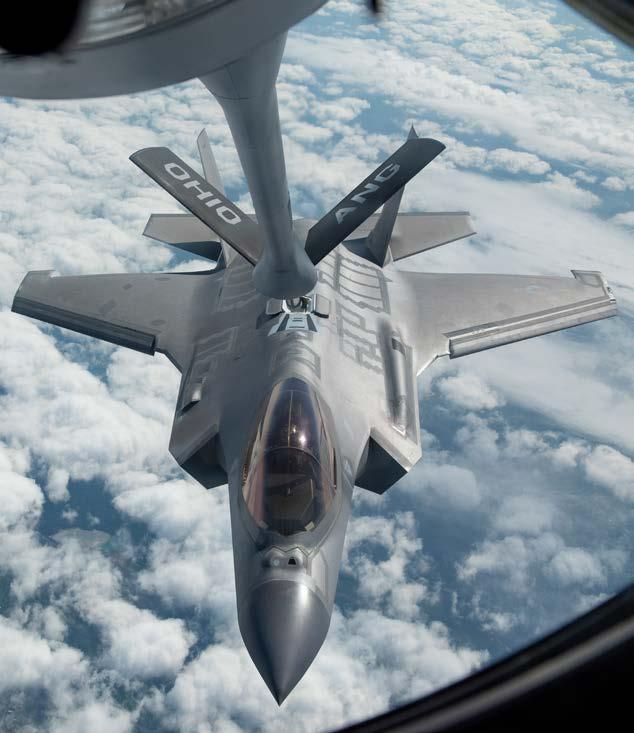
Eglin Air Force Base is at the forefront of testing and evaluating non-nuclear munitions, electronic combat systems, and navigation/guidance systems. With the Eglin Test and Training Complex, the Air Force has overland and overwater training areas, including special use airspace, that support 70 test sites and nearly 600 active test projects. Incompatible development in areas underneath the low-altitude, high-speed flight operations directly interferes with the expansion of F-35 training at Eglin and the acquisition of autonomous and unmanned aircraft, which are vital to our warfighting capabilities. The installation is working through the REPI Program to prevent incompatible development in areas with special use airspace, build installation resilience to coastal hazards, and acquire properties to protect the longterm drinking water supply. From FY 2011 through FY 2025, the installation has preserved over 24,000 acres by leveraging nearly $12 million in REPI funding with over $18 million in partner contributions. These investments help guarantee that the warfighter can continue to train without any workarounds or other restrictions.
CASE STUDY: VANDENBERG SPACE FORCE BASE, CALIFORNIA
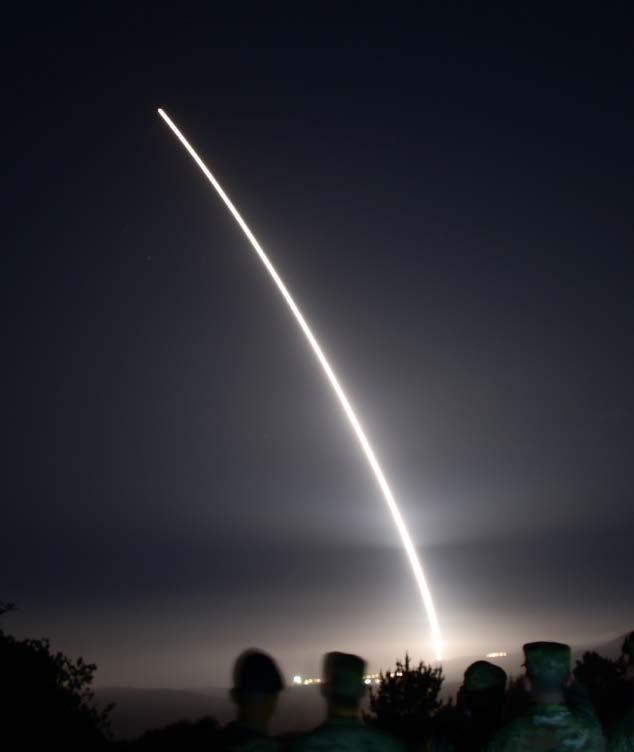
Vandenberg Space Force Base is a key West Coast installation supporting the Department of the Air Force’s tactical, strategic, and space power projection missions. Operated by Space Launch Delta 30, the base conducts intercontinental ballistic missile tests and launches government and commercial satellites, making it central to national security space operations. The installation is surrounded by grazing lands and open coastlines that currently support compatible uses under special-use airspace. Growing incompatible development threatens to introduce light, noise, and vertical obstructions that could interfere with launch operations and reduce mission effectiveness. From FY 2012 through FY 2025, the installation preserved over 25,000 acres by leveraging over $10 million in REPI funding with nearly $58 million in partner contributions. These investments help ensure the warfighter can continue to train without restrictions while preserving the operational flexibility needed for missile testing, space launch activities, and associated mission sets, ensuring Vandenberg can continue supporting realistic operational conditions required for national defense and joint-force readiness.
NB Kitsap, NAVMAG
NAS Whidbey Island
Beale AFB OLF Coupeville
Fairchild AFB
NAS Fallon ARD Bayview
Fallon Range Training Complex NAWS China Lake
U.S. Air Force Academy
MCAGCC Twentynine Palms
MCAS Yuma and BMGR-W
Antonio-Lackland
Joint Base San Antonio-Randolph
Joint Base San Antonio-Camp Bullis
and
Dare County Range Camp Butner
MCB Camp Lejeune, MCAS New River MAJIC Ft. Bragg USASOC Ft. Knox NSA Crane-Lake Glendora
Beaufort Joint Base Charleston
Ft. Stewart Townsend Bombing Range NSB Kings Bay
Mayport NAS Jacksonville
Canaveral AFS
ARB
Cover photo credit:
An F-22 Raptor releases flares during an aerial demonstration at Naval Air Station Oceana, Virginia. The display highlights the aircraft’s defensive systems and advanced capabilities, demonstrating both its agility and readiness in complex flight operations. (U.S. Air Force photo by Staff Sgt. Lauren Cobin)
Interior photo credits:
Table of Contents Header: U.S. Marine Corps F-35B Lightning II Joint Strike Fighters assigned to Marine Corps Air Station Beaufort, taxi down a runway for a forward armed and refueling point for ARCTIC EDGE 2025 at Cold Bay Airfield, Alaska. (U.S. Air Force photo by Airman 1 st Class Gracelyn Hess)
Executive Summary Header: Marine Corps Basic School students run toward a building as part of a simulated platoon raid during a field exercise designed to develop confident provisional rifle platoon commanders at Marine Corps Base Quantico, Virginia. (Photo by Marine Corps Cpl. Joshua Barker)
REPI Program Impact on Readiness Header: Two UH-60 Black Hawk Helicopters arrives at Camp Navajo, Arizona to load National Best Warrior 2021 competitors up and transport them to Florence Military Reservation. (Photo by Sgt. Elizabeth Smith, 123rd Mobile Public Affairs Detachment)
REPI Program Key Accomplishments Header: An Army CH-47 Chinook flight crew flies over the USS America during deck landing qualifications in the Northern Pacific Ocean. (Photo by Army Sgt. Olivia Cowart)
Safeguarding Defense Capabilities Through Encroachment Mitigation Header: The Ohio-class ballistic missile submarine USS Kentucky (SSBN 737) transits the Hood Canal as the boat returns to its homeport of Naval Base Kitsap-Bangor, Washington from a scheduled patrol. (U.S. Navy Photo by Mass Communication Specialist 2nd Class Emilia Hilliard)
REPI Investments Supporting Warfighter Capabilities Across the Military Services Header: Tactical Resupply Unmanned Air System staged before test flights at Range 800, Marine Corps Air Ground Combat Center, Twentynine Palms, California. (U.S. Marine Corps photo by Cpl. Damian Oso)
White Sands Missile Range Case Study: The Precision Strike Missile Increment 1 missile, launched from the High Mobility Artillery Rocket System, demonstrated successful target engagements during the Production Qualification Test 1 flight. (Photo by Darrell Ames)
Naval Submarine Base Kings Bay Case Study: Sailors assigned to Ohio-class guided-missile submarine USS Florida (SSGN 728) (Gold) make preparations to moor after returning to homeport at Naval Submarine Base Kings Bay, Georgia, following a deployment to 5th, 6th, and 7th fleet areas of operations. (U.S. Navy photo by Mass Communication Specialist 1 st Class Travis S. Alston)
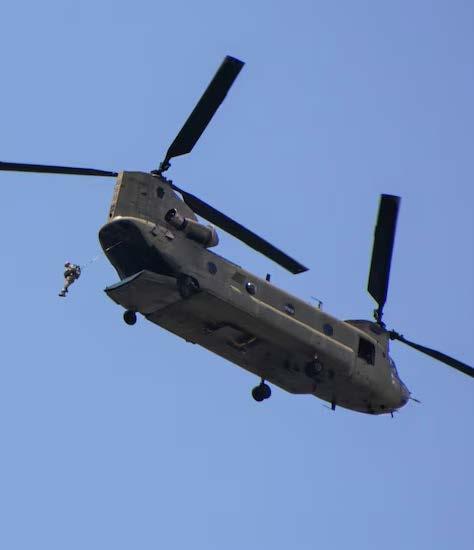
Pacific Missile Range Facility Case Study: A soldier flies in a CH-47 Chinook during military freefall training over Bellows Air Force Station, Hawai‘i, during Exercise Rim of the Pacific. (Photo by Air Force Master Sgt. Corban Lundborg)s
Marine Corps Base Quantico Case Study: Marines provide simulated suppressive fire with an M240B machine gun during the warfighting field exercise at Marine Corps Base Quantico, Virginia. (Photo by Marine Corps Cpl. Joshua Barker)
Townsend Bombing Range Case Study: U.S. Marines participate in a supply run during a martial arts instructor course hosted by 1 st Intelligence Battalion at Marine Corps Base Camp Pendleton, California. The culminating event combines multiple physical training events to ensure Marines are ready to meet the demands of becoming a martial arts instructor. (U.S. Marine Corps photo by Sgt. Sean Potter)
Elgin Air Force Base Case Study: An F-35A Lightning II from Eglin Air Force Base makes contact with the boom of a KC-135 Stratotanker from the 121 st Air Refueling Wing before performing a flyover at the Columbus Air Show. (U.S. Air National Guard photo by Tech. Sgt. Mikayla Gibbs)
Vandenberg Space Force Base Case Study: An Air Force Global Strike Command unarmed Minuteman III intercontinental ballistic missile launches during an operational test at Vandenberg Space Force Base, California. (U.S. Air Force photo by Airman First Class Tiarra Sibley)
Back cover photo credit:
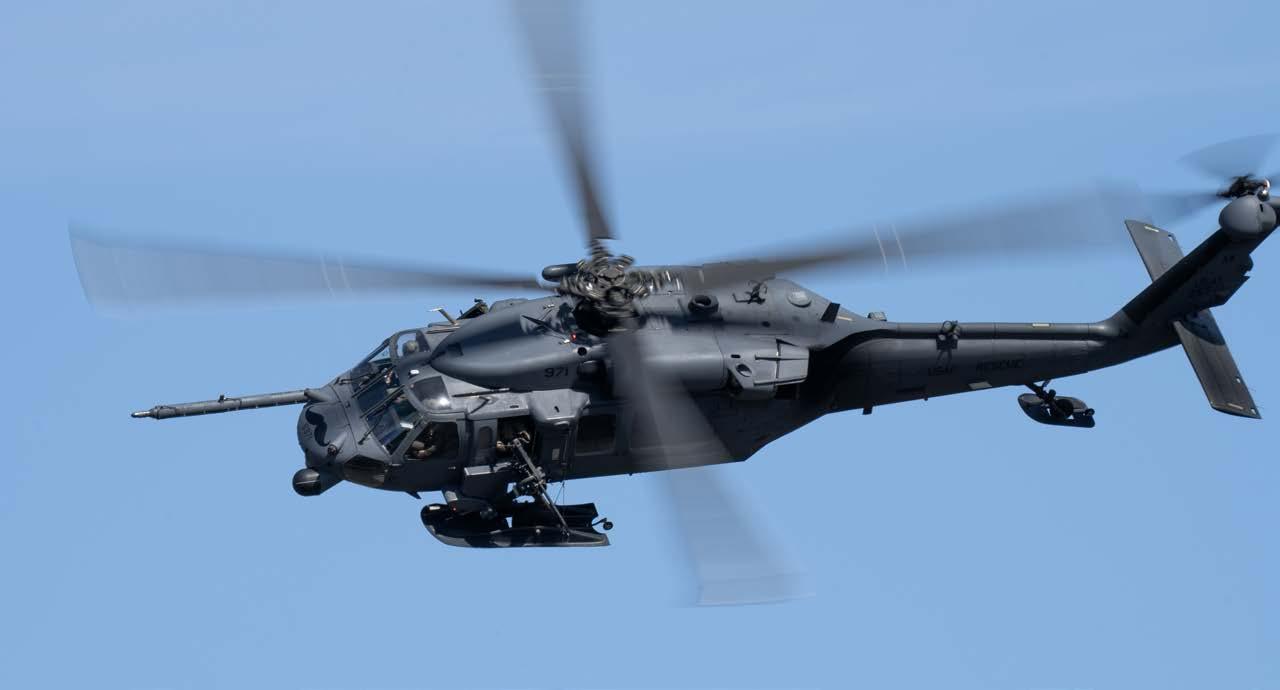
Alaska Air National Guard HH-60G Pave Hawk aviators and Guardian Angels, assigned to the 210th and 212th Rescue Squadrons, respectively, conduct a hoist rescue demonstration while participating in a multi-agency hoist symposium at Bryant Army Airfield on Joint Base Elmendorf-Richardson, Alaska. (Alaska Army National Guard photo by Dana Rosso)