


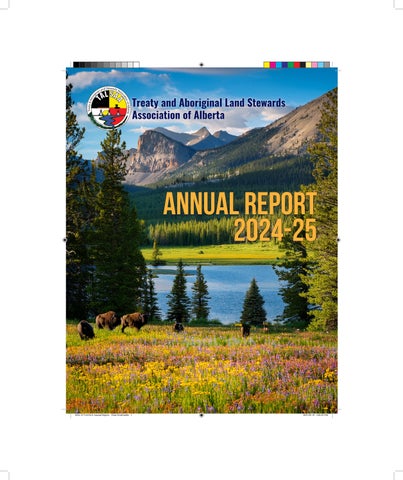
TALSAA stands firm in its commitment to transparency. We understand the importance of being open with our members and stakeholders about our successes and challenges. As such, we take great effort to report accurately on our organization’s activities and achievements in an annual report each year.
Our Annual Report provides a comprehensive review of our operations and activities, as well as an overview of our goals and objectives for the upcoming year. We are accountable to those we serve and take our role seriously in providing an honest account of TALSAA’s progress.
TALSAA takes our commitment seriously to report on our activities and performance each year. Herein, we provide you with an informative annual report looking back at our year in 2024-25.

The Treaty and Aboriginal Land Stewards Association of Alberta (TALSAA), acknowledges that we work and operate in Treaty 6, 7 and 8 territories, the traditional lands of the Cree, Chipewyan, Dene, Saulteaux, Blackfoot Confederacy (Siksika, Kainai, Piikani), Sarcee, Stoney Nakoda (Chiniki, Bearspaw and Wesley) and Nakota Sioux Nations.
We recognize our rich culture and heritage as well as our continuing connection to these lands and waters. We acknowledge the inherent sovereignty of all Indigenous Peoples over their traditional territories, and we recognize and uplift the legacy of our ancestors, who have tended to these lands for generations.
We also acknowledge the contributions of other Indigenous Nations in the area including the Dunne-Zaa (Beaver), Haudenosaunee (Iroquois), Nahkawè (Saulteau), Inuit and the Métis Nation, as well as other Indigenous nations who have travelled through and lived on these lands.
We recognize their historical and ongoing presence here and are grateful to be living and working on these lands together. We pledge to work together in a spirit of mutual respect and understanding.

The Treaty and Aboriginal Land Stewards Association of Alberta (TALSAA)is committed to working diligently with members, stakeholders, academics, policy makers, and other organizations to ensure that TALSAA remains accountable in meeting the commitments we have identified and made through our Strategic Plan.
Our Annual Report for 2024-25 outlines our successes and accomplishments in achieving these commitments, as well as other initiatives we are working towards. We recognize that there is still much work to be done, and we remain dedicated to engaging with those around us and continuing the important work of supporting Alberta’s First Nation land managers and lands departments.
The 2024-25 annual report is a comprehensive document that outlines the performance and activities of TALSAA, over the course of one year.
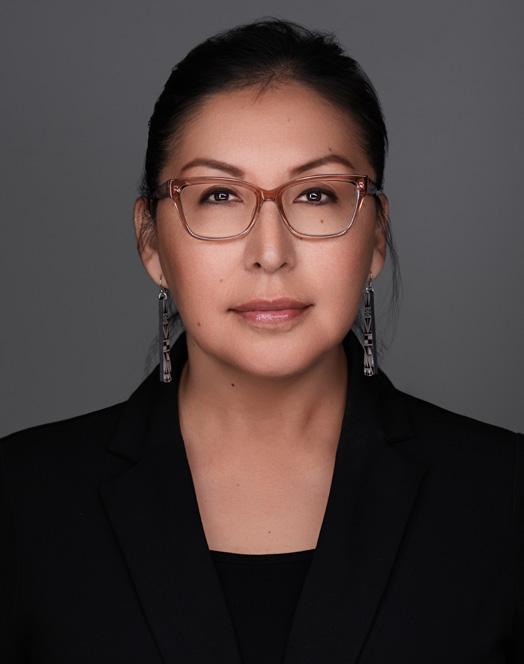
As Chair of the Board, it is my honour to reflect on a year of meaningful growth, strategic planning, and deepened connections with our members and stakeholders.
In every organization’s journey, it is vital to take a thoughtful look at where we’ve been and where we need to go. This past year, TALSAA committed to that reflection in a powerful way.
In April 2024, our team came together for a dedicated Strategic Planning session. That work laid a foundation we continue to build upon, with updated plans and renewed focus guiding our way forward.
In March 2025, we held our Annual General Meeting in Calgary, where Lands Management training was provided. As well, a Breaking Down Workplace Silos workshop was a timely and impactful session on strengthening organizational collaboration. The Talking Stick workshop hosted by Moonstone Creations was a powerful reminder of the cultural knowledge and traditions that ground our work.
Planning that began this year is resulting in confirmed training offerings for the next fiscal year, including Introduction to GIS, Verbal Judo and Grant writing events, as well as Species at Risk training.
Looking ahead, we are energized by the momentum we’ve created. The groundwork is in place for continued programming, member events, and stronger collaborations. As always, we are guided by the voices of our members and rooted in our shared commitment to stewardship, learning, and community.
On behalf of the Board, I thank you for walking this journey with us.
In unity and service,
Clo
Ann Wells
Chair
of the Board, TALSAA
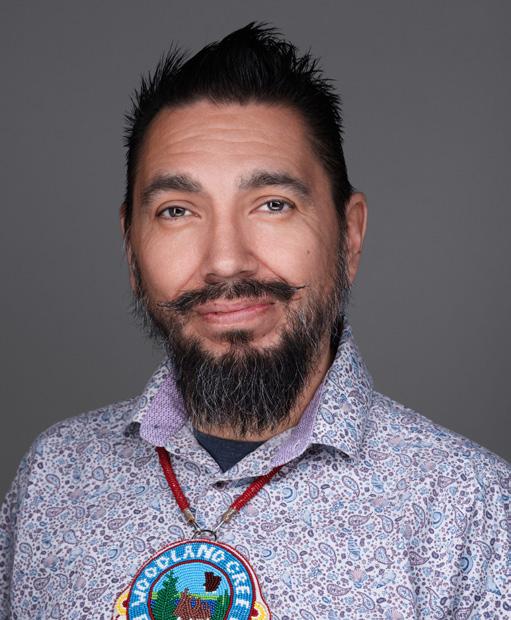
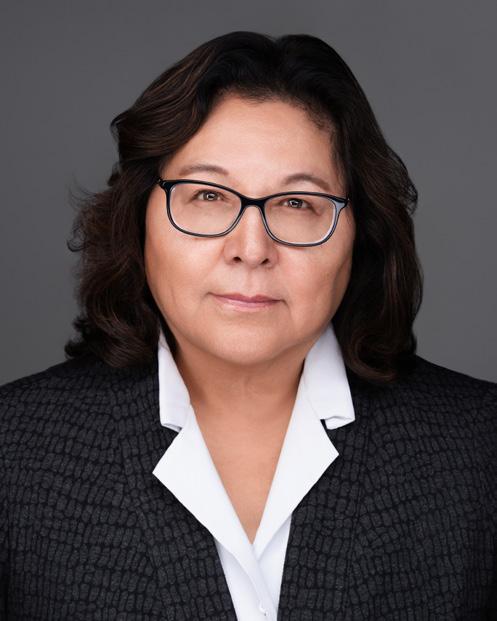
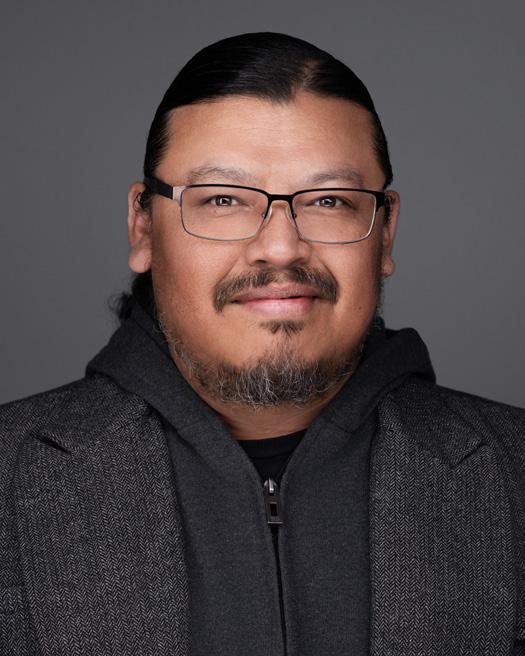
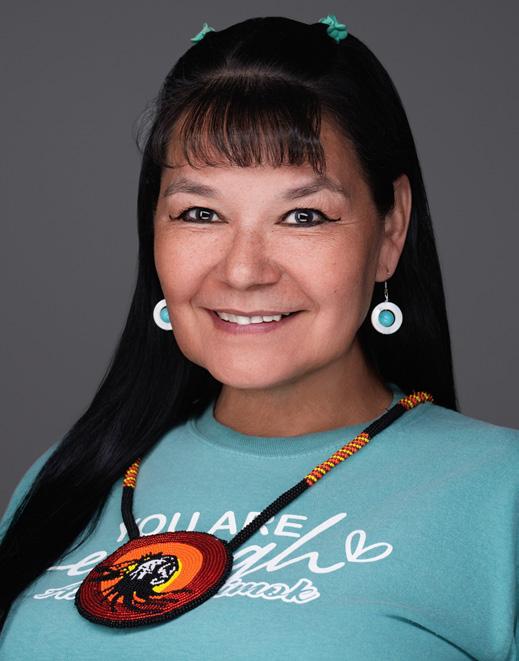
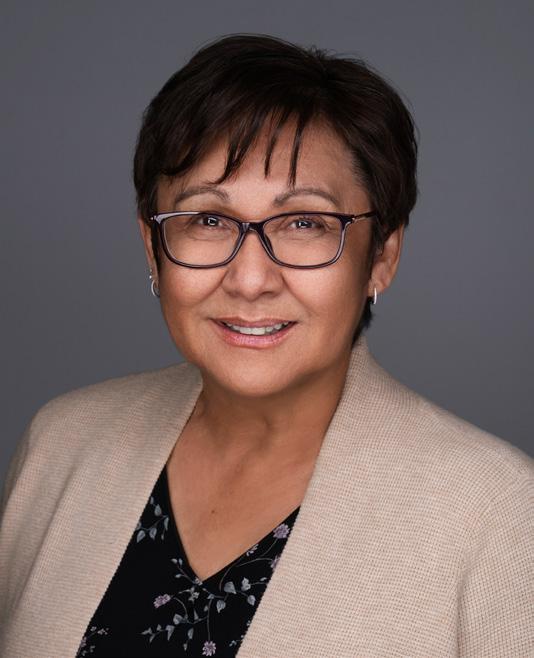
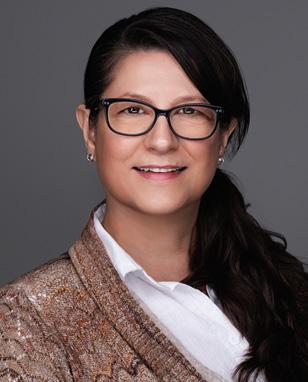
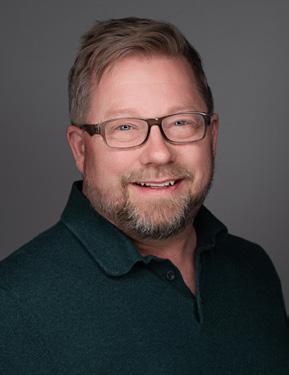
The TALSAA Board of Directors is responsible for overseeing the overall governance and strategic direction of the organization. Their key duties include setting long-term goals, ensuring effective management, monitoring financial performance, and upholding the organization’s mission and values.
The board also evaluates the performance of the executive leadership, ensures legal and ethical integrity, and provides guidance on major decisions. By maintaining accountability and transparency, the Board of Directors plays a crucial role in safeguarding the interests of stakeholders and ensuring the organization’s long-term success.

The National Aboriginal Lands Managers Association (NALMA) is a dynamic organization committed to providing efficient tools and resources to its members through the Regional Land Associations and Associate Members.
We honour the members of each of the Associations for their hard work and dedication, which allows NALMA to undertake the many challenges that support and promote best practices in First Nation land management.
This year marks NALMA’s 25th anniversary of promoting professional development and the advancement of technical expertise in First Nations Lands Management in Canada. NALMA’s many courses, including the 2-year Professional Lands Management Certification Program (PLMCP), provide the information and tools needed for success by Lands Managers.
The National Organization of First Nation Lands Managers will actively network towards the enhancement of professional development and technical expertise in the functions of Lands Management, and will also incorporate First Nations values and beliefs in Lands Management, always keeping in mind the grass-root practices when dealing with Lands Management.
Contact Information:
National Aboriginal Lands Managers Association 1024 Mississauga Street Curve Lake, Ontario, K0L 1R0
Toll-Free: 1-877-234-9813
Phone: 705-657-7660
Fax: 705-657-7177
Email: info@nalma.ca
Website: www.nalma.ca
NALMA membership is made up of the Regional Lands Associations (RLAs) and such other eligible persons or Associations as admitted by resolution of the Board.
The Regional Lands Associations are independent regional or territorial associations established by Land Managers and recognized by NALMA. Directors for each RLA make up the Corporate body of NALMA.
This model allows Regional perspectives to be discussed at a National level.
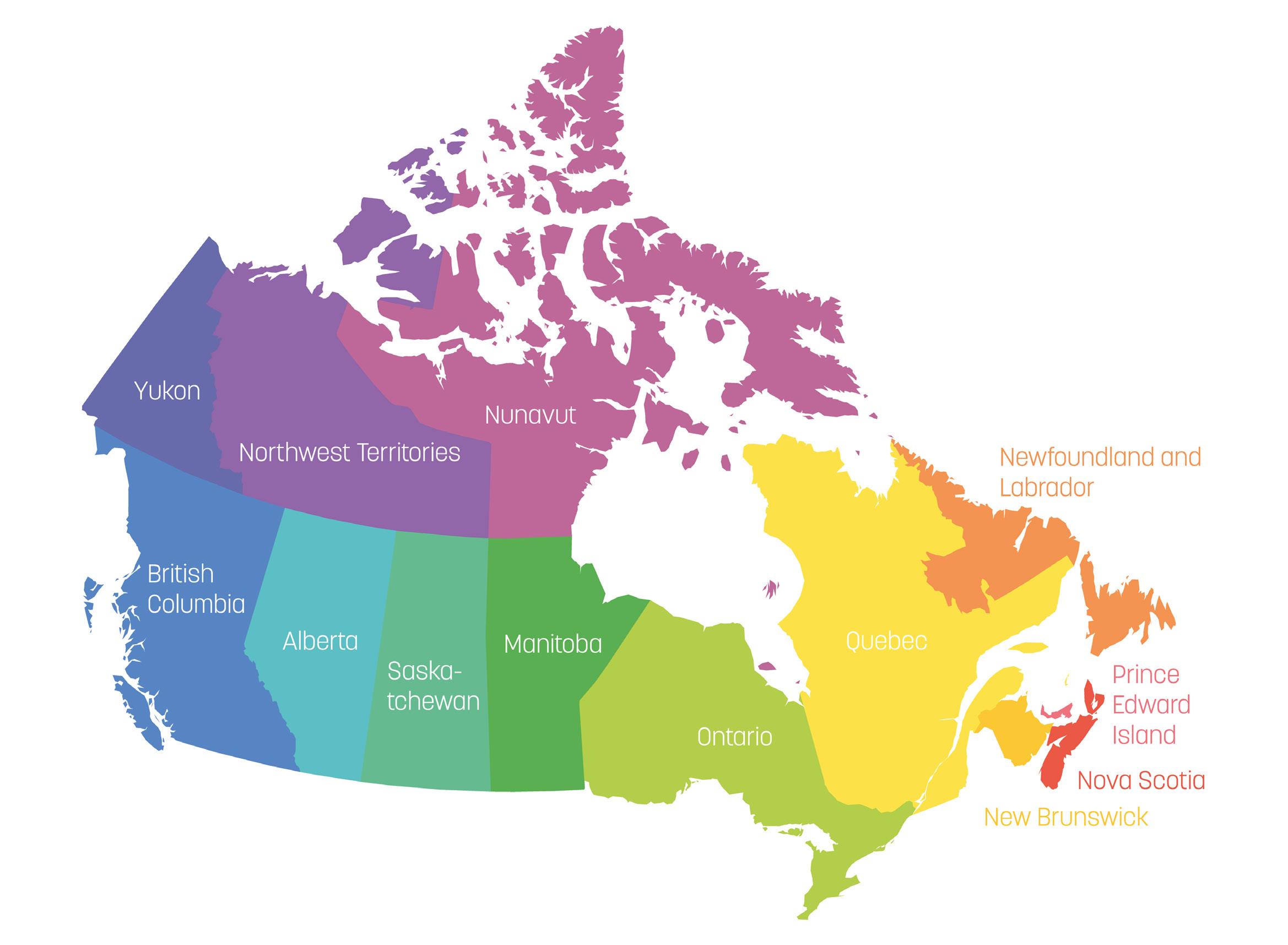
British Columbia Aboriginal Land Managers (BCALM)
Treaty and Aboriginal Land Stewards Association of Alberta (TALSAA)
Saskatchewan Aboriginal Land Technicians (SALT)
Manitoba USKE (USKE)
Planning and Land Administrators of Nunavut (PLAN)
Ontario Aboriginal Lands Association (OALA)
First Nation Lands Managers Association for Quebec and Labrador (FNLMAQL)
Atlantic Region Aboriginal Land Association (ARALA)
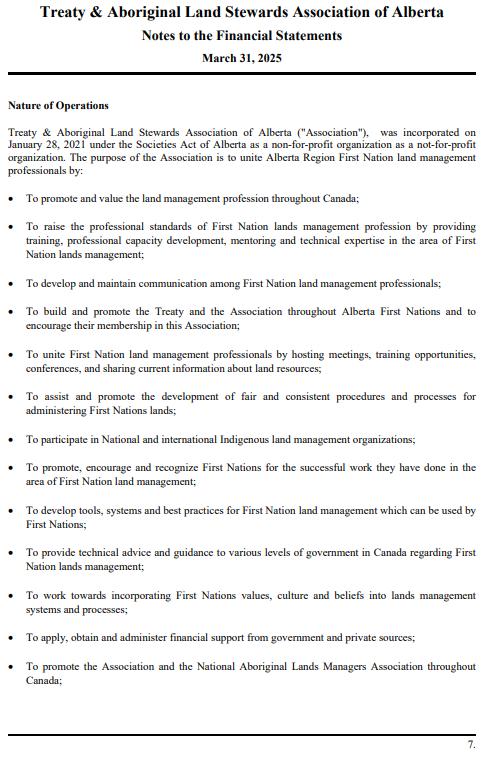
To assist First Nation Land Managers in addressing their broad ranging responsibilities with limited technical and financial resources, TALSAA was conceived by several interested and concerned First Nation Land Managers in Alberta with common objectives, issues, and challenges.
TALSAA was initially founded by interested Alberta First Nation Land Managers representing Treaty 6, 7 and 8 regions that identified a need for the establishment of an organization to address common issues relevant to First Nation lands in Alberta’s First Nation Communities.
TALSAA has replaced its predecessor, the Alberta Aboriginal Lands Association (AALA) which was established in 2000 to address similar issues. In the transition from AALA to TALSAA, the original nine First Nation members have continued their networking and communications and have also continued their affiliation with the Board of Directors of the National Aboriginal Land Managers Association (NALMA).
Empowering First Nations to lead land stewardship through cultural knowledge, educational strategic tools, and collaborative strength.
To support Alberta First Nations in strengthening land management through training, networking, building capacity, and integrating community-led solutions.
Respect – We honour diverse First Nation traditions and create safe, inclusive spaces
Service – We support land managers and meet communities where they are
Capacity – We build knowledge and tools that strengthen self-sufficiency
Sustainability – We promote practices that protect the land for future generations
Collaboration – We foster trust through open communication and shared learning
Integrity – We remain accountable to our goals, our members, and our mission
Wisdom – We bridge Indigenous knowledge with technical practice to guide land management
Purpose:
Support and strengthen Alberta First Nations’ capacity for sustainable land management through training, tools, and networks.
Accountabilities:
• Deliver relevant land management training across Alberta
• Engage First Nations in defining and driving their land-based goals
• Connect First Nations with expertise and resources
• Advocate for land managers and support their professional development
• Host networking, knowledge-sharing, and mentorship opportunities
• Support the development of sustainable land and economic practices
• Facilitate collaboration between communities, governments, and stakeholders
• Represent Alberta as the regional affiliate of NALMA
• Align with NALMA and federal partners to meet national standards and local needs
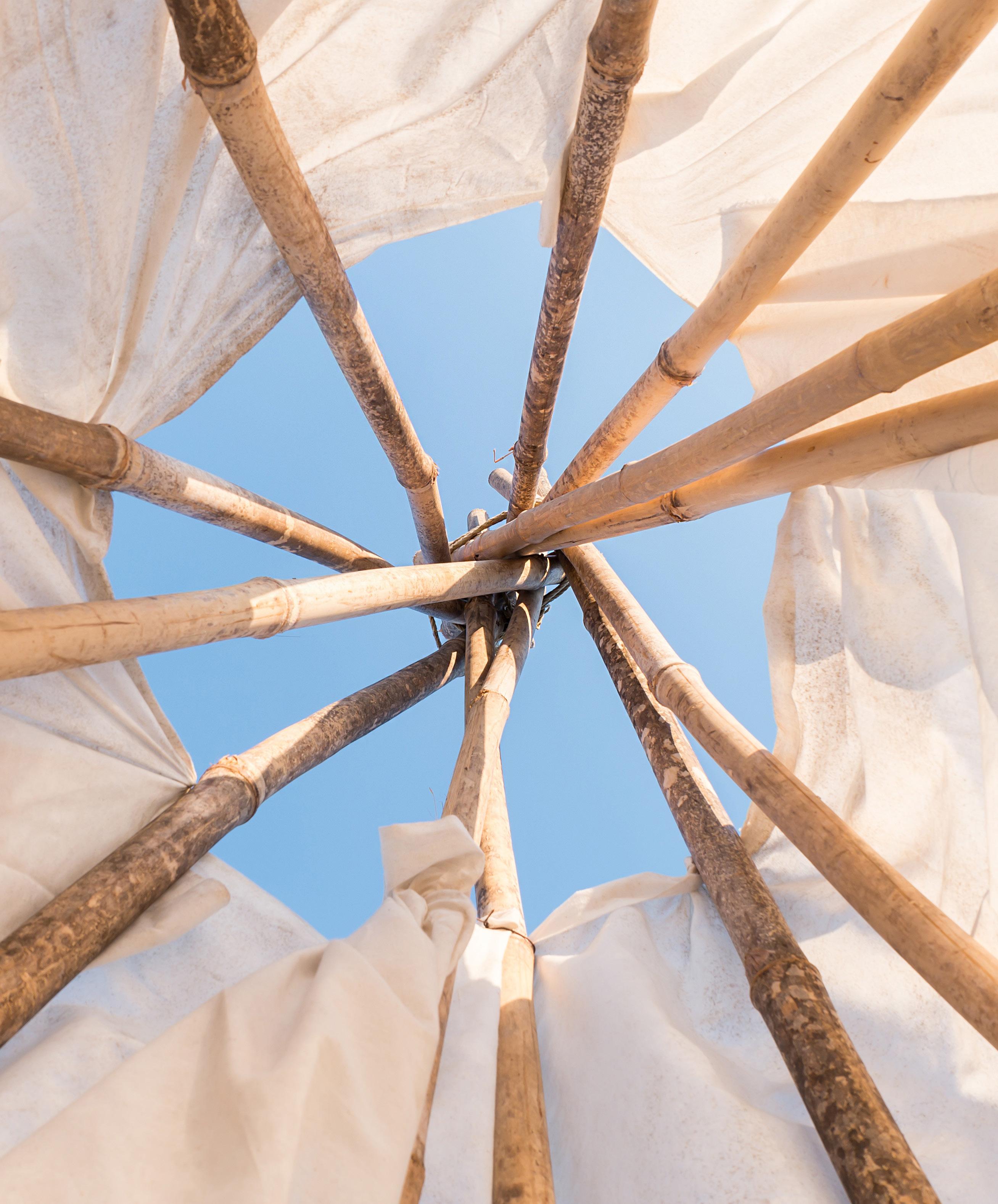
Our members bring land management expertise and a deep knowledge of land-use strategies across Alberta, ranging from land use planning to land governance. They play an integral role in land management by ensuring that land-use strategies benefit the land, people, and environment.




Every organization needs an analysis of “where we’ve been and where we need to go” accompanied by focused and knowledgable planning. In April 2024, TALSAA organized a Strategic Planning session where we could take a deep dive into what we can do better for our members. We will continue to update our plans.
In March 2025, we held our Annual General Meeting in Calgary. We combined this with Land Management training. Also featured was the Breaking Down Workplace Silos organizational development training from Colby Delorme at Imagination Consulting. The Talking Stick workshop by Moonstone Creations was well received by about 40 attendees.
We are delivering on the Spring 2025 planning done for Introduction to GIS training, now scheduled for September 2025 and beyond. We’re also looking at Intermediate GIS training. Our Species At Risk training has been planned for November 2025 we are eagerly awaiting the presentation.
Our newsletter is delivered monthly to all TALSAA members and Alberta First Nations, as well as stakeholders, who opt in. We have received positive feedback from our readers, and we are pleased that the “open” rate is approaching 70%, far above industry standards. We keep striving to do better.
Social media is an essential tool for engagement, and TALSAA has grown its LinkedIn followers by almost 15%, while also increasing our YouTube playlist to make the TALSAA channel more of a destination.
Looking ahead, we will capitalize on the groundwork we’ve laid and anticipate several member events in the coming year.

Thank you for the enriched learning experience, very insightful and inspiring... just keep doing what you are doing.
- Daniel McLaughlin Cold Lake First Nations
Everything was good!
- Sharlee Weaselhead-Scout, Blood Tribe Land Management
Now I am aware of the planning needed for lands management. The information presented was excellent.
- Nathan Mistaken Chief, Blood Tribe Land Manage-
I really enjoyed the training I attended. The instructor was personable, entertaining, and had a lot of personal connections and examples that cemented the ideas she was describing.
- Claire Bonville, Indigenous Services Canada
By joining, Sunchild gains access to invaluable training, workshops, and a network of Indigenous land stewards dedicated to sustainable land management.
- Shade Goodrunning, Sunchild First Nation
Everything was well organized, from registration to check-out.
- Anonymous, Kapawe’no First Nation
It helped create an understanding of the spirit connected with all aspects of land management.
- Anonymous, Cold Lake First Nations
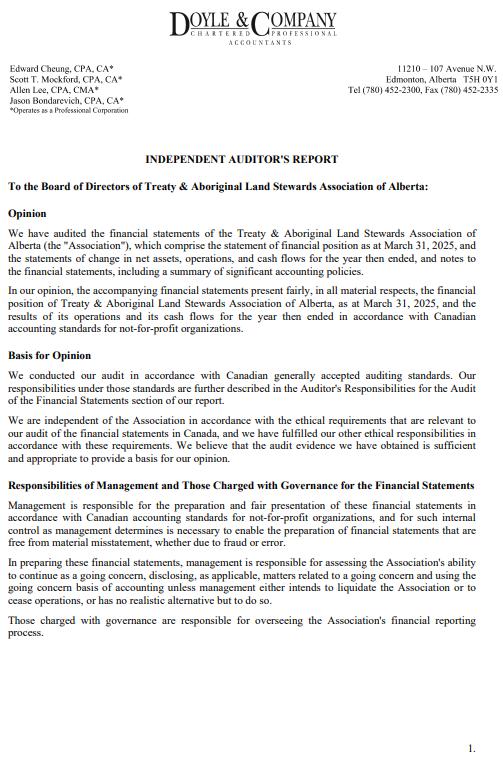
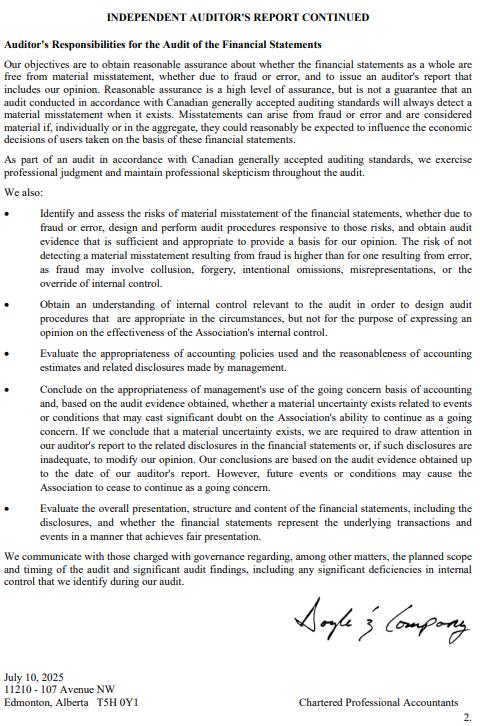
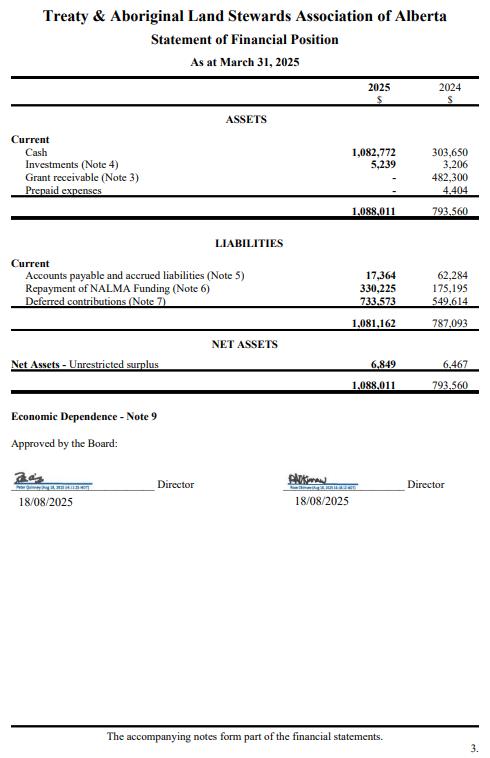
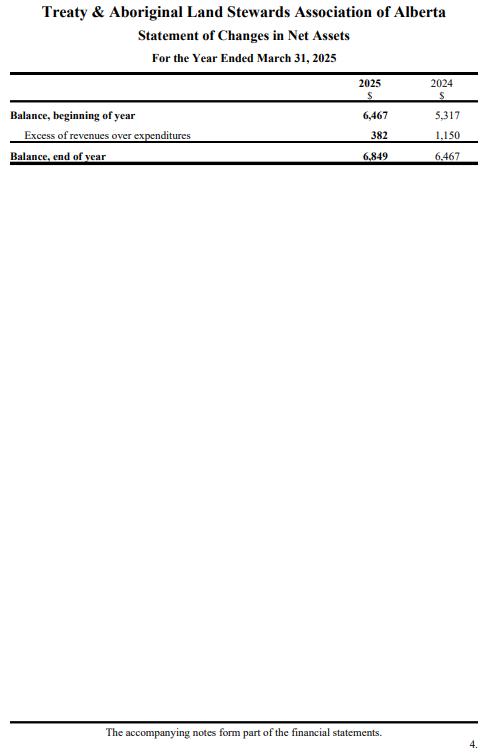
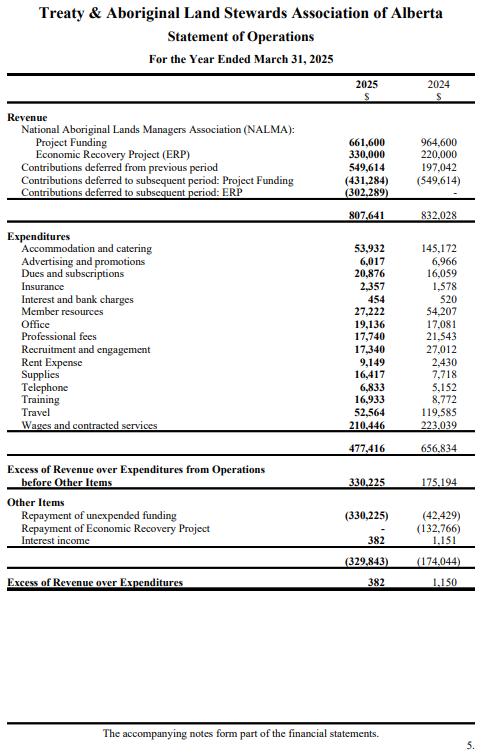
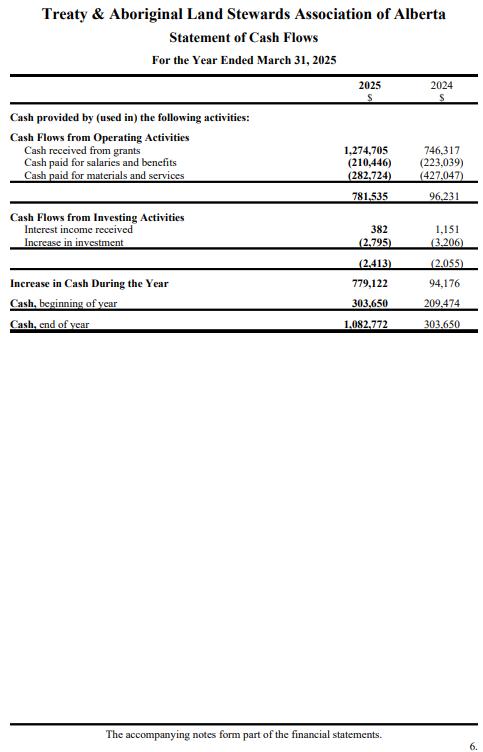
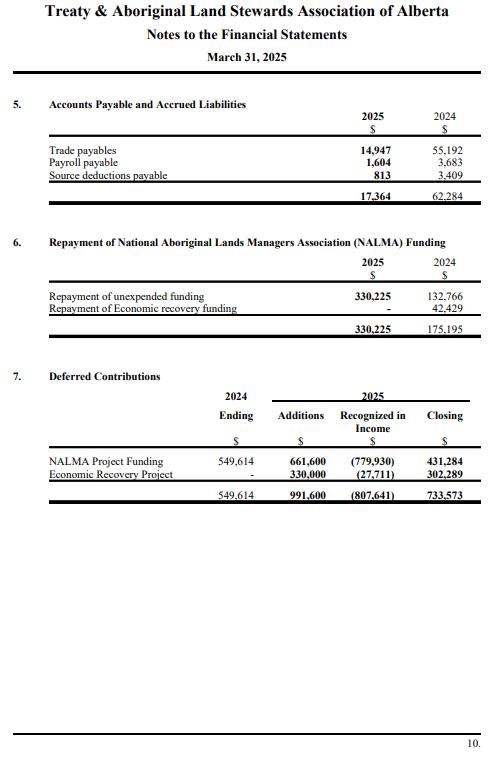
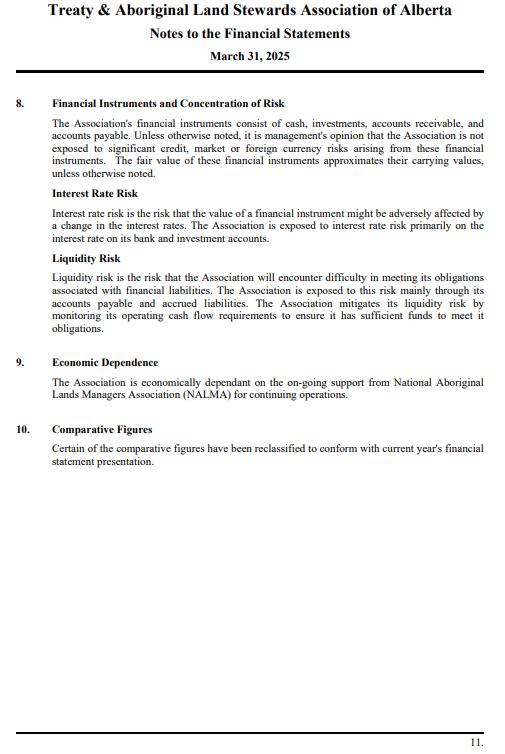
The financial report for the Treaty and Aboriginal Land Stewards Association of Alberta (TALSAA) for the fiscal year ending March 2025 reflects a path grounded in strength, sustainability, and responsibility to the land and our Nations.
As stewards grounded in the teachings of our Elders and the spirit of our Treaties, we acknowledge the evolving nature of federal government programs. TALSAA will continue to explore diverse and self-determined revenue sources to ensure our work remains resilient and responsive to the needs of our communities.
Through careful financial stewardship, rooted in Indigenous values of accountability and transparency, and with a clear vision for the future, TALSAA is well-positioned to uphold its mandate—supporting fair, responsible, and Nation-driven land governance.
Our long-term journey includes deepening our efforts in community capacity-building, knowledge sharing, and nurturing strong, respectful relationships with our funding partners. These steps are part of our broader vision for growth grounded in sovereignty, sustainability, and cultural continuity.

To learn more about becoming a member of TALSAA or attending one of our events, please visit our website at www.talsaa.ca.
Training for First Nation Land Managers, both in person and online, is at the core of what we do at TALSAA.
Our mission is to ensure that all Land Managers have access to the necessary skills and resources for a successful career in land stewardship.
The strength of TALSAA lies in our unity. We lift our hands in gratitude to the staff, volunteers, members, and Nations whose commitment and wisdom have shaped our collective success. Together, we walk forward—guided by spirit, knowledge, and shared purpose.
TALSAA is looking ahead with confidence that we can meet the needs of Alberta First Nations Lands Managers in 2025-2026.
Following the strong response to our GIS training session planning, TALSAA is planning a series of additional GIS-focused events in both Edmonton and Calgary. Building on this momentum, we are also exploring other relevant and impactful training areas that align with the needs of our members.
In recognition of the multifaceted responsibilities held by Land Managers—including interpersonal communication, project coordination, administrative systems, letter writing, and grant applications—we are broadening our scope. Training that supports these operational dimensions is also aligned with TALSAA’s mandate. We have begun identifying knowledge keepers and experienced facilitators in these areas and intend to develop these offerings into fully structured programs.
Building Capacity
Recognizing that each Land Manager brings unique interests and expertise, TALSAA is committed to highlighting the breadth of the field. Through ongoing outreach and engagement, we will continue to feature sector-specific insights and member contributions in our newsletters—supporting professional development while showcasing community knowledge.
Attracting
With the onboarding of new Board members and the successful completion of several key initiatives, TALSAA will begin updating its foundational organizational video. This refreshed version will reflect our growth and vision and is scheduled for production in Summer and Fall 2025.
TALSAA has welcomed a number of membership inquiries over the past year and looks forward to expanding its member base in the coming months. In an effort to make membership more accessible, we are considering streamlining the enrollment process to create a simpler approach. Our objective is to facilitate greater participation from Alberta First Nations.
TALSAA reaffirms its commitment to Indigenous-centered practices by undertaking a comprehensive review of all resources. This effort ensures that we not only meet the professional needs of our members, but also genuinely reflect Indigenous worldviews and values in land stewardship.