Garden vs. Wildlife
New Water Farms
Farmer's Almanac








Garden vs. Wildlife
New Water Farms
Farmer's Almanac
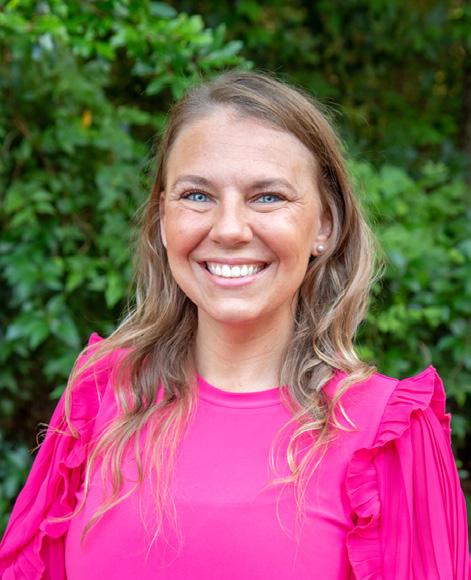
For me, the first signs of spring are when I see the yellow daffodils poking out of the ground, bringing the first pops of color to our winter woodlands – a welcoming promise that warmer weather is on the way. My second favorite sign is when I see the lilacs blooming on trees along the roadside. I simply can’t resist rolling down my window for a quick, fresh breath of their fragrant scent as I drive by.
Those early signs of spring also bring another tempting thought – it might be time to begin planting our own gardens of flowers.
While meteorologist James Spann issues his annual reminder that it’s safest to wait until mid-April to plant a garden – following the final frost date – the warm weather can make it tempting to start now. That curiosity led me to wondering what the Farmer’s Almanac had to say.
Rooted in tradition and the natural phases of nature, the Farmer’s Almanac has been around for more than 200 years. In an era of modern technology, statistics suggest its long range forecasts are only accurate about half of the time. Still, many gardeners and farmers who grew up following the almanac swear by it.
As someone who loves digging into the history behind old traditions, I always love learning how these bits of folklore began. On page 33, explore the fascinating history behind the famous almanacs and how their predictions compare with modern technology.
Along with the first gardens of the year, wildlife also seems to become more active. While nature begins to wake up once again, I often hear about the frustration from gardeners who head out to pick their first carefully planted vegetables of the season – only to discover their plants have turned into a buffet for local wildlife.
To help gardeners stay one step ahead of this common disappointment, we spoke with Shane Harris, county Extension director for Tallapoosa County, about practical ways to protect gardens from wildlife this season. Turn to page 14 for tips that can help keep plants growing for the dinner table and not the menu for neighborhood critters.
And while our gardens begin to grow, New Water Farms is focused on helping the community grow, too. On page 18, Sam shares how the farm is turning its garden into an opportunity for local organizations to learn to connect with nature and help feed its neighbors across the area.
Then turn to page 28 to meet the “Cruising Beekeeper,” Kim Ly Patten. Working toward becoming a master beekeeper, Patten travels the world on cruises to learn how other cultures care for and work with bees, bringing her knowledge back home to Dadeville, Alabama. But her work at home is just as meaningful. Patten’s fascination with beekeeping began in grade school when a visiting beekeeper sparked her curiosity. Today, she brings that same inspiration to local elementary schools, sharing her passion and encouraging the next generation of young beekeepers.
As you dig into the stories of this year’s Garden issue, we hope they bring a little lighthearted inspiration for the growing season ahead. Happy spring!
Editor-in-Chief
Chairman Kenneth Boone
General Manager Tippy Hunter
Editor-in-Chief Shaylee Beck Moore
Creative Services
Audra Spears
Business & Digital Development Angela Mullins
Contributors
Kenneth Boone
Audra Spears
Sam Vise
Lacey Howell
Kyle Marable
George Miranda
Gina Abernathy
Terry Mitchell
Lizi Arbogast
Cliff Williams
Samuel Higgs
Gwen Bishop
Ana Sofia Meyer
Sarah Chase
Audience Development Manager
Baily Terry
Marketing/Advertising
Renee Trice
Samantha Himes
Erin Vickers
Abbie Clayton
Lake Martin Living P.O. Box 999 Alexander City, AL 35011 256-234-4281
lakemartinmagazine.com





















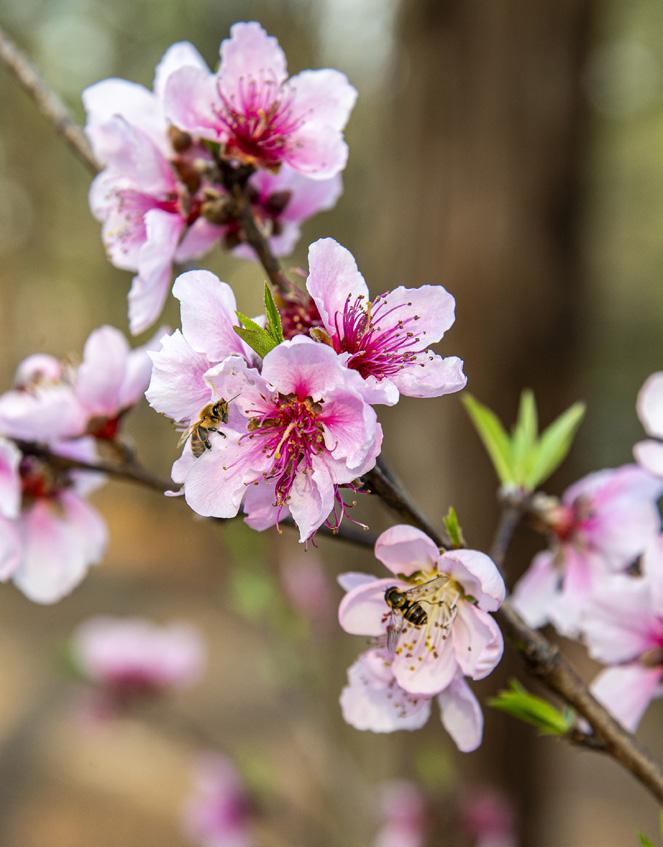
Kim Ly Patten, known as the “Cruising Beekeeper,” brings the knowledge and passion she gains from her travels back home to Dadeville, where she shares the world of beekeeping with local elementary students while also pursuing her Master Beekeeper certification.
Photo by Audra Spears

14. Garden versus Wildlife
From curious deer to digging armadillos, learn practical tips to help protect plants from local wildlife this season.
30. Growing a Community at New Water Farms
Discover how New Water Farms is transforming 22 acres of soil into a living classroom through innovative gardening and community partnerships.
26 Heart Behind the Hive
Meet Dadeville local Kim Ly Patten as she shares her journey from a childhood fascination to educating the next generation about the vital role of pollinators.
14. Forecast or Folklore: The Farmer's Almanac
Rooted in tradition and phases of nature, learn the history of the book that has guided generations of gardeners.
9. AROUND THE AREA
10. GO LOCAL
22. GARDEN TALK
26. GOOD EATS
34. MEDICAL NEWS
36. MONEY MATTERS
38. OH SNAP!
44. LAKE REGION EVENTS
54. CULTURE SHOCK
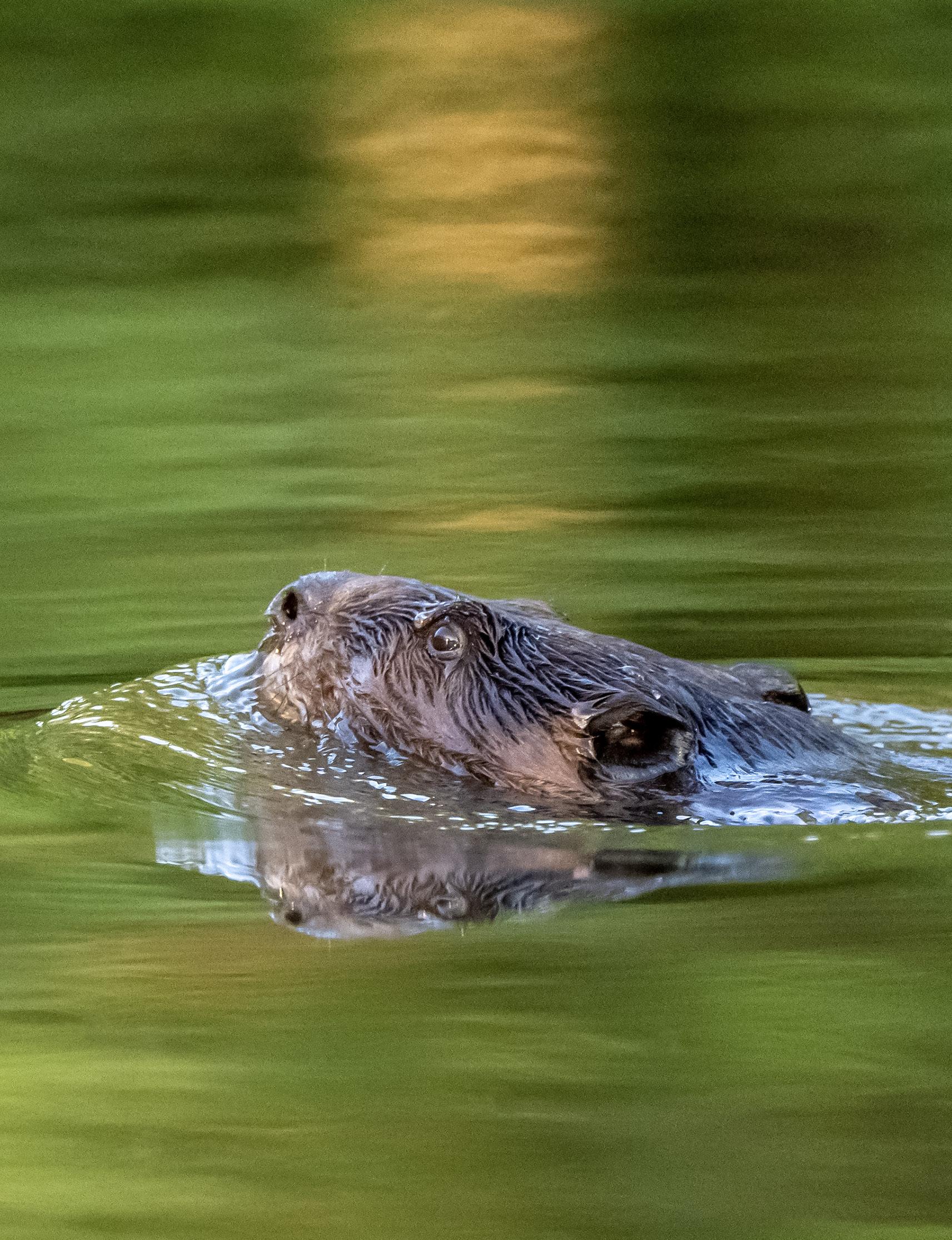
As creative builders, beavers can be either friends or foes for local homeowners. Photo by Kenneth Boone.






Horseshoe Bend School alumna
Angelica Butine has been nominated for an Emmy three times, winning once in 2023.
While working as a morning reporter and news anchor at KLPC in Lake Charles, Louisiana, Butine created a lifestyle series entitled “Gotta Eat.” In her episodes, Butine said she would showcase different restaurants in southwest Louisiana and review the food, but her coverage did not stop there. Her series dived into the owners of the restaurants.
Originally from Dadeville, Butine was inspired by Louisiana Cajun food to create her series. She said she thought it would be cool to experience a lot of the Cajun food for the first time on camera.
“I had no idea I would win an Emmy,” Butine said. “It is never something I planned to do. This was my first job and then they called my name and I blacked out. It was very surreal and just a blessing

At 41 years old, the engine at the Union Volunteer Fire and Rescue was due for a replacement.
As a result of collaborative efforts of the department’s board, a 2025 KME severe service pumper has been acquired for the fire department. Union assistant fire chief Nick Chaffin said the truck has a 1,500 GPM pump and a 1,000-gallon tank.
“It really brings us into the new age of fire apparatus, and it is just a really nice cab over engine,” Chaffin said. “With this cab over body that we have now we are able to get this truck into more tighter areas around our fire district.”
This change makes it easier for the department to access locations around the lake they could not access with bigger trucks. The truck can carry
the same amount of water and personnel as before, but it is easier to locate tools.
“It will benefit the community more because the firefighters are able to utilize it a lot easier than some of these older fire trucks and because of newer technology,” Chaffin said. “It has screens on the inside where we can see details about the truck going down the road. It has a top mount pump on it. That is going to be safer operating on scene.”
Chaffin hopes the new truck also sparks interest in those who see it to want to volunteer.
“We are hoping people see this truck out and about and want to volunteer with our fire department,” he said.
~ Sarah Chase
Get Lake Martin Living delivered to your doorstep. Call 256-234-4281 to subscribe.


from God.”
After her win, Butine was nominated for other episodes in her “Gotta Eat” series. In 2025, she was nominated for one of her “One Tank Trips” episodes as a traffic anchor and lifestyle reporter at WBRZ Channel 2. “One Tank Trips” is all about where one can go with a full tank of gas in Louisiana.
As Butine continues her career, she is motivated to continue her “One Tank Trips” series and share more Emmy-worthy stories.
Local Roots, National Recognition
Horseshoe Bend alumna Angelica Butine is an Emmywinning reporter and anchor.
“Meeting the people that come up with these recipes and open these businesses is what really inspired me to continue to tell their stories,” Butine said.
~ Sarah Chase

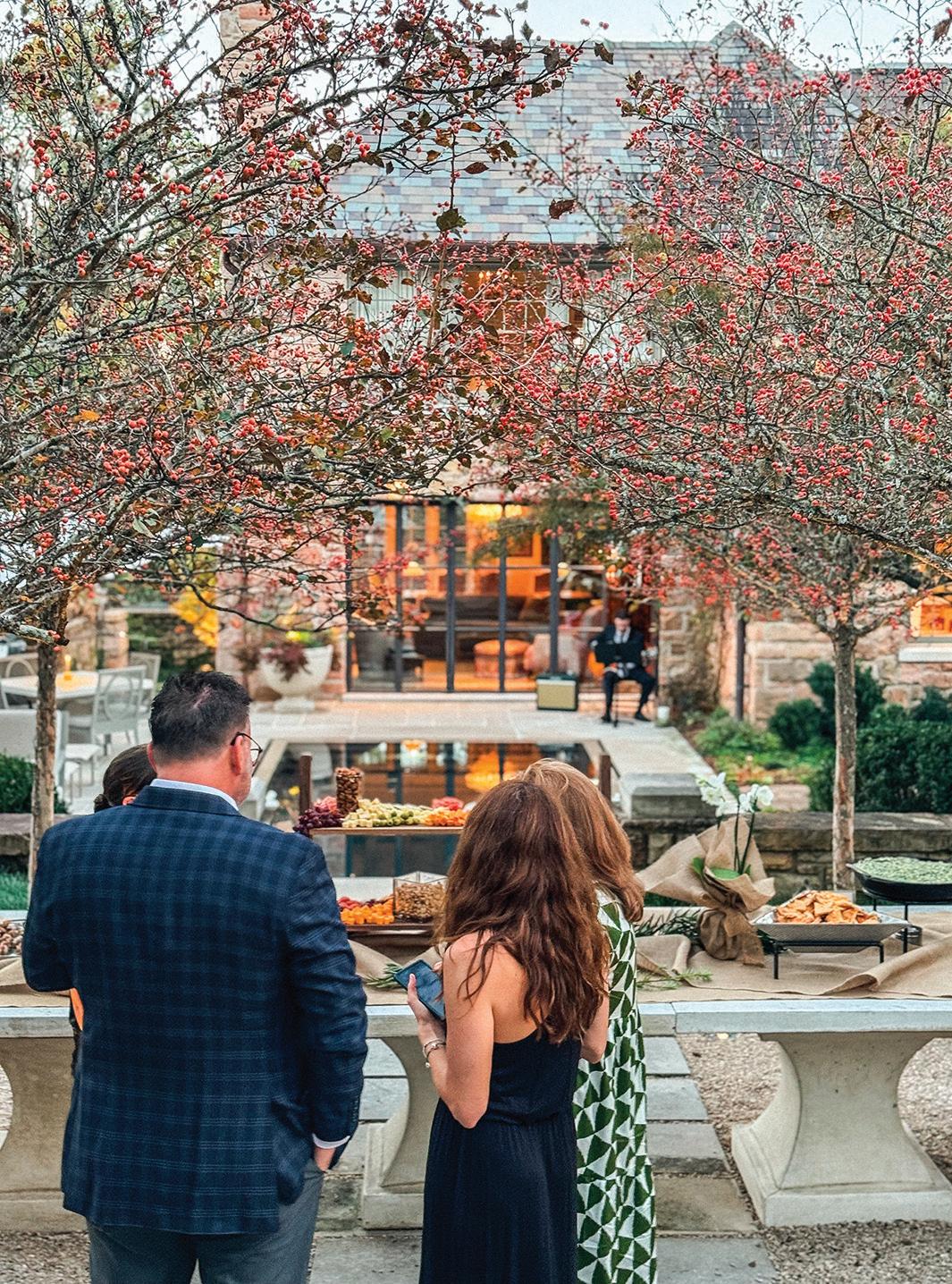
Planning with a Purpose Guests attend the Lake Martin Area United Way's seventh annual Wedding and Event Expo at The Mitchell House in Dadeville on February 22.
Dedicated to meeting its $520,000 annual goal, the Lake Martin Area United Way held its seventh annual wedding and event expo at The Mitchell House in Dadeville on February 22.
The expo had 28 local vendors and vendors from surrounding areas and 89 total attendees, including 36 brides and 15
Stay connected:
volunteers. The expo raised $3,303 after expenses.
“We are grateful to all of the people that come and show up and do this because at the end of the day, it is all about the community and connecting the community," said Courtney Layfield, executive director of LMAUW.
~ Sarah Chase
Scan the QR code to visit our website.

In the quiet, rhythmic world of ceramics, there is a term for the first time a piece of clay goes into the kiln – bisque. It’s the stage where the material is transformed from fragile, dried clay into something permanent and ready for color.
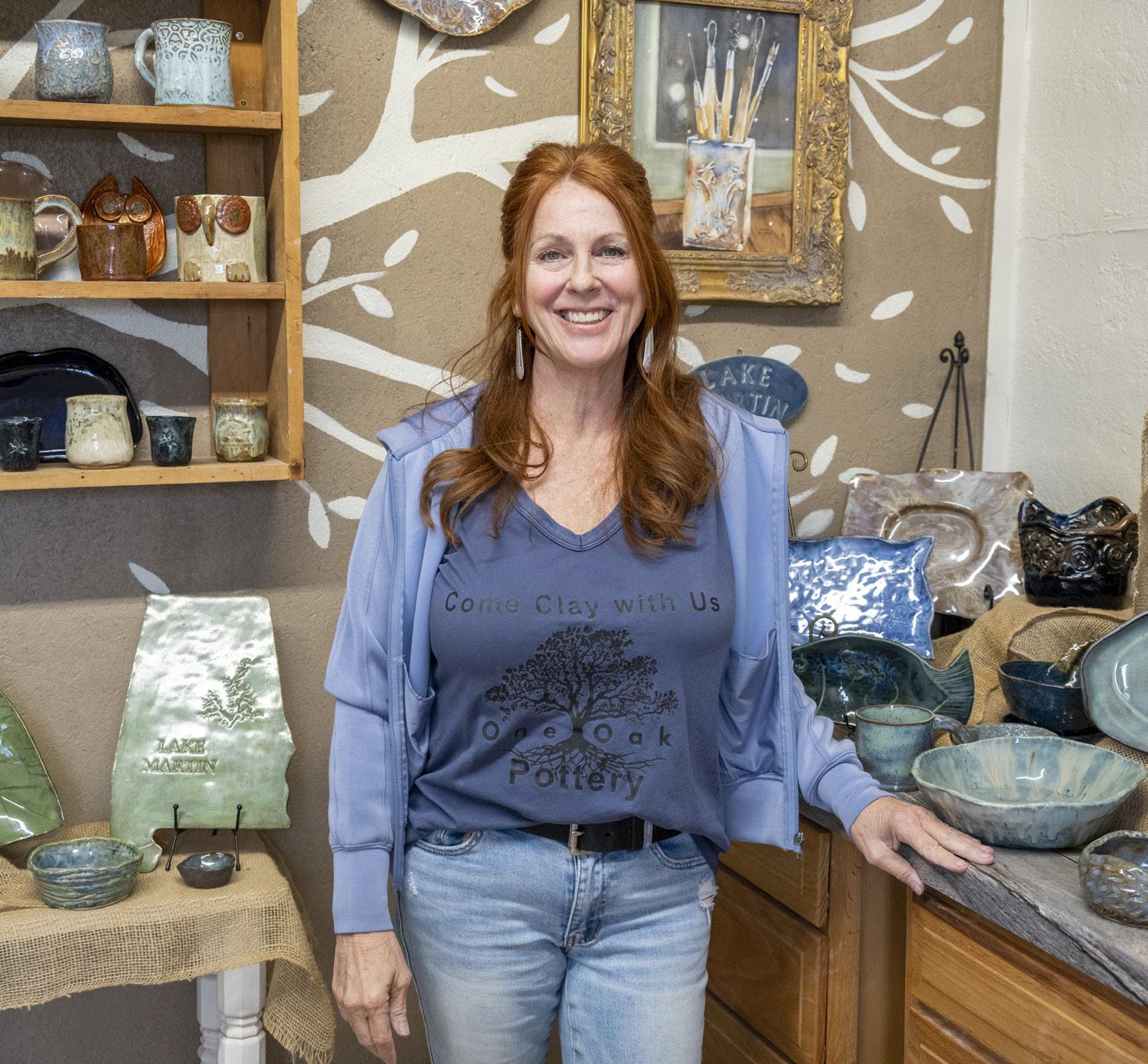
For Misty Woods, owner of One Oak Pottery in downtown Dadeville, the studio itself represents a similar transformation – a place where both clay and community are fired into something stronger.
Nestled behind a distinctive garage door, One Oak is not a traditional art studio. It is a “pottery garage,” a term Woods chose to reflect the approachable, genuine nature of the space.
A Dadeville native, Woods’ path to the pottery world was anything but linear. After spending years as a barber in Dadeville and later moving to Auburn, a shift in her personal life prompted a search for something new.
“I was worried about what I was going to do after my divorce, being I had not worked in a while,” Woods said. “My daughter said to me, ‘You should do what you love to do; that’s what you always told us to do.’ So, that is why I opened One Oak Pottery. It’s what I love to do.”
The seed for that love had been planted years prior. Woods began learning pottery while she traveled to visit her aunt, starting with a simple platter. That spark led her to take adult education classes in Auburn. When the time came to move back to her roots in Dadeville, she didn’t just bring her tools – she brought a mission to share the restorative power of the craft.
“I wanted to open a pottery studio because it was so healing,” Woods said. “You can just get lost in the
pottery. You can relax and don’t really think about a whole lot else. You just focus on what you’re building.”
The name of the studio carries a heavy significance. “One Oak” stands for “One-of-a-Kind.” The inspiration came from a customer who once purchased a piece and asked Woods to recreate an identical version for a friend. After four attempts to mimic the original, Woods realized that the beauty of hand-built pottery lies in its refusal to be replicated.
“I decided right then that I would be one-of-akind,” Woods said. “Nothing is the same. Every piece is different.”
This philosophy extends to the no-judgment atmosphere of the studio. In a world often obsessed with perfection, One Oak encourages “happy accidents.” Whether a student is building a mug, a bowl or a funky fish creation mounted on Lake Martin driftwood, Woods emphasizes there is no right or wrong way to create art.
Unlike many pottery studios that focus on wheelthrowing, One Oak is primarily a hand-building studio. Here, the process begins not with a spinning wheel, but with a slab roller.


The life cycle of a piece is a lesson in patience. After an artist rolls out the clay and constructs their piece, it must sit and air-dry for a week and a half. Only then is it ready for the first of two trips to the kiln.
The bisque firing hardens the clay, after which the artist returns to apply glaze. A second firing at high temperatures brings out the vibrant colors and glass-like finish that make the pieces functional and

beautiful. From start to finish, a single bowl or mug is a three-week journey of transformation.
While Woods is the visionary behind the studio, she is rarely alone. Her business partner, BJ Kosmak, is a constant presence, offering everything from technical assistance to selling the community on Woods’ undeniable talent.
“I’m retired, and I came in here one day about two years ago and I never left,” Kosmak laughed. “I’m so addicted to it. And it’s not just about the pottery; it’s Misty and all the members – they make you want to come back.”
The duo describes the studio as a sisterhood, a sentiment echoed by the studio’s membership program. For $125 a month, members who have completed a four-week introductory course receive 24/7 access to the studio. Woods said it’s not uncommon for members to find themselves at the studio in the middle of the night, finding comfort in the clay during a bout of insomnia or a stressful week.
“People literally walk through that door and say, ‘I’m here for my therapy,’” Kosmak said. “Everybody gets up, gives hugs and we go back to building. We tell each other what’s on our minds, whether it’s

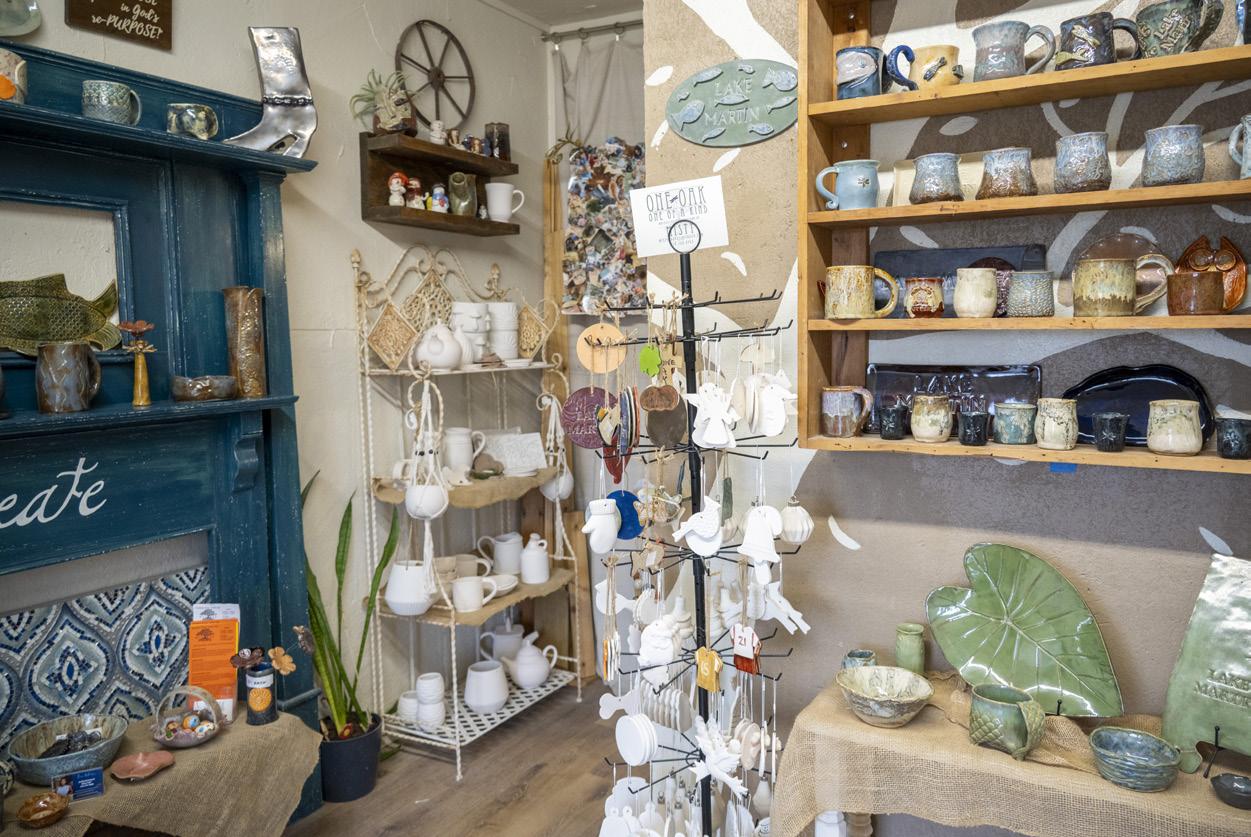
Clockwise from Top Left: Every piece is a one-of-a-kind creation; Misty Woods in her studio; The shop showcases a diverse selection.
great news or something really tough. We usually end up laughing by the time it’s all over.”
With spring right around the corner, One Oak is busy preparing pieces that bring art into the outdoors. The studio’s shelves are currently home to ceramic gnomes, mushrooms and fairy garden accessories.
Looking ahead to April, the calendar is already filling up with seasonal workshops. On April 1, students can join a cross wall hanger class; on April 4, the studio will host a hand-building bunny
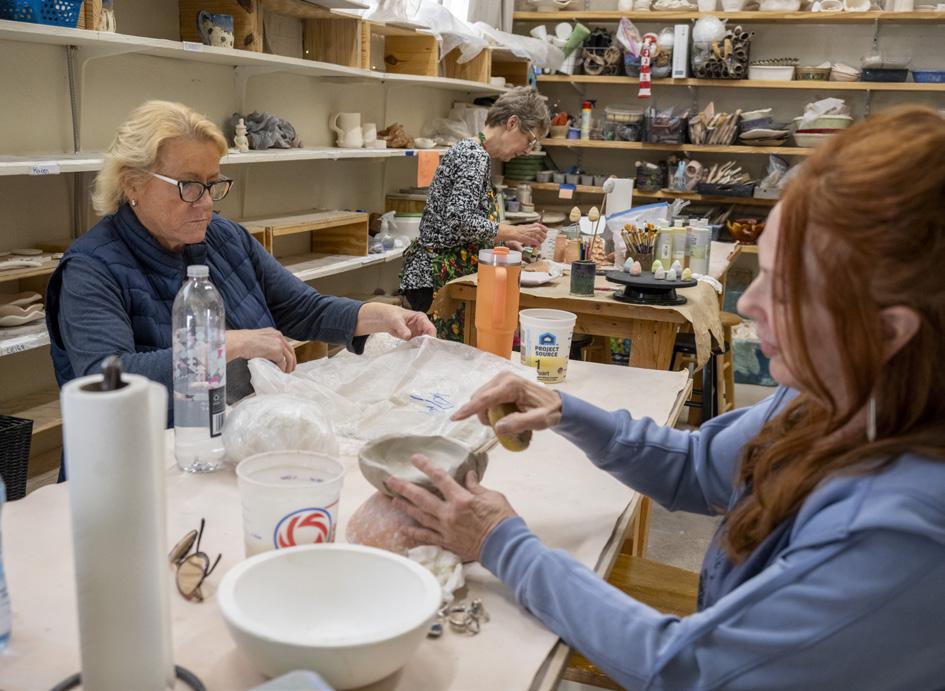

Community in the Clay Left: After completing an introductory course, the studio is open to members at all hours of the day.
session for Easter; followed by a wall hanger chimes class on April 7.
The studio’s commitment to Dadeville goes beyond its own walls. One Oak frequently collaborates with other local staples – the studio has created custom vessels for Lake Martin Marketing candles, hosted mug-making classes at The Grand Bakery and recently produced 69 handmade bowls for a ladies painting night at Miller’s on Broadnax. Newest on the horizon is a monthly partnership with Martin’s at Lake Martin for Paint and Pour Nights.
For Woods, being a small business owner in her hometown is a full-circle moment. She doesn’t just want to sell pottery; she wants to grow the creative heart of Dadeville.
“Just buy local, buy from small businesses,” Woods said. “I love being here. I love this community. I don’t dread work; I’m ready to go every morning.”
Whether looking for a Saturday morning Kids Clay Day, a Sip and Mold night with friends or a quiet place to find your own version of therapy, One Oak Pottery offers a seat at the table. Just look for the open garage door and the smell of wet clay.
One Oak Pottery is located at 113 E. Lafayette Street in Dadeville. For hours or to register for classes, visit oneoakpottery.com or call the studio at 256-749-4043.





BY

For many home gardeners, the excitement of watching fresh vegetables sprout or flowers bloom is reward enough for the hard work and planning that goes into tending a backyard garden. But in a matter of moments, that simple reward can turn into a frustrating defeat if the garden turns into a buffet for wildlife.
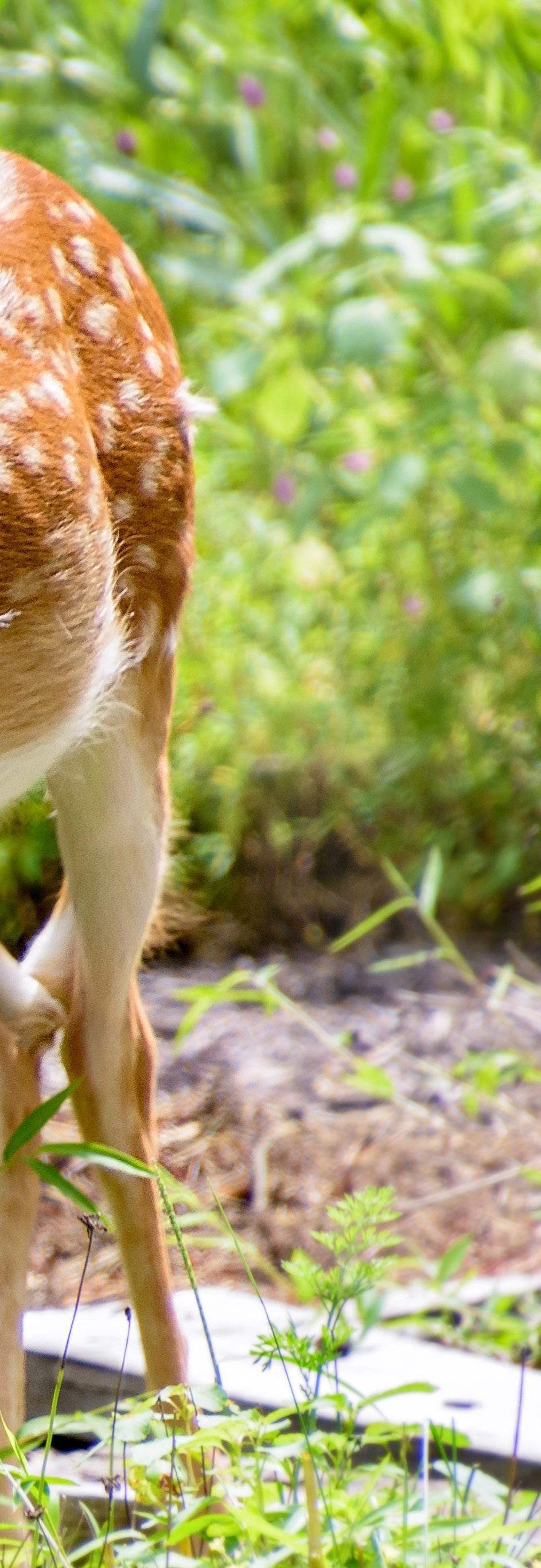
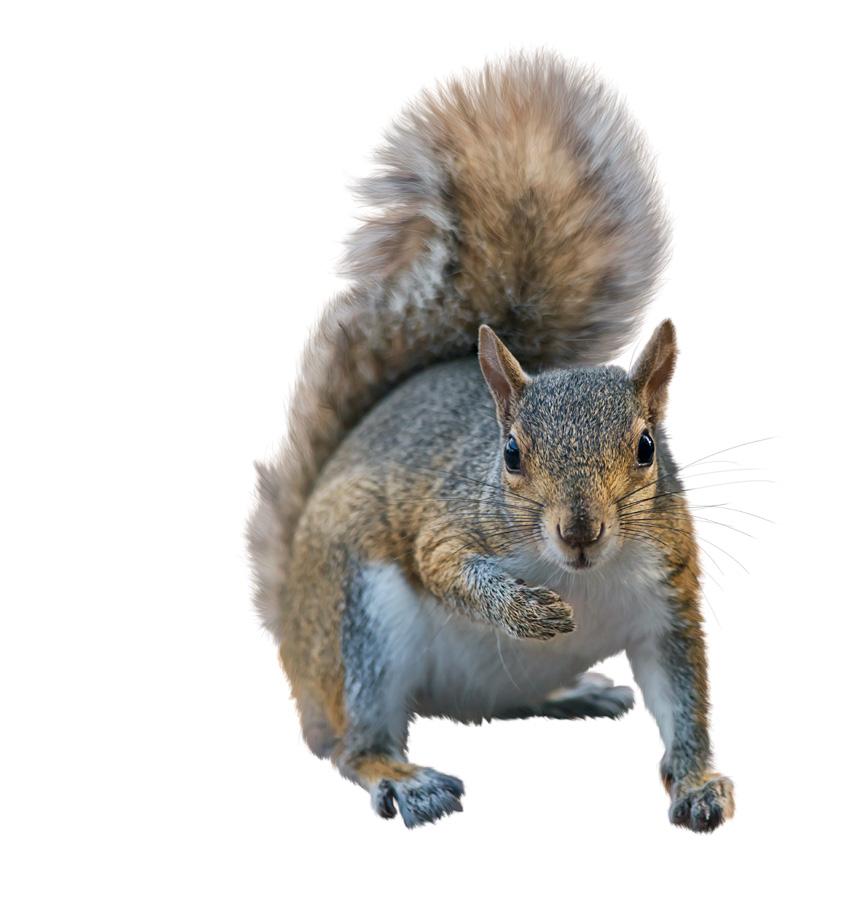
Locally, most common wildlife culprits include squirrels, birds, raccoons, rabbits and armadillos; however, the animal that poses the biggest threat to home gardens and landscapes – deer.
Known to eat tender plants, vegetables, flowers and even the bark off a young tree, deer can quickly undo weeks of careful gardening.
“Deer are top of the list,” said Shane Harris, county Extension director for Tallapoosa County. “They’re natural browsers. I always describe it like a buffet – they’ll
try a little bit of this and a little bit of that.”
While wildlife can be a joy to watch from a distance, protecting plants can take a bit of strategy and patience.
According to Harris, the most effective method to prevent wildlife from overtaking a garden is through exclusion.
“When we talk about animal control and wildlife, we are talking about different methods and strategies,” Harris said. “For a homeowner, exclusion works best – especially for prized plants.”
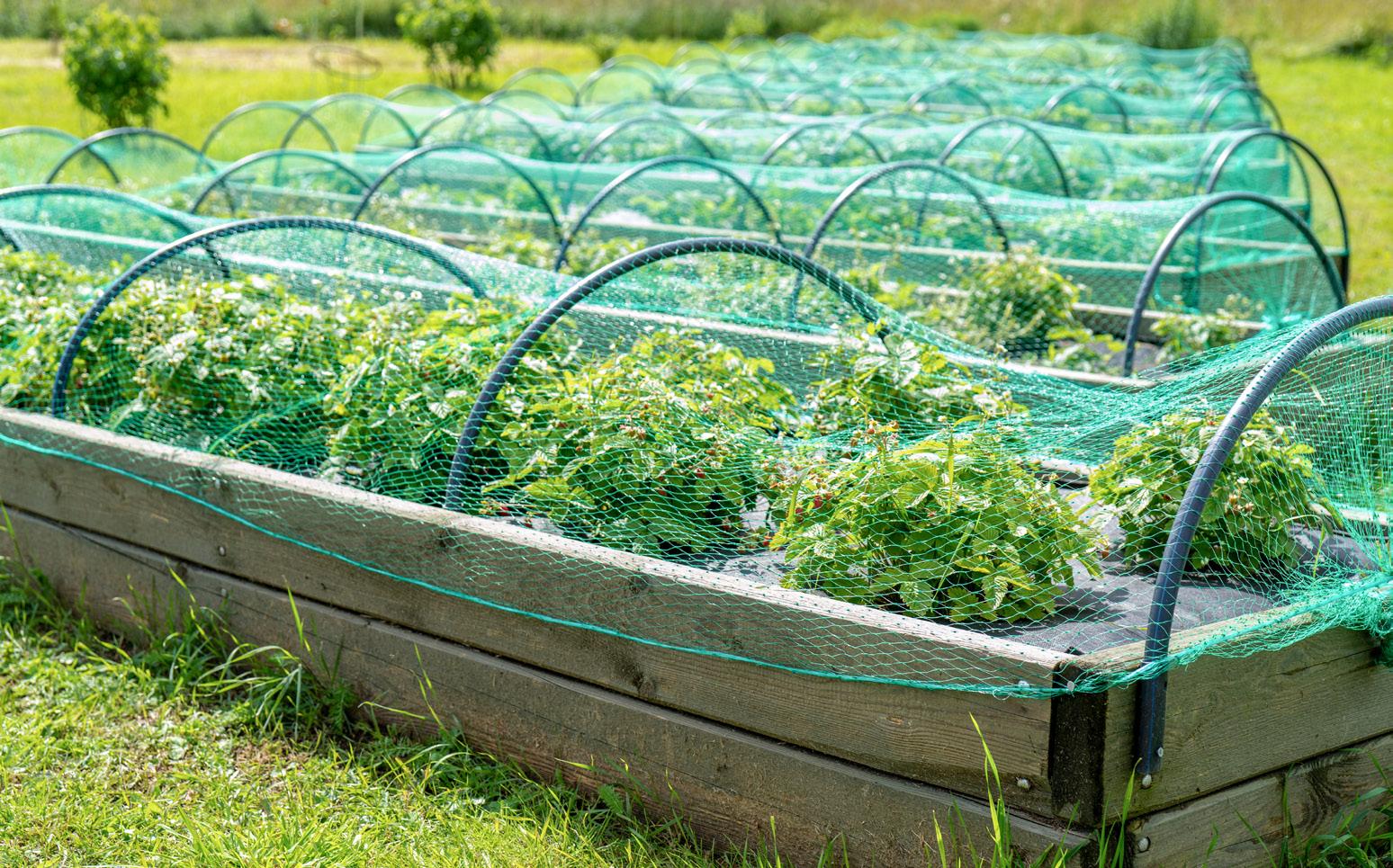
Fencing is one of the most common solutions. Gardeners will often install electric fencing around vegetable gardens or small orchards, while others use standard fencing similar to what may be used for pets. Bird netting or mesh are also common methods to help protect plants.
It is recommended to use a 4-to 5-foot tall fence to help
keep rabbits and smaller animals out; however, deer can still propose a challenge. Taller fences around 10-feet tall would be needed to deter deer – but even then, it is not guaranteed.
“If they’re hungry enough, they’ll jump a fence,” Harris said. “And even electric fences can be damaged or pushed through if a deer really wants what’s on the other side.
For a simpler solution, gardeners will also turn to using a repellent as another protection option. Commercial deer and animal repellents are widely available, often made with strong scents or bitter tastes to discourage animals from feeding on the plants.
For natural remedies, gardeners have also been known to use solutions such as castor oil, soap, urine and human hair. These natural remedies provide protection as they give off an unfamiliar scent that can make tempted animals, including deer, suspicious.
“Deer can smell things from several miles away,” Harris said. “When they approach an area and notice something is unfamiliar or unusual, they become cautious.”
While home remedies may be a short-term deterrent, they rarely provide lasting protection. The products often need to be reapplied, rotated or replaced with a different method to remain effective.
“The key thing to remember is these solutions are temporary,” Harris said. “Once the smell fades or the deer figures out there’s no danger, they’ll come right back.”
To get to the root of preventing animals from invading a garden, an important strategy is knowing why animals are visiting the yard in the first place.
Harris said most wildlife problems come down to one thing – food sources.
Know Your Foe Left: Deer are the most common culprits to invade a garden; Above: Fencing and netting are common ways to protect plants from intruders.
“Most animals are opportunistic,” Harris said. “They are looking for the easiest meal they can find. They’re there because they found a food source."
That food source can be a variety of different things, such as fallen fruit or a bird feeder. Raccoons, opossums and squirrels are often drawn to yards because of pet food, bird seed or food scraps. Armadillos are another example. Because their primary diet consists of grubs, treating lawns can help reduce armadillo activity around the house.
In many cases, wildlife problems around a home or garden are connected through what Harris describes as a chain reaction within the ecosystem.
“For example, people complain about snakes, but snakes are there because there are mice,” Harris said. “If you control the mice, you control the snakes. It’s a chain effect.”
For home gardeners, habitat modification can be an effective strategy by removing these food sources and making a yard less appealing to wildlife.
“Brush piles, trash
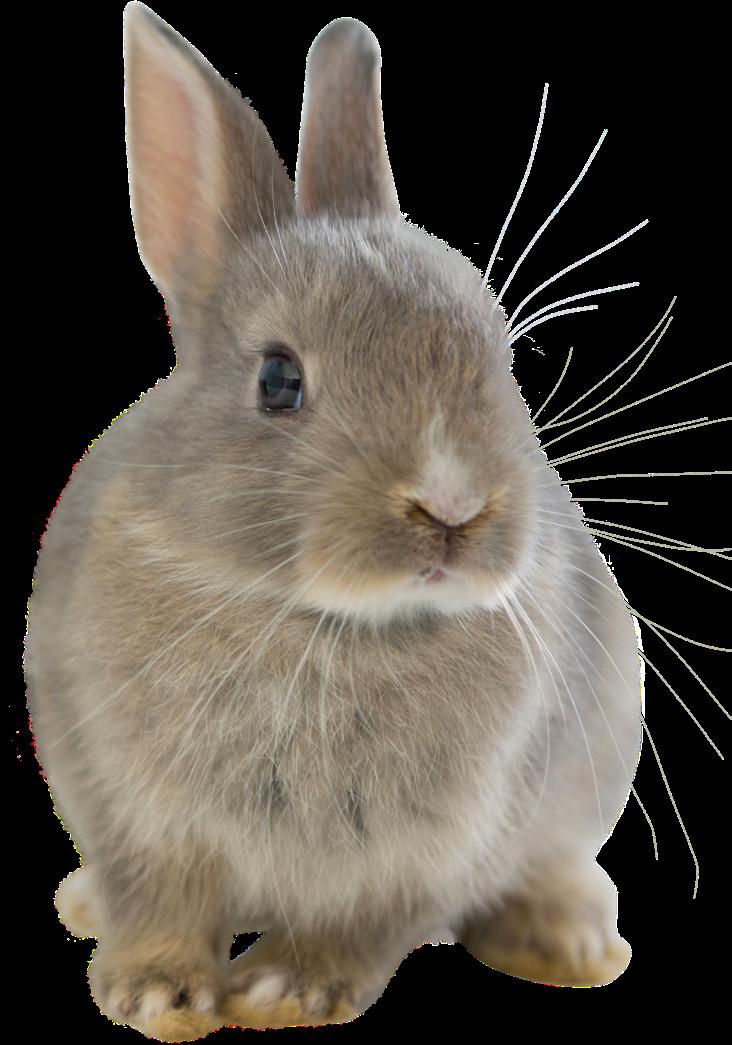
piles and clutter create habitat that attracts wildlife,” Harris said. “If an area is open without brush or cover, prey animals like rabbits and chipmunks are less likely to stay there.”
Another method sometimes used is population control through hunting and trapping, though Harris emphasized that homeowners should understand local regulations before taking action.

“The biggest thing is understanding wildlife laws,” Harris said. “Many animals are protected and there are regulations about trapping or killing them.”
Looking for early signs of wildlife can also be a saving grace for gardens. Gardeners who suspect wildlife activity should look for fresh tracks, droppings or signs of browsing damage, such as missing fruits and vegetables, chewed leaves or broken stems.
“The first sign is usually where they’ve nibbled on something,” Harris said.
While there may not be one set solution to protecting a garden from wildlife, several small steps can help tip the odds in a gardener’s favor. With a little bit of planning and a few practical strategies, gardeners can help ensure their garden ends up on the dinner table – not the local wildlife menu.











STORY BY SAM VISE
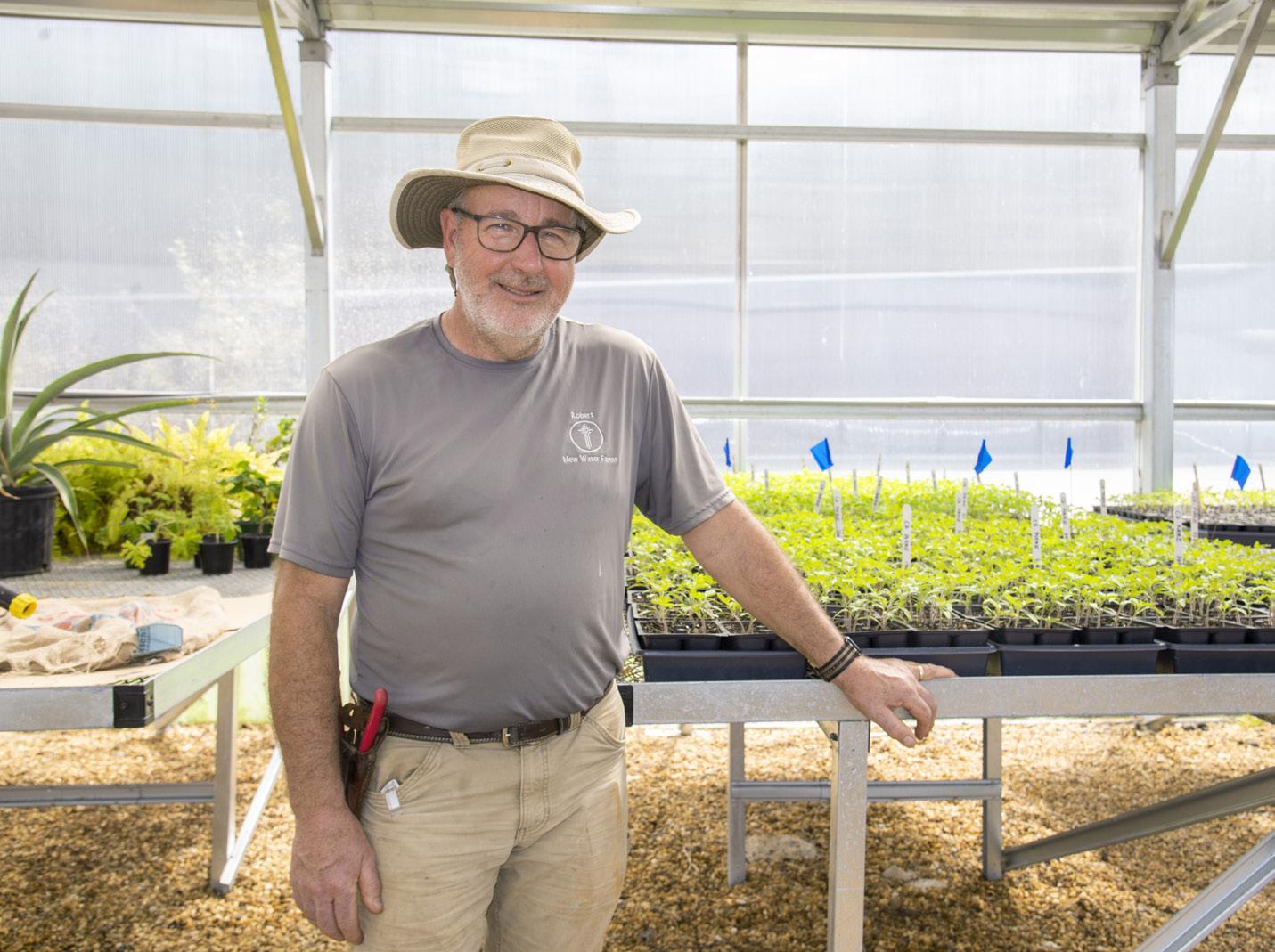
AAt the quiet end of Civitan Road in Dadeville sits a 22-acre peninsula that is more than just a farm. To a botanist, it is a prime example in soil health and crop succession. To a local, it’s the place to find the sweetest blueberries in the summertime. But to Robert Brandon, executive director and farm manager of New Water Farms, the land is a ship – a platform designed for a much higher purpose.
“Our overarching mission is we are a working and teaching farm that hosts events to cultivate spiritual growth and renewal,” Brandon said. “We want to refresh, restore and relaunch Christian leaders by promoting Christ-centered, sustainable growth for the body, mind and soul.”
For Brandon, gardening is far more than a hobby or a business venture; it is a connection to the origins of humanity. He said while much of creation was spoken into existence, humans were formed from the dust of the earth.
“Having your hands in the dirt is a connection with God,” Brandon said. “We’re connected to the creator through His creation. If you garden long enough, you realize you really aren’t in control.”
The farm’s core identity is driven by this philosophy of restoration. Brandon views the world through four categories of connection: one’s relationship to God, to others, to themselves and to creation.
“We work with Mother Nature, not against her,” he said. “We live with the land, not off the land.”
Rooted in a spiritual mission and guided by scientific excellence, New Water is renowned for its emphasis on soil health. Rather than focusing solely on output, the farm prioritizes happy soil to create happy people.
One of the primary techniques used on the farm is what Brandon calls “armoring the soil.” This involves ensuring a living root is in the ground 365 days a year. During the offseason, the vegetable plots aren’t left bare. Instead, they are covered in a diverse mixture of winter oats, peas, legumes and brassicas – also known as cover crops.
“It’s free fertilizer,” Brandon said. “We’re capturing carbon and nitrogen out of the air and feeding it down into the soil. It prevents erosion and builds the microbial population so we don’t have to fertilize as much.”
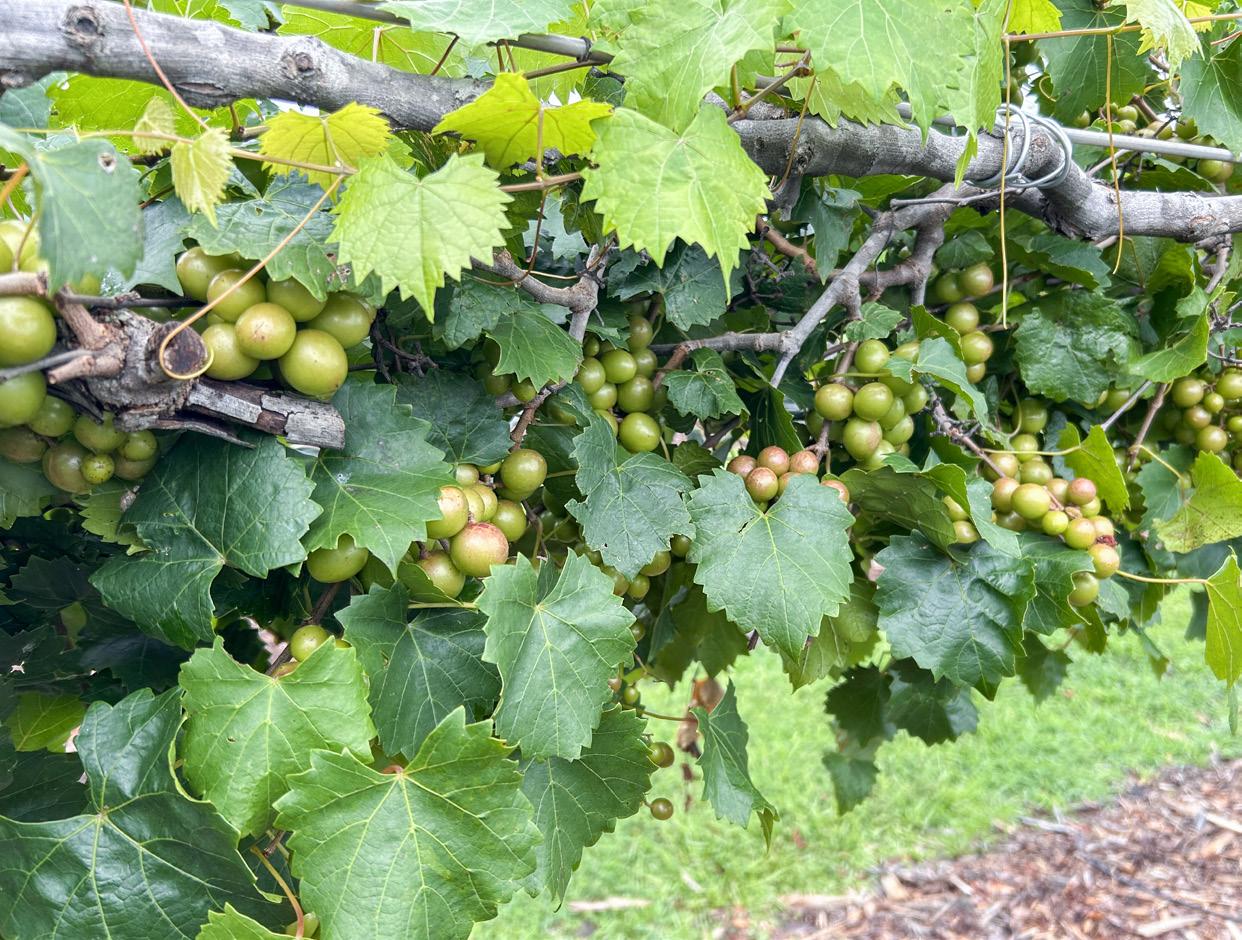
This healthy foundation supports a diverse landscape of produce that is integrated into the property’s aesthetics. The farm grows plots of blueberries, blackberries, figs, muscadines, pears and persimmons, alongside a third of an acre dedicated to traditional seasonal vegetables like tomatoes and squash.
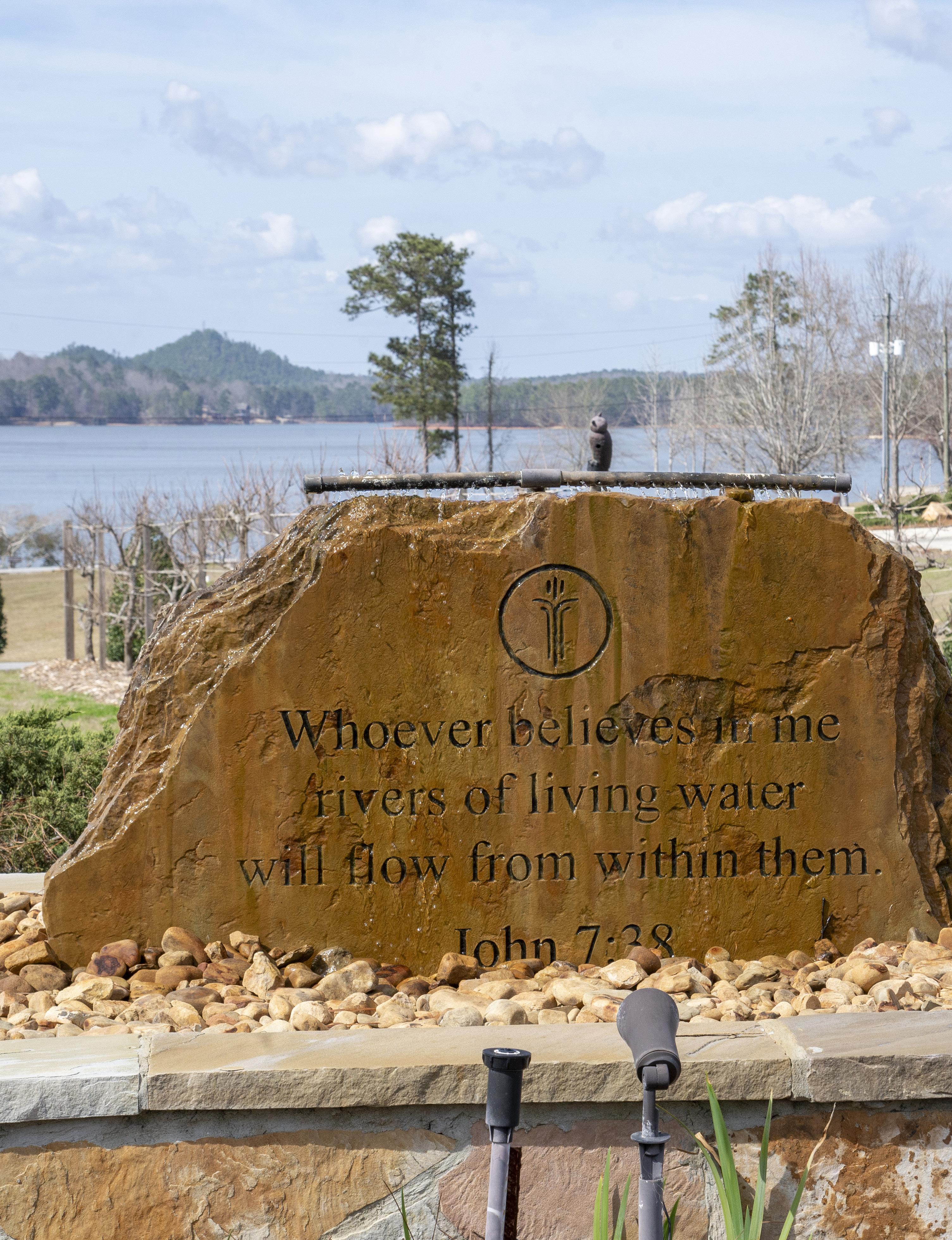
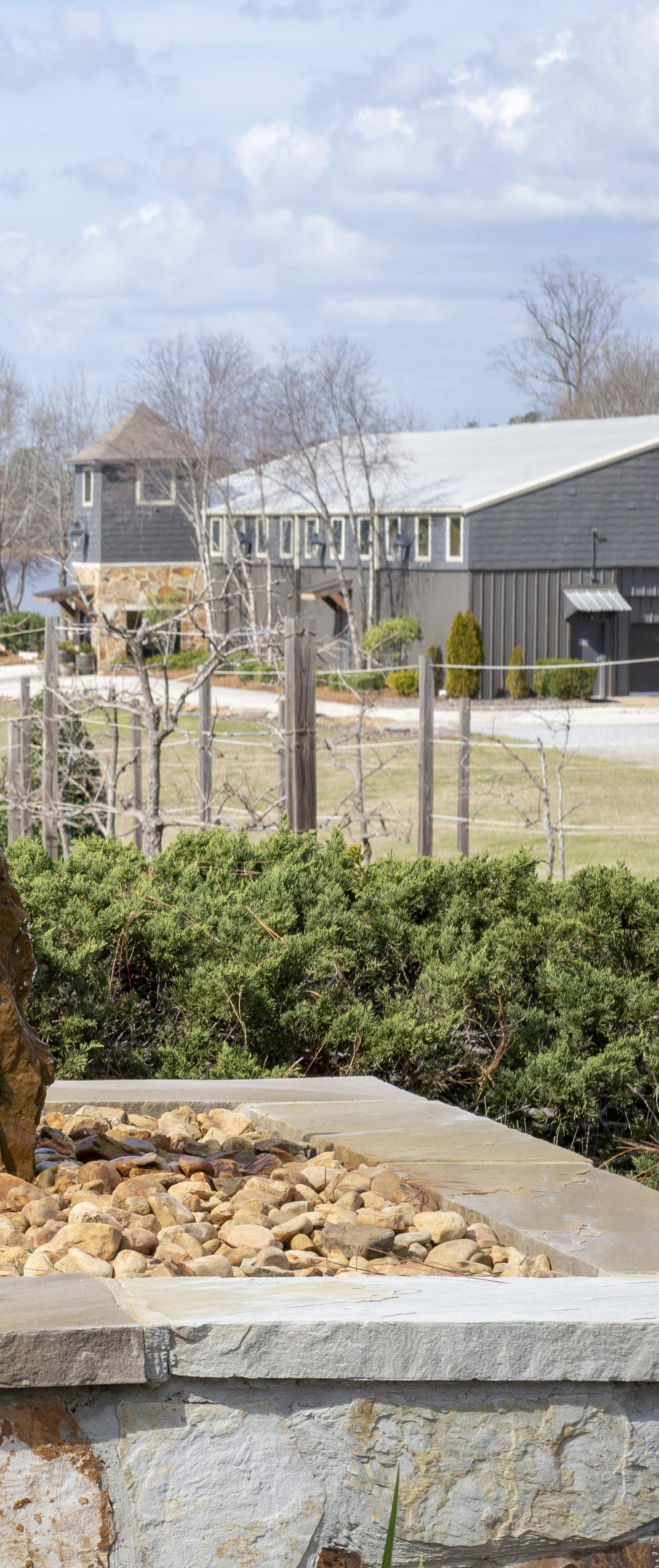
New Water Farms features working fields for the community to dig into.
New Water’s impact
extends well beyond its own fence lines, notably through its long-term partnership with the Tallapoosa County Girls Ranch. Eric Strong, director of ranch life, has seen the benefits firsthand over the years.
“New Water is great about teaching agriculture and how the growing process works,” Strong said. “Robert Brandon does a great job teaching that to our girls and to everyone who comes to New Water.”
The partnership is multifaceted. Not only do the girls from the ranch often serve as summer farmhands –earning money while learning to pick and process fruit – but New Water also maintains a community garden specifically for the ranch.
“We can go over there, pick our produce and bring it back to cook fresh vegetables,” Strong said. “It makes our grocery bill lower and our girls healthier.”
From working in the fields to helping with hospitality and remaking beds for missionaries staying on the farm, the girls are learning life skills that go far beyond the garden gate.
That teaching aspect of New Water’s mission has recently expanded to two other local pillars: Southern Preparatory Academy and Lake Community Church.
In Camp Hill, the military structure of Southern Prep
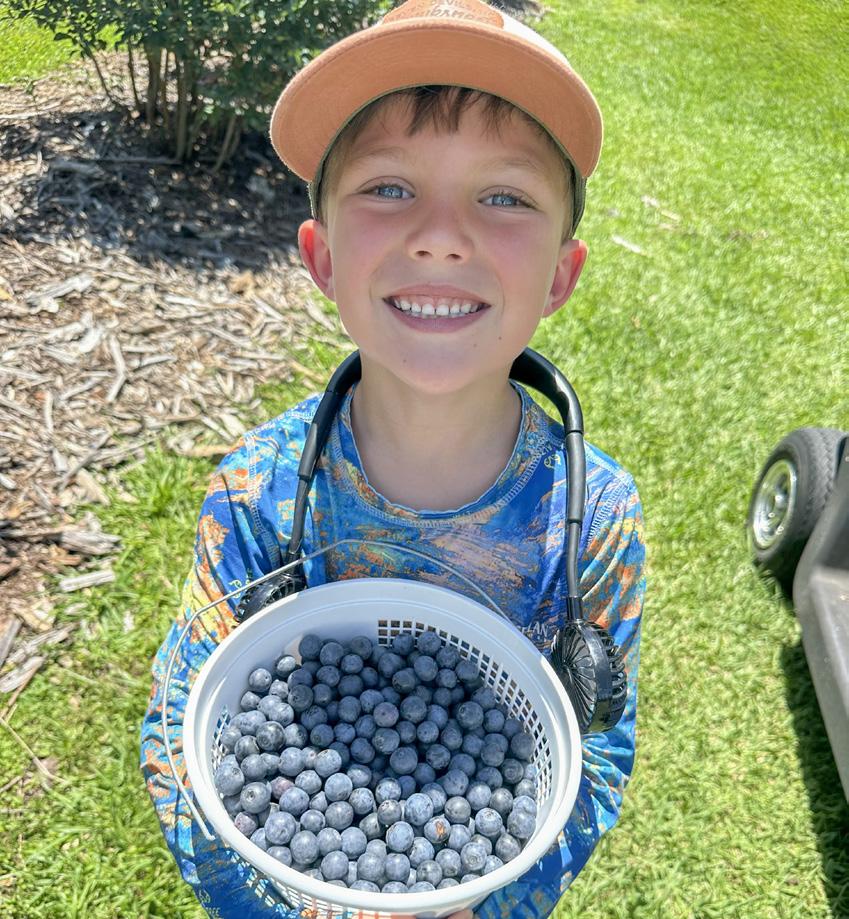
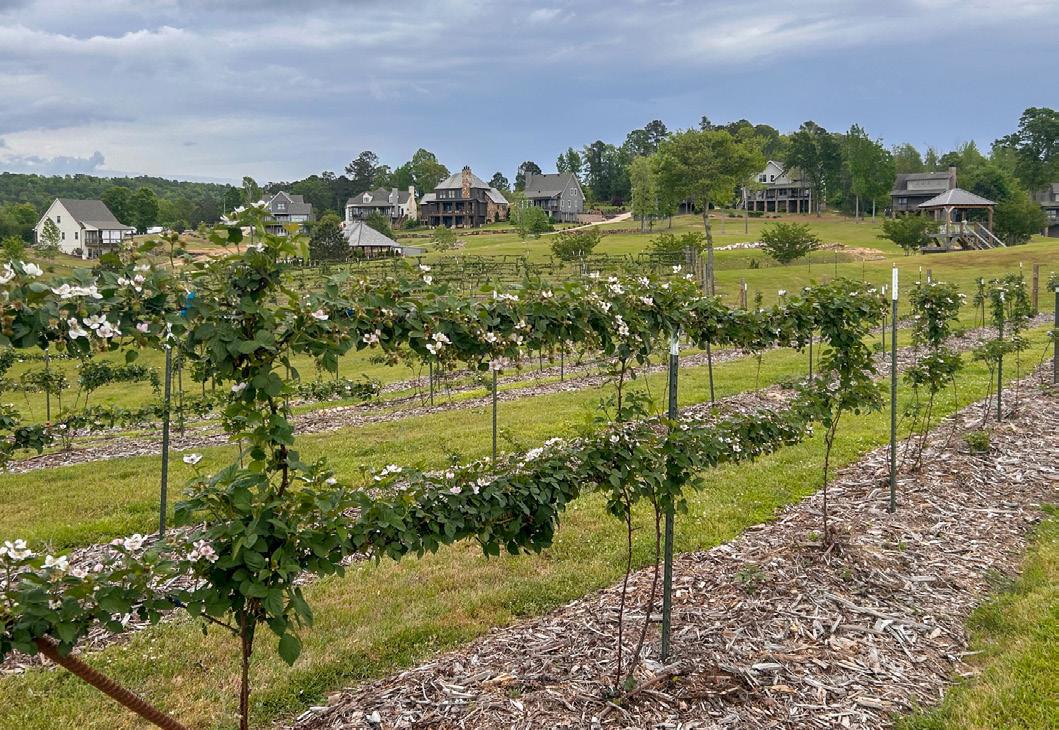
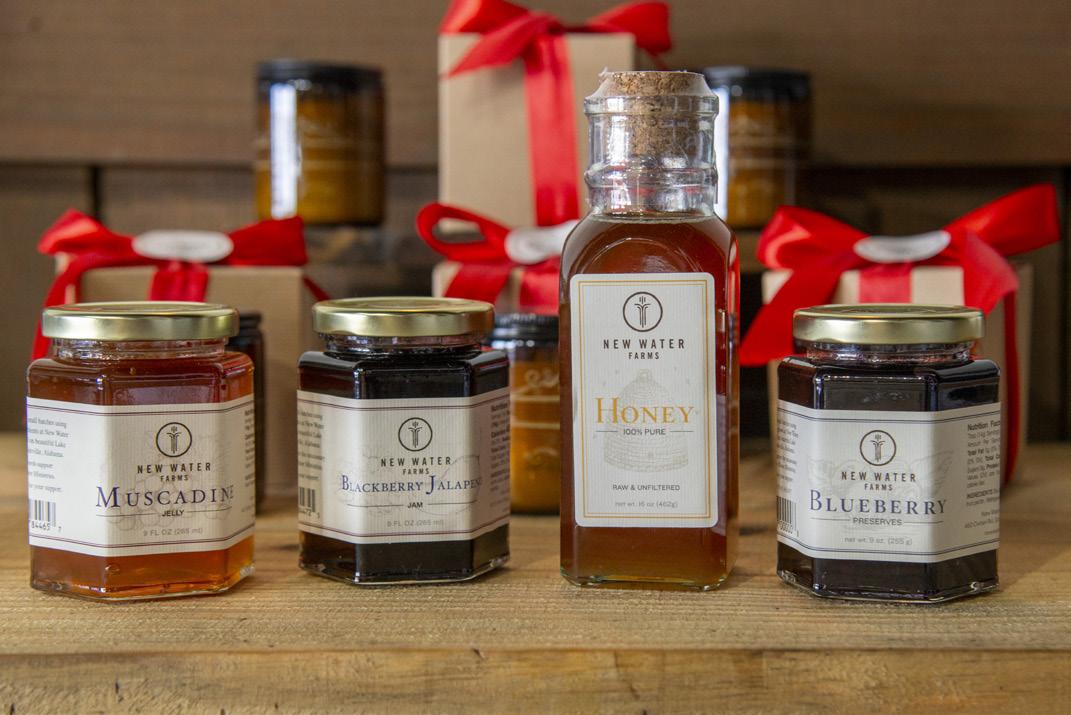
Clockwise from Top Left: Robert Brandon; The farm's U-Pick season runs May through July; New Water is home to diverse orchards; A few of the farm's products.
is finding a new kind of discipline in the dirt. Ryan Montgomery, who leads the academy’s agricultural and apiary clubs, sees the partnership with New Water as a return to the school’s 300-acre heritage.
“I came to Southern Prep because I believed in the vision,” Montgomery said. “We’re working toward getting back to those roots of being a self-sustaining farm.”
New Water is the primary catalyst for this restoration. Currently, the two organizations are reclaiming 12 acres of land on Southern Prep’s property that were lost to forest growth. By removing stumps and restoring soil health using New Water’s regenerative techniques, the academy is building a seed-to-harvest pipeline that brings produce directly to the school’s dining hall.
The impact is as academic as it is physical. Brandon works closely with the academy’s science teachers to turn the farm into a living laboratory where cadets perform soil tests and study agriculture.
“Robert sees the young people and tries to incorporate
them as much as possible,” Montgomery said. “He always says if we restore the ground and restore our soils, we start restoring our relationships. Our partnership with New Water is exactly that – it’s about community.”
Meanwhile, in Dadeville, Lisa Andrews of Lake Community Church has found an invaluable mentor in Brandon as she works to establish a garden to support Loaves and Fishes Food Pantry. Andrews’ vision for the church garden began when she realized the staggering need in the community.
“I was praying with a man and found out he had not eaten in three days,” she recalled. “The Lord spoke to me, and we decided to clear some land behind the church for a garden.”
When Brandon heard about the project, he didn’t just offer advice – he brought his tractor. New Water helped the church plant cover crops to turn clay and rock into viable soil, and Brandon is currently growing seedlings in the New Water propagation house specifically for the church’s vertical rows.
“Robert is constantly there at the right time, sending the right information to be of value,” Andrews said. “New Water is bringing people together to do the work of the Lord.”
For those who can’t spend their days in the fields, the New Water farm stand on County Road 34 offers a way to take the mission home. Open on Saturdays in June, July and early August, the stand features fresh vegetables picked just the day before.
The farm is also famous for its jams and jellies, which are made using tried and true family recipes from New Water board members and staff.
“A lot of people say when they eat our jams, it takes them back to their grandmother’s house,” Brandon said. “Healthy food doesn’t just benefit our bodies; it connects us to our past.”
As the seasons shift, Brandon and his team of volunteers – who contributed a staggering 1,400 hours of community service last year – are preparing for the U-Pick season. Starting in late May and running through June and July, the community is invited to the farm to harvest their own blueberries, and Brandon hopes the initiative can expand to other crops as well.
“The whole agricultural industry is changing quickly,” he said. “People are becoming more health-conscious. They want to know where their food comes from. We want to help them figure that out and benefit our local farmers.”
Whether it’s a cadet learning to till the earth, a young woman from the ranch processing blackberries or a neighbor feeling a sense of peace while walking the rows, New Water Farms is proving that the most important thing they grow isn’t found on a vine – it’s found in the hearts of the community.
Visit newwater.com to learn more about New Water Farms’ mission and available products.
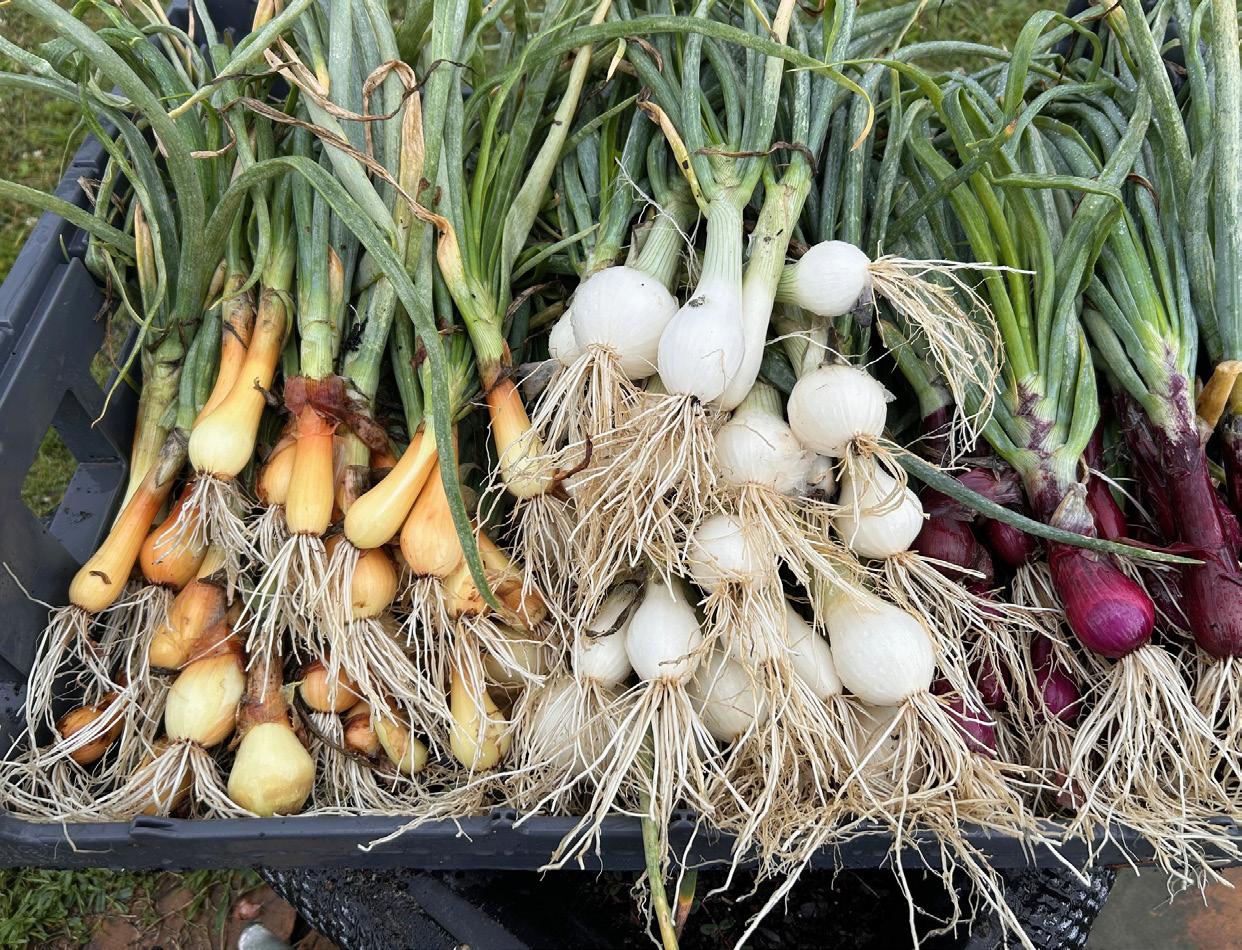
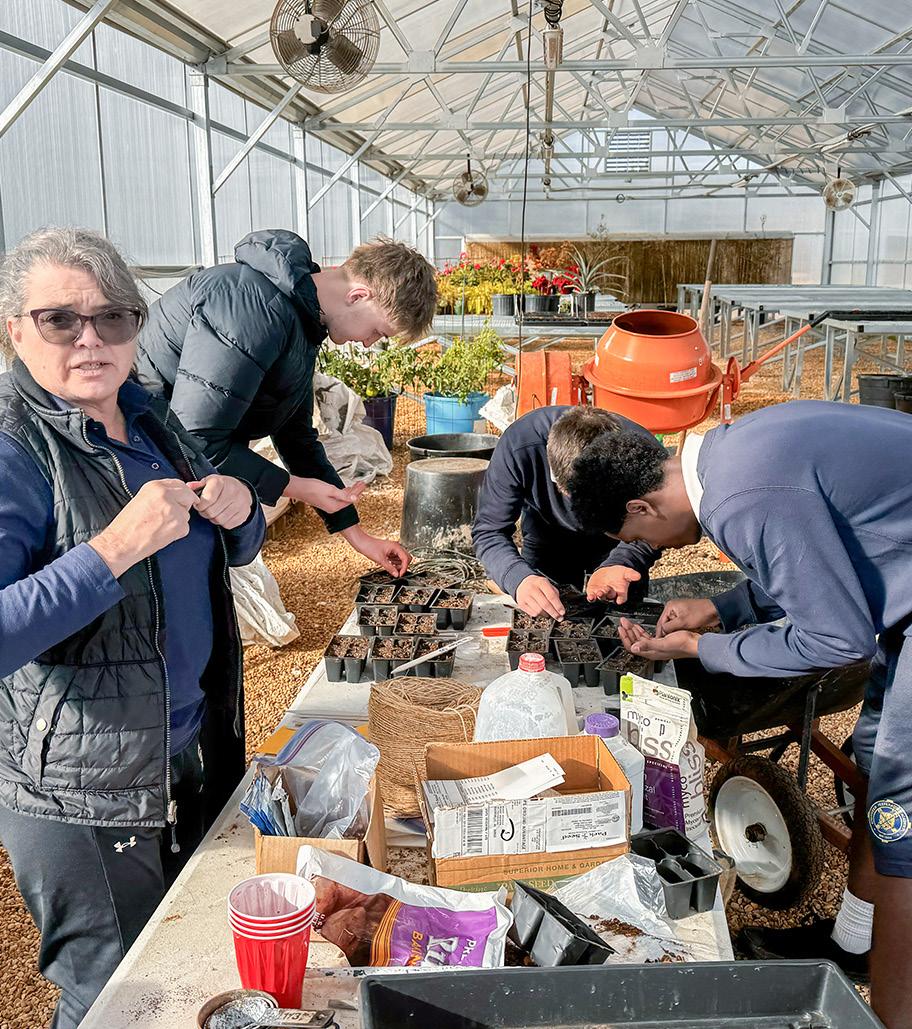
From Seeds to Harvest Top to Bottom: Vegetables from a harvest; Southern Prep students work in the propagation house; Muscadines on a vine.



he North American beaver (Castor canadensis) is Alabama’s largest rodent and one of the more impactful species we have. Arguably the best natural engineers and builders, beavers can reshape a landscape like no other animal. In the right setting, beavers can produce superior wetland ecosystems. In the wrong setting, beavers are a source of chaos and destruction.
Beavers are primarily nocturnal, semi-aquatic rodents. Their webbed feet and flat, paddlelike tails make them excellent swimmers. They have large orange front teeth that never stop growing and are used for cutting and moving trees. Their preferred diet of woody and herbaceous plants allows them to grow between 41 and 46 inches long and weigh between 29 and 80 pounds. The luxurious quality of their brown fur was a leading cause of western exploration and expansion in the early days of our country. Harvesting beavers was such a driving force that they were extirpated from much of Alabama and their native range. Thankfully, restoration efforts have brought them back, and they are thriving once again.
Beavers prefer to live in slow-moving freshwater streams, lakes and ponds that have a nearby food source. In Alabama, beavers are more likely to live in a bank den that they dig; however, they will occasionally build a lodge like their northern relatives. They do not live in dams.
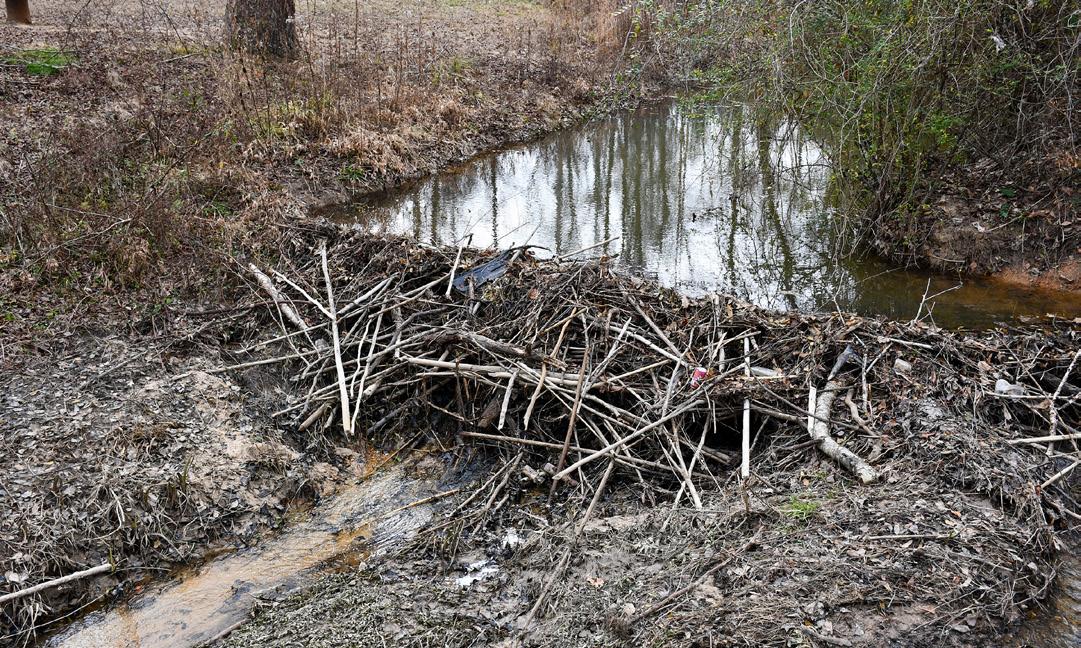
Nonetheless, beavers are most known for dams. As residents of slow-moving water, beavers instinctively don’t like the sound of running water and will build a dam until it stops; however, it is unlikely that sound alone is the driving motivation. Beavers need a certain water depth for movement, food availability and to manage predator access. They build dams to create the preferred water depth.
Beavers will increase the dam’s size to flood more land and reach additional food when needed. Dams built in streams with tall banks or deep valleys tend to flood less area during the initial construction. In contrast, dams built in shallow streams or wide, flat areas tend to flood larger areas with the initial dam construction. In places such as lakes, ponds and larger rivers where there is sufficient water, food and habitat, beavers may not build a dam. The need for a dam and how it affects the local area will always be unique to the water flow, topography, vegetation and other features of the affected landscape.
If the conditions are amenable and the landowner allows them to remain, beaver wetlands can be ecological powerhouses. They improve water quality, filter sediment, decrease runoff and create high-quality habitat for waterfowl, fish and other aquatic animals. Biodiversity in a beaver wetland can be high, making these wetlands a boon to the local ecosystem. There are even many examples of beavers solving problems with flowing water before people can determine the best solution.
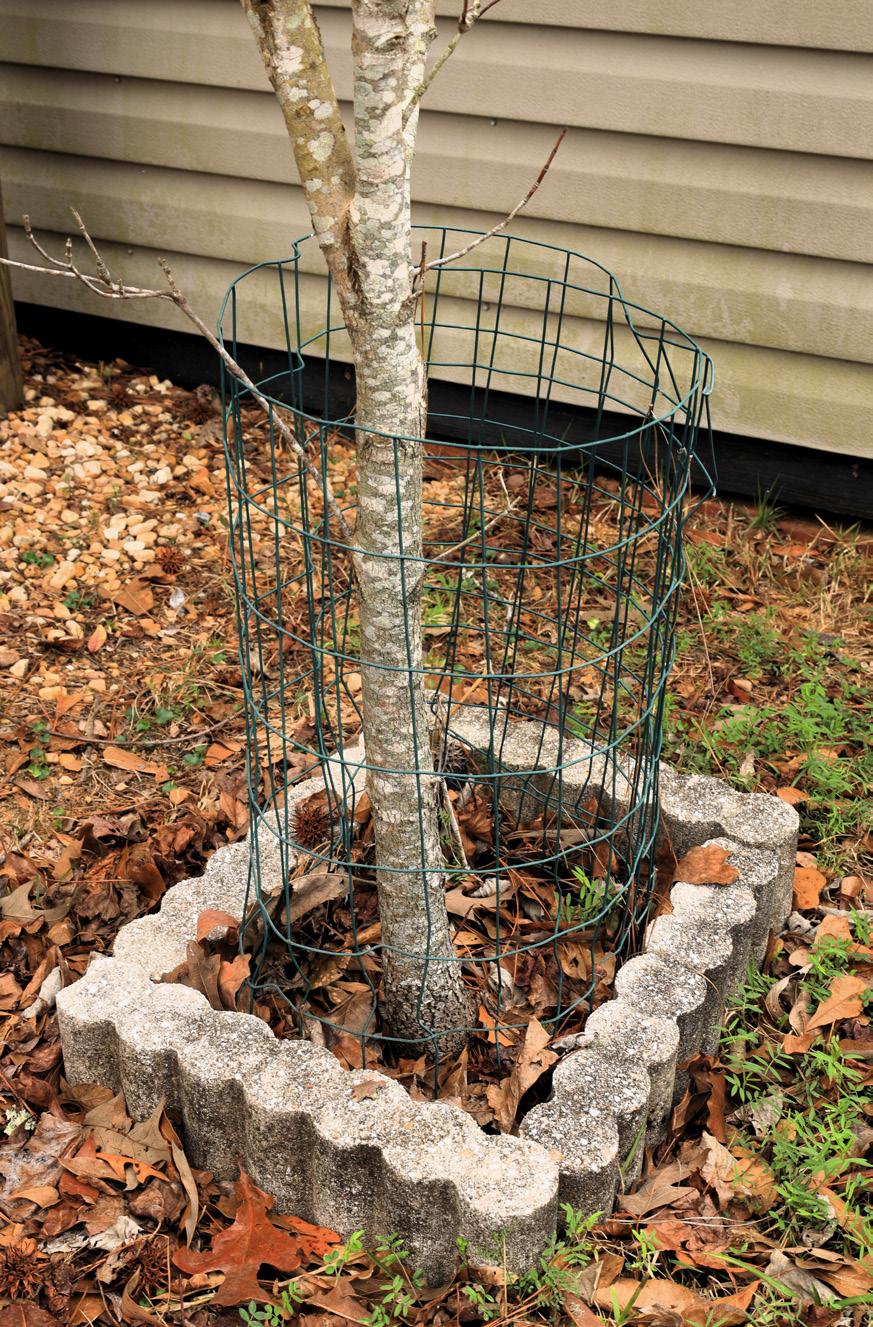
Keeping Beavers at Bay Inset: Metal wire or fencing can be used to protect trees from damage and should be 3 feet high and loosely wrapped.
Conflicts arise when landowners do not want beavers present or when dams create flooding problems on intolerant land. Early signs of beavers include backed-up water and gnawed, girdled or downed trees. Other signs include lodges, dams, bank dens, clogged culverts, slides, runs and channels.
On properties with dammed streams, flooding can damage timber, crops and buildings, causing economic loss and hardship. Beavers in ponds can damage man-made dams with dens and slides, causing erosion and potential structural failure. They will also often block overflows and water control structures, risking flooding and dam breaches.
On properties without beaver dams, such as ponds, rivers and lakes, beavers are less likely to cause flooding damage; however, they are still likely to damage trees, shrubs and other vegetation. Often, this damage does not occur to timber or other commercial products; it occurs to ornamental plants and landscaping. When beavers
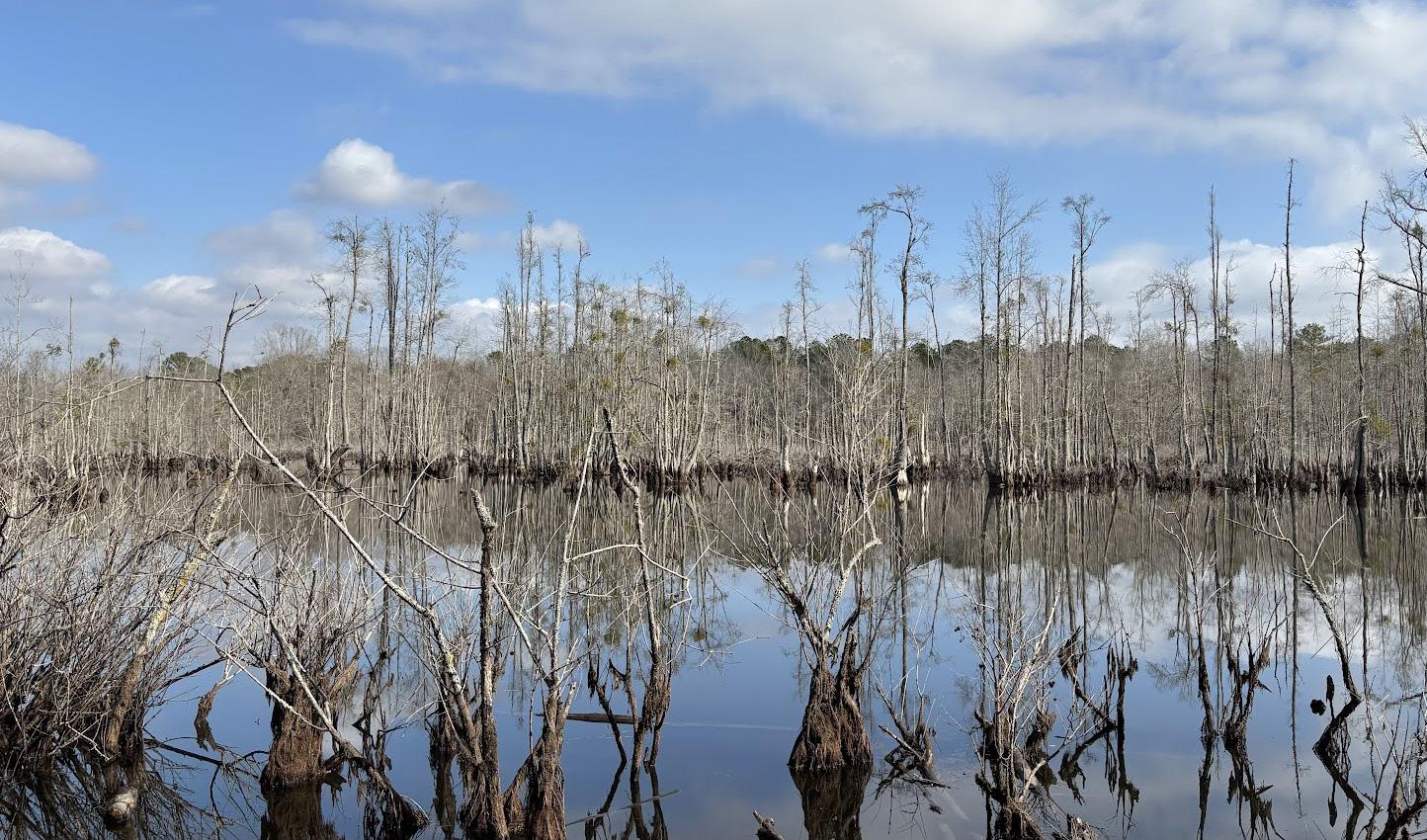
Clockwise from Left: Beaver dams are built to control water depth and area; Beavers prefer to live in fresh-water streams or ponds close to a food source; Wetlands created by beavers are beautiful and biologically diverse ecosystesms, but they often come at the expense of standing timber.
start damaging property and causing economic hardship, it’s time to remove them from the property.
Beaver control includes mitigating damage, exclusion and lethal removal. If the presence of beavers alone is not a problem and taking back control of waterlevel regulation is the priority, pond leveling devices – commonly called the Clemson Beaver Pond Leveler – can be installed. These devices are designed to bypass beaver-built structures; however, they must be regularly monitored and maintained.
Exclusion devices use metal fences and barriers to prevent beaver access to certain areas or objects. Depending on your needs and management objectives, these structures could be installed temporarily or permanently. Exclusion devices require regular maintenance and debris removal to prevent clogging. If installing barriers on individual trees to prevent beaver damage, barriers need to be at least 3 feet high and loosely wrapped. The height prevents beavers from standing on their back feet to reach up and gnaw, and the loose wrap prevents beavers from chewing through gaps and prevents the barrier from embedding into the tree.
Lethal removal becomes necessary when other

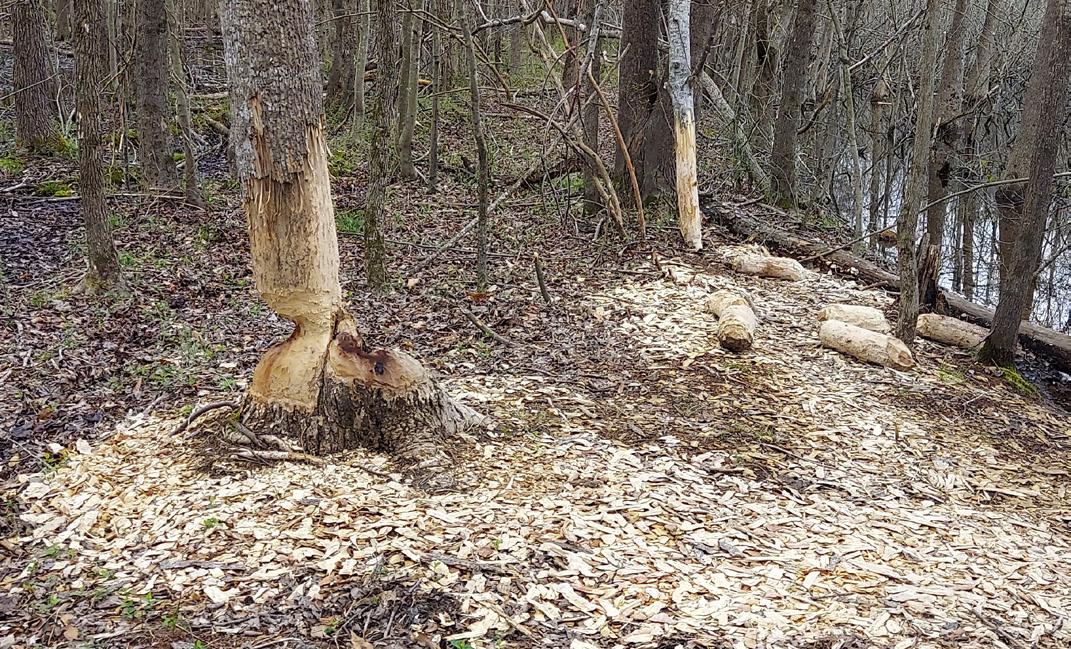
Gnawing Trouble
Beavers gnaw trees for food and to use as construction materials. When a tree is too large to process in one session, a beaver will come back to it as needed.
management options do not accomplish your objectives. With small populations, and where allowed, shooting beavers can be an effective method.
A 12-gauge shotgun with No. 4 buckshot or BB shot is preferred to prevent dangerous ricochets. Daytime removal is allowed without a permit, but a permit from your Alabama Department of Conservation and Natural Resources district office is required for nighttime shooting of nocturnal beavers.
Trapping is the preferred method for covering larger areas and managing larger populations. The most commonly used traps are size 330 body-grip traps, snares and foothold traps. Effective trapping takes practice and experience, but everyone is a beginner at some point. The most important thing to remember when trapping is to follow all laws, take precautions to avoid catching nontarget animals and ensure kills are quick and humane.
For more detailed trapping information, check out the ACES YouTube Beaver Trapping Series at aces.edu/go/489 and Extension article ANR-0630.
The final step in beaver management is often dam removal. Beaver dam removal is no small task, and the preferred method depends on the size, location, accessibility and desired financial input. Small dams may be removed manually with hand tools and hard work. Larger dams often require heavy machinery or explosives. Follow all laws and keep safety the highest priority when removing beaver dams.
Having beavers on your property can be both a blessing and a challenge. They can improve habitat to support many species but can also negatively impact the value or usefulness of the property. Consider your intended management goals for the whole property before selecting an approach to manage beavers. Extension agents are happy to provide on-site assistance in developing a management plan for beavers on your property.
~ Kyle Marable is the Extension agent for forestry, wildlife and natural resources in the East Central Region.

SATURDAY
MARCH 28, 2026
9 AM - 2 PM

Plant Vendors • 1000 Trees Give Away
Educational Speakers • Food Vendors



Dadeville High School Parking Lot 227 Weldon Stree, Dadeville In case of
March 29th.
When springtime stirs in the South, gardens begin coming back to life. Vegetables are planted with hopes of soon finding their way to the table, and the first bits of green begin to break through the soil. It’s a season filled with fresh starts, muddy boots, early-morning watering and the dreams of all the home-cooked meals those little plants will soon become.
When I was younger, my parents kept a small backyard garden, and one of my favorite memories was pulling carrots from the ground. I can still picture grabbing those bright green tops, giving them a gentle tug
and watching them slowly come up through the dirt. Brushing off the soil and seeing what had been growing beneath the surface brought joy to that little girl. It was in that moment I made the connection between hard work, patience and bringing good food to the table for the people you love. March is the perfect time to plant carrots, turning tiny seeds into sweet, crunchy goodness you can use in simple recipes like this carrot apple salad. From garden rows to spring side dishes, this easy-to-make recipe is perfect when you want something light and fresh. It’s the kind of dish that doesn’t require fancy Gina Abernathy
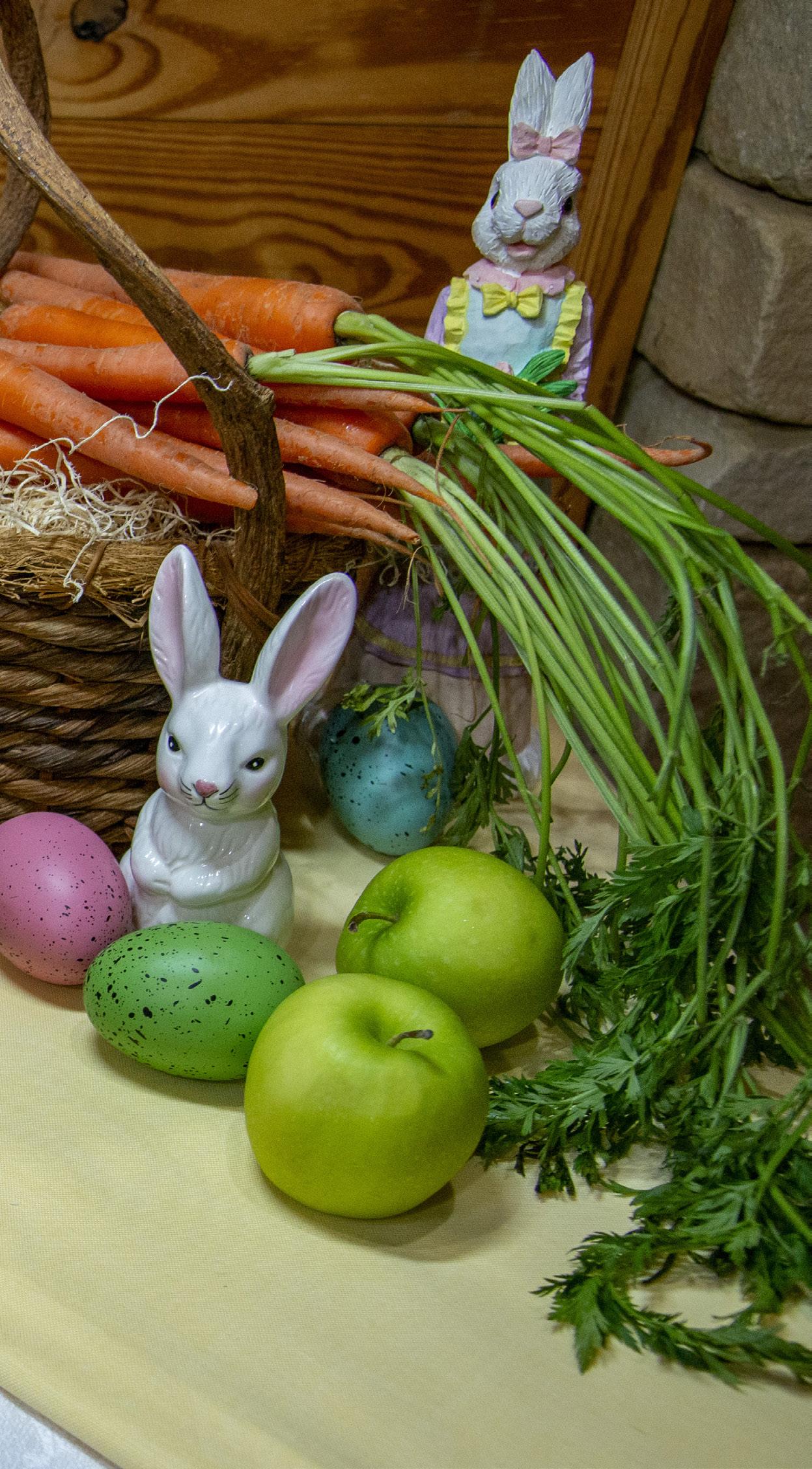
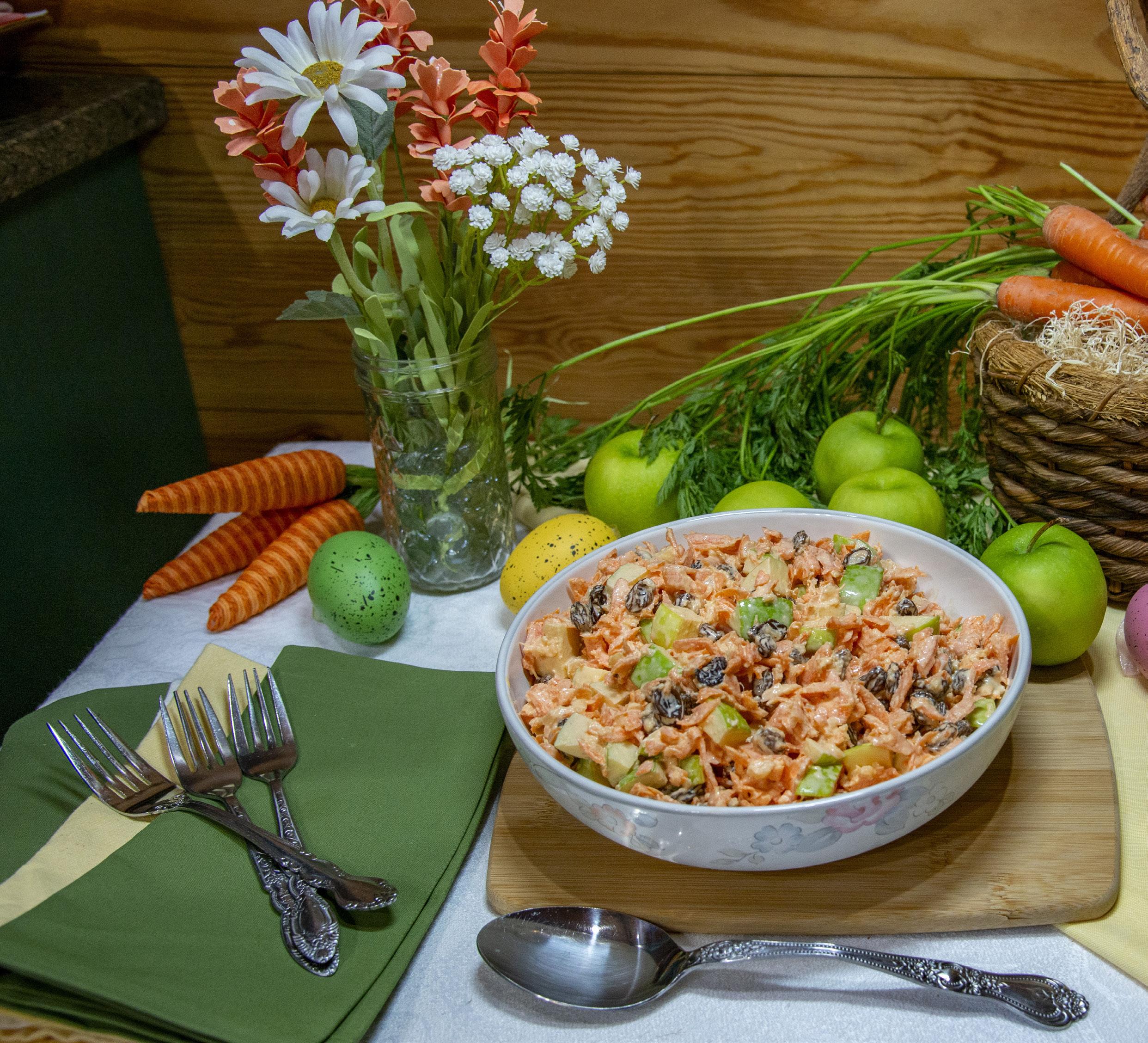
ingredients or hours in the kitchen. Adding this salad to a meal is like bringing a little piece of the garden indoors. Freshly grated carrots are the heart of this dish. Their crisp texture pairs perfectly with juicy apples, sweet pineapple and plump raisins, adding a light, creamy contrast to the dressing that keeps the dish feeling balanced and fresh. It’s a dish that works nicely alongside a holiday ham for Easter, yet it’s simple enough to enjoy any night of the week when you want something refreshing and easy to put together.
4 cups carrots, grated 8 ounces crushed pineapple, drained well 1 cup raisins
1 large Granny Smith apple, diced small 2 tablespoons sugar 3/4 cup mayonnaise
Prepare the carrots by peeling and grating them. Combine the grated carrots, diced apple, crushed pineapple and raisins in a medium bowl, stirring to combine. In a separate bowl, mix the mayonnaise and sugar to make the dressing, then pour it over the carrot mixture and toss to coat evenly. Refrigerate for several hours before serving, then enjoy!
• Grate fresh carrots.
• Hand-grated carrots are more tender and are the best choice.
• Make this recipe in advance.
• Prepare it in advance and refrigerate until ready to serve. It gets better the longer it sits in the refrigerator.
•Store in the fridge.
• This salad will last for about three days in the refrigerator. It tends to get a little watery after a few days.
Whether you’ve just pulled carrots from your backyard garden or picked them up at your local market, every spoonful brings comfort and brightness to the table. This simple carrot salad is a reminder that good food doesn’t have to be complicated. Sometimes, the best dishes come from a handful of simple ingredients and your backyard.
~ Gina Abernathy is the author and recipe creator behind the blog, Home at Cedar Springs Farm.

In a secondgrade classroom, the air is usually filled with a buzz of restless energy, but when Kim Ly Patten stands at the front of the room, the atmosphere shifts to one of wide-eyed wonder. Patten isn’t just a guest speaker – she’s a storyteller, a journeyman in the Alabama Master Beekeepers Association and balancing living her childhood dream with a high-seas reality.
Decades ago, Patten sat in an elementary classroom just like theirs, captivated by a visiting beekeeper. That spark ignited a lifelong fascination with bees. Today, as the face behind the social media handle “The Cruising
Beekeeper,” she is turning that lifelong curiosity into a mission of education, conservation and adventure.
While Patten has called the Dadeville area home for nearly 18 years with her husband, Ted Kennedy, her deep dive into the world of Apis mellifera – the honeybee
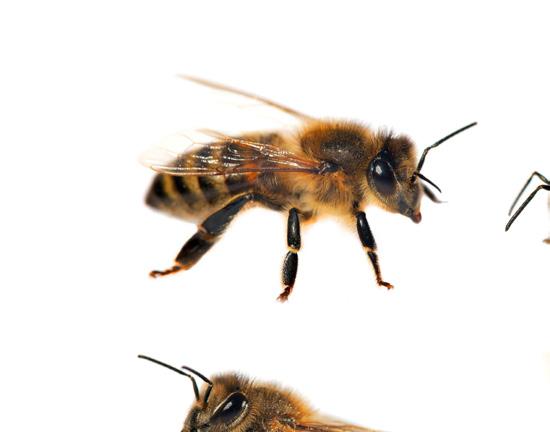
– began recently. Following medical retirement nearly a decade ago, Patten found herself at a crossroads. Seeking a more organic lifestyle, she turned her attention to the earth.
“Once you start trying to find healthy alternatives and living a more natural life, you start growing things,” Patten said. “I started a garden and once you have a garden, you realize you need pollinators.”
Despite her childhood fascination, the transition to active beekeeping was daunting. Patten reached out to David Whitman, the president of the Tallapoosa River Beekeepers Association, with the idea of hosting his hives on her property. She intended to simply provide a local sanctuary for the bees; however, Whitman saw a natural beekeeper in the making.
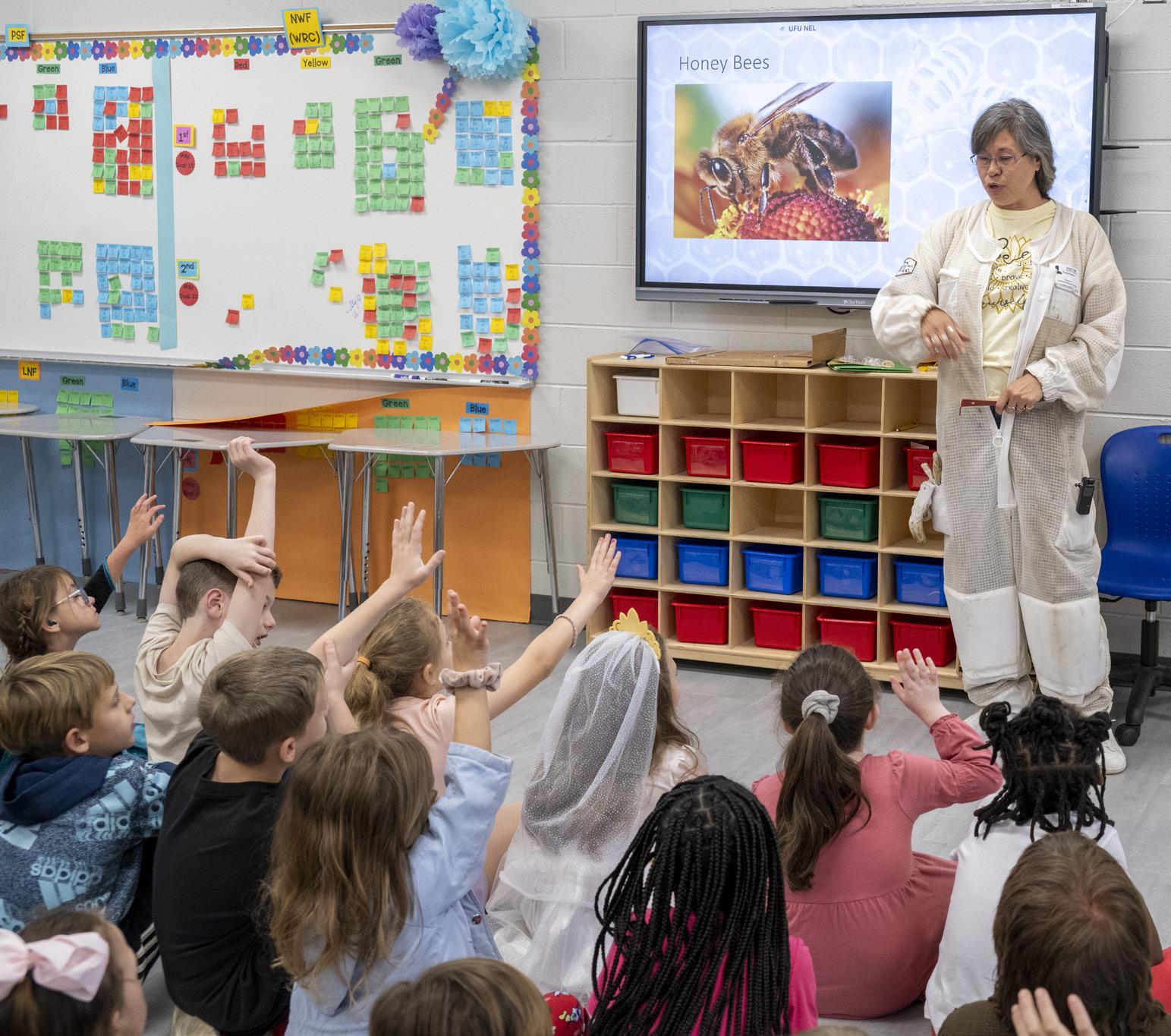
“I told him I was too old, that my back couldn’t take it,” Patten recalled. “But he invited me out to his apiary, suited me up and we cracked open a hive. I cried through the whole inspection. I was transported back to being that second grader. It was a total full-circle moment.”
While Patten is the face at the front of the classroom, she is quick to point out that the second-grade educational program is a collaborative effort. This year, she stepped up to head the program, but she doesn’t work alone. The initiative is supported by the Alabama Cooperative Extension System, a vital resource for local farmers and hobbyists alike.
“We have incredible support,” Patten said. “Trent Carboni
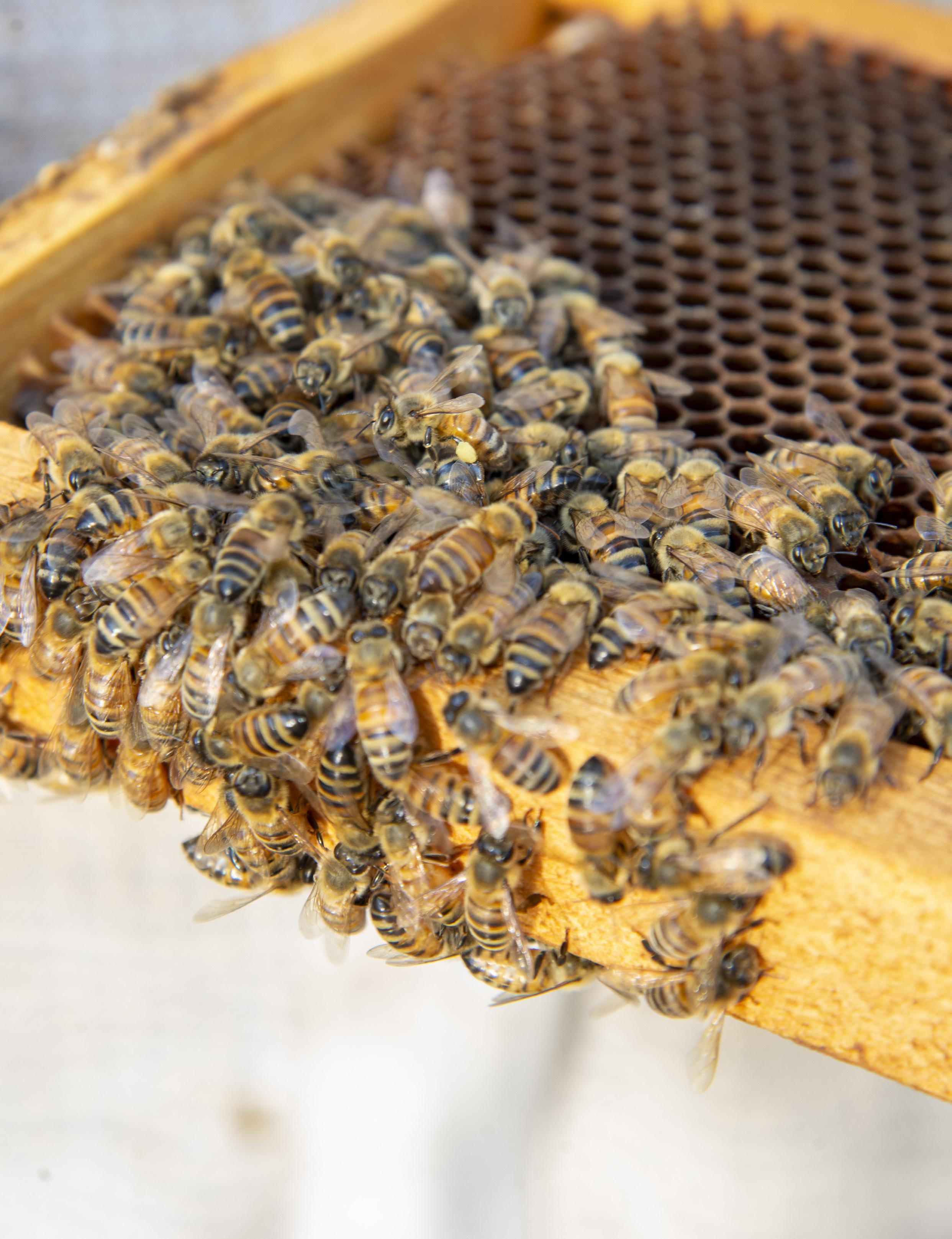
The Buzz About Bees Facing Page: A bustling bee frame; Top: Patten teaches children about the importance of pollinators.
But Patten’s beekeeping life doesn’t stop at the Tallapoosa River – her online presence is a blend of hive updates and ocean views. The name “The Cruising Beekeeper” is a literal description of her life. Since 2023, Patten has embarked on nearly 30 cruises, exploring the world while maintaining her hives back home.
This travel isn’t just for leisure; it’s an extension of her beekeeping education. From studying the medicinal properties of Manuka honey in New Zealand to observing the strict biosecurity laws in Australia, Patten brings a global perspective back to her local region.

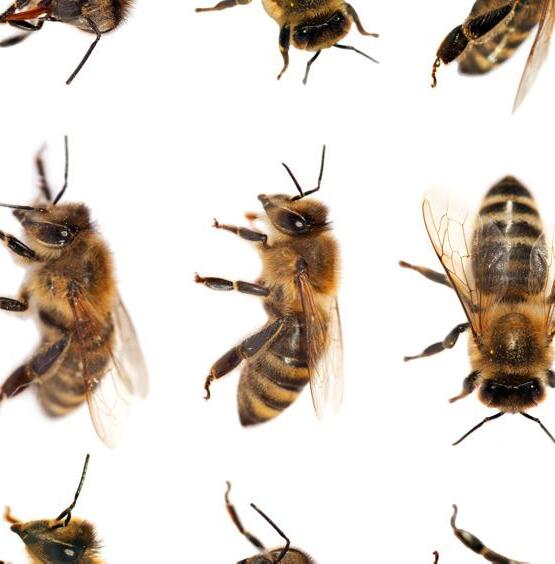
“Cruising gave me an opportunity to see how other parts of the world protect their bees,” she said. “I’m seeing the world while I have the opportunity, but I’m always looking at it through the lens of a beekeeper. Whether it’s honey tasting in New Zealand or seeing how urban hives work on New York City rooftops, there is always something to bring
Her social media presence serves a professional purpose as well. Building a digital platform to educate the public is one of the requirements as she works toward her Alabama Master Beekeeper certification.
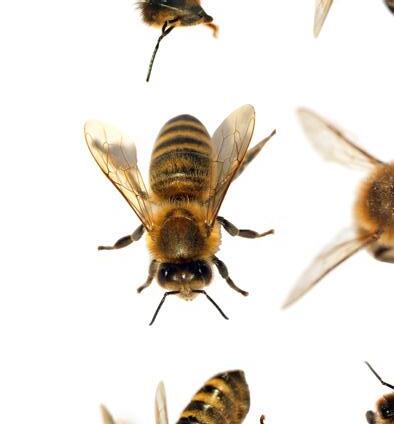
One of the highlights of Patten’s educational programs is the complex social structure of the hive. Understanding this biology is crucial for local beekeepers, especially during dearth periods – times when natural food sources for bees are scarce.
March typically marks the beginning of the gardening season, and Patten
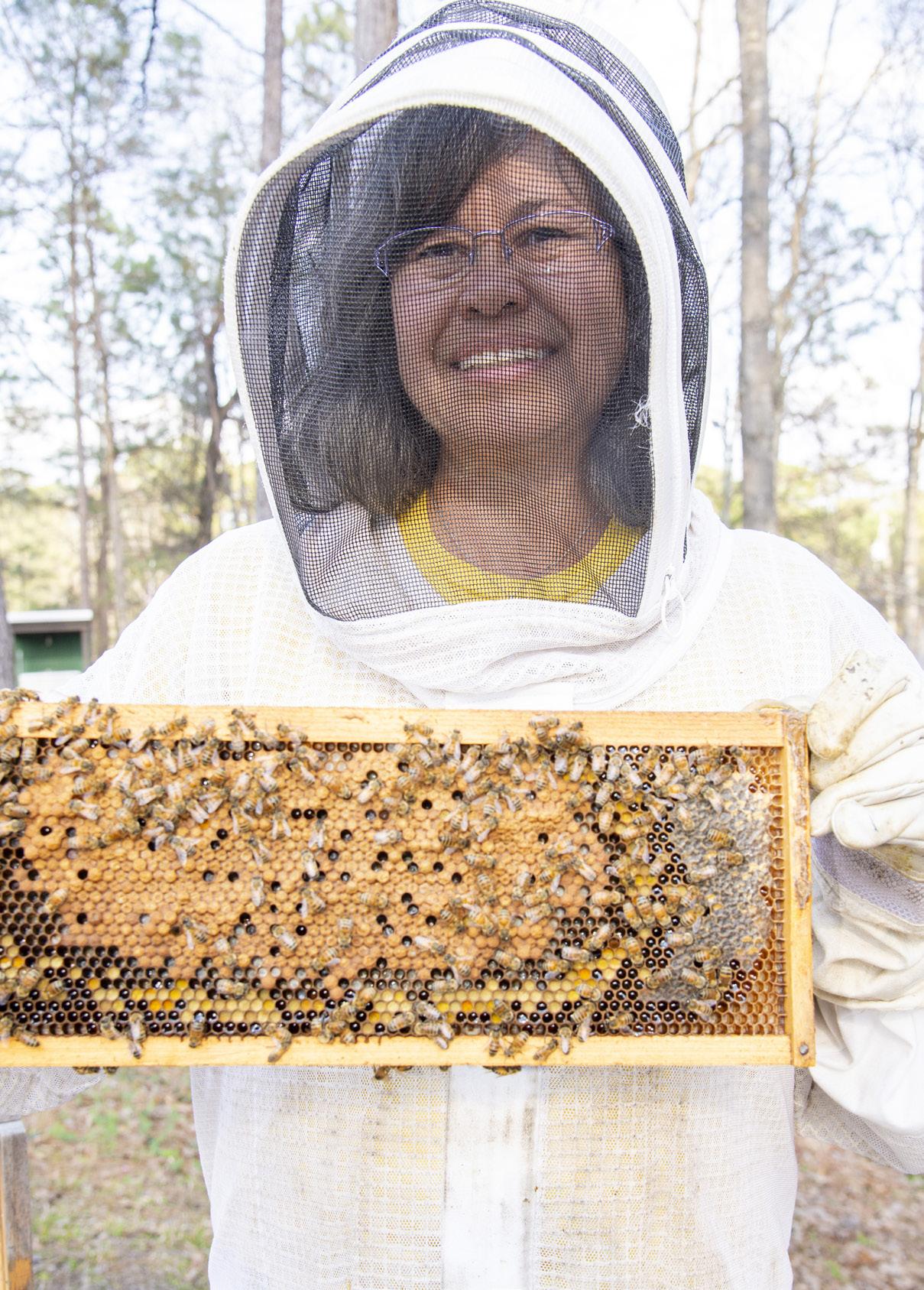
said beekeepers are always thinking months ahead. While gardeners are just starting to dig, the bees are already sensing the shift.
“Right now, the red maples are one of the first bloomers providing resources,” Patten said. “We also have henbit – those little purple flowers in the grass – and tulip poplars. The bees are flying and starting to collect.”
For those looking to support local hives without becoming beekeepers themselves, Patten has a simple plea: rethink the “perfect” lawn.
“People think Roundup is great because it gets rid of the weeds, but dandelions actually have more vitamin C than oranges,” she said. “We’ve been told these beneficial plants are evil just because they aren’t a uniform blade of grass. When we spray pesticides and herbicides, it doesn’t just go away. We see it show up later in the beeswax.”
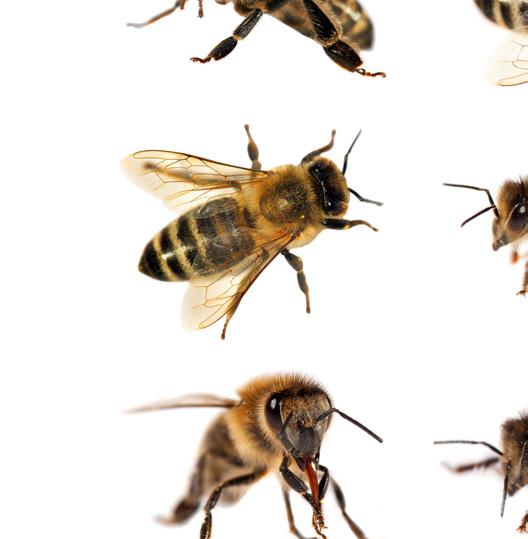
She suggests a more bee-friendly approach: planting native Alabama flowers and providing a shallow water source with landing stones so bees can hydrate without drowning.
Beekeeping is not always as sweet as honey – it is a laborintensive, often heartbreaking pursuit. This past year, Patten experienced a 90 percent colony loss, emerging from the winter with only one of her six hives.
The reasons for such a collapse are often a combination of factors. Sometimes, bees simply abscond and decide they no longer like their home, moving the entire colony to a new location.
Pests like hive beetles and the Varroa destructor mite can weaken the bees and introduce deadly pathogens or fungal infections. The threat of American Foulbrood is so severe that the state of Alabama requires all hives to be registered for a small fee, allowing for a coordinated defense against such contagious diseases.
And there is the brutal simplicity of an Alabama winter – if a colony isn’t strong enough to stay warm or runs out of stored food, they can freeze or starve.
“The bees didn’t read the textbook this year,” Patten laughed. “You can ask 10 beekeepers the same question and get 10 different answers, but at the end of the day, you have to learn to listen to the hive.”
Then, there are the stings.
“This queen bee flew into a light fixture and when I tried to help her, I got stung twice on my eyelid,” Patten said. “It’s a reminder that even when you love them, you have to respect their space.”
Despite the challenges, Patten is focused on the future. She is currently heading up the second-grade educational

program for the Tallapoosa River Beekeepers Association, ensuring that the next generation understands the vital role pollinators play in our food system – roughly 80 percent of the country’s crops rely on them.
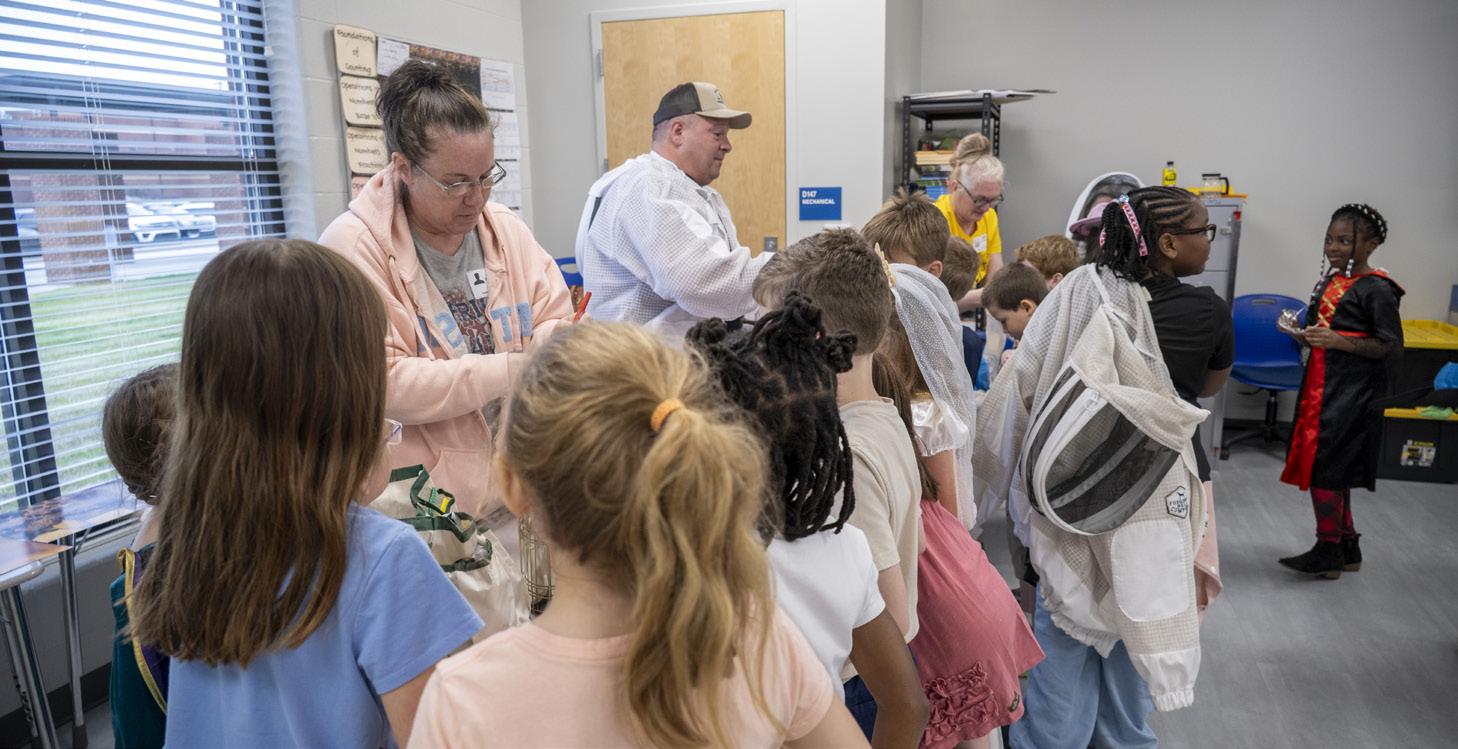
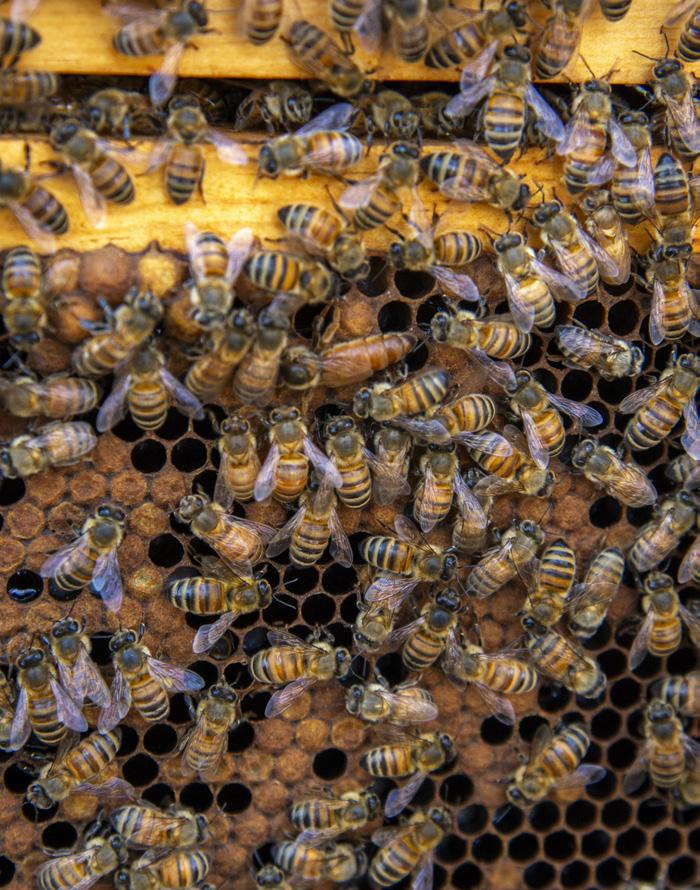
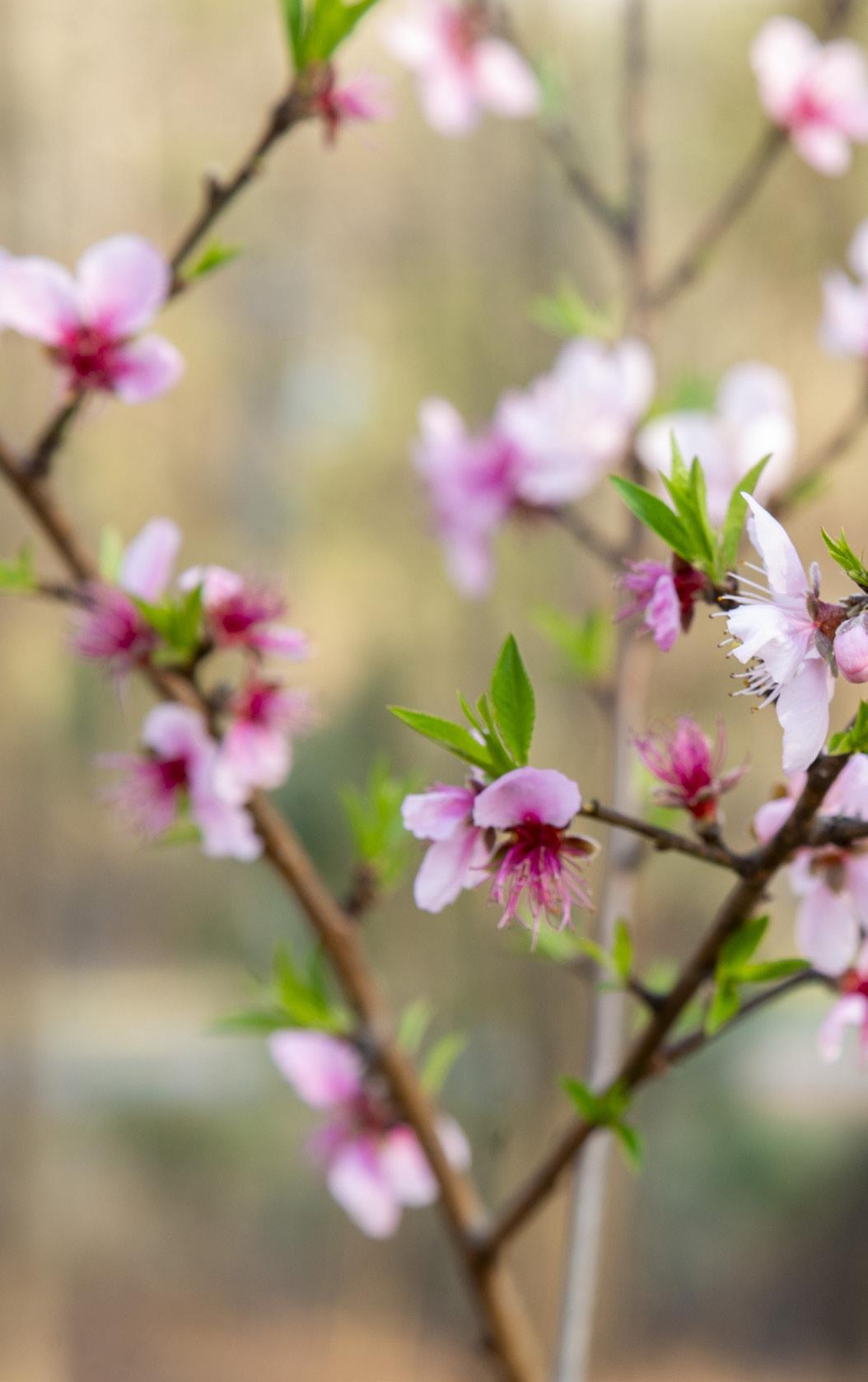
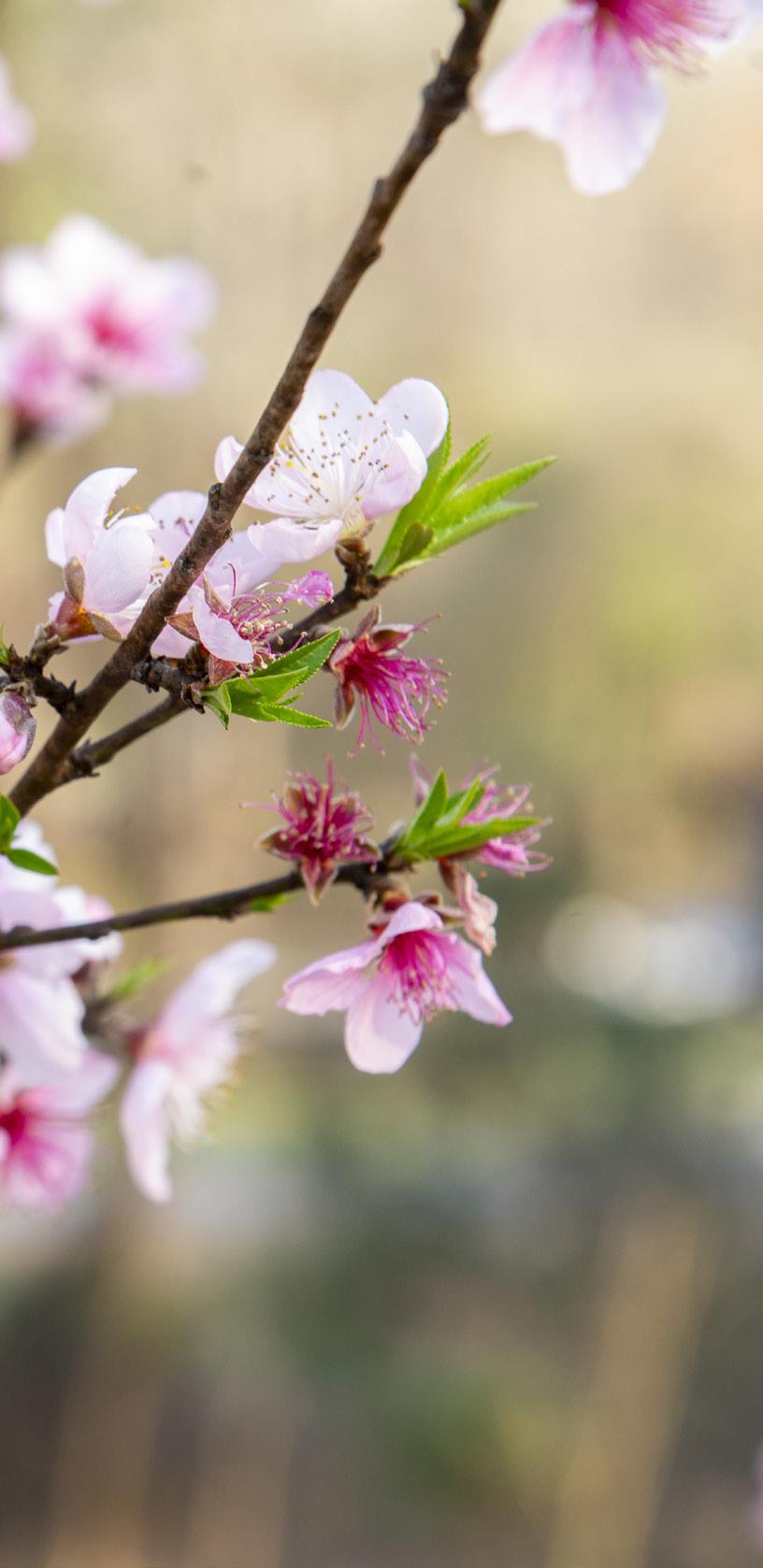
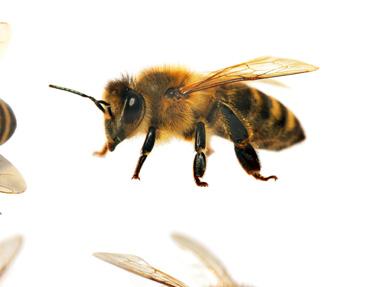
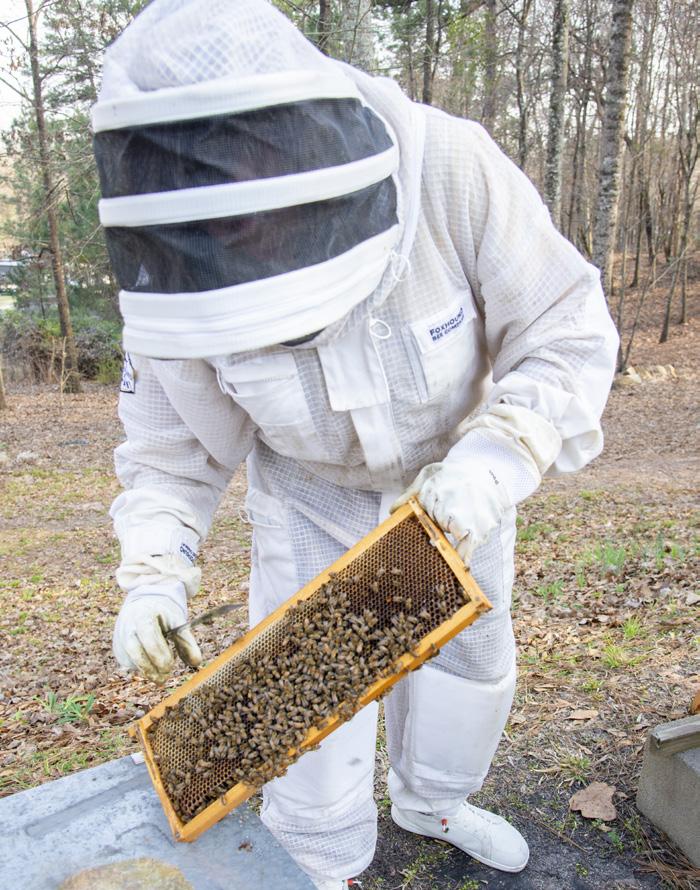
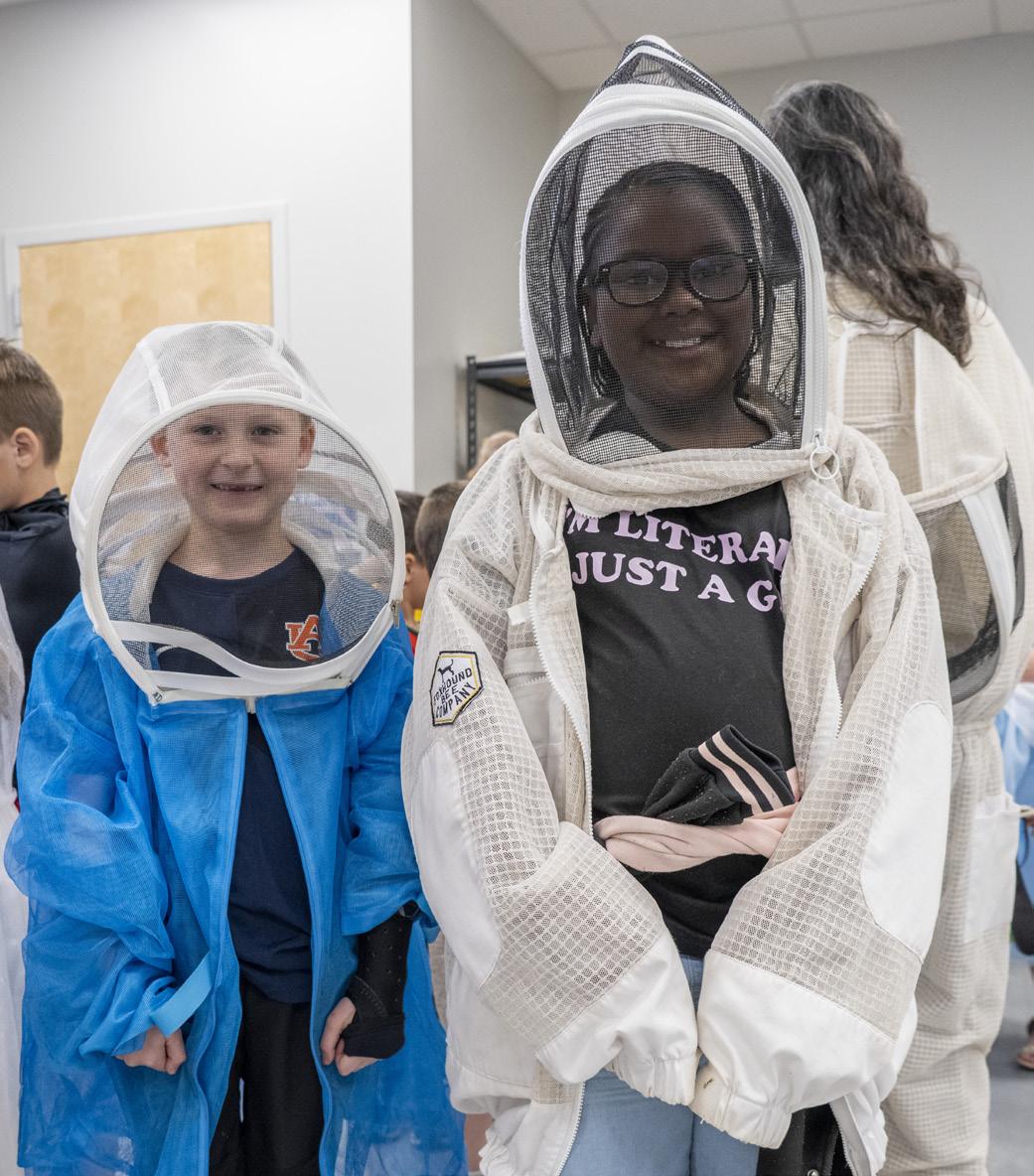
Clockwise from Left: Kim Ly Patten; Peach trees are early bloomers for bees; Reeltown Elementary; Patten brings her travel knowledge back home; Students suit up for beekeeping; Complex social structure of a hive.
Patten draws inspiration from mentors like Whitman and Kathy Coleman of the Eclectic Bee Farm, emphasizing that beekeeping is best done in community.
Whether she’s bottling her Poosa Brand Bees wildflower honey for a limited Facebook release or heading to a Master Beekeepers conference, Patten’s heart remains in the hives of Dadeville.
“I don’t do it for the title of ‘Master,’” Patten said. “I do it because if I can learn more, I can do better for the bees. Even if I’m not here, the bees will be. My job is just to make sure they have the best chance possible.”
Follow @thecruisingbeekeeper on TikTok, Instagram and YouTube or Kim Ly Patten on Facebook to keep up with her hives and high-sea adventures.









STORY BY SHAYLEE BECK MOORE
Long before smartphones and modern meteorology, farmers and gardeners relied on a small paperback book as a trusty companion to guide them in their fields. Whether believed to be folklore or natural predictions for long-range weather forecasts, the Farmers’ Almanac has been a traditional source for seasonal gardening for many generations.

The most famous almanac in the United States is the Old Farmer’s Almanac, first published in 1792 by Robert B. Thomas in New Hampshire. Originally created as a guide for rural households, the annual book includes weather forecasts, planting charts, astronomical data and advice on everything from gardening to home remedies. More than 200 years later, it remains the oldest continuous publication in North America.
Another publication, The Farmers’ Almanac, was first released in 1818. Similar to the Old Farmer’s Almanac, it includes long-range weather forecasts alongside agricultural outlooks, folklore and seasonal gardening tips. The book is commonly purchased at feed stores or local cooperatives, and frequently referenced throughout the year as a seasonal guide for farmers and gardeners.
Part of the draw to the almanacs are its unique forecasting techniques. Editors of both publications claim their predictions are based on a secret formula that uses solar activity, historical weather patterns and astronomy; however, the precise recipe for their predictions has never been publicly revealed – making it impossible for scientific peer review. The Old Farmer’s Almanac claims to have its formula stored in a black box at its headquarters in Dublin, New Hampshire, while the Farmers’ Almanac attributes its success to a mysterious weather prognosticator by the name of Caleb Weatherbee, whose identity is only known by one individual.
For gardeners, the almanac’s planting calendar has long been a popular feature. Based on studying 30-year statistical cycles of historical weather patterns, the publication provides suggested planting dates that are designed to align with seasonal conditions.
The guide also
suggests that moon phases influence plant growth. According to traditional belief, crops that grow above ground such as tomatoes, beans and lettuce should be planted during the waxing moon, when the moon is growing fuller. Root crops, including carrots, potatoes and onions are recommended for the waning moon, when the moon is shrinking.
The influence of the almanacs can still be seen in rural communities today.
Allyson Andrews, owner of Wildly Blessed and Double AA Ranch in Eclectic, learned much of her agricultural knowledge growing up around family farms. A third-generation apiarist, farmer and master beekeeper, Andrews recalls how closely her grandparents followed the book.
“My Pappy and Granny Ella swore by it,” Andrews said. “They would get one every year at the co-op in Murfreesboro, Tennessee. They planted by the signs and loved it.”
Despite a loyal following, the almanac’s forecasts have also faced criticism from the scientific community.
Publishers of the Farmer's Almanac claim their predictions are about 80 percent accurate; however, independent studies, such as one from the University of Illinois, show they are closer to 50 to 52 percent accurate – the same as a chance guess.
In the current world of modern technology, meteorologists note that long-range weather forecast predictions are extremely difficult, and that models outside of a 7-to 10-day window are not reliable resources. It is often claimed that the perceived success of the publication is due to the vague language its uses along with reader bias.

Still, many skeptics acknowledge that the almanac’s value goes beyond forecasting. For some readers, it represents a connection to traditional knowledge and rural heritage. And while modern meteorology may provide a more precise forecast, the small annual book continues to be a reminder that farming and gardening have long been more about connecting with nature.
For those seeking to pick up a copy of the Farmers’ Almanac, it has been announced that 2026 will be the final edition of publication due to financial challenges, with the website farmersalmanac.com discontinued in December 2025. The Old Farmer’s Almanac will continue to release publications.

If you keep up with state and national news, particularly related to health care and health care financing, you know that Alabama’s rural hospitals are facing an existential crisis. And it’s not just the small community hospitals like Russell Medical, Lake Martin Community Hospital, Elmore Community Hospital and Tallassee Community Hospital that are facing financial and organizational challenges.
In September 2024, Jackson Memorial in Montgomery defaulted on $60 million in bond payments and filed for Chapter 11 bankruptcy. Two months later, the Ascension St. Vincent’s health care system was acquired by the UAB Health System.
Russell Medical affiliated with the UAB Health System in January 2020, but the Cancer Center’s joint venture relationship with UAB dates back to 2011. The relationship strengthens Russell Medical organizationally and makes the hospital less vulnerable – though not invulnerable –to the market pressures faced by other small community hospitals.
But that’s not the main reason Russell Medical affiliated with UAB. The main purpose was to bring a level of quality to Alexander City and the Lake Martin community that would otherwise be difficult to achieve.
and neck and gastrointestinal cancers.
The benefits of this relationship are numerous but let me give you just one example. Because the same radiation oncologists who are performing cutting-edge research in Birmingham are also caring for members of our local community, we benefit from their advances in treatment. In radiation, one of those advances is called hypofractionation, which is a fancy term used to describe reducing the number of treatment days by increasing the treatment dose.
A doctor can’t simply decide to turn up the dial. Months and years of research are invested in proving that a shorter course of treatment provides the same cure rate with equivalent side effects before these new treatment schedules can be offered to the general public.
Dr. Hunter Boggs focuses his research on improving radiation treatments for breast cancer. As a result, he brought two significant advances in breast cancer radiation to Alexander City. The first is deep inspiration breath hold, where by filling the lungs with air and holding one’s breath, the patient naturally creates space between the breast and the heart, reducing the risk of radiation damage to the heart. This process required Russell Medical to invest in additional treatment planning software called respiratory gating software.
The relationship with a major academic medical center provides immediate telemedicine-based consultations with neurologists and infectious disease specialists for patients who present to the Emergency Department with a possible stroke or systemic infection. The relationship is responsible for the endowed chair in geriatric medicine currently held by Dr. Robert Edwards, who completed a fellowship in geriatrics at UAB. It is responsible for the close relationships that exist in general surgery and cardiology, where UAB has placed physicians on our campus who were jointly recruited by Russell Medical and UAB.

In the UAB Medicine-Russell Medical Cancer Center, where I work and serve, the UAB relationship is what makes our oncology program a stellar achievement in community cancer care. Both medical oncologists did part of their training at UAB, and both hold adjunct faculty positions there. In radiation oncology and breast surgery, we’ve gone a step farther by bringing the same physician professors who are training the next generation of cancer care providers in Birmingham to practice in Tallapoosa County.
The breast surgeons hold clinic on Fridays and perform surgeries once a month at Russell Medical. If a woman chooses to have a mastectomy with immediate reconstruction, the same breast surgeon who saw her locally will take her to UAB for the more complicated procedure.
Four radiation oncologists rotate at the Cancer Center to provide daily coverage, each physician a subspecialist in a particular area, covering breast, brain, lung, prostate, head
The second innovation Dr. Boggs introduced was the five-treatment course of radiation, which is an option for some women with disease that’s contained within the breast, a marked improvement from the 15- to 25-treatment courses that have been the standard. The five-session treatment is just as effective as longer courses for appropriate candidates, and the side effects are similar, compared with longer courses, Boggs said.
Shorter courses of radiation therapy are the trend, which is a good thing for patients. As Dr. Boggs said in a recent UAB publication, “Cancer treatment is disruptive. Patients often have to travel long distances to receive care. By shortening treatment, patients are able to spend less time with us and more time where they need to be.”
As pressures continue to build not just on rural hospitals but even on large health care systems, and as state and federal governments continue to avoid addressing the health care crisis, we will continue to see hospital consolidation and, worse, hospital closures. Hospitals don’t necessarily want to be absorbed into large conglomerates. We would all prefer to remain totally anchored in our local communities. Our choice is no longer whether to remain independent; instead, our choice is which suitor we are going to marry.
In that scenario, the better partner is a nonprofit academic center whose heart is also firmly planted in its community (in this case, the whole state of Alabama), rather than a for-profit hospital chain whose headquarters are in another state, whose focus is cash and whose commitment is to shareholders rather than the patients in our hometown.
That’s why I’m glad Russell Medical made the choice long ago to cast our lot with UAB.
~ George Miranda is the director of the UAB Medicine –Russell Medical Cancer Center.
Whether you own a local business in Central Alabama or manage a growing enterprise, capital is the fuel that drives innovation, expansion and long-term success.
Yet many businesses take a reactive approach to capital management by building a rainyday fund and stopping there. Instead, capital strategy should be at the forefront of your planning. When you manage liquidity proactively, you create flexibility, resilience and room to grow.
In my experience working with local business owners, these five strategies can help optimize your capital and bolster your financial position.
1.
A strong banking relationship goes far beyond opening an account or securing a loan. The right partner provides access to treasury management tools, cash flow solutions and services such as foreign exchange for companies working with international suppliers or customers.
More importantly, a relationship-centric bank gives you direct access to decision-makers. When opportunities or challenges arise – whether an acquisition, expansion or an unexpected expense – you can act quickly with guidance from someone who understands your business.
Relying on a single funding source can limit flexibility, especially in capitalintensive industries such as manufacturing, transportation or construction
Consider maintaining a mix of financing solutions, including:
• Lines of credit
• Equipment financing or leasing
• Tailored loan structures
• Public-private partnerships
• Green or sustainability financing
Diversifying your capital stack helps manage risk, preserve working capital and position your business to act when growth opportunities emerge.
Avoid leaving funds in low-interest accounts. Strong business savings accounts can grow your money while providing accessibility in case of an urgent need.
Other options to consider include business money market accounts and business certificates of deposits, ranging in interest rates and term length.
Recent tax provision changes permanently set the qualified business income deduction at 20 percent and introduced a new equipment deduction. Companies can now expense qualified new equipment to help reduce taxable income (up to $2.5 million in 2025).
By staying informed about these changes, you can save money for your business and reinvest it back into operations.
5.
2. 3. 4.
Whether you’re opening a business savings account or securing a loan, comparing rates matters – you may be missing out on significant savings.
Small-business owners should also explore community lending programs to find the best rate for your business. Many banks also offer credit-building tools, making capital access easier and more affordable.
Managing business finances can be challenging, but you don’t have to navigate it alone. A trusted banking partner can help you evaluate your options and design customized solutions to meet your goals.
At Valley Bank, we work with businesses

at every stage, from startups to established local employers. By taking a proactive approach to capital planning, you position your business for long-term success – not just short-term stability.
Visit your local Valley Bank branch to learn how our team can help optimize your capital and support your next phase of growth.
~ Terry Mitchell is a market manager at Valley Bank’s Auburn branch. He has been banking in the area for 25 years.
* This article is for informational and educational purposes only and is not intended as specific advice for any individual. Valley National Bank does not provide legal, tax accounting or business advice.
Any views, thoughts and opinions expressed herein are solely that of the writer and do not necessarily reflect the views and opinions of Valley National Bank. Please consult your legal, tax, and/or accounting advisors before making any financial decisions.


Mrs. Doubtfire Thursday, April 9 • 7 p.m. Friday, April 10 • 7 p.m. Saturday, April 11 • 2 p.m. broadway series
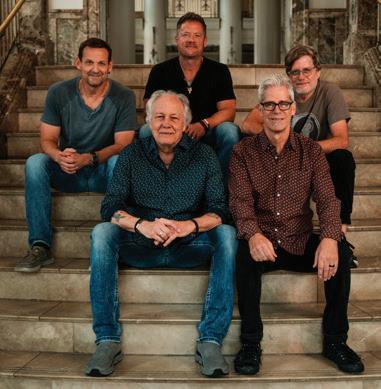

Little River Band Friday, April 24 • 7 p.m. amphitheatre series
Travis Tritt Saturday, May 16 • 7 p.m.
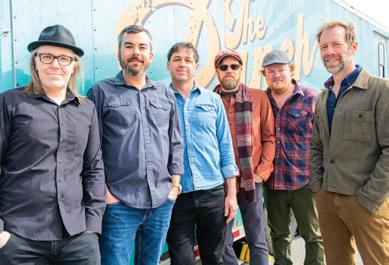
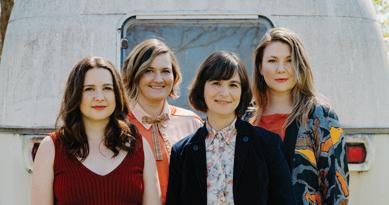
Steep Canyon Rangers & Della Mae Thursday, May 21 • 7 p.m. amphitheatre series
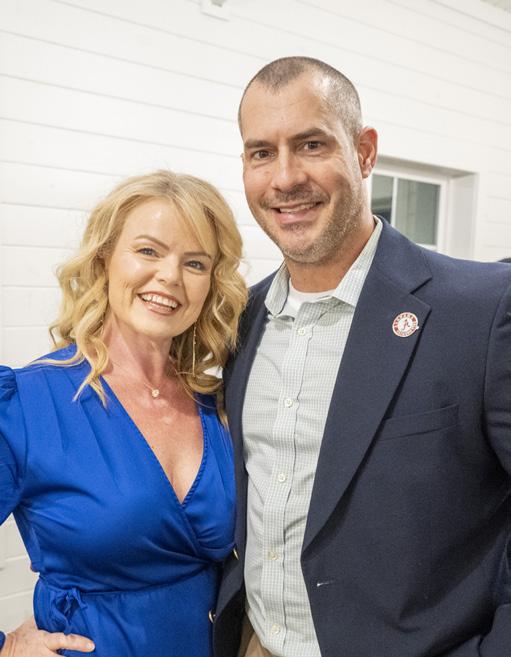
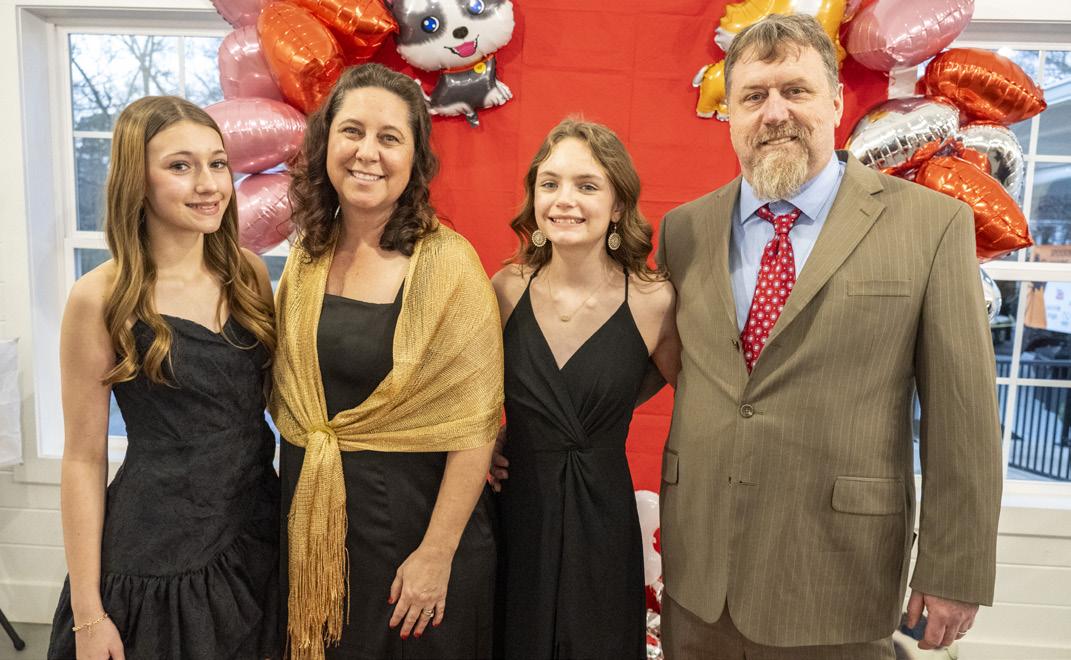
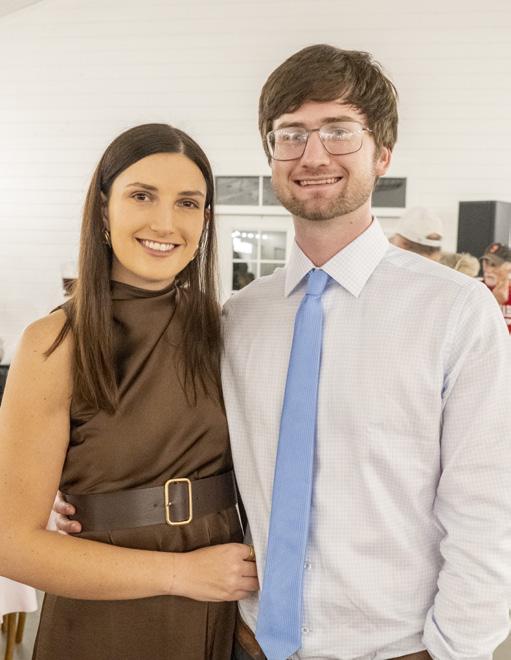
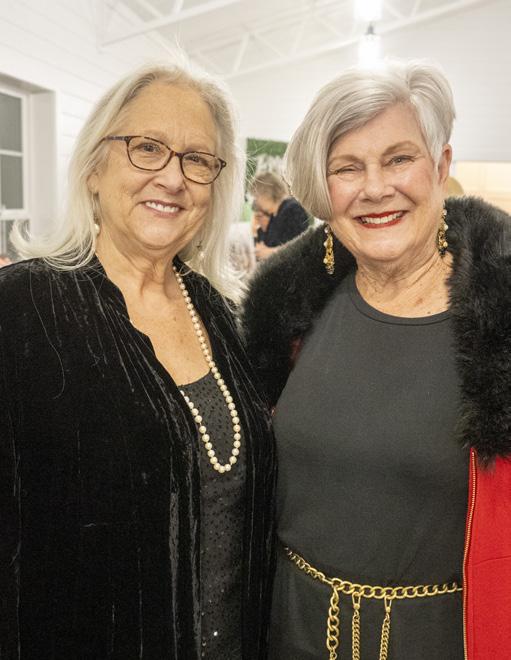
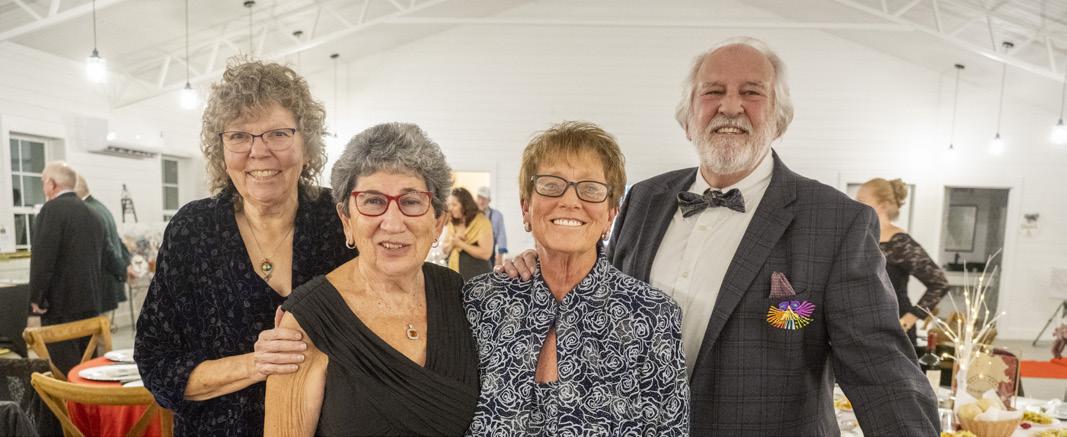
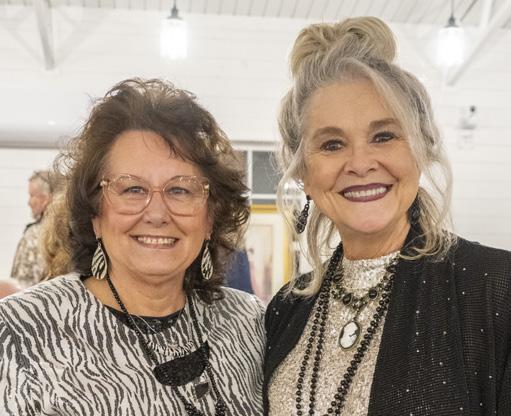
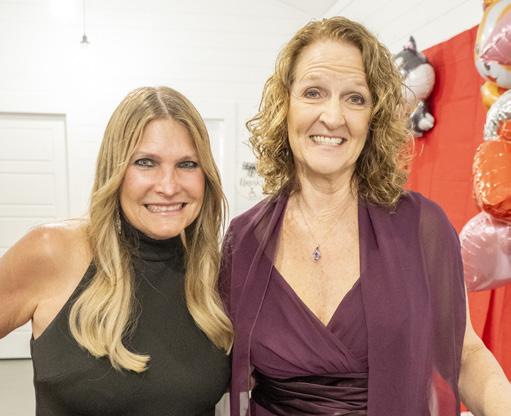
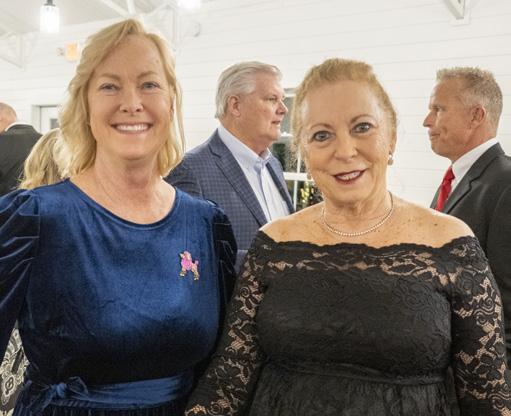




Saturday, February 14, 2026
Wind Creek State Park
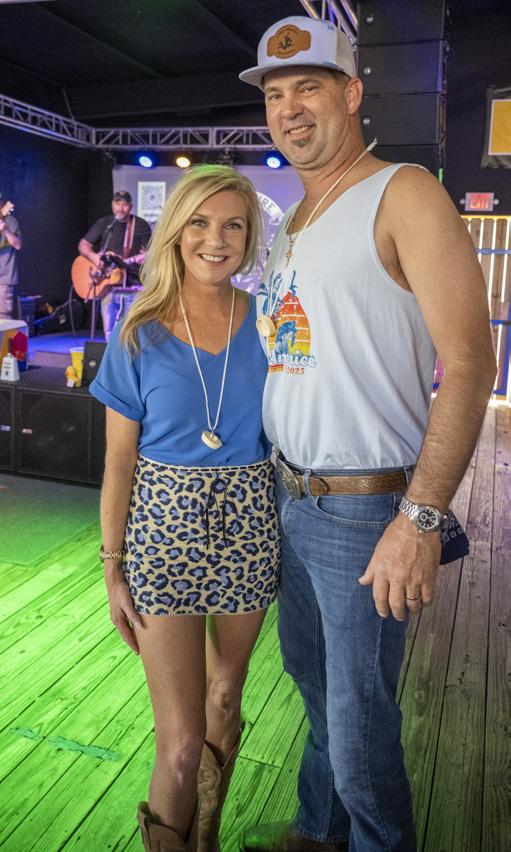
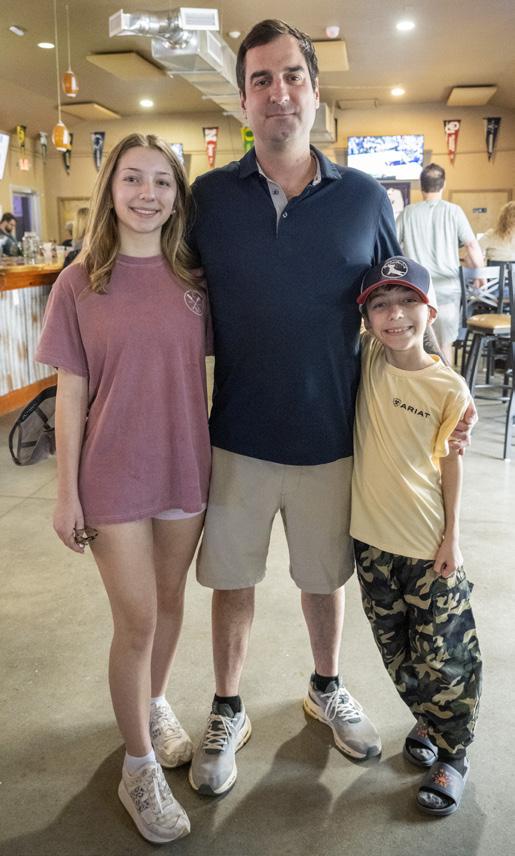
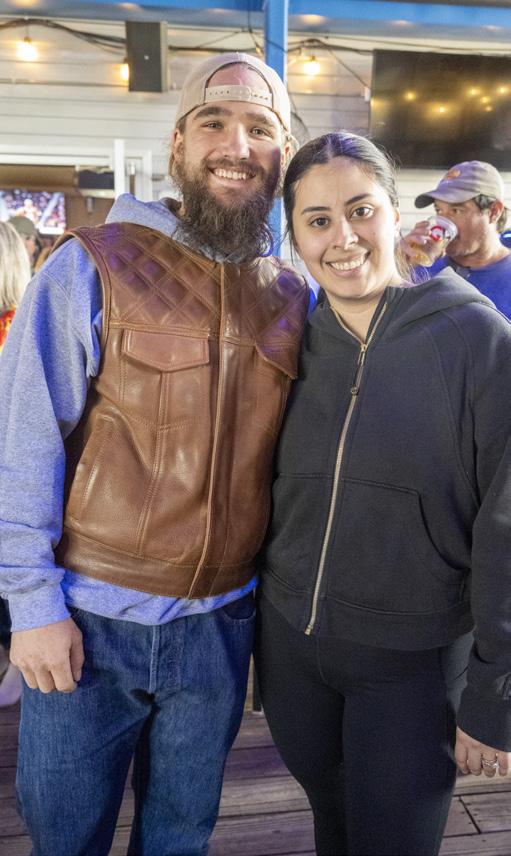

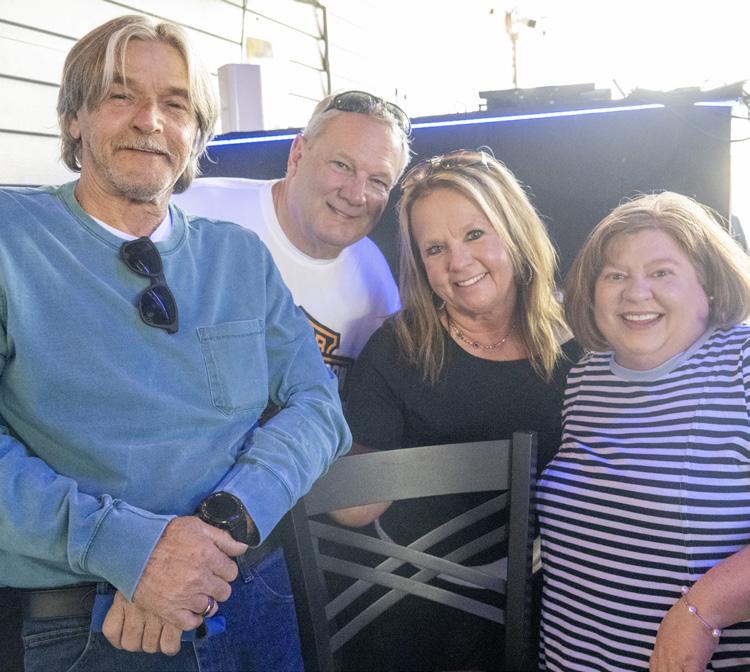
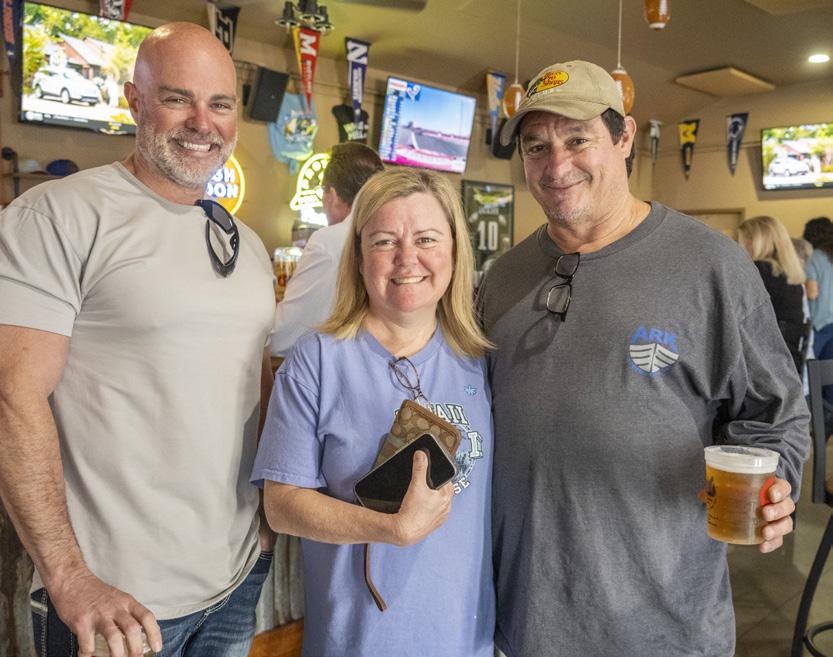
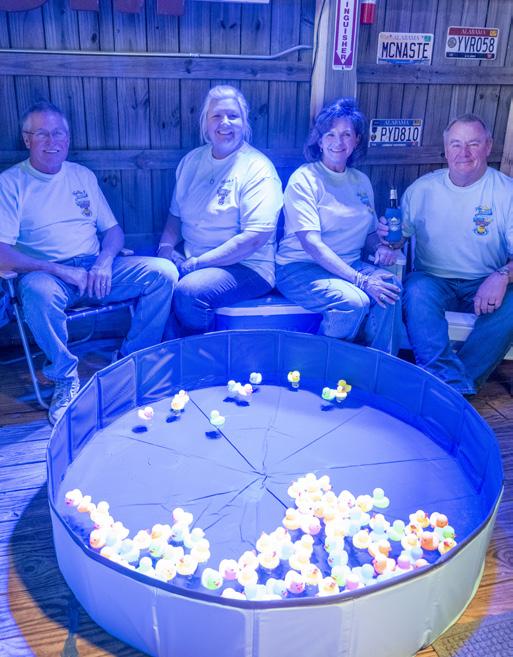
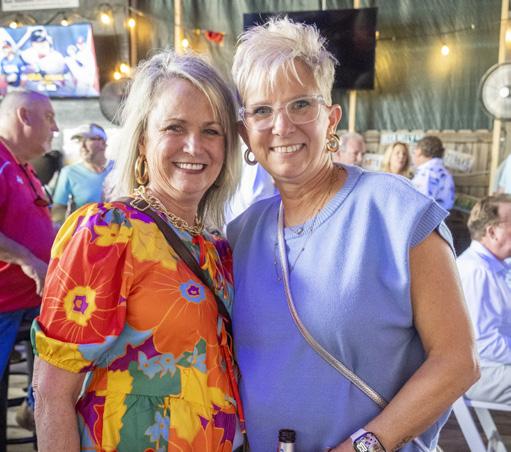
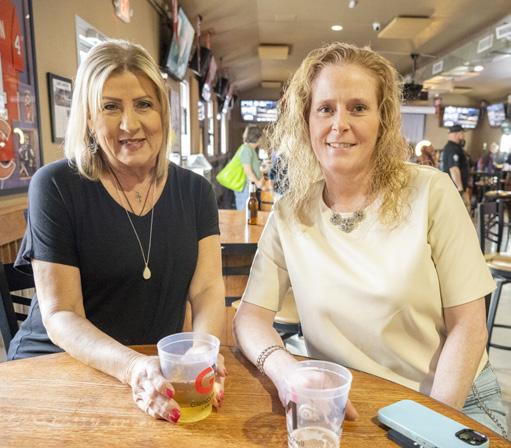
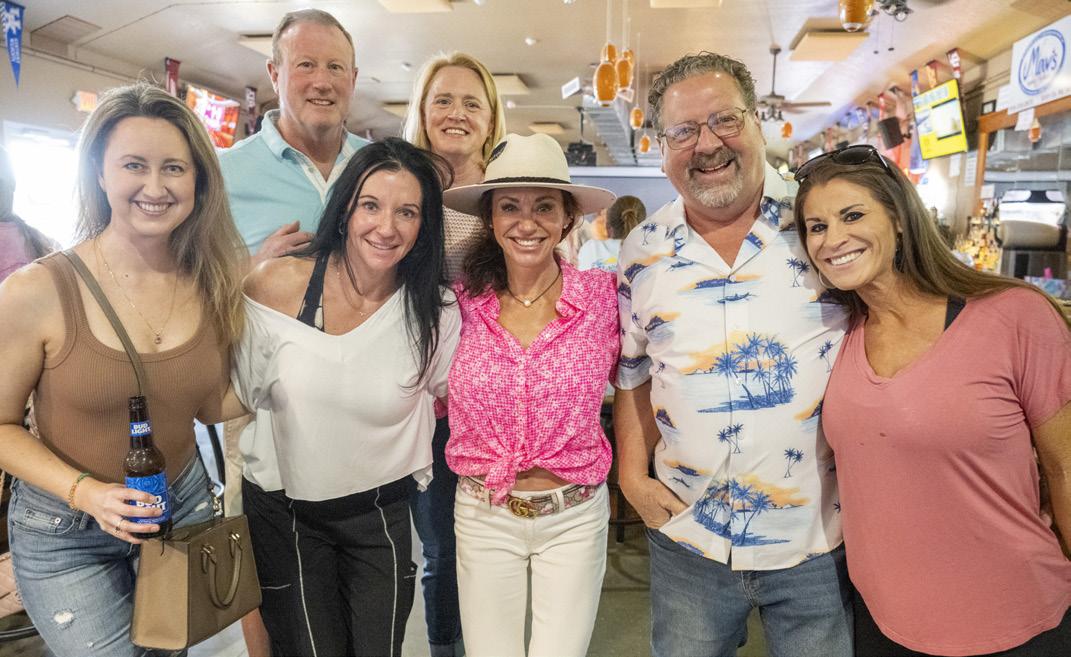
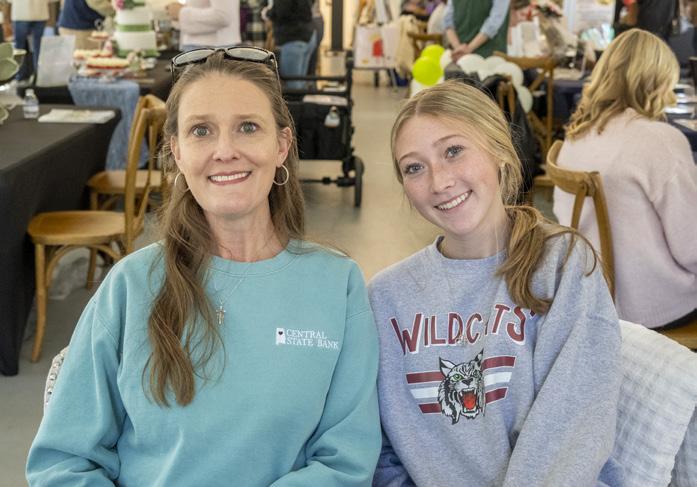
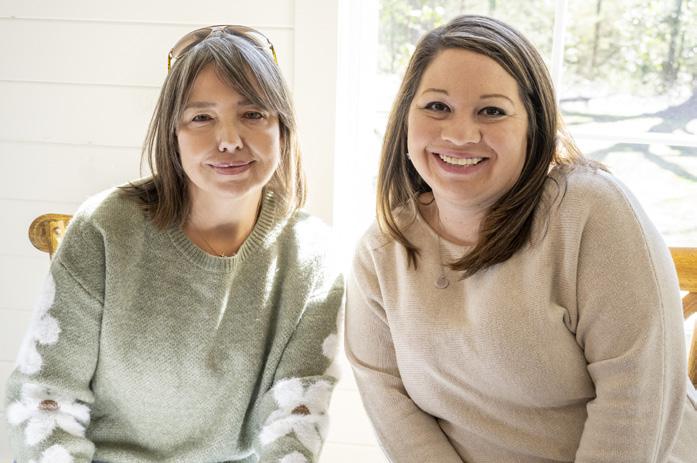
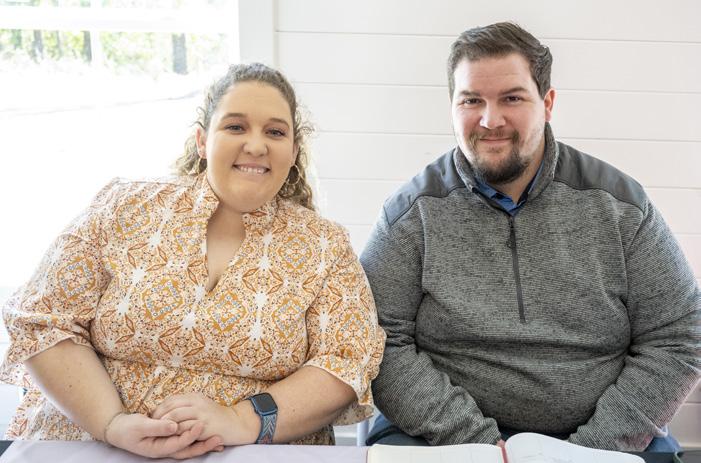




Sunday, February 22, 2026
The Mitchell House
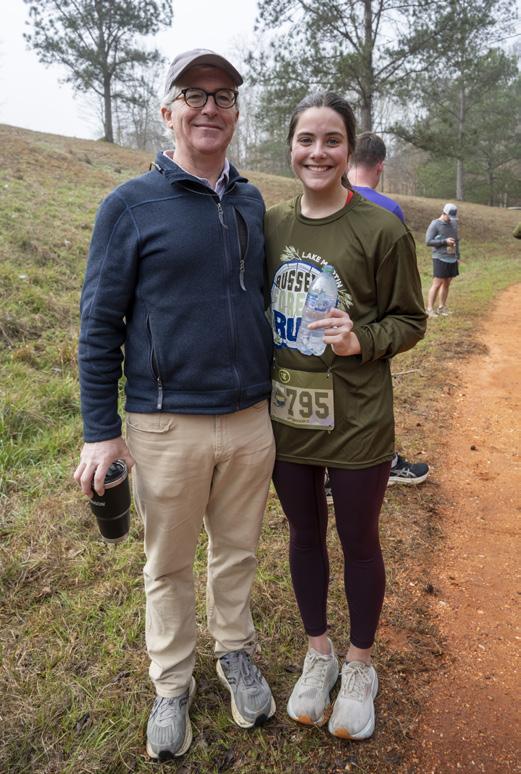
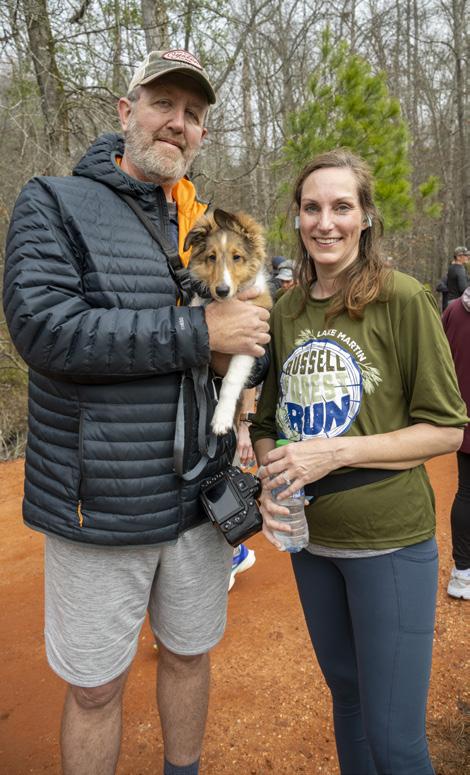
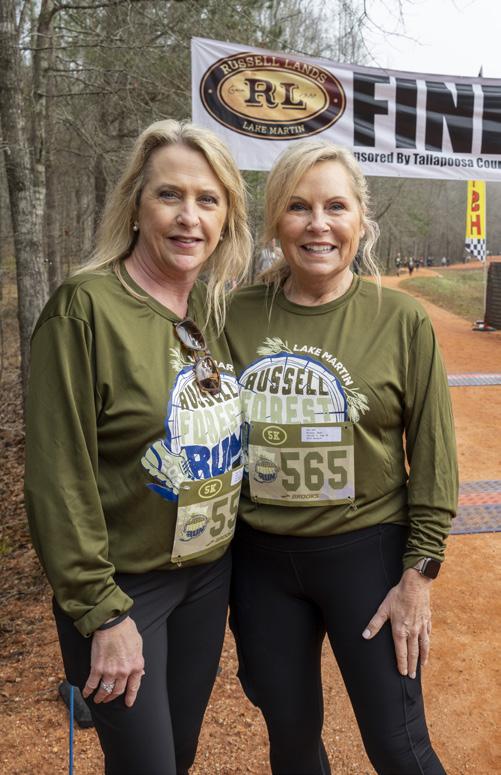
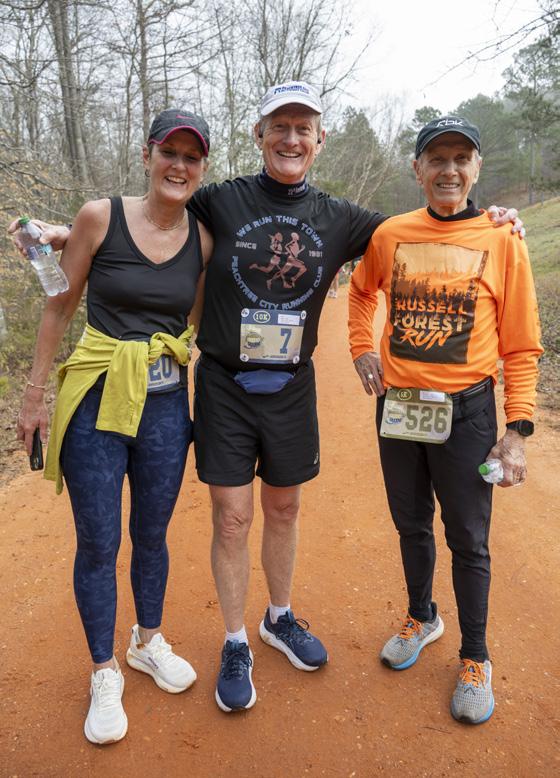

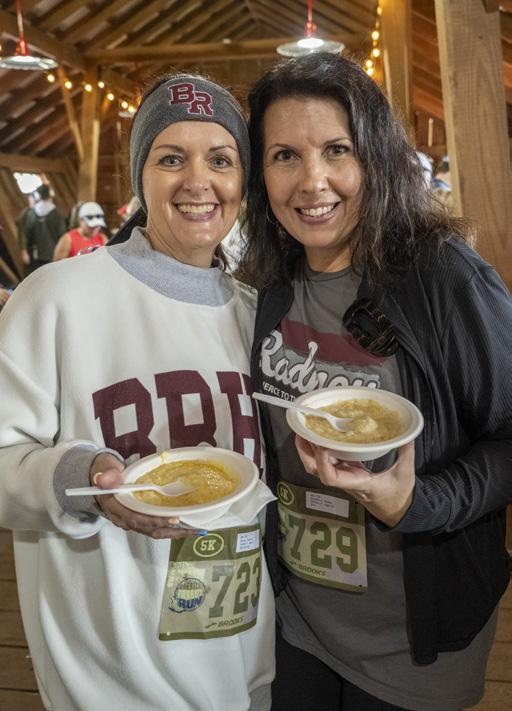
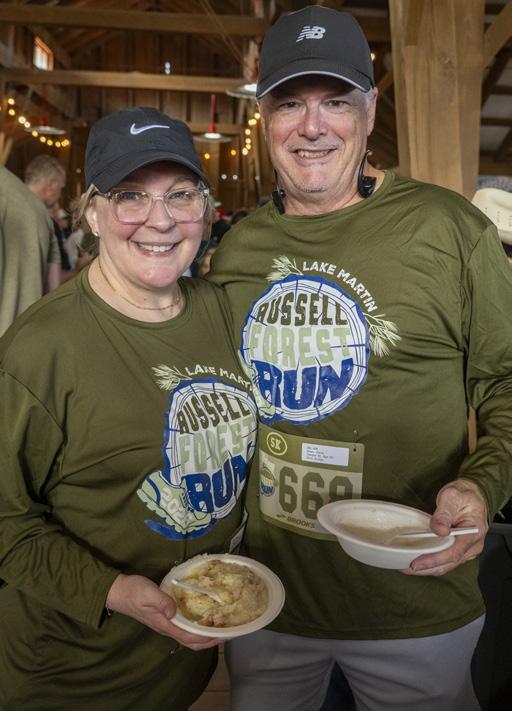

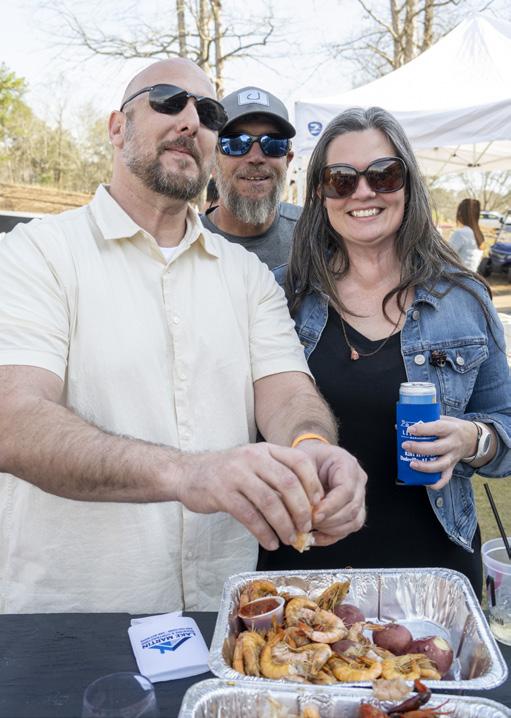


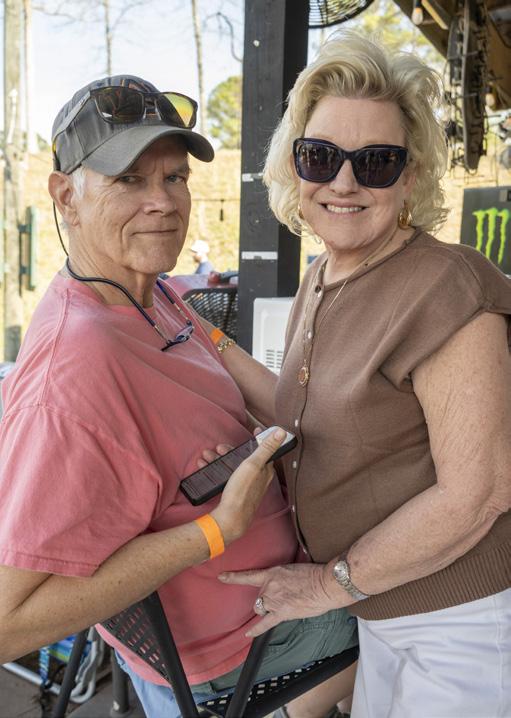
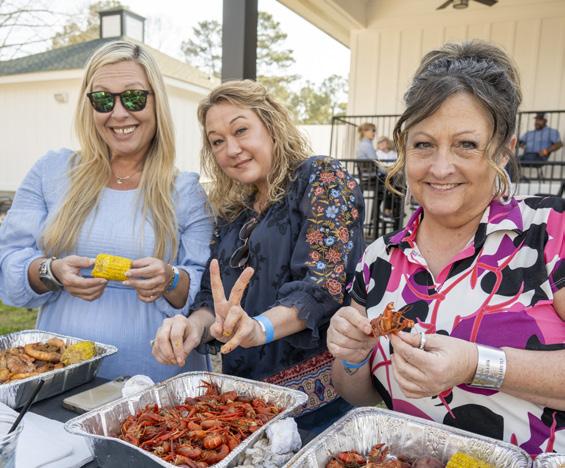
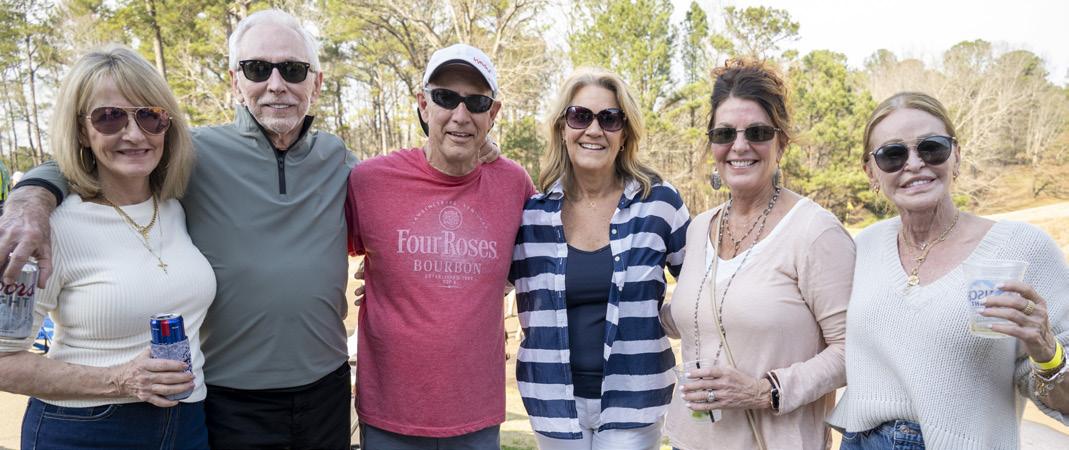
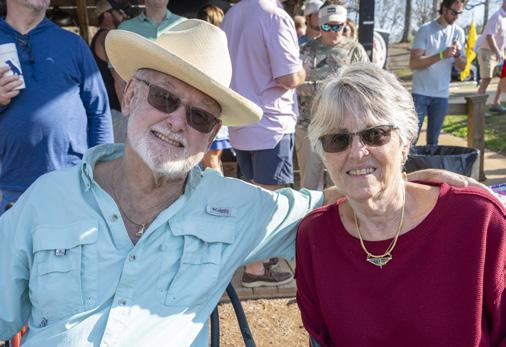
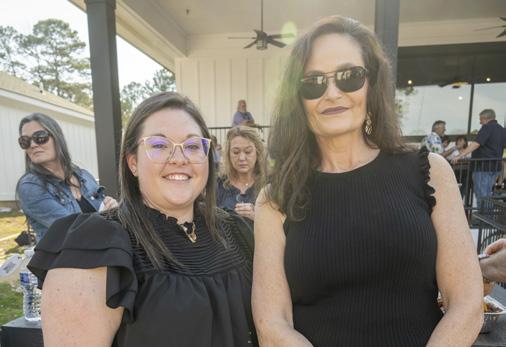

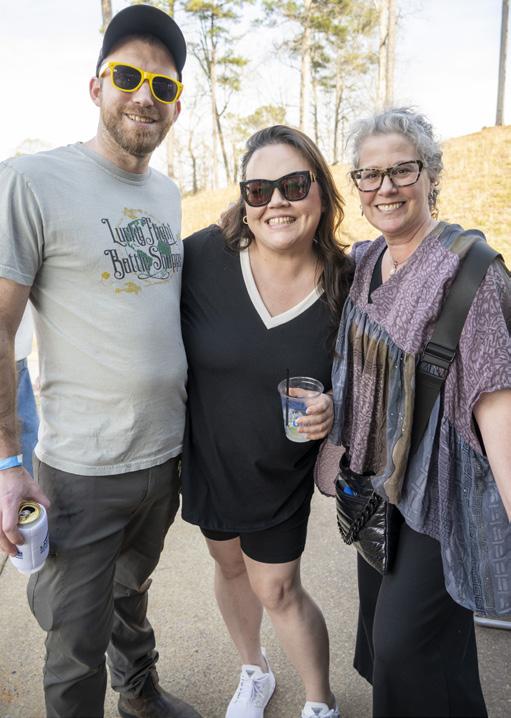
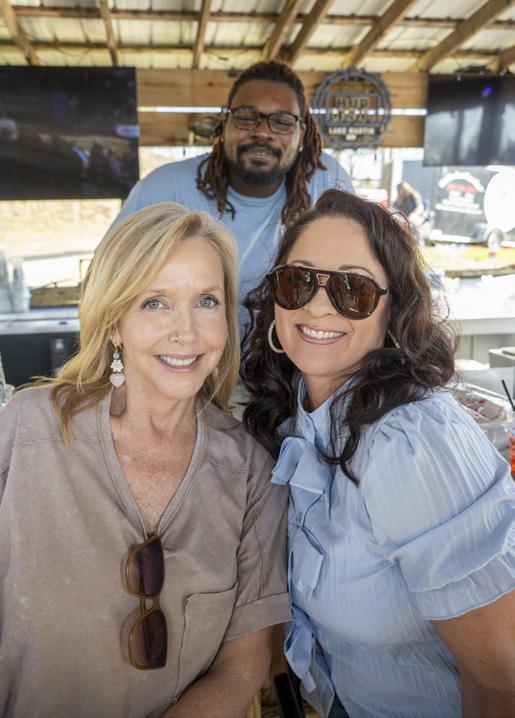
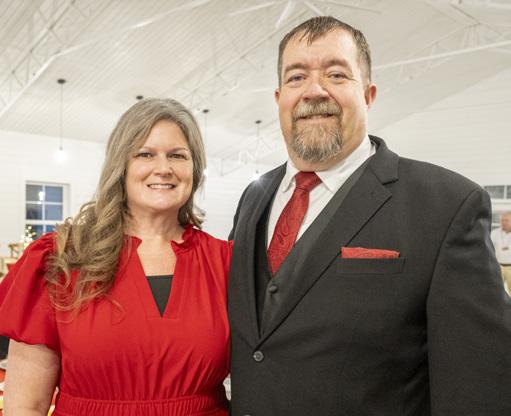
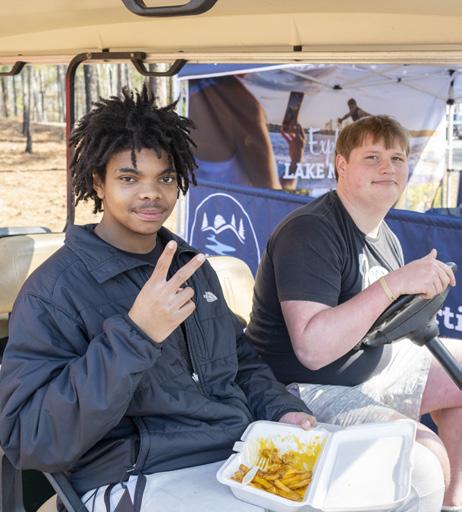
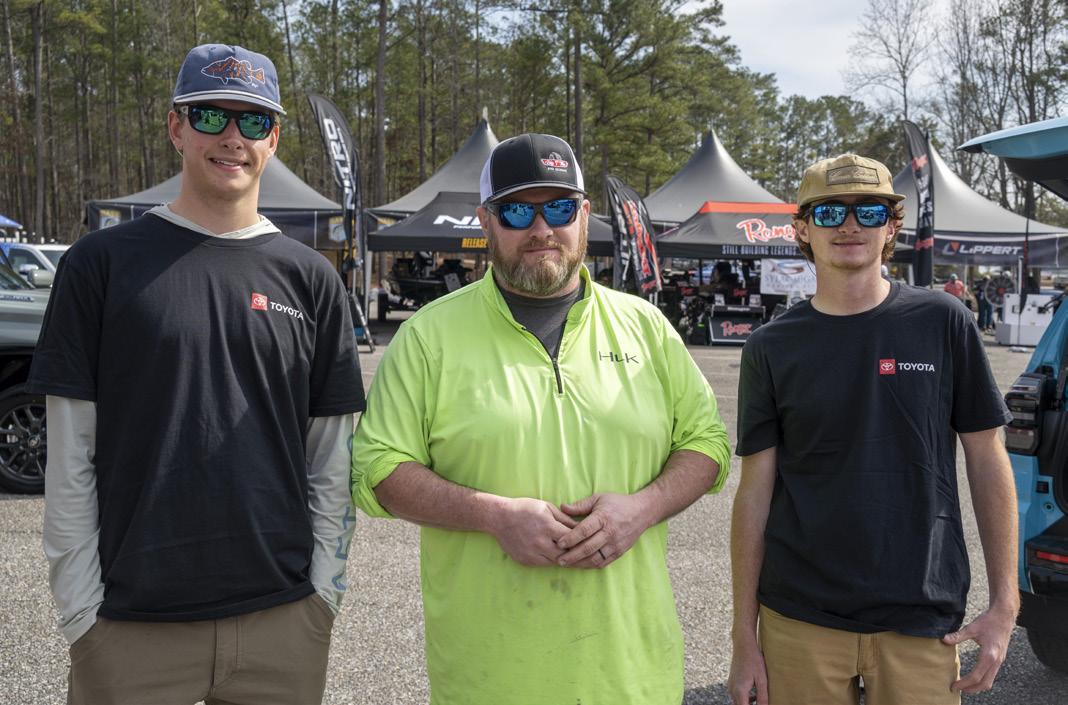
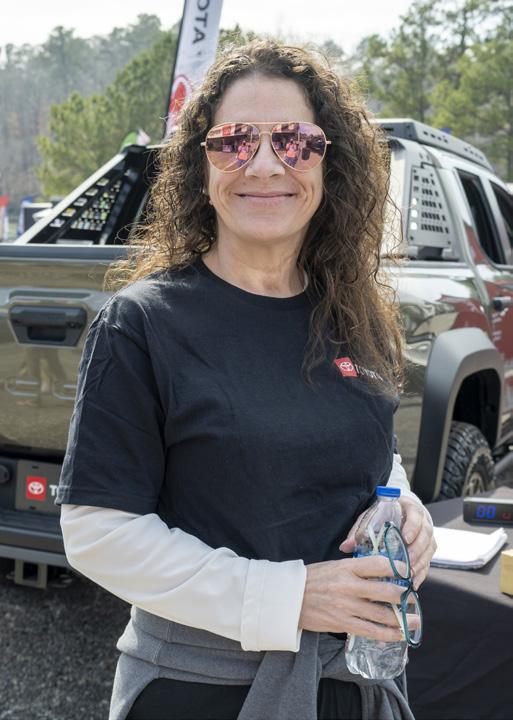
1. Collin, Emily and Kate Strickland and Trey Stewart
2. Jarvis Wilson, Keri Ledbetter and Tess and Stacey McKinley
3. Ivy Cole, Nadine and Rusty Black and Jeff Cochran
4. Levi Oliver, Dwight Rodgers and Amy Oliver
5. Sam and Jen Farrcloth
6. Eric Sides, Lee Ann Stovall and Dana Rose DiChiara
7. Livy Oyster, Cindy Massey and Kenneth Amos
8. Craig Griffith
9. Carmen Rodgers, Kat Travis and Missy Boyd
10. Ann McBryde, Buddy McDaniel, Randy and Jana
Blanchard, Lisa Reeves and Louise McDaniels
11. Guy and Sue Alexander
12. Holly Kilgore and Sherry Griffith
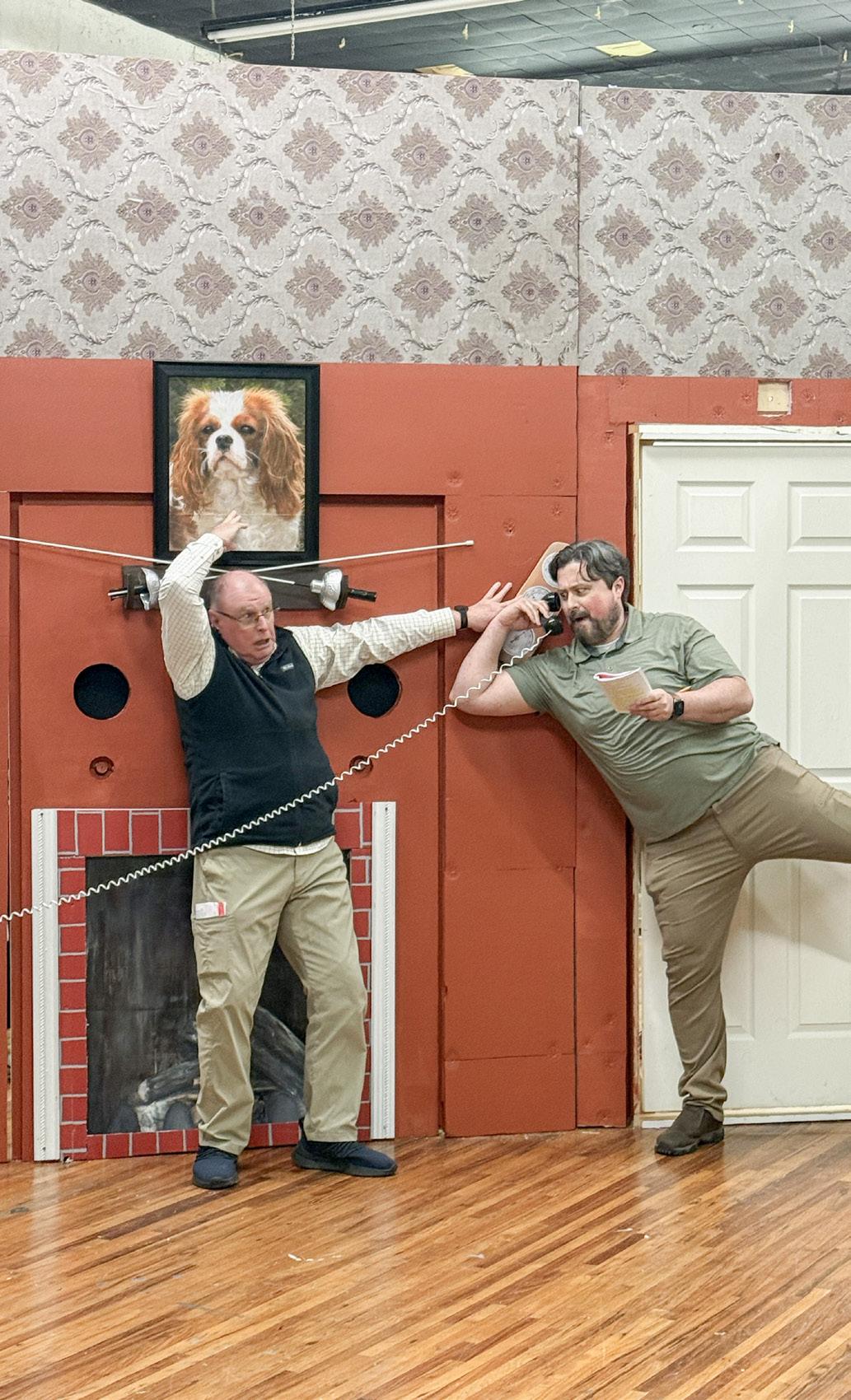
on’t blink, or you’re going to miss something really funny,” said Betsy Iler, co-director of Alexander City Theatre II’s upcoming production.
The show, appropriately titled “The Play That Goes Wrong,” follows a well-meaning but ill-fated theater group attempting to perform a murder mystery play. As the title suggests, everything that can go wrong does – from collapsing sets and missing props to actors completely forgetting their lines.
The award-winning comedy by Henry Lewis, Jonathan Sayer and Henry Shields is a high-energy masterclass in controlled chaos.
For Iler, who helped found ACT II to fill a void in the local arts community, this production is particularly touching. It marks her final show as director before she and her husband, Rob, move on to their next chapter.
“It’s really bittersweet,” Iler said. “I love what we have all built together. I’ve made wonderful friendships and we’ve done wonderful, wonderful work for the community together.”
The production features a mix of veteran actors and newcomers, creating a chemistry that Iler says allows the cast to work in their own gags and jokes. This blend of experience levels reflects ACT II’s core mission – to cross socioeconomic lines and create something enriching for the entire community.
Local audiences have three opportunities to see the chaos unfold for free at the former Benjamin Russell High School. Performances are scheduled for 7 p.m. on Friday, March 27, and Saturday, March 28, followed by a 2 p.m. matinee on Sunday, March 29.
In a historic milestone for the troupe, the production will take the show on the road and travel outside Alexander City for the first time. The final performance will take place at the Mount Vernon Performing Arts Center in Tallassee on April 11. Tickets for this special event are $10, offering the community a chance to witness Iler’s final bow with the theater she helped build.
Visit the Alexander City Theatre II Facebook page for more details.
March 17
St. Patrick’s Day Party
Break out your green attire for a St. Patrick’s Day Party at Martin’s at Lake Martin. The bash will feature music by Blackberry Breeze, green drinks and Mr. Mori Hibachi Express Food Truck. Visit the Martin’s at Lake Martin Facebook page for more details.
18
Join The Grand Bakery in downtown Dadeville at 5:30 p.m. for a hands-on sourdough baking class designed for beginners and seasoned home bakers alike. Learn the fundamentals of sourdough –from starter care and fermentation to shaping and baking – guided by experienced bakers in a warm, welcoming setting. Guests will enjoy instruction, tips and the chance to leave with sourdough to take home. Class is $30. Call 256-307-1332 to reserve a spot.
Wrygrass is coming back to the Dadeville Performing Arts Center for an acoustic concert. Doors open at 6 p.m. with the show starting at 6:30 p.m. Admission by donation to support DPAC community programs. Visit dadevilleperformingartscenter. com for more details.
21
Join the Auburn Astronomical Society at the Central Alabama Community College track in Alexander City for a free, public stargazing event from 7 p.m. to 9 p.m. All are welcome to attend. Telescopes will be available, or you can bring your own. Bring a camping chair and come gaze at the stars!
Get egg-cited for Alexander City Parks and Recreation’s annual Easter egg hunt at the Charles E. Bailey Sportplex. There will be more than 6,000 prize-filled eggs spread amongst
three age divisions, with one grand prize per age group. The day also features egg-stra special photo ops with the Easter Bunny and bounceworthy inflatables for nonstop fun. The fun begins at 9 a.m. with the hunts beginning at 10 a.m. Visit the Parks and Recreation Facebook page for details.
Alabama Marine Police will conduct a boating safety course at Kowaliga Marina from 8 a.m. to 3 p.m. to help new and seasoned boaters alike. Hosted by Russell Marine, this course is NASBLA and Alabama Boating Safety certified. Contact Kendra Naile at 256-3971208 or knaile@russelllands.com to reserve your spot.
21
The Lake Martin-Dadeville Area Chamber invites the community to come hang out with local law enforcement. Located at the Dadeville Track from noon to 4 p.m., this free event is all about building positive connections in a relaxed, childfriendly environment. Children can meet local officers, check out police vehicles and enjoy fun activities. For more information, contact Melinda Silmon at 256-749-8606.
Bring your furry friend and enjoy the great outdoors at Wind Creek State Park. Starting at noon, attendees will embark on a scenic loop around the Campfire Trail. All dogs must be leashed, and owners are encouraged to bring water and treats for their four-legged friends. Park entrance fees apply for day visitors. For more details, contact the park at 256-3290845.
28
The Tallapoosa County Master Gardeners are helping Dadeville go green. Come explore beautiful plants, learn from gardening experts and participate in the 1,000 tree giveaway
at Dadeville High School. Plant vendors will be set up from 9 a.m. to 2 p.m.
Women on Lake Martin Boating Course
Prepare for the upcoming boating season with a hands-on, down-toearth review of the basics. Hosted by Russell Marine and geared specifically for women, this four-hour course covers essential boating safety and operation. Course begins at 9 a.m. at Russell Marine-River North Marina. For more information or to register, contact Lee Cook at 256-397-1502 or lcook@russelllands.com.
Lake Martin Artist Association Meeting
Pull out your paint brushes for a meeting with the Lake Martin Artist Association. Painters of all skill levels are welcome to draw and paint outside businesses around the Courthouse Square in Dadeville. The group will meet at 9 a.m. Contact Darla Sasser at 256-307-7531 for more information.
Brighten up your weekend with the inaugural Color Run benefitting Dadeville High’s track team. All skill levels are welcome, as well as leashed dogs. The run kicks off at the Dadeville High School parking lot and finishes with a celebration on the track. Runners are encouraged to arrive by 2 p.m. with the run starting at 2:30 p.m. Entry is $15 or $25 if registering day of. Contact Peyton Fourtenbary at 256-226-3565 or peyton.fourtenbary@tallapoosak12. org for more details or to register.
Alabama Marine Patrol will conduct a boating safety course at The Ridge Marina from 8 a.m. to 3 p.m. for new and seasoned boaters alike. Hosted by Russell Marine, this course is NASBLA and Alabama Boating Safety certified. To reserve a spot, contact Rhonda Perry at 256-3971300 or rperry@russelllands.com.
April 17
Spring Fling
Get ready to par-tee at Stillwaters Golf Course for its second annual Spring Fling – a spring wine expo in partnership with Prime Steakhouse and Lucky Flight Bottle Shoppe. Enjoy tastings from more than 30 wines, savor delicious bites and explore unique shopping experiences. Tickets are $100 per person, with an exclusive VIP option available. Stop by Lucky Flight Bottle Shoppe to purchase tickets.
April 18
Women on Lake Martin Boating Course
Prepare for the upcoming boating season with a hands-on review of the basics. Hosted by Russell Marine and geared specifically for women, this fourhour course covers essential boating safety and operation. Course begins at 9 a.m. at Russell Marine-Kowaliga Marina. For more information or to register, contact Kendra Naile at 256397-1208 or knaile@russelllands.com.
April 18
Lake Martin Dragon Boat Festival
Celebrate the lake’s centennial with Lake Martin’s first-ever Dragon Boat Race. Watch as teams paddle to the beat of the drum in colorful dragon boats, competing for glory while raising funds for local causes. Alongside the thrilling races, enjoy live music, great food and family-friendly fun. Teams are made up of 10 people. For more information or to register your team, visit explorelakemartin.com.
April 21
Dadeville Community Chorus Concert
Celebrate music in all its colors at this beloved annual concert, led by the talented Lila Meadows. Dadeville’s own civic chorale takes the Dadeville Performing Arts Center stage with a vibrant mix of art music, pop/rock favorites and cherished traditional selections – there’s something for everyone to enjoy. Tickets are $10 in advance or $15 at the door. Doors open at 6 p.m. with the concert starting at 6:30 p.m. Contact office@ dadevilleperformingartscenter.com for more details.
Charity Golf Tournament
Tee up for a great cause as StillWaters Golf Course partners with Lake Martin Area Association of Realtors for a special Charity Golf Tournament benefiting the Tallapoosa County Girls Ranch. Registration opens at 8 a.m., followed by a 9 a.m. shotgun start. After play, enjoy lunch at Prime Steakhouse at 1 p.m., with awards presented during lunch at 1:30 p.m. Multiple sponsorship opportunities are available. For more information, contact lmaar.org/2026-golf-tournament.
Come see Naturalist Marianne and her lively nature presentations at the Naturalist Cabin at Russell Crossroads. There is never a dull moment with this wildlife biologist as she educates on the beauty of nature. Visit russelllands.com/ events for the scheduled subject topics, dates and times.
Join Martin’s at Lake Martin on Tuesday evenings at 6 p.m. for line dancing lessons with 10-time world champion dancer Marnie Mattei. Lessons are $10 per person for one hour. No partner needed, all skill levels are welcome. For more details, visit the Martin’s at Lake Martin Facebook page.
The Real Bells Hand Bells group meets Tuesdays from 1 p.m. to 2 p.m. at the Dadeville Performing Arts Center. All are invited to participate and ring under the direction of Jeff Bonebrake. For details, email office@ dadevilleperformingartscenter.com.
All levels of mountain dulcimer players and those blending traditional instruments are invited to gather at the Dadeville Performing Arts Center from 2 p.m. to 3 p.m. on Thursdays to rehearse for performances at a variety of community events. The group plays old-time, gospel and traditional music. Email kim.walls@ dadevilleperformingartscenter.com.
Join Wind Creek State Park on the first and third Friday of each month for Nature Trivia Night. Trivia lovers can test their knowledge on wildlife, plants and conservation from 5 p.m. to 6 p.m. at the clubhouse. Park entrance fees apply for day visitors. For more details, email dylan.ogle@dcnr.alabama.gov.
The Lake Martin Artist Association invites the community to an open studio each Monday from 1 p.m. to 4 p.m. at the Stillwaters Golf office. All skill levels are welcome. Contact Darla Sasser at 256-307-7531 for more information.
Acoustic musicians of all skill levels are invited to gather on the second Saturday of each month to share music in a fun and welcoming environment. The acoustic jam session is free, and the public is invited to attend, listen or join in. The event takes place at 128 N. Broadnax Street in Dadeville. For more information, contact office@ dadevilleperformingartcenter.com.
Dadeville Performing Arts Center will host this free program on Tuesdays from 3:15 p.m. to 4:30 p.m. Children in grades three through five will learn the elements of art as they complete projects in class with Everything’s Art teachers. Enroll and complete permission forms at dadevilleperformingartscenter.com/ classes. For more information, email delaine.hanson@gmail.com.
Get ready to create as One Oak Pottery teams up with Martin’s at Lake Martin. Held at Martin’s in Dadeville, this $45 event invites you to design a unique piece of pottery by picking your own glaze colors and utilizing a fun paint-and-pour technique. After finishing your masterpiece, the team at One Oak will fire it in their kiln for pick up just a few weeks later. This event will recur on the last Monday of every month at 6:30 p.m. Spots are limited. Pre-register at oneoakpottery.com.



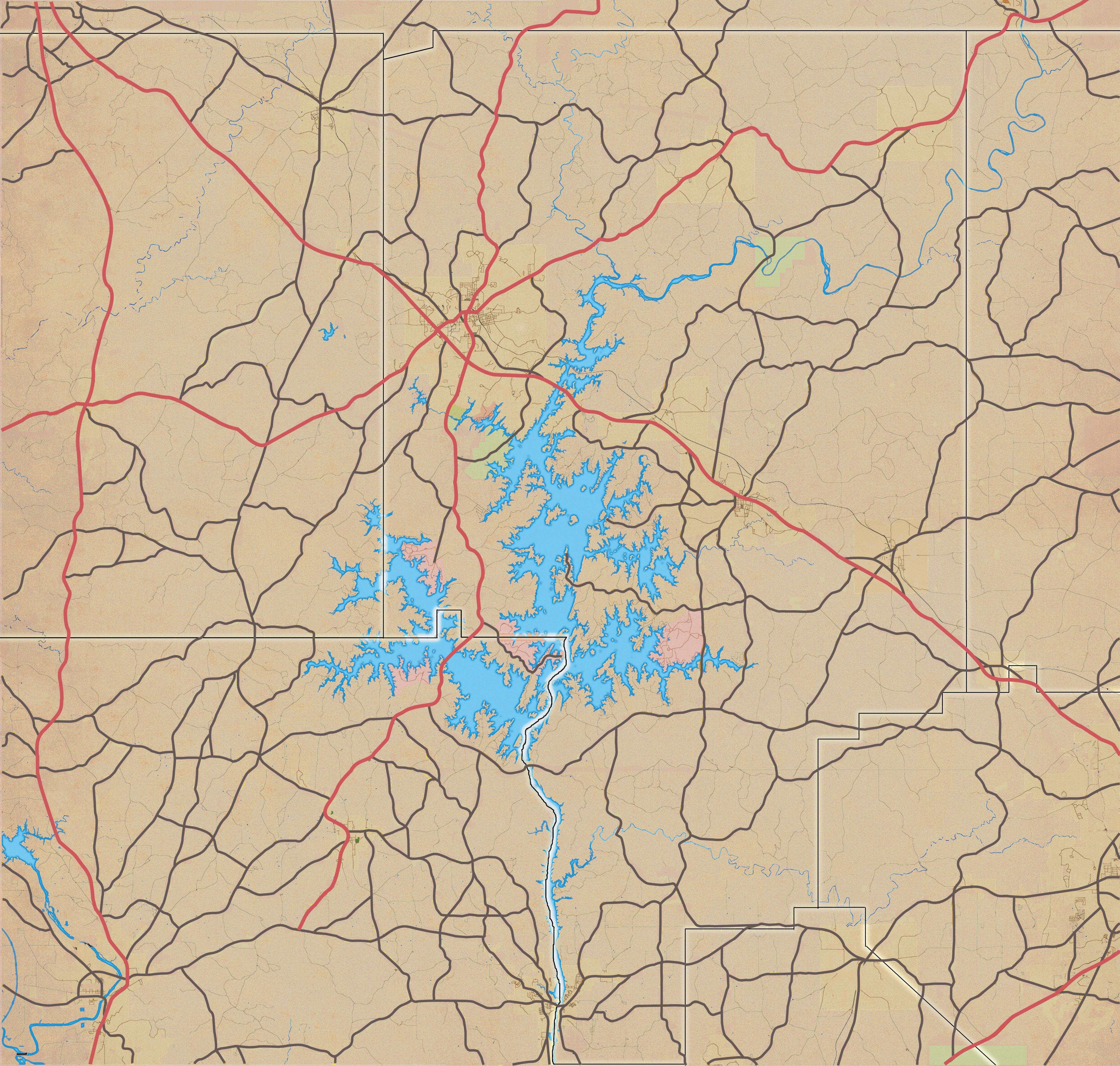


Kowaliga Marina
256-397-1210
The Ridge Marina 256-397-1300
River North Marina 256-397-1500
Russell Marine Boating & Outdoors 256-397-1700
Real Island Marina 334-857-2741
Blue Creek Marina 256-825-8888
Parker Creek Marina 256-329-8550
Harbor Pointe Marina 256-825-0600
Smith's Marina - Shipwreck Sam's 256-444-8793
SpringHouse 256-215-7080
Catherine’s Market 256-215-7070
Kowaliga Restaurant 256-215-7035
Acapulco Mexican Gril 334-283-2725
Russell Do It Center (Alex City) 256-234-2567
Russell Do It Center (Eclectic) 334-541-2132
Russell Building Supply 256-825-4256
The Stables at Russell Crossroads 256-794-1333
Kowaliga Whole Health 334-857-1816
Aronov Realty Lake Martin 256-825-4133
Off the Beaton Path 205-994-0847
Hwy 50 Blue Creek Boat & RV Storage 334-391-0717
Creekside Lodge 256-307-1440
Red Ridge UMC 256-825-9820
Lake Pointe Baptist Church 256-307-1499
LakeScape 334-857-2443
Docks Unlimited LLC 256-203-8400
Dixie Sailing Club
Lakeshore Pharmacy 256-825-0063
Singleton Marine 256-269-0088
Momentum Marine 256-825-9286

ALEXANDER CITY:
Abernathy Farm Supply
Alex City Airport
Alex City Marine
Alex City Public Library
BeYOUtiful Salon
Big B Barbeque
Bone & Joint Specialists
Carlisle's
Subscribe today or visit one of our local establishments each month for a free copy.
North Lake Condo
Picket Fence
Pri Care
Quality Inn
Regions Bank
ReMax
Ridge Marina
River Bank
River Bend Store
City Hall Courthouse
Creekside Lodge
Dadeville Chamber of Commerce
Dadeville Public Library
Dadevillle Wellness Center
Deep Water Docks
Ellaby Boutique
Farmer's Merchant Bank
TALLASSEE: 1220 Cafe
Chamber of Commerce
Community Hospital
Eagle
First Community Bank
Guardian Credit Union
Louie's Chicken Fingers
MaePop's Barbecue



























It’s tough to brainstorm for the Garden issue when you haven’t had a garden in years, but it›s not that hard when you love to eat things from the garden. I went on a run and the weather was fantastic, and by the time I got back home I felt inspired to plant a garden – even if it›s just in containers. And maybe I›ll finally repaint my front doors with the paint I bought months ago. I am a continuous work in progress.
I googled famous gardeners and found quite a list, none of which I knew. This actually pleased me because I was happy to have some new reading material. I love people who are wildly passionate about anything.

Lacey Howell
I have learned some hard lessons and wasted plenty of money on flowers and plants over the years. I did not plant a single plant in my planters last year. My home is eastfacing, the yard doesn’t have many trees, and as a result, it gets direct sun all day long. This actually made for a great tomato garden years ago – when I prioritized it. Hydrangeas won’t make it here. The only thing that seems to not blister at my house immediately are ferns and begonias.
Ten years ago when I worked at Wickles Pickles, the entire office was very into gardening. I had never really gardened, but their enthusiasm was catching, and John and I dove headfirst into starting our own seeds. We used to sit them on top of a little red cart in the sunroom, and it was so exciting to watch them sprout. We would then transport them into red Solo cups, and when the plants were 6 or 8 inches tall, we would get them into raised beds. We went so far as to season the soil with rabbit manure one year. The raised beds have long since been taken down, and I have written about the great times we had putting on the Tomato Showdown. It was a big part of the office culture and Waverly.
It was at Wickles Pickles where I first saw an issue of the Baker Creek Seed Catalog. It is a really cool and beautiful book, and it was mind-blowing to me how many different types of vegetables and flowers there are in the world.
Feeling inspired, I went online to check it out today: rareseeds. com. The website is extensive and full of great articles and stories. The Gettle family published their first catalog back in 1998 in Mansfield, Missouri. According to the bio: “What began as a
personal passion project has since grown into the largest heirloom seed company in the United States, offering only non-GMO, heirloom and open-pollinated varieties. Today, Baker Creek continues to thrive as a leader in heirloom gardening, supporting gardeners, homesteaders and farming communities with a wide range of high-quality, rare heirloom seeds.”
I clicked through to the tomatoes, where they are categorized by colors, and selected the blues and purples. They read like racehorses, with names such as Queen of the Night, Cherokee Purple, Rosella, Indigo Blue Chocolate, Chocolate Pear and Brown Sugar. My mouth watered just looking at them. That catalog would be a great gift for someone who is impossible to buy for.
Sometime in the last few years, I wrote an entire column on tomato sandwiches, so I won’t wax poetic here on that –or mayonnaise and white bread. Or cornbread. Can you tell I am on my annual spring diet?
I am at an age where I think about longevity, and I have always been conscientious about working out and eating well. Gardening can be a great addition to anyone’s lifestyle. It’s not expensive, and it’s not hard to get going. It seems like common sense because it gets a person outside in the sun, moving and having to squat and stand. The result is fresh food to eat, but I believe it checks the box on mental health too.
It is something for a person to take care of and take pride in. We all know someone who gardens, and that person is always willing to share their bounty. They are thrilled to give it away because it’s more than they can eat, and they want to know what you cook with it. My neighbor Laura will make fresh salsa from her tomatoes, which I love.
I tried to make my own salsa about a month ago, and it was a total fail. I know it seems hard to mess up salsa, but you may not know who you are dealing with. My food processor didn’t work – or I didn’t connect it correctly – and the Ninja Bullet didn’t do the trick. It sure smelled good, though.
In conclusion, I’m feeling good about committing to a 2026 garden. I can handle tomatoes, peppers and an herb garden. I’m going to click send on this column and order some seeds. There’s plenty of time because we all know a tomato isn’t any good until late July. Even then, you pray it hasn’t rained too much because there isn’t anything sadder than a mealy tomato. Happy gardening!
~ Lacey Howell is a recovering English major from Auburn who now lives on Lake Martin, sells real estate, rides horses and loves good wine. Follow her on Instagram @LaceyHowell.