Stamp collector’s question answered through Goodbody’s HMS Norfolk article
I was very pleased to see the article about the visit of the British cruiser HMS Norfolk to Ladysmith in August of 1934. As a stamp collector, I am interested in the postal history of Ladysmith, and watch for Ladysmith cancels, especially on older stamps.
A few years back I bought a “cover”—a stamped envelope sent through the mail—that was postmarked in Ladysmith on Aug. 7, 1934. It also bore a rubber stamp from the Regulating Office of HMS Norfolk, dated a day earlier. I do not know anything about the recipient, but it is likely it was sent as a courtesy to a collector, as it has no contents and is unopened.
When I bought the cover, I tried to find information about the visit of a large warship to Ladysmith, and the reason, but found only brief mentions. I did not go into the town’s archives for a more thorough search. So I was delighted to read the article which answered several questions about the origins of this cover. My thanks to Quentin Goodbody for researching and writing this story, and to Take 5 for publishing it. — Bruce Whittington
Conservation Springboard preserves and safeguards land and waterways
Are you a land owner who has considered providing land to create a wildlife corridor, or a buffer area beside an existing park, or perhaps a conservation cemetery?
Maybe you hope to conserve all or part of your land for another purpose? You are not alone.
We are excited to introduce you to a new sub-committee of the Cowichan Community Land Trust.
The Conservation Springboard draws on years of the CCLT’s work to preserve and safeguard land and waterways.
It is actively developing criteria and assistance to private or corporate land owners who wish to protect land of ecological importance and explore potential tax benefits such as the Ecological Gifts program.
The Conservation Springboard is dedicated to helping you to fulfill your important dream.
We invite you to start a conversation and let’s see what we can protect together. All communications will be kept in strict confidence. Please contact: Stephanie Cottell by email: info@ cowichanlandtrust.ca.
Stephanie Cottell: Cowichan Community Land Trust executive director.
Why perpetual jumble of harbour trash?
The little town of Ladysmith is a jewell at the edge of paradise where tourists flock, eagles congregate, movie legends hibernate and Hollywood cues up for cinnamon buns.
So why, in this lovely corner of our island, is there always a perpetual putrid jumble of trash leaching into beautiful Ladysmith harbour?
This eternal eyesore is a scar on the Transfer Beach trail between the Kinsmen gazebo and the Ladysmith marina. Visitors from all parts of the Island and the Province use this trail, yet it seems to be the one that is least maintained.
Is it up to the locals to clean up this hill of waste or will the Town Council add it to the garbage route? Either way this well used trail deserves to have some level of clean up once or twice a year. Thank you for including these comments in your publication. — Guy Hawkins
Letters to the editor are welcome. This is an open forum for readers to express their opinions on community matters and do not necessarily represent the opinion of TAKE 5 or its affiliates. Email us at editor@take5.ca
Questions asked about trash leaching into Ladysmith Harbour.
Photo: Guy Hawkins
Snow a hot Island topic
The first snow of the year came on Feb.17, a full two weeks later than 2025. It was a small amount – barely more than a dusting – but enough that I breathed a sigh of relief when I saw it.
Snow – and whether or not we should get it – is a hot topic on the Island. I know many people were celebrating our warmer winter. It’s no secret that people move to the Island to escape the snow that buries the rest of the country. The reports of record-breaking high temperatures made some people hopeful that spring was here early.
Don’t get me wrong – I have enjoyed the snowdrops, the hellebores and the daffodils that are blooming in the garden. I have also spent time outside, soaking in the sunshine. It has been perfectly wonderful weather for spring. Except it’s not spring – it’s still mid-winter.
We need snow. Vancouver Island is a temperate rainforest, and the snowpack in the mountains is what feeds the streams and forests throughout the spring and summer. Without it, the risk of drought is exacerbated.
The Snow Survey and Water Supply Bulletin for January 1, 2026, reported that Vancouver Island has only received 58 per cent of its normal snowpack. The February 1 report showed an even lower number, with the Island at only 39 per cent of its normal accumulation.
Considering these reports in context, it is important to note that the rest of the province has already reached the normal amount of snowpack.
The cause of this is a La Niña, which was declared by the US National Weather Service in the fall of 2025. The survey stated that, “historically, La Niña is linked to cooler temperatures for BC and wetter weather for the South Coast and Vancouver Island during the winter months.”
The February report went on to state
that, “areas with below normal snowpack show early concerns for drought conditions amplifying in the spring and summer.” Drought is part of our new normal even with a snowpack, and I don’t want to imagine how it will get worse without one.
Last summer, the forest fires hit close to home when Parksville and Nanaimo spent days blanketed in smoke as thick as fog. Somenos Lake is now regularly recording water temperatures high enough to kill fish. Nanaimo’s city water restrictions start as early as April. These are the things I think about when it doesn’t snow.
I don’t have any quick solutions on how to fix this. The weather is mostly uncontrollable.
The factors of global warming, which have led to this point of warm winters and drought-filled summers, can’t be changed instantly. Government policies that reflect more renewable energy sources and less pollution are a big factor in changing our future, but there are things we can do too.
Preparing ourselves effectively can help when dealing with a drought. The BC government’s handbook for water suppliers, “Dealing with Drought,” outlines three key areas. First is to know your local Drought Management Plan.
Second is to improve water efficiency. This includes upgrading to water-efficient appliances and gardening or landscaping with drought-tolerant plants. And finally, education and participation. Get involved with your community – this is a team effort.
Water conservation and preparation won’t stop the drought, but it will make it easier for our communities to respond. If we’re all working together, there will be less strain on our water supplies and a better chance for a safe summer for all of us. In the meantime, I hope it snows.
Secret graffiti improves the Diamond: Not crude at all
Hidden in Ladysmith’s industrial district, along the train tracks off Rocky Creek road, is a series of graffiti murals.
The striking artwork depicts a knight escaping a bloodthirsty goblin, a hyperrealistic astronaut, and abstract explosions of shapes in bold colours. Each piece is carefully crafted to express the artist’s unique style.
Graffiti is often associated with crude images and seen as “ruining” a building. Artists work in secret and stay out of the spotlight to avoid legal repercussions. But what happens when graffiti isn’t crude? What about when the murals add to an otherwise abandoned and dismal space?
These mysterious artists spend hundreds of hours and thousands of dollars in order to complete their works. The murals are huge, stretching along the retaining wall to the entrance of the tunnel. It’s well worth the trek out to see it. When you’re there, why not consider what other places could be improved with this type of art.
Pie in the face reward for raising the most money
March 8 is International Women’s Day. As part of Ladysmith Interact, the Youth Rotary Club at the high school, a related fundraiser is planned to provide support to the local shelter with needed feminine products.
During this time Interact will be holding a competition for each class. The top two classes to accumulate the most money will be able to treat their teachers to a pie in the face.
Graffiti murals in Ladysmith industrial area are captivating. Photos: Marina Sacht
Manana resort dock, reno project completion expected in May
BY RICK RAKE
The excitement is evident in Stefan Crucil’s voice as he talks about the sizable improvements to the property at Manana Resort & Marina off of Brenton-Page Road in Ladysmith.
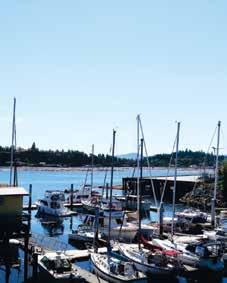
Phase 1, already underway and nearing completion, includes the replacement of existing marina docks; renovations to the waterfront’s 1948 Bar & Bistro; an upgraded septic system and water treatment; expanded lighted parking; improved, accessible walking paths to the marina; and a washroom, shower, and laundry facility now complete.
The entire project is expected to be complete in May of this year, said Crucil, the project’s director of construction with FMC Holdings, which is working in partnership with Coast Salish Development Corporation. FMC Holdings was founded by Stefan’s father, Mike and Mike’s brother, Frank.
Stefan and his sister, Alissa Styan, FMC director of finance, shared infor-
mation about the project at a Ladysmith Chamber of Commerce mixer at the marina’s fashionable restaurant in February.
Six inn rooms and a two-bedroom suite on the site are now renovated.
Phase 2 includes extending the docks (complete with power and fresh water) another 300 feet, creating a welcome
float as a social dock for barbecues and picnic tables, and building a blackwater pump-out station with two boat slips. The eco-friendly construction will finish with 138 slips, 48 of which are open to visitors. Crucil said ownership of the site was established in 2023, and the permit application process, which featured numerous related referrals through the
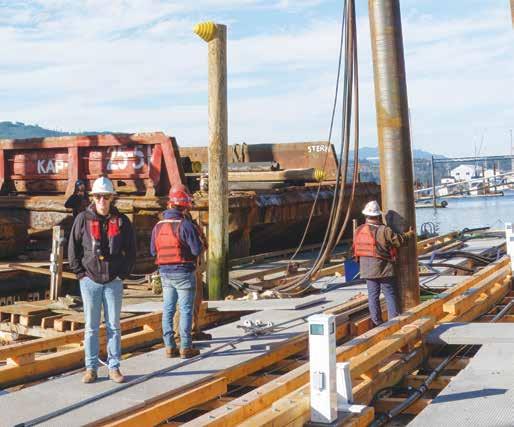
Dock expansion at Manana Resort and Marina now underway. Photo: Bob Burgess
CVRD and the province, was “quite an experience.”
“We’re exploring a ferry service across the way, and we are working with other marinas, tourism agencies and the Ladysmith Chamber of Commerce,” said Crucil, excited about attracting more visitors to the region.
Saltair seeds promote healthy growing: 32 vendors March 14
A packed house is the norm for Saltair Seedy Saturday, now marking its 7th anniversary at Saltair Community Centre on March 14.
Whether it’s a variety of tomatoes, plants, seeds or seedling starters, the repertoire of garden-related items for sale is best described as amazing by organizer Jackie Rieck.
Some 26 vendor tables will be set up indoors and another six in the parking lot area of Saltair Community Centre Hall, said Rieck, who has been involved with the event for six years.
Mason bees, baked goods, and herbal medicines will be available. Networking and advice-giving are beloved features on the day.
Free seeds from Chemainus Library, veggie starters, and native (not invasive) plants are offered. Rieck said she and her organizing team are part of a movement to save heritage seeds. Growing food is promoted.
Saltair Community Centre Society, which sponsors Seedy Saturday, is hosting a membership drive at the same time. Event runs from 10 a.m. to 2 p.m. The hall is located at 3850 South Oyster School Rd. Refreshments are available by donation.
A winter market on the first weekend in November is the other major event hosted by the society.
Four honoured as Stir the Pot theme featured
This year’s Ladysmith Heritage Awards theme was Stir the Pot, and the Ladysmith and District Historical Society decided to take it, literally and figuratively, by organizing a community dinner at Ladysmith Secondary School on Feb. 26.
President of the society, Quentin Goodbody, said, “Normally, we would just do the awards, but we decided to do them with the First Nations traditional
dinner. And it’s been really, rather wonderful.”
We worked with and met some wonderful people, he added.
The historical society used the cafeteria and the LSS school venue.
They hired Gina Seward, who has experience with First Nations dinners and longhouses. The meal involved participants from the school’s Land and Language program.
“The awards are important because they recognize people who have preserved and promoted heritage, and it’s a way for us to thank them,” said Goodbody.
“It’s important because a lot of people come to Ladysmith drawn to its heritage downtown and its colourful history.”
“Heritage is a major attraction to visitors. Also, this is a community event that celebrates multiculturalism, as well as our history.”
Goodbody said he is grateful to the individuals and businesses who served as sponsors and partners for this event.
This year, the four worthy recipients honoured are:
• Ladysmith Secondary School’s Land
and Language Program (tumuxul’ ‘i’ hul’qum’i’num ‘qun ta’ta tul-s ct) – an innovative, immersive curriculum for grades 10–12 focused on Coast Salish language and culture through landbased, experiential learning
• Bruce Mason, for his cultural contributions through the Ladysmith Little Theatre
• Michael Dean, for documenting local heritage through his art
• Michael Robinson, for his Heritage Timeline in the Credit Union
Daffodil Tournament and Feast at exhibition grounds
Knights and Ladies are invited to a day of feasting and merriment on March 21 at the Cowichan Exhibition Grounds.
The Annual Daffodil Tournament and Fest runs from 9 a.m. to 10 p.m., with activities including armoured tournaments, archery, merchants, and feasting.
Entrance tickets are $30 for adults, and free for youth and children under 18. Everyone is welcome. The feast is an additional $20 with a limit of 100 people.
RCMP survey results, priorities to be revealed Ladysmith residents are invited to attend an upcoming RCMP Town Hall at the Eagles Hall on Tuesday, March 17.
Staff Sergeant Trevor Busch of the Royal Canadian Mounted
Police will present results from the recent community consultation survey, outline annual priorities for the local detachment, and answer questions.
The event, hosted by the Ladysmith Residents Association, begins at 7 p.m. (doors open at 6:30 p.m.).
Keystone and Rule of Four showcased
Visitors to the Ladysmith Gallery this month will experience two art exhibitions.
From March 4 to 18, local artists will showcase work around the theme, ‘The Rule of Four’ as a tool, a concept, or a quiet influence.
This exhibition will feature works of art in various media with an opening reception on Saturday, March 7, from 11 a.m. to 3 p.m. Light refreshments will be served.
Guest artists Ashley Gaboury and Larissa McLean are being welcomed for a collaborative exhibition from March 20 to 29 titled ‘Keystone’.
This exhibition looks at the living keystones of our ecosystems: the species, places, and quiet details that sustain entire environments, while asking how art can reconnect people to these remarkable places.
The bodies of work that will be presented are both individual and deeply collaborative, where the artists begin pieces independently by laying down backgrounds, colour, and texture, then exchanging them and responding by building upon each other’s marks, say organizers.
The Ladysmith Gallery which is open seven days a week, 10 a.m. to 4 p.m. in downtown Ladysmith.
RCMP Staff Sgt. Trevor Busch. Photo submitted.
Brodeur’s NHL-inspired art in Ladysmith
Ladysmith Art Gallery with Arts Council of Ladysmith and District, is presenting a special guest artist exhibition featuring legendary NHL goaltender and visual artist Richard Brodeur.
The exhibition runs from April 24 to May 3 with daily gallery hours from 10 a.m. to 4 p.m.
Titled From Crease to Canvas, the exhibition presents a curated collection of hockey-inspired works and Canadian landscapes that reflect Brodeur’s remarkable journey from elite professional sport to creative expression. Known to hockey fans across Canada as “King Richard,” Brodeur brings the same fo -
NHL goakeeper Richard Brodeur’s artistic talents will be on display in Crease to Canvas exhibition at Ladysmith Art Gallery in April. Art image submitted.
cus, discipline, and emotional intensity that defined his NHL career into his
painting practice. A practice that kept his stick on the ice throughout his years
guarding the posts.
A highlight of the exhibition includes two live painting sessions, offering the public a rare opportunity to watch Brodeur create a new work in real time:
• Saturday, April 25
• Wednesday, April 29
These live sessions invite conversation around creativity as a tool for transition, reflection, and resilience—particularly for those emerging from high-intensity careers.
“This exhibition is about more than hockey or art,” says Exhibition Lead Cathleen Lundgren.
“It’s about what happens during and after peak performance—how individuals recalibrate, find meaning, and discover coping paths through creative practice.”
The show also includes youth hockey engagement, school tours, artist talks, and community-focused events throughout the week. Hockey fans, collectors, families, and those navigating life beyond demanding professions—athletes, veterans, first responders, and executives—are warmly invited to attend.
Opening day on Friday, April 24 will feature a media preview, ribbon cutting, and reception. Admission is free.
The Faculty Lounge Murder in Yellow Point
Yellow Point Drama Group presents, “The Faculty Lounge Murder ” written and directed by Nanaimo’s local playwright, Gordon McInnis, starting March 13 and running through March 29.
McInnis’ extensive talent and experience are put on display as eight local thespians bring to life the intertwined relationships within a small, close-knit community, said the play’s promoters. Dr. Bertram (Bertie) Peach has been murdered. But by whom? Two colleagues, his wife and a troubled student all have motive and opportunity. The out-of-town Inspector is not pleased with the assignment nor with the obstinate officer assisting in the investigation.
Follow the Inspector and the Police Constable as they connect the evidence and clues to the final conclusion.
Sponsor Nanaimo Food Share supplied food boxes/baskets to be raffled at the end of each production (with proceeds going to the BC Cancer Foundation at Nanaimo Regional General Hospital. Habitat for Humanity, Nanaimo, ReStore and The Rustic Raven Home and Garden Decor supplied furniture for the Lounge.
Tickets are available by reservation at (250) 722-2459 / cashcredit-debit at the door / online at yellowpointdramagroup.org.
BC Cadet Honour Band returns March 24
BC Cadet Honour Band is back for another concert tour through British Columbia!
One of its stops is at Nanaimo’s Port Theatre on March 24 at 7 p.m. Featuring 50 of the top Royal Canadian Sea, Army, and Air Cadet musicians from across the province, these cadets spend four days in rehearsal before proceeding on a short tour.
The concert features a variety of music from popular to marches and features a band of pipes and drums.
The show, expected to be an “amazing evening of music and a celebration of our young musicians,” is two hours with a 20-minute intermission.
Tickets are free but must be reserved.
Let’s get landscaping
BY PRISCILLA BREWER
Landscaping is not a chore! It is the art and science of thoughtfully changing your natural surroundings to achieve increased function and beauty in your environment. It is much more than gardening – it is an alteration of the land around you to fit the way you live.
The practice of landscaping has a rich history, going back thousands of years. All around the world, humans gathered together, worshipped, relaxed, ate and meditated in their manipulated patches of nature. Ancient Egyptians basked in man-made water gardens under lush shade trees. In Europe, sprawling castle gardens were impeccably manicured, displaying wealth and prosperity. And in Asia, tranquil Zen gardens were cre -
ated for deep contemplation, to promote health and mental clarity.
Today, landscaping continues to intrigue our senses and can greatly improve our lives. There are many valuable benefits to improving our yards. By creating more opportunities for outdoor relaxation and play, we will hopefully spend less time in front of our screens. Fresh air and sunshine will boost our physical health, while the peace and beauty of nature will increase our mental health. By simply spending more time outside, we can build a greater connection to our environment and create a sense of awe and wonder about the mysteries of nature. An added perk of a well-designed landscape may be increased property values and enhanced curb-appeal, cultivating a greater sense of pride in our homes and in our neighbourhoods.
The vast concept of landscaping may seem overwhelming. To help break it down, we can think about three broad categories of achievable actions: design, create and nurture.
Design – the Intention
“If you fail to plan, then plan to fail.”
The manifestation of your ideal landscape will never realize its full potential without proper planning. Landscape design is a highly skilled profession, and the right designer will listen, offer ideas and solutions, and encourage you to express your style and personality.
Alternatively, you may wish to compose your own design. Perhaps the most important concepts to consider are function and flow. A great design is always built around function (how you want to use the space) and flow (how you get from one space to the next). Once function and flow are determined, then other elements can be placed accordingly.
Plant knowledge is key, and it’s crucial to plan for the right plants in the right places. Design principles such as proper scale, good use of colour, balance and repetition should be apparent. Budgetary limits and environmental stewardship goals should also be considered during the design process.
After careful research and planning, it is time for doing. Every project is unique, depending on many factors. You may be digging down or building up. Perhaps you are planting a mighty
food forest, or maybe you are creating a sparse, dry river bed. You may wish to hire a professional crew, or you may want to get dirty and put your muscles to work. There is nothing more rewarding than seeing your progress at the end of a hard day’s work in the garden. Using your design as a guideline, be open to change. There are often some unexpected setbacks, but there is a solution. Great care should always be taken to enhance nature, not damage it. When in doubt, do more research or seek professional advice.
Nurture – Maintain
New landscapes, especially plants, need extra attention. Most trees and shrubs (even drought-tolerant varieties) need deep, occasional watering during dry season for the first two years, until they become established. Beds should be thickly mulched with three to four inches of bark mulch or leaves to help retain moisture in the soil and discourage weeds. Stubborn, unwanted weeds should be firmly eradicated, right from the get-go.
As your new trees and shrubs mature, take the time to get to know them. Learn proper pruning techniques. Observe and interact with other living things – plants, birds and bugs. Instead of dreading the task of “maintaining” your landscape, it may help to think of it in a new light.
Priscilla Brewer (Envi Landscapes) is a multiple award-winning landscape designer, horticultural technician, and certified permaculture designer and teacher.
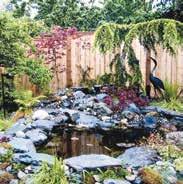
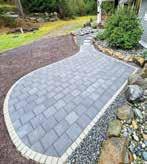
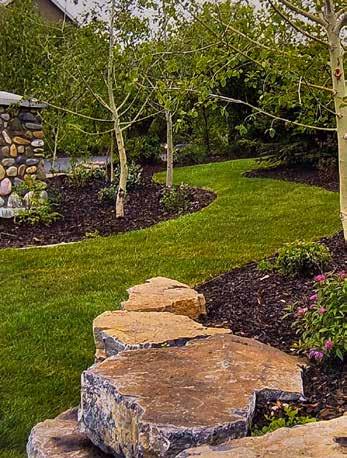
Beauty of great landscaping is evident. Photo submitted.
French Canadian pea soup: Soup de Poi’s a L’Ancienne
BY PAUL LEGACY
Ahhh, a classic soup, simple, humble and deeply comforting. This old-fashioned French pea soup is the kind you would find simmering away on the back of the stove, perfumed with thyme and bay leaf and finished with a good bread and maybe a little butter on top.
Pea soup is one of Europe’s oldest cooked dishes. Dried peas were cultivated in France as early as the Middle Ages because they stored well all winter, were cheap and filling, and did not require the addition of meat to make a sustaining
meal. Long before potatoes and tomatoes arrived in Europe, peas were a staple. Medieval soups (called pottages) were thick, nourishing bowls meant to be eaten with bread – often more stew than soup.
As French cooking became more refined, pea soup split into two paths. Green pea soups – sometimes pureed and enriched with butter or cream – found their way into bourgeois and aristocratic kitchens. Yellow split-pea soups remained firmly rural thick, rustic and cooked slowly with onions, herbs and pork.
In the countryside, soup was often eaten
daily, sometimes morning and night. A pot would simmer on the hearth, replenished with water and vegetables as needed.
When French settlers arrived in Quebec in the 1600s, they brought their food traditions with them but adapted them to the new land. They found yellow split peas stored better in harsh winters, replaced fresh meat with salt pork and used water instead, as stock was rare then. Thus was born the now-iconic French-Canadian soupe aux pois. Dried savoury (sarriette) became the defining ingredient, and herb and potatoes were added once they be -
Old-fashioned French pea soup: Comfort food. Photo: Paul Legacy.
Why not finish your soup meal with home-made cream puffs, these created for Take 5 by
came available in the 18th century.
Today, pea soup is still a staple, not only in Quebec but a lot of the country.
Ingredients:
2 cups dried yellow split peas, rinsed and picked over 1 medium onion, finely chopped
1 salt pork (about 150–200 g) diced or thick-cut bacon if needed
1 small potato, peeled and diced (optional but very traditional)
1 carrot, finely diced
1 clove garlic, minced (optional, old homes often skipped it)
1 bay leaf
½ tsp dried savoury (very traditional; or thyme if you can’t find savoury)
6–7 cups water (not stock – this matters)
Freshly ground black pepper
Salt (only if needed at the end)
Rinse the split peas under cold water until the water runs clear. No soaking needed.
In a heavy pot or Dutch oven, add the diced salt pork and cook over medium-low heat. Let it slowly render for 8 to 10 minutes, stirring occasionally until lightly golden and fragrant. Do not drain – the fat is flavour.
Add onion, carrot and potato. Cook gently for 5 to 7 minutes, stirring just until the onion softens. Add garlic (if using) and cook for 30 seconds. Bring to a gentle boil, then reduce to a low simmer. Partially cover and cook for 90 minutes, stirring occasionally so the peas don’t stick. The peas will break down naturally and thicken the soup.
Remove the bay leaf. Taste carefully and add pepper first. Salt is often unnecessary because of the salt pork, so add it only if needed.
Mash slightly with a spoon for a rustic finish or briefly blend just a portion if you like it smoother. It should be thick, spoonstanding and pale yellow; have a deep porky flavour; and taste simple and comforting – never fancy. It is best served with a rustic bread with some butter – yum, yum!
In Quebec and most of the East Coast, it remains deeply traditional, proudly unpretentious and tied to memory, family and tradition.
Mark Twain famously joked that Canada is a country where you eat pea soup three times a day. One pot, one spoon, one loaf of bread – and you’re home.
You can follow Paul Legacy’s food blog: A Legacy in Thyme at https://www.facebook.com/share/1AvhVXYW3a/?mibextid= wwXIfr
food columnist Paul Legacy.
Most Important Relationship After 40 Is
the One You’ve Been Putting Last
BY DR. LAURA REIMER
It often shows up quietly. You fall into bed exhausted from the day but lie awake running through tomorrow’s to do list. You take care of everyone else’s appointments while postponing your own. You tell yourself you will ‘have more time for myself once things settle’, but as one challenge settles a new one pops up on your radar. For many women in midlife, this pattern becomes so familiar that it no longer registers as a problem and is simply accepted as part of life. What often goes unseen is that the relationship with your own body, energy, and emotional wellbeing is being totally neglected.
Canadian research helps explain why this stage of life feels heavier than expected. National data shows that women between 40 and 64 report higher levels of perceived stress and declining mental wellbeing compared to earlier adulthood, particularly during years of peak caregiving and work responsibility. Closer to home, British Columbia research has found that the vast majority of women between 39 and 60 expe -
Choose activity that makes you feel good.
rience moderate to severe menopause related symptoms, with many reporting impacts on sleep, mood, work performance, and daily functioning. These are not small nuisances. They are signals that the body is asking for a different kind of care at a time when women are often giving the most to others.
Self care is frequently misunderstood
as an indulgence, which is why so many women resist it. In reality, it should be seen as a form of routine maintenance rather than an optional luxury. Just as relationships need regular attention to stay healthy, so does your nervous system, mind, and body. Chronic stress without recovery increases fatigue, emotional reactivity, and physical strain. When women are taught to push through rather than pause, the cost is often paid in energy, confidence, and long term health.
The good news is that reconnecting with yourself does not require dramatic change. Research consistently shows that small, regular practices can have meaningful effects on stress and emotional regulation. Here are three simple, research-backed practices that foster a sustainable relationship with your own wellbeing:
Journalling: Start or end each day with five minutes of reflective writing. Expressive journaling helps externalize anxiety, reduce worry, and improve mood regulation. Regular practice, even briefly, rewires how the brain processes stress and emotions. Journalling does not mean writing well or pouring out pages of emotion. Even five minutes of unfiltered writing helps the brain organise thoughts, reduce mental looping, and process feelings instead of storing them in the body.
Breath Awareness: Incorporate intentional breathing breaks into your day. Slow deep breaths that engage the diaphragm can shift the nervous system from fight-or-flight into a calmer state and lower emotional reactivity.
Movement: Choose movement that feels good and sustainable rather than performance oriented. Regular movement improves circulation, supports hormone balance and enhances mental clarity. Even short walks with mindful awareness count.
Mindful self care invites you to reframe this practise not as an occasional luxury, but as an opportunity to regularly reconnect with the most enduring partnership you have: your own health and vitality.
If you want more guided support in beginning this journey, you can reach Dr. Laura through GLOWfit Health & Fitness or follow her work on social media @drlaura_reimer
Photo: Dr. Laura Reimer
Taprooms and bars continue to serve unique drinks despite changing tastes
BY GABRIELLE LEE
“We’re essentially bottling sunshine.”
This remark, shared by Colin Rombough of Big Bang Cider, is a sentiment people who work for breweries or cideries share. Indeed, though reports indicate that alcohol consumption levels have waned over the past few years and consumers’ tastes continue to change, local taprooms and bars continue to serve unique drinks while providing spaces for people to gather – a process that is incredibly gratifying for both customer and business alike.
If you know where to look, mid-Vancouver Island features breweries and cideries that blend familiar, local flavours with techniques from across the world to produce complex, delicious beverages.
In the heart of Chemainus, you’ll find Serious Brewing Company. “We currently have 13 beers on tap. It’s a mix between [a variety of] six lagers … all very different, region-specific lagers, and outside of that, we really lean on hoppy beers. We normally have two fruit beers on tap,” said brewmaster Iain Warren.
“We’re really aiming to produce balanced drinkability – beer for everyday people.”
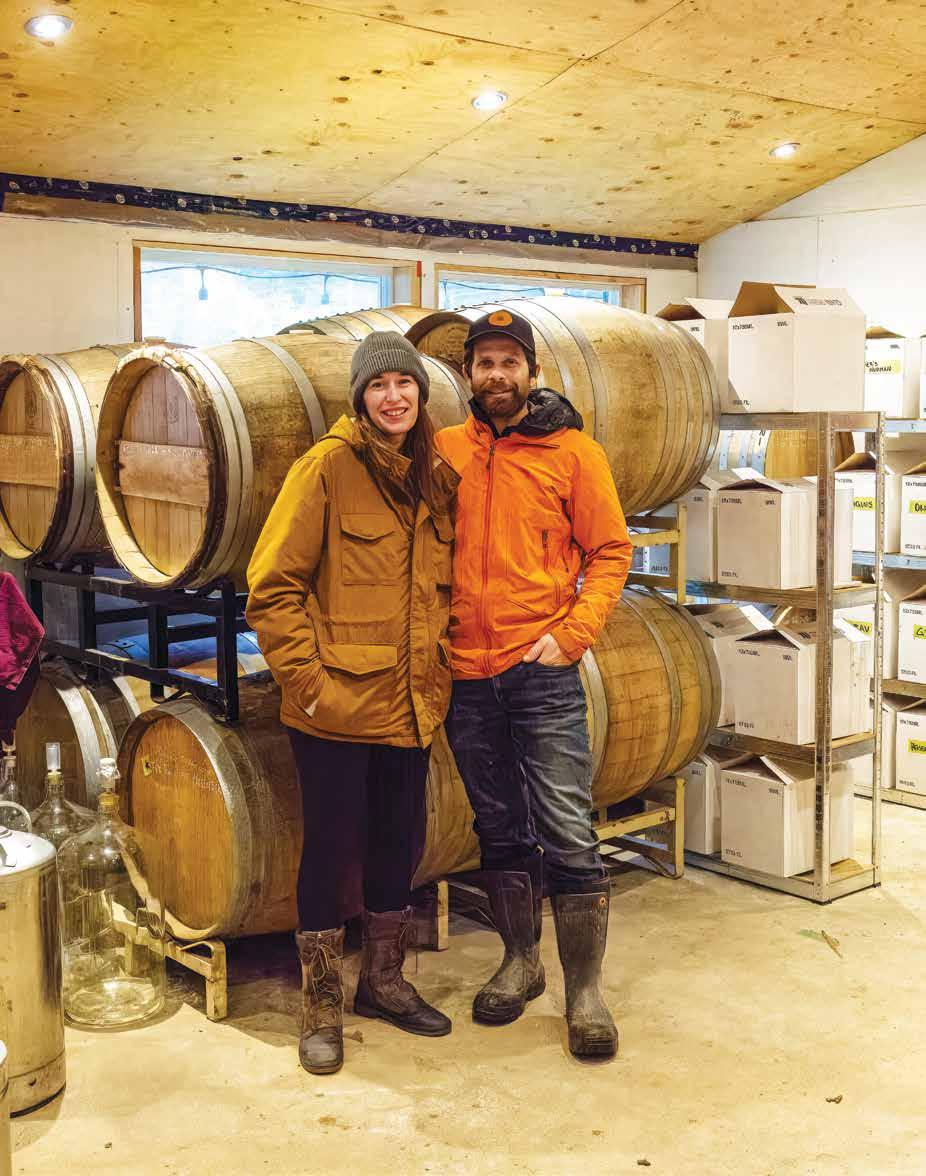
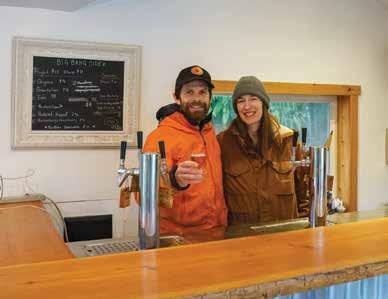
If ciders are more appealing, take a drive through Nanaimo’s farmland, and you’ll come across Big Bang Cider. “We have a small, orchard-based cidery. We specialize in making more traditional ciders – [ones] that would be reminiscent of something you would have in England or Northern France,” said Colin Rombough, who co-owns Big Bang Cider with his wife, Kate Rycroft. “We make dry, traditional, tannic, complex, interesting craft cider.”
On the edge of Ladysmith’s downtown is Bayview Brewing Company. “We make virtually every style of beer,” said Jonny Ludtke, the business’s co-owner and chef. “We have four core beers that we always brew, which are the blonde, a
pale ale, a West Coast IPA and a Hazy IPA. And then the rest of our taps rotate depending on what ideas [our] brewer Alfred has for beers at any given time.”
Creating any sort of alcohol is a manylayered process. Both breweries and cideries go through a careful experimentation process to curate the beverages they offer in their storefronts. Warren finds himself combining his and others’ brewing expertise with traditional research to develop new flavours.
“[When] I’m considering the specific styles of beer … what I really look at is the mulch that they use [and] the hops. … I’m also talking to other brewers that produce those kinds of beers. I’m asking them questions like, ‘Hey, are you using this specific ingredient? Or what’s your recommendation for this, which type of hops, which yeast?’” explained Warren.
“I’m trying to be as authentic as possible, but obviously I’m making it with water from Chemainus, so it’s never going to be exactly what they would produce elsewhere. Sometimes I’m using Czech hops, German yeast, and trying to brew something that’s unique as opposed to traditional.”
Rombough, in contrast, takes an approach that’s inspired by the precise methods that go into the production of yet another alcohol – wine. “Our approach to cider is using … fruit that has been specifically grown and selected to make cider. We really kind of let the juice
speak for itself. We have some [fruits] that are completely wild fermented, and then we have other ones that we’re using cultured yeasts,” he said. “So, those different ciders, depending on how we make them, will give different flavour profiles and [will] taste differently and smell differently. … My background is in wine-making, so I bring that approach to cider making.”
Big Bang ferments for extended periods at low temperatures, allowing the polyphenols and varying apple flavours to remain. Fermentation can take up to six months, and depending on the ciders, they age for two or three years, sometimes in barrels. All these processes leave the drink with a complex, tannic structure.
Alfred Elviss, the brewer at Bayview, is attentive of the seasons when considering the business’s lineup. “In the winter, dark beers sell more, so those usually come out. Then in the summer, [we serve] lighter, fruitier, thirst-quenching beers.”
Indeed, the making of alcohol is complex, a carefully considered process. With evolving consumer tastes and alcohol consumption rates, this thoughtful approach is also reflected in businesses’ ethos and additional offerings. Both Serious Brewing and Big Bang Cidery have been conscious of price, quality and variety in their operations.
“We looked at everybody else’s pric-
Bayview Brewing team: Left to right, Geoff Alsop, Jonny Ludtke, Alfred Elviss and Rod Alsop. “Good food program keeps people coming in all the time,” said Elviss.
Photo: Bob Burgess.
ing, and we looked at our costs, and then kind of chose [to set] a 20-ounce pint at eight dollars, [which is] pretty reasonable. At first, people were like, ‘Oh, that’s a little expensive for us.’ And I get it. But … it costs as much to make it, [and] we have to be able to profit. And I think people are coming around to it,” said Warren.
“We really try to offer a pretty affordable day out,” added Rombough. “You can have two people come, and they can have a flight at our cidery [for] 12 dollars each. That’s something that a lot … of people can afford, and … that is pretty important for us. Cider has always been the people’s drink. If coming
out to the orchard and having a nice craft product is something you want, I hope [our] cost isn’t too much of a barrier.”
All three businesses are eager to offer a range of quality products, not only for those who consume little or no alcohol but also for those who are looking for something different. “We have a good food program that keeps people coming in all the time,” said Elviss.
Bayview has also seen an uptick in lighter alcohol beers, which they’ve begun to produce more of.
Serious Brewing does not have the facilities to produce their own non-alcoholic beverage, but they have brought in multiple options from other local breweries.
“People can still feel like they’re having a beer [or] a glass of wine, and nobody else at their table necessarily needs to know what they’re drinking or if it has alcohol or not,” said Warren. He also understands that many are cognizant of their health and appreciate options that align with those concerns. “Together, as an industry, we can be better and offer a 3.5 per cent beer to our customers. Then they feel like they can have a beer or two, still be functioning and not feel like they’re being completely unhealthy.”
“People are probably drinking less, but that’s okay,” Rombough said. “Our first step is to be able to offer [our version of a] piquette … which is a very low alcoholic cider ... and then offer things like hot water, sparkling water … and different things for folks who want to come.”
Like other business owners, he’s noted the decline but has taken it as a reason to hone his craft even further. “I don’t necessarily feel threatened by [declining drinking rates] because we’re … making a high-quality craft product. I think that there’s always going to be people who are interested in having one of their two drinks a week being a high-quality, interesting, delicious craft cider. I think that there’s a little bit of a niche there [and] people are always going to be interested.”
Ultimately, all three businesses see themselves as not simply a site to consume alcohol but also as a place for celebration, where people can come together to enjoy each other’s company and spend time with those they love. Rod Alsop, Bayview’s co-owner, said his favourite part of his job is “the sense of community that we’re providing.”
Rombough, too, spoke of how fulfilling it is to create a product which allows for human connection. “The thing that I do love about cider – and this is something that I find with alcohol [and] some foods as well – but it tends to be something that people gather around. … Especially in a world where so many people are … becoming estranged from each other in general because of social media, having public places where people can come and gather around something, talk and just spend time with each other face-to-face, I think, is really important.”
The Island’s breweries and cideries will continue to provide just that. Bayview and Serious Brewing are open year-round, while Big Bang operates from the spring to the fall. Whether you’re looking for a carefully crafted meal, a farm-to-table beverage or simply a place to raise a glass with a friend, the businesses’ doors are open. Everybody is welcome to come around to share in a good meal, a good drink – and, most importantly, good company.
Colin Rombough, co-owns Big Bang Cider with his wife, Kate Rycroft. Photo: Bob Burgess
Serious Brewing Co. brewmaster Iain Warren. “People can still feel like they are having a beer.” Photo: Bob Burgess.
Boot sale, Juno award winner in Chemainus
Starting to plan your Chemainus calendar for the coming months?
Chemainus + District Chamber of Commerce is hosting its 2026 Boot Sale on May 9 and May 23, a community garage-style-event. Locals will be selling treasures from the trunks of their cars from 10 a.m. to 2 p.m.at Waterwheel Park, giving shoppers plenty of time to browse for second-hand finds, household items, collectibles and quirky bargains.
On May 8, St. Michaels Anglican Church is hosting two-time Juno award and seven-time Maple Blues winner Jack de Keyzer for a special concert 6:30 p.m. to 9:30 p.m. Tickets will be available for purchase beginning this month (March).
Visited the U.K.? This may be your place
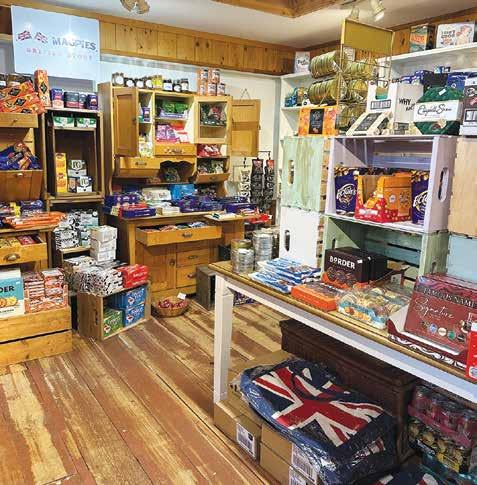
The spring items are now in stock at Magpies Gifts and British Foods. It’s the perfect place to find delicate silver jewelry, colourful seaglass, and leather handbags. The regular favourites— cakes, toffees, jams, and crisps—have all been restocked.
The owner, Cath Scanlan, started the store back in 2022 and loves the vibrant and eclectic community in Chemainus. She said that Magpies is not just for British people, it’s for people who have visited the U.K., those who want to go, and everyone else in between. “We’re not just British food. We’re gifts and souvenirs and cards.”
It’s important to shop local, Cath said. “Chemainus has lots of very interesting stores that deserve people coming in.” Magpies is open from Tuesday to Sunday, so come in and see what you can find.
Chemainus Valley Museum opens for spring season
The Chemainus Valley Museum is opening for the spring season on March 14th. The museum is the spot to discover the history of the town.
Come learn about the logging industry that built the town, the Japanese and Chinese workers who kept it going, and how the town has modernized into a haven for artists.
Located in Waterwheel Park, the museum overlooks the historic and current sawmill.
Spend a moment taking in the busy workings of the harbour, and beautiful nature that surrounds it all.
Magpies Gifts and British Foods is not just for British people, but those who visited the U.K. or those who want to go. Photo: Nadine Wong
RDN Area A
The recent RDN Board discussion of design choice for Morden Colliery Regional Trail (MCRT) bridge generated a lot of community discussion. I want to clarify some of the confusion about the funding source for the bridge and the relationship this project has with other Area A priorities particularly relating to road safety.
To start, I want to acknowledge that the state of our roads and the lack of nonvehicular transportation infrastructure present real safety risks that limit our ability to walk or ride safely throughout the community.
A significant challenge in addressing this road safety is the fact that the RDN does not have jurisdiction over roads and road-related infrastructure. In Electoral Areas (EA), the Province of BC, through the Ministry of Transportation and Transit (MoTT), has responsibility for all things road related including speed limits, crosswalks, and sidewalks. In contrast, municipalities have jurisdiction over roads providing municipal councils with the ability to implement road safety measures in their communities. Since the beginning of my term (and even before as a School Trustee), I advocated for “safe and active routes to schools”, for specific road safety improvements, and for general improvements for road infrastructure that included active transportation. While small improvements have been achieved (e.g., the crosswalk on Woobank Rd at the Morden Colliery Regional Trail and crosswalk painting near schools), ultimately only MoTT can make the decision to invest in road infrastructure within the limits of their budget and mandate.
Although the RDN does not have jurisdiction over roads, the RDN can request a License of Occupation to create trails within road right of ways (ROWs). As such, and working through the RDN Board, I requested that RDN staff explore creating a multi-purpose pathway between Cedar Elementary and Cedar
Secondary School (referred to as the Cedar Village Trail). In this process, the RDN successfully applied for a $50,000 Government of British Columbia’s B.C. Active Transportation Infrastructure Grant. This grant is being used to hire consultants to assess road safety in the Cedar Village area and to provide recommendations for infrastructure improvements including exploring the feasibility of the proposed multipurpose path. An open house was held on November 26, 2025 to gather information about community concerns and priorities.
At the Feb. 18, 2026 meeting, the Parks, Recreation, and Culture Committee received the draft Cedar Village Area Road Safety report from the consultants. The road safety report includes suggestions about intersection safety, traffic changes, and roadside paths to improve our ability to walk or ride in the area safely. Implementation will require cooperation with the MoTT and the school district. There will be an upcoming open house for the community to review the report and provide feedback.
The road safety report and the proposed Cedar Village Trail (CVT) are my efforts to begin to address the road safety concerns in Cedar. The work resulting from this report will likely be funded through Electoral Area A Parks and Community Halls budget and will likely be, at least partially, achieved through utilizing Community Works Funds. Potential funding will be acquired through taxation of EA A residents and grants that are eligible for EA A projects. Consistent with my long-standing work to improve safe and active routes to schools and active transportation, the CVT project will continue to be a priority of mine.
I write the above to highlight jurisdiction and funding source so that I can compare with the MCRT bridge and trail. The MCRT exists in a MoTT ROW with a License of Occupation already established. The intention is to extend the current trail across the Nanaimo
River to meet the trail on the west side of the river and up to Morden Rd. The proposed design of the bridge will allow bi-directional crossing of multiple modes of active transportation including horses and bikes. This project is a RDN Regional Parks project. The funding source for this project is through RDN Regional Parks with all communities within the RDN contributing. Based on population, the EA A contribution to this project will be approximately 5% of the total cost with the other 95% coming from across the RDN. There are relatively few Regional Parks and Trails in the Southern RDN. Our community, like all RDN communities, has contributed to Regional Parks projects throughout the region (e.g., Top Bridge Regional Trail, Moorecroft Regional Park, Hamilton Marsh). I am grateful to see regional investment into our community and would further state that we have patiently waited for our turn for regional funding and this long-planned project.
Should both the CVT and the MCRT bridge and trail extension be completed, they will serve as the active transportation network backbone for Cedar and build toward regional connections with other cities’ active transportation networks. Building Regional Parks infrastructure will not detract from building the CVT or other road safety projects. Regional Parks projects and Electoral Area A projects come from different funding sources and serve related but different functions. Regional Parks funds are allocated by the RDN Board for Regional Parks projects and cannot be applied to road safety projects in EAs. However, I view these projects as complementary and working toward the goals in the EA A Active Transportation Plan. I acknowledge that these specific projects do not provide traffic calming or lower speed limits, but that work would fall under the jurisdiction of MoTT. Both trail projects are intended to build stronger community connections. The MCRT and bridge will connect two areas that are divided by the river. This project will allow kids from South Wel-
lington to ride to school and kids from either side to be able to visit their friends across the river. The Cedar community will be able to more easily access the events and programming at the South Wellington Community Centre. The South Wellington community will be able to walk/ride to the grocery store, the Cedar Farmers’ Market or have a night at the pub and walk/ride home. The CVT will allow kids to walk or ride safely to school and will allow the Cedar community to walk or ride safely to local community amenities instead of having to drive. The MCRT & bridge and the CVT are more than recreation and active transportation opportunities, they create stronger community ties and literally bridge the two communities on either side of the river.
As a side note, I recently learned that MoTT is in the process of installing flashing lights at the crosswalk on Cedar Rd at Gould Rd. Advocacy for improved crosswalk safety at that location has been occurring for years and I am grateful it has come to fruition.
For more information, please visit the RDN Get Involved page and find the
Regional Parks and Trails link. I can be reached jessica.stanley@rdn.bc.ca or 250-268-7359 if you would like to share your thoughts.
CVRD Area H
On a damp Thursday evening last fall, I watched a steady stream of neighbours trickle into a community hall for a budget discussion. What struck me most wasn’t the agenda, but the quiet determination in the room. In a community like ours—rural, spread out, and perched at the edge of more than one region—staying connected takes intention. And I can’t help but think about the tragedy in Tumbler Ridge and how important that connection is to community resilience in the face of the unimaginable. My heart and prayers go out to all the families, friends and love ones, and all those impacted. Tumbler Ridge strong! That sense of connection is what guides the updates below, from upcoming meetings and budget decisions to water conservation and airport planning. These are the places where community voices matter.
Upcoming Meetings: Your Chance to Be Heard
Several key meetings are coming up this spring, and I strongly encourage residents to attend where possible.
First, a Joint Town Hall is scheduled for Thursday, March 19 at 7 p.m. at the North Oyster Community Centre. This session is co-hosted by myself and RDN Director Jessica Stanley. Our guest speaker will be Dave Devana, President and CEO of the Nanaimo Airport Commission, who will provide an update on airport operations and future development plans.
While the airport lies outside our electoral area, its impacts are felt well beyond its boundaries. Transportation corridors, noise considerations, and economic activity don’t stop at jurisdictional lines. This makes it a timely and relevant information session for residents on both sides of the region.
Looking ahead to April and May, Local Area Plan Public Information Meetings for Electoral Areas G and H will be held on Monday, April 13, from 5 p.m. to 7 p.m. at Diamond Hall, with a formal presentation beginning at 5 p.m.
Planning staff from the Cowichan Valley Regional District will present an updated draft of the Local Area Plan. In May there will be public information meetings for the Comprehensive Zoning Bylaws project. More details will be shared in the April Take 5.
What the 2026 CVRD Budget Means for Our Area:
The proposed 2026 CVRD budget is now nearing completion. At the Board meeting on July 9, 2025, staff were directed to keep the overall requisition increase under 4 per cent, with options presented to reduce that figure to 2.5 per cent. Any service level changes or new capital investments were required to be supported by a formal business case.
It’s important to remember that this target applies across approximately 180 different service functions. Area H participates in only 24 of those services, the fewest of any electoral area. One of those is the Vancouver Island Regional Library, which is funded through regional districts but is not, strictly speaking, a CVRD service. Some services, in addition to the 24, apply only to portions of Area H, such as fire protection (with the Diamond receiving service from Ladysmith) and local water systems including Shellwood, Shellbeach, and Woodley.
Based on the most current data available at the time of writing, the CVRD Board’s final decisions result in an increase in the Area H requisition from $134.69 to $140.01 per $100,000 of assessed value—an increase of $5.32, or about 3.9 per cent. Property taxes are also influenced by factors outside the CVRD’s control. There are eight property classifications, with Residential properties accounting for approximately 70 per cent of the total tax share in Area H, followed by Major Industry (15%) and Business (9%). Additionally, if an individual property’s assessed value increases more than the regional average, the tax impact will be higher—even if overall requisitions remain flat.
The largest contributors to the $5.32 increase were Regional Recreation ($2.07), Electoral Area Services ($1.21), General Government ($0.92), and Bylaw Enforcement ($0.91). Offsetting these were decreases in Cowichan Housing Association ($0.64) and Economic Development ($1.01) budgets.
Key takeaways:
1. Area H continues to have the lowest overall CVRD tax burden of any electoral area.
2. No new services are being added in 2026, and no major expansions are planned.
Two notable changes are worth flagging. Economic Development will be in a wind-down year, with its budget reduced from $727,000 to $266,000. Meanwhile, Regional Recreation is now fully phased in, meaning large operational increases are not anticipated.
Looking ahead, residents should watch for discussions around capital reserves and asset management, and for the next regional recreation usage survey in 2027, which will influence future funding allocations.
Water Conservation: Shaping a New Rebate Program
On the local initiatives front, the CVRD is developing a water conservation rebate and incentive program, and residents are being asked to help shape it.
The goal is to support practical, cost-effective water-saving measures—especially important in rural areas where wells and
watersheds face increasing pressure. Options being considered include rebates for rain barrels, cisterns, soil improvements, and smart irrigation systems.
An online survey https://ow.ly/ARix50Yczqr is open until March 6, 2026, and feedback will directly influence how the program is designed. This is a genuine opportunity to ensure regional funding supports solutions that actually work in our communities. For more information, please email the Environmental Services Division at environment@cvrd.bc.ca or call 250.746.2633.
Practical Updates: Garbage Totes and Rezoning
Some Area H households received larger 240-litre garbage totes in 2025 due to a temporary shortage of standard bins. These will now be replaced with standard-size totes. Affected households will receive a letter, so please keep an eye out.
Finally, a public information session was held on Feb. 11 regarding a rezoning application for Manana Lodge Resort and Marina, which would allow further marina expansion into Ladysmith Harbour. Approximately 40 residents attended. CVRD staff are preparing a summary of the session, which will be available once complete.
Staying informed is the first step to staying involved. In a community like ours—sitting at the crossroads of regions— your participation helps shape decisions that last well beyond the meeting room. The more informed, the more connected, the stronger our community.
In Service, Ben ben.maartman@cvrd.bc.ca 250-510-5930.
CVRD Area G
CVRD 2026 Budget: Stewardship in a Challenging Time
On Feb. 25, the CVRD Board voted on the 2026 Five-Year Financial Plan Bylaw, finalizing this year’s regional budget.
The approved increase is 3.87 per cent, the third-lowest since 2007. After several years of sustained tax pressure, this marks a deliberate shift toward fiscal restraint.
Why This Budget Matters: To understand this year’s decisions, we must look at the broader economic context facing our region.
The 2022 Financial Reset: The Regional Recreation referendum permanently shifted significant costs to the CVRD, raising the regional financial baseline. We continue to operate within that framework.
Cost-of-Living Pressures: Inflation has moderated to approximately 2.1 per cent, but household costs remain high. Mortgage renewals, groceries, utilities, and insurance continue to strain family budgets.
Industrial Disruption: The permanent closure of the Crofton pulp and paper mill and the shutdown of the Chemainus sawmill through 2026 have resulted in more than 400 direct job losses, with thousands of families affected across Vancouver Island. The full economic impact has yet to be felt.
In this environment, affordability is not a slogan; it is a responsibility.
A Commitment to Discipline:
When our mandate was renewed in 2025, I committed to managing tax dollars responsibly while protecting core services. That commitment guided every budget discussion this year.
I advocated for a 2.5 per cent target to better align with inflation and economic reality. Achieving that level would have required significant trade-offs due to contractual obligations and capital reserve requirements. While the final increase settled at 3.87 per cent, the push for discipline mattered. Without it, the increase would have been higher.
Listening to Area G: Real Trade-Offs
Budgeting is about more than spreadsheets; it is about community impact.
Yard Waste Tipping Fees: A proposal to move yard waste disposal to a user-pay model would have shifted approximately $470,000 from general taxation to direct fees. While fiscally rational on paper, residents in Saltair and on Thetis Island raised clear concerns about illegal dumping, backyard burning, congestion at facilities, and growing fee fatigue following three-stream implementation.
The feedback was decisive. The service remains tax-funded.
Economic Development Funding
The Board voted to reduce the approximately $750,000 Economic Development budget to zero.
Area G’s Position:
Area G remains the second-lowest tax jurisdiction per $100,000 of assessed value in the CVRD, behind only Area H.
Maintaining that position was central to every conversation. In a region facing economic headwinds and industrial uncertainty, protecting affordability for seniors, families, and local businesses remains essential.
Professional Administration
CVRD Finance and departmental staff provided detailed modelling, transparent reporting, and responsive analysis throughout the budget process. Their professionalism ensured decisions were data-driven and informed.
Strong governance depends on strong administration. I will be hosting a community meeting on March 8 at 2 p.m. at the Saltair Community Centre to provide further updates and answer questions.
Topics will include:
• The 2026 CVRD Budget and its impact on Area G
• Official Community Plan (OCP) implications
• Local Area Plan (LAP) updates
• Water system infrastructure and treatment planning Water System Update: Design work is underway to replace the Stocking Lake Dam. The CVRD’s $2.6 million share is fully funded through the Growing Communities Fund, with no impact on property taxes.
Two new groundwater wells are being connected to the system. Once operational, they can supply up to 100% of average winter demand and reduce reliance on surface water during dry periods. The previously proposed stand-alone treatment plant was paused due to escalating costs. We are now reassessing more cost-effective options, including potential shared treatment with Ladysmith, to meet Island Health requirements while protecting affordability. These decisions directly affect long-term sustainability and infrastructure planning in Saltair.
Closing: The 2026 budget is not perfect. At 3.87%, however, it reflects discipline amid economic uncertainty. With industrial closures, elevated household costs, and an evolving regional economy, steady stewardship matters.
Contact 250-252-6525 or jesse.mcclinton@cvrd.bc.ca.
The Great Awakening:
The Rufous Arrival and the Forest’s First Blooms
BY CATHERINE GAUTHIER, NATURALIST AT WILDWOOD ECOFOREST
March 20 marks the first day of spring, bringing new colours, scents, and sounds to the air.
While the sun begins to feel warmer on our skin, the damp Coastal Douglasfir forest of Wildwood often retains a refreshing spring chill.
Nevertheless, the local wildlife senses the increasing day length and rising
Let Wildwood awaken your sense: admire the pink blossoms, catch the scent of the yellow wetland flowers, and eventually, savour a handful of juicy salmonberries.”
temperatures; they instinctively know that spring is on its way. As the vegetation wakes up, birds from the south begin their northward trek in search of hospitable habitats, abundant food, and safe shelter.
Some birds are preparing for incredible journeys to reach these habitats. This is the case for the Rufous hummingbird (Selasphorus rufus). This tiny copper globe-trotter is only about 8cm long but migrates from wintering sites in Mexico to breeding sites in northwest Canada and Alaska.
Arriving on Vancouver Island in late March, these birds travel over 6,000 km, which is the longest migration in the world relative to body length. Although Rufous populations have dropped by nearly 60 per cent since the 1970s, mak-
Skunk cabbage serves a unique role as it attracts early-season pollinatrors.
ing it a high-priority species for conservation, we are fortunate to have them around Wildwood.
You can usually spot them near forest edges, often nesting in conifers common at Wildwood, such as Western Redcedar (Thuja plicata) and Douglas-fir (Pseudotsuga menziesii).
Their arrival on the coast is perfectly timed with the blooming of Red-flowering Currant (Ribes sanguineum) and Salmonberry (Rubus spectabilis).
These shrubs act as vital “fuel stations.”
The Salmonberry’s bright pink flowers are perfectly designed for a symbiotic relationship: hummingbirds drink the sweet nectar and pollinate the plant, which produces fruit approximately 30 days later and provides an important food resource for local wildlife (and humans!).
Because Rufous hummingbirds have such high metabolisms, they are voracious and even aggressively territorial. They must drink up to 1.4 times their body weight in nectar every day and will boldly defend a food source, performing impressive J-shaped courtship dives at extreme speeds.
Alongside the colourful Salmonberry, the Western Skunk Cabbage (Lysichiton americanus) plays a less showy, but nonetheless crucial role. Known for its “skunky” scent that attracts early-season pollinators like flies and beetles, it is one of the few plants capable of thermogenesis.
This process involves the plant converting stored starch from its roots by reacting it with oxygen to produce heat. Not only does this allow the Skunk Cabbage to melt through late-season frost, but it also helps intensify the flower’s rank odour to attract insects. Hummingbirds won’t visit the Skunk Cabbage for nectar, but rather to hunt the insects hovering around its spathe — its bright yellow, leaf-like “hood.”
As the forest enters a new cycle, let Wildwood awaken your senses: admire the pink blossoms, catch the scent of the yellow wetland flowers, and eventually, savour a handful of juicy salmonberries. This is the spectacular spring show our Coastal Douglas-fir forest has to offer. And if you’re patient and a bit lucky, you might find yourself face-to-face with a tiny copper traveler, newly returned from its epic journey..
That’s a Lot of Bull: B.C. elk numbered in millions
BY PAMELA WALKER
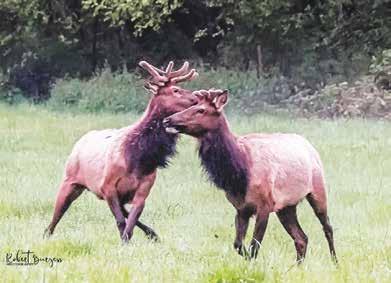
A male Roosevelt elk can tip the scales to the tune of 1,200 pounds (520 kg) or even an octave higher. That’s something to wail about if you are crossing the highway when an entire herd is not obeying the traffic lights at the corner of Cedar Road and the Trans-Canada Highway.
But why are the elk all of a sudden here? Where did they come from? And shouldn’t they be leaving soon? Taking a deep dive into the pool of knowledge surrounding the Cervus elaphus roosevelti brings up some surprising infor-
mation.
The elk herd we see around here was actually introduced on purpose in 1986 by the Government of BC, but there are traces of their abundance on the Island 15,000 years ago – before the Ice Age either wiped them out or sent them swimming down to warmer climes.
After the glaciers receded, the elk came back and populated the entire length of Vancouver Island and beyond. Indeed, it is thought that elk, not deer, were the most widely distributed ungulate in North America, with a continental population in the tens of millions. Now that’s a lot of bull! No wonder an elk is one of the two animals that graces the BC coat of arms.
By 1900, however, the elk population had dropped to the endangered level of about 100,000, with none on the Island at all. Today, they are still blue-listed, but thanks to their reintroduction, the population has reached about 6,000 and is growing quickly. Ladysmith has one of the densest populations, at one per 2.5 km2. Their population is growing so quickly that some have been trapped and trucked off the Island to repopulate
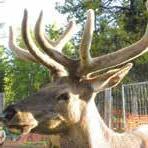
Elk typically live to be 10 or 12 years old, but have been known to reach the age of 20. Photo: Bob Burgess
other areas on the mainland. But not soon enough, some say.
Elk are social animals. They live in herds of about 20 females and their offspring, joining male or bachelor herds only during the fall rutting season.
This is when you might hear the eerie bugle call of an elk –both an attempt to impress the womenfolk and ward off rivals with its wobbly tune. Males will wallow, spray urine, thrash vegetation and engage in other aggressive antics to protect their chosen harem. It’s also the time when you might witness antlerto-antler combat, sometimes resulting in a bull bludgeoning a rival with its velvety weapons.
Expectant mothers hide themselves and give birth alone. Calves are born in late May and early June, usually one per mum, weighing on average 13 kilograms. Before joining the rest of the herd, a mother will graze and nurse her calf for a few weeks by herself until the baby grows stronger and can walk without falling. Then babies are raised with aunties and cousins. The males are of a totally different ilk, doing nothing much at all.
Teenage pregnancy is not uncommon among elk, with females as young as two years old successfully giving birth. Males are also capable of reproducing at this age but usually don’t get the opportunity until they are four or five. Elk typically live to be 10 or 12 years old in the wild, though some have been known to reach a ripe old age of 20 – or even longer in captivity.
Elk serve an important ecological role. They are a keystone species for predators, such as cougars, wolves and even black bears, and influence plant phenology and biodiversity. But many farmers, drivers and even homeowners are having confrontations with these large, furry animals. Although they are supposed to eat grasses and sedges, they seem to enjoy people’s apple trees as well.
For some, decreasing the population by giving them a oneway ticket to the Sunshine Coast cannot come soon enough. Interested in ecological things such as this? Consider joining us at the Yellow Point Ecological Society.
Will the Town go to Referendum for a New City Hall in October?
Ladysmith faces a pivotal moment as it moves towards the municipal election on October 17, 2026. The town’s recent political turbulence – low voter turnout, a mayoral resignation and by-election, a contentious Alternative Approval Process (AAP) over the proposed $13.5 million city hall and the termination of a long standing water lot lease – has left many residents skeptical of council decisions and hungry for clearer, more transparent public engagement. How Council navigates the rest of the year will shape not only the fate of a new city hall but also public trust in local government.
The recent electoral record is stark. In October 2022, just 23.98 per cent of eligible voters cast ballots, a turnout well below the provincial average. When Mayor Aaron Stone resigned in September 2024, the March 1, 2025, by-election drew 22.93 per cent turnout, and Deena Beeston was elected to complete Mayor Stone’s term. With her election, Mayor Beeston inherited a council that had taken some controversial actions – actions she now has to deal with.
Public anger has coalesced around two issues in particular. First, the termination of the water lot lease that supported
the Ladysmith Maritime Society and the beloved LMS marina provoked deep community disappointment. The marina has been a cultural and recreational anchor for many residents, and its loss has been felt personally and publicly. Second, the Town’s use of an Alternative Approval Process to seek approval for a $13.5 million borrowing bylaw for a new city hall on First Avenue triggered a strong backlash. Residents objected not only to the price tag but to the location and the process itself. In Ladysmith, the AAP produced record opposition and effectively stalled the borrowing plan, demonstrating both the power of mobilized residents and the fragility of Council’s approach.
In response to the AAP outcome and the broader public unease, Council has begun to pivot. At the November 18, 2025 council meeting, staff were authorized to initiate an engagement process to explore building a new city hall on the current site of the Ladysmith Museum (Buller and First Ave.) as part of a mixed-use development, and to investigate leasing or purchasing downtown office space as an alternative solution. In February, Council approved a solesource contract with AHNE Studio for up to $40,000 to lead public engagement on future city hall options. AHNE Studio previously served as a consultant on Ladysmith’s Official Community Plan in 2022, a project that cost the municipality $193,331 for their services. The choice to hire AHNE Studio on a solesource basis goes against the Town’s purchasing policy, which normally requires getting at least three quotes.
Council will likely opt for a referendum vote, which would provide a direct, democratic decision but would require a robust public information campaign and carry higher administrative costs. If so, the referendum could be held in
conjunction with the October 17, 2026, municipal election.
The public engagement process will almost certainly influence any referendum wording, which will have to be completed by mid-August or early September if the referendum is to be voted on in October. The wording of the question makes the design and transparency of the engagement work critical: the way the question is framed, the alternatives presented and the financial analyses shared will shape public perception and voting behaviour.
For residents and community groups, the coming months are a time to engage proactively. Those who oppose large borrowing should prepare to express their views. Supporters of a new city hall should demand clear, independent financial analyses that compare lifecycle costs, site alternatives and financing scenarios. Everyone benefits if the engagement process publishes a clear timeline, shares deliverables publicly and explains how input will be used to shape referendum wording or Council decisions.
Ultimately, Ladysmith’s challenge is not merely technical; it is about rebuilding trust. The termination of the water lot lease and the AAP controversy have left many residents feeling excluded from decisions that affect the town’s character and finances. Transparent engagement, independent analysis and a commitment to presenting clear, comparable options will be essential if Council hopes to secure a mandate for a new city hall. As the 2026 election approaches, the Town can reset the conversation, meaningfully engage residents and ensure the outcome reflects the will of an informed public – not procedural missteps or low turnout.