In the heat of FIFA’s World Cup fever, how many people know about the Vancouver Island football (soccer) teams that rose to the top of Canada’s table a century ago?
In 1921, the Ladysmith Football Club went all the way to the national final in Toronto, where they were defeated by the Toronto Scottish. In the 1920s, Vancouver Island was a powerhouse in British Columbia football, with the coal-mining towns of Ladysmith, Cumberland and Nanaimo reaching the national finals four times in seven years. The Nanaimo Wanderers captured the trophy in 1923 and 1927.
One particular trait of the beautiful game in those days was the culture of gentlemanly conduct and fair play, which was honoured by players, spectators and the match officials. Letters dating back to August 1926, found in the Ladysmith Archives, give us a glimpse of this spirit of sportsmanship practised at the Canadian Soccer Finals in Winnipeg.
One of the referees, Mr. W.H. Hetherington, wrote to Mr. T. Graham, “I am taking the liberty of writing you in connection with the Connaught Series just completed. I had the pleasure of refereeing the last two games and I must say that the wonderful sporting spirit in which these games were played was revelation to myself and the spectators. The Canadian Collieries Team certainly made a wonderful name for themselves and certainly were a wonderful credit to BC. They took their defeat as sportsmen and the popularity of the Team was evident by the wonderful send off they received from Winnipeg people.
Re: “Night Light Terrors” by Pamela Walker
Thank you so much for your article “Night Light Terrors,” by Pamela Walker. We came to this little town over 12 years ago to get away from the city. Lights/noise/air pollution are some of the reasons for leaving. When we came, we could look out our windows or off our balcony to see the beautiful starry nights. Since then, a building close by has put up a blinding light facing us and, when asked, did not lower the wattage. Indeed, over the last two months, it has placed more lighting on the front of the building.
The saddest thing about all this is we can no longer see the stars at night, and the bats and owls that used to come are gone. Loss of sleep and frustration have replaced sweet dreams and comfort! I feel powerless and frustrated that the many reasons I love this town are being changed and not for the better. The people who work in these offices go home at night and leave these bright lights on. They don’t care about their neighbours or of the effect on our ecosystem. – Janet Bowman
The finals produced such an impression on me that I thought it would be only fair to give you my opinion and if Football was played by all Teams as your Canadian Collieries Team, my task of refereeing would be very easy, as they were gentlemen on the field and also in their splendid behaviour off the field. I only hope that if I am called to Winnipeg to referee the finals again, that the Canadian Collieries Team are playing.”
Thomas Graham, General Superintendent of Canadian Collieries (Dunsmuir) Limited, responded with a similar tone: “… Needless to say I appreciate very much the receipt of your very kind letter, as coming from one who had such a splendid opportunity to note not only the display of football put up by the team collectively, but to observe the spirit of sportsmanship shown by the members of the team individually. Permit me to say that the boys speak most highly of the manner in which they were received everywhere. They were deeply impressed with the sporting spirit of their opponents, the general public who patronized the game, and particularly with the fair impartial work of the referees in charge. The team and we, their supporters, were deeply disappointed at our inability to bring the Cup back to BC, but we are ever cognizant of that maximum [sic] that ‘They who cannot lose, have no right to win,’ and we look forward to better luck next time. Should it be our good fortune to again have the privilege and pleasure of representing British Columbia in the Canadian Championships, no one would be more acceptable to us as an arbiter of the games than your good self. Again, thanking you for your kind letter and voluntary confirmation of this sporting spirit we were confident our boys would display in their games.”
What an elevated exchange of appreciation and encouragement! While today’s media may amplify the win-at-all-costs attitude of professional sports, in Ladysmith, we still hear the mothers and fathers cheering the umpires and referees, as well as the great plays and courageous efforts of every child who dons a uniform. Let us continue to honour our young athletes and officials who step up to the plate for the love of the game and the sense of belonging to a community. Let’s recycle our trash talk into love and support for the budding athletes of all teams and enjoy watching them grow in confidence and capacity. – Phil Christensen
“CVRD
Sketch”
The rocks at Yellow Point
Accept the waves that upon them brake
Like stoic philosophers
By noise of plebeians beset
The freighters in Oyster Bay
Ignore the sequent spray
That flings itself upon their boughs
To no purpose except not to cease
While high above the Salish Sea
In Duncan on Ingram Street
A parley of politicians has gathered again
Of new bylaws a swelling tide to make
They should have learned by now
Such empty eloquence
Has more in common with the waves
That rise only to die once more
Upon the patient shores of the Cowichan
– John Edwards, Area H APC
Letters to the editor are always welcome. This is an open forum for readers to express their opinions on community matters and do not necessarily represent the opinion of TAKE 5 or its affiliates. Letters are subject to editing for space and legality. Email us at editor@take5.ca
Ladysmith’s Early Football Teams with multiple cups. Date unknown. Photo: Ladysmith Archives
30 Years of the Cedar Market
BY EVAN SHUMKA
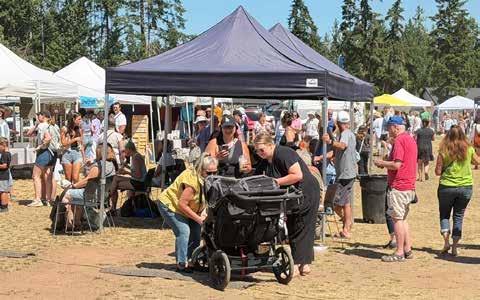
Thirty years ago, the Cedar Farmers Market set up for its first season at the Cedar Community Hall, and then a small collection of local farmers gathered at the Crow & Gate Pub, with the help of the Cedar Women’s Institute. In its current location at Woodbank School grounds, it has grown into one of the largest farmers’ markets in BC and become a staple of the community. The market marked its 30th anniversary on June 28.
Kate Poirier is the executive director of the Cedar Farmers Market. It’s her eighth season with the market. She started as a part-time market manager back in 2019.
“I have a background in corporate marketing, but I had been working as a farm labourer for about four years, and I was the happiest I’ve ever been in my life working on the farm out in the fields. It was really brutal, hot, sweaty, hard work. And it paid really terribly.” She laughed as she told me this. “Then I had a baby, and I knew I couldn’t afford to keep doing that, and so I was kind of forced out –just by life necessity. And I was building websites for small, local businesses when I saw the job advertisements, and I just thought that it was the perfect mix of sort of the marketing and web development skills that I had previously, but also with my love of agriculture.”
Although Kate doesn’t work out in the fields anymore, she spends a lot of time monitoring the weather and thinking about the crops.
“I really need to know what’s coming. Like, I’m thinking a lot about the Super
El Niño that could come later this year and just hoping that it comes later in the fall.” The lack of groundwater in the Cedar and Yellow Point area has Kate concerned about the implications of a Super El Niño hitting in July or August.
“The viability of farming in our region is always at a critical balance.”
Part of what the market does is make sure that farmers have access to contacts and applications for provincial programs designed to help with immediate threats facing agriculture. These programs are usually delivered by the Investment Agriculture Foundation of BC, which is also celebrating its 30th anniversary.
In the summer, Kate watches the weather closely for smoke levels and heat levels and sometimes makes the call to close the market early or recommends that seniors and people with health conditions don’t come out.
“We don’t have access to water here,” she said, “so I’m constantly running back and forth to the store and buying cases and cases of bottled water.” There’s a donation box that a member of the staff built years ago, where people put their spare change. This is how Kate
pays for the water and gives it out for free on hot days when people forget to bring their own. She likes that people are paying it forward for the next ones that come along.
She cares about people’s well-being when they come to the market. “[I] say, ‘Hey, like, come get your free bottled water; go sit down. We have these chairs. There’s the forest. Please go sit down. Take a break. Don’t push yourself.’”
For Kate, the anniversary event was about having fun and not taking it too seriously. “It’s just, like, a thank you back to the community – for tolerating us in this residential area, and also just shopping at the market for thirty years so that it’s still here, and it’s grown and gotten more successful every year. … It’s just a big thank you.”
For the future of the market, Kate would like to find a local place with more available parking and in a neighbourhood better suited for parking, which she says is a challenge considering that most of Cedar is Agricultural Reserve Land.
“I feel like I could double the size of the market if I had double the size of the
Cedar Farmers Market. Photo: Nick Longo
land,” she said. “I probably have anywhere from fifty to a hundred more applications in the system that I would love to approve and bring in.”
She credits the community for the market’s thirty years of success. “The market wouldn’t be here if the Cedar locals weren’t coming every week to shop here,” she said. “Even when the crowds are crazy in their hometown, they still brave it. And they know the staff by name, and they know the businesses by name, and that’s really why the market keeps going.”
Brits on the Beach
“Brits On the Beach” returns to Transfer Beach, on July 12. What started as a small and informal gathering of British vehicle enthusiasts in the late ’90s has developed into an annual community event in Ladysmith, benefiting the Ladysmith Food Pantry operated by the Ladysmith Resources Centre Association.
With up to 250 British heritage vehicles on display, visitors can enjoy the park atmosphere and conversations with owners. Breakfast and lunch services are provided by the Ladysmith Rotary
Club. And as always, admission is free.
It all takes place with the support of members of the Central Island Branch of the province-wide Old English Car Club, the Town of Ladysmith, the Ladysmith Credit Union Insurance agency and other local donors, including, at the time of writing, Bumper to Bumper, Tim Hortons and Country Grocer.
The event is part of the Central Island Branch’s year-round activities, includ-
ing club group drives to Island communities, weekly outdoor meetups and BBQs in the warmer seasons, and social events when many of the vehicles are safely stored for winter. The club also operates a tool loaner program and publishes a monthly newsletter available to members and the public at https://oecc. ca/cib-publication/.
The club meets monthly the third Thursday at 7 p.m. (except in Decem-
Brits on the Beach at Transfer Beach, 2025. Photo: Bob Burgess
ber), at the Royal Canadian Legion at 1630 E. Wellington Road, Nanaimo. Visitors are always welcome.
New Water for Saltair
BY FRANCESCA PACCHIANO
On June 3, the CVRD and the Town of Ladysmith signed a Memorandum of Understanding to establish a framework for an agreement about the water treatment supply for Saltair.
Saltair’s water treatment system has not met the provincially outlined Drinking Water Treatment Objectives since 2015. Vanessa Thomson, senior manager, Utilities Division, at the CVRD said, “The CVRD recognizes that safe drinking water is an essential service.” But the significant financial cost for the project has been the main hindrance in the decade since that order was first given. This approach is expected to reduce costs compared to building a separate facility for Saltair.
Thomson continued, saying, “The MOU builds on that existing relationship by providing a framework for Saltair to receive compliant treated water through the Town of Ladysmith’s Water Filtration Plant, rather than constructing and operating a separate treatment facility for the Saltair system.”
While the MOU does not directly impact the amount of water available to Saltair, the community’s supply strategy has been expanded with the development of two groundwater wells. Still, Thomson stressed caution when considering the water supply. “Water restrictions will continue to be implemented in both Saltair and Ladysmith as needed. Restrictions are an important tool to support sustainable water use, manage peak
demand on infrastructure and respond to seasonal water availability challenges.
Thomson said that final agreements, construction and coordination between Ladysmith and Saltair’s systems are anticipated for the end of the year. “Saltair and Ladysmith already have a longstanding water relationship. … The future agreement is intended to establish a treated bulk water supply arrangement that is sustainable and manageable for both communities.”
More information on this project as it develops is available on the Saltair Water System Treatment Upgrade Project page on Plan Your Cowichan: https://www.planyourcowichan.ca/ saltair-water-treatment-upgrade.
Ladysmith Fishermen’s Wharf parking woes
BY JACKIE ELLIOTT
In an effort to prevent derelict and abandoned vehicles and campers, boaters using the boat launch adjacent to Fisherman’s Wharf will have access to day parking only, Coast Salish Development Group confirmed. The new parking regulations apply to the gravel side of the parking lot. Signs are up, warning trailers and vehicles left for more than one day will be towed. In addition, Fisherman’s Wharf also requires a parking permit for anyone leaving their vehicle overnight, for the same reason. The boat ramp, which was transferred to Stz’uminus First Nation as part of the recent reconciliation agreement, remains open for public use, with the caveat that boats should be tied to the ramp for no more than twenty minutes to allow continuous access for boat launching.
Timepiece returns for provincial MAINSTAGE Festival
BY EVAN SHUMKA
Plays are made of serendipity. Don’t get me wrong – they are also made out of turmoil, stress and hard work. But if you’ll allow me to be a bit fanciful, the thing that brings a story to life on stage is the interweaving of happenstance, timing and relationships old and new. In short, the act of living.
This is illustrated by how the Mercury Players’ production of Timepiece came together. The show is a comedy-drama written by Vancouver playwright Kico Gonzalez-Risso. It follows Walter (a retired watchmaker) and his family as they deal with estate planning, all while Walter is showing signs of losing his
memory – or is he? The show competed in the South Island Zone Festival back in May, where it won Best Production, among multiple other awards, and is moving on to the MAINSTAGE Festival, produced by Theatre BC, in July.
Janet Heaton won Best Actor in a Female Role for her performance as Doris in the play.
“What I have discovered in the last ten years or so is that I really do enjoy comedy,” she said. “And this play … it’s
a serious topic and it’s a very touching, emotional play, but there’s also some comedic moments.”
I asked about what drew her to the character of Doris.
“She and her family are going through something that just about every audience member I’m sure can relate to,” she said. “Having an aging partner who’s not well, feeling overwhelmed about taking care of one’s partner and the family home.” Not only can Janet’s generation relate to this, but their children can as well. Many of us are assisting aging parents with dementia.
“I just really admire her,” Janet said. “Let’s say she has an indomitable spirit. Despite the circumstances, she has an unending loyalty to her family.”
Janet’s life as an actor began in a children’s drama group when she was growing up in Prince George. She went on to study acting at Camosun College (back when they offered an actor training program) before starting a professional career, which she retired from in her midthirties. But she didn’t retire from acting altogether.
“There was only about a ten-year gap until I got involved in community theatre in Gibsons, where I used to live,” she said.
Janet Heaton won Best Actor in a Female Role for her performance as Doris in Timepiece. Photo submitted.
In that time, she appeared in plays and also co-produced a Story Theatre summer troupe for four years. She then spent six years co-producing a play-reading series called Off the Page. This was how she first came in contact with Timepiece, long before she was ever cast in it.
“Our mandate was to find plays by Vancouver and Sunshine Coast Playwrights. So Timepiece was actually one of the plays that we chose years ago.”
At the time of Off the Page, the role of Doris was read by Mary Louise Phillips. As serendipity would have it, Phillips went on to direct the Mercury Players’ production, having enjoyed the play so much in that reading.
“It’s nice to see that one’s efforts sort of go into the future,” said Janet.
I think she had hit upon something there. Because isn’t that what we want? To feel that our efforts, the passion and care we put out into the world, the connections we form, reverberate through our lives? Art, stories, theatre – have a way of building on each other, each piece inspiring the next. Every show has to end, but can it reach through time and keep giving back?
Janet said that being involved in the performing arts builds community. “You make friends and connections that can last your entire life.”
Reminded of a story that beautifully illustrates her point, she added, “Layne Kriwoken, who plays my husband, Walter – he and I were in the same children’s drama group in Prince George. … We didn’t see each other for 50 years or so, but –we’re acting together again, which is just wonderful.”
Timepiece is returning for three performances at the Ladysmith Little Theatre on July 3, 4, and 5, before travelling to Vernon for the MAINSTAGE Festival, where it will compete with four other productions from across BC.
The Best Seat in the House is Outside BY NADINE WONG
There is something special about hearing music under an open sky. Summer outdoor concerts are about much more than music. They invite you to slow down, breathe fresh air, soak up the scenery and connect with friends, neighbours and visitors. Live music has a way of bringing people together, and chances are you’ll find yourself up on your feet dancing before the evening is over.
“Outdoor events let me enjoy music in fresh air, with room to move and mingle,” said the person next to me as we listened to the Unfaithful Servants, a must-see acoustic act from Victoria.
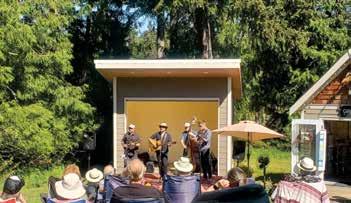
In May, I wrote about house concerts, but July and August bring an abundance of music venues that entice us outside. Owen and I have already been to Ladybug’s Mew in Yellow Point twice and intend to go back. During one concert, we watched the full moon rise while enjoying homemade treats and fresh strawberries.
Doug and Carolyn Hoare own and operate Ladybug’s Mew. They left the city life behind, bought the farm (figuratively) and now operate a working farm: a Farm Store (gift shop) and a Garden Centre. Most recently, Doug’s dream of building an outdoor concert stage became a reality.
Doug told me, “We decided to build a concert stage to give people another reason to visit the Farm Store and Garden Centre. We’re keen to support up-and-coming artists by offering them a place to perform. It turns out not only new artists need our support, but seasoned performers as well. As a Home Routes host and a concert promoter, connecting with booking agents and artists from across Canada, the United States and overseas, my goal is to bring top-notch musicians together with
audiences in a live, intimate outdoor setting.”
TAKE 5 Newsmagazine lists local events in the Arts and Entertainment section, and I encourage you to explore the many outdoor venues and markets in our area. Some events are by donation, while others require advance tickets that can be purchased online or picked up at local outlets. Some are intimate gatherings of just 40 people, while others attract hundreds – even thousands. The choice is yours.
This year, the LRCA’s summer staple, Concerts in the Park, has two wonderful shows planned for the Transfer Beach Amphitheatre. Nate Harris will be headlining the July 12th show, with Sarah Leo and the Young Wolf Dancers as the opening performers. The August 16th event will showcase Demographix, with Nathan Andersson as opener. In addition to the groovy tunes, there will be delicious food available from the food trucks. Both concerts are familyfriendly and by donation.
Visit local farmers’ markets for live music, then continue your musical adventure at the Chemainus Valley Blues Festival, CVCAS events at Waterwheel Park, the Providence Farm Island Folk Festival, Sunfest Country Music Festival, the Nanaimo Blues Festival or 39 Days of July in Duncan – to name a few.
So, grab a hat, a lawn chair, a picnic basket and I’ll probably see you there!
The Directors of the Island Summer Theatre Festival
BY EVAN SHUMKA
The Island Summer Theatre Festival returns for more outdoor shenanigans with Thumbelina and The Merry Wives of Windsor. The shows, produced by ACT Theatre, will play in Ladysmith and Nanaimo from July 21 to August 2.
Thumbelina is an action-packed adaptation of Hans Christian Andersen’s fairy tale written by Ben Francis and directed by my friend, Rigby Mugridge. Rigby and I have worked together many times on stage at VIU’s Malaspina Theatre. He appeared in last year’s festival in both Robin Hood: Prince of Outlaws and As You Like It. As well as being a talented actor, he’s directed several plays in the time I’ve known him (including one by yours truly). He has a great passion for performance, but di-
recting gives him a special sense of satisfaction.
“I feel very proud when I get to watch and facilitate other people, like, growing as actors,” he said to me over the phone. “It makes my heart so happy to watch that.”
When he was approached by ACT’s artistic director, Amanda Cutting, about directing the show, there were several factors that made Rigby excited to take it on.
“When I think of Thumbelina, I think of like the old, animated movie. And I generally just adore like the ’80s fantasy sort of vibe,” he said. “I was very excited to work on a kids’ show. I think a lot of my skills, directing-wise, really suit the big physicality and the comedy that comes with kids’ shows.”
His cast is split about 50/50 between youth and adults. The youngest cast member is about 11 years old.
“I find working with youth really rewarding. And youth are incredibly creative and smart and interesting people to work with.”
In this version of the story, the tiny heroine born from a flower goes toe to toe with the evil toad warlord, VorgonZul, who’s planning to wreak havoc with a gigantic drill.
“She has like a badass scythe that she fights with, along with magical flower and song powers,” Rigby said, laughing. Figuring out the fights with the help of two choreographers for the show has been a new challenge for Rigby. Another
Rigby Mugridge is directing Thumbelina.
Photo: Ben Francis
has been considering the outdoors.
“A lot of it has to do with physicality and being able to see what actors are doing with their bodies from very far away,” Rigby said. “[It’s about] being able to put in all of the emotion that is happening into your whole entire body. With that as well, everyone is mic’d, so, again, with being far away, it can sometimes be difficult to see who’s talking – unless they are doing a lot of that movement.”
So there’s a practical side to having the characters express themselves with big movement, but it’s also part of Rigby’s artistic vision for the play.
“I’m really excited for people to see just the whimsical playfulness of it all,” he said. “I’ve worked really hard on having a lot of big physicality and fun physicality. I went really absurd –it’s nowhere near realistic and, debatably, that might have been a weird leap in a weird direction to go, but I hope it’s one that is received well.”
Next, we have The Merry Wives of Windsor with the spin that it’s set on a 1960s golf course. Maureen Robinson is a writer of murder mysteries with a background in education as well as theatre, playwriting and screenwriting. She’s directed many shows in the past.
“I very much enjoy the process of directing,” she said. “And, honestly, [when] I retired to the island, I didn’t think it would come up again. And, quite by accident, it came up last year with ACT Theatre and I directed their Robin Hood show.”
This is her first time directing a Shakespeare play. The story follows Sir John Falstaff as he tries to woo two rich, married women with identical love letters in order to improve his financial standing. When Mistress Ford and Mistress Page discover his scheme, they join forces to give him a threefold comeuppance.
“The Merry Wives of Windsor runs about three hours,” Maureen told me. “So my first job was to tackle the script itself and edit it down to a park-size version.” Her next job was to figure out how to implement the ’60s theme of the production and to choose songs from the period to go along with it. The idea to set the story on a golf course came to her during this process.
“When I was editing the script,” she said, “I was thinking, you know, where would this work? And how could I make it work? And then we’re doing it in a large field at Maffeo Sutton Park with a lot of green, and I was going, ‘Green … grass … golf!’ It was another ‘G’ – a logical progression.”
Aside from the occasional tweaking of a line to allude to golfing, Maureen maintains the integrity of Shakespeare’s dialogue. Shakespeare, she told me, is in many ways timeless.
“The retelling is just a re-situation,” she said. “There will always be men who will be vain and think that they can get what they want.”
For Maureen, the ’60s theme is about more than just the outfits and hairstyles.
“Some of the early, you know, sort of songs that I’m drawing on are songs like Leslie Gore’s ‘You Don’t Own Me’ and ‘These Boots Are Made For Walking.’ So we’re able to sort of really strengthen the position of the women. And that was something where women were strengthening their own position in the early ’60s and certainly moving into the latter ’60s. Unfortunately, we’re still doing that. But … there was a certain momentum that was happening at that time.”
“It is the Shakespeare that people are coming to see,” she said, “but it’s also the farce of the story and the blend of the music and having a great evening in the summer, in the park, on this amazingly beautiful island.”
The Merry Wives of Windsor opens at the Transfer Beach Amphitheatre in Ladysmith on July 21, followed by Thumbelina on July 22.
Summer Arts Getaway BY FRANCESCA RESIDE
Ladysmith’s arts scene is bursting with creativity this summer, offering unforgettable cultural experiences. Starting with “Colour Me a Melody,” an immersive exhibition where art meets music. This show will include an artist-curated playlist that invites visitors to experience creativity in a whole new way from June 30 to July 22.
Support the future of the arts at “Bid for the Build,” an exciting fundraiser featuring more than 50 juried artworks, live music, refreshments and a special auction of works by renowned Canadian artists – all in support of the new Arts & Heritage Hub on July 29, from 4 p.m. to 7 p.m. Tickets are $45.
Then mark your calendars for Arts on the Avenue on August 23, when historic First Avenue transforms into a vibrant openair gallery filled with original art, Indigenous-made works, live performances, youth activities and demonstrations. With delicious local food and a welcoming community spirit, Ladysmith offers the perfect destination for an inspiring summer arts getaway.
Crêpe Expectations
BY PAUL LEGACY
In our ongoing search for great places to eat on Vancouver Island, we recently visited Beans and Banter Café and Creperie in Ladysmith and discovered another hidden gem that is well worth a visit. Many local residents will remember this location as Ironworks Café and Creperie. In 2025, Karen Love purchased the business and introduced a new name while maintaining many of the qualities that made the café a favourite among locals and visitors alike.
As we entered the café, we were immediately welcomed by Jordan, whose warm smile and friendly manner set the tone for our visit. Excellent customer service can make all the difference in a dining experience, and Jordan certainly
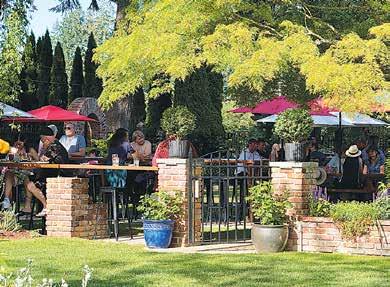
Above: Crêpes in all varieties are the stars on Beans and Banter’s menu.
Right: The restaurant features inside and outside seating. Photos: Paul Legacy
delivered. Having worked at this location for seven years, including six years under the previous ownership, her experience and dedication are evident in the way she interacts with customers and helps create a welcoming atmosphere.
After placing our order, our meals arrived in a reasonable time and were beautifully presented. I ordered the regular breakfast crêpe, while my wife, Tracey, chose the Mexican breakfast crêpe. Beans and Banter offers an impressive selection of both sweet and savoury crêpes, making it difficult to choose just one. Whether you are look-
ing for a hearty breakfast, a light lunch, or a sweet treat, there is something on the menu to satisfy a variety of tastes. Both of our meals were prepared with care, well seasoned and full of flavour. The ingredients tasted fresh, and each bite was enjoyable. One of the things that stood out to us was the café’s commitment to quality. Everything on the menu is prepared on site, ensuring freshness and consistency. The wonderful aromas
that greet you when you walk through the door are a testament to the care that goes into the food preparation and immediately make the café feel inviting and comfortable.
The dining area offers comfortable indoor seating, creating a relaxed environment where patrons can enjoy their meals and conversation. Outside, there is a large patio that provides additional seating during the warmer months. The patio can also be reserved for larger groups, family gatherings, community events and children’s birthday parties. These special bookings can be arranged outside of regular business hours, offering flexibility for those planning a private event.
Families will appreciate the children’s menu, available for guests 12 years of age and under, with all items reasonably priced at $7. It is refreshing to see a restaurant that continues to provide affordable options for families while maintaining quality and service.
Beans and Banter Café and Creperie is open seven days a week from 9 a.m. until 3 p.m. With friendly service, fresh homemade food, a comfortable atmosphere and a menu filled with delicious choices, it is easy to see why this café is earning a loyal following.
Beans and Banter Café and is a wonderful addition to the local dining scene, and it is certainly a place we look forward to visiting again.
You can follow Paul Legacy’s food blog: A Legacy in Thyme at https://www.facebook.com/share/1AvhVXYW3a/?mibextid= wwXIfr
Dine Out! Patios to Savour Summer
Summer on Vancouver Island is one of life’s great pleasures — longer days, warm breezes, and the simple joy of stepping outside and breathing it all in.
One of the season’s finest rituals is dining al fresco, where a meal becomes an experience rather than simply a necessity. Fortunately, our area is brimming with wonderful options for enjoying a meal beneath the open sky.
So here are just a few of our favourite places to enjoy this summer.
In Ladysmith, In the Beantime Café is a beloved gathering spot to linger over a coffee or a casual bite, offering the warm community spirit this charming town does so well. There’s even a couple of tables up front for your furry friends.
The Fox and Hounds provides a cozy hidden deck, ideal for settling in with a cold drink and an order of fish and chips and
letting the world go by.
Rounding out the list, is the ever popular Crow and Gate Pub with its tranquil setting in the countryside and its lovely gardens to meander in. The Crow with its newly expanded outdoor seating, delivers a quintessential British pub experience inside with the bonus of fresh Island air seating outside.
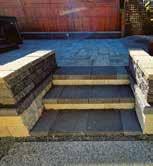
Their patio was expanded a couple seasons back. All the custom tables are locally-made, including some bar seating for casual visits, as well as added lighting for the evening. The area was also levelled to help make it easier for mobility issues.
The Crow is also dog friendly (dogs must be leashed).
Over in Nanaimo, the Lighthouse Bistro impresses with a sweeping 100-seat patio. This Nanaimo waterfront eatery offers seafood but also has five vegetarian options on their menu, covering from apps to mains.
An added bonus is that they have a corner section at the patio where they can accommodate customers with pets.
Now that’s a welcome policy for our four-legged companions — because a summer outing is always better with the whole family along.
From a morning coffee on a sun-warmed deck to a long, leisurely dinner as the evening light fades, summer dining outdoors is a pleasure well worth embracing.
Bon appétit
Women of the Fur Trade
Reconciliation Theatre production of Frances Koncan’s critically acclaimed Women of the Fur Trade will mark the local company’s fourth annual summer tour of Vancouver Island. The Indigenous-led live theatre company will be at the Ladysmith Little Theatre on July 16.
Sometime around the 1800s, somewhere upon the banks of the Reddish River in Treaty One Territory, three very different women with a preference for 21st-century slang sit in a fort and share their views on life, love and the hot nerd Louis Riel.
Marie-Angelique, a Métis Taurus, is determined to woo Louis, a Métis Libra, by sending him boldly flirtatious letters.
Eugenia, an Ojibway Sagittarius, brings news of rebellion back to the fort after trading, but isn’t impressed by Louis’s true mediocre nature.
Cecilia, a pregnant British Virgo, is anxiously waiting for her husband’s return from an expedition, but can’t resist pining over the heartthrob Thomas Scott, an Irish Capricorn, who is actually the one secretly responding to Marie-Angelique’s letters.
This will all go smoothly, right?
This lively historical satire of survival and cultural inheritance shifts the perspective from the male gaze to women’s power in the past and present through the lens of the rapidly changing world of the Canadian fur trade.
Tickets are $25 and available online https://www.reconciliationtheatre.ca/.
Opposite page: Crow and Gate Pub. Photo: Marina Sacht. Lighthouse Bistro. Photo: Michael Lu.
Becca has the Blues (and they are delicious)
BY EVAN SHUMKA
Blueberries are a staple. We eat them fresh, put them in smoothies, pancakes and muffins. We throw big bags of them in the freezer so we can enjoy them year round. And according to Becca Dault, who, with her family, owns Yellow Point Farms, the best blueberries are grown right here on the Island.
Vancouver Island is home to many blueberry farms. Steld Farm is just up the road from Becca. Not far from there are Stocking Creek Farm, Back to Nature Acres and Silverside Farm, to name just a few. The conditions for blueberries here are ideal.
“On the Island, you have these little
microclimates of warm,” said Becca. “It’s almost like, Mediterranean.”
Although there are rows of highbush blueberries, it’s not quite time for them yet; the berries are still a pale green. Blueberry season is usually three weeks, but with the variety they have planted, it extends to six. The bushes thrive in specific conditions that are different from many other berry crops.
“We’re on these peat bogs that flood in the winter,” she said. “It holds in the moisture, and it’s acidic. … People try to mend their soils to create this soil that we already have.”
The farm is a hundred years old, and until the previous owners, the peat bog had been used for growing potatoes. Now, twelve varieties of blueberry bush grow in a patch of land slightly elevated above a marshy area, which never fully dries up – a good spot for the pigs to
bathe and cool off.
There are lots of animals on the farm, all miniature: miniature horses, sheep and goats. There are fowl too – and a sheep named Forrest (short for Forrest Gump, after the way she runs), who sounds like a person pretending to be a sheep.
“They all have a unique voice,” said Becca.
The sheep are part of the blueberry operation here. They’re allowed to roam freely among the bushes.
“The sheep’s role is to be a lawnmower,” said Becca. “The sheep specifically eat grass, not the berry bushes. Like, we can’t put the goats in there, ’cause they would eat the whole bush.”
Letting the sheep cut the grass means they don’t have to use gas lawnmowers as often. The goats, for their part, eat the blackberry bushes and weeds.
“The beauty of that is also we can feed them a lot less – buy a lot less hay – because they’re supplementing themselves with all this pasture. So, almost all summer, we don’t have to feed them hay or anything.”
Manure is also a huge part of the operation. They have a deep bed of manure, which they’ve dubbed the “Taj Mastall.” The manure naturally composts, and they spread it over the fields twice a year.
Other animals are on pest control duty.
“We’ve never seen a slug on our property,” said Becca. “We have little guinea fowl and peacocks that eat ticks; we’ve never had a tick on one of our animals. So they’re all actually so important. They’re not just there for fun and pets and looks.”
Becca’s approach to farming is to be “better than organic.” She explained that organic farmers still use organic sprays, whereas, on her farm, there’s no spraying of any kind. It’s all about leaving the soil even better than they found it.
From one of the picnic tables near the farm store, the view overlooks the 12 acres of fenced-off crops and, beyond them, the 20 acres of mixed forest pasture. On a sunny day, the land seems to stretch forever. There’s an acre of garlic up on the hill, 60 dwarf apple trees (not just the animals are miniature around here), a quarter-acre of grapes, and pumpkin and squash fields just out of sight. It all feels like someone’s dream –one that’s been realized.
“It’s more than we ever could’ve thought,” said Becca.
Becca Dault with her berry crop at Yellow Point Farms. Photos submitted.
She and her family moved here in 2018. Before that, they lived in Langley. Becca describes their old jobs as corporate; she was a teacher, and Justin had his own installation business. They owned a house and were raising their children, then two and four. They had built a life for themselves, but wanted a change.
There was already an offer on Yellow Point Farm, so, disappointed, they went looking for another just like it. Six months later, they got a call asking if they were still interested. They quit their jobs, sold their house and set up here.
“It’s such a difference too, moving from the mainland, where I didn’t even know my neighbours,” she said. “But then, here, it’s like, potlucks twice a year, pumpkin-growing contests – all the community now that comes to visit the farm knows us, knows my kids.”
The support of the community means a lot to Becca. Rather than be a competitor, Steld Farm works with them. The neighbours have helped out, as have the previous owners of Yellow Point Farm.
“The old owners were amazing,” said Becca. “They were so kind and helpful. They wanted us to succeed, so they said, ‘We’re gonna mentor you for a year.’”
The previous owners moved just up the road, and for that first year, they would come by to tutor Becca’s family on pruning or let them know when blueberry season was coming and tell them all about it.
They were also able to grandfather the Daults into the markets so they wouldn’t have to be waitlisted. Becca advises anyone looking to buy a farm to value mentorship from the retiring farmers.
“They still come and visit all the time,” she said. “Anytime you have a question – ‘Where’s the irrigation line go?’ or ‘We
wanna dig here; is there anything under here?’ – happy to help and answer.”
One of the old owners chose where the store building should go. “It was a lifelong dream of his,” said Becca.
These days, she’s busier than ever, but it seems like this is the kind of work that feeds her – and not just literally.
“I’d way rather be out here getting my hands dirty in the sunshine. I love picking blueberries like that. Everyone’s like, ‘We’ll get the pickers to do it,’ but I want to physically be doing it.”
The health, taste and ease of picking are all things that make blueberries special. Unlike strawberries, which grow low to the ground, highbush blueberries allow you to stand while picking. Becca listens to podcasts or music while she picks.
The variety is something else that people enjoy about Yellow Point Farm’s blueberries. “Lots of commercial blueberries you buy in a box would all be one type, but when we’re selling them, you’ll often have different flavours mixed in. … You’re gonna be getting like the sweet-sweet or the tart-sweet, or there’s even a peppermint or a pink lemonade.”
And above all, according to Becca, the thing that makes Island blueberries the best is that they’re local.
“Island berries will be fresh. Like, so, so fresh. We’re not bringing them from the mainland.” She believes they’re a favourite on the Island because they grow so well here, and because people have probably grown up near blueberry farms, or with bushes growing in their backyards.
Perhaps she’s right. Maybe it’s the memories of hot summer days when we were small, purple stains on our hands, picking off berries and popping them into our mouths – this one sweet, this one a bit sour. Maybe that’s the best part. Like the sheep’s namesake said, “You never know what you’re gonna get.”
Paddling Learning the way of the water
BY FRANCESCA PACCHIANO AND GABRIELLE LEE
Learning the way of the water was a gift, passed from generation to generation in Coast Salish culture. Paddling and racing aren’t just about learning the strokes and developing stamina, it requires getting in a good headspace and connecting your body with the paddle, the canoe and the water. It’s a meditation as much as it’s a sport, and it’s tied generations of Coast Salish peoples together and to the land, since time immemorial.
Elder George Harris, Wholwolet’za, has been paddling “practically [since] the day [he] was born.” He recalled his parents reminding him to stay close to shore when, as a boy, he’d crawl into their boat. The large red cedar vessel was woven into Harris’s childhood; his family would paddle it to fetch drinking water, travel and wash clothes.
Historically, canoes were an important part of the Stz’uminus First Nation’s
Tribal Journey canoes landing at Shell Beach, following protocoals announcing who they are, and asking permission to come ashore. Photo: Roxanne Harris.
way of life. They came in all shapes and sizes, each with its own purpose, as simple transportation vessels and as sleeker vessels designed for swift races. Before modern developments in transportation, the everyday canoe was practical, easy to manoeuvre and sturdy enough to haul
firewood or drinking water.
Former Stz’uminus Chief Roxanne Harris, Whul’qul’latza’aat, grew up surrounded by her father, George’s, passion for the paddle. She watched her parents train to race war canoes before training in the sport herself. But racing war ca-
noes isn’t the highlight of the summer for Roxanne.
Each summer, the Coast Salish Nations return to the water, paddle in hand, and celebrate their cultures by voyaging as their ancestors did. Last July, canoe families from as far north as Haida Gwaii travelled hundreds of kilometres to reach the Lower Elwha Klallam Tribe in Washington State.
Roxanne spoke about the experience, saying, “You’re collecting Nations as you come down the coast. …The group gets larger and larger and larger until you hit the location, and then everybody’s together.”
Tribal Journeys is an annual gathering of canoe cultures from Indigenous Nations who voyage across the Salish Sea in massive dugout canoes to meet, share protocols and feast together with a potlatch celebration.
A voyage of this nature is dangerous and requires a different skill set from that required for racing. Roxanne paddled from Stz’uminus to Cowichan and then volunteered with the support crew. “There’s a lot of preparation that would have to go into that. … You’re on the water all day, and you’re constantly paddling. … They have boats that follow the canoes, and you’re able to switch people out. But even still, you could be out there paddling for four hours straight.”
But despite the long, hard days on the water, it’s worth it to experience the joy of sharing culture between Nations. “It’s the biggest healing journey that you could be on,” said Roxanne. “You get to showcase your Nation’s songs and dances at the protocol. You get to meet people there that you wouldn’t normally meet when you’re at home.”
This showcase of culture is especially important for the younger generations. “It’s good for our kids to see that because I think they sometimes don’t see the bigger world and that there are so many opportunities out there,” she said.
Roxanne has passed the tradition on to her children. “Getting them involved when they’re young, so they grow a passion for racing, is important. Passing on traditional teachings to our children is very important. That’s not to say that they will be paddlers for life … but they can say they tried it.”
Savannah Harris, Roxanne Harris in centre with her sister Iona Harris at Musqueam Canoe Race where they placed first. Photo submitted.
RDN Area A
Cassidy Park Update
I had hoped that we would see shovels in the ground soon in Cassidy. But, as Cassidy residents noticed, the project is delayed. This is a good-news, bad-news situation.
When RDN Parks staff brought forward the phase one design for the park, it did not include the basketball court. This did not sit right with me, as I felt that previous communications suggested that the court would be part of phase one. Given the current and prevalent lack of trust in government and public systems, I think it is particular important now to ensure that government actions are consistent with their statements. However, budget realities did not allow for that feature in the phase one design. It was more than disappointing; it left me feeling like we had broken a promise and that was a problem that needed to be solved.
Between the Area A Parks, Recreation and Culture Committee meeting, where the plan was approved by the committee, and final approval and budget allocation by the Board, some magic happened. Through discussions with Area C Director Lauren Melason, it was decided that Area C Community Works Funds would be allocated to the plan to allow for a half basketball court to be included in the phase one park plan. Director Melanson acknowledged that Area C residents would benefit from the
park as it is located very close to the border between Area A and Area C. It is a great example of when common sense prevails and elected representatives work together to benefit communities regardless of jurisdiction lines. Thank you, Lauren Melanson!
Although it is great news that the court is included in phase one, the not-great news is that the park required a new design plan. Hence the delay – the RDN is waiting for the park design consulting firm to submit the updated phase one park design that is necessary before we go out to tender for the build. Regular updates on this project are available on the RDN Get Involved webpage.
Tax shock
During this year’s budget process, I was very mindful of affordability concerns and advocated for lower taxes in situations that I did not think would reduce service levels or impact necessary infrastructure projects. Even though we are in a time of significant cost increases, Area A’s RDN tax increase was held to just below four per cent for 2026. I was pleased and relieved that this year’s tax increase was low – especially in the context of increasing costs.
However, opening my property tax bill was quite the shock. My 2026 tax bill increased 24.14 per cent (!?!). It also came with a few words that I won’t share. I am sure that a few of you have a few choice words as well. How can it be that a person who approves the tax rates
is surprised by their tax increase?
Let’s look through the breakdown of my property tax to understand the situation better. Among the provincial services included my property tax, the School Tax increased 19.82 per cent, the Provincial Rural Tax increased 4.4 per cent and the Police Tax increased 22.52 per cent. Among the local services, RDN taxes increased 14.25 per cent, Improvement District Fire Protection increased 15.28 per cent, Nanaimo Regional Hospital tax increased 35.56 per cent and the BC Assessment tax increased 21.58 per cent. This information partially explained the higher-than-expected overall tax increase. Other government services increased their rates at a higher rate than the RDN.
Although the RDN tax increase was lower than for the other types of taxes collected, it was still significantly higher than the four per cent tax increases that I approved. This did not make sense to me until I checked my BC Assessment notification. Property tax is influenced by changes in assessed property value in relation to last year’s value and in relation to other properties in the area.
My property value increased 13 per cent over last year. For my RDN tax increase to be greater than the approved RDN tax rate increase, my property likely increased greater than other properties in the BC Assessment comparison area. Using the online BC Assessment interactive maps, I can see that the aver-
age single-family dwelling in the “Nanaimo Rural Area” increased four per cent. The “Nanaimo Rural Area” is quite large and includes Area C. My assessed property value increased at a greater rate than other properties in the Nanaimo Rural Area. This results in a greater property tax increase for my property. I do not know if my property value increased compared to other properties in Area A. Given that I have seen several comments about tax increases, I think I am likely not alone in my shock. It is possible that property values in Cedar, South Wellington, Yellow Point and possibly Cassidy have increased relative to other communities in the Nanaimo Rural Area. Area A had the highest number of building permits issued in the first quarter of 2026, adding evidence to my thought that our community may be viewed as desirable in the real estate market. It is not surprising that people want to live in our beautiful community. We live where the world wants to be.
As always, I am open to your feedback. Please feel free to contact me about any community thoughts or concerns. Email jessicastanley@rdn.bc.ca or call 250-268-7359.
CVRD Area H
The OCP, the HOCP and What Happens Next Area H has been here before. About 30 years ago, one of the defining issues in the local election was land-use planning. The question at the time was whether Area H should move to a new Official Community Plan (OCP) or retain the existing Community Plan. Residents had strong views, and the successful candidate, Mary Marcotte, advocated for keeping the existing Community Plan. Yet the conversation did not end with that election: over time, community discussions continued, and a different OCP exists today.
There is an important lesson in that history. Planning debates are rarely settled by a single meeting, vote or election. They are community conversations that unfold over many years. They involve questions about growth, rural character, property rights, environmental protection, affordability and what kind of place we want to leave to future generations.
We are once again having that conversation. On May 27, the CVRD Board voted five to four to begin the process of repealing the current OCP (adopted in 2025) and reinstating the previous Harmonized Official Community Plan (HOCP adopted in 2021). The vote has prompted questions from residents, including whether voting against repeal means support for the current OCP.
Good decisions depend on facts, an understanding of conse -
quences and a willingness to reconsider when new information emerges. The current OCP was not created overnight. It was the result of a five-year process involving approximately $1.5 million in expenditures, community circles, idea fairs, multiple opportunities for public input, public hearings, amendments and, ultimately, adoption by the Board.
Area H residents also had additional opportunities to participate. Town halls included updates and questions on the OCP process. Articles in TAKE 5 provided information throughout the process. In September 2025, more than 100 residents attended a Local Area Plan open house at the Diamond. At the public hearing itself, one Area H resident attended in person, and one written submission was received, resulting in an amendment to strengthen language related to aquifer protection.
Those were the facts before the Board when the OCP was adopted in November 2025. At the same time, one thing has changed. Many more residents are now paying attention to bylaws, and many are strongly opposed to the OCP. That matters. It is also not surprising. Local elections will take place this October, and elections naturally focus attention on questions about the future of a community. Residents are asking questions, expressing concerns, and debating different visions for Area H. That is healthy.
Residents may oppose the OCP for many reasons. Some have concerns about property rights, trust in government, regulatory complexity or the future direction of Area H. Others feel they did not have sufficient opportunity to engage in the process. These concerns are genuine and deserve careful examination. The question before the Board, however, was not whether those concerns exist. The question was whether there was sufficient information to conclude that repealing the OCP and immediately reinstating the HOCP was the best response. Increased public attention, by itself, does not answer several important questions. Why should the current OCP be repealed? Why should the HOCP become the replacement? What are the costs, timelines, alternatives and impacts of doing so? How will Area H residents be better served? Those questions were not clearly answered during the discussion at the Board meeting. This should not be interpreted as support for the current OCP, nor opposition to repeal. All options remain open for consideration. What matters is that decisions of this magnitude are made with a clear understanding of the facts, consequences and alternatives.
Public pressure has been significant, and it is not surprising that directors voted to begin the repeal process. What is surprising is that the decision to reinstate the HOCP was made without additional public engagement and without first understanding the implications of that choice. The challenge before us is not simply deciding between the OCP and the HOCP. The challenge is deciding, together, what kind of community Area H wants to be and how that vision should be reflected in its plans. Whatever happens next, Area H still faces the same responsibility it faced 30 years ago: deciding what kind of community we want to become and ensuring that decision is informed, respectful and truly reflects the people who live here. In the end, it is not the Board’s plan, staff’s plan or any one director’s plan. Its legitimacy comes from the community itself. That is why the term “Official Community Plan” never quite captures what is really at stake. At its heart, what I am
hearing is that it needs to be Our Community Plan. I will hold a Town Hall when I have more information on the next steps. ben.maartman@cvrd.bc.ca; 250-510-5930
CVRD Area G
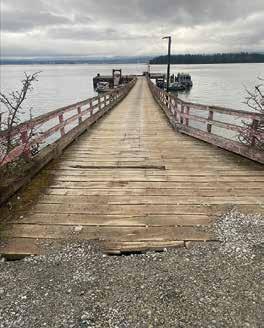
Penelakut’s Community Dock Deserves Urgent Attention
Perhaps the most important piece of infrastructure in our region has no budget, no project plan and no clear path forward.
The Penelakut community dock, historically known as the Government Wharf, is the lifeline for more than 600 residents. It is far more than a collection of pilings and planks. It provides a vital connection for emergency services, medical appointments, supplies, commerce and daily life.
Simply put, for Penelakut residents, the dock is their road.
Having grown up on neighbouring Thetis Island, I understand just how important these marine connections are. Both the Thetis and Penelakut docks trace their origins to the 1950s. While the Thetis dock has benefited from significant upgrades over the years, Penelakut’s dock faces growing challenges and deserves the same level of attention and long-term planning.
A few months ago, I visited Penelakut alongside MLA Debra Toporowski to meet with Chief Jack and Council. We discussed a number of shared priorities, from voting access to recreation and opportunities for collaboration. But one issue stood above all others: the long-term future of the dock.
The challenge is that responsibility touches many organizations and governments. The dock sits within the traditional territory of the Penelakut people, and any long-term solution will require cooperation among the Penelakut Tribe, federal and provincial governments and numerous regulatory agencies.
Although the CVRD has no jurisdiction over reserve lands, strong relationships still matter. Local government can play an important role in bringing people together and ensuring critical issues reach the right decision-makers.
Following recent discussions with Chief Jack and our CAO, I have been given permission by Chief and Council to help raise awareness of this issue and support efforts to find practical solutions.
Throughout my time on the Board, I have learned that complex problems require persistence, patience and partnership. Whether it was protecting the Stocking Lake Dam, advancing the Saltair–Ladysmith water supply project, replacing the Davis Lagoon Bridge deck, upgrading community facilities or working with the RCMP to improve traffic safety, progress has always come through collaboration. The most important projects are often the ones that cross jurisdictions and require people to come together around a common goal.
I believe the future of the Penelakut dock will be no different.
Addressing the long-term future of the dock will require specialized marine engineering, significant investment and cooperation among multiple governments and agencies. There are no easy answers, but some infrastructure is simply too important to overlook.
We often talk about earthquakes, wildfires and emergency preparedness, yet some of our most critical infrastructure was built generations ago. Communities become resilient not because disasters never happen, but because they invest in the connections that allow people to get help when they need it most.
No community should be disadvantaged simply because it is
smaller, more remote or falls between jurisdictions. Residents of Penelakut deserve the same level of reliability and
Voting Day Is Coming
safety that many of us take for granted. Too often, important projects fall into the cracks between agencies and governments. Everyone has a piece of responsibility, but no one owns the whole problem. The public does not care whose logo is on the letterhead. They care whether the dock works.
Growing up on Thetis Island, I learned that marine infrastructure is not a luxury. It is how island communities live. Roads connect most communities. Docks connect our islands. And no community should fall through the cracks simply because the solution requires more than one government. Some challenges are the responsibility of a single government. Others require all of us.
If you have any questions, jesse.mcclinton@cvrd.bc.ca | 250-252-6525
BY JOHN CRAIG, LADYSMITH RESIDENTS ASSOCIATION
The Ladysmith Residents Association considers encouraging candidates to run for our town’s council. October 17 is municipal voting day when all municipalities in BC vote for mayor and council. Let’s think about Ladysmith.
Our council is made up of six councillors plus a mayor. Our current members who have chosen to run again (several are rumoured not to be running again) will be seeking your vote at that time. This is also the time when new candidates can come forward. This council – the mayor and councillors – will be responsible for the progress of our town over the four years following the election. We know there are many great people who could make significant contributions to the council, and we encourage you to consider putting your name forward.
Nominations close September 11, 2026. Much helpful information is available at www.electionsbc.ca.
What is involved with being a councillor? I had an opportunity to visit with Duck Paterson and get his thoughts. Duck has been a Ladysmith councillor for 38 years and is not running again therefore, who better to ask?
Duck’s response was quick: to work with a team, to see changes and improvements to the town you love, and to help people. A new councillor might expect to devote upwards of 20 hours a week to fulfilling the council’s obligations and learning the ropes. The time is spent preparing for council meetings, attending council meetings, participating in council committees, conducting research on issues, and engaging in community involvement. And for this, Ladysmith councillors are paid approximately $17,500 annually. The mayor, who is the leader of the council and devotes much more time, is paid approximately $36,700 annually.
The large initiatives facing our town, as summarized by Duck, include: water retention (raising the Holland Lake dam), the waterfront development project; ongoing infrastructure replacement and upgrades; the new City Hall project, looking at Ladysmith’s growth and the type of growth that is best, and always with the challenge to keep taxes in line.
If you are considering running, speak with family and friends and identify the skill set you bring and how you can contribute to town council. Also, attend council meetings and formulate your introduction and platform as a candidate.
Our town needs you.
Penelakut’s Community Dock.
Photo: Jesse McClinton
The Wonders of Biodiversity at Wildwood
BY EVA STANGER-ROSS, WILDWOOD SUMMER INTERN
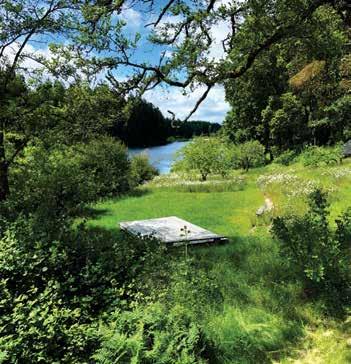
As a summer intern at Wildwood Ecoforest in Cedar, BC, I was thrilled to be joining the team just as they embarked on their first Garry oak meadow restoration project. The beautiful forest of Wildwood mostly consists of new and old-growth western red cedar, Douglas fir, big-leaf maple and grand fir. Despite the forest’s diversity, it has little to no Garry oak trees, so when the team identified a field with camas blooming in it
– a native plant integral to Garry Oak meadow ecosystems – it immediately stood out as a promising site for restora-
tion.
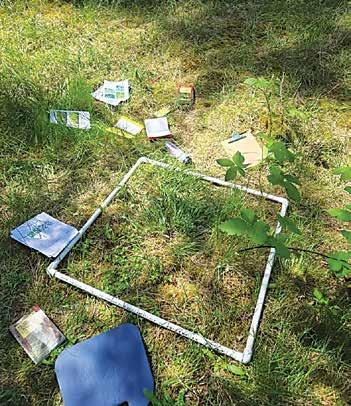
Arriving at Wildwood on the first day, I felt ready for some action, my mind filled with dramatic visions of planting Garry oak saplings that would grow into towering trees, wrestling Scotch broom and periwinkle, and tending to camas. We began with quadrat sampling, which sounds fancy, but is really just setting a series of squares (quadrats) on the ground and identifying and recording the species found within the squares. This allows us to know what species are in our plot, as well as their distribution and abundance.
Looking at the field we were working on, all I saw was a whole lot of grass and moss. Certain that we would find little to no diversity, I set aside my dramatic expectations and hunkered down, expecting we would be done within a few hours. However, by the end of the day, I learned just how much I had underestimated the complexity of the ecosystem I was observing.
Though invasives like periwinkle and vernal sweet grass did dominate the quadrats, there was still a surprising amount of diversity in our small
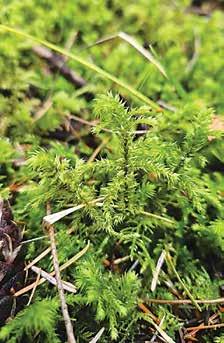
Electrified cat’s tail moss at Wildwood,
Photo: Rachael MacDonald
field. We found so many different types of native mosses, including my new personal favourite, electrified cat’s tail moss (who could resist a name like that?). I was also wowed by the abundance of native plants, such as sanicle, native blackberry, clover, Oregon grape, the common vetch and more. While the work was slow, I found myself enthralled by the little details: how the slight shape of one leaf could determine the plant’s genus, and how two almost identical flowers could be completely different species. While I didn’t get the action I was expecting, I fell in love with the process of discovering the intricacies that had always been right in front of me. Fifteen quadrats, three days and countless hours later, we had surveyed the entire restoration plot, and I had learned something quite valuable.
It is easy to ignore the diversity that surrounds us. At a glance, a grassy field seems simple. But nature is complex, and often upon a little inspection, it becomes clear just how intricate the ecosystems that surround us are. To truly restore an area, you cannot ignore what is already living there. Restoration starts with learning, not with rash action. The time will come to plant those saplings, wrestle invasives and tend to camas, but the first step in rejuvenating a native meadow is to take the time to understand what is already there.
On the third Sunday of every month, Wildwood offers guided tours of our forest. For more information and to register, please visit our website: https://www.ecoforestry.ca/tours/public-tour.
Wildwood is also offering fantastic, nature-based summer camps from July till September.
For more information and to register your children, please visit our website: https://www.ecoforestry.ca/summercamps-2026.
Quadrat Sampling at Wildwood Ecoforest.
Photo: Rachael MacDonald
How to Make a Sunny Glade
BY PAMELA WALKER AND NIKKI TOXOPEUS
Once upon a time, there was a little, tiny hollow right next to a beautiful park and a neighbourhood path. But, sadly, the hollow had been abused for years – first by poles and wires and transformers, then by thousands of invasive plants.
“Wouldn’t it be nice if someone cleaned up the tiny hollow and made it pretty again?” said a neighbour who lived nearby.
In came the broombusters, who bust-
ed all the broom. There was a mountain of it!
“Wouldn’t it be nice if someone cleared this all away?” said the broombusters. And the town did just that: they brought forklifts and flatbed trucks and loaded it all up. “We took seven truckloads in all,” said the man in the truck.
Then the tiny hollow was even nicer, but there were still blackberries, spurge-laurel, some garbage and not many native plants at all.
“Wouldn’t it be nice if we could turn this into a very special place? Call it a special name? Buy some Garry oak trees and lots of native plants? And get children to plant them so they could learn all about nature?” said two friends. So they sat down and drew a picture of what it could look like and wrote a plant wish list and crafted a budget, a timeline and a grant proposal. They smiled at the work when they were done.
“We can call it Sunny Glade,” they said. “And if we sent this to the town, perhaps they’d help us get a grant –just as they did at the native garden in Transfer Beach.” And so they called up
Above: Ladysmith Intermediate School Grade 4 class at seed ball event. Opposite page: First site visit to plan the Broombusting at Sunny Glades in 2024with Sue Anderson and Steffen Toxopeus. Photos: Nikki Toxopeus
the town and the man in the office said he would help. He submitted the proposal, and it came back approved.
“You have $5,000 to spend on the new special place. Let us know what more we can do,” said the man in the office.
“Let’s contact the schools, BC Hydro and the neighbours to see if they can help with Sunny Glade,” said the friends, and they did.
“Wouldn’t it be nice if children could make snake sanctuaries and bug hotels? And raise caterpillars in the classroom and release them as butterflies when the wild flowers are planted and in full bloom?” said the teachers. “But for now, let’s have the children make balls from clay and native seeds and catapult them into Sunny Glade.” And they did. And it was fun.
“Wouldn’t it be nice if we got rid of all the blackberries?” said the man in the hydro truck. “We can help as they are right under the hydro lines, and it’s kind of our job anyway.”
“I can help, too,” said a neighbour. “I live close by and can keep an eye on the new plants and make sure they are watered through the fall.”
And so it was that all the people in the town came out to the hollow and offered advice and help and encouragement. They felt proud of the tiny hollow that would soon look very nice indeed.
If you would like to offer advice, help or encouragement with Sunny Glade –a project sponsored by Friends of Holland Creek, supported by the Town of Ladysmith and funded by BC Hydro –the hollow is at the corner of Methuen and Sixth Avenue, and information can be found on Friends of Holland Creek’s Facebook page. Plants are being purchased from local native nurseries and will be planted in the fall.
Rising Costs for Administration
By the time you are reading this, you will have paid your property taxes. In some cases, your taxes may have gone down, and in other cases, they will have risen. Many will question, why am I paying so much? Much of the increase will be due to inflation, which was 2.1 per cent in Canada in 2025. Yet the increase in Ladysmith tax rate for this year is 5.82 per cent. So, why the difference? There are many reasons, but a significant increase is due to administration costs.
Let’s look at the situation. Property taxes make up approximately 21.2 per cent ($11.3 million) of the overall budget of $53.3 million. The remaining portion of the Town’s revenue is funded by government grants (24 per cent), municipal borrowing (20 per cent), reserve funds, user fees and development cost charges.
Ladysmith Council Missed Opportunity
BY RUSS BARLING
Of the $11.3 million we are paying directly, most covers administration and unionized labour costs. In 2025, according to this year’s Statement of Financial Information, the Town spent $7,312,015 on wages – up from $5,847,343 in 2020. An increase of $1,464,672 or 25 per cent over the past five years. Last year, there were four directors earning between $147,800 and $161,800 a year. Additionally, six other senior staff members earned an additional $722,900, averaging $120,000 each last year.
The cost to the Town for the mayor and council increased by 14 per cent, from $130,000 to $149,000 over the past five years. Council wages are determined by a public committee based on the remuneration of councils of similar size, while increases in staff salaries are determined solely by the city manager, with input from the director of finance. Council has no say in determining what staff, other than the city manager, is paid.
Last year, our city manager was paid over $186,000, putting her in the top 20 per cent of income in Canada. Records for her salary are only available for the past four years. Her income rose to $148,838 in 2021 to $186,000 last year – an increase of 25 per cent over four years.
In comparison, here is what other city
After zealously defending the Ladysmith Council’s right to conduct most of its busi ness behind closed doors for the past de cade, Councillor Marsh Stevens would like you to believe he is now the Town’s cham pion of transparency in office. Don’t buy it. With his eye on our upcoming municipal election (Oct 17), Stevens urged his fellow Councillors to back a proposal to disclose all sanctions directed at Council members for misconduct since 1995, knowing full well the majority would vote against the proposal.
While Councillor Steven’s conduct during his last term in office has been very public – as has the Administration’s meek response – less is known about what other councillors, past and present, have been up to over the years.
As a likely recipient of sanctions during his decade in office, Stevens bet his fellow councillors would vote against having
managers (CAOs) are making.
Ladysmith Pop. 9,000, $185,614k
Comox Pop 12,500, $170–180k
Powell River Pop 8,200, $165–175k
Castlegar Pop 8,300, $160–170k
Quesnel Pop 9,900, $165–175k
Terrace Pop 12,000, $150–160k
Kimberley Pop 8,000, $155–165k
As you can see the amount of compensation is consistent with other communities but how does senior management wages compare to the average family in Ladysmith? The median income in 2025 for a Ladysmith resident was $48,360, and the median income per household in Ladysmith is only $83,000.
Wages are only a part of the total cost to the taxpayer, but they are a significant portion. Part of the increase in administrative costs is due not only to salary increases but also to an increase in staffing levels. You may or may not agree with these new hires, such as a paid fire chief, additional planning staff or a communications and engagement specialist, but they are now being employed.
The city manager has informed me that they will conduct a full staff review soon. Hopefully, they will be able to determine whether there is any redundancy and reduce administrative costs.
That’s as I see it.
their dirty laundry made public. And he was right; the proposal was voted down 4-2.
But that doesn’t mean Stevens is a bornagain advocate of transparency in office. He likely knows his conduct in office will uniquely hang over his political future this election like the proverbial Sword of Damocles. Being privy to recent Council conduct, he was just trying to level the playing field.
Those who voted against mandatory sanctions disclosure should be ashamed of themselves; for one, it was a gilt-edged opportunity to get rid of Stevens, whose conduct has made Ladysmith an Island laughingstock. It doesn’t take a lot of imagination to figure out why they didn’t.
Judging from their quotes in the June 11 Ladysmith Chronicle, the proposal’s opponents believed disclosure would ‘cost the Town’s taxpayers too much money’ and be ‘too much of a burden’ on the present Administration. If an investigation into Council misconduct would be that costly and labour-intensive, it sure seems like something we need to know about.