


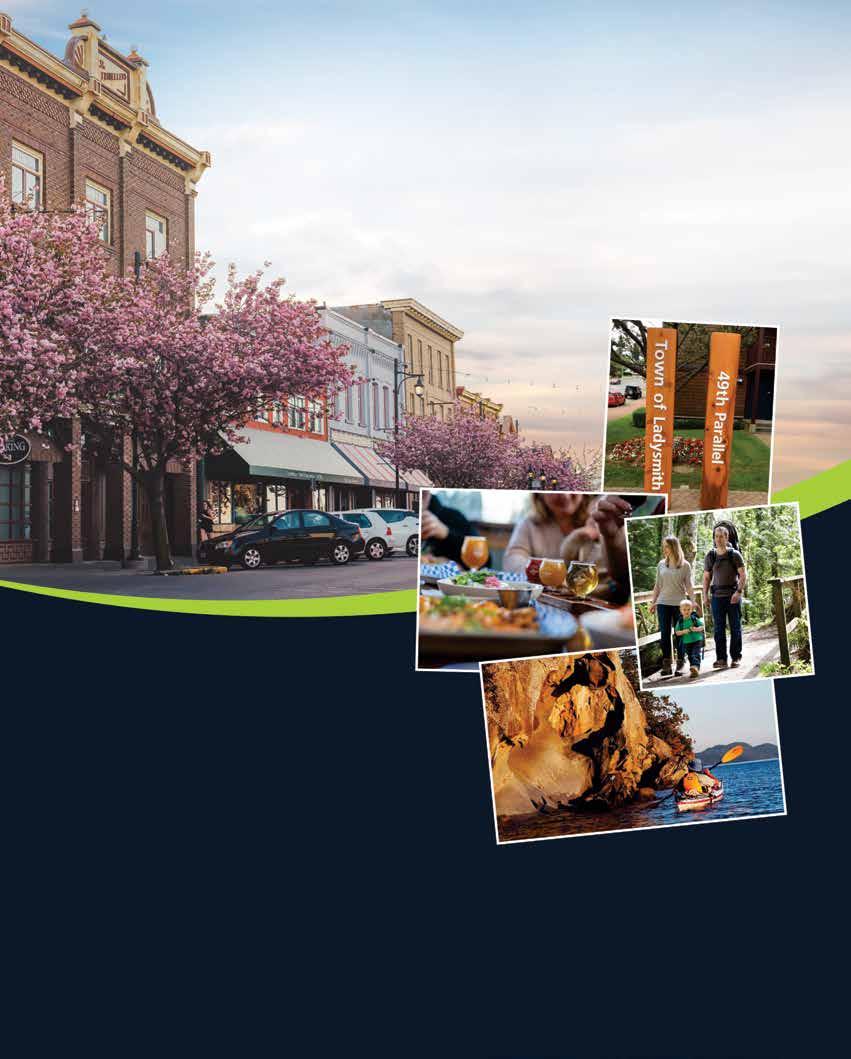
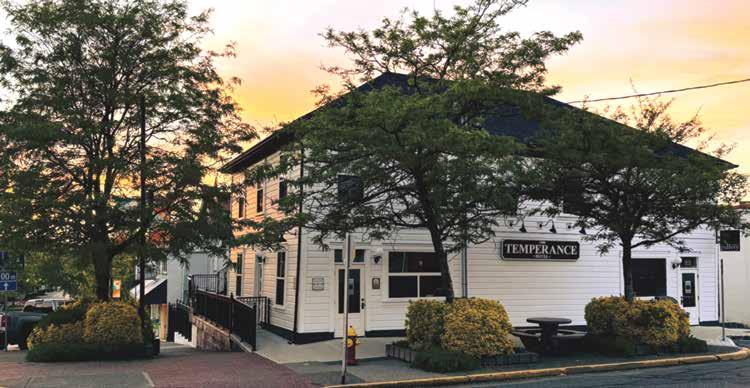






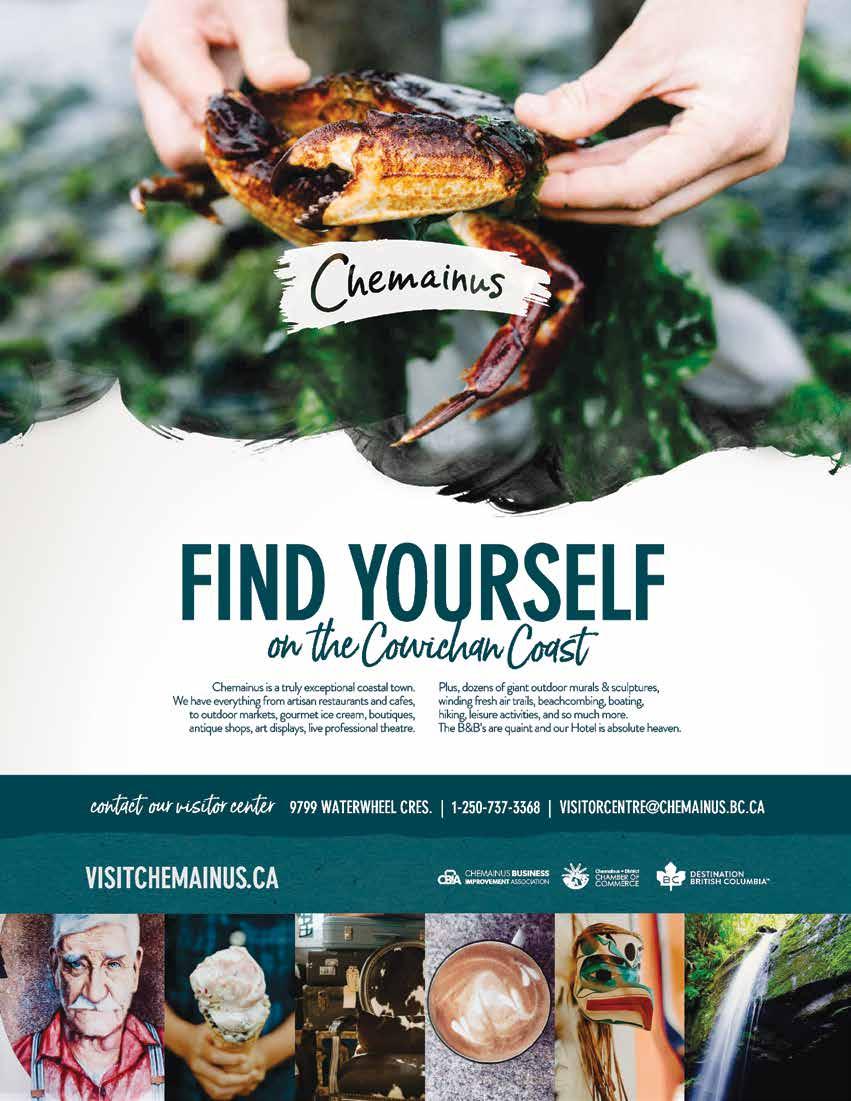
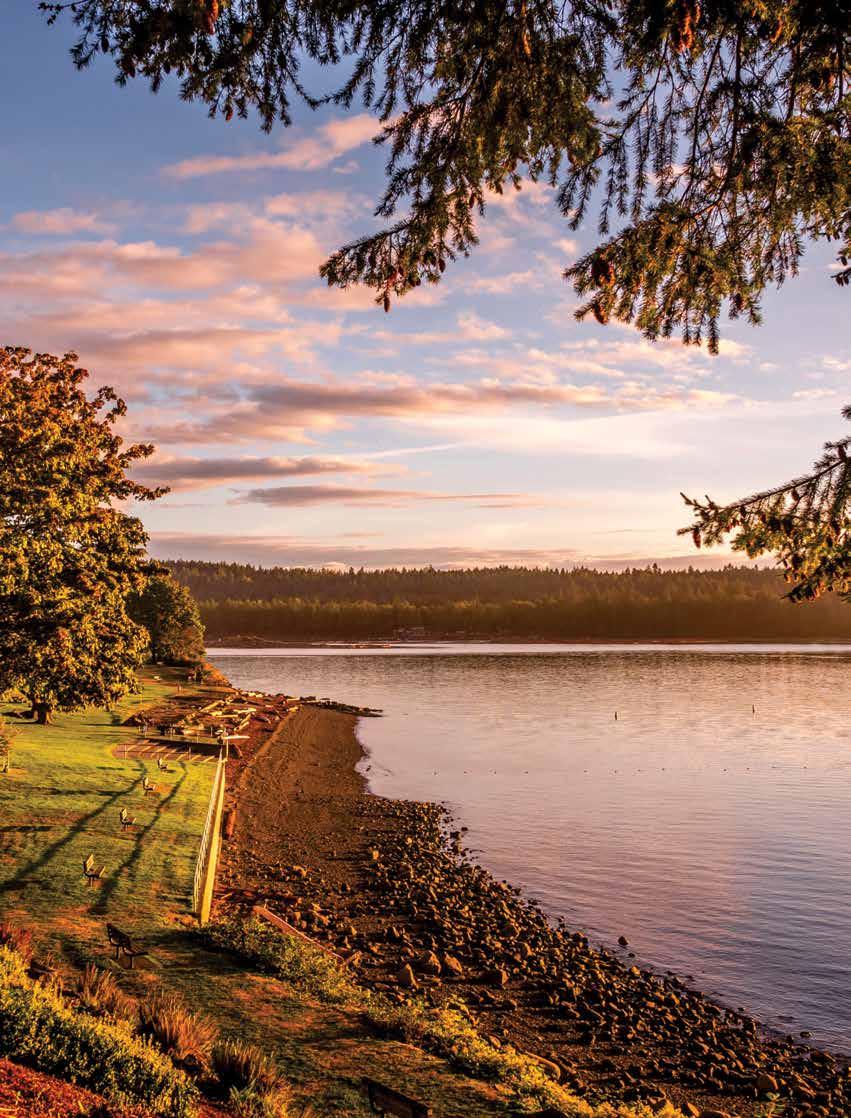
We hope you enjoy this year’s edition of our guide to the mid Vancouver island communities of Ladysmith, Cedar, Saltair, and Chemanius and surrounding area. This guide links the smaller communities between Duncan and Nanaimo. And while each one has its unique identity, they share much in common. Stunning scenery, great outdoor recreation opportunities, a tranquil coastline, and a love for arts, heritage and festivals. People here are proud to volunteer and share their stories. Indeed there is a reason we call this the “heart” of the island.
Central Vancouver Island is a vast and abundant region that awaits your discovery—we encourage you to use our guide as inspiration to try something new, change up your routine, and connect with the Island’s bounty. The options are endless and often just a short drive away —get out there and have fun!
Located only about 60 kilometres from Vancouver, Central Vancouver Island features stunning West Coast destinations that are as accessible as they are stunning. Routes to get to Ladysmith, Cedar, Saltair, and Chemanius run through Nanaimo—after touching down in Nanaimo, all are, at the farthest, a 30-minute drive south. Regularly scheduled float planes fly from downtown Vancouver and Vancouver International Airport South Terminal to Nanaimo. National and regional flights also touch down in Nanaimo Airport
Above:
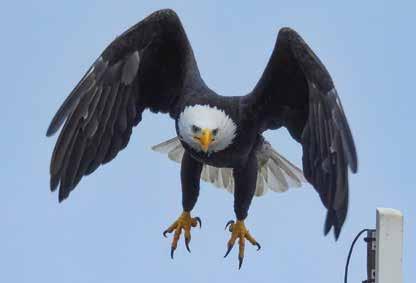
Vancouver Island has a wild heart. Bald eagle in flight. Photo: Bob Burgess
through air services provided by Air Canada, WestJet, and Pacific Coastal.
As for travelling by sea, Hullo, a rapid foot-passenger ferry charters direct trips from downtown Vancouver to Nanaimo, with the journey taking about 70 minutes. BC Ferries, the province’s major ferry provider, offers transport for both vehicles and foot passengers. Sailings to Nanaimo depart from Horseshoe Bay in West Vancouver and arrive 1 hour 40 minutes later in Departure Bay, or from Tsawwassen, reaching Duke Point after a 2-hour sailing. Vehicle reservations are needed for the Horseshoe Bay route and recommended for the Tsawwassen route, as demand can be high, especially over holidays, weekends, and summer months. With a private boat, one can also cruise directly into harbours and marinas situated in Nanaimo, Ladysmith, or Chemanius.
We are pleased to work with local photographers and writers to capture the natural beauty of our communities that are on display in these pages.
We would like to thank the business community for their support in producing this guide, as well as the contributors who have shared their passion, talents, and love for these communities.
For more information, drop in to local Visitor Centres.
The 2026 Explore Guide is available in print at Visitor Centres and shops throughout the mid-Island area. The digital edition, featuring videos and direct links to advertisers, is available online at take5.ca/ explore-guide. Further news and updates about our communities, we can be found on our socials and website.
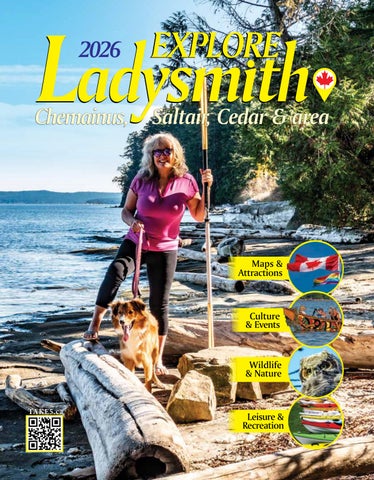
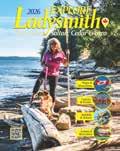
On the Cover:
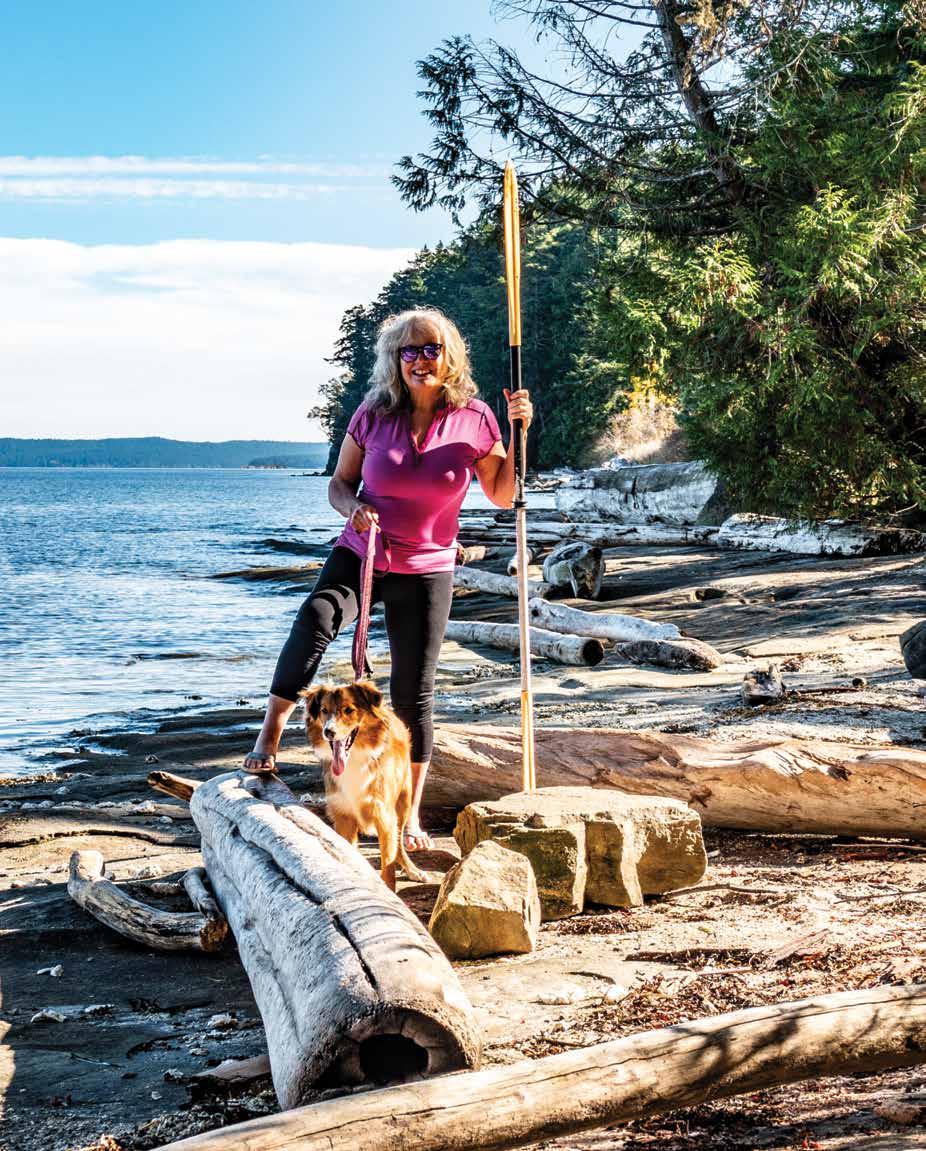
Pamela Walker takes a break from paddling at Blue Heron Park in Yellow Point.
Photos: Bob Burgess
Photography/Contributors:
Jennifer Archer, Bob Burgess, Chemainus Valley Cultural Arts Society, Josee Duffhues, Angie Haslam, Christine Johnstone, Ladysmith Archives, Nick Longo, Francesca Pacchiano, Tania Phiefer, Marina Sacht, Tait Tam, Kerith Waddington, Jackie Waysluk, Nadine Wong
Publisher: TAKE 5 Print & Digital Media
Editor: Marina Sacht
Writers: Gabrielle Lee, Francesca Pacchiano
Art Design & Maps: Angie Haslam
Sales: Nadine Wong, Jackie Sharp
PO Box 59, Ladysmith, BC V9G 1A1, 250-245-7015 / info@take5.ca www.take5.ca youtube.com/take5newstv facebook.com/ExploreLadysmithCedarSaltairChemainus/ instagram.com/explore_mid_vancouver_island
©2026 TAKE 5 (541806 BC Ltd.)
All rights reserved.


Nestled in the foothills of rolling mountains, Ladysmith overlooks the sheltered harbour’s vibrant blue water. Known as Oyster Harbour before its incorporation in 1904, the town is famous for its spectacular natural views and historic downtown core.
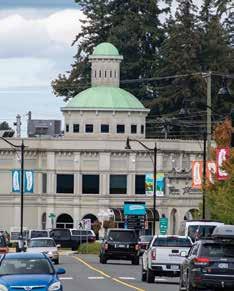
First Avenue, Ladysmith’s main street, won Canada’s Greatest Street in 2017. The avenue is lined with colourful and historic buildings and beautiful trees, and in the winter, it boasts a spectacular assortment of lights. The avenue isn’t just a feast for the eyes; it’s also full of bustling boutique shops, cafés, restaurants and the Old Town Bakery — the home of the island’s best cinnamon buns.
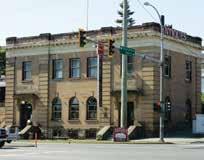
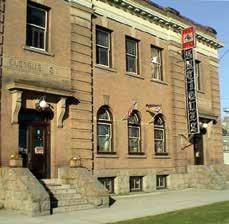
Cedar markers in front of the heritage Agricultural Hall at the intersection of First Avenue and Symonds represent the town’s location on the 49th parallel. This is the only place west of Ontario where you can cross the parallel without entering the United States.
Ladysmith’s economy was built on oyster farming, mining and logging. Forestry is still part of the local economy, but the town has grown from its ideal location and business opportunities. The thriving community spirit is an aspect that draws new residents. The Festival of Lights, Ladysmith Days, Concerts in the Park, Arts on the Avenue and Show ’n’ Shine are a few annual events that delight residents and tourists alike.
Ladysmith is located in the perfect place. With mild winters and warm summers, plenty of outdoor activities can be enjoyed year-
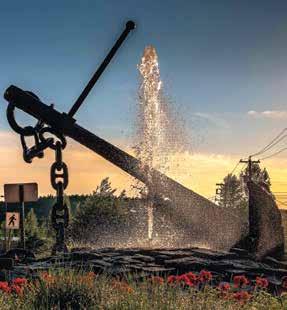
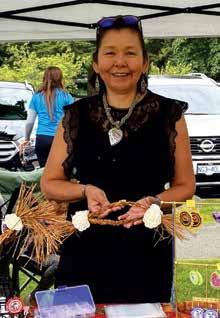
(left-right)
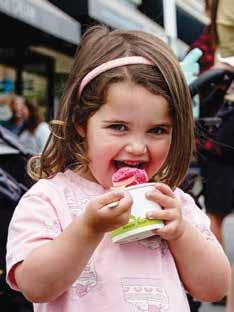
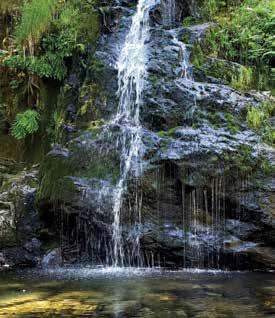
First Avenue Roundabout. Photo: Bob Burgess, Vendor at Transfer Beach. Photo: Marina Sacht, Park Spray at Transfer Beach, Downtown Arts on the Ave festival, a sweet treat at the Soap Box Derby on First Avenue. Photos: Bob Burgess, Christie Falls Trail. Photo: Tania Phiefer
round. The warm season, from June to September, is ideal for exploring the shady trails of Holland Creek or swimming in the sparkling ocean water at Transfer Beach. The temperature drops in the winter months, with December being the coldest at a daily low of around 0 °C. Still, it’s the perfect temperature to bundle up and enjoy a hot chocolate under the hundreds of twinkling lights.
The first inhabitants of Ladysmith were the Stz’uminus First Nation, whose culture continues to shape the region today. For thousands of years, the Stz’uminus People stewarded the land, using the harbour as a rich source of fish and shellfish. Their practices respectfully utilized the natural world to create clothing, food, houses, and medicine, and included carving canoes for travel, traditional food gathering, producing artwork, and weaving. The lifestyle and culture of the Stz’uminus People were severely altered when European colonists arrived and overtook much of their territory.
Ladysmith is the only community on Vancouver Island designed as a company town, largely because of its coal resources. In 1884,

most of the land and resources of the Stz’uminus First Nation were privatized when the Esquimalt and Nanaimo Railway Grant was awarded to James Dunsmuir, who owned the Wellington Colliery Company, a coal mining enterprise.
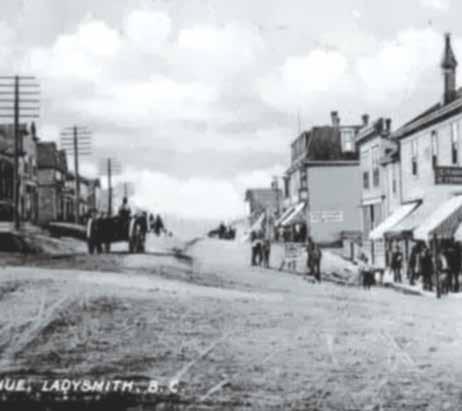
In 1897, after the coal seams in Nanaimo were depleted, Dunsmuir relocated the miners and their families to Oyster Harbour so they could work in Extension Mine, located 20 kilometres south. The Wellington miners dismantled their homes, loaded them onto railway cars, and moved them to the new town. Included in the move were some of the hotels, churches and business blocks, which still stand today. In 1900, Dunsmuir renamed his company town, Oyster Harbour, to Ladysmith.
Ladysmith was an essential location in the early labour movement. The work was dangerous, and upwards of 1000 miners died during the Island’s



coal era. A walk through the Ladysmith Cemetery marks the tragic deaths that took place, with a monument for labour martyr Joseph Mairs also featured. The Vancouver Island Coal Strike began in September 1912 and affected many of the Ladysmiths’ residents. Violent riots broke out in August 1913, the militia was called, and the strike continued on until the start of the First World War.
With coal on the decline, Ladysmith began struggling economically in the 1930s. Fortune returned in 1935, when a violent windstorm blew down 7406 acres of mature timber held in trust by the Rockefeller Foundation of New York. The parent company of Comox Logging & Rail Company, Western Canada Lumber, went on to purchase this timber from Rockefeller. This marked the beginning of logging and forestry operations in Ladysmith, which sparked a gradual recovery and altered the town’s major economic resource.
Today, you can visit the former Comox Logging Site by the waterfront, where artifacts from the town’s industrial and maritime heritage remain visible.



The Ladysmith Visitor Centre offers a self-guided tour and map of the Historic Buildings. You can pick up a copy in person or download the free Tourism Ladysmith Heritage Trails & Opportunities app through the Apple App Store or Google Play. This app includes interactive guided walking tours on Ladysmith’s history, offering further information on the area’s many heritage buildings and artifacts.
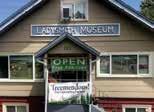
The Ladysmith Museum features displays, exhibits, and an art gallery which tell the colourful story of the community’s past. The museum guides visitors through the development of the cultural, educational, medical, business, and industrial sectors of Ladysmith whilst also showcasing artifacts related to the mining, rail, and lumber industries, which all played a crucial role in the town’s growth. Admission is by donation.
Whether new or established, Ladysmith is home to a variety of independent businesses. Quality consignment stores offer locally made items at a bargan price, and thrift stores and the refillery allow shoppers a guilt-free shopping experience.
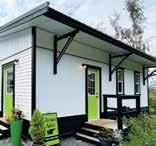
Post Office Antiques is an iconic stop in our little town. It’s a for-
mer customs and jailhouse now turned treasure trove for die-hard antique collectors and weekend wanderers alike. Just a short hop away is Antique Addict with its curated collection.
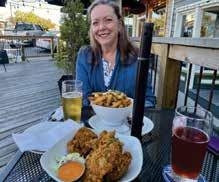
A trip along First Avenue would not be complete without a stop at the bakery for their famous cinnamon buns or a visit to the butcher for local meats and fish. Restaurants offer a world-wide cuisine selection from British, Chinese, Mexican, Indian and Japanese food to vegan, and gluten-free options. There’s something for every taste or thirst.
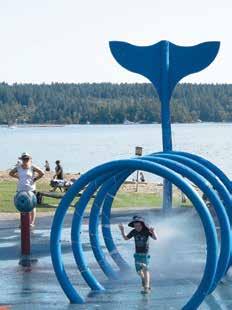
Transfer Beach Park is where the locals head for fun. This seaside park has something for everyone; with grassy slopes, shady trees, and a sheltered coastline, it’s the perfect spot for a family picnic, a couple’s walk, or games with friends. The park is wheelchair accessible and has picnic benches and washrooms. It also features a seasonal water park and a playground.
With the warmest waters north of San Francisco, the ocean in Ladysmith is inviting; average monthly water temperatures sit at 17.90°C. Though the ocean becomes its warmest in July, many, including the Transfer Beach Dippers, swim year-round. If swimming isn’t your thing, there’s an off-leash dog area, kayak rentals, a sand volleyball court, and plenty more to enjoy.
In October 2024, over 400 native plants were planted in beds that are designed to withstand drought and support pollinators. The Bird Shrubbery and Butterfly Meadow attract a variety of local wildlife and are great places for visitors to learn more about what can be grown in their own gardens.
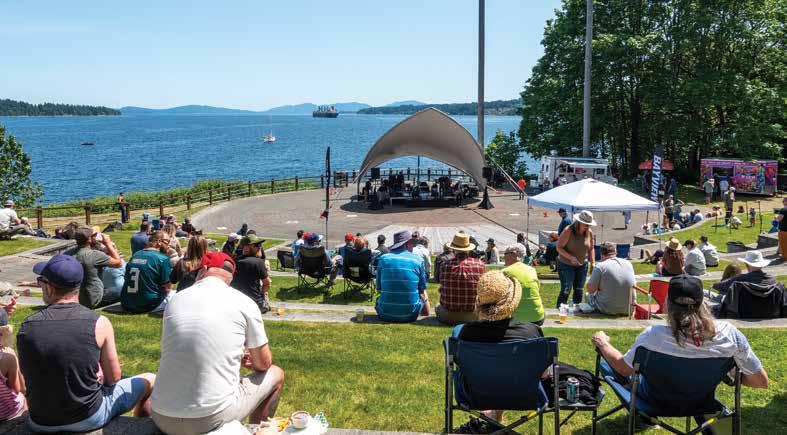
The park is home to Vancouver Island’s only beachfront amphitheatre and is an active venue for events and summer music concerts. Enjoy a picnic at one of the many tables or a meal from a food truck that operates through the summer.
Residents express that one of the city’s gems is the historic Holland Creek Trail. A 5.8-kilometre trail, it includes highlights like Crystal Falls and the Colliery Dams. The trail is wheelchair accessible from the Methuen and 6th Avenue entrance.
Ladysmith is a popular spot with filmmakers given its small-town charm. A number of movies and TV series have been filmed here, attracted by Ladysmith’s unique wide streets and brick buildings.
Pamela Anderson, the town’s most famous resident, moved back to her hometown and has been restoring her grandmother’s place, the Arcady Auto Court, as featured in her HGTV show, Pamela’s Garden of Eden.




There is always something happening in Ladysmith.
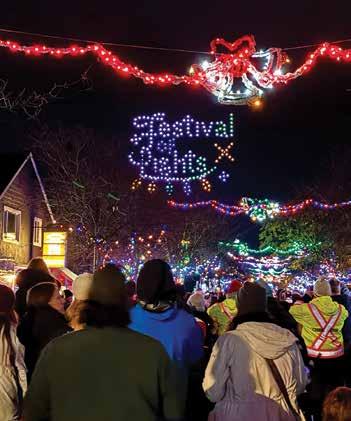
Each holiday season, Ladysmith is adorned with twinkling lights for the town’s Festival of Lights. This year’s event will take place from November 26, 2026, to January 10, 2027.
Festival of Lights kicks off with a Night Parade and a Craft and Artisan Fair. From 3:00 to 9:00 PM at Aggie Hall, visitors can browse the craft fair. Meanwhile, from 4:00 to 6:00 PM, enjoy street entertainment, food concessions, and street performances. Finally, Santa arrives downtown, throwing the switch to light up Ladysmith at 6:30 PM.
The parade begins at 6:40 PM. A fterward, head north on First Avenue to watch Bob Stuart Park, the Aggie Hall, and the Chuck Perrin Tree come alight. There’s always a special entertainment sponsored by Ladysmith & District Credit Union that surpirses and delights the crowd.
The festival began in 1987 when a group of citizens wanted to celebrate the holidays and support local businesses. Years later, it’s become a much-loved Christmas tradition.
Summertime and it’s Ladysmith Days!
The return of summertime brings about Ladysmith Celebration Days, held during the BC Day weekend, are filled with fun and music at Transfer Beach. The event will take place on August 1-2, 2026.
Other notable events include; Brits on the Beach, a British vehicle show which takes place in July; Ladysmith’s Show ’n’ Shine, a vintage and collector vehicle show on August 15, 2026; Arts on the Avenue, an art show and sale in August; Sunday Concerts in the Park, live music shows at Transfer Beach in July and August; and Oktoberfest, with local music, food, and beer, in September.





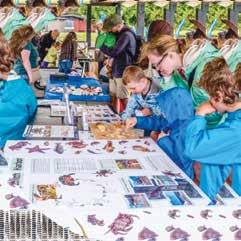
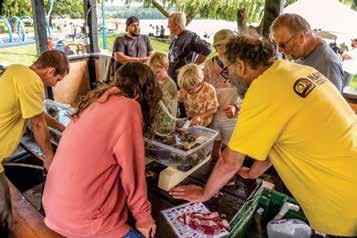


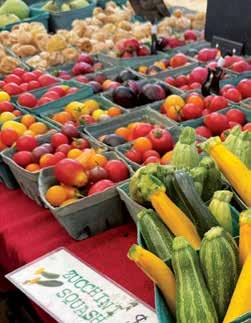
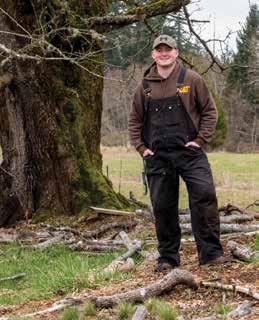
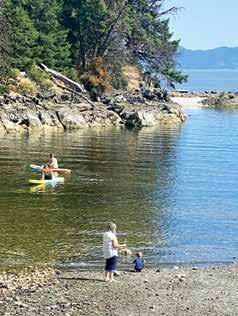
Scenic country roads dotted with century-old farms, homesteads, farm-gates and artisan studios are only a glimpse of what the Cedar District has to offer. Located north of Ladysmith, Cedar Village is the commercial centre, with a grocery store, hardware store, fuel station, and some of Vancouver Island’s best restaurants and pubs. Farm co-ops, organic growers and markets provide fresh produce to feed your body, but Cedar’s spectacular sandstone beaches and trails will feed your soul.
Cedar and Yellow Point Roads are best enjoyed by car or bike with frequent stops along the way. Don’t miss Blue Heron, Elliots Beach, Hemer or Robert’s Memorial. All of these are easy hikes and offer stunning views, especially at low tide. Cable Bay Trail is a great place to watch boats streaming through Dodd Narrows at slack tide.
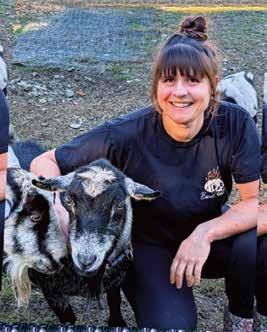
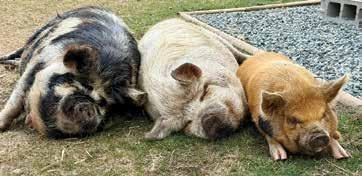
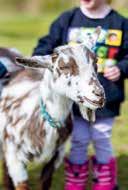
The Yellow Point Farms offers a family-friendly experience with their petting farm. Open from March to November, you can visit their Nigerian dwarf goats, babydoll sheep, kunekune pigs, and miniature donkeys. You can also visit their farm store, full of in-season produce and their delicious blueberry leaf tea.
Fredrich’s Honey is a family-owned bee farm providing unpasteurized and wildflower-based Canadian honey. A visit to their farm is always a sweet delight!
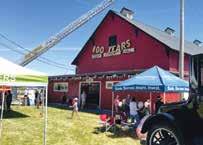
This area is full of abundance, and the best way to explore it is on a self-guided Tour. The Cedar and Yellow Point Self-Guided Artisan Tour takes place in the summer and winter. It’s the perfect opportunity to see the lush landscape, find unique handmade items, and eat delicious food along the way.
Looking for some active fun? Drop by the Cedar Skate Park on Walsh Road and try out your moves.
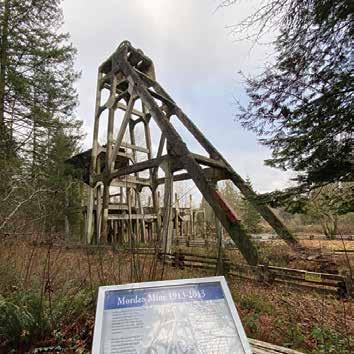
Cedar shares a history of coal mining with Nanaimo and its neighbours: Ladysmith, Chase River, South Wellington and Cassidy. Echoes of this history can be found at the Morden Colliery Historic Park, home to the Morden Mine. Its tipple and headframe are among the few surviving concrete headframes in the world.
The Extension Miners Community Park is worth a visit to explore the area’s mining past and view the restored Dunsmuir coal cart, along with other artifacts.
The area is also home to several pubs and restaurants with a long

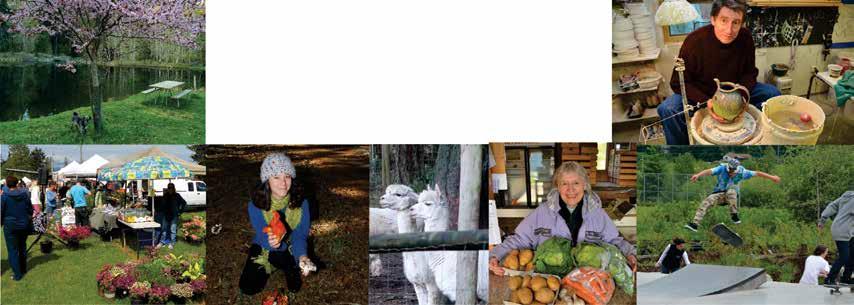
history of serving locals. The popular British Crow and Gate Neighbourhood Pub opened in 1972 and is the first neighbourhood pub in BC. The English gardens, Tudor-style architecture and tranquil rural setting attract locals and visitors alike. In the summer, relax on their outdoor patio, and in the winter, cozy up next to the roaring fire as you enjoy their excellent selection of beers.
The Wheaty as locals call it, has a mosoe that brides kiss for goodluck, and the Cranberry Arms Pub is the oldest pub in the area, and once served thirsty miners.
The legacy of firsts continues today with COCO Cafe. Their mission is to provide jobs and opportunities for people with diverse abilities as well as serve the Cedar community with delicious food.
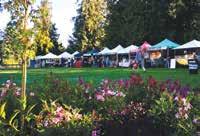
The award-winning Cedar Farmers’ Market is one of the most popular markets on the Island—and the numbers prove it. You’d better get there early, as about 59,291 people visit annually! The market operates Sundays, 10 a.m. to 2 p.m., from Mother’s Day to the end of October. The market features locally grown fruit and vegetables, baked goods, ethically raised meat, fresh-cut flowers, food trucks, homemade ice cream and more.
Several farm gates operate in the area, including McNab’s Farm, which offers a variety of squash, corn, and potatoes, as well as a book exchange.

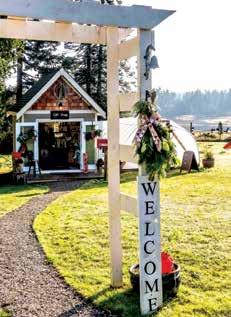

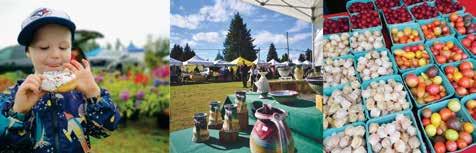


Another popular market on Sundays is Carol’s Artisan Craft Market, located at the North Oyster Community Centre. The regular artisans sell a variety of handmade knits, funky birdhouses, wooden bowls and beautiful pottery. It’s the perfect place to do your early holiday shopping.
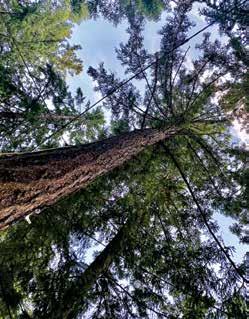
Nestled along the shores of Quennell Lake, Wildwood Forest is 88 acres of lush ecoforest. It boasts a rich diversity of wildlife, from the little brown bats and banana slugs to the towering coastal Douglasfirs. The forest represents a vanishing ecosystem that was once abundant on Vancouver Island. These ancient trees stand among a profusion of western red cedar, bigleaf maple, flowering dogwood, and arbutus, bringing a fantastic presence to the forest with their towering height and size. Established in 1938 by Merv Wilkinson, it is operated by the Ecoforestry Institute, which hosts vacation stays, workshops and tours.
On a warm summer day, the riverbanks are popular spots for swimming, tubing and picnicking. You can launch your tubes by the bridge on Cedar Road. The beach is on the Snuneymuxw Reserve; please be respectful of their land.
The area is known for its rock-climbing opportunities, with the best locations on the Island for conglomerate sandstone bouldering. The river cuts through a large canyon, which is home to Wildplay Adventures, featuring a bungee jump attraction.
The Nanaimo Lakes are located on the upper Nanaimo River and have four unserviced campgrounds on the banks of the lakes with
boat launches, beaches and hiking trails. Mosaic Forest Management owns the campsites.
Anglers regard the Nanaimo River as one of the best steelhead rivers in the country. Coho salmon fishing is open October to March.
The Nanaimo River Hatchery is run by the non-profit Nanaimo River Stewardship Society. Annually, on the first Sunday in November, the hatchery hosts a public “Spawning Day.” The event is great for families, as it highlights the life cycle of Pacific salmon.
The Nanaimo River Estuary supports many species of plants, fish and wildlife and is the largest estuary on Vancouver Island. It is an essential traditional use area for the Snuneymuxw First Nations. This short trail along the Nanaimo River features viewing platforms and is a popular spot for birding. Bring your binoculars and spot the eagles, great blue herons, red-tailed hawks, Canada geese, ducks, crows and owls.

Picture a town colourful in history and alive with art—throw in unique shops, tasty eateries, and a world-class theatre, and you have Chemainus.
The town is unique for having two downtown sections. Willow Street runs through the centre of the city, while Old Town, the original downtown district that still exhibits an early boomtown feel, is located off Oak Street. A ferry terminal connecting Thetis and Penelakut Islands sits at the foot of Oak Street by the government wharf.
The town is entirely walkable, with quiet streets and plenty of places to stop and explore. Keep an eye out for the yellow footprints, which are always a favourite with kids.
Shoppers will find lots to rummage through at the Chemainus Thrift Store. Treasures await at several antique and specialty stores offering products, services and old-fashioned charm.
The town’s name comes from a legend about a shaman and prophet named Broken Chest (Tsa-meeun-is), who, after surviving a chest wound, went on to become a strong chief. His people loved him so much that they adopted his name and became known as Stz’uminus.
Founded as a logging town in 1858, Chemainus was once the heart of the early forestry industry and boasted the world’s largest mill. In the early settler days, Vancouver Island’s giant coastal forest
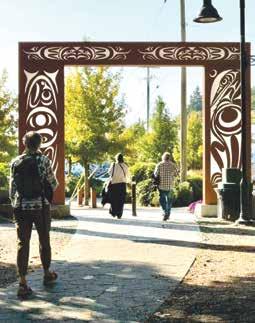
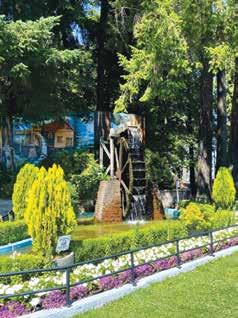
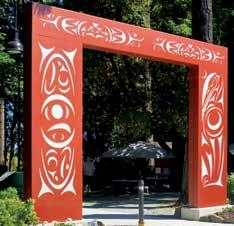
Welcome Arch at Waterwheel
offered a wealth of resources and unlimited logging. Chemainus, with its deep seaport, became the centre of this logging boom and remained so for over 120 years.
When the mill closed in 1983, hundreds left town. Then, with Chemainus’s population dwindling and abandonment drawing near, the mural project was born; the city commissioned artists to paint its history in the largest mural painting project undertaken in Canada.
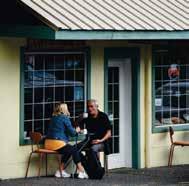
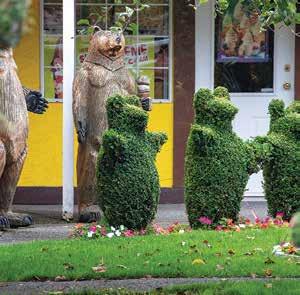
Today, Chemainus is a picture-perfect artisan village by the sea. Thriving as a small-town tourist destination, those who visit are charmed by the local artistry that can be seen everywhere. Storefront windows display handmade objects and gifts, parks are lovingly adorned with carvings, and even the residential yards are dotted with topiary characters and creatures. More than just a charming tourist town, Chemainus is alive year-round with festivals and events that entertain locals and visitors alike.
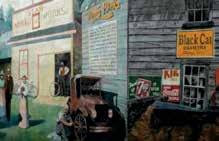
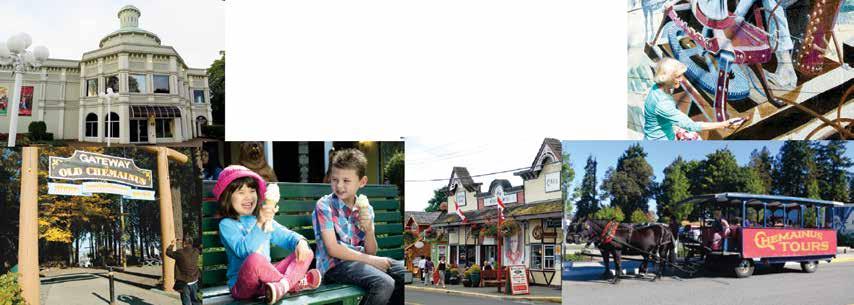
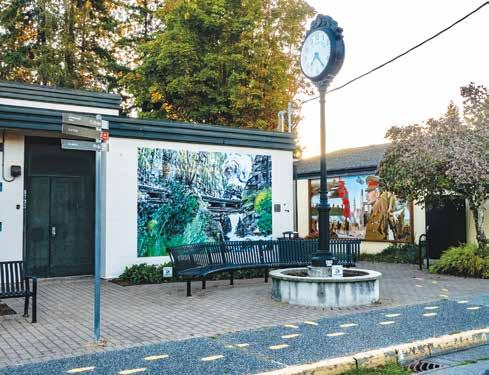
Welcome to Canada’s Mural Capital! Chemainus is best explored on foot—wander the streets and alleys to discover over 60 murals and 10 sculptures that tell the story of the town from its Indigenous

roots to its pioneering settlement and beyond.
Organized by the Chemainus Festival of Murals Society, the mural project is the world’s leading community-driven art tourism experience. An Official Mural Guide can be picked up at several locations, including the Chemainus Visitor Centre and Museum, before you start your tour. Plenty of time is recommended to enjoy Canada’s most extensive outdoor art gallery and all the little shops along the way.
With a large arts community, Chemainus boasts a world-class performing arts centre. The Chemainus Theatre draws visitors from all over Vancouver Island and is home to the Playbill Restaurant and a delightful store and gallery.
The Waterwheel Park is located in the heart of Chemainus. It bridges the newer downtown area of Willow Street to Old Town with a short, forested footpath and is famous for its spinning waterwheel—a replica that pays homage to the equipment once used to power the mill.
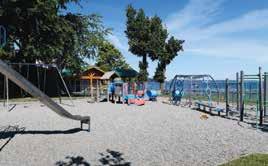
Chemainus Valley Cultural Arts Society hosts performances at the Waterwheel Band Shell throughout the year, including “Music in the Park” during the summer. The park features a children’s playground, a meditation labyrinth, electric car charging stations, and a walking trail, along with plenty of parking and public washrooms. The Chemainus Museum, with its collection of artifacts and photos of the town’s early days, and the Visitor Centre, are also located in the park as is the weekly market, which occurs every Wednesday from May to September. Watch for the annual Giant Street Market in July.
Outdoor enthusiasts will enjoy exploring Chemainus’s parks, trails and coastlines. There are several beaches for swimming in the ocean, picnicking with family, or beachcombing with friends.
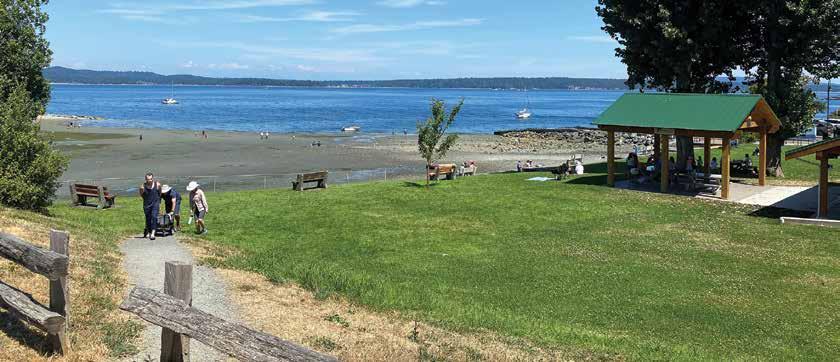
Kin Beach in Old Town is a rocky, easily accessible beach with a playground. At low tide, you can walk over the sand to the lighthouse on Bird Rock–make sure to watch the waves so you’re not caught out there!
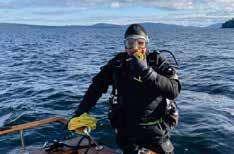
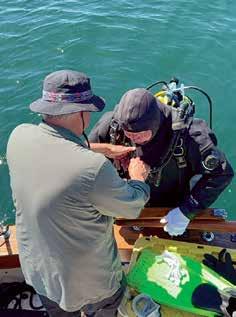
Boating is a popular activity at this beach, with residents and visitors using the boat launch to take off and explore many of the small islands in the area. Off the shores of Chemainus is the world’s only sunken Boeing 737 diving reef, which draws divers from around the world. The reef is home to hundreds of local aquatic species, including the red sea urchin.
Just south of town is Fuller Lake, prized for its sandy beaches, warm water, and good fishing. Tennis and pickleball courts, playgrounds, and a boat ramp for non-motorized boats make this an enjoyable place to spend a day. In the winter, you can also ice skate at Fuller Lake Arena.
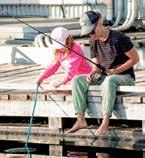
Chemainus Lake Park, located west of town, features a dock that’s great for fishing and a trail which encircles the water.
At the corner of Oak Street and Chemainus Road is a jewel: Askew Creek Wilderness Park, one of Chemainus’ best-kept secrets. Here, you can wander amidst old-growth timber and imagine what life was like when trees were giants.





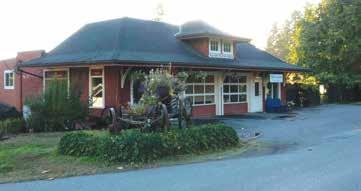
The community of Saltair is situated between Chemainus and Ladysmith. Saltair’s most significant draw is its sweeping ocean views, natural coastal landscape, and rural ambience.
The community offers close access to many parks and recreation opportunities, as well as a few shops and services, clustered around the small commercial centre on Chemainus Road. Larger shops and a wider range of services can be found a short drive away in neighbouring towns.
Gardening is a popular activity here, and “Sunny Saltair” was once known as the breadbasket of the Island, supplying other areas with fresh produce.
Social life in Saltair centres around Centennial Park, a multi-sport community park, and the Saltair Community Centre, located only steps away. Check their websites for upcoming events.
The community’s name comes from the days of the Esquimalt and Nanaimo Railway. In 1910, the railway held an open contest to name the town’s post station, with residents deciding to call it Saltair Landing.
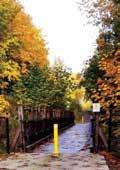
While the trains are no longer running, walking on the rails is one of the community’s pleasures. The Saltair Rail with Trail is a 4.3-kilometre multi-user stretch of the Trans Canada Trail that pedestrians and cyclists now enjoy.
Davis Lagoon and its bridge are where Stocking Creek meets the ocean. This is a popular spot to observe the industrial activity in the harbour. This is also a popular spot to launch a kayak or set a crab trap. Davis Lagoon is also teeming with wildlife and is an ideal spot for a picnic.
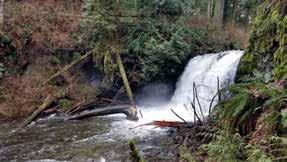
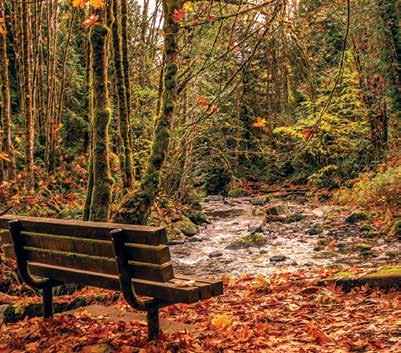
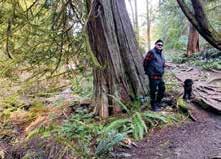
Stocking Creek Park is the jewel of Saltair, offering several kilometres of trails through a rainforest. Its entrance lies in the parking lot off Thicke Road, where washrooms are available. The short loop meanders through a lush forest with moss-covered trees and ferns and includes the stunning Stocking Creek Falls. The trail is open year-round, but the best time to see the Vancouver Island rain-
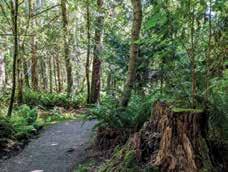
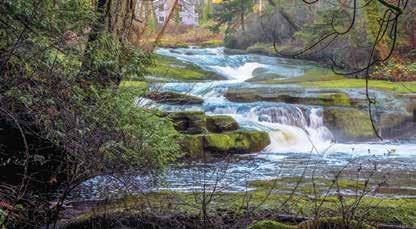
forest at its most beautiful is from January through October.
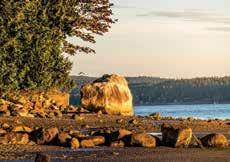
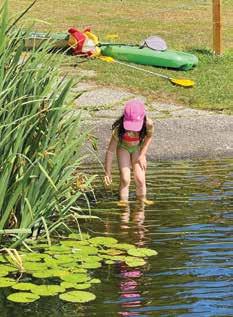
Boulder Point, also known as Big Rock Beach, is a favourite among children. Visit at low tide to walk along the shore, beachcomb, and admire the sand dollars. Plenty of wildlife can be spotted, from weathered oyster shells to unique bits of driftwood. Watch for otters or seals swimming in the water or even a great blue heron fishing in shallower pools. Boulder Point is also an excellent location for swimming. Pets must be leashed.

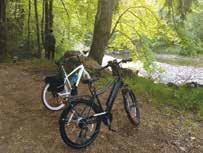
There are many parks and walking trails in the area, from leisurely seashore strolls to heart-pounding hikes into the mountains. Go out and enjoy some of the best walking, hiking and biking trails the Island has to offer. Here are some of our favourites:
Holland Creek Trail is unique for its views of Crystal Falls. Approximately 5.8 kilometres long, the trail has connectors at either end if you wish to extend the walk or make the journey more challenging. The well-groomed path is also wheelchair accessible with assistance from the Methuen and 6th Avenue entrance west to the Upper Colliery dam. The trail winds alongside Holland Creek, which empties into a flat grassy lowland by the ocean inhabited by several species of birds.
Branching out from the Holland Creek Trail are several other trails. Rotary Lookout Trail is a short 1.2-kilometre walk that starts near the log bridge on the Holland Creek Trail.
Heart Lake Loop Trail is a challenging 6.4-kilometre hike that opens up to a panoramic view of the ocean and islands. Though the steep climb has been locally dubbed,“Heart-Attack Lake,” the scenic journey through lush wildlife makes the effort worthwhile.

Stocking Lake Loop is a 9.3-kilometre trail that begins at Davis Road Park and takes 2.5 to three hours to complete.
Marine Walk can be accessed from the Ladysmith Fisherman’s Wharf, Oyster Bay Marina, or the amphitheatre parking lot. It crosses Slack Point, an artificial landmass created from years of coal slack and garbage pooling together. The section between Fisherman’s Wharf and the Oyster Bay Marina follows an old railway track, which was used to haul in coal from Extension Mines.
Gourlay-Janes Park, off Chemainus Road, is an off-leash park where you stroll through the woods and toward the ocean.
Between Olsen Road and Rocky Beach Road lies Diana, Princess of Wales Park, which features a pleasant, easy walking trail that leads you through beautiful natural landscapes.
Stocking Creek Park can be accessed from the south entrance off Thicke Road or the north entrance off Finch Place. It includes natural trails, picnicking areas, and a waterfall. The Cowichan Valley Trail, a multi-use path which is an integral part of the Trans Canada Trail, also runs through the park, accessed by Finch Place. It connects to Chemainus and to Ladysmith.
Saltair Centennial Park, a sizable community park with a field, playground, sports courts, and forested trails, is located on South Oyster School Road.
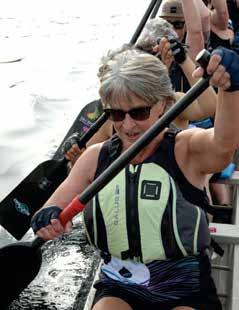
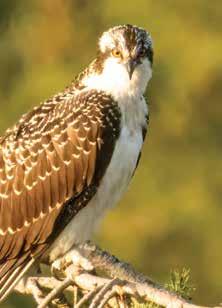
Marina Sacht, Hawk at Holland Creek Trail. Photo: Bob Burgess, Team “Sync or Swim”, Ladysmith Dragon Boat Society. Photo: Bob Burgess
Saltair Rail with Trail starts at North Watts Road and connects the communities of Ladysmith, Saltair, and Chemanius. The 4.3-kilometre, compacted gravel trail opened in 2019 and is gently graded, making it suitable for walking and cycling. The trail includes a single-span bridge, scenic views of Mount Brenton and the Gulf Islands, and access to Stocking Creek Park.
Askey Creek Wilderness Trail, accessible from Oak Street, is an easy-to-follow trail system that’s enjoyable for all. It features numerous old-growth trees and a creek. From Grace Road, follow a short but steep trail to access the gorgeous Bannon Creek Falls.
Caswell Park is a residential green space and playground.
Chemainus Lake Park offers a 2.5-kilometre loop with multiple trails. The lake is a popular spot for fishing, birdwatching, or letting your dog run around off-leash.
Chemainus River Provincial Park is a 128-hectare park offering swimming, fishing, and recreational opportunities.
Chemainus Skate Park is located next to Chemainus Secondary School and offers 2,500 square feet of fun for BMX bikers, scooter riders, in-line skaters, and skateboarders.
Cook Beach Park, accessible via Island View Close, is a peaceful spot to watch the ocean and picnic.
Daniel Street Park offers a small green space with access to the waterfront. Come at low tide if you wish to enjoy the beach.
Doc Lewis Park has a large ballfield with four pitches.
Fuller Lake is a very popular swimming spot, with lifeguards on duty during the summer. It has a boat ramp for motorized vehicles, canoes, and kayaks, and a fishing pier—the lake is regularly stocked with cutthroat and rainbow trout.
Fuller Lake Arena features a 200-foot-by-85foot ice surface.
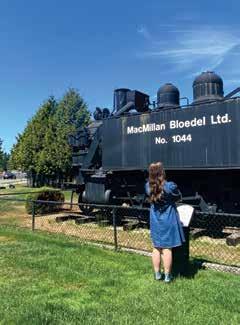
Gerry Smith Park has landscaped gardens and a steam train on display.
Kinsmen Beach Park has a sandy beach with warm, shallow waters for swimming and benches for picnicking or taking in the views. There is a small boat launch and playground.
Waterwheel Park is centrally located downtown. This small park offers a playground, washrooms, and an outdoor stage used as a performance venue.
Wul’aam (Echo) Park is a rugged trail network at the end of Channel Boulevard. It loops through fir, cedar, and maple trees.
Blue Heron Park is situated on Westby Road, off Yellow Point Road. It has a beautiful sandstone beach, washrooms, and a picnic area.
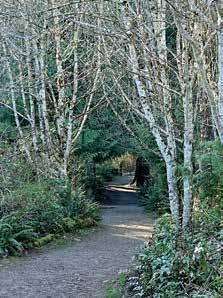
Cable Bay Nature Trail is a popular spot for watching marine vessels navigate the narrows. It is also an off-leash trail. The lands surrounding the trail are under pressure for rezoming. The group, Save Cable Bay, is actively working to prevent that. Follow them on facebook for more information.
Elliots Beach Park on Elliot Way, off Shell Beach Road, offers picnicking, swimming, snorkelling and kayaking.
Extension Ridge Trail, part of the Trans Canada Trail system, offers stunning views of the Georgia Straight. The 8.9-kilometre loop trail winds through a forest and is an excellent spot for both hiking and mountain biking.
The Abyss Trail, an Extension Ridge attraction, leads hikers to a large fissure in the earth known to locals as “the Abyss.” This 4.5-ki-
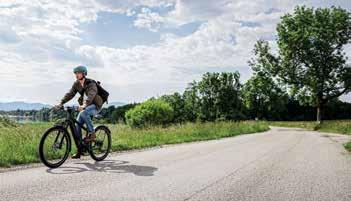
lometre path is a playground for mountain bikers, hikers, and adventurers, featuring steep, moderately challenging switchbacks.
Haslam Creek Trail and Suspension Bridge are part of the Trans Canada Trail system. Access is at the end of Timberlands Road.
Hemer Provincial Park has easy walking trails that are mainly forested. It is a peaceful setting for walkers, paddlers, boaters, and anglers, and includes a bird-watching platform.
Morden Colliery Regional Trail connects Morden Colliery Historic Provincial Park to Hemer Provincial Park. Uniquely, it allows walkers to follow the 20th-century coal railway route that linked the mines of South Wellington to coal ships in Boat Harbour. To see the historic Morden Tipple and headframe, take a short walk to the Nanaimo River or head to Hemer Park from the Cedar Plaza kiosk.
Raven Park on Shell Beach Road is a small but pretty beach park.
Roberts Memorial Park leads to the waterfront and includes areas for picnicking, fishing, biking, and hiking. It is known for its unique sandstone ledges and for being a place to spot wildlife, such as sea lions.
Yellow Point Park features trails that are dotted with wildflowers in the springtime. The 5.3 km loop is suitable for all skill levels and is primarily used for hiking, nature trips, and birdwatching.
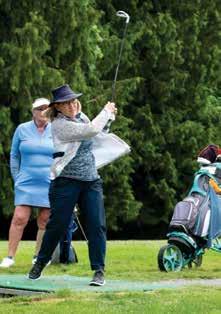
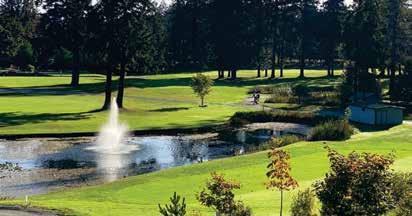
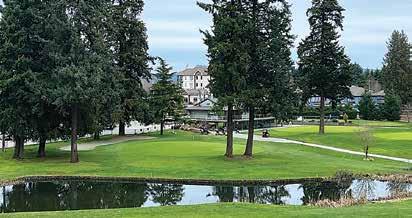
You’ve come to the right area for outdoor fun! With the area featuring four golf courses, you’re minutes away from swinging your personal best. Opened in 1948, the par-71/73 Mount Brenton Golf Course features shaded fairways flanked by towering trees. A challenge for golfers of all levels, there are plenty of creeks to hurdle and ponds to putt around. An extensive drainage system also makes Mount Brenton one of the most playable, year-round golf courses on Vancouver Island.
Ladysmith Golf Club was opened in June 1980. Owned by the Town of Ladysmith, it is operated and managed by the non-profit Ladysmith Golf Club Society. All those six and older are welcome to enjoy this nine-hole, par-3 course. It takes approximately one hour to complete and includes the challenge of driving over two ravines and large, tricky greens. This course will test both your short-iron game and your putting skills.

Get out your binoculars because you are in a place where wildlife abound. Here are some of the magnificent animals you may see. Roosevelt Elk
The largest and heaviest of the North American elk is the Roosevelt, a subspecies indigenous to Vancouver Island. Mature males are hefty and may reach more than 400 kg. Females are considerably smaller, but still impressive, reaching weights of approximately 250 kg.
Except for a small herd in the Phillips Arm area and newly introduced herds by Sechelt and Powell River, the only Roosevelt Elk in BC are the 3000 to 3500 members of the subspecies that live on Vancouver Island. You can often see herds grazing in fields off the Island Highway just north of Ladysmith. The animal was historically more widely distributed; however, their population has localized due to hunting, forestry activities, and translocation efforts.

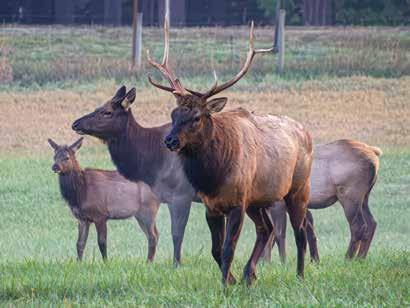
Though their population seems relatively stable currently, but declines in Roosevelt Elk are expected due to their vulnerability to habitat changes, human disturbance, and unregulated hunting. Trumpeter Swans
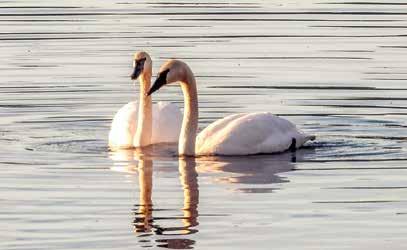
Trumpeter Swans can be identified by their all-white plumage, black bills, legs, and feet, dark or reddish heads and upper necks, and a recognizable call that resembles the sound of a horn. These stunning birds are North America’s largest native waterfowl species. They dwell in coastal wetlands or flooded agricultural land, using their long necks to reach and feed on submerged vegetation, invertebrates, fish, and fish eggs. In winter, they also eat grasses, grains, and crops.



Notably, large numbers of Pacific Trumpeter Swans migrate to Vancouver Island to spend the colder months. The swans arrive in late October and remain in the warmer weather until early April. Whilst on the Island, they feed on discarded vegetables, corn cobs, the corn and seedlings from winter crops, and native vegetation.
Although these birds were once abundant and widespread, hunting reduced their population size and distribution. Conservation efforts and management actions were implemented, and the Trumpeter swans responded positively. Populations grew and then stabilized, and the number of birds on Vancouver Island has remained steady since about the mid-1990s.
Cougars
These cats are large, with males often weighing between 60-80 kg and females being only slightly smaller.
Cougars are hunters, strict carnivores that feed primarily on deer. With their large habitat ranges, the cougar is found widely throughout BC. But the Island and particularly this area has a larger concentration of cougars. The cats’ distribution is based on the presence of deer, its principal prey. This means that if a region has an abundance of deer, there is a significant possibility that cougars will inhabit the same area. In the summertime, the cats head toward coastal areas with wetland cover. If tending to kittens, female cougars seek out sheltered areas with boulders, rocky outcrops, or dense vegetation. Cougars are occasionally spotted in urban areas.
Cougar attacks are rare but can be dangerous. If you spot a cougar watching you, maintain eye contact, raise your hands to make yourself look bigger, speak to the cat in a loud, firm voice, back out of the area, and never turn your back and run.
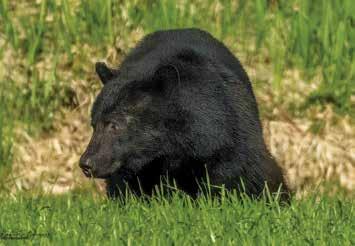
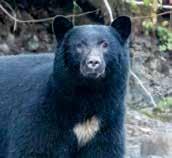
British Columbia is inhabited by black bears, with Vancouver Island Black Bears being slightly larger. You’ll likely spot a black bear when you are in the wilderness areas or even along some well-travelled trails. Keep your pets on a leash and wear bear bells to reduce your chances of accidentally startling the bear or getting between the mother and the cubs. With bears encounters – do not look the bear in the eyes, and back up slowly. Don’t run if the bear charges. Instead hold your ground. It’s often a bluff.
- Gabrielle Lee
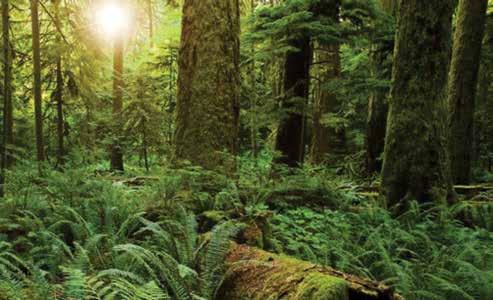


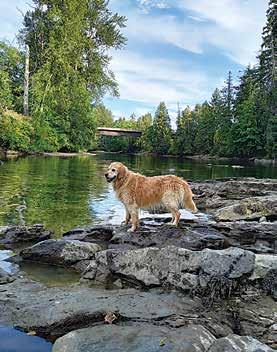
A myriad of outdoor recreation opportunities lie north of Ladysmith. Visit Bush Creek Hatchery, a volunteer-run fish hatchery operated by Ladysmith Sportsmen Club members. Members are usually present on weekends from 9:00 AM to 12:00 PM. Just beyond the hatchery is the trailhead for Christie Falls—a must-see. The trail to the tiered falls is about 2.5km long. In Timberland and Cassidy, there are back roads that offer access to a series of lakes to explore.
There are plenty of opportunities to bring pets along as you adventure through the Central Vancouver Island region.
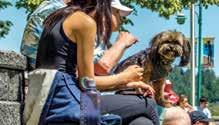
In Ladysmith, Davis Road Dog Park, Holland Creek Trail, Heart Lake & Stocking Lake Loop, and Transfer Beach are open for your dog to roam off-leash. Dogs must be leashed in town but are welcome at some businesses and the Ladysmith Museum.
In Chemainus, head to Fuller Lake Park, Wul’aam’ Echo Park, Municipal Forest Reserve, Chemainus Ball Park (from September 1 to March 15), and Kin Beach Park (from October 1 to June 15) to explore freely with your pet.
In Cedar, Cable Bay Trail is a designated off-leash space that winds through the forest. Take your dog to enjoy this stunning hike down to the oceanfront.
In Saltair, Stocking Creek Park and Saltair Rail with Trail are open to off-leash exploration. Pets must be leashed at other beaches and parks.



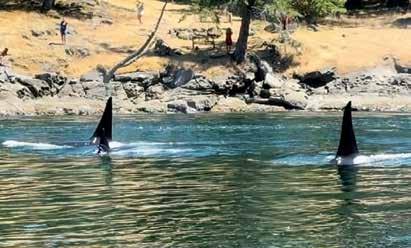
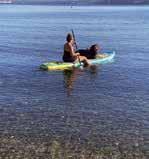
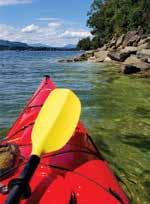
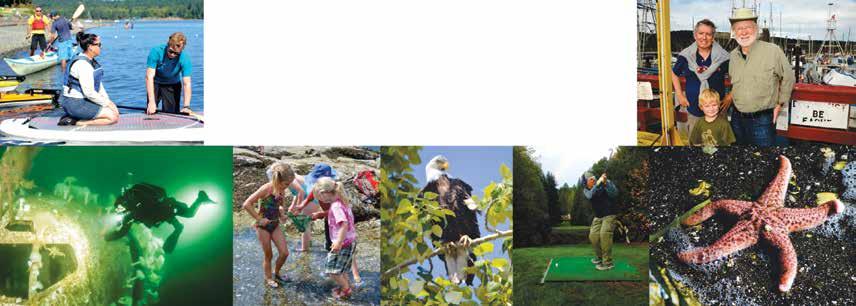
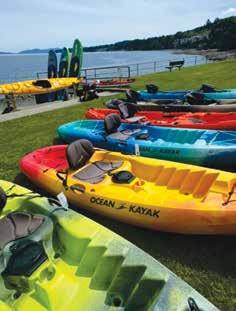
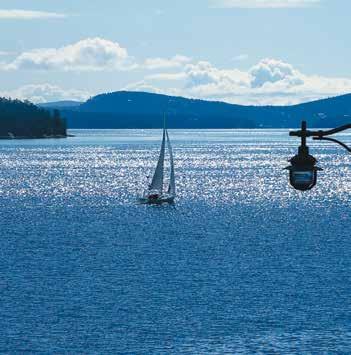
If you enjoy kayaking or paddleboarding, Central Vancouver Island is an ideal place to visit. Large tracts of shoreline and small islands are within easy reach, located only a short paddle away. Ladysmith’s Transfer Beach Park offers the perfect launch site or stopover. Bute Island, situated just across the harbour, is a marine park with a community dock, a walking trail, and several excellent swimming spots. Beyond the inner harbour, Evening Cove and Elliots Beach Park offer a reprieve from the open waters of Stuart Channel. Saltair has an expansive beachline, and Chemainus has plenty of oceanfront and lakes to discover.
Bring your binoculars and watch for harbour seals, sea lions, otters, sea stars, and sea anemones. You might even see a great blue heron or two and eagles soaring in the sky.
You can explore the area further with day trips to the surrounding islands. Catch the ferry at Crofton to Salt Spring Island. Salt Spring is a year-round destination with creative workshops, wellness programs, and live entertainment. Its oceanside pubs, restaurants, and locally produced wine, cider, and cheese are an enticing draw for many. If you head over in the summer, check out the vibrant Saturday Market.
The ferry to Thetis Island leaves from Old Town in Chemainus. This little island is quieter, with rural farm stands and quiet beaches. It’s the perfect place to relax, with beautiful beaches.
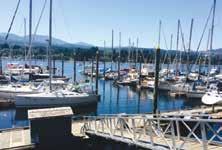
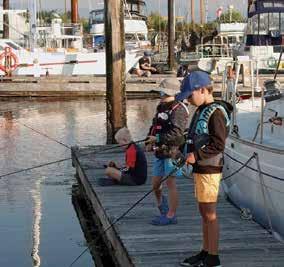
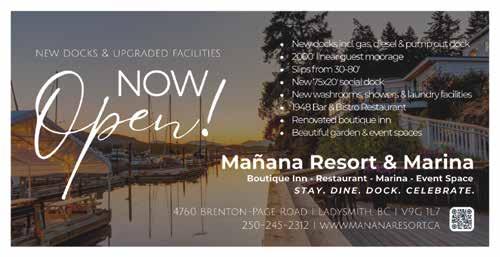
A large boating community is centred around the four marinas in Ladysmith Harbour. Additionally, there is the Boat Harbour Marina
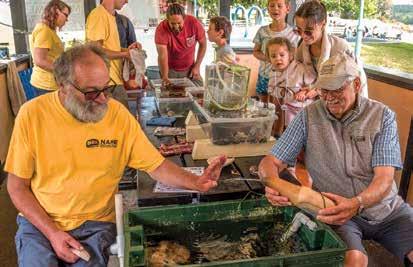
in Cedar and the Government Wharf in Chemainus. Visitor moorage is available at the government wharves and the Mañana Marina which is expanding its capacity and offers a Bistro and accommodation on site. Boat launch ramps are available at Ladysmith Fisherman’s Wharf, Cedar by the Sea, and Chemainus Kin Beach Park, and fuel docks are located on Thetis Island. Telegraph Marina on Thetis Island has visitor boat space and a thriving social dock that includes the Ladysmith Maritime Society’s heritage boats as well as a Sea Life Centre that will entertain and educate young and old.
The volunteer-operated RCM-SAR serves the local boating community and responds to marine and environmental issues.
The Ladysmith Dragon Boat Society is a thriving part of the local community. Boats are on the water regularly during the week, and each of their three teams focuses on either racing, promoting health, or recreation. Additionally, the Dragon Boat Society hosts spring and winter courses with drop-in options when space is available.
The Stz’uminus First Nations are well known for their war canoes. The vessels are hand-carved from cedar and hold a crew of eleven. This tradition is kept alive today with annual races. Crews also participate in the War Canoe Races, hosted by WSÁNEĆ Leadership
Council, from May to August, with competitions taking place across Vancouver Island and the Lower Mainland.
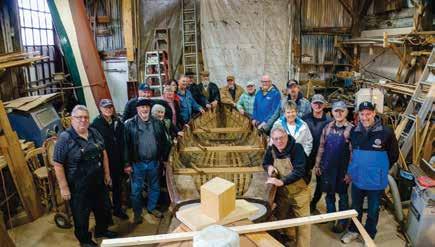
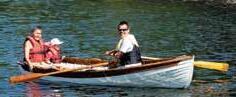
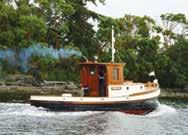
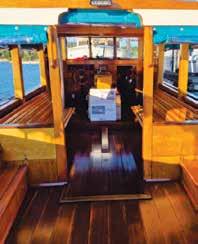
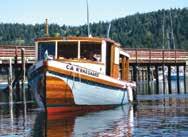
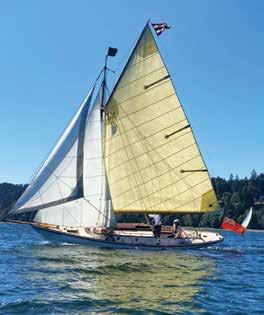
The Ladysmith Maritime Society promotes maritime education and heritage tourism in the area. Its heritage boat restoration program has earned it worldwide
recognition. The society is located in the former Comox Logging & Rail Co.’s “Car Shop” along the waterfront. Stop by and watch as workers bring back to life wooden boats from the time when beauty and craftsmanship were king. You can usually find them there Mondays, Wednesdays and Fridays 9 am to noon. The LMS heritage boat fleet is moored at Thetis Island Marina.
For information on its programs and services, visit www.lmsmarina.ca.
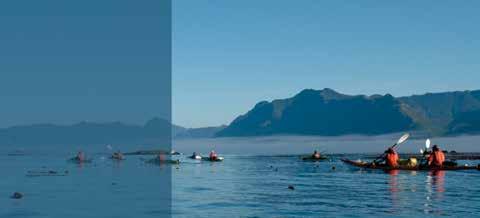
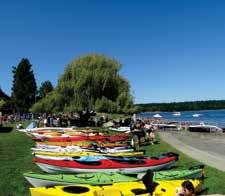
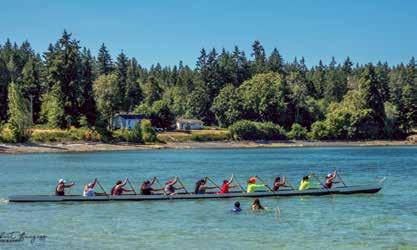
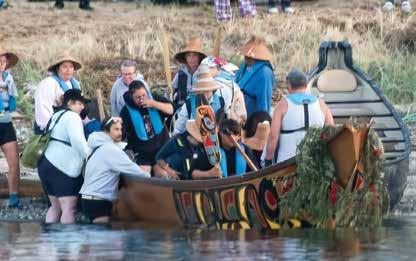
The water is blue, clear, and punctuated only by the rapid pulse of the paddles. It’s summertime; balmy and warm, and the beach is lined with people who have their eyes set on the long, smooth vessels out on the water. Spectators watch and cheer as Coast Salish teams race across the sea in canoes, stroke by stroke.
The canoes that these paddlers sit in are an integral part of both Stz’uminus culture and greater Coast Salish tradition. While no longer a primary mode of transportation, carving and paddling are enmeshed with the Stz’uminus art of storytelling, and both practices help to keep their culture alive.
Former Stz’uminus Chief, Roxanne Harris, Whul’qul’latza’aat, has been paddling since she was a small child. She’s now passed the sport on to her children. “Getting them involved when they’re young, so they grow a passion for racing is important. Passing on… traditional teachings to our children is very important. That’s not to say that they will be paddlers for life…but they can say they tried it.”
Her father, Elder George Harris, Wholwolet’za, has been paddling “practically [since] the day [he] was born.” He recalls his parents reminding him to stay close to shore when, as a boy, he’d crawl into their boat. The large, red cedar vessel was interwoven through Harris’ childhood; his family would paddle to fetch drinking water, travel, and wash clothes.
Historically, canoes were an important part of the Stz’uminus First Nation’s way of life. They came in all shapes and sizes, each with their own purpose, as simple transportation vessels, larger dugouts for voyaging across to the mainland, and sleeker vessels designed for swift races. Before modern developments in trans-
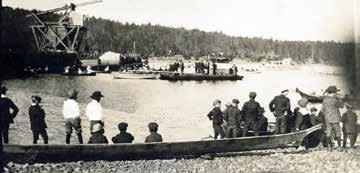
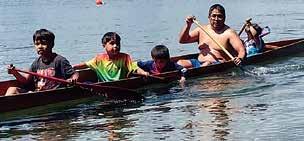
(Clockwise) Canoe races at Kulleet Bay.
Photo: Bob Burgess; Canoe races in Oyster Harbour, 1912.
Photo: Ladysmith Archives
Adam Seymour with family. Photo: Margaret Seymour
portation, the every-day canoe was practical, easy to maneuver, and sturdy enough to haul firewood or drinking water. Today, Stz’uminus primarily uses canoes for two reasons: the War Canoe races, and Tribal Journeys.
War canoe racing is a popular sport and is one way that the Stz’uminus Nation keeps their vibrant culture alive. The races are divided into categories of single, double, six-person, and elevenperson canoes. Athletes can participate from as young as sevenyears-old. These races, particularly the larger canoes, are known for their speed and are exciting to watch.
Athletes begin training in March and follow a daily regime with a combination of running, gym workouts, and paddling to build endurance. In the summer, races happen across the province and into Washington State. Teams from Stz’uminus will travel for races but Kulleet Bay is home to them.
Margaret Seymour, Tsul’tsi’miye’, is a prominent member of the Stz’uminus Nation. She completed a Master of Arts at Simon Fraser University, where she wrote her thesis, Hul’q’umi’num’hwstey: Stories of Appreciation as a Paddler, on the Intersection between Sport and the Hul’q’umi’num’ Language. “Paddling was never just







a sport—it was a classroom of sacred teachings,” Seymour states. “It taught us discipline, unity, respect, and how to carry our bodies and spirits in a good way. Our Hul’q’umi’num’ language was meant to live inside that work: in the strokes, in the encouragement, in the way we moved as one.”
Seymour notes that, today, she rarely hears her community’s language being spoken on the beach or during races. Indeed, the Hul’q’umi’num’ language family is endangered, with the First People’s Map of BC records indicating that only 2.6% of the Stz’uminus Nation speaks the language fluently. That number grows to 34% when considering learners and semi speakers.
As a girl, Seymour was inspired to learn Hul’q’umi’num’ fluently as her paddle coaches instructed in it. This practice, she notes, has failed to continue today. “The deeper spiritual connection between Hul’q’umi’num’ and paddling—that sacred harmony of breath, water, stroke, and language—has weakened. It hurts to witness that loss, because our canoes once carried our language as strongly as they carried our bodies.”
Today, there are efforts at community and university levels to encourage language development. In the fall of 2025, the University of Victoria with the Stz’uminus Education Society launched a language revitalization certificate program. The program includes a diploma followed by a Bachelor of Education in Indigenous language in Hul’q’umi’num’. It is designed to encourage more to learn the language and to facilitate an inclusive education system in the province. The first semester of the program included seventeen students from the Stz’uminus Nation.
Seymour has watched the pace of war canoe paddling shift over the decades. “[The sport] once held a sacred and respected role in our community. It was strict, disciplined, and full of purpose,” she explains. “[Today], many struggle to make the sacrifices required. Healing has not begun for many of our people, and that shows up on the water.”
Still, Seymour continues to look toward the future. “I still believe in our people. I believe our youth can rise again. I believe the canoe can still bring healing and unity—but only if we return to our sacred teachings: respect, humility, discipline, commitment, and walking in a good way.”
Inspired by her late brother, grandfather, and sister, Seymour has helped organize the Kulleet Bay Races since 2012 as a means of keeping the tradition of padding alive. Though the races have not been held since the COVID-19 pandemic, Seymour hopes for their return and continues to appreciate their impact. “They live in how I raise my children, how I walk in my culture, and how I honour my ancestors.”
In July of 2025, canoe families from as far north as Haida Gwaii traveled hundreds of kilometers to reach the Lower Elwha Klallam Tribe in Washington State. Roxanne Harris spoke about the experience saying, “you’re collecting nations as you come down the coast…The group gets larger and larger and larger until you hit the location and then everybody’s together.”
Tribal Journeys is an annual gathering of the Coast Salish Nations who voyage across the Salish Sea in massive dugout canoes to meet, share protocols, and feast together with a potlatch celebration.
A voyage of this nature is dangerous and requires a different skill set from racing. Roxanne paddled from Stz’uminus to Cowichan and then volunteered with the support crew. “There’s a lot of preparation that would have to go into that…You’re on the water all day and you’re constantly paddling…They have boats that follow the canoes and you’re able to switch people out. But even still, you could be out there paddling for four hours straight.”
But despite the long, hard, days on the water, it’s worth it to experience the joy of sharing culture between nations. “It’s the biggest healing journey that you could be on…You get to showcase your nation’s songs and dances at the protocol. You get to meet people there that you wouldn’t normally meet when you’re at home.” This showcase of culture is especially important for the younger generations. “It’s good for our kids to see that because I think they sometimes don’t see the bigger world and that there are so many opportunities out there.”
In 2023, world-renowned Coast Salish carver, Luke Marston, Ts’uts’umutlhw, completed a dugout canoe for the NIȽ TU,O Kids in Care program so that those kids could participate in Tribal Journeys. “That one had a big raven on the front and a wolf on the back. And the reason was because it talks about their flood story.” The idea being that the children would be carried safely over the waves.
Incorporating these stories and their symbolism is part of the creative process for Luke. “I refer to the four different worlds. There’s this world, the sky kingdom, the undersea kingdom and the spirit world. There are different supernatural creatures that come from those places that are part of this world.” Growing up, side-by-side with his brother John, he received the perfect balance of practical skills and a reverence for the stories that shaped him into the artist he is today.
When beginning a project, Luke has to bring his heart and mind into a good posture before he can begin carving. It is for this reason that the late Coast Salish artist Simon Charlie invited Luke and John to observe long before he taught them how to hold a knife. “[Cedar is] a living thing and it can hear you and feel you. When you’re working on it, you’re supposed to be, ‘Uy shqwaluwun, which is a really good feeling, ‘cause the cedar feels you. Especially when you’re working on a canoe. You’re putting all your energy and your thoughts into the canoe.”
Luke’s work has been displayed in exhibits located in Canada, the United States, Japan, and Portugal. He was also commissioned by the Canadian Department of Indian Affairs in 2010 to create the Medicine Box to honour survivors of Canadian residential schools. His artistic mediums include stone and metal in addition to the iconic cedar pieces.
The preservation of Coast Salish artwork, particularly wood carvings, like Totem Poles, is an issue Luke feels strongly about. “Our art
form lends really well to bronze and bronze is a good medium for our art form because it’s gonna last longer. It’s lower maintenance; and also when you look at how many trees are left, old growth trees, I feel like they should be turned into inside pieces so that they’ll last forever.”
Indeed, through the creation and sharing of Coast Salish art, carvers are able to communicate meaningful stories about their history.
Renowned carver John Marston, Qap’u’luq, has been carving for a lifetime. His work is permanently displayed at the Museum of Anthropology in Vancouver, the Nanaimo and Vancouver airports, and the National Gallery of Canada in Ottawa. His art can also be spotted locally; Marston created the pair of ‘Welcome to Ladysmith’ signs located at the town’s boundaries, an eagle for the foyer of the Ladysmith Secondary, and a canoe for Chemanius Secondary.
“Both my parents were carvers and I learned [the art] through them, my brother, and another artist, Elder Simon Charlie.” Marston explains. “After I spent a few years in Victoria working at the [Royal BC] Museum, I began to realize [art] [ was] the direction my life was going to take.” Carving is an intricate and often complex process. “Sometimes the work is planned out down to the very last detail, and sometimes the work evolves and changes over time,” Marston states. Many of his projects take upwards of a year to complete.
Marston takes pride in being able to work in the Coast Salish art form and recognizes the importance of having his pieces displayed throughout the area. “I think creating public artwork and putting it in our modern cities…helps non-First Nations [people] understand the land that they live on. I think [public artwork] is a really important part of looking at our past and working towards a better future.”
Ultimately, Marston hopes that his work inspires residents to “explore our history a little bit, [to] learn about the traditional areas within the region.” His carvings exist as a powerful and beautiful reminder of the multitude of sacred spaces within the area.
- Francesca Pacchiano and Gabrielle Lee






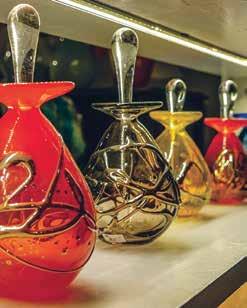
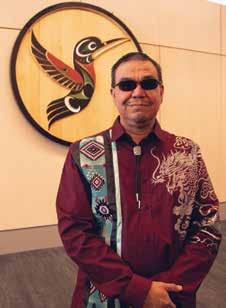
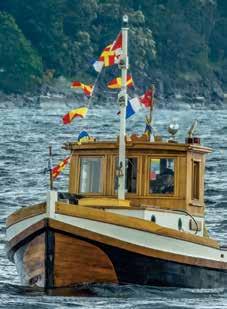
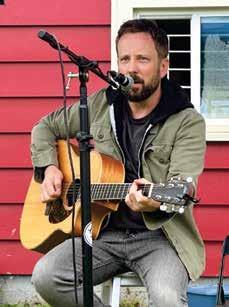
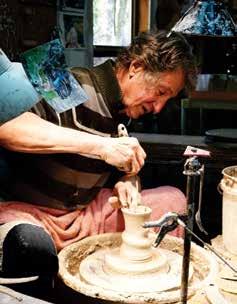
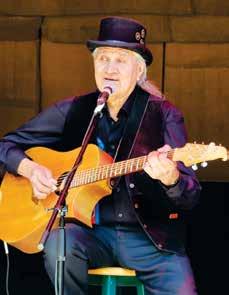
This area is home to many performers, artisans and internationally acclaimed artists, including musicians David Gogo, Ryan McMahon and Nate Harris. Live music is appreciated here, with small venues to outdoor summer festivals hosting local and international performers. Stz’uminus carvers, like John and Luke Marston, are nationally and internationally recognized for their beautiful workmanship and the cultural significance of keeping traditional cedar carving alive.
The Chemainus Valley Cultural Arts Society is an active group that hosts and promotes several musical events, including a year-round open mic. Another open Mic is held monthly on the last Saturday at Ladysmith United Church. Rainforest Arts features local artists’ work and operates under the CVCAS umbrella. The Chemainus Sketch Group has a long history and a large membership. The Ladysmith Arts Council operates a gallery on the corner of High Street and First Avenue. The group offers workshops and organizes events, including Arts on the Avenue, and a popular street festival on the last Sunday of August.
Go Live with Performing Arts
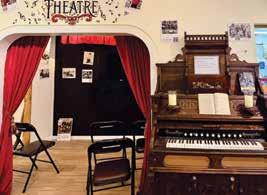
Ladysmith Little Theatre offers great entertainment. They are in a converted schoolhouse built in 1912. Along with their play season, they offer workshops and participation in an improv group. For
more information, visit www.ladysmiththeatre.com. The Ladysmith Musical Arts group also operates out of here.
The Yellow Point Drama Group is the second-oldest in the province. Formed in 1953, the group has won numerous awards and performs at the historic Cedar Community Hall.
The Chemainus Theatre Festival offers professional plays, a summer program, a restaurant, a gallery and a gift shop. They are an economic driver for Chemainus, proving the business value of art. The non-profit society offers uplifting performances and is known for its musicals.
The Mid-Island has an eons-long history of Coast Salish people, whose way of life centred around the coast and forests with their abundant natural resources. The area was settled by Europeans seeking new opportunities afforded by black gold (coal) and tall timbers. Relics of the past are still evident, especially along the waterfront. The forestry industry remains important, although the economic base has broadened.
While this area has enjoyed considerable growth, it has retained its small-town charm and community warmth.
Take a stroll along award-winning First Avenue in Ladysmith and enjoy what the stores and restaurants offer and the heritage buildings they are located in. As you walk downtown, look at the industrial artifacts on display. Refer to the online Community Heritage Register and the Heritage App for individual histories.
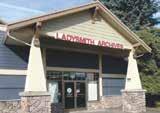
Visit the Ladysmith Museum and Archives for more information

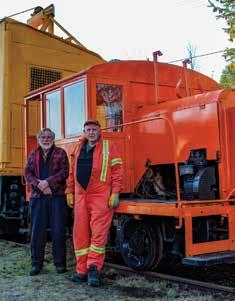
on the community and its formation. The museum’s featured exhibit is The Beat Goes On: Ladysmith’s Music and History.
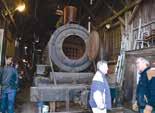
Head down to the harbour and visit Transfer Beach Park, once the center of a coal port with extensive wharves, shrieking steam engines and clattering coal. Today, it is a haven of tranquility, with beautiful vistas, a playground and an open-air amphitheatre. Stroll the paths along Oyster Bay Drive and visit the Ladysmith Maritime Society’s Boat restoration shed, where volunteers are restoring beautiful heritage boats. The building, known as the Car Shop, is part of the group of buildings that comprised the Comox Logging
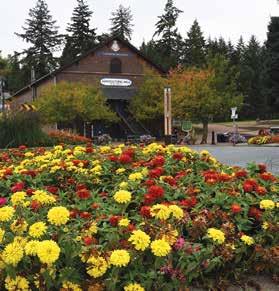


& Rail Co. Depot. You can still see the remains of the industrial artifacts here, including its railway tracks, outer buildings, and the beautiful Baldwin steam locomotive, which is over 100 years old.
A stroll through Chemainus offers a different experience. Here, murals bring the town’s history to life. The original downtown, known as Old Town, is where the city’s commercial heart is located. Waterwheel Park was once part of the grounds

of the mill manager’s house, located by the statue of HR MacMillan. The present waterwheel is a replica of the original that powered the early mills. The waterwheel and the park’s first phase were constructed in 1967 but has been expanded.
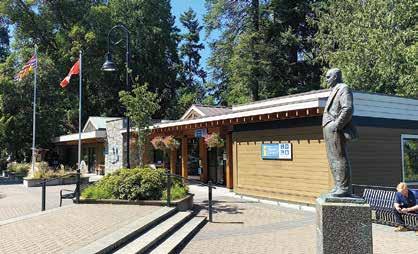
The park has a bandstand where concerts take place in the summer. Adjacent to the park are the Public Washrooms and the Chemainus Museum and Visitor Centre. Operated by the Chemainus Valley Historical Society, the museum is a wonderful place to learn about the area’s history. Outside, you will find a view of the Gulf Islands and the busy harbour. This is the site of the first and present sawmill.
Mining past relics
A large number of mines operated in the Mid-Island area starting in 1897. A mustvisit is the Modern Colliery Historic Park, home to the Modern Mine. Its tipple and headframe are among the only two surviving concrete headframes in the world. Take time to walk the trails here. The interpretive signs help to bring to life the ruins of the buildings. A miners’ memorial is located there. Picnic tables and a walk to the Nanaimo River is a pleasant way to spend a few hours.




The Coast Salish Peoples encompass many First Nations with land stretching from Vancouver Island to BC’s mainland coast and into the United States. The area from south Nanaimo to Chemainus is home to several First Nations people.
The Snuneymuxw, Stz’uminus, Lyackson Mustimuhw, Penelakut Tribe, and Halalt First Nation have called Vancouver Island, its surrounding islands and parts of the lower mainland home for thousands of years. They speak a common Coast Salish language, Hul’q’umi’num, and share cultural values such as storytelling, music and the respectful use of the natural world.
The Stz’uminus First Nation had villages at Thuq’min (Shell Beach) and at nearby Q’ul’its’ (Kulleet Bay), where they would fish and dig for clams. The people paddled dugout canoes across the Salish Sea to visit relatives and fish the salmon runs on the Fraser River.
Music
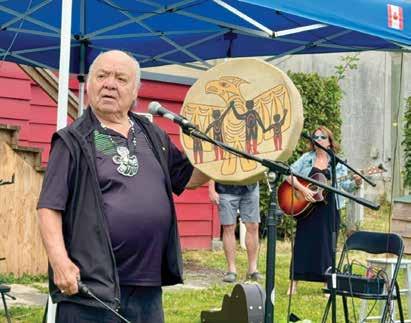
Music is an integral part of Stz’uminus culture. Singing and chanting are accompanied by hand drumming on a deer hide drum. The songs reflect the natural and spiritual worlds, celebrate life events and connections to their way of life. Some, such as the canoe songs, served to introduce travellers as they entered the territories of other First Nations. It was a sign of peace and friendship, not war. Songs in Hul’quimi’num continue to be composed today, a growing collection that includes the Stz’uminus National Anthem, which Elder George Harris wrote.
The Red Cedar Canoe
Traditionally, travel by sea was only possible with dugout canoes. Carved from old-growth cedar trees, these canoes could transport more than 50 people and were used to cross the channel to the mainland and parts of northwest America. Master carvers Manny and Elmer Sampson carved a red cedar canoe that can be seen at Transfer Beach. The canoe was commissioned for the Canada 150 celebrations in 2017. Located on the historic site of a First Nations fishing village, the canoe is significant in representing the history of the Stz’uminus people and the land.
A Dark
When European colonists came to Canada, they moved to assimilate Indigenous Peoples with settler society through the forcible removal of children from their communities. The children of the Stz’uminus First Nation, some as young as four years old, were taken to various residential schools, the nearest on Penelakut Island (then called Kuper Island). The Kuper Island Residential School operated from 1889 to 1975. The school building was demolished
in the 1980s to expunge painful memories.
Today, Penelakut Island is closed to visitors without invitation. The Penelakut Tribe has a vibrant local economy, with the traditional language and cultural customs being celebrated and practiced.
Red
Red Dress Day, on May 5th, is a day to raise awareness for the missing and murdered Indigenous women and girls (MMIWG), and to encourage learning and action to end it. Red dresses are hung on the trees along the Trans-Canada Highway ahead of May 5.
Indigenous Peoples’ Day
June 21st has been a day of celebration for Indigenous Peoples because of the summer solstice, the longest day of the year. The day was first marked in 1996 by the federal government as a day of celebration of the heritage and cultures of First Nations in Canada. Celebrations are marked by an opening Hul’q’umi’num prayer, singing, dancing and other cultural events.
Truth and Reconciliation
Orange Shirt Day, September 30th, is a statutory holiday to honour the Survivors of Canadian residential school institutions and those who never made it home. It’s a day to pause and reflect on the intergenerational impacts of the residential schools. The Orange Shirt Day is an Indigenous-led grassroots organization that raises awareness on the effects of residential schools and promotes the belief that “Every Child Matters.”
- Francesca Pacchiano


BC Heritage Week: February 16-22, 2026. Features events at the Ladysmith Museum and the annual Ladysmith Heritage Awards.
Ladysmith SailPast: May 9, 2026. The Ladysmith Yacht Club sponsors SailPast. Boat parade and activities at Transfer Beach Park.
Cedar Farmers Market: Starts Mother’s Day and closes at the end of October. The market runs Sundays from 10am-2pm at Woodbank School in Cedar.
Transfer Beach Park Food Truck Concession: Find your favourite vendors or discover tasty treats from May until September.
Rotary Garden Tour: Discover the hidden gems that are Ladysmith’s private gardens. Tickets go on sale in April for the May event.
Pride Celebration: Hosted by Ladysmith Pride Society, experience the town in a wash of colour and celebration.
National Indigenous Peoples Day: June 21, 2026.
Canada Day: July 1, 2026. Events throughout the communities. Concerts in the Park: Runs July to end of August. Sunday at 6:00 PM at Transfer Beach Amphitheatre.
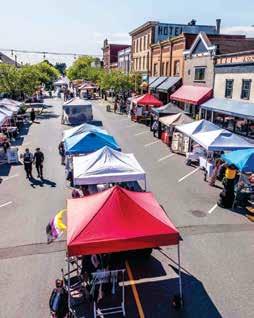
Chemainus Giant Street Market: This annual market features over 150 vendors on Willow Street.
Brits on the Beach: Vintage car show at Transfer Beach Park.


Chemainus Valley Cultural Arts Festival: Runs from July to August. Live music, events, and festivals, visit cvcas.ca.
Tribal Journeys: This annual convergence of Coast Salish Nations happens in late July.
Ladysmith Days: August 1 and 2, 2026. Offers fun for everyone, including live music and entertainment, vendors, food trucks, and fireworks at Transfer Beach.
2026 Cowichan Craft Beer & Food Fest: August 15, 2026. Takes place at Doc Lewis Park. For more information, visit craftbeerandfoodfest.com.
Ladysmith Show and Shine: August 15, 2026. First Avenue in Ladysmith is lined with hundreds of models of classic cars and motorcycles.
Arts on the Avenue Festival: Occurs in late August. Ladysmith festival of art, entertainment, and fun.
Oktobertfest: This celebration of ethnic traditions happens in mid-September. Delicious food, local beers, and cultural events.
Chemainus Fall Fest: Chili cook offs, pie contests, and prizes for the best costumes, at Chemainus Waterwheel Park.
Ladysmith Festival of Lights: The third Thursday of November is Light Up Night. The lights can be seen until January.
Country Christmas Self-Guided Tour: Occurs in late November. Visit and meet a variety of artists and local farmers. Details can be found at cyartisans.com.
Old Time Christmas: Occurs in early December. Ladysmith’s downtown features extended shopping hours, family activities, contests, live music, and more.