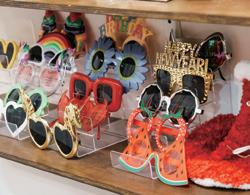
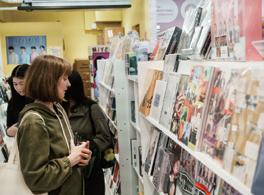
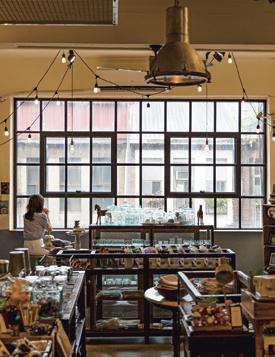
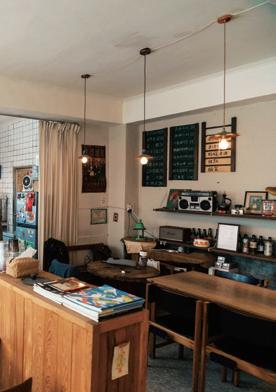
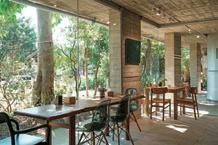
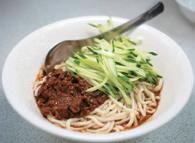
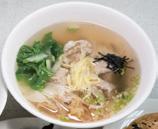
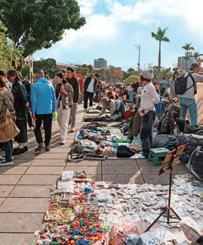
Rongjin Gorgeous Time 167, Jinhua St., Taipei City (02) 2321-8896
台北市立動物園
Taipei Zoo
30, Sec.2, Xinguang Rd., Taipei City (02) 2938-2300 ext .630
台北表演藝術中心
Taipei Performing Arts Center
1, Jiantan Rd., Taipei City (02) 7756-3888
台北當代藝術館
Museum of Contemporary Art (MoCA), Taipei 39 , Changan W. Rd., Taipei City (02) 2552-3721
台北流行音樂中心
Taipei Music Center
99, Sec. 8, Civic Blvd., Taipei City (02) 2788-6620
寶藏巖國際藝術村
Treasure Hill Artist Village
2 , Aly. 14, Ln. 230, Sec. 3, Tingzhou Rd., Taipei City (02) 2364-5313
新富町文化市場
U-mkt (Xinfu Market)
70, Sansui St., Taipei City (02) 2308-1092
美國在台協會
American Institute in Taiwan
100 , Jinhu Rd., Taipei City (02) 2162-2000
台北美國學校
Taipei American School 800 , Sec. 6 , Zhongshan N. Rd., Taipei City (02) 2873-9900
國語日報語文中心
Mandarin Daily News (Language Center)
2F, 2, Fuzhou St., Taipei City (02) 2341-8821
交通部觀光署旅遊服務中心
Travel Service Center, Tourism Administration, MOTC 240 , Dunhua N. Rd., Taipei City (02) 2717-3737
台北市政府秘書處市民服務組 Information and Assistance Division, Secretariat, Taipei City Government 1 , City Hall Rd., Taipei City ( 02 ) 2720 - 8889 / 1999 ext .1011
台北之家
Taipei Film House
18 , Sec. 2 , Zhongshan N. Rd., Taipei City (02) 2511-7786
台北記憶倉庫
Taipei Info Hub 265, Sec. 1, Zhongxiao W. Rd., Taipei City (02) 2371-4597
松山文創園區
Songshan Cultural and Creative Park
133 , Guangfu S. Rd., Taipei City (02) 2765-1388
華山 1914 文化創意產業園區
Huashan 1914 Creative Park 1 , Sec. 1 , Bade Rd., Taipei City (02) 2358-1914
國立台灣博物館
National Taiwan Museum 2 , Xiangyang Rd., Taipei City (02) 2382-2566
誠品書店台大店、西門店
eslite Bookstore NTU, Ximen
金石堂書店
Kingstone Bookstore
台北市立圖書館
Taipei Public Library (Main & Branches)
台北市各親子館
Parent-child Centers in Taipei
台北市旅遊服務中心
Visitor Information Centers in Taipei
新北捷運環狀線
台北捷運市政府站、忠孝復興站、 台北車站、西門站、民權西路站、 中正紀念堂站 All Stations on Circular Line of New Taipei Metro
Taipei City Hall, Zhongxiao Fuxing, Taipei Main Station, Ximen, Minquan W. Rd. and C.K.S. Memorial Hall of Taipei Metro
Editor’s Note
With spring’s arrival, oral blooms are now busily repainting the landscape of this youthful city. One Taipei community with an unquenchable thirst for novelty is our young Gen Z population, and in this issue, you’ll meet them in our Cover Story section. International zoomers, use this as your primer for playing the city. Non-Zoomers, you’ll soon be learning that the things they’ re getting up to will be mighty fun for you too, and a great way to get to know Taipei.
Topics crucial to the Taipei Z-world covered in our main feature include stan culture, merch shopping, dance challenges, photo booths, café hopping, and “Grandmacore” crafts. In a second feature article, you’ll go deep into the Ximending neighborhood, Taipei’ s “ youth subculture playground,” checking out the capsule toys, manga stores, photo-worthy spots, and other irresistible attractions.
For a change of pace, spend some time in the natural world in a quartet of files. In our third feature file, the theme is “city runs,” rolling out the city ’s premier jogging routes, wellmaintained riverside pathways providing scenic vistas.
Other items on your upcoming Taipei experience menu: the East District’s posh shopping and entertainment, and the mountain-backdrop Tianmu Community ’s unique old-new mix of cultural hotspots, in two A Day in Taipei tours.
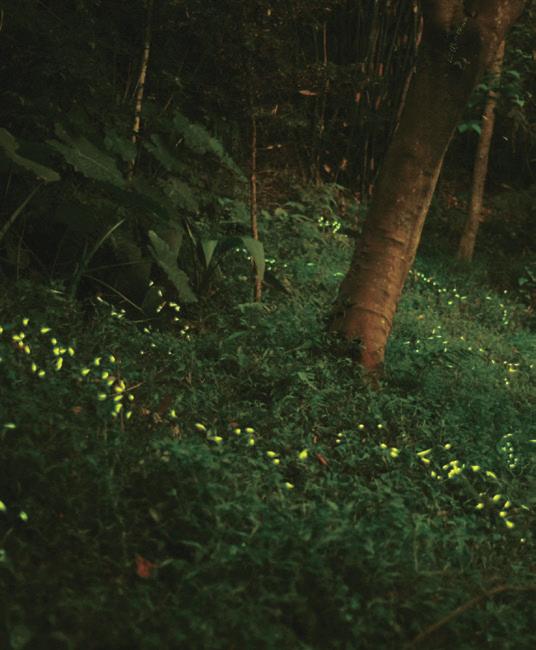
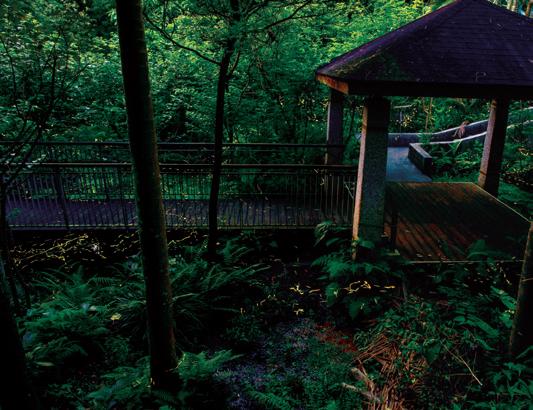
In our Out in Nature duo, ply the hilly Neihu District’ s “sweetest trails” to discover the pristine environment along the Dagou Stream, the panoramic downtown views from the Dragon Boat Rock, and strawberry picking farms in the Baishihu area. Then, learn about butter ies you can spot in Neihu’s Jiannan Butter y Garden, namely the blue tiger, Indian fritillary, and paper kite. Also, learn about beginner-friendly flower art workshops in DIY Fun; and – for your tummy –picnic food shopping and leading Muslim restaurants in two Fine Food reports. Finally, in Where to…, we shine a light on another side of Taipei’ s “nightlife” – the best spots to spot re ies. Yes, this big city has them aplenty!
May your time with us this spring bring you the most fragrant and aromatic memories. Enjoy!
Please complete this online questionnaire to help us improve our magazine. Thank you!
Editors: Rick Charette, Johannes Twellmann, Anna Li
Contributors: Han Cheung, Rick Charette, Ami Barnes, James Baron, Jenna Lynn Cody
Design: Ian Tsai, Eve Chang
TAIPEI Subscription Services, Postal Wire Transfer: 4 Issues
Beneficiary Account No.: 16630048
Beneficiary Name: Department of Information and Tourism, Taipei City Government
Domestic Regular Mail
NT$120
Hong Kong/Macau Regular Air Mail
NT$360
Asia/Pacific Region Regular Air Mail
NT$440
NT$600
Europe/US/Africa Regular Air Mail
Online reading: www.travel.taipei/en > Media > TAIPEI
Department of Information and Tourism, Taipei City Government
All rights reserved.
Reproduction in any form without written permission is prohibited.
中華郵政台北雜字 第2372號執照登記為雜誌交寄
Price: NT$30
This magazine was printed with environmentally friendly soy ink. We hope you enjoy reading this issue of TAIPEI . If you have any suggestions, please do not hesitate to contact us.
SPRING 2026 NO. 43
COVER STORY
TAIPEI FOR YOUNG PEOPLE
Gen Z Travelers Welcome!
Why Taipei is a Truly Stimulating City for Young People
Ximending: A Youth Subculture Playground
Capsule Toys, Manga Stores, and a Cornucopia of Photo-worthy Spots
You Better Run, Run, Run
Taipei’s Best Jogging Routes
A DAY IN TAIPEI
The Fashionable East District
Discover Culture, Style, and Flavor Along Zhongxiao East Road
The Mountain-Backed Tianmu Community
An Easy Day Excursion from Central Taipei
OUT IN NATURE
Dragon Boat Rock and Strawberry Season
Hiking Neihu’s Sweetest Trails
Untamed Taipei
Encounters with Extraordinary Wildlife in the City
DIY FUN
From Courtroom to Chrysanthemums
Getting Fabulously Floral at Legal Girl’s Flower Boutique
FINE FOOD
Taipei’s Top Picnic Picks
Where to Fill Up Your Hamper for Eating Outdoors
Halal Havens
Authentic Flavors from the Muslim World
WHERE
TO…
Where to See Fireflies
#01
Seasonal Festivals and Events
Taipei Floral Picnic
台北花伴野餐
The Taipei Floral Picnic encourages everyone to enjoy a meal outdoors during the blooming season at Daan Park. This year’s event features three themed picnic zones, offering a trendy Coffee Raves party with live music, rejuvenating “Grass Therapy Exercise” sessions, and hands-on craft experiences. Families can enjoy dress-up activities designed for both children and pets. A special highlight is the collaboration with Pokémon GO, allowing visitors to experience exclusive in-game floral content, participate in Pikachu and Eevee Meet & Greet, collect cute giveaways, and snap photos at themed installations. Specialty foods and drinks are available at stalls set up along the park’s main paths. Set amid blooming flowers and towering trees, this two-day festival enables you to experience the leisurely romance of outdoor picnicking in spring right in the city’s heart.
Daan Park
大安森林公園
March 28-29
2026floralpicnic.taipei
#02
Zhuzihu Calla Lily & Hydrangea Festival
竹子湖海芋季及繡球花季
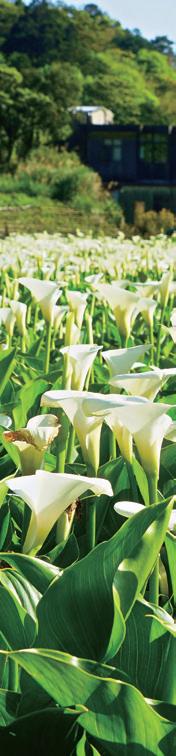
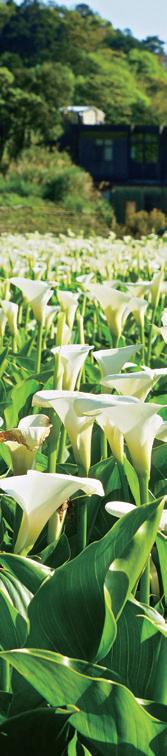
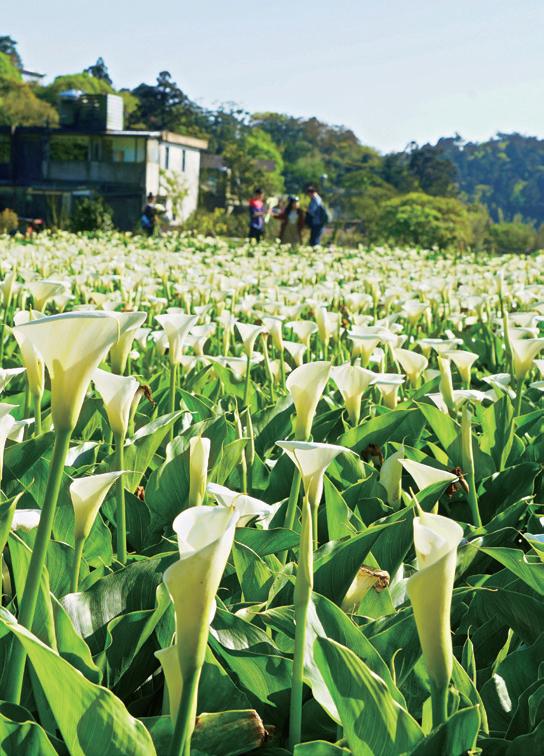
The cool and humid climate of the Zhuzihu area in Yangmingshan National Park creates ideal conditions for cultivating calla lilies and hydrangeas; about 90% of Taiwan’s calla lilies are produced here. The theme “Floral Symphony” has been adopted for the 2026 festival, envisioning flower blooms as natural melodies harmonizing with mountain mists and gentle breezes. During the calla lily season (mid-March to mid-April) and hydrangea season (mid-May to mid-June), visitors can wander through picturesque flower fields, enjoy hands-on picking experiences, savor fresh locally grown vegetables, and join guided ecological and cultural tours. The festival features landscape-art installations created by local farms, photo-printing stations, a temporary post office with commemorative stamps, and weekend concerts. Special shuttlebus services connecting Zhuzihu with several MRT stations operate throughout the festival period.
Zhuzihu, Yangmingshan National Park
陽明山竹子湖
March-June
www.flowersfestival.taipei
#03
Eid al-Fitr in Taipei
台北開齋節歡慶活動
Each year, Taipei hosts an Eid al-Fitr celebration at Daan Park, marking the joyful conclusion of Ramadan when Muslims reunite with loved ones. The festival draws tens of thousands of attendees, including members of Taipei’s Muslim community and the general public. The event features multicultural stage performances, a Halal Bazaar with international cuisine and cultural items, and interactive activities like workshops on Islamic art and traditions, including Arabic calligraphy and Turkish paper marbling. Visitors come to enjoy music and dance (featuring international performers), singing themselves, sampling global dishes, and browsing handcrafted merchandise.
Daan Park
大安森林公園 March 22 bit.ly/2026-EidalFitr-in-Taipei
#04 Beitou Summer Festival
北投夏日祭り
The historic hot-spring district of Beitou comes alive during this vibrant festival, celebrating the district’s deep ties to Japanese culture rooted in the Japanese-era hot spring industry. Serving as a cultural bridge, the event honors traditions that have become central to Beitou’s identity. Inspired by the Japanese custom of displaying carp streamers (koinobori ) to wish students academic success, more than a thousand colorful streamers will decorate the area around MRT Xinbeitou Station, creating a festive Japanese atmosphere. The festival also highlights Beitou’s musical heritage and traditional restaurant culture, featuring banquet-style dining, concerts, singing competitions, artisan markets, cultural walking tours, and family picnics.
MRT Xinbeitou Station and surrounding area
新北投捷運站及周邊地區 May 29-June 21
#05
Taipei Water Dance Festival
台北水舞嘉年華
Being held for the third time this year, the Taipei Water Dance Festival is a spectacular riverside event taking place at Xikou Wharf and Rainbow Bridge in Songshan District. This unique festival features mesmerizing water-dance shows along the Keelung River, combining water-screen projections, laser lights, and music. Each evening dazzling show unfolds, featuring a colorful water curtain cascading from the bridge, fountain displays on a platform on the river, and laser lights illuminating the sky. For a special vantage point, boat tours are available that take in each show. On opening day and during weekends and holidays, special themed activities take place near the bridge. The festival pairs perfectly with a visit to the popular nearby Raohe Street Night Market and the majestic Songshan Ciyou Temple, which is beautifully illuminated in the evening.
Xikou Wharf and Rainbow Bridge
錫口碼頭及彩虹橋
June 13-27
Gen Z Travelers Welcome!
Why Taipei is a Truly Stimulating City for Young People
Taipei City is a top regional destination for digital-savvy young travelers, and its potently wide blend of the cultural pursuits Zoomers find irresistible has put it on the radar for experience-hunters from lands further afield as well.
High-energy urban hubs, niche subcultures, “slow living” hipster enclaves, quirky interactive experiences… the Gen Z traveler desires curated aesthetic experiences to be shared on social media. The focus is on candid, nostalgic, or “real” imperfect moments, bold visuals (neon, 3D art, retro), and local cultural immersion (food, festivals).
What draws Gen Z travelers to Taipei? Four distinctive cultural pursuits have emerged as defining experiences: stan culture – from concert venues to idol merchandise shops and random play dance gatherings; immersive photo experiences at retro-styled booths and atmospheric studios; café hopping through heritage neighborhoods in search of Instagram-worthy spaces serving
Taiwanese-fusion drinks; and hands-on crafts offering therapeutic respite from digital life. These activities reflect Gen Z’s desire for parasocial connection, visual storytelling, nostalgic aesthetics, and meaningful creative expression.
Taipei delivers on all fronts, with worldclass performance venues like the Taipei Dome and Taipei Arena drawing international idols, atmospheric neighborhoods like Dadaocheng and Wanhua housing vintage photo studios and heritage cafés, and specialized workshops offering everything from Taiwanese pastry-making to personalized perfume creation. The city’s compact, metro-connected layout makes it easy to dive deep into each experience, while its blend of Japanese-era heritage, Korean pop culture influence, and distinctive Taiwanese character creates a unique East Asian cultural crossroads.
And now, a more detailed dive into specific spots and experiences where Gen Z is making its mark around the city:
TEXT | RICK CHARETTE PHOTOS | VISION
Stan Culture
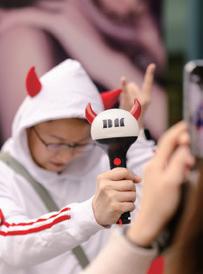
For Gen Z, stan culture centers on “idols” – carefully curated figures with specific aesthetic styles and strict image management – rather than traditional celebrities. What distinguishes this culture is interaction through social media engagement and offline events like concerts and fan meetings. Taipei’s venues are ideally suited to support these interactive fan experiences.
Stargazing Venues
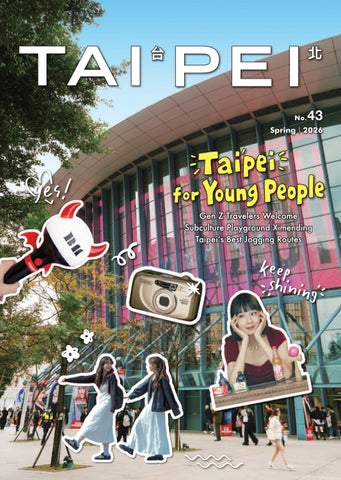
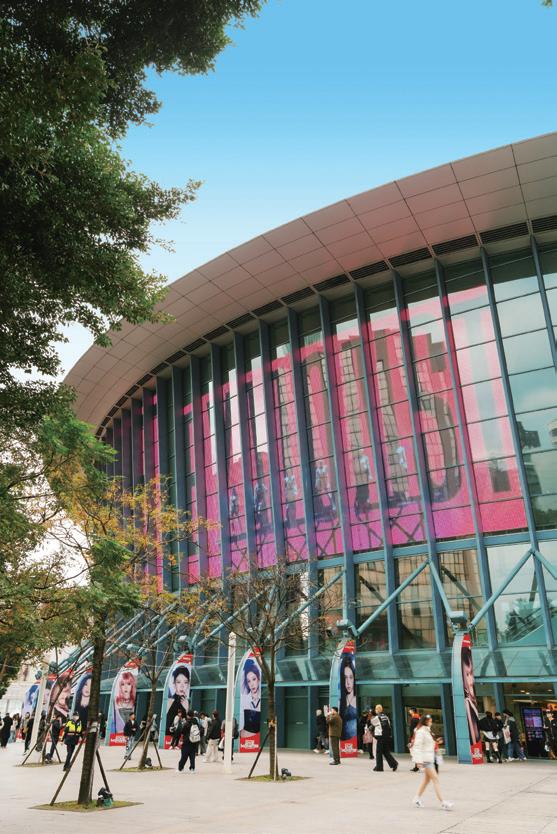
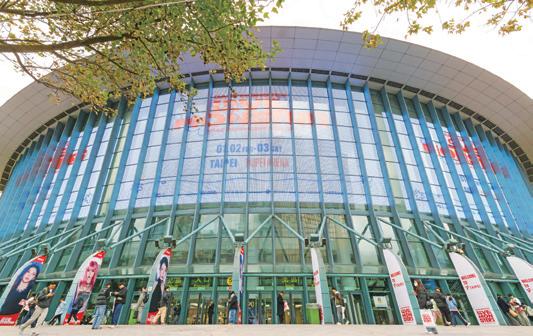
Any city seeking Gen Z traveler consideration must have international-caliber concert venues to entice top global talent, and Taipei supplies with a dynamic duo, the Taipei Dome and Taipei Arena, both striking awardwinning architectural artworks and iconic city landmarks. The freshly minted Taipei Dome , doors thrown open in late 2023, is a multi-purpose domed stadium used both for cultural performances and sports events, with seating reaching up to 40,000 for the former. The Taipei Arena is a multi-function sporting/cultural events complex that is comparatively modest in size, though still large; the main arena is used for concerts, with seating for up to 13,000. Their distinctive shapes have given rise to the dome and arena being affectionately called in Chinese the “Big Egg” and “Little Egg,” respectively.
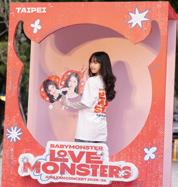
Among the recent big-name performers at the Dome has been Super Junior, G-Dragon and i-dle, at the Arena, BABYMONSTER and Ayumi Hamasaki. Perhaps the most anticipated upcoming shows will be put on by TWICE at the Dome later in March 2026.
Note that the first-rate Taipei Metro system has stops right at the doorstep of both these venues, and all other locations presented hereafter are either very close to or just a short distance away from a metro station. While using the system, you’ll likely see lightbox messages created by fans, addressed to favorite idols (see the Fandom Culture section on page 10), and metro-system announcements sometimes incorporate iconic pop tracks or even special greetings from idols to their fans. Beyond this, the city government has recently commenced creating city landscapes in support colors, check-in spots, and banners.
Taipei Arena
Merch Shopping
Idol shops are retail spaces themed on pop idols, selling related merchandise, with some also staging fan events. Gen Z focuses on unique, shareable experiences like interactive photo opportunities, live performances/ demonstrations, and curated environments (with a specific music or décor theme, for example). These shops provide a space for fans to gather and make it convenient for them to find partners for filming dance challenges and exchanging merchandise.
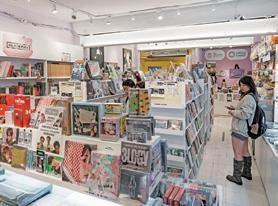
The K-MONSTAR chain (www.kmonstar.com. tw ), which has three Taipei branches, is a K-pop merchandise specialist – albums to photocards to apparel and accessories to much beyond. It emphasizes genuine products from K-pop idols, ensuring authenticity for collectors, and regularly stages fan interaction events. Another dedicated K-POP store is PLATBUM (instagram.com/platbum_tw), located near
the MRT Zhongshan Station. It specializes in a wide range of idol albums and official merchandise. When you think of Japanese kawaii cutesy, you think of pink. As you turn into the fanfancy+ (www. instagram.com/ffc_taipei ) shop in the Garden City underground retail/dining complex at the Taipei Dome, prepare yourself for a pink onslaught. This specialty concept store is a fandom realm dedicated to Japanese pop-culture figures, especially anime and J-pop. The first overseas branch of the Japanese fanfancy+ brand, all stock is Japanese-brand merchandise. It’s designed to be a fan community space as well as a shop. Providing more than just collectibles, clothing, and accessories, it’s a veritable fan experience destination. There are themed mini-areas where fans can take photos with their favorite characters or merch, and Taiwan-exclusive items, such as photo frames, are also available.
Random Play Dancing
A hot new Gen Z phenomenon in East Asia is Random Play Dancing (RPD), adapted from the K-Pop dance challenge. It is a spontaneous group challenge where fans gather at a spot designated on social media (no registration required), and snippets of popular songs are played, allowing anyone who knows the choreography in question to jump into a center circle to strut their stuff. Originating with Korean variety shows like Weekly Idol, RPD events happen in public spaces or online, letting fans showcase their skills on famous choreographies from different idols, blurring the lines between audience and performer, fostering fan connection through shared passion for top music hits and their iconic moves. In Taipei, RPD gatherings mostly happen in the posh Xinyi District and Ximending.
K-MONSTAR
K-MONSTAR
fanfancy+
Fandom Culture
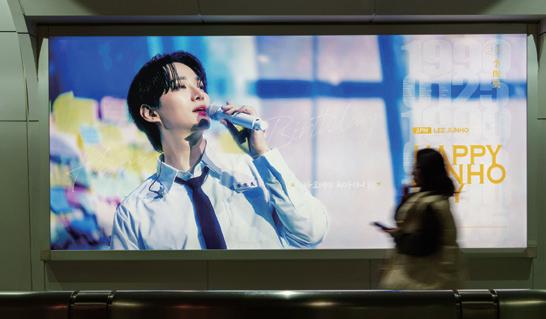
Prior to Gen Z coming of age with money to spend, fandom culture in Taipei/Taiwan was most exuberantly expressed in the form of Japanese comic/anime culture. Over the past decade, younger generations have become hot for all things (South) Korean, and for Gen Z, it is K-pop. In tandem with this has been the import of Koreastyle idol-worshipping, such as billboard/LED wall messages created by fans, rented multimedia advertising trucks, cafés where fans meet for special gatherings, such as the celebration of an idol’s birthday, and even idol messages scrolling on the façade of the giant Taipei 101 tower.
A prime example of the fandom café is the revealingly named IDOLcoffee ( instagram. com/idol_coffee_ ), located along a narrow, quiet lane not far from Taipei Main Station, the city’s major transportation hub. A bright space done up in blonde-hue woods, a rotating display of idol posters with personalized messages brackets the entrance door, and idol photos and figurines fill up the interior. Celebratory balloon-spelled birthday wishes adorn the walls most days, accompanied by dedicated parties for the idol of the day. Other types of support events are also regularly held, especially for idols’ upcoming Taipei concerts.
Idol items displayed in a fandom café
Photo Studios/Booths
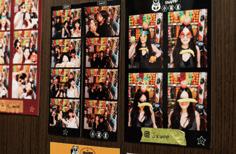
Vintage and retro-style aesthetics – especially Y2K elements and a sense of “perfect imperfection” – have become defining trends for Gen Z. Grainy textures, dated tones, and slightly flawed compositions are embraced as expressions of authenticity and attitude. This is why photo booths, retrostyle portraits, and old-school CCD cameras have surged back into popularity. With Gen Z, two new phenomena have taken hold: specialist photo studios and new-style photo booths.
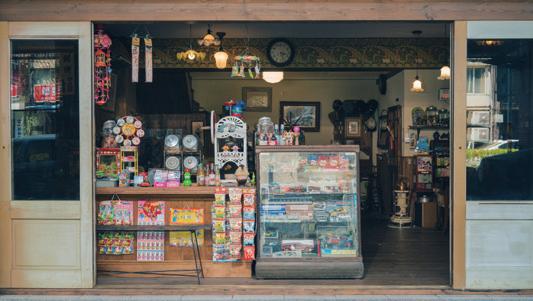
Yingshing Candy Shop is such a studio. It is located in the old, heritage rich Wanhua neighborhood, not far from the famed Bangka Lungshan Temple. This studio offers diverse shoot-sets looking like, for example, an old-time Japanese general store and traditional Japanese home with a tatami area filled with iconic Japanese-style bric-a-brac. You hire studio photographers for different-style shoots –portrait, fashion, cosplay, and wedding photography. Diverse theme apparel is available, allowing you to effortlessly style and shine in every frame.
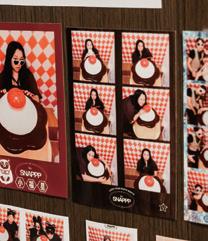
As for the photo booth trend, these spots often feature cameras mounted on the walls, ceiling, and floor. They incorporate vintage and film-inspired effects, along with distinctive settings such as subway cars, airplane restrooms, and elevators. A variety of props and accessories are also available, and digital copies of the photos can be downloaded via QR code for instant sharing on social media.
One of the most popular spots is the Lucky Star Photo Booth by SNAPPP in the Dadaocheng neighborhood just off Dihua Street, famous for its heritage shops and architecture. This destination celebrates old-time Taiwanese culture with four photo booths in the old Fuji/Kodak style, featuring classic Taiwanese background/foreground props: pachinko tables, fruit-stand racks, old-time movie posters, convex road-safety mirrors….
There are also several SNAPPP outlets in the city. These are photo service and community hubs with a strong focus on film (analog) photography culture, selling film and gear, staging photo events/contests, and magazine projects, etc.
It seems every generation in Taiwan under 50 loves café lingering, each cohort in each locale having its distinguishing set of prized café hangouts and café-character style. Research shows that Gen Z natives spend far more time thinking of good food and drink than other generations, and love to share their café and restaurant discoveries with their peers via Instagram and other social media platforms, especially through reviews and comments – with pretty pics + short videos.
Another characteristic is café hopping, that is either following peer recommendations and trying a new café experience each outing, or going to more than one café in a day alone or with friends to experience the best of peer-recommended best at each.
What determines which cafés become Taipei Gen Z favorites? The golden trio: “good-looking, photogenic, delicious.” The first refers to the décor; in Taipei, three favored styles are artsy hipster, raw industrial, and nostalgic old house. The second means the food and drinks are easy to photograph and present. The last is more than just food and drink taste, also including whether the price-performance ratio is enough to warrant a repeat visit.
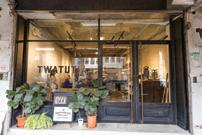
TWATUTIA COFFEE & CO
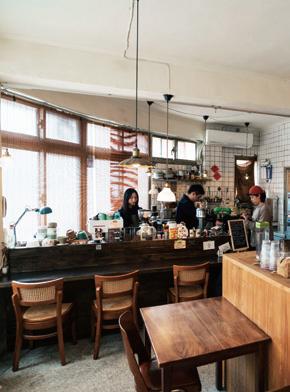
Two joints currently at the zenith of local Gen Z popularity are TWATUTIA COFFEE & Co. and Ao Tao Zu Cafe. TWATUTIA ( www.facebook. com/tttcoffee.tw ) is in one of the city’s oldest neighborhoods, and its richest in heritage architecture, Dadaocheng, which started as a riverport trading in regional goods in the mid-1800s. “Twatutia” is the transliteration for the Taigi (Taiwanese Hokkien) pronunciation of “Dadaocheng.” The theme here: vintage-décor café in a re-missioned old low-rise commercial/residential building, where a tea shop originally operated. The décor is industrial-style, with mottled exposed-concrete walls, exposed ceiling piping and wiring, plus such furnishing touches as a vintage retail counter and weighing machine.
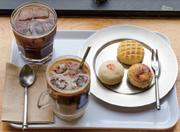
The café serves premium coffees from around Taiwan and the world, plus traditional Taiwanese pastry treats, and sells a curated selection of lifestyle items on the second floor, including café-themed merchandise. Amongst the coffee selections, the Gen Z crowd is sweetest on the Coconut Sweetened Latte, while the mooncakes are their dearest baked-goodie choice, followed by the pineapple cakes and mungbean cakes.
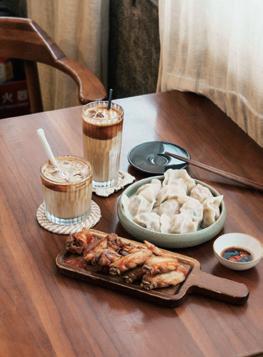
Ao Tao Zu Cafe (instagram.com/aotaozu_cafe) is another Dadaocheng denizen, also in a mid-20 thcentury commercial/residential low-rise renovated and given a new purpose. Open till midnight, it is one of this neighborhood’s few late-night cafés. Step beyond the gleaming-white exterior, which has the look of a Mediterranean seaside villa, and you step into the Taiwan of yesteryear, the premises retro-busy with such icons of past times (primarily the 1960s~1980s) as white-ceramic-tile walling and vintage table lamps, radios, speakers, and beverage bottles. The Z-favored coffee choices feature flavorings quintessentially Taiwanese: Brown Sugar Cappuccino, Sesame Latte, and Tieguanyin Cappuccino. From the edibles side, it’s the hot things that get the Zoomers salivating, particularly the Chinese dumplings and chicken wings, with the lemon tart commonly called on as a sweet exclamation point to the experience.
Ao Tao Zu Cafe
Ao Tao Zu Cafe
Crafts
Gen Z treats crafts like therapeutic medicine, finding community and connection through group participation in pastimes associated with “slow living” and the simpler times of their grandparents. These slow hobbies provide regenerative respite from digital fatigue, affordable creative recreation, plus, often, usable practical physical skills. Such sustainable, screen-free self-expression births personalized “Grandmacore” items that merge the nostalgic with the modern, and of course, these one-of-a-kind works of art are shared with peers on social media.
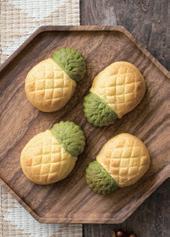
ABC Cooking Studio (bit.ly/ABCcooking) has two franchises in the city, with the flagship outlet in the Taipei 101 complex. Founded in Japan in 1985, the enterprise has outlets throughout East Asia. Its stated mission is to convey the value of food culture through its beginner-friendly hands-on cooking, bread making, and dessert classes. The experience is designed to make your cooking studio a social place, perfect for groups of friends or, if coming on your own, to share with new friends.
There are 1-day sessions specially designed around festive themes and unique ingredients; mini-classes that utilize semi-finished products and multifunctional cooking utensils to help you quickly prepare dishes within one hour; and, most in demand, 1~2-hour tablet-based sessions (English available) that allow you to learn at your own speed, conducted in the large, bright, and comfy studio with you sitting at your own individual-table workstation – a friendly approach for sometimes socially anxious Gen Zers. Staff can also provide simple English assistance.
Among the most popular class choices is Taiwanese pastries; create your own culturally iconic mung-bean cakes, pineapple cakes, doubleflavor mugwort cakes (taro and adzuki bean), or peanut mochi pork floss scones.
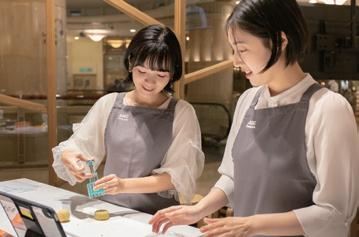
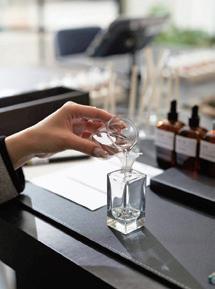
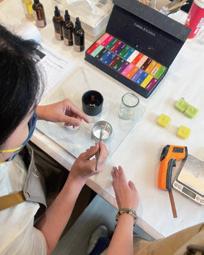
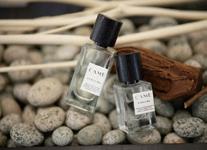
Close to the city’s renowned Dongmen Market, and just a few blocks from Yongkang Street, the core of a popular trendy eatery/boutique neighborhood, CAME perfume (cameperfume.com) is an elegant studio space featuring a red-brick façade and, inside, clean white walls and ceiling offset by deep-black furniture and sash-window frames. Relaxing, immersive DIY perfume experiences are what’s on offer, crafting your own personalized fragrance from scratch – each session is 90 minutes, your choice of bottle size (session fee varies), and your own workstation along a large, long worktable shared with others. This enables you to work peacefully on your own or work in collaboration with a group.
A complete set of perfume-making tools is provided at each workstation, which is outfitted with a laptop, with instructions provided via headphones, ensuring comfort for socially introverted Zoomers. “Live” instructors are also on hand, with good English guidance available. The laptop guidance is clear, easy to follow even for beginners, and you are able to both adjust the playback speed and replay sections, learning at your desired pace. Mix from an assortment of 60 fragrance ingredients displayed on the in-house fragrance wall, all of which are explained to you, all guaranteed safe to use and environmentally harmless. Each personalized fragrance is a masterpiece of artistry, making the perfect city souvenir – a personalized signature “scent of Taipei.”
Toys, Manga Stores, and a Cornucopia of Photo-worthy
Spots
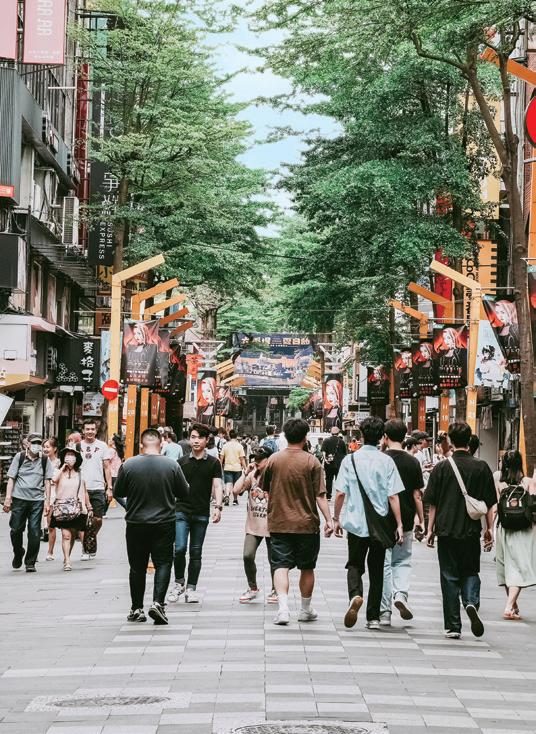
Ximending is Taipei’s energetic youth hub, buzzing with hip yet affordable shops, eateries, and entertainment venues. Its vibrant streets showcase the latest popular trends, accompanied by strong subculture elements such as anime, cosplay, graffiti, and body art. With its street performances and bustling crowds, this is a lively destination for people-watching and social media check-ins.
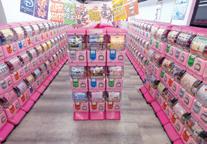
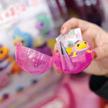
Upon entering the Ximending pedestrian zone (just outside Exit 6 of MRT Ximen Station), visitors will quickly notice rows of colorful capsule toy vending machines outside nearby shops. Known as gachapon in Japanese, they dispense oddly specific, well-designed mini collectibles. Some reference anime or popular character IPs. Others depict amazingly detailed food, mundane objects, or scenes like traffic lights or crows perched on garbage cans. Offbeat creatures such as meditating cats, mayonnaise monsters, and animals with exaggerated underbites add to the fun. Each turn of a vending machine’s wheels brings a random surprise, and many collectors keep trying until they receive a specific item, complete an entire set, or snag the secret treasure they’re chasing.
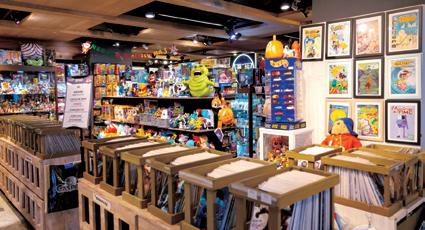
The Wan Nian Building (70, Xining S. Rd.) hosts one of Ximending’s densest clusters of capsule machines, alongside toy shops selling figurines and “blind boxes,” another form of randomized collectible. Mr. Pink (78, Kunming St.) stands out with its rows of bright pink machines on the ground floor, making the shop a colorful backdrop for photos.
The Eslite Spectrum Wuchang Store (77, Sec. 2, Wuchang St.) is different from other Eslite bookstores in that it caters to younger customers. It is home to several toy shops offering everything from high-end collectibles and licensed action figures to blind boxes and more affordable items. Beast Kingdom specializes in Western film and animation franchises, including Marvel, Star Wars, and Disney. Toys “R” Us carries a mix of Western and Japanese toys, including anime merchandise, while Comic Trap focuses on American comics and hard-to-find older toys, many of them discontinued or limited-edition selections.
Other popular shops include Boarhat (85-5, Sec. 2, Wuchang St.), specializing in Japanese anime- and manga-themed figurines, models, and character goods. Often packed with tourists, Pop Mart (14, Emei St.) represents the latest designer-toy boom, featuring blind boxes and collectibles with cute, surreal, and sometimes dark characters.
Action figures
Mr. Pink
Comic Trap
Aside from toys, the manga and anime subculture also comes alive through the many cosplayers who gather in Ximending, especially on weekends. Extending north from MRT Ximen Station, the futuristic underground metro mall Undercity: Ximen is the city’s latest hotspot for fans. Its first stop is Ichiraku Ramen, modeled after the fictional eatery of the same name made famous by the immensely popular Naruto series. Anime retail giant Animate also operates a popup shop and café in the complex.
Designed in deep-gray tones, neon accents, and metallic finishes, the mall space features LED ceilings, black floors with bright linework, and pedestrian-crossing motifs that evoke a feeling of “crossing dimensions,” as if stepping straight into a sci-fi or anime world. Screens play a rotating mix of video content showcasing pop trends, anime themes, and music visuals.
The underground corridor, which spans three plazas, features a lively mix of shops and eateries tied to anime, manga, video games, pop music, and design, including official character boutiques, pop -up shops, toy showcases, and specialty stores offering creative goods. K-pop fans will find dedicated stores like FANFANS and FANME , alongside interactive attractions such as photo-sticker kiosks. Designed as a hub for fans, the space also hosts interactive promotional events.
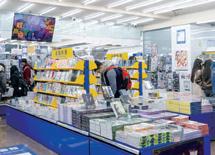
Right outside the underground mall’s Exit 6 is Animate ’s Taipei flagship store (B1, 39, Sec. 1, Zhonghua Rd.), a must-visit for manga and anime lovers. As the first official overseas branch (est. in 2000) of the famous Japanese retail chain, this spacious shop is filled with a vast selection of manga volumes, light novels, art books, and audiovisual content. Many visitors come for the official merchandise, ranging from figurines, model kits, and keychains to posters and stationery. Animate often offers exclusive promotional items and sometimes runs raffles for autographs from manga artists and similar
K-pop merch at FANME
Undercity: Ximen
prizes. The complex also features an indoor/outdoor café serving character-inspired drinks and snacks, as well as Lashinbang , a secondhand store from Japan for anime- and video game-related collectibles.
Chic and minimalistic d/art (2F, 14, Sec. 2, Wuchang St.) brings a refined gallery sensibility to Ximending’s anime scene. Focused on the artistry behind the media, it hosts themed exhibitions showcasing illustrations and poster art by Japanese and Taiwanese artists, as well as anime-related original works. Spanning two floors, the venue features a curated shop on the second floor and a ticketed gallery on the third. Visitors can buy books, prints, and exclusive exhibition goods, and attend interactive workshops, artist talks, signing sessions, and intimate live performances.
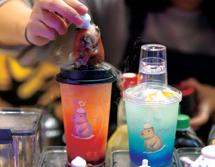
Those looking to unwind after exploring the scene can grab a draft beer or mixed drink at More Beer (121-1, Hanzhong St.), a cozy bar along a quiet alley. The venue has drawn attention for its playful drink presentations, such as smoking teapots and capybaras made with dry ice, a popular stop for photo-ops.
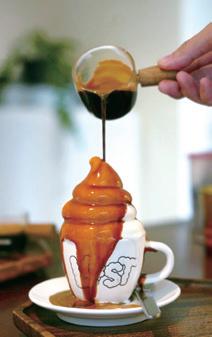
If you’re feeling peckish, Lost and Found (92, Liuzhou St.) is another photo-worthy destination. Located to the south of the Ximending area, this Nordic-style café is known for its signature affogato, with a pistachio flavor exclusive to this branch, served with a shot of espresso that melts into the creamy soft serve for a perfectly balanced blend. The atmospheric space features a sleek wood decor and offers brunch edibles such as creamy egg salad toast and the loaded “Soulmate” platter.
Taipei is a city of runners, with thousands of athletes each year taking part in internationally certified marathons and road races held in the city. Unsurprisingly, these runners enjoy the same long, flat, and well-maintained riverside paths that cyclists enjoy. For relaxed daily jogs, the city’s larger parks are perfect running locations as well.
Weather, Terrain, and Timing
Given Taipei’s hot and humid climate during much of the year, early morning and late afternoon are the most popular times to run. Night running is also a good option, as most paths are well-lit and safe after dark.
For runners seeking reliable shelter, an 800-meter shaded stretch along the Guandu Wharf-Zhishanyan route (see next page) is ideal for training in any weather. Located beneath the elevated Zhoumei Expressway, this uninterrupted section begins at Zhoumei Sports Park, near the Beitou Refuse Incineration Plant, and is well-suited for interval training or tempo runs.
Many runners also appreciate routes that follow the natural curves of rivers and include gentle elevation changes. The paths along the Waishuangxi and Jingmei rivers, for example, offer subtle ups and downs that add variety without significantly increasing difficulty.
Practical considerations matter as well. Easy access via MRT stations, the availability of restrooms, and beverage vending machines all contribute to a route’s popularity. Fortunately, Taipei’s riverside paths are closely integrated with the public transport system, and facilities are plentiful along most routes.
Popular Riverside Routes
Guandu Wharf – Zhishanyan
About 10km; right banks of the Tamsui, Keelung, and Waishuangxi rivers
Guandu, Zhishan
Gongguan (Treasure Hill Artist Village) –Muzha (Taipei Zoo)
About 10km; right banks of the Xindian and Jingmei Gongguan, Muzha (Taipei Zoo)
Dadaocheng (Taipei Bridge) – Guting Riverside Park
About 9km; right banks of the Tamsui and Xindian Daqiaotou, Guting
Yuanshan (Taipei Expo Park) –
Rainbow Bridge (Raohe Street Night Market)
About 8km; left bank of the Keelung River Yuanshan, Songshan
Xihu (Meiti Riverside Park) – Zhishanyan
About 10km; right bank of the Keelung and Waishuangxi rivers Xihu, Zhishan
Parks, Trails, and Group Runs
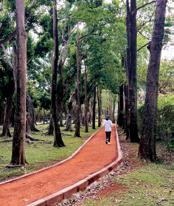
Beyond the riverside paths, some of Taipei’s other larger parks are popular running destinations as well. Daan Park, for example, features a dedicated 1.5-kilometer red-gravel running track that nearly forms a loop within the park. Many runners also circle the park’s perimeter on the surrounding spacious sidewalks, completing a 2.4-kilometer circuit. Youth Park, with its wide paths and relaxed atmosphere, is another favorite for easy and relaxed jogs.
For those who prefer trail running, Taipei offers plenty of options. The stone-step trails around Elephant Mountain are particularly popular, attracting runners eager to test their stamina on steep climbs and descents. The combination of forest shade, city views, and challenging terrain makes this a go-to training area.
A final note – running in Taipei doesn’t have to be a solo pursuit. Numerous running clubs welcome newcomers, and guided nighttime runs through the city offer a unique way to take in Taipei’s landmarks after dark. To find a community, search for local running groups on Facebook or Strava, or book a guided sightseeing run through platforms such as Klook.
Beitou Refuse Incineration Plant | 北投焚化爐
Daan Park | 大安森林公園
Elephant Mountain | 象山
Jingmei River | 景美溪
Youth Park | 青年公園
Waishuangxi River | 外雙溪
Zhoumei Sports Park | 洲美運動公園
Riverside path at Guandu
Rainbow Bridge
Red-gravel running track in Daan Park
The Fashionable East District
Discover Culture, Style, and Flavor Along Zhongxiao East Road
TEXT | JENNA LYNN CODY PHOTOS | VISION
Taipei’s East District is typically considered to span the greater area around Zhongxiao East Road running east from the Zhongxiao-Fuxing intersection, including lanes to the north and south. The area, easily accessible by the Taipei Metro’s Blue Line, is known mostly for its brightly-lit shopping streets and has a lot to offer. From the sleek contemporary exhibitions at JUT Art Museum to quiet photography bookshops, bustling dumpling houses, stylish vintage stores, and inventive cocktail bars, a day in the East District reveals the neighborhood’s mix of creativity, flavor, and local charm.
The East District is commonly thought of as a destination for shopping, eating, and not much else. The area also has some notable cultural attractions, however, rewarding those who look a little deeper.
Just to the east of National Taipei University of Technology and within walking distance from MRT Zhongxiao Xinsheng Station, an unassuming office building hides a small gem: the JUT Art Museum. The museum focuses on urban art and architecture, curated in a space that is both sleek and calming. JUT’s collection and exhibitions are focused on the themes of “the city” and “the future” seen through contemporary art.
The facility was designed by Japanese architect Jun Aoki and designer Atsuki Kikuchi as a calm, refined space that integrates with the visual language of Taipei. A changing lineup of international exhibitions, lectures, and cultural programs is hosted, engaging visitors in dialogues about art and urban architecture.
JUT ART MUSEUM 忠泰美術館
178, Sec. 3, Civic Blvd., Daan Dist. (02) 8772-6178 jam.jutfoundation.org.tw
Museums aren’t the only cultural offering. The East District is also home to unexpected storefronts for those in the mood to contemplate and learn.
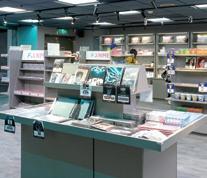
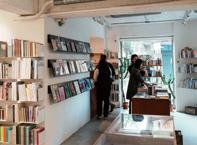
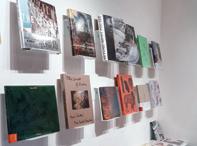
Located a short walk southeast from the JUT Art Museum is moom bookshop, a quiet bookstore focused on photography books. The shop manages to be both buzzing with visitors and quiet as a church; the dominant sound is the leafing of pages as patrons enjoy pictures from innumerable eclectic photography collections. One wall is heavily focused on Asia. Another displays books on minimalist shelves, turning the books themselves into art.
This treasure trove has just about any photography book that a person could want, including books showing Japanese toilets, the outlines of gabled roofs from buildings that have been torn down, New York in the 1970s, and cats in mid-century advertisements. It’s a bookshop where it doesn’t matter what language you read; anyone can stop in for a few relaxing moments.
MOOM BOOKSHOP
16, Aly. 8, Ln. 251, Sec. 3, Zhongxiao E. Rd., Daan Dist. (02) 2750-4001 moom.com.tw 12:00pm-8:00pm
moom
JUT Art Museum
After walking past the two SOGO department stores that are located kitty-corner to each other along Zhongxiao East Road, to the east of the SOGO Zhongxiao Branch you’ll come to a leafy walking area commonly referred to as Dinghao Plaza. This is where the creative Hangout Market comes alive every weekend. The real culinary attractions in the area, however, are hidden underground, in the basement of the Dinghao Mall.
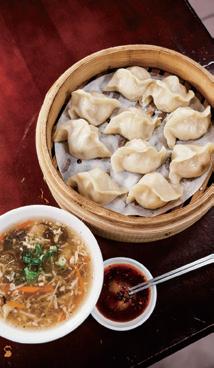
Stacks of bamboo steamers and a long queue greet you at Ding Hao Zi Lin, the local-favorite steameddumpling house. Don’t worry about joining the line: tables turn over quickly, so you should be seated within a couple of minutes. The restaurant is justifiably famous for its pan-fried potstickers, but the steamed dumplings, hot and sour soup, and pork or beef pancake rolls are also popular.
DING HAO ZI LIN STEAMED DUMPLINGS 頂好紫琳蒸餃
B1, 97, Sec. 4, Zhongxiao E. Rd., Daan Dist. (02) 2752-0962 11:00am-9:00pm
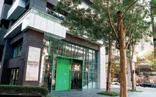
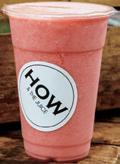
For a burst of healthy hydration, head to HOW & the Juice, next to Ding Hao Zi Lin. Fresh, seasonal fruit is used to make treats that many call the best juices in the East District. Drinks here pair well with the food consumed at the two eateries introduced on this page. You can grab drinks with names like It’s Not “a” Strawberry Juice, made with pineapple, apple, raspberry, and lemon. Other options include the Kiwi Pineapple Juice, the Apple Pineapple with Celery, and also The Boss’ Choice
HOW & THE JUICE
B1, 97, Sec. 4, Zhongxiao E. Rd., Daan Dist. (02) 2771-4145 12:00pm-8:30pm
If you’re jonesing for some heat, you’ll find May Jing Red Chili Wonton, which specializes in one of Taipei’s tastiest, spiciest dishes. May Jing is designed like a night market stall, with classic red-and-white signage and seating along a bar behind which the food is prepared. A variety of Sichuan-style dishes is offered, from hot and sour soup with or without wontons to dry dandan noodles and other classics such as pork rib noodles or soup.
MAY JING RED CHILI WONTON 美景紅油抄手
B1, 97, Sec. 4, Zhongxiao E. Rd., Daan Dist. (02) 2781-9004 mayjingwonton.com Tue-Fri 11:00am-3:30pm, 4:30pm-8:30pm
Ding Hao Zi Lin Steamed Dumplings
May Jing Red Chili Wonton
This area isn’t just known for meals and drinks; there are many pastry and confectionery shops worth visiting as well.
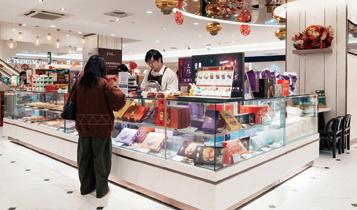
Buy gifts of local pastries for your favorite people at Sun Tone, advertised as the “King of Filling.” This shop offers everything from pineapple cakes to peanut rolls. Founded in Taiwan and beloved across the country, the Sun Tone chain is known for its dedication to traditional flavors made with carefully selected local ingredients. The pineapple cakes have been called “the perfect mix of sweet and savory,” and the taro pastries, mung bean cakes, and milk butter cakes also receive rave reviews.
SUN TONE 三統漢菓子
B2, 45, Sec. 4, Zhongxiao E. Rd., Daan Dist. (SOGO Zhongxiao Branch) 0902-653-730 www.suntone.com.tw
Sun-Thu 9:00am-9:30pm Fri-Sat 9:00am-10:00pm
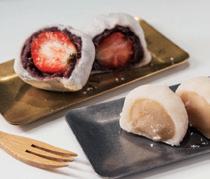
Some of the best Japanese mochi in Taiwan can be found at Meigetsudo, a Japanese confectionery founded in 1935. Meigetsudo is known for preserving traditional wagashi craftsmanship from the Japanese era (1895~1945). Wagashi are small treats typically enjoyed with tea. The shop specializes in handcrafted sweets made with natural ingredients using classic techniques. These include seasonal namagashi – high-end wagashi sweets that should be eaten fresh – and baked treats.
MEIGETSUDO 明月堂和菓子
B3, 300, Sec. 3, Zhongxiao E. Rd., Daan Dist. (SOGO Fuxing Branch) (02) 8772-0335 www.meigetsudo.com.tw 9:30am-9:30pm
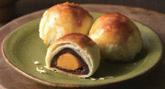
Egg Yolk Pastry and Taro Pastry from Sun Tone
Strawberry daifuku and yuzu daifuku
Although the East District is generally known for its fashionable shopping malls, it also has niche boutique shops tucked away in its backstreets. The most fashionable people know to look for vintage and eclectic finds in the lanes and alleys northeast of the Zhongxiao-Dunhua intersection.
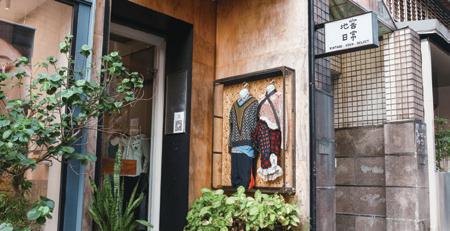
Trendy people in Taipei shop at The Cellar, a vintage store located close to Civic Boulevard, known for its curated and funky clothing selection. The shop specializes in high-quality vintage and secondhand pieces from Japan, Europe, and the U.S., as well as popular Taiwanese brands. The vibe here is distinctly “Japanese vintage” with a Taiwanese twist: this is a place where you go to build a unique wardrobe. The Cellar’s employees will even help you craft and style outfits from its racks, so even the most fashion-challenged person can emerge looking cool and creative.
71, Ln. 161, Sec. 1, Dunhua S. Rd., Daan Dist. (02) 2771-2800
www.goodsforeye.com
2:00pm-10:00pm
CELLAR 地窖日常
B1, 1, Aly. 35, Ln. 181, Sec. 4, Zhongxiao E. Rd., Daan Dist. (02) 2771-0385 cellarshops.com
2:00pm-10:00pm
Just a short walk southeast from The Cellar, GoodsForEye is exactly what the name implies: a style-forward glasses shop favored by Taipei’s tastemakers. Customers love the service here, with staff not only helping patrons adjust frames and prepare lenses but also giving tips and suggestions on which glasses suit them best. The shop carries a thoughtfully curated mix of international and independent eyewear brands, making it a top destination for those who see glasses as both a fashion statement and an everyday essential.
THE
The Cellar
After dark, the East District transforms from a shopping and food haven into a trendy neighborhood for nightlife. Bistros and bars in Taipei love to experiment with local ingredients in their food and drink, from jujube to sesame to Taiwanese tea, and East District Plus’ (instagram.com/ eastdistrictplus) recommendations are no exception.
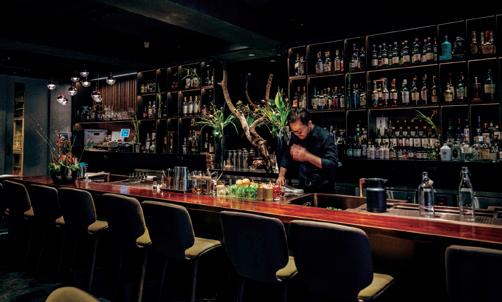
A few blocks northeast of the SOGO department store, Bar Mood looks like a sleek science lab, with a front standing area filled with white-and-gray marble tables. Inside, behind curtains, a plush lounge awaits, featuring intimate seating and a dark-wood bar framed by elaborate floral displays. Bar Mood, included in the Asia’s 50 Best Bars list multiple times, takes an ingredient-focused approach, sourcing herbs and flowers from across Taiwan. Seasonal botanical cocktails include offerings redolent of cucumber, basil, lemongrass, lime, and smoked marshmallow foam, or drinks made with herbal tea, longan, jujube, goji, and Jinxuan tea.
Silk & Linen, a 3 minutes’ walk from Bar Mood, is a stylish bar known for its creative cocktails and elevated small plates that are international with a Taiwanese sensibility. A cozy and moody space, it offers a relaxed atmosphere with comfortable seating perfect for dates, celebrations, or a night out with friends. Guests praise the inventive drink menu, which mixes classic spirits with local flavors like black sesame, oolong tea, plum, and charcoal kumquat, as well as thoughtfully crafted dishes like Butter Chicken, curry crab toast and meat rolls. Some drinks play on Silk & Linen’s name, with names like Amber, Wool, Cement, and Cotton.
Dinghao Mall | 頂好名店城
Dinghao Plaza | 頂好廣場 East District | 東區
SOGO Fuxing Branch | SOGO 百貨復興館
SOGO Zhongxiao Branch | SOGO 百貨忠孝館
Bar Mood
TEXT | RICK CHARETTE PHOTOS | RAY CHANG, VISION
Gate to Zhishanyan Huiji Temple
In downtown Taipei, looking for a nice little culture-vulture outing to the city edges? The Tianmu neighborhood in northern Shilin District awaits. Tucked up against the base of the Yangmingshan massif, this enclave has a large international community and a resulting cosmopolitan flair. Here’s an old/new mix of local hotspots that add up to a day of much cultural stimulation.
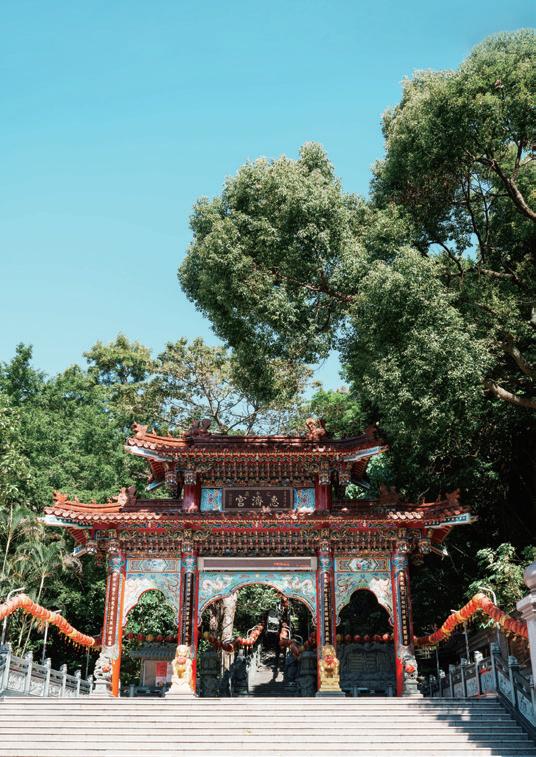
Tianmu lies north of the small, slow-moving east-west Shuang River, which is lined with parkland. Overlooking the waterway in its southeast corner is Zhishanyan, a large hill protuberance surrounded by flatland, a 15-minute walk east of MRT Zhishan Station. In times past, the Taipei Basin was flooded with seawater, and this was an island; today it is a site of important archeological digs, with seven cultural strata dating back 6,000 years. Learn more about the area’s prehistory at the Archaeology Exhibition Room, open every weekend with guided tours. It sits within the 10-hectare Zhishan Cultural and Ecological Garden, opened in 2005; prior to this, the site had been off-limits to the public for 40 years, used as a military ammunition depot. The garden is interwoven by a web of pleasant trails. Also on Zhishanyan is the ornate Zhishanyan Huiji Temple, first iteration constructed in 1752, with several others since. It was built as home to a statue brought by immigrants from Zhangzhou in Fujian, China – their patron saint, Kaizhang Shengwang, or “Sacred King, Founder of Zhangzhou,” a Tang Dynasty general who developed the region. Unusual relics here are giant Wenchang (God of Culture and Literature) ink brushes that, if touched, are believed to bring divine blessings; many parents bring their children, seeking divine advantage in performing good at school.
After your Zhishanyan visit, head to Shan Wu·Zhishan (“Shan Wu” means “mountain house”), a four-story architectural masterwork located just off the hill’s south base featuring café and exhibition spaces. Created by renowned architect Jay Chiu, this is a paean to Taiwan’s alley culture, where the construction may seem jerry-built and chaotic, but the result, incongruously, is a cherished, harmonious whole.
Opened in 1992, this large, two-floor facility in the center of Tianmu features a more modernistic design and advanced environment than other traditional-style markets. Its location in this foreign-expat enclave means a broad mix of international offerings, and the sleek interior may make you feel you’re ambling through a luxury supermarket rather than a traditional market. Another traditional-market rarity here – air-conditioning. And contrary to the norm at such places, Japanese and Westerners make up a large portion of customers.
The first level is dedicated to harbor-fresh seafood, farm-fresh fruits and veggies, and sundry goods, the second to fresh-prepared snack meals and drinks, general merchandise, antiques, and jewelry. Among the most popular stopping-points is No. 137 Rice Noodle Soup, its signature offering a beloved comfort food featuring a savory pork-bone-built broth. Bestsellers among the obligatory side dishes are the pork liver diaphragm and fried bean curd. Yue Family Restaurant specializes in the home-style snack treats of the owner’s ancestral home, northern Jilin in China, notably handmade noodles and dumplings – especially its famed shrimp wontons – with scallion pancakes and red-bean pancakes as weekend specials. At Master A-Ji’s Japanese Food (Shidong Sushi), you’ll find such classics from the Land of the Rising Sun as fresh sashimi and hand-formed sushi; the Japanese common custom of standing while eating is followed here.
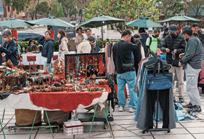
The prized Tianmu Life Market, an outdoor weekend destination, takes place in the northern area near Taipei American School. Originating as a flea market, it has also become a showcase for creative originality, with a cultural-creative section (there’s also a streetperformer section) stuffed to the rafters with goods that show tremendous color, youthful vigor and spirit, and unexpected, smile-inducing character and individuality. Many of the items bring modernistic flair to what is familiar from the local past, unique folk-theme merchandise that is particularly pleasing to visiting foreign travelers. There are also hybrids, fusing elements from different cultures to create something dynamically original. Many now view the Tianmu Life Market as the most intriguing,
adventurous, and bustling stage for cultural-creative goods in the metropolis. There is a new vendor signup each week (cultural-creative and second-hand items; open to the general public), ensuring continued novelty with each repeat visit.
Other recommended attractions in Tianmu are the Tianmu Sports Park (Tianmu Baseball Stadium, inline-skating rink, baseball-themed playground, etc.), Tianmu Historic Trail, and the Shuangxi Riverside Bikeway.
TIANMU LIFE MARKET 天母生活市集
Tianmu W. Rd. and Zhongshan N. Rd. intersection Fri 4:00pm-10:00pm Sat 9:00am-3:00pm, 4:00pm-10:00pm Sun 3:00pm-9:00pm
Archaeology Exhibition Room | 考古探坑展示館
Jay Chiu | 邱文傑
Kaizhang Shengwang | 開漳聖王
Master A-Ji's Japanese Food | 阿吉師日本料理
No. 137 Rice Noodle Soup | 137 號米粉湯
Shidong Market | 士東市場
Shuang River | 雙溪
Shuangxi Riverside Bikeway | 雙溪河濱自行車道
Tianmu | 天母
Tianmu Baseball Stadium | 天母棒球場
Tianmu Life Market | 天母生活市集
Yue Family Restaurant | 岳家小館
Zhishanyan | 芝山岩
Zhishanyan Huiji Temple | 芝山巖惠濟宮
Zhishan Cultural and Ecological Garden | 芝山文化生態綠園
Tianmu Life Market
Vintage model cars
Stalls selling cultural-creative items
Dragon Boat Rock and Strawberry Season
Hiking Neihu’s Sweetest Trails
The northern arc of the Taipei Metro’s Brown Line offers numerous options for outdoor adventures, and one spot especially ripe for the picking is the Baishihu area. Up here in Neihu’s hills, you’ll find a fine filigree of footpaths and farms that are tailor-made for the pedigree of hiker who thinks a trail without a coffee stop is no trail at all.
Dragon Boat Rock
Wetland and Flower Fields
Leave MRT Dahu Park Station via Exit 1 and follow the signs up Dahu Shanzhuang Street towards Dagouxi (Dagou Stream) Ecology and Water-Control Park. In the ten minutes it takes to reach the battalion of owl-like stone sculptures guarding the entrance to the park, you’ll pass a couple of convenience stores where any last-minute provisions can be grabbed. Beyond the strigine statues, two flights of steps lead up to a pavilion atop a low rise, then dip down to meet the stream. (Insider tip: check out the Formosan ash trees flanking these steps; they bear deep scars from the ginormous rhino beetles that emerge here every year around Dragon Boat Festival.)
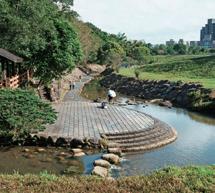
Built following 2001’s devastating Typhoon Nari, which caused flooding and mudslides in the vicinity, the park is a nifty bit of urban infrastructure that serves triple duty as a flood-control zone, wildlife habitat, and place for locals to relax, exercise, and touch grass. A rocky trail follows the meandering watercourse, and where the stream doglegs around a shelter, a broad pool accessible by steps invites visitors to partake in a little wading. During the warmer months, you’ll find picnic mats crowding the banks, while kids wade through the shallows, buckets and nets in hand. In late winter and early spring, you can also enjoy walking past colorful fields of flowers curated by the city government.
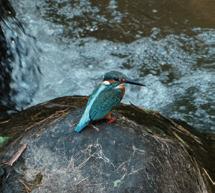
And it’s not just humans that are drawn by the clear, fish-filled waters; the park attracts plenty of feathered visitors too. Egrets and herons are regular sights, along with a small flock of Muscovy ducks that paddle up and down the stream, and on quiet days, keen-eyed walkers might catch the electric-blue flash of a departing kingfisher.
Kingfisher
Streamside trail
Waterfall With Fireflies
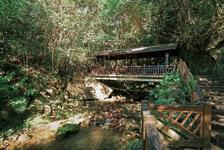
Three bridges carry you out of the park and onto the next section of trail. The third of these is a dainty wooden affair with a roof and a view overlooking a small waterfall. Local retirees (and their dogs) frequent its shaded benches to shelter from the elements and read the papers or listen to portable radios. Beyond the bridges, a steady flow of hikers winds up and down the undulating streamside path. Steep steps on the left divert some of the walkers to the summit of Carp Hill (Mt. Liyu), and then the trail enters its prettiest portion. The trees separating the path from the stream melt away, and you suddenly find yourself strolling through a natural tunnel – leafy canopy above, while to the right, mossy boulders so green as to be almost luminous litter the creek bed.
Keep your eyes peeled along this stretch, and you should spot a simple stone shrine perched on the far bank, which can be accessed by hopping from stone to stone. The temple’s resident deity observes comings and goings along the stream. If you visit at dusk or after nightfall, the warm red glow of votive candles emanates from the small doorway, exuding a quiet sense of protection against the thickening shadows.
In fact, when the air starts to warm up, dusk is a great time to visit this riverside path – that’s when its rich riparian diversity becomes apparent. It’s a veritable herping heaven. Supple-toed tree frogs cling to branches, and toads squat in the middle of the path, recalcitrantly rejecting all attempts to shoo them out of harm’s way. Unsurprisingly, given the all-you-can-catch frog buffet on offer, snakes are also pretty common visitors – you might spot the Taiwan habu, red-banded snakes, greater green snakes, big-eyed rat snakes, bamboo pit vipers, and Taiwan slug snakes just in the short corridor between the wooden bridge and Yuanjue Waterfall, to be visited momentarily. Extra-lucky night hikers may even catch sight of a masked palm civet or hear the indignant alarm call of a giant flying squirrel.
Wooden bridge with a roof
As the sound of Yuanjue Waterfall starts to grow louder, you come to a metal bridge of dubious structural integrity that spans the stream. Don’t cross it just yet, but put a mental pin in your map as you continue onwards. Before long, the path arrives at the base of the waterfall. Circular pavilions have sprouted here like oversized concrete mushrooms, while giant boulders in the middle of the watercourse offer ample opportunities for photos or waterfall watching. A little further away from the water, there’s a grassy patch, which – every April or May – bears witness to the courtship dances of fireflies.
For hikers seeking a straightforward ending to their outing, taking the main trail leading up to the left of the waterfall would see you arrive at Yuanjue Temple (Neihu’s oldest Buddhist center of worship) in roughly ten minutes, and a further ten minutes would bring you to the grand, city-facing structure of Bishan Temple. However, if feeling adventurous, it is time to return to that mental map pin.
Boulder-strewn stream along the trail
The Look of A Dragon
Unlike the earlier well-established paved trail, there’s little – save for a couple of hand-tied hiking tags – to indicate that the path on the far side of the bridge leads anywhere worthwhile. The first couple of hundred meters feel more like a private farming track, but soon you’ll find yourself ascending steeply through dense secondary forest using interwoven roots for footholds and pulling yourself up using fixed ropes.
After 10-15 minutes, the trail arrives at a rocky overlook. You can see high-rises clustered far down below along the Keelung River (into which Dagou Stream flows). The vantage point presents an opportune spot to catch your breath and rally your muscles before tackling the final climb to Dragon Boat Rock.
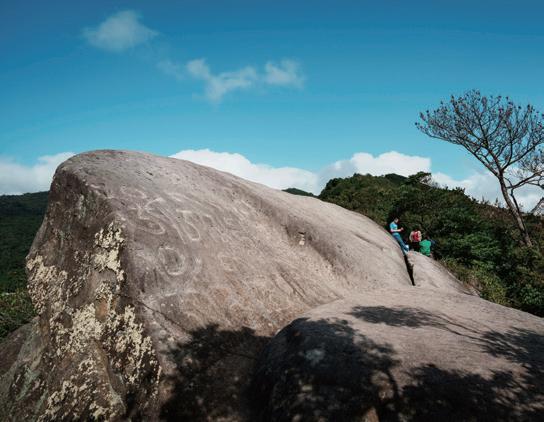
Named for its resemblance to a stone boat, this 10-meter quartz sandstone vessel floats proudly on a choppy ocean of greenery. Its eastern face – port, to use the appropriate boat terminology – slopes down to meet the trees at a forty-five-degree angle. Etched into it are two fissures running the full length that provide much potential for fun photos that make it
seem as if you’re dangling precipitously off a ledge. Meanwhile, the boat’s starboard edge is marked by a genuinely perilous sheer drop, so exercise caution when venturing up to admire the views of distant central Taipei.
When you disembark from the stern, follow the stone-surfaced trail to a crossroads. At this point, the easiest and fastest way to return to civilization would be to turn left and follow the path until it joins Bishan Road. There is actually a bus stop right at the trailhead, so you could just wait for the next S2 Shuttle service back to MRT Neihu Station, or you could cool down by following the winding road back through strawberry farms. And for those who have a surfeit of energy (and experience navigating some of Taipei’s wilder trails), there is an opportunity to extend your walk further by heading straight over at the four-way junction and climbing past Mount Kaiyan and onwards to Bishan (Mt. Bi) before curving back to Bishan Road and its welcoming eateries either via Tianshui Yuanyang Lake or Mt. Daluntou.
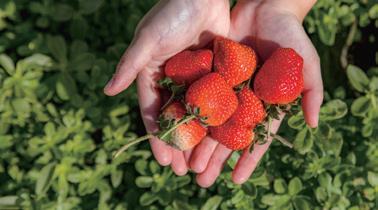
In addition to hiking trails and grand views, this corner of Taipei has a third ace up its sleeve: Baishihu Agricultural Recreation Area. The primary attraction in this elevated agricultural agglomeration is its collection of pick-your-own strawberry farms. From December to May, the area’s greenhouses overflow with rows of ripening red berries growing vertically on easy-pick trellises, and many establishments offer DIY activities, such as making jam or vinegar (pre-booking is strongly advised).
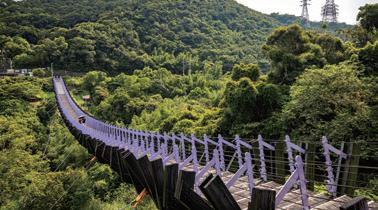
Interspersed among the farms are cafés serving the usual lineup of sweet treats that appear wherever Taiwanese gather for recreation and restaurants of a rustic persuasion, where heartier fare is on the table. Celebrated by holding the Neihu Strawberry Festival, during the strawberry season visitors can also enjoy a stroll across the recently reopened Baishihu Suspension Bridge. The 116-meter pastel-purple span is designed to resemble the rippling of a soaring dragon’s spine, and connects the main cluster of farms with the commanding structure of Bishan Temple.
Baishihu Agricultural Recreation Area | 白石湖休閒農業區
Baishihu Suspension Bridge | 白石湖吊橋
Bishan (Mt. Bi) | 碧山
Bishan Temple | 碧山巖
Carp Hill (Mt. Liyu) | 鯉魚山
Dagouxi Ecology and Water-Control Park | 大溝溪生態治水園區
Dragon Boat Rock | 龍船岩
Mt. Daluntou | 大崙頭山
Mt. Kaiyan | 開眼山
Neihu Strawberry Festival | 內湖草莓季
Tianshui Yuanyang Lake | 甜水鴛鴦湖
Yuanjue Temple | 圓覺寺
Yuanjue Waterfall | 圓覺瀑布
Freshly-picked strawberries
Encounters with Extraordinary Wildlife in the City
You don’t have to venture deep into the hills surrounding Taipei to spot beautiful butterflies. The Jiannan Butterfly Garden, the only outdoor ecological butterfly conservation area in Taiwan, is just a 5-minute walk from Taipei Metro’s Jiannan Road Station. More than 160 butterfly species have been recorded there, with three of the easiest to spot being introduced below.
Blue Tiger
The blue tiger ( Tirumala limniace ) is a common and easily spotted small butterfly found across South Asia and Southeast Asia. Its upper wings are dark brown to black, marked with bluish-white, semi-transparent spots and lines. One of its most interesting traits is its survival strategy: because the caterpillars feed on plants in the milkweed family, the butterflies carry toxins that can cause heart issues in potential predators. Their striking blue-and-black wing pattern acts as a clear warning signal. While most butterflies live
only a few weeks, the blue tiger can survive for six to eight months and is known for migrating south during the winter. The longest journey recorded by Taiwanese researchers has been a flight from Japan to Taiwan.
Chinese name: 青斑蝶
Wingspan: 9 to 10cm
Lifespan: up to 8 months
Larva: Yellowish-white with black bars
Food plants for larvae: Milkweed family (Asclepiadaceae/Apocynaceae)
Indian Fritillary
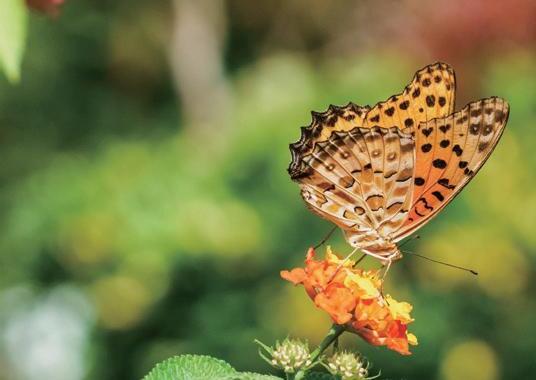
Like the blue tiger, the Indian fritillary ( Argynnis hyperbius) is a beautifully colored, small, and easily spotted butterfly. One of its most remarkable characteristics is the extreme sexual dimorphism, meaning that males and females look strikingly different from each other. While males possess bright-orange wings with black spots and markings throughout, females have distinctive black wingtips – the apical half of the forewing is black, inwardly suffused with purple, and crossed by a broad white band. This is an example of Batesian mimicry: female butterflies adopt this appearance to resemble monarch butterflies, causing predators to mistake them for toxic and thus avoid hunting them.
Chinese name: 斐豹蛺蝶
Wingspan: 8 to 9.8cm
Lifespan: Typically weeks
Larva: Black body and legs with orange-tawny markings and a dorsal strip
Food plants for larvae: Violet family, such as dog violet and pansy
Paper Kite
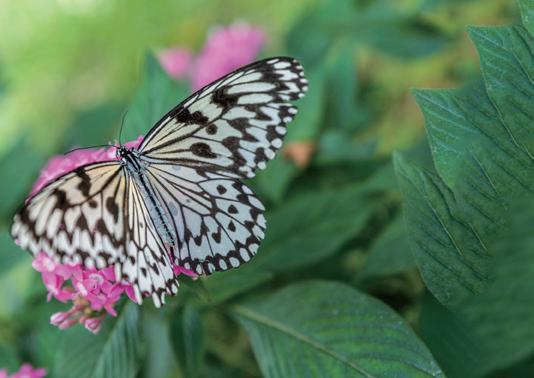
The ubiquitous paper kite ( Idea leuconoe) is significantly larger than the previous two species. With its large wingspan, it appears to float through the air like a piece of paper drifting on the wind. The wings are translucent white with dramatic black veins and markings. Like the blue tiger, this butterfly is toxic – its caterpillars feed on poisonous plants in the dogbane family. Because of the toxins, certain spiders dislike their smell and avoid eating them, earning them the nickname “Lucky Butterflies” in Chinese. However, because they fly slowly, they are also sometimes called the “Big Dumb Butterflies.”
Chinese name: 大白斑蝶
Wingspan: 12 to 15cm
Lifespan: Typically weeks
Larva: Yellowish-white with black bars
Food plants for larvae: Parsonsia, a genus of woody vines in the family Apocynaceae
Getting Fabulously Floral at Legal Girl’s Flower Boutique
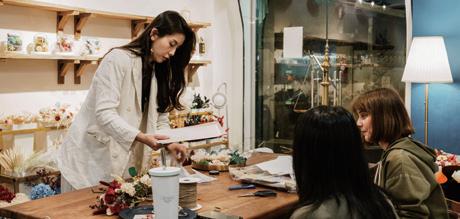
Few situations aren’t improved with flowers, and whether you’re celebrating a special occasion or brightening a mundane Monday, even a simple bouquet can uplift the ordinary. At Legal Girl, budding floral artists are invited to nurture their creativity and bring joy to everyday life through beginner-friendly flower arrangement workshops.
Located in Daan District, Legal Girl is an inviting flower studio where welcoming workshops are hosted by the owner, Chuang Yen-chen. The classes – designed for all levels –guide students step-by-step as they work hands-on with a mixture of dried and preserved flowers to create their floral masterpieces.
Sessions last roughly ninety minutes, although the comfortably convivial air of sophisticated relaxation Chuang cultivates means that her classes often run over – doubly so since many of her customers bring a bestie or even their whole friendship group (the store can accommodate up to six people; alternative venues can be arranged for larger groups; English instructions are available). The experience culminates in a photoshoot in the store’s micro-studio, with Chuang selecting the perfect props to make your showpiece shine, meaning you get to walk away with a beautiful creation and some Instagram-worthy shots to boot.
Chuang arrived at flower arranging through an unconventional path. As a student, she initially intended to follow in her father’s footsteps, graduating from the Department of Law at Soochow University, before learning that her calling lay with
flowers, not felons. And while, on the surface, law and owning a flower studio-cum-classroom seem to have little in common, upon closer inspection, you’ll find they share more than you might expect. The two draw from the same well of meticulous attention to detail, and both also demand the ability to distill complex things – be that legal concepts or flower-wrangling techniques – in a way that makes them accessible to your audience.
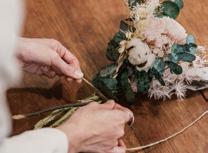
Preparing floral supplies and materials
Dried-flower bouquets
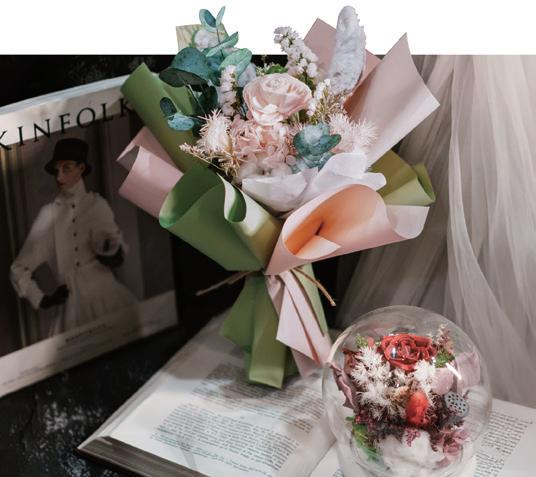
Putting this philosophy into practice, Chuang walked me through the first steps of the craft. For her, every arrangement begins with two important decisions: vessel and vision. I was quite charmed by the clochestyle nightlight designs (a great choice for travelers by dint of their eminent portability), but in the end I opted for a middling-sized bouquet (prices from around NT$1,400). With that pinned down, it was time to settle on an aesthetic. I visited on a cool, overcast early-spring day, so thinking of blooming sakura and the changing of the seasons, I decided to go for something with a fresh and vernal feel.
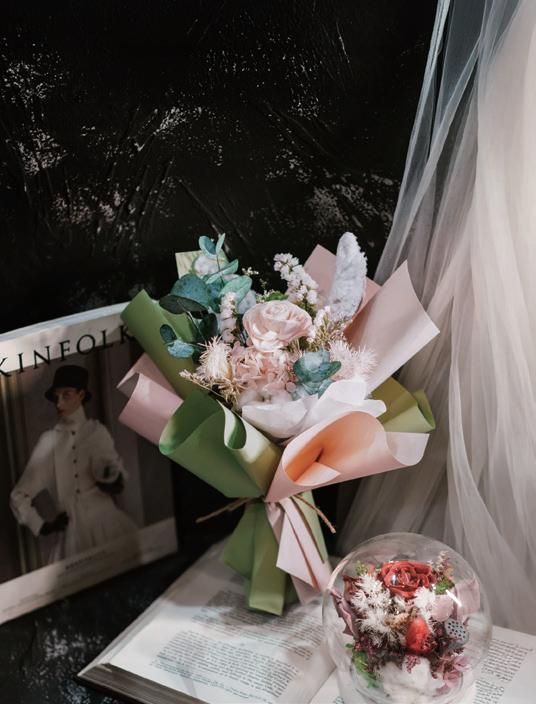
With that loose mood in mind, Chuang set about picking the statement flowers that were to form the focal point of my design. Sage green and pink hydrangeas, a single plump cotton boll, and for the centerpiece, a rose in ballerina blush (made from plant fibers – the only artificial flower in the bunch). For textural support, she plucked pale-cream featherheads, asparagus fern, sprays of matted sea lavender, structurally bold sprigs of eucalyptus, and a pair of fuzzy magnolia leaves. As someone who
possesses only the most rudimentary color literacy, observing Chuang swiftly sort through her inventory and lay out such a delicate spread of complementary hues was like watching magic unfold.
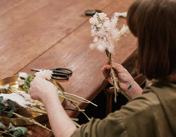
The hands-on work begins with grafting the shorter blooms onto long stems, using floral tape. Taking one of the hydrangeas, Chuang demonstrated how to rotate the stem between thumb and forefinger while maintaining tension in the tape. Though somewhat fiddly, I found it wasn’t too hard and –save for a couple of snappings – I successfully cleared the first hurdle.
Once all components were roughly the same length, Chuang introduced the next skill: the spiral technique – what she describes as a foundational skill for achieving balanced, well-constructed bouquets. Holding the central stem between thumb and two fingers, a second stem is laid across slantwise, then another, then another – always in the same direction, twisting as you go. My beginner fingers instinctively transformed into vice-like pincers, but as I relaxed into it, I found that, counterintuitively, things seemed
Grafting the shorter blooms onto long stems
to go smoothest when I loosened my grip. Watching me work, Chuang gave pointers on how to layer the three “Fs” (focals with fillers and foliage) for a balanced bouquet, and – much to my surprise – I swiftly found myself knotting string around a perfect little posy.
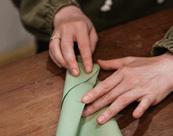
The piece was completed by swaddling it in layer upon layer of wrapping paper, and this finishing touch elevated what was already looking rather lovely into a real statement. Chuang helped me select the right shades of green and pink (if I’m honest, she also helped quite a bit with the execution) – in total, seven sheets were used to complete the look, each folded single-handedly while you hold the bouquet in your dominant hand. This was definitely the most challenging part of the whole process, but with Chuang’s assistance, everything came together nicely. At the end of the class, I was left clutching a bouquet that was elegant in palette, texturally intriguing, and just all-around delightful – precisely what I needed to brighten up my apartment and see me through until the season-change blossom blooms.
Note: Dried flowers make great souvenirs, but if you plan to take them out of the country, be mindful of the materials used (avoid seeds, fruits, and similar items).
6 step.
Wrapping the flowers
Folding the wrapping paper
Tying the bouquet 5 step. 7 step.
Taipei’s Top Picnic Picks Taipei’s Top Picnic Picks
Where to Fill Up Your Hamper for Eating Outdoors
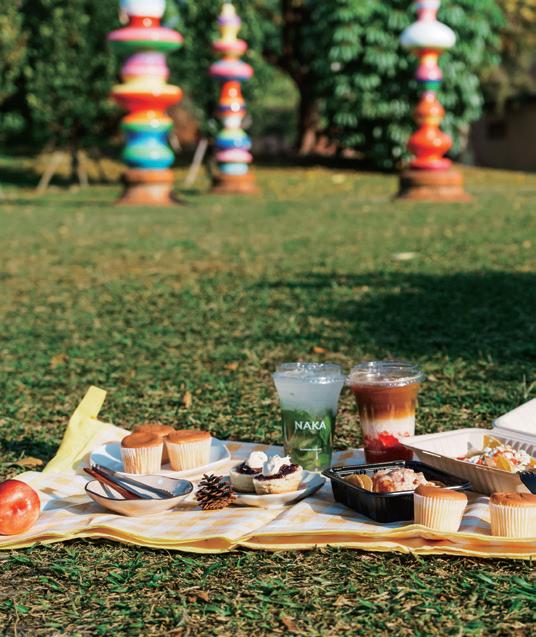
Thanks to their sprawling lawn spaces, large parks around Taipei City have become popular picnic spots, especially during the spring. While some prefer to prepare their own outdoor feast, picnickers who favor convenience should look no further than the following list of vendors selling ready-made options.
TEXT | JAMES BARON PHOTOS | RAY CHANG, VISION
If you’re planning to visit Huashan 1914 Creative Park – maybe for an exhibition or a movie at SPOT Huashan – and want to relax in the adjacent Central Culture Park (also known as the Huashan Grassland) afterward, consider picking up food and drinks at the following places.
TacoJoe
Having proved a hit during its two years at Lehua Night Market in New Taipei City, TacoJoe relocated to this small commercial space on the cusp of Huashan in early 2025. Recognizable by its Day-Glo orange façade and Día de los Muertos décor, it offers Tex-Mex staples, with the mix-and-match taco boxes making an ideal addition to picnic spreads. Vegetarian options are available, as are rice bowls for those who aren’t so keen on the crunchy corn tortillas. Word of warning: Most items are liberally laced with cilantro, so if you’re not a fan of this love-it-or-hate-it herb, make sure to mention it when ordering!
NAKA TAIPEI
87, Sec. 2, Zhongxiao E. Rd., Zhongzheng Dist. 0988-657-110 instagram.com/nakataipei
Mon-Thu 10:00am-7:00pm Fri-Sat 10:00am-1:00am Sun 10:00am-9:00pm
Providing an eclectic range of tea, coffee, and alcohol-based drinks, NAKA has your takeout libations covered. While typical Taiwanese drink outlets use fruit infusions in their teas, NAKA has taken the unusual step of extending this to its coffee – the standard black joe comes in orange and pink guava flavors, while the long black-style features lychee, yuzu, and grapefruit options. The cocktails are even more intriguing, with concoctions such as the Blossom Highball (whiskey, oolong, and peach) and the Sake Collins (gin, tea, shiso, and lime) sure to make your openair gathering a merry one. Just grab a cup and enjoy a drink amid spring blossoms and warm weather.
Picnicking in Taipei’s green spaces might not quite have the idyllic feel of the English countryside, but wherever you are, you can’t go wrong with a great British scone. Aside from its classic scone, made with fine imported ingredients such as French butter, California raisins, and Earl Grey tea, this store offers such seasonal limitededition items as a double cocoa bean scone and a hojicha (roasted green tea) flavor. Naturally, pots of those most de rigueur of scone accompaniments, clotted cream and jam are also on hand to round out your quintessentially English lazy afternoon experience.
JASMINE & PARTNERS 甜點架式
11-2, Ln. 5, Linsen N. Rd., Zhongzheng Dist. 0911-490-594 jasmineandpartners.com
Wed-Fri 1:30pm-6:30pm Sat 1:30pm-6:00pm
TACOJOE 美墨塔可
Daan Park – affectionately called the “lungs of Taipei” – is perfect for picnics, especially during the azalea season and the Taipei Floral Picnic event (see more on page 4) at the end of March. It has spacious lawns, abundant trees, and lively birdsong for entertainment, and luckily, you’ll find several food and drink shops nearby selling exactly what you need for a joyful afternoon outdoors.
Sandwiches
Double Sandwich
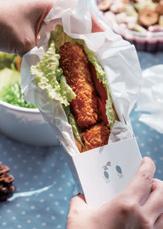
No list of picnic staples would be complete without mention of that tried-and-trusted favorite – the sandwich. Despite the name of this cozy corner store, the baked goods here are more like hot-dogstyle buns. Cooked on a griddle with a smattering of New Zealand butter, a pleasingly crispy exterior is attained, making them slightly more upscale than the average bun. Fillings include Japanese egg salad, Caesar chicken, and – for those who like to spice things up a tad – frankfurters with a bolognaise-style sauce, layered with sliced jalapenos. The cutesy packaging, which allows you to slide the sandwiches in and out like using a drawer, makes these snacks practical picnic items.
DOUBLE SANDWICH 双双三明治 153, Sec. 2, Jianguo S. Rd., Daan Dist. (02) 2707-2707 instagram.com/double_sandwich_taipei Mon-Fri 11:00am-7:00pm Sat-Sun 9:00am-5:00pm
Think 4 Coffee Coffee
Coffee shops abound in downtown Taipei, but it quickly becomes evident that this takeout spot is different. Tucked down an alley near the park, its hole-in-the-wall setup reveals an endearingly cluttered interior. Behind the barista station, with its behemoth turquoise-blue coffee roaster, certificates line the wall. These represent qualifications and accolades the owner has accrued. In addition to beans from international coffee stalwarts such as Guatemala and Ethiopia, you can also opt for brews made with coffee beans from Taiwan’s high-mountain Alishan area, as well as a local twist on Espresso Romano.
MAROCO 馬路口烘焙小舖
27, Sec. 2, Jianguo S. Rd., Daan Dist. (02) 2708-3116
This local-style bakery has a wide selection of pastries that will be sure to bolster your hamper. Classic Taiwanese tastes come in the form of buns with adzuki-bean paste filling topped with liberal sprinklings of sesame seeds, while more exotic treats include pineapple buns filled with cranberry and cream. You can also buy chiffon cakes and sausage bun. For cold drinks, the shop’s display window features ready-to-go iced coffee, along with houserecipe milk tea and black tea, as well as soybean milk.
Freshness is Priority
Fans of raw-foodism will relish this option. Sourcing its produce from all over Taiwan – think Miaoli strawberries, Taitung custard apples, and Taichung grapes – this storecum-restaurant showcases fruit and veg items of relatively rarity in Taiwan. Some examples include beetroot smoothies, with the purple root vegetable grown at an organic farm in Yilan, and a gelato made with figs from Tainan. The ice cream was five years in the making, due to shortages of the sticky fruit, unsuitable equipment, and picky local tastes! For healthy picnic choices, the salads and smoothies are your best bet.
FRESHNESS IS PRIORITY 優鮮主意
65, Sec. 3, Xinyi Rd., Daan Dist. instagram.com/freshnessprio 10:00am-9:00pm
Halal Havens Halal Havens Authentic
Flavors from the Muslim World
|
TEXT | JENNA LYNN CODY PHOTOS
RAY CHANG
Halal, which means “lawful” or “allowed” in Arabic, in dietary terms refers to food standards permissible under Islamic law, focusing on cleanliness, humane animal treatment, and ethical sourcing. In recent years, Taipei has become a popular Muslim tourist destination and is internationally recognized as Muslim-friendly. From larger restaurants serving food from various Muslim countries to authentic Turkish cuisine, halal beef noodles, and fast food, the city’s halal dining options are constantly improving.
Mouna Restaurant
On a quiet stretch of Yanping South Road near the Taipei Botanical Garden, Mouna serves up some of the best halal food in Taipei, with dishes originating across the Muslim world, from Morocco to northern India. Moroccan lamps hang from the ceiling, and a zellige tile pattern adorns the walls. Comfortable seating rounds out a spacious dining area, with a buffet set up at one end for busy times and large groups.
Owner and proprietor Mouna’s story of founding her eponymous restaurant is tinged with both tragedy and inspiration. A native of Morocco, she met her late Taiwanese husband and moved to Taipei to start a family. After his passing, she stayed to raise their children, opening a small shawarma stand in Maji Square near MRT Yuanshan Station. Her food was popular enough that it turned into counters at high-end department store food courts and a stall at the Ningxia Night Market. After hearing from Indonesian and Malaysian tourism officials that there “was no halal food in Taiwan” despite her locations being halal, she decided to open a restaurant.
The concept at Mouna is not food from a specific country, although dishes from Mouna’s native Morocco are on the menu. Instead, it is a halal dining experience; more generally, each dish is executed with admirable skill. Travelers from across the Middle East and Southeast Asia come to Mouna for everything from hummus to tajine (a slowcooked stew) to curry.
The hummus and baba ghanoush (an appetizer with a creamy dip) are quite possibly the best in Taipei. Biryani (a mixed-rice dish) with lamb and rosewater is served on gilded, onion-domed platters. Lamb and chicken kebab, fresh from the grill, arrive sizzling at the table. Moroccan dishes such as cubed beef with plums and chicken with preserved lemon are served in ornate tajines, some colored a deep turmeric yellow and embellished with designs, others painted in detailed patterns. Snacks and sides include luscious flatbread with perfect chewiness and peanuts tossed in the restaurant’s own blend of spices.
Mention Turkish food in Taipei, and the first word on the lips of many people in the know will be “Safranbolu.” Located at the intersection of Jilin and Nanjing East roads near MRT Songjiang Nanjing Station, this restaurant has been serving up authentic Turkish fare for years.
Running a halal restaurant comes with specific challenges, as some ingredients are difficult to import, and others are subject to price fluctuations and other factors. “There’s only one halal chicken supplier in Taiwan, so they can change prices at will,” proprietor Recep Cetin points out. “All of what we use has to be halal, and that’s very important.”
At Safranbolu, all the chefs are from Turkey, and they cook their native foods with gusto. There are different chefs for different types of food, as Cetin believes in matching the best-suited people to each kitchen task.
Grilled meat platter
Ali Nazik
The grilled meat platter for groups is popular, piled high with succulent lamb chops, shish kebabs (skewered and grilled cubes of meat), grilled chicken, and beef köfte (meatballs) served on mounds of buttery pilaf. Turkish dips with homemade bread or balloon lavash (a type of flatbread that puffs when cooked) go quickly, especially the ezme, a spicy pepper and tomato salad with herbs, and mutabal, a yoghurt, roasted garlic, and roasted eggplant dish.
The lahmaçun and pide taste exactly as they would in Turkey. Lahmaçun is a flatbread that has both a crispy and tender mouthfeel, topped with spiced ground lamb and herbs, best eaten when wrapped around a serving of salad in a tangy dressing. Pide, a boat-shaped flatbread dish, consists of a fluffier bread topped with cheese, meat, and occasionally egg, and is sometimes called “Turkish pizza.”
The individual meat dishes at Safranbolu are not to be missed. Adana Kebab is a type of shish kebab that is spiced and grilled. Or try Ali Nazik, featuring a mutabal base topped with grilled lamb. Beyti Kebab, which features tender grilled minced meat wrapped in flatbread and melts in the mouth, is also popular.
SAFRANBOLU TURKISH RESTAURANT 番紅花城土耳其餐廳 60, Sec. 2, Nanjing E. Rd., Zhongshan Dist. (02) 2522-2939 facebook.com/safranboluturkishrestaurant 11:00am-10:00pm
Homemade bread with turkish dip
Lahmaçun
Fresh salad
Turkishdip
Halal Chinese Beef Noodles
Located just a few minutes’ walk from MRT Sun Yat-Sen Memorial Hall Station, the first signs that this otherwise unassuming beef-noodle joint is a standout are evident before you walk in: a street-level sign in Arabic, several Michelin stickers, and the line that often forms outside. In fact, Halal Chinese Beef Noodles is not only halal, as the name proclaims, but has also been a Michelin-recommended restaurant. It earned a place on the Michelin Bib Gourmand list for seven consecutive years before that.
The noodles come in two varieties, clear broth and redbraised broth, both of which are simmered for hours to develop an unctuous, meaty flavor. The clear broth allows diners to enjoy a purer beef flavor, while the red-braised broth contains more herbs and spices. Tender beef cuts such as shank, neck, and short rib are sourced from freshly slaughtered Taiwanese cattle. The restaurant also offers Middle Eastern-style flatbread, as well as dishes for larger groups.
This takeaway spot in the Gongguan Shopping District provides a combination of halal-certified vegetarian burgers and fast, friendly service popular with the local university crowd, especially Muslim students. Breakfast is a busy time, with the shop opening at 7:30am. This isn’t your run-of-the-mill vegetarian burger joint offering just one type of patty with different toppings. Rather, Furger has sweet potato, taro, mushroom, and mountain yam burgers on the menu, with one especially popular option, the truffle burger, imitating a steak and truffle burger. Other options include a numbing-spice mushroom burger and a lion’s head mushroom burger.
Patrons pair their burgers with tea or lemonade, with an intriguing salted lemonade drink available. Tea options include green, oolong, and honey-scented black tea, which isn’t sweetened with honey but rather has a natural honey aroma. Sides include fried mushroom “chicken nuggets,” fries, and sweet-potato balls.
This is not just the only halal-certified fried chicken franchise in Taiwan (there are several branches in the city, including one in the Gongguan Shopping District); it has also branched out internationally, with stores in Southeast Asia. In operation since 2015, its outlets deliver crispy and juicy fried chicken seasoned with a proprietary marinade that highlights local Taiwanese flavors.
There is a wide array of fried chicken on offer. Flavors include Taiwanese salt and pepper, Thai spicy sauce, and Chinese hot sauce, as well as powdered flavorings such as cheese, black pepper, plum, and seaweed. The half and whole chicken options are popular, but customers can also choose wings, boneless chicken breast, chicken tenders, or chicken cartilage. Chicken gua bao (“Taiwanese hamburger”), fried chicken breast, and thigh are also on offer, along with a variety of set meals. In true Taiwanese fashion, fries are not the only side dish. Hash browns, purple sweet-potato fries, and Taiwanese radish cake all rank highly with customers.
Beyond the above halal dining options, you can find a comprehensive Halal Travel Guide online at travel.taipei/en/ must-visit/halal, featuring Muslim-friendly attractions, facilities, and services throughout the city. Muslim travelers are warmly welcomed to explore Taipei with confidence and peace of mind.
FRIED CHICKEN MASTER 炸雞大獅
2, Ln. 52, Sec. 4, Roosevelt Rd., Zhongzheng Dist. www.chickenmaster.com.tw
When thinking of Taipei’s “nightlife,” visiting a dark park to watch insects might not be the first thing that comes to mind. But if you’re a nature lover, you’ll be delighted to find that viewing fireflies is remarkably easy to do in this fascinating, big and busy, city.
In Taipei City there are about a dozen locations where you can spot fireflies (best time: April and May). Among these, Daan Park and Rongxing Garden Park, both located in central Taipei, are great examples of successful firefly reintroductions into the urban environment. A bit outside the center, Muzha Park is a natural oasis close to residential areas, while other locations such as the Hushan Creek Trail and Yangmingshan National Park’s Yangming Creek are on the edge of, or further away, from the urban sprawl.
What Are Fireflies?
Fireflies, also known as lightning bugs or glowworms, are softbodied beetles in the Lampyridae family. There are 2,400 described species, many of which are light-emitting as adults (all firefly larvae glow), mainly during twilight hours. In Taiwan, around 65 firefly species can be found, from the coastal plains to the high mountains, throughout the year. In Taipei City, you have the chance to spot five different species, the most common of which is Aquatica ficta. For the casual entomophile, these species might be somewhat difficult to distinguish, but if you see an elongated bug with an orange pronotum (“head shield”) and black wings during the daytime, chances are you’re looking at a firefly.
How Come There Are Fireflies in Taipei’s Parks?
Taipei is a densely populated metropolis with abundant artificial light at night and various other factors that should scare away creatures like fireflies, which are highly sensitive to light pollution. It is therefore remarkable (some say miraculous) that they were successfully introduced through conservation efforts to Daan Park and Rongxing Garden Park. Both of these parks feature small ecological sanctuaries with native wild plants and eco-ponds. The initiative was undertaken in Daan Park in 2014 with the creation of an environment suitable for these bugs, including the installation of special LED streetlights invisible to them. In 2016, fireflies were spotted in the park for the first time in 24 years. At Rongxing Garden Park, a tiny firefly population had managed to survive over the years, but it was the building of an eco-pond in 2015 and continued protection efforts by residents and volunteers that allowed the glowworms to thrive. During the peak season for firefly watching in April and May, there are free guided tours in both parks.
Firefly Watching Do’s and Don’ts
Since fireflies are such precious, vulnerable insects, the priority on any firefly-watching outing is not to harm or negatively impact them in any way. In particular, the use of lights, including any light-emitting items such as kids’ shoes with LED lights, should be avoided as much as possible. If a flashlight is needed to see the way, a less harmful red LED is recommended. Stay on paths, don’t try to catch the bugs, don’t use insect repellent, and don’t smoke. Also, move slowly and keep quiet to minimize vibrations.
Tips for photographers: arrive before it gets dark to set up your camera, and use a tripod with a long exposure.
Guided tour at Rongxing Garden Park
Rongxing Garden Park
TRAVEL INFO
EasyCard
NT$200 (NT$100 value incl.)
TAIPEI CITY BUS
- NT$65
Adult: NT$15, regardless of using cash or an EasyCard
Student: NT$15 when paying cash; NT$12 when using an EasyCard (Student ID required)
TICKET PRICE Taipei eBus ebus.gov.taipei
Child under 115cm or under six years old: Free (ID required)
Taipei Sightseeing Bus
The open-top, double-decker buses offer a hop-on/hop-off service, allowing tourists to take in the cityscape and visit many of Taipei’s prime destinations. Website: taipeisightseeing.com.tw
YOUBIKE
YouBike is Taipei’s public rental bike system. Register with an EasyCard at en.youbike.com.tw/region/taipei/register or with a credit card via YouBike app to rent a bike, enjoy free insurance, and a memeber-only subsidy. The fee per 30 minutes is listed below.
NT$0 with member-only subsidy
The electric-assisted Youbike 2.0E charges NT$20 per 30 minutes for the first 2 hours, and NT$40 per 30 minutes thereafter. No subsidy is given.
TAIPEI FUN PASS
There are four types of Taipei Fun Pass available: the Unlimited version (attractions+transportation), the Exploring version (attractions +EasyCard), the Classic version (2 attractions+EasyCard) and the Transportation version (transportation only). You can visit Taipei City, New Taipei City, Keelung City, and Taoyuan City within the validity.
TRAVEL INFORMATION SERVICES
Tourism Administration, Ministry of Transportation and Communication: 0800-011-765 Information for Foreigners in Taiwan: 1990
Taipei Citizen Hotline: 1999 (Outside Taipei City, please dial 02-2720-8889)
Taipei Travel Net: travel.taipei/en; presents travel information on Taipei City in Chinese, English, Japanese, Korean, Thai, Indonesian, Vietnamese, and Spanish