TAIGA USER’S GUIDE
BODY, CLIMATE AND KNOWLEDGE
TAIGA’S HISTORY
Taiga was founded in Varberg 1982 by Paul Rydholm, who already had 30 years of experience in garment manufacturing. Two years earlier, he travelled to the wilderness of Alaska seeking inspiration and returned home with a new business focus. He wanted to create the world’s most advanced clothing for demanding work environments, and extreme weather conditions, where optimal functionality and safety are crucial.
Since then, Taiga has always focused on the needs of the customer: function, quality, fit, and durability. Our products are developed in close collaboration with users, experts in climate physiology, suppliers, and through extensive testing. Today, some of the world’s most exposed professional groups choose Taiga as their supplier, such as polar researchers, mountain rescue teams, ambulance personnel, and specialised military and police units.

AND PHILOSOPHY
In extreme conditions, there is no margin for error. Our clothes are developed to allow you to work as unhindered as possible. Whether you’re operating in tropical heat, facing strong winds with driving rain, or in minus 30 degrees and a snowstorm.
We know how to dress optimally – regardless of climate. Understanding how the human body works in different temperatures and working conditions is critical to ensure a good working environment. To maintain a good performance and ability to concentrate, you need to control temperature and moisture in your clothing system. Therefore, our Clothing System philosophy is based on several layers for easy adjustment of your heat and moisture balance.
Functional garments shall keep you dry, warm and secure without restricting your movement and performance. Each layer in the clothing system has its specific function, and the garments complement each other efficiently.
The high quality of our advanced workwear allows them to be used for a long time, and besides reducing the cost for the customer, it also consumes fewer natural resources. We also have a processing workshop where we repair garments that can still be used for many years to come. This is a way for us as a business, and you as a user, to extend the lifetime of the workwear and to avoid unnecessary manufacturing of new textiles.
People are adapted to exist at a temperature of +28 °C in the shade. Preferably with no wind.
SENSITIVE TO HEAT AND COLD
especially the head and torso area.
COOLING THROUGH SWEAT
a function unique to humans. NO PROTECTIVE FUR to keep us warm.
HANDS AND FEET often get cold in our climate.
THIN SKIN
provides poor protection against rain and wind.
According to the most widely accepted theories of human origin, our species developed from Homo erectus somewhere in southern Africa. The climate there is warm and comfortable – ideal for humans.
Biologically, humans are designed to live at temperatures of +28 to +32 °C. Our body functions optimally in this temperature range, and needs no clothes to keep it warm. If we get too hot or cold, our body can cool itself down or warm itself up. All creatures are born to live in a specific climate. But people gradually began migrating across the globe to places with completely different conditions and demands.


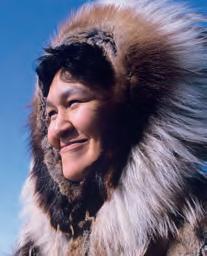
Humans have adapted their lifestyle to different climates, and have also undergone biological changes. Different pigmentations, body proportions, etc. offer advantages in various climates.
There are 1,600 storms occurring on Earth at any one time, and 45 lightning flashes occur every second
The number of reported natural disasters has increased recently; over the last 40 years, the figure has risen from 100 to 400. The situation is tough – and our ideal average temperature of +28 °C is fairly uncommon. Add to this strong winds, rain and other challenging environmental factors. In Scandinavia, such conditions are the rule rather than the exception. Scandinavia’s capital cities are on roughly the same latitude as Anchorage in Alaska, so our tough weather conditions are hardly surprising.
Scandinavia has one of the world’s largest temperature fluctuations
The lowest temperature ever measured in Sweden is -52.6 °C, and the highest is +38.0 °C. This means a difference of 90.6 °C. The Swedish climate is also characterised by high precipitation and strong winds. The extreme weather variations in Sweden and Scandinavia are caused by cold westerly airstreams that collide with warm southerly airstreams. In fact, Scandinavia is considered to have one of the world’s highest temperature fluctuations.
Adélie Land. Annual average of 48 m/s (174 km/h). WINDIEST
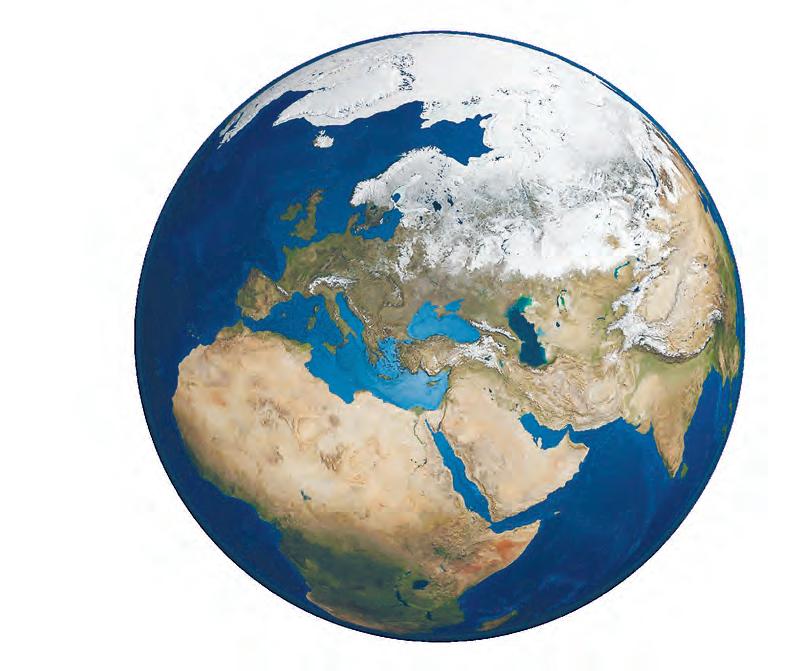
HIGHEST ANNUAL PRECIPITATION
Lloro, Colombia. Annual precipitation of approximately 13,300 mm.
COLDEST
Antarctica (the southern cold pole).
Annual average of -58 °C.
HOTTEST
Dallol, Danakil Desert, Ethiopia. Annual average of +34.5 °C.
Please note that these are only the daily average figures. The hottest temperature ever recorded is +57.8 °C (El Azizia, Libya). The coldest ever recorded is -89.2 °C (Vostok, Antarctica).
AIR HUMIDITY ...
People start noticing the effects of high air humidity already at temperatures around 0 °C. In southern Sweden, for example, the damp winter air in Skåne often feels “raw”, while the drier and colder air further north can feel more comfortable despite lower temperatures. This is because warmer air can hold more moisture, which is illustrated in the Mollier diagram to the right.
High humidity also affects how hot climates feel. At temperatures above +34 °C, sweat has difficulty evaporating if the air is already humid. Since evaporation is the body’s main cooling mechanism, high humidity makes it harder for the body to release heat.
Air humidity also impacts how clothing performs. Inside a clothing system, the microclimate closest to the body is usually around 30–32 °C, which allows the air to hold more moisture than the cooler air outside. When the warm air moves out through the clothing layers and cools down, it can no longer retain the moisture. Instead, the moisture remains in the clothing as condensation.
Functional materials transport this moisture out of the clothing system, helping the layers stay dry and maintain their insulation. Materials like cotton absorb the moisture and keep it trapped, reducing insulation and increasing heat loss as the body tries to dry the clothes. The result is that you become wet and cold.
Warm air can hold more moisture than cold air. When warm air cools down, it can no longer retain all the moisture. The moisture falls like rain and remains in the clothing.
... HOW IT AFFECTS US
LOW AIR HUMIDITY
The mucousa become irritated, causing symptoms such as coughing.
MEDIUM AIR HUMIDITY
Typically feels comfortable and pleasant.
HIGH AIR HUMIDITY
Feels sticky and stifling. Sweat has difficulty evaporating from the skin.
When the air is saturated, the excess moisture falls in the form of rain, snow, mist, etc.
Humidity affects us in many ways, for example, the way we experience the weather. However, it also causes moisture to accumulate in clothing in cold climates.
WE FEEL COLDER …
We all know that the wind has a cooling effect. But why? Humans constantly produce energy, so our bodies are surrounded by a layer of heated air. When the airflow increases around a warm body, the layer of warm air is simply blown away. As a result, the body cools down. This phenomenon, known as convection, accounts for 40–80% of the wind’s cooling effect on the body. An extremely strong wind can even press the warm air out of the clothing system.
The wind’s cooling effect is known as the wind chill factor. The stronger the wind, the higher the wind chill factor. This is illustrated in the diagram to the right. However, note that the temperature does not change just because it’s windy. The temperature always remains the same; it’s the chill factor that varies.
In a climate with a wind force of 6 m/s and a temperature of -5 °C, the heat loss is the same as in completely wind-free conditions at -12 °C. On the other hand, a warm surface can never become colder than the actual temperature – in this case -5 °C. To illustrate this, imagine a parachutist.
If the temperature is above 0 °C, the parachutist will not sustain cold injury during a jump – even if the wind chill temperature, in theory, is colder than -40 °C. The main purpose of a wind chill chart is to assess localised cooling, for instance, of the face.
The wind cools us down by blowing away the layer of warm air that collects around the body. This is called convection.
... WHEN IT’S WINDY
The warm air layer is pressed and/or blown away by the wind.
This increases the chill factor. In this example, the temperature is -20 °C.
0 THE WIND’S EFFECT ON THE CHILL FACTOR
But at a wind force of 15 m/s, the chill factor is -35 °C.
WHAT HAPPENS ...
Generally speaking, we feel cold when our body loses more heat than it produces. On average, it takes 5 to 7 minutes for a person to start feeling cold. This happens when the cold starts affecting our deep body temperature. Consequently, feeling cold is a sign that our body is out of balance. The chilling process also affects our nerves and muscles and impairs our fine motor function and our ability to concentrate.
The first body parts to start feeling cold are our hands and feet. This isn’t necessarily caused by inadequate socks or gloves, it’s also because the body saves heat by reducing the blood circulation. Our hands and feet are the first body parts to be deprioritised in favour of more vital organs. If our hands reach a temperature of around 15–20 °C, they start feeling acutely painful. Below 10 °C, the hands go numb. Below 0 °C, cold injuries occur.
The last body functions to stop working are the heart, lungs and brain. The body keeps them warm for as long as possible. A particularly large amount of energy is stored in the head. In extreme conditions, 80% of body heat can escape through the head if no hat is worn.
If nothing is done to improve the situation, the body activates its next mechanism for keeping warm: shivering. This starts long after we begin feeling discomfort.
... WHEN WE GET COLD
FINE MOTOR PRECISION
When we cool down, it affects our nerves and muscles. Our fine motor skills are impaired.
THE FIRST SIGNS
The first body parts to start feeling cold are the hands and feet. This is because the body saves heat by reducing blood circulation.
DEEP BODY
TEMPERATURE
It takes 5 to 7 minutes for the cold to start affecting our deep body temperature.
SHIVERING
Shivering is caused by uncontrollable muscle spasms. It is one of the body’s ways of generating its own heat.
KEEP YOUR HEAD WARM
Up to 80% of body heat escapes from the head. Use a hat!
REACTIONS
AT LOW BODY TEMPERATURE
37 °C Normal body temperature.
36 °C Cold hands and feet, shaking, discomfort.
35 °C Severe shivering, impaired work capacity. Severe discomfort.
34 °C Exhaustion, lack of strength. Apathy, impaired judgement.
33-32 °C Shivering subsides, deterioration of muscle function, difficult to use hands. Confusion, depression.
32-30 °C Muscle fatigue, inability to walk, skin cold with bluish tinge. Progressive loss of consciousness.
30-27 °C Stiff muscles, slow pulse and breathing. No response to communication attempts.
Below 27 °C No nerve reflexes, irregular heartbeat, heart may stop.
We get cold when our body loses more heat than it produces. Consequently, feeling cold is a sign that our deep body temperature is out of balance.
WHAT HAPPENS ...
Just like when we get cold, sweating is a sign that our deep body temperature is changing. In this case it rises, and the body sweats to cool down. In a resting state and under normal conditions, we lose approximately 30 grams of body moisture per hour through evaporation. If the body overheats, for example during heavy work in warm weather, the sweat glands in the skin are activated and sweat is produced across the whole body. Sweating can also be triggered by mental stress, in which case the hands and head become noticeably moist.
It’s not the actual sweating process that cools us down. The cooling occurs when the sweat evaporates. The evaporation process eliminates large reserves of body heat through the skin. If your body produces enough sweat to evaporate 1 litre of water per hour, this produces a cooling effect of approximately 680 W.
To illustrate this, imagine what it’s like to take a cooling dip on a sunny summer day. When you get out of the water, the air feels cold – even though the weather is sunny and warm. This is because the body releases heat during the evaporation process. During hard work at low temperatures, the cooling effect of sweating can actually be dangerous. When you stop working, the sweat cools your body down just when it needs all the heat it can get.
We sweat when our deep body temperature starts getting too high. The body cools down when the sweat evaporates.
... WHEN WE SWEAT
ADJUSTING OUR HEAT BALANCE
To stop the body from overheating, we need to sweat.
THE ACTUAL SWEATING DOESN’T COOL US DOWN
The cooling occurs when the sweat evaporates.
THE WHOLE BODY SWEATS
There are sweat glands all over the body. They are activated in hot environments and during hard work.
LIMITED EVAPORATION
At high humidity, the body has difficulty cooling down during sweating, because the sweat cannot evaporate efficiently into the already saturated air.
COOLING
If your body produces enough sweat for 1 litre of water to evaporate per hour, this generates a cooling effect of about 680 W.
REACTIONS AT HIGH BODY TEMPERATURE
37 °C Normal body temperature.
38 °C Temperature during moderately hard work. Blood vessel dilation and sweating.
39 °C Temperature during very hard work. Exhaustion.
40 °C Inefficient temperature regulation. Unbearable.
Above 41 °C Risk of heatstroke and permanent heat damage.
150 ML A DAY
Our feet release about 150 ml of sweat a day.
THE WEATHER AFFECTS OUR MENTAL STATE
It feels nicer to get up on a sunny summer morning than on a dark, cold and windy winter morning. The weather affects our mental state. Temperature has an especially strong effect, influencing both our performance and our behaviour.
A person suffering from severe cold has trouble concentrating. Complex tasks performed under time pressure are especially sensitive to the effects of a cold environment. More errors are committed, many of them caused by lapses in concentration. Our learning ability is also impaired, and it becomes harder to memorise new information.
After prolonged work in the cold, you may get used to your body’s reactions and feel less discomfort. This is not entirely positive. You risk getting used to the warning signals and overlooking them. This can result in cold injuries. The nature and severity of physical and mental reactions to cold vary from person to person, and may also be influenced by individual attitudes and motivation.
The opposite of cold stress is heat stress. This occurs when the body cannot release enough heat (for example due to a thick layer of clothing) and consequently overheats. Besides causing discomfort and reduced stamina (working capacity), heat stress also has a negative mental effect. Memory and spatial orientation ability are impaired.
BODY HEAT IS PARTLY
CONTROLLED BY THE MIND
Our mental state affects the way our body reacts to the climate in extreme or vulnerable situations, for example if we are worried, nervous or under pressure. The body reacts to these situations by tensing up. The degree of stress required for this to happen varies from person to person, but the symptoms are the same for everyone. The blood vessels contract, reducing blood circulation. As always, reduced circulation makes us feel cold.
Another reaction worth mentioning is cold sweating. This happens when the inner tension is so strong that the body secretes sweat, primarily on the head and hands.
COLD/ STRESS
INDIVIDUAL CHARACTERISTICS
PHYSIOLOGICAL AND PSYCHOLOGICAL REACTIONS
PERFORMANCE CAPACITY
RISKS COSTS
PERFORMANCE
Many factors affect our performance and our reactions to the weather, including stress and individual characteristics.
SITUATIONAL FACTORS
THE BODY LOSES HEAT IN SEVERAL WAYS
The body is constantly losing heat. In hot environments, it is necessary to prevent the body from overheating. In cold temperatures, we can easily lose too much heat. As a result, we get cold and are at higher risk of cold-related injuries. The colder the temperature, the more heat we lose. Cooling takes place by means of five processes: convection, radiation, conduction, evaporation and breathing. In a cold climate and with a low level of activity, these processes are distributed roughly as follows:
50% CONVECTION – air is heated by the skin and flows away. This process is strongly reinforced by wind and ventilation in clothing.
30% RADIATION – heat is released in the form of light, in the same way as the sun’s rays.
10% BREATHING – when we draw cold air into the lungs, this also has a cooling effect.
5% EVAPORATION – heat energy is transported away when the body evaporates moisture (e.g. sweat), which has a cooling effect.
5% CONDUCTION – heat is exchanged when two surfaces meet (e.g. warm feet on a cold floor).
In light of these factors, we need clothes that are suited to the body’s heat loss. Low evaporation resistance prevents moisture from remaining in the clothing system. Windproofing protects against heat loss through convection. Waterproofing protects against moisture, which would otherwise increase cooling through evaporation. Insulation retains the heat within the clothing system.
THE HEAT PROPERTIES OF CLOTHING
To prevent heat loss, you need suitable clothing that keeps you warm and dry. This process can be divided into four factors:
INSULATION
EVAPORATION RESISTANCE
WINDPROOFING
WATERPROOFING
LOSS OF BODY HEAT
Our body is constantly giving off heat. This is important in order to prevent overheating. However, in cold weather it creates problems.
BREATHING ≈ 10% CONVECTION > 50%
RADIATION < 30%
EVAPORATION ≈ 5% CONDUCTION < 5%
Your clothing is vital for reducing heat loss. It needs to insulate and keep your body dry, as moisture has a cooling effect.
CLOTHING INSULATION IS MEASURED IN CLO
Appropriate clothing is vital for operating and working in cold weather. Your clothing provides insulation and keeps you warm by creating an outer layer of warmed air around your body. However, this layer is sensitive to convection and can easily be blown away, so your clothing must keep you warm even in windy conditions.
At the same time, it shouldn’t provide so much insulation that you sweat; your clothing should provide the right degree of warmth. But how can you determine this?
To determine how warm a clothing system needs to be, various factors must be considered, and it is vital to determine the right CLO value. CLO is a measurement unit that indicates a garment’s insulating ability. It is based on an international standard (EN 342) and is measured and determined using a thermal manikin.
When clothes are CE-marked, the measurement value m² K/W is used to state their insulation capacity (1 CLO = 0.152 m² K/W). Calculating the CLO value is a scientific means of identifying the right clothing, with key factors including temperature, wind and type of work.
INSULATION PROVIDED BY CLOTHING
0–3.5 CLO
INSULATION PROVIDED BY OUTER AIR LAYER
0.2–0.8 CLO
Clothing can provide insulation up to 3.5 CLO. You are also surrounded by an outer layer of heated air that keeps you warm – as long as there is no wind.
THE BODY GENERATES HEAT DURING WORK
In a resting state, the body generates a heat output of about 100 W. As soon as we start moving and working, the heat production increases. During “light work”, for example when using light tools, we produce around 240 W. During “very heavy work”, such as climbing or fast digging, we produce 600 W or more.
When the body generates heat, our clothing requirements change. Clothes that keep you warm in a resting state quickly become too warm if you begin doing physical work in them. For this reason, the user’s heat production should be taken into consideration when determining the right clothes (see next page).
HEAT BALANCE REQUIRES THE RIGHT CLO VALUE
The optimal heat balance means that your body has an internal temperature of roughly 37 °C. This is vital in order to function effectively and feel comfortable. Feeling cold is the body’s reaction to a drop in deep body temperature. Conversely, we sweat when our deep body temperature starts rising. In both cases, this is the body’s way of maintaining an optimal heat balance.
When you add factors such as changes in weather, temperature and work activities (your own heat production), it becomes clear that heat balance is no easy equation. It is therefore vital to dress correctly. Your clothing requirement is calculated using CLO, according to the scale below.
THE CLOTHING LIMIT
At this point, it’s not possible to dress any warmer without restricting mobility.
DRY, WARM, SECURE – OUR SOLUTION ...
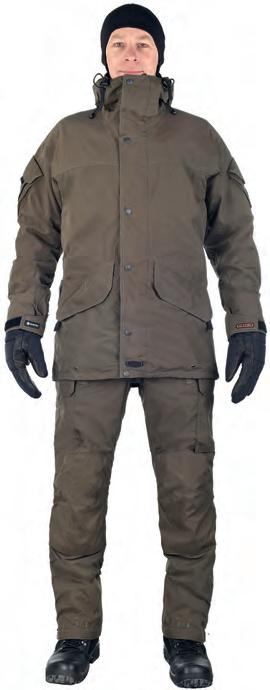
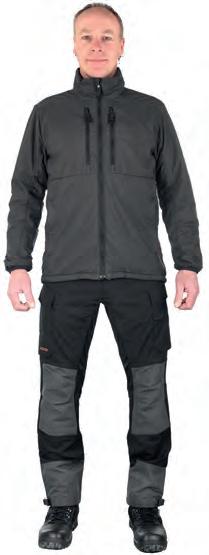
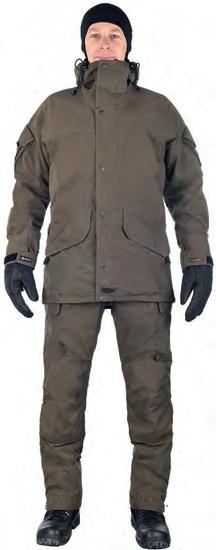
Good work clothes should keep you dry, warm and secure without restricting your movement. Through research and extensive testing, we have developed garments that provide optimal mobility and heat balance, even in situations that require very high CLO values. Taiga’s clothing systems are based on the layer-on-layer principle: Dry, Warm and Secure.
DRY
The first layer limits convection directly next to the skin, wicks moisture away and keeps you dry.
WARM
The second layer provides insulation and helps retain the heat generated by your body within the clothing system.
SECURE
The outermost layer protects you from extreme weather and other external hazards.
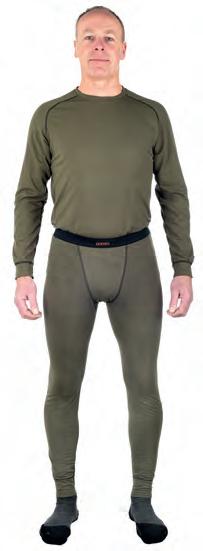
... TO OPTIMISE YOUR PERFORMANCE
The first layer reduces convection directly against the skin and keeps you dry. This is followed by the insulating warm layer, which can be supplemented if necessary. The outermost layer protects you against external factors — from rain and wind to electric arcs and hazardous chemicals.
GOOD ADVICE FOR MAXIMUM PERFORMANCE
The layer- on-layer principle makes it easy to adjust your clothing’s CLO value.
But beyond adding or removing garments, there are several other strategies that help you stay comfortable in extreme cold or heat.
ADJUST YOUR CLOTHING
Adjust your clothing to your activity level. If your workload varies, your clothing must vary accordingly. The layer- on-layer principle makes it easy to change your clothing system’s CLO value. For example, when moving from light to more demanding activity, it’s a good idea to remove warm garments such as fleece layers. If you start feeling cold, add more insulation. Your hat is especially important — a lot of heat is lost through an uncovered head.
AVOID COTTON CLOTHING
Cotton has no place in a functional clothing system. When cotton gets damp (which it easily does), it loses its insulating ability. In addition, it uses your body heat to dry, cooling you down in the process.
RAISE YOUR HEAT FROM THE INSIDE
If you start feeling cold outdoors, activate your large muscle groups for 5–7 minutes. This increases heat production and improves blood circulation. The largest muscle groups include the abdomen, back and legs.
WASH YOUR CLOTHES REGULARLY
Clean clothes perform better. This is particularly true for the inner surfaces, which are exposed to sweat and body oils. For example, moisture -wicking membranes can become clogged, reducing breathability. Socks are especially important — your feet release around 150 ml of sweat a day. Change your socks frequently to ensure they stay clean and comfortable.
REST IS VITAL
Avoid working for too long in extreme cold or heat. The risk of heat stroke and exhaustion rises at outdoor temperatures above +30 °C, and the risks increase significantly in severe cold below –30 °C. Take regular short breaks away from the cold or the heat.
DRINK WATER
A healthy person should normally drink at least 1.5 litres of water a day. During intense work, sweating increases and so does your need for fluids. Make sure to drink plenty and regularly. Don’t wait until you feel thirsty — thirst is already a sign of dehydration. Other common symptoms of dehydration include headache, dizziness and reduced concentration.