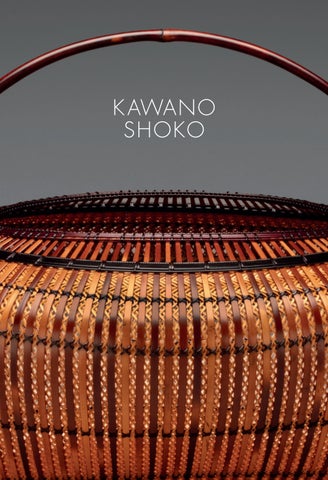
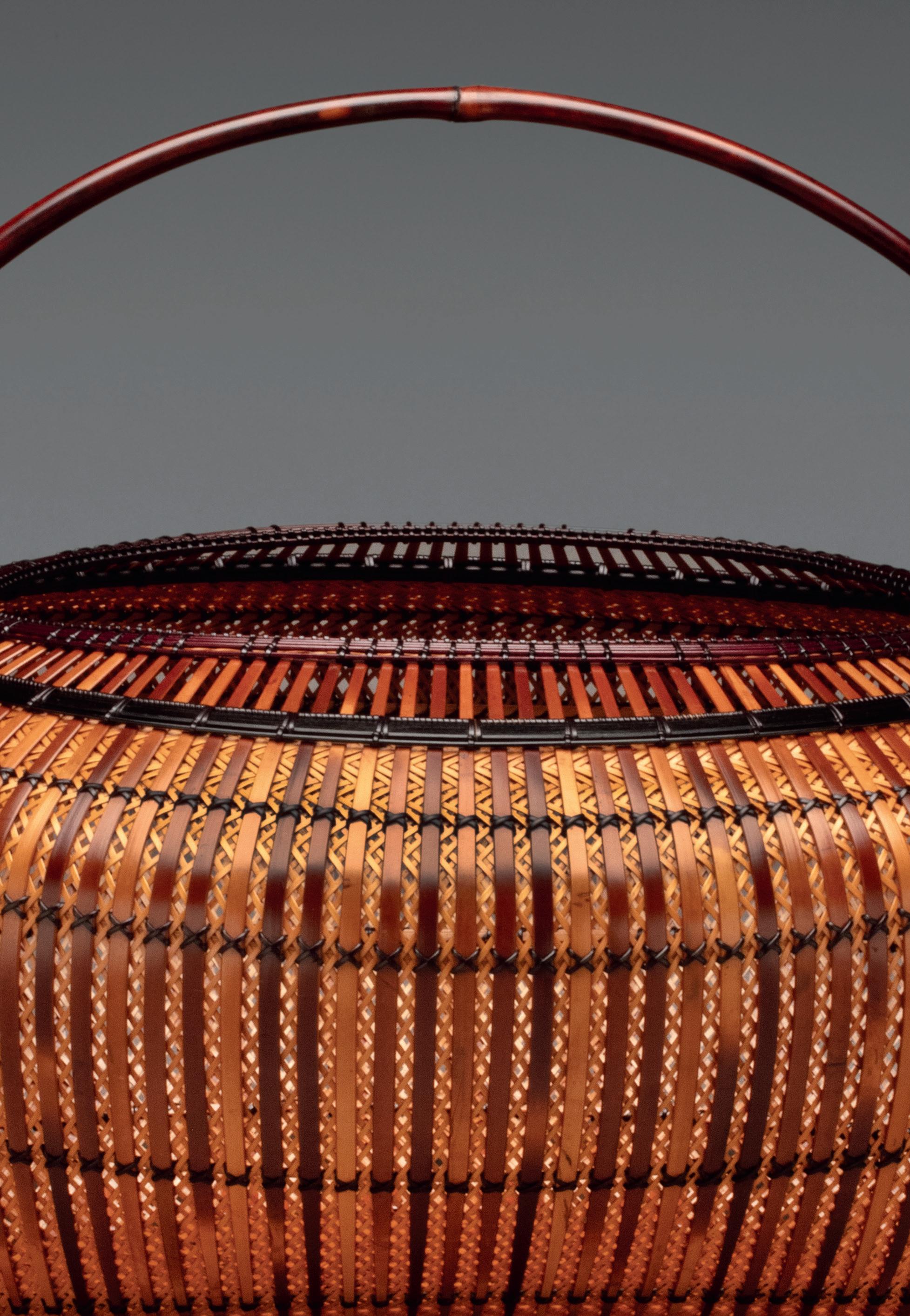
KAWANO SHOKO
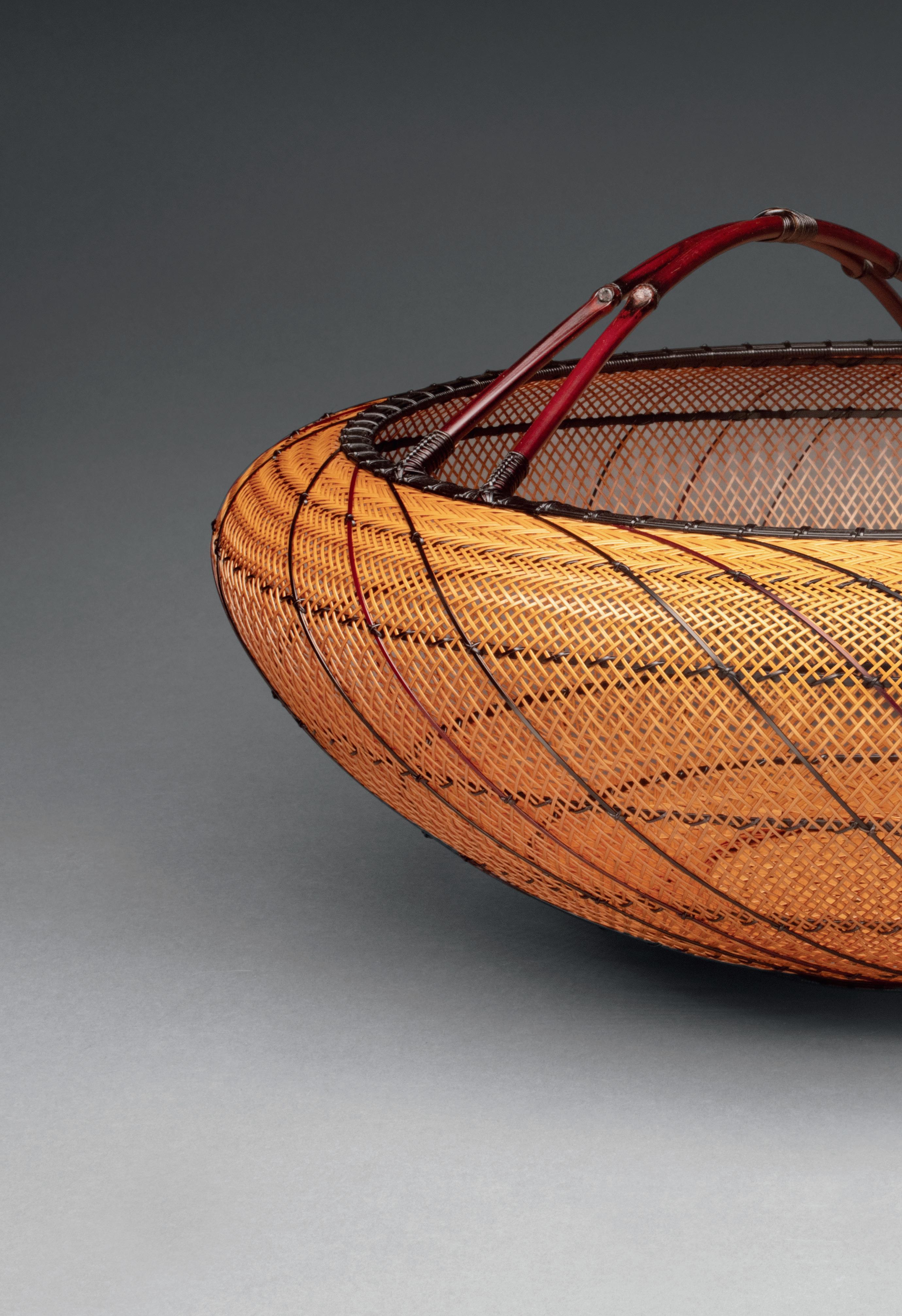
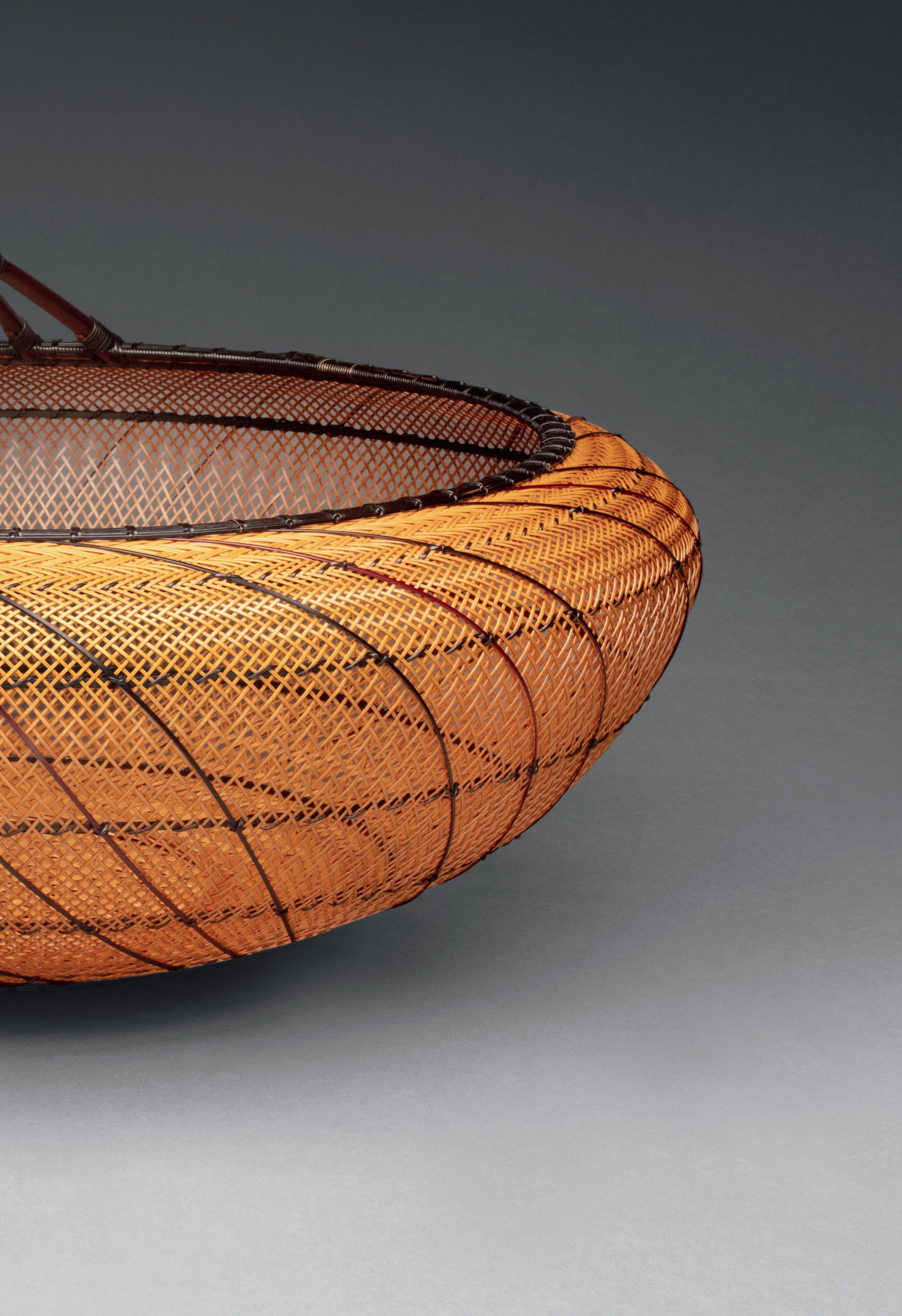
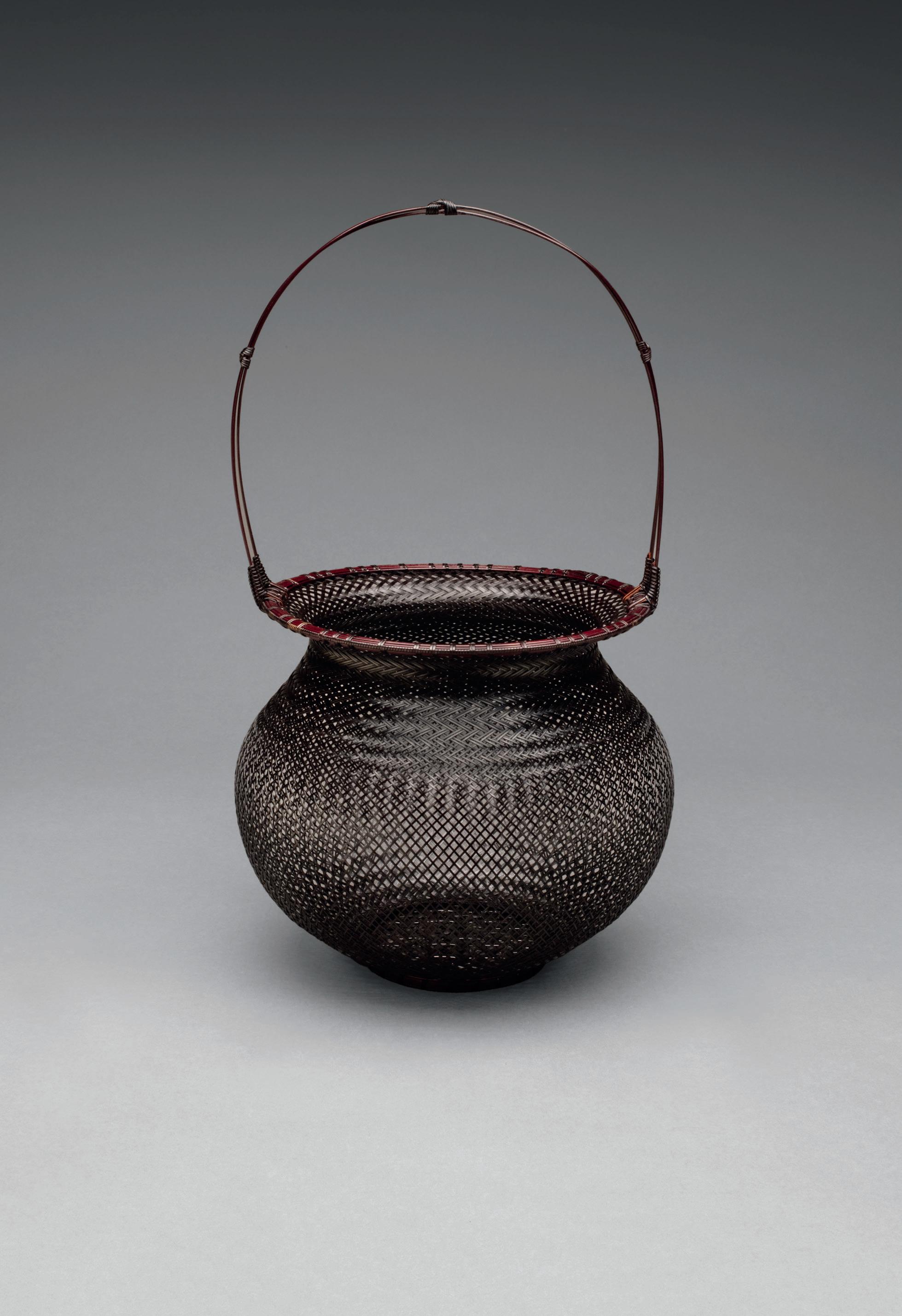
Rain Falling on Leaves , 2026, 9.25 ×17.75 ×17.75 inches
KAWANO SHOKO
Kawano Shoko often describes himself simply, saying: “I’m a craftsman, after all.” It is a modest claim for an artist who has been recognized with some of Japan’s most prestigious honors, culminating in the Medal with Purple Ribbon in 2024. But the description is deliberate. Kawano’s technical fluency, admired throughout the world of bamboo art for its speed and precision, did not come from the fine arts training he once pursued; after years of preparing for the entrance exams at Tokyo University of the Arts, he was unable to gain admission. It comes instead from years spent producing identical bamboo flower baskets for wholesalers, work he created to earn a living alongside the original works he makes for exhibition. That grounding in utility, and the discipline it demanded, still shapes how he approaches bamboo today.
Kawano Shoko was born in 1957 in Oita City, Oita Prefecture. He is a so - called “traditional” bamboo artist who, since 1997, has consistently submitted works to public exhibitions organized by the Japan Craft Arts Association. Kawano had aspired to become an artist since his youth. In high school, he enrolled in the Art Department of Midorigaoka High School, the only public high school in Oita Prefecture specializing in the arts. He then set his sights on Tokyo University of the Arts, widely considered to be the most competitive art school in the country, and moved to Tokyo to prepare. After more than five years of preparing for the entrance exam, he was still unable to gain admission, and he began working in Tokyo as a salaried employee.
In 1989, at the age of 32, Kawano returned to Oita Prefecture and enrolled in what is now the Oita Prefectural Bamboo Crafts Training Center. Among his classmates was Kibe Seiho, who would later also become active in the Japan Craft Arts Association. Kawano and Kibe are known for their particularly close friendship, keeping in regular contact and recently collaborating to mentor students. Even as student, Kawano was known for his speed, and to this day, he continues to maintain an extremely fast pace of production, creating numerous works with efficient movements and overwhelming concentration. This is due not only to Kawano’s innate talent but, above all, to the skill he has honed through many years of working on his craft all day, every day.
Kawano studied under Morigami Jin and was later mentored by Watanabe Chikusei II. Morigami works freely with twining techniques, using strips as fine as thread to create freeform, asymmetrical shapes and light, airy flower baskets. He is a leading figure in Beppu’s bamboo community. Watanabe studied under his father, Watanabe Chikusei I, and created tea ceremony utensils using tightly woven twill plaiting. One characteristic of twill plaiting is that its appearance can be significantly altered by varying the width of the strips. Their influence can perhaps be seen in Kawano’s embrace of sukashi - ajiro (transparent or open twill plaiting), a variation of standard twill plaiting which features spacing between the strips of bamboo. Kawano has created numerous flower baskets using this weaving technique,
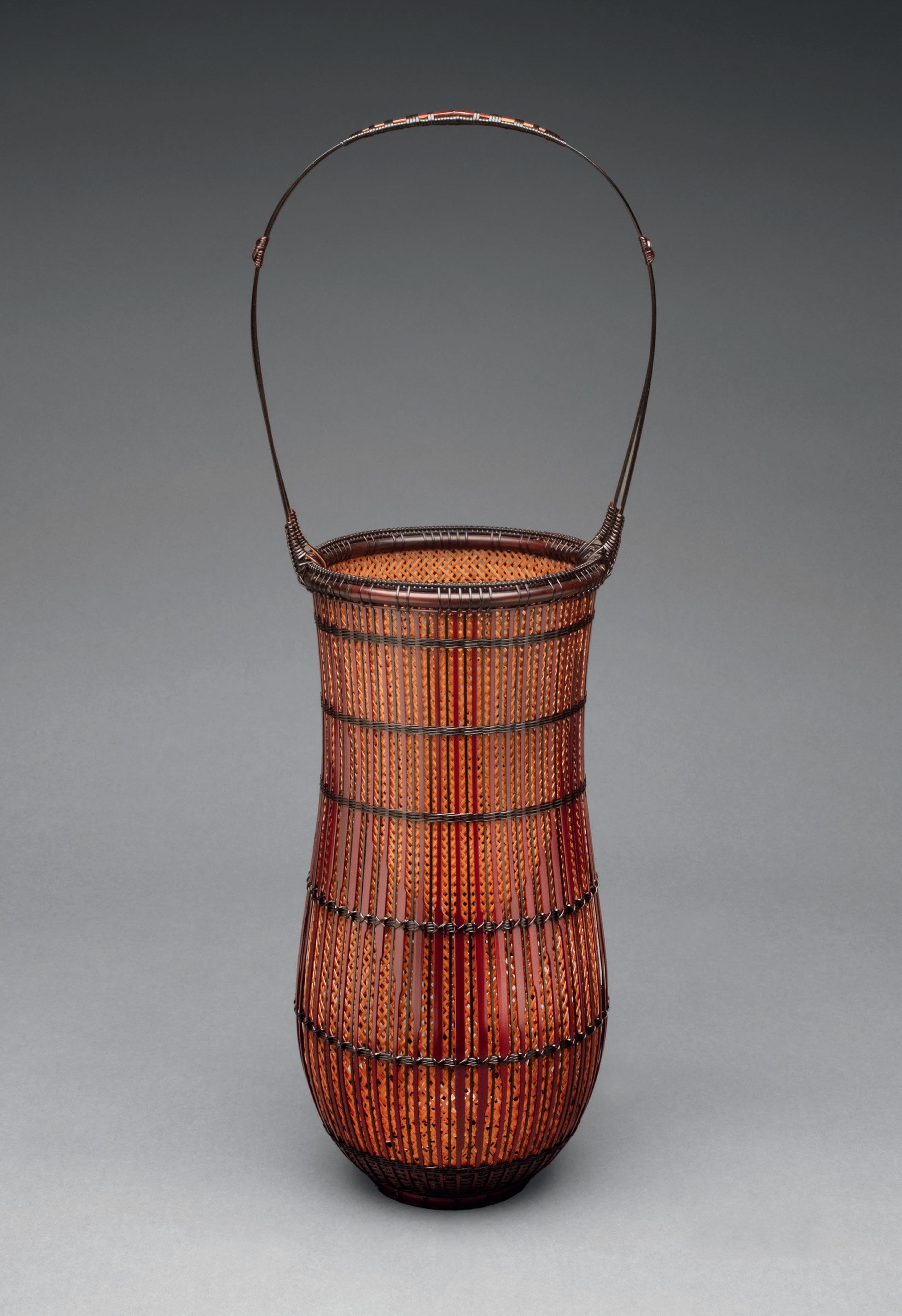
Autumn Glow II , 2023 21 × 7.5 × 6.5 inches
sometimes wrapping the exterior in a second layer of bamboo strips or creating new patterns by changing the color of some of the strips. Both Morigami and Watanabe were active in the Beppu bamboo craft industry, and so was Kawano for many years, taking orders from wholesalers to produce lots of 10-20 flower baskets in a month. He earned his living by making these production pieces while simultaneously creating artworks for exhibition. It is this period that laid the foundation for his current ability to create works both quickly and beautifully. To this day, he continues to accept orders from wholesalers.
In 2002, he won the 2nd Cotsen Bamboo Prize, and his name quickly spread throughout the bamboo world, causing quite a stir. Kawano’s wasyoung and his career was still in its early stages, while the other finalists at the time were all artists who had been active at the forefront of the field for many years. However, the judges highly praised his fusion of traditional and contemporary elements, saying that his work embodied “the perfect marriage of traditional and contemporary; craftsmanship and sculpture; the past and the future.” Incidentally, it is when he was applying to the Cotsen Bamboo Prize that a bamboo crafts shop in Kyoto gave him the artist name “Shoko,” combining the character “Sho” from Shono Shounsai (1904 –1974 ) with the “Ko” from Kadota Niko (1907–1994). Kawano felt the name was “far too daunting” at first, but considering his subsequent work and career, one senses the appropriateness of the name’s connection to two artists who devoted themselves to creating original works while carefully preserving the traditions of Oita craftsmanship.
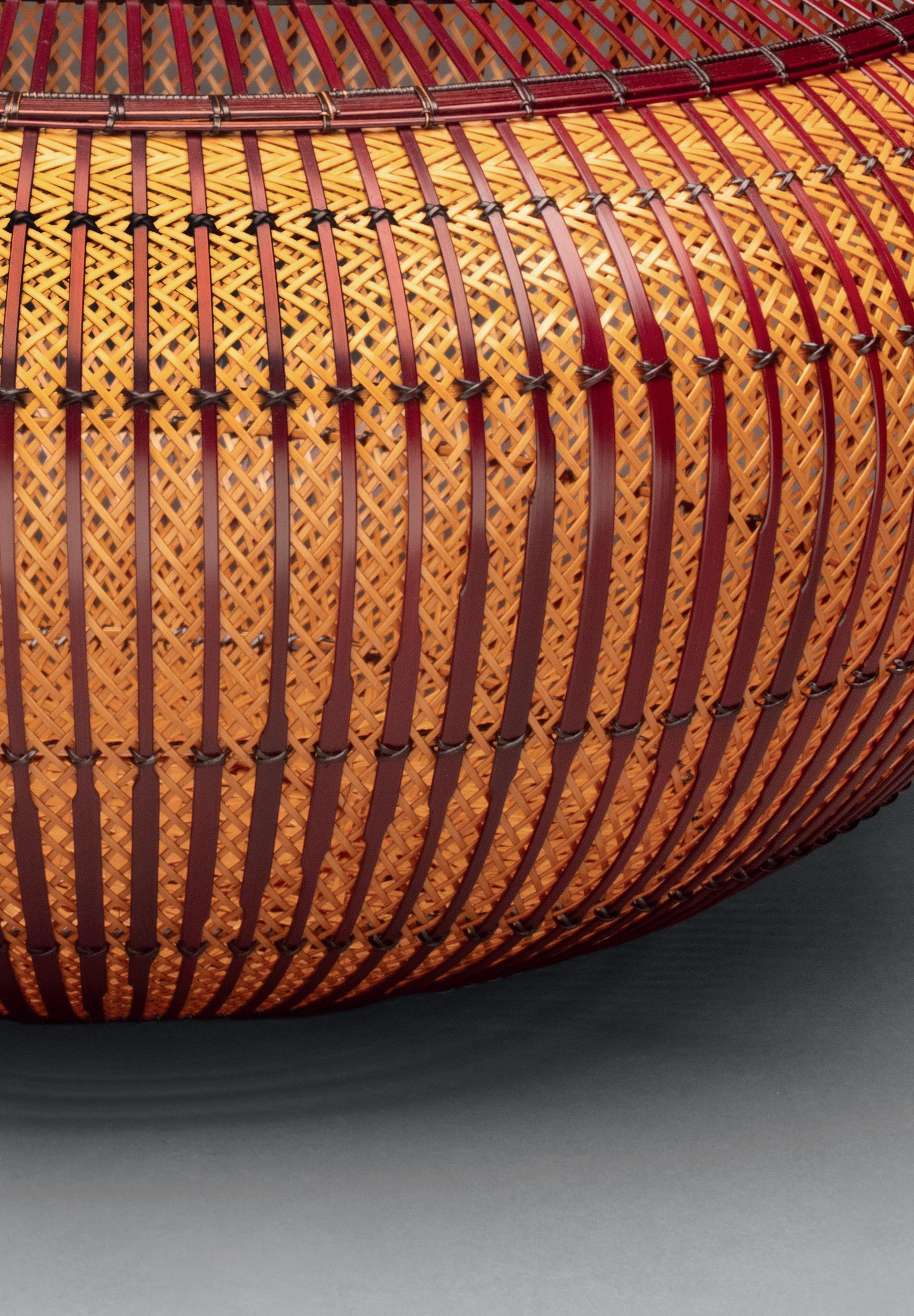
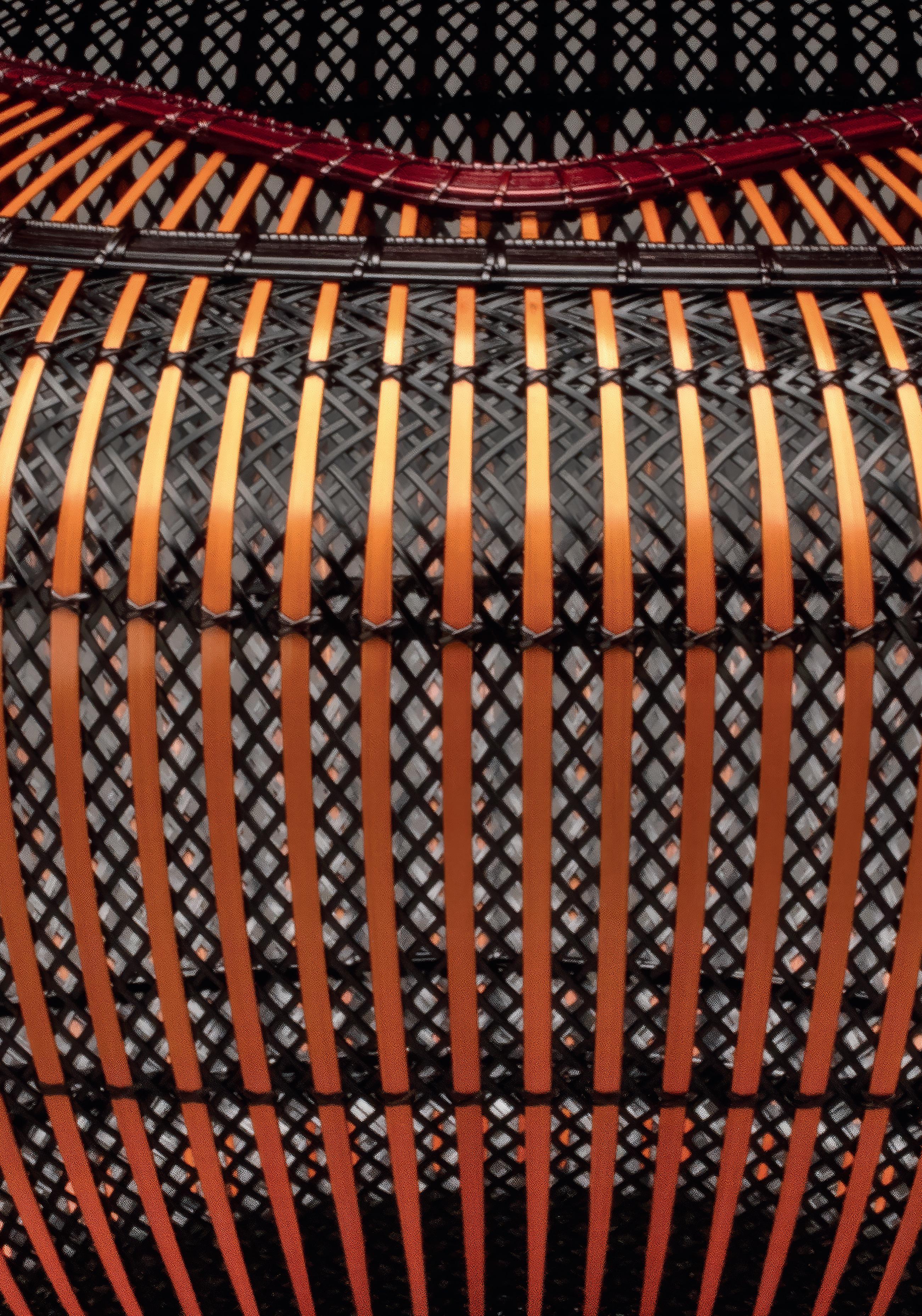
In 2006, he was one of a small group of artists invited to take part in a series of workshops led by Living National Treasure Hayakawa Shokosai V (1932 – 2011). In nine days of training spread over the course of two years, Shokosai V passed on the traditional techniques of the Hayakawa family as well as his own original techniques. In the years since, Kawano has made extensive use of the skills he learned. In particular, works featuring an exterior layer of carved bamboo plates arranged in parallel over a sukashi - ajiro body have become hallmarks of Kawano’s later body of work. In the tall, vertical flower basket with handles titled Autumn Glow II , created in 2023, reddish carved bamboo strips are inserted vertically into an amber sukashi - ajiro base. Interspersed with thin black bamboo strips, this design subtly evokes the image of a small light gently flickering and illuminating the space on a long autumn night.
Since receiving the Tokyo Metropolitan Board of Education Award at the 12th Japan Traditional Craft Arts Wood and Bamboo Exhibition in 2009, Kawano has won numerous awards at various exhibitions. After receiving the top prize at the 69th Japan Traditional Craft Arts Exhibition in 2022, he was awarded the Medal with Purple Ribbon, one of Japan’s highest civilian honors, in 2024.
Kawano had his first solo show at TAI Modern in 2016. Over the past ten years, his work has changed in intriguing ways. Many recent works have a higher center of gravity, and their appearance is more responsive to changes in the angle of the light and the surrounding environment. Previously, many of his works featured geometric patterns created through the use of contrasting colors, such as bright yellow and black. However, in Kawano’s
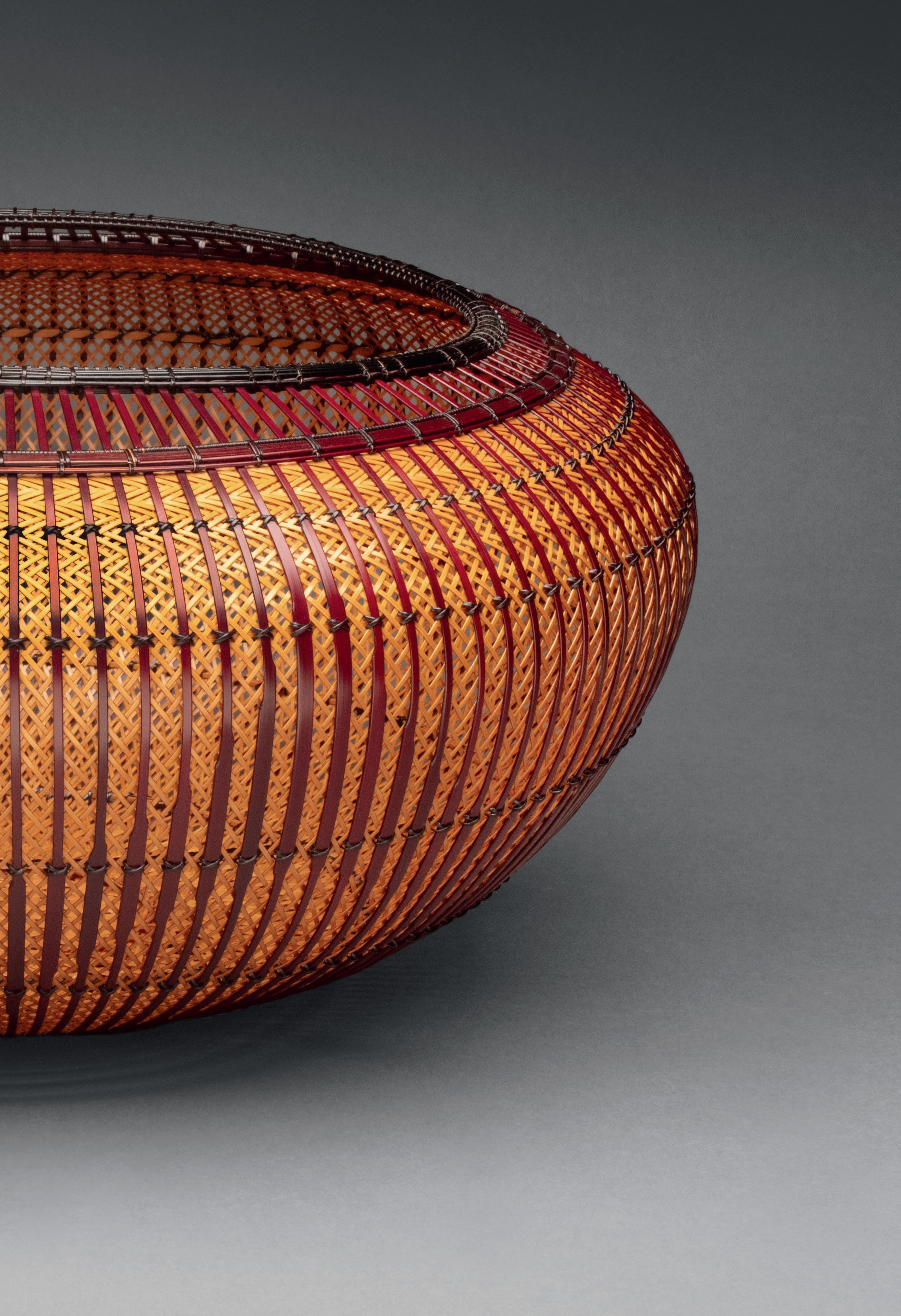
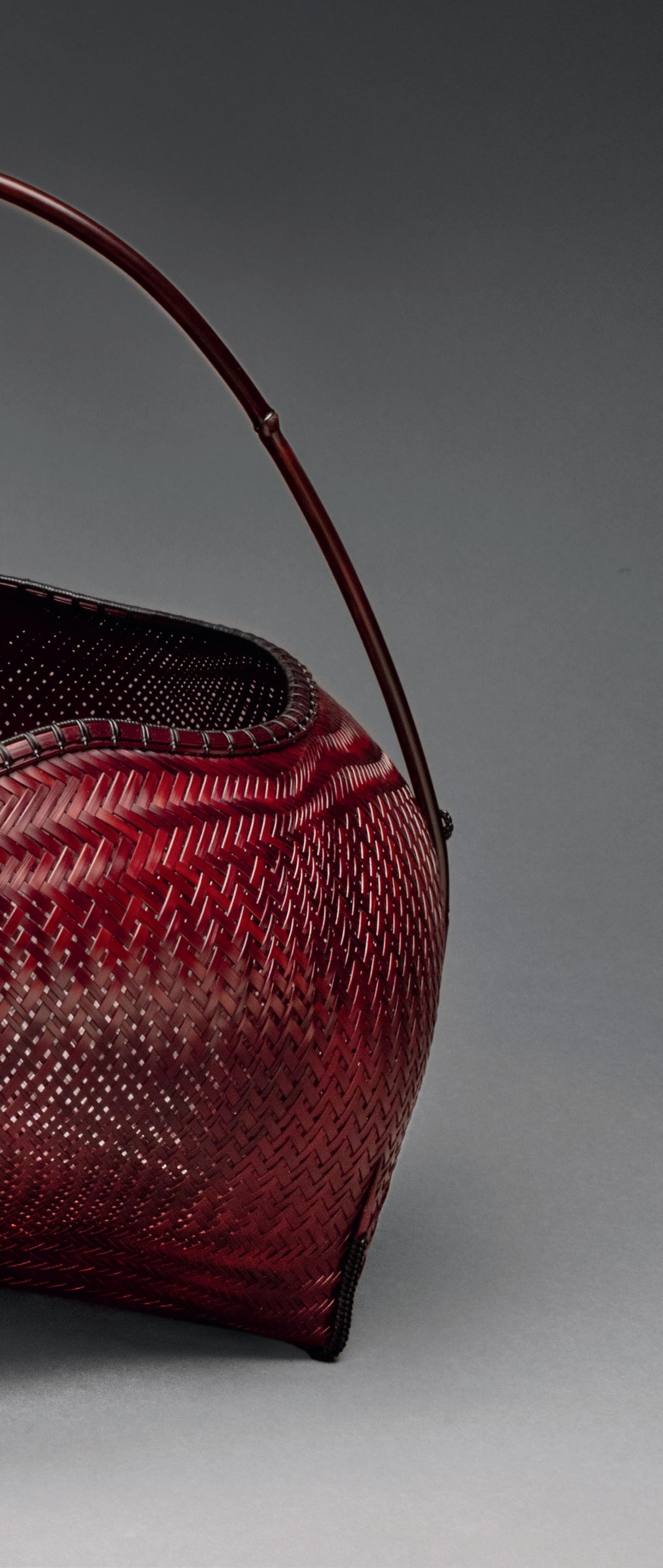
recent works, there has been an increase in pieces that employ a multi - colored palette with lower- contrast hues. When illuminated by strong light, the delicate, open twill weaving asserts its presence clearly, accompanied by a moiré effect; conversely, when placed in a dimly lit area with soft lighting, the various colors—such as red, black, brown, and yellow—blend together, giving the impression that the piece is softly and warmly suspended in the space. Among these, Autumn Grasses ( 2020 ) is one work that allows viewers to appreciate Kawano’s distinctive use of color. This piece, which stands about 12 inches tall, transitions from a rectangle base to an oval top; it is a well-balanced composition topped with a low, arching handle. The sides of the flower basket consist of a honey-colored base woven in sukashi - ajiro, into which strips of carefully bent and tapered susutake (antique sooted bamboo) have been inserted. The dappled coloration of the susutake ranges from a deep, rich chestnut to tones of copper and brass. These colors are echoed in the dark brown of the rattan stitching and the large outer rim and while the elliptical reddish inner rim draws out the warm tones. True to its name, the piece expresses the way grasses in meadows and wetlands turn red and golden in the fall.
Kawano’s expression has varied over the years, but his deep respect for Beppu’s craftspeople has not. Kawano still says “I’m a craftsman, after all” not to draw a line between “artists” and “artisans” but out of a sense of pride in his history and rooted in his experience preparing uniform materials by hand to produce consistent, high-quality products at volume. When speaking with Kawano, the conversation often turns not only to artists who create modern sculptures or refined flower baskets, but also to the craftspeople who produce bamboo articles used as everyday household items. He speaks highly of their excellence regardless of age, mentioning with particular reverence Kanda Asao (1931– 2005 ), but also actively working craftspeople who are several decades younger than Kawano. One senses that Kawano is not abandoning the sculptural ambitions he once held for bamboo, but building them on a craftsman’s foundation, upholding tradition while shaping something distinctly his own within it. In this solo exhibition, both the solid technical grounding Kawano acquired in Oita and his vision as an artist who is using bamboo to pioneer a new tradition are sure to captivate viewers.
n Rikako Akai
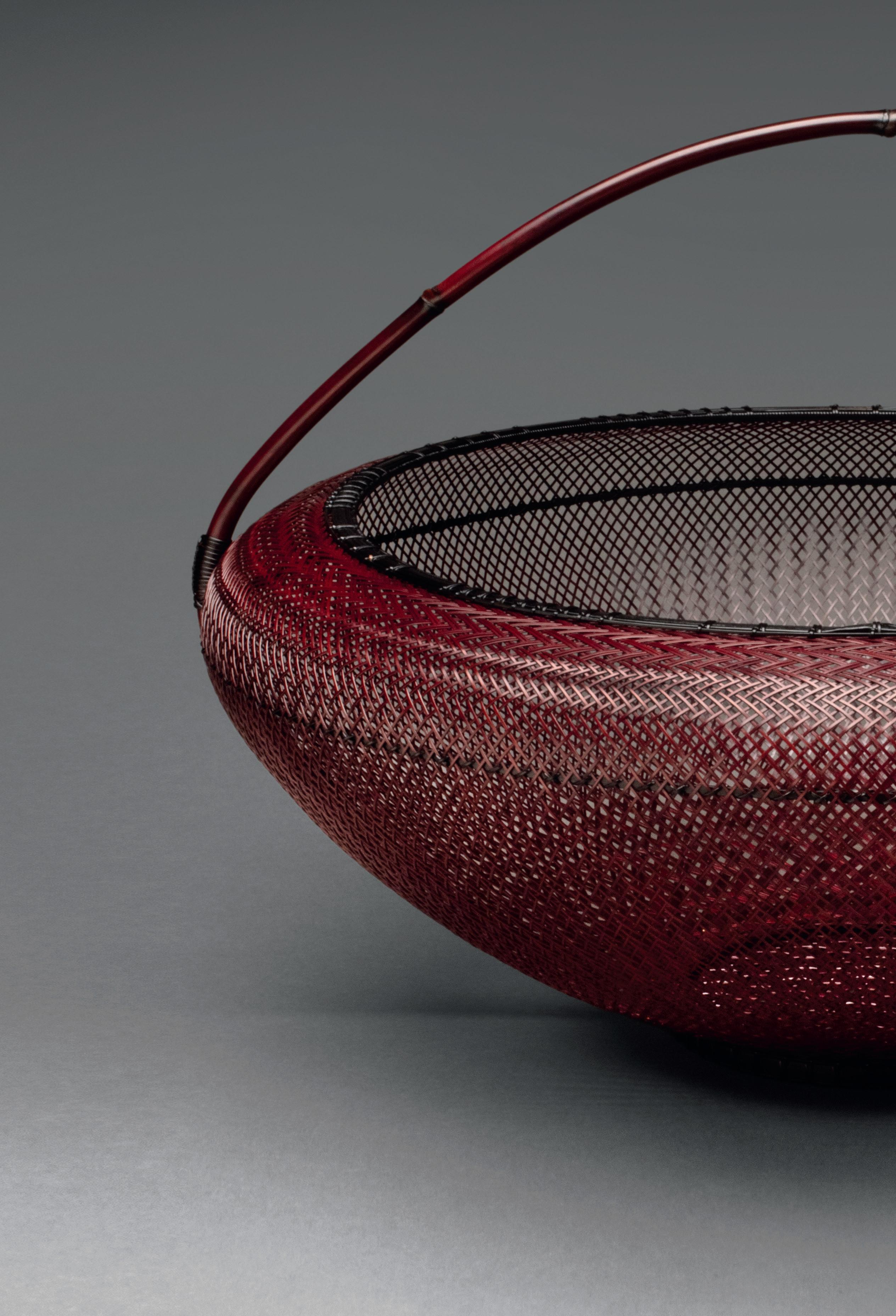
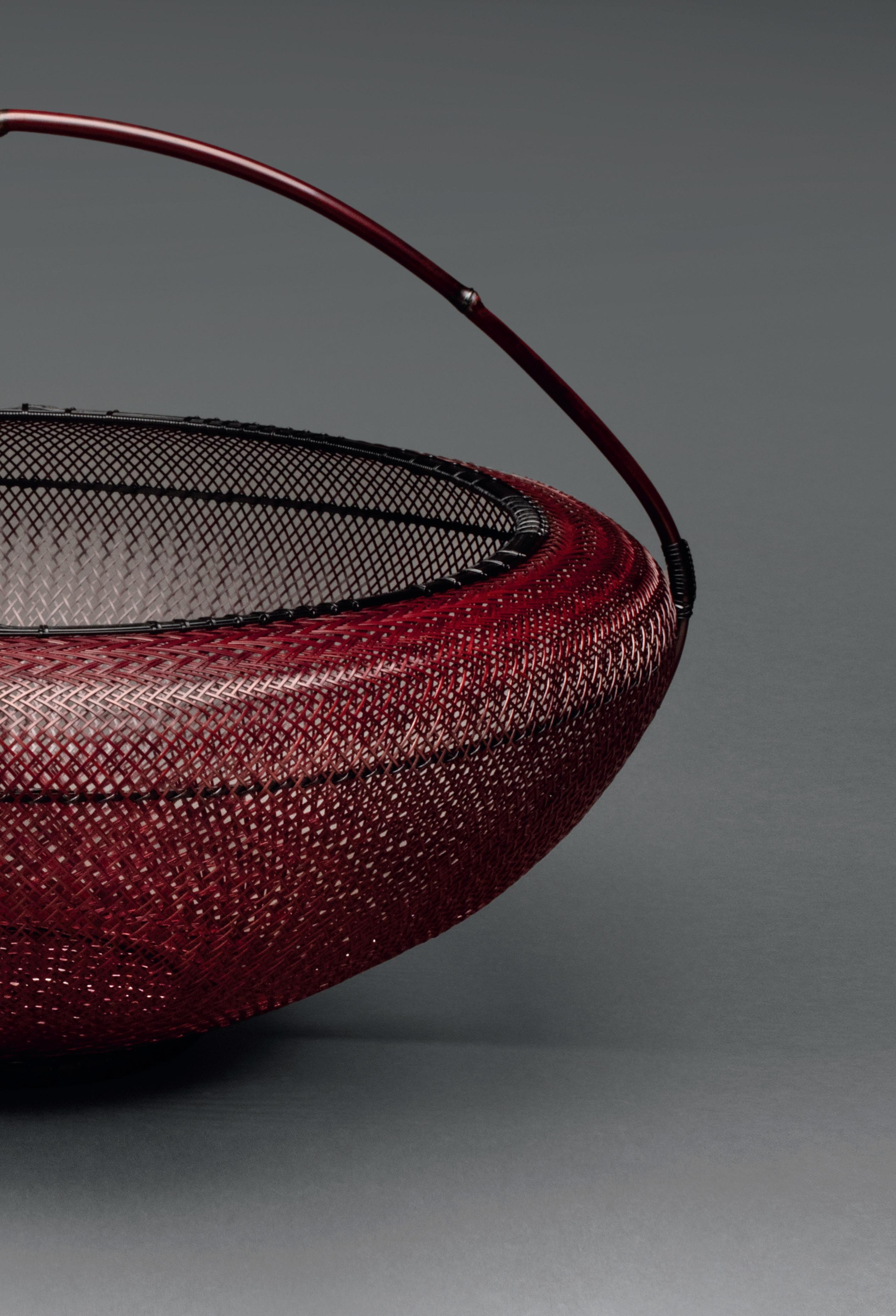
Crimson Dawn , 2026, 12.5 ×19 ×18.75 inches
ARTIST STATEMENT
It has been 38 years since I, having once aspired to be a sculptor, discovered “bamboo art” and chose bamboo as my medium of expression. These years, combined with the fact that I am now 68 and am increasingly looking back as I plan future work, fill me with deep emotion.
The works I strive to create take bamboo, a natural material, turn it into strips and weave these strips into three-dimensional forms using various traditional techniques. Throughout this process, I aim for organic, simple shapes with a sense of airiness that make full use of bamboo’s inherent flexibility. This approach has remained largely unchanged since I first encountered bamboo, and I believe it forms the foundation of my artistic practice.
If there has been any change at this stage of my life, it might be the increased interaction I have with young people aspiring to become artists. I feel a sense of responsibility to pass on the skills I have cultivated over many years, and I am gradually creating opportunities to do so, hoping to be of some help, however small. I am touched by their pure passion and sensibility toward craftsmanship, and they offer me fresh, valuable inspiration that technical skill alone cannot provide.
Ten years have passed since my first exhibition at TAI Modern, and I am honored to have been given the opportunity to hold my second exhibition there. I would be delighted if many of you could come and view my work.
n Kawano Shoko April 2026
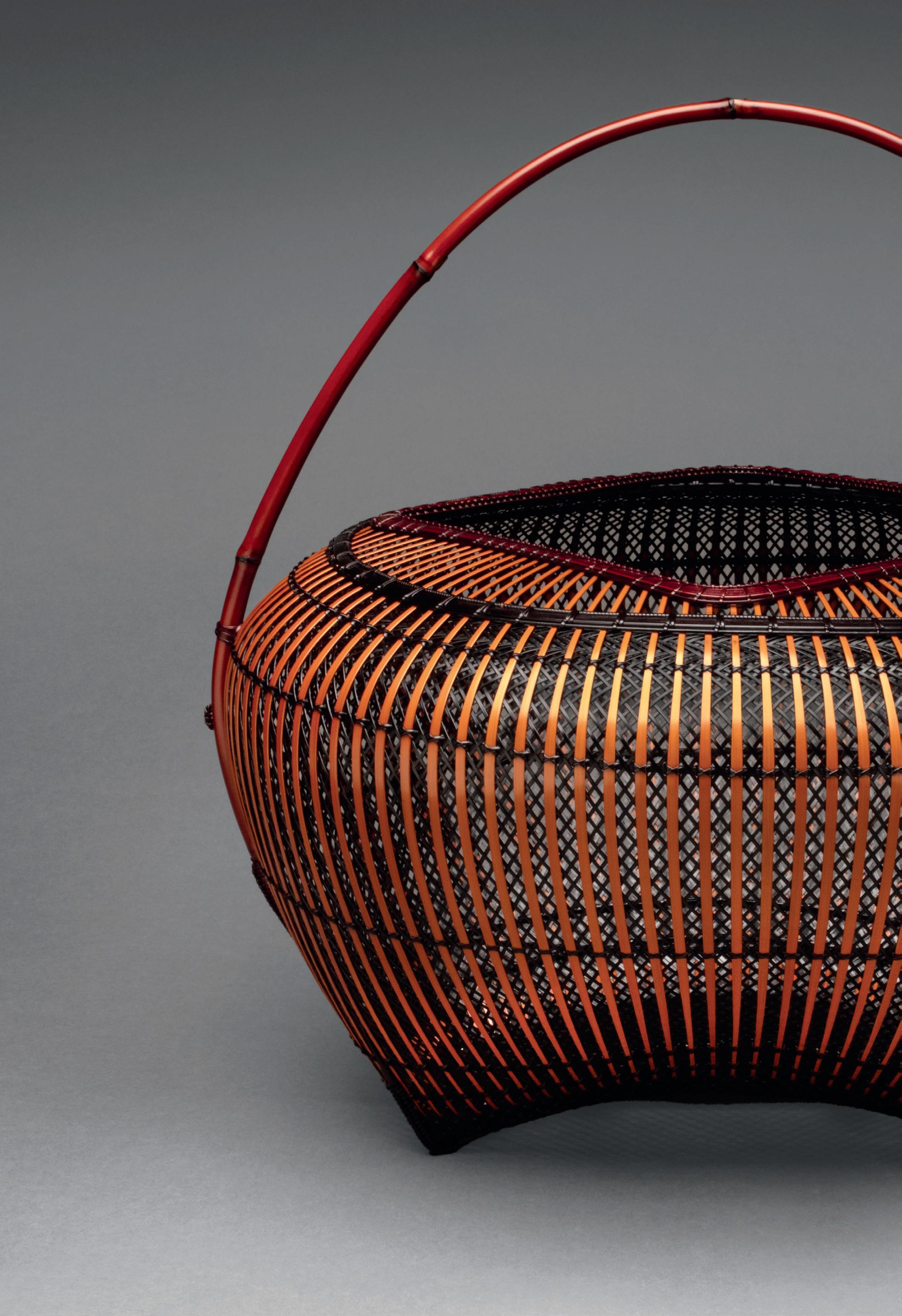
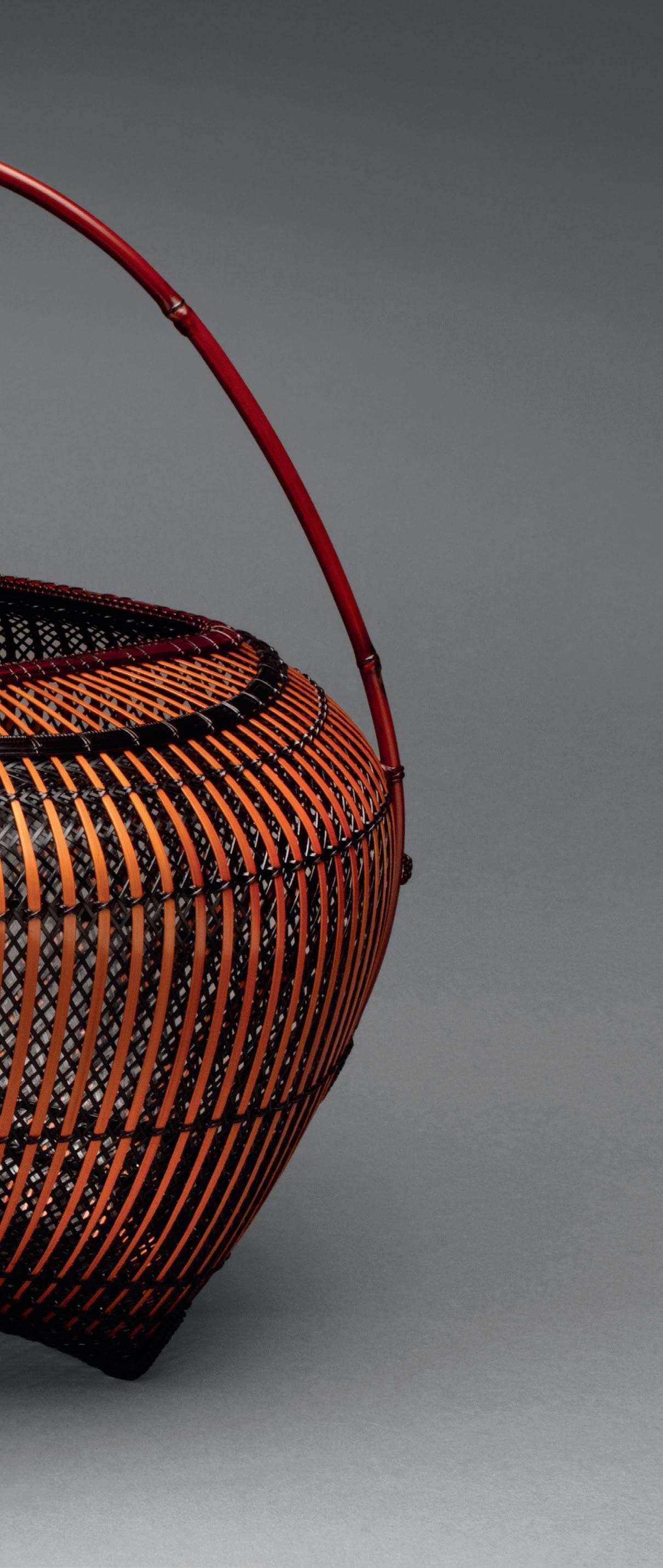
Moon in Deep Water , 2025 14.75 ×15.5 ×14.25 inches
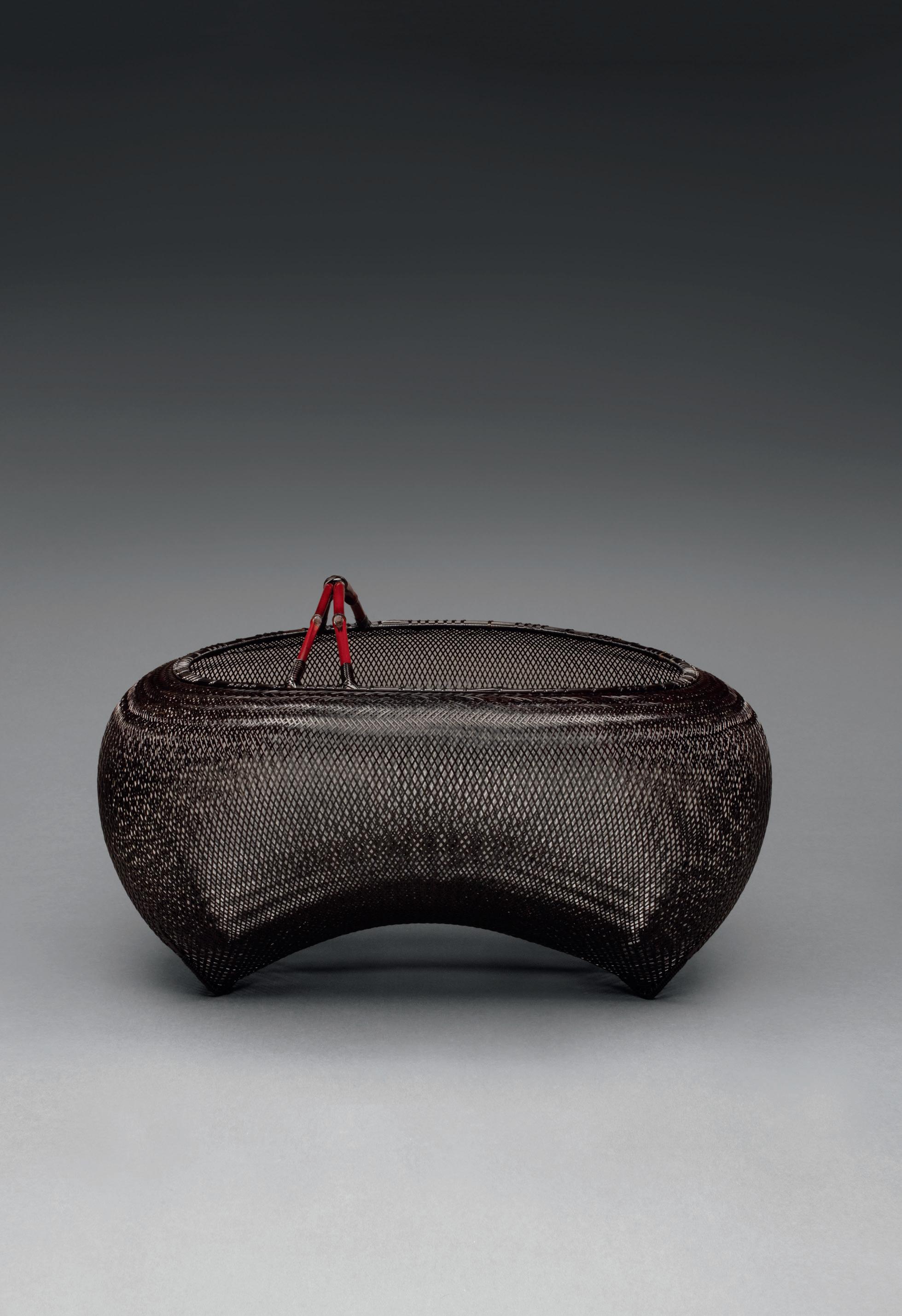
Quiet Elegance , 2026, 10.5 × 18 × 14 inches
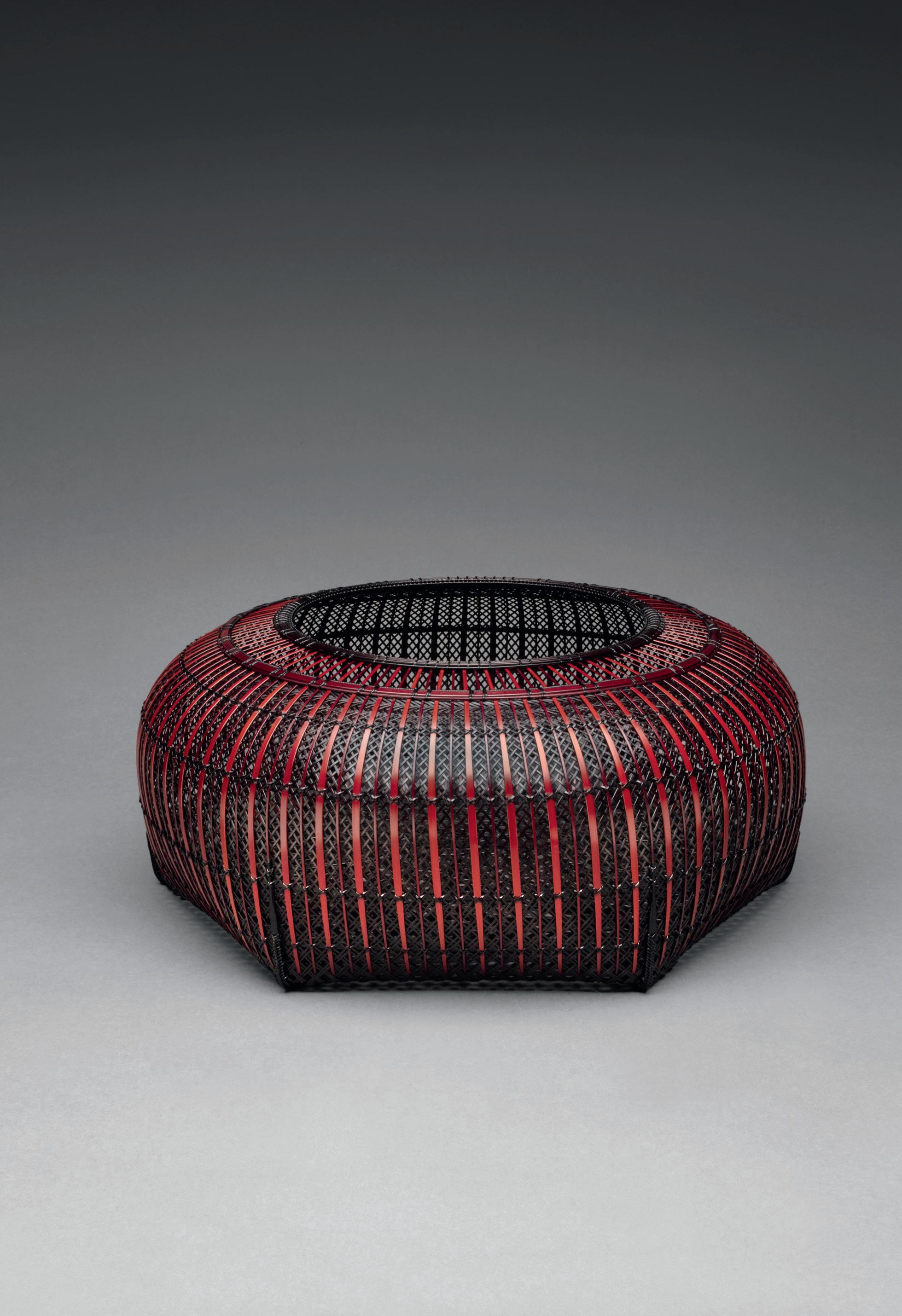
15 Colors in the Rain , 2020, 6.75 ×16.25 ×15.75 inches
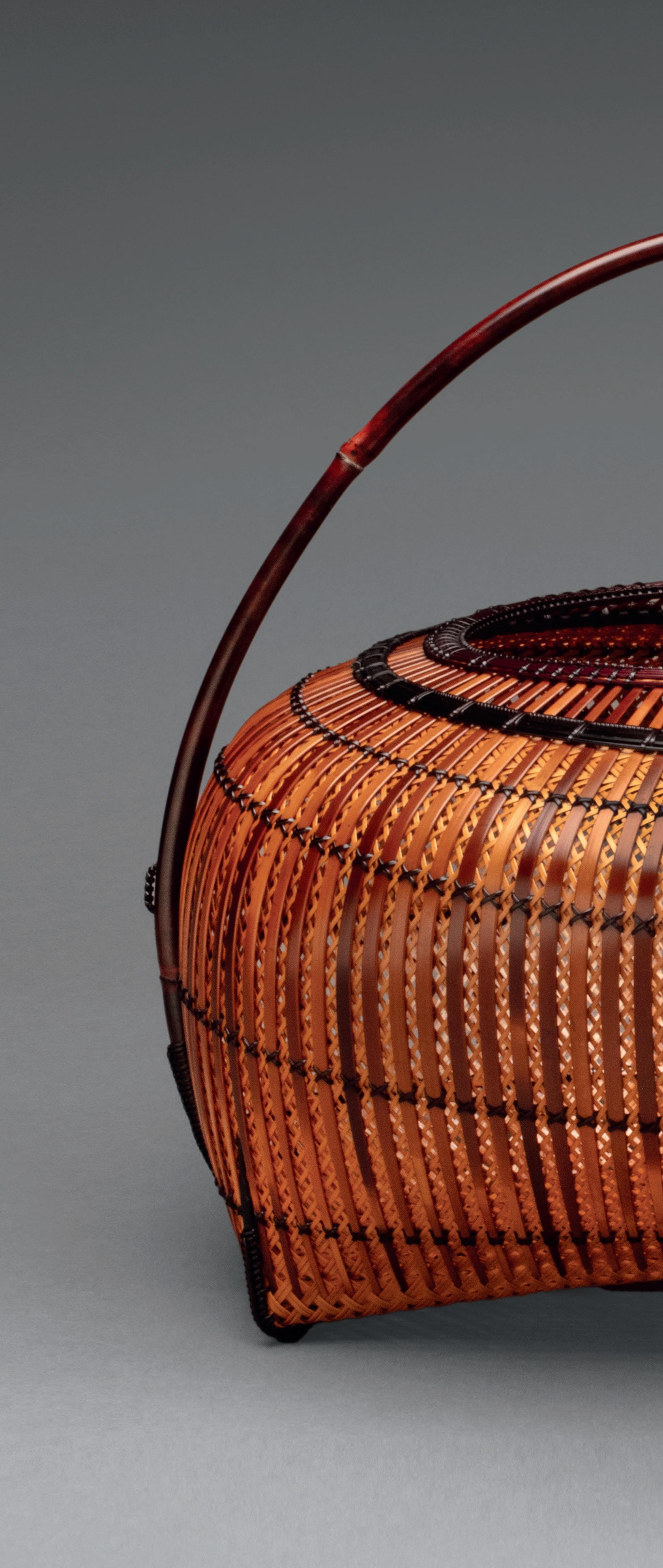
Autumn Grasses , 2020
11.75 ×15.75 ×12.25 inches
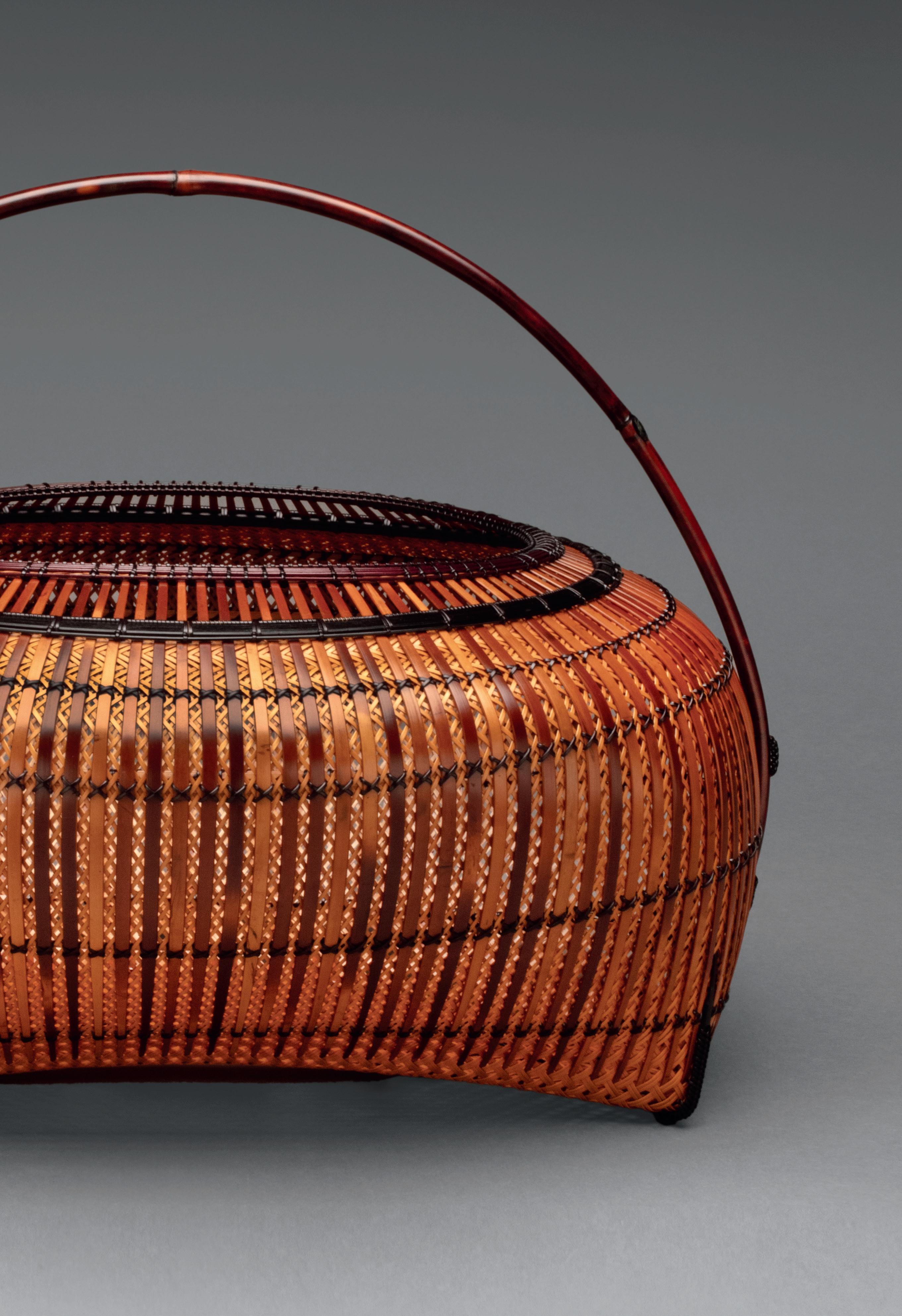
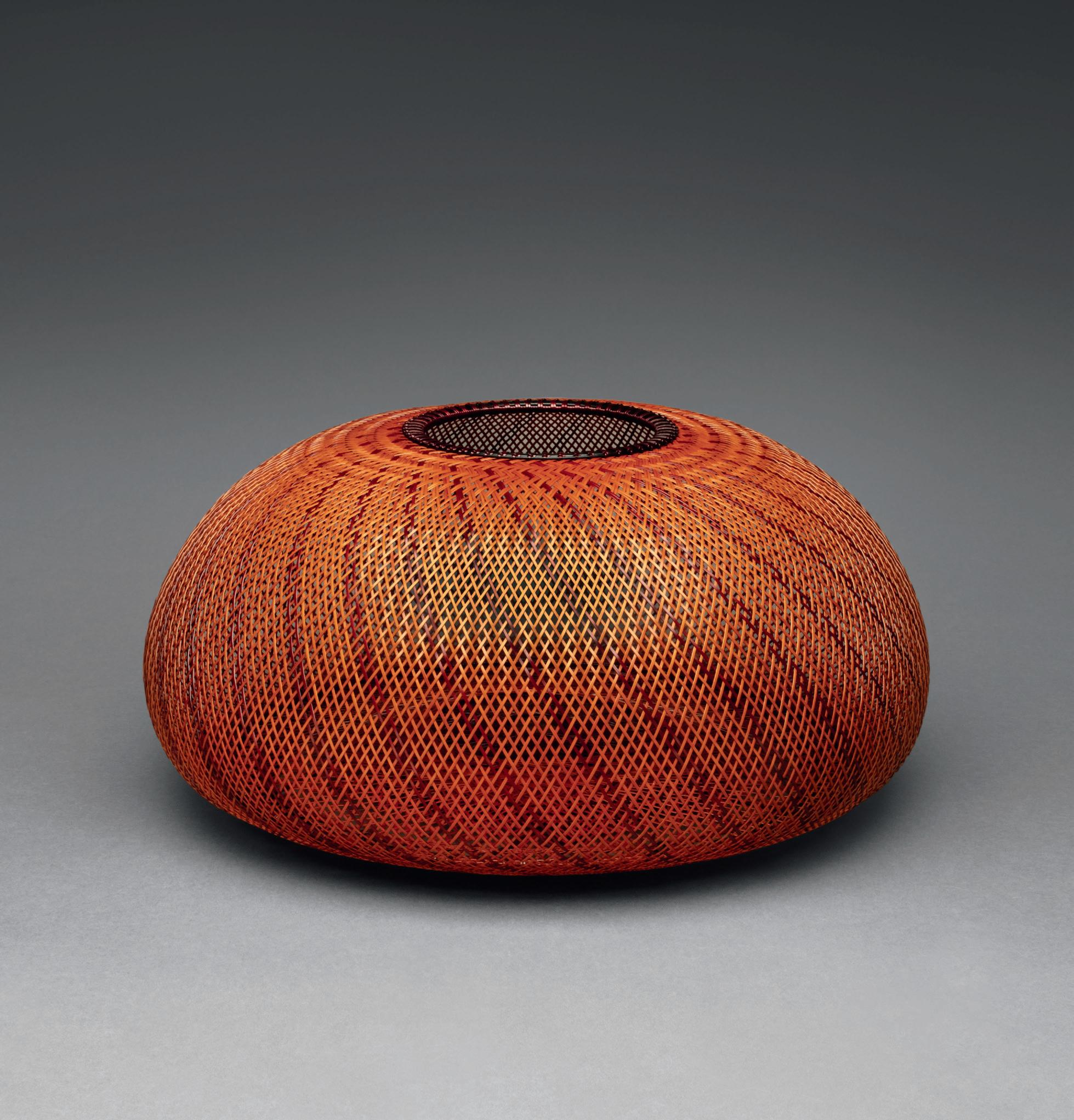
18 Passing Shower , 2018, 7.25 ×15.5 ×15.5 inches
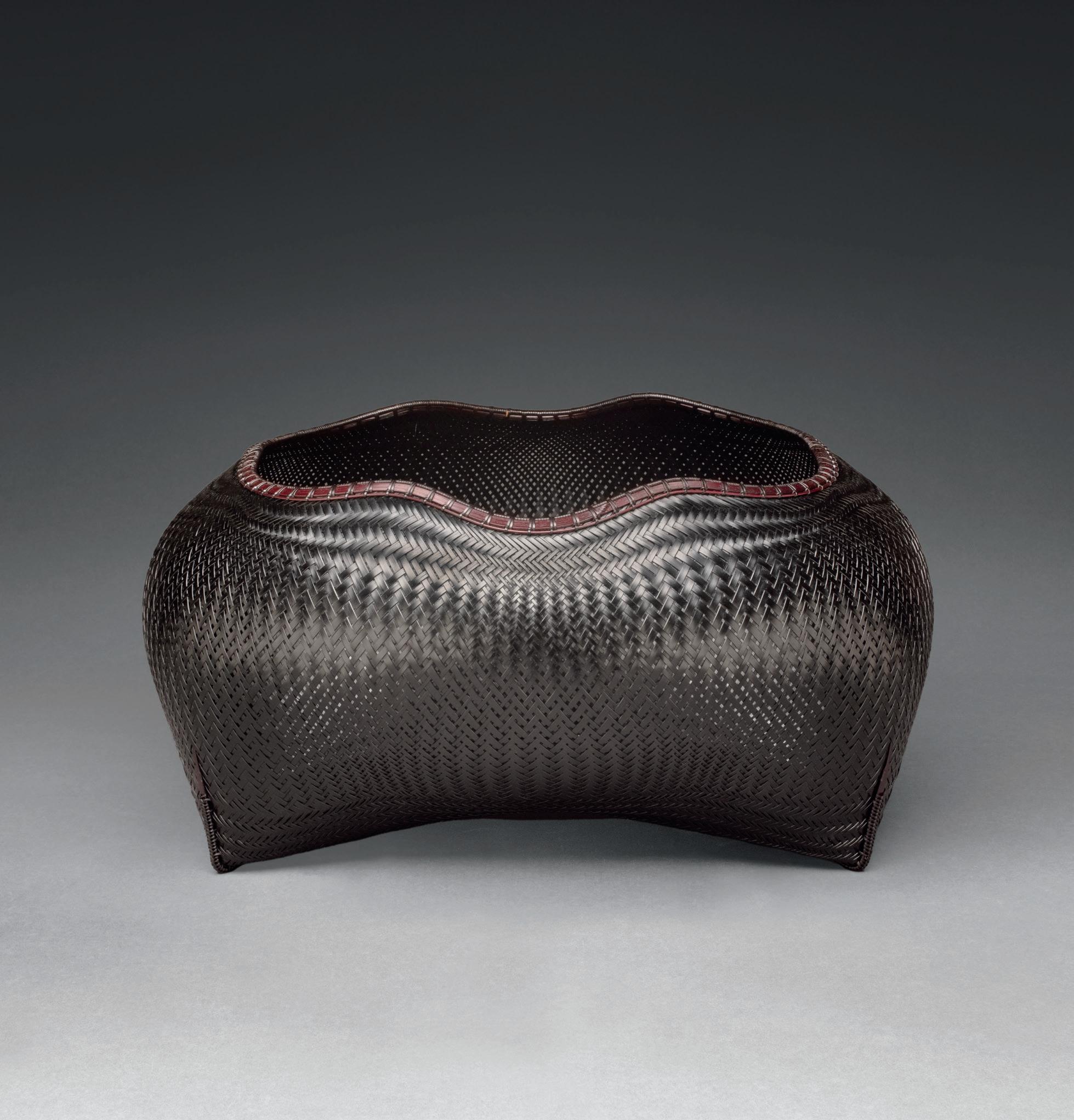
Mountain Range , 2025, 8.25 × 15.75 × 13.25 inches
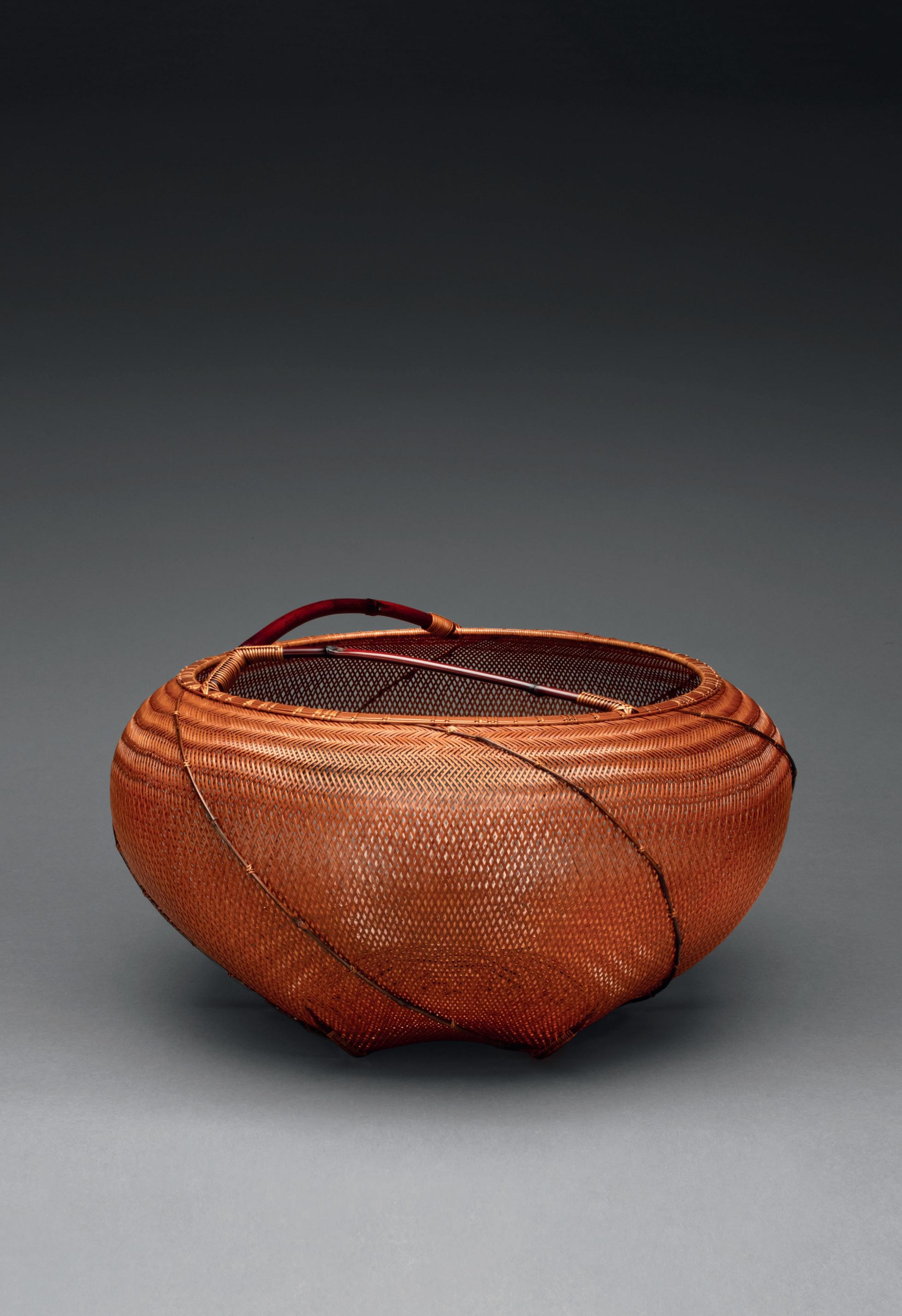
20 Treetops , 2018, 9.5 ×15.5 ×15.5 inches
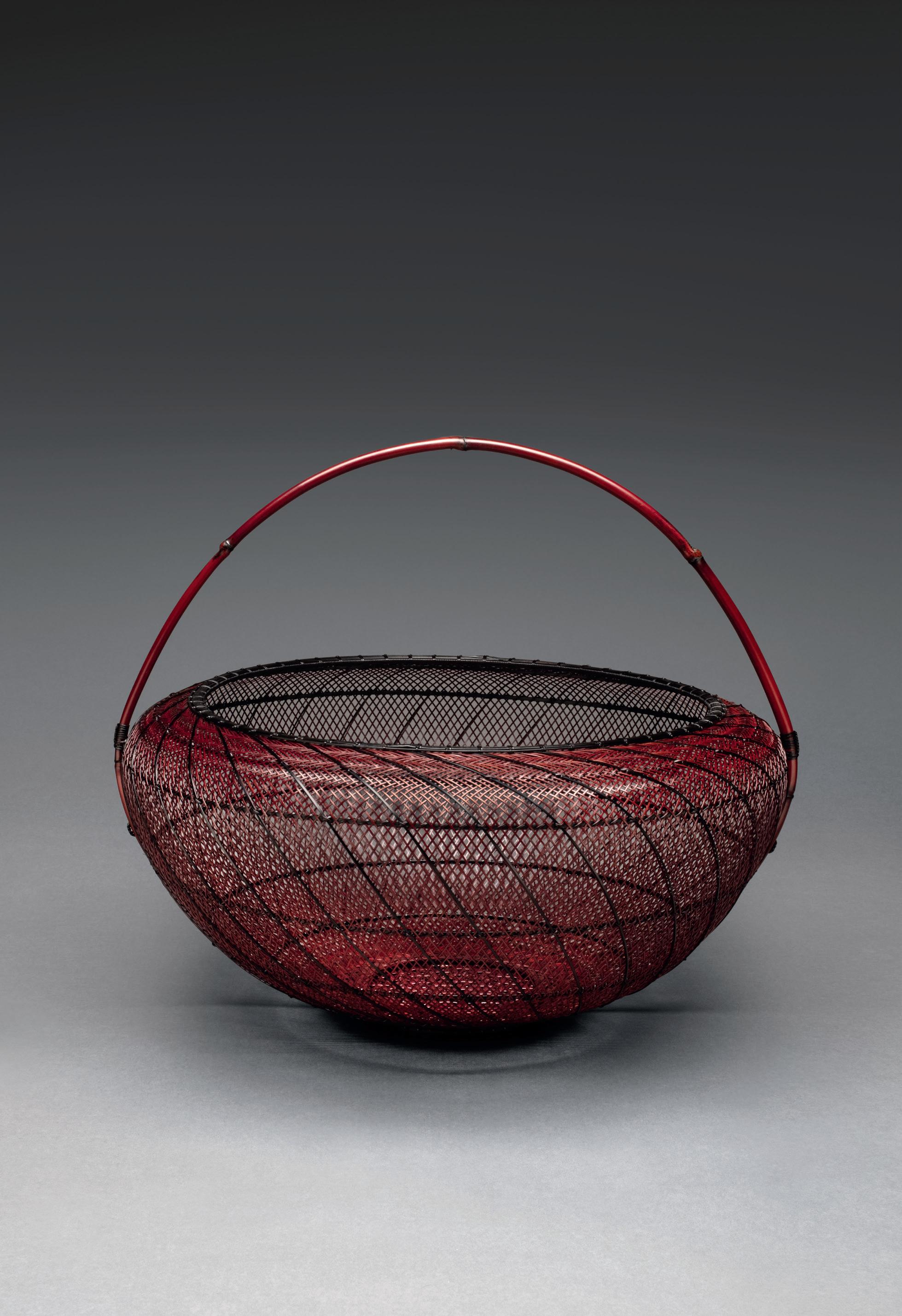
Late Autumn Showers , 2026, 14.25 × 17 × 16.75 inches 21
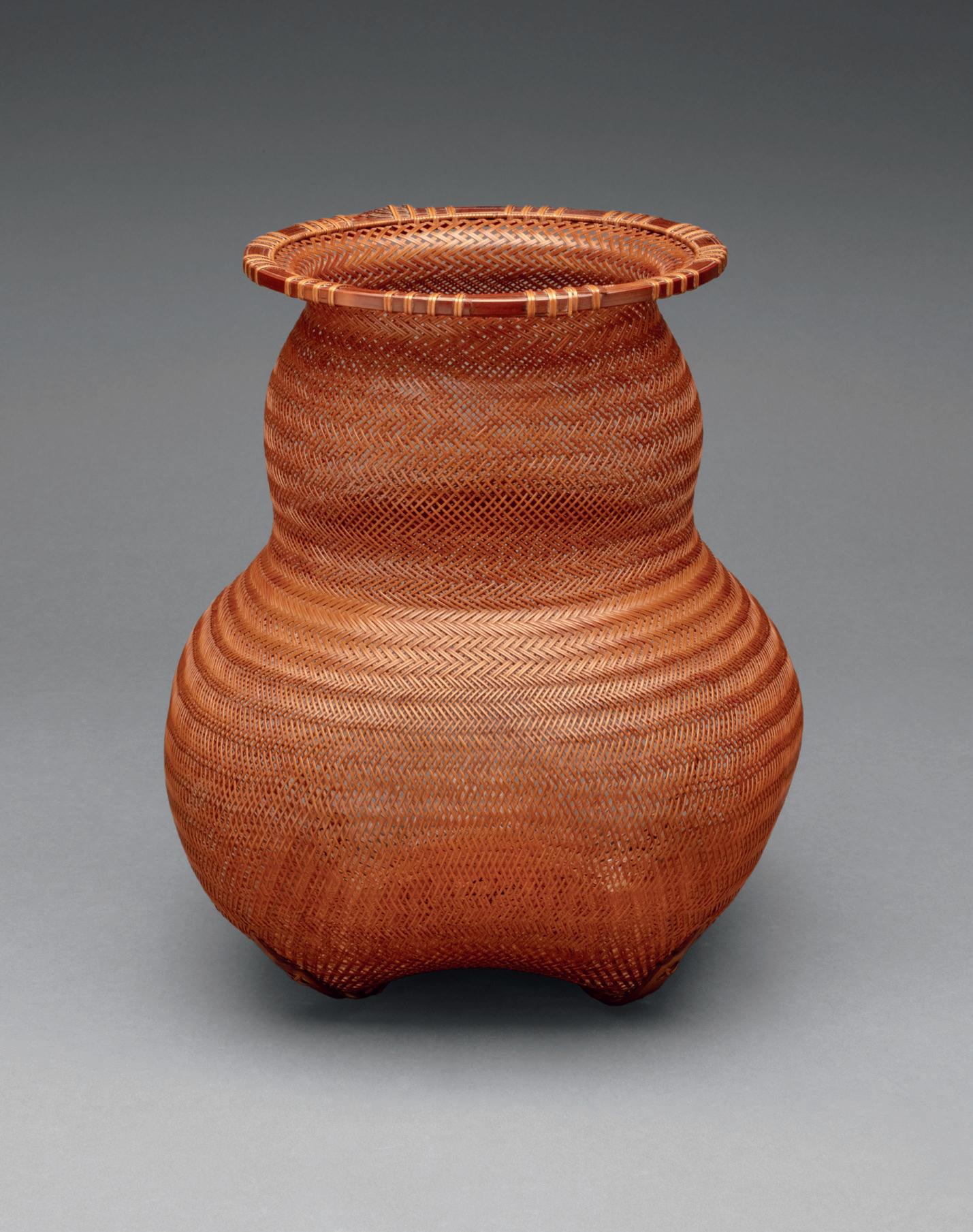
Spreading Fan , 2003, 10.75 × 9.25 × 9.25 inches
Ancient Capital , 2026, 19.5 × 7.5 × 7.25 inches >
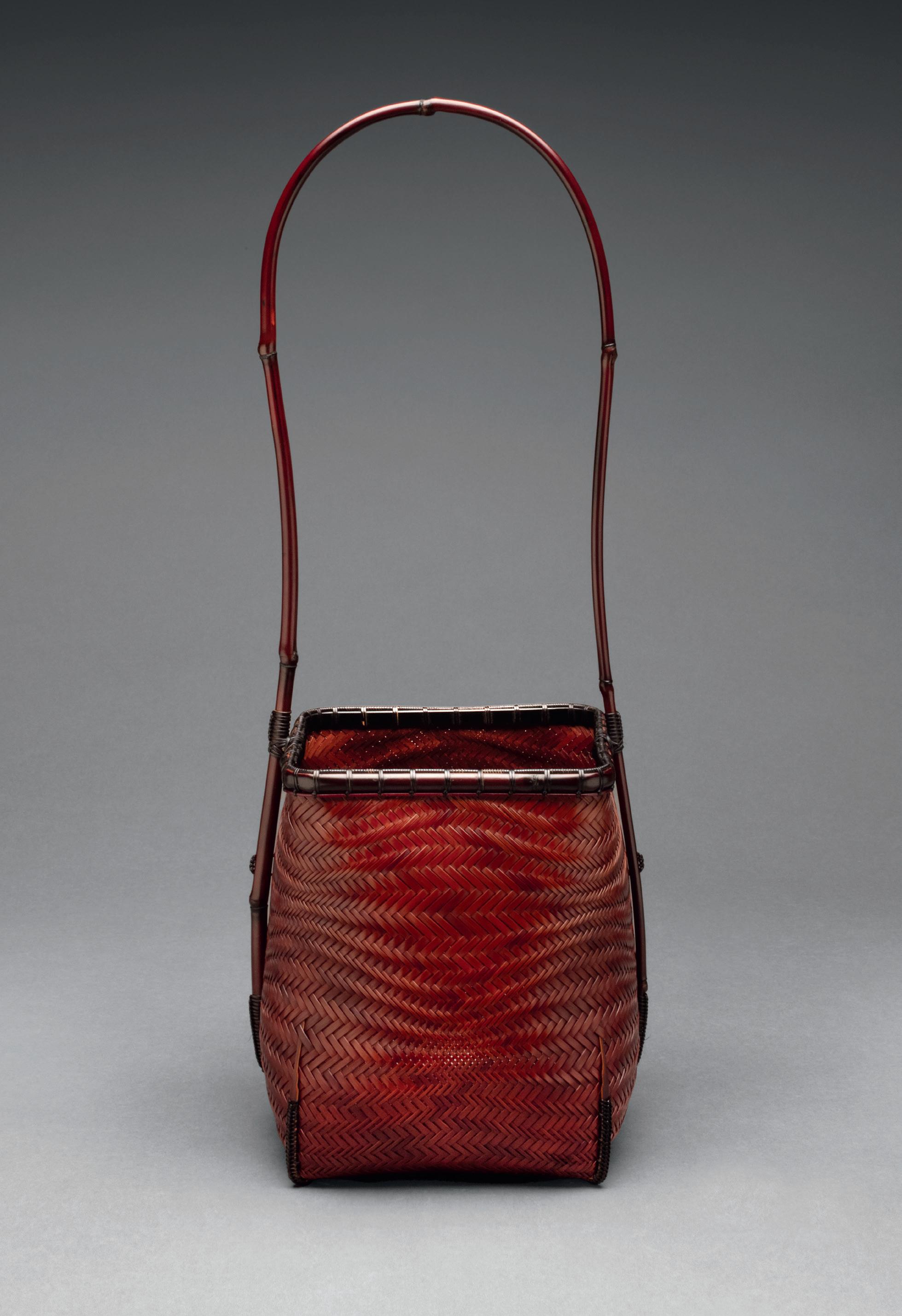
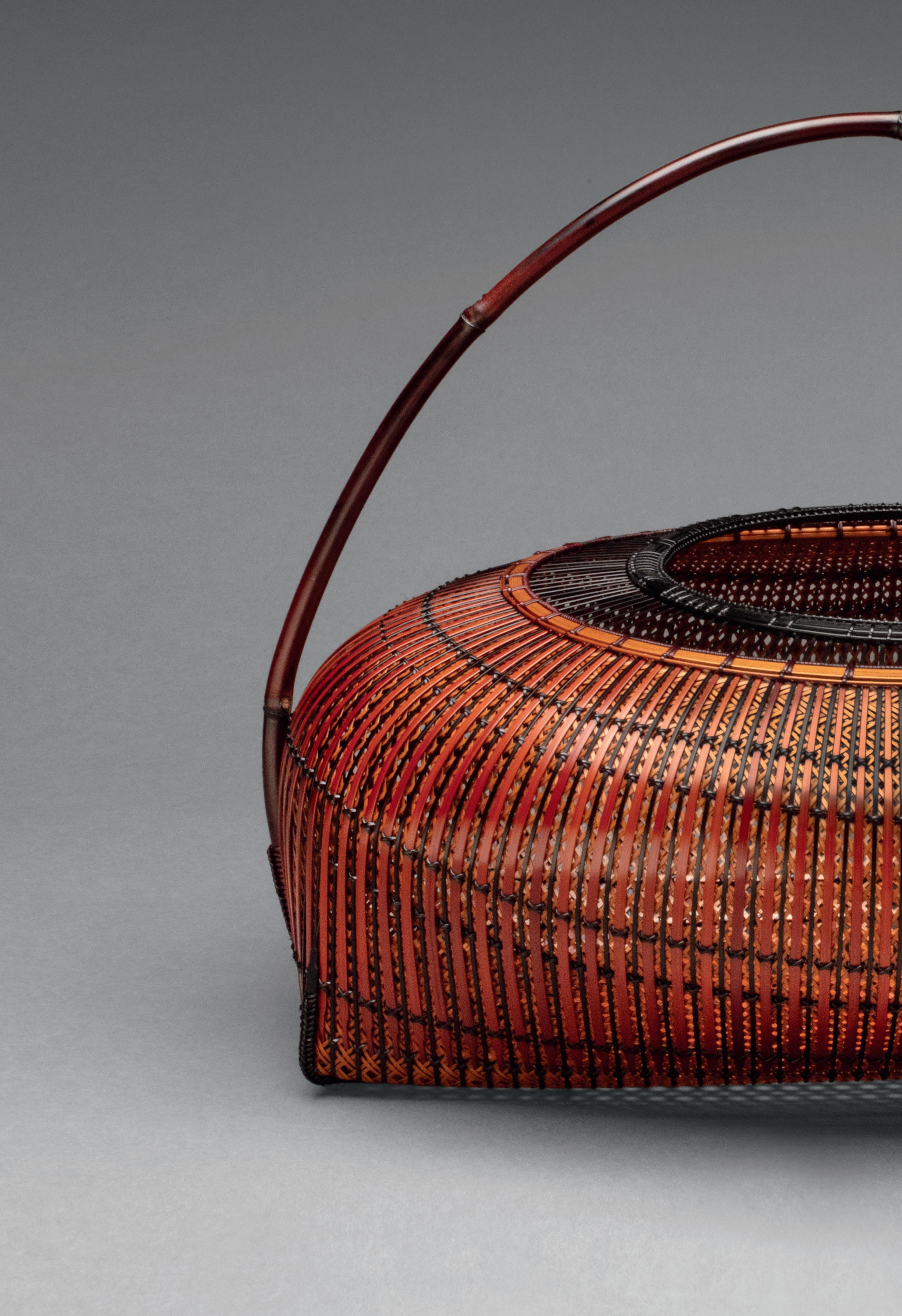
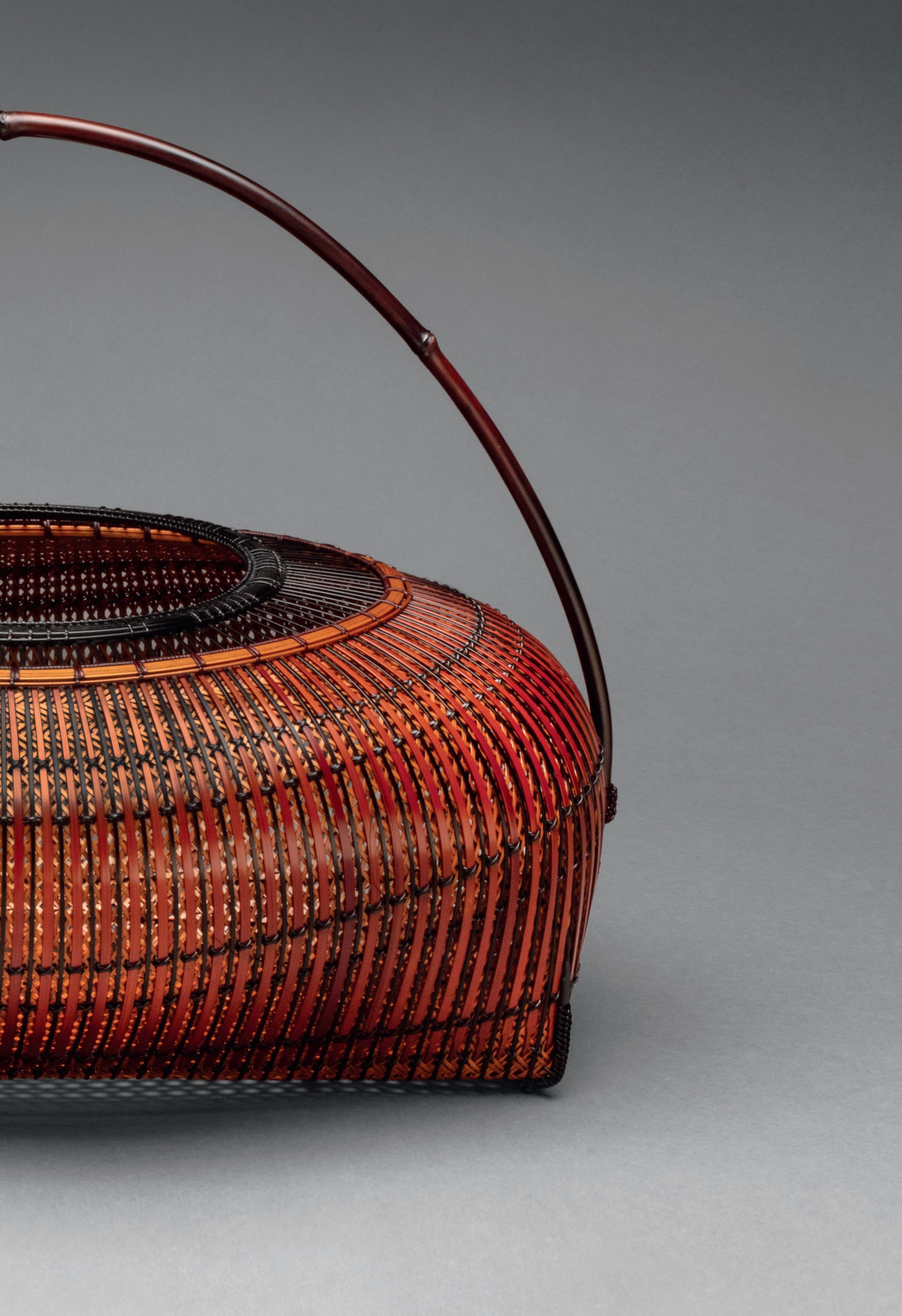
Summer Evening , 2018, 12.5 × 16.75 × 12.25 inches
Pat tern s in a Weave , 2024, 11 ×14.25 ×11.25 inches
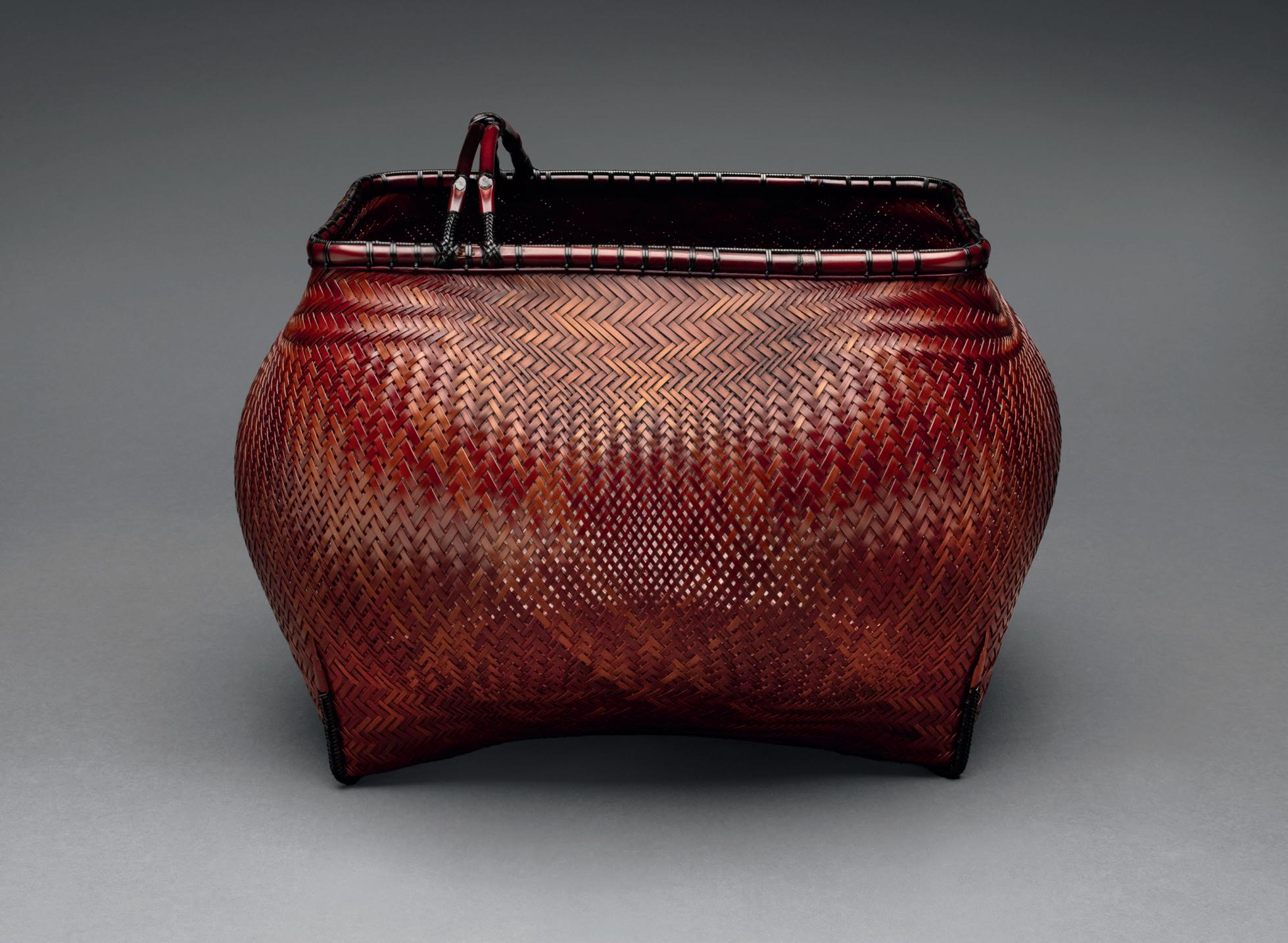
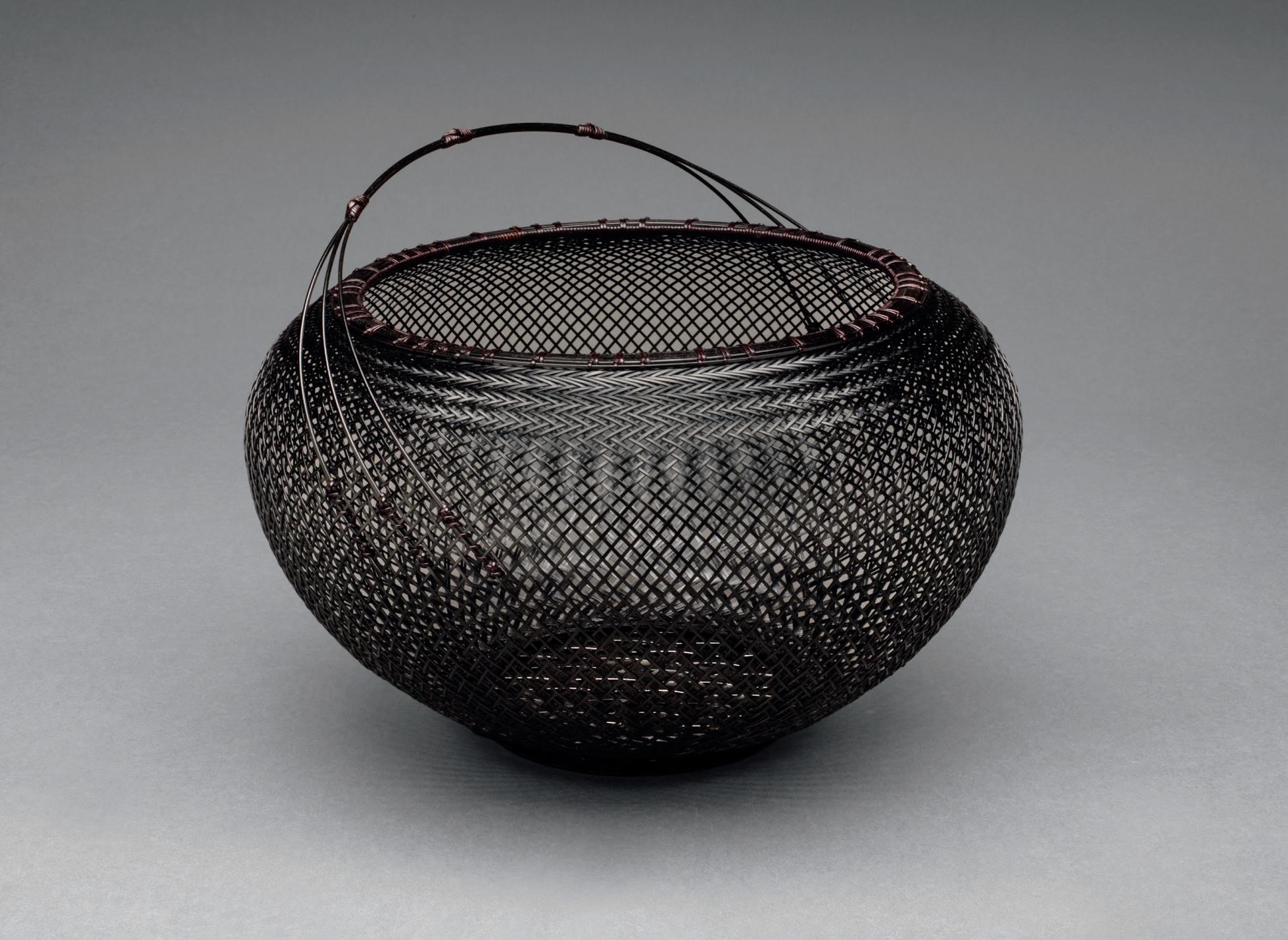
Clarion , 2024, 8 × 10.5 × 10.5 inches
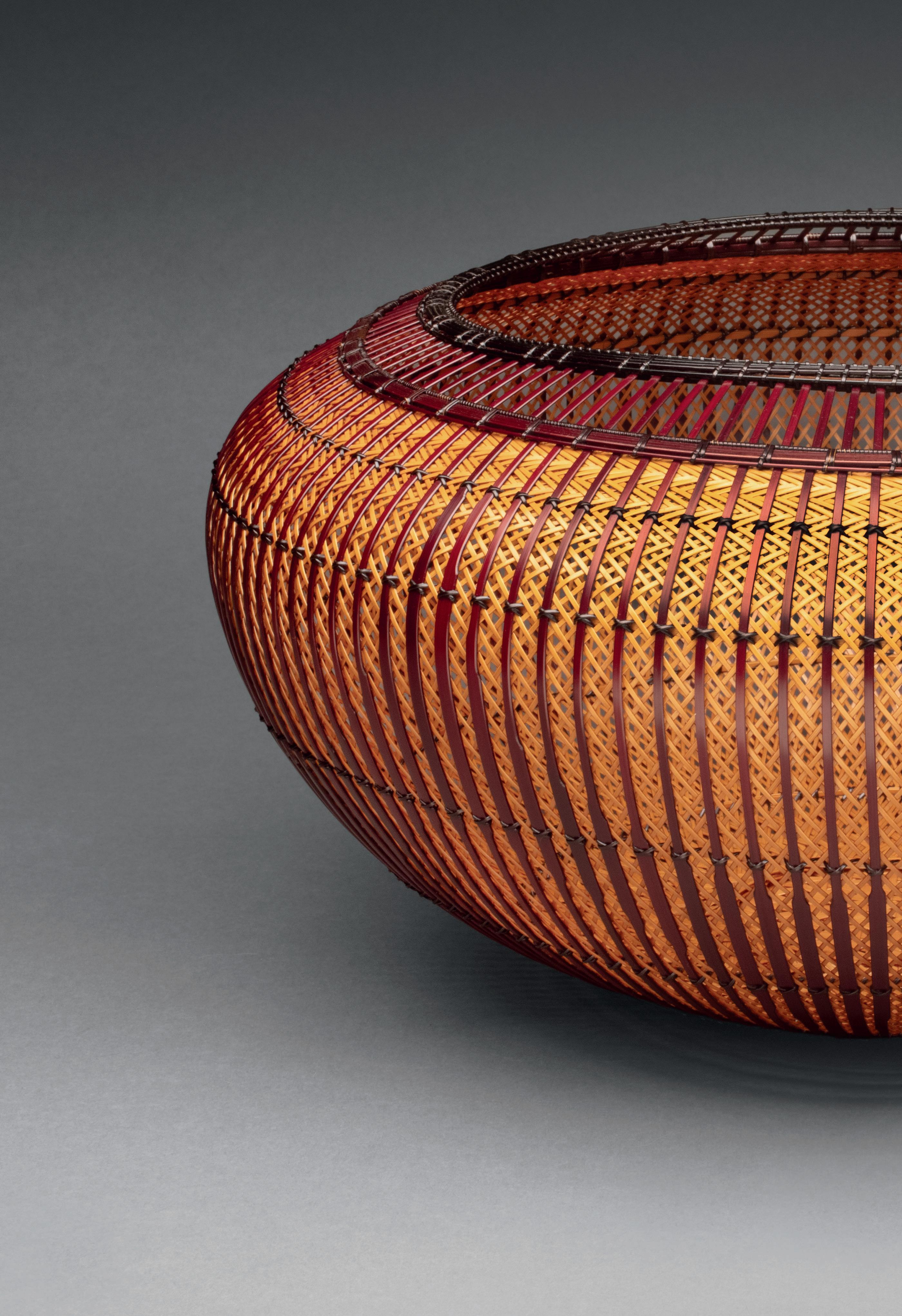
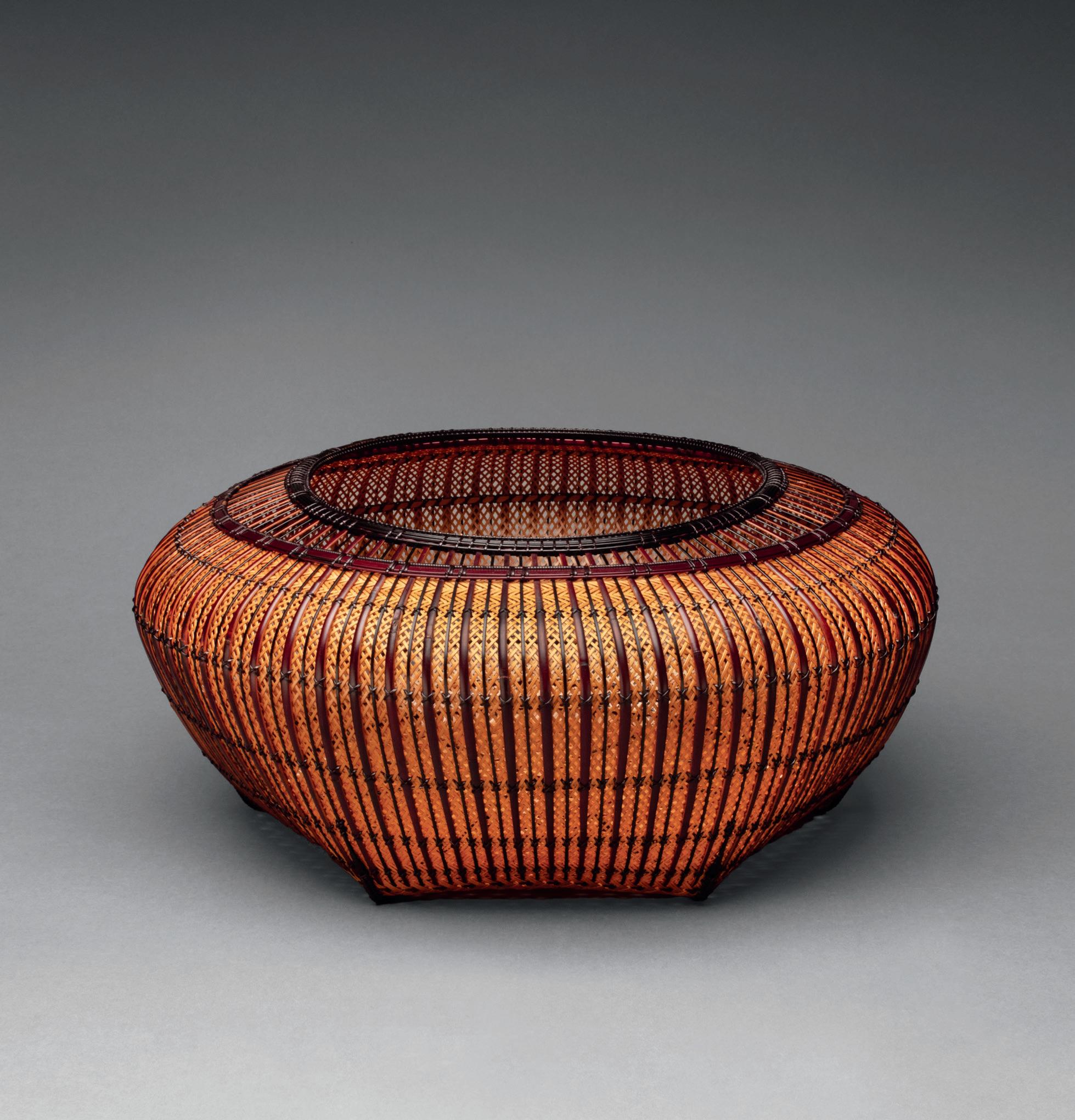
Tranquility, 2024, 9 ×17 ×17 inches
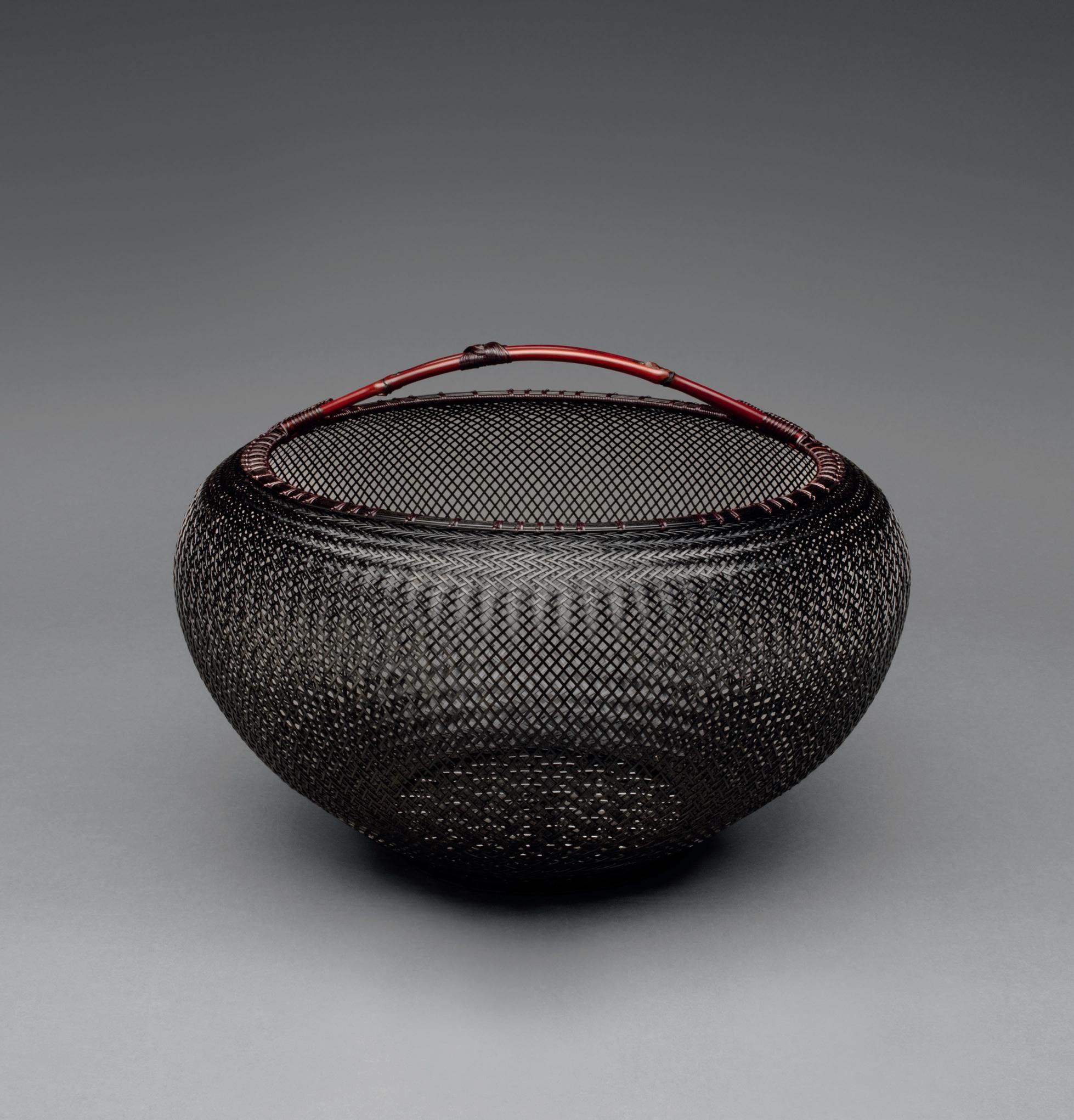
Distant Plains , 2022, 7.25 ×16 ×16 inches
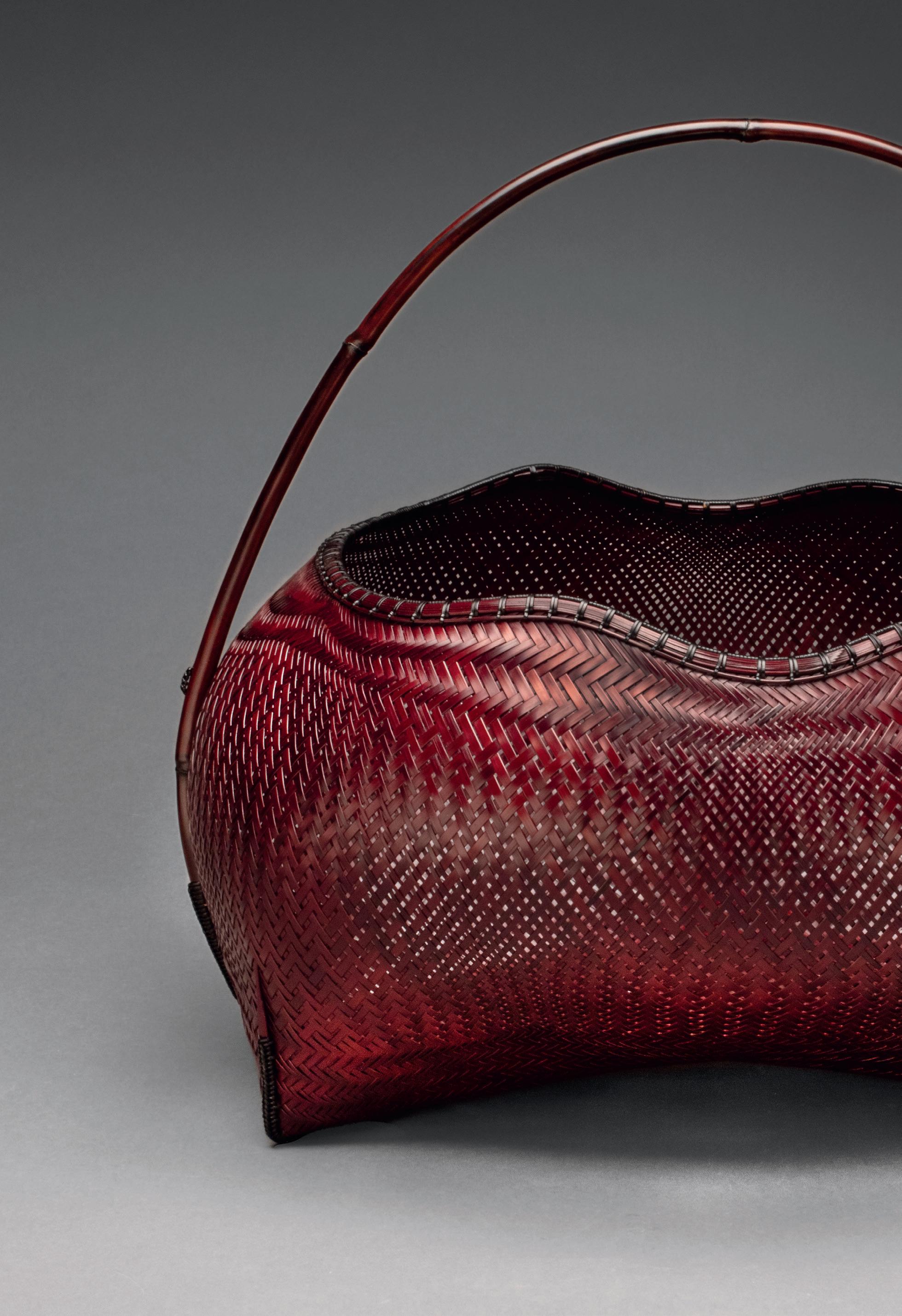
Moonlit , 2024, 8.5 ×12.75 ×12.25 inches
13.75
Eight Clouds , 2018
×16 ×14 inches
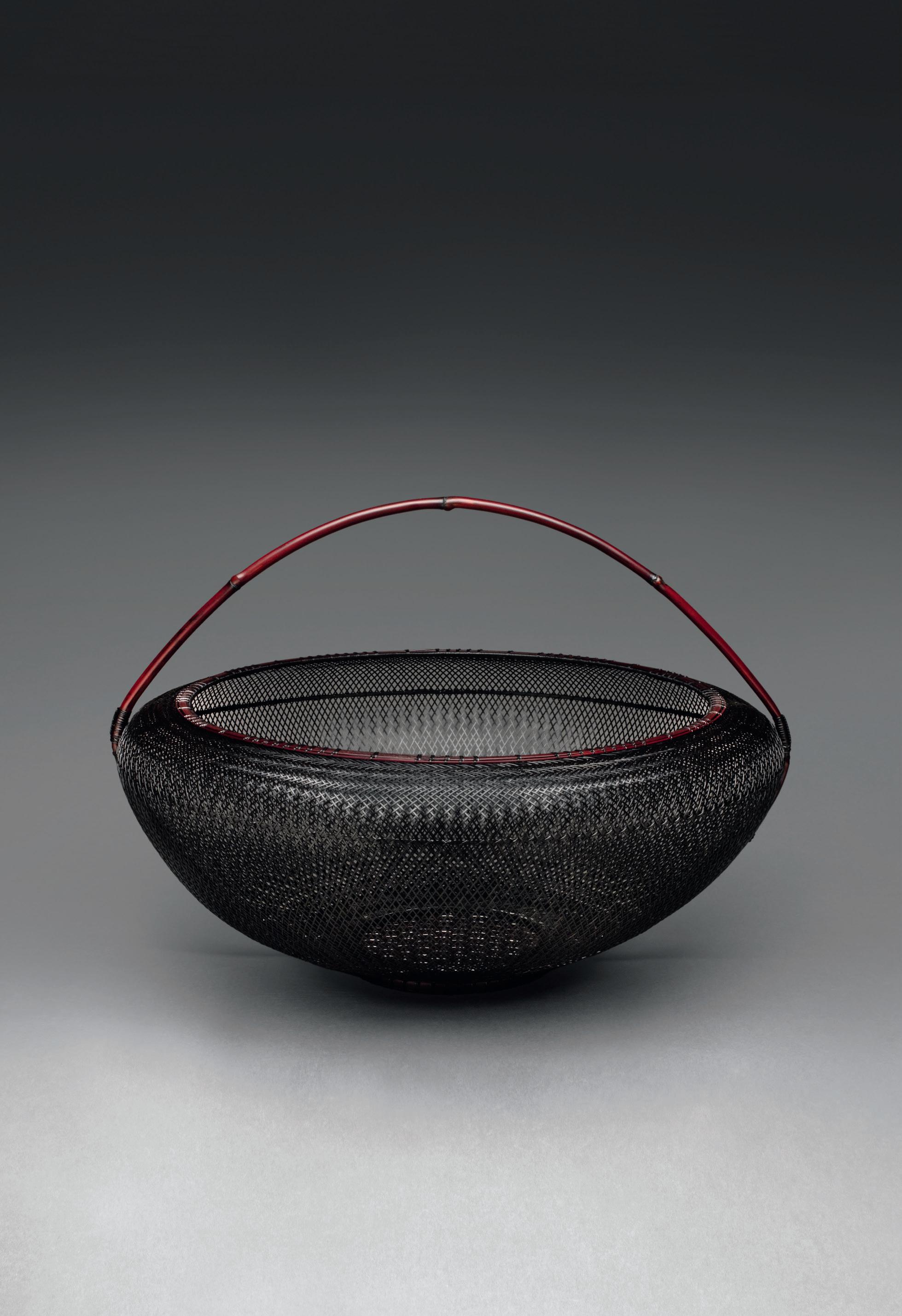
, 2026, 13 × 18.5 × 18 inches